ভোকাবুলারিসমূহ

ইংরেজি শব্দের বাংলা অর্থ | English to Bangla Word Meaning Dictionary

noun
/ˈɑːrmi/
সেনাবাহিনী (senabahini)

a large organized military force trained for war

"The army protected the border from attack."

"সেনাবাহিনী সীমান্তকে আক্রমণ থেকে রক্ষা করেছিল।" (senabahini simanto ke akromon theke rokha korechhilo.)
noun
/əˈroʊmə/
সুগন্ধ (sugondho)

A pleasant, distinctive smell.

"The aroma of freshly baked bread filled the kitchen."

"তাজা রুটি বেক করার সুগন্ধ রান্নাঘর ভরে দিল।" (Taja ruti bek korar sugondho rannaghor bhore dilo.)
adjective
/ˌærəˈmætɪk/
সুগন্ধযুক্ত (sugondho jukto)

Having a pleasant and distinctive smell.

"The chef used aromatic herbs to flavor the dish."

"শেফ খাবারের স্বাদ বাড়াতে সুগন্ধযুক্ত ভেষজ ব্যবহার করেছিলেন।" (Shef khabarer swad barate sugondho jukto veshaj byabohar korechilen.)
adverb, preposition
/əˈraʊnd/
চারপাশে (charpashe)

situated on every side; in a circular way; approximately

"There are many restaurants around the park."

"পার্কের চারপাশে অনেক রেস্টুরেন্ট আছে।" (Parker charpashe onek restaurant ache.)
verb
/əˈreɪn/
আদালতে অভিযুক্ত করা (adalote abhijukto kora)

to formally accuse someone in a court of law and ask them to respond to the charges

"The suspect was arraigned before the judge this morning."

"আজ সকালে আসামিকে বিচারকের সামনে অভিযুক্ত করা হয়েছিল।" (Aj sokale asamike bicharoker samne abhijukto kora hoyechilo.)
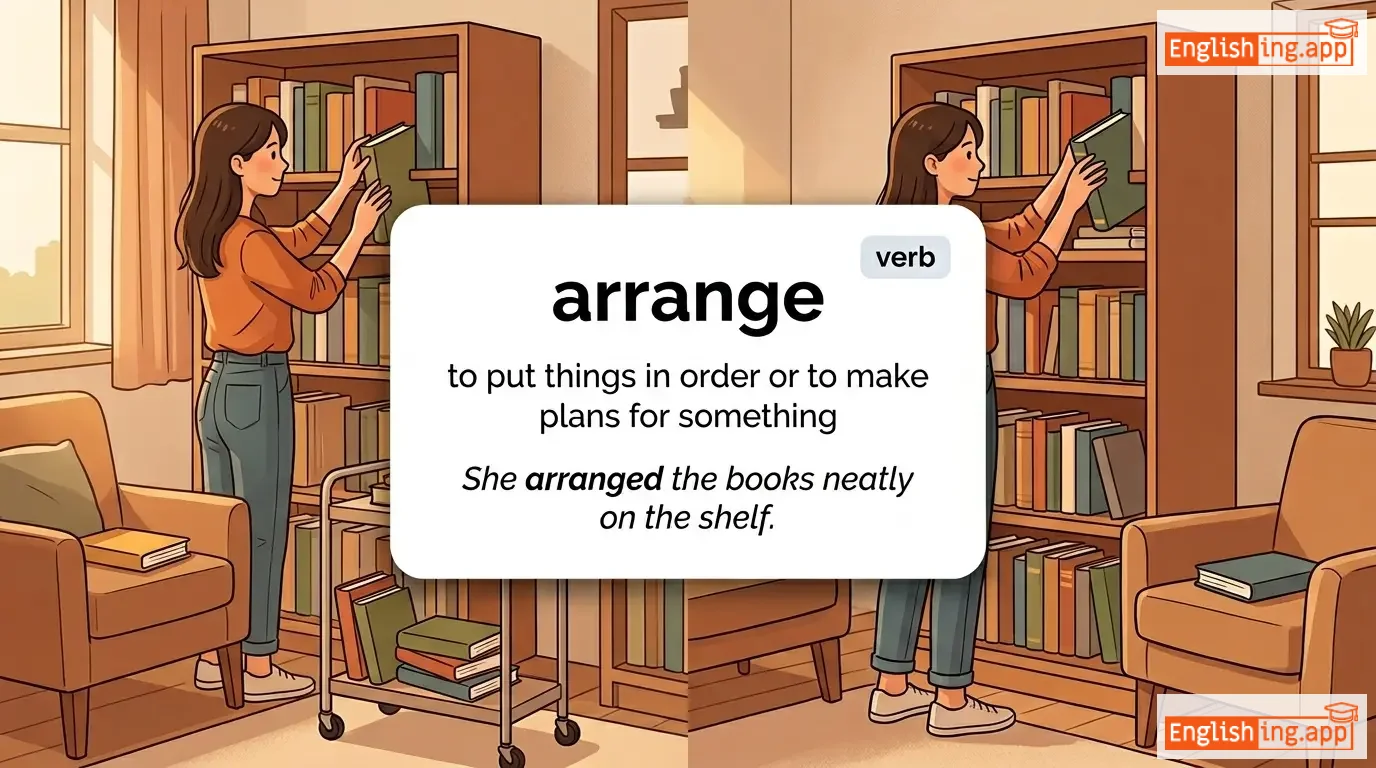
arrange definition card — visual illustration of the meaning
verb
/əˈreɪndʒ/
গোছানো, ব্যবস্থা করা (gochano, byabostha kora)

to put things in order or to make plans for something

"She arranged the books neatly on the shelf."

"সে তাকের উপর বইগুলো সুন্দরভাবে সাজিয়ে দিল।" (Se taker upor boigulo sundorvabe sajie dilo.)
arrangement definition card — visual illustration of the meaning
noun
/əˈreɪndʒmənt/
ব্যবস্থা, আয়োজন (byabostha, ayojon)

the act of organizing or planning something; the way things are ordered

"They made an arrangement to meet at the café."

"তারা ক্যাফেতে দেখা করার জন্য একটি ব্যবস্থা করেছিল।" (Tara cafe te dekha korar jonno ekti byabostha korechilo.)
adjective
/ˈærənt/
সম্পূর্ণ, নিছক (sompurno, nichhok)

complete or utter (used negatively, e.g., 'arrant nonsense')

"His excuse was arrant nonsense."

"তার অজুহাত ছিল সম্পূর্ণ বাজে কথা।" (Tar ojuhaat chilo sompurno baze kotha.)
noun
/əˈreɪ/
সাজানো সারি, প্রদর্শনী (sajano sari, prodorshoni)

an impressive display or arrangement of things

"The shop displayed an array of colorful dresses."

"দোকানে রঙিন পোশাকের এক বিশাল প্রদর্শনী ছিল।" (Dokane rongin poshaker ek bishal prodorshoni chilo.)
noun
/əˈrɪə/
বাকি (baki)

A debt or payment that is overdue and unpaid.

"He was sued for an arrear of rent."

"সে ভাড়ার বকেয়ার জন্য মামলা খেয়েছিল।" (Se bharar bokeyar jonno mamla kheyechilo.)
noun
/əˈrɪəz/
বকেয়া (bokeya)

Money that is owed and should have been paid earlier.

"She was months in arrears with her electricity bill."

"সে বিদ্যুৎ বিলের বকেয়ায় কয়েক মাস পিছিয়ে ছিল।" (Se bidyut biler bokeyae koyek mas pichiye chilo.)
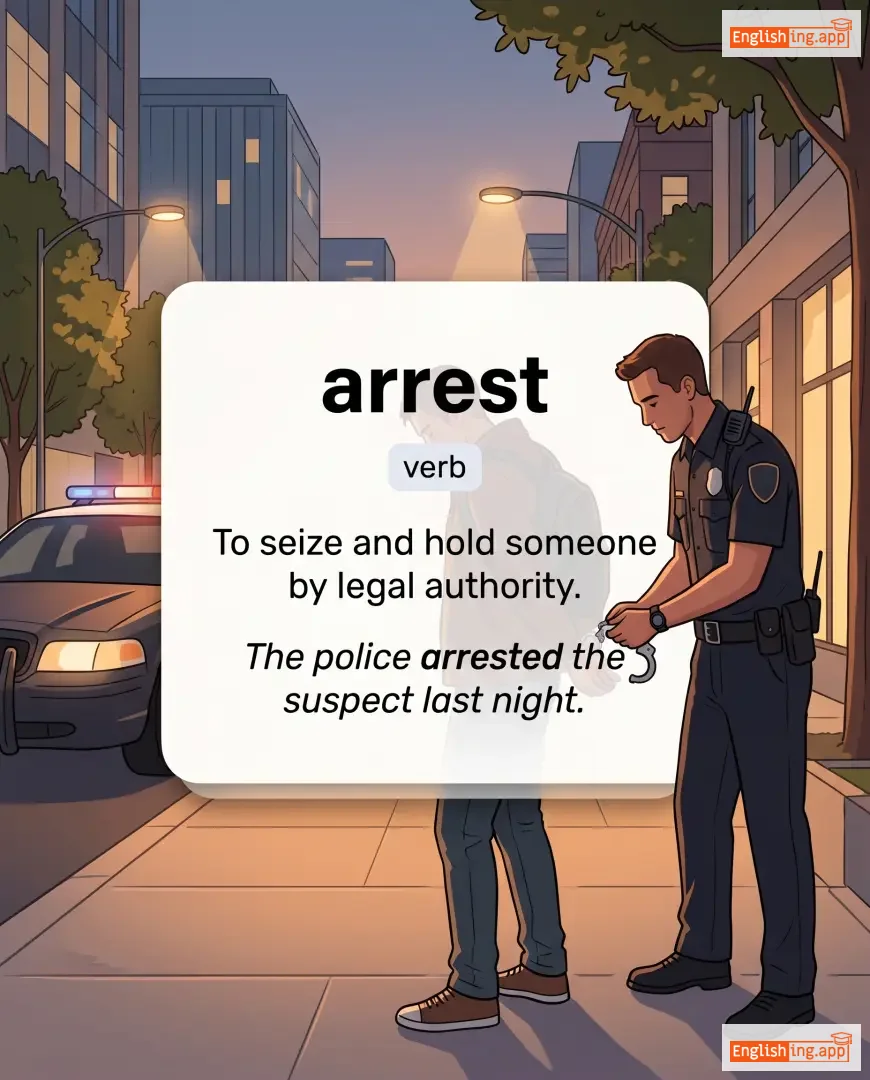
arrest definition card — visual illustration of the meaning
verb
/əˈrɛst/
গ্রেফতার করা (grefatar kora)

To seize and hold someone by legal authority.

"The police arrested the suspect last night."

"পুলিশ গত রাতে সন্দেহভাজনকে গ্রেফতার করেছিল।" (Police got rate shondehobhajonke grefatar korechilo.)
adjective
/əˈrɛstɪŋ/
দৃষ্টি-আকর্ষক (drishti-akorshok)

Attracting attention in a striking or impressive way.

"The actress gave an arresting performance."

"অভিনেত্রী একটি দৃষ্টি-আকর্ষক অভিনয় করেছিলেন।" (Abhinetri ekti drishti-akorshok obhinoy korechilen.)
adjective
/eɪˈrɪðmɪk/
অনিয়মিত (oniyomito)

Lacking a regular rhythm or beat.

"The patient had an arrhythmic heartbeat."

"রোগীর হৃদস্পন্দন অনিয়মিত ছিল।" (Rogir hridspandon oniyomito chhilo.)
noun
/əˈraɪvəl/
আগমন (agomon)

The act of coming to a place, especially at the end of a journey.

"The train's arrival was delayed by two hours."

"ট্রেনের আগমন দুই ঘণ্টা বিলম্বিত হয়েছিল।" (Trener agomon dui ghonta bilombito hoyechilo.)
arrive definition card — visual illustration of the meaning
verb
/əˈraɪv/
পৌঁছানো (ponchano)

to reach a place, especially at the end of a journey

"She will arrive at the airport in the evening."

"সে সন্ধ্যায় বিমানবন্দরে পৌঁছাবে।" (Se sondhay bimanbondore ponchabe.)
noun
/ˌæriˈviːst/
নবধনী (nobodhoni)

A person who has recently gained wealth or status but is considered arrogant or socially unsophisticated.

"The business world is full of ambitious arrivistes."

"ব্যবসায়িক জগৎ উচ্চাভিলাষী নবধনীদের ভরপুর।" (Byabshayik jogot ucchavilashi nobodhonider vhorpur.)
noun
/ˈærəɡəns/
অহংকার (ohongkar)

The quality of being overly proud and having a sense of superiority.

"His arrogance made him unpopular among his colleagues."

"তার অহংকার তাকে সহকর্মীদের কাছে অজনপ্রিয় করে তুলেছিল।" (Tar ohongkar take shokormider kache ojonopriyo kore tulchilo.)
adjective
/ˈærəɡənt/
অহংকারী (ohongkari)

Having an exaggerated sense of one's own importance or abilities.

"The arrogant manager dismissed the workers' complaints."

"অহংকারী ম্যানেজার শ্রমিকদের অভিযোগ উপেক্ষা করেছিল।" (Ohongkari manager shromikder obhijog upekha korechilo.)
verb
/ˈærəˌɡeɪt/
অন্যায়ভাবে দাবি করা (onnaybhabe dabi kora)

To claim or take something without justification.

"The dictator arrogated all powers to himself."

"একনায়ক সব ক্ষমতা নিজের জন্য অন্যায়ভাবে দাবি করেছিল।" (Eknayok shob khomota nijer jonno onnaybhabe dabi korechilo.)
noun
/ˈæroʊ/
তীর (tir)

a thin, straight weapon with a pointed tip, shot from a bow

"The hunter shot an arrow at the target."

"শিকারি লক্ষ্যবস্তুর দিকে একটি তীর ছুঁড়েছিল।" (Shikari lokkhyobostur dike ekta tir chhuriechhilo.)
noun
/əˈrɔɪ.oʊ/
শুকনো খাল (shukno khal)

A dry creek or stream bed that temporarily fills with water after heavy rain.

"After the storm, the arroyo quickly filled with rushing water."

"ঝড়ের পরে অ্যারোয়ো দ্রুত পানিতে ভরে গিয়েছিল।" (Jhorer pore arroyo druto panite bhore giyechhilo.)
noun
/ˈɑːr.sən.əl/
অস্ত্রাগার (ostragar)

A collection or storage place for weapons and military equipment.

"The army kept its weapons in a secure arsenal."

"সেনাবাহিনী তাদের অস্ত্র একটি নিরাপদ অস্ত্রাগারে রেখেছিল।" (Senabahini tader ostro ekti nirapod ostragare rekhechhilo.)
noun
/ɑːrt/
শিল্প (shilpo)

the expression or application of human creative skill and imagination

"She studied art at the university."

"সে বিশ্ববিদ্যালয়ে শিল্প অধ্যয়ন করেছিল।" (Se bishwobidyaloye shilpo oddhoyon korechilo.)
noun
/ˈɑːr.tər.i/
ধমনী (dhomoni)

A blood vessel that carries blood away from the heart; also a main route or channel of communication or transport.

"The doctor explained how arteries supply blood to the body."

"ডাক্তার ব্যাখ্যা করলেন কিভাবে ধমনীগুলো শরীরে রক্ত সরবরাহ করে।" (Daktar byakkha korlen kivabe dhomonigulo shorire rokto soraborah kore.)
adjective
/ˈɑːrt.fəl/
চতুর (chotur)

Skillful, clever, or crafty, often in a cunning way.

"She gave an artful reply that avoided the real issue."

"সে একটি চতুর উত্তর দিয়েছিল যা আসল সমস্যাটি এড়িয়ে গিয়েছিল।" (Se ekti chotur uttor diyechhilo ja asal shomosyati eriye giyechhilo.)
adjective
/ɑːrˈθʊr.i.ən/
আর্থারের কাহিনি সম্পর্কিত (artharer kahini somprokito)

Relating to the legendary King Arthur and the stories surrounding him.

"The novel is set in an Arthurian world of knights and castles."

"উপন্যাসটি নাইট ও দুর্গের একটি আর্থুরিয়ান জগতে রচিত।" (Uponnastiti knight o durger ekti Arthurian jogote rochito.)
noun
/ˈɑːrtɪkl/
প্রবন্ধ (probondho)

a piece of writing included in a newspaper, magazine, or journal

"He wrote an article about climate change."

"সে জলবায়ু পরিবর্তন সম্পর্কে একটি প্রবন্ধ লিখেছিল।" (Se jolbayu poriborton somporke ekti probondho likhechilo.)
verb/adjective
/ɑːrˈtɪkjʊlət/
স্পষ্টভাবে প্রকাশ করা (sposthobhabe prokash kora)

to express thoughts or ideas clearly; having the ability to speak fluently and clearly

"She was able to articulate her ideas during the meeting."

"সে মিটিংয়ে তার ধারণাগুলি স্পষ্টভাবে প্রকাশ করতে পেরেছিল।" (Se meetinge tar dharonaguli sposthobhabe prokash korte perechilo.)
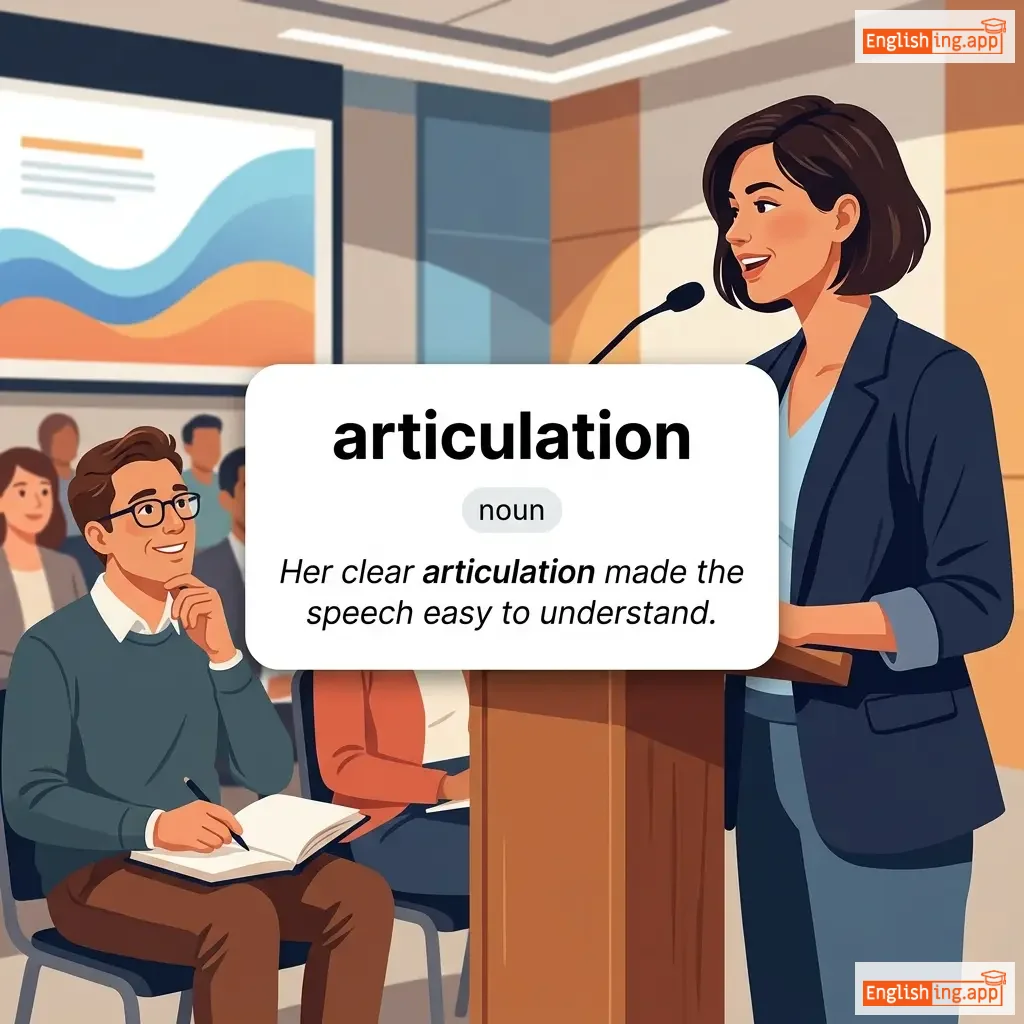
articulation definition card — visual illustration of the meaning
noun
/ɑːrˌtɪkjʊˈleɪʃən/
স্পষ্ট উচ্চারণ (sposto uccharon)

the act of expressing something clearly in speech or the way in which words are pronounced

"Her clear articulation made the speech easy to understand."

"তার স্পষ্ট উচ্চারণ বক্তৃতাটিকে সহজে বোঝার মতো করেছিল।" (Tar sposto uccharon boktritati ke sohoje bojhar moto korechilo.)
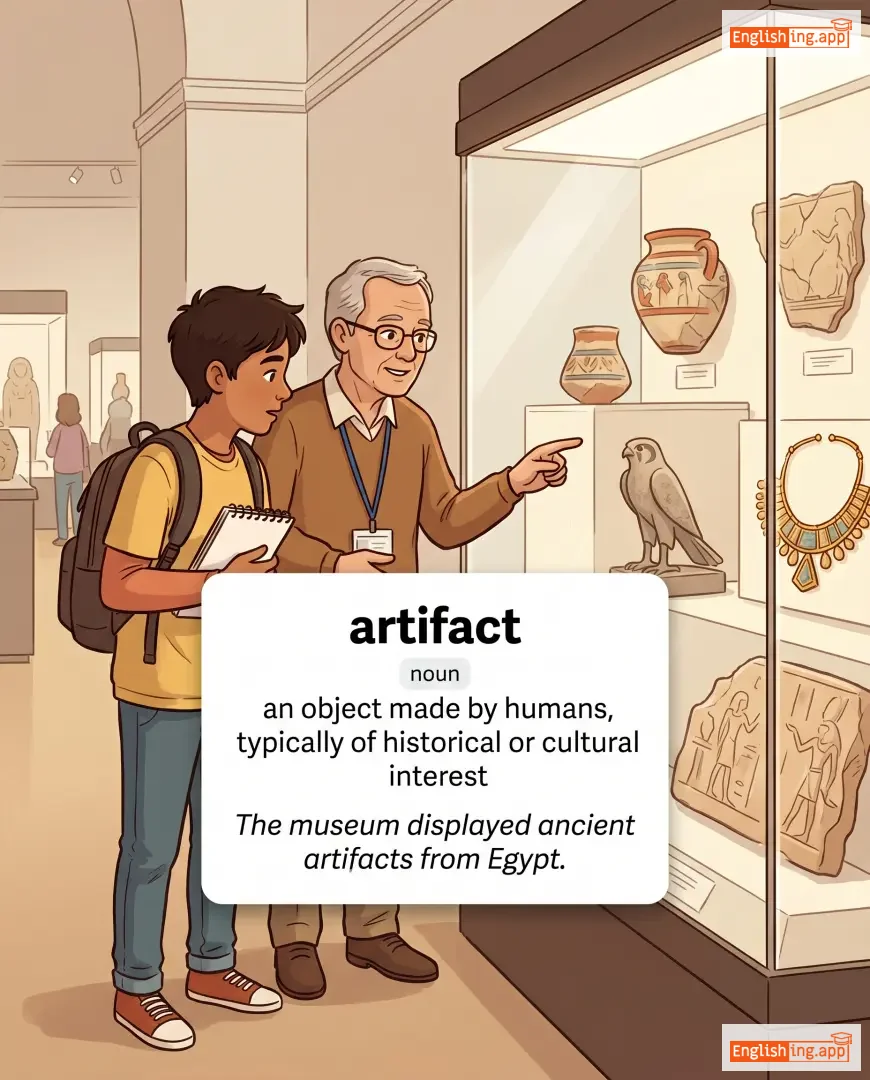
artifact definition card — visual illustration of the meaning
noun
/ˈɑːrtɪˌfækt/
প্রত্নবস্তু (protnobostu)

an object made by humans, typically of historical or cultural interest

"The museum displayed ancient artifacts from Egypt."

"জাদুঘরে মিশরের প্রাচীন প্রত্নবস্তু প্রদর্শন করা হয়েছিল।" (Jadughore Mishorer prachin protnobostu prodorshon kora hoyechilo.)
noun (plural)
/ˈɑːrtɪˌfæks/
প্রত্নবস্তুসমূহ (protnobostusomuho)

objects made by humans, often of historical or cultural importance

"Archaeologists discovered valuable artifacts in the ruins."

"পুরাতত্ত্ববিদরা ধ্বংসাবশেষে মূল্যবান প্রত্নবস্তুসমূহ আবিষ্কার করেছিলেন।" (Purattottobidra dhongshabosese mullooban protnobostusomuho abishkar korechilen.)
noun
/ˈɑːrtɪfɪs/
চাতুরী (chaturi)

clever or cunning devices or tricks used to deceive others

"The politician's charm was nothing but artifice."

"রাজনীতিবিদের আকর্ষণ আসলে কিছুই নয়, শুধু চাতুরী।" (Rajnaitibider akorshon asole kichui noy, shudhu chaturi.)
artificial definition card — visual illustration of the meaning
adjective
/ˌɑːrtɪˈfɪʃəl/
কৃত্রিম (kritrim)

made or produced by humans rather than occurring naturally

"The flowers on the table were artificial, not real."

"টেবিলের ফুলগুলো কৃত্রিম ছিল, আসল নয়।" (Tebiler fulgulo kritrim chhilo, asal noy.)
artificial intelligence definition card — visual illustration of the meaning
noun
ˌɑː.tɪˈfɪʃ.əl ɪnˈtɛl.ɪ.dʒəns
কৃত্রিম বুদ্ধিমত্তা, মেশিন লার্নিং ভিত্তিক বুদ্ধি (kritrimo buddhimotta, machine learning bhittik buddhi)

The simulation of human intelligence in machines that are programmed to think and learn.

"Artificial intelligence is reshaping modern industries."

"আর্টিফিশিয়াল ইন্টেলিজেন্স আধুনিক শিল্পকে নতুনভাবে গড়ে তুলছে।" (Artificial intelligence adhunik shilpoke notunbhabe gore tulche.)
adverb
/ˌɑːrtɪˈfɪʃəli/
কৃত্রিমভাবে; (kritrimbhabe)

by artificial means; not naturally; in a fake manner

"The lake was artificially created for irrigation purposes."

"হ্রদটি সেচের উদ্দেশ্যে কৃত্রিমভাবে তৈরি করা হয়েছিল।" (hrodoti shecher uddeshe kritrimbhabe toiri kora hoyechilo)
noun
/ˈɑːrtɪzən/
কারিগর (karigor)

a skilled craftsperson who makes things by hand

"The artisan crafted a beautiful wooden chair."

"কারিগর একটি সুন্দর কাঠের চেয়ার তৈরি করেছিলেন।" (Karigor ekti sundor kather chair toiri korechilen.)
noun
/ˈɑːr.tɪ.zən/
কারিগর (karigor)

a skilled craftsperson who makes things by hand

"The artisan created a beautiful wooden sculpture."

"কারিগর একটি সুন্দর কাঠের ভাস্কর্য তৈরি করেছিল।" (karigor ekta shundor kather bhashkorjo toiri korechilo)
noun
/ˈɑːrtɪst/
শিল্পী (shilpi)

a person who creates art, especially paintings or drawings

"The artist painted a beautiful landscape."

"শিল্পী একটি সুন্দর প্রাকৃতিক দৃশ্য এঁকেছিলেন।" (Shilpi ekti shundor prakritik drishyo ekhchilen.)
adjective
/ɑːrˈtɪstɪk/
শিল্পসম্মত (shilposommoto)

having or revealing natural creative skill

"She has an artistic sense of design."

"তার নকশার একটি শিল্পসম্মত অনুভূতি আছে।" (Tar nokshar ekti shilposommoto onubhuti ache.)
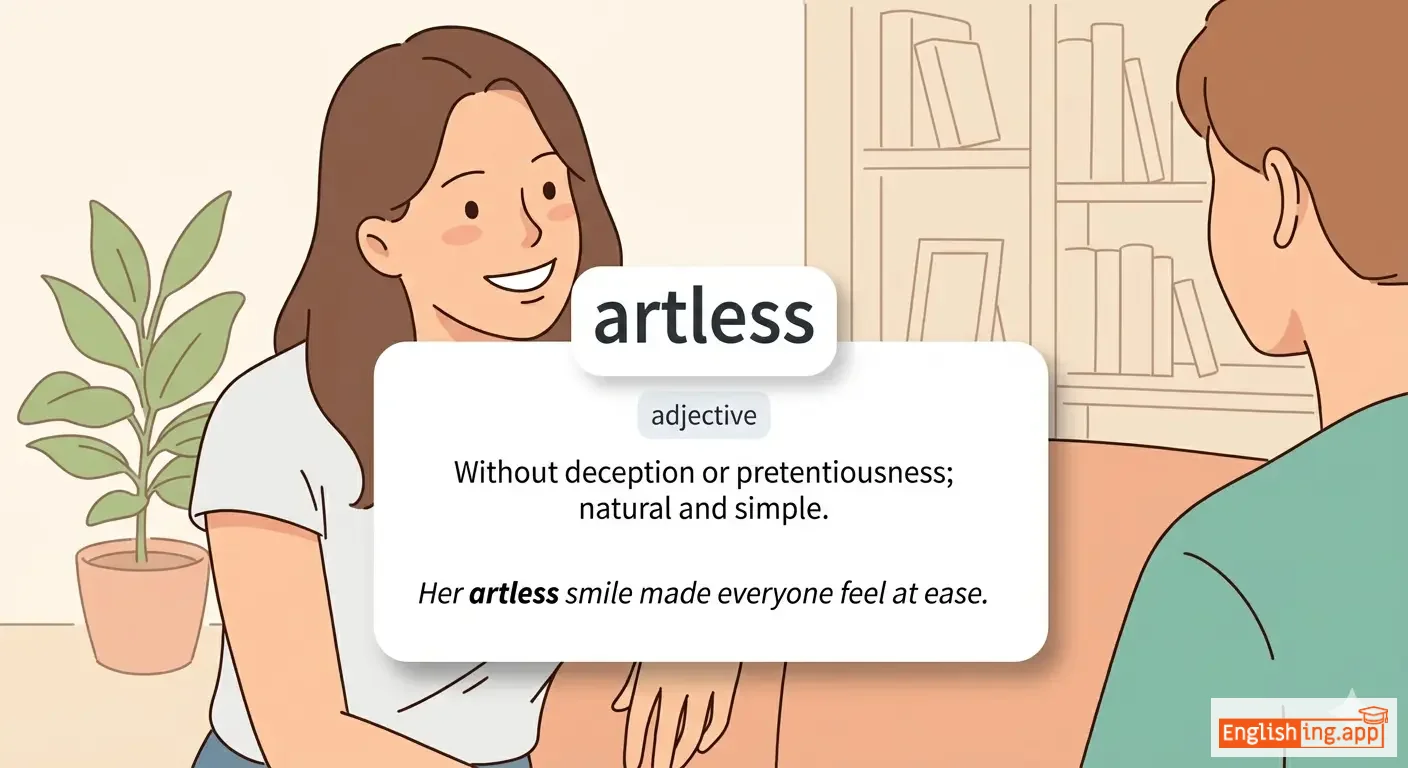
artless definition card — visual illustration of the meaning
adjective
/ˈɑːrtləs/
সরল, অকৃত্রিম (sorol, okritrim)

Without deception or pretentiousness; natural and simple.

"Her artless smile made everyone feel at ease."

"তার সরল হাসি সবাইকে স্বস্তি দিয়েছিল।" (tar sorol hasi sobaike swosti diyechilo.)
noun
/ˈɑːrtləsnəs/
সরলতা, অকৃত্রিমতা (sorolota, okritrimota)

The quality of being natural and simple without deceit or pretension.

"Her artlessness made her beloved by all."

"তার সরলতা তাকে সবার প্রিয় করে তুলেছিল।" (tar sorolota take sobar priyo kore tulchilo.)
noun
/ˈɑːrtwɜːrk/
শিল্পকর্ম (shilpokormo)

a piece of art, such as a painting, sculpture, or drawing

"The gallery displayed an impressive artwork by a local artist."

"গ্যালারিটি একটি স্থানীয় শিল্পীর একটি চমত্কার শিল্পকর্ম প্রদর্শন করেছিল।" (Gyalari-ti ekti sthanio shilpir ekti chomatkar shilpokormo prokash korechhilo.)
noun
/ˈeə.rəm/
কচু (kochu)

a plant with large arrow-shaped leaves and a white spathe, also known as taro

"Arum leaves are commonly used in Bengali cuisine for cooking."

"কচু পাতা সাধারণত রান্নার জন্য বাঙালি খাবারে ব্যবহৃত হয়।" (kochu pata sadharonoto rannar jonno bangali khabare byabohrito hoy.)
conjunction, adverb, preposition
/æz/
হিসাবে (hisabe)

used to compare, to indicate the role or function of something, or to introduce clauses of time or reason

"She works as a teacher."

"সে একজন শিক্ষক হিসাবে কাজ করে।" (Se ekjon shikkhok hisabe kaj kore.)
adverb
/æz ˈjuː.ʒu.əl/
প্রথাগতভাবে; প্রচলিত নিয়মে; (prothagotobhabe)

in the way that is normal or typical; customarily

"As usual, he arrived late to the meeting."

"প্রথাগতভাবে, সে মিটিংয়ে দেরিতে পৌঁছেছিল।" (prothagotobhabe, she meetinger deri te pouchechilo.)
noun
/ˌæs.əˈfet.ɪ.də/
হিং (hing)

a pungent spice derived from the resin of a plant, commonly used in Indian cooking

"A pinch of asafoetida adds a distinctive flavor to the lentil curry."

"এক চিমটি হিং ডালের তরকারিতে একটি স্বতন্ত্র স্বাদ যোগ করে।" (ek chimti hing daler torkarite ekti swatontra swad jog kore.)
ascend definition card — visual illustration of the meaning
verb
/əˈsɛnd/
উর্ধ্বগমন করা (urdhbogomon kora)

to move upward or rise to a higher position or level

"The hikers began to ascend the steep mountain trail."

"হাইকাররা খাড়া পাহাড়ি পথে উঠতে শুরু করল।" (Haikara khara paharir pothe uthte shuru korlo.)
noun
/əˈsɛndənsi/
প্রাধান্য, আধিপত্য (pradhanno, adhipotto)

A position of power, influence, or control over others.

"The company gained ascendancy in the market through innovation."

"কোম্পানিটি নতুনত্বের মাধ্যমে বাজারে প্রাধান্য অর্জন করেছিল।" (companyti notunnoter maddhome bajar e pradhanno arjon korechilo.)
adjective
/əˈsɛndənt/
উদীয়মান, প্রভাবশালী (udiyoman, prabhabsali)

Rising in power or influence; dominant.

"She is an ascendant leader in the political party."

"তিনি রাজনৈতিক দলে একজন উদীয়মান নেতা।" (tini rajnaitik dole ekti udiyoman neta.)