ভোকাবুলারিসমূহ

ইংরেজি শব্দের বাংলা অর্থ | English to Bangla Word Meaning Dictionary

noun
/ˌɑːrbɪˈtreɪʃən/
সালিসি (salishi)

the process of resolving a dispute through an impartial third party whose decision is binding; formal judgment outside a court

"The contract requires arbitration to settle any disputes."

"চুক্তিতে যেকোনো বিরোধ নিষ্পত্তির জন্য সালিসি বাধ্যতামূলক।" (chuktite jekono birodh nishpottir jonyo salishi baddhotamulok)
noun
/ˈɑːrbər/
লতাপাতা ঢাকা ছাউনি (lotapata dhaka chauni)

a shady garden shelter formed by trees, climbing plants, or latticework

"They rested under the arbor covered with roses."

"তারা গোলাপের লতা দিয়ে ঢাকা ছাউনির নিচে বিশ্রাম নিয়েছিল।" (Tara golaper lota diye dhaka chaunir niche bishram niyechhilo.)
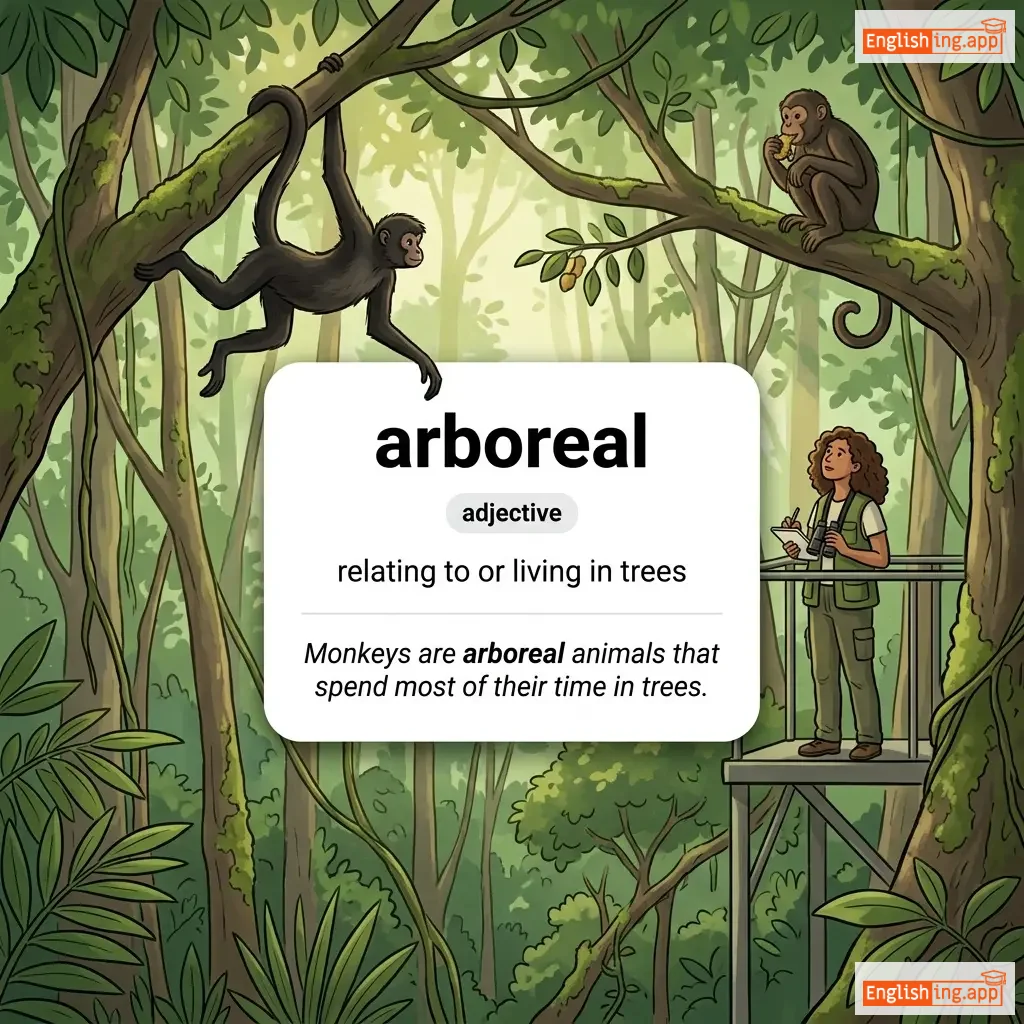
arboreal definition card — visual illustration of the meaning
adjective
/ɑːrˈbɔːriəl/
বৃক্ষবাসী (brikkhobashi)

relating to or living in trees

"Monkeys are arboreal animals that spend most of their time in trees."

"বানররা বৃক্ষবাসী প্রাণী যারা অধিকাংশ সময় গাছে কাটায়।" (Banorra brikkhobashi prani jara odhikangsho somoy gache katay.)
adjective
/ˌɑːrbəˈrɛsənt/
বৃক্ষসদৃশ (brikkhosodrish)

having the appearance or characteristics of a tree; tree-like

"The coral had an arborescent form that resembled a miniature forest."

"প্রবালটির একটি বৃক্ষসদৃশ আকার ছিল যা একটি ক্ষুদ্র বনকে অনুরূপ করেছিল।" (Probalti ek brikkhosodrish akar chilo ja ekti khudro bonke onuroop korechilo.)
noun
/ˌɑːrbəˈriːtəm/
বৃক্ষ উদ্যান (brikkho udyan)

a place where trees, shrubs, and plants are grown for scientific study or public display

"We visited the city’s arboretum to learn about exotic trees."

"আমরা শহরের বৃক্ষ উদ্যান পরিদর্শন করেছিলাম বিদেশি গাছ সম্পর্কে জানতে।" (Amra shohorer brikkho udyan poridorshon korechhilam bideshi gach somporke jante.)
noun
/ˈɑːrbərɪˌkʌltʃər/
বৃক্ষচাষ (brikkhochash)

the cultivation and management of trees and shrubs

"He studied arboriculture to improve urban green spaces."

"তিনি শহরের সবুজ স্থান উন্নত করতে বৃক্ষচাষ অধ্যয়ন করেছিলেন।" (Tini shohorer sobuj sthan unnot korte brikkhochash odhyoyon korechhilen.)
noun
/ɑːrˈkeɪd/
আর্কেড / খেলার গলি (arked / khelay goli)

a covered passage with arches along one or both sides; also a place with coin-operated games

"The children spent the afternoon playing games at the arcade."

"শিশুরা বিকেলটি আর্কেডে খেলা করে কাটিয়েছিল।" (Shishura bikeldi arkede khela kore katiyechhilo.)
adjective
/ɑːrˈkeɪn/
রহস্যময় (rohosshomoy)

understood by few; mysterious or secret

"The professor’s lecture was full of arcane details that only specialists could follow."

"প্রফেসরের বক্তৃতা রহস্যময় তথ্য দিয়ে ভরা ছিল যা কেবল বিশেষজ্ঞরা বুঝতে পারত।" (Professorer boktrita rohosshomoy tothyo diye bhora chilo ja kebol bisheshoggo ra bujh te parto.)
prefix
/ɑːrtʃ-/
প্রধান / সর্বোচ্চ (prodhan / sorbocho)

a prefix meaning chief, principal, or extreme in rank, importance, or degree

"The word 'archenemy' uses the prefix 'arch-' to mean the main enemy."

"'আর্চএনেমি' শব্দটি 'আর্চ-' উপসর্গ ব্যবহার করে যার মানে প্রধান শত্রু।" ('archenemy' shobdoti 'arch-' uposorgo byabohar kore jar mane prodhan shotru.)
noun
/ˌɑːrkiˈɑːlədʒi/
প্রত্নতত্ত্ব (protnototto)

the study of human history and prehistory through excavation and analysis of artifacts, monuments, and other physical remains

"She studied archaeology to learn about ancient civilizations."

"সে প্রাচীন সভ্যতা সম্পর্কে জানতে প্রত্নতত্ত্ব অধ্যয়ন করেছিল।" (Se prachin shobhyota somporke jante protnototto oddhoyon korechhilo.)
adjective
/ɑːrˈkeɪɪk/
প্রাচীন (prachin)

very old or old-fashioned; belonging to an earlier time

"Some laws are considered archaic and no longer relevant."

"কিছু আইন প্রাচীন এবং আর প্রাসঙ্গিক নয় বলে বিবেচিত হয়।" (Kichu ain prachin ebong ar prosongik noy bole bicharito hoy.)
noun
/ˈɑːrkeɪˌɪzəm/
প্রাচীন শব্দপ্রয়োগ (prachin shobdo proyog)

a word, expression, or style of language that is no longer in everyday use

"The poem is full of archaisms that give it an old-fashioned flavor."

"কবিতাটি প্রাচীন শব্দপ্রয়োগে পূর্ণ যা এটিকে পুরনো ধাঁচের স্বাদ দিয়েছে।" (Kobitati prachin shobdo proyoge purno ja etike purono dhacher shad diyeche.)
noun
/ˈɑːrkeɪndʒəl/
মহাস্বরগদূত (mahasworgodut)

A high-ranking angel, often considered a chief messenger or leader among angels.

"Michael is often depicted as the most powerful archangel."

"মাইকেলকে প্রায়শই সবচেয়ে শক্তিশালী মহাস্বরগদূত হিসেবে বর্ণনা করা হয়।" (Michael ke prayoshoy shoktishali mahasworgodut hisebe bornona kora hoy.)
noun
/ˌɑːrtʃˈbɪʃəp/
মহাবিশপ (mahabishop)

A senior bishop in charge of an archdiocese in the Christian Church.

"The archbishop delivered a sermon to thousands of people."

"আর্চবিশপ হাজার হাজার মানুষের কাছে ধর্মোপদেশ প্রদান করেছিলেন।" (Archbishop hajar hajar manusher kache dharmopodesh prodan korechilen.)
noun
/ˌɑːrtʃˈdiːkən/
মহাধর্মযাজক (mahadhrmojajok)

A senior clergyman in the Christian Church ranking below a bishop.

"The archdeacon assisted the bishop in administrative duties."

"আর্চডিকন প্রশাসনিক কাজে বিশপকে সহায়তা করেছিলেন।" (Archdeacon proshashonik kaje bishop ke shahayota korechilen.)
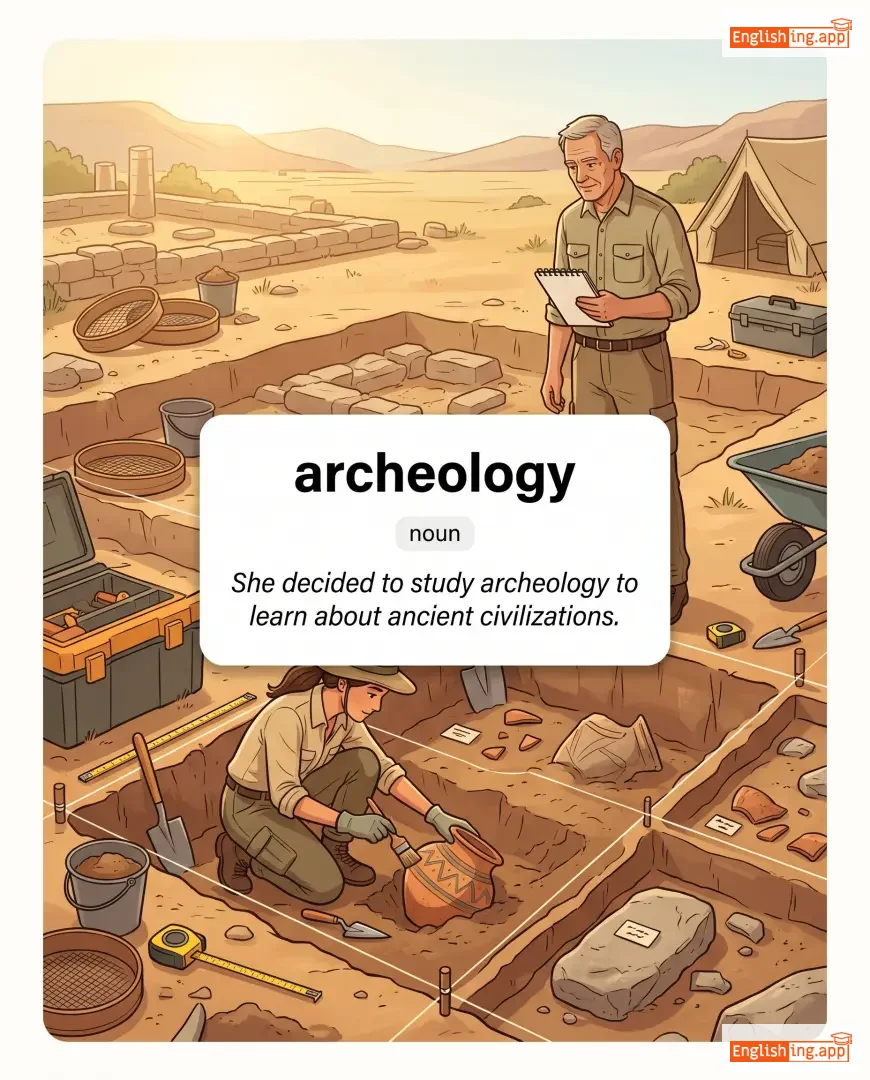
archeology definition card — visual illustration of the meaning
noun
/ˌɑːr.kiˈɑː.lə.dʒi/
প্রত্নতত্ত্ব (protnottotto)

the study of human history and prehistory through excavation and analysis of artifacts and structures

"She decided to study archeology to learn about ancient civilizations."

"সে প্রাচীন সভ্যতা সম্পর্কে জানতে প্রত্নতত্ত্ব পড়ার সিদ্ধান্ত নিল।" (Se prachin sobbhota somporke jante protnottotto porar siddhanto nilo.)
archetype definition card — visual illustration of the meaning
noun
/ˈɑːrkɪtaɪp/
আদিরূপ (adirup)

The original model or perfect example from which others are copied or derived.

"He is the archetype of a successful entrepreneur."

"সে একজন সফল উদ্যোক্তার আদিরূপ।" (Se ekjon sofol udyoktar adirup.)
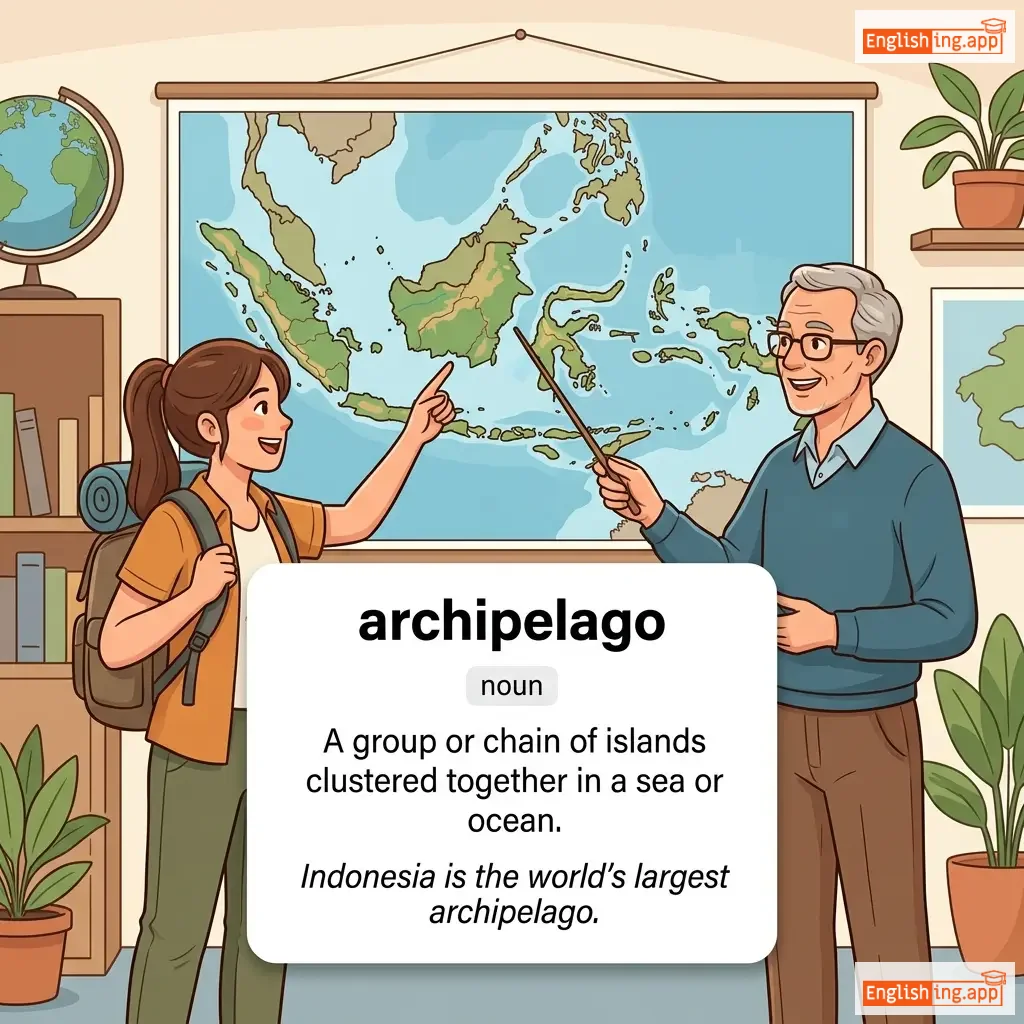
archipelago definition card — visual illustration of the meaning
noun
/ˌɑːrkəˈpɛləɡoʊ/
দ্বীপপুঞ্জ (dippunjo)

A group or chain of islands clustered together in a sea or ocean.

"Indonesia is the world’s largest archipelago."

"ইন্দোনেশিয়া বিশ্বের সবচেয়ে বড় দ্বীপপুঞ্জ।" (Indonesia bishwer shobcheye boro dippunjo.)
noun
/ˈɑː.kɪ.tekt/
স্থপতি (sthapati)

a person who designs buildings and oversees their construction

"The architect designed a modern office building."

"স্থপতি একটি আধুনিক অফিস ভবনের নকশা করেছিলেন।" (Sthapati ekti adhunik office bhoboner noksha korechhilen.)
adjective
/ˌɑːrkɪˈtɛktʃərəl/
স্থাপত্যমূলক (sthapotymulok)

relating to the design and style of buildings and structures

"The city is known for its beautiful architectural designs."

"শহরটি তার সুন্দর স্থাপত্যমূলক নকশার জন্য পরিচিত।" (Shohor-ti tar sundor sthapotymulok noksha-r jonyo porichito.)
architecture definition card — visual illustration of the meaning
noun
/ˈɑːkɪˌtɛktʃər/
স্থাপত্য (sthapotto)

the art and practice of designing and constructing buildings

"The ancient temples of Greece are famous for their architecture."

"প্রাচীন গ্রীসের মন্দিরগুলো তাদের স্থাপত্যের জন্য বিখ্যাত।" (Prachin Griser mondirgulo tader sthapotter jonno bikhyato.)
noun, verb
/ˈɑːrkaɪv/
আর্কাইভ (arkaiv)

A collection of historical documents or records; to store or preserve information for future use.

"The library decided to archive all the old manuscripts."

"লাইব্রেরি সব পুরনো পাণ্ডুলিপি আর্কাইভ করার সিদ্ধান্ত নিল।" (Library sob purono pandulipi arkaiv korar siddhanto nilo.)
noun
/ˈɑːrkaɪvz/
আর্কাইভস (arkaivs)

A place or collection where historical records and documents are stored.

"She visited the national archives to research her family history."

"সে তার পারিবারিক ইতিহাস গবেষণার জন্য জাতীয় আর্কাইভসে গিয়েছিল।" (Se tar paribarik itihash gobeshonar jonno jatio arkaivs e giechilo.)
adjective
/ˈɑːrdənt/
উৎসাহী, আন্তরিক (ardent)

Having or showing very strong feelings or passion.

"He is an ardent supporter of environmental protection."

"তিনি পরিবেশ সুরক্ষার একজন আন্তরিক সমর্থক।" (Tini poribesh surakkhar ekjon antorik somorthok.)
ardor definition card — visual illustration of the meaning
noun
/ˈɑːrdər/
আবেগ, উদ্দীপনা (ardor)

Great enthusiasm or passion.

"She spoke with ardor about her new project."

"সে তার নতুন প্রকল্প সম্পর্কে প্রবল আবেগ নিয়ে কথা বলেছিল।" (Se tar notun prokolpo somporke probol abeg nie kotha bolechilo.)
arduous definition card — visual illustration of the meaning
adjective
/ˈɑːrdʒuəs/
কষ্টসাধ্য (arduash)

Involving or requiring a lot of effort; very difficult and tiring.

"Climbing the mountain was an arduous task."

"পাহাড়ে ওঠা ছিল একটি কষ্টসাধ্য কাজ।" (Pahar e otha chilo ekti kosto shadhyo kaj.)
noun
/ˈeə.ri.ə/
এলাকা (elaka)

a particular region or space; the extent of a surface

"This area is known for its beautiful parks."

"এই এলাকা তার সুন্দর পার্কগুলোর জন্য পরিচিত।" (Ei elaka tar sundor parkguler jonno porichito.)
noun
/əˈriːnə/
খেলার মাঠ, মঞ্চ (khelar math, moncho)

a large area surrounded by seats for sports, entertainment, or other events

"The basketball game will be held in the new arena downtown."

"বাস্কেটবল খেলা শহরের নতুন এরিনায় অনুষ্ঠিত হবে।" (Basketball khela shohorer notun erinay onushthito hobe.)
argot definition card — visual illustration of the meaning
noun
/ˈɑːrɡoʊ/
পেশাগত গোপন ভাষা (peshagoto gopon vasha)

the specialized vocabulary or jargon of a particular group, especially one with a common interest or occupation

"The thieves communicated in an argot that outsiders could not understand."

"চোরেরা এমন একটি আর্গট ভাষায় কথা বলেছিল যা বাইরের লোকেরা বুঝতে পারেনি।" (Chorera eman ekti argot vashay kotha bolechilo ja baire lokera bujhte pareni.)
adjective
/ˈɑːrɡjuəbl/
তর্কযোগ্য (torkojoggo)

open to debate or discussion; not certain and capable of being argued for or against

"It is arguable that technology has improved our quality of life."

"এটি তর্কযোগ্য যে প্রযুক্তি আমাদের জীবনের মান উন্নত করেছে।" (eti torkojoggo je projukti amader jiboner man unnoto koreche)
adverb
/ˈɑːɡjuːəbli/
তর্কসাপেক্ষভাবে (torkosapekkhobhabey)

used to say that a statement is open to argument or is considered true by many people

"She is arguably the most talented player on the team."

"সে তর্কসাপেক্ষভাবে দলের সবচেয়ে প্রতিভাবান খেলোয়াড়।" (se torkosapekkhobhabey doler shobcheye protibhaban kheloyar)
argue definition card — visual illustration of the meaning
verb
/ˈɑːrɡjuː/
তর্ক করা (torko kora)

to give reasons for or against something; to dispute or debate

"They often argue about politics during dinner."

"তারা প্রায়ই রাতের খাবারের সময় রাজনীতি নিয়ে তর্ক করে।" (tara prayoi rater khabarer somoy rajniti niye torko kore.)
argument definition card — visual illustration of the meaning
noun
/ˈɑːrɡjumənt/
তর্ক, যুক্তি (torko, jukti)

a disagreement, or a reason given to support or oppose an idea

"They had a heated argument about money."

"তাদের টাকার ব্যাপারে তীব্র তর্ক হয়েছিল।" (tader takar byapare tibro torko hoyechhilo.)
noun
/ˈɑːriə/
একক সঙ্গীত অংশ (ekok shongit angsho)

a solo vocal piece with instrumental accompaniment, typically in an opera

"The soprano performed a moving aria during the second act."

"সোপ্রানো দ্বিতীয় অঙ্কে একটি আবেগময় এরিয়া পরিবেশন করলেন।" (Soprano ditiyo onke ekti abegmoy aria poribeshon korlen.)
adjective
/ˈærɪd/
শুষ্ক (shushko)

extremely dry; lacking in interest or excitement

"The desert is known for its arid climate."

"মরুভূমি তার শুষ্ক আবহাওয়ার জন্য পরিচিত।" (Morubhumi tar shushko abohawar jonno porichito.)
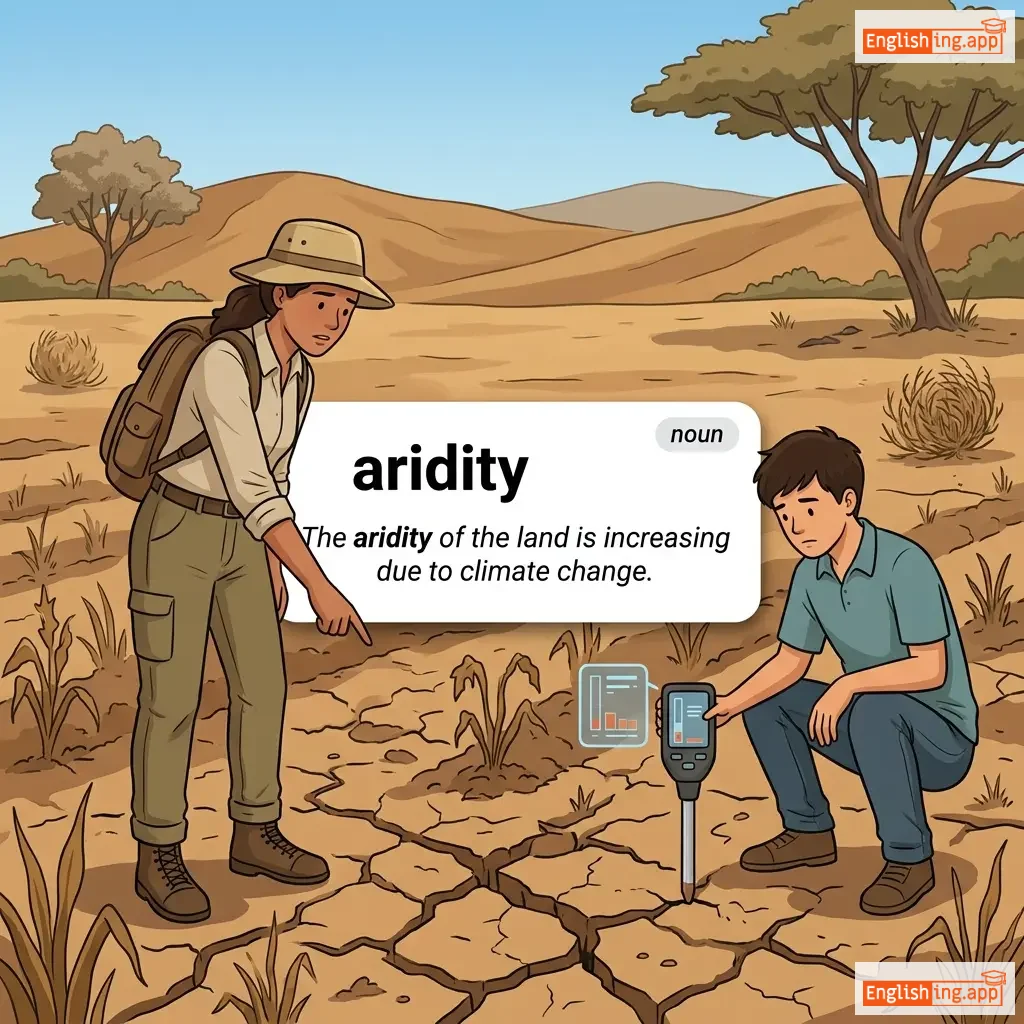
aridity definition card — visual illustration of the meaning
noun
əˈrɪd.ɪ.ti
খরা প্রবণতা (khora probonota)

The state of being extremely dry, especially having insufficient rainfall to support vegetation.

"The aridity of the land is increasing due to climate change."

"জলবায়ু পরিবর্তনের কারণে ভূমির অ্যারিডিটি বৃদ্ধি পাচ্ছে।" (Jolbayu poribortonor karone bhumir aridity briddhi pachhe.)
verb
/əˈraɪz/
উত্থিত হওয়া (utthito howa)

to begin to exist or to happen

"Problems may arise if you don't plan ahead."

"যদি আপনি আগে থেকে পরিকল্পনা না করেন তবে সমস্যা দেখা দিতে পারে।" (Jodi apni age theke porikolpona na koren tobe shomossha dekha dite pare.)
noun
/ˌærɪˈstɑːkrəsi/
অভিজাত শ্রেণি (obhijat shreni)

a class of people holding exceptional rank and privileges, especially hereditary nobility

"The aristocracy often had influence over political decisions."

"অভিজাত শ্রেণি প্রায়ই রাজনৈতিক সিদ্ধান্তে প্রভাব ফেলত।" (Obhijat shreni prayoi rajnoitik siddhante probhab felt.)
noun
/ˈærɪstəkræt/
অভিজাত (obhijat)

a member of the aristocracy; a nobleman or woman

"The aristocrat lived in a lavish mansion."

"অভিজাত ব্যক্তি একটি বিলাসবহুল প্রাসাদে বাস করতেন।" (Obhijat bekti ekti bilashbohul prasade bash korten.)
adjective
/ˌærɪˈstɒkrætɪk/
আভিজাত্যসূচক; অভিজাত; (aristocratic)

noble; having the manners of the upper class

"She had an aristocratic bearing that commanded respect."

"তার একটি আভিজাত্যপূর্ণ ভাব ছিল যা সম্মান আদায় করত।" (tar ekti avijjatyopurno bhab chilo ja somman aday korot.)
noun
/ɑːrm/
হাত (hat)

the part of the body from the shoulder to the hand; also a branch or division of an organization

"She broke her arm while playing football."

"ফুটবল খেলার সময় তার হাত ভেঙে যায়।" (futbol khelar somoy tar hat bhenge jay.)
noun
/ɑːrˈmɑːdə/
যুদ্ধজাহাজ বহর (juddhajahaj bohor)

A large fleet of warships.

"The Spanish Armada sailed against England in 1588."

"স্প্যানিশ আরমাডা ১৫৮৮ সালে ইংল্যান্ডের বিরুদ্ধে যাত্রা করেছিল।" (Spanish Armada 1588 sale England er biruddhe jatra korechilo.)
adjective
/ɑːrmd/
সশস্ত্র (soshostro)

equipped with or carrying weapons

"The bank was robbed by armed men."

"সশস্ত্র লোকেরা ব্যাংক লুট করেছিল।" (soshostro lokera bank lut korechhilo.)
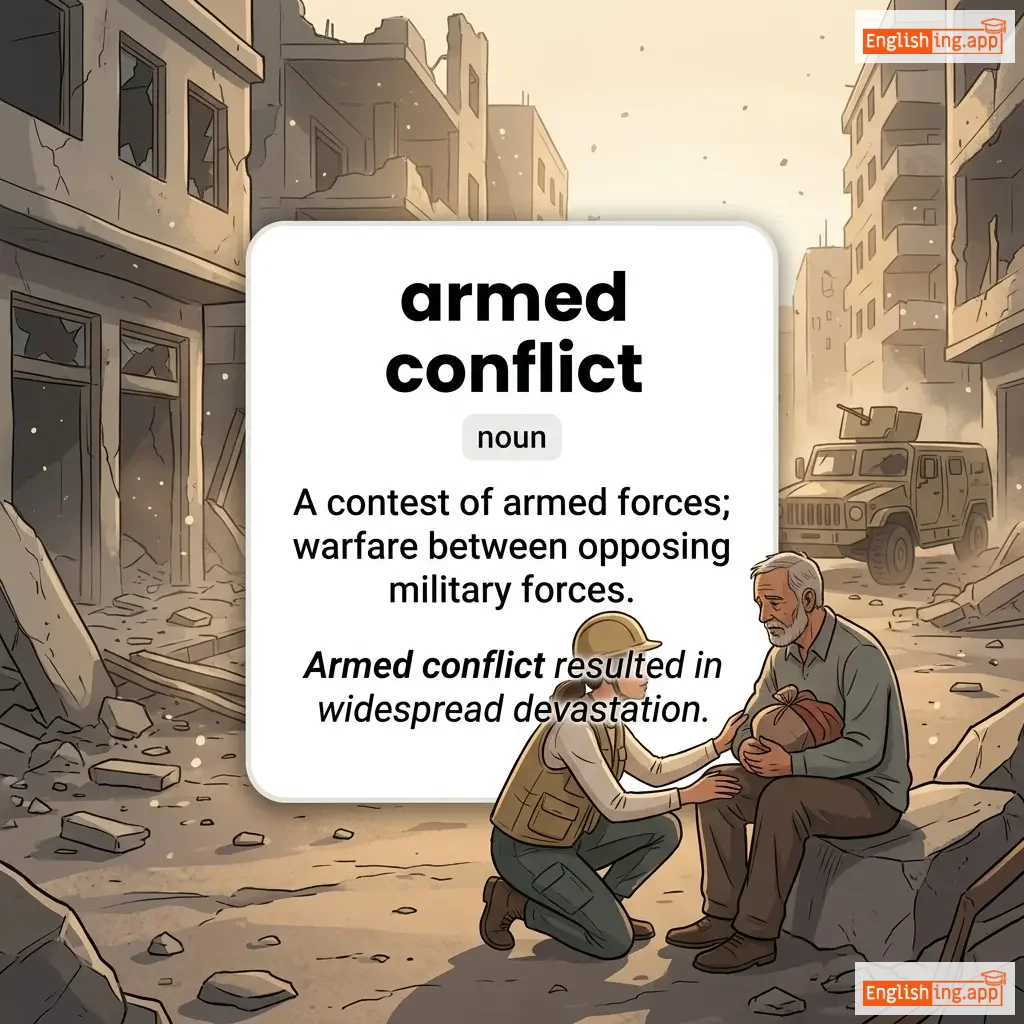
armed conflict definition card — visual illustration of the meaning
noun
ɑːmd ˈkɒn.flɪkt
সশস্ত্র সংঘাত (shoshostro shonghat)

A contest of armed forces; warfare between opposing military forces.

"Armed conflict resulted in widespread devastation."

"সশস্ত্র সংঘাতে ব্যাপক ধ্বংসযজ্ঞ ঘটে।" (Shoshostro shonghate byapok dhongshojoggyo ghote.)
noun
/ˈɑːrmfʊl/
বাহুভর্তি (bahubhorte)

As much as can be carried in one or both arms.

"She carried an armful of books into the library."

"সে লাইব্রেরিতে এক বাহু ভর্তি বই নিয়ে গেল।" (Se library te ek bahu bhorti boi niye gelo.)
noun
/ˈɑːm.lət/
বাহুবন্ধ/বাহুর বালা (bahubandho/bahur bala)

a band worn around the upper arm as an ornament

"The traditional dancer wore golden armlets that gleamed in the spotlight."

"ঐতিহ্যবাহী নর্তকী সোনালী বাহুবন্ধ পরেছিলেন যা স্পটলাইটে ঝকঝক করছিল।" (oitihobaahi nortoki shonali bahubandho porechilen ja spotlaite jhokjhok korchilo.)
noun
/ˈɑːrməri/
অস্ত্রাগার (ostragar)

A place where weapons are stored; a supply of resources or skills.

"The soldiers kept their weapons in the armory."

"সৈন্যরা তাদের অস্ত্র অস্ত্রাগারে রেখেছিল।" (Soinyora tader ostro ostragare rekhechilo.)
noun
/ˈɑːr.mər/
বর্ম (bormo)

protective covering worn by soldiers; metal plating for military vehicles

"The knight wore heavy armour to protect himself in battle."

"নাইটটি যুদ্ধে নিজেকে রক্ষা করার জন্য ভারী বর্ম পরেছিল।" (knightti juddhe nijeke rokkha korar jonno bhari bormo porechilo.)
noun
/ˈɑːrm.pɪt/
বগল (bogol)

the hollow area under the arm where it joins the shoulder

"He applied deodorant to his armpit."

"সে তার বগলে ডিওডোরেন্ট লাগাল।" (she tar bogole deodorant lagalo)
noun
/ɑːrmz/
অস্ত্র / বাহু (ostro / bahu)

weapons and ammunition; or the upper limbs of the human body

"The country decided to reduce its stock of arms."

"দেশটি তার অস্ত্রের মজুদ কমানোর সিদ্ধান্ত নিল।" (Deshti tar ostro mojood komanor siddhanto nilo.)