ভোকাবুলারিসমূহ

ইংরেজি শব্দের বাংলা অর্থ | English to Bangla Word Meaning Dictionary

noun
/ˈæpərtʃər/
ছিদ্র / ফাঁক (chidr / phak)

an opening, hole, or gap, especially one that lets in light

"Light entered through the small aperture in the wall."

"দেয়ালের ছোট ছিদ্র দিয়ে আলো প্রবেশ করেছিল।" (Deyaler chhoto chidr diye alo probesh korechhilo.)
apex definition card — visual illustration of the meaning
noun
/ˈeɪ.pɛks/
শীর্ষবিন্দু (shirshabindu)

the highest point or peak of something

"The climbers finally reached the apex of the mountain."

"আরোহীরা অবশেষে পর্বতের শীর্ষবিন্দুতে পৌঁছাল।" (Arohira obosese porboter shirshabindute pouchhalo.)
noun
/əˈfeɪ.ʒə/
বাকশক্তি হ্রাস (bakshokti hras)

a medical condition that causes loss of ability to speak or understand language

"After the stroke, she was diagnosed with aphasia."

"স্ট্রোকের পরে তার অ্যাফেসিয়া ধরা পড়ে।" (Stroke er pore tar aphasia dhora pore.)
noun
/ˈæf.ə.rɪ.zəm/
সূক্তি (sukti)

a short, witty saying that expresses a general truth or principle

"He began his speech with an aphorism about life and success."

"সে জীবনের ও সাফল্যের উপর একটি সূক্তি দিয়ে তার বক্তৃতা শুরু করল।" (Se jiboner o safolyer upor ekti sukti diye tar boktrita suru korlo.)
adjective
/ˌæf.əˈrɪs.tɪk/
সূক্তিসুলভ (suktisulov)

expressed in the style of a short, witty saying

"Her writing style is concise and aphoristic."

"তার লেখার ধরন সংক্ষিপ্ত ও সূক্তিসুলভ।" (Tar lekhar dhoron songkhipto o suktisulov.)
noun
/ˈeɪ.pi.ə.rɪst/
মৌচাষী (mouchashi)

a person who keeps and tends bees for honey production

"The apiarist collected fresh honey from the hives."

"মৌচাষী মৌচাক থেকে তাজা মধু সংগ্রহ করলেন।" (Mouchashi mouchak theke taja modhu songroho korlen.)
noun
/ˈeɪ.pi.ˌɛr.i/
মৌচাষ কেন্দ্র (mouchash kendra)

A place where beehives are kept, especially for commercial purposes.

"The farmer built a new apiary to produce organic honey."

"কৃষক জৈব মধু উৎপাদনের জন্য একটি নতুন মৌচাষ কেন্দ্র নির্মাণ করেছিলেন।" (Krishok joib modhu utpadoner jonno ekti notun mouchash kendra nirman korechilen.)
noun
/ˈæp.ɪˌkʌl.tʃər/
মৌচাষ (mouchash)

The practice of keeping and raising bees for honey and other products.

"Apiculture plays a vital role in agriculture by supporting pollination."

"এপিকালচার কৃষিতে গুরুত্বপূর্ণ ভূমিকা পালন করে কারণ এটি পরাগায়নকে সহায়তা করে।" (Apiculture krishite guruttopurno vhumika palon kore karon eti poragayonke sohayota kore.)
noun
/əˈplɒm/
আত্মবিশ্বাস (atmobhishash)

Complete and confident self-assurance or poise.

"She handled the difficult questions with aplomb."

"সে আত্মবিশ্বাসের সাথে কঠিন প্রশ্নগুলোর উত্তর দিয়েছিল।" (Se atmobhishasher sathe kothin prosnogulor uttar diyechilo.)
adjective
/əˌpɒk.əˈlɪp.tɪk/
প্রলয়ঙ্করী (proloyankori)

Describing the end of the world, or something catastrophic and disastrous.

"The movie depicts an apocalyptic future after a nuclear war."

"চলচ্চিত্রে পারমাণবিক যুদ্ধের পর একটি প্রলয়ঙ্করী ভবিষ্যৎ দেখানো হয়েছে।" (Cholocchitre parmanobik juddher por ekti proloyankori vobisshot dekhano hoyeche.)
adjective
/əˈpɒ.krɪ.fəl/
সন্দেহজনক (sondehojonok)

Of doubtful authenticity, though widely circulated as true.

"The story about him saving the village is probably apocryphal."

"তার গ্রাম রক্ষার গল্পটি সম্ভবত সন্দেহজনক।" (Tar gram rokkhar golpoti shombhoboto sondehojonok.)
apogee definition card — visual illustration of the meaning
noun
/ˈæpədʒiː/
চূড়ান্ত বিন্দু (churanto bindu)

the highest or most distant point; the climax or peak of something

"The empire reached its apogee during the 18th century."

"সাম্রাজ্য তার চূড়ান্ত শিখরে পৌঁছেছিল আঠারো শতকে।" (Samrajjo tar churanto shikhore pouchhilo atharo shotoke.)
adjective
/ˌeɪpəˈlɪtɪkəl/
অরাজনৈতিক (arajonetik)

not interested in or not connected with politics

"She prefers to stay apolitical and focus on her work."

"সে অরাজনৈতিক থাকতে এবং নিজের কাজে মনোযোগ দিতে পছন্দ করে।" (Se arajonetik thakte ebong nijer kaje monojog dite pochhondo kore.)
noun
/əˈpɒlədʒɪst/
পক্ষসমর্থক (pokshosomorthok)

a person who defends or justifies something, often a controversial belief or institution

"He is known as an apologist for authoritarian regimes."

"সে কর্তৃত্ববাদী শাসন ব্যবস্থার পক্ষসমর্থক হিসেবে পরিচিত।" (Se kortitwobadi shashon byabasthar pokshosomorthok hisebe porichito.)
verb
/əˈpɒlədʒaɪz/
ক্ষমা চাওয়া (khoma chaowa)

to say sorry for something wrong you have done

"He apologized for being late to the meeting."

"সে মিটিংয়ে দেরি করার জন্য ক্ষমা চেয়েছিল।" (Se meetinge deri korar jonno khoma cheyechhilo.)
noun
/ˈæpəˌlɔːɡ/
নৈতিক গল্প (noitik golpo)

a short moral story or fable intended to teach a lesson

"The teacher used an old apologue to explain honesty to the children."

"শিক্ষক শিশুদের সততা বোঝাতে একটি পুরনো নৈতিক গল্প ব্যবহার করেছিলেন।" (Shikkhok shishuder shotota bozhate ekti purono noitik golpo byabohar korechilen.)
noun
/əˈpɒlədʒi/
দুঃখপ্রকাশ (dukkhoprokash)

a statement expressing regret for something wrong or hurtful

"He offered an apology for being late to the meeting."

"সে মিটিংয়ে দেরি করার জন্য দুঃখপ্রকাশ করেছিল।" (Se meeting e deri korar jonyo dukkhoprokash korechilo.)
noun
/əˈpɒfəsɪs/
অপোফাসিস (অপ্রকাশ্য উল্লেখের কৌশল) (opofasis)

A rhetorical device where the speaker brings up a subject by denying it or pretending to pass over it.

"The politician used apophasis by saying, 'I won’t even mention my opponent’s scandals.'"

"রাজনীতিবিদ অপোফাসিস ব্যবহার করে বললেন, 'আমি আমার প্রতিদ্বন্দ্বীর কেলেঙ্কারির কথা উল্লেখই করব না।'" (rajnitibid opofasis byabohar kore bolen, 'ami amar protidondhir kelenkari kotha ullekho korbo na.')
noun
/ˈæpəfθɛm/
সংক্ষিপ্ত প্রবাদ বা নীতিবাক্য (opofthom)

A short, pithy, and instructive saying or maxim.

"She always had a witty apophthegm to share at meetings."

"সে সবসময় মিটিংয়ে একটি বুদ্ধিদীপ্ত প্রবাদ শেয়ার করত।" (se sobsomoy meetinge ekti buddhidipto probad share korto.)
adjective
/ˌæpəˈplɛktɪk/
রাগে ফেটে পড়া (opoplectic)

Extremely angry; furious.

"He was apoplectic when he heard about the unfair decision."

"অন্যায় সিদ্ধান্তের কথা শুনে সে রাগে ফেটে পড়ল।" (onnay siddhant er kotha shune se rage fote porlo.)
noun
/ˈæpəplɛksi/
স্ট্রোক বা আকস্মিক মস্তিষ্কজনিত অচেতনতা (opoplexi)

A sudden loss of consciousness or control due to stroke or extreme anger.

"The old man nearly had apoplexy when he heard the shocking news."

"ভয়ঙ্কর খবর শুনে বৃদ্ধ প্রায় স্ট্রোক করে ফেললেন।" (voyonkor khobor shune bridho pray stroke kore pellen.)
noun
/əˈpɒstəsi/
ধর্মত্যাগ (opostasi)

The abandonment or renunciation of a religious or political belief.

"His public apostasy shocked his followers."

"তার প্রকাশ্য ধর্মত্যাগ তার অনুসারীদের চমকে দিয়েছিল।" (tar prokashyo dhormottyag tar onusarider chomke diyechhilo.)
noun
/ˈæpəˌsteɪt/
ধর্মত্যাগী (dhormotyagi)

A person who renounces a religious or political belief or principle.

"He was labeled an apostate after abandoning the faith of his community."

"সে তার সম্প্রদায়ের বিশ্বাস ত্যাগ করার পর তাকে ধর্মত্যাগী বলা হয়েছিল।" (Se tar somprodayer bishwas tyag korar por take dhormotyagi bola hoyechilo.)
noun
/əˈpɒsəl/
শিষ্য, প্রচারক (shishyo, procharok)

A vigorous and pioneering advocate or supporter of a particular cause, often used for the early Christian disciples.

"He became an apostle of environmental protection."

"সে পরিবেশ সংরক্ষণের একজন প্রচারক হয়ে উঠেছিল।" (Se poribesh songrokhoner ekjon procharok hoye uthchhilo.)
noun
/əˈpɒstrəfi/
অ্যাপোস্ট্রফি চিহ্ন (apostrofi chinho)

A punctuation mark (') used to indicate possession or the omission of letters or numbers.

"You need an apostrophe in the word 'children’s'."

"শব্দ 'চিলড্রেন’স'-এ একটি অ্যাপোস্ট্রফি প্রয়োজন।" (Shobdo 'children’s'-e ekti apostrofi proyojon.)
noun
/əˈpɒθəˌkɛri/
প্রাচীন ওষুধ বিক্রেতা (prachin oshudh bikreta)

A historical term for a person who prepared and sold medicines and drugs.

"The village apothecary provided remedies for many common illnesses."

"গ্রামের প্রাচীন ওষুধ বিক্রেতা অনেক সাধারণ রোগের চিকিৎসা প্রদান করত।" (Gramer prachin oshudh bikreta onek shadharon roger chikitsa prodan korto.)
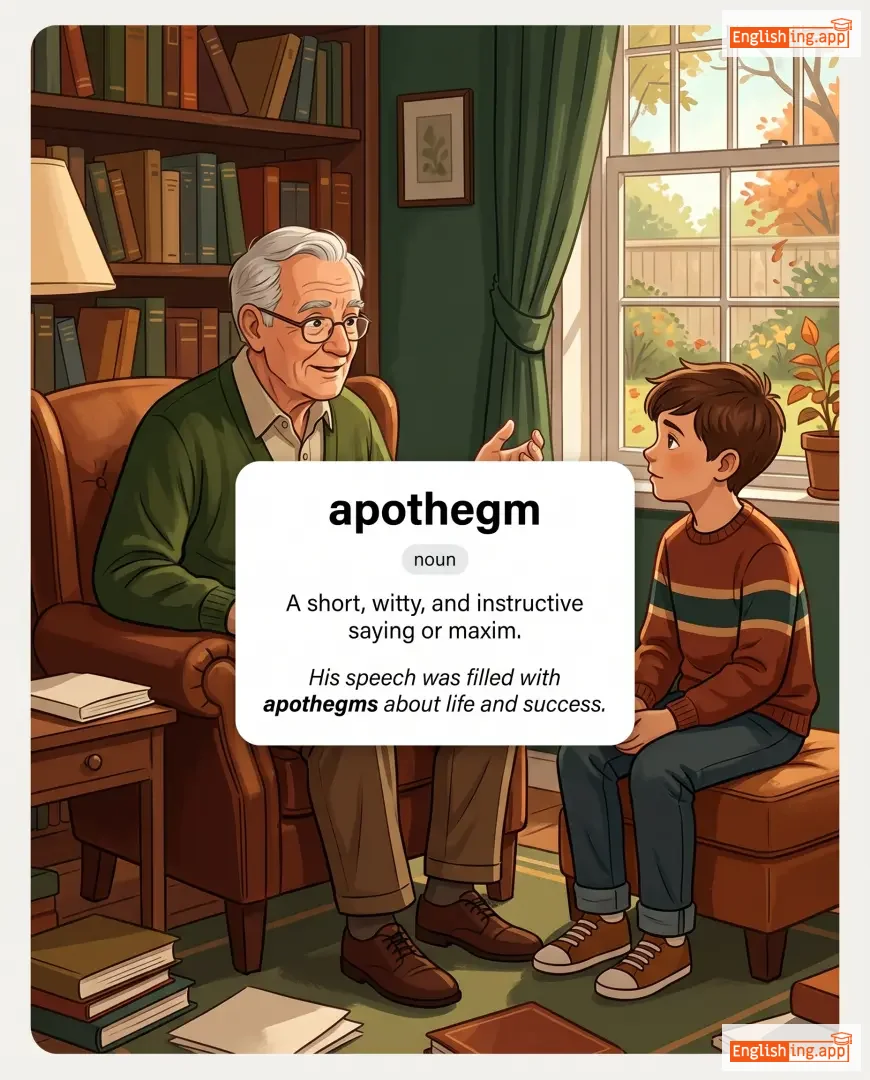
apothegm definition card — visual illustration of the meaning
noun
/ˈæpəˌθɛm/
সুবচন, প্রবাদ (subochon, probad)

A short, witty, and instructive saying or maxim.

"His speech was filled with apothegms about life and success."

"তার বক্তৃতা জীবন ও সাফল্য নিয়ে সুবচনে ভরা ছিল।" (Tar boktrita jibon o safollo niye subochone vora chhilo.)
noun
/əˌpɒθiˈoʊsɪs/
শিখর, সর্বোচ্চ গৌরব (shikhor, sorbocho gourob)

The highest point of development; the perfect example of something; the elevation of someone to divine status.

"Many see the Renaissance as the apotheosis of art and culture in Europe."

"অনেকেই রেনেসাঁসকে ইউরোপের শিল্প ও সংস্কৃতির শিখর বলে মনে করে।" (Onekei renesanske yurop-er shilpo o songskritir shikhor bole mone kore.)
verb
/əˈpɔːl/
ভয়ঙ্করভাবে হতবাক করা (voyonkorbhabe hotbak kora)

To shock or horrify someone with something unpleasant or bad.

"The cruelty of the crime appalled the entire community."

"অপরাধের নিষ্ঠুরতা পুরো সম্প্রদায়কে হতবাক করেছিল।" (Oporadher nishthurata puro somprodayke hotbak korechilo.)
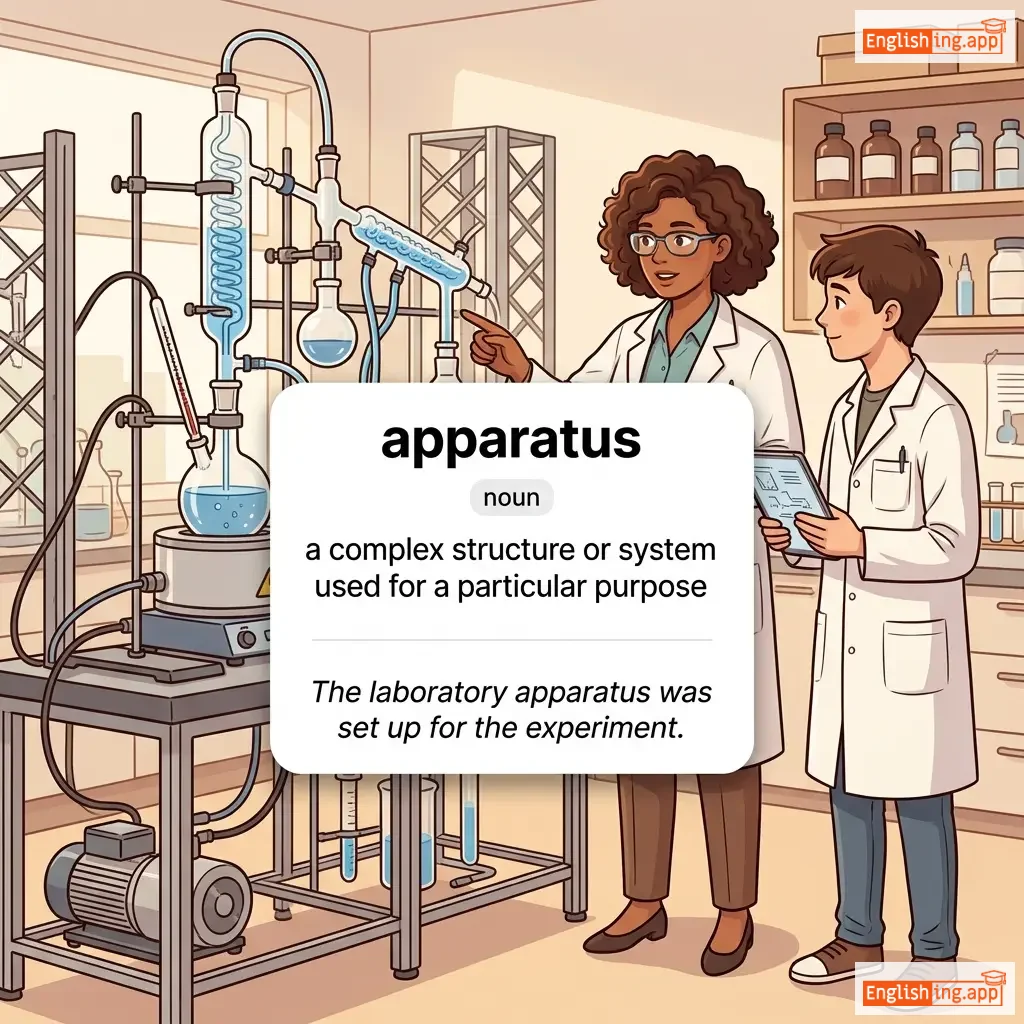
apparatus definition card — visual illustration of the meaning
noun
/ˌæpəˈreɪtəs/
যন্ত্রপাতি (jontrapati)

a complex structure or system used for a particular purpose

"The laboratory apparatus was set up for the experiment."

"ল্যাবরেটরির যন্ত্রপাতি পরীক্ষার জন্য প্রস্তুত ছিল।" (lyaboratorir jontrapati porikkhar jonno prostut chhilo.)
noun
/əˈpærəl/
পোশাক (poshak)

Clothing, especially formal or special clothes.

"The store specializes in wedding apparel."

"দোকানটি বিয়ের পোশাকে বিশেষজ্ঞ।" (Dokan-ti biyer poshake bisheshoggo.)
adjective
/əˈpærənt/
স্পষ্ট (sposto)

Clearly visible or understood; obvious.

"It soon became apparent that he was not telling the truth."

"শীঘ্রই স্পষ্ট হয়ে গেল যে সে সত্য বলছে না।" (Shighroi sposto hoye gelo je se sotti bolche na.)
adverb
/əˈpærəntli/
মনে হয় (mone hoy)

as far as one knows or can see; seemingly

"Apparently, she forgot about the meeting."

"মনে হয়, সে মিটিং সম্পর্কে ভুলে গেছে।" (Mone hoy, se meeting somporke bhule geche.)
noun
/ˌæpəˈrɪʃən/
প্রেতাত্মা, ভূত (pretatma, vhoot)

A ghostly figure or an unusual or unexpected appearance.

"The children were frightened by the sudden apparition in the old house."

"পুরোনো বাড়িতে হঠাৎ প্রেতাত্মা দেখে বাচ্চারা ভয় পেয়েছিল।" (Purono barite hotat pretatma dekhe bachchara voy peyechilo.)
verb, noun
/əˈpiːl/
আবেদন / আকর্ষণ (abedon / akorshon)

to make a serious request; to be attractive or interesting; a formal request to a higher authority for a decision to be changed

"The charity appealed to the public for donations."

"চ্যারিটি জনগণের কাছ থেকে অনুদান চেয়েছিল।" (Charity jonogon-er kach theke onudan cheyechhilo.)
adjective
/əˈpiːlɪŋ/
আকর্ষণীয় (akorshoniya)

attractive or interesting

"The design of the house is very appealing."

"বাড়ির নকশাটি খুব আকর্ষণীয়।" (Barir noksha-ti khub akorshoniya.)
verb
/əˈpɪə/
প্রকাশ হওয়া (prokash howa)

to become visible or come into sight; to seem

"She appeared suddenly at the door."

"সে হঠাৎ দরজায় উপস্থিত হলো।" (Se hotat dorjay uposthit holo.)
noun
/əˈpɪərəns/
চেহারা (chehara)

the way that someone or something looks

"His sudden appearance surprised everyone."

"তার হঠাৎ উপস্থিতি সবাইকে অবাক করেছিল।" (Tar hotat uposthiti sobaike obak korechhilo.)
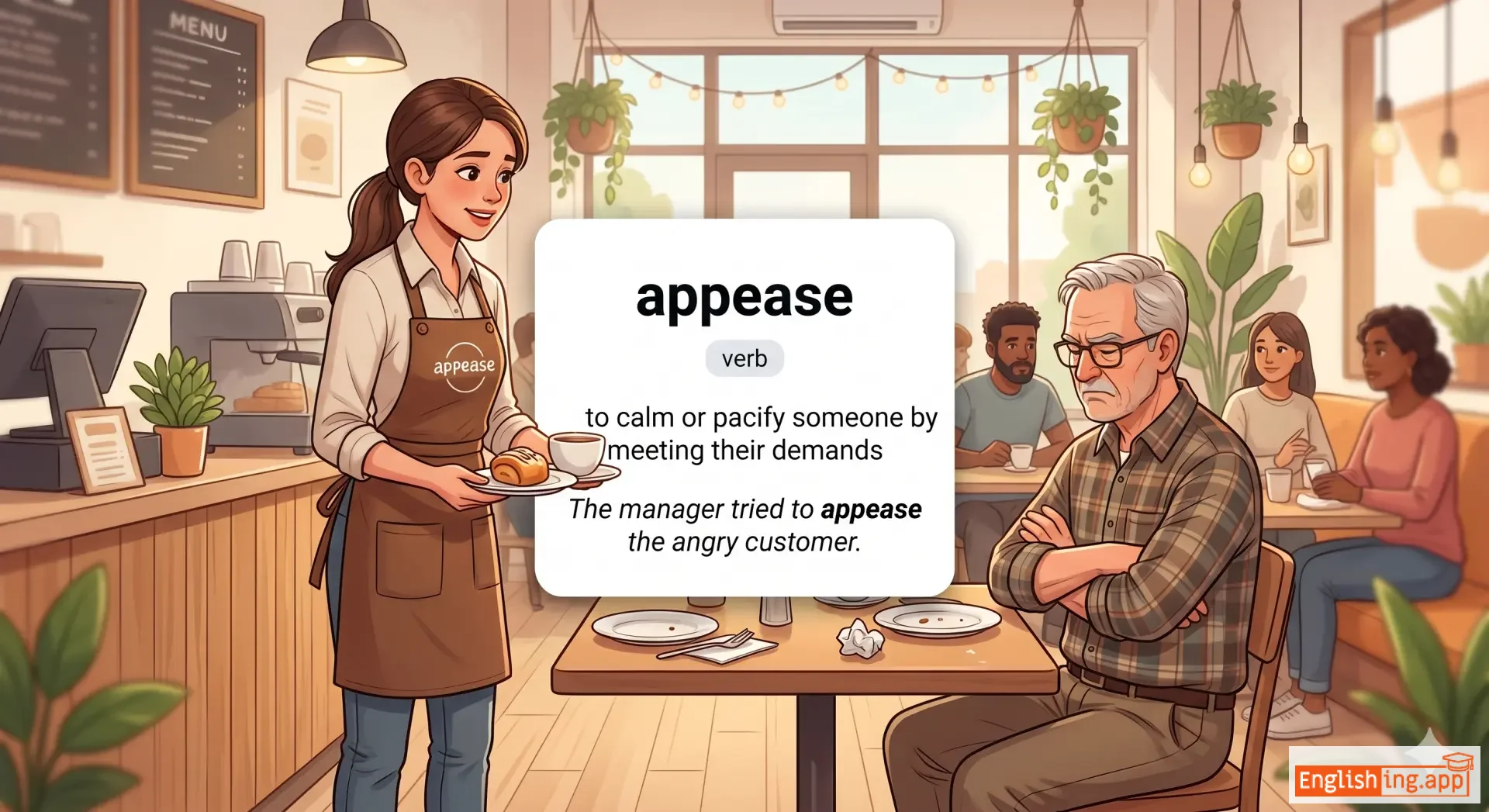
appease definition card — visual illustration of the meaning
verb
/əˈpiːz/
শান্ত করা / তুষ্ট করা (shanto kora / tushto kora)

to calm or pacify someone by meeting their demands

"The manager tried to appease the angry customer."

"ম্যানেজার রাগান্বিত গ্রাহককে শান্ত করার চেষ্টা করেছিলেন।" (Manager rag-anbito grahokke shanto korar cheshta korechhilen.)
adjective
/ˈæpəˌleɪt/
আপিল সংক্রান্ত (apil songkranto)

relating to appeals in a court of law

"The case was taken to an appellate court."

"মামলাটি একটি আপিল আদালতে নেওয়া হয়েছিল।" (Mamlati ekti apil adalte neoya hoyechhilo.)
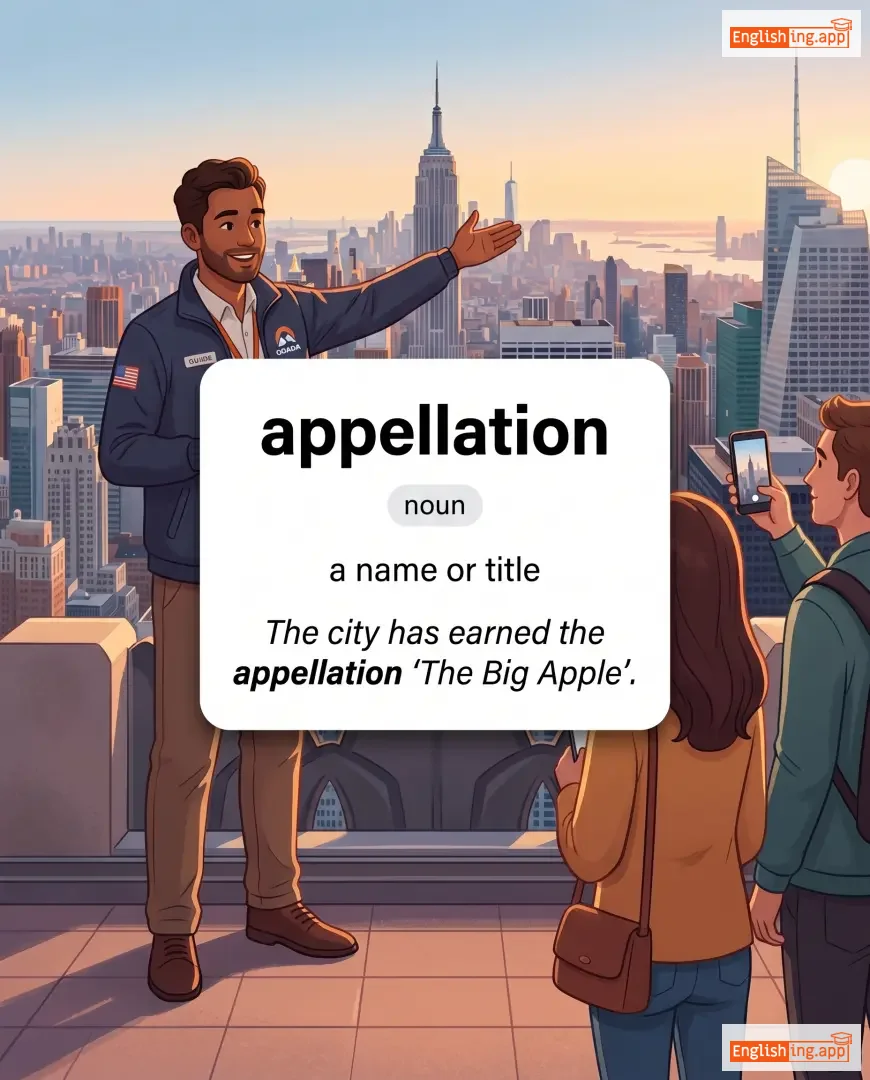
appellation definition card — visual illustration of the meaning
noun
/ˌæpəˈleɪʃən/
উপাধি / নাম (upadhi / nam)

a name or title

"The city has earned the appellation 'The Big Apple'."

"শহরটি 'দ্য বিগ অ্যাপল' উপাধি অর্জন করেছে।" (Shohorti 'The Big Apple' upadhi orjon korechhe.)
verb
/əˈpɛnd/
সংযোজন করা (songjojon kora)

to add something as an attachment or supplement, usually at the end of a document or list

"She decided to append a note to the end of the report."

"সে রিপোর্টের শেষে একটি নোট সংযোজন করার সিদ্ধান্ত নিল।" (Se reporter shese ekti note songjojon korar siddhanto nilo.)
verb
/ˌæpərˈteɪn/
সম্পর্কিত হওয়া (somprokito howa)

to relate to or be connected with something

"The rules only appertain to members of the club."

"নিয়মগুলো শুধু ক্লাবের সদস্যদের সাথেই সম্পর্কিত।" (Niyomgulo shudhu claber soddoshoder sathei somprokito.)
appetite definition card — visual illustration of the meaning
noun
/ˈæpɪtaɪt/
ক্ষুধা (khudha)

a natural desire for food; a strong desire for something

"After the long walk, I had a huge appetite."

"দীর্ঘ হাঁটার পর আমার প্রবল ক্ষুধা লাগলো।" (Dirgho hantar por amar probol khudha laglo.)
verb
/ˈæpɪtaɪz/
ক্ষুধা উদ্দীপিত করা (khudha uddipito kora)

to stimulate the appetite; to make someone eager or interested

"The aroma of fresh bread will appetize the guests before dinner."

"তাজা রুটির গন্ধ অতিথিদের ক্ষুধা উদ্দীপিত করবে।" (taja rutir gondho atithider khudha uddipito korbe)
verb
/əˈplɔːd/
তালি দেয়া (tali deya)

to show approval by clapping or expressing admiration

"The audience applauded the performance."

"দর্শকরা পারফরম্যান্সে তালি বাজিয়েছে।" (Dorshokra performance-e tali bajiyechhe.)
noun
/əˈplɔːz/
তালি (tali)

the sound of people clapping their hands to show approval or enjoyment

"The actor received loud applause after his performance."

"অভিনয়ের পর অভিনেতা জোরালো করতালির সম্মান পেলেন।" (Obhinoyer por abhineta joralo kortalir somman pelen.)
noun
/ˈæpəl/
আপেল (apel)

a round fruit with red, green, or yellow skin

"She ate a red apple for breakfast."

"সে নাশতায় একটি লাল আপেল খেয়েছিল।" (Se nashtay ekti lal apel kheyechhilo.)
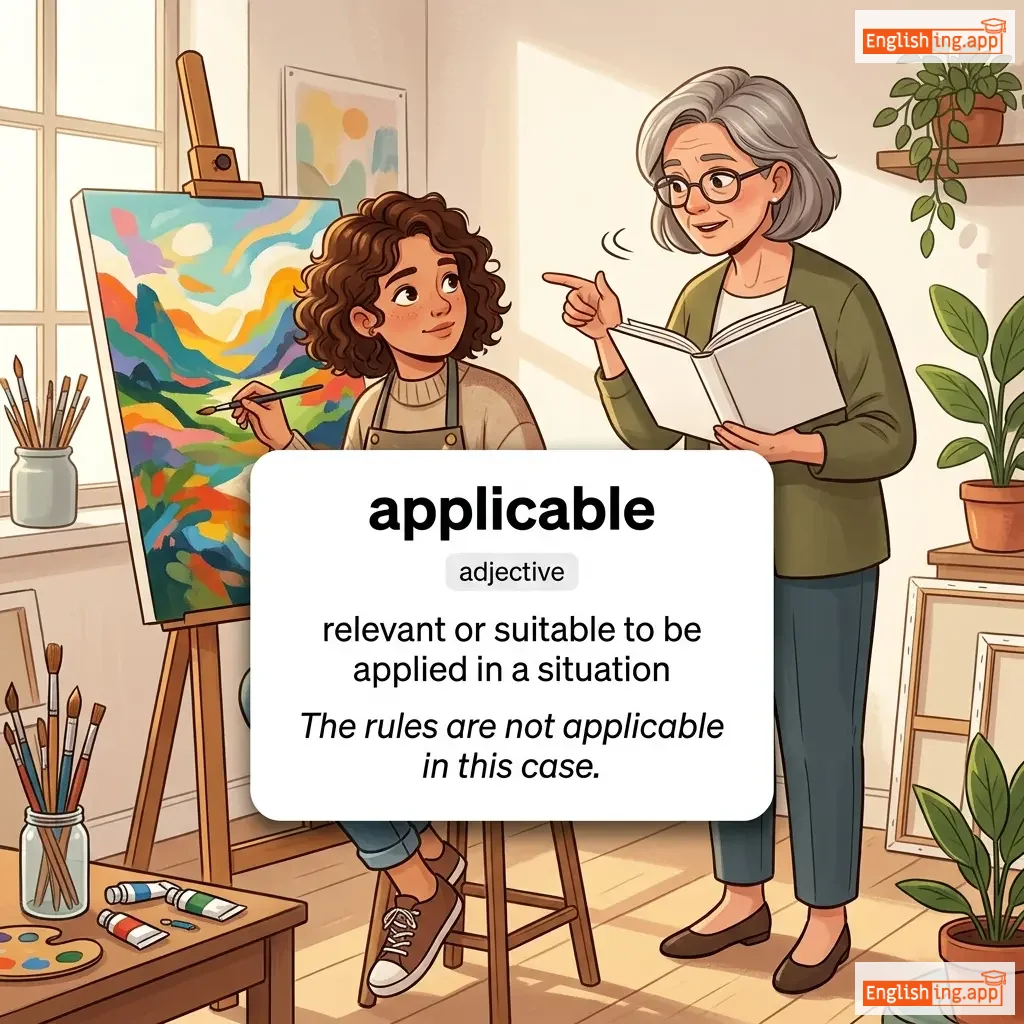
applicable definition card — visual illustration of the meaning
adjective
/ˈæplɪkəbl/
প্রযোজ্য (projojjo)

relevant or suitable to be applied in a situation

"The rules are not applicable in this case."

"এই ক্ষেত্রে নিয়মগুলো প্রযোজ্য নয়।" (Ei khetre niyomgulo projojjo noy.)
noun
/ˈæplɪkənt/
আবেদনকারী (abedonkari)

a person who applies for something, such as a job or a position

"The applicant was interviewed for the position."

"আবেদনকারীকে পদটির জন্য সাক্ষাৎকার দেওয়া হয়েছিল।" (Abedonkarike pod-er jonyo sakhatkar dewa hoyechhilo.)