Anchors of Hope
在气旋之后,我们的救援船在小巧的昌杜尔港口投下了它的anchor。水仍然浑浊,仿佛河流想要absorb掉每个房屋里的悲伤。丽玛感受到灾难是如何深深地affect了每个人的。然而,她并不afraid,她微笑着保持大家的士气。她们将船驶向破碎道路的另一侧across。他们的第一个action是将长者转移到安全的地方。志愿者们整天保持active。他们根据现场的actual情况更新了每个名单。高级官员说他们必须立即advise新的团队。该组织的rescue小组将一家人从桥下救出。一个临时的shelter被建在卡里姆·拜的院子里。丽玛注视着倒塌的bridge,深深地吸了一口气。洪水意味着许多房屋的damage仍然湿润。然而,他们继续向每个家庭提供supply食物。他们记录了每个victim的名字、年龄和需求。邻近的squad带着新的船只赶到。无线电中传来urgent信息,警告可能发生另一次风暴。于是他们要求附近的村庄迅速cooperate。丽玛告诉医疗组立即assist任何受伤的人。最后,海洋部门的轻型船只巡逻了整个区域。
|
表情符号
|
单词 | Images | 翻译 | 过去时 | 过去分词 | 第三人称单数 | 动名词 | 含义 | 例句 | 例句翻译 | 示例表达 | 示例表达含义 | 示例表达翻译 | 同义词 | 反义词 | 搭配词 | 助记符 |
|---|---|---|---|---|---|---|---|---|---|---|---|---|---|---|---|---|---|
|
🧽
••••••
|
/əbˈzɔːrb/
verb
(æbˈzɔːrb)
••••••
|
- •••••• |
吸收
xīshōu
••••••
|
absorbed
吸收
••••••
|
absorbed
吸收
••••••
|
absorbs
吸收
••••••
|
absorbing
吸收
••••••
|
to take in or soak up a liquid, energy, or information
••••••
|
The sponge absorbed all the water.
海绵吸收了所有的水。
••••••
|
海绵吸收了所有的水。
Hǎimián xīshōu le suǒyǒu de shuǐ.
••••••
|
absorbed in thought
沉浸在思想中
••••••
|
deeply engaged or preoccupied with one's thoughts
••••••
|
沉浸在思想中
chénjìn zài sīxiǎng zhōng
••••••
|
soak, consume, engross, assimilate, take in
••••••
|
release, emit, repel
••••••
|
absorb energy, absorb impact, absorb information
••••••
|
吸收 + orb = orb(球)吸收一切。
••••••
|
|
➡️
••••••
|
/əˈkrɒs/
preposition/adverb
(əˈkɹɒs)
••••••
|
- •••••• |
穿越
chuan yue
••••••
|
- •••••• | - •••••• | - •••••• | - •••••• |
From one side to the other side of something.
••••••
|
He ran across the street to catch the bus. |
他跑过马路去赶公交车。
Ta pao guo malu qu gan gongjiaoche.
••••••
|
across the board |
affecting everyone or everything equally
••••••
|
全面
quan mian
••••••
|
over, through, beyond, opposite
••••••
|
along, within
••••••
|
run across, go across, look across, spread across
••••••
|
Across 就是穿越,从一边跑到另一边。
••••••
|
|
⚡
••••••
|
/ˈækʃən/
noun
(行动)
••••••
|
- •••••• |
行动
xingdong
••••••
|
- •••••• | - •••••• | - •••••• | - •••••• |
The process of doing something, typically to achieve a goal.
••••••
|
The government took immediate action to control inflation. |
政府采取了立即行动以控制通货膨胀。
Zhengfu caiqu le lijixingdong yi kongzhi tonghuopengzhang.
••••••
|
take action |
to do something to achieve an effect
••••••
|
采取行动
caiqu xingdong
••••••
|
deed, operation, measure, step, effort
••••••
|
inaction, rest
••••••
|
take action, legal action, direct action, military action
••••••
|
行动就是做事,像动作电影中的英雄一样。
••••••
|
|
🏃
••••••
|
/ˈæktɪv/
adjective
(积极)
••••••
|
|
积极的
jī jí de
••••••
|
- •••••• | - •••••• | - •••••• | - •••••• |
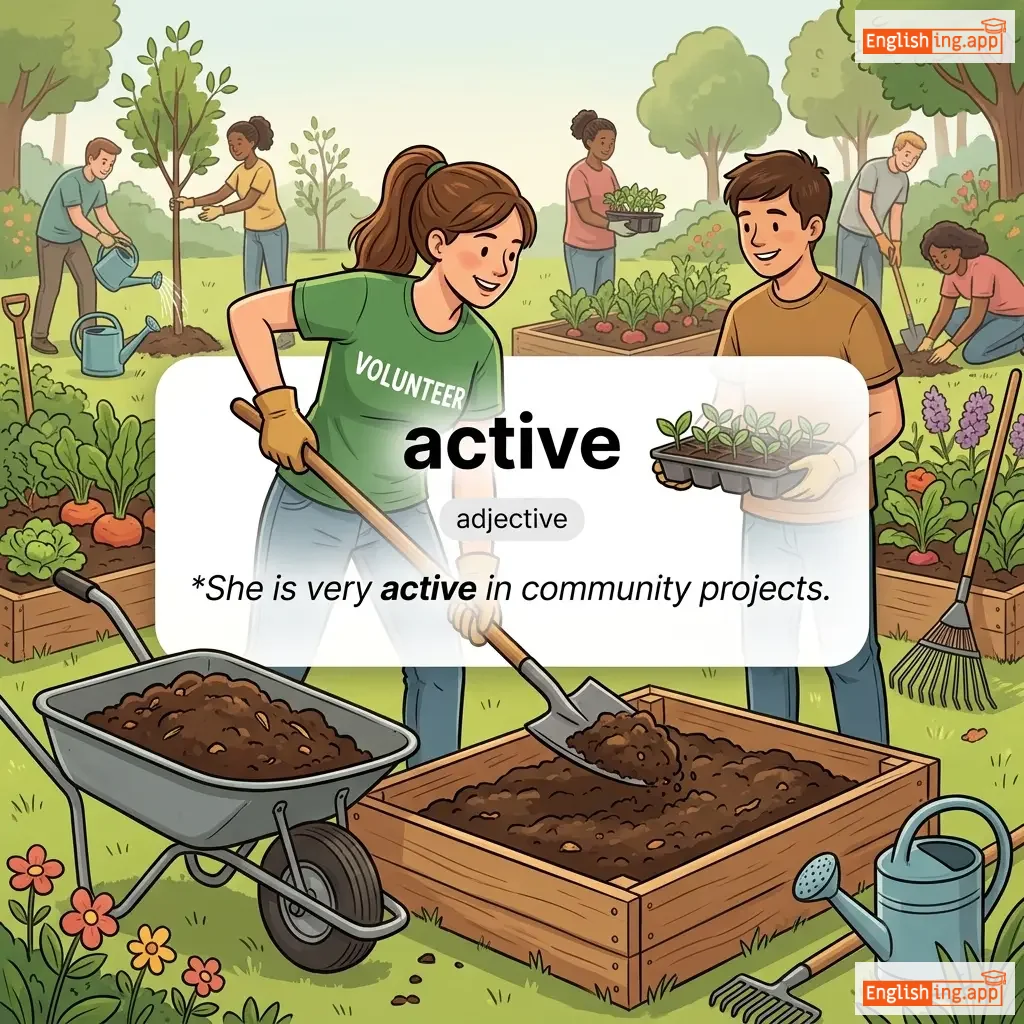
Engaging or ready to engage in physically energetic pursuits; taking action rather than being passive.
••••••
|
She is very active in community projects. |
她在社区项目中非常积极。
Tā zài shèqū xiàngmù zhōng fēicháng jījí.
••••••
|
active duty |
A period of full-time military service.
••••••
|
服役期间
fúyì qījiān
••••••
|
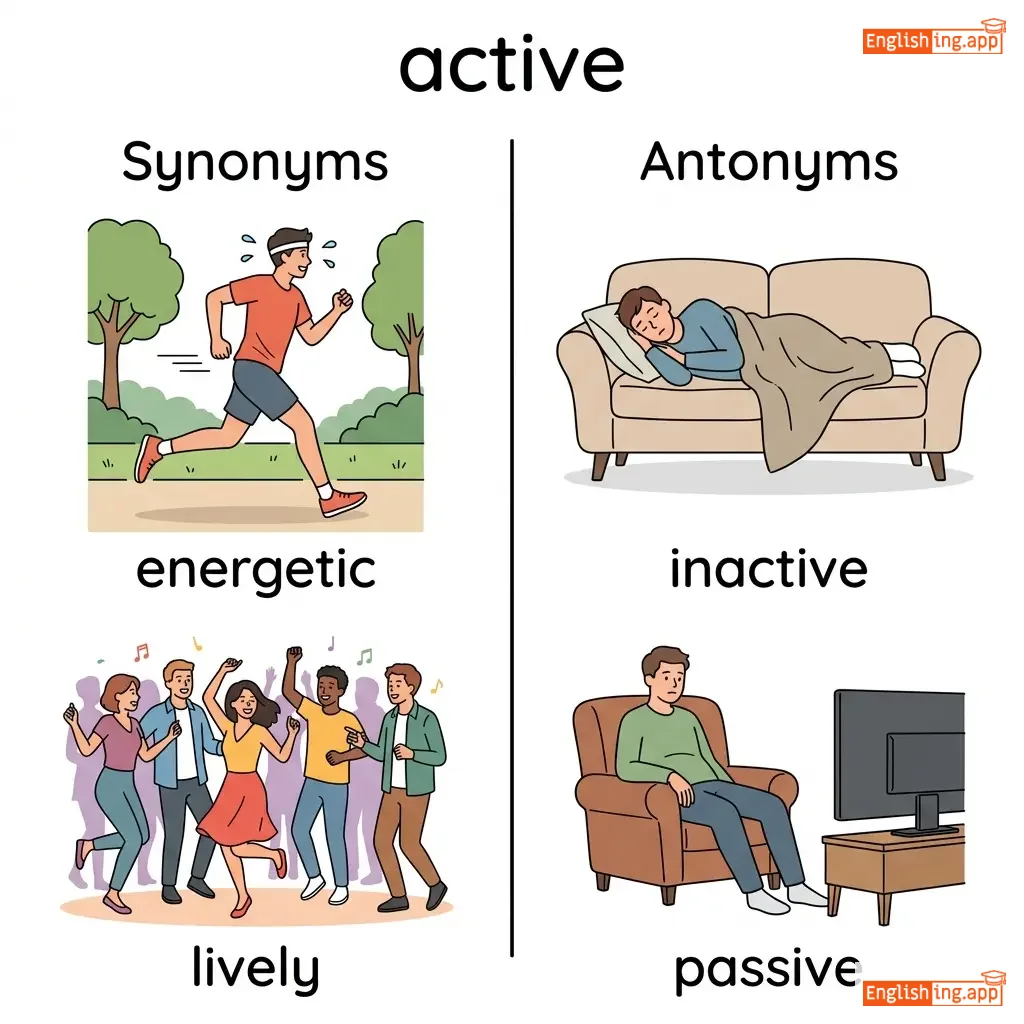
energetic, lively, dynamic, vigorous, busy
••••••
|
inactive, passive, idle
••••••
|
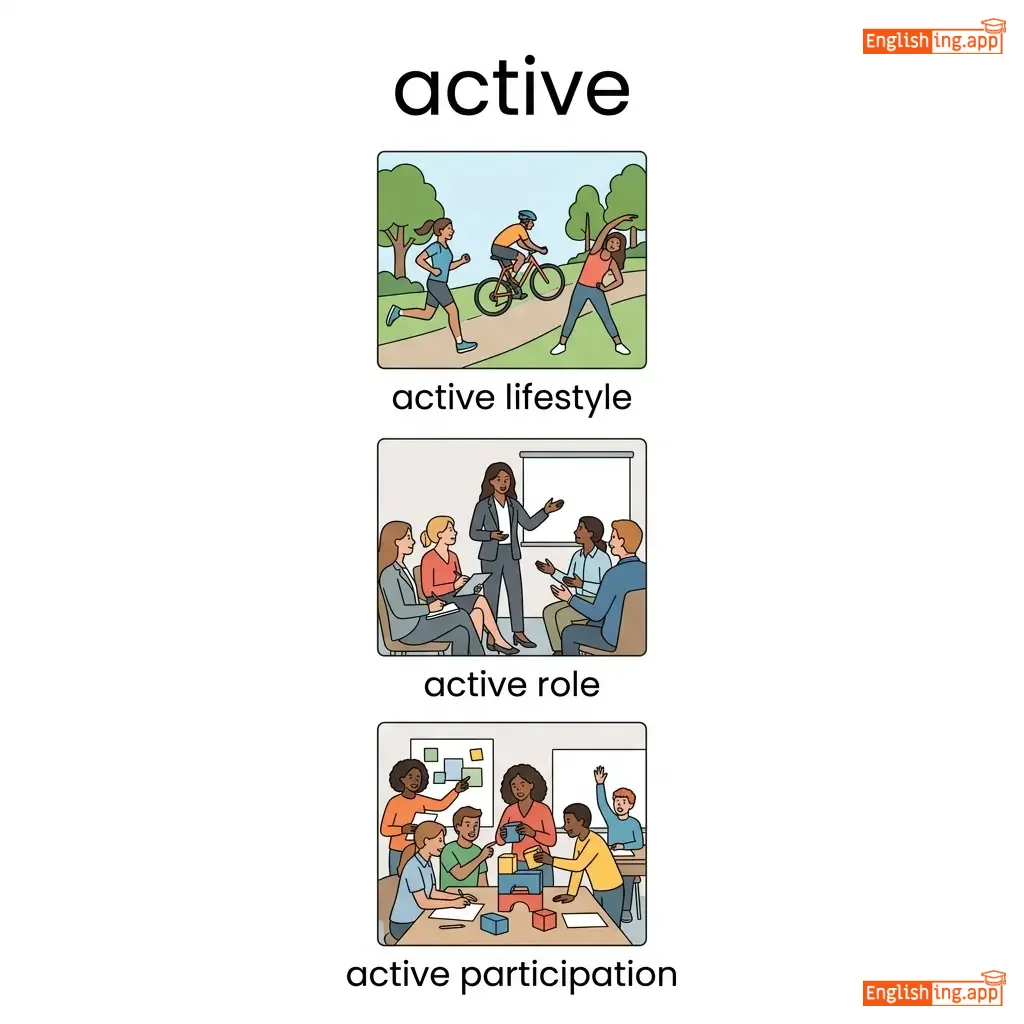
active lifestyle, active role, active participation, active engagement
••••••
|
Active意味着积极的,就像你在社交媒体上活跃时,每个人都知道你在线。
••••••
|
|
✅
••••••
|
/ˈæktʃuəl/
adjective
(æktʃuəl)
••••••
|
- •••••• |
实际的
shíjì de
••••••
|
- •••••• | - •••••• | - •••••• | - •••••• |
real and existing, not just imagined or supposed
••••••
|
The actual cost was higher than expected. |
实际成本高于预期。
shíjì chéngběn gāo yú yùqī.
••••••
|
in actual fact |
used to emphasize that something is really true
••••••
|
事实上
shíshí shàng
••••••
|
real, genuine, factual, true, authentic
••••••
|
fake, false, imaginary
••••••
|
actual cost, actual reason, actual situation, actual fact
••••••
|
Actual 意味着实际的—事实上就是强调真实的
••••••
|
|
🗣️
••••••
|
/ədˈvaɪz/
verb
(ædvais)
••••••
|
- •••••• |
建议
jiànyì
••••••
|
advised
ædvaɪzd
••••••
|
advised
ædvaɪzd
••••••
|
advises
ædvaziz
••••••
|
advising
ædvɑɪzɪŋ
••••••
|
to recommend what should be done; to give advice
••••••
|
The doctor advised him to rest for a week.
医生建议他休息一周。
••••••
|
医生建议他休息一周。
Yīshēng jiànyì tā xiūxí yī zhōu.
••••••
|
advise against
建议反对
••••••
|
to recommend not doing something
••••••
|
建议不做某事
jiànyì bù zuò mǒu shì
••••••
|
recommend, suggest, counsel, urge
••••••
|
discourage, forbid
••••••
|
strongly advise, advise caution, advise against, legally advise
••••••
|
Advise 就是建议,像是给人提建议的声音。
••••••
|
|
🌦️
••••••
|
/əˈfɛkt/
verb
(艾费克特)
••••••
|
- •••••• |
影响
yingxiang
••••••
|
affected
影响了
••••••
|
affected
影响了
••••••
|
affects
影响
••••••
|
affecting
影响着
••••••
|
to influence or make a difference to something
••••••
|
The weather can greatly affect our mood.
天气可以极大地影响我们的情绪。
••••••
|
天气可以极大地影响我们的情绪。
Tianqi keyi jidali yingxiang women de qingxu.
••••••
|
affect deeply
深刻影响
••••••
|
to have a strong emotional impact
••••••
|
深刻影响
shenkeli yingxiang
••••••
|
influence, impact, change, alter, sway
••••••
|
ignore, neglect
••••••
|
affect mood, affect decision, affect performance, affect outcome
••••••
|
Affect像是天气,能影响每一个情绪的变化。
••••••
|
|
😨
••••••
|
/əˈfreɪd/
adjective
(afréid)
••••••
|
- •••••• |
害怕
haipa
••••••
|
- •••••• | - •••••• | - •••••• | - •••••• |
feeling fear or anxiety; worried that something undesirable will happen
••••••
|
She was afraid of the dark. |
她害怕黑暗。
Tā hàipà hēi'àn.
••••••
|
afraid of one's own shadow |
extremely timid or nervous
••••••
|
害怕自己的影子
hàipà zìjǐ de yǐngzi
••••••
|
fearful, scared, frightened, anxious, nervous
••••••
|
brave, confident, fearless
••••••
|
afraid of, terribly afraid, afraid to ask, afraid that
••••••
|
Afraid 意味着害怕—想象在黑暗中感到害怕。
••••••
|
|
⚓
••••••
|
/ˈæŋkər/
noun, verb
(锚)
••••••
|
- •••••• |
锚
mó
••••••
|
anchored
锚定
••••••
|
anchored
锚定
••••••
|
anchors
锚住
••••••
|
anchoring
锚定中
••••••
|
a heavy object used to hold a ship in place; also to secure firmly
••••••
|
The ship dropped its anchor near the shore.
船只在海岸附近投下了锚。
••••••
|
船只在海岸附近投下了锚。
Chuánzhī zài hǎi'àn fùjìn tóu xiàle mó.
••••••
|
anchor of hope
希望的锚
••••••
|
something that provides stability and confidence
••••••
|
希望的锚
xīwàng de mó
••••••
|
mooring, fastener, stabilizer, support, mainstay
••••••
|
drift, release, instability
••••••
|
drop anchor, lift anchor, anchor point, news anchor
••••••
|
锚总是固定船只。希望的锚:生活中的稳定性。
••••••
|
|
🤲
••••••
|
/əˈsɪst/
verb
(阿西斯特)
••••••
|
- •••••• |
帮助
bangzhu
••••••
|
assisted
阿西斯特德
••••••
|
assisted
阿西斯特德
••••••
|
assists
阿西斯特斯
••••••
|
assisting
阿西斯廷
••••••
|
to help or support someone in doing something
••••••
|
The nurse will assist the doctor during the surgery.
护士将协助医生进行手术。
••••••
|
护士将协助医生进行手术。
Hushi jiang xiezhu yisheng jinxing shoushu.
••••••
|
assist in
协助于
••••••
|
to help someone with something
••••••
|
协助于
xiezhu yu
••••••
|
help, support, aid, facilitate, encourage
••••••
|
hinder, obstruct
••••••
|
assist someone, assist with, assist in, assist greatly
••••••
|
Assisting 就像帮朋友做事。
••••••
|
|
🌉
••••••
|
/brɪdʒ/
noun
(bù lǐ jī)
••••••
|
- •••••• |
桥
qiao
••••••
|
- •••••• | - •••••• | - •••••• | - •••••• |
A structure built to span a physical obstacle, such as a river or road, for the purpose of providing passage.
••••••
|
The bridge connects the two cities across the river. |
桥将两座城市连接起来,跨越河流。
Qiáo jiāng liǎng zuò chéngshì liánjiē qǐlái, kuàyuè héliú.
••••••
|
burn one's bridges |
To eliminate all possibilities of retreat; to commit oneself completely.
••••••
|
烧掉自己的桥
shāo diào zìjǐ de qiáo
••••••
|
overpass, viaduct, crossing, span, walkway
••••••
|
barrier, obstacle
••••••
|
cross a bridge, build a bridge, bridge over, suspension bridge, stone bridge
••••••
|
Bridge 就是桥 🌉 - 用桥来跨越城市之间的障碍。
••••••
|
|
🤝
••••••
|
/kəʊˈɒpəreɪt/
verb
••••••
|
- •••••• | - •••••• |
cooperated
••••••
|
cooperated
••••••
|
cooperates
••••••
|
cooperating
••••••
|
to work together with others to achieve a common goal
••••••
|
The two companies agreed to cooperate on the new project. |
- •••••• |
cooperate with someone |
to work jointly or helpfully with a person or group
••••••
|
- •••••• |
collaborate, assist, work together, team up
••••••
|
compete, resist
••••••
|
cooperate fully, cooperate closely, cooperate with, refuse to cooperate
••••••
|
No •••••• |
|
💥
••••••
|
/ˈdæmɪdʒ/
verb
(dæmɪdʒ)
••••••
|
- •••••• |
损坏
sǔnhuài
••••••
|
damaged
dæmɪdʒd
••••••
|
damaged
dæmɪdʒd
••••••
|
damages
dæmɪdʒes
••••••
|
damaging
dæmɪdʒɪŋ
••••••
|
To cause physical harm to something.
••••••
|
The storm damaged several houses in the village.
风暴破坏了村里的几所房子。
••••••
|
风暴破坏了村里的几所房子。
Fēngbào pòhuài le cūn lǐ de jǐ suǒ fángzi.
••••••
|
beyond repair
无法修复
••••••
|
So badly damaged that it cannot be fixed.
••••••
|
无法修复
wúfǎ xiūfù
••••••
|
harm, spoil, break, ruin, destroy
••••••
|
repair, fix, improve
••••••
|
damage control, serious damage, cause damage, property damage
••••••
|
损坏的意思是破坏,像风暴破坏了房子。
••••••
|
|
🌊
••••••
|
/məˈriːn/
adjective
(mǎ-rīn)
••••••
|
|
海洋的
hǎiyáng de
••••••
|
- •••••• | - •••••• | - •••••• | - •••••• |
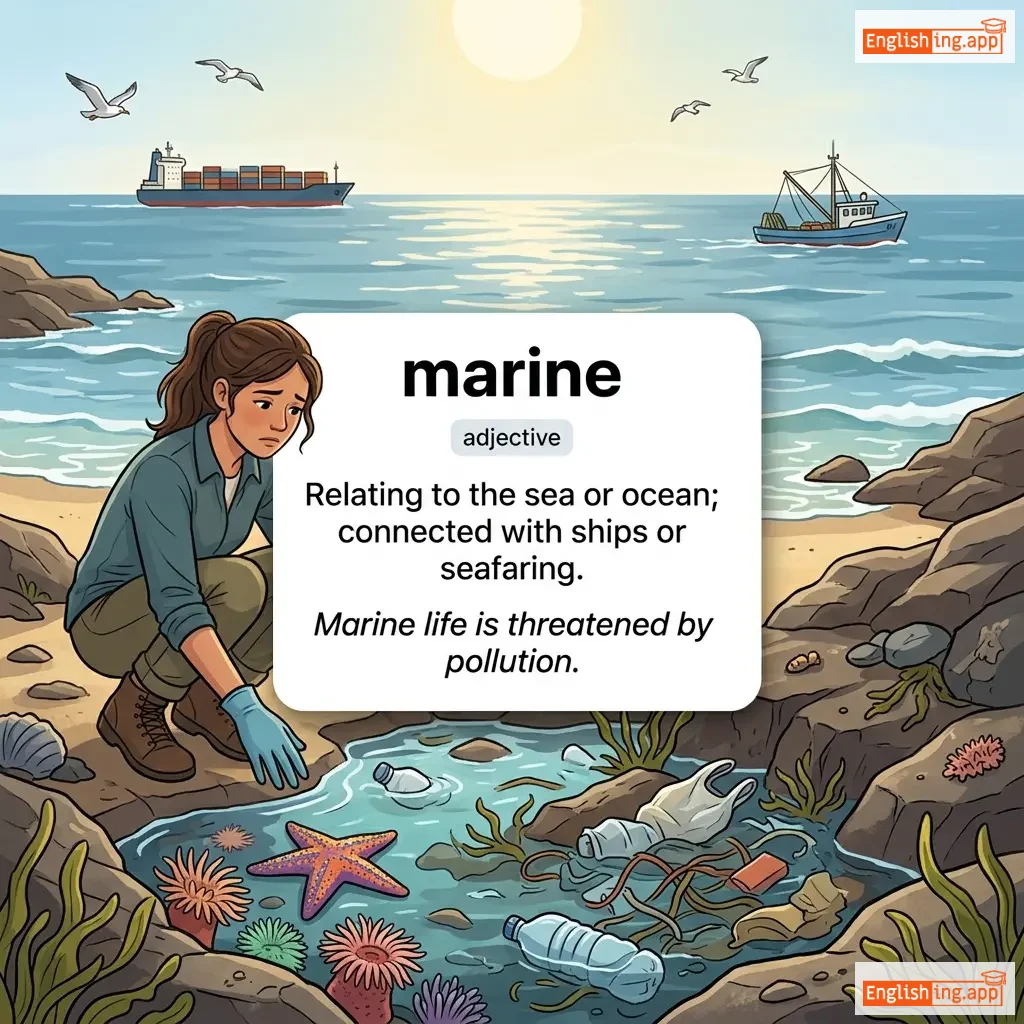
Relating to the sea or ocean; connected with ships or seafaring.
••••••
|
Marine life is threatened by pollution.
海洋生物受到污染的威胁。
••••••
|
海洋生物受到污染的威胁。
Hǎiyáng shēngwù shòudào wūrǎn de wēixié.
••••••
|
- •••••• | - •••••• | - •••••• |
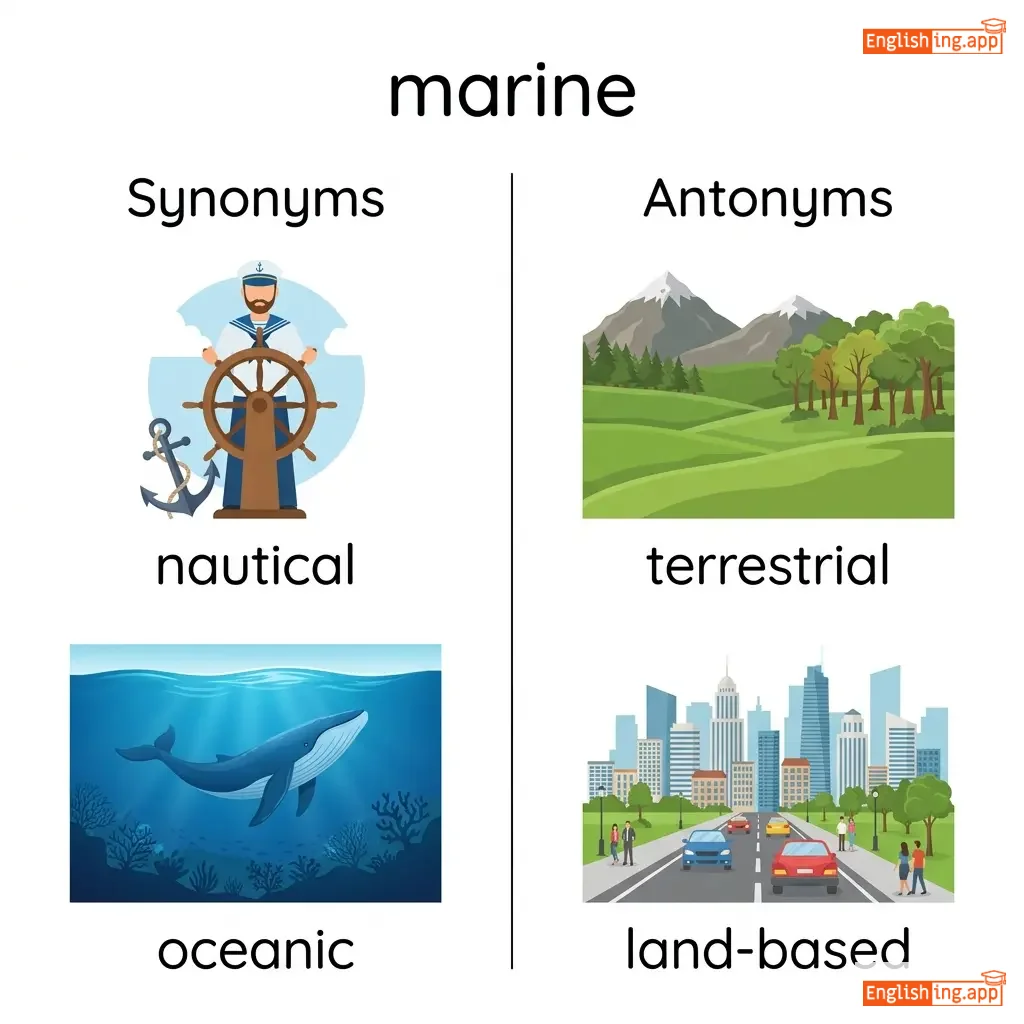
nautical, oceanic, naval, maritime
••••••
|
terrestrial, land-based
••••••
|
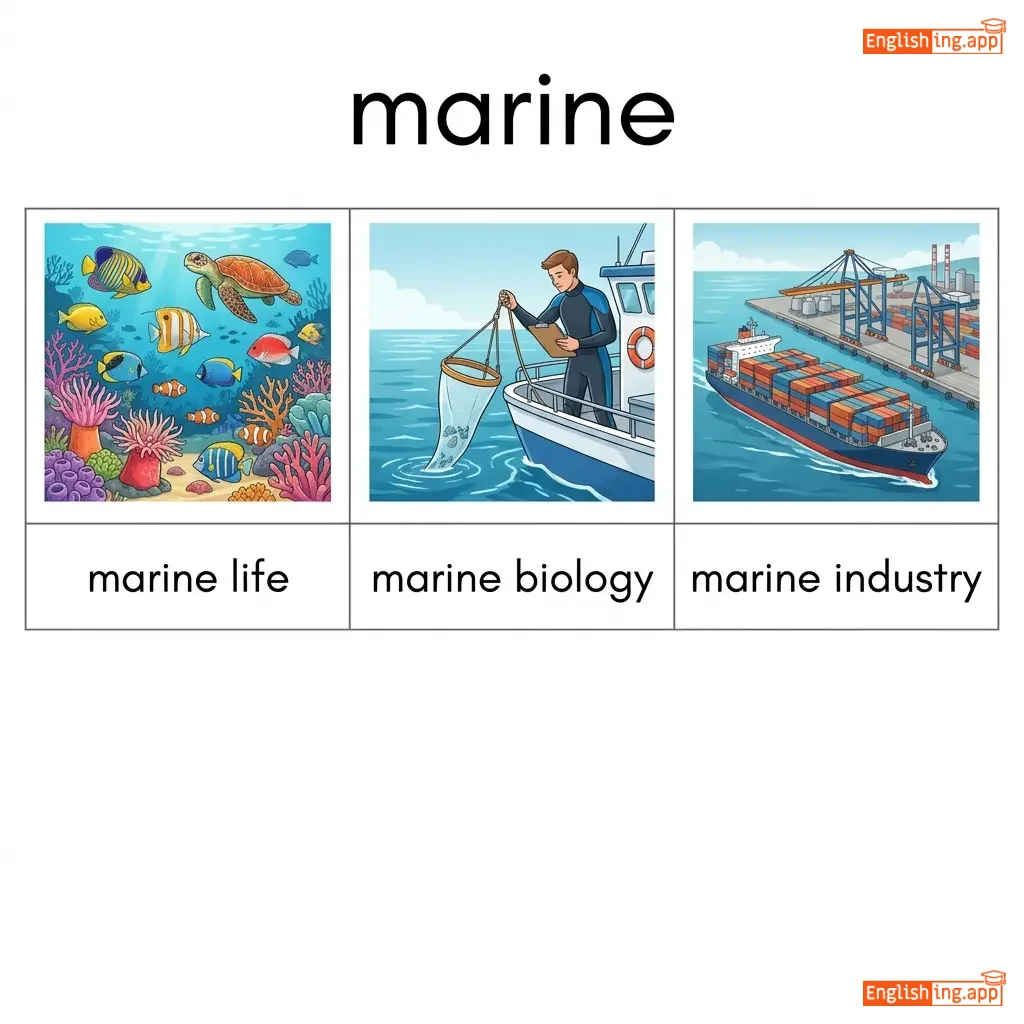
marine life, marine biology, marine industry, marine animals
••••••
|
Marine 代表海洋的, 比如海洋生物或海洋公园。
••••••
|
|
🛟
••••••
|
/ˈrɛskjuː/
verb
(rèskù)
••••••
|
|
救援
jiùyuán
••••••
|
rescued
rèskùd
••••••
|
rescued
rèskùd
••••••
|
rescues
rèskùs
••••••
|
rescuing
rèskùing
••••••
|
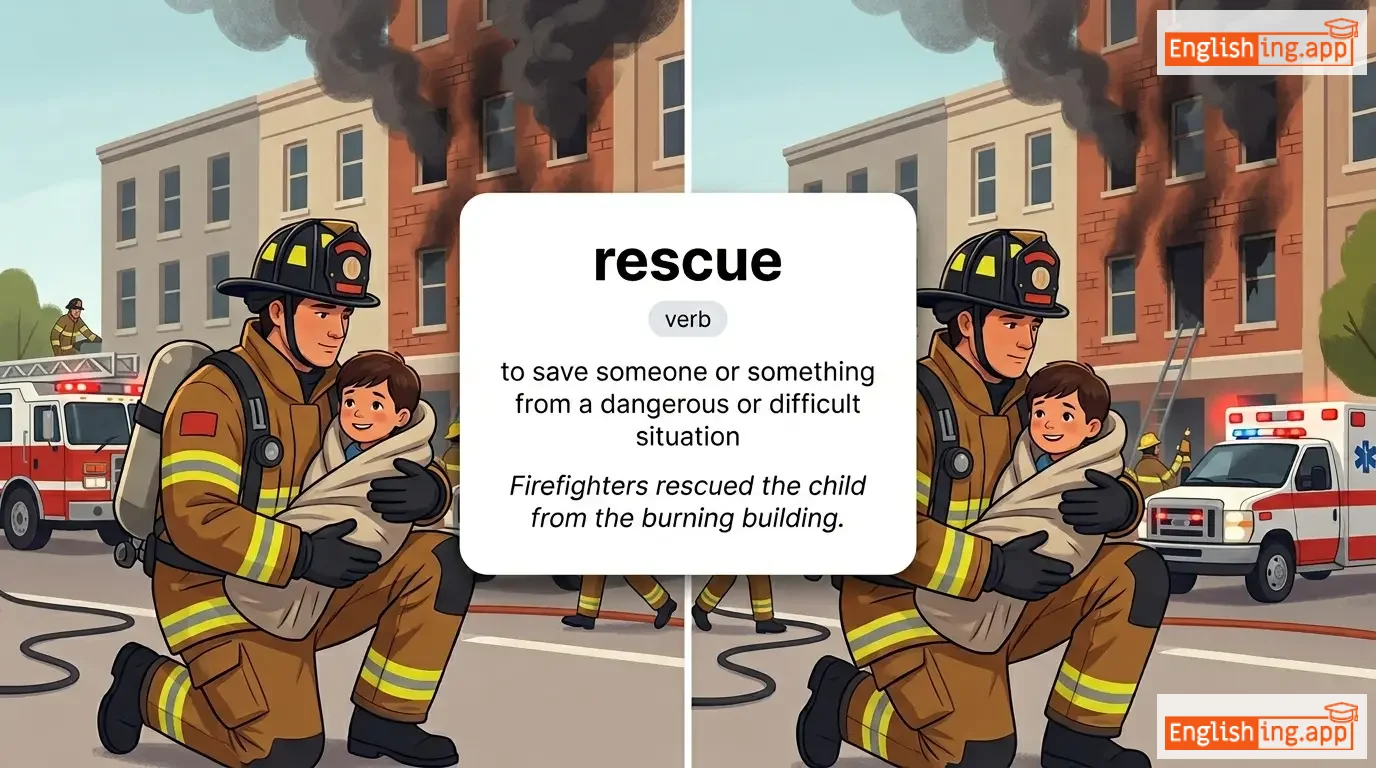
to save someone or something from a dangerous or difficult situation
••••••
|
Firefighters rescued the child from the burning building.
消防员从着火的大楼中救出了孩子。
••••••
|
消防员从着火的大楼中救出了孩子。
Xiāofángyuán cóng zháohuǒ de dàlóu zhōng jiùchūle háizi.
••••••
|
come to the rescue
来解救
••••••
|
to help someone in trouble or in need
••••••
|
来解救
lái jiějiù
••••••
|
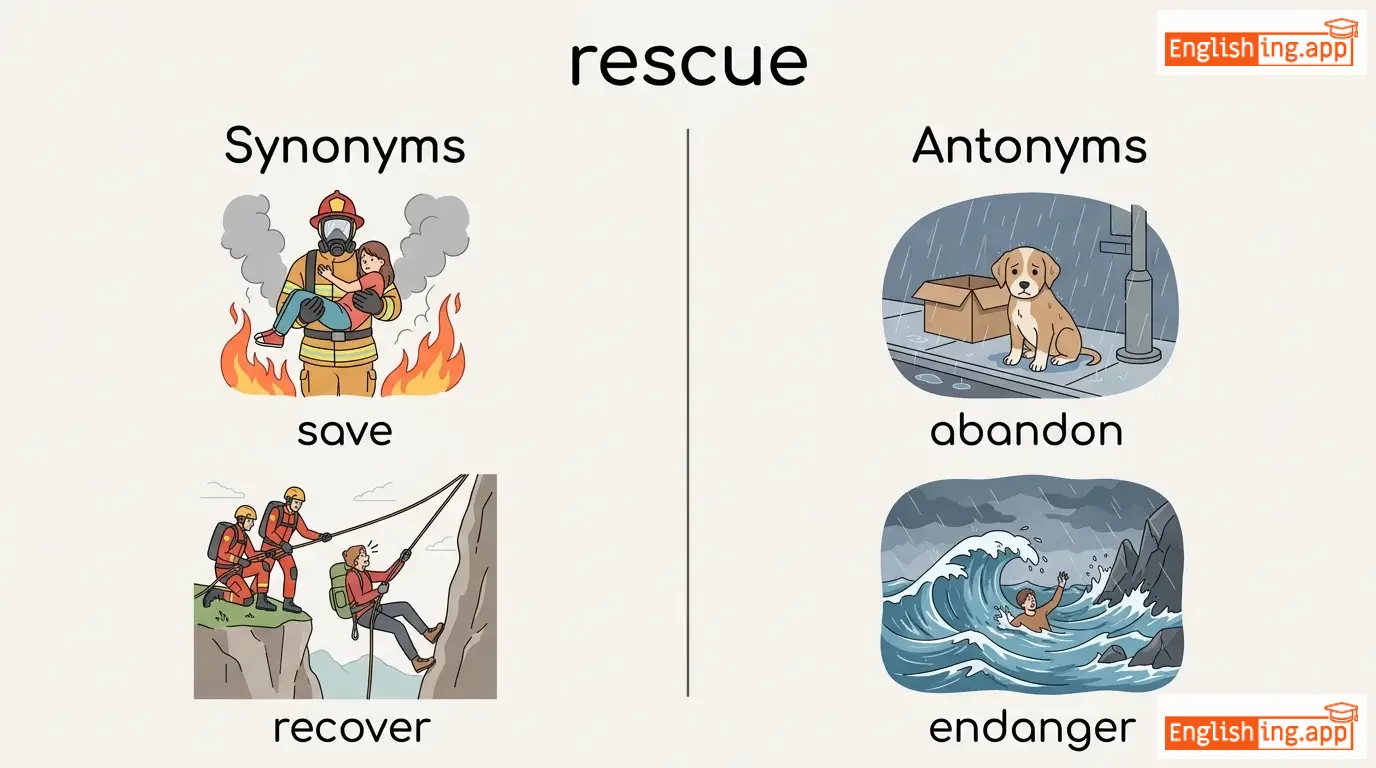
save, recover, free, deliver, retrieve
••••••
|
abandon, endanger, trap
••••••
|
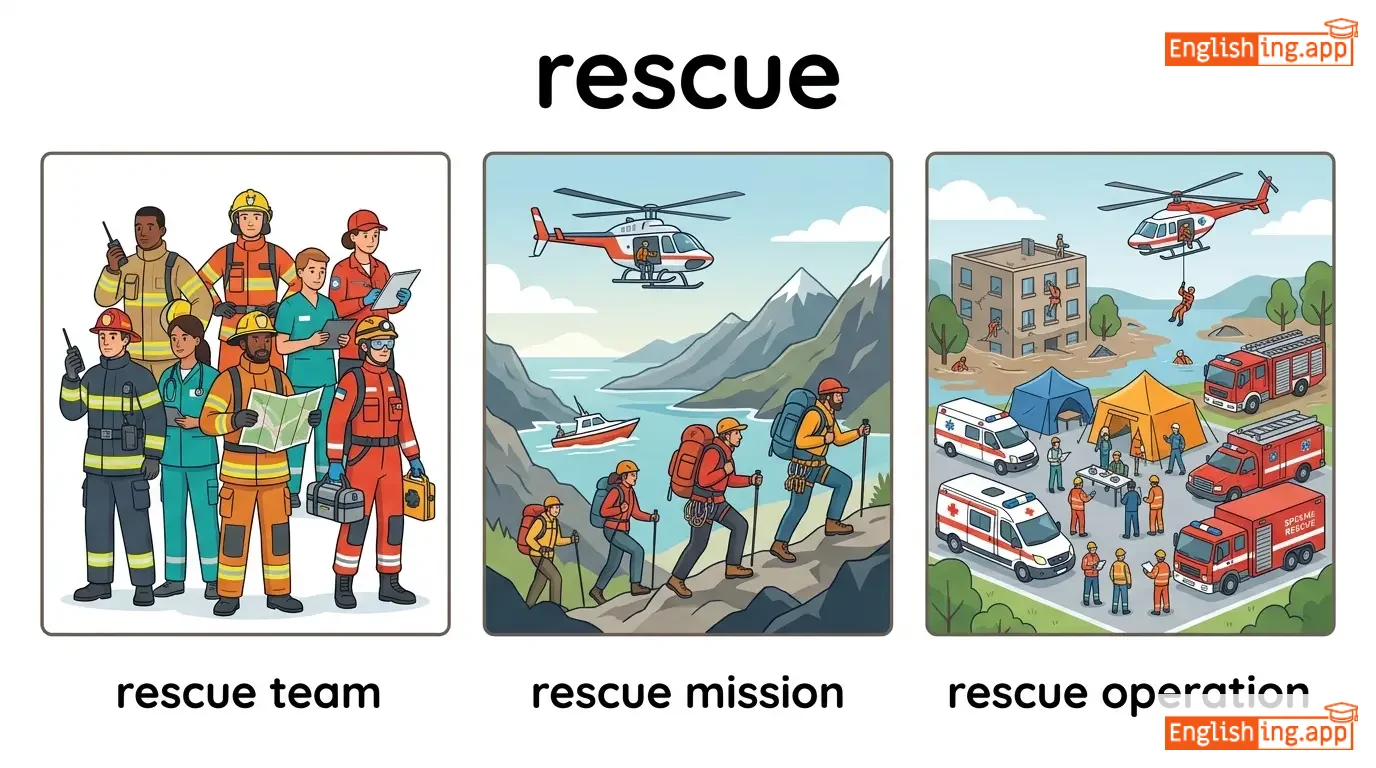
rescue team, rescue mission, rescue operation, emergency rescue
••••••
|
Rescue意味着'冒险救援' — 记住 🛟
••••••
|
|
🏠
••••••
|
/ˈʃel.tər/
noun
(海皮内斯)
••••••
|
- •••••• |
避难所
binansuo
••••••
|
- •••••• | - •••••• | - •••••• | - •••••• |
a place giving temporary protection from bad weather or danger
••••••
|
The hikers found shelter in a cave during the heavy rain.
登山者在大雨中在山洞里找到了海皮内斯。
••••••
|
登山者在大雨中在山洞里找到了避难所。
dengshanzhe zai dayu zhong zai shandong li zhaodao le binansuo.
••••••
|
- •••••• | - •••••• | - •••••• |
refuge, sanctuary, protection, haven
••••••
|
exposure, danger, vulnerability, openness
••••••
|
seek shelter, provide shelter, emergency shelter
••••••
|
Bi nan suo — ‘be not sore’ — you rest safely inside a shelter.
••••••
|
|
👥
••••••
|
/skwɒd/
noun
(skwād)
••••••
|
- •••••• |
小队
xiaodui
••••••
|
- •••••• | - •••••• | - •••••• | - •••••• |
a small group of people organized for a specific purpose or task, often in the military or sports
••••••
|
The football squad trained hard before the championship match. |
足球队在冠军赛前进行了艰苦训练。
Zuqiudui zai guanjunsai qian jinxingle jianku xunlian.
••••••
|
squad goals |
an ideal or admirable group of friends or team that others aspire to be like
••••••
|
小队目标
xiaodui mubiao
••••••
|
team, crew, group, unit, party
••••••
|
individual, loner
••••••
|
football squad, police squad, squad member, training squad
••••••
|
小队 = 一起工作的团队,就像足球队。
••••••
|
|
📦
••••••
|
/səˈplaɪ/
noun
••••••
|


|
- •••••• | - •••••• | - •••••• | - •••••• | - •••••• |
the amount of something that is available to be used or consumed
••••••
|
The store has a limited supply of electronics. |
- •••••• | - •••••• | - •••••• | - •••••• |
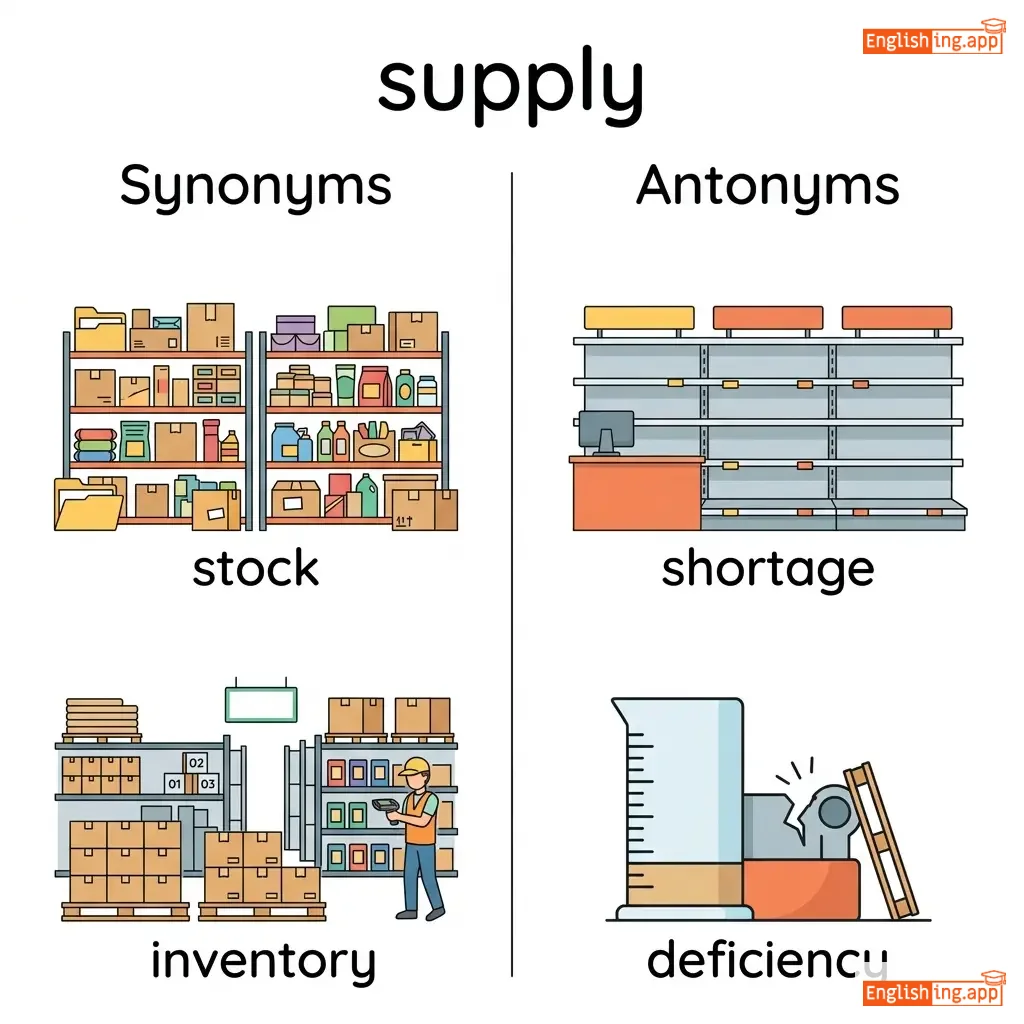
stock, inventory, provision, reserve
••••••
|
shortage, deficiency
••••••
|
supply chain, supply and demand, supply of goods, supply shortage
••••••
|
No •••••• |
|
🚨
••••••
|
/ˈɜːrdʒənt/
adjective
(ʊʁʒənt)
••••••
|
- •••••• |
紧急
jinji
••••••
|
- •••••• | - •••••• | - •••••• | - •••••• |
Requiring immediate action or attention.
••••••
|
She sent an urgent message to her manager.
她给经理发了一条紧急消息。
••••••
|
她给经理发了一条紧急消息。
Tā gěi jīnglǐ fāle yītiáo jǐnjí xiāoxī.
••••••
|
urgent need
紧急需求
••••••
|
a strong necessity that must be addressed immediately
••••••
|
紧急需求
jǐnjí xūqiú
••••••
|
critical, pressing, immediate, essential
••••••
|
nonessential, trivial, minor
••••••
|
urgent request, urgent matter, urgent care, urgent meeting
••••••
|
紧急意味着需要立即处理的事情。
••••••
|
|
😢
••••••
|
/ˈvɪk.tɪm/
noun
(维克提姆)
••••••
|
- •••••• |
受害者
shòuhài zhě
••••••
|
- •••••• | - •••••• | - •••••• | - •••••• |
a person who suffers harm, injury, or death as a result of an event or action
••••••
|
The victim was taken to the hospital immediately. |
受害者立即被送往医院。
Shòuhài zhě lìjí bèi sòng wǎng yīyuàn.
••••••
|
- •••••• | - •••••• | - •••••• |
casualty, sufferer, target, prey
••••••
|
perpetrator, aggressor, attacker
••••••
|
crime victim, accident victim, victim support
••••••
|
In Chinese, '受害者' (shòuhài zhě) is similar to 'suffer' in English.
••••••
|

