The Cleaning Day
萨比尔的 bedroom 一片 mess。Clothes 到处散落,dirty 的餐具,地板上有 dirt,glass 窗上满是 spots——一切都乱七八糟。
“你得清理这个 mess!”妈妈说。“Bathroom 也需要打扫。现在就开始吧。”
萨比尔叹了口气,但知道她是对的。他从 bedroom 开始。先收拾 clothes,有的 wet,有的 dry,全都混在一起。
“我需要一个 bucket。”他想。他拿来一个 bucket,装满水,又拿了一块 cloth,开始 wiped 家具上的灰尘。Dirt 到处都是——beneath 床底、beneath 书桌、柜子后面。
Glass 窗上布满 dirty spots。他用 wet cloth 小心地 wiped,再用 dry cloth 擦干。窗子慢慢变得明亮。
然后是地板。萨比尔 dragged 开家具,wiped beneath 一切。每一个 spot、每一点 dirt 他都清理干净。先用 wet cloth wipe,再用 dry cloth。
接着轮到 bathroom。Bathroom 更糟。镜子上有 dirty spots,地板上有 wet towel,soap 碎屑散落,洗手池下有 dirt beneath。Mess 太多了。
“开始吧。”萨比尔对自己说。他在 bucket 里装水,加了些清洁液,然后开始 wiping。每个 glass 表面、每个 spot、每个 dirty 角落。
洗手池很 dirty。萨比尔用 wet cloth wiped,清理水龙头 beneath 的 dirt。Soap 残渣、水 spots——都被 wiped 干净。
镜子上布满水 drops 和 spots。他用 wet cloth 细心 wiped,再用 dry towel 擦干。镜子开始清晰地反射。
地板 wet 且 dirty。厕所 beneath、洗手池 beneath——到处都是 dirt。萨比尔 dragged bucket,仔细 wiped。每个 spot 都不能放过。
“Towel 应该是 dry 干净的。”他想。他收拾了 wet, dirty towels,把 dry clothes 挂好。Bathroom 慢慢变得整洁。
几个小时后,bedroom 和 bathroom 都一尘不染。没有 mess,没有 dirt,没有 dirty spots。Glass 闪闪发亮,地板干净,clothes 整齐。
“太棒了!”妈妈惊叹道。“没有 mess,没有 dirt!一切都 dry 干净。”
萨比尔虽然累,但很自豪。“打扫让我明白,”他说,“mess 不会自己消失。你需要 bucket, cloth, soap——还有努力。Dirty spots 要 wiping,wet 表面要 dried。Dirt 藏在 beneath 家具下、门后。所以要 drag 出来,检查 beneath,wipe 每个 spot。”
|
表情符号
|
单词 | Images | 翻译 | 过去时 | 过去分词 | 第三人称单数 | 动名词 | 含义 | 例句 | 例句翻译 | 示例表达 | 示例表达含义 | 示例表达翻译 | 同义词 | 反义词 | 搭配词 | 助记符 |
|---|---|---|---|---|---|---|---|---|---|---|---|---|---|---|---|---|---|
|
🛁
••••••
|
/bɑːθ/
noun
(bɑːθ)
••••••
|
- •••••• |
浴缸
yùgāng
••••••
|
- •••••• | - •••••• | - •••••• | - •••••• |
an act of washing the body in water; or the container used for this purpose
••••••
|
She took a long bath after work. |
她在工作后洗了一个长浴缸。
Tā zài gōngzuò hòu xǐle yīgè cháng yùgāng.
••••••
|
throw the baby out with the bathwater |
to lose something valuable while trying to get rid of something unwanted
••••••
|
把婴儿和浴水一起倒掉
bǎ yīng'ér hé yùshuǐ yīqǐ dào diào
••••••
|
wash, soak, shower, cleaning
••••••
|
dirt, filth
••••••
|
take a bath, hot bath, bubble bath, bath tub
••••••
|
Bath 意味着浴缸 — 拿着 Bath,你的身体将会清洁!
••••••
|
|
🚽
••••••
|
/ˈbɑːθruːm/
noun
(bā sī rū mù)
••••••
|
- •••••• |
浴室
yù shì
••••••
|
- •••••• | - •••••• | - •••••• | - •••••• |
a room containing a toilet and usually a sink or shower
••••••
|
The bathroom is on the second floor. |
浴室在二楼。
Yù shì zài èr lóu.
••••••
|
- •••••• | - •••••• | - •••••• |
washroom, restroom, lavatory, toilet
••••••
|
kitchen, living room
••••••
|
clean bathroom, bathroom door, bathroom sink, bathroom floor
••••••
|
浴 + 室 = 洗澡或上厕所的地方
••••••
|
|
🛏️
••••••
|
/ˈbɛdruːm/
noun
(贝德鲁姆)
••••••
|
- •••••• |
卧室
wòshì
••••••
|
- •••••• | - •••••• | - •••••• | - •••••• |
A room used for sleeping in.
••••••
|
The children were playing in the bedroom.
孩子们正在卧室里玩耍。
••••••
|
孩子们正在卧室里玩耍。
Háizimen zhèngzài wòshì lǐ wánshuǎ.
••••••
|
bedroom eyes
卧室眼神
••••••
|
A seductive or alluring look.
••••••
|
迷人的眼神
mírén de yǎnshén
••••••
|
sleeping room, chamber, boudoir, dormitory
••••••
|
living room, kitchen
••••••
|
master bedroom, small bedroom, bedroom furniture, bedroom window
••••••
|
卧室是放床的地方,像 'bed' 一样。
••••••
|
|
⬇️
••••••
|
/bɪˈniːθ/
adverb
(bīnìsī)
••••••
|
- •••••• |
下面; 底下
xiàmiàn, dǐxià
••••••
|
- •••••• | - •••••• | - •••••• | - •••••• |
under; below; underneath
••••••
|
The treasure lies beneath the old tree.
财富埋藏在古老的树下。
••••••
|
宝藏埋在古老的树下。
Bǎozàng mái zài gǔlǎo de shù xià.
••••••
|
- •••••• | - •••••• | - •••••• |
under, below, underneath, down
••••••
|
above, over, on top, beyond
••••••
|
beneath the surface, beneath contempt, beneath notice
••••••
|
Imagine the treasure is beneath the old tree, '下面' meaning below.
••••••
|
|
🪣
••••••
|
/ˈbʌkɪt/
noun
(桶)
••••••
|
- •••••• |
水桶
shuitong
••••••
|
- •••••• | - •••••• | - •••••• | - •••••• |
a round open container with a handle, used for carrying liquids or other things
••••••
|
He filled the bucket with water and carried it to the garden. |
他把水桶装满水,然后拿到花园里。
tā bǎ shuǐtǒng zhuāng mǎn shuǐ, ránhòu ná dào huāyuán lǐ.
••••••
|
kick the bucket |
to die (informal idiom)
••••••
|
踢水桶
tī shuǐtǒng
••••••
|
pail, container, tub, vessel, receptacle
••••••
|
emptiness, void, drought
••••••
|
bucket of water, plastic bucket, mop bucket, carry a bucket, empty the bucket
••••••
|
Bucket = 水桶, 想象你拿着水桶去花园里倒水。
••••••
|
|
🧵
••••••
|
/klɒθ/
noun
(kloth)
••••••
|
- •••••• |
布料
buliào
••••••
|
- •••••• | - •••••• | - •••••• | - •••••• |
fabric or material made by weaving or knitting fibers
••••••
|
The table was covered with a white cloth. |
桌子上覆盖着一块白布。
Zhuōzi shàng fùgài zhe yī kuài báibù.
••••••
|
cut from the same cloth |
having similar qualities or characteristics
••••••
|
出自同一布料
chū zì tóng yī bù liào
••••••
|
fabric, textile, material, drapery, fiber
••••••
|
metal, plastic
••••••
|
piece of cloth, silk cloth, cotton cloth, cleaning cloth
••••••
|
Cloth 代表布料 — 衣服是由布料做成的!
••••••
|
|
👗
••••••
|
/kloʊðz/
noun
(klòu-sī)
••••••
|
- •••••• |
衣服
yīfu
••••••
|
- •••••• | - •••••• | - •••••• | - •••••• |
garments worn on the body
••••••
|
She bought new clothes for the party.
她为聚会买了新衣服。
••••••
|
她为聚会买了新衣服。
Tā wèi jùhuì mǎi le xīn yīfú.
••••••
|
change clothes
换衣服
••••••
|
to put on different garments
••••••
|
换衣服
Huàn yīfú
••••••
|
garments, apparel, attire, outfit, wardrobe
••••••
|
nakedness, bareness
••••••
|
wear clothes, change clothes, wash clothes, fashionable clothes
••••••
|
Clothes 就是衣服—想象你有一个装满衣服的衣橱,那个就是 clothes!
••••••
|
|
🪨
••••••
|
/dɜːrt/
noun
(dɜːrt)
••••••
|
- •••••• |
土壤,污垢
tǔrǎng, wūgòu
••••••
|
- •••••• | - •••••• | - •••••• | - •••••• |
Loose soil or unclean matter; anything that makes a surface unclean.
••••••
|
Her shoes were covered in dirt after walking through the field. |
她的鞋子在田野上走过后沾满了泥土。
Tā de xiézi zài tiányě shàng zǒuguò hòu zhān mǎnle nítǔ.
••••••
|
treat someone like dirt |
to treat someone badly or with no respect
••••••
|
把某人当成垃圾
bǎ mǒurén dāngchéng lājī
••••••
|
soil, earth, dust, grime, filth
••••••
|
cleanliness, purity
••••••
|
dirt road, covered in dirt, sweep the dirt, dirt cheap
••••••
|
Dirt = 土壤,像在运动场上,如果土壤很脏,比赛就不能好好进行。
••••••
|
|
🧼
••••••
|
/ˈdɜːr.ti/
adjective
(dɜːrti)
••••••
|
- •••••• |
脏
zang
••••••
|
- •••••• | - •••••• | - •••••• | - •••••• |
Covered with or containing an unclean substance.
••••••
|
His shoes were dirty after walking in the mud. |
他走在泥泞中,鞋子变脏了。
Tā zǒu zài nínì zhōng, xiézi biàn zāngle.
••••••
|
dirty work |
Unpleasant or dishonorable tasks.
••••••
|
脏活
zāng huó
••••••
|
unclean, filthy, messy, grimy, polluted
••••••
|
clean, pure, tidy
••••••
|
dirty clothes, dirty hands, dirty joke, dirty tricks
••••••
|
Dirty 意味着脏 — 想象你鞋上的泥巴变脏了。
••••••
|
|
🛷
••••••
|
/dræɡ/
verb
(拖)
••••••
|
|
拖
tuo
••••••
|
dragged
拖了
••••••
|
dragged
拖了
••••••
|
drags
拖着
••••••
|
dragging
拖动
••••••
|
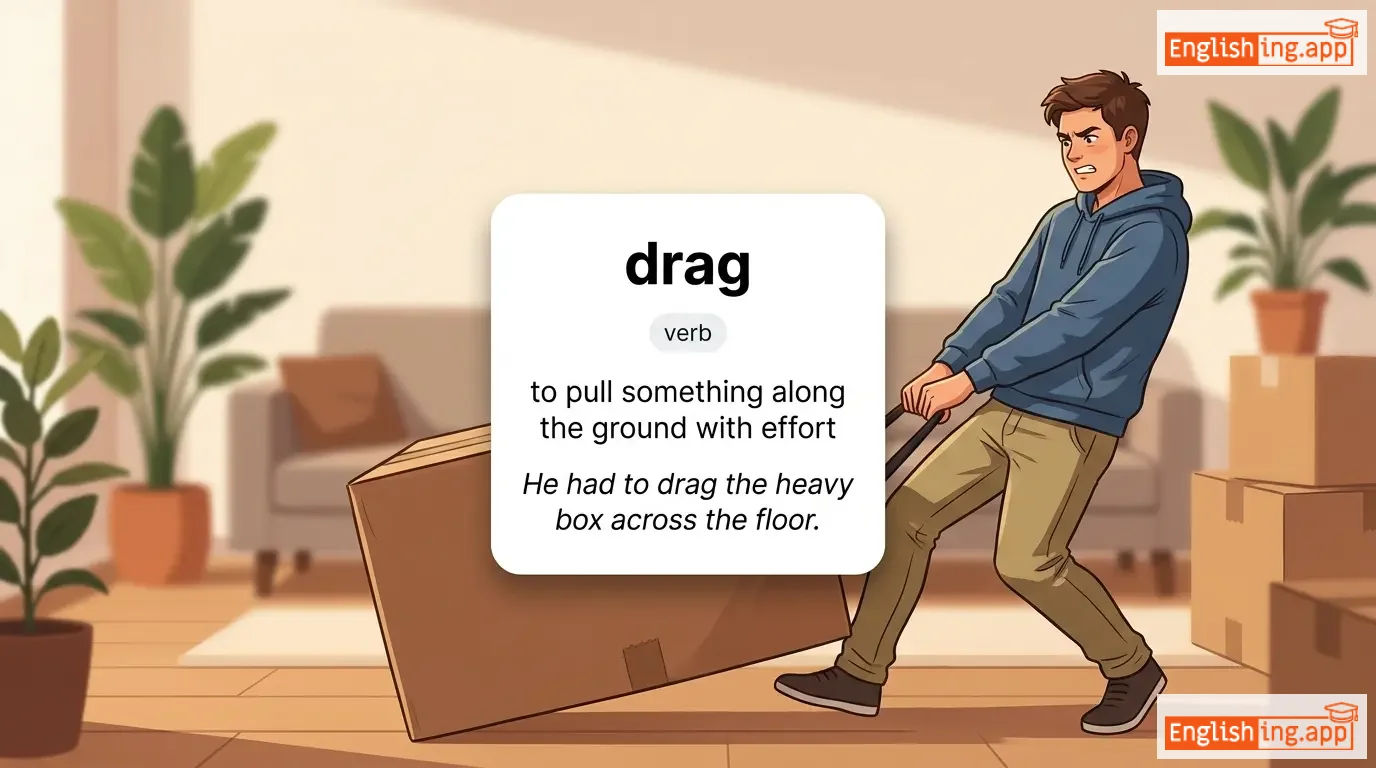
to pull something along the ground with effort
••••••
|
He had to drag the heavy box across the floor.
他不得不把重盒子拖过地板。
••••••
|
他不得不把重盒子拖过地板。
Ta budebu ba zhong hezi tuo guo diban.
••••••
|
drag one's feet
拖延时间
••••••
|
to delay doing something deliberately
••••••
|
拖延做某事
tuoyan zuo mou shi
••••••
|
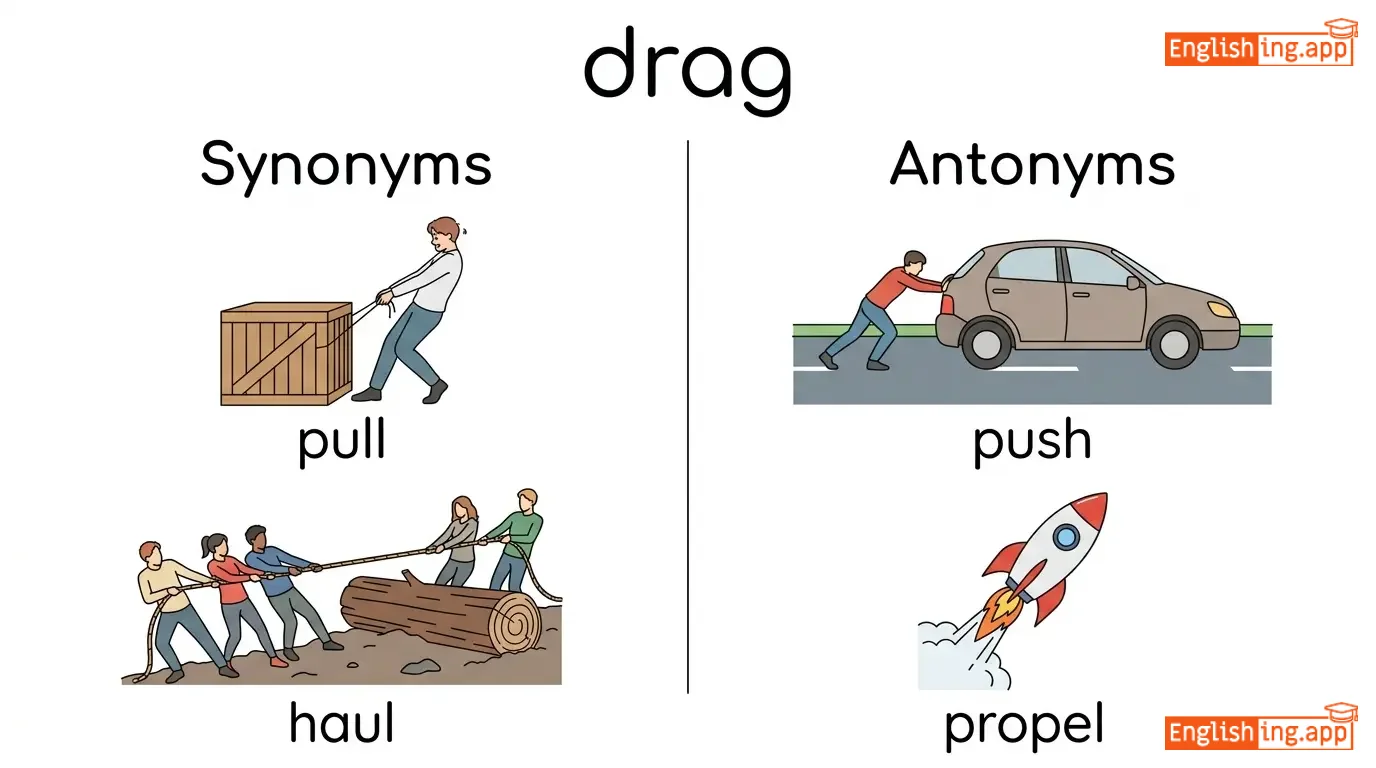
pull, haul, tow, tug
••••••
|
push, propel
••••••
|
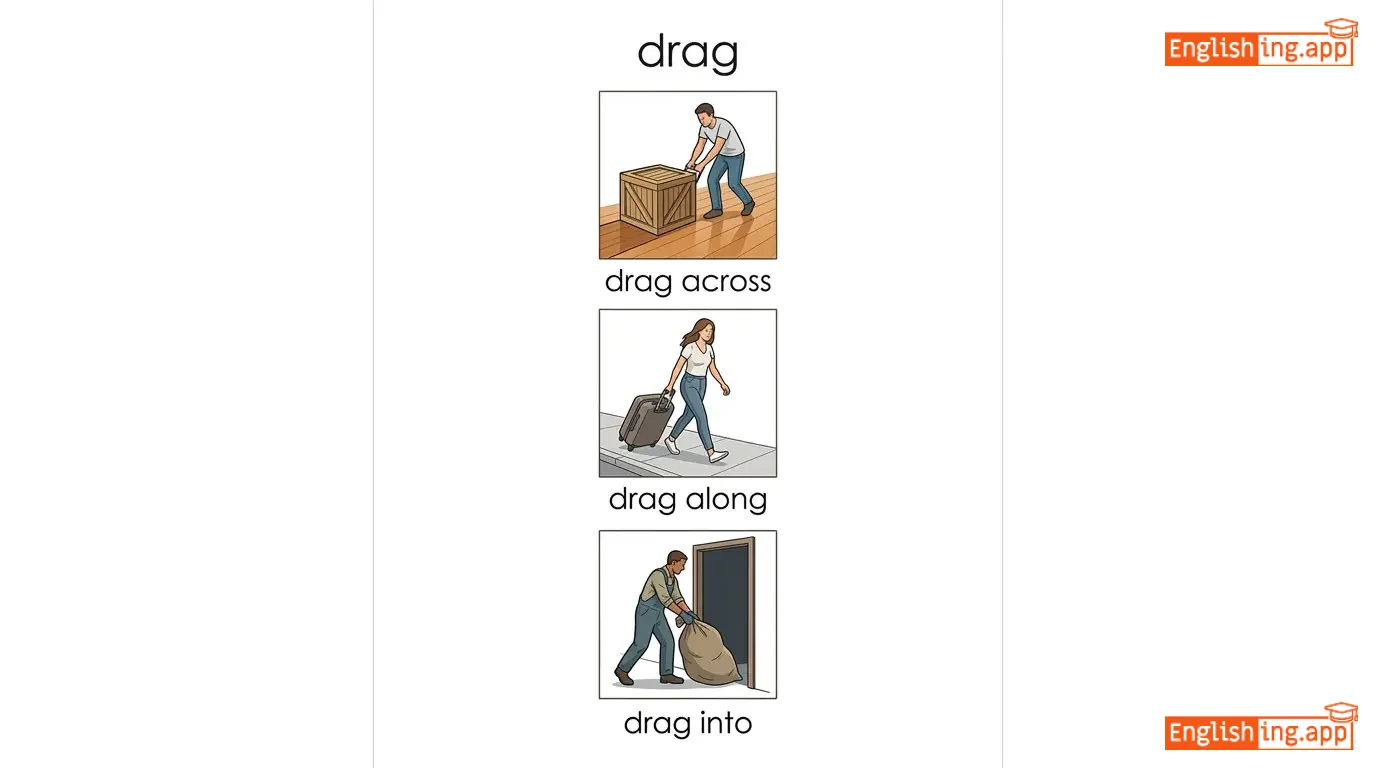
drag across, drag along, drag into, drag down
••••••
|
Drag意味着拖动,拖动会花时间!
••••••
|
|
💧
••••••
|
/drɒp/
verb, noun
(掉)
••••••
|
- •••••• |
掉 / 水滴
diao / shuidi
••••••
|
dropped
掉了
••••••
|
dropped
掉了
••••••
|
drops
掉
••••••
|
dropping
掉落
••••••
|
to let something fall; a small quantity of liquid
••••••
|
Be careful not to drop your phone.
小心不要把手机掉了。
••••••
|
小心不要把手机掉了。
Xiao xin bu yao ba shouji diao le.
••••••
|
drop the ball
掉球
••••••
|
to make a mistake or fail to do something
••••••
|
犯错
fan cuo
••••••
|
fall, release, decline, drip, descend
••••••
|
lift, raise, pick up
••••••
|
drop out, drop by, drop off, raindrop
••••••
|
Drop意味着掉落,就像水滴=掉水。
••••••
|
|
☀️
••••••
|
/draɪ/
verb
(drai)
••••••
|
|
干燥
gānzào
••••••
|
dried
draid
••••••
|
dried
draid
••••••
|
dries
drais
••••••
|
drying
drein
••••••
|
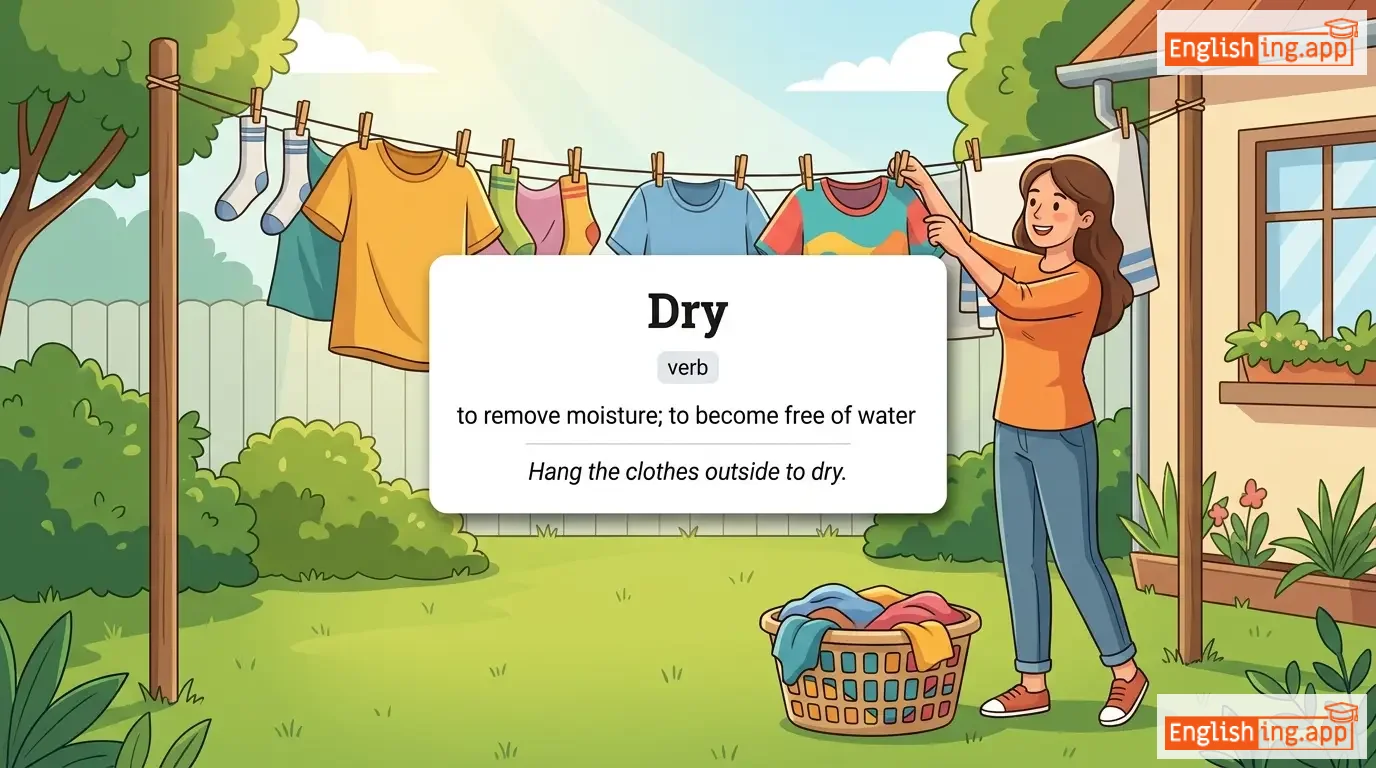
to remove moisture; to become free of water
••••••
|
Hang the clothes outside to dry.
把衣服挂在外面晾干。
••••••
|
把衣服挂在外面晾干。
Bǎ yīfú guà zài wàimiàn liànggān.
••••••
|
- •••••• | - •••••• | - •••••• |
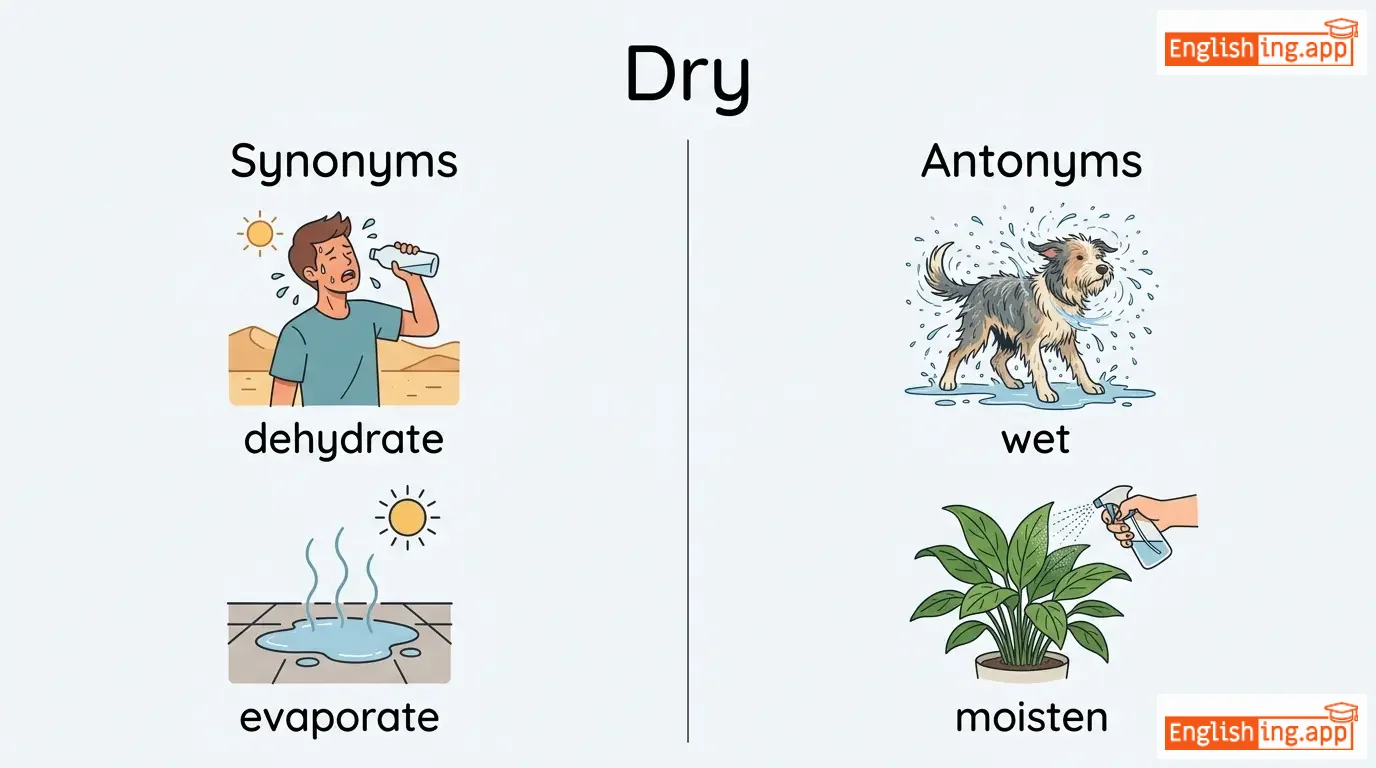
dehydrate, evaporate, drain, wither
••••••
|
wet, moisten, dampen, soak
••••••
|
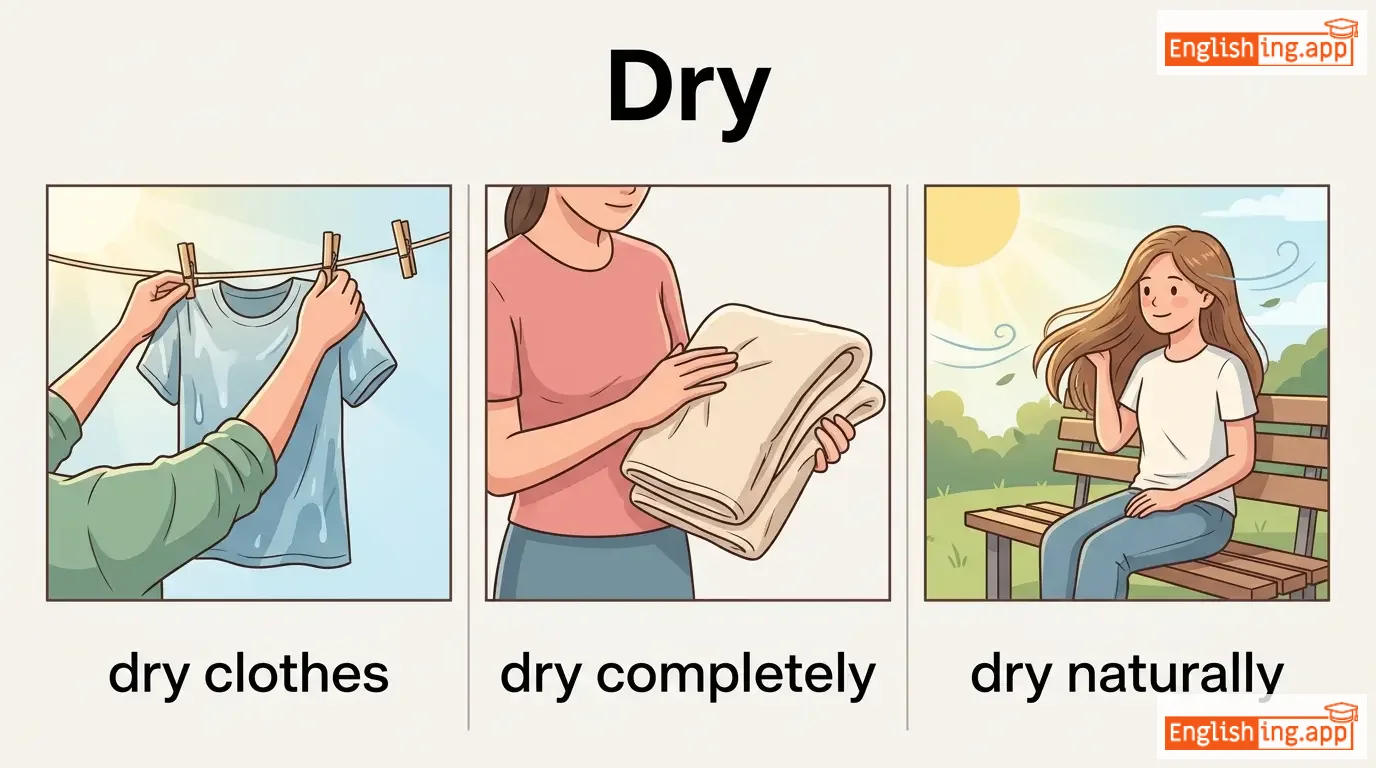
dry clothes, dry completely, dry naturally, dry thoroughly, dry in the sun
••••••
|
In Chinese, '干燥' means dry, representing the removal of moisture.
••••••
|
|
🌊
••••••
|
/floʊ/
verb
(fù luó)
••••••
|
|
流动
liúdòng
••••••
|
flowed
fù luó de
••••••
|
flowed
fù luó de
••••••
|
flows
fù luó sī
••••••
|
flowing
fù luó yīng
••••••
|
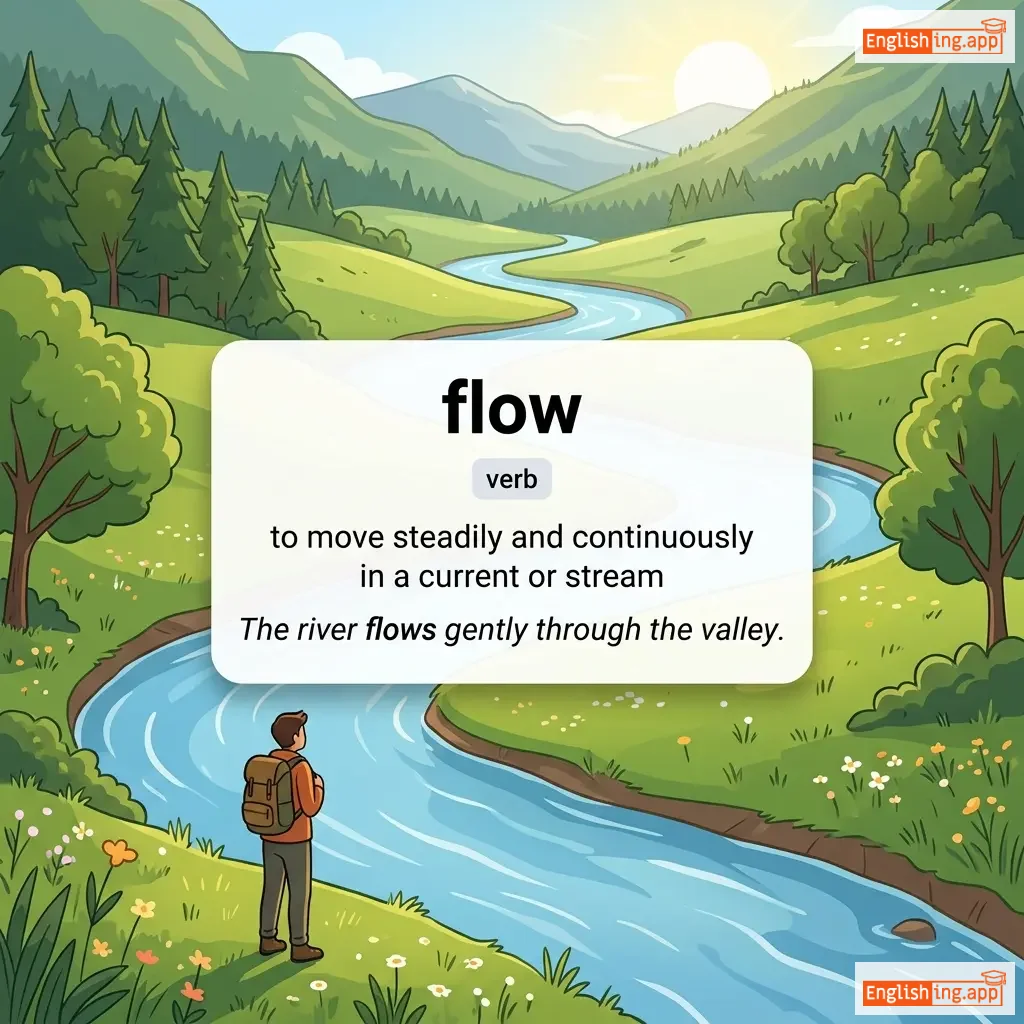
to move steadily and continuously in a current or stream
••••••
|
The river flows gently through the valley.
hé liú guò qu hé chuán guò dì qiú.
••••••
|
河流轻轻地流过山谷。
Héliú qīngqīng de liú guò shāngǔ.
••••••
|
go with the flow
gōu wéi de fù luó
••••••
|
to relax and accept a situation without trying to change it
••••••
|
随波逐流
suí bō zhú liú
••••••
|
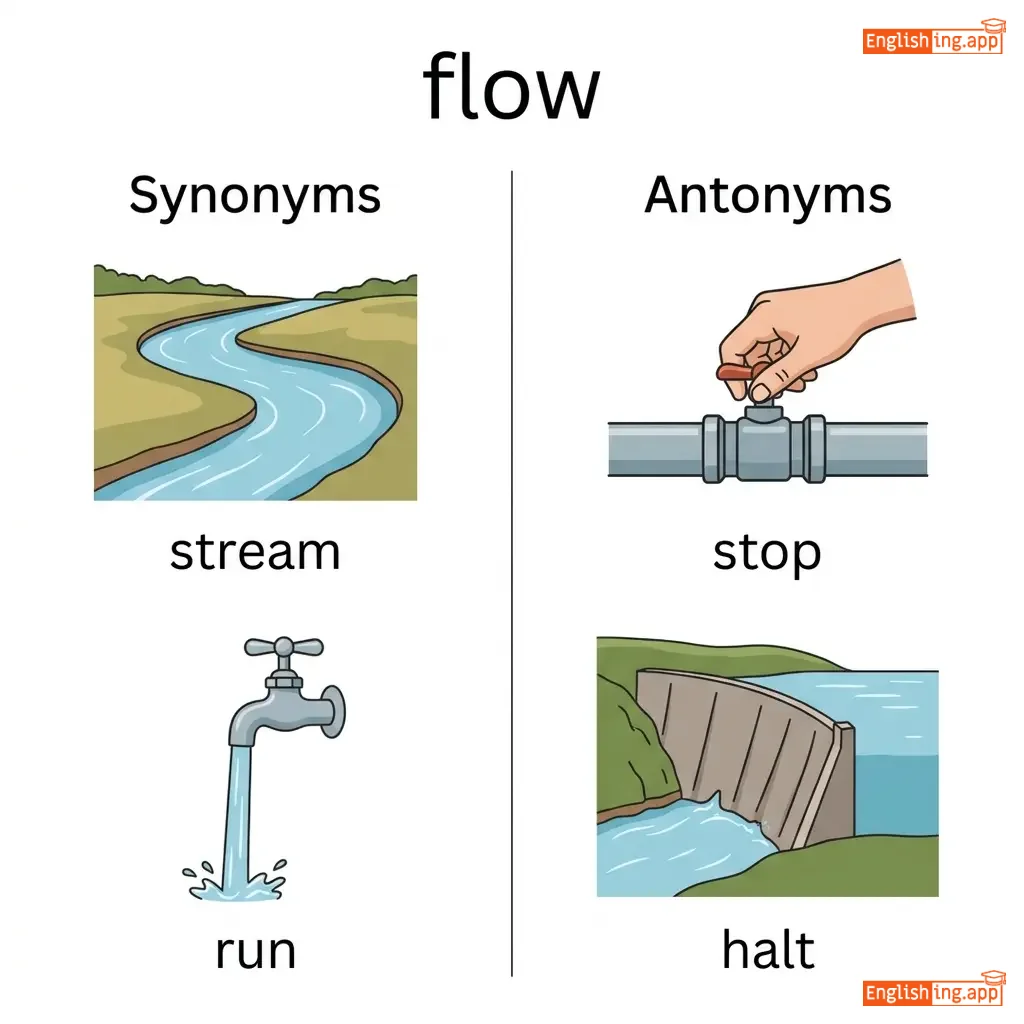
stream, run, circulate, pour, glide
••••••
|
stop, halt, stagnate
••••••
|
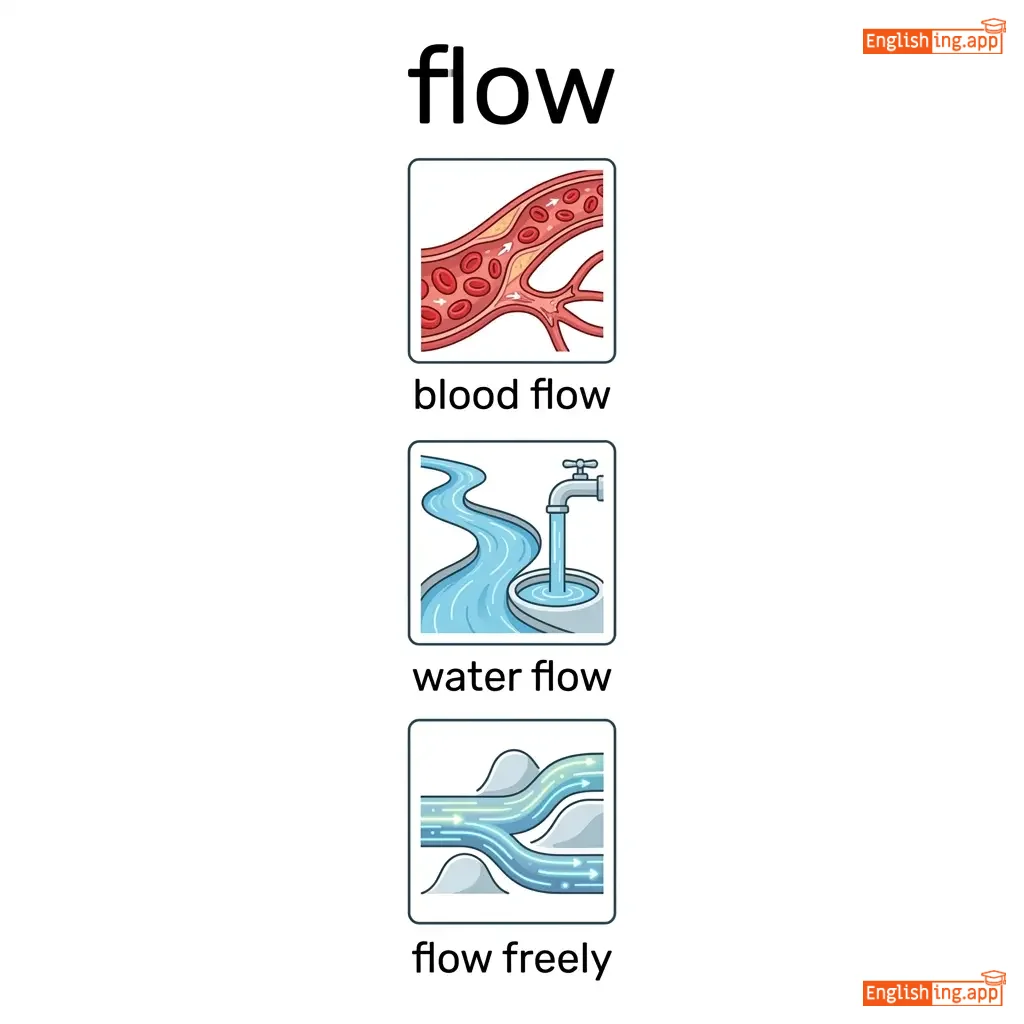
blood flow, water flow, flow freely, flow rate
••••••
|
流动就像水流,轻松随它而行!
••••••
|
|
🥛
••••••
|
/ɡlæs/
noun
(格拉斯)
••••••
|
- •••••• |
玻璃
boli
••••••
|
- •••••• | - •••••• | - •••••• | - •••••• |
a hard, transparent material used for windows, bottles, and other objects
••••••
|
She poured water into a glass and handed it to me.
她把水倒进了一个玻璃杯,然后递给了我。
••••••
|
她把水倒进了一个玻璃杯,然后递给了我。
Ta ba shui dao jin le yi ge boli bei, ranhou di gei le wo.
••••••
|
raise a glass
举杯
••••••
|
to make a toast by lifting a drink
••••••
|
举杯
ju bei
••••••
|
cup, tumbler, goblet, crystal
••••••
|
plastic, wood
••••••
|
glass of water, glass window, broken glass, glass bottle
••••••
|
玻璃就像杯子一样,我们举着它,喝酒时不忘祝福。
••••••
|
|
🌀
••••••
|
/mɛs/
noun
(mèisī)
••••••
|
- •••••• |
混乱
hùnluàn
••••••
|
- •••••• | - •••••• | - •••••• | - •••••• |
A state of disorder or untidiness.
••••••
|
The kids left the room in a complete mess. |
孩子们把房间弄得一团糟。
Háizimen bǎ fángjiān nòng de yìtuánzāo.
••••••
|
make a mess |
To cause disorder or problems
••••••
|
弄乱
nòngluàn
••••••
|
chaos, disorder, confusion, clutter, disarray
••••••
|
order, neatness, tidiness
••••••
|
make a mess, big mess, messy situation, clean up the mess
••••••
|
MESS 意味着混乱— 'Mess 在房间意味着混乱'
••••••
|
|
🧼
••••••
|
/soʊp/
noun
••••••
|
- •••••• | - •••••• | - •••••• | - •••••• | - •••••• | - •••••• |
a substance used for washing and cleaning, typically made from fats and alkalis
••••••
|
She washed her hands with soap and water. |
- •••••• |
soap opera |
a television or radio drama series about daily life
••••••
|
- •••••• |
cleanser, detergent, wash, suds, bar
••••••
|
dirt, grime
••••••
|
bar of soap, liquid soap, hand soap, soap bubbles
••••••
|
No •••••• |
|
📍
••••••
|
/spɒt/
noun
(点)
••••••
|
- •••••• |
地点
didian
••••••
|
- •••••• | - •••••• | - •••••• | - •••••• |
a particular place or position
••••••
|
I found a great spot for a picnic in the park. |
我在公园里找到了一个很好的野餐地点。
Wo zai gongyuan li zhaodao le yi ge hen hao de yecan didian.
••••••
|
- •••••• | - •••••• | - •••••• |
location, place, area, position
••••••
|
void, space, gap
••••••
|
hot spot, tourist spot, perfect spot
••••••
|
Spot the perfect picnic spot in the park.
••••••
|
|
🧻
••••••
|
/ˈtaʊəl/
noun
(towel)
••••••
|
- •••••• |
毛巾
maojin
••••••
|
- •••••• | - •••••• | - •••••• | - •••••• |
a piece of absorbent cloth used for drying or wiping
••••••
|
She grabbed a towel after her shower. |
她在洗澡后拿了一条毛巾。
Tā zài xǐzǎo hòu nále yītiáo máojīn.
••••••
|
throw in the towel |
to give up or admit defeat
••••••
|
放弃
fàngqì
••••••
|
cloth, napkin, wipe, hand towel, rag
••••••
|
none
••••••
|
bath towel, hand towel, paper towel, wet towel
••••••
|
Towel 🧻 = 毛巾 — ‘放弃’表示承认失败。
••••••
|
|
💧
••••••
|
/wet/
adjective
(wèt)
••••••
|
- •••••• |
湿的; 浸湿的;
shī de; jìn shī de;
••••••
|
- •••••• | - •••••• | - •••••• | - •••••• |
covered or saturated with water or another liquid; not dry
••••••
|
My clothes are still wet from the rain.
我的衣服还因为下雨而湿了。
••••••
|
我的衣服还因为下雨而湿了。
wǒ de yīfu hái yīnwèi xiàyǔ ér shī le.
••••••
|
- •••••• | - •••••• | - •••••• |
damp, moist, soaked, drenched
••••••
|
dry, arid, parched, dehydrated
••••••
|
wet clothes, wet weather, get wet
••••••
|
下雨的时候,一切都湿了。
••••••
|
|
🧽
••••••
|
/waɪp/
verb
(wāipǔ)
••••••
|
|
擦拭
cāshì
••••••
|
wiped
wāipǔd
••••••
|
wiped
wāipǔd
••••••
|
wipes
wāipǔs
••••••
|
wiping
wāipɪng
••••••
|
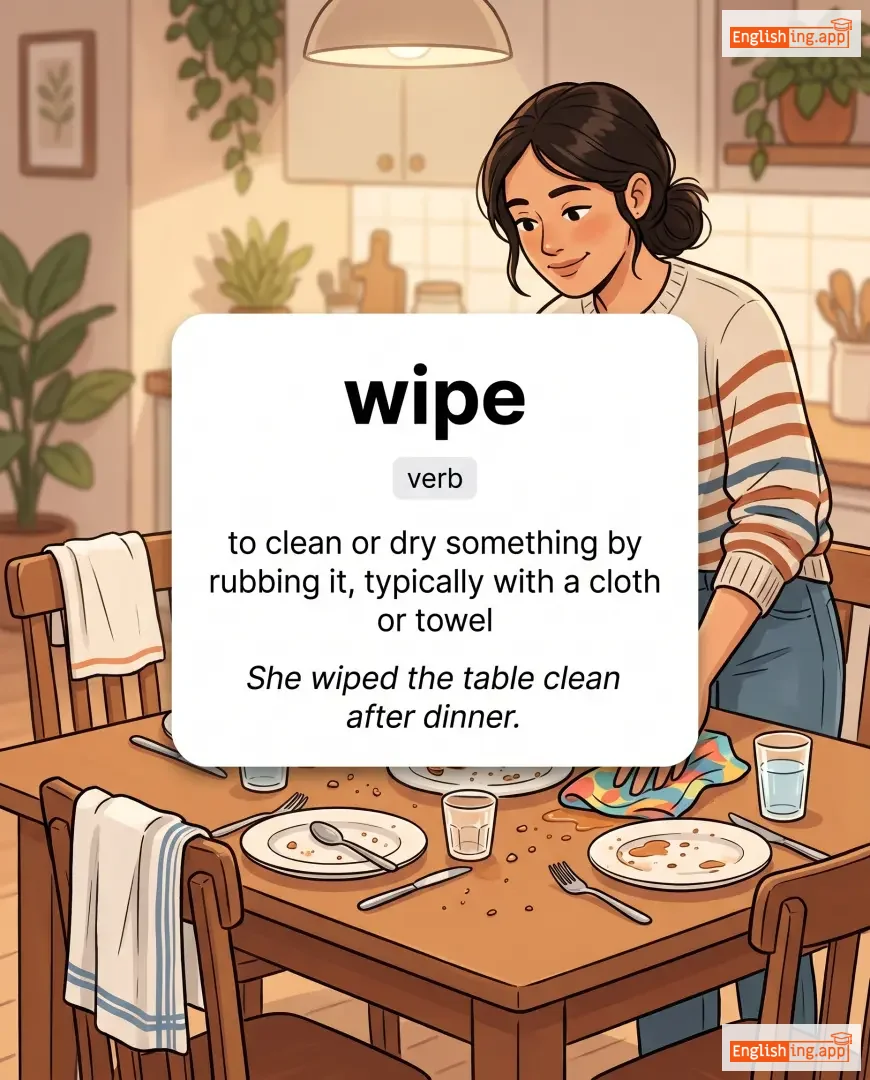
to clean or dry something by rubbing with a cloth or tissue
••••••
|
Please wipe the table clean.
请擦干净桌子。
••••••
|
请擦干净桌子。
Qǐng cā gānjìng zhuōzi.
••••••
|
- •••••• | - •••••• | - •••••• |
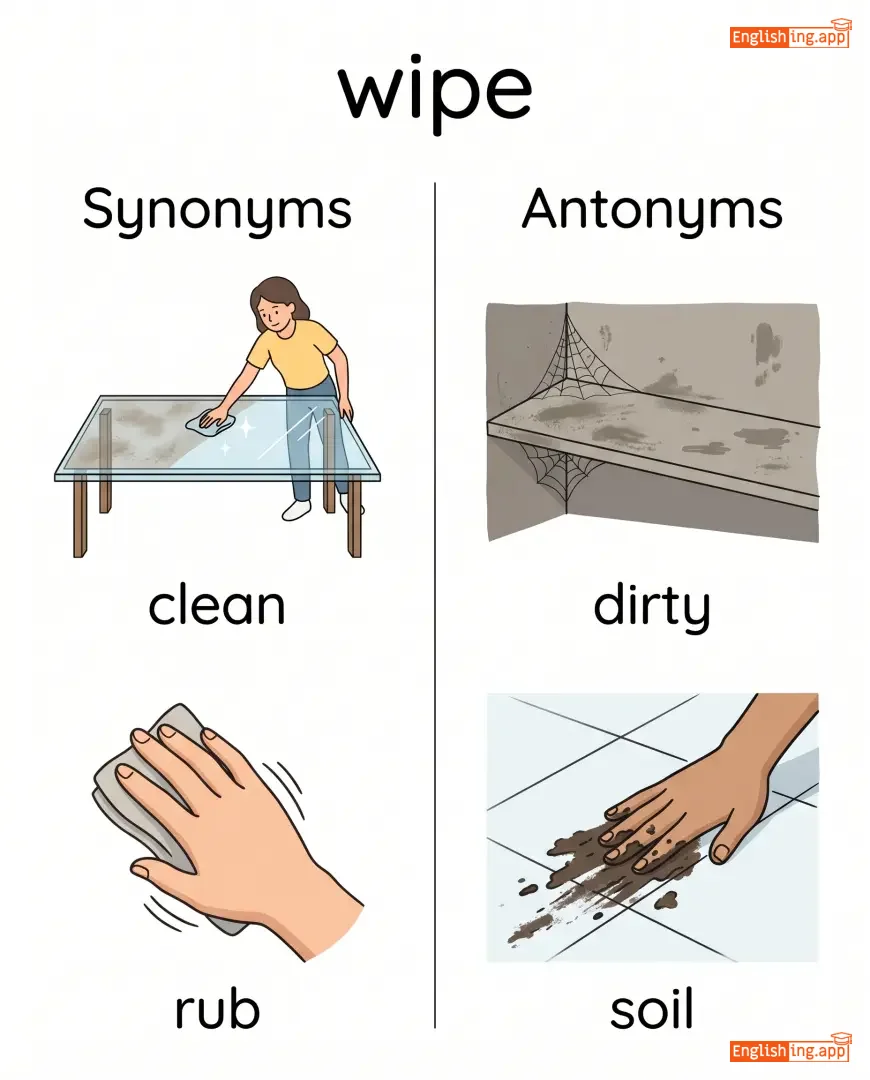
clean, rub, dry, polish
••••••
|
dirty, soil, stain, mess
••••••
|
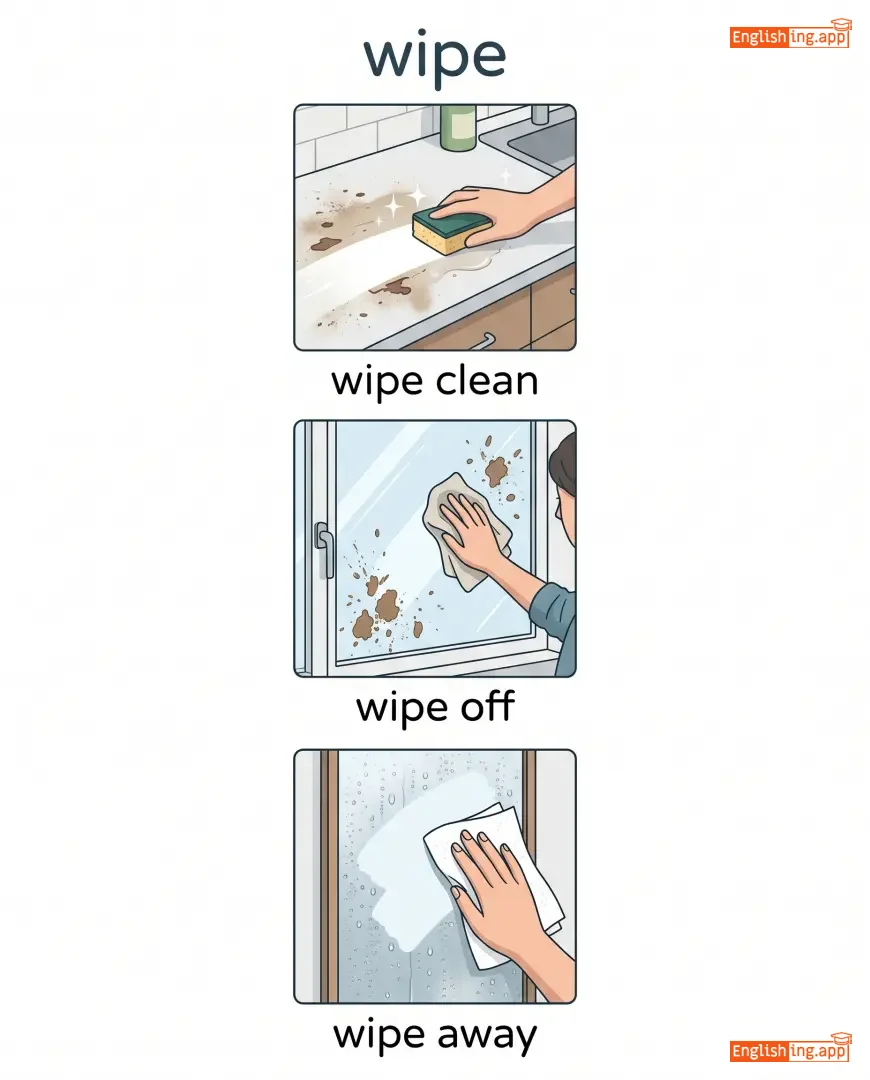
wipe clean, wipe away, wipe off, wipe down, wipe out
••••••
|
擦拭桌子让它保持干净。
••••••
|

