|
表情符号
|
单词 | Images | 翻译 | 过去时 | 过去分词 | 第三人称单数 | 动名词 | 含义 | 例句 | 例句翻译 | 示例表达 | 示例表达含义 | 示例表达翻译 | 同义词 | 反义词 | 搭配词 | 助记符 |
|---|---|---|---|---|---|---|---|---|---|---|---|---|---|---|---|---|---|
|
🌱
••••••
|
/prəˈlɪfəreɪt/
verb
(普罗利弗雷特)
••••••
|
|
扩散
kuò sàn
••••••
|
proliferated
普罗利弗雷特德
••••••
|
proliferated
普罗利弗雷特德
••••••
|
proliferates
普罗利弗雷特斯
••••••
|
proliferating
普罗利弗雷特ing
••••••
|
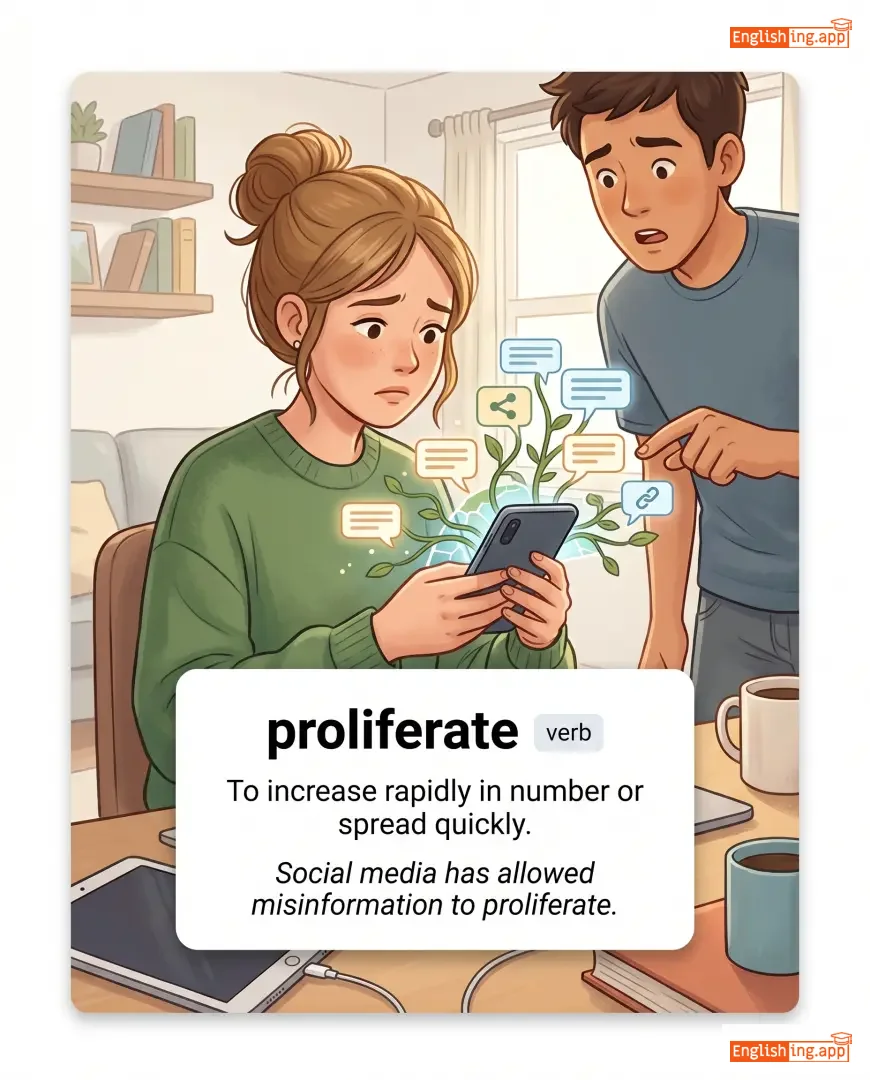
To increase rapidly in number or spread quickly.
••••••
|
Social media has allowed misinformation to proliferate.
社交媒体让虚假信息迅速传播。
••••••
|
社交媒体让虚假信息迅速传播。
Shèjiāo méitǐ ràng xūjiǎ xìnxī xùnsù chuánbō.
••••••
|
- •••••• | - •••••• | - •••••• |
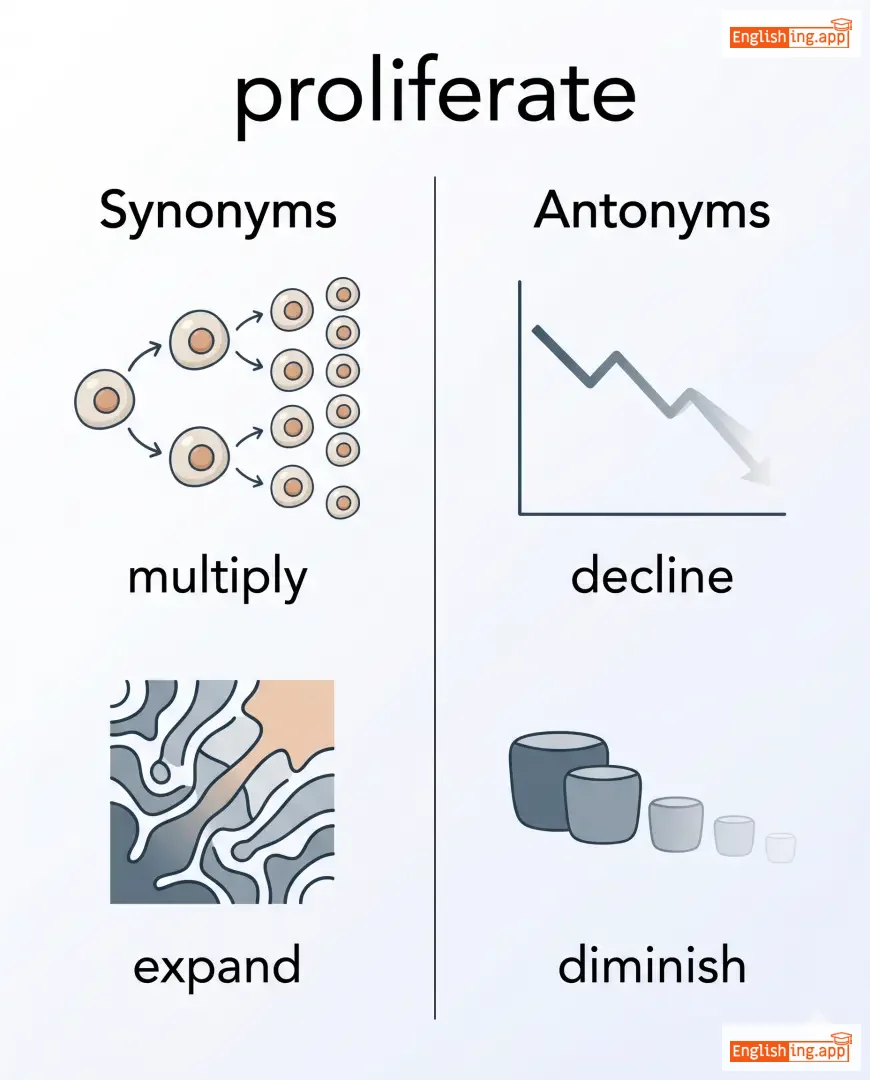
multiply, expand, grow, spread, escalate
••••••
|
decline, diminish, shrink
••••••
|
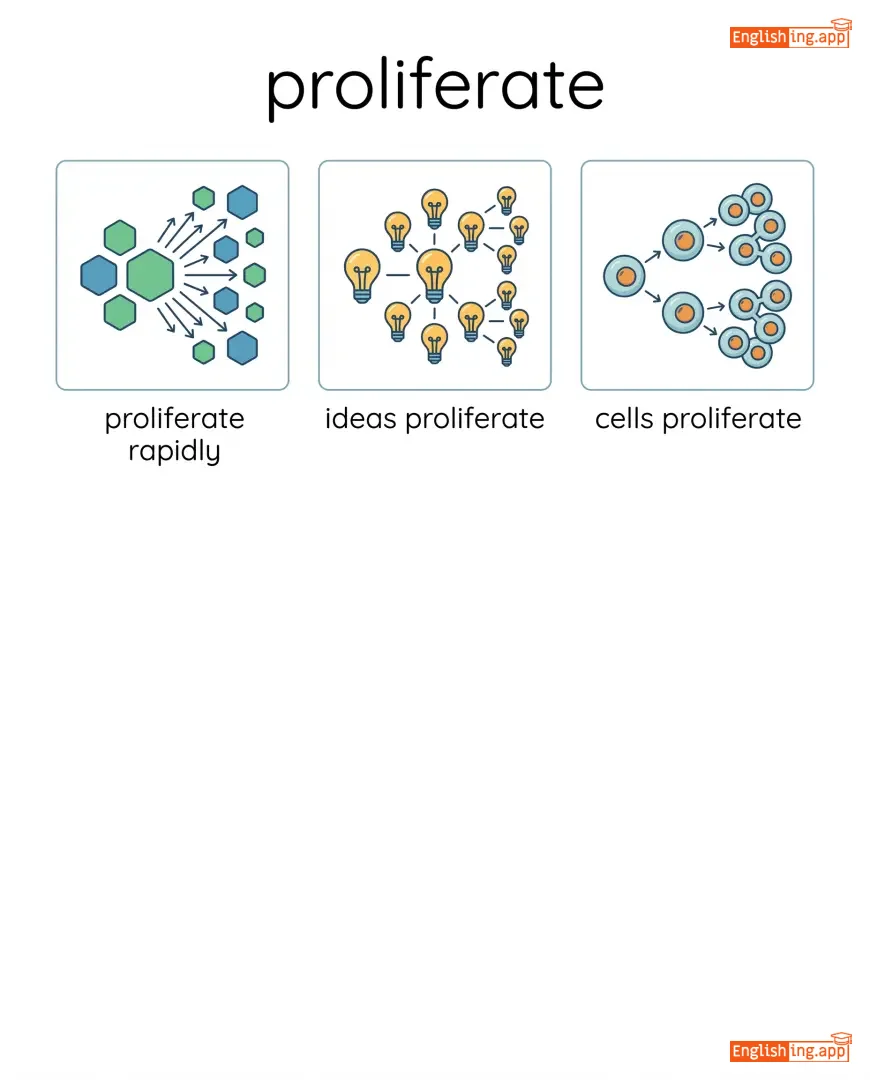
proliferate rapidly, ideas proliferate, cells proliferate
••••••
|
Proliferate 在中文中意味着像叶子一样扩展或传播。
••••••
|
|
🎯
••••••
|
/prəˈpɛnsəti/
noun
(pǔo-pén-sī-tí)
••••••
|

|
倾向
qīngxiàng
••••••
|
- •••••• | - •••••• | - •••••• | - •••••• |
a natural tendency or inclination to behave in a particular way
••••••
|
She has a propensity to trust people too easily.
她有过于轻信他人的倾向。
••••••
|
她有过于轻信他人的倾向。
Tā yǒu guòyú qīngxìn tārén de qīngxiàng.
••••••
|
- •••••• | - •••••• | - •••••• |
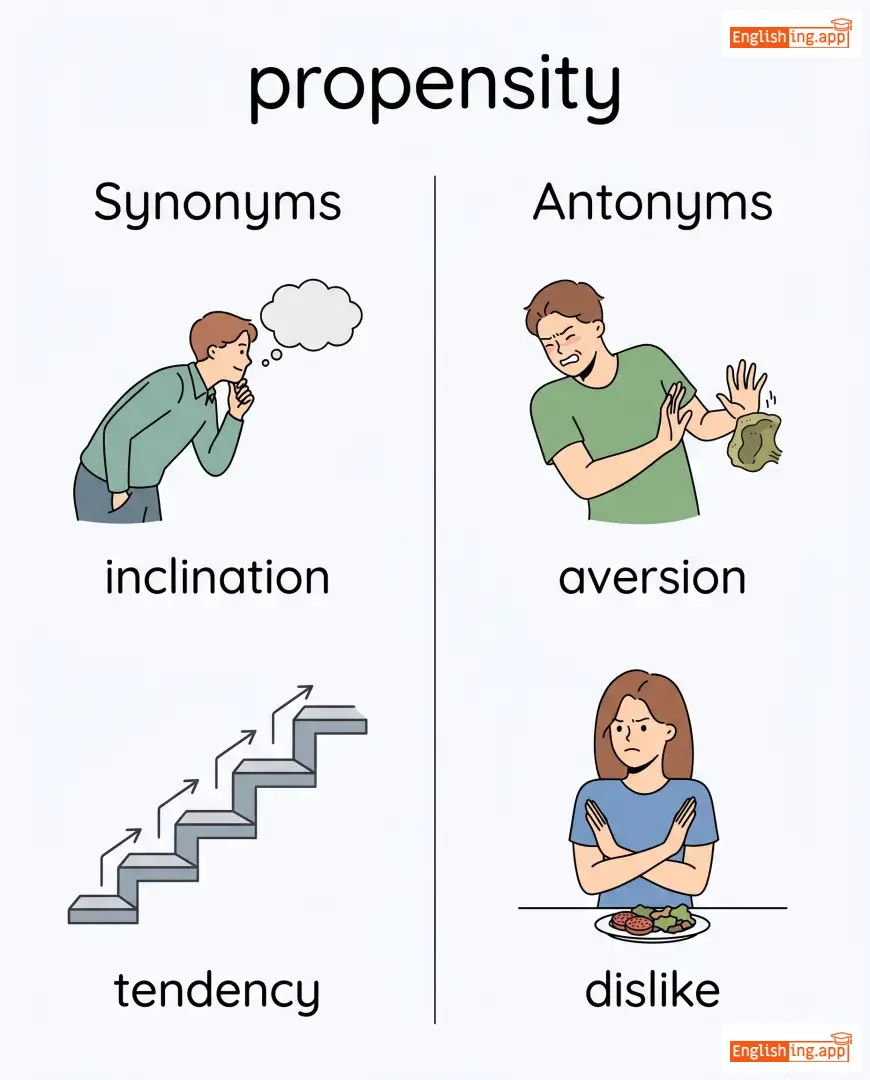
inclination, tendency, predisposition, leaning, proclivity
••••••
|
aversion, dislike, disinclination
••••••
|
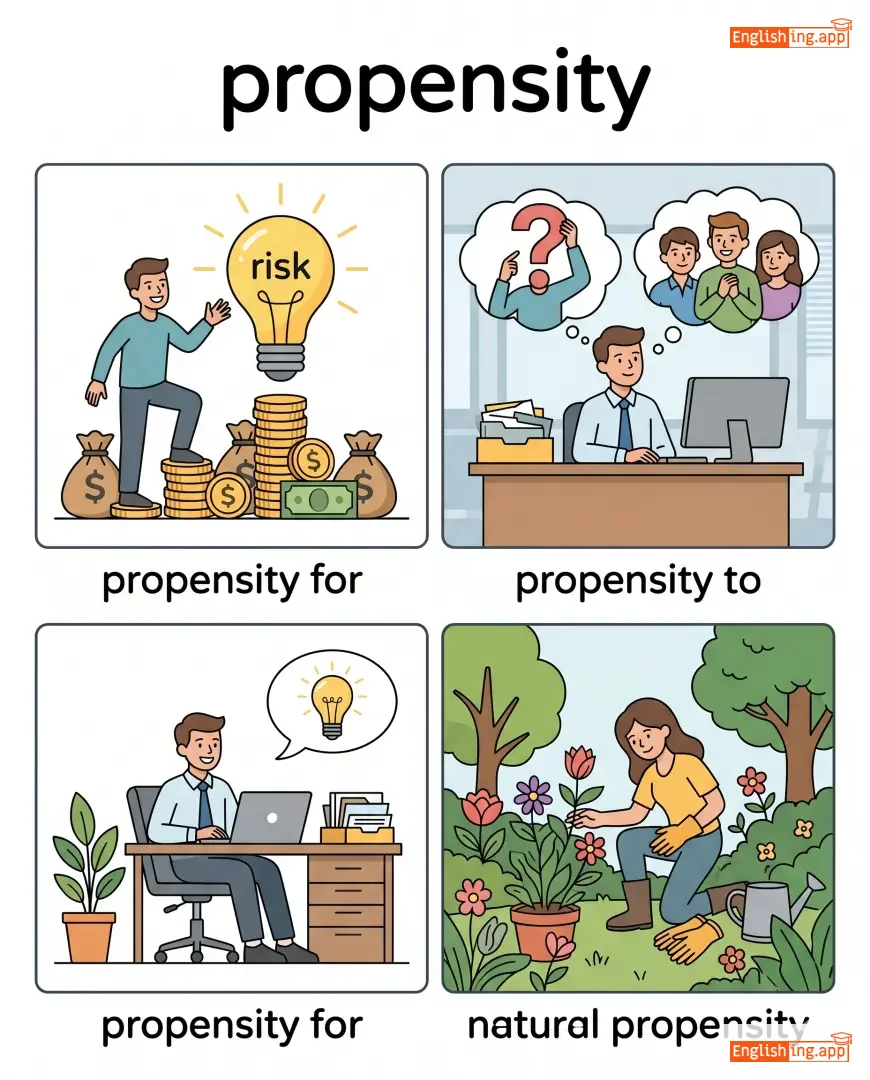
propensity for, propensity to, natural propensity, strong propensity
••••••
|
Propensity 意味着倾向,记住 '倾向' 就是自然的倾向。
••••••
|
|
🎁
••••••
|
/prəˈpɪʃieɪt/
verb
(普罗皮谢特)
••••••
|
|
安抚
ānfǔ
••••••
|
propitiated
普罗皮谢特德
••••••
|
propitiated
普罗皮谢特德
••••••
|
propitiates
普罗皮谢特斯
••••••
|
propitiating
普罗皮谢特英
••••••
|
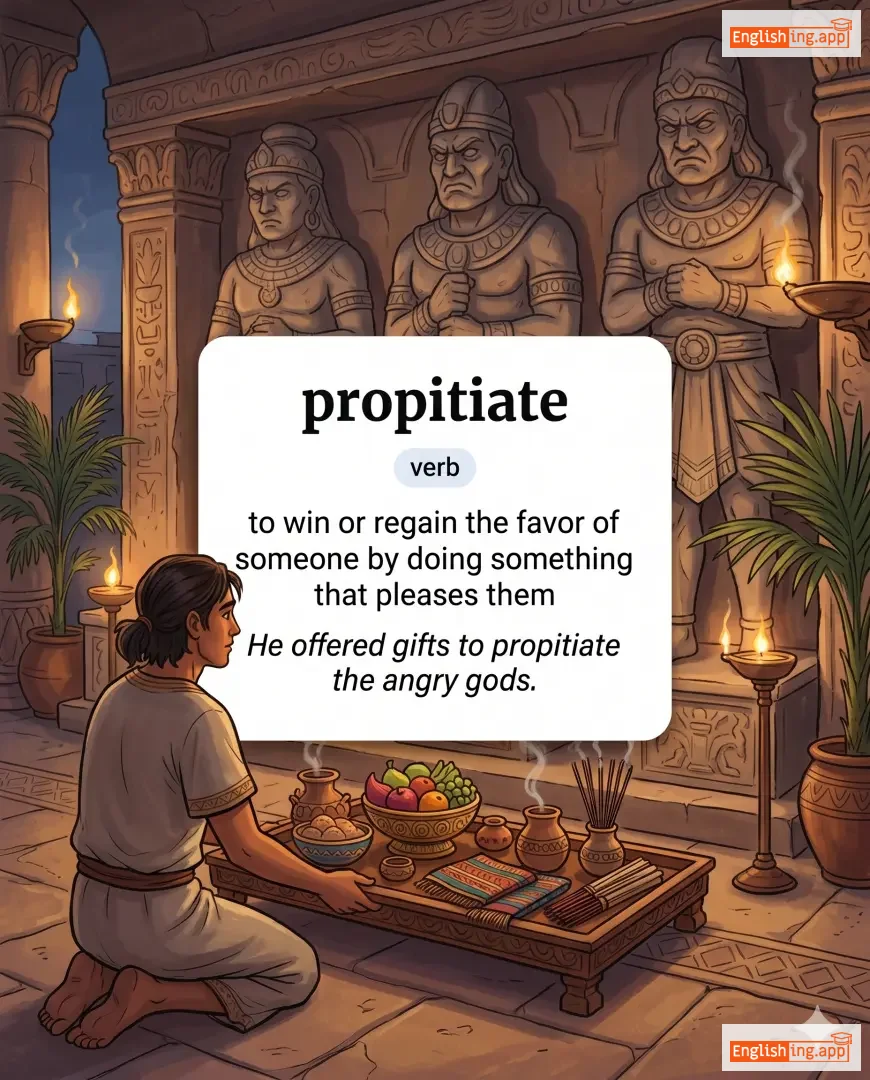
to win or regain the favor of someone by doing something that pleases them
••••••
|
He offered gifts to propitiate the angry gods.
他提供礼物来安抚愤怒的神明。
••••••
|
他提供礼物来安抚愤怒的神明。
Tā tígōng lǐwù lái ānfǔ fènnù de shénmíng.
••••••
|
- •••••• | - •••••• | - •••••• |
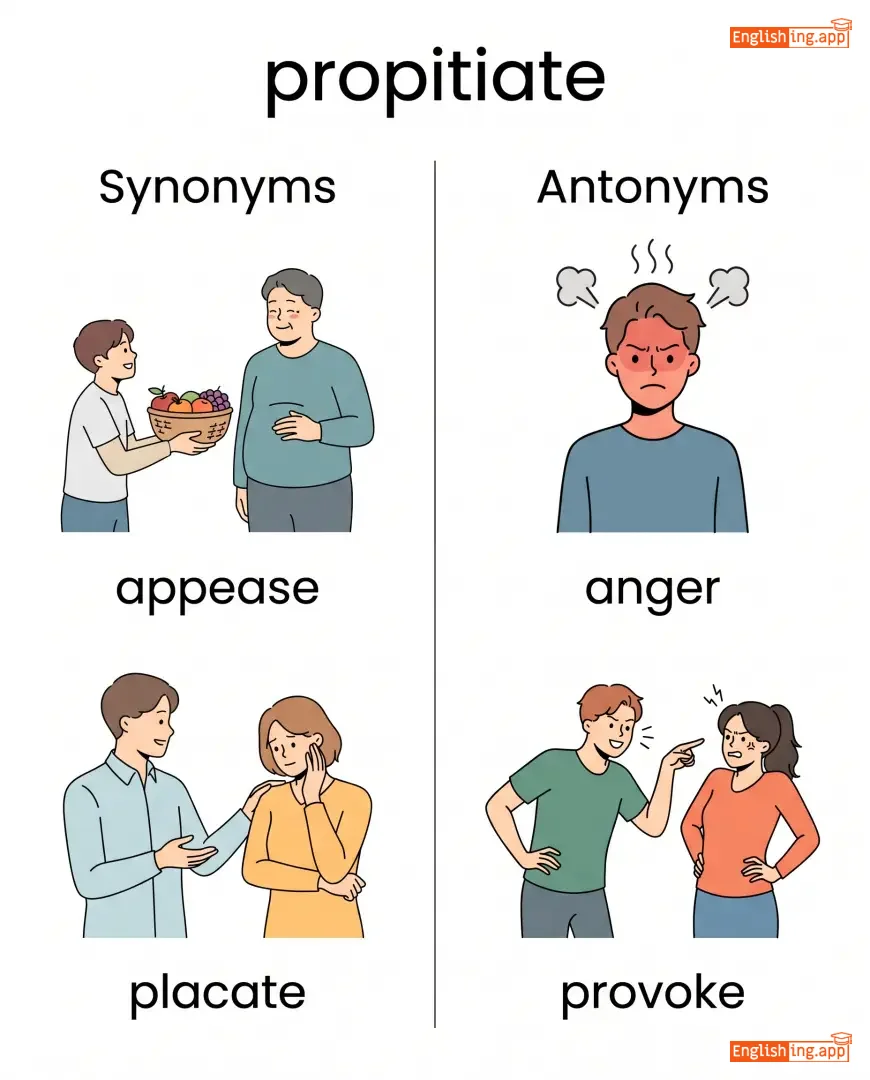
appease, placate, conciliate, mollify, pacify
••••••
|
anger, provoke, enrage
••••••
|
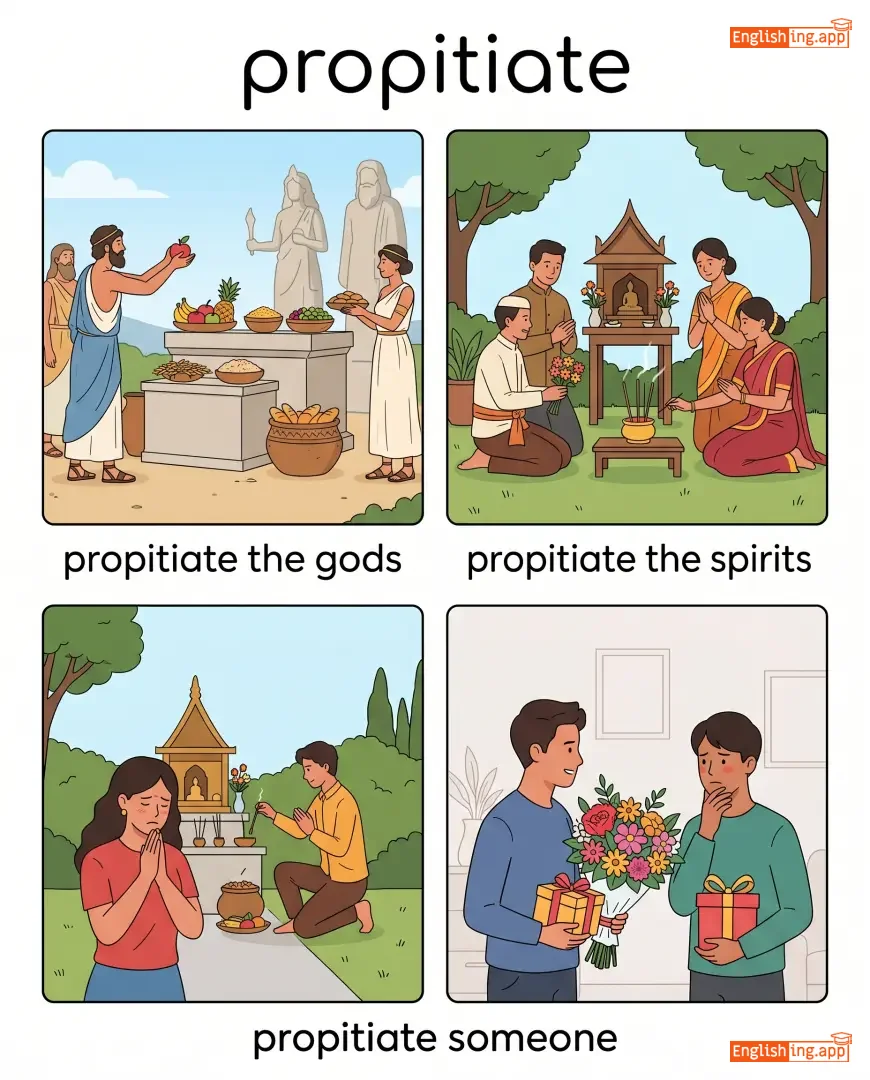
propitiate the gods, propitiate the spirits, propitiate someone
••••••
|
Propitiate 就是通过礼物安抚神灵的做法。
••••••
|
|
🤵
••••••
|
/prəˈpraɪəti/
noun
(proprieti)
••••••
|
|
得体
deti
••••••
|
- •••••• | - •••••• | - •••••• | - •••••• |
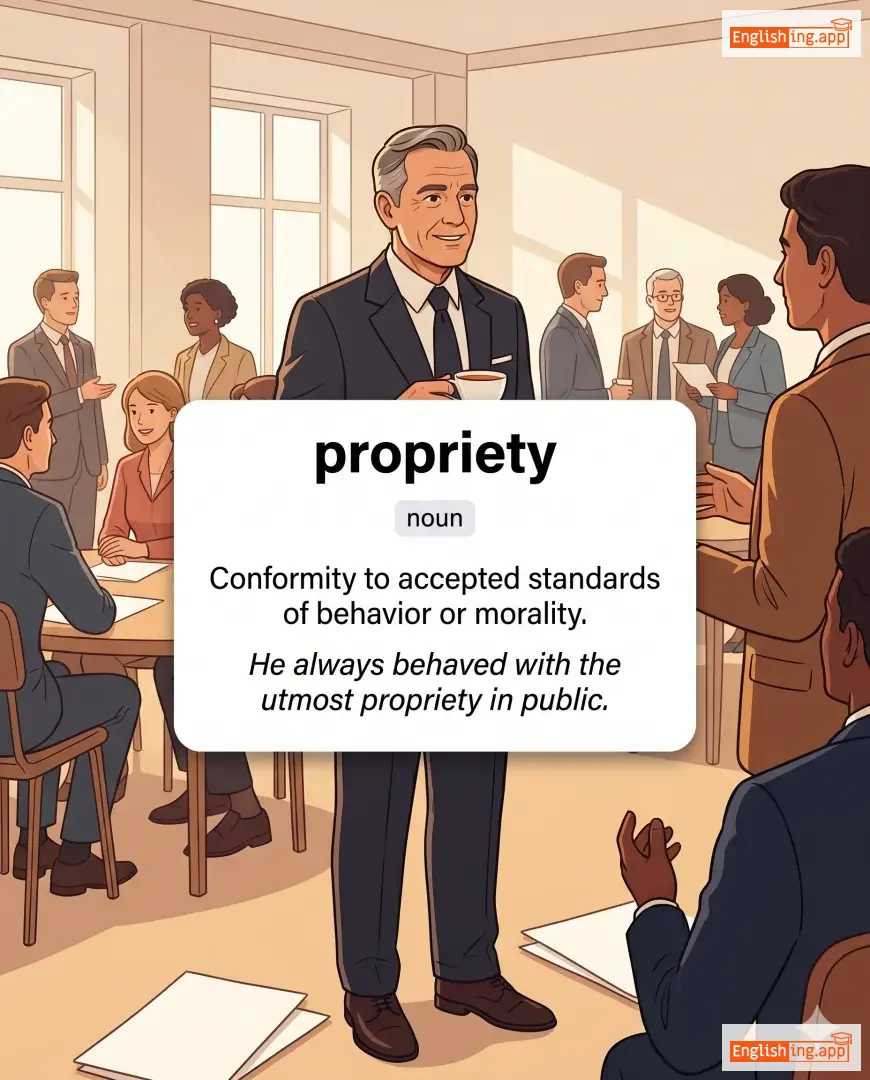
Conformity to accepted standards of behavior or morality.
••••••
|
He always behaved with the utmost propriety in public. |
他在公共场合总是表现得体。
Ta zai gonggong changhe zong shi biaoxian deti.
••••••
|
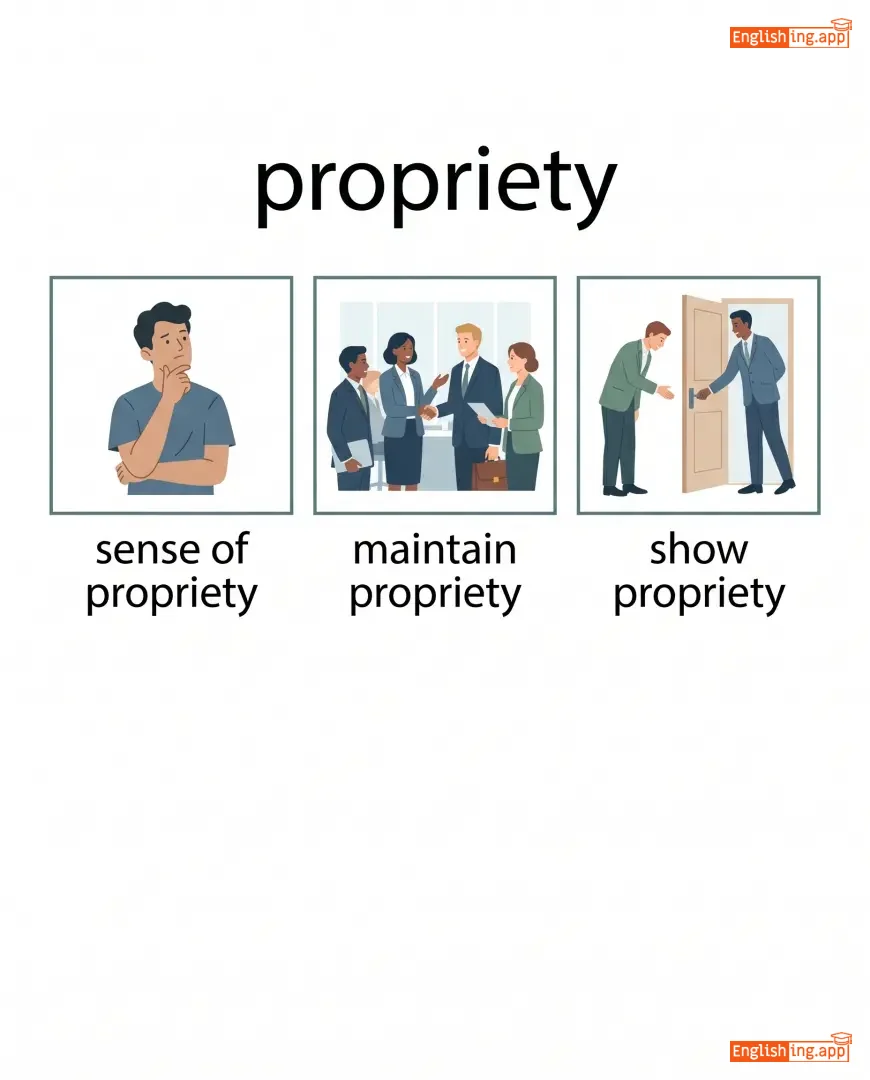
sense of propriety |
Awareness of what is socially acceptable and proper.
••••••
|
得体的意识
Deti de yishi
••••••
|
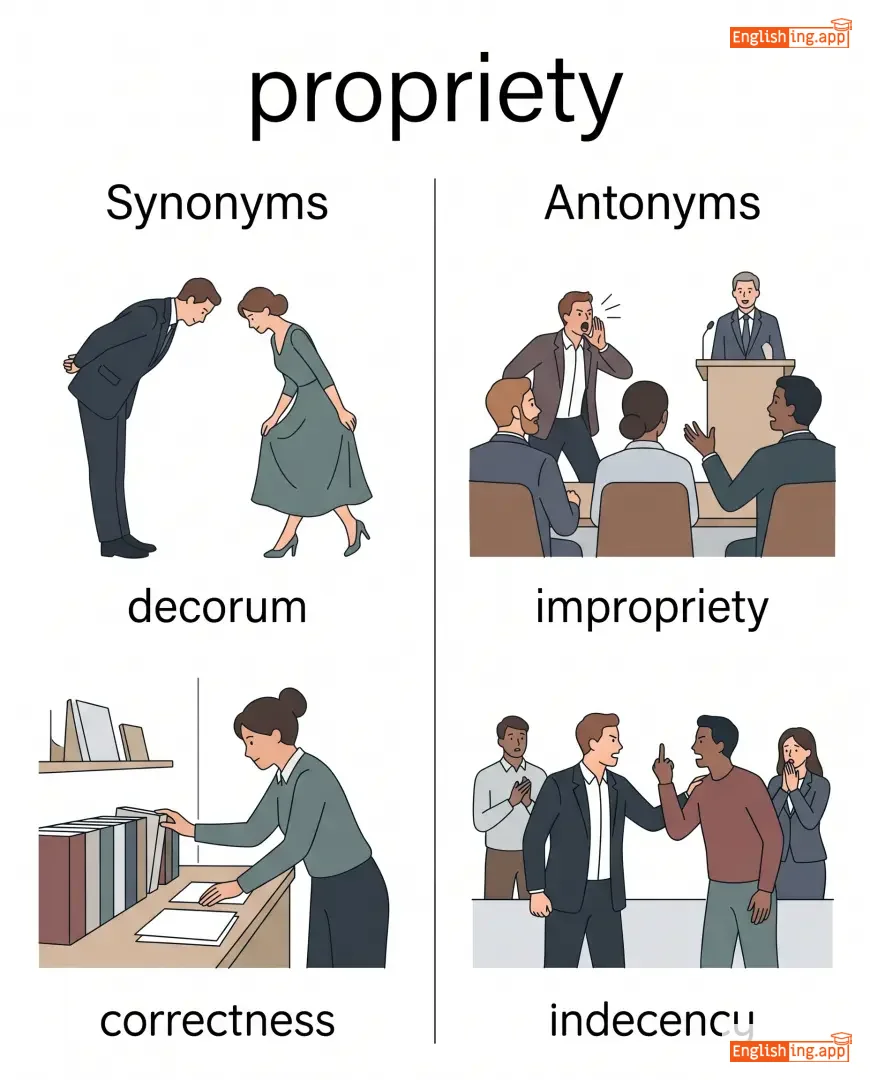
decorum, correctness, civility, respectability, modesty
••••••
|
impropriety, indecency, rudeness
••••••
|
sense of propriety, maintain propriety, show propriety, question of propriety
••••••
|
得体 = propriety
••••••
|
|
🚫
••••••
|
/proʊˈskraɪb/
verb
(proʊˈskraɪb)
••••••
|
|
禁止
jìnzhǐ
••••••
|
proscribed
proʊˈskraɪbd
••••••
|
proscribed
proʊˈskraɪbd
••••••
|
proscribes
proʊˈskraɪbz
••••••
|
proscribing
proʊˈskraɪbɪŋ
••••••
|
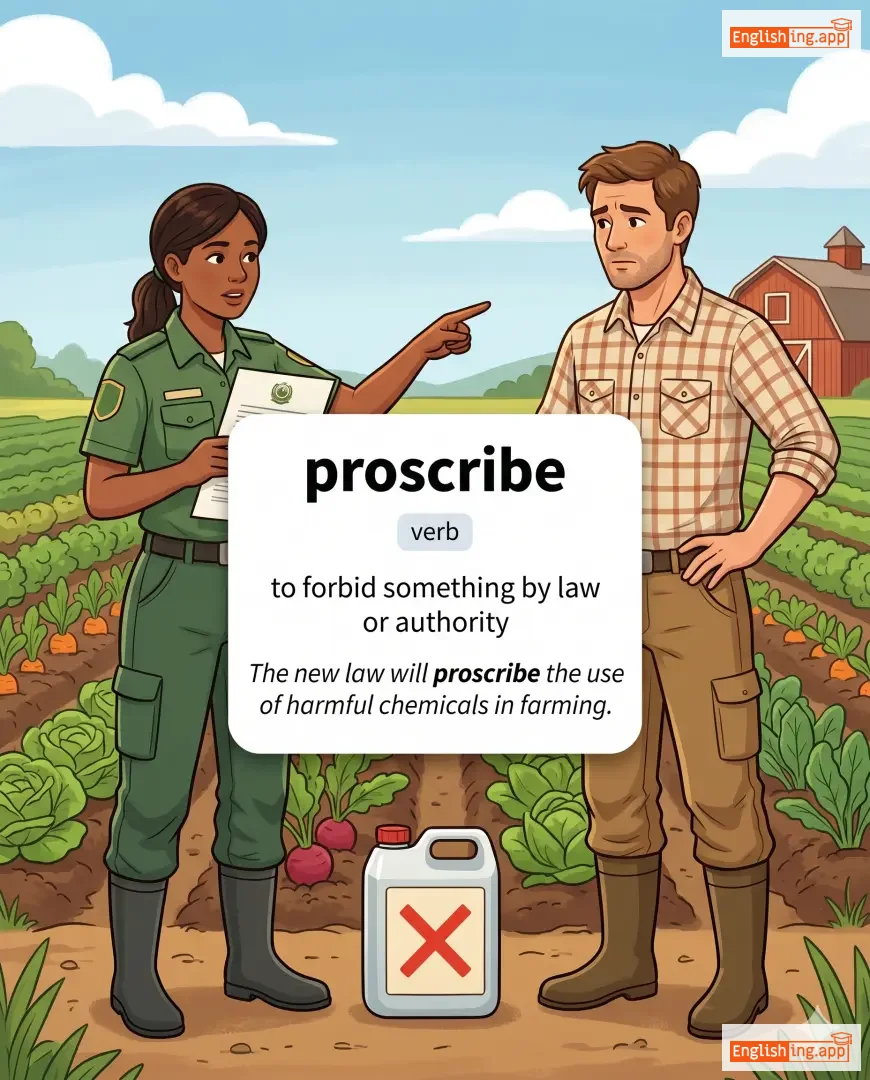
to forbid something by law or authority
••••••
|
The new law will proscribe the use of harmful chemicals in farming.
ðə nju lɔ wɪl proʊˈskraɪb ðə juz ʌv hɑːrmfʊl kəmɪkəlz ɪn fɑːrmɪŋ.
••••••
|
新法律将禁止在农业中使用有害化学品。
Xīn fǎlǜ jiāng jìnzhǐ zài nóngyè zhōng shǐyòng yǒuhài huàxué pǐn.
••••••
|
- •••••• | - •••••• | - •••••• |
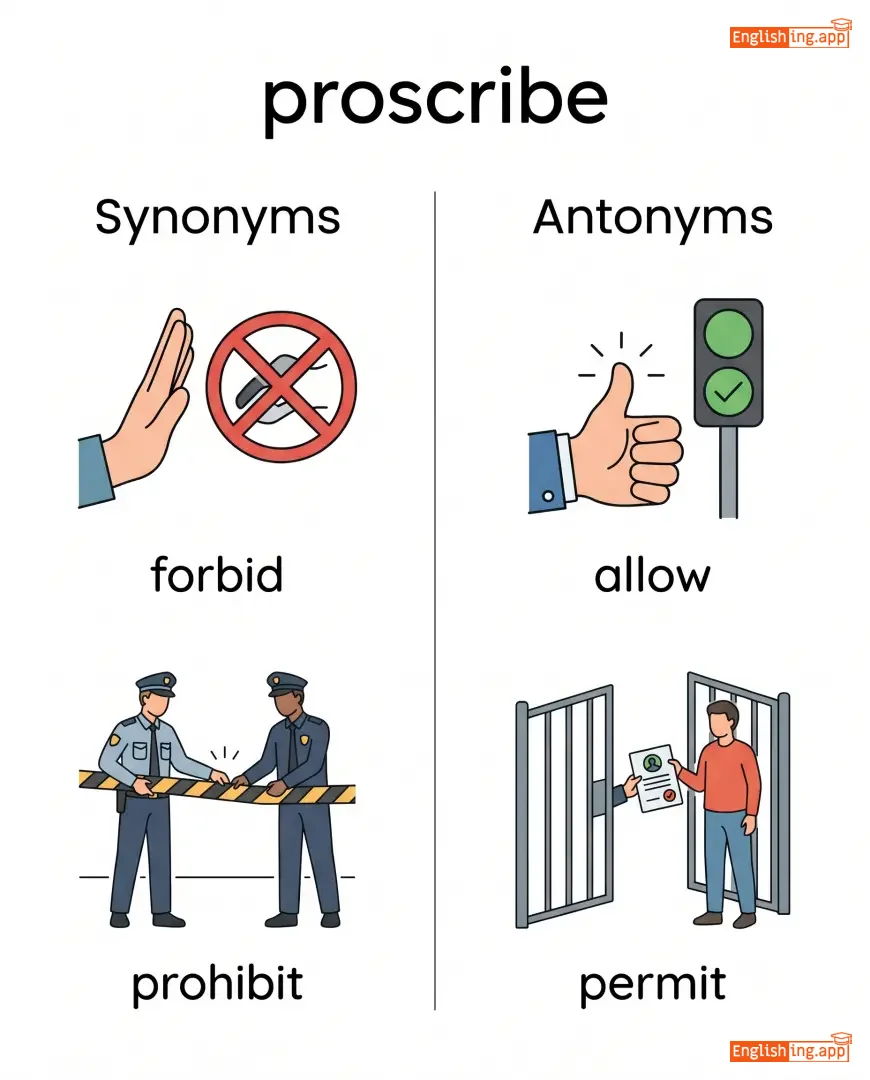
forbid, prohibit, ban, outlaw, restrict
••••••
|
allow, permit, authorize
••••••
|
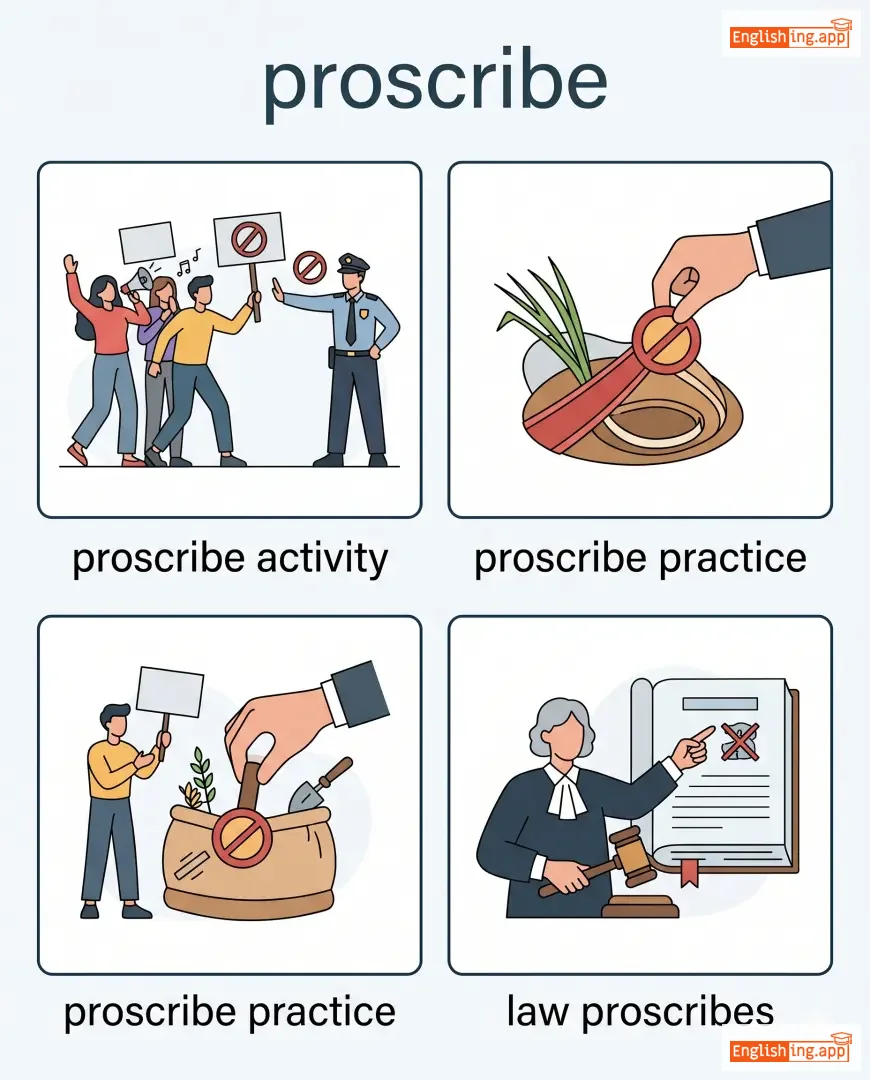
proscribe activity, proscribe practice, law proscribes, proscribe behavior
••••••
|
Proscribe不是订阅,而是禁止🚫
••••••
|
|
💰
••••••
|
/ˈprɒvɪdənt/
adjective
(普罗维登特)
••••••
|
- •••••• |
有远见的
yǒu yuǎnjiàn de
••••••
|
- •••••• | - •••••• | - •••••• | - •••••• |
making or indicative of timely preparation for the future
••••••
|
She was provident in saving money for her children’s education. |
她为孩子们的教育储蓄,非常有远见。
Tā wèi háizimen de jiàoyù chǔxù, fēicháng yǒu yuǎnjiàn.
••••••
|
- •••••• | - •••••• | - •••••• |
prudent, farsighted, cautious, careful, thrifty
••••••
|
wasteful, careless, imprudent
••••••
|
provident planning, provident measures, provident fund, provident attitude
••••••
|
Provident = 为未来做好准备的有远见的行为。
••••••
|
|
💪
••••••
|
/ˈpjuːɪsənt/
adjective
(普依桑特)
••••••
|
- •••••• |
强大的
qiángdà de
••••••
|
- •••••• | - •••••• | - •••••• | - •••••• |
having great power or influence; mighty
••••••
|
The king was a puissant ruler whose word was law. |
国王是一个强大的统治者,他的话就是法律。
Guówáng shì yīgè qiángdà de tǒngzhì zhě, tā de huà jiù shì fǎlǜ.
••••••
|
- •••••• | - •••••• | - •••••• |
powerful, mighty, strong, influential, dominant
••••••
|
weak, powerless, feeble
••••••
|
puissant leader, puissant empire, puissant authority
••••••
|
Puissant意思是强大 – 如果你能(push),你就是强大的!
••••••
|
|
🧐
••••••
|
/pʌŋkˈtɪliəs/
adjective
(pángtílì'āsī)
••••••
|
- •••••• |
一丝不苟
yīsī bù gǒu
••••••
|
- •••••• | - •••••• | - •••••• | - •••••• |
Showing great attention to detail or correct behavior.
••••••
|
She was punctilious in her attention to etiquette. |
她对礼仪的关注非常一丝不苟。
Tā duì lǐyí de guānzhù fēicháng yīsī bù gǒu.
••••••
|
- •••••• | - •••••• | - •••••• |
meticulous, precise, scrupulous, exact, careful
••••••
|
careless, negligent, sloppy
••••••
|
punctilious attention, punctilious detail, punctilious manners, punctilious observer
••••••
|
Punctilious就像一丝不苟,关注每一个小细节(礼仪)。
••••••
|
|
👃
••••••
|
/ˈpʌndʒənt/
adjective
(pānjiènt)
••••••
|
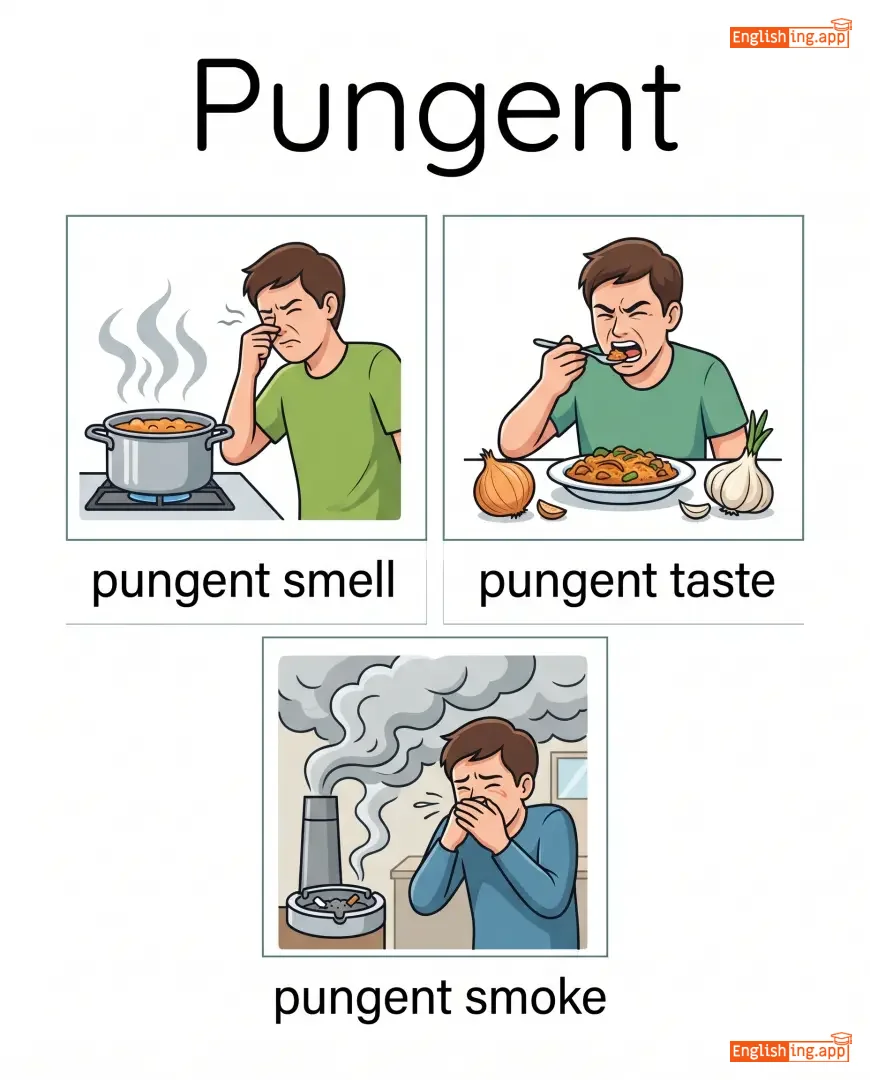
|
强烈的气味或味道
qiángliè de qìwèi huò wèidào
••••••
|
- •••••• | - •••••• | - •••••• | - •••••• |
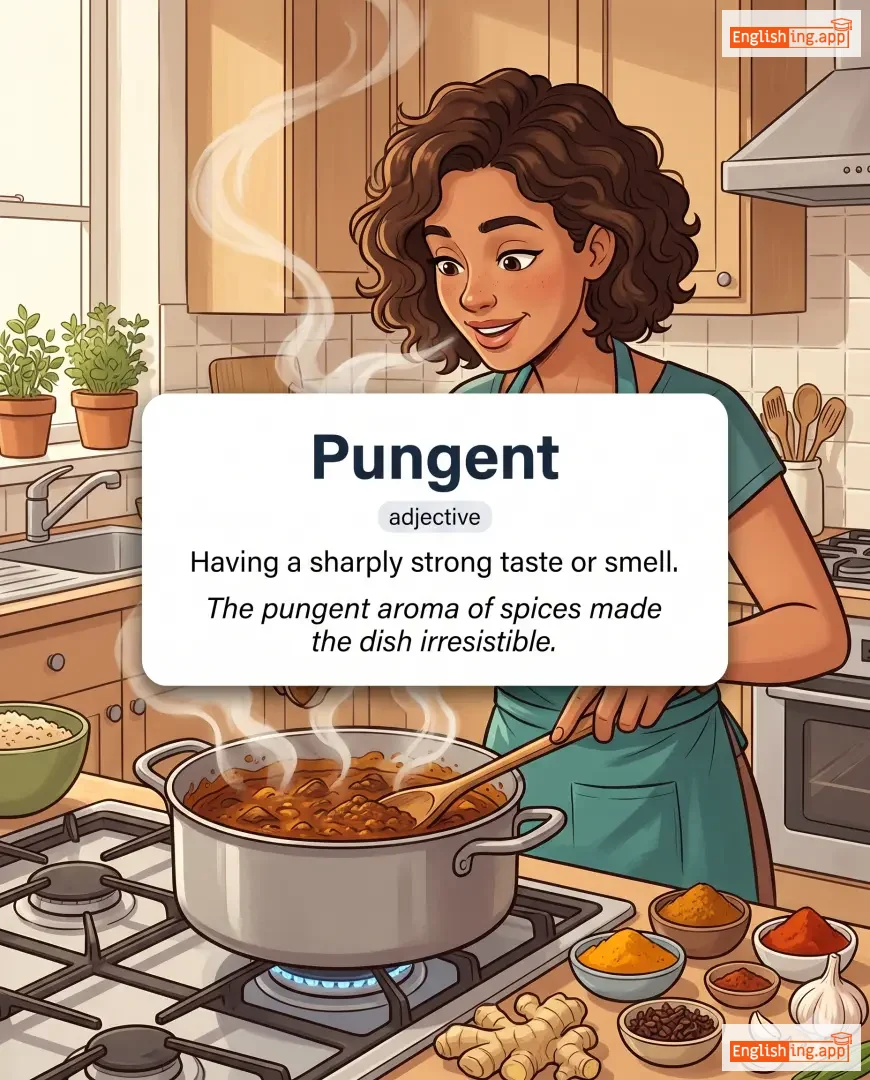
Having a sharply strong taste or smell.
••••••
|
The pungent aroma of spices made the dish irresistible. |
香料的强烈气味让这道菜变得难以抗拒。
xiāngliào de qiángliè qìwèi ràng zhè dào cài biàn dé nán yǐ kàngjù.
••••••
|
pungent wit |
A sharp and biting sense of humor.
••••••
|
犀利的幽默
xīlì de yōumò
••••••
|
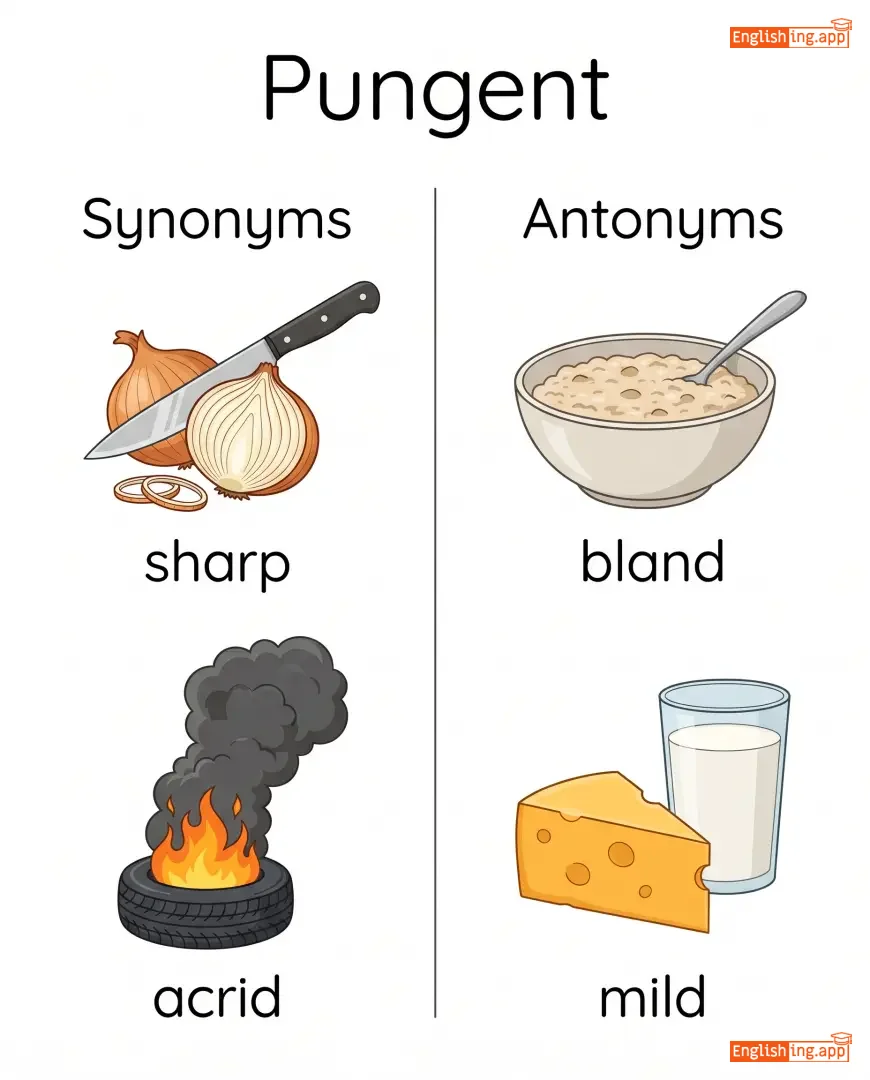
sharp, acrid, biting, spicy, strong
••••••
|
bland, mild, weak
••••••
|
pungent smell, pungent taste, pungent smoke, pungent remark
••••••
|
Pungent 就像尖锐的气味,Pungent = pung + ent。
••••••
|
|
📄
••••••
|
/ˈpɜːrpɔːrt/
verb
(pɜːrpɔːrt)
••••••
|
- •••••• |
声称
shengcheng
••••••
|
purported
purported
••••••
|
purported
purported
••••••
|
purports
purports
••••••
|
purporting
purporting
••••••
|
to claim or profess something, often falsely
••••••
|
The document purports to be an official government report.
该文件声称是官方政府报告。
••••••
|
该文件声称是官方政府报告。
Gai wenjian shengcheng shi guanfang zhengfu baogao.
••••••
|
- •••••• | - •••••• | - •••••• |
claim, profess, pretend, allege, assert
••••••
|
deny, disclaim, reject
••••••
|
purport to show, purport to prove, purport to represent
••••••
|
Purport = Purpose 声称 (声称)
••••••
|
|
🐭
••••••
|
/ˌpjuːsɪˈlænɪməs/
adjective
(普西兰尼穆斯)
••••••
|
- •••••• |
胆小的
danxiaode
••••••
|
- •••••• | - •••••• | - •••••• | - •••••• |
showing a lack of courage or determination; timid
••••••
|
The pusillanimous leader avoided making tough decisions. |
那个胆小的领导人避免做出艰难的决定。
Na ge danxiaode lingdaoren bianmi zuochu jiannan de jueding.
••••••
|
- •••••• | - •••••• | - •••••• |
cowardly, timid, fearful, weak, spineless
••••••
|
brave, courageous, bold
••••••
|
pusillanimous attitude, pusillanimous approach, pusillanimous behavior
••••••
|
Pusillanimous 意味着胆小的,想象一下一个小小的 'pus' 非常害怕。
••••••
|
|
🌀
••••••
|
/ˈkwæɡˌmaɪər/
noun
(kwægmaɪr)
••••••
|
- •••••• |
泥潭,困境
nítán, kùnjìng
••••••
|
- •••••• | - •••••• | - •••••• | - •••••• |
a soft, wet area of land that gives way underfoot; a complex or dangerous situation
••••••
|
The hikers were trapped in a political quagmire. |
徒步旅行者被困在一个政治泥潭中。
Túbù lǚxíng zhě bèi kùn zài yīgè zhèngzhì nítán zhōng.
••••••
|
caught in a quagmire |
stuck in a difficult or complicated situation
••••••
|
陷入困境
xiànrù kùnjìng
••••••
|
marsh, swamp, predicament, dilemma, mess
••••••
|
solution, clarity, stability
••••••
|
political quagmire, legal quagmire, financial quagmire, stuck in a quagmire
••••••
|
Quagmire 意味着 ‘quag’ (泥潭) 和 ‘mire’ (困境) → quagmire 是泥潭或困境
••••••
|
|
🐦
••••••
|
/kweɪl/
verb, noun
(kwel)
••••••
|
- •••••• |
感到恐惧; 一种小的短尾鸟
gǎn dào kǒng jù; yī zhǒng xiǎo de duǎn wěi niǎo
••••••
|
quailed
kwɛld
••••••
|
quailed
kwɛld
••••••
|
quails
kwɛlz
••••••
|
quailing
kwɛɪlɪŋ
••••••
|
verb: to feel or show fear; noun: a small, short-tailed bird
••••••
|
She quailed at the sight of the approaching storm.
她在看到即将来临的风暴时感到害怕。
••••••
|
她在看到即将来临的风暴时感到害怕。
Tā zài kàn dào jí jiāng lái lín de fēng bào shí gǎn dào hài pà.
••••••
|
- •••••• | - •••••• | - •••••• |
shrink, cower, tremble, falter
••••••
|
endure, confront, brave
••••••
|
quail meat, quail eggs, quail in fear, quail before
••••••
|
Quail意味着鸟,如果你看到风暴,你会像quail一样害怕
••••••
|
|
🎓
••••••
|
/ˈkwɒlɪfaɪd/
adjective
(kwɒlɪfaɪd)
••••••
|

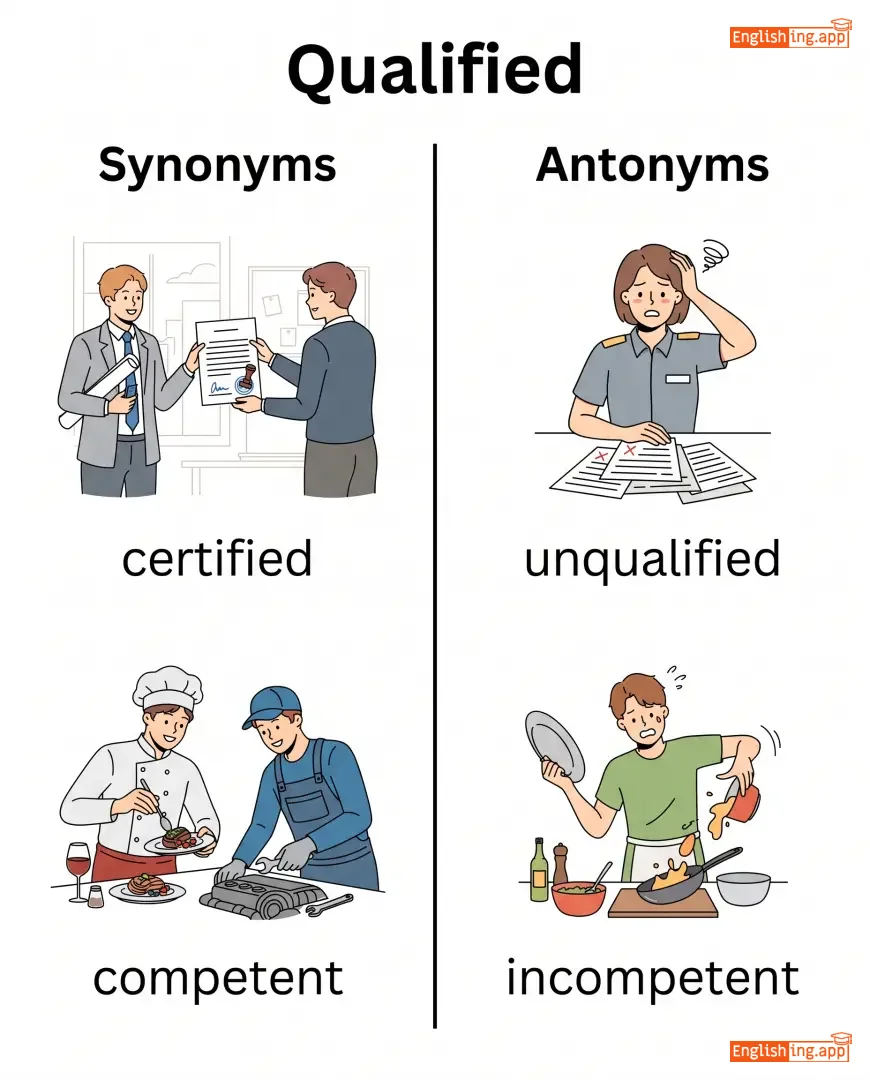

|
合格
hege
••••••
|
- •••••• | - •••••• | - •••••• | - •••••• |
officially recognized as being trained or knowledgeable for a particular job or activity
••••••
|
She is a qualified doctor with years of experience.
她是一位具有多年经验的合格医生。
••••••
|
她是一位具有多年经验的合格医生。
Ta shi yi wei juyou duonian jingyan de hege yisheng.
••••••
|
qualified success
合格的成功
••••••
|
a success that is only partial or limited
••••••
|
合格的成功
hege de chenggong
••••••
|
certified, competent, skilled, trained, capable
••••••
|
unqualified, incompetent, incapable
••••••
|
qualified teacher, qualified candidate, qualified doctor, qualified professional
••••••
|
合格 = 合理 + 成功 → 合格的人总是成功的。
••••••
|
|
😟
••••••
|
/kwɑːm/
noun
(kwálm)
••••••
|
- •••••• |
怀疑
huáiyí
••••••
|
- •••••• | - •••••• | - •••••• | - •••••• |
a feeling of doubt, worry, or fear about something
••••••
|
She had no qualm about speaking her mind.
Shí héd nó kwálm abáut spíking hɜr máind.
••••••
|
她在表达自己想法时没有任何怀疑。
Tā zài biǎodá zìjǐ xiǎngfǎ shí méiyǒu rènhé huáiyí.
••••••
|
without qualm
widháut kwálm
••••••
|
with no hesitation or doubt
••••••
|
没有怀疑
méiyǒu huáiyí
••••••
|
doubt, hesitation, unease, misgiving, apprehension
••••••
|
confidence, certainty
••••••
|
qualm of conscience, moral qualm, serious qualm, qualm about
••••••
|
Qualm 听起来像 Calm,但其实意思相反 → 不是冷静,而是怀疑与恐惧!
••••••
|
|
❓
••••••
|
/ˈkwɪəri/
verb
(奎瑞)
••••••
|

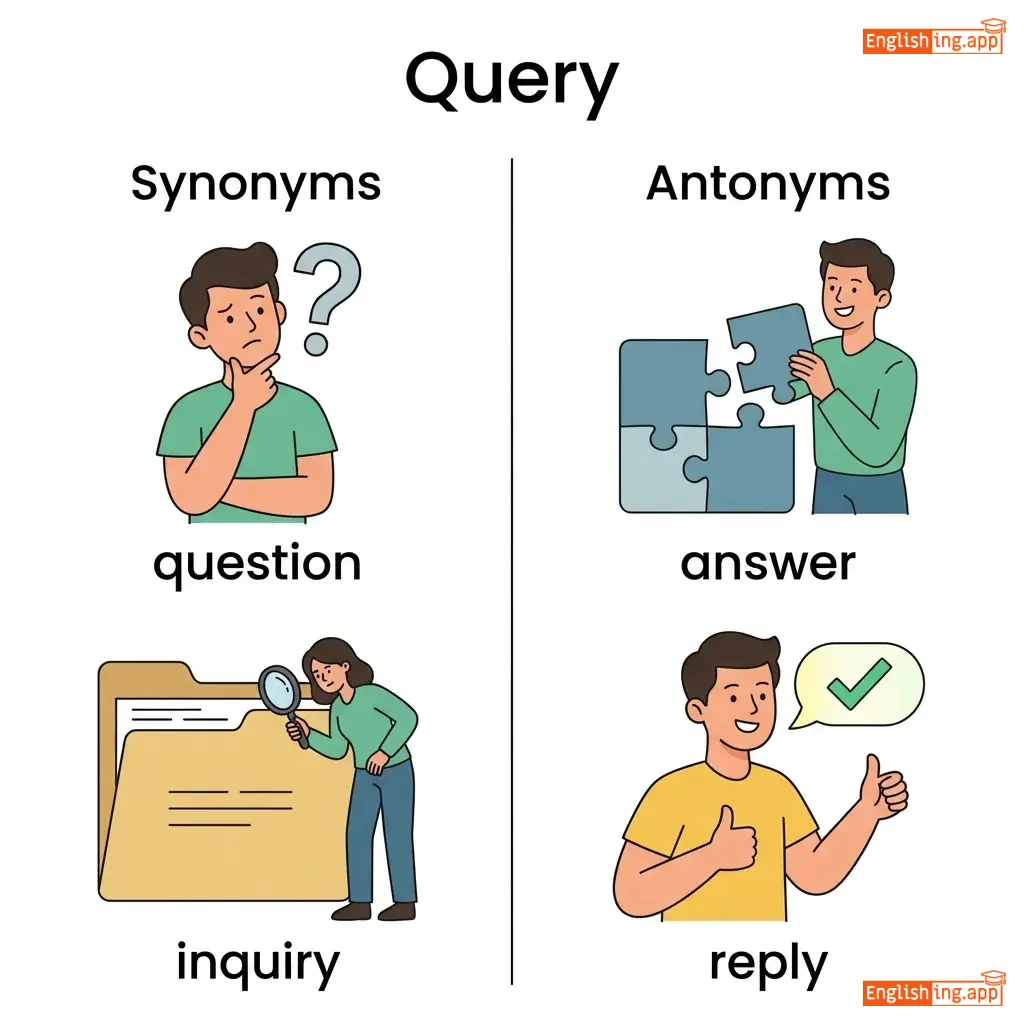
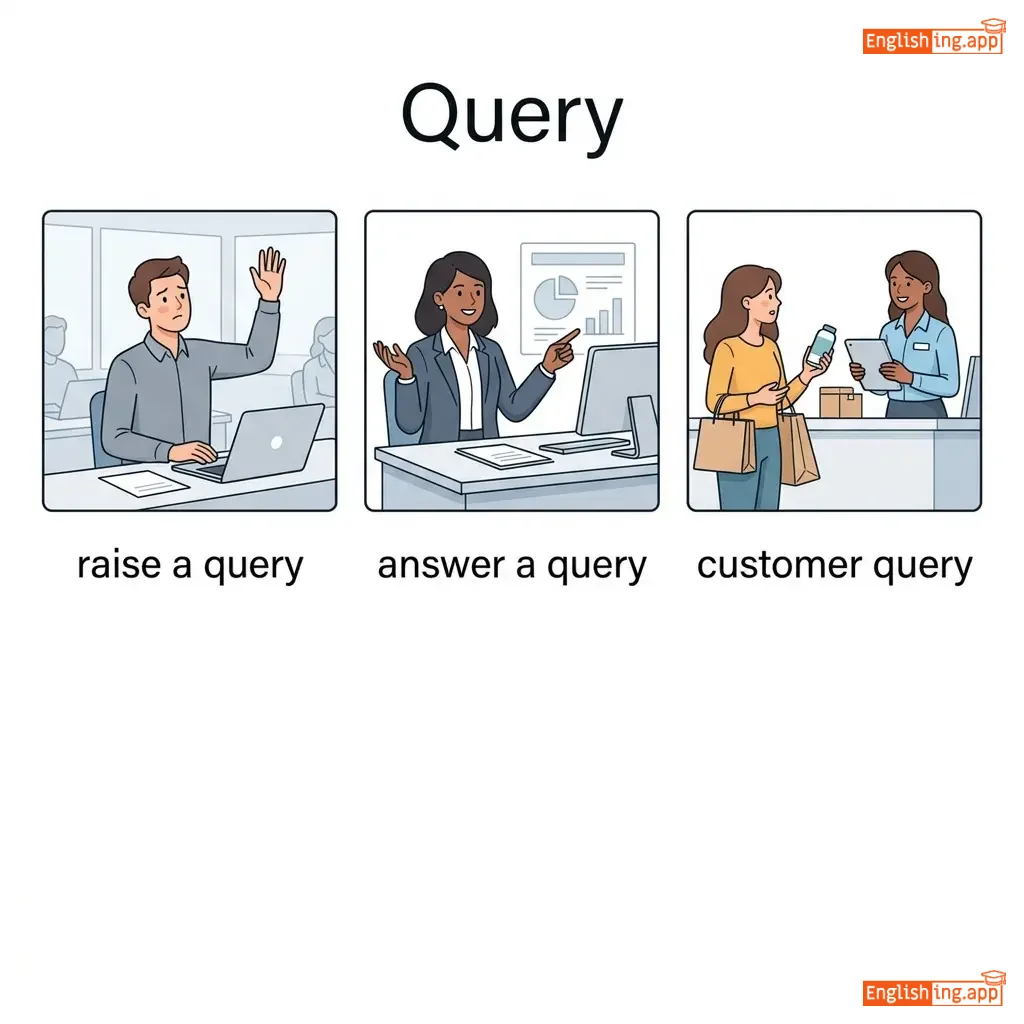
|
询问
xunwen
••••••
|
queried
奎瑞德
••••••
|
queried
奎瑞德
••••••
|
queries
奎瑞斯
••••••
|
querying
奎瑞英
••••••
|
to ask a question; to express doubt about something
••••••
|
The student decided to query the professor about the assignment.
学生决定奎瑞教授关于作业。
••••••
|
学生决定向教授询问作业的事。
Xuesheng jueding xiang jiaoshou xunwen zuoye de shi.
••••••
|
- •••••• | - •••••• | - •••••• |
question, ask, inquire, challenge
••••••
|
answer, accept, confirm
••••••
|
database query, search query, query results, SQL query, query language
••••••
|
Query and ‘xunwen’ both mean to ask — imagine sending a ‘query’ to your Chinese teacher.
••••••
|
|
🗣️
••••••
|
/ˈkwɪbəl/
verb/noun
••••••
|

|
- •••••• |
quibbled
••••••
|
quibbled
••••••
|
quibbles
••••••
|
quibbling
••••••
|
To argue or raise objections about a trivial matter; a petty objection.
••••••
|
They quibbled over who should pay the bill. |
- •••••• |
split hairs |
to argue about small or unimportant details
••••••
|
- •••••• |
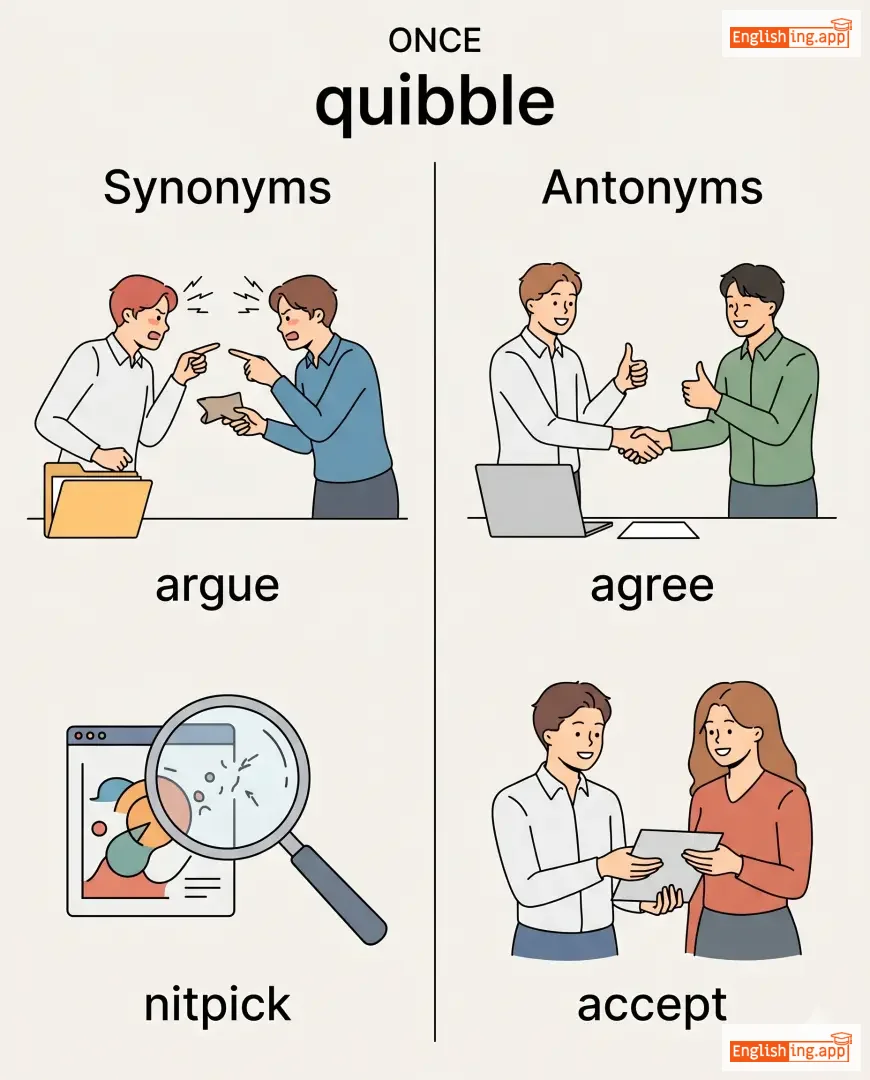
argue, nitpick, cavil, bicker, dispute
••••••
|
agree, accept, concede
••••••
|
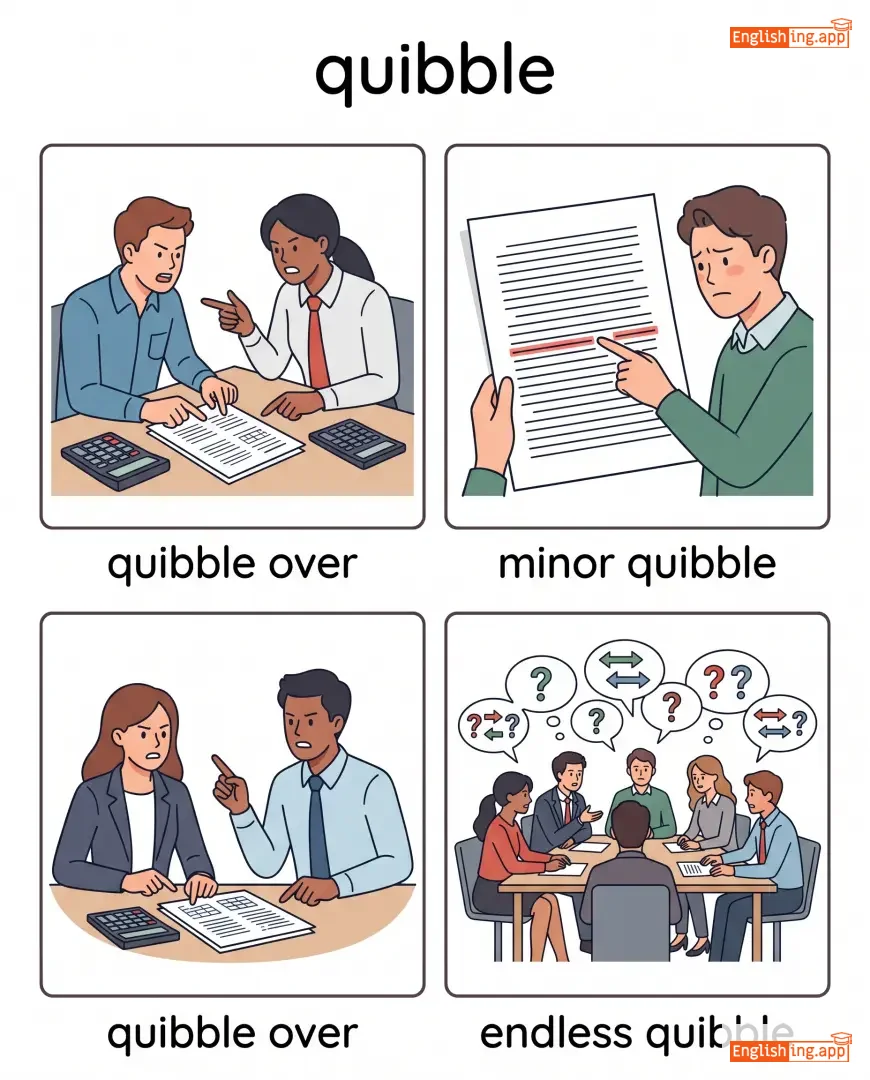
quibble over, minor quibble, endless quibble, quibble about details
••••••
|
No •••••• |
|
🤫
••••••
|
/kwaɪˈesnt/
adjective
(kwāi ē sēnt)
••••••
|
|
静止的; 安静的; 不活跃的;
jingzhide
••••••
|
- •••••• | - •••••• | - •••••• | - •••••• |
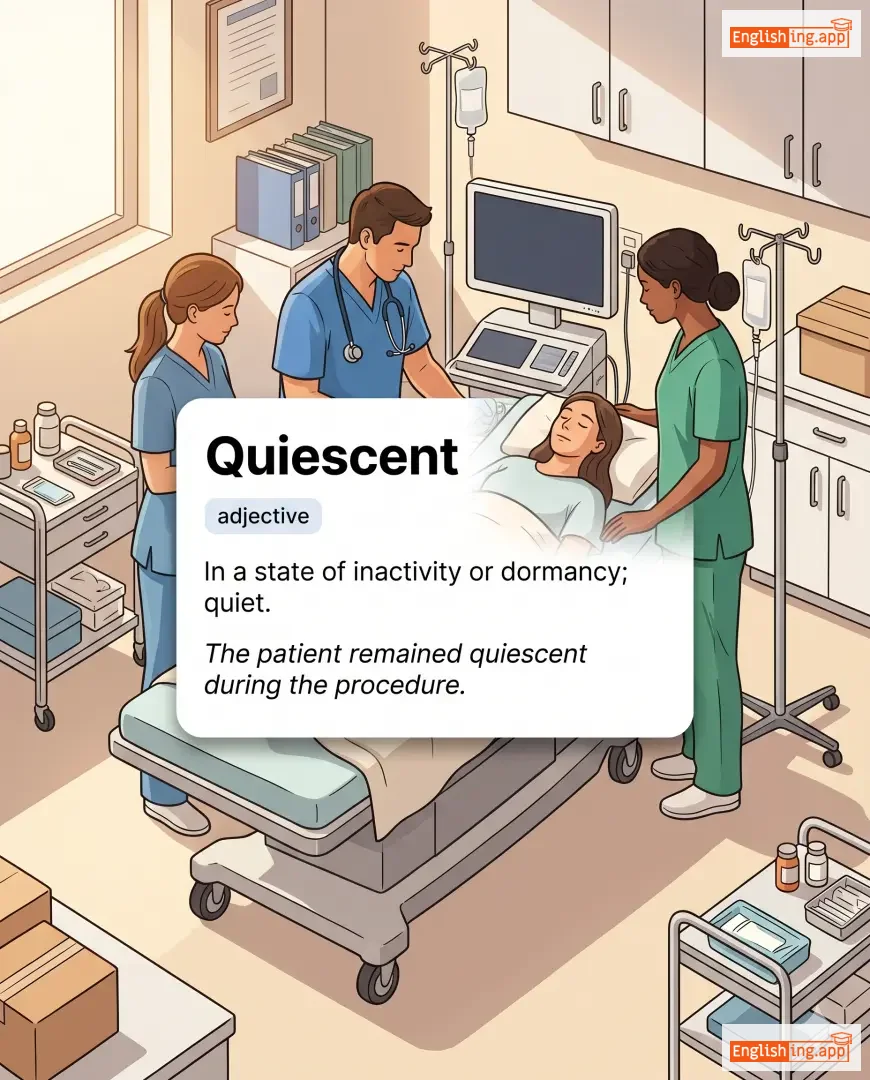
quiet; peaceful; inactive; dormant; at rest
••••••
|
The volcano has been quiescent for over a century. |
火山已经沉寂了一个多世纪。
Huǒshān yǐjīng chénjì le yī gè duō shìjì.
••••••
|
- •••••• | - •••••• | - •••••• |
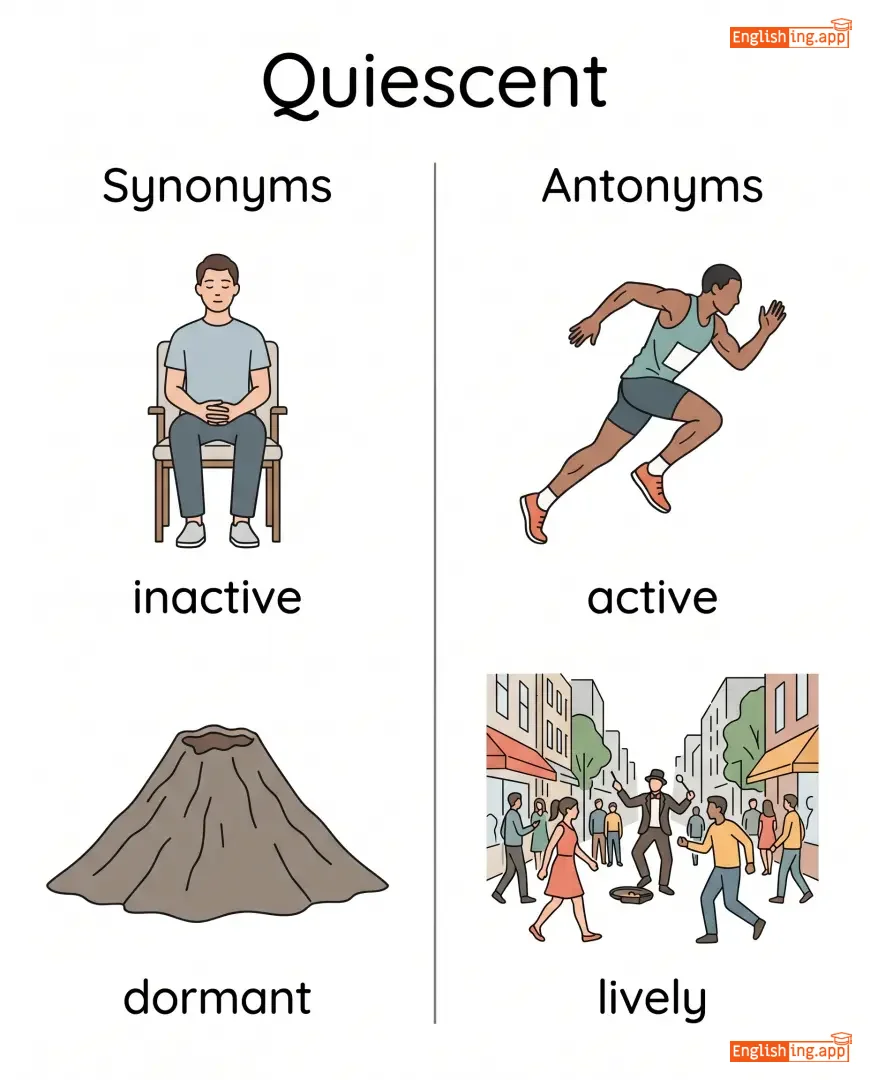
dormant, inactive, peaceful, still
••••••
|
active, turbulent, agitated, restless
••••••
|
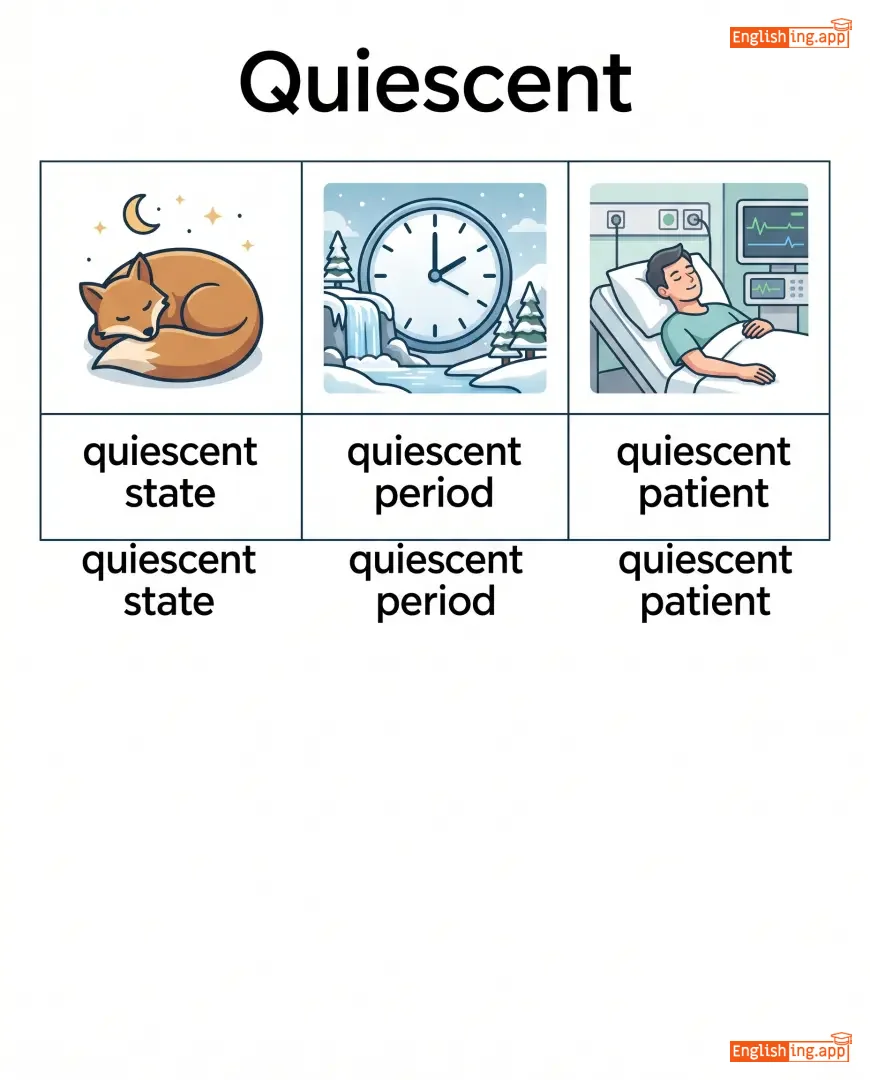
quiescent state, quiescent period, quiescent volcano
••••••
|
Imagine a volcano that rests quietly, dormant for centuries.
••••••
|
|
👥
••••••
|
/ˈkwɔːrəm/
noun
(kuò lùn)
••••••
|
- •••••• |
法定人数
fǎdìng rénshù
••••••
|
- •••••• | - •••••• | - •••••• | - •••••• |
The minimum number of members needed to conduct official business in a meeting.
••••••
|
The board meeting was postponed because there was no quorum. |
由于没有法定人数,董事会会议被推迟了。
yóuyú méiyǒu fǎdìng rénshù, dǒngshìhuì huìyì bèi tuīchí le.
••••••
|
- •••••• | - •••••• | - •••••• |
minimum attendance, required members, assembly, committee
••••••
|
absence, minority
••••••
|
quorum required, lack of quorum, quorum present, establish quorum
••••••
|
法定人数不足,会议无法继续进行。
••••••
|
|
🗣️
••••••
|
/ˌrækənˈtɜːr/
noun
(海皮尼斯)
••••••
|
- •••••• |
幸福
xingfu
••••••
|
- •••••• | - •••••• | - •••••• | - •••••• |
a person who tells anecdotes in a skillful and amusing way
••••••
|
The old man was a gifted raconteur who entertained everyone with his stories. |
当她获得奖项时,她无法掩饰自己的幸福。
Dāng tā huòdé jiǎngxiàng shí, tā wúfǎ yǎnshì zìjǐ de xìngfú.
••••••
|
- •••••• | - •••••• | - •••••• |
storyteller, narrator, anecdotalist, spinner
••••••
|
listener, audience, silent person, introvert
••••••
|
gifted raconteur, accomplished raconteur, entertaining raconteur
••••••
|
幸福是生活中最美好的礼物。
••••••
|
|
📢
••••••
|
/reɪl/
verb
(rèil)
••••••
|
- •••••• |
抗议
kàngyì
••••••
|
railed
rèild
••••••
|
railed
rèild
••••••
|
rails
rèils
••••••
|
railing
rèiling
••••••
|
to complain or protest strongly about something
••••••
|
He railed against the unfair decision.
他抗议不公平的决定。
••••••
|
他抗议不公平的决定。
Tā kàngyì bù gōngpíng de juédìng.
••••••
|
rail against
抗议
••••••
|
to strongly criticize or protest
••••••
|
抗议
kàngyì
••••••
|
protest, complain, denounce, criticize
••••••
|
praise, accept, support
••••••
|
rail against injustice, rail at fate, rail bitterly
••••••
|
抗议就像站在铁路轨道上! 🚆
••••••
|
|
👑
••••••
|
/ˈreɪmənt/
noun
(雷门特)
••••••
|
- •••••• |
衣服
yifu
••••••
|
- •••••• | - •••••• | - •••••• | - •••••• |
clothing, especially fine or formal wear
••••••
|
The king wore royal raiment during the ceremony. |
国王在仪式上穿着皇家衣服。
Guowang zai yishi shang chuanzhuo huangjia yifu.
••••••
|
- •••••• | - •••••• | - •••••• |
clothing, apparel, attire, garments
••••••
|
nakedness, bareness
••••••
|
royal raiment, ceremonial raiment, elegant raiment
••••••
|
Raiment = 皇家的衣服,就像国王穿的👑
••••••
|
|
🌳
••••••
|
/ˌræm.ɪ.fɪˈkeɪ.ʃən/
noun
(分支)
••••••
|
- •••••• |
后果
houguo
••••••
|
- •••••• | - •••••• | - •••••• | - •••••• |
a consequence of an action or event, often complex or unwelcome.
••••••
|
The new law has serious social ramifications. |
新法律有严重的社会后果。
Xin falü you yanzhong de shehui houguo.
••••••
|
- •••••• | - •••••• | - •••••• |
consequence, result, outcome, effect, implication
••••••
|
cause, origin, source
••••••
|
legal ramifications, social ramifications, unintended ramifications
••••••
|
Ramification 意味着后果 — 就像 RAM 的影响一样。
••••••
|
|
🌌
••••••
|
/ˈreə.rɪ.faɪd/
adjective
••••••
|
|
- •••••• | - •••••• | - •••••• | - •••••• | - •••••• |
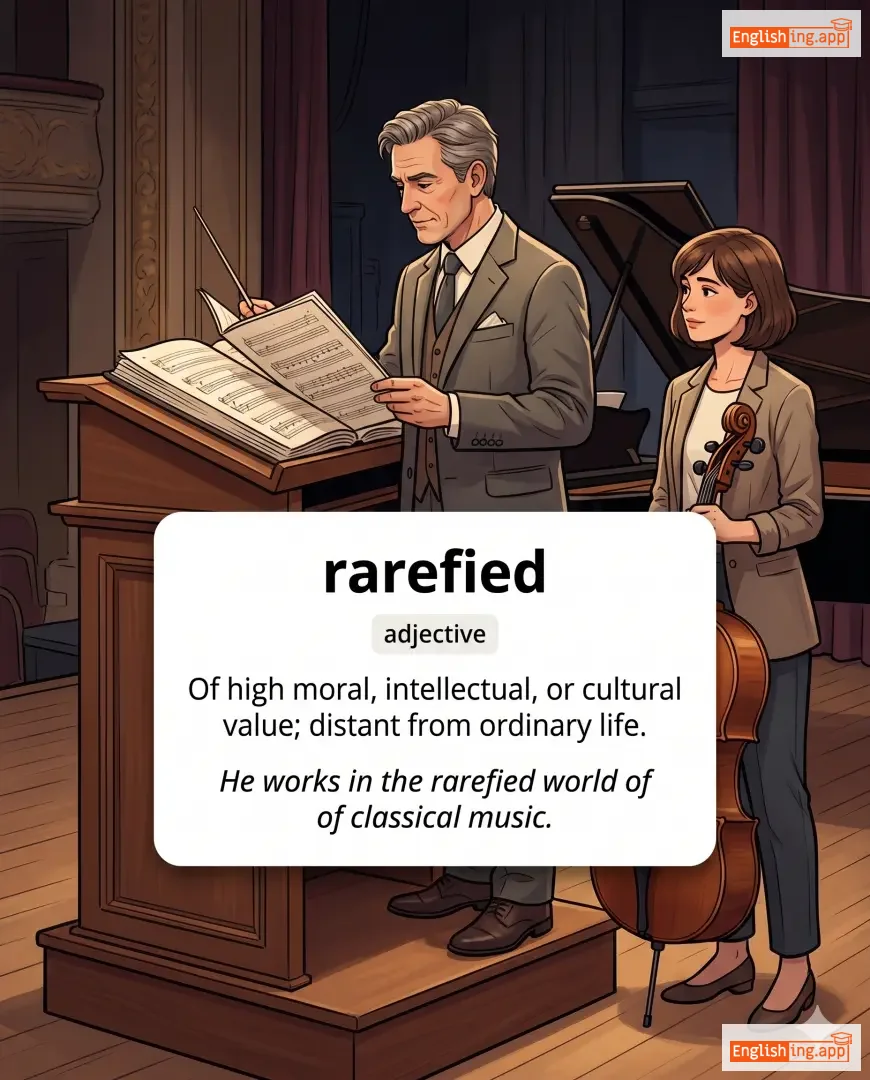
Of high moral, intellectual, or cultural value; distant from ordinary life.
••••••
|
He works in the rarefied world of classical music. |
- •••••• | - •••••• | - •••••• | - •••••• |
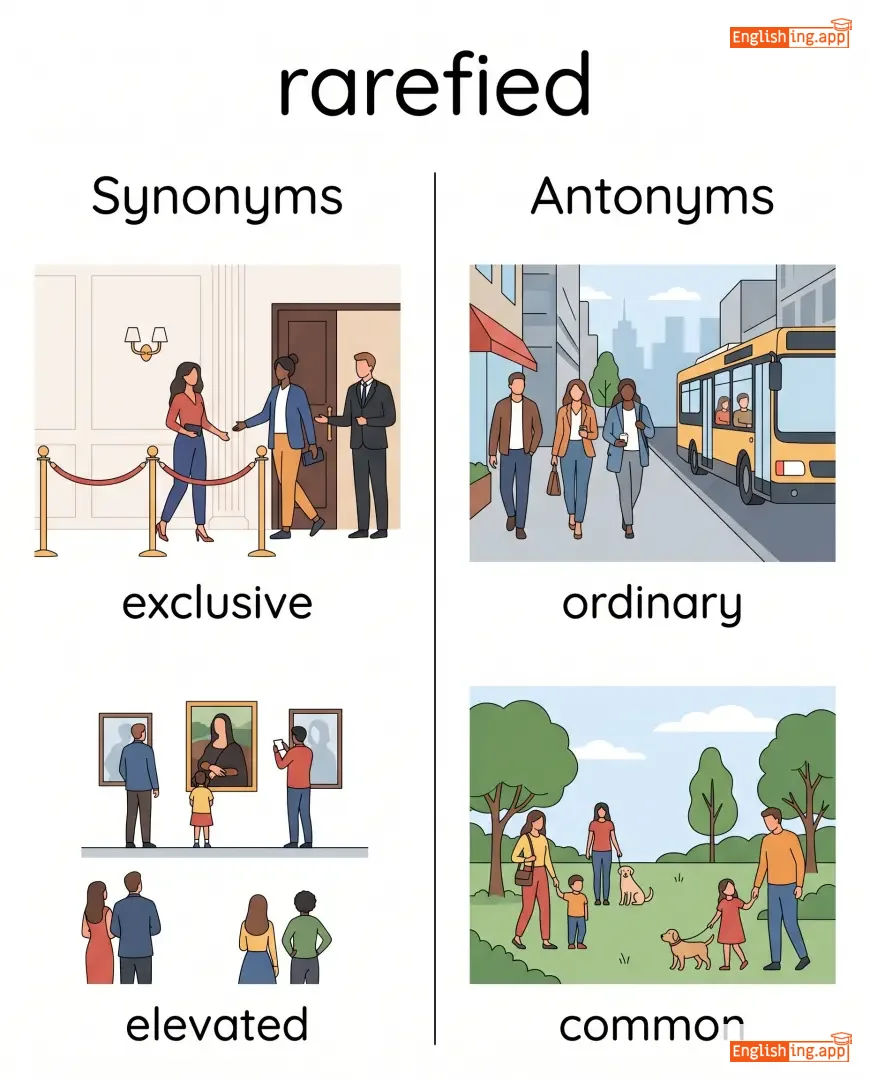
exclusive, elevated, refined, exalted, sophisticated
••••••
|
ordinary, common, mundane
••••••
|
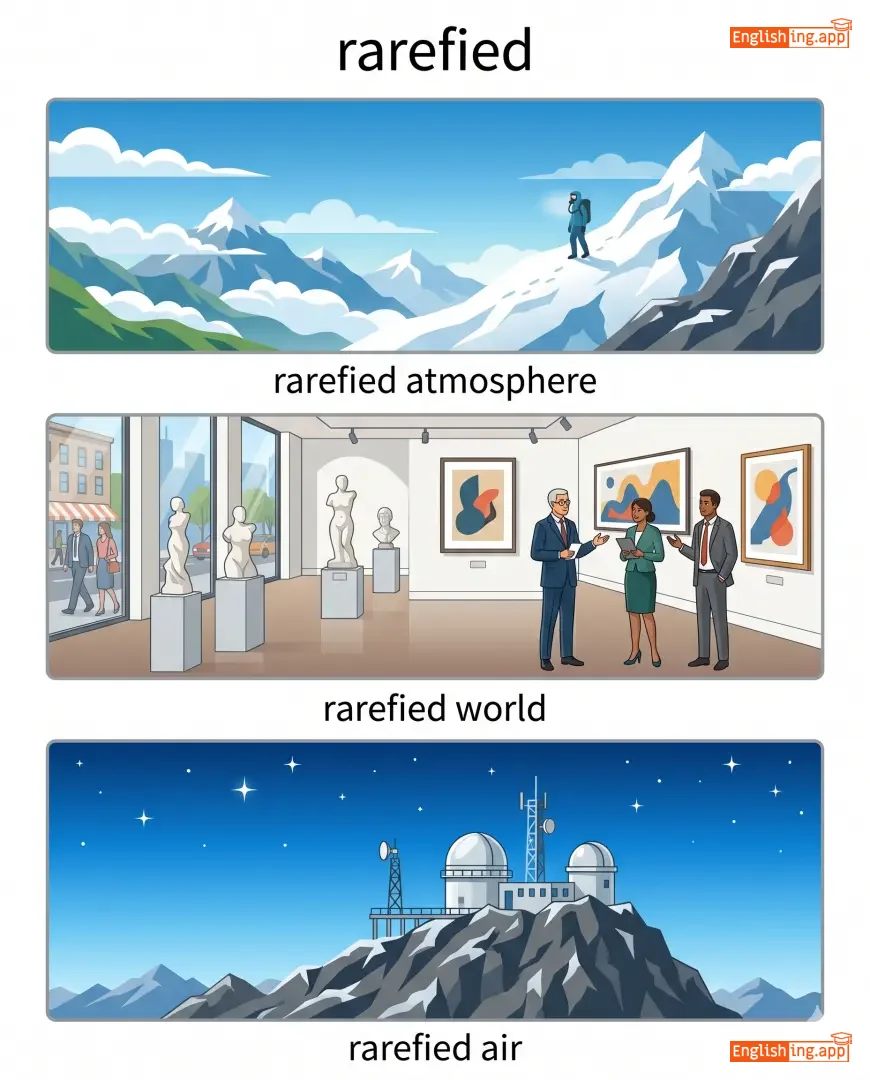
rarefied atmosphere, rarefied world, rarefied air
••••••
|
No •••••• |
|
📖
••••••
|
/ˌræʃəˈnæl/
noun
(拉什纳尔)
••••••
|
- •••••• |
基本原因
jiben yuanyin
••••••
|
- •••••• | - •••••• | - •••••• | - •••••• |
the underlying reason or explanation for something
••••••
|
The rationale behind his decision was clearly explained. |
他决定背后的理由被清楚地解释了。
Ta jueding bei hou de liyi bei qingchu de jiexile.
••••••
|
- •••••• | - •••••• | - •••••• |
reason, basis, explanation, justification, motive
••••••
|
irrationality, nonsense
••••••
|
rationale behind, clear rationale, sound rationale, provide a rationale
••••••
|
Rationale 就是背后的基本原因—想象 'Reason' 是一切的基础。
••••••
|

