|
表情符号
|
单词 | Images | 翻译 | 过去时 | 过去分词 | 第三人称单数 | 动名词 | 含义 | 例句 | 例句翻译 | 示例表达 | 示例表达含义 | 示例表达翻译 | 同义词 | 反义词 | 搭配词 | 助记符 |
|---|---|---|---|---|---|---|---|---|---|---|---|---|---|---|---|---|---|
|
🌹
••••••
|
/ˈɪntɪmət/
adjective
(因提美特)
••••••
|

|
亲密
qīn mì
••••••
|
- •••••• | - •••••• | - •••••• | - •••••• |
Closely acquainted; very familiar and personal.
••••••
|
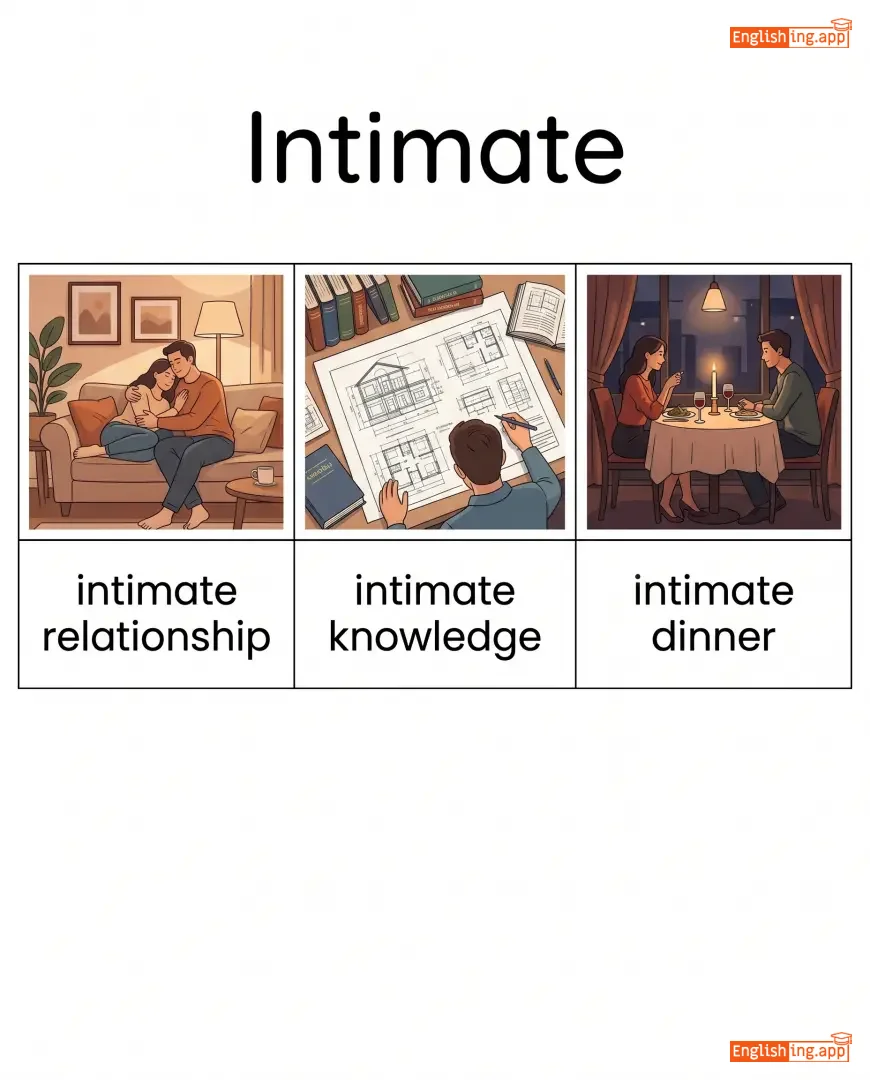
They shared an intimate dinner by candlelight. |
他们在烛光下共享了一顿亲密的晚餐。
Tāmen zài zhúguāng xià gòngxiǎngle yī dùn qīnmì de wǎncān.
••••••
|
intimate knowledge |
A deep or detailed understanding of something.
••••••
|
亲密知识
qīn mì zhī shí
••••••
|
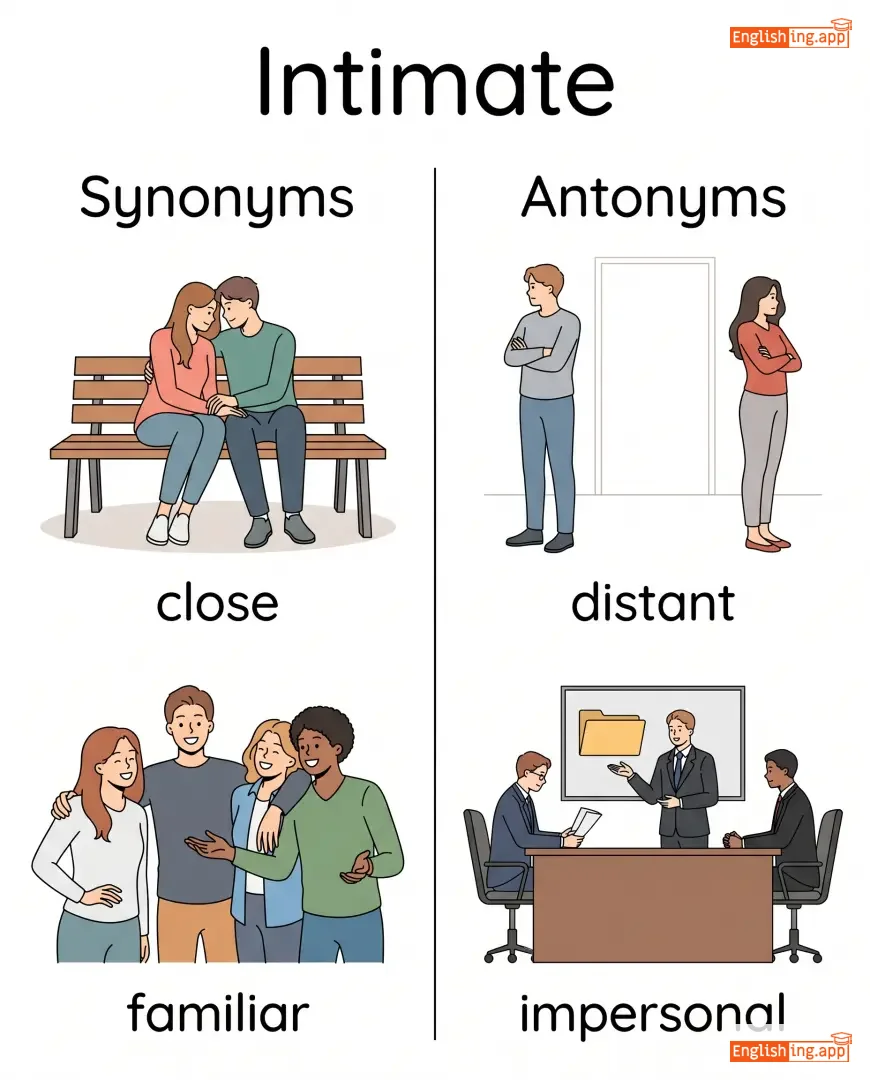
close, familiar, personal, confidential, warm
••••••
|
distant, impersonal, formal
••••••
|
intimate relationship, intimate knowledge, intimate dinner, intimate friend
••••••
|
Intimate = 亲密如朋友之间的深厚关系。
••••••
|
|
🪨
••••••
|
/ɪnˈtræk.tə.bəl/
adjective
(因特拉克特布尔)
••••••
|


|
无法控制
wúfǎ kòngzhì
••••••
|
- •••••• | - •••••• | - •••••• | - •••••• |
Difficult or impossible to manage, control, or solve.
••••••
|
The conflict has become an intractable problem. |
冲突已经成为一个无法控制的问题。
Chōngtú yǐjīng chéngwéi yīgè wúfǎ kòngzhì de wèntí.
••••••
|
- •••••• | - •••••• | - •••••• |
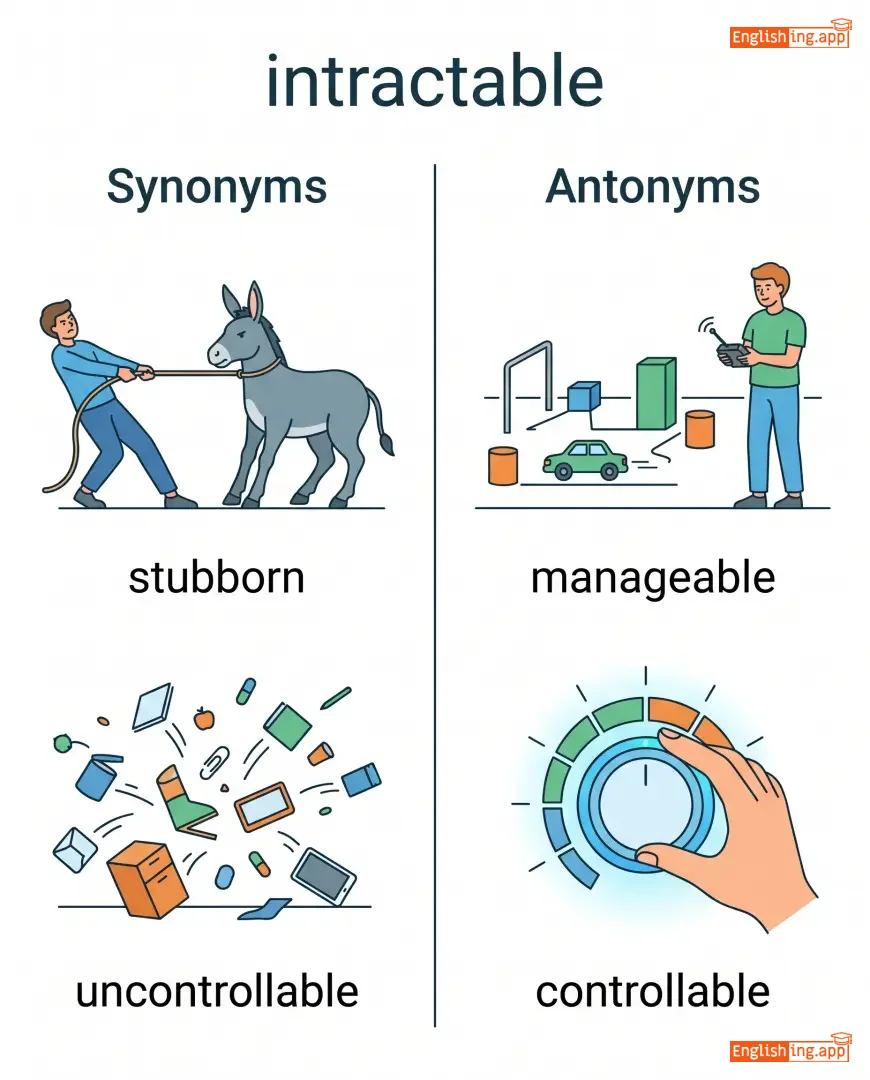
stubborn, uncontrollable, unmanageable, obstinate
••••••
|
manageable, controllable, flexible
••••••
|
intractable pain, intractable conflict, intractable issue, intractable disease
••••••
|
In + Track (轨道) + able → 无法解决的问题 → 无法控制
••••••
|
|
🛑
••••••
|
/ɪnˈtræn.sɪ.dʒəns/
noun
(不妥协)
••••••
|
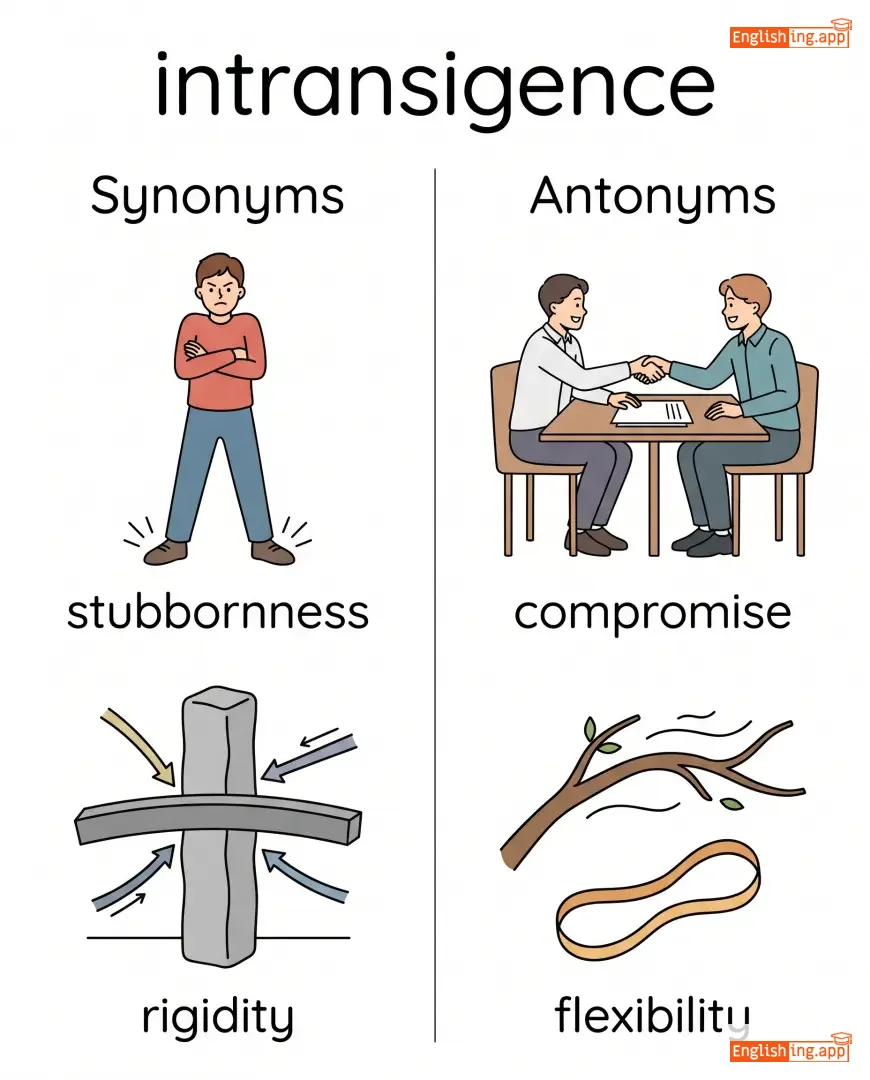
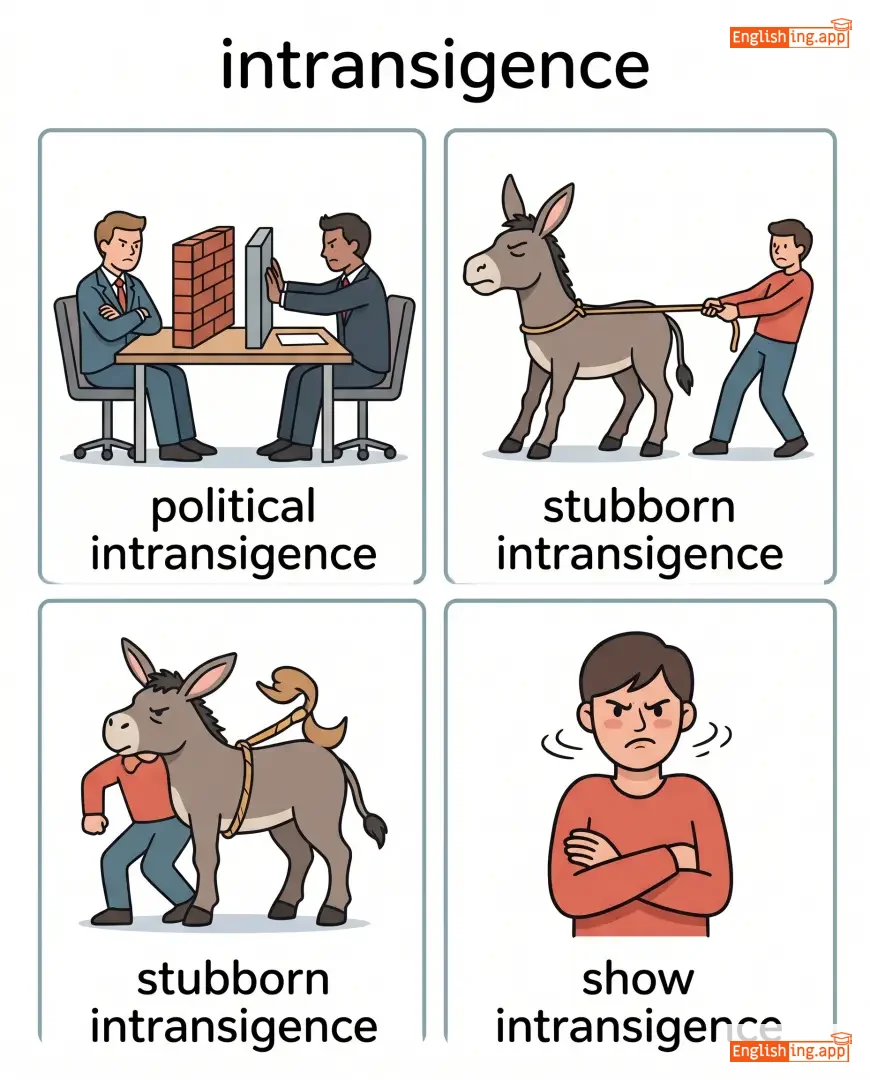
|
固执
gùzhí
••••••
|
- •••••• | - •••••• | - •••••• | - •••••• |
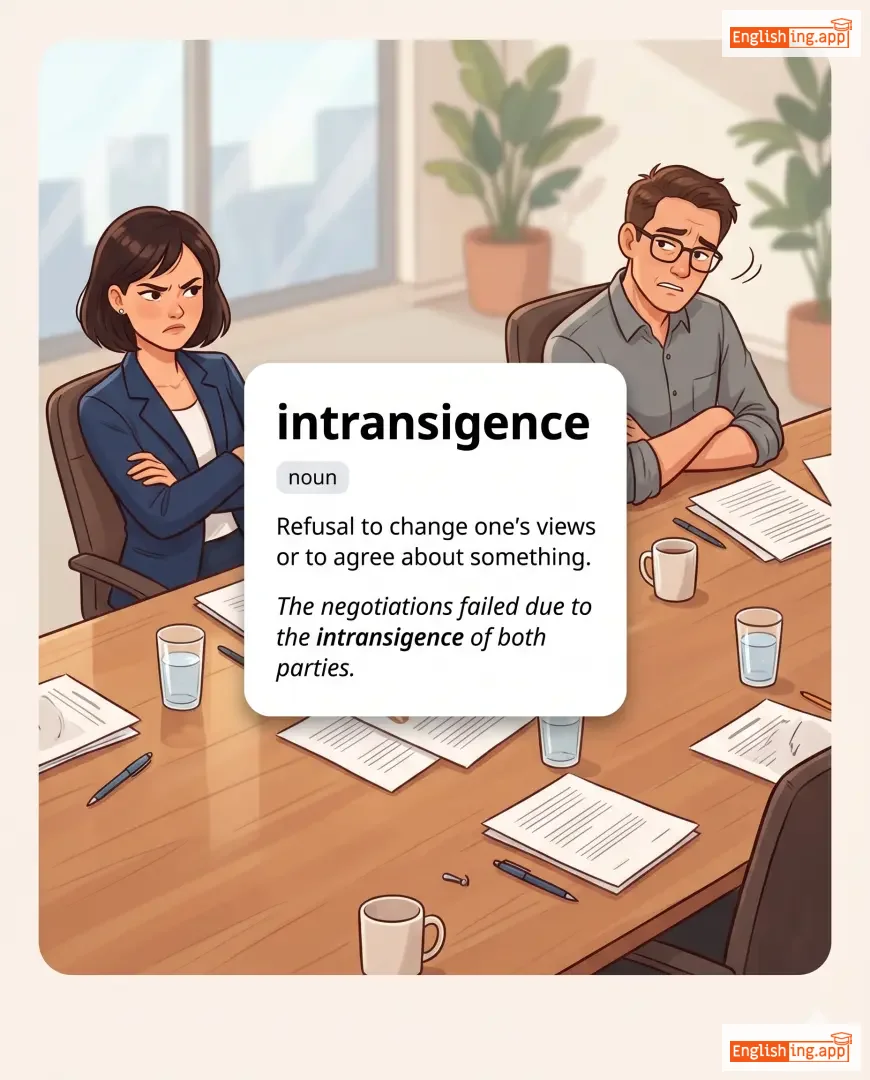
Refusal to change one's views or to agree about something.
••••••
|
The negotiations failed due to the intransigence of both parties. |
由于双方的固执,谈判失败了。
Yóuyú shuāngfāng de gùzhí, tánpàn shībài le.
••••••
|
- •••••• | - •••••• | - •••••• |
stubbornness, rigidity, inflexibility, obstinacy
••••••
|
compromise, flexibility, willingness
••••••
|
political intransigence, stubborn intransigence, show intransigence, display intransigence
••••••
|
In + Transit不 → 意味着不动 → 不改变 → 固执
••••••
|
|
🤔
••••••
|
/ˌɪn.trəˈspɛk.tɪv/
adjective
(内省的)
••••••
|

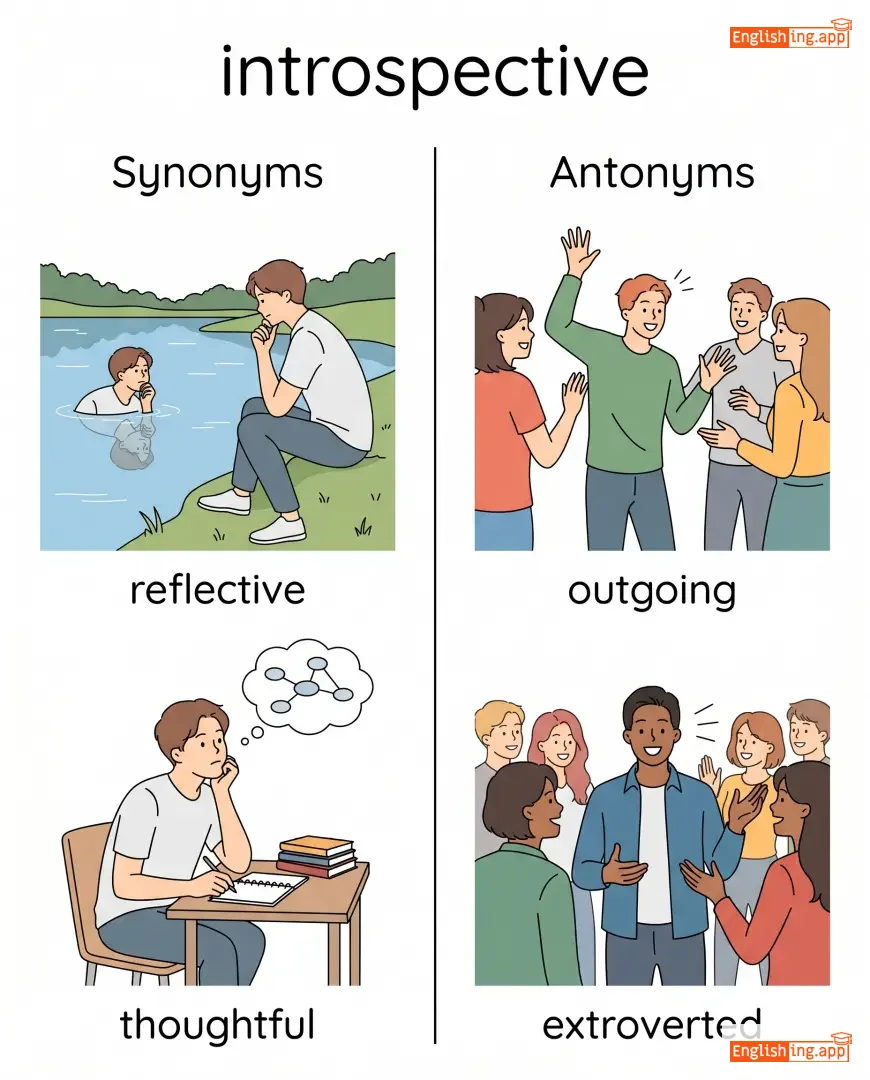

|
内省的
neixingde
••••••
|
- •••••• | - •••••• | - •••••• | - •••••• |
Thoughtful and reflective, examining one's own thoughts and feelings.
••••••
|
She became more introspective after moving to a new city. |
她搬到新城市后变得更加内省。
Tā bān dào xīn chéngshì hòu biàn dé gèng jiā nèixǐng.
••••••
|
- •••••• | - •••••• | - •••••• |
reflective, thoughtful, meditative, contemplative, pensive
••••••
|
outgoing, extroverted, careless
••••••
|
introspective mood, introspective nature, deeply introspective, become introspective
••••••
|
Intro 代表内部,因此内省意味着在内部思考。
••••••
|
|
🌊
••••••
|
/ˈɪn.ʌn.deɪt/
verb
(因恩戴特)
••••••
|
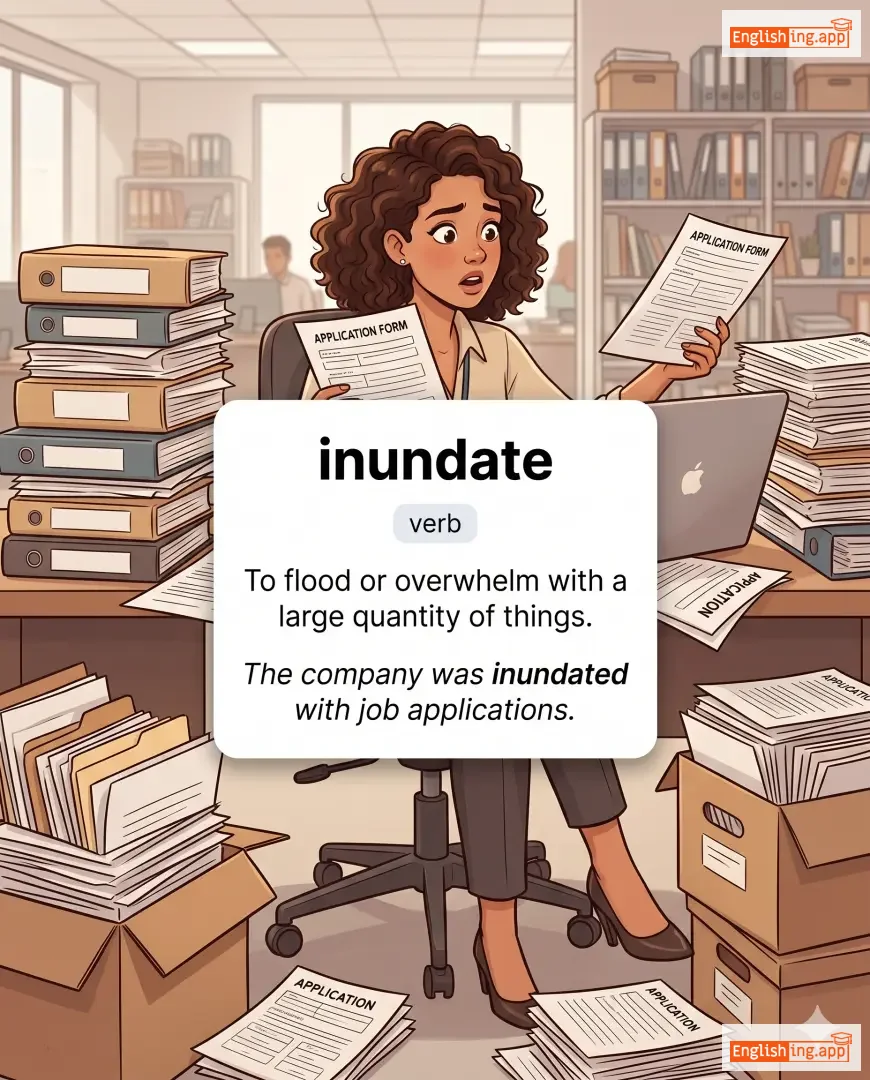
|
淹没 / 充满
yānmò / chōngmǎn
••••••
|
inundated
因恩戴特德
••••••
|
inundated
因恩戴特德
••••••
|
inundates
因恩戴特斯
••••••
|
inundating
因恩戴廷
••••••
|
To flood or overwhelm with a large quantity of things.
••••••
|
The company was inundated with job applications.
公司被大量工作申请淹没。
••••••
|
公司被大量工作申请淹没。
Gōngsī bèi dàliàng gōngzuò shēnqǐng yānmò.
••••••
|
inundated with work
工作淹没
••••••
|
Overwhelmed by too much work.
••••••
|
工作压倒
Gōngzuò yādǎo
••••••
|
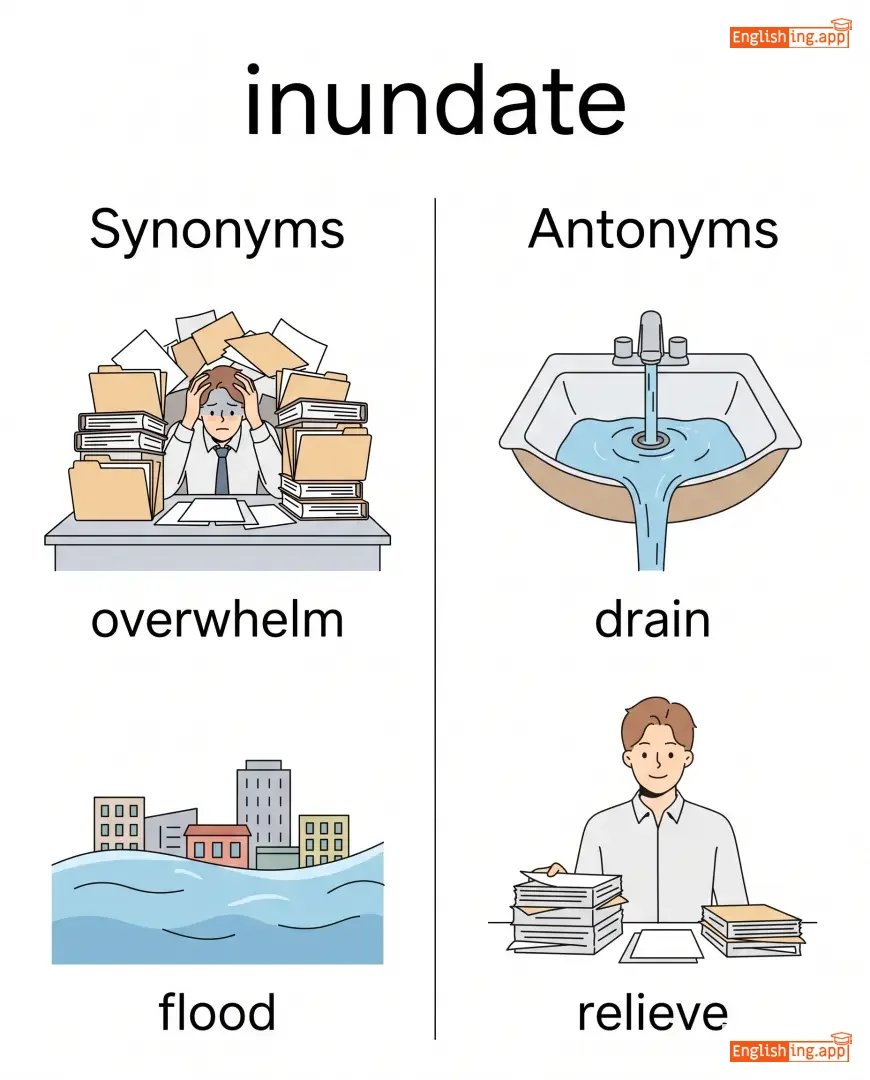
overwhelm, flood, swamp, engulf, deluge
••••••
|
drain, relieve
••••••
|
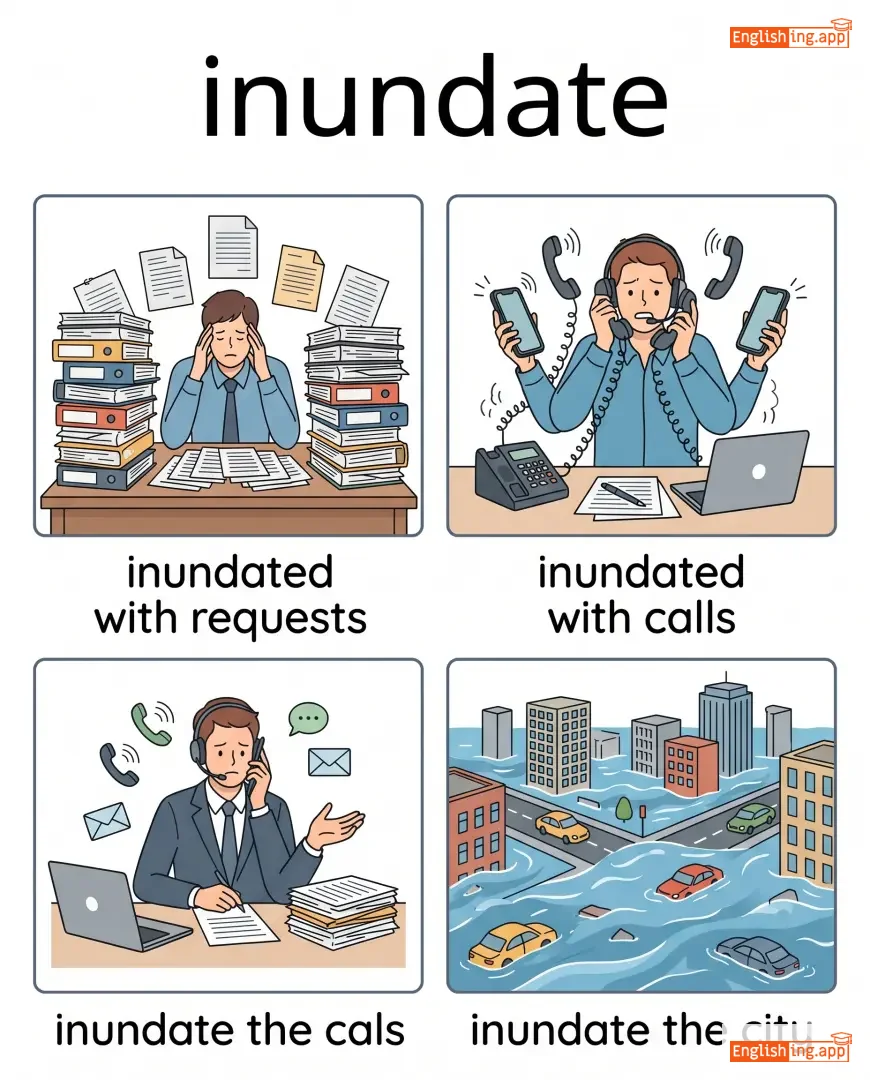
inundated with requests, inundated with calls, inundate the city, inundated by problems
••••••
|
In UN DATE 被淹没 – inundate意味着淹没。
••••••
|
|
🛡️
••••••
|
/ɪˈnjʊərd/
adjective
(因尤德)
••••••
|
|
习惯于
xíguàn yú
••••••
|
- •••••• | - •••••• | - •••••• | - •••••• |
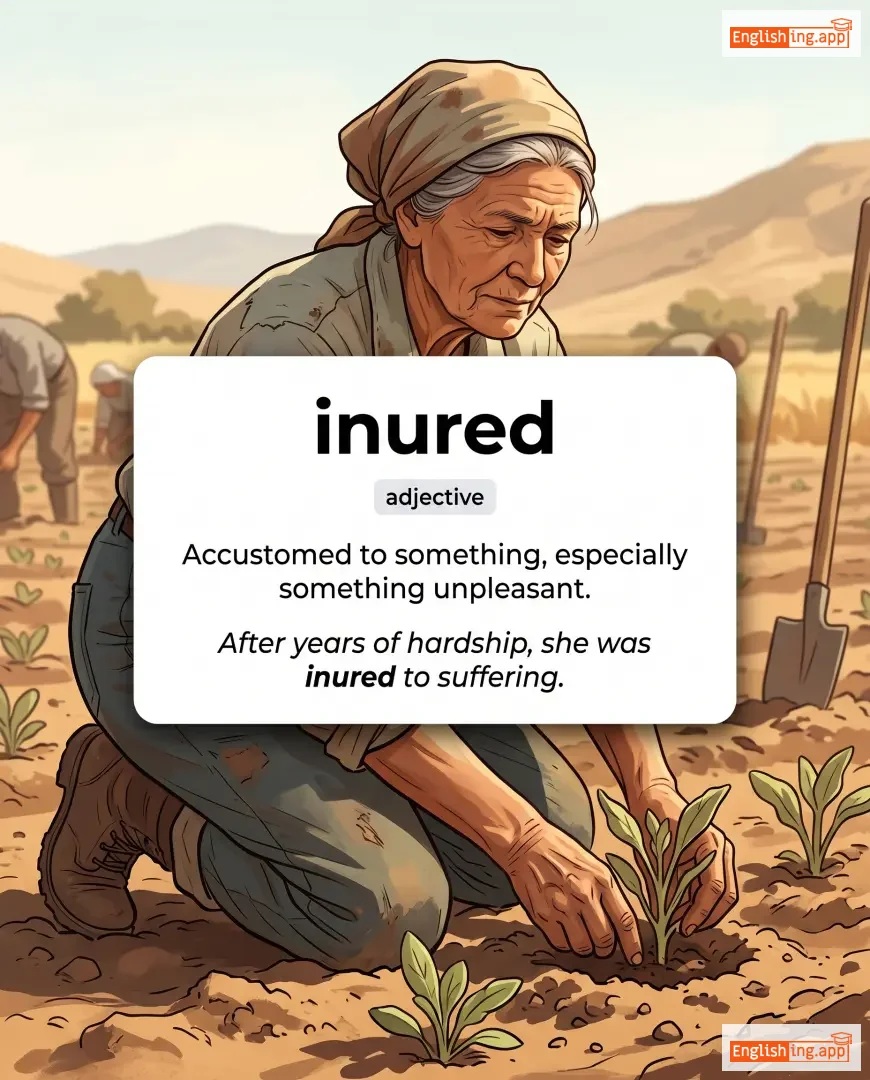
Accustomed to something, especially something unpleasant.
••••••
|
After years of hardship, she was inured to suffering. |
经过多年的困苦,她已经习惯于痛苦了。
Jīngguò duōnián de kùnkǔ, tā yǐjīng xíguàn yú tòngkǔ le.
••••••
|
- •••••• | - •••••• | - •••••• |
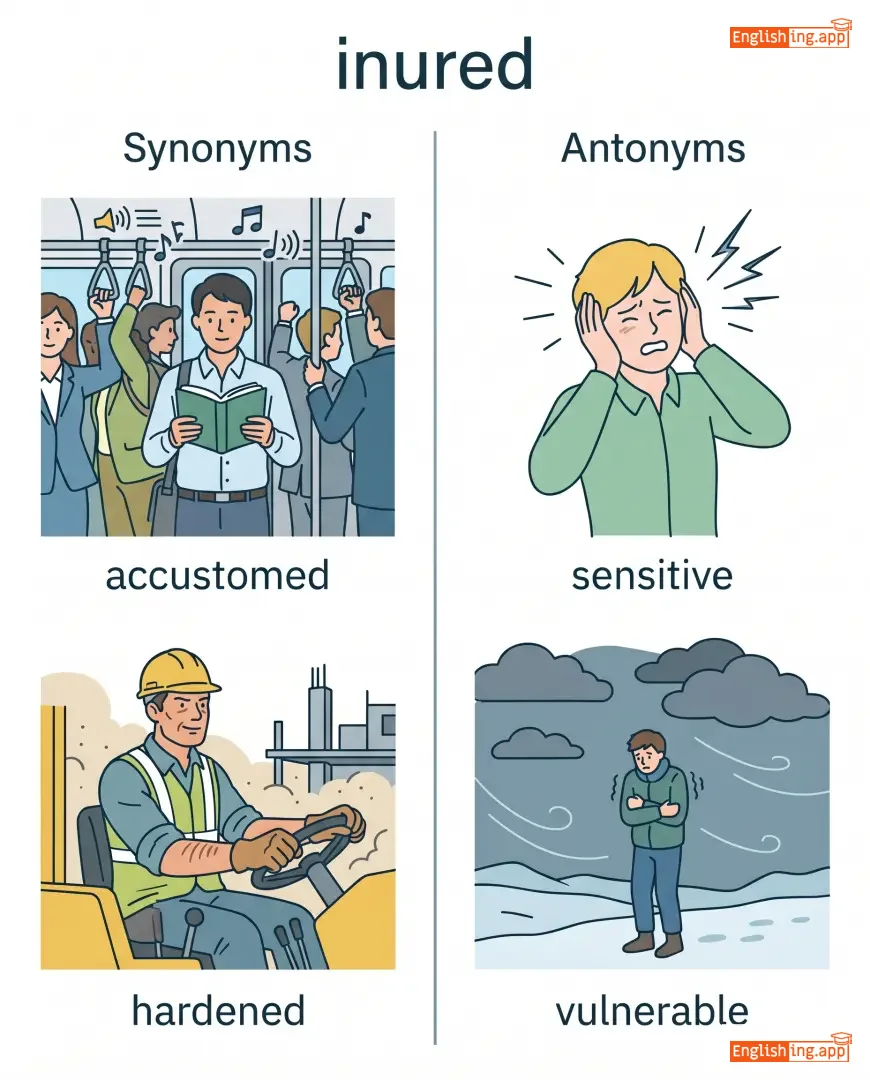
accustomed, hardened, desensitized, habituated, seasoned
••••••
|
sensitive, vulnerable, unaccustomed
••••••
|
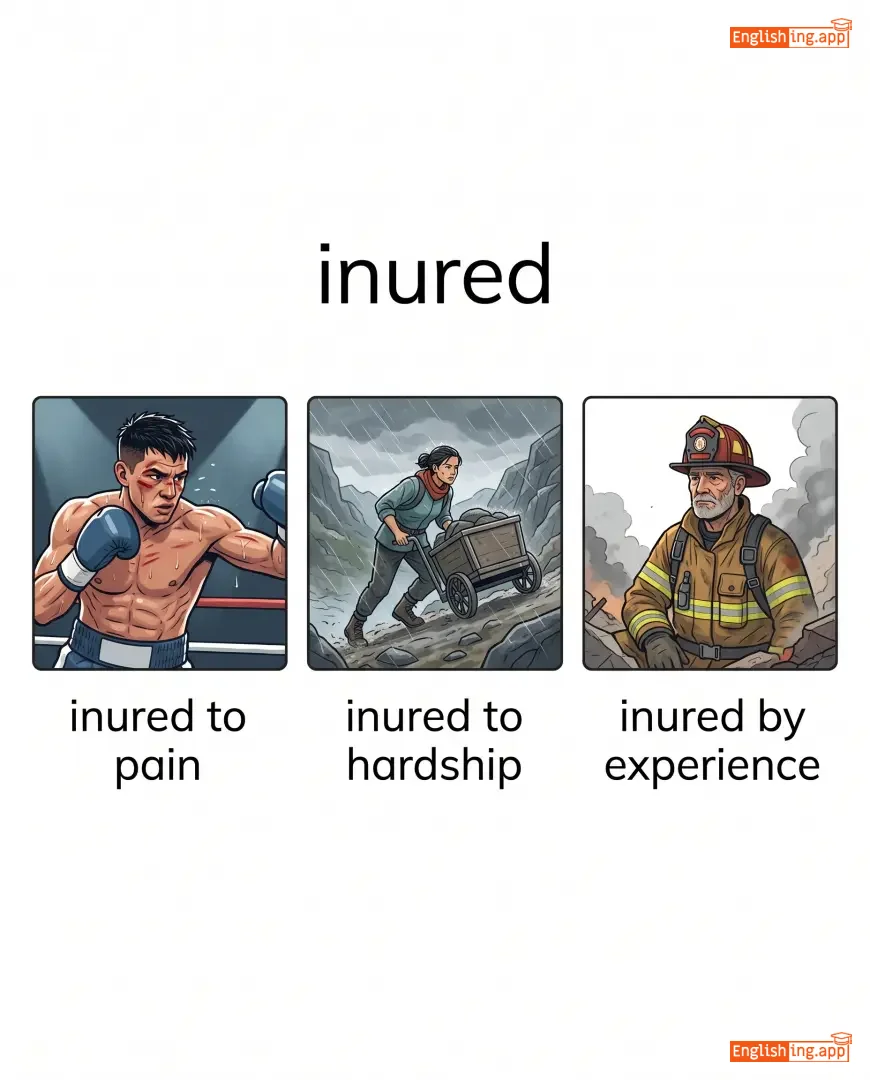
inured to pain, inured to hardship, inured by experience
••••••
|
Inured 意味着 IN + 尤德 → 经历痛苦后,习惯痛苦。
••••••
|
|
🗯️
••••••
|
/ɪnˈvɛktɪv/
noun
(因维克提夫)
••••••
|


|
侮辱性语言
wǔrǔ xìng yǔyán
••••••
|
- •••••• | - •••••• | - •••••• | - •••••• |
Insulting, abusive, or highly critical language.
••••••
|
The politician’s speech was filled with invective against his opponents. |
政治家的演讲充满了对对手的侮辱性语言。
Zhèngzhì jiā de yǎnjiǎng chōngmǎnle duì duìshǒu de wǔrǔ xìng yǔyán.
••••••
|
- •••••• | - •••••• | - •••••• |
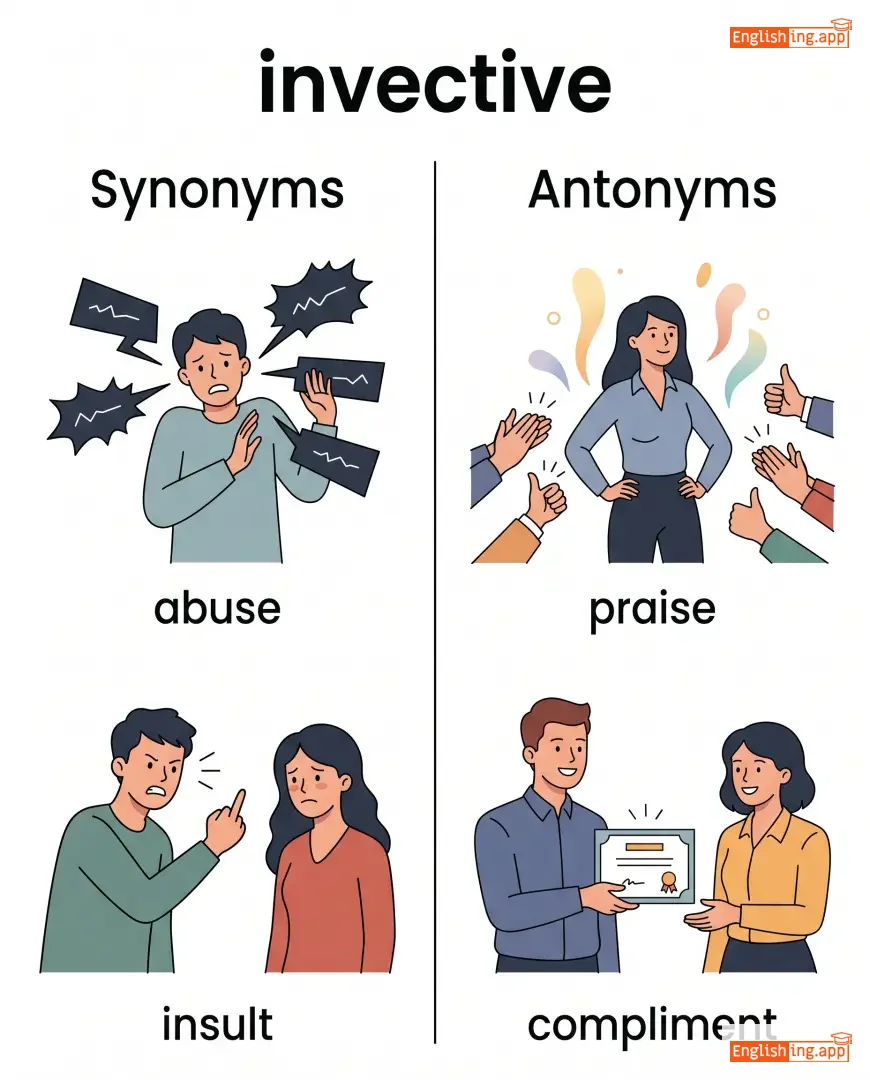
abuse, insult, vituperation, slander, censure
••••••
|
praise, compliment, flattery
••••••
|
harsh invective, political invective, stream of invective
••••••
|
Invective就像是‘批评’的加剧版本。
••••••
|
|
📢
••••••
|
/ɪnˈveɪ/
verb
(ɪnveɪ)
••••••
|
|
严厉批评
yanli pīpíng
••••••
|
inveighed
ɪnveɪd
••••••
|
inveighed
ɪnveɪd
••••••
|
inveighs
ɪnveɪz
••••••
|
inveighing
ɪnveɪɪŋ
••••••
|
To speak or write about something with great hostility and criticism.
••••••
|
He inveighed against the corruption in government.
他强烈谴责政府中的腐败。
••••••
|
他严厉批评了政府中的腐败。
Tā yánlì pīpíngle zhèngfǔ zhōng de fǔbài.
••••••
|
- •••••• | - •••••• | - •••••• |
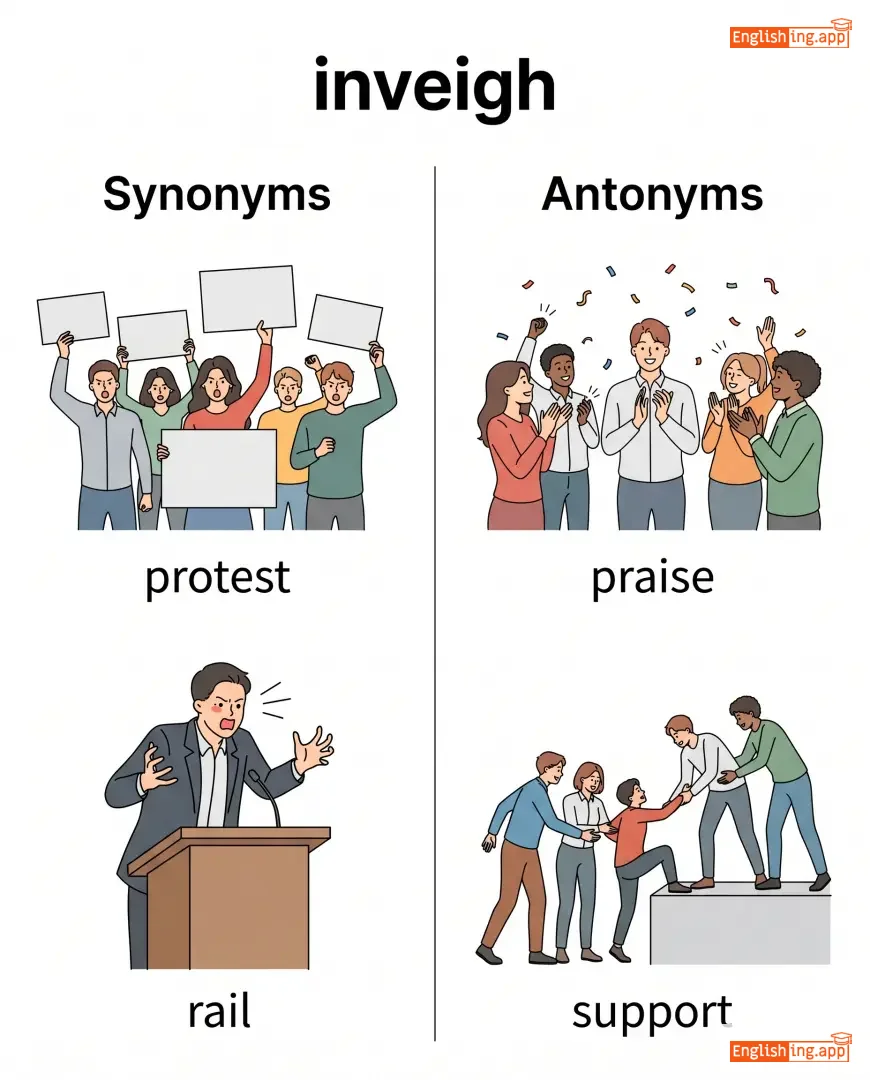
protest, rail, denounce, criticize, condemn
••••••
|
praise, support, approve
••••••
|
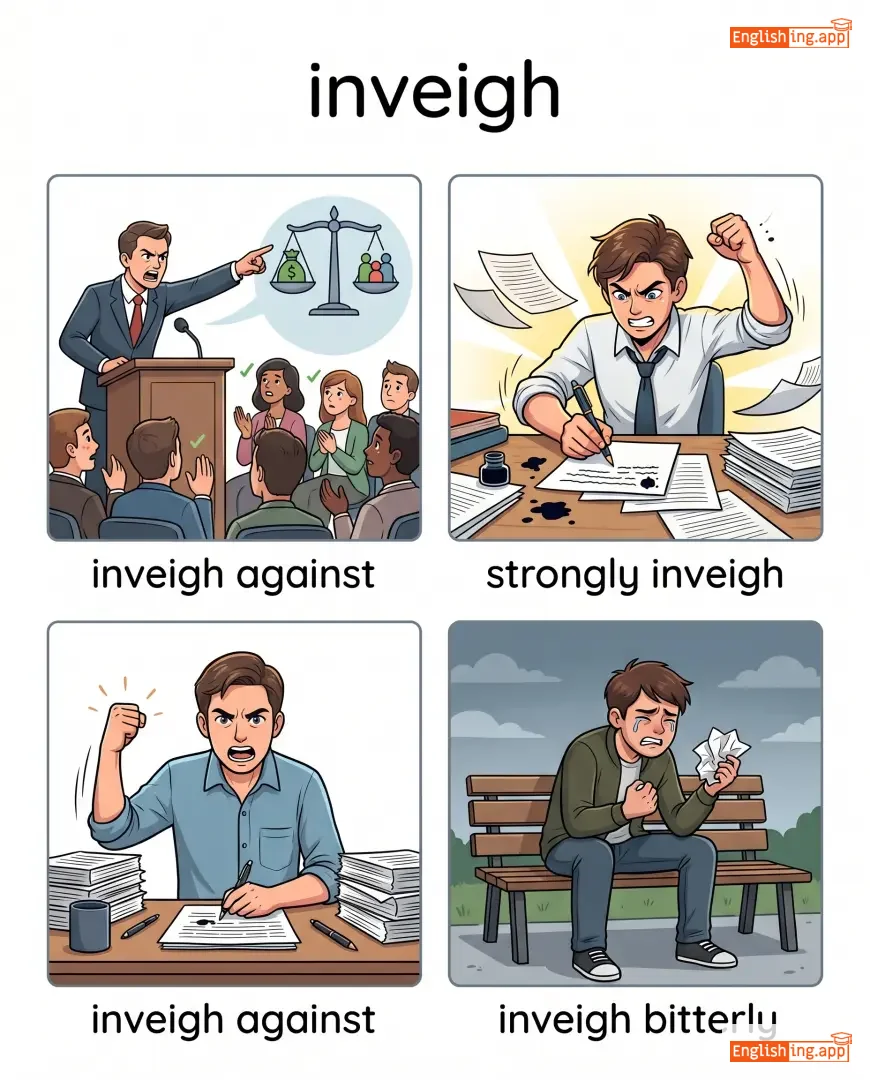
inveigh against, strongly inveigh, inveigh bitterly
••••••
|
Inveigh 不是侵略,而是批评政府的腐败。
••••••
|
|
🪄
••••••
|
/ɪnˈveɪɡəl/
verb
(ɪnveɪɡəl)
••••••
|

|
诱骗
yòupiàn
••••••
|
inveigled
ɪnveɪɡəld
••••••
|
inveigled
ɪnveɪɡəld
••••••
|
inveigles
ɪnveɪɡələs
••••••
|
inveigling
ɪnveɪɡəlɪŋ
••••••
|
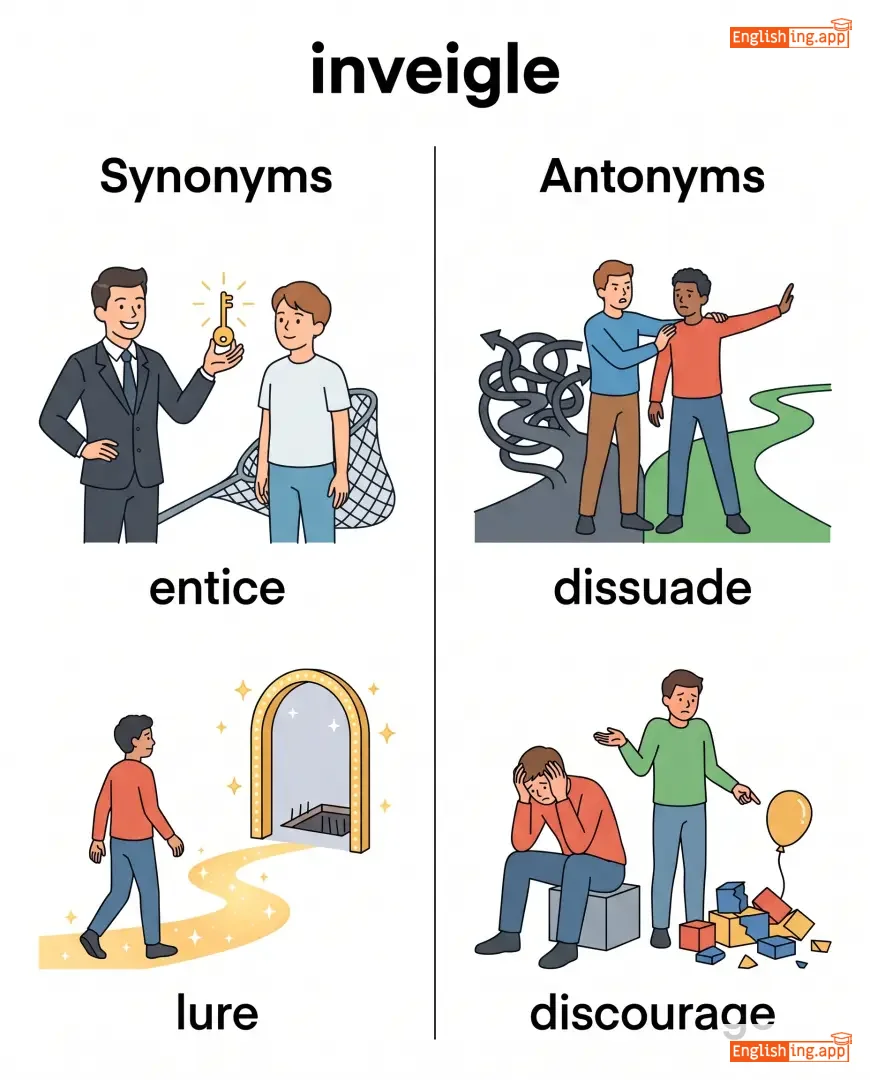
To persuade someone to do something by deception or flattery.
••••••
|
She inveigled him into signing the contract.
她劝他签署了合同。
••••••
|
她劝他签署了合同。
Tā quàn tā qiānshǔle hétóng.
••••••
|
- •••••• | - •••••• | - •••••• |
entice, lure, coax, manipulate, persuade
••••••
|
dissuade, discourage, repel
••••••
|
inveigle into, cleverly inveigle, inveigle someone
••••••
|
Inveigle 意味着通过欺骗使人屈服
••••••
|
|
📚
••••••
|
/ɪnˈvɛtərət/
adjective
(ɪnˈvɛtərət)
••••••
|

|
根深蒂固
gēn shēn dì gù
••••••
|
- •••••• | - •••••• | - •••••• | - •••••• |
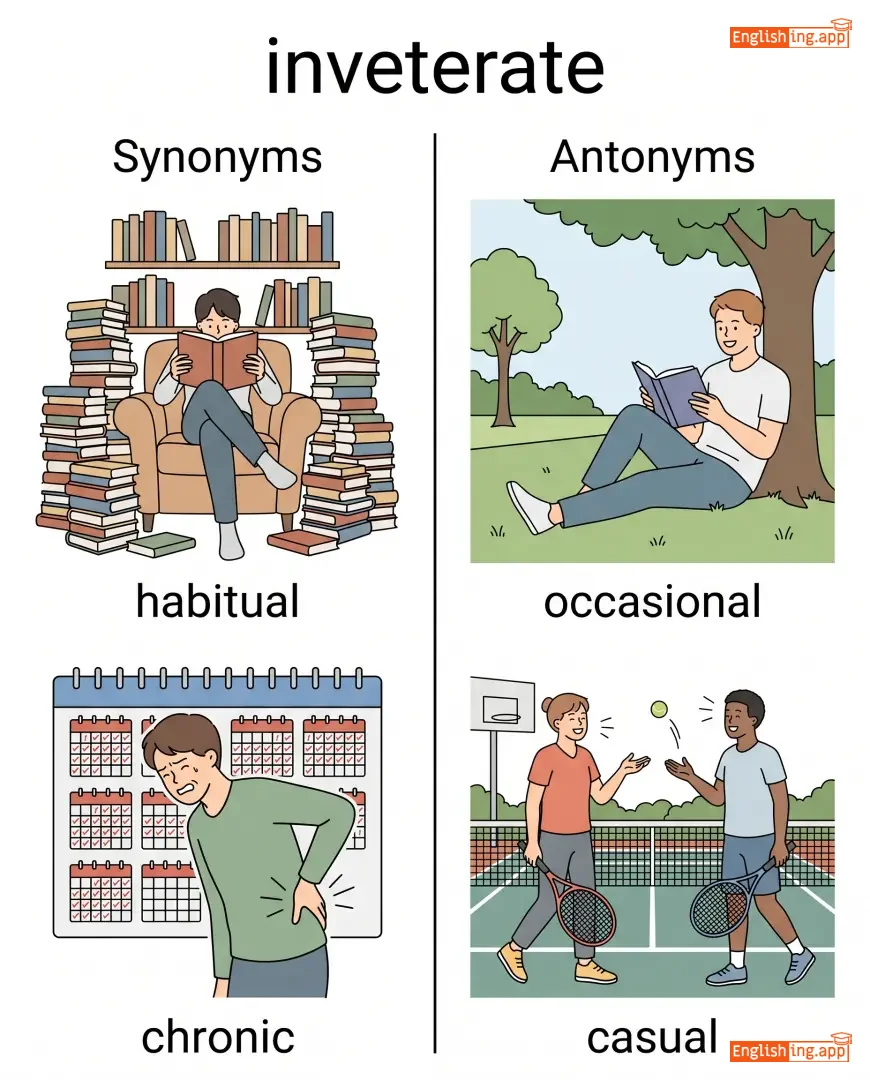
having a long-established habit, activity, or interest that is unlikely to change
••••••
|
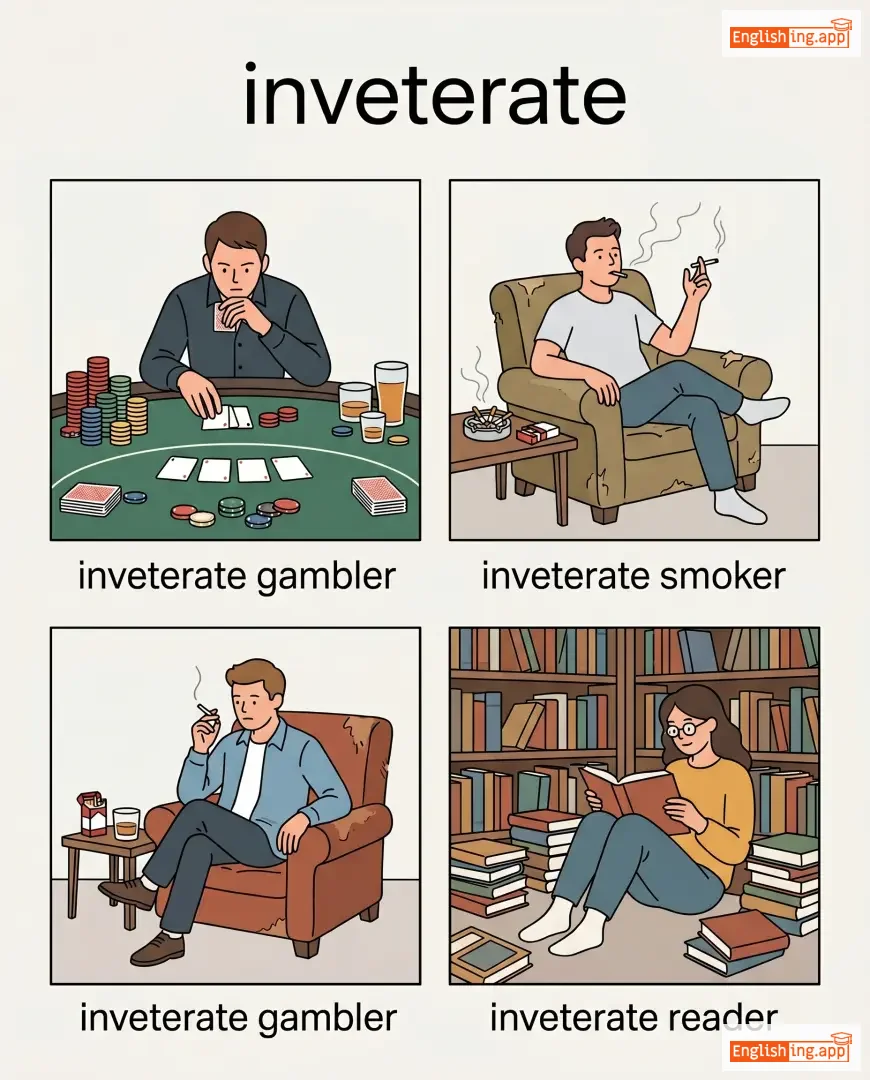
He is an inveterate reader who spends hours in the library every day. |
他是一个根深蒂固的读者,每天在图书馆度过几个小时。
Tā shì yīgè gēn shēn dì gù de dúzhě, měitiān zài túshūguǎn dùguò jǐ gè xiǎoshí.
••••••
|
- •••••• | - •••••• | - •••••• |
habitual, chronic, entrenched, confirmed
••••••
|
occasional, casual
••••••
|
inveterate gambler, inveterate smoker, inveterate reader
••••••
|
Inveterate就像深深扎根的习惯 — 根深蒂固
••••••
|
|
😒
••••••
|
/ɪnˈvɪdiəs/
adjective
(因维迪厄斯)
••••••
|
|
引起嫉妒的
yǐnqǐ jídù de
••••••
|
- •••••• | - •••••• | - •••••• | - •••••• |
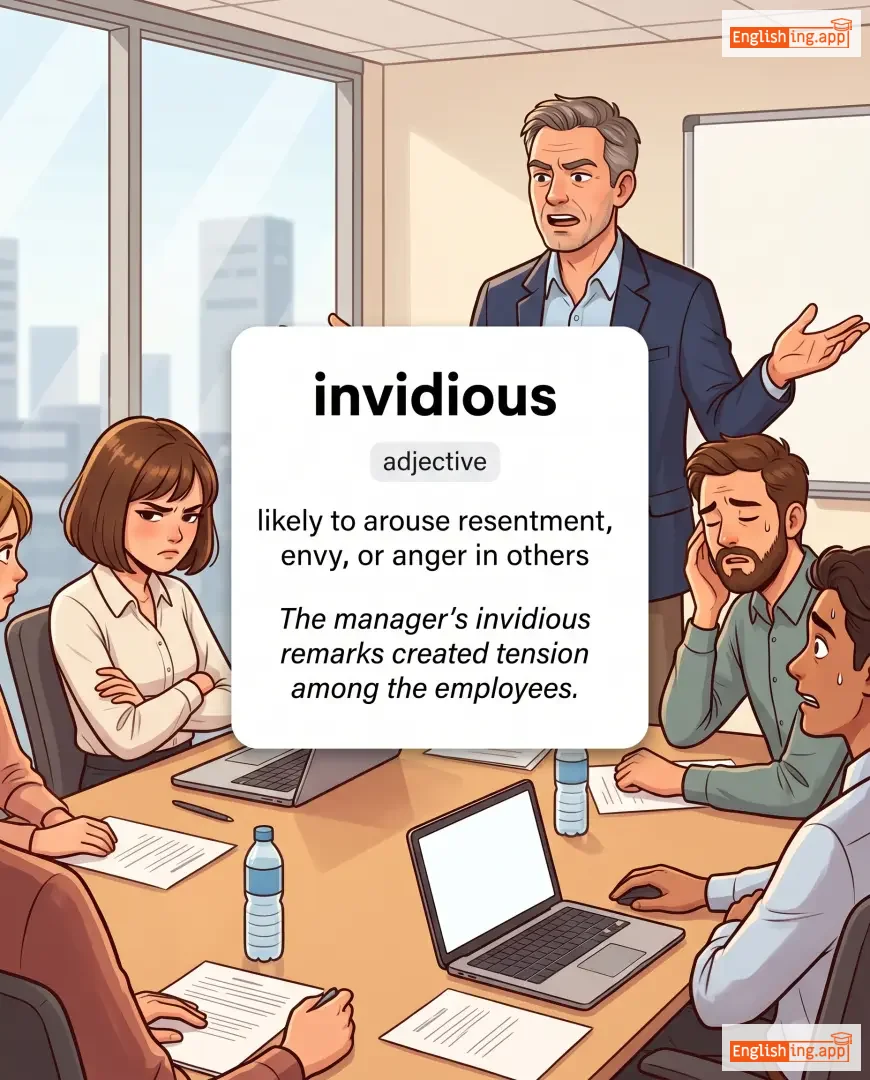
likely to arouse resentment, envy, or anger in others
••••••
|
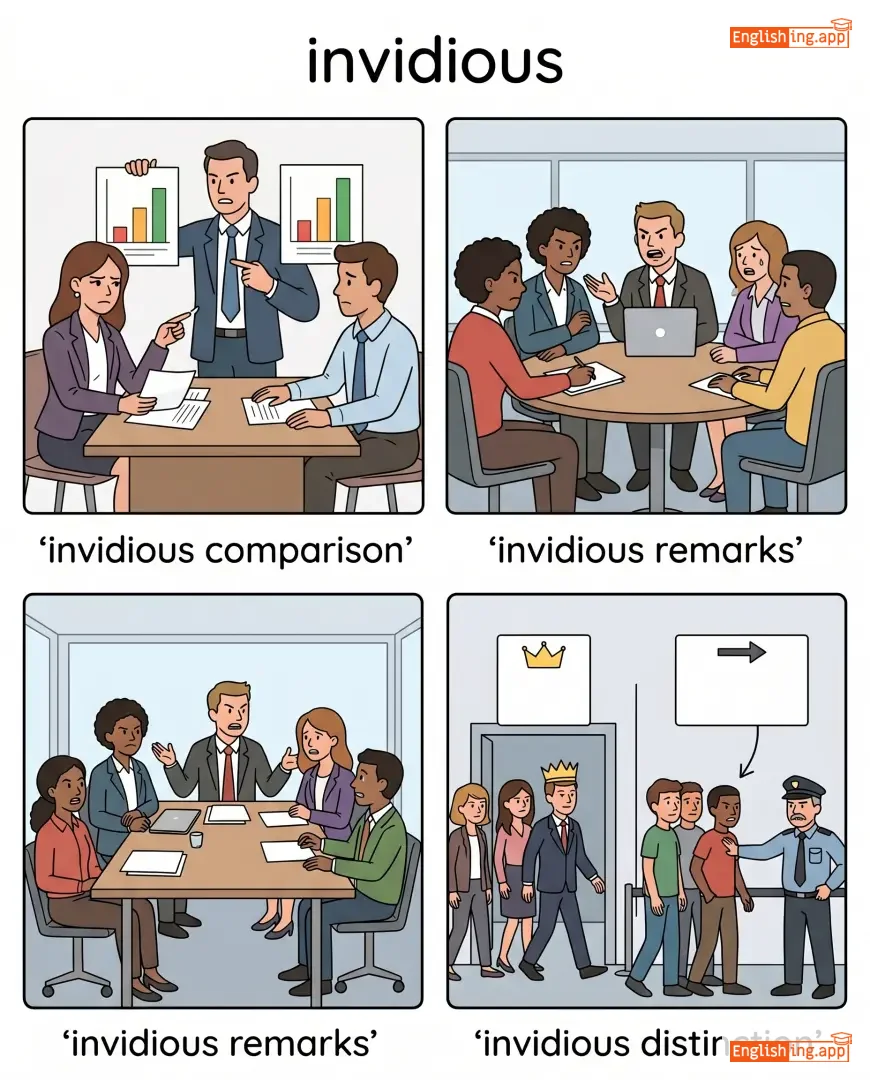
The manager's invidious remarks created tension among the employees. |
经理的嫉妒言论在员工中间造成了紧张气氛。
Jīnglǐ de jídù yánlùn zài yuángōng zhōngjiān zàochéngle jǐnzhāng qìfēn.
••••••
|
- •••••• | - •••••• | - •••••• |
offensive, unpleasant, discriminatory, unfair
••••••
|
favorable, just
••••••
|
invidious comparison, invidious remarks, invidious distinction
••••••
|
Invidious 引起他人嫉妒或愤怒 — 引起嫉妒的
••••••
|
|
😡
••••••
|
/ɪˈræsɪbl/
adjective
(易怒的)
••••••
|
|
易怒的
yì nù de
••••••
|
- •••••• | - •••••• | - •••••• | - •••••• |
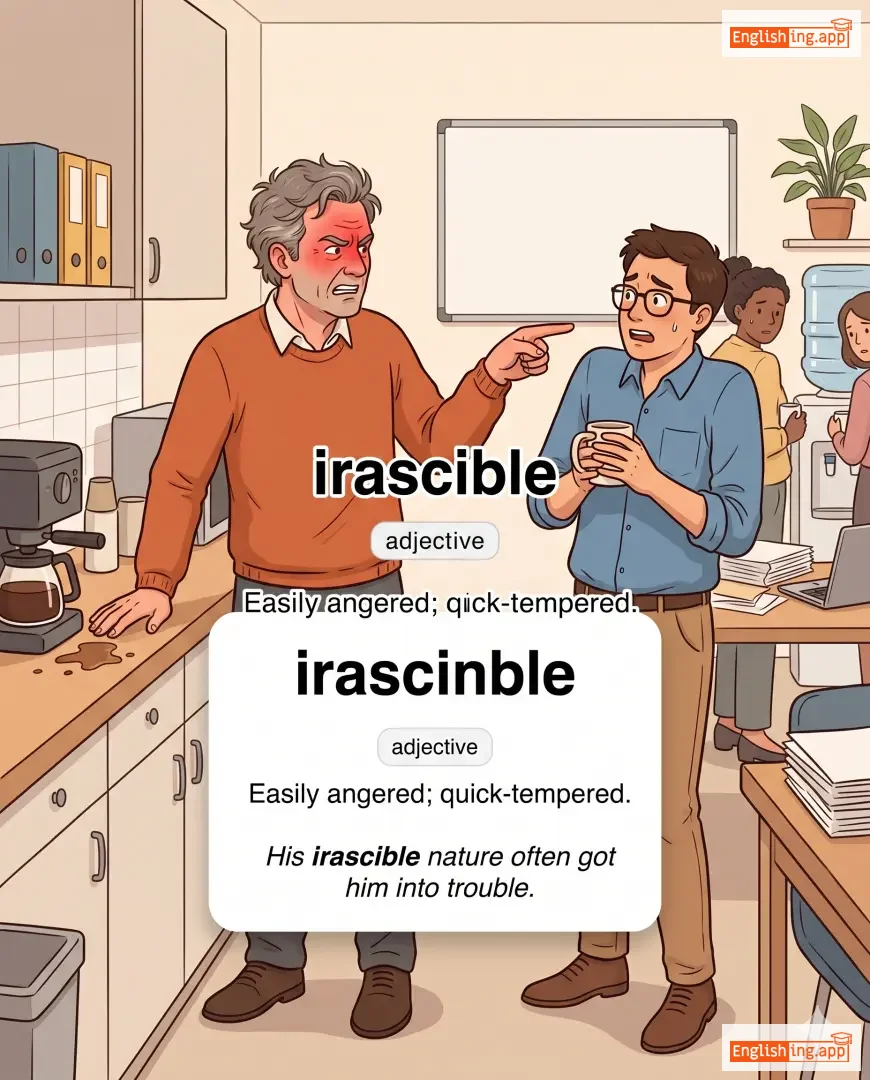
Easily angered; quick-tempered.
••••••
|
His irascible nature often got him into trouble. |
他易怒的性格常常使他陷入麻烦。
Tā yì nù de xìnggé chángcháng shǐ tā xiànrù máfan.
••••••
|
- •••••• | - •••••• | - •••••• |
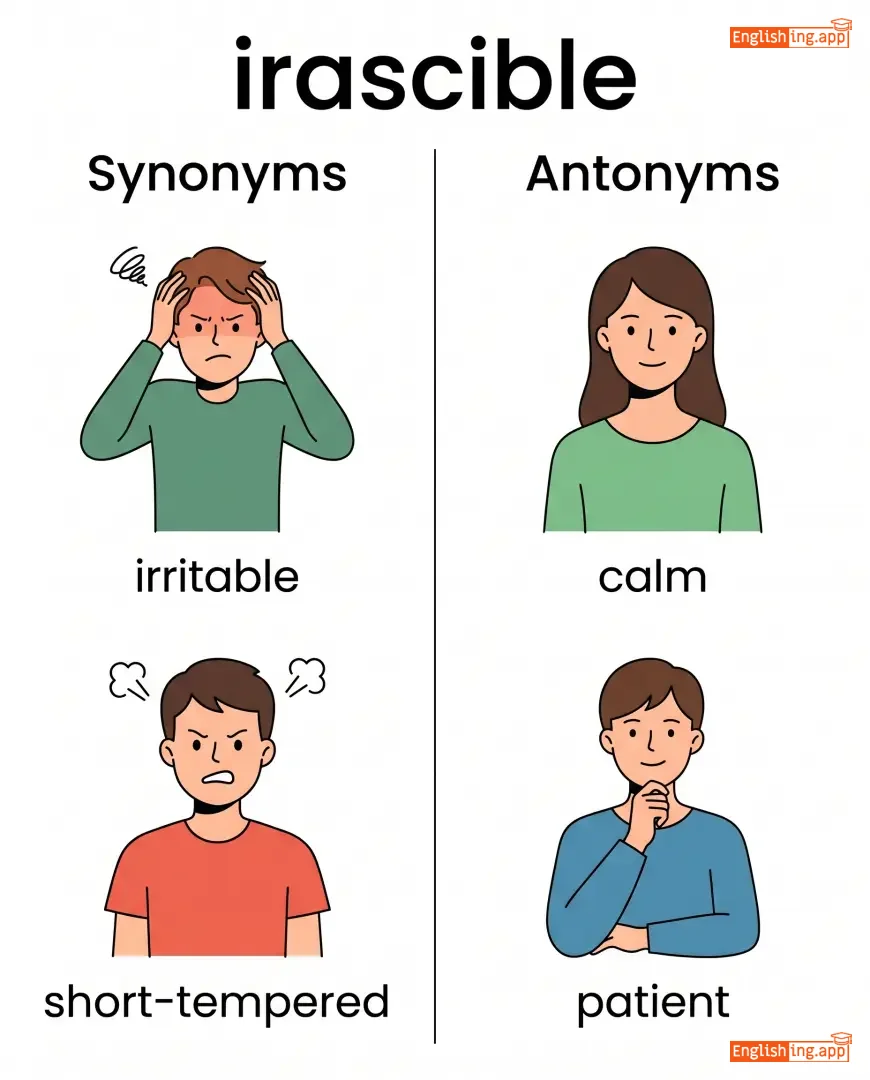
irritable, short-tempered, hot-headed, touchy
••••••
|
calm, patient, easygoing
••••••
|
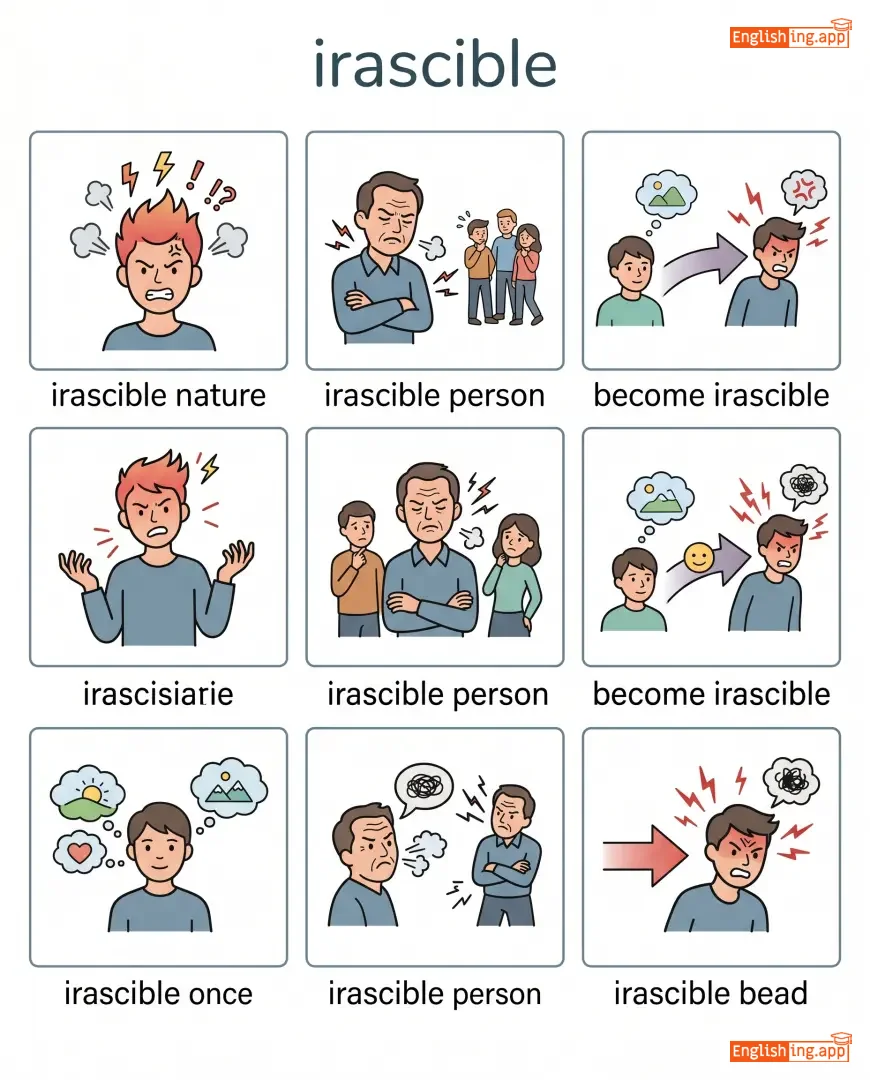
irascible nature, irascible person, become irascible, irascible tone
••••••
|
Irascible 意味着容易生气 – 'irritated + able' = 易怒的.
••••••
|
|
🤔
••••••
|
/ɪˈrɛzəluːt/
adjective
(依雷苏鲁特)
••••••
|
|
优柔寡断
yōuróu guǎduàn
••••••
|
- •••••• | - •••••• | - •••••• | - •••••• |
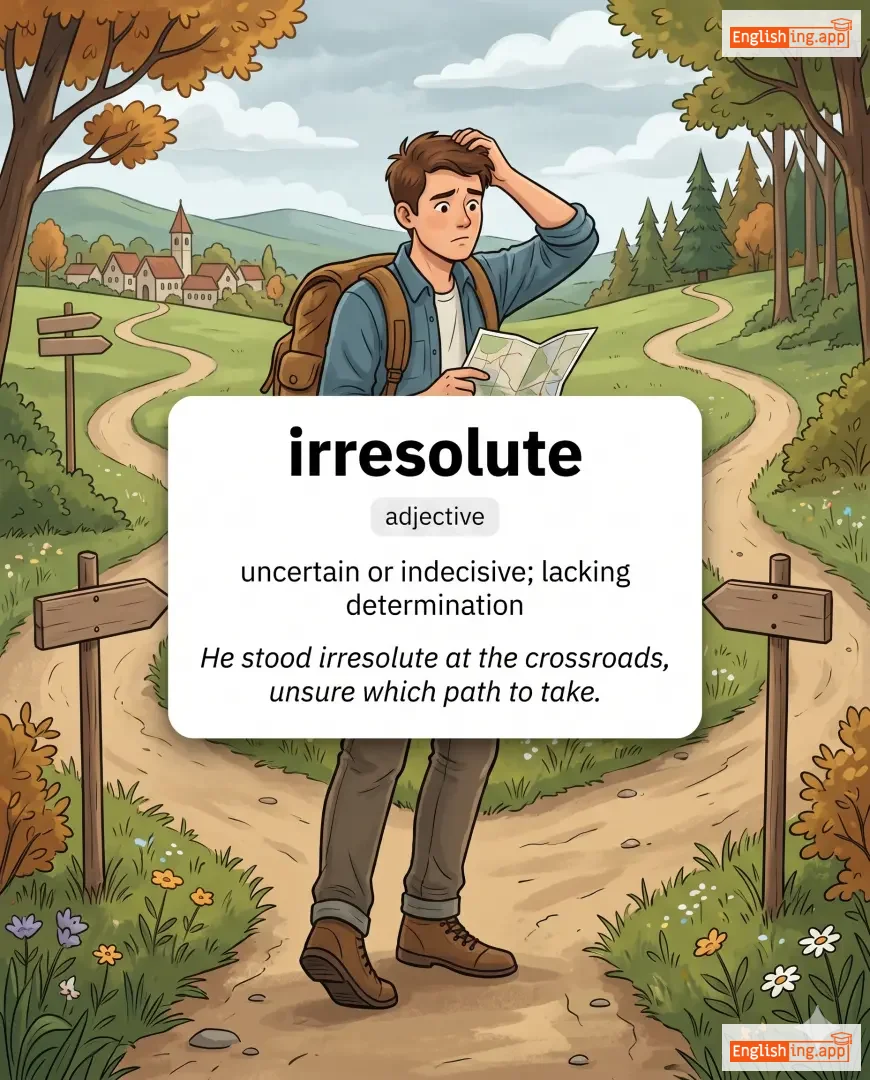
uncertain or indecisive; lacking determination
••••••
|
He stood irresolute at the crossroads, unsure which path to take. |
他在十字路口犹豫不决,不知道走哪条路。
Tā zài shízì lùkǒu yóuyù bù jué, bù zhīdào zǒu nǎ tiáo lù.
••••••
|
- •••••• | - •••••• | - •••••• |
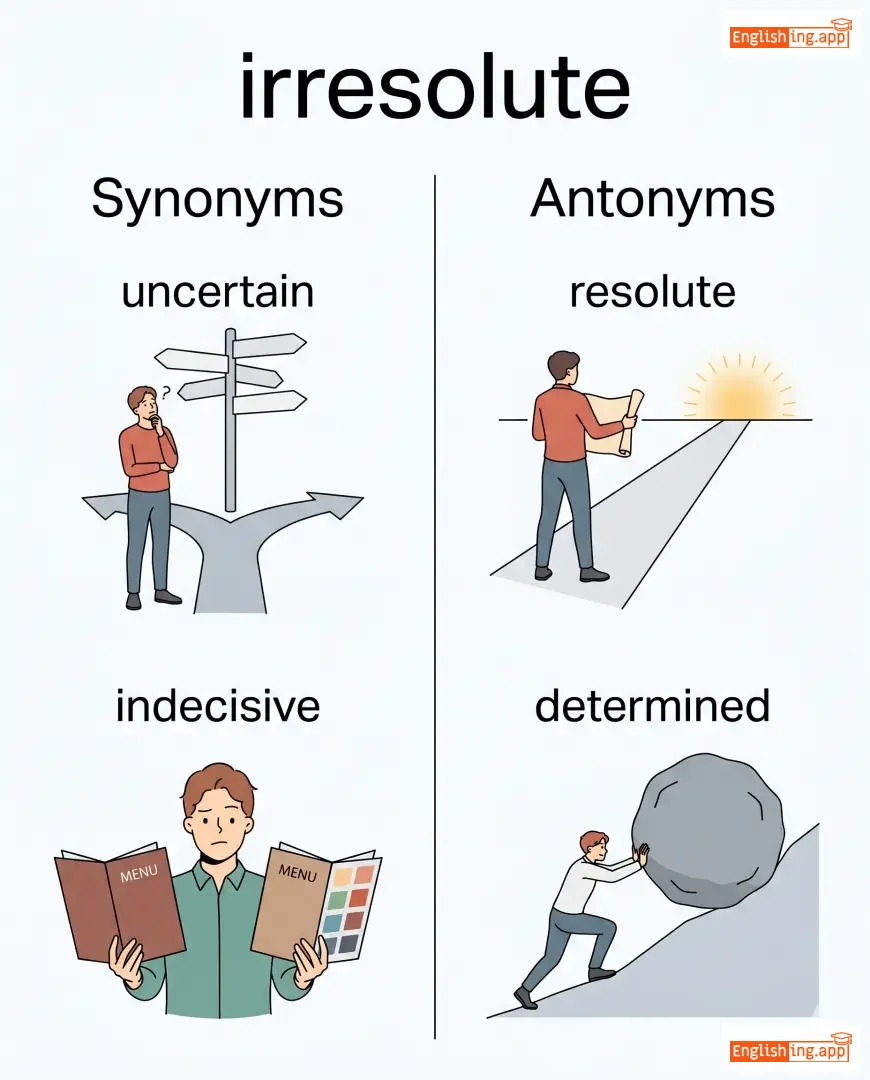
uncertain, indecisive, hesitant, vacillating, wavering
••••••
|
resolute, determined, decisive
••••••
|
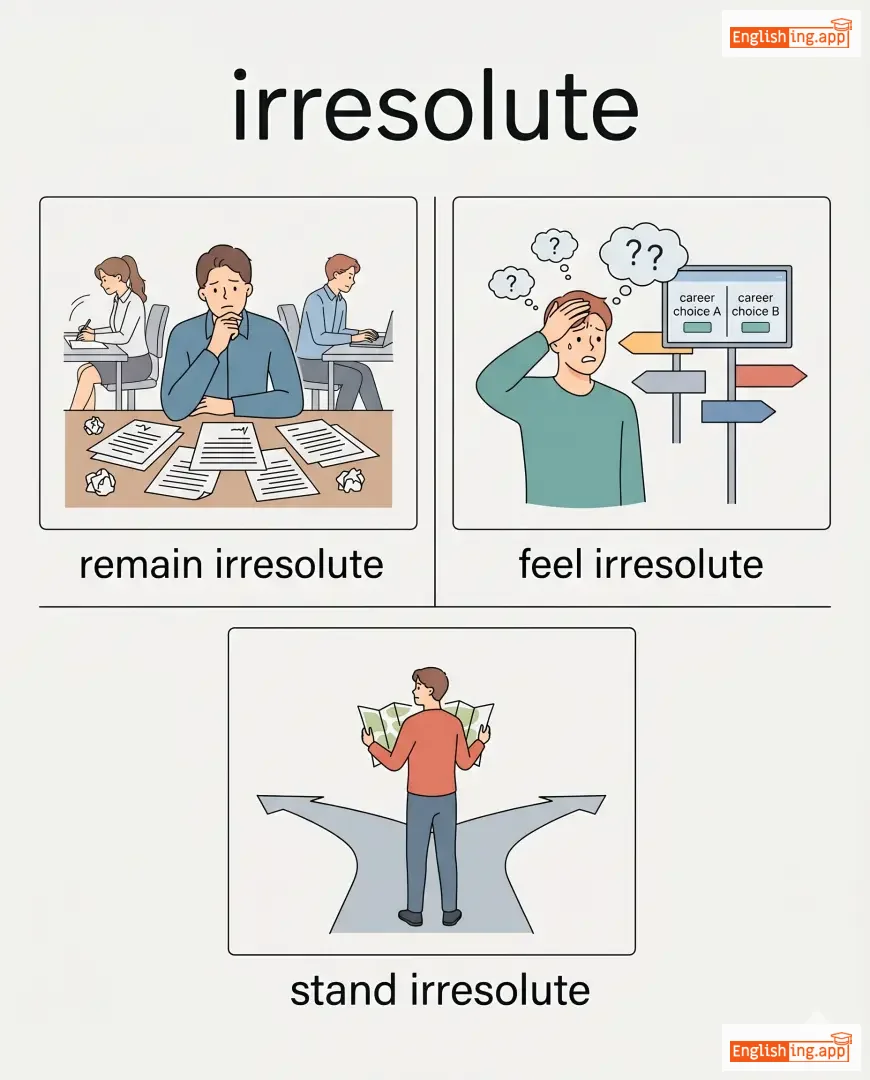
remain irresolute, feel irresolute, stand irresolute, irresolute response
••••••
|
irresolute = 优柔寡断, 就像一个不能做决定的人
••••••
|
|
🧳
••••••
|
/aɪˈtɪnərənt/
adjective
(艾特内兰特)
••••••
|


|
流动的
liúdòng de
••••••
|
- •••••• | - •••••• | - •••••• | - •••••• |
Traveling from place to place, especially for work or duty.
••••••
|
The itinerant teacher moved from village to village to educate children. |
这位流动的教师从一个村庄到另一个村庄,教育孩子们。
Zhè wèi liúdòng de jiàoshī cóng yīgè cūnzhuāng dào lìng yīgè cūnzhuāng, jiàoyù háizimen.
••••••
|
- •••••• | - •••••• | - •••••• |
wandering, roving, traveling, nomadic, peripatetic
••••••
|
settled, stationary, resident
••••••
|
itinerant worker, itinerant lifestyle, itinerant preacher, itinerant musician
••••••
|
流动的意思是旅行的 – 想象一个老师带着背包走遍各个村庄。
••••••
|
|
🗺️
••••••
|
/aɪˈtɪnərɛri/
noun
(aɪˈtɪnərɛri)
••••••
|

|
行程安排
xíngchéng ānpái
••••••
|
- •••••• | - •••••• | - •••••• | - •••••• |
A planned route or schedule of a journey or trip.
••••••
|
The travel agent gave us a detailed itinerary for our vacation. |
旅行社为我们的假期提供了详细的行程安排。
Lǚxíng shè wèi wǒmen de jiàqī tígōngle xiángxì de xíngchéng ānpái.
••••••
|
- •••••• | - •••••• | - •••••• |
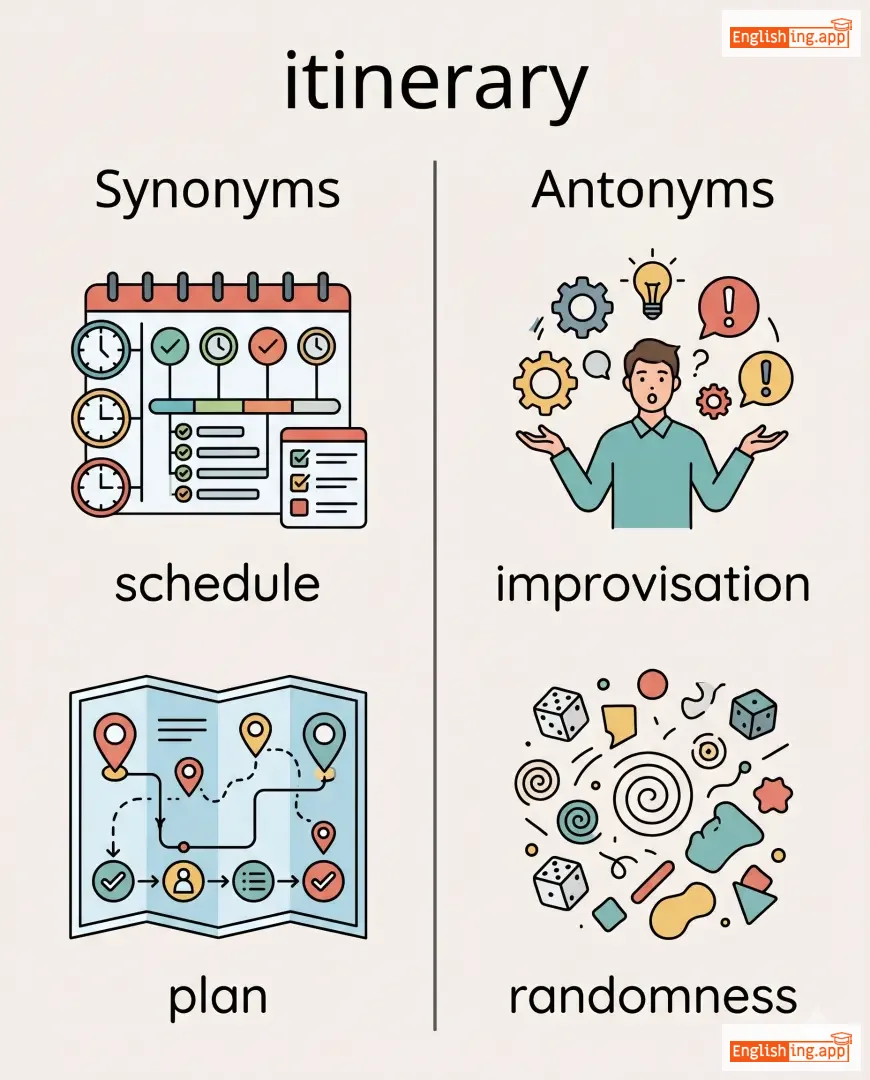
schedule, plan, agenda, route, timetable
••••••
|
improvisation, randomness
••••••
|
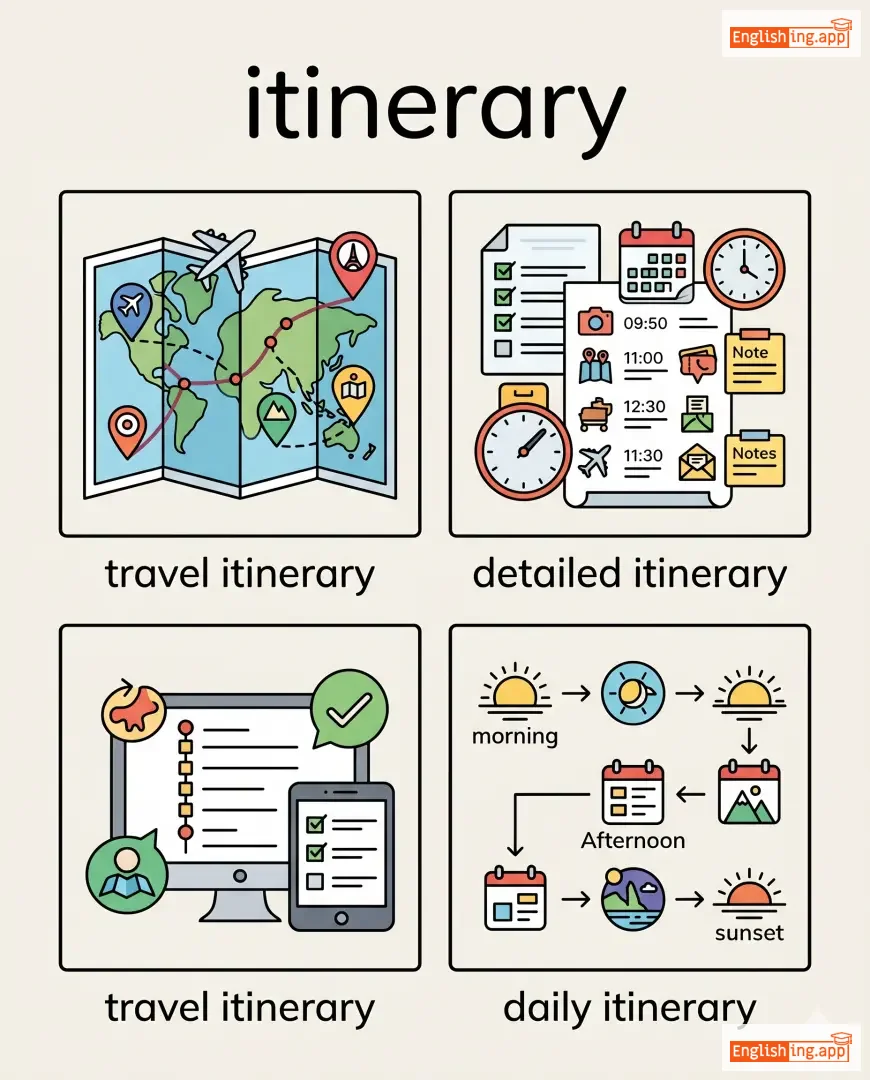
travel itinerary, detailed itinerary, daily itinerary, itinerary plan
••••••
|
Itinerary 意味着行程安排 – 想到 'ITIN' = In Time, In Route.
••••••
|
|
😒
••••••
|
/ˈdʒɔːndɪst/
adjective
(黄疸)
••••••
|
|
偏见的 / 嫉妒的 / 由黄疸引起的
pianjian de / jidu de / you huangdan yinqi de
••••••
|
- •••••• | - •••••• | - •••••• | - •••••• |
Affected by or displaying prejudice, envy, or bitterness; also refers to having a yellowish discoloration of the skin due to jaundice.
••••••
|
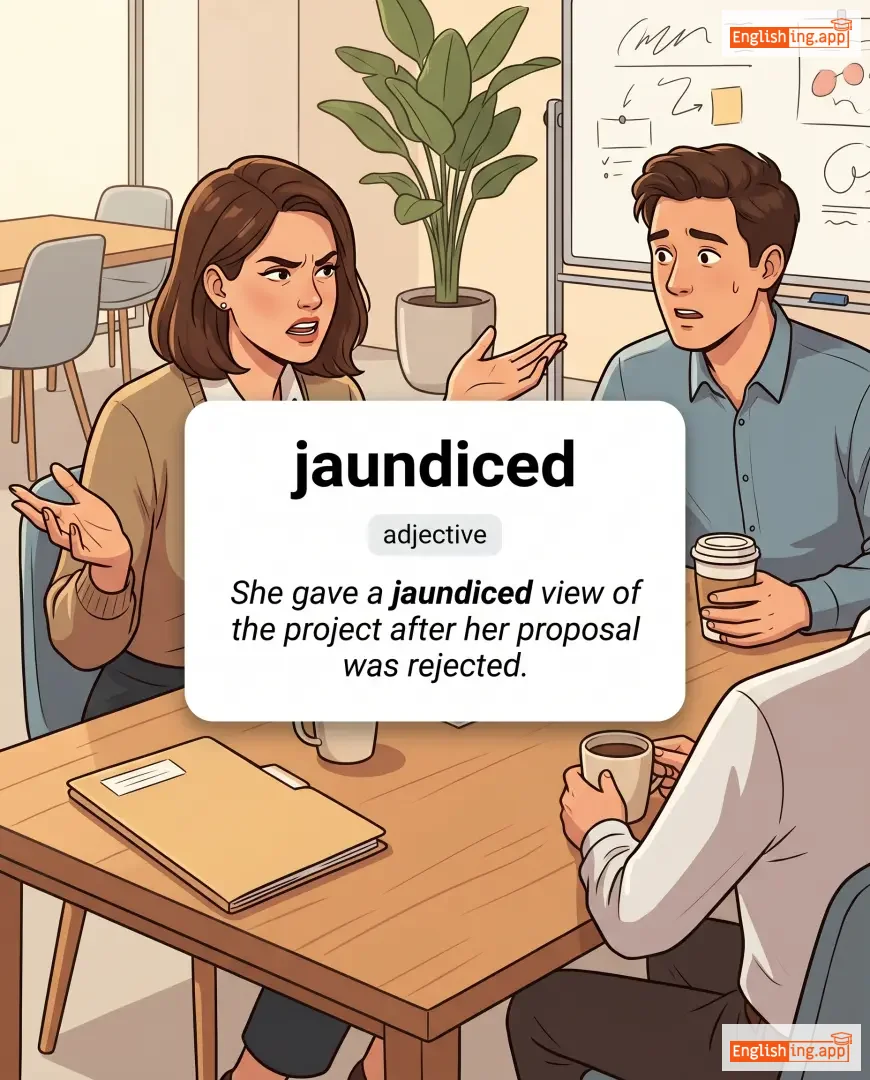
She gave a jaundiced view of the project after her proposal was rejected. |
在她的提案被拒绝后,她对这个项目给出了一个偏见的看法。
Zai ta de ti'an bei jujue hou, ta dui zhege xiangmu geichule yige pianjian de kanfa.
••••••
|
- •••••• | - •••••• | - •••••• |
biased, cynical, resentful, prejudiced, skeptical
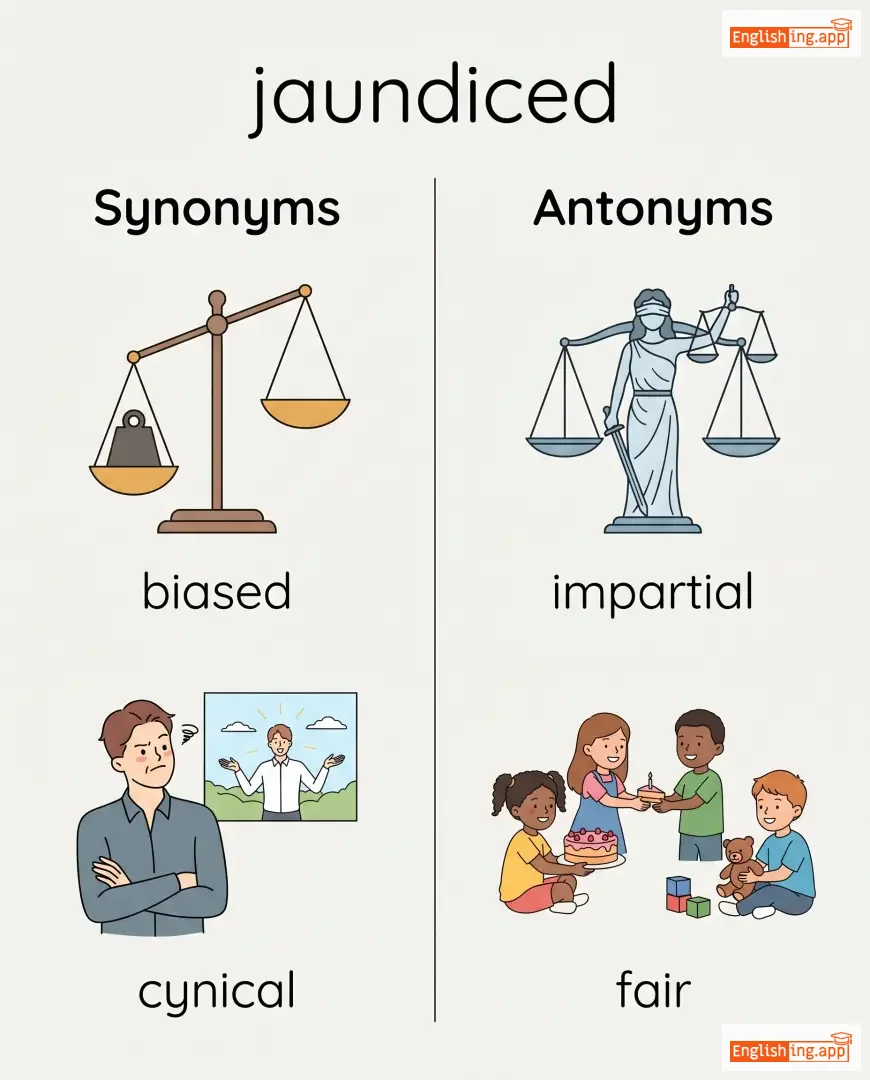
••••••
|
impartial, fair, unbiased
••••••
|
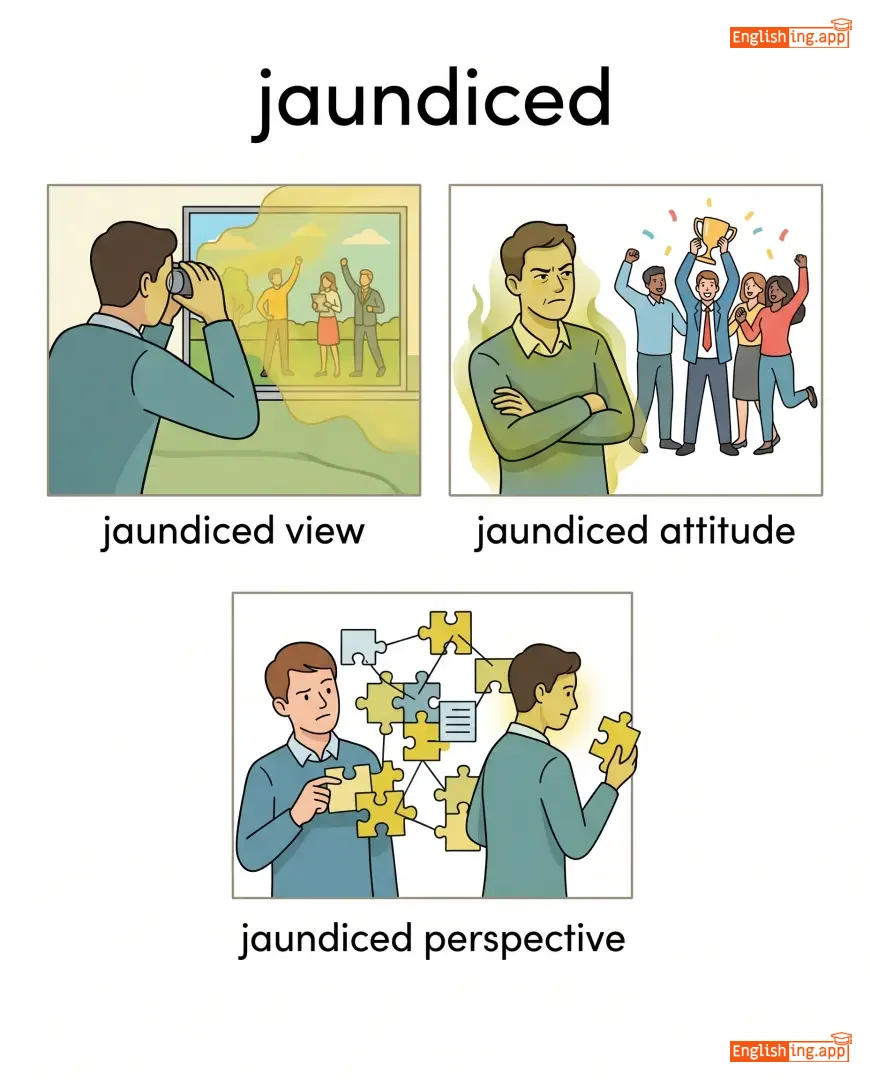
jaundiced view, jaundiced attitude, jaundiced perspective
••••••
|
黄疸让皮肤发黄,而'黄疸'的观点意味着偏见的看法。
••••••
|
|
😏
••••••
|
/dʒaɪb/
verb
(jāib)
••••••
|

|
讽刺 / 一致
fengci / yizhi
••••••
|
jibed
jāibed
••••••
|
jibed
jāibed
••••••
|
jibes
jāibes
••••••
|
jibing
jāibing
••••••
|
to make an insulting remark; to be in agreement or harmony with
••••••
|
His actions did not jibe with his words.
他的行动与他的言辞不符。
••••••
|
他的行动与他的言辞不符。
Tā de xíngdòng yǔ tā de yáncí bù fú.
••••••
|
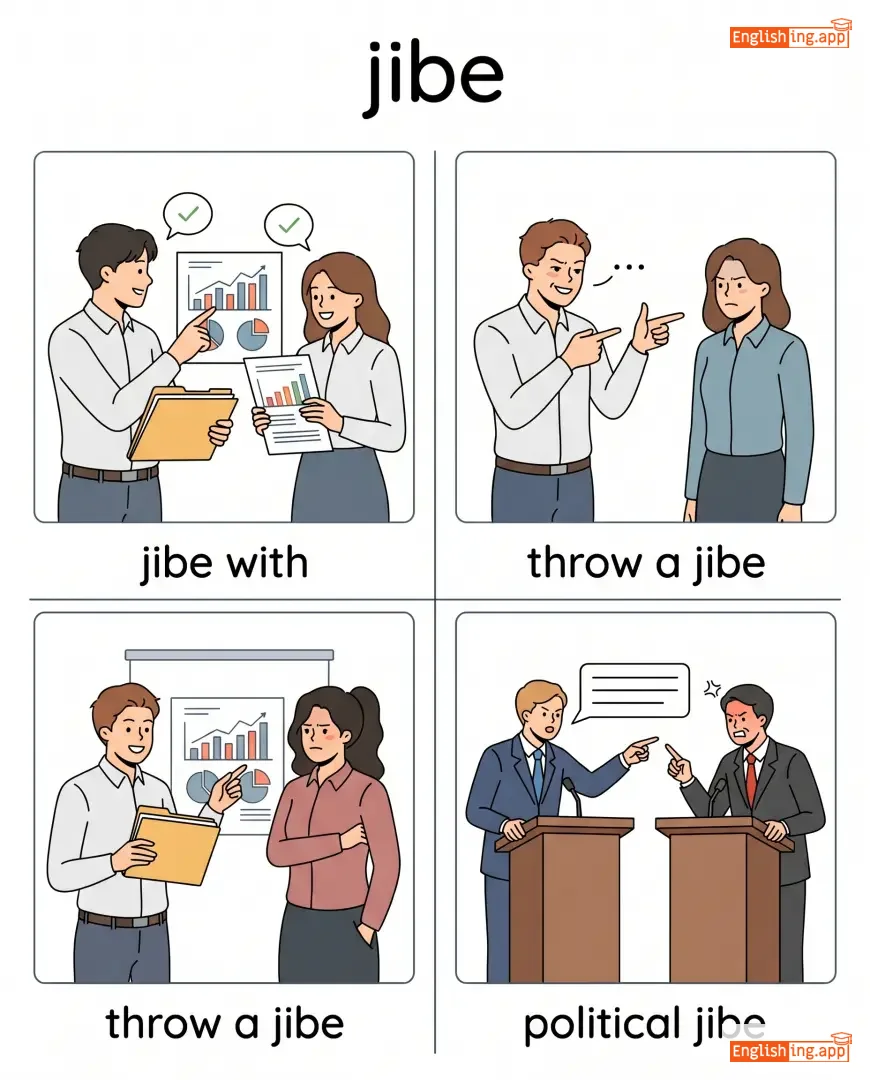
throw a jibe
抛出嘲讽
••••••
|
to make a mocking or insulting remark
••••••
|
抛出嘲讽
pāo chū cháofèng
••••••
|
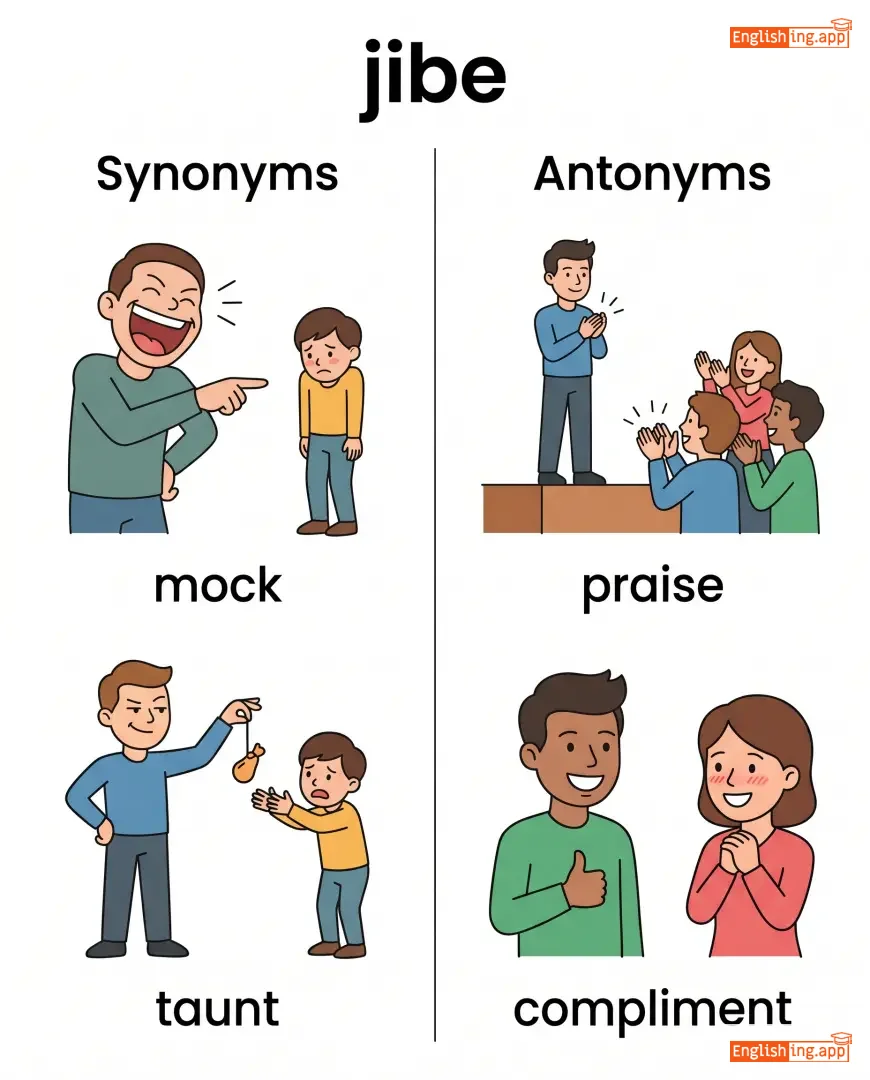
mock, taunt, agree, correspond, match
••••••
|
praise, compliment, conflict
••••••
|
jibe with, throw a jibe, political jibe, sarcastic jibe
••••••
|
Jibe像是对他人的嘲笑或轻蔑的言辞
••••••
|
|
😄
••••••
|
/dʒoʊˈkoʊs/
adjective
(乔科斯)
••••••
|

|
幽默的
youmo de
••••••
|
- •••••• | - •••••• | - •••••• | - •••••• |
playful or humorous in speech or behavior
••••••
|
The professor’s jocose remarks kept the class entertained.
教授的幽默评论让班级感到娱乐。
••••••
|
教授的幽默评论让班级感到娱乐。
Jiaoshou de youmo pinglun rang banji gandao yule.
••••••
|
- •••••• | - •••••• | - •••••• |
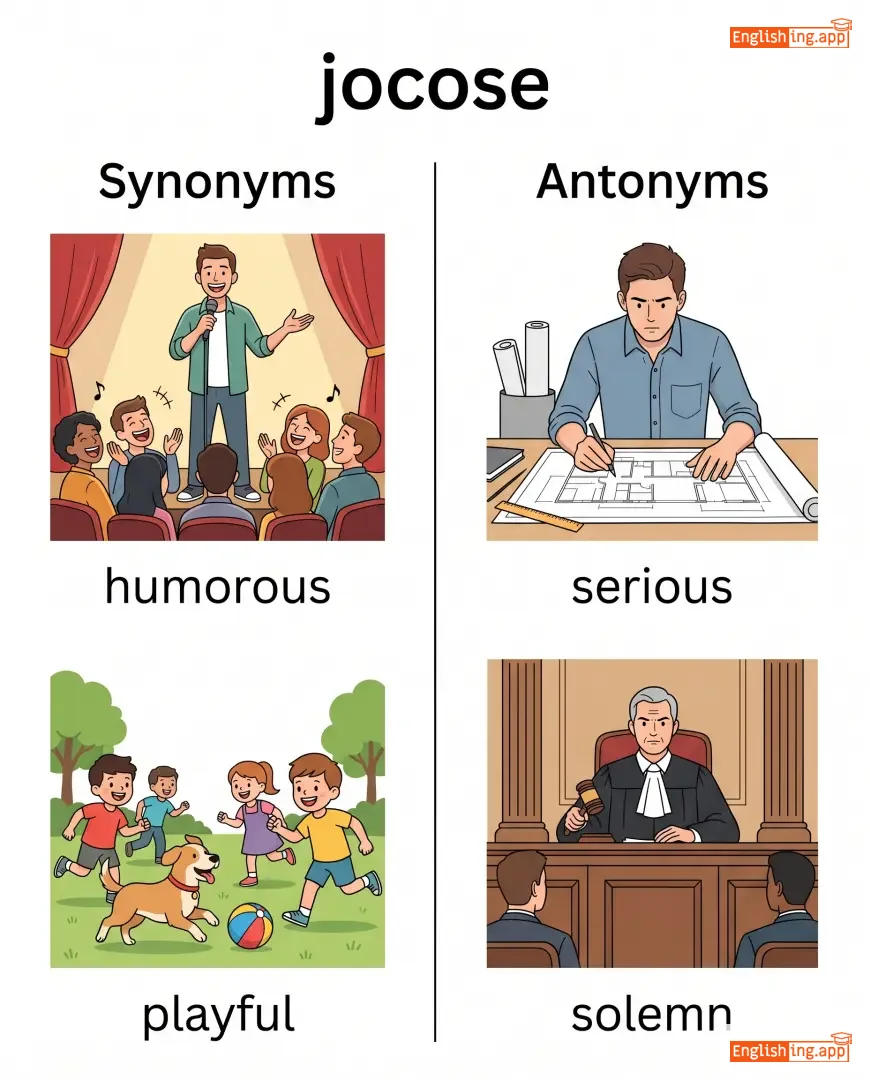
humorous, playful, witty, comical
••••••
|
serious, solemn
••••••
|
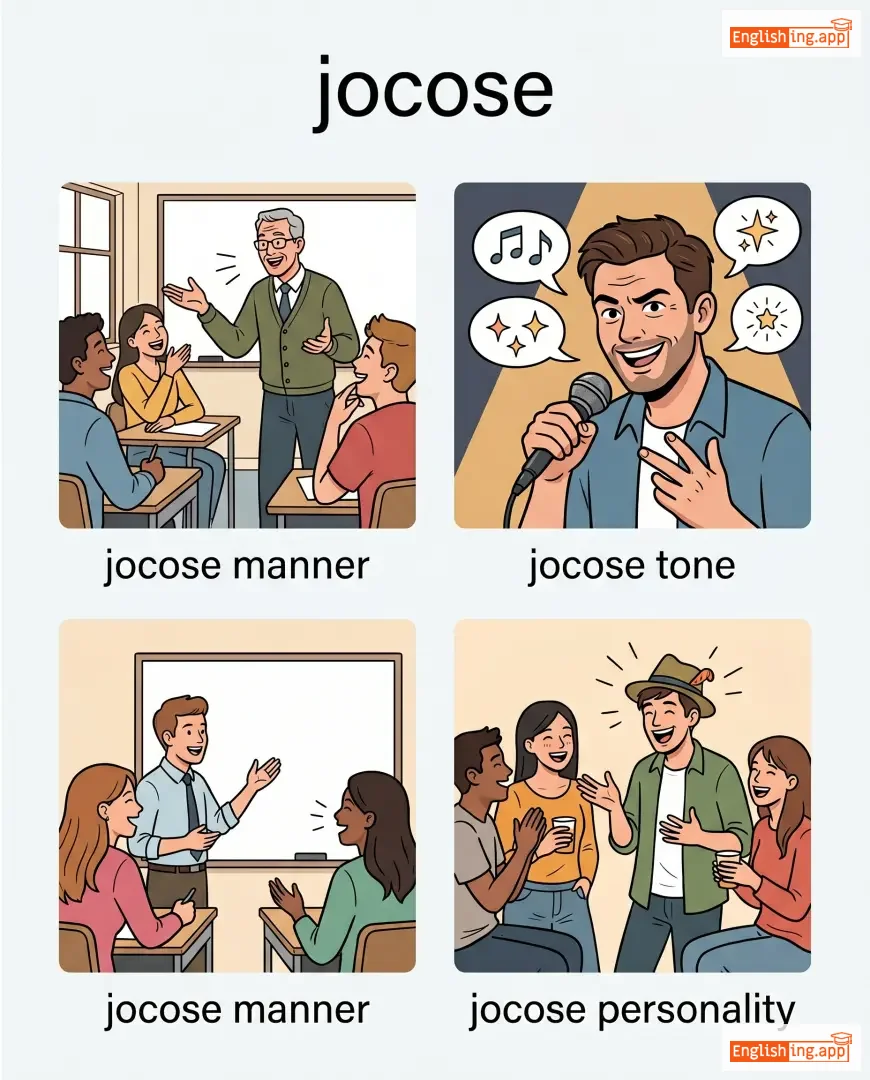
jocose manner, jocose tone, jocose personality
••••••
|
Jocose = Joke + ose, 就像一个笑话,让人快乐。
••••••
|
|
🚛
••••••
|
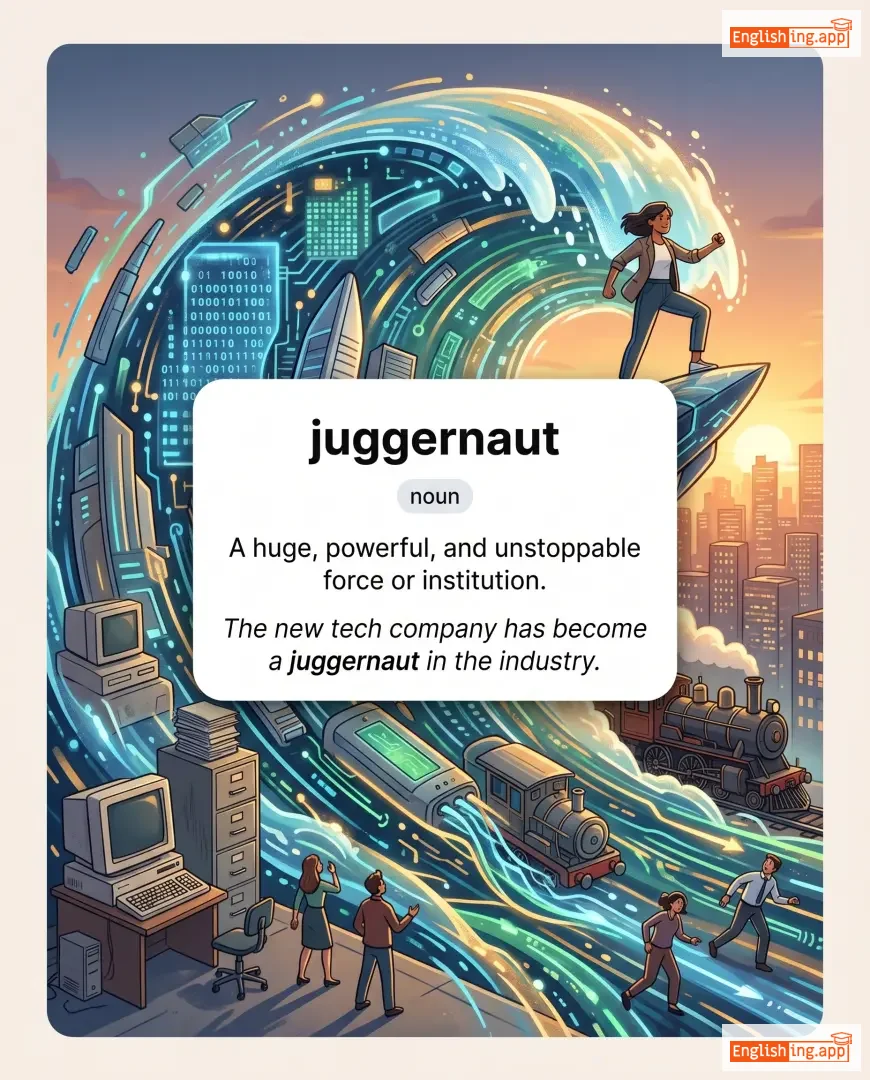
/ˈdʒʌɡərˌnɔːt/
noun
(jʌɡərˌnɔːt)
••••••
|
|
不可阻挡的力量
bù kě zǔ dǎng de lì liàng
••••••
|
- •••••• | - •••••• | - •••••• | - •••••• |
A huge, powerful, and unstoppable force or institution.
••••••
|
The new tech company has become a juggernaut in the industry. |
这家新技术公司已经成为了这个行业中不可阻挡的力量。
Zhè jiā xīn jì shù gōng sī yǐ jīng chéng wéi le zhè ge háng yè zhōng bù kě zǔ dǎng de lì liàng.
••••••
|
- •••••• | - •••••• | - •••••• |
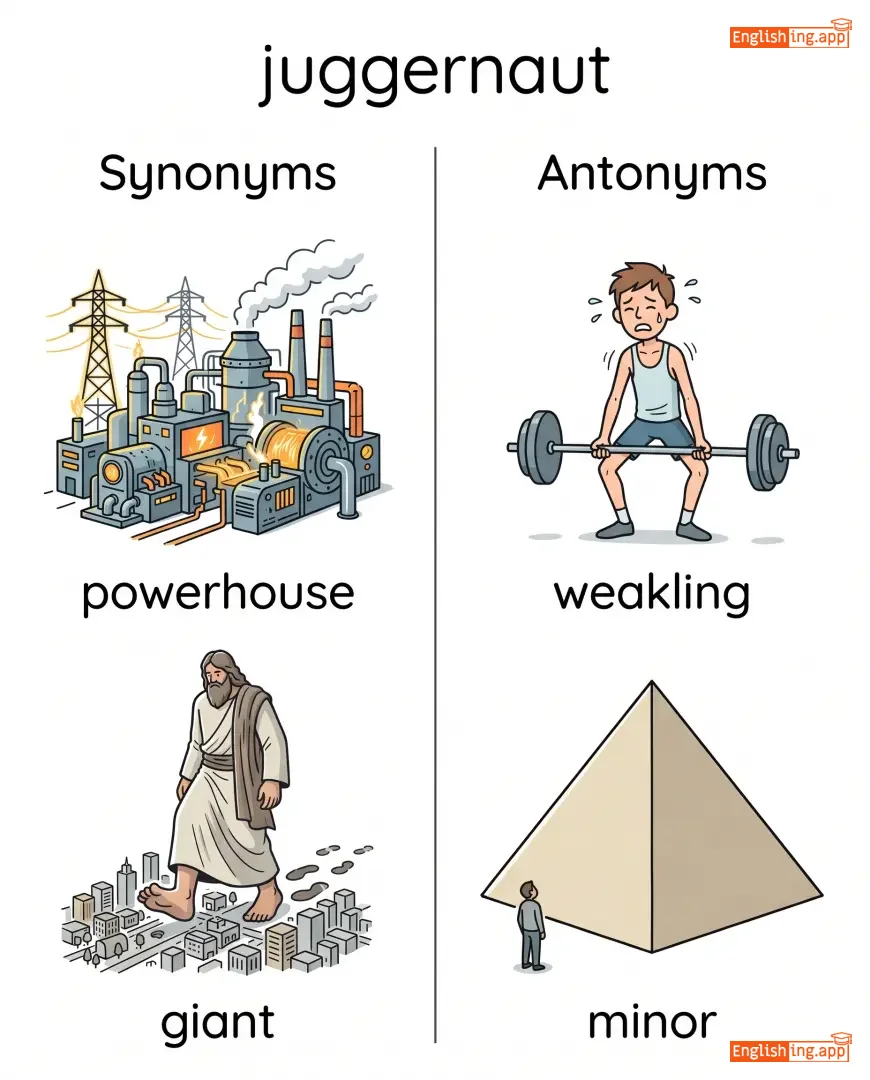
powerhouse, giant, colossus, titan, behemoth
••••••
|
weakling, minor, underdog
••••••
|
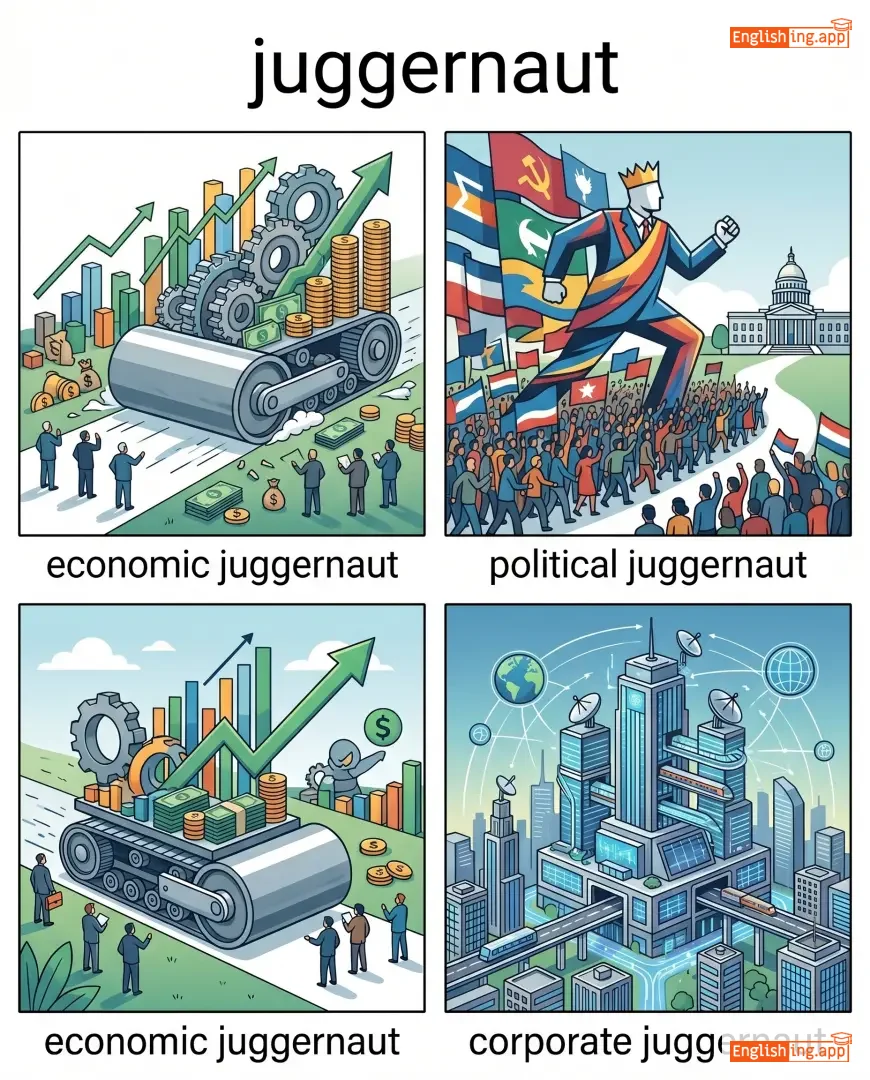
economic juggernaut, political juggernaut, corporate juggernaut
••••••
|
Juggernaut是不可阻挡的力量。
••••••
|
|
🪖
••••••
|
/ˈdʒʊntə/
noun
(军政府)
••••••
|
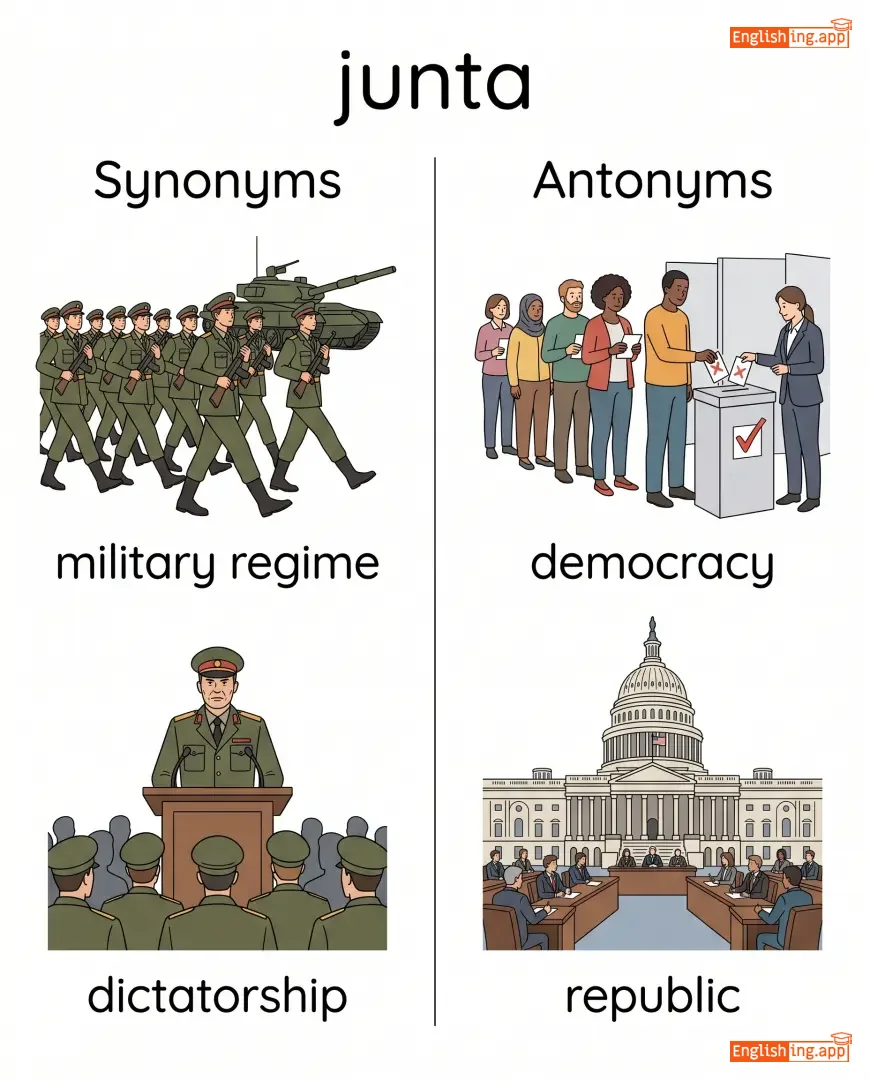
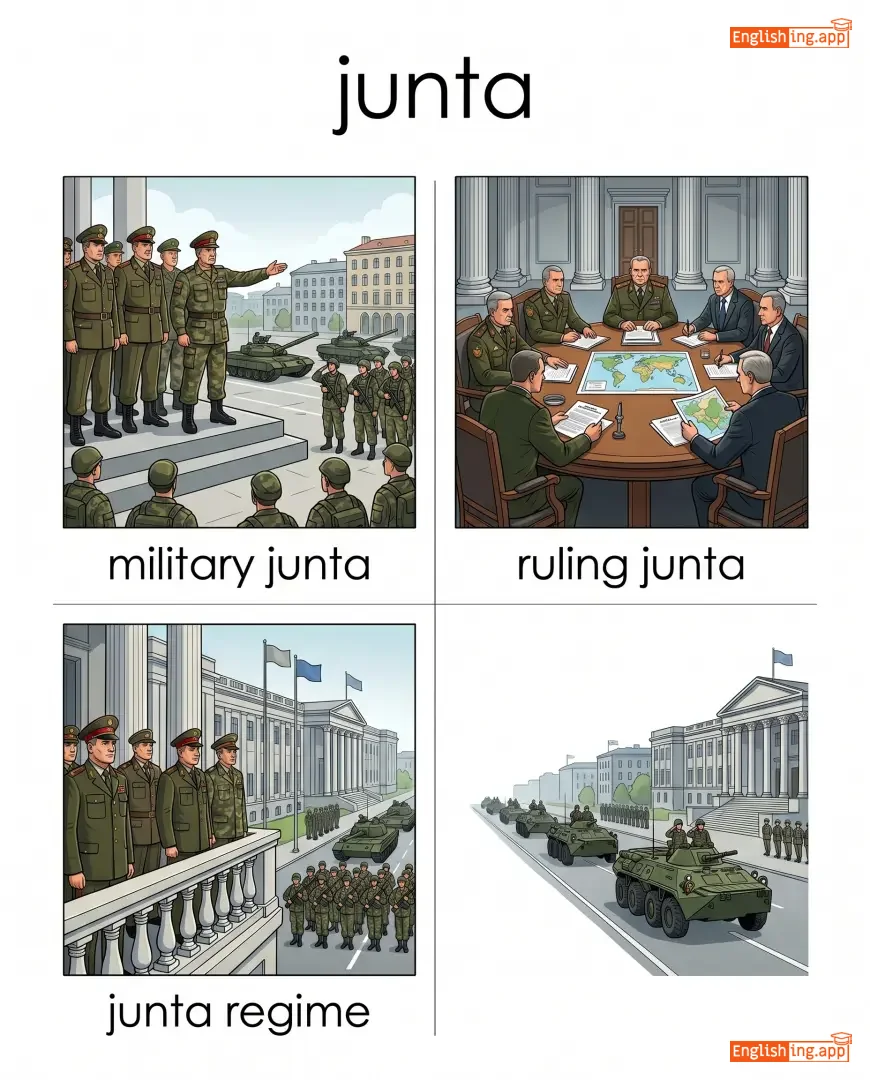
|
军事政府
junshi zhengfu
••••••
|
- •••••• | - •••••• | - •••••• | - •••••• |
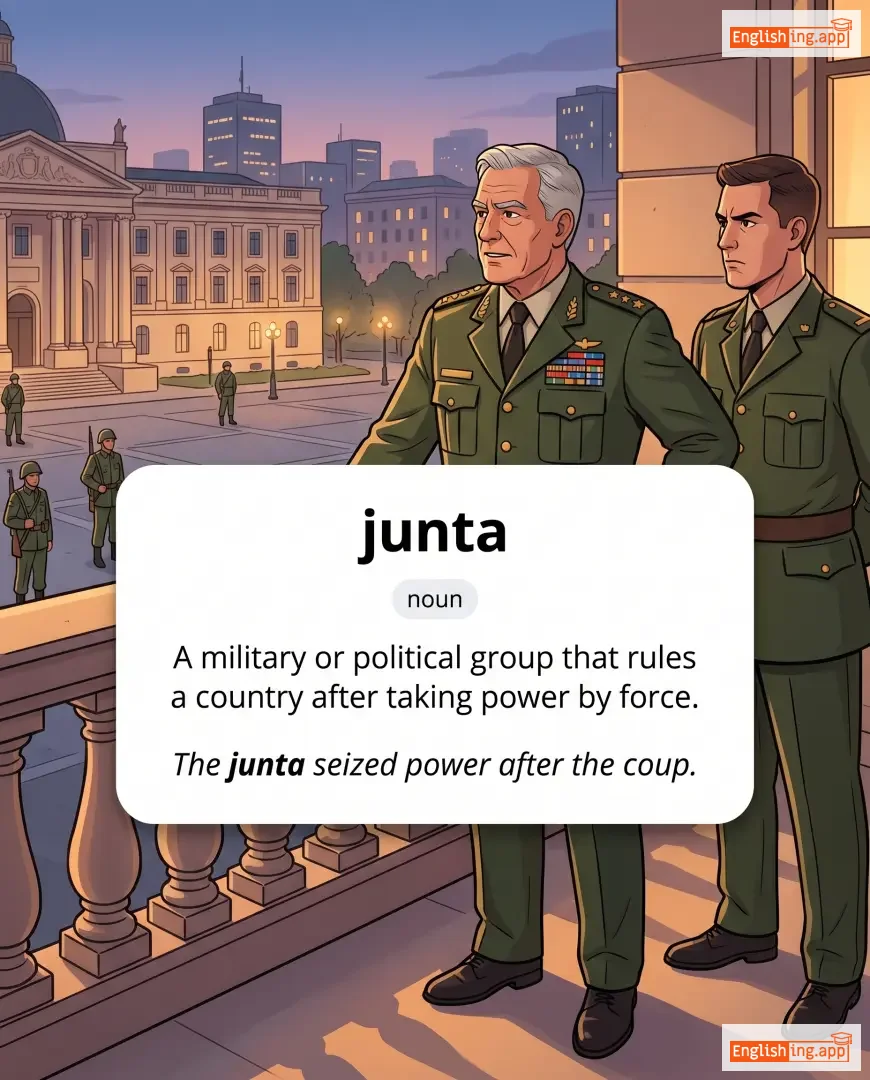
A military or political group that rules a country after taking power by force.
••••••
|
The junta seized power after the coup. |
政变后,军事政府掌握了权力。
Zhengbian hou, junshi zhengfu zhangwo le quanli.
••••••
|
- •••••• | - •••••• | - •••••• |
military regime, dictatorship, council, committee
••••••
|
democracy, republic
••••••
|
military junta, ruling junta, junta regime
••••••
|
军政府由军事力量控制,类似政变后的军人政府。
••••••
|
|
🖼️
••••••
|
/ˈdʒʌkstəˌpoʊz/
verb
(juˈkstəˌpoʊz)
••••••
|

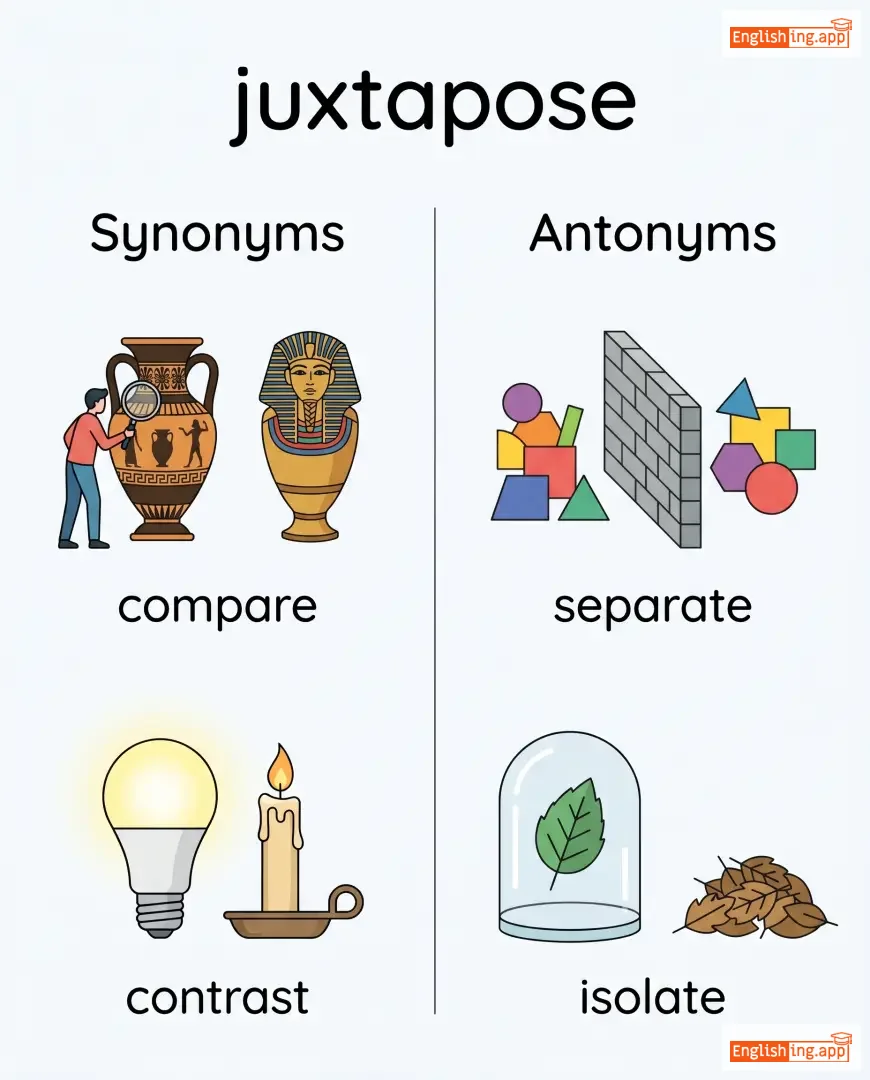
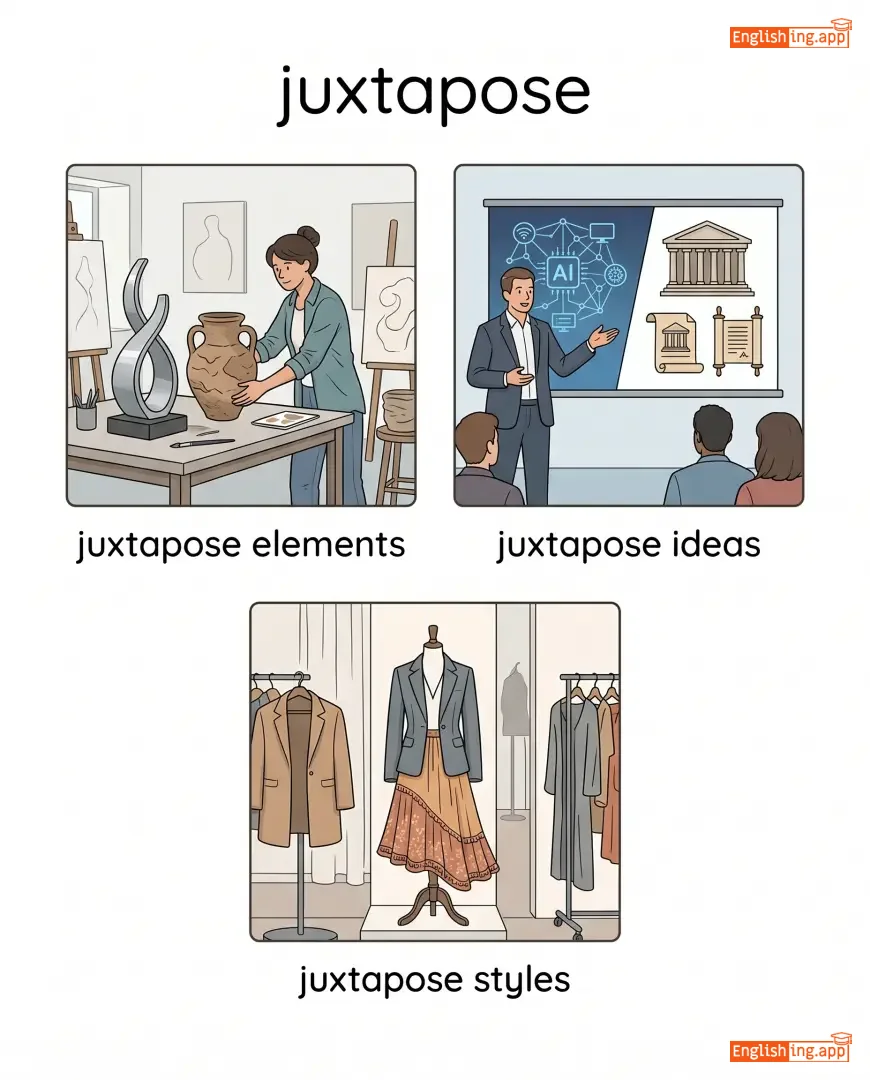
|
将事物放在一起进行比较或对比
jiang shiwu fang zai yiqi jinxing bijiao huo duibi
••••••
|
juxtaposed
对比过
••••••
|
juxtaposed
对比过
••••••
|
juxtaposes
对比
••••••
|
juxtaposing
对比中
••••••
|
to place things close together to compare or contrast them
••••••
|
The exhibition juxtaposed modern art with classical sculptures.
展览将现代艺术与古典雕塑对比展示。
••••••
|
展览将现代艺术与古典雕塑对比展示。
Zhanlan jiang xiandai yishu yu gudian diaosu duibi zhanshi.
••••••
|
- •••••• | - •••••• | - •••••• |
compare, contrast, place side by side, pair
••••••
|
separate, isolate
••••••
|
juxtapose elements, juxtapose ideas, juxtapose styles
••••••
|
Juxtapose意味着将事物放在一起 — Just 放一起,然后对比!
••••••
|
|
🏆
••••••
|
/ˈkuːdɒs/
noun
(库多斯)
••••••
|

|
赞扬
zanyang
••••••
|
- •••••• | - •••••• | - •••••• | - •••••• |
Praise and honor received for an achievement.
••••••
|
She received kudos for her excellent performance. |
她因出色的表现获得了赞扬。
Tā yīn chūsè de biǎoxiàn huòdéle zànyáng.
••••••
|
- •••••• | - •••••• | - •••••• |
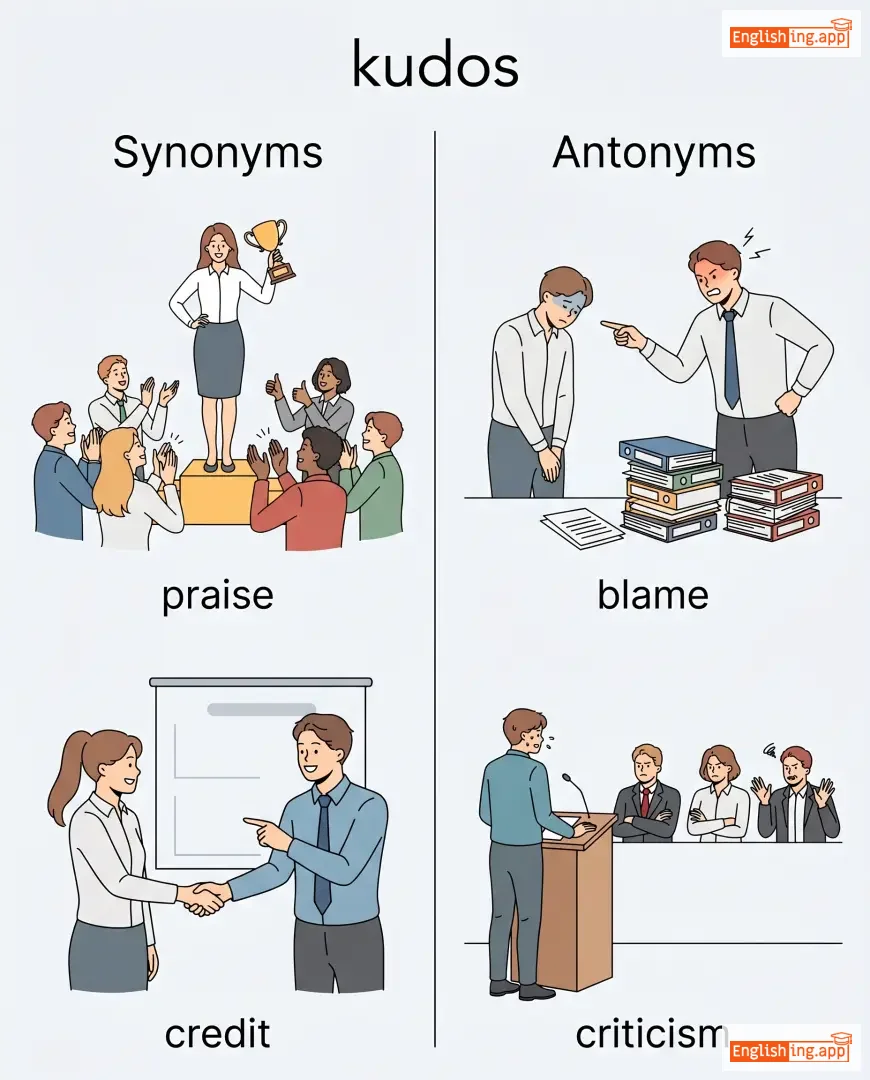
praise, credit, recognition, acclaim, honor
••••••
|
blame, criticism, disapproval
••••••
|
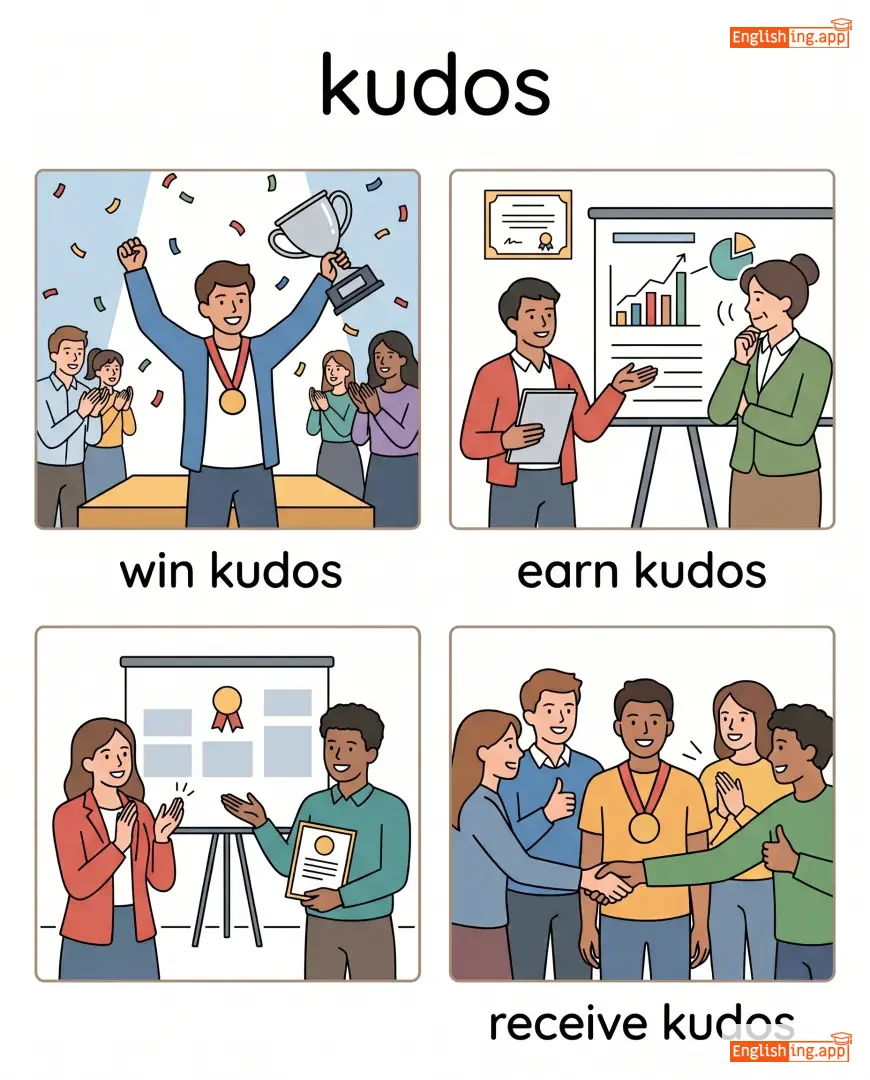
win kudos, earn kudos, receive kudos, kudos from peers
••••••
|
Kudos 就是因成就而获得的赞扬。
••••••
|
|
⚖️
••••••
|
/ˈleɪ.baɪl/ or /ˈlæb.aɪl/
adjective
(莱比尔)
••••••
|
|
不稳定的
bù wěndìng de
••••••
|
- •••••• | - •••••• | - •••••• | - •••••• |
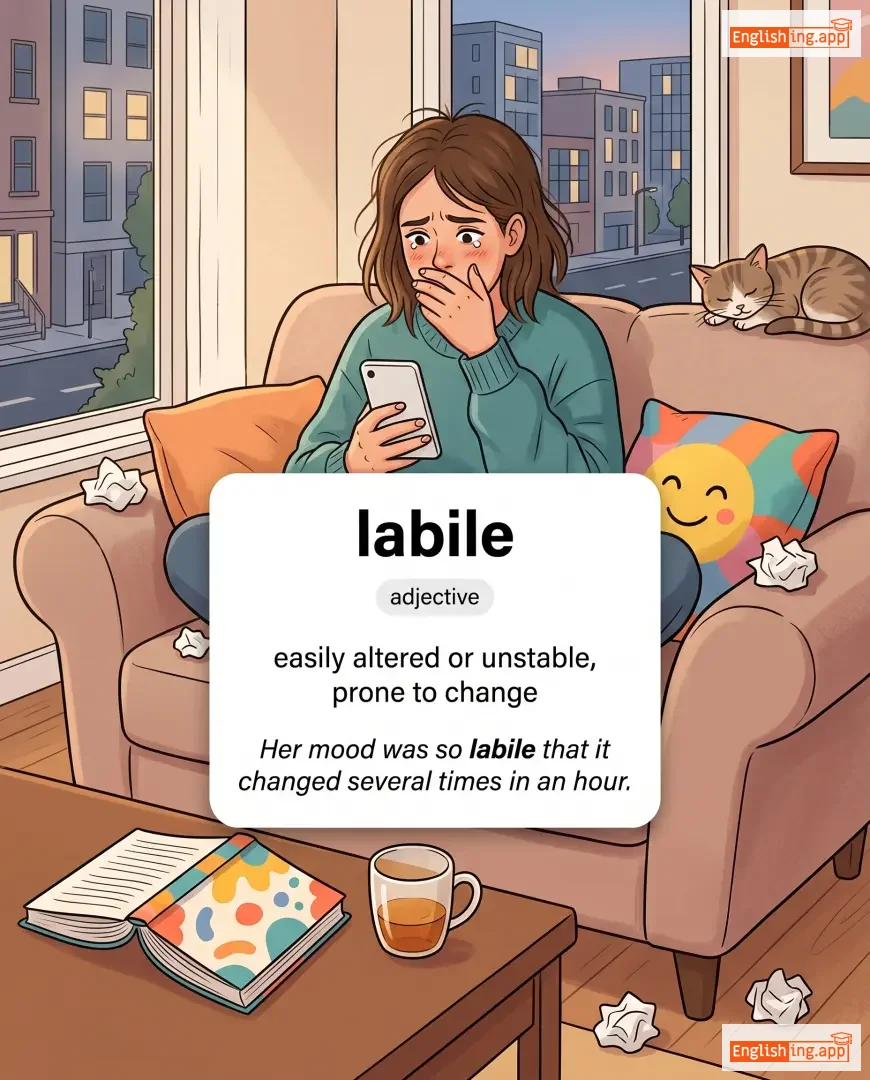
easily altered or unstable; prone to change
••••••
|
Her mood was so labile that it changed several times in an hour. |
她的情绪如此不稳定,在一小时内改变了几次。
Tā de qíngxù rú cǐ bù wěndìng, zài yī xiǎoshí nèi gǎibiànle jǐ cì.
••••••
|
- •••••• | - •••••• | - •••••• |
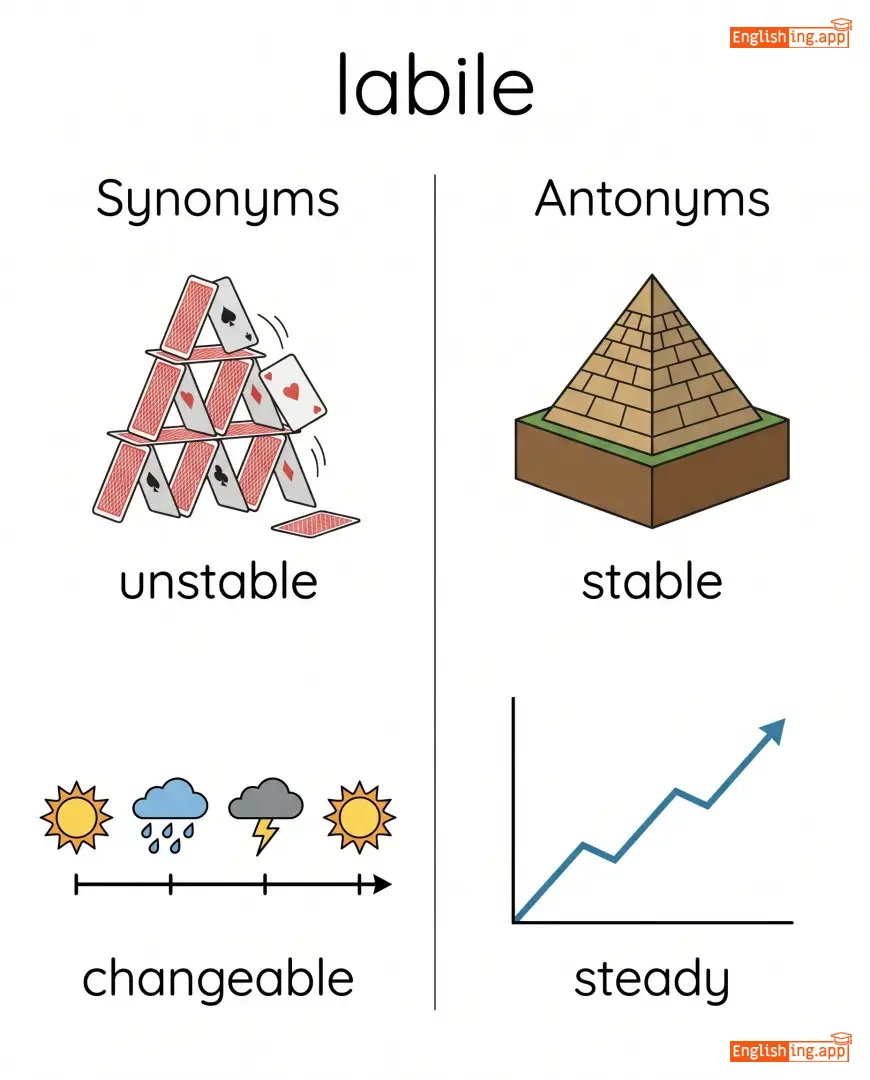
unstable, changeable, volatile, fluctuating
••••••
|
stable, steady
••••••
|
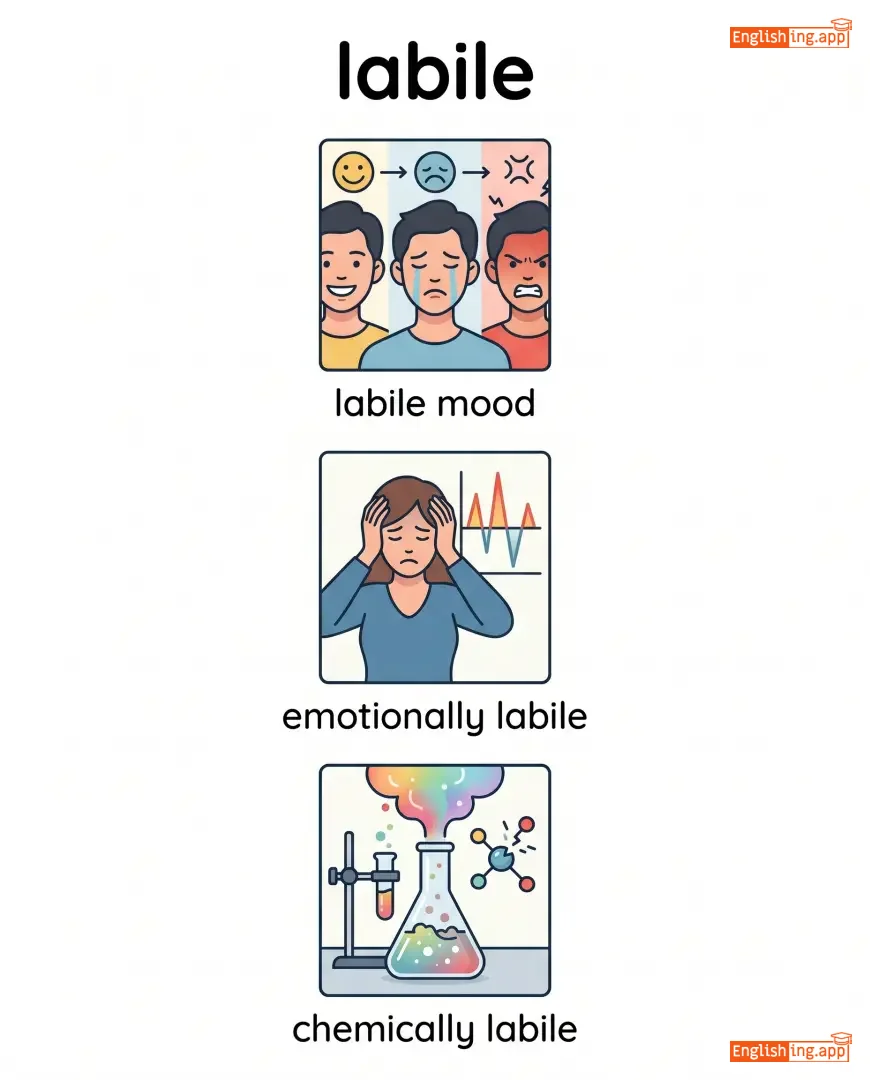
labile mood, emotionally labile, chemically labile
••••••
|
Labile意味着 'liable to change' — 就像实验室的结果一样不稳定。
••••••
|
|
🤐
••••••
|
/ləˈkɒnɪk/
adjective
(lèi kè ní kè)
••••••
|

|
简洁的
jianjie de
••••••
|
- •••••• | - •••••• | - •••••• | - •••••• |
using very few words; concise to the point of seeming rude or mysterious
••••••
|
His laconic reply ended the conversation quickly. |
他简洁的回答迅速结束了谈话。
Ta jianjie de huida xunsu jieshu le tanhua.
••••••
|
- •••••• | - •••••• | - •••••• |
brief, concise, terse, succinct
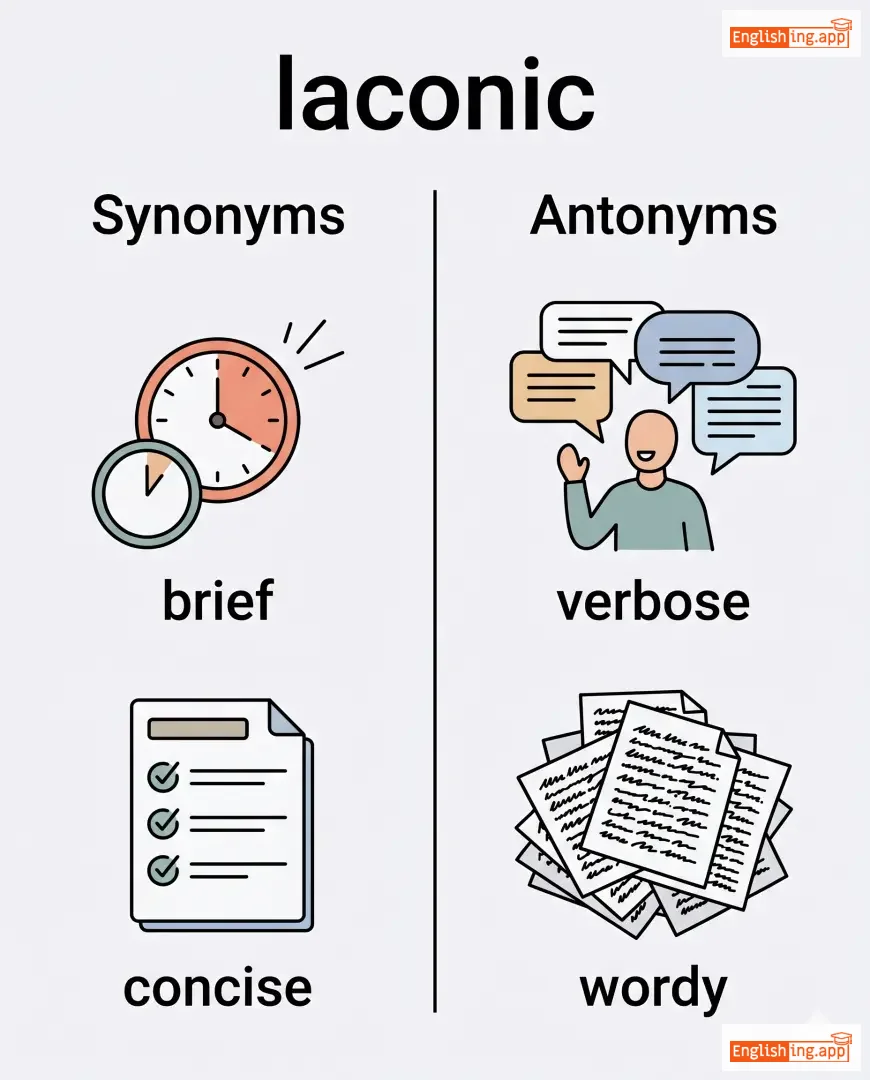
••••••
|
verbose, wordy, talkative
••••••
|
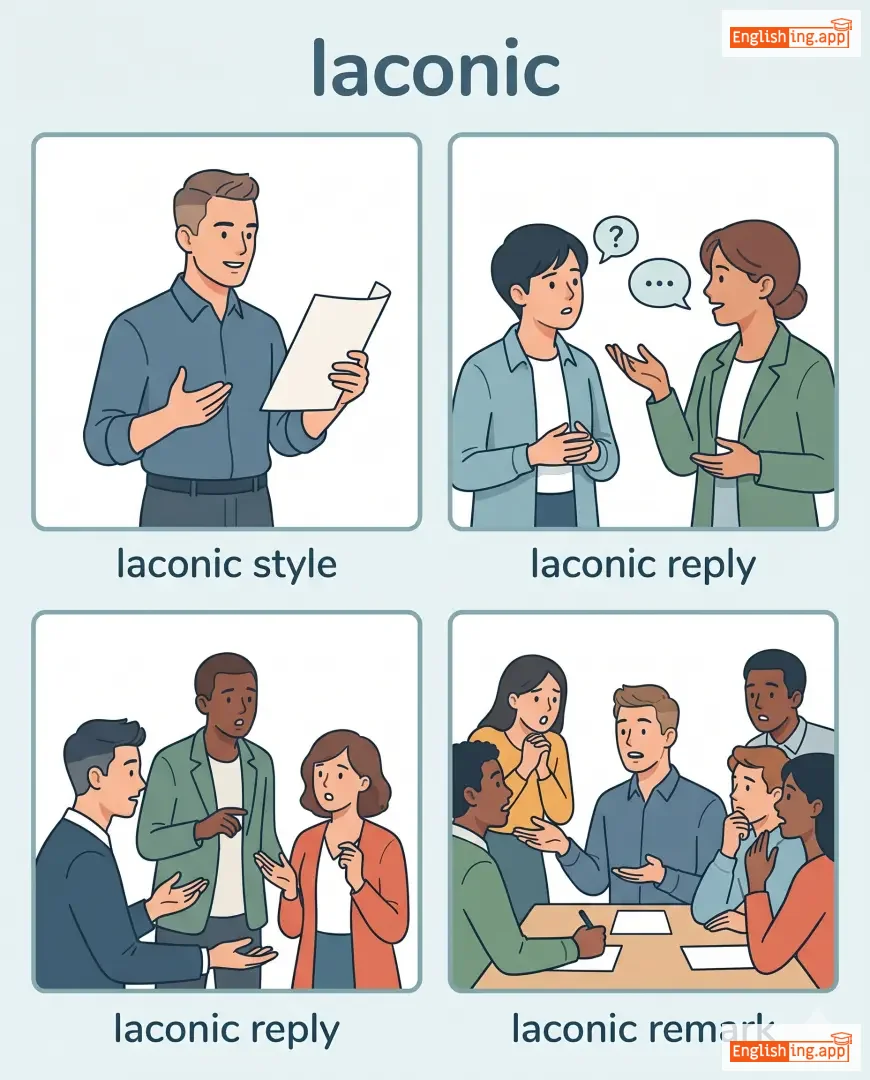
laconic style, laconic reply, laconic remark
••••••
|
简洁的意思是说得少,但意义深远。
••••••
|
|
💢
••••••
|
/læmˈbeɪst/
verb
(兰贝斯特)
••••••
|
|
严厉批评
yánlì pīpíng
••••••
|
lambasted
兰贝斯特德
••••••
|
lambasted
兰贝斯特德
••••••
|
lambastes
兰贝斯特斯
••••••
|
lambasting
兰贝斯廷
••••••
|
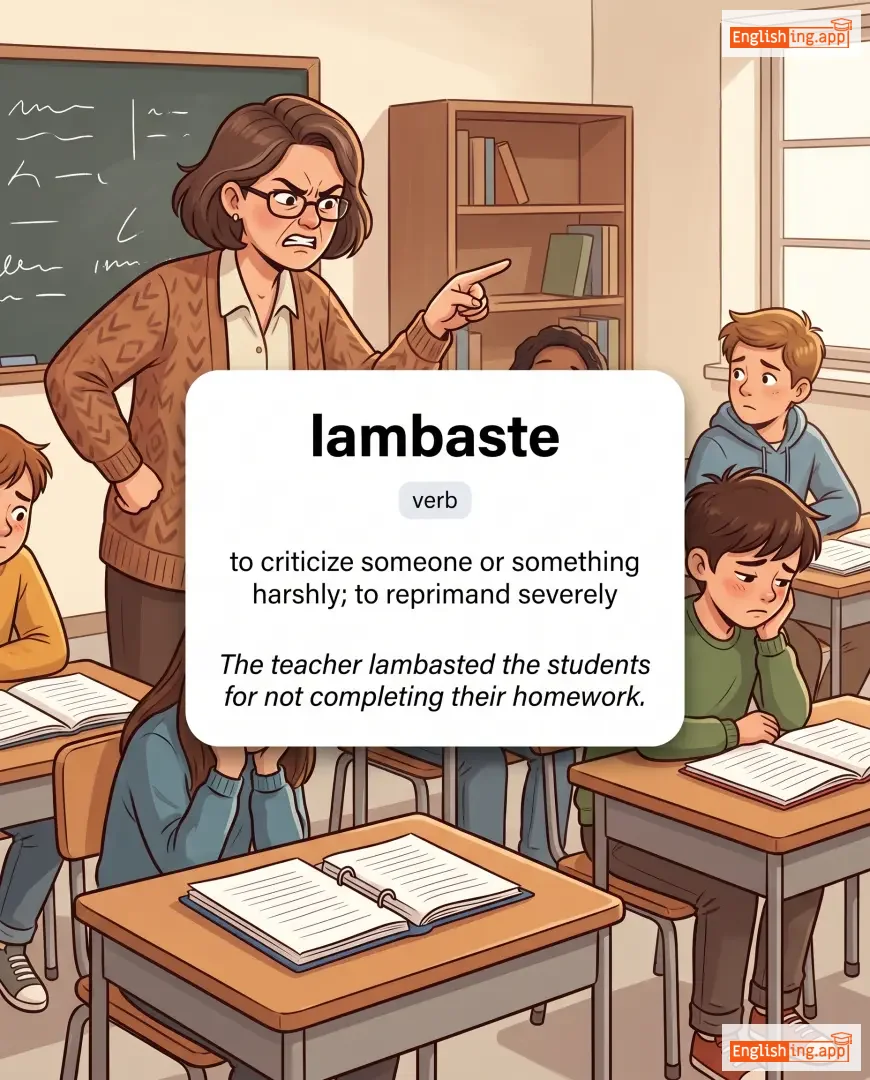
to criticize someone or something harshly; to reprimand severely
••••••
|
The teacher lambasted the students for not completing their homework.
老师因学生未完成作业而严厉批评了他们。
••••••
|
老师因学生未完成作业而严厉批评了他们。
Lǎoshī yīn xuéshēng wèi wánchéng zuòyè ér yánlì pīpíngle tāmen.
••••••
|
- •••••• | - •••••• | - •••••• |
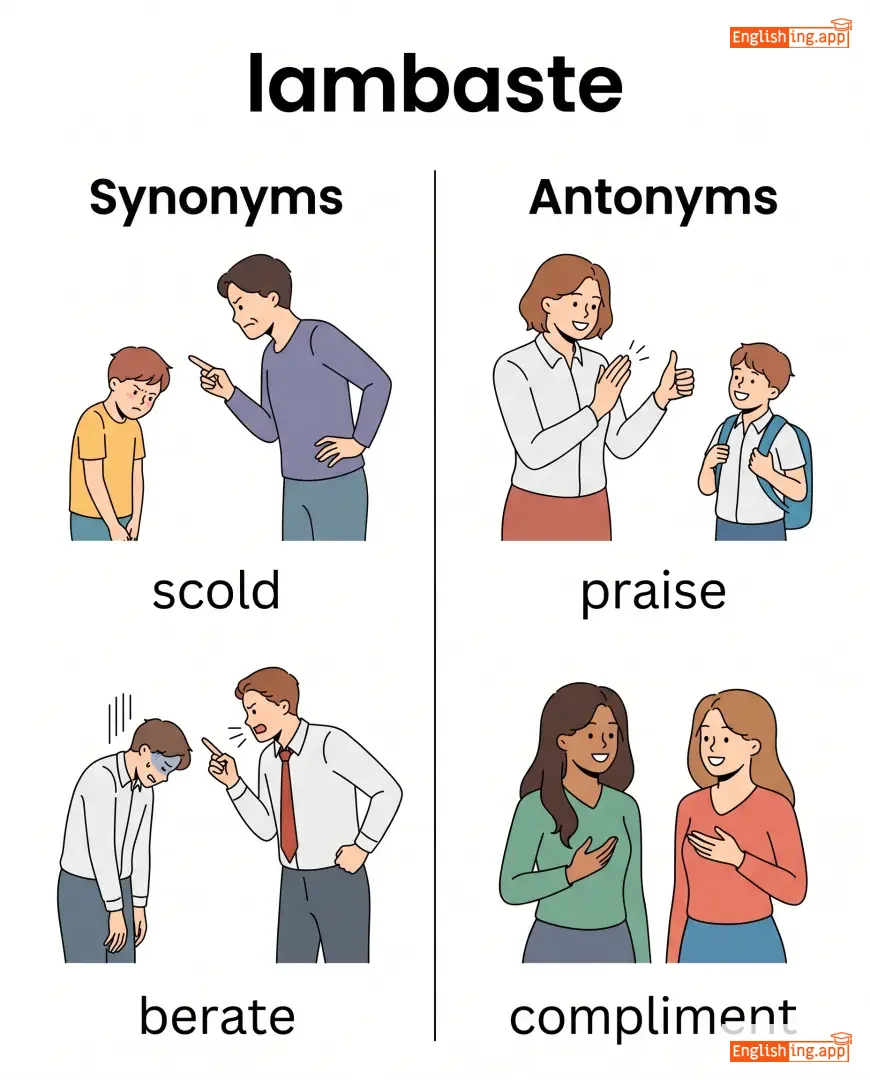
scold, berate, chastise, rebuke, criticize
••••••
|
praise, compliment, applaud
••••••
|
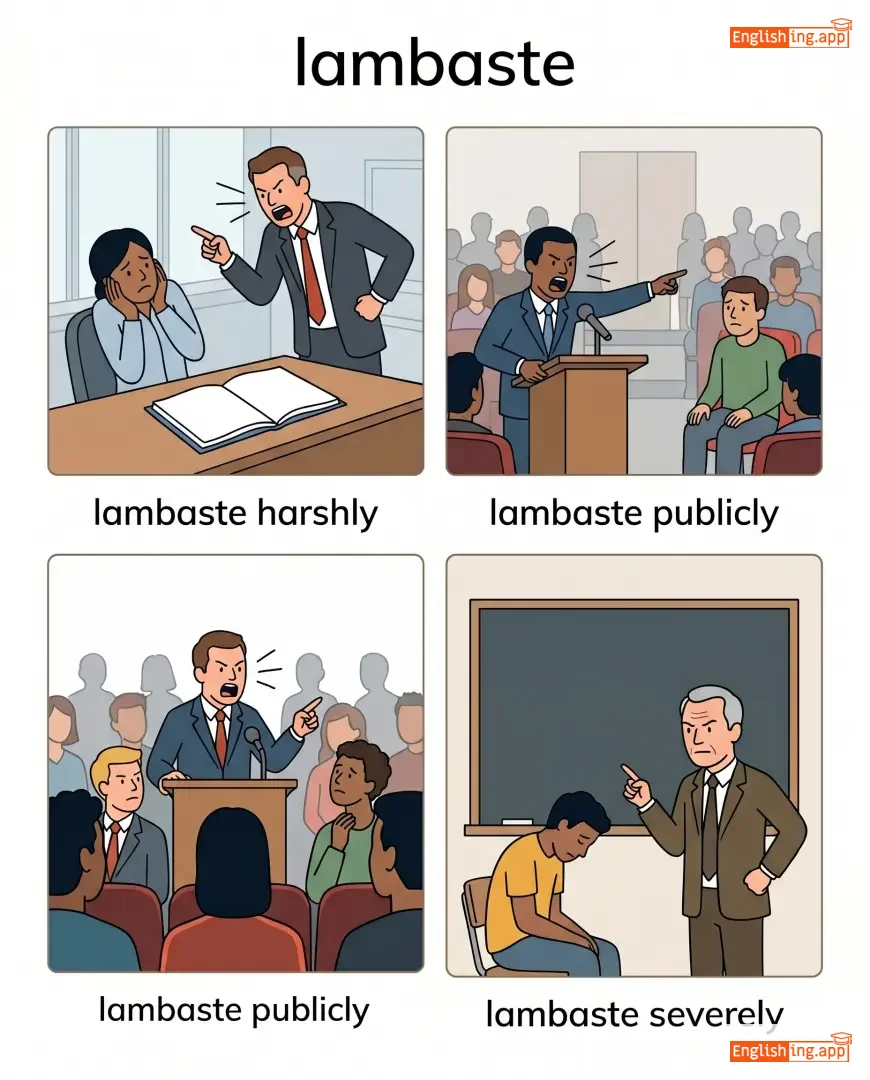
lambaste harshly, lambaste publicly, lambaste severely
••••••
|
Lambaste: 兰 (lan) 打, 贝斯特 (baste) 强烈 - lambaste 意味着强烈批评
••••••
|

