|
🌹
••••••
|
/ˈɪntɪmət/
adjective
(íntimèt)
••••••
|
••••••
|
íntimo
intimo
••••••
|
-
••••••
|
-
••••••
|
-
••••••
|
-
••••••
|
Closely acquainted; very familiar and personal.
|
They shared an intimate dinner by candlelight.
••••••
|
Compartieron una cena íntima a la luz de las velas.
Compartieron una cena intima a la luz de las velas.
••••••
|
••••••
|
A deep or detailed understanding of something.
|
conocimiento íntimo
conocimiento intimo
••••••
|
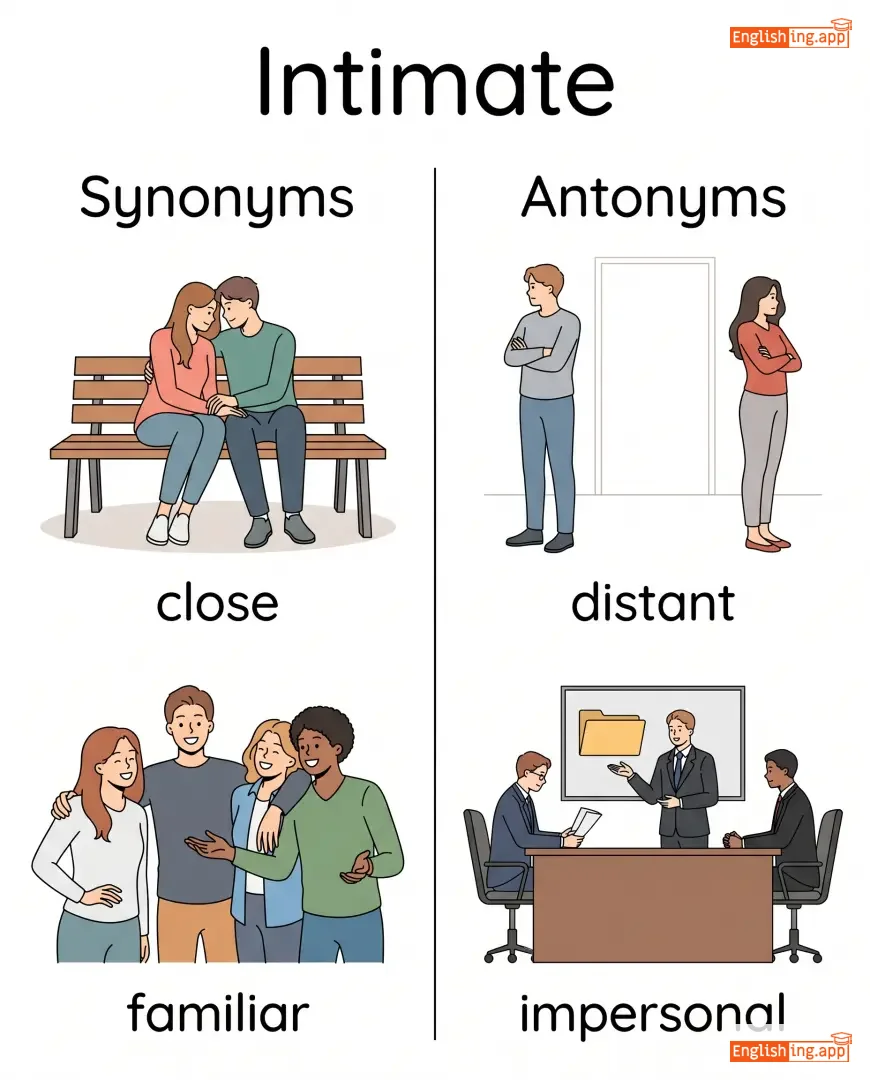
close, familiar, personal, confidential, warm
|
distant, impersonal, formal
|
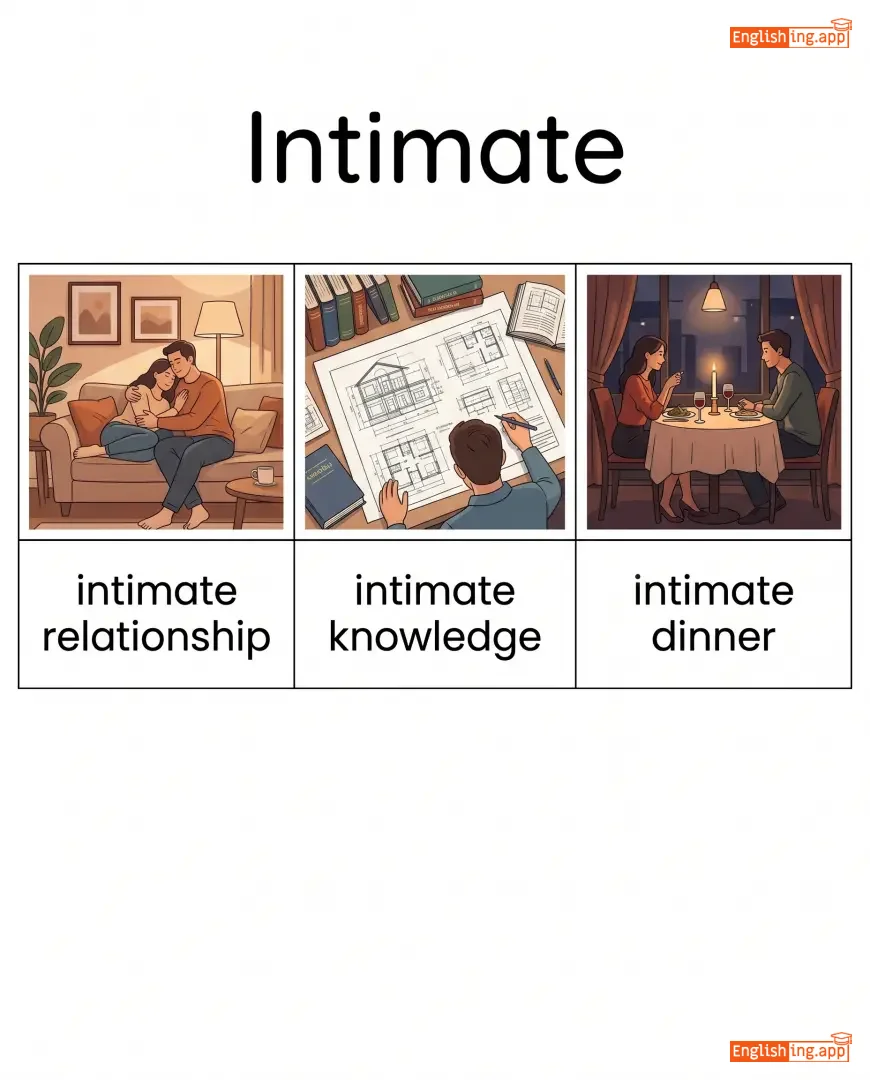
intimate relationship, intimate knowledge, intimate dinner, intimate friend
|
Intimate = In te mate! – Un amigo cercano es alguien con quien puedes compartir cenas y secretos.
••••••
|
|
🪨
••••••
|
/ɪnˈtræk.tə.bəl/
adjective
(intráktable)
••••••
|
••••••
|
incontrolable
incontrolable
••••••
|
-
••••••
|
-
••••••
|
-
••••••
|
-
••••••
|
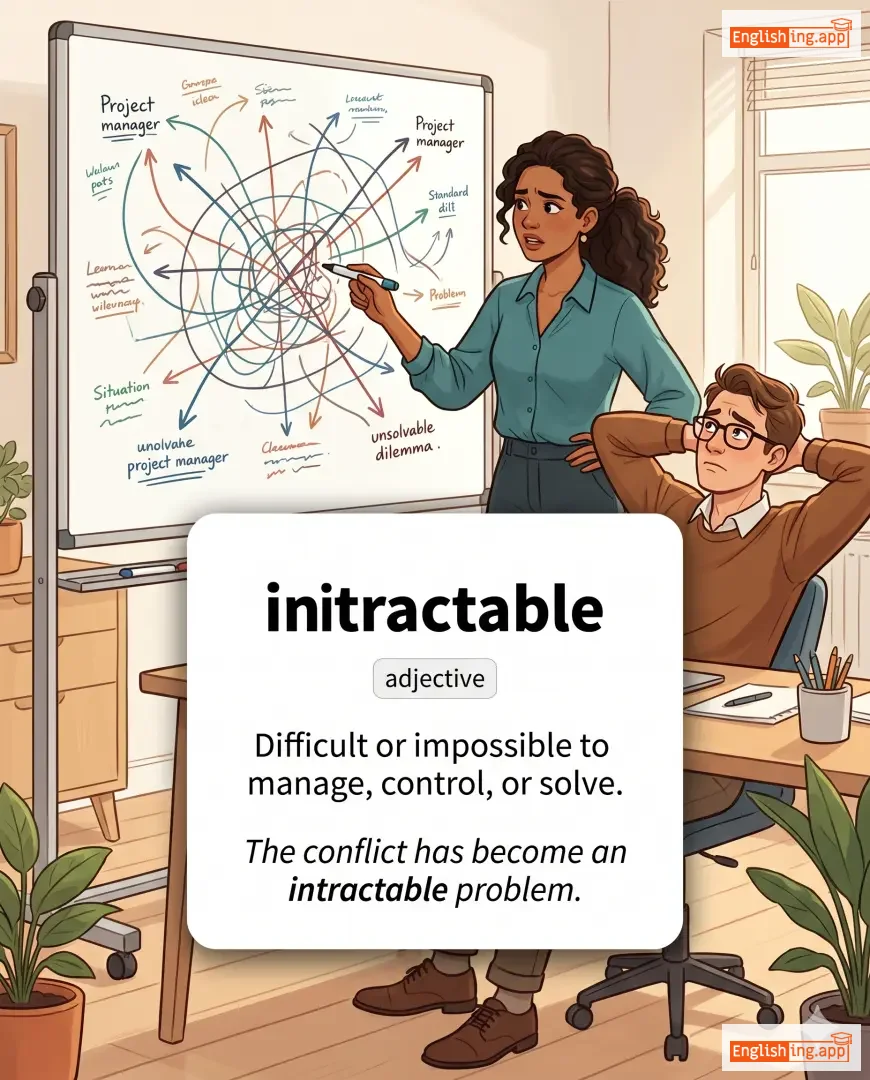
Difficult or impossible to manage, control, or solve.
|
The conflict has become an intractable problem.
••••••
|
El conflicto se ha convertido en un problema incontrolable.
El conflicto se ha convertido en un problema incontrolable.
••••••
|
-
••••••
|
-
••••••
|
-
••••••
|
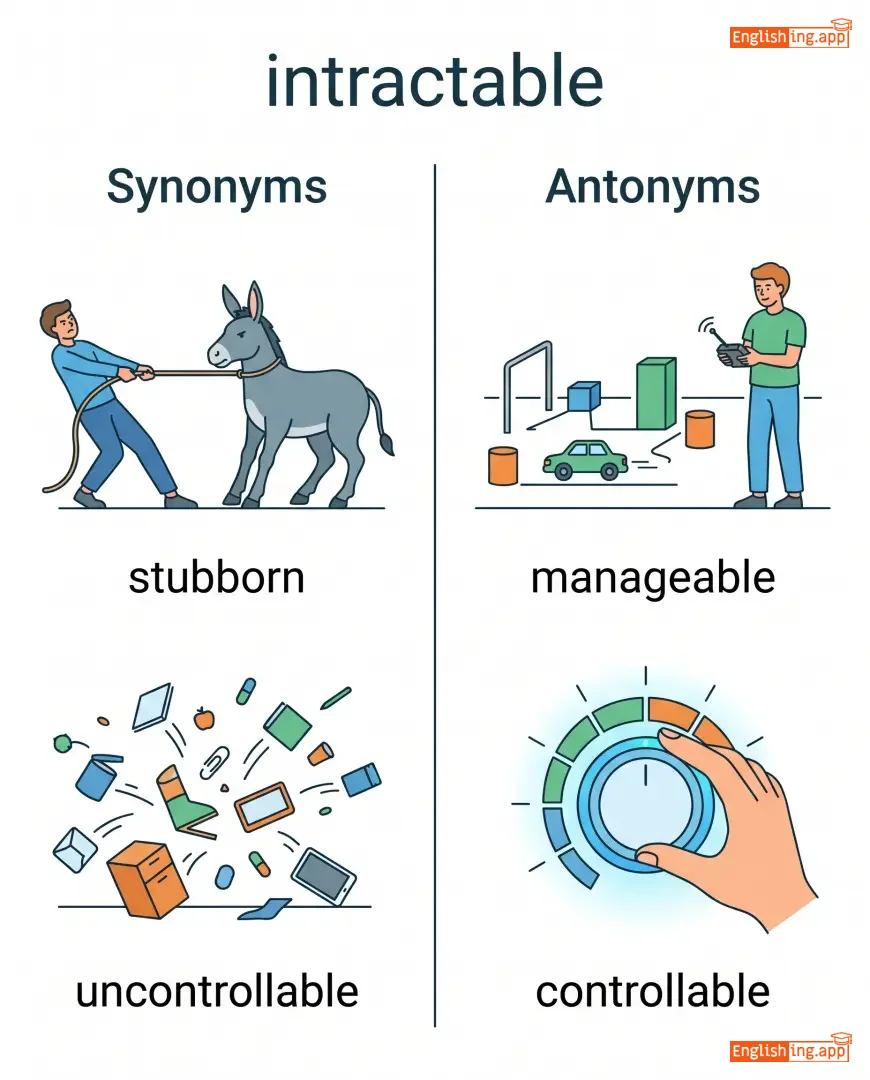
stubborn, uncontrollable, unmanageable, obstinate
|
manageable, controllable, flexible
|
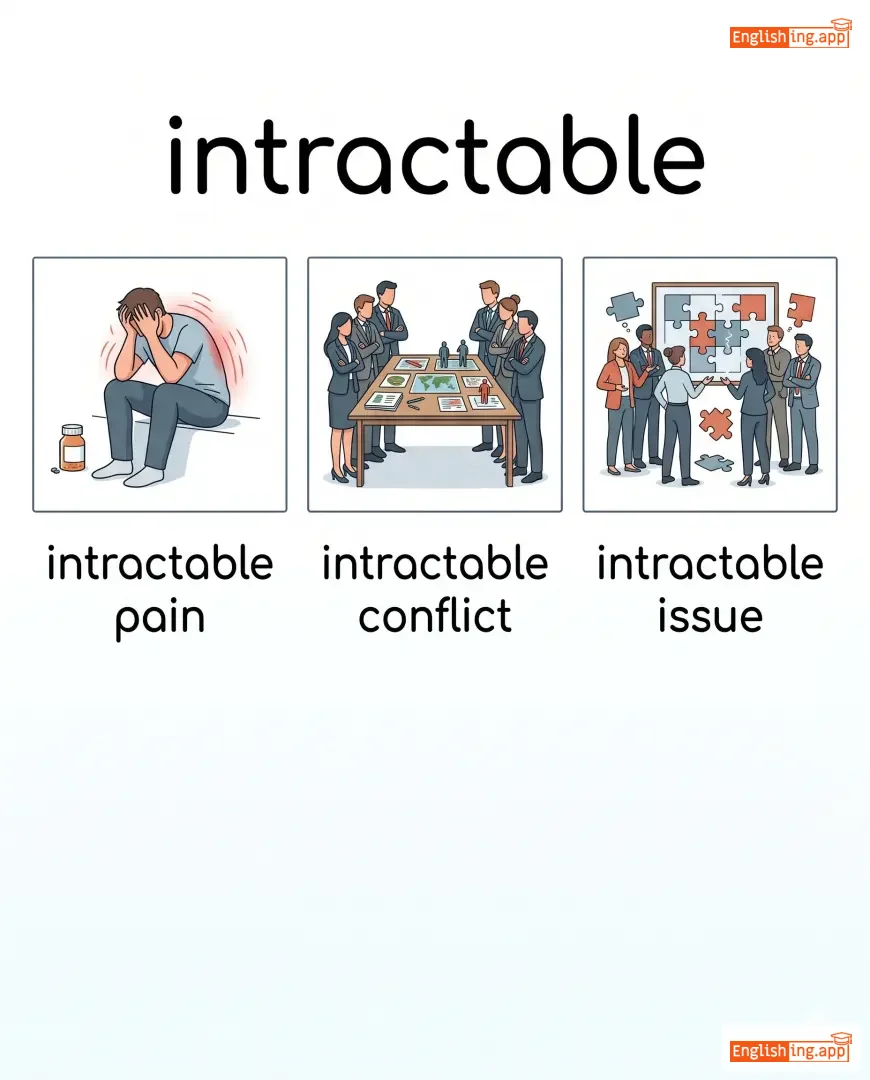
intractable pain, intractable conflict, intractable issue, intractable disease
|
In + Track (en la vía) + able → Algo que no puede ser controlado → incontrolable
••••••
|
|
🛑
••••••
|
/ɪnˈtræn.sɪ.dʒəns/
noun
(intransigente)
••••••
|
••••••
|
intransigencia
intransigencia
••••••
|
-
••••••
|
-
••••••
|
-
••••••
|
-
••••••
|
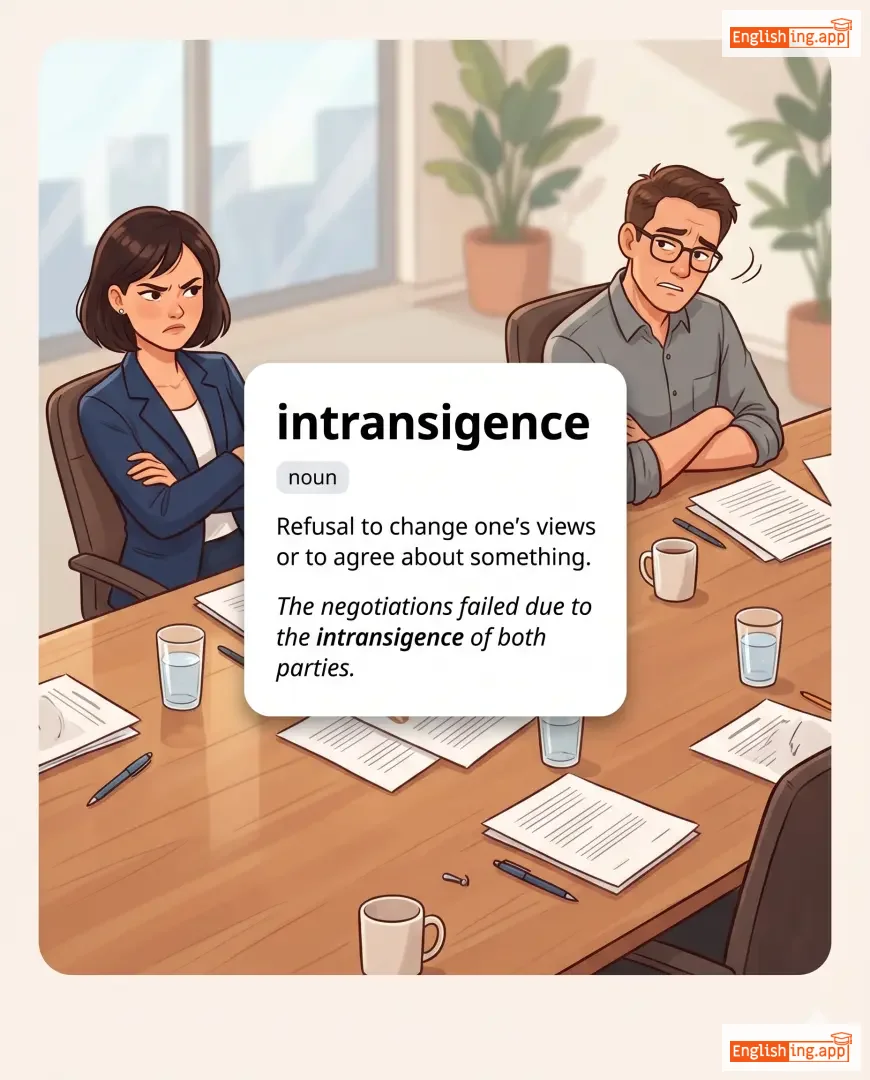
Refusal to change one's views or to agree about something.
|
The negotiations failed due to the intransigence of both parties.
••••••
|
Las negociaciones fracasaron debido a la intransigencia de ambas partes.
Las negociaciones fracasaron debido a la intransigencia de ambas partes.
••••••
|
-
••••••
|
-
••••••
|
-
••••••
|
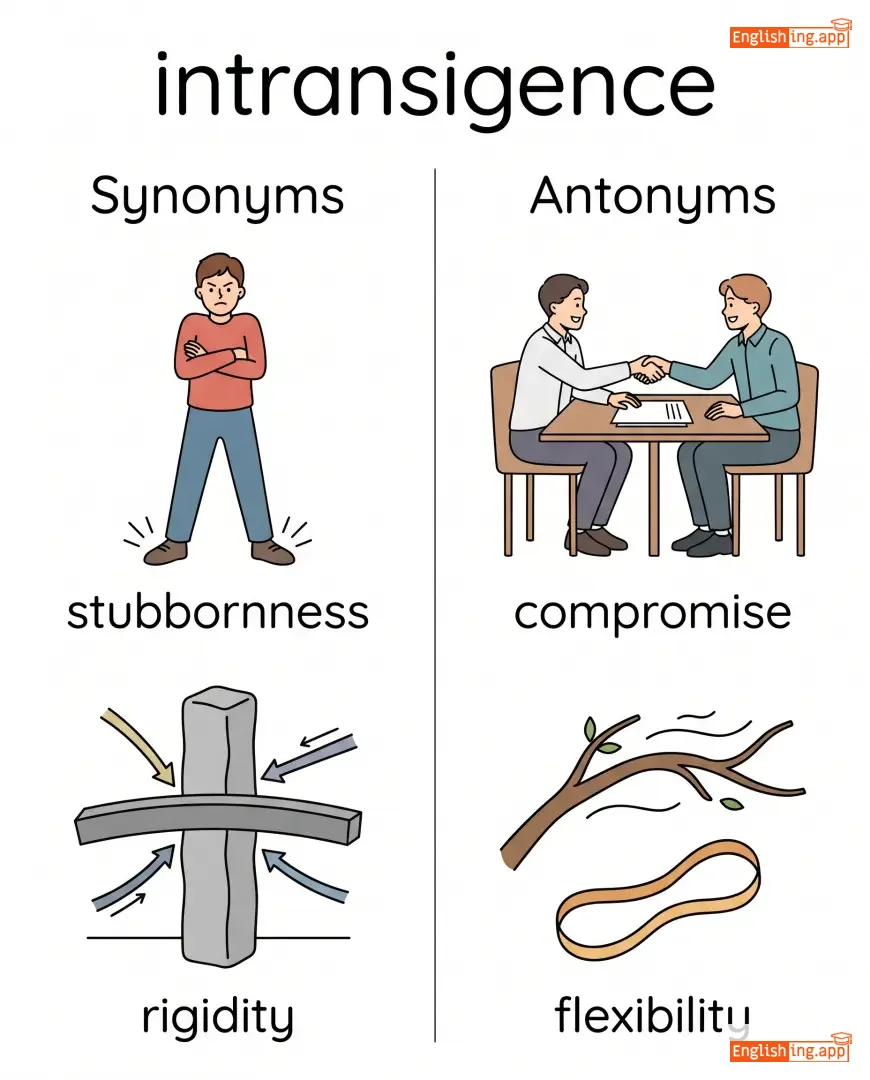
stubbornness, rigidity, inflexibility, obstinacy
|
compromise, flexibility, willingness
|
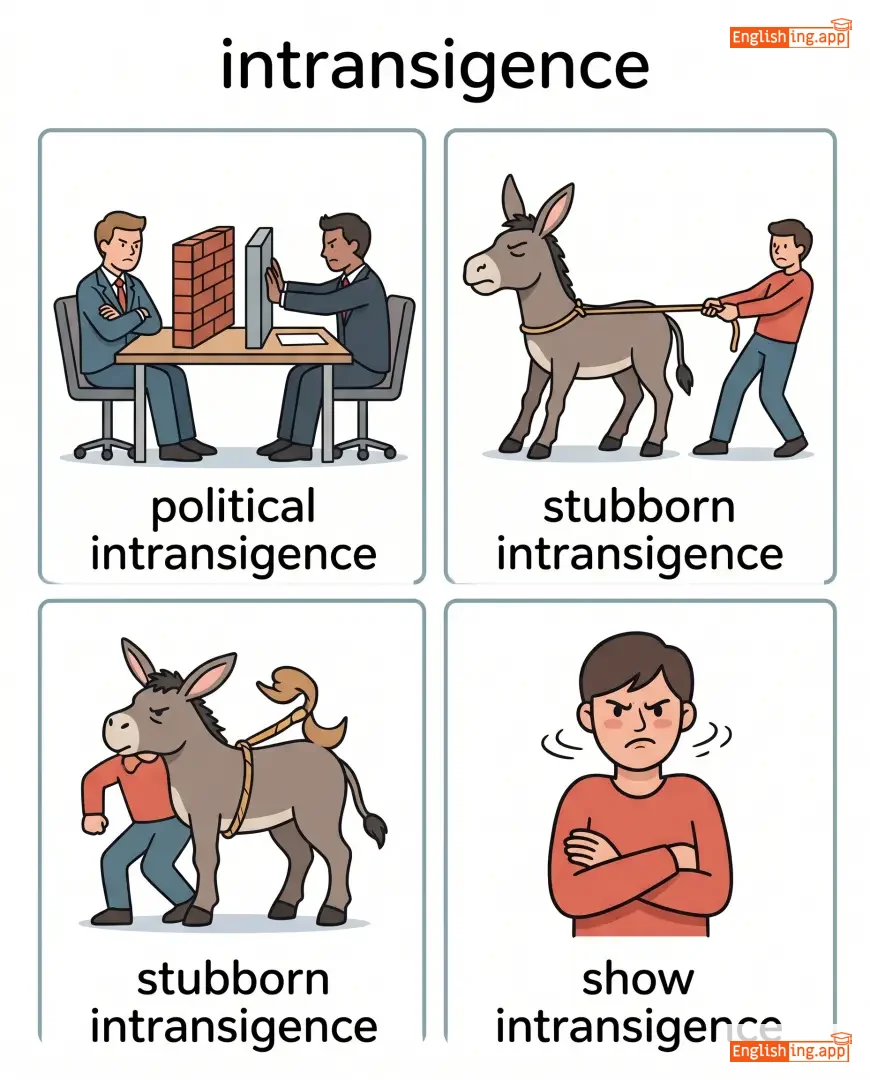
political intransigence, stubborn intransigence, show intransigence, display intransigence
|
In + Transit no → significa no moverse → no cambia → intransigencia
••••••
|
|
🤔
••••••
|
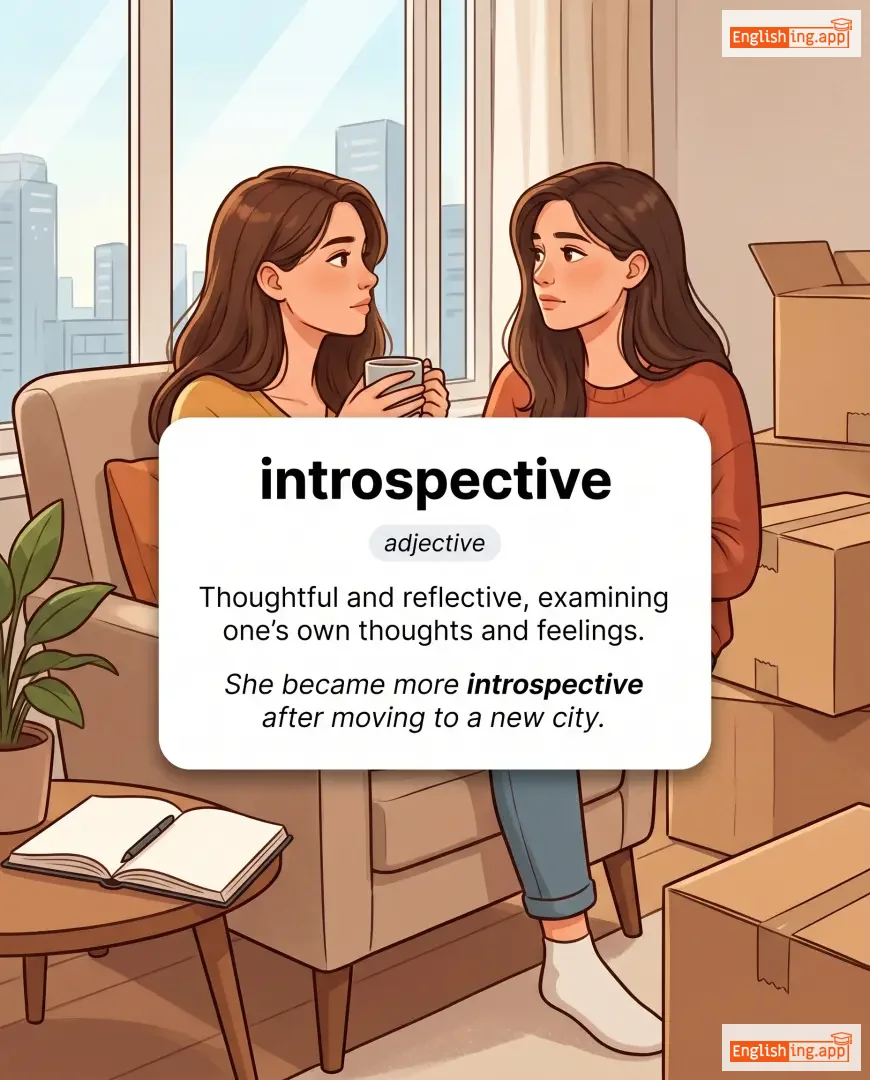
/ˌɪn.trəˈspɛk.tɪv/
adjective
(introspéctivo)
••••••
|
••••••
|
introspectivo
introspectivo
••••••
|
-
••••••
|
-
••••••
|
-
••••••
|
-
••••••
|
Thoughtful and reflective, examining one's own thoughts and feelings.
|
She became more introspective after moving to a new city.
••••••
|
Se volvió más introspectiva después de mudarse a una nueva ciudad.
Se volvió más introspectiva después de mudarse a una nueva ciudad.
••••••
|
-
••••••
|
-
••••••
|
-
••••••
|
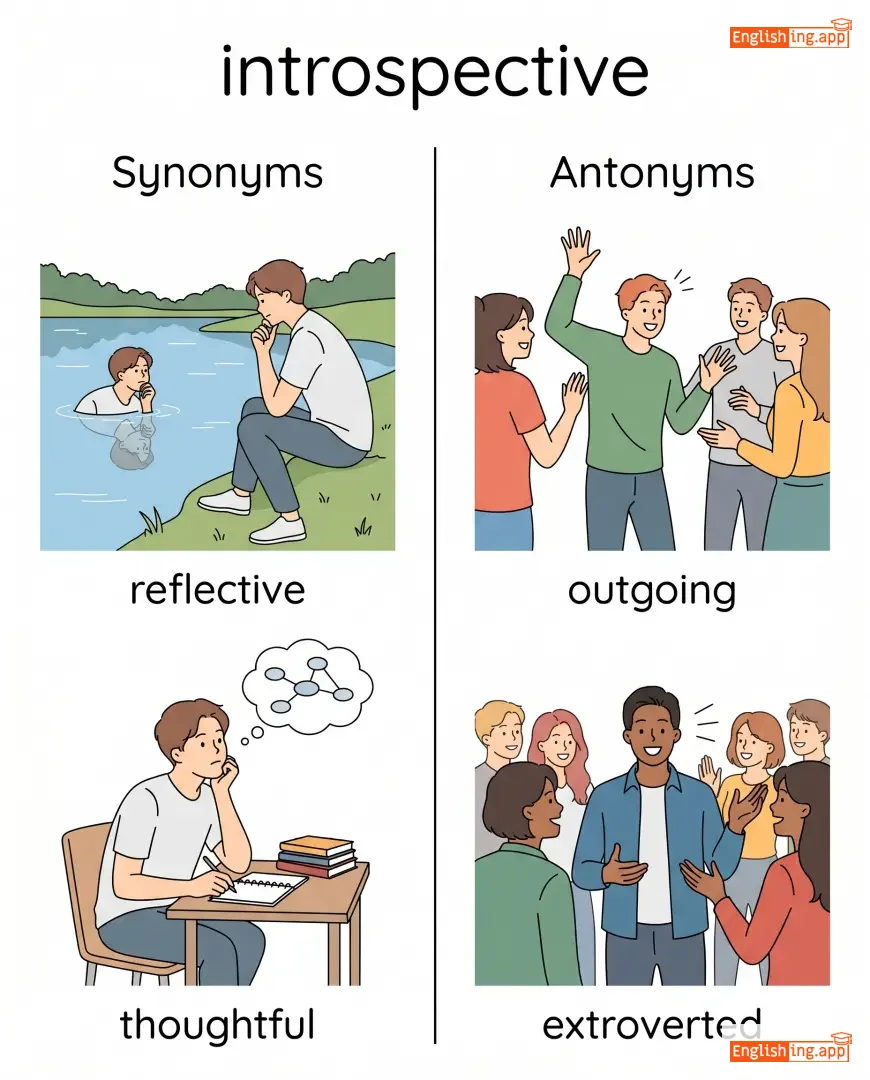
reflective, thoughtful, meditative, contemplative, pensive
|
outgoing, extroverted, careless
|
introspective mood, introspective nature, deeply introspective, become introspective
|
Intro significa dentro, por lo que introspectivo significa pensar en tu interior.
••••••
|
|
🌊
••••••
|
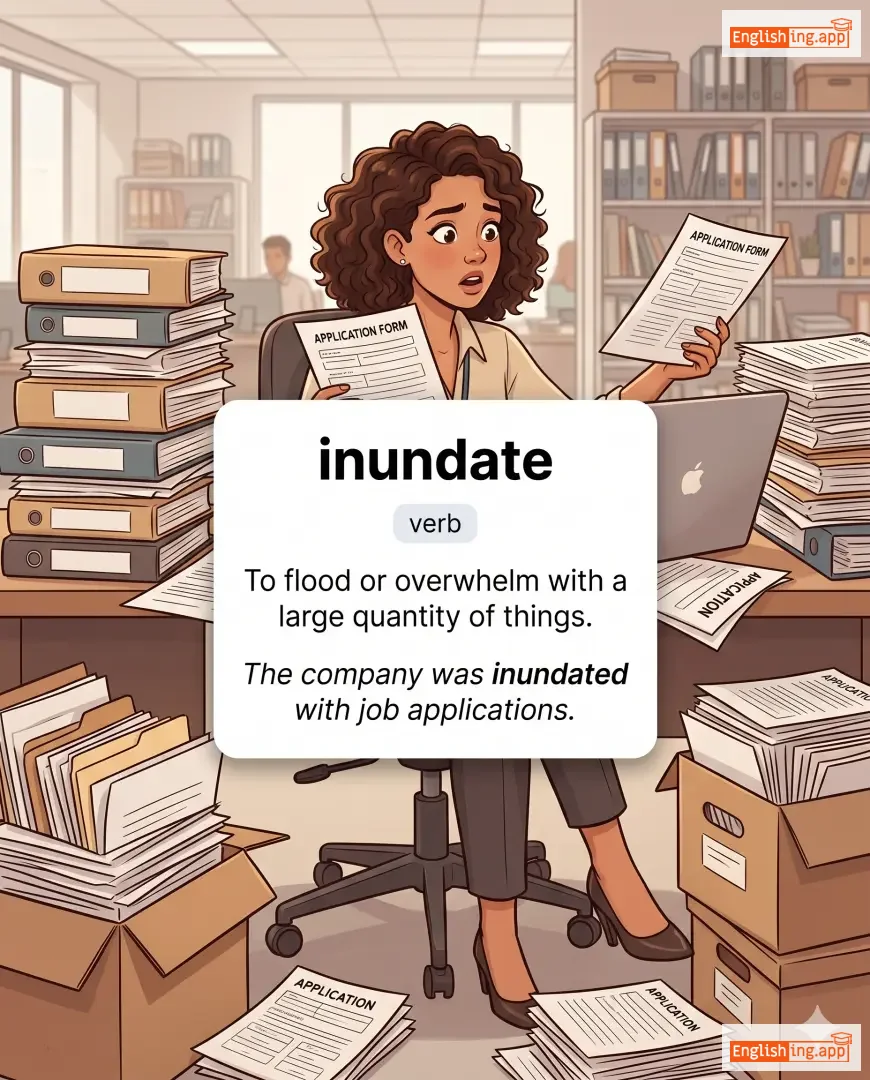
/ˈɪn.ʌn.deɪt/
verb
(ínundeit)
••••••
|
••••••
|
inundar / desbordar
inundar / desbordar
••••••
|
ínundéitid
••••••
|
ínundéitid
••••••
|
ínundéits
••••••
|
ínundéiting
••••••
|
To flood or overwhelm with a large quantity of things.
|
The company was inundated with job applications.
La compañía fue inundada con solicitudes de empleo.
••••••
|
La empresa fue inundada con solicitudes de empleo.
La empresa fue inundada con solicitudes de empleo.
••••••
|
inundado con trabajo
••••••
|
Overwhelmed by too much work.
|
abrumado con trabajo
abrumado con trabajo
••••••
|
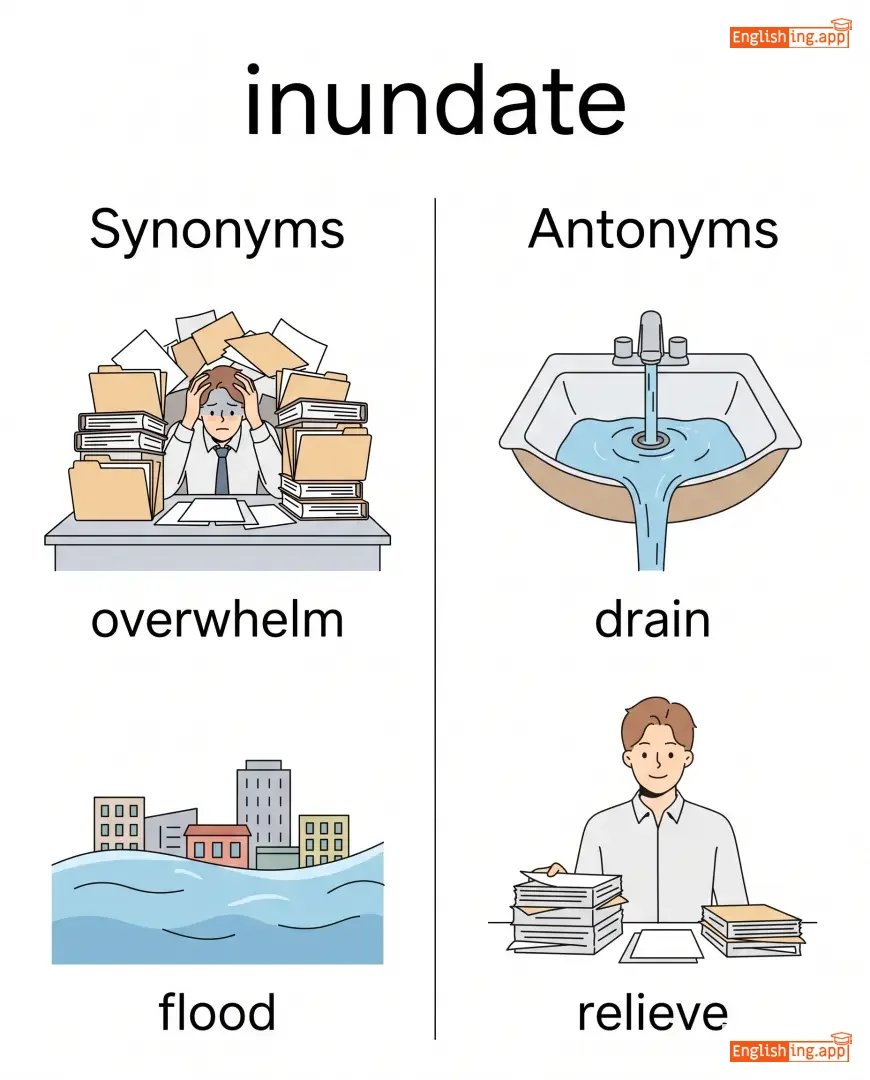
overwhelm, flood, swamp, engulf, deluge
|
••••••
|
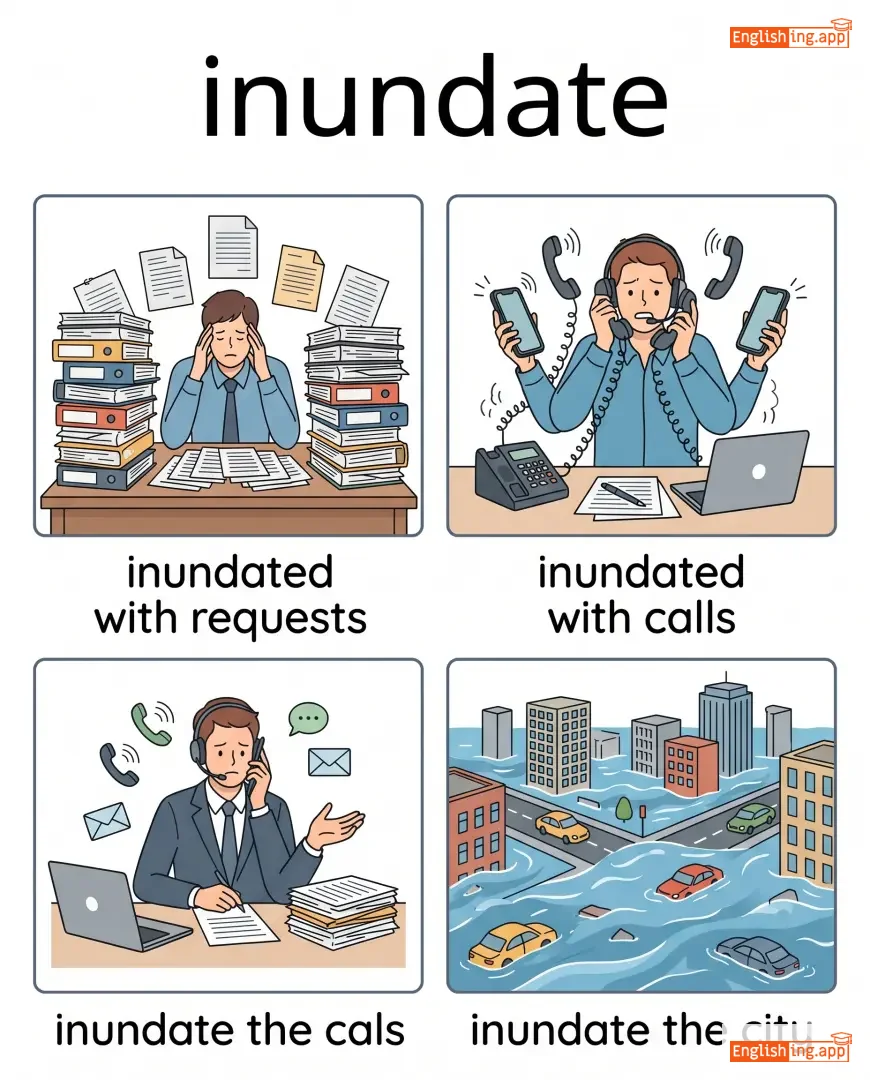
inundated with requests, inundated with calls, inundate the city, inundated by problems
|
In UN DATE significa inundar, inundate es inundar en español.
••••••
|
|
🛡️
••••••
|
/ɪˈnjʊərd/
adjective
(iníurdo)
••••••
|
••••••
|
acostumbrado
acostumbrado
••••••
|
-
••••••
|
-
••••••
|
-
••••••
|
-
••••••
|
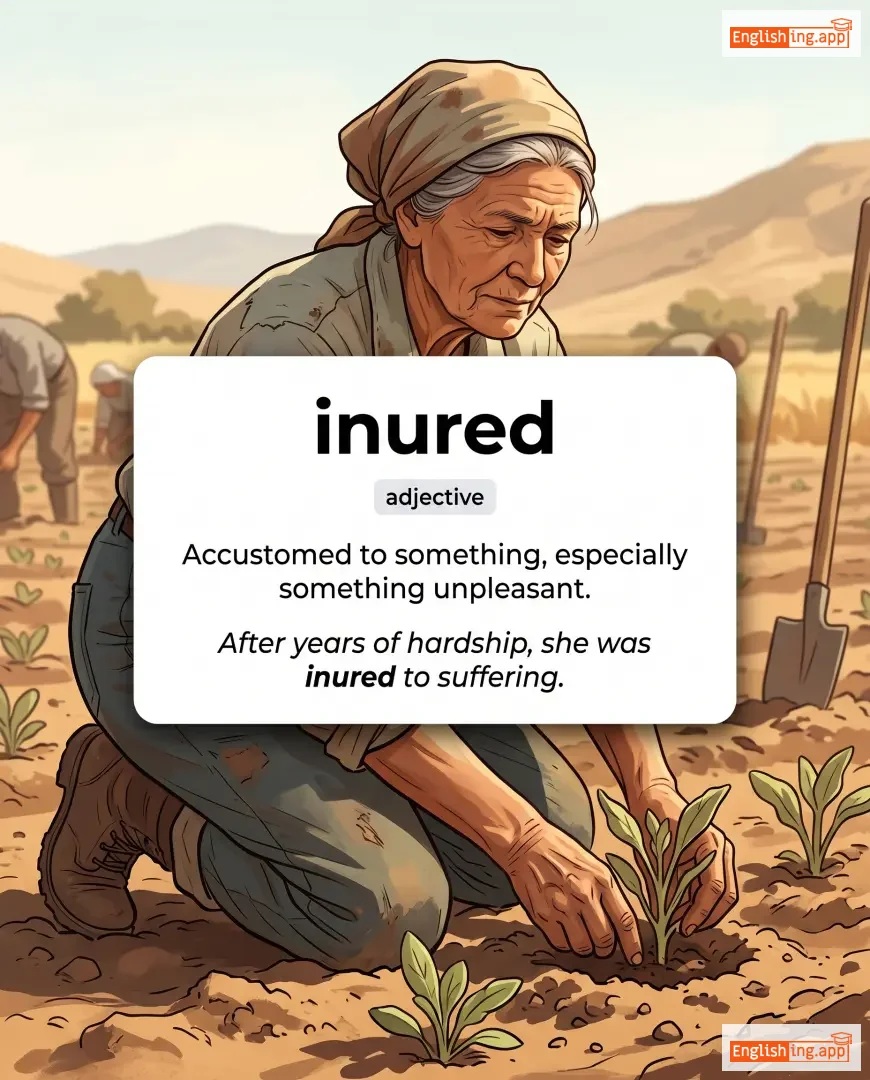
Accustomed to something, especially something unpleasant.
|
After years of hardship, she was inured to suffering.
••••••
|
Después de años de sufrimiento, ella estaba acostumbrada al dolor.
Después de años de sufrimiento, ella estaba acostumbrada al dolor.
••••••
|
-
••••••
|
-
••••••
|
-
••••••
|
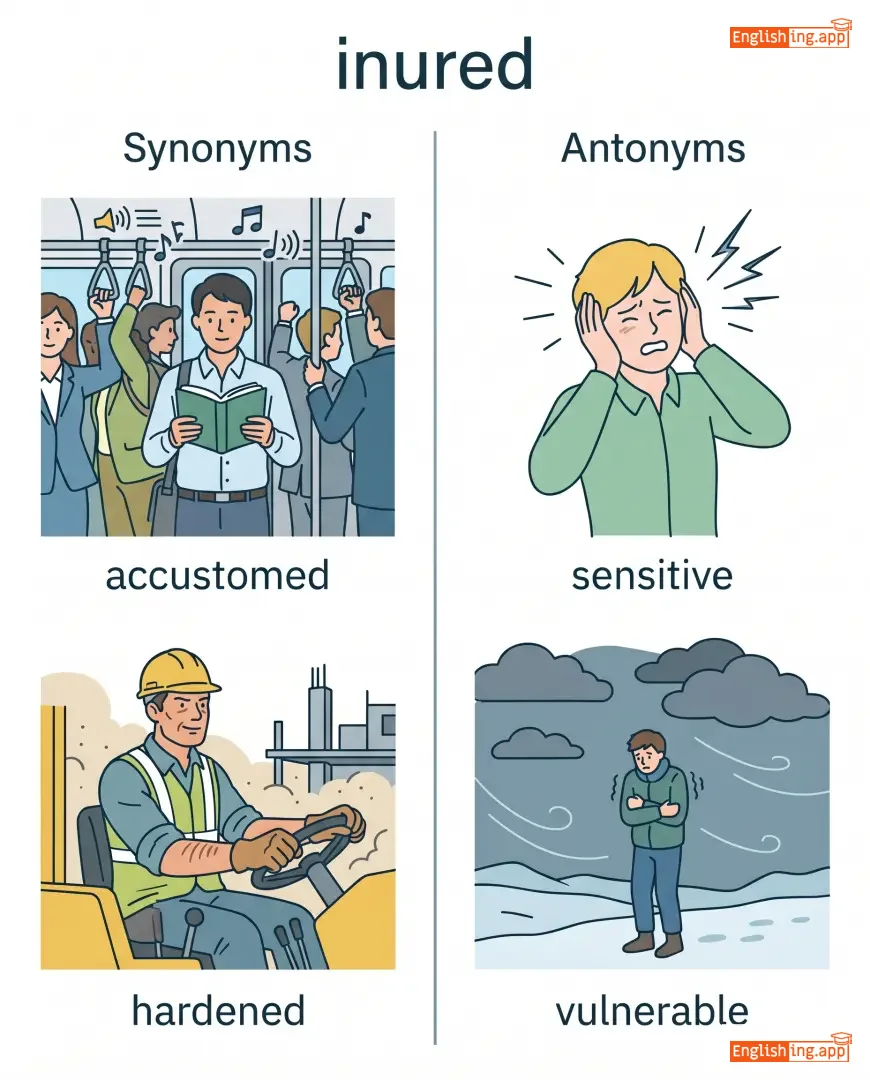
accustomed, hardened, desensitized, habituated, seasoned
|
sensitive, vulnerable, unaccustomed
|
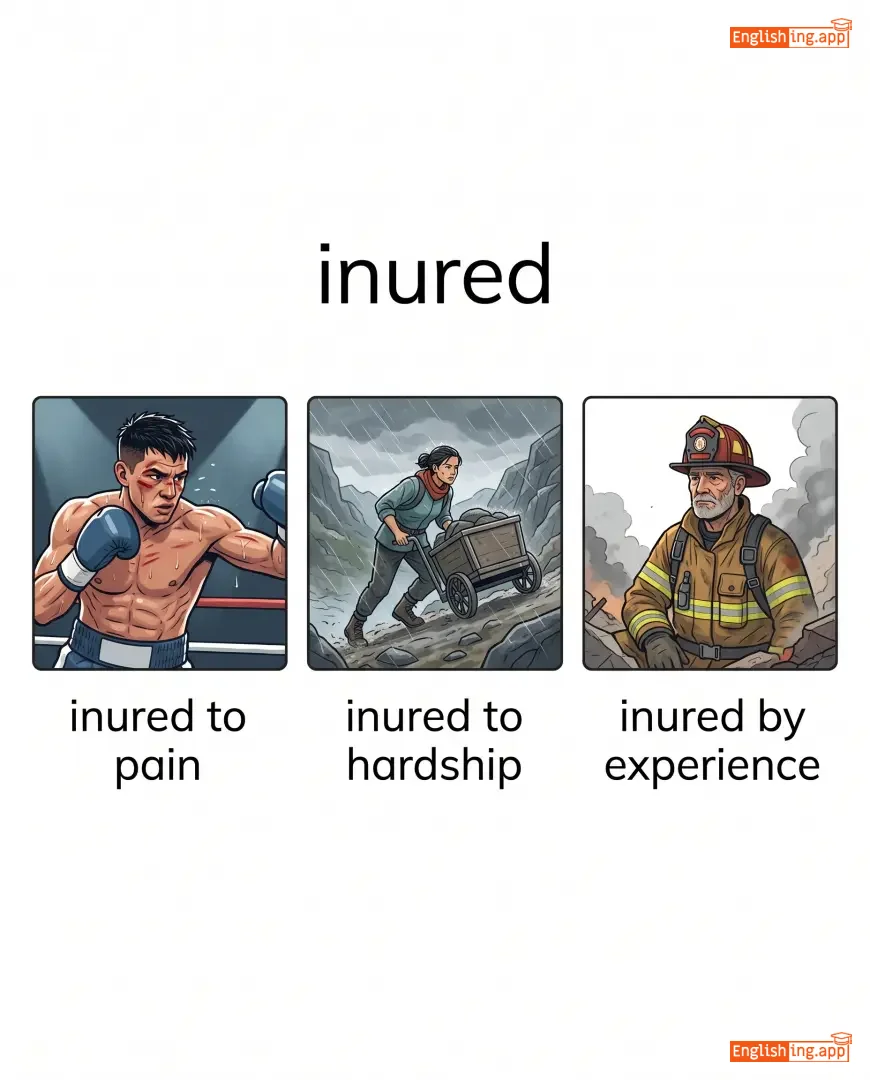
inured to pain, inured to hardship, inured by experience
|
Inured significa IN + URDO → acostumbrarse a algo después de mucho sufrimiento.
••••••
|
|
🗯️
••••••
|
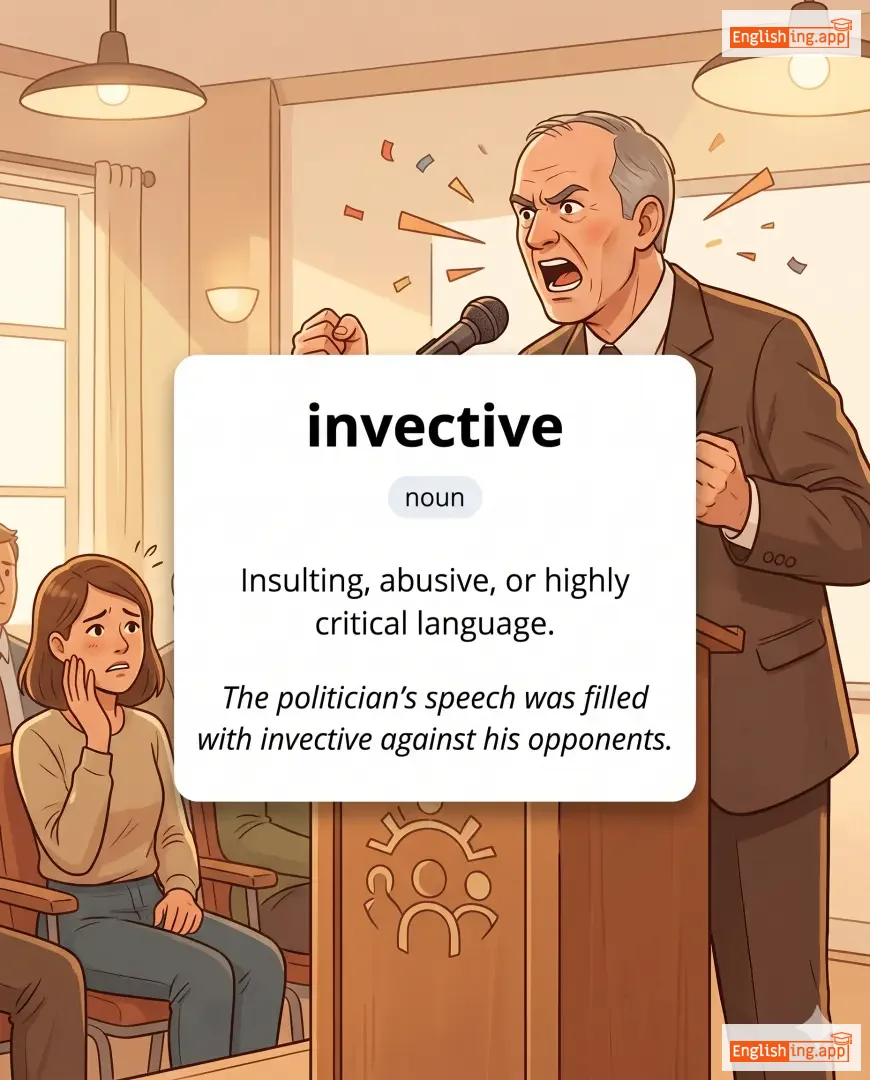
/ɪnˈvɛktɪv/
noun
(invéctiv)
••••••
|
••••••
|
lenguaje insultante
lenguaje insultante
••••••
|
-
••••••
|
-
••••••
|
-
••••••
|
-
••••••
|
Insulting, abusive, or highly critical language.
|
The politician’s speech was filled with invective against his opponents.
••••••
|
El discurso del político estaba lleno de invectivas contra sus oponentes.
El discurso del político estaba lleno de invectivas contra sus oponentes.
••••••
|
-
••••••
|
-
••••••
|
-
••••••
|
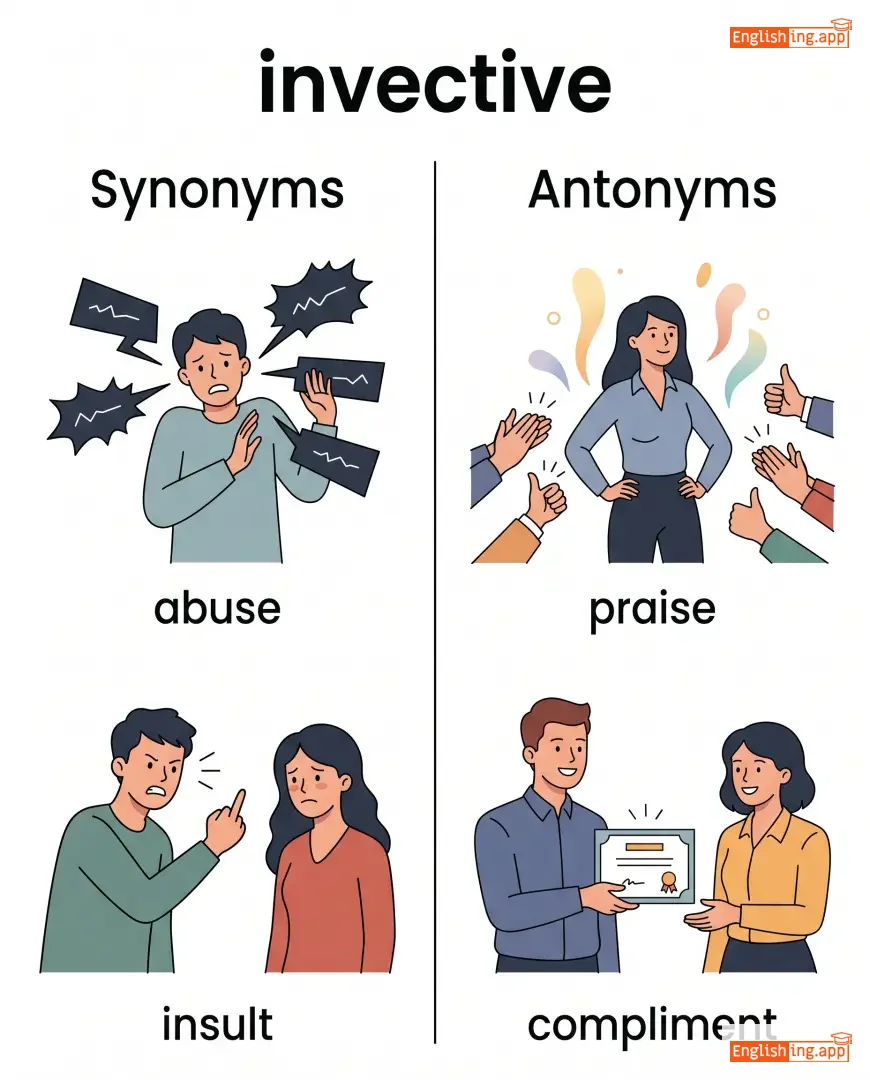
abuse, insult, vituperation, slander, censure
|
praise, compliment, flattery
|
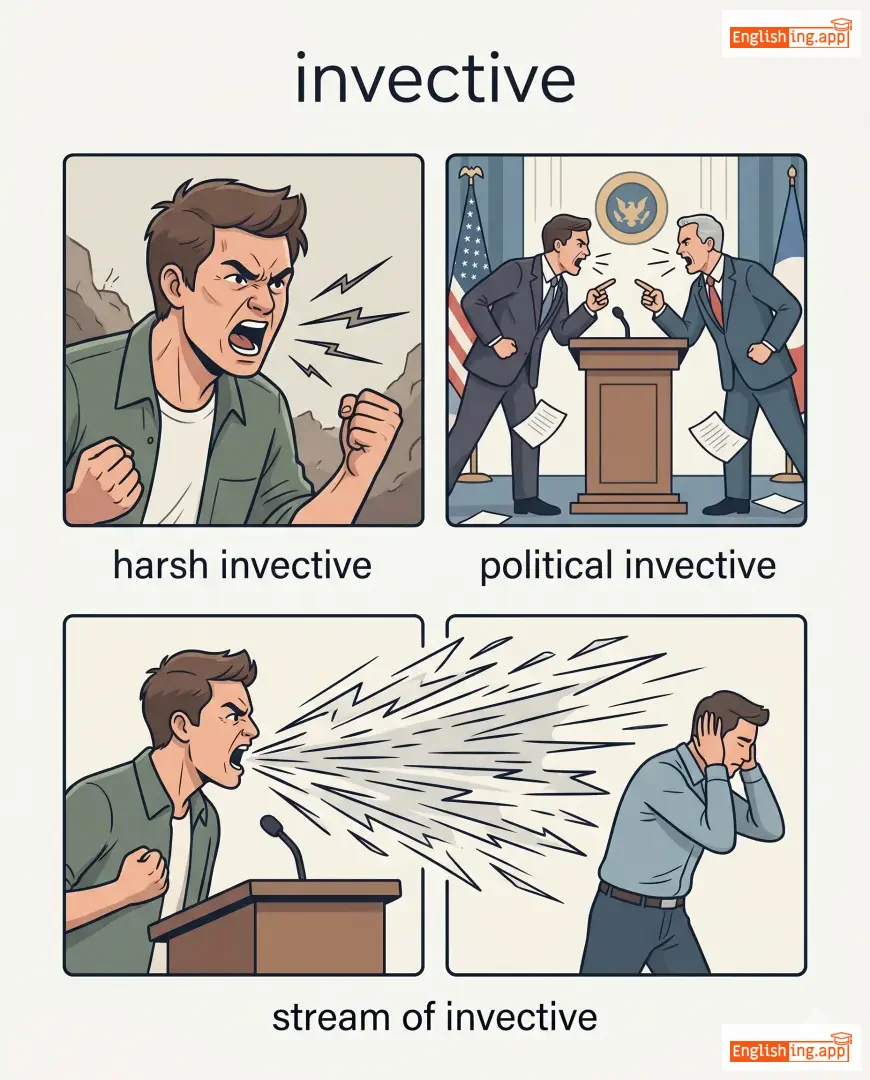
harsh invective, political invective, stream of invective
|
Invective suena como ‘invitar’ a insultar con palabras duras.
••••••
|
|
📢
••••••
|
/ɪnˈveɪ/
verb
(inveɪ)
••••••
|
••••••
|
criticar duramente
kritikar duramente
••••••
|
inveɪd
••••••
|
inveɪd
••••••
|
inveɪz
••••••
|
inveɪɪŋ
••••••
|
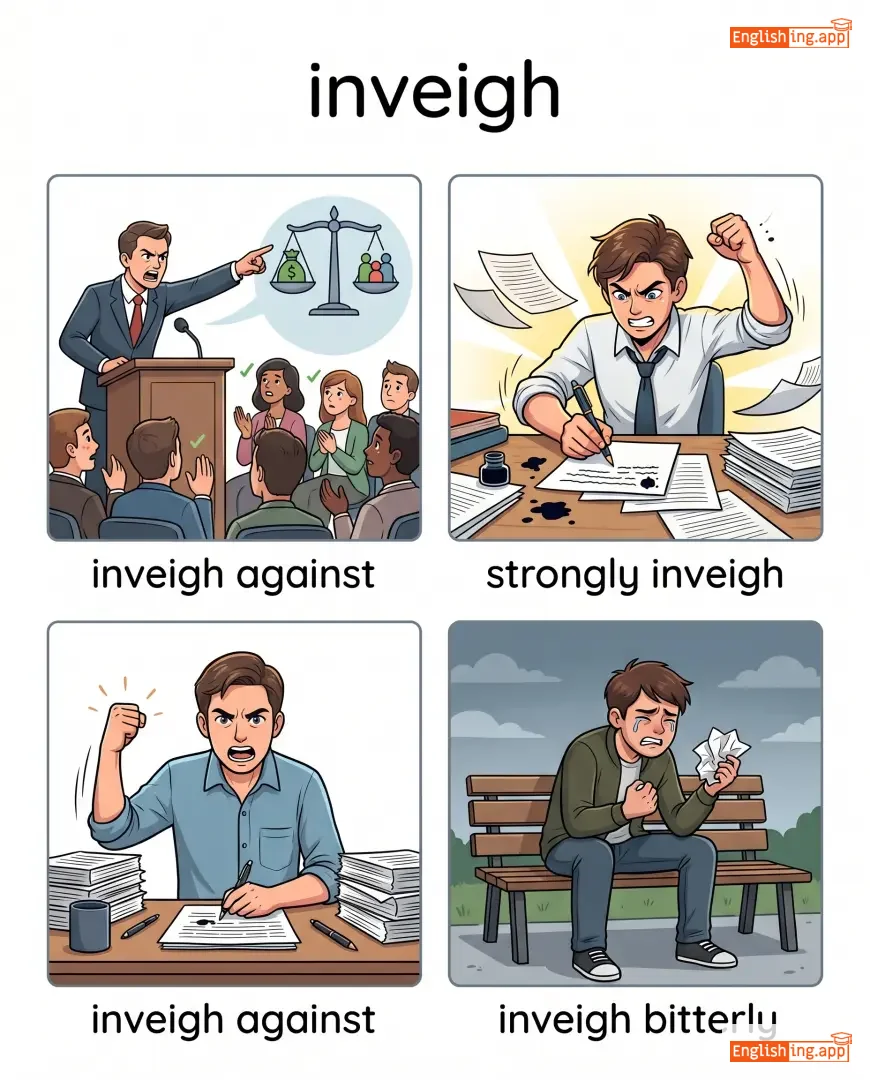
To speak or write about something with great hostility and criticism.
|
He inveighed against the corruption in government.
él inveighó contra la corrupción en el gobierno.
••••••
|
Él criticó duramente la corrupción en el gobierno.
Él criticó duramente la corrupción en el gobierno.
••••••
|
-
••••••
|
-
••••••
|
-
••••••
|
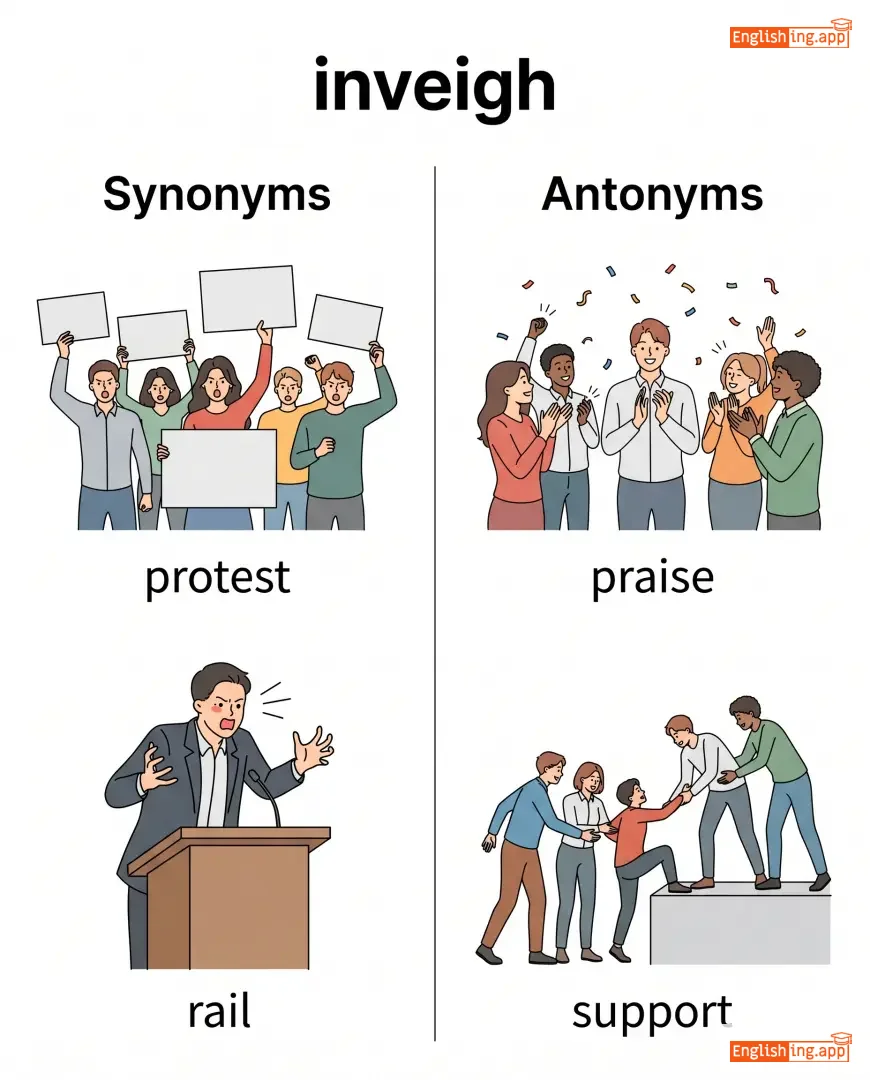
protest, rail, denounce, criticize, condemn
|
••••••
|
inveigh against, strongly inveigh, inveigh bitterly
|
Inveigh significa invadir, no, sino criticar con fuerza.
••••••
|
|
🪄
••••••
|
/ɪnˈveɪɡəl/
verb
(inˈβeɪɡl)
••••••
|
••••••
|
engatusar
engatusar
••••••
|
inˈβeɪɡl'd
••••••
|
inˈβeɪɡl'd
••••••
|
inˈβeɪɡləs
••••••
|
inˈβeɪɡlɪŋ
••••••
|
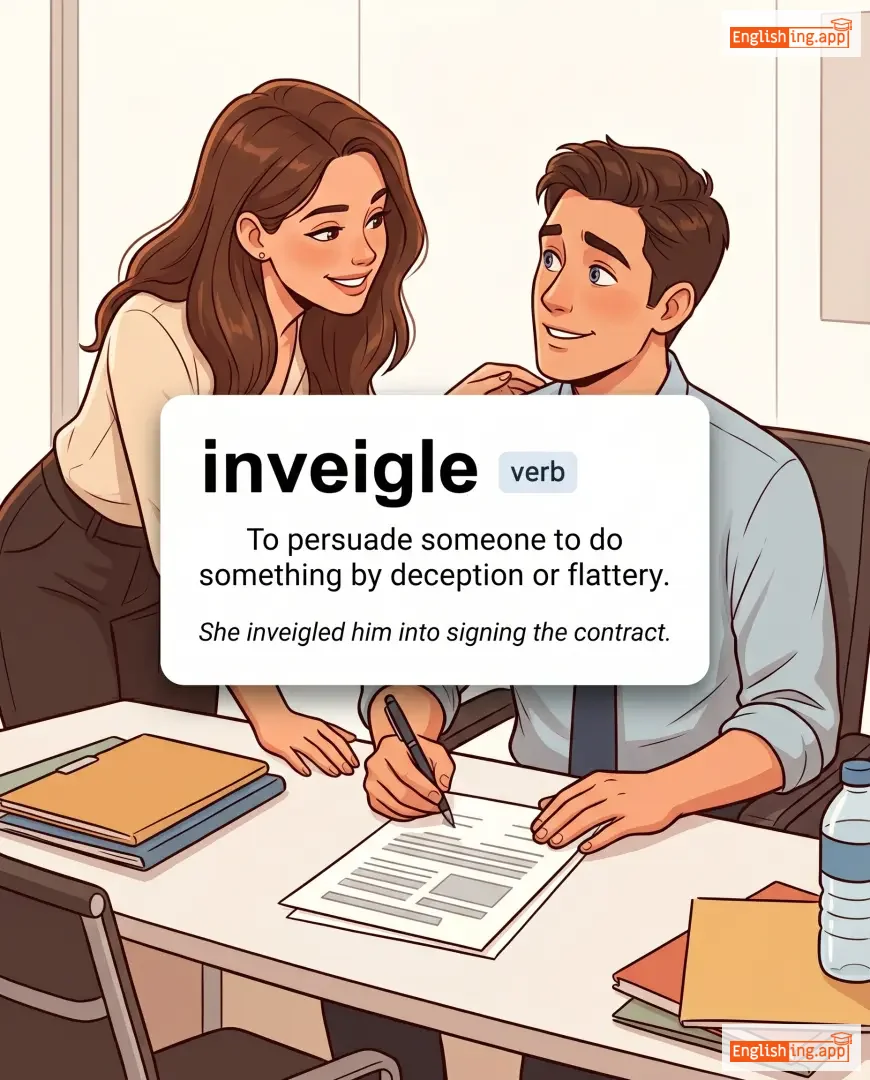
To persuade someone to do something by deception or flattery.
|
She inveigled him into signing the contract.
Ella lo engañó para que firmara el contrato.
••••••
|
Ella lo engañó para que firmara el contrato.
Ella lo engañó para que firmara el contrato.
••••••
|
-
••••••
|
-
••••••
|
-
••••••
|
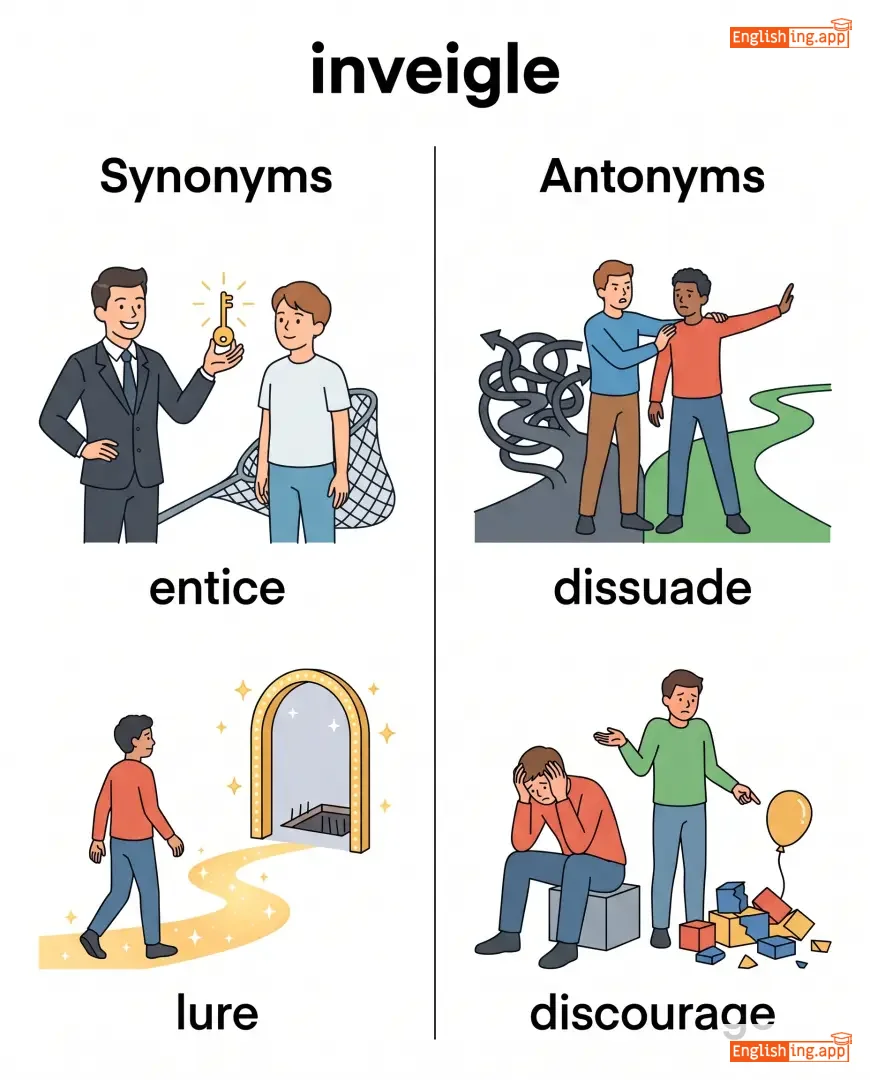
entice, lure, coax, manipulate, persuade
|
dissuade, discourage, repel
|
inveigle into, cleverly inveigle, inveigle someone
|
Inveigle significa engañar para conseguir algo
••••••
|
|
📚
••••••
|
/ɪnˈvɛtərət/
adjective
(invéteret)
••••••
|
••••••
|
inmutable
inmutable
••••••
|
-
••••••
|
-
••••••
|
-
••••••
|
-
••••••
|
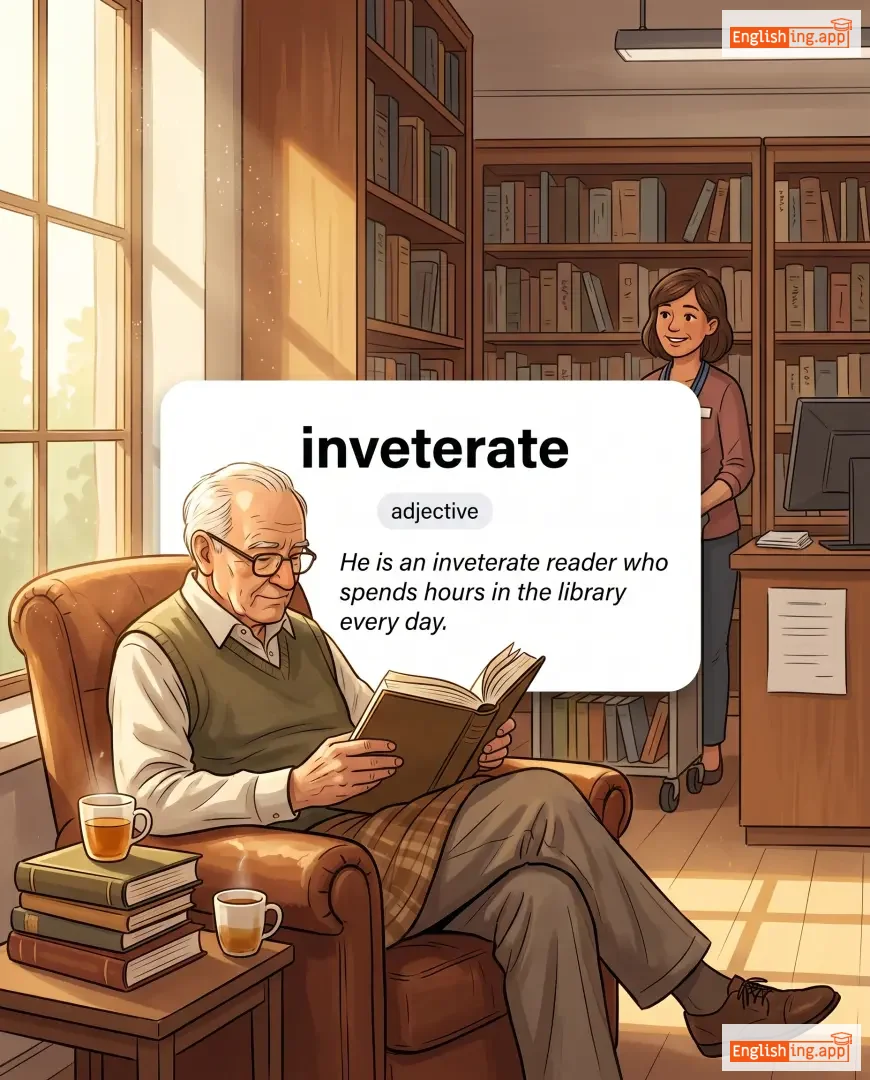
having a long-established habit, activity, or interest that is unlikely to change
|
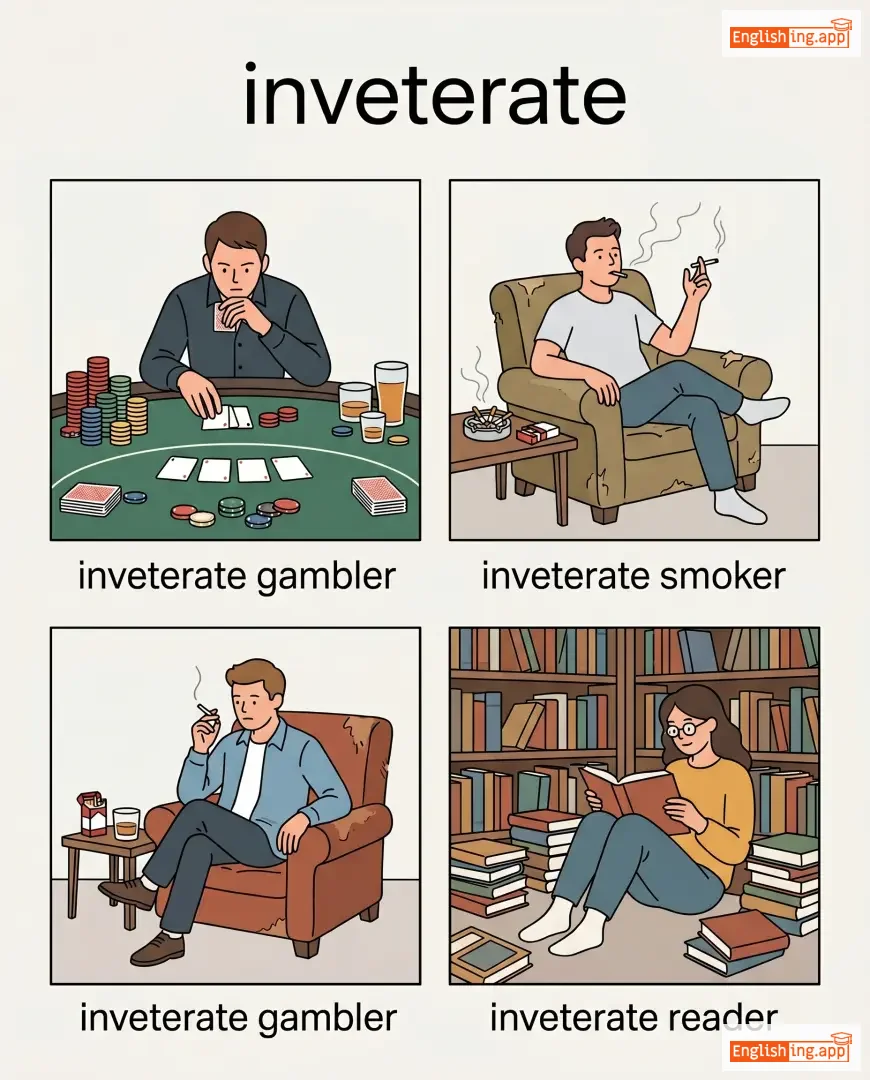
He is an inveterate reader who spends hours in the library every day.
••••••
|
Él es un lector inmutable que pasa horas en la biblioteca todos los días.
El es un lector inmutable que pasa horas en la biblioteca todos los dias.
••••••
|
-
••••••
|
-
••••••
|
-
••••••
|
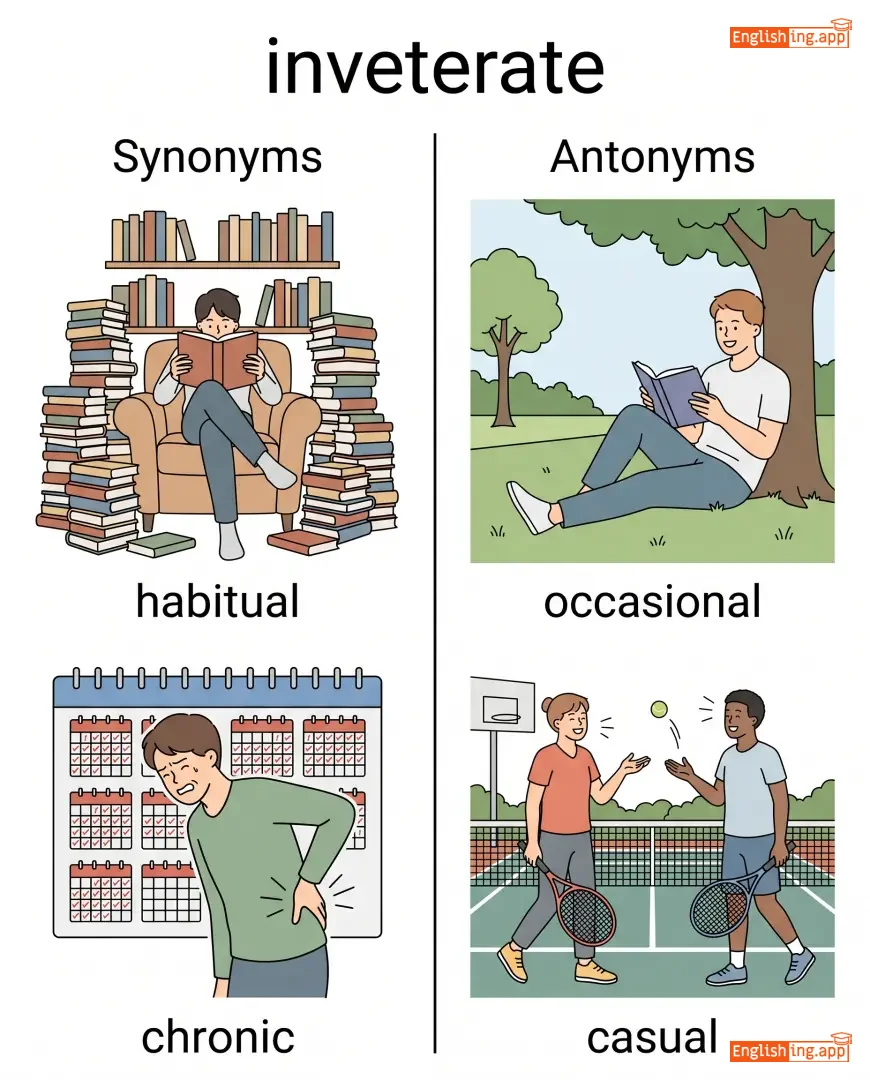
habitual, chronic, entrenched, confirmed
|
••••••
|
inveterate gambler, inveterate smoker, inveterate reader
|
Inveterate significa algo que no cambia, como un hábito viejo — inmutable
••••••
|
|
😒
••••••
|
/ɪnˈvɪdiəs/
adjective
(invídious)
••••••
|
••••••
|
envidioso
envidioso
••••••
|
-
••••••
|
-
••••••
|
-
••••••
|
-
••••••
|
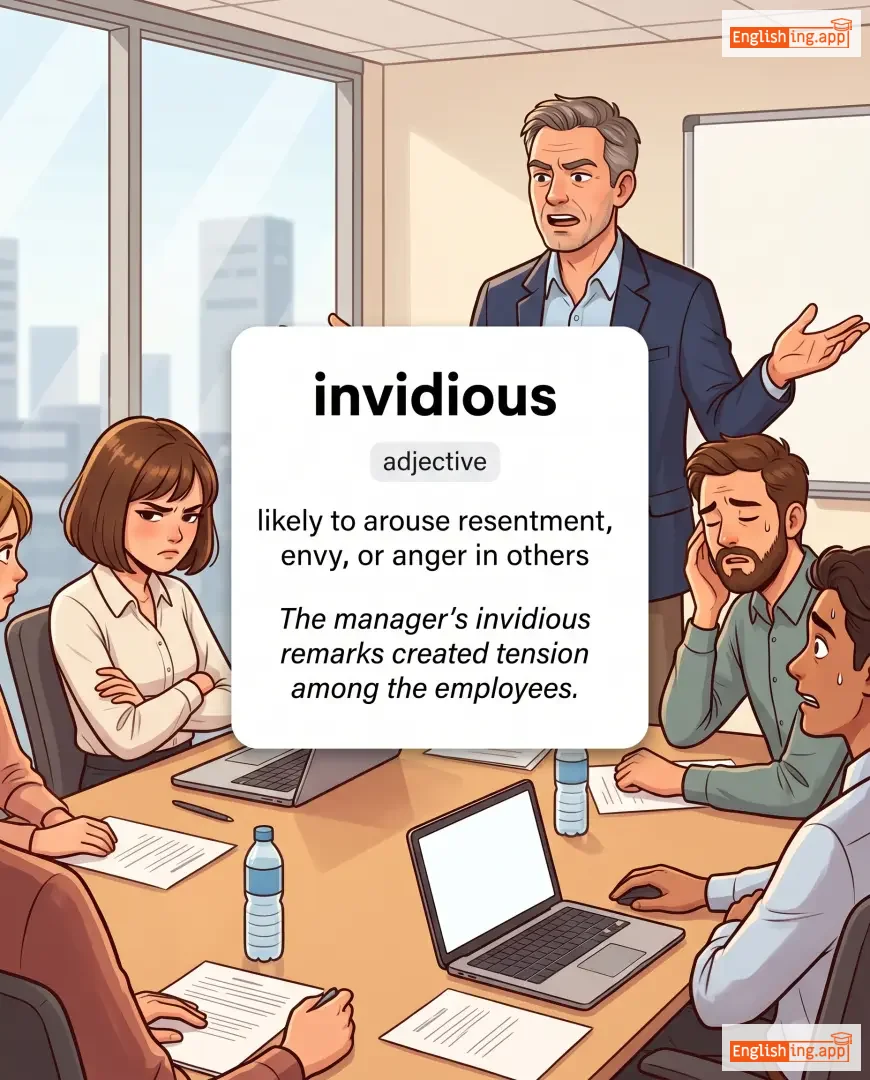
likely to arouse resentment, envy, or anger in others
|
The manager's invidious remarks created tension among the employees.
••••••
|
Los comentarios envidiosos del gerente crearon tensión entre los empleados.
Los comentarios envidiosos del gerente crearon tensión entre los empleados.
••••••
|
-
••••••
|
-
••••••
|
-
••••••
|
offensive, unpleasant, discriminatory, unfair
|
••••••
|
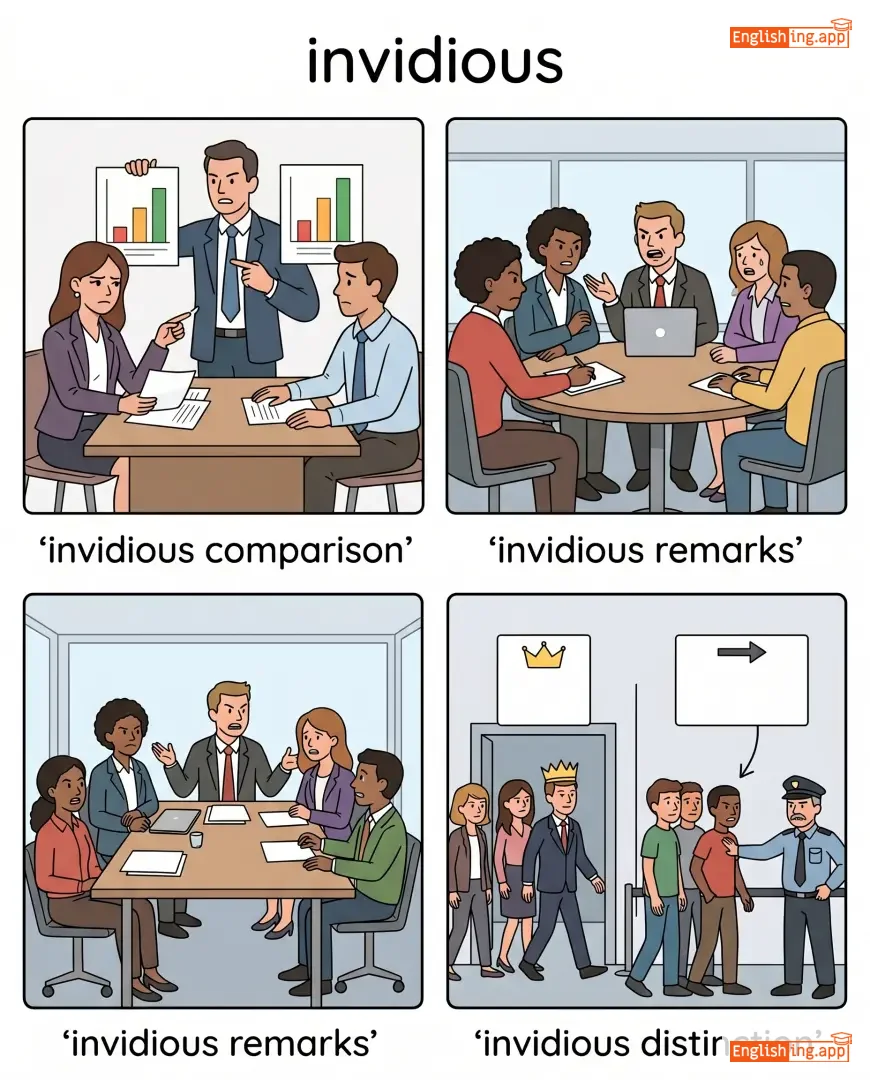
invidious comparison, invidious remarks, invidious distinction
|
Invidious significa provocar envidia o resentimiento — envidioso
••••••
|
|
😡
••••••
|
/ɪˈræsɪbl/
adjective
(irásibel)
••••••
|
••••••
|
irascible
irascible
••••••
|
-
••••••
|
-
••••••
|
-
••••••
|
-
••••••
|
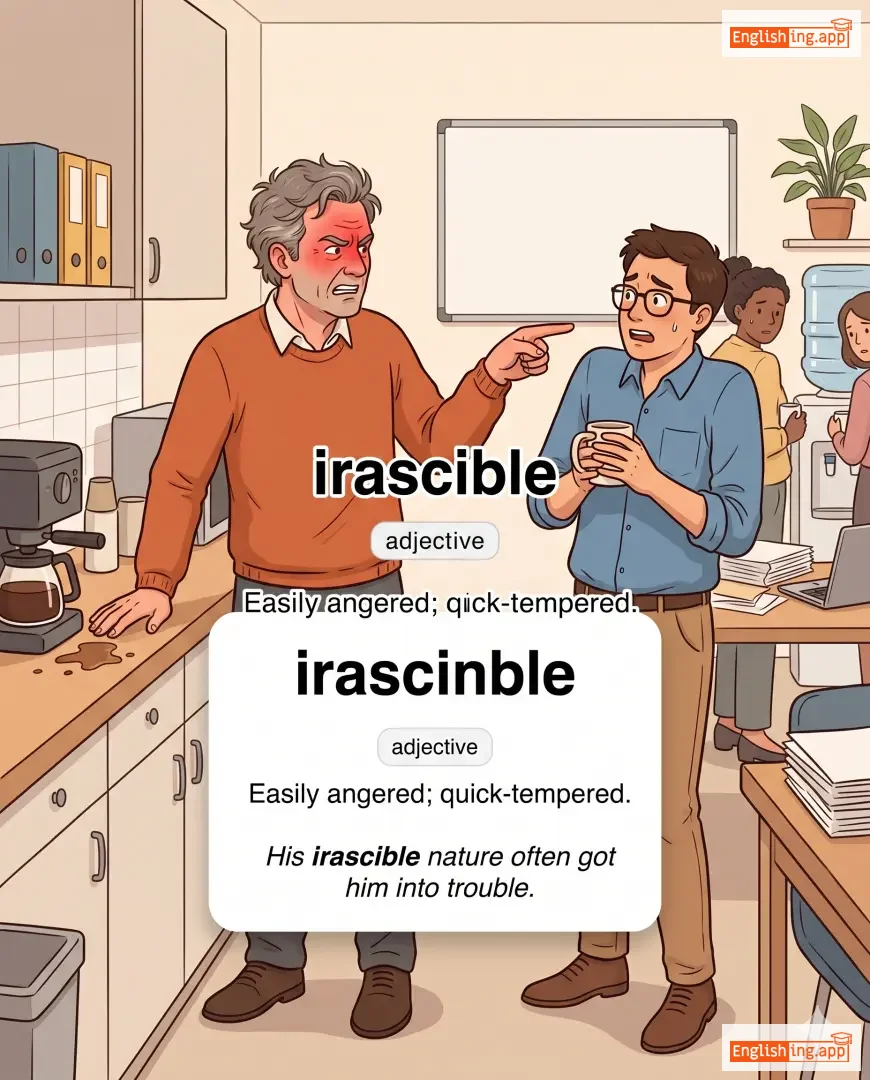
Easily angered; quick-tempered.
|
His irascible nature often got him into trouble.
••••••
|
Su naturaleza irascible a menudo lo metía en problemas.
Su naturaleza irascible a menudo lo metía en problemas.
••••••
|
-
••••••
|
-
••••••
|
-
••••••
|
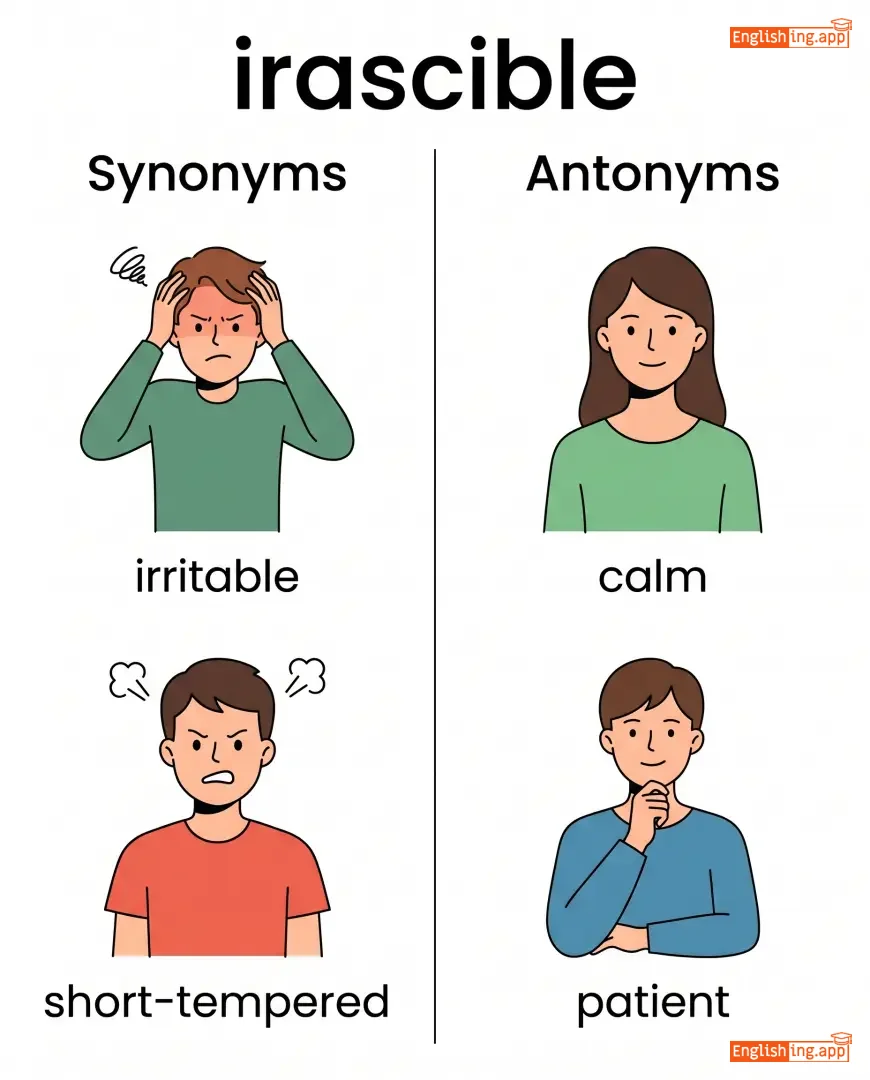
irritable, short-tempered, hot-headed, touchy
|
••••••
|
irascible nature, irascible person, become irascible, irascible tone
|
Irascible significa fácil encolerizado – 'irritado + capaz' = irascible.
••••••
|
|
🤔
••••••
|
/ɪˈrɛzəluːt/
adjective
(irresolut)
••••••
|
••••••
|
indeciso
indeciso
••••••
|
-
••••••
|
-
••••••
|
-
••••••
|
-
••••••
|
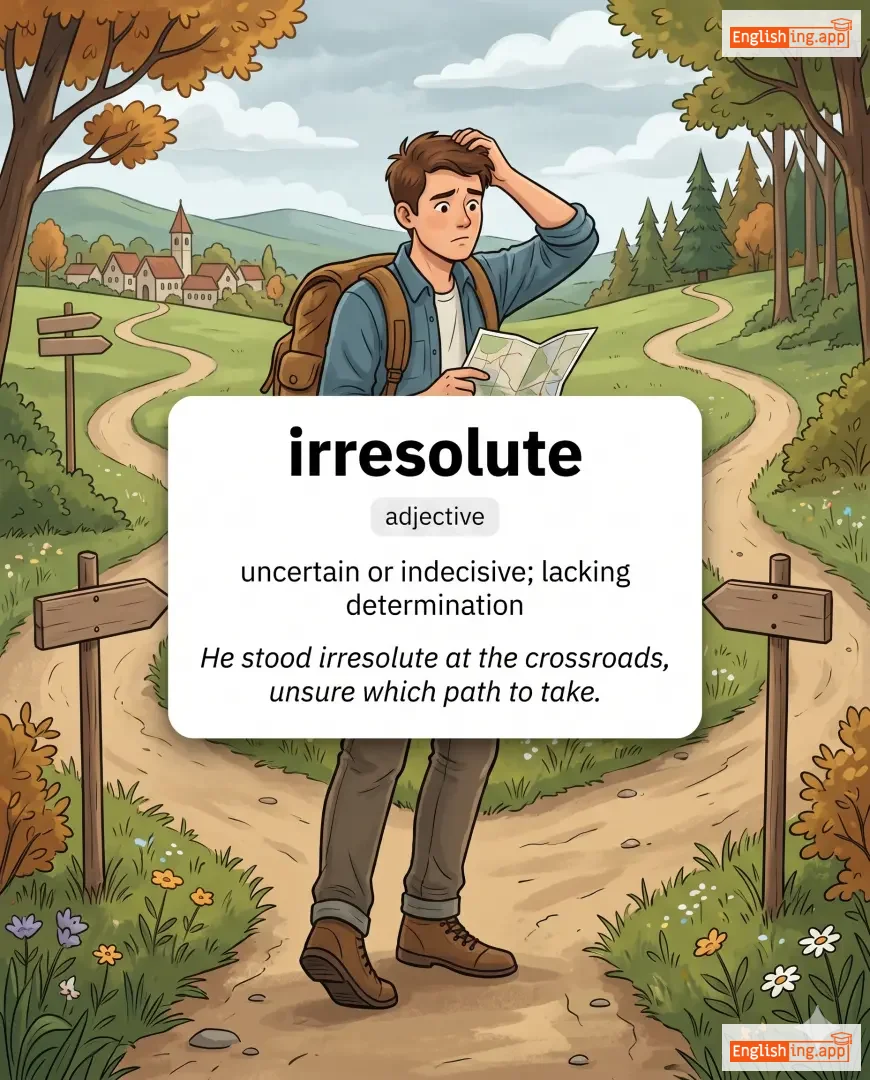
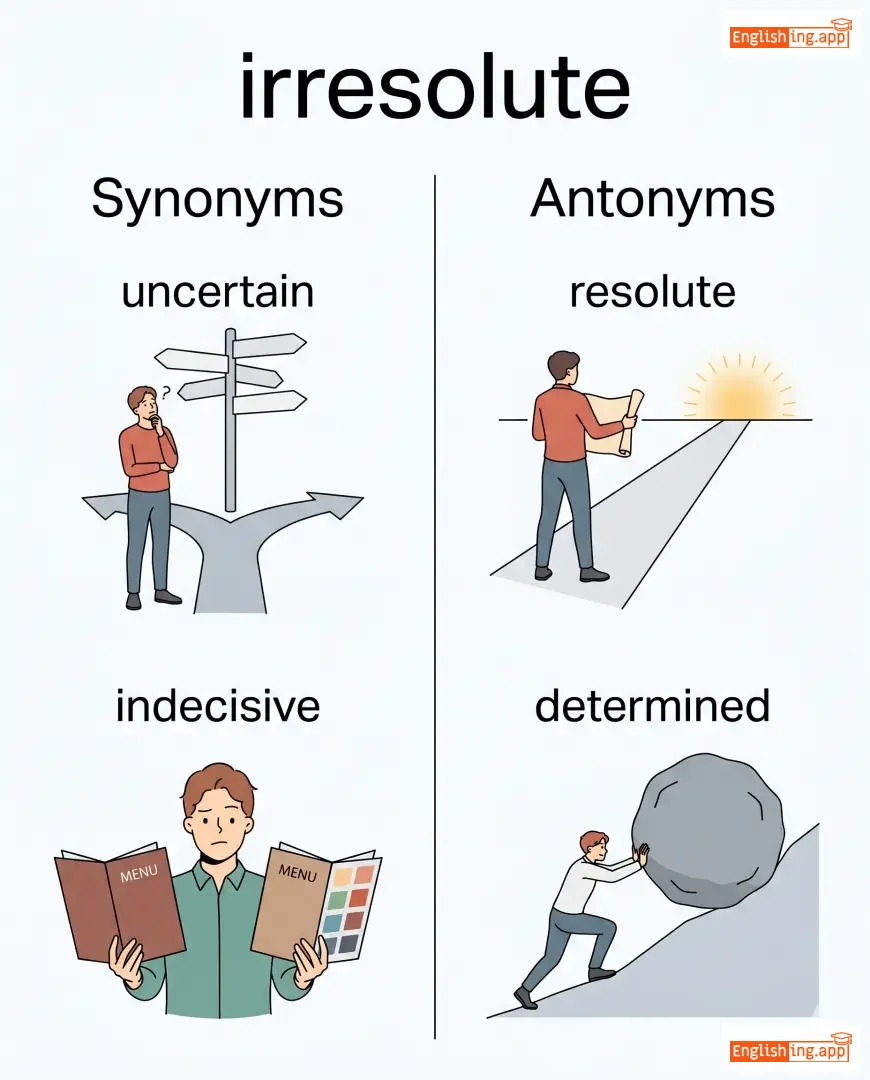
uncertain or indecisive; lacking determination
|
He stood irresolute at the crossroads, unsure which path to take.
••••••
|
Él se quedó indeciso en el cruce de caminos, sin saber qué camino tomar.
El se quedo indeciso en el cruce de caminos, sin saber que camino tomar.
••••••
|
-
••••••
|
-
••••••
|
-
••••••
|
uncertain, indecisive, hesitant, vacillating, wavering
|
resolute, determined, decisive
|
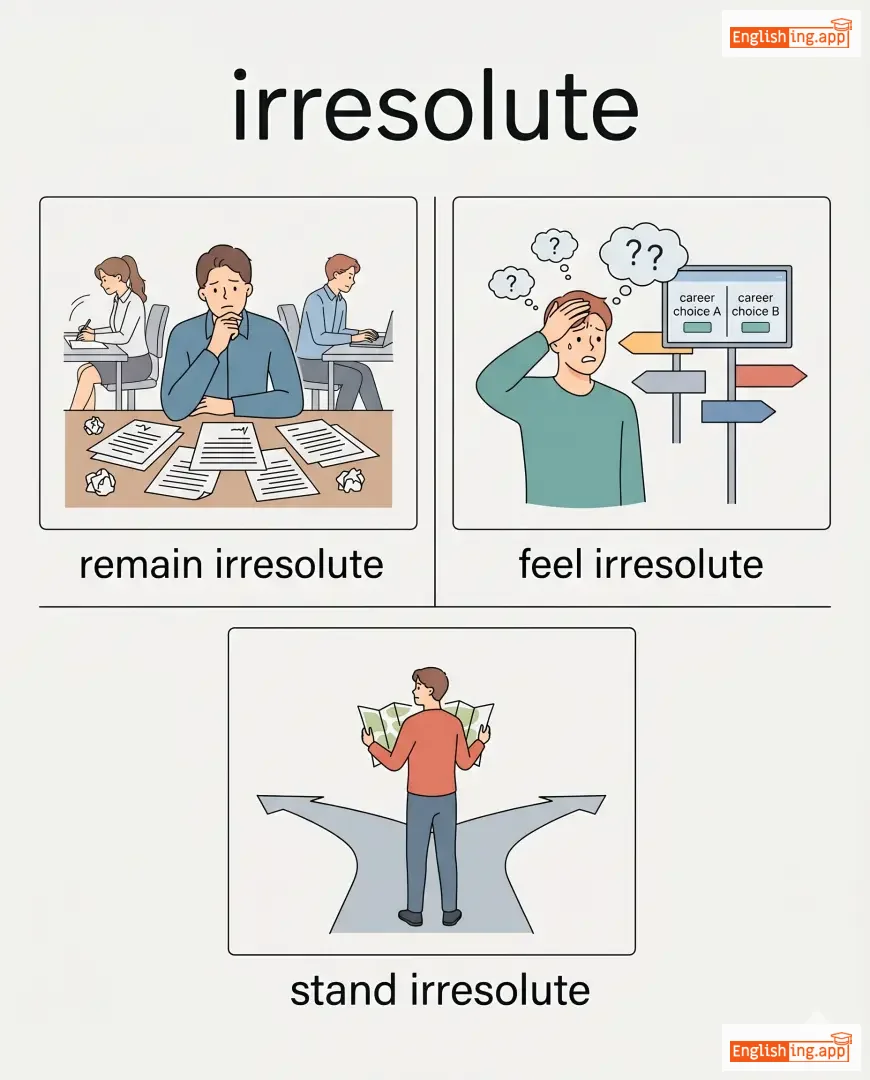
remain irresolute, feel irresolute, stand irresolute, irresolute response
|
irresoluto = indeciso, como alguien sin poder decidirse
••••••
|
|
🧳
••••••
|
/aɪˈtɪnərənt/
adjective
(aitinerant)
••••••
|
••••••
|
itinerante
itinerante
••••••
|
-
••••••
|
-
••••••
|
-
••••••
|
-
••••••
|
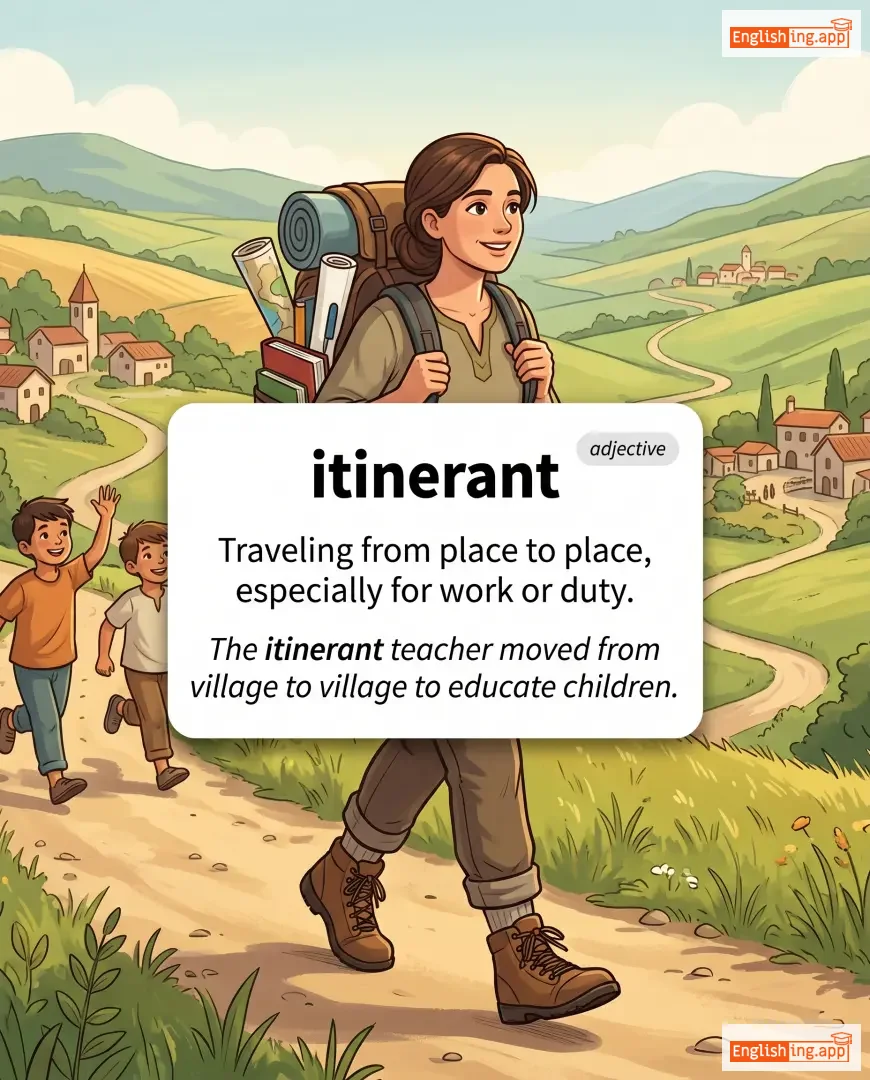
Traveling from place to place, especially for work or duty.
|
The itinerant teacher moved from village to village to educate children.
••••••
|
El maestro itinerante se movía de pueblo en pueblo para educar a los niños.
El maestro itinerante se movía de pueblo en pueblo para educar a los niños.
••••••
|
-
••••••
|
-
••••••
|
-
••••••
|
wandering, roving, traveling, nomadic, peripatetic
|
settled, stationary, resident
|
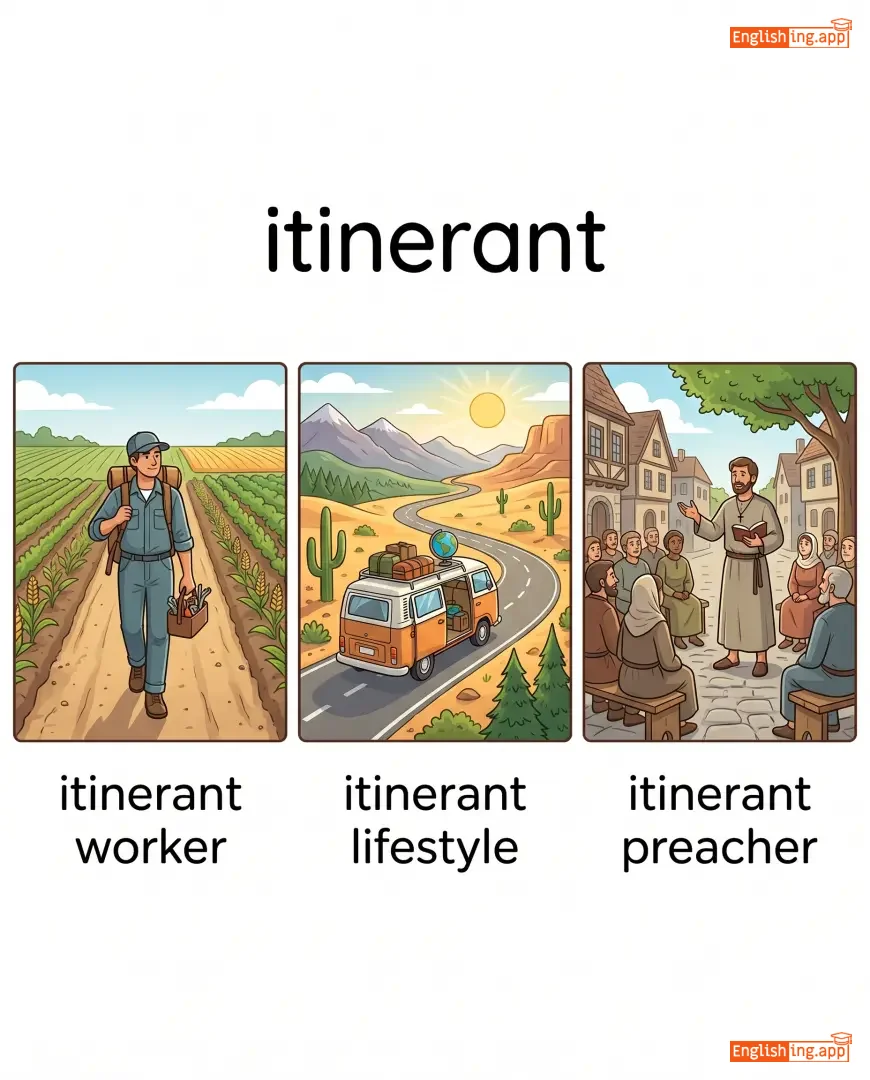
itinerant worker, itinerant lifestyle, itinerant preacher, itinerant musician
|
Itinerante significa viajero – imagina a un maestro viajando por el mundo.
••••••
|
|
🗺️
••••••
|
/aɪˈtɪnərɛri/
noun
(aɪˈtɪnərɛri)
••••••
|
••••••
|
itinerario
itinerario
••••••
|
-
••••••
|
-
••••••
|
-
••••••
|
-
••••••
|
A planned route or schedule of a journey or trip.
|
The travel agent gave us a detailed itinerary for our vacation.
••••••
|
El agente de viajes nos dio un itinerario detallado para nuestras vacaciones.
El agente de viajes nos dio un itinerario detallado para nuestras vacaciones.
••••••
|
-
••••••
|
-
••••••
|
-
••••••
|
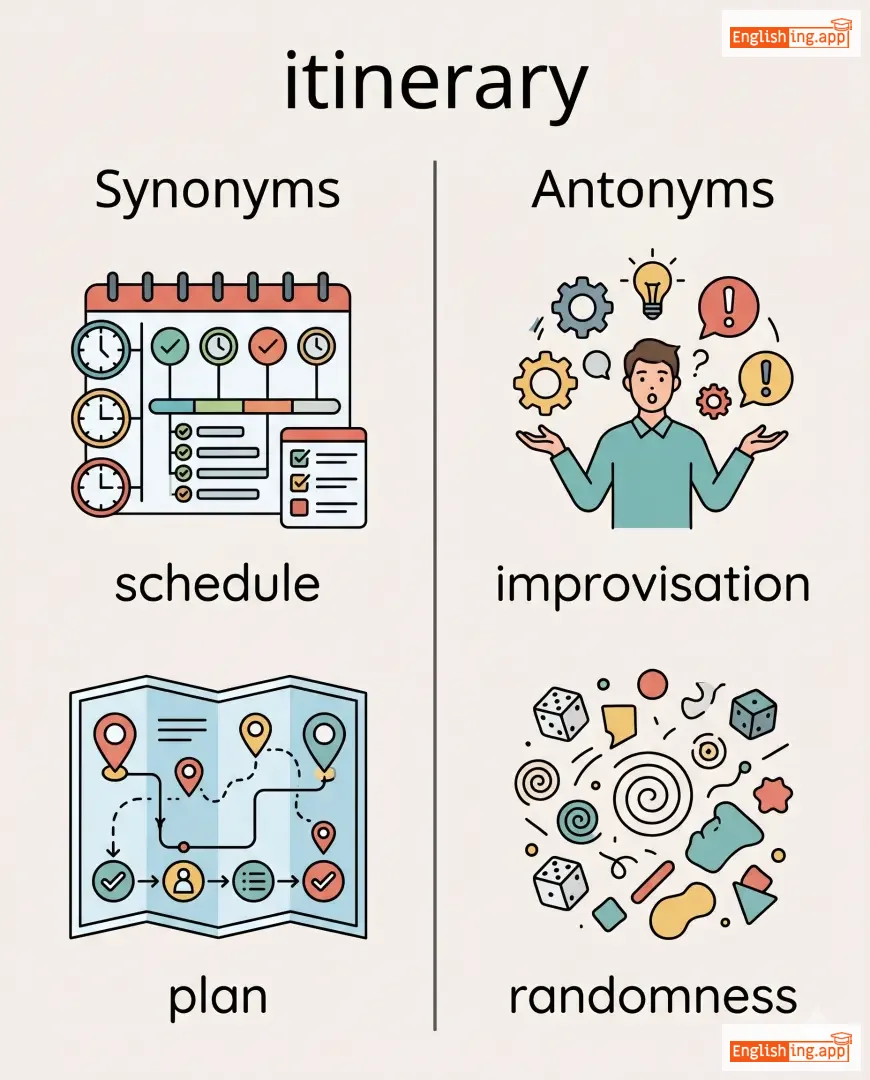
schedule, plan, agenda, route, timetable
|
improvisation, randomness
|
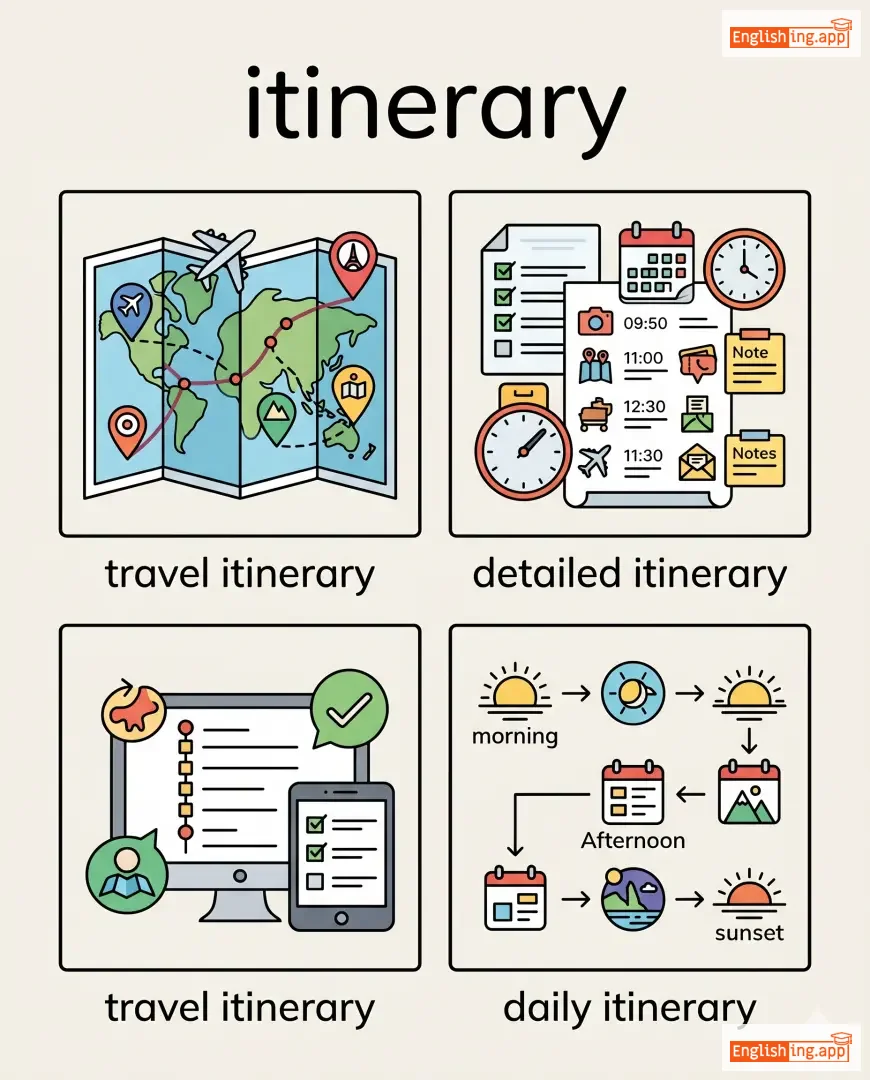
travel itinerary, detailed itinerary, daily itinerary, itinerary plan
|
Itinerary significa itinerario – recuerda 'ITIN' = In Time, In Route.
••••••
|
|
😒
••••••
|
/ˈdʒɔːndɪst/
adjective
(yaundist)
••••••
|
••••••
|
sesgado / envidioso / afectado por ictericia
sesgado / envidioso / afectado por ictericia
••••••
|
-
••••••
|
-
••••••
|
-
••••••
|
-
••••••
|
Affected by or displaying prejudice, envy, or bitterness; also refers to having a yellowish discoloration of the skin due to jaundice.
|
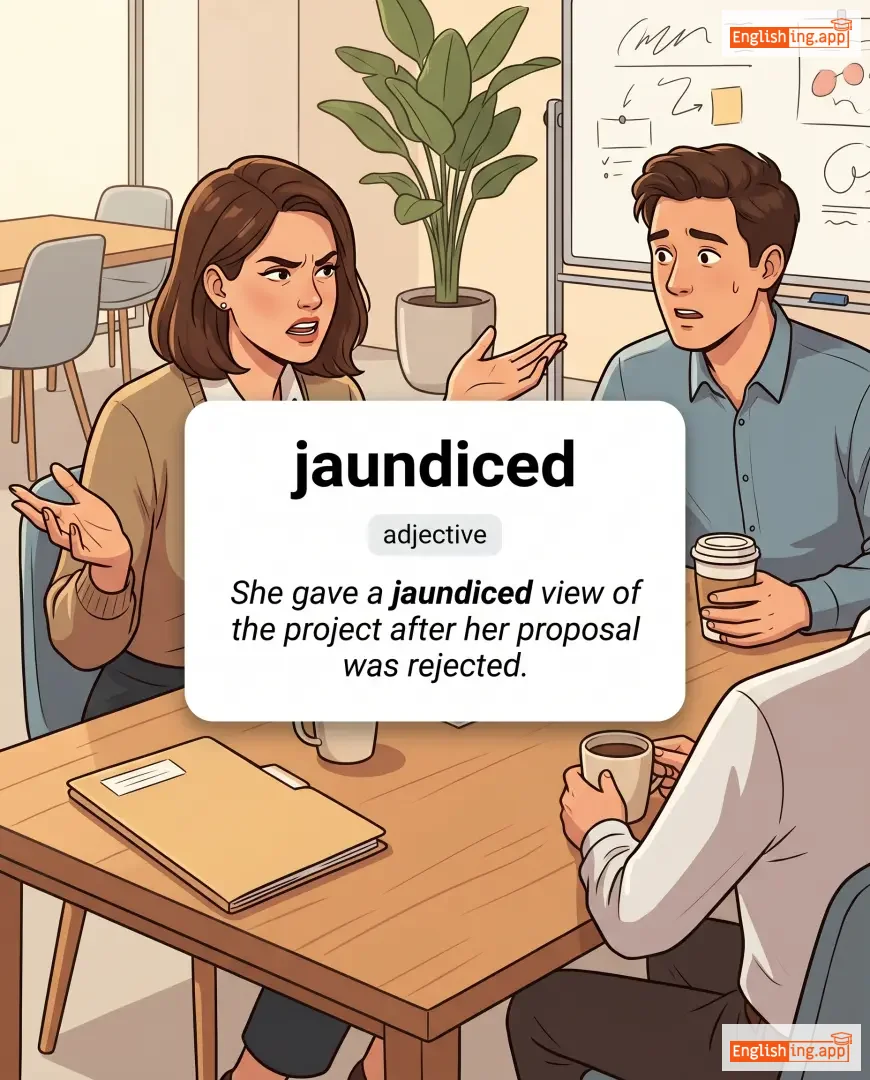
She gave a jaundiced view of the project after her proposal was rejected.
••••••
|
Ella dio una visión sesgada del proyecto después de que su propuesta fuera rechazada.
Ella dio una visión sesgada del proyecto después de que su propuesta fuera rechazada.
••••••
|
-
••••••
|
-
••••••
|
-
••••••
|
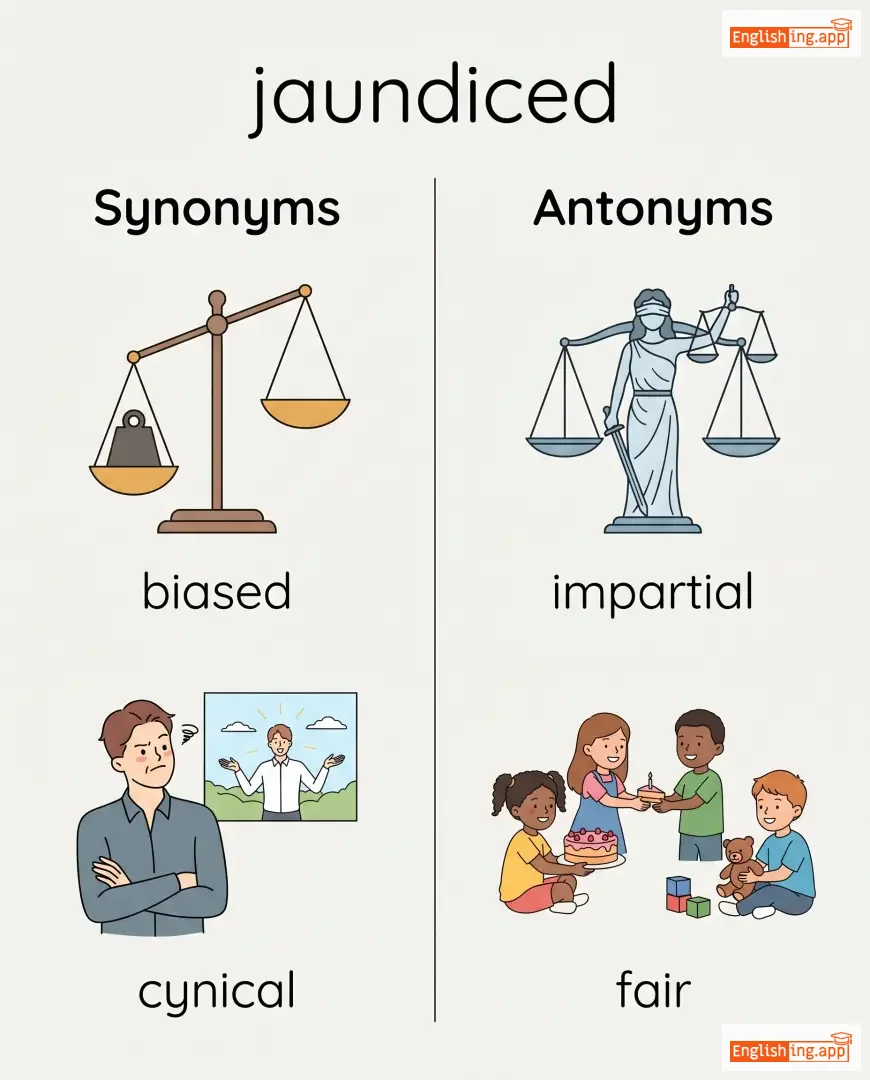
biased, cynical, resentful, prejudiced, skeptical
|
impartial, fair, unbiased
|
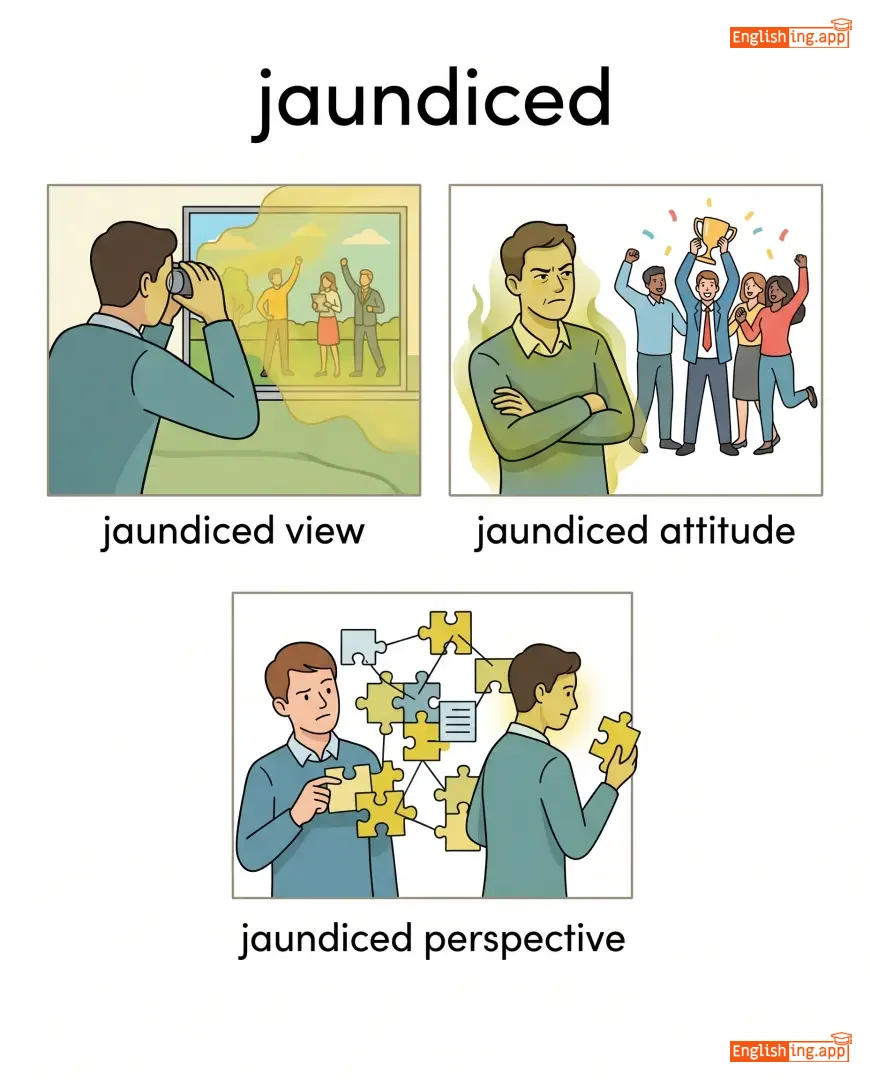
jaundiced view, jaundiced attitude, jaundiced perspective
|
La ictericia hace que la piel se ponga amarilla, y un 'punto de vista jaundiced' es una visión sesgada.
••••••
|
|
😏
••••••
|
/dʒaɪb/
verb
(yaib)
••••••
|
••••••
|
insultar / estar en armonía
insultar / estar en armonia
••••••
|
yaibed
••••••
|
yaibed
••••••
|
yaibes
••••••
|
yaibing
••••••
|
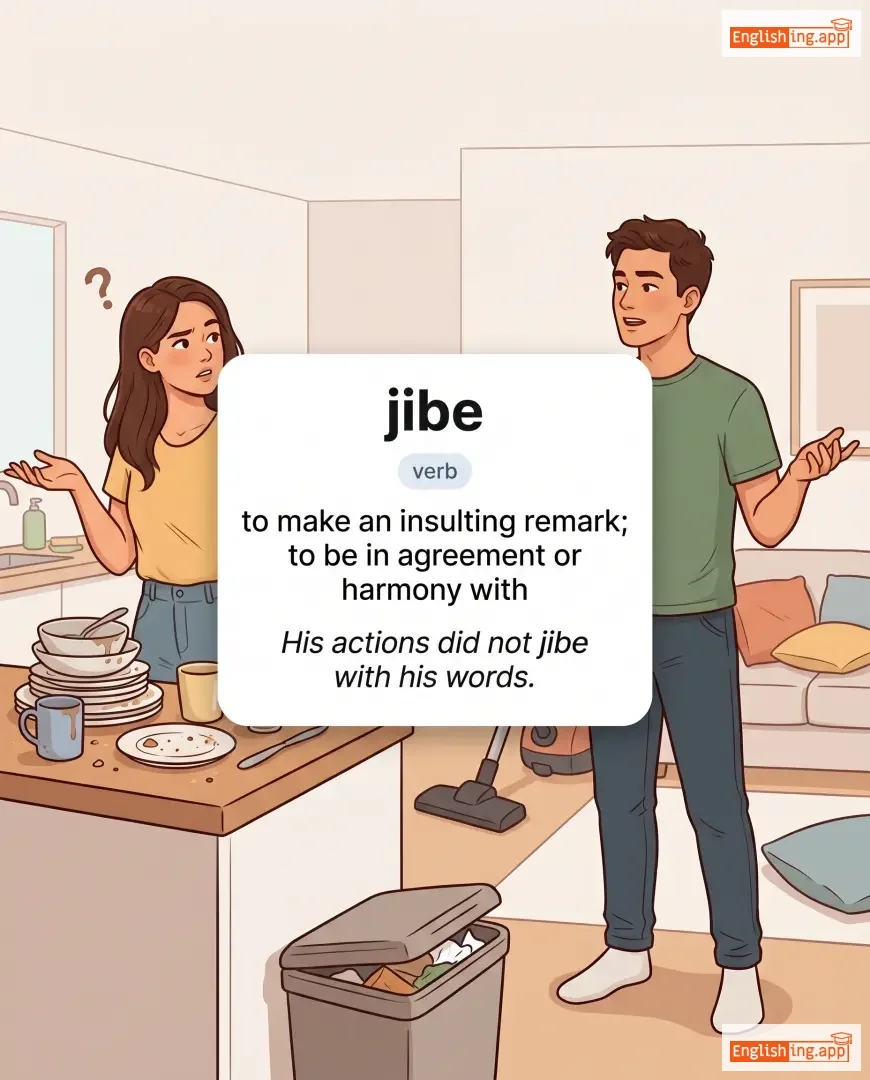
to make an insulting remark; to be in agreement or harmony with
|
His actions did not jibe with his words.
Sus acciones no coincidían con sus palabras.
••••••
|
Sus acciones no coincidían con sus palabras.
Sus acciones no coincidían con sus palabras.
••••••
|
tirar una burla
••••••
|
to make a mocking or insulting remark
|
tirar una burla
tirar una burla
••••••
|
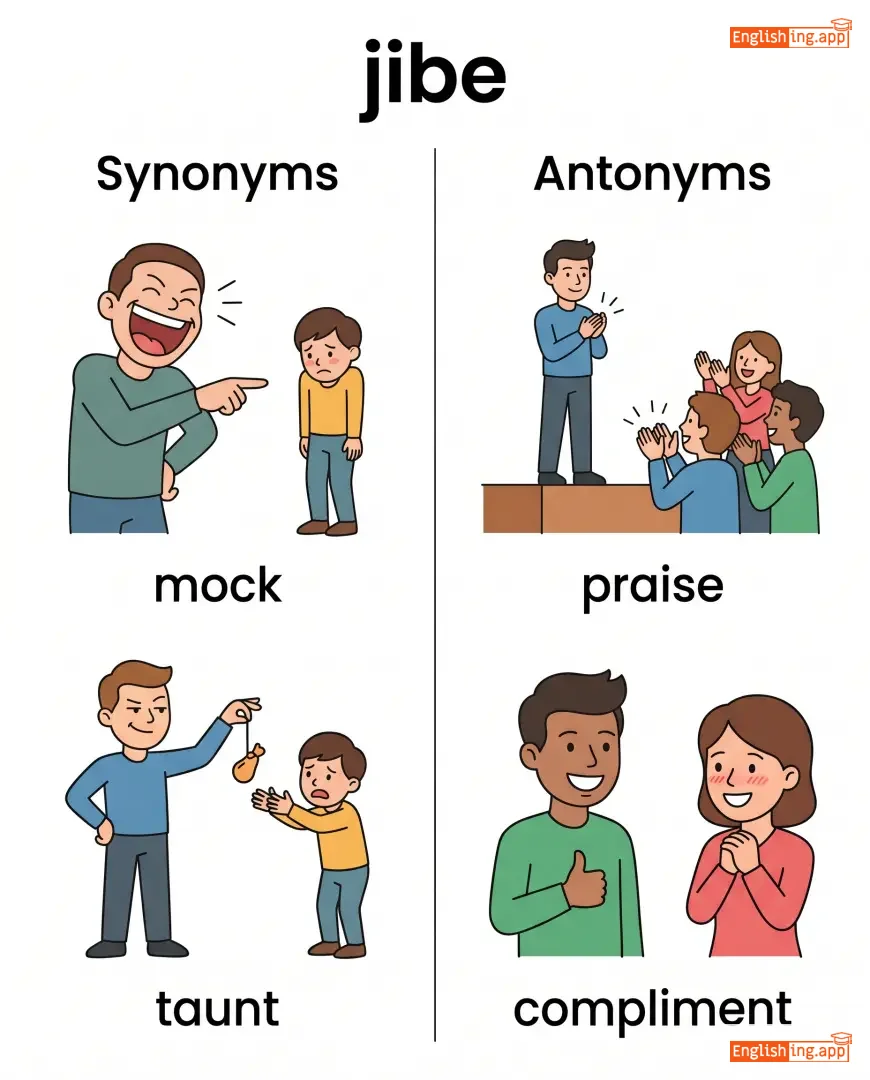
mock, taunt, agree, correspond, match
|
praise, compliment, conflict
|
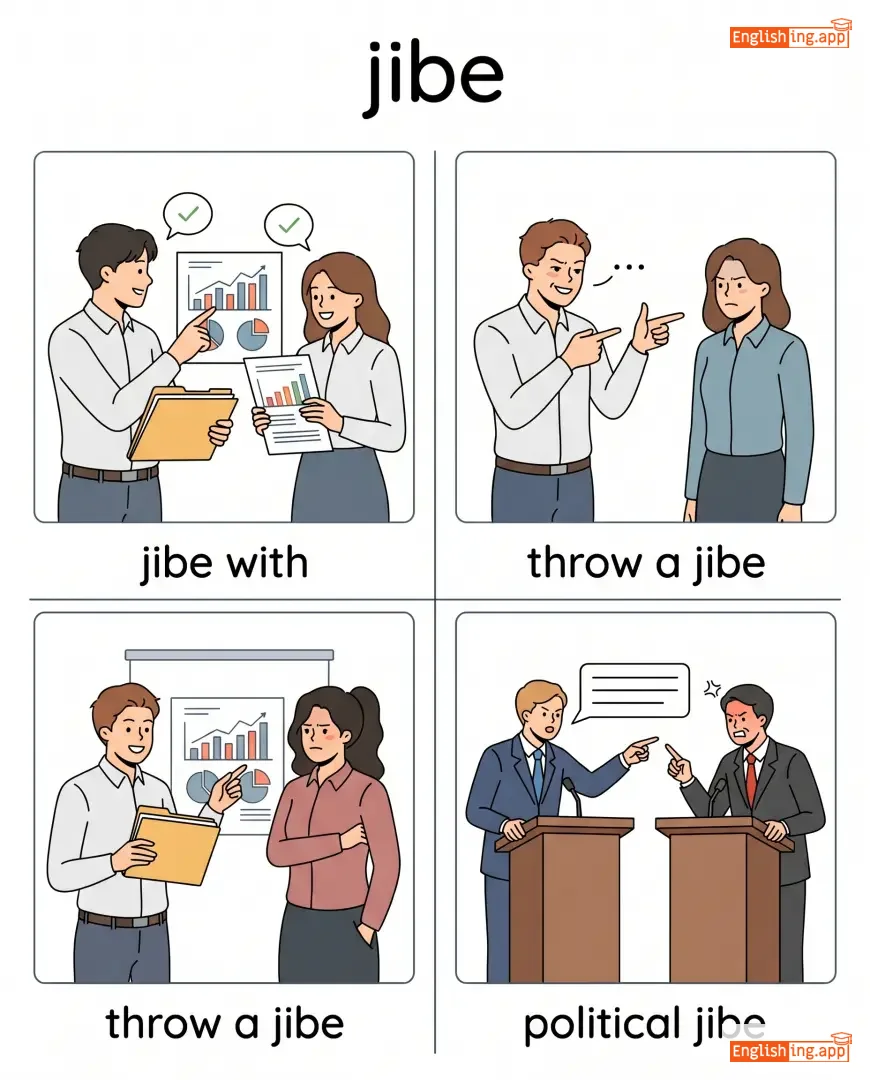
jibe with, throw a jibe, political jibe, sarcastic jibe
|
Jibe se usa cuando una frase puede ser cruel, como un chiste burlón
••••••
|
|
😄
••••••
|
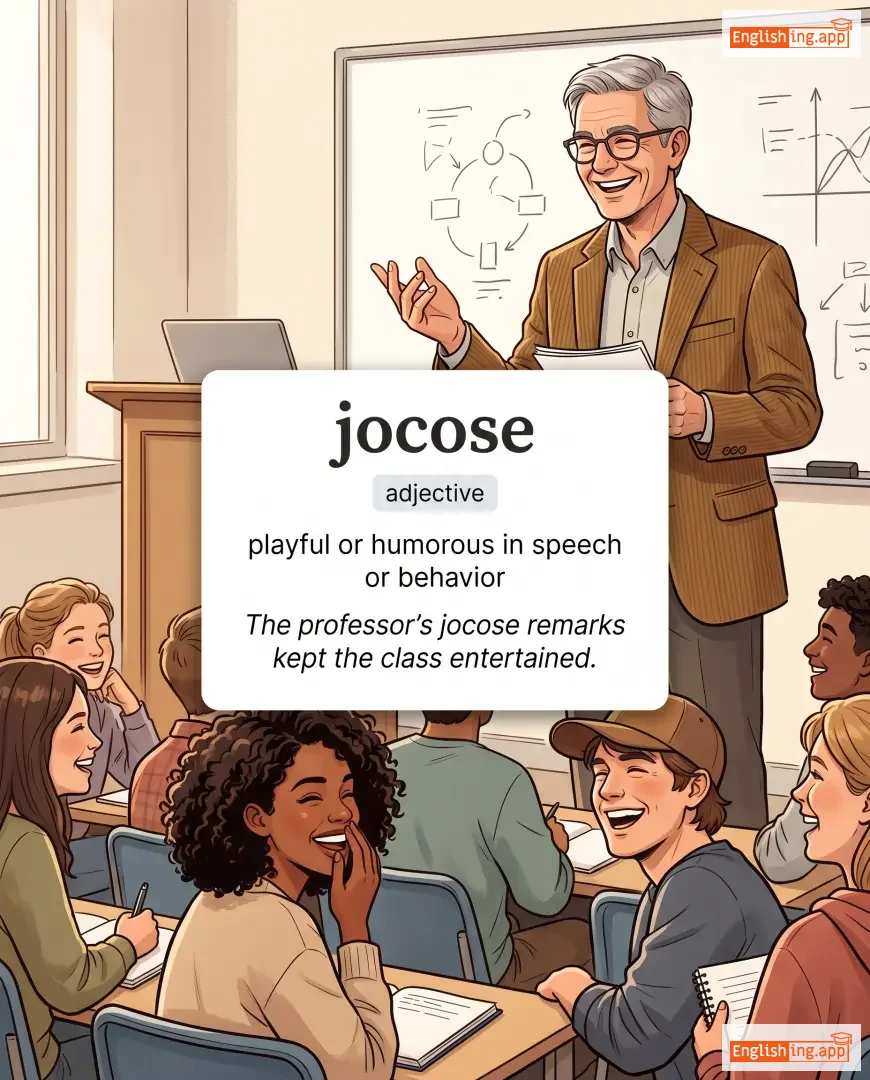
/dʒoʊˈkoʊs/
adjective
(jocoso)
••••••
|
••••••
|
jocoso
jocoso
••••••
|
-
••••••
|
-
••••••
|
-
••••••
|
-
••••••
|
playful or humorous in speech or behavior
|
The professor’s jocose remarks kept the class entertained.
Los comentarios jocosos del profesor mantuvieron entretenida a la clase.
••••••
|
Los comentarios jocosos del profesor mantuvieron entretenida a la clase.
Los comentarios jocosos del profesor mantuvieron entretenida a la clase.
••••••
|
-
••••••
|
-
••••••
|
-
••••••
|
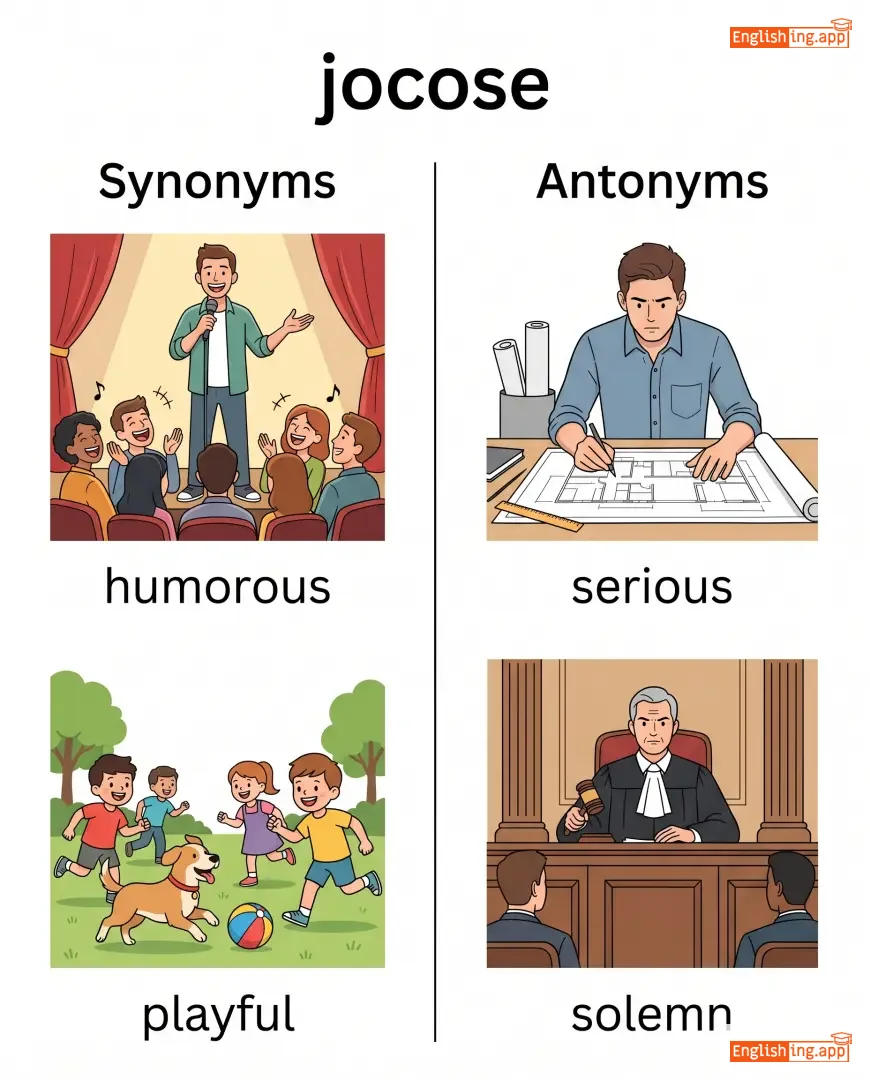
humorous, playful, witty, comical
|
••••••
|
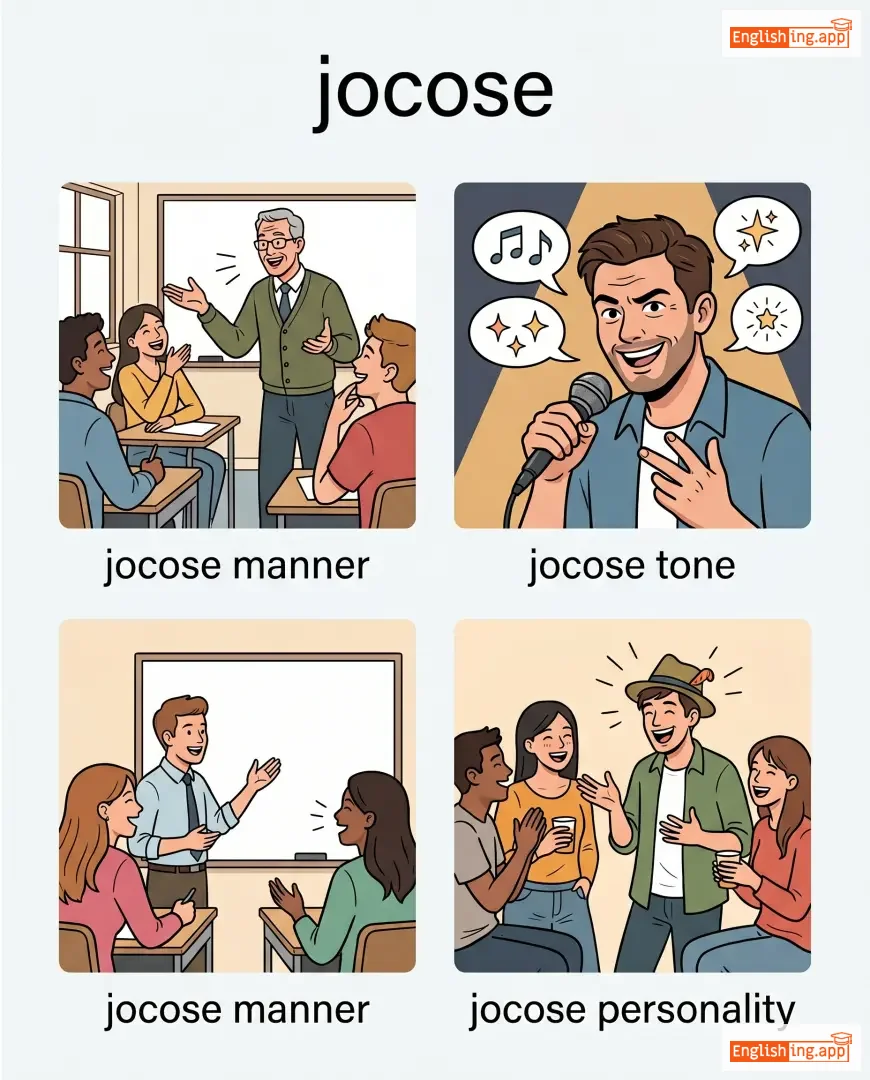
jocose manner, jocose tone, jocose personality
|
Jocoso = Joke + oso, divertido como una broma.
••••••
|
|
🚛
••••••
|
/ˈdʒʌɡərˌnɔːt/
noun
(jʌɡərnɔːt)
••••••
|
••••••
|
fuerza imparable
fuerza imparable
••••••
|
-
••••••
|
-
••••••
|
-
••••••
|
-
••••••
|
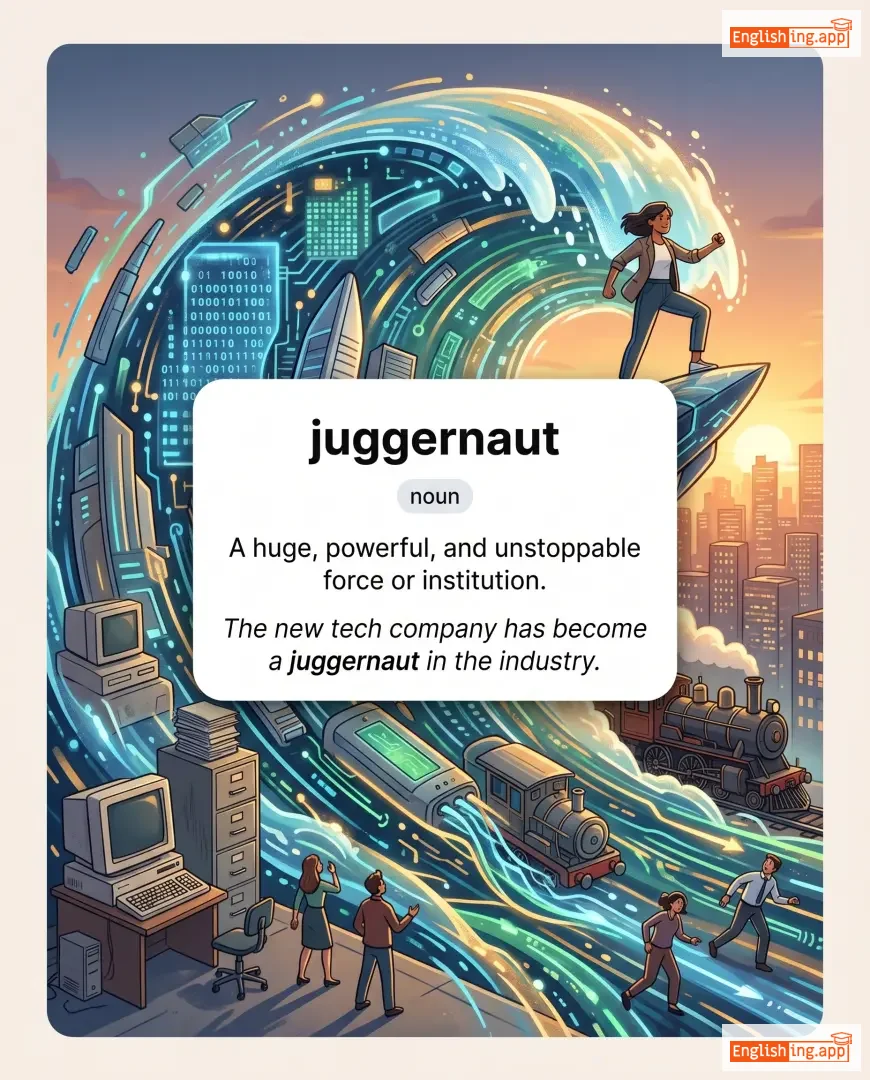
A huge, powerful, and unstoppable force or institution.
|
The new tech company has become a juggernaut in the industry.
••••••
|
La nueva empresa tecnológica se ha convertido en una fuerza imparable en la industria.
La nueva empresa tecnologica se ha convertido en una fuerza imparable en la industria.
••••••
|
-
••••••
|
-
••••••
|
-
••••••
|
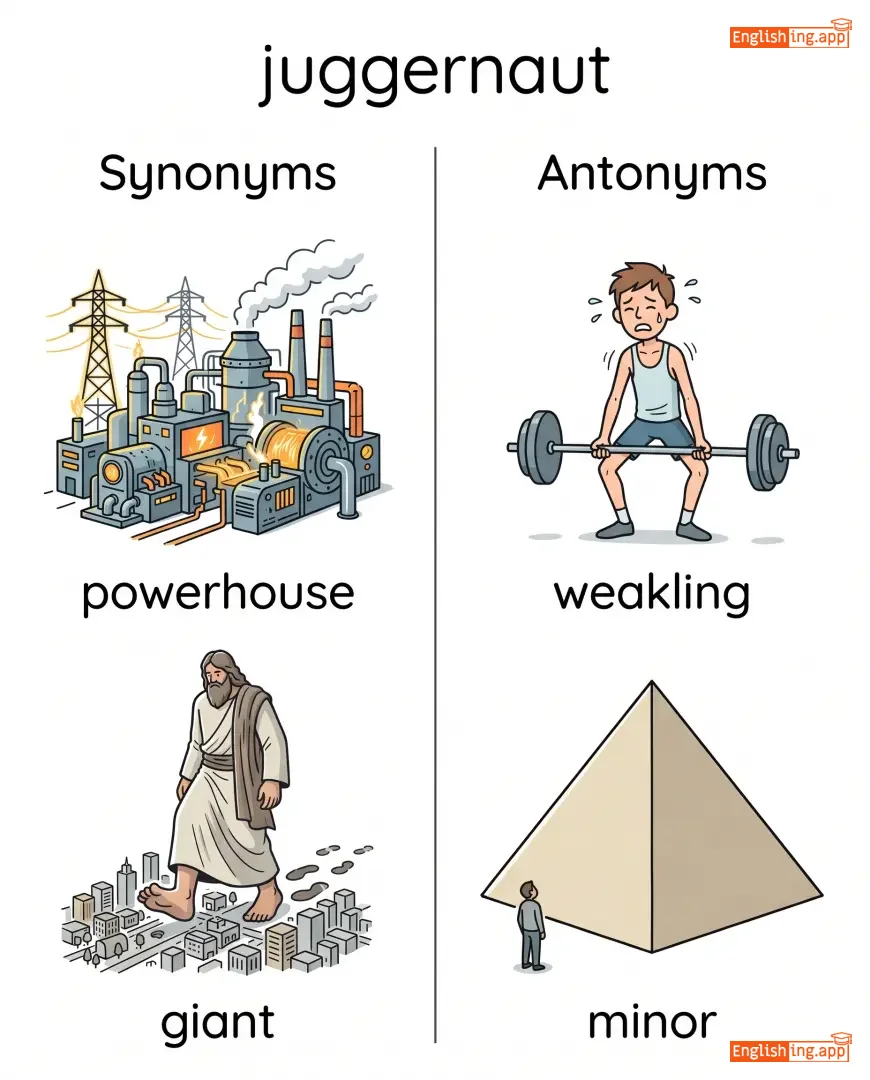
powerhouse, giant, colossus, titan, behemoth
|
weakling, minor, underdog
|
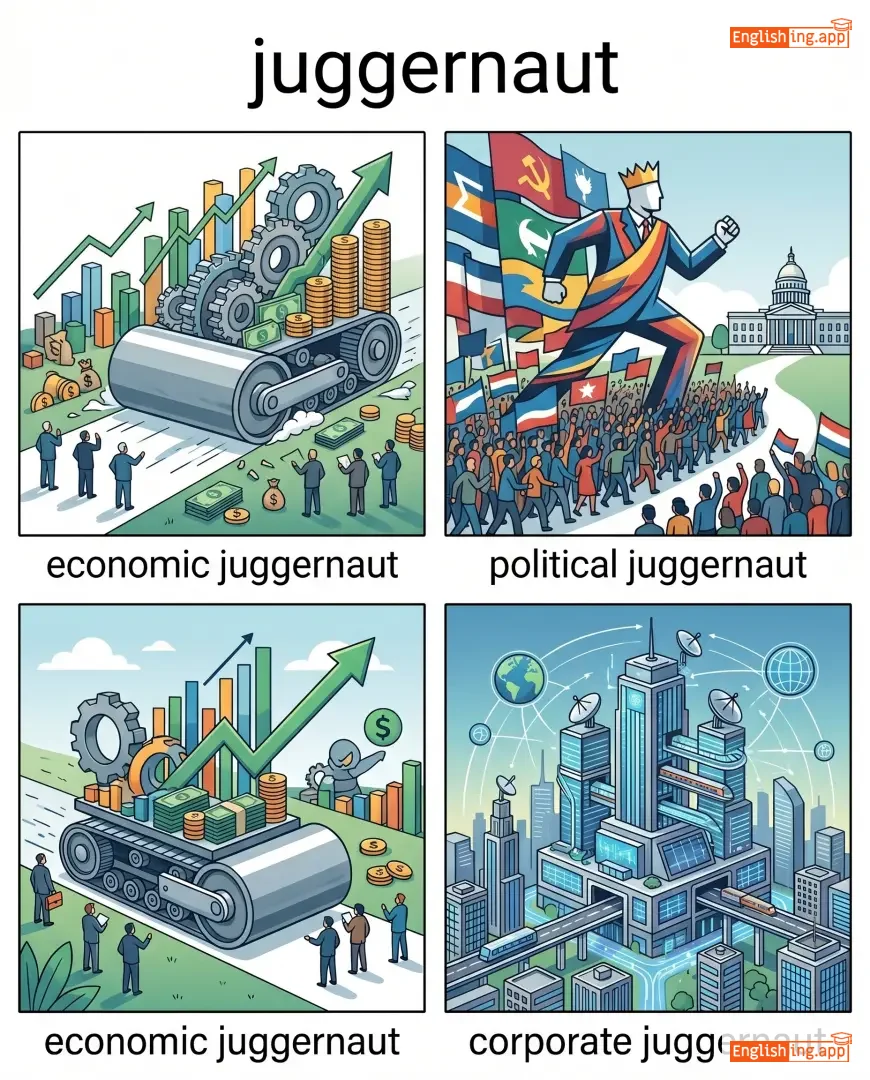
economic juggernaut, political juggernaut, corporate juggernaut
|
Juggernaut es una fuerza tan grande que no se puede detener.
••••••
|
|
🪖
••••••
|
/ˈdʒʊntə/
noun
(junta)
••••••
|
••••••
|
junta militar
junta militar
••••••
|
-
••••••
|
-
••••••
|
-
••••••
|
-
••••••
|
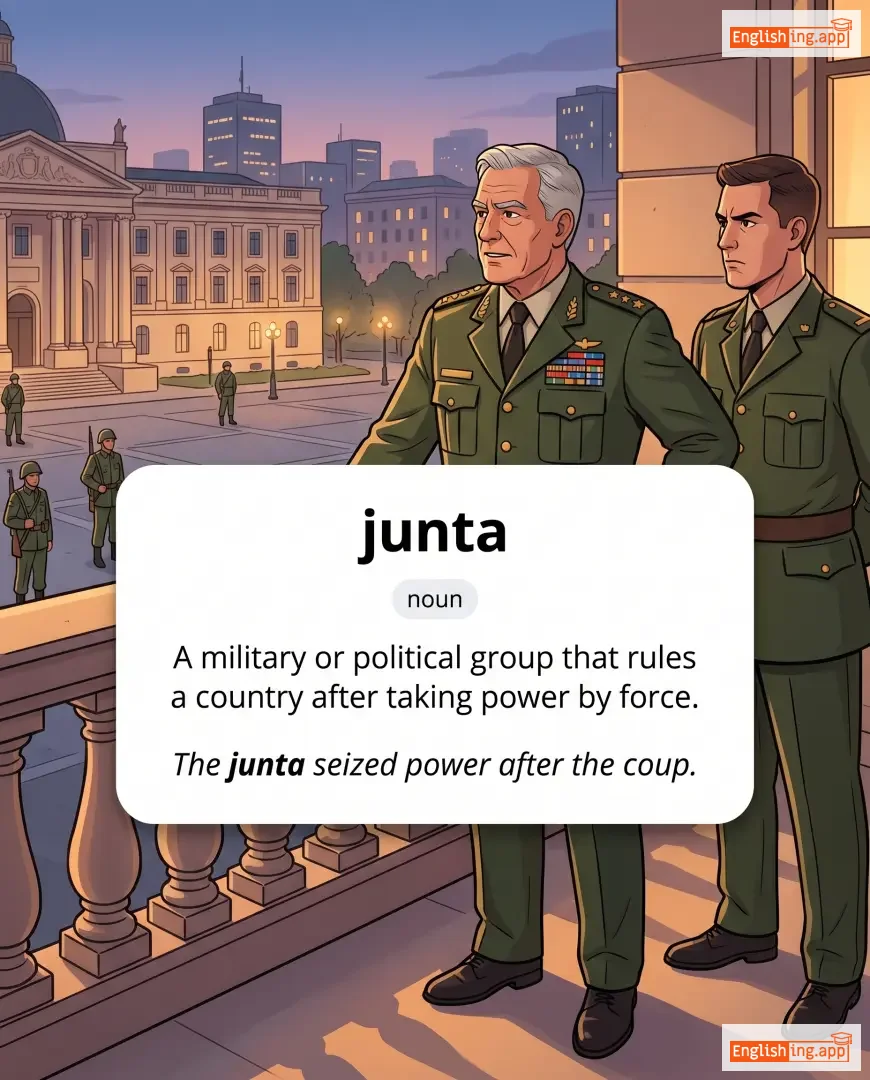
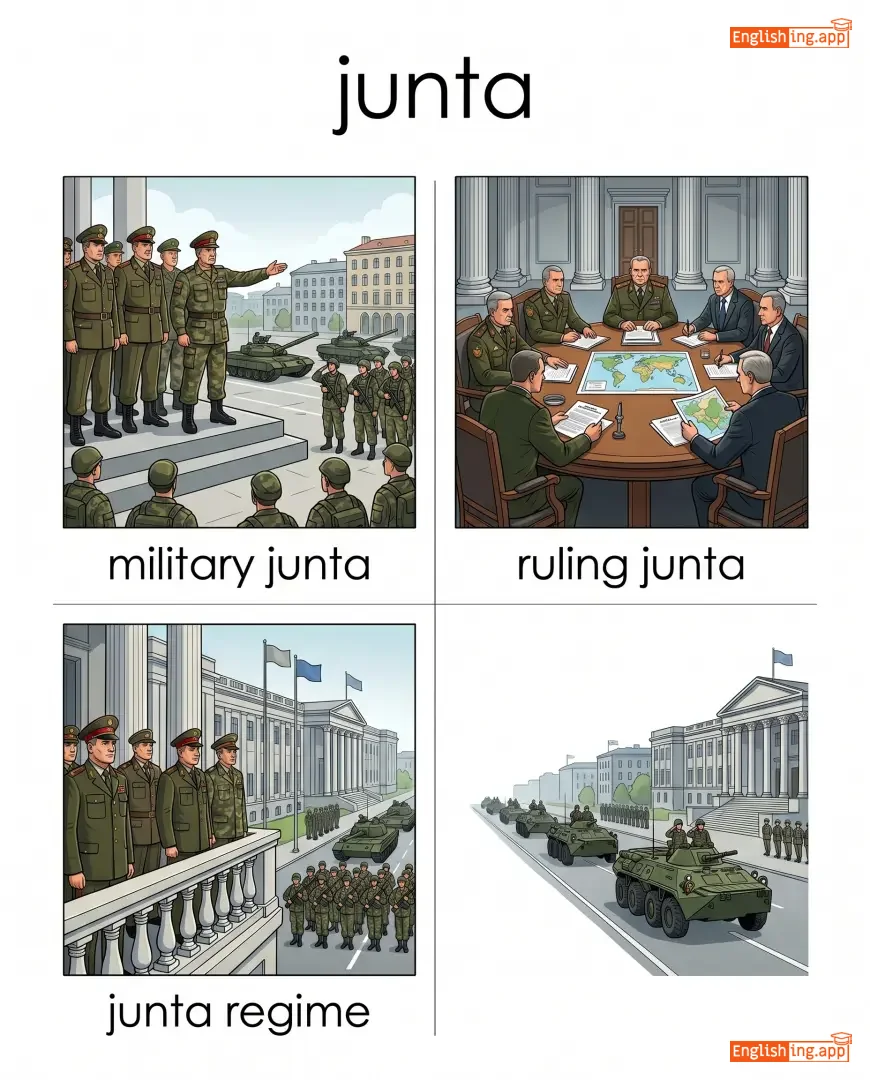
A military or political group that rules a country after taking power by force.
|
The junta seized power after the coup.
••••••
|
La junta tomó el poder después del golpe.
La junta tomó el poder después del golpe.
••••••
|
-
••••••
|
-
••••••
|
-
••••••
|
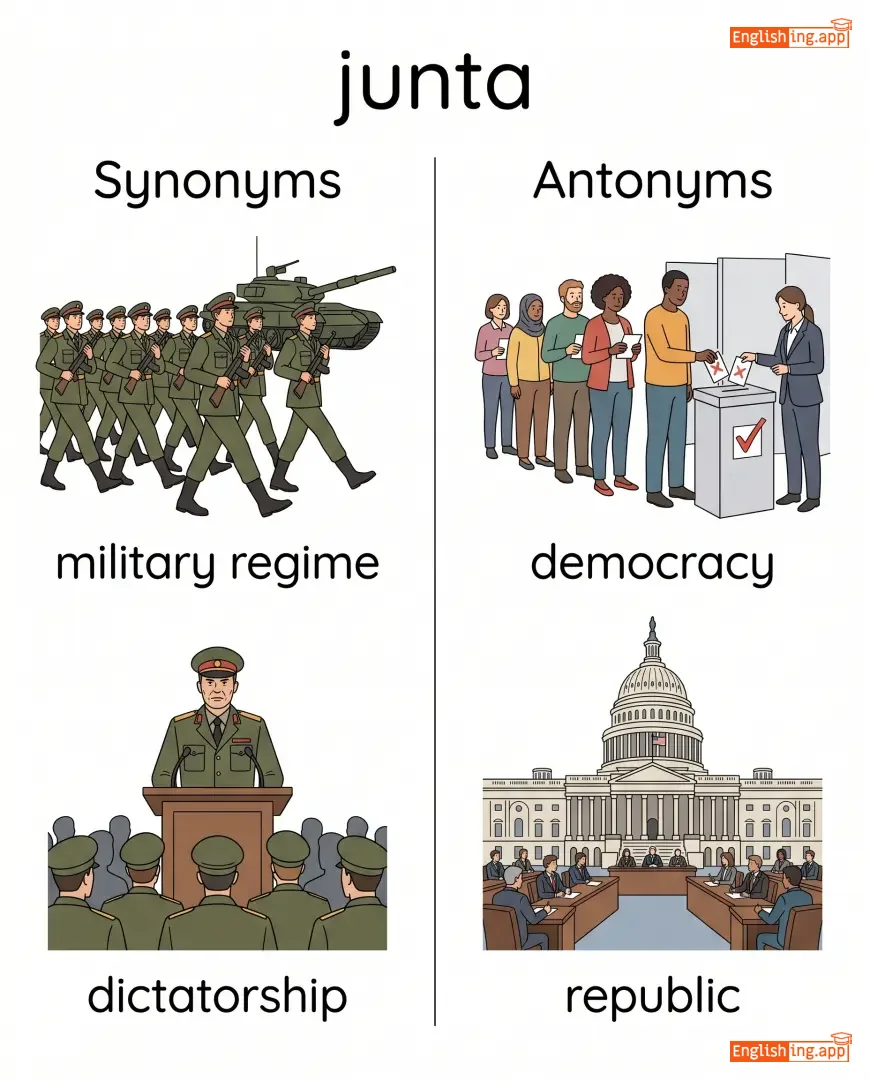
military regime, dictatorship, council, committee
|
••••••
|
military junta, ruling junta, junta regime
|
Junta se refiere a un grupo militar que toma el poder, como un golpe en junio.
••••••
|
|
🖼️
••••••
|
/ˈdʒʌkstəˌpoʊz/
verb
(yukstapóz)
••••••
|
••••••
|
colocar cosas juntas para comparar o contrastar
colocar cosas juntas para comparar o contrastar
••••••
|
yukstapózdo
••••••
|
yukstapózdo
••••••
|
yukstapósez
••••••
|
yukstapózing
••••••
|
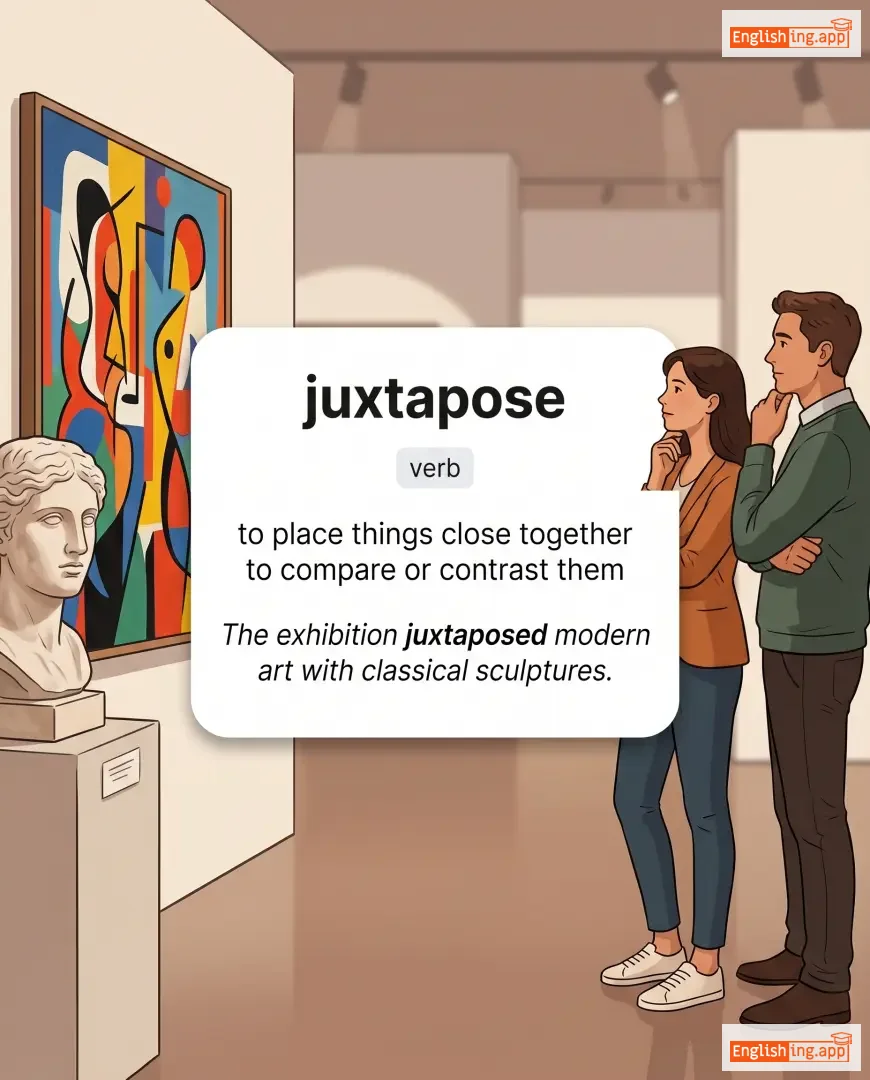
to place things close together to compare or contrast them
|
The exhibition juxtaposed modern art with classical sculptures.
La exhibición juxtapuso el arte moderno con esculturas clásicas.
••••••
|
La exhibición colocó arte moderno junto con esculturas clásicas.
La exhibición colocó arte moderno junto con esculturas clásicas.
••••••
|
-
••••••
|
-
••••••
|
-
••••••
|
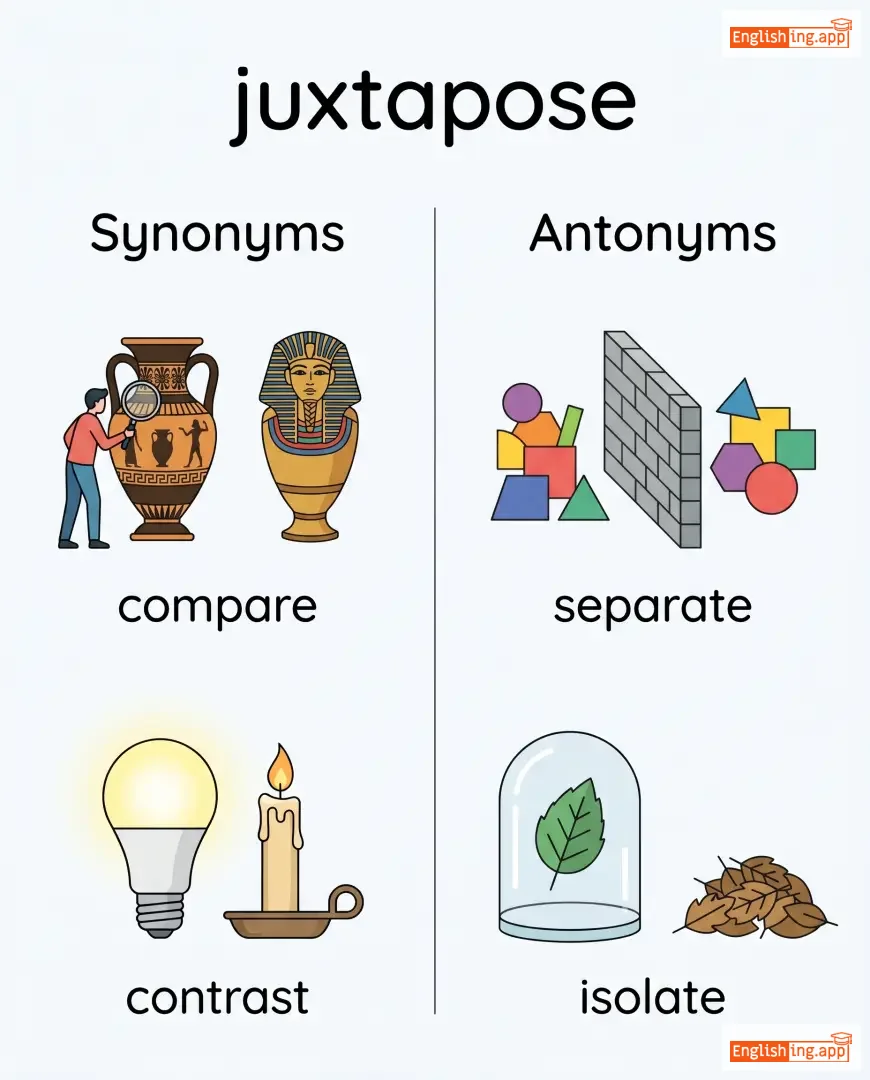
compare, contrast, place side by side, pair
|
••••••
|
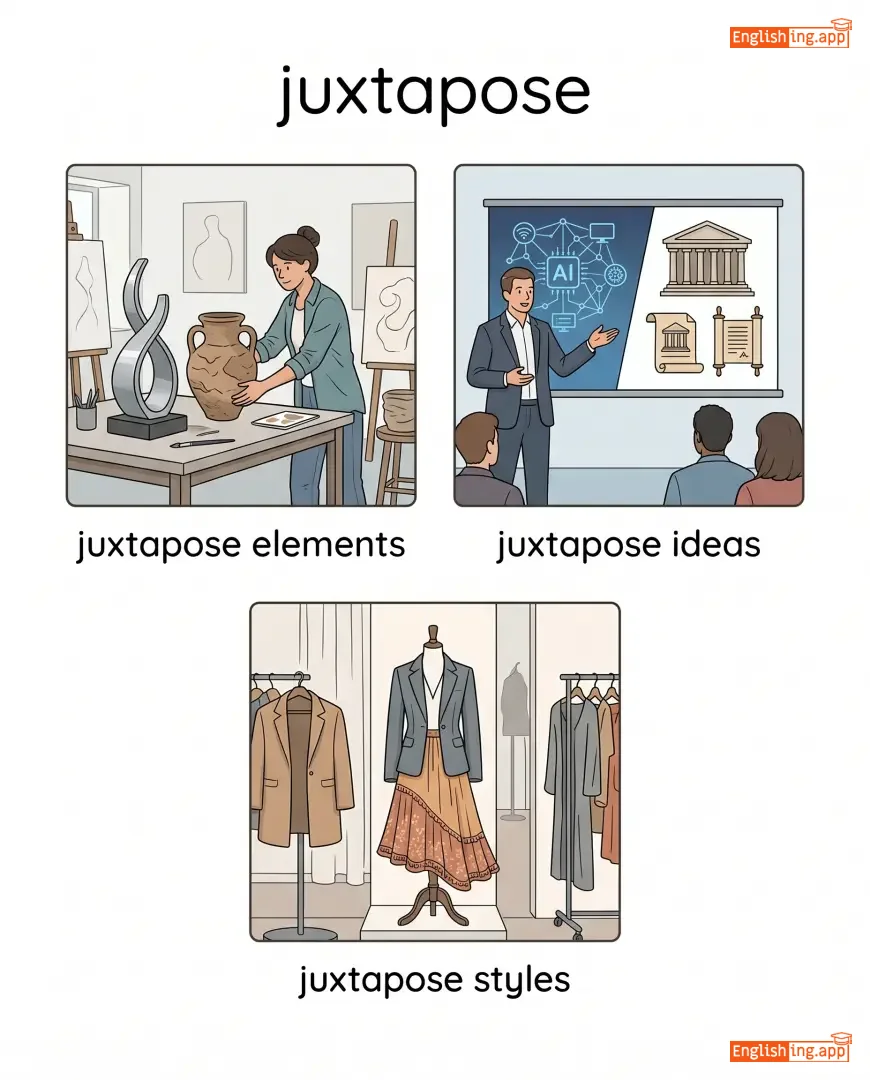
juxtapose elements, juxtapose ideas, juxtapose styles
|
Juxtapose significa colocar cosas juntas — Just coloca algo junto y compáralo.
••••••
|
|
🏆
••••••
|
/ˈkuːdɒs/
noun
(kúdos)
••••••
|
••••••
|
elogio
elogio
••••••
|
-
••••••
|
-
••••••
|
-
••••••
|
-
••••••
|
Praise and honor received for an achievement.
|
She received kudos for her excellent performance.
••••••
|
Ella recibió elogios por su excelente desempeño.
Ella recibió elogios por su excelente desempeño.
••••••
|
-
••••••
|
-
••••••
|
-
••••••
|
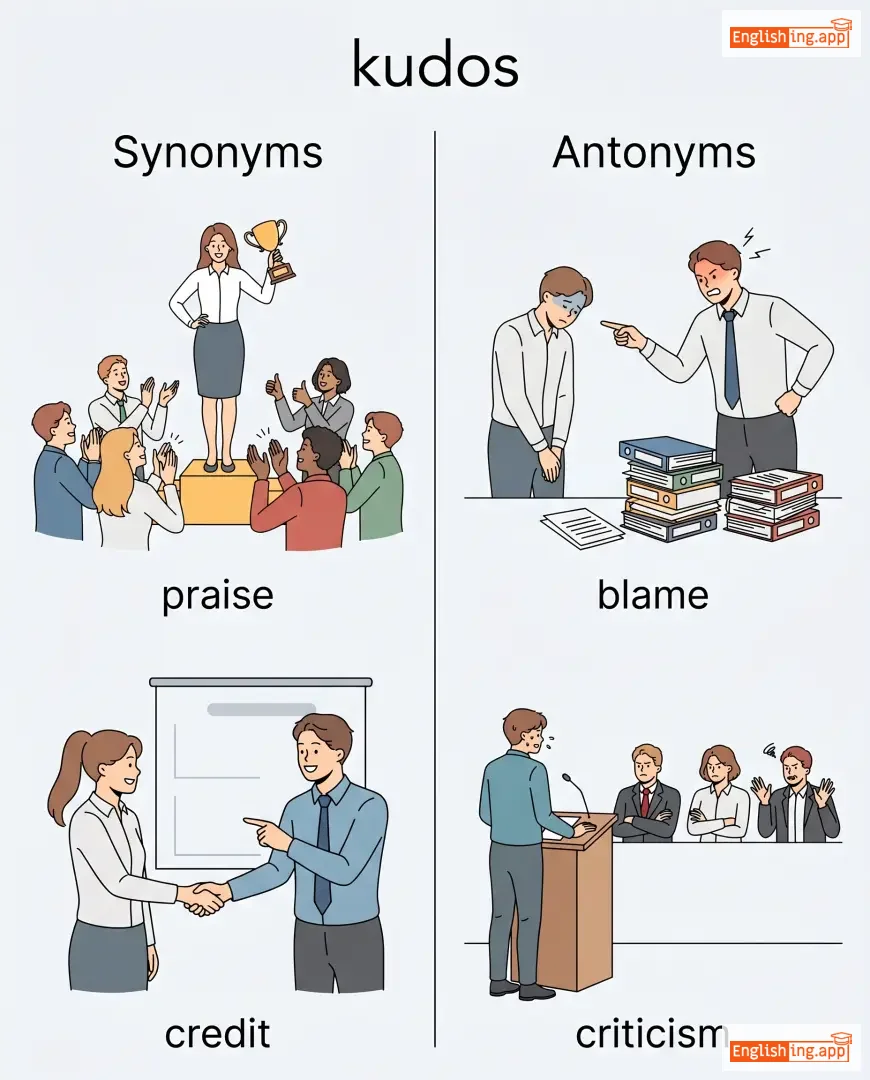
praise, credit, recognition, acclaim, honor
|
blame, criticism, disapproval
|
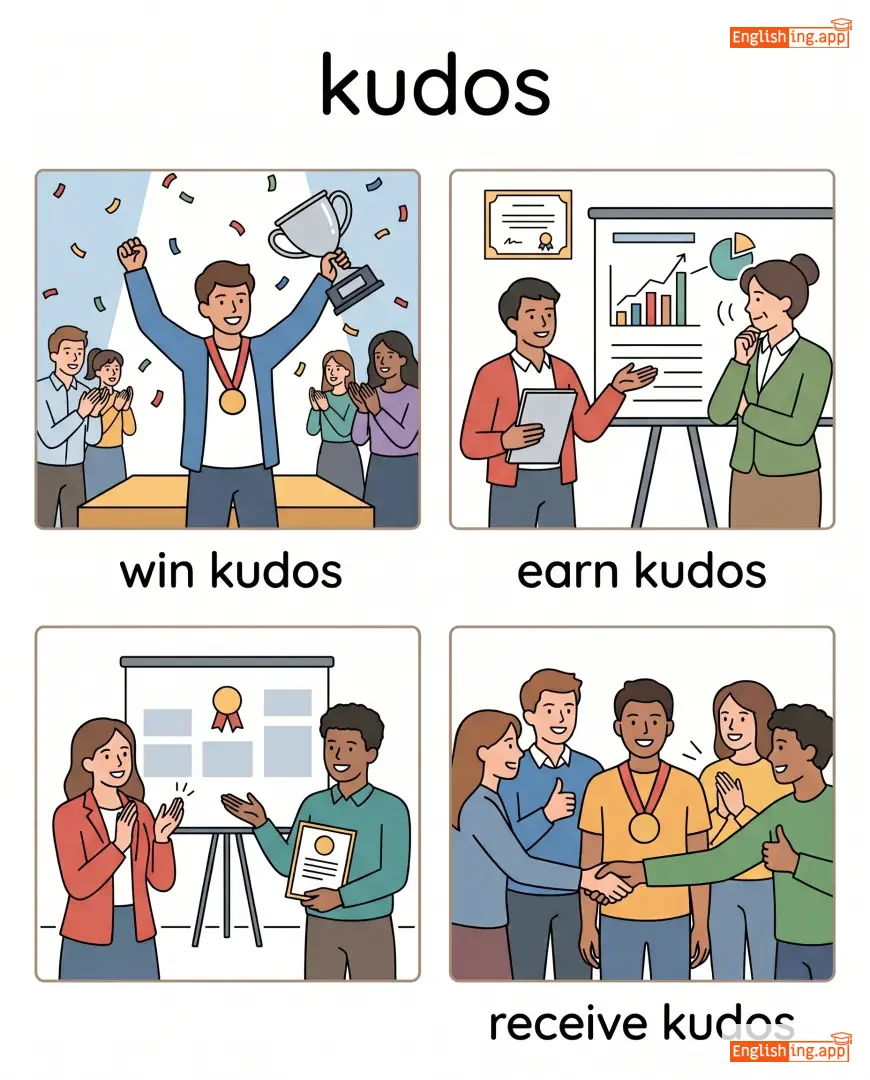
win kudos, earn kudos, receive kudos, kudos from peers
|
Kudos es como un elogio por un logro.
••••••
|
|
⚖️
••••••
|
/ˈleɪ.baɪl/ or /ˈlæb.aɪl/
adjective
(léibail)
••••••
|
••••••
|
inestable
inestable
••••••
|
-
••••••
|
-
••••••
|
-
••••••
|
-
••••••
|
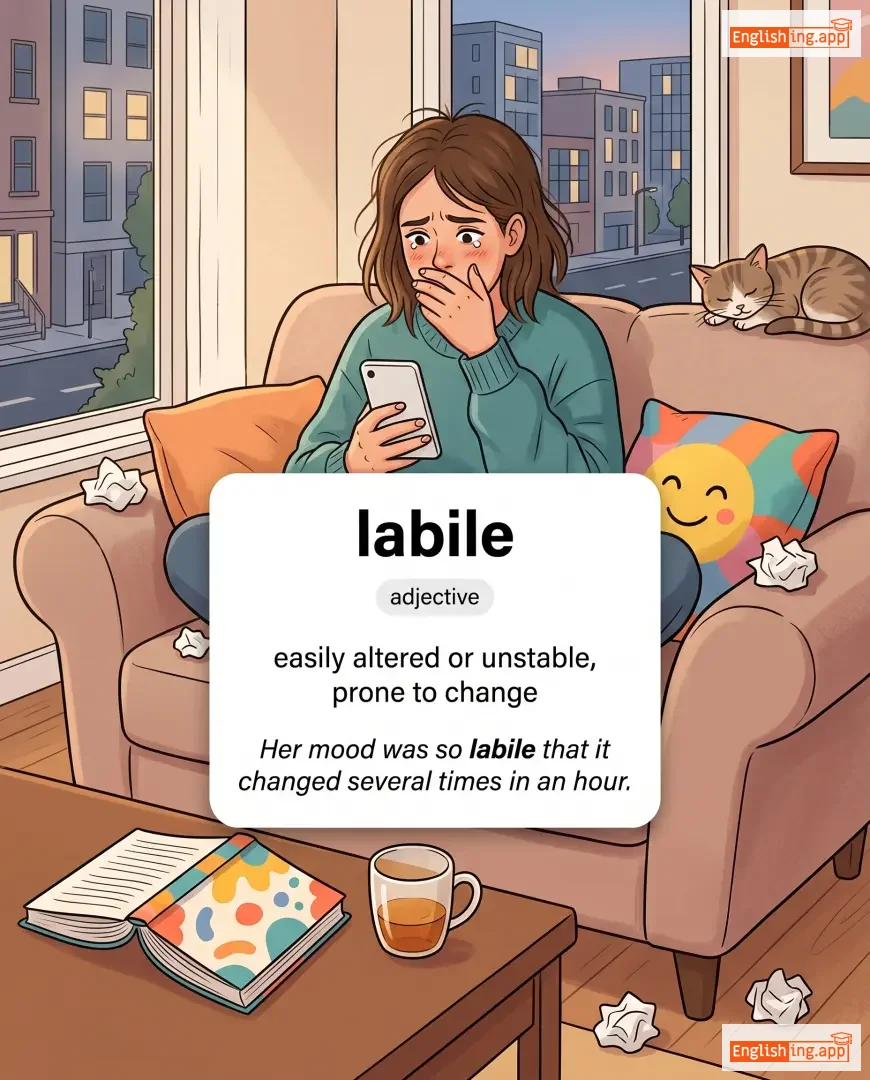
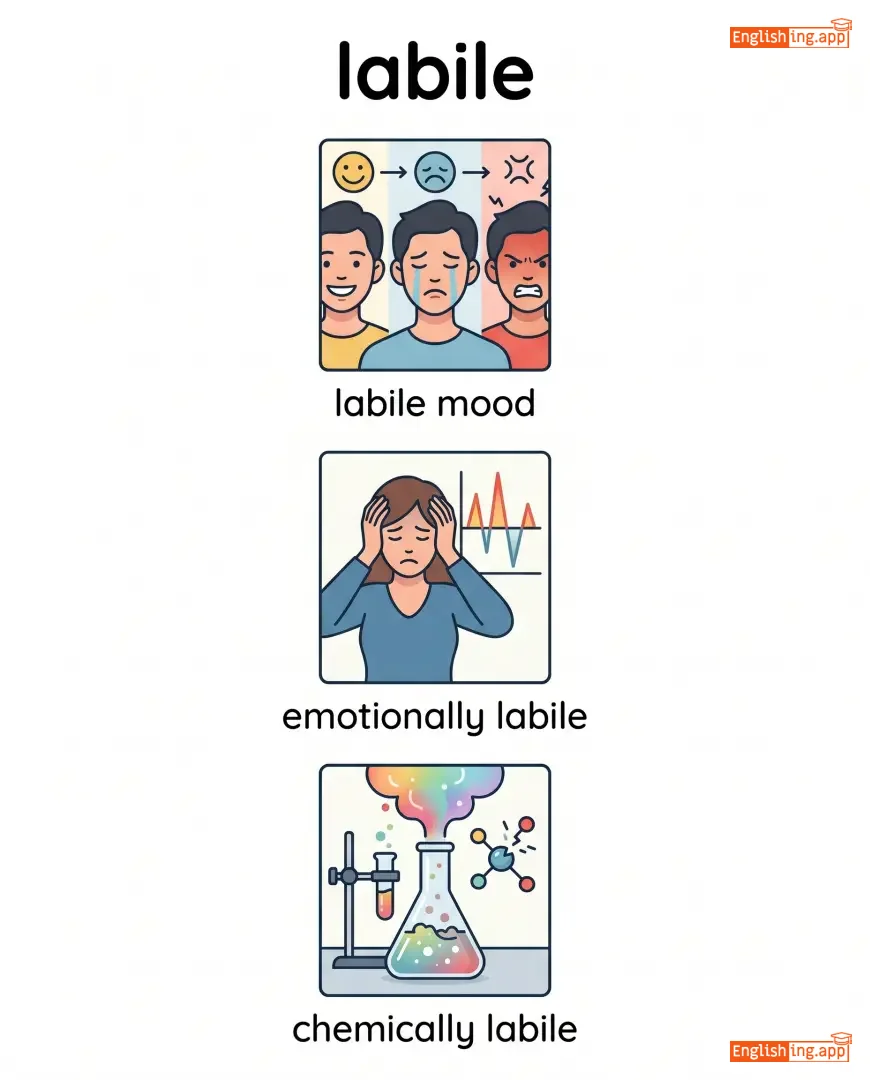
easily altered or unstable; prone to change
|
Her mood was so labile that it changed several times in an hour.
••••••
|
Su estado de ánimo era tan inestable que cambió varias veces en una hora.
Su estado de ánimo era tan inestable que cambió varias veces en una hora.
••••••
|
-
••••••
|
-
••••••
|
-
••••••
|
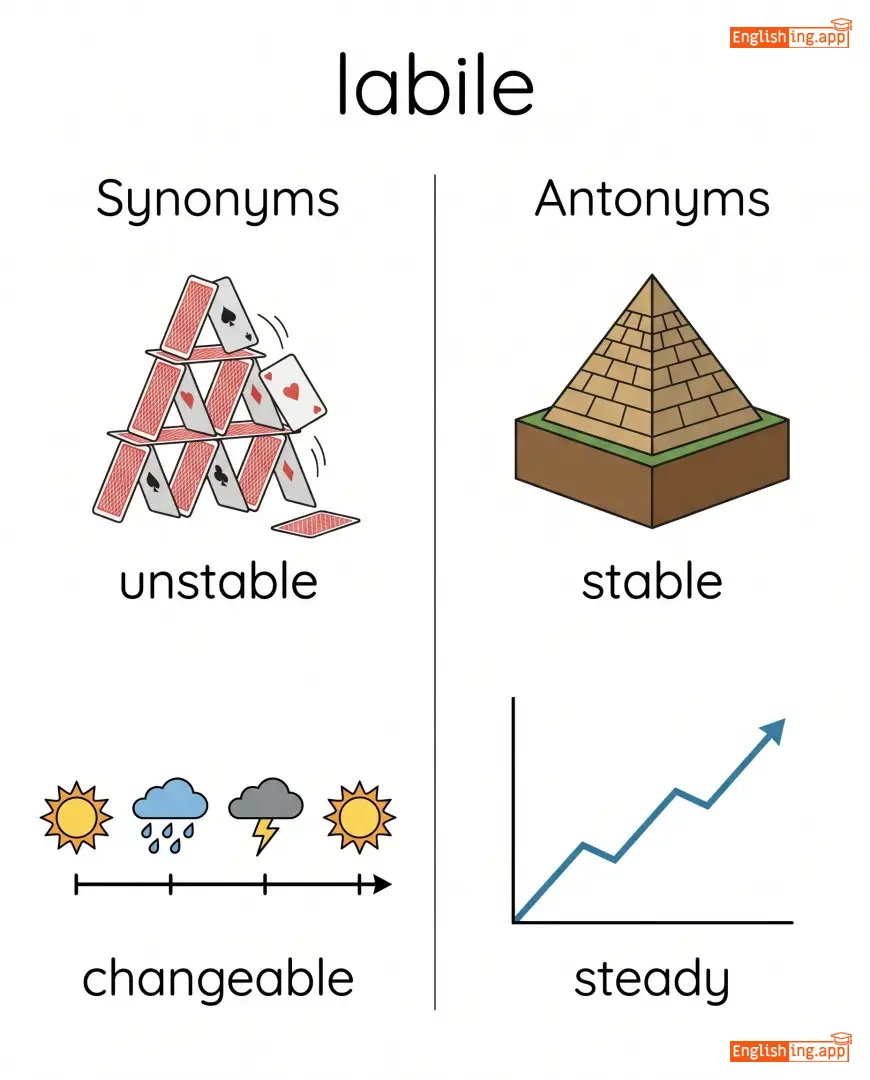
unstable, changeable, volatile, fluctuating
|
••••••
|
labile mood, emotionally labile, chemically labile
|
Labile significa 'liable to change' — como los resultados de laboratorio que son inestables.
••••••
|
|
🤐
••••••
|
/ləˈkɒnɪk/
adjective
(la-kón-ic)
••••••
|
••••••
|
lacónico
laconico
••••••
|
-
••••••
|
-
••••••
|
-
••••••
|
-
••••••
|
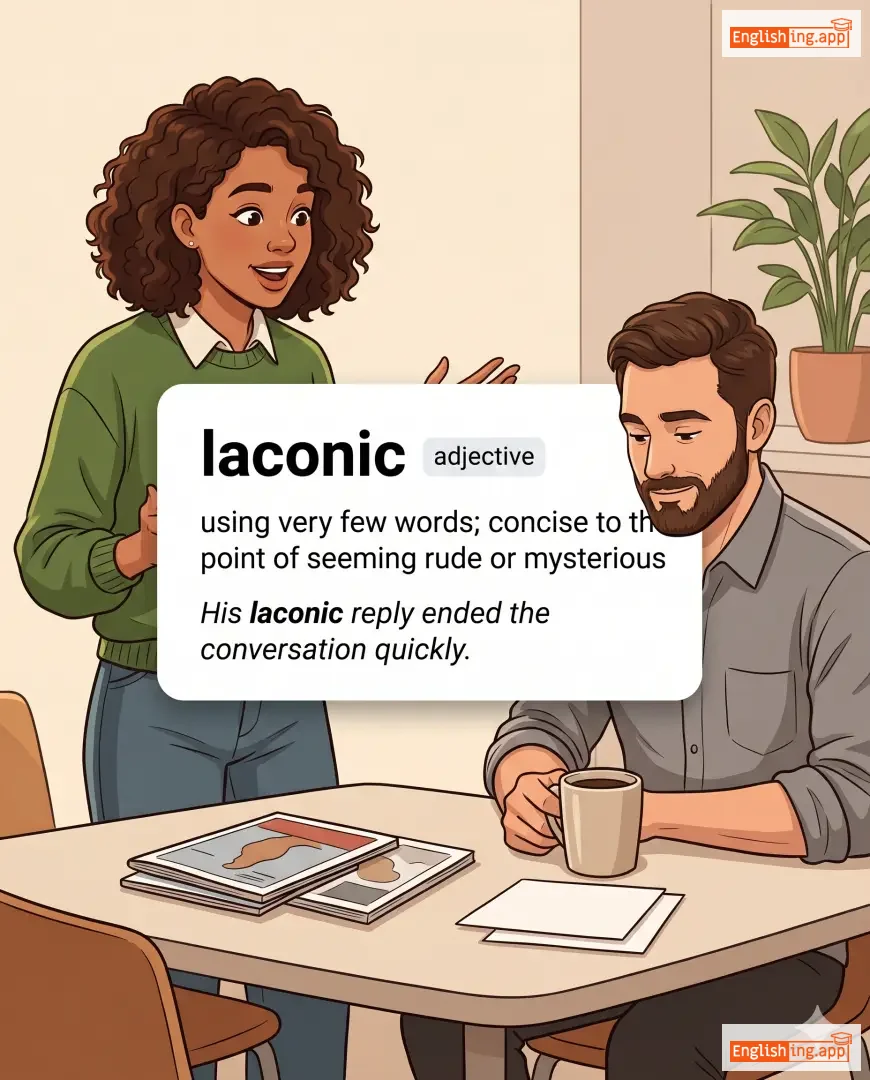
using very few words; concise to the point of seeming rude or mysterious
|
His laconic reply ended the conversation quickly.
••••••
|
Su respuesta lacónica terminó la conversación rápidamente.
Su respuesta lacónica terminó la conversación rápidamente.
••••••
|
-
••••••
|
-
••••••
|
-
••••••
|
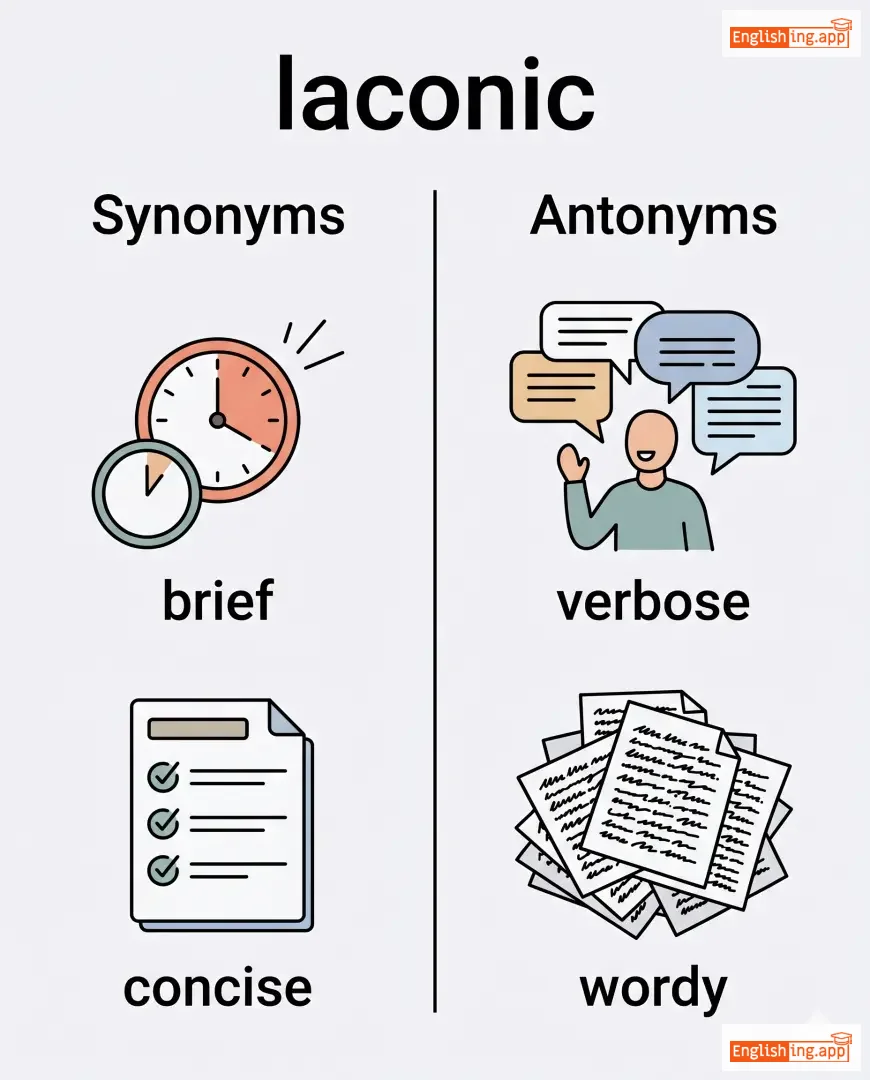
brief, concise, terse, succinct
|
verbose, wordy, talkative
|
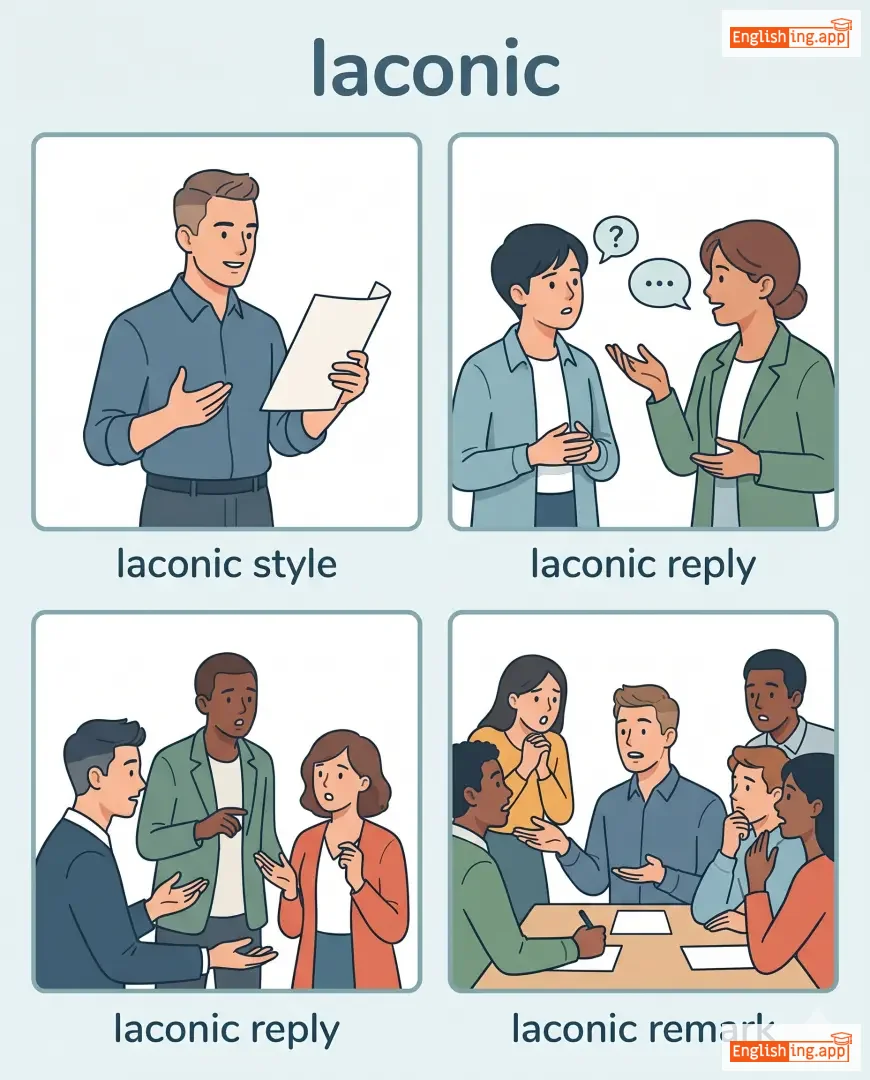
laconic style, laconic reply, laconic remark
|
Lacónico es como 'laconico', habla poco pero llega al punto.
••••••
|
|
💢
••••••
|
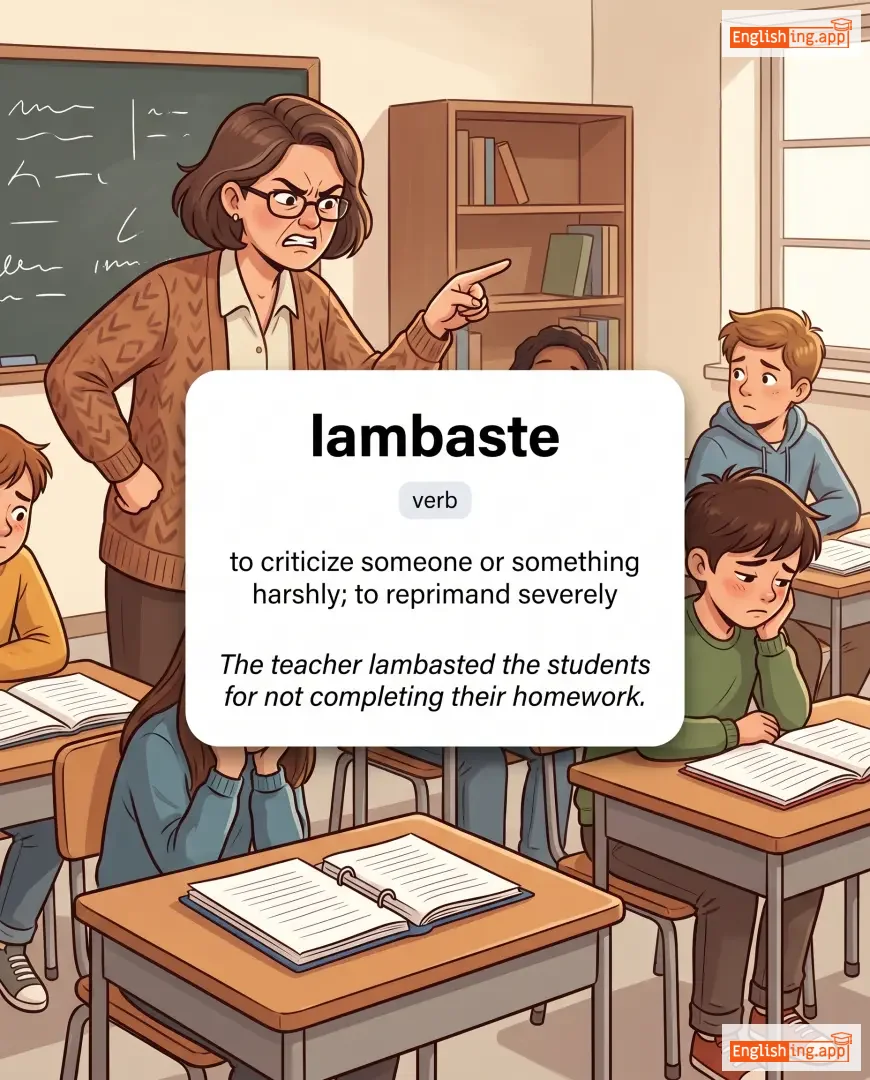
/læmˈbeɪst/
verb
(lambéist)
••••••
|
••••••
|
criticar severamente
criticar severamente
••••••
|
lambásted
••••••
|
lambásted
••••••
|
lambástes
••••••
|
lambásting
••••••
|
to criticize someone or something harshly; to reprimand severely
|
The teacher lambasted the students for not completing their homework.
El maestro lambastó a los estudiantes por no completar su tarea.
••••••
|
El maestro criticó severamente a los estudiantes por no completar su tarea.
El maestro critico severamente a los estudiantes por no completar su tarea.
••••••
|
-
••••••
|
-
••••••
|
-
••••••
|
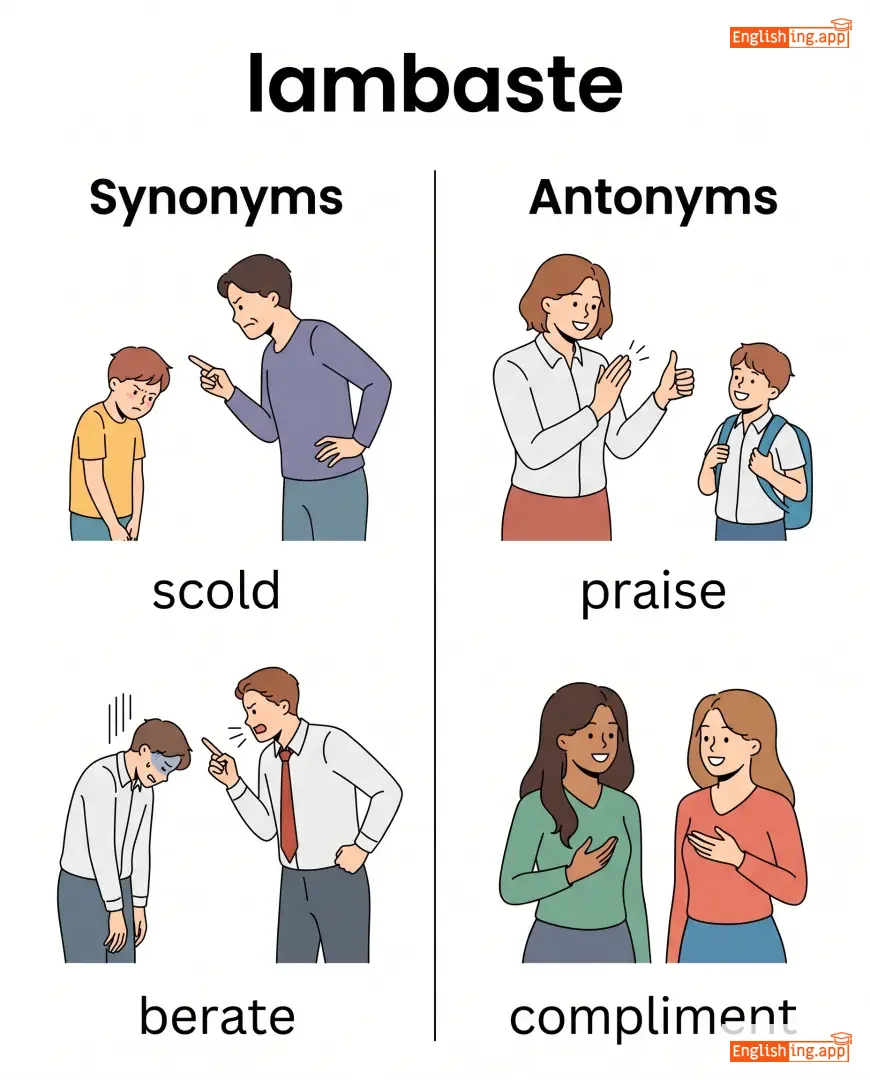
scold, berate, chastise, rebuke, criticize
|
praise, compliment, applaud
|
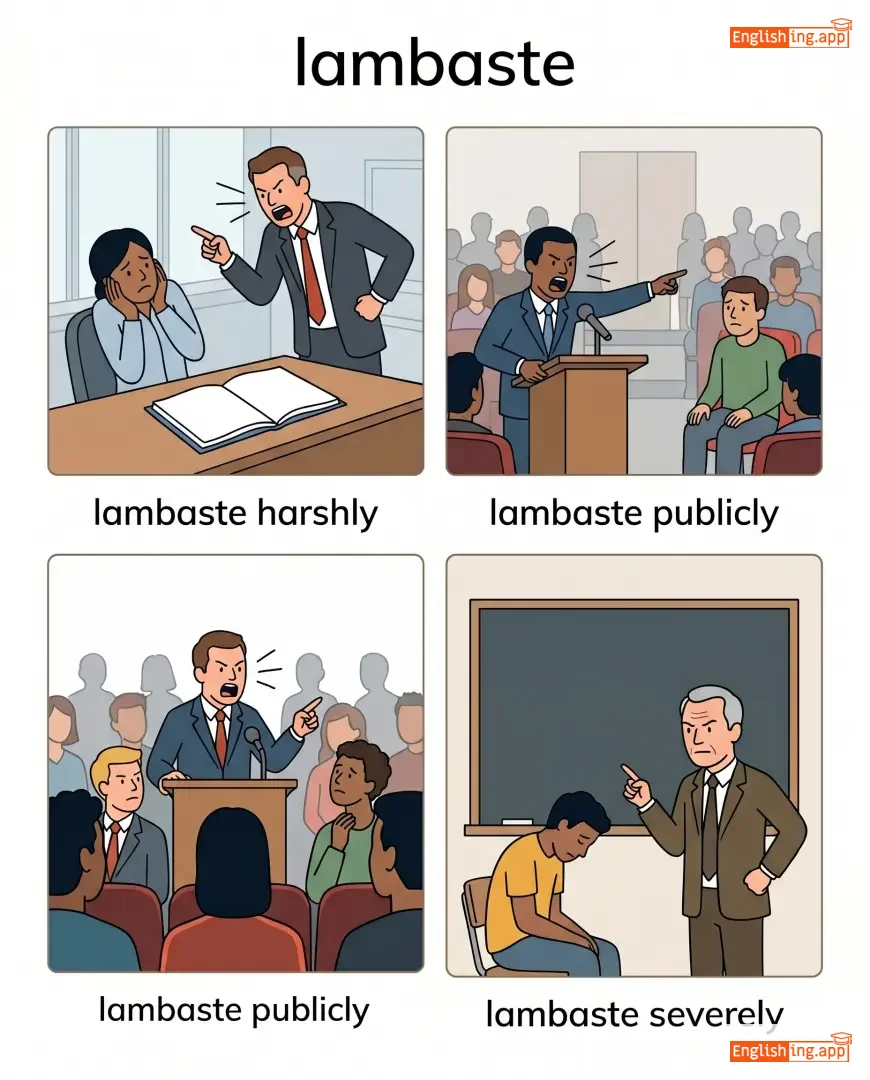
lambaste harshly, lambaste publicly, lambaste severely
|
Lambaste suena como 'lam' (golpear) y 'baste' (intensamente) - lambaste significa criticar con fuerza.
••••••
|