|
表情符号
|
单词 | Images | 翻译 | 过去时 | 过去分词 | 第三人称单数 | 动名词 | 含义 | 例句 | 例句翻译 | 示例表达 | 示例表达含义 | 示例表达翻译 | 同义词 | 反义词 | 搭配词 | 助记符 |
|---|---|---|---|---|---|---|---|---|---|---|---|---|---|---|---|---|---|
|
🎭
••••••
|
/ˌhɪstriˈɒnɪk/
adjective
••••••
|


|
- •••••• | - •••••• | - •••••• | - •••••• | - •••••• |
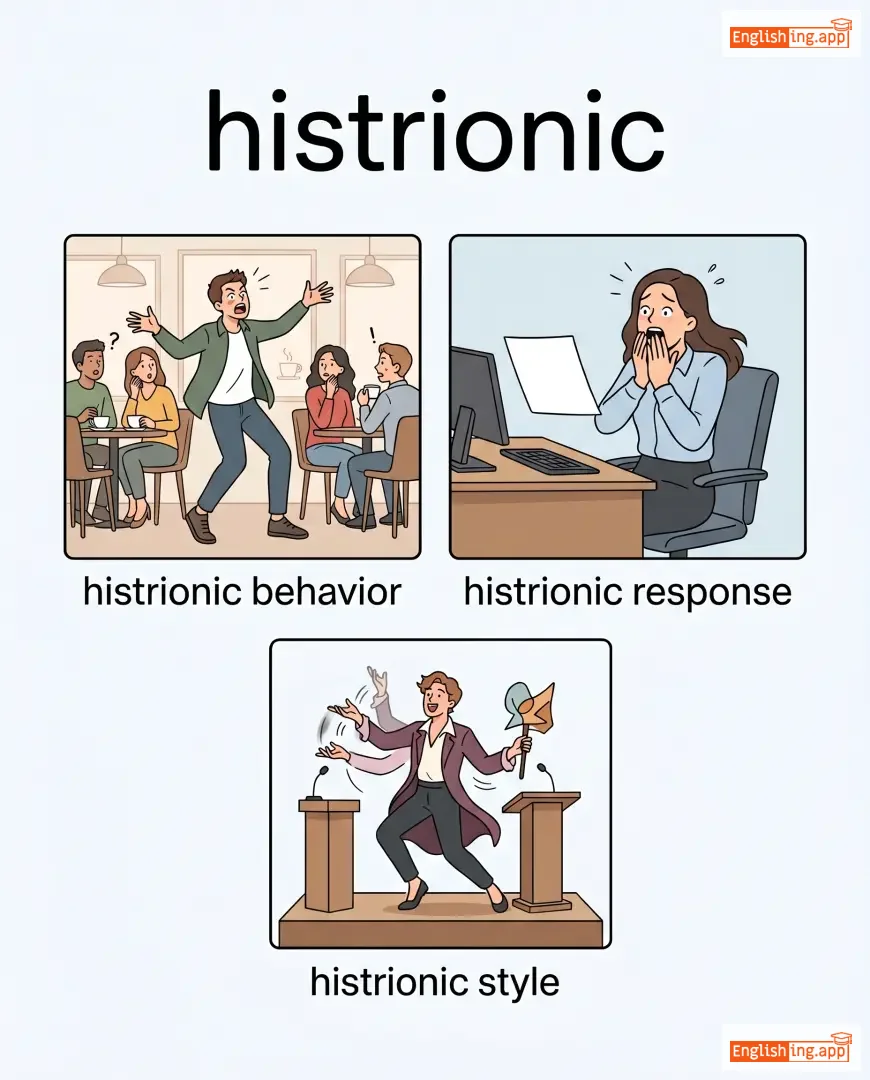
Overly dramatic or theatrical in behavior or style.
••••••
|
Her histrionic reaction to the small problem surprised everyone. |
- •••••• |
histrionic behavior |
Excessively dramatic behavior
••••••
|
- •••••• |
dramatic, theatrical, exaggerated, overacting, showy
••••••
|
natural, restrained, calm
••••••
|
histrionic behavior, histrionic response, histrionic style, histrionic personality
••••••
|
No •••••• |
|
⚖️
••••••
|
/ˌhoʊmi.oʊˈsteɪsɪs/
noun
(荷美欧斯塔西斯)
••••••
|

|
体内平衡
tǐ nèi píng héng
••••••
|
- •••••• | - •••••• | - •••••• | - •••••• |
The ability of a living system or organism to maintain internal stability despite changes in external conditions.
••••••
|
Sweating helps the body maintain homeostasis in hot weather. |
出汗有助于身体在炎热天气中保持体内平衡。
Chū hàn yǒuzhù yú shēntǐ zài yánrè tiānqì zhōng bǎochí tǐ nèi píng héng.
••••••
|
- •••••• | - •••••• | - •••••• |
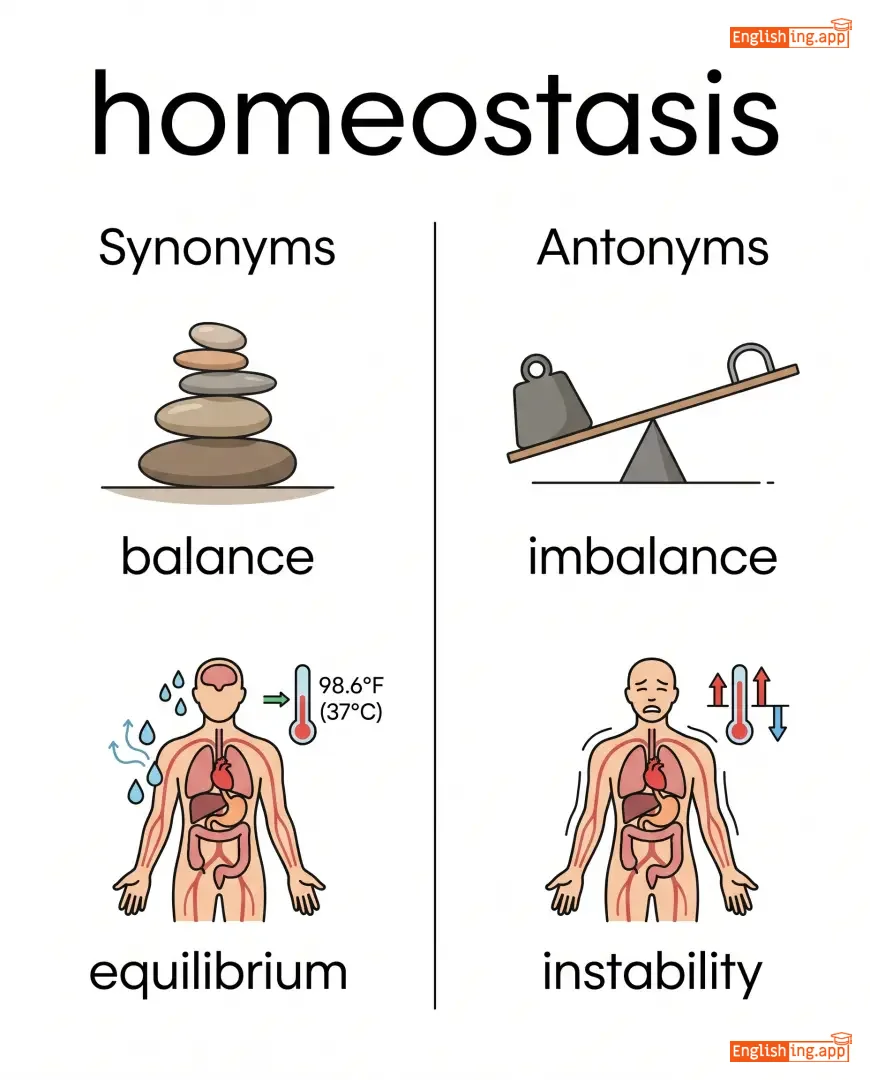
balance, equilibrium, stability, regulation
••••••
|
imbalance, instability
••••••
|
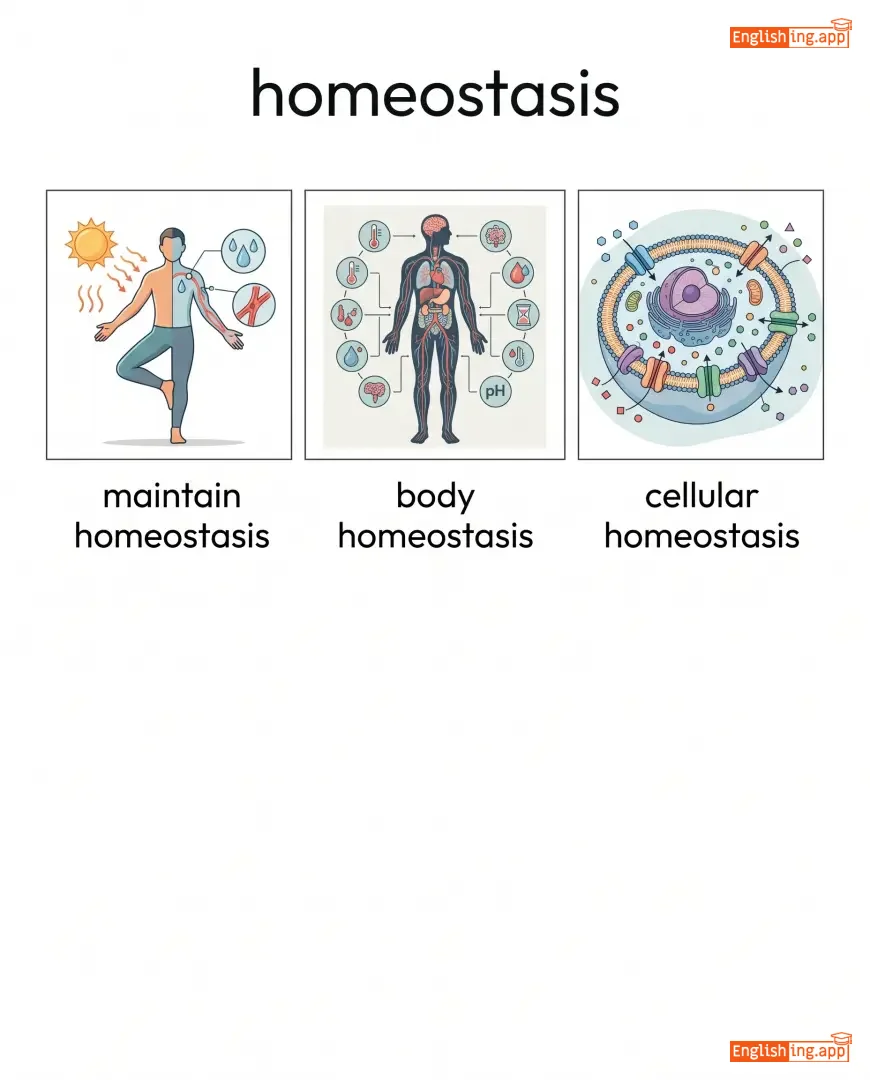
maintain homeostasis, body homeostasis, cellular homeostasis
••••••
|
体内平衡就像家里的平衡(homeostasis)。
••••••
|
|
⛪
••••••
|
/ˈhɑː.mə.li/
noun
(hóu mí lì)
••••••
|


|
布道; 乏味的道德讲座
budao; fawèi de dàodé jiǎngzuò
••••••
|
- •••••• | - •••••• | - •••••• | - •••••• |
a religious discourse delivered as part of a church service; a tedious moralizing lecture
••••••
|
The priest delivered an inspiring homily about compassion and forgiveness during Sunday service. |
牧师在星期天的礼拜中发表了关于同情和宽恕的鼓舞人心的布道。
Mùshī zài xīngqītiān de lǐbài zhōng fābiǎo le guānyú tóngqíng hé kuānshù de gǔwǔ rénxīn de bùdào.
••••••
|
- •••••• | - •••••• | - •••••• |
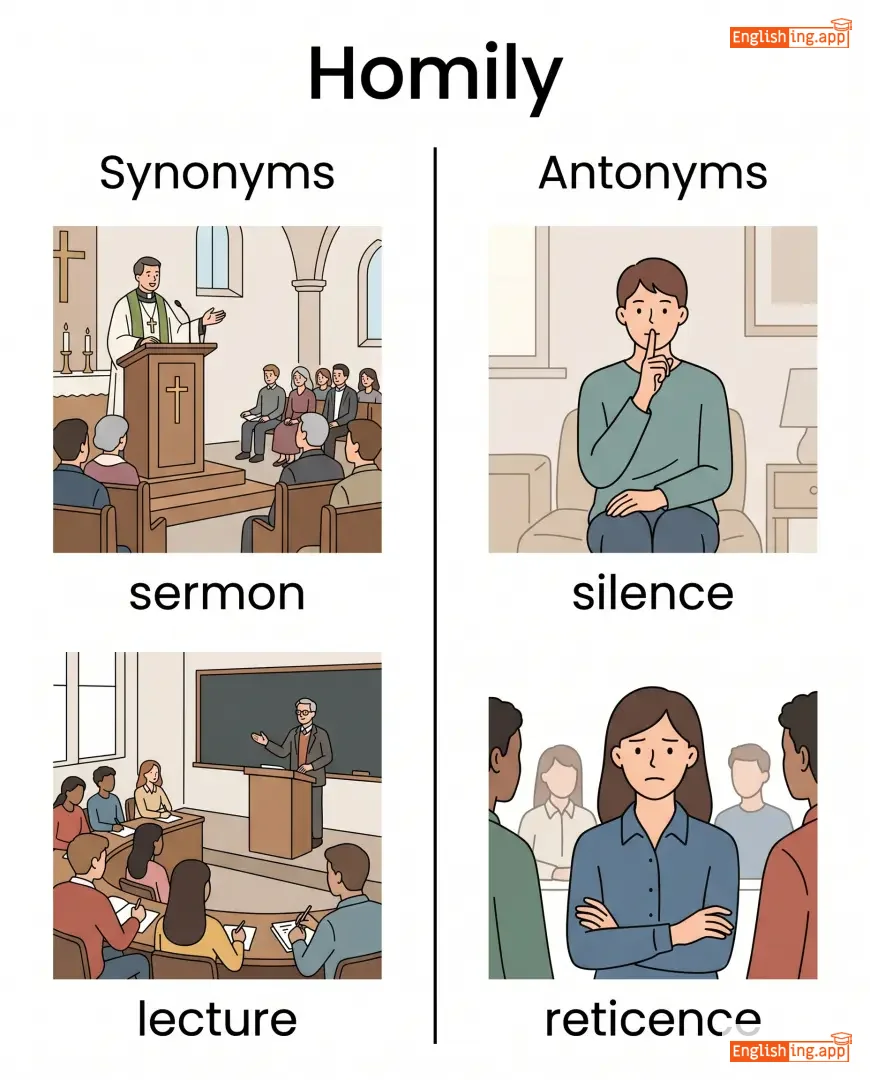
sermon, lecture, discourse, preaching
••••••
|
silence, quiet, wordlessness, muteness
••••••
|
Sunday homily, inspiring homily, deliver homily
••••••
|
布道 = 带来道德启示,帮助他人。
••••••
|
|
⚖️
••••••
|
/ˌhoʊ.məˈdʒiː.ni.əs/
adjective
(homoʊˈdʒiːnɪəs)
••••••
|
|
同质
tóngzhì
••••••
|
- •••••• | - •••••• | - •••••• | - •••••• |
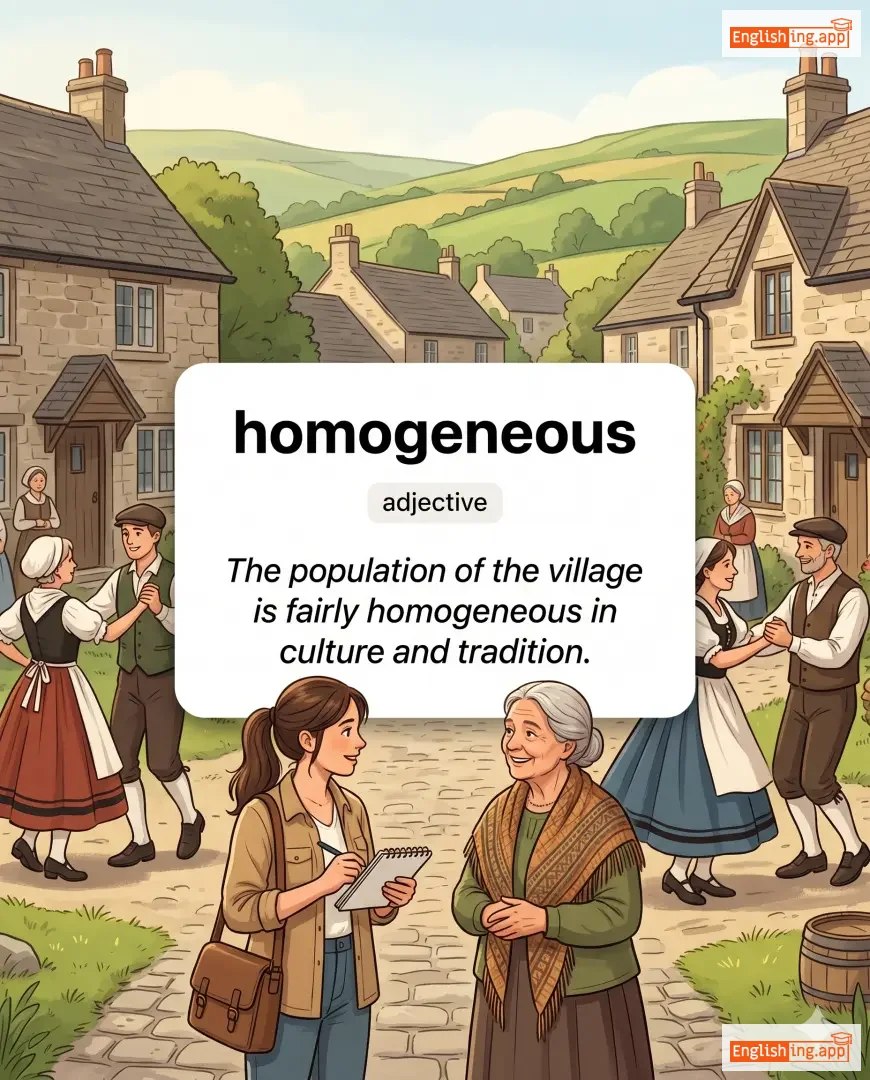
Consisting of parts or elements that are all the same kind; uniform in composition.
••••••
|
The population of the village is fairly homogeneous in culture and tradition.
该村的人口在文化和传统上非常同质化。
••••••
|
该村的人口在文化和传统上非常同质化。
Gāi cūn de rénkǒu zài wénhuà hé chuántǒng shàng fēicháng tóngzhìhuà.
••••••
|
- •••••• | - •••••• | - •••••• |
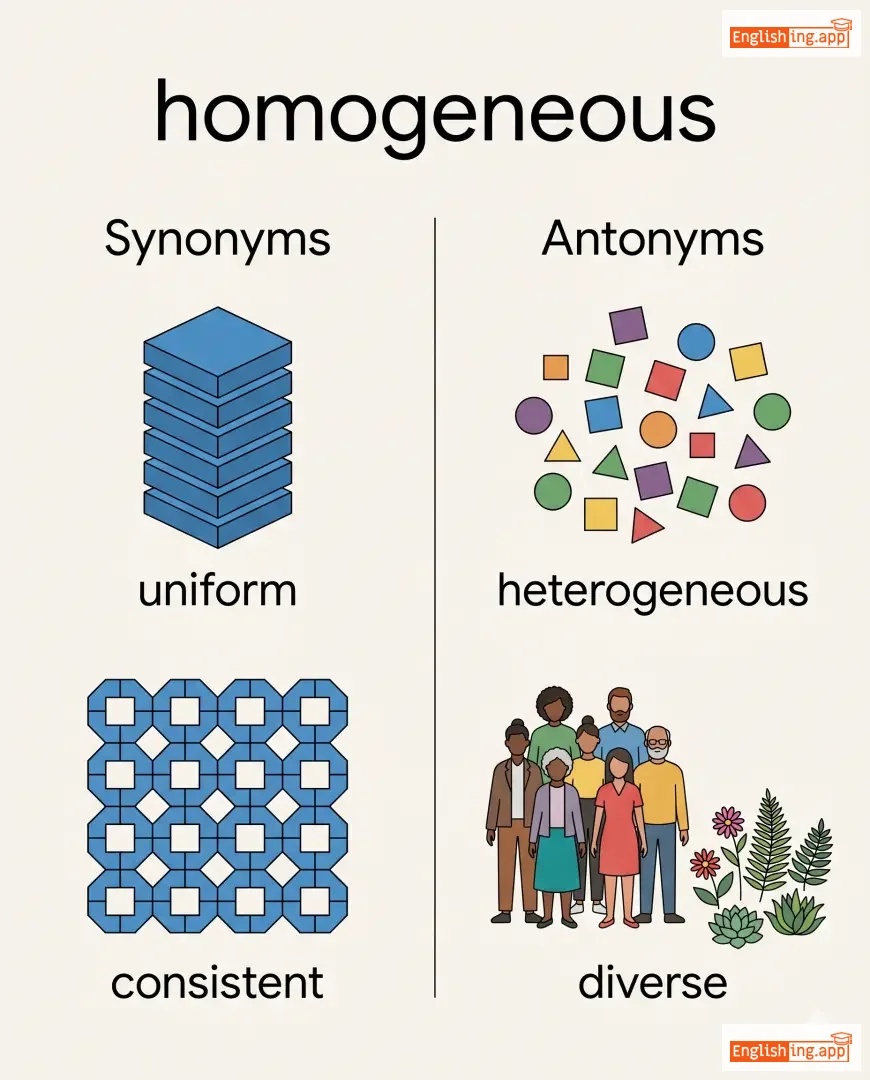
uniform, consistent, alike, identical, standardized
••••••
|
heterogeneous, diverse, varied
••••••
|
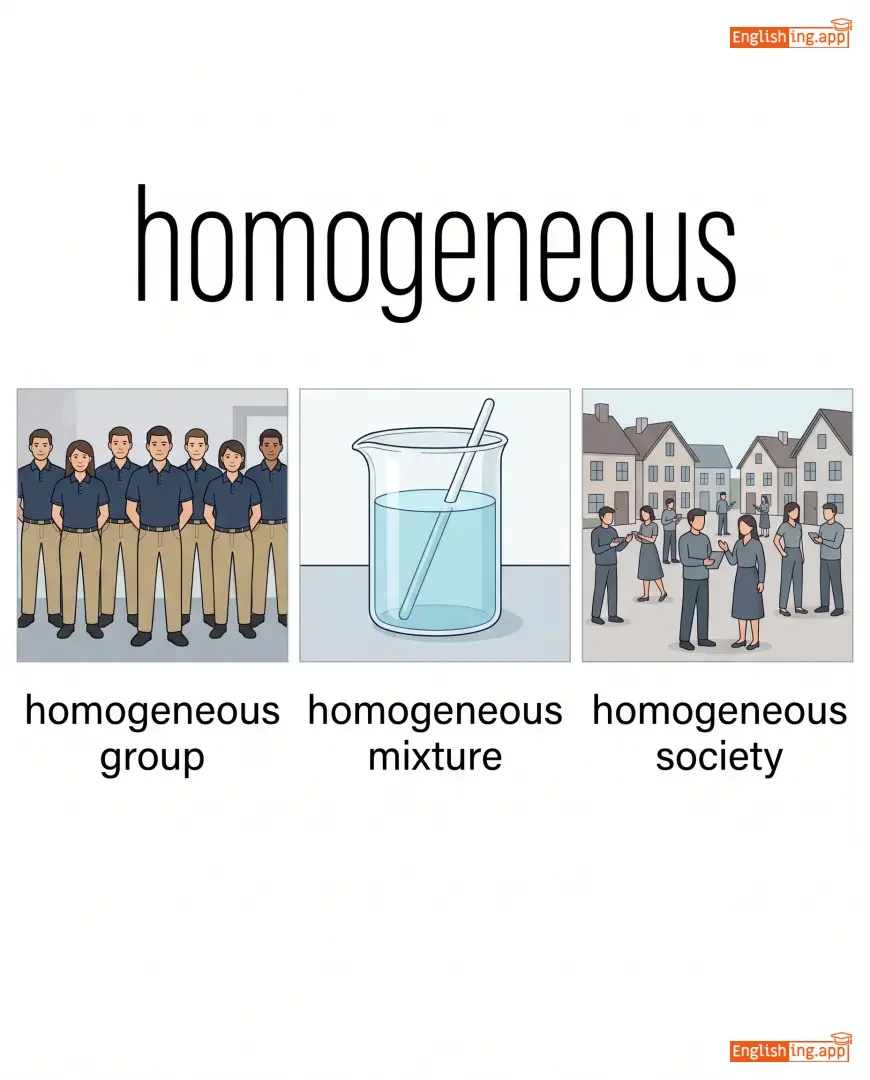
homogeneous group, homogeneous mixture, homogeneous society, homogeneous culture
••••••
|
HOMO意味着相同,因此同质意味着一切都是一样的(tóngzhì)。
••••••
|
|
📢
••••••
|
/haɪˈpɜːrbəli/
noun
••••••
|

|
- •••••• | - •••••• | - •••••• | - •••••• | - •••••• |
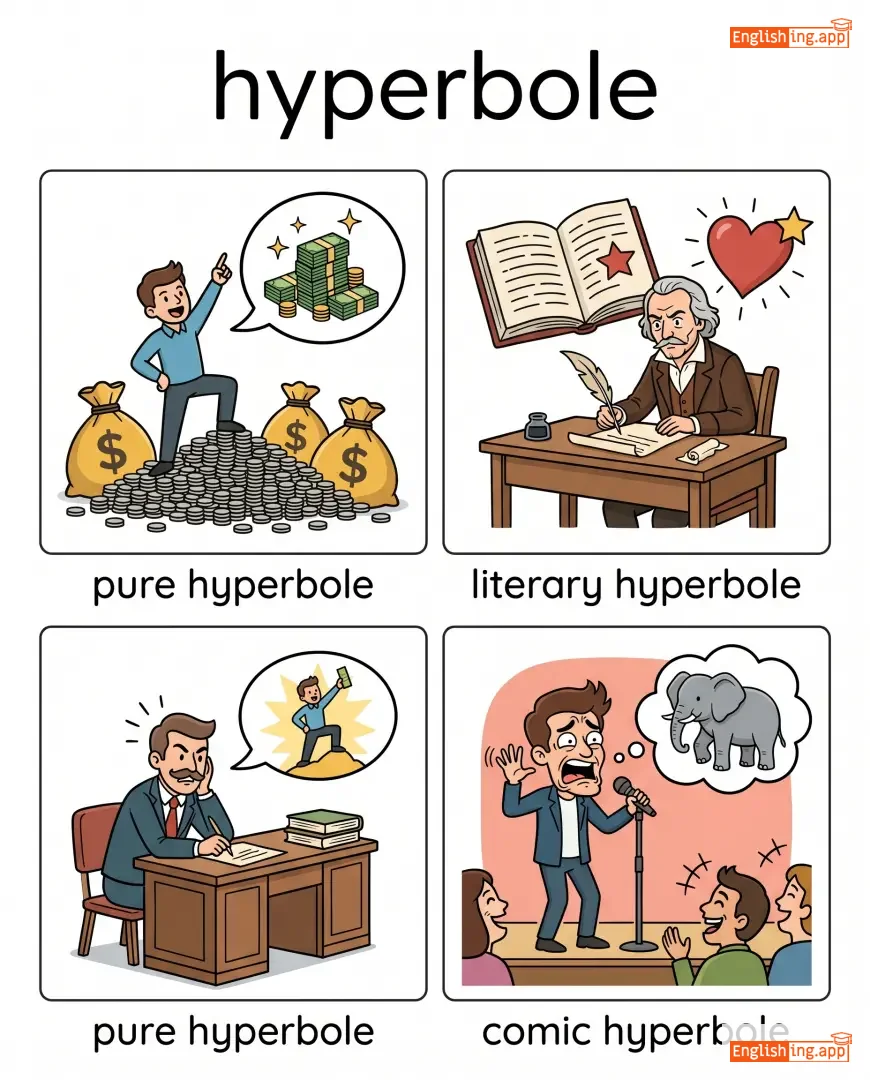
Exaggerated statements or claims not meant to be taken literally.
••••••
|
Saying he could run a thousand miles in a day is pure hyperbole. |
- •••••• |
it's not hyperbole |
An exaggerated claim that is actually true or close to reality
••••••
|
- •••••• |
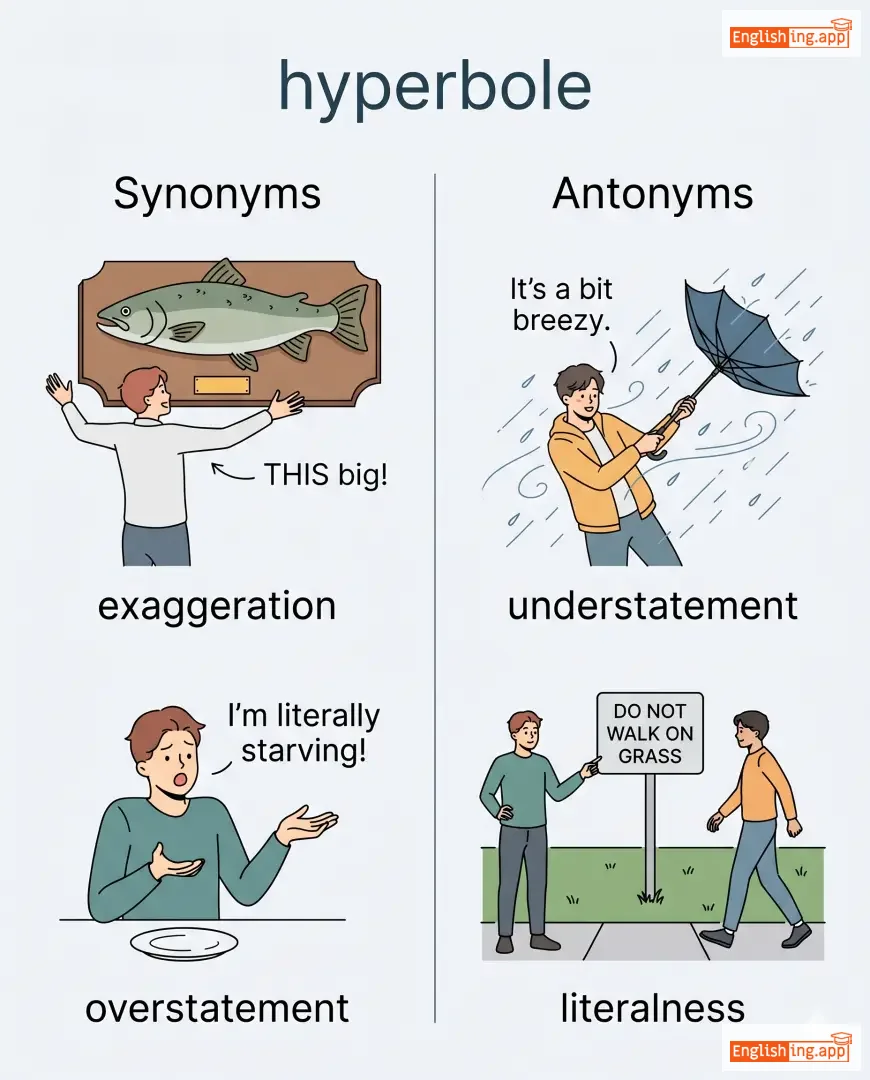
exaggeration, overstatement, amplification, embellishment
••••••
|
understatement, literalness
••••••
|
pure hyperbole, literary hyperbole, comic hyperbole, use of hyperbole
••••••
|
No •••••• |
|
⚡
••••••
|
/ˌaɪ.kə.nəˈklæs.tɪk/
adjective
(aɪˌkɒnəˈklæstɪk)
••••••
|
|
特指攻击或拒绝已建立的信仰、传统或价值观
tè zhǐ gōng jī huò jù jué yǐ jiàn lì de xìn yǎng, chuán tǒng huò jià zhí guān
••••••
|
- •••••• | - •••••• | - •••••• | - •••••• |
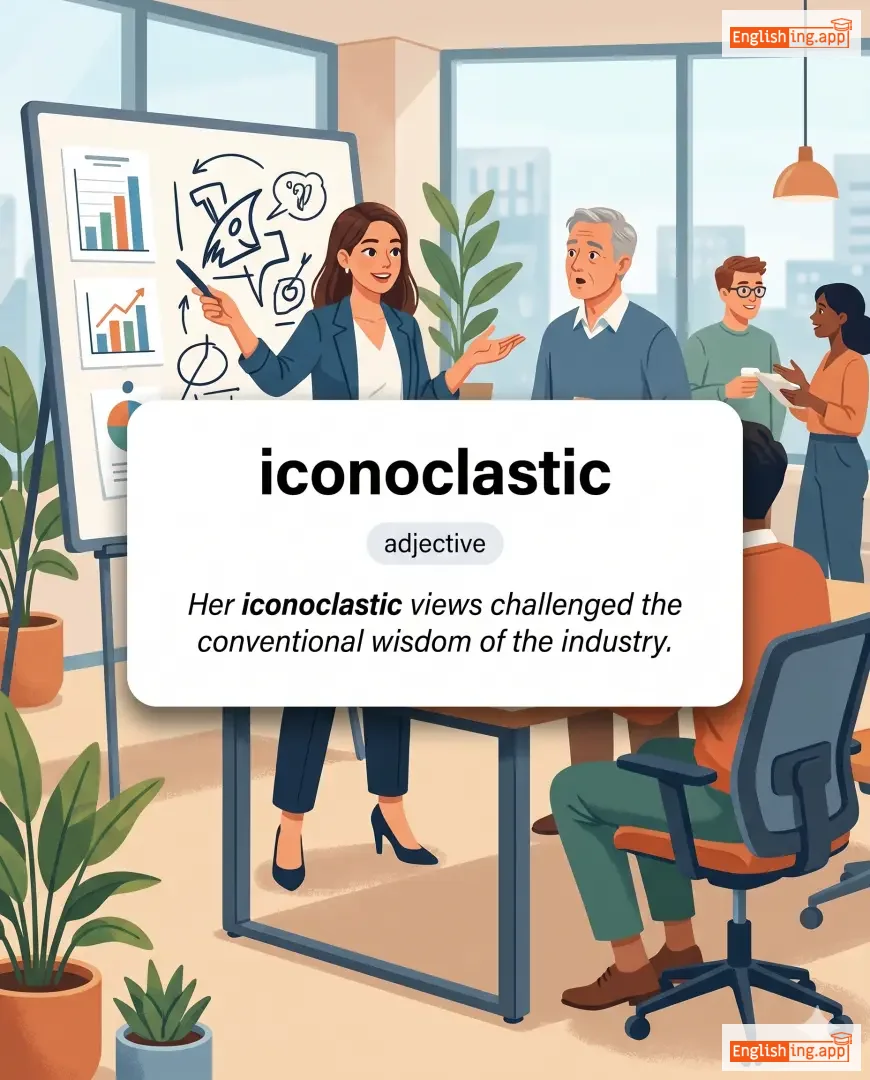
Characterized by attacking or rejecting cherished beliefs, traditions, or established values.
••••••
|
Her iconoclastic views challenged the conventional wisdom of the industry.
她的偶像破坏主义观点挑战了行业的传统智慧。
••••••
|
她的偶像破坏主义观点挑战了行业的传统智慧。
tā de ǒu xiàng pò huài zhǔ yì guān diǎn tiǎo zhàn le háng yè de chuán tǒng zhì huì.
••••••
|
- •••••• | - •••••• | - •••••• |
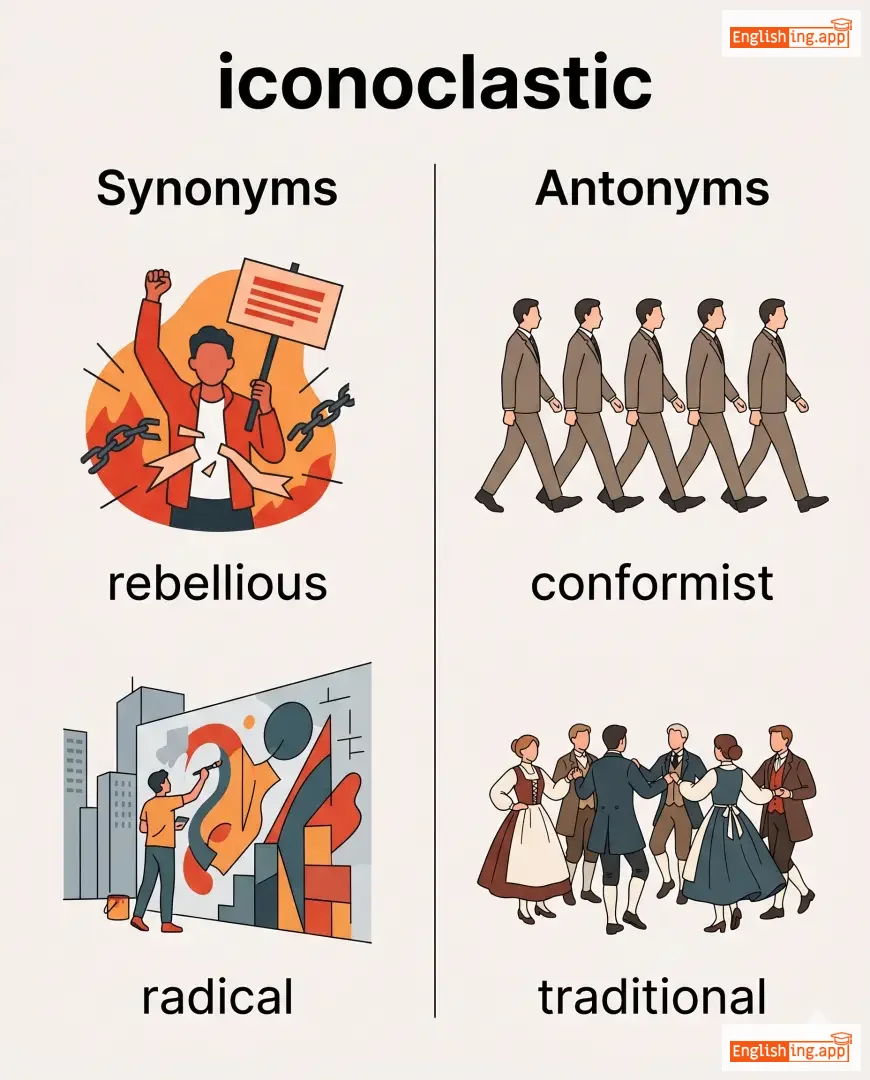
rebellious, radical, unorthodox, revolutionary, unconventional
••••••
|
conformist, traditional, conservative
••••••
|
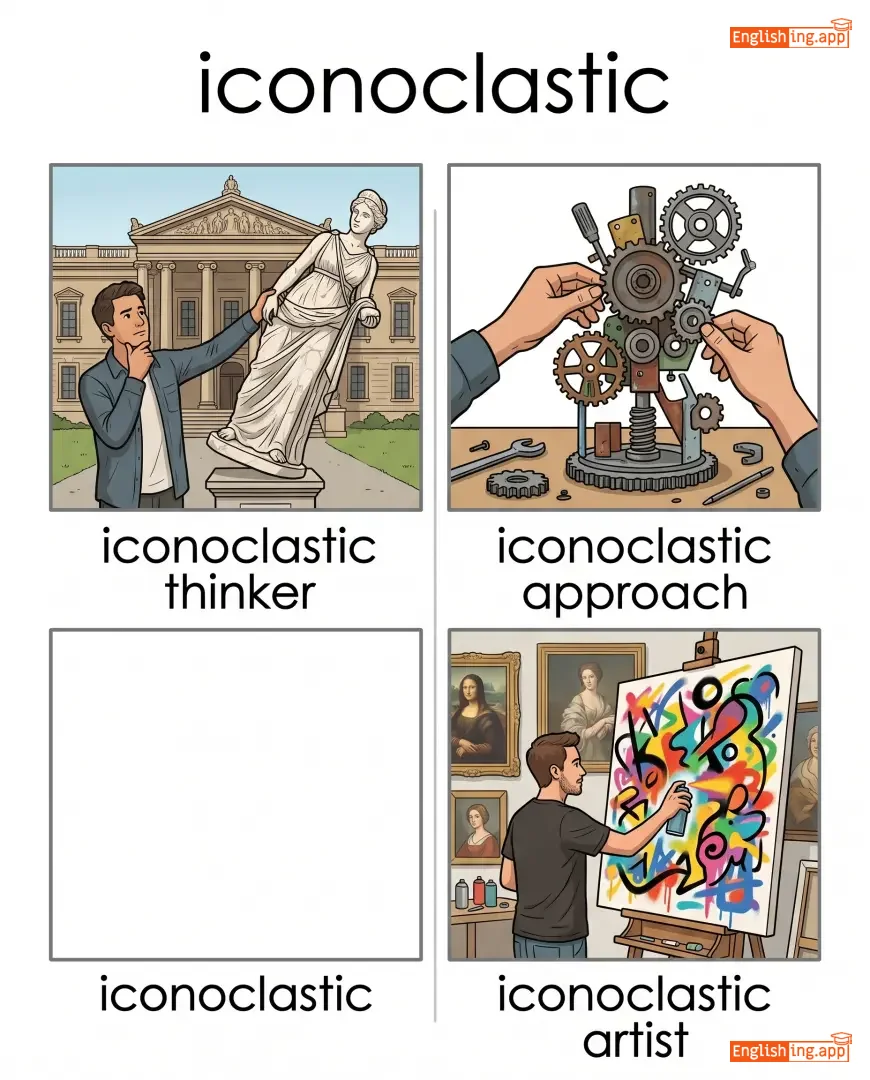
iconoclastic thinker, iconoclastic approach, iconoclastic artist
••••••
|
偶像破坏主义=摧毁传统信仰
••••••
|
|
🛐
••••••
|
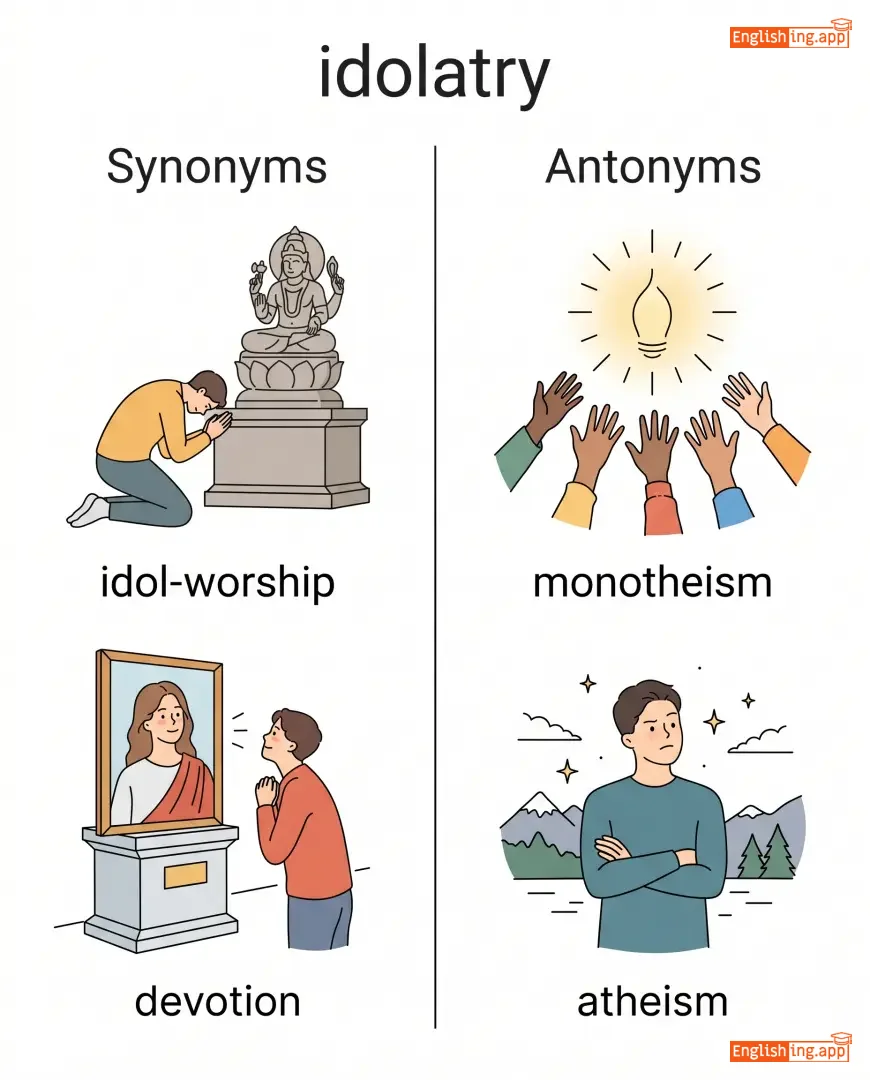
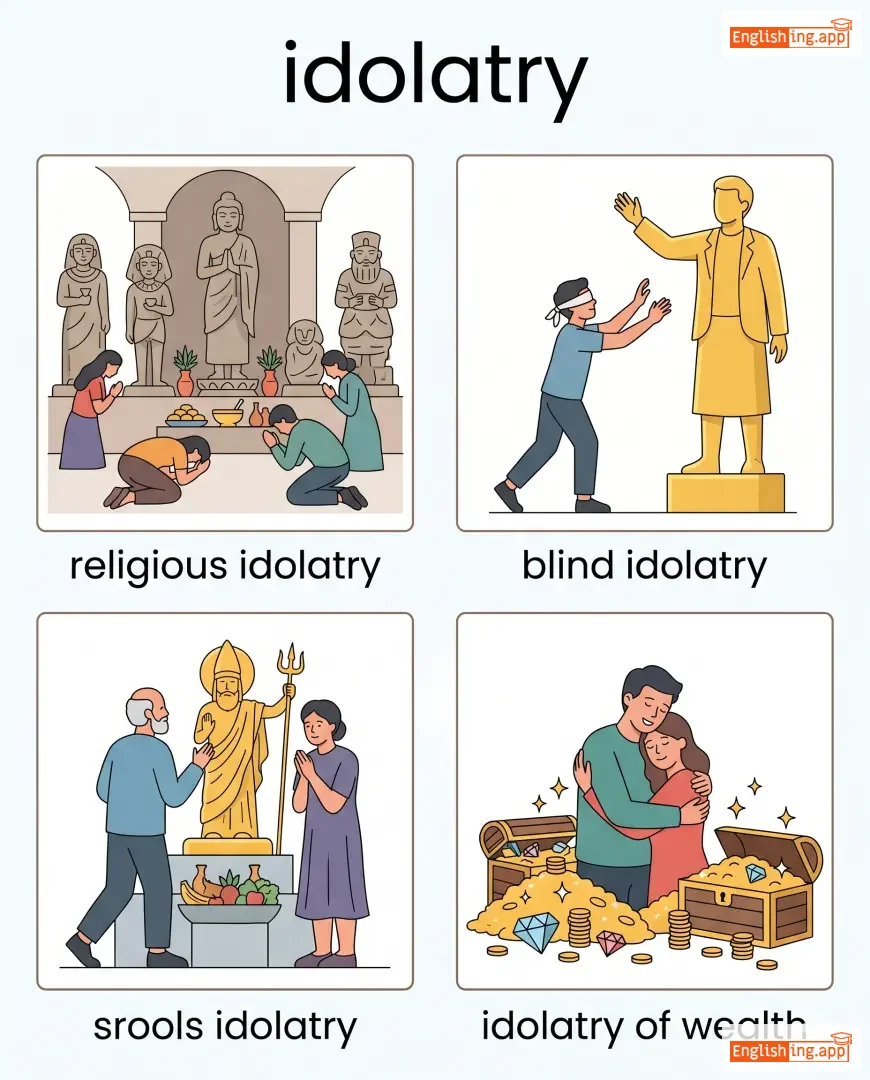
/aɪˈdɒlətri/
noun
(偶像崇拜)
••••••
|

|
偶像崇拜
ouxiang chongbai
••••••
|
- •••••• | - •••••• | - •••••• | - •••••• |
The worship of idols or extreme admiration for someone or something.
••••••
|
The priest condemned the idolatry practiced in the village. |
牧师谴责了在村里实践的偶像崇拜。
Mushi qianze le zai cun li shijian de ouxiang chongbai.
••••••
|
- •••••• | - •••••• | - •••••• |
idol-worship, devotion, adoration, reverence, veneration
••••••
|
monotheism, atheism, irreverence
••••••
|
religious idolatry, blind idolatry, idolatry of wealth, idolatry of power
••••••
|
idol + tree,偶像的崇拜
••••••
|
|
🌋
••••••
|
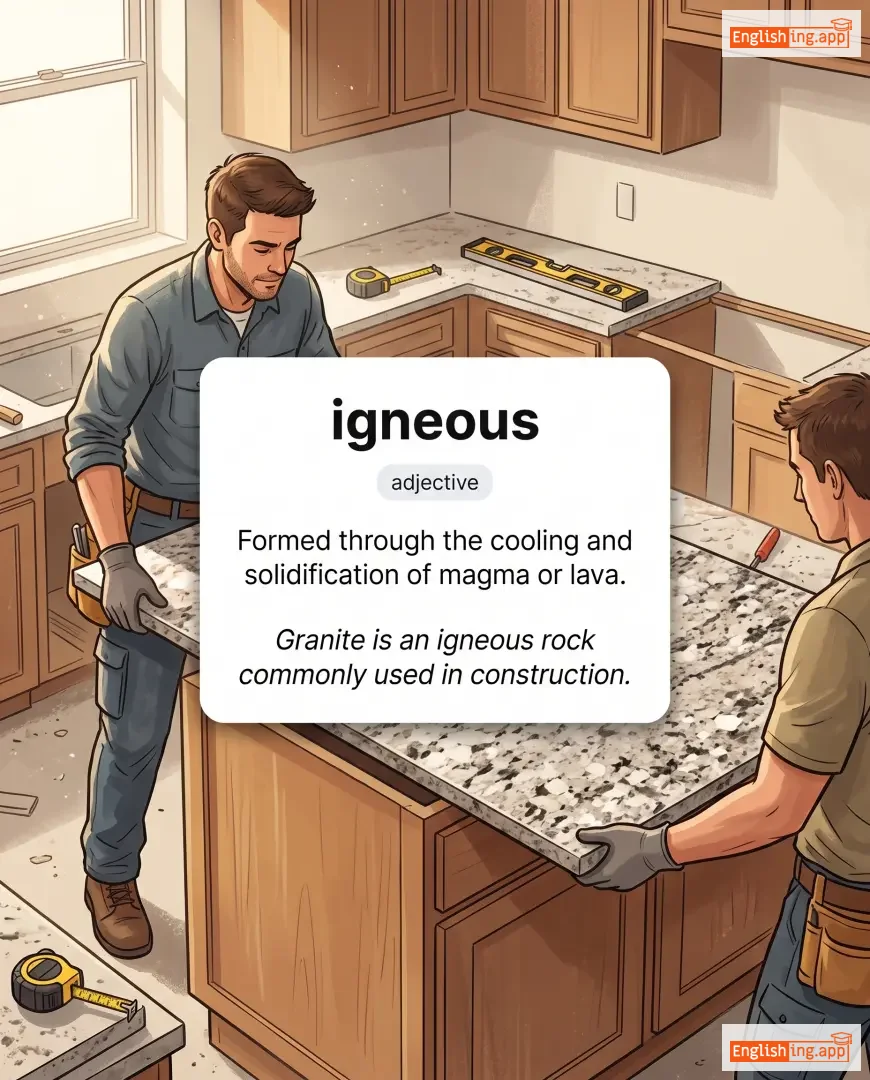
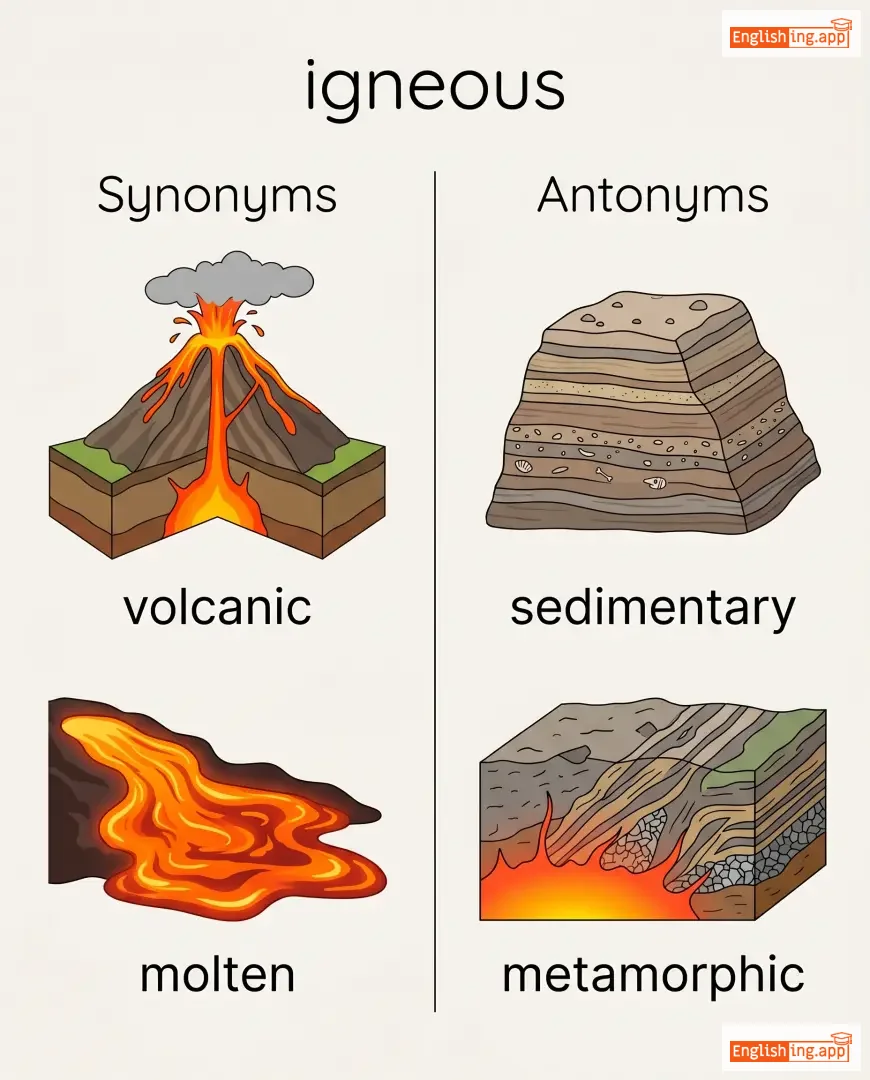
/ˈɪɡ.ni.əs/
adjective
(igneous)
••••••
|
|
火成
huǒchéng
••••••
|
- •••••• | - •••••• | - •••••• | - •••••• |
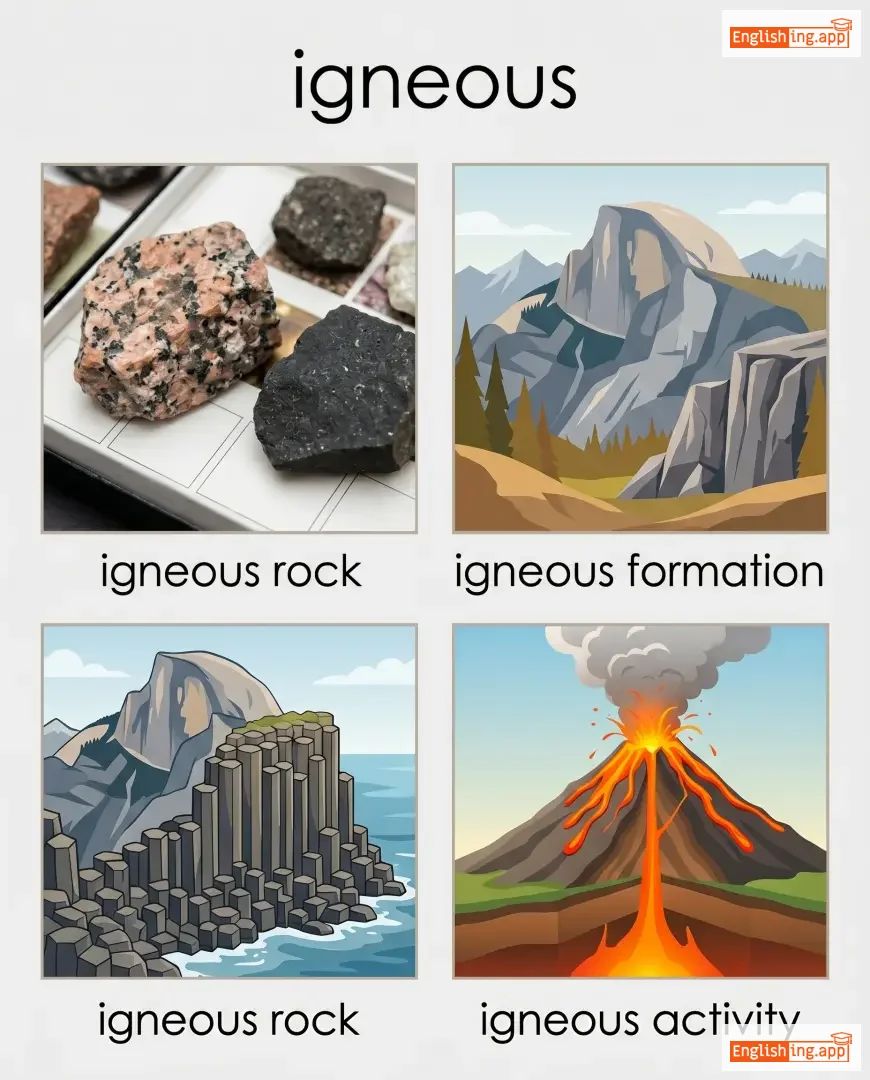
Formed through the cooling and solidification of magma or lava.
••••••
|
Granite is an igneous rock commonly used in construction.
花岗岩是一种常用于建筑的火成岩。
••••••
|
花岗岩是一种常用于建筑的火成岩。
Huāgāngyán shì yī zhǒng cháng yòng yú jiànzhú de huǒchéng yán.
••••••
|
- •••••• | - •••••• | - •••••• |
volcanic, molten, fiery, magmatic
••••••
|
sedimentary, metamorphic
••••••
|
igneous rock, igneous formation, igneous activity, igneous process
••••••
|
Igneous 意味着由火形成的岩石 - 火成岩。
••••••
|
|
🤷
••••••
|
/ɪmˈbroʊlioʊ/
noun
(因布罗廖)
••••••
|
|
混乱
hunluan
••••••
|
- •••••• | - •••••• | - •••••• | - •••••• |
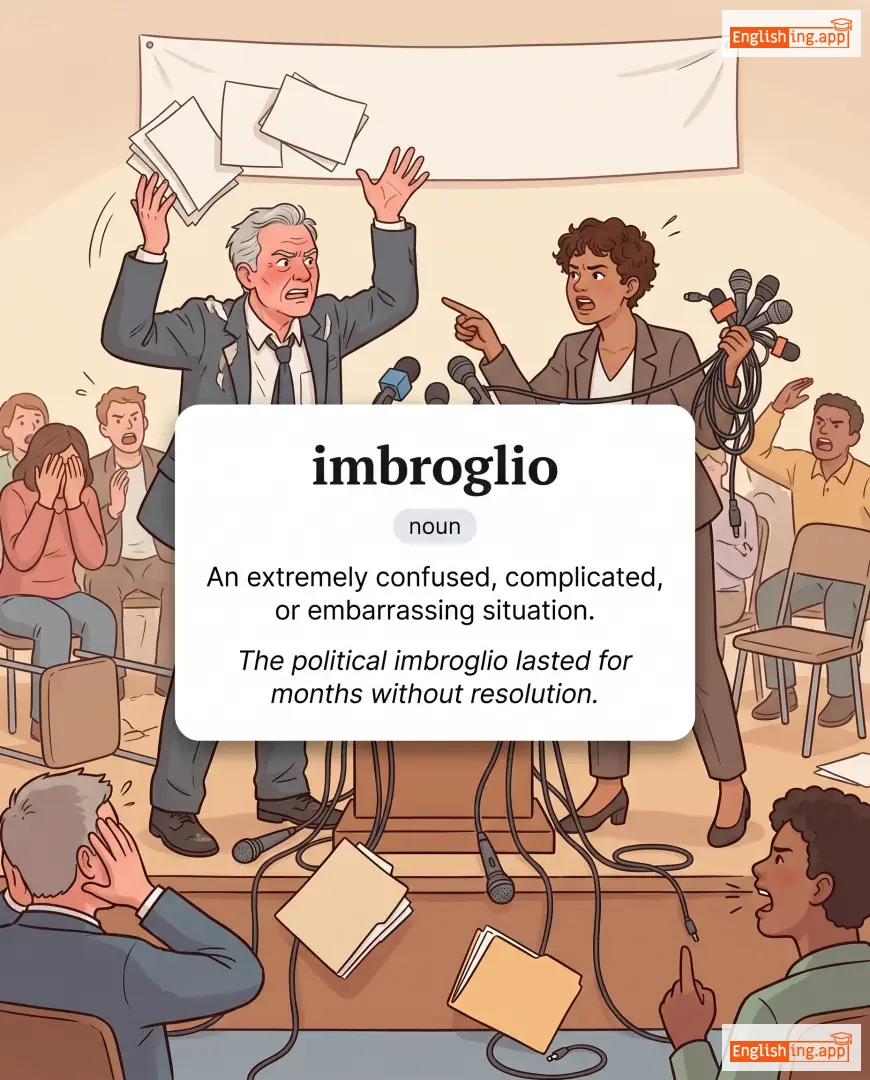
An extremely confused, complicated, or embarrassing situation.
••••••
|
The political imbroglio lasted for months without resolution. |
政治上的混乱持续了几个月,没有得到解决。
Zhengzhi shang de hunluan chixu le ji ge yue, mei you dedao jiejue.
••••••
|
- •••••• | - •••••• | - •••••• |
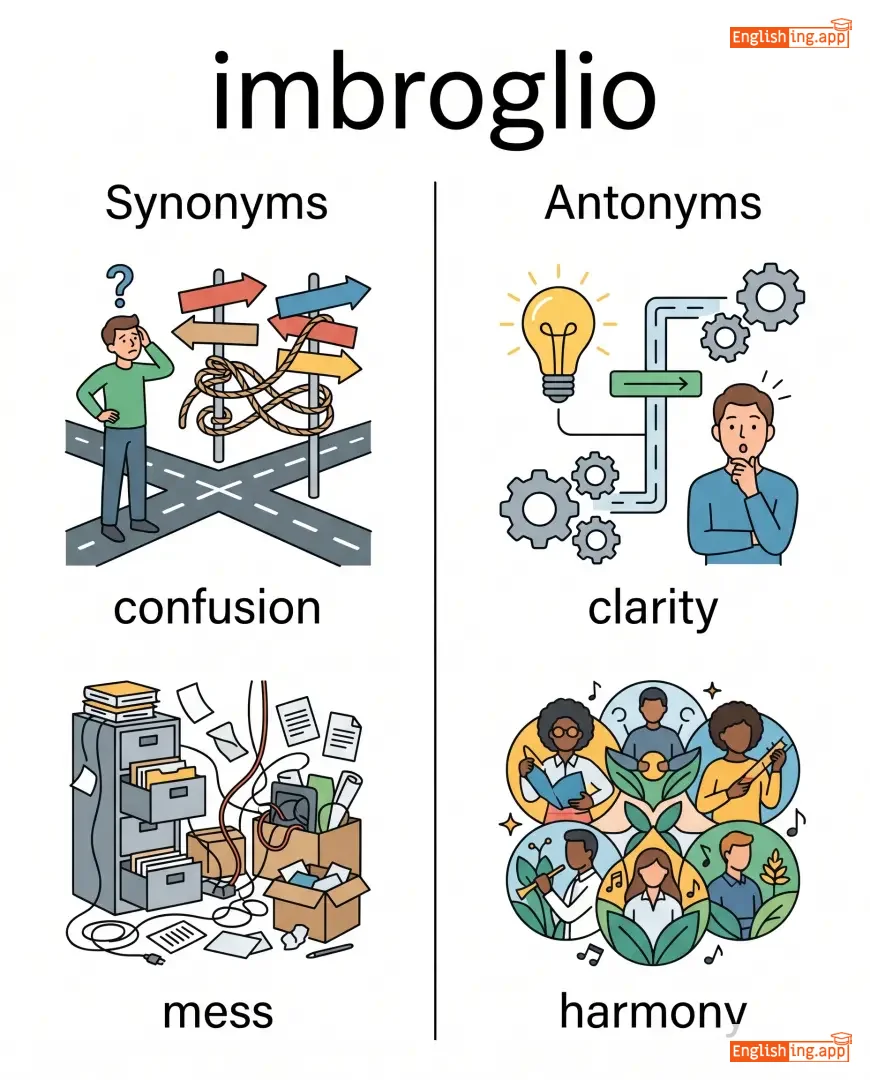
confusion, mess, entanglement, predicament, quarrel
••••••
|
clarity, harmony, order
••••••
|
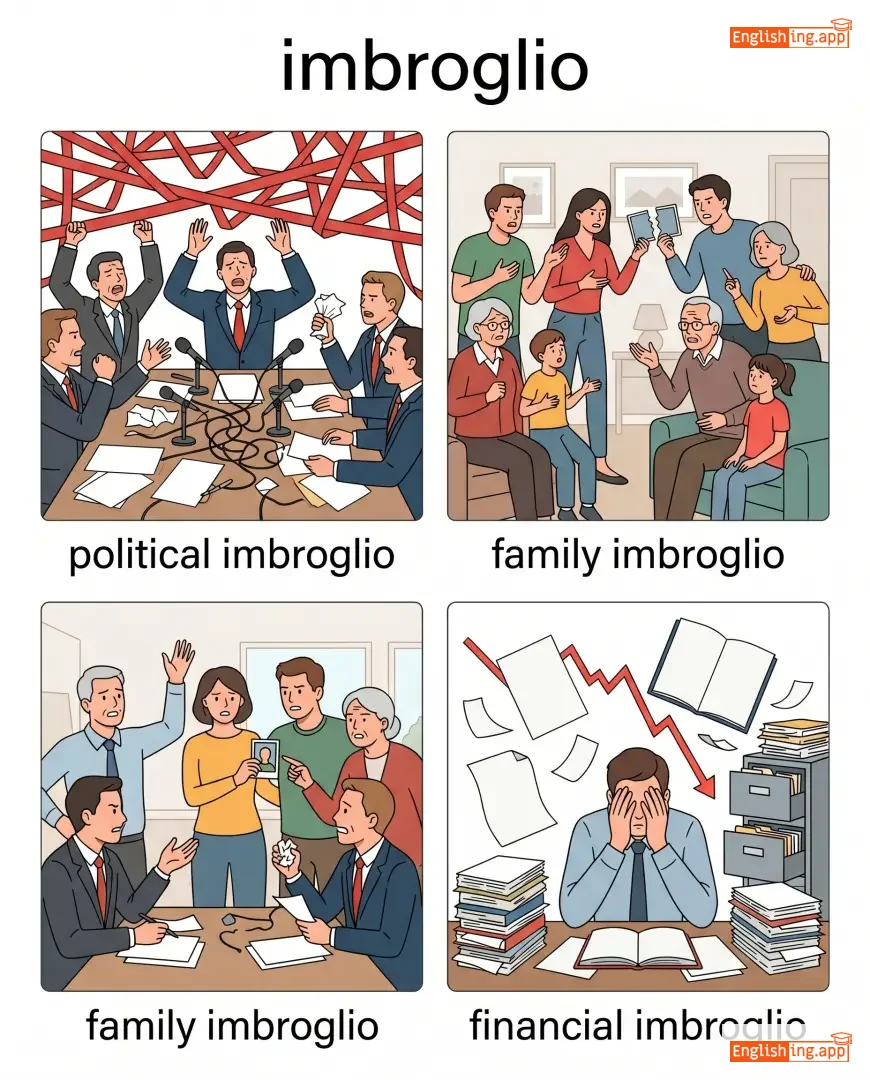
political imbroglio, family imbroglio, financial imbroglio
••••••
|
Imbroglio意味着混乱—听起来像'印不乱',意思是陷入困境。
••••••
|
|
⚖️
••••••
|
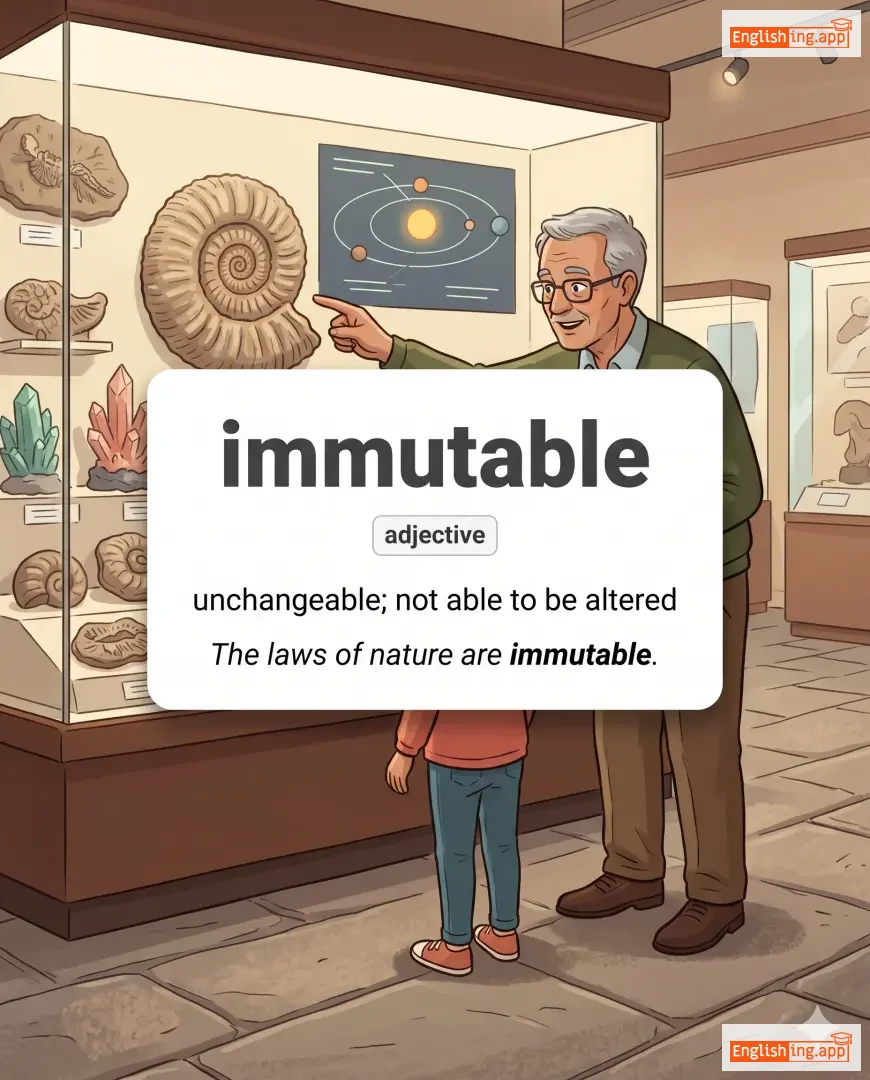
/ɪˈmjuːtəbl/
adjective
(immutébl)
••••••
|

|
不可改变的
bùkě gǎibiàn de
••••••
|
- •••••• | - •••••• | - •••••• | - •••••• |
unchangeable; not able to be altered
••••••
|
The laws of nature are immutable.
大自然的规律是不可改变的。
••••••
|
大自然的规律是不可改变的。
Dà zìrán de guīlǜ shì bùkě gǎibiàn de.
••••••
|
immutable truth
不可改变的真理
••••••
|
a fact that cannot be changed
••••••
|
不可改变的真理
Bùkě gǎibiàn de zhēnlǐ
••••••
|
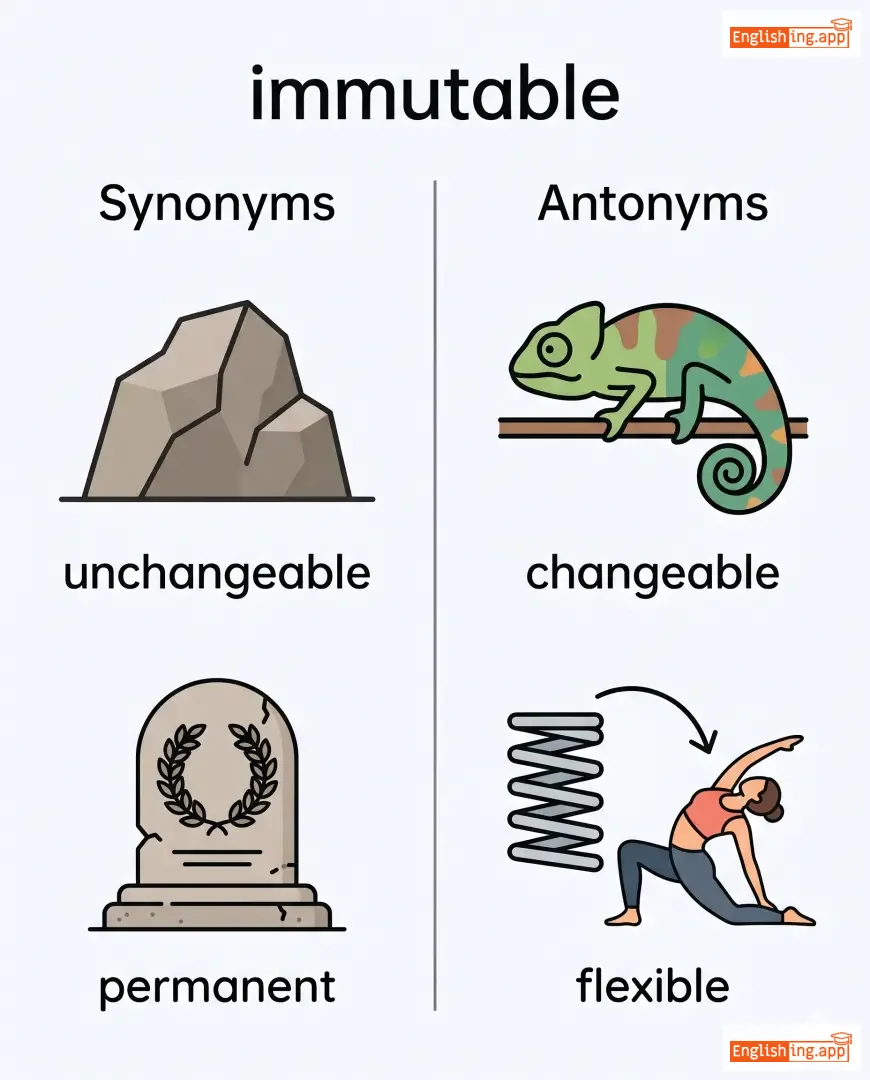
unchangeable, permanent, fixed, constant
••••••
|
changeable, flexible, variable
••••••
|
immutable law, immutable principle, immutable rule, immutable fact
••••••
|
Immutable意味着无法改变—不可改变的。
••••••
|
|
💔
••••••
|
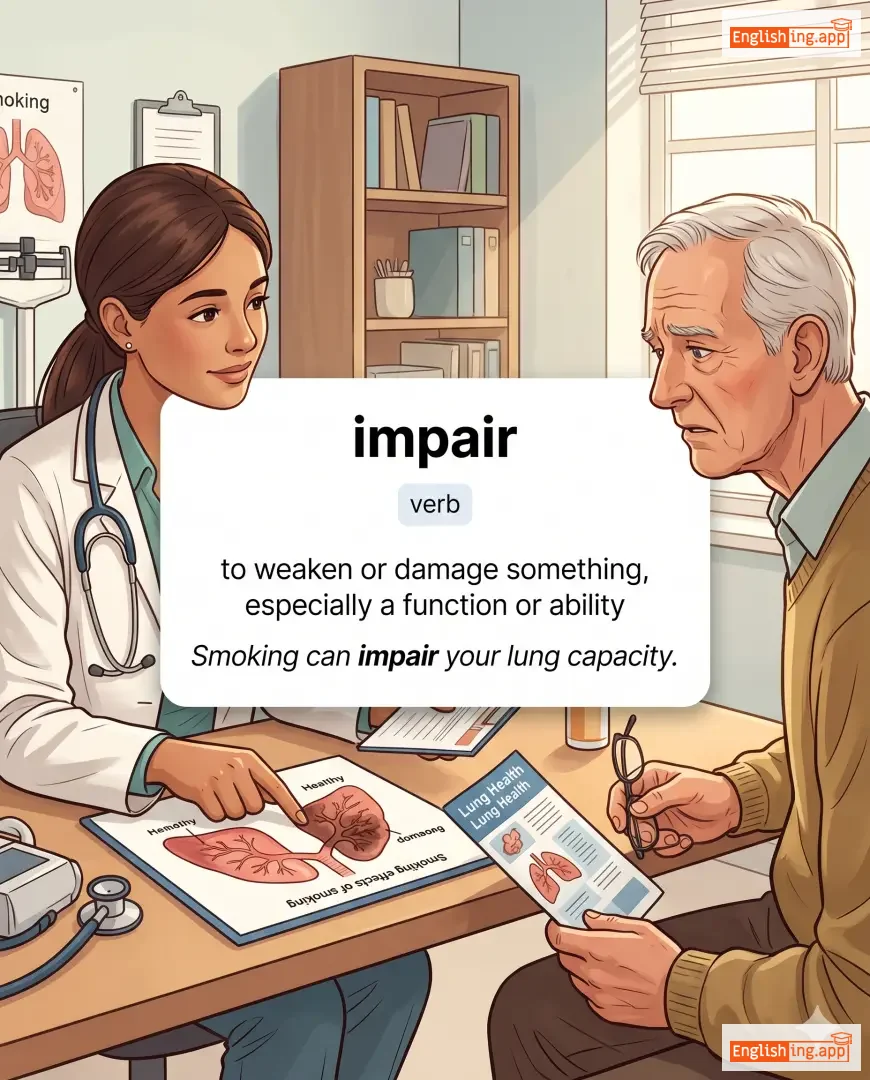
/ɪmˈpɛər/
verb
(ɪmˈpɛər)
••••••
|
|
损害
sunhai
••••••
|
impaired
ɪmˈpɛərd
••••••
|
impaired
ɪmˈpɛərd
••••••
|
impairs
ɪmˈpɛərz
••••••
|
impairing
ɪmˈpɛərɪŋ
••••••
|
to weaken or damage something, especially a function or ability
••••••
|
Smoking can impair your lung capacity.
吸烟可能会损害您的肺部容量。
••••••
|
吸烟可能会损害您的肺部容量。
Xiyan keneng hui sunhai ninde feibu rongliang.
••••••
|
- •••••• | - •••••• | - •••••• |
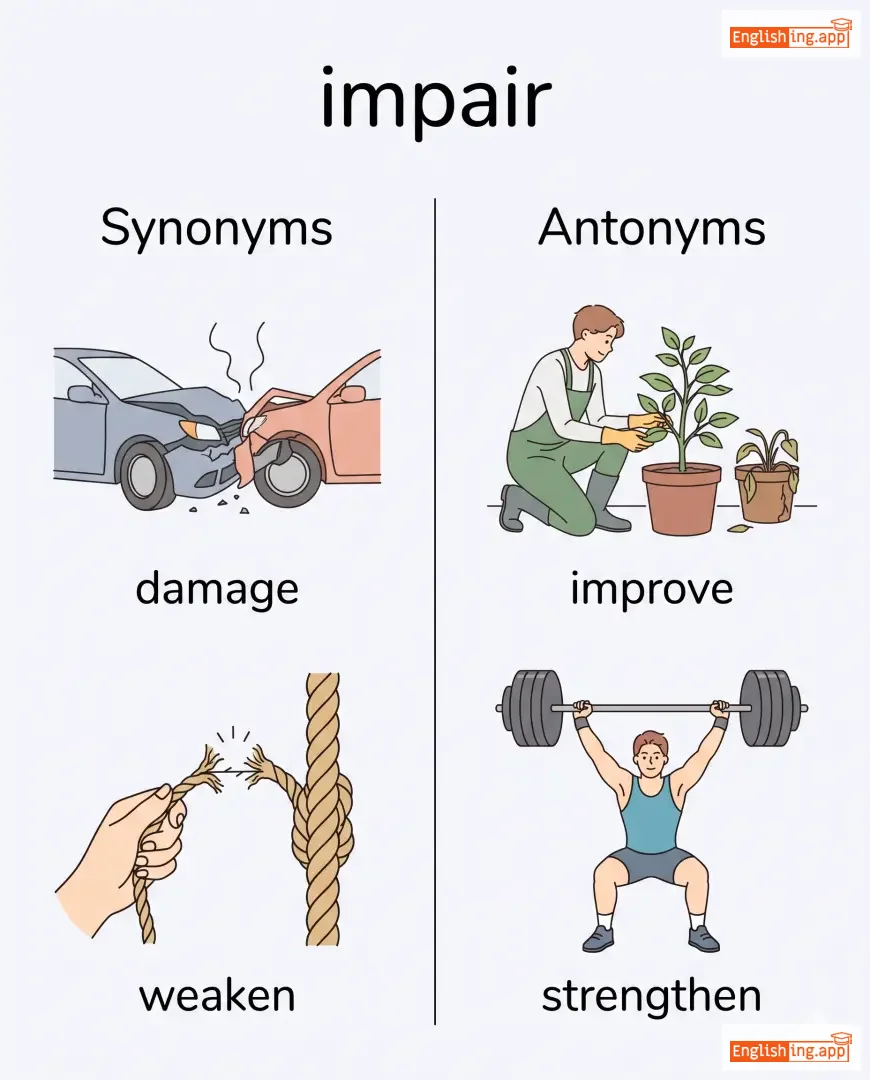
damage, weaken, harm, reduce, diminish
••••••
|
improve, strengthen, enhance
••••••
|
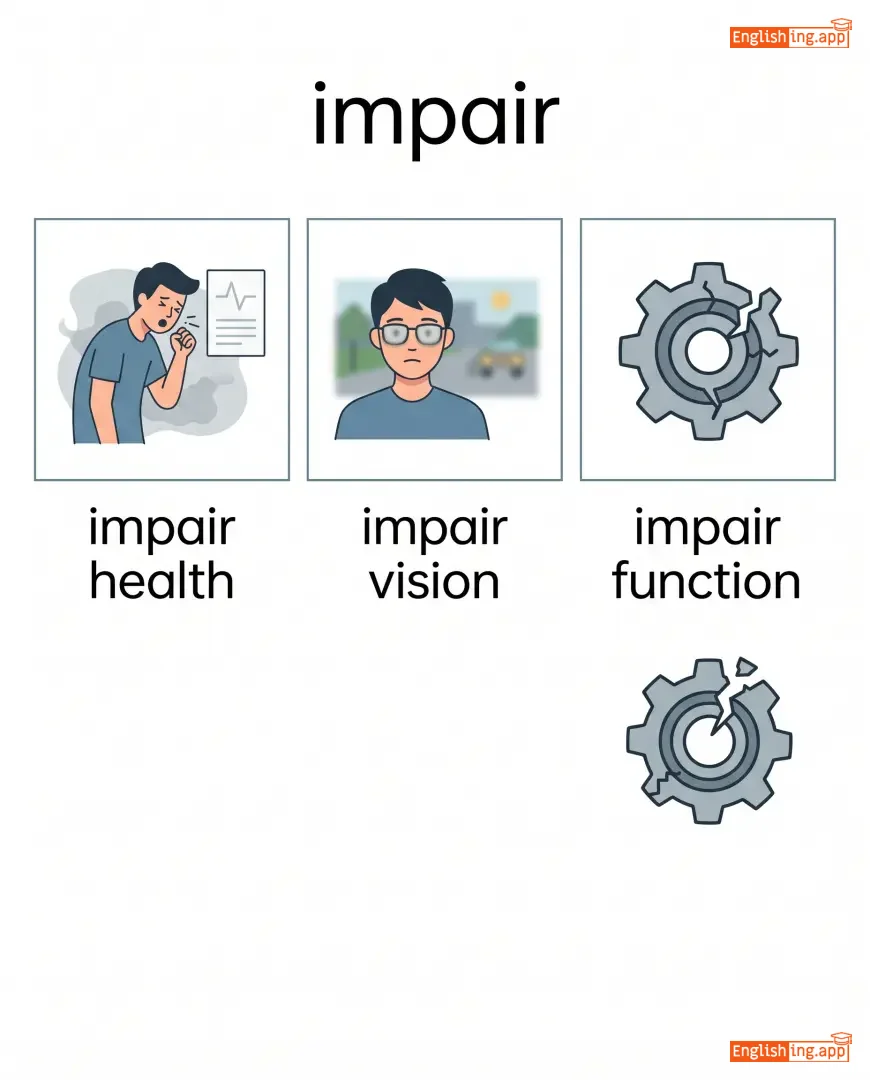
impair health, impair vision, impair function, severely impair
••••••
|
IMPAIR意味着损害 - 如果汽车的轮胎损坏了,车就不能开了。
••••••
|
|
😐
••••••
|
/ɪmˈpæsɪv/
adjective
(印帕西夫)
••••••
|
|
冷漠
lěngmò
••••••
|
- •••••• | - •••••• | - •••••• | - •••••• |
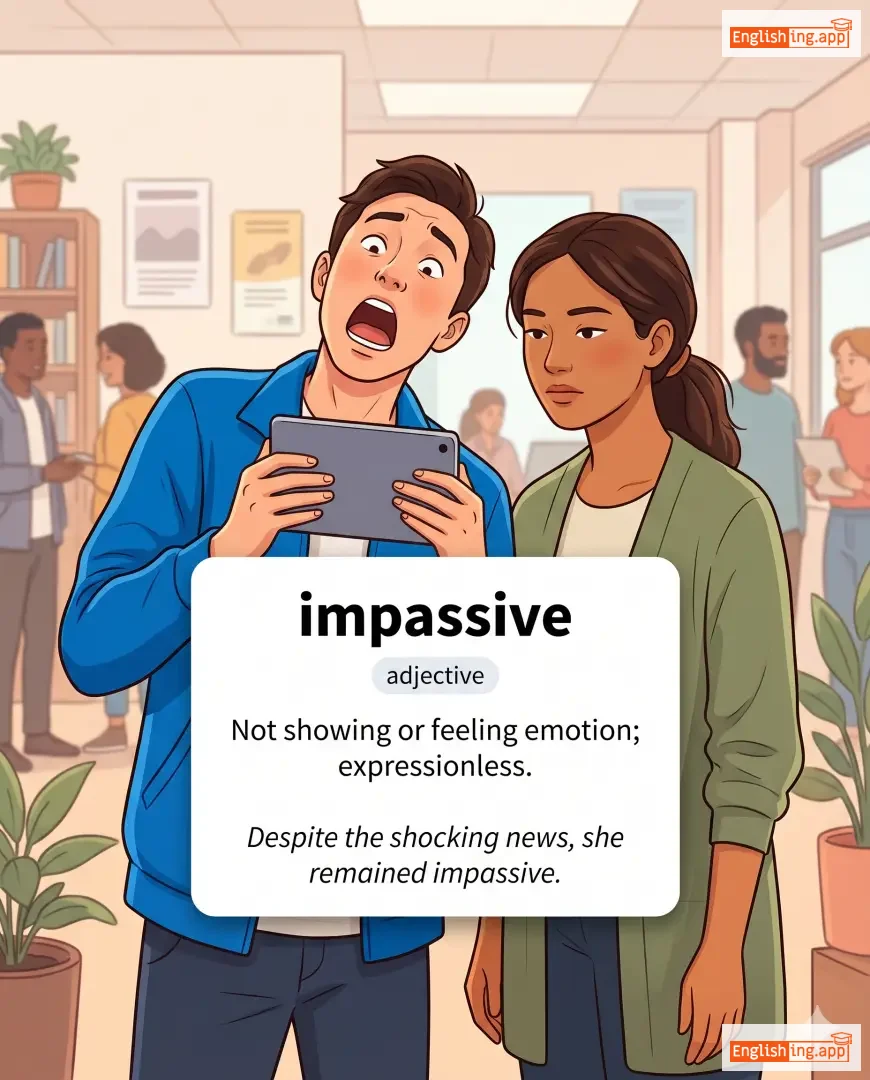
Not showing or feeling emotion; expressionless.
••••••
|
Despite the shocking news, she remained impassive.
尽管有令人震惊的消息,她依然无动于衷。
••••••
|
尽管有令人震惊的消息,她依然无动于衷。
Jǐnguǎn yǒu lìngrén zhènjīng de xiāoxī, tā yīrán wúdòng yú zhōng.
••••••
|
- •••••• | - •••••• | - •••••• |
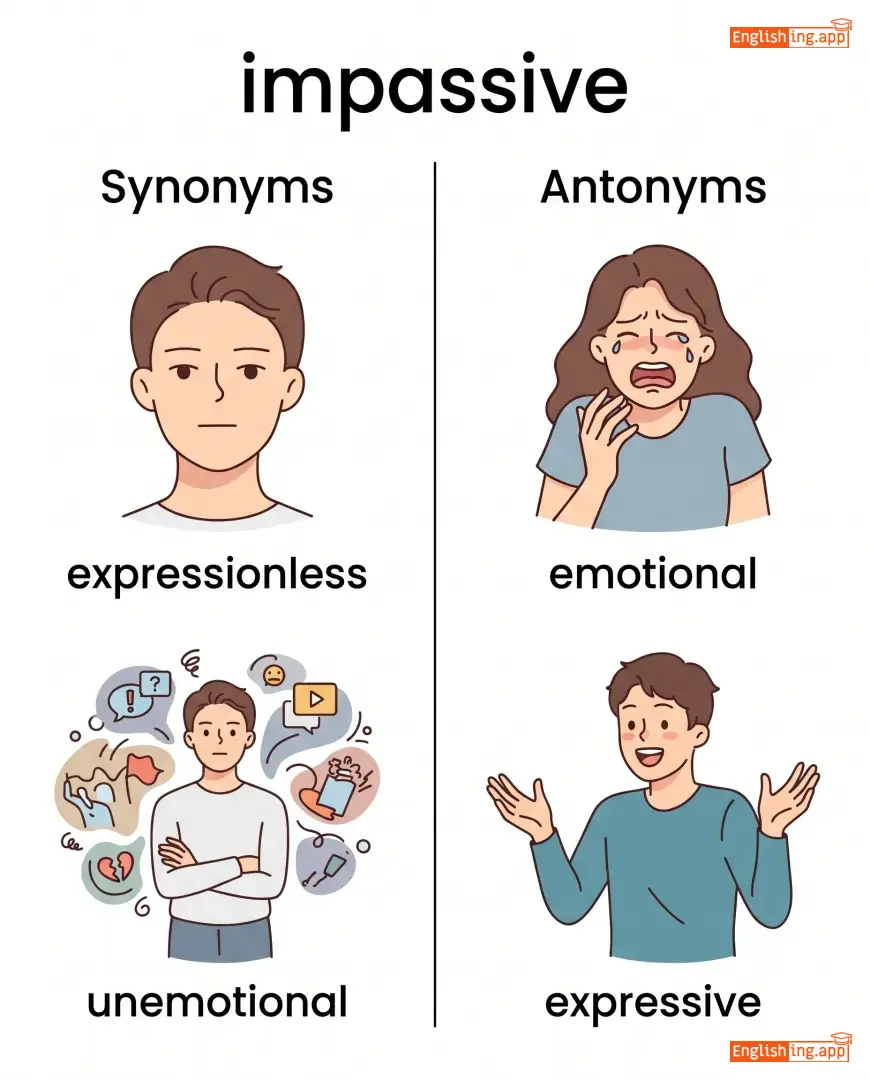
expressionless, unemotional, calm, stoic, detached
••••••
|
emotional, expressive, passionate
••••••
|
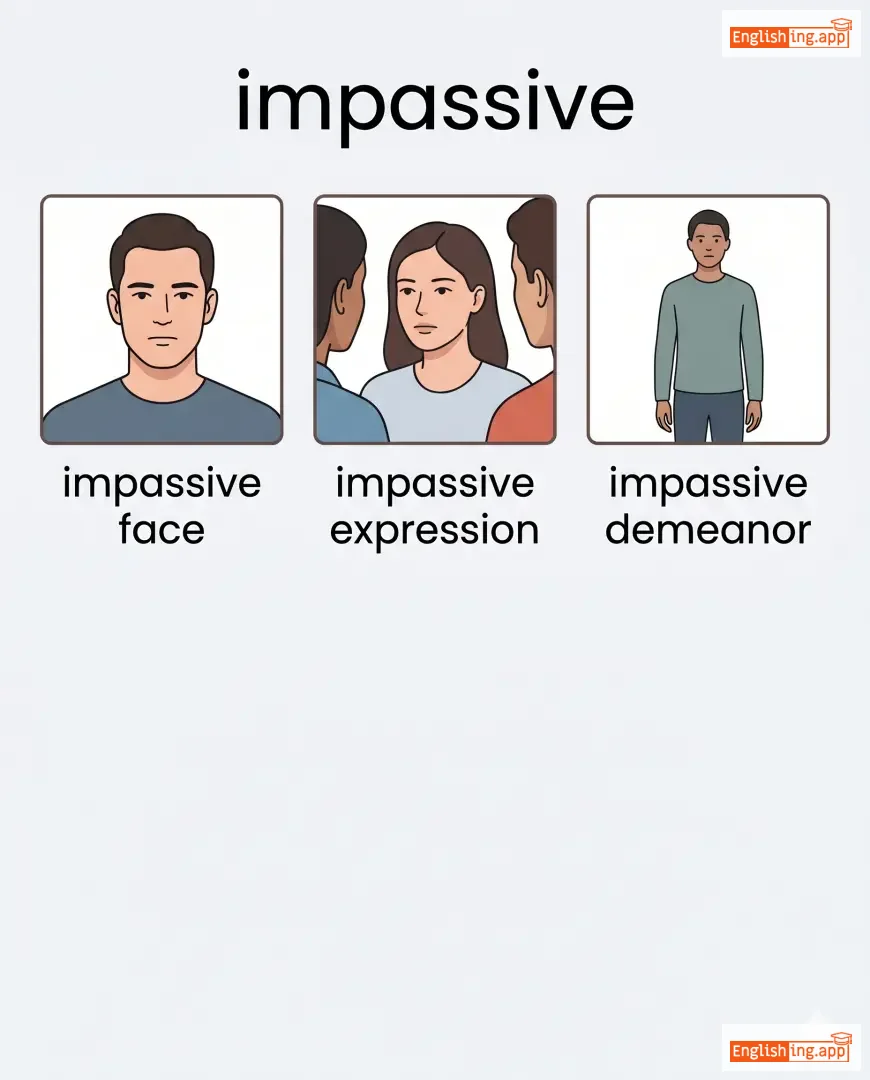
impassive face, impassive expression, impassive demeanor
••••••
|
IMPASSIVE 在中文里是冷漠 — 没有感情的脸
••••••
|
|
💸
••••••
|
/ˌɪmpɪˈkjuːniəs/
adjective
(印佩金纽厄斯)
••••••
|
|
贫穷
pinqiong
••••••
|
- •••••• | - •••••• | - •••••• | - •••••• |
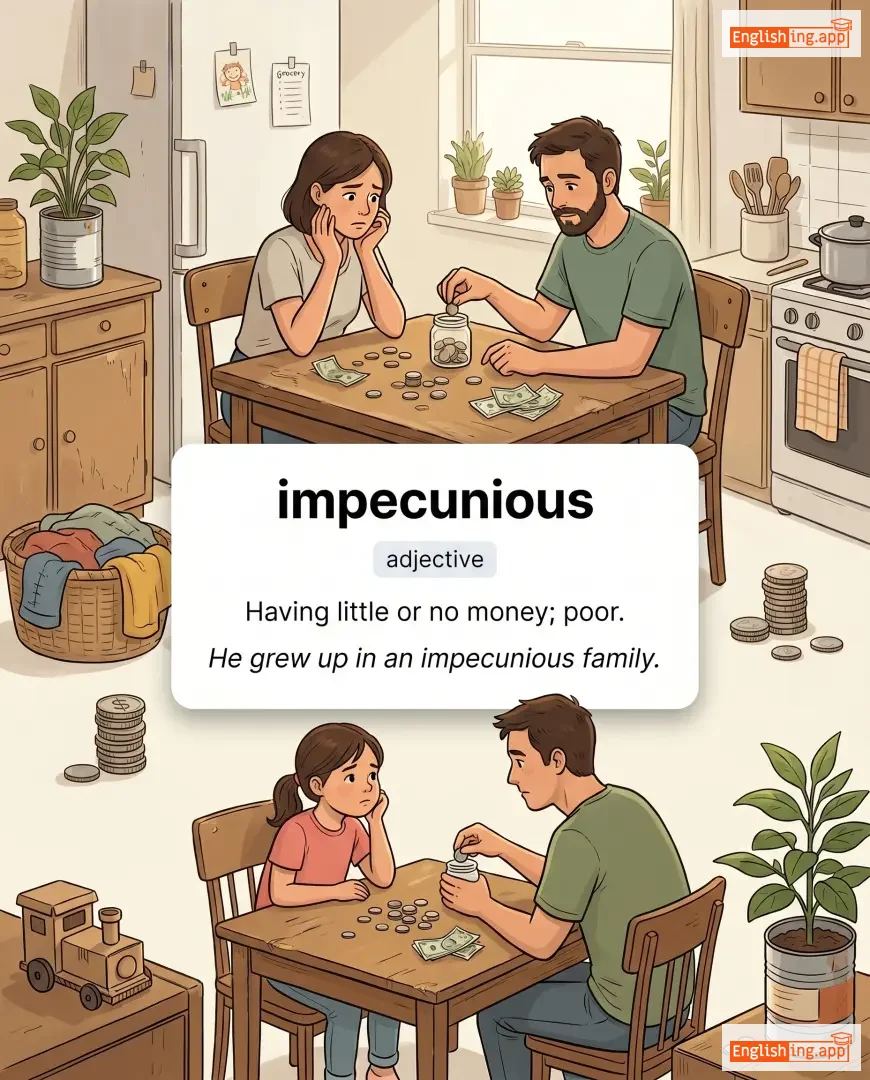
Having little or no money; poor.
••••••
|
He grew up in an impecunious family. |
他在一个贫穷的家庭中长大。
Ta zai yi ge pinqiong de jiating zhong zhangda.
••••••
|
- •••••• | - •••••• | - •••••• |
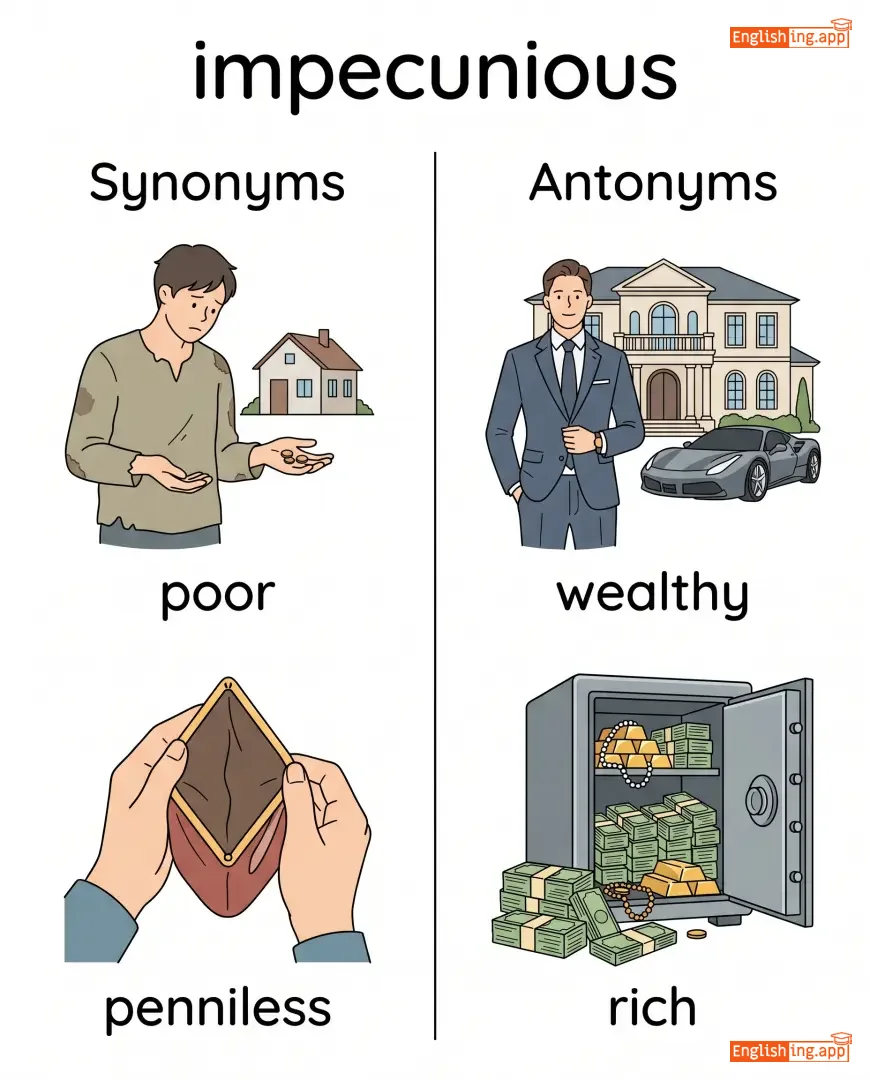
poor, penniless, destitute, needy
••••••
|
wealthy, rich, affluent
••••••
|
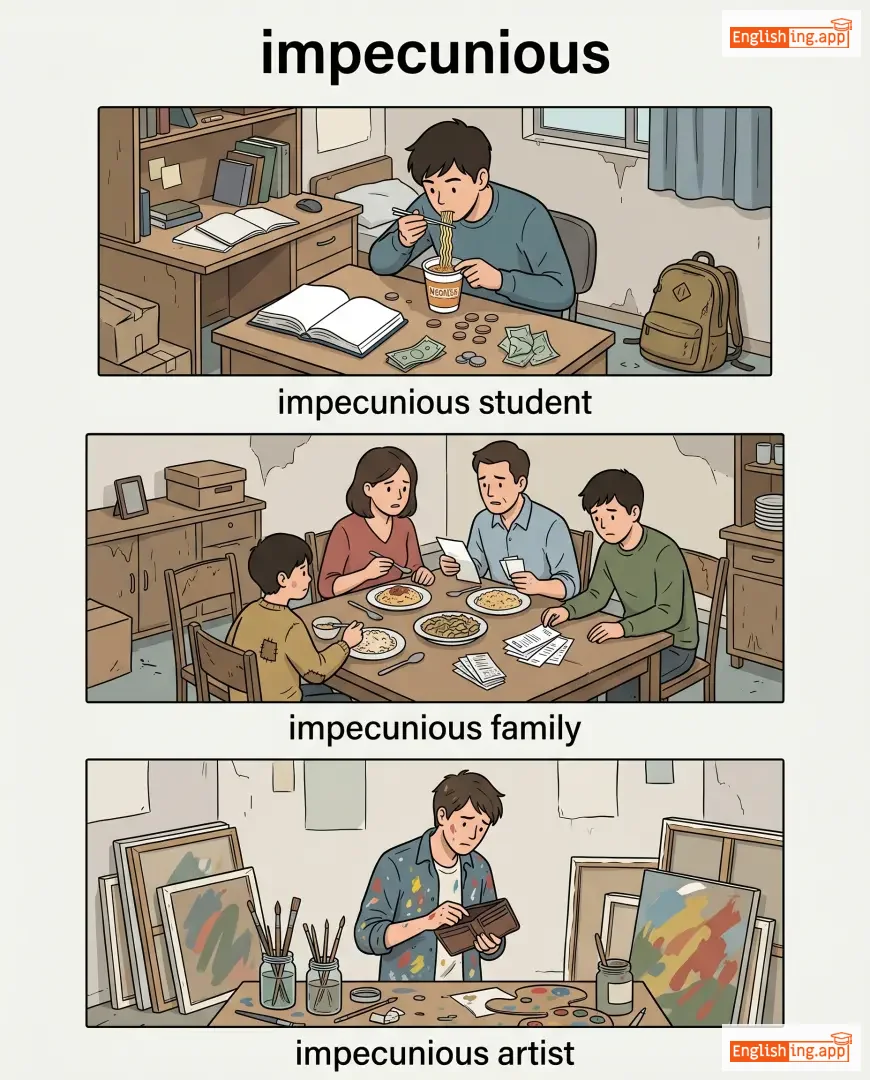
impecunious student, impecunious family, impecunious artist
••••••
|
Im-PE-KUNO (钱 KUNO) 没有 — 贫穷
••••••
|
|
⛔
••••••
|
/ɪmˈpiːd/
verb
(印皮德)
••••••
|
|
阻碍
zuhai
••••••
|
impeded
印皮德德
••••••
|
impeded
印皮德德
••••••
|
impedes
印皮德斯
••••••
|
impeding
印皮丁
••••••
|
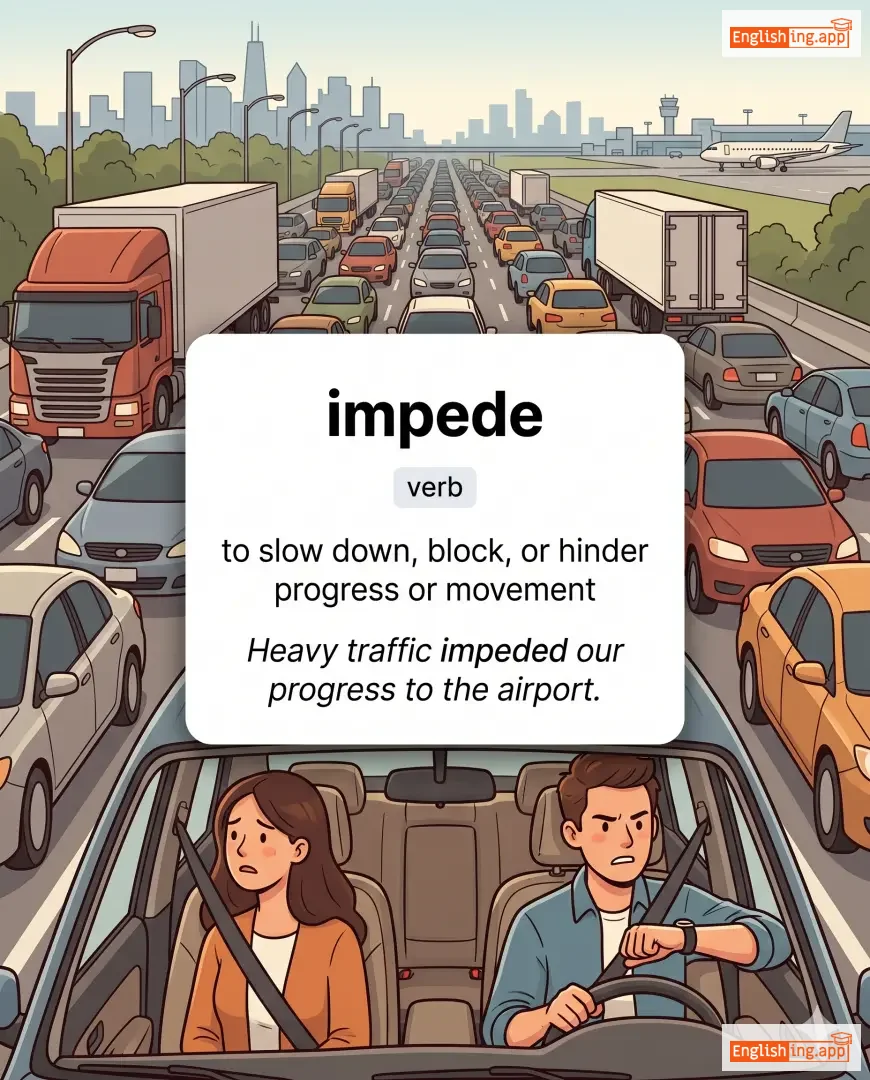
to slow down, block, or hinder progress or movement
••••••
|
Heavy traffic impeded our progress to the airport.
繁忙的交通妨碍了我们前往机场的进展。
••••••
|
繁忙的交通妨碍了我们前往机场的进展。
Fanmang de jiaotong fangai le women qianwang jihang de jinzhan.
••••••
|
impede progress
阻碍进展
••••••
|
to slow down or obstruct advancement
••••••
|
阻碍进展
zuhai jinzhan
••••••
|
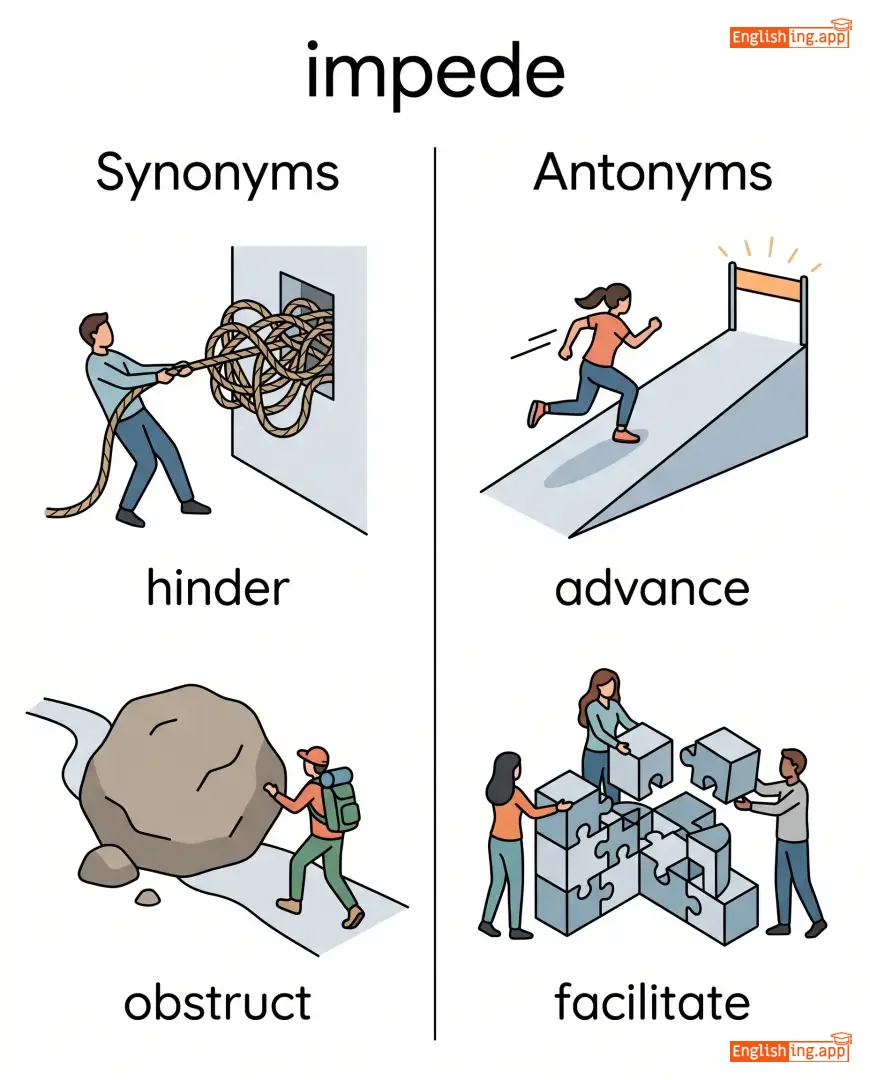
hinder, obstruct, block, delay, hamper
••••••
|
advance, facilitate, promote
••••••
|
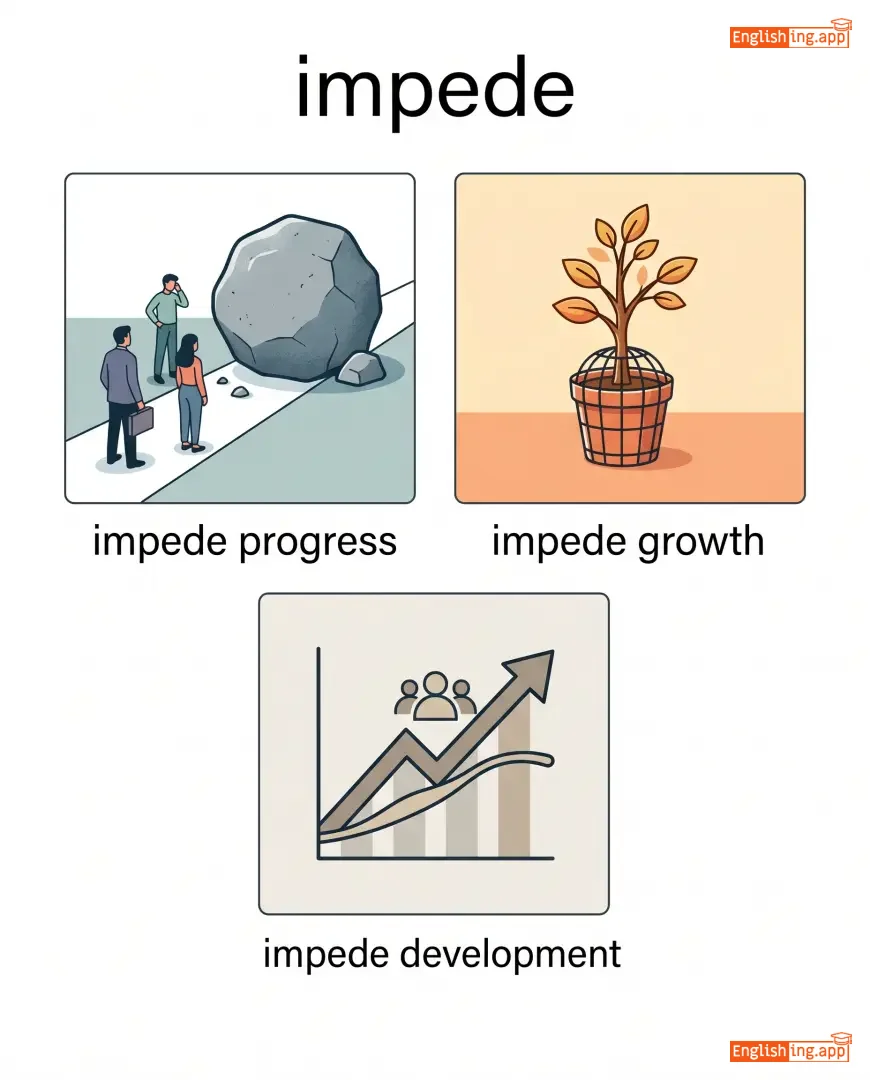
impede progress, impede growth, impede development, impede movement
••••••
|
如果交通阻碍了你前进,你就不能到达机场。
••••••
|
|
🧱
••••••
|
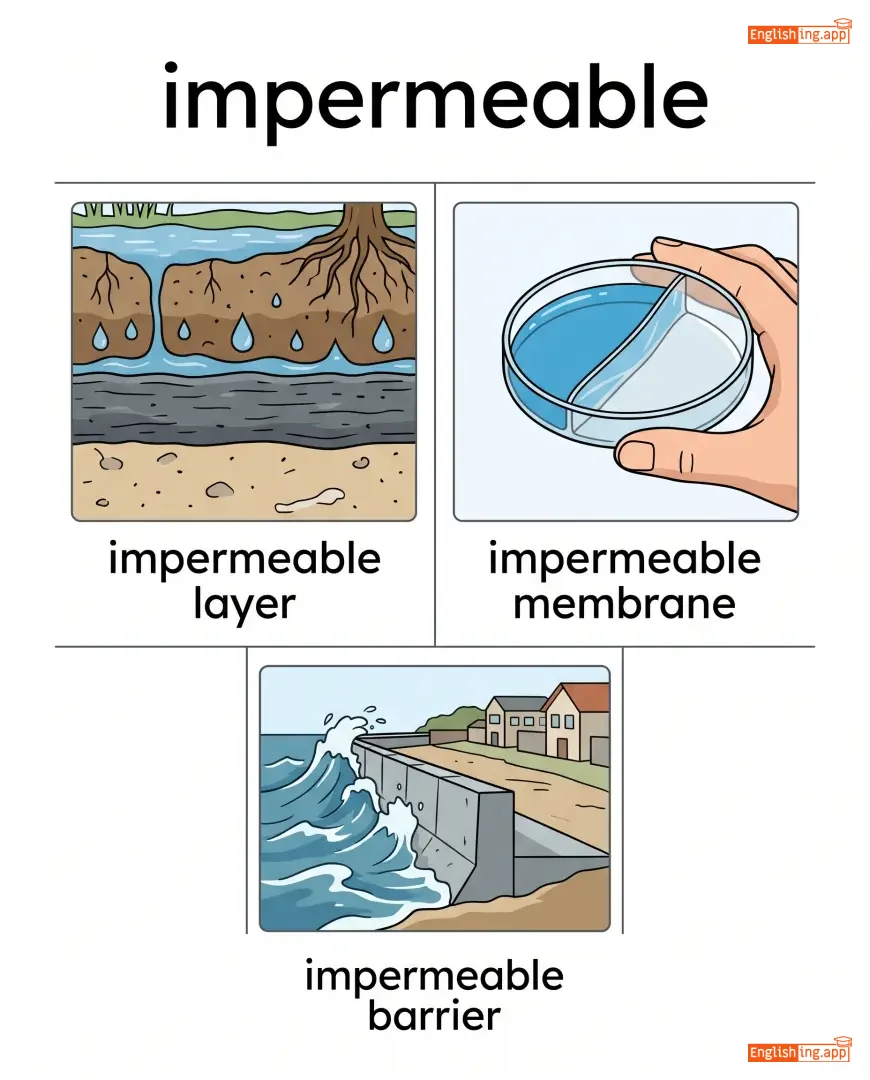
/ɪmˈpɜːmiəbl/
adjective
(im-pu-lei-mai-bo)
••••••
|
|
不透水的
bu tou shui de
••••••
|
- •••••• | - •••••• | - •••••• | - •••••• |
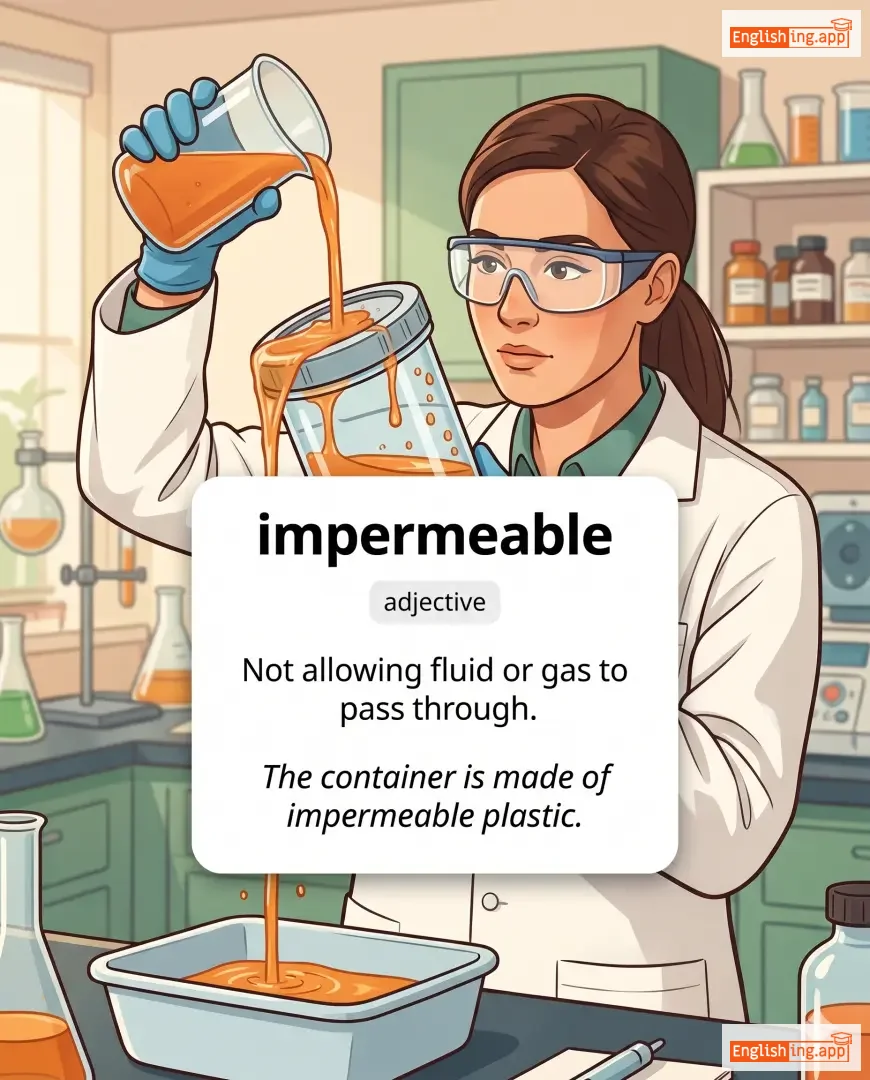
Not allowing fluid or gas to pass through.
••••••
|
The container is made of impermeable plastic. |
这个容器是由不透水的塑料制成的。
Zhe ge rongqi shi you bu tou shui de su liao zhi cheng de.
••••••
|
- •••••• | - •••••• | - •••••• |
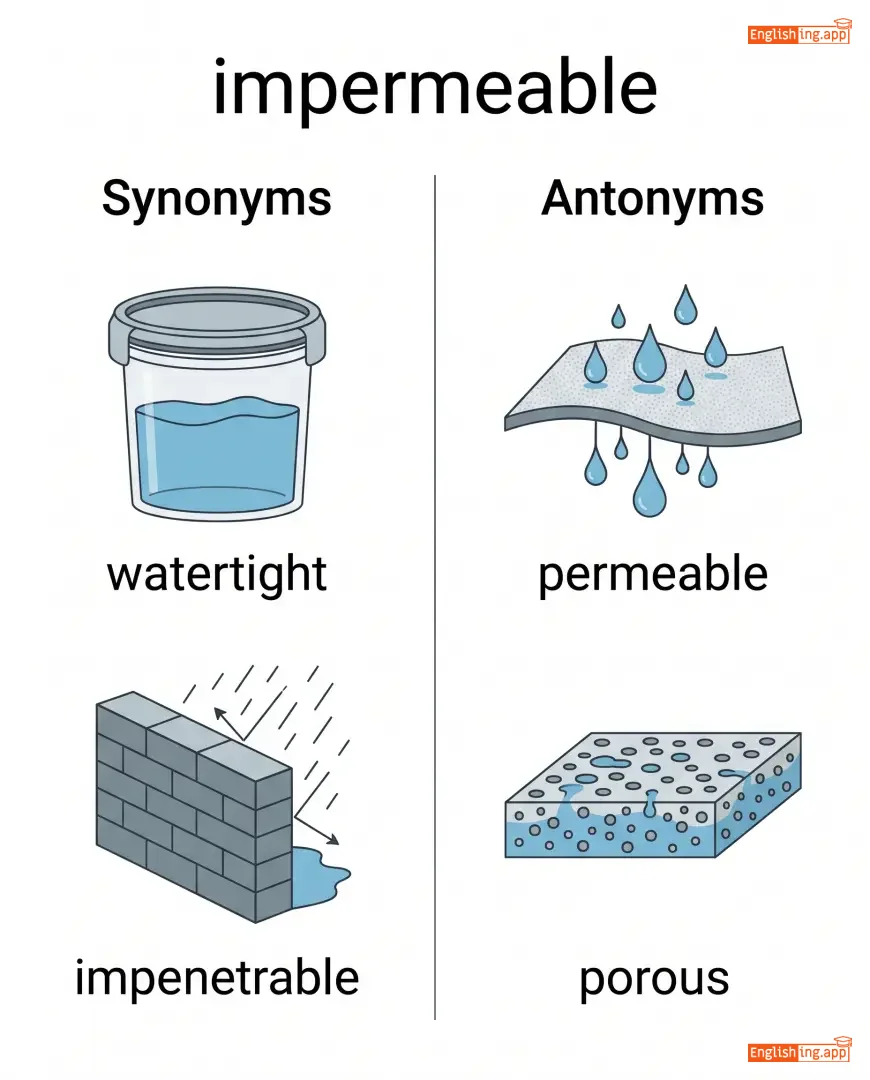
watertight, impenetrable, sealed, nonporous
••••••
|
permeable, porous, leaky
••••••
|
impermeable layer, impermeable membrane, impermeable barrier, impermeable wall
••••••
|
不透水的意思是不能通过水的材料。
••••••
|
|
🧘
••••••
|
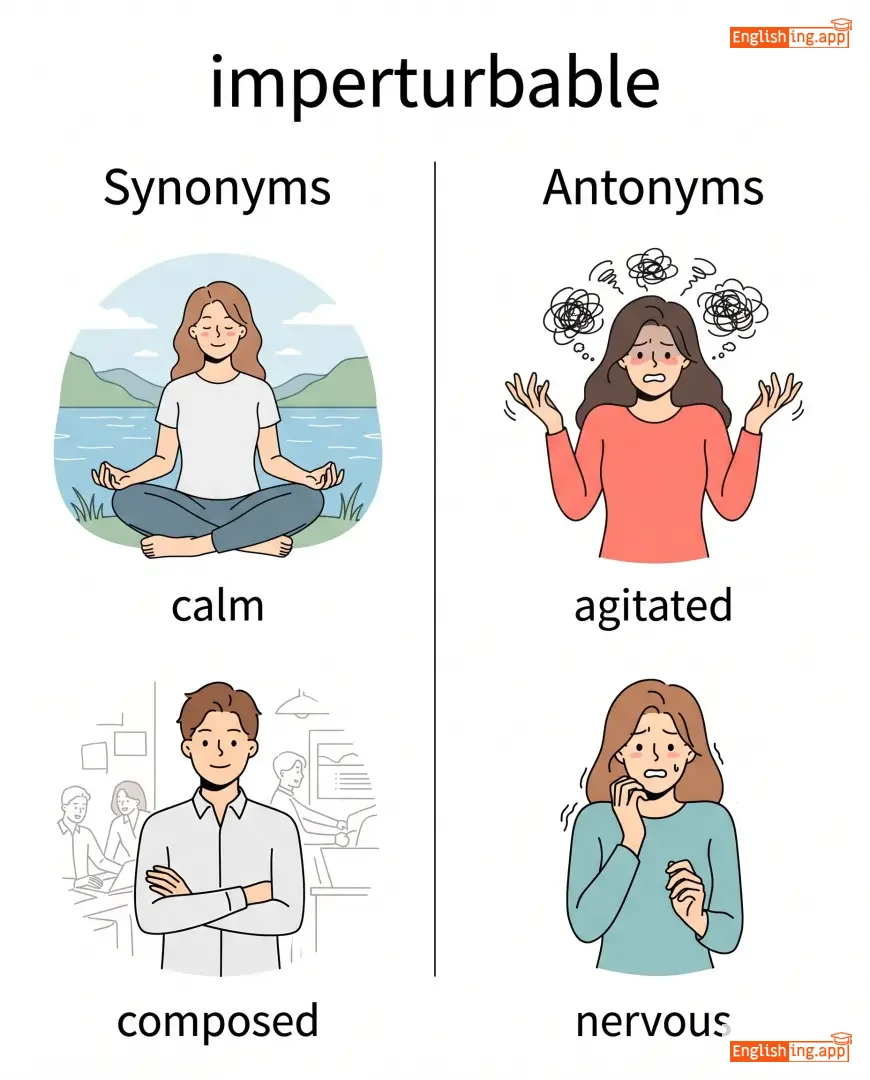
/ɪmˈpɜːrtərbəbəl/
adjective
(印珀特比布尔)
••••••
|

|
泰然自若
tairan ziruo
••••••
|
- •••••• | - •••••• | - •••••• | - •••••• |
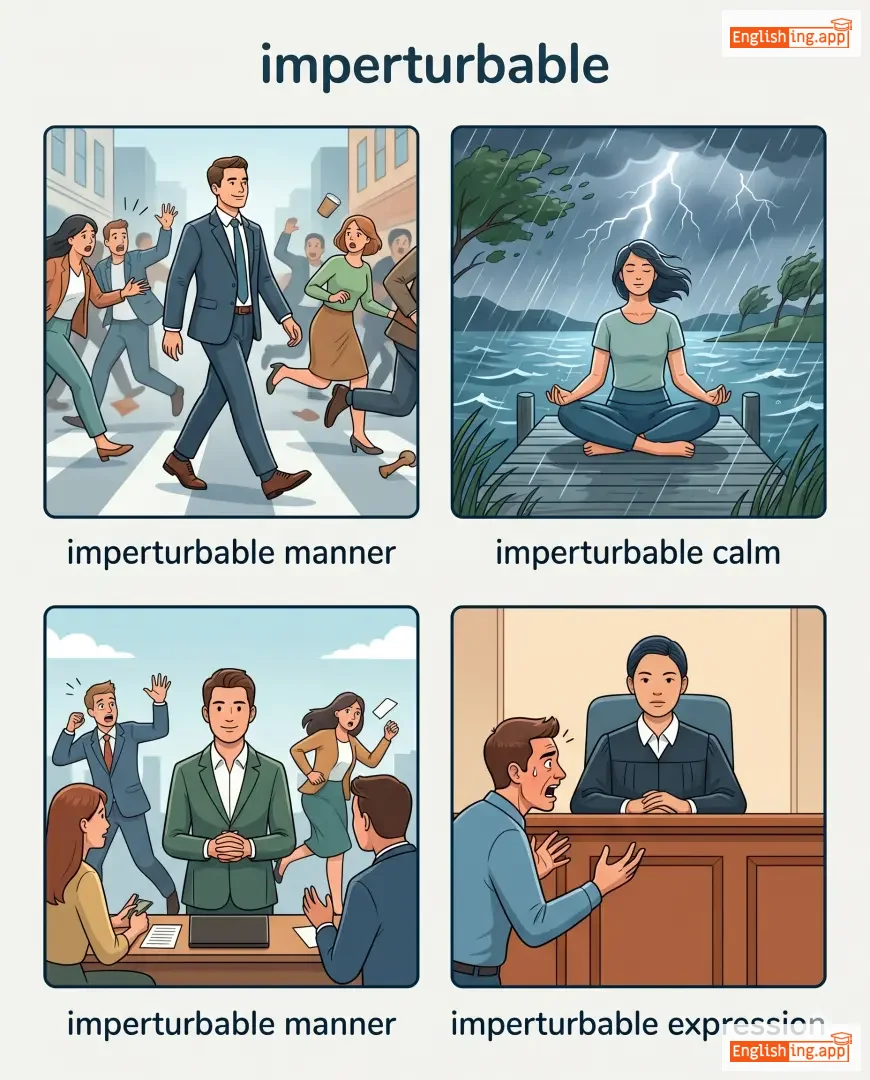
Unable to be upset or excited; calm.
••••••
|
He remained imperturbable even when faced with tough questions.
他在面对难题时依然保持冷静。
••••••
|
他在面对难题时依然保持冷静。
Tā zài miànduì nántí shí yīrán bǎochí lěngjìng.
••••••
|
- •••••• | - •••••• | - •••••• |
calm, composed, serene, collected, unflappable
••••••
|
agitated, nervous, excitable
••••••
|
imperturbable manner, imperturbable calm, imperturbable expression, imperturbable face
••••••
|
Imperturbable 意味着 '不会被激怒' — 意即泰然自若。
••••••
|
|
🛡️
••••••
|
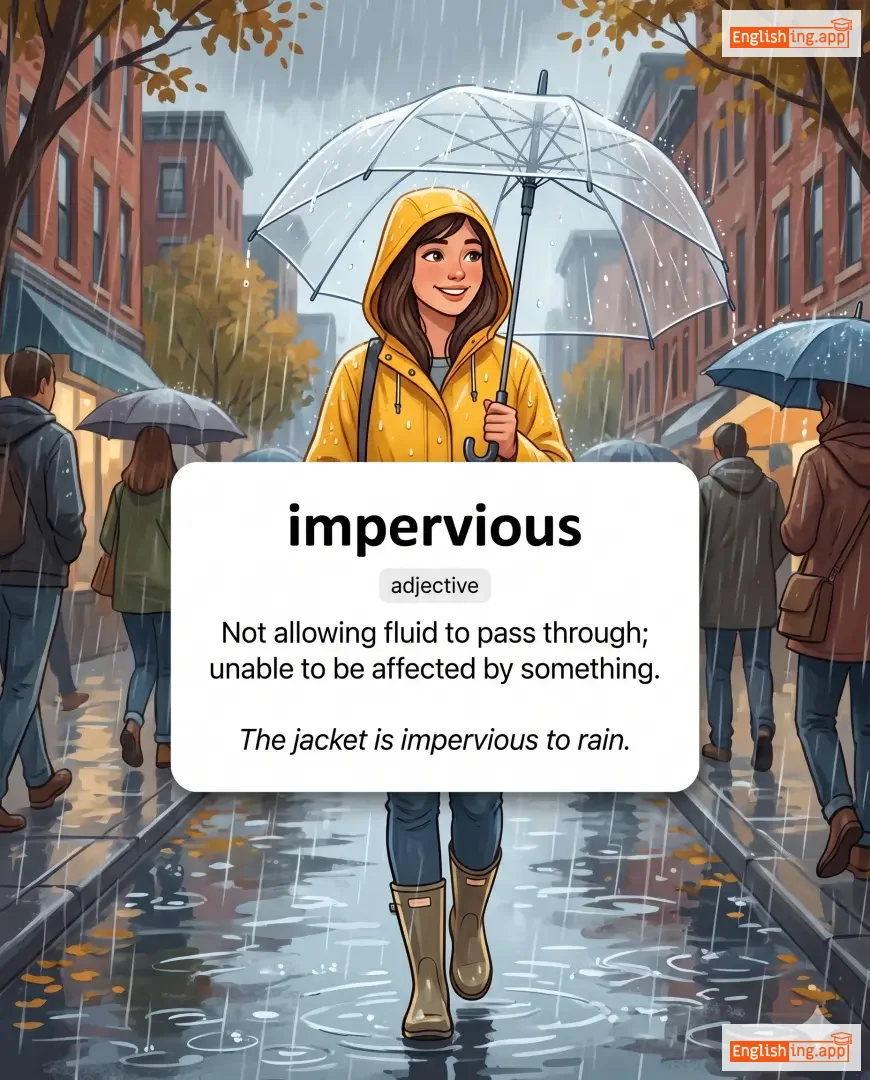
/ɪmˈpɜːrviəs/
adjective
(ɪmˈpɜːrviəs)
••••••
|
|
不透水的
butoushui de
••••••
|
- •••••• | - •••••• | - •••••• | - •••••• |
Not allowing fluid to pass through; unable to be affected by something.
••••••
|
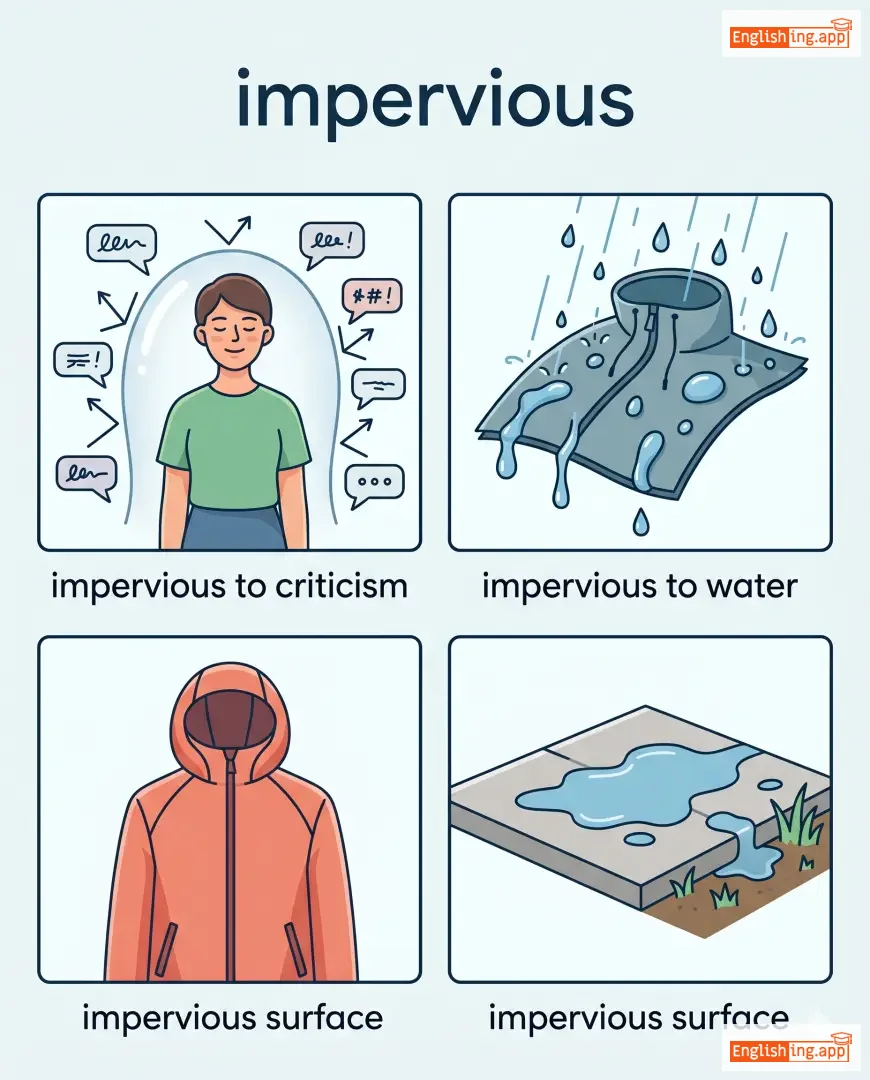
The jacket is impervious to rain. |
这件夹克不透水。
Zhe jian jiake butoushui.
••••••
|
- •••••• | - •••••• | - •••••• |
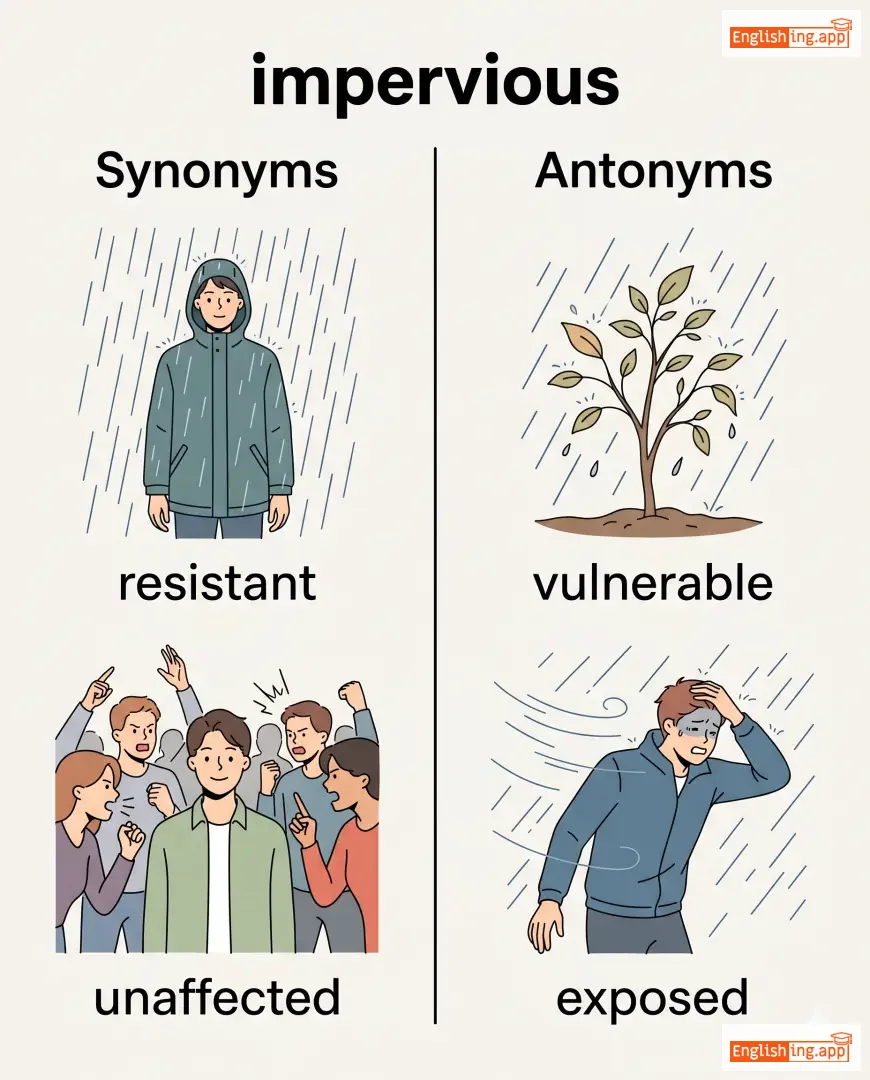
resistant, unaffected, immune, sealed, waterproof
••••••
|
vulnerable, exposed, penetrable
••••••
|
impervious to criticism, impervious to water, impervious surface, impervious layer
••••••
|
Impervious的意思是‘不透水的’ – 不让任何东西通过,不透水。
••••••
|
|
🔨
••••••
|
/ɪmˈpɪndʒ/
verb
••••••
|
|
- •••••• |
impinged
••••••
|
impinged
••••••
|
impinges
••••••
|
impinging
••••••
|
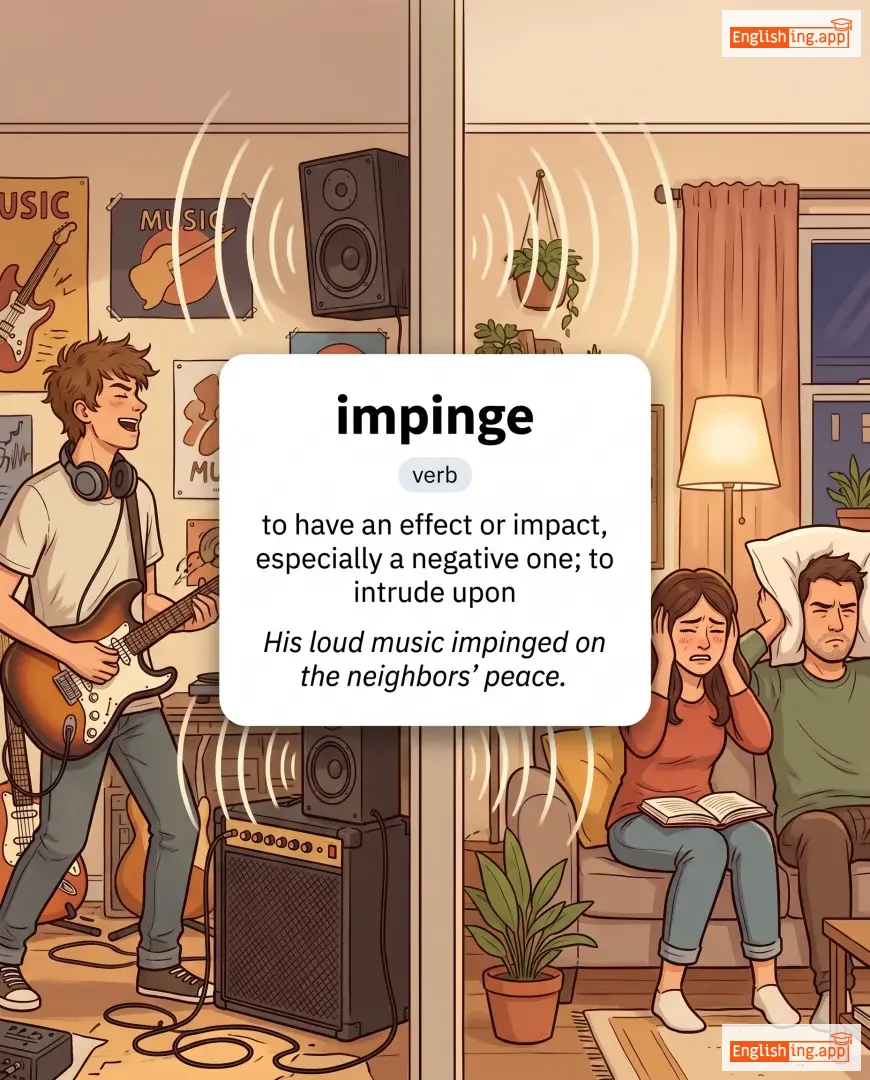
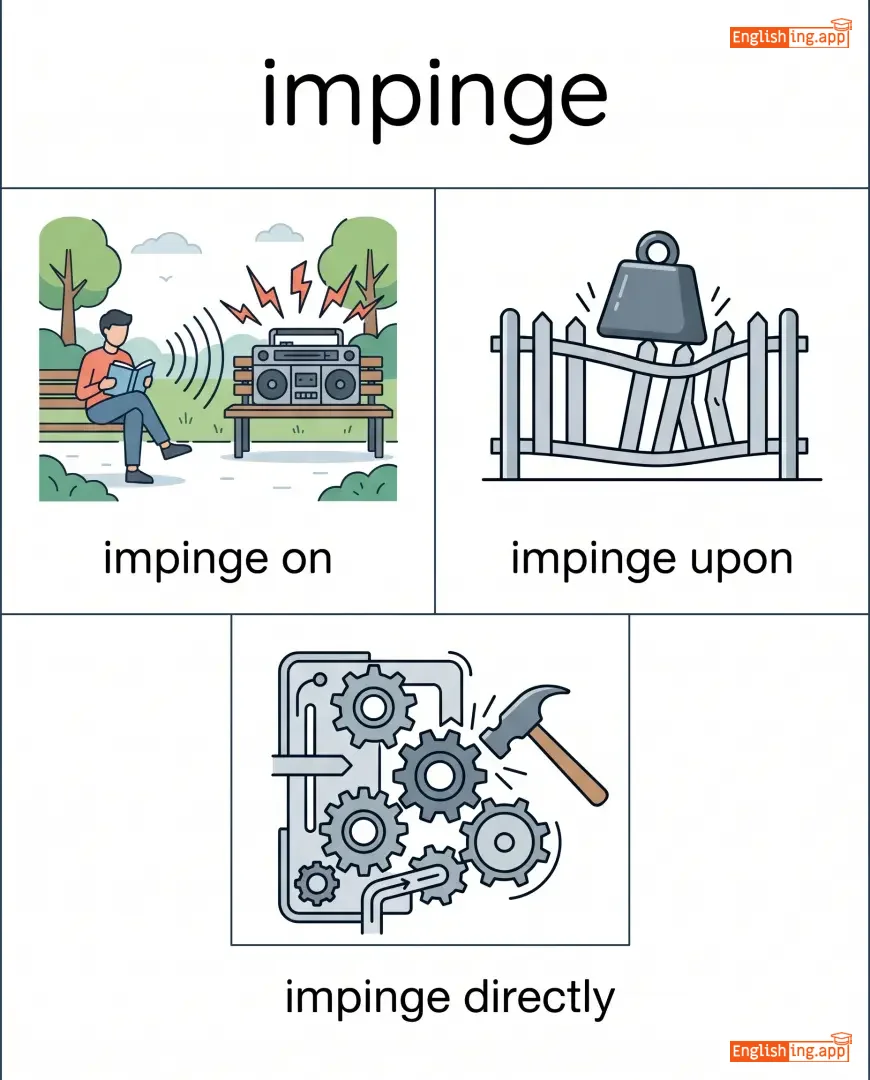
to have an effect or impact, especially a negative one; to intrude upon
••••••
|
His loud music impinged on the neighbors’ peace. |
- •••••• |
impinge on rights |
to intrude or infringe upon someone’s rights
••••••
|
- •••••• |
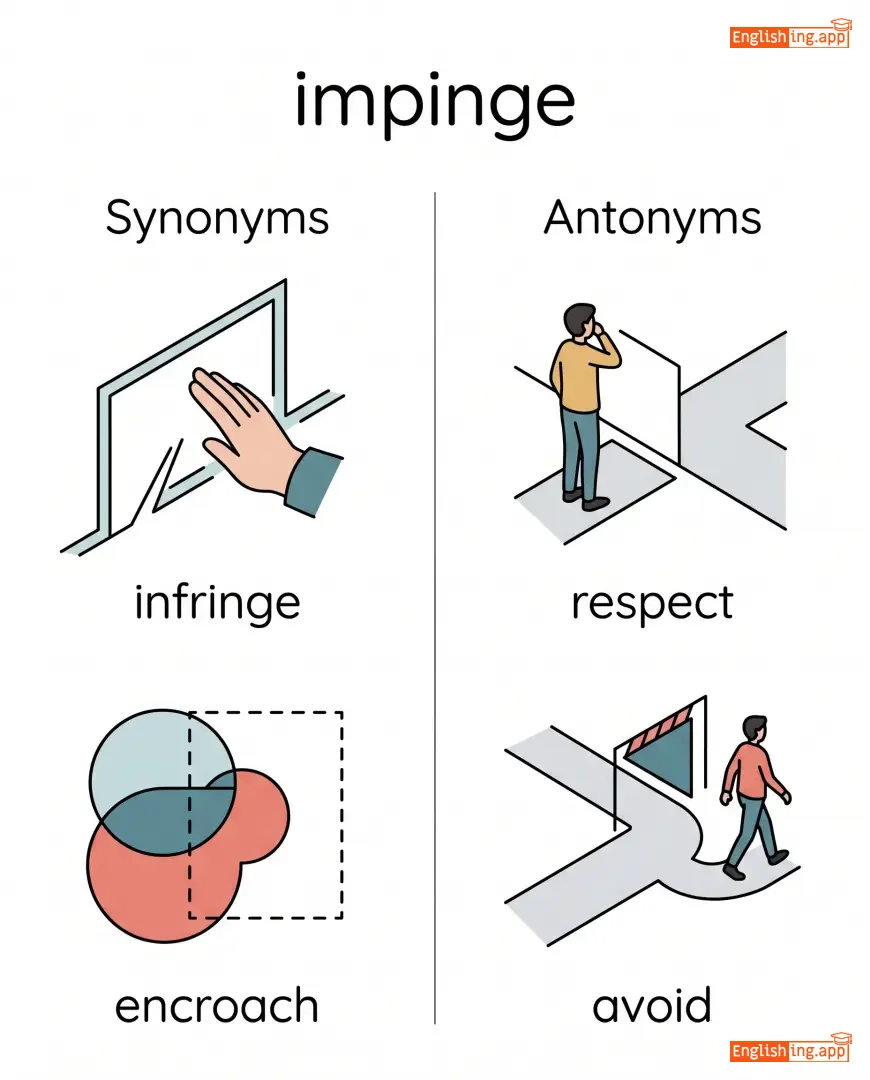
infringe, encroach, affect, intrude, disturb
••••••
|
respect, avoid, preserve
••••••
|
impinge on, impinge upon, impinge directly
••••••
|
No •••••• |
|
🔥
••••••
|
/ɪmˈplækəbl/
adjective
(因普拉克布)
••••••
|

|
不可调和
bukediaohuo
••••••
|
- •••••• | - •••••• | - •••••• | - •••••• |
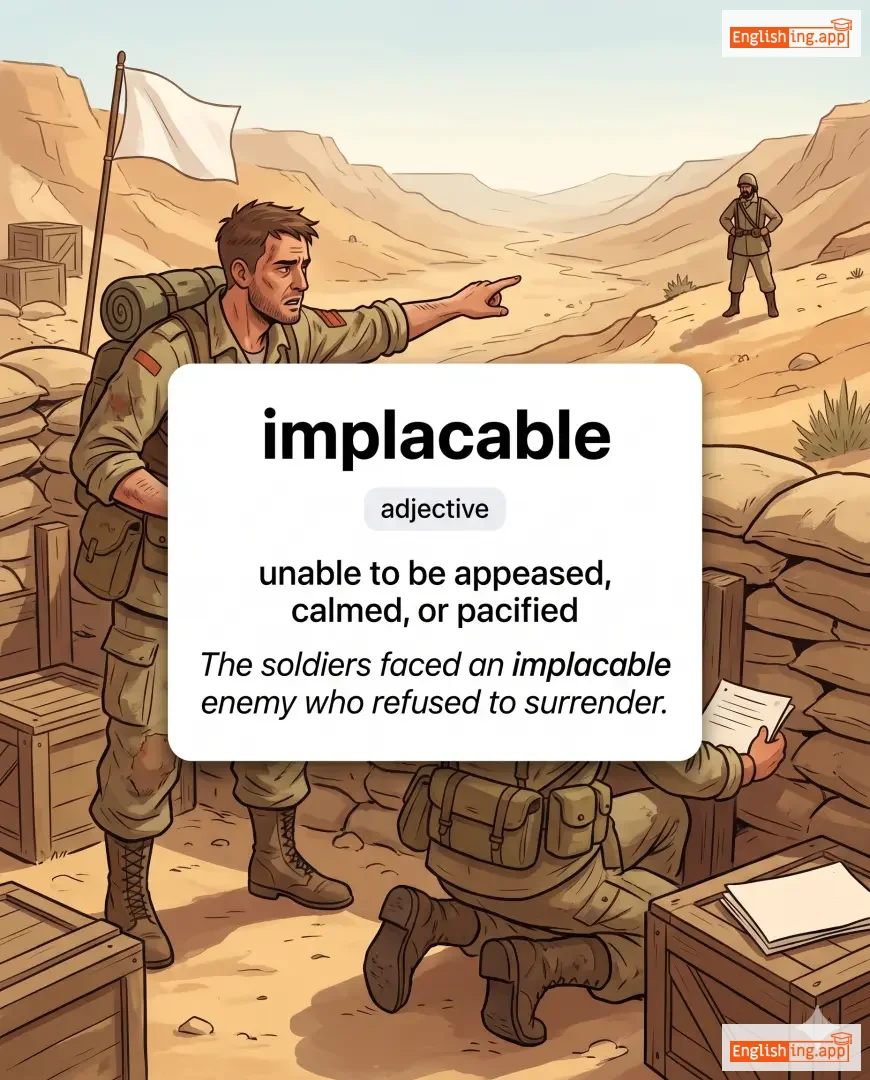
unable to be appeased, calmed, or pacified
••••••
|
The soldiers faced an implacable enemy who refused to surrender. |
士兵们面对着一个不可调和的敌人,他拒绝投降。
Shibingmen miandui zhege bukediaohuo de diren, ta jujue touxiang.
••••••
|
- •••••• | - •••••• | - •••••• |
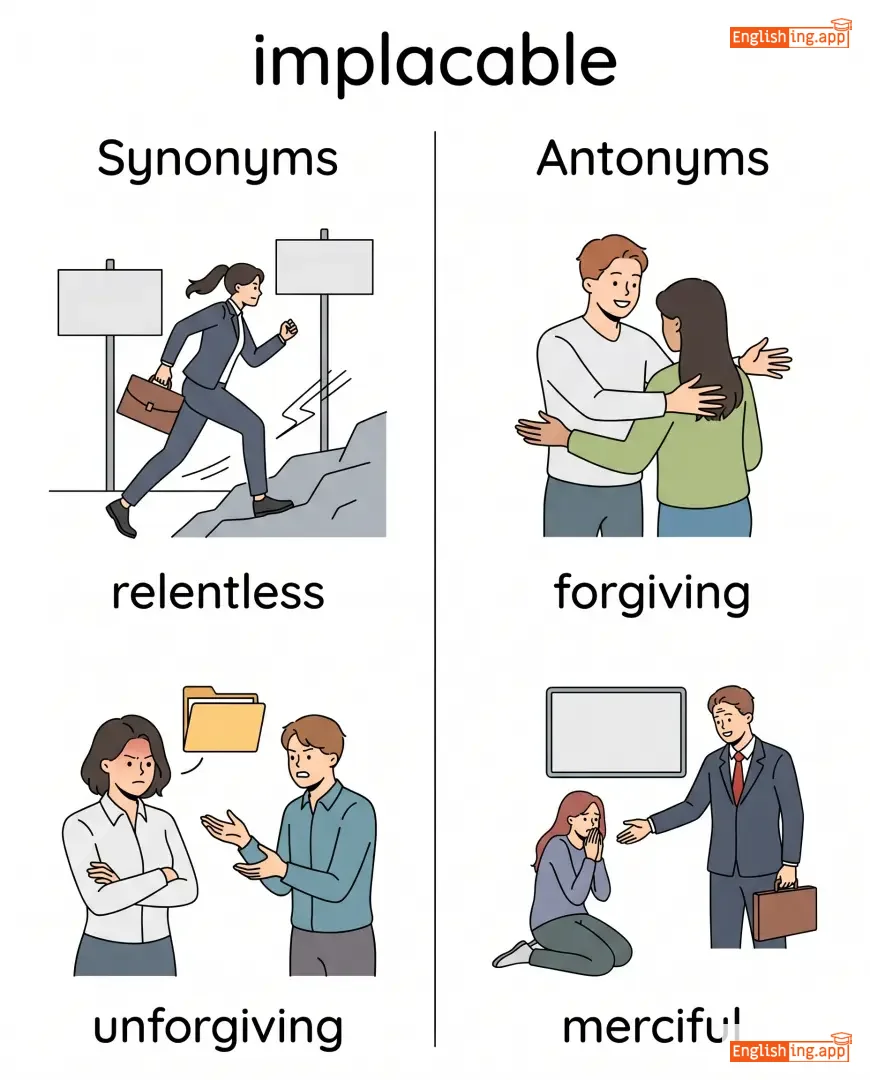
relentless, unforgiving, merciless, unyielding, stubborn
••••••
|
forgiving, merciful, kind
••••••
|
implacable enemy, implacable hatred, implacable opposition
••••••
|
IMPLACABLE在中文是'不可调和',意味着无法平息
••••••
|
|
🤔
••••••
|
/ɪmˈplɔːzəbl/
adjective
(ɪmˈplɔːzəbl)
••••••
|
|
不可信
bù kě xìn
••••••
|
- •••••• | - •••••• | - •••••• | - •••••• |
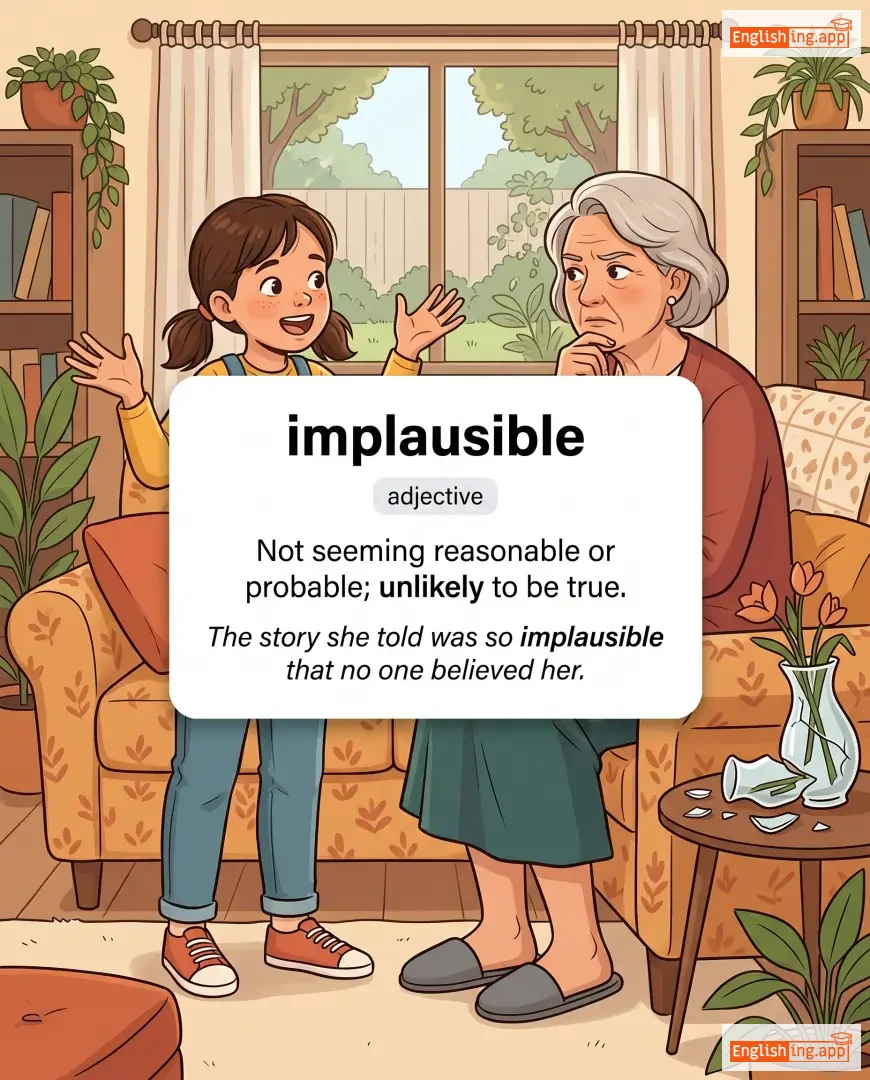
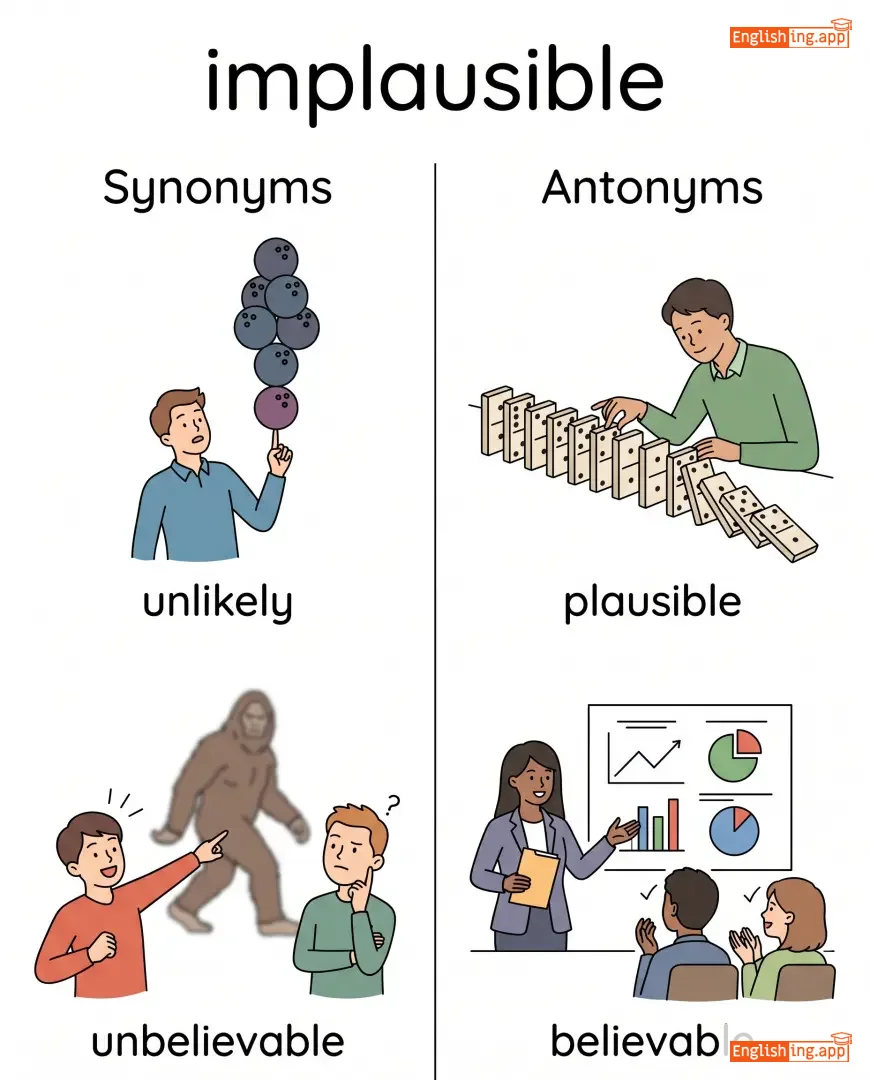
Not seeming reasonable or probable; unlikely to be true.
••••••
|
The story she told was so implausible that no one believed her.
她讲的故事太不可信,以至于没有人相信她。
••••••
|
她讲的故事太不可信,以至于没有人相信她。
Tā jiǎng de gùshì tài bù kěxìn, yǐzhì méiyǒu rén xiāngxìn tā.
••••••
|
- •••••• | - •••••• | - •••••• |
unlikely, unbelievable, doubtful, improbable, questionable
••••••
|
plausible, believable, credible
••••••
|
implausible explanation, implausible excuse, implausible claim
••••••
|
不可信像是 impossible – 令人难以置信
••••••
|
|
🤫
••••••
|
/ɪmˈplɪsɪt/
adjective
(隐性)
••••••
|

|
隐性
yinxing
••••••
|
- •••••• | - •••••• | - •••••• | - •••••• |
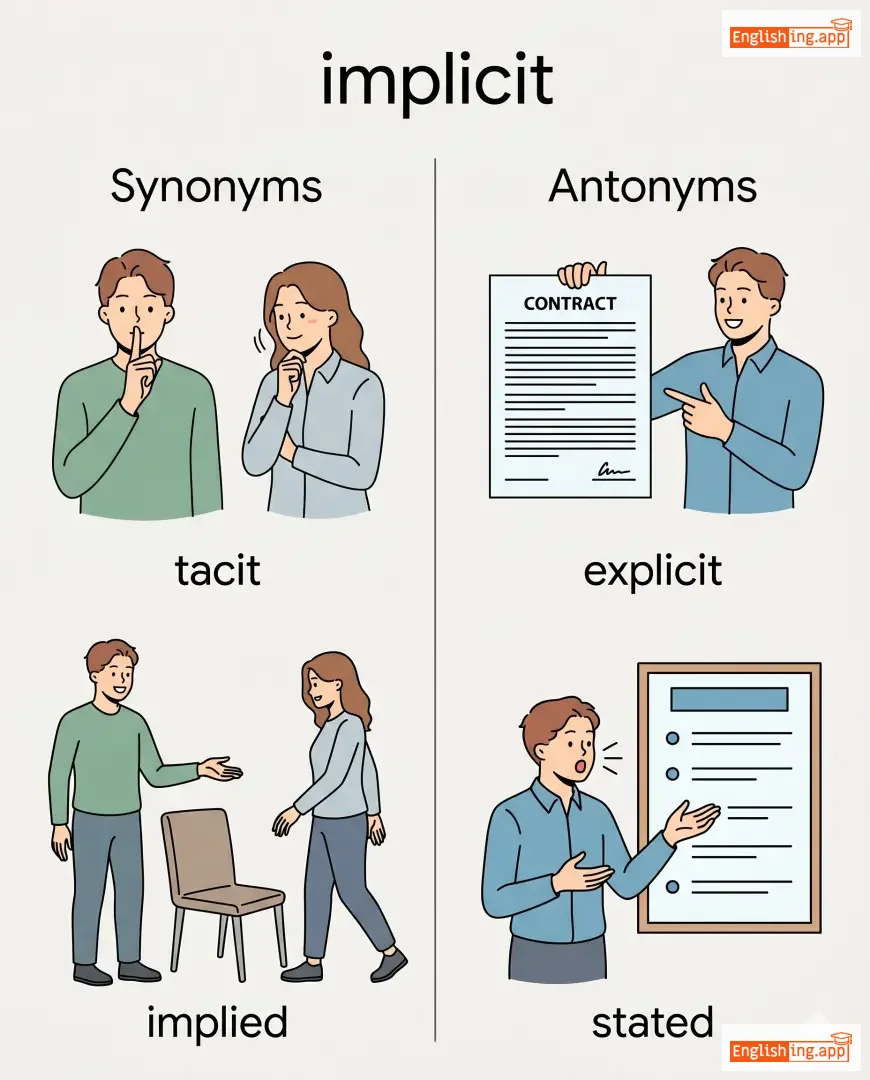
Suggested or understood without being directly stated.
••••••
|
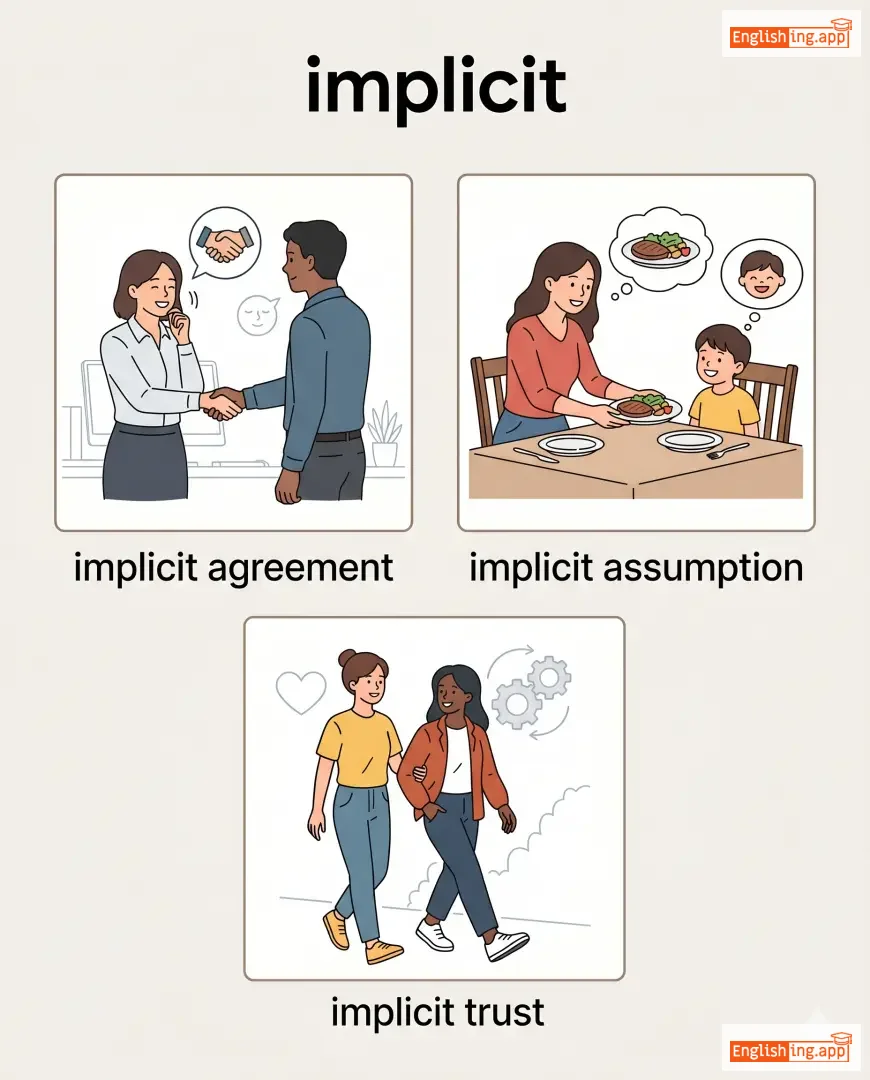
Her trust in him was implicit. |
她对他的信任是隐性的。
tā duì tā de xìnrèn shì yǐnxìng de
••••••
|
implicit trust |
Complete and unquestioning trust.
••••••
|
隐性信任
yǐnxìng xìnrèn
••••••
|
tacit, implied, unspoken, inherent, understood
••••••
|
explicit, stated, expressed
••••••
|
implicit agreement, implicit assumption, implicit trust, implicit in
••••••
|
‘implicit’意味着隐藏的——记住:隐性信任不是直接说出来的,而是被理解的。
••••••
|
|
💥
••••••
|
/ɪmˈploʊd/
verb
(因普洛德)
••••••
|
|
内爆
neibao
••••••
|
imploded
因普洛德德
••••••
|
imploded
因普洛德德
••••••
|
implodes
因普洛德斯
••••••
|
imploding
因普洛丁
••••••
|
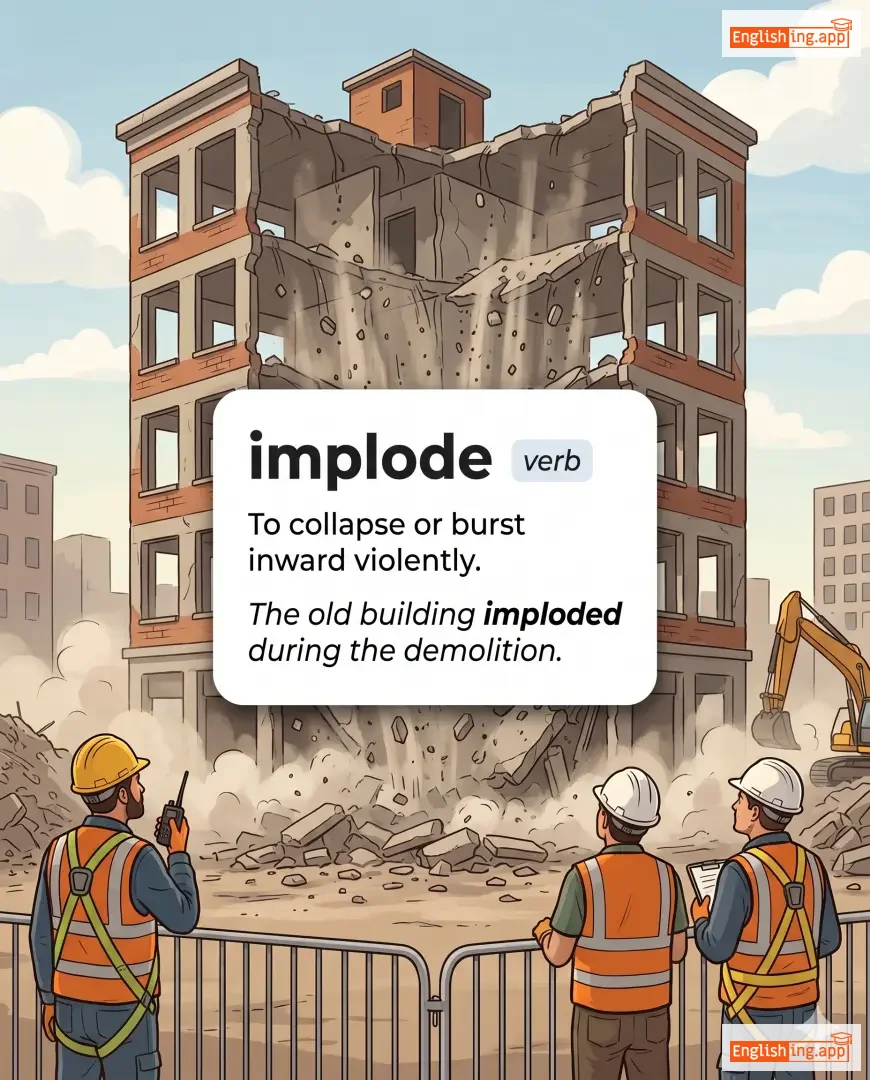
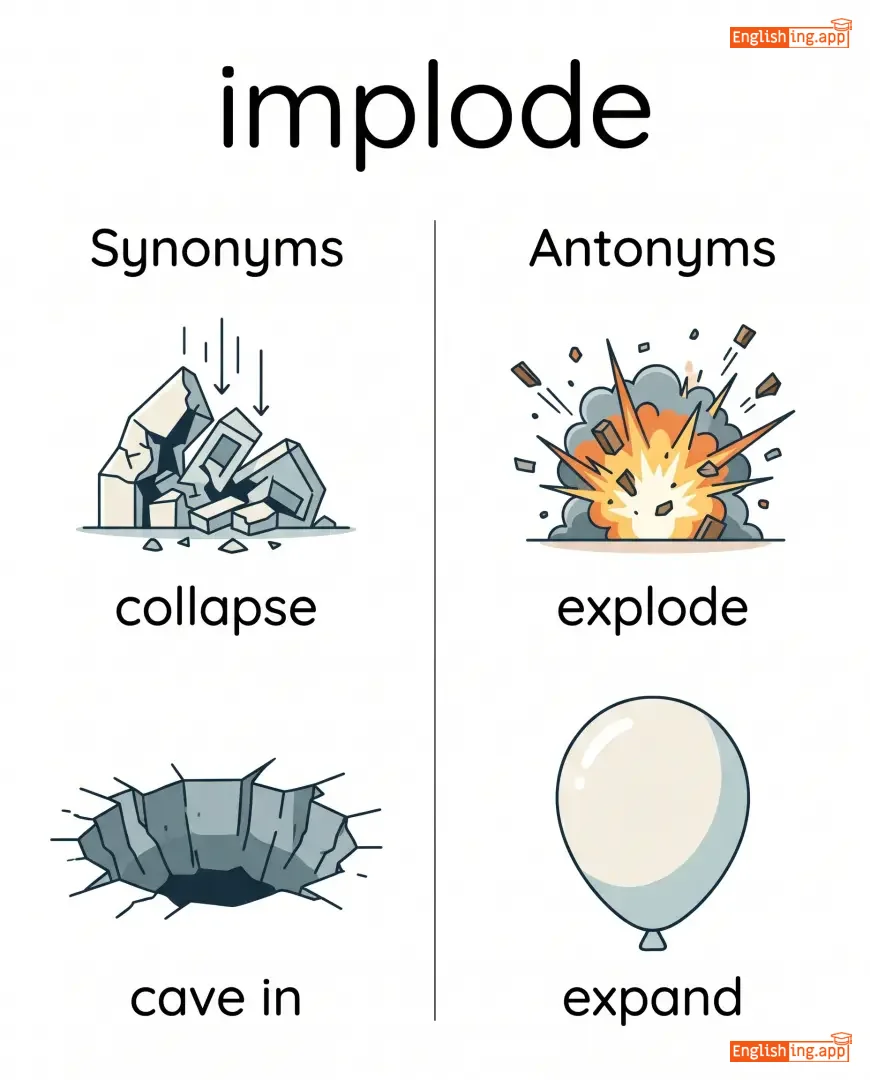
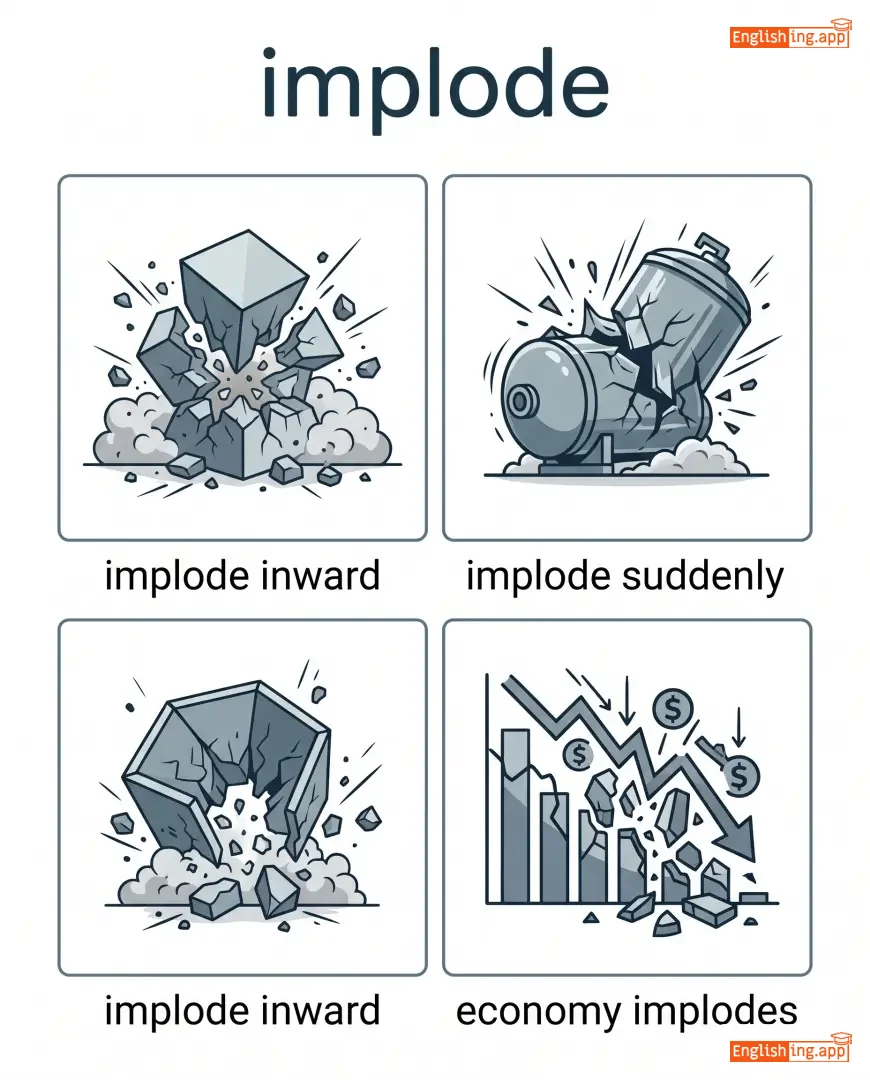
To collapse or burst inward violently.
••••••
|
The old building imploded during the demolition.
这座老建筑在拆除过程中爆炸坍塌。
••••••
|
老建筑在拆除时发生了内爆。
lao jianzhu zai chaichu shi fasheng le neibao.
••••••
|
- •••••• | - •••••• | - •••••• |
collapse, cave in, crumple, fall in
••••••
|
explode, expand, burst outward
••••••
|
implode inward, implode suddenly, economy implodes
••••••
|
'Implode'意味着内爆 — 想象一下建筑物在内部崩溃,像气球一样被压缩。
••••••
|
|
😡
••••••
|
/ˌɪmprɪˈkeɪʃən/
noun
(yinpuleikeshan)
••••••
|
|
诅咒
zuzhou
••••••
|
- •••••• | - •••••• | - •••••• | - •••••• |
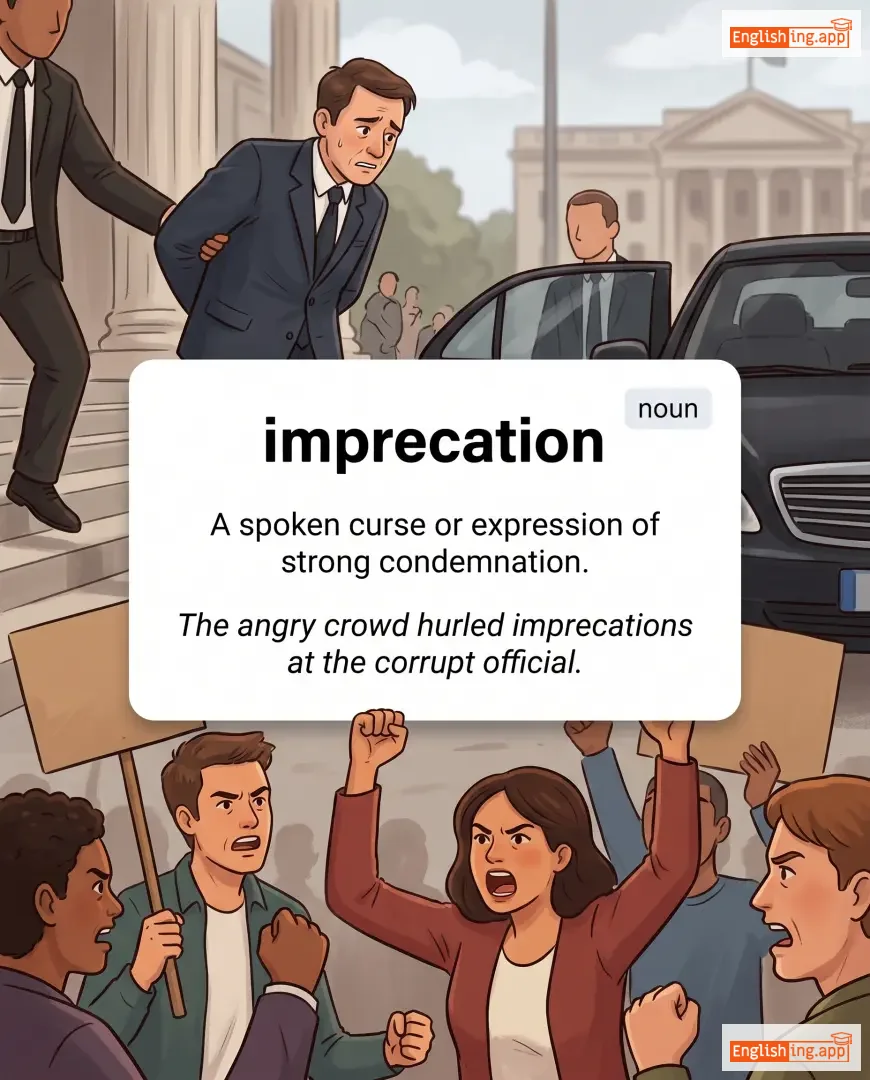
A spoken curse or expression of strong condemnation.
••••••
|
The angry crowd hurled imprecations at the corrupt official. |
愤怒的人群向腐败的官员投掷了诅咒。
Fen nu de renqun xiang fubai de guan yuan tou zhi le zuzhuo.
••••••
|
- •••••• | - •••••• | - •••••• |
curse, malediction, hex, damnation, oath
••••••
|
blessing, benediction
••••••
|
utter imprecation, hurl imprecation, loud imprecation, divine imprecation
••••••
|
Imprecation 的意思是诅咒 – imagine 印刷上诅咒的纸张。
••••••
|
|
👉
••••••
|
/ɪmˈpjuːt/
verb
(yīng pǔ tú)
••••••
|
|
归因于
guī yīn yú
••••••
|
imputed
yīng pǔ tú dé
••••••
|
imputed
yīng pǔ tú dé
••••••
|
imputes
yīng pǔ tú sī
••••••
|
imputing
yīng pǔ tú yīng
••••••
|
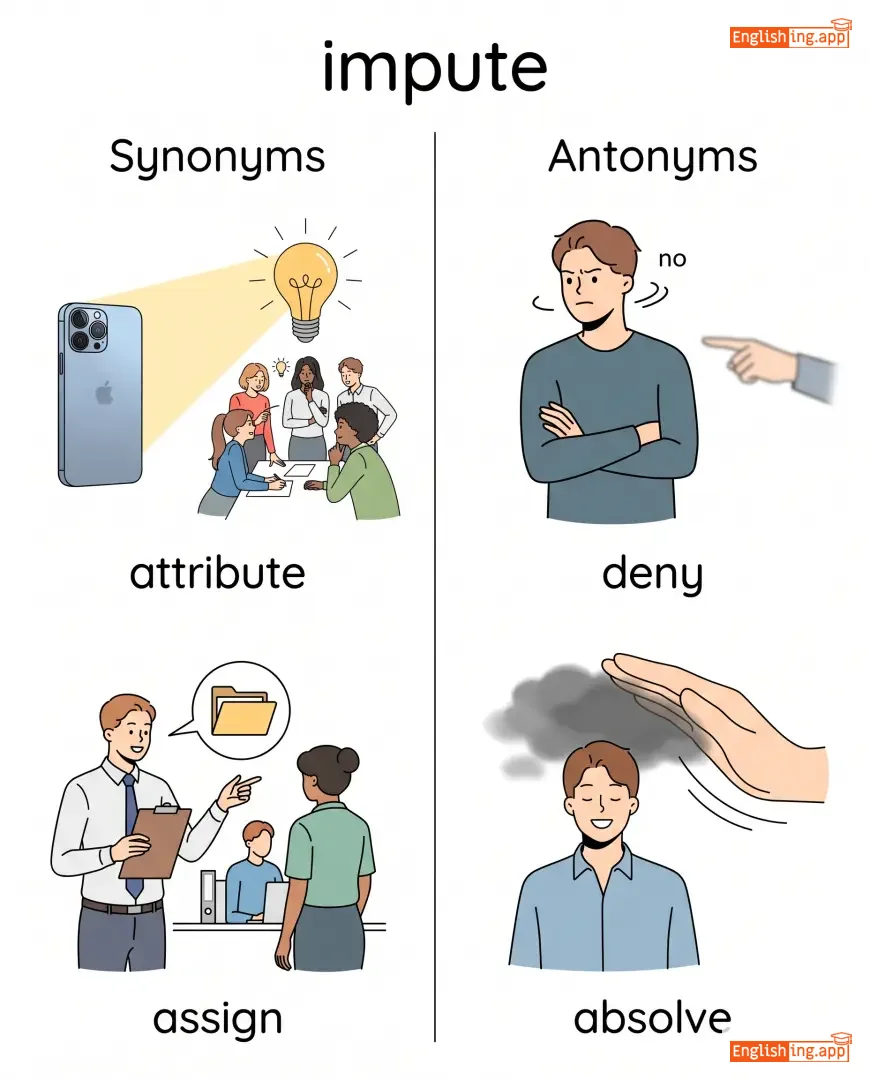
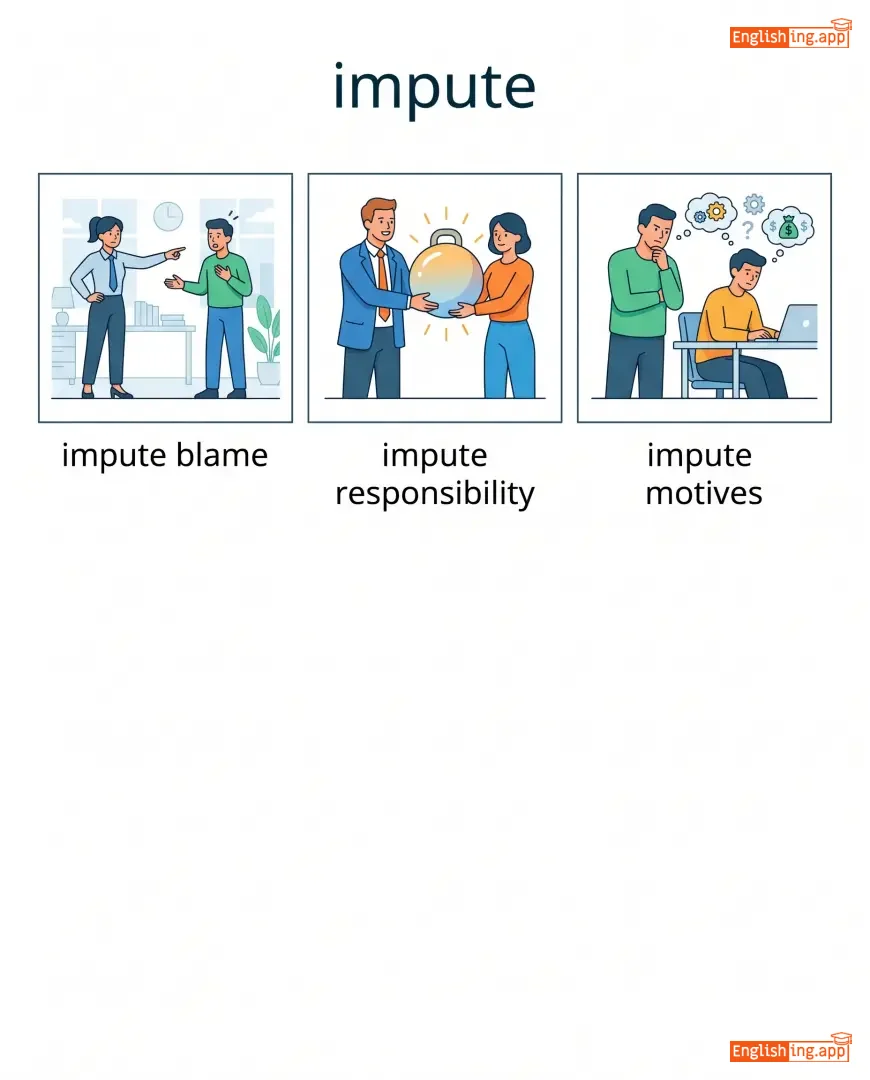
to attribute a fault or responsibility to someone
••••••
|
They imputed the company's success to good leadership.
他们将公司的成功归功于出色的领导力。
••••••
|
他们将公司的成功归功于出色的领导力。
Tāmen jiāng gōngsī de chénggōng guī gōng yú chū sè de lǐngdǎo lì.
••••••
|
- •••••• | - •••••• | - •••••• |
attribute, assign, credit, ascribe
••••••
|
deny, absolve
••••••
|
impute blame, impute responsibility, impute motives, impute success
••••••
|
Impute就像一个输入过程,归因于某人或某事。
••••••
|
|
🤷♂️
••••••
|
/ˌɪn.ədˈvɜːr.tənt.li/
adverb
(inadvertently)
••••••
|

|
无意中; 不小心; 错误地
wu yizhong; bu xiaoxin; cuowu di
••••••
|
- •••••• | - •••••• | - •••••• | - •••••• |
without being aware of what you are doing; unintentionally; by mistake
••••••
|
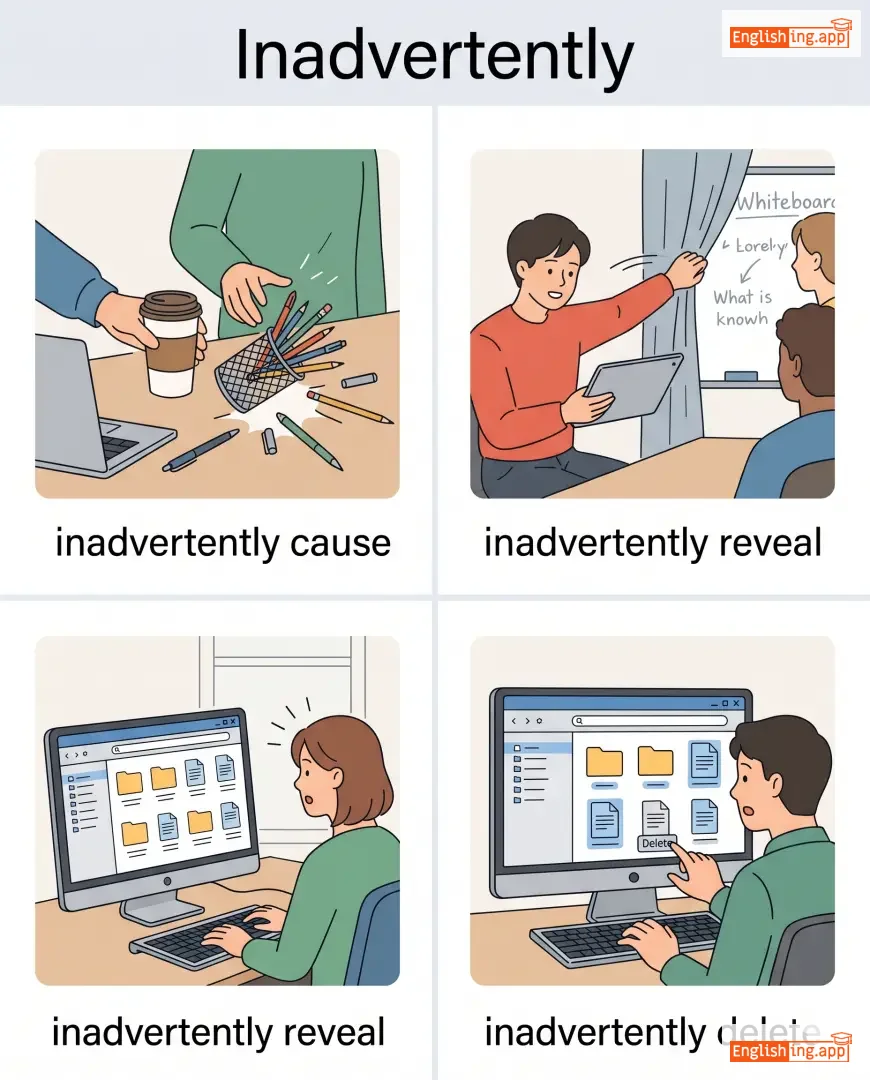
She inadvertently deleted the important file while cleaning her computer. |
她在清理计算机时无意中删除了重要文件。
Ta zai qingli jisuanji shi wu yizhong shanchu le zhongyao wenjian.
••••••
|
- •••••• | - •••••• | - •••••• |
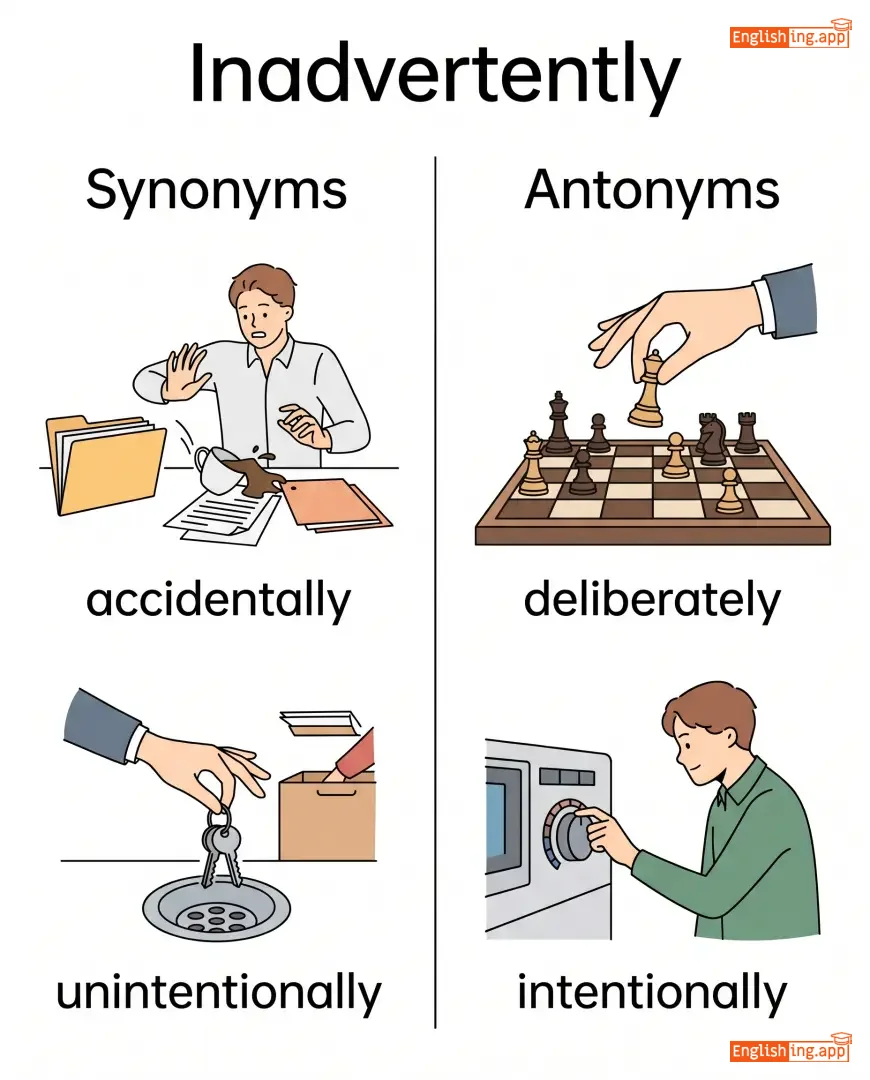
accidentally, unintentionally, unknowingly, mistakenly
••••••
|
deliberately, intentionally, purposely, consciously
••••••
|
inadvertently reveal, inadvertently cause, inadvertently delete
••••••
|
无意中 - 像是清理电脑时不小心删除了文件!
••••••
|

