|
絵文字
|
単語 | Images | 翻訳 | 過去 | 過去分詞 | 三人称単数 | 動名詞 | 意味 | 例文 | 例文の翻訳 | 表現例 | 表現例の意味 | 表現例の翻訳 | 同義語 | 対義語 | コロケーション | ニーモニック |
|---|---|---|---|---|---|---|---|---|---|---|---|---|---|---|---|---|---|
|
🎭
••••••
|
/ˌhɪstriˈɒnɪk/
adjective
••••••
|
|
- •••••• | - •••••• | - •••••• | - •••••• | - •••••• |
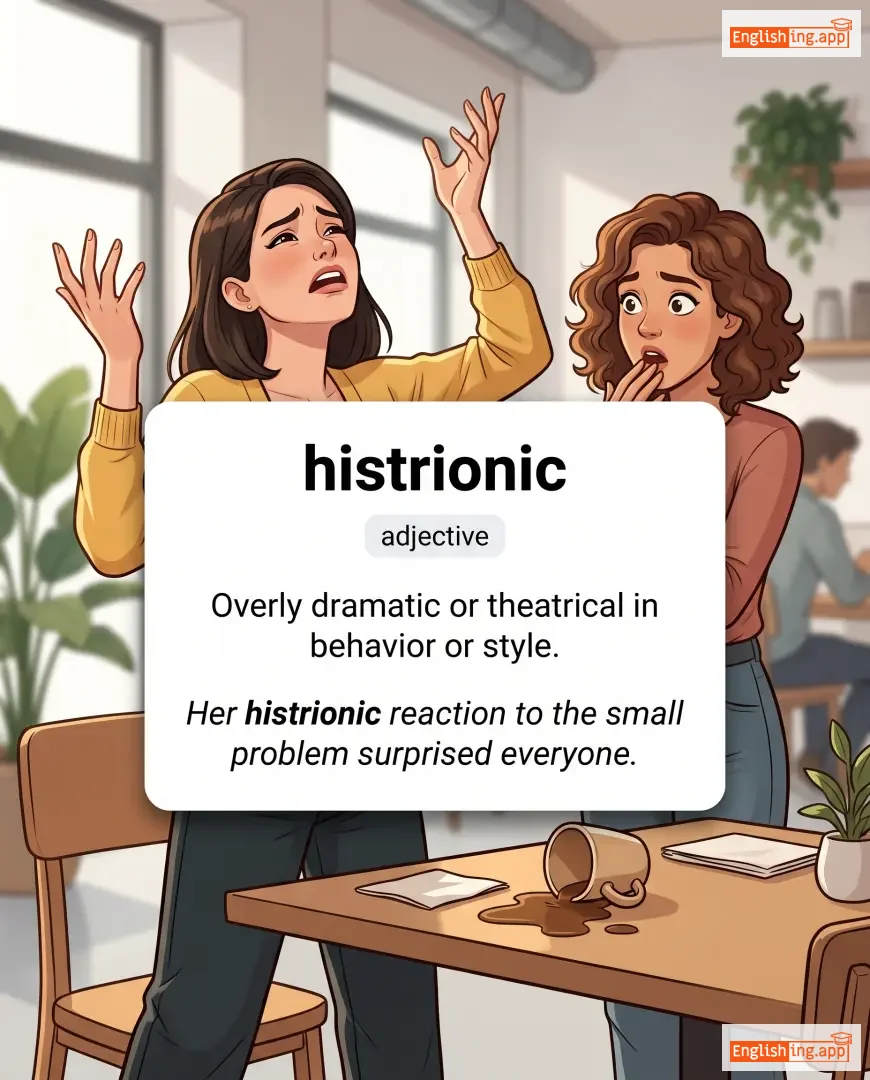
Overly dramatic or theatrical in behavior or style.
••••••
|
Her histrionic reaction to the small problem surprised everyone. |
- •••••• |
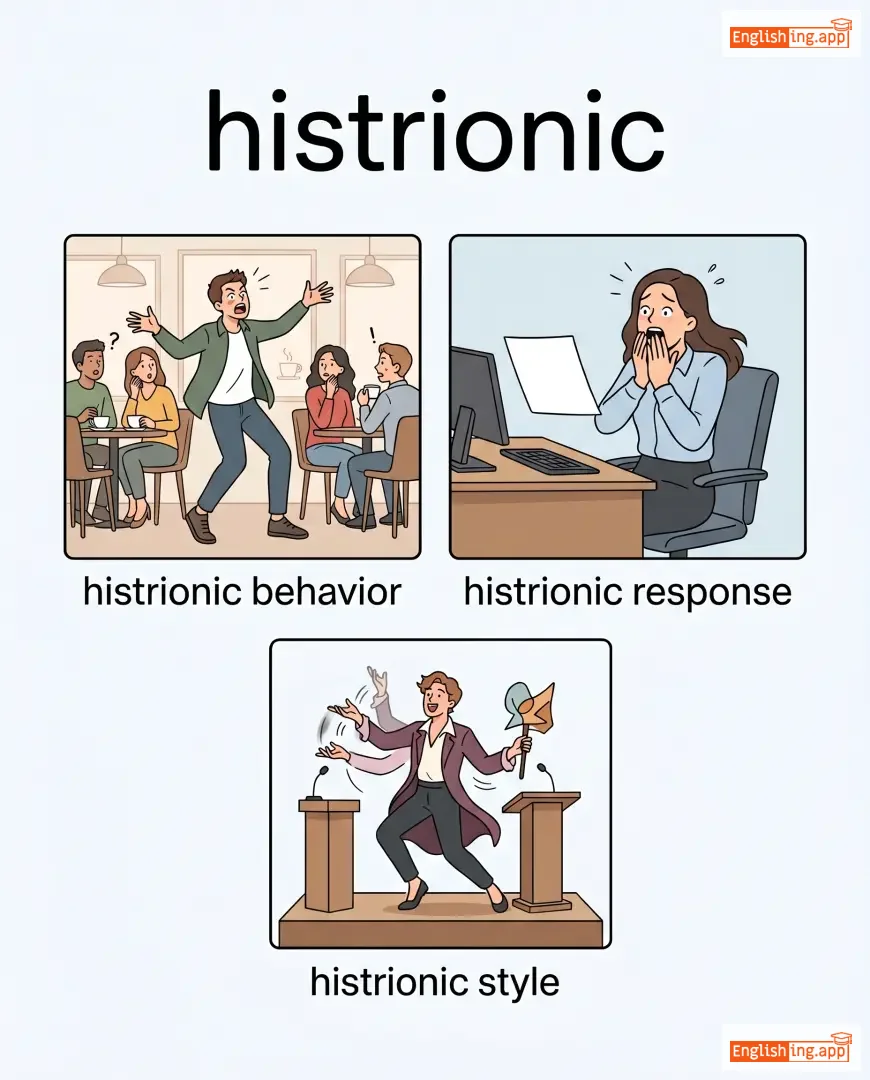
histrionic behavior |
Excessively dramatic behavior
••••••
|
- •••••• |
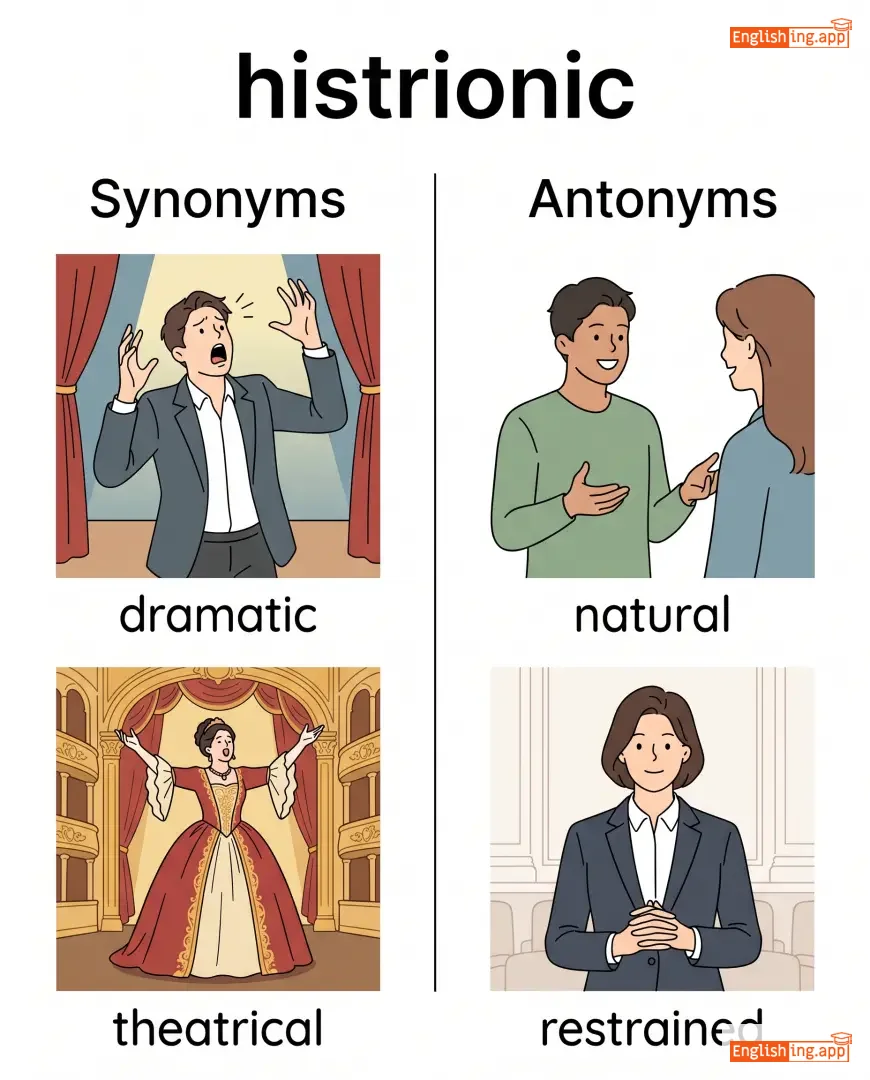
dramatic, theatrical, exaggerated, overacting, showy
••••••
|
natural, restrained, calm
••••••
|
histrionic behavior, histrionic response, histrionic style, histrionic personality
••••••
|
No •••••• |
|
⚖️
••••••
|
/ˌhoʊmi.oʊˈsteɪsɪs/
noun
(ホメオスタシス)
••••••
|

|
恒常性
kōjōsei
••••••
|
- •••••• | - •••••• | - •••••• | - •••••• |
The ability of a living system or organism to maintain internal stability despite changes in external conditions.
••••••
|
Sweating helps the body maintain homeostasis in hot weather. |
汗をかくことで、暑い天気の中で体が恒常性を維持するのを助けます。
Ase o kaku koto de, atsui tenki no naka de karada ga kōjōsei o iji suru no o tasukemasu.
••••••
|
- •••••• | - •••••• | - •••••• |
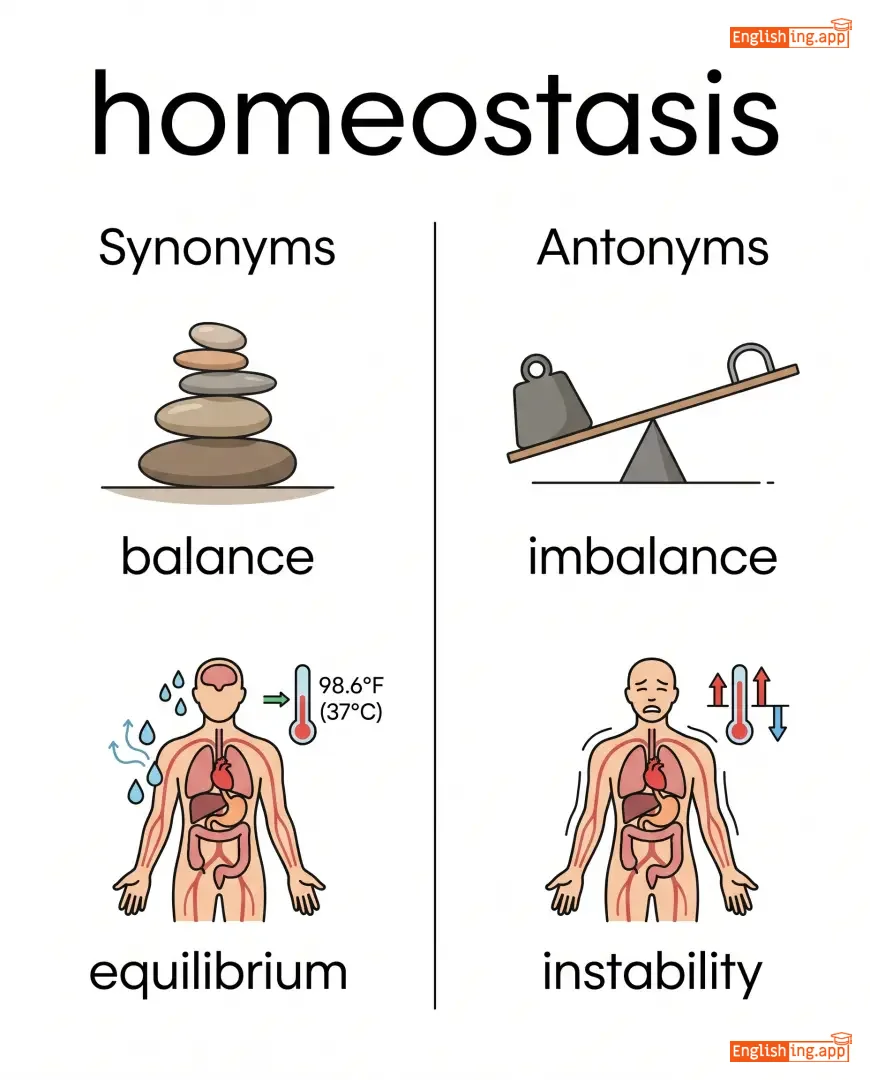
balance, equilibrium, stability, regulation
••••••
|
imbalance, instability
••••••
|
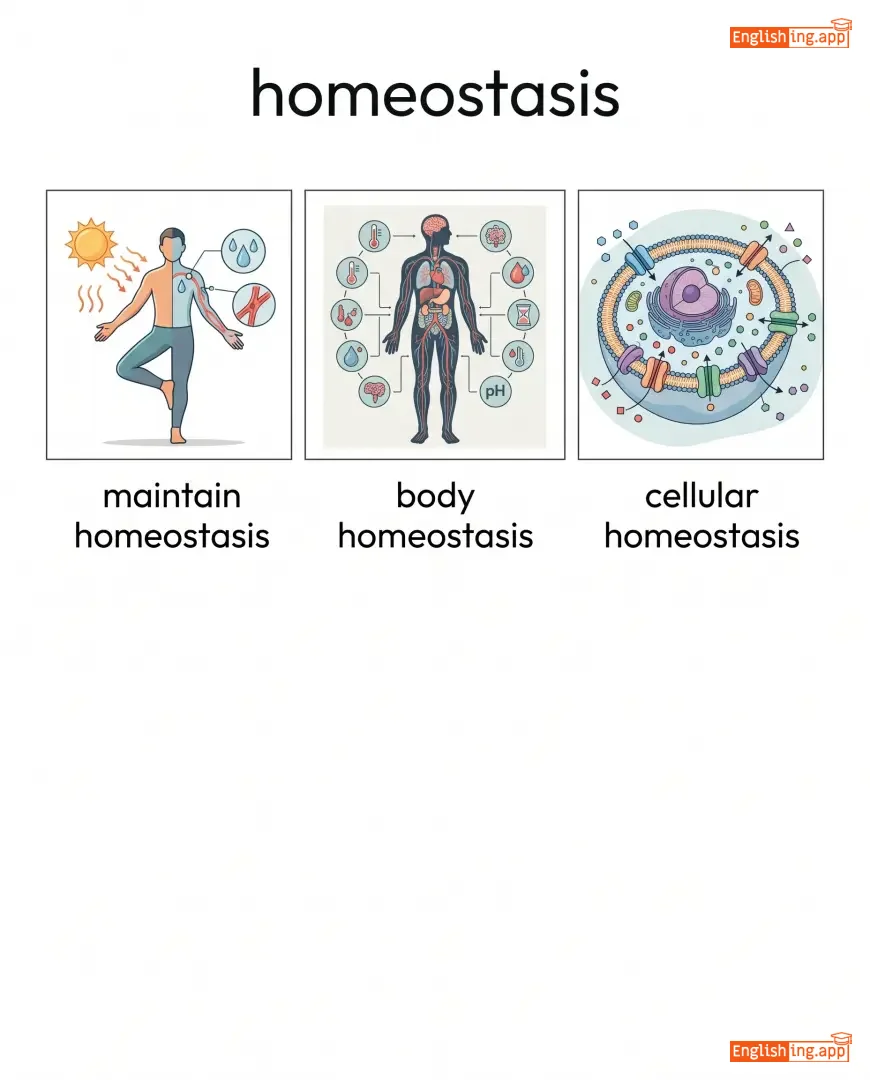
maintain homeostasis, body homeostasis, cellular homeostasis
••••••
|
恒常性は家(home)でのバランスを保つようなものです。
••••••
|
|
⛪
••••••
|
/ˈhɑː.mə.li/
noun
(ホミリー)
••••••
|

|
説教; 道徳的な退屈な講義
sekkyou; doutokuteki na taikutsuna kougi
••••••
|
- •••••• | - •••••• | - •••••• | - •••••• |
a religious discourse delivered as part of a church service; a tedious moralizing lecture
••••••
|
The priest delivered an inspiring homily about compassion and forgiveness during Sunday service. |
牧師は日曜日の礼拝中に思いやりと許しについての感動的な説教を行いました。
Bokushi wa nichiyoubi no reihai-chuu ni omoiyari to yurushi ni tsuite no kandou-teki na sekkyou o okonaimashita.
••••••
|
- •••••• | - •••••• | - •••••• |
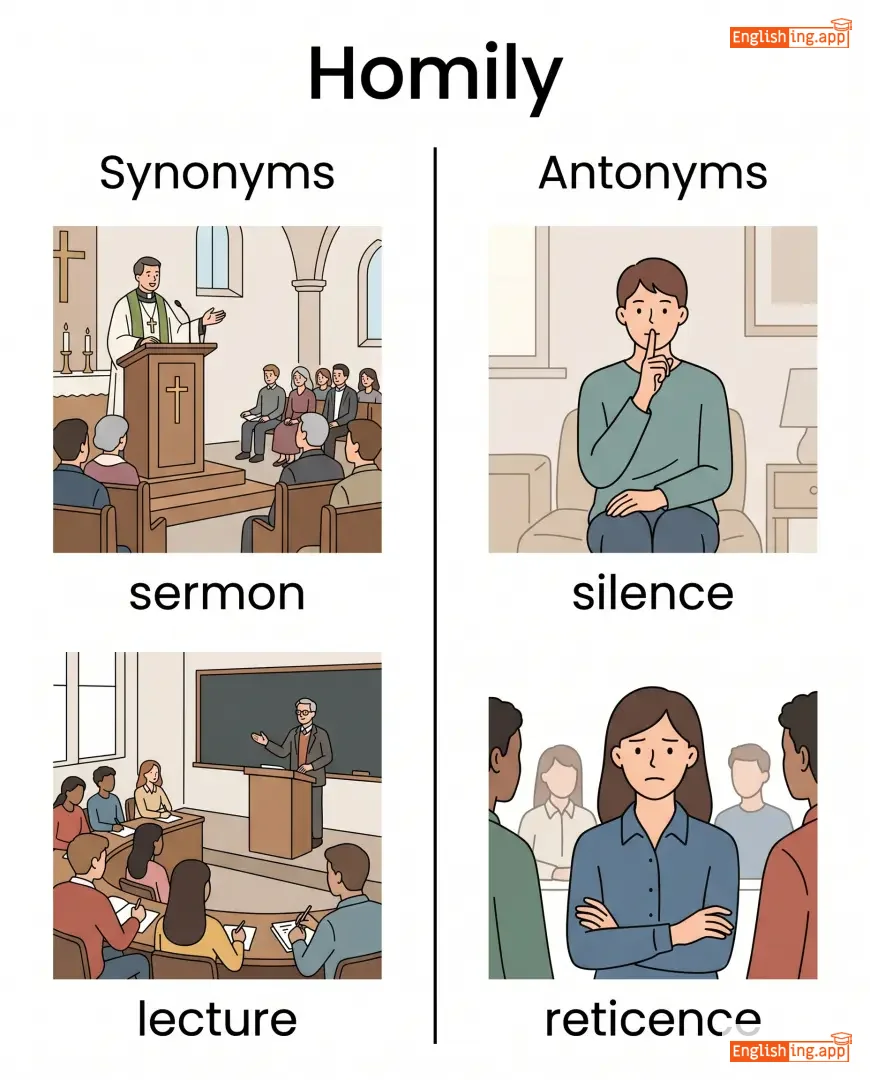
sermon, lecture, discourse, preaching
••••••
|
silence, quiet, wordlessness, muteness
••••••
|
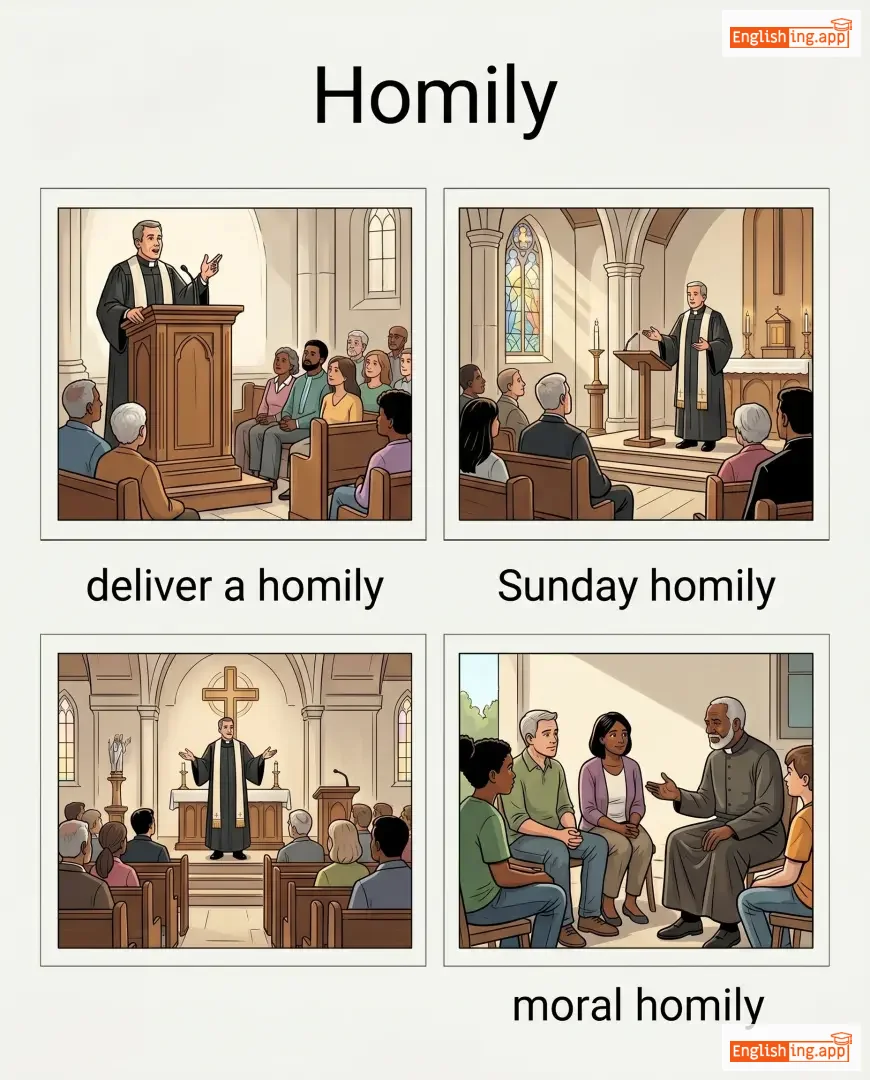
Sunday homily, inspiring homily, deliver homily
••••••
|
ホミリー = 家の説教、人生の教訓。
••••••
|
|
⚖️
••••••
|
/ˌhoʊ.məˈdʒiː.ni.əs/
adjective
(ホモジーニアス)
••••••
|
|
均質な
kinshitsuna
••••••
|
- •••••• | - •••••• | - •••••• | - •••••• |
Consisting of parts or elements that are all the same kind; uniform in composition.
••••••
|
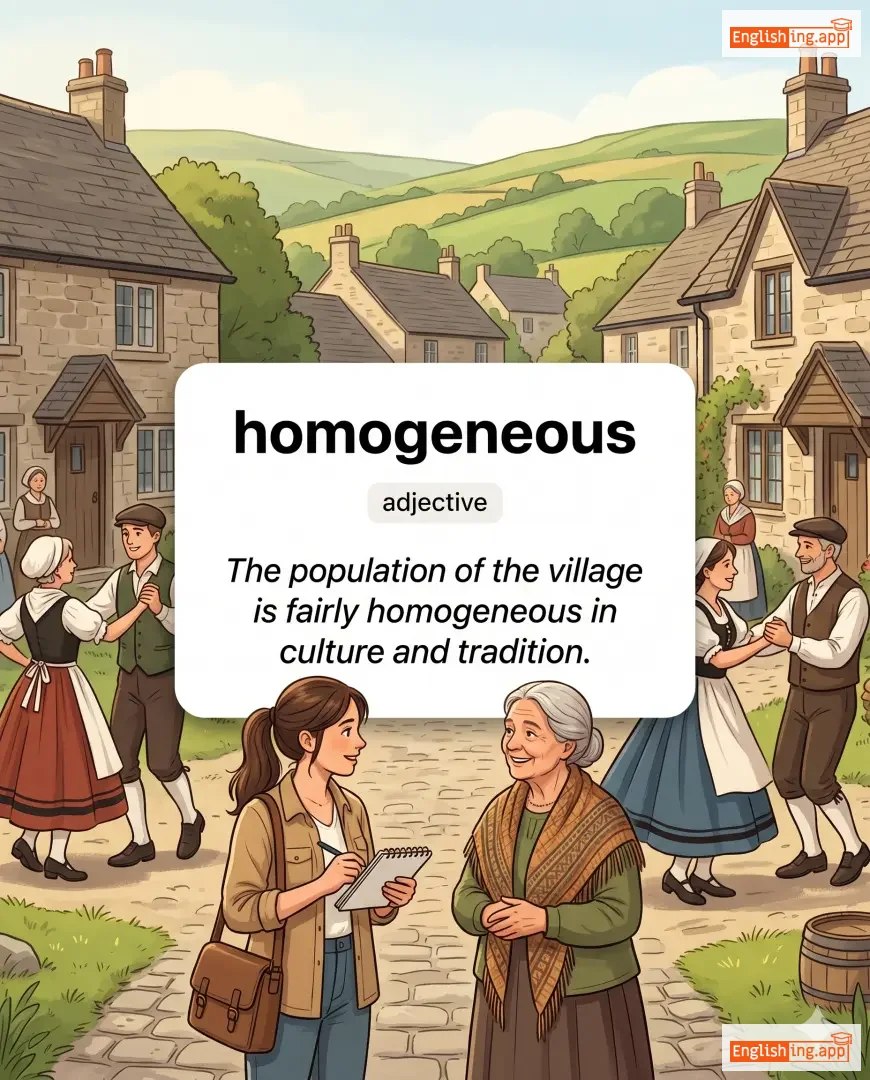
The population of the village is fairly homogeneous in culture and tradition.
その村の人口は文化や伝統においてかなり均質です。
••••••
|
その村の人口は文化や伝統においてかなり均質です。
Sono mura no jinkō wa bunka ya dentō ni oite kanari kinshitsudesu.
••••••
|
- •••••• | - •••••• | - •••••• |
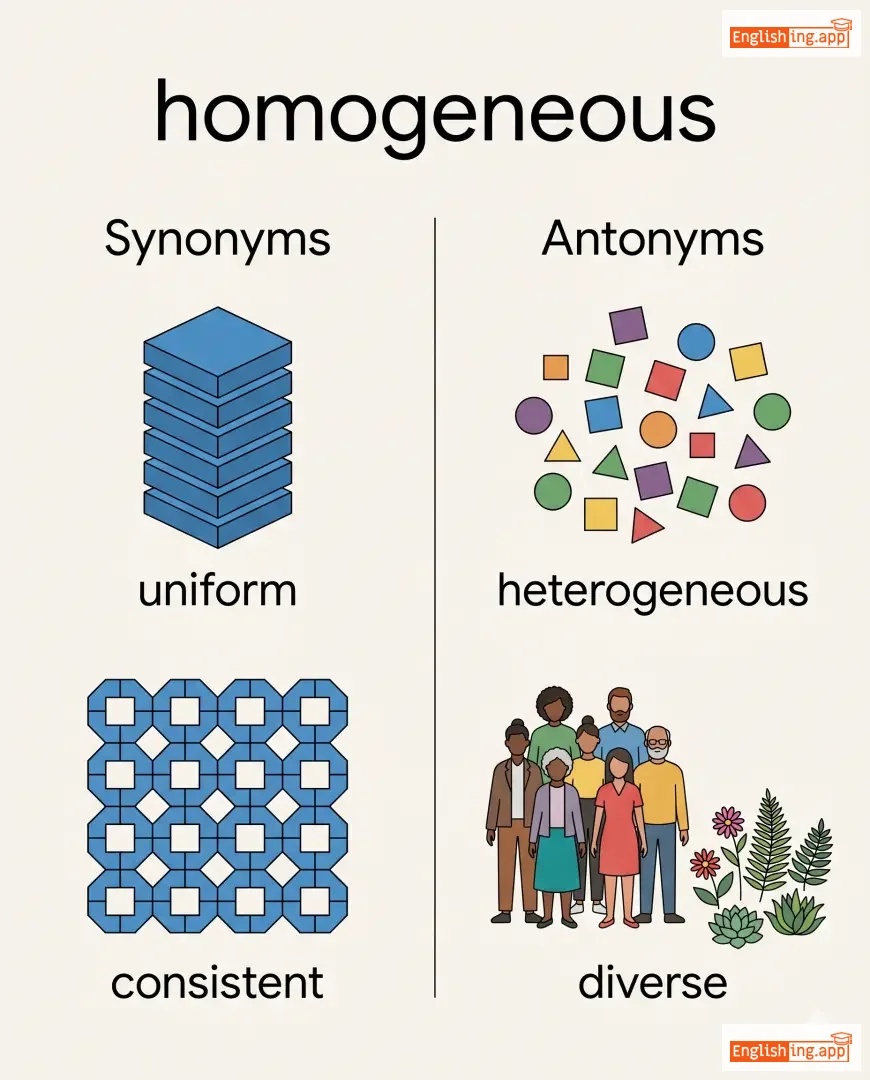
uniform, consistent, alike, identical, standardized
••••••
|
heterogeneous, diverse, varied
••••••
|
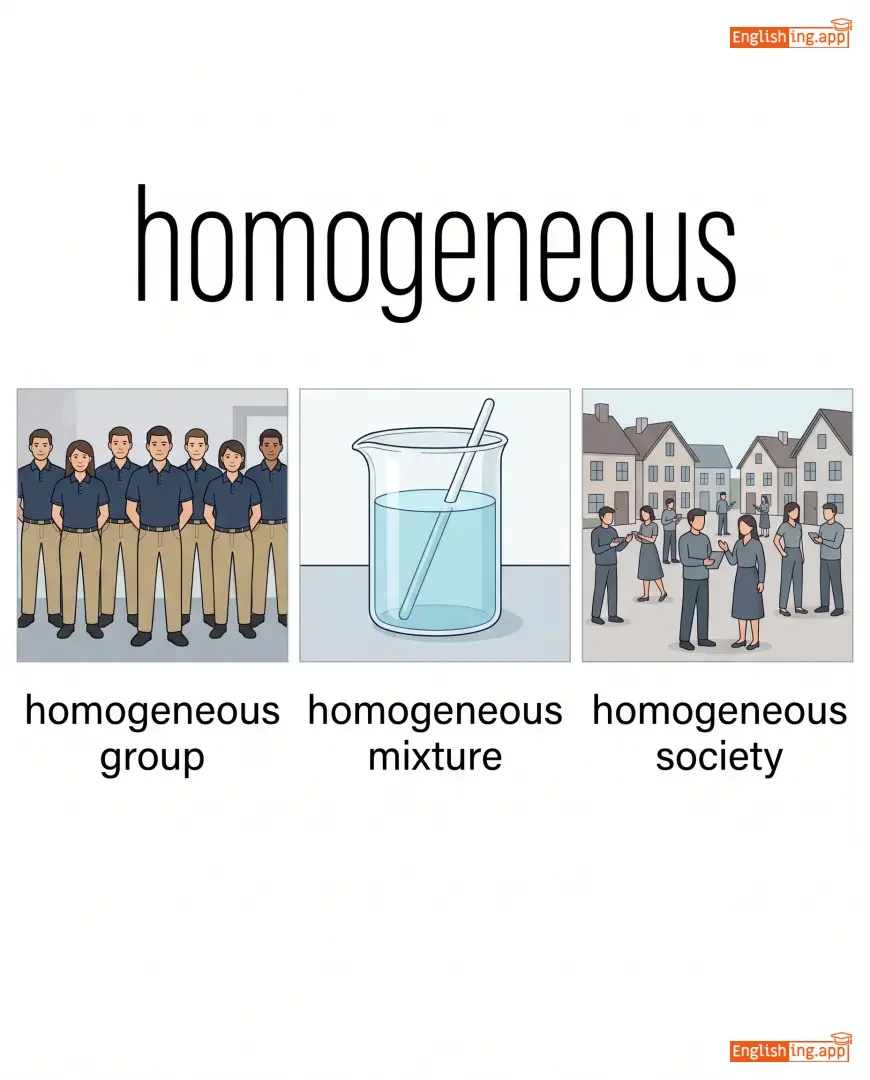
homogeneous group, homogeneous mixture, homogeneous society, homogeneous culture
••••••
|
HOMOは同じ意味だから、均質なはすべて同じという意味です(kinshitsuna)。
••••••
|
|
📢
••••••
|
/haɪˈpɜːrbəli/
noun
••••••
|
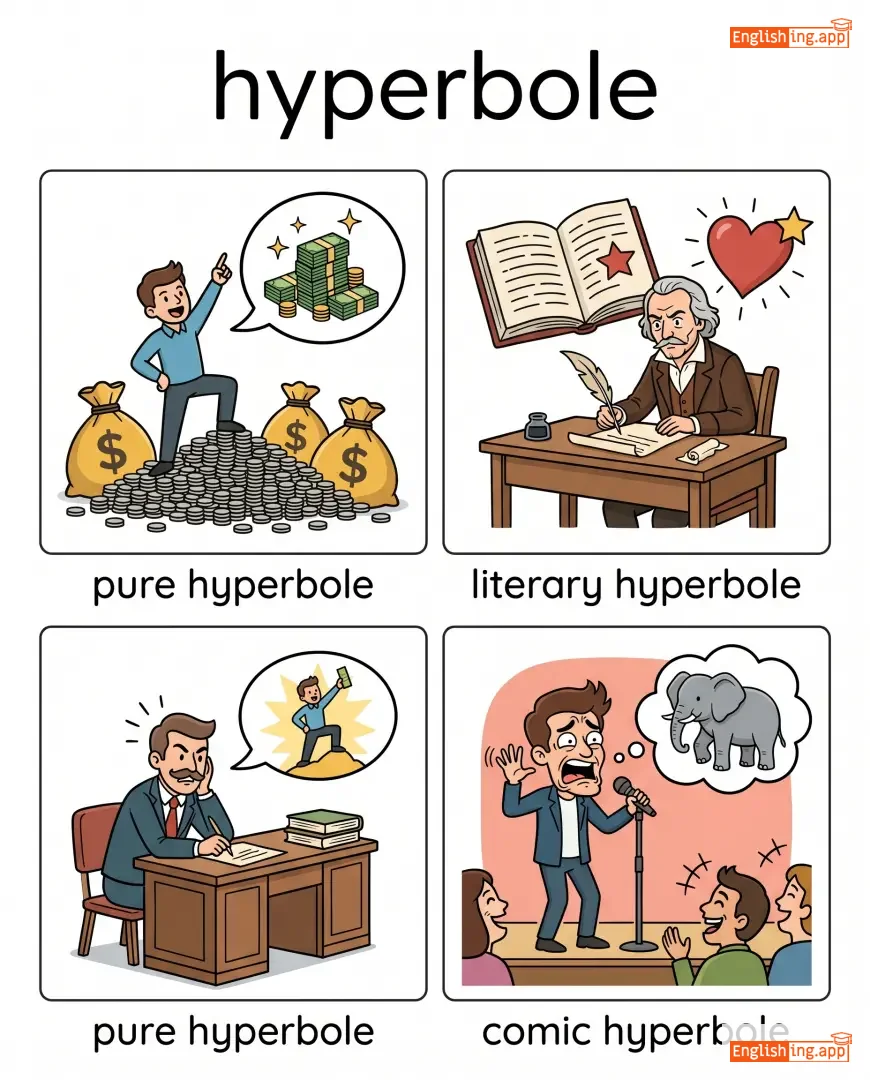
|
- •••••• | - •••••• | - •••••• | - •••••• | - •••••• |
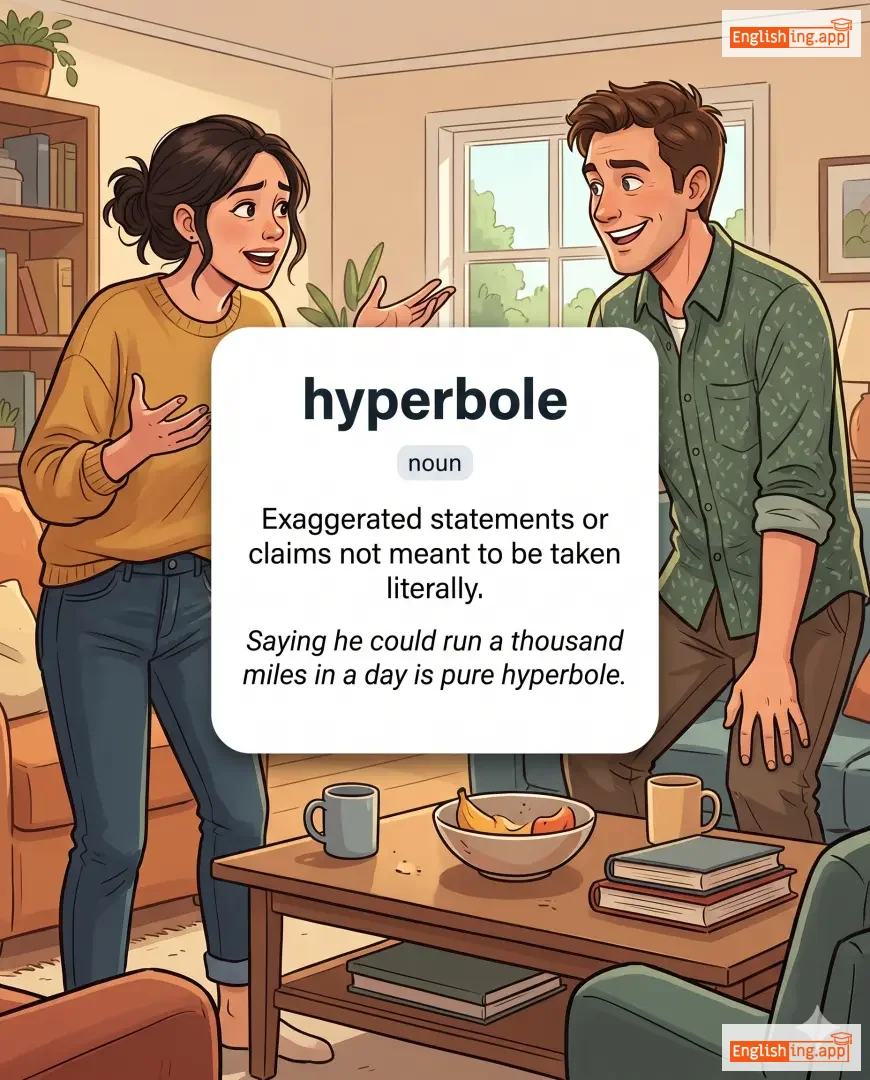
Exaggerated statements or claims not meant to be taken literally.
••••••
|
Saying he could run a thousand miles in a day is pure hyperbole. |
- •••••• |
it's not hyperbole |
An exaggerated claim that is actually true or close to reality
••••••
|
- •••••• |
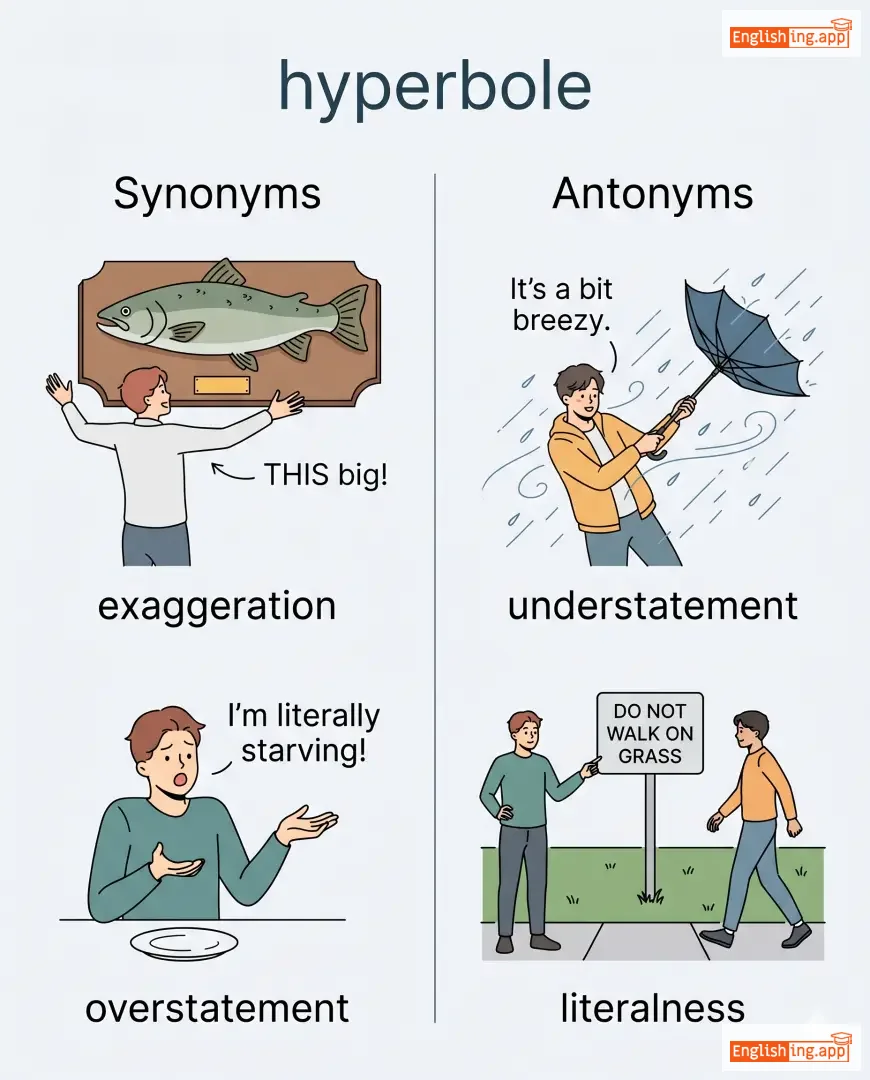
exaggeration, overstatement, amplification, embellishment
••••••
|
understatement, literalness
••••••
|
pure hyperbole, literary hyperbole, comic hyperbole, use of hyperbole
••••••
|
No •••••• |
|
⚡
••••••
|
/ˌaɪ.kə.nəˈklæs.tɪk/
adjective
(アイコノクラスティック)
••••••
|
|
確立された信念、伝統、または価値観に対して攻撃的または拒絶的な特徴
ikonokurasutikku
••••••
|
- •••••• | - •••••• | - •••••• | - •••••• |
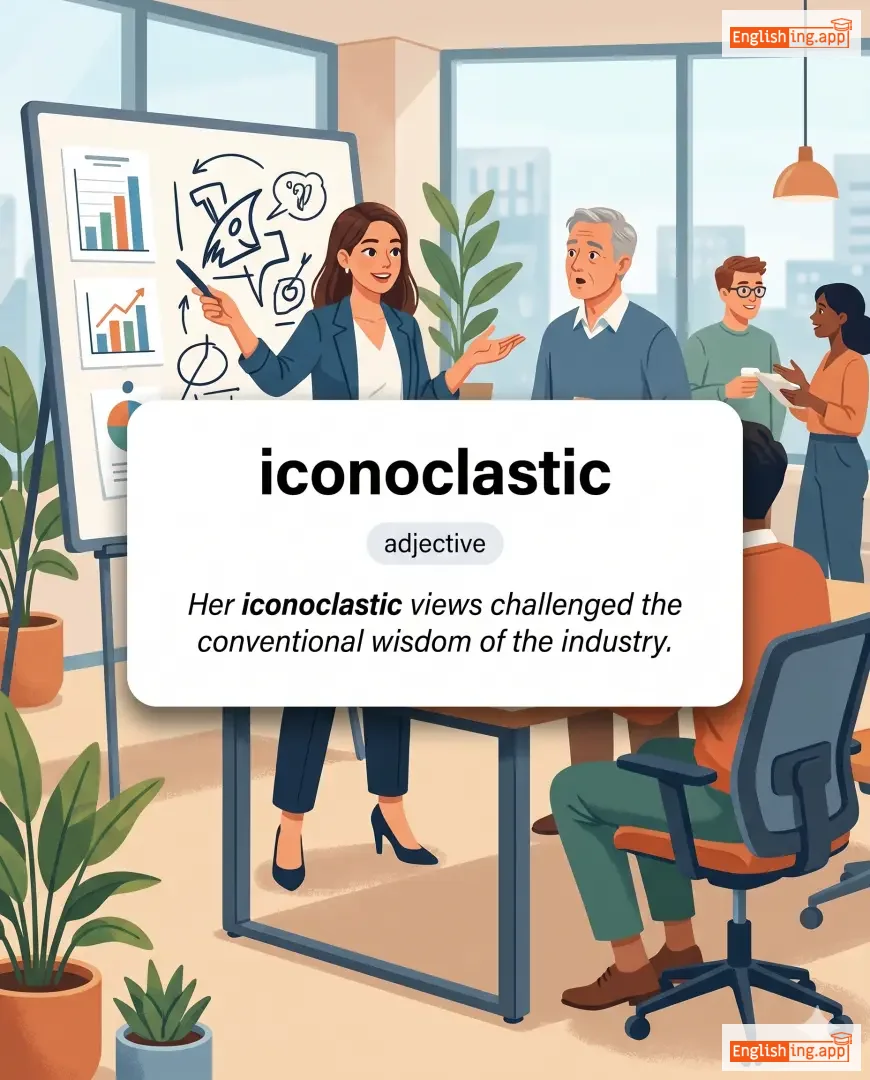
Characterized by attacking or rejecting cherished beliefs, traditions, or established values.
••••••
|
Her iconoclastic views challenged the conventional wisdom of the industry.
彼女のアイコノクラスティックな見解は業界の従来の知恵に挑戦した。
••••••
|
彼女のアイコノクラスティックな見解は業界の従来の知恵に挑戦した。
Kanojo no aikonokurasutikku na kenkai wa gyōkai no jūrai no chie ni chōsen shita.
••••••
|
- •••••• | - •••••• | - •••••• |
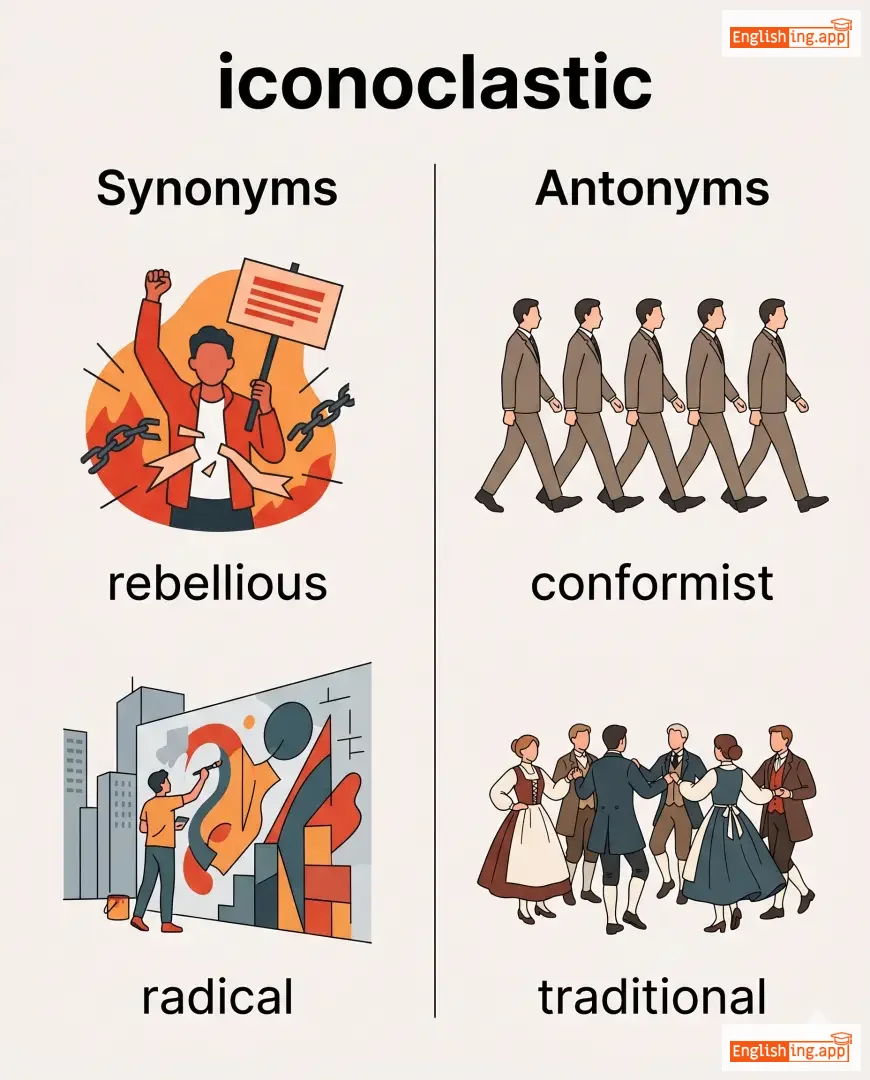
rebellious, radical, unorthodox, revolutionary, unconventional
••••••
|
conformist, traditional, conservative
••••••
|
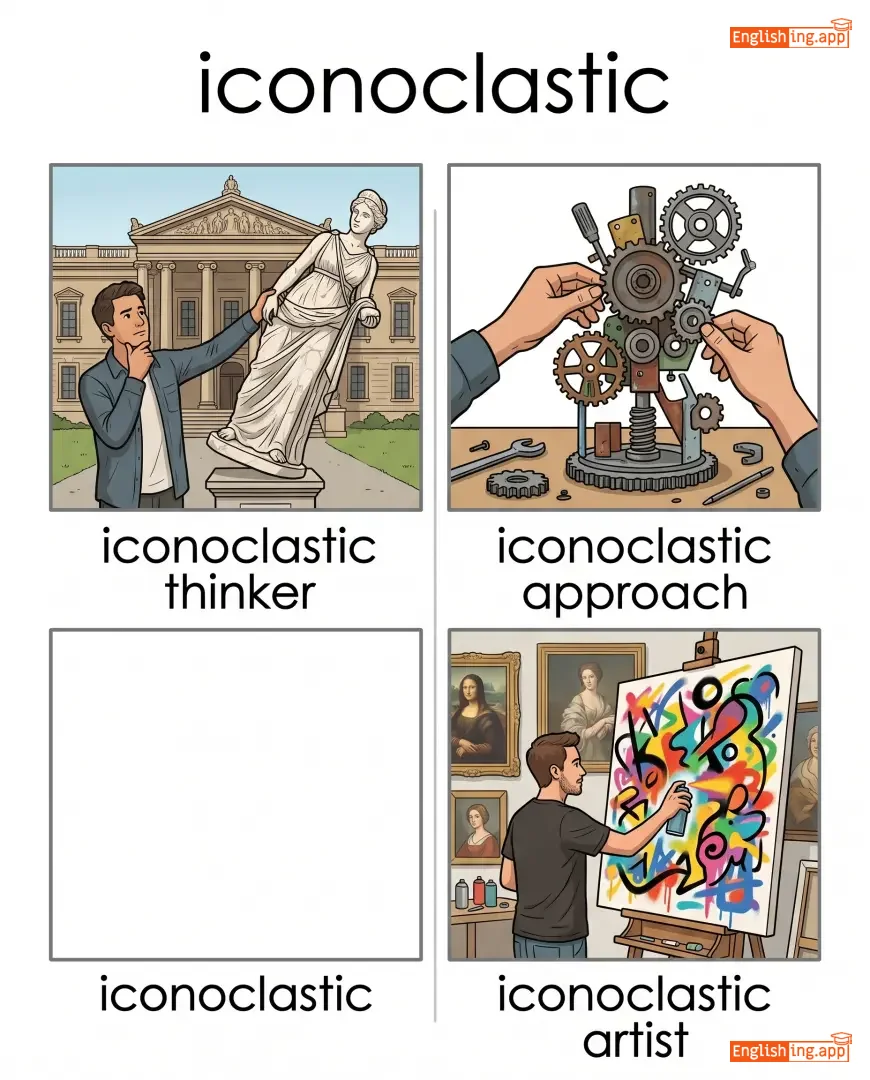
iconoclastic thinker, iconoclastic approach, iconoclastic artist
••••••
|
アイコノクラスティック = 伝統的な考えを打破する
••••••
|
|
🛐
••••••
|
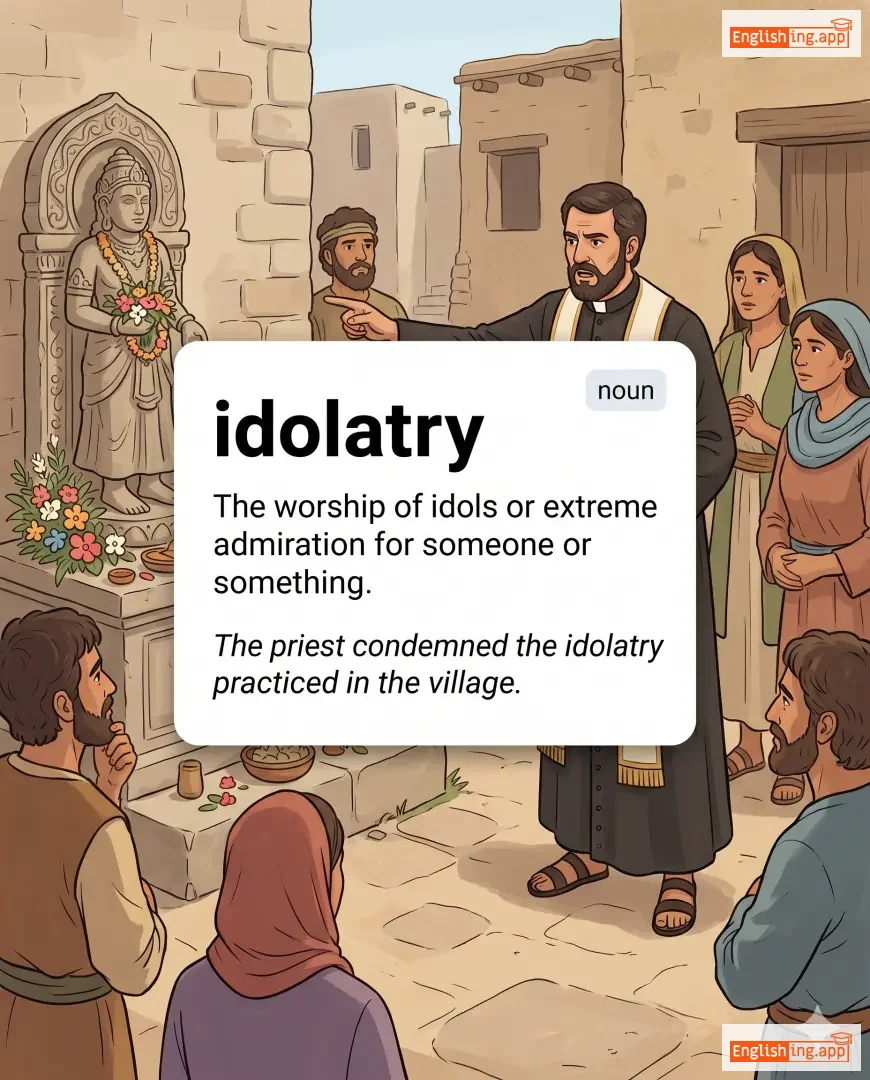
/aɪˈdɒlətri/
noun
(偶像崇拝)
••••••
|
|
偶像崇拝
guuzou suuhai
••••••
|
- •••••• | - •••••• | - •••••• | - •••••• |
The worship of idols or extreme admiration for someone or something.
••••••
|
The priest condemned the idolatry practiced in the village. |
司祭は村で行われている偶像崇拝を非難した。
Shisai wa mura de okonawarete iru guuzou suuhai wo hinan shita.
••••••
|
- •••••• | - •••••• | - •••••• |
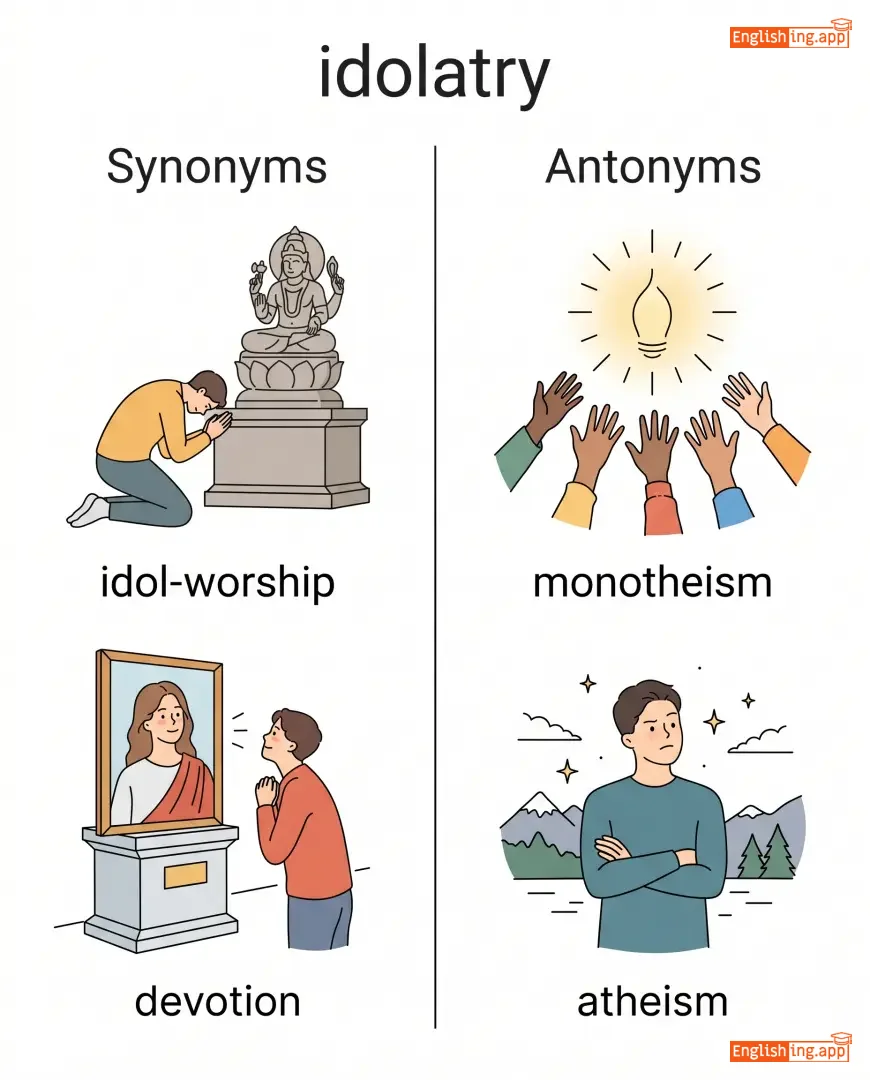
idol-worship, devotion, adoration, reverence, veneration
••••••
|
monotheism, atheism, irreverence
••••••
|
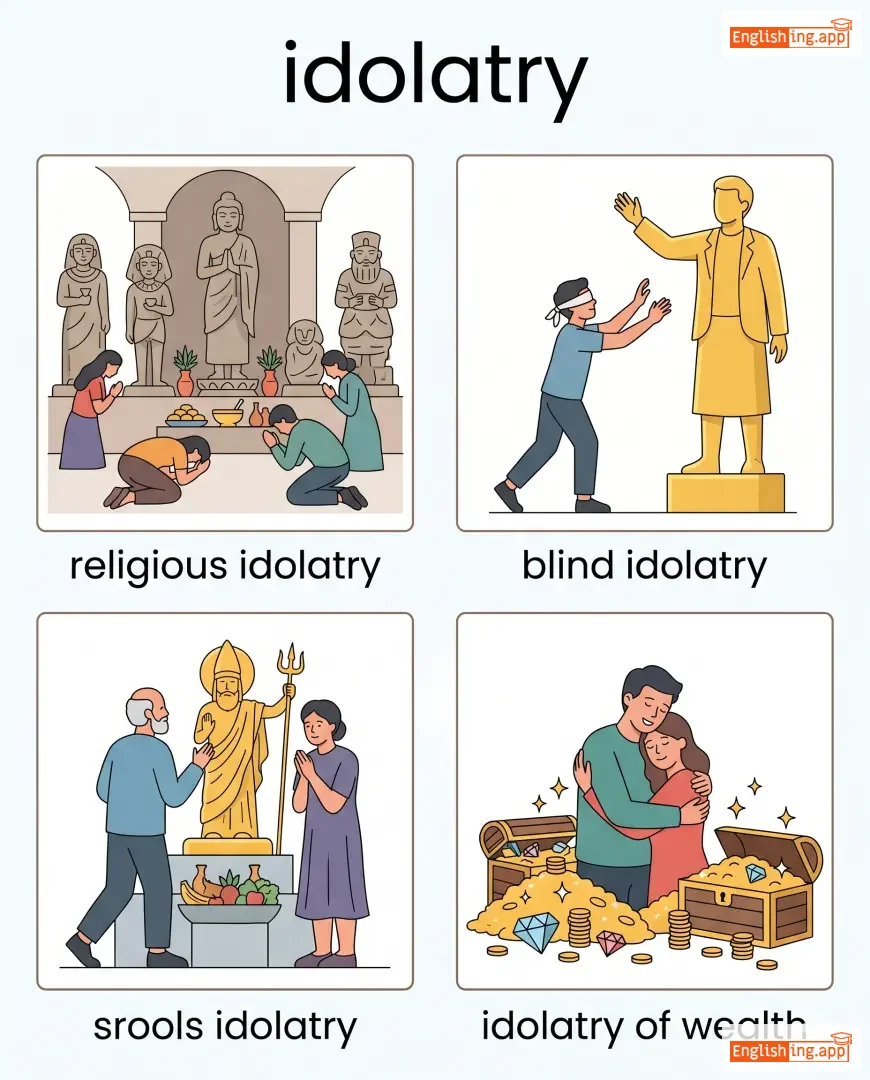
religious idolatry, blind idolatry, idolatry of wealth, idolatry of power
••••••
|
idol + tree, 木のようなidol崇拝
••••••
|
|
🌋
••••••
|
/ˈɪɡ.ni.əs/
adjective
(イグニアス)
••••••
|
|
火成
kasei
••••••
|
- •••••• | - •••••• | - •••••• | - •••••• |
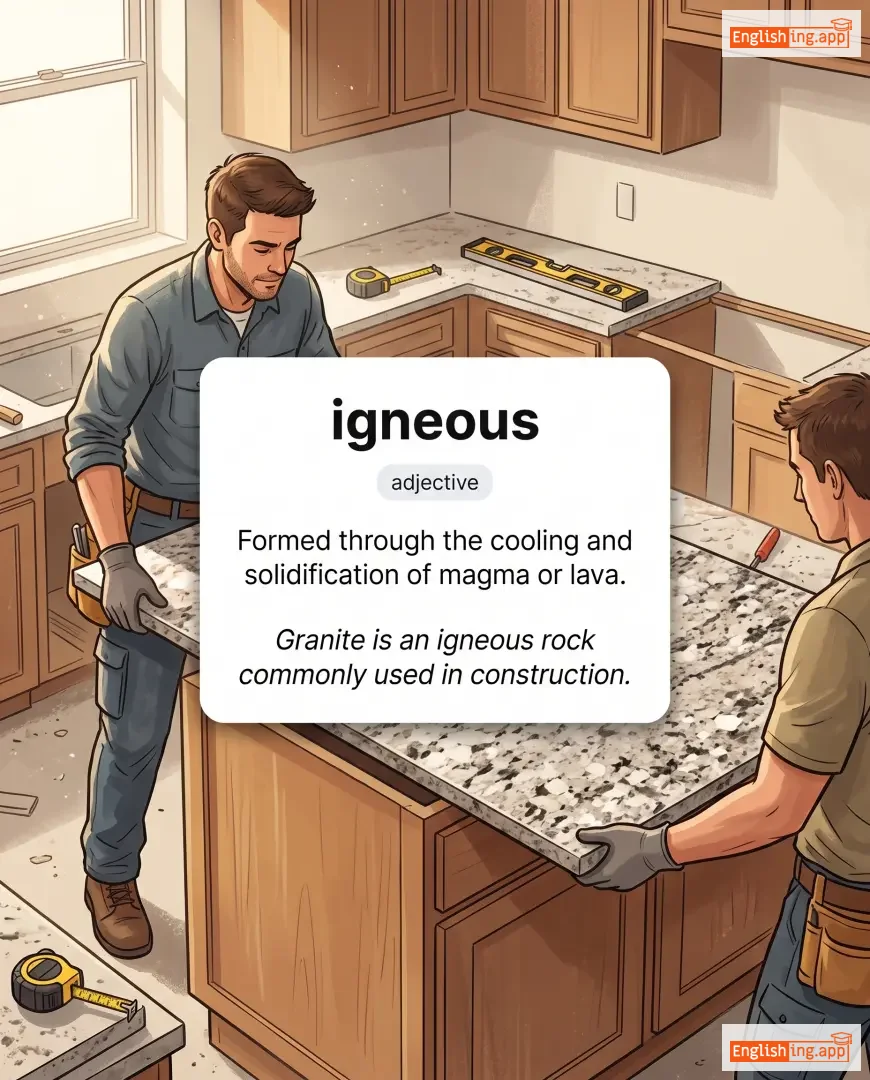
Formed through the cooling and solidification of magma or lava.
••••••
|
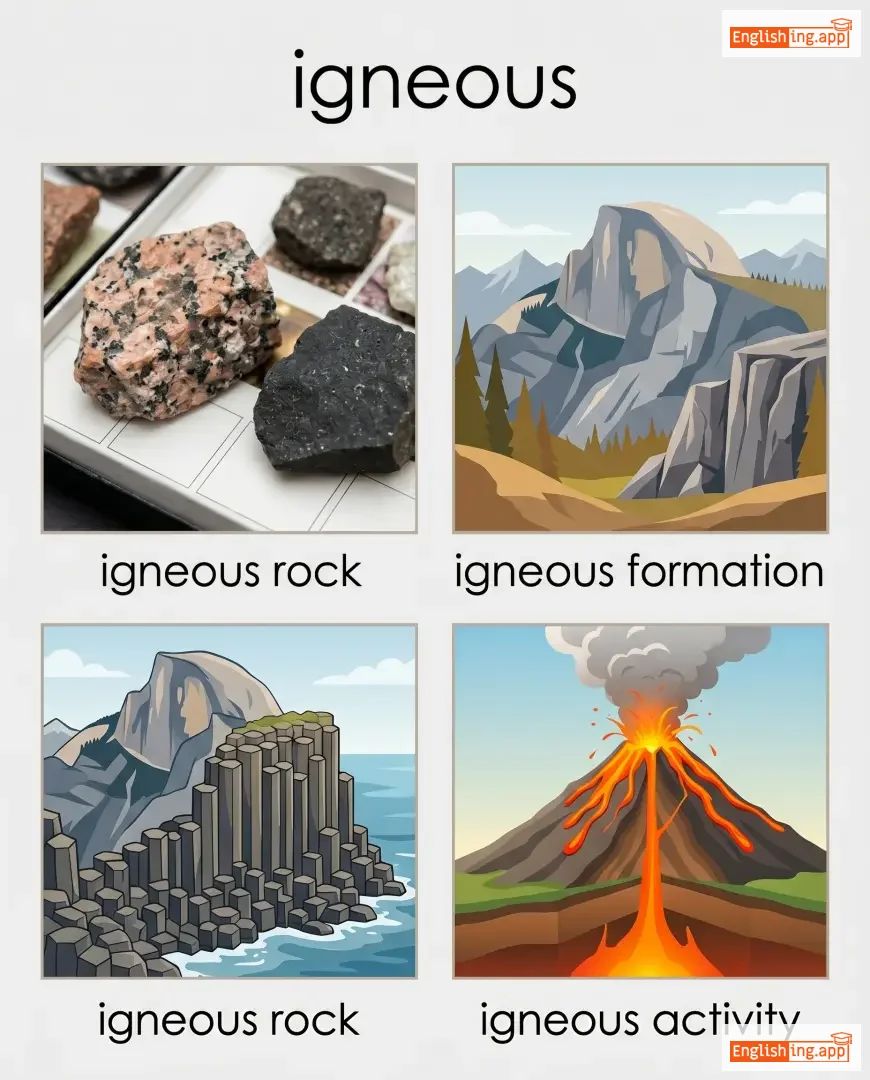
Granite is an igneous rock commonly used in construction.
花崗岩は建設に一般的に使用される火成岩です。
••••••
|
花崗岩は建設に一般的に使用される火成岩です。
Kōgan'yan wa kensetsu ni ippan-teki ni shiyō sareru kasei-gan desu.
••••••
|
- •••••• | - •••••• | - •••••• |
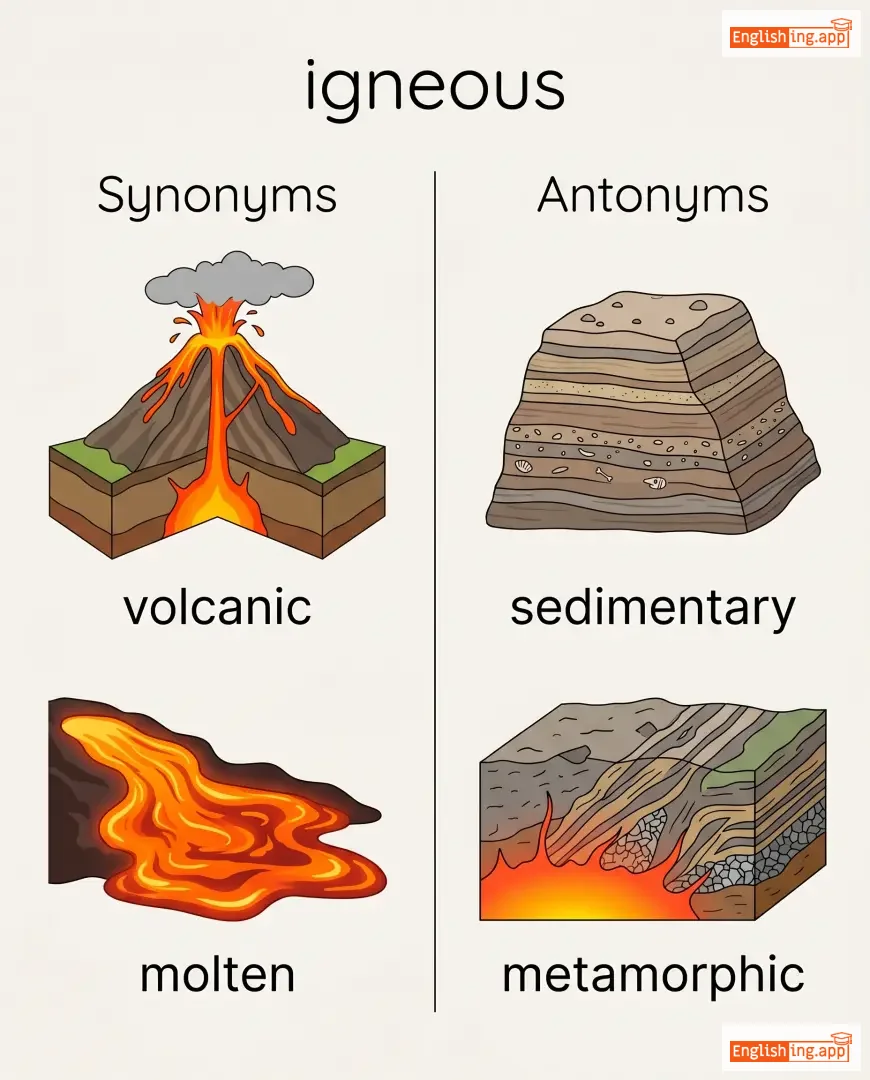
volcanic, molten, fiery, magmatic
••••••
|
sedimentary, metamorphic
••••••
|
igneous rock, igneous formation, igneous activity, igneous process
••••••
|
Igneous は火からできた岩 - 火成岩。
••••••
|
|
🤷
••••••
|
/ɪmˈbroʊlioʊ/
noun
(イムブロリオ)
••••••
|
|
困惑
konwaku
••••••
|
- •••••• | - •••••• | - •••••• | - •••••• |
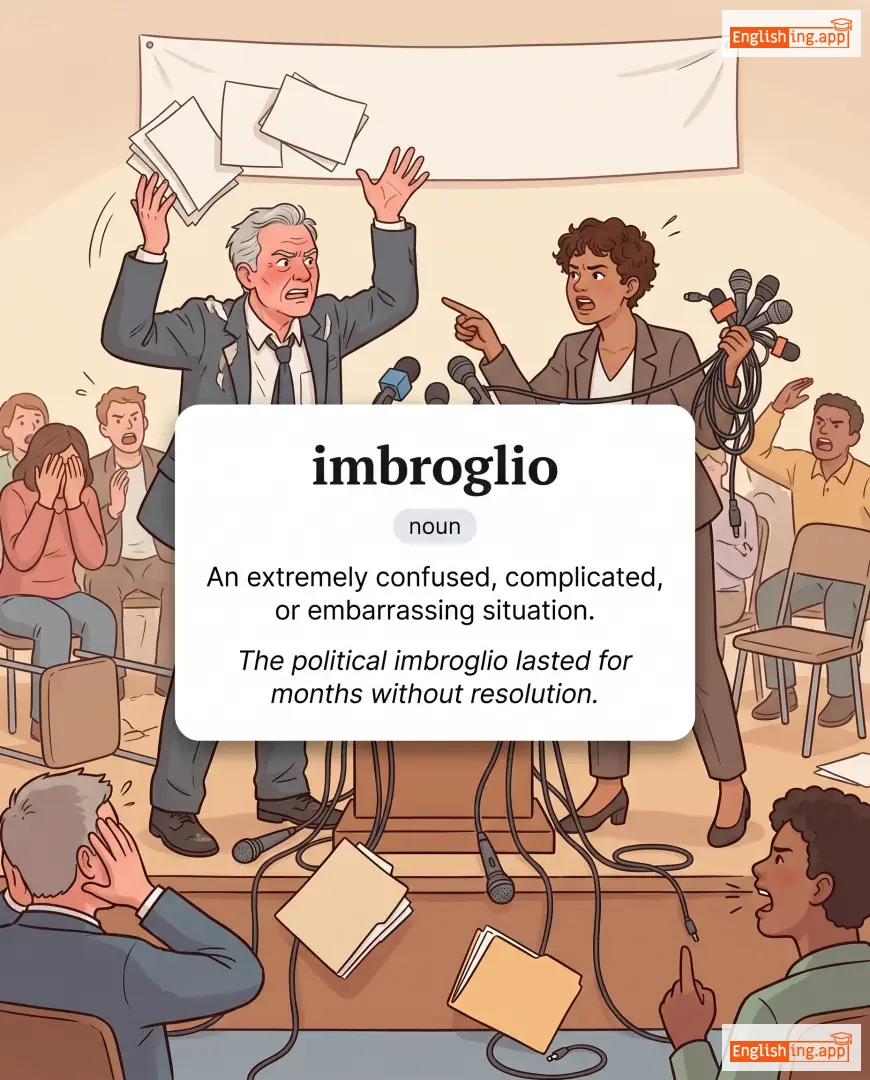
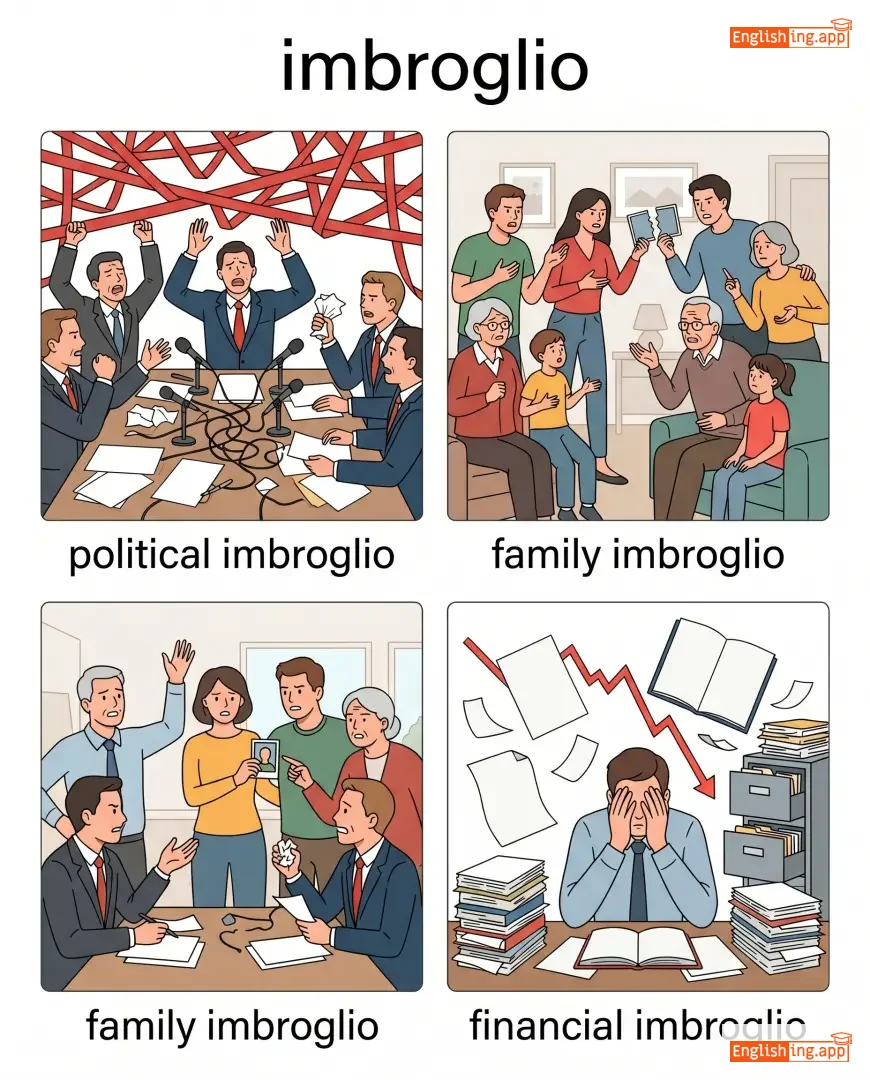
An extremely confused, complicated, or embarrassing situation.
••••••
|
The political imbroglio lasted for months without resolution. |
政治的な困惑は数ヶ月間解決なしで続きました。
Seijiteki na konwaku wa suukagetsukan kaiketsu nashi de tsuzukimashita.
••••••
|
- •••••• | - •••••• | - •••••• |
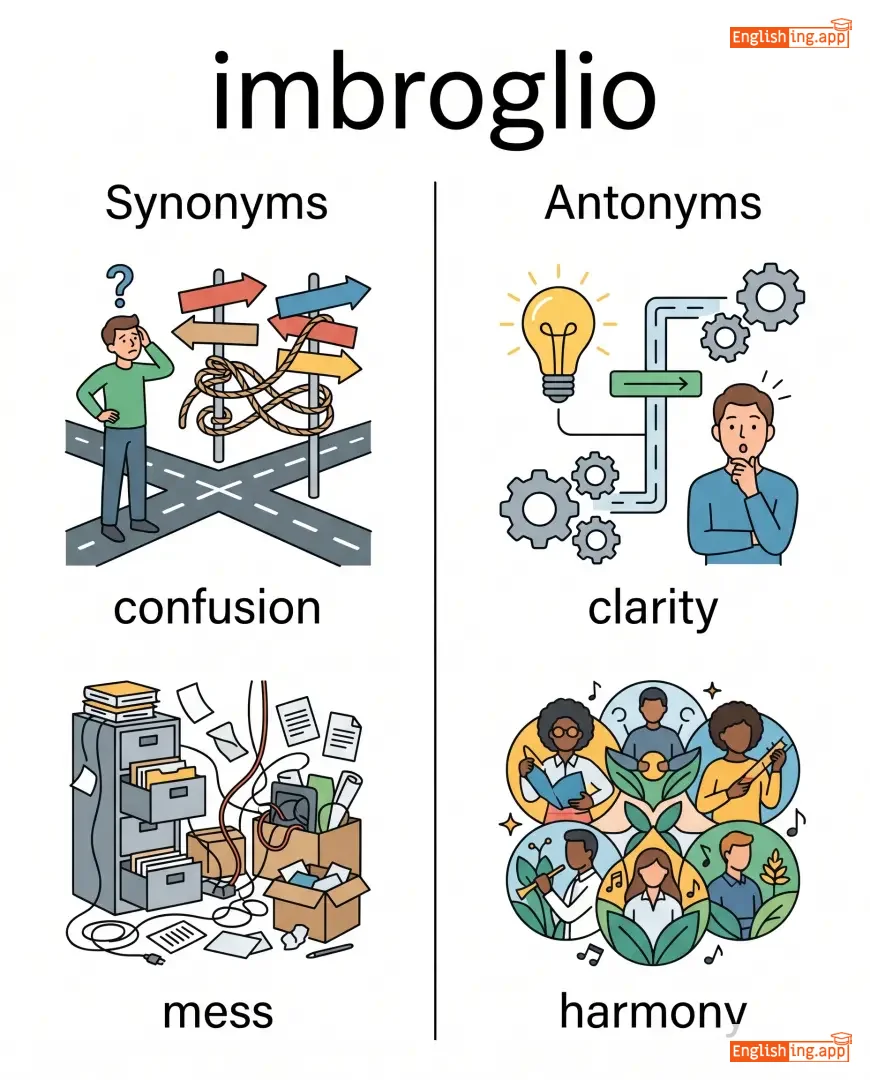
confusion, mess, entanglement, predicament, quarrel
••••••
|
clarity, harmony, order
••••••
|
political imbroglio, family imbroglio, financial imbroglio
••••••
|
Imbroglioは困惑を意味します—'今、ブロリオ'のように、複雑な問題に巻き込まれる。
••••••
|
|
⚖️
••••••
|
/ɪˈmjuːtəbl/
adjective
(イミュータブル)
••••••
|
|
不変
fuhen
••••••
|
- •••••• | - •••••• | - •••••• | - •••••• |
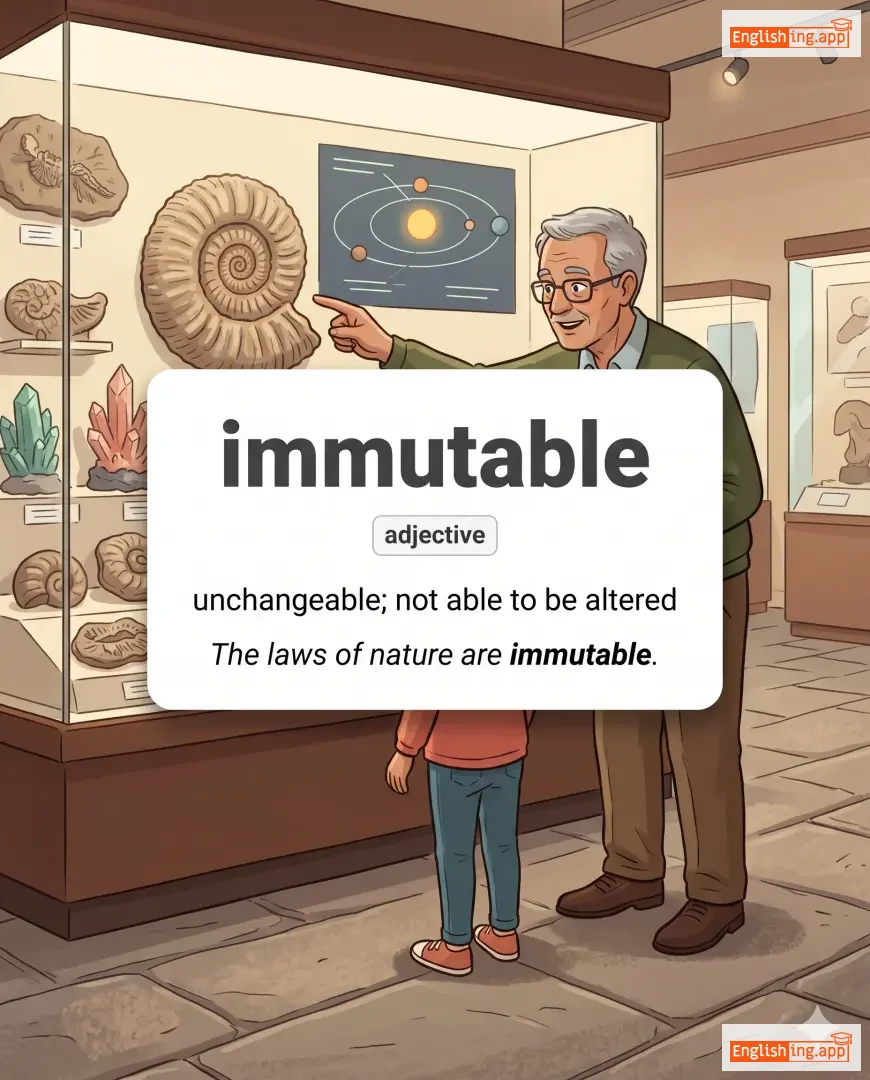
unchangeable; not able to be altered
••••••
|
The laws of nature are immutable.
自然の法則は不変です。
••••••
|
自然の法則は不変です。
Shizen no hōsoku wa fuhen desu.
••••••
|
immutable truth
不変の真実
••••••
|
a fact that cannot be changed
••••••
|
不変の真実
Fuhen no shinjitsu
••••••
|
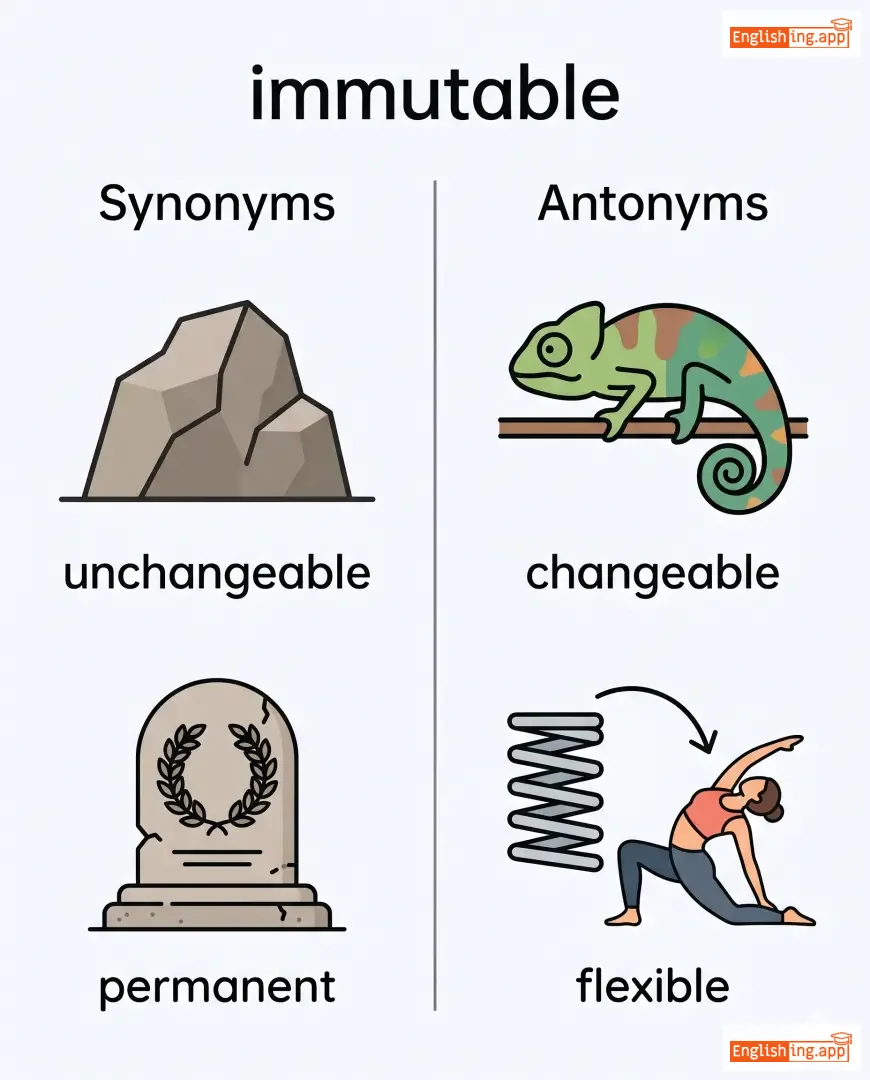
unchangeable, permanent, fixed, constant
••••••
|
changeable, flexible, variable
••••••
|
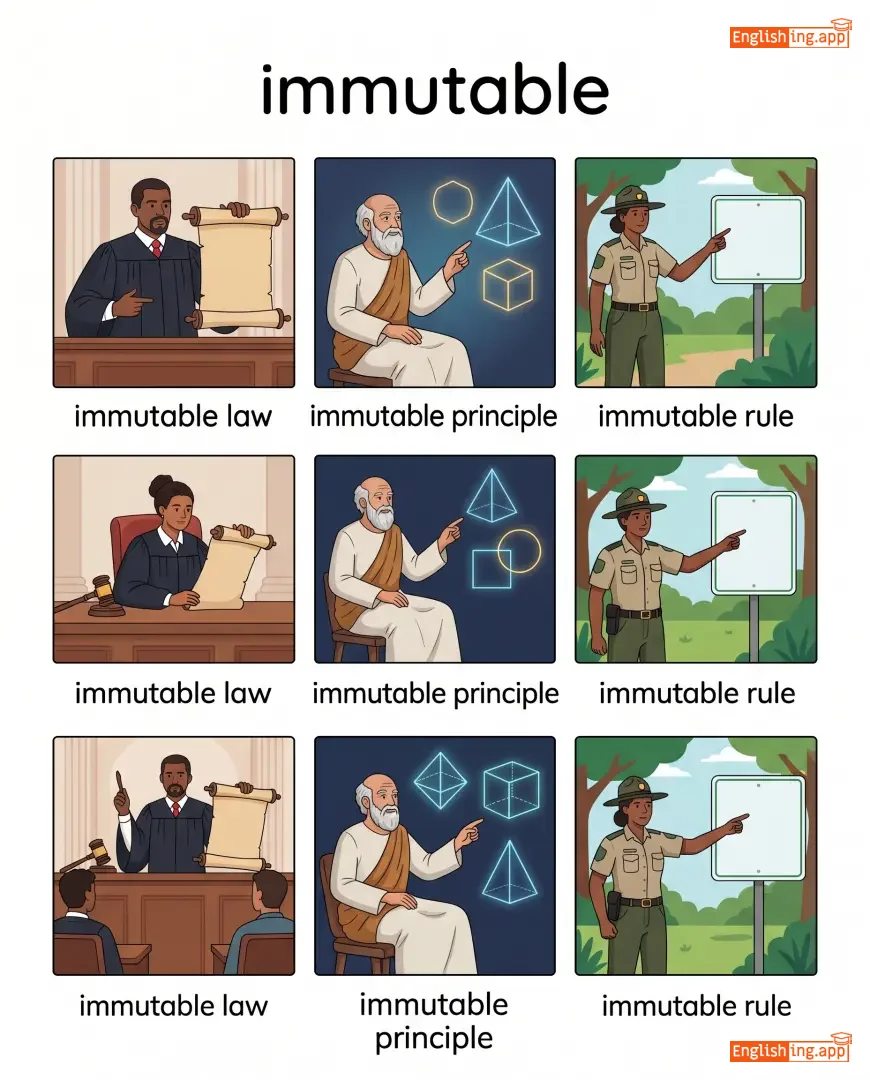
immutable law, immutable principle, immutable rule, immutable fact
••••••
|
Immutableは変更できないことを意味する—不変。
••••••
|
|
💔
••••••
|
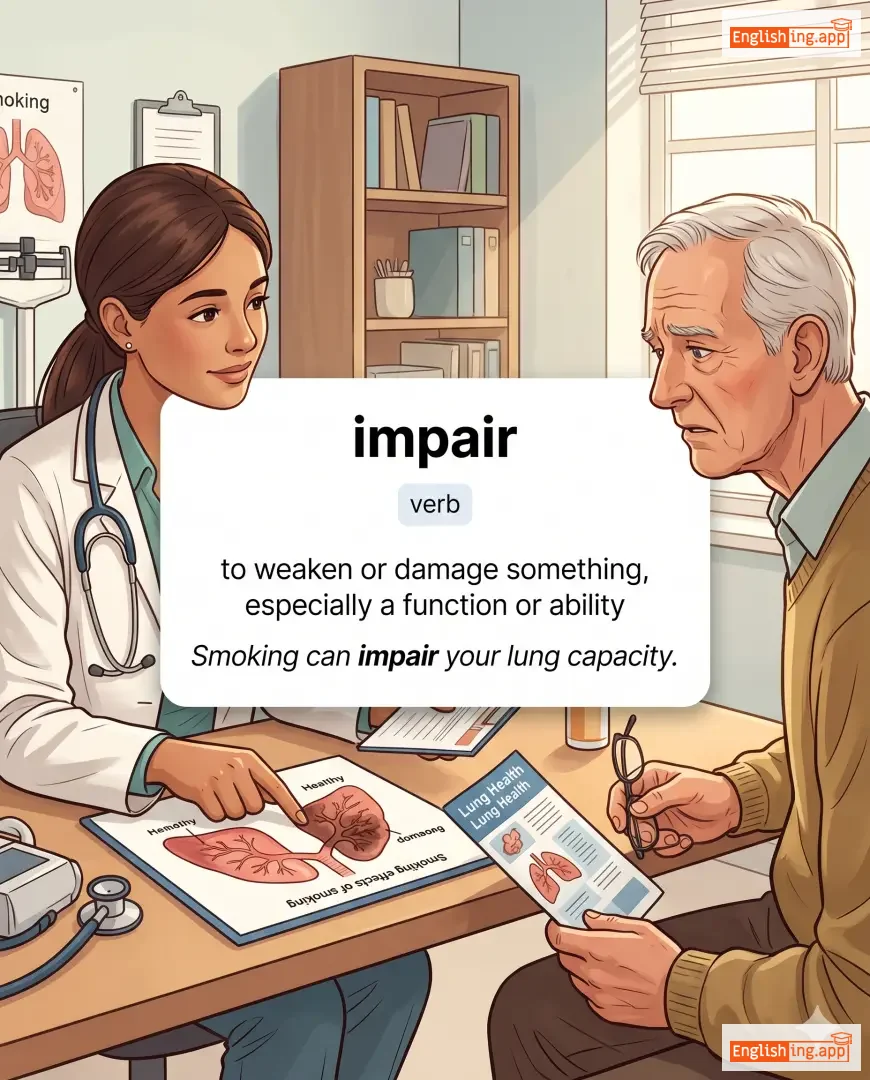
/ɪmˈpɛər/
verb
(インペア)
••••••
|
|
損なう
sonnau
••••••
|
impaired
インペアード
••••••
|
impaired
インペアード
••••••
|
impairs
インペアーズ
••••••
|
impairing
インペアリング
••••••
|
to weaken or damage something, especially a function or ability
••••••
|
Smoking can impair your lung capacity.
喫煙は肺活量を害する可能性があります。
••••••
|
喫煙は肺活量を害する可能性があります。
Kitsuen wa haikatsuryou wo gaishirukanoosei ga arimasu.
••••••
|
- •••••• | - •••••• | - •••••• |
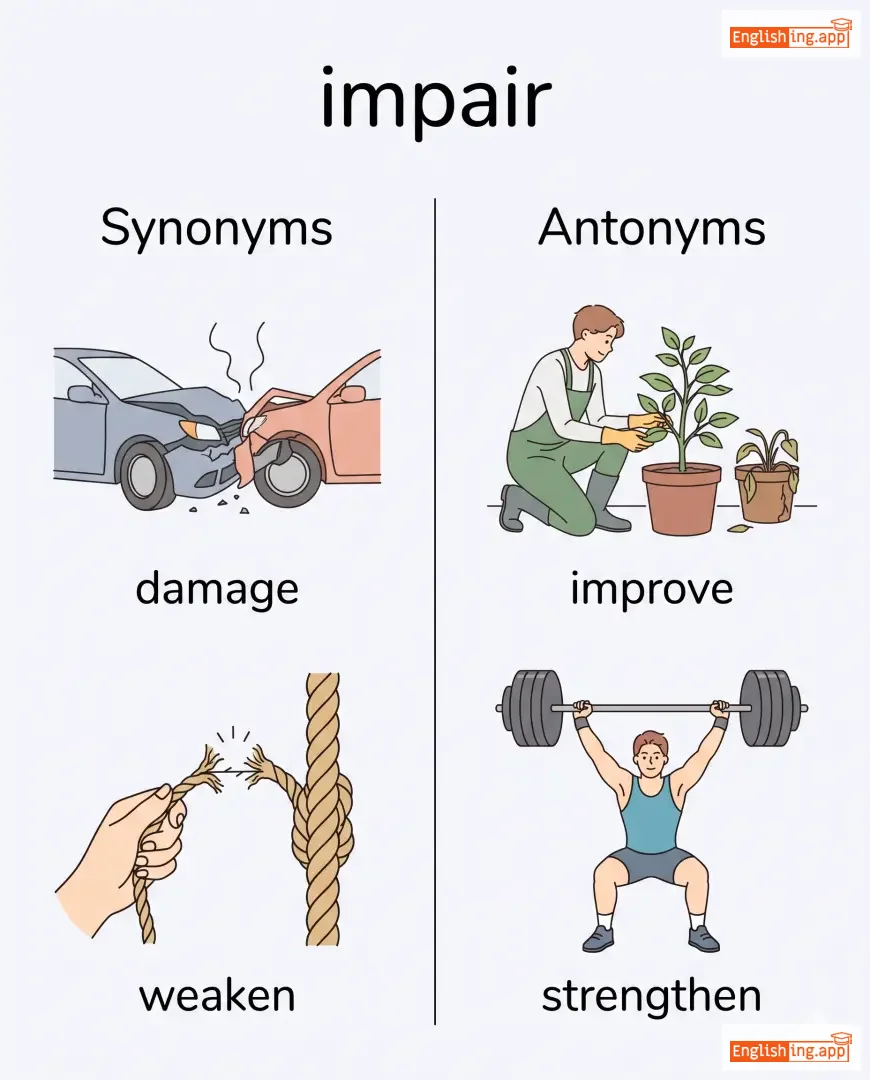
damage, weaken, harm, reduce, diminish
••••••
|
improve, strengthen, enhance
••••••
|
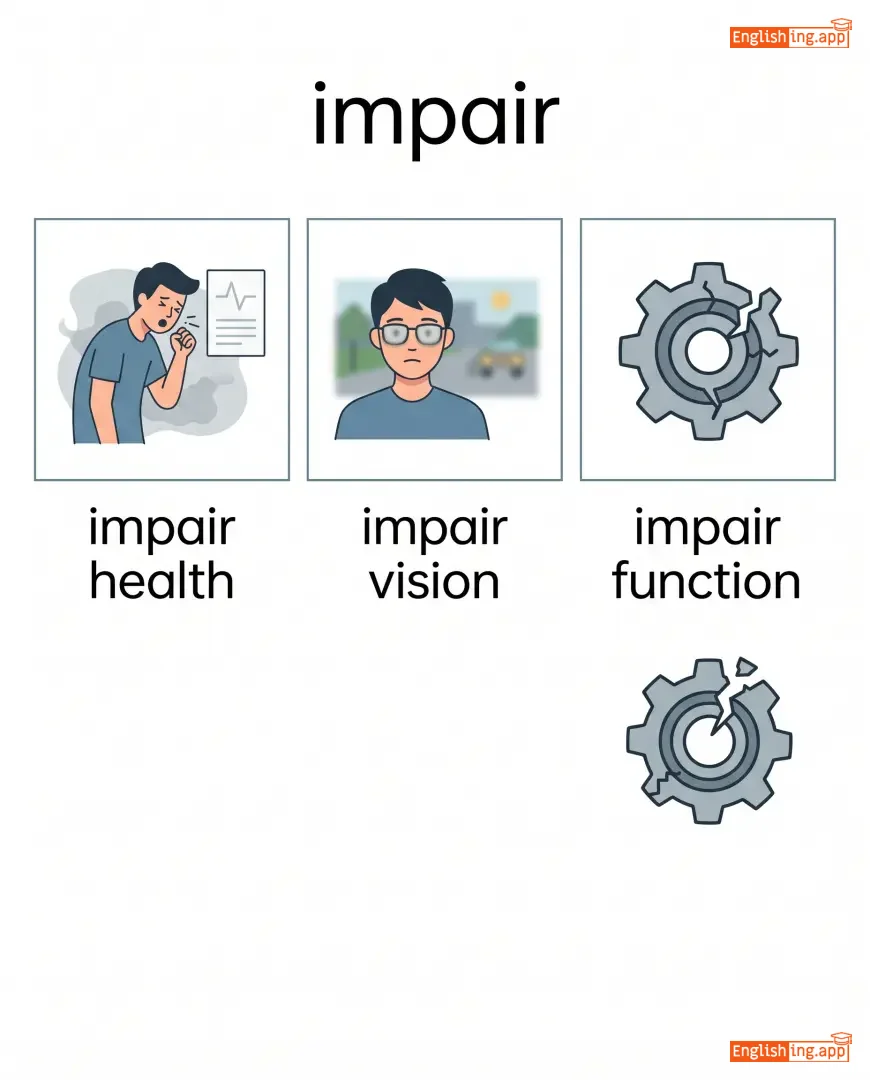
impair health, impair vision, impair function, severely impair
••••••
|
IMPAIRは損なうを意味します - もし車のタイヤが損なわれたら、車は動きません。
••••••
|
|
😐
••••••
|
/ɪmˈpæsɪv/
adjective
(インパシブ)
••••••
|
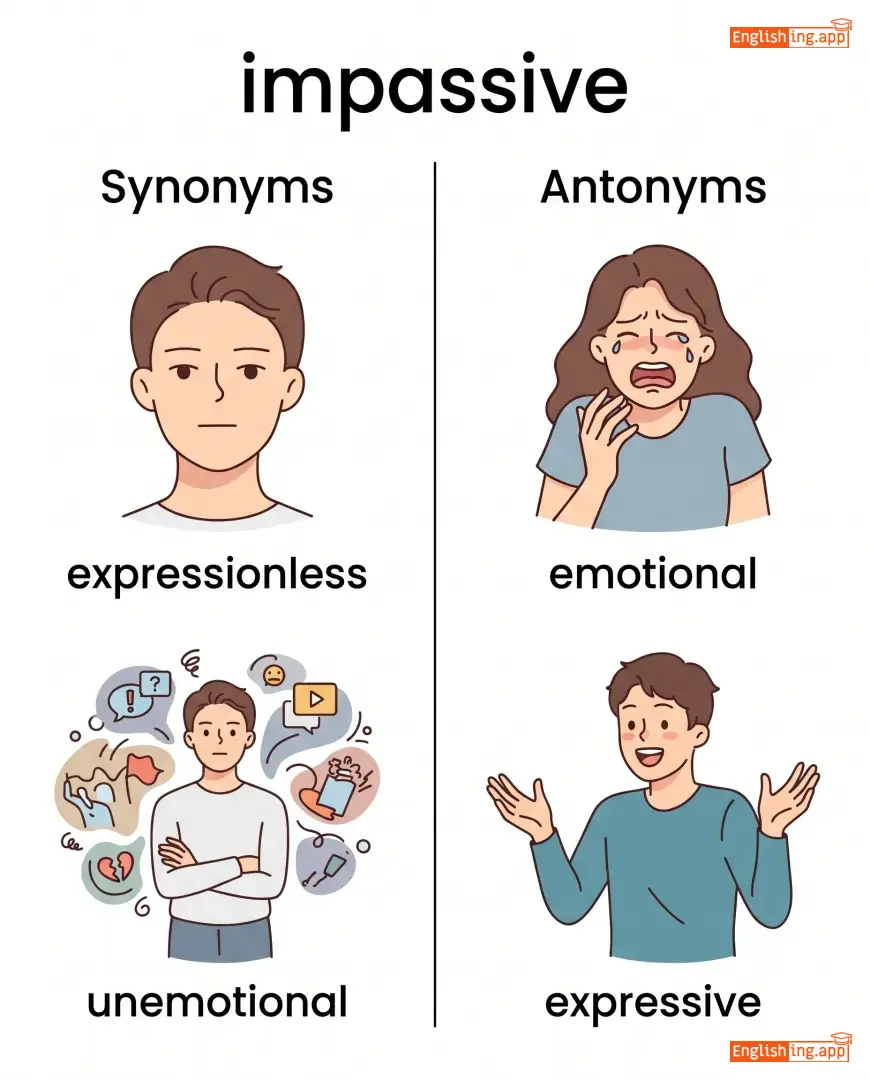
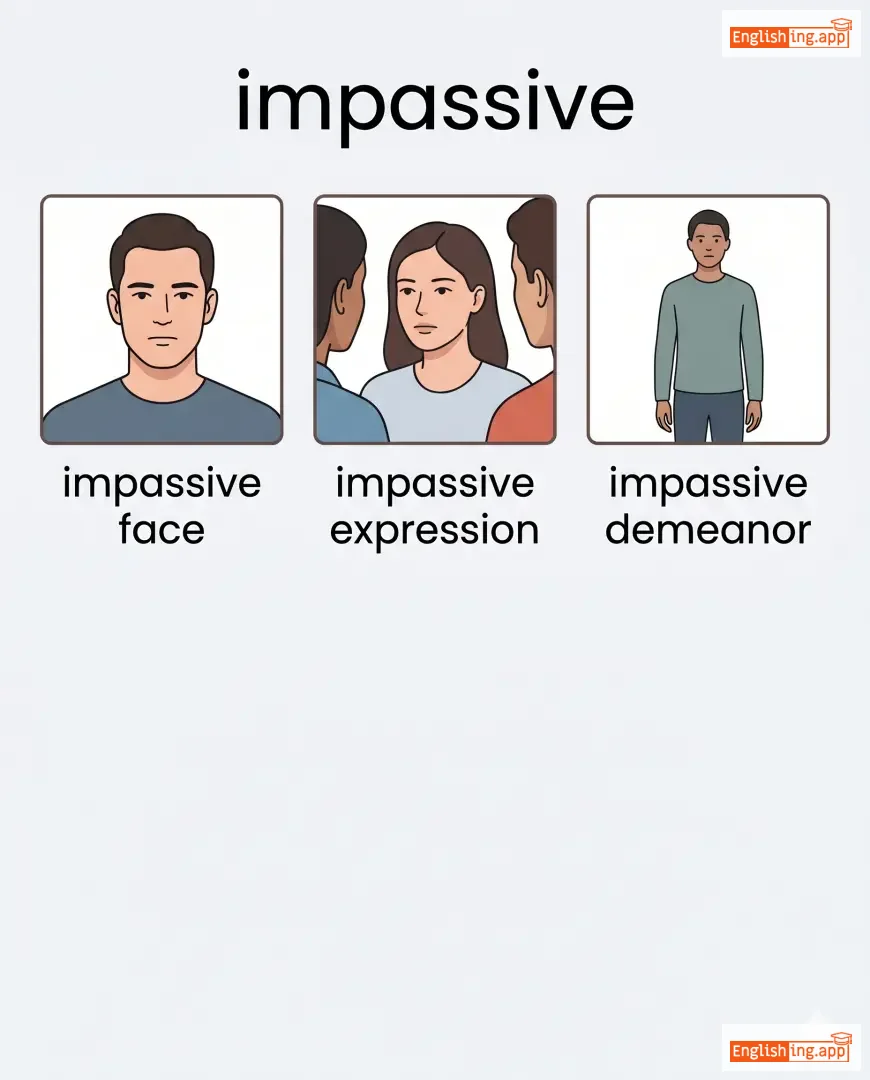
|
無表情
muhyōjō
••••••
|
- •••••• | - •••••• | - •••••• | - •••••• |
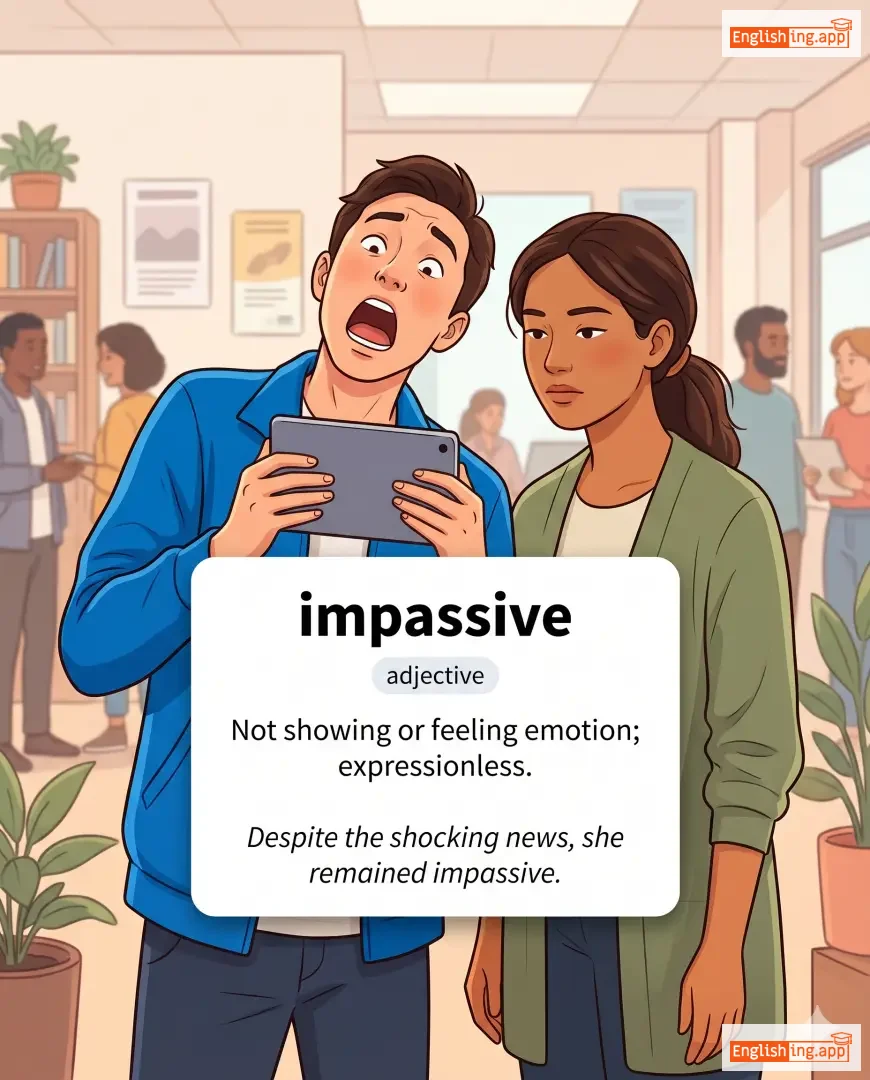
Not showing or feeling emotion; expressionless.
••••••
|
Despite the shocking news, she remained impassive.
衝撃的なニュースにもかかわらず、彼女は無表情のままでした。
••••••
|
衝撃的なニュースにもかかわらず、彼女は無表情のままでした。
Shōgeki-teki na nyūsu ni mo kakawarazu, kanojo wa muhyōjō no mamadashita.
••••••
|
- •••••• | - •••••• | - •••••• |
expressionless, unemotional, calm, stoic, detached
••••••
|
emotional, expressive, passionate
••••••
|
impassive face, impassive expression, impassive demeanor
••••••
|
IMPASSIVE は日本語で無表情 — 感情のない顔
••••••
|
|
💸
••••••
|
/ˌɪmpɪˈkjuːniəs/
adjective
(インペキュニアス)
••••••
|
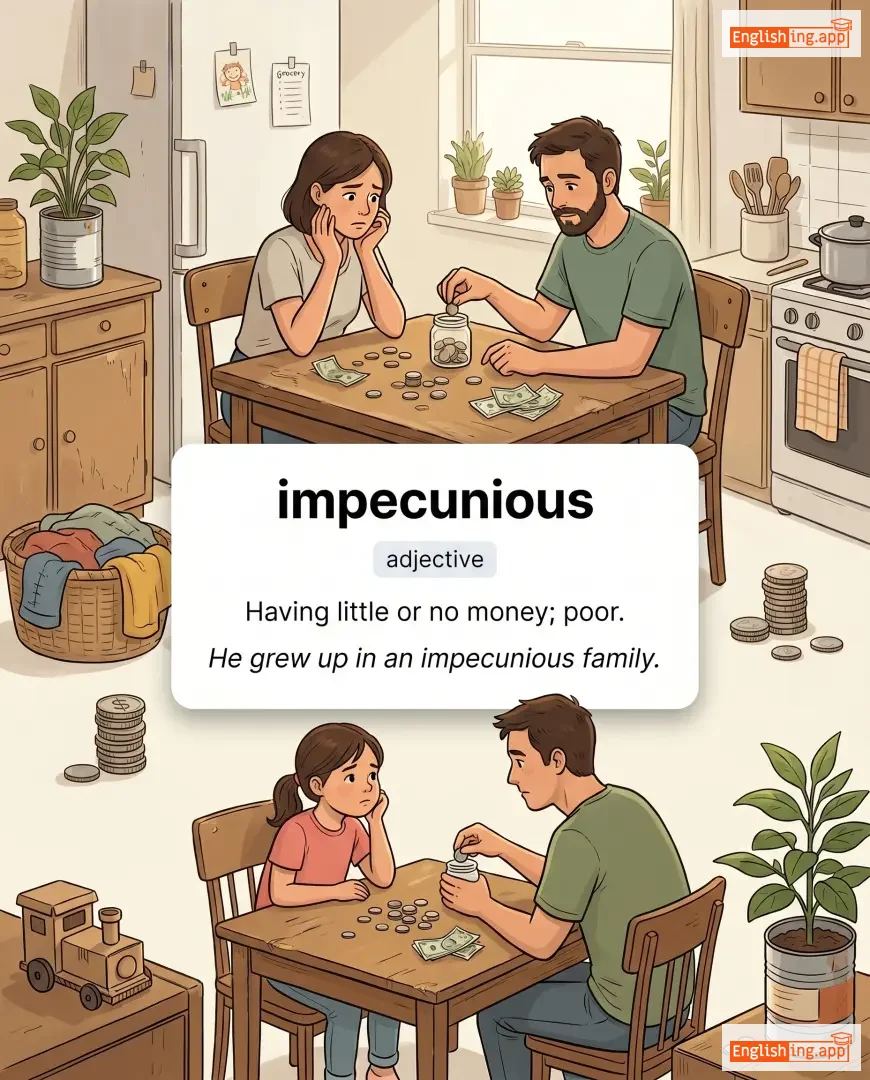
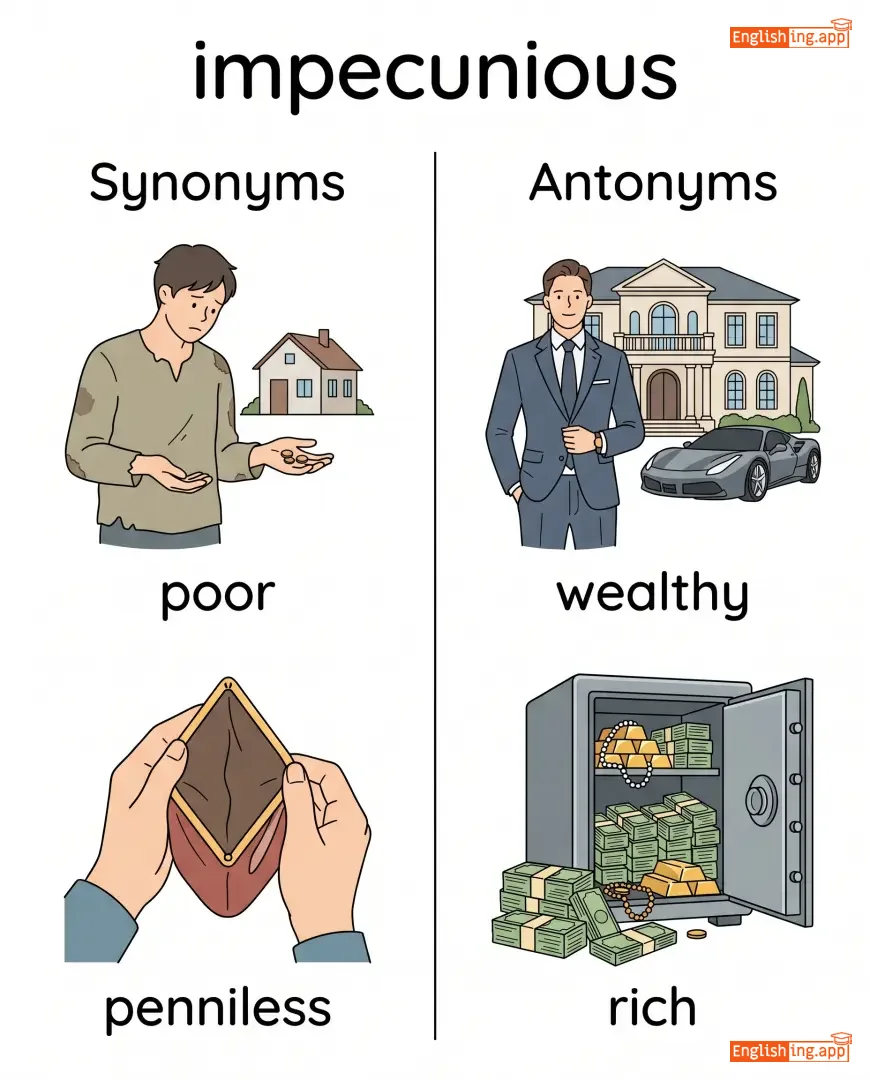
|
貧乏
binbou
••••••
|
- •••••• | - •••••• | - •••••• | - •••••• |
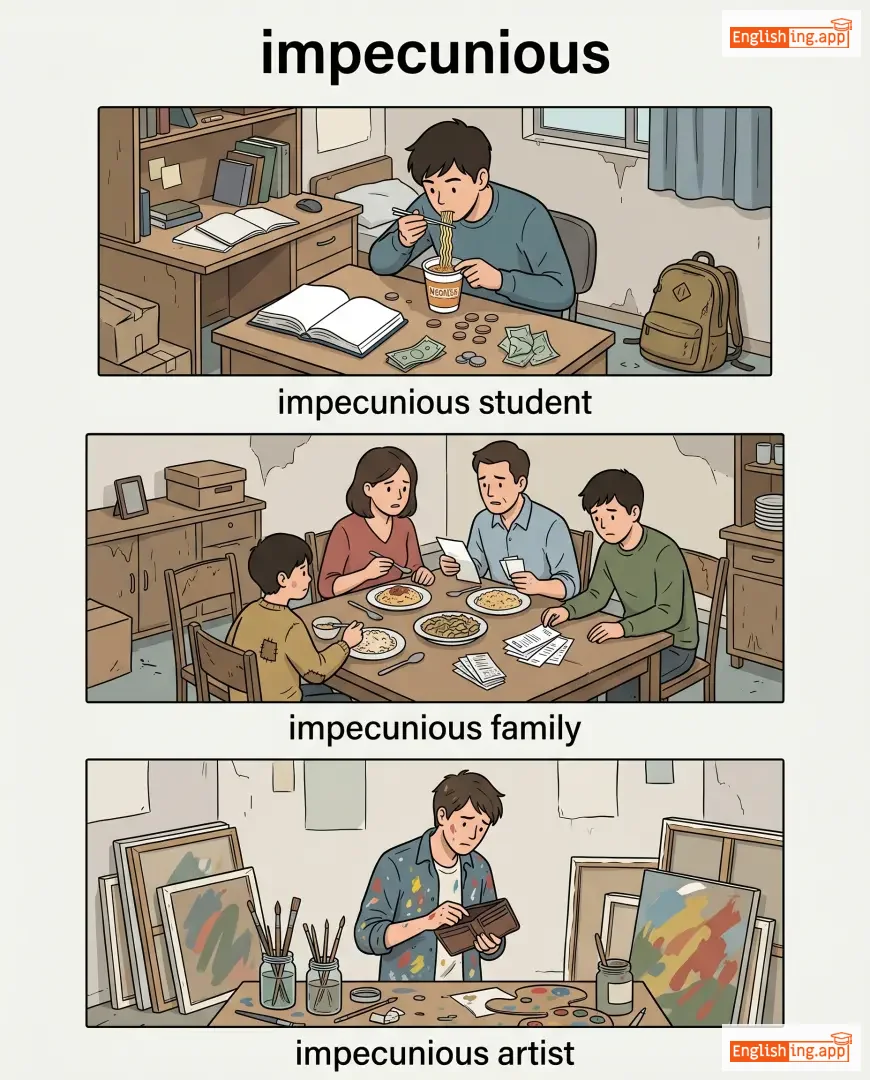
Having little or no money; poor.
••••••
|
He grew up in an impecunious family. |
彼は貧乏な家族で育ちました。
Kare wa binbou na kazoku de sodachimashita.
••••••
|
- •••••• | - •••••• | - •••••• |
poor, penniless, destitute, needy
••••••
|
wealthy, rich, affluent
••••••
|
impecunious student, impecunious family, impecunious artist
••••••
|
Im-PE-KUNO (お金 KUNO) ない — 貧乏
••••••
|
|
⛔
••••••
|
/ɪmˈpiːd/
verb
(インピード)
••••••
|
|
妨げる
samatajeru
••••••
|
impeded
インピーデッド
••••••
|
impeded
インピーデッド
••••••
|
impedes
インピーズ
••••••
|
impeding
インピーディング
••••••
|
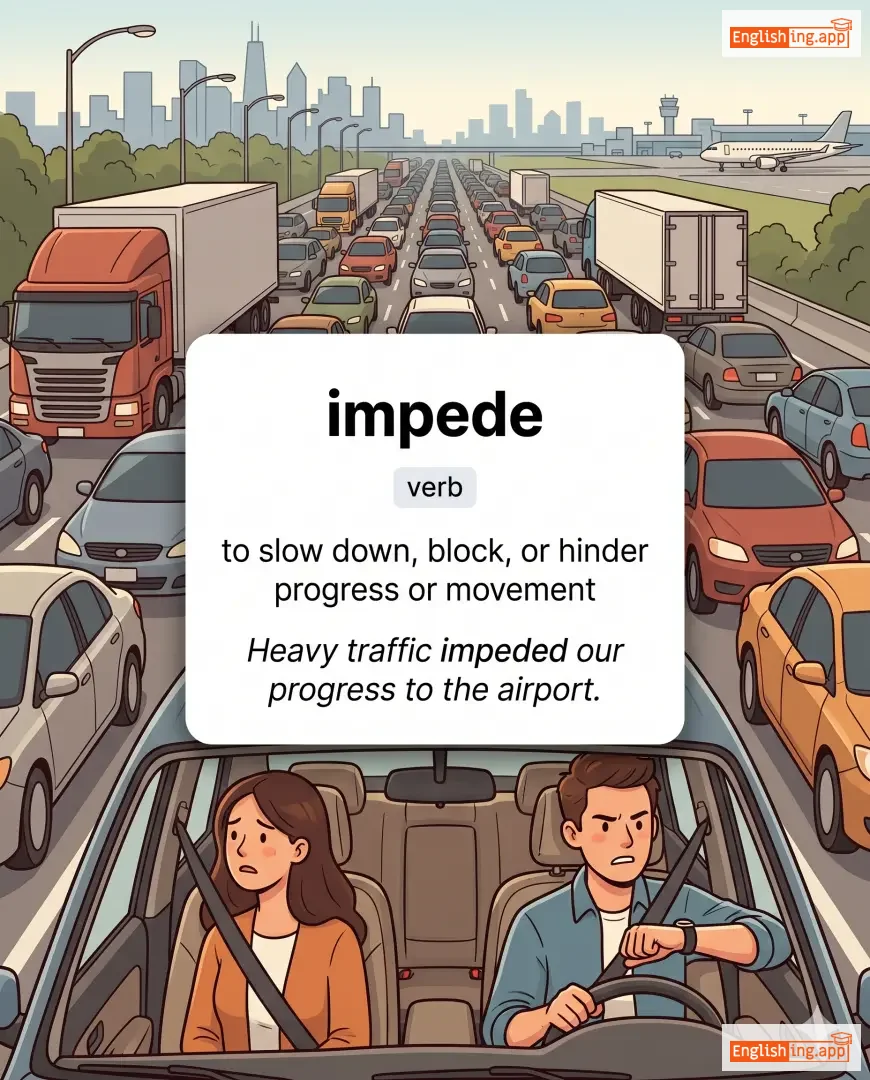
to slow down, block, or hinder progress or movement
••••••
|
Heavy traffic impeded our progress to the airport.
交通渋滞が空港への進行を妨げました。
••••••
|
交通渋滞が空港への進行を妨げました。
Koutsuu juutai ga kuukou e no shinkou o samatagemashita.
••••••
|
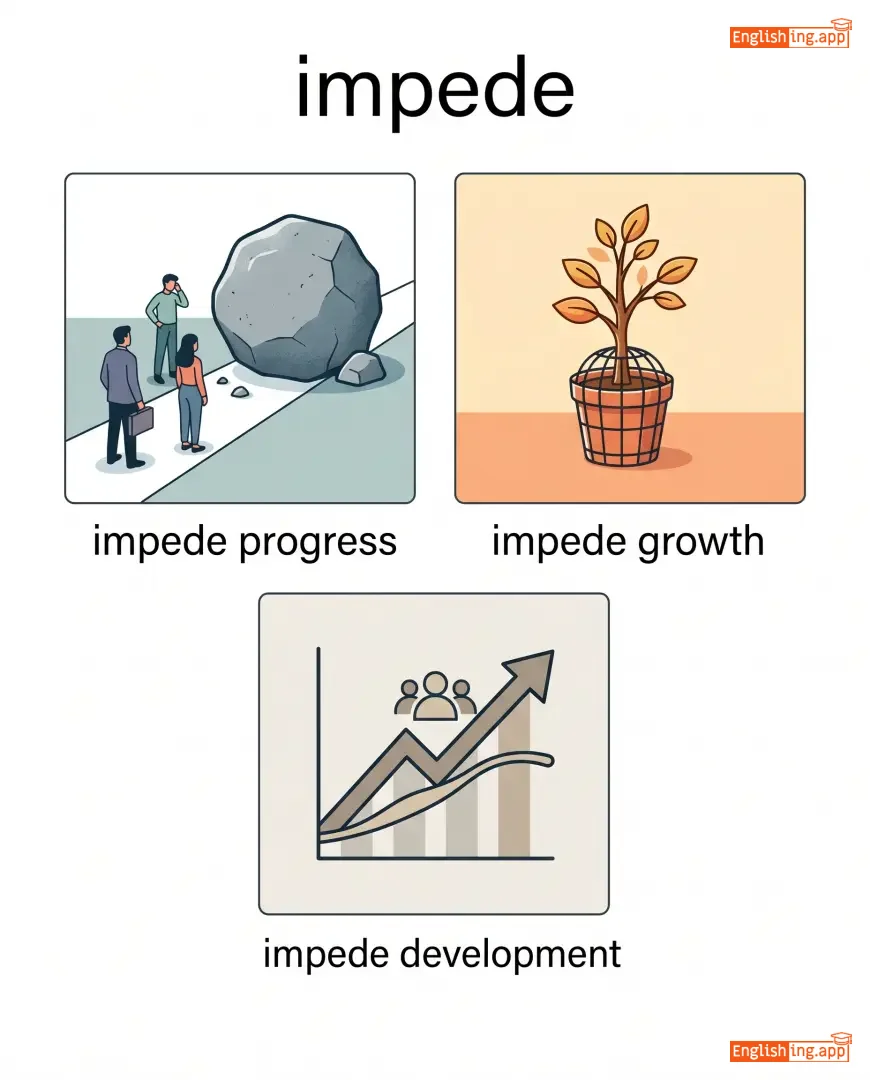
impede progress
進行を妨げる
••••••
|
to slow down or obstruct advancement
••••••
|
進行を妨げる
shinkou o samatageru
••••••
|
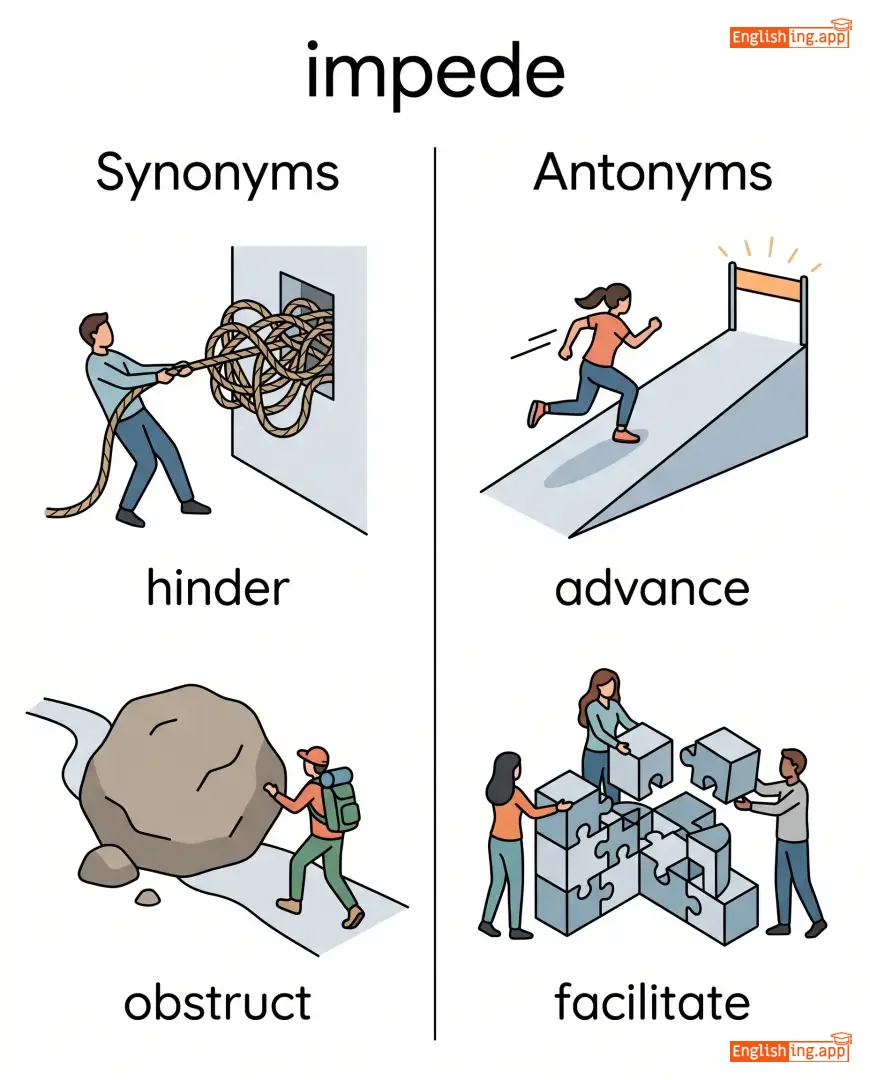
hinder, obstruct, block, delay, hamper
••••••
|
advance, facilitate, promote
••••••
|
impede progress, impede growth, impede development, impede movement
••••••
|
もし交通が進行を妨げるなら、空港には着けない。
••••••
|
|
🧱
••••••
|
/ɪmˈpɜːmiəbl/
adjective
(インパーミアブル)
••••••
|
|
不透水の
futōsui no
••••••
|
- •••••• | - •••••• | - •••••• | - •••••• |
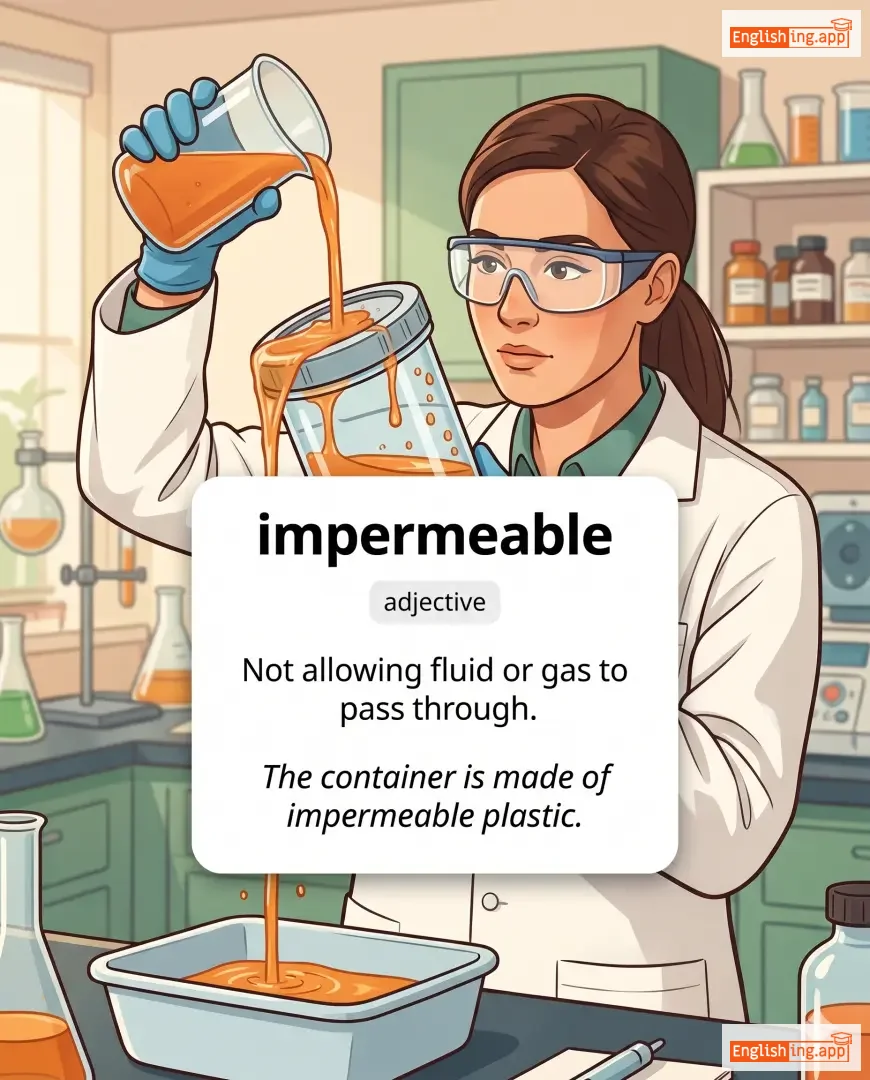
Not allowing fluid or gas to pass through.
••••••
|
The container is made of impermeable plastic. |
その容器は不透水のプラスチックでできています。
Sono youki wa futōsui no purasuchikku de dekiteimasu.
••••••
|
- •••••• | - •••••• | - •••••• |
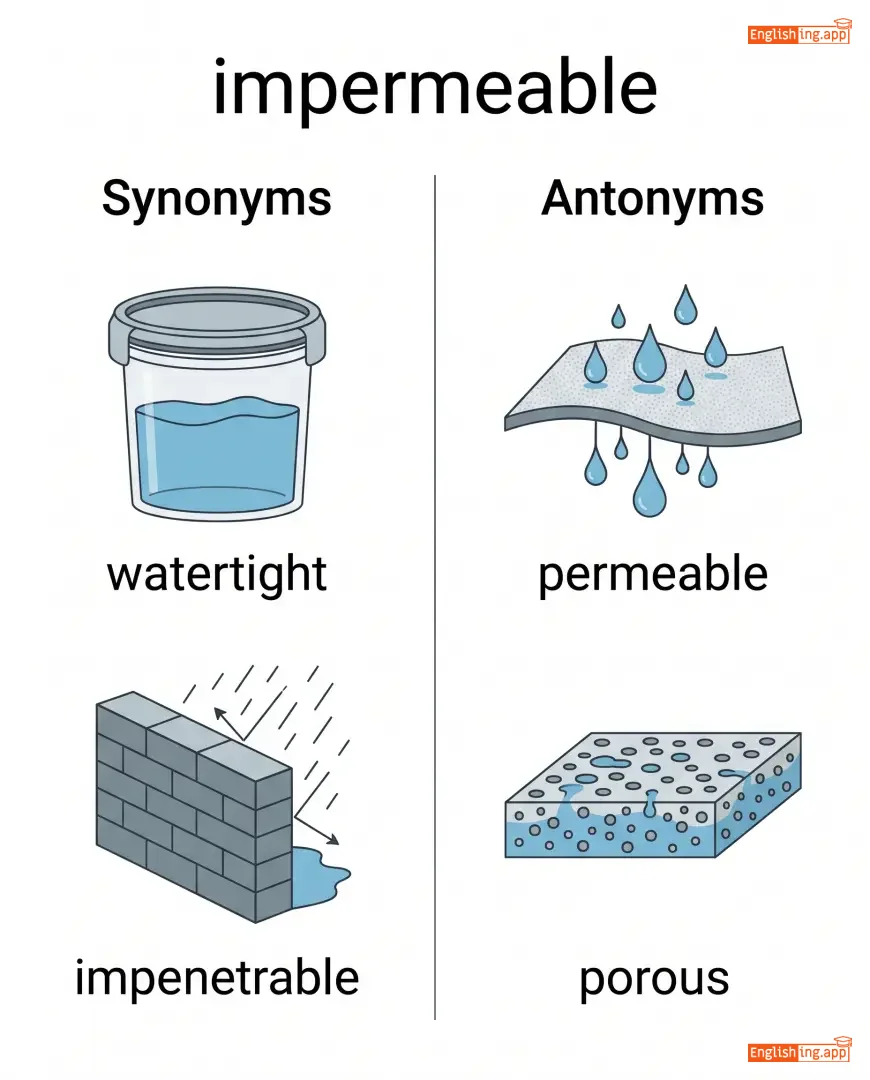
watertight, impenetrable, sealed, nonporous
••••••
|
permeable, porous, leaky
••••••
|
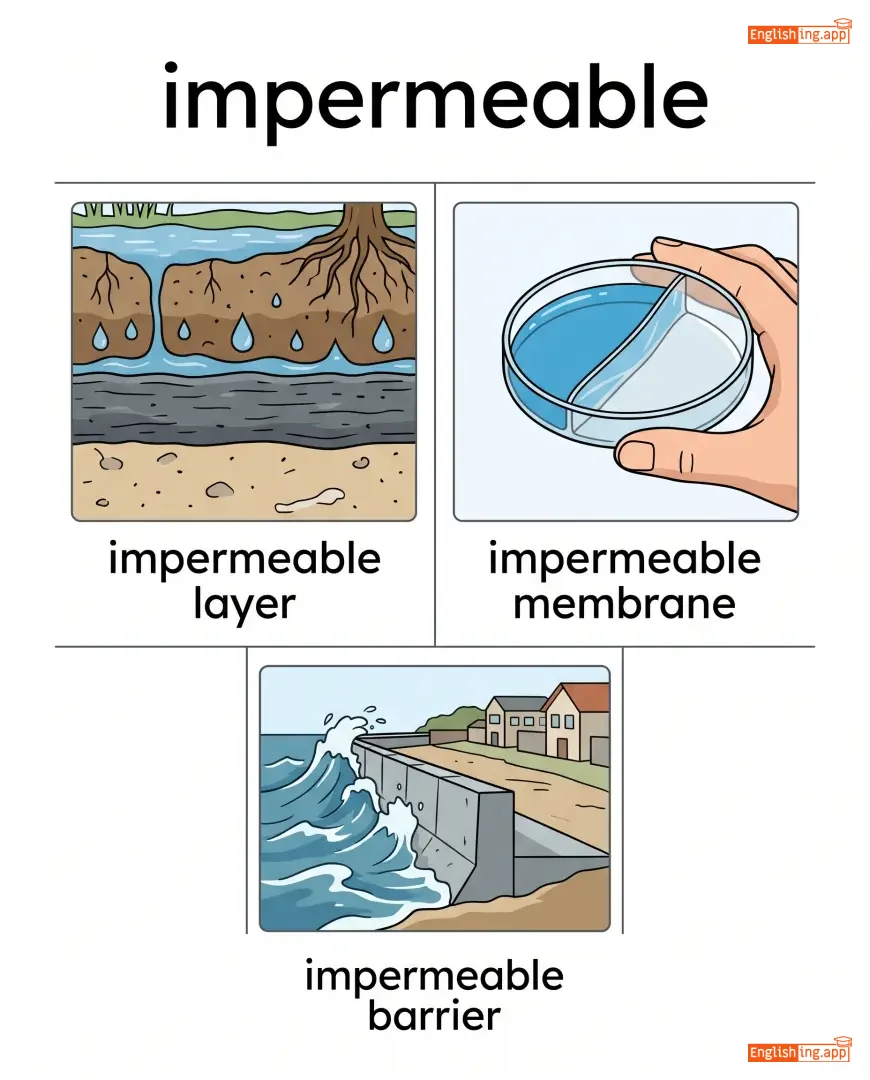
impermeable layer, impermeable membrane, impermeable barrier, impermeable wall
••••••
|
不透水のように、すべての水を通さないものです。
••••••
|
|
🧘
••••••
|
/ɪmˈpɜːrtərbəbəl/
adjective
(インパターバブル)
••••••
|
|
冷静
reisei
••••••
|
- •••••• | - •••••• | - •••••• | - •••••• |
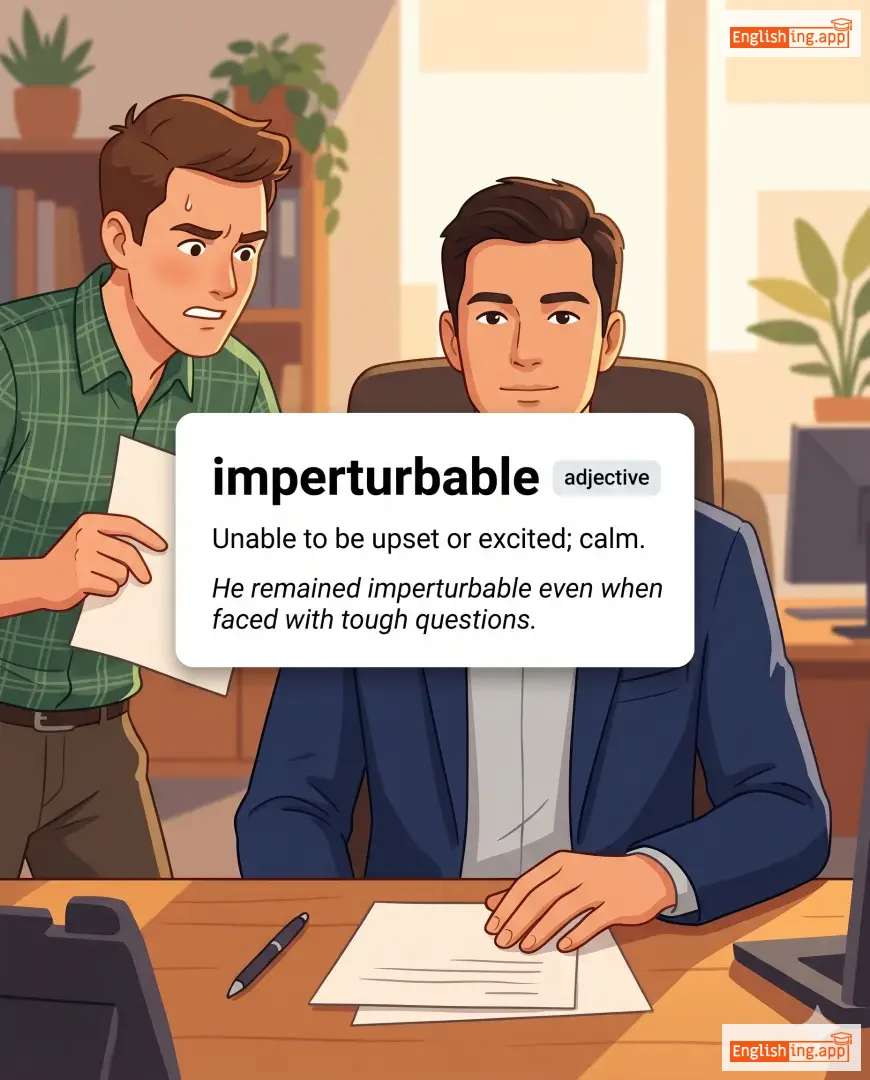
Unable to be upset or excited; calm.
••••••
|
He remained imperturbable even when faced with tough questions.
彼は難しい質問に直面しても冷静さを保ち続けました。
••••••
|
彼は難しい質問に直面しても冷静さを保ち続けました。
Kare wa muzukashī shitsumon ni chokumen shite mo reiseisa o tamotsu tsudzukemashita.
••••••
|
- •••••• | - •••••• | - •••••• |
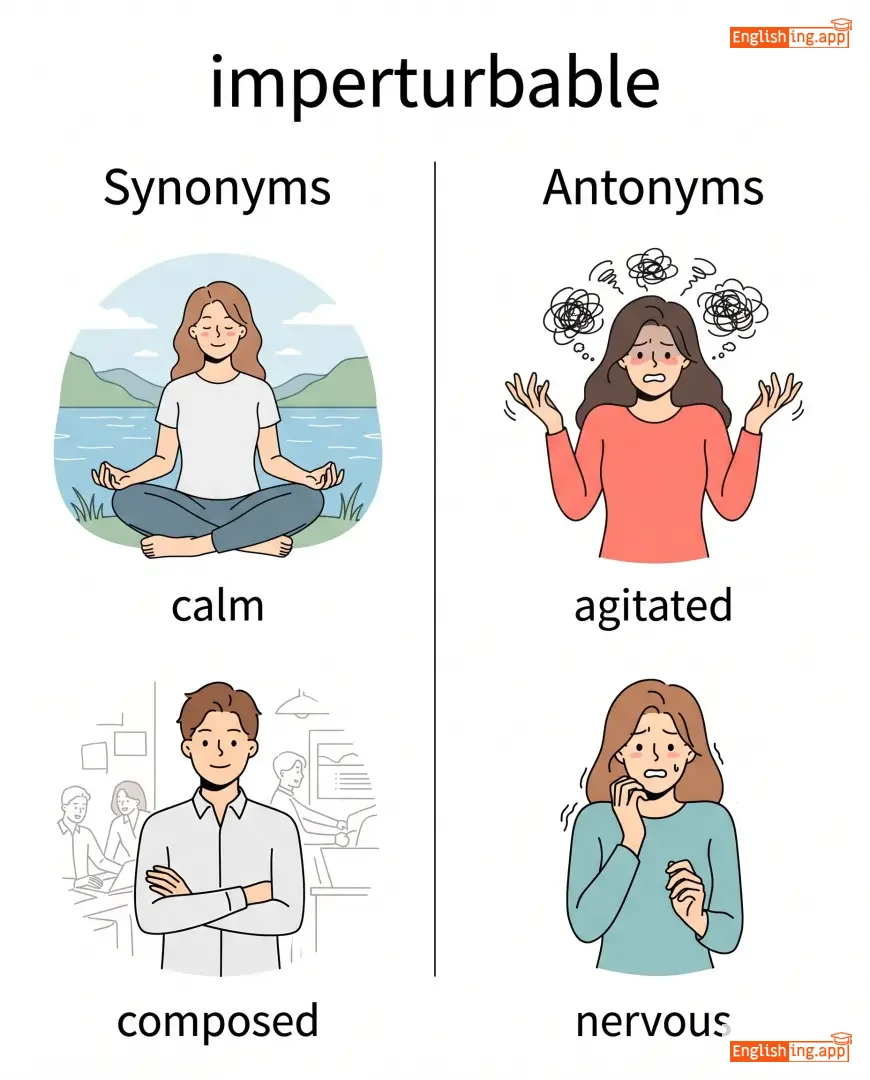
calm, composed, serene, collected, unflappable
••••••
|
agitated, nervous, excitable
••••••
|
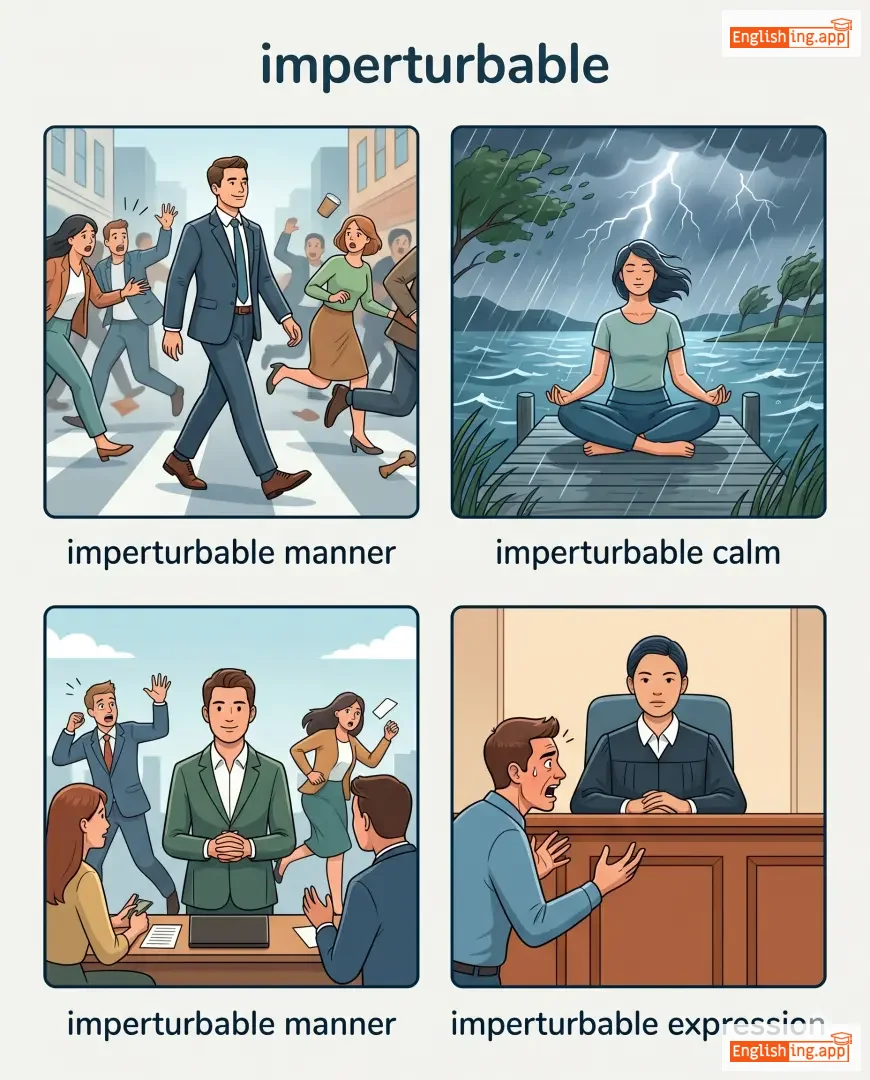
imperturbable manner, imperturbable calm, imperturbable expression, imperturbable face
••••••
|
Imperturbable とは '動揺しない' という意味です — つまり冷静。
••••••
|
|
🛡️
••••••
|
/ɪmˈpɜːrviəs/
adjective
(インパーヴィアス)
••••••
|
|
透過しない
toukashinai
••••••
|
- •••••• | - •••••• | - •••••• | - •••••• |
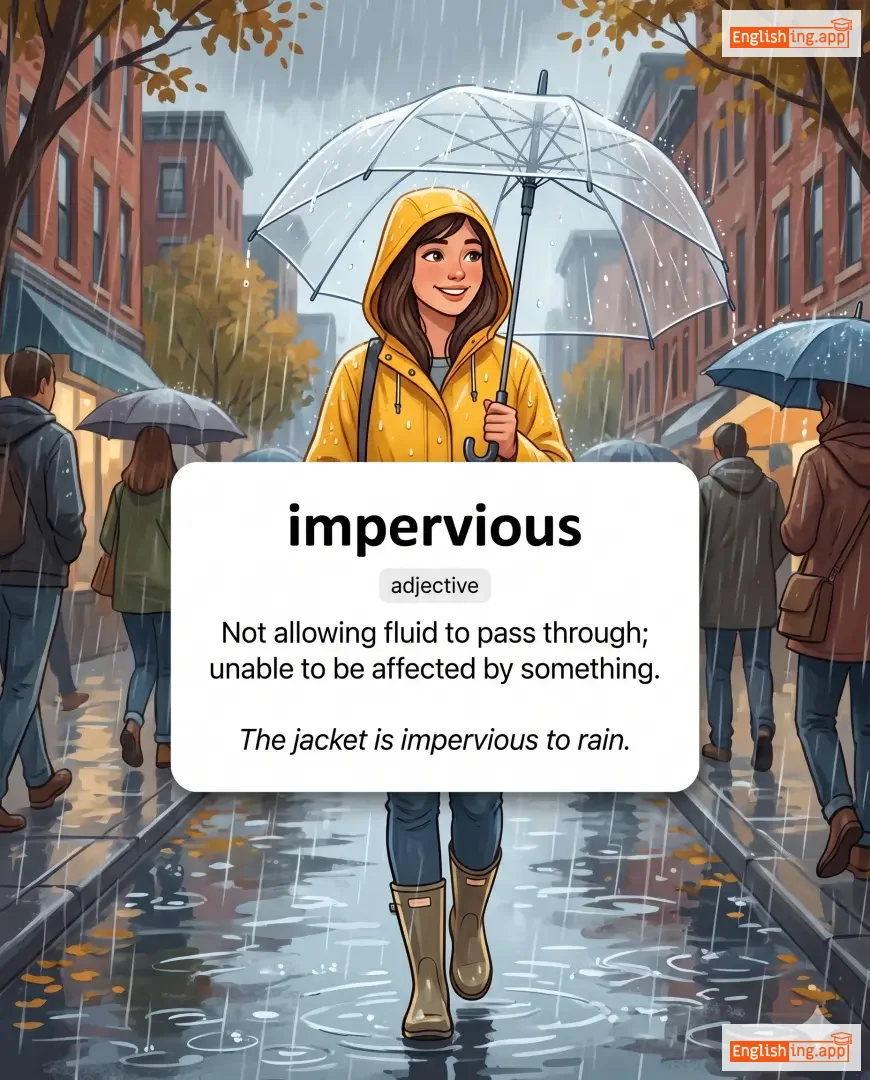
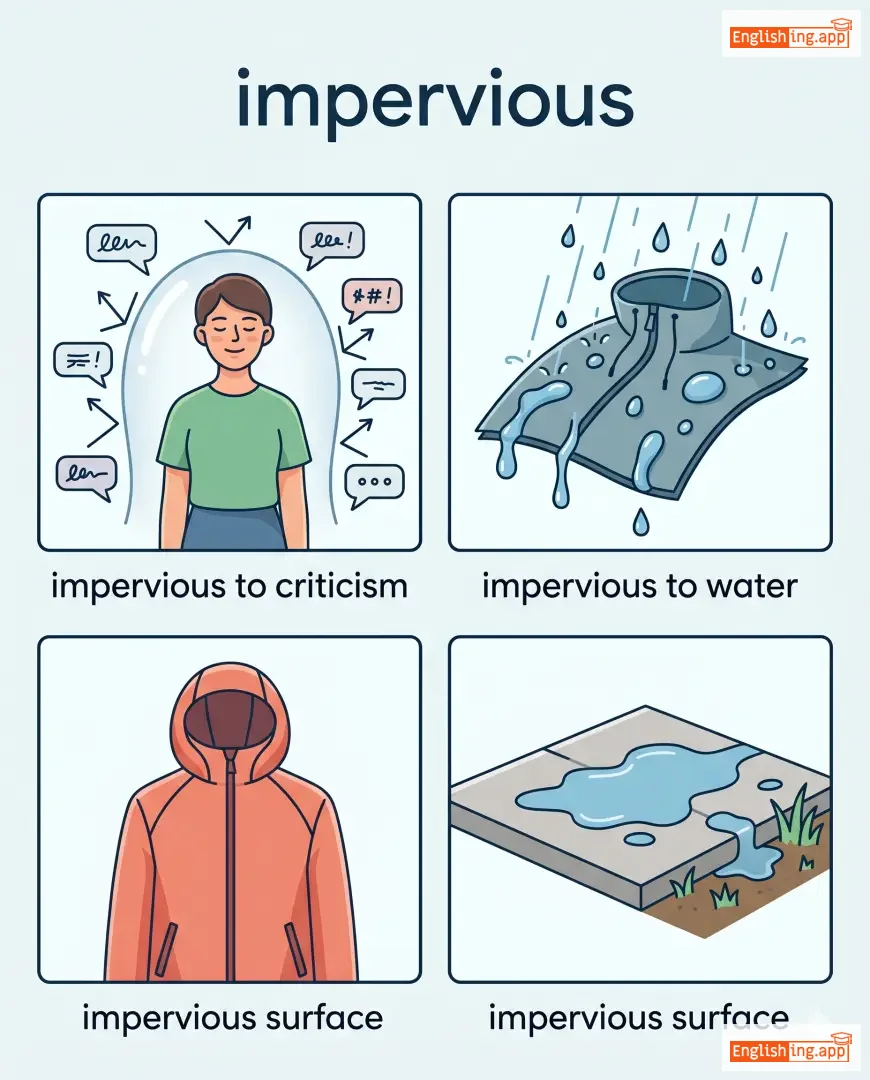
Not allowing fluid to pass through; unable to be affected by something.
••••••
|
The jacket is impervious to rain. |
ジャケットは雨に透過しません。
Jaketto wa ame ni toukashinai desu.
••••••
|
- •••••• | - •••••• | - •••••• |
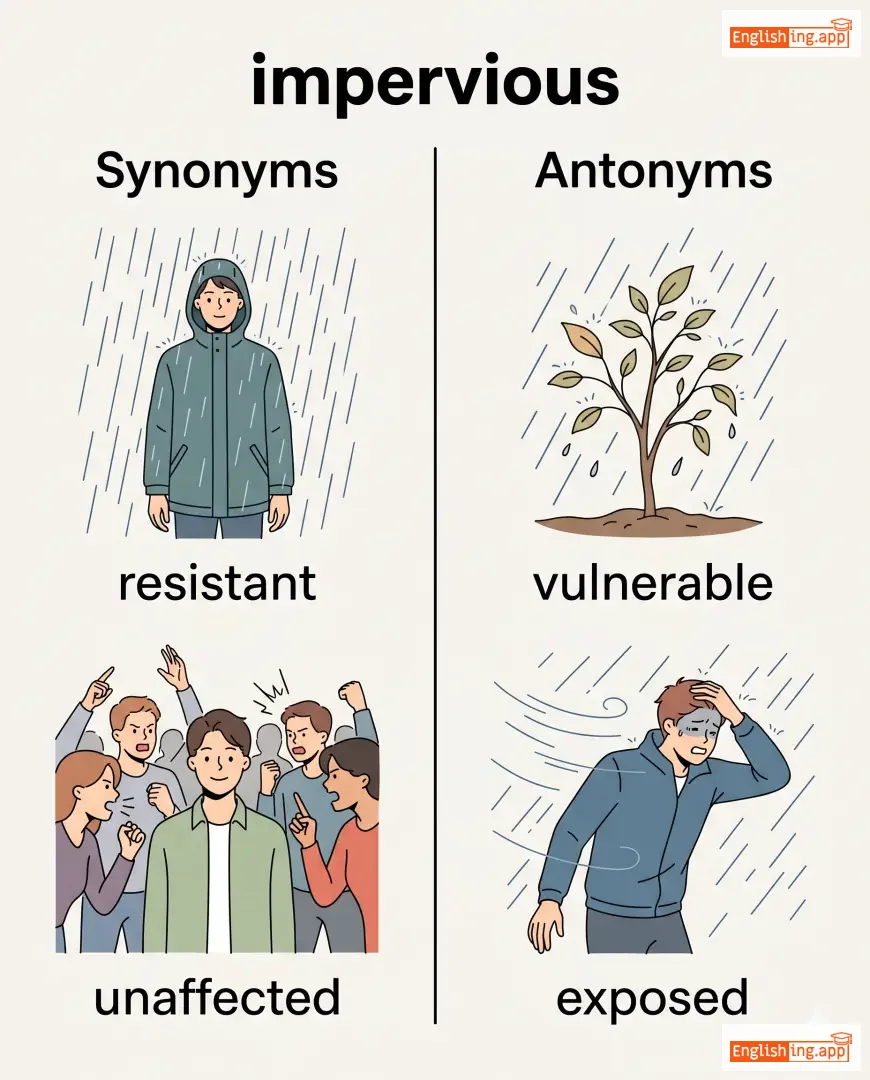
resistant, unaffected, immune, sealed, waterproof
••••••
|
vulnerable, exposed, penetrable
••••••
|
impervious to criticism, impervious to water, impervious surface, impervious layer
••••••
|
Imperviousは‘透過しない’ – 何も通さない、透過しない。
••••••
|
|
🔨
••••••
|
/ɪmˈpɪndʒ/
verb
••••••
|
|
- •••••• |
impinged
••••••
|
impinged
••••••
|
impinges
••••••
|
impinging
••••••
|
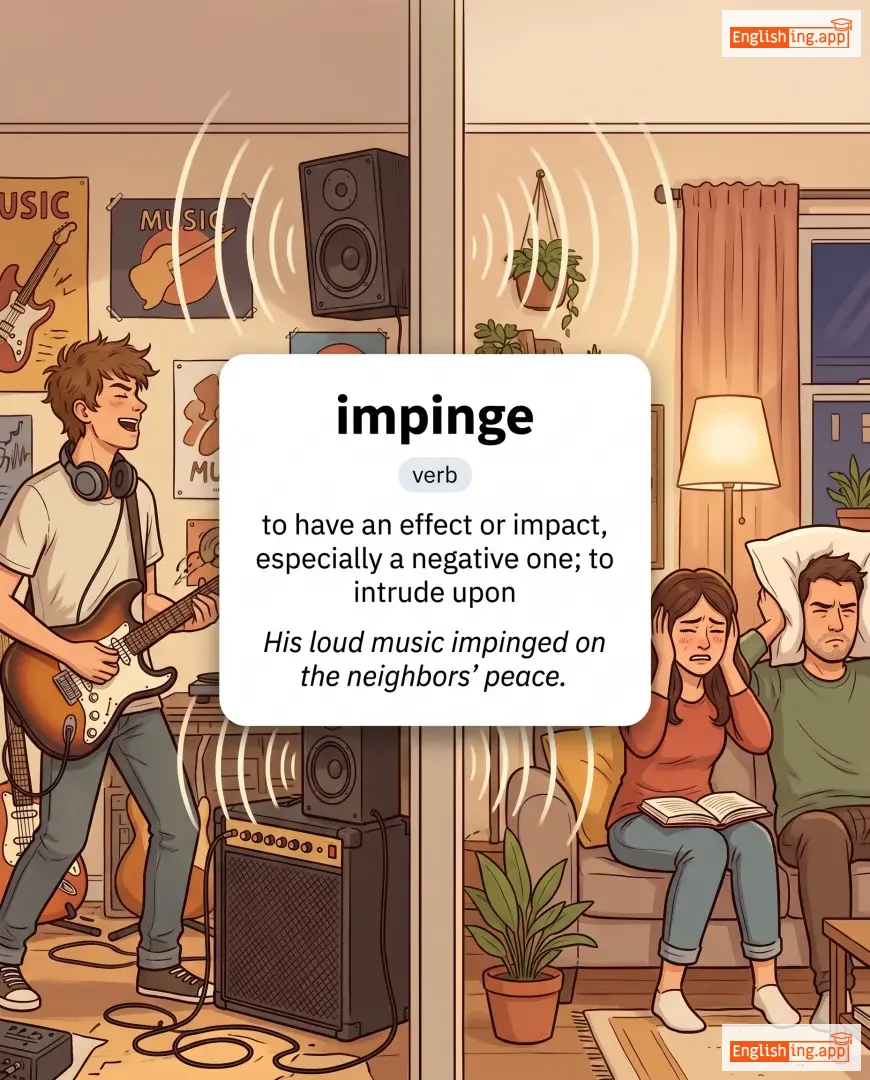
to have an effect or impact, especially a negative one; to intrude upon
••••••
|
His loud music impinged on the neighbors’ peace. |
- •••••• |
impinge on rights |
to intrude or infringe upon someone’s rights
••••••
|
- •••••• |
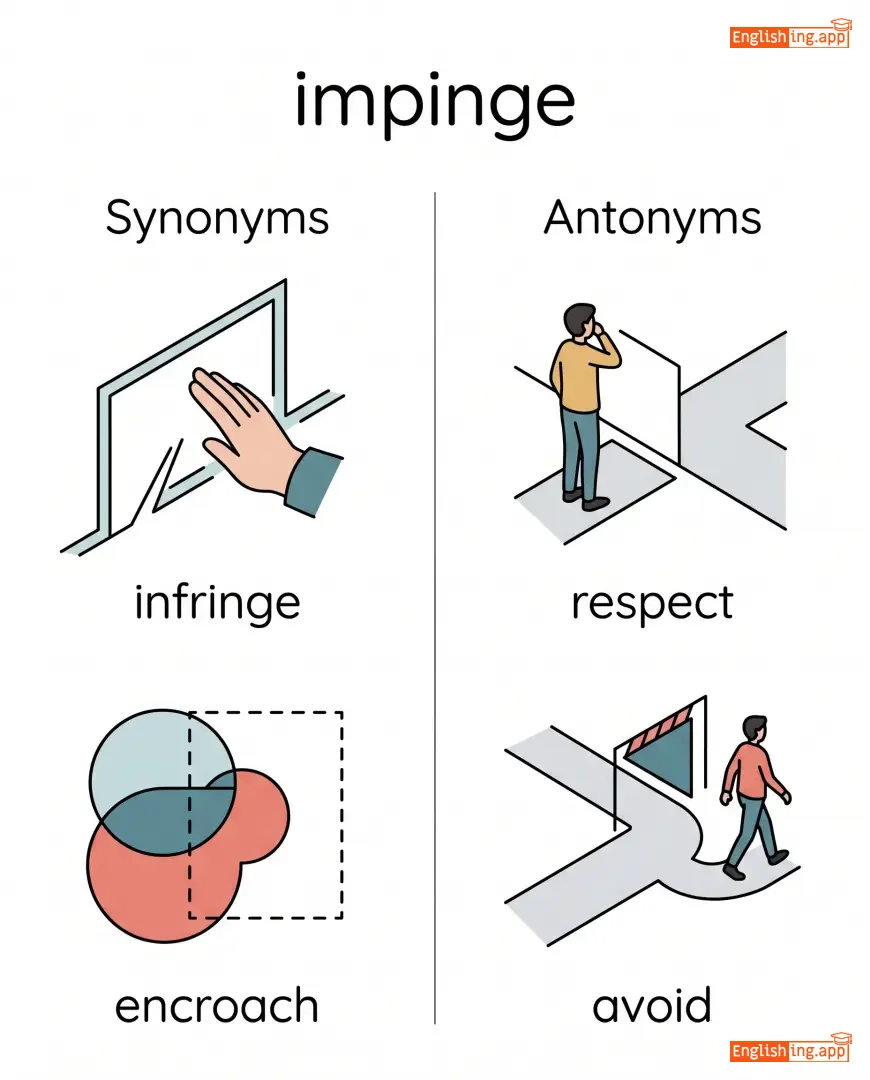
infringe, encroach, affect, intrude, disturb
••••••
|
respect, avoid, preserve
••••••
|
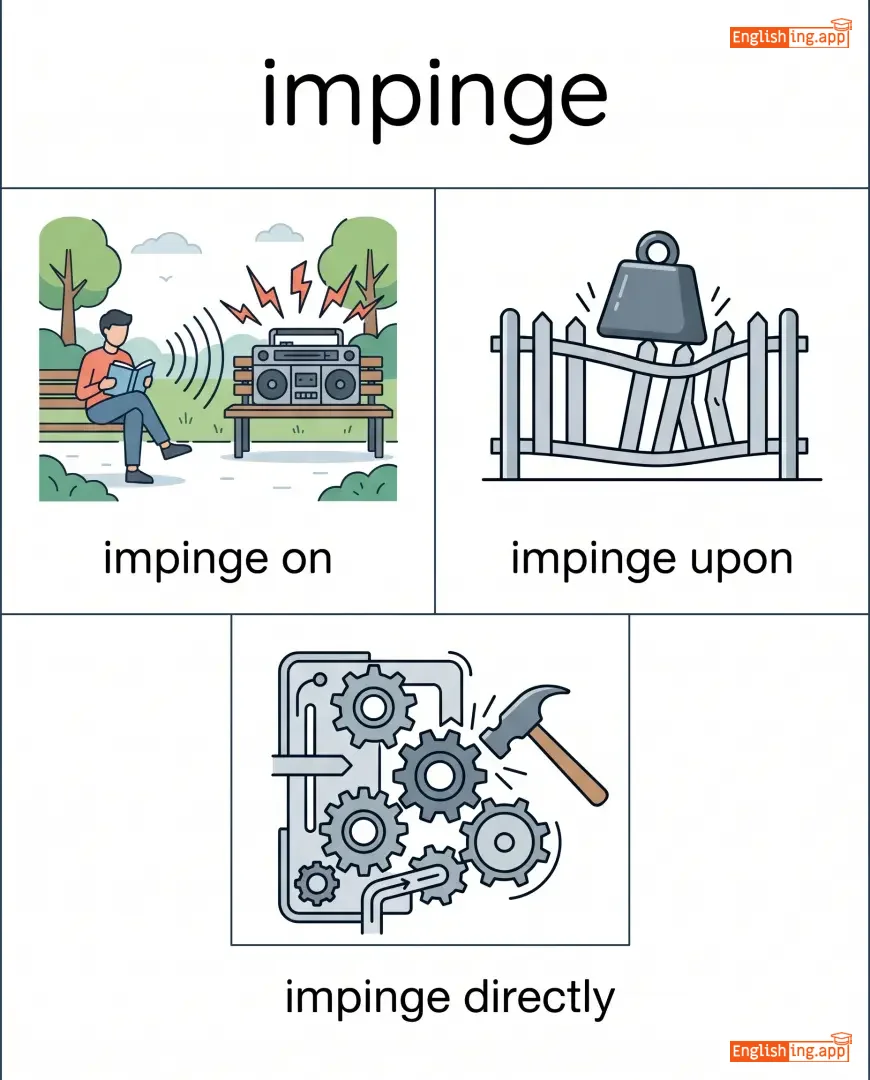
impinge on, impinge upon, impinge directly
••••••
|
No •••••• |
|
🔥
••••••
|
/ɪmˈplækəbl/
adjective
(インプラカブル)
••••••
|

|
容赦しない
yousha shinai
••••••
|
- •••••• | - •••••• | - •••••• | - •••••• |
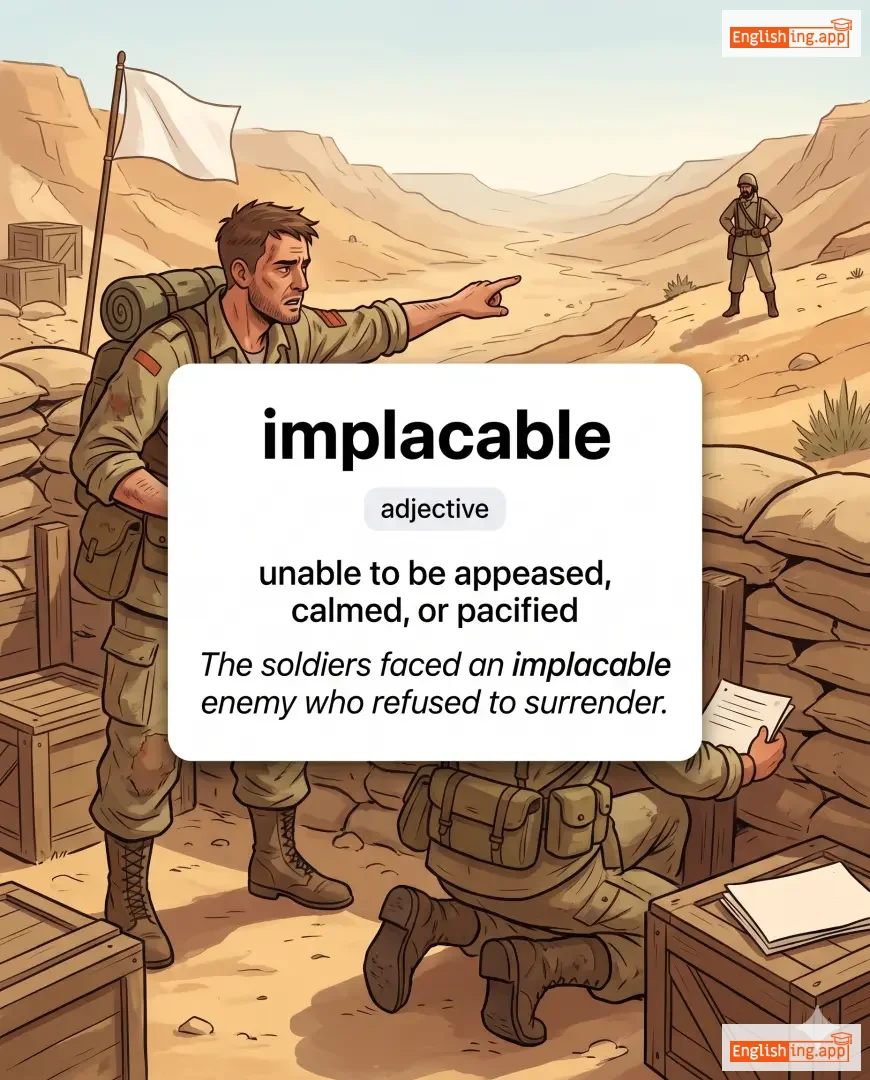
unable to be appeased, calmed, or pacified
••••••
|
The soldiers faced an implacable enemy who refused to surrender. |
兵士たちは降伏を拒否した容赦しない敵に直面した。
Heishitachi wa kyoufuku o kyohi shita yousha shinai teki ni chokumen shita.
••••••
|
- •••••• | - •••••• | - •••••• |
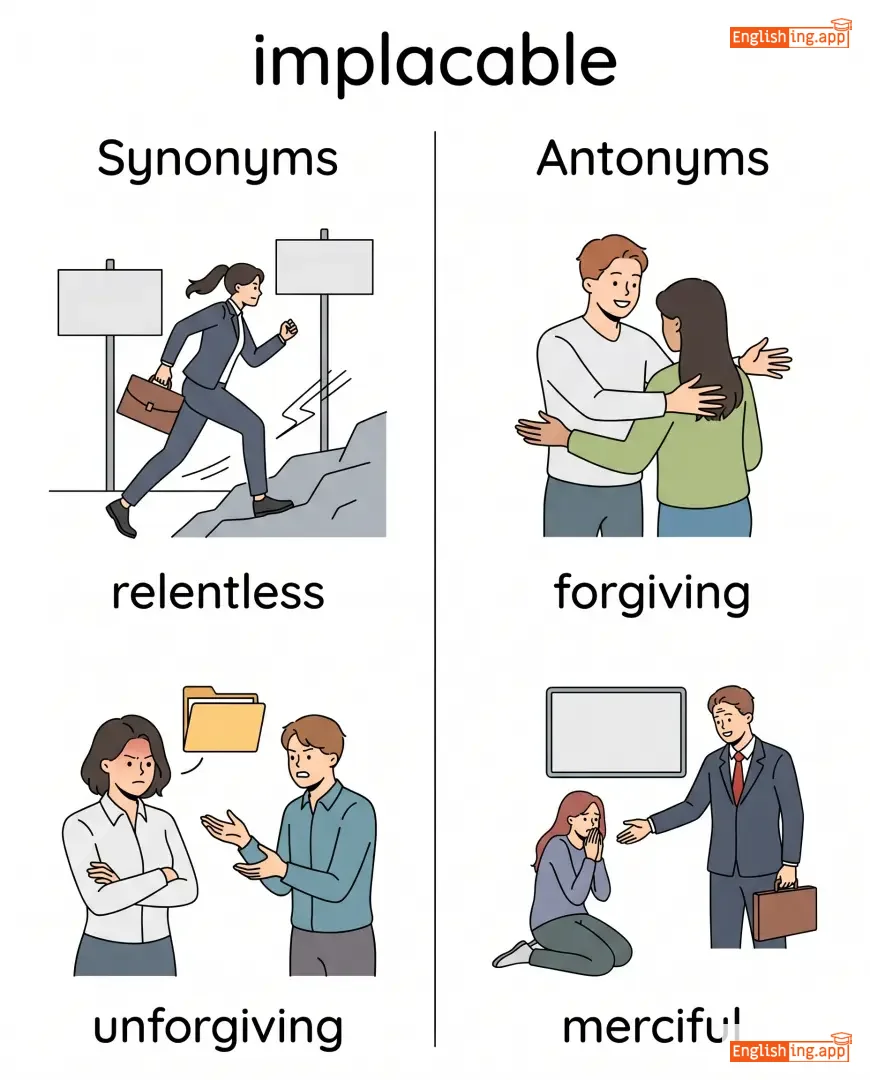
relentless, unforgiving, merciless, unyielding, stubborn
••••••
|
forgiving, merciful, kind
••••••
|
implacable enemy, implacable hatred, implacable opposition
••••••
|
IMPLACABLEは日本語で'容赦しない'、つまり平和にすることができない
••••••
|
|
🤔
••••••
|
/ɪmˈplɔːzəbl/
adjective
(インプラウジブル)
••••••
|
|
信じがたい
shinjigatai
••••••
|
- •••••• | - •••••• | - •••••• | - •••••• |
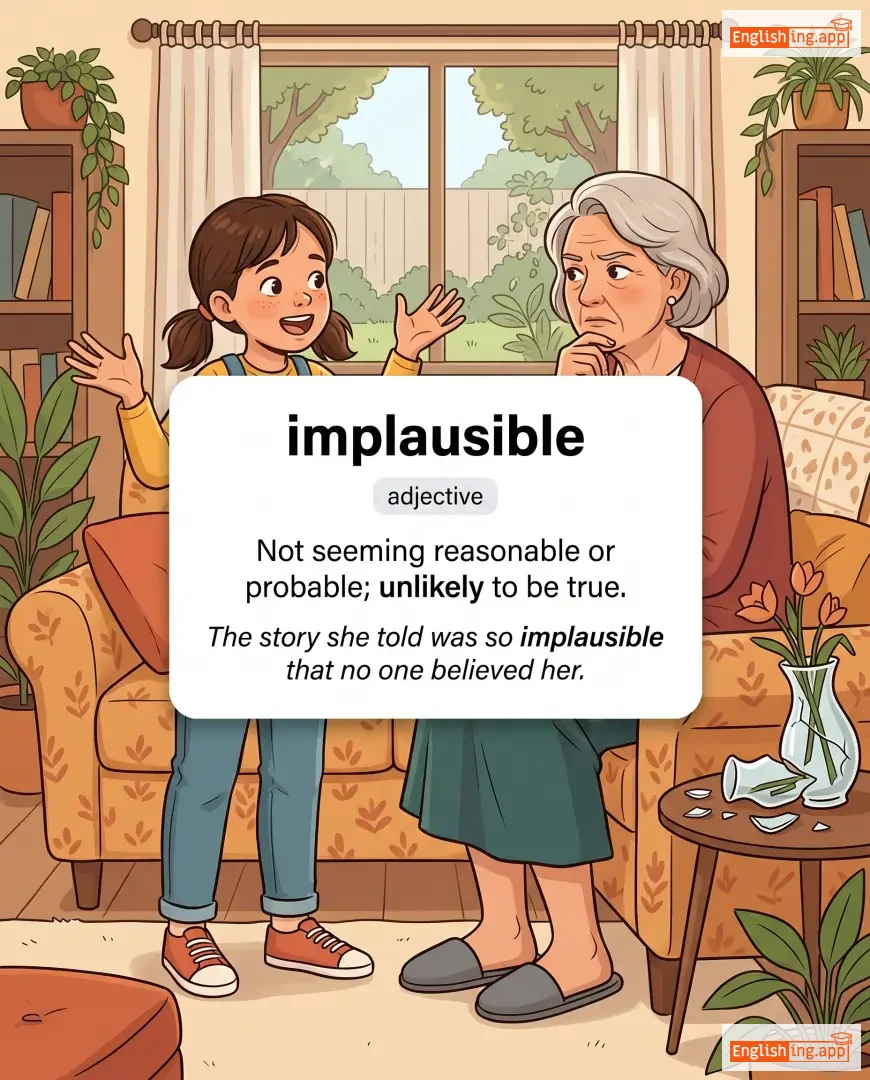
Not seeming reasonable or probable; unlikely to be true.
••••••
|
The story she told was so implausible that no one believed her.
彼女が話した話はあまりにも信じられないほどで、誰も彼女を信じなかった。
••••••
|
彼女が話した話はあまりにも信じられないほどで、誰も彼女を信じなかった。
Kanojo ga hanashita hanashi wa amari ni mo shinjirarenai hodo de, dare mo kanojo o shinjinakatta.
••••••
|
- •••••• | - •••••• | - •••••• |
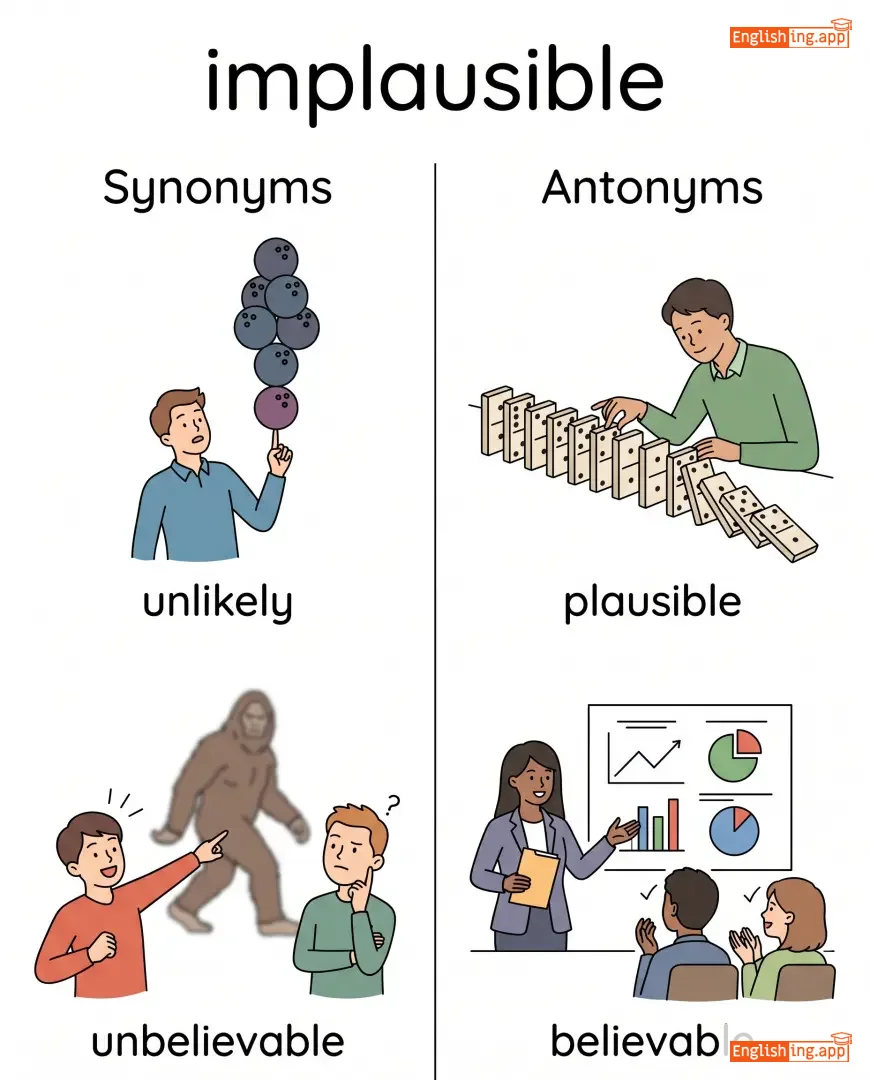
unlikely, unbelievable, doubtful, improbable, questionable
••••••
|
plausible, believable, credible
••••••
|
implausible explanation, implausible excuse, implausible claim
••••••
|
信じがたいは impossible のように聞こえる – 信じられない
••••••
|
|
🤫
••••••
|
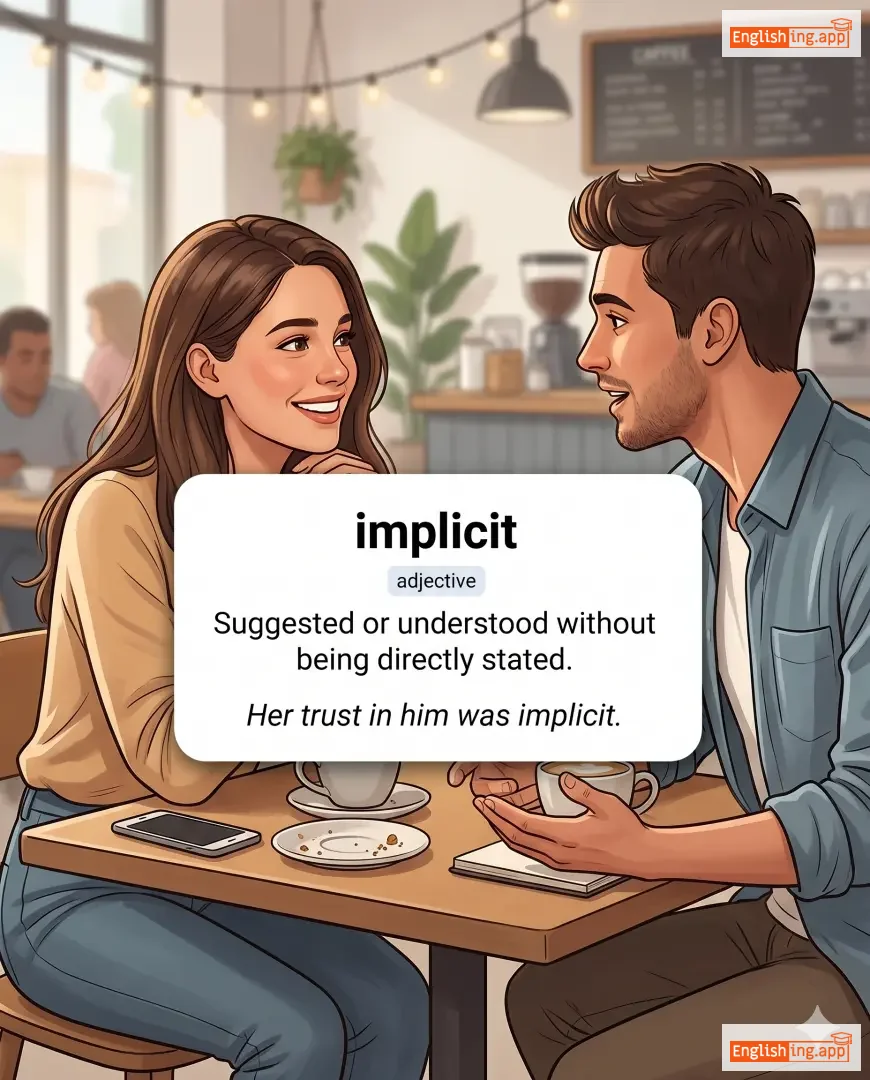
/ɪmˈplɪsɪt/
adjective
(インプリシット)
••••••
|
|
暗黙の
anmoku no
••••••
|
- •••••• | - •••••• | - •••••• | - •••••• |
Suggested or understood without being directly stated.
••••••
|
Her trust in him was implicit. |
彼女の彼に対する信頼は暗黙のものでした。
kanojo no kare ni taisuru shinrai wa anmoku no mono deshita
••••••
|
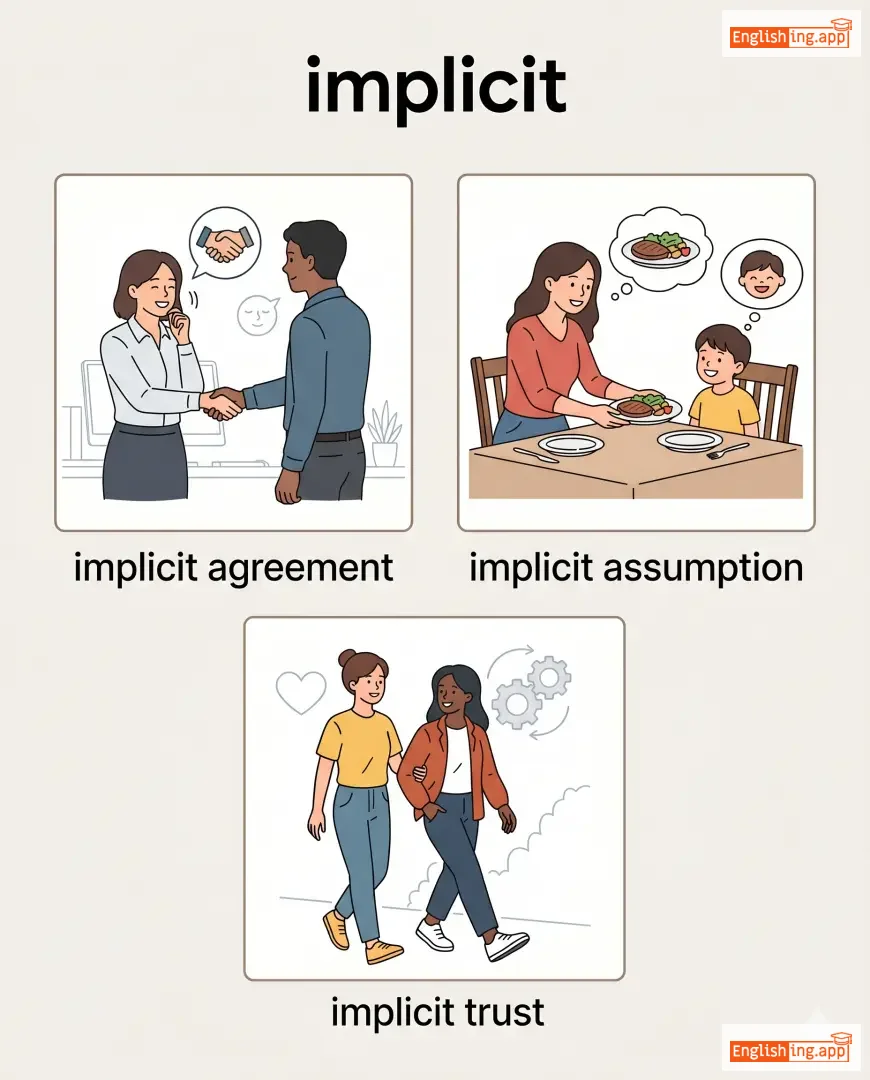
implicit trust |
Complete and unquestioning trust.
••••••
|
暗黙の信頼
anmoku no shinrai
••••••
|
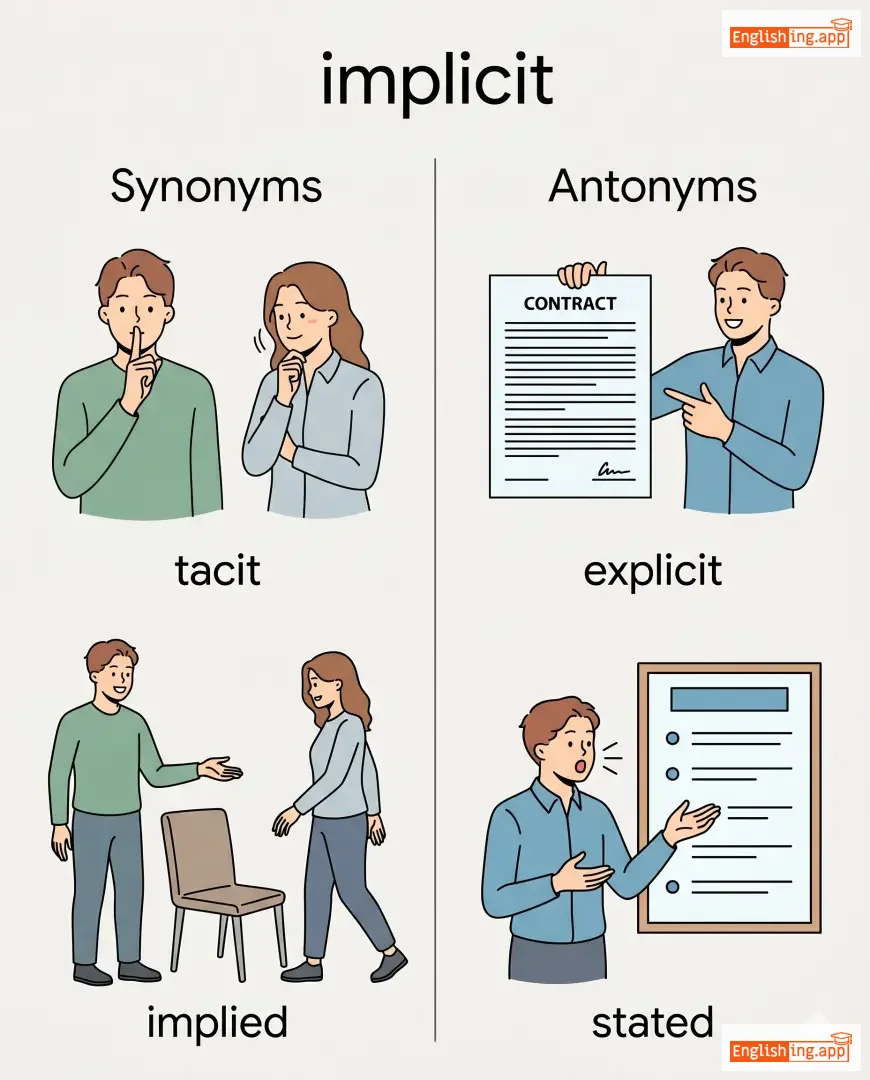
tacit, implied, unspoken, inherent, understood
••••••
|
explicit, stated, expressed
••••••
|
implicit agreement, implicit assumption, implicit trust, implicit in
••••••
|
‘implicit’は隠れている意味です — 思い出してください:暗黙の信頼は直接言わずに理解されます。
••••••
|
|
💥
••••••
|
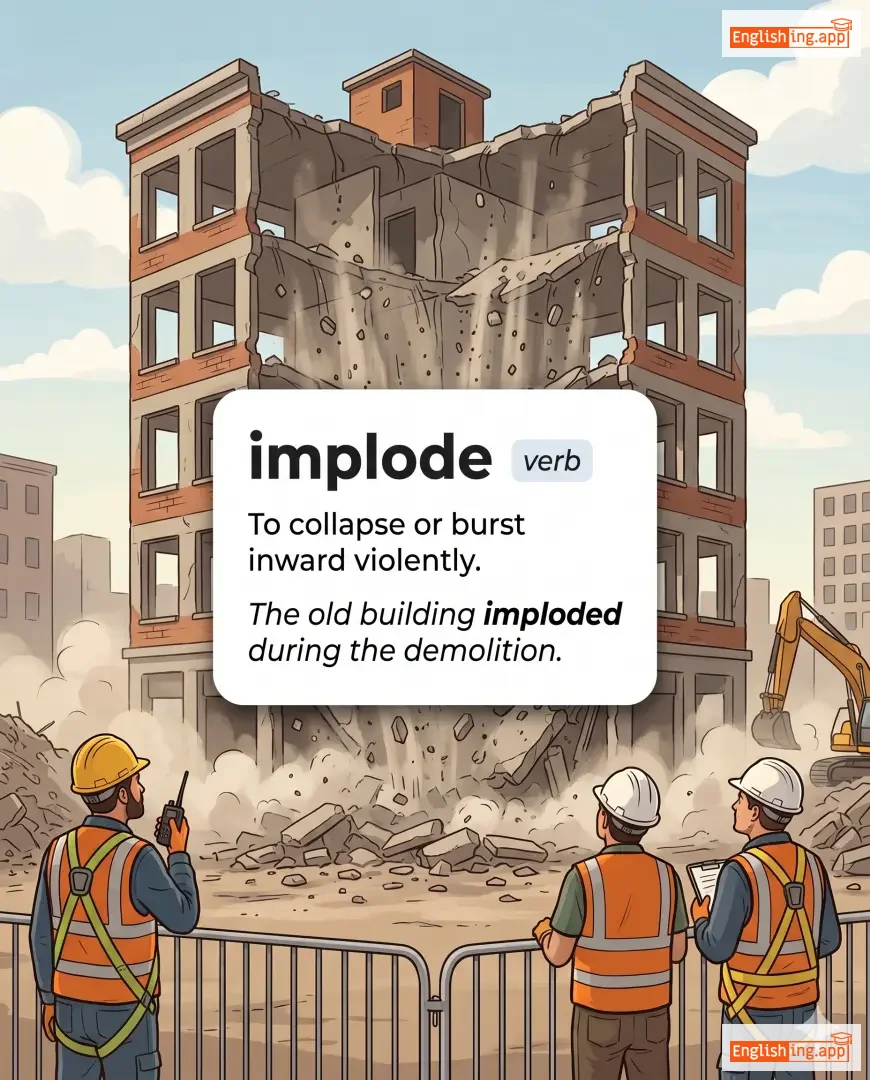
/ɪmˈploʊd/
verb
(インプロード)
••••••
|
|
内爆
naibaku
••••••
|
imploded
インプローデッド
••••••
|
imploded
インプローデッド
••••••
|
implodes
インプローズ
••••••
|
imploding
インプローディング
••••••
|
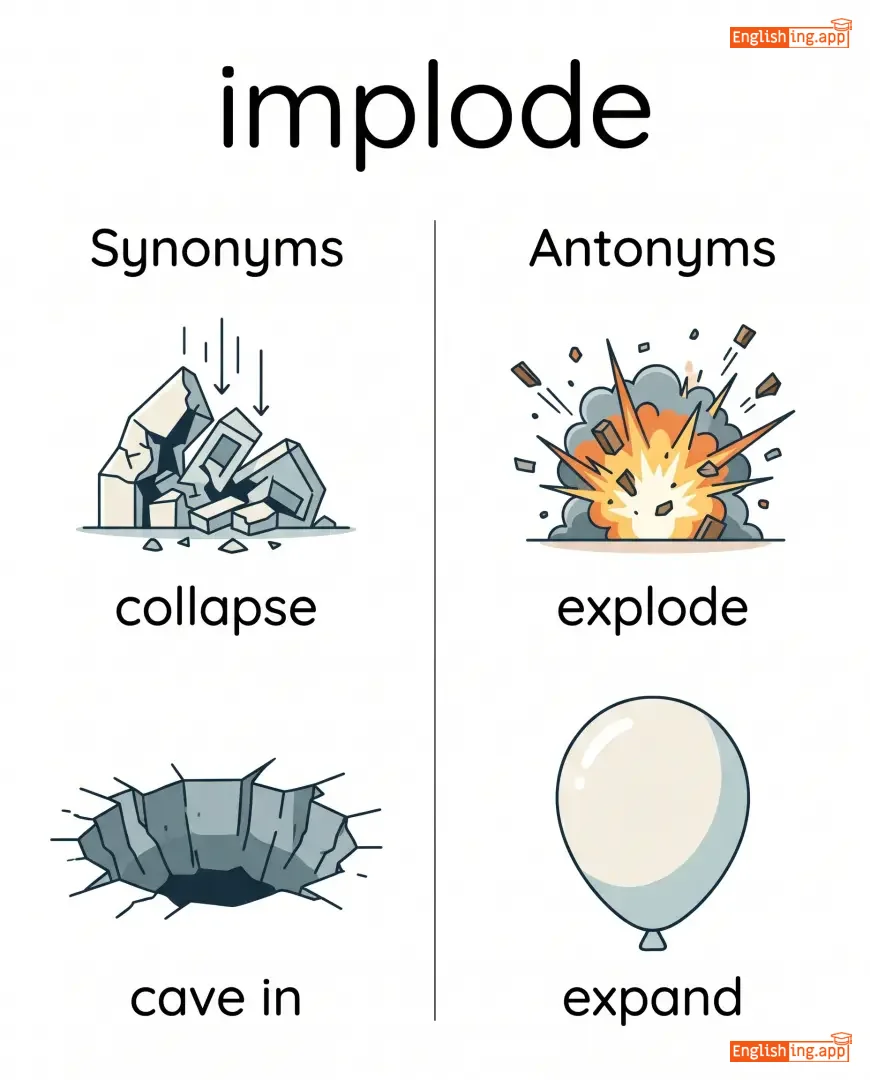
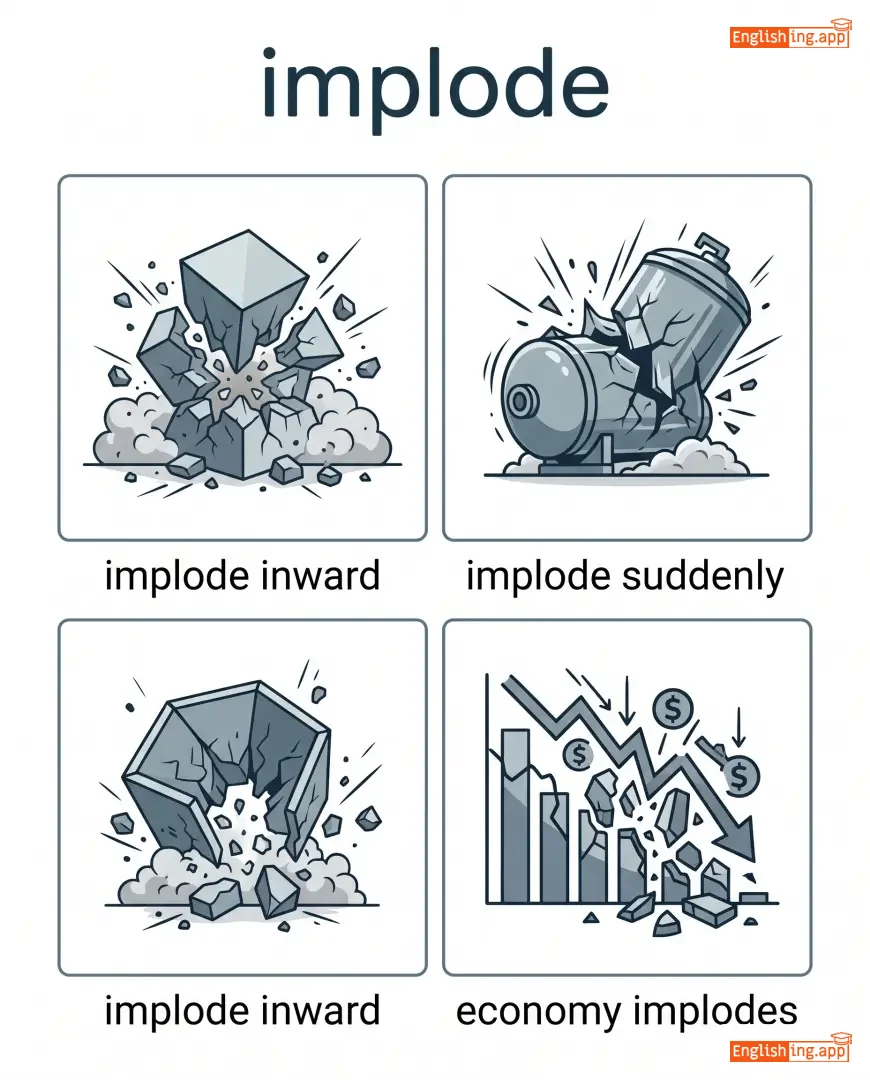
To collapse or burst inward violently.
••••••
|
The old building imploded during the demolition.
古い建物は解体中に内向きに崩壊しました。
••••••
|
古い建物は解体中に内向きに崩壊しました。
Furui tatemono wa kaitai chuu ni uchimuki ni houkai shimashita.
••••••
|
- •••••• | - •••••• | - •••••• |
collapse, cave in, crumple, fall in
••••••
|
explode, expand, burst outward
••••••
|
implode inward, implode suddenly, economy implodes
••••••
|
'Implode' という言葉は、内側に向かって崩壊することを意味します。内爆(naibaku)は内部の圧力によって破裂することを示します。
••••••
|
|
😡
••••••
|
/ˌɪmprɪˈkeɪʃən/
noun
(imprekeishon)
••••••
|
|
呪い
noroi
••••••
|
- •••••• | - •••••• | - •••••• | - •••••• |
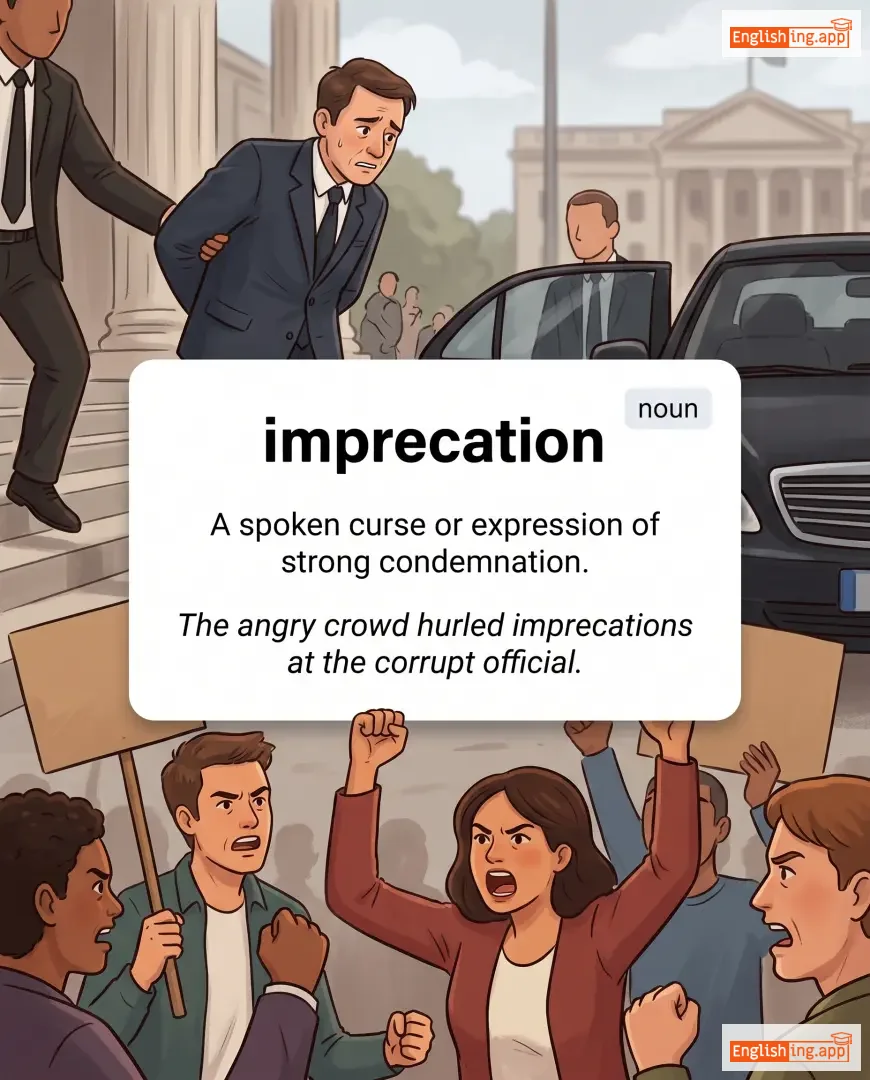
A spoken curse or expression of strong condemnation.
••••••
|
The angry crowd hurled imprecations at the corrupt official. |
怒った群衆は腐敗した役人に呪いを投げかけた。
Okotta gunshuu wa fuhai shita yakunin ni noroi wo nagekaketa.
••••••
|
- •••••• | - •••••• | - •••••• |
curse, malediction, hex, damnation, oath
••••••
|
blessing, benediction
••••••
|
utter imprecation, hurl imprecation, loud imprecation, divine imprecation
••••••
|
Imprecation は呪いを意味します – imagine インプレッションがなければ呪いをかけます。
••••••
|
|
👉
••••••
|
/ɪmˈpjuːt/
verb
(インピュート)
••••••
|
|
帰する
kisuru
••••••
|
imputed
インピューテッド
••••••
|
imputed
インピューテッド
••••••
|
imputes
インピューツ
••••••
|
imputing
インピューティング
••••••
|
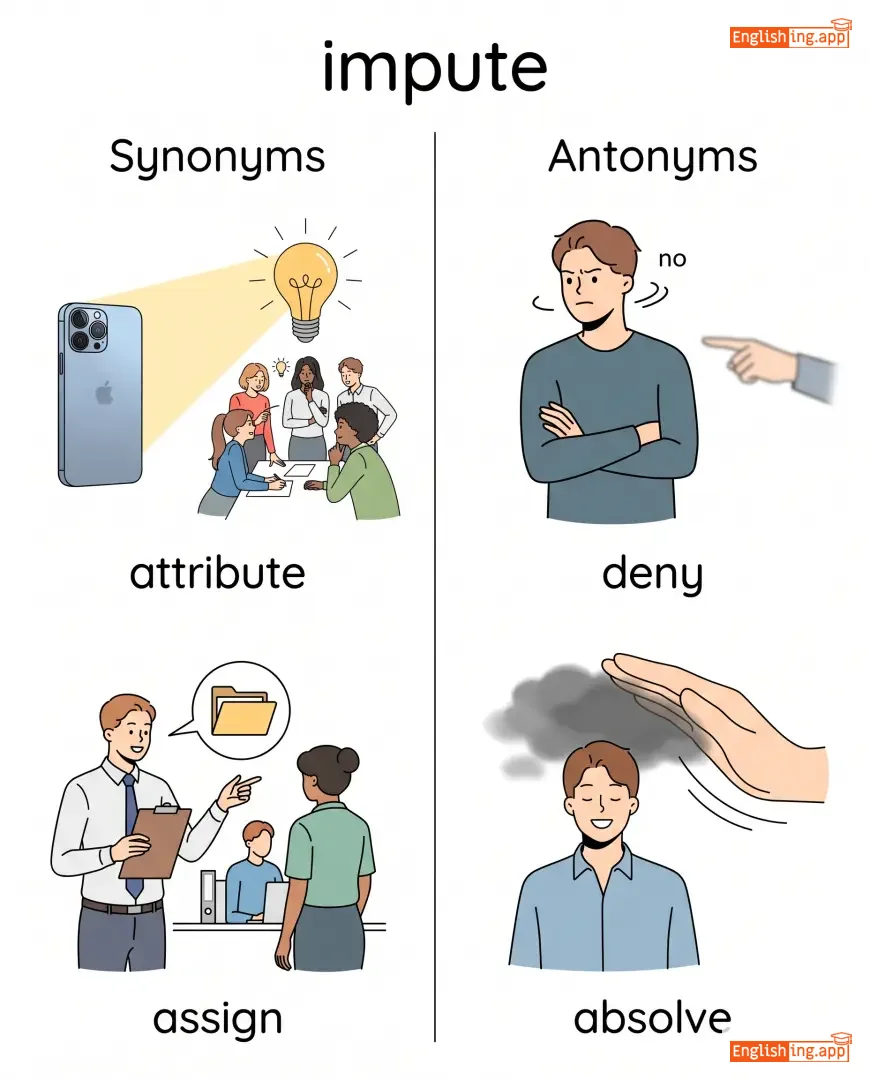
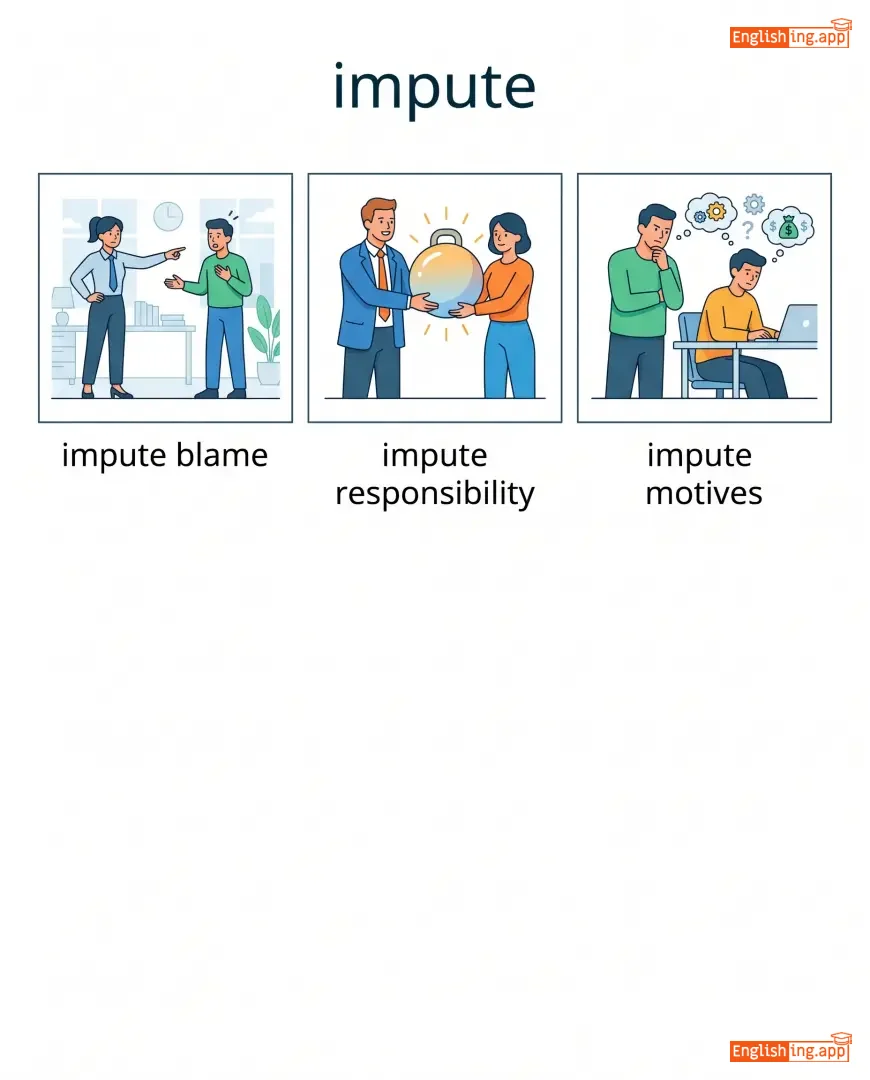
to attribute a fault or responsibility to someone
••••••
|
They imputed the company's success to good leadership.
彼らは会社の成功を良いリーダーシップに帰属させた。
••••••
|
彼らは会社の成功を良いリーダーシップに帰属させた。
Karera wa kaisha no seikou o yoi rīdāshippu ni kisusaseta.
••••••
|
- •••••• | - •••••• | - •••••• |
attribute, assign, credit, ascribe
••••••
|
deny, absolve
••••••
|
impute blame, impute responsibility, impute motives, impute success
••••••
|
Imputeはまるで入力されたものを他に帰すること、責任や誤りを負わせることのようだ。
••••••
|
|
🤷♂️
••••••
|
/ˌɪn.ədˈvɜːr.tənt.li/
adverb
(イナドヴァーテントリー)
••••••
|
|
うっかり; ついうっかり; 誤って
ukkari; tsui ukkari; ayamatta
••••••
|
- •••••• | - •••••• | - •••••• | - •••••• |
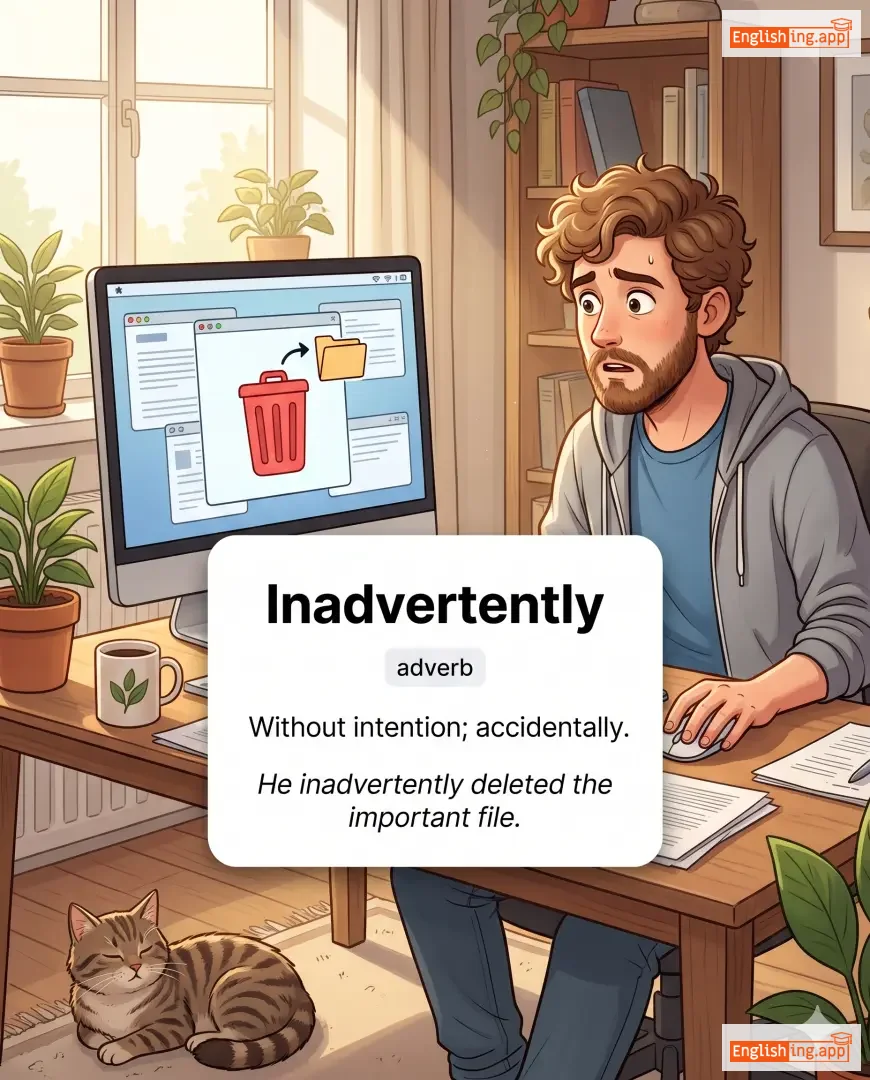
without being aware of what you are doing; unintentionally; by mistake
••••••
|
She inadvertently deleted the important file while cleaning her computer. |
彼女はコンピュータを掃除しているとき、重要なファイルをうっかり削除してしまった。
Kanojo wa konpyu-ta wo souji shite iru toki, juuyou na fairu wo ukkari sakujyo shite shimatta.
••••••
|
- •••••• | - •••••• | - •••••• |
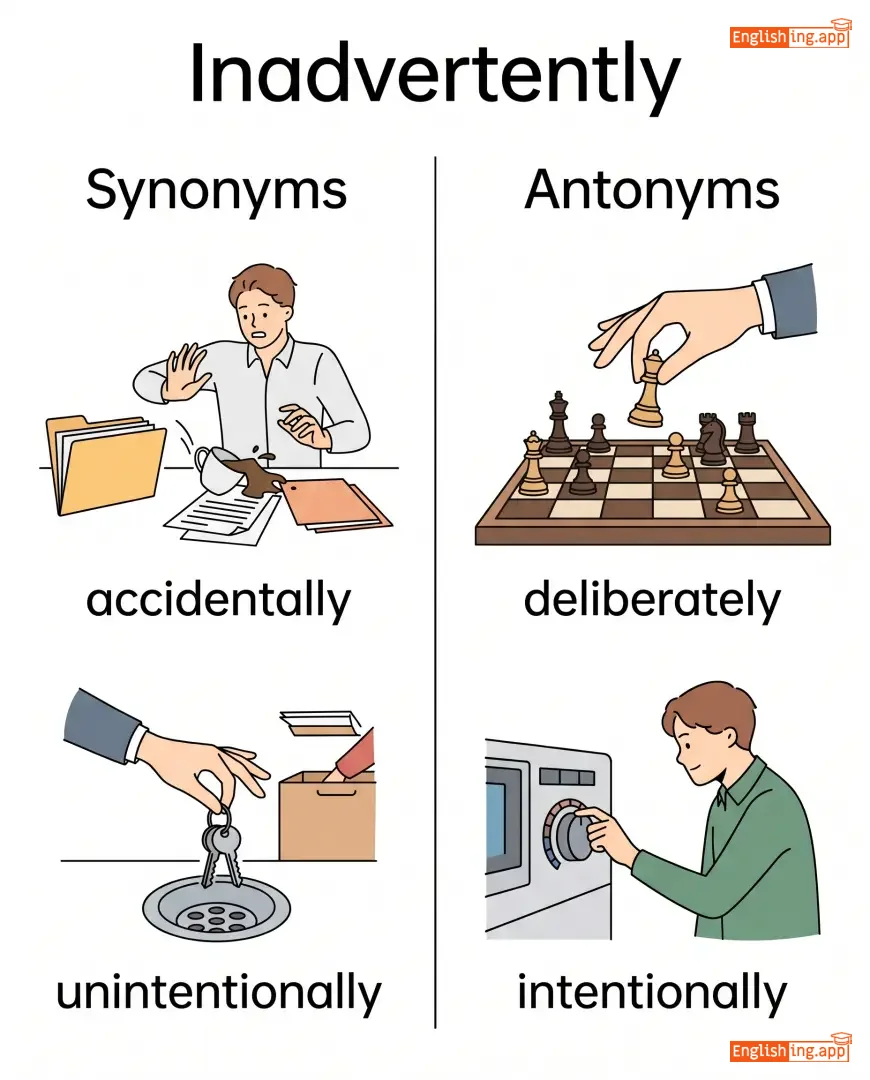
accidentally, unintentionally, unknowingly, mistakenly
••••••
|
deliberately, intentionally, purposely, consciously
••••••
|
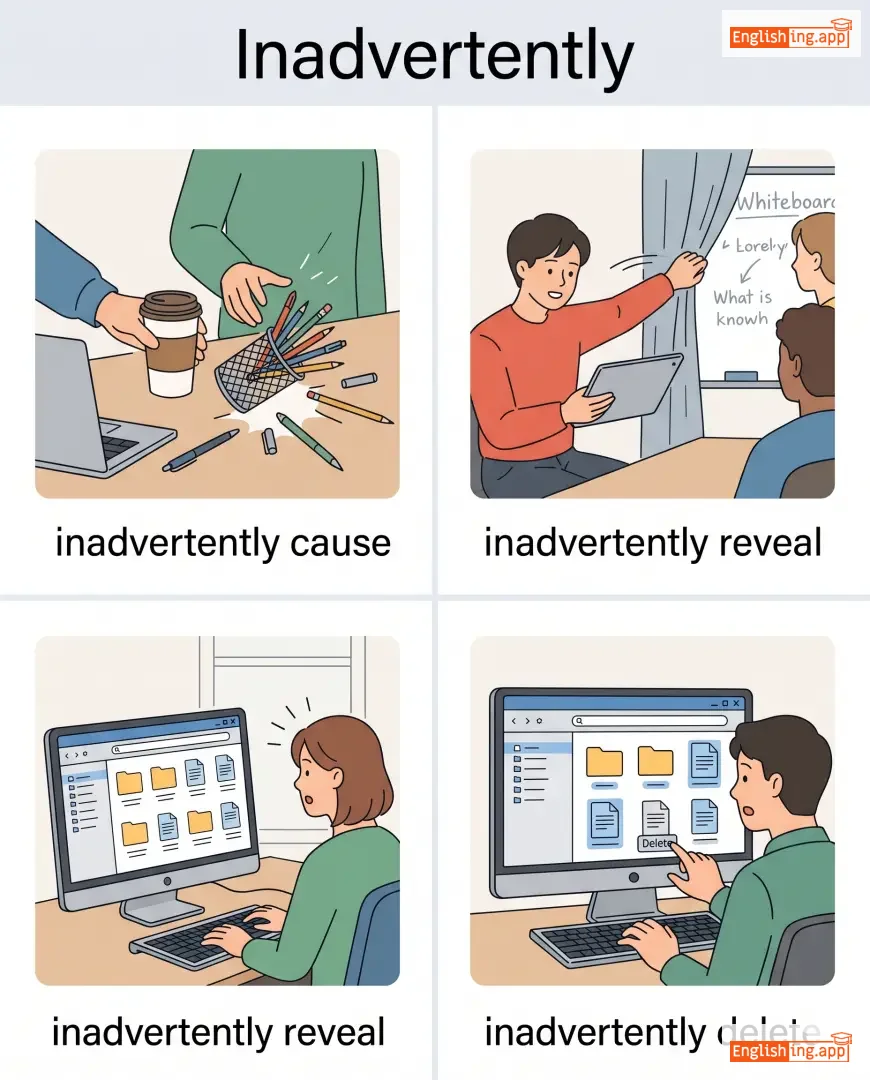
inadvertently reveal, inadvertently cause, inadvertently delete
••••••
|
うっかり — 意図せずやってしまうこと、例えばファイルを間違って削除!
••••••
|

