|
表情符号
|
单词 | Images | 翻译 | 过去时 | 过去分词 | 第三人称单数 | 动名词 | 含义 | 例句 | 例句翻译 | 示例表达 | 示例表达含义 | 示例表达翻译 | 同义词 | 反义词 | 搭配词 | 助记符 |
|---|---|---|---|---|---|---|---|---|---|---|---|---|---|---|---|---|---|
|
🌌
••••••
|
/səˈlɛstiəl/
adjective
(sè lì sī tiè ěr)
••••••
|

|
天体的
tiāntǐ de
••••••
|
- •••••• | - •••••• | - •••••• | - •••••• |
relating to the sky, stars, or heavens
••••••
|
The telescope revealed many celestial bodies in the night sky. |
望远镜揭示了夜空中的许多天体。
Wàngyuǎnjìng jiēshìle yèkōng zhōng de xǔduō tiāntǐ.
••••••
|
- •••••• | - •••••• | - •••••• |
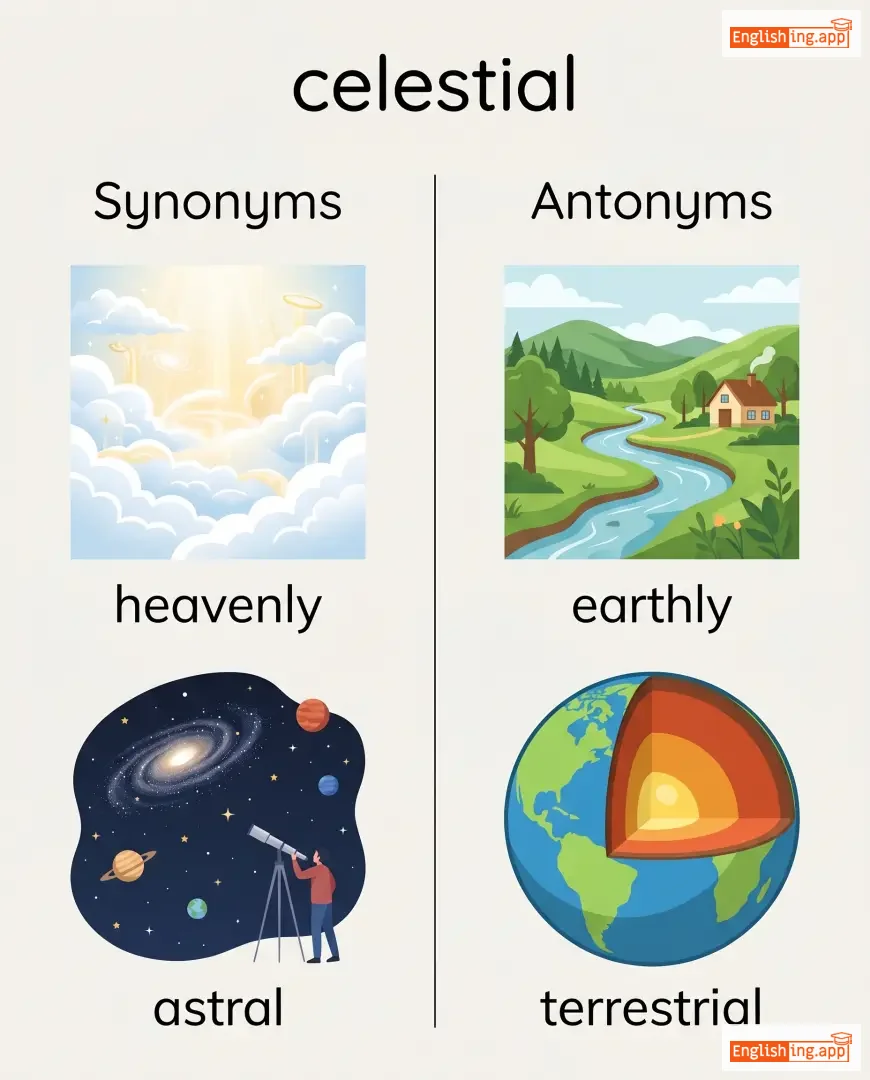
heavenly, astral, cosmic, stellar
••••••
|
earthly, terrestrial, mundane
••••••
|
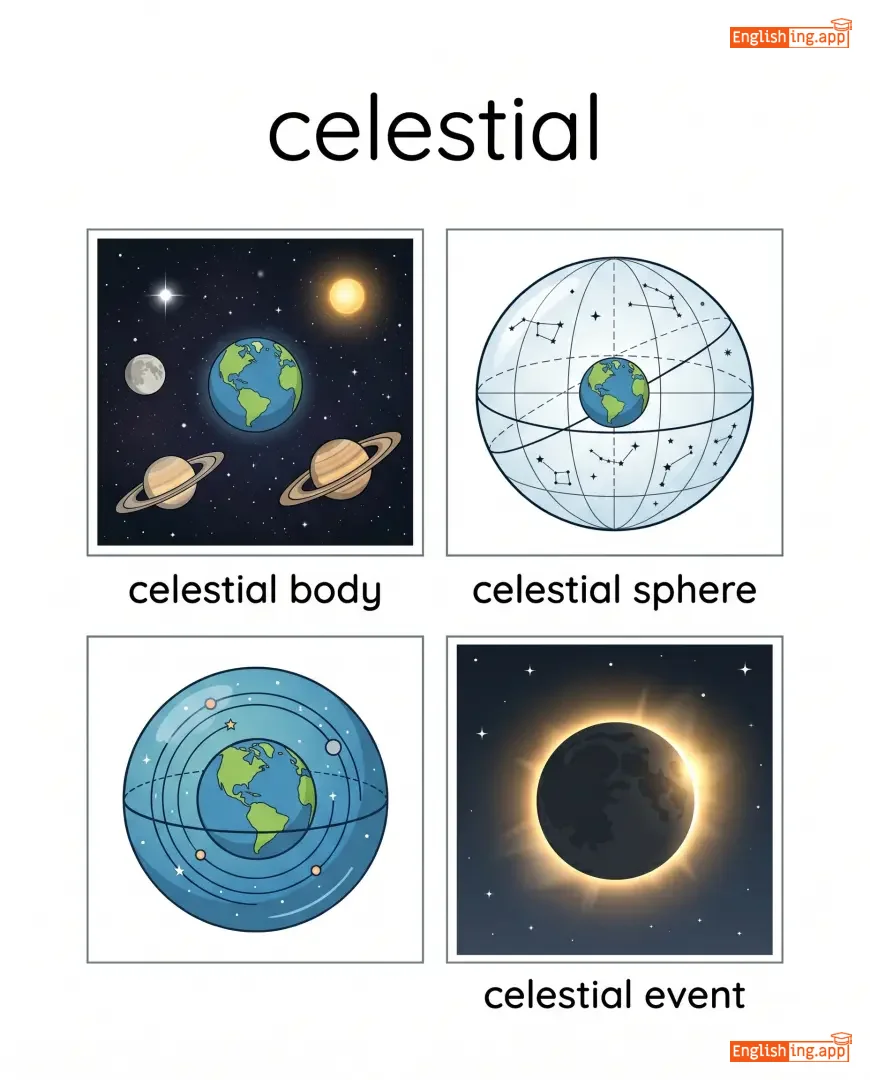
celestial body, celestial sphere, celestial event, celestial navigation
••••••
|
天体的意思是与天空相关,想象一个布满星星的夜空。
••••••
|
|
🌀
••••••
|
/sɛnˈtrɪfjʊɡəl/
adjective
(离心)
••••••
|
|
离心
lixin
••••••
|
- •••••• | - •••••• | - •••••• | - •••••• |
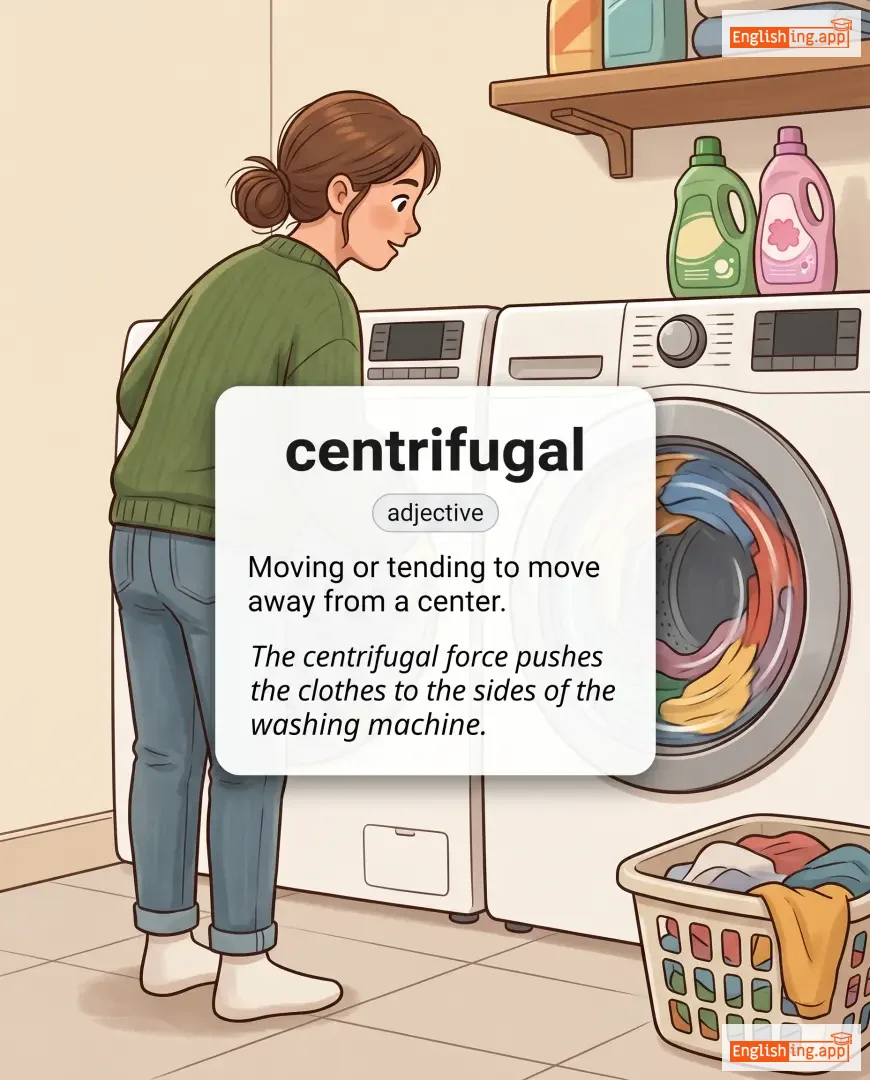
Moving or tending to move away from a center.
••••••
|
The centrifugal force pushes the clothes to the sides of the washing machine. |
离心力将衣物推向洗衣机的两侧。
Líxīn lì jiāng yīwù tuīxiàng xǐyījī de liǎng cè.
••••••
|
- •••••• | - •••••• | - •••••• |
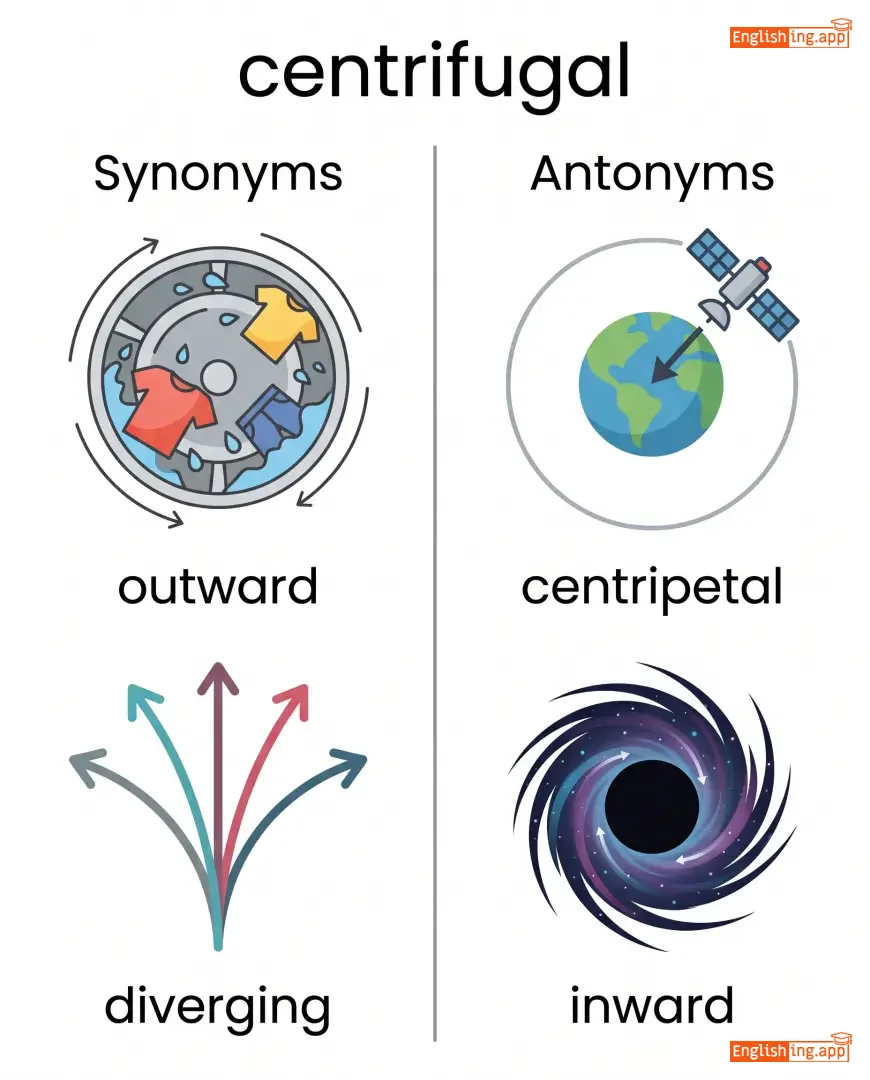
outward, diverging, radiating, spreading
••••••
|
centripetal, inward
••••••
|
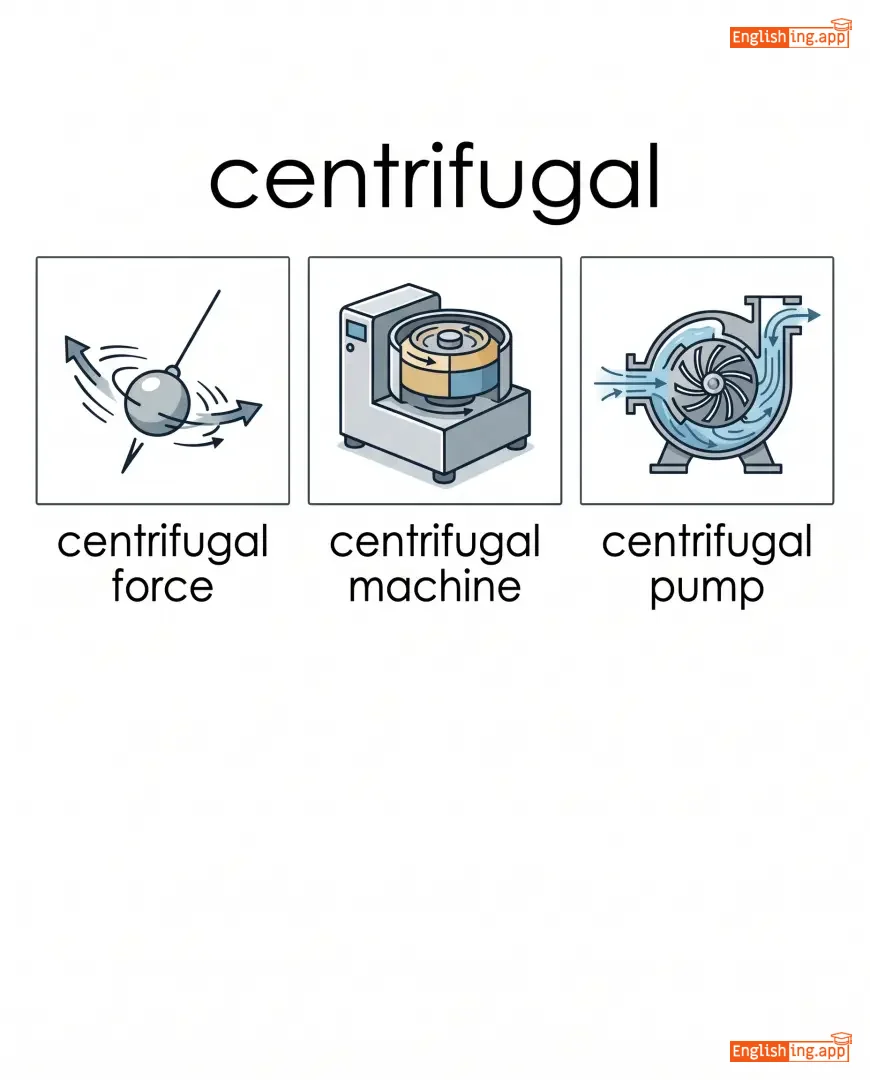
centrifugal force, centrifugal machine, centrifugal pump, centrifugal action
••••••
|
离心 = 离开中心的力量,意味着远离中心的移动。
••••••
|
|
🌌
••••••
|
/sɛnˈtrɪpɪtəl/
adjective
(sɛnˈtrɪpɪtəl)
••••••
|
|
向心的
xiangxin de
••••••
|
- •••••• | - •••••• | - •••••• | - •••••• |
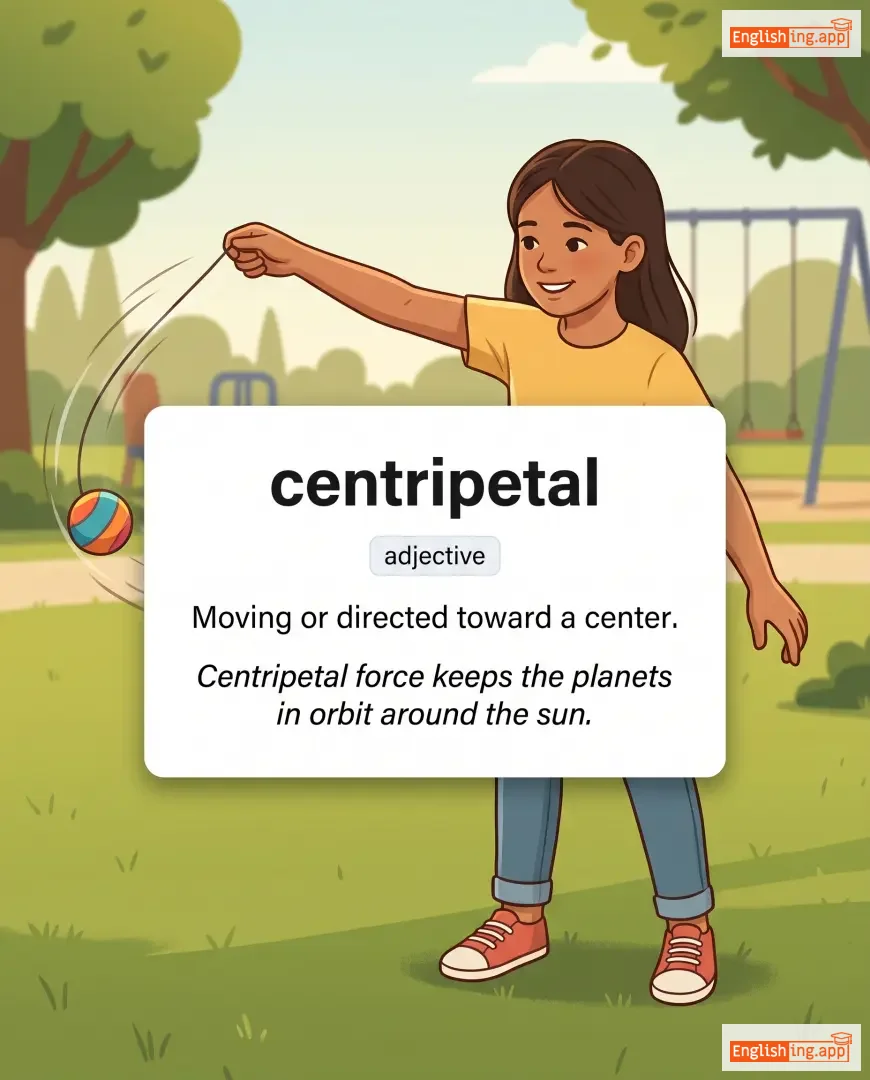
Moving or directed toward a center.
••••••
|
Centripetal force keeps the planets in orbit around the sun. |
向心力使行星保持在围绕太阳的轨道上。
Xiangxin li shi xingsheng baochi zai weirao taiyang de guidao shang.
••••••
|
- •••••• | - •••••• | - •••••• |
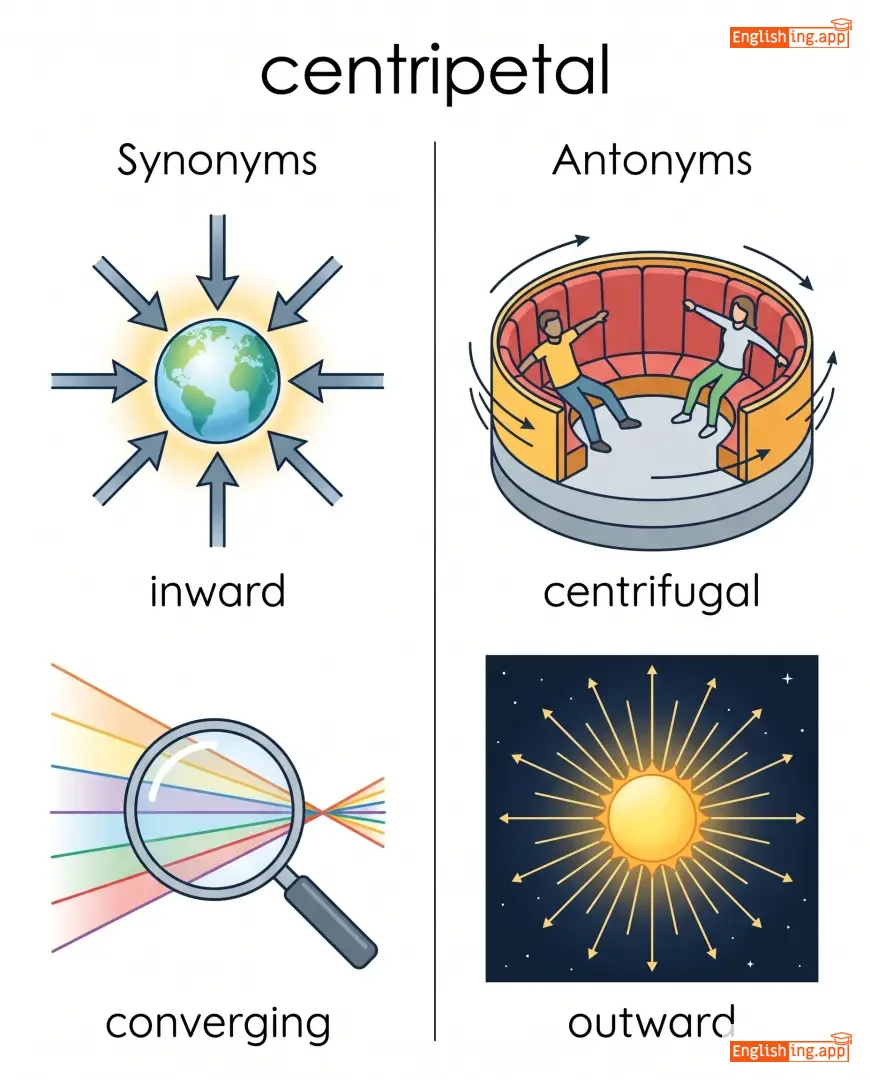
inward, converging, focusing, central
••••••
|
centrifugal, outward
••••••
|
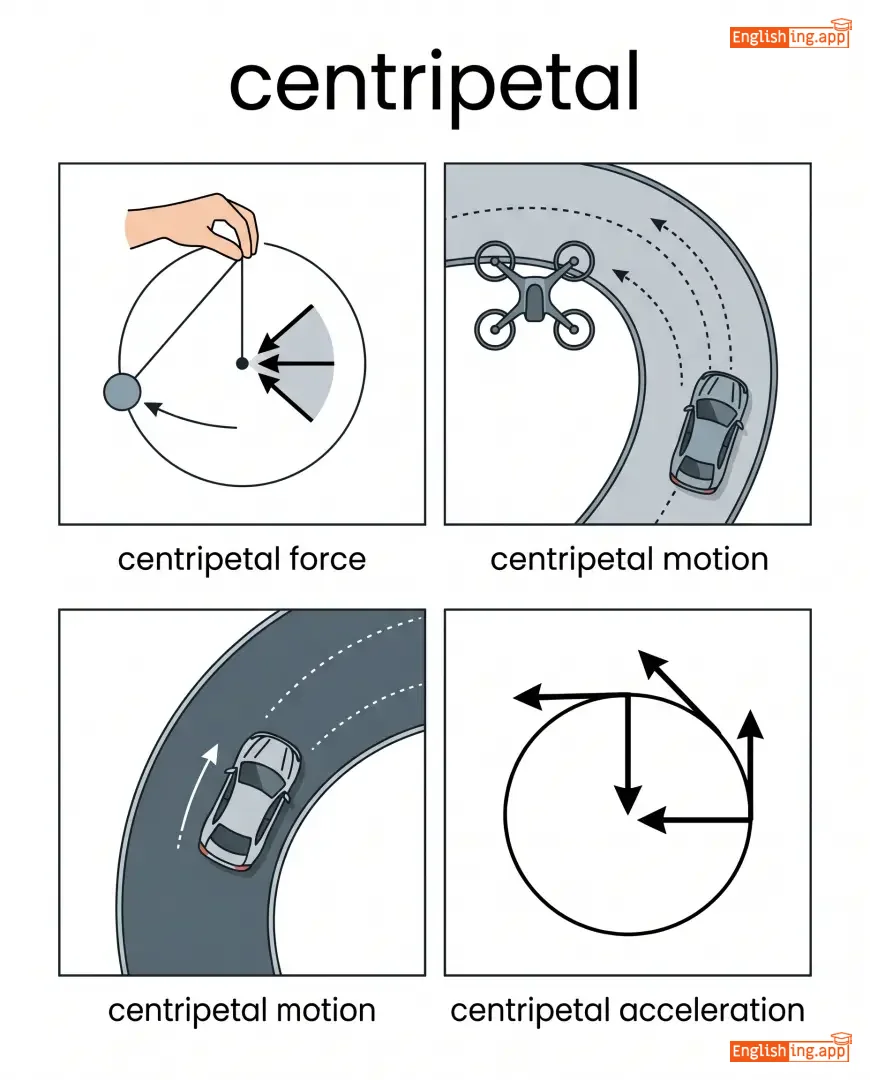
centripetal force, centripetal motion, centripetal acceleration
••••••
|
像花瓣向着中心汇聚一样,centripetal = 向心的
••••••
|
|
🥇
••••••
|
/ˈtʃæmpiən/
noun
(冠军)
••••••
|
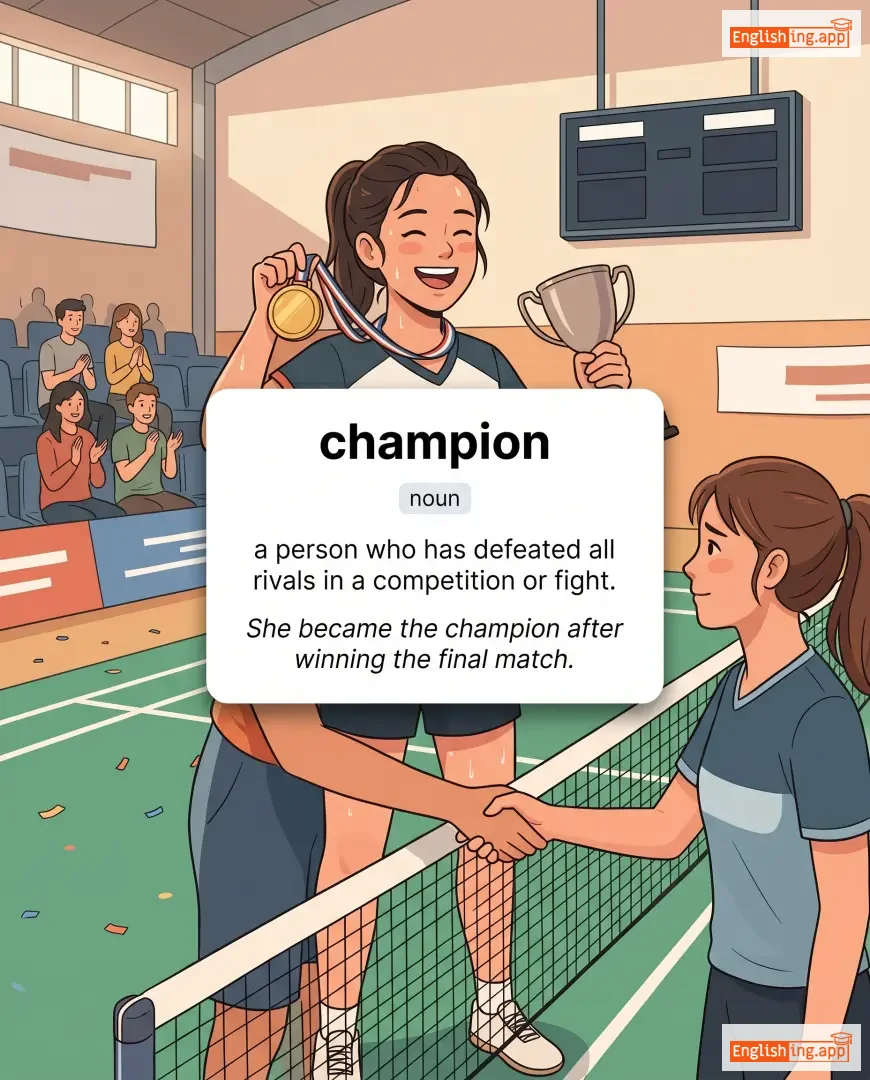
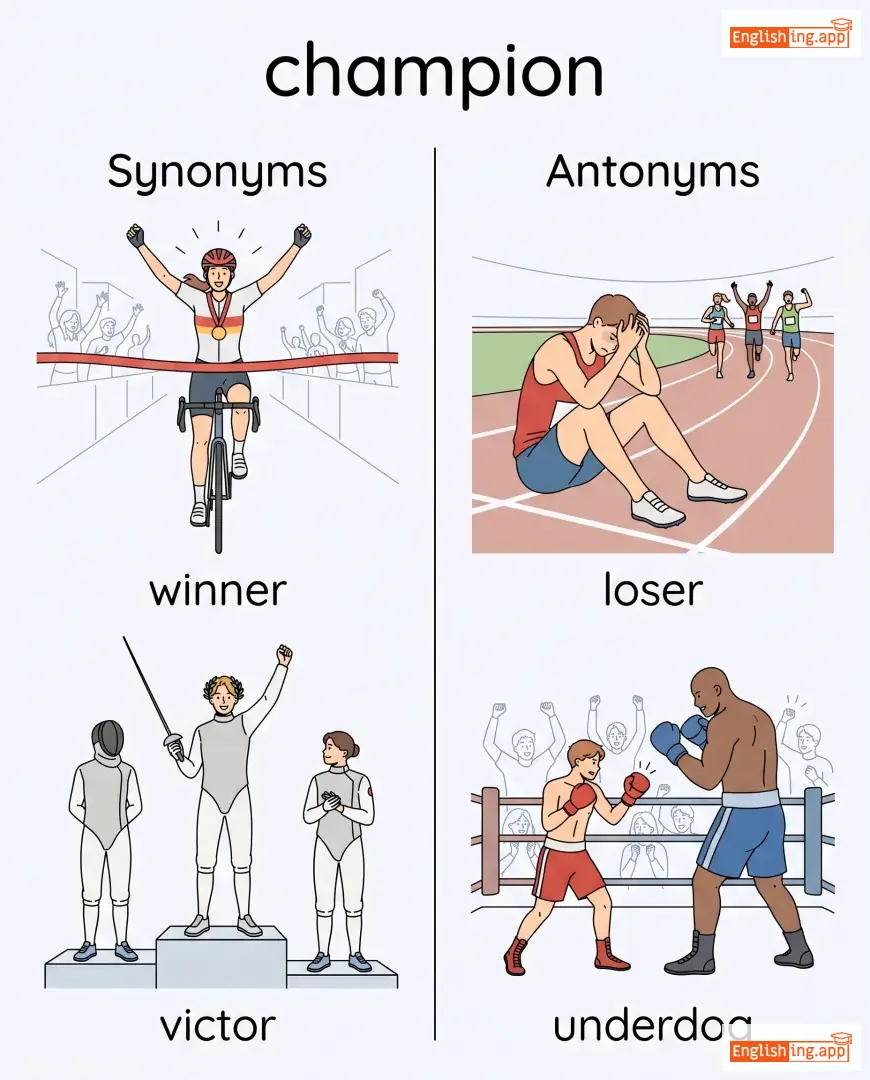
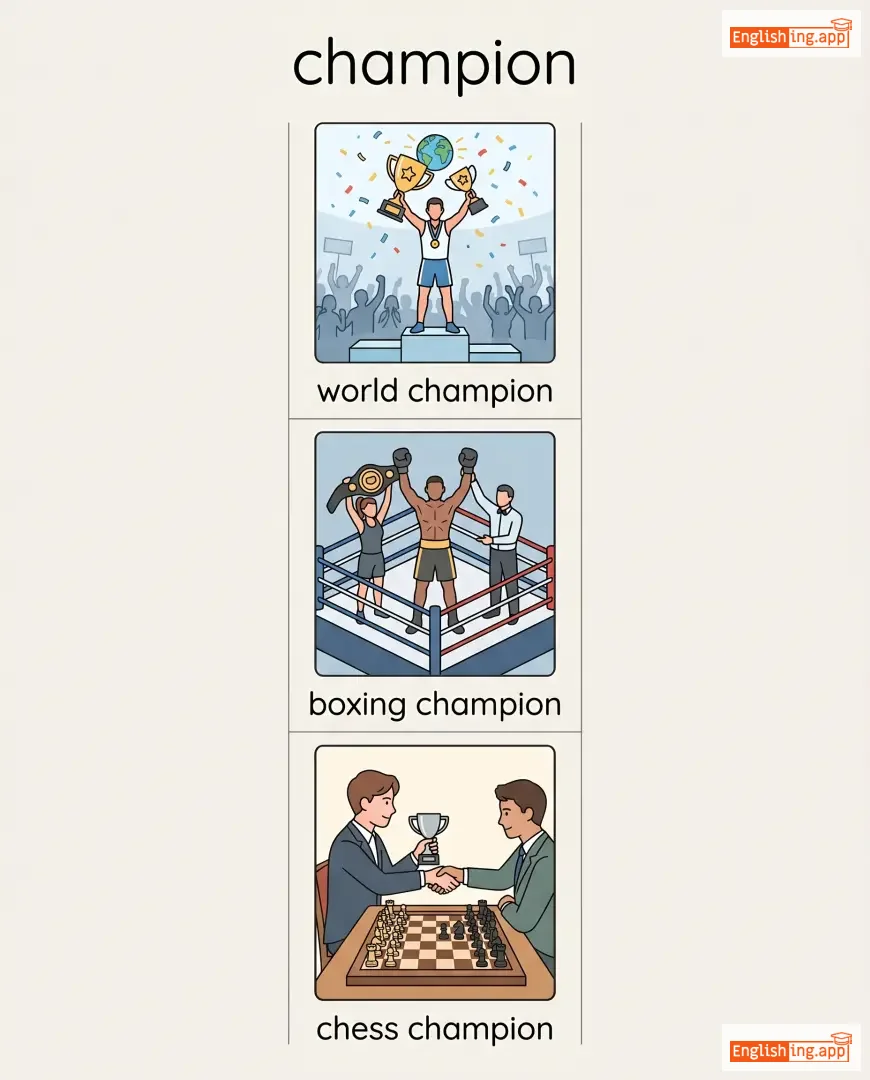
|
冠军
guan jun
••••••
|
- •••••• | - •••••• | - •••••• | - •••••• |
a person who has defeated all rivals in a competition or fight.
••••••
|
She became the champion after winning the final match. |
她在赢得决赛后成为了冠军。
Ta zai yingde jue sai hou chengwei le guan jun.
••••••
|
defend the champion |
to maintain one’s title against challengers
••••••
|
捍卫冠军
hanwei guanjun
••••••
|
winner, victor, titleholder, hero, defender
••••••
|
loser, underdog
••••••
|
world champion, boxing champion, chess champion, defend champion
••••••
|
Champion means 'camp' + 'lion'—冠军如狮子般胜利。
••••••
|
|
📉
••••••
|
/ˈtʃeɪ.sən/
verb
(chéisèn)
••••••
|
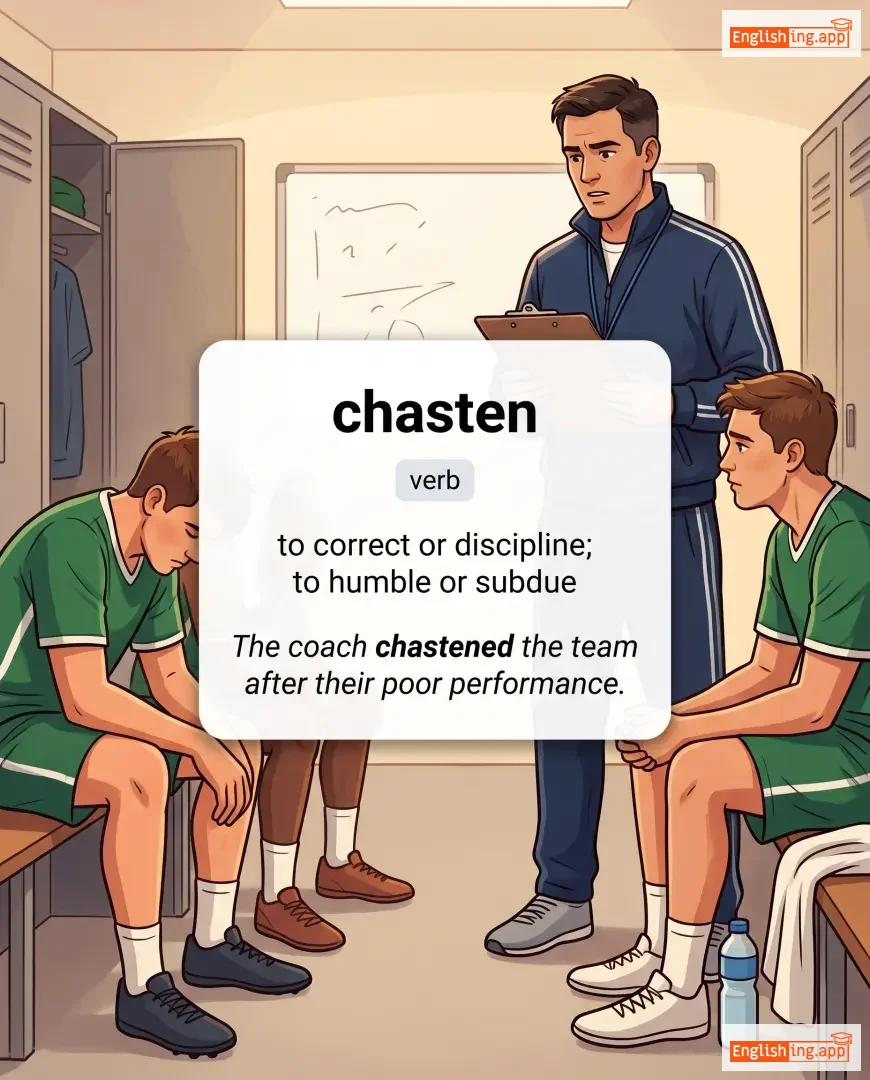
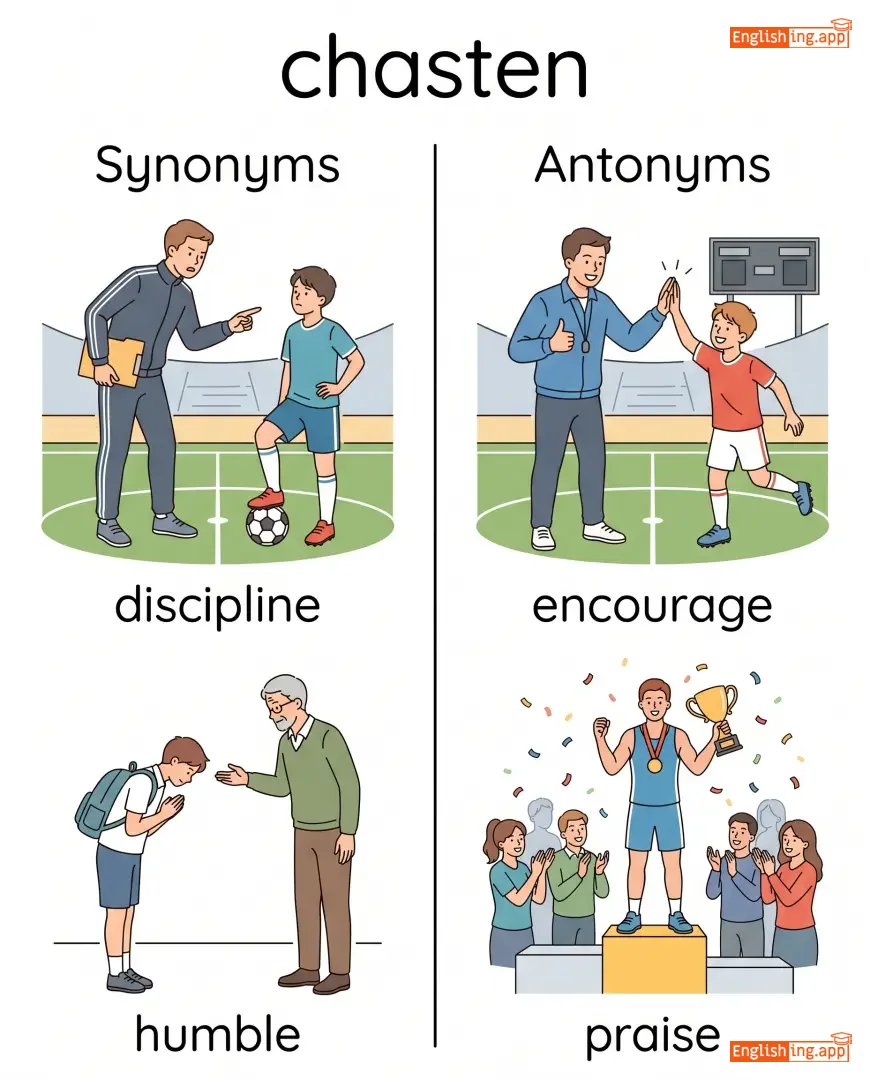
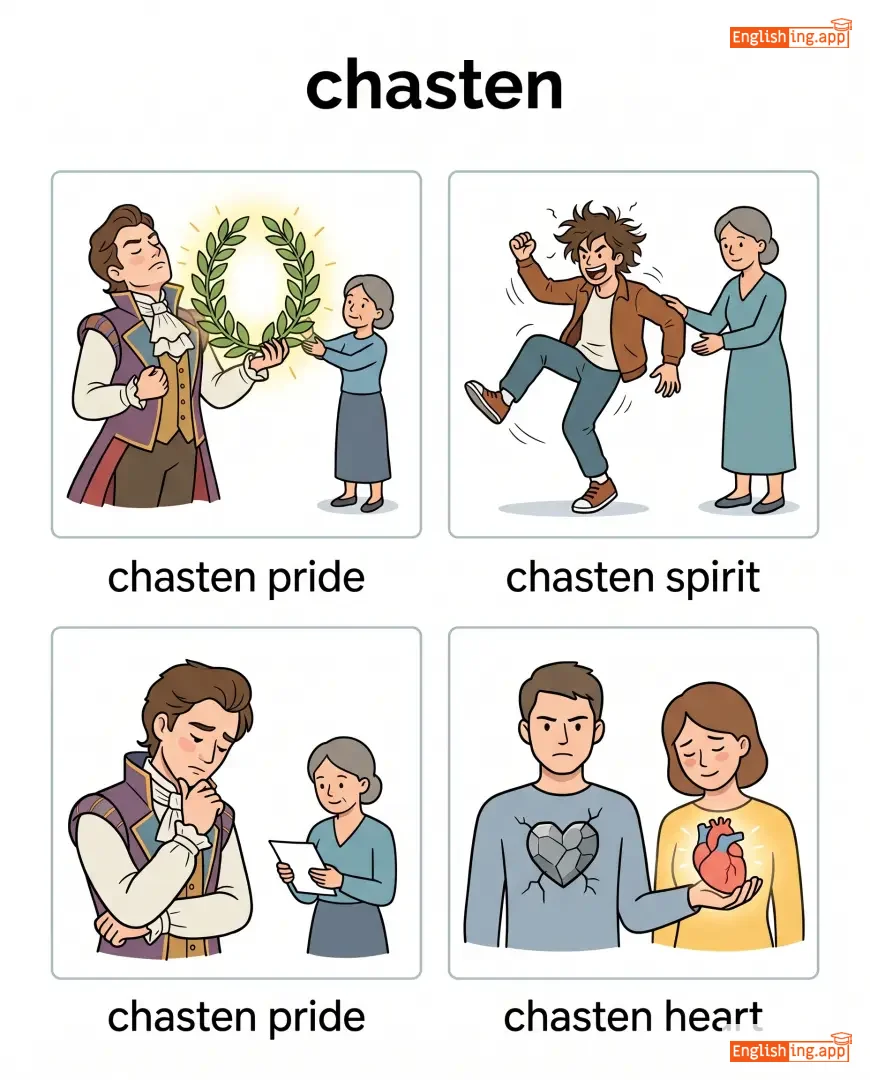
|
惩罚 / 使屈服
chéngfá / shǐ qūfú
••••••
|
chastened
chéisènd
••••••
|
chastened
chéisènd
••••••
|
chastens
chéisēns
••••••
|
chastening
chéisèníng
••••••
|
to correct or discipline; to humble or subdue
••••••
|
The coach chastened the team after their poor performance.
教练在他们的糟糕表现后惩罚了球队。
••••••
|
教练在他们的糟糕表现后惩罚了球队。
Jiàoliàn zài tāmen de zāogāo biǎoxiàn hòu chéngfá le qiúduì.
••••••
|
- •••••• | - •••••• | - •••••• |
discipline, humble, correct, subdue, restrain
••••••
|
encourage, praise, reward
••••••
|
chasten pride, chasten spirit, chasten heart, chasten mind
••••••
|
Chasten 在中文是惩罚,使队员改进表现。
••••••
|
|
🃏
••••••
|
/ʃɪˈkeɪnəri/
noun
(奇卡内里)
••••••
|
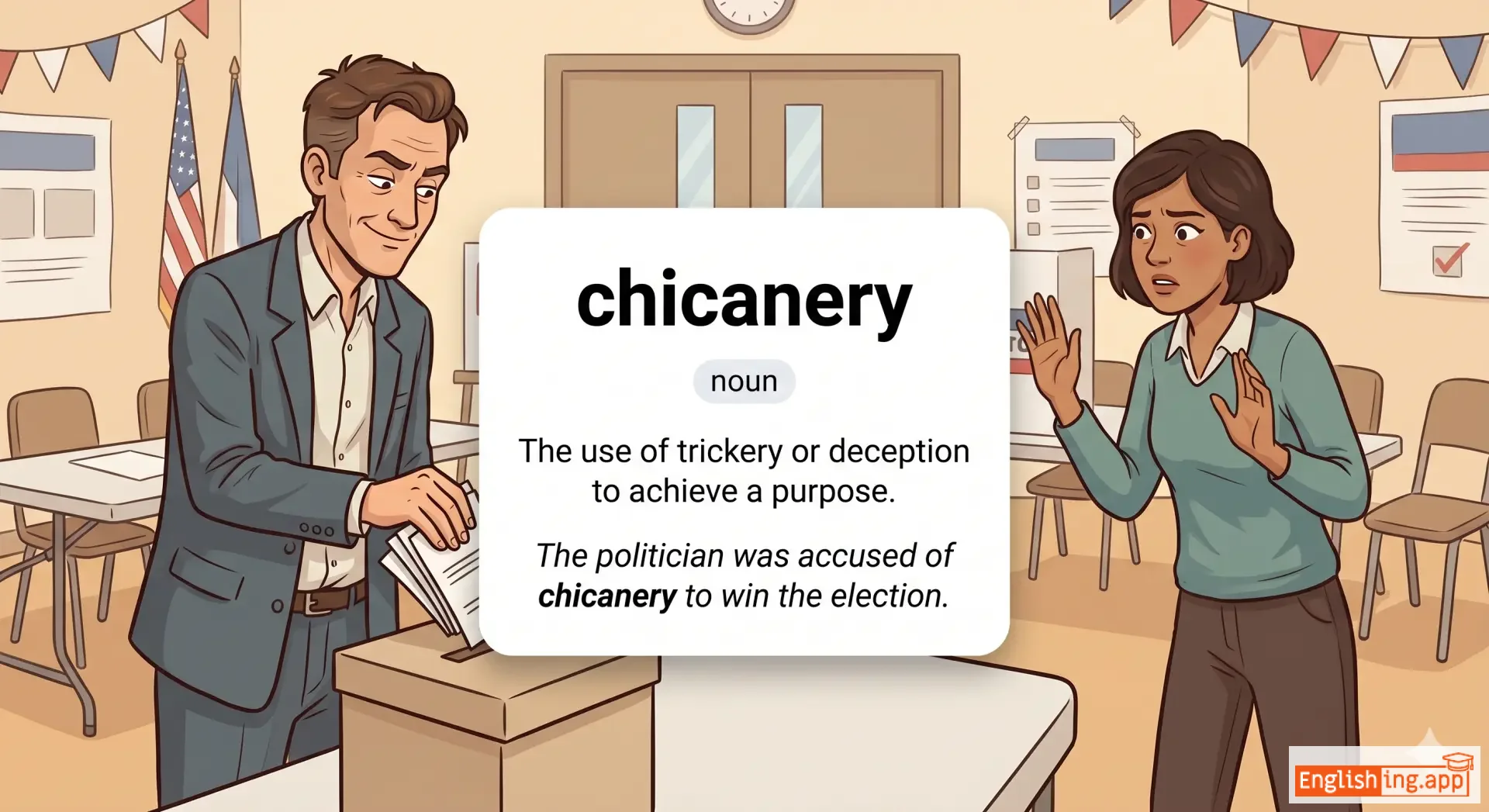
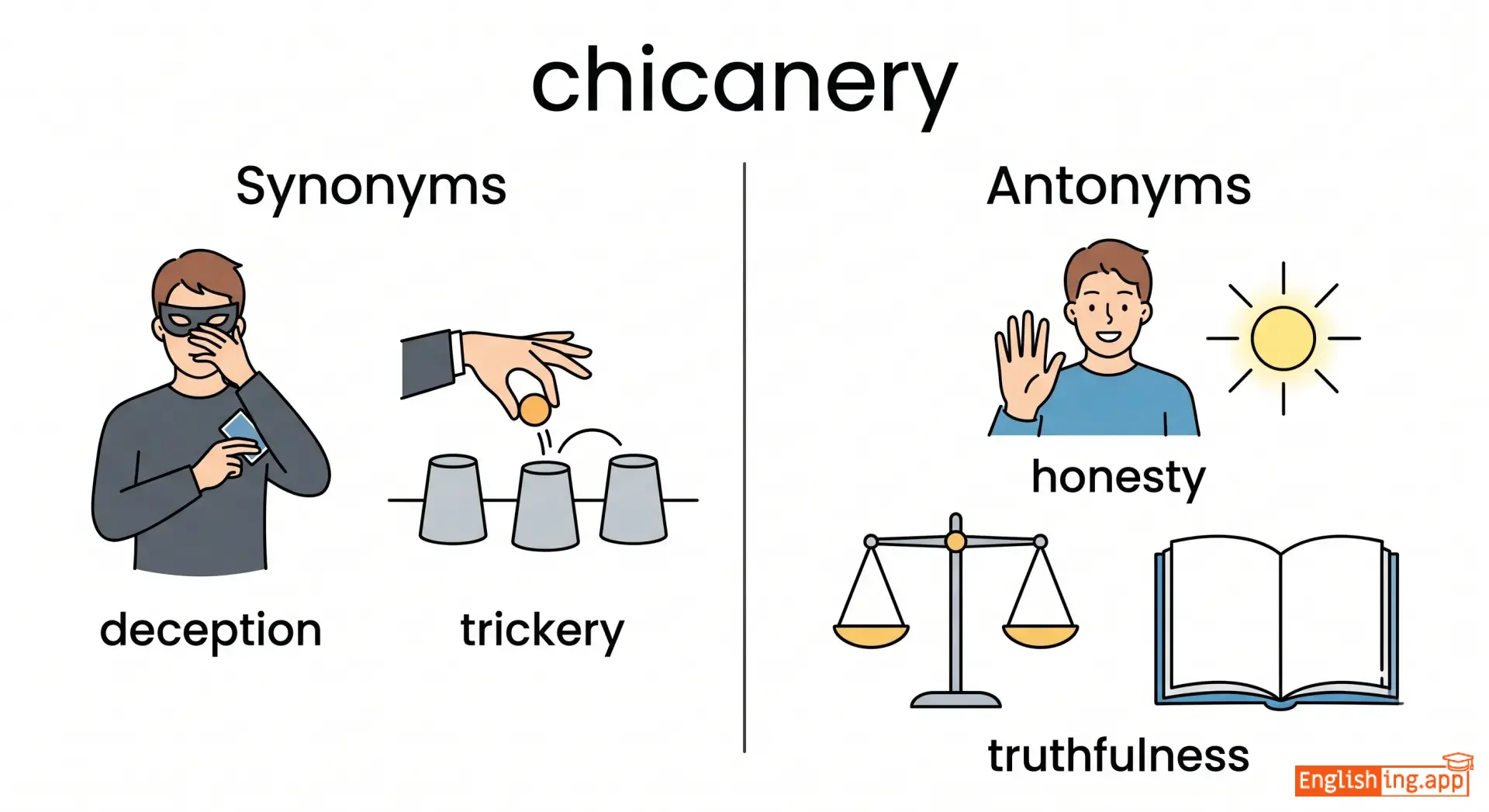
|
欺诈
qizha
••••••
|
- •••••• | - •••••• | - •••••• | - •••••• |
The use of trickery or deception to achieve a purpose.
••••••
|
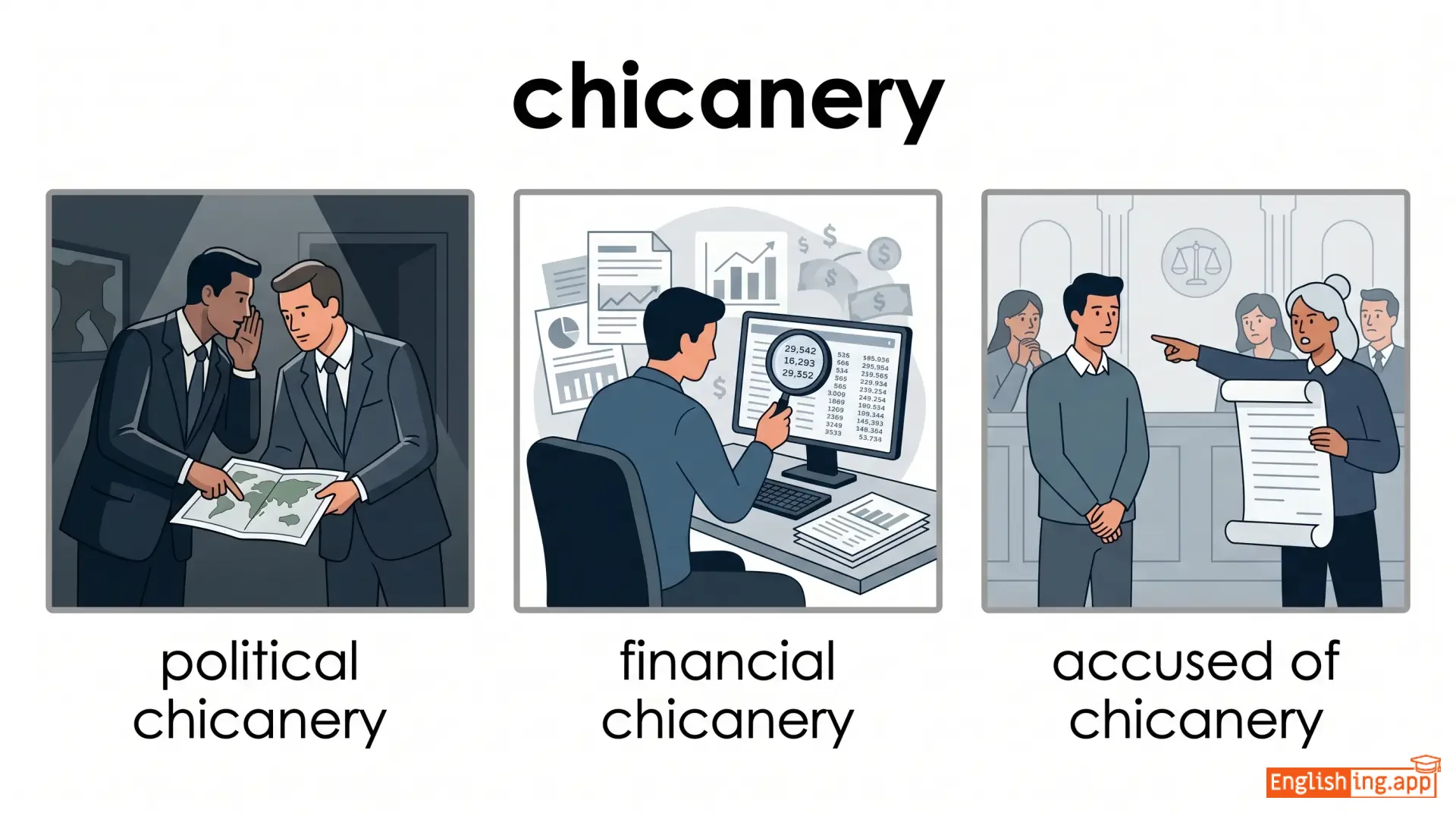
The politician was accused of chicanery to win the election. |
这位政治家因利用欺诈手段赢得选举而被指控。
Zhe wei zhengzhijia yin liyong qipian shouduan yingde xuanchu er bei zhigong.
••••••
|
- •••••• | - •••••• | - •••••• |
deception, trickery, fraud, deceit, dishonesty
••••••
|
honesty, truthfulness, integrity
••••••
|
political chicanery, financial chicanery, accused of chicanery, expose chicanery
••••••
|
奇卡 (chicanery) 来欺骗, 欺诈。
••••••
|
|
⚔️
••••••
|
/ˈʃɪvəlri/
noun
(xiwā'ěrì)
••••••
|


|
骑士精神
qíshì jīngshén
••••••
|
- •••••• | - •••••• | - •••••• | - •••••• |
The medieval knightly system with its moral, social, and religious code; courteous behavior, especially toward women.
••••••
|
The knight lived by the code of chivalry.
骑士遵循骑士精神的规范。
••••••
|
骑士遵循骑士精神的规范。
Qíshì zūnxún qíshì jīngshén de guīfàn.
••••••
|
code of chivalry
骑士精神的规范
••••••
|
The set of rules and ideals guiding knightly honor and behavior.
••••••
|
骑士精神的规范
qíshì jīngshén de guīfàn
••••••
|
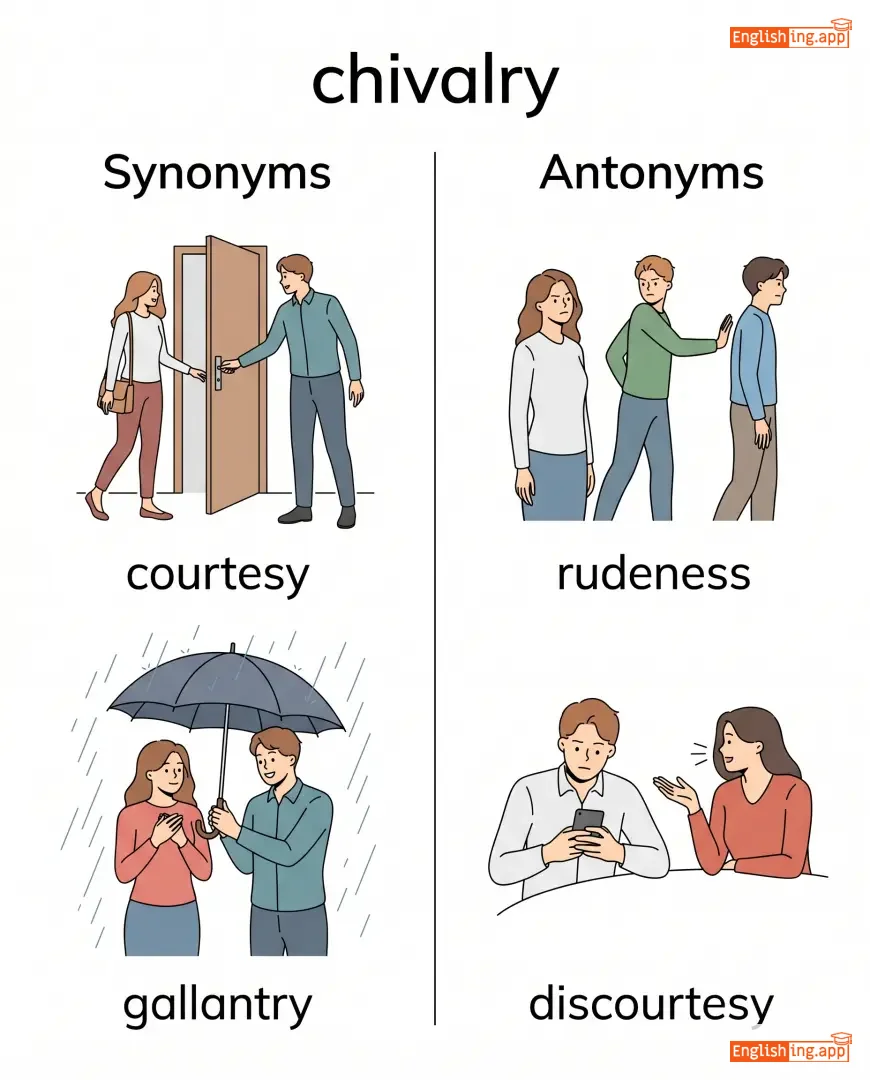
courtesy, gallantry, honor, knightliness
••••••
|
rudeness, discourtesy, dishonor
••••••
|
act of chivalry, show of chivalry, knightly chivalry, code of chivalry
••••••
|
Chivalry 代表骑士精神 ⚔️。想象骑士总是遵守礼貌规则。
••••••
|
|
🙄
••••••
|
/ˈtʃɜːrlɪʃ/
adjective
(churlish)
••••••
|

|
粗鲁
culu
••••••
|
- •••••• | - •••••• | - •••••• | - •••••• |
Rude in a mean-spirited and surly way.
••••••
|
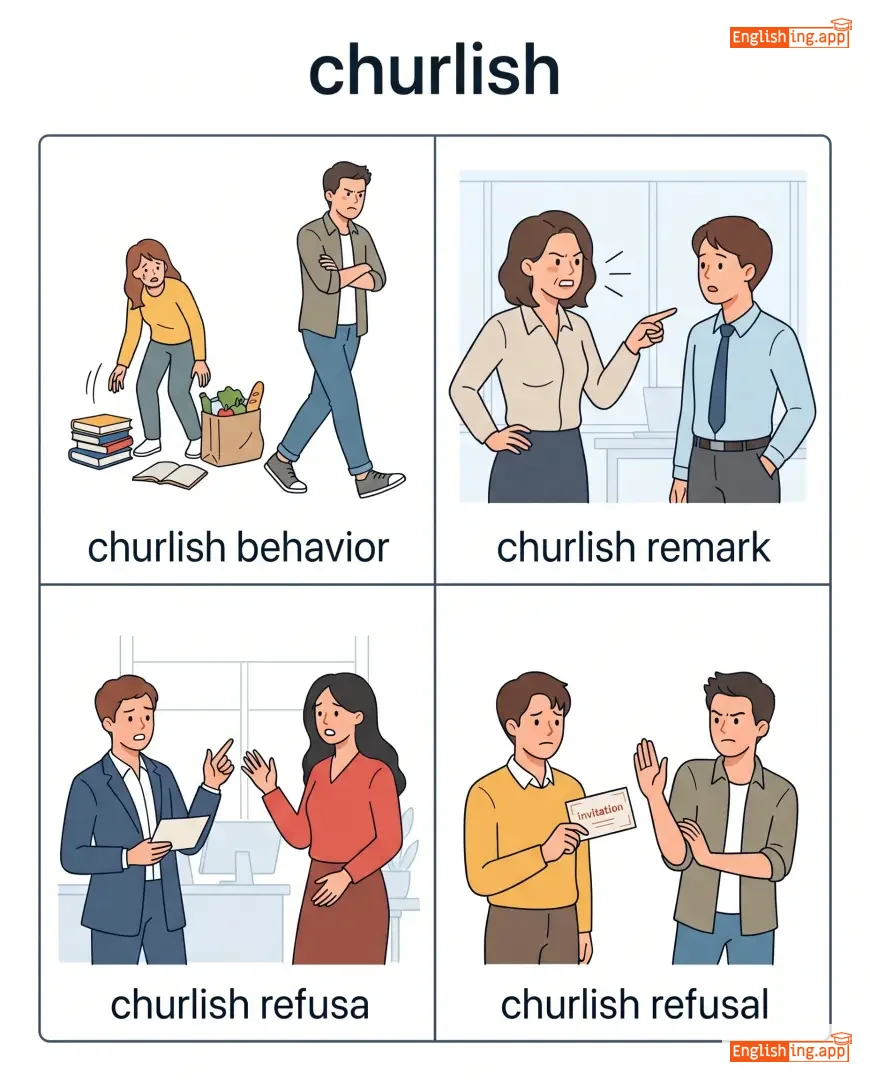
It would be churlish to refuse her kind invitation. |
拒绝她亲切的邀请将是粗鲁的。
Jùjué tā qīnqiè de yāoqǐng jiāng shì cūlǔ de.
••••••
|
- •••••• | - •••••• | - •••••• |
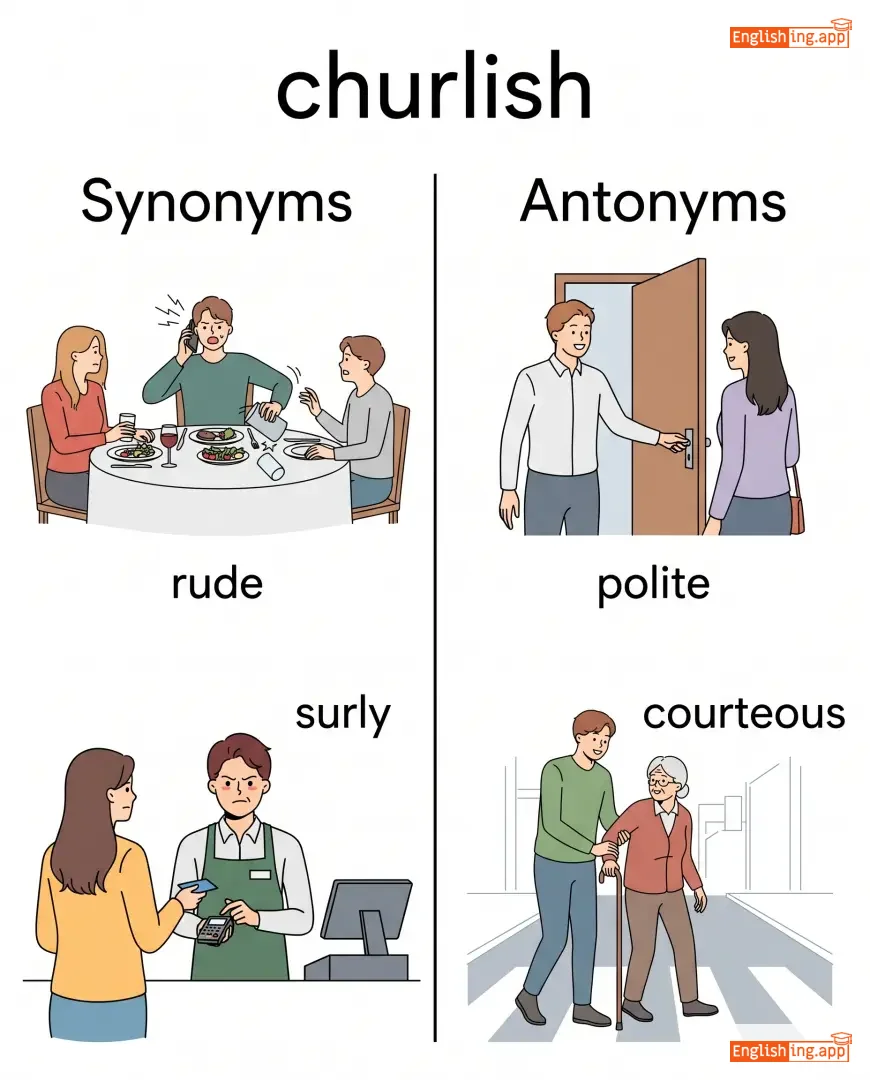
rude, surly, boorish, ill-mannered, impolite
••••••
|
polite, courteous, civil
••••••
|
churlish behavior, churlish remark, churlish refusal, act churlish
••••••
|
Churlish 意味着粗鲁—记住,'churl' 总是粗鲁的。
••••••
|
|
🌀
••••••
|
/sərˈkjuːɪtəs/
adjective
(sərˈkjuːɪtəs)
••••••
|

|
迂回路线
yúhuí lùxiàn
••••••
|
- •••••• | - •••••• | - •••••• | - •••••• |
Longer than the most direct way; roundabout.
••••••
|
He took a circuitous route to avoid traffic. |
他走了一条迂回路线以避开交通。
Tā zǒu le yītiáo yúhuí lùxiàn yǐ bì kāi jiāotōng.
••••••
|
- •••••• | - •••••• | - •••••• |
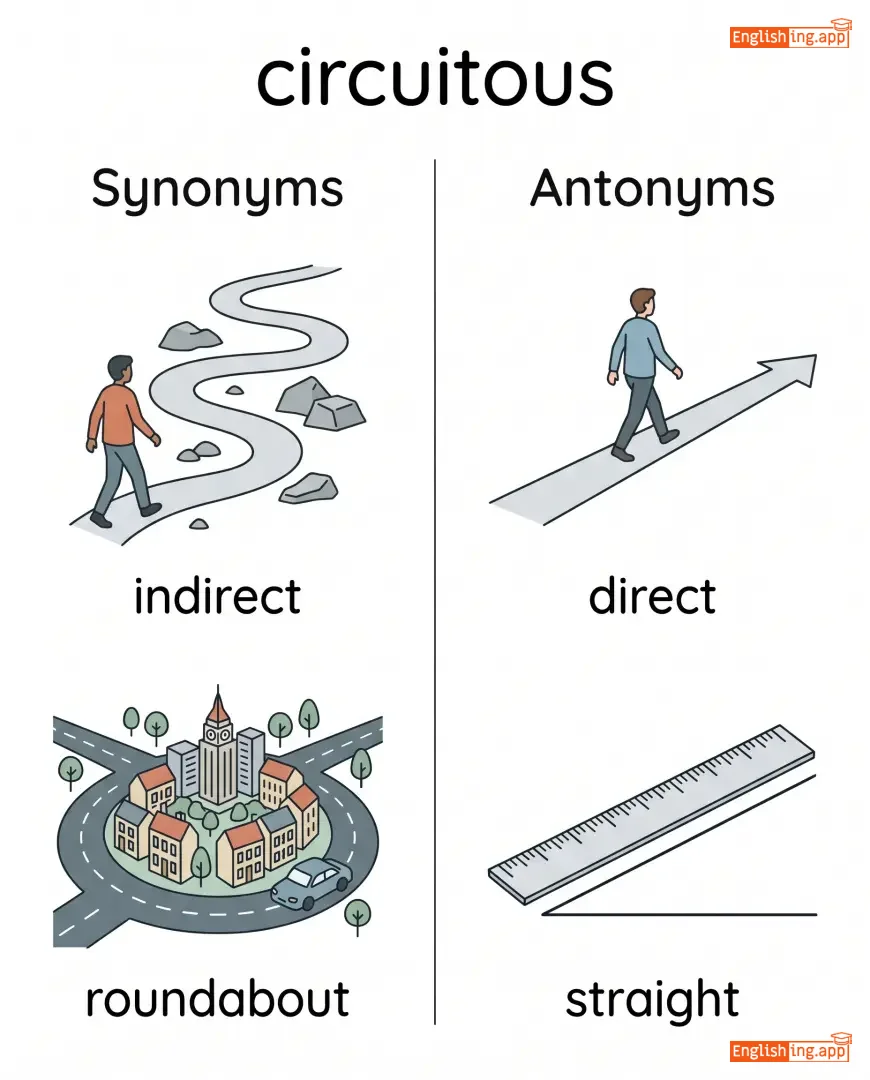
indirect, roundabout, winding, meandering, convoluted
••••••
|
direct, straight, straightforward
••••••
|
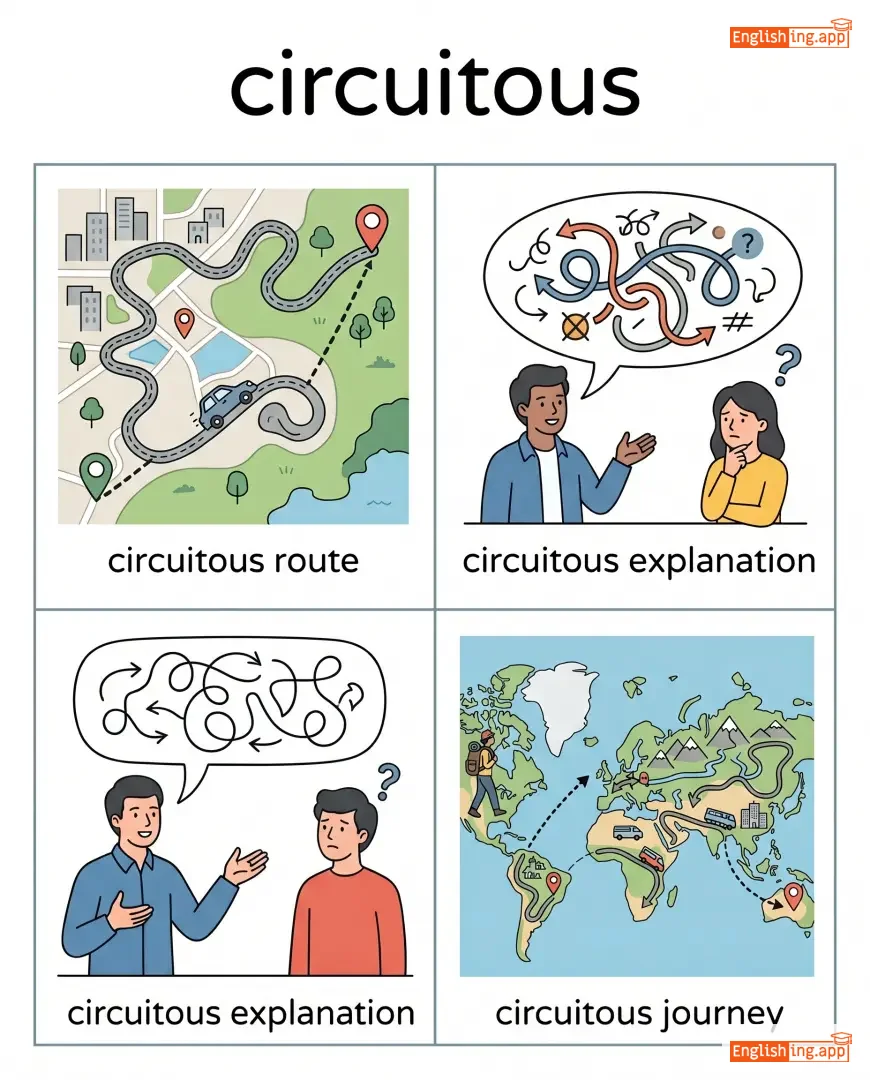
circuitous route, circuitous explanation, circuitous journey
••••••
|
Circuitous 意味着 '绕圈' → 迂回路线
••••••
|
|
🧙♀️
••••••
|
/klɛərˈvɔɪənt/
noun, adjective
••••••
|

|
- •••••• | - •••••• | - •••••• | - •••••• | - •••••• |
a person who claims to have clairvoyance; having the ability to see beyond normal senses
••••••
|
The clairvoyant predicted that she would travel abroad soon. |
- •••••• | - •••••• | - •••••• | - •••••• |
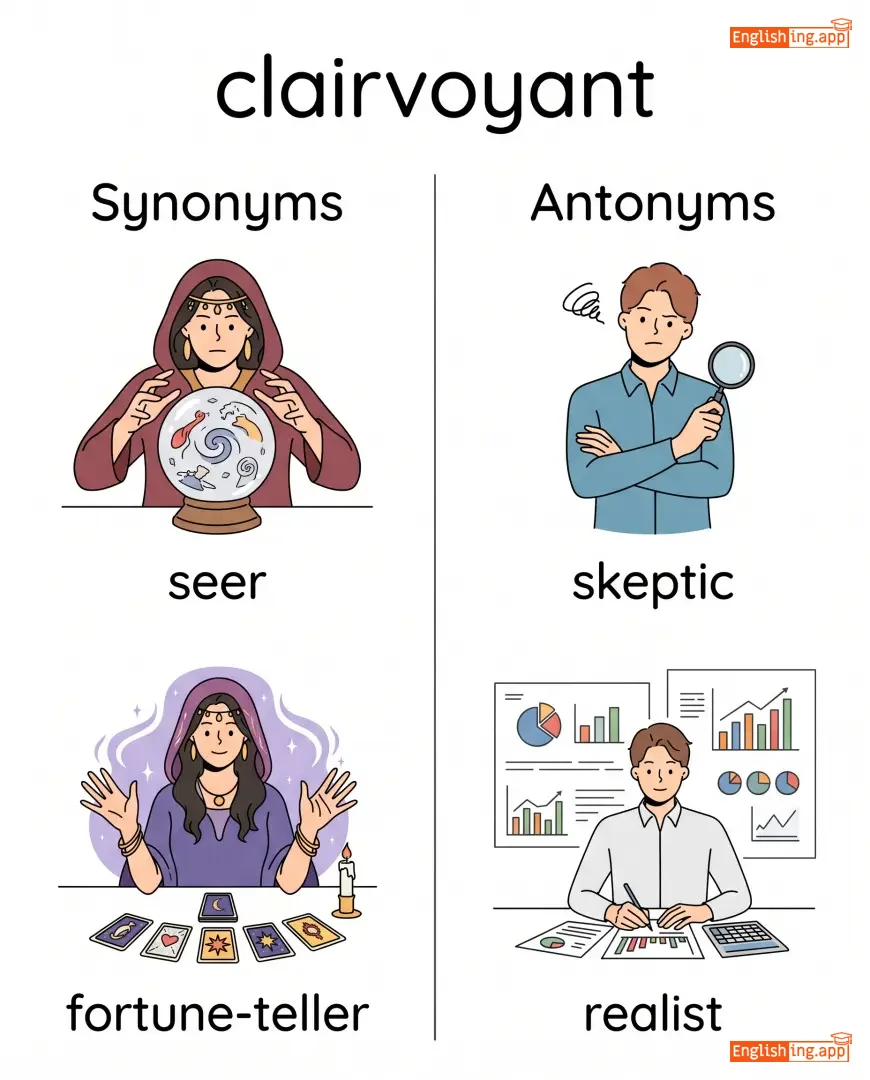
seer, fortune-teller, psychic, medium
••••••
|
skeptic, realist
••••••
|
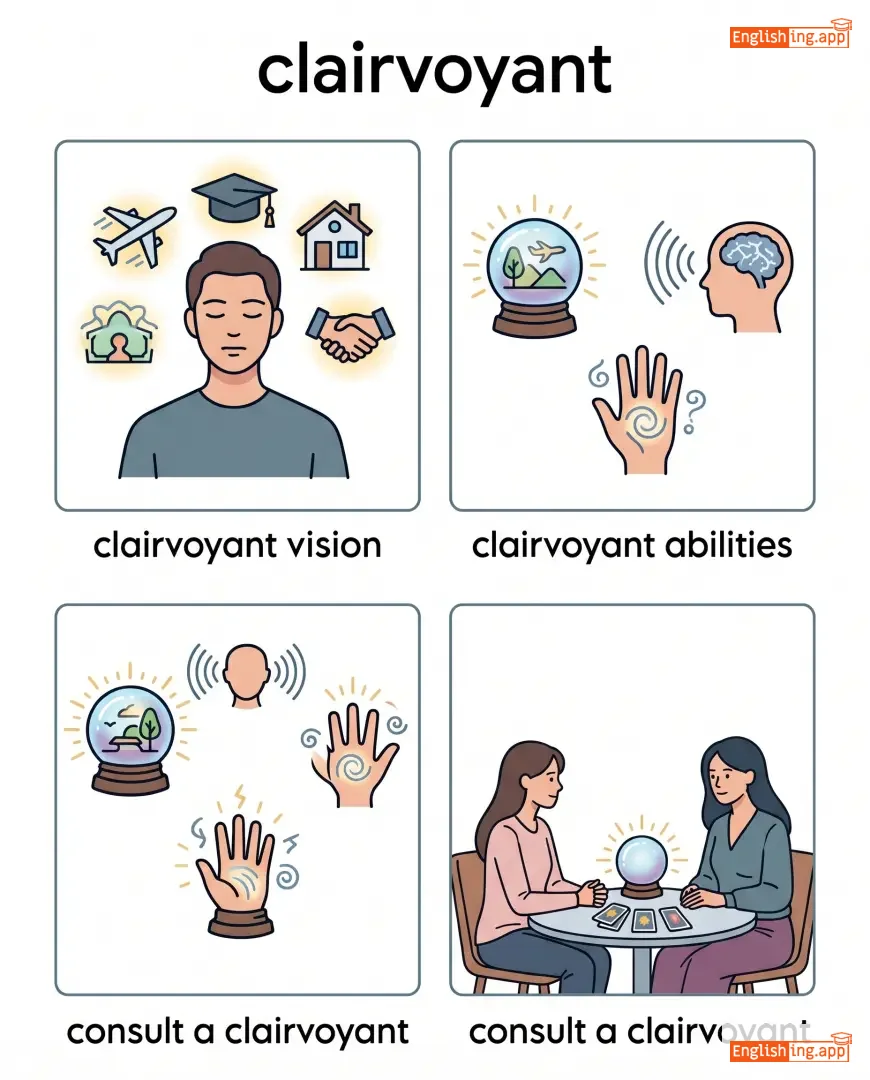
clairvoyant vision, clairvoyant abilities, consult a clairvoyant
••••••
|
No •••••• |
|
📢
••••••
|
/ˈklæmər/
noun
(klāmóu)
••••••
|
|
喧嚣
xuānxiāo
••••••
|
- •••••• | - •••••• | - •••••• | - •••••• |
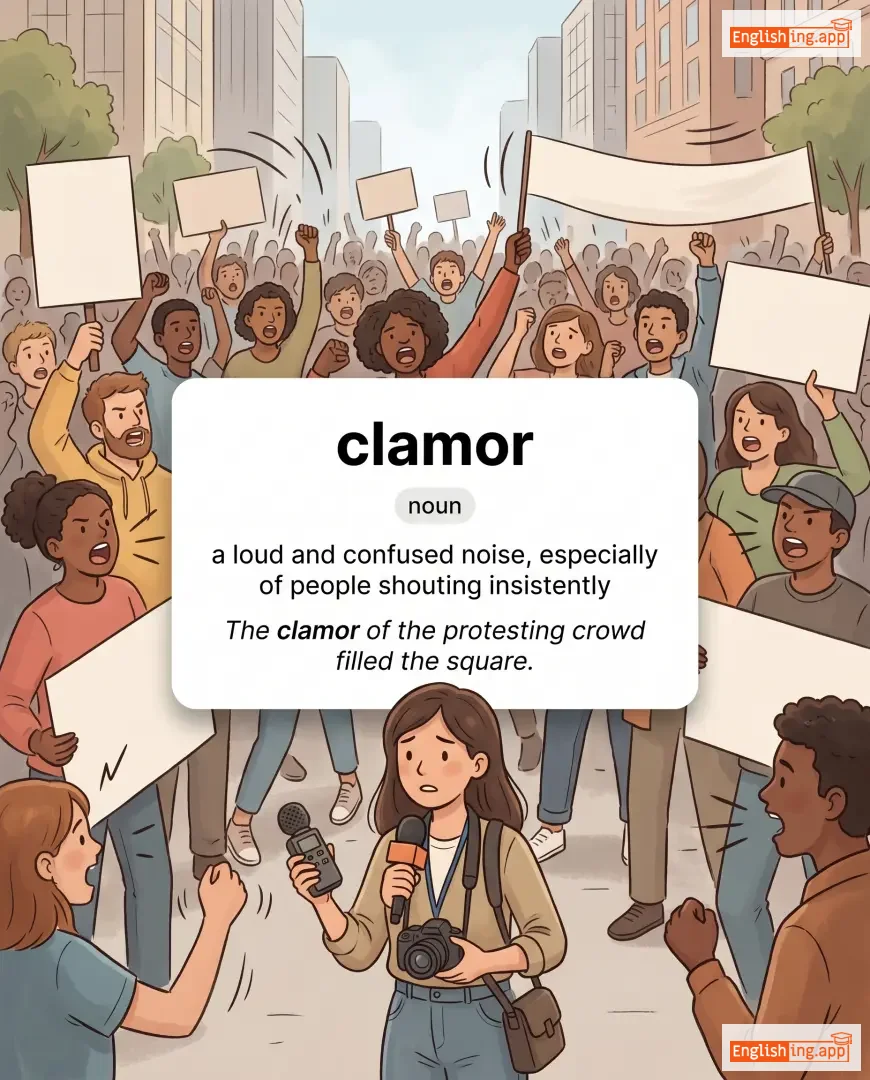
a loud and confused noise, especially of people shouting insistently
••••••
|
The clamor of the protesting crowd filled the square.
抗议人群的喧嚣充满了广场。
••••••
|
抗议人群的喧嚣充满了广场。
Kàngyì rénqún de xuānxiāo chōngmǎnle guǎngchǎng.
••••••
|
raise a clamor
引起喧嚣
••••••
|
to express strong demands or complaints loudly
••••••
|
引起喧嚣
yǐnqǐ xuānxiāo
••••••
|
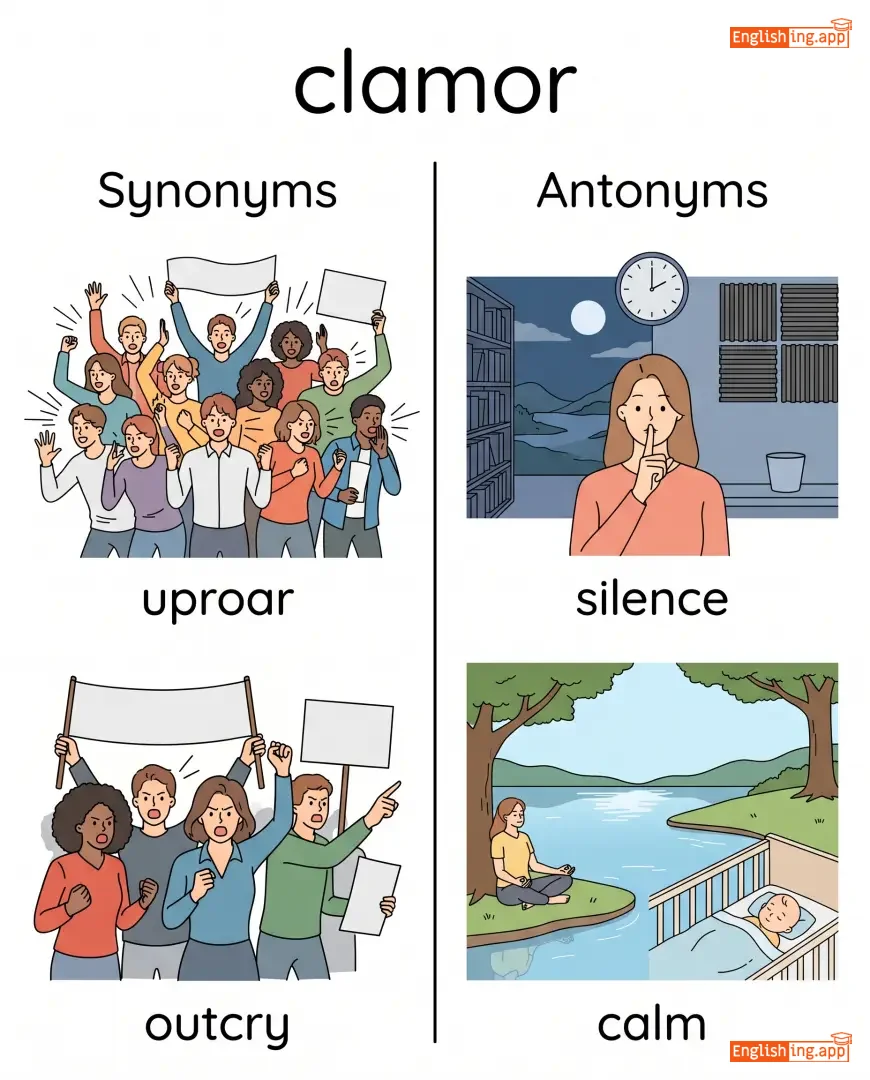
uproar, outcry, noise, din, commotion
••••••
|
silence, calm, quiet
••••••
|
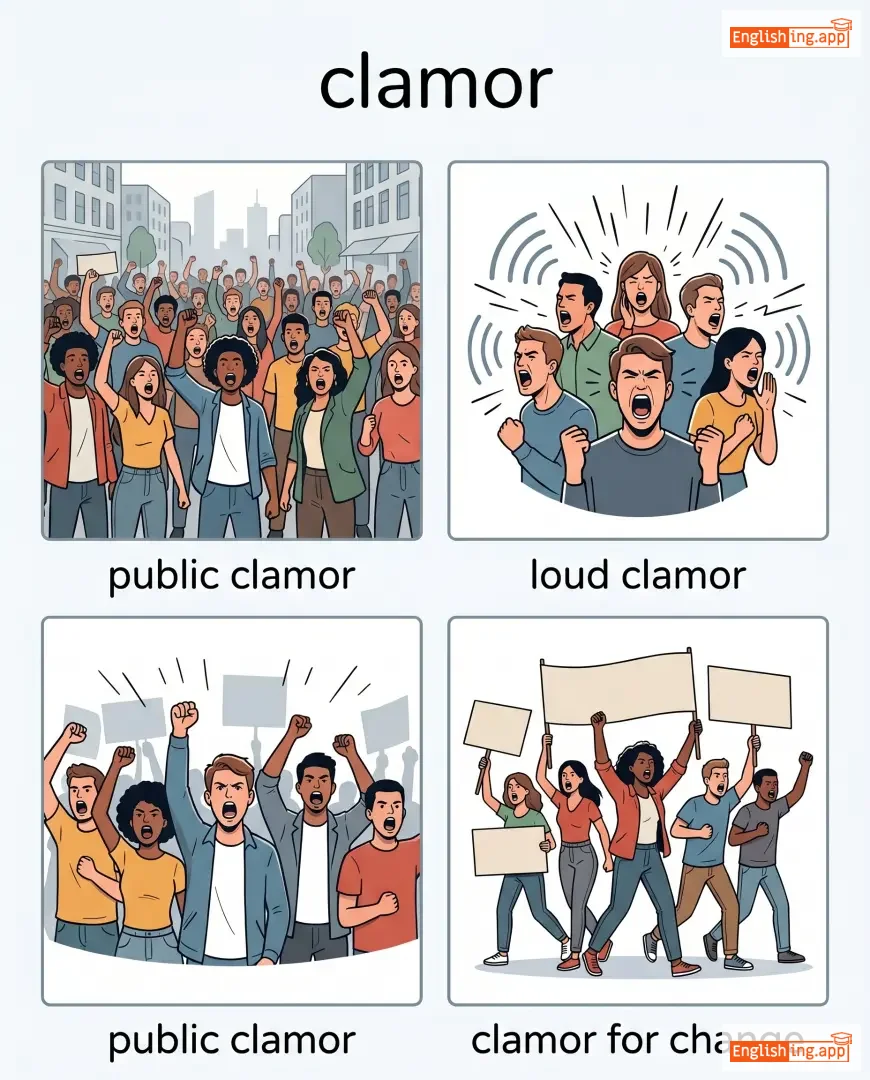
public clamor, loud clamor, clamor for change, clamor of voices
••••••
|
Clamor在中文中是喧嚣,就像抗议的人群发出的声音。
••••••
|
|
👥
••••••
|
/kliːk/
noun
(kè lì kè)
••••••
|


|
小圈子
xiao quanzi
••••••
|
- •••••• | - •••••• | - •••••• | - •••••• |
a small, exclusive group of people
••••••
|
The students formed a clique that excluded others. |
学生们组成了一个排外的小圈子。
Xuéshēng men zǔchéngle yīgè pái wài de xiǎo quānzi.
••••••
|
- •••••• | - •••••• | - •••••• |
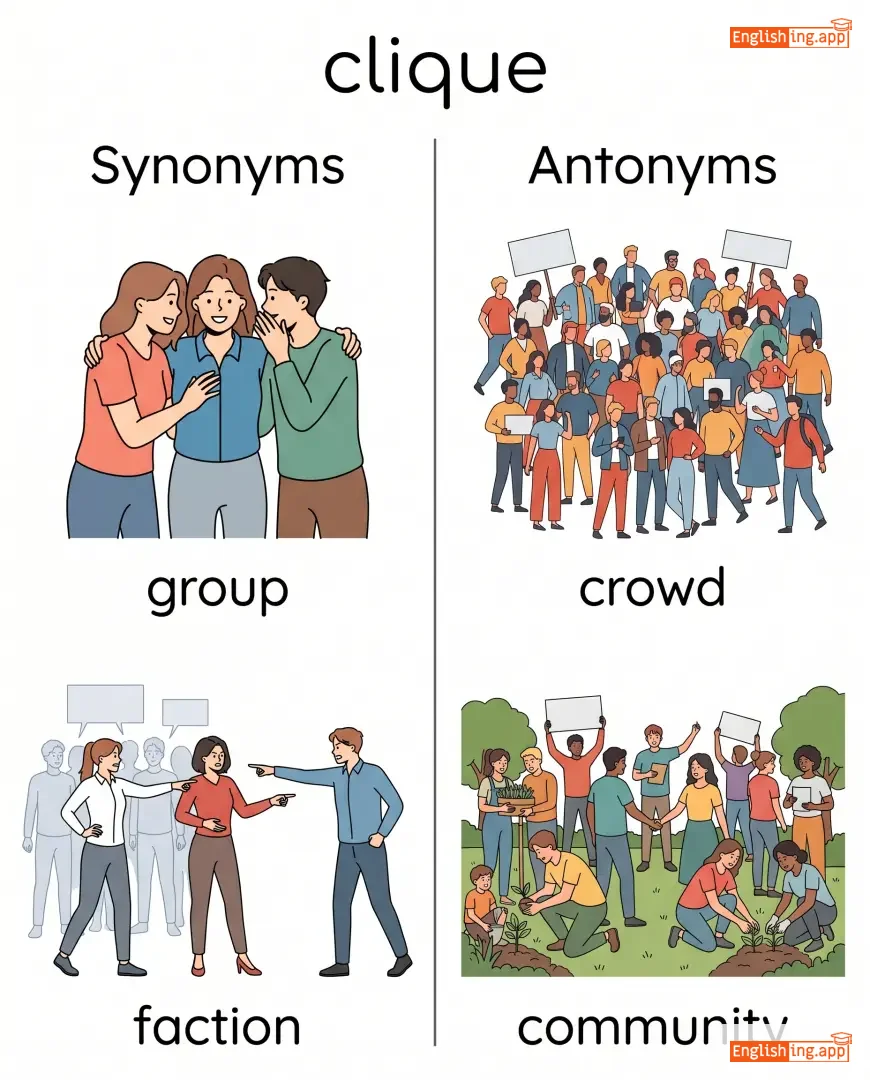
group, faction, circle, set, gang
••••••
|
crowd, community, mass
••••••
|
school clique, social clique, exclusive clique
••••••
|
小圈子里,只有特定的人能进入
••••••
|
|
⛪
••••••
|
/ˈklɔɪstər/
noun
(克洛伊斯特)
••••••
|

|
回廊
huíláng
••••••
|
- •••••• | - •••••• | - •••••• | - •••••• |
a covered walk in a convent, monastery, or cathedral, typically with a wall on one side and a colonnade open to a quadrangle on the other.
••••••
|
The monks walked silently through the cloister.
僧侣们默默地走过了修道院的回廊。
••••••
|
僧侣们默默地走过了修道院的回廊。
Sēnglǚmen mòmò de zǒuguòle xiū dào yuàn de huíláng.
••••••
|
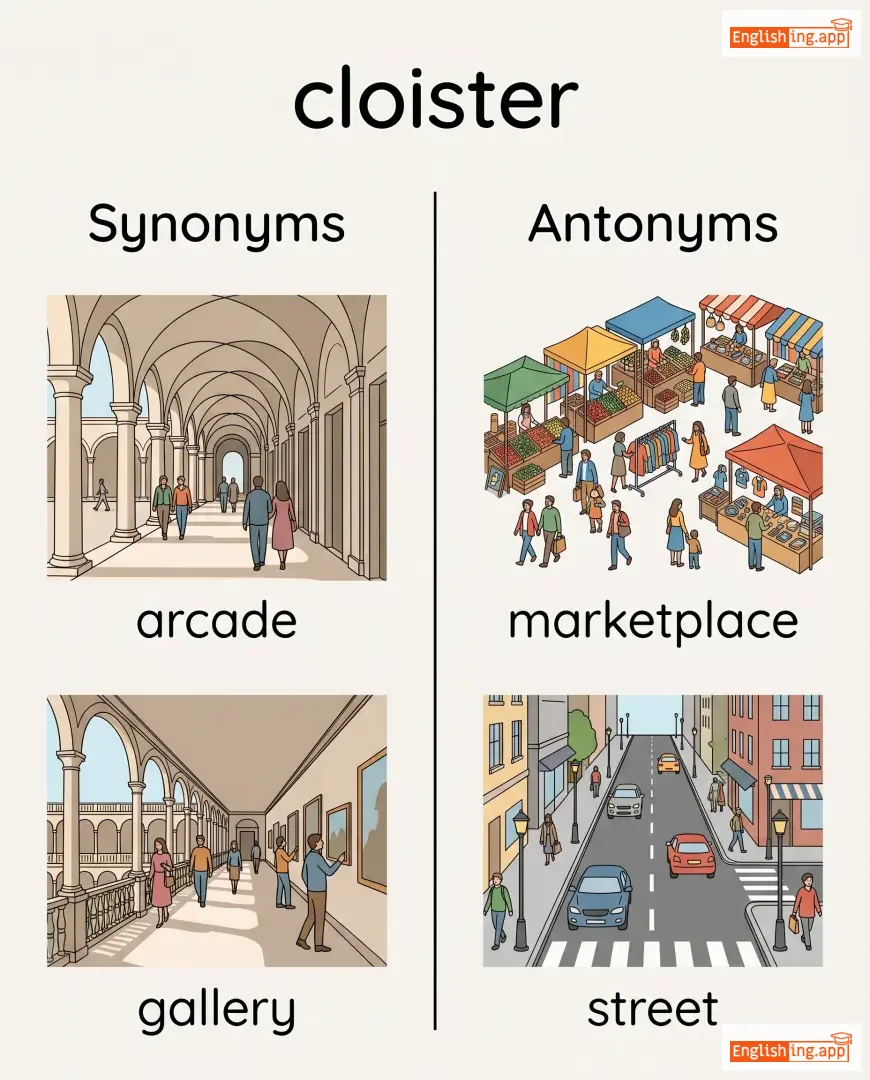
- •••••• | - •••••• | - •••••• |
arcade, gallery, walkway, monastery, abbey
••••••
|
marketplace, street, outside
••••••
|
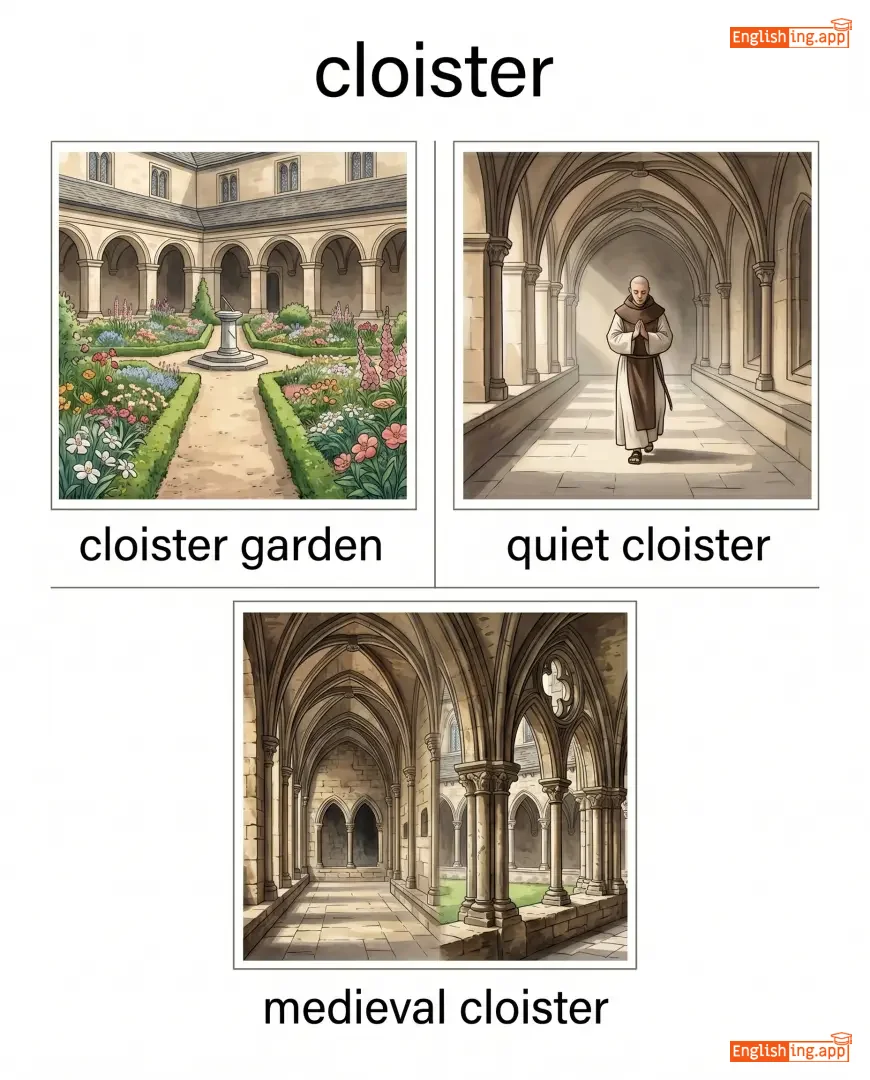
cloister garden, quiet cloister, medieval cloister, cloister life
••••••
|
回廊是修道院的走廊,提醒你修道院的宁静和保护。
••••••
|
|
🧪
••••••
|
/koʊˈæɡjəˌleɪt/
verb
(kuò gǔ lì tè)
••••••
|
|
凝结
níngjié
••••••
|
coagulated
kuò gǔ lì tè dé
••••••
|
coagulated
kuò gǔ lì tè dé
••••••
|
coagulates
kuò gǔ lì tè sī
••••••
|
coagulating
kuò gǔ lì tè jìng
••••••
|
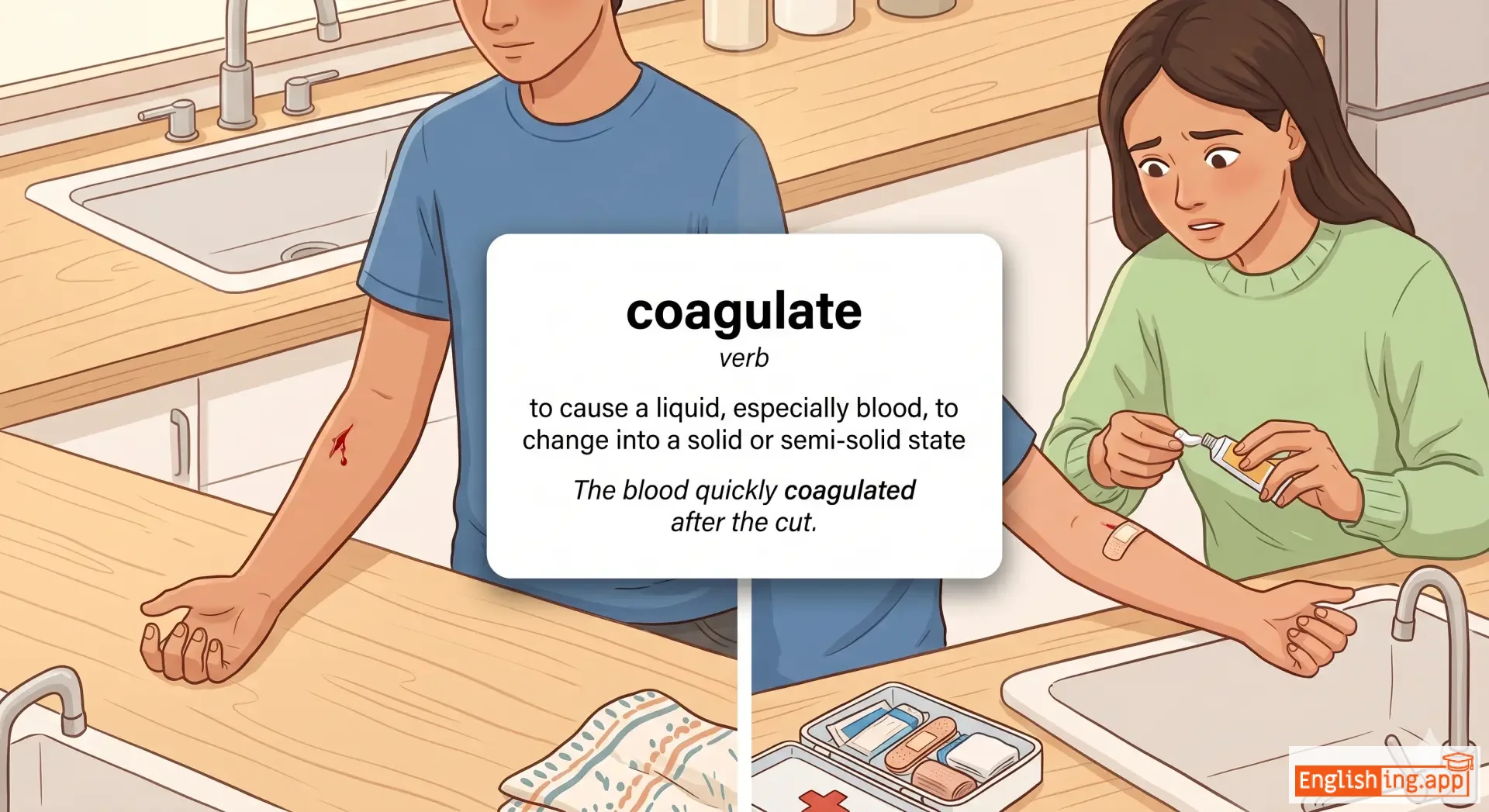
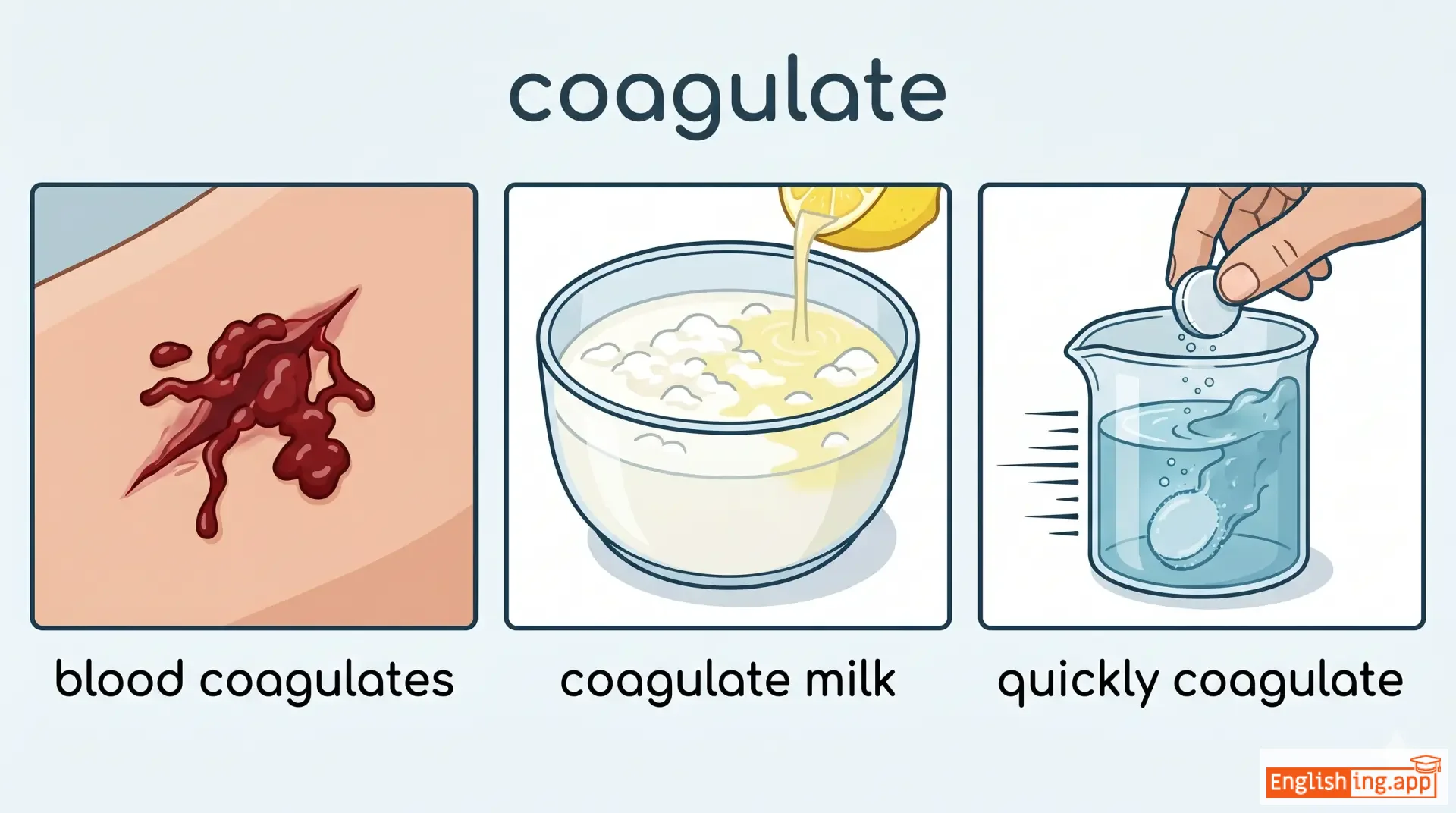
to cause a liquid, especially blood, to change into a solid or semi-solid state
••••••
|
The blood quickly coagulated after the cut.
伤口后血液迅速凝结。
••••••
|
伤口后血液迅速凝结。
Shāngkǒu hòu xuèyè xùnsù níngjié.
••••••
|
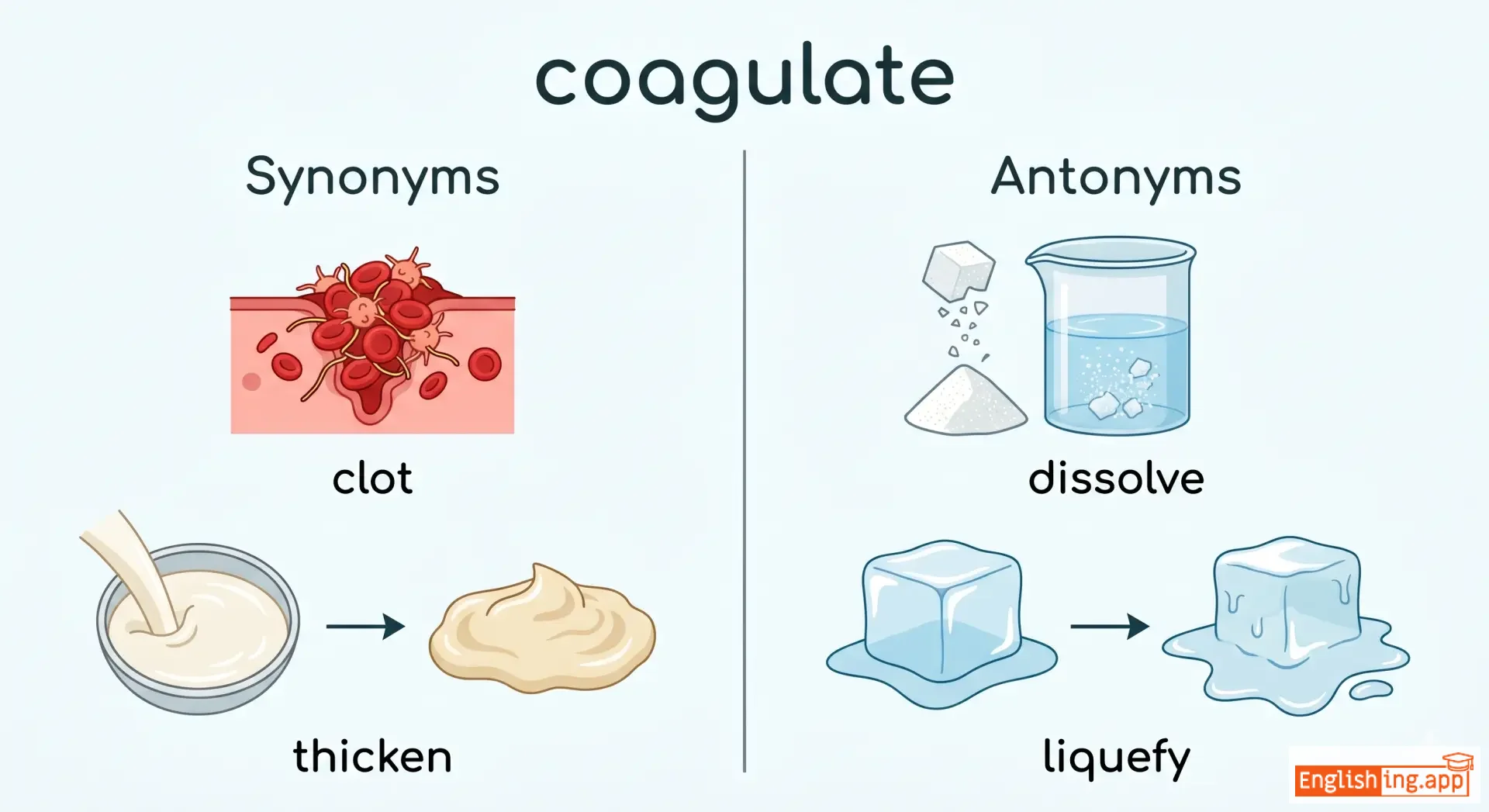
- •••••• | - •••••• | - •••••• |
clot, thicken, curdle, congeal
••••••
|
dissolve, liquefy, melt
••••••
|
blood coagulates, coagulate milk, quickly coagulate
••••••
|
割伤后血液凝结
••••••
|
|
🔗
••••••
|
/ˌkoʊəˈlɛs/
verb
(科阿莱斯)
••••••
|

|
联合
lián hé
••••••
|
coalesced
科阿莱斯德
••••••
|
coalesced
科阿莱斯德
••••••
|
coalesces
科阿莱塞斯
••••••
|
coalescing
科阿莱辛
••••••
|
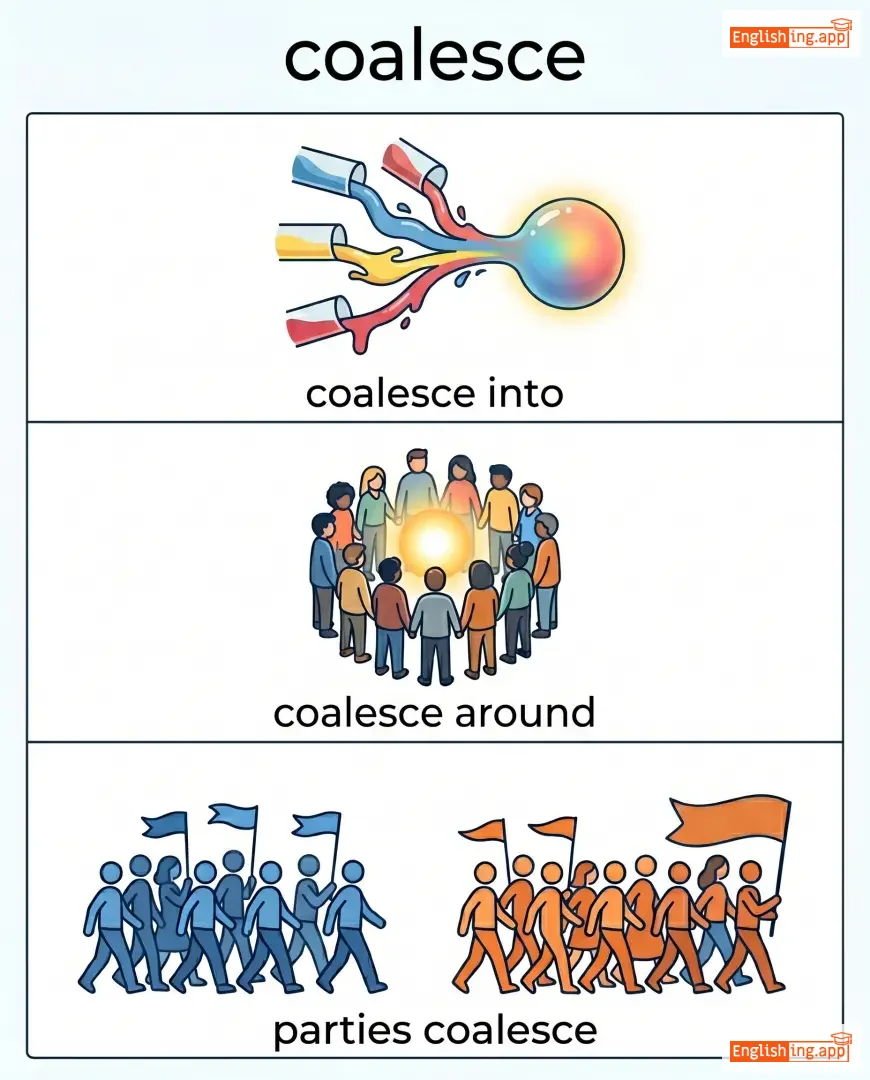
to come together to form one whole or unite into a single entity
••••••
|
The two political parties decided to coalesce for the election.
两个政治党派决定在选举中联合起来。
••••••
|
两个政治党派决定在选举中联合起来。
Liǎng gè zhèngzhì dǎng pài juédìng zài xuǎn jǔ zhōng lián hé qǐ lái.
••••••
|
- •••••• | - •••••• | - •••••• |
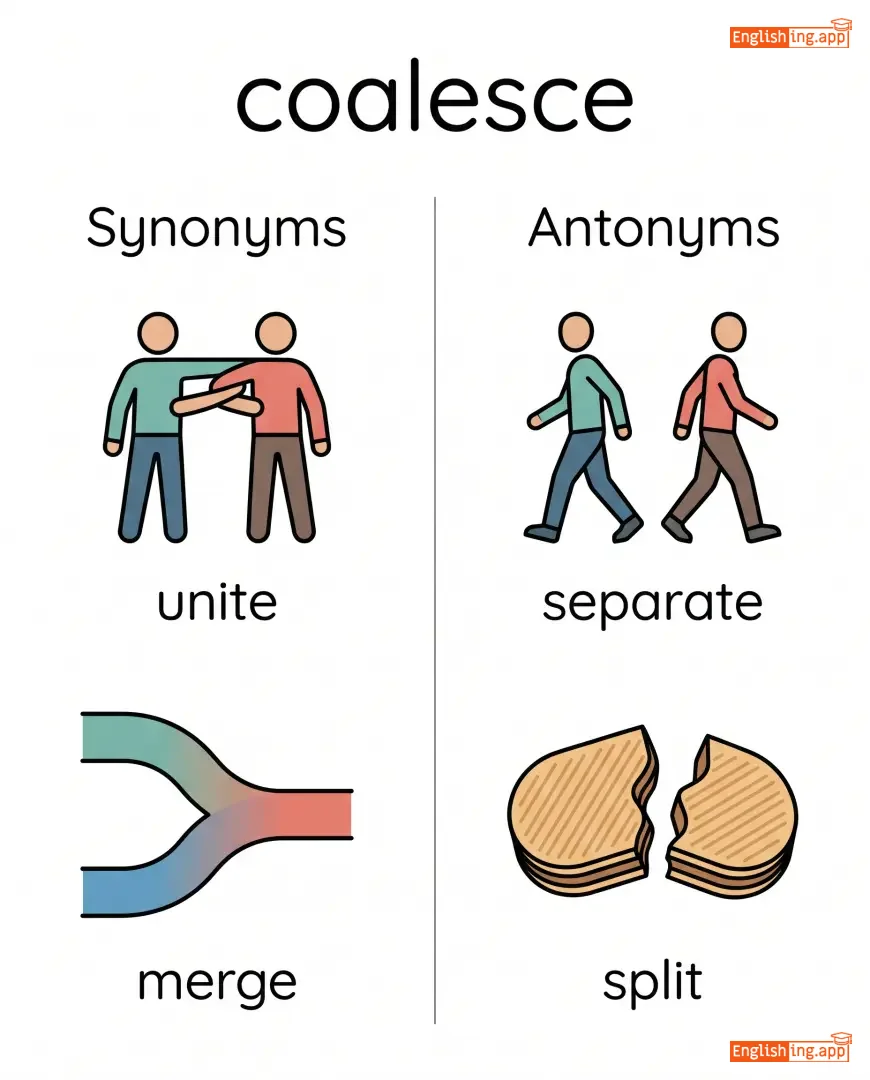
unite, merge, combine, fuse, integrate
••••••
|
separate, split, divide
••••••
|
coalesce into, coalesce around, parties coalesce
••••••
|
Coal + 合 = 联合像煤一样
••••••
|
|
🔚
••••••
|
/ˈkoʊdə/
noun
(科达)
••••••
|

|
尾声
weisheng
••••••
|
- •••••• | - •••••• | - •••••• | - •••••• |
the concluding passage of a piece of music or a literary work
••••••
|
The novel ends with a reflective coda that ties up the themes. |
这部小说以一段反思性的尾声结束,将主题联系起来。
Zhe bu xiaoshuo yi yi duan fanshixing de weisheng jie shu, jiang zhutian lianxi qilai.
••••••
|
- •••••• | - •••••• | - •••••• |
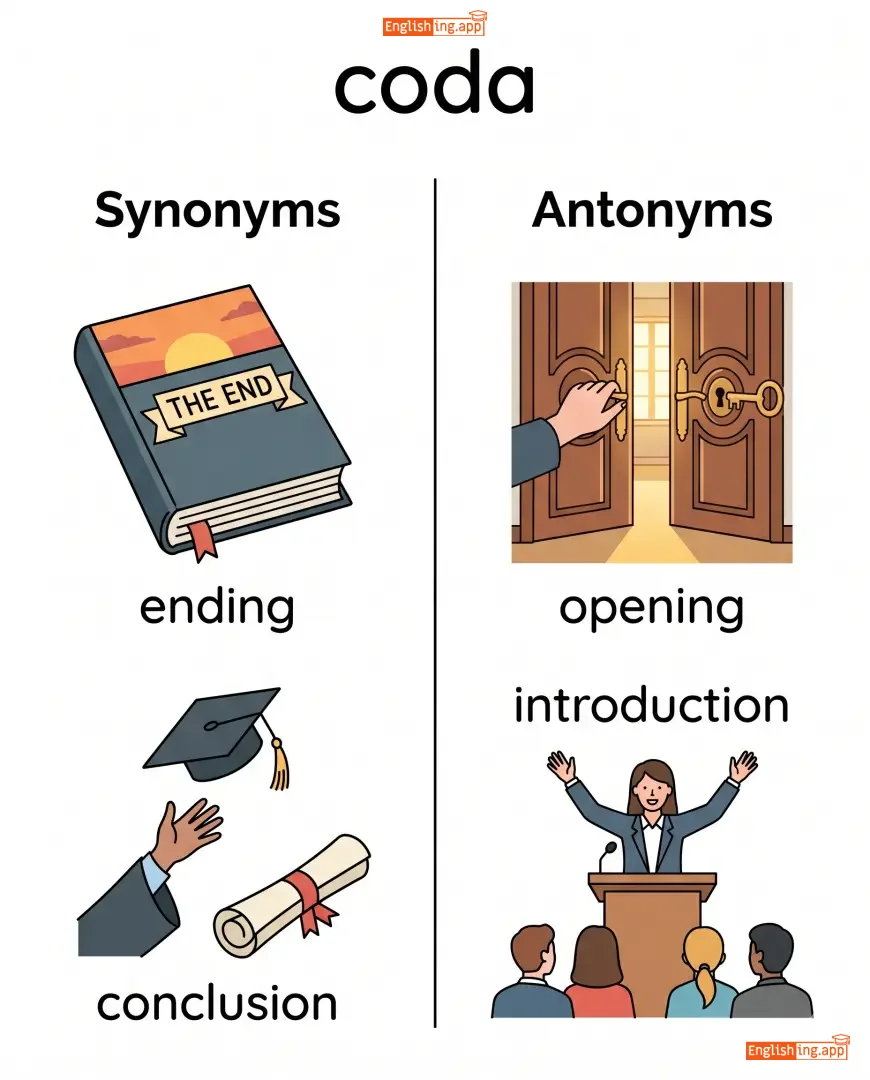
ending, conclusion, finale, epilogue
••••••
|
opening, introduction, beginning
••••••
|
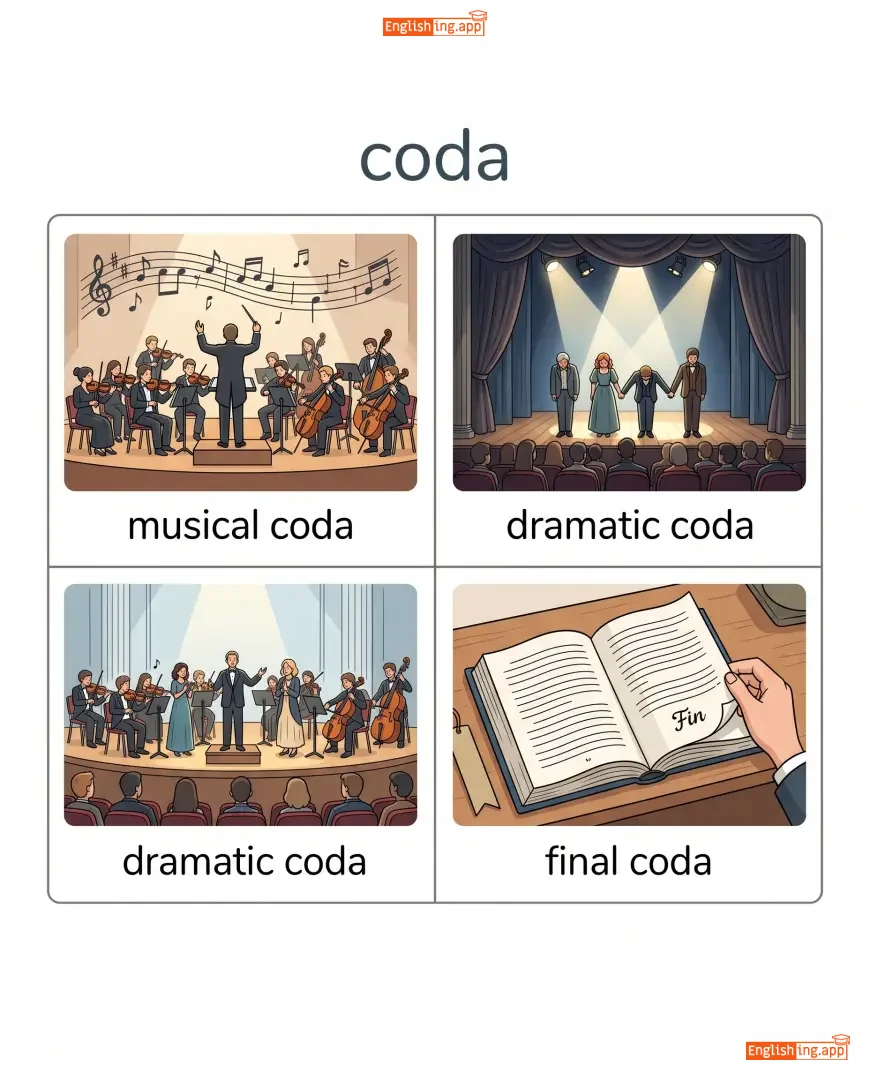
musical coda, dramatic coda, final coda
••••••
|
Coda 就像音乐或文学作品的结束部分,像尾声一样。
••••••
|
|
📚
••••••
|
/ˈkəʊ.dɪ.faɪ/
verb
(编码)
••••••
|

|
编码
bianma
••••••
|
codified
编码过
••••••
|
codified
编码过
••••••
|
codifies
编码
••••••
|
codifying
编码中
••••••
|
to arrange laws, rules, or ideas into a clear and systematic code
••••••
|
The committee worked to codify the existing laws.
委员会致力于编码现有的法律。
••••••
|
委员会致力于编码现有的法律。
Weiyuanhui zhilü yu bianma xianyou de falü.
••••••
|
- •••••• | - •••••• | - •••••• |
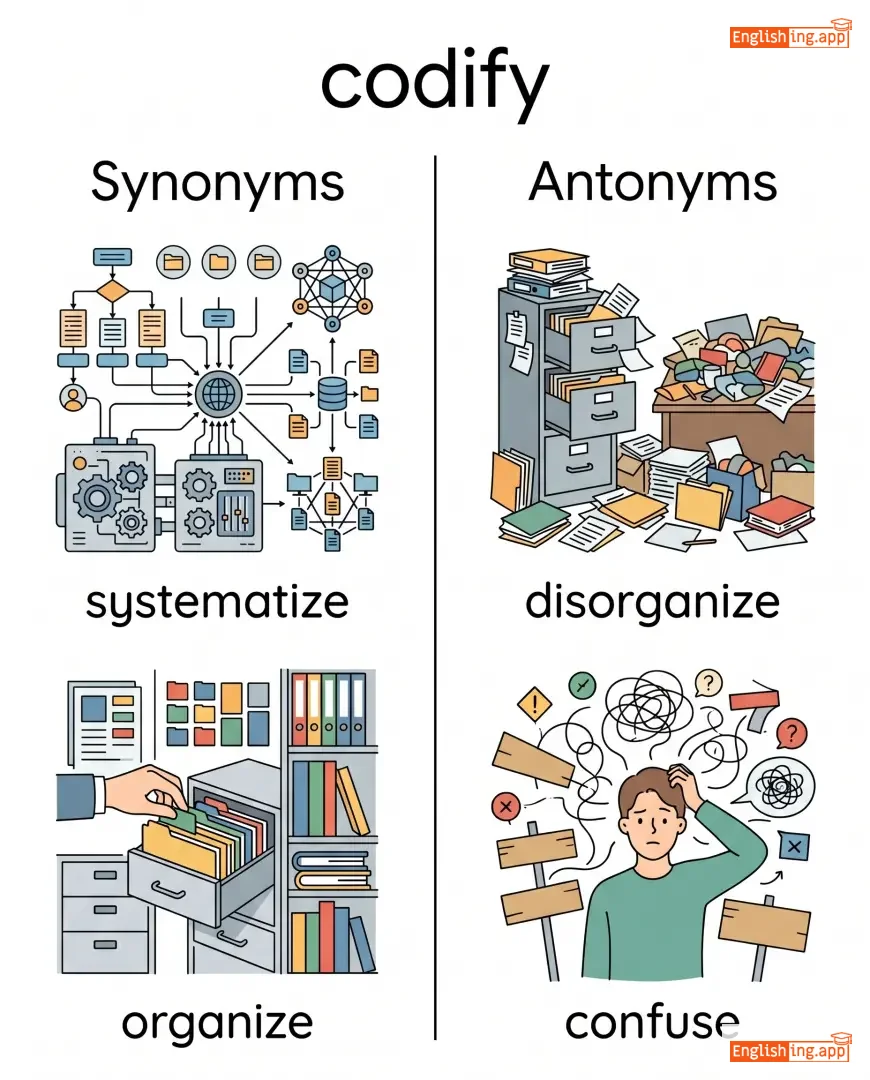
systematize, organize, arrange, classify
••••••
|
disorganize, confuse
••••••
|
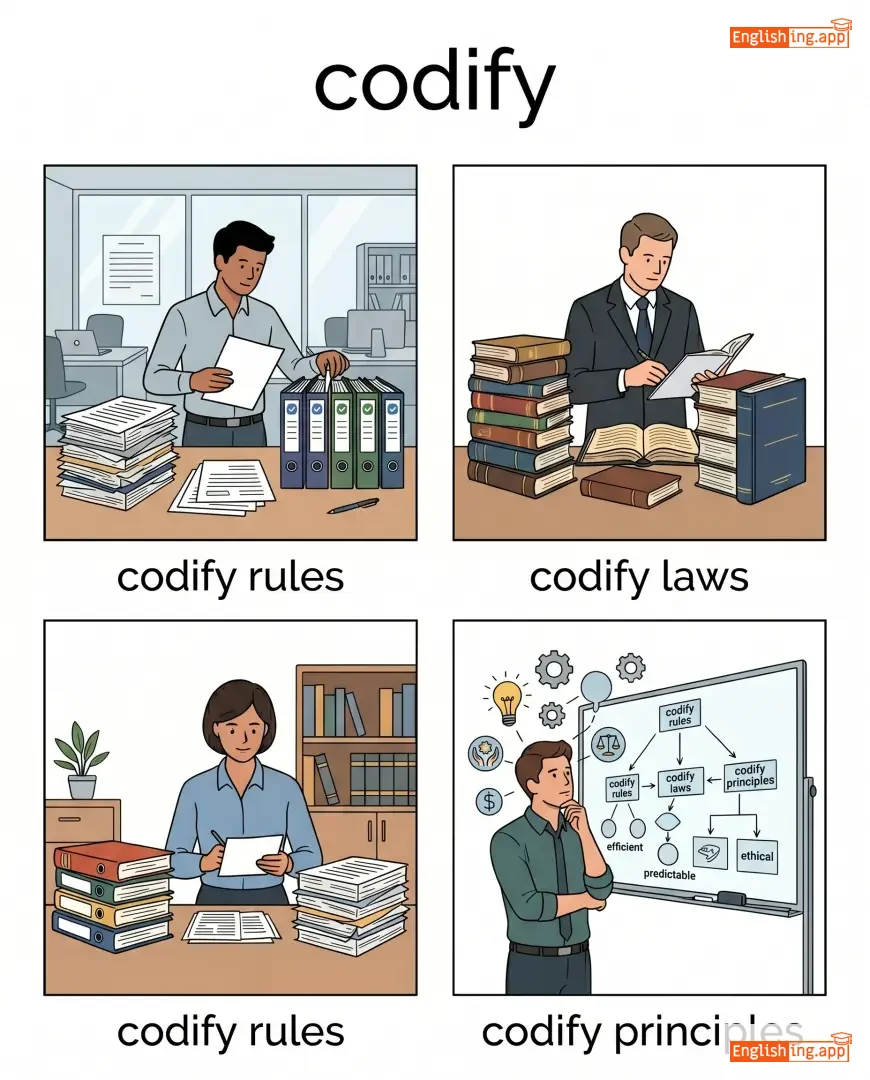
codify rules, codify laws, codify principles, codify knowledge
••••••
|
编码像一个代码一样组织信息,CODIFY 就是这个意思。
••••••
|
|
📘
••••••
|
/ˈkɒɡnɪzənt/
adjective
(cognizant)
••••••
|
|
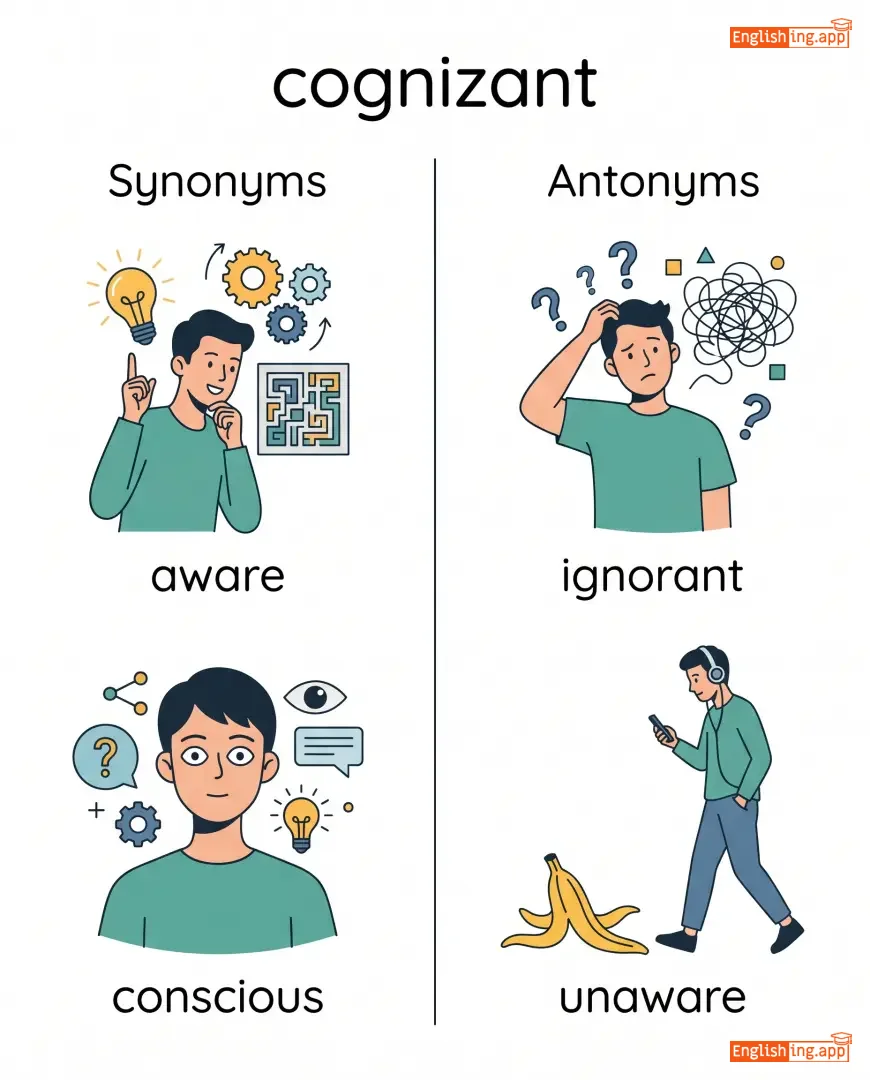
意识到
yìshí dào
••••••
|
- •••••• | - •••••• | - •••••• | - •••••• |
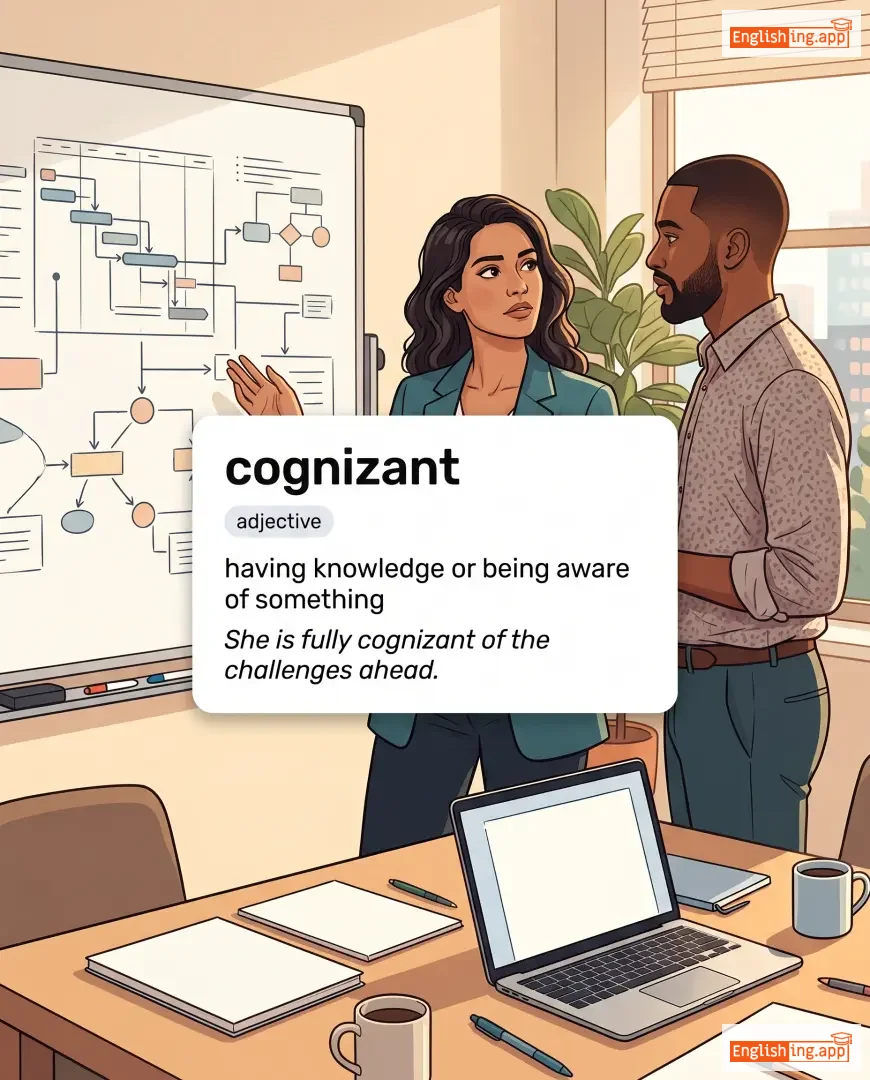
having knowledge or being aware of something
••••••
|
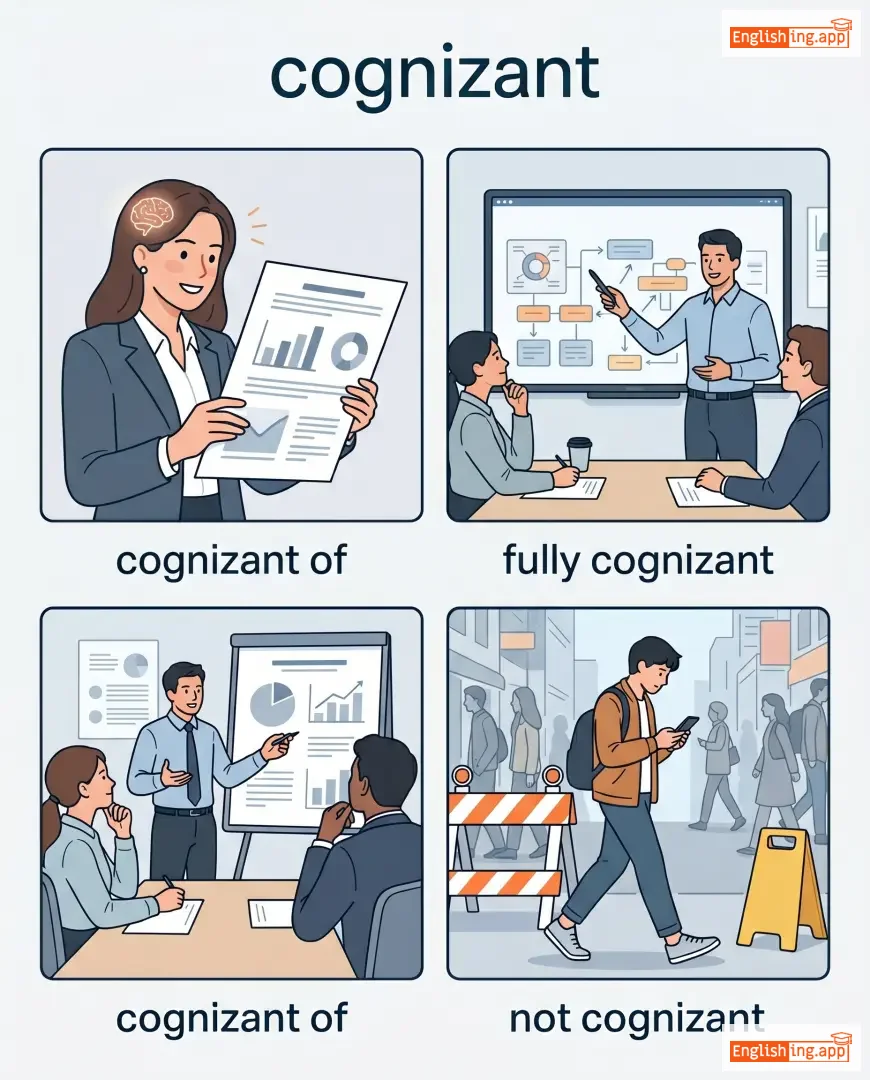
She is fully cognizant of the challenges ahead.
她完全意识到前方的挑战。
••••••
|
她完全意识到前方的挑战。
Tā wánquán yìshí dào qiánfāng de tiǎozhàn.
••••••
|
- •••••• | - •••••• | - •••••• |
aware, conscious, informed, mindful
••••••
|
ignorant, unaware, oblivious
••••••
|
cognizant of, fully cognizant, not cognizant
••••••
|
Cognizant意味着意识到,就像意识到前方的挑战。
••••••
|
|
🖼️
••••••
|
/kəˈlɑːʒ/
noun
(拼贴画)
••••••
|


|
拼贴画
pintiehua
••••••
|
- •••••• | - •••••• | - •••••• | - •••••• |
A piece of art made by sticking various materials such as photographs or paper onto a surface.
••••••
|
She created a collage using old magazine pictures.
她用旧杂志的照片制作了一幅拼贴画。
••••••
|
她用旧杂志的照片制作了一幅拼贴画。
Tā yòng jiù zázhì de zhàopiàn zhìzuò le yī fú pintiehua.
••••••
|
- •••••• | - •••••• | - •••••• |
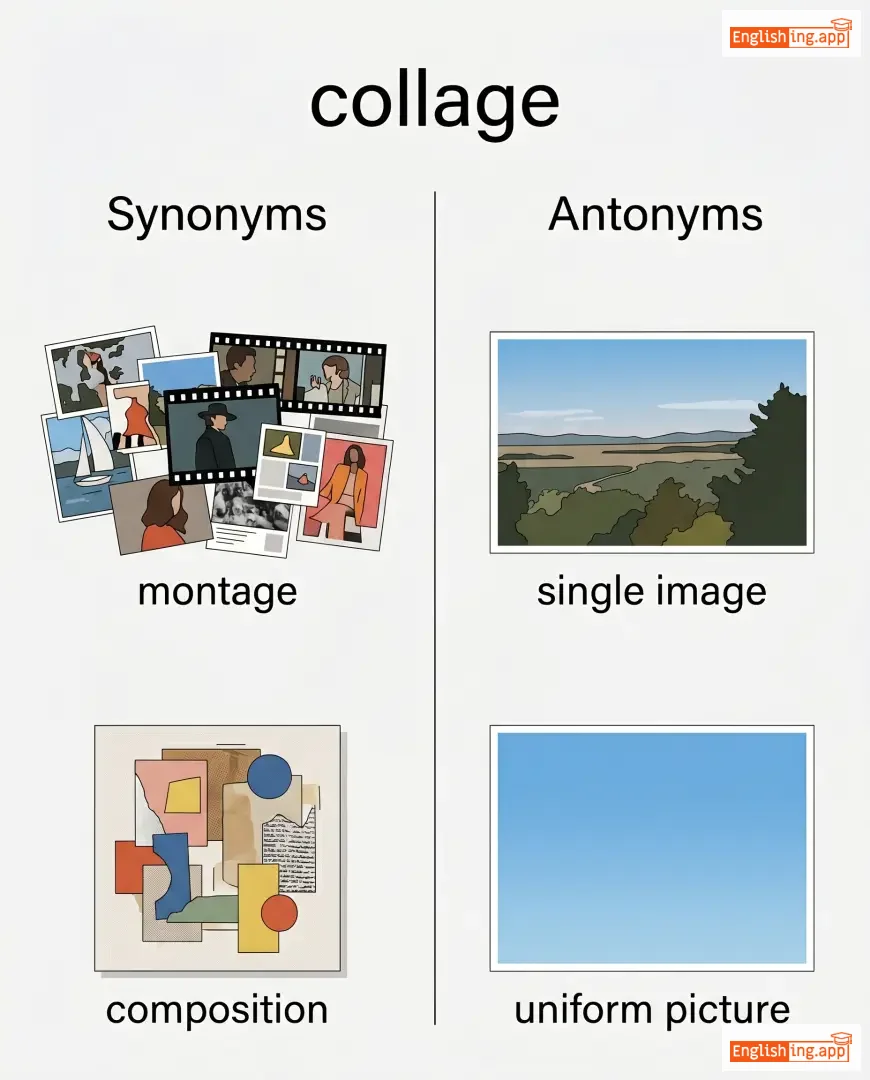
montage, composition, assemblage, artwork
••••••
|
single image, uniform picture
••••••
|
art collage, photo collage, digital collage, create a collage
••••••
|
拼贴画就是将不同元素拼接起来,像是艺术版的拼图。
••••••
|
|
⚖️
••••••
|
/kəˈmɛnʃərət/
adjective
(kěménsīruìtè)
••••••
|


|
相称的
xiangcheng de
••••••
|
- •••••• | - •••••• | - •••••• | - •••••• |
corresponding in size, degree, or extent; proportionate
••••••
|
Salary will be commensurate with experience. |
薪资将与经验相称。
Xīn zī jiāng yǔ jīng yàn xiāng chèn.
••••••
|
- •••••• | - •••••• | - •••••• |
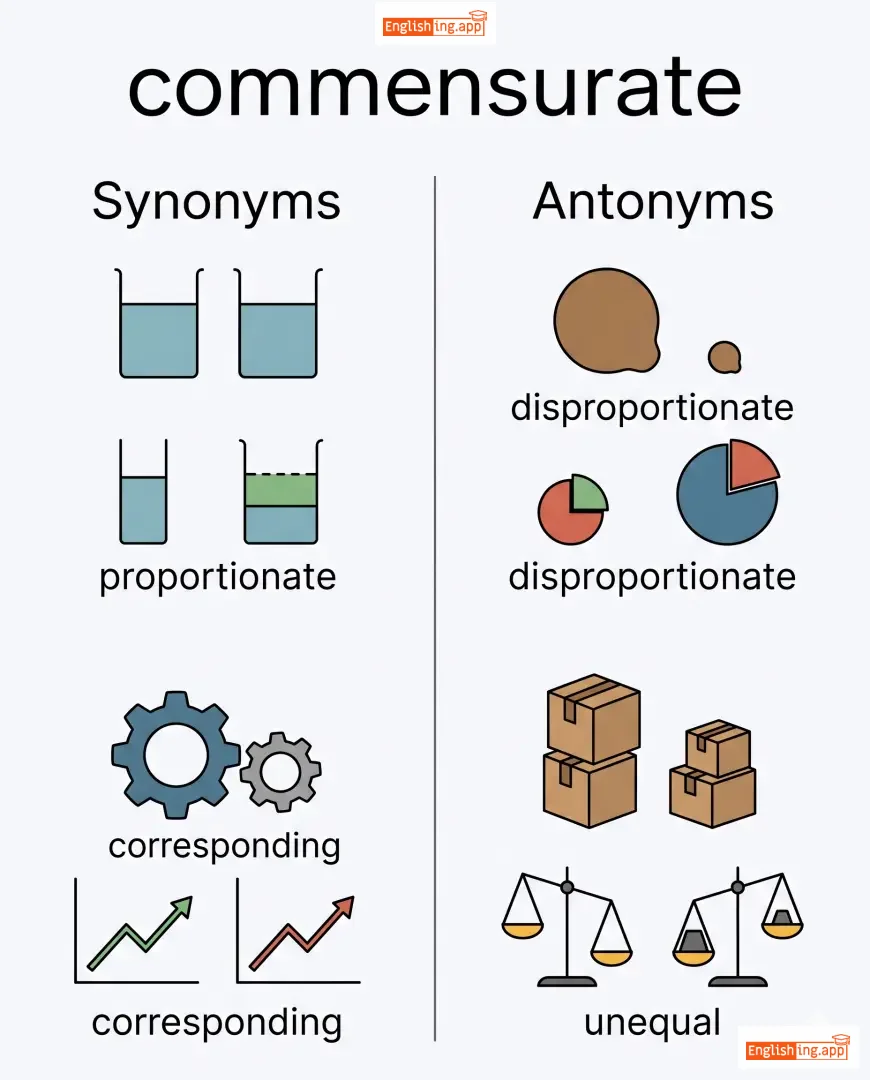
proportionate, corresponding, equal, comparable, adequate
••••••
|
disproportionate, unequal, inappropriate
••••••
|
commensurate with, commensurate salary, commensurate benefits, commensurate reward
••••••
|
Commensurate 是指与经验成比例,不少也不少。
••••••
|
|
📚
••••••
|
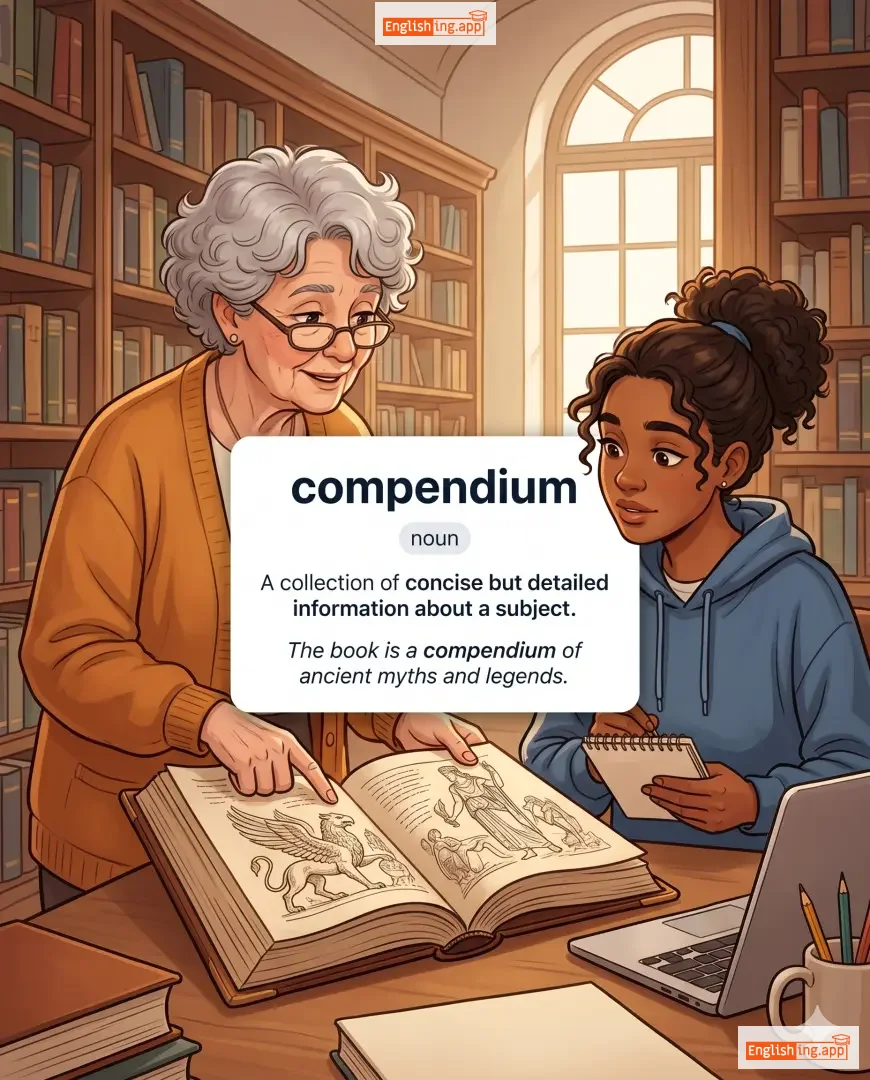
/kəmˈpɛndiəm/
noun
(kompendium)
••••••
|
|
汇编
huìbiān
••••••
|
- •••••• | - •••••• | - •••••• | - •••••• |
A collection of concise but detailed information about a subject.
••••••
|
The book is a compendium of ancient myths and legends.
这本书是关于古代神话和传说的汇编。
••••••
|
这本书是关于古代神话和传说的汇编。
Zhè běn shū shì guānyú gǔdài shénhuà hé chuánshuō de huìbiān.
••••••
|
- •••••• | - •••••• | - •••••• |
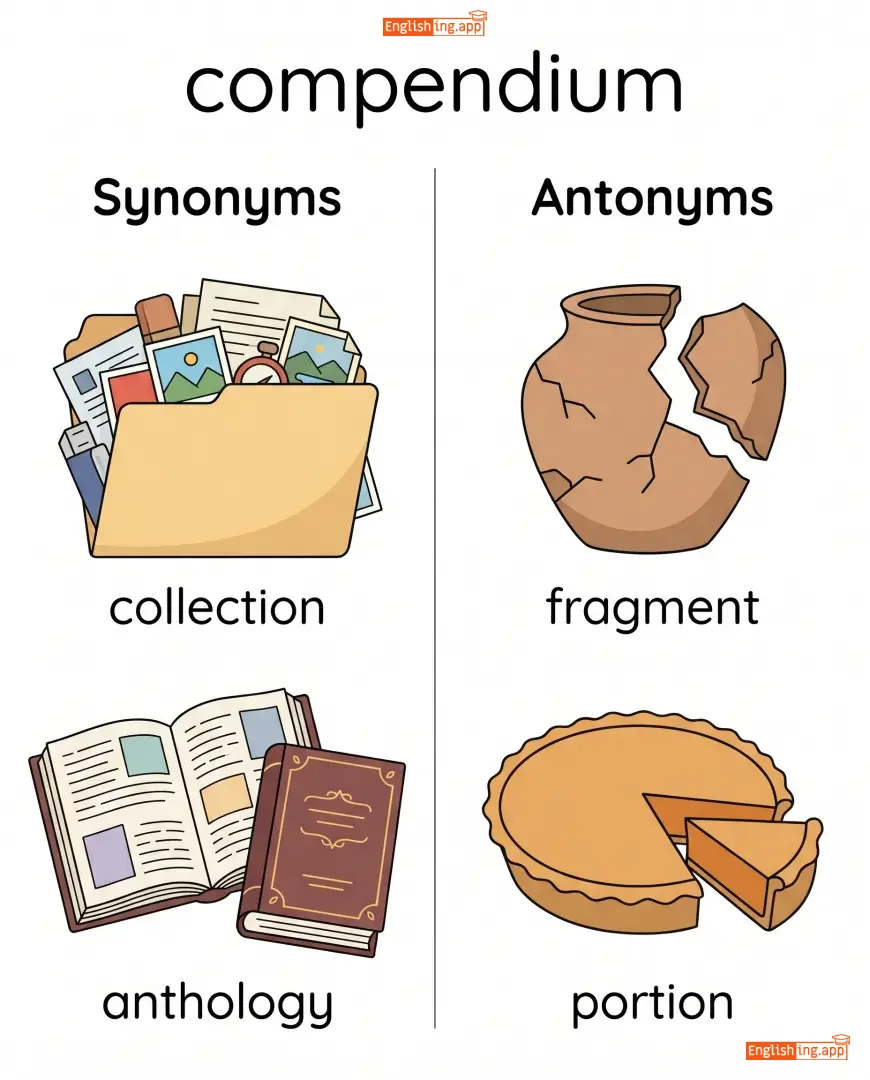
collection, anthology, digest, summary, compilation
••••••
|
fragment, portion, extract
••••••
|
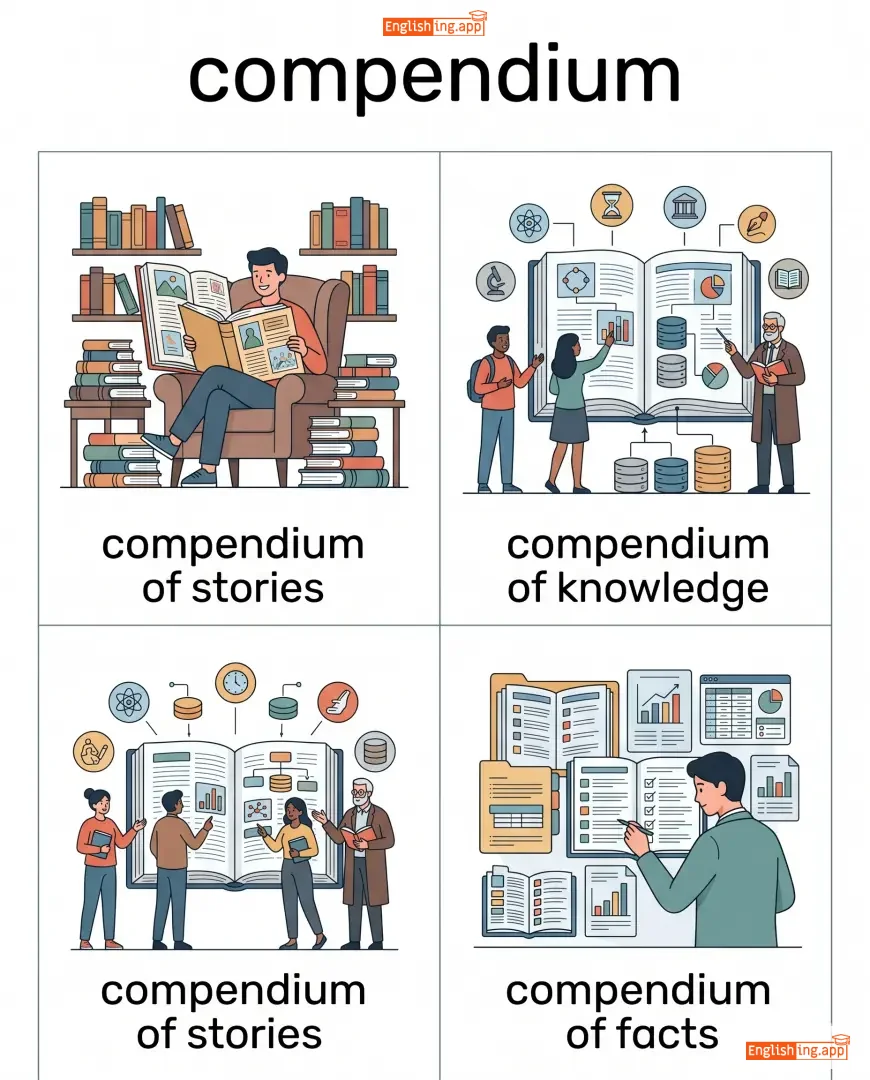
compendium of stories, compendium of knowledge, compendium of facts, compendium of laws
••••••
|
汇编是把所有资料整合成一个集合
••••••
|
|
😌
••••••
|
/kəmˈpleɪsənt/
adjective
(kəmˈpleɪsənt)
••••••
|

|
自满
ziman
••••••
|
- •••••• | - •••••• | - •••••• | - •••••• |
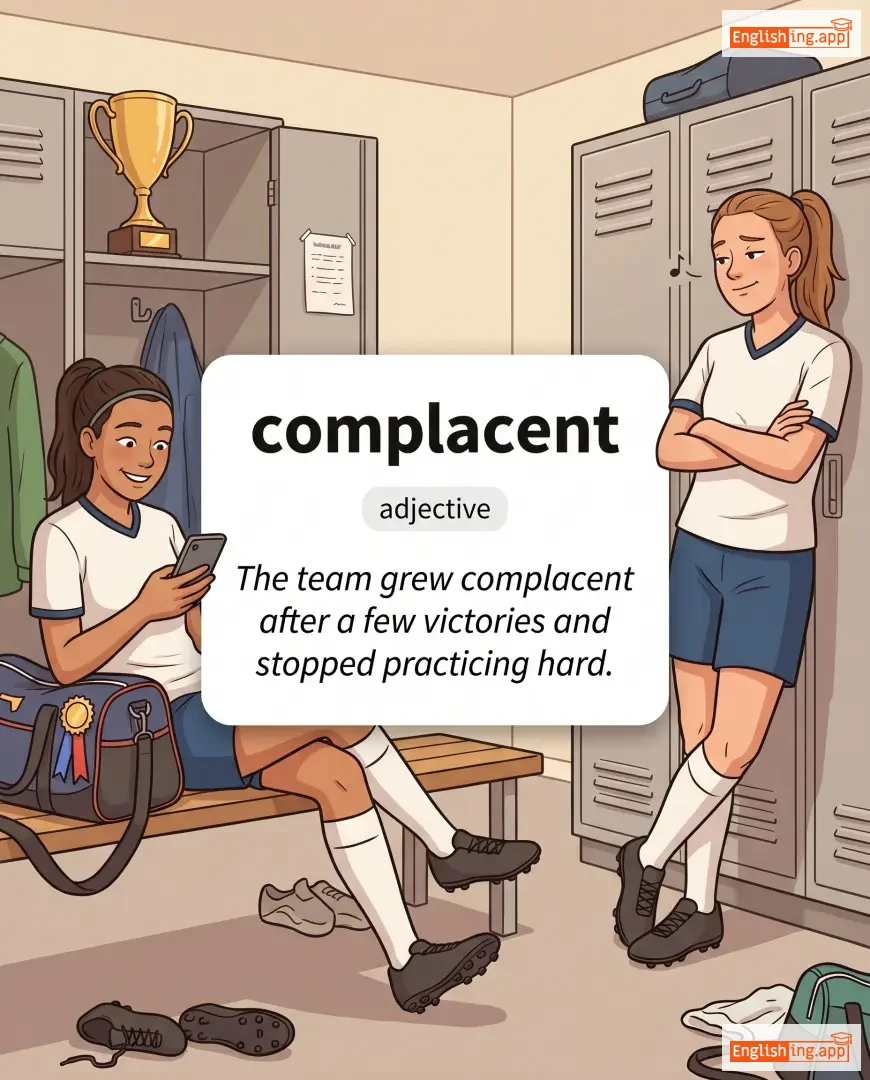
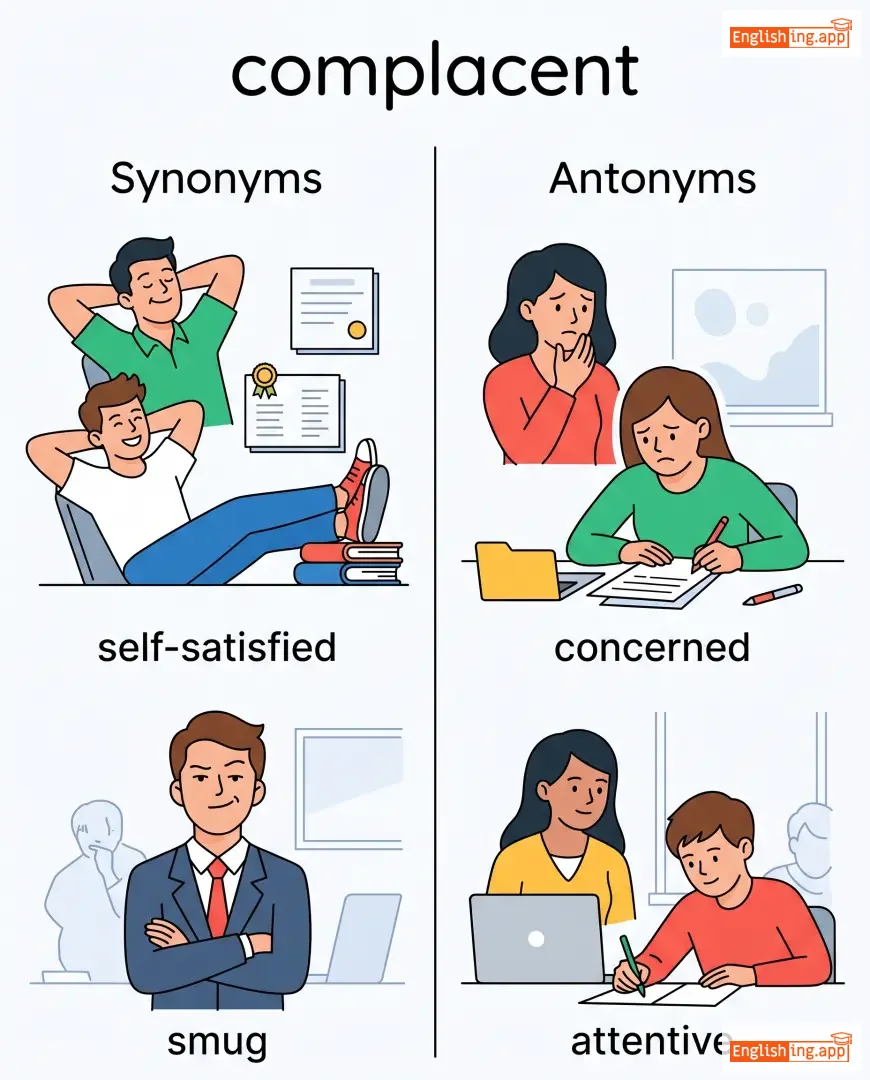
showing self-satisfaction and a lack of concern about potential dangers or problems
••••••
|
The team grew complacent after a few victories and stopped practicing hard. |
团队在几场胜利后变得自满,停止了努力训练。
Tuandui zai ji chang shengli hou biande ziman, tingzhi le nuli xunlian.
••••••
|
rest on one's laurels |
to become complacent and stop putting in effort after achieving success
••••••
|
自满
ziman
••••••
|
self-satisfied, smug, content, indifferent, unconcerned
••••••
|
concerned, attentive, cautious
••••••
|
complacent attitude, dangerously complacent, complacent about, complacent in
••••••
|
自满 – 就像在成功后放松自己,停下来不再努力。
••••••
|
|
🤗
••••••
|
/kəmˈpleɪzənt/
adjective
(kè pí lěi zāng tè)
••••••
|


|
过于顺从
guò yú shùn cóng
••••••
|
- •••••• | - •••••• | - •••••• | - •••••• |
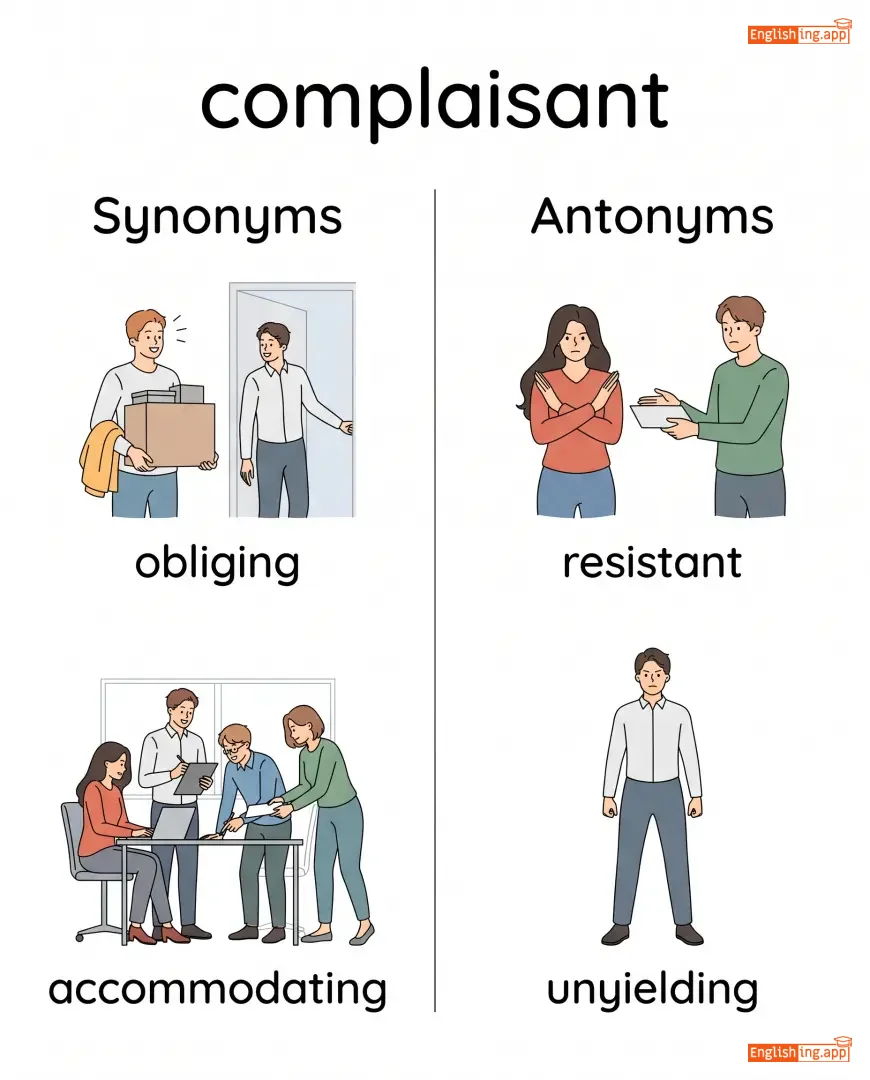
willing to please others or to accept what they do or say without protest
••••••
|
He was too complaisant to refuse their demands. |
他太顺从以至于无法拒绝他们的要求。
Tā tài shùn cóng yǐ zhì yú wú fǎ jù jué tāmen de yāo qiú.
••••••
|
- •••••• | - •••••• | - •••••• |
obliging, accommodating, agreeable, cooperative
••••••
|
resistant, unyielding
••••••
|
complaisant nature, too complaisant, become complaisant
••••••
|
顺从 – 总是同意他人的要求
••••••
|
|
➕
••••••
|
/ˈkɒmplɪmənt/
noun/verb
(补充)
••••••
|
|
补充
buchong
••••••
|
complemented
补充
••••••
|
complemented
补充
••••••
|
complements
补充
••••••
|
complementing
补充
••••••
|
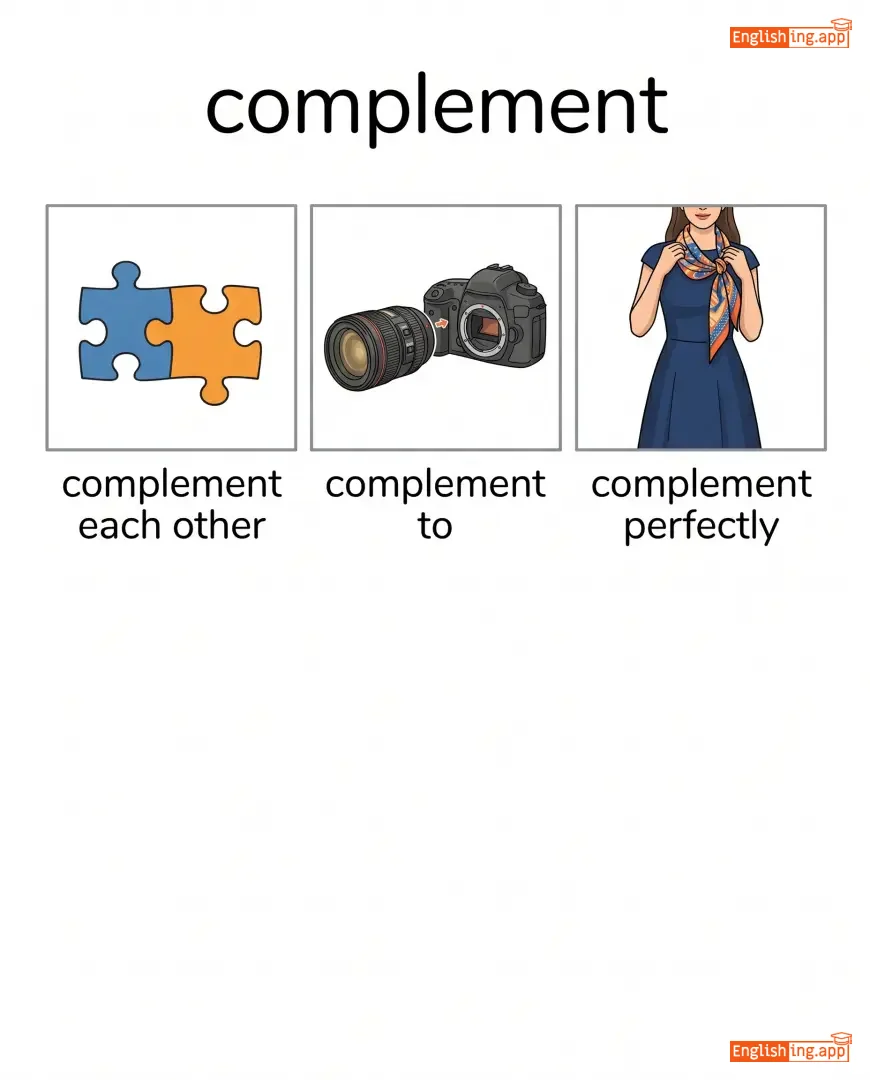
something that completes or goes well with something; to add something that enhances or improves
••••••
|
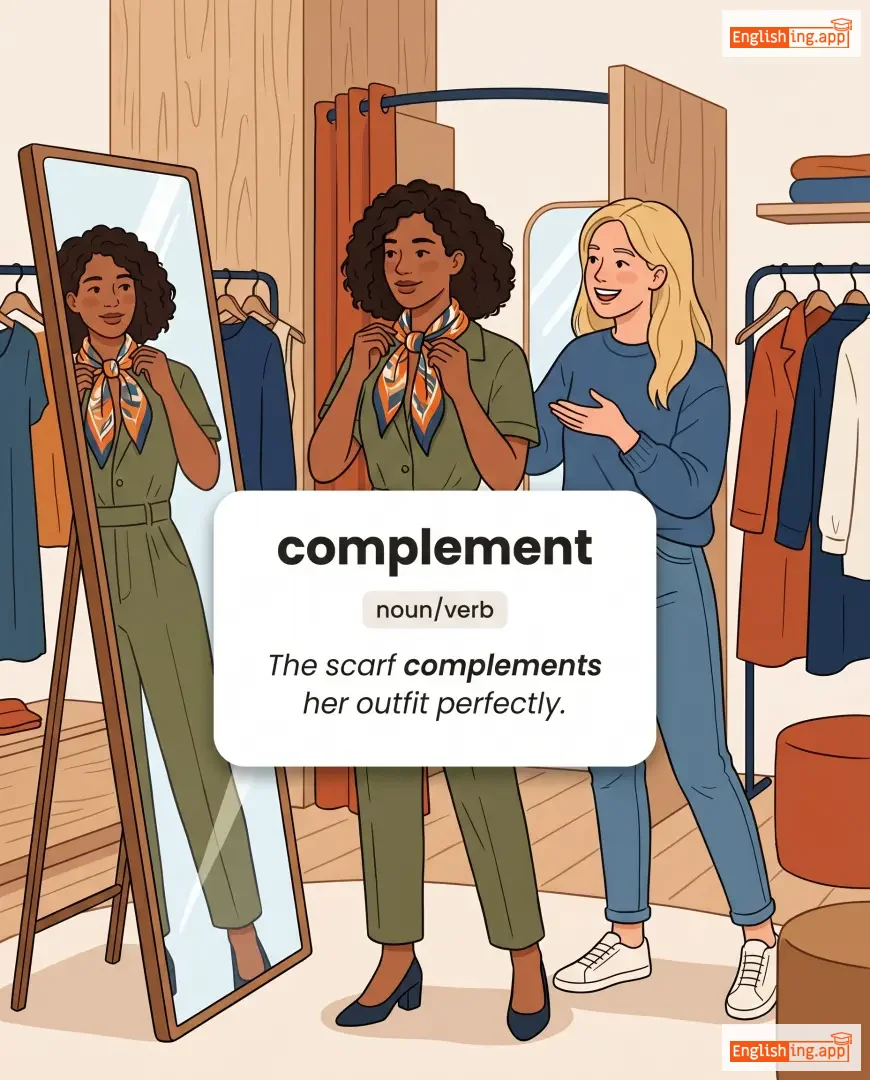
The scarf complements her outfit perfectly.
围巾完美地补充了她的装束。
••••••
|
围巾完美地补充了她的装束。
wei jin wan mei di buchong le ta de zhuang shu.
••••••
|
perfect complement
完美的补充
••••••
|
something that completes another thing in the best possible way
••••••
|
完美的补充
wan mei de buchong
••••••
|
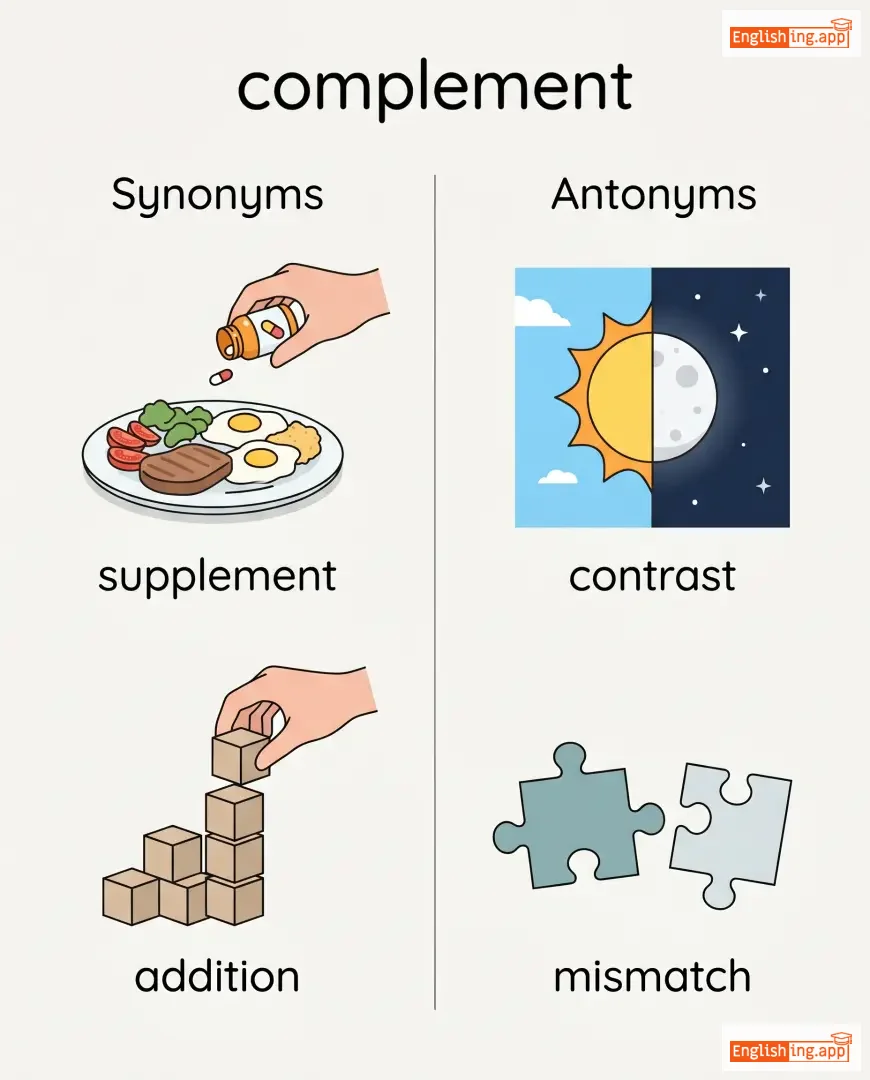
supplement, addition, counterpart, companion, match
••••••
|
contrast, mismatch
••••••
|
complement each other, complement to, complement perfectly, complement system
••••••
|
补充 = 完成 + 添加,让其他事物更好
••••••
|
|
🙇
••••••
|
/kəmˈplaɪənt/
adjective
(kəmˈplaɪənt)
••••••
|
|
顺从
shùncóng
••••••
|
- •••••• | - •••••• | - •••••• | - •••••• |
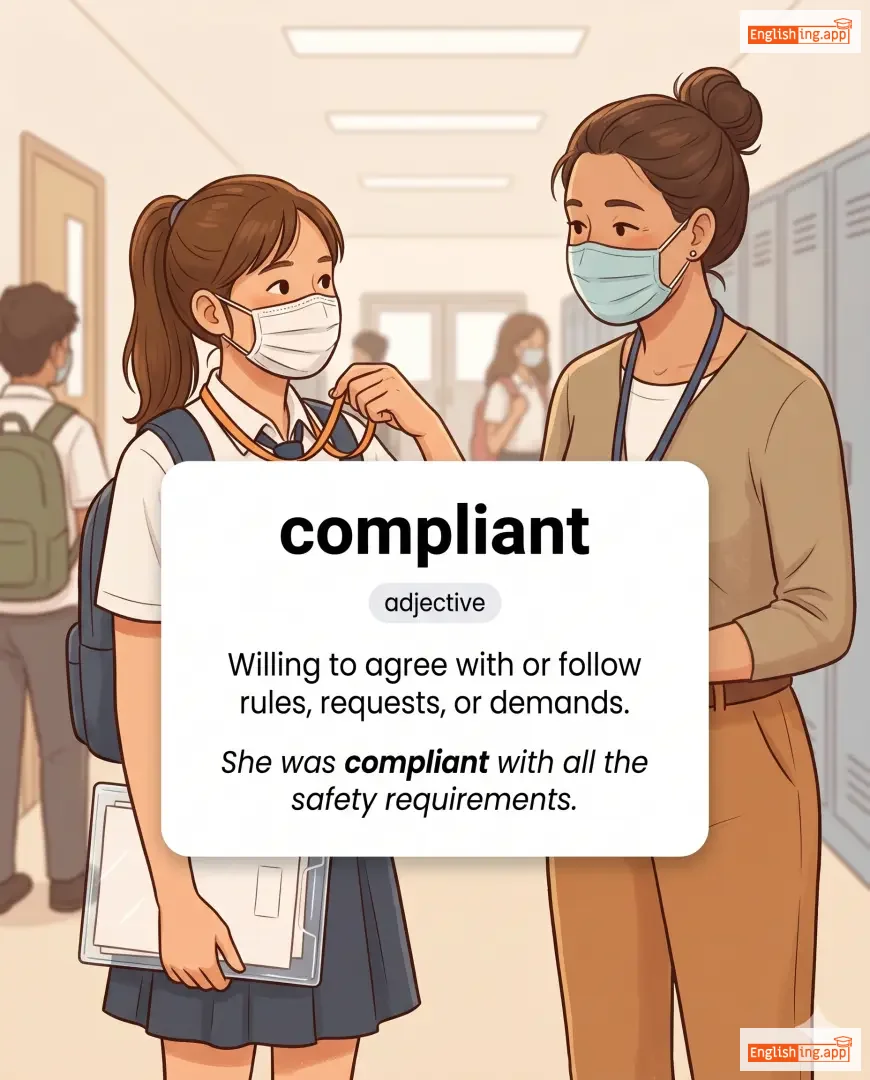
Willing to agree with or follow rules, requests, or demands.
••••••
|
She was compliant with all the safety requirements.
她遵守了所有安全要求。
••••••
|
她遵守了所有安全要求。
Tā zūnshǒu le suǒyǒu ānquán yāoqiú.
••••••
|
- •••••• | - •••••• | - •••••• |
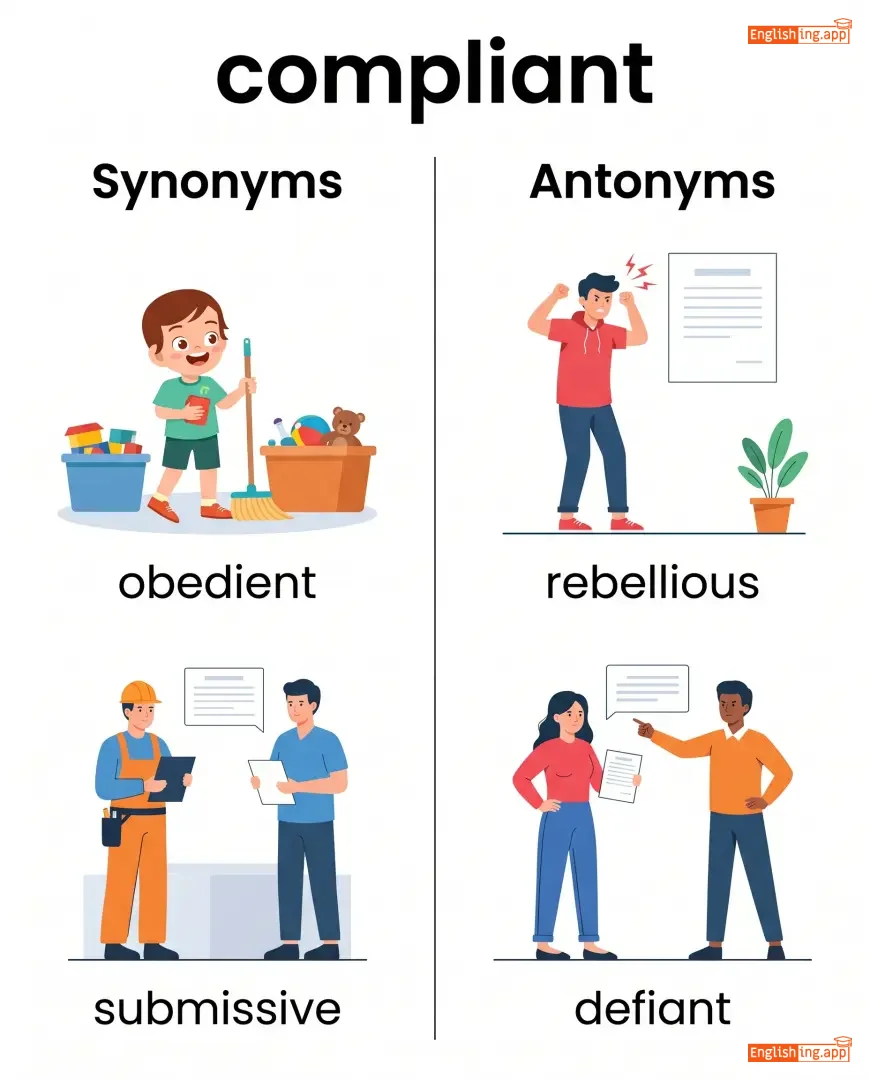
obedient, submissive, docile, accommodating
••••••
|
rebellious, defiant, resistant
••••••
|
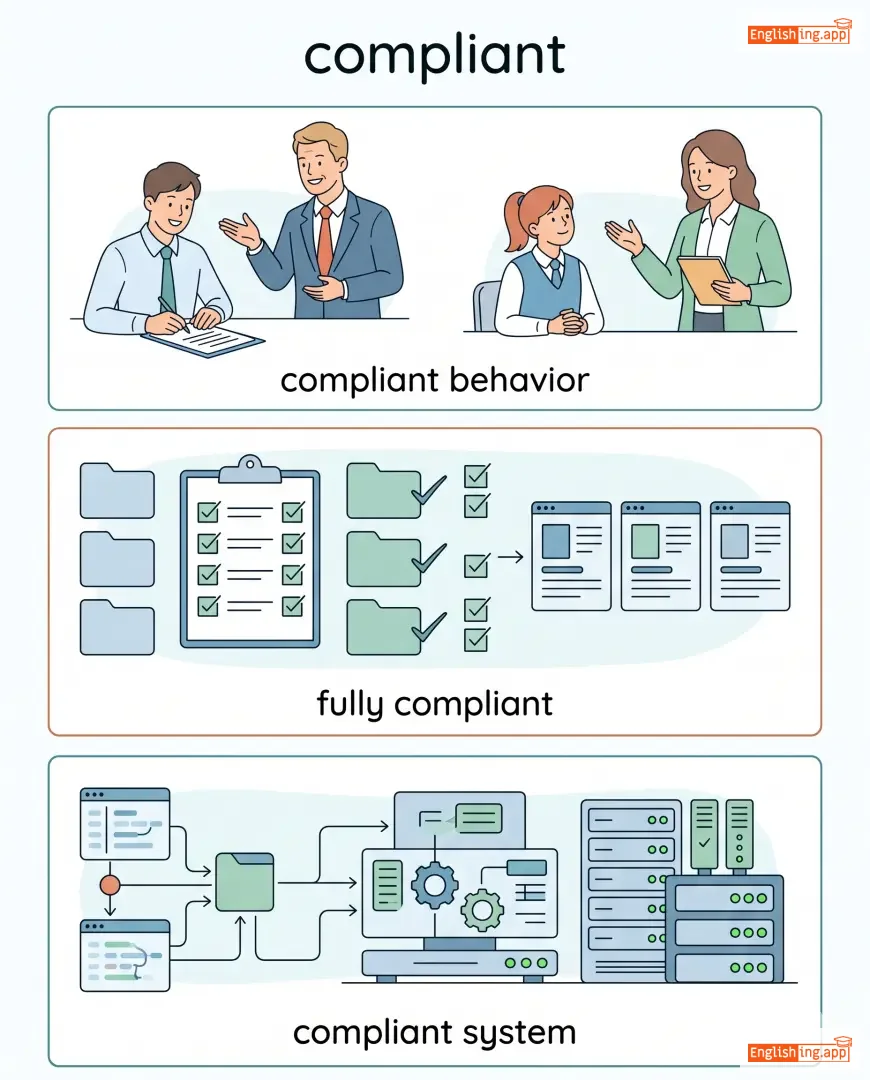
compliant behavior, fully compliant, compliant system, compliant child
••••••
|
顺从就是遵守规则,不反抗。
••••••
|

