Получите неограниченный доступ ко всем словам с подпиской Pro
Обновить до ProПолучите неограниченный доступ ко всем предложениям с подпиской Pro
Обновить до Pro|
Эмодзи
|
Слово | Images | Перевод | Прошедшее | Причастие прошедшего времени | Третье лицо единственного числа | Герундий | Значение | Пример предложения | Перевод примера предложения | Пример выражения | Значение примера выражения | Перевод примера выражения | Синонимы | Антонимы | Коллокации | Мнемоника |
|---|---|---|---|---|---|---|---|---|---|---|---|---|---|---|---|---|---|
|
🌌
••••••
|
/səˈlɛstiəl/
adjective
(сэлесцьиэль)
••••••
|

|
небесный
nebesny
••••••
|
- •••••• | - •••••• | - •••••• | - •••••• |
relating to the sky, stars, or heavens
••••••
|
The telescope revealed many celestial bodies in the night sky. |
Телескоп обнаружил много небесных тел на ночном небе.
Teleskop obnaruzhil mnogo nebesnykh tel na nochnom nebe.
••••••
|
- •••••• | - •••••• | - •••••• |
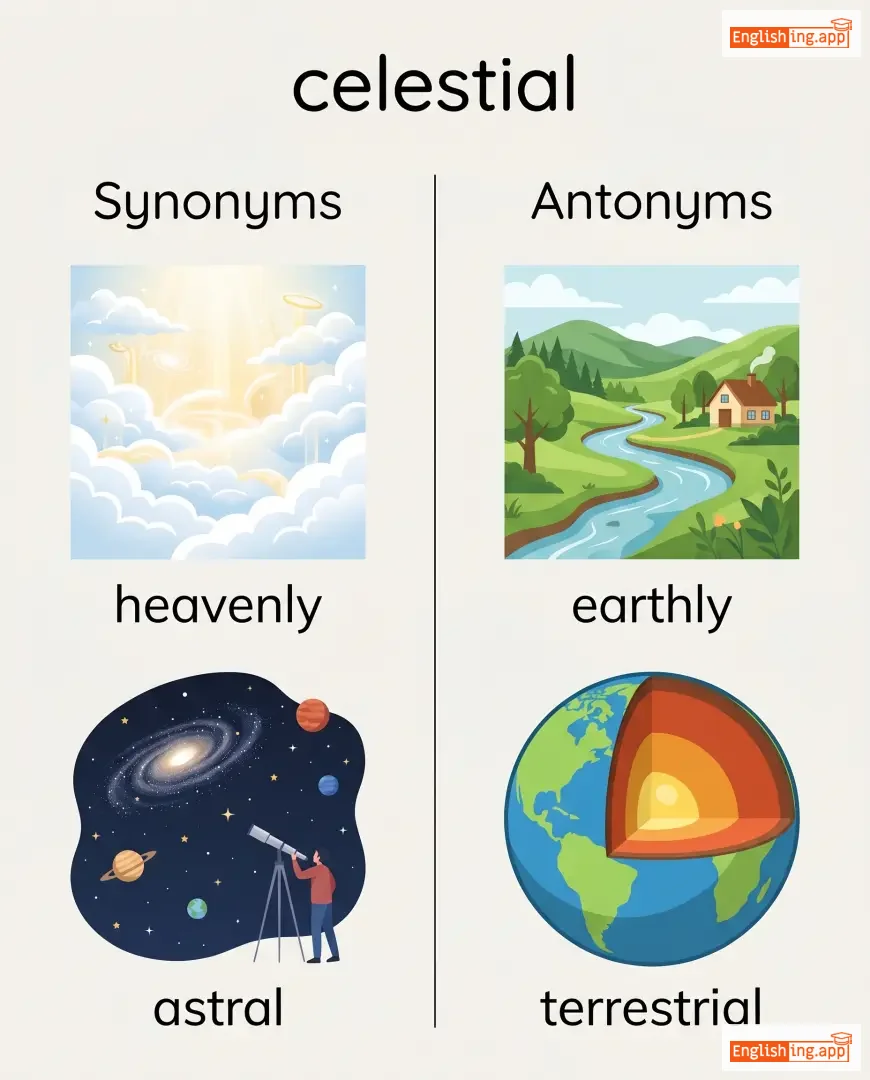
heavenly, astral, cosmic, stellar
••••••
|
earthly, terrestrial, mundane
••••••
|
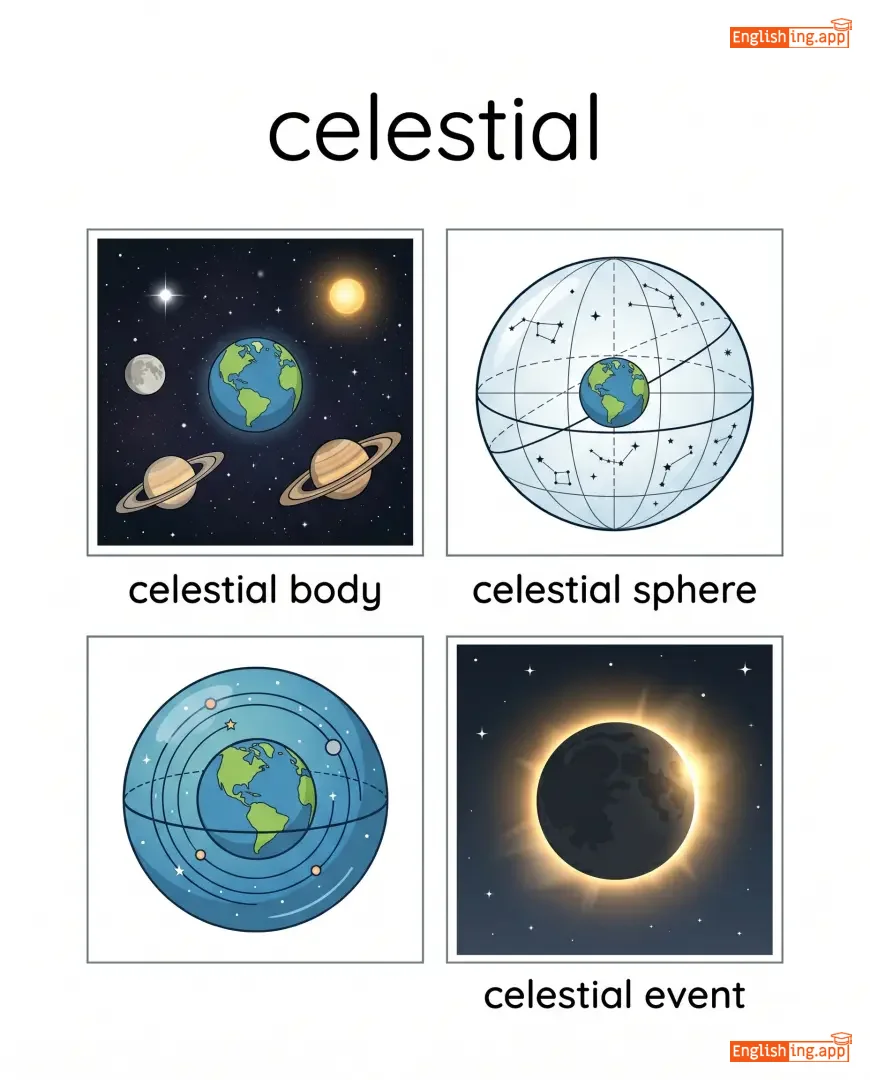
celestial body, celestial sphere, celestial event, celestial navigation
••••••
|
Небесный означает небо, вспомни слово 'небо' и звезды.
••••••
|
|
🌀
••••••
|
/sɛnˈtrɪfjʊɡəl/
adjective
(центрифугальный)
••••••
|

|
центрифугальный
tsentrifugal'nyy
••••••
|
- •••••• | - •••••• | - •••••• | - •••••• |
Moving or tending to move away from a center.
••••••
|
The centrifugal force pushes the clothes to the sides of the washing machine. |
Центрифугальная сила отталкивает одежду к краям стиральной машины.
Tsentrifugal'naya sila ottalkivayet odezhdu k krayam stiral'noy mashiny.
••••••
|
- •••••• | - •••••• | - •••••• |
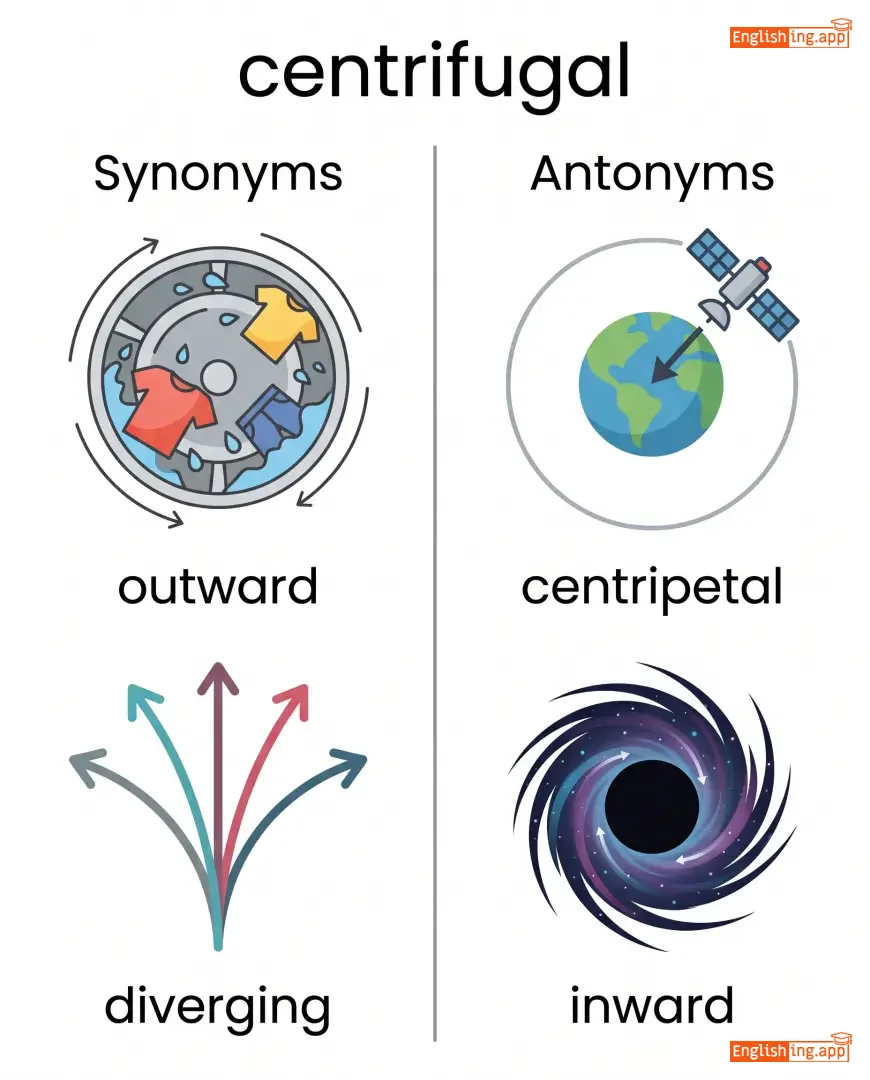
outward, diverging, radiating, spreading
••••••
|
centripetal, inward
••••••
|
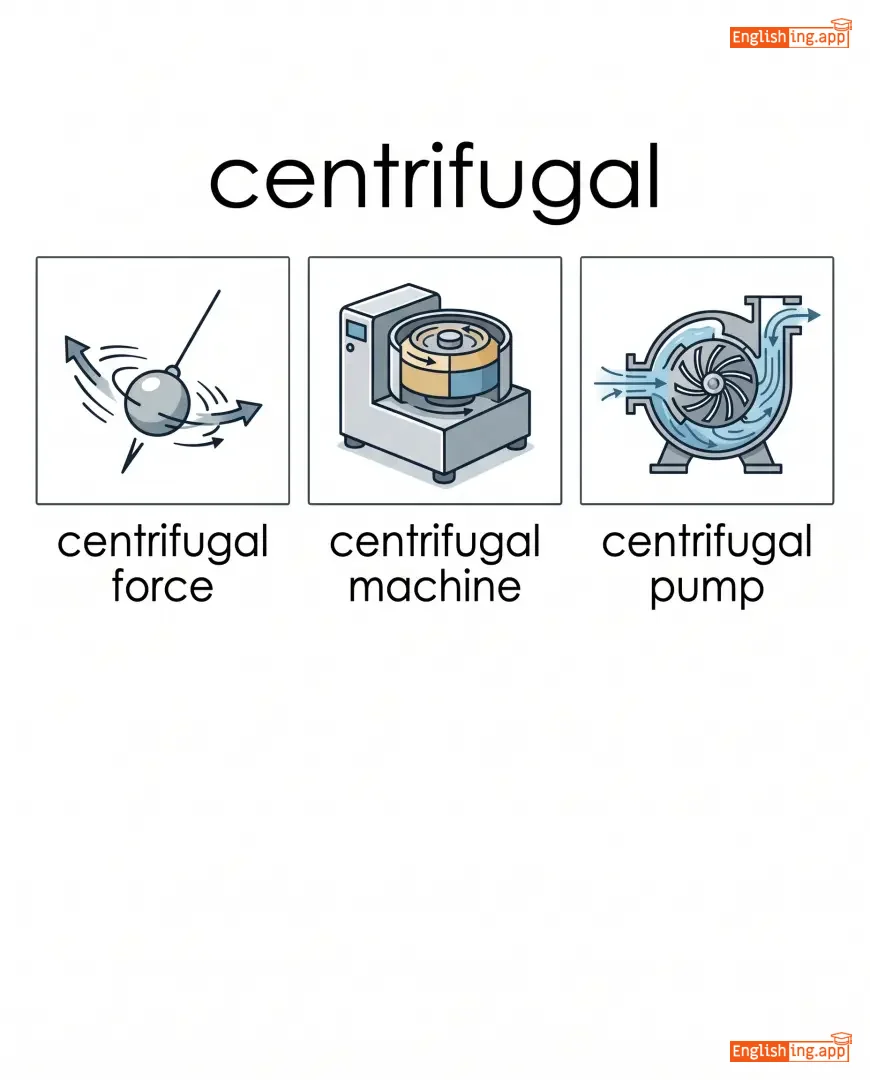
centrifugal force, centrifugal machine, centrifugal pump, centrifugal action
••••••
|
Центрифугальный = Центр + фуга (убегание), что означает движение от центра.
••••••
|
|
🌌
••••••
|
/sɛnˈtrɪpɪtəl/
adjective
(сэнˈтрипитэл)
••••••
|
|
центрирующий
tsentriruyushchiy
••••••
|
- •••••• | - •••••• | - •••••• | - •••••• |
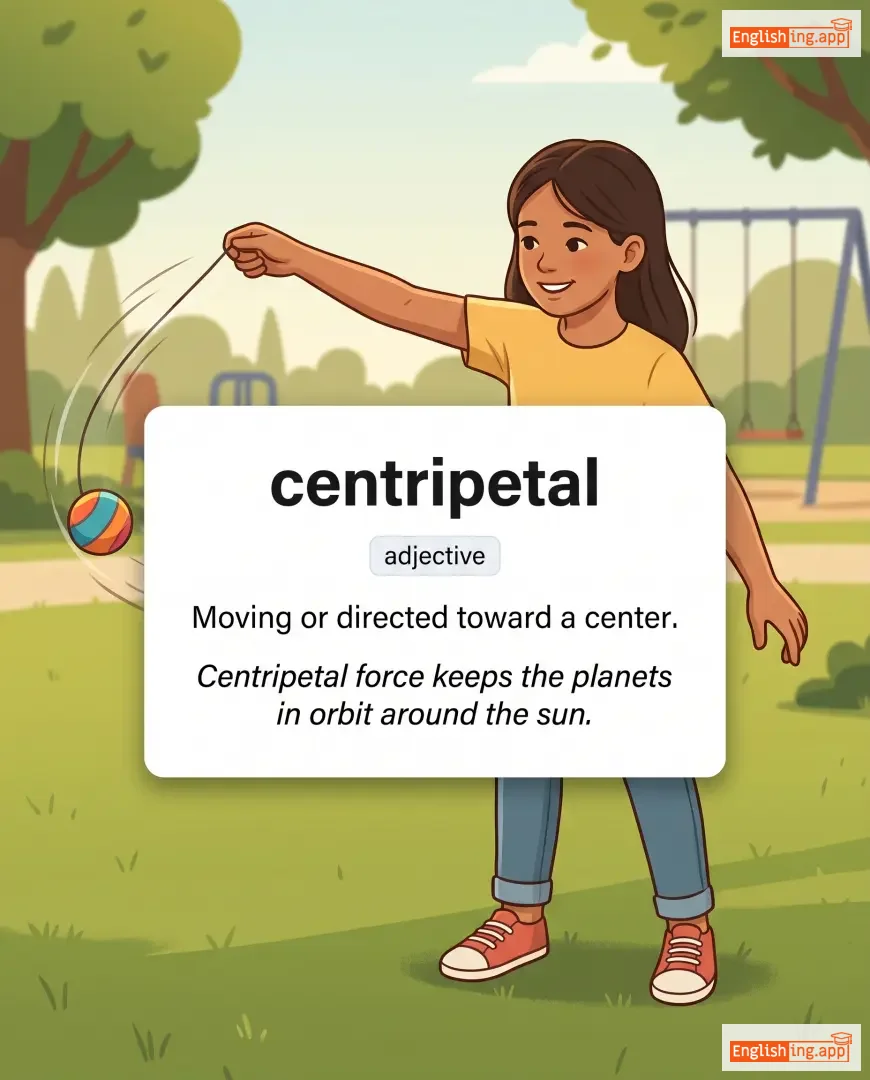
Moving or directed toward a center.
••••••
|
Centripetal force keeps the planets in orbit around the sun. |
Центрирующая сила удерживает планеты на орбите вокруг солнца.
Tsentriruyushchaya sila uderzhivayet planety na orbite vokrug solnca.
••••••
|
- •••••• | - •••••• | - •••••• |
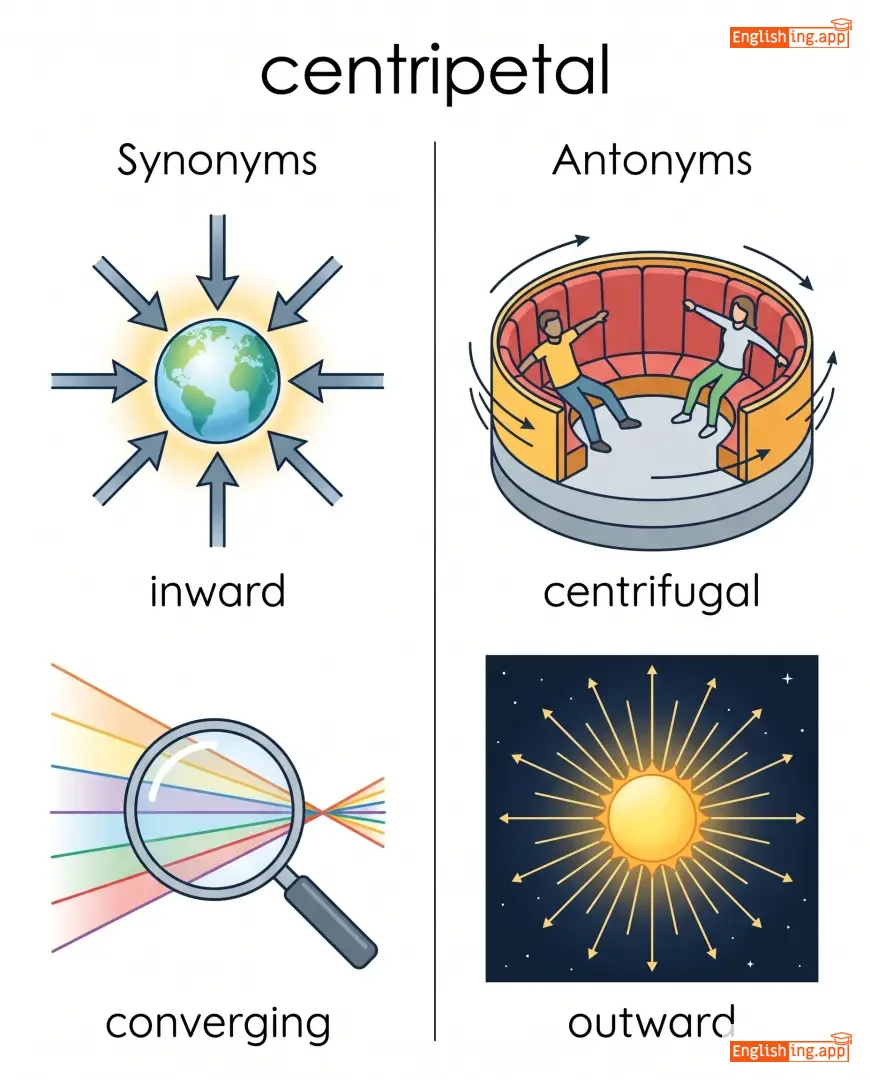
inward, converging, focusing, central
••••••
|
centrifugal, outward
••••••
|
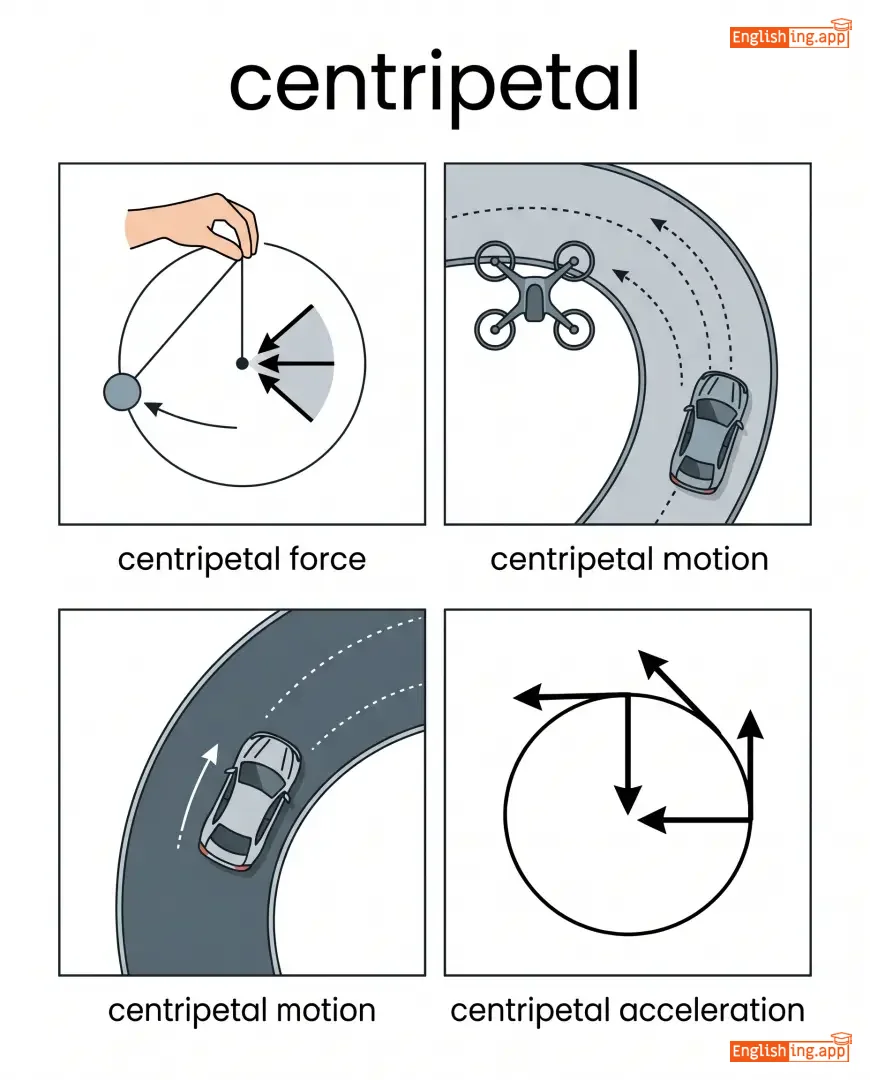
centripetal force, centripetal motion, centripetal acceleration
••••••
|
Как лепестки цветов, направленные к центру.
••••••
|
|
🥇
••••••
|
/ˈtʃæmpiən/
noun
(чемпион)
••••••
|

|
чемпион
chempion
••••••
|
- •••••• | - •••••• | - •••••• | - •••••• |
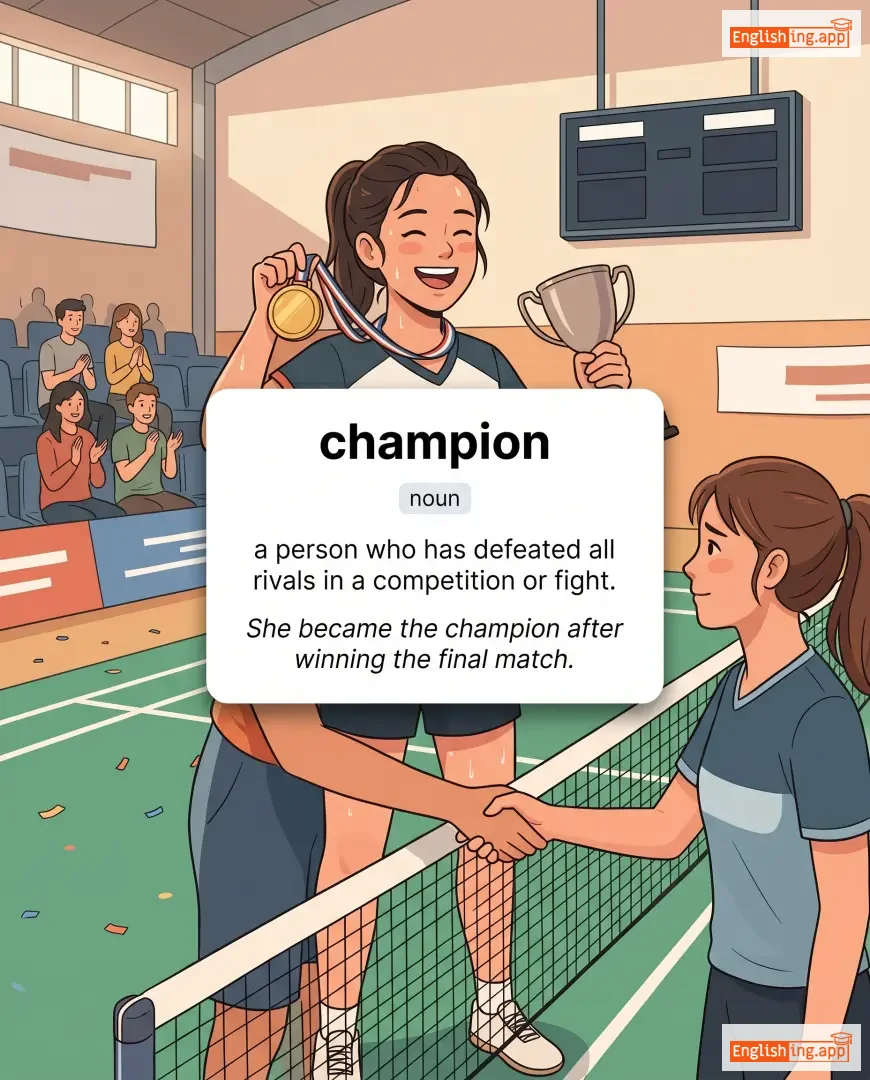
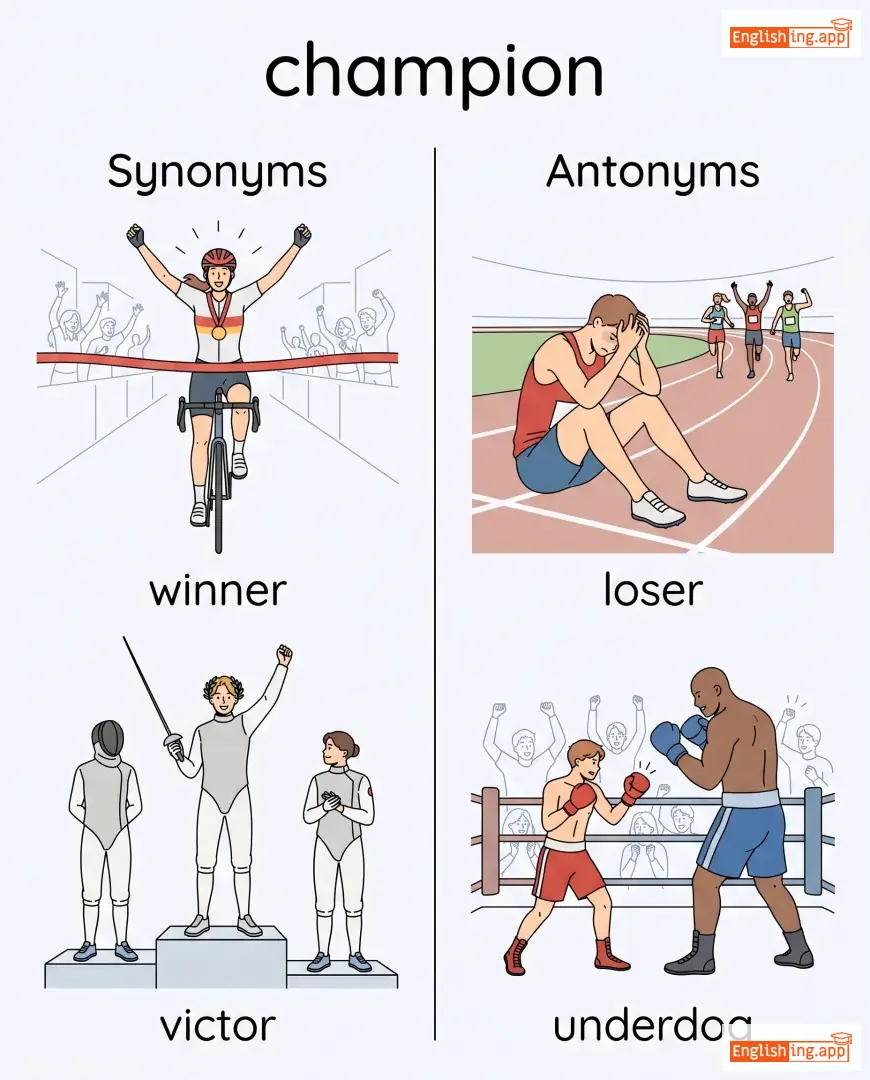
a person who has defeated all rivals in a competition or fight.
••••••
|
She became the champion after winning the final match. |
Она стала чемпионкой после победы в финальном матче.
Ona stala chempionkoy posle pobedy v final'nom matche.
••••••
|
defend the champion |
to maintain one’s title against challengers
••••••
|
защищать чемпионa
zashchishchat' chempiona
••••••
|
winner, victor, titleholder, hero, defender
••••••
|
loser, underdog
••••••
|
world champion, boxing champion, chess champion, defend champion
••••••
|
Champion means 'camp' + 'lion'—чемпион как победоносный лев.
••••••
|
|
📉
••••••
|
/ˈtʃeɪ.sən/
verb
(tʃeizn)
••••••
|

|
наказывать / подчинять
nakazivat' / podchinyat'
••••••
|
chastened
tʃeiznd
••••••
|
chastened
tʃeiznd
••••••
|
chastens
tʃeizns
••••••
|
chastening
tʃeiznɪŋ
••••••
|
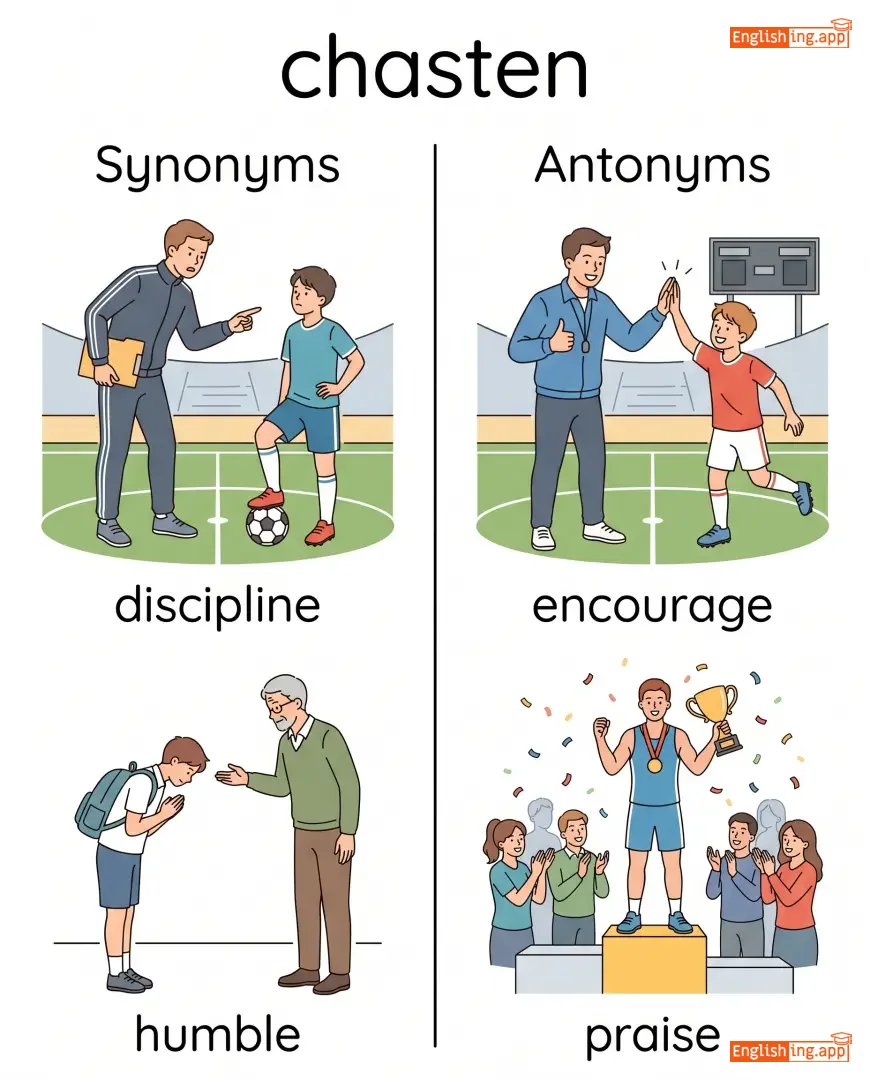
to correct or discipline; to humble or subdue
••••••
|
The coach chastened the team after their poor performance.
Тренер наказал команду после их плохих результатов.
••••••
|
Тренер наказал команду после их плохих результатов.
Trener nakazal komandu posle ikh plokhikh rezul'tatov.
••••••
|
- •••••• | - •••••• | - •••••• |
discipline, humble, correct, subdue, restrain
••••••
|
encourage, praise, reward
••••••
|
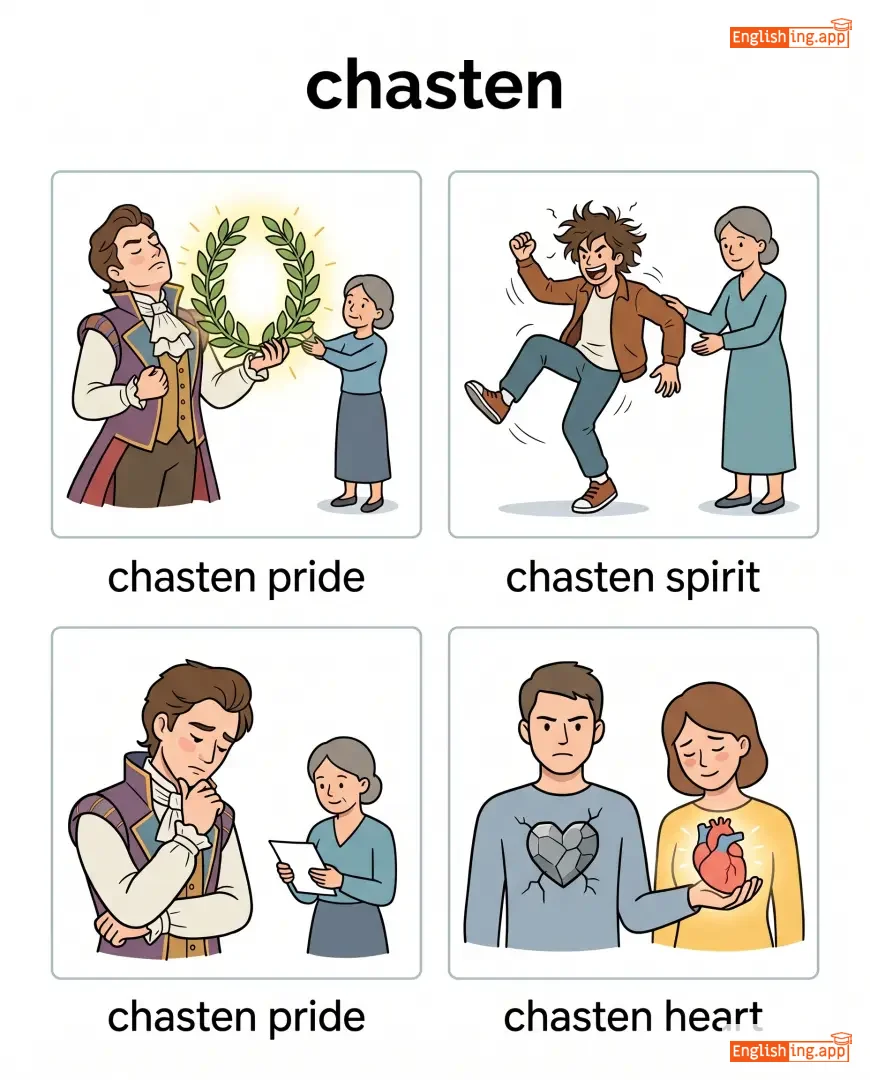
chasten pride, chasten spirit, chasten heart, chasten mind
••••••
|
Chasten на русском значит наказывать, исправлять действия.
••••••
|
|
🃏
••••••
|
/ʃɪˈkeɪnəri/
noun
(чиканери)
••••••
|

|
обман
obman
••••••
|
- •••••• | - •••••• | - •••••• | - •••••• |
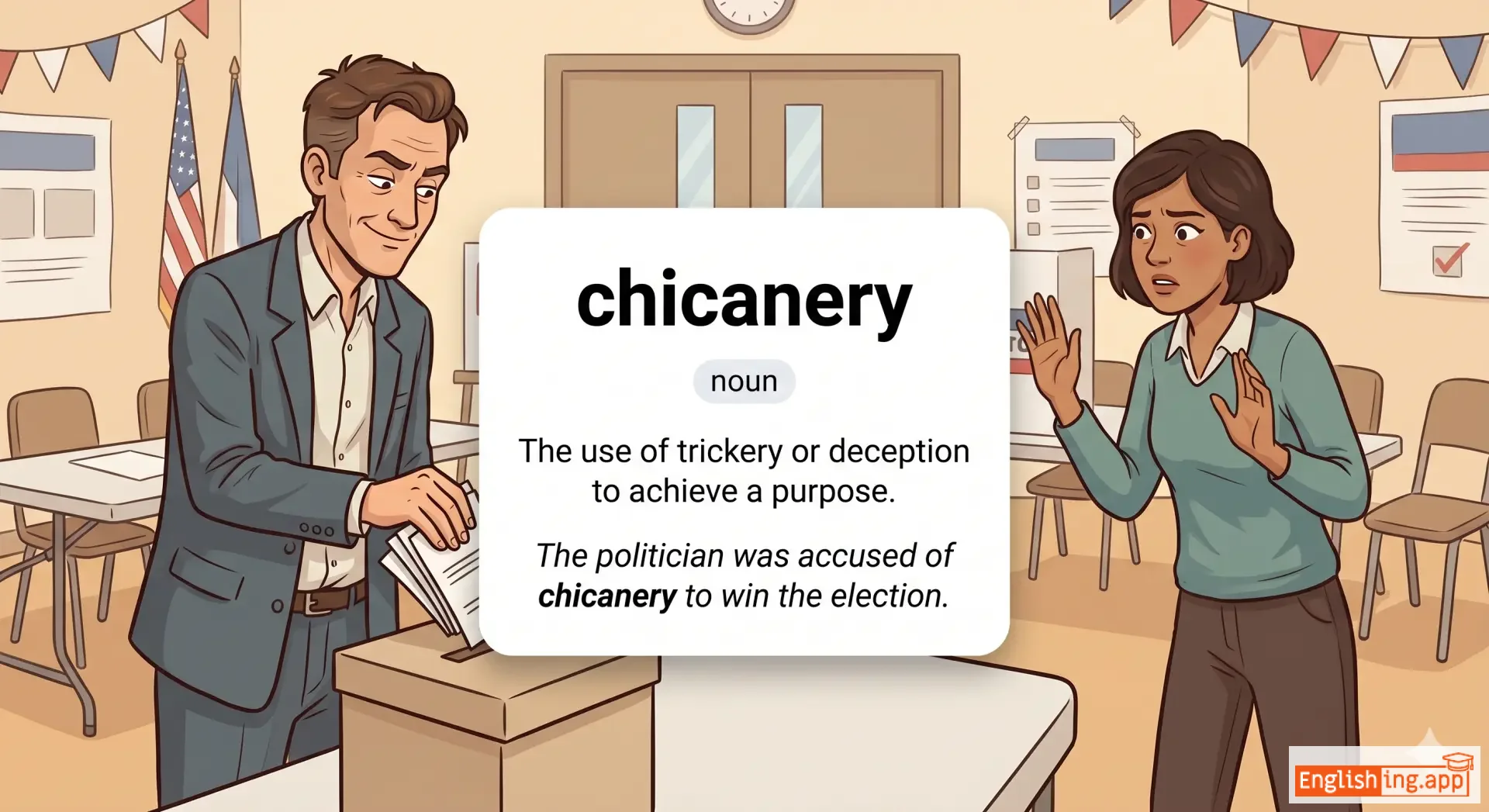
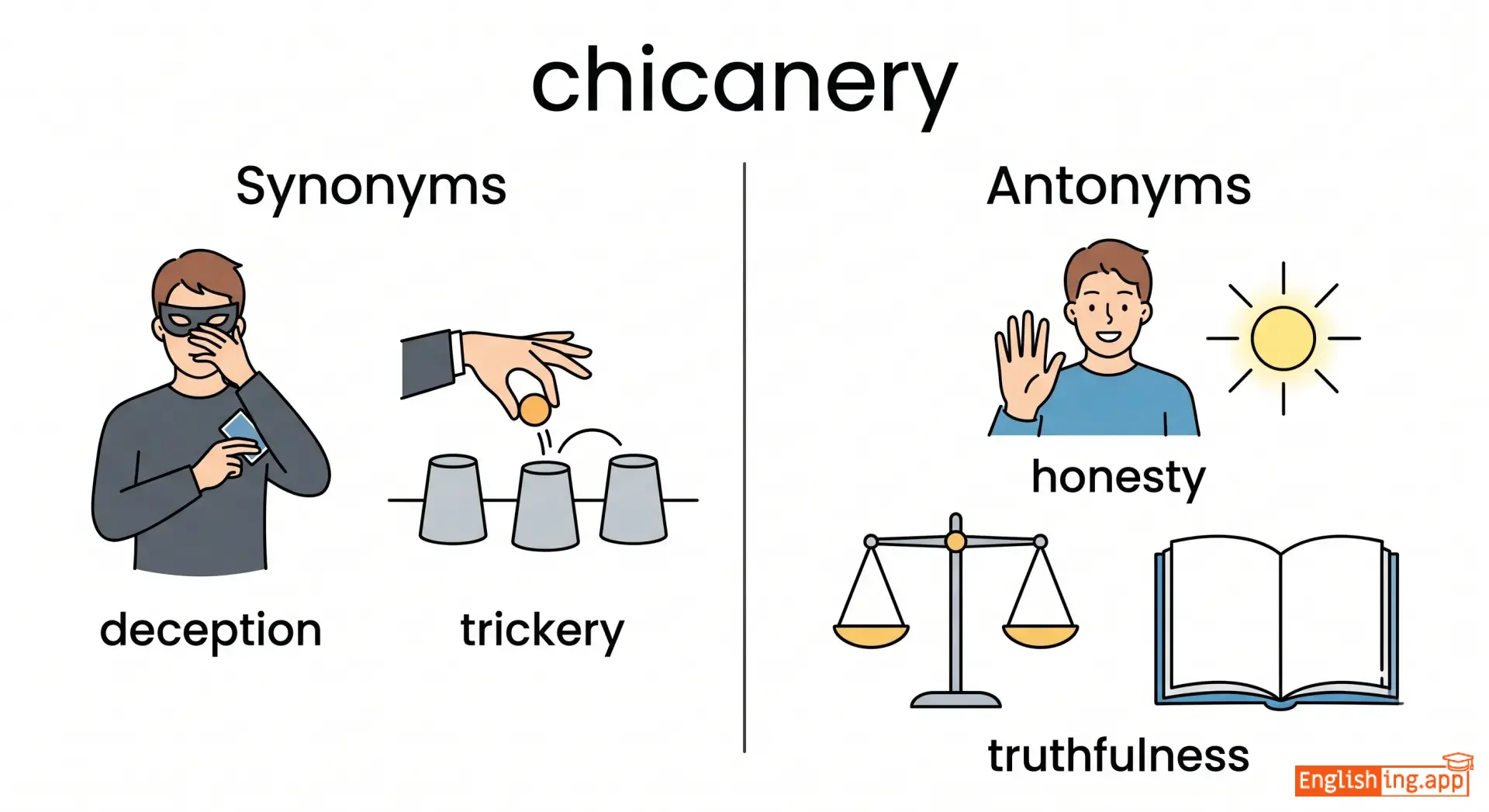
The use of trickery or deception to achieve a purpose.
••••••
|
The politician was accused of chicanery to win the election. |
Политика обвинили в обмане с целью выиграть выборы.
Politika obvinili v obmane s tsel'yu viygrati vybory.
••••••
|
- •••••• | - •••••• | - •••••• |
deception, trickery, fraud, deceit, dishonesty
••••••
|
honesty, truthfulness, integrity
••••••
|
political chicanery, financial chicanery, accused of chicanery, expose chicanery
••••••
|
Чи-Кан (chicanery) для обмана, обман.
••••••
|
|
⚔️
••••••
|
/ˈʃɪvəlri/
noun
(shivalri)
••••••
|


|
рыцарство
rytsarstvo
••••••
|
- •••••• | - •••••• | - •••••• | - •••••• |
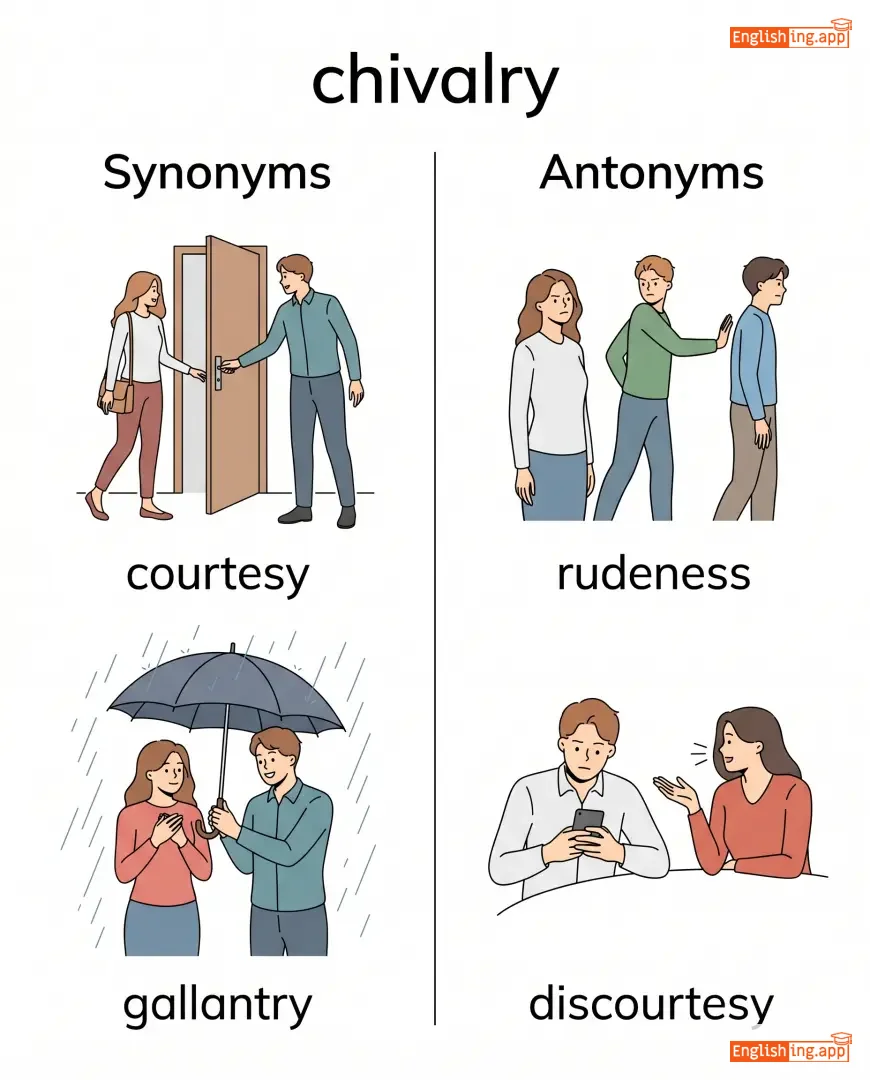
The medieval knightly system with its moral, social, and religious code; courteous behavior, especially toward women.
••••••
|
The knight lived by the code of chivalry.
Рыцарь жил по кодексу рыцарства.
••••••
|
Рыцарь жил по кодексу рыцарства.
Rytsar' zhiv po kodeksu rytsarstva.
••••••
|
code of chivalry
кодекс рыцарства
••••••
|
The set of rules and ideals guiding knightly honor and behavior.
••••••
|
кодекс рыцарства
kodeks rytsarstva
••••••
|
courtesy, gallantry, honor, knightliness
••••••
|
rudeness, discourtesy, dishonor
••••••
|
act of chivalry, show of chivalry, knightly chivalry, code of chivalry
••••••
|
Chivalry означает рыцарство ⚔️. Представьте рыцарей, всегда следящих за вежливыми правилами.
••••••
|
|
🙄
••••••
|
/ˈtʃɜːrlɪʃ/
adjective
(чёрлиш)
••••••
|

|
грубый
grubyy
••••••
|
- •••••• | - •••••• | - •••••• | - •••••• |
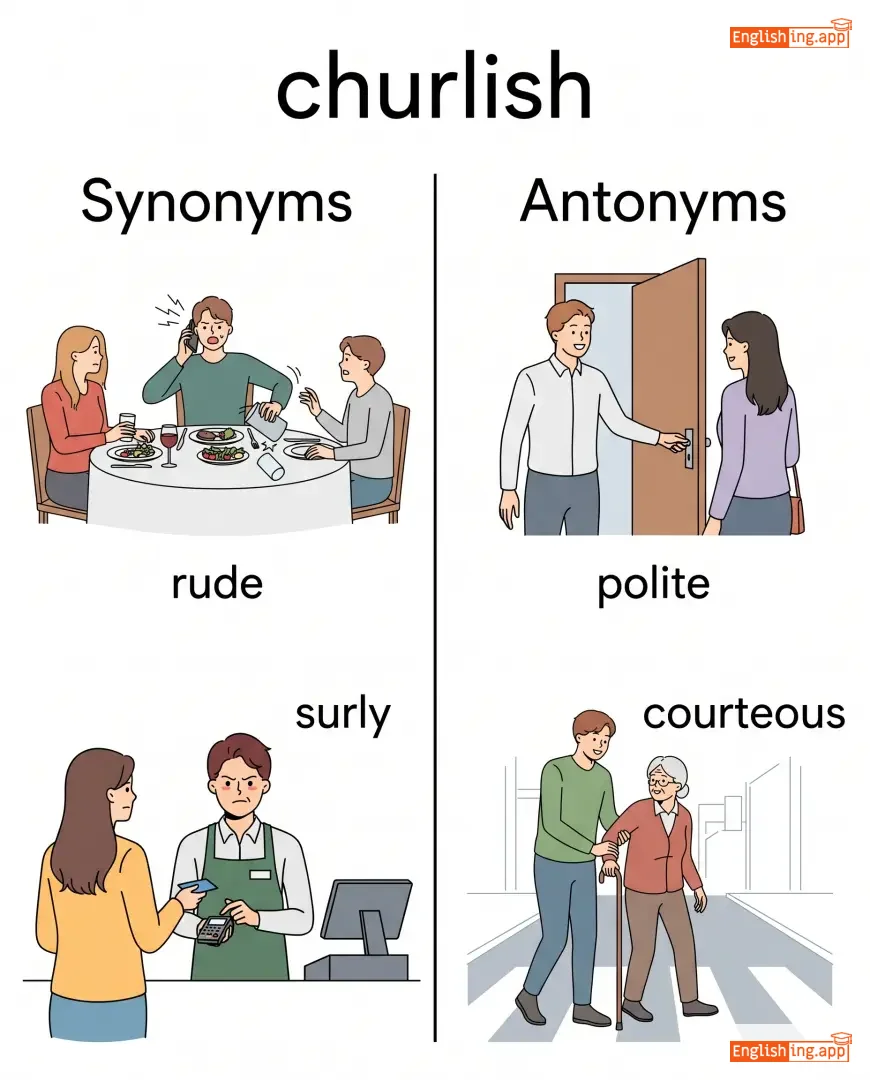
Rude in a mean-spirited and surly way.
••••••
|
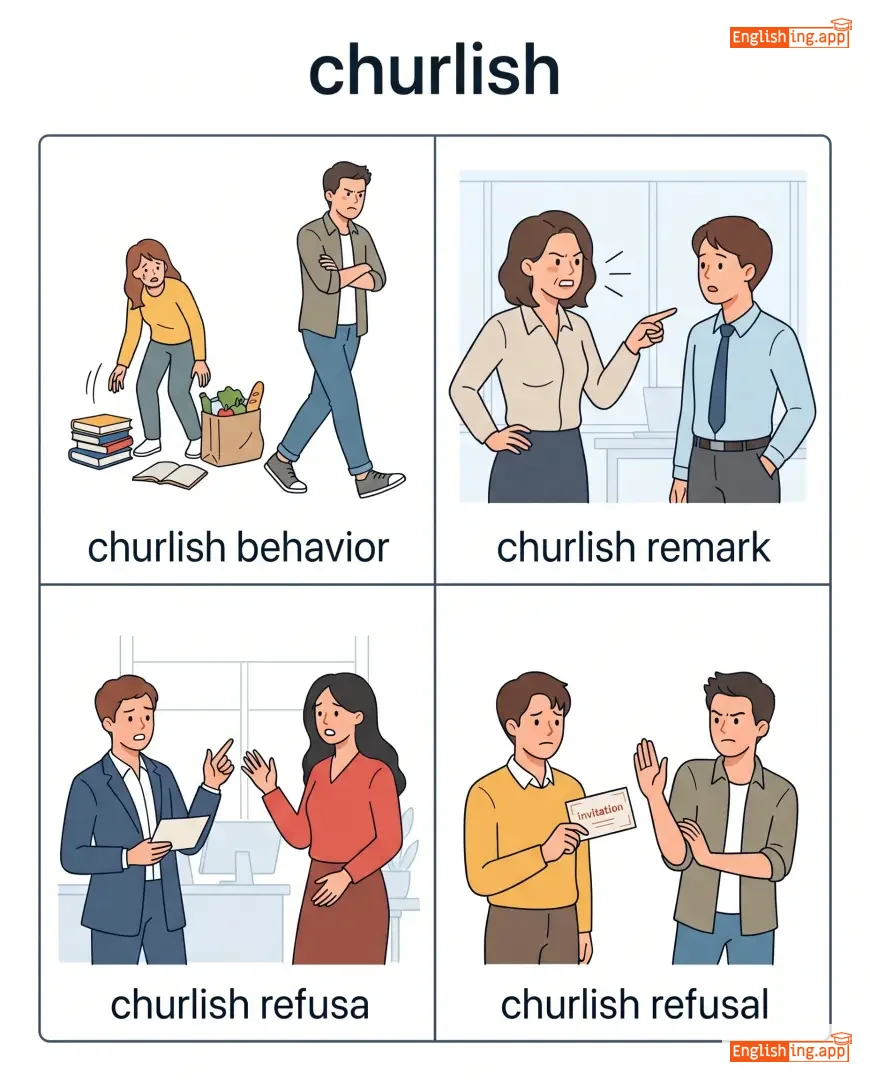
It would be churlish to refuse her kind invitation. |
Было бы грубо отвергнуть ее любезное приглашение.
Bylo by grubo otvergout' yejo lyubeznoe priglashenie.
••••••
|
- •••••• | - •••••• | - •••••• |
rude, surly, boorish, ill-mannered, impolite
••••••
|
polite, courteous, civil
••••••
|
churlish behavior, churlish remark, churlish refusal, act churlish
••••••
|
Churlish значит грубый — помните, 'churl' всегда грубый.
••••••
|
|
🌀
••••••
|
/sərˈkjuːɪtəs/
adjective
(сёркьюитас)
••••••
|


|
окольный путь
okólnyj put'
••••••
|
- •••••• | - •••••• | - •••••• | - •••••• |
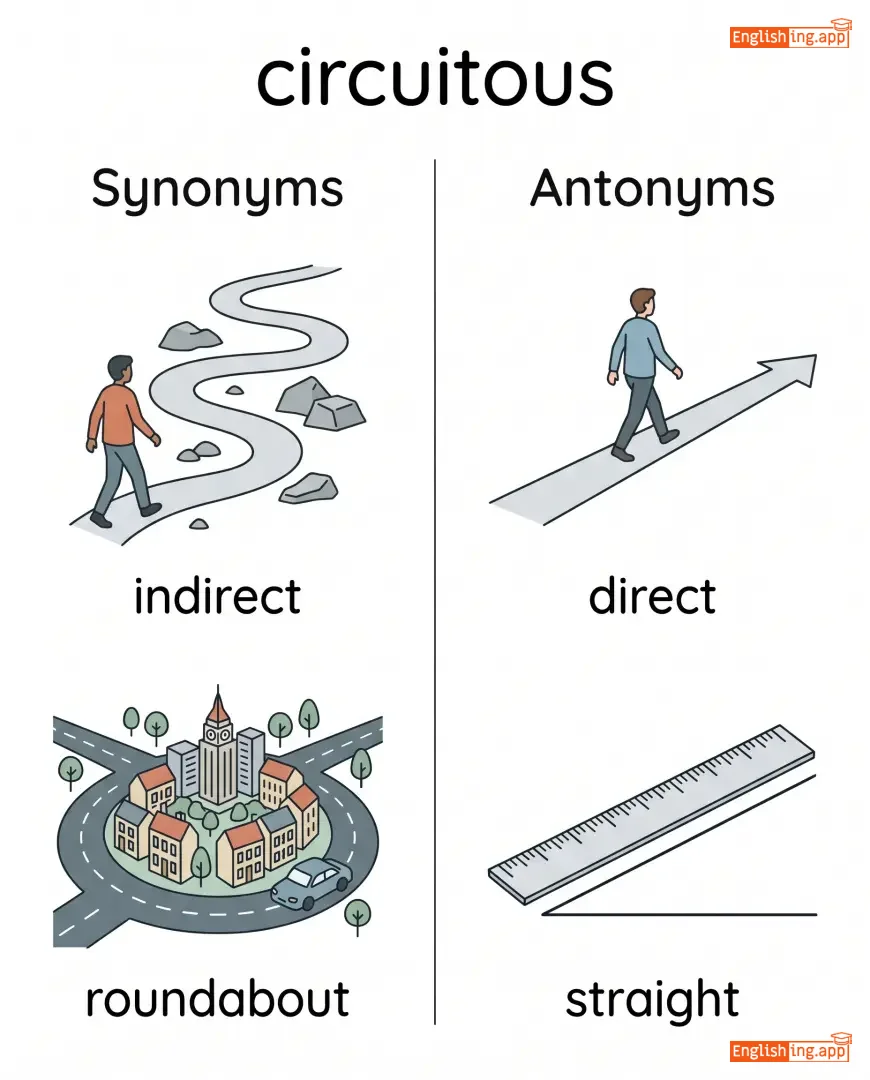
Longer than the most direct way; roundabout.
••••••
|
He took a circuitous route to avoid traffic. |
Он выбрал окольный путь, чтобы избежать пробок.
On vybral okólnyj put', chtoby izbezhat' probok.
••••••
|
- •••••• | - •••••• | - •••••• |
indirect, roundabout, winding, meandering, convoluted
••••••
|
direct, straight, straightforward
••••••
|
circuitous route, circuitous explanation, circuitous journey
••••••
|
Circuitous означает 'круговой путь' → окольный путь
••••••
|
|
🧙♀️
••••••
|
/klɛərˈvɔɪənt/
noun, adjective
••••••
|


|
- •••••• | - •••••• | - •••••• | - •••••• | - •••••• |
a person who claims to have clairvoyance; having the ability to see beyond normal senses
••••••
|
The clairvoyant predicted that she would travel abroad soon. |
- •••••• | - •••••• | - •••••• | - •••••• |
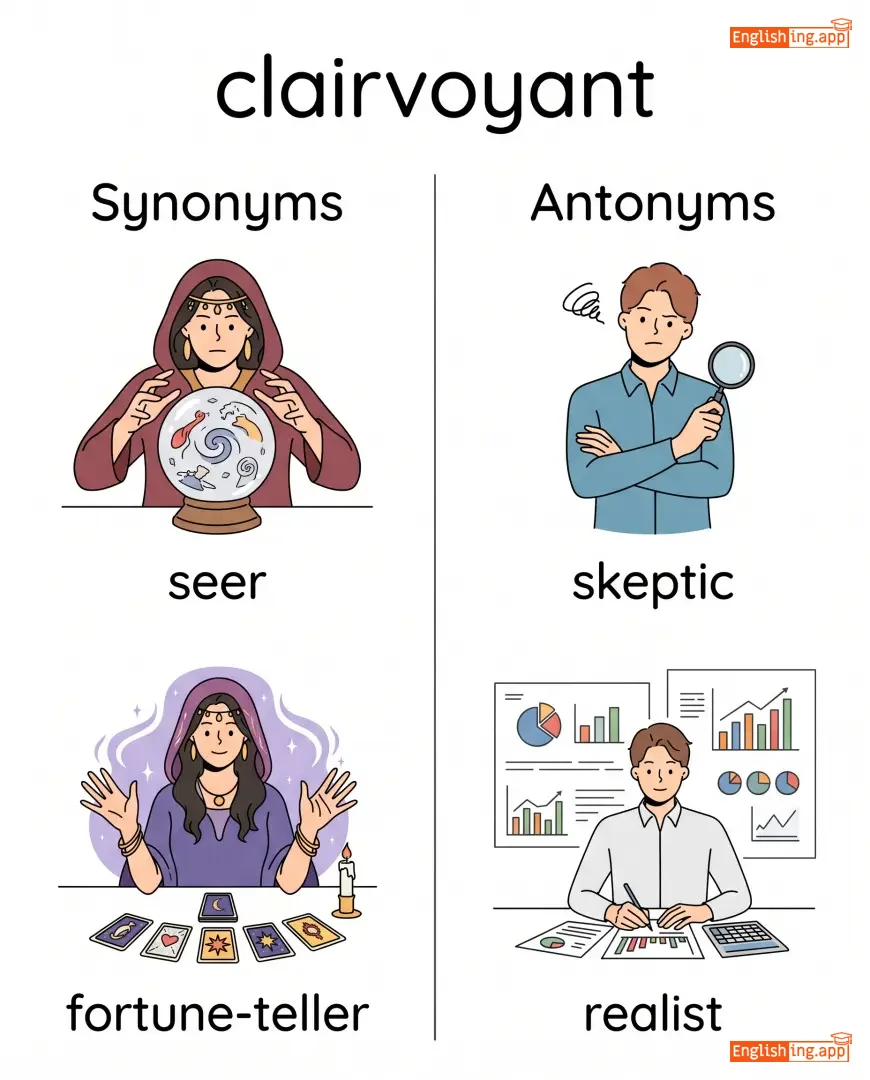
seer, fortune-teller, psychic, medium
••••••
|
skeptic, realist
••••••
|
clairvoyant vision, clairvoyant abilities, consult a clairvoyant
••••••
|
No •••••• |
|
📢
••••••
|
/ˈklæmər/
noun
(кламор)
••••••
|

|
гвалт
gvalt
••••••
|
- •••••• | - •••••• | - •••••• | - •••••• |
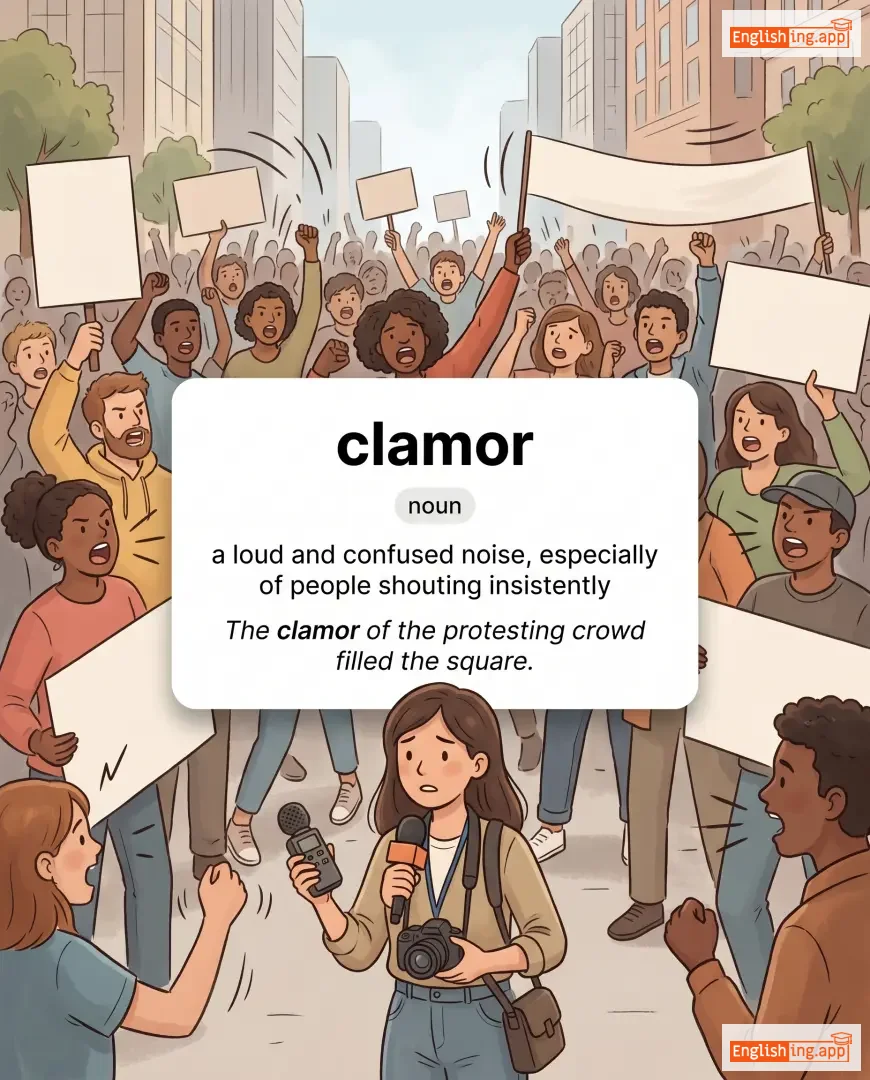
a loud and confused noise, especially of people shouting insistently
••••••
|
The clamor of the protesting crowd filled the square.
Кламор протестующих заполнил площадь.
••••••
|
Гвалт протестующих заполнил площадь.
Gvalt protestuyushchikh zapolnil ploshchad.
••••••
|
raise a clamor
поднять кламор
••••••
|
to express strong demands or complaints loudly
••••••
|
поднять гвалт
podnyat' gvalt
••••••
|
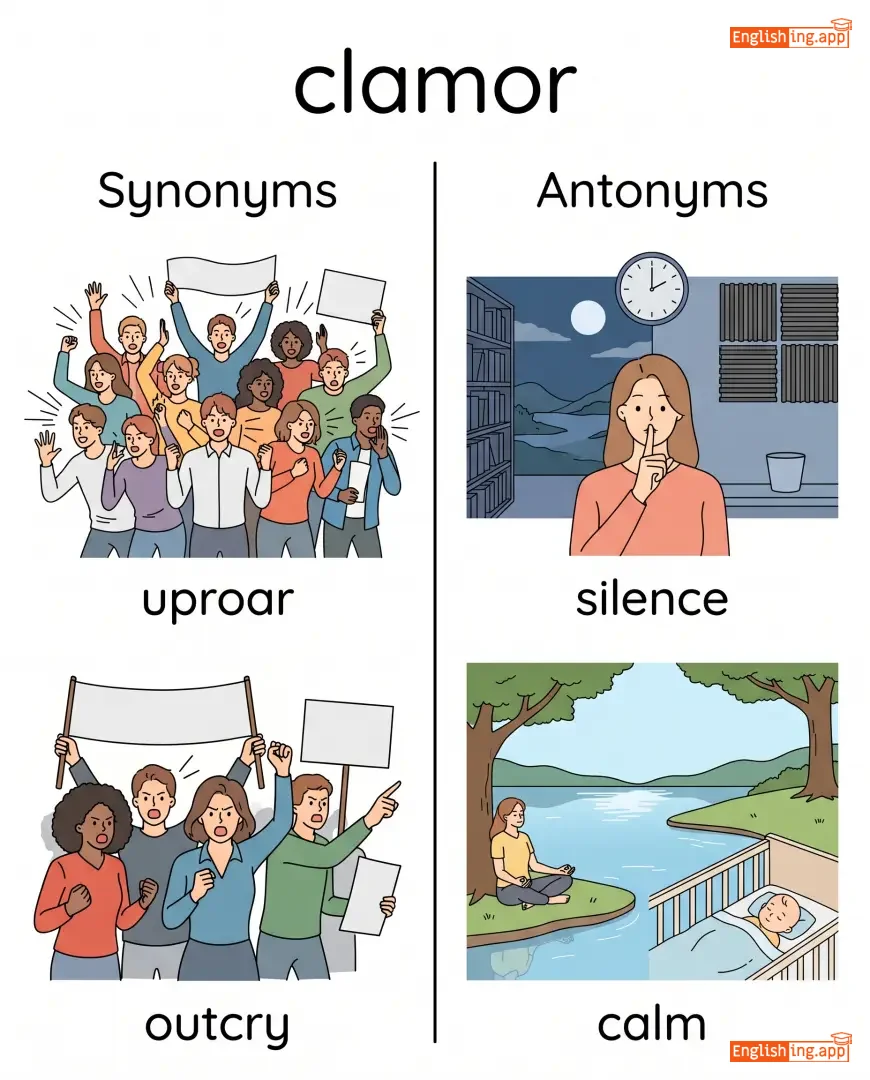
uproar, outcry, noise, din, commotion
••••••
|
silence, calm, quiet
••••••
|
public clamor, loud clamor, clamor for change, clamor of voices
••••••
|
Clamor в русском - это гвалт, как когда люди протестуют и кричат.
••••••
|
|
👥
••••••
|
/kliːk/
noun
(klik)
••••••
|


|
клика
klika
••••••
|
- •••••• | - •••••• | - •••••• | - •••••• |
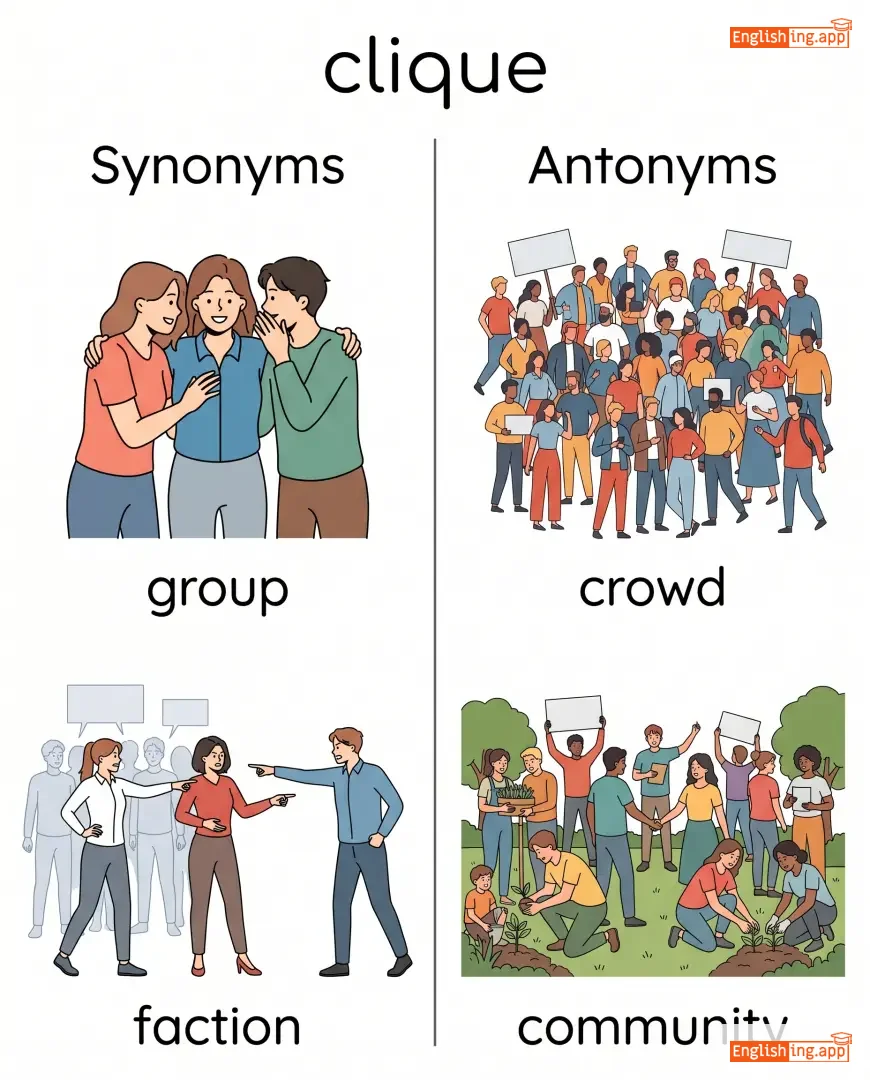
a small, exclusive group of people
••••••
|
The students formed a clique that excluded others. |
Студенты создали клику, которая исключала других.
Studenty sozdali kliku, kotoraya isklyuchala drugikh.
••••••
|
- •••••• | - •••••• | - •••••• |
group, faction, circle, set, gang
••••••
|
crowd, community, mass
••••••
|
school clique, social clique, exclusive clique
••••••
|
КЛИКА — это группа, куда не попасть.
••••••
|
|
⛪
••••••
|
/ˈklɔɪstər/
noun
(клойстер)
••••••
|

|
клуастер
klouster
••••••
|
- •••••• | - •••••• | - •••••• | - •••••• |
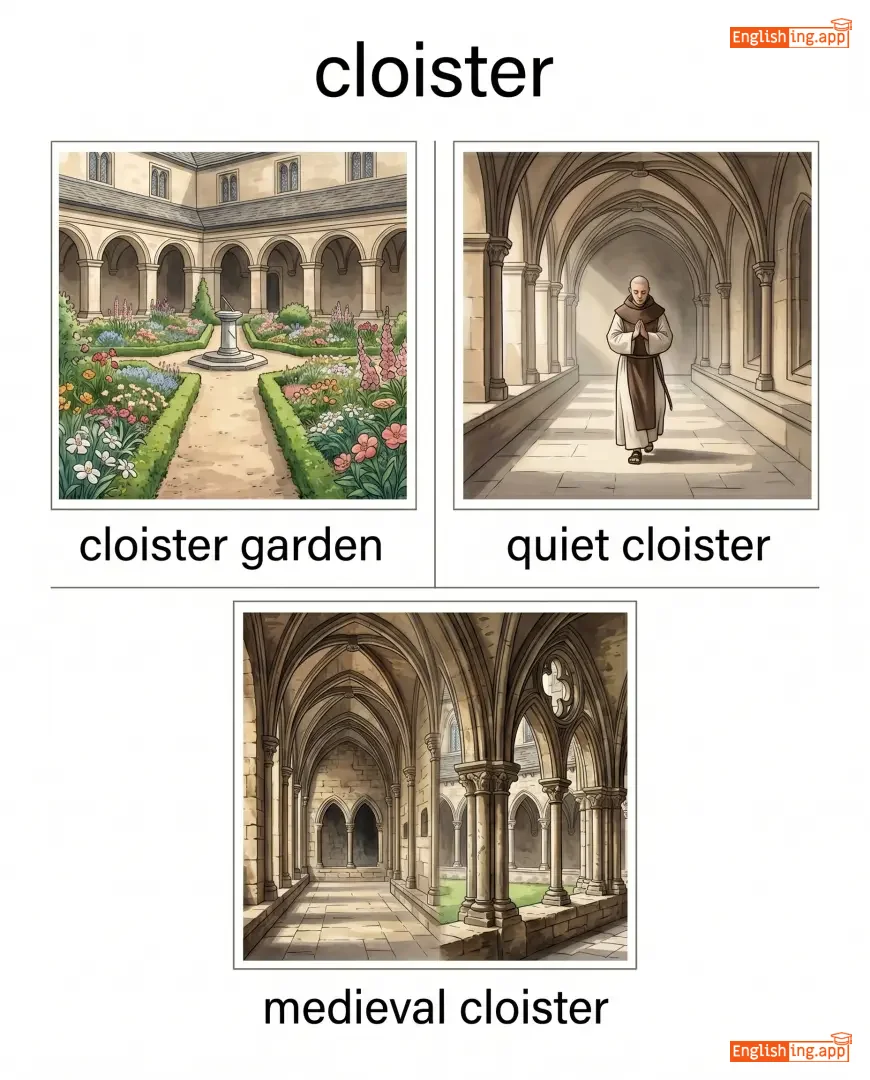
a covered walk in a convent, monastery, or cathedral, typically with a wall on one side and a colonnade open to a quadrangle on the other.
••••••
|
The monks walked silently through the cloister.
Монахи шли молча через клуастер.
••••••
|
Монахи шли молча через клуастер.
Monakhi shli molcha cherez klouster.
••••••
|
- •••••• | - •••••• | - •••••• |
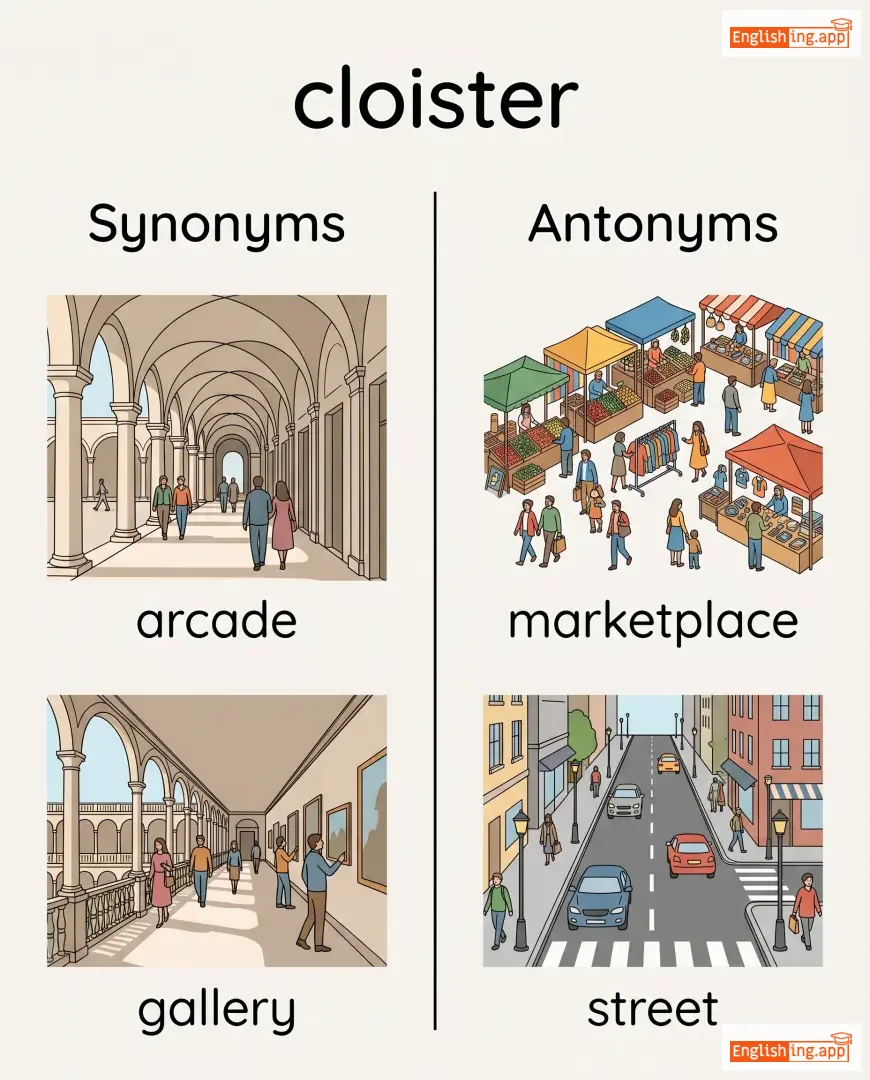
arcade, gallery, walkway, monastery, abbey
••••••
|
marketplace, street, outside
••••••
|
cloister garden, quiet cloister, medieval cloister, cloister life
••••••
|
Клуастер — это крытый проход в монастыре, что напоминает замкнутый путь.
••••••
|
|
🧪
••••••
|
/koʊˈæɡjəˌleɪt/
verb
(ko-ag-yu-leyt)
••••••
|
|
сворачиваться
svorachivatsya
••••••
|
coagulated
ko-ag-yu-leyt-ed
••••••
|
coagulated
ko-ag-yu-leyt-ed
••••••
|
coagulates
ko-ag-yu-leyt-s
••••••
|
coagulating
ko-ag-yu-leyt-ing
••••••
|
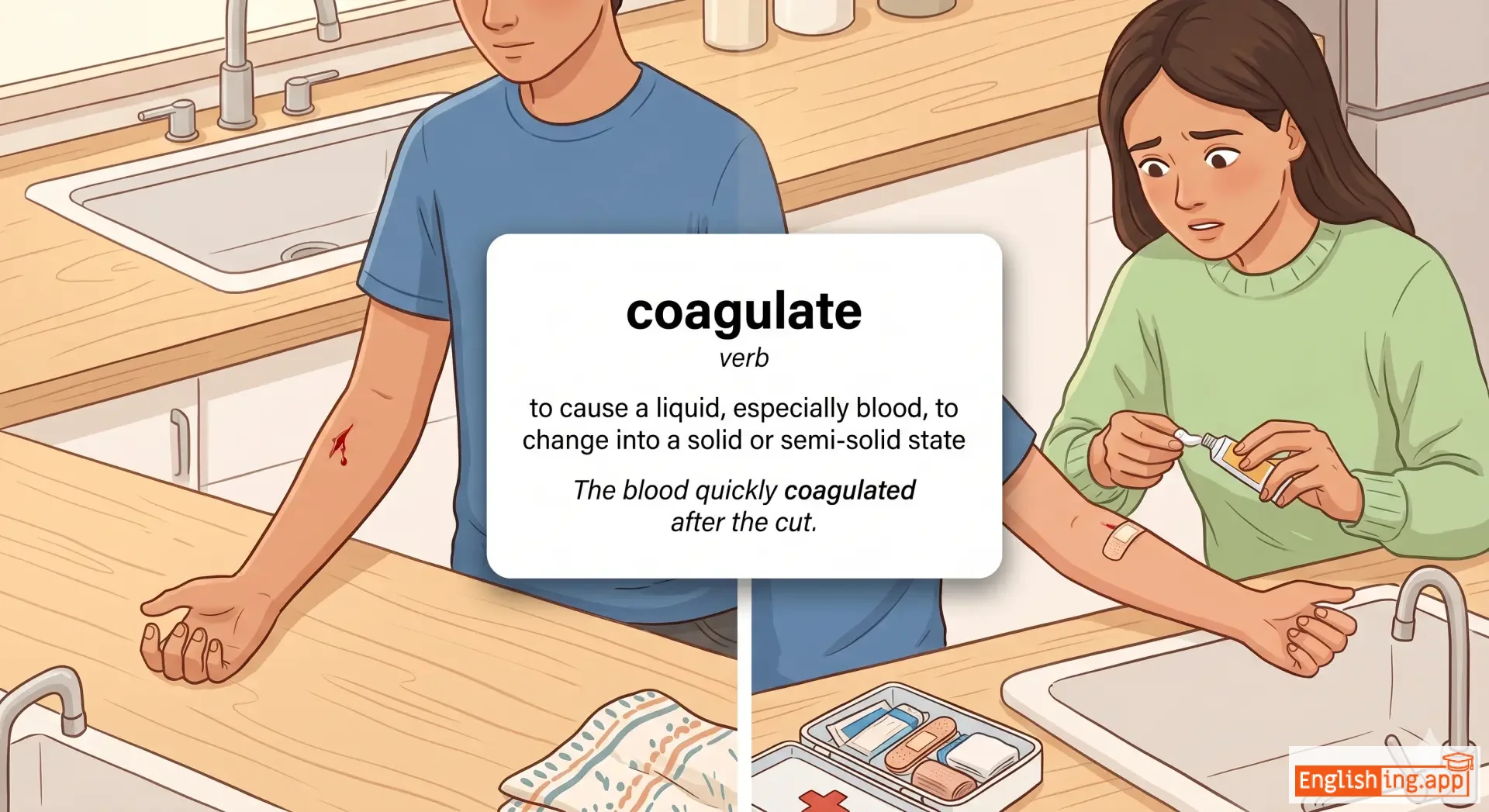
to cause a liquid, especially blood, to change into a solid or semi-solid state
••••••
|
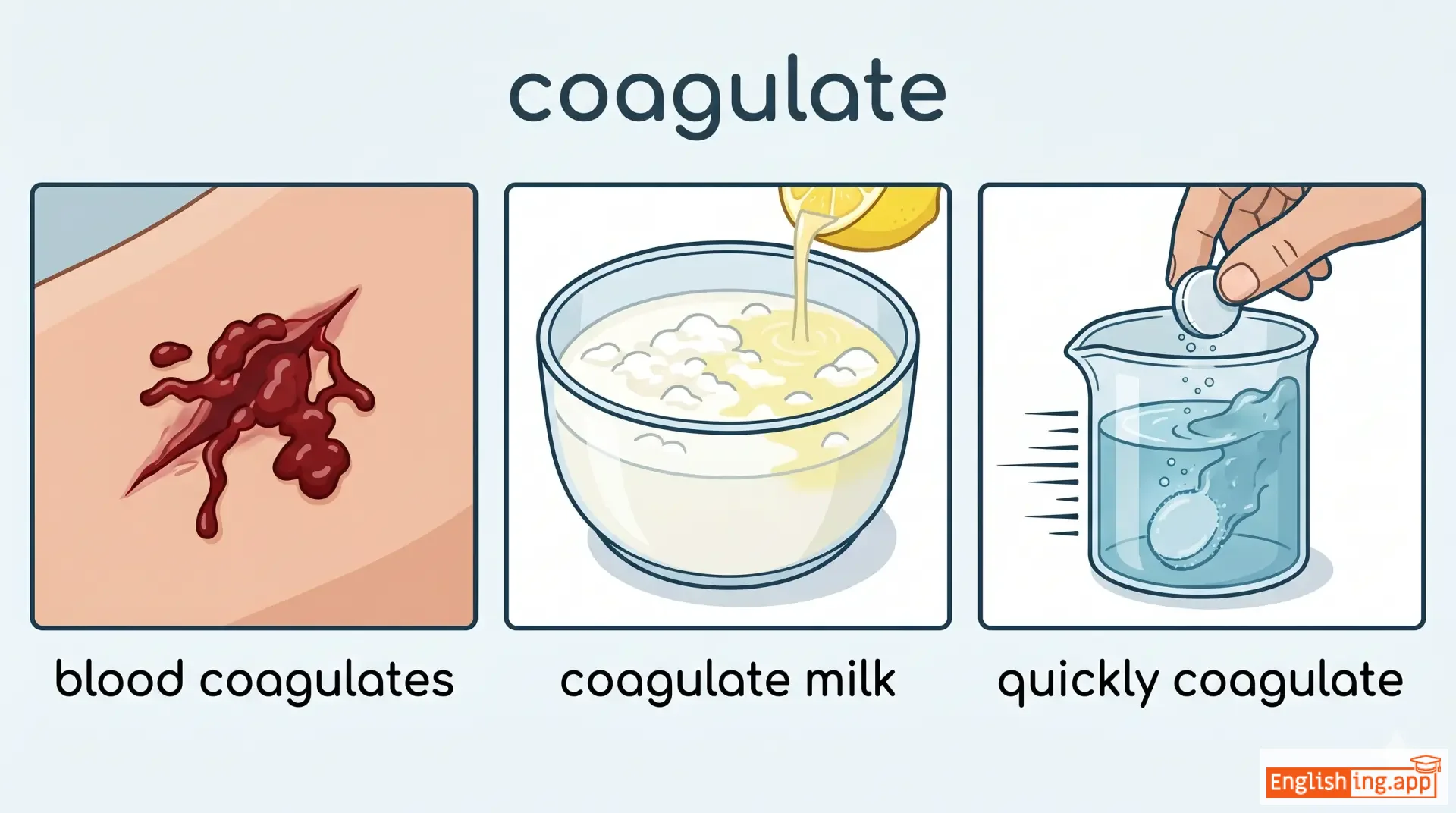
The blood quickly coagulated after the cut.
Кровь быстро свернулась после пореза.
••••••
|
Кровь быстро свернулась после пореза.
Krov' bystro svernylas' posle poreza.
••••••
|
- •••••• | - •••••• | - •••••• |
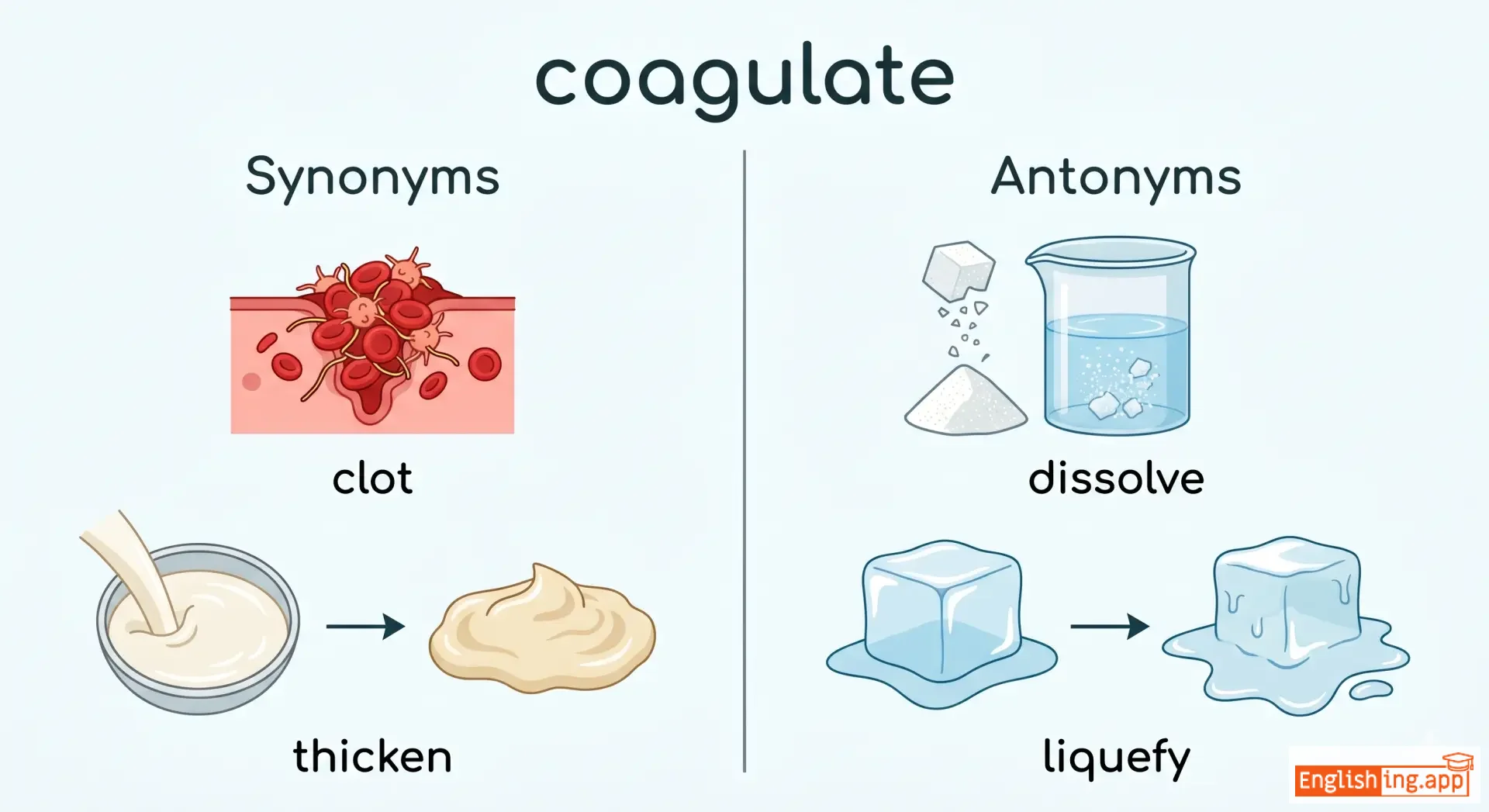
clot, thicken, curdle, congeal
••••••
|
dissolve, liquefy, melt
••••••
|
blood coagulates, coagulate milk, quickly coagulate
••••••
|
Резка заставляет кровь свертываться.
••••••
|
|
🔗
••••••
|
/ˌkoʊəˈlɛs/
verb
(коалес)
••••••
|

|
объединяться
ob'yedinyat'sya
••••••
|
coalesced
коалесд
••••••
|
coalesced
коалесд
••••••
|
coalesces
коалесес
••••••
|
coalescing
коалесинг
••••••
|
to come together to form one whole or unite into a single entity
••••••
|
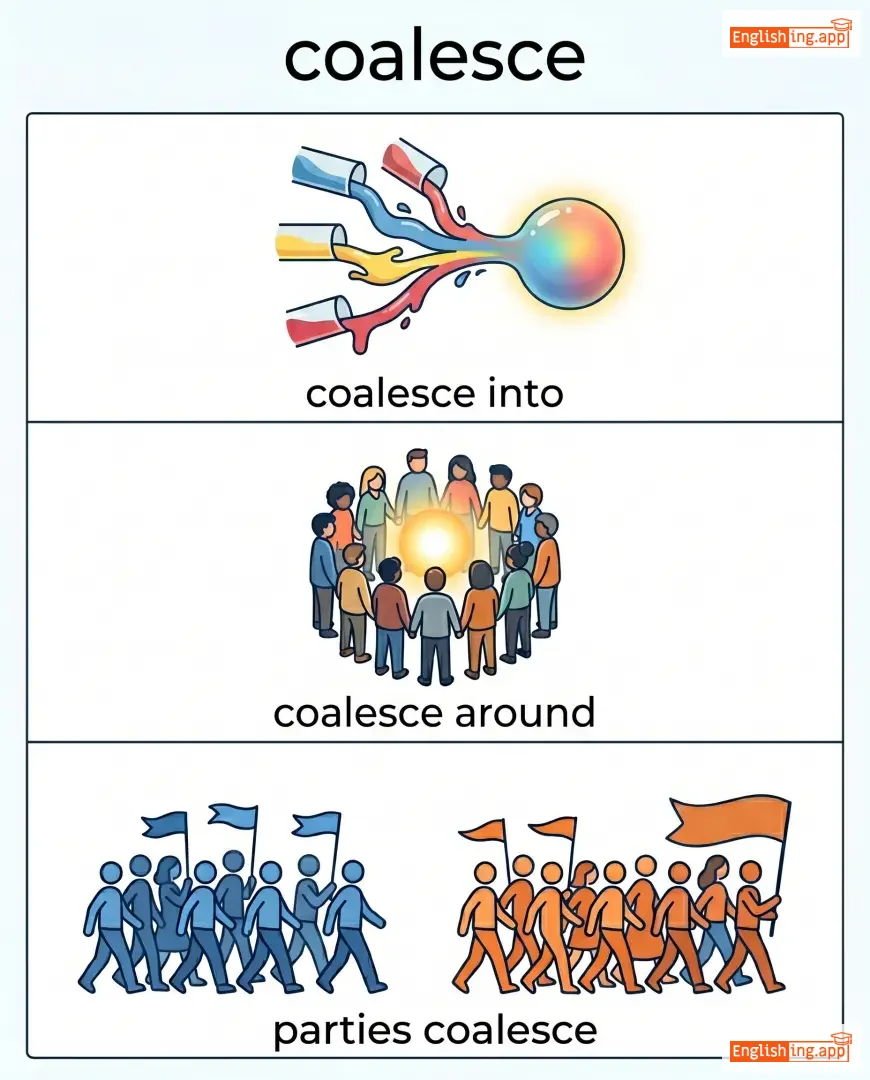
The two political parties decided to coalesce for the election.
Две политические партии решили объединиться для выборов.
••••••
|
Две политические партии решили объединиться для выборов.
Dve politicheskie partii reshili ob'yedinit'sya dlya vyborov.
••••••
|
- •••••• | - •••••• | - •••••• |
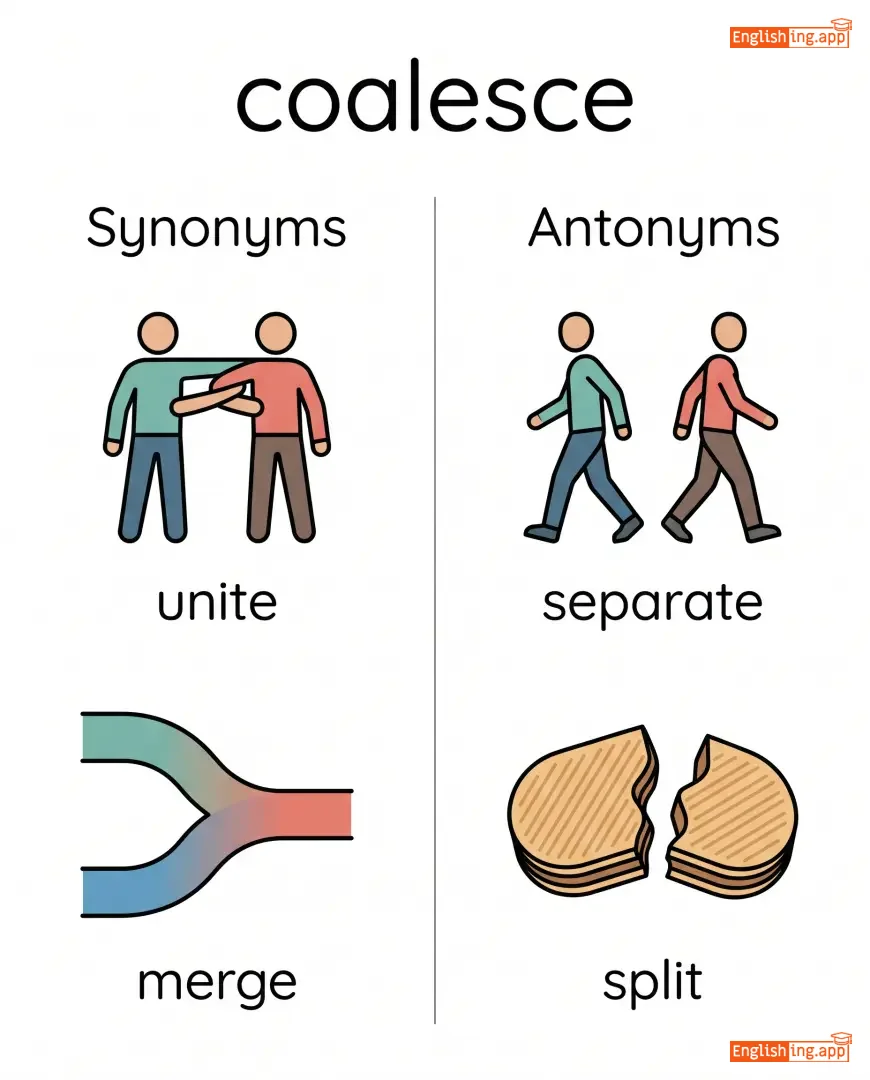
unite, merge, combine, fuse, integrate
••••••
|
separate, split, divide
••••••
|
coalesce into, coalesce around, parties coalesce
••••••
|
Coal + ёдиняться = объединяться как уголь
••••••
|
|
🔚
••••••
|
/ˈkoʊdə/
noun
(кода)
••••••
|

|
кода
koda
••••••
|
- •••••• | - •••••• | - •••••• | - •••••• |
the concluding passage of a piece of music or a literary work
••••••
|
The novel ends with a reflective coda that ties up the themes. |
Роман заканчивается рефлексивной кодой, которая связывает темы.
Roman zakanchivayetsya reflekciyernoy kodoy, kotoraya svyazyvayet temy.
••••••
|
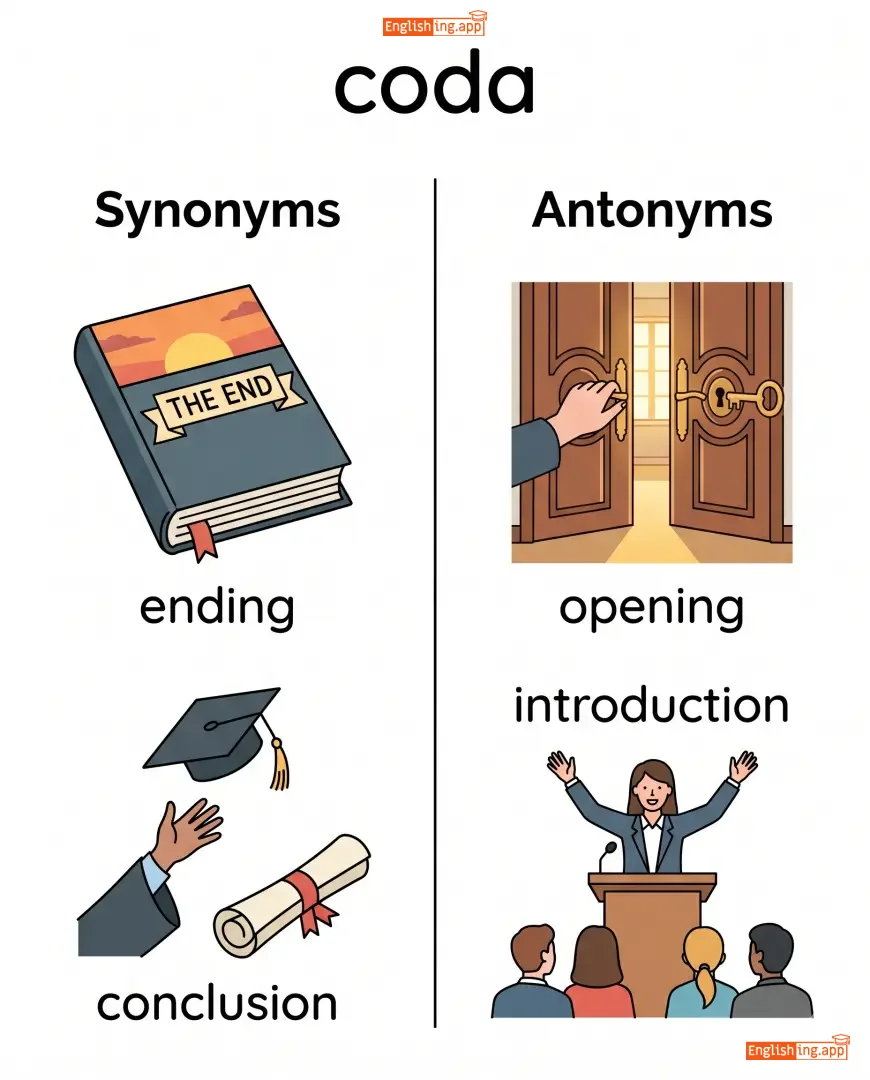
- •••••• | - •••••• | - •••••• |
ending, conclusion, finale, epilogue
••••••
|
opening, introduction, beginning
••••••
|
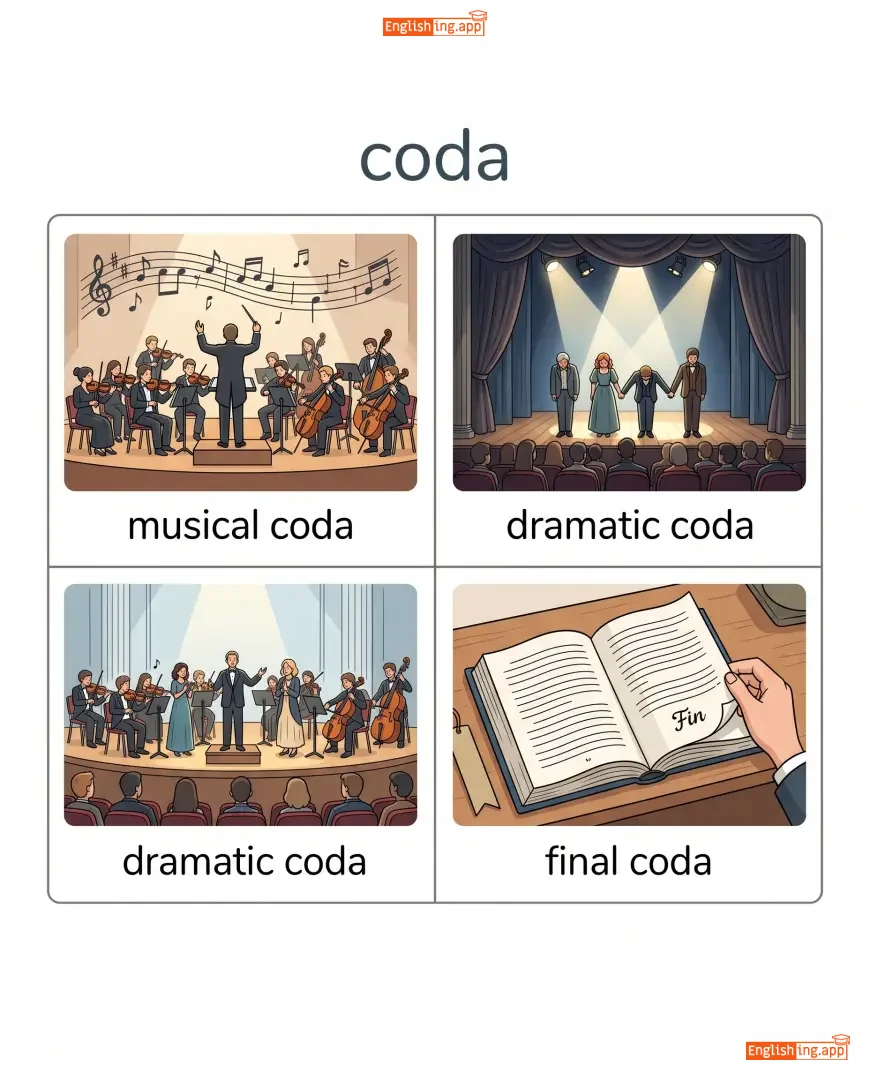
musical coda, dramatic coda, final coda
••••••
|
Coda – это конец произведения, как завершение музыки или книги.
••••••
|
|
📚
••••••
|
/ˈkəʊ.dɪ.faɪ/
verb
(кодифицировать)
••••••
|

|
кодифицировать
kodifitsirovat
••••••
|
codified
кодифицировал
••••••
|
codified
кодифицирован
••••••
|
codifies
кодифицирует
••••••
|
codifying
кодифицируя
••••••
|
to arrange laws, rules, or ideas into a clear and systematic code
••••••
|
The committee worked to codify the existing laws.
Комитет работал над кодификацией существующих законов.
••••••
|
Комитет работал над кодификацией существующих законов.
Komitet rabotal nad kodifikatsiyey suschestvuyushchikh zakonov.
••••••
|
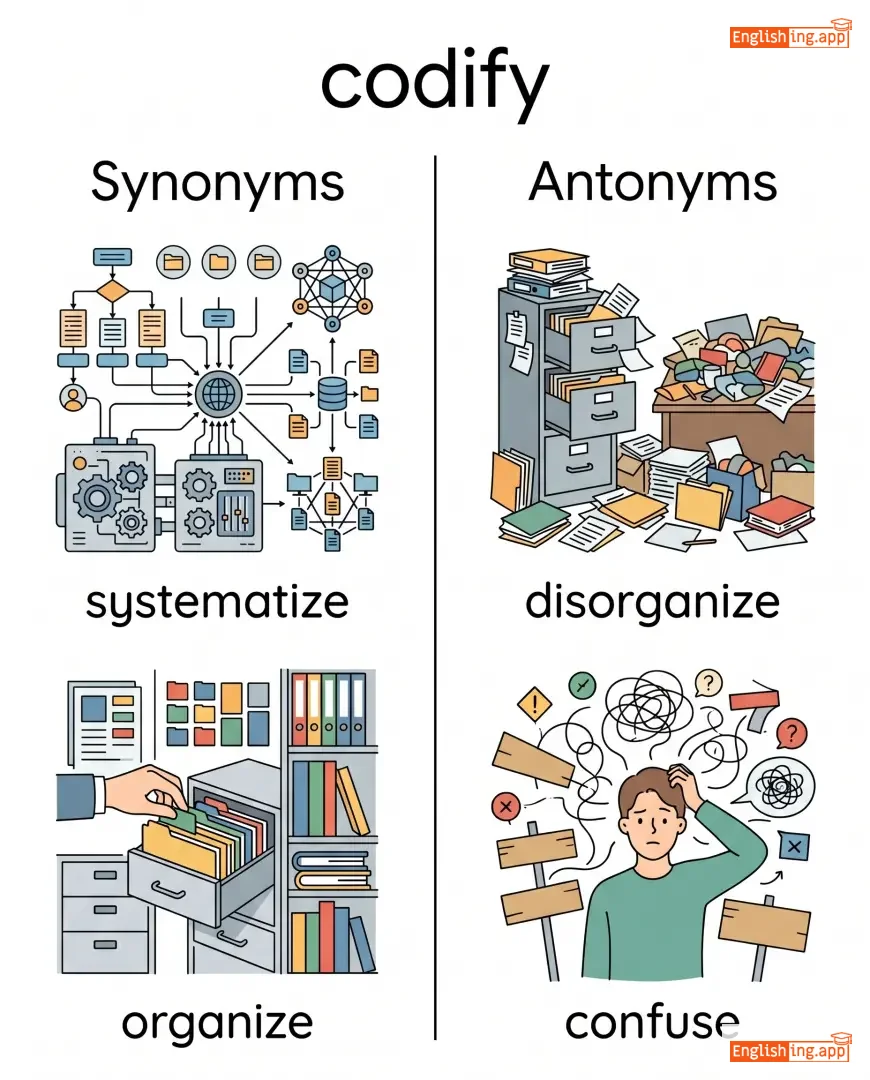
- •••••• | - •••••• | - •••••• |
systematize, organize, arrange, classify
••••••
|
disorganize, confuse
••••••
|
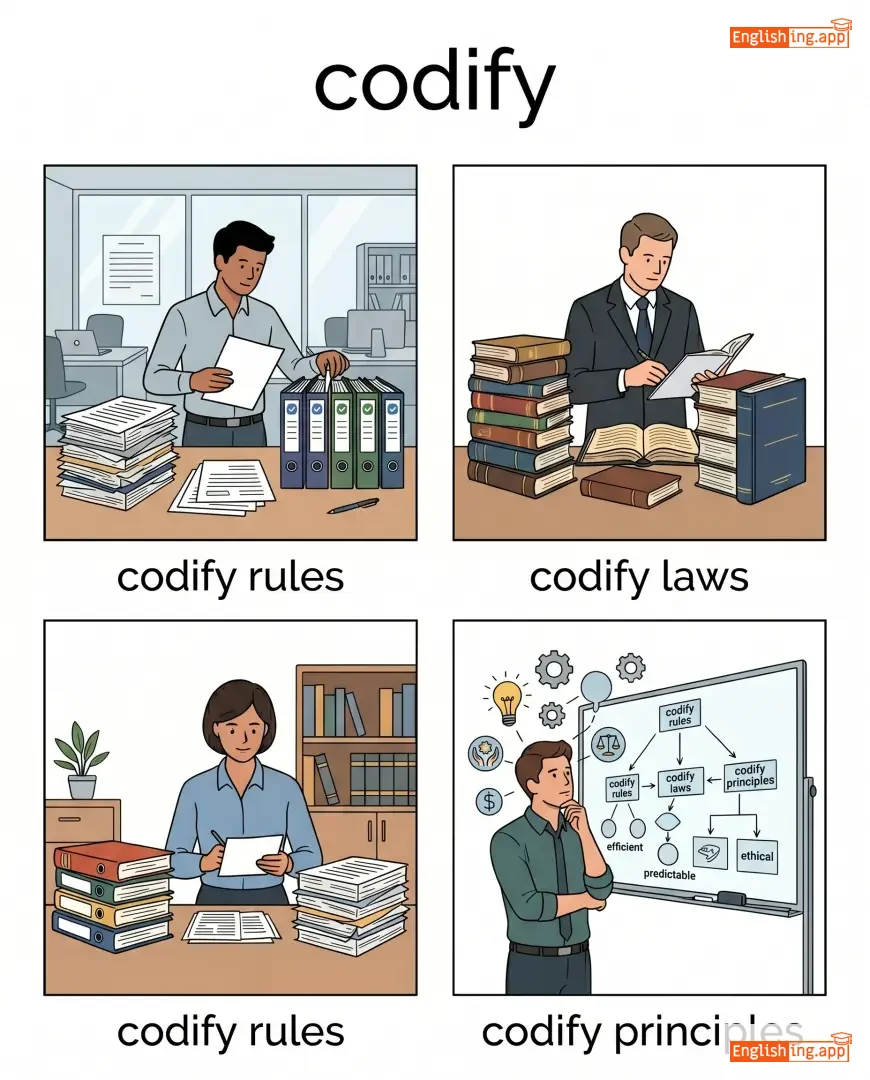
codify rules, codify laws, codify principles, codify knowledge
••••••
|
КОДИФИЦИРОВАТЬ значит упорядочить законы как код.
••••••
|
|
📘
••••••
|
/ˈkɒɡnɪzənt/
adjective
(когниза́нт)
••••••
|


|
осведомлённый
osvedomlennyj
••••••
|
- •••••• | - •••••• | - •••••• | - •••••• |
having knowledge or being aware of something
••••••
|
She is fully cognizant of the challenges ahead.
Она полностью осведомлена о предстоящих вызовах.
••••••
|
Она полностью осведомлена о предстоящих вызовах.
Ona polnost'yu osvedomlena o predstoyashchikh vyzovakh.
••••••
|
- •••••• | - •••••• | - •••••• |
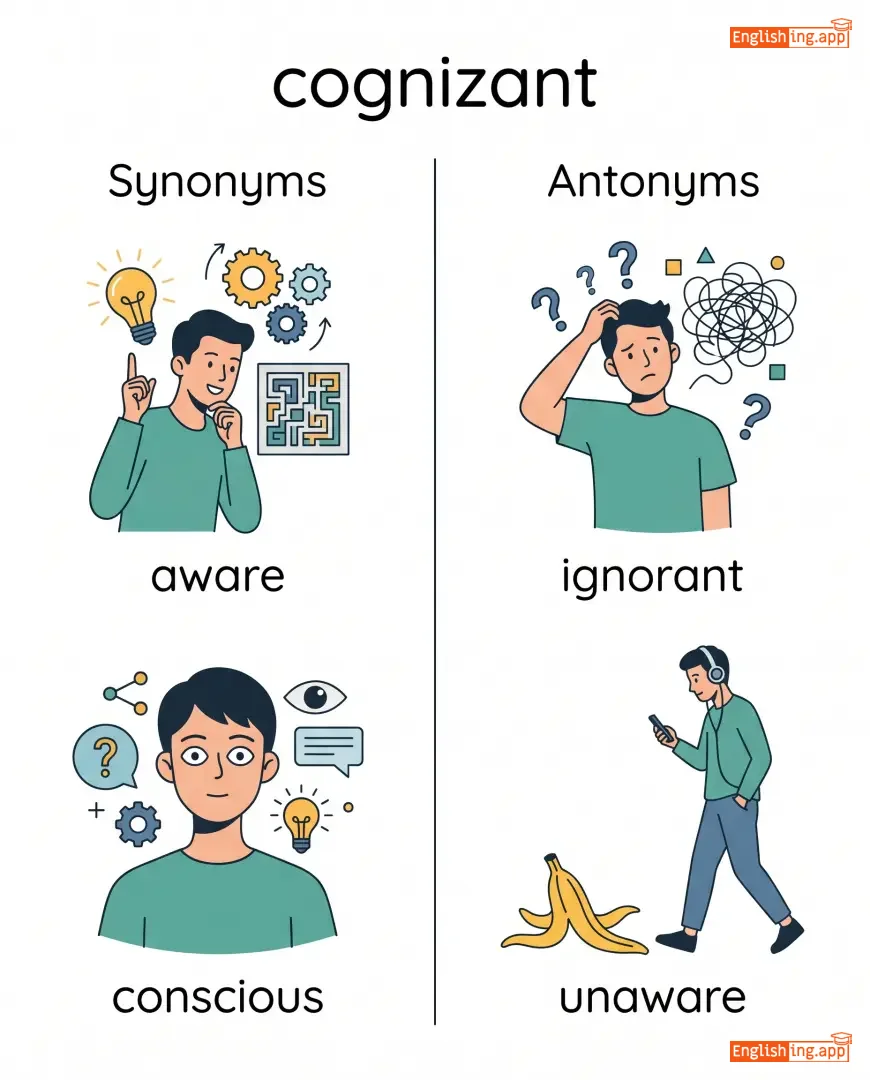
aware, conscious, informed, mindful
••••••
|
ignorant, unaware, oblivious
••••••
|
cognizant of, fully cognizant, not cognizant
••••••
|
Cognizant означает осведомлённость, как быть осведомлённым о предстоящих вызовах.
••••••
|
|
🖼️
••••••
|
/kəˈlɑːʒ/
noun
(коллаж)
••••••
|


|
коллаж
kolazh
••••••
|
- •••••• | - •••••• | - •••••• | - •••••• |
A piece of art made by sticking various materials such as photographs or paper onto a surface.
••••••
|
She created a collage using old magazine pictures.
Она создала коллаж, используя старые фотографии из журналов.
••••••
|
Она создала коллаж, используя старые фотографии из журналов.
Ona sozdala kollazh, ispol'zuyushchiy staryye fotografii iz zhurnale.
••••••
|
- •••••• | - •••••• | - •••••• |
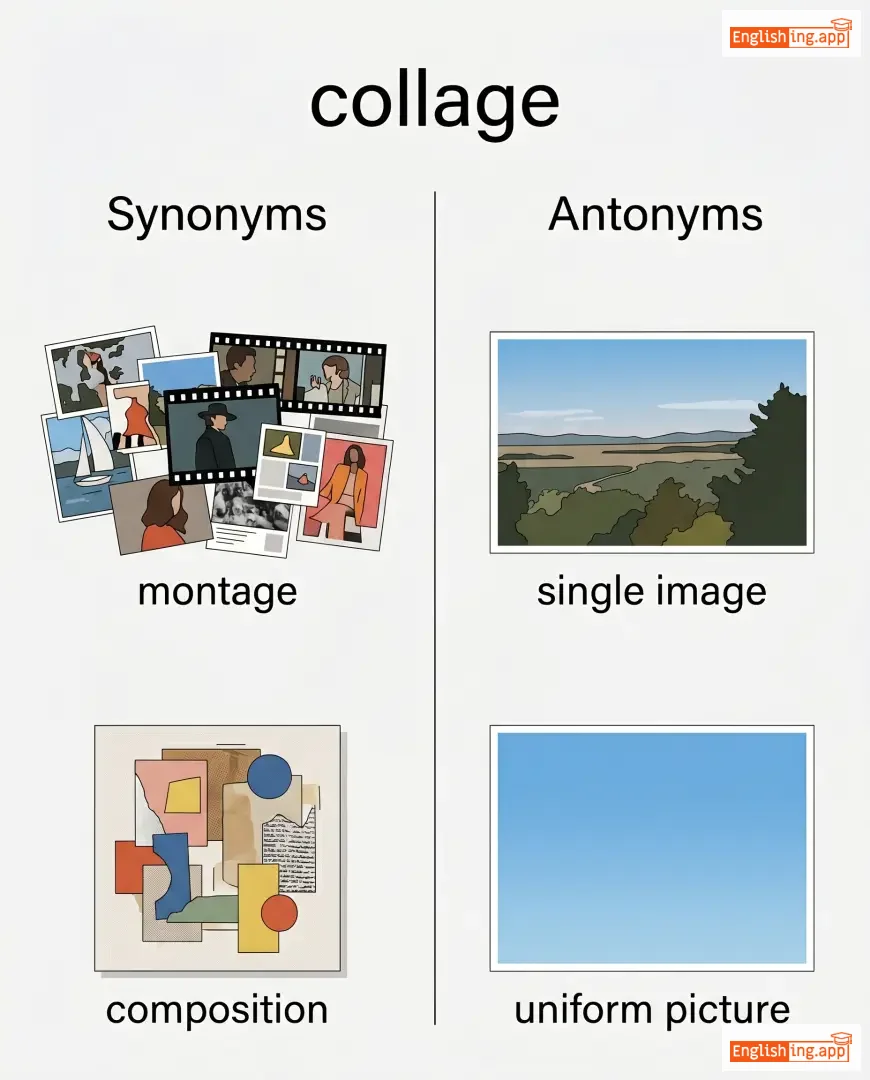
montage, composition, assemblage, artwork
••••••
|
single image, uniform picture
••••••
|
art collage, photo collage, digital collage, create a collage
••••••
|
Коллаж - это сочетание различных изображений, как из частей мозаики.
••••••
|
|
⚖️
••••••
|
/kəˈmɛnʃərət/
adjective
(komensurate)
••••••
|


|
пропорциональный
proportsional'nyy
••••••
|
- •••••• | - •••••• | - •••••• | - •••••• |
corresponding in size, degree, or extent; proportionate
••••••
|
Salary will be commensurate with experience. |
Зарплата будет пропорциональна опыту.
Zarplata budet proportional'na opytu.
••••••
|
- •••••• | - •••••• | - •••••• |
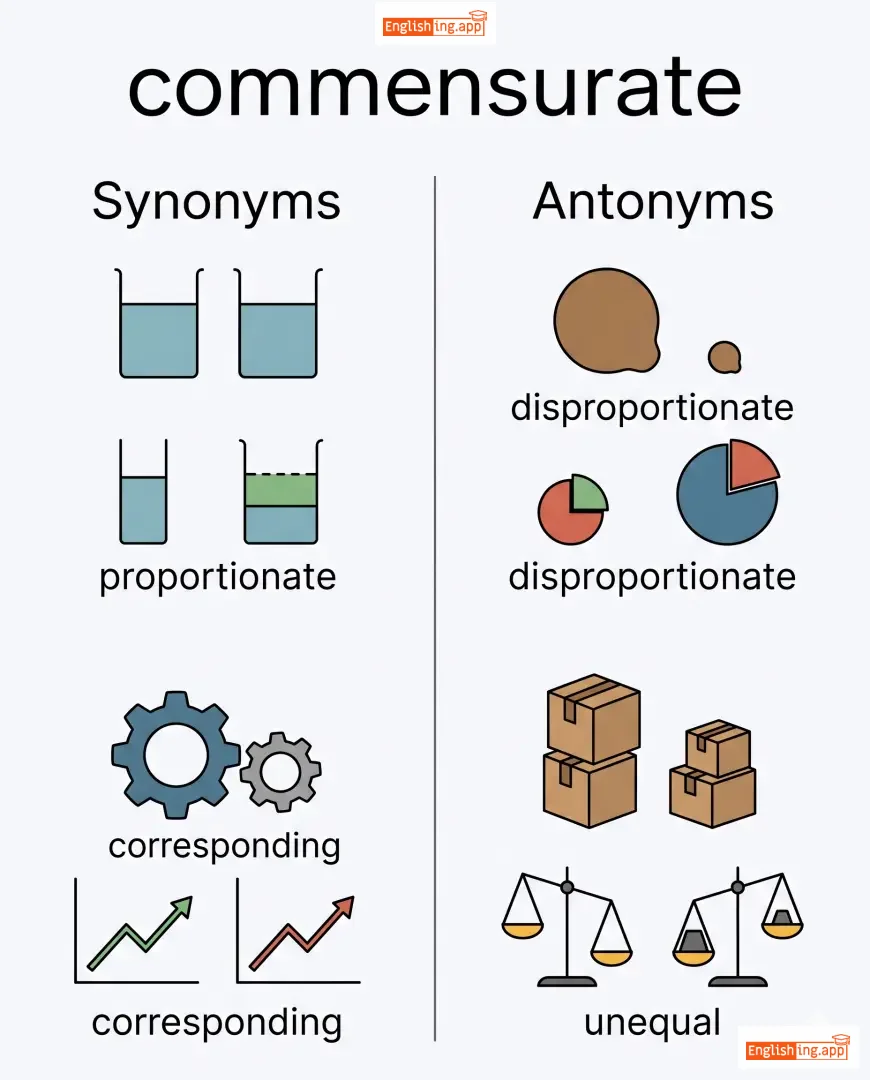
proportionate, corresponding, equal, comparable, adequate
••••••
|
disproportionate, unequal, inappropriate
••••••
|
commensurate with, commensurate salary, commensurate benefits, commensurate reward
••••••
|
Commensurate означает пропорциональный, не меньше, а равный.
••••••
|
|
📚
••••••
|
/kəmˈpɛndiəm/
noun
(kompendium)
••••••
|

|
компендий
kompendiy
••••••
|
- •••••• | - •••••• | - •••••• | - •••••• |
A collection of concise but detailed information about a subject.
••••••
|
The book is a compendium of ancient myths and legends.
Книга является компendium древних мифов и легенд.
••••••
|
Книга является компендий древних мифов и легенд.
Kniga yavyayetsya kompendiy drevnikh mifov i legend.
••••••
|
- •••••• | - •••••• | - •••••• |
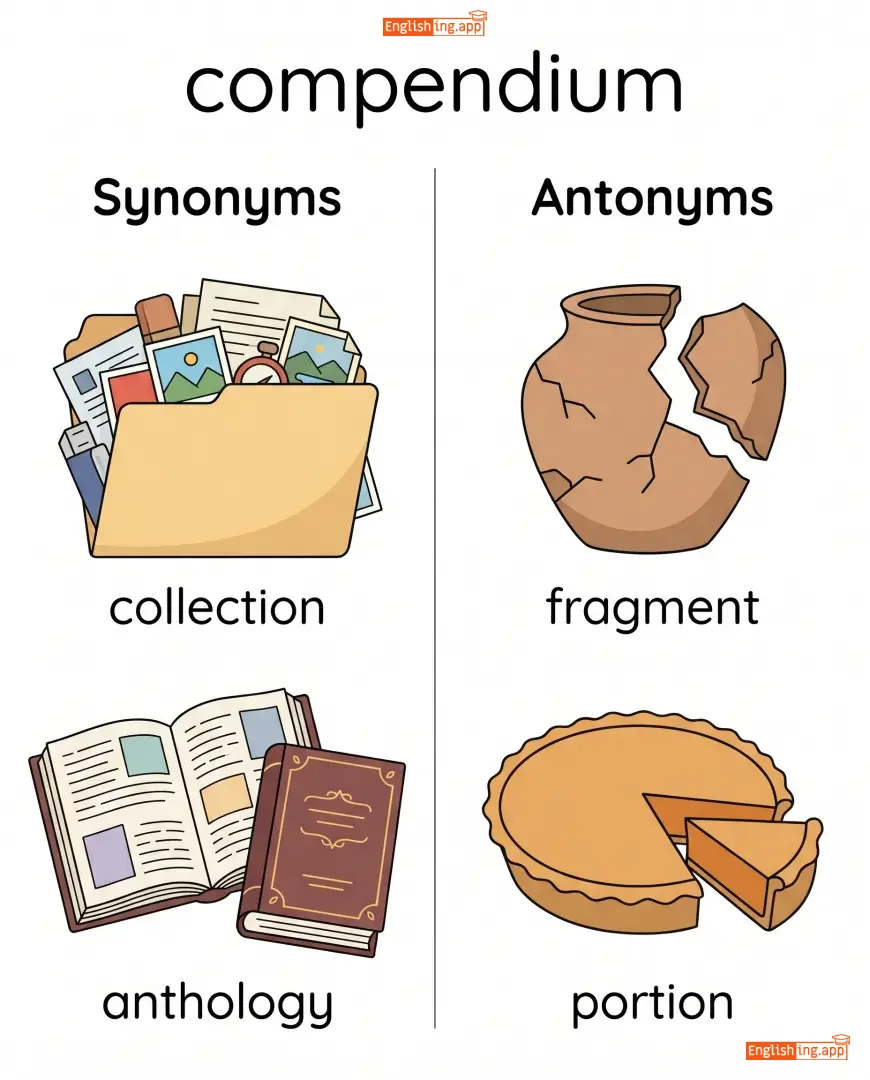
collection, anthology, digest, summary, compilation
••••••
|
fragment, portion, extract
••••••
|
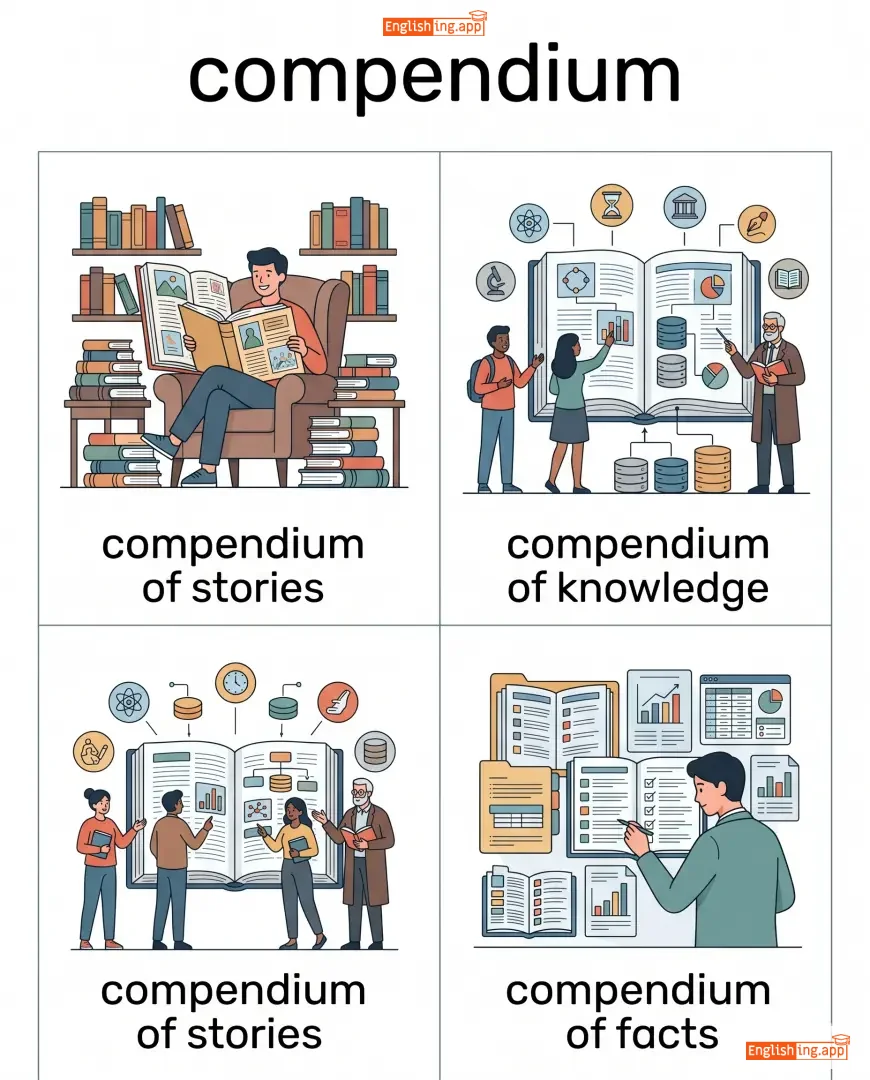
compendium of stories, compendium of knowledge, compendium of facts, compendium of laws
••••••
|
Компендиум - это компактная коллекция всех знаний по теме.
••••••
|
|
😌
••••••
|
/kəmˈpleɪsənt/
adjective
(kəmˈpleɪsənt)
••••••
|

|
самодовольный
samodovolnyy
••••••
|
- •••••• | - •••••• | - •••••• | - •••••• |
showing self-satisfaction and a lack of concern about potential dangers or problems
••••••
|
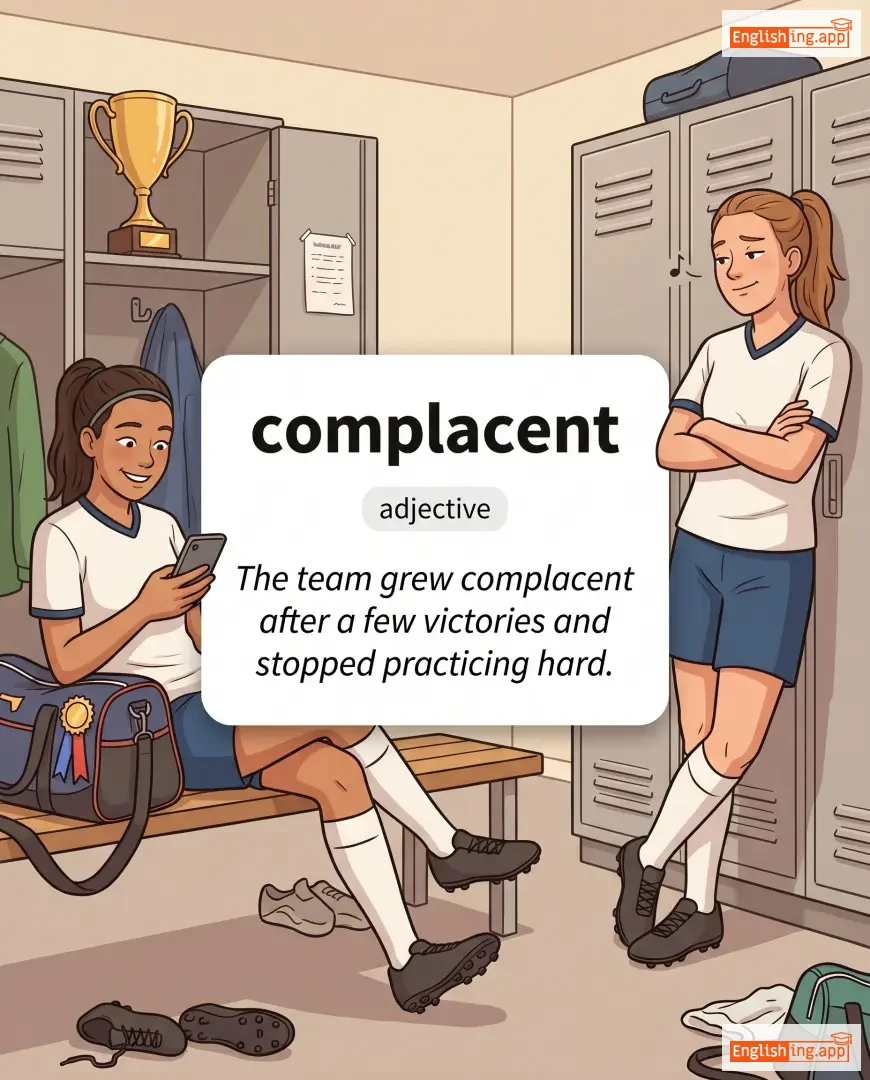
The team grew complacent after a few victories and stopped practicing hard. |
Команда стала самодовольной после нескольких побед и перестала усердно тренироваться.
Komanda stala samodovol'noy posle neskol'kikh pobed i perestala userdno trenirovat'sya.
••••••
|
rest on one's laurels |
to become complacent and stop putting in effort after achieving success
••••••
|
отдыхать на лаврах
otdykhat' na lavrakh
••••••
|
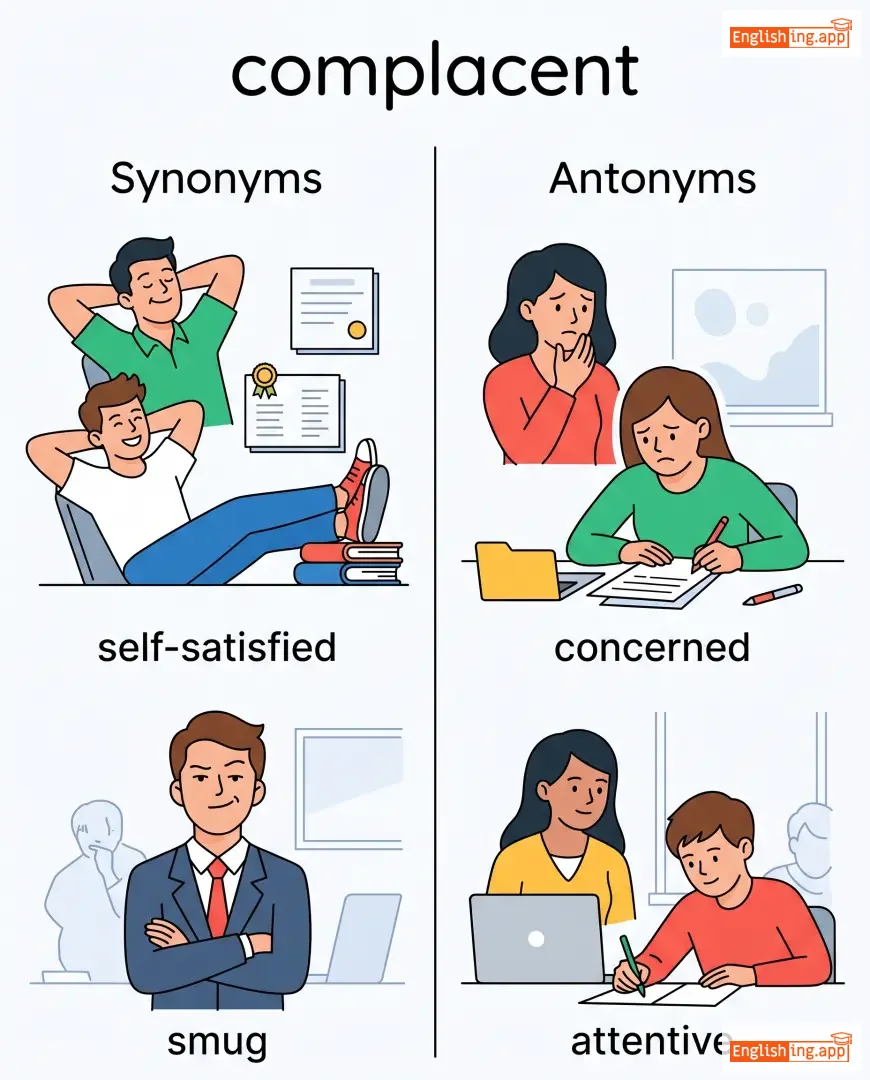
self-satisfied, smug, content, indifferent, unconcerned
••••••
|
concerned, attentive, cautious
••••••
|
complacent attitude, dangerously complacent, complacent about, complacent in
••••••
|
Самодовольный – как сидеть на лаврах после успеха, не делая больше усилий.
••••••
|
|
🤗
••••••
|
/kəmˈpleɪzənt/
adjective
(kompleizant)
••••••
|


|
слишком угодливый
slishkom ugodlivyy
••••••
|
- •••••• | - •••••• | - •••••• | - •••••• |
willing to please others or to accept what they do or say without protest
••••••
|
He was too complaisant to refuse their demands. |
Он был слишком угодлив, чтобы отказать в их требованиях.
On byl slishkom ugodliv, chtoby otkazat' v ikh trebovaniyakh.
••••••
|
- •••••• | - •••••• | - •••••• |
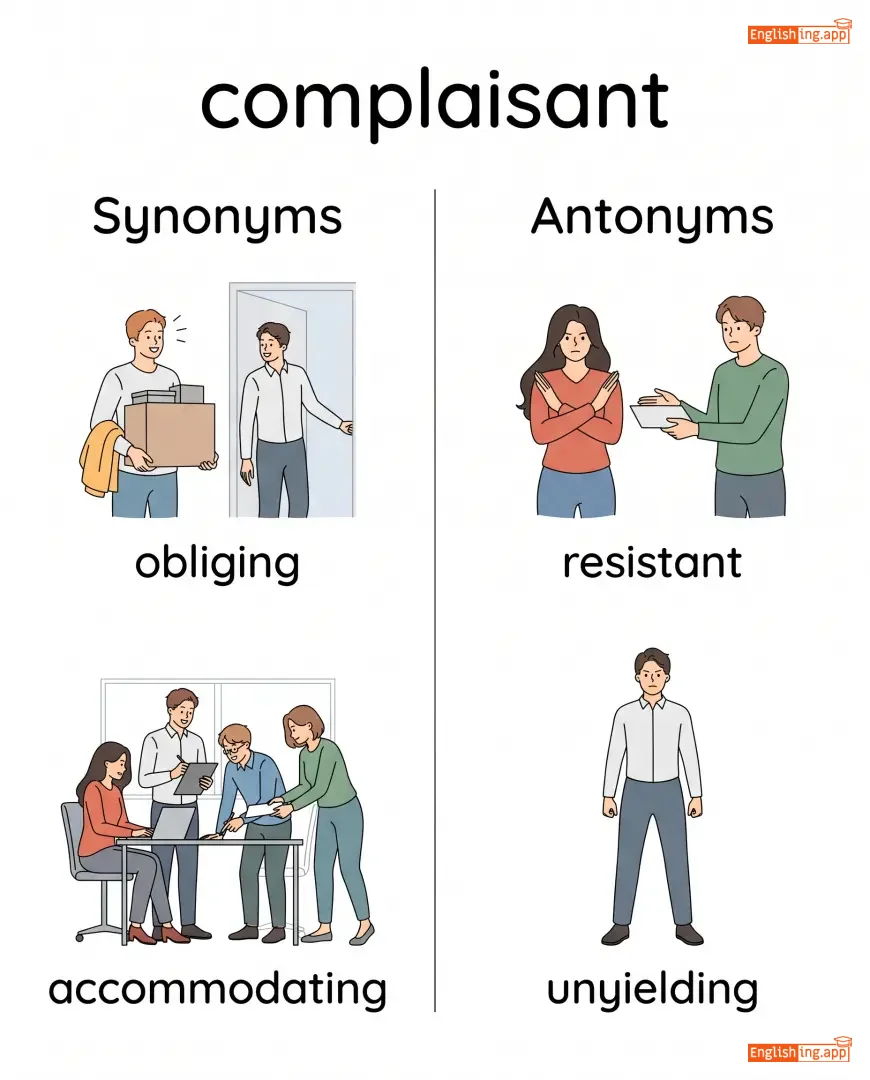
obliging, accommodating, agreeable, cooperative
••••••
|
resistant, unyielding
••••••
|
complaisant nature, too complaisant, become complaisant
••••••
|
Угодливый – всегда соглашаться
••••••
|
|
➕
••••••
|
/ˈkɒmplɪmənt/
noun/verb
(комплимент)
••••••
|

|
комплимент
kompliment
••••••
|
complemented
комплиментировал
••••••
|
complemented
комплиментирован
••••••
|
complements
комплиментирует
••••••
|
complementing
комплиментируя
••••••
|
something that completes or goes well with something; to add something that enhances or improves
••••••
|
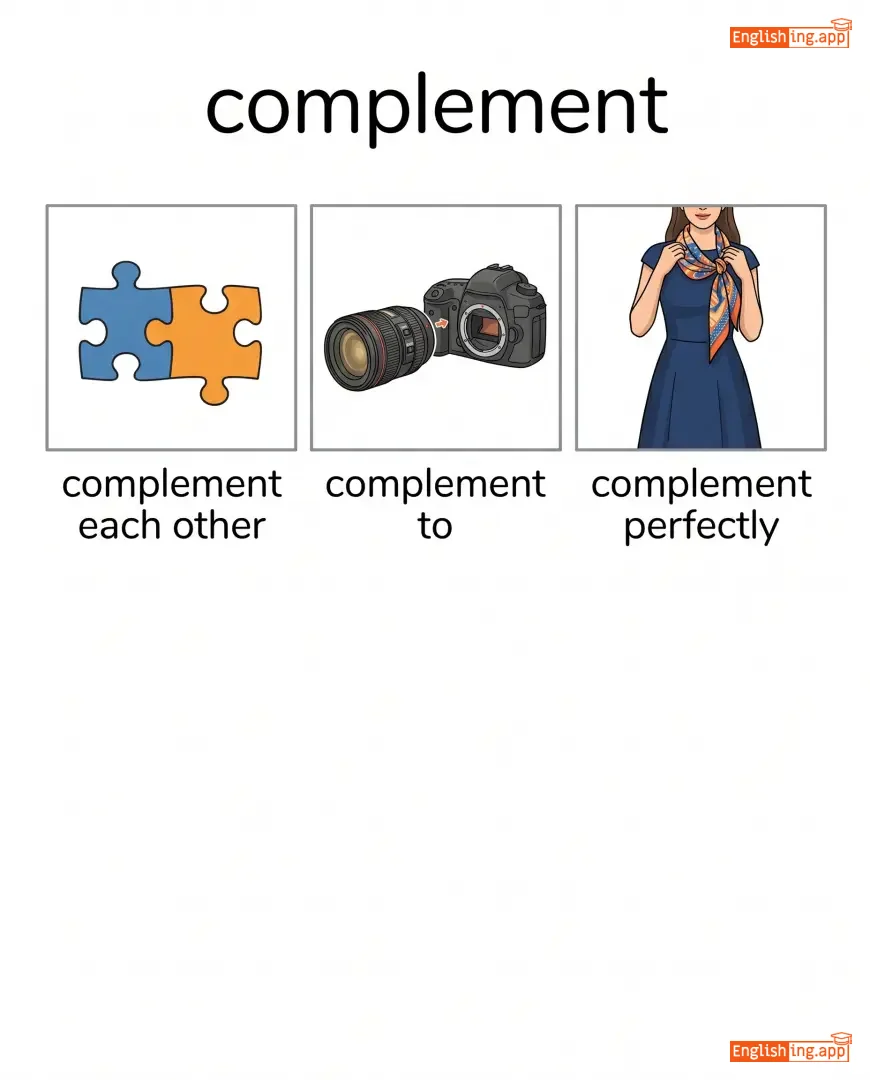
The scarf complements her outfit perfectly.
шарф идеально дополняет ее наряд.
••••••
|
шарф идеально дополняет ее наряд.
sharf ideal'no dopolnyaet yeye naryad.
••••••
|
perfect complement
совершенный комплимент
••••••
|
something that completes another thing in the best possible way
••••••
|
совершенный комплимент
sovershenniy kompliment
••••••
|
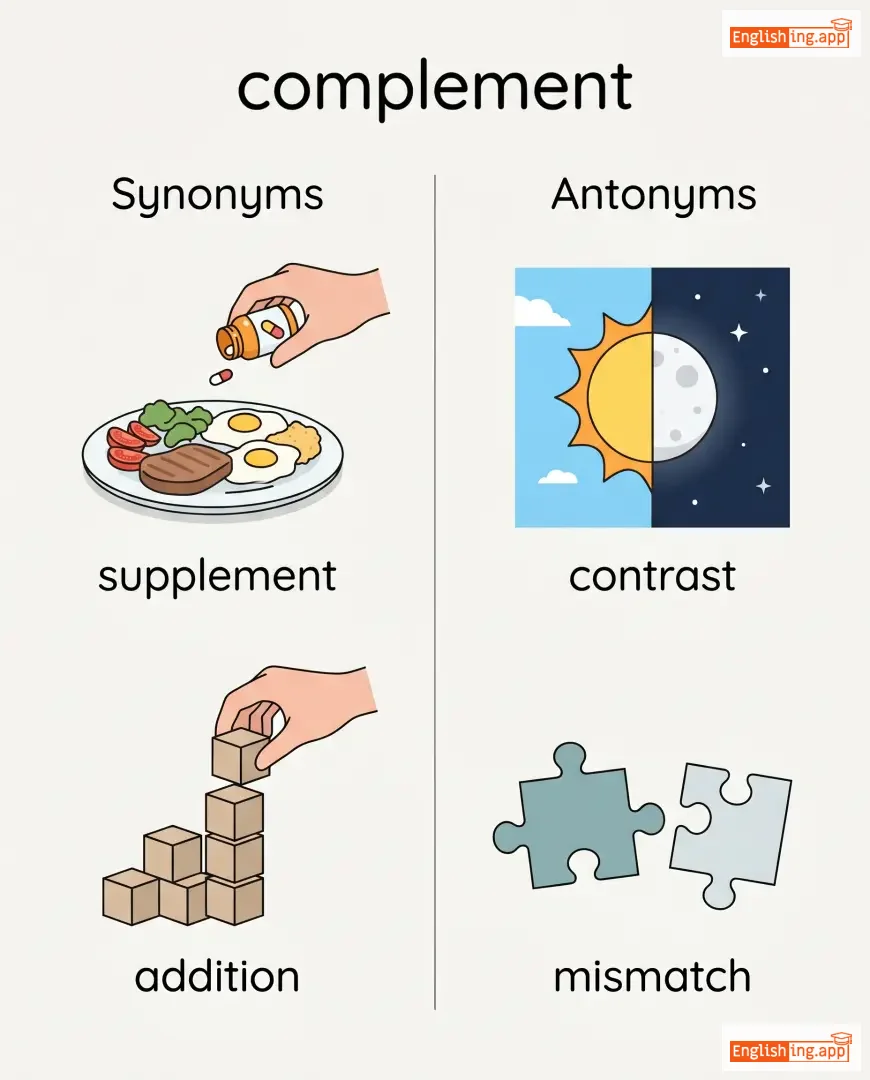
supplement, addition, counterpart, companion, match
••••••
|
contrast, mismatch
••••••
|
complement each other, complement to, complement perfectly, complement system
••••••
|
комплимент = Komplett + Добавить, что-то, что улучшает
••••••
|
|
🙇
••••••
|
/kəmˈplaɪənt/
adjective
(кəmˈplaɪənt)
••••••
|

|
послушный
poslushny
••••••
|
- •••••• | - •••••• | - •••••• | - •••••• |
Willing to agree with or follow rules, requests, or demands.
••••••
|
She was compliant with all the safety requirements.
Она была согласна со всеми требованиями безопасности.
••••••
|
Она была согласна со всеми требованиями безопасности.
Ona byla soglasna so vsemi trebovaniyami bezopasnosti.
••••••
|
- •••••• | - •••••• | - •••••• |
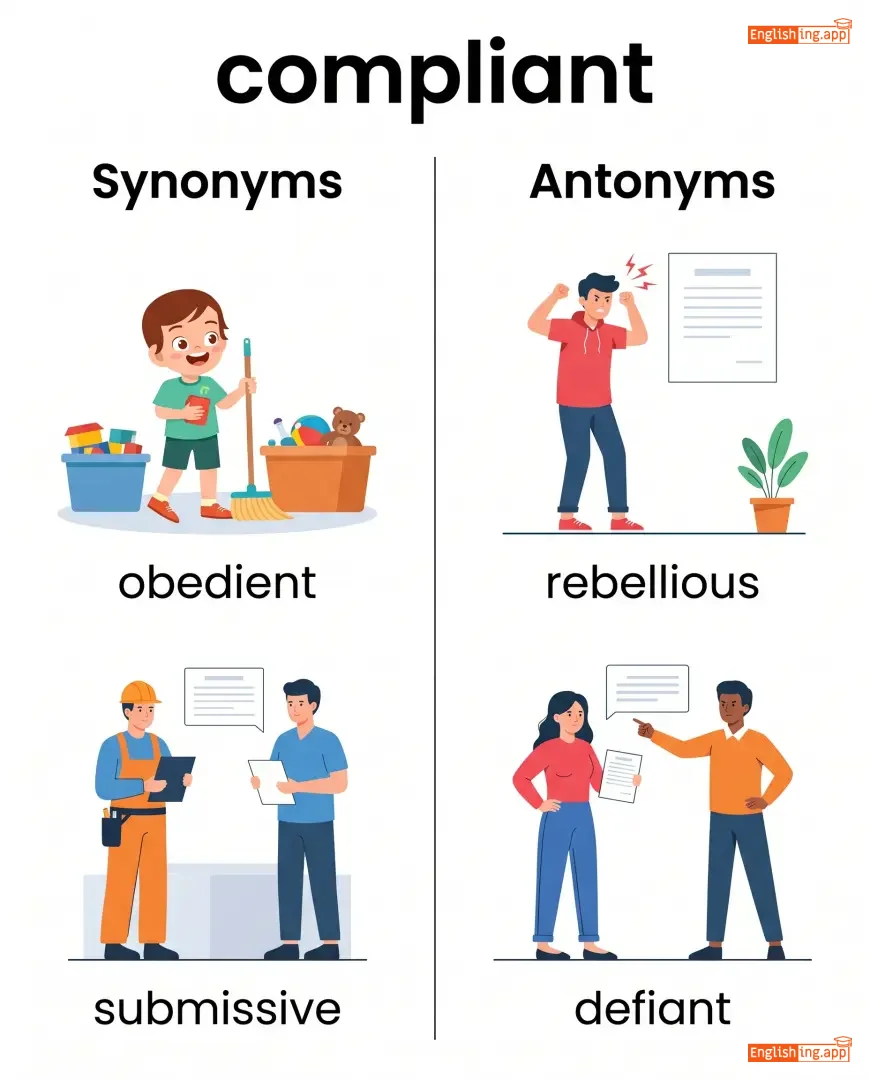
obedient, submissive, docile, accommodating
••••••
|
rebellious, defiant, resistant
••••••
|
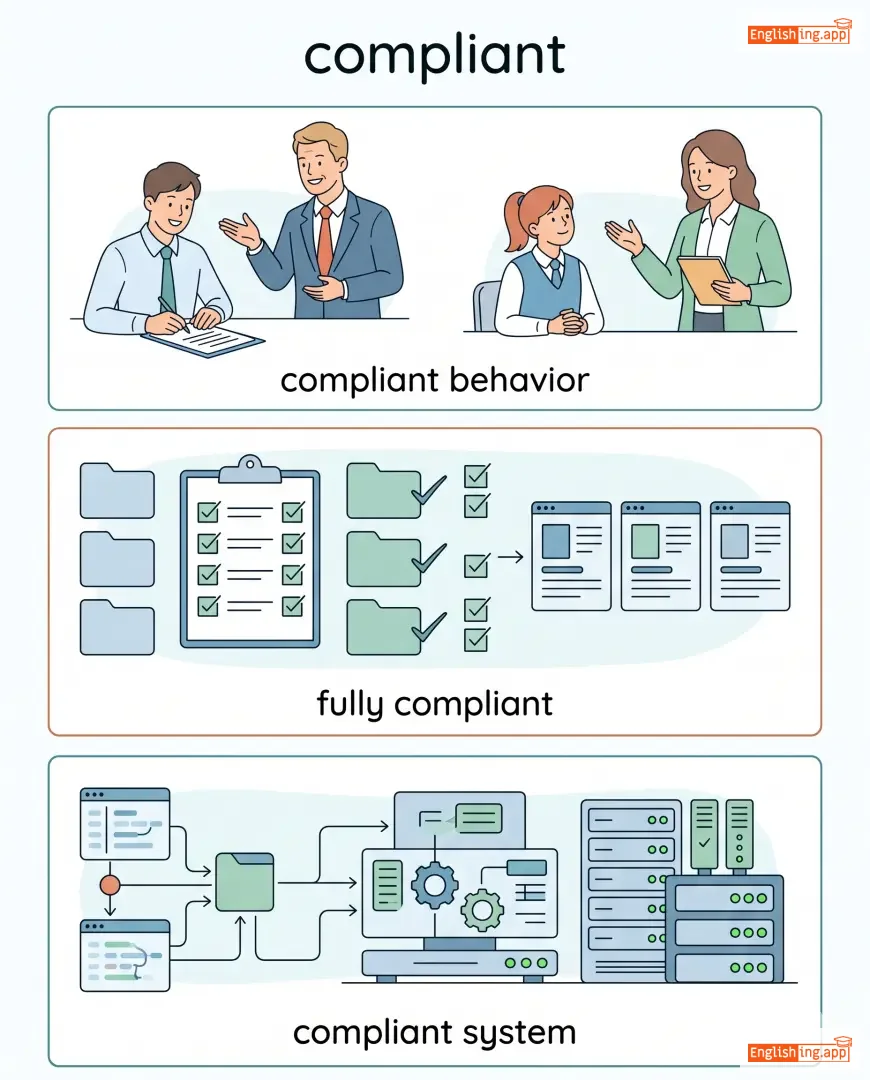
compliant behavior, fully compliant, compliant system, compliant child
••••••
|
Послушный означает следовать правилам без вопросов.
••••••
|

