|
表情符号
|
单词 | Images | 翻译 | 过去时 | 过去分词 | 第三人称单数 | 动名词 | 含义 | 例句 | 例句翻译 | 示例表达 | 示例表达含义 | 示例表达翻译 | 同义词 | 反义词 | 搭配词 | 助记符 |
|---|---|---|---|---|---|---|---|---|---|---|---|---|---|---|---|---|---|
|
🗣️
••••••
|
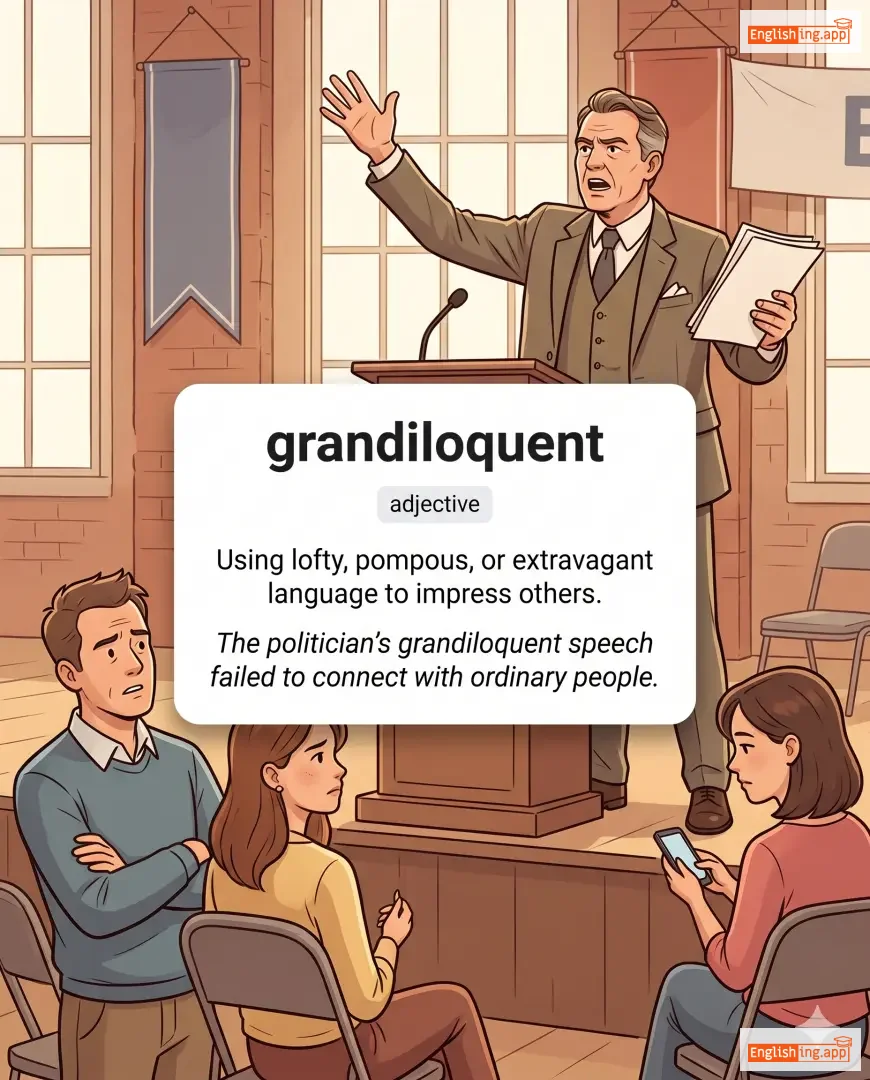
/ɡrænˈdɪləkwənt/
adjective
(grændɪləkwənt)
••••••
|

|
夸张的语言
kuāzhāng de yǔyán
••••••
|
- •••••• | - •••••• | - •••••• | - •••••• |
Using lofty, pompous, or extravagant language to impress others.
••••••
|
The politician’s grandiloquent speech failed to connect with ordinary people. |
这位政治家的夸张演讲未能与普通人产生共鸣。
Zhè wèi zhèngzhìjiā de kuāzhāng yǎnjiǎng wèinéng yǔ pǔtōngrén chǎnshēng gòngmíng.
••••••
|
- •••••• | - •••••• | - •••••• |
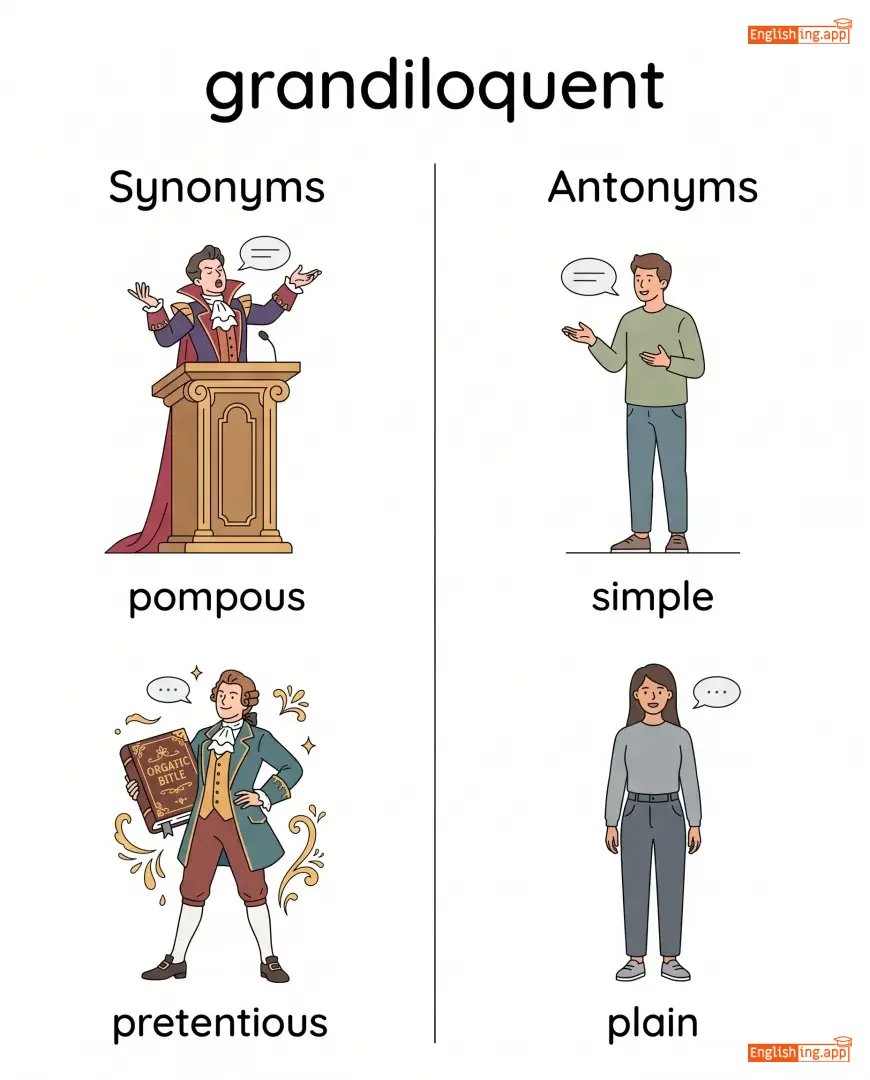
pompous, pretentious, bombastic, inflated, rhetorical
••••••
|
simple, plain, modest
••••••
|
grandiloquent speech, grandiloquent style, grandiloquent manner
••••••
|
Grandiloquent = grand + eloquent, 在中文中:用浮夸的语言给别人留下印象。
••••••
|
|
🗣️
••••••
|
/ɡrɪˈɡɛəriəs/
adjective
(格雷格里厄斯)
••••••
|


|
好社交
hao shejiao
••••••
|
- •••••• | - •••••• | - •••••• | - •••••• |
Fond of company; sociable.
••••••
|
She is a gregarious person who loves meeting new people. |
她是一个好社交的人,喜欢结识新朋友。
Ta shi yige hao shejiao de ren, xihuan jieshi xin pengyou.
••••••
|
- •••••• | - •••••• | - •••••• |
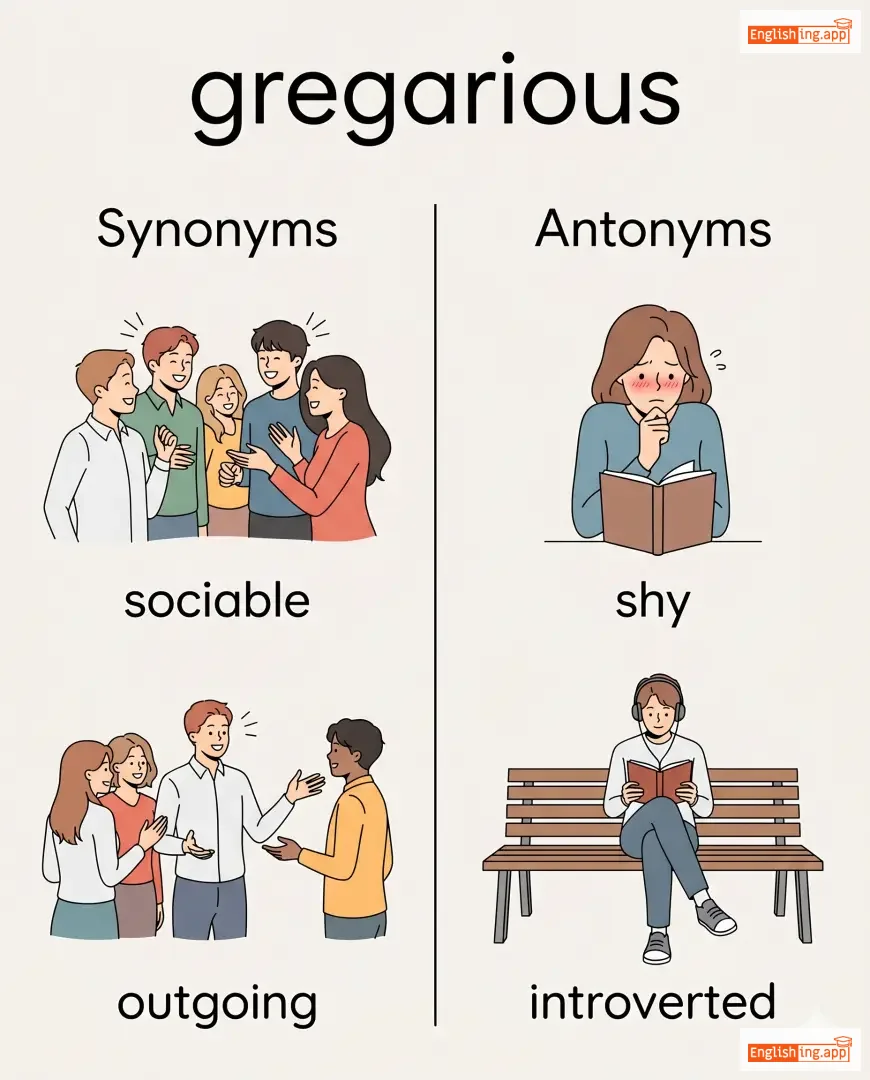
sociable, outgoing, friendly, extroverted, convivial
••••••
|
shy, introverted, antisocial
••••••
|
gregarious personality, gregarious nature, gregarious behavior
••••••
|
Greg arious 意味着喜欢在群体中,社交型。
••••••
|
|
😊
••••••
|
/ˈɡaɪlləs/
adjective
(盖尔斯)
••••••
|
|
天真
tian zhen
••••••
|
- •••••• | - •••••• | - •••••• | - •••••• |
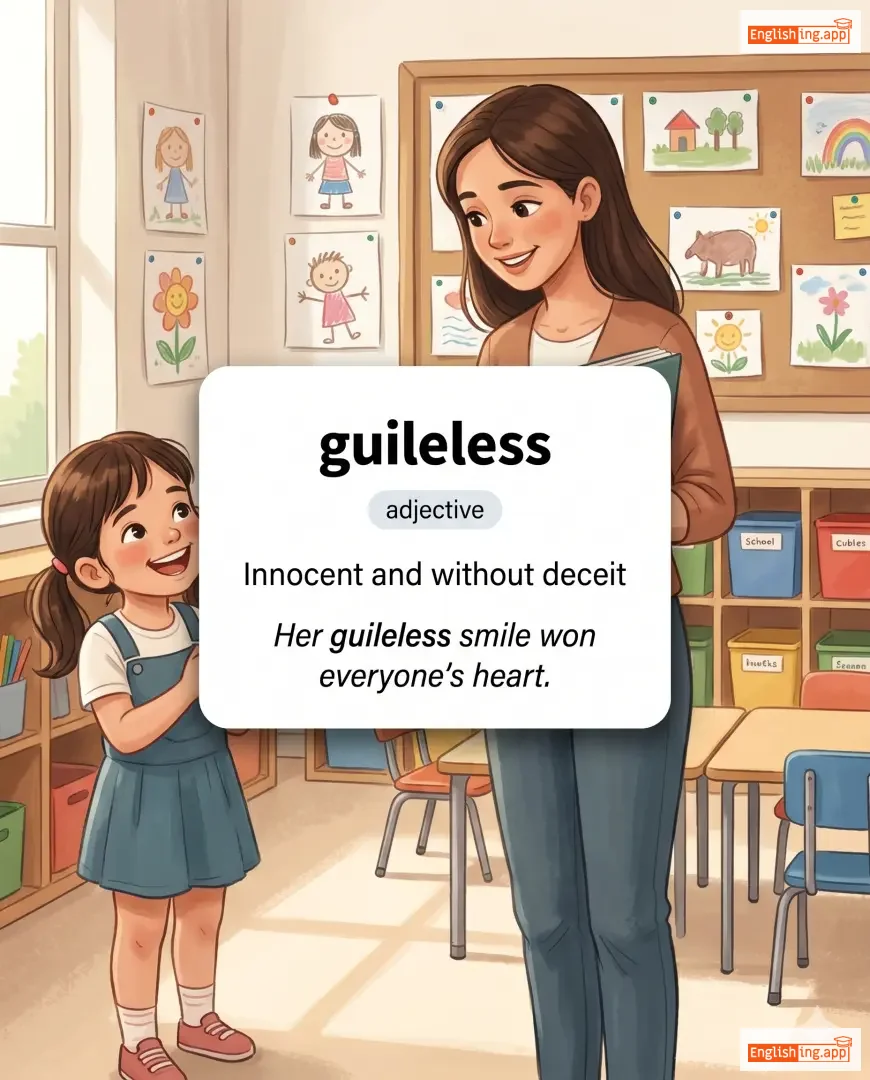
Innocent and without deceit
••••••
|
Her guileless smile won everyone’s heart. |
她天真的笑容赢得了所有人的心。
Ta tian zhen de xiao rong ying de le suo you ren de xin.
••••••
|
- •••••• | - •••••• | - •••••• |
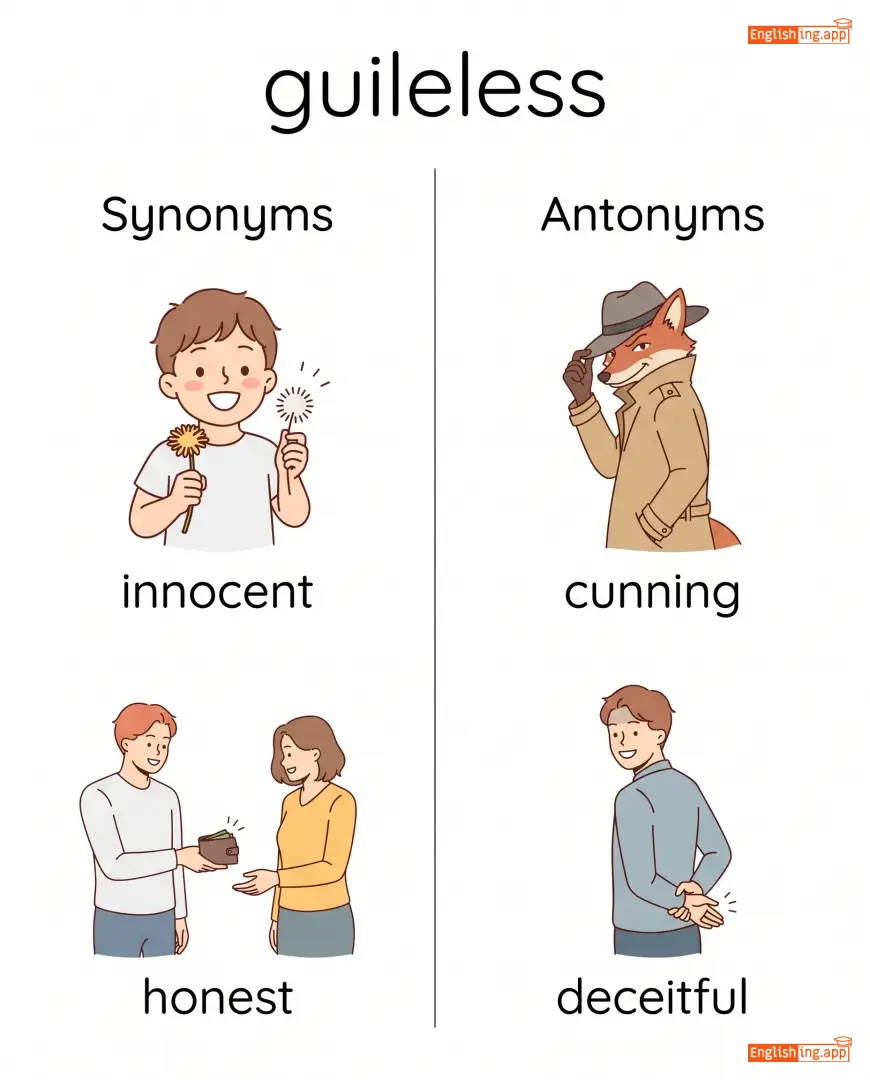
innocent, honest, sincere, naive
••••••
|
cunning, deceitful, crafty
••••••
|
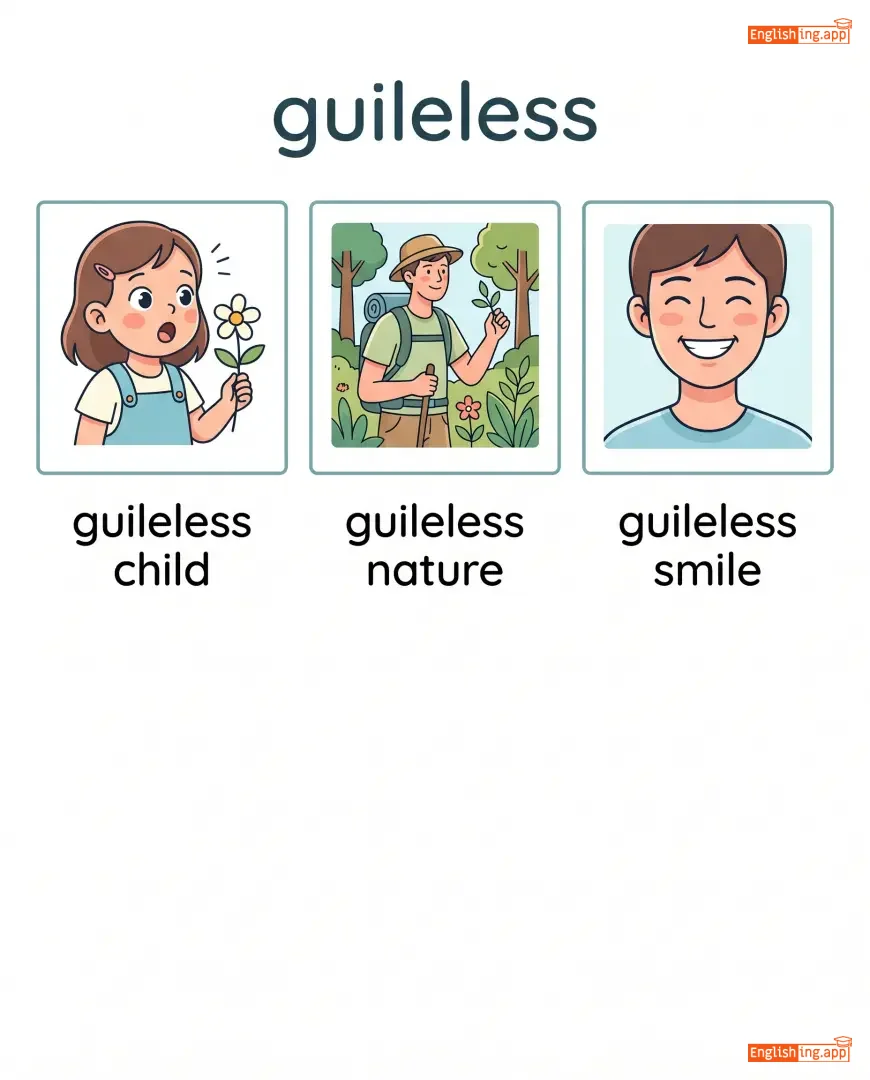
guileless child, guileless nature, guileless smile
••••••
|
Guileless 就是天真(tian zhen),没有欺骗。
••••••
|
|
🙈
••••••
|
/ˈɡʌl.ə.bəl/
adjective
(嘎利布尔)
••••••
|

|
容易上当的
róngyì shàngdàng de
••••••
|
- •••••• | - •••••• | - •••••• | - •••••• |
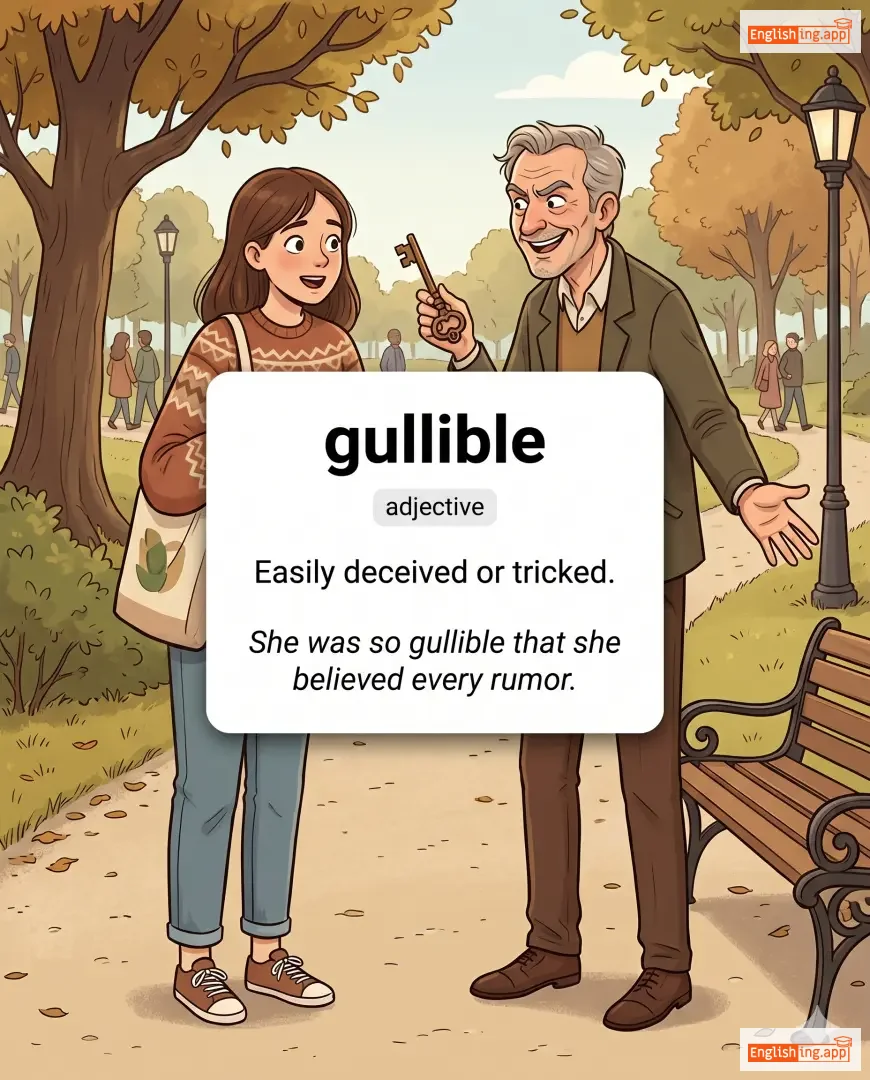
Easily deceived or tricked.
••••••
|
She was so gullible that she believed every rumor. |
她如此容易上当,以至于相信了每个谣言。
Tā rú cǐ róngyì shàngdàng, yǐzhì yú xiāngxìnle měi gè yáoyán.
••••••
|
- •••••• | - •••••• | - •••••• |
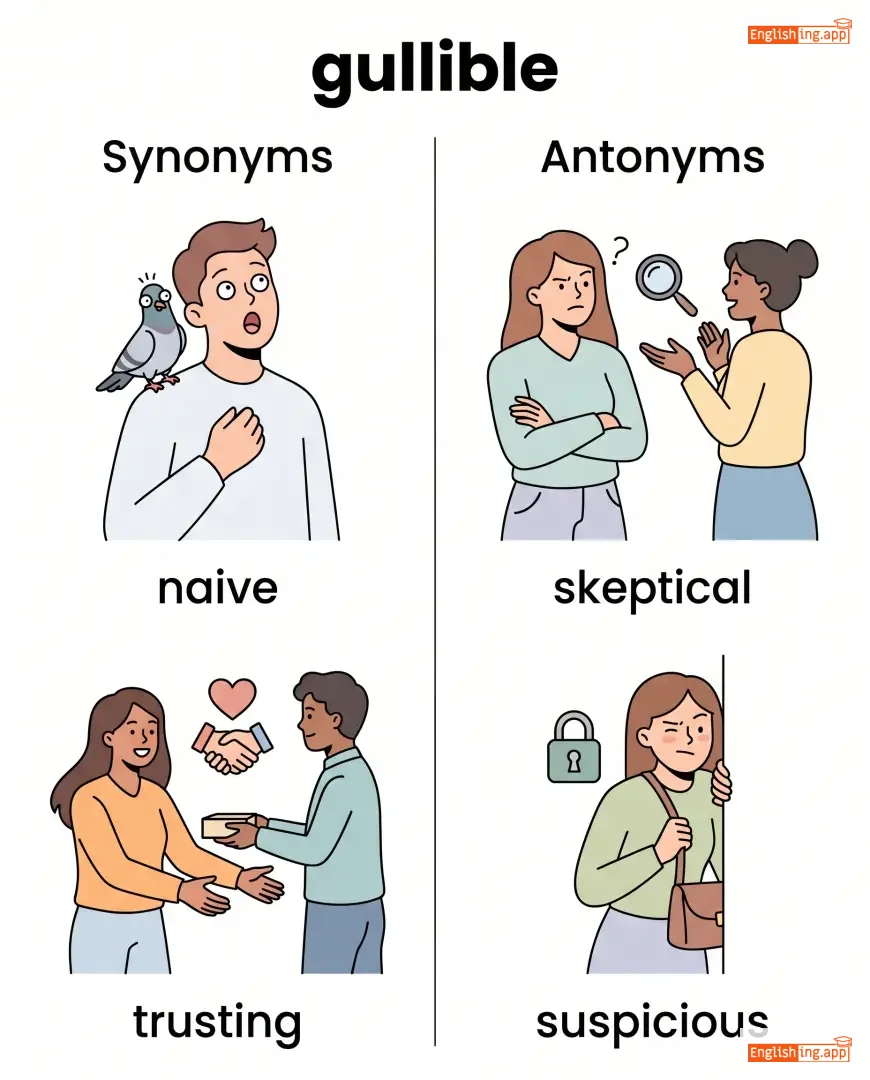
naive, trusting, credulous, unsuspecting, innocent
••••••
|
skeptical, suspicious, cautious
••••••
|
gullible person, extremely gullible, seem gullible
••••••
|
GULLible 的人总是容易上当受骗。
••••••
|
|
📢
••••••
|
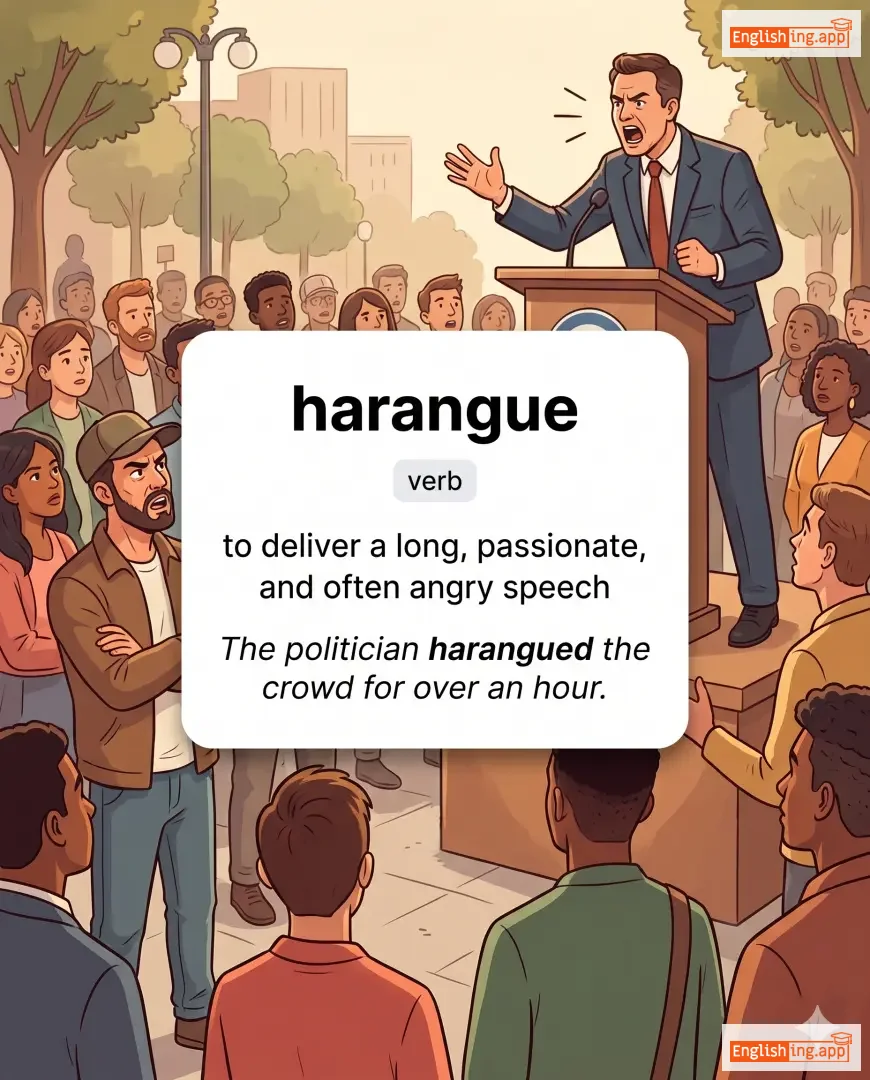
/həˈræŋ/
verb
(哈朗格)
••••••
|
|
进行冗长而愤怒的演讲
jìnxíng rǒngcháng ér fènnù de yǎnjiǎng
••••••
|
harangued
哈朗格德
••••••
|
harangued
哈朗格德
••••••
|
harangues
哈朗格斯
••••••
|
haranguing
哈朗格英
••••••
|
to deliver a long, passionate, and often angry speech
••••••
|
The politician harangued the crowd for over an hour.
政治家哈朗格德了人群超过一个小时。
••••••
|
政治家对人群进行了超过一小时的演讲。
Zhèngzhìjiā duì rénqún jìnxíngle chāoguò yī gè xiǎoshí de yǎnjiǎng.
••••••
|
- •••••• | - •••••• | - •••••• |
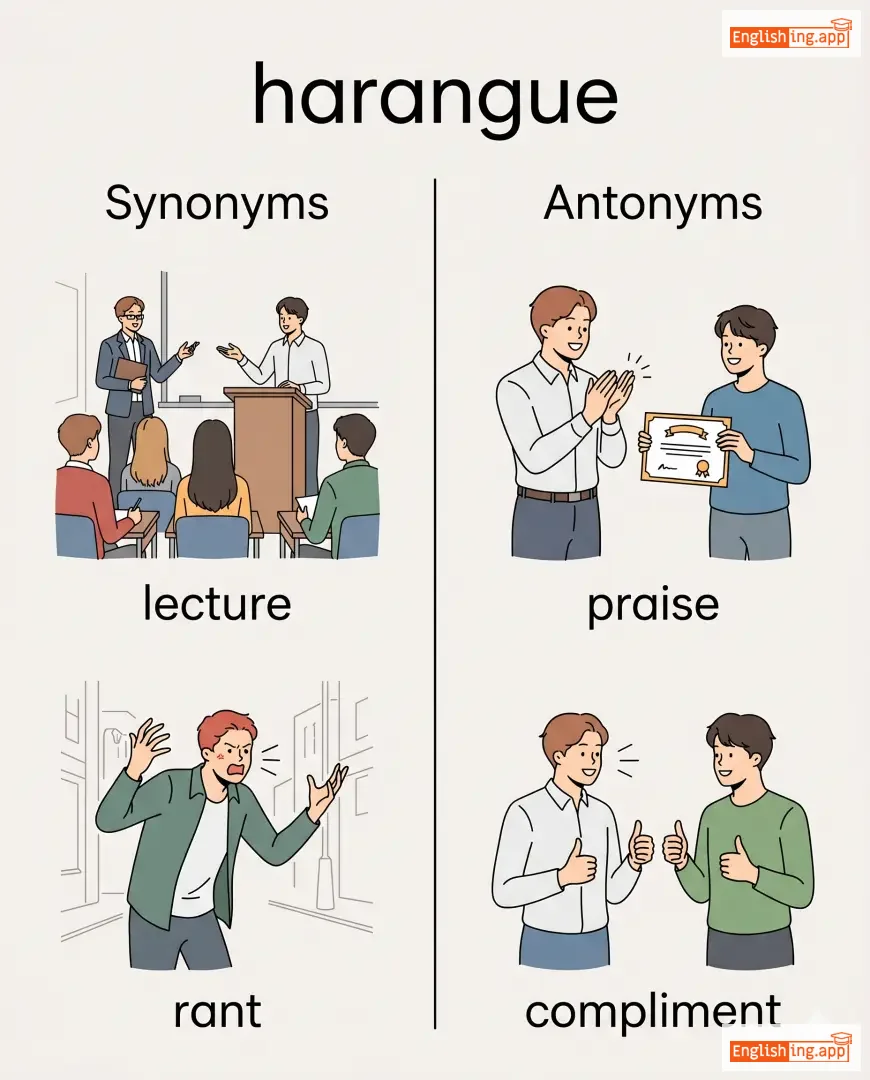
lecture, rant, tirade, scold, sermon
••••••
|
praise, compliment, silence
••••••
|
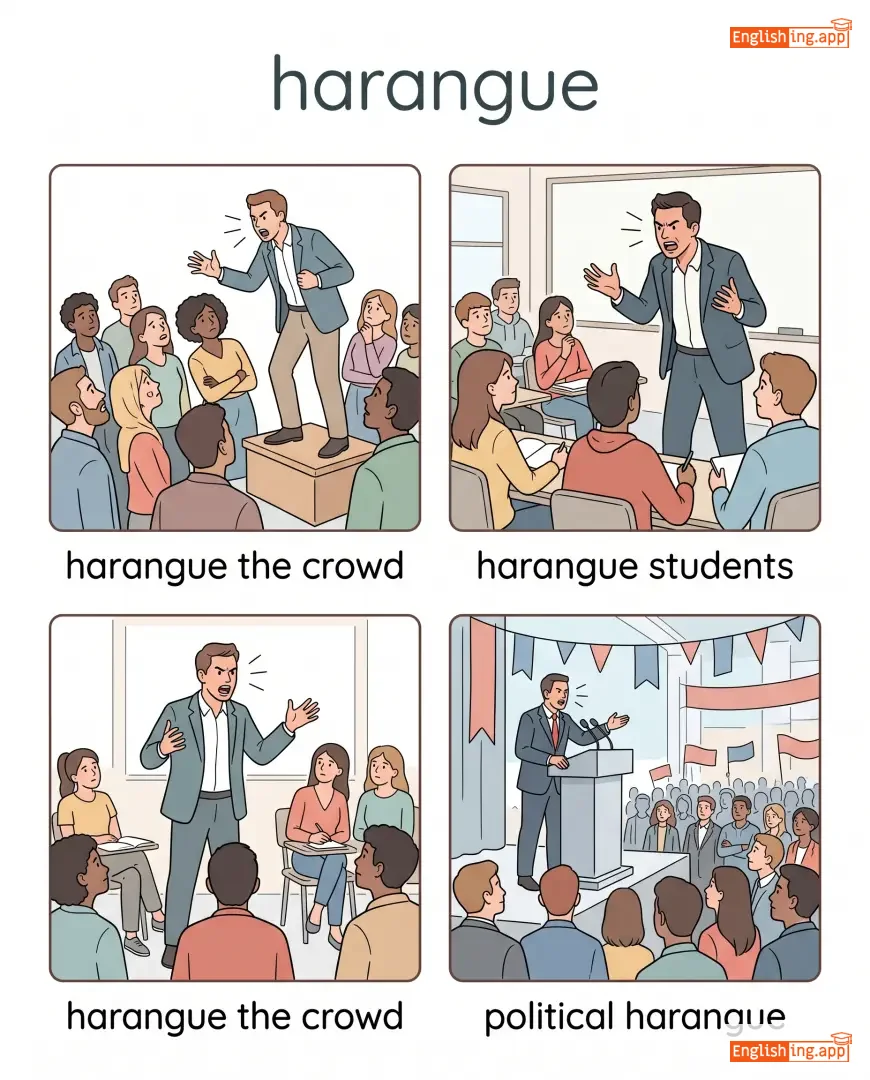
harangue the crowd, harangue students, political harangue
••••••
|
Harangue 代表长时间的发言 → 扰人的长时间讲话。
••••••
|
|
⚖️
••••••
|
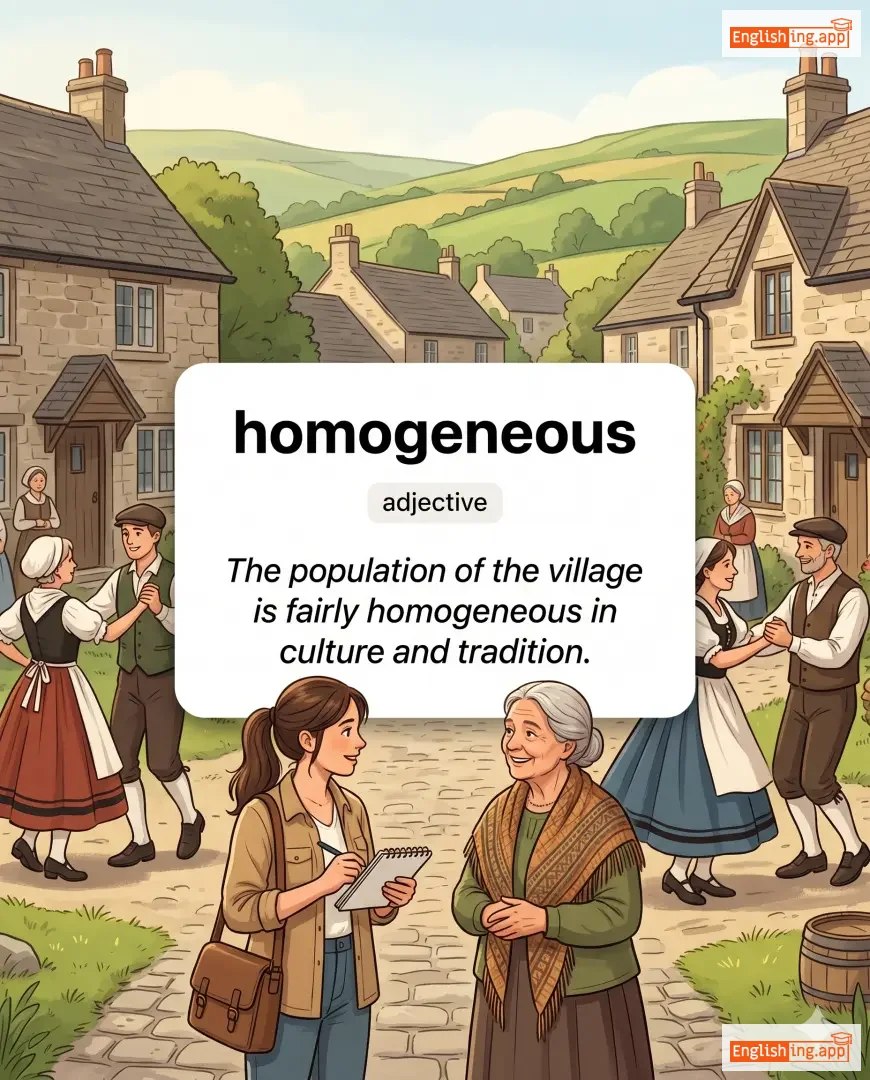
/ˌhoʊ.məˈdʒiː.ni.əs/
adjective
(homoʊˈdʒiːnɪəs)
••••••
|
|
同质
tóngzhì
••••••
|
- •••••• | - •••••• | - •••••• | - •••••• |
Consisting of parts or elements that are all the same kind; uniform in composition.
••••••
|
The population of the village is fairly homogeneous in culture and tradition.
该村的人口在文化和传统上非常同质化。
••••••
|
该村的人口在文化和传统上非常同质化。
Gāi cūn de rénkǒu zài wénhuà hé chuántǒng shàng fēicháng tóngzhìhuà.
••••••
|
- •••••• | - •••••• | - •••••• |
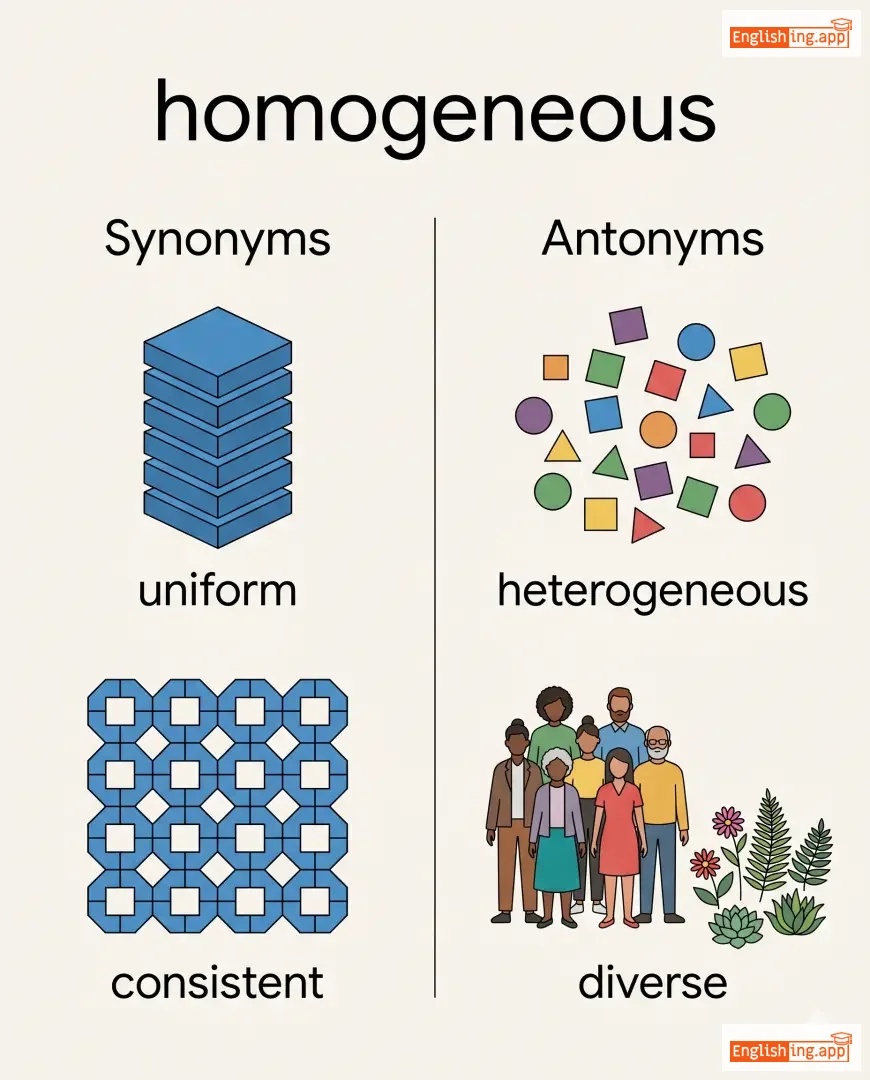
uniform, consistent, alike, identical, standardized
••••••
|
heterogeneous, diverse, varied
••••••
|
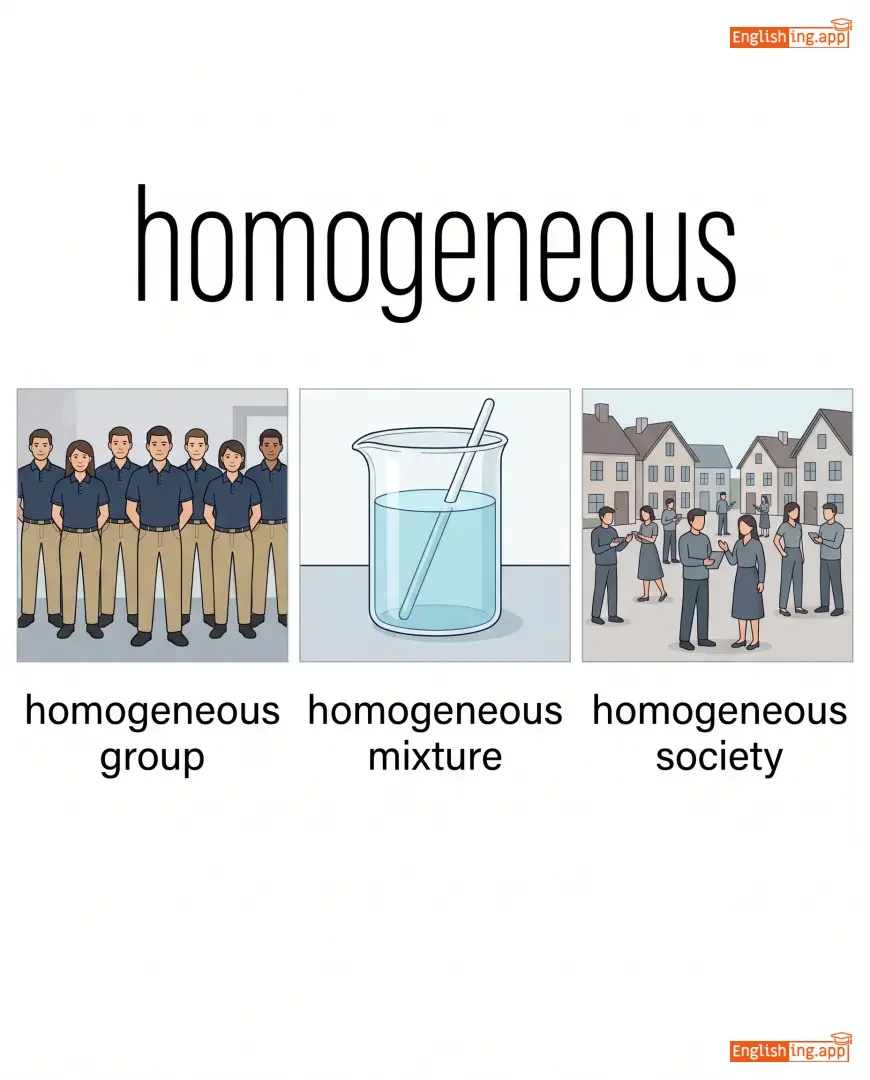
homogeneous group, homogeneous mixture, homogeneous society, homogeneous culture
••••••
|
HOMO意味着相同,因此同质意味着一切都是一样的(tóngzhì)。
••••••
|
|
📢
••••••
|
/haɪˈpɜːrbəli/
noun
••••••
|

|
- •••••• | - •••••• | - •••••• | - •••••• | - •••••• |
Exaggerated statements or claims not meant to be taken literally.
••••••
|
Saying he could run a thousand miles in a day is pure hyperbole. |
- •••••• |
it's not hyperbole |
An exaggerated claim that is actually true or close to reality
••••••
|
- •••••• |
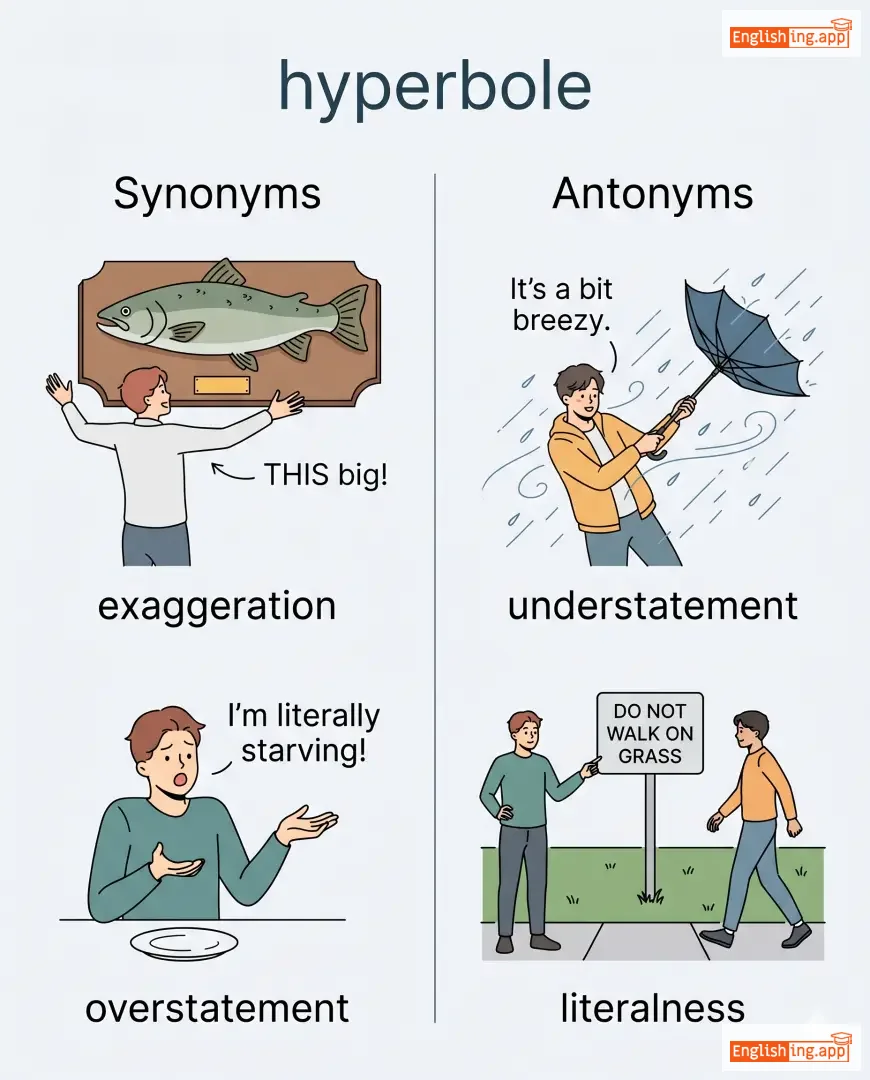
exaggeration, overstatement, amplification, embellishment
••••••
|
understatement, literalness
••••••
|
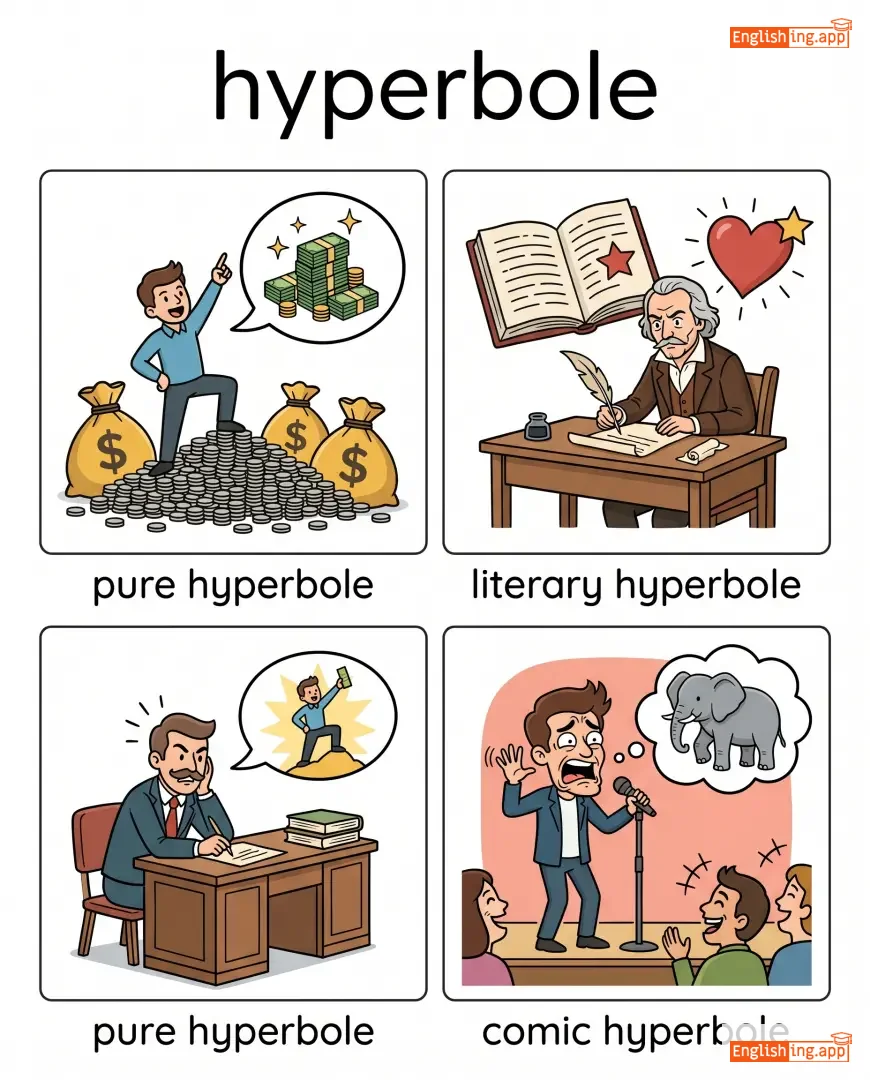
pure hyperbole, literary hyperbole, comic hyperbole, use of hyperbole
••••••
|
No •••••• |
|
⚡
••••••
|
/ˌaɪ.kə.nəˈklæs.tɪk/
adjective
(aɪˌkɒnəˈklæstɪk)
••••••
|
|
特指攻击或拒绝已建立的信仰、传统或价值观
tè zhǐ gōng jī huò jù jué yǐ jiàn lì de xìn yǎng, chuán tǒng huò jià zhí guān
••••••
|
- •••••• | - •••••• | - •••••• | - •••••• |
Characterized by attacking or rejecting cherished beliefs, traditions, or established values.
••••••
|
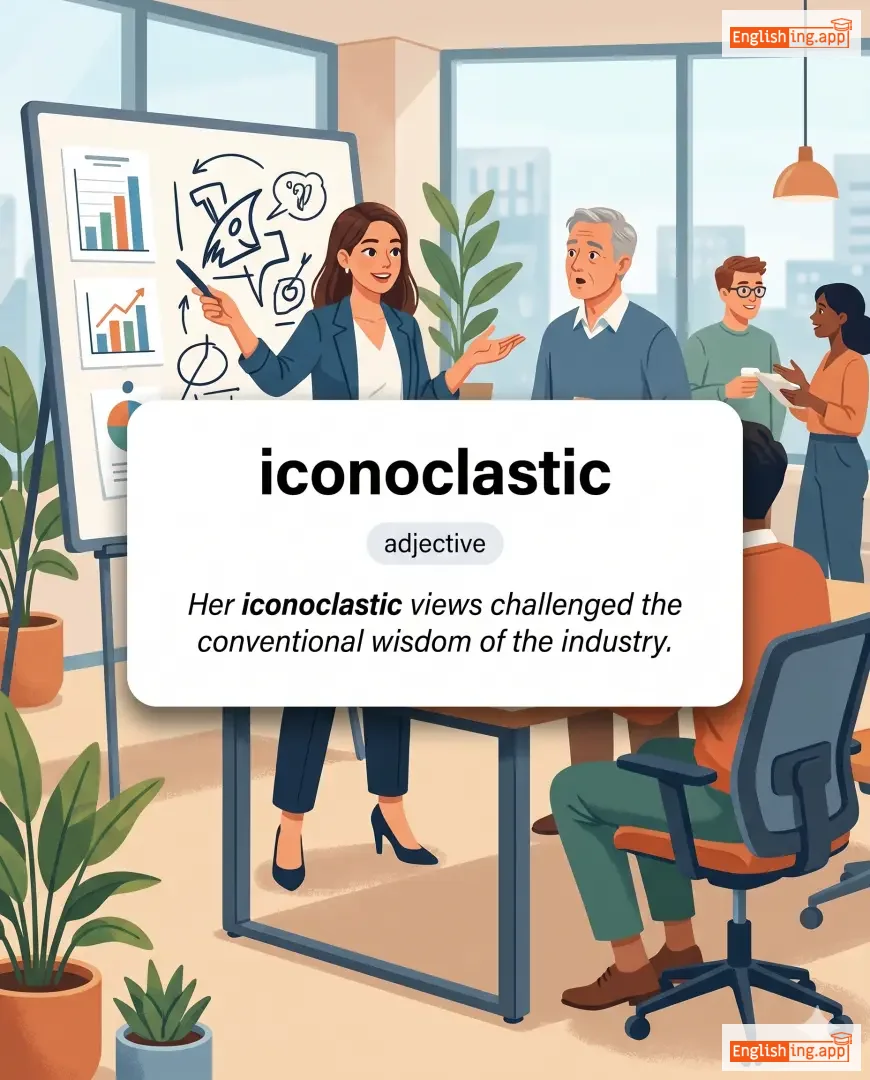
Her iconoclastic views challenged the conventional wisdom of the industry.
她的偶像破坏主义观点挑战了行业的传统智慧。
••••••
|
她的偶像破坏主义观点挑战了行业的传统智慧。
tā de ǒu xiàng pò huài zhǔ yì guān diǎn tiǎo zhàn le háng yè de chuán tǒng zhì huì.
••••••
|
- •••••• | - •••••• | - •••••• |
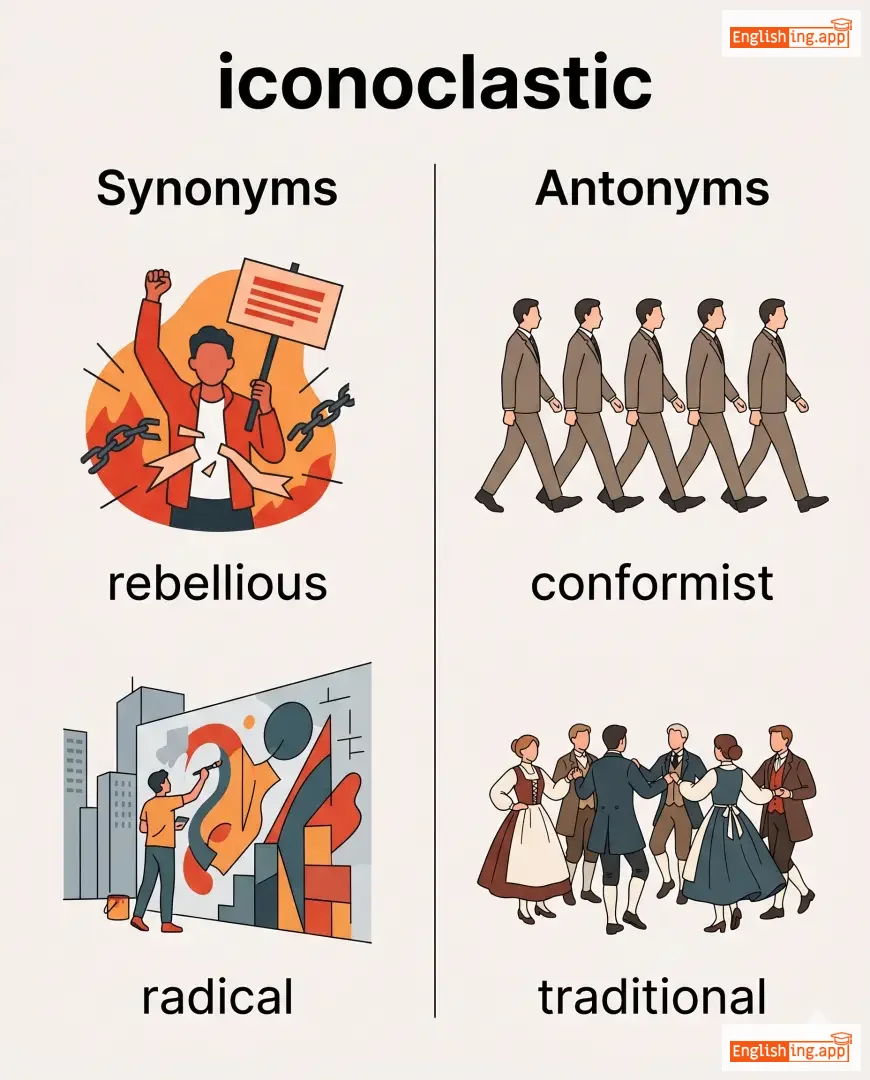
rebellious, radical, unorthodox, revolutionary, unconventional
••••••
|
conformist, traditional, conservative
••••••
|
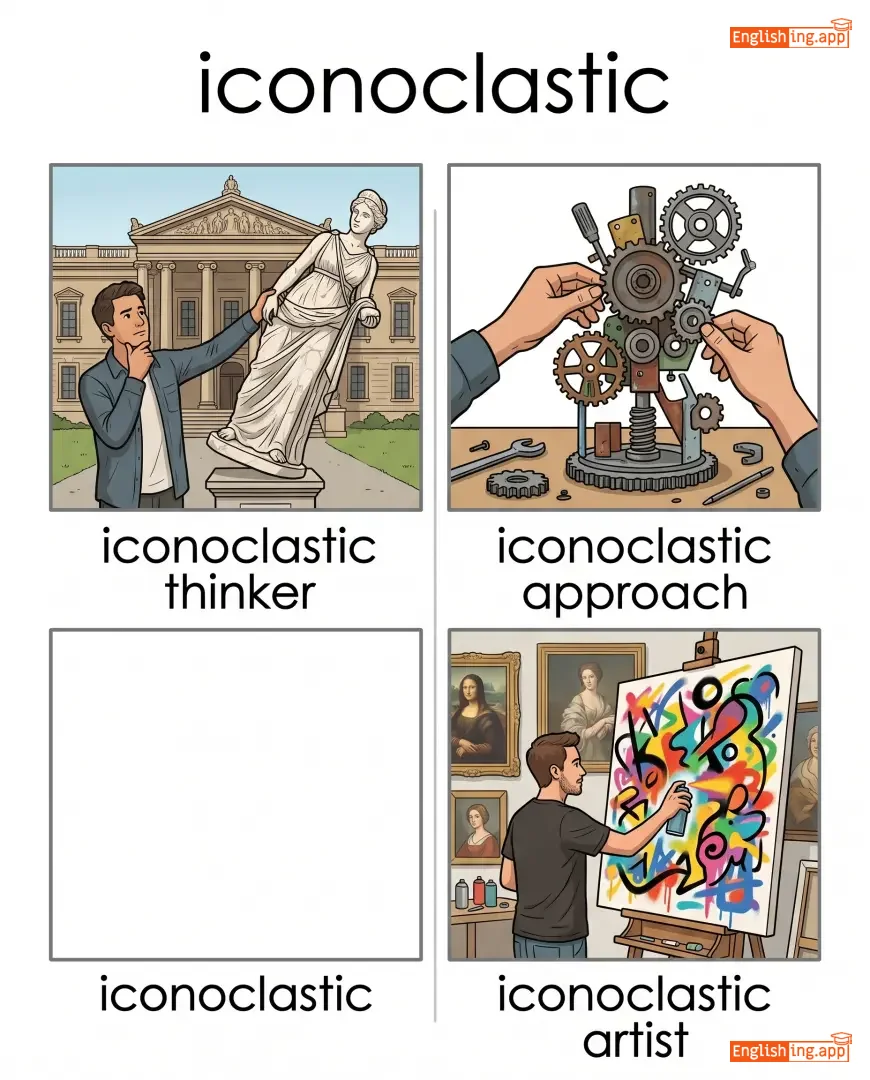
iconoclastic thinker, iconoclastic approach, iconoclastic artist
••••••
|
偶像破坏主义=摧毁传统信仰
••••••
|
|
🛐
••••••
|
/aɪˈdɒlətri/
noun
(偶像崇拜)
••••••
|

|
偶像崇拜
ouxiang chongbai
••••••
|
- •••••• | - •••••• | - •••••• | - •••••• |
The worship of idols or extreme admiration for someone or something.
••••••
|
The priest condemned the idolatry practiced in the village. |
牧师谴责了在村里实践的偶像崇拜。
Mushi qianze le zai cun li shijian de ouxiang chongbai.
••••••
|
- •••••• | - •••••• | - •••••• |
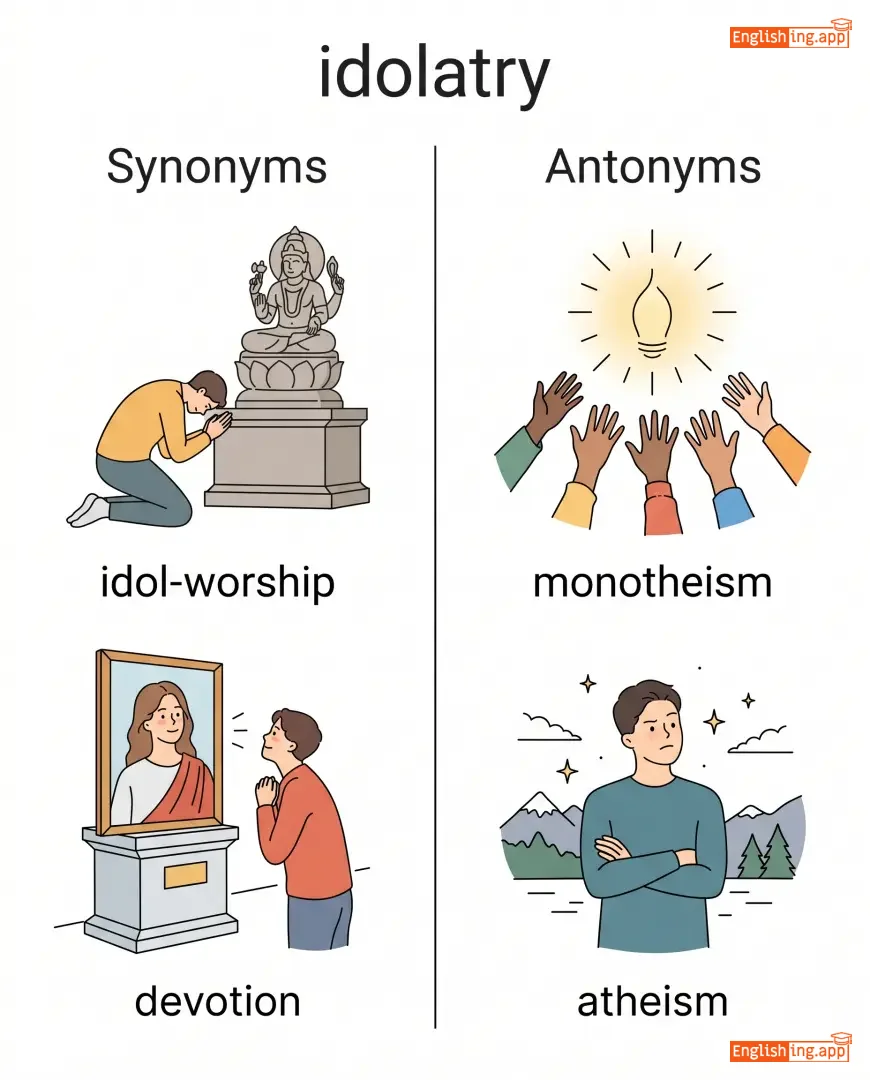
idol-worship, devotion, adoration, reverence, veneration
••••••
|
monotheism, atheism, irreverence
••••••
|
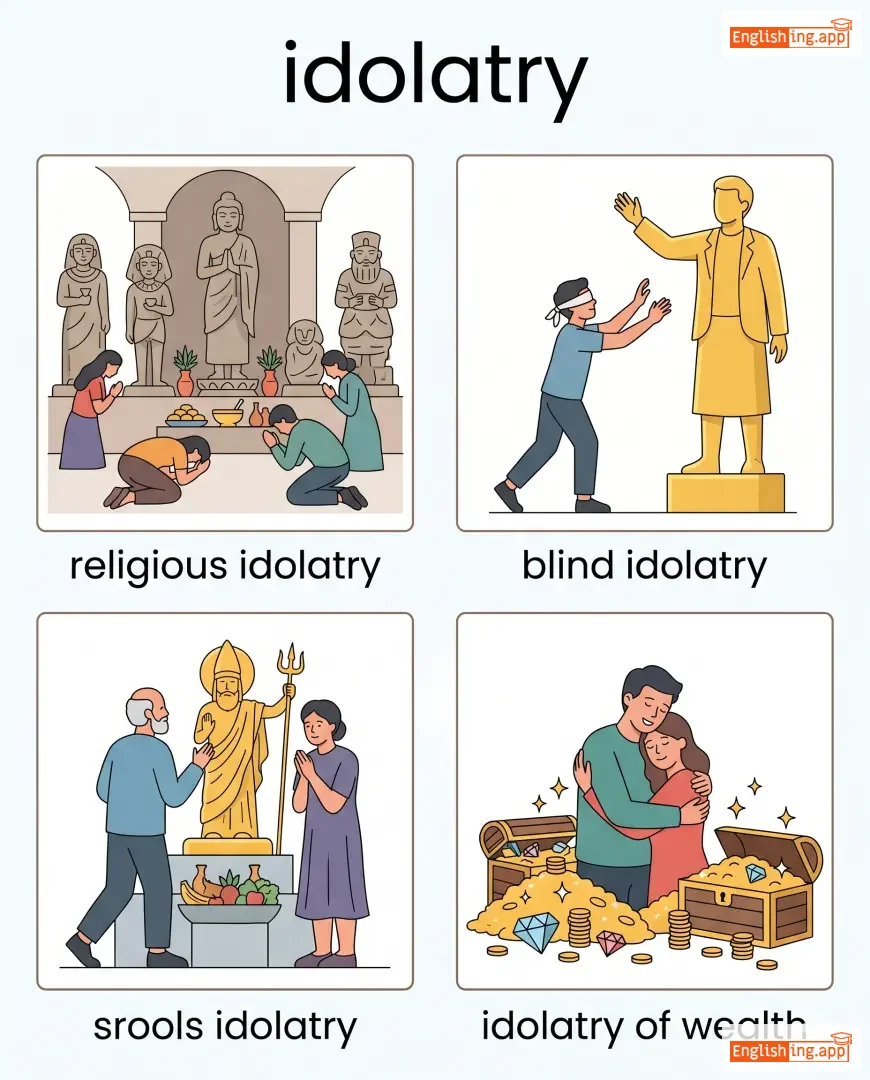
religious idolatry, blind idolatry, idolatry of wealth, idolatry of power
••••••
|
idol + tree,偶像的崇拜
••••••
|
|
⚖️
••••••
|
/ɪˈmjuːtəbl/
adjective
(immutébl)
••••••
|
|
不可改变的
bùkě gǎibiàn de
••••••
|
- •••••• | - •••••• | - •••••• | - •••••• |
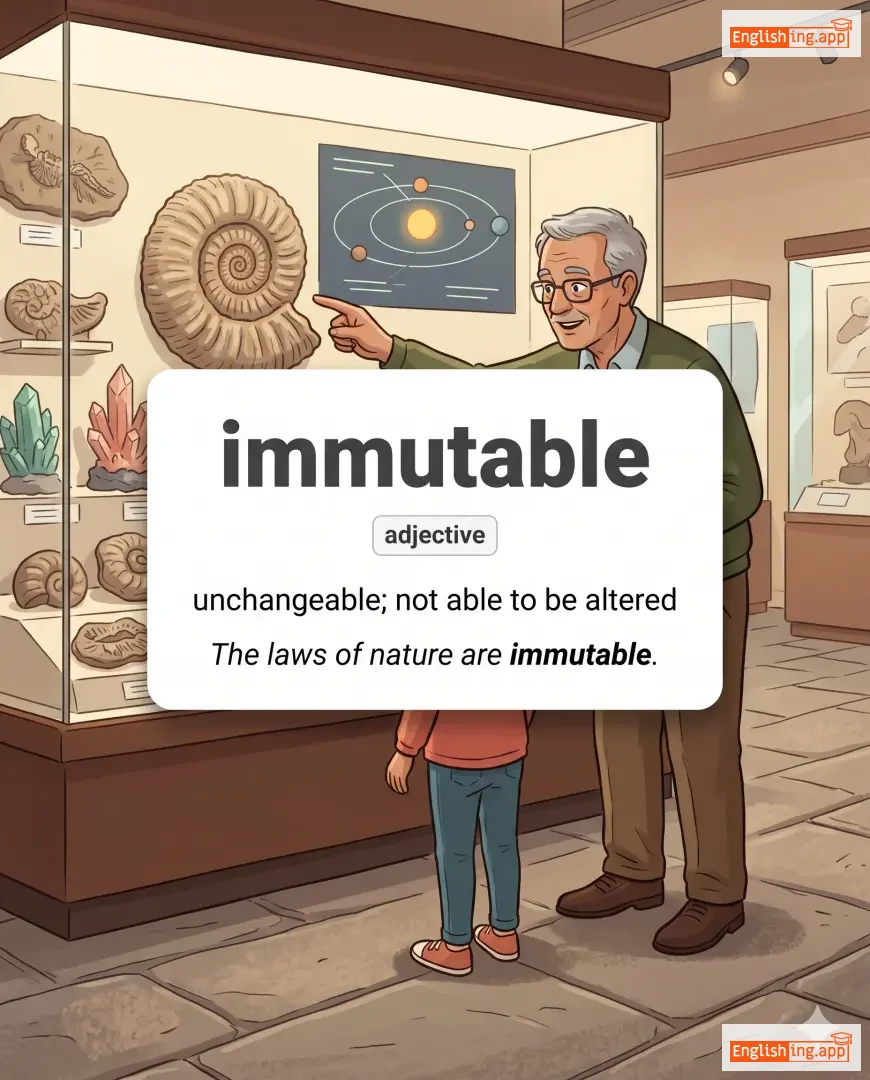
unchangeable; not able to be altered
••••••
|
The laws of nature are immutable.
大自然的规律是不可改变的。
••••••
|
大自然的规律是不可改变的。
Dà zìrán de guīlǜ shì bùkě gǎibiàn de.
••••••
|
immutable truth
不可改变的真理
••••••
|
a fact that cannot be changed
••••••
|
不可改变的真理
Bùkě gǎibiàn de zhēnlǐ
••••••
|
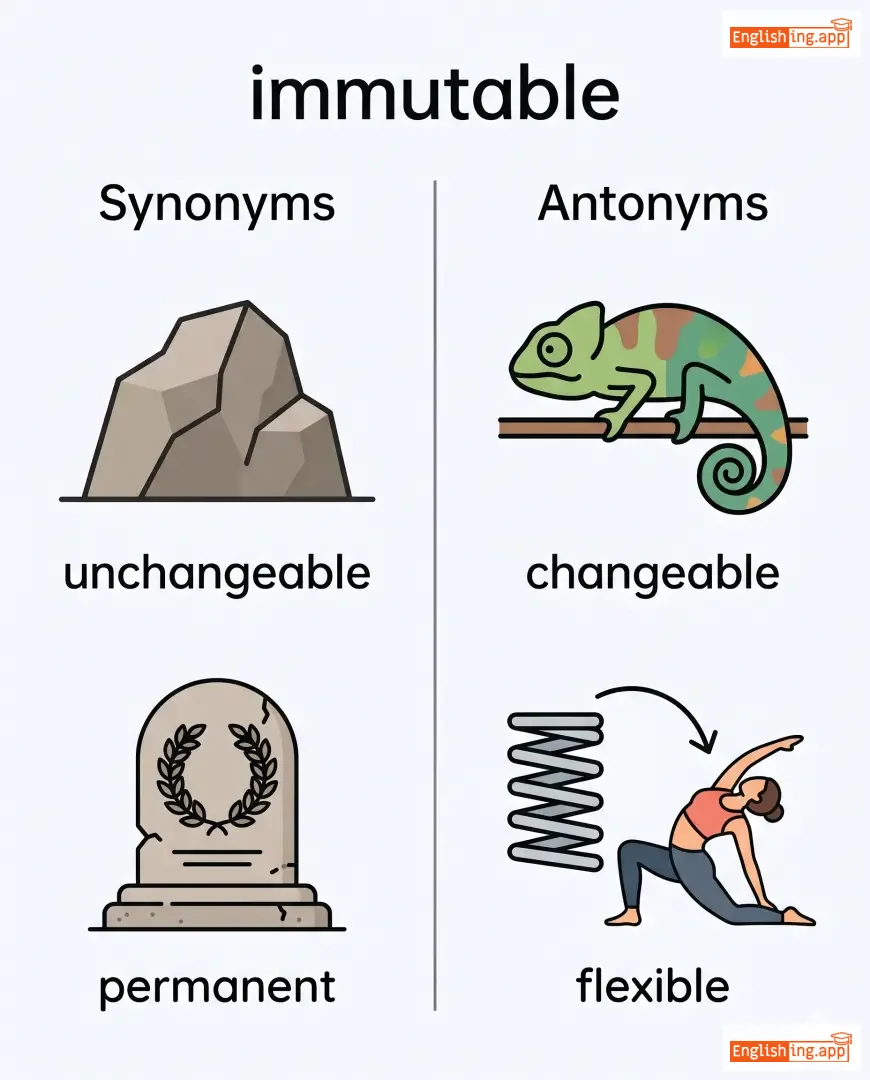
unchangeable, permanent, fixed, constant
••••••
|
changeable, flexible, variable
••••••
|
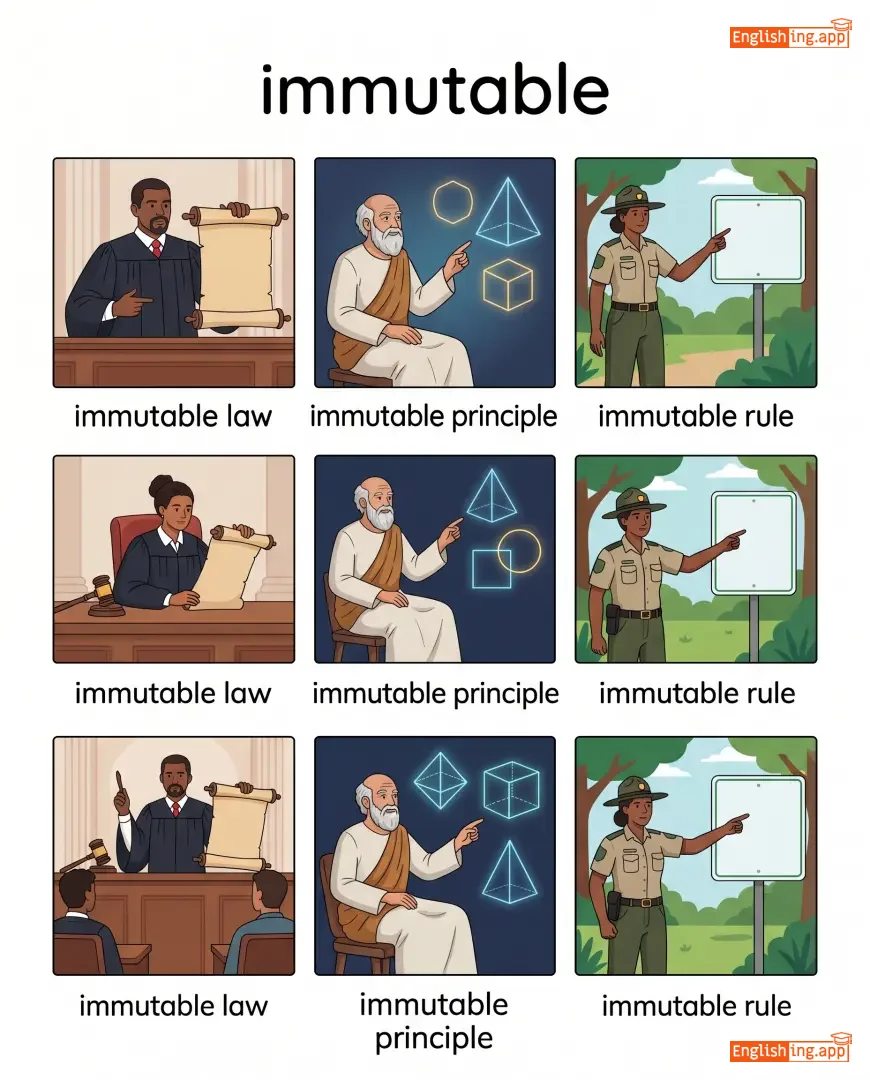
immutable law, immutable principle, immutable rule, immutable fact
••••••
|
Immutable意味着无法改变—不可改变的。
••••••
|
|
💔
••••••
|
/ɪmˈpɛər/
verb
(ɪmˈpɛər)
••••••
|
|
损害
sunhai
••••••
|
impaired
ɪmˈpɛərd
••••••
|
impaired
ɪmˈpɛərd
••••••
|
impairs
ɪmˈpɛərz
••••••
|
impairing
ɪmˈpɛərɪŋ
••••••
|
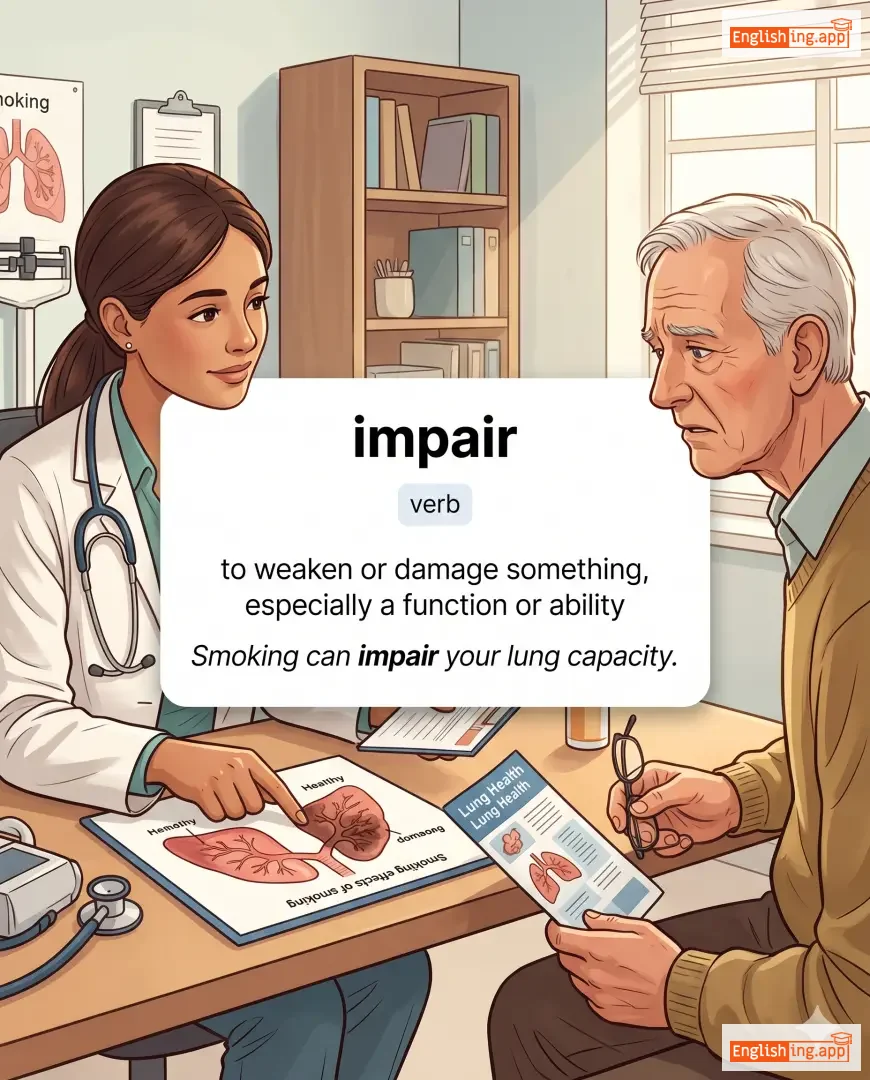
to weaken or damage something, especially a function or ability
••••••
|
Smoking can impair your lung capacity.
吸烟可能会损害您的肺部容量。
••••••
|
吸烟可能会损害您的肺部容量。
Xiyan keneng hui sunhai ninde feibu rongliang.
••••••
|
- •••••• | - •••••• | - •••••• |
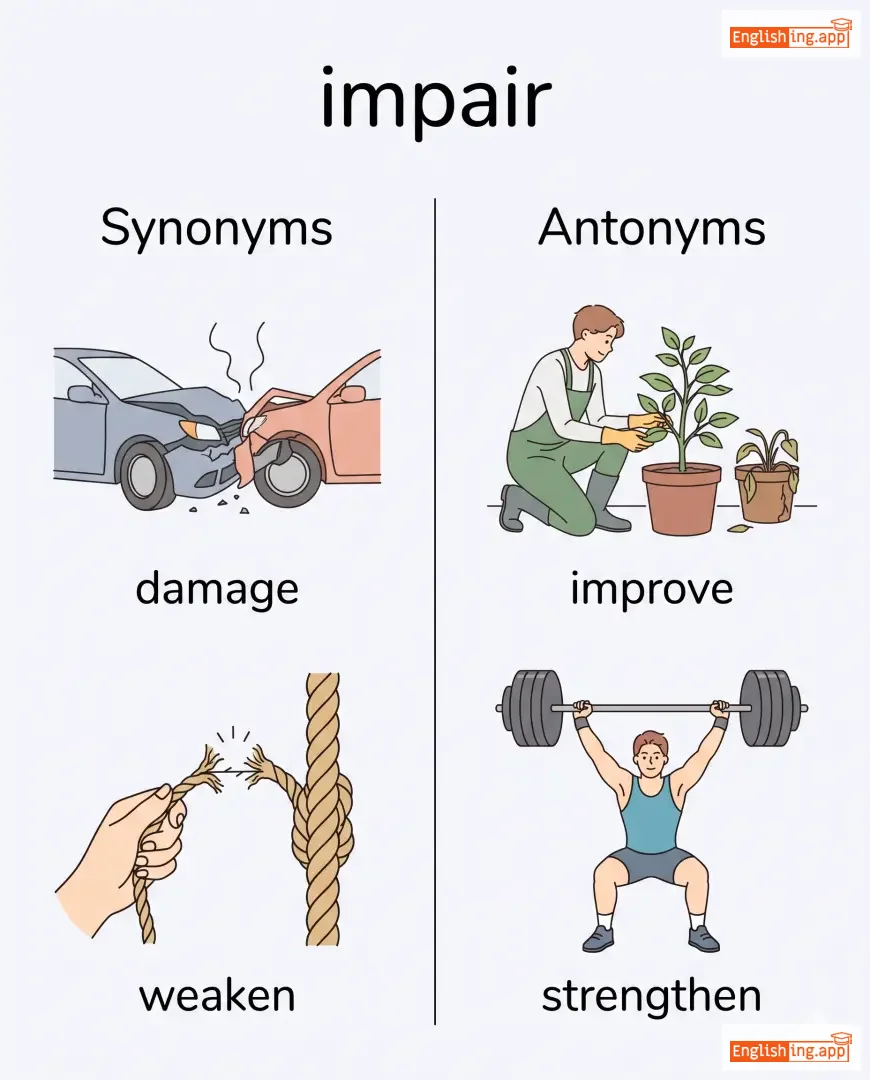
damage, weaken, harm, reduce, diminish
••••••
|
improve, strengthen, enhance
••••••
|
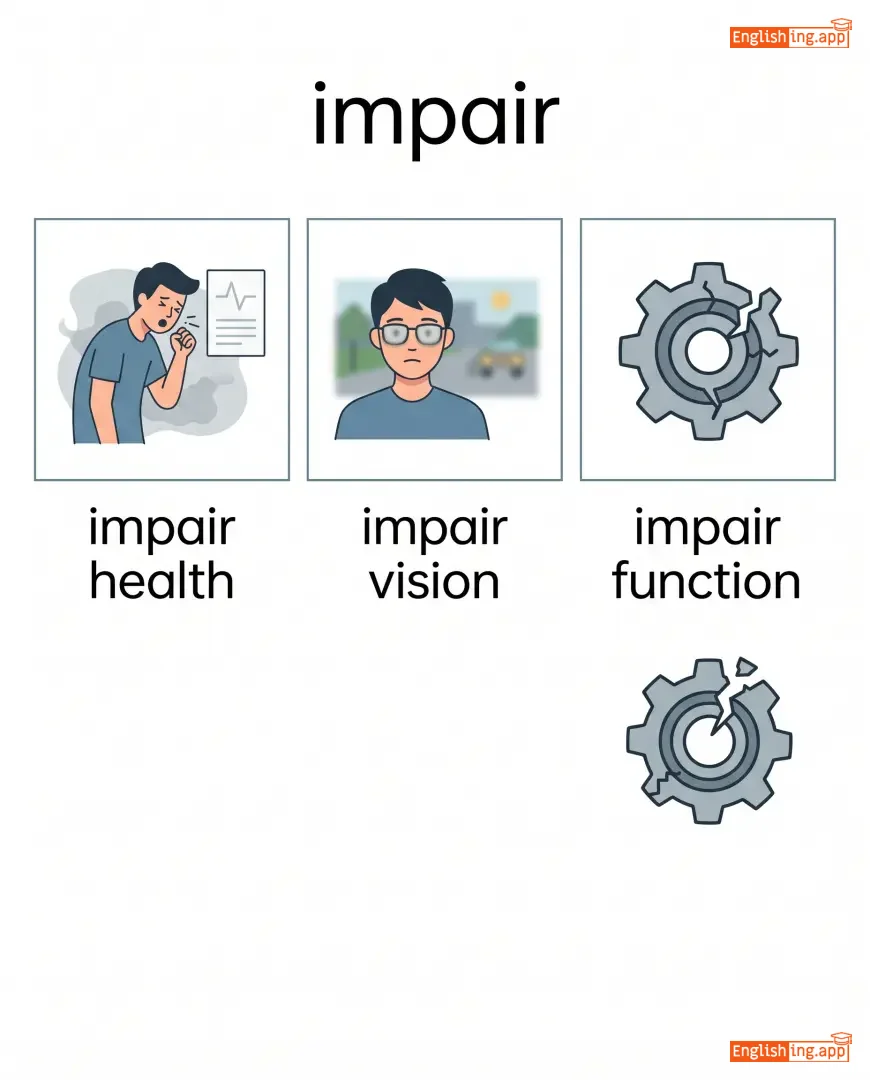
impair health, impair vision, impair function, severely impair
••••••
|
IMPAIR意味着损害 - 如果汽车的轮胎损坏了,车就不能开了。
••••••
|
|
😐
••••••
|
/ɪmˈpæsɪv/
adjective
(印帕西夫)
••••••
|
|
冷漠
lěngmò
••••••
|
- •••••• | - •••••• | - •••••• | - •••••• |
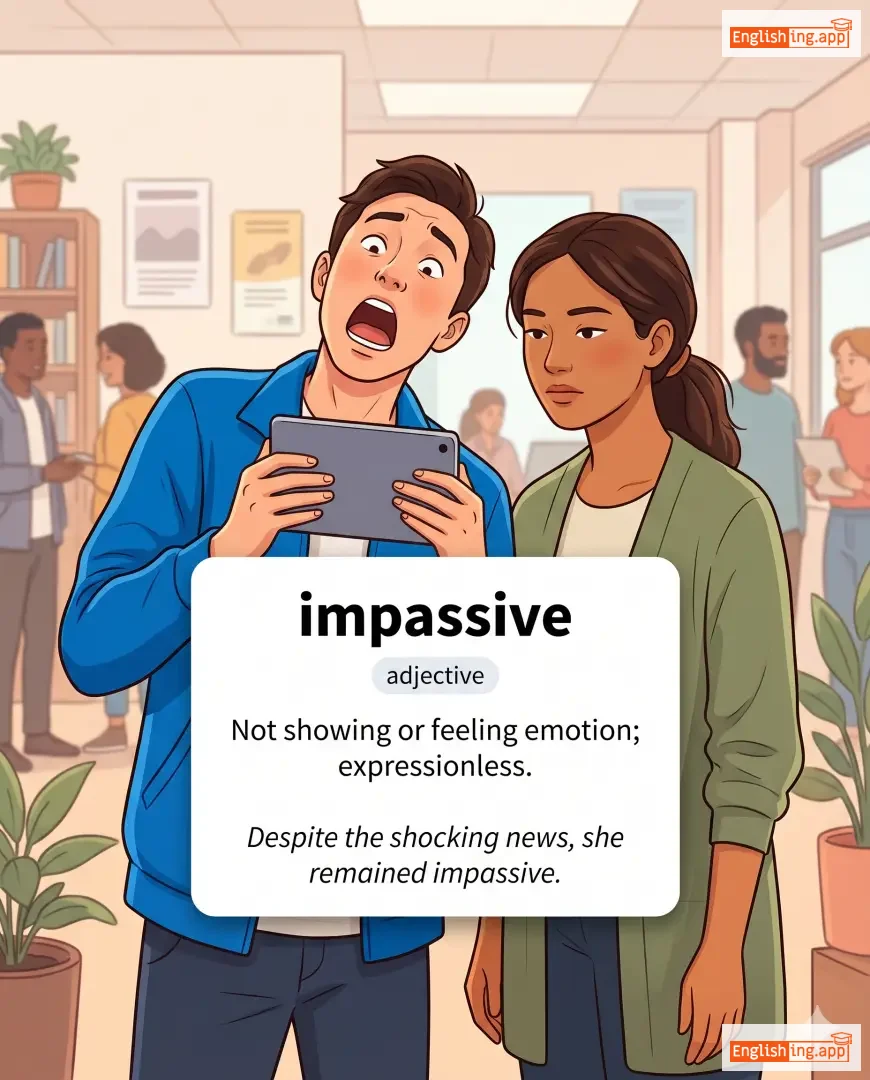
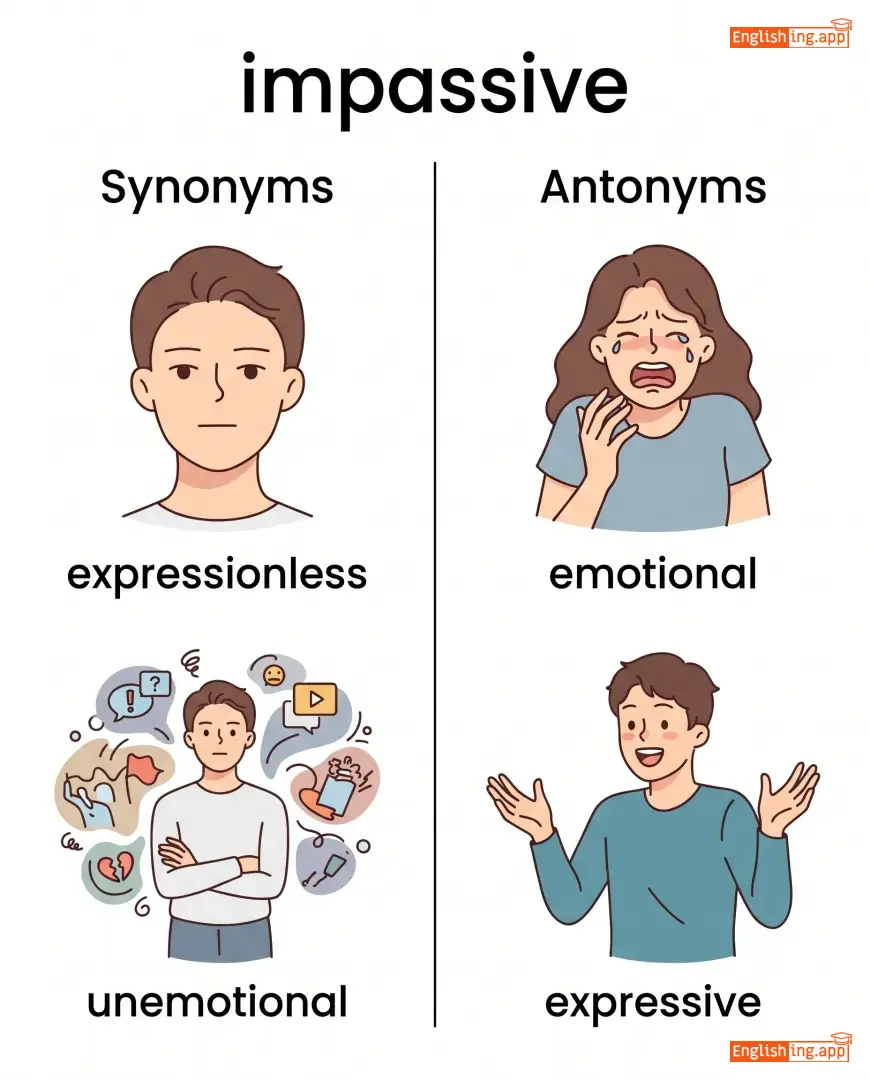
Not showing or feeling emotion; expressionless.
••••••
|
Despite the shocking news, she remained impassive.
尽管有令人震惊的消息,她依然无动于衷。
••••••
|
尽管有令人震惊的消息,她依然无动于衷。
Jǐnguǎn yǒu lìngrén zhènjīng de xiāoxī, tā yīrán wúdòng yú zhōng.
••••••
|
- •••••• | - •••••• | - •••••• |
expressionless, unemotional, calm, stoic, detached
••••••
|
emotional, expressive, passionate
••••••
|
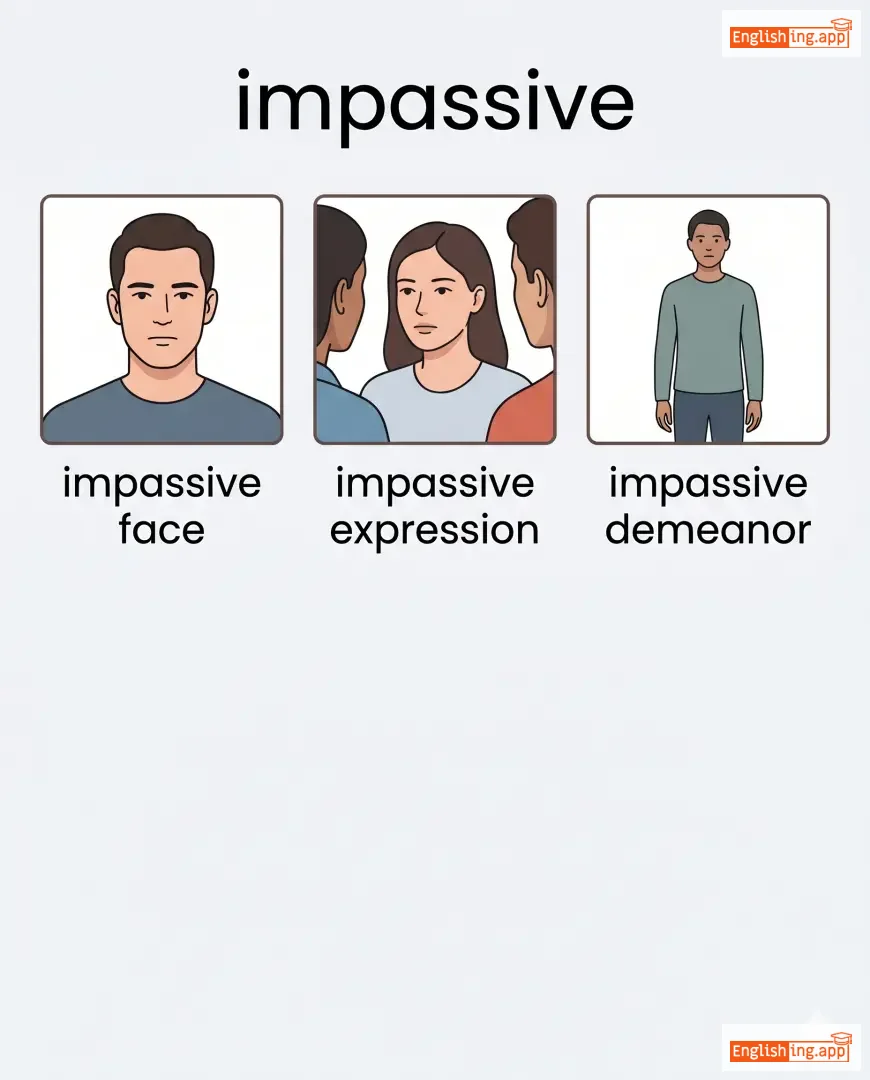
impassive face, impassive expression, impassive demeanor
••••••
|
IMPASSIVE 在中文里是冷漠 — 没有感情的脸
••••••
|
|
⛔
••••••
|
/ɪmˈpiːd/
verb
(印皮德)
••••••
|
|
阻碍
zuhai
••••••
|
impeded
印皮德德
••••••
|
impeded
印皮德德
••••••
|
impedes
印皮德斯
••••••
|
impeding
印皮丁
••••••
|
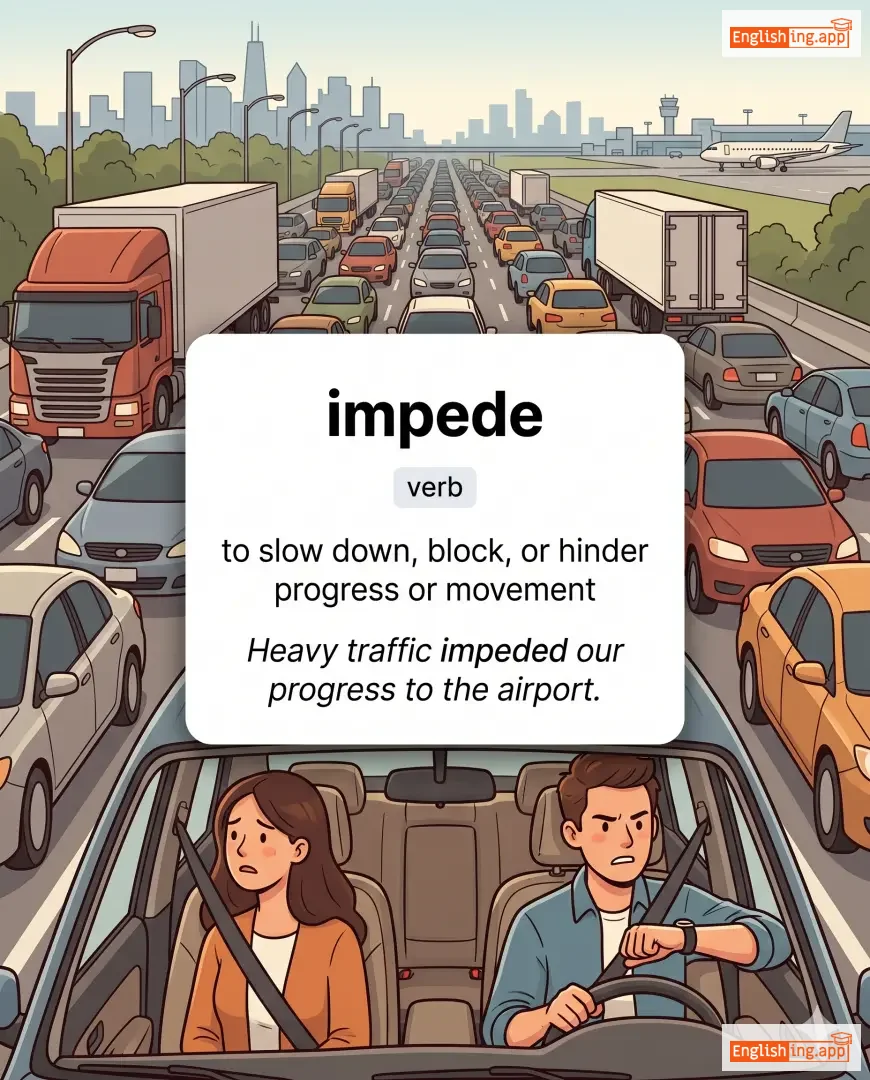
to slow down, block, or hinder progress or movement
••••••
|
Heavy traffic impeded our progress to the airport.
繁忙的交通妨碍了我们前往机场的进展。
••••••
|
繁忙的交通妨碍了我们前往机场的进展。
Fanmang de jiaotong fangai le women qianwang jihang de jinzhan.
••••••
|
impede progress
阻碍进展
••••••
|
to slow down or obstruct advancement
••••••
|
阻碍进展
zuhai jinzhan
••••••
|
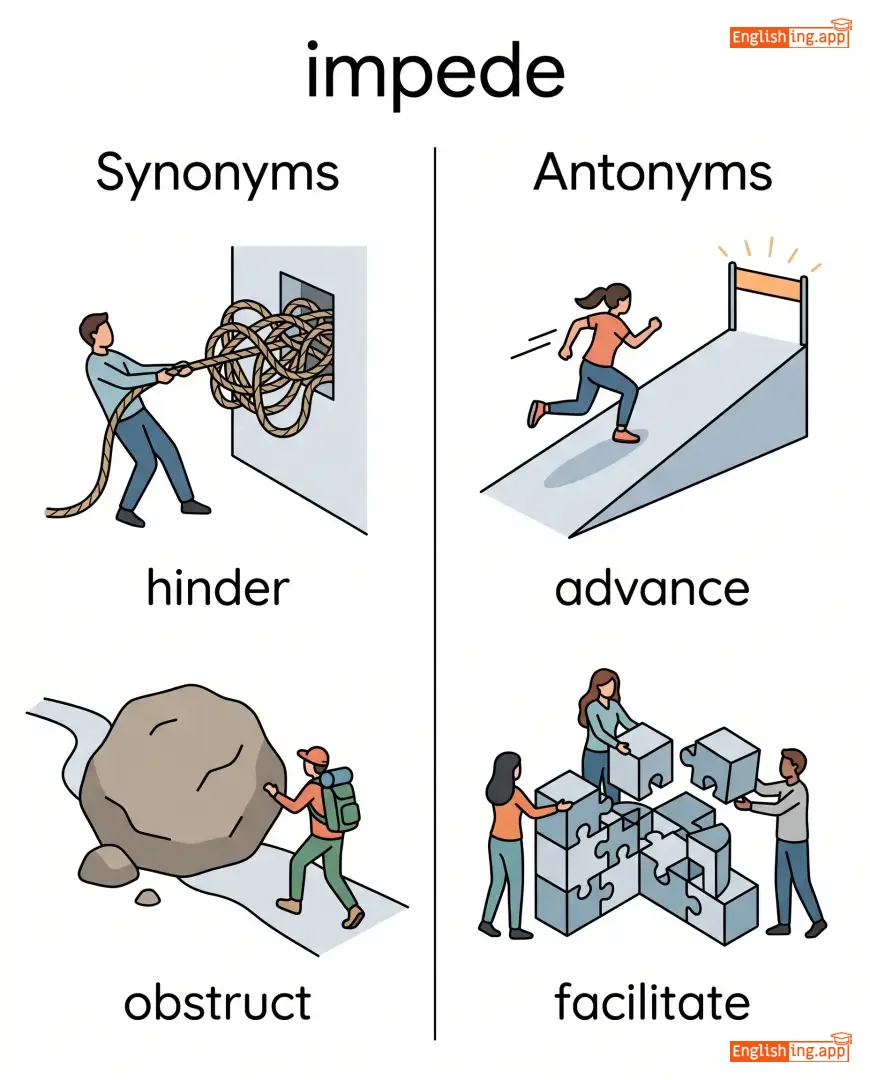
hinder, obstruct, block, delay, hamper
••••••
|
advance, facilitate, promote
••••••
|
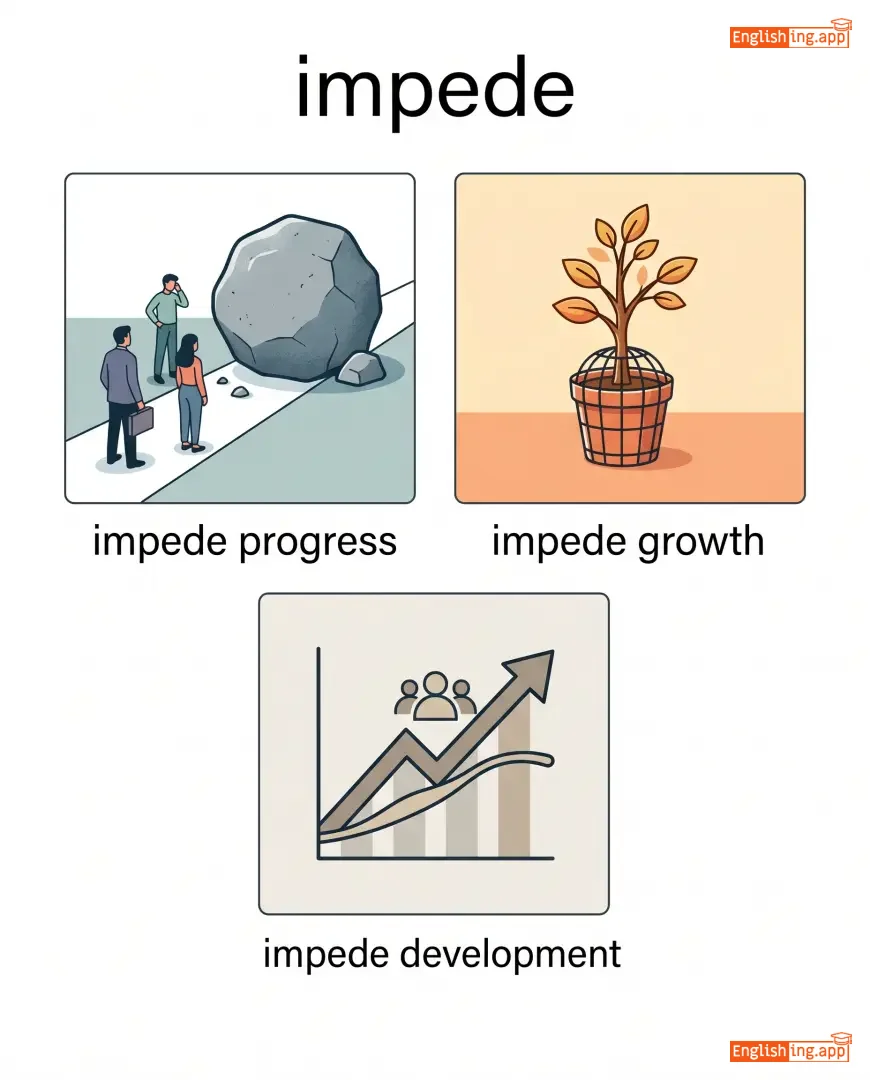
impede progress, impede growth, impede development, impede movement
••••••
|
如果交通阻碍了你前进,你就不能到达机场。
••••••
|
|
🧱
••••••
|
/ɪmˈpɜːmiəbl/
adjective
(im-pu-lei-mai-bo)
••••••
|
|
不透水的
bu tou shui de
••••••
|
- •••••• | - •••••• | - •••••• | - •••••• |
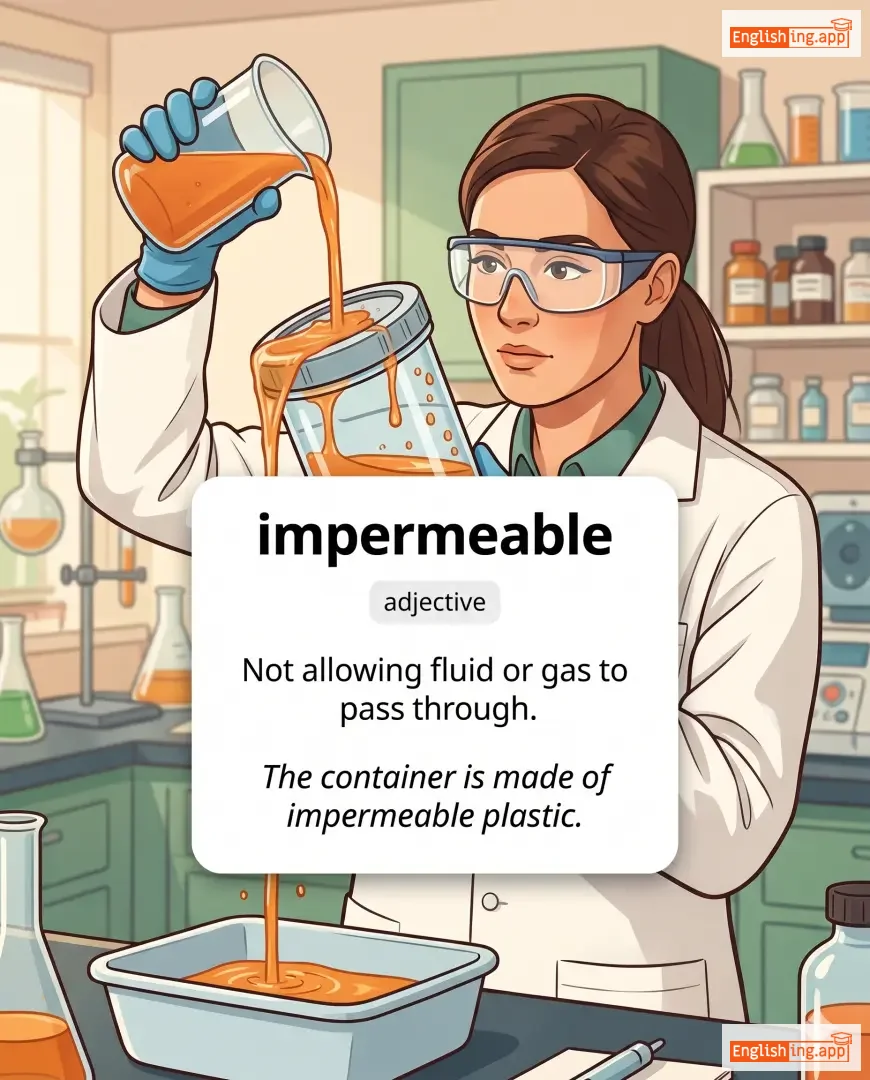
Not allowing fluid or gas to pass through.
••••••
|
The container is made of impermeable plastic. |
这个容器是由不透水的塑料制成的。
Zhe ge rongqi shi you bu tou shui de su liao zhi cheng de.
••••••
|
- •••••• | - •••••• | - •••••• |
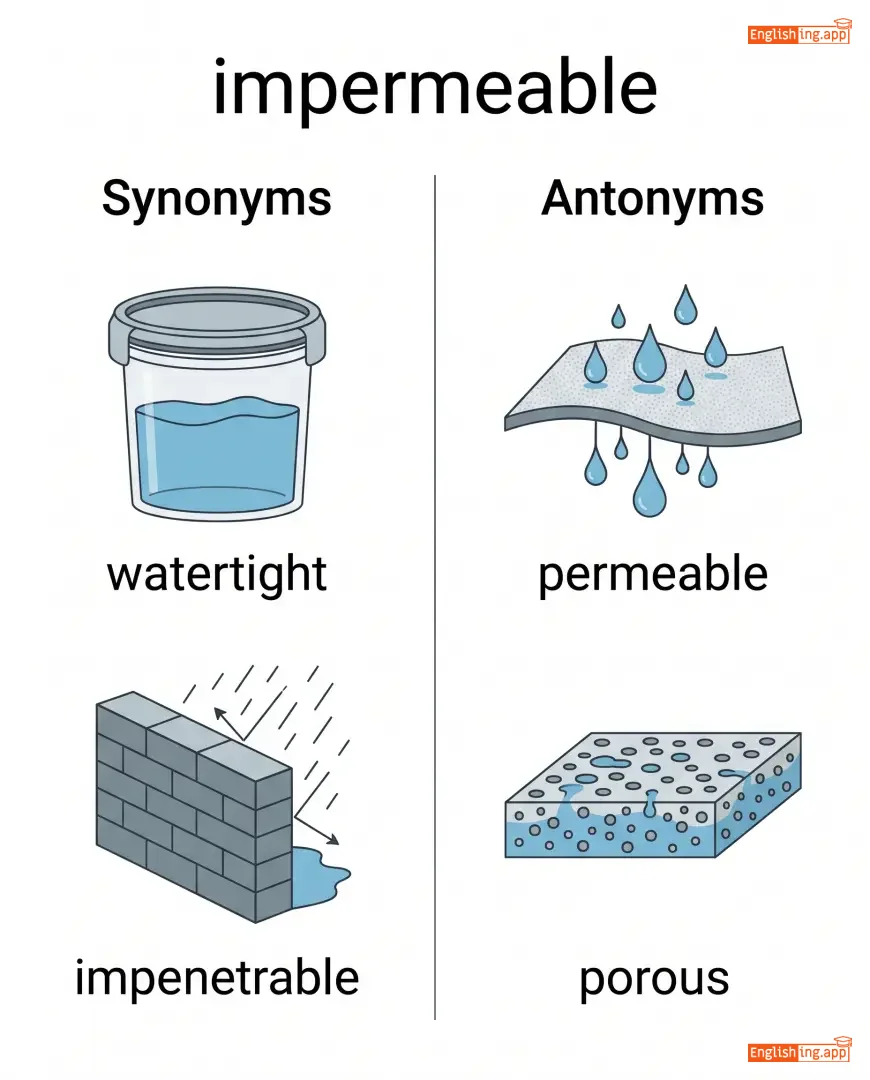
watertight, impenetrable, sealed, nonporous
••••••
|
permeable, porous, leaky
••••••
|
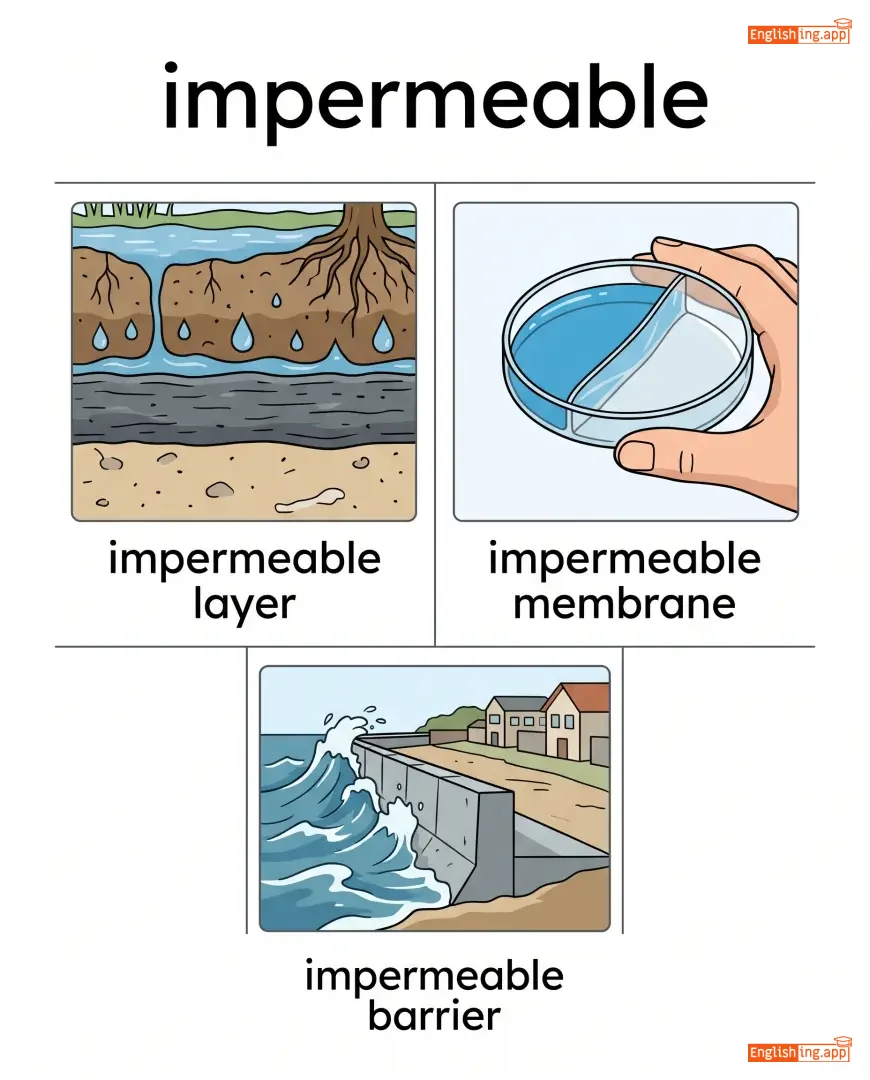
impermeable layer, impermeable membrane, impermeable barrier, impermeable wall
••••••
|
不透水的意思是不能通过水的材料。
••••••
|
|
🧘
••••••
|
/ɪmˈpɜːrtərbəbəl/
adjective
(印珀特比布尔)
••••••
|

|
泰然自若
tairan ziruo
••••••
|
- •••••• | - •••••• | - •••••• | - •••••• |
Unable to be upset or excited; calm.
••••••
|
He remained imperturbable even when faced with tough questions.
他在面对难题时依然保持冷静。
••••••
|
他在面对难题时依然保持冷静。
Tā zài miànduì nántí shí yīrán bǎochí lěngjìng.
••••••
|
- •••••• | - •••••• | - •••••• |
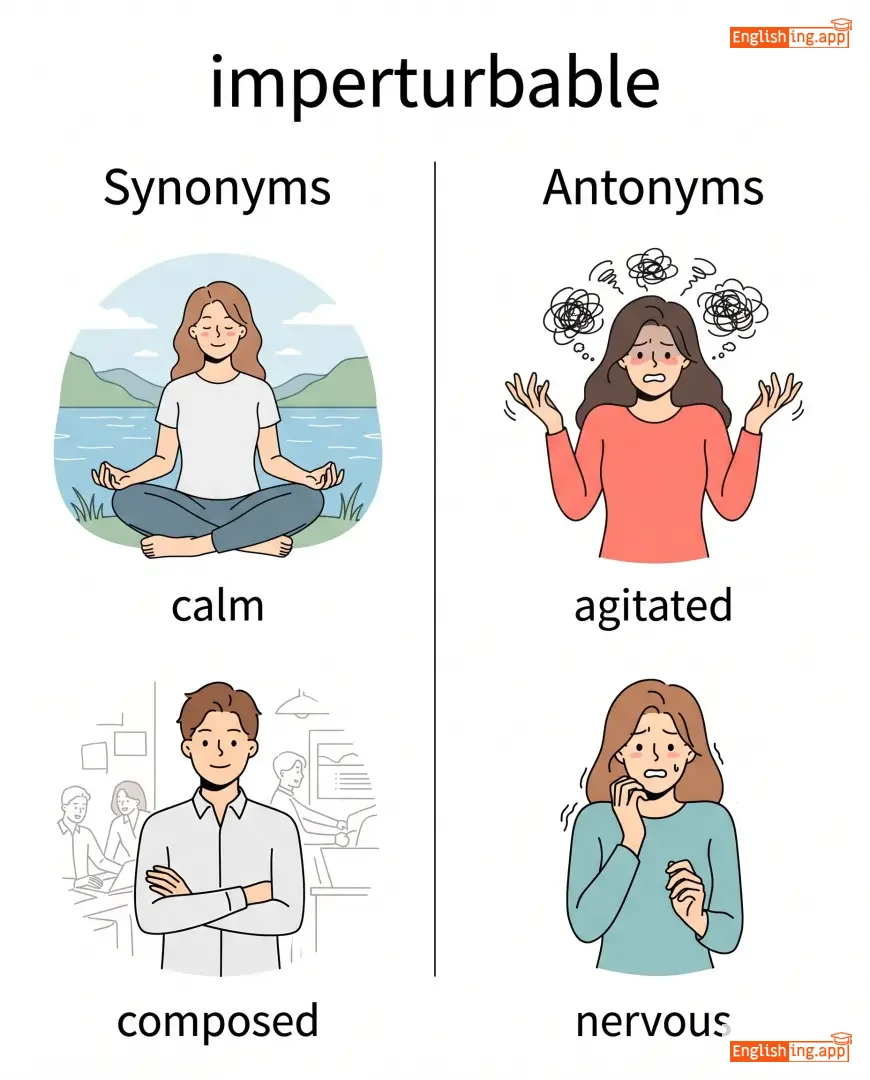
calm, composed, serene, collected, unflappable
••••••
|
agitated, nervous, excitable
••••••
|
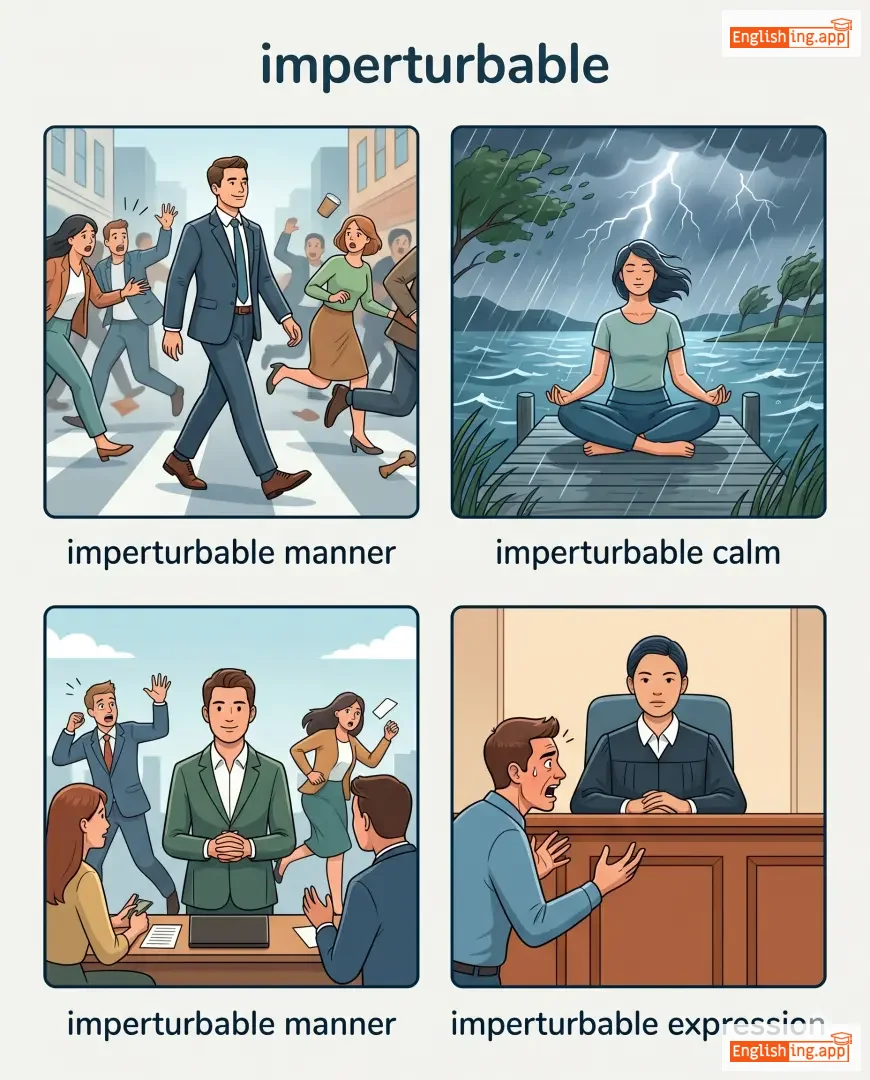
imperturbable manner, imperturbable calm, imperturbable expression, imperturbable face
••••••
|
Imperturbable 意味着 '不会被激怒' — 意即泰然自若。
••••••
|
|
🛡️
••••••
|
/ɪmˈpɜːrviəs/
adjective
(ɪmˈpɜːrviəs)
••••••
|
|
不透水的
butoushui de
••••••
|
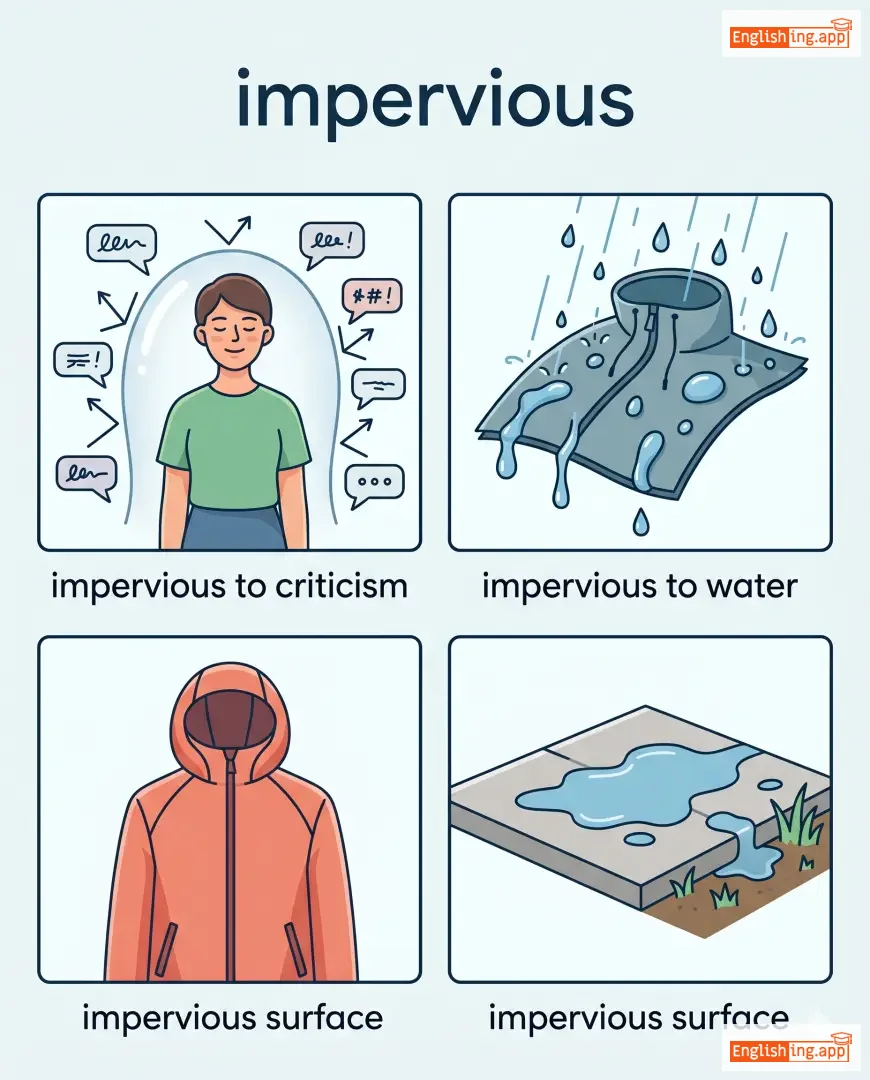
- •••••• | - •••••• | - •••••• | - •••••• |
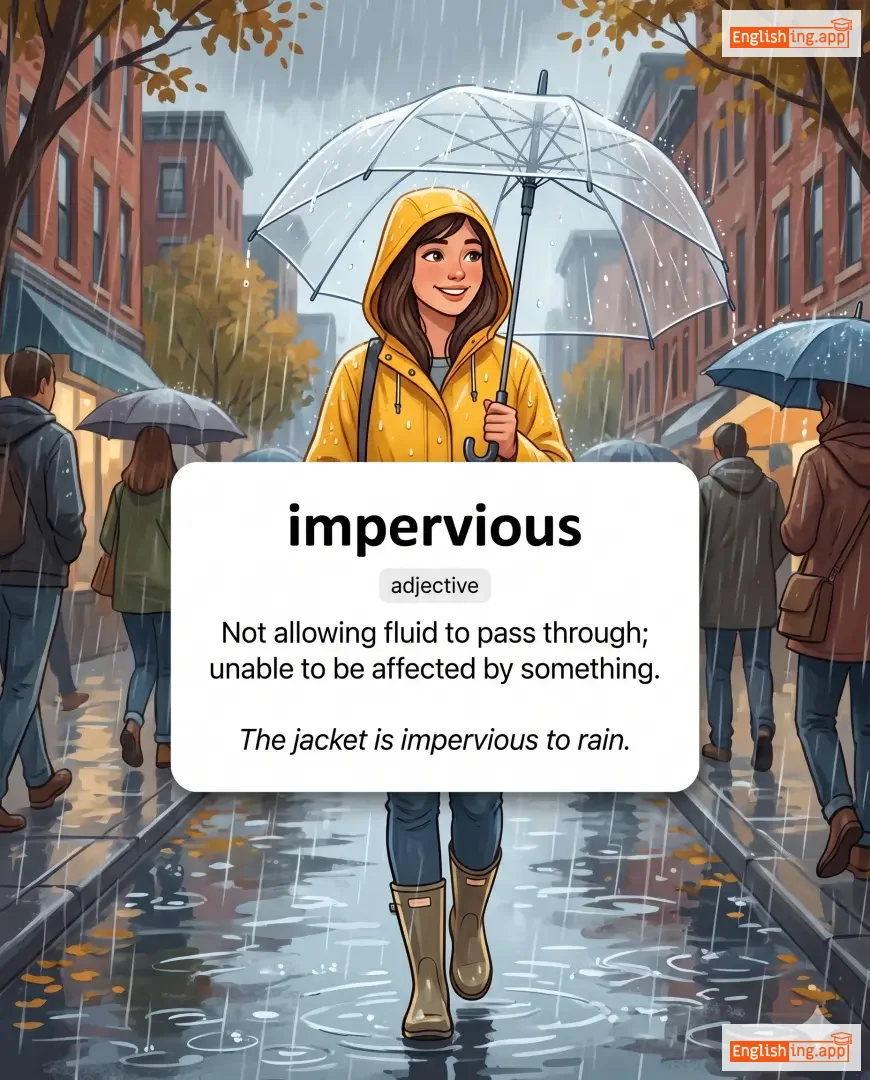
Not allowing fluid to pass through; unable to be affected by something.
••••••
|
The jacket is impervious to rain. |
这件夹克不透水。
Zhe jian jiake butoushui.
••••••
|
- •••••• | - •••••• | - •••••• |
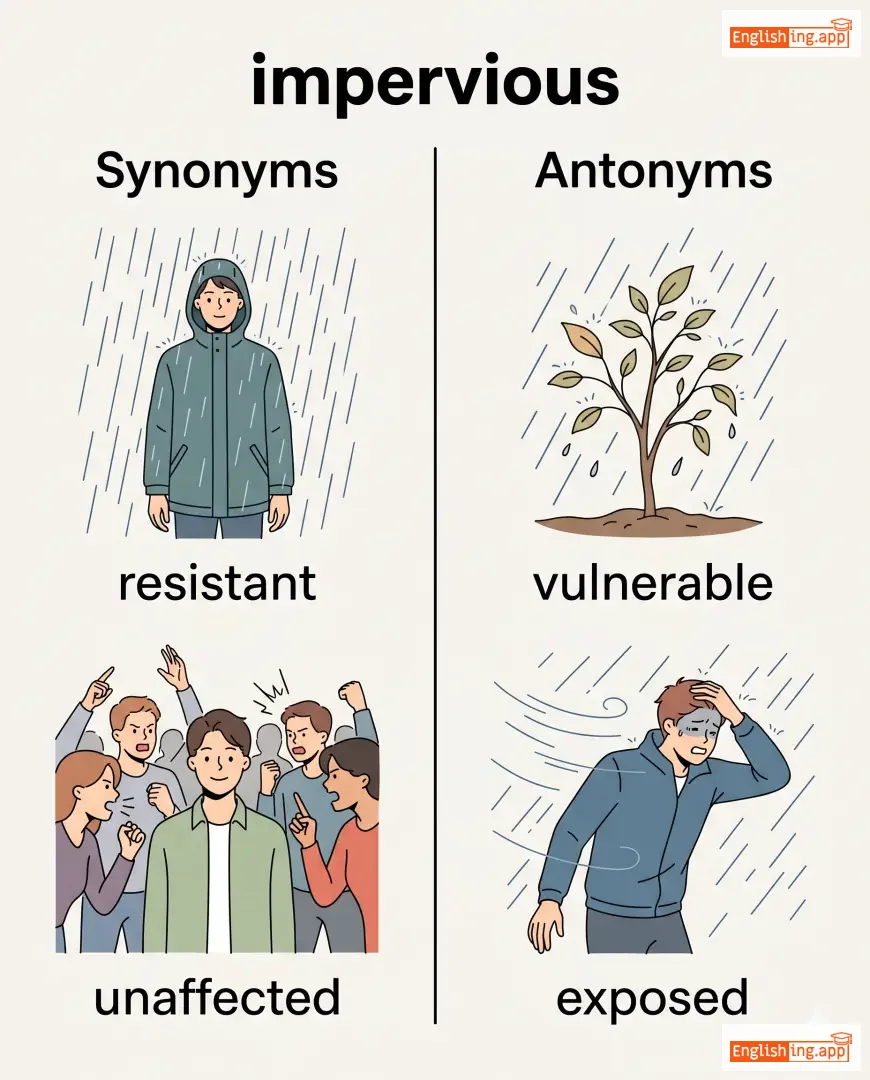
resistant, unaffected, immune, sealed, waterproof
••••••
|
vulnerable, exposed, penetrable
••••••
|
impervious to criticism, impervious to water, impervious surface, impervious layer
••••••
|
Impervious的意思是‘不透水的’ – 不让任何东西通过,不透水。
••••••
|
|
🔥
••••••
|
/ɪmˈplækəbl/
adjective
(因普拉克布)
••••••
|

|
不可调和
bukediaohuo
••••••
|
- •••••• | - •••••• | - •••••• | - •••••• |
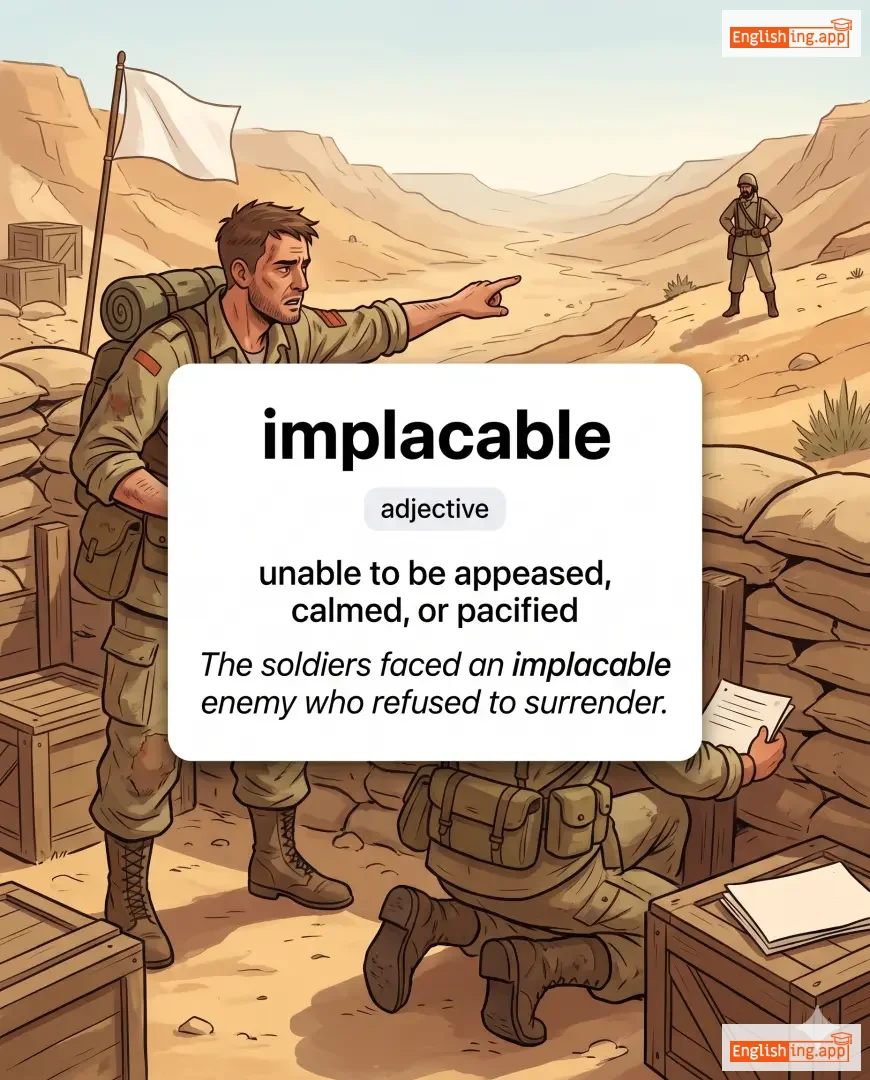
unable to be appeased, calmed, or pacified
••••••
|
The soldiers faced an implacable enemy who refused to surrender. |
士兵们面对着一个不可调和的敌人,他拒绝投降。
Shibingmen miandui zhege bukediaohuo de diren, ta jujue touxiang.
••••••
|
- •••••• | - •••••• | - •••••• |
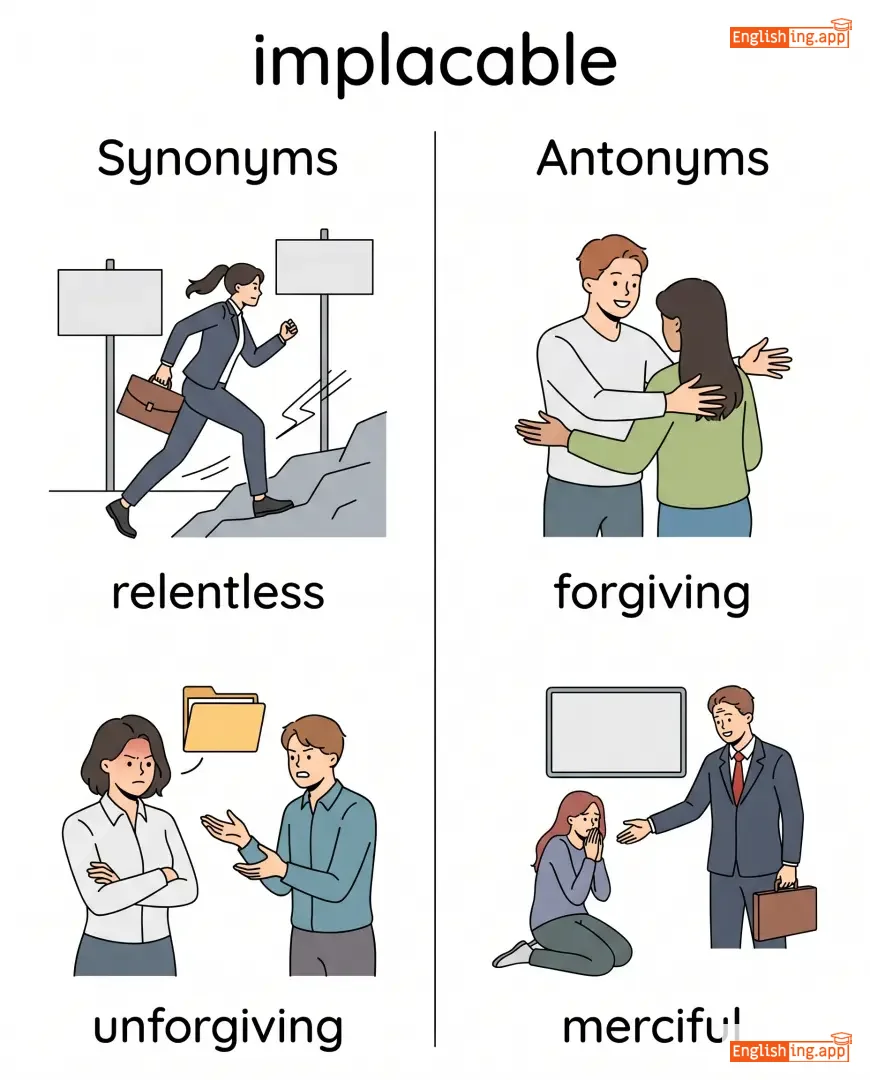
relentless, unforgiving, merciless, unyielding, stubborn
••••••
|
forgiving, merciful, kind
••••••
|
implacable enemy, implacable hatred, implacable opposition
••••••
|
IMPLACABLE在中文是'不可调和',意味着无法平息
••••••
|
|
🤫
••••••
|
/ɪmˈplɪsɪt/
adjective
(隐性)
••••••
|

|
隐性
yinxing
••••••
|
- •••••• | - •••••• | - •••••• | - •••••• |
Suggested or understood without being directly stated.
••••••
|
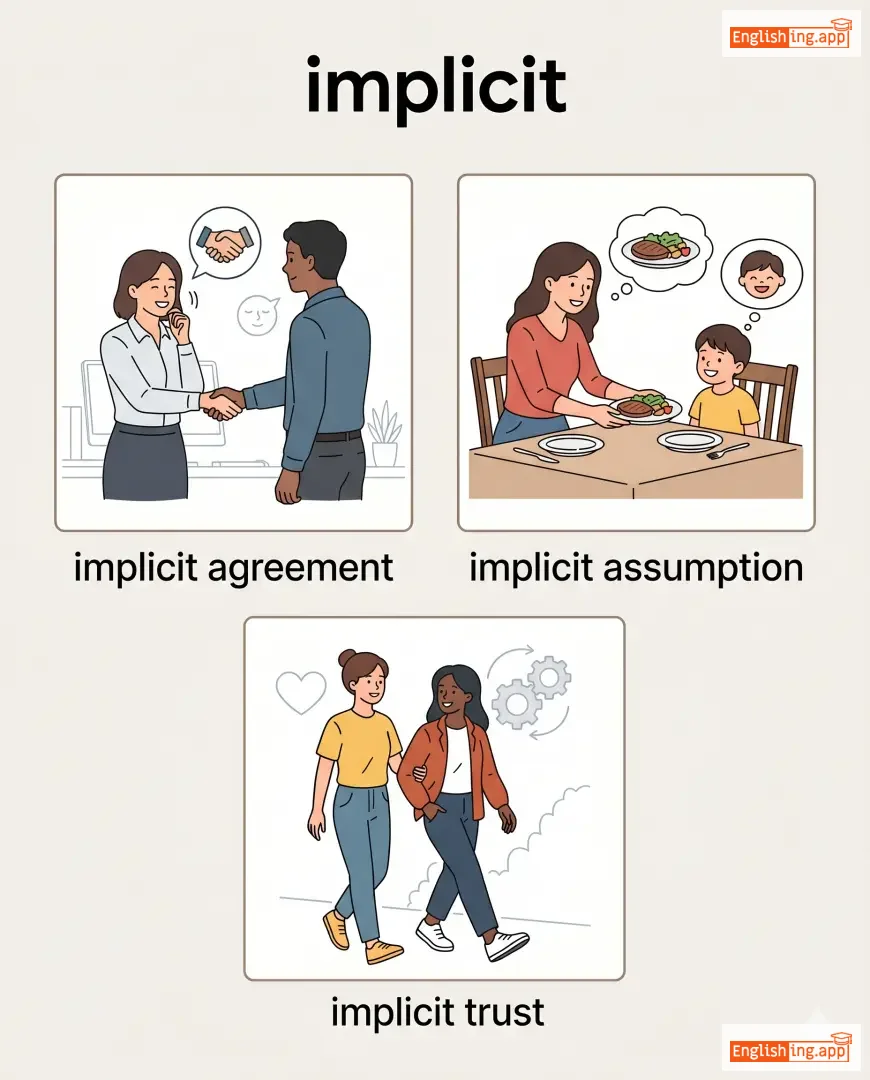
Her trust in him was implicit. |
她对他的信任是隐性的。
tā duì tā de xìnrèn shì yǐnxìng de
••••••
|
implicit trust |
Complete and unquestioning trust.
••••••
|
隐性信任
yǐnxìng xìnrèn
••••••
|
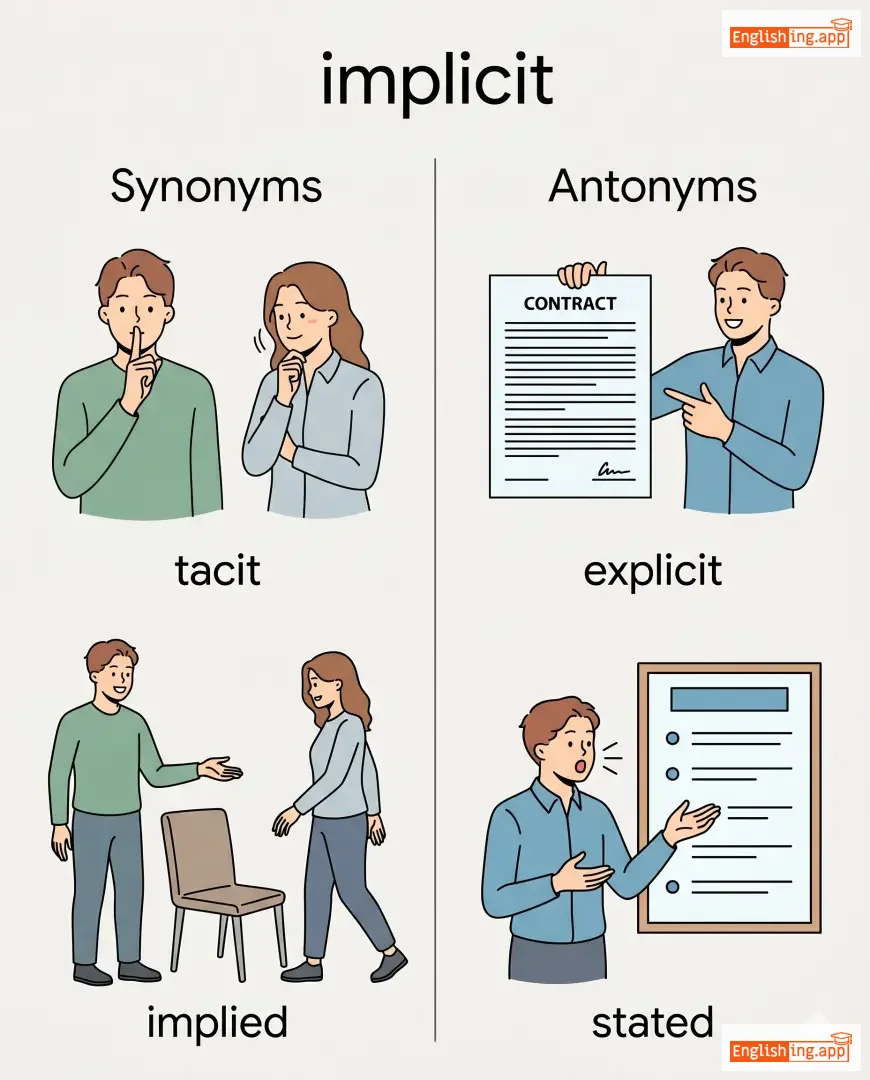
tacit, implied, unspoken, inherent, understood
••••••
|
explicit, stated, expressed
••••••
|
implicit agreement, implicit assumption, implicit trust, implicit in
••••••
|
‘implicit’意味着隐藏的——记住:隐性信任不是直接说出来的,而是被理解的。
••••••
|
|
💥
••••••
|
/ɪmˈploʊd/
verb
(因普洛德)
••••••
|
|
内爆
neibao
••••••
|
imploded
因普洛德德
••••••
|
imploded
因普洛德德
••••••
|
implodes
因普洛德斯
••••••
|
imploding
因普洛丁
••••••
|
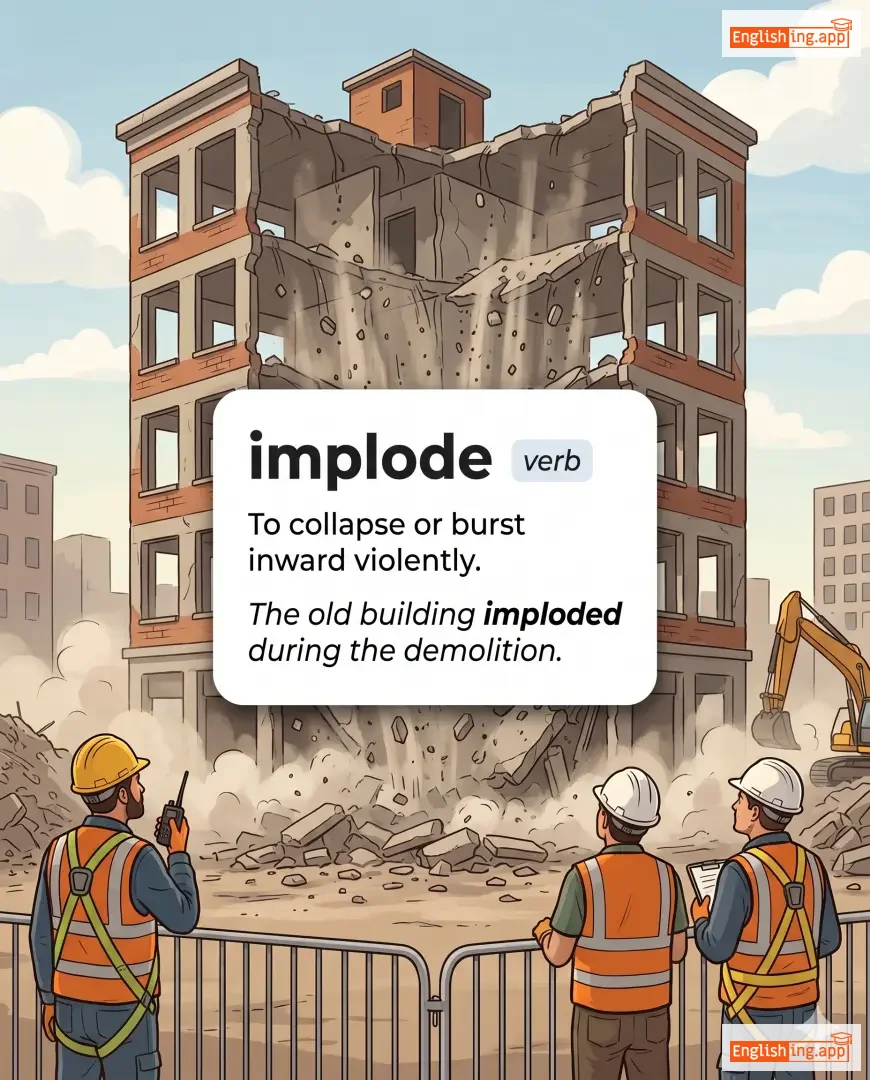
To collapse or burst inward violently.
••••••
|
The old building imploded during the demolition.
这座老建筑在拆除过程中爆炸坍塌。
••••••
|
老建筑在拆除时发生了内爆。
lao jianzhu zai chaichu shi fasheng le neibao.
••••••
|
- •••••• | - •••••• | - •••••• |
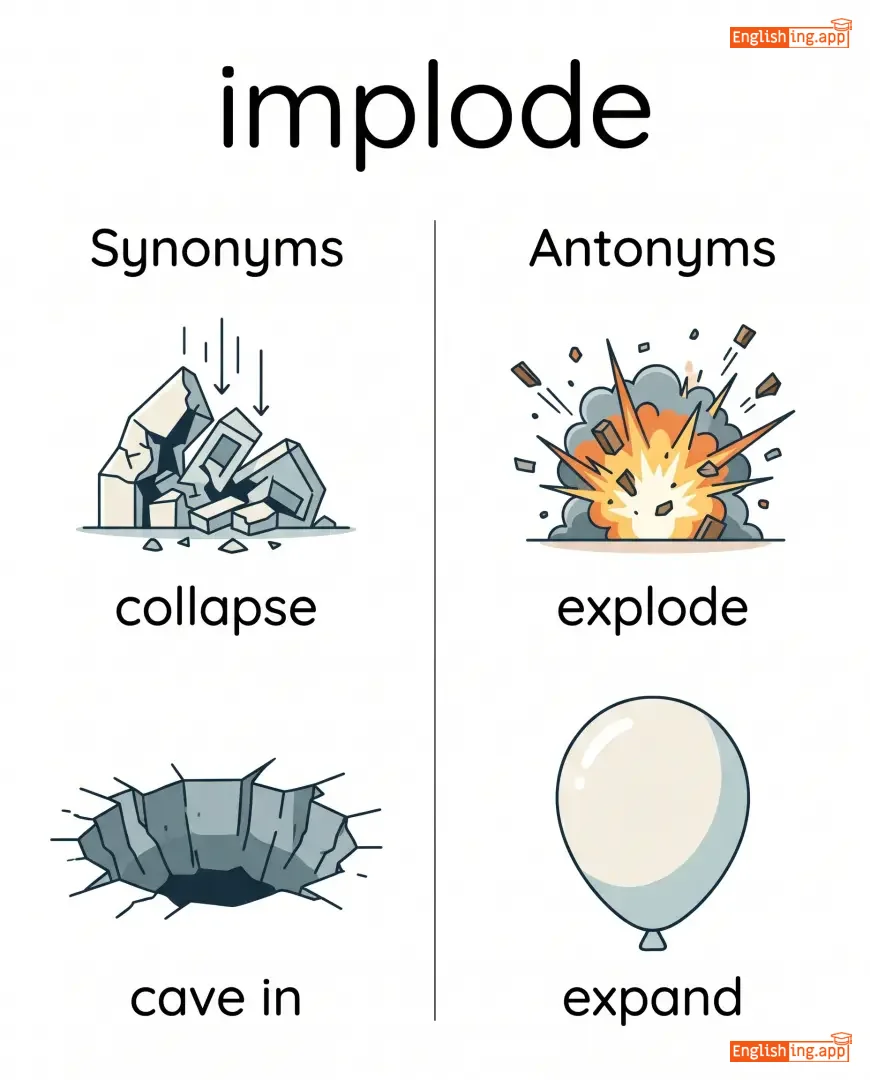
collapse, cave in, crumple, fall in
••••••
|
explode, expand, burst outward
••••••
|
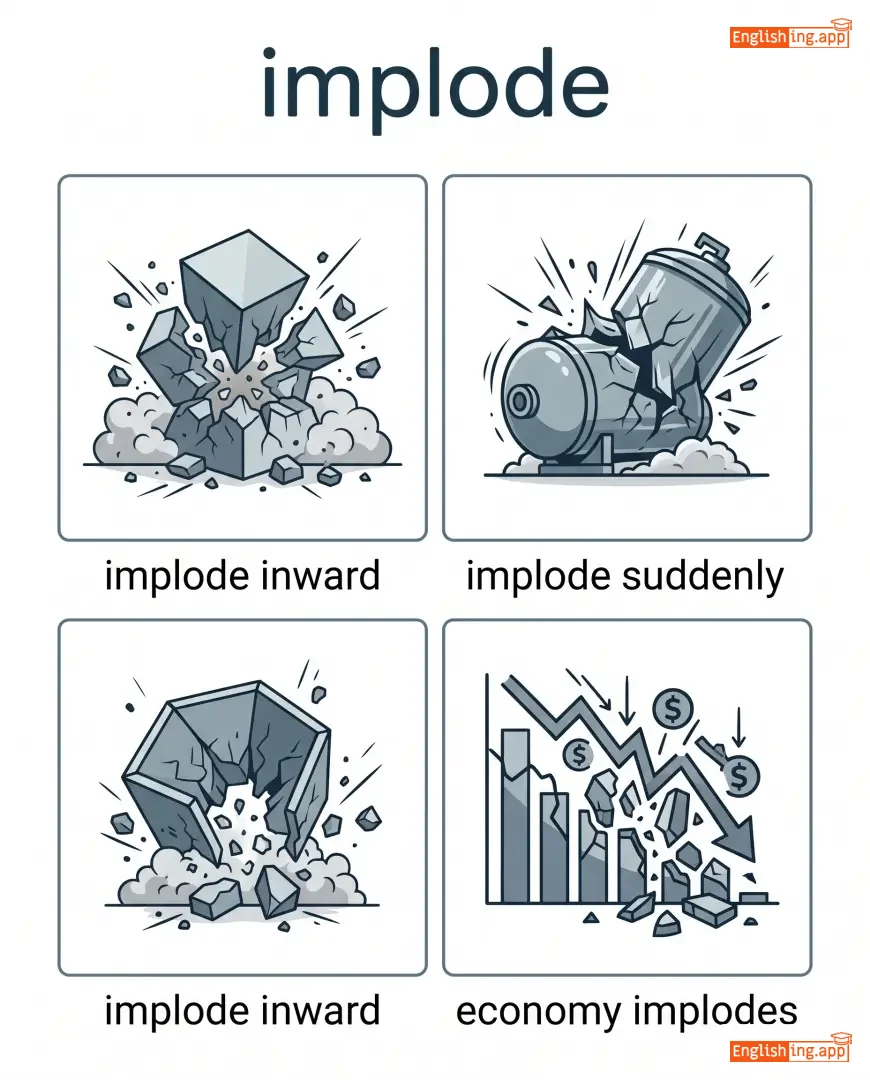
implode inward, implode suddenly, economy implodes
••••••
|
'Implode'意味着内爆 — 想象一下建筑物在内部崩溃,像气球一样被压缩。
••••••
|
|
🤷♂️
••••••
|
/ˌɪn.ədˈvɜːr.tənt.li/
adverb
(inadvertently)
••••••
|

|
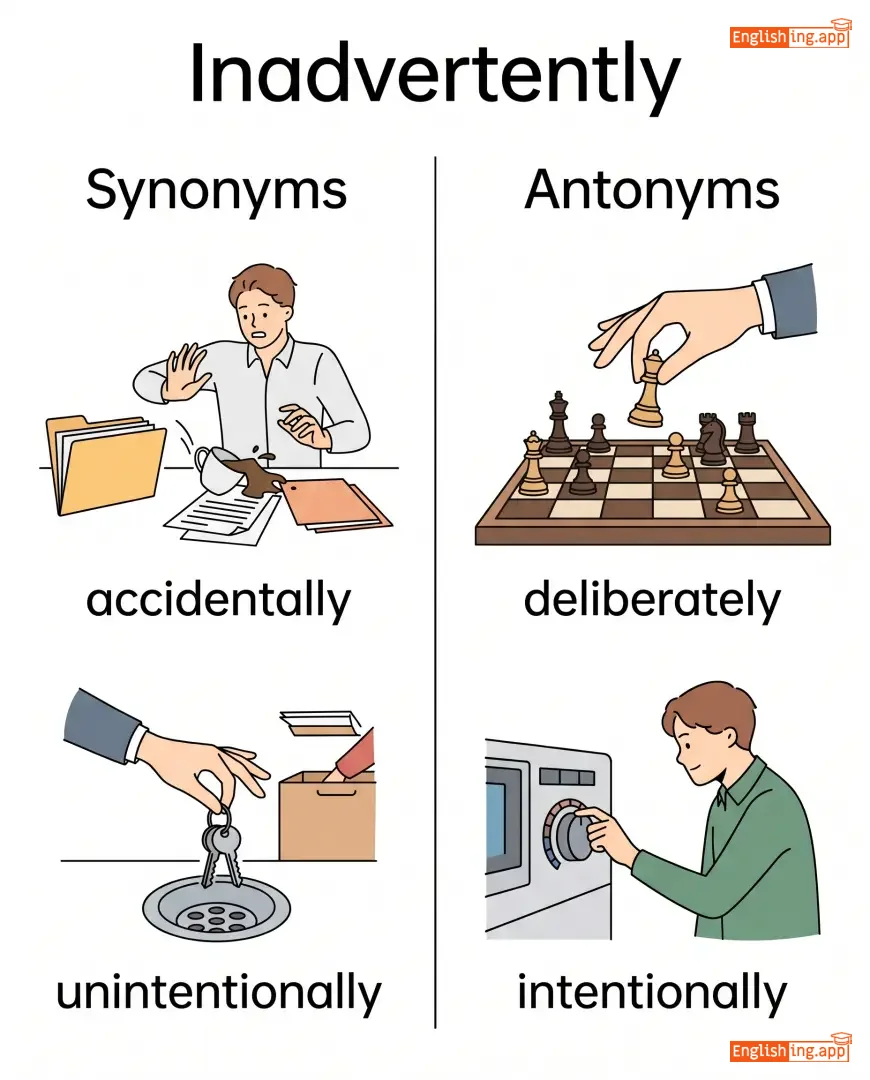
无意中; 不小心; 错误地
wu yizhong; bu xiaoxin; cuowu di
••••••
|
- •••••• | - •••••• | - •••••• | - •••••• |
without being aware of what you are doing; unintentionally; by mistake
••••••
|
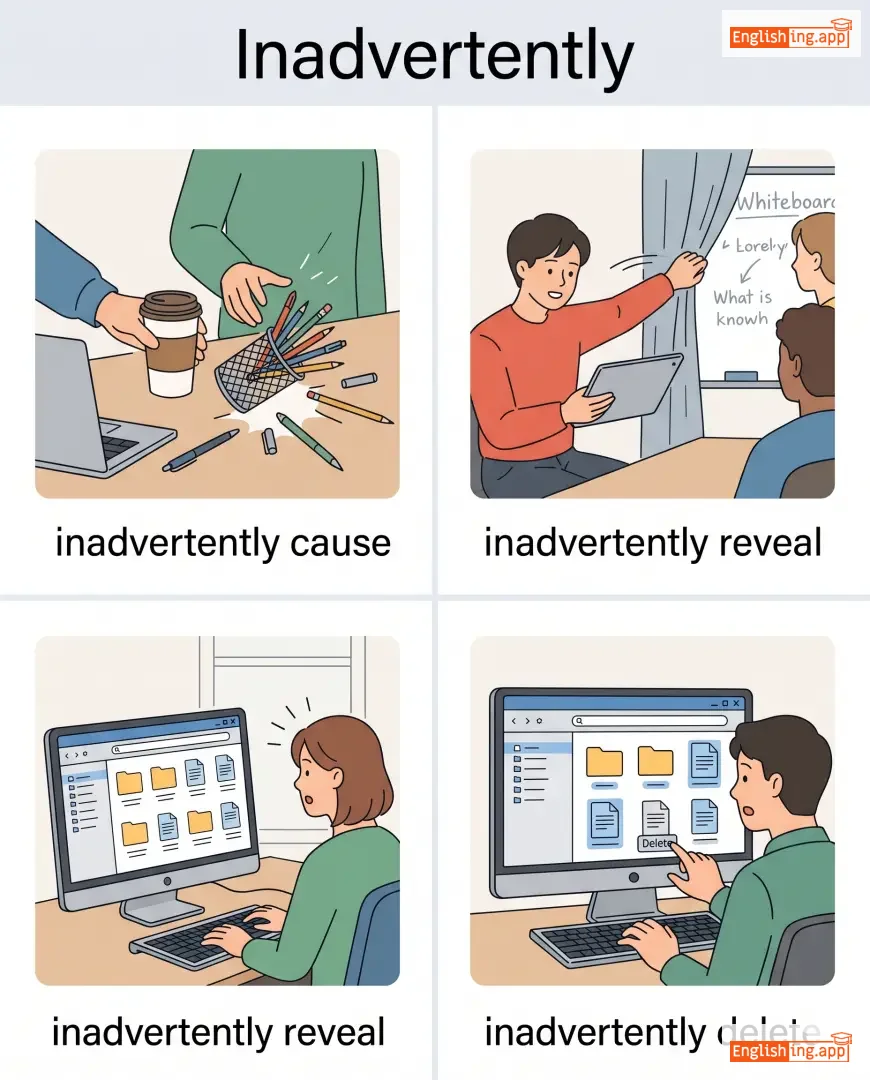
She inadvertently deleted the important file while cleaning her computer. |
她在清理计算机时无意中删除了重要文件。
Ta zai qingli jisuanji shi wu yizhong shanchu le zhongyao wenjian.
••••••
|
- •••••• | - •••••• | - •••••• |
accidentally, unintentionally, unknowingly, mistakenly
••••••
|
deliberately, intentionally, purposely, consciously
••••••
|
inadvertently reveal, inadvertently cause, inadvertently delete
••••••
|
无意中 - 像是清理电脑时不小心删除了文件!
••••••
|
|
🌄
••••••
|
/ɪnˈkoʊ.ɪt/ or /ɪnˈkoʊ.eɪt/
adjective
(因科韦特)
••••••
|


|
未完成的
wei wancheng de
••••••
|
- •••••• | - •••••• | - •••••• | - •••••• |
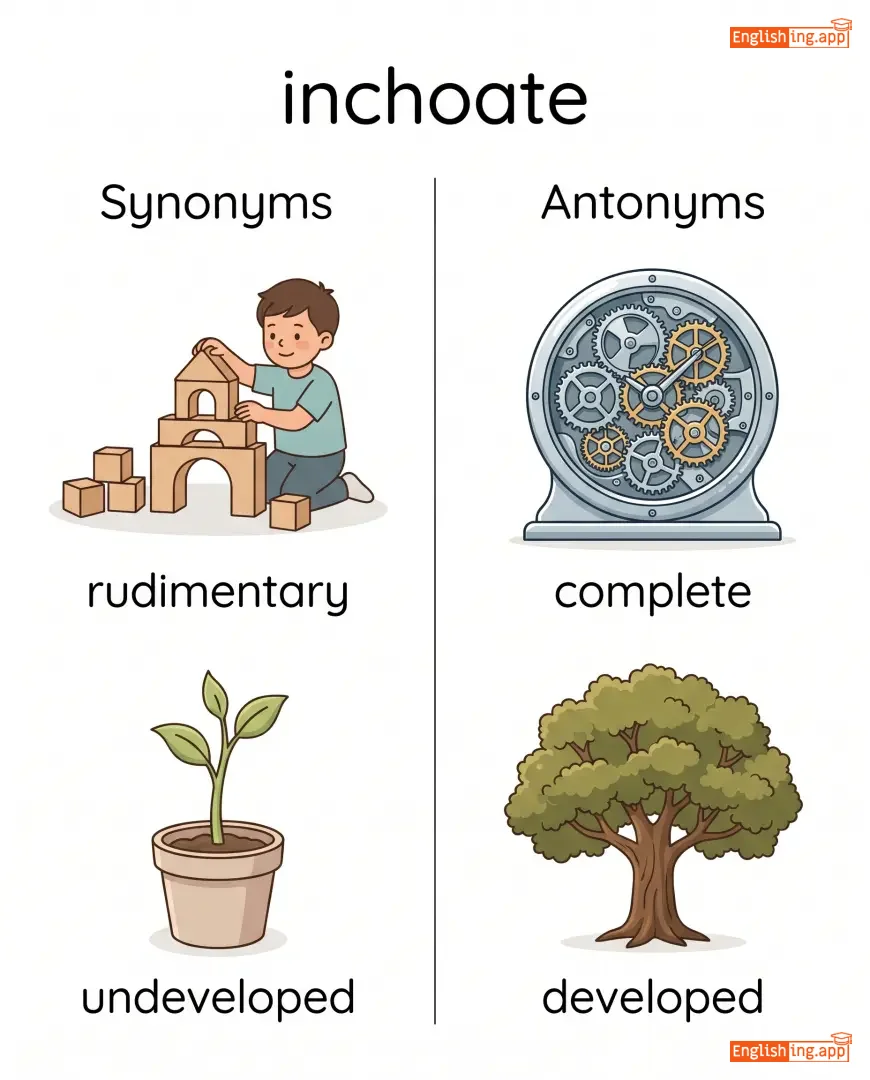
Just begun and not fully formed; rudimentary.
••••••
|
His inchoate ideas needed more research to be developed. |
他的未完成的想法需要更多的研究才能发展。
Tā de wèi wánchéng de xiǎngfǎ xūyào gèng duō de yánjiū cáinéng fāzhǎn.
••••••
|
- •••••• | - •••••• | - •••••• |
rudimentary, undeveloped, immature, nascent, beginning
••••••
|
complete, developed, finished
••••••
|
inchoate idea, inchoate plan, inchoate movement, inchoate stage
••••••
|
Inchoate意味着未完成的 → 还在开发中
••••••
|
|
🔄
••••••
|
/ˌɪnkənˈɡruːəti/
noun
(yīnkōnglǔyì)
••••••
|
|
不一致
bù yīzhì
••••••
|
- •••••• | - •••••• | - •••••• | - •••••• |
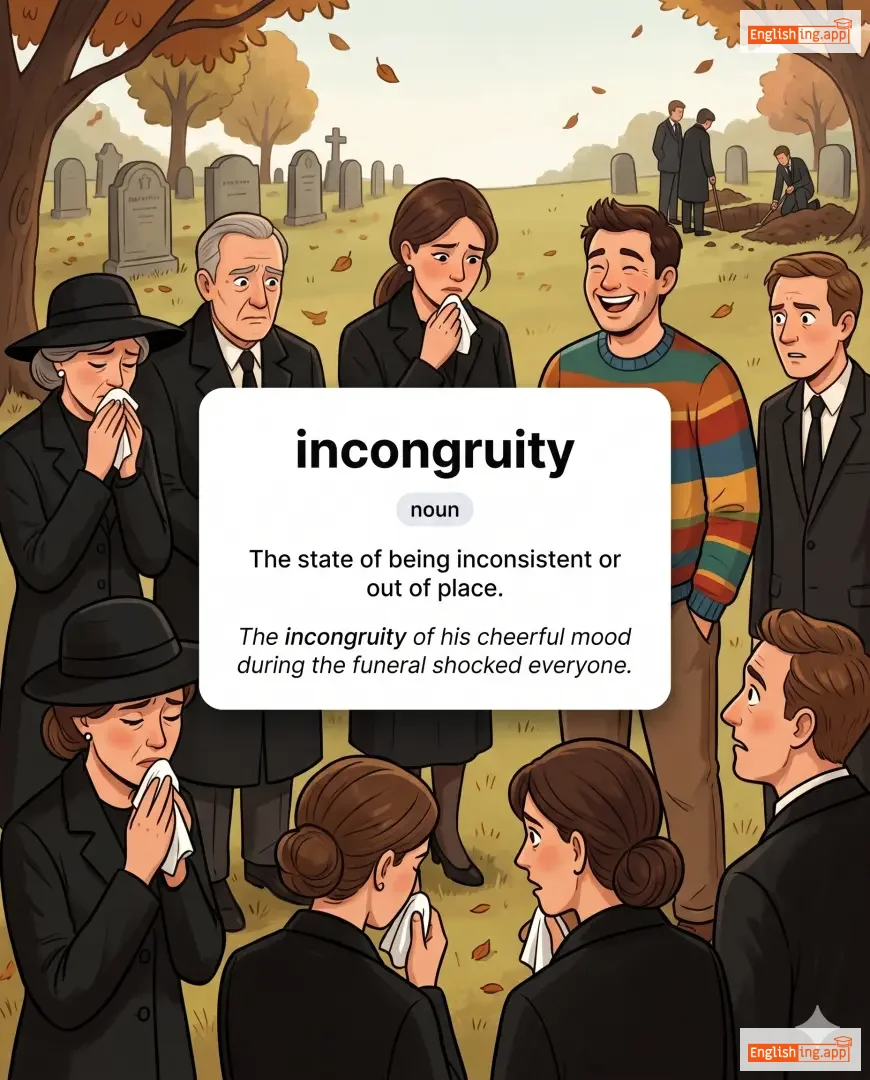
The state of being inconsistent or out of place.
••••••
|
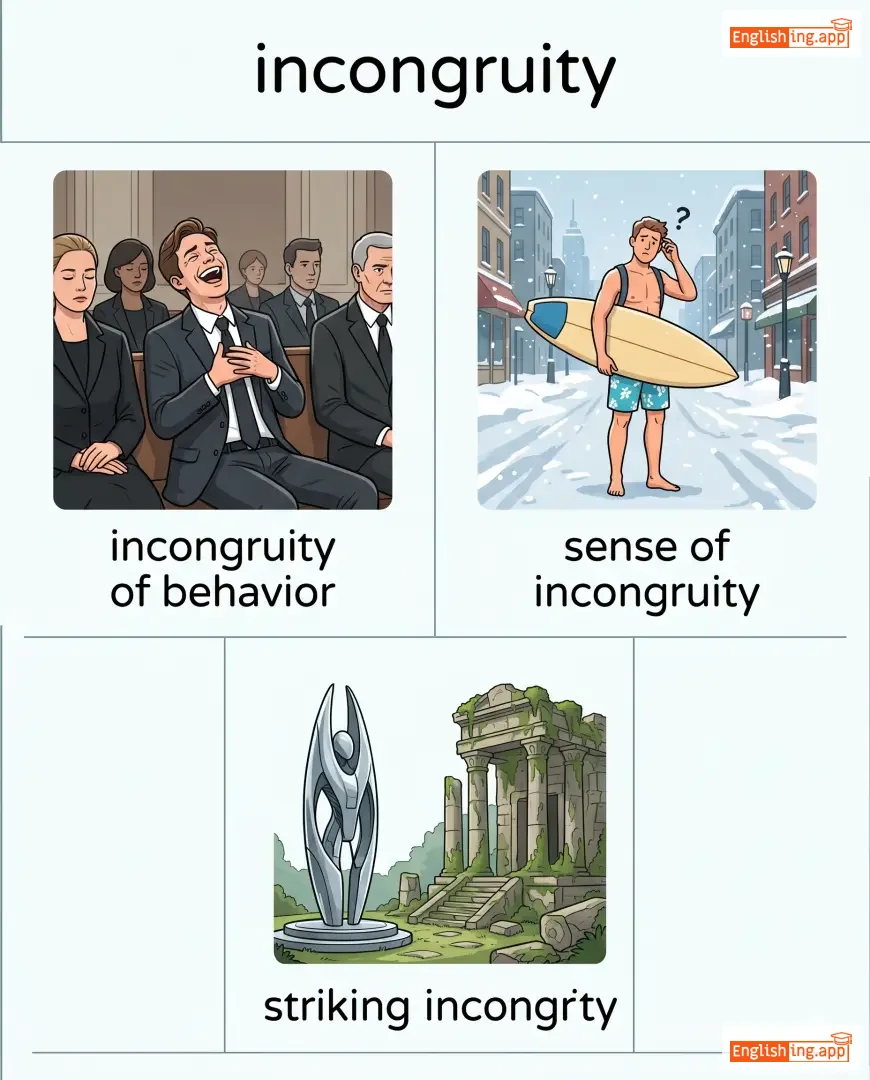
The incongruity of his cheerful mood during the funeral shocked everyone. |
在葬礼上,他愉快的心情与情境的不一致让所有人都震惊了。
Zài zànglǐ shàng, tā yúkuài de xīnqíng yǔ qíngjìng de bù yīzhì ràng suǒyǒu rén dōu zhènjīngle.
••••••
|
- •••••• | - •••••• | - •••••• |
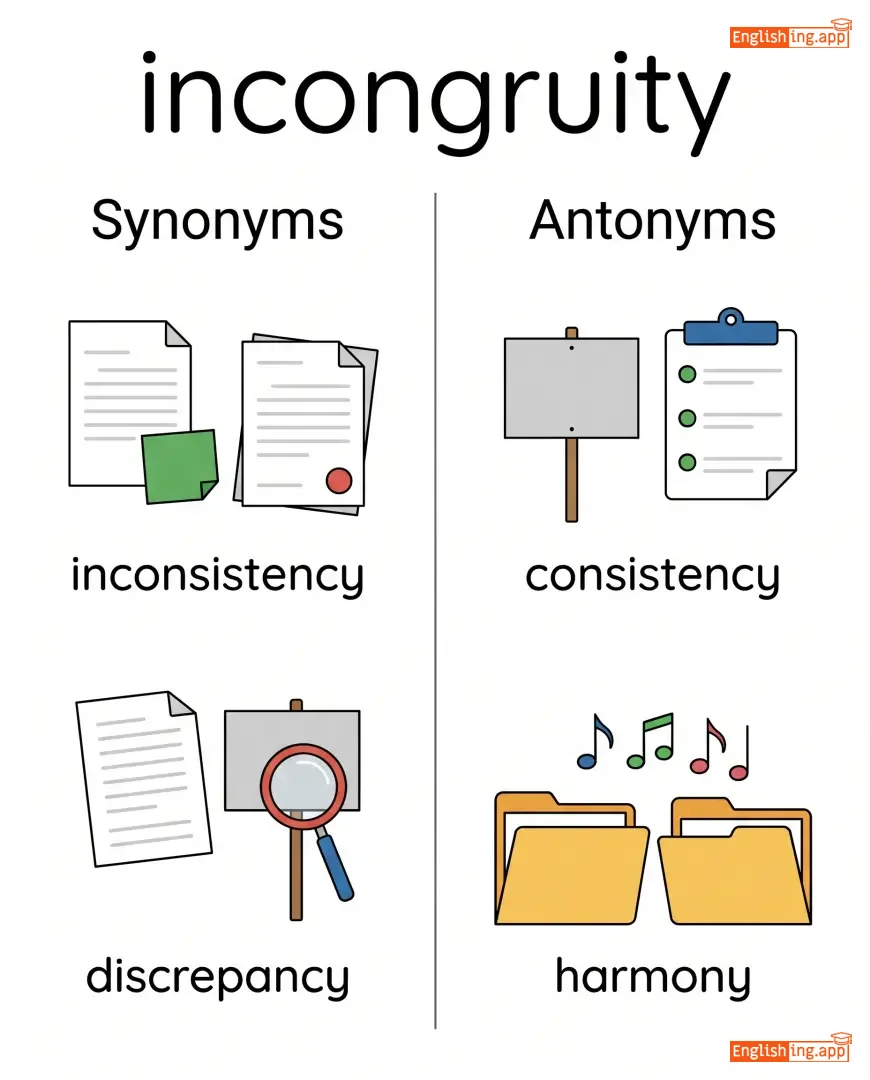
inconsistency, discrepancy, mismatch, absurdity
••••••
|
consistency, harmony, congruity
••••••
|
incongruity of behavior, sense of incongruity, striking incongruity
••••••
|
IN不一致表示事物之间没有统一性或和谐性。
••••••
|
|
🪶
••••••
|
/ˌɪnˌkɒnsɪˈkwɛnʃəl/
adjective
(yīnkòngsèkuì'ěr)
••••••
|
|
微不足道
wēi bù zú dào
••••••
|
- •••••• | - •••••• | - •••••• | - •••••• |
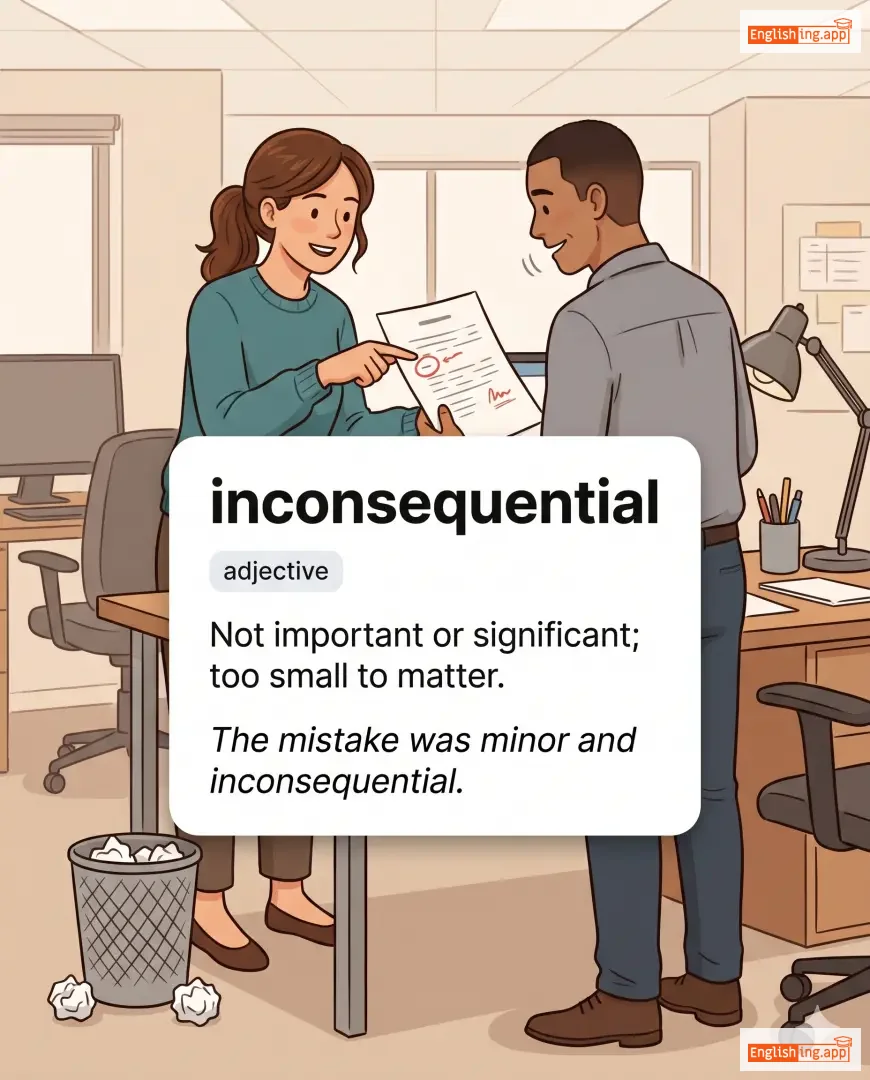
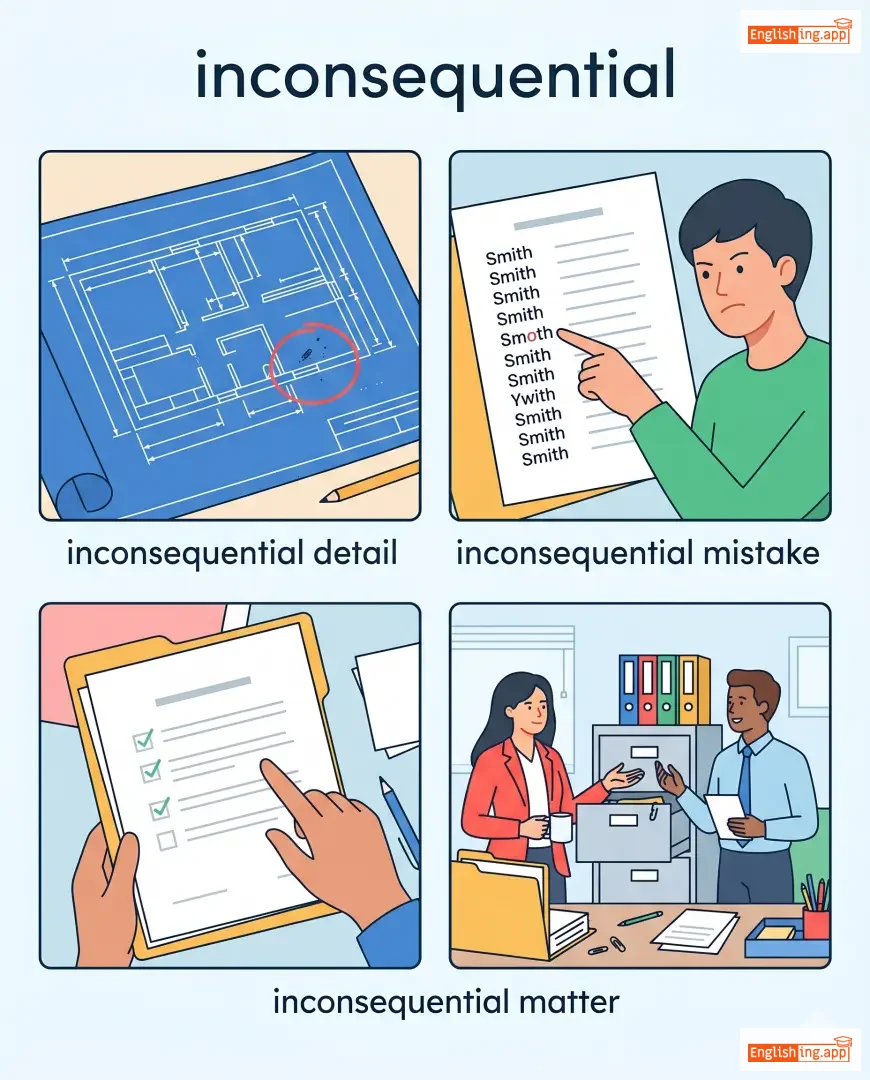
Not important or significant; too small to matter.
••••••
|
The mistake was minor and inconsequential.
这个错误是微不足道的。
••••••
|
这个错误是微不足道的。
Zhège cuòwù shì wēi bù zú dào de.
••••••
|
- •••••• | - •••••• | - •••••• |
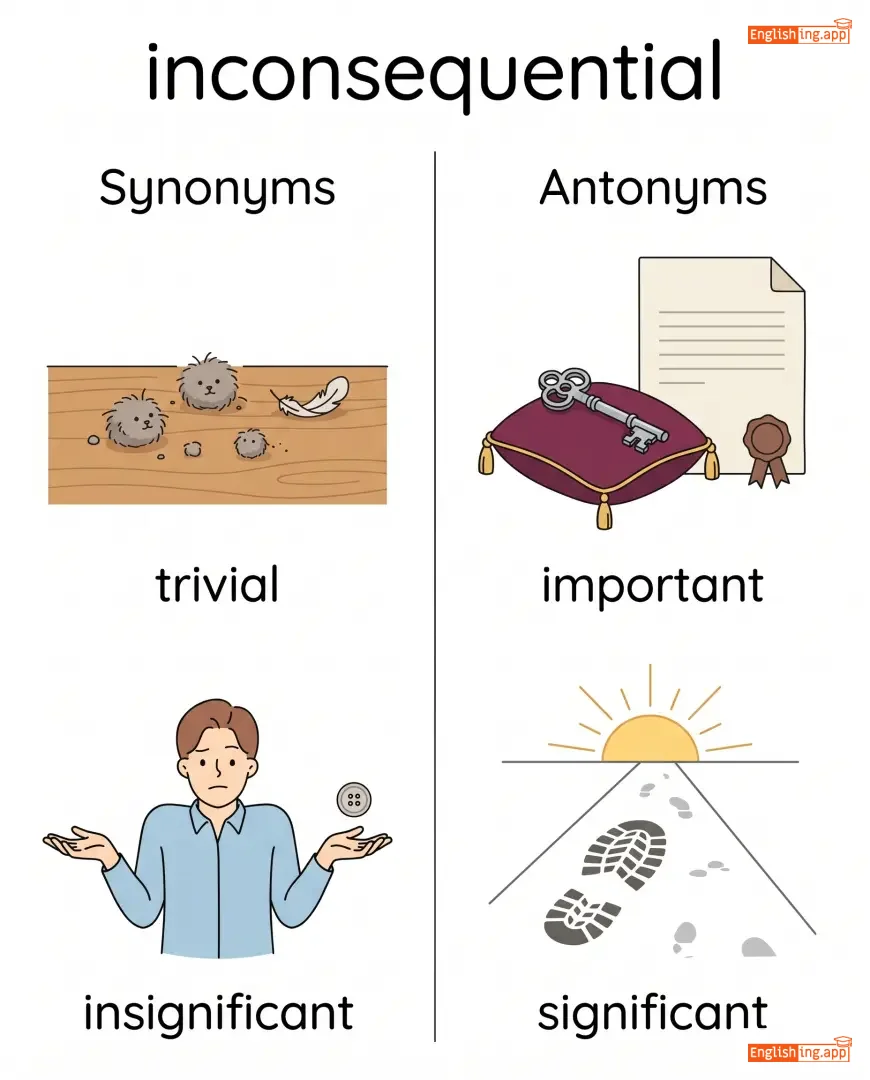
trivial, insignificant, negligible, petty, unimportant
••••••
|
important, significant, major
••••••
|
inconsequential detail, inconsequential mistake, inconsequential matter
••••••
|
INconsequential - 微不足道.
••••••
|
|
🏢
••••••
|
/ɪnˈkɔːpəreɪt/
verb
(in-kor-PO-rei-te)
••••••
|


|
融入
rongru
••••••
|
incorporated
in-kor-PO-rei-te-de
••••••
|
incorporated
in-kor-PO-rei-te-de
••••••
|
incorporates
in-kor-PO-rei-te-s
••••••
|
incorporating
in-kor-PO-rei-te-ing
••••••
|
to include something as part of a whole; to form a legal corporation
••••••
|
The teacher incorporated new technology into her lessons.
老师将新技术融入到她的课程中。
••••••
|
老师将新技术融入到她的课程中。
Laoshi jiang xin jishu rongru dao ta de kecheng zhong.
••••••
|
incorporate into
融入到
••••••
|
to include something as part of a larger thing
••••••
|
融入到
rongru dao
••••••
|
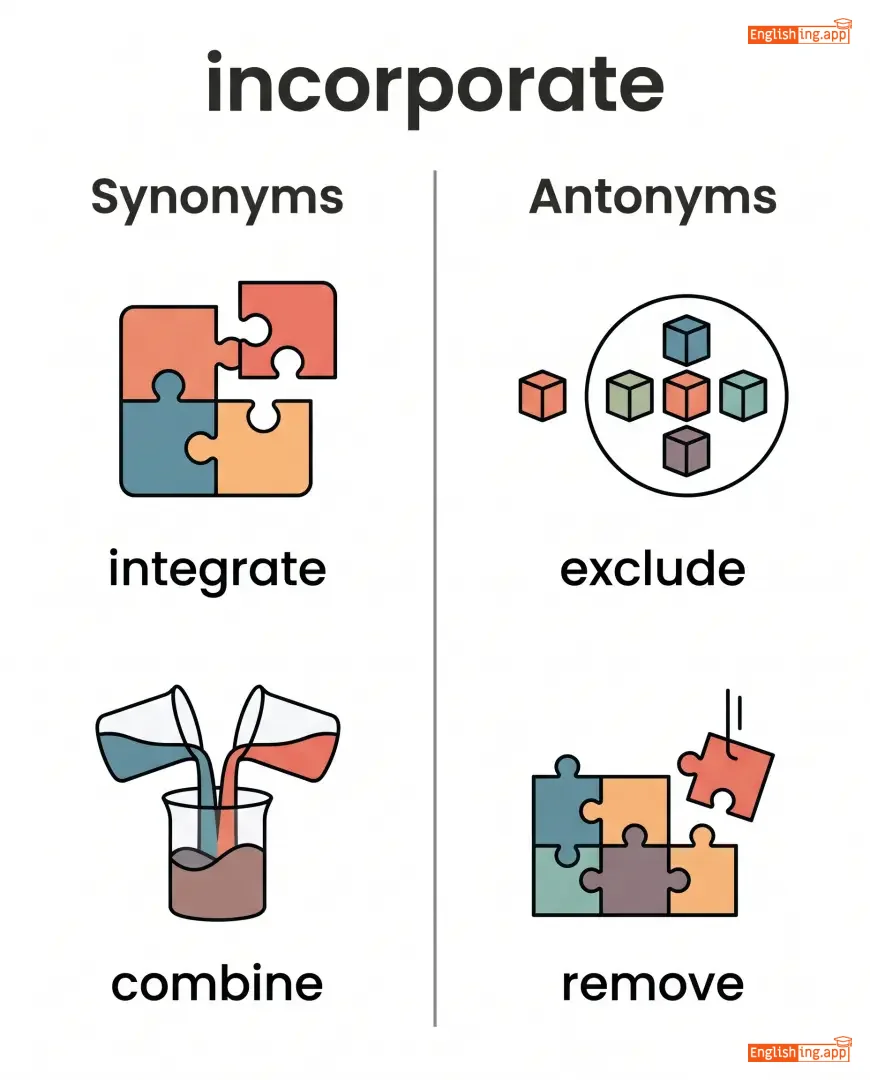
integrate, combine, include, merge, embody
••••••
|
exclude, remove, separate
••••••
|
incorporate into, incorporate ideas, incorporate changes
••••••
|
融入意味着把某个部分合并进一个更大的整体——就像拼图游戏。
••••••
|
|
❓
••••••
|
/ˌɪndɪˈtɜːrmənət/
adjective
(因迪特敏特)
••••••
|

|
不确定
bu que ding
••••••
|
- •••••• | - •••••• | - •••••• | - •••••• |
Not exactly known, defined, or established; vague or uncertain.
••••••
|
The project was delayed for an indeterminate amount of time. |
项目因不确定的时间被推迟。
Xiangmu yin bu queding de shijian bei tuichi.
••••••
|
- •••••• | - •••••• | - •••••• |
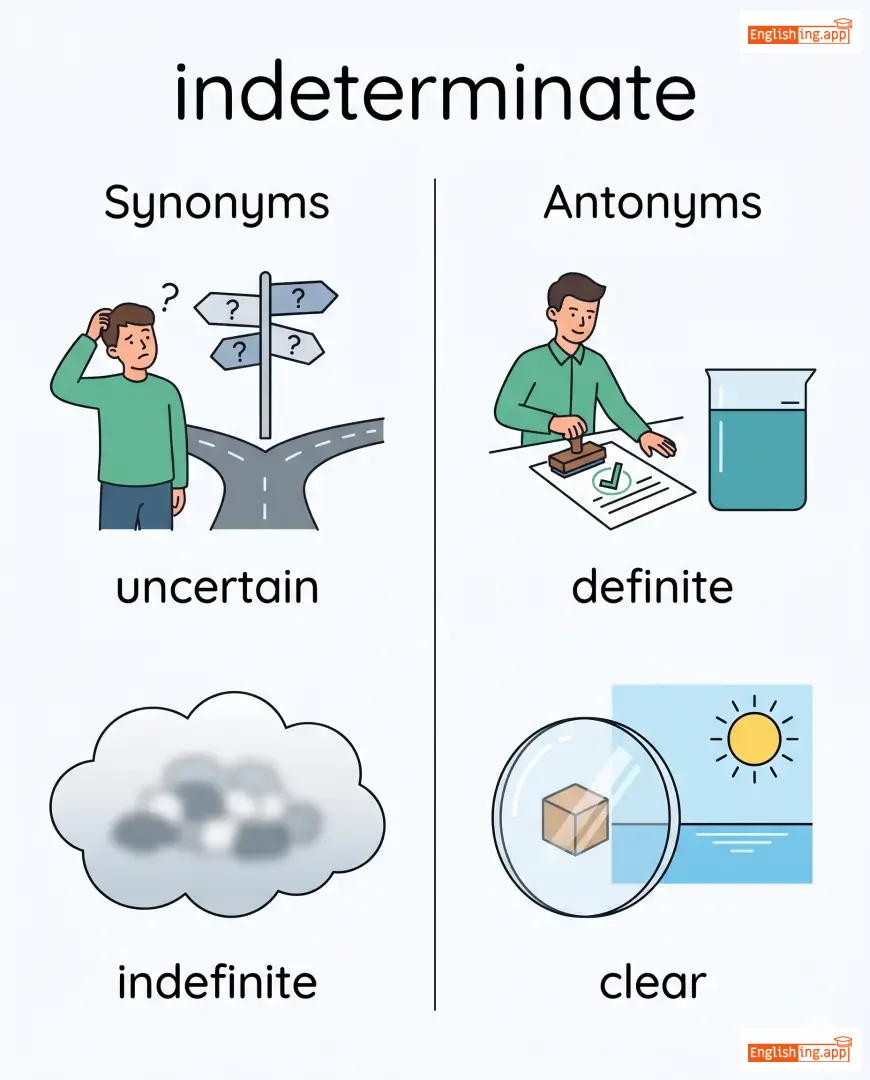
uncertain, indefinite, vague, ambiguous, unclear
••••••
|
definite, clear, certain
••••••
|
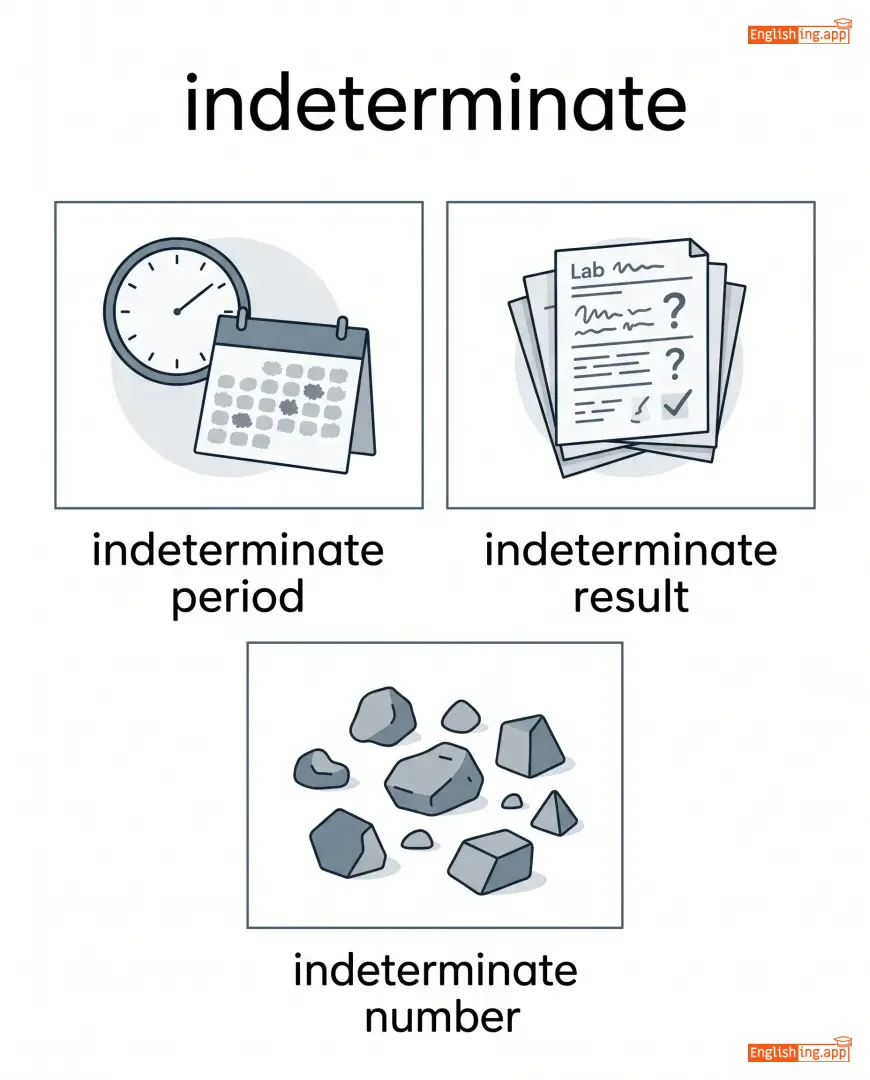
indeterminate period, indeterminate result, indeterminate number, indeterminate form
••••••
|
Indeterminate 意味着不确定—In determinate 不确定,所以不确定。
••••••
|

