|
絵文字
|
単語 | Images | 翻訳 | 過去 | 過去分詞 | 三人称単数 | 動名詞 | 意味 | 例文 | 例文の翻訳 | 表現例 | 表現例の意味 | 表現例の翻訳 | 同義語 | 対義語 | コロケーション | ニーモニック |
|---|---|---|---|---|---|---|---|---|---|---|---|---|---|---|---|---|---|
|
🗣️
••••••
|
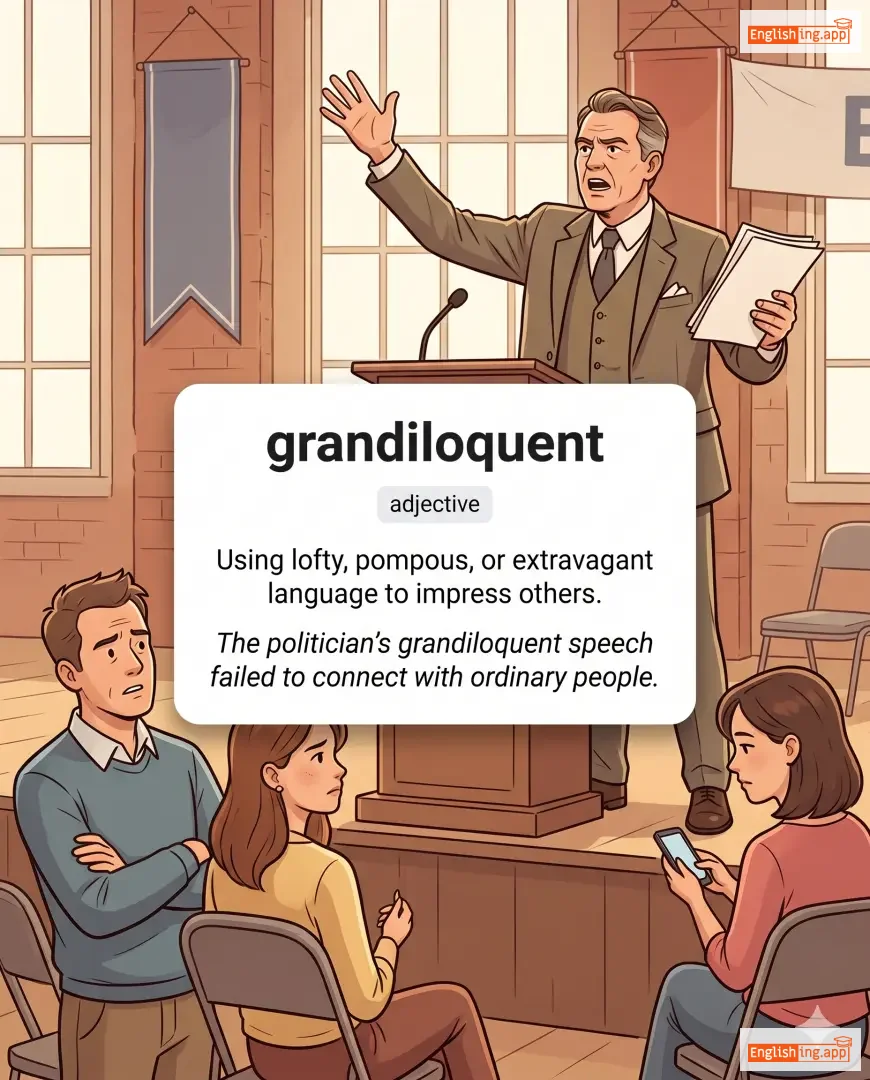
/ɡrænˈdɪləkwənt/
adjective
(グランディロクエント)
••••••
|

|
誇張な言語
kochou na gengo
••••••
|
- •••••• | - •••••• | - •••••• | - •••••• |
Using lofty, pompous, or extravagant language to impress others.
••••••
|
The politician’s grandiloquent speech failed to connect with ordinary people. |
その政治家の誇張された演説は一般の人々とつながることができなかった。
Sono seijika no kochou sareta enzetsu wa ippan no hitobito to tsunagaru koto ga dekinakatta.
••••••
|
- •••••• | - •••••• | - •••••• |
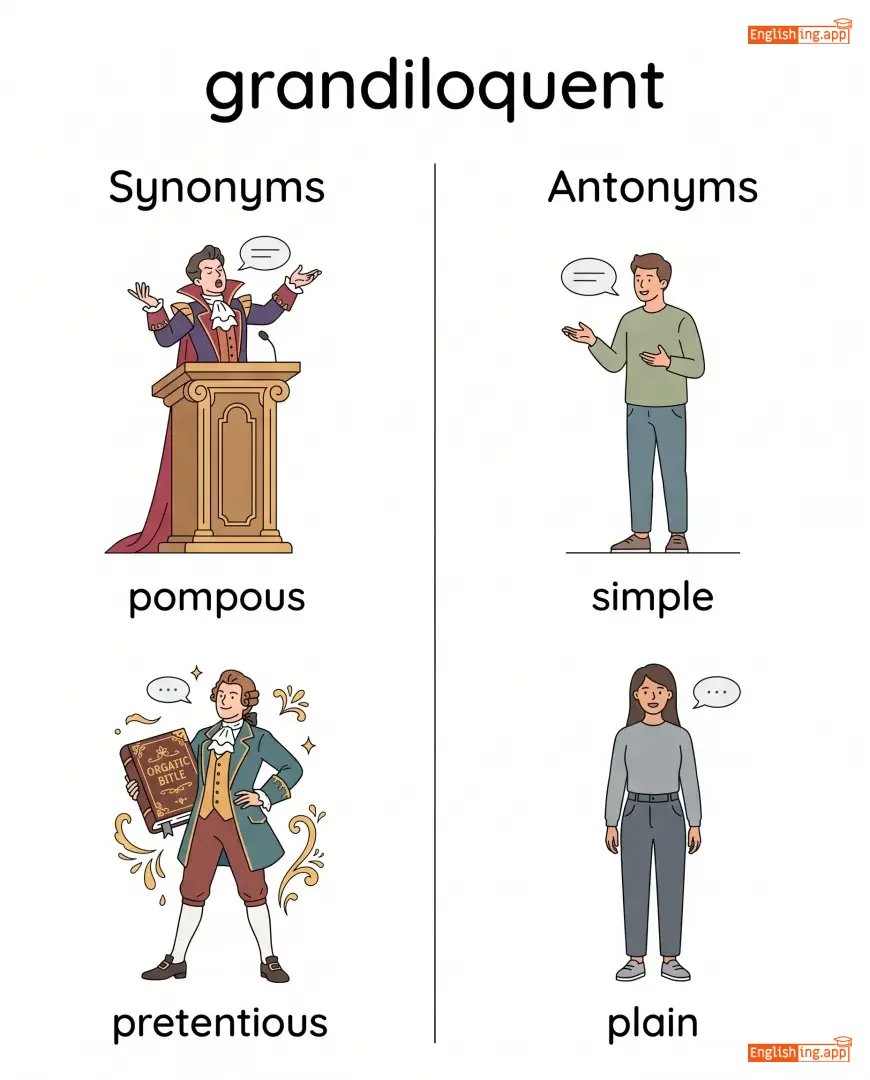
pompous, pretentious, bombastic, inflated, rhetorical
••••••
|
simple, plain, modest
••••••
|
grandiloquent speech, grandiloquent style, grandiloquent manner
••••••
|
Grandiloquent = grand + eloquent, 日本語では: 大げさに言葉で感動させようとする。
••••••
|
|
🗣️
••••••
|
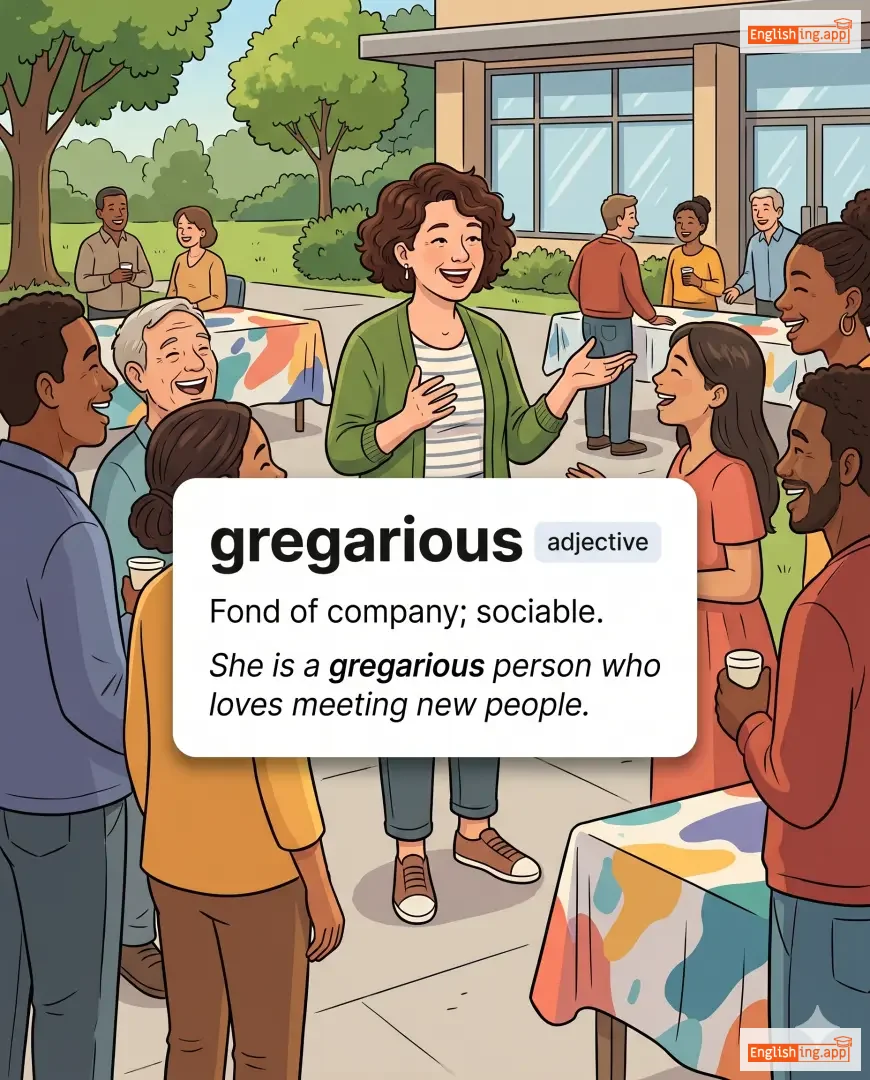
/ɡrɪˈɡɛəriəs/
adjective
(グレガリウス)
••••••
|
|
社交的
shakouteki
••••••
|
- •••••• | - •••••• | - •••••• | - •••••• |
Fond of company; sociable.
••••••
|
She is a gregarious person who loves meeting new people. |
彼女は新しい人々と会うのが好きな社交的な人です。
Kanojo wa atarashii hitobito to au no ga suki na shakouteki na hito desu.
••••••
|
- •••••• | - •••••• | - •••••• |
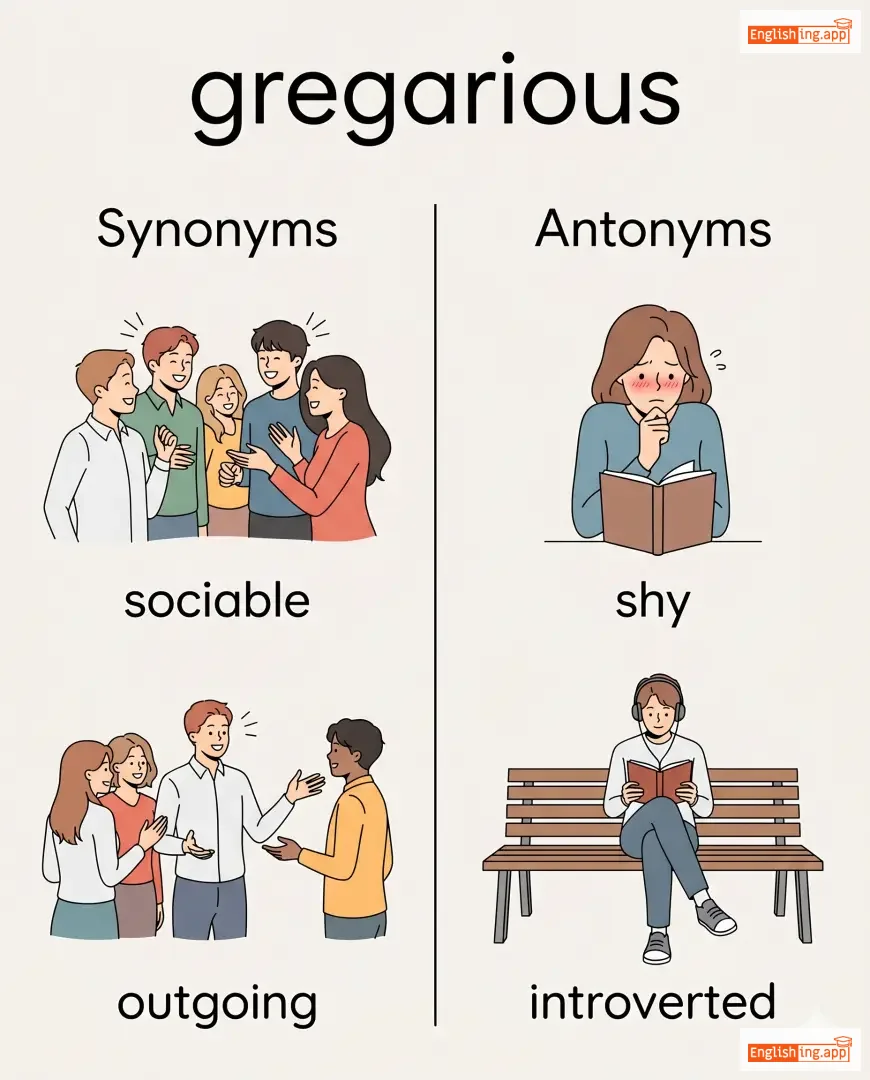
sociable, outgoing, friendly, extroverted, convivial
••••••
|
shy, introverted, antisocial
••••••
|
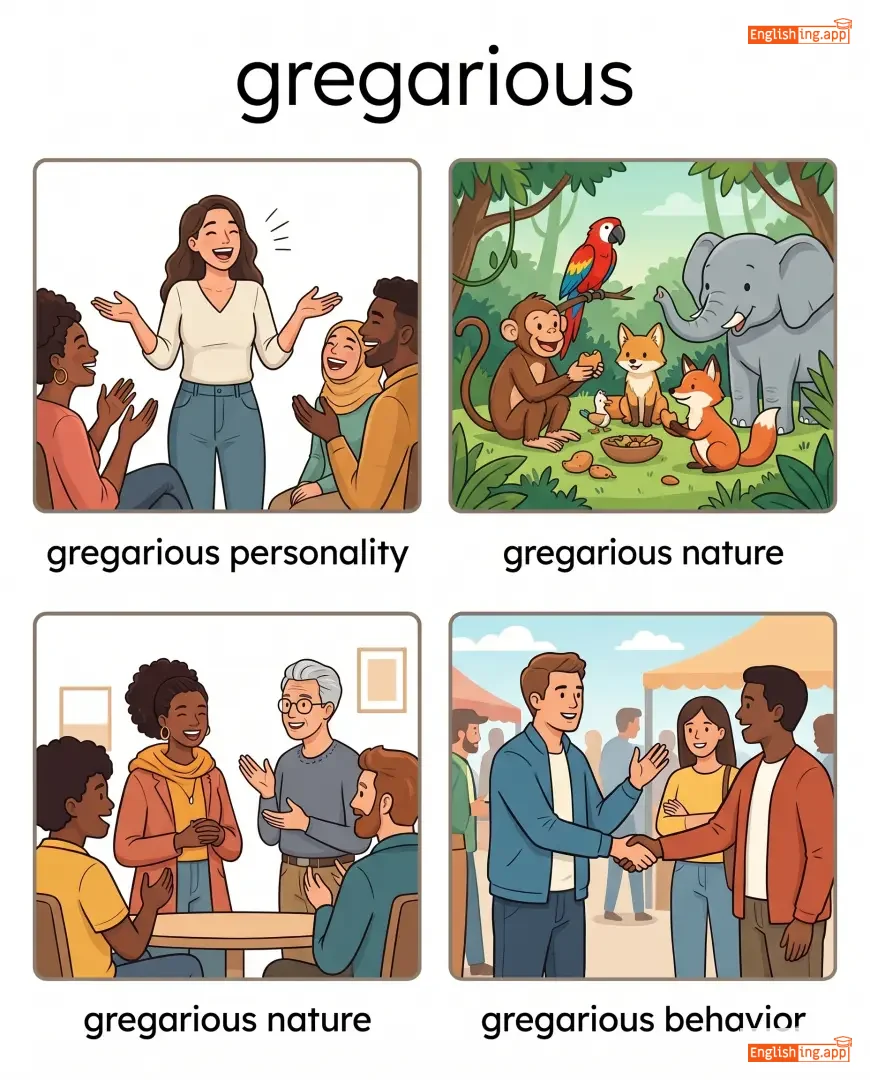
gregarious personality, gregarious nature, gregarious behavior
••••••
|
Greg arious はグループにいることが好きです - 社交的。
••••••
|
|
😊
••••••
|
/ˈɡaɪlləs/
adjective
(ギルレス)
••••••
|
|
無邪気
musyaki
••••••
|
- •••••• | - •••••• | - •••••• | - •••••• |
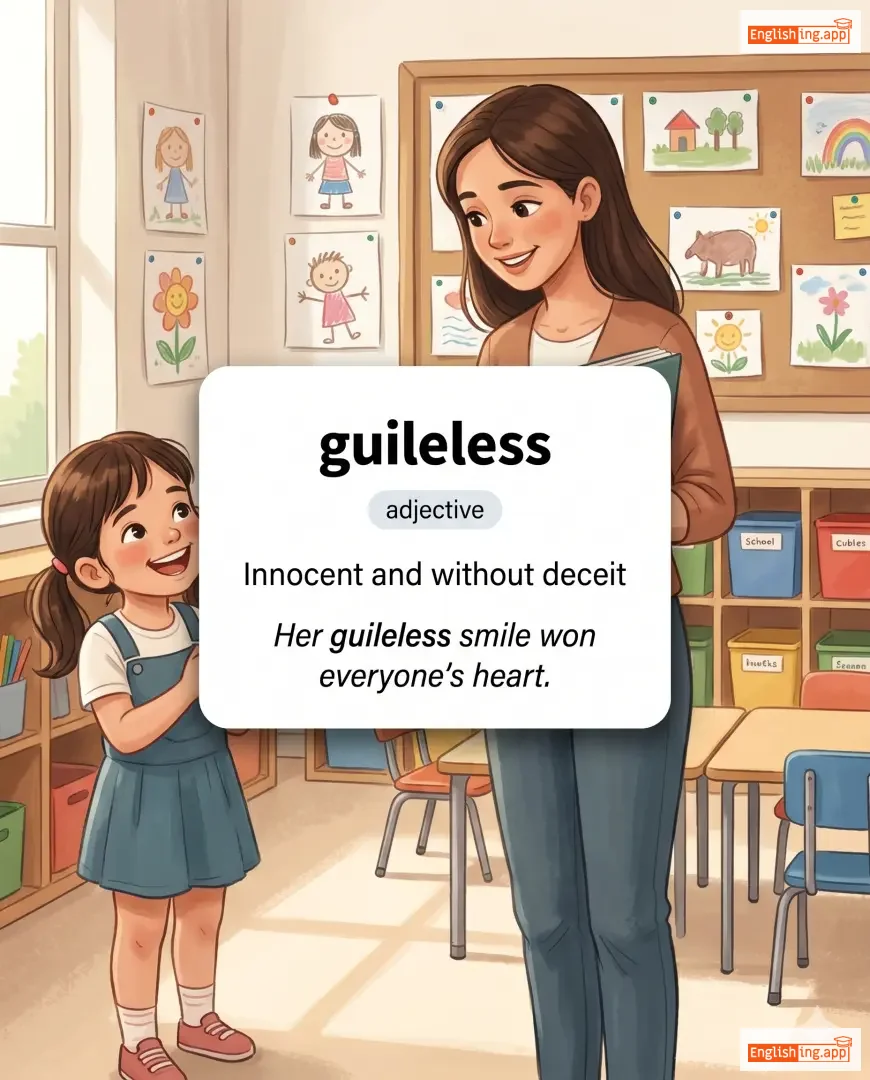
Innocent and without deceit
••••••
|
Her guileless smile won everyone’s heart. |
彼女の無邪気な笑顔は皆の心をつかみました。
Kanojo no musyaki na egao wa mina no kokoro o tsukamimashita.
••••••
|
- •••••• | - •••••• | - •••••• |
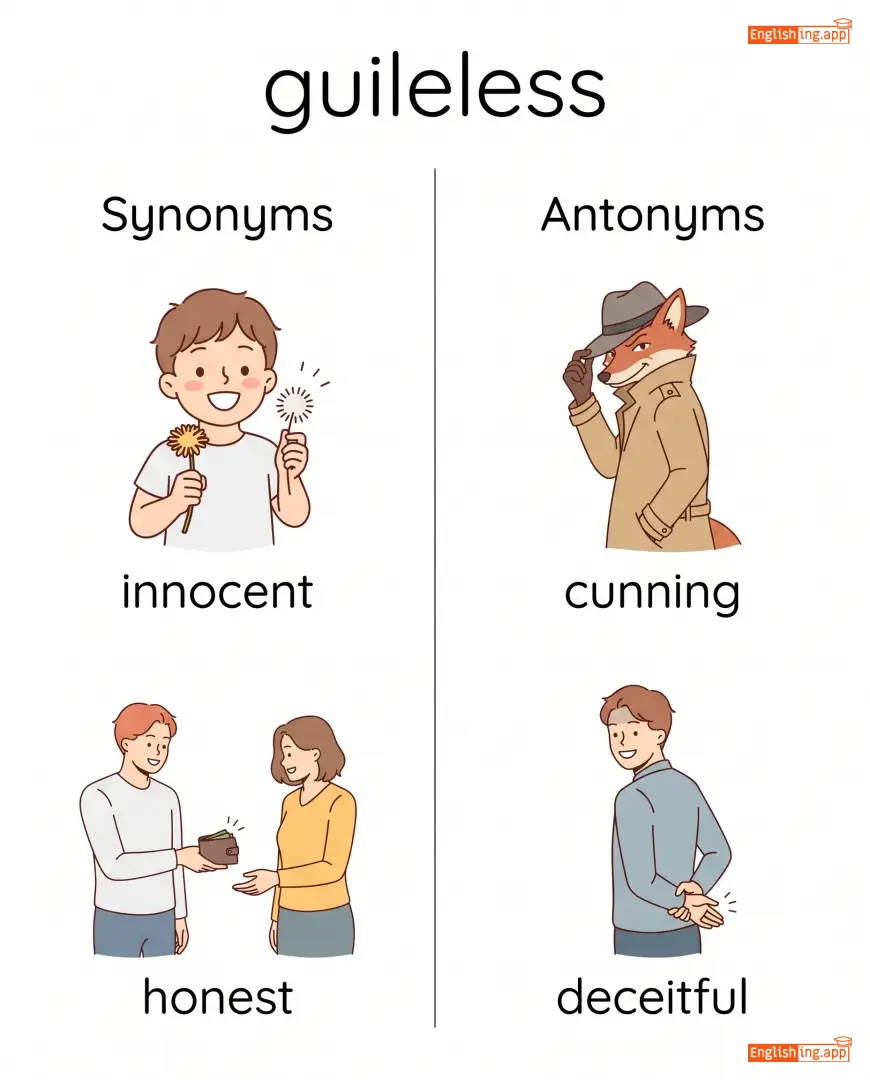
innocent, honest, sincere, naive
••••••
|
cunning, deceitful, crafty
••••••
|
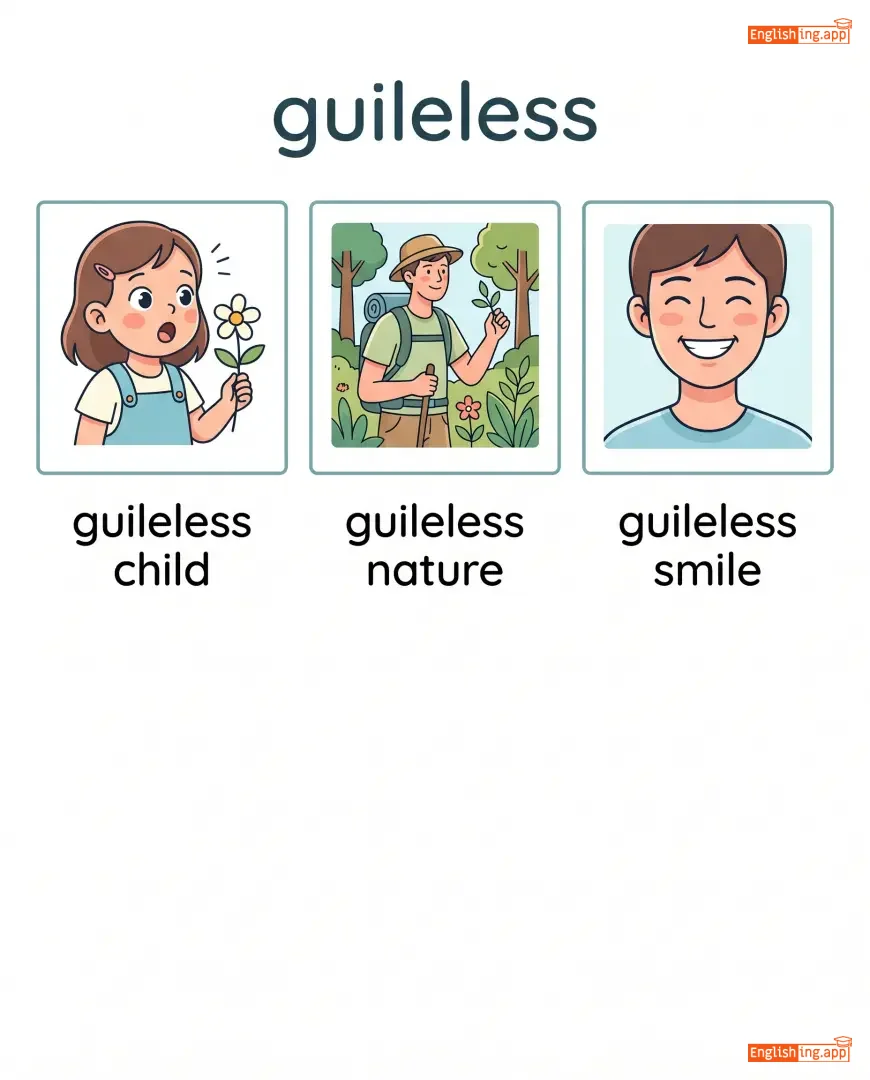
guileless child, guileless nature, guileless smile
••••••
|
Guilelessは無邪気(musyaki)という意味です。
••••••
|
|
🙈
••••••
|
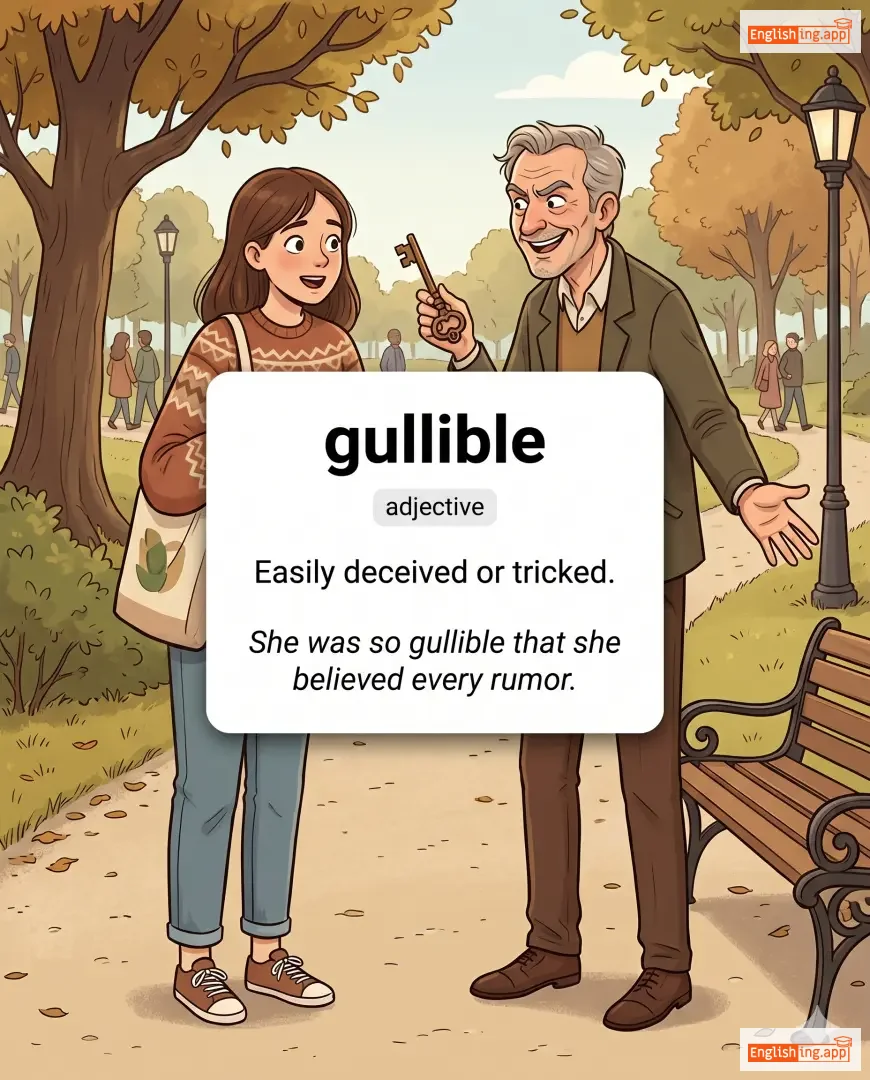
/ˈɡʌl.ə.bəl/
adjective
(ガリブル)
••••••
|
|
簡単に騙される
kantan ni damasareru
••••••
|
- •••••• | - •••••• | - •••••• | - •••••• |
Easily deceived or tricked.
••••••
|
She was so gullible that she believed every rumor. |
彼女は非常に簡単に騙されるので、あらゆる噂を信じてしまった。
Kanojo wa hijou ni kantan ni damasareru node, arayuru uwasa wo shinjite shimatta.
••••••
|
- •••••• | - •••••• | - •••••• |
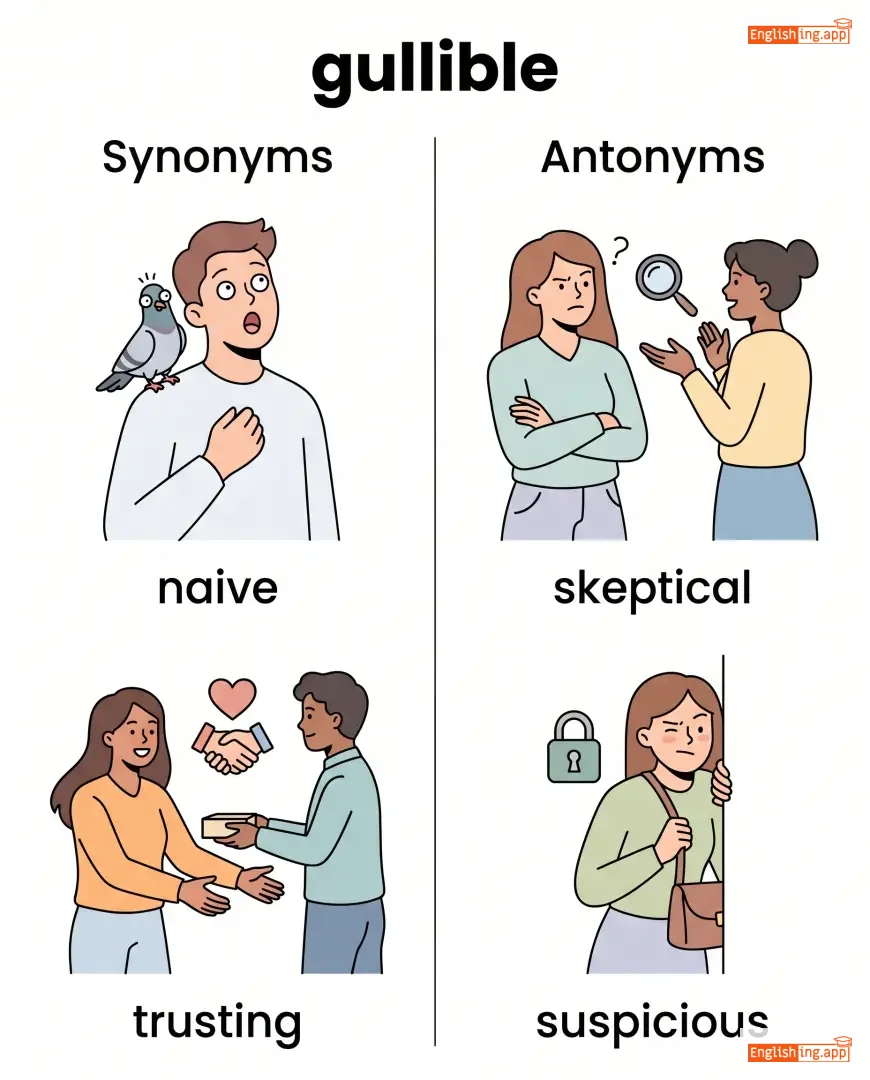
naive, trusting, credulous, unsuspecting, innocent
••••••
|
skeptical, suspicious, cautious
••••••
|
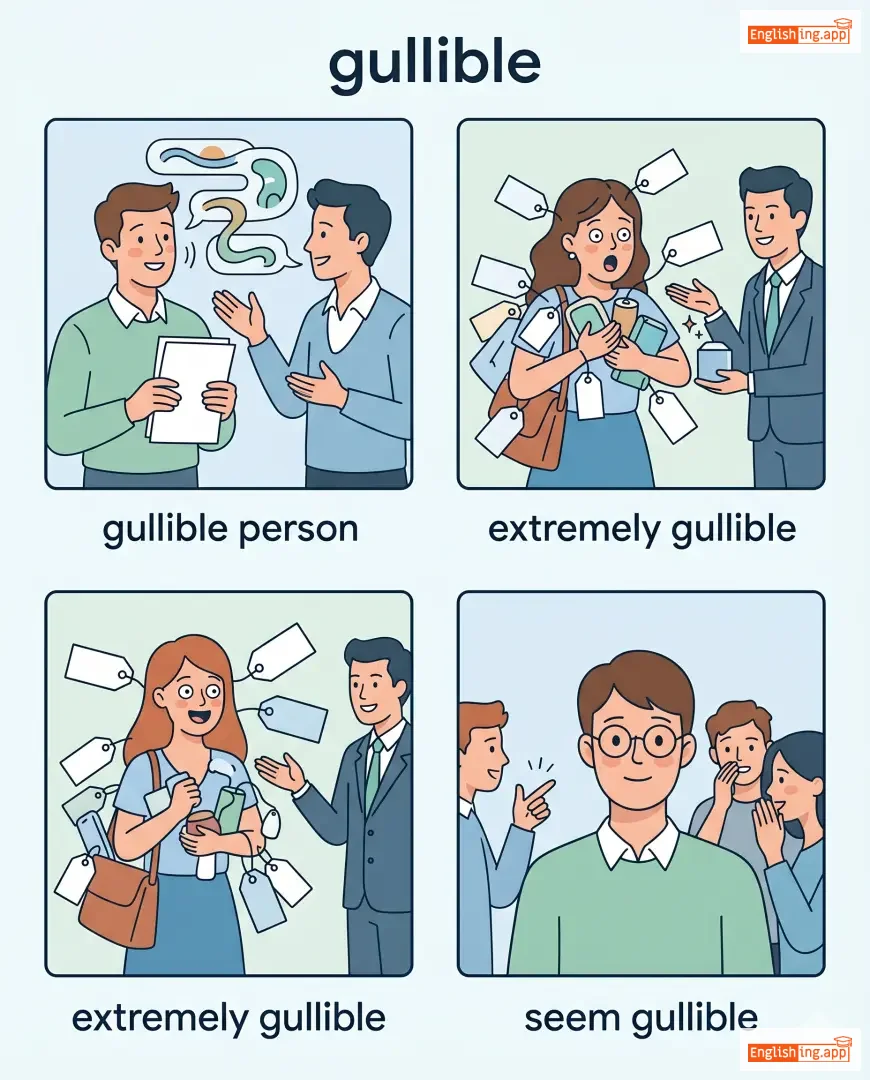
gullible person, extremely gullible, seem gullible
••••••
|
GULLible な人は何でも信じてしまう。
••••••
|
|
📢
••••••
|
/həˈræŋ/
verb
(ハランゲ)
••••••
|
|
長く情熱的な演説をする
nagaku jōnetsuteki na enzetsu o suru
••••••
|
harangued
ハランゲド
••••••
|
harangued
ハランゲド
••••••
|
harangues
ハランゲス
••••••
|
haranguing
ハランゲイング
••••••
|
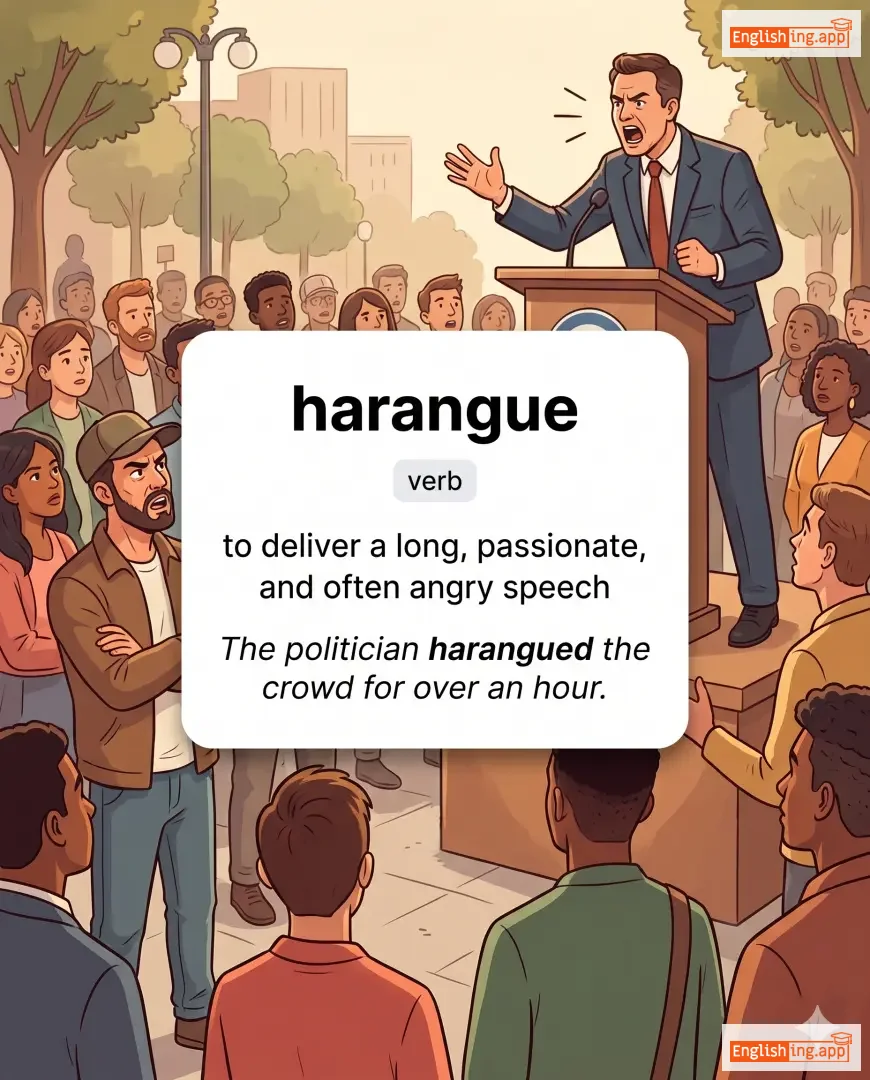
to deliver a long, passionate, and often angry speech
••••••
|
The politician harangued the crowd for over an hour.
政治家は群衆に一時間以上も演説しました。
••••••
|
政治家は群衆に一時間以上も演説をしました。
Seijika wa gunshū ni ichijikan ijō mo enzetsu shimashita.
••••••
|
- •••••• | - •••••• | - •••••• |
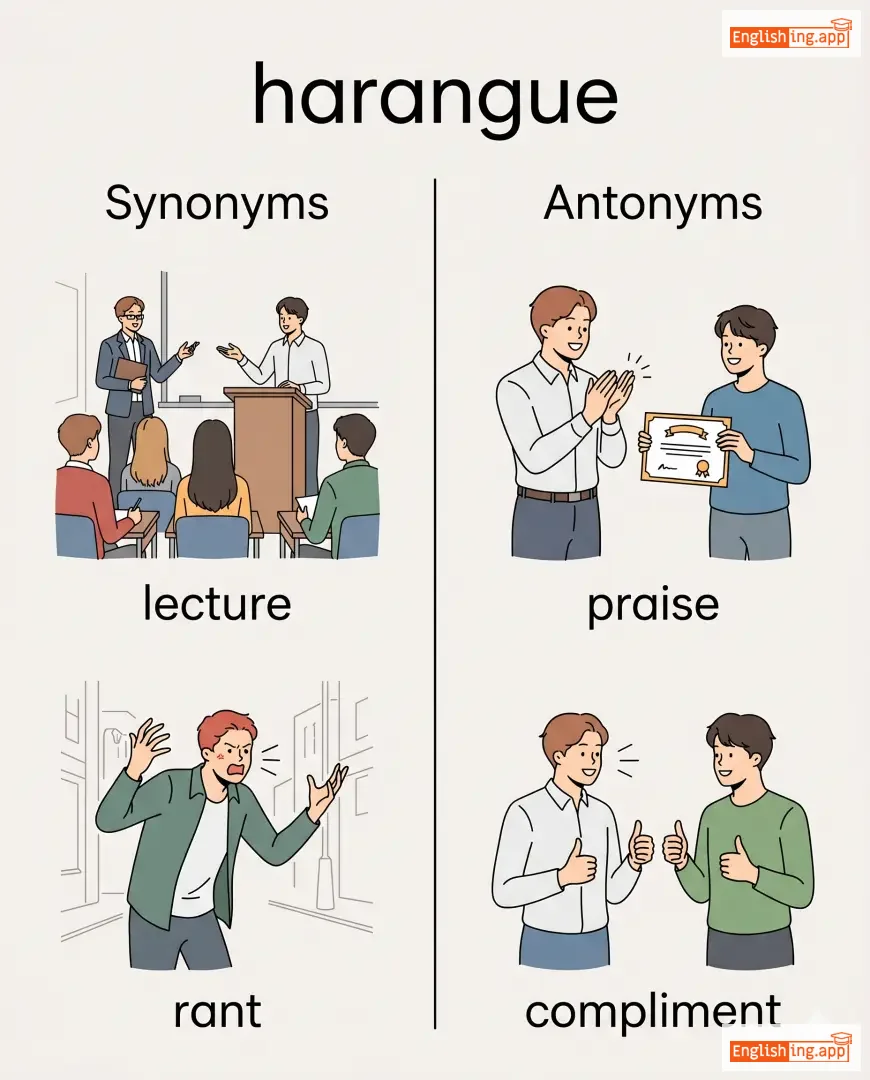
lecture, rant, tirade, scold, sermon
••••••
|
praise, compliment, silence
••••••
|
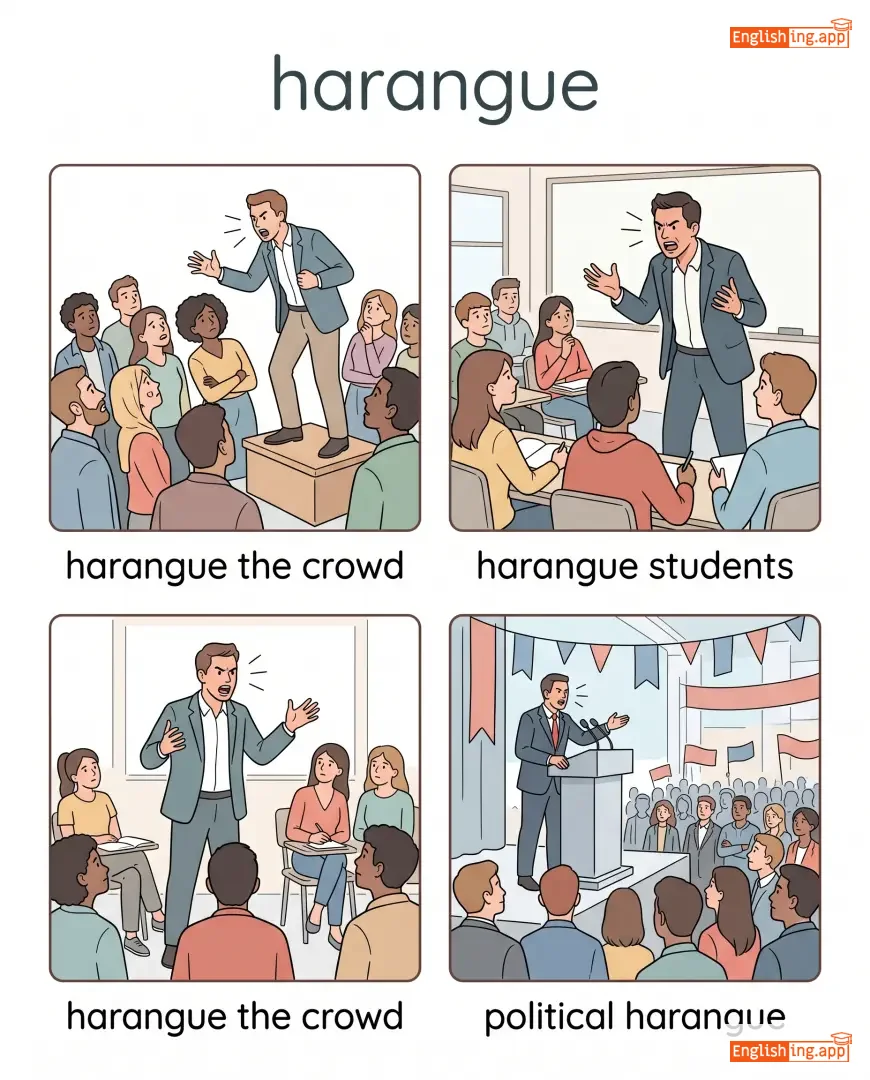
harangue the crowd, harangue students, political harangue
••••••
|
Harangue は長いスピーチを意味します → 騒々しく煩わしいスピーチ。
••••••
|
|
⚖️
••••••
|
/ˌhoʊ.məˈdʒiː.ni.əs/
adjective
(ホモジーニアス)
••••••
|
|
均質な
kinshitsuna
••••••
|
- •••••• | - •••••• | - •••••• | - •••••• |
Consisting of parts or elements that are all the same kind; uniform in composition.
••••••
|
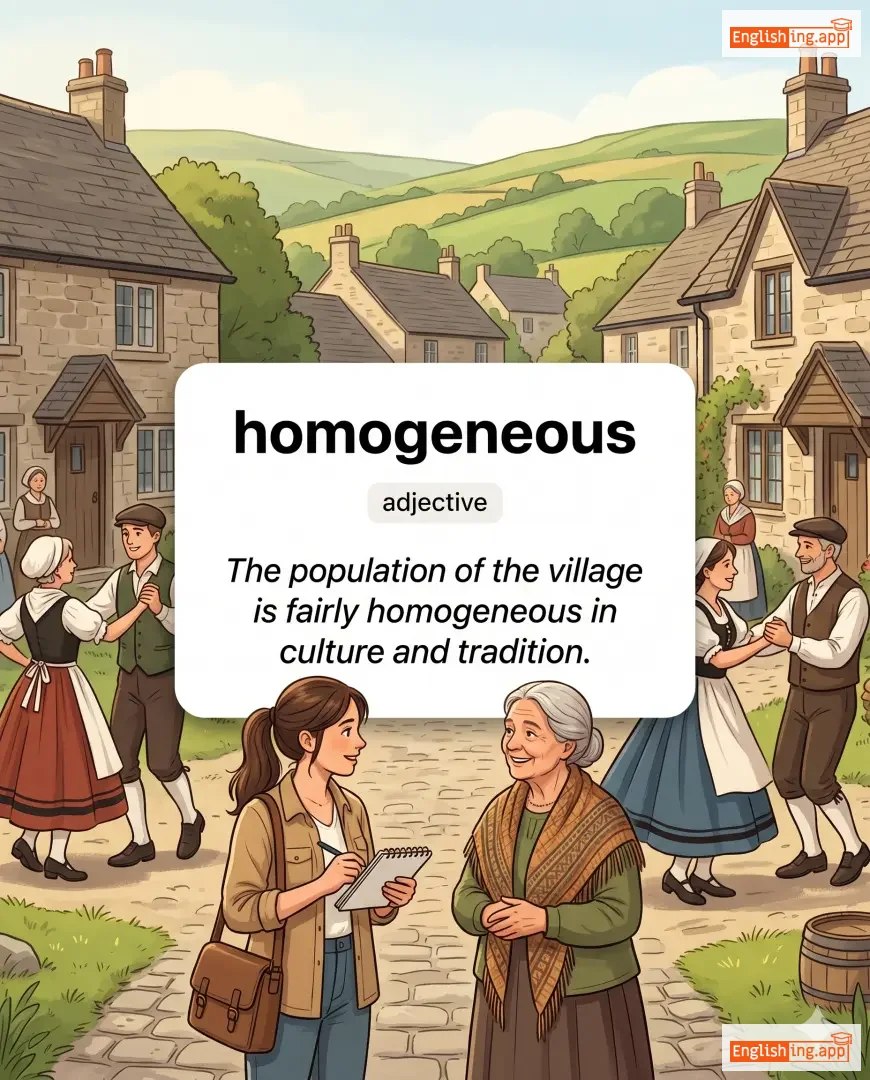
The population of the village is fairly homogeneous in culture and tradition.
その村の人口は文化や伝統においてかなり均質です。
••••••
|
その村の人口は文化や伝統においてかなり均質です。
Sono mura no jinkō wa bunka ya dentō ni oite kanari kinshitsudesu.
••••••
|
- •••••• | - •••••• | - •••••• |
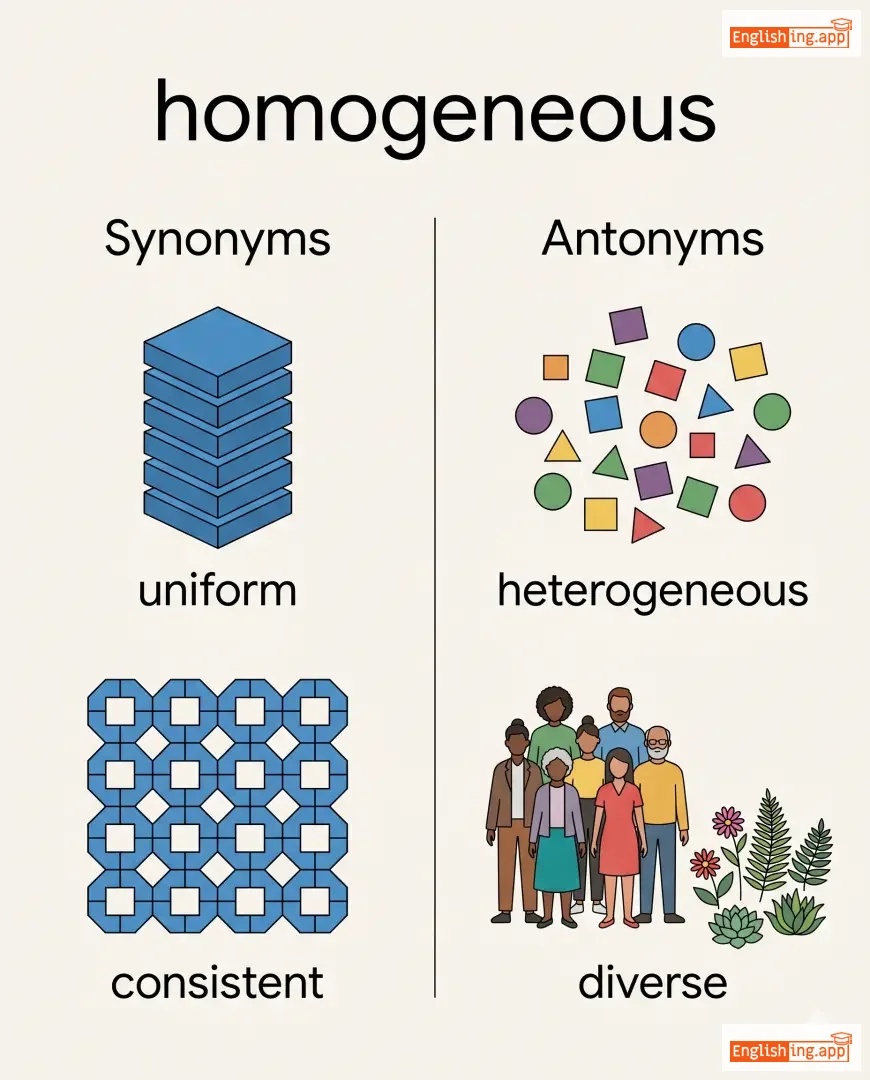
uniform, consistent, alike, identical, standardized
••••••
|
heterogeneous, diverse, varied
••••••
|
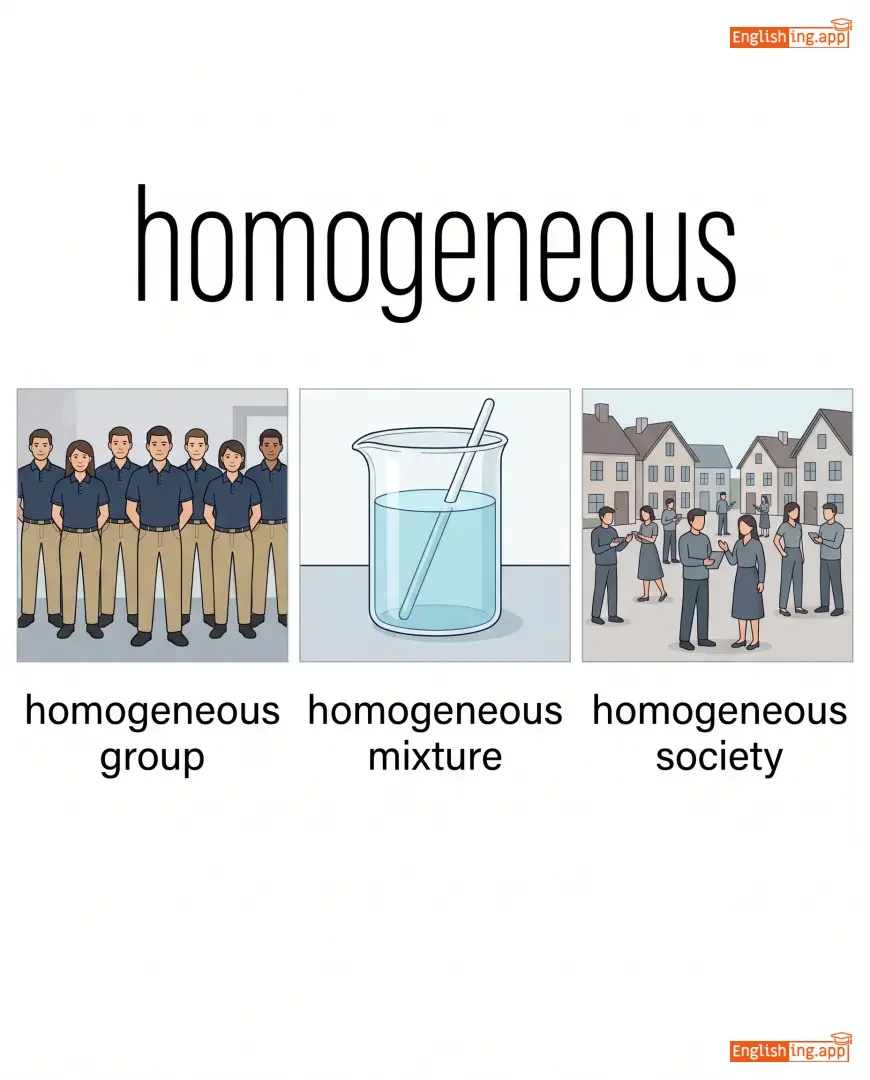
homogeneous group, homogeneous mixture, homogeneous society, homogeneous culture
••••••
|
HOMOは同じ意味だから、均質なはすべて同じという意味です(kinshitsuna)。
••••••
|
|
📢
••••••
|
/haɪˈpɜːrbəli/
noun
••••••
|
|
- •••••• | - •••••• | - •••••• | - •••••• | - •••••• |
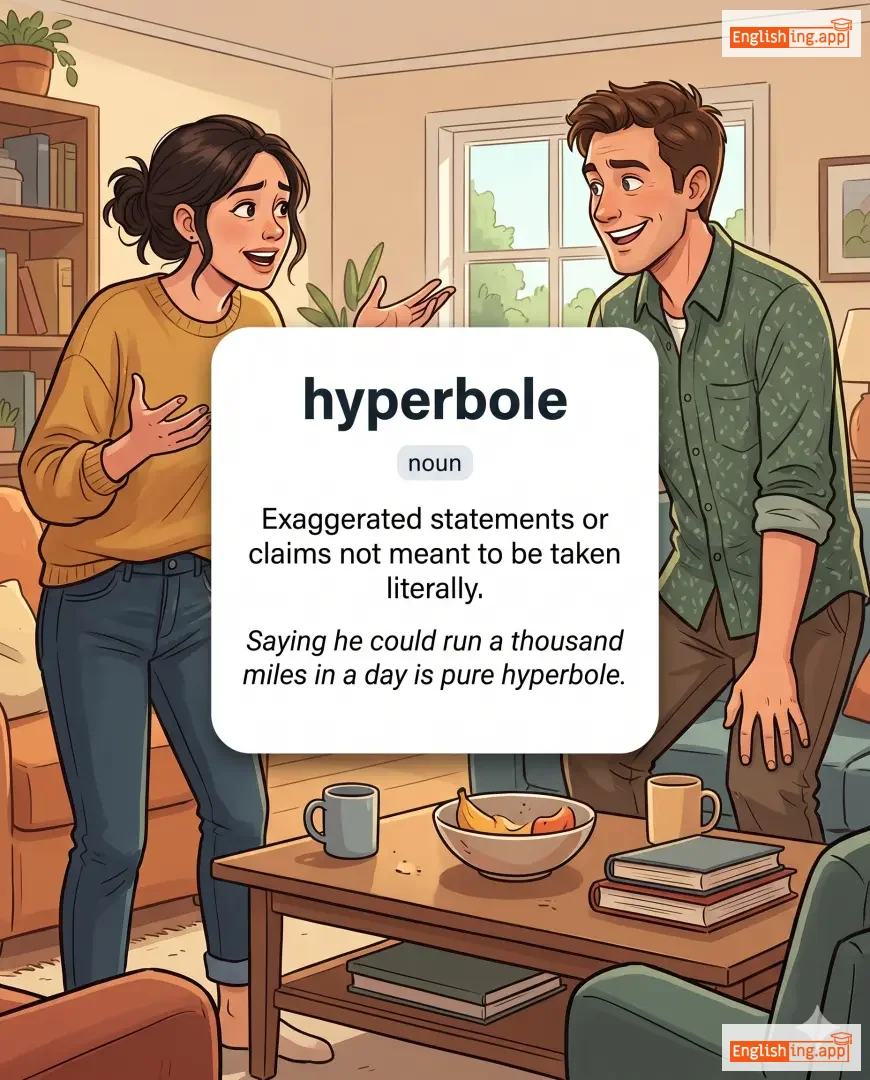
Exaggerated statements or claims not meant to be taken literally.
••••••
|
Saying he could run a thousand miles in a day is pure hyperbole. |
- •••••• |
it's not hyperbole |
An exaggerated claim that is actually true or close to reality
••••••
|
- •••••• |
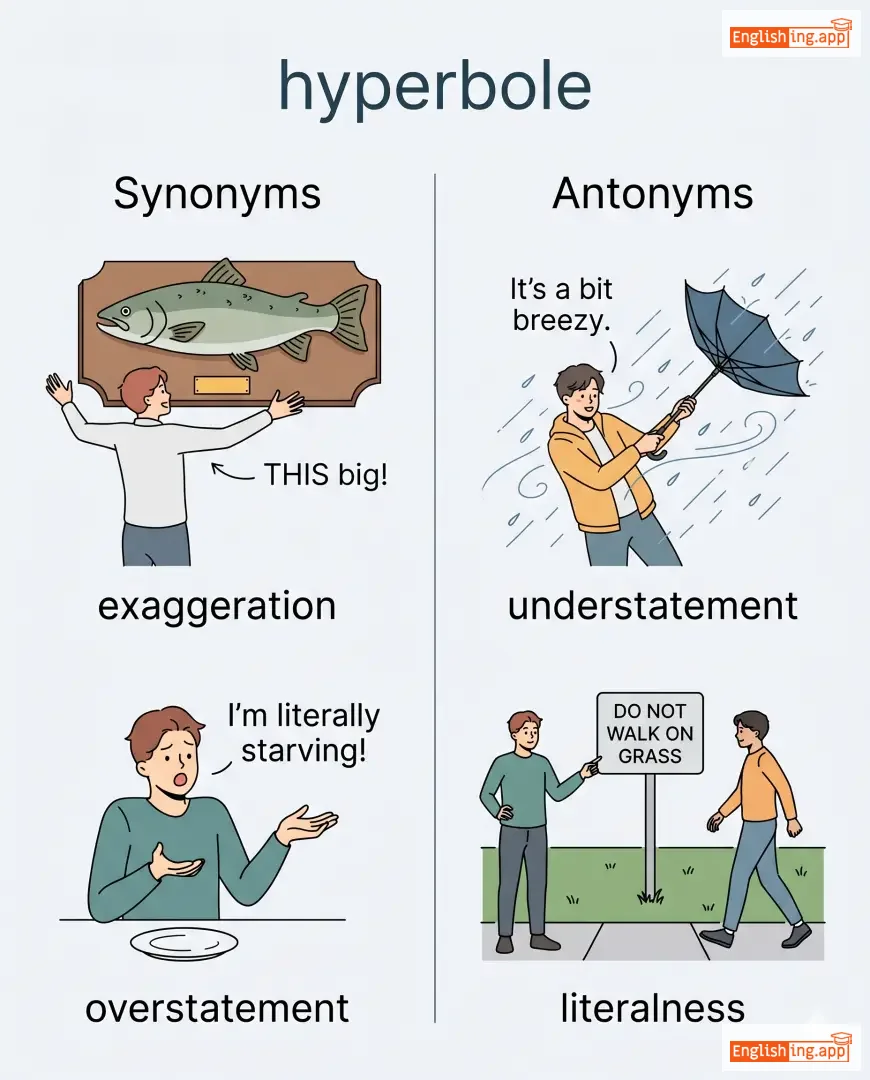
exaggeration, overstatement, amplification, embellishment
••••••
|
understatement, literalness
••••••
|
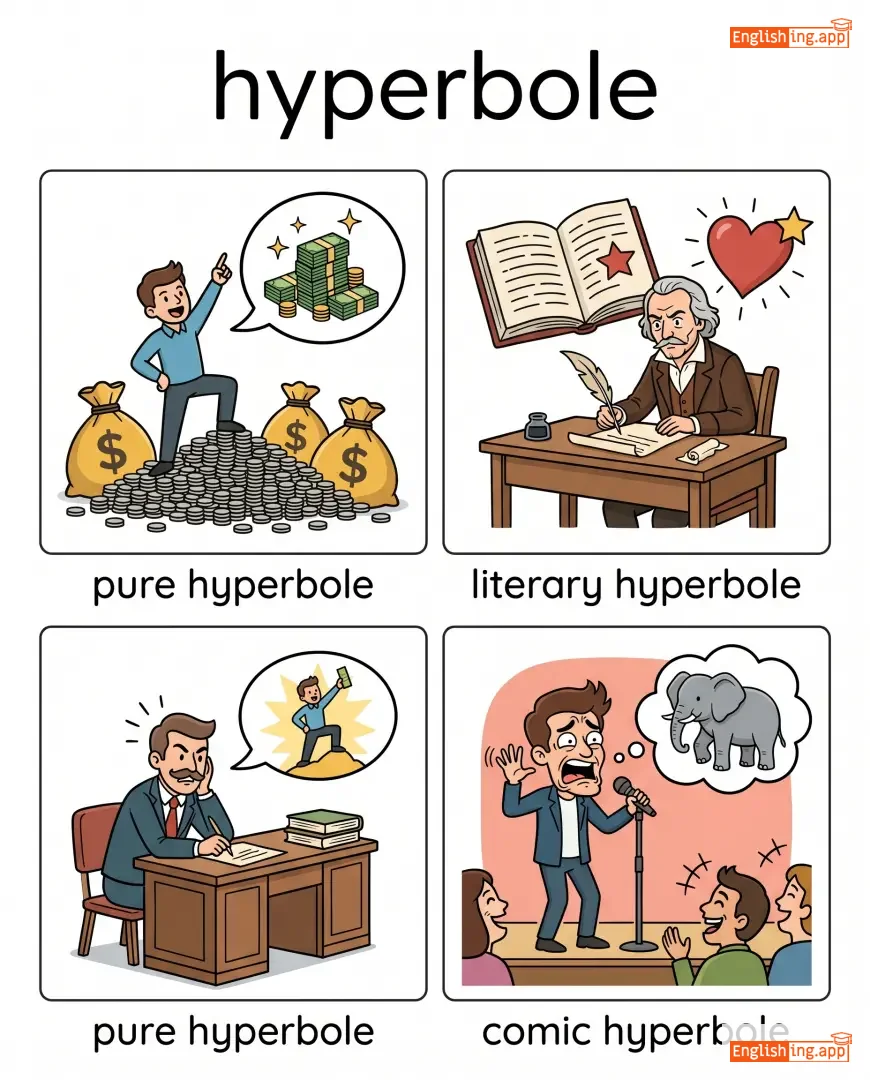
pure hyperbole, literary hyperbole, comic hyperbole, use of hyperbole
••••••
|
No •••••• |
|
⚡
••••••
|
/ˌaɪ.kə.nəˈklæs.tɪk/
adjective
(アイコノクラスティック)
••••••
|
|
確立された信念、伝統、または価値観に対して攻撃的または拒絶的な特徴
ikonokurasutikku
••••••
|
- •••••• | - •••••• | - •••••• | - •••••• |
Characterized by attacking or rejecting cherished beliefs, traditions, or established values.
••••••
|
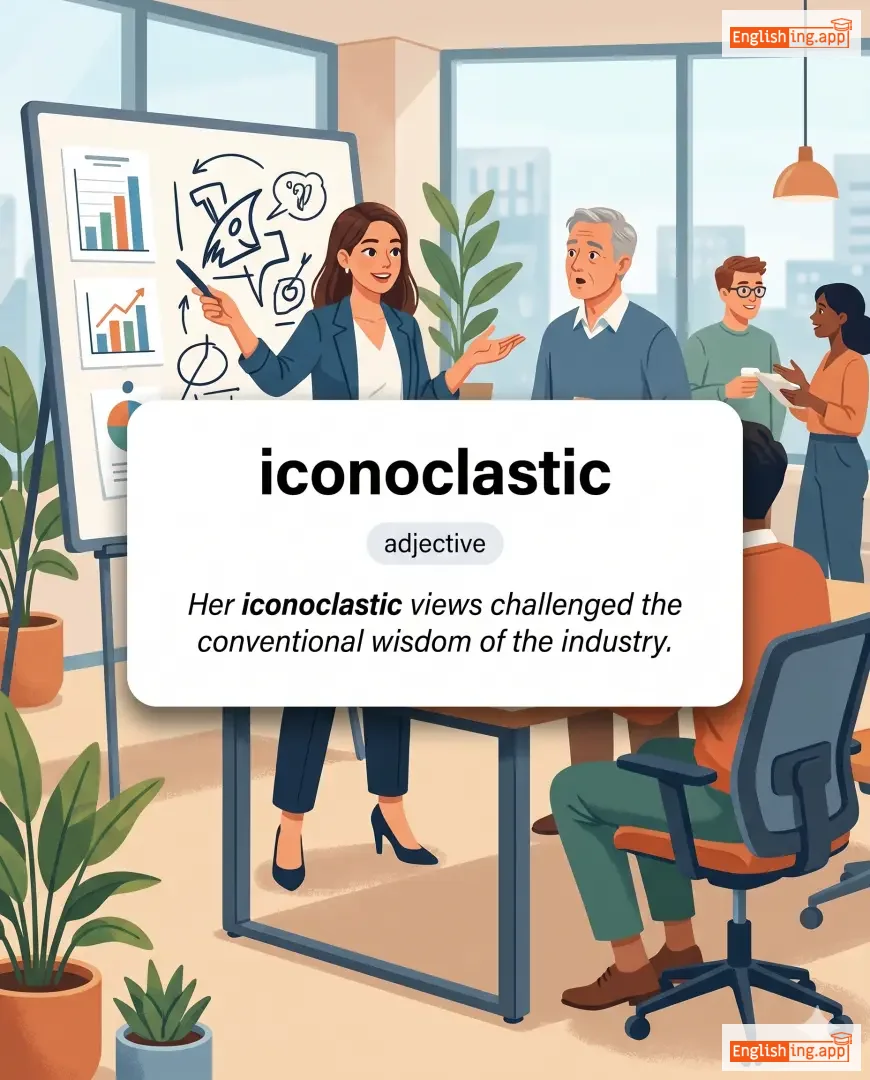
Her iconoclastic views challenged the conventional wisdom of the industry.
彼女のアイコノクラスティックな見解は業界の従来の知恵に挑戦した。
••••••
|
彼女のアイコノクラスティックな見解は業界の従来の知恵に挑戦した。
Kanojo no aikonokurasutikku na kenkai wa gyōkai no jūrai no chie ni chōsen shita.
••••••
|
- •••••• | - •••••• | - •••••• |
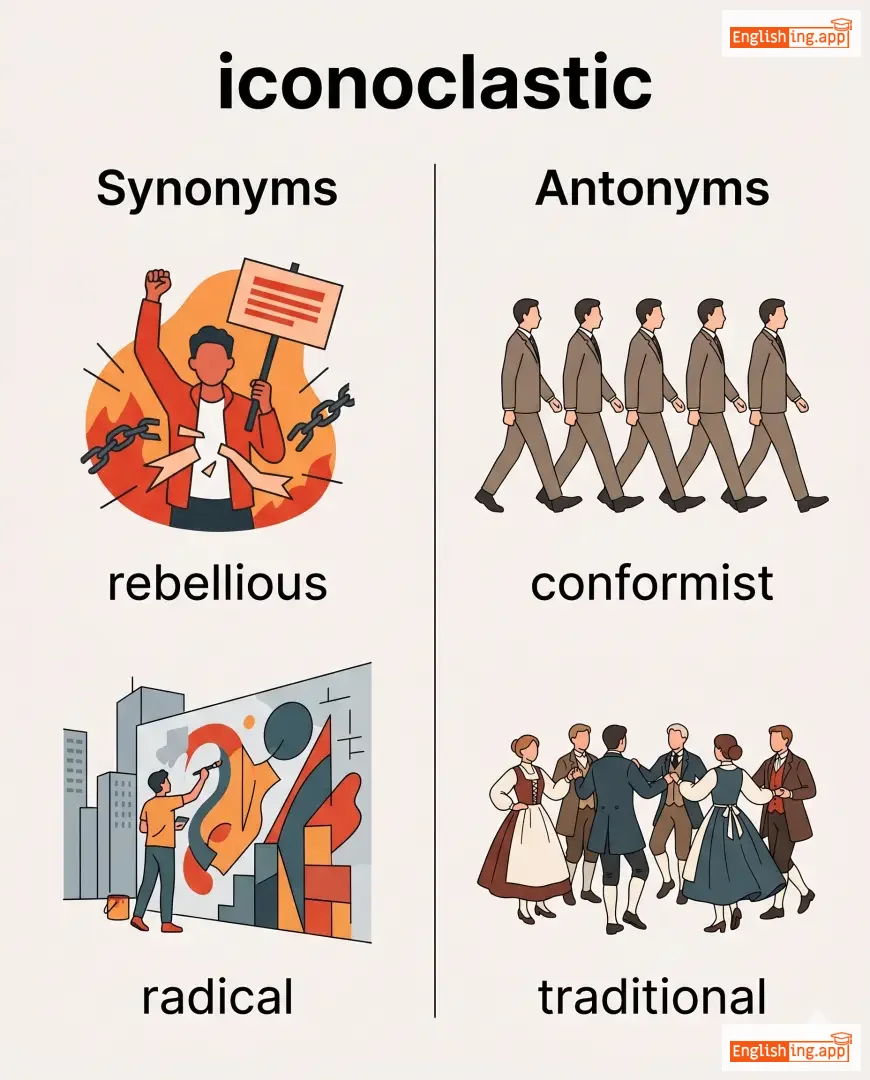
rebellious, radical, unorthodox, revolutionary, unconventional
••••••
|
conformist, traditional, conservative
••••••
|
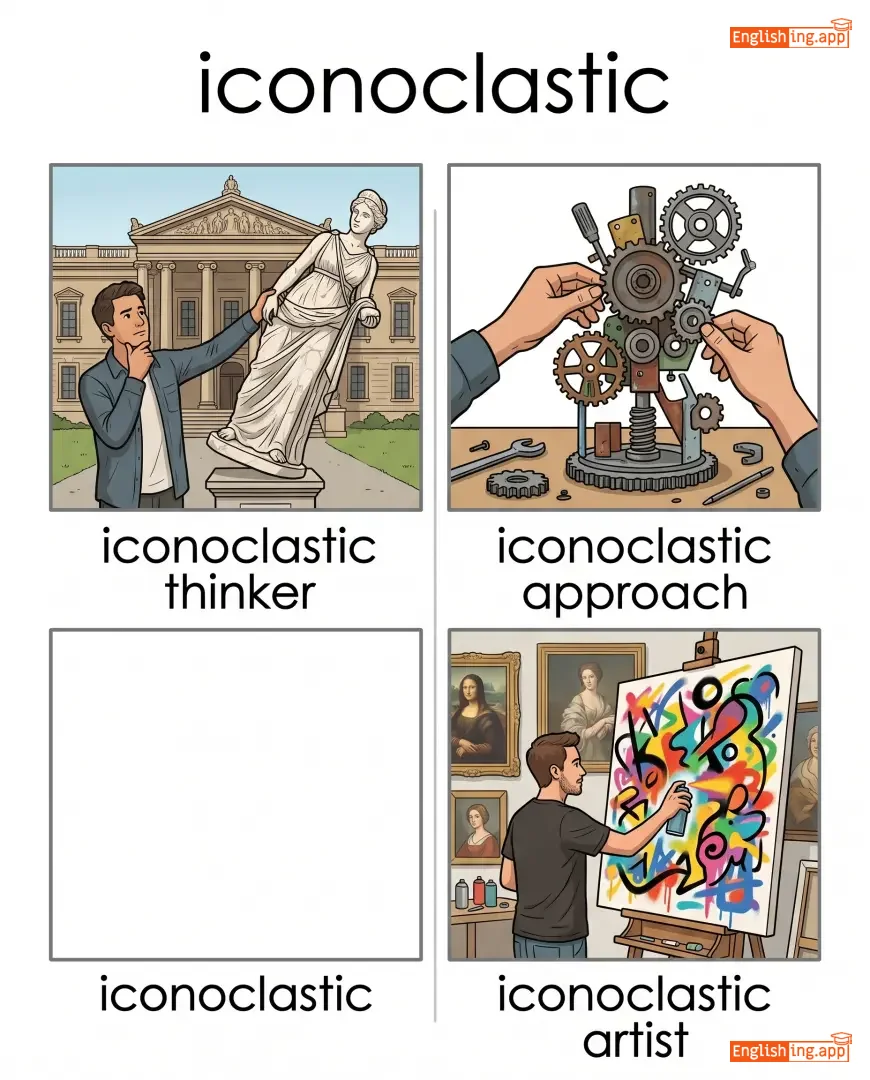
iconoclastic thinker, iconoclastic approach, iconoclastic artist
••••••
|
アイコノクラスティック = 伝統的な考えを打破する
••••••
|
|
🛐
••••••
|
/aɪˈdɒlətri/
noun
(偶像崇拝)
••••••
|
|
偶像崇拝
guuzou suuhai
••••••
|
- •••••• | - •••••• | - •••••• | - •••••• |
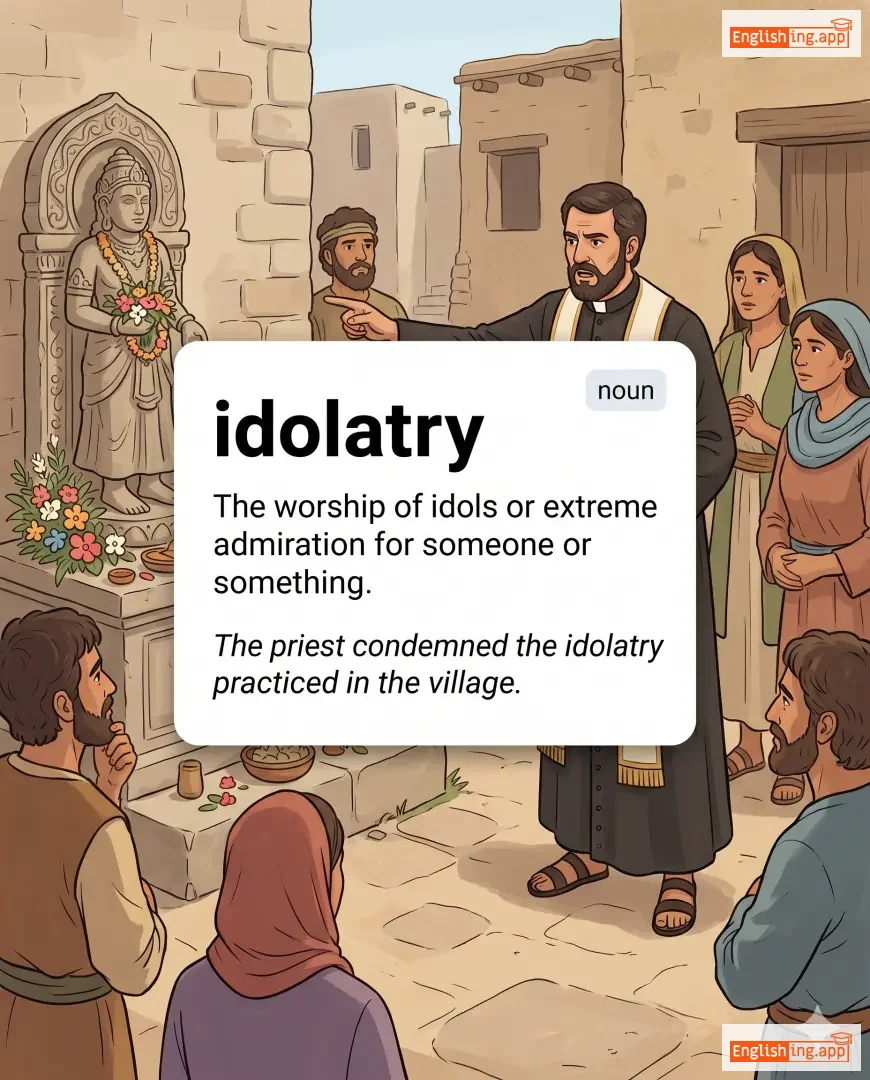
The worship of idols or extreme admiration for someone or something.
••••••
|
The priest condemned the idolatry practiced in the village. |
司祭は村で行われている偶像崇拝を非難した。
Shisai wa mura de okonawarete iru guuzou suuhai wo hinan shita.
••••••
|
- •••••• | - •••••• | - •••••• |
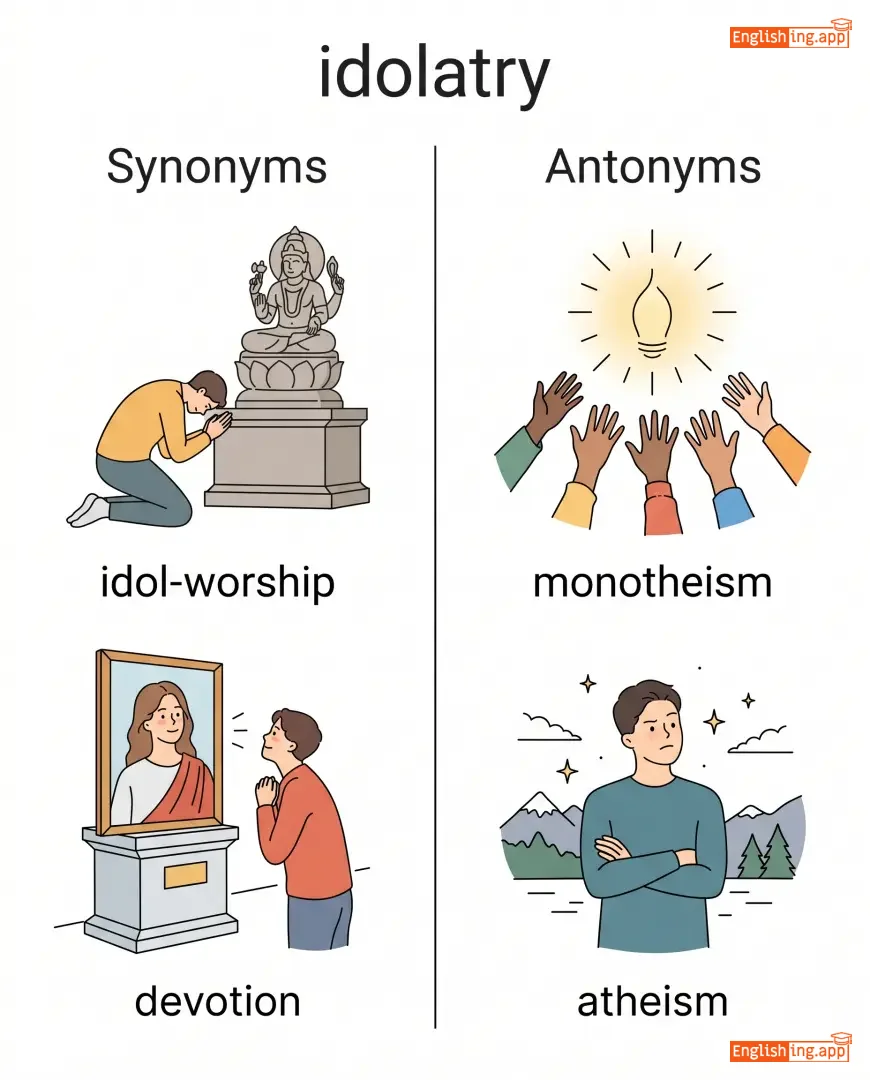
idol-worship, devotion, adoration, reverence, veneration
••••••
|
monotheism, atheism, irreverence
••••••
|
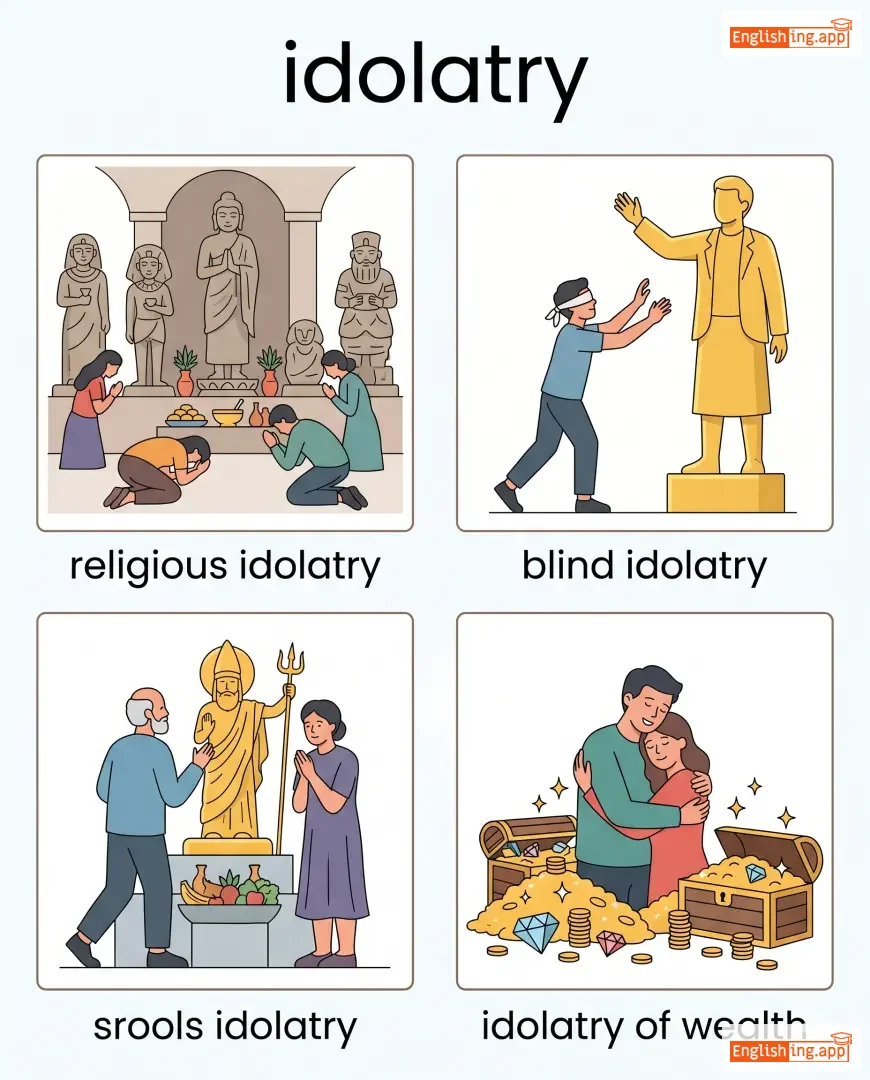
religious idolatry, blind idolatry, idolatry of wealth, idolatry of power
••••••
|
idol + tree, 木のようなidol崇拝
••••••
|
|
⚖️
••••••
|
/ɪˈmjuːtəbl/
adjective
(イミュータブル)
••••••
|
|
不変
fuhen
••••••
|
- •••••• | - •••••• | - •••••• | - •••••• |
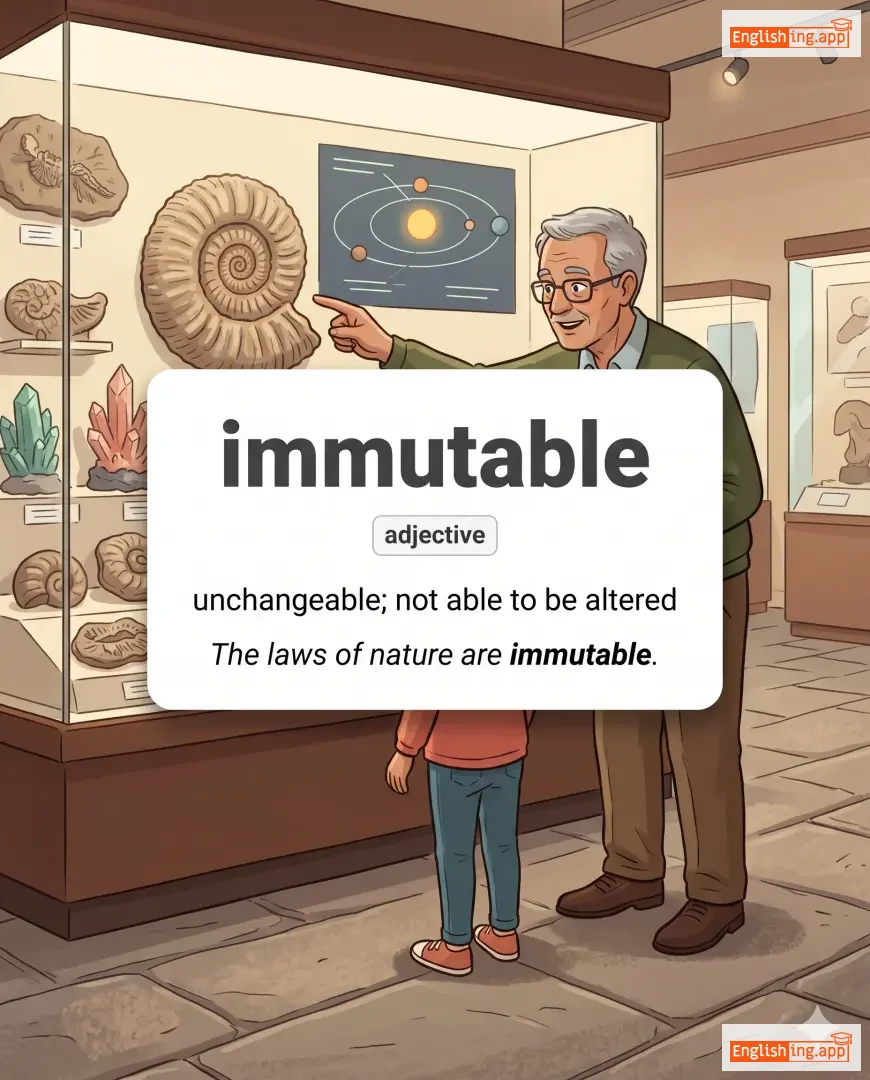
unchangeable; not able to be altered
••••••
|
The laws of nature are immutable.
自然の法則は不変です。
••••••
|
自然の法則は不変です。
Shizen no hōsoku wa fuhen desu.
••••••
|
immutable truth
不変の真実
••••••
|
a fact that cannot be changed
••••••
|
不変の真実
Fuhen no shinjitsu
••••••
|
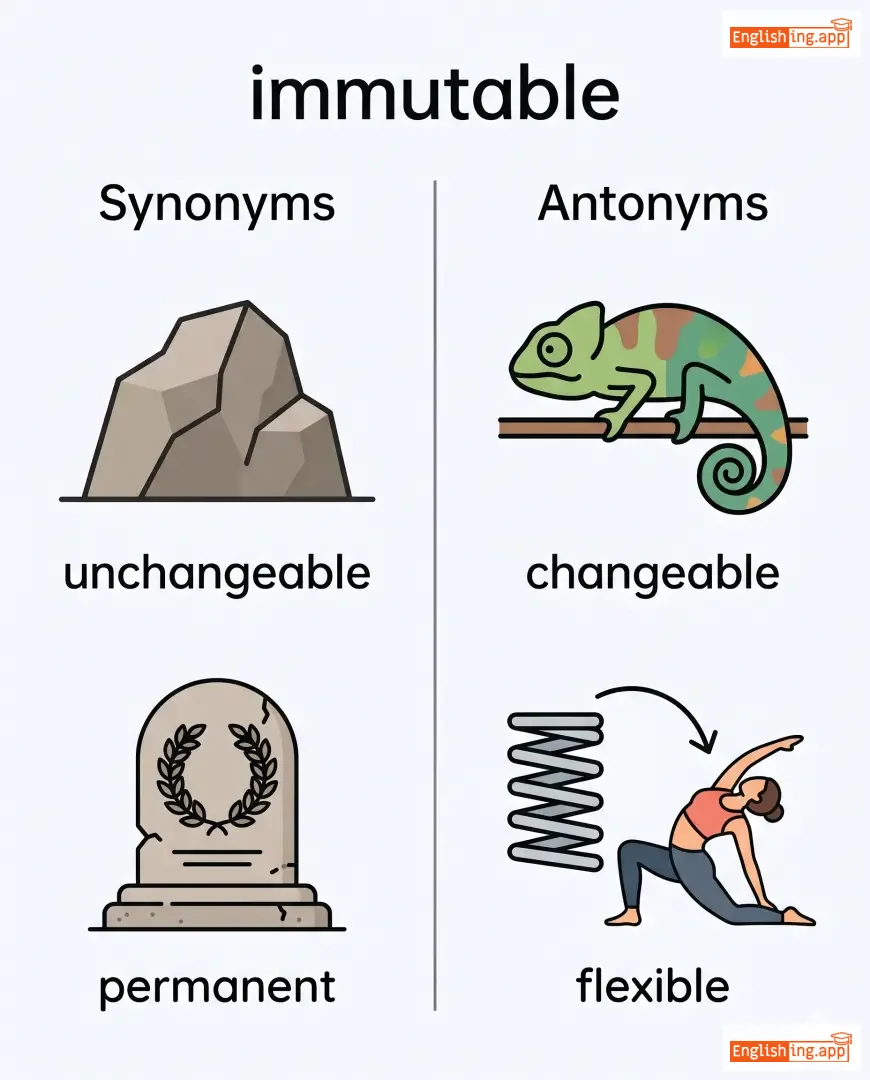
unchangeable, permanent, fixed, constant
••••••
|
changeable, flexible, variable
••••••
|
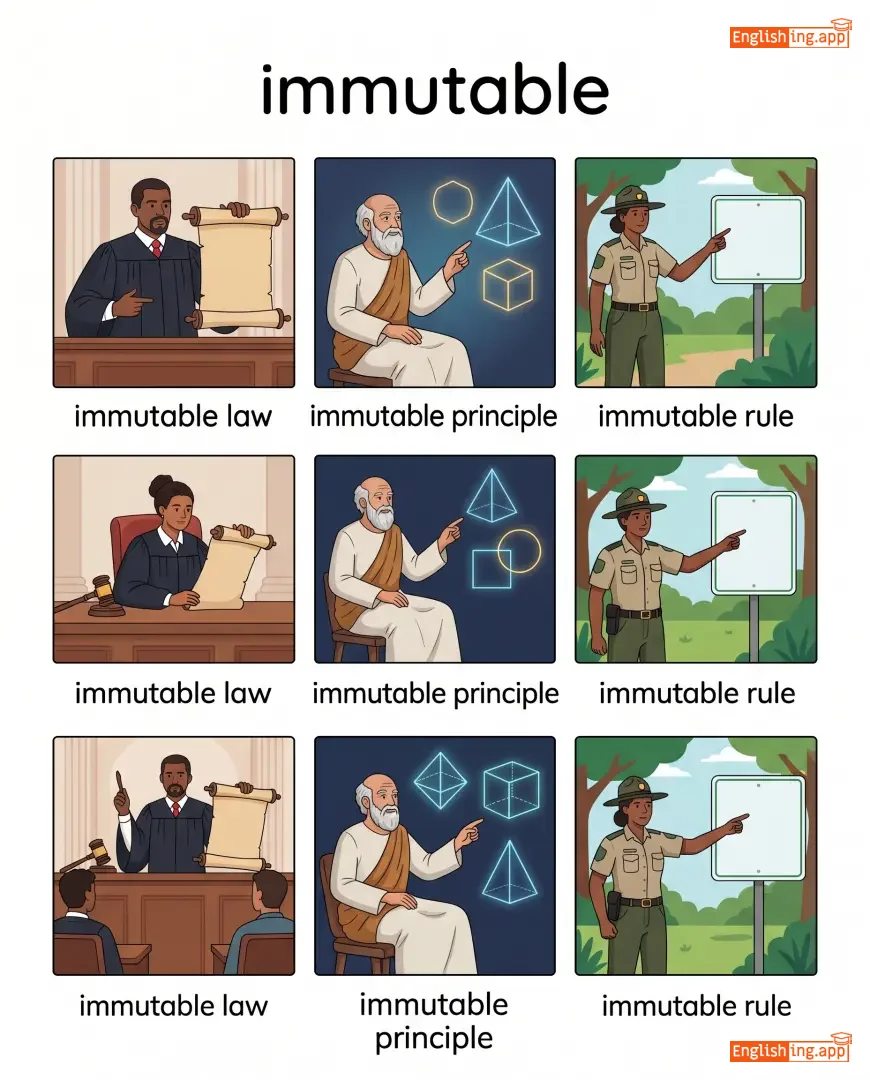
immutable law, immutable principle, immutable rule, immutable fact
••••••
|
Immutableは変更できないことを意味する—不変。
••••••
|
|
💔
••••••
|
/ɪmˈpɛər/
verb
(インペア)
••••••
|
|
損なう
sonnau
••••••
|
impaired
インペアード
••••••
|
impaired
インペアード
••••••
|
impairs
インペアーズ
••••••
|
impairing
インペアリング
••••••
|
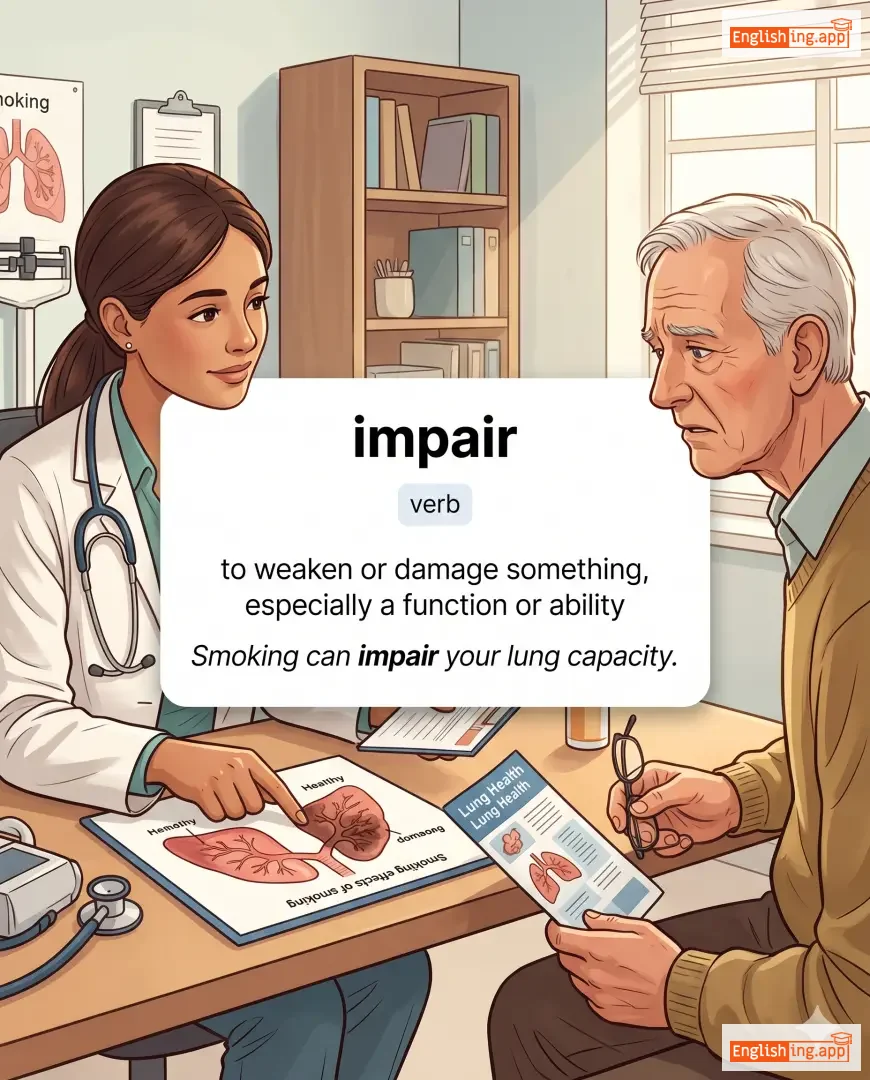
to weaken or damage something, especially a function or ability
••••••
|
Smoking can impair your lung capacity.
喫煙は肺活量を害する可能性があります。
••••••
|
喫煙は肺活量を害する可能性があります。
Kitsuen wa haikatsuryou wo gaishirukanoosei ga arimasu.
••••••
|
- •••••• | - •••••• | - •••••• |
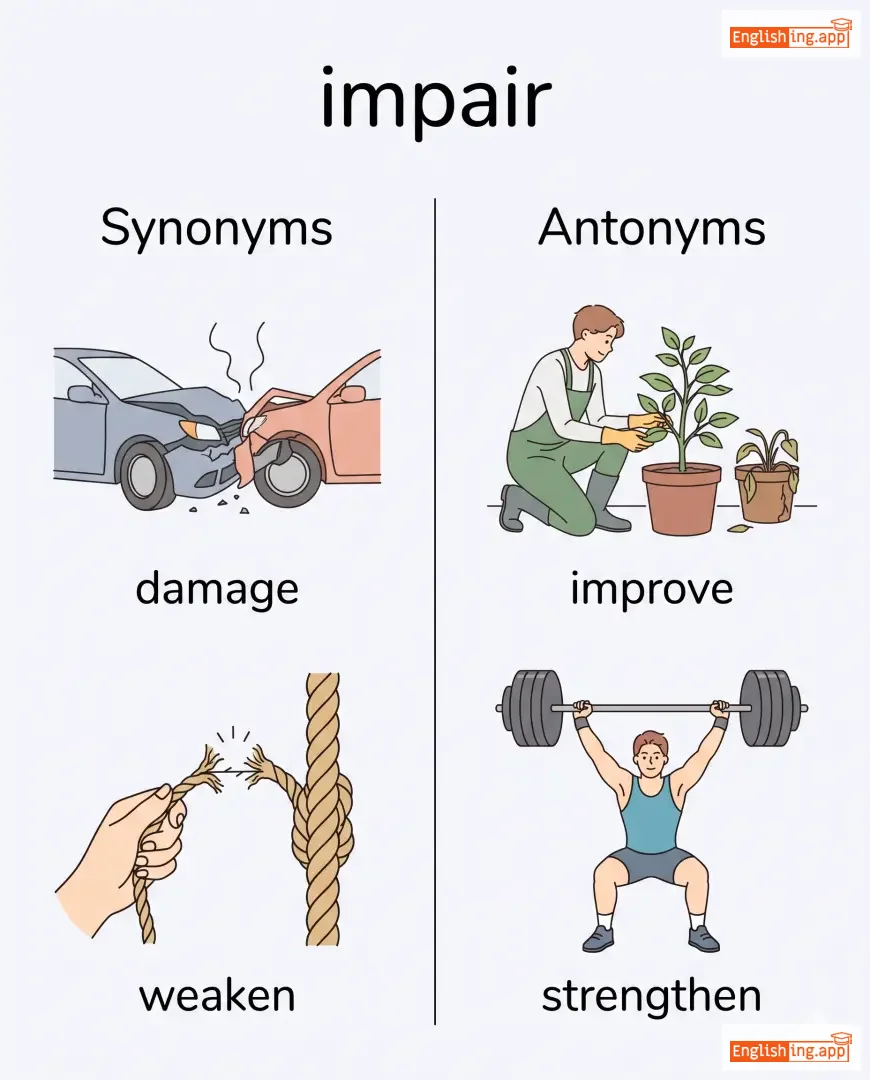
damage, weaken, harm, reduce, diminish
••••••
|
improve, strengthen, enhance
••••••
|
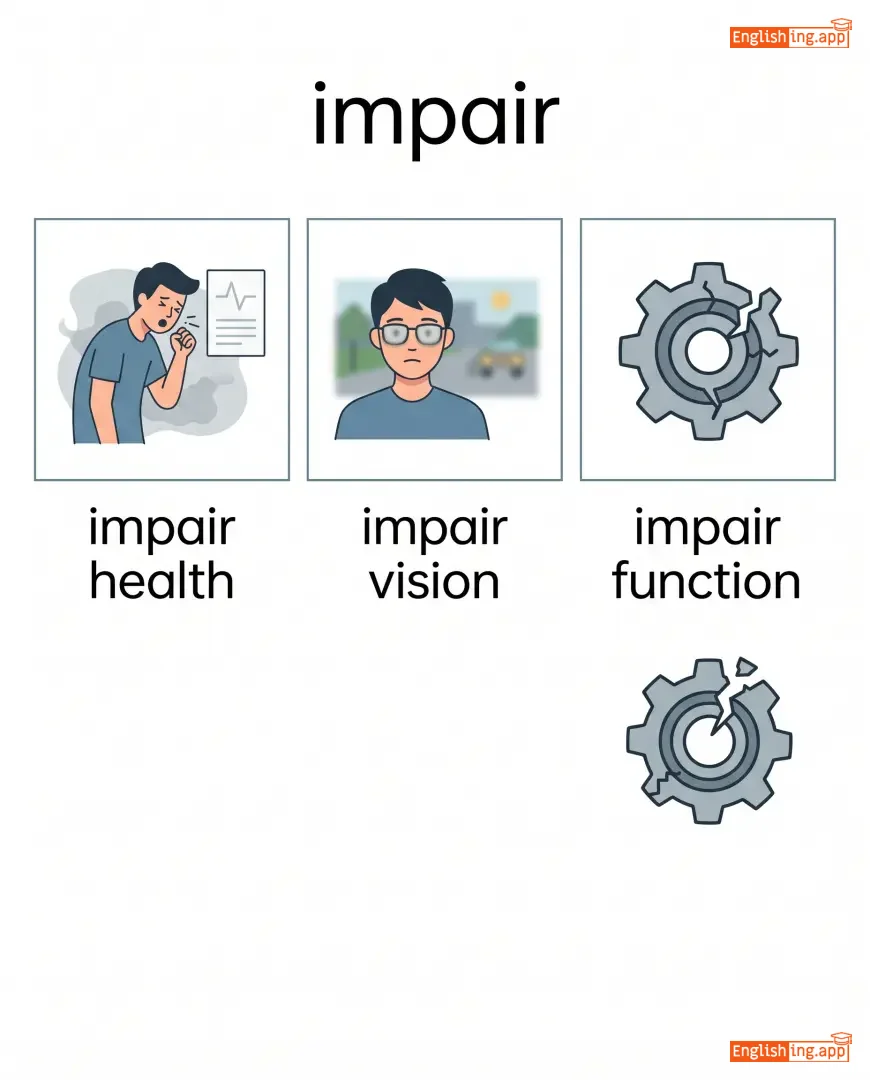
impair health, impair vision, impair function, severely impair
••••••
|
IMPAIRは損なうを意味します - もし車のタイヤが損なわれたら、車は動きません。
••••••
|
|
😐
••••••
|
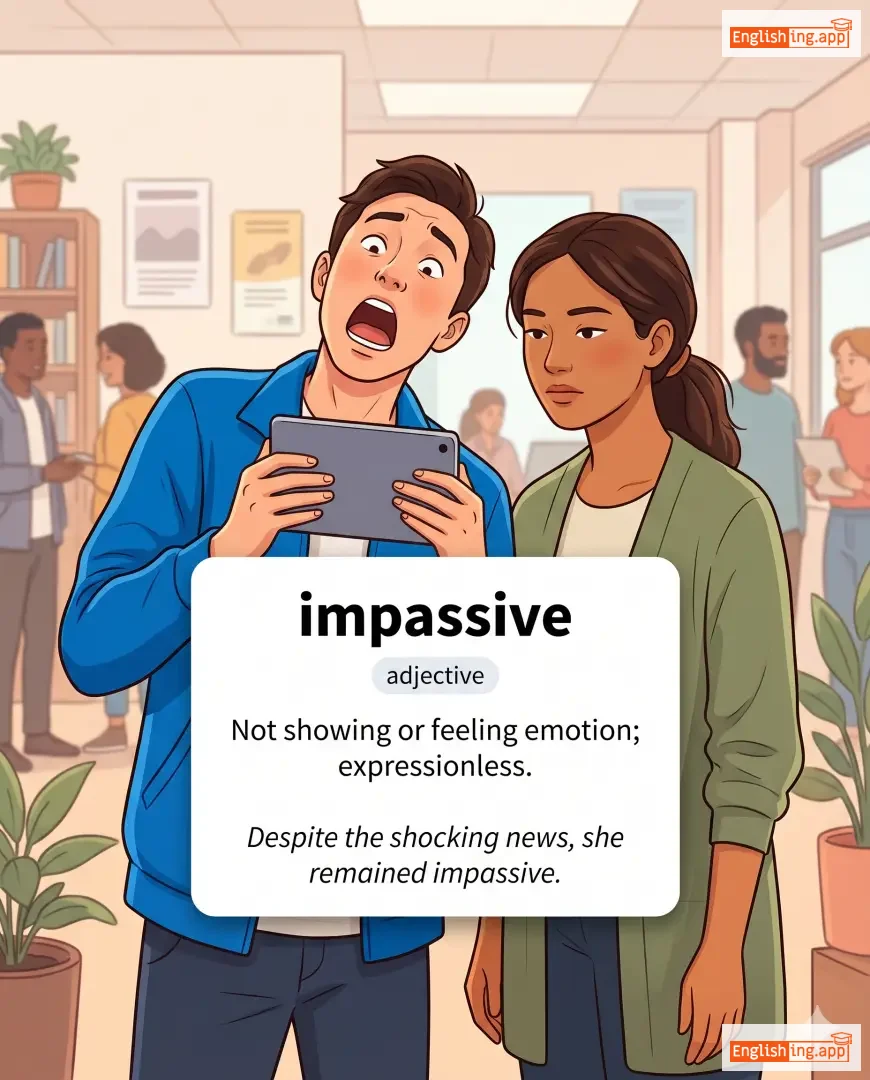
/ɪmˈpæsɪv/
adjective
(インパシブ)
••••••
|
|
無表情
muhyōjō
••••••
|
- •••••• | - •••••• | - •••••• | - •••••• |
Not showing or feeling emotion; expressionless.
••••••
|
Despite the shocking news, she remained impassive.
衝撃的なニュースにもかかわらず、彼女は無表情のままでした。
••••••
|
衝撃的なニュースにもかかわらず、彼女は無表情のままでした。
Shōgeki-teki na nyūsu ni mo kakawarazu, kanojo wa muhyōjō no mamadashita.
••••••
|
- •••••• | - •••••• | - •••••• |
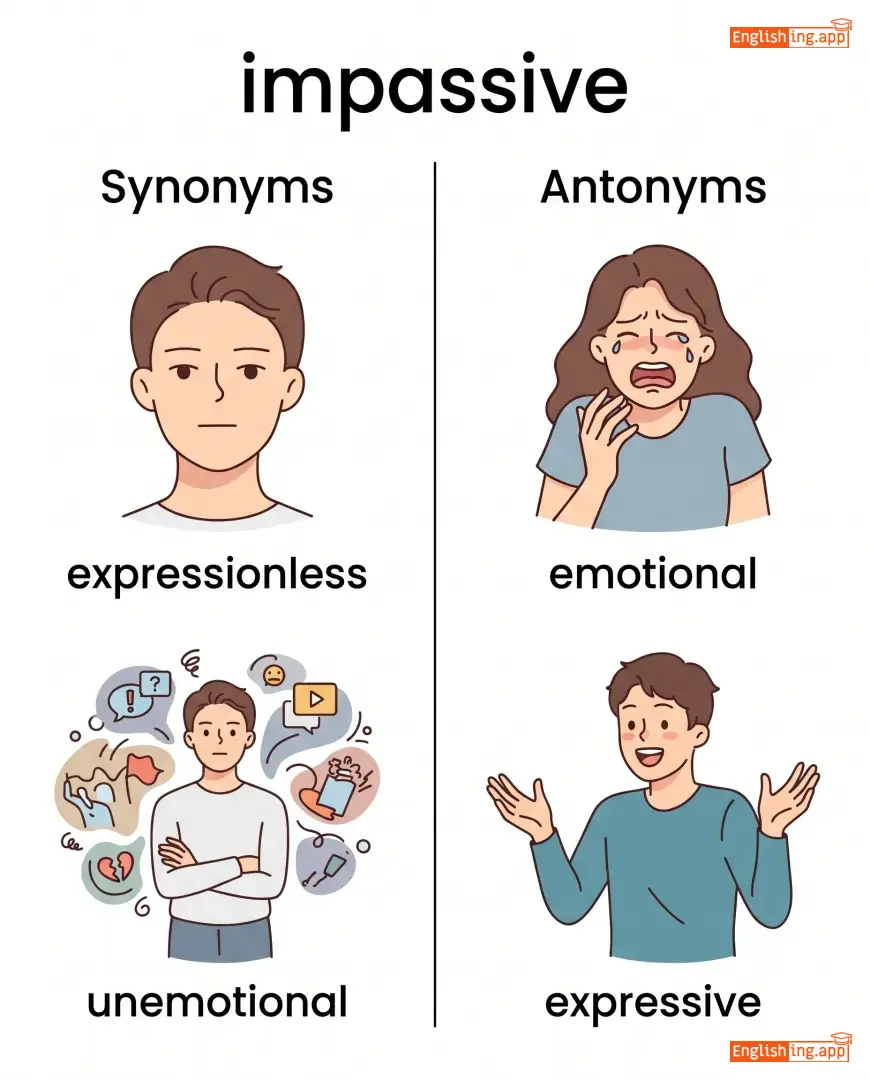
expressionless, unemotional, calm, stoic, detached
••••••
|
emotional, expressive, passionate
••••••
|
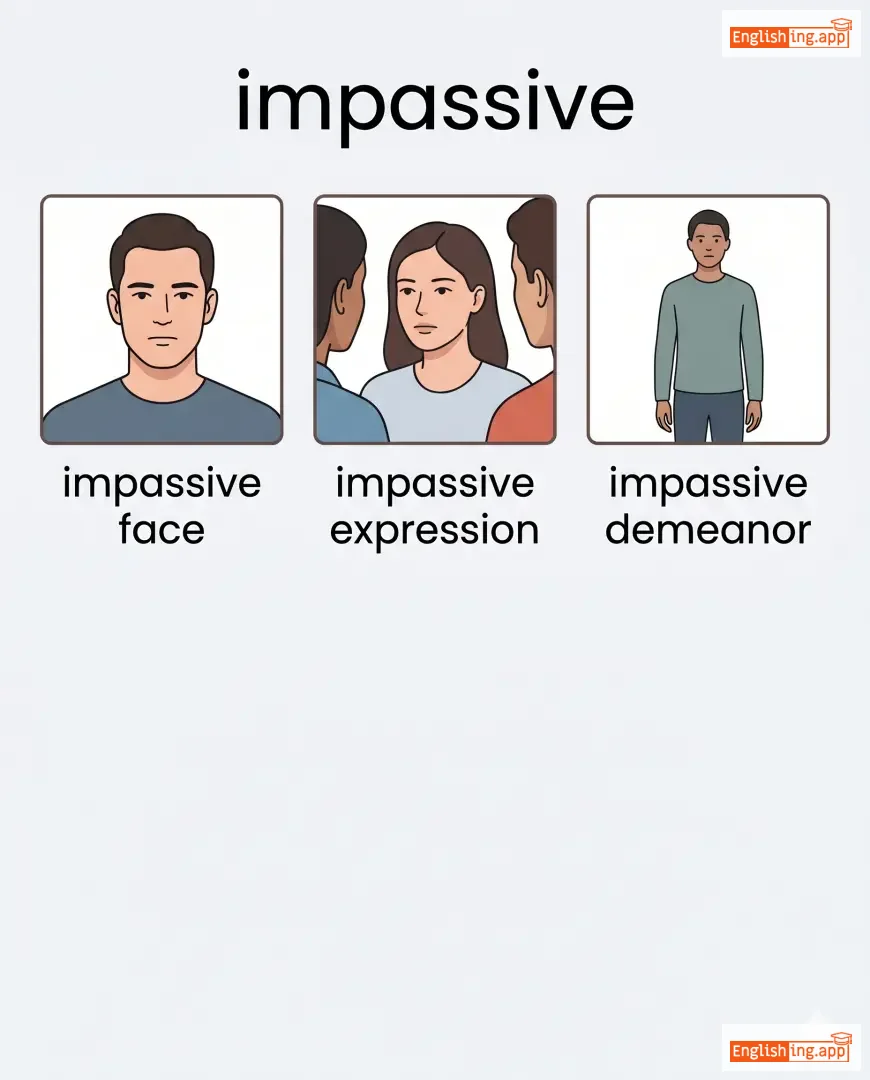
impassive face, impassive expression, impassive demeanor
••••••
|
IMPASSIVE は日本語で無表情 — 感情のない顔
••••••
|
|
⛔
••••••
|
/ɪmˈpiːd/
verb
(インピード)
••••••
|
|
妨げる
samatajeru
••••••
|
impeded
インピーデッド
••••••
|
impeded
インピーデッド
••••••
|
impedes
インピーズ
••••••
|
impeding
インピーディング
••••••
|
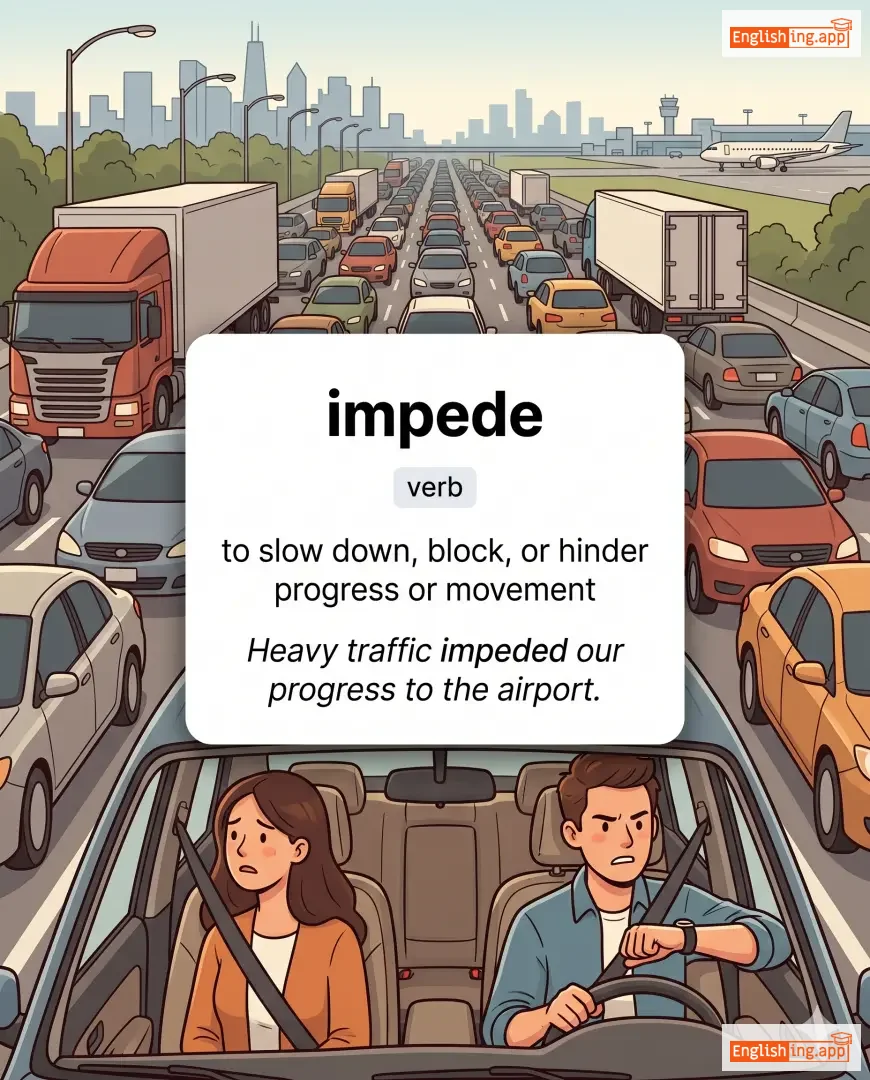
to slow down, block, or hinder progress or movement
••••••
|
Heavy traffic impeded our progress to the airport.
交通渋滞が空港への進行を妨げました。
••••••
|
交通渋滞が空港への進行を妨げました。
Koutsuu juutai ga kuukou e no shinkou o samatagemashita.
••••••
|
impede progress
進行を妨げる
••••••
|
to slow down or obstruct advancement
••••••
|
進行を妨げる
shinkou o samatageru
••••••
|
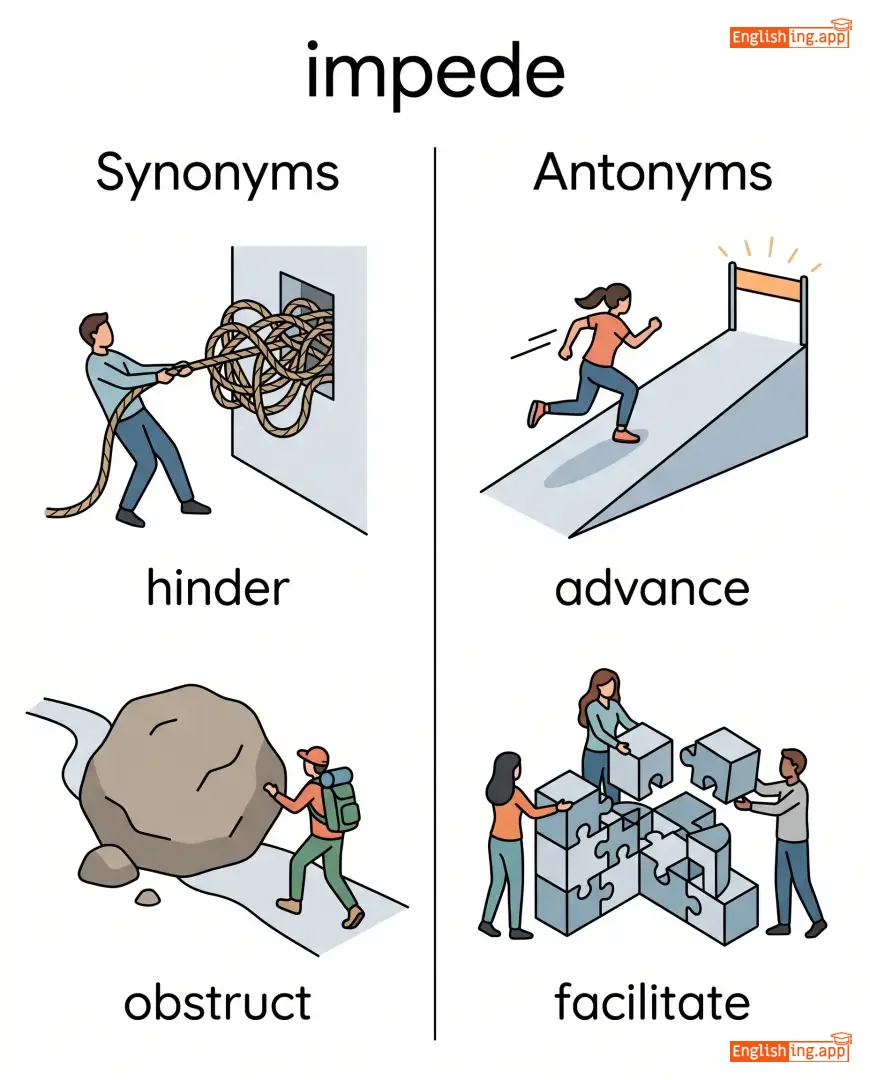
hinder, obstruct, block, delay, hamper
••••••
|
advance, facilitate, promote
••••••
|
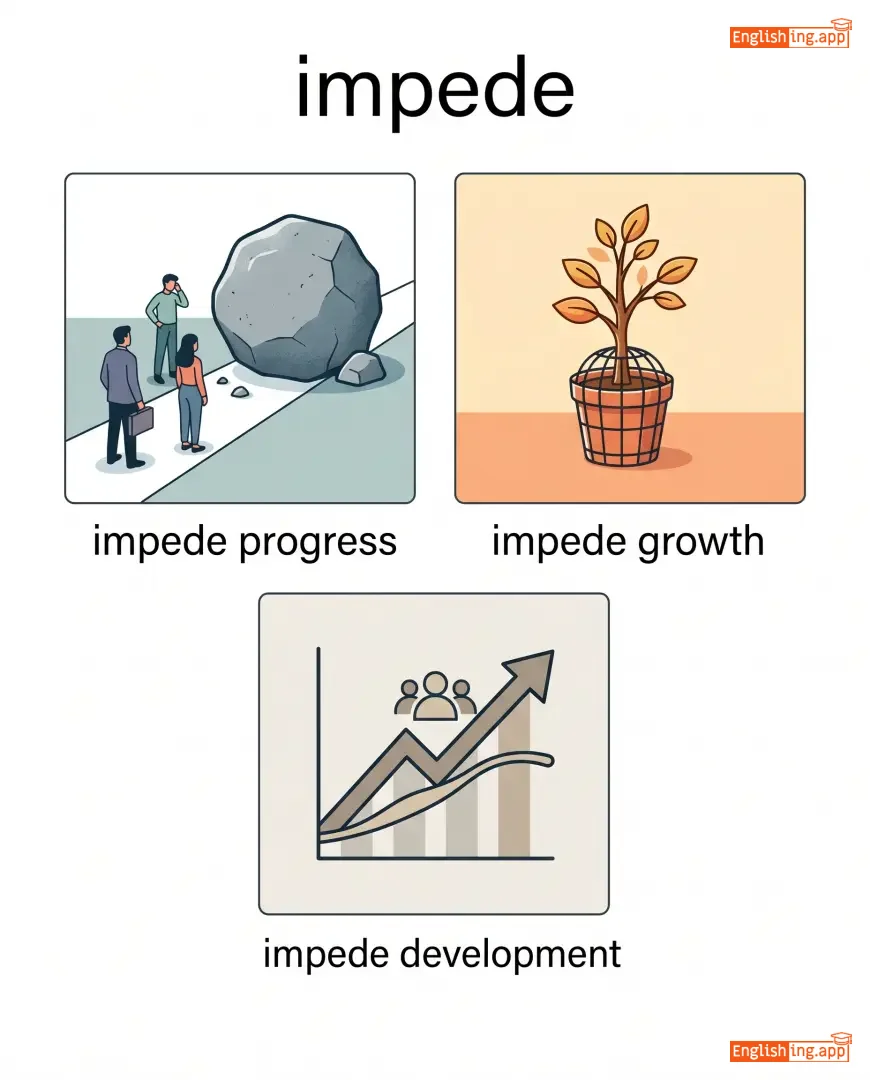
impede progress, impede growth, impede development, impede movement
••••••
|
もし交通が進行を妨げるなら、空港には着けない。
••••••
|
|
🧱
••••••
|
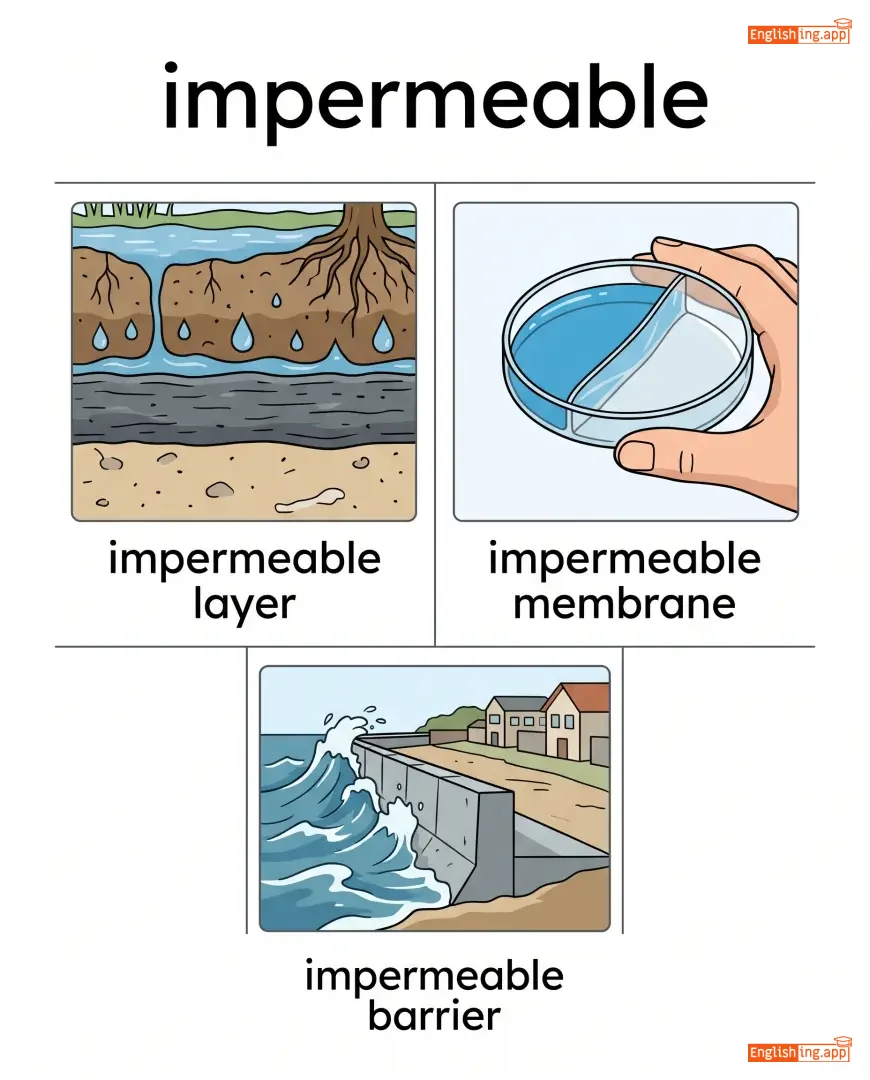
/ɪmˈpɜːmiəbl/
adjective
(インパーミアブル)
••••••
|
|
不透水の
futōsui no
••••••
|
- •••••• | - •••••• | - •••••• | - •••••• |
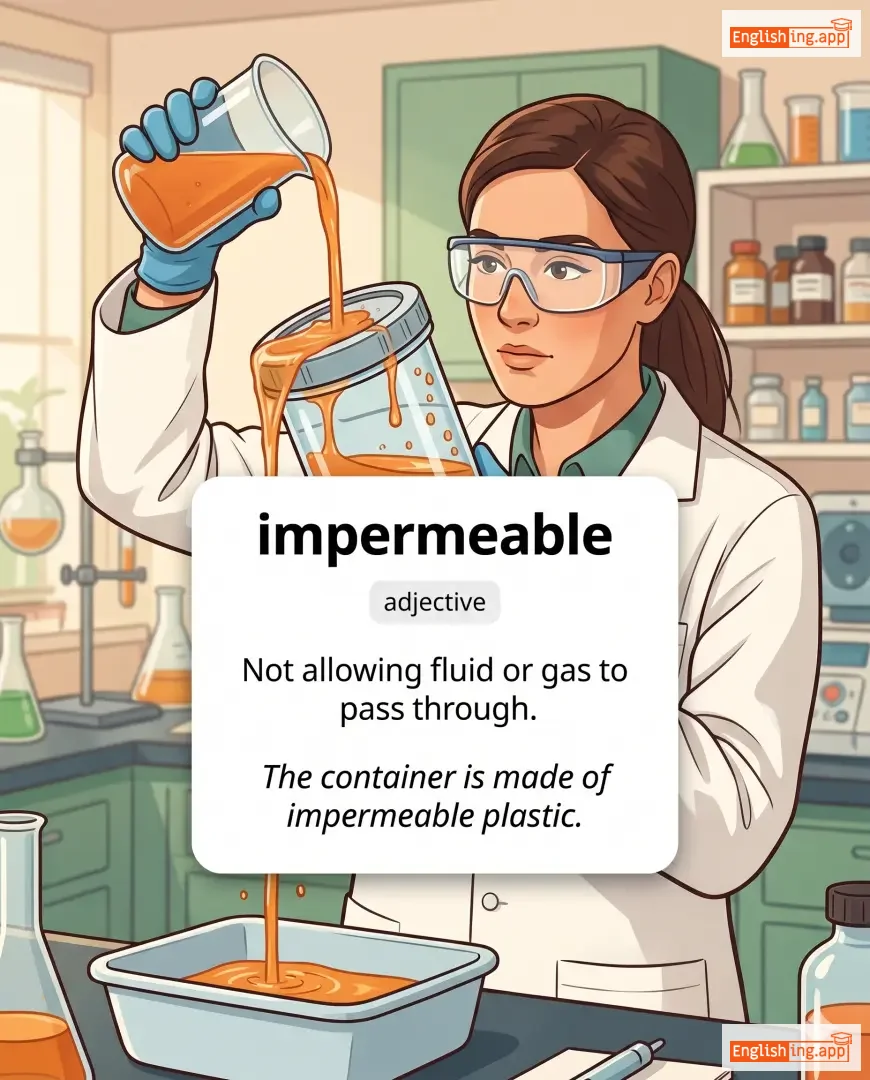
Not allowing fluid or gas to pass through.
••••••
|
The container is made of impermeable plastic. |
その容器は不透水のプラスチックでできています。
Sono youki wa futōsui no purasuchikku de dekiteimasu.
••••••
|
- •••••• | - •••••• | - •••••• |
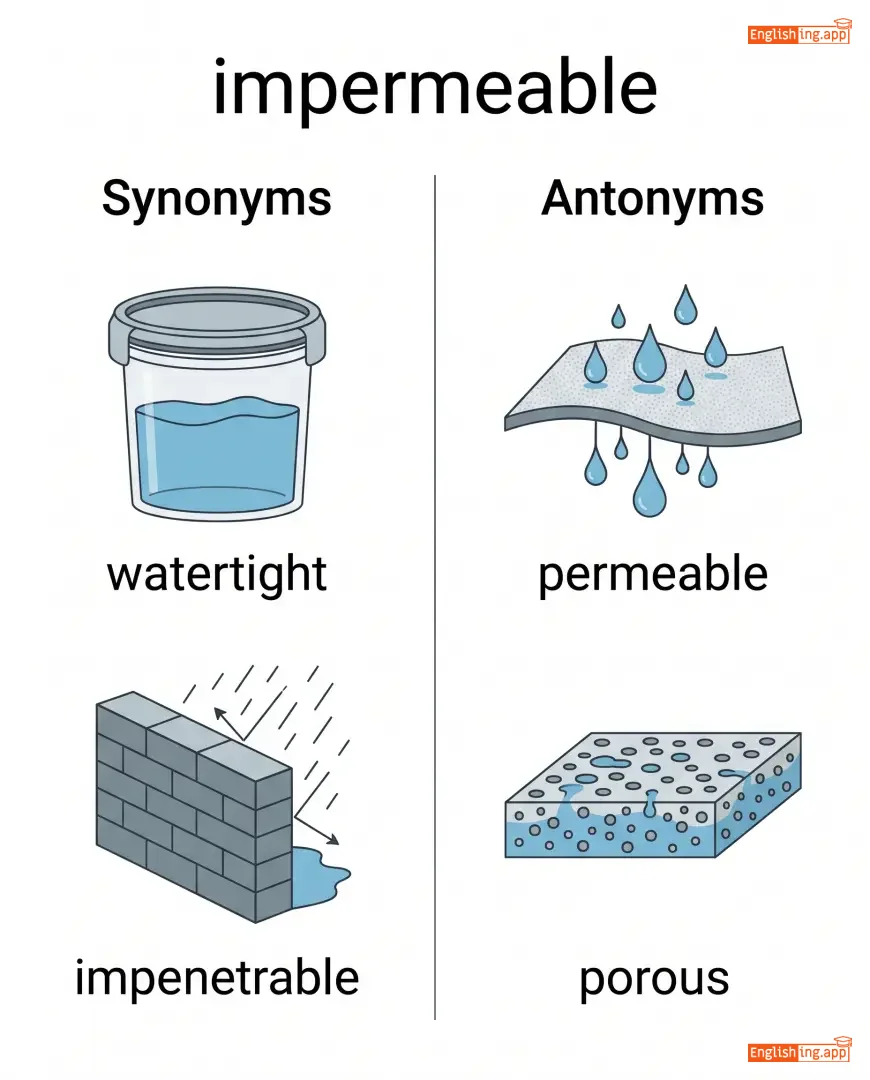
watertight, impenetrable, sealed, nonporous
••••••
|
permeable, porous, leaky
••••••
|
impermeable layer, impermeable membrane, impermeable barrier, impermeable wall
••••••
|
不透水のように、すべての水を通さないものです。
••••••
|
|
🧘
••••••
|
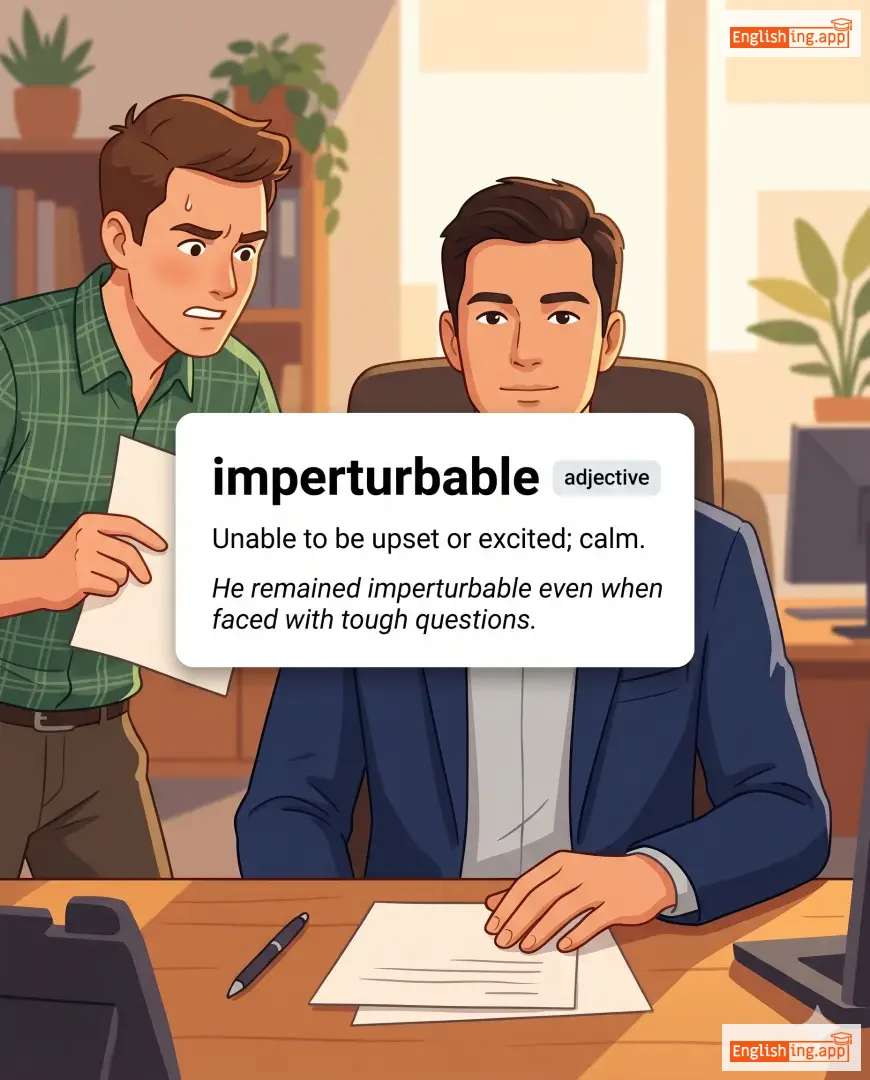
/ɪmˈpɜːrtərbəbəl/
adjective
(インパターバブル)
••••••
|
|
冷静
reisei
••••••
|
- •••••• | - •••••• | - •••••• | - •••••• |
Unable to be upset or excited; calm.
••••••
|
He remained imperturbable even when faced with tough questions.
彼は難しい質問に直面しても冷静さを保ち続けました。
••••••
|
彼は難しい質問に直面しても冷静さを保ち続けました。
Kare wa muzukashī shitsumon ni chokumen shite mo reiseisa o tamotsu tsudzukemashita.
••••••
|
- •••••• | - •••••• | - •••••• |
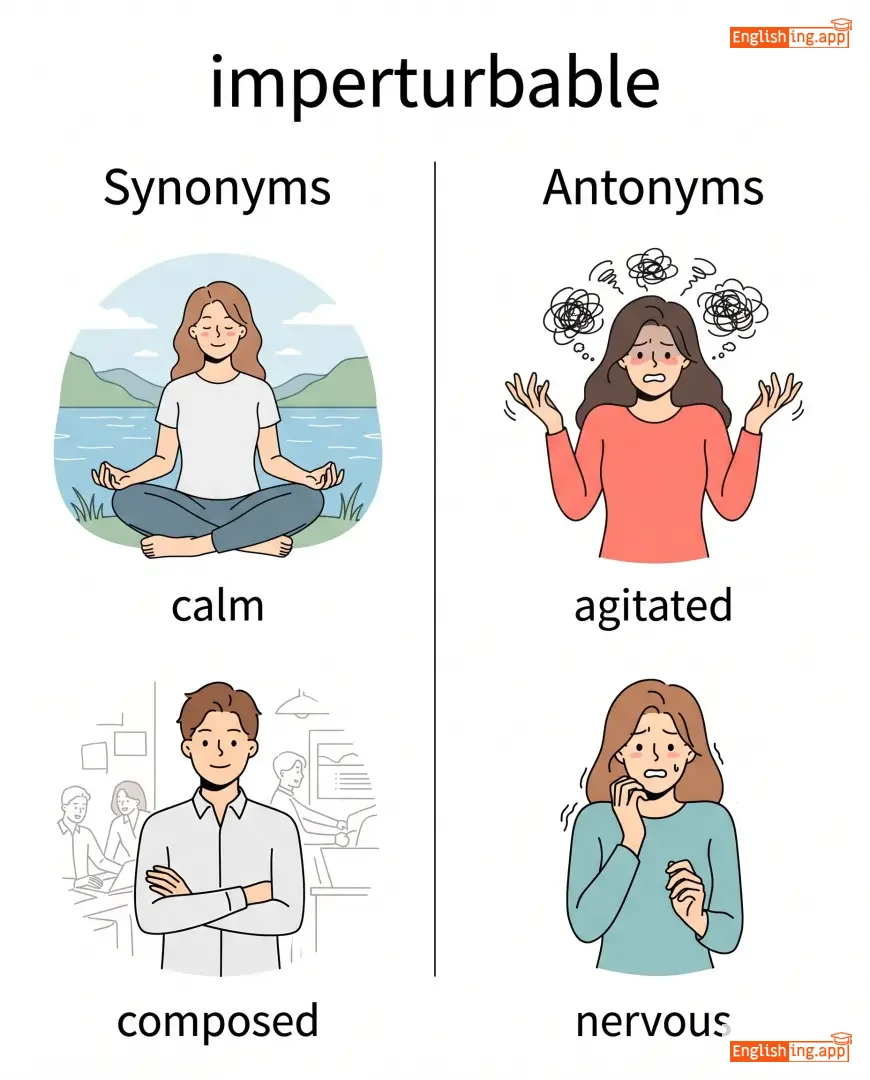
calm, composed, serene, collected, unflappable
••••••
|
agitated, nervous, excitable
••••••
|
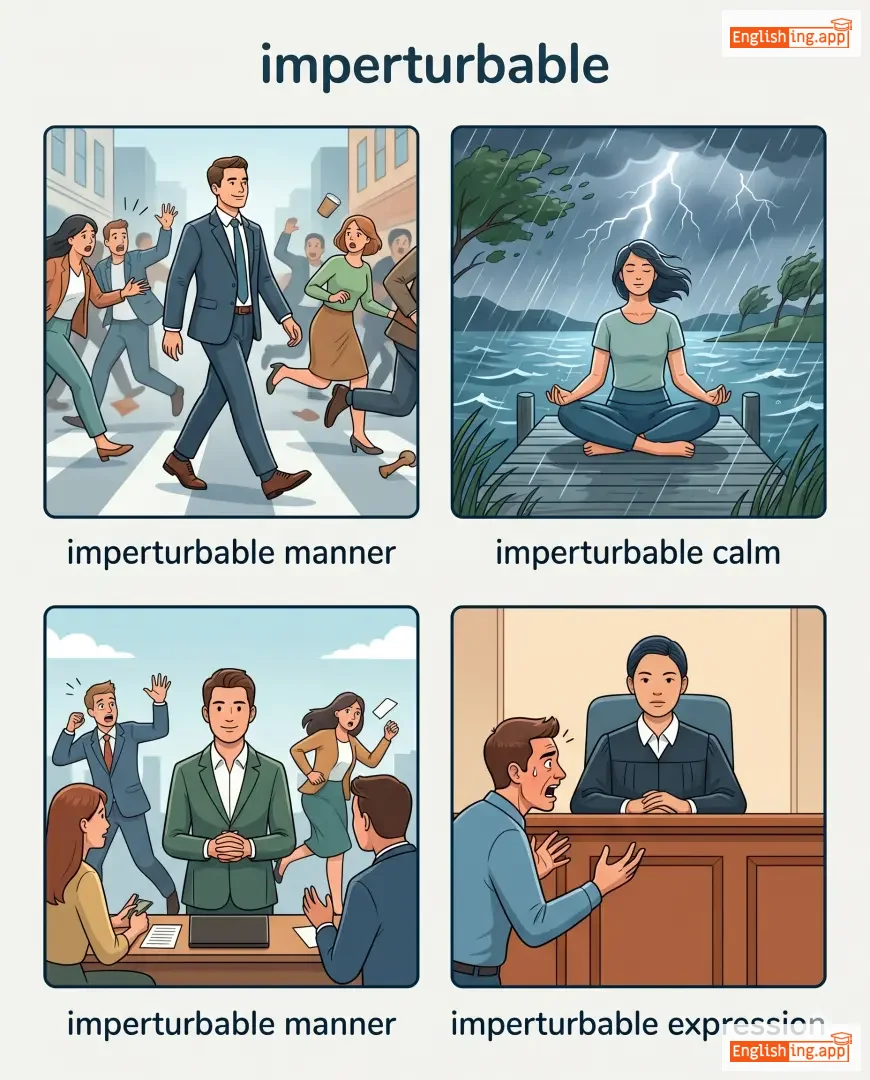
imperturbable manner, imperturbable calm, imperturbable expression, imperturbable face
••••••
|
Imperturbable とは '動揺しない' という意味です — つまり冷静。
••••••
|
|
🛡️
••••••
|
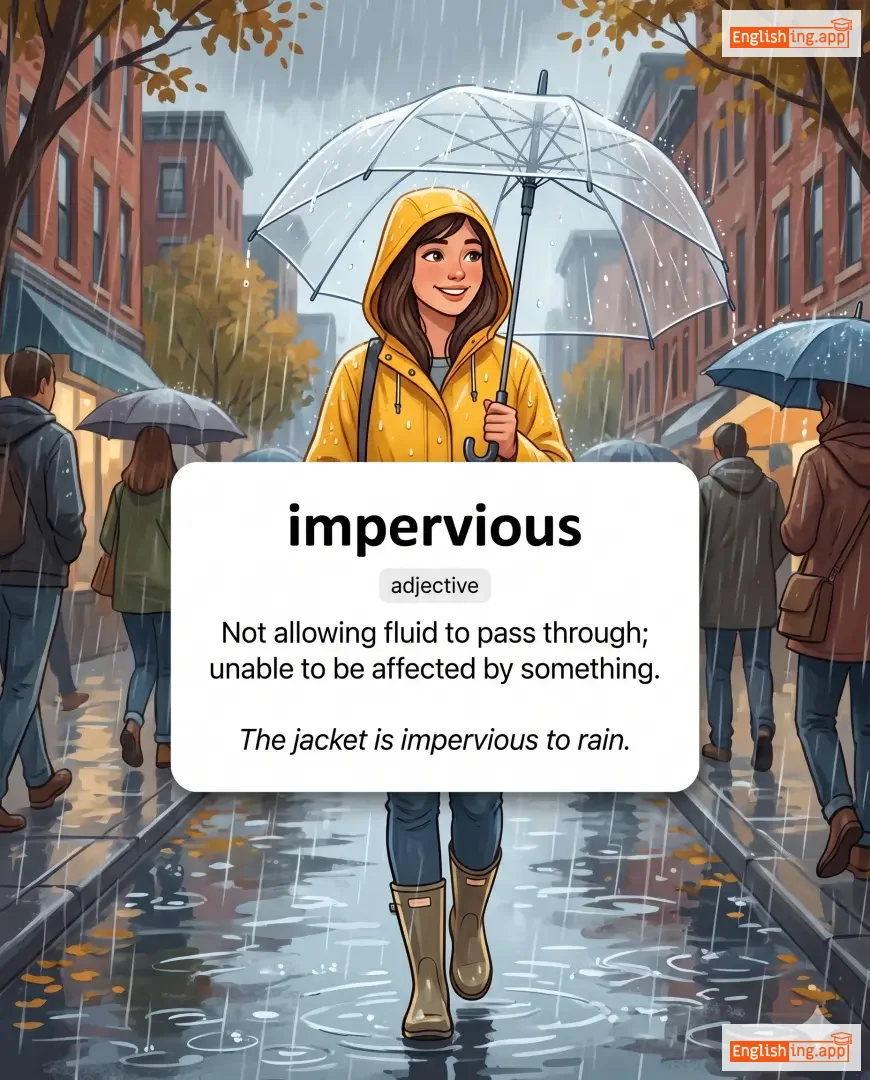
/ɪmˈpɜːrviəs/
adjective
(インパーヴィアス)
••••••
|
|
透過しない
toukashinai
••••••
|
- •••••• | - •••••• | - •••••• | - •••••• |
Not allowing fluid to pass through; unable to be affected by something.
••••••
|
The jacket is impervious to rain. |
ジャケットは雨に透過しません。
Jaketto wa ame ni toukashinai desu.
••••••
|
- •••••• | - •••••• | - •••••• |
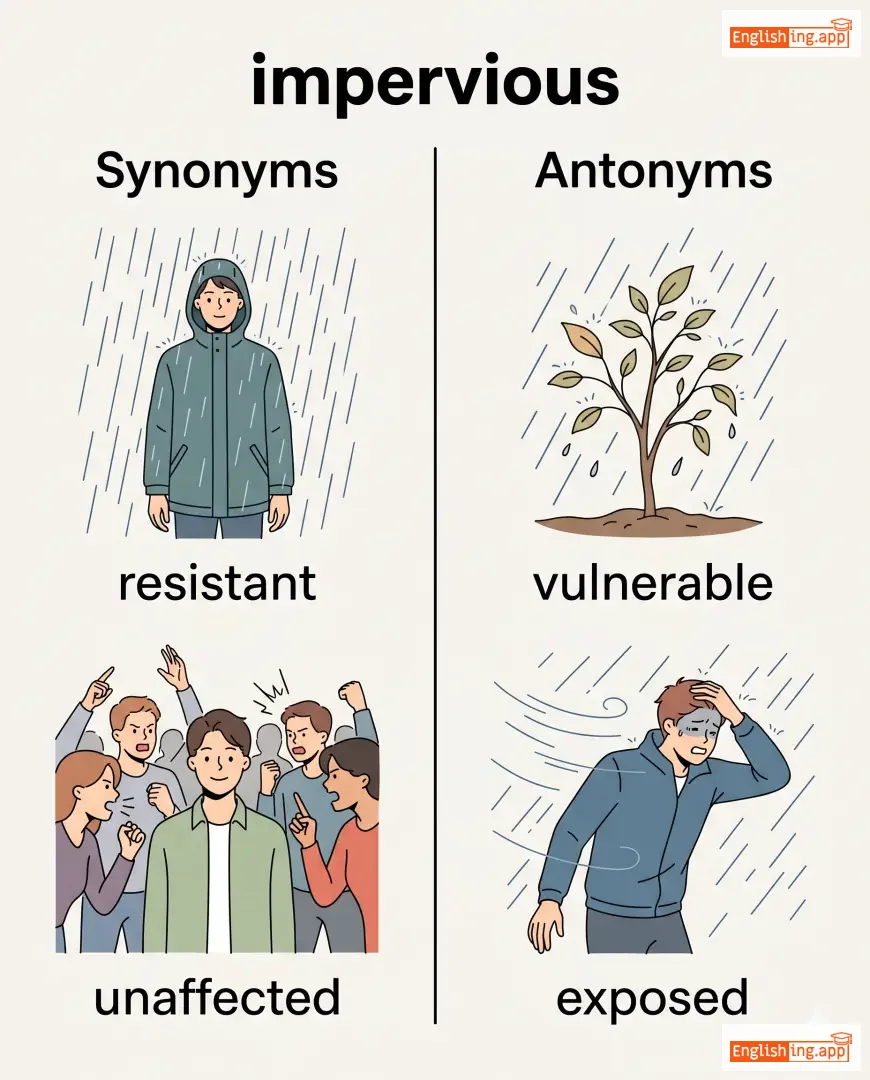
resistant, unaffected, immune, sealed, waterproof
••••••
|
vulnerable, exposed, penetrable
••••••
|
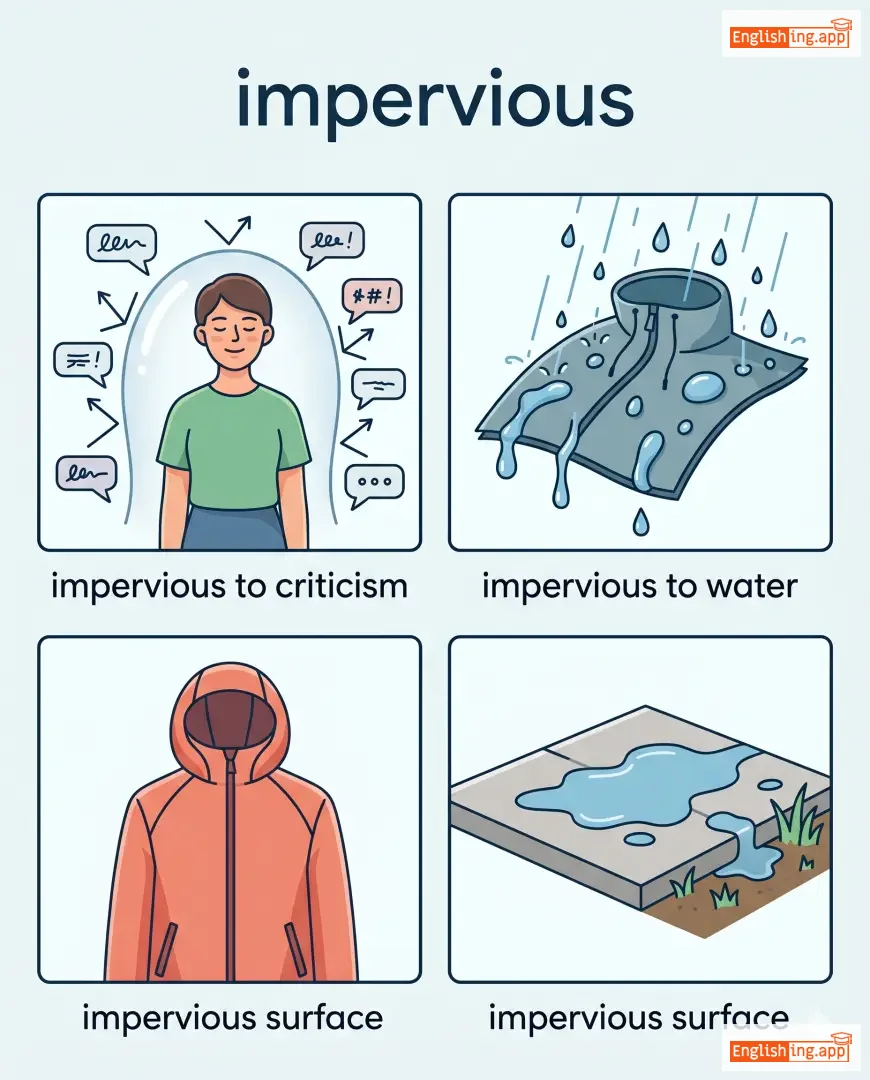
impervious to criticism, impervious to water, impervious surface, impervious layer
••••••
|
Imperviousは‘透過しない’ – 何も通さない、透過しない。
••••••
|
|
🔥
••••••
|
/ɪmˈplækəbl/
adjective
(インプラカブル)
••••••
|

|
容赦しない
yousha shinai
••••••
|
- •••••• | - •••••• | - •••••• | - •••••• |
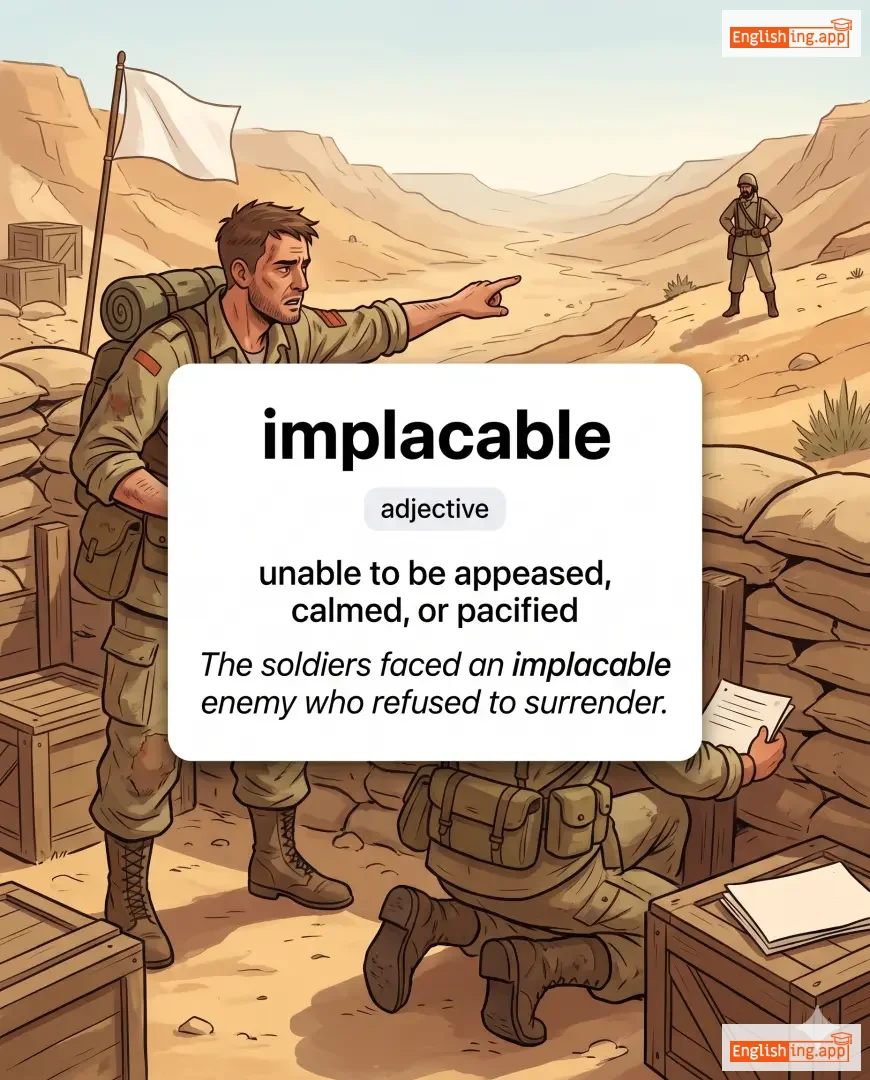
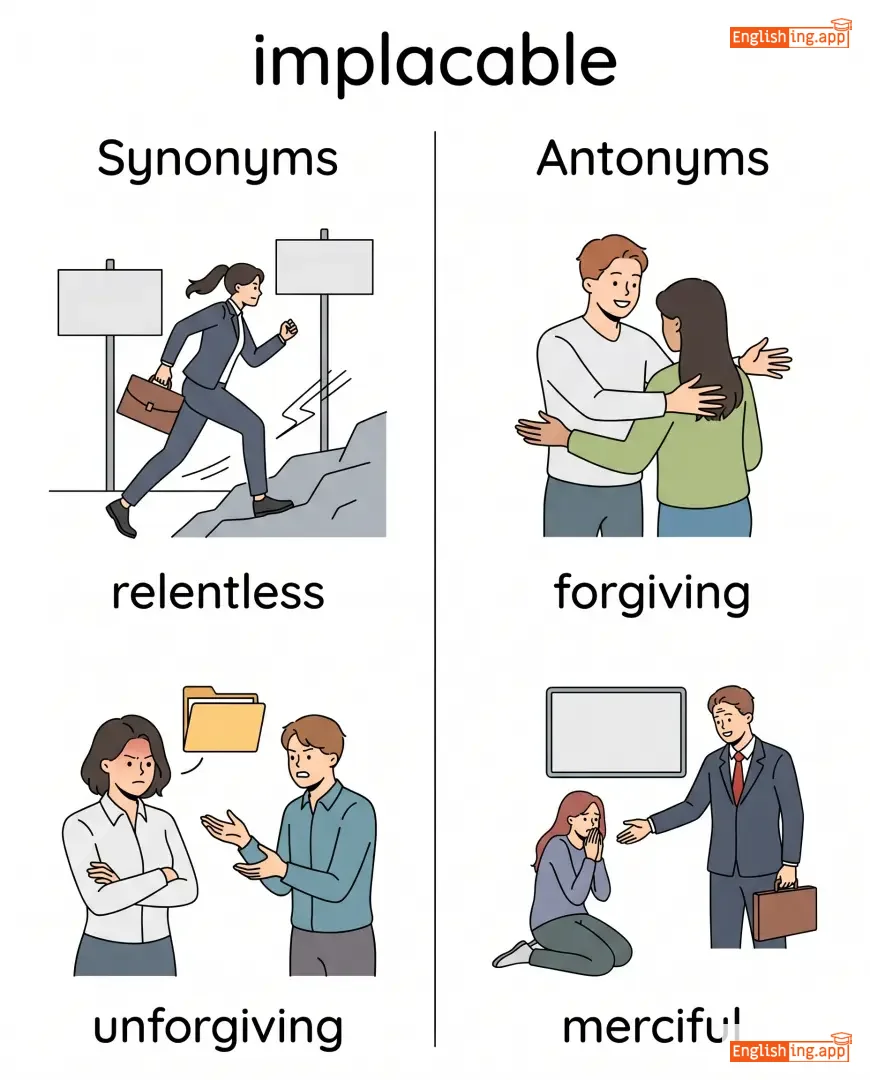
unable to be appeased, calmed, or pacified
••••••
|
The soldiers faced an implacable enemy who refused to surrender. |
兵士たちは降伏を拒否した容赦しない敵に直面した。
Heishitachi wa kyoufuku o kyohi shita yousha shinai teki ni chokumen shita.
••••••
|
- •••••• | - •••••• | - •••••• |
relentless, unforgiving, merciless, unyielding, stubborn
••••••
|
forgiving, merciful, kind
••••••
|
implacable enemy, implacable hatred, implacable opposition
••••••
|
IMPLACABLEは日本語で'容赦しない'、つまり平和にすることができない
••••••
|
|
🤫
••••••
|
/ɪmˈplɪsɪt/
adjective
(インプリシット)
••••••
|
|
暗黙の
anmoku no
••••••
|
- •••••• | - •••••• | - •••••• | - •••••• |
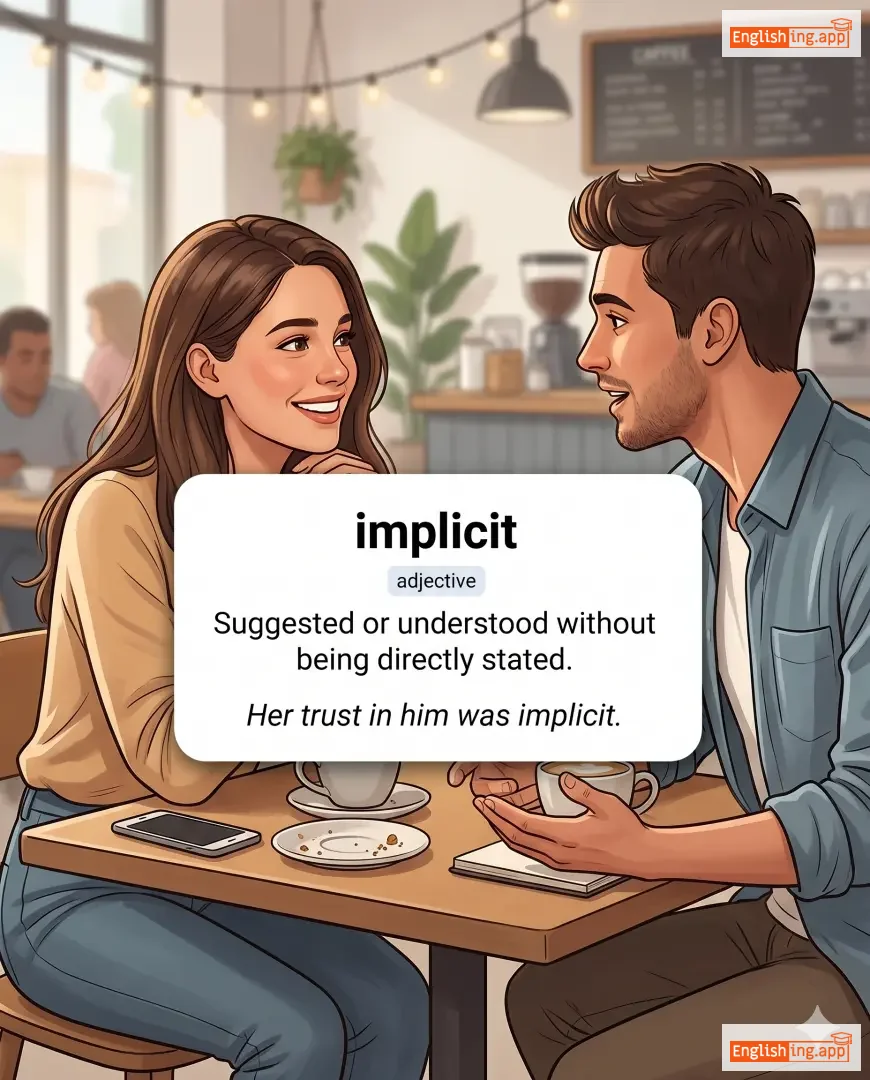
Suggested or understood without being directly stated.
••••••
|
Her trust in him was implicit. |
彼女の彼に対する信頼は暗黙のものでした。
kanojo no kare ni taisuru shinrai wa anmoku no mono deshita
••••••
|
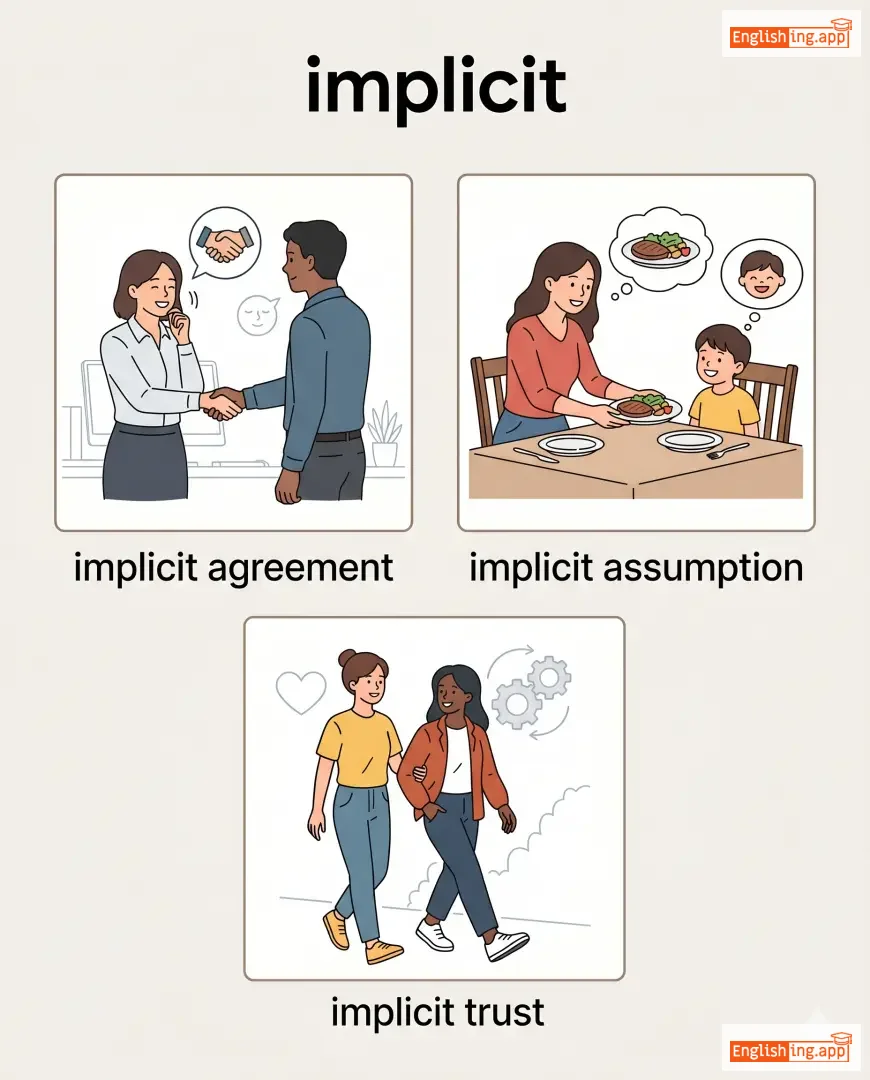
implicit trust |
Complete and unquestioning trust.
••••••
|
暗黙の信頼
anmoku no shinrai
••••••
|
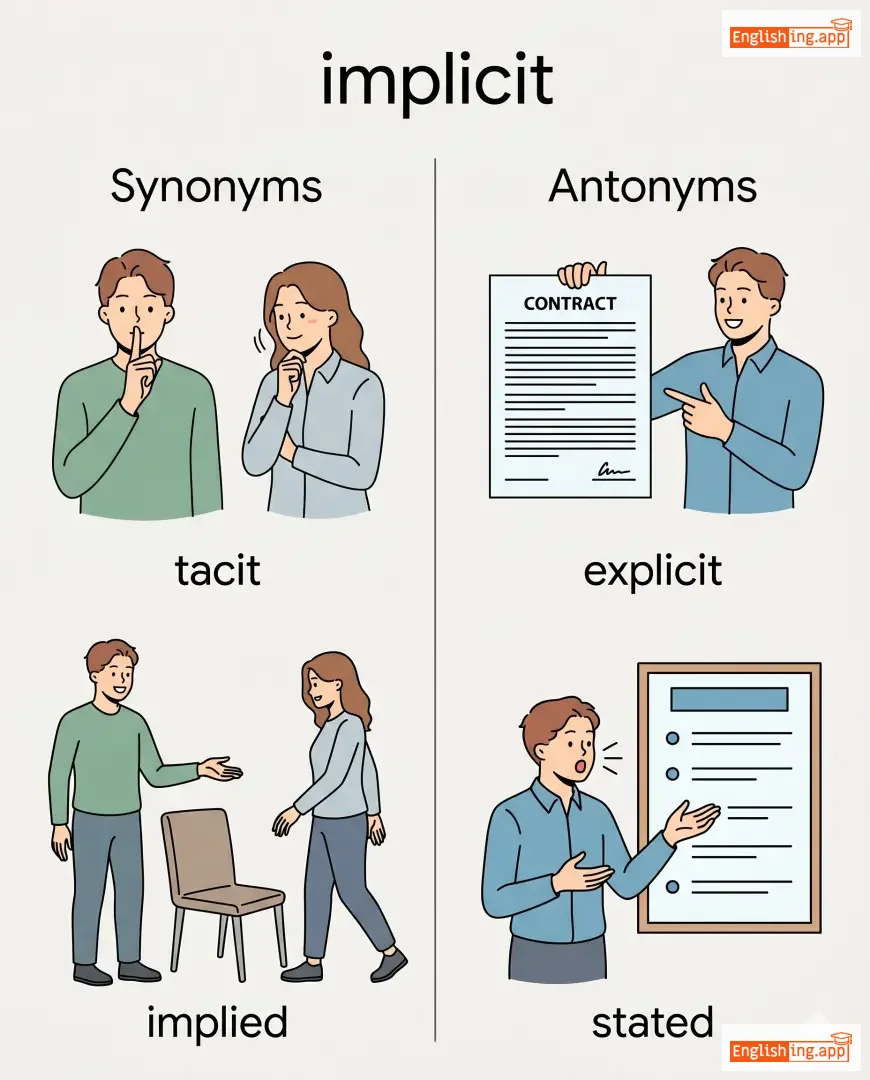
tacit, implied, unspoken, inherent, understood
••••••
|
explicit, stated, expressed
••••••
|
implicit agreement, implicit assumption, implicit trust, implicit in
••••••
|
‘implicit’は隠れている意味です — 思い出してください:暗黙の信頼は直接言わずに理解されます。
••••••
|
|
💥
••••••
|
/ɪmˈploʊd/
verb
(インプロード)
••••••
|
|
内爆
naibaku
••••••
|
imploded
インプローデッド
••••••
|
imploded
インプローデッド
••••••
|
implodes
インプローズ
••••••
|
imploding
インプローディング
••••••
|
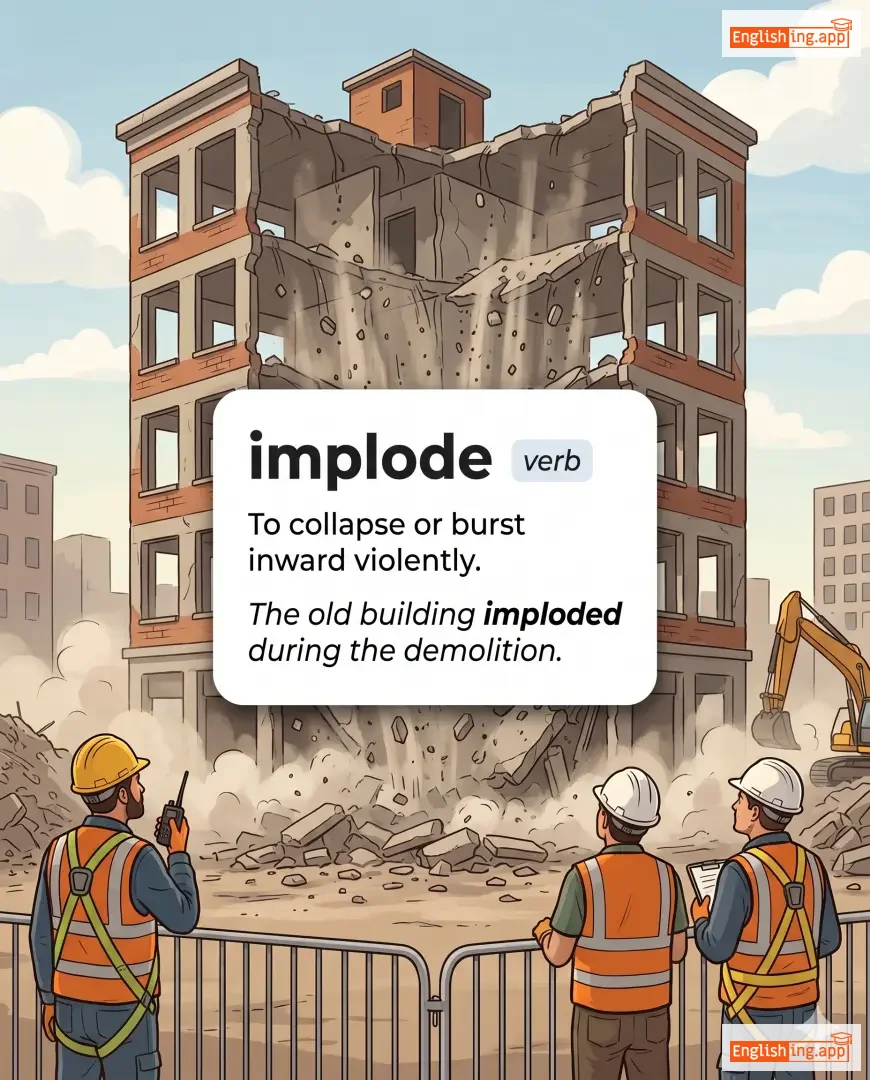
To collapse or burst inward violently.
••••••
|
The old building imploded during the demolition.
古い建物は解体中に内向きに崩壊しました。
••••••
|
古い建物は解体中に内向きに崩壊しました。
Furui tatemono wa kaitai chuu ni uchimuki ni houkai shimashita.
••••••
|
- •••••• | - •••••• | - •••••• |
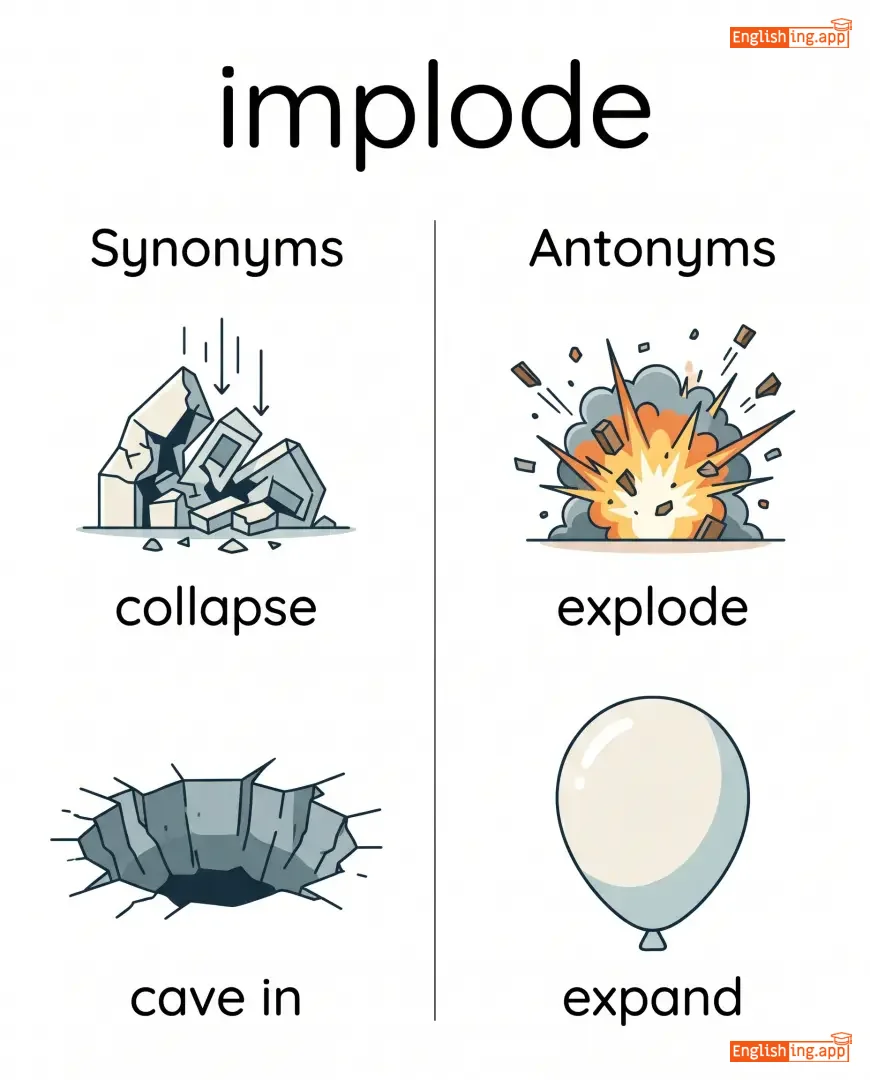
collapse, cave in, crumple, fall in
••••••
|
explode, expand, burst outward
••••••
|
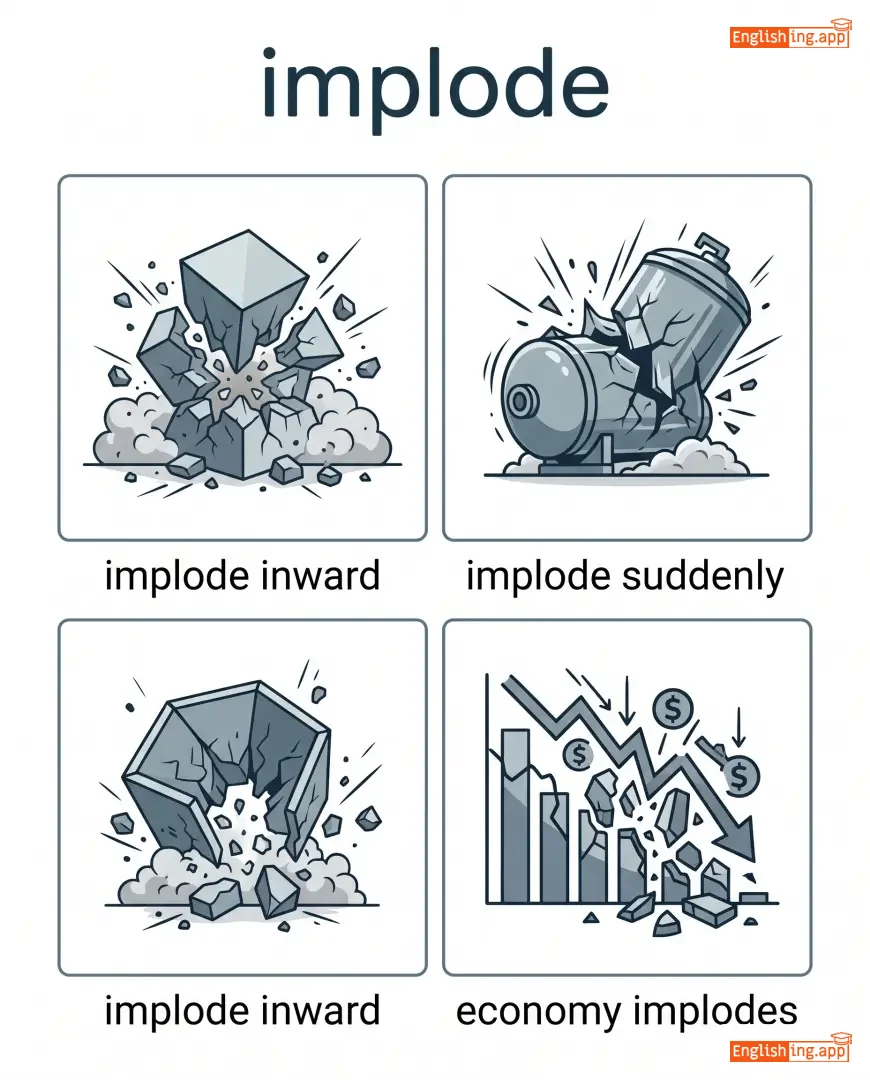
implode inward, implode suddenly, economy implodes
••••••
|
'Implode' という言葉は、内側に向かって崩壊することを意味します。内爆(naibaku)は内部の圧力によって破裂することを示します。
••••••
|
|
🤷♂️
••••••
|
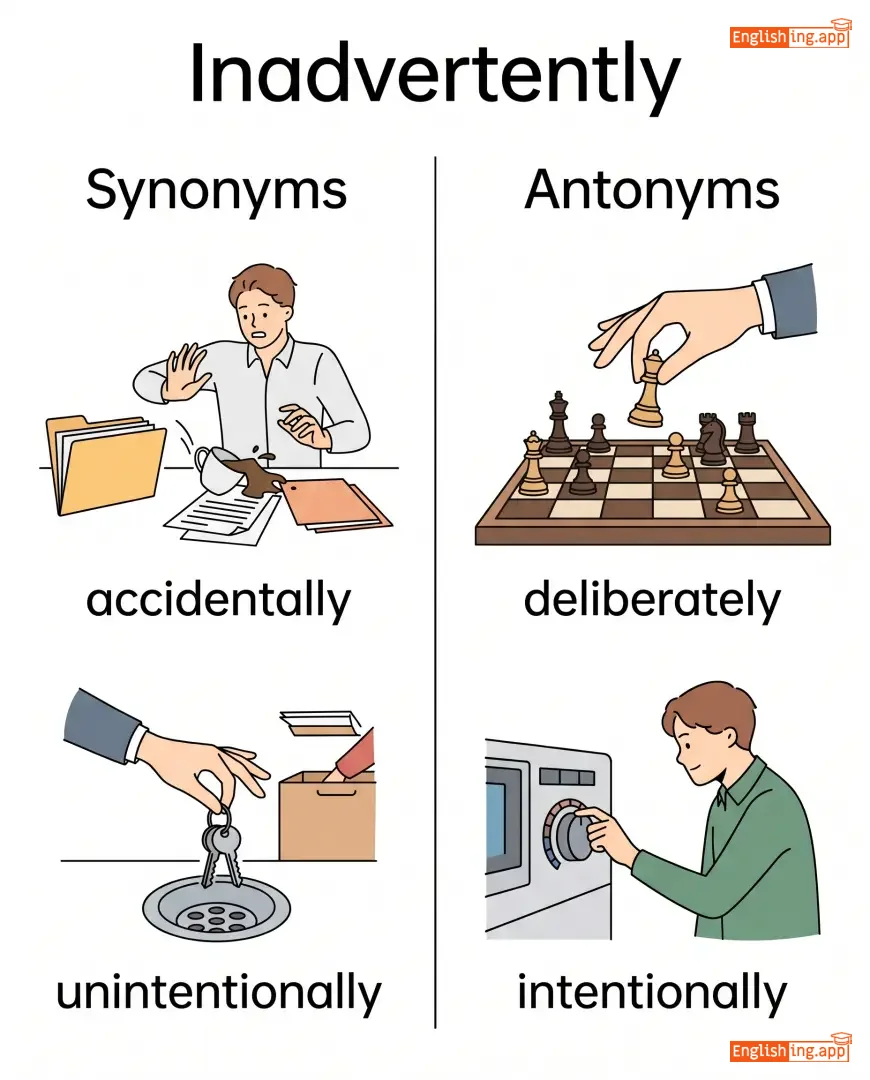
/ˌɪn.ədˈvɜːr.tənt.li/
adverb
(イナドヴァーテントリー)
••••••
|
|
うっかり; ついうっかり; 誤って
ukkari; tsui ukkari; ayamatta
••••••
|
- •••••• | - •••••• | - •••••• | - •••••• |
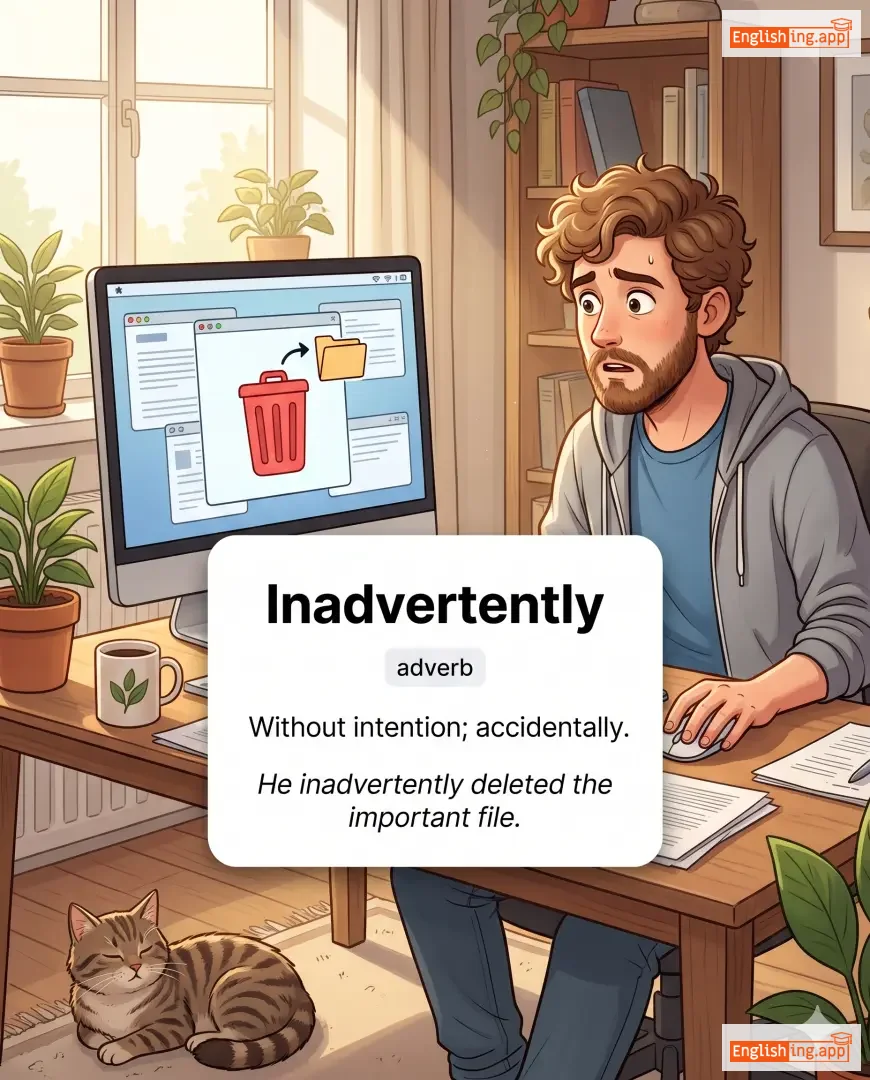
without being aware of what you are doing; unintentionally; by mistake
••••••
|
She inadvertently deleted the important file while cleaning her computer. |
彼女はコンピュータを掃除しているとき、重要なファイルをうっかり削除してしまった。
Kanojo wa konpyu-ta wo souji shite iru toki, juuyou na fairu wo ukkari sakujyo shite shimatta.
••••••
|
- •••••• | - •••••• | - •••••• |
accidentally, unintentionally, unknowingly, mistakenly
••••••
|
deliberately, intentionally, purposely, consciously
••••••
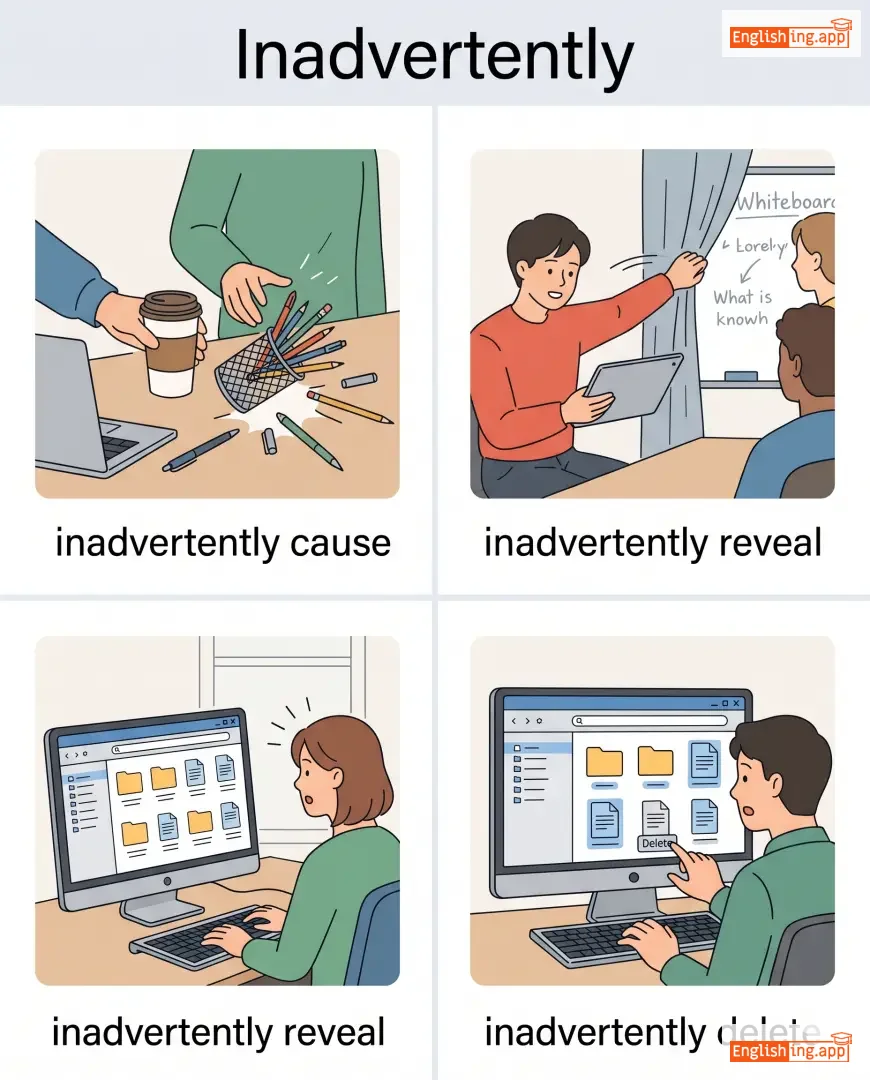
|
inadvertently reveal, inadvertently cause, inadvertently delete
••••••
|
うっかり — 意図せずやってしまうこと、例えばファイルを間違って削除!
••••••
|
|
🌄
••••••
|
/ɪnˈkoʊ.ɪt/ or /ɪnˈkoʊ.eɪt/
adjective
(インコエイト)
••••••
|

|
未完成
mikansei
••••••
|
- •••••• | - •••••• | - •••••• | - •••••• |
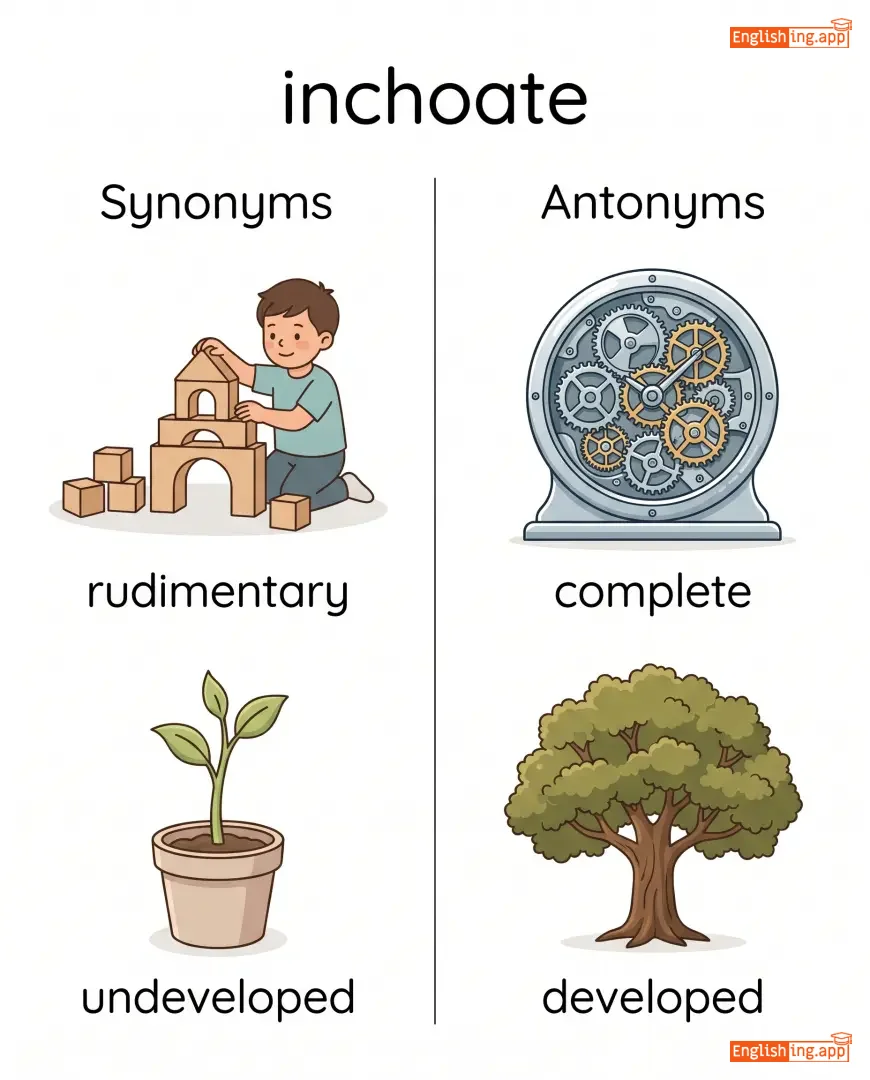
Just begun and not fully formed; rudimentary.
••••••
|
His inchoate ideas needed more research to be developed. |
彼の未完成のアイデアは、さらに開発するためにもっと研究が必要だった。
Kare no mikansei no aidea wa, sara ni kaihatsu suru tame ni motto kenkyuu ga hitsuyou datta.
••••••
|
- •••••• | - •••••• | - •••••• |
rudimentary, undeveloped, immature, nascent, beginning
••••••
|
complete, developed, finished
••••••
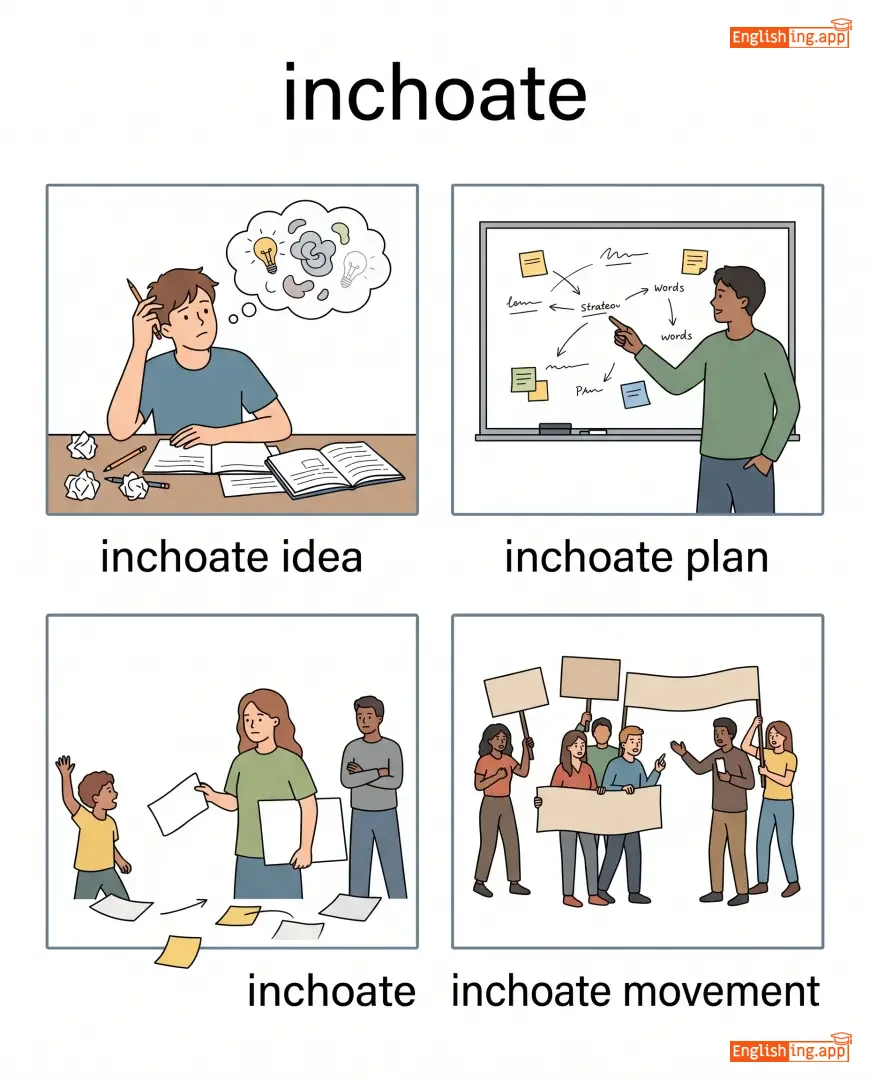
|
inchoate idea, inchoate plan, inchoate movement, inchoate stage
••••••
|
Inchoateは未完成 → まだ完成していない
••••••
|
|
🔄
••••••
|
/ˌɪnkənˈɡruːəti/
noun
(inkonguruitī)
••••••
|
|
不一致
fu ichi
••••••
|
- •••••• | - •••••• | - •••••• | - •••••• |
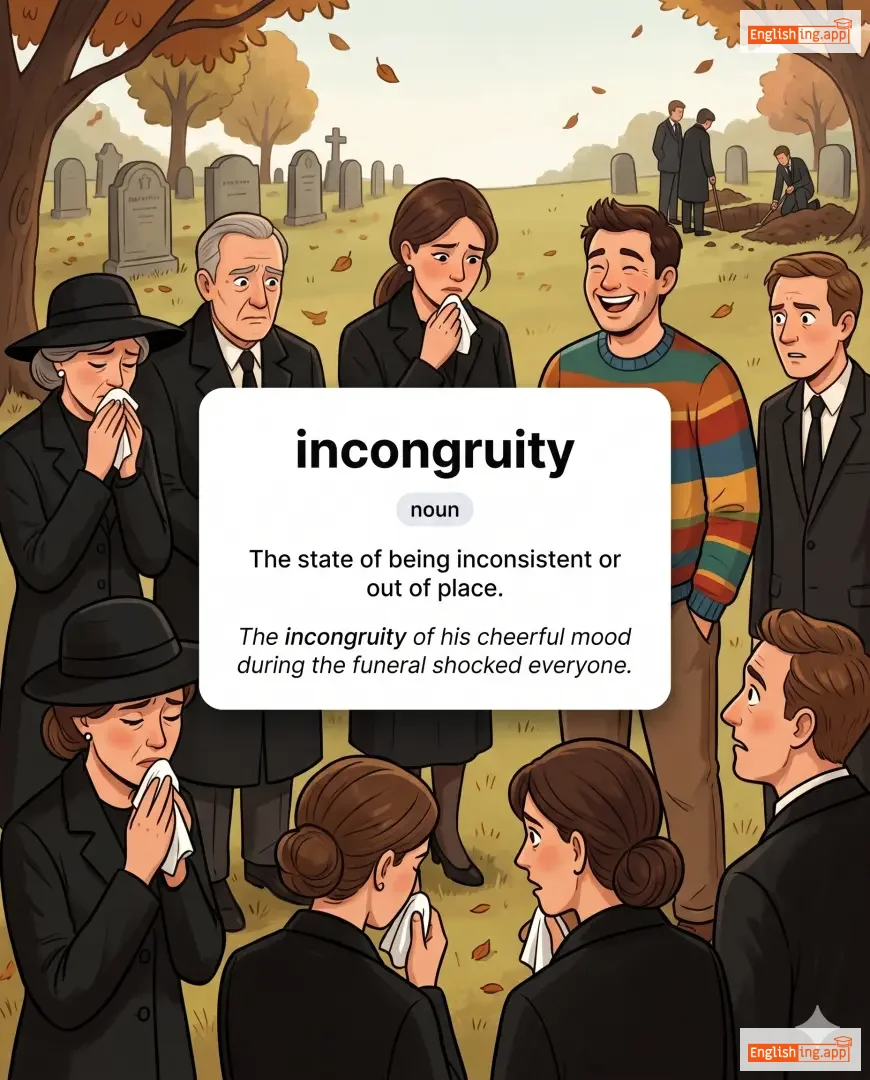
The state of being inconsistent or out of place.
••••••
|
The incongruity of his cheerful mood during the funeral shocked everyone. |
葬式の最中に彼の陽気な気分の不一致は、皆を驚かせました。
Sōshiki no saichū ni kare no yōki na kibun no fu ichi wa, mina o odorokasemashita.
••••••
|
- •••••• | - •••••• | - •••••• |
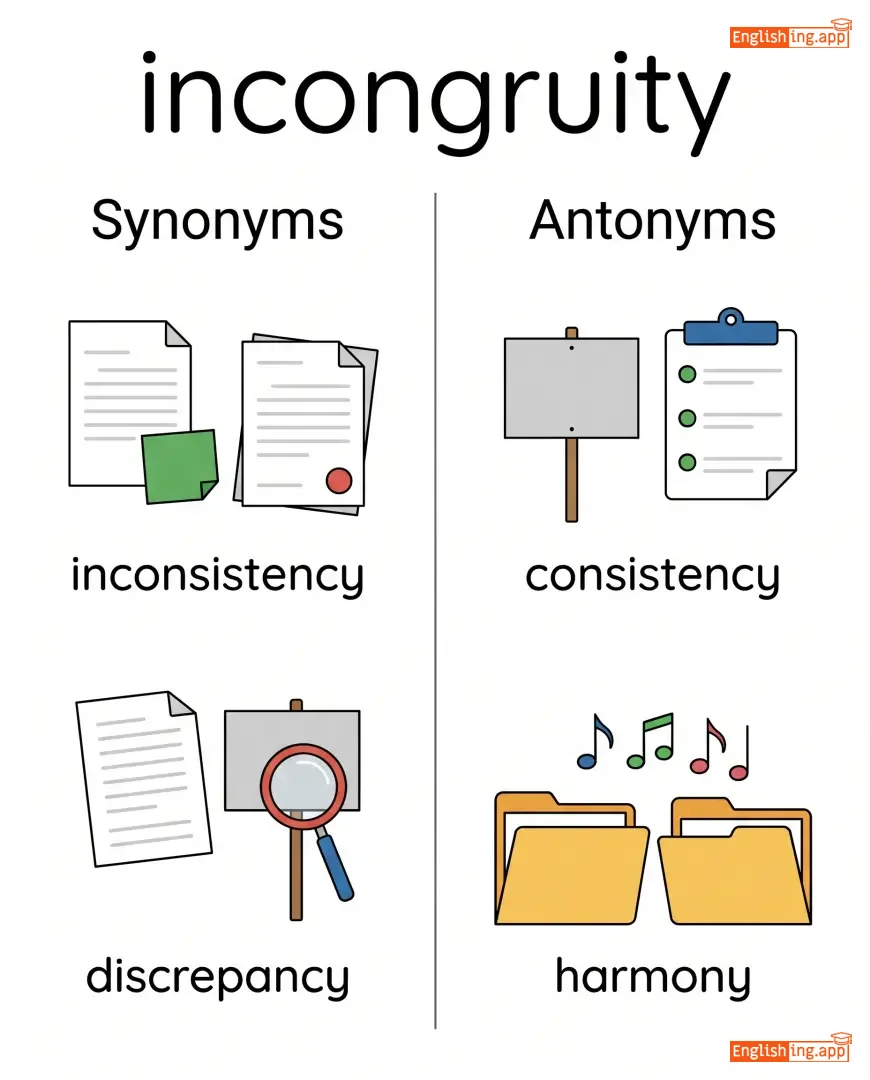
inconsistency, discrepancy, mismatch, absurdity
••••••
|
consistency, harmony, congruity
••••••
|
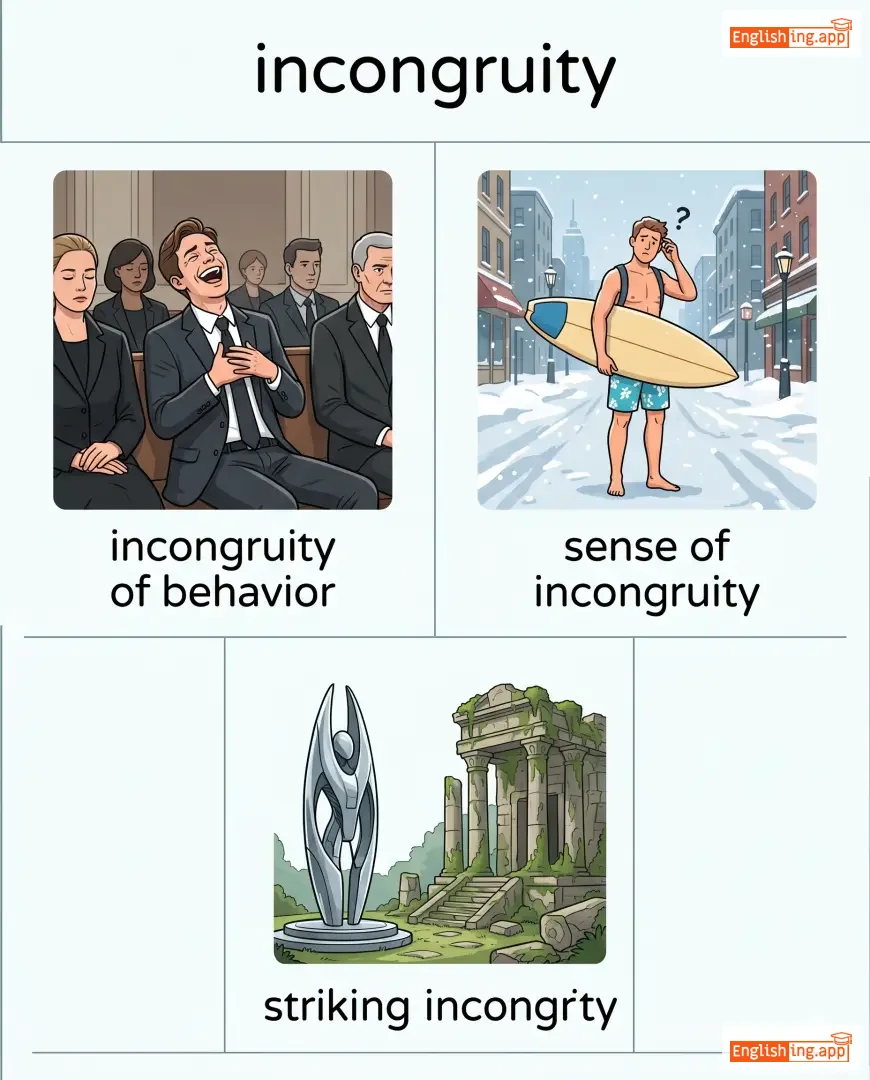
incongruity of behavior, sense of incongruity, striking incongruity
••••••
|
IN不一致は、物事が調和していないことを示しています。
••••••
|
|
🪶
••••••
|
/ˌɪnˌkɒnsɪˈkwɛnʃəl/
adjective
(インコンセクエンシャル)
••••••
|
|
重要でない
jūyō denai
••••••
|
- •••••• | - •••••• | - •••••• | - •••••• |
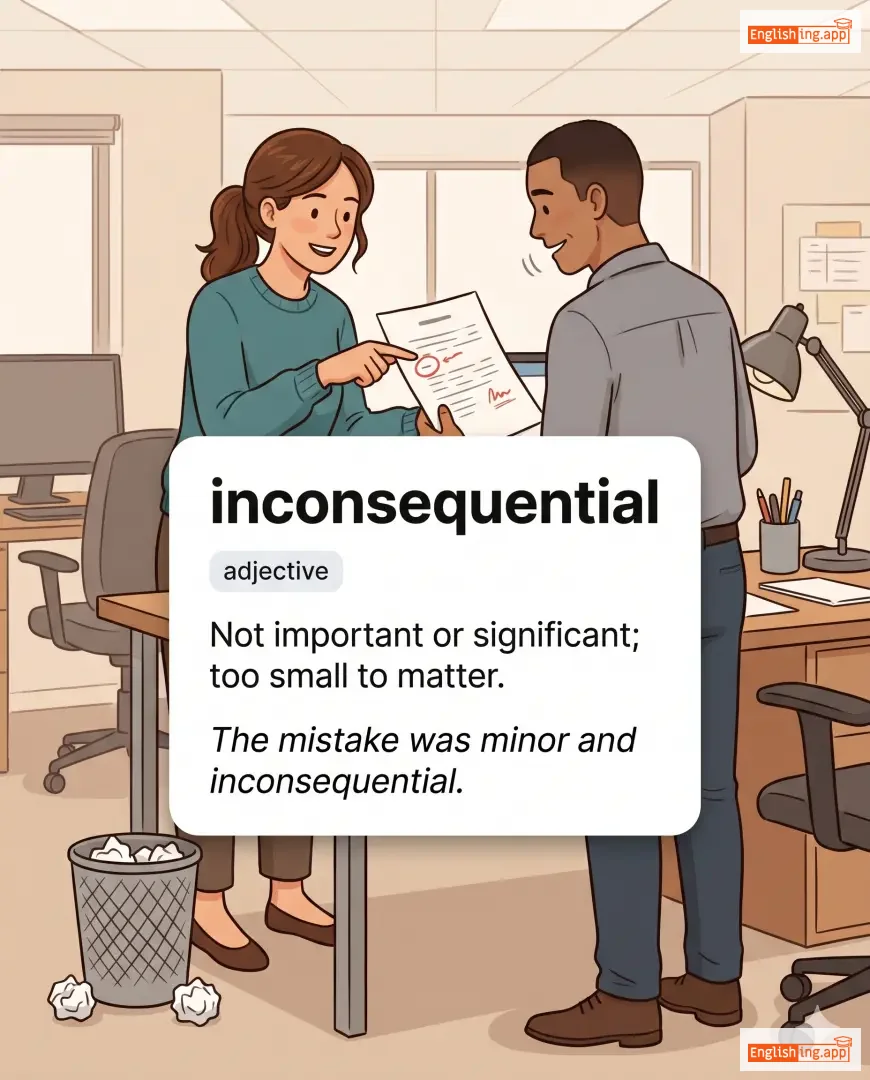
Not important or significant; too small to matter.
••••••
|
The mistake was minor and inconsequential.
その間違いは小さく、重要ではありませんでした。
••••••
|
その間違いは小さく、重要ではありませんでした。
Sono machigai wa chiisaku, jūyō de wa arimasen deshita.
••••••
|
- •••••• | - •••••• | - •••••• |
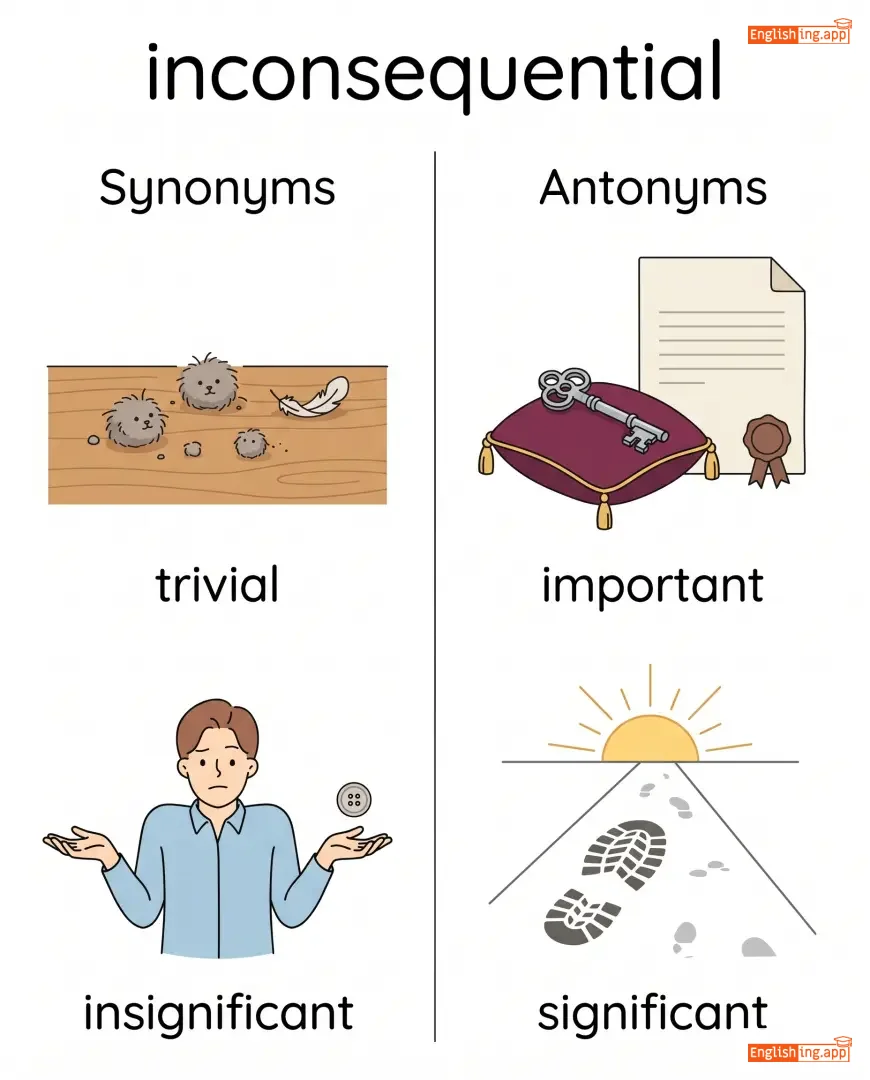
trivial, insignificant, negligible, petty, unimportant
••••••
|
important, significant, major
••••••
|
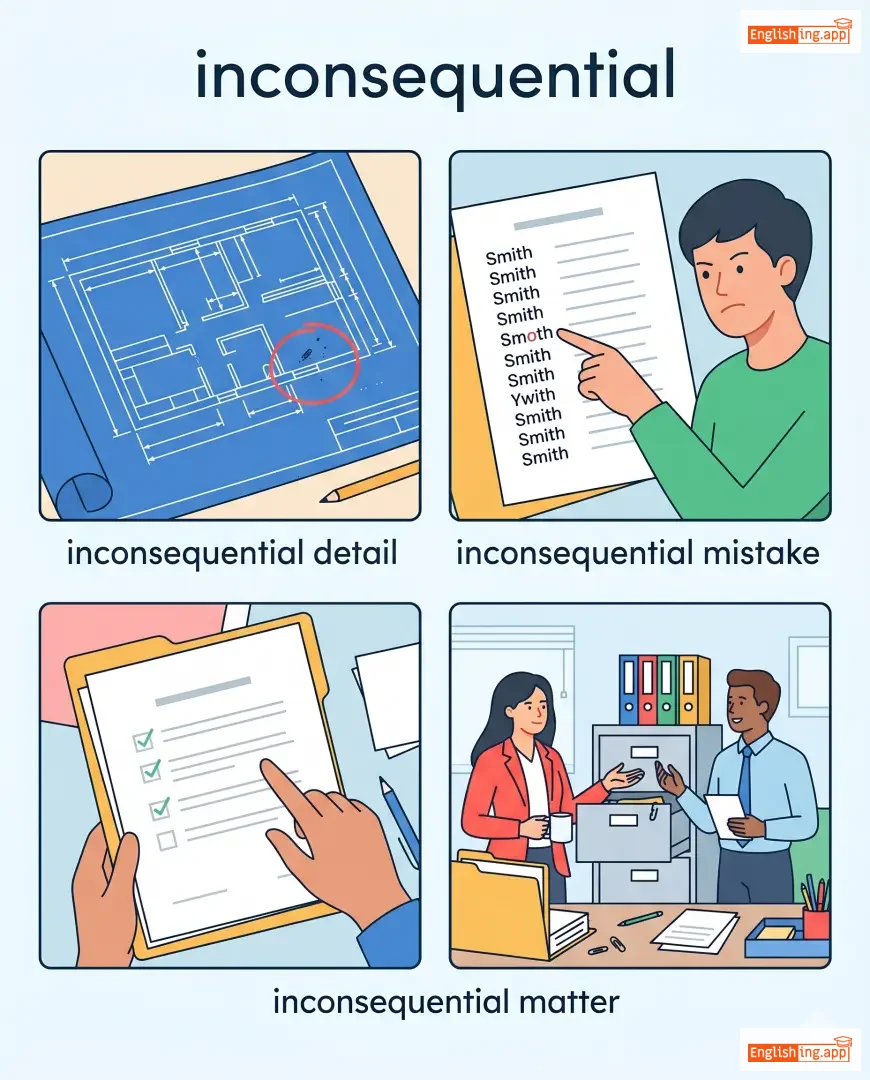
inconsequential detail, inconsequential mistake, inconsequential matter
••••••
|
Inconsequential - 重要でない
••••••
|
|
🏢
••••••
|
/ɪnˈkɔːpəreɪt/
verb
(インコーポレート)
••••••
|

|
組み込む
kumikomu
••••••
|
incorporated
インコーポレイテッド
••••••
|
incorporated
インコーポレイテッド
••••••
|
incorporates
インコーポレイツ
••••••
|
incorporating
インコーポレイティング
••••••
|
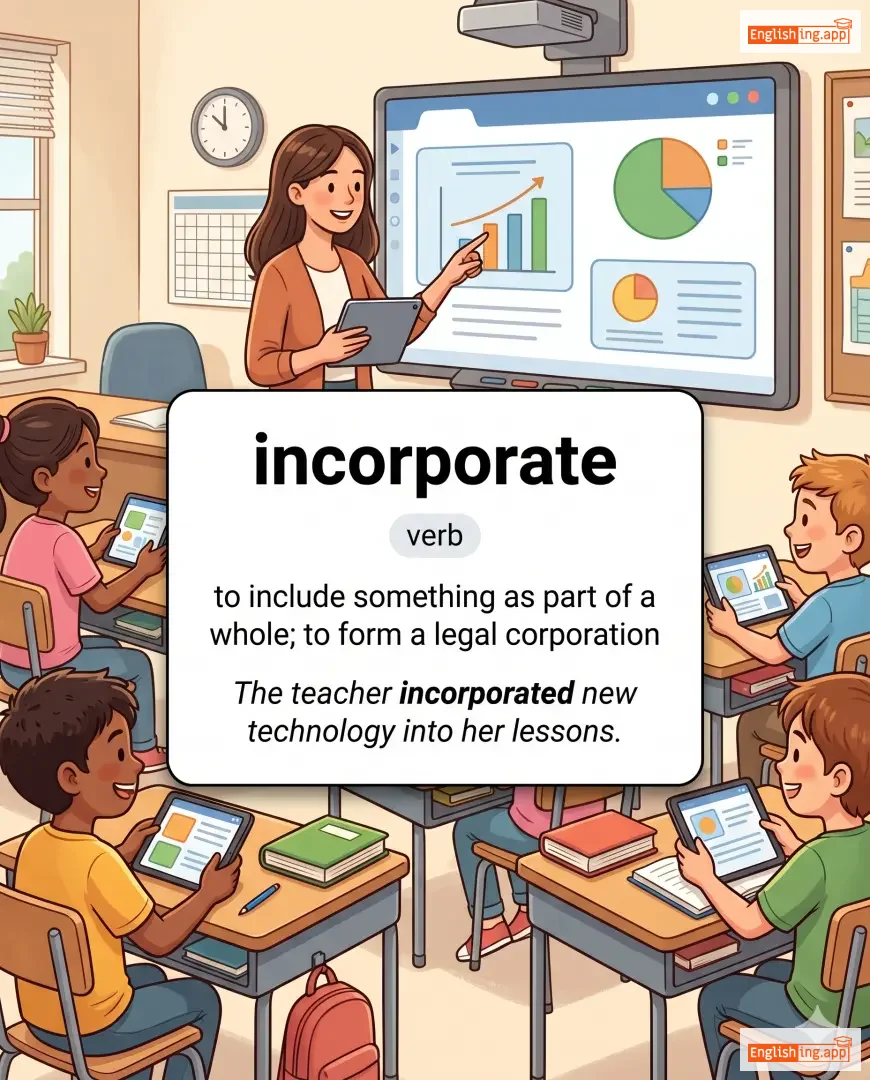
to include something as part of a whole; to form a legal corporation
••••••
|
The teacher incorporated new technology into her lessons.
先生は授業に新しい技術を取り入れました。
••••••
|
先生は授業に新しい技術を取り入れました。
Sensei wa jugyo ni atarashii gijutsu o toriiremashita.
••••••
|
incorporate into
取り入れる
••••••
|
to include something as part of a larger thing
••••••
|
取り入れる
toriireru
••••••
|
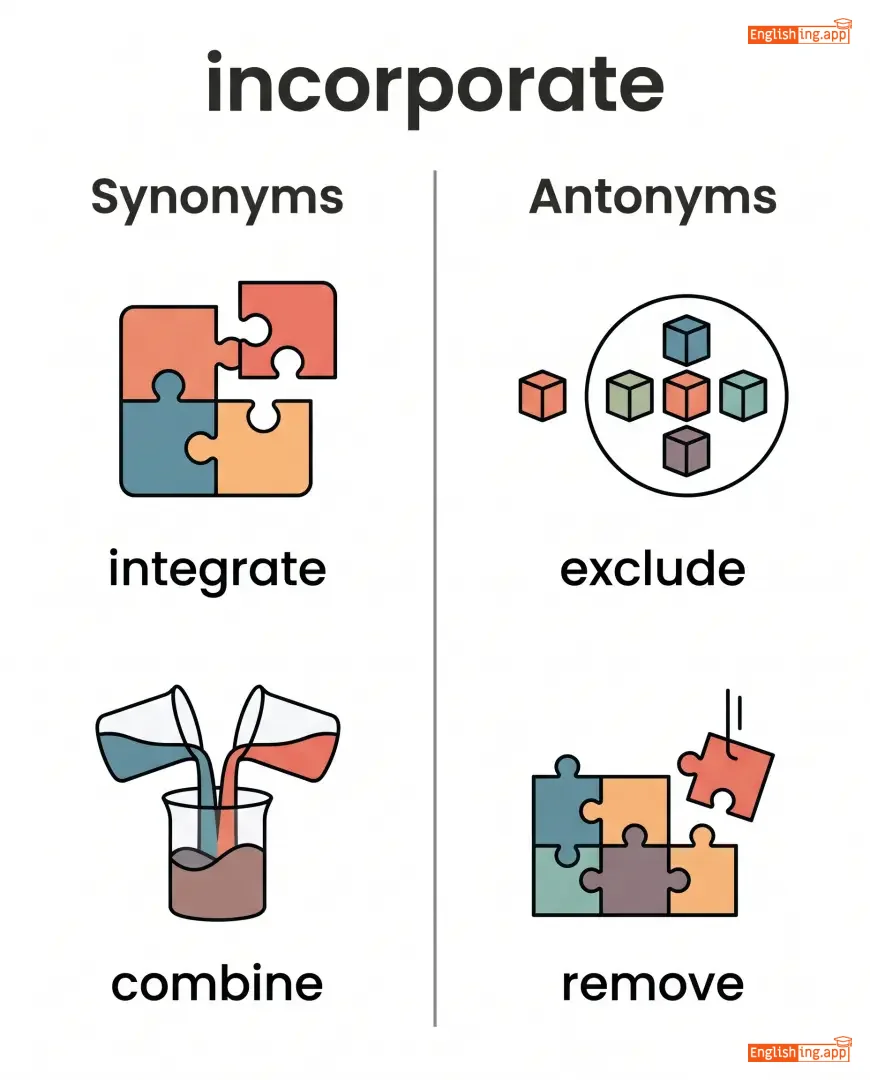
integrate, combine, include, merge, embody
••••••
|
exclude, remove, separate
••••••
|
incorporate into, incorporate ideas, incorporate changes
••••••
|
Incorporateは何かを含める、つまり全体に加えること。
••••••
|
|
❓
••••••
|
/ˌɪndɪˈtɜːrmənət/
adjective
(インディターミネイト)
••••••
|
|
不確定
fukakutei
••••••
|
- •••••• | - •••••• | - •••••• | - •••••• |
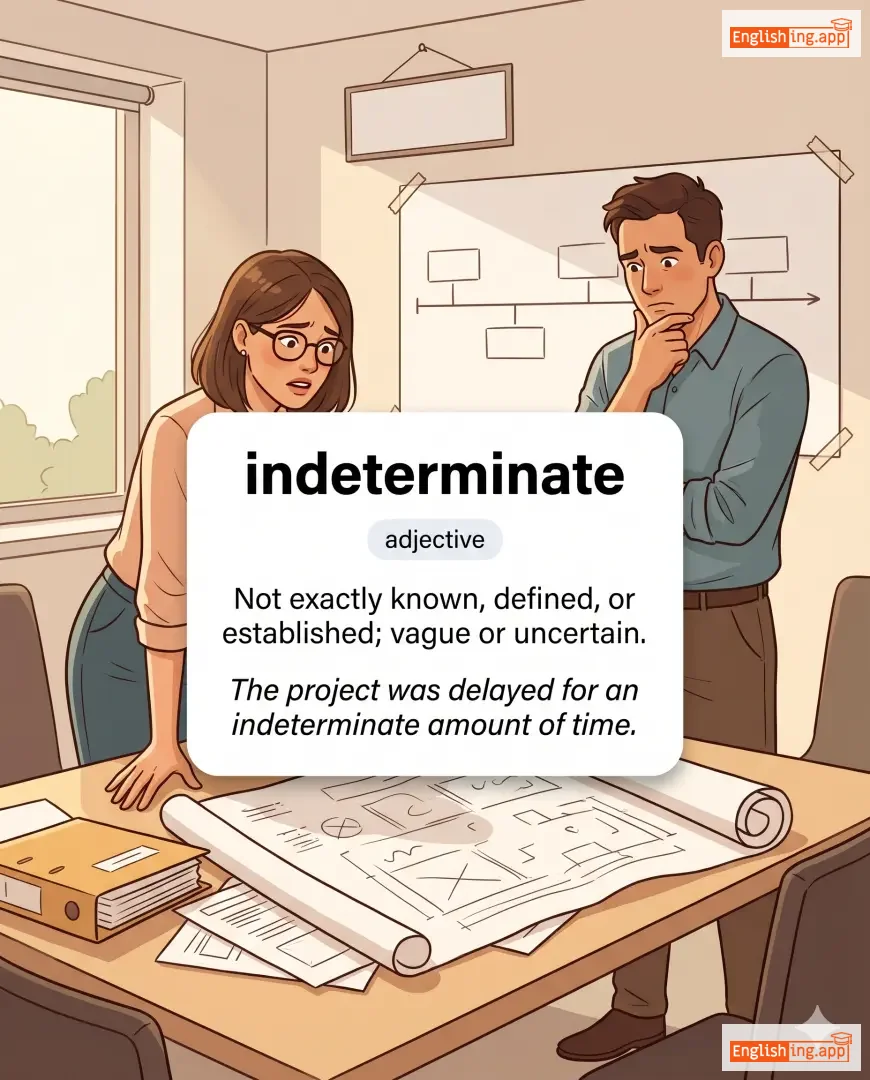
Not exactly known, defined, or established; vague or uncertain.
••••••
|
The project was delayed for an indeterminate amount of time. |
プロジェクトは不確定な期間に延期されました。
Purojekuto wa fukakutei na kikan ni enki saremashita.
••••••
|
- •••••• | - •••••• | - •••••• |
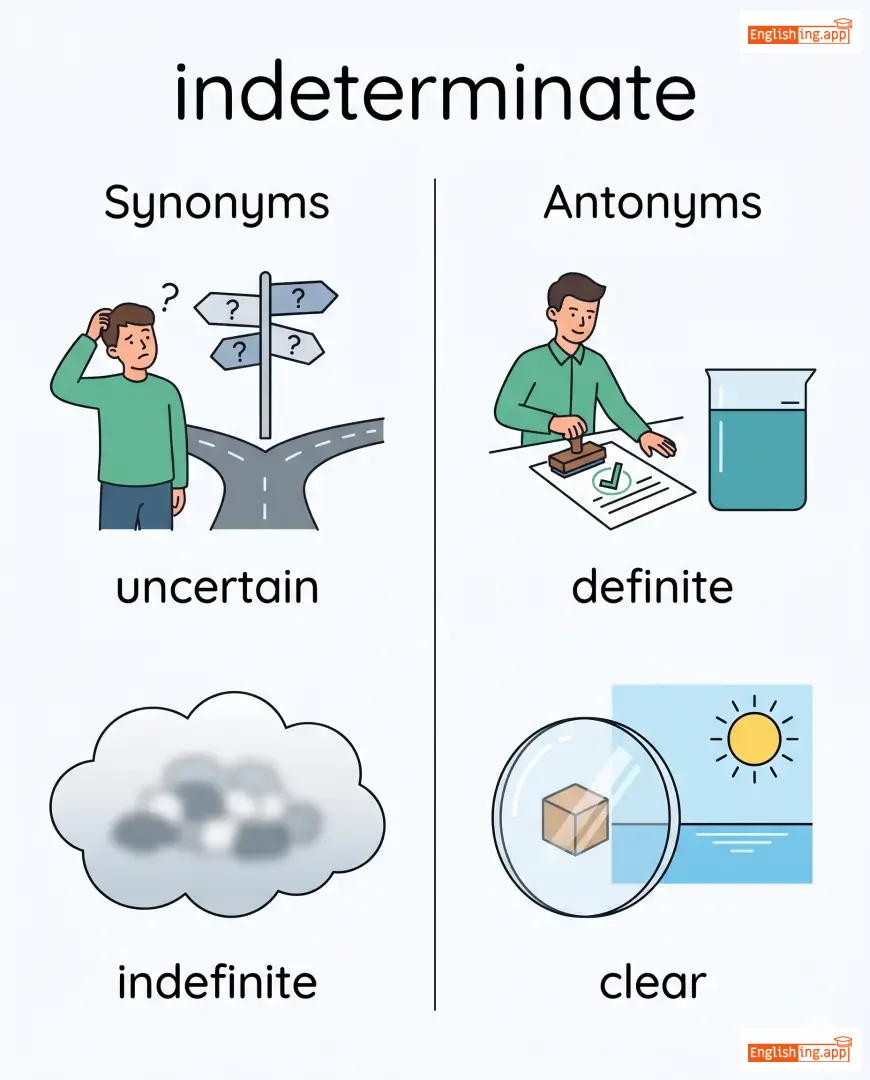
uncertain, indefinite, vague, ambiguous, unclear
••••••
|
definite, clear, certain
••••••
|
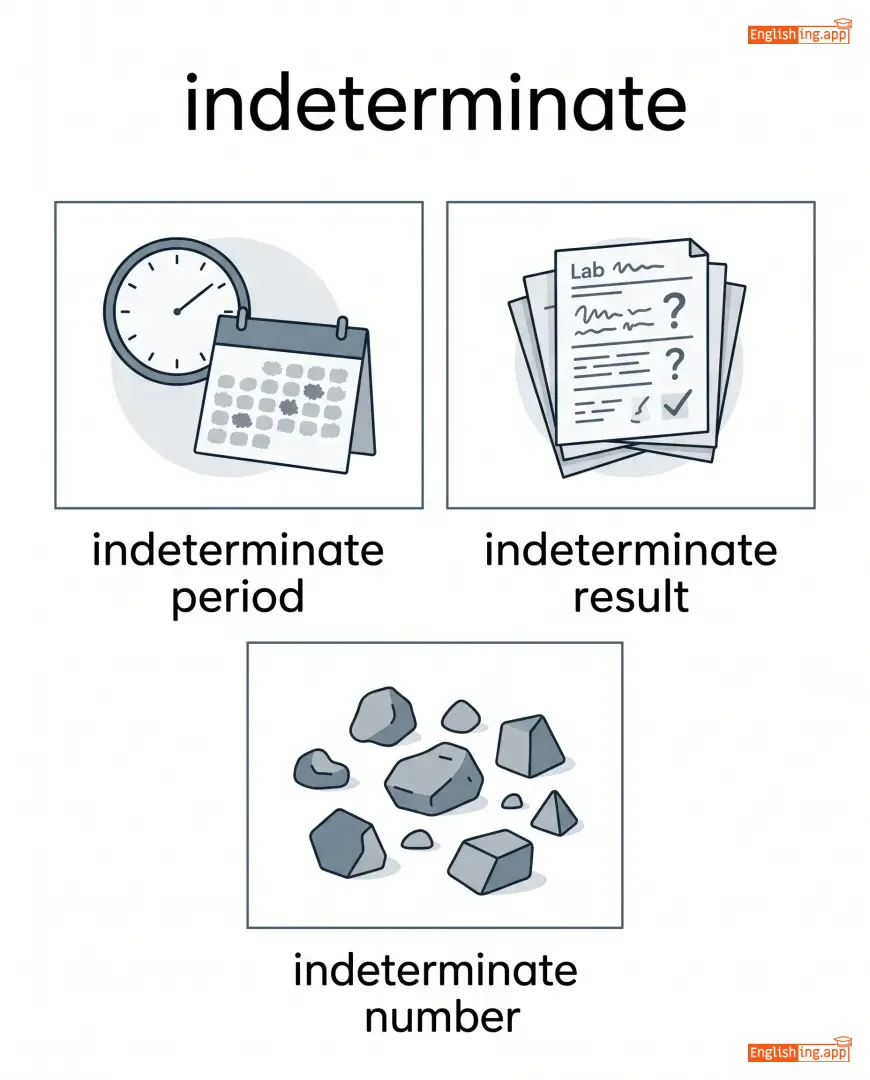
indeterminate period, indeterminate result, indeterminate number, indeterminate form
••••••
|
Indeterminate は不確定を意味します—In determinate は確定していないので、不確定です。
••••••
|

