|
表情符号
|
单词 | Images | 翻译 | 过去时 | 过去分词 | 第三人称单数 | 动名词 | 含义 | 例句 | 例句翻译 | 示例表达 | 示例表达含义 | 示例表达翻译 | 同义词 | 反义词 | 搭配词 | 助记符 |
|---|---|---|---|---|---|---|---|---|---|---|---|---|---|---|---|---|---|
|
👦
••••••
|
/hɪz/
pronoun
(hɪz)
••••••
|
- •••••• |
他的
tā de
••••••
|
- •••••• | - •••••• | - •••••• | - •••••• |
belonging to or associated with a male person previously mentioned
••••••
|
This is his book on the table. |
这是他的书在桌子上。
Zhè shì tā de shū zài zhuōzi shàng.
••••••
|
- •••••• | - •••••• | - •••••• |
belonging to him, owned by him
••••••
|
her, their
••••••
|
his book, his car, his house, his idea
••••••
|
His 意味着他的,记住—He + is = His 东西
••••••
|
|
📚
••••••
|
/hɪˈstɔːriən/
noun
(历史学家)
••••••
|
- •••••• |
历史学家
lìshǐ xuéjiā
••••••
|
- •••••• | - •••••• | - •••••• | - •••••• |
a person who studies or writes about history
••••••
|
The historian gave a lecture on ancient civilizations. |
历史学家讲授了一堂关于古代文明的讲座。
Lìshǐ xuéjiā jiǎngshòule yī táng guānyú gǔdài wénmíng de jiǎngzuò.
••••••
|
- •••••• | - •••••• | - •••••• |
scholar, researcher, chronicler, analyst
••••••
|
layman, amateur
••••••
|
famous historian, professional historian, military historian
••••••
|
Historian 是历史 + 学家 → 专门研究历史的人
••••••
|
|
🏛️
••••••
|
/hɪˈstɔːrɪk/
adjective
(hìs-tuò-lìk)
••••••
|

|
历史性的
lishixing de
••••••
|
- •••••• | - •••••• | - •••••• | - •••••• |
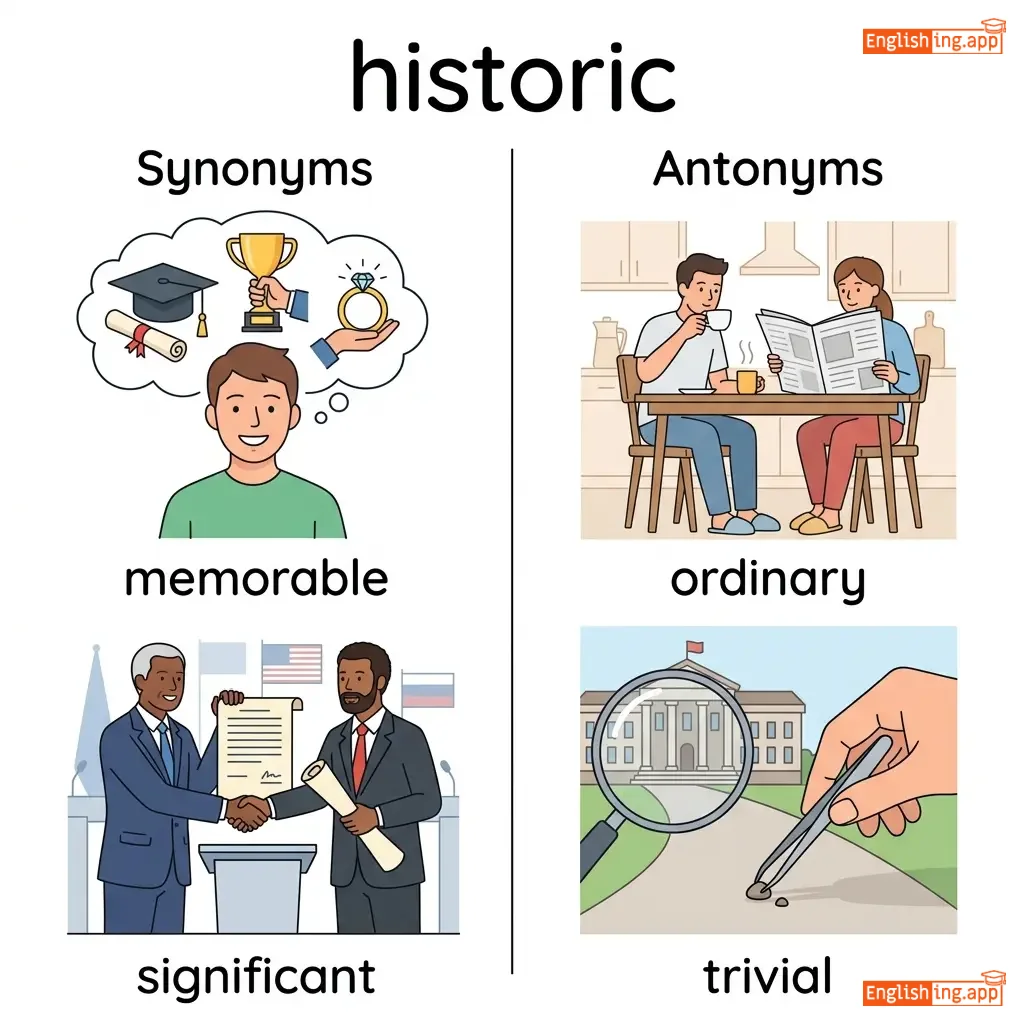
Famous or important in history; likely to be remembered in history.
••••••
|
The historic agreement changed the course of the nation. |
历史性的协议改变了国家的进程。
Lishi xing de xieyi gaibianle guojia de jincheng.
••••••
|
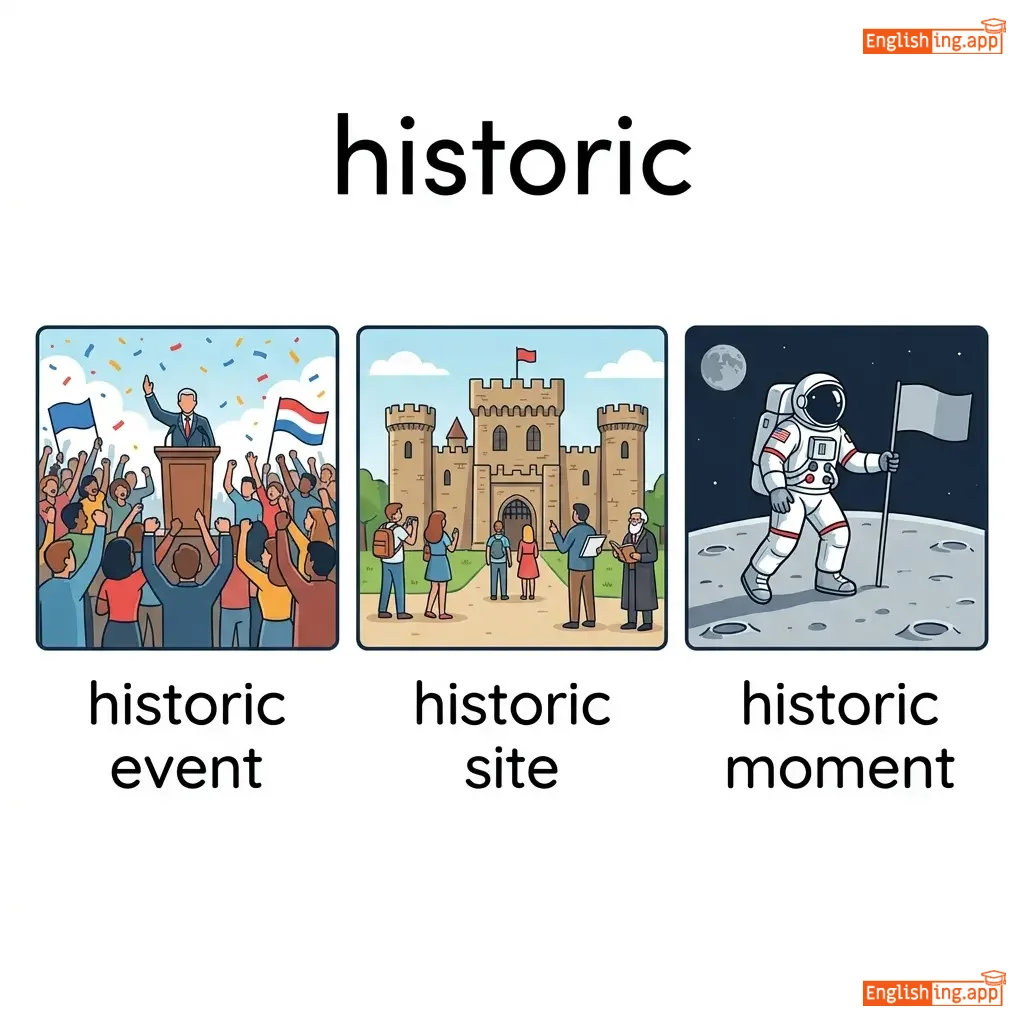
historic moment |
An event of great importance in history
••••••
|
历史时刻
Lishi shike
••••••
|
memorable, significant, important, monumental, notable
••••••
|
ordinary, trivial, forgettable
••••••
|
historic event, historic site, historic moment, historic decision
••••••
|
Historic = 与历史相关,因此是历史中重要的事情。
••••••
|
|
📜
••••••
|
/hɪˈstɔːrɪkəl/
adjective
(历史的)
••••••
|
- •••••• |
历史的
lishide
••••••
|
- •••••• | - •••••• | - •••••• | - •••••• |
Related to history or past events.
••••••
|
The museum has a large collection of historical documents. |
博物馆收藏了大量历史文件。
Bowuguan shoucang le dalian lishi wenjian.
••••••
|
historical record |
An account of past events
••••••
|
历史记录
lishi jilu
••••••
|
past, archival, recorded, ancient, traditional
••••••
|
modern, contemporary, current
••••••
|
historical documents, historical records, historical evidence, historical site
••••••
|
Historical = History + related, 意味着与历史相关。
••••••
|
|
📜
••••••
|
/hɪˈstɒrɪkli/
adverb
(历史上)
••••••
|
- •••••• |
历史上
lishi shang
••••••
|
- •••••• | - •••••• | - •••••• | - •••••• |
in a way that relates to history or past events
••••••
|
Historically, this city was a major trade center. |
历史上,这座城市曾是一个重要的贸易中心。
Lishi shang, zhe zuo chengshi ceng shi yige zhongyao de maoyi zhongxin.
••••••
|
- •••••• | - •••••• | - •••••• |
traditionally, formerly, ancestrally, in the past, over time
••••••
|
currently, presently, now
••••••
|
historically significant, historically accurate, historically important, historically low
••••••
|
History + 上 = 参考过去,即‘历史上’
••••••
|
|
🏛️
••••••
|
/ˈhɪstəri/
noun
(历史)
••••••
|

|
历史
lishi
••••••
|
- •••••• | - •••••• | - •••••• | - •••••• |
the study of past events
••••••
|
She is studying the history of medieval Europe. |
她正在研究中世纪欧洲的历史。
Ta zhengzai yanjiu zhongshi ji Ouzhou de lishi.
••••••
|
make history |
to do something very important that will be remembered
••••••
|
创造历史
chuangzao lishi
••••••
|
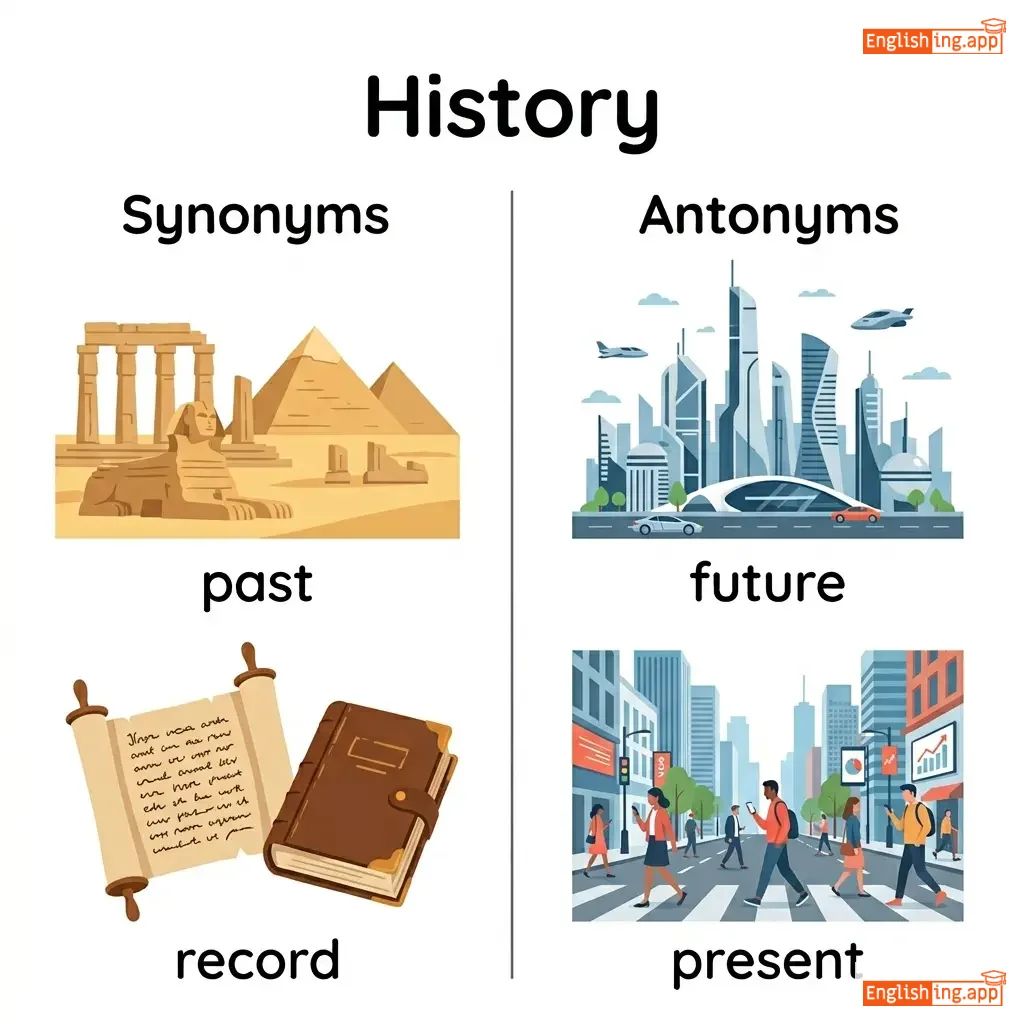
past, record, chronicle, heritage
••••••
|
future, present
••••••
|
world history, history book, history lesson, history of art
••••••
|
History在中文是历史,想象—His Story就是历史
••••••
|
|
💥
••••••
|
/hɪt/
verb
(hit)
••••••
|
- •••••• |
打
da
••••••
|
hit
hit
••••••
|
hit
hit
••••••
|
hits
hits
••••••
|
hitting
hitting
••••••
|
to strike someone or something with force
••••••
|
He accidentally hit the ball into the window.
他不小心把球打进了窗户。
••••••
|
他不小心把球打进了窗户。
Ta bu xiaoxin ba qiu da jin le chuanghu.
••••••
|
hit the nail on the head
一针见血
••••••
|
to describe a situation or problem exactly
••••••
|
一针见血
Yi zhen jian xue
••••••
|
strike, smack, beat, punch, knock
••••••
|
miss, avoid, dodge
••••••
|
hit hard, hit the target, hit the road, hit record
••••••
|
Hit意味着打,想象你打高尔夫球将它击入洞中。
••••••
|
|
🎨
••••••
|
/ˈhɑː.bi/
noun
(hāo bì)
••••••
|
- •••••• |
爱好; 休闲活动; 消遣
ài hào, xiū xián huó dòng, xiāo qiǎn
••••••
|
- •••••• | - •••••• | - •••••• | - •••••• |
an activity done regularly in one's leisure time for pleasure; a pastime or recreation
••••••
|
Photography became her favorite hobby after she received a camera for her birthday. |
摄影成为她的最爱爱好,在她生日时收到了相机。
Shèyǐng chéngwéi tā de zuì ài àihào, zài tā shēngrì shí shōudàole xiàngjī.
••••••
|
- •••••• | - •••••• | - •••••• |
pastime, interest, pursuit, recreation
••••••
|
work, job, profession, obligation
••••••
|
favorite hobby, hobby horse, pursue hobby
••••••
|
爱好就是带来快乐的活动,就像摄影一样
••••••
|
|
✋
••••••
|
/hoʊld/
verb
(hōld)
••••••
|

|
握住
wò zhù
••••••
|
held
held
••••••
|
held
held
••••••
|
holds
hōldz
••••••
|
holding
hōlding
••••••
|
to grasp, carry, or keep in position; to maintain
••••••
|
Please hold the door open for me.
pliz hould də dɔʁ ópen fɔʁ mi.
••••••
|
请为我把门保持打开。
Qǐng wèi wǒ bǎ mén bǎochí dǎkāi.
••••••
|
hold on
hould ɔn
••••••
|
to wait or pause briefly
••••••
|
等一下
děng yīxià
••••••
|
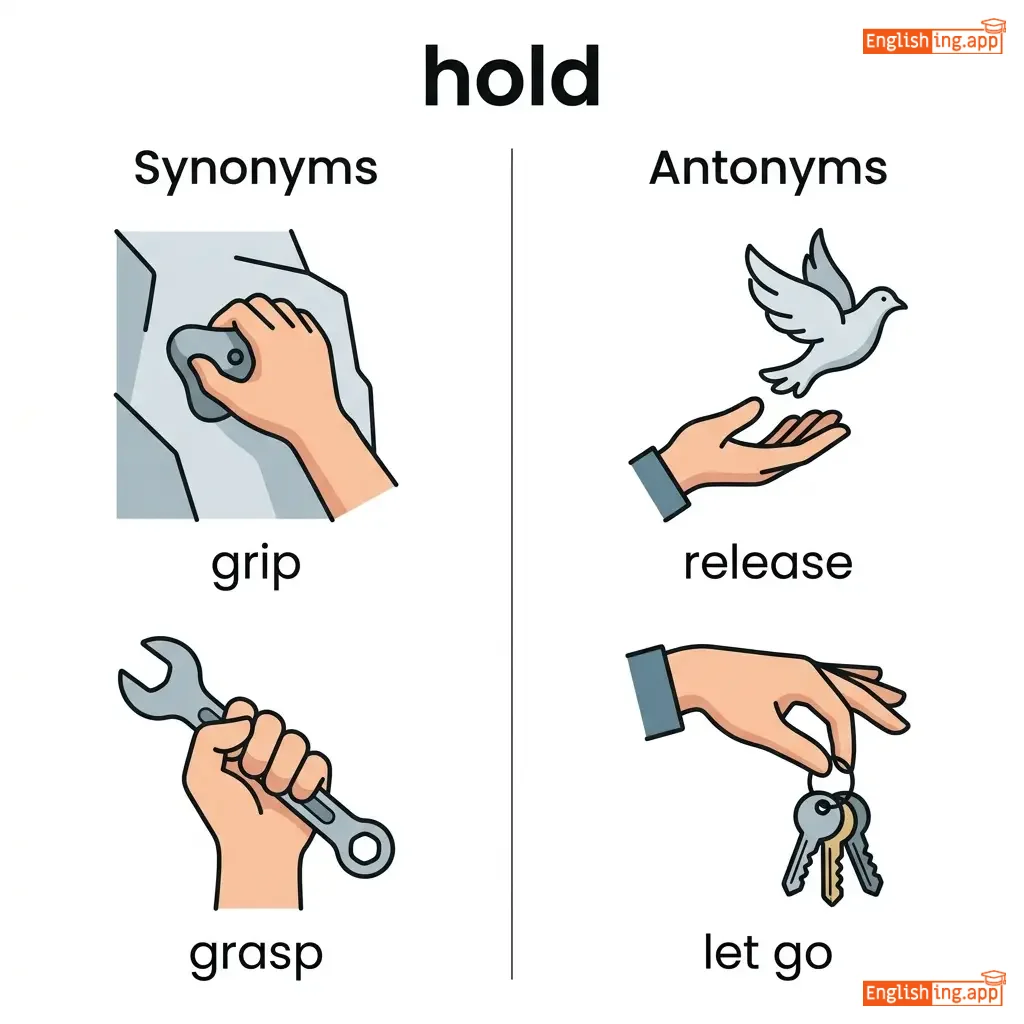
grip, grasp, keep, maintain, support
••••••
|
release, let go
••••••
|
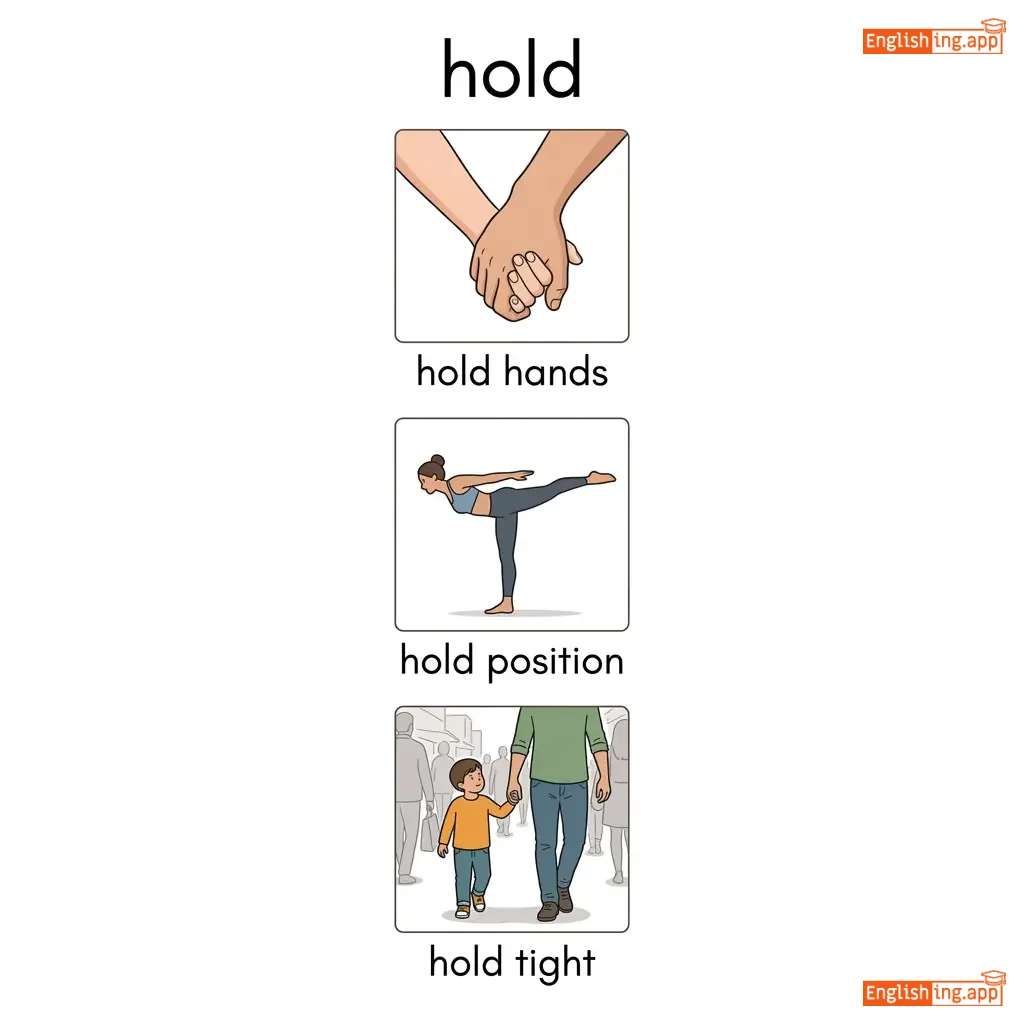
hold hands, hold position, hold tight, hold meeting
••••••
|
Hold 意味着握住,就像你握住手机。
••••••
|
|
🕳️
••••••
|
/hoʊl/
noun
(hōu)
••••••
|
- •••••• |
洞
dong
••••••
|
- •••••• | - •••••• | - •••••• | - •••••• |
an opening, gap, or hollow place in a solid surface
••••••
|
There is a hole in my shirt. |
我的衬衫上有一个洞。
Wǒ de chènshān shàng yǒu yīgè dòng.
••••••
|
in a hole |
in a difficult or troublesome situation
••••••
|
在困境中
zài kùnjìng zhōng
••••••
|
gap, opening, cavity, pit, hollow
••••••
|
solid, whole
••••••
|
dig a hole, small hole, deep hole, in a hole
••••••
|
Hole = 洞, 记住 hole = 洞在你的衬衫上
••••••
|
|
🏖️
••••••
|
/ˈhɒlɪdeɪ/
noun
(hòulìdé)
••••••
|
- •••••• |
假期
jiàqī
••••••
|
- •••••• | - •••••• | - •••••• | - •••••• |
A day of celebration or rest when most people do not work.
••••••
|
We are planning a trip during the summer holiday. |
我们计划在暑假期间去旅行。
wǒmen jìhuà zài shǔjià qījiān qù lǚxíng.
••••••
|
holiday spirit |
The cheerful mood that people often feel during holiday seasons.
••••••
|
节日气氛
jiérì qìfēn
••••••
|
vacation, break, leave, recess, festival
••••••
|
workday, duty
••••••
|
public holiday, summer holiday, holiday season, national holiday
••••••
|
假期=放松和欢庆, 节日气氛令人心情愉快!
••••••
|
|
🕳️
••••••
|
/ˈhɑlːoʊ/
adjective
(哈洛)
••••••
|
- •••••• |
空的; 中空的;
kong de; zhong kong de;
••••••
|
- •••••• | - •••••• | - •••••• | - •••••• |
having an empty space inside; lacking substance or meaning; insincere
••••••
|
The hollow tree trunk provided shelter for small animals.
空心树干为小动物提供了庇护。
••••••
|
空心树干为小动物提供了庇护。
Kongxin shu gan wei xiao dongwu tigong le bihù.
••••••
|
- •••••• | - •••••• | - •••••• |
empty, vacant, void, concave
••••••
|
solid, full, dense, compact
••••••
|
hollow tree, hollow sound, hollow promise, hollow victory
••••••
|
空心在中文中意味着空的,就像一个空心的树干。
••••••
|
|
🙏
••••••
|
/ˈhoʊli/
adjective
(hāolí)
••••••
|
- •••••• |
神圣的
shensheng de
••••••
|
- •••••• | - •••••• | - •••••• | - •••••• |
Dedicated to God or a religious purpose; sacred.
••••••
|
This temple is considered a holy place. |
这座寺庙被认为是一个神圣的地方。
Zhe zuo simiao bei renwei shi yige shensheng de difang.
••••••
|
holy cow |
An expression of surprise or astonishment.
••••••
|
神圣的牛
Shensheng de niu
••••••
|
sacred, divine, blessed, saintly
••••••
|
profane, unholy
••••••
|
holy book, holy man, holy place, holy spirit
••••••
|
Holy 的意思是 '神圣的',就像一个神圣的地方,比如寺庙。
••••••
|
|
🏠
••••••
|
/hoʊm/
noun
(hōm)
••••••
|
- •••••• |
家
jia
••••••
|
- •••••• | - •••••• | - •••••• | - •••••• |
the place where one lives, especially with family; a residence
••••••
|
She finally returned home after a long journey. |
她在长途旅行后终于回到了家。
tā zài cháng tú lǚ xíng hòu zhōng yú huí dào le jiā.
••••••
|
home sweet home |
used to express pleasure at returning to one's home
••••••
|
家,甜美的家
jiā, tián měi de jiā
••••••
|
house, residence, dwelling, abode, household
••••••
|
office, workplace, street
••••••
|
go home, come home, home address, home town, home life
••••••
|
Home 是家,心灵永远的栖息地。
••••••
|
|
🏡
••••••
|
/hoʊm ˈdɪstrɪkt/
noun
(霍姆 迪斯特里克特)
••••••
|
- •••••• |
家乡地区
jiaxiang diqu
••••••
|
- •••••• | - •••••• | - •••••• | - •••••• |
the district where a person was born or originally comes from
••••••
|
He returned to his home district after many years abroad.
希 里特恩德 图 希兹 霍姆 迪斯特里克特 阿夫特 曼尼 依尔斯 阿布罗德
••••••
|
他在国外多年后回到了自己的家乡地区。
ta zai guowai duonian hou huidailiao ziji de jiaxiang diqu
••••••
|
- •••••• | - •••••• | - •••••• |
native district, hometown area, place of origin, home region
••••••
|
foreign district, adopted area
••••••
|
return to home district, visit home district, people of the home district
••••••
|
家乡 = home, 地区 = district
••••••
|
|
🏠
••••••
|
/ˈhoʊmlænd/
noun
(hóumland)
••••••
|
- •••••• |
故乡
gùxiāng
••••••
|
- •••••• | - •••••• | - •••••• | - •••••• |
a person's native country or region
••••••
|
She returned to her homeland after ten years abroad.
她在国外十年后回到了她的家乡。
••••••
|
她在国外十年后回到了她的故乡。
Tā zài guówài shí nián hòu huídàole tā de gùxiāng.
••••••
|
- •••••• | - •••••• | - •••••• |
native land, motherland, fatherland, birthplace, country
••••••
|
foreign land, abroad, exile
••••••
|
defend the homeland, homeland security, homeland territory, homeland pride
••••••
|
Home 意味着家 + land 意味着国家 — 在你国家的家 = 故乡
••••••
|
|
🏚️
••••••
|
/ˈhoʊmləs/
adjective
(霍姆莱斯)
••••••
|
- •••••• |
无家可归
wú jiā kě guī
••••••
|
- •••••• | - •••••• | - •••••• | - •••••• |
Without a home, and therefore typically living on the streets.
••••••
|
The organization helps homeless people find shelter.
该组织帮助无家可归的人找到庇护所。
••••••
|
该组织帮助无家可归的人找到庇护所。
Gāi zǔzhī bāngzhù wú jiā kě guī de rén zhǎodào bìhù suǒ.
••••••
|
- •••••• | - •••••• | - •••••• |
destitute, vagrant, displaced, houseless
••••••
|
settled, housed
••••••
|
homeless person, homeless shelter, homeless community
••••••
|
无家可归 - 没有家
••••••
|
|
📚
••••••
|
/ˈhoʊmwɜːrk/
noun
(hōumóuōkè)
••••••
|
- •••••• |
家庭作业
jiātíng zuòyè
••••••
|
- •••••• | - •••••• | - •••••• | - •••••• |
schoolwork that a student does at home
••••••
|
I need to finish my math homework before dinner. |
我需要在晚餐前完成我的数学家庭作业。
Wǒ xūyào zài wǎncān qián wánchéng wǒ de shùxué jiātíng zuòyè.
••••••
|
do your homework |
to prepare properly for something by learning or researching beforehand
••••••
|
做家庭作业
zuò jiātíng zuòyè
••••••
|
assignment, task, exercise, study, project
••••••
|
classwork, neglect, inattention
••••••
|
do homework, finish homework, math homework, too much homework
••••••
|
家庭 = 家里的作业 (homework)
••••••
|
|
🤲
••••••
|
/ˈɑːnɪst/
adjective
(诚实)
••••••
|
- •••••• |
诚实
chengshi
••••••
|
- •••••• | - •••••• | - •••••• | - •••••• |
free of deceit and untruthfulness; sincere
••••••
|
She is known as an honest and trustworthy person.
她被认为是一个诚实和值得信赖的人。
••••••
|
她被认为是一个诚实和值得信赖的人。
Ta bei renwei shi yige chengshi he zhided xinglai de ren.
••••••
|
to be honest
诚实待人
••••••
|
used to emphasize that what is being said is true
••••••
|
诚实待人
chengshi dairen
••••••
|
truthful, sincere, genuine, trustworthy, fair
••••••
|
dishonest, deceitful, untruthful
••••••
|
honest opinion, honest mistake, honest man, be honest
••••••
|
诚实意味着诚实,'诚信如同信任'来记住
••••••
|
|
🤍
••••••
|
/ˈɒnɪstli/
adverb
(honestly)
••••••
|
- •••••• |
诚实地
cheng shi di
••••••
|
- •••••• | - •••••• | - •••••• | - •••••• |
in a truthful, sincere, or fair way
••••••
|
She spoke honestly about her mistakes. |
她诚实地谈论了自己的错误。
Ta cheng shi de tan lun le zi ji de cuo wu.
••••••
|
to be honest |
used to emphasize the truth or sincerity of what one is saying
••••••
|
说实话
shuo shi hua
••••••
|
truthfully, sincerely, genuinely, frankly, openly
••••••
|
dishonestly, falsely, deceitfully
••••••
|
speak honestly, act honestly, honestly believe, honestly admit
••••••
|
Honest + ly = 诚实地: 说出真相
••••••
|
|
🤥
••••••
|
/ˈɒnɪsti/
noun
(诚实)
••••••
|
- •••••• |
诚实
chengshi
••••••
|
- •••••• | - •••••• | - •••••• | - •••••• |
the quality of being truthful and sincere
••••••
|
Honesty is the best policy in all situations.
诚实是所有情况下最好的政策。
••••••
|
诚实是所有情况下最好的政策。
Chengshi shi suoyou qingkuang xia zui hao de zhengce.
••••••
|
- •••••• | - •••••• | - •••••• |
integrity, truthfulness, sincerity, fairness
••••••
|
dishonesty, deceit, falsehood
••••••
|
honesty is the best policy, complete honesty, brutal honesty
••••••
|
Honesty = 诚实 = 诚实是成功的基础。
••••••
|
|
🍯
••••••
|
/ˈhʌni/
noun
(honey)
••••••
|
- •••••• |
蜂蜜
fengmi
••••••
|
- •••••• | - •••••• | - •••••• | - •••••• |
A sweet, sticky substance made by bees from nectar.
••••••
|
She likes to put honey in her tea. |
她喜欢在茶里加蜂蜜。
Tā xǐhuān zài chá lǐ jiā fēngmì.
••••••
|
sweet as honey |
Extremely kind or pleasant.
••••••
|
甜如蜂蜜
tián rú fēngmì
••••••
|
nectar, syrup, sweetness, darling
••••••
|
bitterness, sourness
••••••
|
honey bee, honey jar, honeycomb, honey production
••••••
|
蜂蜜 = 甜的,像蜜蜂做的蜂蜜一样。
••••••
|
|
🏅
••••••
|
/ˈɑːnər/
noun
(āngér)
••••••
|
- •••••• |
荣誉
rongyu
••••••
|
- •••••• | - •••••• | - •••••• | - •••••• |
high respect; great esteem
••••••
|
He received an award in honor of his achievements. |
他因他的成就而获得了一项荣誉。
Tā yīn tā de chéngjiù ér huòdé le yī xiàng róngyù.
••••••
|
do someone the honor |
to respectfully accept or recognize someone
••••••
|
给予某人荣誉
jǐyǔ mǒu rén róngyù
••••••
|
respect, esteem, recognition, dignity, admiration
••••••
|
dishonor, disgrace, shame
••••••
|
in honor of, bring honor, great honor, honor code
••••••
|
荣誉意味着尊重,记住'值得尊敬的人'总是会获得荣誉。
••••••
|
|
🏆
••••••
|
/ˈɒnər/
verb
(荣誉)
••••••
|

|
荣誉
róngyù
••••••
|
honoured
荣誉过
••••••
|
honoured
荣誉过
••••••
|
honours
荣誉
••••••
|
honouring
荣誉ing
••••••
|
to show respect; to keep a promise
••••••
|
We honour our veterans for their service.
我们为退伍军人的服务表示荣誉。
••••••
|
我们为退伍军人的服务表示荣誉。
Wǒmen wèi tuìwǔ jūnrén de fúwù biǎoshì róngyù.
••••••
|
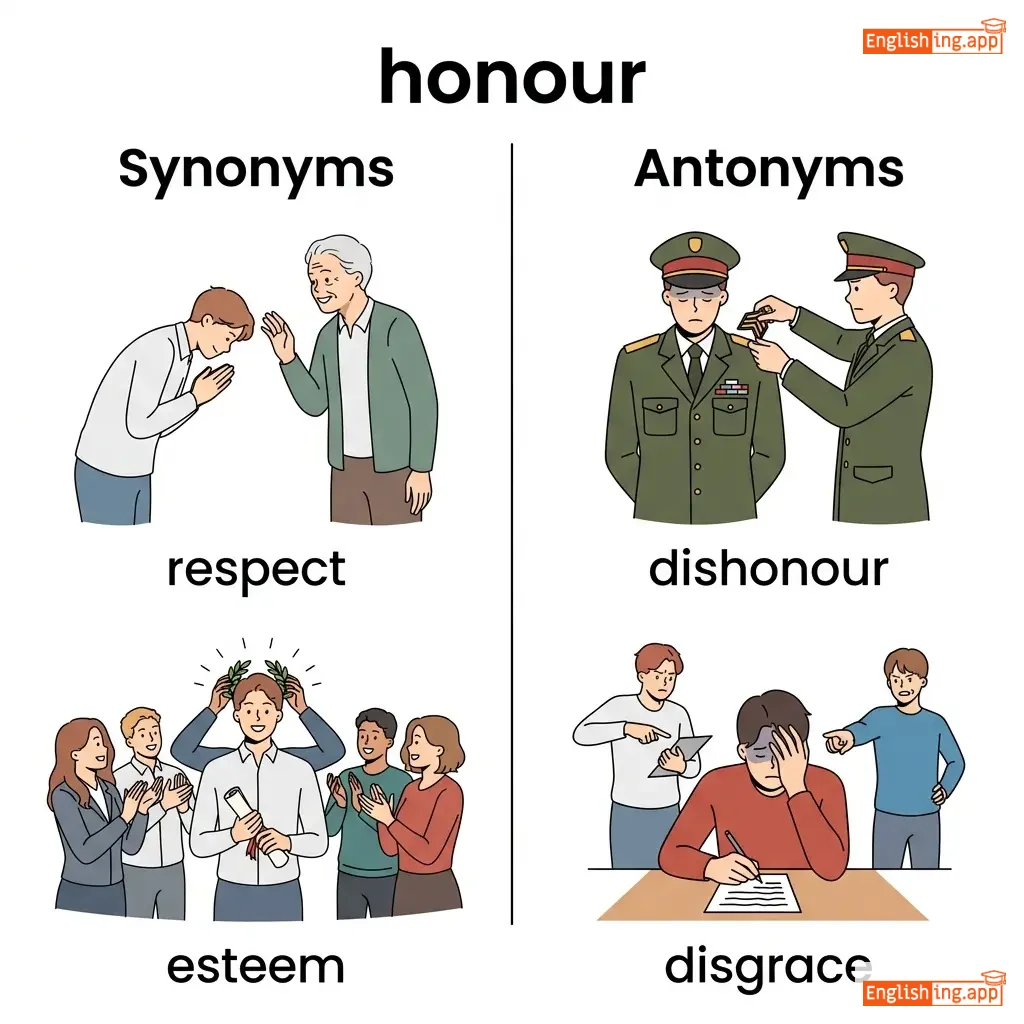
- •••••• | - •••••• | - •••••• |
respect, esteem, revere, glorify
••••••
|
dishonour, disgrace, shame, humiliate
••••••
|
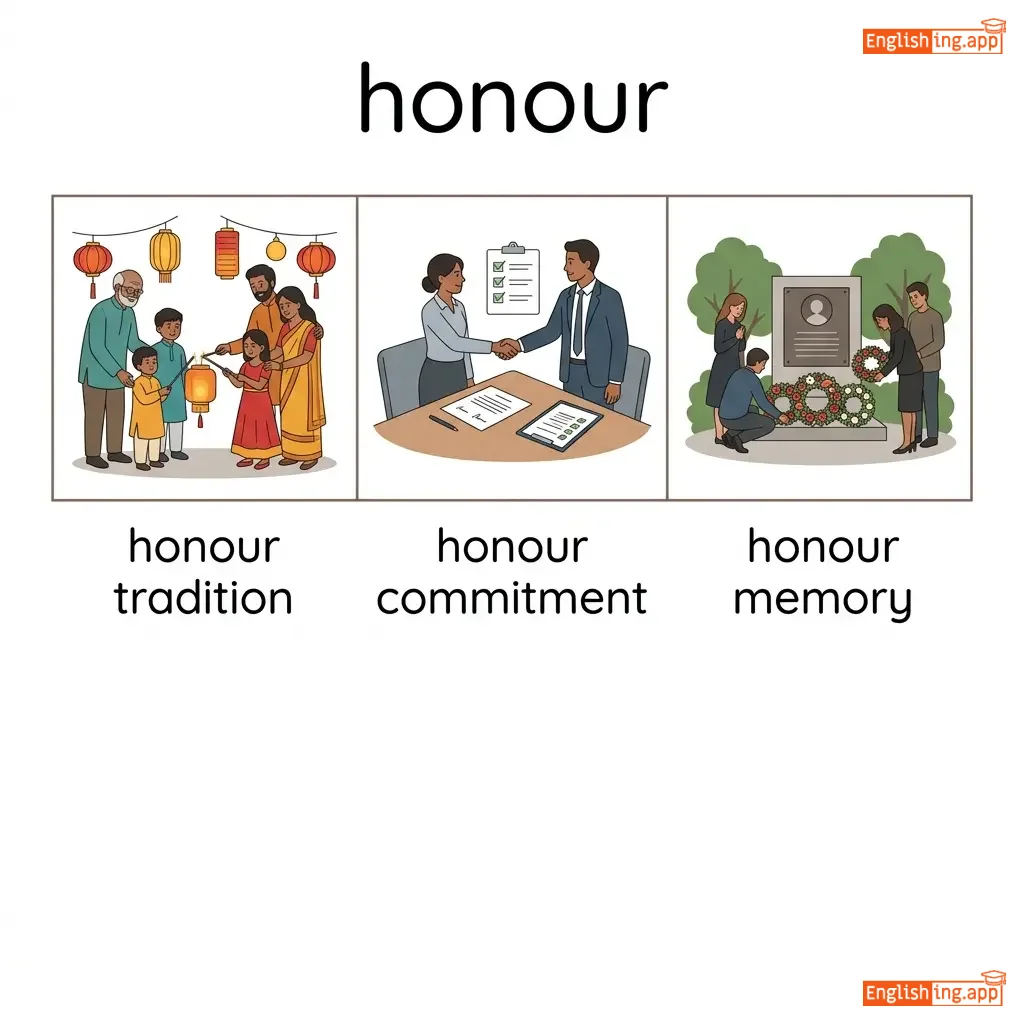
honour tradition, honour commitment, honour memory, honour request, honour agreement
••••••
|
荣誉 = 尊重.
••••••
|
|
🏅
••••••
|
/ˈɒnərəbəl/
adjective
(奥诺拉布尔)
••••••
|
- •••••• |
光荣的
guangrong de
••••••
|
- •••••• | - •••••• | - •••••• | - •••••• |
deserving respect or admiration because of moral integrity; showing honesty and fairness
••••••
|
She is known as an honourable leader who always keeps her promises.
她被称为一位奥诺拉布尔的领导者,总是遵守承诺。
••••••
|
她以一位光荣的领导者而闻名,总是信守承诺。
ta yi yi wei guangrong de lingdaozhe er wenming zongshi xinshou chengnuo
••••••
|
honourable mention
奥诺拉布尔 提名
••••••
|
special recognition given without a prize
••••••
|
荣誉提名
rongyu timing
••••••
|
ethical, respectable, upright, principled, noble
••••••
|
dishonourable, corrupt, disgraceful
••••••
|
honourable person, honourable conduct, honourable duty, honourable intention
••••••
|
光荣的 = honour 带来光和荣誉
••••••
|
|
🏅
••••••
|
/ˈɒnəd/
adjective; past participle
(昂纳德)
••••••
|
- •••••• |
感到荣幸的
gandao rongxing de
••••••
|
- •••••• | - •••••• | - •••••• | - •••••• |
treated with respect or distinction; feeling proud and privileged
••••••
|
She felt deeply honoured to receive the award.
希 费尔特 迪普利 昂纳德 图 瑞西夫 德 阿沃德。
••••••
|
她因获得这个奖项而感到非常荣幸。
Ta yin huo de zhe ge jiangxiang er gandao feichang rongxing
••••••
|
honoured guest
昂纳德 格斯特
••••••
|
a person who is given special respect or importance
••••••
|
贵宾
guibin
••••••
|
respected, esteemed, privileged, celebrated, revered
••••••
|
dishonoured, disrespected, ignored
••••••
|
honoured guest, honoured to be, honoured position, feel honoured
••••••
|
honoured = 荣幸
••••••
|
|
🎣
••••••
|
/hʊk/
noun, verb
(hùkè)
••••••
|

|
钩子或挂件
gōu zi huò guà jiàn
••••••
|
hooked
hùkèd
••••••
|
hooked
hùkèd
••••••
|
hooks
hùks
••••••
|
hooking
hùkīng
••••••
|
a curved piece of metal or other material used for catching, holding, or pulling something; to catch or attach with a hook
••••••
|
She hooked her keys onto her bag.
她把钥匙挂在包包上。
••••••
|
她把钥匙挂在包包上。
Tā bǎ yàoshi guà zài bāo bāo shàng.
••••••
|
get hooked on
上瘾
••••••
|
to become addicted or very interested in something
••••••
|
对某事上瘾
duì mǒu shì shàng yǐn
••••••
|
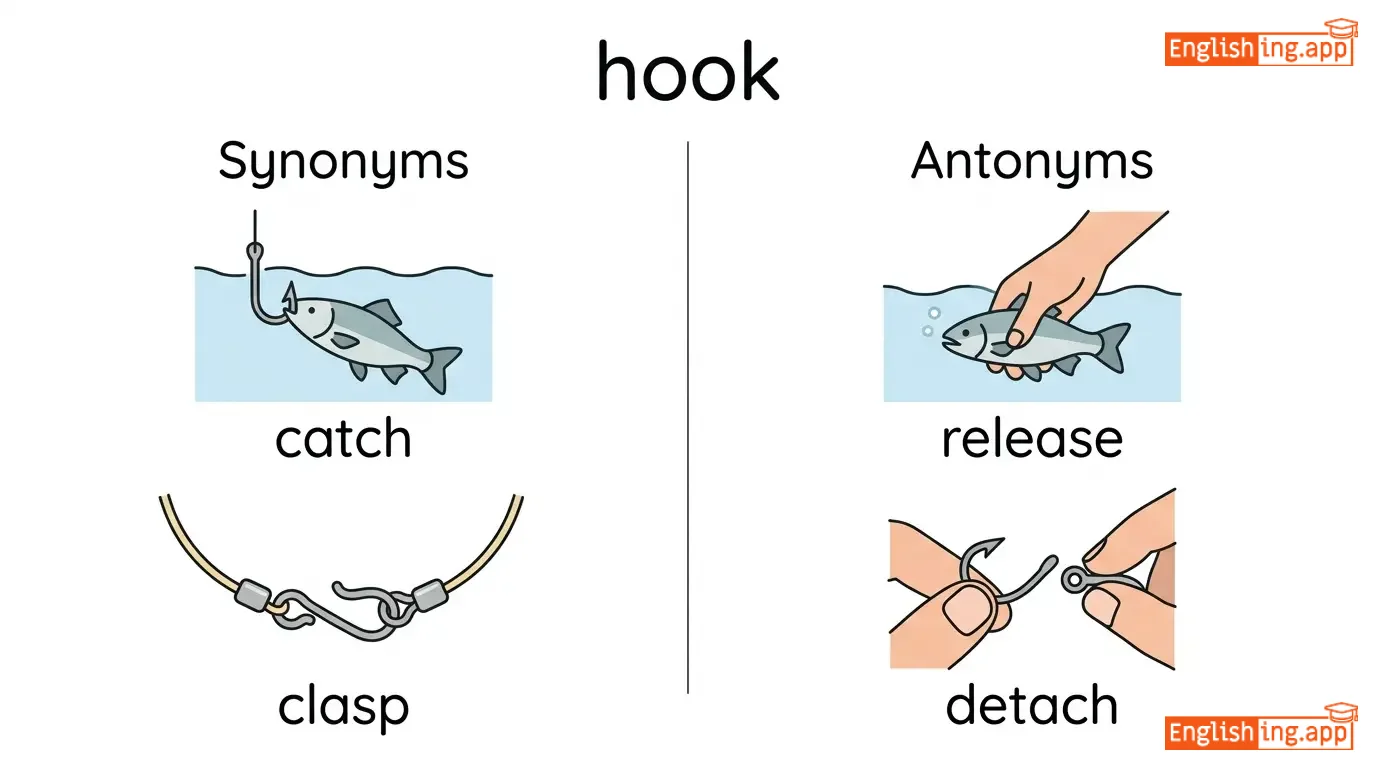
catch, clasp, fasten, attach, snag
••••••
|
release, detach, unhook
••••••
|
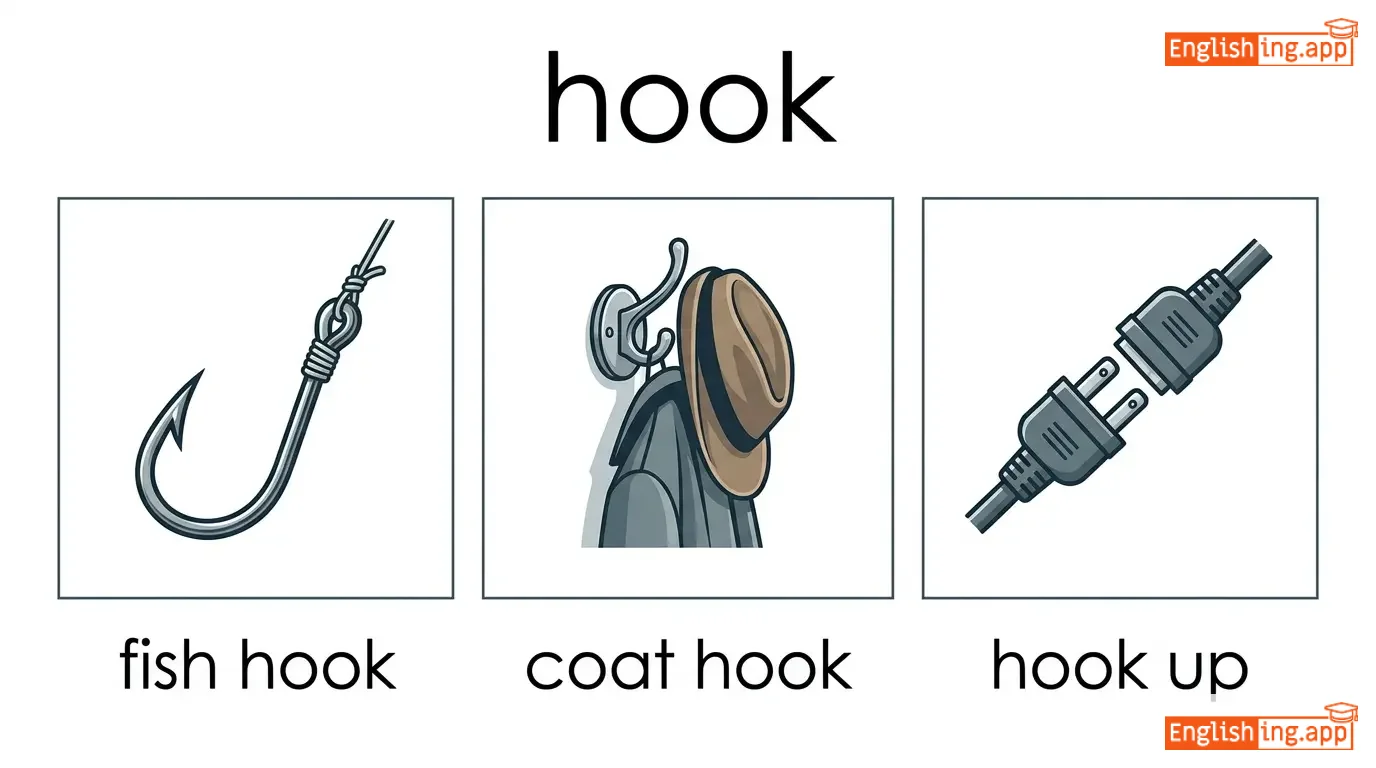
fish hook, coat hook, hook up, hook on
••••••
|
记住,钩子就像是 'hook' — 用来挂住东西!
••••••
|
|
🌟
••••••
|
/hoʊp/
verb
••••••
|
- •••••• | - •••••• |
hoped
••••••
|
hoped
••••••
|
hopes
••••••
|
hoping
••••••
|
To want something to happen or be true and think it is possible.
••••••
|
I hope everything goes well with your exam. |
- •••••• |
hope against hope |
To continue to hope even when the situation seems hopeless.
••••••
|
- •••••• |
wish, desire, expect, trust, optimism
••••••
|
despair, doubt
••••••
|
hope for, hope that, lose hope, give hope
••••••
|
No •••••• |
|
🌟😊
••••••
|
/ˈhoʊpfəl/
adjective
(houpfūl)
••••••
|
- •••••• |
充满希望
chōngmǎn xīwàng
••••••
|
- •••••• | - •••••• | - •••••• | - •••••• |
feeling or inspiring optimism about a future event; confident; optimistic
••••••
|
He remained hopeful despite the challenges.
尽管面临挑战,他依然充满希望。
••••••
|
尽管面临挑战,他依然充满希望。
Jǐnguǎn miànlín tiǎozhàn, tā yīrán chōngmǎn xīwàng.
••••••
|
- •••••• | - •••••• | - •••••• |
optimistic, positive, confident
••••••
|
hopeless, pessimistic, despairing
••••••
|
hopeful sign, remain hopeful, hopeful outlook
••••••
|
希望让我们面对挑战
••••••
|
|
🤞
••••••
|
/ˈhoʊpfəli/
adverb
(hòupǔlì)
••••••
|
- •••••• |
希望
xīwàng
••••••
|
- •••••• | - •••••• | - •••••• | - •••••• |
in a hopeful manner; expressing hope or optimism
••••••
|
Hopefully, the weather will be nice tomorrow.
希望明天天气会很好。
••••••
|
希望明天天气会很好。
Xīwàng míngtiān tiānqì huì hěn hǎo.
••••••
|
- •••••• | - •••••• | - •••••• |
optimistically, confidently, expectantly, positively
••••••
|
hopelessly, pessimistically
••••••
|
say hopefully, look hopefully, hopefully waiting
••••••
|
Hopefully 的意思是 ‘希望’ — 🤞 记住,心怀希望一切都会好!
••••••
|
|
🌅
••••••
|
/həˈraɪ.zən/
noun
(horizón)
••••••
|
- •••••• |
地平线
dipingxian
••••••
|
- •••••• | - •••••• | - •••••• | - •••••• |
the line where the earth seems to meet the sky; the limit of one's knowledge, experience, or interest
••••••
|
The sun disappeared below the horizon. |
太阳消失在地平线下。
taiyang xiaoshi zai dipingxian xia.
••••••
|
broaden your horizons |
to expand one's experiences or knowledge
••••••
|
拓展你的视野
tuozhan nide shiye
••••••
|
skyline, boundary, limit, vista, outlook
••••••
|
sky, zenith
••••••
|
on the horizon, broaden horizons, new horizon
••••••
|
Horizon意味着地平线,太阳落下的地方。
••••••
|
|
↔️
••••••
|
/ˌhɒrɪˈzɒntəl/
adjective
(霍里佐恩特尔)
••••••
|
- •••••• |
水平的
shuiping de
••••••
|
- •••••• | - •••••• | - •••••• | - •••••• |
parallel to the horizon; flat and level from side to side
••••••
|
The table must be perfectly horizontal to keep the glass from sliding.
桌子必须是完全水平的。
••••••
|
桌子必须保持水平,杯子才不会滑动。
Zhuozi bixu baochi shuiping beizi cai buhui huadong
••••••
|
horizontal line
水平线
••••••
|
a line that runs from left to right and is parallel to the horizon
••••••
|
水平线
shuiping xian
••••••
|
level, flat, even, lateral
••••••
|
vertical, upright
••••••
|
horizontal line, horizontal surface, horizontal position, horizontal axis
••••••
|
Horizontal 听起来像 horizon → 水平
••••••
|
|
📯
••••••
|
/hɔːrn/
noun
(霍恩)
••••••
|
- •••••• |
角, 喇叭
jiǎo, lǎbā
••••••
|
- •••••• | - •••••• | - •••••• | - •••••• |
a hard, pointed part growing from the head of some animals; a device that makes a loud sound as a warning
••••••
|
The driver pressed the horn to warn the pedestrians. |
司机按下喇叭来警告行人。
Sījī ànxià lǎbā lái jǐnggào xíngrén.
••••••
|
toot your own horn |
to boast or brag about oneself
••••••
|
吹嘘自己
chuīxū zìjǐ
••••••
|
trumpet, alarm, antler, signal
••••••
|
silence, mute
••••••
|
car horn, blow horn, honk horn, horn sound
••••••
|
按喇叭 📯 来吸引注意,就像动物的角一样!
••••••
|
|
😱
••••••
|
/ˈhɒr.ər/
noun
(霍罗)
••••••
|
- •••••• |
恐惧
kǒngjù
••••••
|
- •••••• | - •••••• | - •••••• | - •••••• |
an intense feeling of fear, shock, or disgust
••••••
|
She screamed in horror when she saw the accident. |
她看到事故时吓得尖叫起来。
Tā kàn dào shìgù shí xià dé jiān jiào qǐlái.
••••••
|
a horror story |
a frightening or shocking tale
••••••
|
恐怖故事
kǒngbù gùshì
••••••
|
fear, dread, terror, shock, fright
••••••
|
delight, joy
••••••
|
horror movie, scream in horror, sheer horror
••••••
|
Horror意味着恐惧,想象你看一部恐怖片,心跳加速。
••••••
|
|
🐎
••••••
|
/hɔːrs/
noun
(hɔːrs)
••••••
|
- •••••• |
马
ma
••••••
|
- •••••• | - •••••• | - •••••• | - •••••• |
a large, strong animal used for riding, racing, or carrying loads
••••••
|
The horse ran across the field.
dā hɔːrs rǎn ài kèruò le fēi'ěrdù
••••••
|
马跑过了田野。
mǎ pǎo guò le tián yě.
••••••
|
hold your horses
hold your horses
••••••
|
wait or be patient
••••••
|
耐心等一下
nàixīn děng yīxià
••••••
|
stallion, mare, pony, steed, nag
••••••
|
donkey, mule
••••••
|
ride a horse, wild horse, horse racing
••••••
|
马:想象你骑马,马在草地上奔跑。
••••••
|
|
🏥
••••••
|
/ˈhɒs.pɪ.təl/
noun
(hàosīpítǎl)
••••••
|
- •••••• |
医院
yīyuàn
••••••
|
- •••••• | - •••••• | - •••••• | - •••••• |
an institution where sick or injured people are given medical treatment
••••••
|
He was taken to the hospital after the accident. |
事故发生后,他被送往医院。
shìgù fāshēng hòu, tā bèi sòngwǎng yīyuàn.
••••••
|
- •••••• | - •••••• | - •••••• |
clinic, infirmary, medical center, healthcare facility
••••••
|
home, outdoors
••••••
|
go to hospital, hospital bed, hospital staff
••••••
|
医院意味着医院,治愈疾病和伤害的地方。
••••••
|
|
🎤
••••••
|
/hoʊst/
noun, verb
(霍斯特)
••••••
|
- •••••• |
主持人
zhǔchí rén
••••••
|
hosted
霍斯特德
••••••
|
hosted
霍斯特德
••••••
|
hosts
霍斯特斯
••••••
|
hosting
霍斯廷
••••••
|
a person who receives or entertains guests; to organize and provide for an event
••••••
|
She will host the conference next week.
她将在下周主持会议。
••••••
|
她将在下周主持会议。
Tā jiāng zài xià zhōu zhǔchí huìyì.
••••••
|
play host
扮演主持人
••••••
|
to act as the host for an event or occasion
••••••
|
扮演主持人
bànyǎn zhǔchí rén
••••••
|
presenter, entertainer, emcee, organizer, moderator
••••••
|
guest, visitor
••••••
|
host a party, host an event, web host
••••••
|
主持人:他或她是组织和主持活动的那个人。
••••••
|
|
⛓️
••••••
|
/ˈhɑːstɪdʒ/
noun
(hàosītèjí)
••••••
|
- •••••• |
人质
renzhi
••••••
|
- •••••• | - •••••• | - •••••• | - •••••• |
A person seized or held as security for the fulfillment of a condition.
••••••
|
The rebels took several people as hostages. |
叛军俘获了几个人质。
Pànjūn fúhuò le jǐ gè rénzhì.
••••••
|
held hostage |
Kept under control against one’s will
••••••
|
被扣为人质
Bèi kòu wèi rénzhì
••••••
|
captive, prisoner, detainee, pawn
••••••
|
liberated, free
••••••
|
take hostage, release hostage, held hostage
••••••
|
Hostage = Renzhi, 像‘host’被困在‘人质’的状态里
••••••
|
|
😠
••••••
|
/ˈhɒstaɪl/
adjective
(hòusītǎi)
••••••
|
- •••••• |
敌对
díduì
••••••
|
- •••••• | - •••••• | - •••••• | - •••••• |
showing or feeling opposition, dislike, or hatred
••••••
|
The soldiers entered a hostile territory. |
士兵进入了敌对领土。
Shìbīng jìnrùle díduì lǐngtǔ.
••••••
|
hostile takeover |
an acquisition of a company opposed by the company's management
••••••
|
敌对收购
díduì shōugòu
••••••
|
aggressive, antagonistic, unfriendly, opposed, bitter
••••••
|
friendly, peaceful, supportive
••••••
|
hostile environment, hostile forces, hostile attitude, hostile takeover
••••••
|
敌对 – 敌人般的接待
••••••
|
|
😠
••••••
|
/hɒˈstɪləti/
noun
(hɒˈstɪləti)
••••••
|
- •••••• |
敌意
di yi
••••••
|
- •••••• | - •••••• | - •••••• | - •••••• |
hostile behavior; unfriendliness or opposition
••••••
|
The negotiations ended in an atmosphere of hostility. |
谈判以敌意的氛围结束。
Tanpan yi diyi de fenwei jie shu.
••••••
|
open hostility |
a clear and obvious display of unfriendly feelings
••••••
|
公开敌意
gongkai diyi
••••••
|
animosity, antagonism, enmity, resentment, bitterness
••••••
|
friendliness, goodwill, harmony
••••••
|
open hostility, mutual hostility, hostility towards, hostility between
••••••
|
Hostility means unfriendly feelings, in Chinese 敌意 = hostility.
••••••
|
|
🔥
••••••
|
/hɒt/
adjective
(hǎt)
••••••
|
- •••••• |
热
re
••••••
|
- •••••• | - •••••• | - •••••• | - •••••• |
Having a high degree of heat or a high temperature.
••••••
|
The soup is too hot to eat right now.
汤太热了,现在无法食用。
••••••
|
汤太热了,现在无法食用。
Tāng tài rè le, xiànzài wúfǎ shíyòng.
••••••
|
hot topic
热门话题
••••••
|
a subject that is currently popular or controversial
••••••
|
热门话题
rèmén huàtí
••••••
|
warm, heated, scorching, burning, fiery
••••••
|
cold, cool, chilly
••••••
|
hot weather, hot drink, hot meal, hot summer, hot topic
••••••
|
Hot 意味着热,像'Hot tea'意味着热茶。
••••••
|
|
🏨
••••••
|
/hoʊˈtɛl/
noun
(hòu-tèl)
••••••
|
- •••••• |
酒店
jiu dian
••••••
|
- •••••• | - •••••• | - •••••• | - •••••• |
A building where people pay to stay and sleep, usually for short periods.
••••••
|
We stayed at a hotel near the beach. |
我们住在靠近海滩的酒店。
Wǒmen zhù zài kàojìn hǎitān de jiǔdiàn.
••••••
|
check into a hotel |
to register and begin staying in a hotel
••••••
|
登记入住酒店
dēngjì rùzhù jiǔdiàn
••••••
|
inn, lodge, hostel, resort, guesthouse
••••••
|
home, house
••••••
|
luxury hotel, hotel room, hotel staff, book a hotel, check into hotel
••••••
|
酒店就是酒店,记住 '酒店是休息和用餐的地方。'
••••••
|
|
⏰
••••••
|
/ˈaʊər/
noun
••••••
|
- •••••• | - •••••• | - •••••• | - •••••• | - •••••• | - •••••• |
A period of time equal to 60 minutes.
••••••
|
The meeting lasted for two hours. |
- •••••• |
rush hour |
the busy part of the day when traffic is heavy
••••••
|
- •••••• |
sixty minutes, time period, duration, interval
••••••
|
moment, instant
••••••
|
spend an hour, half an hour, working hours, rush hour
••••••
|
No •••••• |
|
🏠
••••••
|
/haʊs/
noun
(hǎosī)
••••••
|
- •••••• |
房子
fángzi
••••••
|
- •••••• | - •••••• | - •••••• | - •••••• |
A building for people to live in, usually with rooms and a roof.
••••••
|
They bought a new house in the city.
他们在城市里买了一座新房子。
••••••
|
他们在城市里买了一座新房子。
Tāmen zài chéngshì lǐ mǎile yī zuò xīn fángzi.
••••••
|
bring the house down
让房子倒塌
••••••
|
to make the audience laugh or applaud loudly
••••••
|
让观众笑或鼓掌
ràng guānzhòng xiào huò gǔzhǎng
••••••
|
home, residence, dwelling, shelter, abode
••••••
|
outside, open space
••••••
|
buy a house, build a house, rent a house, move into a house
••••••
|
房子就像我们的家,容易记住。
••••••
|

