Получите неограниченный доступ ко всем словам с подпиской Pro
Обновить до ProПолучите неограниченный доступ ко всем предложениям с подпиской Pro
Обновить до Pro|
Эмодзи
|
Слово | Images | Перевод | Прошедшее | Причастие прошедшего времени | Третье лицо единственного числа | Герундий | Значение | Пример предложения | Перевод примера предложения | Пример выражения | Значение примера выражения | Перевод примера выражения | Синонимы | Антонимы | Коллокации | Мнемоника |
|---|---|---|---|---|---|---|---|---|---|---|---|---|---|---|---|---|---|
|
👦
••••••
|
/hɪz/
pronoun
(хиз)
••••••
|
- •••••• |
его
ego
••••••
|
- •••••• | - •••••• | - •••••• | - •••••• |
belonging to or associated with a male person previously mentioned
••••••
|
This is his book on the table. |
Это его книга на столе.
Eto ego kniga na stole.
••••••
|
- •••••• | - •••••• | - •••••• |
belonging to him, owned by him
••••••
|
her, their
••••••
|
his book, his car, his house, his idea
••••••
|
His означает его, помни—He + is = His вещь
••••••
|
|
📚
••••••
|
/hɪˈstɔːriən/
noun
(историк)
••••••
|
- •••••• |
историк
istorik
••••••
|
- •••••• | - •••••• | - •••••• | - •••••• |
a person who studies or writes about history
••••••
|
The historian gave a lecture on ancient civilizations. |
Историк прочитал лекцию о древних цивилизациях.
Istorik prochital lekciyu o drevnikh tsivilizatsiyakh.
••••••
|
- •••••• | - •••••• | - •••••• |
scholar, researcher, chronicler, analyst
••••••
|
layman, amateur
••••••
|
famous historian, professional historian, military historian
••••••
|
Historian — history + ик → человек, изучающий историю
••••••
|
|
🏛️
••••••
|
/hɪˈstɔːrɪk/
adjective
(his-to-rik)
••••••
|

|
исторический
istoricheskiy
••••••
|
- •••••• | - •••••• | - •••••• | - •••••• |
Famous or important in history; likely to be remembered in history.
••••••
|
The historic agreement changed the course of the nation. |
Историческое соглашение изменило ход нации.
Istoricheskoe soglashenie izmenilo khod natsii.
••••••
|
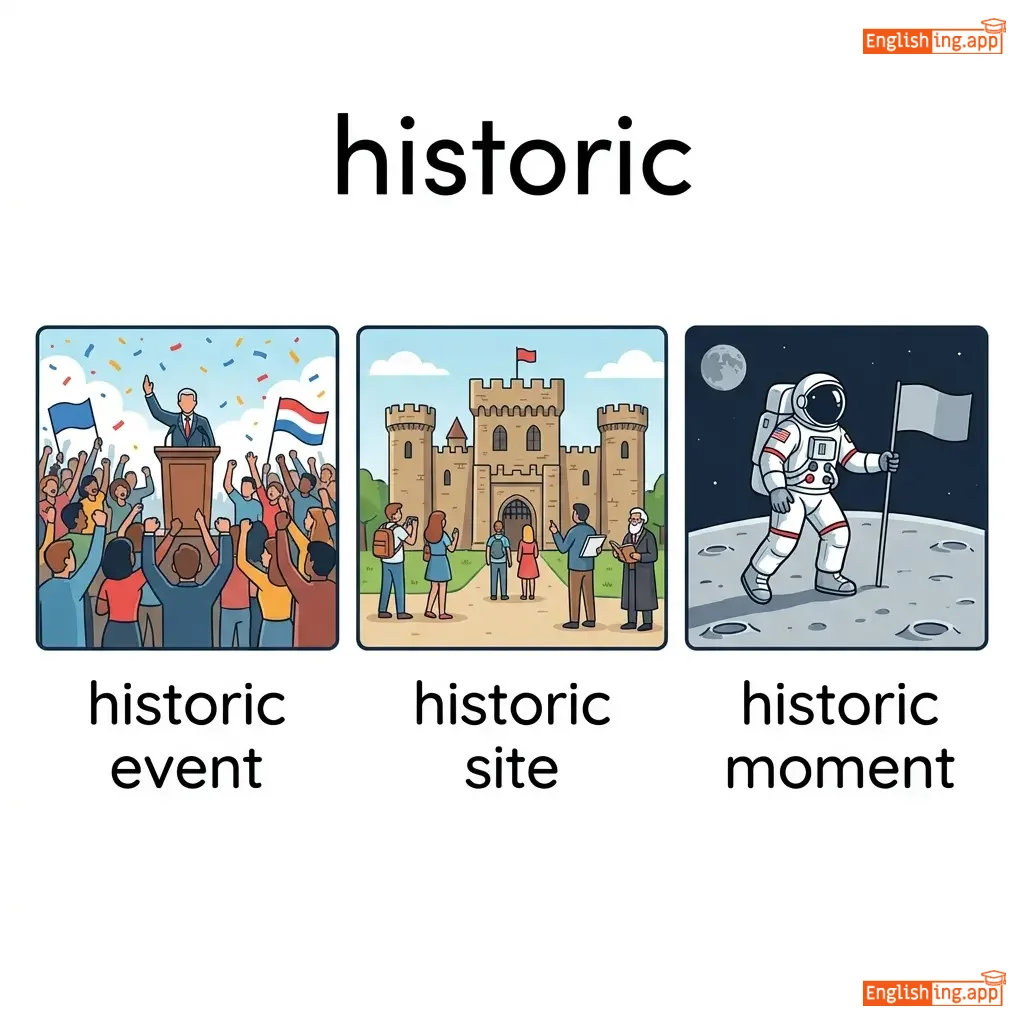
historic moment |
An event of great importance in history
••••••
|
исторический момент
istoricheskiy moment
••••••
|
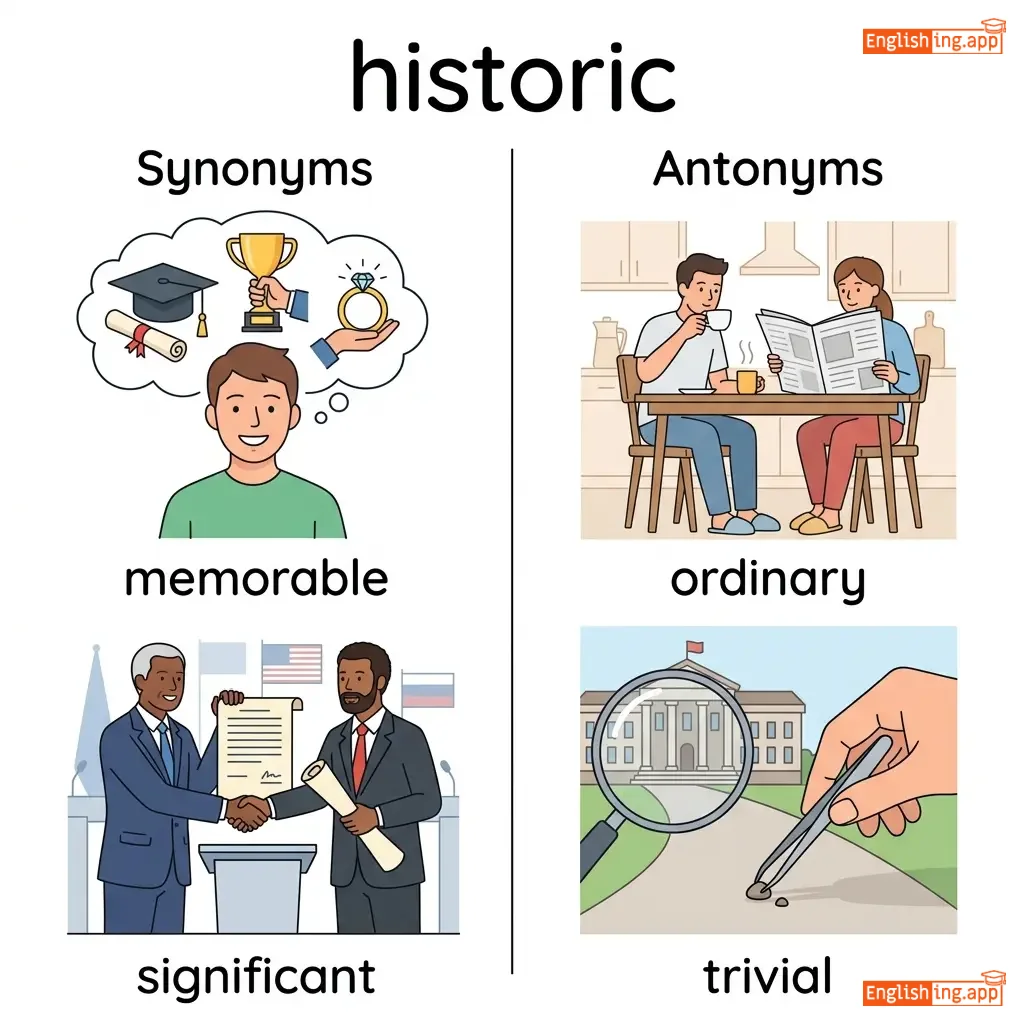
memorable, significant, important, monumental, notable
••••••
|
ordinary, trivial, forgettable
••••••
|
historic event, historic site, historic moment, historic decision
••••••
|
Historic = связано с историей, значит, что-то важное в истории.
••••••
|
|
📜
••••••
|
/hɪˈstɔːrɪkəl/
adjective
(исторический)
••••••
|
- •••••• |
исторический
istoricheskiy
••••••
|
- •••••• | - •••••• | - •••••• | - •••••• |
Related to history or past events.
••••••
|
The museum has a large collection of historical documents. |
В музее есть большая коллекция исторических документов.
V muzei yest bolshaya kollektsiya istoricheskikh dokumentov.
••••••
|
historical record |
An account of past events
••••••
|
историческая запись
istoricheskaya zapic
••••••
|
past, archival, recorded, ancient, traditional
••••••
|
modern, contemporary, current
••••••
|
historical documents, historical records, historical evidence, historical site
••••••
|
Historical = History + related, означает, что связано с историей.
••••••
|
|
📜
••••••
|
/hɪˈstɒrɪkli/
adverb
(исторически)
••••••
|
- •••••• |
исторически
istoricheski
••••••
|
- •••••• | - •••••• | - •••••• | - •••••• |
in a way that relates to history or past events
••••••
|
Historically, this city was a major trade center. |
Исторически, этот город был важным торговым центром.
Istoricheski, etot gorod byl vazhnym torgovym tsentrom.
••••••
|
- •••••• | - •••••• | - •••••• |
traditionally, formerly, ancestrally, in the past, over time
••••••
|
currently, presently, now
••••••
|
historically significant, historically accurate, historically important, historically low
••••••
|
History + eski = Ссылаясь на прошлое, т.е. ‘исторически’
••••••
|
|
🏛️
••••••
|
/ˈhɪstəri/
noun
(история)
••••••
|

|
история
istoriya
••••••
|
- •••••• | - •••••• | - •••••• | - •••••• |
the study of past events
••••••
|
She is studying the history of medieval Europe. |
Она изучает историю Средневековой Европы.
Ona izuchayet istoriyu Srednevekovoy Yevropy.
••••••
|
make history |
to do something very important that will be remembered
••••••
|
сделать историю
sdelat' istoriu
••••••
|
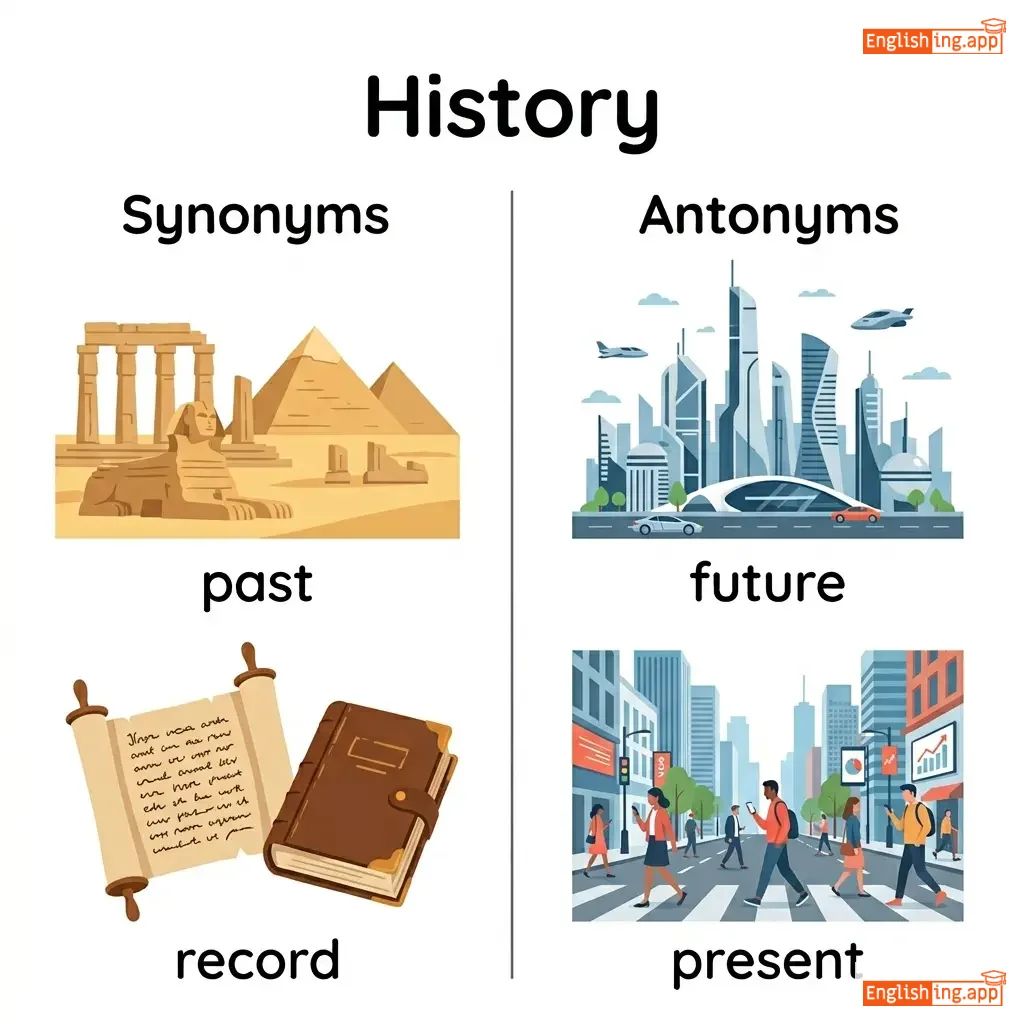
past, record, chronicle, heritage
••••••
|
future, present
••••••
|
world history, history book, history lesson, history of art
••••••
|
History на русском это история, представьте—His Story на русском это история
••••••
|
|
💥
••••••
|
/hɪt/
verb
(хит)
••••••
|
- •••••• |
ударить
udarit
••••••
|
hit
хит
••••••
|
hit
хит
••••••
|
hits
хитс
••••••
|
hitting
хиттинг
••••••
|
to strike someone or something with force
••••••
|
He accidentally hit the ball into the window.
он случайно ударил мяч в окно.
••••••
|
он случайно ударил мяч в окно.
on sluchayno udaril myach v okno.
••••••
|
hit the nail on the head
попасть в точку
••••••
|
to describe a situation or problem exactly
••••••
|
попасть в точку
popast' v tochku
••••••
|
strike, smack, beat, punch, knock
••••••
|
miss, avoid, dodge
••••••
|
hit hard, hit the target, hit the road, hit record
••••••
|
Hit означает ударить, представьте, что вы ударяете мяч для гольфа в лунку.
••••••
|
|
🎨
••••••
|
/ˈhɑː.bi/
noun
(хобби)
••••••
|
- •••••• |
хобби; любимое занятие; увлечение
hobbi, lyubimoye zanyatiye, uvlecheniye
••••••
|
- •••••• | - •••••• | - •••••• | - •••••• |
an activity done regularly in one's leisure time for pleasure; a pastime or recreation
••••••
|
Photography became her favorite hobby after she received a camera for her birthday. |
Фотография стала её любимым хобби, когда она получила камеру на день рождения.
Fotografiya stala yeyo lyubimym hobbi, kogda ona poluchila kameru na den' rozhdeniya.
••••••
|
- •••••• | - •••••• | - •••••• |
pastime, interest, pursuit, recreation
••••••
|
work, job, profession, obligation
••••••
|
favorite hobby, hobby horse, pursue hobby
••••••
|
Хобби - это занятие, которое приносит радость, как фотография.
••••••
|
|
✋
••••••
|
/hoʊld/
verb
(hold)
••••••
|

|
держать
derzhat
••••••
|
held
held
••••••
|
held
held
••••••
|
holds
holts
••••••
|
holding
holding
••••••
|
to grasp, carry, or keep in position; to maintain
••••••
|
Please hold the door open for me.
pliz hold də dɔʁ ópen fɔʁ mi.
••••••
|
Пожалуйста, держите дверь открытой для меня.
Pozhaluysta, derzhite dver' otkrytoy dlya menya.
••••••
|
hold on
hold on
••••••
|
to wait or pause briefly
••••••
|
подождать
podozhdat'
••••••
|
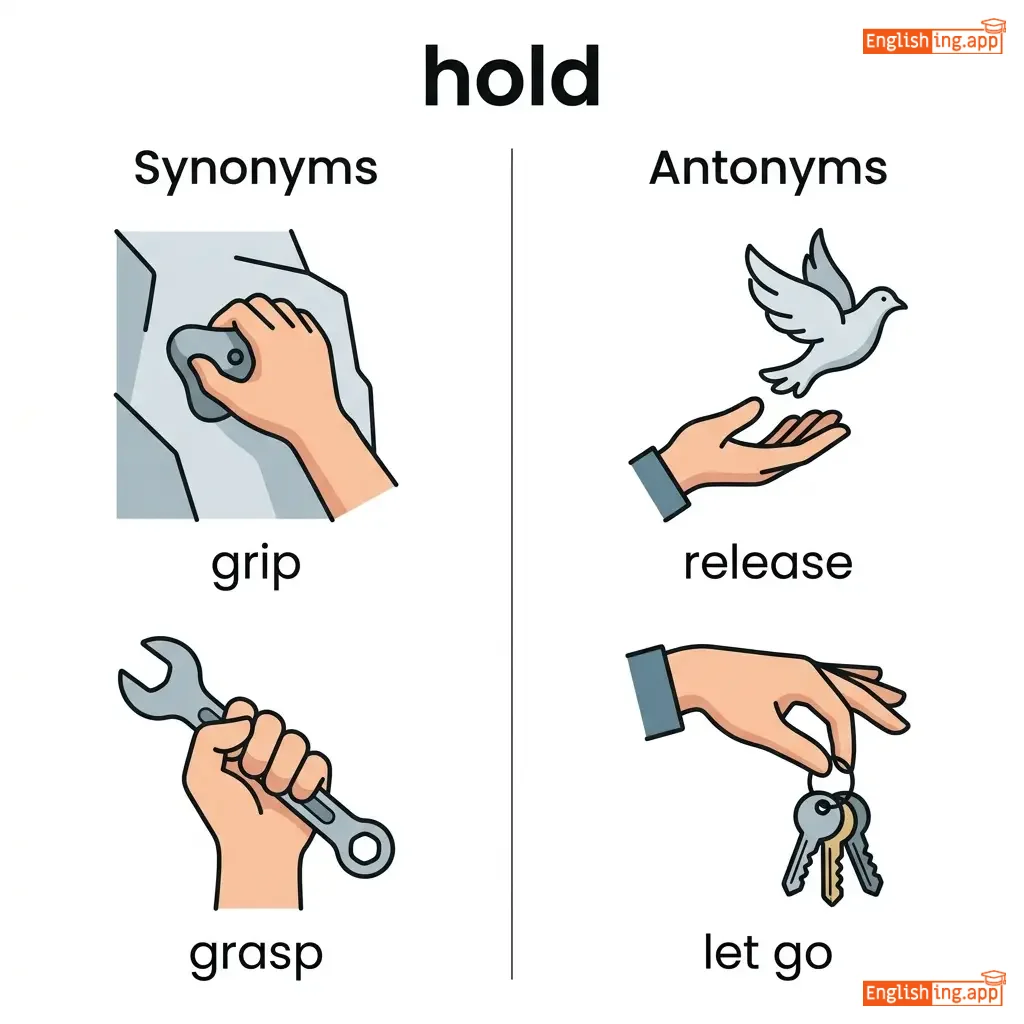
grip, grasp, keep, maintain, support
••••••
|
release, let go
••••••
|
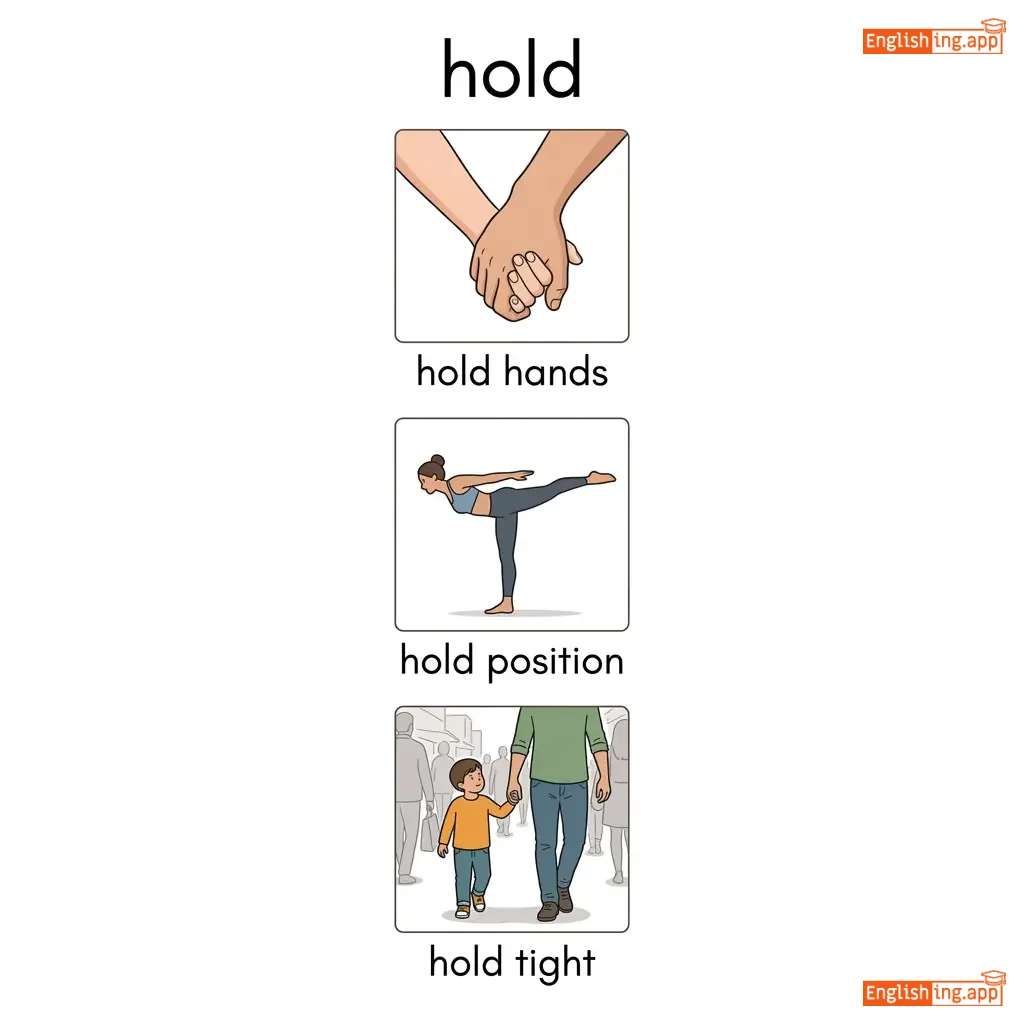
hold hands, hold position, hold tight, hold meeting
••••••
|
Hold значит держать, как когда ты держишь телефон.
••••••
|
|
🕳️
••••••
|
/hoʊl/
noun
(khol)
••••••
|
- •••••• |
дыра
dyra
••••••
|
- •••••• | - •••••• | - •••••• | - •••••• |
an opening, gap, or hollow place in a solid surface
••••••
|
There is a hole in my shirt. |
На моей рубашке есть дыра.
Na moyey rubashke yest' dyra.
••••••
|
in a hole |
in a difficult or troublesome situation
••••••
|
в дыре
v dyre
••••••
|
gap, opening, cavity, pit, hollow
••••••
|
solid, whole
••••••
|
dig a hole, small hole, deep hole, in a hole
••••••
|
Hole = дыра, помни hole = дыра на рубашке
••••••
|
|
🏖️
••••••
|
/ˈhɒlɪdeɪ/
noun
(холи-дэй)
••••••
|
- •••••• |
отпуск
otpusk
••••••
|
- •••••• | - •••••• | - •••••• | - •••••• |
A day of celebration or rest when most people do not work.
••••••
|
We are planning a trip during the summer holiday. |
Мы планируем поездку во время летнего отпуска.
My planirovali poezdku vo vremya letnego otpyska.
••••••
|
holiday spirit |
The cheerful mood that people often feel during holiday seasons.
••••••
|
праздничное настроение
prazdnichnoye nastroeniye
••••••
|
vacation, break, leave, recess, festival
••••••
|
workday, duty
••••••
|
public holiday, summer holiday, holiday season, national holiday
••••••
|
Отпуск — это не просто отдых, это праздник с праздничным настроением!
••••••
|
|
🕳️
••••••
|
/ˈhɑlːoʊ/
adjective
(холо)
••••••
|
- •••••• |
пустой; полый;
pustoy; poly;
••••••
|
- •••••• | - •••••• | - •••••• | - •••••• |
having an empty space inside; lacking substance or meaning; insincere
••••••
|
The hollow tree trunk provided shelter for small animals.
Полый ствол дерева предоставил укрытие для мелких животных.
••••••
|
Полый ствол дерева предоставил укрытие для мелких животных.
Polyy stvol dereva predostavil ukrytiye dlya mel'kikh zhivotnykh.
••••••
|
- •••••• | - •••••• | - •••••• |
empty, vacant, void, concave
••••••
|
solid, full, dense, compact
••••••
|
hollow tree, hollow sound, hollow promise, hollow victory
••••••
|
Полый на русском означает пустое внутри, как полое дерево.
••••••
|
|
🙏
••••••
|
/ˈhoʊli/
adjective
(холи)
••••••
|
- •••••• |
святой
svyatoi
••••••
|
- •••••• | - •••••• | - •••••• | - •••••• |
Dedicated to God or a religious purpose; sacred.
••••••
|
This temple is considered a holy place. |
Этот храм считается святым местом.
Etot khram schitayetsya svyatom mestom.
••••••
|
holy cow |
An expression of surprise or astonishment.
••••••
|
Святая корова
Svyataya korova
••••••
|
sacred, divine, blessed, saintly
••••••
|
profane, unholy
••••••
|
holy book, holy man, holy place, holy spirit
••••••
|
Holy означает 'святой' - святое место, как храм, где люди молятся.
••••••
|
|
🏠
••••••
|
/hoʊm/
noun
(khom)
••••••
|
- •••••• |
дом
dom
••••••
|
- •••••• | - •••••• | - •••••• | - •••••• |
the place where one lives, especially with family; a residence
••••••
|
She finally returned home after a long journey. |
Она наконец вернулась домой после долгого путешествия.
Ona nakonec vernulas' domoy posle dolgogo puteshestviya.
••••••
|
home sweet home |
used to express pleasure at returning to one's home
••••••
|
дома сладкий дом
doma sladkiy dom
••••••
|
house, residence, dwelling, abode, household
••••••
|
office, workplace, street
••••••
|
go home, come home, home address, home town, home life
••••••
|
Home - это дом, где всегда находится сердце.
••••••
|
|
🏡
••••••
|
/hoʊm ˈdɪstrɪkt/
noun
(хоум дистрикт)
••••••
|
- •••••• |
родной район
rodnoy rayon
••••••
|
- •••••• | - •••••• | - •••••• | - •••••• |
the district where a person was born or originally comes from
••••••
|
He returned to his home district after many years abroad.
хи ритёрнд ту хиз хоум дистрикт афтер мэни йерз эброд
••••••
|
Он вернулся в свой родной район после многих лет за границей.
On vernulsya v svoy rodnoy rayon posle mnogikh let za granitsey
••••••
|
- •••••• | - •••••• | - •••••• |
native district, hometown area, place of origin, home region
••••••
|
foreign district, adopted area
••••••
|
return to home district, visit home district, people of the home district
••••••
|
Rodnoy значит родной — как home district
••••••
|
|
🏠
••••••
|
/ˈhoʊmlænd/
noun
(хомленд)
••••••
|
- •••••• |
родина
rodina
••••••
|
- •••••• | - •••••• | - •••••• | - •••••• |
a person's native country or region
••••••
|
She returned to her homeland after ten years abroad.
Она вернулась в свою родную страну после десяти лет за границей.
••••••
|
Она вернулась в свою родину после десяти лет за границей.
Ona vernulas v svoyu rodinu posle desyati let za granitsey.
••••••
|
- •••••• | - •••••• | - •••••• |
native land, motherland, fatherland, birthplace, country
••••••
|
foreign land, abroad, exile
••••••
|
defend the homeland, homeland security, homeland territory, homeland pride
••••••
|
Home означает дом + land означает страну — свой дом в своей стране = родина
••••••
|
|
🏚️
••••••
|
/ˈhoʊmləs/
adjective
(хомлес)
••••••
|
- •••••• |
бездомный
bezdomny
••••••
|
- •••••• | - •••••• | - •••••• | - •••••• |
Without a home, and therefore typically living on the streets.
••••••
|
The organization helps homeless people find shelter.
Организация помогает бездомным людям найти укрытие.
••••••
|
Организация помогает бездомным людям найти укрытие.
Organizatsiya pomogaet bezdomnym lyudyam nayti ukrytiye.
••••••
|
- •••••• | - •••••• | - •••••• |
destitute, vagrant, displaced, houseless
••••••
|
settled, housed
••••••
|
homeless person, homeless shelter, homeless community
••••••
|
Без дома — бездомный.
••••••
|
|
📚
••••••
|
/ˈhoʊmwɜːrk/
noun
(хоўмвёрк)
••••••
|
- •••••• |
домашняя работа
domashnyaya rabota
••••••
|
- •••••• | - •••••• | - •••••• | - •••••• |
schoolwork that a student does at home
••••••
|
I need to finish my math homework before dinner. |
Мне нужно закончить домашку по математике до ужина.
Mne nuzhno zakonchit' domashku po matematike do uzhina.
••••••
|
do your homework |
to prepare properly for something by learning or researching beforehand
••••••
|
делать домашку
delat' domashku
••••••
|
assignment, task, exercise, study, project
••••••
|
classwork, neglect, inattention
••••••
|
do homework, finish homework, math homework, too much homework
••••••
|
Домашняя работа = работа дома (homework)
••••••
|
|
🤲
••••••
|
/ˈɑːnɪst/
adjective
(онест)
••••••
|
- •••••• |
честный
chestny
••••••
|
- •••••• | - •••••• | - •••••• | - •••••• |
free of deceit and untruthfulness; sincere
••••••
|
She is known as an honest and trustworthy person.
Она известна как честный и надежный человек.
••••••
|
Она известна как честный и надежный человек.
Ona izvestna kak chestny i nadezhny chelovek.
••••••
|
to be honest
быть честным
••••••
|
used to emphasize that what is being said is true
••••••
|
быть честным
byt' chestnym
••••••
|
truthful, sincere, genuine, trustworthy, fair
••••••
|
dishonest, deceitful, untruthful
••••••
|
honest opinion, honest mistake, honest man, be honest
••••••
|
Честный означает честный, 'Чистота внутри - честность' для запоминания
••••••
|
|
🤍
••••••
|
/ˈɒnɪstli/
adverb
(онестли)
••••••
|
- •••••• |
честно
chestno
••••••
|
- •••••• | - •••••• | - •••••• | - •••••• |
in a truthful, sincere, or fair way
••••••
|
She spoke honestly about her mistakes. |
Она честно рассказала о своих ошибках.
Ona chestno rasskazala o svoikh oshibkakh.
••••••
|
to be honest |
used to emphasize the truth or sincerity of what one is saying
••••••
|
быть честным
byt' chestnym
••••••
|
truthfully, sincerely, genuinely, frankly, openly
••••••
|
dishonestly, falsely, deceitfully
••••••
|
speak honestly, act honestly, honestly believe, honestly admit
••••••
|
Честно + o = честно: когда говоришь правду, это честно
••••••
|
|
🤥
••••••
|
/ˈɒnɪsti/
noun
(честность)
••••••
|
- •••••• |
честность
chestnost
••••••
|
- •••••• | - •••••• | - •••••• | - •••••• |
the quality of being truthful and sincere
••••••
|
Honesty is the best policy in all situations.
Честность — лучшая политика во всех ситуациях.
••••••
|
Честность — лучшая политика во всех ситуациях.
Chestnost' — luchshaya politika vo vsekh situatsiyakh.
••••••
|
- •••••• | - •••••• | - •••••• |
integrity, truthfulness, sincerity, fairness
••••••
|
dishonesty, deceit, falsehood
••••••
|
honesty is the best policy, complete honesty, brutal honesty
••••••
|
Honesty = честность = Честность всегда приносит уважение.
••••••
|
|
🍯
••••••
|
/ˈhʌni/
noun
(хани)
••••••
|
- •••••• |
мед
med
••••••
|
- •••••• | - •••••• | - •••••• | - •••••• |
A sweet, sticky substance made by bees from nectar.
••••••
|
She likes to put honey in her tea. |
Ей нравится добавлять мед в чай.
Yey nravitsya dobavlyat med v chay.
••••••
|
sweet as honey |
Extremely kind or pleasant.
••••••
|
сладкий как мед
sladkiy kak med
••••••
|
nectar, syrup, sweetness, darling
••••••
|
bitterness, sourness
••••••
|
honey bee, honey jar, honeycomb, honey production
••••••
|
Мед = сладкое, как мед от пчел.
••••••
|
|
🏅
••••••
|
/ˈɑːnər/
noun
(онор)
••••••
|
- •••••• |
честь
chest'
••••••
|
- •••••• | - •••••• | - •••••• | - •••••• |
high respect; great esteem
••••••
|
He received an award in honor of his achievements. |
Он получил награду в честь своих достижений.
On poluchil nagradu v chest' svoikh dostizheniy.
••••••
|
do someone the honor |
to respectfully accept or recognize someone
••••••
|
оказать кому-то честь
okazat' komu-to chest'
••••••
|
respect, esteem, recognition, dignity, admiration
••••••
|
dishonor, disgrace, shame
••••••
|
in honor of, bring honor, great honor, honor code
••••••
|
Честь значит уважение, помни, что 'Честь достойным' всегда оказывается.
••••••
|
|
🏆
••••••
|
/ˈɒnər/
verb
(о́нор)
••••••
|


|
чтить
chtit'
••••••
|
honoured
оноро́вал
••••••
|
honoured
оноро́вал
••••••
|
honours
онорит
••••••
|
honouring
онорировать
••••••
|
to show respect; to keep a promise
••••••
|
We honour our veterans for their service.
Мы чтим наших ветеранов за их службу.
••••••
|
Мы чтим наших ветеранов за их службу.
My chtim nashikh veteranov za ikh sluzhbu.
••••••
|
- •••••• | - •••••• | - •••••• |
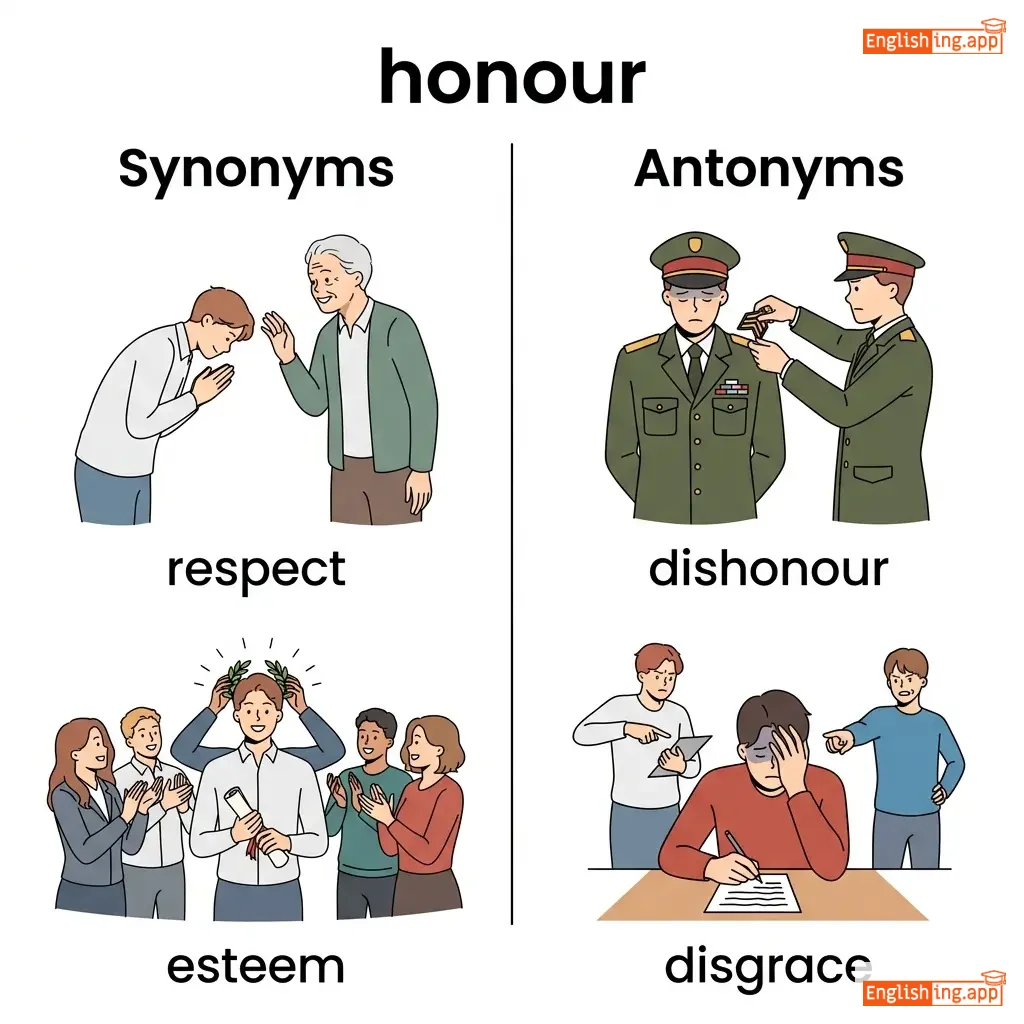
respect, esteem, revere, glorify
••••••
|
dishonour, disgrace, shame, humiliate
••••••
|
honour tradition, honour commitment, honour memory, honour request, honour agreement
••••••
|
Чтить — это уважать.
••••••
|
|
🏅
••••••
|
/ˈɒnərəbəl/
adjective
(онэрабл)
••••••
|
- •••••• |
почётный
pochetnyy
••••••
|
- •••••• | - •••••• | - •••••• | - •••••• |
deserving respect or admiration because of moral integrity; showing honesty and fairness
••••••
|
She is known as an honourable leader who always keeps her promises.
Ши из ноун эз эн онэрабл лидер ху олвэйз кипс хёр промисез.
••••••
|
Она известна как почётный лидер, который всегда держит свои обещания.
ona izvestna kak pochetnyy lider kotoryy vsegda derzhit svoi obeshchaniya
••••••
|
honourable mention
онэрабл мэншн
••••••
|
special recognition given without a prize
••••••
|
почётное упоминание
pochetnoye upominaniye
••••••
|
ethical, respectable, upright, principled, noble
••••••
|
dishonourable, corrupt, disgraceful
••••••
|
honourable person, honourable conduct, honourable duty, honourable intention
••••••
|
почётный = полный почёта, как honour
••••••
|
|
🏅
••••••
|
/ˈɒnəd/
adjective; past participle
(онэд)
••••••
|
- •••••• |
удостоенный
udostoyennyy
••••••
|
- •••••• | - •••••• | - •••••• | - •••••• |
treated with respect or distinction; feeling proud and privileged
••••••
|
She felt deeply honoured to receive the award.
Ши фелт дипли онэд ту рисив зи эворд.
••••••
|
Она была удостоена чести получить награду.
Ona byla udostoena chesti poluchit nagradu
••••••
|
honoured guest
онэд гест
••••••
|
a person who is given special respect or importance
••••••
|
почётный гость
pochetnyy gost
••••••
|
respected, esteemed, privileged, celebrated, revered
••••••
|
dishonoured, disrespected, ignored
••••••
|
honoured guest, honoured to be, honoured position, feel honoured
••••••
|
honoured = удостоенный чести
••••••
|
|
🎣
••••••
|
/hʊk/
noun, verb
(khuk)
••••••
|

|
крюк или устройство для подвешивания
kryuk ili ustroystvo dlya podveshivaniya
••••••
|
hooked
khukd
••••••
|
hooked
khukd
••••••
|
hooks
khuks
••••••
|
hooking
khuking
••••••
|
a curved piece of metal or other material used for catching, holding, or pulling something; to catch or attach with a hook
••••••
|
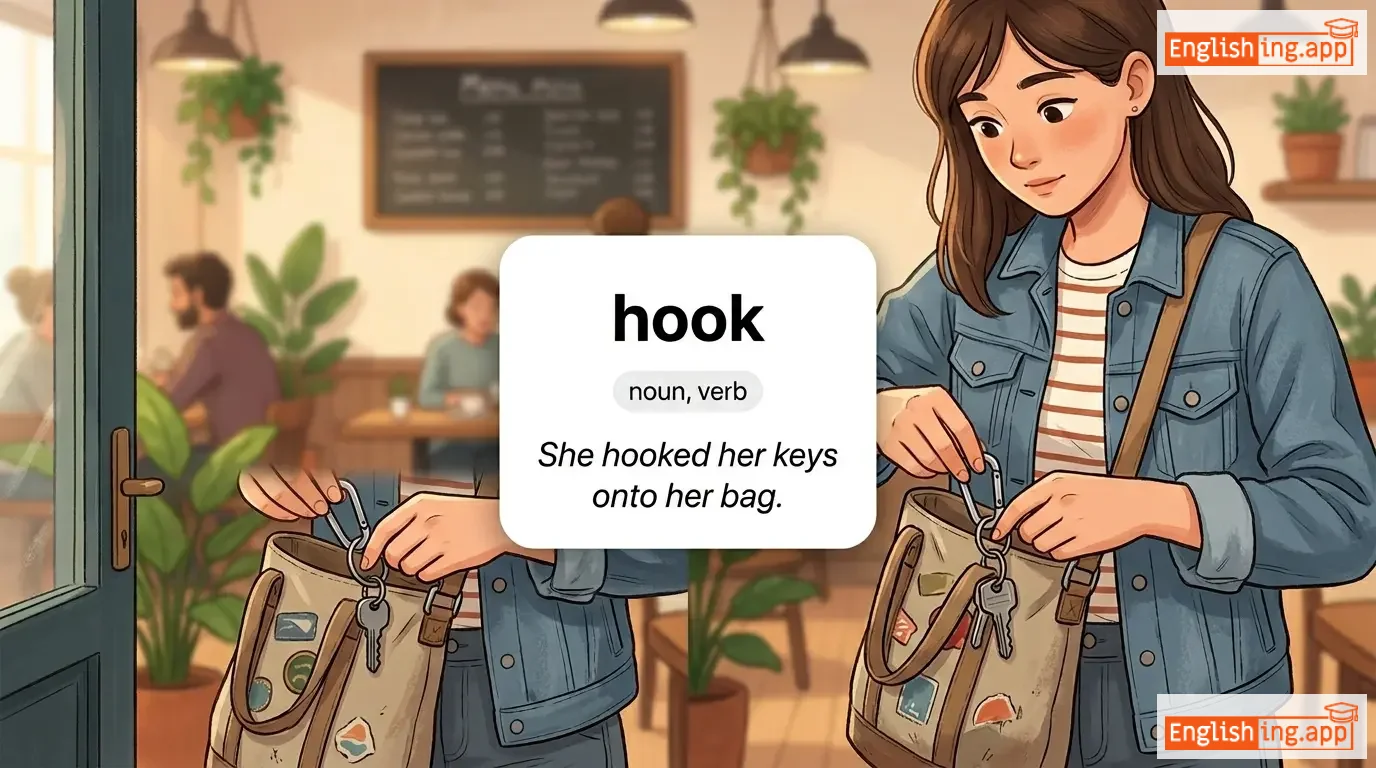
She hooked her keys onto her bag.
Она повесила свои ключи на сумку.
••••••
|
Она повесила свои ключи на сумку.
Ona povesila svoi klyuchi na sumku.
••••••
|
get hooked on
подсесть на
••••••
|
to become addicted or very interested in something
••••••
|
подсесть на что-то
podset'sya na chto-to
••••••
|
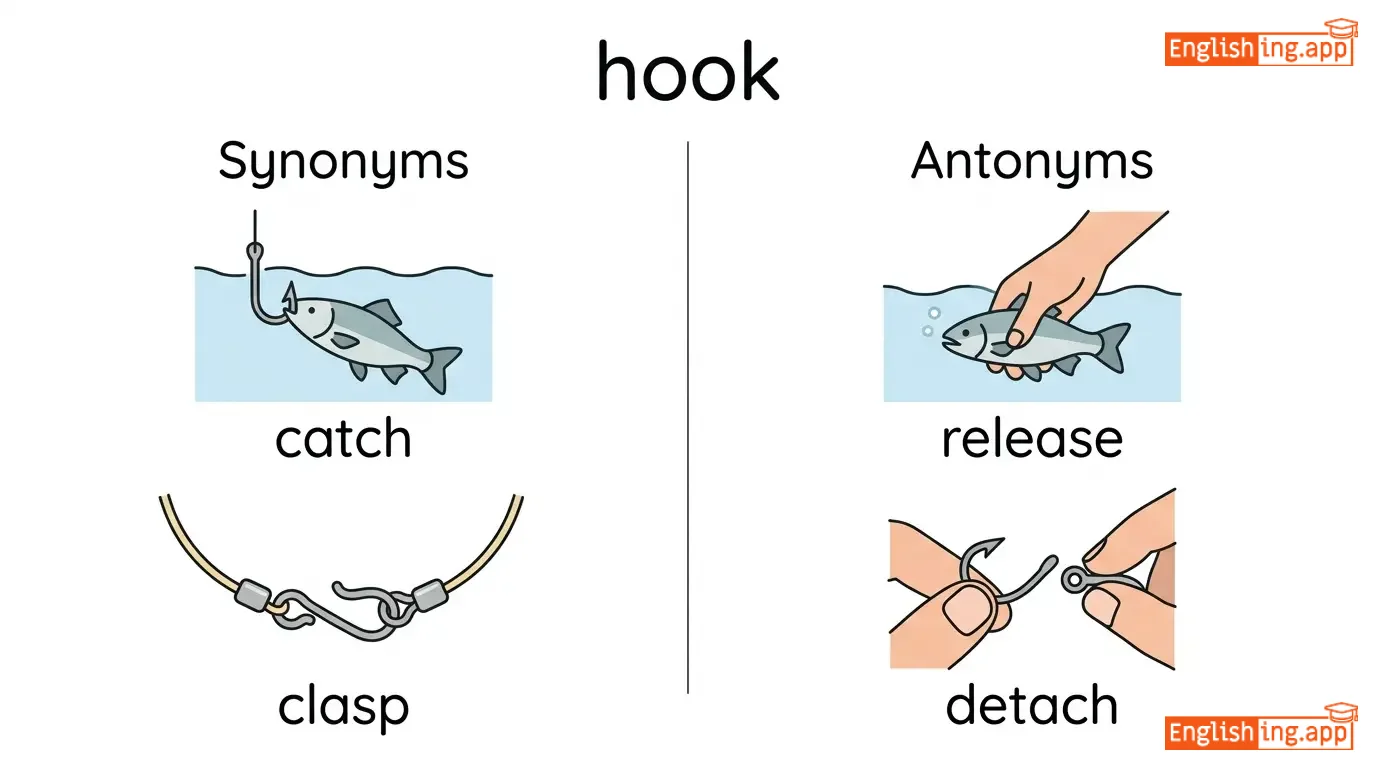
catch, clasp, fasten, attach, snag
••••••
|
release, detach, unhook
••••••
|
fish hook, coat hook, hook up, hook on
••••••
|
Крюк ловит, как и слово 'hook' — держись крепко!
••••••
|
|
🌟
••••••
|
/hoʊp/
verb
••••••
|
- •••••• | - •••••• |
hoped
••••••
|
hoped
••••••
|
hopes
••••••
|
hoping
••••••
|
To want something to happen or be true and think it is possible.
••••••
|
I hope everything goes well with your exam. |
- •••••• |
hope against hope |
To continue to hope even when the situation seems hopeless.
••••••
|
- •••••• |
wish, desire, expect, trust, optimism
••••••
|
despair, doubt
••••••
|
hope for, hope that, lose hope, give hope
••••••
|
No •••••• |
|
🌟😊
••••••
|
/ˈhoʊpfəl/
adjective
(хоупфул)
••••••
|
- •••••• |
полный надежд
polnyy nadezhd
••••••
|
- •••••• | - •••••• | - •••••• | - •••••• |
feeling or inspiring optimism about a future event; confident; optimistic
••••••
|
He remained hopeful despite the challenges.
Он оставался полным надежд несмотря на трудности.
••••••
|
Он оставался полным надежд несмотря на трудности.
On ostavalsya polnym nadezhd nesmotrya na trudnosti.
••••••
|
- •••••• | - •••••• | - •••••• |
optimistic, positive, confident
••••••
|
hopeless, pessimistic, despairing
••••••
|
hopeful sign, remain hopeful, hopeful outlook
••••••
|
Надежда на лучшее будущее
••••••
|
|
🤞
••••••
|
/ˈhoʊpfəli/
adverb
(hopfuli)
••••••
|
- •••••• |
надеюсь
nadejus
••••••
|
- •••••• | - •••••• | - •••••• | - •••••• |
in a hopeful manner; expressing hope or optimism
••••••
|
Hopefully, the weather will be nice tomorrow.
Надеюсь, завтра будет хорошая погода.
••••••
|
Надеюсь, завтра будет хорошая погода.
Nadejus, zavtra budet horoshaya pogoda.
••••••
|
- •••••• | - •••••• | - •••••• |
optimistically, confidently, expectantly, positively
••••••
|
hopelessly, pessimistically
••••••
|
say hopefully, look hopefully, hopefully waiting
••••••
|
Hopefully означает ‘надеюсь’ — 🤞 запомни, если надеяться, все будет хорошо!
••••••
|
|
🌅
••••••
|
/həˈraɪ.zən/
noun
(горизонт)
••••••
|
- •••••• |
горизонт
gorizont
••••••
|
- •••••• | - •••••• | - •••••• | - •••••• |
the line where the earth seems to meet the sky; the limit of one's knowledge, experience, or interest
••••••
|
The sun disappeared below the horizon. |
Солнце исчезло за горизонтом.
Solntse ischezlo za gorizontom.
••••••
|
broaden your horizons |
to expand one's experiences or knowledge
••••••
|
расширь свои горизонты
rasshiri svoi gorizonty
••••••
|
skyline, boundary, limit, vista, outlook
••••••
|
sky, zenith
••••••
|
on the horizon, broaden horizons, new horizon
••••••
|
Horizon означает горизонт, там, где солнце садится.
••••••
|
|
↔️
••••••
|
/ˌhɒrɪˈzɒntəl/
adjective
(хоризонтал)
••••••
|
- •••••• |
горизонтальный
gorizontalnyi
••••••
|
- •••••• | - •••••• | - •••••• | - •••••• |
parallel to the horizon; flat and level from side to side
••••••
|
The table must be perfectly horizontal to keep the glass from sliding.
Стол должен быть полностью хоризонтал.
••••••
|
Стол должен быть горизонтальным, чтобы стакан не скользил.
Stol dolzhen byt gorizontalnym chtoby stakan ne skolzil
••••••
|
horizontal line
горизонтальная линия
••••••
|
a line that runs from left to right and is parallel to the horizon
••••••
|
горизонтальная линия
gorizontalnaya liniya
••••••
|
level, flat, even, lateral
••••••
|
vertical, upright
••••••
|
horizontal line, horizontal surface, horizontal position, horizontal axis
••••••
|
Horizontal = горизонт → горизонтальный
••••••
|
|
📯
••••••
|
/hɔːrn/
noun
(хорн)
••••••
|
- •••••• |
рог, гудок
rog, gudok
••••••
|
- •••••• | - •••••• | - •••••• | - •••••• |
a hard, pointed part growing from the head of some animals; a device that makes a loud sound as a warning
••••••
|
The driver pressed the horn to warn the pedestrians. |
Водитель нажал на гудок, чтобы предупредить пешеходов.
Vozhitel nazhat na gudok, chtoby predskazat' peshekhodov.
••••••
|
toot your own horn |
to boast or brag about oneself
••••••
|
хвастаться
khvastat'sya
••••••
|
trumpet, alarm, antler, signal
••••••
|
silence, mute
••••••
|
car horn, blow horn, honk horn, horn sound
••••••
|
Нажать на гудок 📯, чтобы привлечь внимание, как рог животного!
••••••
|
|
😱
••••••
|
/ˈhɒr.ər/
noun
(хоррор)
••••••
|
- •••••• |
ужас
uzhas
••••••
|
- •••••• | - •••••• | - •••••• | - •••••• |
an intense feeling of fear, shock, or disgust
••••••
|
She screamed in horror when she saw the accident. |
Она закричала от ужаса, когда увидела аварию.
Ona zakrichala ot uzhasa, kogda uvidela avariyu.
••••••
|
a horror story |
a frightening or shocking tale
••••••
|
страшная история
strashnaya istoriya
••••••
|
fear, dread, terror, shock, fright
••••••
|
delight, joy
••••••
|
horror movie, scream in horror, sheer horror
••••••
|
Horror — это ужас, как если бы ты смотрел ужастик и чувствовал страх.
••••••
|
|
🐎
••••••
|
/hɔːrs/
noun
(хорс)
••••••
|
- •••••• |
лошадь
loshad
••••••
|
- •••••• | - •••••• | - •••••• | - •••••• |
a large, strong animal used for riding, racing, or carrying loads
••••••
|
The horse ran across the field.
дер хорс ранил акуляр
••••••
|
Лошадь бегала по полю.
Loshad' begala po polyu.
••••••
|
hold your horses
hold your horses
••••••
|
wait or be patient
••••••
|
постойте
postoyte
••••••
|
stallion, mare, pony, steed, nag
••••••
|
donkey, mule
••••••
|
ride a horse, wild horse, horse racing
••••••
|
Лошадь: представьте, что вы ездите на лошади, которая мчится по полям.
••••••
|
|
🏥
••••••
|
/ˈhɒs.pɪ.təl/
noun
(хоспитал)
••••••
|
- •••••• |
больница
bol'nitsa
••••••
|
- •••••• | - •••••• | - •••••• | - •••••• |
an institution where sick or injured people are given medical treatment
••••••
|
He was taken to the hospital after the accident. |
Его отвезли в больницу после аварии.
Ego otvezli v bol'nitsu posle avarii.
••••••
|
- •••••• | - •••••• | - •••••• |
clinic, infirmary, medical center, healthcare facility
••••••
|
home, outdoors
••••••
|
go to hospital, hospital bed, hospital staff
••••••
|
Больница - это место, где вас лечат после болезни или травмы.
••••••
|
|
🎤
••••••
|
/hoʊst/
noun, verb
(хост)
••••••
|
- •••••• |
хозяин
hozyain
••••••
|
hosted
хостед
••••••
|
hosted
хостед
••••••
|
hosts
хостс
••••••
|
hosting
хостинг
••••••
|
a person who receives or entertains guests; to organize and provide for an event
••••••
|
She will host the conference next week.
Она будет принимать конференцию на следующей неделе.
••••••
|
Она будет принимать конференцию на следующей неделе.
Ona budet prinimat' konferentsiyu na sleduyushchey nedele.
••••••
|
play host
быть хозяином
••••••
|
to act as the host for an event or occasion
••••••
|
быть хозяином
byt' khozyainom
••••••
|
presenter, entertainer, emcee, organizer, moderator
••••••
|
guest, visitor
••••••
|
host a party, host an event, web host
••••••
|
Хозяин - тот, кто организует и принимает людей, как хозяин дома.
••••••
|
|
⛓️
••••••
|
/ˈhɑːstɪdʒ/
noun
(хостэдж)
••••••
|
- •••••• |
заложник
zalozhnik
••••••
|
- •••••• | - •••••• | - •••••• | - •••••• |
A person seized or held as security for the fulfillment of a condition.
••••••
|
The rebels took several people as hostages. |
Повстанцы взяли нескольких человек в заложники.
Povstantsy vzyali neskol'ko chelovek v zalozhniki.
••••••
|
held hostage |
Kept under control against one’s will
••••••
|
держать в заложниках
derzhat' v zalozhnikakh
••••••
|
captive, prisoner, detainee, pawn
••••••
|
liberated, free
••••••
|
take hostage, release hostage, held hostage
••••••
|
Hostage = Zalozhnik, как в 'host', но в заложниках.
••••••
|
|
😠
••••••
|
/ˈhɒstaɪl/
adjective
(хостайл)
••••••
|
- •••••• |
враждебный
vrazhdebny
••••••
|
- •••••• | - •••••• | - •••••• | - •••••• |
showing or feeling opposition, dislike, or hatred
••••••
|
The soldiers entered a hostile territory. |
Солдаты вошли на враждебную территорию.
Soldaty voshli na vrazhdebnuu territoriu.
••••••
|
hostile takeover |
an acquisition of a company opposed by the company's management
••••••
|
враждебное поглощение
vrazhdebnoe pogloshchenie
••••••
|
aggressive, antagonistic, unfriendly, opposed, bitter
••••••
|
friendly, peaceful, supportive
••••••
|
hostile environment, hostile forces, hostile attitude, hostile takeover
••••••
|
Враждебный – как враждебный хост
••••••
|
|
😠
••••••
|
/hɒˈstɪləti/
noun
(хостилити)
••••••
|
- •••••• |
враждебность
vrazhdebnost
••••••
|
- •••••• | - •••••• | - •••••• | - •••••• |
hostile behavior; unfriendliness or opposition
••••••
|
The negotiations ended in an atmosphere of hostility. |
Переговоры завершились в атмосфере враждебности.
Peregovory zavershilis v atmosfere vrazhdebnosti.
••••••
|
open hostility |
a clear and obvious display of unfriendly feelings
••••••
|
открытая враждебность
otkrytaya vrazhdebnost
••••••
|
animosity, antagonism, enmity, resentment, bitterness
••••••
|
friendliness, goodwill, harmony
••••••
|
open hostility, mutual hostility, hostility towards, hostility between
••••••
|
Hostility means hostile feelings, in Russian враждебность = hostility.
••••••
|
|
🔥
••••••
|
/hɒt/
adjective
(khot)
••••••
|
- •••••• |
горячий
goryachiy
••••••
|
- •••••• | - •••••• | - •••••• | - •••••• |
Having a high degree of heat or a high temperature.
••••••
|
The soup is too hot to eat right now.
Суп слишком горячий, чтобы есть сейчас.
••••••
|
Суп слишком горячий, чтобы есть сейчас.
Sup slishkom goryachiy, chtoby est' seychas.
••••••
|
hot topic
горячая тема
••••••
|
a subject that is currently popular or controversial
••••••
|
горячая тема
goryachaya tema
••••••
|
warm, heated, scorching, burning, fiery
••••••
|
cold, cool, chilly
••••••
|
hot weather, hot drink, hot meal, hot summer, hot topic
••••••
|
Hot значит горячий, как 'Hot tea' значит горячий чай.
••••••
|
|
🏨
••••••
|
/hoʊˈtɛl/
noun
(ho-tel)
••••••
|
- •••••• |
отель
otel
••••••
|
- •••••• | - •••••• | - •••••• | - •••••• |
A building where people pay to stay and sleep, usually for short periods.
••••••
|
We stayed at a hotel near the beach. |
Мы остановились в отеле рядом с пляжем.
My ostanovilis' v otele ryadom s plyazhem.
••••••
|
check into a hotel |
to register and begin staying in a hotel
••••••
|
зарегистрироваться в отеле
zaregistrirovatsya v otele
••••••
|
inn, lodge, hostel, resort, guesthouse
••••••
|
home, house
••••••
|
luxury hotel, hotel room, hotel staff, book a hotel, check into hotel
••••••
|
Отель значит отель, запомни 'Отель - место для отдыха и еды'.
••••••
|
|
⏰
••••••
|
/ˈaʊər/
noun
••••••
|
- •••••• | - •••••• | - •••••• | - •••••• | - •••••• | - •••••• |
A period of time equal to 60 minutes.
••••••
|
The meeting lasted for two hours. |
- •••••• |
rush hour |
the busy part of the day when traffic is heavy
••••••
|
- •••••• |
sixty minutes, time period, duration, interval
••••••
|
moment, instant
••••••
|
spend an hour, half an hour, working hours, rush hour
••••••
|
No •••••• |
|
🏠
••••••
|
/haʊs/
noun
(хаус)
••••••
|
- •••••• |
дом
dom
••••••
|
- •••••• | - •••••• | - •••••• | - •••••• |
A building for people to live in, usually with rooms and a roof.
••••••
|
They bought a new house in the city.
Они купили новый дом в городе.
••••••
|
Они купили новый дом в городе.
Oni kupili novyy dom v gorode.
••••••
|
bring the house down
снести дом
••••••
|
to make the audience laugh or applaud loudly
••••••
|
расмешить или заставить зрителей аплодировать
rasmeshit' ili zastavit' zriteley aplyodirovat'
••••••
|
home, residence, dwelling, shelter, abode
••••••
|
outside, open space
••••••
|
buy a house, build a house, rent a house, move into a house
••••••
|
Дом - это место для жизни, дом - легко запомнить.
••••••
|

