|
表情符号
|
单词 | Images | 翻译 | 过去时 | 过去分词 | 第三人称单数 | 动名词 | 含义 | 例句 | 例句翻译 | 示例表达 | 示例表达含义 | 示例表达翻译 | 同义词 | 反义词 | 搭配词 | 助记符 |
|---|---|---|---|---|---|---|---|---|---|---|---|---|---|---|---|---|---|
|
⚖️
••••••
|
/dɪˈskrɛʃən/
noun
(迪斯克雷申)
••••••
|

|
谨慎
jinshen
••••••
|
- •••••• | - •••••• | - •••••• | - •••••• |
the quality of behaving or speaking in a way to avoid causing offense or revealing private information; the freedom to decide what should be done in a particular situation
••••••
|
The manager acted with discretion in handling the sensitive matter. |
经理在处理敏感问题时采取了谨慎的行动。
Jīnglǐ zài chǔlǐ mǐngǎn wèntí shí cǎiqǔle jǐnshèn de xíngdòng.
••••••
|
at one's discretion |
according to one's own judgment or decision
••••••
|
按照自己的判断
ànzhào zìjǐ de pànduàn
••••••
|
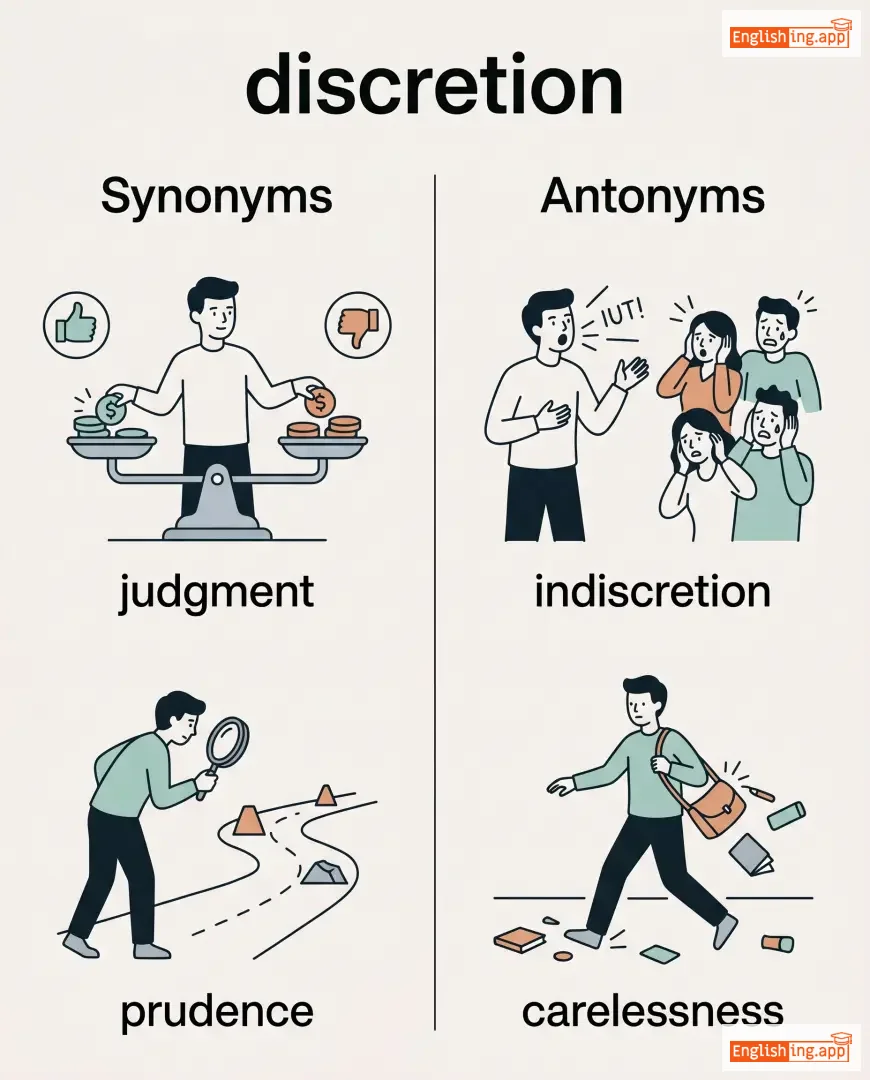
judgment, prudence, caution, choice, option
••••••
|
indiscretion, carelessness, compulsion
••••••
|
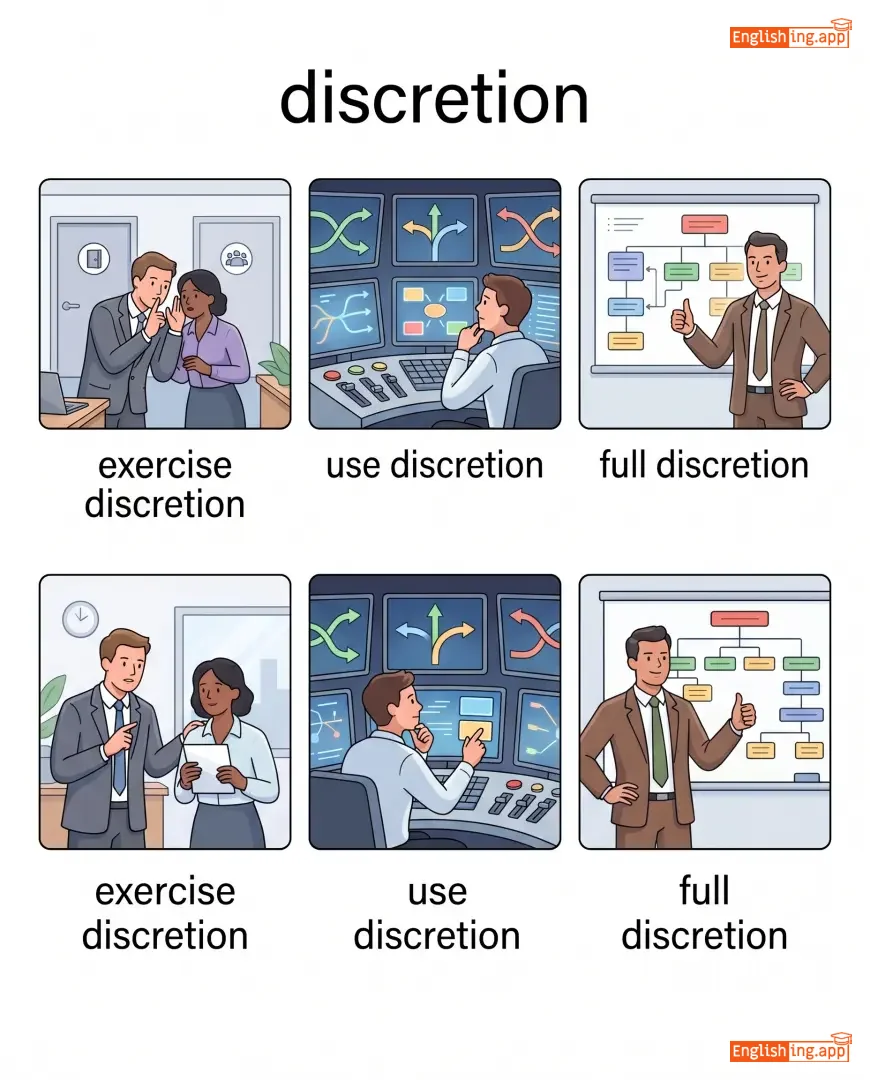
exercise discretion, use discretion, full discretion, sole discretion
••••••
|
Discretion是Decision的选择与谨慎。
••••••
|
|
💬
••••••
|
/dɪˈskʌs/
verb
(di-sku-si)
••••••
|
- •••••• |
讨论
taolun
••••••
|
discussed
di-sku-si-t
••••••
|
discussed
di-sku-si-t
••••••
|
discusses
di-sku-si-s
••••••
|
discussing
di-sku-si-ng
••••••
|
To talk about something with another person or group in detail.
••••••
|
We need to discuss the project before finalizing it.
我们需要在完成之前讨论这个项目。
••••••
|
我们需要在完成之前讨论这个项目。
Wo men xu yao zai wan cheng zhi qian taolun zhe ge xiangmu.
••••••
|
discuss matters
讨论事务
••••••
|
to talk about issues or problems
••••••
|
讨论事务
taolun shiwuh
••••••
|
talk, debate, confer, deliberate, examine
••••••
|
ignore, avoid
••••••
|
discuss a plan, discuss issues, discuss openly, discuss further
••••••
|
讨论是与他人一起深入交谈的意思。
••••••
|
|
💬
••••••
|
/dɪˈskʌʃən/
noun
(dɪˈskʌʃən)
••••••
|
- •••••• |
讨论
taolun
••••••
|
- •••••• | - •••••• | - •••••• | - •••••• |
The action or process of talking about something in order to reach a decision or share ideas.
••••••
|
The project needs more discussion before moving forward. |
该项目需要更多的讨论,然后才能继续进行。
Gāi xiàngmù xūyào gèng duō de tǎolùn, ránhòu cáinéng jìxù jìnxíng.
••••••
|
open for discussion |
Available to be debated or considered
••••••
|
开放讨论
Kāifàng tǎolùn
••••••
|
conversation, dialogue, debate, talk, consultation
••••••
|
silence, monologue
••••••
|
group discussion, open discussion, detailed discussion, lively discussion
••••••
|
讨论:与他人交流,探讨想法。
••••••
|
|
🦠
••••••
|
/dɪˈziːz/
noun
(dɪˈziːz)
••••••
|
- •••••• |
疾病
jíbìng
••••••
|
- •••••• | - •••••• | - •••••• | - •••••• |
An illness or medical condition that affects the body or mind.
••••••
|
The doctor is researching a cure for the disease. |
医生正在研究治疗这种疾病的方法。
Yīshēng zhèngzài yánjiū zhìliáo zhè zhǒng jíbìng de fāngfǎ.
••••••
|
heart disease |
A general term for conditions affecting the heart.
••••••
|
心脏病
xīnzàng bìng
••••••
|
illness, sickness, ailment, disorder, infection
••••••
|
health, wellness
••••••
|
infectious disease, chronic disease, disease prevention, disease outbreak
••••••
|
Disease意味着疾病,记住:如果身体没有舒适感,那么它就是疾病。
••••••
|
|
🤢
••••••
|
/dɪsˈɡʌst/
noun
(迪斯格斯特)
••••••
|
- •••••• |
厌恶
yànwù
••••••
|
- •••••• | - •••••• | - •••••• | - •••••• |
a feeling of revulsion or strong disapproval aroused by something unpleasant
••••••
|
She expressed her disgust at the politician's corrupt behavior openly. |
她公开表达了对政治家腐败行为的厌恶。
Ta gongkai biaoda le dui zhengzhijia fubai xingwei de yànwù.
••••••
|
- •••••• | - •••••• | - •••••• |
revulsion, repugnance, distaste, loathing
••••••
|
delight, pleasure, admiration, approval
••••••
|
utter disgust, express disgust, fill with disgust
••••••
|
厌恶是对令人讨厌事物的反应,就像看到腐败现象时的反感。
••••••
|
|
🤢
••••••
|
/dɪsˈɡʌstɪd/
adjective
(迪斯嘎斯特德)
••••••
|
- •••••• |
厌恶的
yanwu de
••••••
|
- •••••• | - •••••• | - •••••• | - •••••• |
feeling a strong sense of dislike or revulsion
••••••
|
She was disgusted by the way he treated the animals.
她对他对待动物的方式感到厌恶。
••••••
|
她对他对待动物的方式感到厌恶。
Ta dui ta duidai dongwu de fangshi gandao yanwu.
••••••
|
turn your stomach
令人作呕
••••••
|
to cause extreme disgust or nausea
••••••
|
令人作呕
lingren zuoou
••••••
|
repulsed, revolted, horrified, nauseated
••••••
|
pleased, delighted, satisfied
••••••
|
disgusted look, utterly disgusted, feel disgusted, visibly disgusted
••••••
|
厌恶的 = disgusted, 想象恶心的表情。
••••••
|
|
🤢
••••••
|
/dɪsˈɡʌstɪŋ/
adjective
(迪斯加斯廷)
••••••
|
- •••••• |
令人作呕
ling ren zuo ou
••••••
|
- •••••• | - •••••• | - •••••• | - •••••• |
extremely unpleasant or offensive; causing strong dislike or revulsion
••••••
|
The smell coming from the trash can was absolutely disgusting.
垃圾桶散发的气味非常迪斯加斯廷。
••••••
|
垃圾桶散发的气味非常令人作呕。
la ji tong san fa de qi wei fei chang ling ren zuo ou
••••••
|
- •••••• | - •••••• | - •••••• |
repulsive, revolting, nauseating, offensive, foul
••••••
|
pleasant, appealing, attractive
••••••
|
disgusting behavior, disgusting smell, absolutely disgusting, find disgusting
••••••
|
Think 'ling ren zuo ou' as 'makes your stomach go ouch!'
••••••
|
|
🍽️
••••••
|
/dɪʃ/
noun
(迪什)
••••••
|
- •••••• |
盘子 / 菜肴
pánzi / càiyáo
••••••
|
- •••••• | - •••••• | - •••••• | - •••••• |
A shallow container for serving or preparing food; also a particular kind of food prepared.
••••••
|
She prepared a delicious pasta dish for dinner. |
她为晚餐准备了美味的意大利面菜肴。
Tā wèi wǎncān zhǔnbèile měiwèi de yìdàlì miàn càiyáo.
••••••
|
dish out |
To distribute or serve something, often food or criticism.
••••••
|
分发食物
fēn fā shíwù
••••••
|
plate, bowl, meal, course, recipe
••••••
|
drink, beverage
••••••
|
main dish, side dish, traditional dish, favorite dish
••••••
|
盘子意味着容器或菜肴,记住 - 妈妈的菜永远是最好的菜肴。
••••••
|
|
🤥
••••••
|
/dɪsˈɑːnɪst/
adjective
(dishonest)
••••••
|
- •••••• |
不诚实
bu chengshi
••••••
|
- •••••• | - •••••• | - •••••• | - •••••• |
Behaving in an untruthful or deceitful way; not honest.
••••••
|
It is dishonest to cheat in exams. |
在考试中作弊是不诚实的。
Zai kaoshi zhong zuobi shi bu chengshi de.
••••••
|
dishonest gain |
Wealth or advantage obtained through unfair or illegal means
••••••
|
不诚实的收获
bu chengshi de shouhuo
••••••
|
deceitful, fraudulent, untruthful, corrupt
••••••
|
honest, truthful, sincere
••••••
|
dishonest act, dishonest behavior, dishonest person
••••••
|
Dishonest 与诚实相对,意思是不诚实
••••••
|
|
👎
••••••
|
/dɪsˈlaɪk/
verb, noun
(迪斯莱克)
••••••
|
- •••••• |
不喜欢
buxihuan
••••••
|
disliked
迪斯莱克德
••••••
|
disliked
迪斯莱克德
••••••
|
dislikes
迪斯莱克斯
••••••
|
disliking
迪斯莱克ing
••••••
|
to feel distaste or aversion for someone or something; a feeling of aversion
••••••
|
I really dislike eating spicy food.
我真的不喜欢吃辣的食物。
••••••
|
我真的不喜欢吃辣的食物。
Wo zhen de bu xihuan chi la de shiwu
••••••
|
nothing to dislike
没有什么不喜欢的
••••••
|
used to say something is completely acceptable or agreeable
••••••
|
没有什么不喜欢的
meiyou shenme bu xihuan de
••••••
|
detest, loathe, abhor, hate
••••••
|
like, enjoy, love
••••••
|
dislike intensely, dislike strongly, express dislike, personal dislike, mutual dislike
••••••
|
Dislike = 不喜欢, 很容易记住中文意思。
••••••
|
|
🚪
••••••
|
/dɪsˈmɪs/
verb
(迪斯米斯)
••••••
|
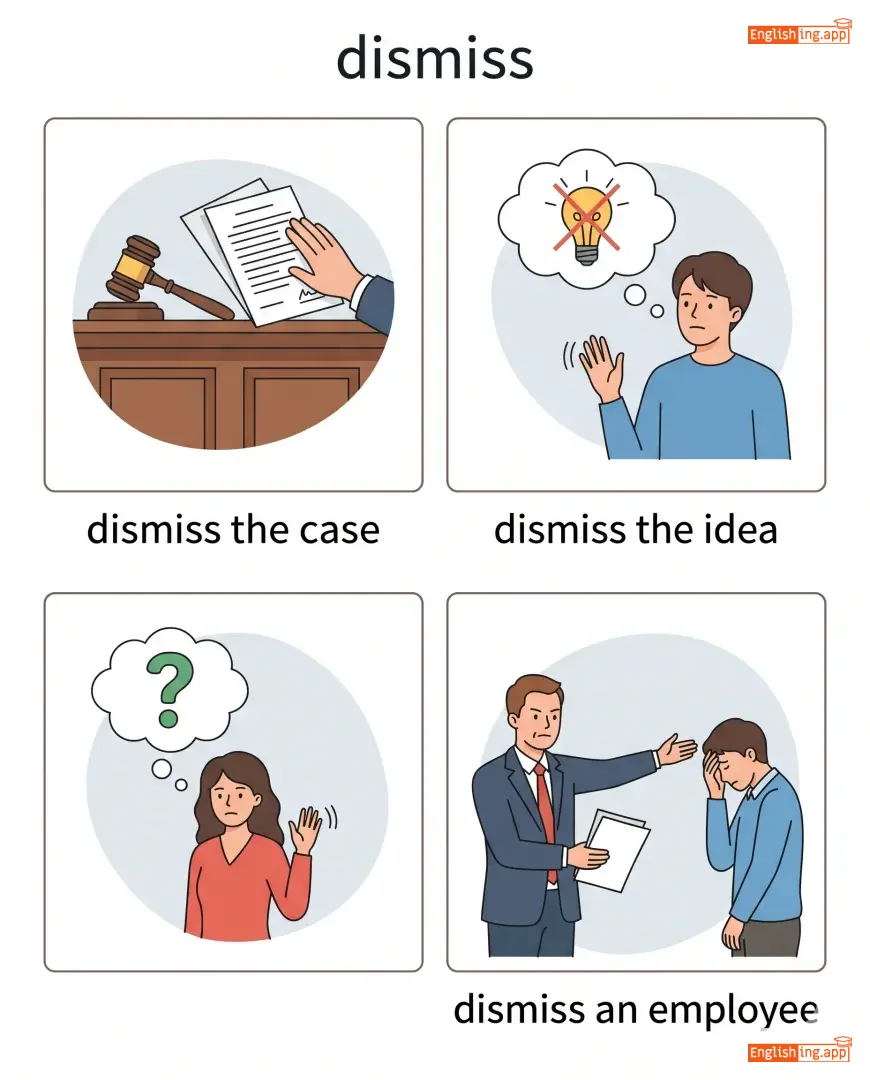
|
解雇, 否定
jiěgù, fǒudìng
••••••
|
dismissed
迪斯米斯德
••••••
|
dismissed
迪斯米斯德
••••••
|
dismisses
迪斯米塞斯
••••••
|
dismissing
迪斯米辛
••••••
|
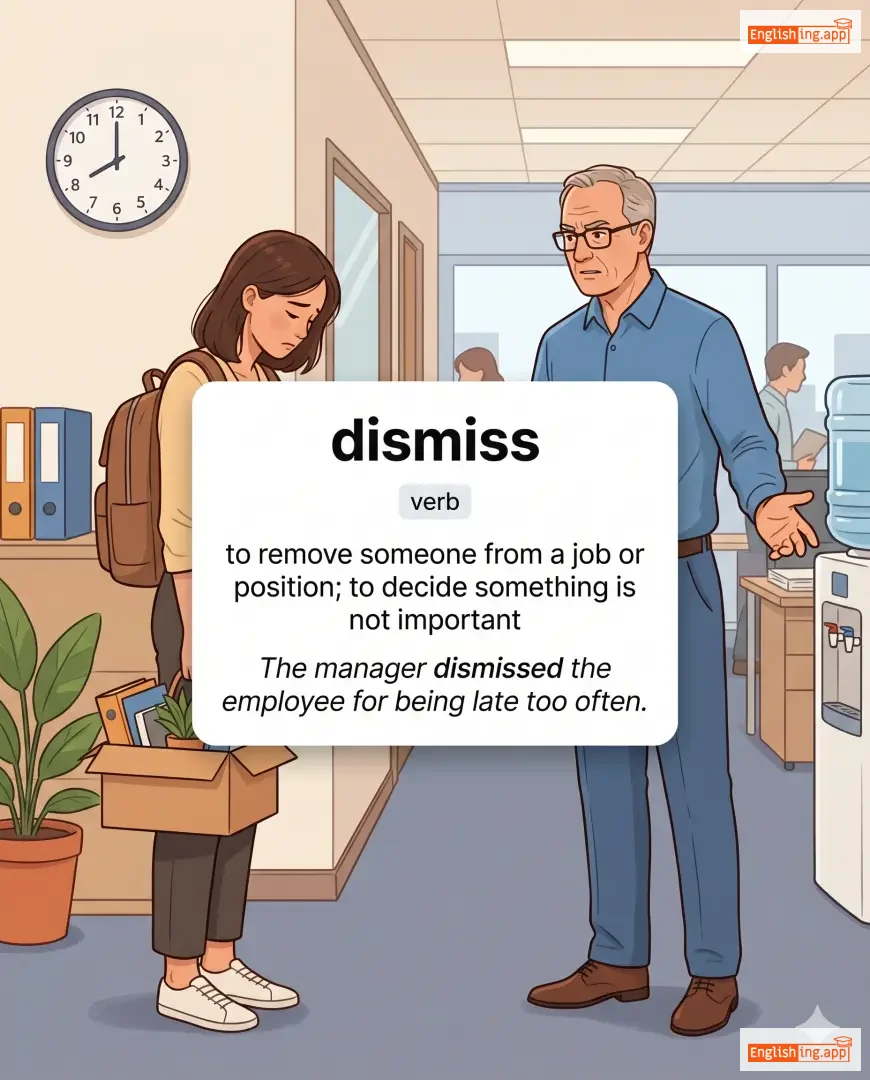
to remove someone from a job or position; to decide something is not important
••••••
|
The manager dismissed the employee for being late too often.
经理因为员工经常迟到而解雇了他。
••••••
|
经理因为员工经常迟到而解雇了他。
Jīnglǐ yīnwèi yuángōng jīngcháng chídào ér jiěgùle tā.
••••••
|
dismiss out of hand
立刻否定
••••••
|
to reject something immediately without considering it
••••••
|
立刻否定
lìkè fǒudìng
••••••
|
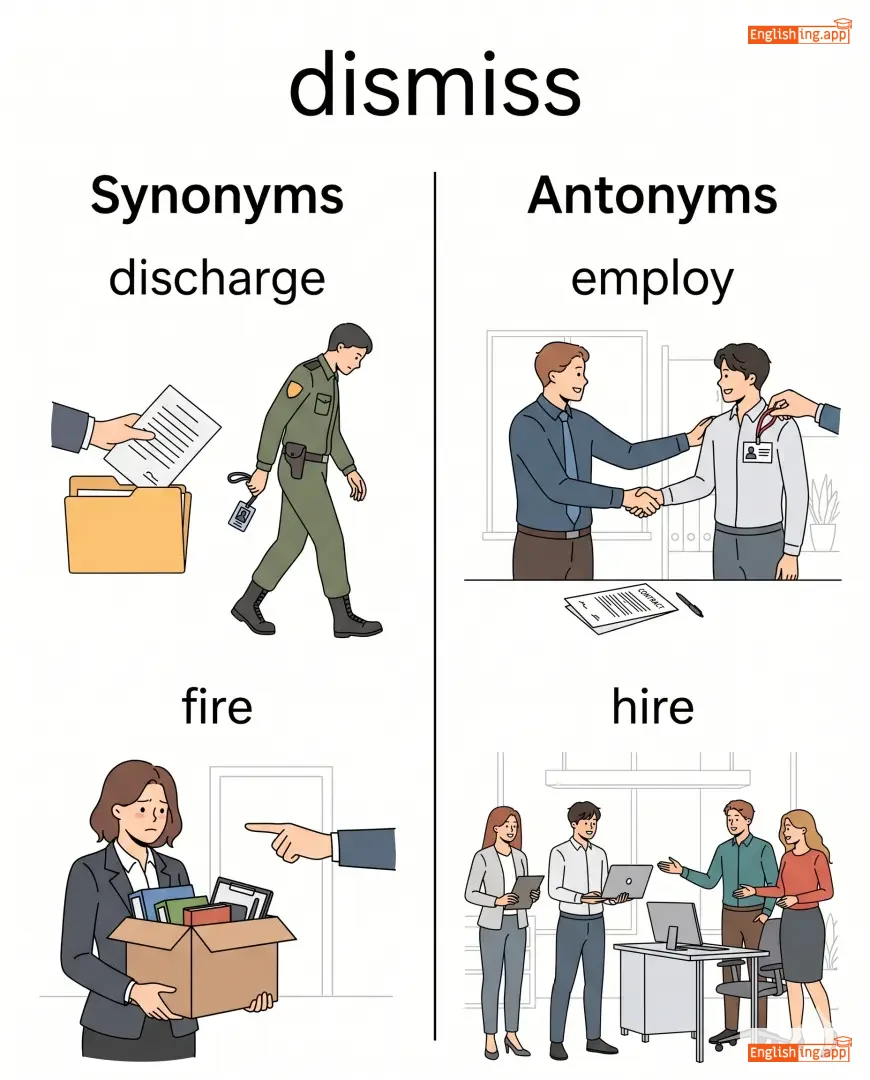
discharge, fire, release, reject, expel
••••••
|
employ, hire, accept
••••••
|
dismiss the case, dismiss the idea, dismiss an employee, dismiss charges
••••••
|
Dis + Miss = 被解雇
••••••
|
|
📄
••••••
|
/dɪsˈmɪsl̩/
noun
(解雇)
••••••
|
- •••••• |
解雇, 拒绝
jiěgù, jùjué
••••••
|
- •••••• | - •••••• | - •••••• | - •••••• |
the act of removing someone from their job; the act of treating something as unimportant
••••••
|
His unfair dismissal led to a lawsuit against the company. |
他的不公正解雇导致了对公司的诉讼。
Tā de bù gōngzhèng jiěgù dǎozhì le duì gōngsī de sùsòng.
••••••
|
- •••••• | - •••••• | - •••••• |
termination, firing, discharge, expulsion, rejection
••••••
|
employment, acceptance, retention
••••••
|
wrongful dismissal, unfair dismissal, dismissal from work, dismissal of charges
••••••
|
Dismiss + AL = 被解雇的结果 (解雇)
••••••
|
|
⚠️
••••••
|
/dɪsˈɔːrdər/
noun
(disorder)
••••••
|
- •••••• |
紊乱
wěnluàn
••••••
|
- •••••• | - •••••• | - •••••• | - •••••• |
A state of confusion or lack of order; also a medical or mental condition.
••••••
|
The protest ended in disorder when the crowd became violent. |
抗议活动在群众变得暴力后陷入了混乱。
Kàngyì huódòng zài qúnzhòng biàn dé bàolì hòu xiànrùle hùnluàn.
••••••
|
eating disorder |
A medical condition involving abnormal eating habits.
••••••
|
饮食失调
yǐnshí shītiáo
••••••
|
confusion, chaos, disturbance, illness, ailment
••••••
|
order, organization, harmony
••••••
|
mental disorder, physical disorder, cause disorder, public disorder
••••••
|
Disorder意味着紊乱,记住 - 没有秩序就有紊乱。
••••••
|
|
🏚️
••••••
|
/dɪsˈpleɪs/
verb
(dɪsˈpleɪs)
••••••
|
- •••••• |
驱逐
qūzhú
••••••
|
displaced
dɪsˈpleɪst
••••••
|
displaced
dɪsˈpleɪst
••••••
|
displaces
dɪsˈpleɪsɪz
••••••
|
displacing
dɪsˈpleɪsɪŋ
••••••
|
To force someone or something out of its usual place or position.
••••••
|
The flood displaced hundreds of families from their homes.
洪水将数百个家庭从他们的家中驱逐。
••••••
|
洪水将数百个家庭从他们的家中驱逐。
Hóngshuǐ jiāng shù bǎi gè jiātíng cóng tāmen de jiā zhōng qūzhú.
••••••
|
displaced person
流离失所的人
••••••
|
someone forced to leave their home, especially because of war or disaster
••••••
|
流离失所的人
Liúlí shīsuǒ de rén
••••••
|
remove, replace, shift, expel, oust
••••••
|
retain, keep, maintain
••••••
|
displace workers, displace people, displace water, displace families
••••••
|
Displace就像驱逐一样,意味着把某物从原来的地方带走。
••••••
|
|
🖥️
••••••
|
/dɪˈspleɪ/
verb
(迪斯普雷)
••••••
|
- •••••• |
展示
zhǎnshì
••••••
|
displayed
展示过
••••••
|
displayed
展示过
••••••
|
displays
展示
••••••
|
displaying
展示中
••••••
|
To show or exhibit something to be seen.
••••••
|
The shop displayed its new products in the window.
商店在橱窗里展示了新产品。
••••••
|
商店在橱窗里展示了新产品。
Shāngdiàn zài chūchuāng lǐ zhǎnshìle xīn chǎnpǐn.
••••••
|
on display
展示中
••••••
|
Visible for people to see, usually in a public place.
••••••
|
展示中
zhǎnshì zhōng
••••••
|
show, exhibit, present, demonstrate, reveal
••••••
|
hide, conceal, cover
••••••
|
display information, display screen, proudly display, digital display
••••••
|
Display 意味着展示,就像在商店的展示窗里看到的新产品。
••••••
|
|
🗑️
••••••
|
/dɪsˈpoʊzl/
noun
(dīspóuzhī)
••••••
|
- •••••• |
处置
chuzhi
••••••
|
- •••••• | - •••••• | - •••••• | - •••••• |
the action or process of getting rid of something
••••••
|
The disposal of waste is crucial for maintaining a clean environment.
废物处理对于保持清洁的环境至关重要。
••••••
|
废物处理对于保持清洁的环境至关重要。
Feiwu chuzhi dui yu baochi qingjie de huanjing zhiguang zhongyao.
••••••
|
- •••••• | - •••••• | - •••••• |
removal, elimination, clearance, junking
••••••
|
retention, preservation
••••••
|
waste disposal, disposal process, proper disposal, disposal site
••••••
|
When you DISPOSE (处置) of waste, you 'dispose' of it in a trash can (垃圾桶).
••••••
|
|
🗑️
••••••
|
/dɪˈspoʊz/
verb
(迪斯波兹)
••••••
|
- •••••• |
丢弃
diuqi
••••••
|
disposed
迪斯波兹德
••••••
|
disposed
迪斯波兹德
••••••
|
disposes
迪斯波兹斯
••••••
|
disposing
迪斯波兹英
••••••
|
To get rid of something, or to arrange or incline towards something.
••••••
|
He disposed of the old furniture responsibly.
他负责任地处理了那些旧家具。
••••••
|
他负责任地处理了那些旧家具。
Ta fu zerende chuli le naxie jiu jiaju.
••••••
|
dispose of
处置
••••••
|
to throw away or get rid of something
••••••
|
处置
chuzhi
••••••
|
discard, throw away, eliminate, arrange, incline
••••••
|
keep, retain, preserve
••••••
|
dispose of waste, properly dispose, dispose quickly, dispose carefully
••••••
|
Dispose = 你要丢弃不需要的东西,就像清理垃圾。
••••••
|
|
⚔️
••••••
|
/dɪˈspjuːt/
noun/verb
(迪斯普特)
••••••
|
- •••••• |
争议, 争论
zhēngyì, zhēnglùn
••••••
|
disputed
争议
••••••
|
disputed
争议
••••••
|
disputes
争议
••••••
|
disputing
争论
••••••
|
a disagreement or argument about something important
••••••
|
The two countries are in dispute over the border issue.
两个国家在边界问题上存在争议。
••••••
|
两个国家在边界问题上存在争议。
Liǎng gè guójiā zài biānjiè wèntí shàng cúnzài zhēngyì.
••••••
|
settle a dispute
解决争议
••••••
|
to resolve a disagreement
••••••
|
解决争议
jiějué zhēngyì
••••••
|
conflict, quarrel, argument, debate, disagreement
••••••
|
agreement, harmony, peace
••••••
|
trade dispute, legal dispute, border dispute, dispute resolution
••••••
|
Dispute 听起来像 'dis' + 'put' → 不在一起 → 意思是争论或争议
••••••
|
|
💥
••••••
|
/dɪsˈrʌpt/
verb
(迪斯鲁普特)
••••••
|
|
破坏
pohuai
••••••
|
disrupted
迪斯鲁普特德
••••••
|
disrupted
迪斯鲁普特德
••••••
|
disrupts
迪斯鲁普特斯
••••••
|
disrupting
迪斯鲁普廷
••••••
|
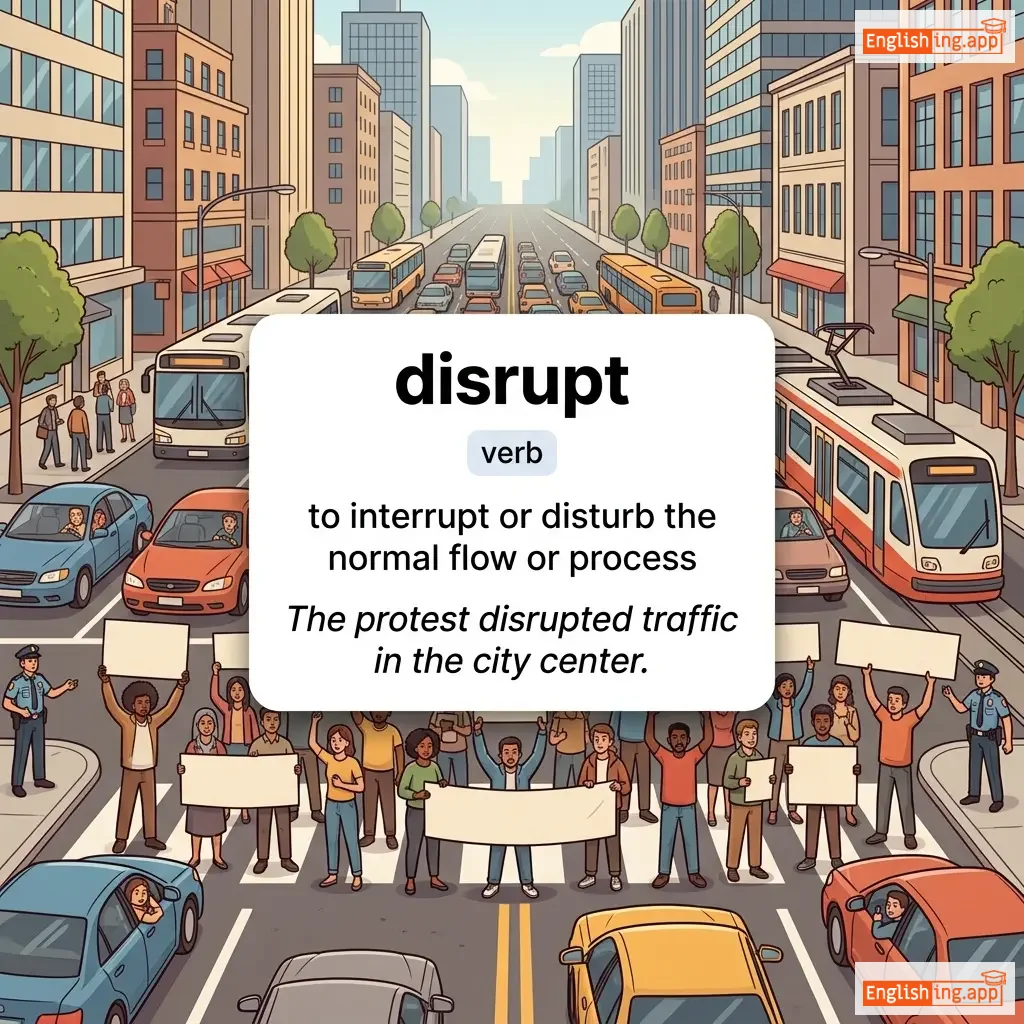
to interrupt or disturb the normal flow or process
••••••
|
The protest disrupted traffic in the city center.
抗议活动扰乱了市中心的交通。
••••••
|
抗议活动扰乱了市中心的交通。
Kàngyì huódòng rǎoluànle shì zhōngxīn de jiāotōng.
••••••
|
disrupt the status quo
打破现状
••••••
|
to change the established way of doing things
••••••
|
打破现状
dǎpò xiànzhuàng
••••••
|
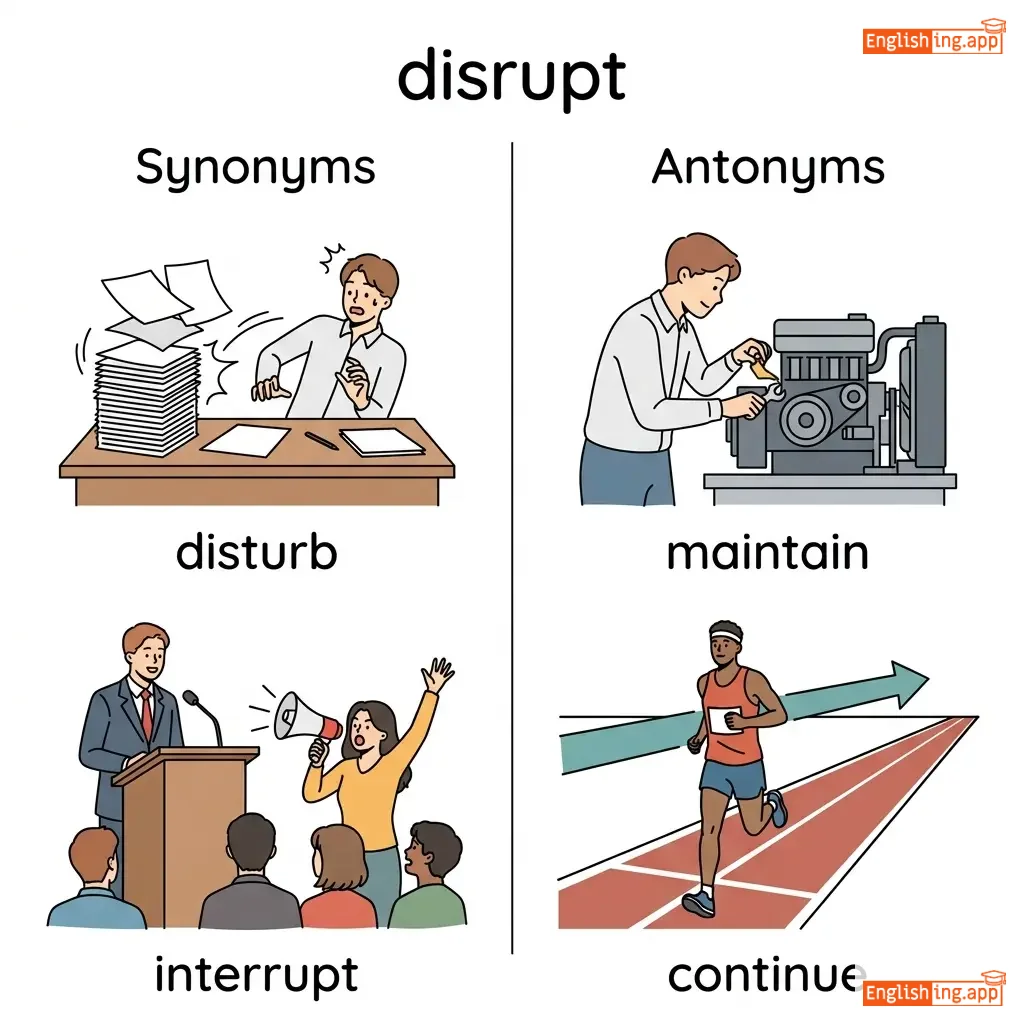
disturb, interrupt, interfere, derail, unsettle
••••••
|
maintain, continue, sustain
••••••
|
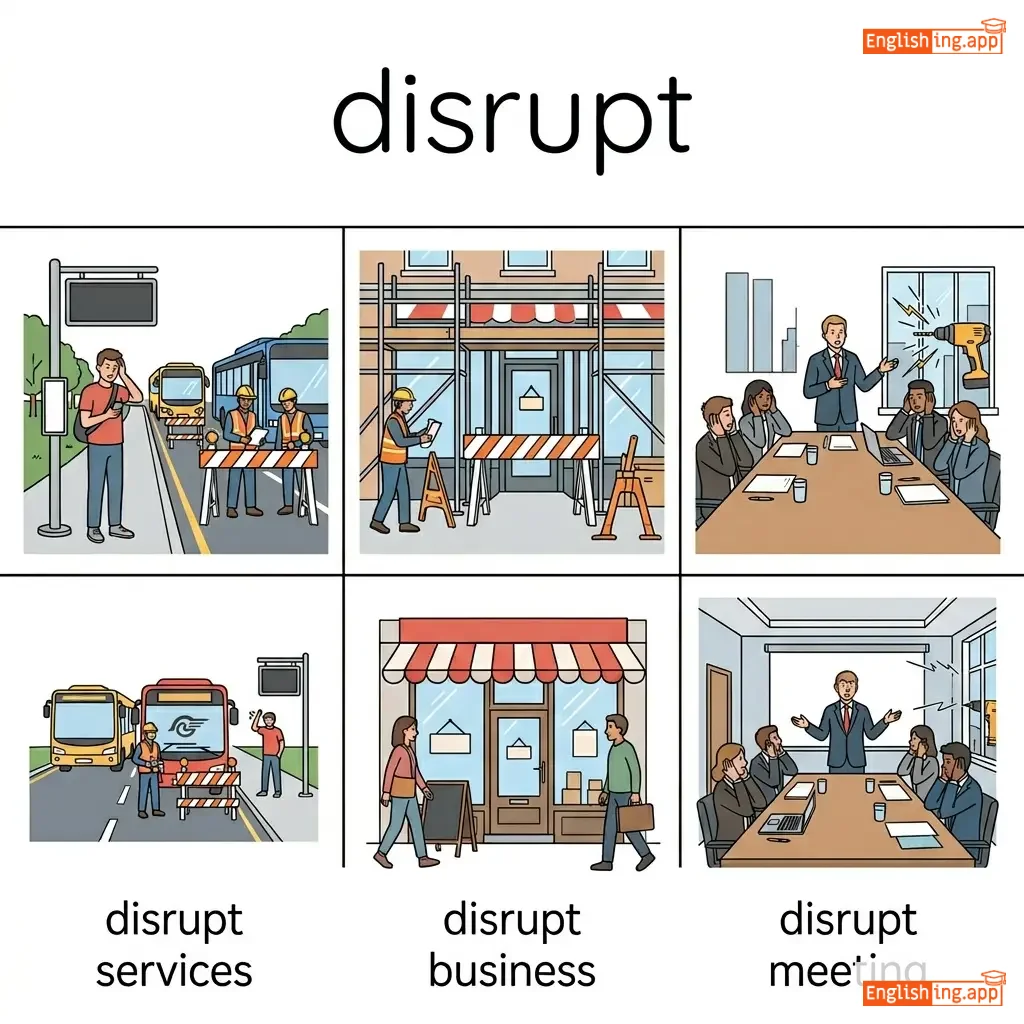
disrupt services, disrupt business, disrupt meeting
••••••
|
Disrupt 就像打破规则,抗议活动打破了正常交通。
••••••
|
|
⚠️
••••••
|
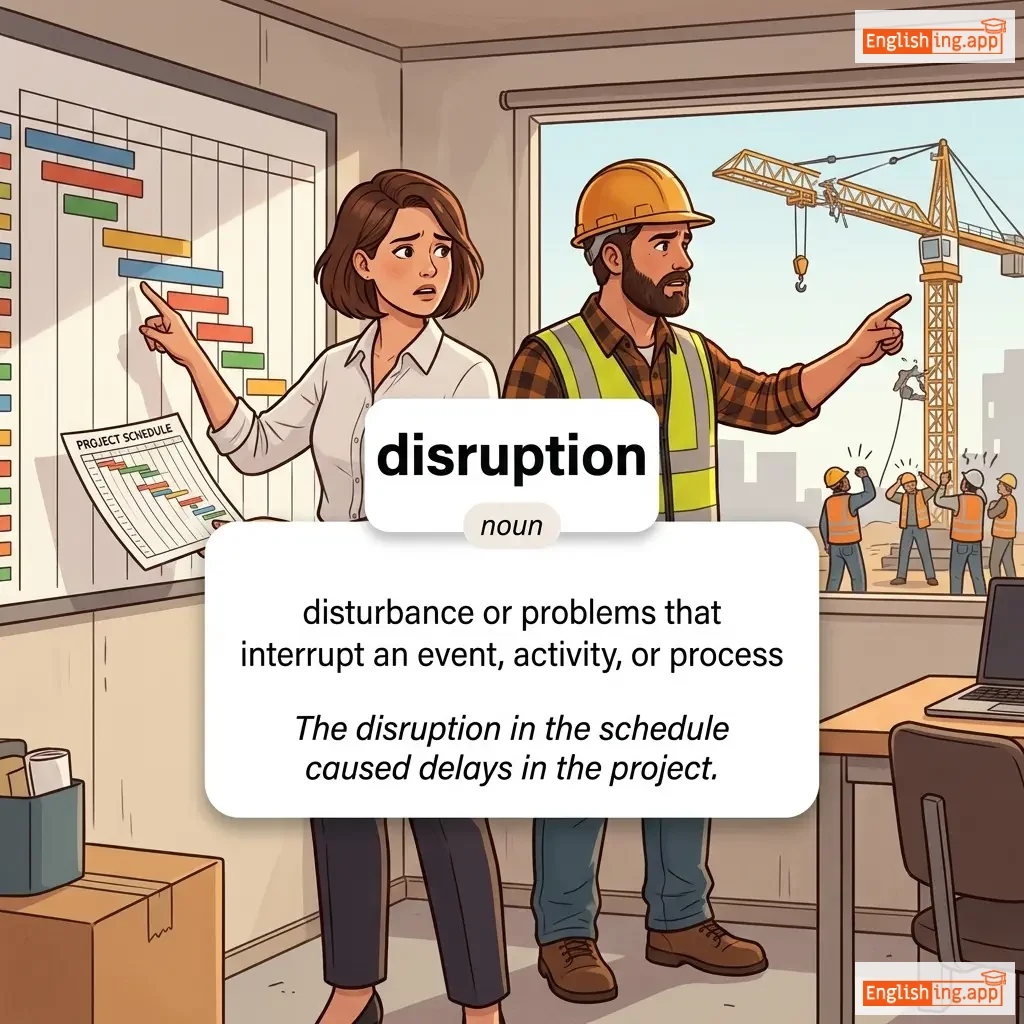
/dɪsˈrʌpʃən/
noun
(disrʌpʃən)
••••••
|
|
干扰
ganrao
••••••
|
- •••••• | - •••••• | - •••••• | - •••••• |
disturbance or problems that interrupt an event, activity, or process
••••••
|
The disruption in the schedule caused delays in the project. |
日程中的干扰导致项目延迟。
Rìchéng zhōng de gānrǎo dǎozhì xiàngmù yánchí.
••••••
|
- •••••• | - •••••• | - •••••• |
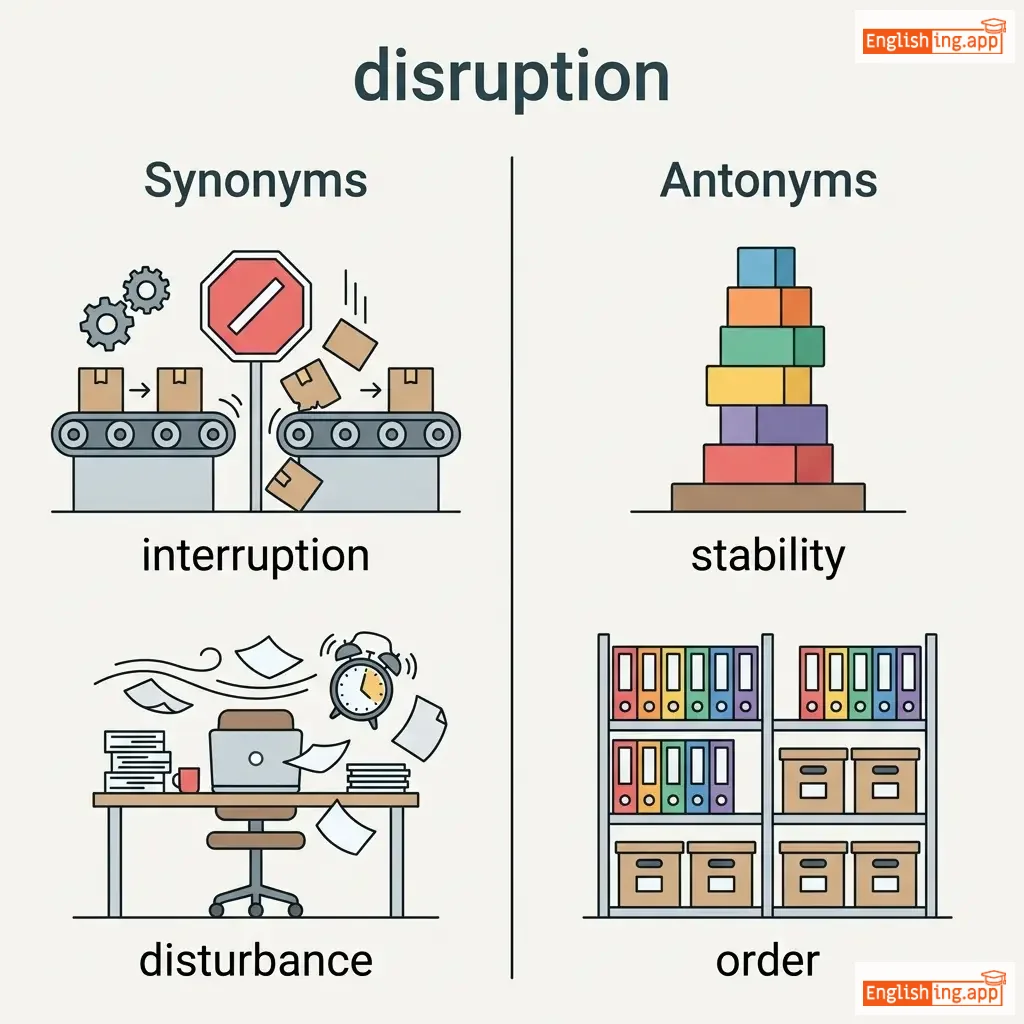
interruption, disturbance, interruption, chaos
••••••
|
stability, order, continuity
••••••
|
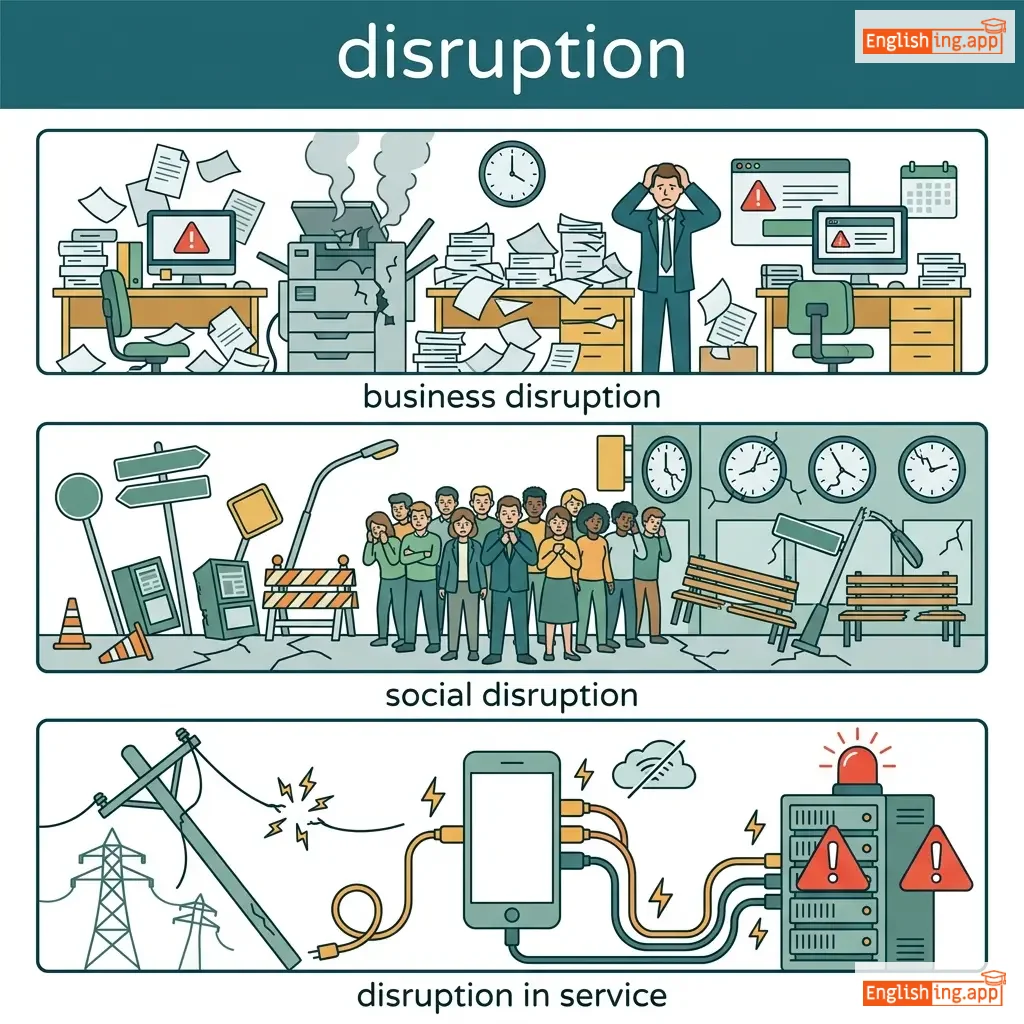
business disruption, social disruption, disruption in service, major disruption
••••••
|
干扰 (干扰) 是计划中的不速之客打破了平静。
••••••
|
|
🫗
••••••
|
/dɪˈzɒlv/
verb
••••••
|
- •••••• | - •••••• |
dissolved
••••••
|
dissolved
••••••
|
dissolves
••••••
|
dissolving
••••••
|
to melt or become liquid; to officially end or break up an agreement or organization
••••••
|
The sugar will dissolve quickly in hot tea. |
- •••••• |
dissolve into tears |
to suddenly start crying uncontrollably
••••••
|
- •••••• |
melt, liquefy, disband, terminate, vanish
••••••
|
solidify, unite, establish
••••••
|
dissolve sugar, dissolve parliament, dissolve the marriage
••••••
|
No •••••• |
|
📏
••••••
|
/ˈdɪstəns/
noun
(ディスタンス)
••••••
|
- •••••• |
距离
juli
••••••
|
- •••••• | - •••••• | - •••••• | - •••••• |
The amount of space between two points or places.
••••••
|
The distance between Dhaka and Chittagong is about 250 kilometers. |
达卡和吉大港之间的距离大约为250公里。
Daka he Jidagang zhijian de juli dayue wei 250 gongli.
••••••
|
keep your distance |
To stay away or avoid close contact.
••••••
|
保持距离
Baochi juli
••••••
|
gap, space, length, interval, remoteness
••••••
|
closeness, nearness
••••••
|
long distance, travel distance, distance learning, safe distance
••••••
|
Distance 就是距离,记住保持距离,保持安全!
••••••
|
|
🌄
••••••
|
/ˈdɪstənt/
adjective
(迪斯坦特)
••••••
|
- •••••• |
遥远的
yaoyuan de
••••••
|
- •••••• | - •••••• | - •••••• | - •••••• |
far away in space or time
••••••
|
They could see the distant mountains from their home. |
他们从家里能看到遥远的山脉。
Tamen cong jiali neng kandao yaoyuan de shanmai.
••••••
|
distant relative |
a relative who is not closely related
••••••
|
远亲
yuanqin
••••••
|
far, remote, faraway, detached, aloof
••••••
|
near, close, friendly
••••••
|
distant land, distant memory, distant future, distant relative
••••••
|
Distant 就像 distance—那里有距离,那里就有 distant.
••••••
|
|
✨
••••••
|
/dɪˈstɪŋkt/
adjective
(dɪsˈtɪŋkt)
••••••
|
- •••••• |
独特
dútè
••••••
|
- •••••• | - •••••• | - •••••• | - •••••• |
clearly different or separate from others of its kind
••••••
|
The twins have distinct personalities. |
这对双胞胎有着独特的个性。
Zhè duì shuāngbāotāi yǒuzhe dútè de gèxìng.
••••••
|
distinct possibility |
something that is clearly a real chance of happening
••••••
|
明显的可能性
míngxiǎn de kěnéngxìng
••••••
|
clear, separate, definite, unique, noticeable
••••••
|
indistinct, vague, unclear
••••••
|
distinct possibility, distinct feature, distinct voice, distinct style
••••••
|
Distinct 就是独特,像独特的性格一样与众不同。
••••••
|
|
🏅
••••••
|
/dɪˈstɪŋkʃən/
noun
••••••
|
- •••••• | - •••••• | - •••••• | - •••••• | - •••••• | - •••••• |
a difference or contrast between similar things or people; excellence that sets someone apart
••••••
|
She graduated with distinction from the university. |
- •••••• |
make a distinction |
to draw a clear difference between things
••••••
|
- •••••• |
difference, contrast, excellence, honor, separation
••••••
|
similarity, sameness, mediocrity
••••••
|
with distinction, fine distinction, make a distinction, subtle distinction
••••••
|
No •••••• |
|
🎨
••••••
|
/dɪˈstɪŋktɪv/
adjective
(dɪsˈtɪŋktɪv)
••••••
|
- •••••• |
独特的
dútè de
••••••
|
- •••••• | - •••••• | - •••••• | - •••••• |
having a quality or characteristic that makes something different and easily noticed
••••••
|
The restaurant is known for its distinctive flavors.
餐厅以其独特的味道而闻名。
••••••
|
餐厅以其独特的味道而闻名。
Cāntīng yǐ qí dútè de wèidào ér wénmíng.
••••••
|
- •••••• | - •••••• | - •••••• |
unique, characteristic, special, individual, memorable
••••••
|
common, ordinary, typical
••••••
|
distinctive feature, distinctive style, distinctive look, distinctive character
••••••
|
独特的意思是与众不同,就像一种你记得的味道。
••••••
|
|
🔍
••••••
|
/dɪˈstɪŋɡwɪʃ/
verb
(迪斯廷圭什)
••••••
|
- •••••• |
区分
qūfēn
••••••
|
distinguished
迪斯廷圭什德
••••••
|
distinguished
迪斯廷圭什德
••••••
|
distinguishes
迪斯廷圭什斯
••••••
|
distinguishing
迪斯廷圭什英
••••••
|
to recognize or show the differences between two or more things; to set apart as different
••••••
|
It can be difficult to distinguish between truth and rumor.
区分真相和谣言可能很困难。
••••••
|
区分真相和谣言可能很困难。
Qūfēn zhēnxiàng hé yáoyán kěnéng hěn kùnnán.
••••••
|
distinguish oneself
与众不同
••••••
|
to do something that makes one notable or worthy of recognition
••••••
|
与众不同
Yǔ zhòng bùtóng
••••••
|
differentiate, discern, identify, separate, recognize
••••••
|
confuse, mix, combine
••••••
|
distinguish between, distinguish clearly, distinguish features, distinguish easily
••••••
|
Distinguish = 区分,辨别差异
••••••
|
|
🔄
••••••
|
/dɪˈstɔːrt/
verb
••••••
|
- •••••• | - •••••• |
distorted
••••••
|
distorted
••••••
|
distorts
••••••
|
distorting
••••••
|
to twist or change the shape, appearance, or meaning of something so it is not true or accurate
••••••
|
The mirror distorted her reflection. |
- •••••• |
distort the truth |
to misrepresent or alter facts dishonestly
••••••
|
- •••••• |
twist, deform, misrepresent, warp, bend
••••••
|
straighten, clarify, preserve
••••••
|
distort reality, distort facts, distort image, distort sound
••••••
|
No •••••• |
|
🙃
••••••
|
/dɪˈstrækt/
verb
(迪斯特拉克特)
••••••
|
- •••••• |
分心
fēn xīn
••••••
|
distracted
分心
••••••
|
distracted
分心
••••••
|
distracts
分心
••••••
|
distracting
分心
••••••
|
to take someone's attention away from what they are doing or focusing on
••••••
|
The loud noise distracted her during the exam.
大声噪音让她在考试中分心。
••••••
|
大声噪音让她在考试中分心。
dà shēng zào yīn ràng tā zài kǎo shì zhōng fēn xīn
••••••
|
easily distracted
容易分心
••••••
|
to lose focus quickly due to small interruptions
••••••
|
容易分心
róng yì fēn xīn
••••••
|
divert, sidetrack, disturb, interrupt, absorb
••••••
|
focus, concentrate, attend
••••••
|
distract attention, distract someone, distract from, distract easily
••••••
|
分心就是让你的注意力从一个方向移开到另一个方向
••••••
|
|
😞
••••••
|
/dɪsˈtrɛs/
noun
(dɪsˈtrɛs)
••••••
|
- •••••• |
痛苦
tòngkǔ
••••••
|
- •••••• | - •••••• | - •••••• | - •••••• |
extreme anxiety, sorrow, or pain
••••••
|
He felt a deep sense of distress when he heard the bad news. |
当他听到坏消息时,他感到深深的痛苦。
Dāng tā tīngdào huài xiāoxī shí, tā gǎndào shēnshēn de tòngkǔ.
••••••
|
- •••••• | - •••••• | - •••••• |
misery, anguish, pain, sorrow
••••••
|
comfort, ease, happiness
••••••
|
emotional distress, financial distress, physical distress, mental distress
••••••
|
In distress (痛苦), you feel an intense pain that takes over your whole body.
••••••
|
|
📦
••••••
|
/dɪˈstrɪbjuːt/
verb
(分发)
••••••
|
|
分发
fēn fā
••••••
|
distributed
分发
••••••
|
distributed
分发
••••••
|
distributes
分发
••••••
|
distributing
分发
••••••
|
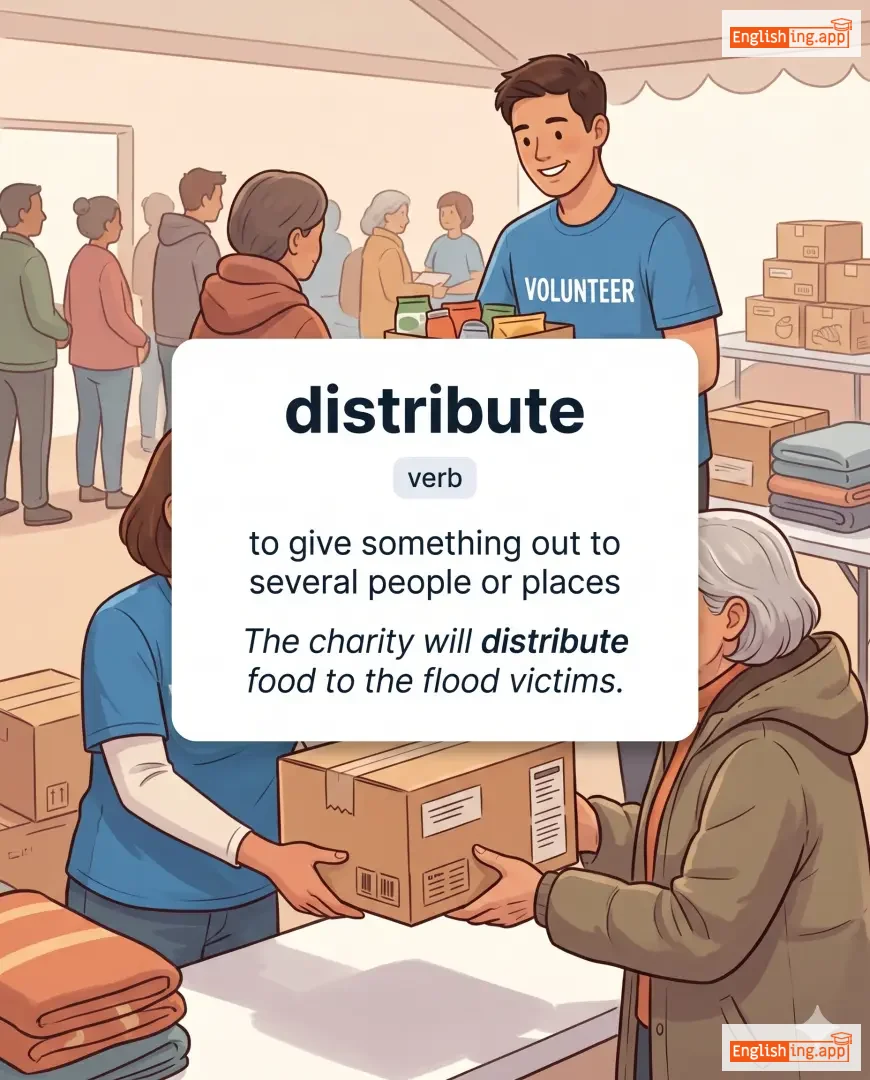
to give something out to several people or places
••••••
|
The charity will distribute food to the flood victims.
慈善机构将向洪水受害者分发食物。
••••••
|
慈善机构将向洪水受害者分发食物。
Císhàn jīgòu jiāng xiàng hóngshuǐ shòuhài zhě fēn fā shíwù.
••••••
|
fairly distribute
公平分发
••••••
|
to share something equally
••••••
|
公平分发
gōngpíng fēn fā
••••••
|
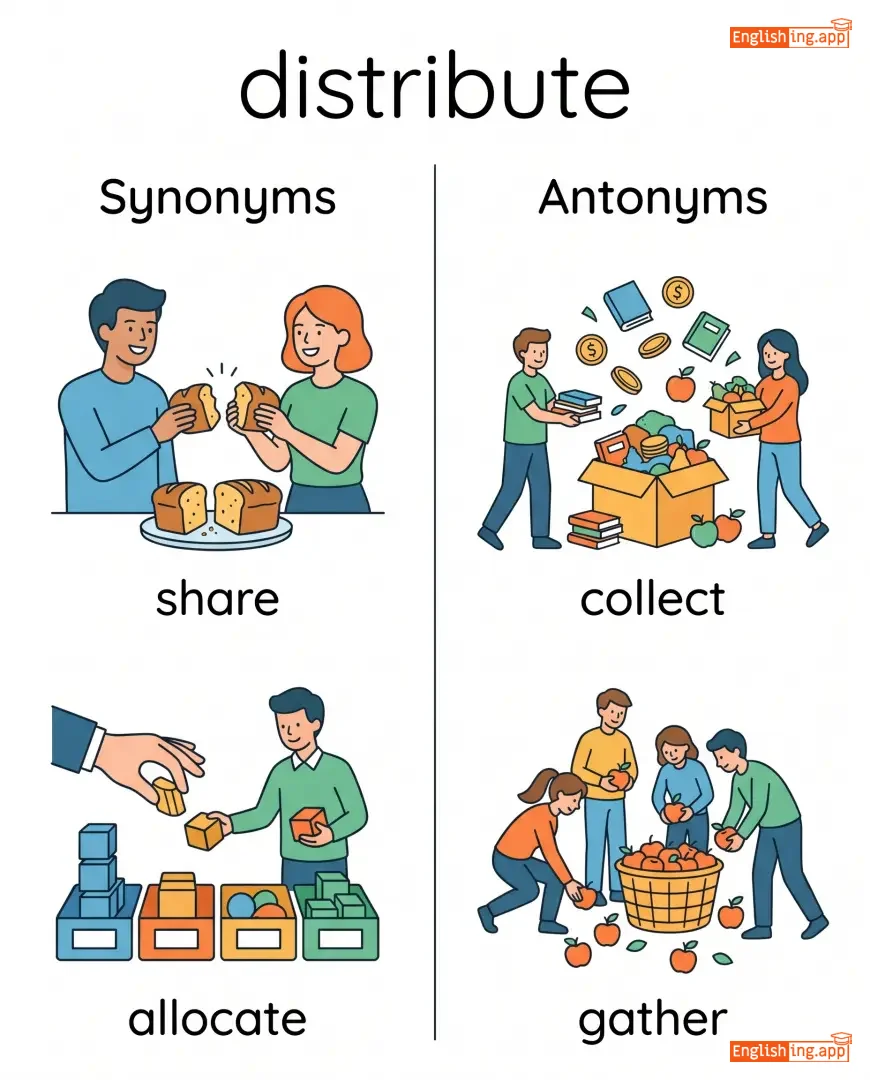
share, allocate, deliver, spread, hand out
••••••
|
collect, gather, withhold
••••••
|
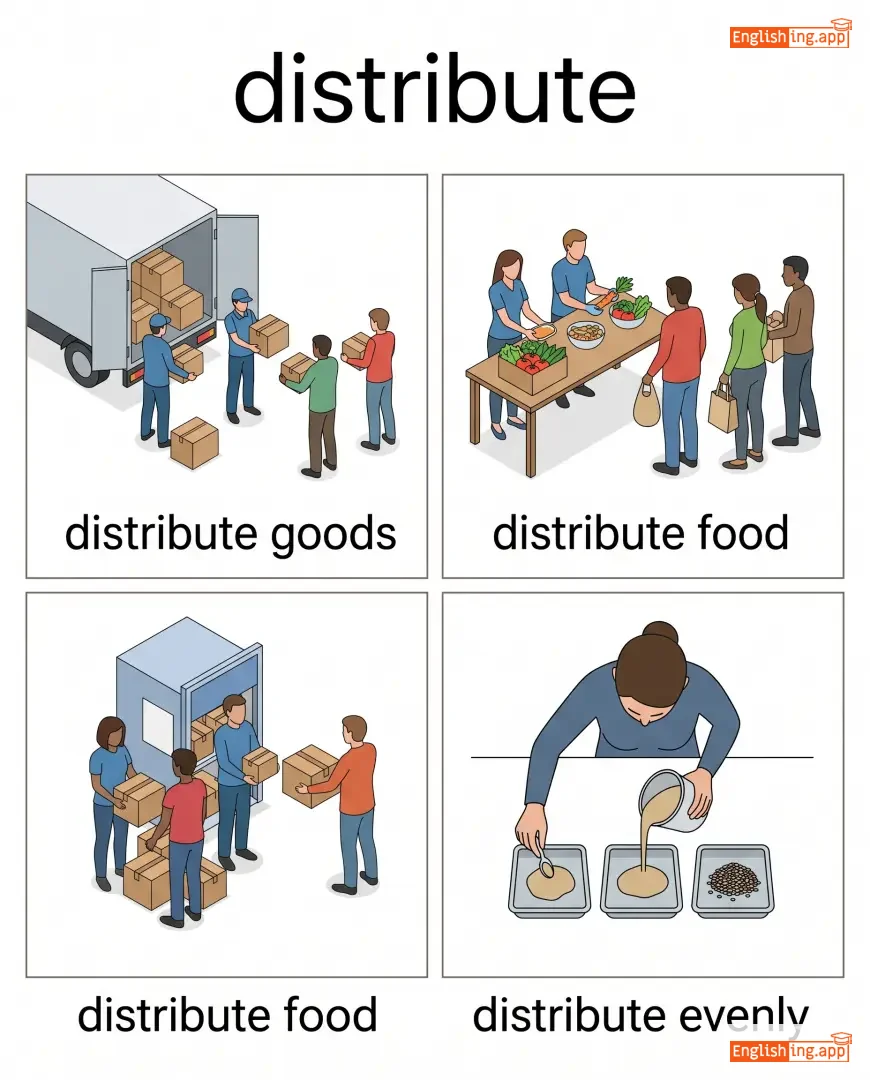
distribute goods, distribute food, distribute evenly, distribute wealth
••••••
|
Distribute 代表着在地区分发
••••••
|
|
📦
••••••
|
/ˌdɪstrɪˈbjuːʃən/
noun
(dɪstrɪˈbjuːʃən)
••••••
|
- •••••• |
分配
fenpei
••••••
|
- •••••• | - •••••• | - •••••• | - •••••• |
the act of sharing or delivering something to multiple people or places
••••••
|
The company manages the distribution of food supplies to rural areas. |
公司管理食品供应的分配到农村地区。
Gōngsī guǎnlǐ shípǐn gōngyì de fēnpèi dào nóngcūn dìqū.
••••••
|
- •••••• | - •••••• | - •••••• |
delivery, allocation, supply, circulation
••••••
|
collection, concentration
••••••
|
distribution system, distribution network, distribution channel, fair distribution
••••••
|
Distribution 意味着分配,在中文里是 ‘分配’.
••••••
|
|
🗺️
••••••
|
/ˈdɪstrɪkt/
noun
(迪斯特里克特)
••••••
|
- •••••• |
区
qu
••••••
|
- •••••• | - •••••• | - •••••• | - •••••• |
a specific area of a country, city, or town, often with official boundaries
••••••
|
She lives in the northern district of the city. |
她住在城市的北区。
Ta zhu zai chengshi de bei qu.
••••••
|
- •••••• | - •••••• | - •••••• |
region, area, zone, territory
••••••
|
whole, entirety
••••••
|
school district, business district, residential district, rural district
••••••
|
‘区’是一个区域,通常用于表示行政区划。
••••••
|
|
🚫
••••••
|
/dɪsˈtɜːb/
verb
(disturb)
••••••
|
- •••••• |
打扰
dǎrǎo
••••••
|
disturbed
disturbd
••••••
|
disturbed
disturbd
••••••
|
disturbs
disturbs
••••••
|
disturbing
disturbing
••••••
|
to interrupt or cause someone to stop what they are doing
••••••
|
Please don’t disturb me while I’m studying.
请不要在我学习时打扰我。
••••••
|
请不要在我学习时打扰我。
Qǐng bùyào zài wǒ xuéxí shí dǎrǎo wǒ.
••••••
|
do not disturb
请勿打扰
••••••
|
used to tell people not to interrupt or bother someone
••••••
|
请勿打扰
Qǐng wù dǎrǎo
••••••
|
interrupt, bother, annoy, upset, distract
••••••
|
calm, soothe, comfort
••••••
|
disturb peace, disturb sleep, disturb someone, disturb balance
••••••
|
'Do Not Disturb' 中文是'请勿打扰' — 不要打扰我!🚫
••••••
|
|
😨
••••••
|
/dɪˈstɜː.bɪŋ/
adjective
(dɪsˈtɜːrbɪŋ)
••••••
|
- •••••• |
令人不安
lìng rén bù ān
••••••
|
- •••••• | - •••••• | - •••••• | - •••••• |
causing anxiety, worry, or emotional distress
••••••
|
The news about the accident was deeply disturbing.
关于事故的新闻令人深感不安。
••••••
|
关于事故的新闻令人深感不安。
Guānyú shìgù de xīnwén lìng rén shēn gǎn bù ān.
••••••
|
disturbing the peace
扰乱和平
••••••
|
to make noise or cause trouble in a quiet public place
••••••
|
扰乱和平
Rǎo luàn hépíng
••••••
|
upsetting, alarming, distressing, troubling, shocking
••••••
|
comforting, calming, soothing
••••••
|
deeply disturbing, disturbing image, disturbing trend, disturbing news
••••••
|
Disturbing 意味着令人不安 — 令人不安的事会让你心烦!
••••••
|
|
🤿
••••••
|
/daɪv/
verb
(dài fū)
••••••
|
- •••••• |
跳水
tiao shui
••••••
|
dove
dǒu
••••••
|
dived
dài fú
••••••
|
dives
dài fū sī
••••••
|
diving
dài fū yīng
••••••
|
to plunge headfirst into water or another substance
••••••
|
He decided to dive into the pool on a hot day.
他决定在炎热的日子里跳进游泳池。
••••••
|
他决定在炎热的日子里跳进游泳池。
Tā juédìng zài yánrè de rìzi lǐ tiàojìn yóuyǒngchí.
••••••
|
- •••••• | - •••••• | - •••••• |
plunge, jump, leap, submerge
••••••
|
float, rise
••••••
|
dive into, dive down, deep dive, dive off
••••••
|
跳水 (tiao shui) 让你进入全新体验,如同潜入水中。
••••••
|
|
🦆
••••••
|
/ˈdaɪ.vər/
noun
(daɪvər)
••••••
|
- •••••• |
潜水员
qián shuǐ yuán
••••••
|
- •••••• | - •••••• | - •••••• | - •••••• |
a type of water bird that dives underwater to catch fish
••••••
|
The diver disappeared beneath the surface to catch a fish. |
潜水员消失在水面下去捕捉一条鱼。
Qián shuǐ yuán xiāo shī zài shuǐ miàn xià qù bǔ zhuō yī tiáo yú.
••••••
|
- •••••• | - •••••• | - •••••• |
loon, grebe, diving duck
••••••
|
- •••••• |
great northern diver, red-throated diver, diving bird, water diver
••••••
|
潜水员 (qián shuǐ yuán) 是潜入水下捕捉鱼的专家。
••••••
|
|
🌎
••••••
|
/daɪˈvɜːrs/
adjective
(daɪˈvɜːrs)
••••••
|
|
多样的
duōyàng de
••••••
|
- •••••• | - •••••• | - •••••• | - •••••• |
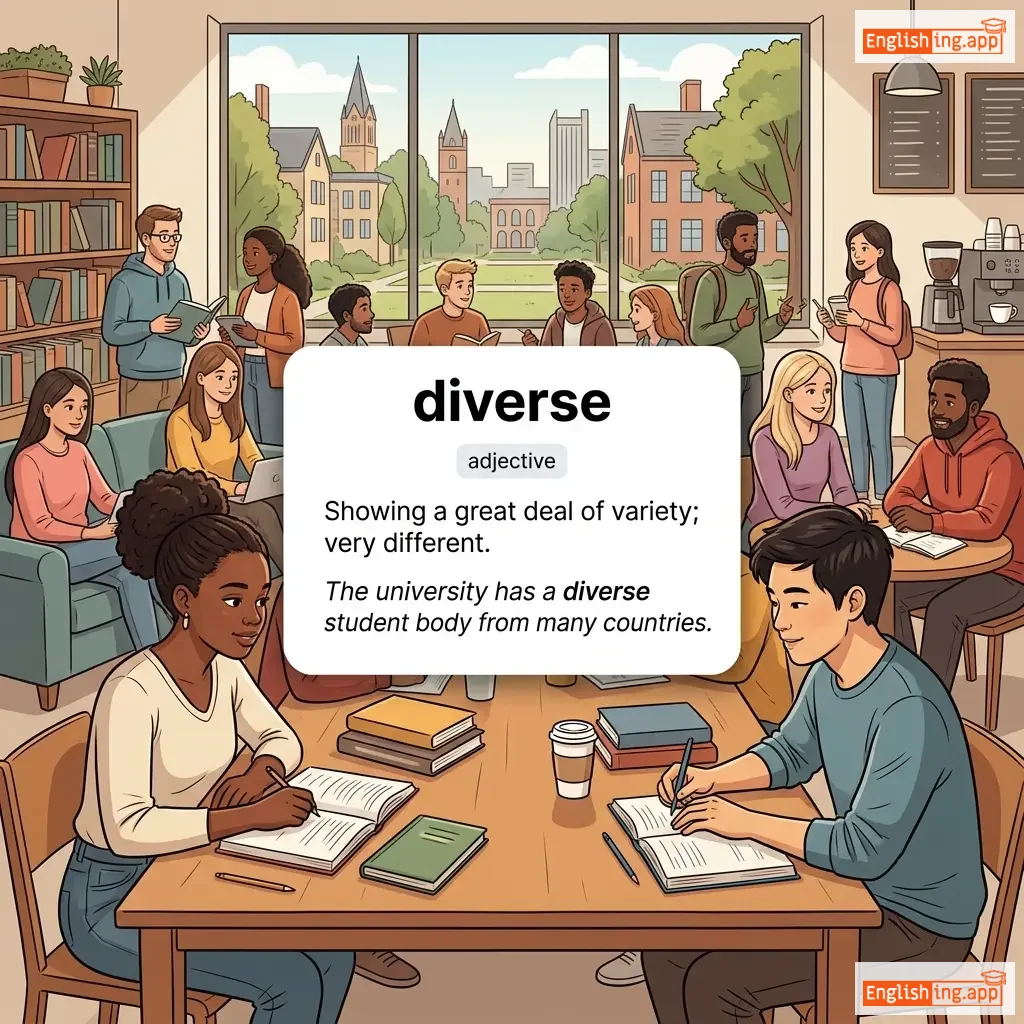
Showing a great deal of variety; very different.
••••••
|
The university has a diverse student body from many countries.
大学有一个来自多个国家的多样化学生群体。
••••••
|
大学有一个来自多个国家的多样化学生群体。
Dàxué yǒu yīgè láizì duō gè guójiā de duōyàng huà xuéshēng qúntǐ.
••••••
|
diverse backgrounds
多样化背景
••••••
|
Different cultural, social, or personal experiences.
••••••
|
多样化背景
duōyàng huà bèijǐng
••••••
|
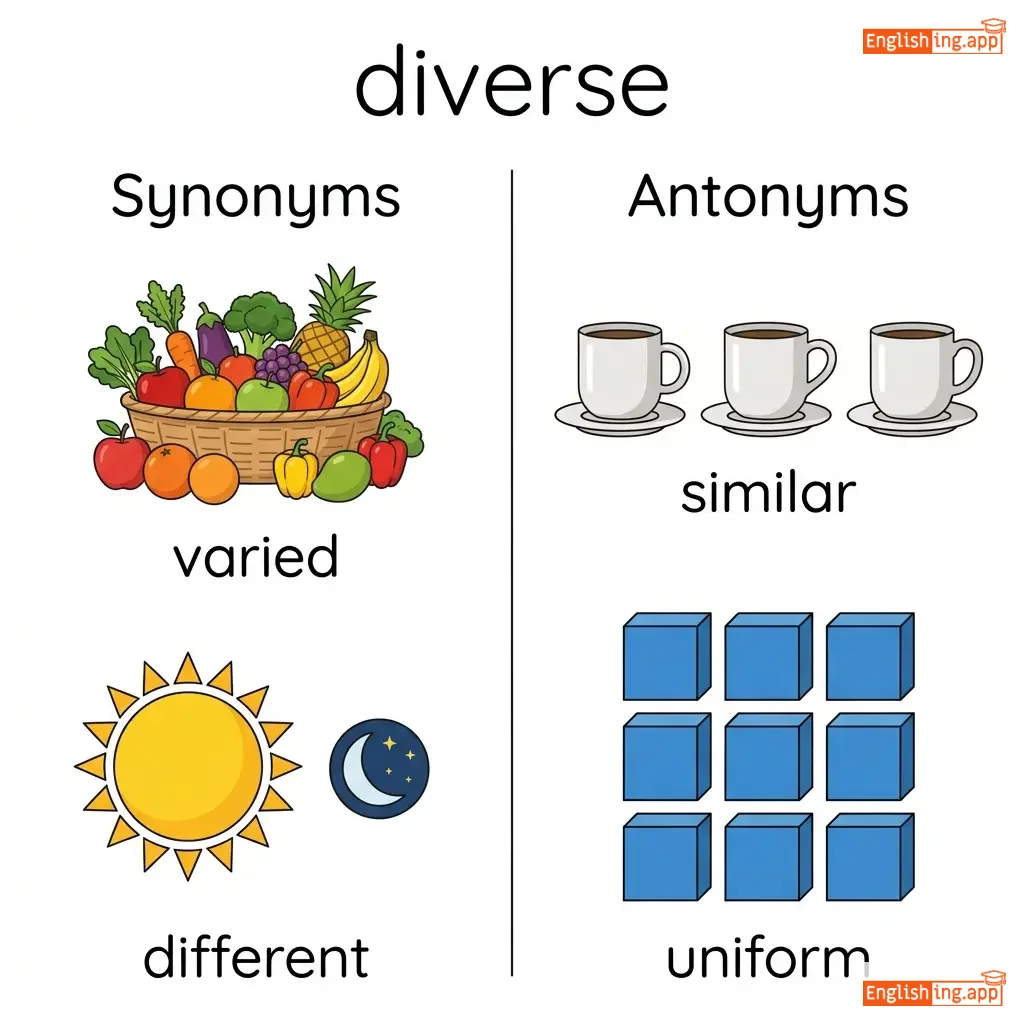
varied, different, assorted, mixed, heterogeneous
••••••
|
similar, uniform, identical
••••••
|
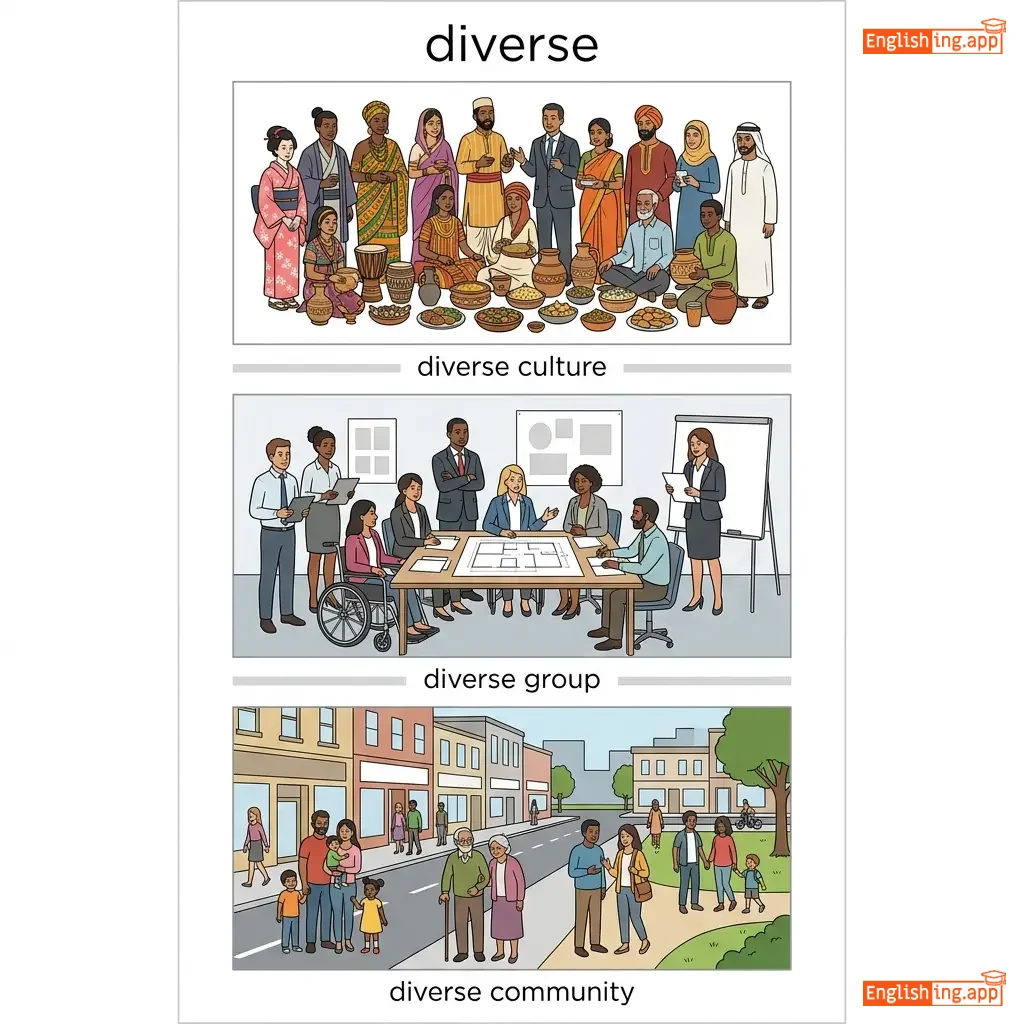
diverse culture, diverse group, diverse community, diverse interests
••••••
|
多样的意思就是代表着多种不同的事物。
••••••
|
|
🌈
••••••
|
/daɪˈvɜːrsəti/
noun
(dài'vèrsìtì)
••••••
|


|
多样性
duōyàngxìng
••••••
|
- •••••• | - •••••• | - •••••• | - •••••• |
A range of different things or people; variety.
••••••
|
Workplace diversity helps foster innovation and creativity. |
工作场所的多样性有助于促进创新和创造力。
gōngzuò chǎngsuǒ de duōyàngxìng yǒuzhù yú cùjìn chuàngxīn hé chuàngzàolì.
••••••
|
cultural diversity |
The existence of different cultural groups within a society.
••••••
|
文化多样性
wénhuà duōyàngxìng
••••••
|
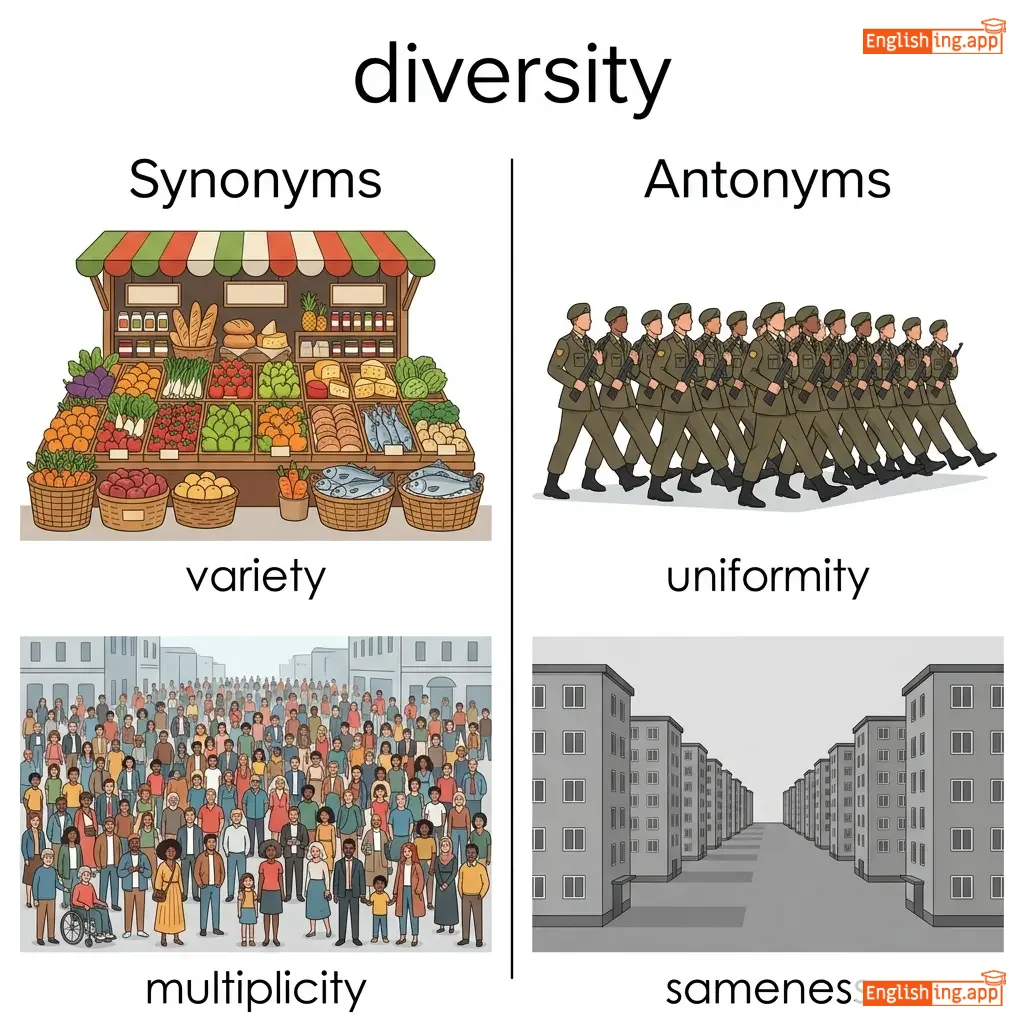
variety, multiplicity, heterogeneity, assortment, difference
••••••
|
uniformity, sameness, similarity
••••••
|
cultural diversity, workplace diversity, biological diversity, embrace diversity
••••••
|
Diversity 意味着 'Different Variety City' – 一个拥有多样性的城市。
••••••
|
|
↪️
••••••
|
/daɪˈvɜːrt/
verb
••••••
|
- •••••• | - •••••• |
diverted
••••••
|
diverted
••••••
|
diverts
••••••
|
diverting
••••••
|
to turn aside from a course; to redirect or entertain
••••••
|
The police diverted traffic to a side road. |
- •••••• |
divert one's attention |
to shift focus away from something
••••••
|
- •••••• |
redirect, reroute, deflect, distract, amuse
••••••
|
focus, concentrate, direct
••••••
|
divert traffic, divert funds, divert attention, divert resources
••••••
|
No •••••• |
|
➗
••••••
|
/dɪˈvaɪd/
verb
••••••
|
|
- •••••• |
divided
••••••
|
divided
••••••
|
divides
••••••
|
dividing
••••••
|
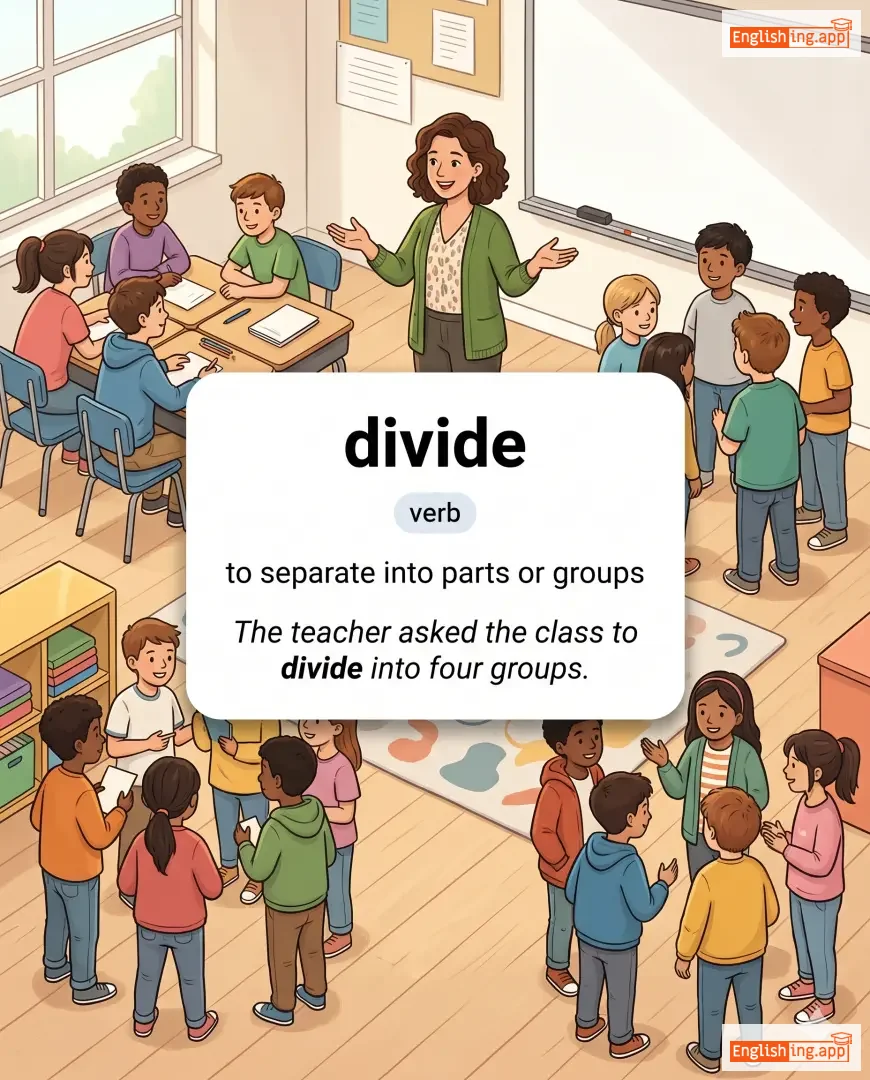
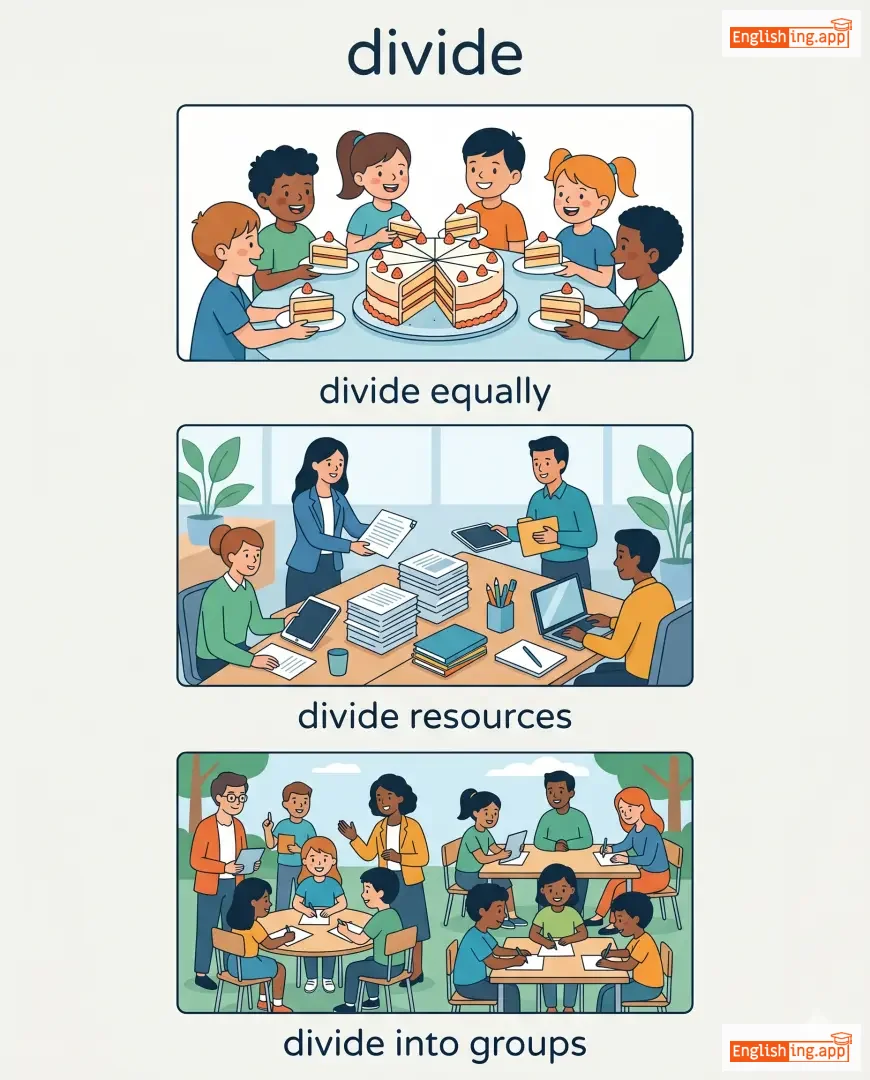
to separate into parts or groups
••••••
|
The teacher asked the class to divide into four groups. |
- •••••• |
divide and rule |
a strategy to gain power by causing divisions among people
••••••
|
- •••••• |
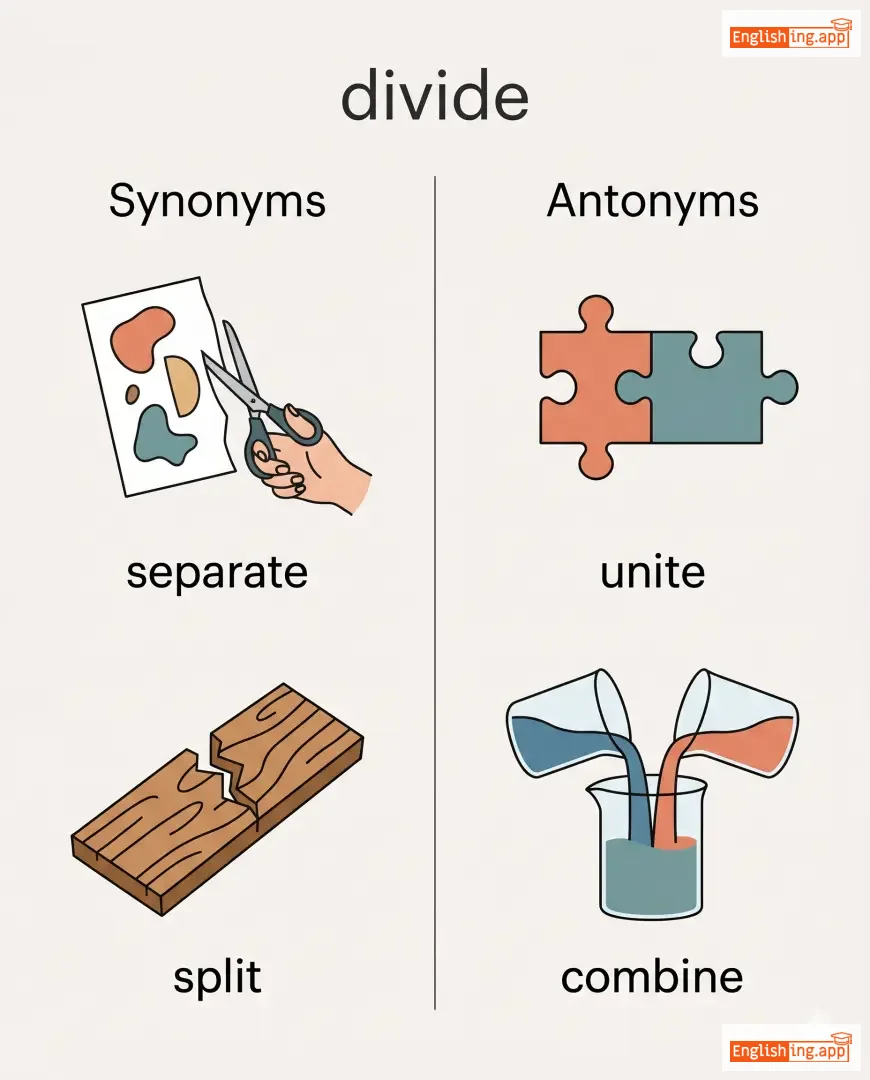
separate, split, partition, allocate, distribute
••••••
|
unite, combine, merge
••••••
|
divide equally, divide resources, divide into groups, divide land
••••••
|
No •••••• |
|
✨
••••••
|
/dɪˈvaɪn/
adjective, verb
••••••
|
- •••••• | - •••••• |
divined
••••••
|
divined
••••••
|
divines
••••••
|
divining
••••••
|
Relating to God or a deity; exceptionally wonderful or pleasing; to discover or foresee by intuition or supernatural means.
••••••
|
She believed the divine power guided her actions. |
- •••••• |
divine intervention |
A miraculous occurrence believed to be caused by God.
••••••
|
- •••••• |
godly, heavenly, sacred, holy, spiritual
••••••
|
earthly, mortal, profane
••••••
|
divine power, divine will, divine intervention, divine love
••••••
|
No •••••• |
|
➗
••••••
|
/dɪˈvɪʒən/
noun
(dì wéi zhēn)
••••••
|
- •••••• |
部门
bumen
••••••
|
- •••••• | - •••••• | - •••••• | - •••••• |
the action of separating something into parts; or a large administrative unit
••••••
|
The company has a separate division for research and development. |
公司有一个专门的部门负责研究和开发。
Gongsi you yige zhuanmen de bumen fuze yanjiu he kaifa.
••••••
|
cause division |
to create disagreement or separation among people
••••••
|
制造分歧
zhizao fenqi
••••••
|
separation, partition, department, section
••••••
|
unity, whole, agreement
••••••
|
division of labor, administrative division, mathematical division, division between
••••••
|
Division ➗ 意味着分割,中文是部门。
••••••
|
|
💔
••••••
|
/dɪˈvɔːrs/
noun/verb
(dìvó'ěrsī)
••••••
|
- •••••• |
离婚
líhūn
••••••
|
divorced
••••••
|
divorced
••••••
|
divorces
••••••
|
divorcing
••••••
|
the legal ending of a marriage; to officially end a marriage
••••••
|
After years of conflict, they decided to get a divorce. |
经过多年的冲突,他们决定离婚。
Jīngguò duōnián de chōngtū, tāmen juédìng líhūn.
••••••
|
divorce oneself from |
to separate or distance oneself from something
••••••
|
与...离婚
yǔ... líhūn
••••••
|
separation, annulment, breakup, dissolution
••••••
|
marriage, union
••••••
|
get a divorce, file for divorce, divorce settlement, divorce lawyer
••••••
|
离婚意味着分开,结束婚姻。
••••••
|
|
✅
••••••
|
/duː/
verb
(杜)
••••••
|
|
做
zuò
••••••
|
did
迪德
••••••
|
done
丹
••••••
|
does
达斯
••••••
|
doing
杜因
••••••
|
To perform an action, task, or activity.
••••••
|
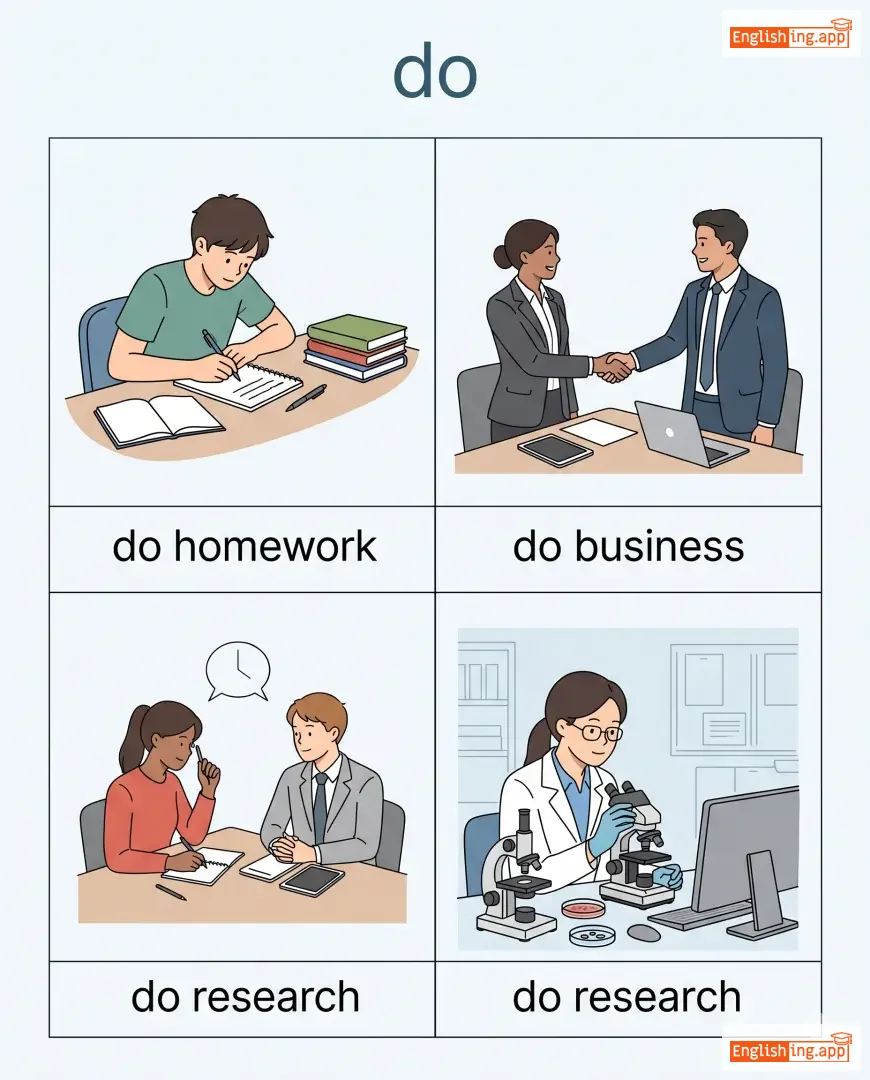
I need to do my homework before dinner.
我需要在晚餐前做完作业。
••••••
|
我需要在晚餐前做完作业。
Wǒ xūyào zài wǎncān qián zuò wán zuòyè.
••••••
|
do one's best
尽最大努力
••••••
|
To make the greatest possible effort
••••••
|
尽最大努力
jǐn zuìdà nǔlì
••••••
|
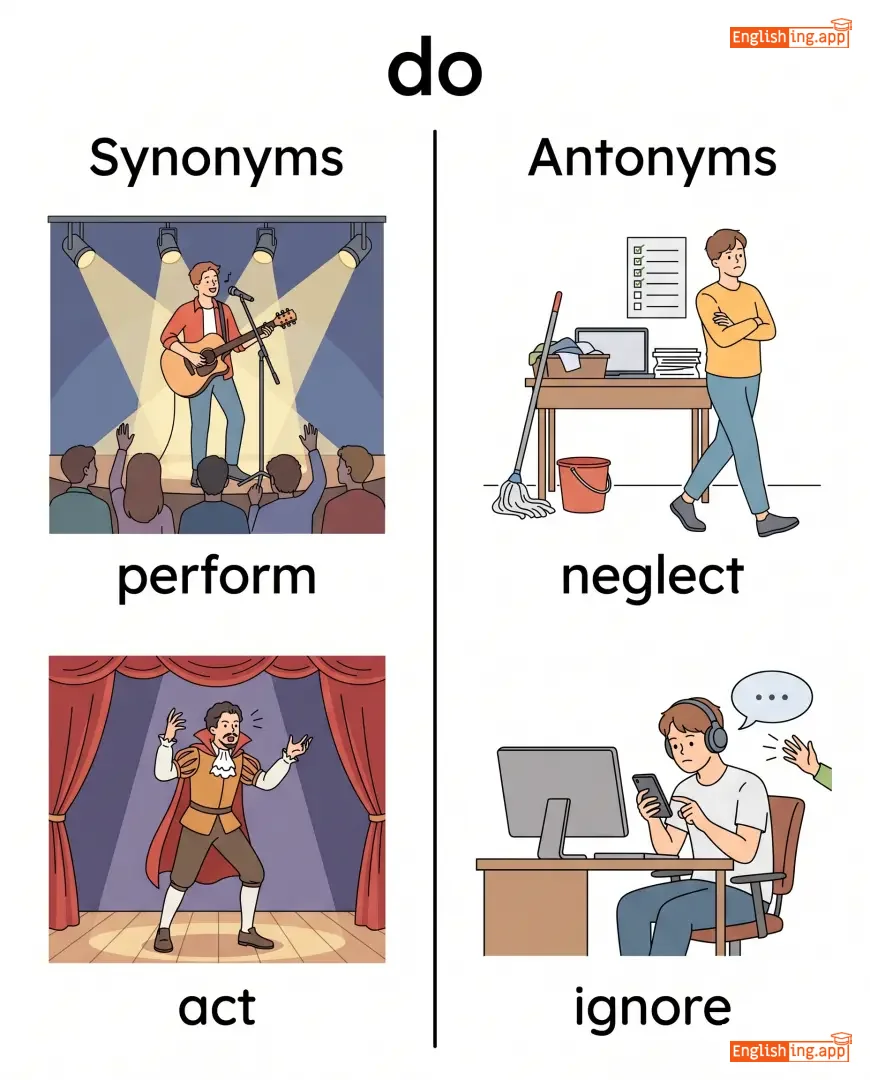
perform, act, execute, carry out, accomplish
••••••
|
neglect, ignore, stop
••••••
|
do homework, do business, do research, do a favor
••••••
|
Do意味着做 — 做吧,不要沉没!
••••••
|
|
🩺
••••••
|
/ˈdɒktər/
noun
(dàokè)
••••••
|
- •••••• |
医生
yīshēng
••••••
|
- •••••• | - •••••• | - •••••• | - •••••• |
A qualified medical professional who treats illnesses and injuries.
••••••
|
The doctor prescribed medicine for the patient. |
医生为病人开了药。
Yīshēng wèi bìngrén kāi le yào.
••••••
|
the doctor is in |
The doctor is available to see patients
••••••
|
医生在场
Yīshēng zài chǎng
••••••
|
physician, medic, surgeon, healer
••••••
|
patient, layman
••••••
|
doctor appointment, family doctor, consulting doctor, doctor visit
••••••
|
医生治病救人,健康的守护神。
••••••
|
|
📜
••••••
|
/ˈdɒktrɪn/
noun
(dǒkè lǐn)
••••••
|
- •••••• |
教义
jiaoyi
••••••
|
- •••••• | - •••••• | - •••••• | - •••••• |
A set of beliefs or principles held and taught by a religious, political, or other group.
••••••
|
The church follows a strict doctrine on moral values. |
教会遵循一项关于道德价值的严格教义。
Jiaohui zunxun yixiang guanyu daode jiazhi de yange jiaoyi.
••••••
|
official doctrine |
The established principles or policies endorsed by an authority.
••••••
|
官方教义
Guanfang jiaoyi
••••••
|
belief, principle, teaching, tenet, ideology
••••••
|
heresy, disbelief, doubt
••••••
|
religious doctrine, political doctrine, military doctrine, core doctrine
••••••
|
教义就像必须遵守的规则,严格且清晰。
••••••
|
|
📄
••••••
|
/ˈdɒkjʊmənt/
noun/verb
(文件)
••••••
|

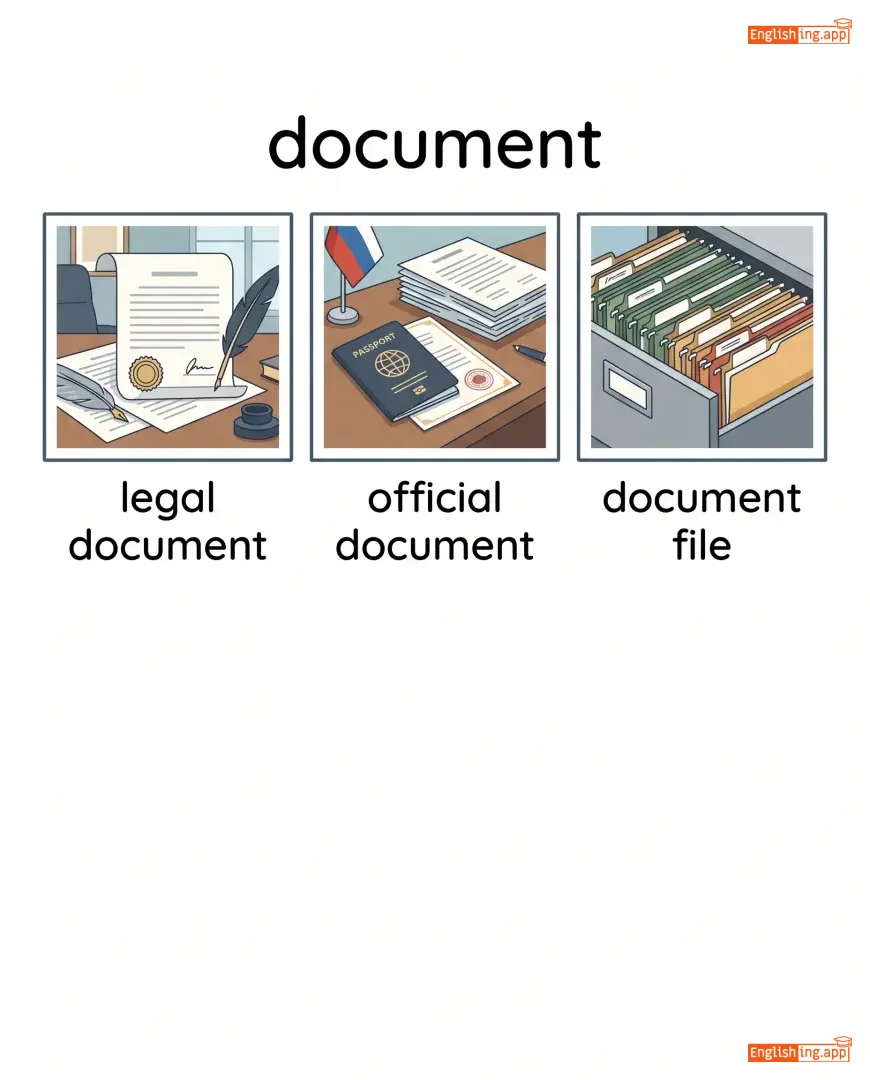
|
文件
wenjian
••••••
|
documented
已记录
••••••
|
documented
已记录
••••••
|
documents
文件
••••••
|
documenting
记录
••••••
|
Noun: A written, printed, or electronic record that provides information or evidence. Verb: To record information in written or electronic form.
••••••
|
She carefully documented all the expenses of the trip.
她仔细记录了旅行的所有费用。
••••••
|
她仔细记录了旅行的所有费用。
Ta zǐxì jìlùle lǚxíng de suǒyǒu fèiyòng.
••••••
|
official document
官方文件
••••••
|
An authoritative or legal record recognized by an institution.
••••••
|
官方文件
guānfāng wénjiàn
••••••
|
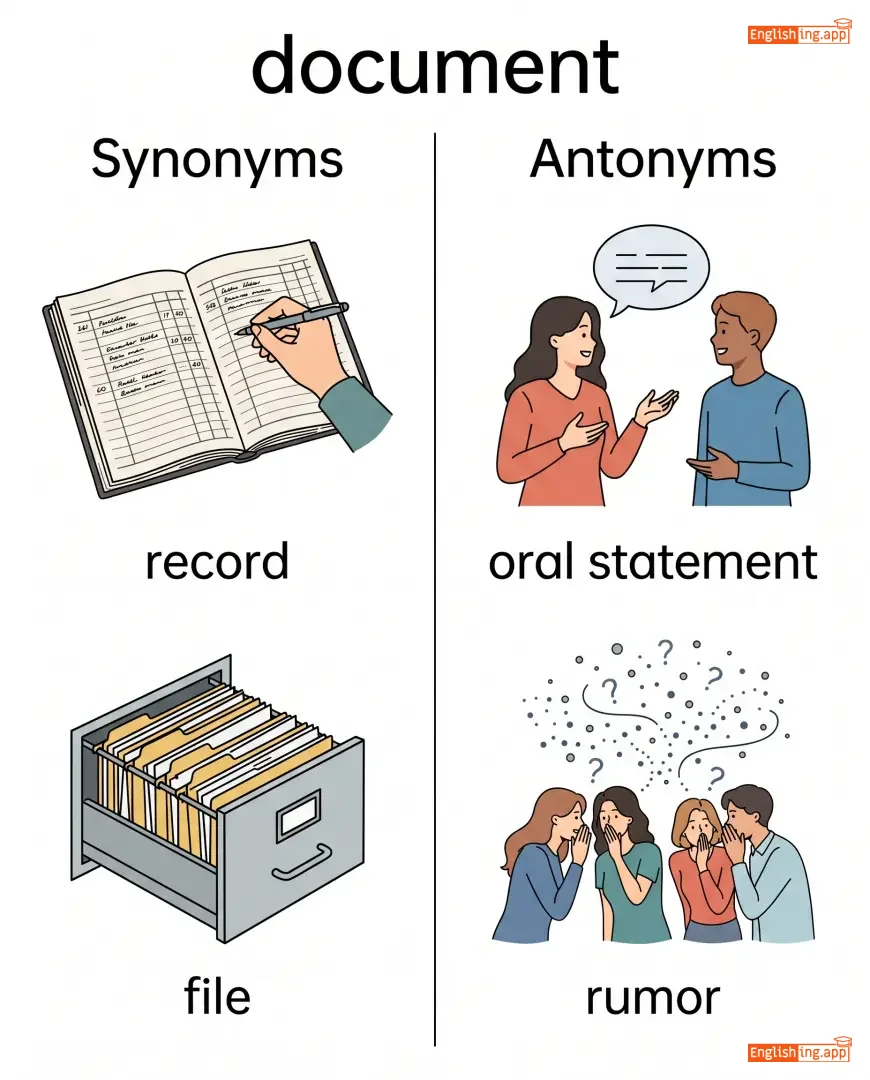
record, file, paper, certificate, report
••••••
|
oral statement, rumor
••••••
|
legal document, official document, document file, document evidence
••••••
|
Document 就是文件—确保你记录下重要的信息!
••••••
|
|
📄
••••••
|
/ˌdɒkjʊmɛnˈteɪʃən/
noun
(dɑkjʊmɛnˈteɪʃən)
••••••
|
- •••••• |
文档
wendang
••••••
|
- •••••• | - •••••• | - •••••• | - •••••• |
material that provides official information or evidence
••••••
|
The documentation for the project is available for review. |
项目的文档可供审查。
Xiàngmù de wéndàng kě gòng shěnchá.
••••••
|
- •••••• | - •••••• | - •••••• |
records, paperwork, files, archives
••••••
|
neglect, disregard
••••••
|
project documentation, legal documentation, technical documentation, documentation review
••••••
|
Documentation (文档) is your guide to the information, like a map to navigate the project!
••••••
|
|
🐶
••••••
|
/dɔːɡ/
noun
(dɔɡ)
••••••
|
- •••••• |
狗
gǒu
••••••
|
- •••••• | - •••••• | - •••••• | - •••••• |
a domesticated carnivorous mammal kept as a pet or for work
••••••
|
The dog barked loudly at the stranger. |
狗对陌生人大声叫。
Gǒu duì mò shēng rén dà shēng jiào.
••••••
|
every dog has its day |
everyone will have a chance to succeed or be lucky at some point
••••••
|
每只狗都有自己的日子
Měi zhī gǒu dōu yǒu zì jǐ de rì zi
••••••
|
canine, hound, pooch, pup, mongrel
••••••
|
cat, feline
••••••
|
pet dog, stray dog, guard dog, dog bark
••••••
|
Dog = 狗 🐕 - 想象狗的大声吠叫,它也有自己的日子。
••••••
|

