|
表情符号
|
单词 | Images | 翻译 | 过去时 | 过去分词 | 第三人称单数 | 动名词 | 含义 | 例句 | 例句翻译 | 示例表达 | 示例表达含义 | 示例表达翻译 | 同义词 | 反义词 | 搭配词 | 助记符 |
|---|---|---|---|---|---|---|---|---|---|---|---|---|---|---|---|---|---|
|
🌧️
••••••
|
/ɔːlˈðoʊ/
conjunction
(ɔːlˈðoʊ)
••••••
|
- •••••• |
尽管
jǐnguǎn
••••••
|
- •••••• | - •••••• | - •••••• | - •••••• |
in spite of the fact that; even though
••••••
|
Although it was raining, they went for a walk. |
尽管下雨,他们还是去散步了。
Jǐnguǎn xiàyǔ, tāmen háishì qù sànbù le.
••••••
|
- •••••• | - •••••• | - •••••• |
though, even though, while, albeit
••••••
|
because, since
••••••
|
although true, although difficult, although unlikely
••••••
|
尽管 all 天都在下雨,他们还是去散步了 - Although it rained all day, they still went out.
••••••
|
|
🥫
••••••
|
/ˌæljuˈmɪniəm/
noun
(阿鲁米尼恩)
••••••
|
- •••••• |
铝
lu
••••••
|
- •••••• | - •••••• | - •••••• | - •••••• |
a lightweight, silvery-white metal used widely in manufacturing and packaging
••••••
|
Aluminium is commonly used to make cans and aircraft parts.
铝常用于制造罐头和飞机部件。
••••••
|
铝常用于制造罐头和飞机部件。
lu chang yong yu zhi zao guan tou he fei ji bu jian
••••••
|
aluminium foil
铝箔
••••••
|
thin sheets of aluminium used for wrapping or covering food
••••••
|
铝箔
lu bo
••••••
|
aluminum, Al, light metal, metallic element
••••••
|
nonmetal, plastic
••••••
|
aluminium foil, aluminium alloy, aluminium can, aluminium sheet
••••••
|
铝很轻—飞机用铝。
••••••
|
|
♾️
••••••
|
/ˈɔːlweɪz/
adverb
(Ōuwèi)
••••••
|
- •••••• |
总是
zǒng shì
••••••
|
- •••••• | - •••••• | - •••••• | - •••••• |
at all times; on every occasion
••••••
|
She always wakes up early in the morning.
她总是早晨起床。
••••••
|
她总是早晨起床。
Tā zǒng shì zǎochén qǐchuáng.
••••••
|
as always
一如既往
••••••
|
as is usual or expected
••••••
|
一如既往
Yī rú jì wǎng
••••••
|
forever, constantly, perpetually, continually
••••••
|
never, rarely, seldom
••••••
|
always ready, always happy, always late, always available
••••••
|
Always = 总是, 总是 (zǒng shì)。
••••••
|
|
🔗
••••••
|
/əˈmælɡəmeɪt/
verb
(ā mǎ ěr gǎ mài tè)
••••••
|

|
合并
hé bìng
••••••
|
amalgamated
ā mǎ ěr gǎ mài tè de
••••••
|
amalgamated
ā mǎ ěr gǎ mài tè de
••••••
|
amalgamates
ā mǎ ěr gǎ mài tè sī
••••••
|
amalgamating
ā mǎ ěr gǎ mài tè zhōng
••••••
|
to combine or unite to form one organization or structure; to merge
••••••
|
The two companies decided to amalgamate their operations.
这两家公司决定合并他们的运营。
••••••
|
这两家公司决定合并他们的运营。
Zhè liǎng jiā gōngsī juédìng hébìng tāmen de yùnyíng.
••••••
|
- •••••• | - •••••• | - •••••• |
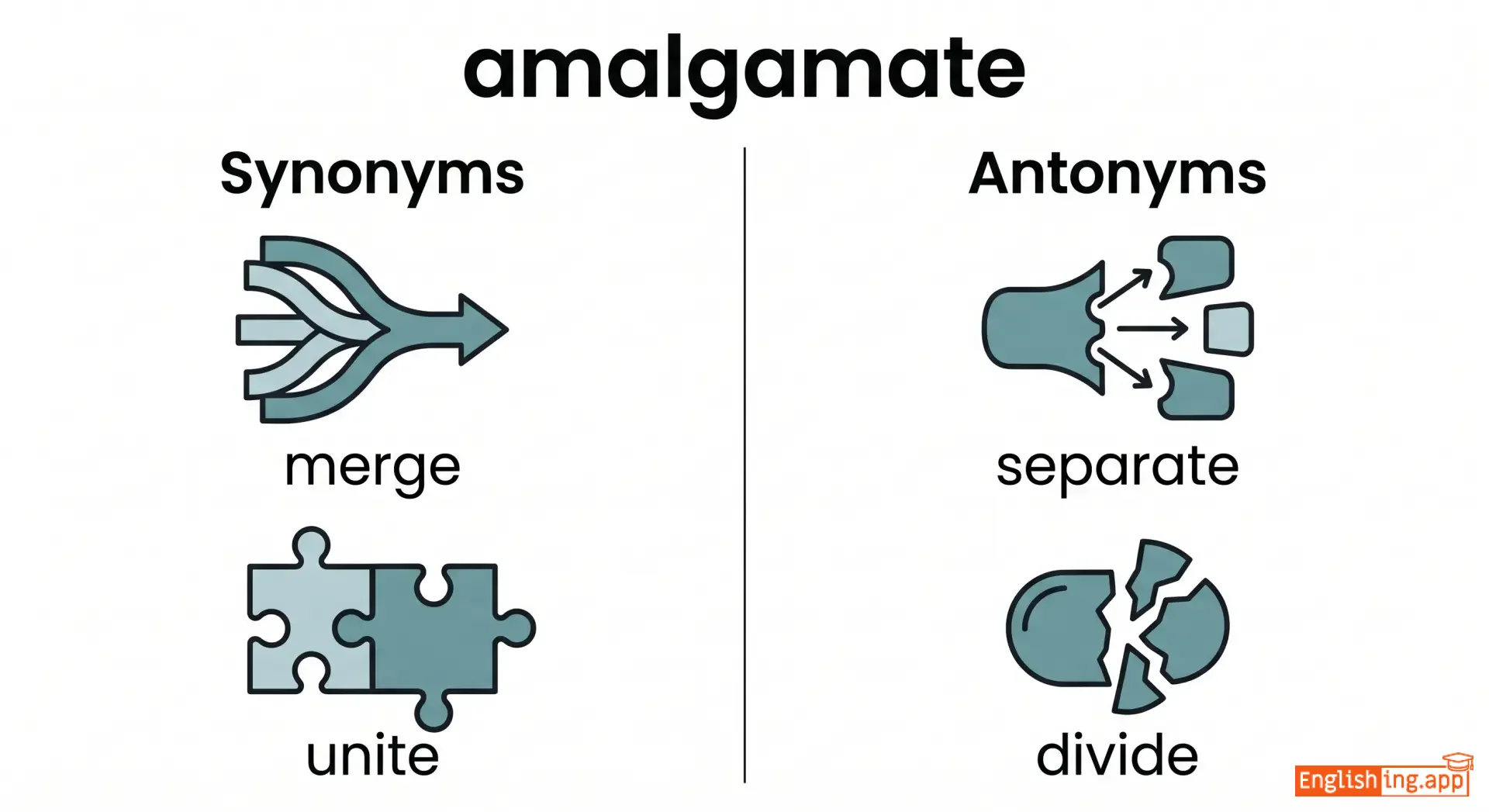
merge, combine, unite, blend
••••••
|
separate, divide, split, isolate
••••••
|
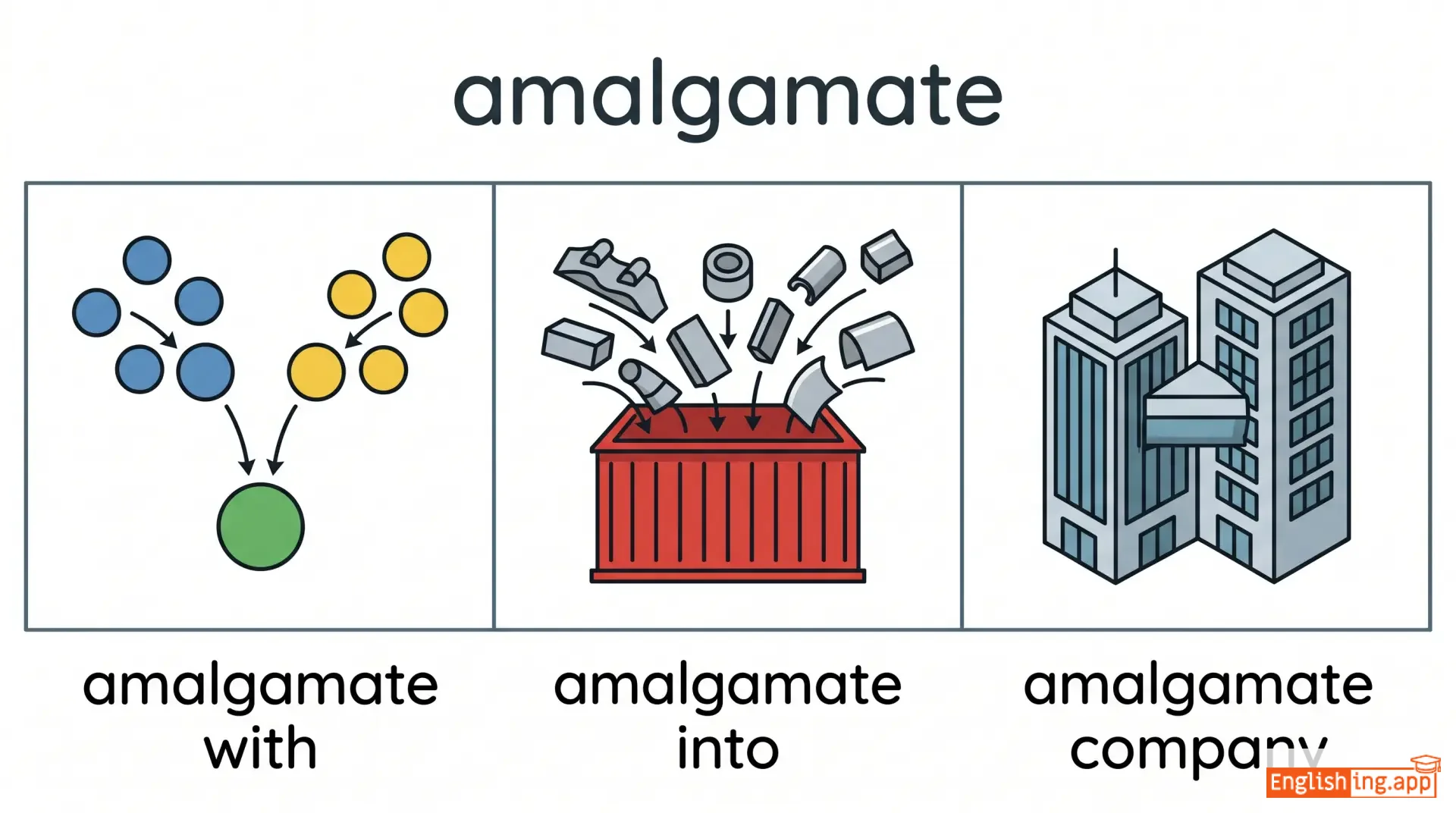
amalgamate companies, amalgamate operations, successfully amalgamate, amalgamate resources, amalgamate efforts
••••••
|
合并 (hé bìng) = merging for structure
••••••
|
|
💰
••••••
|
/əˈmæs/
verb
(阿马斯)
••••••
|
- •••••• |
积累
jīlěi
••••••
|
amassed
阿马斯德
••••••
|
amassed
阿马斯德
••••••
|
amasses
阿马塞斯
••••••
|
amassing
阿马辛
••••••
|
to gather together or accumulate over a period of time
••••••
|
He managed to amass a fortune through wise investments.
他通过明智的投资成功地积累了财富。
••••••
|
他通过明智的投资成功地积累了财富。
Tā tōngguò míngzhì de tóuzī chénggōng de jīlěile cáifù.
••••••
|
- •••••• | - •••••• | - •••••• |
accumulate, collect, gather, hoard, assemble
••••••
|
disperse, squander, scatter
••••••
|
amass wealth, amass fortune, amass power, amass collection
••••••
|
Amass 意味着积累 – 就像积累一大堆东西。
••••••
|
|
🎨
••••••
|
/ˈæmətər/
noun
(业余)
••••••
|
- •••••• |
业余
yè yú
••••••
|
- •••••• | - •••••• | - •••••• | - •••••• |
A person who engages in a pursuit, especially a sport or art, on an unpaid basis.
••••••
|
The painting looked impressive, even though it was done by an amateur.
这幅画看起来很震撼,尽管它是由一个业余爱好者完成的。
••••••
|
这幅画看起来很震撼,尽管它是由一个业余爱好者完成的。
Zhè fú huà kàn qǐ lái hěn zhèn hàn, jǐn guǎn tā shì yóu yī gè yè yú ài hǎo zhě wán chéng de.
••••••
|
amateur hour
业余时光
••••••
|
A display of ineptitude or lack of professionalism.
••••••
|
业余时光
yè yú shí guāng
••••••
|
novice, beginner, nonprofessional, layman, hobbyist
••••••
|
professional, expert, specialist
••••••
|
amateur photographer, amateur player, amateur performance, amateur competition
••••••
|
Amateur 意味着业余 - 这意味着他只是为了乐趣做的,而不是专业的。
••••••
|
|
😲
••••••
|
/əˈmeɪz/
verb
(阿梅兹)
••••••
|
- •••••• |
使惊叹
shi jingtan
••••••
|
amazed
阿梅兹德
••••••
|
amazed
阿梅兹德
••••••
|
amazes
阿梅兹兹
••••••
|
amazing
阿梅兹英
••••••
|
to fill someone with great surprise or wonder
••••••
|
The magician’s final trick amazed the audience.
德 魔术师 的 最后 把戏 阿梅兹德 观众。
••••••
|
魔术师的最后一个把戏使观众惊叹。
moshushi de zuihou yige baxi shi guanzhong jingtan
••••••
|
- •••••• | - •••••• | - •••••• |
astonish, astound, surprise, impress, stun
••••••
|
bore, disappoint, unimpress
••••••
|
amaze someone, truly amazed, amazed by, amazed at
••••••
|
amaze 听起来像 ‘阿梅兹’ = 惊叹
••••••
|
|
🌟
••••••
|
/əˈmeɪzɪŋ/
adjective
(āméizīng)
••••••
|
- •••••• |
惊人
jingren
••••••
|
- •••••• | - •••••• | - •••••• | - •••••• |
causing great surprise or wonder; astonishing
••••••
|
The magician performed an amazing trick. |
魔术师表演了一个惊人的魔术。
Móshù shī biǎoyǎnle yīgè jīngrén de móshù.
••••••
|
truly amazing |
something that is very impressive or extraordinary
••••••
|
真正的惊人
zhēnzhèng de jīngrén
••••••
|
astonishing, wonderful, incredible, marvelous, impressive
••••••
|
ordinary, boring, dull
••••••
|
amazing experience, amazing story, amazing talent, amazing place
••••••
|
Amazing = 惊人 = 哇!
••••••
|
|
🎖️
••••••
|
/æmˈbæsədər/
noun
(海皮尼斯安巴萨多尔)
••••••
|
- •••••• |
大使
da shi
••••••
|
- •••••• | - •••••• | - •••••• | - •••••• |
a person who represents their country in another country
••••••
|
The ambassador attended the international peace conference.
安巴萨多尔参加了国际和平会议。
••••••
|
大使出席了国际和平会议。
da shi chu xi le guo ji he ping hui yi
••••••
|
goodwill ambassador
亲善大使
••••••
|
a person who promotes goodwill or positive image of an organization or country
••••••
|
亲善大使
qin shan da shi
••••••
|
envoy, diplomat, representative, emissary, delegate
••••••
|
enemy, opponent
••••••
|
ambassador to France, cultural ambassador, goodwill ambassador, UN ambassador
••••••
|
大使 (da shi) = the 'big envoy' of peace 🇨🇳
••••••
|
|
🔥
••••••
|
/æmˈbɪʃən/
noun
(æmˈbɪʃən)
••••••
|


|
雄心
xióngxīn
••••••
|
- •••••• | - •••••• | - •••••• | - •••••• |
a strong desire to achieve something, typically requiring determination and hard work
••••••
|
Her ambition is to become a successful entrepreneur. |
她的雄心是成为一名成功的企业家。
Tā de xióngxīn shì chéngwéi yī míng chénggōng de qǐyèjiā.
••••••
|
burning ambition |
a very strong desire to achieve something
••••••
|
燃烧的雄心
ránshāo de xióngxīn
••••••
|
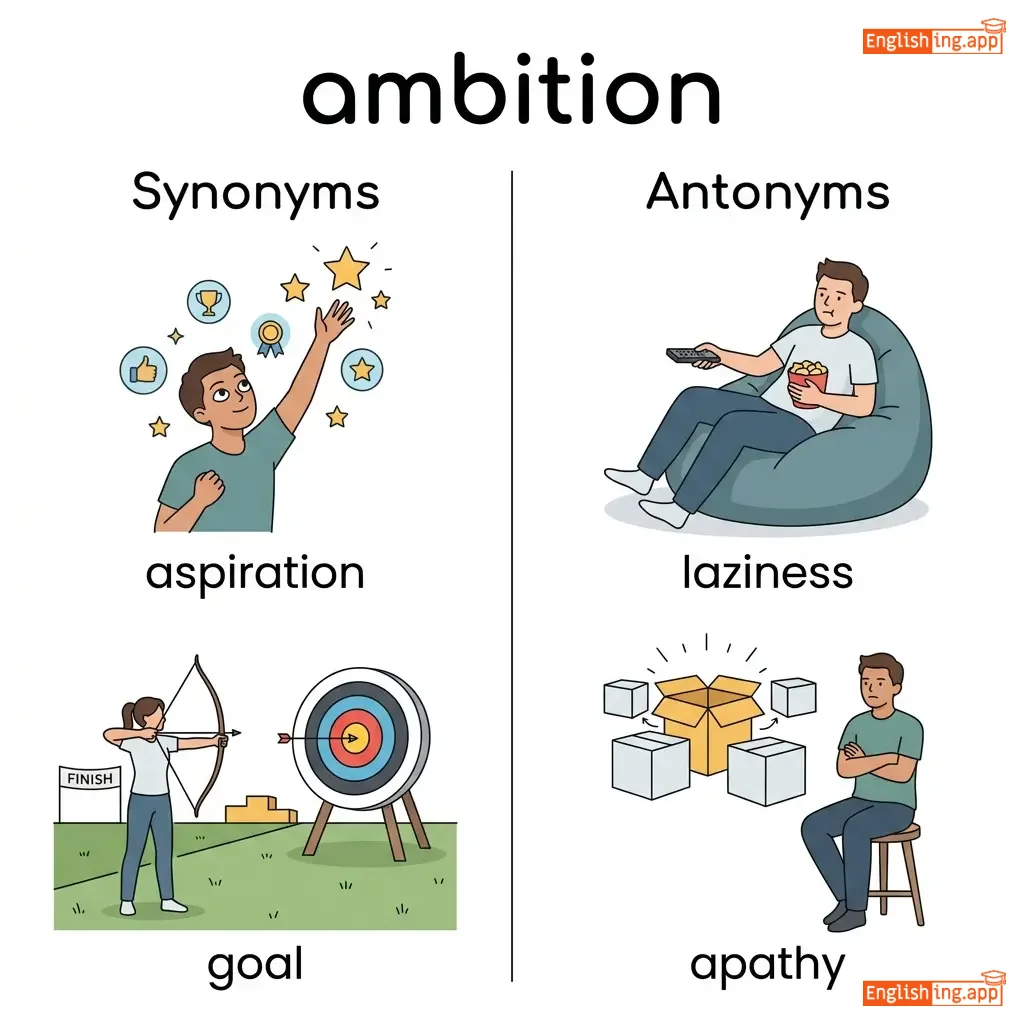
aspiration, goal, desire, drive, dream
••••••
|
laziness, apathy
••••••
|
career ambition, lifelong ambition, great ambition, achieve ambition
••••••
|
Ambition 意味着 ‘我被成功的虫子咬了’ — 强烈的成功愿望!
••••••
|
|
🚀
••••••
|
/æmˈbɪʃəs/
adjective
(æmbɪʃəs)
••••••
|
- •••••• |
雄心勃勃
xióngxīn bóbó
••••••
|
- •••••• | - •••••• | - •••••• | - •••••• |
Having a strong desire to succeed or achieve something.
••••••
|
She is very ambitious and wants to become a doctor.
她非常有雄心,想成为一名医生。
••••••
|
她非常有雄心,想成为一名医生。
Tā fēicháng yǒu xióngxīn, xiǎng chéngwéi yī míng yīshēng.
••••••
|
ambitious goal
雄心勃勃的目标
••••••
|
a challenging or high-reaching objective
••••••
|
雄心勃勃的目标
xióngxīn bóbó de mùbiāo
••••••
|
aspiring, determined, motivated, driven, enterprising
••••••
|
unmotivated, lazy, indifferent
••••••
|
ambitious plan, ambitious project, ambitious goal, ambitious person
••••••
|
雄心(xióngxīn)= ambition(雄心)——雄心勃勃让你迈向成功。
••••••
|
|
🚑
••••••
|
/ˈæmbjʊləns/
noun
(救护车)
••••••
|
- •••••• |
救护车
jiùhùchē
••••••
|
- •••••• | - •••••• | - •••••• | - •••••• |
A specially equipped vehicle used to transport sick or injured people to the hospital.
••••••
|
The ambulance rushed to the accident site within minutes.
救护车在几分钟内赶到事故现场。
••••••
|
救护车在几分钟内赶到事故现场。
Jiùhùchē zài jǐ fēnzhōng nèi gǎndào shìgù xiànchǎng.
••••••
|
- •••••• | - •••••• | - •••••• |
emergency vehicle, rescue van, paramedic vehicle
••••••
|
none, null
••••••
|
call an ambulance, ambulance service, ambulance siren, ambulance driver
••••••
|
救护车 🚑 是生命线—'事故发生时,救护车快速到达。'
••••••
|
|
🎯
••••••
|
/ˈæmbʊʃ/
verb
(海皮尼什)
••••••
|
- •••••• |
伏击
fuji
••••••
|
ambushed
••••••
|
ambushed
••••••
|
ambushes
••••••
|
ambushing
••••••
|
To attack suddenly and unexpectedly from a hidden position.
••••••
|
The soldiers planned to ambush the enemy at dawn.
士兵们计划在黎明时伏击敌人。
••••••
|
士兵们计划在黎明时伏击敌人。
shibingmen jihua zai liming shi fuji diren.
••••••
|
lie in ambush
埋伏
••••••
|
to wait in a hidden position to make a surprise attack
••••••
|
埋伏
maifu
••••••
|
attack, surprise, trap, assault, ambuscade
••••••
|
defend, protect, guard
••••••
|
ambush attack, lie in ambush, ambush tactics, ambush site
••••••
|
Ambush = 伏击 — think of a 'hidden ninja waiting to strike'.
••••••
|
|
✍️
••••••
|
/əˈmɛnd/
verb
••••••
|

|
- •••••• |
amended
••••••
|
amended
••••••
|
amends
••••••
|
amending
••••••
|
to make changes or improvements, often in a legal or written text
••••••
|
The constitution was amended to reflect the new policies. |
- •••••• |
make amends |
to do something to show you are sorry for a wrong you have done
••••••
|
- •••••• |
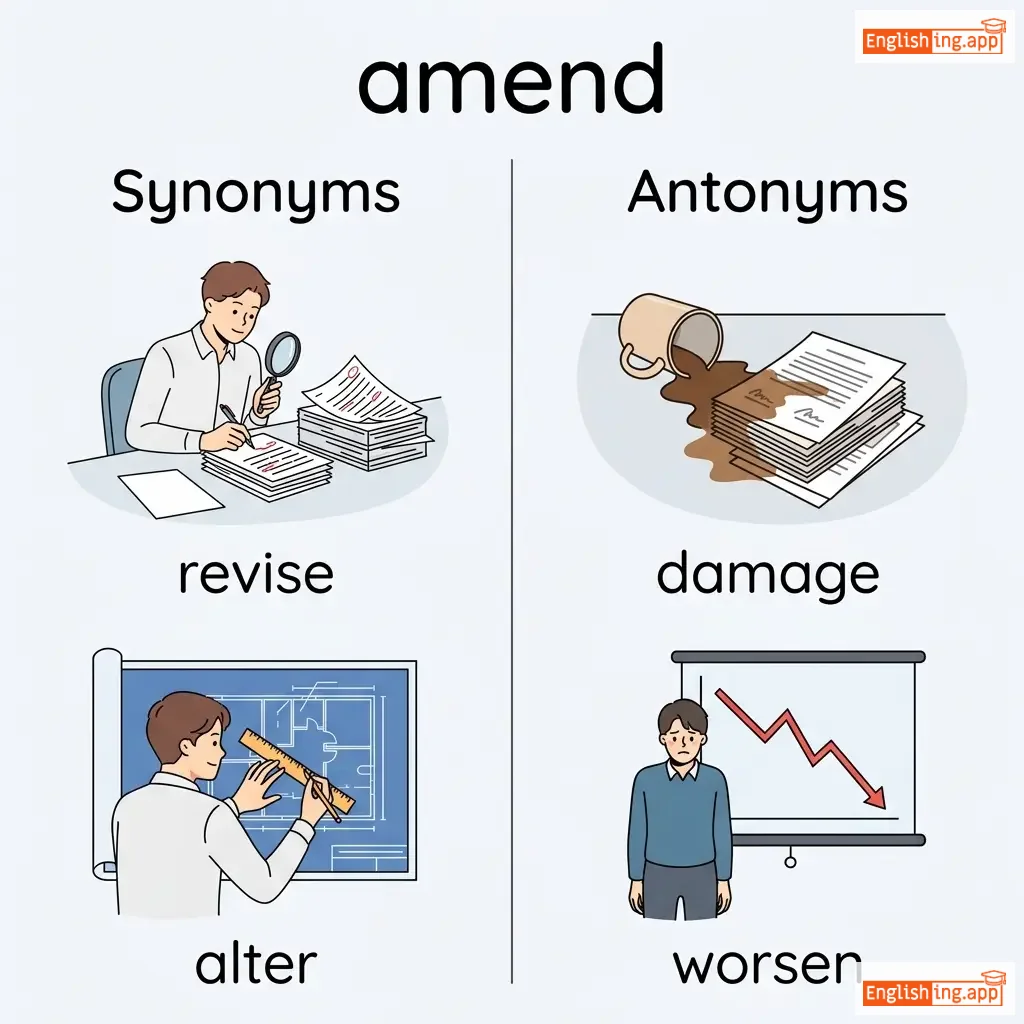
revise, alter, modify, adjust, improve
••••••
|
damage, worsen, harm
••••••
|
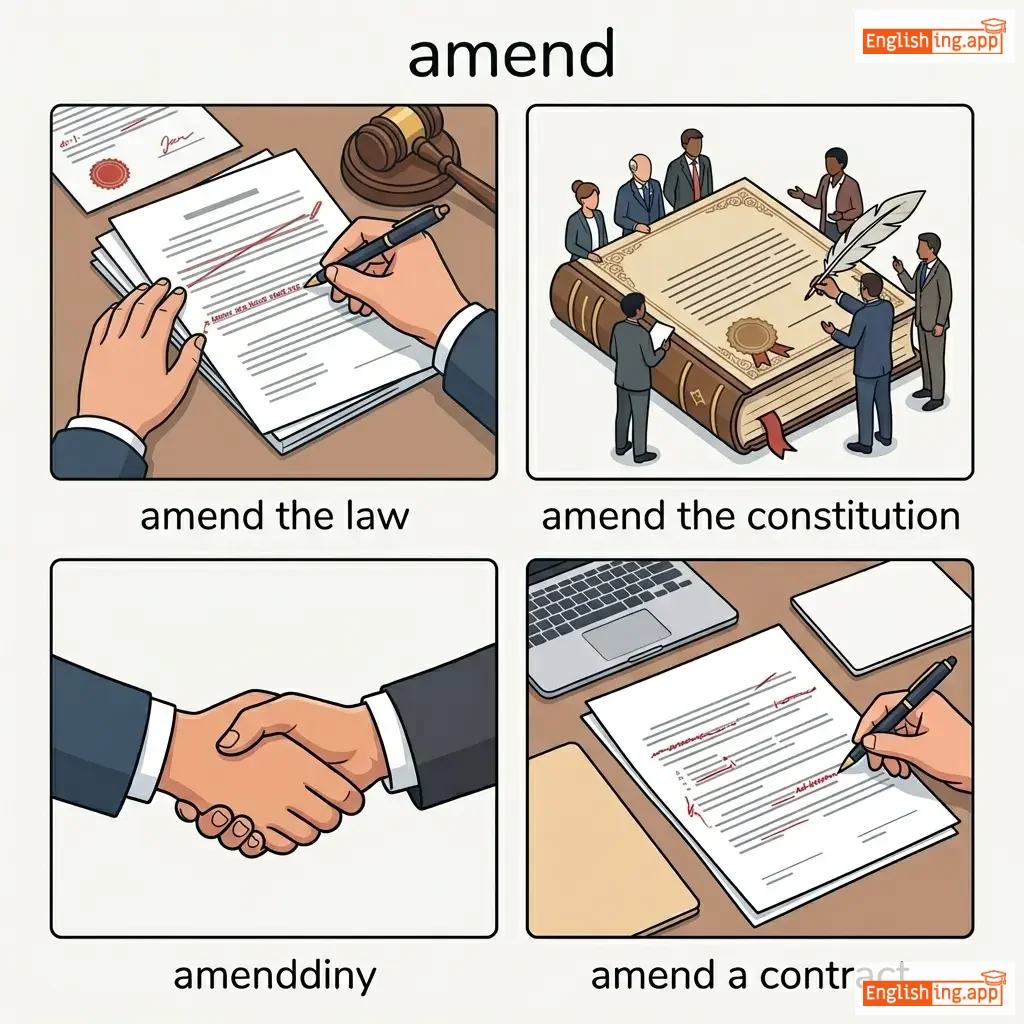
amend the law, amend the constitution, amend a contract
••••••
|
No •••••• |
|
📜
••••••
|
/əˈmɛndmənt/
noun
(海皮尼斯)
••••••
|


|
幸福
xingfu
••••••
|
- •••••• | - •••••• | - •••••• | - •••••• |
a change or addition designed to improve a text, law, or document
••••••
|
The government proposed an amendment to the constitution. |
当她收到奖项时,她无法掩饰自己的幸福。
Dang ta shoudao jiangxiang shi, ta wufa yanshi ziji de xingfu.
••••••
|
make an amendment |
to officially change or correct a document or law
••••••
|
追求幸福
zhuīqiú xìngfú
••••••
|
change, revision, modification, correction, adjustment
••••••
|
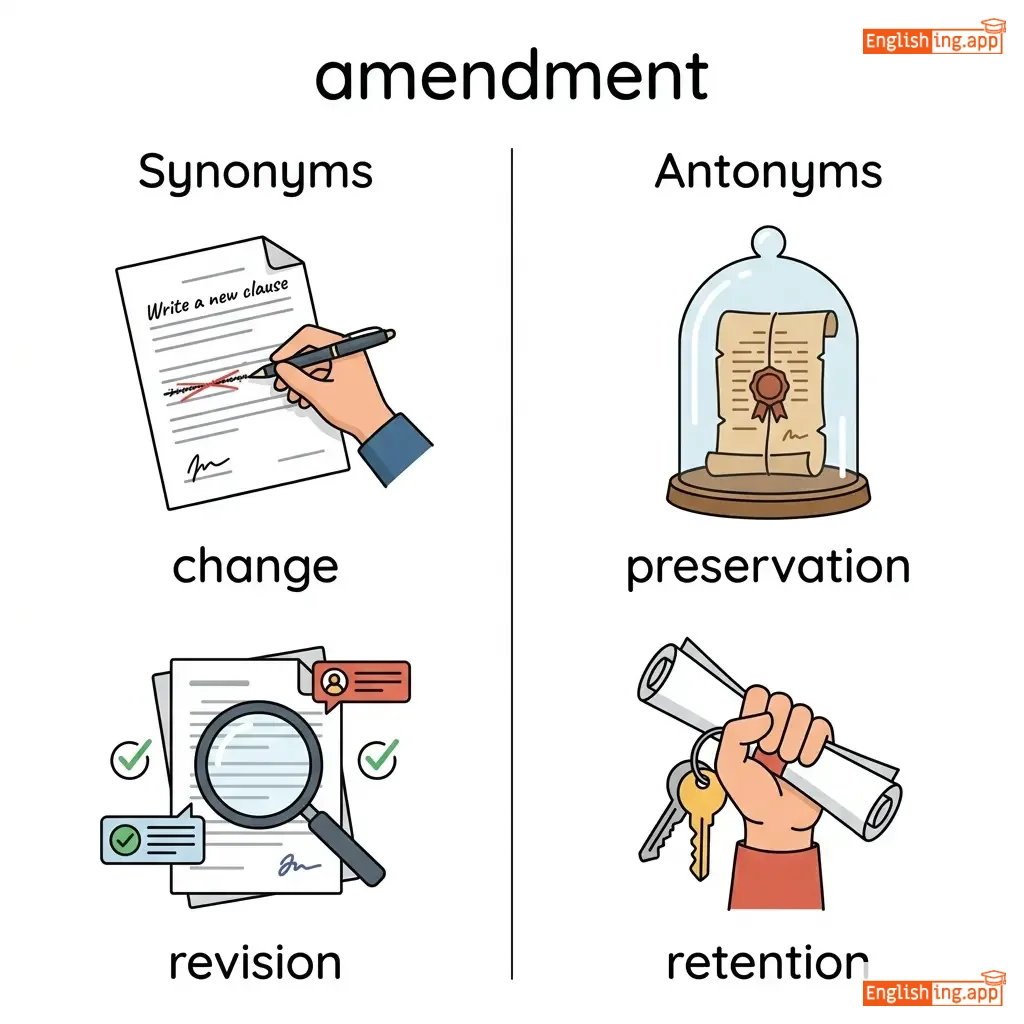
preservation, retention
••••••
|
constitutional amendment, proposed amendment, make an amendment, amendment bill
••••••
|
幸福 = 寻找幸福的快乐
••••••
|
|
🌪️
••••••
|
/əˈmɪd/
preposition
(amid)
••••••
|
- •••••• |
在...中
zài...zhōng
••••••
|
- •••••• | - •••••• | - •••••• | - •••••• |
in the middle of or surrounded by something
••••••
|
The team stayed calm amid the chaos.
团队在 amid 混乱中保持冷静。
••••••
|
团队在混乱中保持冷静。
Tuánduì zài hùnluàn zhōng bǎochí lěngjìng.
••••••
|
- •••••• | - •••••• | - •••••• |
among, amidst, surrounded by, within, amidst
••••••
|
outside, beyond, apart
••••••
|
amid the noise, amid confusion, amid controversy, amid tensions
••••••
|
Amid 意味着在...中 — 在混乱中保持冷静!
••••••
|
|
👥
••••••
|
/əˈmʌŋ/
preposition
(阿蒙)
••••••
|
- •••••• |
在...之中
zài...zhī zhōng
••••••
|
- •••••• | - •••••• | - •••••• | - •••••• |
surrounded by; in the middle of a group
••••••
|
He was sitting among his friends. |
他坐在他的朋友们中间。
Tā zuò zài tā de péngyǒumen zhōngjiān.
••••••
|
- •••••• | - •••••• | - •••••• |
amid, amidst, between, surrounded by
••••••
|
outside, away from
••••••
|
among people, among friends, among the crowd
••••••
|
Among意味着在...之中,像坐在朋友们中间。
••••••
|
|
💰
••••••
|
/əˈmaʊnt/
noun/verb
(āmǎnt)
••••••
|
- •••••• |
金额
jīn'é
••••••
|
amounted
āmǎnted
••••••
|
amounted
āmǎnted
••••••
|
amounts
āmǎnts
••••••
|
amounting
āmǎnting
••••••
|
a quantity of something, typically the total of a thing or things in number, size, value, or extent
••••••
|
The total amount of money is not enough.
总金额不够。
••••••
|
总金额不够。
Zǒng jīn'é bù gòu.
••••••
|
amount to nothing
amount to nothing
••••••
|
to have no significant result or value
••••••
|
一无所有
yī wú suǒ yǒu
••••••
|
quantity, sum, total, volume, measure
••••••
|
lack, zero, nothing
••••••
|
large amount, small amount, total amount
••••••
|
Amount 像是 '金额', 金钱的总额
••••••
|
|
🔊
••••••
|
/ˌæmplɪfɪˈkeɪʃən/
noun
(安普利菲凯申)
••••••
|
- •••••• |
放大
fangda
••••••
|
- •••••• | - •••••• | - •••••• | - •••••• |
the act or process of making something stronger, louder, or more intense; an expansion or elaboration of details
••••••
|
The microphone provides amplification of the speaker’s voice.
The microphone provides amplification of the speaker’s voice.
••••••
|
麦克风对说话者的声音起到放大作用。
maikefeng dui shuohuazhe de shengyin qidao fangda zuoyong
••••••
|
- •••••• | - •••••• | - •••••• |
enhancement, increase, expansion, magnification, intensification
••••••
|
reduction, weakening, attenuation
••••••
|
signal amplification, sound amplification, amplification factor, data amplification
••••••
|
Amplification 就是 放大,声音变大
••••••
|
|
🔊
••••••
|
/ˈæmplɪˌfaɪ/
verb
(ǎmplìfài)
••••••
|
|
放大
fàngdà
••••••
|
amplified
ǎmplifaid
••••••
|
amplified
ǎmplifaid
••••••
|
amplifies
ǎmplifāi
••••••
|
amplifying
ǎmplifài
••••••
|
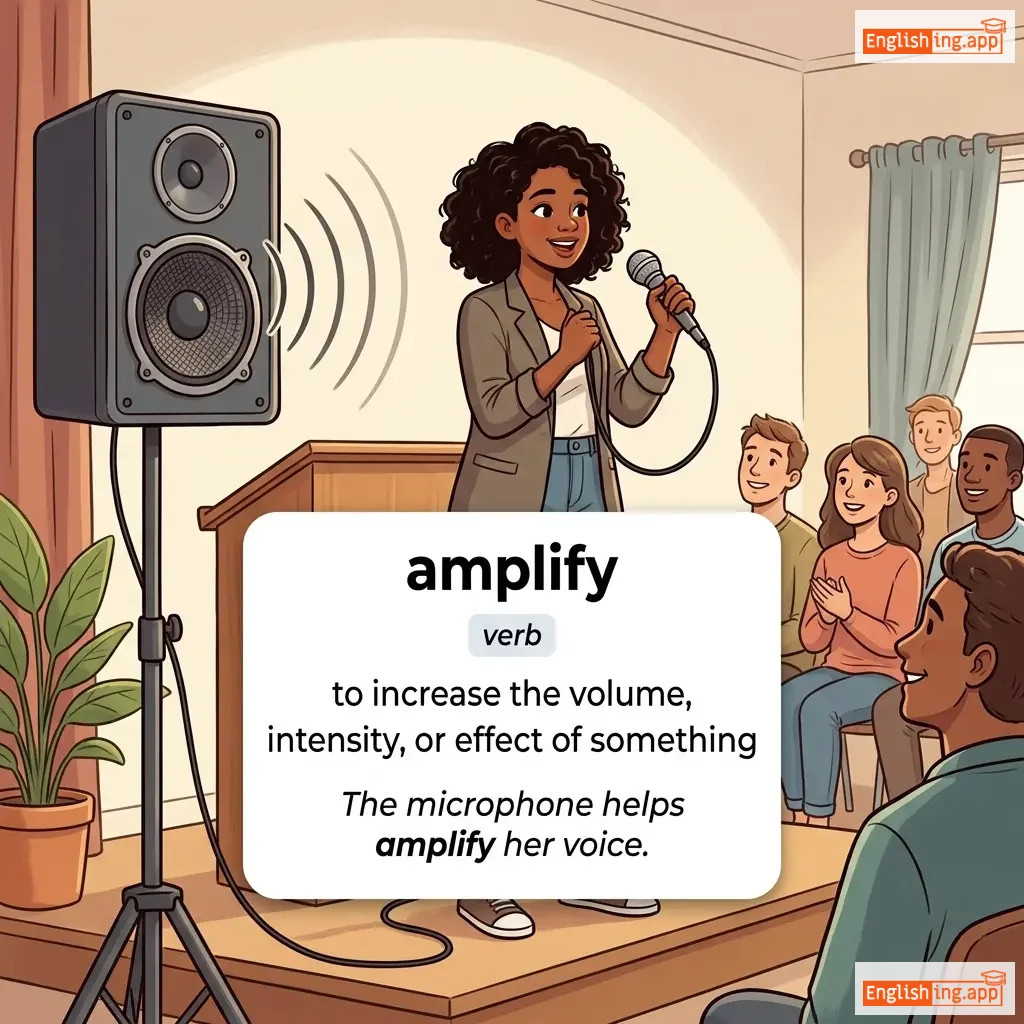
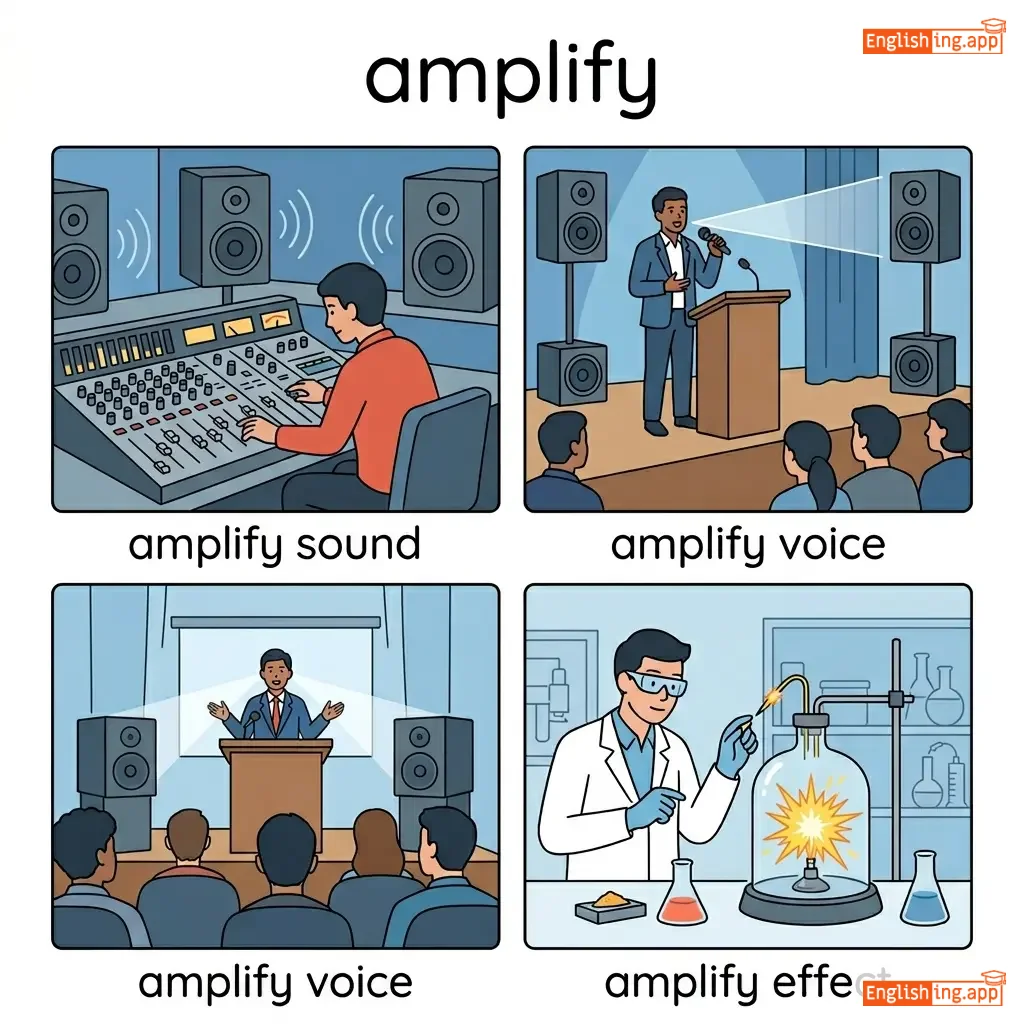
to make sounds louder; to make something larger or more significant
••••••
|
The microphone amplifies her voice.
麦克风增强了她的声音。
••••••
|
麦克风增强了她的声音。
Màikèfēng zēngqiángle tā de shēngyīn.
••••••
|
- •••••• | - •••••• | - •••••• |
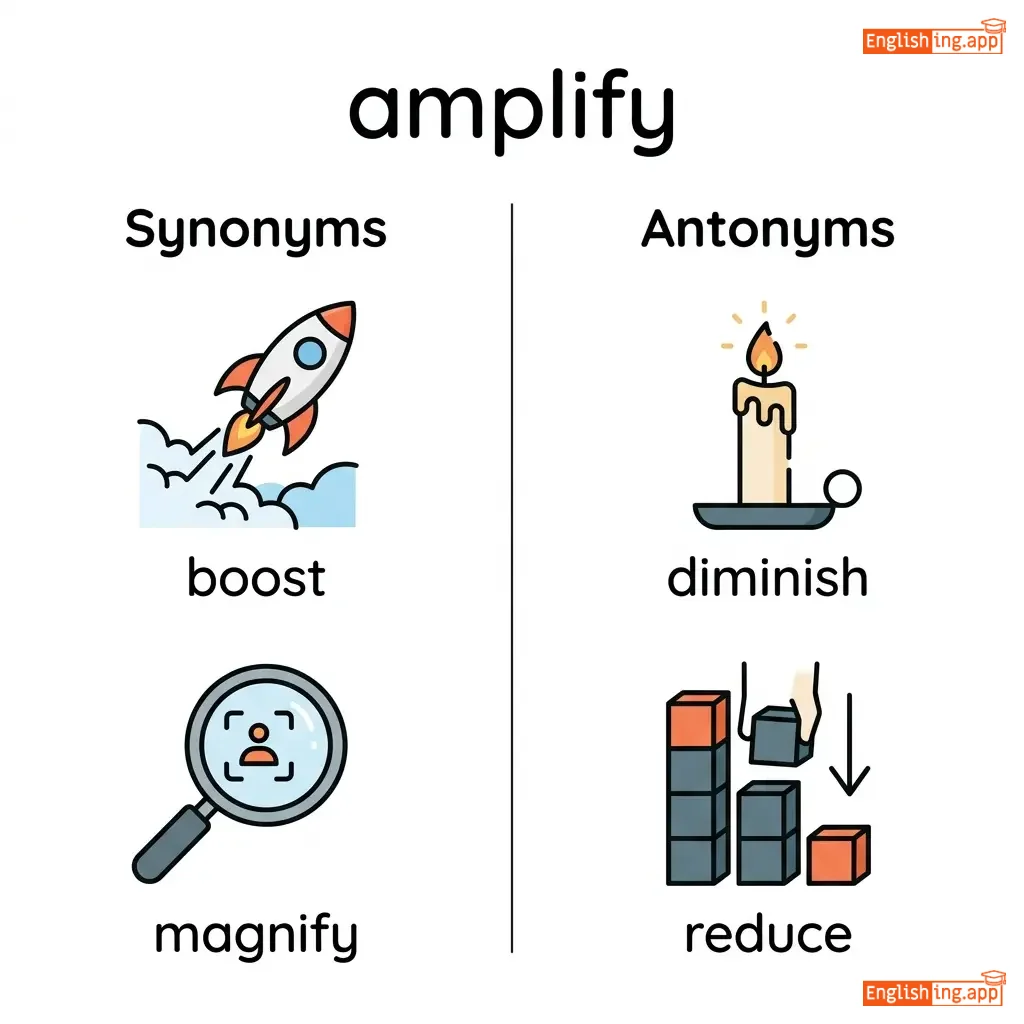
increase, boost, enhance, magnify
••••••
|
reduce, diminish, quiet
••••••
|
amplify sound, amplify signal, amplify voice, amplify effect, amplify message
••••••
|
放大声音使它更响亮。
••••••
|
|
😂
••••••
|
/əˈmjuːz/
verb
(阿缪兹)
••••••
|
- •••••• |
逗乐
dou le
••••••
|
amused
阿缪兹德
••••••
|
amused
阿缪兹德
••••••
|
amuses
阿缪兹伊斯
••••••
|
amusing
阿缪兹英
••••••
|
to entertain or make someone laugh or smile; to occupy pleasantly
••••••
|
The clown amused the children at the party.
德 克劳恩 阿缪兹德 德 孩子们 在 德 派对。
••••••
|
小丑在聚会上逗乐了孩子们。
xiao chou zai juhui shang dou le le haizimen
••••••
|
amuse oneself
阿缪兹 万塞尔夫
••••••
|
to enjoy oneself by doing something pleasant
••••••
|
自娱
zi yu
••••••
|
entertain, delight, divert, please, charm
••••••
|
bore, annoy, displease
••••••
|
amuse someone, amuse oneself, highly amusing, mildly amusing
••••••
|
amuse 听起来像 音乐,让人开心
••••••
|
|
😄
••••••
|
/əˈmjuː.zɪŋ/
adjective
(amíuzīng)
••••••
|
- •••••• |
有趣的; 好笑的; 娱乐的
yǒuqù de; hǎoxiào de; yúlè de
••••••
|
- •••••• | - •••••• | - •••••• | - •••••• |
causing laughter or providing entertainment; funny; enjoyable
••••••
|
The children found the clown's performance very amusing.
孩子们觉得小丑的表演非常有趣。
••••••
|
孩子们觉得小丑的表演非常有趣。
Háizimen juédé xiǎochǒu de biǎoyǎn fēicháng yǒuqù.
••••••
|
- •••••• | - •••••• | - •••••• |
entertaining, funny, humorous, delightful
••••••
|
boring, dull, serious, tedious
••••••
|
amusing story, amusing anecdote, amusing incident, amusing character
••••••
|
记住那个总是让人笑的滑稽小丑。
••••••
|
|
🅰️
••••••
|
/æn/
article
(安)
••••••
|
- •••••• |
一个(元音前)
yi ge (yuanyin qian)
••••••
|
- •••••• | - •••••• | - •••••• | - •••••• |
used before a noun to refer to a non-specific item that begins with a vowel sound
••••••
|
She ate an apple for breakfast.
希 伊特 安 阿普尔 佛 布瑞克法斯特。
••••••
|
她早餐吃了一个苹果。
ta zaocan chile yi ge pingguo
••••••
|
- •••••• | - •••••• | - •••••• |
a, one
••••••
|
the
••••••
|
an apple, an hour, an idea, an example
••••••
|
‘an’ 就像中文的“一个”
••••••
|
|
📖
••••••
|
/əˈnælədʒi/
noun
(ā ná luó jī)
••••••
|
- •••••• |
类比
leibi
••••••
|
- •••••• | - •••••• | - •••••• | - •••••• |
A comparison between two things for the purpose of explanation or clarification.
••••••
|
The teacher used the analogy of a tree to explain the structure of an essay. |
老师用树木的类比来解释文章的结构。
Lǎoshī yòng shùmù de lèibǐ lái jiěshì wénzhāng de jiégòu.
••••••
|
- •••••• | - •••••• | - •••••• |
comparison, parallel, resemblance, similarity
••••••
|
difference, contrast
••••••
|
draw an analogy, use an analogy, apt analogy
••••••
|
类比就是比较,用来解释,像中文里这样使用。
••••••
|
|
🔬
••••••
|
/əˈnæləsɪs/
noun
(分析)
••••••
|
|
分析
fenxi
••••••
|
- •••••• | - •••••• | - •••••• | - •••••• |
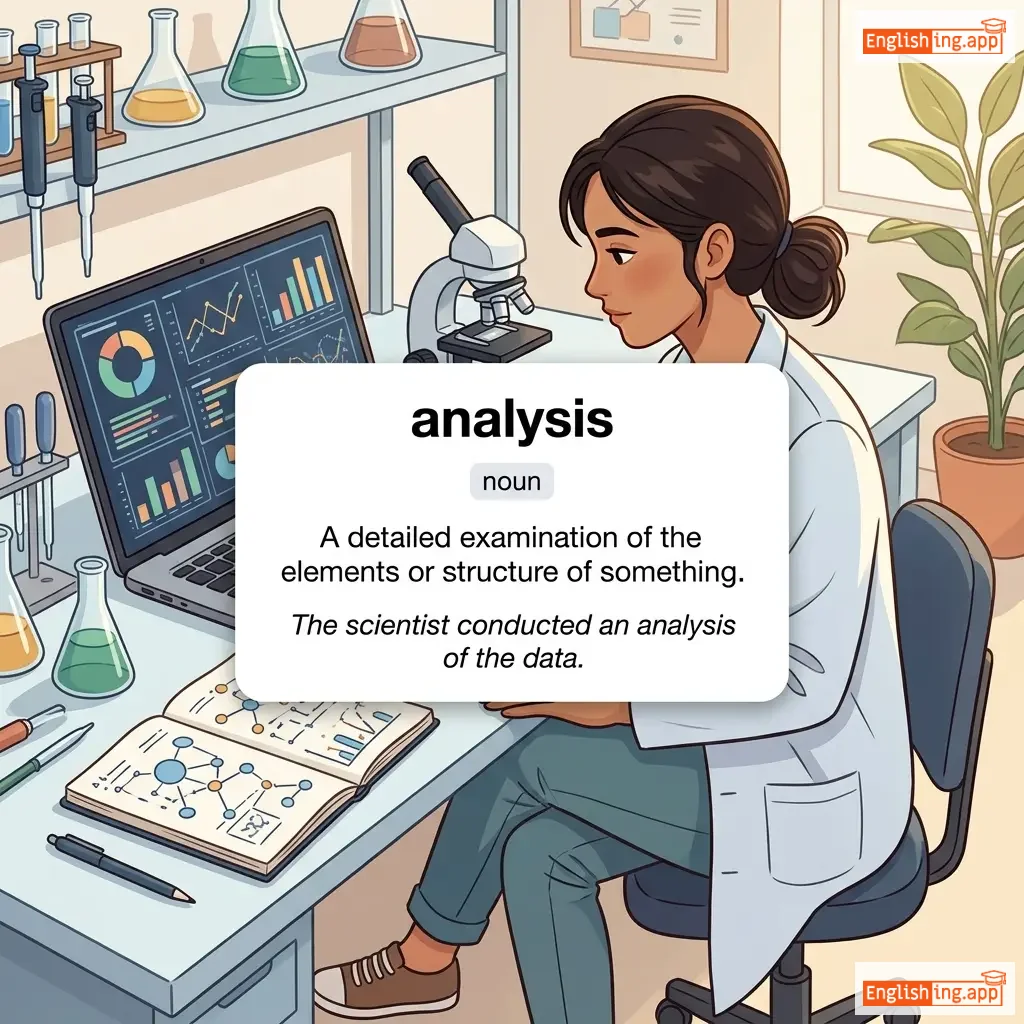
A detailed examination of the elements or structure of something.
••••••
|
The scientist conducted an analysis of the data. |
科学家对数据进行了分析。
Kēxuéjiā duì shùjù jìnxíngle fēnxī.
••••••
|
in-depth analysis |
a very detailed and thorough examination of something
••••••
|
深入分析
shēnrù fēnxī
••••••
|
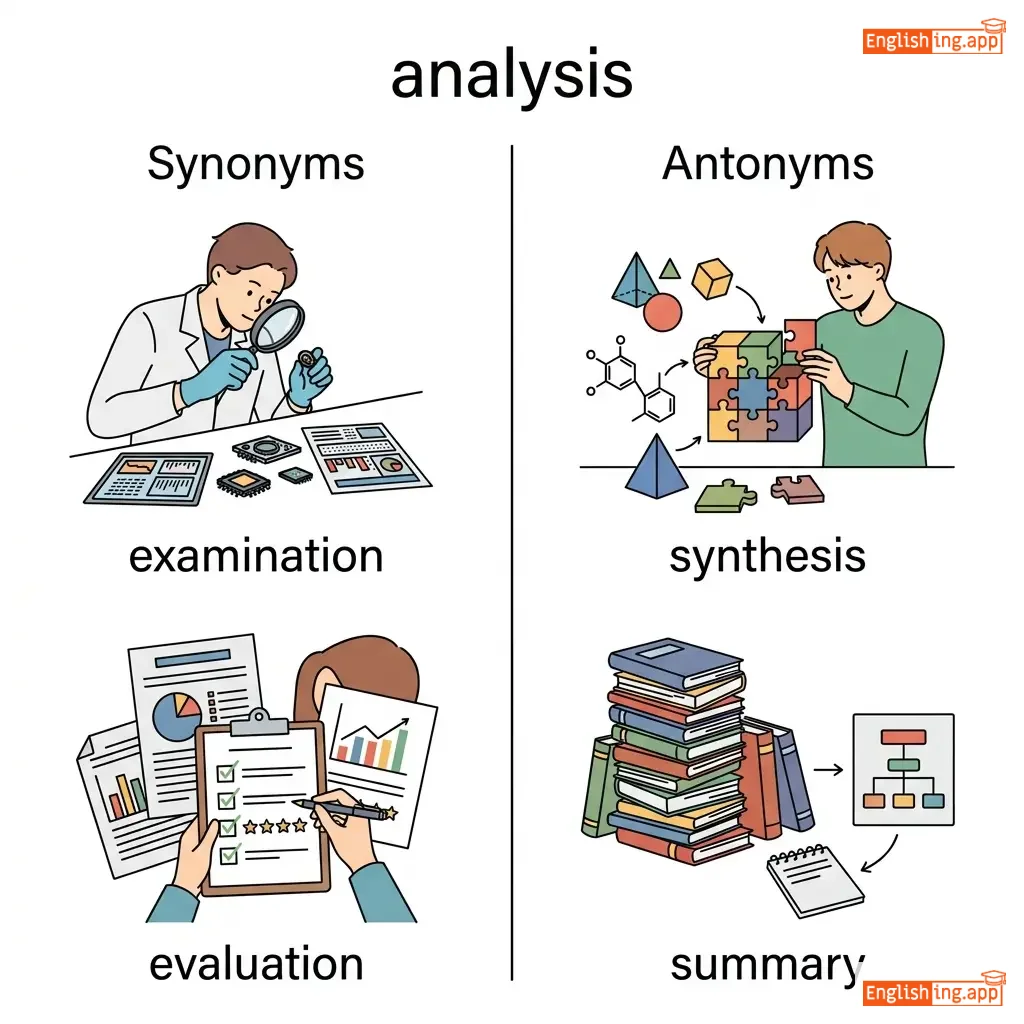
examination, evaluation, study, review, assessment
••••••
|
synthesis, summary
••••••
|
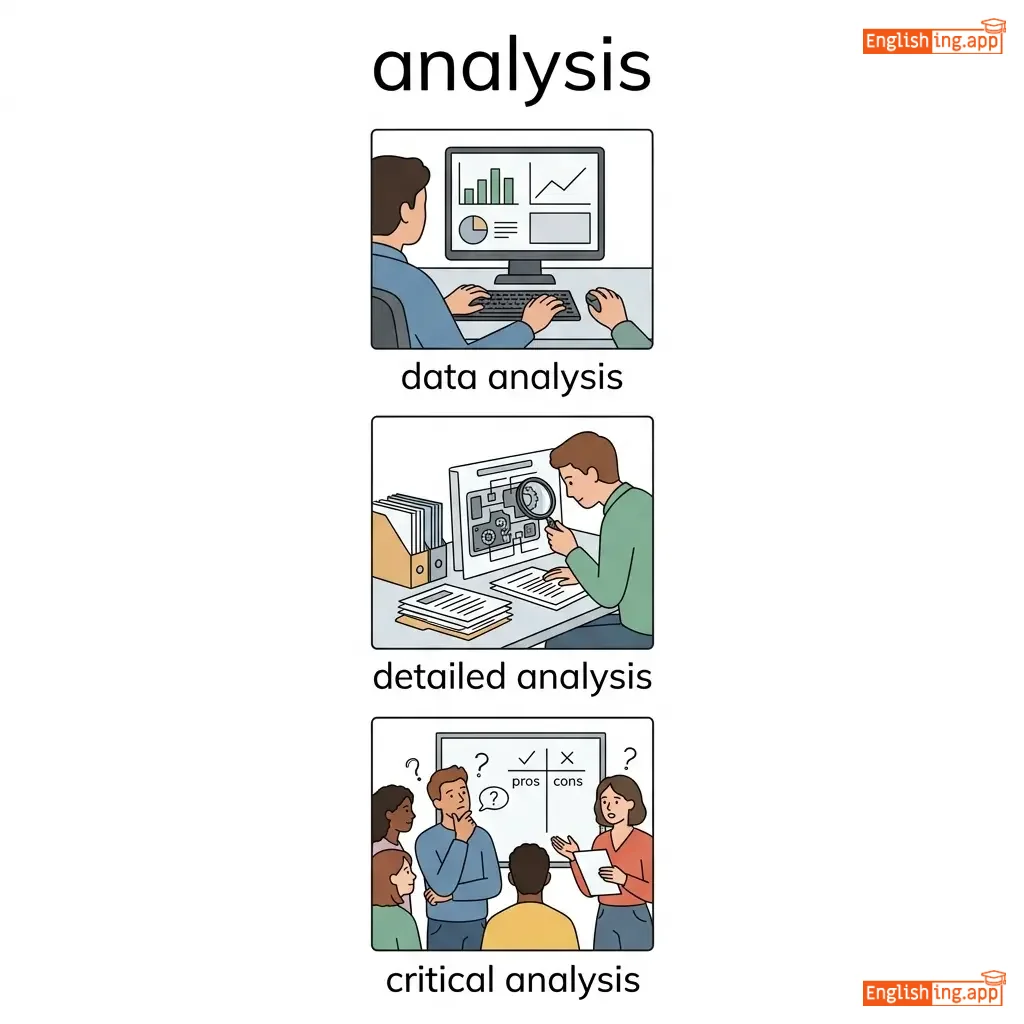
data analysis, detailed analysis, critical analysis, market analysis
••••••
|
Analysis 的意思是分析,通过深入的分析来理解数据。
••••••
|
|
📊
••••••
|
/ˈænəlɪst/
noun
(分析师)
••••••
|
- •••••• |
分析师
fenxishi
••••••
|
- •••••• | - •••••• | - •••••• | - •••••• |
a person who studies or examines something carefully to understand it or make decisions
••••••
|
The financial analyst predicted a rise in the stock market.
金融分析师预测股票市场上涨。
••••••
|
金融分析师预测股票市场上涨。
Jinrong fenxishi yuce gupiao shichang shangzhang.
••••••
|
- •••••• | - •••••• | - •••••• |
examiner, evaluator, expert, researcher, consultant
••••••
|
novice, layman, amateur
••••••
|
financial analyst, political analyst, market analyst, data analyst
••••••
|
分析师像分析机器一样分析数据
••••••
|
|
🔍
••••••
|
/ˈænəlaɪz/
verb
(分析)
••••••
|
- •••••• |
分析
fenxi
••••••
|
analyzed
分析过
••••••
|
analyzed
已分析
••••••
|
analyzes
分析
••••••
|
analyzing
分析中
••••••
|
to examine something in detail to understand it better or draw conclusions
••••••
|
Scientists analyze data to discover new patterns.
科学家分析数据以发现新模式。
••••••
|
科学家分析数据以发现新模式。
kexuejia fenxi shuju yi faxian xin moshi.
••••••
|
analyze the situation
分析情况
••••••
|
to carefully study the circumstances before making a decision
••••••
|
分析情况
fenxi qingkuang
••••••
|
examine, study, investigate, evaluate, interpret
••••••
|
ignore, neglect, overlook
••••••
|
analyze data, analyze results, analyze information, analyze the problem
••••••
|
Analyze意味着分析 — '分析'就是数据分析
••••••
|
|
👴
••••••
|
/ˈænsestər/
noun
(ænsɛstər)
••••••
|
- •••••• |
祖先
zuxian
••••••
|
- •••••• | - •••••• | - •••••• | - •••••• |
a person, typically one more remote than a grandparent, from whom one is descended
••••••
|
She researched her family tree to learn about her ancestors.
她研究了家谱,了解她的祖先。
••••••
|
她研究了家谱,了解她的祖先。
Tā yánjiūle jiāpǔ, liǎojiě tā de zǔxiān.
••••••
|
- •••••• | - •••••• | - •••••• |
forefather, foremother, predecessor, forebear
••••••
|
descendant, offspring, progeny
••••••
|
ancient ancestor, common ancestor, trace ancestors
••••••
|
祖先 (ancestor) 是你家族的历史根源。
••••••
|
|
👵
••••••
|
/ˈænsɛstrɪs/
noun
(安塞斯特瑞斯)
••••••
|
- •••••• |
女祖先
nu zuxian
••••••
|
- •••••• | - •••••• | - •••••• | - •••••• |
a female ancestor; a woman from whom one is descended
••••••
|
She discovered that her ancestress came from a small village in Bengal.
西 迪斯卡弗德 代特 赫 安塞斯特瑞斯 凯姆 弗罗姆 阿 斯莫 村庄 在 孟加拉。
••••••
|
她发现自己的女祖先来自孟加拉的一个小村庄。
ta faxian zijide nu zuxian laizi Mengjiala de yi ge xiao cunzhuang
••••••
|
- •••••• | - •••••• | - •••••• |
female ancestor, foremother, progenitress, matriarch
••••••
|
descendant, offspring
••••••
|
royal ancestress, distant ancestress, maternal ancestress
••••••
|
女 + 祖先 = ancestress
••••••
|
|
⚓
••••••
|
/ˈæŋkər/
noun, verb
(锚)
••••••
|
- •••••• |
锚
mó
••••••
|
anchored
锚定
••••••
|
anchored
锚定
••••••
|
anchors
锚住
••••••
|
anchoring
锚定中
••••••
|
a heavy object used to hold a ship in place; also to secure firmly
••••••
|
The ship dropped its anchor near the shore.
船只在海岸附近投下了锚。
••••••
|
船只在海岸附近投下了锚。
Chuánzhī zài hǎi'àn fùjìn tóu xiàle mó.
••••••
|
anchor of hope
希望的锚
••••••
|
something that provides stability and confidence
••••••
|
希望的锚
xīwàng de mó
••••••
|
mooring, fastener, stabilizer, support, mainstay
••••••
|
drift, release, instability
••••••
|
drop anchor, lift anchor, anchor point, news anchor
••••••
|
锚总是固定船只。希望的锚:生活中的稳定性。
••••••
|
|
⚓
••••••
|
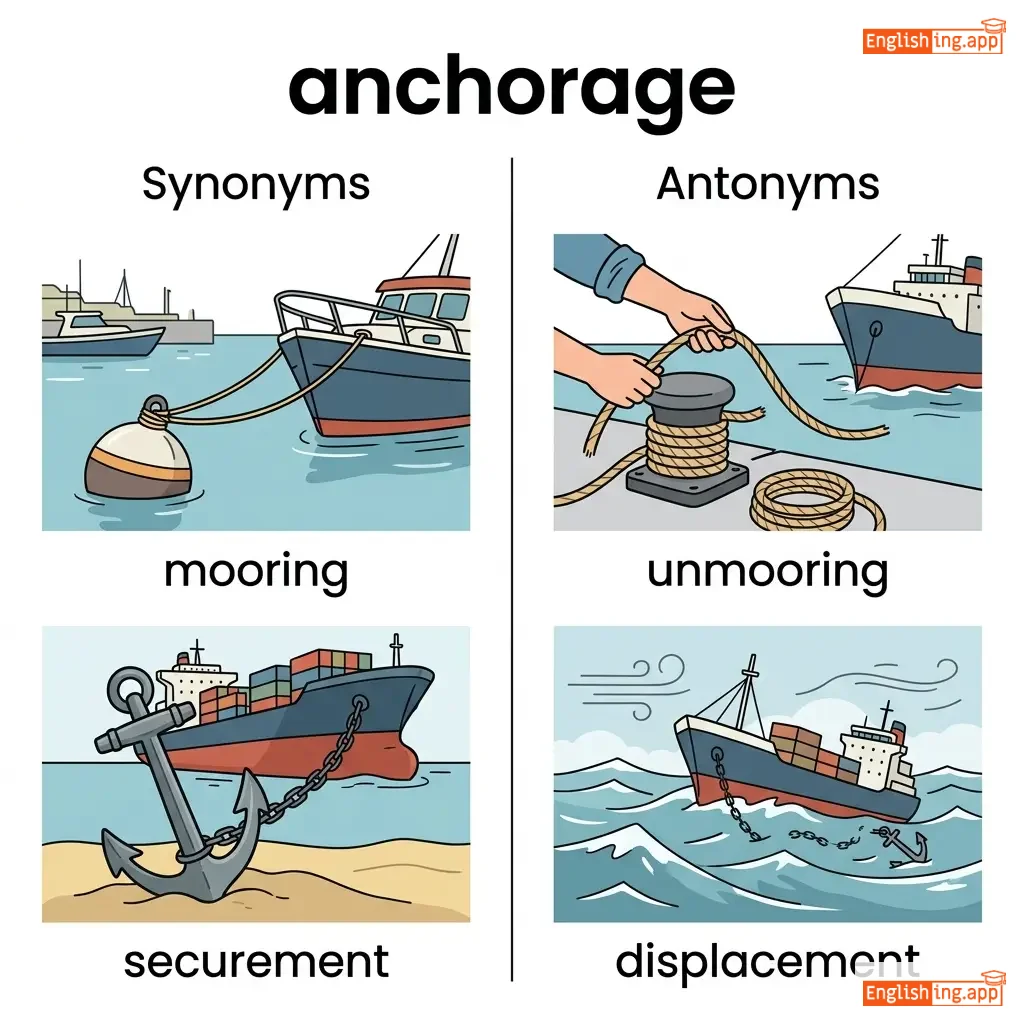
ˈæŋkərɪdʒ
noun
(ānkè rì jí)
••••••
|

|
停泊处
tíng bó chù
••••••
|
- •••••• | - •••••• | - •••••• | - •••••• |
A secure holding place; a place where ships can anchor safely.
••••••
|
The boat was anchored near the shore for safety. |
船只为了安全停靠在岸边。
Chuánzhī wèile ānquán tíngkào zài àn biān.
••••••
|
- •••••• | - •••••• | - •••••• |
mooring, securement
••••••
|
unmooring, displacement
••••••
|
- •••••• |
像锚一样固定,停泊在安全的地方。
••••••
|
|
🏛️
••••••
|
/ˈeɪnʃənt/
adjective
(ānsìyǎnt)
••••••
|
- •••••• |
古老的
gǔlǎo de
••••••
|
- •••••• | - •••••• | - •••••• | - •••••• |
Belonging to the very distant past; very old.
••••••
|
They visited the ruins of an ancient city.
他们参观了一个古老城市的遗址。
••••••
|
他们参观了一个古老城市的遗址。
Tāmen cānguānle yīgè gǔlǎo chéngshì de yízhǐ.
••••••
|
ancient history
古代历史
••••••
|
something that happened a long time ago and is no longer important
••••••
|
古代历史
gǔdài lìshǐ
••••••
|
old, antique, archaic, prehistoric, classical
••••••
|
modern, recent
••••••
|
ancient civilization, ancient ruins, ancient culture, ancient temple
••••••
|
古老的与 'Ancient' 相关,想象你走进一个古老的庙宇。
••••••
|
|
➕
••••••
|
/ænd/
conjunction
(与)
••••••
|
- •••••• |
和
he
••••••
|
- •••••• | - •••••• | - •••••• | - •••••• |
Used to connect words or sentences that are to be taken jointly.
••••••
|
She bought apples and oranges. |
她买了苹果和橙子。
Tā mǎile píngguǒ hé chéngzi.
••••••
|
- •••••• | - •••••• | - •••••• |
plus, along with, together with, as well as
••••••
|
or, but
••••••
|
and so, and then, and finally, and also
••••••
|
And 的意思是和 - 苹果 AND 橙子一起。
••••••
|
|
😇
••••••
|
/ˈeɪndʒəl/
noun
(āngēl)
••••••
|
- •••••• |
天使
tian shi
••••••
|
- •••••• | - •••••• | - •••••• | - •••••• |
a spiritual being believed to act as a messenger or servant of God
••••••
|
She believed her mother was watching over her like an angel. |
她相信她的母亲像天使一样在看着她。
Ta xiangxin ta de muqin xiang tian shi yīyàng zài kànzhe tā.
••••••
|
guardian angel |
a person who helps and protects someone in trouble
••••••
|
守护天使
shǒuhù tiānshǐ
••••••
|
spirit, saint, cherub, guardian, protector
••••••
|
devil, demon, fiend
••••••
|
guardian angel, fallen angel, like an angel, angel investor
••••••
|
天使是保护者 — 如果你的朋友帮助你,告诉他‘你是我的天使!’
••••••
|
|
😡
••••••
|
/ˈæŋɡər/
noun
(āngěr)
••••••
|
- •••••• |
愤怒
fèn nù
••••••
|
- •••••• | - •••••• | - •••••• | - •••••• |
A strong feeling of displeasure or hostility.
••••••
|
He couldn't control his anger after the argument. |
他在争吵后无法控制自己的愤怒。
Tā zài zhēngchǎo hòu wúfǎ kòngzhì zìjǐ de fèn nù.
••••••
|
fit of anger |
a sudden, intense outburst of anger
••••••
|
愤怒爆发
fèn nù bào fā
••••••
|
rage, fury, irritation, resentment, wrath
••••••
|
calm, peace, happiness
••••••
|
express anger, control anger, suppress anger, anger management
••••••
|
Anger代表愤怒 - ANGry的人经常愤怒。
••••••
|
|
📐
••••••
|
/ˈæŋɡl/
noun
(ānɡl)
••••••
|
- •••••• |
角度
jiaodu
••••••
|
- •••••• | - •••••• | - •••••• | - •••••• |
The space between two intersecting lines or surfaces at the point where they meet.
••••••
|
The teacher explained how to measure an angle in geometry. |
老师解释了如何在几何学中测量角度。
Lǎoshī jiěshìle rúhé zài jǐhéxué zhōng cèliàng jiǎodù.
••••••
|
different angle |
a new or alternative way of looking at something
••••••
|
不同的角度
bùtóng de jiǎodù
••••••
|
corner, viewpoint, perspective, slant
••••••
|
straight line, alignment
••••••
|
right angle, sharp angle, wide angle, camera angle
••••••
|
角度是两个线条交叉的地方,使用量角器来测量!
••••••
|
|
😠
••••••
|
/ˈæŋɡrɪli/
adverb
(安格瑞里)
••••••
|
- •••••• |
愤怒地
fennu de
••••••
|
- •••••• | - •••••• | - •••••• | - •••••• |
in a manner showing anger or strong displeasure
••••••
|
She spoke angrily when she heard the news.
西 斯波克 安格瑞里 温 西 哈德 德 纽斯。
••••••
|
她听到这个消息后愤怒地说话。
ta tingdao zhege xiaoxi hou fennu de shuohua
••••••
|
- •••••• | - •••••• | - •••••• |
furiously, irritably, madly, crossly, wrathfully
••••••
|
calmly, peacefully, gently
••••••
|
speak angrily, reply angrily, shout angrily, glare angrily
••••••
|
angry 听起来像 angry → 愤怒地
••••••
|
|
😡
••••••
|
/ˈæŋɡri/
adjective
(ānglì)
••••••
|
- •••••• |
生气
shengqi
••••••
|
- •••••• | - •••••• | - •••••• | - •••••• |
feeling or showing strong displeasure or hostility
••••••
|
She was angry when she found out the truth. |
她知道真相后生气了。
Tā zhīdào zhēnxiàng hòu shēngqì le.
••••••
|
angry with someone |
to feel or show anger towards a person
••••••
|
对某人生气
duì mǒu rén shēngqì
••••••
|
mad, furious, upset, irritated, annoyed
••••••
|
calm, happy, pleased
••••••
|
angry face, angry voice, angry crowd, angry response
••••••
|
Angry 代表生气—就像当你生气时,脸颊红了起来 🔥
••••••
|
|
🐅
••••••
|
/ˈænɪməl/
noun
(动物)
••••••
|
- •••••• |
动物
dongwu
••••••
|
- •••••• | - •••••• | - •••••• | - •••••• |
a living organism that feeds on organic matter and usually has senses and mobility
••••••
|
The tiger is a wild animal. |
老虎是一种野生动物。
lǎohǔ shì yī zhǒng yěshēng dòngwù.
••••••
|
party animal |
someone who enjoys going to parties a lot
••••••
|
派对动物
pàiduì dòngwù
••••••
|
creature, beast, living being, organism
••••••
|
plant, human
••••••
|
wild animal, domestic animal, animal rights, animal kingdom
••••••
|
Animal 意思是动物—动物园里有很多动物 🐅
••••••
|
|
🎬
••••••
|
/ˌæn.ɪˈmeɪ.ʃən/
noun
(动画)
••••••
|
- •••••• |
动画
donghua
••••••
|
- •••••• | - •••••• | - •••••• | - •••••• |
the technique of making inanimate objects appear to move; liveliness and enthusiasm
••••••
|
The animation in this movie is incredibly detailed.
这部电影的动画非常细致。
••••••
|
这部电影的动画非常细致。
Zhe bu dianying de donghua feichang xizhi.
••••••
|
- •••••• | - •••••• | - •••••• |
cartoon, motion picture, liveliness
••••••
|
stillness, lifelessness, inertia
••••••
|
computer animation, stop-motion animation, animated film
••••••
|
动画在中文中同样表示animation,是电影中的动作和活力。
••••••
|
|
🦶
••••••
|
/ˈæŋkəl/
noun
(ankel)
••••••
|
- •••••• |
脚踝
jiaohai
••••••
|
- •••••• | - •••••• | - •••••• | - •••••• |
the joint connecting the foot with the leg
••••••
|
He twisted his ankle while playing football. |
他在踢足球时扭伤了脚踝。
Ta zai ti zuqiu shi niushang le jiaohai.
••••••
|
weak ankles |
a tendency to easily injure one's ankles
••••••
|
弱脚踝
ruo jiaohai
••••••
|
joint, heel, articulation, pivot
••••••
|
none
••••••
|
twist an ankle, sprained ankle, broken ankle, ankle pain
••••••
|
Ankle意味着脚踝 — 足球一踢脚踝就伤了!
••••••
|
|
🏴
••••••
|
/ˈæn.ɛks/
verb
(安内克斯)
••••••
|
- •••••• |
吞并
tūn bìng
••••••
|
annexed
安内克斯德
••••••
|
annexed
安内克斯德
••••••
|
annexes
安内克斯
••••••
|
annexing
安内克辛
••••••
|
To take control of a territory and add it to one's own.
••••••
|
The empire annexed the neighboring kingdom after the war.
帝国在战争后吞并了邻国的王国。
••••••
|
帝国在战争后吞并了邻国的王国。
Dìguó zài zhànzhēng hòu tūn bìngle lín guó de wángguó.
••••••
|
annex territory
吞并领土
••••••
|
To claim and occupy land
••••••
|
吞并领土
tūn bìng lǐngtǔ
••••••
|
seize, occupy, capture, appropriate, attach
••••••
|
surrender, relinquish
••••••
|
annex territory, annex land, annex building
••••••
|
Annex就是合并别的地方
••••••
|
|
🗺️
••••••
|
/ˌænɛkˈseɪʃən/
noun
(安内克塞申)
••••••
|
- •••••• |
吞并
tunbing
••••••
|
- •••••• | - •••••• | - •••••• | - •••••• |
the act of adding or taking control of territory or property, especially by a state
••••••
|
The annexation of the region led to international condemnation.
该地区的安内克塞申导致了国际谴责。
••••••
|
该地区的吞并引发了国际谴责。
gai diqu de tunbing yinfa le guoji qianze
••••••
|
- •••••• | - •••••• | - •••••• |
acquisition, incorporation, takeover, absorption
••••••
|
independence, separation, relinquishment
••••••
|
territorial annexation, illegal annexation, annexation of land, political annexation
••••••
|
Annexation 就是吞并一个地区
••••••
|
|
💥
••••••
|
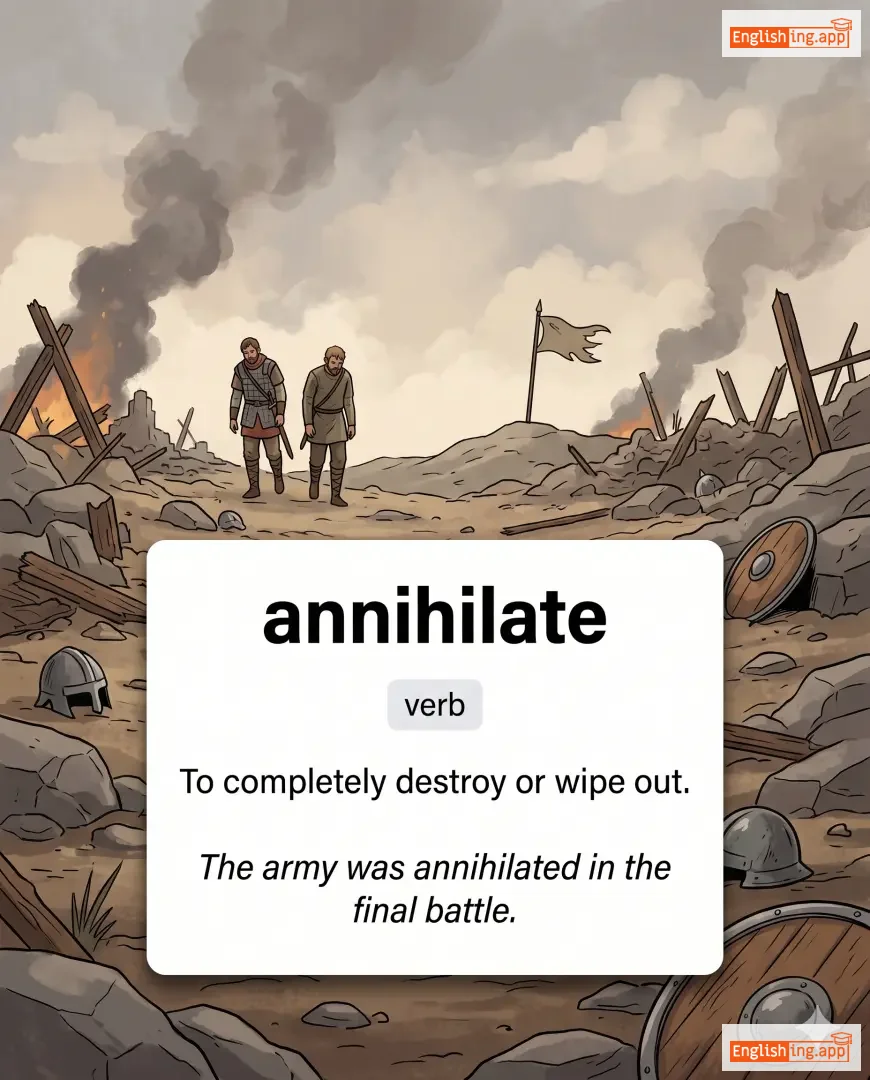
/əˈnaɪ.ə.leɪt/
verb
(ànìhǐlèit)
••••••
|
|
摧毁
cuīhuǐ
••••••
|
annihilated
ànìhǐlèited
••••••
|
annihilated
ànìhǐlèited
••••••
|
annihilates
ànìhǐlèits
••••••
|
annihilating
ànìhǐlèitīng
••••••
|
To completely destroy or wipe out.
••••••
|
The army was annihilated in the final battle.
军队在最后一战中被摧毁。
••••••
|
军队在最后一战中被摧毁。
Jūnduì zài zuìhòu yī zhàn zhōng bèi cuīhuǐ.
••••••
|
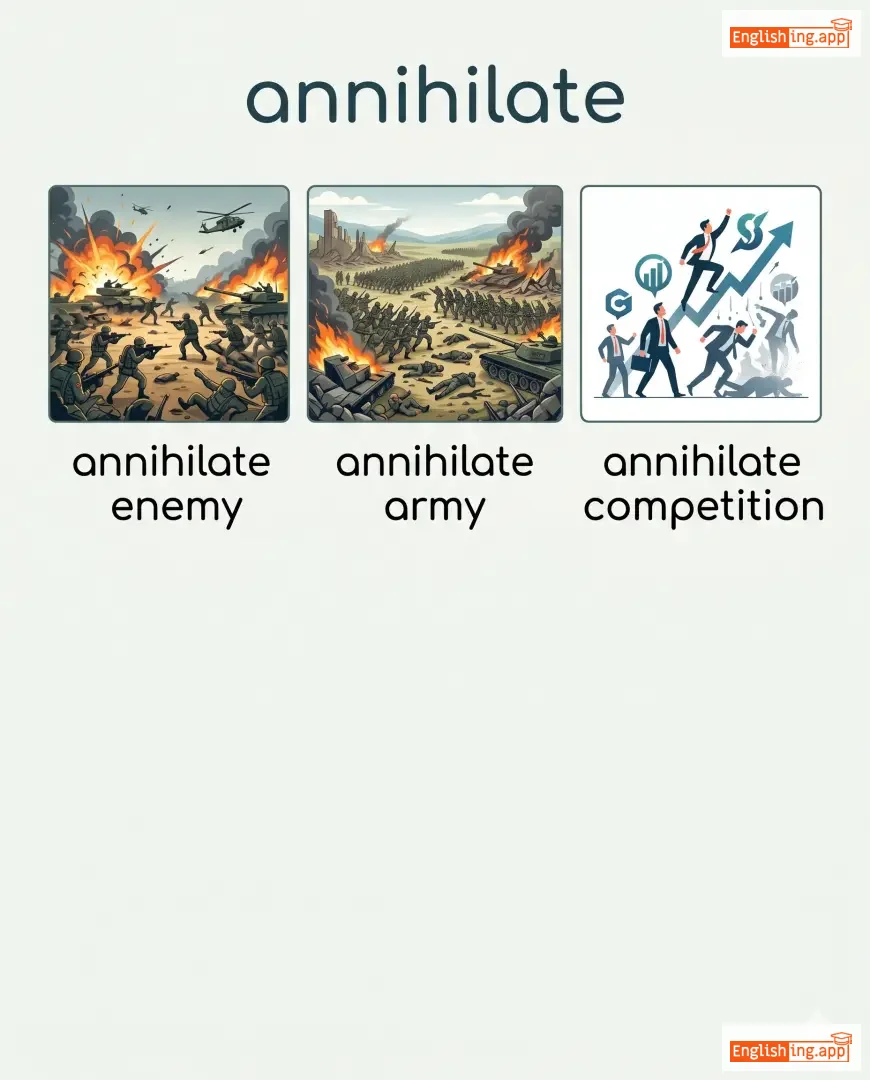
annihilate the competition
摧毁竞争对手
••••••
|
To defeat rivals completely
••••••
|
摧毁竞争对手
cuīhuǐ jìngzhēng duìshǒu
••••••
|
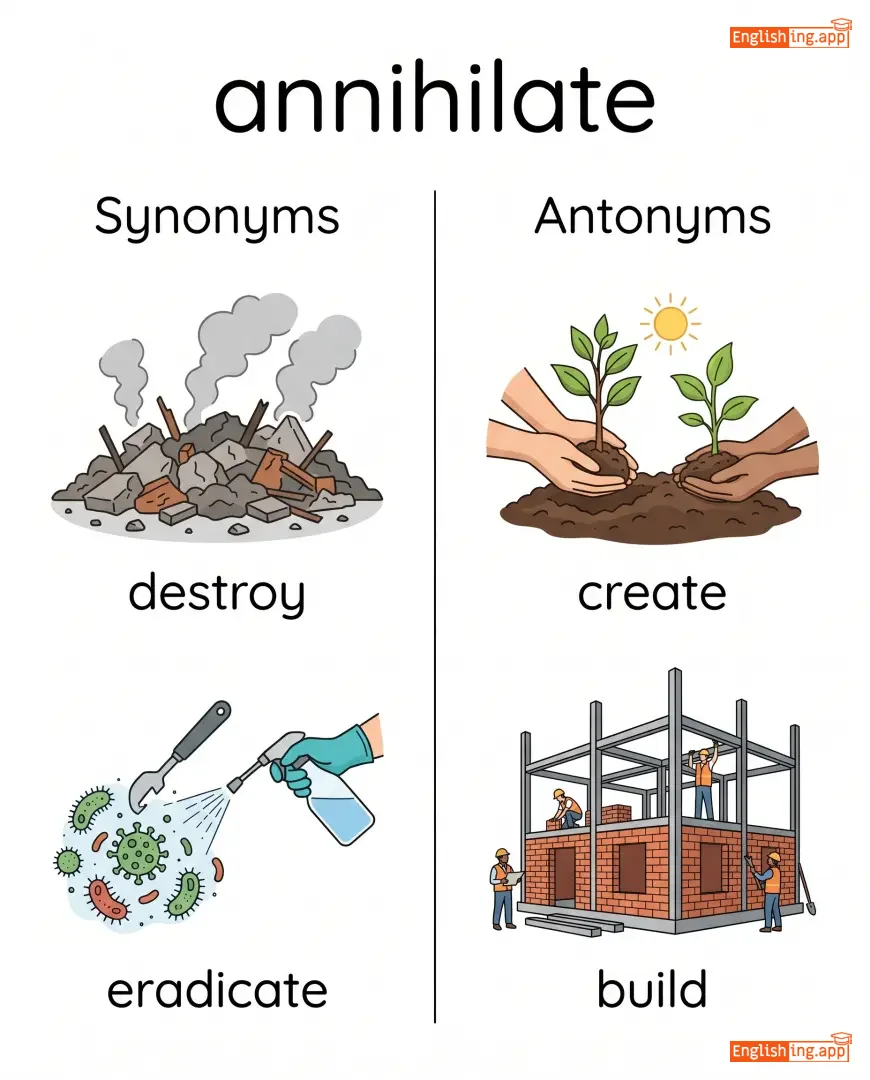
destroy, eradicate, obliterate, demolish, crush
••••••
|
create, build, construct
••••••
|
annihilate enemy, annihilate army, annihilate competition
••••••
|
Annihilate意味着摧毁——一切都消失。
••••••
|
|
🎉
••••••
|
/ˌænɪˈvɜːrsəri/
noun
(周年纪念)
••••••
|
- •••••• |
周年纪念
zhōunián jìniàn
••••••
|
- •••••• | - •••••• | - •••••• | - •••••• |
the yearly recurrence of a date marking a past event
••••••
|
They celebrated their wedding anniversary with a dinner. |
他们用一顿晚餐庆祝了他们的结婚周年纪念。
Tāmen yòng yī dùn wǎncān qìngzhùle tāmen de jiéhūn zhōunián jìniàn.
••••••
|
anniversary celebration |
a festivity or event to mark an anniversary
••••••
|
周年纪念庆祝活动
zhōunián jìniàn qìngzhù huódòng
••••••
|
commemoration, remembrance, jubilee, observance
••••••
|
forgetfulness, neglect
••••••
|
wedding anniversary, annual anniversary, silver anniversary, golden anniversary
••••••
|
Anniversary 意味着周年纪念—Anni 意味着年,Versary 意味着重复 🔄
••••••
|
|
📢
••••••
|
/əˈnaʊns/
verb
(宣布)
••••••
|
- •••••• |
宣布
xuanbu
••••••
|
announced
宣布了
••••••
|
announced
宣布了
••••••
|
announces
宣布
••••••
|
announcing
宣布中
••••••
|
to make a formal public statement about something
••••••
|
The company will announce the new product tomorrow.
公司明天将宣布新产品。
••••••
|
公司明天将宣布新产品。
Gongsi mingtian jiang xuanbu xin chanpin.
••••••
|
announce decision
宣布决定
••••••
|
to declare or make a decision public
••••••
|
宣布决定
Xuanbu jueding
••••••
|
declare, proclaim, state, notify, publish
••••••
|
conceal, withhold, hide
••••••
|
announce results, announce plans, announce officially, announce publicly
••••••
|
宣布就是做正式的公开声明—想象扬声器在播放!
••••••
|
|
📢
••••••
|
/əˈnaʊnsmənt/
noun
(公告)
••••••
|
- •••••• |
公告
gonggao
••••••
|
- •••••• | - •••••• | - •••••• | - •••••• |
a public or formal statement giving information
••••••
|
The principal made an important announcement about the new schedule. |
校长关于新时间表做了一个重要的公告。
xiaozhang guanyu xin shijianbiao zuo le yi ge zhongyao de gonggao.
••••••
|
public announcement |
a formal declaration made to the general public
••••••
|
公共公告
gonggong gonggao
••••••
|
declaration, statement, proclamation, notice, notification
••••••
|
secret, silence, concealment
••••••
|
official announcement, public announcement, make an announcement, important announcement
••••••
|
公告 — 就像一个大喇叭告诉大家重要的消息!
••••••
|
|
😠
••••••
|
/əˈnɔɪ/
verb
(安诺伊)
••••••
|
- •••••• |
惹恼
renao
••••••
|
annoyed
安诺伊德
••••••
|
annoyed
安诺伊德
••••••
|
annoys
安诺伊斯
••••••
|
annoying
安诺伊因
••••••
|
to irritate or bother someone and make them feel a little angry or uncomfortable
••••••
|
His constant humming started to annoy everyone in the room.
他的持续哼唱开始让房间里的每个人都不耐烦。
••••••
|
他的持续哼唱开始让房间里的每个人都不耐烦。
Ta de chíxù hēngchàng kāishǐ ràng fángjiān lǐ de měi gè rén dōu bù nàifán.
••••••
|
annoy the hell out of
惹恼某人
••••••
|
to irritate someone extremely
••••••
|
惹恼某人
rěnǎo mǒu rén
••••••
|
irritate, bother, disturb, anger, provoke
••••••
|
please, delight, soothe
••••••
|
annoy someone, really annoy, slightly annoy, annoy deeply
••••••
|
安诺伊—像‘安’一样惹恼别人。
••••••
|
|
😒
••••••
|
/əˈnɔɪd/
adjective
(安诺伊德)
••••••
|
- •••••• |
恼火的
naohuo de
••••••
|
- •••••• | - •••••• | - •••••• | - •••••• |
feeling slightly angry or irritated
••••••
|
She felt annoyed by the constant noise.
希 费尔特 安诺伊德 拜 德 康斯坦特 诺伊兹。
••••••
|
她对持续的噪音感到恼火。
ta dui chixu de zaoyin gandao naohuo
••••••
|
annoyed at someone
annoyed at someone
••••••
|
to feel irritation or displeasure toward a person
••••••
|
对某人生气
dui mouren shengqi
••••••
|
irritated, bothered, displeased, vexed, frustrated
••••••
|
pleased, satisfied, calm
••••••
|
feel annoyed, get annoyed, slightly annoyed, visibly annoyed
••••••
|
Annoyed 听起来像 ‘恼’ → 恼火的
••••••
|

