Получите неограниченный доступ ко всем словам с подпиской Pro
Обновить до ProПолучите неограниченный доступ ко всем предложениям с подпиской Pro
Обновить до Pro|
Эмодзи
|
Слово | Images | Перевод | Прошедшее | Причастие прошедшего времени | Третье лицо единственного числа | Герундий | Значение | Пример предложения | Перевод примера предложения | Пример выражения | Значение примера выражения | Перевод примера выражения | Синонимы | Антонимы | Коллокации | Мнемоника |
|---|---|---|---|---|---|---|---|---|---|---|---|---|---|---|---|---|---|
|
🌧️
••••••
|
/ɔːlˈðoʊ/
conjunction
(ɔːlˈðoʊ)
••••••
|
- •••••• |
хотя
khotya
••••••
|
- •••••• | - •••••• | - •••••• | - •••••• |
in spite of the fact that; even though
••••••
|
Although it was raining, they went for a walk. |
Хотя шел дождь, они пошли гулять.
Khotya shel dozhd', oni poshli gulyat'.
••••••
|
- •••••• | - •••••• | - •••••• |
though, even though, while, albeit
••••••
|
because, since
••••••
|
although true, although difficult, although unlikely
••••••
|
Хотя all день шел дождь, они все равно пошли гулять - Although it rained all day, they still went out.
••••••
|
|
🥫
••••••
|
/ˌæljuˈmɪniəm/
noun
(алюминий)
••••••
|
- •••••• |
алюминий
alyuminiy
••••••
|
- •••••• | - •••••• | - •••••• | - •••••• |
a lightweight, silvery-white metal used widely in manufacturing and packaging
••••••
|
Aluminium is commonly used to make cans and aircraft parts.
Алюминий используется для производства банок и самолётов.
••••••
|
Алюминий используется для производства банок и самолётов.
alyuminiy ispolzuetsya dlya proizvodstva banok i samolyotov
••••••
|
aluminium foil
алюминиевая фольга
••••••
|
thin sheets of aluminium used for wrapping or covering food
••••••
|
алюминиевая фольга
alyuminievaya folga
••••••
|
aluminum, Al, light metal, metallic element
••••••
|
nonmetal, plastic
••••••
|
aluminium foil, aluminium alloy, aluminium can, aluminium sheet
••••••
|
Алюминий лёгкий—самолёт летит.
••••••
|
|
♾️
••••••
|
/ˈɔːlweɪz/
adverb
(Olvejz)
••••••
|
- •••••• |
всегда
vsegda
••••••
|
- •••••• | - •••••• | - •••••• | - •••••• |
at all times; on every occasion
••••••
|
She always wakes up early in the morning.
Она всегда просыпается рано утром.
••••••
|
Она всегда просыпается рано утром.
Ona vsegda prosypaetsya rano utrom.
••••••
|
as always
Как всегда
••••••
|
as is usual or expected
••••••
|
Как всегда
Kak vsegda
••••••
|
forever, constantly, perpetually, continually
••••••
|
never, rarely, seldom
••••••
|
always ready, always happy, always late, always available
••••••
|
Always = Всегда, всегда (vsegda).
••••••
|
|
🔗
••••••
|
/əˈmælɡəmeɪt/
verb
(амалгамет)
••••••
|

|
сливаться
slivat'sya
••••••
|
amalgamated
амалгамейтед
••••••
|
amalgamated
амалгамейтед
••••••
|
amalgamates
амалгамейтс
••••••
|
amalgamating
амалгамейтинг
••••••
|
to combine or unite to form one organization or structure; to merge
••••••
|
The two companies decided to amalgamate their operations.
Две компании решили объединить свои операции.
••••••
|
Две компании решили объединить свои операции.
Dve kompanii reshili obyedinit' svoi operatsii.
••••••
|
- •••••• | - •••••• | - •••••• |
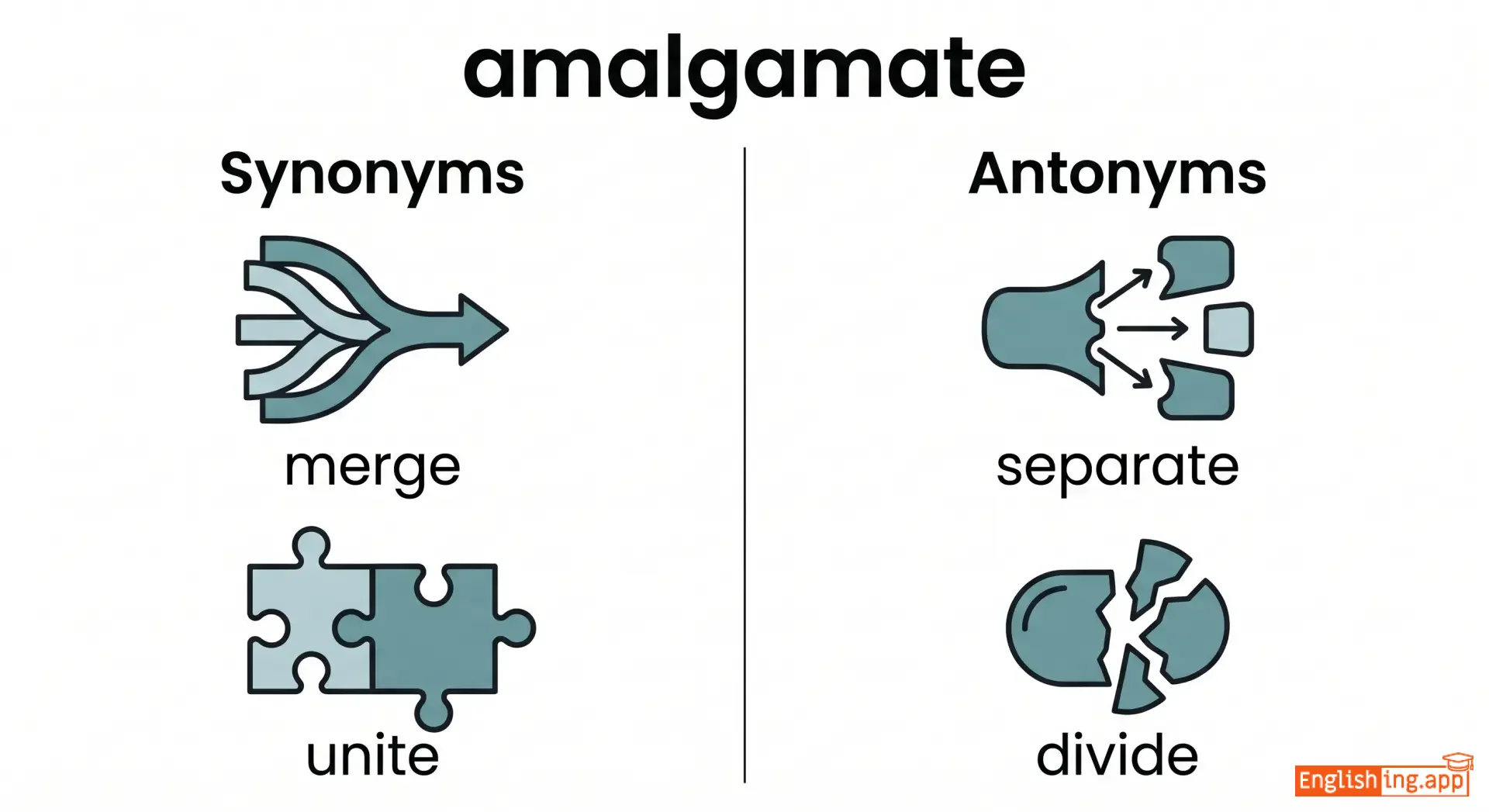
merge, combine, unite, blend
••••••
|
separate, divide, split, isolate
••••••
|
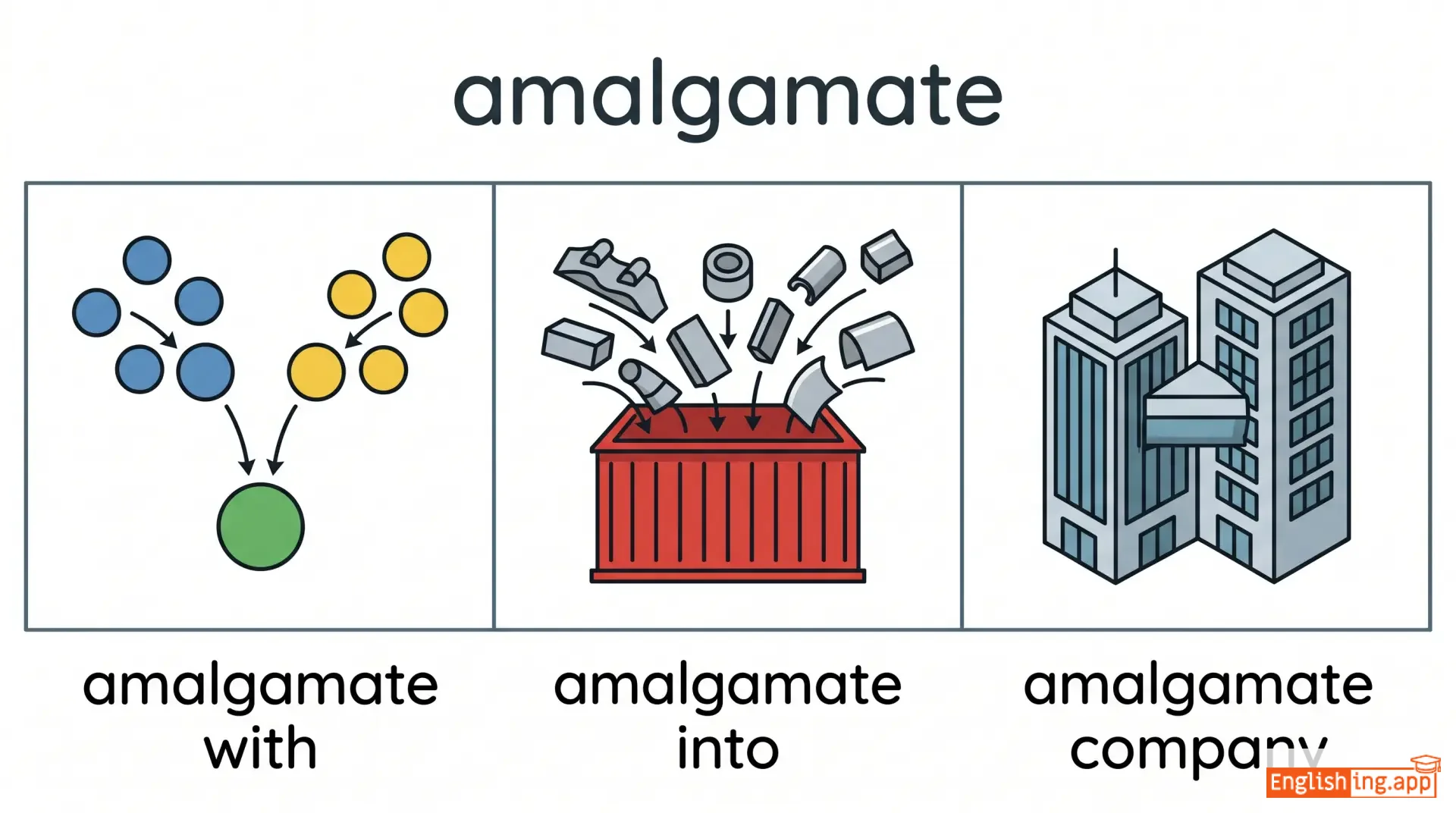
amalgamate companies, amalgamate operations, successfully amalgamate, amalgamate resources, amalgamate efforts
••••••
|
сливаться = объединять для создания
••••••
|
|
💰
••••••
|
/əˈmæs/
verb
(амасс)
••••••
|
- •••••• |
накапливать
nakaplivat
••••••
|
amassed
амассед
••••••
|
amassed
амассед
••••••
|
amasses
амассес
••••••
|
amassing
амассинг
••••••
|
to gather together or accumulate over a period of time
••••••
|
He managed to amass a fortune through wise investments.
Он смог накопить состояние через разумные инвестиции.
••••••
|
Он смог накопить состояние благодаря разумным инвестициям.
On smog nakopit' sostoyanie blagodarya razumnym investitsiyam.
••••••
|
- •••••• | - •••••• | - •••••• |
accumulate, collect, gather, hoard, assemble
••••••
|
disperse, squander, scatter
••••••
|
amass wealth, amass fortune, amass power, amass collection
••••••
|
Amass означает накапливать – накапливать как массу.
••••••
|
|
🎨
••••••
|
/ˈæmətər/
noun
(аматор)
••••••
|
- •••••• |
любитель
lyubitel
••••••
|
- •••••• | - •••••• | - •••••• | - •••••• |
A person who engages in a pursuit, especially a sport or art, on an unpaid basis.
••••••
|
The painting looked impressive, even though it was done by an amateur.
Картина выглядела впечатляюще, несмотря на то, что её написал любитель.
••••••
|
Картина выглядела впечатляюще, несмотря на то, что её написал любитель.
Kartina vyglyadela vpechatlyayushche, nesmotrya na to, chto yeye napisal lyubitel.
••••••
|
amateur hour
любительский час
••••••
|
A display of ineptitude or lack of professionalism.
••••••
|
любительский час
lyubitel'skij chas
••••••
|
novice, beginner, nonprofessional, layman, hobbyist
••••••
|
professional, expert, specialist
••••••
|
amateur photographer, amateur player, amateur performance, amateur competition
••••••
|
Amateur означает любитель - это значит, что он делает это просто для удовольствия, не профессионально.
••••••
|
|
😲
••••••
|
/əˈmeɪz/
verb
(эмейз)
••••••
|
- •••••• |
изумлять
izumlyat
••••••
|
amazed
эмейзд
••••••
|
amazed
эмейзд
••••••
|
amazes
эмейзис
••••••
|
amazing
эмейзинг
••••••
|
to fill someone with great surprise or wonder
••••••
|
The magician’s final trick amazed the audience.
Зэ мэджишнс файнал трик эмейзд зэ одиэнс.
••••••
|
Последний трюк фокусника изумил публику.
Posledniy tryuk fokusnika izumil publiku
••••••
|
- •••••• | - •••••• | - •••••• |
astonish, astound, surprise, impress, stun
••••••
|
bore, disappoint, unimpress
••••••
|
amaze someone, truly amazed, amazed by, amazed at
••••••
|
amaze = изумлять = изумление
••••••
|
|
🌟
••••••
|
/əˈmeɪzɪŋ/
adjective
(эймейзинг)
••••••
|
- •••••• |
удивительный
udivitel'nyy
••••••
|
- •••••• | - •••••• | - •••••• | - •••••• |
causing great surprise or wonder; astonishing
••••••
|
The magician performed an amazing trick. |
Фокусник проделал удивительный трюк.
Fokusnik prodelal udivitel'nyy tryuk.
••••••
|
truly amazing |
something that is very impressive or extraordinary
••••••
|
действительно удивительный
deystvitel'no udivitel'nyy
••••••
|
astonishing, wonderful, incredible, marvelous, impressive
••••••
|
ordinary, boring, dull
••••••
|
amazing experience, amazing story, amazing talent, amazing place
••••••
|
Amazing = Удивительный = вау!
••••••
|
|
🎖️
••••••
|
/æmˈbæsədər/
noun
(эмбэсэдор)
••••••
|
- •••••• |
посол
posol
••••••
|
- •••••• | - •••••• | - •••••• | - •••••• |
a person who represents their country in another country
••••••
|
The ambassador attended the international peace conference.
ди эмбэсэдор аттендид ди интернэшнэл пис конференс
••••••
|
Посол присутствовал на международной мирной конференции.
Posol prisutstvoval na mezhdunarodnoy mirnoy konferentsii
••••••
|
goodwill ambassador
гудвилл эмбэсэдор
••••••
|
a person who promotes goodwill or positive image of an organization or country
••••••
|
посол доброй воли
posol dobroy voli
••••••
|
envoy, diplomat, representative, emissary, delegate
••••••
|
enemy, opponent
••••••
|
ambassador to France, cultural ambassador, goodwill ambassador, UN ambassador
••••••
|
Posol posts peace between countries — Russian ambassador 🇷🇺
••••••
|
|
🔥
••••••
|
/æmˈbɪʃən/
noun
(æmˈbɪʃən)
••••••
|


|
амбиция
ambitsiya
••••••
|
- •••••• | - •••••• | - •••••• | - •••••• |
a strong desire to achieve something, typically requiring determination and hard work
••••••
|
Her ambition is to become a successful entrepreneur. |
Ее амбиция — стать успешным предпринимателем.
Eyo ambitsiya — stat' uspeshnym predprinimatelyom.
••••••
|
burning ambition |
a very strong desire to achieve something
••••••
|
горяча амбиция
goryachaya ambitsiya
••••••
|
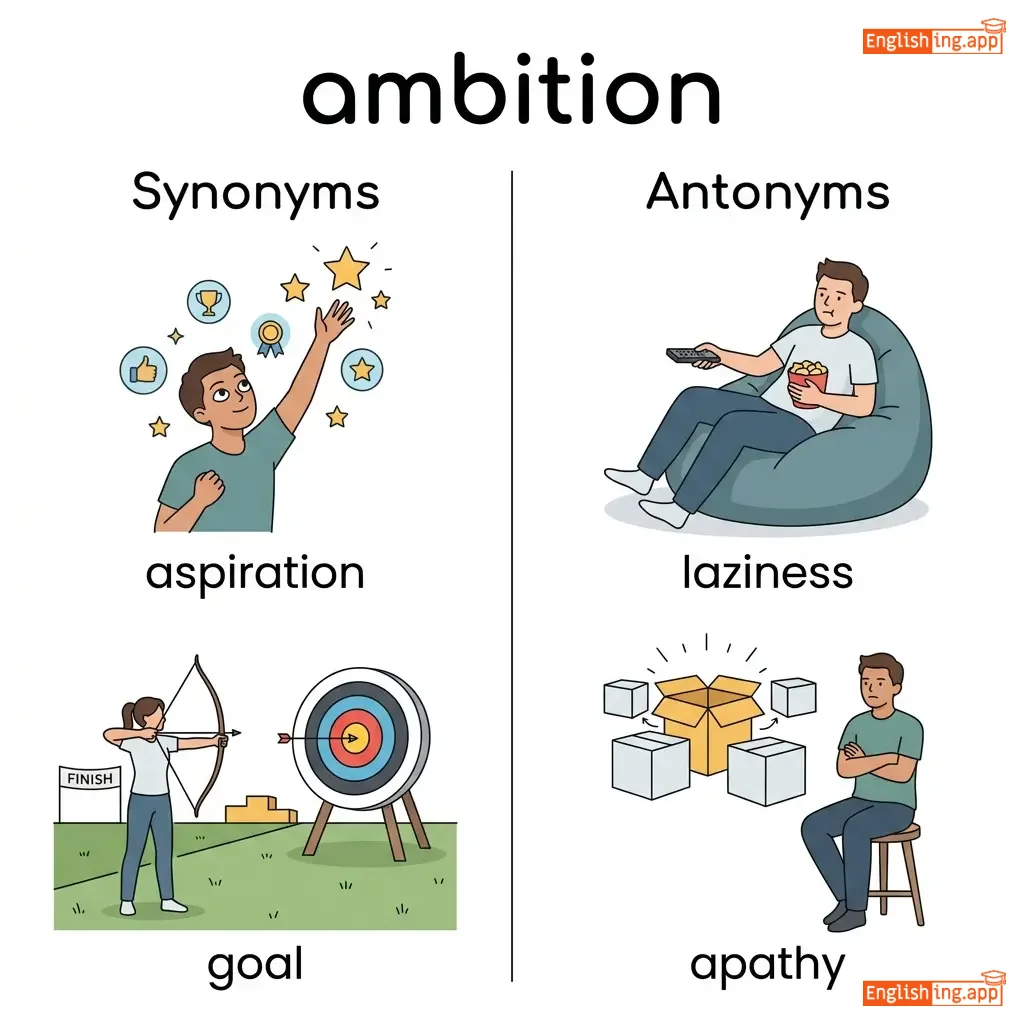
aspiration, goal, desire, drive, dream
••••••
|
laziness, apathy
••••••
|
career ambition, lifelong ambition, great ambition, achieve ambition
••••••
|
Ambition означает 'Меня укусил жук успеха' — сильное желание успеха!
••••••
|
|
🚀
••••••
|
/æmˈbɪʃəs/
adjective
(æmbɪʃəs)
••••••
|
- •••••• |
амбициозный
ambitsioznyy
••••••
|
- •••••• | - •••••• | - •••••• | - •••••• |
Having a strong desire to succeed or achieve something.
••••••
|
She is very ambitious and wants to become a doctor.
Она очень амбициозна и хочет стать врачом.
••••••
|
Она очень амбициозна и хочет стать врачом.
Ona ochen' ambitsiozna i khochet stat' vrachom.
••••••
|
ambitious goal
амбициозная цель
••••••
|
a challenging or high-reaching objective
••••••
|
амбициозная цель
ambitsioznaya tsel'
••••••
|
aspiring, determined, motivated, driven, enterprising
••••••
|
unmotivated, lazy, indifferent
••••••
|
ambitious plan, ambitious project, ambitious goal, ambitious person
••••••
|
Амбициозный — как амбиции. Амбиции приводят к успеху.
••••••
|
|
🚑
••••••
|
/ˈæmbjʊləns/
noun
(скорая помощь)
••••••
|
- •••••• |
скорая помощь
skoraya pomoshch
••••••
|
- •••••• | - •••••• | - •••••• | - •••••• |
A specially equipped vehicle used to transport sick or injured people to the hospital.
••••••
|
The ambulance rushed to the accident site within minutes.
Скорая помощь приехала на место аварии через несколько минут.
••••••
|
Скорая помощь приехала на место аварии через несколько минут.
Skoraya pomoshch priekhala na mesto avarii cherez neskol'ko minut.
••••••
|
- •••••• | - •••••• | - •••••• |
emergency vehicle, rescue van, paramedic vehicle
••••••
|
none, null
••••••
|
call an ambulance, ambulance service, ambulance siren, ambulance driver
••••••
|
Скорая помощь 🚑—неотложная помощь на дороге—'Когда случается беда, Скорая помощь всегда рядом.'
••••••
|
|
🎯
••••••
|
/ˈæmbʊʃ/
verb
(эмбуш)
••••••
|
- •••••• |
засада
zasada
••••••
|
ambushed
эмбушд
••••••
|
ambushed
эмбушд
••••••
|
ambushes
эмбушес
••••••
|
ambushing
эмбушинг
••••••
|
To attack suddenly and unexpectedly from a hidden position.
••••••
|
The soldiers planned to ambush the enemy at dawn.
солдаты планировали устроить засаду на врага на рассвете.
••••••
|
Солдаты планировали устроить засаду на врага на рассвете.
Soldaty planirovali ustroit zasadu na vraga na rassvete.
••••••
|
lie in ambush
залечь в засаду
••••••
|
to wait in a hidden position to make a surprise attack
••••••
|
залечь в засаду
zalech v zasadu
••••••
|
attack, surprise, trap, assault, ambuscade
••••••
|
defend, protect, guard
••••••
|
ambush attack, lie in ambush, ambush tactics, ambush site
••••••
|
Ambush = засадa — think 'rush from bushes' in Russian style!
••••••
|
|
✍️
••••••
|
/əˈmɛnd/
verb
••••••
|

|
- •••••• |
amended
••••••
|
amended
••••••
|
amends
••••••
|
amending
••••••
|
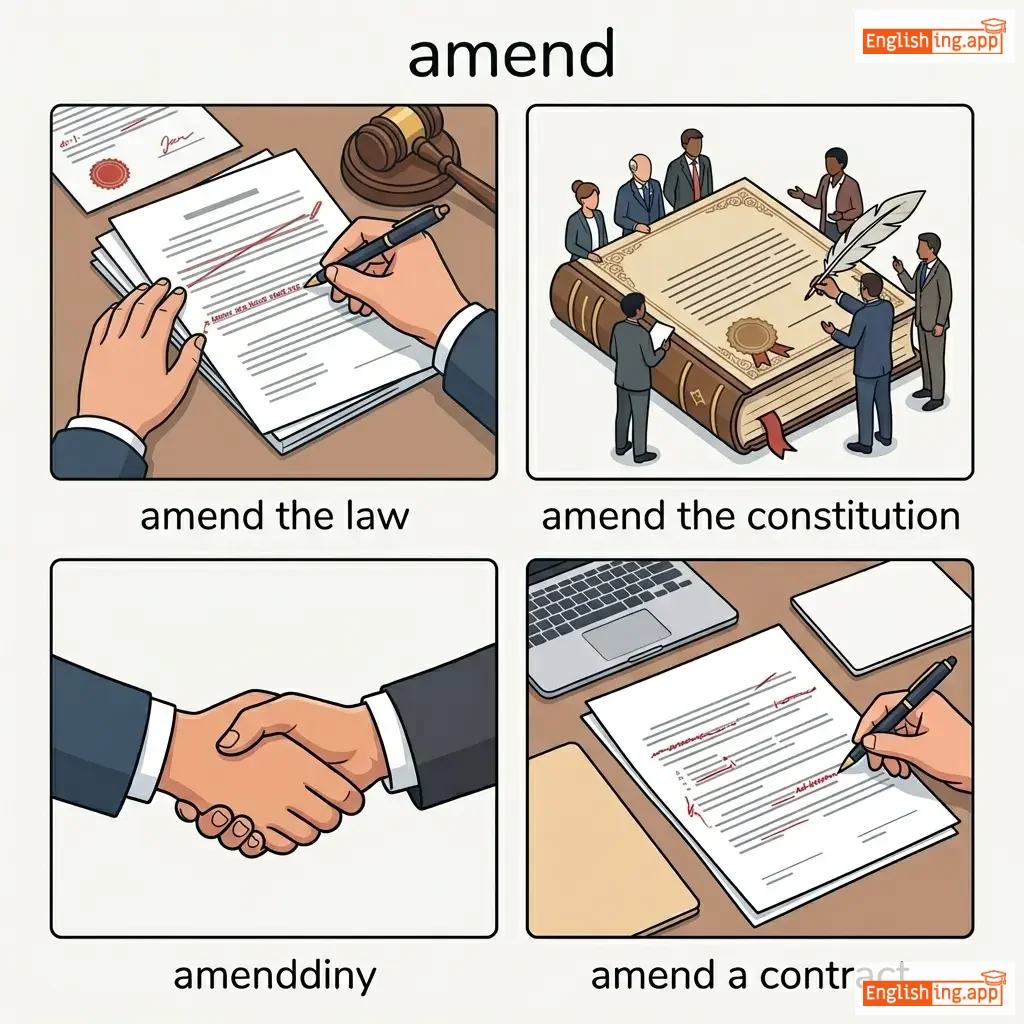
to make changes or improvements, often in a legal or written text
••••••
|
The constitution was amended to reflect the new policies. |
- •••••• |
make amends |
to do something to show you are sorry for a wrong you have done
••••••
|
- •••••• |
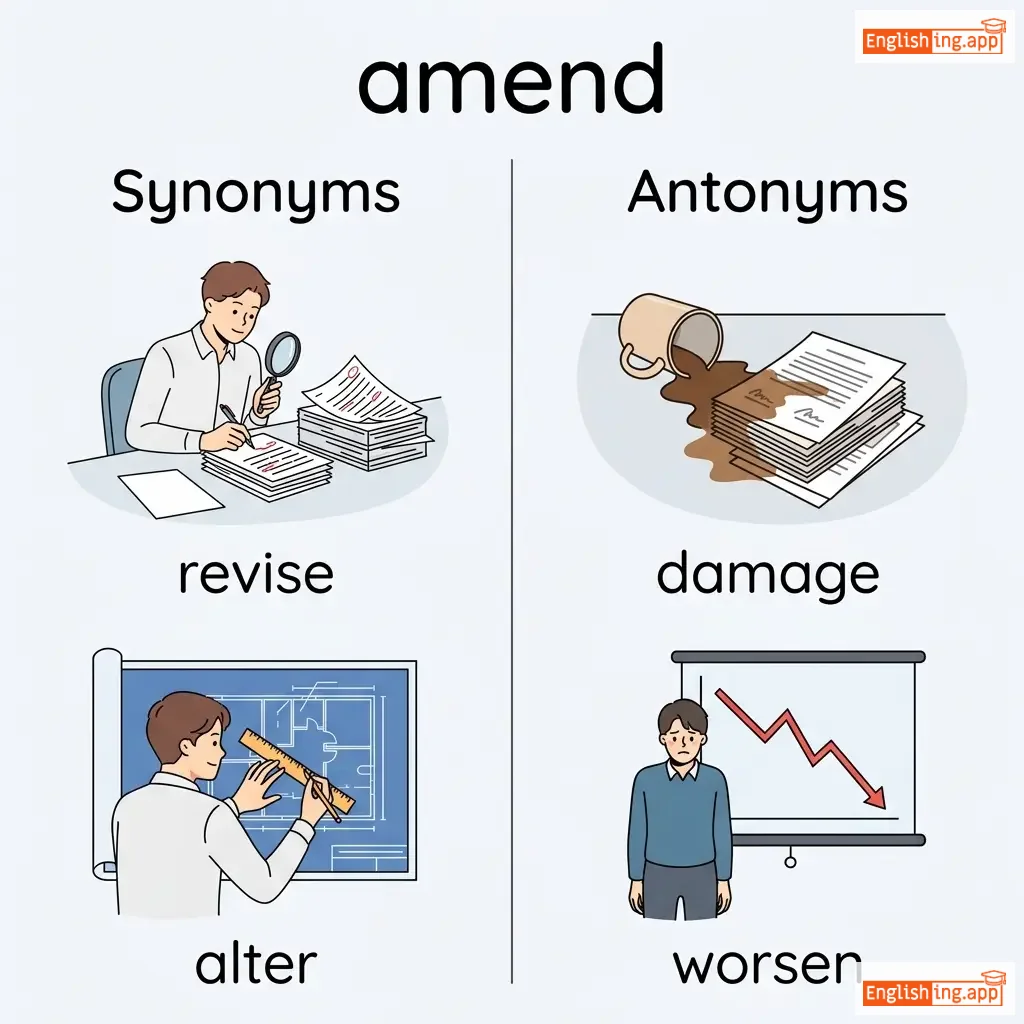
revise, alter, modify, adjust, improve
••••••
|
damage, worsen, harm
••••••
|
amend the law, amend the constitution, amend a contract
••••••
|
No •••••• |
|
📜
••••••
|
/əˈmɛndmənt/
noun
(хэппинесс)
••••••
|


|
счастье
schastye
••••••
|
- •••••• | - •••••• | - •••••• | - •••••• |
a change or addition designed to improve a text, law, or document
••••••
|
The government proposed an amendment to the constitution. |
Она не могла скрыть свое счастье, когда получила награду.
Ona ne mogla skryt' svoe schast'ye, kogda poluchila nagradu.
••••••
|
make an amendment |
to officially change or correct a document or law
••••••
|
поиск счастья
poisk schast'ya
••••••
|
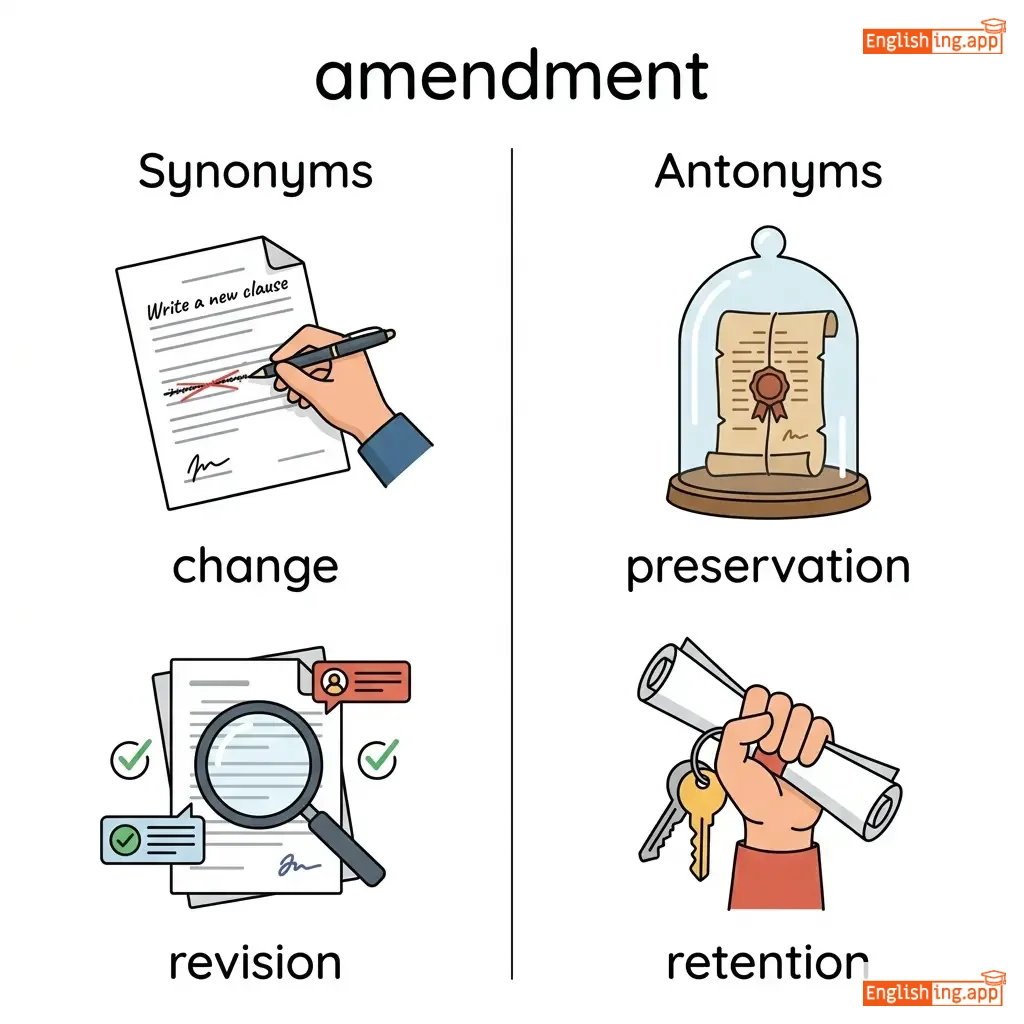
change, revision, modification, correction, adjustment
••••••
|
preservation, retention
••••••
|
constitutional amendment, proposed amendment, make an amendment, amendment bill
••••••
|
Счастье = счастье от нахождения удовольствия
••••••
|
|
🌪️
••••••
|
/əˈmɪd/
preposition
(амид)
••••••
|
- •••••• |
среди
sredi
••••••
|
- •••••• | - •••••• | - •••••• | - •••••• |
in the middle of or surrounded by something
••••••
|
The team stayed calm amid the chaos.
Команда осталась спокойной amid хаоса.
••••••
|
Команда осталась спокойной среди хаоса.
Komanda ostalas' spokojnoy sredi khaosa.
••••••
|
- •••••• | - •••••• | - •••••• |
among, amidst, surrounded by, within, amidst
••••••
|
outside, beyond, apart
••••••
|
amid the noise, amid confusion, amid controversy, amid tensions
••••••
|
Amid означает среди — оставайся спокойным среди хаоса.
••••••
|
|
👥
••••••
|
/əˈmʌŋ/
preposition
(амонг)
••••••
|
- •••••• |
среди
sredi
••••••
|
- •••••• | - •••••• | - •••••• | - •••••• |
surrounded by; in the middle of a group
••••••
|
He was sitting among his friends. |
Он сидел среди своих друзей.
On sidel sredi svoikh druzey.
••••••
|
- •••••• | - •••••• | - •••••• |
amid, amidst, between, surrounded by
••••••
|
outside, away from
••••••
|
among people, among friends, among the crowd
••••••
|
Among означает среди, как быть среди друзей.
••••••
|
|
💰
••••••
|
/əˈmaʊnt/
noun/verb
(amänt)
••••••
|
- •••••• |
сумма
summa
••••••
|
amounted
amänted
••••••
|
amounted
amänted
••••••
|
amounts
amänts
••••••
|
amounting
amänting
••••••
|
a quantity of something, typically the total of a thing or things in number, size, value, or extent
••••••
|
The total amount of money is not enough.
Общая сумма денег недостаточна.
••••••
|
Общая сумма денег недостаточна.
Obshchaya summa deneg nedostatochna.
••••••
|
amount to nothing
amount to nothing
••••••
|
to have no significant result or value
••••••
|
ничего не значить
nichego ne znachit
••••••
|
quantity, sum, total, volume, measure
••••••
|
lack, zero, nothing
••••••
|
large amount, small amount, total amount
••••••
|
Amount звучит как 'сумма', общая сумма чего-то
••••••
|
|
🔊
••••••
|
/ˌæmplɪfɪˈkeɪʃən/
noun
(амплификация)
••••••
|
- •••••• |
усиление
usilenie
••••••
|
- •••••• | - •••••• | - •••••• | - •••••• |
the act or process of making something stronger, louder, or more intense; an expansion or elaboration of details
••••••
|
The microphone provides amplification of the speaker’s voice.
Зе майкрофоун провайдс амплификайшн оф зе спикерс войс.
••••••
|
Микрофон обеспечивает усиление голоса говорящего.
mikrofon obespechivaet usilenie golosa govoryashchego
••••••
|
- •••••• | - •••••• | - •••••• |
enhancement, increase, expansion, magnification, intensification
••••••
|
reduction, weakening, attenuation
••••••
|
signal amplification, sound amplification, amplification factor, data amplification
••••••
|
Amplification = усиление, звук стал сильнее
••••••
|
|
🔊
••••••
|
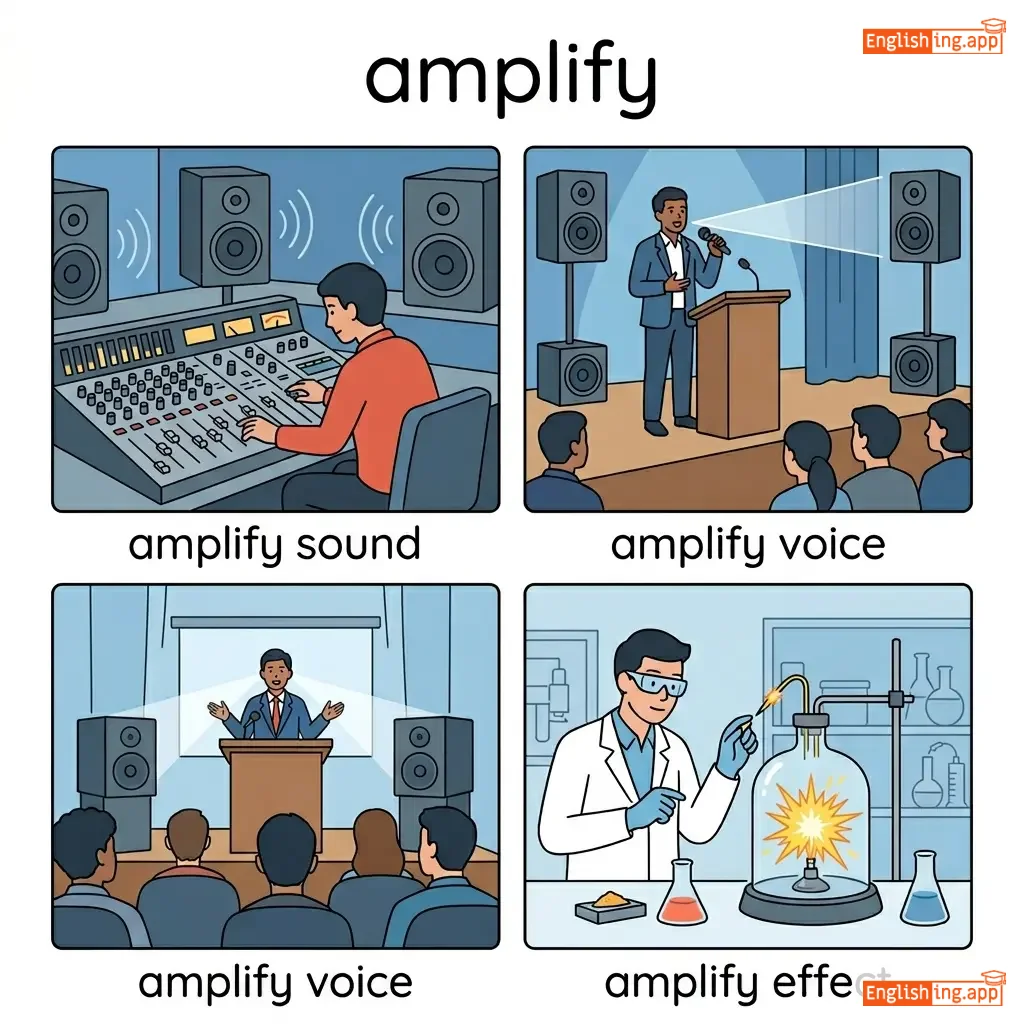
/ˈæmplɪˌfaɪ/
verb
(amplifai)
••••••
|
|
усилить
usilit
••••••
|
amplified
amplifaid
••••••
|
amplified
amplifaid
••••••
|
amplifies
amplifaiyt
••••••
|
amplifying
amplifaying
••••••
|
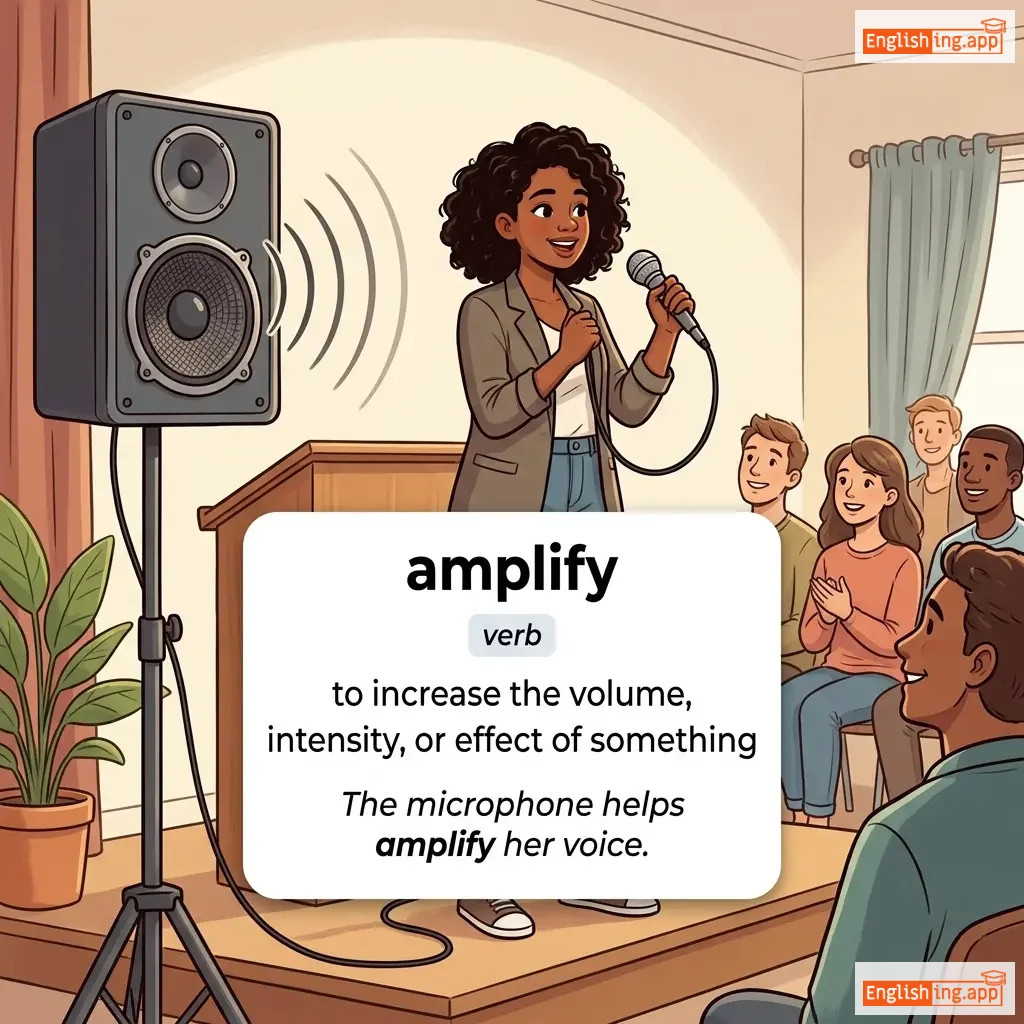
to make sounds louder; to make something larger or more significant
••••••
|
The microphone amplifies her voice.
Микрофон усиливает её голос.
••••••
|
Микрофон усиливает её голос.
Mikrofon usilivaet yejo golos.
••••••
|
- •••••• | - •••••• | - •••••• |
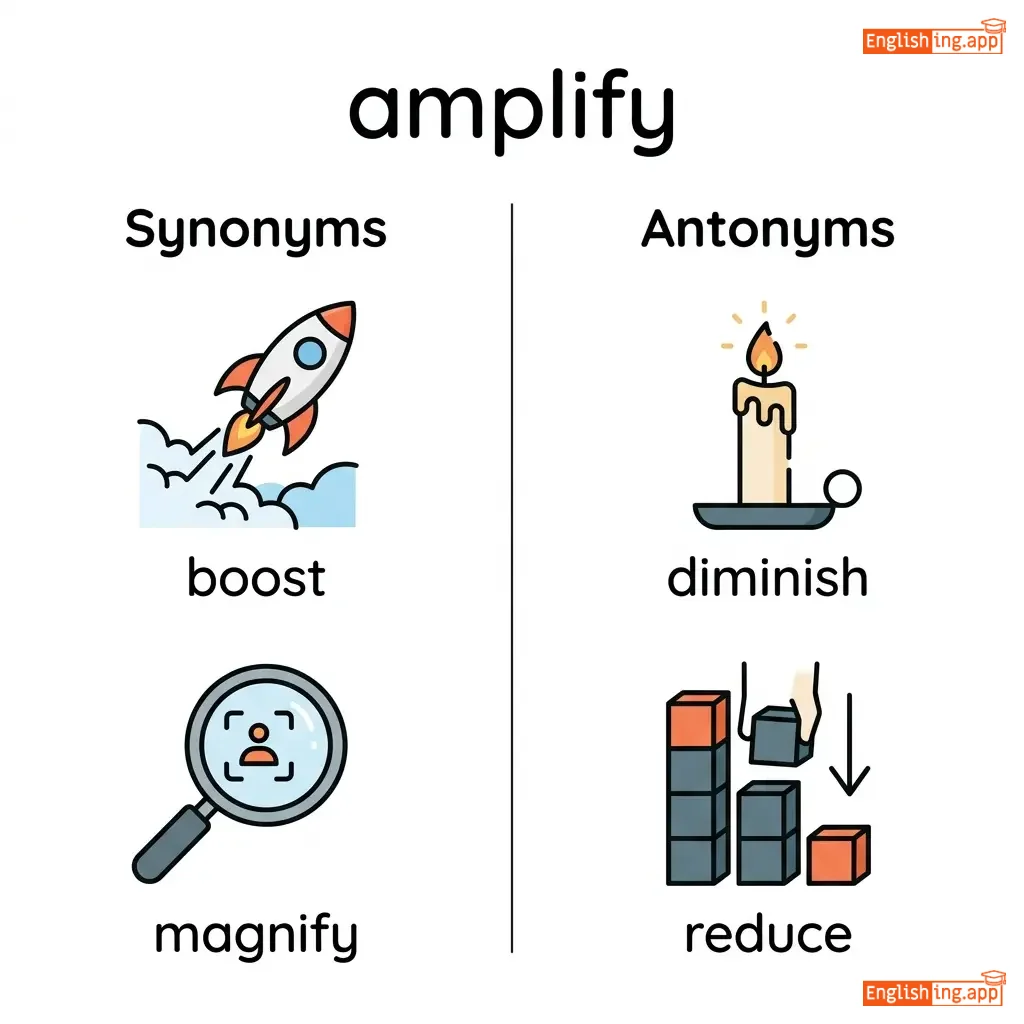
increase, boost, enhance, magnify
••••••
|
reduce, diminish, quiet
••••••
|
amplify sound, amplify signal, amplify voice, amplify effect, amplify message
••••••
|
Усилить звук, чтобы он был громче.
••••••
|
|
😂
••••••
|
/əˈmjuːz/
verb
(эмьюз)
••••••
|
- •••••• |
развлекать
razvlekat
••••••
|
amused
эмьюзд
••••••
|
amused
эмьюзд
••••••
|
amuses
эмьюзис
••••••
|
amusing
эмьюзинг
••••••
|
to entertain or make someone laugh or smile; to occupy pleasantly
••••••
|
The clown amused the children at the party.
Зэ клоун эмьюзд зэ чилдрен эт зэ парти.
••••••
|
Клоун развлекал детей на вечеринке.
kloun razvlekal detei na vecherinke
••••••
|
amuse oneself
эмьюз уанcелф
••••••
|
to enjoy oneself by doing something pleasant
••••••
|
развлекаться
razvlekatsya
••••••
|
entertain, delight, divert, please, charm
••••••
|
bore, annoy, displease
••••••
|
amuse someone, amuse oneself, highly amusing, mildly amusing
••••••
|
amuse — как музыка, которая развлекает
••••••
|
|
😄
••••••
|
/əˈmjuː.zɪŋ/
adjective
(амьюзинг)
••••••
|
- •••••• |
занимательный; смешной; развлекательный
zanimal'nyy; smeshnoy; razvlekatel'nyy
••••••
|
- •••••• | - •••••• | - •••••• | - •••••• |
causing laughter or providing entertainment; funny; enjoyable
••••••
|
The children found the clown's performance very amusing.
Дети нашли выступление клоуна очень забавным.
••••••
|
Дети нашли выступление клоуна очень забавным.
Deti nakhodyat vystuplenie klouna ochen' zabavnym.
••••••
|
- •••••• | - •••••• | - •••••• |
entertaining, funny, humorous, delightful
••••••
|
boring, dull, serious, tedious
••••••
|
amusing story, amusing anecdote, amusing incident, amusing character
••••••
|
Вспомни клоуна, который всегда вызывает смех.
••••••
|
|
🅰️
••••••
|
/æn/
article
(эн)
••••••
|
- •••••• |
неопределённый артикль
neopredelyonnyy artikl
••••••
|
- •••••• | - •••••• | - •••••• | - •••••• |
used before a noun to refer to a non-specific item that begins with a vowel sound
••••••
|
She ate an apple for breakfast.
Ши ейт эн эпл фор брекфаст.
••••••
|
Она съела яблоко на завтрак.
ona syela yabloko na zavtrak
••••••
|
- •••••• | - •••••• | - •••••• |
a, one
••••••
|
the
••••••
|
an apple, an hour, an idea, an example
••••••
|
‘an’ — как знак неопределённости перед словом
••••••
|
|
📖
••••••
|
/əˈnælədʒi/
noun
(аналогия)
••••••
|
- •••••• |
аналогия
analogiia
••••••
|
- •••••• | - •••••• | - •••••• | - •••••• |
A comparison between two things for the purpose of explanation or clarification.
••••••
|
The teacher used the analogy of a tree to explain the structure of an essay. |
Учитель использовал аналогию с деревом, чтобы объяснить структуру эссе.
Uchitel' ispol'zoval analogiiu s derevom, chtoby ob'iasnit' strukturu esse.
••••••
|
- •••••• | - •••••• | - •••••• |
comparison, parallel, resemblance, similarity
••••••
|
difference, contrast
••••••
|
draw an analogy, use an analogy, apt analogy
••••••
|
Аналогия - это сравнение, как на русском языке используется для разъяснения.
••••••
|
|
🔬
••••••
|
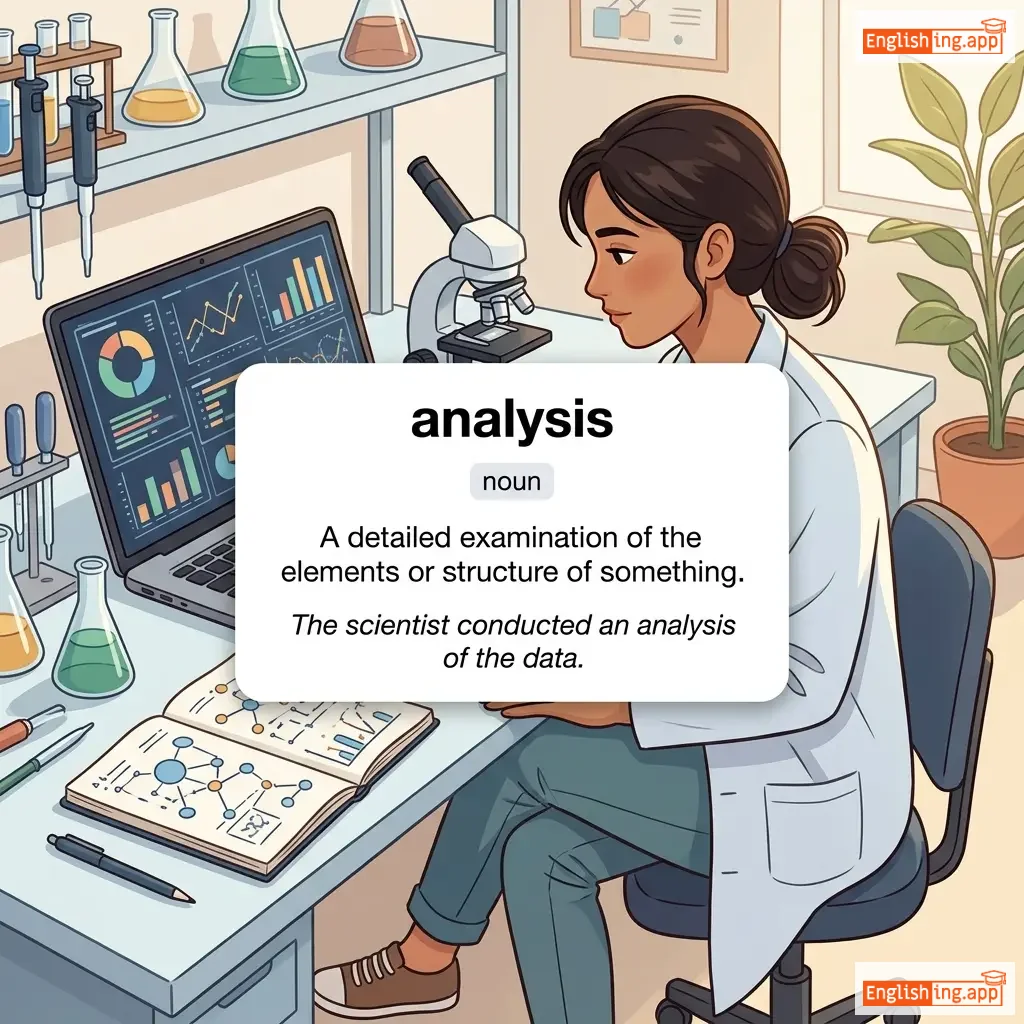
/əˈnæləsɪs/
noun
(анализ)
••••••
|
|
анализ
analiz
••••••
|
- •••••• | - •••••• | - •••••• | - •••••• |
A detailed examination of the elements or structure of something.
••••••
|
The scientist conducted an analysis of the data. |
Учёный провёл анализ данных.
Uchonyy provyol analiz dannykh.
••••••
|
in-depth analysis |
a very detailed and thorough examination of something
••••••
|
глубокий анализ
glubokiy analiz
••••••
|
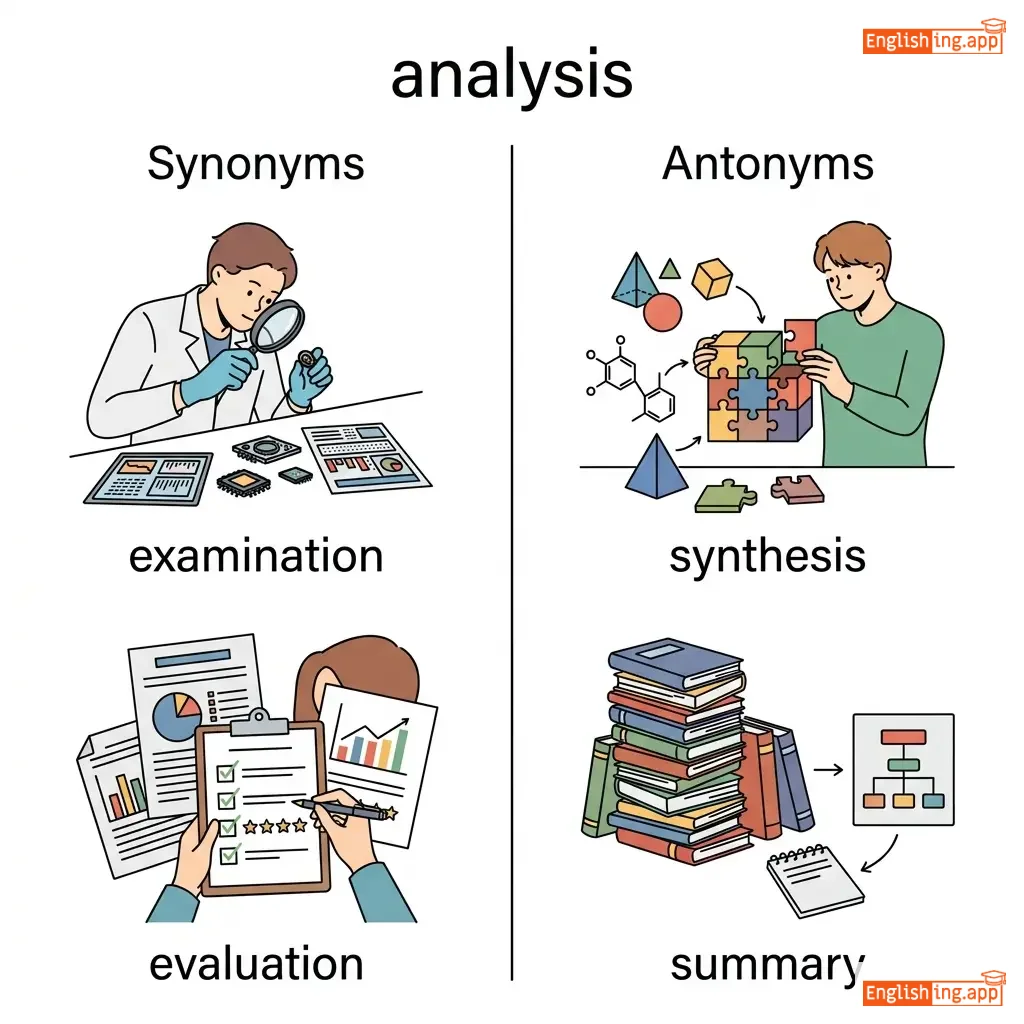
examination, evaluation, study, review, assessment
••••••
|
synthesis, summary
••••••
|
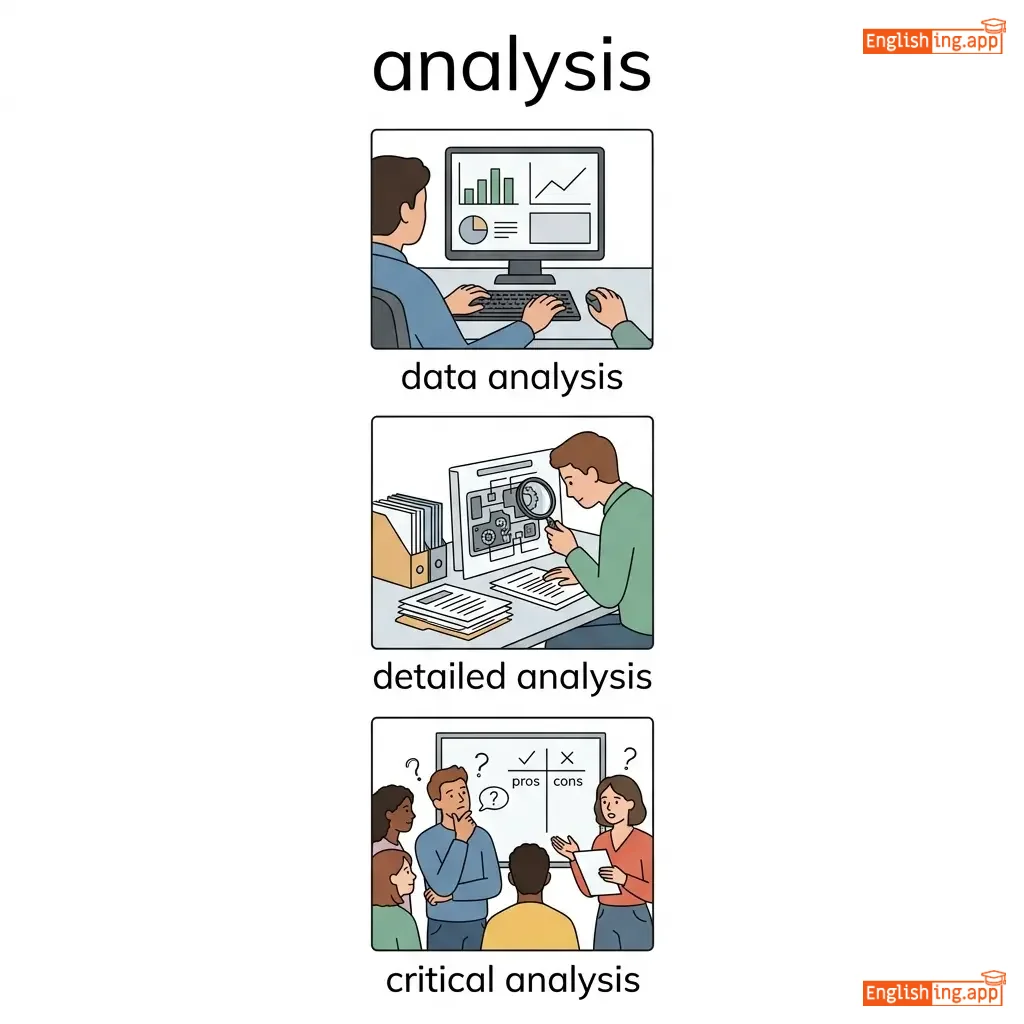
data analysis, detailed analysis, critical analysis, market analysis
••••••
|
Analysis означает анализ — углубленное исследование данных.
••••••
|
|
📊
••••••
|
/ˈænəlɪst/
noun
(аналист)
••••••
|
- •••••• |
аналитик
analitik
••••••
|
- •••••• | - •••••• | - •••••• | - •••••• |
a person who studies or examines something carefully to understand it or make decisions
••••••
|
The financial analyst predicted a rise in the stock market.
Финансовый аналитик предсказал рост фондового рынка.
••••••
|
Финансовый аналитик предсказал рост фондового рынка.
Finansovyy analitik predskazal rost fondovogo rynka.
••••••
|
- •••••• | - •••••• | - •••••• |
examiner, evaluator, expert, researcher, consultant
••••••
|
novice, layman, amateur
••••••
|
financial analyst, political analyst, market analyst, data analyst
••••••
|
Аналитик — это тот, кто анализирует и понимает данные.
••••••
|
|
🔍
••••••
|
/ˈænəlaɪz/
verb
(анализировать)
••••••
|
- •••••• |
анализировать
analizirovat
••••••
|
analyzed
проанализировал
••••••
|
analyzed
проанализирован
••••••
|
analyzes
анализирует
••••••
|
analyzing
анализируя
••••••
|
to examine something in detail to understand it better or draw conclusions
••••••
|
Scientists analyze data to discover new patterns.
Ученые анализируют данные, чтобы обнаружить новые закономерности.
••••••
|
Ученые анализируют данные, чтобы обнаружить новые закономерности.
Uchenye analiziruyut dannye, chtoby obnaruzhit' novye zakonomernosti.
••••••
|
analyze the situation
анализировать ситуацию
••••••
|
to carefully study the circumstances before making a decision
••••••
|
анализировать ситуацию
analizirovat' situatsiyu
••••••
|
examine, study, investigate, evaluate, interpret
••••••
|
ignore, neglect, overlook
••••••
|
analyze data, analyze results, analyze information, analyze the problem
••••••
|
Analyze означает анализировать — 'анализировать' означает изучать данные
••••••
|
|
👴
••••••
|
/ˈænsestər/
noun
(ænsestər)
••••••
|
- •••••• |
предок
predok
••••••
|
- •••••• | - •••••• | - •••••• | - •••••• |
a person, typically one more remote than a grandparent, from whom one is descended
••••••
|
She researched her family tree to learn about her ancestors.
Она исследовала свое родословное дерево, чтобы узнать о своих предках.
••••••
|
Она исследовала свое родословное дерево, чтобы узнать о своих предках.
Ona issledovala svoe rodoslovnoe derevo, chtoby uznat' o svoikh predkakh.
••••••
|
- •••••• | - •••••• | - •••••• |
forefather, foremother, predecessor, forebear
••••••
|
descendant, offspring, progeny
••••••
|
ancient ancestor, common ancestor, trace ancestors
••••••
|
Предок (ancestor) - это история вашего рода.
••••••
|
|
👵
••••••
|
/ˈænsɛstrɪs/
noun
(энсэстрэс)
••••••
|
- •••••• |
прародительница
praroditelnitsa
••••••
|
- •••••• | - •••••• | - •••••• | - •••••• |
a female ancestor; a woman from whom one is descended
••••••
|
She discovered that her ancestress came from a small village in Bengal.
Ши дискавэрд зэт хэр энсэстрэс кэйм фром э смол виллидж ин Бенгол.
••••••
|
Она обнаружила, что её прародительница была из небольшой деревни в Бенгалии.
ona obnaruzhila chto eyo praroditelnitsa byla iz nebolshoi derevni v Bengalii
••••••
|
- •••••• | - •••••• | - •••••• |
female ancestor, foremother, progenitress, matriarch
••••••
|
descendant, offspring
••••••
|
royal ancestress, distant ancestress, maternal ancestress
••••••
|
Пра-род + женщина = ancestress
••••••
|
|
⚓
••••••
|
/ˈæŋkər/
noun, verb
(якорь)
••••••
|
- •••••• |
якорь
yakor
••••••
|
anchored
якорил
••••••
|
anchored
якорил
••••••
|
anchors
якорит
••••••
|
anchoring
якорение
••••••
|
a heavy object used to hold a ship in place; also to secure firmly
••••••
|
The ship dropped its anchor near the shore.
корабль бросил якорь у берега.
••••••
|
Корабль бросил якорь у берега.
Korabl' brosil yakor' u berega.
••••••
|
anchor of hope
якорь надежды
••••••
|
something that provides stability and confidence
••••••
|
якорь надежды
yakor' nadezhdy
••••••
|
mooring, fastener, stabilizer, support, mainstay
••••••
|
drift, release, instability
••••••
|
drop anchor, lift anchor, anchor point, news anchor
••••••
|
Якорь всегда удерживает корабль. Якорь надежды: стабильно в жизни.
••••••
|
|
⚓
••••••
|
ˈæŋkərɪdʒ
noun
(ˈæŋkərɪdʒ)
••••••
|
|
якорная стоянка
yakor'naya stoyanka
••••••
|
- •••••• | - •••••• | - •••••• | - •••••• |
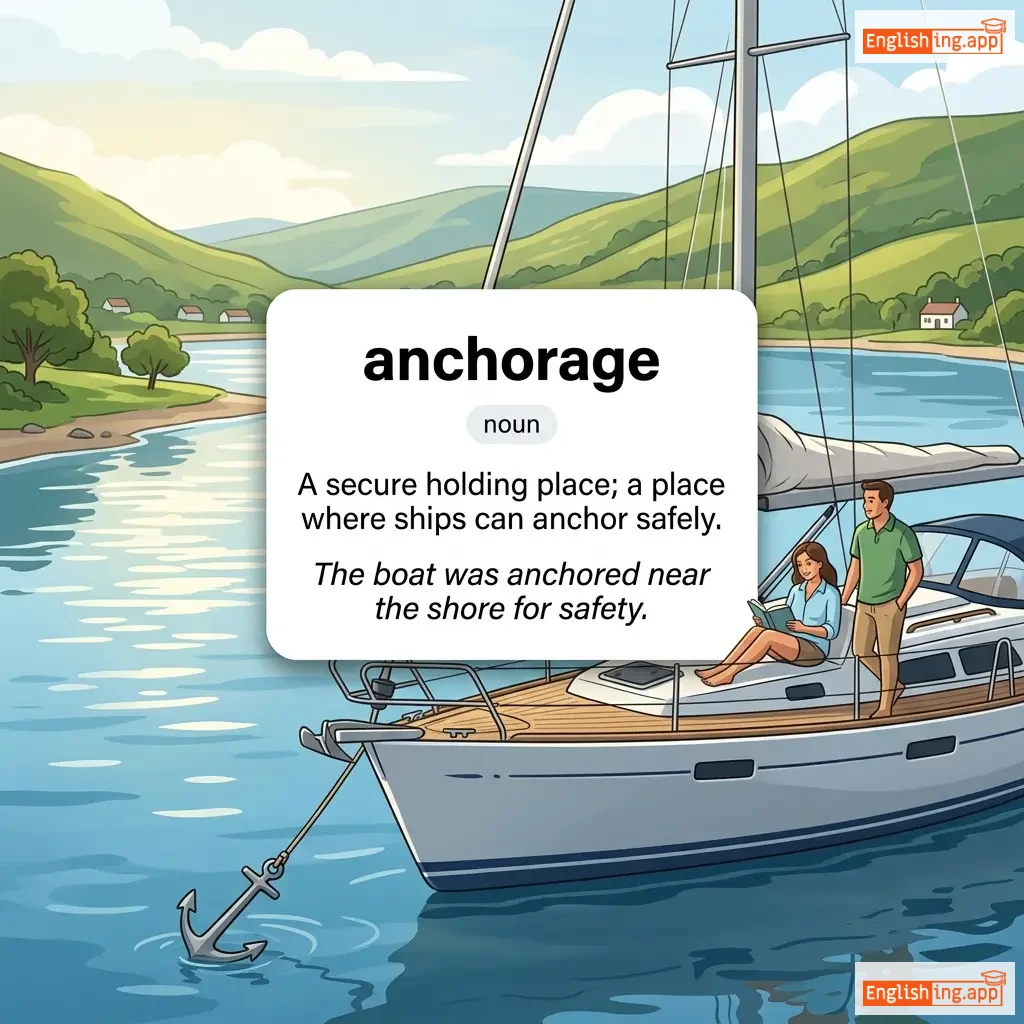
A secure holding place; a place where ships can anchor safely.
••••••
|
The boat was anchored near the shore for safety. |
Чёлн был поставлен на якорь рядом с берегом для безопасности.
Chyoln byl postavlen na yakor' ryadom s beregom dlya bezopasnosti.
••••••
|
- •••••• | - •••••• | - •••••• |
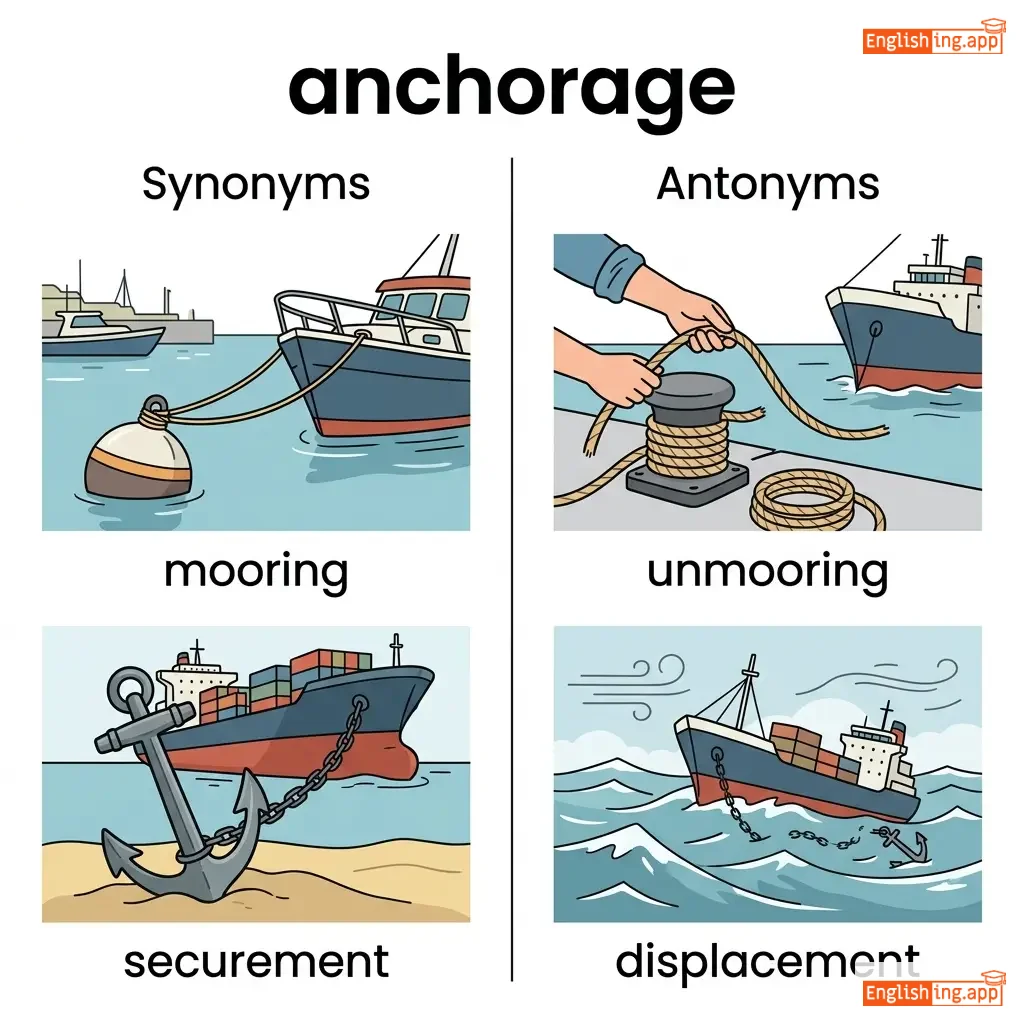
mooring, securement
••••••
|
unmooring, displacement
••••••
|
- •••••• |
Как якорь держит корабль, так и ты можешь быть в безопасности.
••••••
|
|
🏛️
••••••
|
/ˈeɪnʃənt/
adjective
(einyshent)
••••••
|
- •••••• |
древний
drevniy
••••••
|
- •••••• | - •••••• | - •••••• | - •••••• |
Belonging to the very distant past; very old.
••••••
|
They visited the ruins of an ancient city.
Они посетили руины древнего города.
••••••
|
Они посетили руины древнего города.
Oni posetili ruyiny drevnego goroda.
••••••
|
ancient history
древняя история
••••••
|
something that happened a long time ago and is no longer important
••••••
|
древняя история
drevnyaya istoriya
••••••
|
old, antique, archaic, prehistoric, classical
••••••
|
modern, recent
••••••
|
ancient civilization, ancient ruins, ancient culture, ancient temple
••••••
|
Древний напоминает 'Ancient' — представьте старые замки и пещеры.
••••••
|
|
➕
••••••
|
/ænd/
conjunction
(энд)
••••••
|
- •••••• |
и
i
••••••
|
- •••••• | - •••••• | - •••••• | - •••••• |
Used to connect words or sentences that are to be taken jointly.
••••••
|
She bought apples and oranges. |
Она купила яблоки и апельсины.
Ona kupila yabloki i apelsiny.
••••••
|
- •••••• | - •••••• | - •••••• |
plus, along with, together with, as well as
••••••
|
or, but
••••••
|
and so, and then, and finally, and also
••••••
|
And означает и - яблоки И апельсины вместе.
••••••
|
|
😇
••••••
|
/ˈeɪndʒəl/
noun
(ˈɛndʒəl)
••••••
|
- •••••• |
ангел
angel
••••••
|
- •••••• | - •••••• | - •••••• | - •••••• |
a spiritual being believed to act as a messenger or servant of God
••••••
|
She believed her mother was watching over her like an angel. |
Она верила, что её мама наблюдает за ней, как ангел.
Ona verila, chto yeye mama nablyudayet za ney, kak angel.
••••••
|
guardian angel |
a person who helps and protects someone in trouble
••••••
|
охранный ангел
okhrannyi angel
••••••
|
spirit, saint, cherub, guardian, protector
••••••
|
devil, demon, fiend
••••••
|
guardian angel, fallen angel, like an angel, angel investor
••••••
|
Ангел — это защитник. Если твой друг помогает тебе, скажи ему: 'Ты мой ангел!'
••••••
|
|
😡
••••••
|
/ˈæŋɡər/
noun
(э́нґер)
••••••
|
- •••••• |
гнев
gnev
••••••
|
- •••••• | - •••••• | - •••••• | - •••••• |
A strong feeling of displeasure or hostility.
••••••
|
He couldn't control his anger after the argument. |
Он не смог контролировать свой гнев после ссоры.
On ne smog kontrol'irovat' svoi gnev posle ssory.
••••••
|
fit of anger |
a sudden, intense outburst of anger
••••••
|
вспышка гнева
vspishka gneva
••••••
|
rage, fury, irritation, resentment, wrath
••••••
|
calm, peace, happiness
••••••
|
express anger, control anger, suppress anger, anger management
••••••
|
Anger означает гнев - ангел с гневом - ANGer.
••••••
|
|
📐
••••••
|
/ˈæŋɡl/
noun
(энгл)
••••••
|
- •••••• |
угол
ugol
••••••
|
- •••••• | - •••••• | - •••••• | - •••••• |
The space between two intersecting lines or surfaces at the point where they meet.
••••••
|
The teacher explained how to measure an angle in geometry. |
Учитель объяснил, как измерить угол в геометрии.
Uchitel' ob'yasnil, kak izmerit' ugol v geometrii.
••••••
|
different angle |
a new or alternative way of looking at something
••••••
|
другой угол
drugoy ugol
••••••
|
corner, viewpoint, perspective, slant
••••••
|
straight line, alignment
••••••
|
right angle, sharp angle, wide angle, camera angle
••••••
|
Угол — это точка пересечения двух линий. Используйте транспортир для измерения!
••••••
|
|
😠
••••••
|
/ˈæŋɡrɪli/
adverb
(энгрили)
••••••
|
- •••••• |
сердито
serdito
••••••
|
- •••••• | - •••••• | - •••••• | - •••••• |
in a manner showing anger or strong displeasure
••••••
|
She spoke angrily when she heard the news.
Ши споук энгрили уэн ши хёрд зэ ньюз.
••••••
|
Она сердито говорила, услышав новость.
ona serdito govorila uslyshav novost
••••••
|
- •••••• | - •••••• | - •••••• |
furiously, irritably, madly, crossly, wrathfully
••••••
|
calmly, peacefully, gently
••••••
|
speak angrily, reply angrily, shout angrily, glare angrily
••••••
|
angry = гнев → сердито
••••••
|
|
😡
••••••
|
/ˈæŋɡri/
adjective
(энгри)
••••••
|
- •••••• |
злой
zloy
••••••
|
- •••••• | - •••••• | - •••••• | - •••••• |
feeling or showing strong displeasure or hostility
••••••
|
She was angry when she found out the truth. |
Она была злой, когда узнала правду.
Ona byla zloy, kogda uznala pravdu.
••••••
|
angry with someone |
to feel or show anger towards a person
••••••
|
злой на кого-то
zloy na kogo-to
••••••
|
mad, furious, upset, irritated, annoyed
••••••
|
calm, happy, pleased
••••••
|
angry face, angry voice, angry crowd, angry response
••••••
|
Angry это злой—как когда твое лицо краснеет от злости 🔥
••••••
|
|
🐅
••••••
|
/ˈænɪməl/
noun
(энимал)
••••••
|
- •••••• |
животное
zhivotnoe
••••••
|
- •••••• | - •••••• | - •••••• | - •••••• |
a living organism that feeds on organic matter and usually has senses and mobility
••••••
|
The tiger is a wild animal. |
Тигр — дикая животное.
Tigr — dikaya zhivotnoe.
••••••
|
party animal |
someone who enjoys going to parties a lot
••••••
|
вечеринка животное
vecherinka zhivotnoe
••••••
|
creature, beast, living being, organism
••••••
|
plant, human
••••••
|
wild animal, domestic animal, animal rights, animal kingdom
••••••
|
Animal означает животное — в зоопарке много животных 🐘
••••••
|
|
🎬
••••••
|
/ˌæn.ɪˈmeɪ.ʃən/
noun
(анимэйшн)
••••••
|
- •••••• |
анимация
animatsiya
••••••
|
- •••••• | - •••••• | - •••••• | - •••••• |
the technique of making inanimate objects appear to move; liveliness and enthusiasm
••••••
|
The animation in this movie is incredibly detailed.
Анимация в этом фильме невероятно детализирована.
••••••
|
Анимация в этом фильме невероятно детализирована.
Animatsiya v etom filme neveroyatno detalizirovana.
••••••
|
- •••••• | - •••••• | - •••••• |
cartoon, motion picture, liveliness
••••••
|
stillness, lifelessness, inertia
••••••
|
computer animation, stop-motion animation, animated film
••••••
|
Анимация на русском языке обозначает 'animation', и это оживление объектов в фильмах.
••••••
|
|
🦶
••••••
|
/ˈæŋkəl/
noun
(анкл)
••••••
|
- •••••• |
щиколотка
shhikolotka
••••••
|
- •••••• | - •••••• | - •••••• | - •••••• |
the joint connecting the foot with the leg
••••••
|
He twisted his ankle while playing football. |
Он подвернул щиколотку, играя в футбол.
On podvernul shhikolotku, igraya v futbol.
••••••
|
weak ankles |
a tendency to easily injure one's ankles
••••••
|
слабые щиколотки
slabye shhikolotki
••••••
|
joint, heel, articulation, pivot
••••••
|
none
••••••
|
twist an ankle, sprained ankle, broken ankle, ankle pain
••••••
|
Ankle означает щиколотка — футбол и вот она, травма щиколотки!
••••••
|
|
🏴
••••••
|
/ˈæn.ɛks/
verb
(аннекс)
••••••
|
- •••••• |
аннексировать
anneksirovat'
••••••
|
annexed
аннексированный
••••••
|
annexed
аннексированный
••••••
|
annexes
аннексирует
••••••
|
annexing
аннексируя
••••••
|
To take control of a territory and add it to one's own.
••••••
|
The empire annexed the neighboring kingdom after the war.
Империя аннексировала соседнее королевство после войны.
••••••
|
Империя аннексировала соседнее королевство после войны.
Imperiya anneksirovala sosedneye korolevstvo posle voyny.
••••••
|
annex territory
аннексировать территорию
••••••
|
To claim and occupy land
••••••
|
аннексировать территорию
anneksirovat' territoriyu
••••••
|
seize, occupy, capture, appropriate, attach
••••••
|
surrender, relinquish
••••••
|
annex territory, annex land, annex building
••••••
|
Annex это значит присоединять землю
••••••
|
|
🗺️
••••••
|
/ˌænɛkˈseɪʃən/
noun
(аннексейшн)
••••••
|
- •••••• |
аннексия
anneksiya
••••••
|
- •••••• | - •••••• | - •••••• | - •••••• |
the act of adding or taking control of territory or property, especially by a state
••••••
|
The annexation of the region led to international condemnation.
Аннексейшн оф зэ риджен лед ту интернэшнл кондэмнейшн.
••••••
|
Аннексия региона вызвала международное осуждение.
anneksiya regiona vyzvala mezhdunarodnoe osuzhdenie
••••••
|
- •••••• | - •••••• | - •••••• |
acquisition, incorporation, takeover, absorption
••••••
|
independence, separation, relinquishment
••••••
|
territorial annexation, illegal annexation, annexation of land, political annexation
••••••
|
Annexation похоже на аннексия
••••••
|
|
💥
••••••
|
/əˈnaɪ.ə.leɪt/
verb
(anihilijat)
••••••
|
|
уничтожить
unichtozhit
••••••
|
annihilated
anihiljiroval
••••••
|
annihilated
anihiljirovannyy
••••••
|
annihilates
anihiliruet
••••••
|
annihilating
anihiliruya
••••••
|
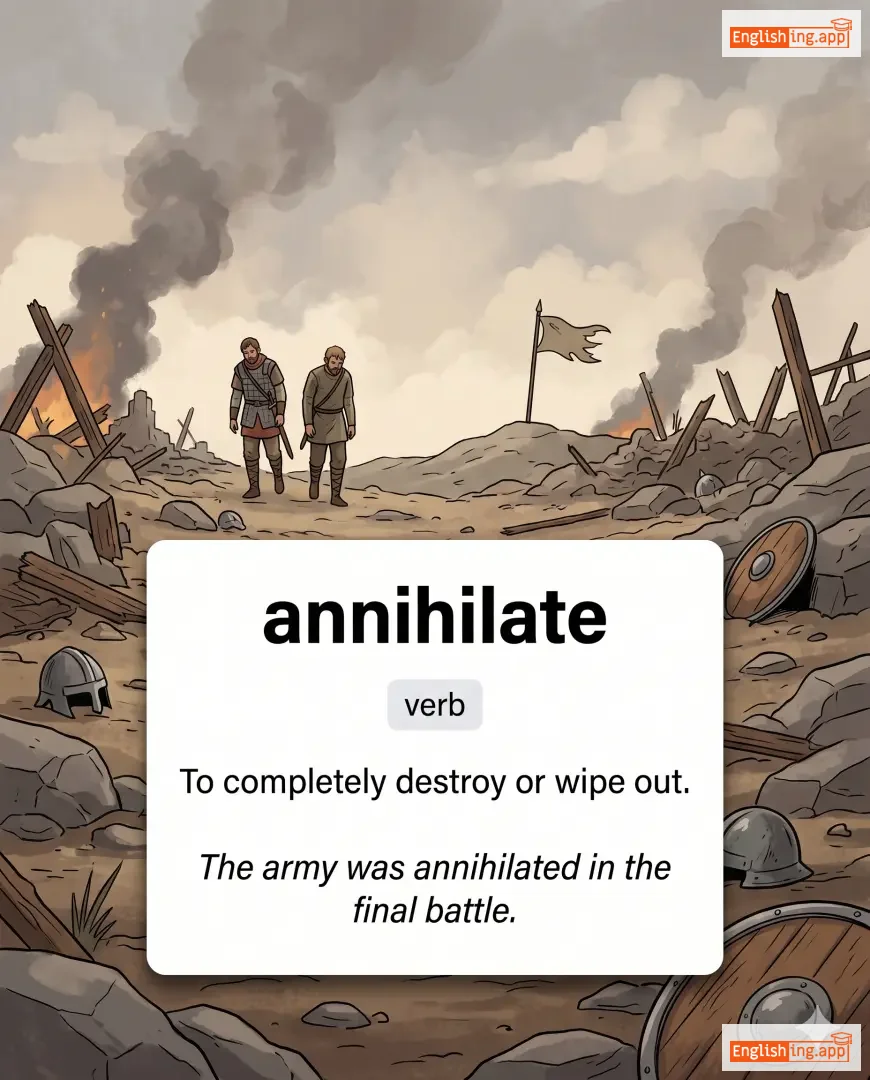
To completely destroy or wipe out.
••••••
|
The army was annihilated in the final battle.
Армия была уничтожена в последней битве.
••••••
|
Армия была уничтожена в последней битве.
Armija byla unichtozhena v posledney bitve.
••••••
|
annihilate the competition
уничтожить конкурентов
••••••
|
To defeat rivals completely
••••••
|
уничтожить конкурентов
unichtozhit' konkurentov
••••••
|
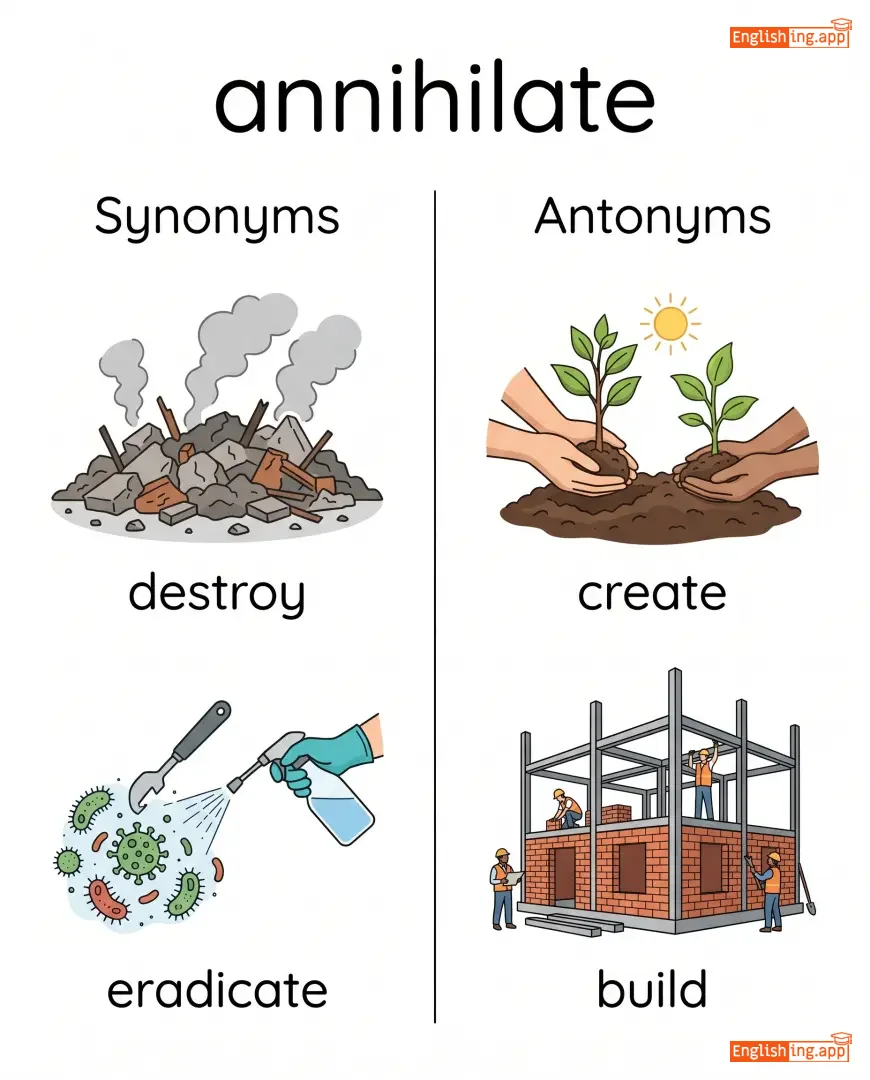
destroy, eradicate, obliterate, demolish, crush
••••••
|
create, build, construct
••••••
|
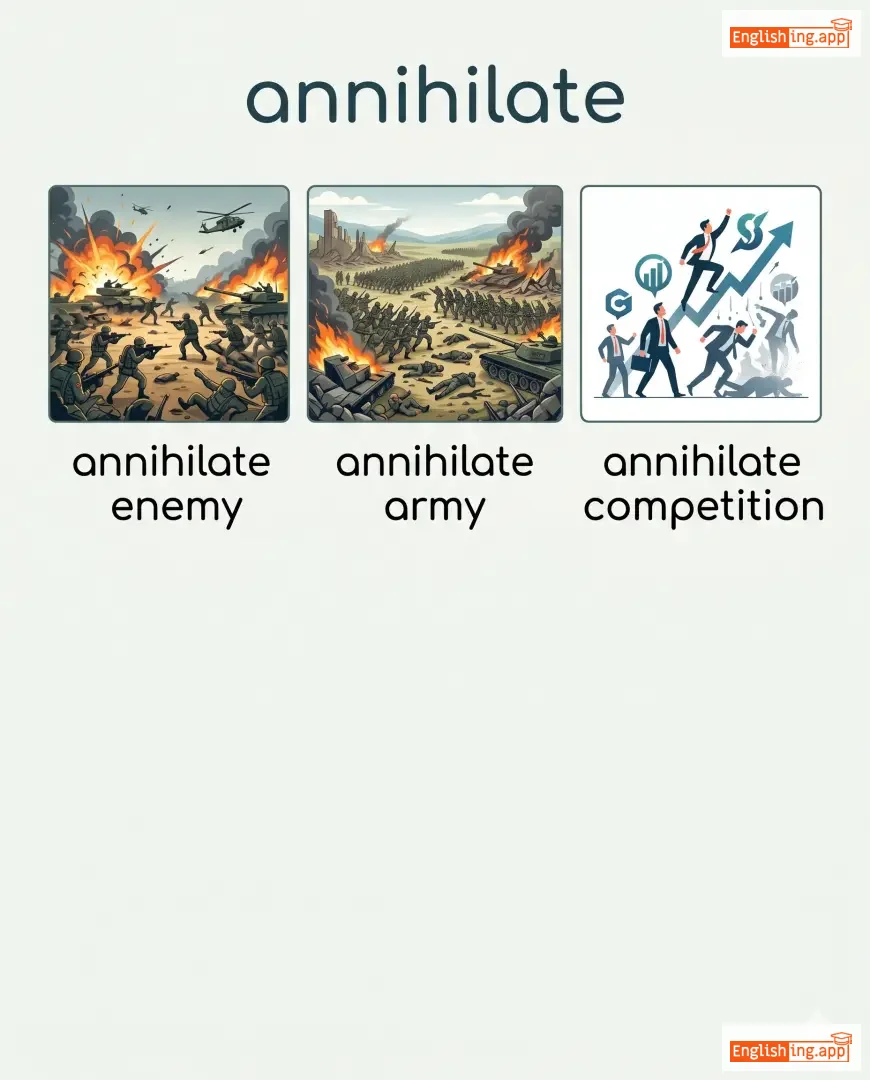
annihilate enemy, annihilate army, annihilate competition
••••••
|
Annihilate означает уничтожить — все стирается.
••••••
|
|
🎉
••••••
|
/ˌænɪˈvɜːrsəri/
noun
(анниверсари)
••••••
|
- •••••• |
годовщина
godovshchina
••••••
|
- •••••• | - •••••• | - •••••• | - •••••• |
the yearly recurrence of a date marking a past event
••••••
|
They celebrated their wedding anniversary with a dinner. |
Они отпраздновали свою годовщину свадьбы ужином.
Oni otprazdnovali svoyu godovshchinu svad'by uzhinom.
••••••
|
anniversary celebration |
a festivity or event to mark an anniversary
••••••
|
празднование годовщины
prazdnovaniye godovshchiny
••••••
|
commemoration, remembrance, jubilee, observance
••••••
|
forgetfulness, neglect
••••••
|
wedding anniversary, annual anniversary, silver anniversary, golden anniversary
••••••
|
Anniversary означает годовщина—Anni означает год, Versary означает повторение 🔄
••••••
|
|
📢
••••••
|
/əˈnaʊns/
verb
(анонсировать)
••••••
|
- •••••• |
объявить
obyavit
••••••
|
announced
анонсировал
••••••
|
announced
анонсирован
••••••
|
announces
анонсирует
••••••
|
announcing
анонсируя
••••••
|
to make a formal public statement about something
••••••
|
The company will announce the new product tomorrow.
Компания объявит новый продукт завтра.
••••••
|
Компания объявит новый продукт завтра.
Kompaniya obyavit novyj produkt zavtra.
••••••
|
announce decision
объявить решение
••••••
|
to declare or make a decision public
••••••
|
объявить решение
obyavit reshenie
••••••
|
declare, proclaim, state, notify, publish
••••••
|
conceal, withhold, hide
••••••
|
announce results, announce plans, announce officially, announce publicly
••••••
|
Объявить значит сделать официальное заявление—представь микрофон!
••••••
|
|
📢
••••••
|
/əˈnaʊnsmənt/
noun
(анонсмент)
••••••
|
- •••••• |
объявление
obyavlenie
••••••
|
- •••••• | - •••••• | - •••••• | - •••••• |
a public or formal statement giving information
••••••
|
The principal made an important announcement about the new schedule. |
Директор сделал важное объявление о новом расписании.
Direktor sdelal vazhnoe ob'yavlenie o novom raspisanii.
••••••
|
public announcement |
a formal declaration made to the general public
••••••
|
публичное объявление
publichnoe ob'yavlenie
••••••
|
declaration, statement, proclamation, notice, notification
••••••
|
secret, silence, concealment
••••••
|
official announcement, public announcement, make an announcement, important announcement
••••••
|
Объявление — когда кто-то использует микрофон для важной новости!
••••••
|
|
😠
••••••
|
/əˈnɔɪ/
verb
(аннoй)
••••••
|
- •••••• |
раздражать
razdrazhat
••••••
|
annoyed
аннoйед
••••••
|
annoyed
аннoйед
••••••
|
annoys
аннoйс
••••••
|
annoying
аннoйинг
••••••
|
to irritate or bother someone and make them feel a little angry or uncomfortable
••••••
|
His constant humming started to annoy everyone in the room.
Его постоянное напевание начало раздражать всех в комнате.
••••••
|
Его постоянное напевание начало раздражать всех в комнате.
Ego postoyannoe napevaniye nachalo razdrazhat' vsekh v komnate.
••••••
|
annoy the hell out of
аннoй тхе хелл аут оф
••••••
|
to irritate someone extremely
••••••
|
раздражать до предела
razdrazhat do pre-dela
••••••
|
irritate, bother, disturb, anger, provoke
••••••
|
please, delight, soothe
••••••
|
annoy someone, really annoy, slightly annoy, annoy deeply
••••••
|
Раздражать – не раздражай людей, если не хочешь раздражения.
••••••
|
|
😒
••••••
|
/əˈnɔɪd/
adjective
(энойд)
••••••
|
- •••••• |
раздражённый
razdrazhyonnyy
••••••
|
- •••••• | - •••••• | - •••••• | - •••••• |
feeling slightly angry or irritated
••••••
|
She felt annoyed by the constant noise.
Ши фелт энойд бай зе констант нойз.
••••••
|
Она была раздражена постоянным шумом.
ona byla razdrazhena postoyannym shumom
••••••
|
annoyed at someone
annoyed at someone
••••••
|
to feel irritation or displeasure toward a person
••••••
|
раздражённый на кого-то
razdrazhyonnyy na kogo-to
••••••
|
irritated, bothered, displeased, vexed, frustrated
••••••
|
pleased, satisfied, calm
••••••
|
feel annoyed, get annoyed, slightly annoyed, visibly annoyed
••••••
|
Annoyed → ‘ой’ чувство → раздражённый
••••••
|

