The War of Conscience
阿里夫是一位年轻的记者,他前往西北地区报道战场。那里,民兵和极端分子之间的冲突愈演愈烈。每天都有新的枪声,新的爆炸声。他意识到这不仅仅是政治——这是一场人性的战争。
有一天,在一次导弹袭击后,阿里夫目睹了种族灭绝的场面。妇女们遭受了强奸,孩子们在杀戮的声音中颤抖。这一幕震撼了他。
他用相机记录下了一切,但很快被恐怖分子抓住。他们警告他说:“如果你揭露真相,我们将终结你。”但阿里夫的良心告诉他:“说真相是我的责任。”
在夜幕的掩护下,他逃跑了——跑向东南的河岸躲藏。尽管他的身体已经筋疲力尽,但他的精神依然清醒。他知道这场战争不仅仅是关于恐怖主义或侵略——它关乎正义。
第二天,他回到城市并发布了他的报告。它迅速传播,获得了国际关注。政府被迫投降并开始调查。尽管阿里夫受到了许多威胁,他的勇气始终没有动摇。
最后他意识到,有时候一支笔比一把枪更强大。“一个在不公面前保持沉默的社会,”他说,“才是真正的侵犯。”他的故事成为了他国家不幸历史中的一道光。
|
表情符号
|
单词 | Images | 翻译 | 过去时 | 过去分词 | 第三人称单数 | 动名词 | 含义 | 例句 | 例句翻译 | 示例表达 | 示例表达含义 | 示例表达翻译 | 同义词 | 反义词 | 搭配词 | 助记符 |
|---|---|---|---|---|---|---|---|---|---|---|---|---|---|---|---|---|---|
|
💥
••••••
|
/əˈɡrɛʃən/
noun
(侵略)
••••••
|
- •••••• |
侵略
qinlue
••••••
|
- •••••• | - •••••• | - •••••• | - •••••• |
hostile or violent behavior towards others
••••••
|
His sudden aggression surprised everyone in the meeting. |
他突然的侵略行为让会议中的每个人都感到震惊。
Tā túrán de qinlue xíngwéi ràng huìyì zhōng de měi ge rén dōu gǎndào zhènjīng.
••••••
|
acts of aggression |
hostile actions or attacks
••••••
|
侵略行为
qinlue xíngwéi
••••••
|
hostility, attack, violence, assault
••••••
|
peace, calm, friendliness
••••••
|
show aggression, physical aggression, military aggression, acts of aggression
••••••
|
Aggression 记住 AGain GREssy (愤怒) 意味着侵略
••••••
|
|
🔥
••••••
|
/əˈɡrɛsɪv/
adjective
(ā ɡrè sī fū)
••••••
|
- •••••• |
激进
ji jin
••••••
|
- •••••• | - •••••• | - •••••• | - •••••• |
ready or likely to attack or confront; forceful
••••••
|
The salesman used an aggressive strategy to close the deal. |
销售员使用了激进的策略来完成交易。
Xiāoshòuyuán shǐyòngle jījìn de cèlüè lái wánchéng jiāoyì.
••••••
|
aggressive marketing |
forceful and energetic marketing approach
••••••
|
激进的营销
jījìn de yíngxiāo
••••••
|
hostile, forceful, pushy, combative, assertive
••••••
|
gentle, passive, calm
••••••
|
aggressive behavior, aggressive strategy, aggressive attitude, aggressive marketing
••••••
|
Aggressive 就像猛虎 (🐅),容易记住
••••••
|
|
⚔️
••••••
|
/ˈbætəlˌfiːld/
noun
(bǎtèrfēld)
••••••
|
- •••••• |
战场
zhànchǎng
••••••
|
- •••••• | - •••••• | - •••••• | - •••••• |
a place where a battle is fought
••••••
|
The battlefield was covered with the remnants of the fight. |
战场上布满了战斗的残余。
Zhànchǎng shàng bùmǎnle zhàndòu de cányú.
••••••
|
- •••••• | - •••••• | - •••••• |
combat zone, war zone, arena, field of battle
••••••
|
peace, safety, tranquility
••••••
|
fight on the battlefield, battlefield strategy, battlefield tactics
••••••
|
战 (Zhàn) 场 (chǎng) - Battlefield, where the battle happens
••••••
|
|
🌀
••••••
|
/dɪˈstrʌktɪv/
adjective
(destruktiv)
••••••
|
- •••••• |
破坏性的
pohuai xing de
••••••
|
- •••••• | - •••••• | - •••••• | - •••••• |
Causing great and irreparable harm or damage.
••••••
|
Hurricanes are often destructive to coastal cities.
飓风常常对沿海城市造成破坏。
••••••
|
飓风常常对沿海城市造成破坏。
Jufeng changchang dui yanhai chengshi zaocheng pohuai.
••••••
|
destructive criticism
破坏性批评
••••••
|
Criticism that is harmful rather than helpful.
••••••
|
破坏性批评
Pohuai xing piping
••••••
|
damaging, harmful, devastating, ruinous, catastrophic
••••••
|
constructive, helpful, beneficial
••••••
|
destructive force, destructive behavior, destructive power, destructive effect
••••••
|
Destructive 意味着摧毁 – 破坏性的。
••••••
|
|
🧨
••••••
|
/ɪkˈsploʊsɪv/
adjective
(èksplósiv)
••••••
|
- •••••• |
爆炸性
bàozhàxìng
••••••
|
- •••••• | - •••••• | - •••••• | - •••••• |
able to cause an explosion; likely to burst out suddenly
••••••
|
The situation became explosive after the argument. |
争论后局势变得爆炸性。
zhēnglùn hòu júshì biàn dé bàozhàxìng.
••••••
|
explosive growth |
very rapid and intense growth
••••••
|
爆炸性增长
bàozhàxìng zēngzhǎng
••••••
|
volatile, dangerous, combustible, eruptive
••••••
|
stable, calm, safe
••••••
|
explosive device, explosive growth, explosive force, explosive situation
••••••
|
爆炸性意味着可能爆炸 – 热烈的情况可能会突然爆发。
••••••
|
|
⚡
••••••
|
/ɪkˈstriː.mɪst/
noun
(ɪkˈstrɪːmɪst)
••••••
|
- •••••• |
极端分子
jíduān fènzǐ
••••••
|
- •••••• | - •••••• | - •••••• | - •••••• |
a person who holds extreme political or religious views
••••••
|
The government is taking measures to prevent extremist activities. |
政府正在采取措施防止极端分子活动。
zhèngfǔ zhèngzài cǎiqǔ cuòshī fángzhǐ jíduān fènzǐ huódòng.
••••••
|
- •••••• | - •••••• | - •••••• |
radical, fanatic, militant, fundamentalist
••••••
|
moderate, centrist, liberal, tolerant
••••••
|
political extremist, religious extremist, extremist group
••••••
|
极端分子常常推崇极端的思想。
••••••
|
|
☠️
••••••
|
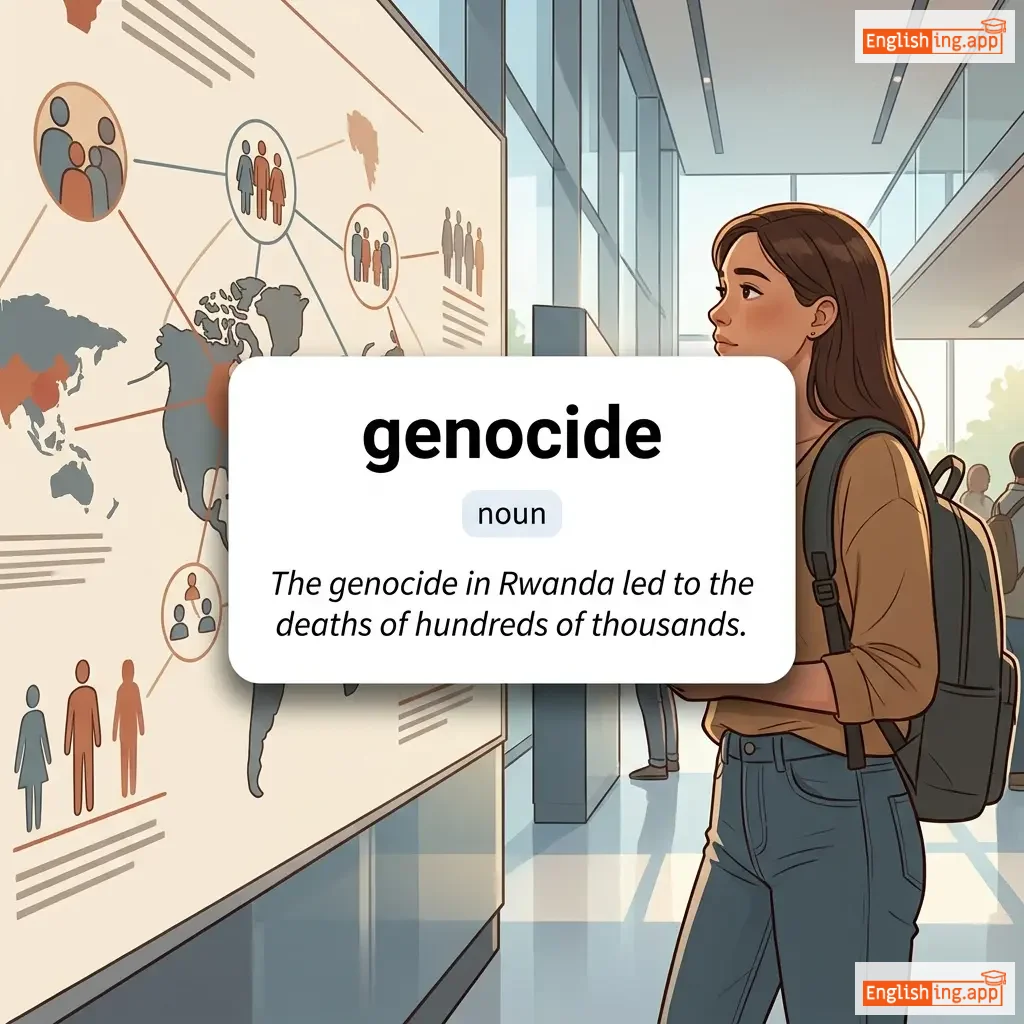
/ˈdʒen.ə.saɪd/
noun
(种族灭绝)
••••••
|
|
种族灭绝
zhǒngzú mièjué
••••••
|
- •••••• | - •••••• | - •••••• | - •••••• |
the deliberate killing of a large group of people, especially those of a particular ethnic group or nation
••••••
|
The international court condemned the systematic genocide committed during the war. |
国际法院谴责了在战争期间进行的系统性种族灭绝。
guójì fǎyuàn qiǎnzéle zài zhànzhēng qījiān jìnxíng de xìtǒngxì zhǒngzú mièjué.
••••••
|
- •••••• | - •••••• | - •••••• |
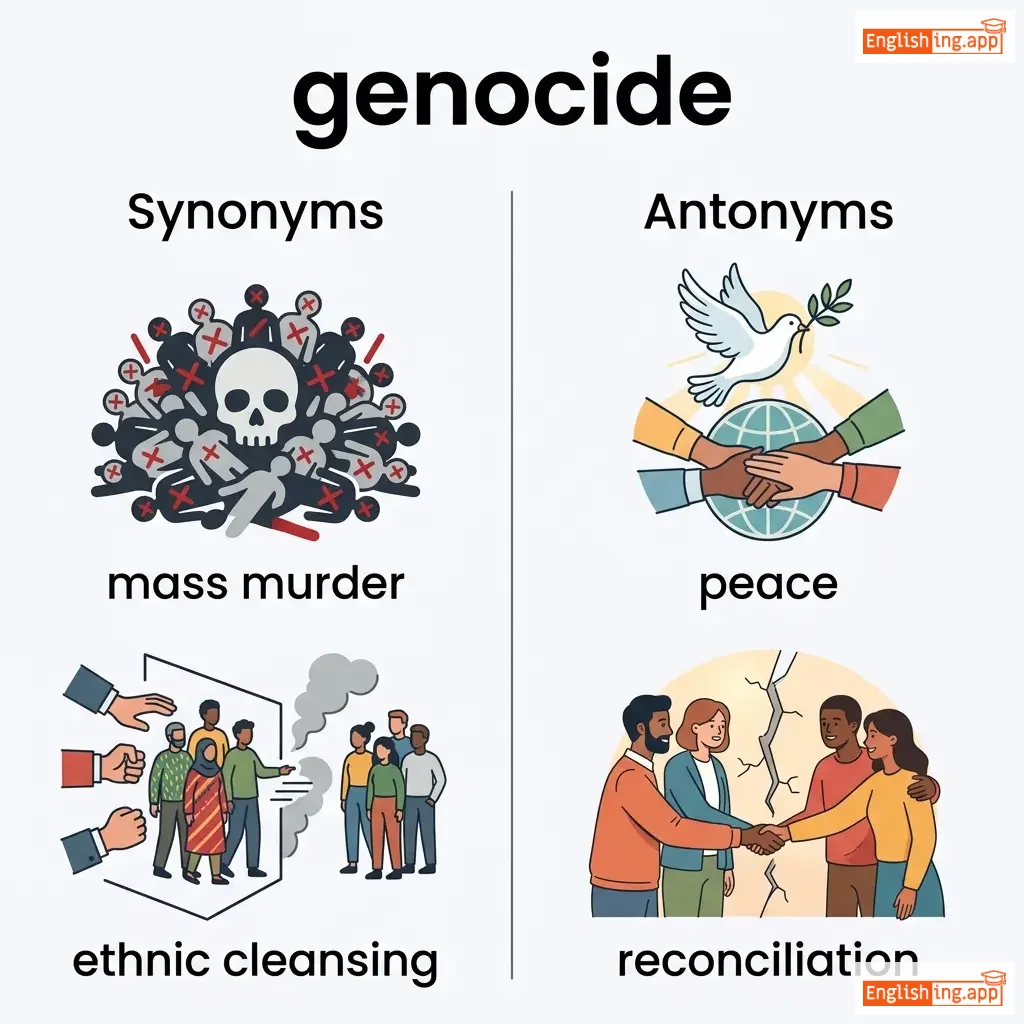
mass murder, ethnic cleansing, extermination, massacre
••••••
|
protection, preservation, salvation, rescue
••••••
|
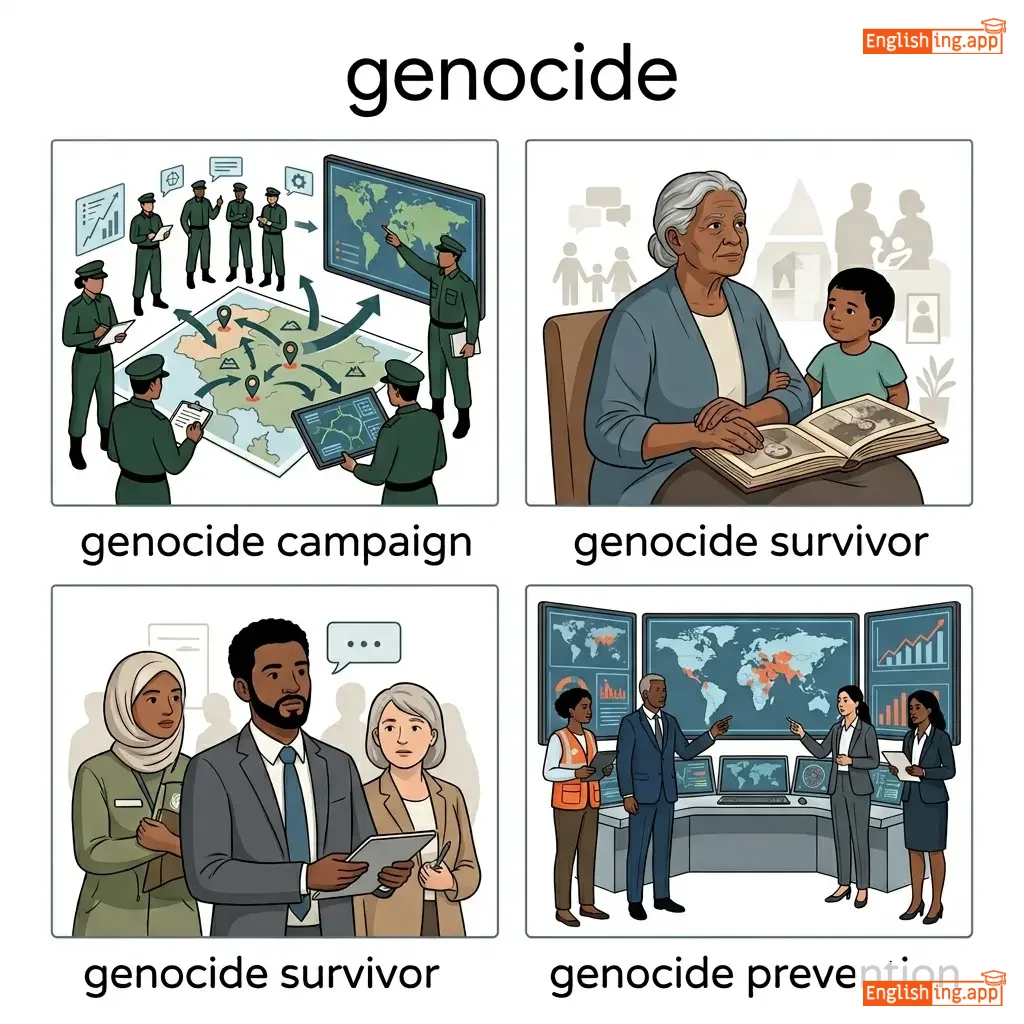
prevent genocide, genocide prevention, ethnic genocide
••••••
|
种族灭绝是指杀害一个种族,像种族灭绝一样记住。
••••••
|
|
💀
••••••
|
/ˈkɪlɪŋ/
noun
(killing)
••••••
|
- •••••• |
谋杀
móushā
••••••
|
- •••••• | - •••••• | - •••••• | - •••••• |
the act of causing death, especially deliberately
••••••
|
The movie depicts the brutal killing of the villagers. |
电影描绘了村民的残忍谋杀。
Diànyǐng miáohuìle cūnmín de cánrěn móushā.
••••••
|
make a killing |
to earn a large amount of money quickly
••••••
|
赚大钱
zhuàn dàqián
••••••
|
murder, homicide, slaughter, assassination, massacre
••••••
|
saving, rescue
••••••
|
cold-blooded killing, brutal killing, make a killing, senseless killing
••••••
|
谋杀意味着杀人,但在生意中,'赚大钱'意味着快速赚取大量钱财。
••••••
|
|
🪖
••••••
|
/mɪˈlɪʃə/
noun
(民兵)
••••••
|
- •••••• |
民兵
minbing
••••••
|
- •••••• | - •••••• | - •••••• | - •••••• |
a group of ordinary people who are trained to act as soldiers in emergencies
••••••
|
The village formed a militia to defend against attacks. |
村庄组成了一支民兵,以防范攻击。
Cun zhuang zu cheng le yi zhi minbing, yi fangfan gongji.
••••••
|
- •••••• | - •••••• | - •••••• |
armed group, volunteer force, paramilitary, local army
••••••
|
regular army, civilians
••••••
|
local militia, armed militia, form a militia
••••••
|
民兵就像士兵一样保护村庄
••••••
|
|
🚀
••••••
|
/ˈmɪsaɪl/ or /ˈmɪsəl/
noun
(米萨伊尔)
••••••
|
- •••••• |
导弹
daodan
••••••
|
- •••••• | - •••••• | - •••••• | - •••••• |
a weapon that is self-propelled and directed toward a target
••••••
|
The army launched a missile towards the enemy base. |
军队向敌军基地发射了一枚导弹。
jūnduì xiàng díjūn jīdì fāshèle yī méi dǎodàn.
••••••
|
ballistic missile |
a missile with a predetermined trajectory
••••••
|
弹道导弹
dàndào dǎodàn
••••••
|
projectile, rocket, torpedo, weapon
••••••
|
shield, defense
••••••
|
launch a missile, guided missile, nuclear missile, ballistic missile
••••••
|
Missile 就像是 'miss',但是导弹一定击中目标
••••••
|
|
🧭
••••••
|
/ˌnɔːrθˈwest/
noun, adjective, adverb
(nɔːθwɛst)
••••••
|
- •••••• |
西北
xibei
••••••
|
- •••••• | - •••••• | - •••••• | - •••••• |
the direction that is between north and west; situated in or moving toward this direction
••••••
|
Seattle is located in the northwest of the United States. |
西雅图位于美国的西北部。
Xīyǎtú wèiyú měiguó de xīběi bù.
••••••
|
go northwest |
to move or travel toward the northwest direction
••••••
|
朝西北方向走
cháo xīběi fāngxiàng zǒu
••••••
|
northwestern region, upper west, northwestward, NW
••••••
|
southeast, south, east
••••••
|
northwest wind, northwest corner, northwest region, go northwest, northwest direction
••••••
|
North表示北,West表示西,合起来就是西北 👉 西北!
••••••
|
|
🚫
••••••
|
/reɪp/
verb
(reɪp)
••••••
|
- •••••• |
强奸
qiángjiān
••••••
|
raped
reɪpt
••••••
|
raped
reɪpt
••••••
|
rapes
reɪps
••••••
|
raping
reɪpɪŋ
••••••
|
to force someone to have sexual intercourse without their consent
••••••
|
The law strictly punishes those who commit rape.
法律严惩那些犯强奸罪的人。
••••••
|
法律严惩那些犯强奸罪的人。
Fǎlǜ yánchěng nàxiē fàn qiángjiān zuì de rén.
••••••
|
- •••••• | - •••••• | - •••••• |
assault, violate, abuse, molest, attack
••••••
|
protect, respect, consent
••••••
|
commit rape, victim of rape, rape case, rape survivor
••••••
|
强奸是犯罪行为,尊重他人,绝不强奸 🚫
••••••
|
|
🎬
••••••
|
/ˈʃuːtɪŋ/
noun
(shooting)
••••••
|
- •••••• |
拍摄
paishè
••••••
|
- •••••• | - •••••• | - •••••• | - •••••• |
the action of shooting a gun, camera, or similar device
••••••
|
The shooting of the movie took several months. |
电影的拍摄花费了几个月的时间。
Diànyǐng de pāishè huāfèi le jǐ gè yuè de shíjiān.
••••••
|
- •••••• | - •••••• | - •••••• |
filming, firing, recording, shooting sports
••••••
|
catching, saving
••••••
|
movie shooting, gun shooting, shooting star, shooting range
••••••
|
拍摄是拍电影或拍照的动作。
••••••
|
|
🧭
••••••
|
/ˌsaʊθˈiːst/
noun
(sàuθíìst)
••••••
|
- •••••• |
东南
dongnan
••••••
|
- •••••• | - •••••• | - •••••• | - •••••• |
the direction that is between south and east; a region in that direction
••••••
|
The city is located in the southeast of the country. |
这座城市位于该国的东南部。
Zhe zuo chengshi weiyu gai guo de dongnanbu.
••••••
|
- •••••• | - •••••• | - •••••• |
southern-east, SE, lower-east, down-east
••••••
|
northwest, northeast
••••••
|
southeast region, southeast corner, in the southeast, toward the southeast
••••••
|
South + East = 东南 — 记住 '东南',南与东的结合。
••••••
|
|
🏳️
••••••
|
/səˈrɛndər/
verb
(surrender)
••••••
|
- •••••• |
投降
tóuxiáng
••••••
|
surrendered
surrendered
••••••
|
surrendered
surrendered
••••••
|
surrenders
surrenders
••••••
|
surrendering
surrendering
••••••
|
to give up or yield to an opponent or authority
••••••
|
The army finally surrendered after weeks of fighting.
The army finally surrendered after weeks of fighting.
••••••
|
在几周的战斗后,军队终于投降了。
Zài jǐ zhōu de zhàndòu hòu, jūnduì zhōngyú tóuxiáng le.
••••••
|
surrender to fate
surrender to fate
••••••
|
to accept something that cannot be changed
••••••
|
向命运投降
xiàng mìngyùn tóuxiáng
••••••
|
yield, give up, submit, capitulate
••••••
|
resist, fight, defend
••••••
|
surrender to authority, unconditional surrender, surrender peacefully
••••••
|
投降意味着屈服—🏳️ 举起白旗就是投降。
••••••
|
|
💣
••••••
|
/ˈter.ər.ɪ.zəm/
noun
(恐怖主义)
••••••
|
- •••••• |
恐怖主义
kǒngbù zhǔyì
••••••
|
- •••••• | - •••••• | - •••••• | - •••••• |
the unlawful use of violence and intimidation against civilians for political aims
••••••
|
The government increased security measures to prevent terrorism. |
政府加强了安全措施以防止恐怖主义。
zhèngfǔ jiāqiángle ānquán cuòshī yǐ fángzhǐ kǒngbù zhǔyì.
••••••
|
- •••••• | - •••••• | - •••••• |
extremism, radicalism, violence, insurgency
••••••
|
peace, nonviolence, diplomacy, harmony
••••••
|
international terrorism, domestic terrorism, counter-terrorism, war on terrorism
••••••
|
恐怖主义会使社会陷入混乱,安全措施是必不可少的。
••••••
|
|
👤💥
••••••
|
/ˈtɛrərɪst/
noun
(恐怖分子)
••••••
|
- •••••• |
恐怖分子
kongbufenzi
••••••
|
- •••••• | - •••••• | - •••••• | - •••••• |
a person who uses violence or threats to intimidate or coerce, especially for political purposes
••••••
|
The terrorist was arrested by the police after the attack. |
恐怖分子在袭击后被警察逮捕。
Kongbufenzi zai xiji hou bei jingcha daibu.
••••••
|
- •••••• | - •••••• | - •••••• |
extremist, militant, radical, insurgent
••••••
|
peacemaker, diplomat
••••••
|
suspected terrorist, terrorist group, radical terrorist
••••••
|
恐怖分子 ('kongbufenzi') 使用暴力来实现政治目标。
••••••
|
|
😔
••••••
|
/ʌnˈfɔːrtʃənət/
adjective
(an4fuoqinai)
••••••
|
- •••••• |
不幸
buxing
••••••
|
- •••••• | - •••••• | - •••••• | - •••••• |
Having or marked by bad luck; unlucky.
••••••
|
It was unfortunate that the meeting was canceled at the last minute.
很不幸,会议在最后一分钟被取消了。
••••••
|
很不幸,会议在最后一分钟被取消了。
Hen buxing, huiyi zai zuihou yifen zhong bei quxiao le.
••••••
|
unfortunate incident
不幸事件
••••••
|
An unlucky or regrettable event
••••••
|
不幸事件
buxing shijian
••••••
|
unlucky, regrettable, unlucky, adverse, unlucky
••••••
|
fortunate, lucky, favorable
••••••
|
unfortunate accident, unfortunate situation, unfortunate event, unfortunate circumstances
••••••
|
UN+幸运 = 没有好运 = 不幸
••••••
|
|
🚫
••••••
|
/ˌvaɪəˈleɪʃən/
noun
(wāi-ōu-léi-shēn)
••••••
|
- •••••• |
违反
wéifǎn
••••••
|
- •••••• | - •••••• | - •••••• | - •••••• |
The act of breaking or disregarding a law, rule, or agreement.
••••••
|
Driving without a license is a violation of the law. |
没有驾照开车是违反法律的行为。
méiyǒu jiàzhào kāichē shì wéifǎn fǎlǜ de xíngwéi.
••••••
|
in violation of |
contrary to; against
••••••
|
违反规定
wéifǎn guīdìng
••••••
|
breach, infringement, offense, transgression, misconduct
••••••
|
compliance, obedience, adherence
••••••
|
serious violation, law violation, human rights violation, violation of rules
••••••
|
Violation = 打破规则 🚫
••••••
|

