The War of Conscience
アリフは若いジャーナリストで、北西地域で戦場を取材するために出かけました。そこで、民兵と過激派グループの間で激しい戦闘が行われていました。毎日新しい銃撃、新しい爆発音が響いていました。彼はこれは単なる政治ではなく、人間性の戦争であることに気づきました。
ある日、ミサイル攻撃の後、アリフは集団虐殺の場面を目撃しました。女性はレイプの被害に遭い、子供たちは殺戮の音に震えていました。このシーンは彼の心を深く揺さぶりました。
彼はすべてをカメラに収めましたが、すぐにテロリストグループに捕らえられました。彼らは彼に警告しました、「もし真実を暴露したら、終わらせる。」しかしアリフの良心は言いました、「真実を伝えるのは私の義務だ。」
夜の覆いの下で、彼は逃げ出しました—南東の川岸に向かって走り隠れました。彼の体は疲れ果てていましたが、彼の精神は覚醒していました。彼はこの戦争がテロリズムや侵略だけでなく、正義のための戦争であることを知っていました。
翌日、彼は街に戻り、レポートを公開しました。それはバイラルとなり、国際的な注目を集めました。政府は降伏せざるを得ず、調査を開始しました。アリフは多くの脅迫を受けましたが、彼の勇気は決して揺るがなかった。
最終的に彼は、時にはペンが銃よりも強いことに気づきました。「不正義に沈黙する社会は、違反の本当の姿だ。」彼の物語は彼の国の不幸な歴史の中で光となりました。
|
絵文字
|
単語 | Images | 翻訳 | 過去 | 過去分詞 | 三人称単数 | 動名詞 | 意味 | 例文 | 例文の翻訳 | 表現例 | 表現例の意味 | 表現例の翻訳 | 同義語 | 対義語 | コロケーション | ニーモニック |
|---|---|---|---|---|---|---|---|---|---|---|---|---|---|---|---|---|---|
|
💥
••••••
|
/əˈɡrɛʃən/
noun
(アグレッション)
••••••
|
- •••••• |
攻撃性
kougekisei
••••••
|
- •••••• | - •••••• | - •••••• | - •••••• |
hostile or violent behavior towards others
••••••
|
His sudden aggression surprised everyone in the meeting. |
彼の突然の攻撃性は会議で誰もが驚いた。
Kare no totsuzen no kougekisei wa kaigi de dare mo ga odoroita.
••••••
|
acts of aggression |
hostile actions or attacks
••••••
|
攻撃行動
kougeki koudou
••••••
|
hostility, attack, violence, assault
••••••
|
peace, calm, friendliness
••••••
|
show aggression, physical aggression, military aggression, acts of aggression
••••••
|
Aggression 覚えておいて AGain GREssy (怒りっぽい) は攻撃性を意味します
••••••
|
|
🔥
••••••
|
/əˈɡrɛsɪv/
adjective
(アグレッシブ)
••••••
|
- •••••• |
攻撃的
kōgeki-teki
••••••
|
- •••••• | - •••••• | - •••••• | - •••••• |
ready or likely to attack or confront; forceful
••••••
|
The salesman used an aggressive strategy to close the deal. |
営業マンは契約を結ぶために攻撃的な戦略を使用しました。
Eigyō-man wa keiyaku o musubu tame ni kōgeki-teki na senryaku o shiyō shimashita.
••••••
|
aggressive marketing |
forceful and energetic marketing approach
••••••
|
攻撃的なマーケティング
kōgeki-teki na mākettingu
••••••
|
hostile, forceful, pushy, combative, assertive
••••••
|
gentle, passive, calm
••••••
|
aggressive behavior, aggressive strategy, aggressive attitude, aggressive marketing
••••••
|
Aggressive は虎のように強い (🐯)、覚えやすい
••••••
|
|
⚔️
••••••
|
/ˈbætəlˌfiːld/
noun
(バトルフィールド)
••••••
|
- •••••• |
戦場
senjō
••••••
|
- •••••• | - •••••• | - •••••• | - •••••• |
a place where a battle is fought
••••••
|
The battlefield was covered with the remnants of the fight. |
戦場は戦いの残骸で覆われていた。
Senjō wa tatakai no zangai de ōwarete ita.
••••••
|
- •••••• | - •••••• | - •••••• |
combat zone, war zone, arena, field of battle
••••••
|
peace, safety, tranquility
••••••
|
fight on the battlefield, battlefield strategy, battlefield tactics
••••••
|
戦 (Sen) 場 (Jō) - Battle in the field
••••••
|
|
🌀
••••••
|
/dɪˈstrʌktɪv/
adjective
(デストラクティブ)
••••••
|
- •••••• |
破壊的な
hakai teki na
••••••
|
- •••••• | - •••••• | - •••••• | - •••••• |
Causing great and irreparable harm or damage.
••••••
|
Hurricanes are often destructive to coastal cities.
ハリケーンは沿岸都市にとってしばしば破壊的です。
••••••
|
ハリケーンは沿岸都市にとってしばしば破壊的です。
Harikēn wa engan toshi ni totte shibashiba hakai-teki desu.
••••••
|
destructive criticism
破壊的批判
••••••
|
Criticism that is harmful rather than helpful.
••••••
|
破壊的批判
hakai-teki hihan
••••••
|
damaging, harmful, devastating, ruinous, catastrophic
••••••
|
constructive, helpful, beneficial
••••••
|
destructive force, destructive behavior, destructive power, destructive effect
••••••
|
Destructiveは破壊することを意味します – 破壊的な。
••••••
|
|
🧨
••••••
|
/ɪkˈsploʊsɪv/
adjective
(エクスプローシブ)
••••••
|
- •••••• |
爆発的
bakuhatsuteki
••••••
|
- •••••• | - •••••• | - •••••• | - •••••• |
able to cause an explosion; likely to burst out suddenly
••••••
|
The situation became explosive after the argument. |
議論の後、状況は爆発的になった。
Giron no ato, jōkyō wa bakuhatsuteki ni natta.
••••••
|
explosive growth |
very rapid and intense growth
••••••
|
爆発的な成長
bakuhatsuteki na seichō
••••••
|
volatile, dangerous, combustible, eruptive
••••••
|
stable, calm, safe
••••••
|
explosive device, explosive growth, explosive force, explosive situation
••••••
|
爆発的は爆発する可能性がある – 緊張した状況が爆発するかもしれない。
••••••
|
|
⚡
••••••
|
/ɪkˈstriː.mɪst/
noun
(エクストリミスト)
••••••
|
- •••••• |
過激派
kagekiha
••••••
|
- •••••• | - •••••• | - •••••• | - •••••• |
a person who holds extreme political or religious views
••••••
|
The government is taking measures to prevent extremist activities. |
政府は過激派の活動を防ぐための措置を講じています。
seifu wa kagekiha no katsudō o fuseru tame no sochi o kōjiteimasu.
••••••
|
- •••••• | - •••••• | - •••••• |
radical, fanatic, militant, fundamentalist
••••••
|
moderate, centrist, liberal, tolerant
••••••
|
political extremist, religious extremist, extremist group
••••••
|
過激派は常に極端な行動を選びます。
••••••
|
|
☠️
••••••
|
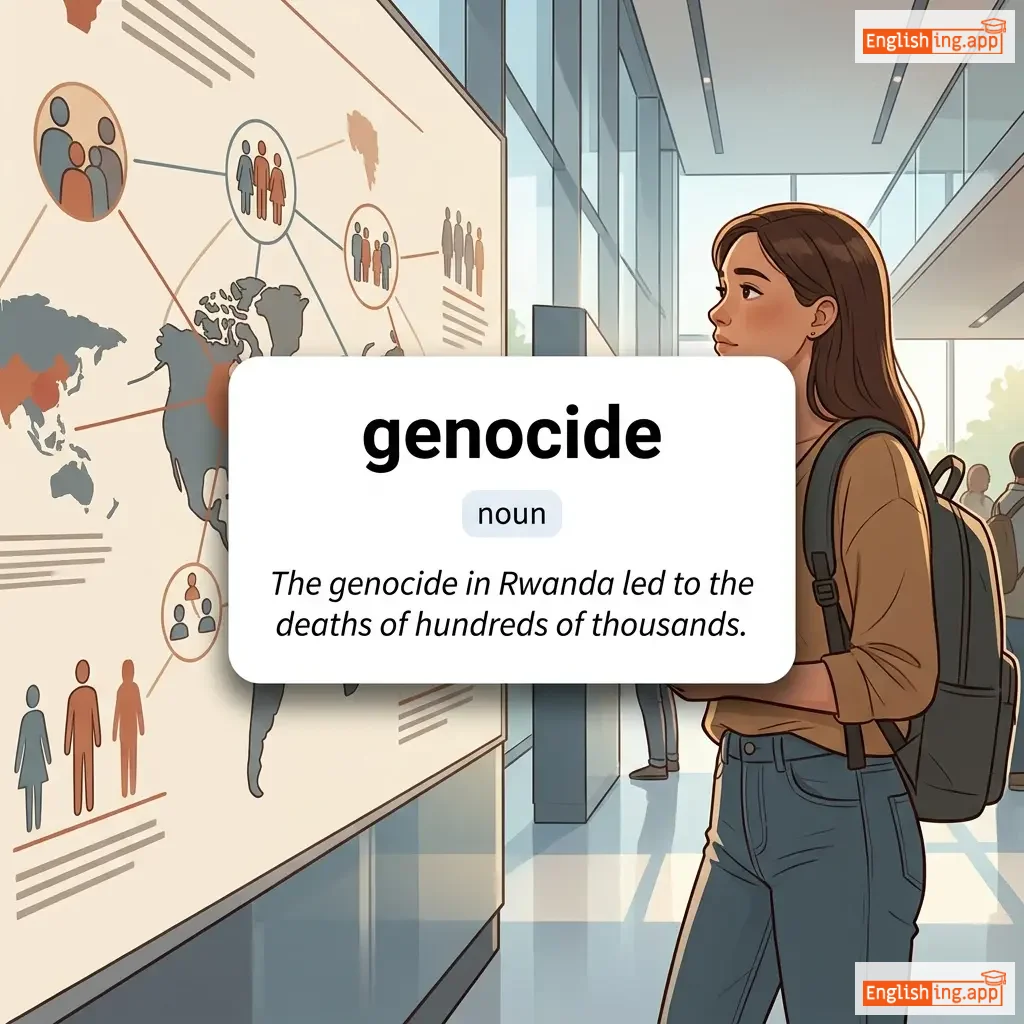
/ˈdʒen.ə.saɪd/
noun
(ジェノサイド)
••••••
|
|
ジェノサイド
jenosaido
••••••
|
- •••••• | - •••••• | - •••••• | - •••••• |
the deliberate killing of a large group of people, especially those of a particular ethnic group or nation
••••••
|
The international court condemned the systematic genocide committed during the war. |
国際裁判所は戦争中に行われた体系的なジェノサイドを非難しました。
Kokusai saiban-sho wa sensō-chū ni okonawareta taikei-teki na jenosaido o hinan shimashita.
••••••
|
- •••••• | - •••••• | - •••••• |
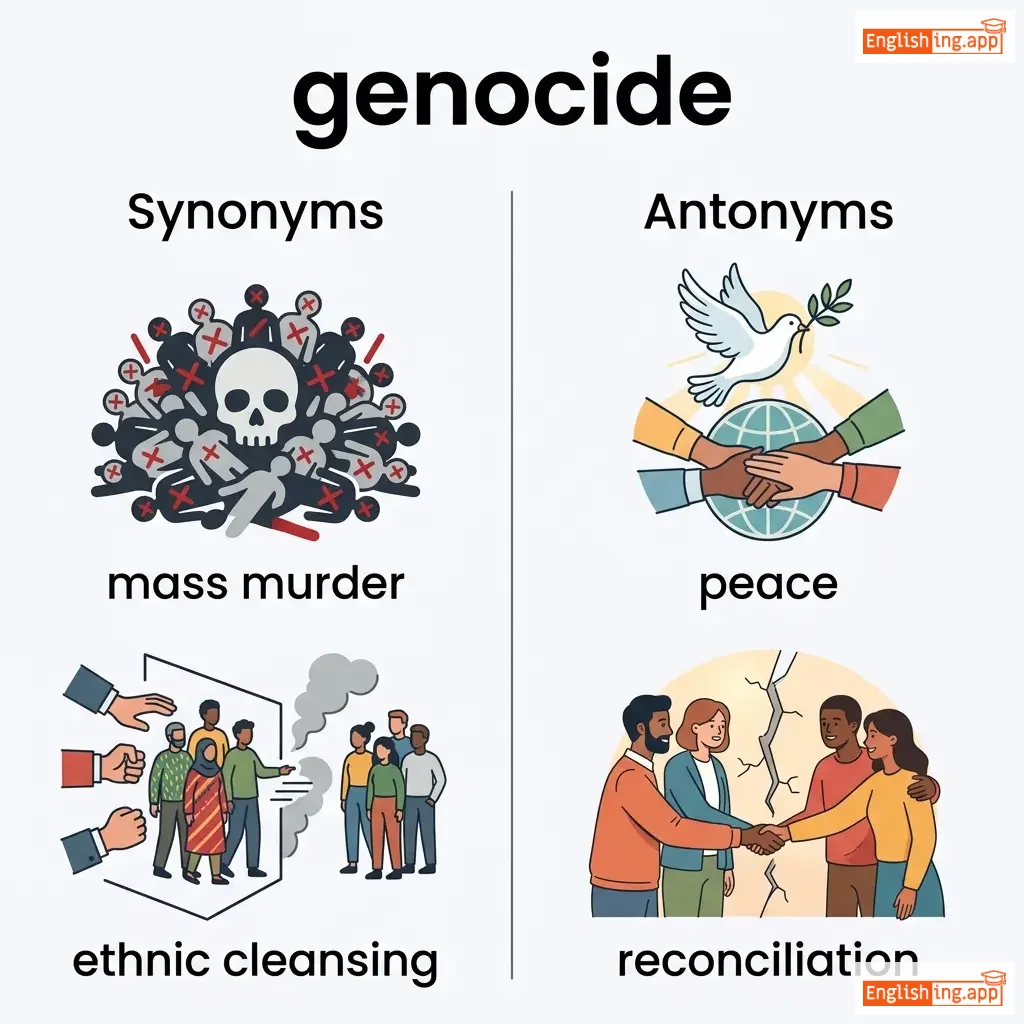
mass murder, ethnic cleansing, extermination, massacre
••••••
|
protection, preservation, salvation, rescue
••••••
|
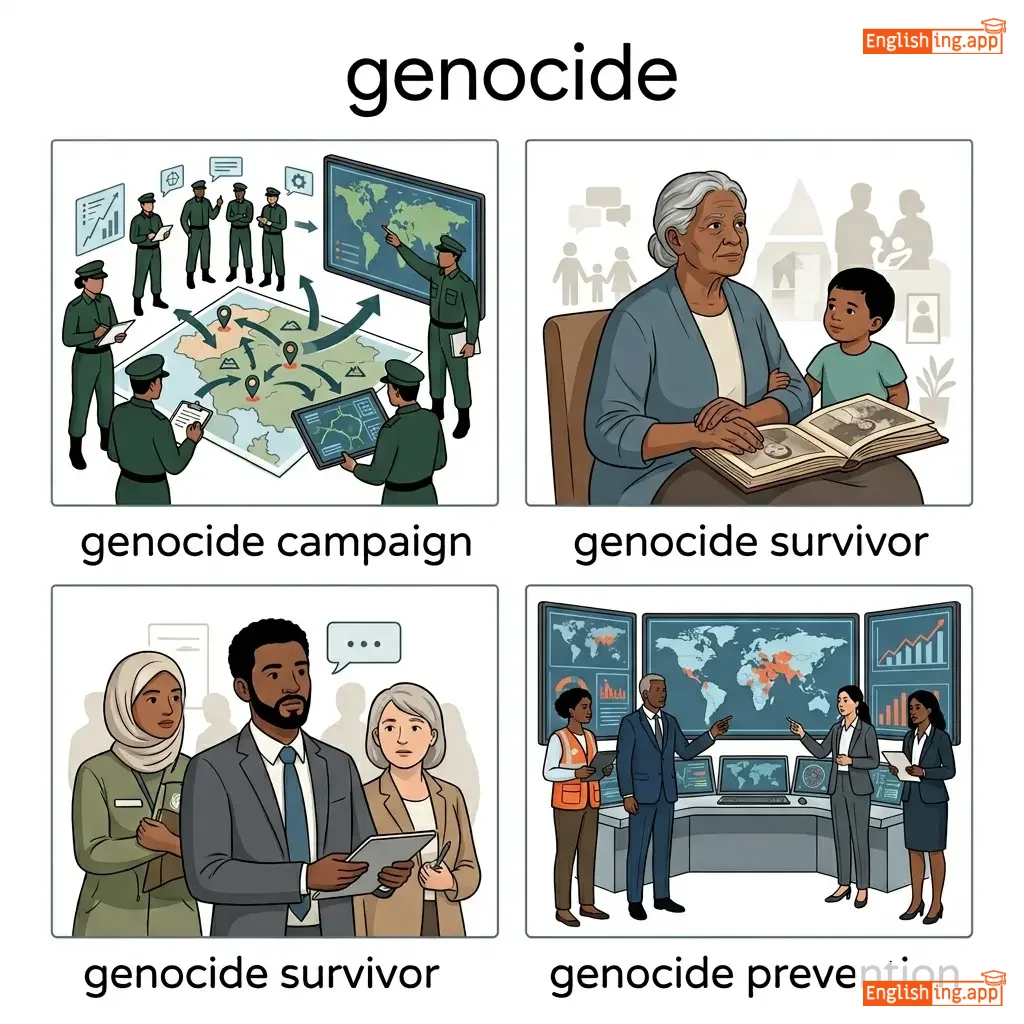
prevent genocide, genocide prevention, ethnic genocide
••••••
|
ジェノサイドとは民族を根絶すること、覚えやすいジェノサイド。
••••••
|
|
💀
••••••
|
/ˈkɪlɪŋ/
noun
(キリング)
••••••
|
- •••••• |
殺人
satsujin
••••••
|
- •••••• | - •••••• | - •••••• | - •••••• |
the act of causing death, especially deliberately
••••••
|
The movie depicts the brutal killing of the villagers. |
映画は村人たちの残忍な殺人を描いています。
Eiga wa murabito-tachi no zanrin na satsujin o egaku shimasu.
••••••
|
make a killing |
to earn a large amount of money quickly
••••••
|
大儲けする
ōmōke suru
••••••
|
murder, homicide, slaughter, assassination, massacre
••••••
|
saving, rescue
••••••
|
cold-blooded killing, brutal killing, make a killing, senseless killing
••••••
|
殺人は人を殺すことを意味しますが、ビジネスでは『大儲けする』は素早く多くのお金を稼ぐことを意味します。
••••••
|
|
🪖
••••••
|
/mɪˈlɪʃə/
noun
(ミリシア)
••••••
|
- •••••• |
民兵
minpei
••••••
|
- •••••• | - •••••• | - •••••• | - •••••• |
a group of ordinary people who are trained to act as soldiers in emergencies
••••••
|
The village formed a militia to defend against attacks. |
村は攻撃から守るために民兵を結成した。
Mura wa kougeki kara mamoru tame ni minpei wo kessei shita.
••••••
|
- •••••• | - •••••• | - •••••• |
armed group, volunteer force, paramilitary, local army
••••••
|
regular army, civilians
••••••
|
local militia, armed militia, form a militia
••••••
|
ミリシアは緊急時に戦うために集まった民兵
••••••
|
|
🚀
••••••
|
/ˈmɪsaɪl/ or /ˈmɪsəl/
noun
(ミサイル)
••••••
|
- •••••• |
ミサイル
misairu
••••••
|
- •••••• | - •••••• | - •••••• | - •••••• |
a weapon that is self-propelled and directed toward a target
••••••
|
The army launched a missile towards the enemy base. |
軍は敵基地に向かってミサイルを発射しました。
Gun wa teki kichi ni mukatte misairu o hassha shimashita.
••••••
|
ballistic missile |
a missile with a predetermined trajectory
••••••
|
弾道ミサイル
dandō misairu
••••••
|
projectile, rocket, torpedo, weapon
••••••
|
shield, defense
••••••
|
launch a missile, guided missile, nuclear missile, ballistic missile
••••••
|
Missileは'ミス'から来ているけど、ミサイルは絶対に目標を外さない
••••••
|
|
🧭
••••••
|
/ˌnɔːrθˈwest/
noun, adjective, adverb
(ノースウェスト)
••••••
|
- •••••• |
北西
hokusei
••••••
|
- •••••• | - •••••• | - •••••• | - •••••• |
the direction that is between north and west; situated in or moving toward this direction
••••••
|
Seattle is located in the northwest of the United States. |
シアトルはアメリカ合衆国の北西部にあります。
Shiatoru wa Amerika Gasshūkoku no hokuseibu ni arimasu.
••••••
|
go northwest |
to move or travel toward the northwest direction
••••••
|
北西に進む
hokusei ni susumu
••••••
|
northwestern region, upper west, northwestward, NW
••••••
|
southeast, south, east
••••••
|
northwest wind, northwest corner, northwest region, go northwest, northwest direction
••••••
|
Northは北、Westは西 — それを合わせて北西 👉 北西!
••••••
|
|
🚫
••••••
|
/reɪp/
verb
(レイプ)
••••••
|
- •••••• |
強姦
gōkan
••••••
|
raped
レイプド
••••••
|
raped
レイプド
••••••
|
rapes
レイプス
••••••
|
raping
レイピング
••••••
|
to force someone to have sexual intercourse without their consent
••••••
|
The law strictly punishes those who commit rape.
法律は強姦を犯した者に厳罰を与えます。
••••••
|
法律は強姦を犯した者に厳罰を与えます。
Hōritsu wa gōkan o okashita mono ni genbatsu o ataemasu.
••••••
|
- •••••• | - •••••• | - •••••• |
assault, violate, abuse, molest, attack
••••••
|
protect, respect, consent
••••••
|
commit rape, victim of rape, rape case, rape survivor
••••••
|
強姦は犯罪—他人を尊重し、決して強姦しないでください 🚫
••••••
|
|
🎬
••••••
|
/ˈʃuːtɪŋ/
noun
(シューティング)
••••••
|
- •••••• |
撮影
satsuei
••••••
|
- •••••• | - •••••• | - •••••• | - •••••• |
the action of shooting a gun, camera, or similar device
••••••
|
The shooting of the movie took several months. |
映画の撮影は数ヶ月かかりました。
Eiga no satsuei wa suūkagetsu kakarimashita.
••••••
|
- •••••• | - •••••• | - •••••• |
filming, firing, recording, shooting sports
••••••
|
catching, saving
••••••
|
movie shooting, gun shooting, shooting star, shooting range
••••••
|
撮影はカメラや銃で撮ることです。
••••••
|
|
🧭
••••••
|
/ˌsaʊθˈiːst/
noun
(サウスイースト)
••••••
|
- •••••• |
南東
nantou
••••••
|
- •••••• | - •••••• | - •••••• | - •••••• |
the direction that is between south and east; a region in that direction
••••••
|
The city is located in the southeast of the country. |
その都市は国の南東に位置しています。
Sono toshi wa kuni no nantou ni ichi shiteimasu.
••••••
|
- •••••• | - •••••• | - •••••• |
southern-east, SE, lower-east, down-east
••••••
|
northwest, northeast
••••••
|
southeast region, southeast corner, in the southeast, toward the southeast
••••••
|
South + East = 南東 — '南東'、南と東が交わる場所を覚えておいてください。
••••••
|
|
🏳️
••••••
|
/səˈrɛndər/
verb
(サレンダー)
••••••
|
- •••••• |
降伏する
kōfuku suru
••••••
|
surrendered
サレンダー・ド
••••••
|
surrendered
サレンダー・ド
••••••
|
surrenders
サレンダー・ス
••••••
|
surrendering
サレンダーリング
••••••
|
to give up or yield to an opponent or authority
••••••
|
The army finally surrendered after weeks of fighting.
軍隊は数週間の戦闘の後、最終的に降伏しました。
••••••
|
数週間の戦闘の後、軍隊は最終的に降伏しました。
Sū shūkan no sentō no ato, guntai wa saishū-teki ni kōfuku shimashita.
••••••
|
surrender to fate
運命に降伏する
••••••
|
to accept something that cannot be changed
••••••
|
運命に降伏する
unmei ni kōfuku suru
••••••
|
yield, give up, submit, capitulate
••••••
|
resist, fight, defend
••••••
|
surrender to authority, unconditional surrender, surrender peacefully
••••••
|
降伏するは屈すること—🏳️ 白旗を上げることは降伏すること。
••••••
|
|
💣
••••••
|
/ˈter.ər.ɪ.zəm/
noun
(テロリズム)
••••••
|
- •••••• |
テロリズム
terorizumu
••••••
|
- •••••• | - •••••• | - •••••• | - •••••• |
the unlawful use of violence and intimidation against civilians for political aims
••••••
|
The government increased security measures to prevent terrorism. |
政府はテロリズムを防止するためにセキュリティ対策を強化しました。
seifu wa terorizumu o bōshi suru tame ni sekyuriti taisaku o kyōka shimashita.
••••••
|
- •••••• | - •••••• | - •••••• |
extremism, radicalism, violence, insurgency
••••••
|
peace, nonviolence, diplomacy, harmony
••••••
|
international terrorism, domestic terrorism, counter-terrorism, war on terrorism
••••••
|
テロリズムは社会に混乱を引き起こすので、安全対策は重要です。
••••••
|
|
👤💥
••••••
|
/ˈtɛrərɪst/
noun
(テロリスト)
••••••
|
- •••••• |
テロリスト
terorisuto
••••••
|
- •••••• | - •••••• | - •••••• | - •••••• |
a person who uses violence or threats to intimidate or coerce, especially for political purposes
••••••
|
The terrorist was arrested by the police after the attack. |
テロリストは攻撃後、警察に逮捕されました。
Terorisuto wa kōgeki go, keisatsu ni taiho saremashita.
••••••
|
- •••••• | - •••••• | - •••••• |
extremist, militant, radical, insurgent
••••••
|
peacemaker, diplomat
••••••
|
suspected terrorist, terrorist group, radical terrorist
••••••
|
テロリスト ('terorisuto') は政治的目的で暴力を使う人です。
••••••
|
|
😔
••••••
|
/ʌnˈfɔːrtʃənət/
adjective
(アンフォーチュネイト)
••••••
|
- •••••• |
不運
fuun
••••••
|
- •••••• | - •••••• | - •••••• | - •••••• |
Having or marked by bad luck; unlucky.
••••••
|
It was unfortunate that the meeting was canceled at the last minute.
会議が最後の瞬間にキャンセルされたのは不運でした。
••••••
|
会議が最後の瞬間にキャンセルされたのは不運でした。
Kaigi ga saigo no shunkan ni kyanseru sareta no wa fuan deshita.
••••••
|
unfortunate incident
不運な出来事
••••••
|
An unlucky or regrettable event
••••••
|
不運な出来事
Fuun na dekigoto
••••••
|
unlucky, regrettable, unlucky, adverse, unlucky
••••••
|
fortunate, lucky, favorable
••••••
|
unfortunate accident, unfortunate situation, unfortunate event, unfortunate circumstances
••••••
|
UN+FORTUNE = 幸運がない = 不運
••••••
|
|
🚫
••••••
|
/ˌvaɪəˈleɪʃən/
noun
(vai-ō-reishon)
••••••
|
- •••••• |
違反
ihan
••••••
|
- •••••• | - •••••• | - •••••• | - •••••• |
The act of breaking or disregarding a law, rule, or agreement.
••••••
|
Driving without a license is a violation of the law. |
免許なしで運転することは法律違反です。
Menkyo nashi de unten suru koto wa hōritsu ihan desu.
••••••
|
in violation of |
contrary to; against
••••••
|
違反して
ihan shite
••••••
|
breach, infringement, offense, transgression, misconduct
••••••
|
compliance, obedience, adherence
••••••
|
serious violation, law violation, human rights violation, violation of rules
••••••
|
Violation = 規則を破る 🚫
••••••
|

