The Discovery That Changed Everything
萨尔玛博士是一位专注的研究员,她正在对一个神秘的现象进行调查。她的假设是这些奇怪的迹象指向了一个新的科学发现。每天,她都彻底记录所有的测量并进行统计分析。据说这个现象是不可能的,但大概她的计算是正确的。一天,当她收集额外数据时,她收到了一个惊人的****启示——她的预测完全正确!因此,她得出了一个显著的重要结论。她的发现表明,这个现象的可能性在一个显著的比例中确实存在。其他研究员最初持怀疑态度,但当他们彻底审查她的科学方法时,他们明白这确实是一个真正的发现。萨尔玛的调查给她的领域带来了革命,并将她认定为先锋。
|
表情符号
|
单词 | Images | 翻译 | 含义 | 例句 | 例句翻译 | 示例表达 | 示例表达含义 | 示例表达翻译 | 同义词 | 反义词 | 搭配词 | 助记符 |
|---|---|---|---|---|---|---|---|---|---|---|---|---|---|
|
➕
••••••
|
/əˈdɪʃənəl/
adjective
(额外)
••••••
|
- •••••• |
额外的
éwài de
••••••
|
added, extra, or supplementary to what already exists
••••••
|
The teacher gave the students additional homework. |
老师给学生布置了额外的作业。
Lǎoshī gěi xuéshēng bùzhìle éwài de zuòyè.
••••••
|
additional cost |
extra expense beyond the basic cost
••••••
|
额外费用
éwài fèiyòng
••••••
|
extra, further, supplementary, added
••••••
|
basic, minimal, primary
••••••
|
additional information, additional charge, additional support, additional effort
••••••
|
Additional 意味着加 + 额外 - 多出来的东西
••••••
|
|
😲
••••••
|
/əsˈtɒnɪʃɪŋ/
adjective
(æstɒnɪʃɪŋ)
••••••
|
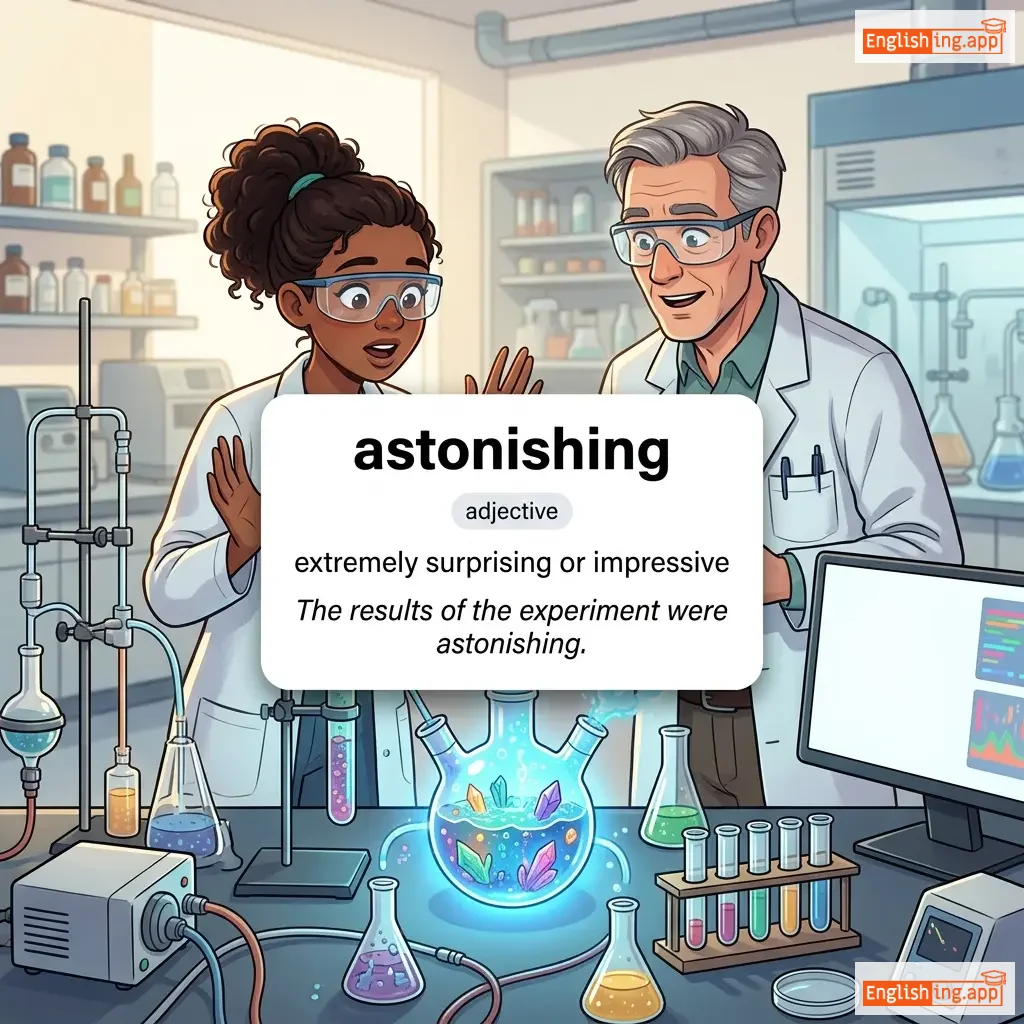
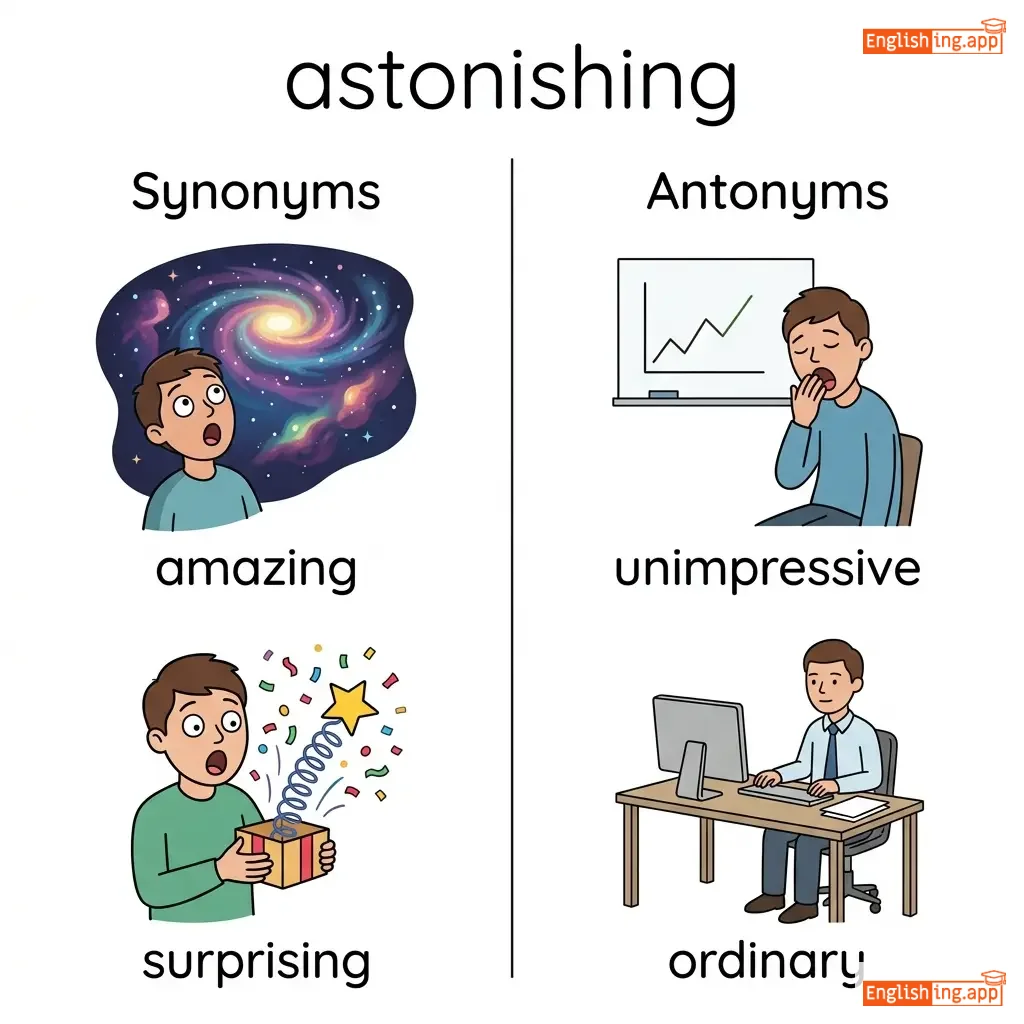
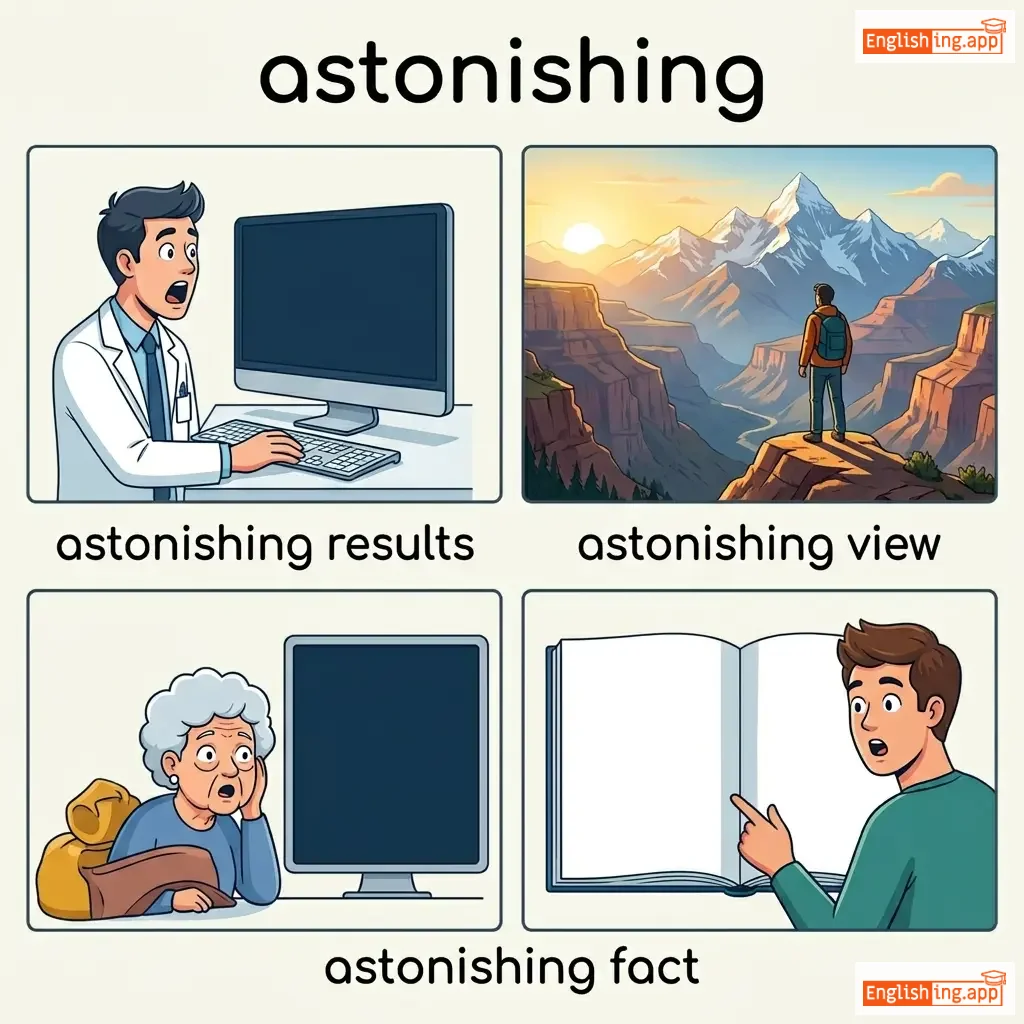
|
令人吃惊
lìng rén chī jīng
••••••
|
extremely surprising or impressive
••••••
|
The results of the experiment were astonishing. |
实验的结果令人吃惊。
Shí yàn de jié guǒ lìng rén chī jīng.
••••••
|
- •••••• | - •••••• | - •••••• |
amazing, surprising, breathtaking, remarkable
••••••
|
unimpressive, ordinary, expected
••••••
|
astonishing results, astonishing view, astonishing fact
••••••
|
Astonishing - 就像看到意想不到的事情时一样令人吃惊!
••••••
|
|
📘
••••••
|
/kənˈkluːʒən/
noun
(kənˈkluːʒən)
••••••
|
- •••••• |
结论
jie lun
••••••
|
The end or finish of an event, process, or text; a judgment reached after consideration.
••••••
|
The research paper ends with a strong conclusion. |
研究论文以一个有力的结论结束。
Yánjiū lùnwén yǐ yīgè yǒulì de jiélùn jiéshù.
••••••
|
jump to conclusions |
to make a decision without having all the facts
••••••
|
匆忙下结论
cōngmáng xià jiélùn
••••••
|
end, result, outcome, judgment, decision
••••••
|
beginning, start, opening
••••••
|
draw a conclusion, reach a conclusion, in conclusion, strong conclusion
••••••
|
Conclusion 就是结论 – 思考后的最终结果。
••••••
|
|
➡️
••••••
|
/ˈkɒnsɪkwəntli/
adverb
(kōngsīkwéntlì)
••••••
|
- •••••• |
因此
yīncǐ
••••••
|
as a result; therefore
••••••
|
He didn’t study, and consequently he failed the exam.
他没有学习,因此他没通过考试。
••••••
|
他没有学习,因此他没通过考试。
Tā méiyǒu xuéxí, yīncǐ tā méi tōngguò kǎoshì.
••••••
|
- •••••• | - •••••• | - •••••• |
therefore, thus, hence, accordingly, as a result
••••••
|
nevertheless, however, despite
••••••
|
and consequently, consequently failed, consequently led to, consequently resulted in
••••••
|
Consequently 就是 '因此', 表示因为某个原因所以有的结果。
••••••
|
|
🔬
••••••
|
/haɪˈpɒθəsɪs/
noun
••••••
|
- •••••• | - •••••• |
a proposed explanation made on the basis of limited evidence as a starting point for further investigation.
••••••
|
The scientist tested her hypothesis through multiple experiments. |
- •••••• |
working hypothesis |
a provisional idea assumed for the sake of argument or investigation
••••••
|
- •••••• |
assumption, theory, proposition, supposition, premise
••••••
|
fact, proof, certainty
••••••
|
form a hypothesis, test a hypothesis, reject a hypothesis, confirm a hypothesis
••••••
|
No •••••• |
|
⚠️
••••••
|
/ˌɪndɪˈkeɪʃən/
noun
(yīndìkèshùn)
••••••
|
- •••••• |
指示
zhǐshì
••••••
|
A sign, piece of information, or signal that suggests something.
••••••
|
Dark clouds are an indication of an approaching storm. |
乌云是即将到来的暴风雨的指示。
Wūyún shì jíjiāng dào lái de bàofēngyǔ de zhǐshì
••••••
|
give an indication |
To show or suggest something indirectly.
••••••
|
给出指示
gěi chū zhǐshì
••••••
|
sign, signal, evidence, clue, pointer
••••••
|
concealment, suppression
••••••
|
clear indication, early indication, medical indication
••••••
|
Indication意味着指示—乌云给出了暴风雨的指示。
••••••
|
|
🕵️
••••••
|
/ɪnˌvɛs.tɪˈɡeɪ.ʃən/
noun
(调查)
••••••
|
- •••••• |
调查
diaocha
••••••
|
the process of inquiring into or examining something carefully to find the truth
••••••
|
The investigation revealed new evidence about the fraud. |
调查揭示了有关欺诈的新证据。
Diaocha jieshi le youguan qizha de xin zhengju.
••••••
|
under investigation |
being examined or inquired into
••••••
|
正在调查中
zhengzai diaocha zhong
••••••
|
inquiry, probe, inspection, examination, scrutiny
••••••
|
neglect, disregard
••••••
|
launch an investigation, conduct an investigation, criminal investigation
••••••
|
调查意味着通过仔细检查找出真相。
••••••
|
|
🎲
••••••
|
/ˈlaɪ.kli.hʊd/
noun
(lài kè lì hù dé)
••••••
|
- •••••• |
可能性
kenengxing
••••••
|
the chance or probability of something happening
••••••
|
There is a strong likelihood of rain tomorrow. |
明天有很大的降雨可能性。
Mingtian you hendà de jiangyu kenengxing.
••••••
|
in all likelihood |
almost certainly; very probably
••••••
|
在很大可能下
zai hendà kenengxia
••••••
|
probability, chance, prospect, possibility
••••••
|
impossibility, certainty
••••••
|
likelihood of success, strong likelihood, in all likelihood
••••••
|
Likelihood = Like + Hood – 如果喜欢,它很可能发生
••••••
|
|
📏
••••••
|
/ˈmeʒərmənt/
noun
(mɛʒərmənt)
••••••
|
- •••••• |
测量
ce liang
••••••
|
the size, length, or amount of something, as determined by measuring
••••••
|
The tailor took my waist measurement before stitching the suit. |
裁缝在缝制西装前先测量了我的腰围。
Caifeng zai fengzhi xizhuang qian xian ce liang le wo de yaowei.
••••••
|
take measurements |
to measure the size, length, or amount of something
••••••
|
进行测量
jin xing ce liang
••••••
|
dimension, size, extent, magnitude, evaluation
••••••
|
guess, estimate
••••••
|
accurate measurement, take measurement, standard measurement, body measurement
••••••
|
Measurement就像📏测量一样,就像老师在学校说的:'不猜测,测量!'
••••••
|
|
✨
••••••
|
/fəˈnɒmɪnən/
noun
(现象)
••••••
|
- •••••• |
现象
xianxiang
••••••
|
an observable event, fact, or occurrence, often unusual or remarkable
••••••
|
The Northern Lights are a natural phenomenon. |
北极光是自然现象。
Beiji guang shi ziran xianxiang.
••••••
|
social phenomenon |
a significant event or trend in society
••••••
|
社会现象
shehui xianxiang
••••••
|
occurrence, event, happening, spectacle, marvel
••••••
|
normality, regularity
••••••
|
natural phenomenon, rare phenomenon, global phenomenon, scientific phenomenon
••••••
|
Phenomenon = 现象,像自然现象一样不可思议!
••••••
|
|
🔮
••••••
|
/prɪˈdɪkʃən/
noun
(预测)
••••••
|
- •••••• |
预测
yùcè
••••••
|
A statement about what will happen in the future based on knowledge or evidence.
••••••
|
Her prediction about the weather turned out to be accurate.
她关于天气的预测被证明是准确的。
••••••
|
她关于天气的预测被证明是准确的。
Tā guānyú tiāngāo de yùcè bèi zhèngmíng shì zhǔnquè de.
••••••
|
make a prediction
做出预测
••••••
|
to state what you think will happen in the future
••••••
|
做出预测
zuò chū yùcè
••••••
|
forecast, prophecy, prognosis, projection, guess
••••••
|
retrospection, hindsight
••••••
|
accurate prediction, weather prediction, make a prediction, prediction model
••••••
|
Prediction 是预测未来,猜测即将发生的事。
••••••
|
|
🤔
••••••
|
/prɪˈzjuːməbli/
adverb
(prézjumébùlì)
••••••
|
- •••••• |
可以推测
kě yǐ tuī cè
••••••
|
used to convey that something is assumed to be true though not known for certain
••••••
|
Presumably, he forgot to send the email. |
可以推测,他忘记了发送邮件。
Kě yǐ tuī cè, tā wàng jì le fā sòng yóu jiàn.
••••••
|
- •••••• | - •••••• | - •••••• |
probably, likely, supposedly, apparently, seemingly
••••••
|
certainly, definitely, surely
••••••
|
presumably because, presumably due to, presumably related to, presumably intended
••••••
|
Presume的意思是假设,presumably的意思是可以推测 — '我假设这就意味着它很可能是对的。'
••••••
|
|
📊
••••••
|
/prəˈpɔːʃən/
noun
••••••
|
- •••••• | - •••••• |
a part, share, or number considered in comparative relation to a whole
••••••
|
The proportion of students passing the exam was high. |
- •••••• | - •••••• | - •••••• | - •••••• |
ratio, percentage, fraction, share
••••••
|
whole, total
••••••
|
right proportion, larger proportion, proportionate amount
••••••
|
No •••••• |
|
👏
••••••
|
/rɪˈmɑːrkəbli/
adverb
(rī-mǎ-kè-bù-lì)
••••••
|
- •••••• |
引人注目地
yǐn rén zhù mù dì
••••••
|
in a way that is worthy of attention or notice; surprisingly
••••••
|
She did remarkably well in the competition. |
她在比赛中表现得引人注目。
Tā zài bǐsài zhōng biǎoxiàn dé yǐn rén zhù mù.
••••••
|
- •••••• | - •••••• | - •••••• |
notably, extraordinarily, exceptionally, amazingly
••••••
|
unremarkably, ordinarily
••••••
|
remarkably good, remarkably well, remarkably strong
••••••
|
Remarkably is like 'remark' (re-marks) made in awe.
••••••
|
|
🧑🔬
••••••
|
/rɪˈsɜːtʃə(r)/
noun
(rɪˈsɜːrtʃər)
••••••
|
- •••••• |
研究员
yanjiuyuan
••••••
|
a person who conducts research
••••••
|
The researcher published her findings in a scientific journal. |
研究员在科学期刊上发表了她的研究结果。
Yanjiuyuan zai kexue qikan shang fabiao le ta de yanjiu jieguo.
••••••
|
- •••••• | - •••••• | - •••••• |
scientist, investigator, analyst, scholar
••••••
|
non-expert, layman
••••••
|
lead researcher, senior researcher, research assistant
••••••
|
A '研究员' (researcher) is someone who '研究' (researches) for new knowledge.
••••••
|
|
💡
••••••
|
/ˌrɛvəˈleɪʃən/
noun
(rèwēilèishēn)
••••••
|
- •••••• |
启示
qishi
••••••
|
A surprising and previously unknown fact, especially one made known in a dramatic way.
••••••
|
The book was full of shocking revelations about the politician.
Zhè běn shū chōngmǎnle zhèngzhì jiāng zhě de jīngtì shìyì.
••••••
|
这本书充满了对政治家的震惊启示。
Zhè běn shū chōngmǎnle duì zhèngzhìjiā de zhèngjīng qǐshì.
••••••
|
divine revelation
shèngzhēn rèwēilèishēn
••••••
|
A message or truth revealed by God.
••••••
|
神圣启示
shèngzhēn qǐshì
••••••
|
disclosure, discovery, unveiling, exposure, insight
••••••
|
concealment, secrecy
••••••
|
shocking revelation, divine revelation, sudden revelation, revelation of truth
••••••
|
启示 = 一种震撼人心的新发现,揭示事物真相。
••••••
|
|
🔍
••••••
|
/ˌsaɪənˈtɪfɪk/
adjective
(saɪənˈtɪfɪk)
••••••
|

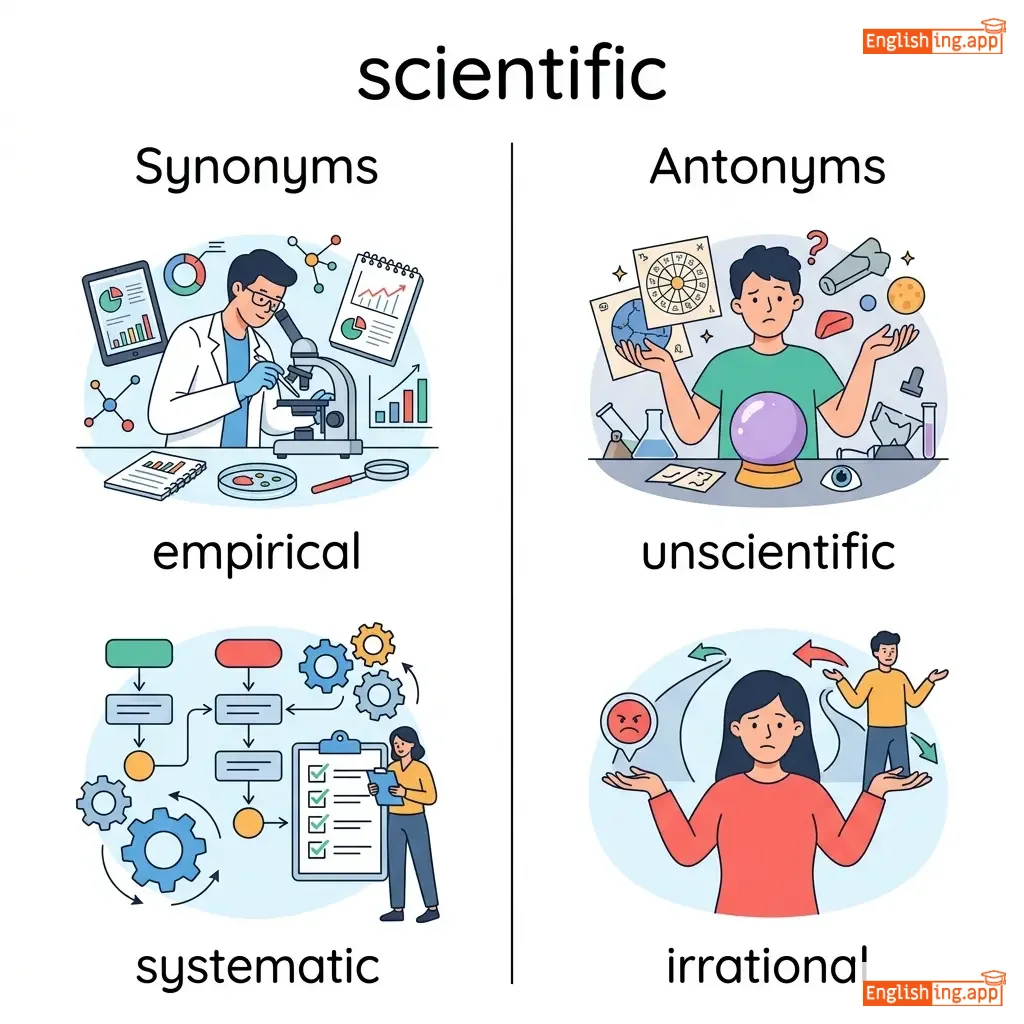
|
科学的
kexue de
••••••
|
relating to or based on science
••••••
|
The scientific community is working to find a cure for cancer.
ðə saɪənˈtɪfɪk kəˈmjunɪti ɪz wɜrkɪŋ tu faɪnd ə kjʊr fɔr kænsər.
••••••
|
科学界正在努力寻找癌症的治疗方法。
Kexuejie zhengzai nuli xunzhao aizheng de zhiliaofa.
••••••
|
- •••••• | - •••••• | - •••••• |
empirical, systematic, methodical, analytical
••••••
|
unscientific, irrational
••••••
|
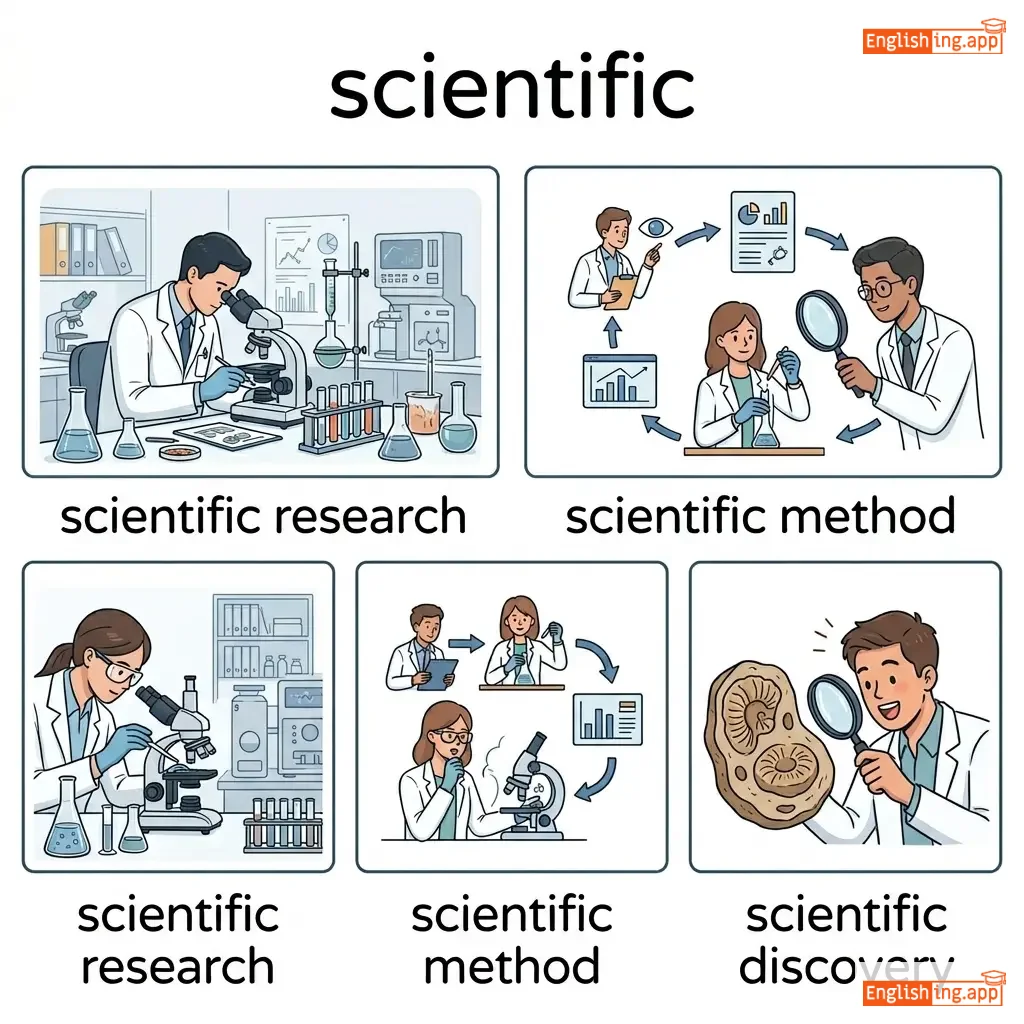
scientific research, scientific method, scientific discovery
••••••
|
Scientific methods are systematic and based on facts.
••••••
|
|
📊
••••••
|
/stəˈtɪstɪkəl/
adjective
(统计的)
••••••
|
- •••••• |
统计的
tongji de
••••••
|
relating to the use or analysis of numerical data
••••••
|
The report provides statistical data about population growth. |
报告提供了有关人口增长的统计数据。
Baogao tigong le youguan renkou zengzhang de tongji shuju.
••••••
|
- •••••• | - •••••• | - •••••• |
numerical, analytical, quantitative, data-based
••••••
|
qualitative, subjective
••••••
|
statistical analysis, statistical data, statistical method, statistical model
••••••
|
统计学是关于数字的,所以 statistical 就是关于这些数据的分析 📊
••••••
|
|
🤔
••••••
|
/səˈpəʊzɪdli/
adverb
(suˈpəʊzɪdli)
••••••
|
- •••••• |
据说
jùshuō
••••••
|
used to show that something is believed or claimed to be true, though it may not be
••••••
|
He is supposedly the best player on the team. |
据说他是队里最好的球员。
Jùshuō tā shì duì lǐ zuì hǎo de qiúyuán.
••••••
|
supposedly true |
believed to be true but not certain
••••••
|
据说是真的
jùshuō shì zhēn de
••••••
|
allegedly, reportedly, apparently, ostensibly
••••••
|
certainly, surely, definitely
••••••
|
supposedly true, supposedly innocent, supposedly safe, supposedly related
••••••
|
就像是说,可能不是真的 — 据说!
••••••
|
|
✅
••••••
|
/ˈθʌrəli/
adverb
(thōrli)
••••••
|
- •••••• |
彻底地; 完全地;
chèdǐ de; wánquán de;
••••••
|
completely; entirely; in a thorough manner
••••••
|
She thoroughly cleaned the entire house before the guests arrived.
她在客人到来之前彻底打扫了整个房子。
••••••
|
她在客人到来之前彻底打扫了整个房子。
Tā zài kèrén dào lái zhīqián chèdǐ dǎsǎo le zhěnggè fángzi.
••••••
|
- •••••• | - •••••• | - •••••• |
completely, entirely, fully, totally, utterly
••••••
|
partially, incompletely, superficially, hastily
••••••
|
thoroughly cleaned, thoroughly examined, thoroughly enjoyed
••••••
|
彻底清洁,一切清理干净。
••••••
|

