The Discovery That Changed Everything
サルマ博士は献身的な研究者で、神秘的な現象に関する調査を行っていました。彼女の仮説は、これらの奇妙な兆候が新しい科学的発見を示しているというものでした。彼女は毎日、すべての測定を徹底的に記録し、統計的分析を行っていました。おそらくこの現象は不可能だと言われていましたが、おそらく彼女の計算は正しいものでした。ある日、追加のデータを収集していると、彼女は驚くべき****啓示を受け取った - 彼女の予測はまさに正しかった!その結果、彼女は非常に重要な結論に達しました。彼女の発見は、この現象の可能性が実際にかなりの割合で存在することを示しました。他の研究者は最初は懐疑的でしたが、彼らが彼女の科学的方法を徹底的に見直すと、それが本物の発見であることを理解しました。サルマの調査は彼女の分野に革命をもたらし、彼女を先駆者として認めました。
|
絵文字
|
単語 | Images | 翻訳 | 意味 | 例文 | 例文の翻訳 | 表現例 | 表現例の意味 | 表現例の翻訳 | 同義語 | 対義語 | コロケーション | ニーモニック |
|---|---|---|---|---|---|---|---|---|---|---|---|---|---|
|
➕
••••••
|
/əˈdɪʃənəl/
adjective
(アディショナル)
••••••
|
- •••••• |
追加の
tsuika no
••••••
|
added, extra, or supplementary to what already exists
••••••
|
The teacher gave the students additional homework. |
先生は生徒に追加の宿題を出しました。
Sensei wa seito ni tsuika no shukudai o dashimashita.
••••••
|
additional cost |
extra expense beyond the basic cost
••••••
|
追加費用
tsuika hiyou
••••••
|
extra, further, supplementary, added
••••••
|
basic, minimal, primary
••••••
|
additional information, additional charge, additional support, additional effort
••••••
|
Additional は加えること - 追加のもの。
••••••
|
|
😲
••••••
|
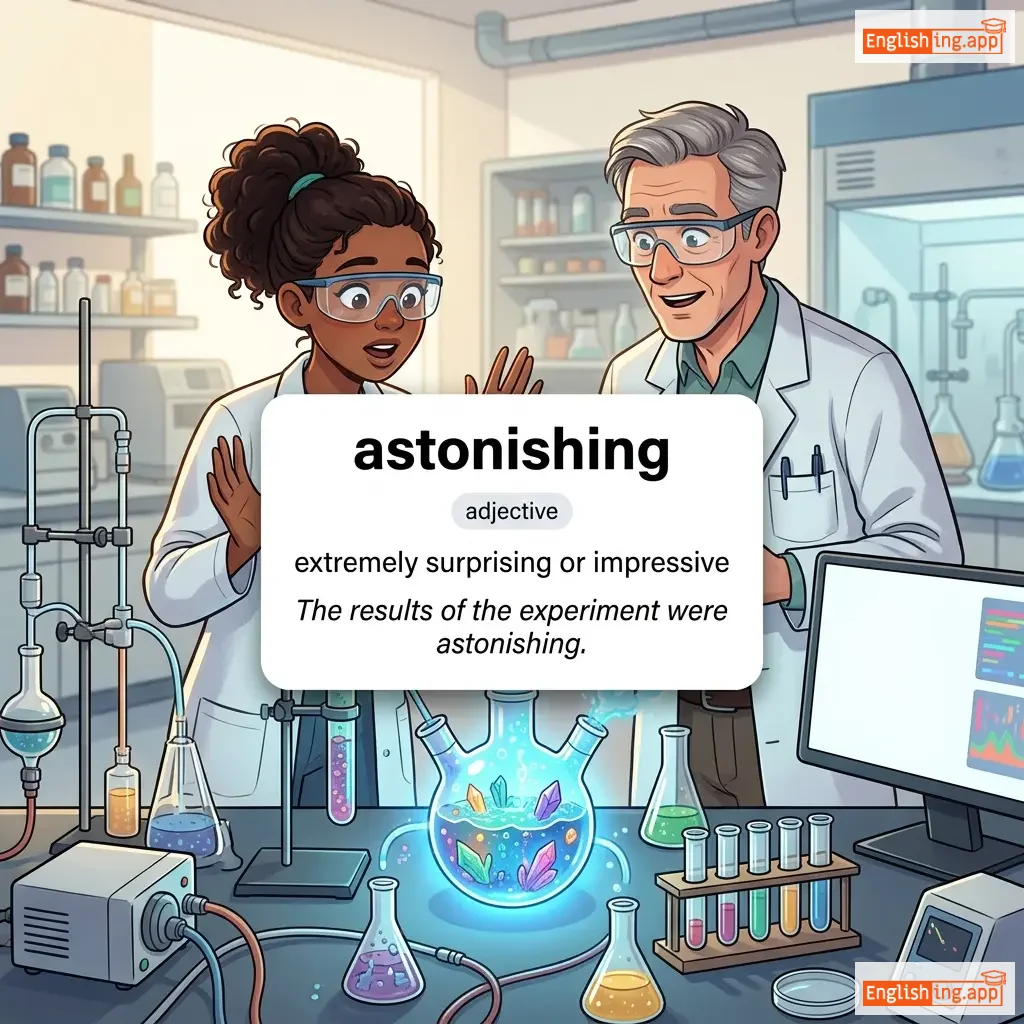
/əsˈtɒnɪʃɪŋ/
adjective
(アストニッシング)
••••••
|
|
驚くべき
odorokubeki
••••••
|
extremely surprising or impressive
••••••
|
The results of the experiment were astonishing. |
実験の結果は驚くべきものでした。
Jikken no kekka wa odorokubeki mono deshita.
••••••
|
- •••••• | - •••••• | - •••••• |
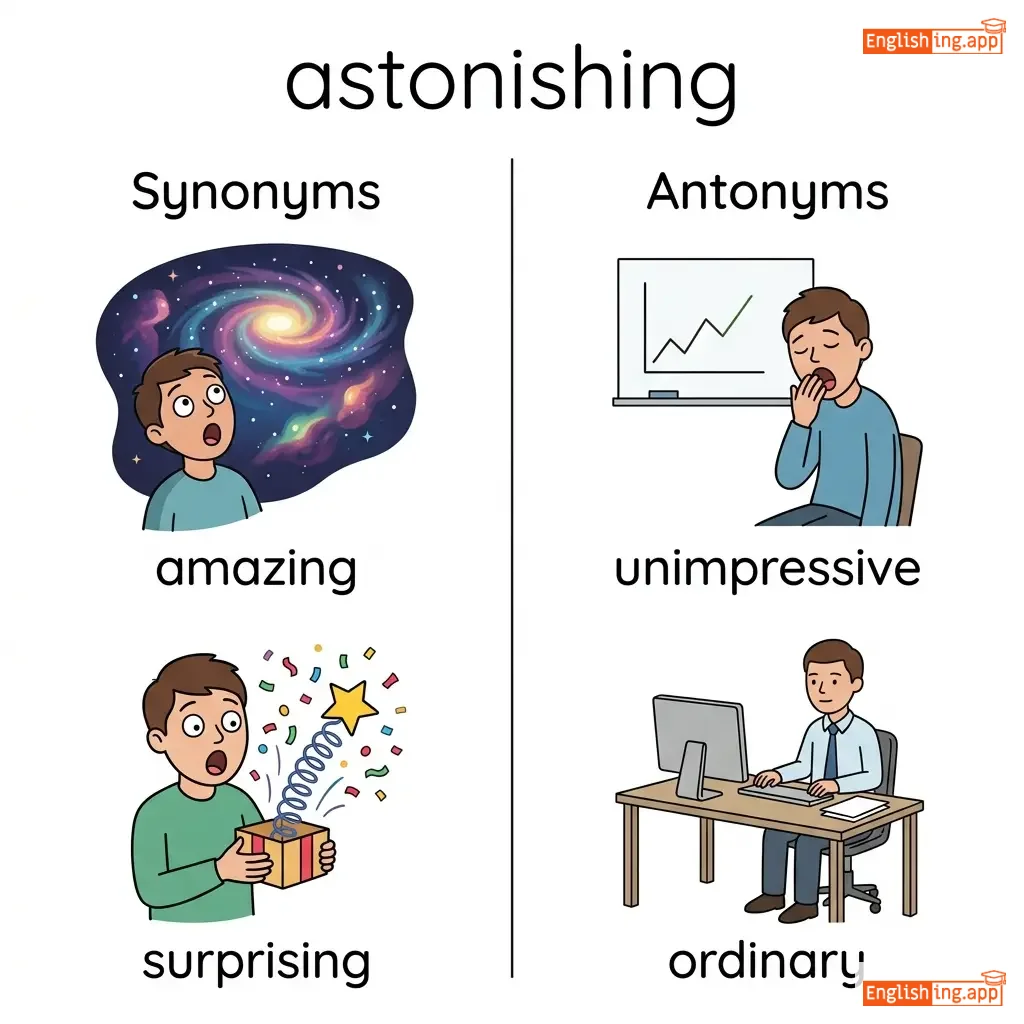
amazing, surprising, breathtaking, remarkable
••••••
|
unimpressive, ordinary, expected
••••••
|
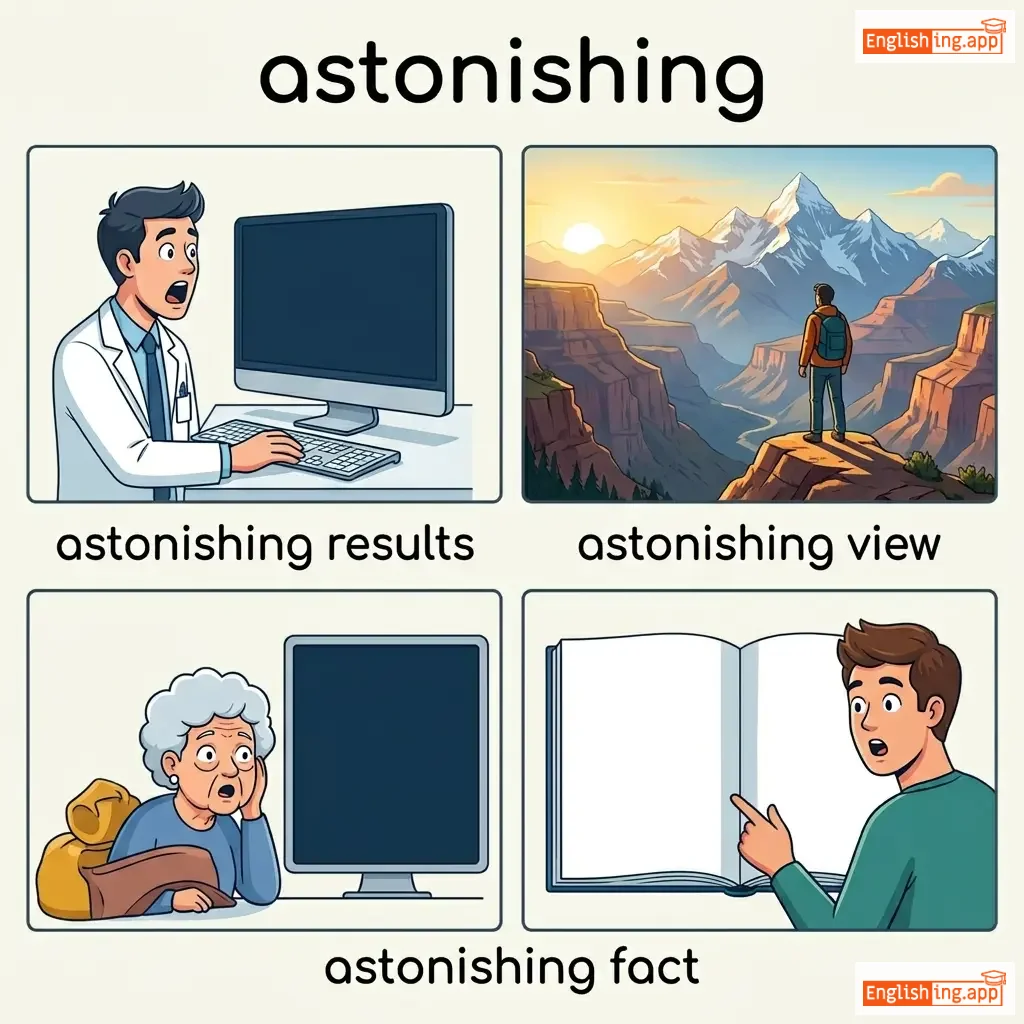
astonishing results, astonishing view, astonishing fact
••••••
|
Astonishing - 何かを見て驚く時、まさにそれは驚くべき!
••••••
|
|
📘
••••••
|
/kənˈkluːʒən/
noun
(コンクルージョン)
••••••
|
- •••••• |
結論
ketsuron
••••••
|
The end or finish of an event, process, or text; a judgment reached after consideration.
••••••
|
The research paper ends with a strong conclusion. |
研究論文は強力な結論で終わる。
Kenkyū ronbun wa kyōryoku na ketsuron de owaru.
••••••
|
jump to conclusions |
to make a decision without having all the facts
••••••
|
早急に結論を出す
sōkyū ni ketsuron o dasu
••••••
|
end, result, outcome, judgment, decision
••••••
|
beginning, start, opening
••••••
|
draw a conclusion, reach a conclusion, in conclusion, strong conclusion
••••••
|
Conclusion は結論 – 思考の終わりに得られる結果です。
••••••
|
|
➡️
••••••
|
/ˈkɒnsɪkwəntli/
adverb
(kônsiquéntorī)
••••••
|
- •••••• |
その結果
sono kekka
••••••
|
as a result; therefore
••••••
|
He didn’t study, and consequently he failed the exam.
彼は勉強しなかったので、その結果試験に落ちた。
••••••
|
彼は勉強しなかったので、その結果試験に落ちた。
Kare wa benkyou shinakatta node, sono kekka shiken ni ochita.
••••••
|
- •••••• | - •••••• | - •••••• |
therefore, thus, hence, accordingly, as a result
••••••
|
nevertheless, however, despite
••••••
|
and consequently, consequently failed, consequently led to, consequently resulted in
••••••
|
Consequently は 'その結果', 結果に対して使う。
••••••
|
|
🔬
••••••
|
/haɪˈpɒθəsɪs/
noun
••••••
|
- •••••• | - •••••• |
a proposed explanation made on the basis of limited evidence as a starting point for further investigation.
••••••
|
The scientist tested her hypothesis through multiple experiments. |
- •••••• |
working hypothesis |
a provisional idea assumed for the sake of argument or investigation
••••••
|
- •••••• |
assumption, theory, proposition, supposition, premise
••••••
|
fact, proof, certainty
••••••
|
form a hypothesis, test a hypothesis, reject a hypothesis, confirm a hypothesis
••••••
|
No •••••• |
|
⚠️
••••••
|
/ˌɪndɪˈkeɪʃən/
noun
(indikēshon)
••••••
|
- •••••• |
指示
shiji
••••••
|
A sign, piece of information, or signal that suggests something.
••••••
|
Dark clouds are an indication of an approaching storm. |
暗い雲は近づいている嵐の兆候です。
kurai kumo wa chikadzuite iru arashi no chōkō desu
••••••
|
give an indication |
To show or suggest something indirectly.
••••••
|
指示を出す
shiji o dasu
••••••
|
sign, signal, evidence, clue, pointer
••••••
|
concealment, suppression
••••••
|
clear indication, early indication, medical indication
••••••
|
Indicationは指示を意味する—暗い雲は嵐の指示を与えます。
••••••
|
|
🕵️
••••••
|
/ɪnˌvɛs.tɪˈɡeɪ.ʃən/
noun
(インベスティゲーション)
••••••
|
- •••••• |
調査
chousa
••••••
|
the process of inquiring into or examining something carefully to find the truth
••••••
|
The investigation revealed new evidence about the fraud. |
調査は詐欺に関する新しい証拠を明らかにしました。
Chousa wa sagi ni kansuru atarashii shouko wo akiraka ni shimashita.
••••••
|
under investigation |
being examined or inquired into
••••••
|
調査中
chousachu
••••••
|
inquiry, probe, inspection, examination, scrutiny
••••••
|
neglect, disregard
••••••
|
launch an investigation, conduct an investigation, criminal investigation
••••••
|
調査は事実を明らかにするための重要な方法です。
••••••
|
|
🎲
••••••
|
/ˈlaɪ.kli.hʊd/
noun
(ライクリフッド)
••••••
|
- •••••• |
可能性
kanousei
••••••
|
the chance or probability of something happening
••••••
|
There is a strong likelihood of rain tomorrow. |
明日、雨が降る可能性が高いです。
Ashita, ame ga furu kanousei ga takai desu.
••••••
|
in all likelihood |
almost certainly; very probably
••••••
|
ほぼ確実に
hobo kakujitsuni
••••••
|
probability, chance, prospect, possibility
••••••
|
impossibility, certainty
••••••
|
likelihood of success, strong likelihood, in all likelihood
••••••
|
Likelihood = Like + Hood – 好きなら、それは起こる可能性が高い
••••••
|
|
📏
••••••
|
/ˈmeʒərmənt/
noun
(メジャーメント)
••••••
|
- •••••• |
測定
sokutei
••••••
|
the size, length, or amount of something, as determined by measuring
••••••
|
The tailor took my waist measurement before stitching the suit. |
仕立て屋はスーツを縫う前に私のウエストの測定を取りました。
Shitateya wa suutsu o nuu mae ni watashi no uesuto no sokutei o torimashita.
••••••
|
take measurements |
to measure the size, length, or amount of something
••••••
|
測定を行う
sokutei o okonau
••••••
|
dimension, size, extent, magnitude, evaluation
••••••
|
guess, estimate
••••••
|
accurate measurement, take measurement, standard measurement, body measurement
••••••
|
Measurementは📏測定を意味します。学校で先生が言っていたように『予測せずに、測定しよう!』
••••••
|
|
✨
••••••
|
/fəˈnɒmɪnən/
noun
(フィノメノン)
••••••
|
- •••••• |
現象
genshō
••••••
|
an observable event, fact, or occurrence, often unusual or remarkable
••••••
|
The Northern Lights are a natural phenomenon. |
オーロラは自然現象です。
Ōrora wa shizen genshō desu.
••••••
|
social phenomenon |
a significant event or trend in society
••••••
|
社会現象
shakai genshō
••••••
|
occurrence, event, happening, spectacle, marvel
••••••
|
normality, regularity
••••••
|
natural phenomenon, rare phenomenon, global phenomenon, scientific phenomenon
••••••
|
Phenomenon = フィノメノン、自然の奇跡のような現象!
••••••
|
|
🔮
••••••
|
/prɪˈdɪkʃən/
noun
(プレディクション)
••••••
|
- •••••• |
予測
yosoku
••••••
|
A statement about what will happen in the future based on knowledge or evidence.
••••••
|
Her prediction about the weather turned out to be accurate.
彼女の天気予報は正確だと証明されました。
••••••
|
彼女の天気予報は正確だと証明されました。
Kanojo no tenki yohō wa seikaku da to shōmei saremashita.
••••••
|
make a prediction
予測をする
••••••
|
to state what you think will happen in the future
••••••
|
予測をする
yosoku o suru
••••••
|
forecast, prophecy, prognosis, projection, guess
••••••
|
retrospection, hindsight
••••••
|
accurate prediction, weather prediction, make a prediction, prediction model
••••••
|
Predictionは未来を予測する – 何が起こるかを予想する。
••••••
|
|
🤔
••••••
|
/prɪˈzjuːməbli/
adverb
(プリズームアブリー)
••••••
|
- •••••• |
おそらく
osoraku
••••••
|
used to convey that something is assumed to be true though not known for certain
••••••
|
Presumably, he forgot to send the email. |
おそらく、彼はメールを送るのを忘れた。
Osoraku, kare wa mēru o okuru no o wasureta.
••••••
|
- •••••• | - •••••• | - •••••• |
probably, likely, supposedly, apparently, seemingly
••••••
|
certainly, definitely, surely
••••••
|
presumably because, presumably due to, presumably related to, presumably intended
••••••
|
Presumeは推測するという意味、おそらくはその可能性が高い — '私は推測しているので、おそらくそれが正しいです。'
••••••
|
|
📊
••••••
|
/prəˈpɔːʃən/
noun
••••••
|
- •••••• | - •••••• |
a part, share, or number considered in comparative relation to a whole
••••••
|
The proportion of students passing the exam was high. |
- •••••• | - •••••• | - •••••• | - •••••• |
ratio, percentage, fraction, share
••••••
|
whole, total
••••••
|
right proportion, larger proportion, proportionate amount
••••••
|
No •••••• |
|
👏
••••••
|
/rɪˈmɑːrkəbli/
adverb
(リマーカブリー)
••••••
|
- •••••• |
驚くべき方法で
odorokubeki hōhō de
••••••
|
in a way that is worthy of attention or notice; surprisingly
••••••
|
She did remarkably well in the competition. |
彼女はコンペティションで驚くべき成果を上げました。
Kanojo wa konpētishon de odorokubeki seika o agemashita.
••••••
|
- •••••• | - •••••• | - •••••• |
notably, extraordinarily, exceptionally, amazingly
••••••
|
unremarkably, ordinarily
••••••
|
remarkably good, remarkably well, remarkably strong
••••••
|
Remarkably is like 'remark' (re-marks) made in awe.
••••••
|
|
🧑🔬
••••••
|
/rɪˈsɜːtʃə(r)/
noun
(リサーチャー)
••••••
|
- •••••• |
研究者
kenkyūsha
••••••
|
a person who conducts research
••••••
|
The researcher published her findings in a scientific journal. |
研究者は科学的なジャーナルに彼女の研究結果を発表しました。
Kenkyūsha wa kagakuteki na jānaru ni kanojo no kenkyū kekka o happyō shimashita.
••••••
|
- •••••• | - •••••• | - •••••• |
scientist, investigator, analyst, scholar
••••••
|
non-expert, layman
••••••
|
lead researcher, senior researcher, research assistant
••••••
|
'研究者' (kenkyūsha) is someone who '研究' (researches) for new knowledge.
••••••
|
|
💡
••••••
|
/ˌrɛvəˈleɪʃən/
noun
(レヴェレーション)
••••••
|
- •••••• |
啓示
keiji
••••••
|
A surprising and previously unknown fact, especially one made known in a dramatic way.
••••••
|
The book was full of shocking revelations about the politician.
その本はその政治家に関する衝撃的な啓示で満ちていました。
••••••
|
その本はその政治家に関する衝撃的な啓示で満ちていました。
Sono hon wa sono seijika ni kansuru shōgeki-tekina keiji de michiteimashita.
••••••
|
divine revelation
神の啓示
••••••
|
A message or truth revealed by God.
••••••
|
神の啓示
Kami no keiji
••••••
|
disclosure, discovery, unveiling, exposure, insight
••••••
|
concealment, secrecy
••••••
|
shocking revelation, divine revelation, sudden revelation, revelation of truth
••••••
|
啓示 = 新しい事実が劇的に明らかになる瞬間。
••••••
|
|
🔍
••••••
|
/ˌsaɪənˈtɪfɪk/
adjective
(サイエンティフィック)
••••••
|
|
科学的
kagakuteki
••••••
|
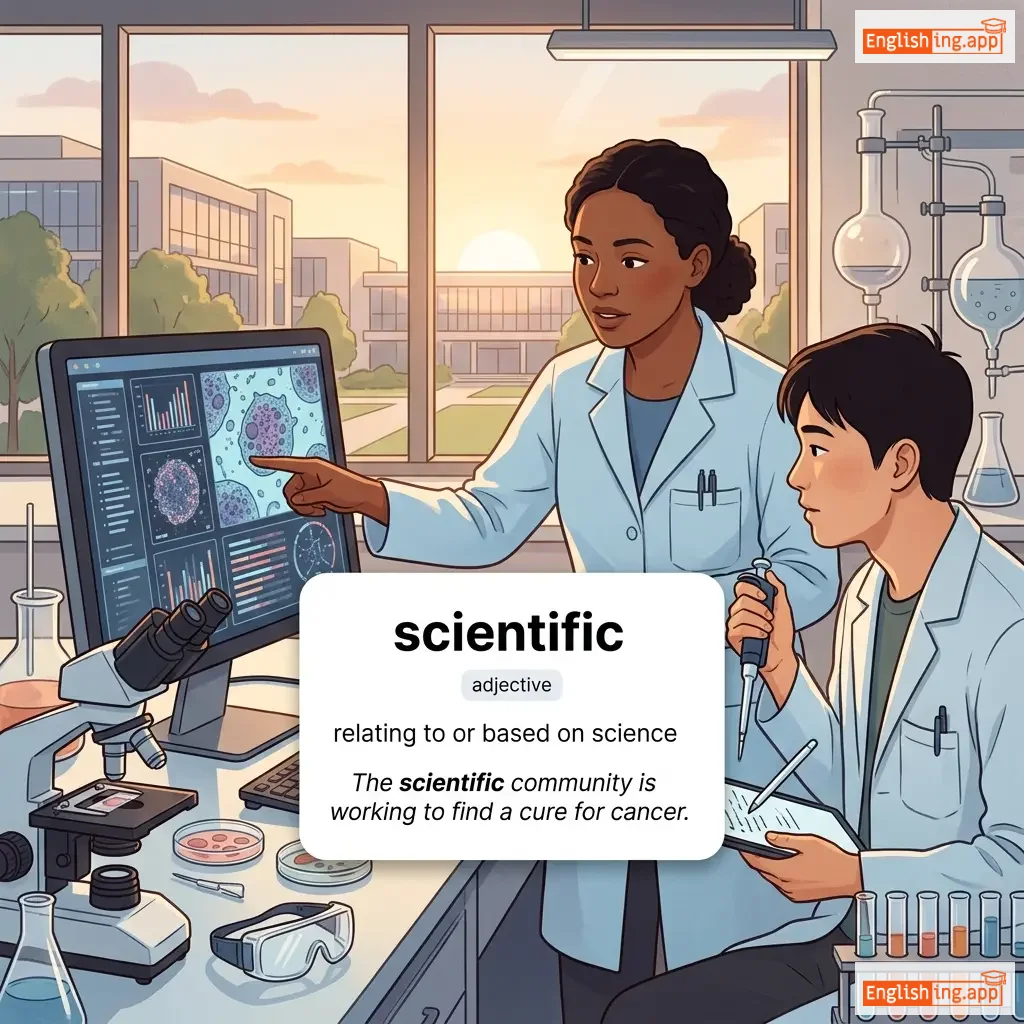
relating to or based on science
••••••
|
The scientific community is working to find a cure for cancer.
ザ サイエンティフィック コミュニティ イズ ワーキング トゥ ファインド ア キュア フォー キャンサー。
••••••
|
科学者たちはがんの治療法を見つけるために働いています。
Kagakusha-tachi wa gan no chiryouhou wo mitsukeru tame ni hataraiteimasu.
••••••
|
- •••••• | - •••••• | - •••••• |
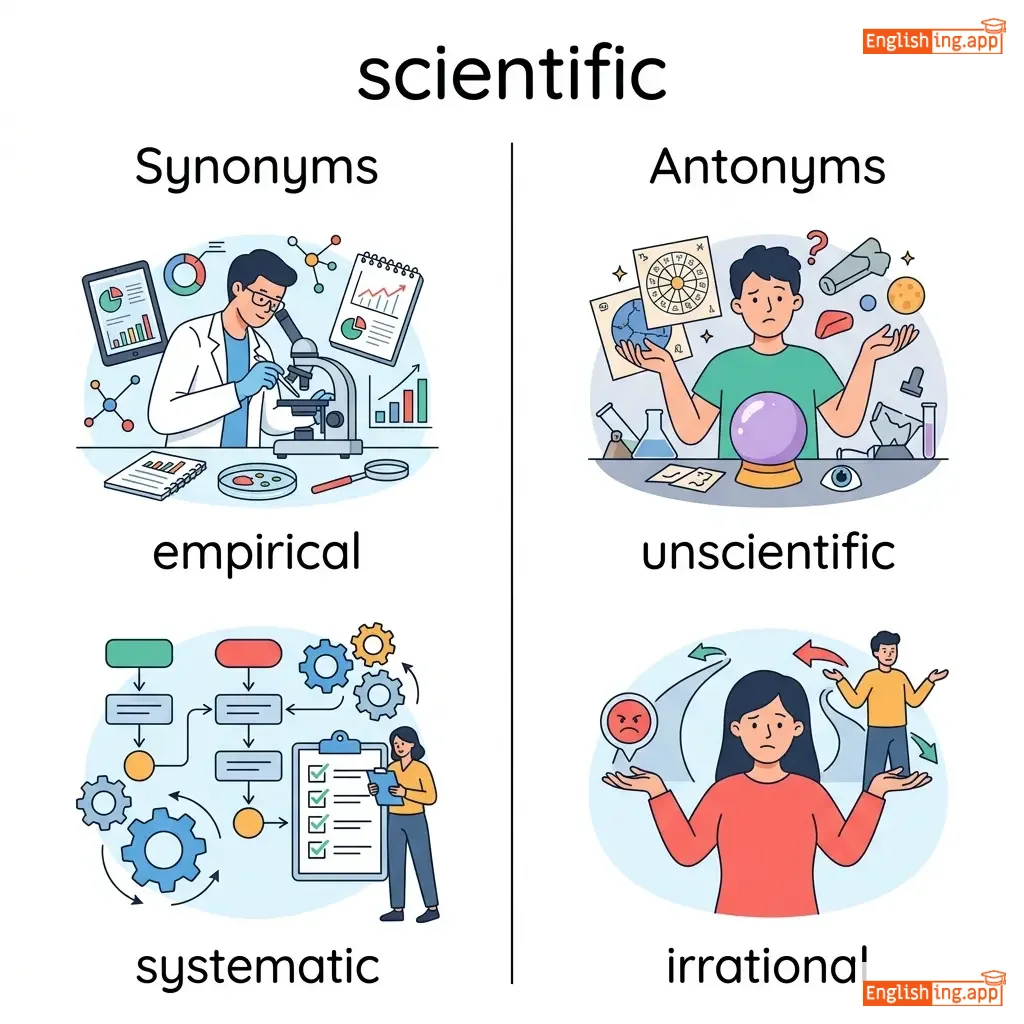
empirical, systematic, methodical, analytical
••••••
|
unscientific, irrational
••••••
|
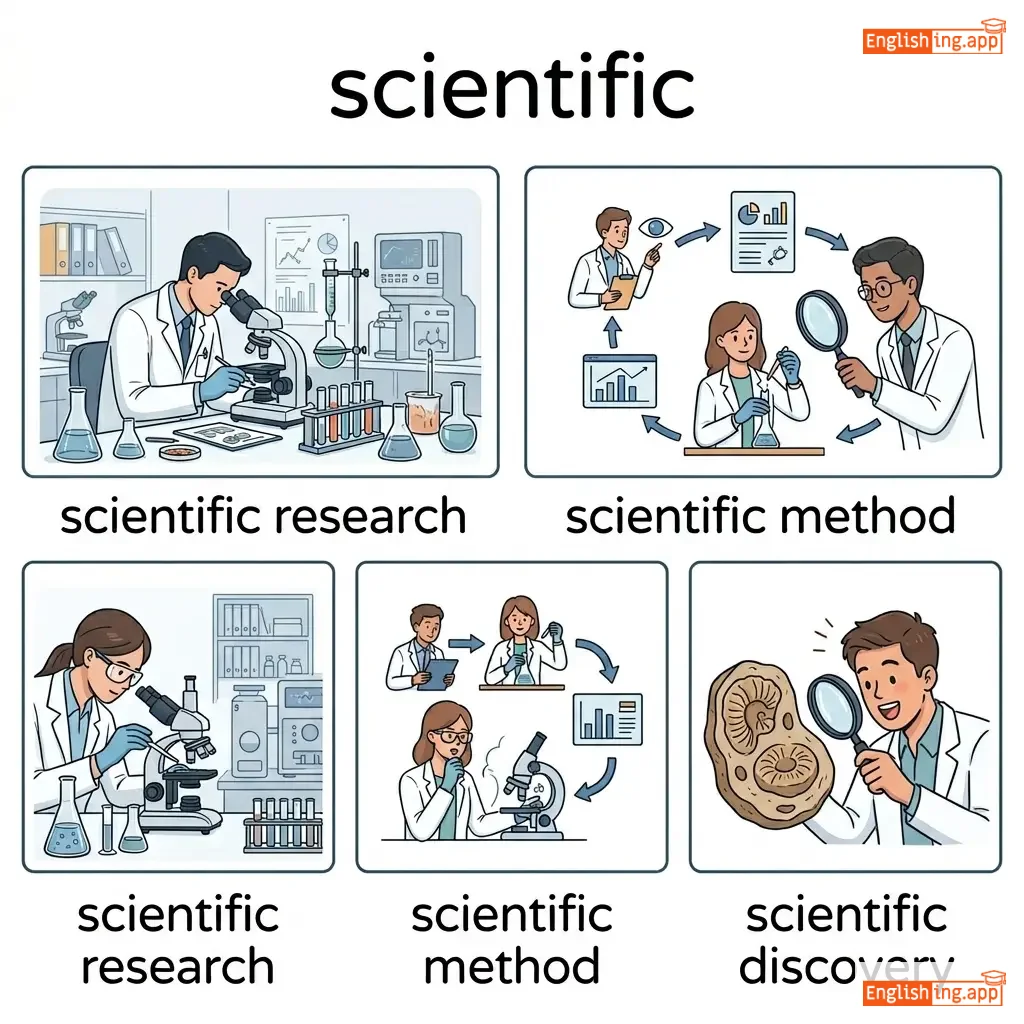
scientific research, scientific method, scientific discovery
••••••
|
Scientific methods are systematic and based on facts.
••••••
|
|
📊
••••••
|
/stəˈtɪstɪkəl/
adjective
(統計的)
••••••
|
- •••••• |
統計的
tokeiteki
••••••
|
relating to the use or analysis of numerical data
••••••
|
The report provides statistical data about population growth. |
報告書は人口増加に関する統計データを提供しています。
Hōkokusho wa jinkō zōka ni kansuru tōkei dēta o teikyō shiteimasu.
••••••
|
- •••••• | - •••••• | - •••••• |
numerical, analytical, quantitative, data-based
••••••
|
qualitative, subjective
••••••
|
statistical analysis, statistical data, statistical method, statistical model
••••••
|
統計は数字に関するもの、だから statistical はその分析 📊
••••••
|
|
🤔
••••••
|
/səˈpəʊzɪdli/
adverb
(サポーズドリー)
••••••
|
- •••••• |
いわゆる
iwayuru
••••••
|
used to show that something is believed or claimed to be true, though it may not be
••••••
|
He is supposedly the best player on the team. |
彼はチームで一番うまい選手だと言われている。
Kare wa chīmu de ichiban umai senshu da to iwarete iru.
••••••
|
supposedly true |
believed to be true but not certain
••••••
|
いわゆる真実
iwayuru shinjitsu
••••••
|
allegedly, reportedly, apparently, ostensibly
••••••
|
certainly, surely, definitely
••••••
|
supposedly true, supposedly innocent, supposedly safe, supposedly related
••••••
|
いわゆる、でも確信がない — いわゆる!
••••••
|
|
✅
••••••
|
/ˈθʌrəli/
adverb
(thōrli)
••••••
|
- •••••• |
徹底的に; 完全に;
tetteiteki ni; kanzen ni;
••••••
|
completely; entirely; in a thorough manner
••••••
|
She thoroughly cleaned the entire house before the guests arrived.
彼女はゲストが到着する前に家全体を徹底的に掃除しました。
••••••
|
彼女はゲストが到着する前に家全体を徹底的に掃除しました。
Kanojo wa gesuto ga tōchaku suru mae ni ie zentai o tetteiteki ni sōji shimashita.
••••••
|
- •••••• | - •••••• | - •••••• |
completely, entirely, fully, totally, utterly
••••••
|
partially, incompletely, superficially, hastily
••••••
|
thoroughly cleaned, thoroughly examined, thoroughly enjoyed
••••••
|
完璧に掃除して、すべてきれいにする。
••••••
|

