The Discovery That Changed Everything
Доктор Салма — это преданный исследователь, который проводил исследование таинственного явления. Её гипотеза заключалась в том, что эти странные показания указывают на новое научное открытие. Каждый день она тщательно записывала все измерения и проводила статистический анализ. Предположительно это явление было невозможно, но по всей видимости её расчёты были правильными. Однажды, когда она собирала дополнительные данные, она получила потрясающее открытие — её предсказание было абсолютно правильным! Следовательно, она пришла к замечательному важному выводу. Её результаты показали, что вероятность существования этого явления в значительной пропорции действительно существует. Другие исследователи изначально сомневались, но когда они тщательно проверили её научный метод, они поняли, что это было подлинное открытие. Исследование Салмы привело к революции в её области и признало её пионером.
Получите неограниченный доступ ко всем словам с подпиской Pro
Обновить до ProПолучите неограниченный доступ ко всем предложениям с подпиской Pro
Обновить до Pro|
Эмодзи
|
Слово | Images | Перевод | Значение | Пример предложения | Перевод примера предложения | Пример выражения | Значение примера выражения | Перевод примера выражения | Синонимы | Антонимы | Коллокации | Мнемоника |
|---|---|---|---|---|---|---|---|---|---|---|---|---|---|
|
➕
••••••
|
/əˈdɪʃənəl/
adjective
(эддишнл)
••••••
|
- •••••• |
дополнительный
dopolnitel'nyy
••••••
|
added, extra, or supplementary to what already exists
••••••
|
The teacher gave the students additional homework. |
Учитель дал ученикам дополнительную домашнюю работу.
Uchitel' dal uchenikam dopolnitel'nuyu domashnyuyu rabotu.
••••••
|
additional cost |
extra expense beyond the basic cost
••••••
|
дополнительные расходы
dopolnitel'nye raskhody
••••••
|
extra, further, supplementary, added
••••••
|
basic, minimal, primary
••••••
|
additional information, additional charge, additional support, additional effort
••••••
|
Additional значит добавить - дополнительные вещи.
••••••
|
|
😲
••••••
|
/əsˈtɒnɪʃɪŋ/
adjective
(асˈтɒнɪʃɪŋ)
••••••
|
|
удивительный
udivitel'nyy
••••••
|
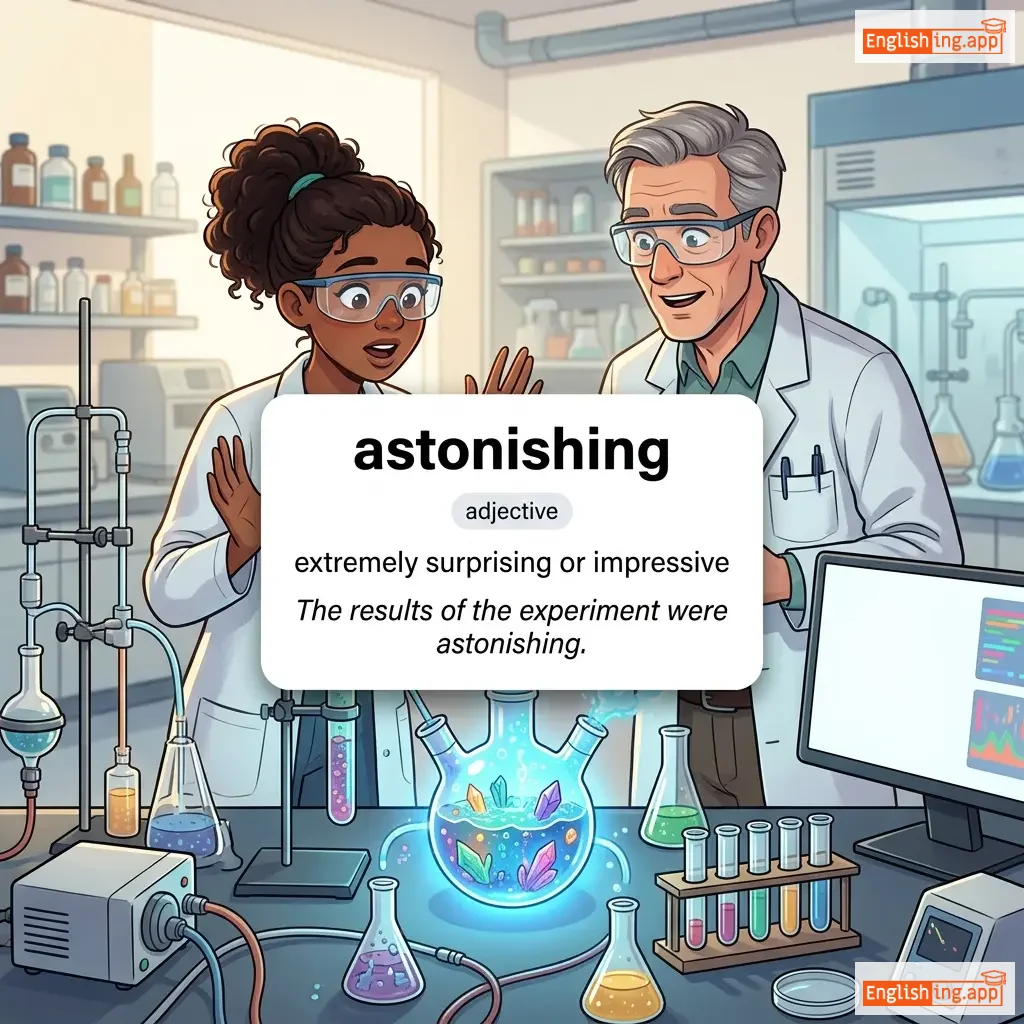
extremely surprising or impressive
••••••
|
The results of the experiment were astonishing. |
Результаты эксперимента были удивительными.
Rezultaty eksperimenta byli udivitel'nymi.
••••••
|
- •••••• | - •••••• | - •••••• |
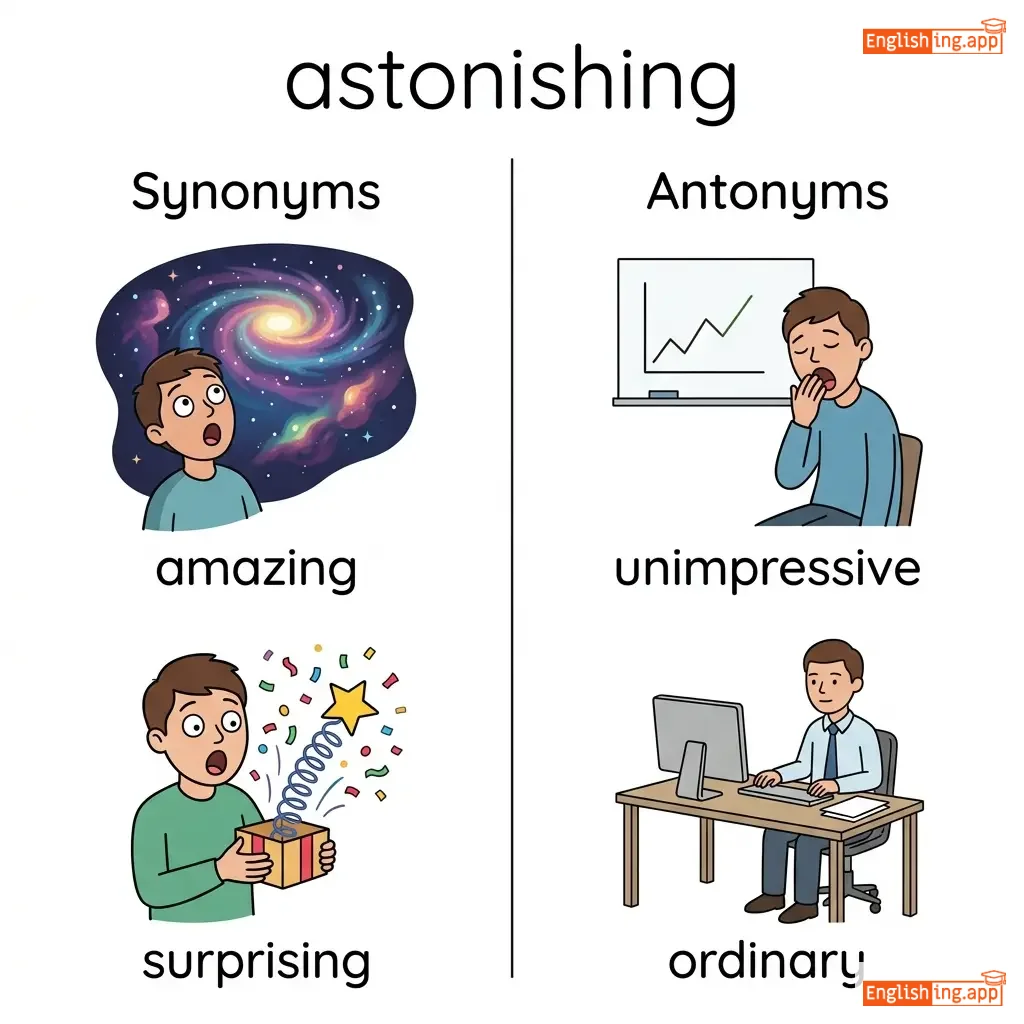
amazing, surprising, breathtaking, remarkable
••••••
|
unimpressive, ordinary, expected
••••••
|
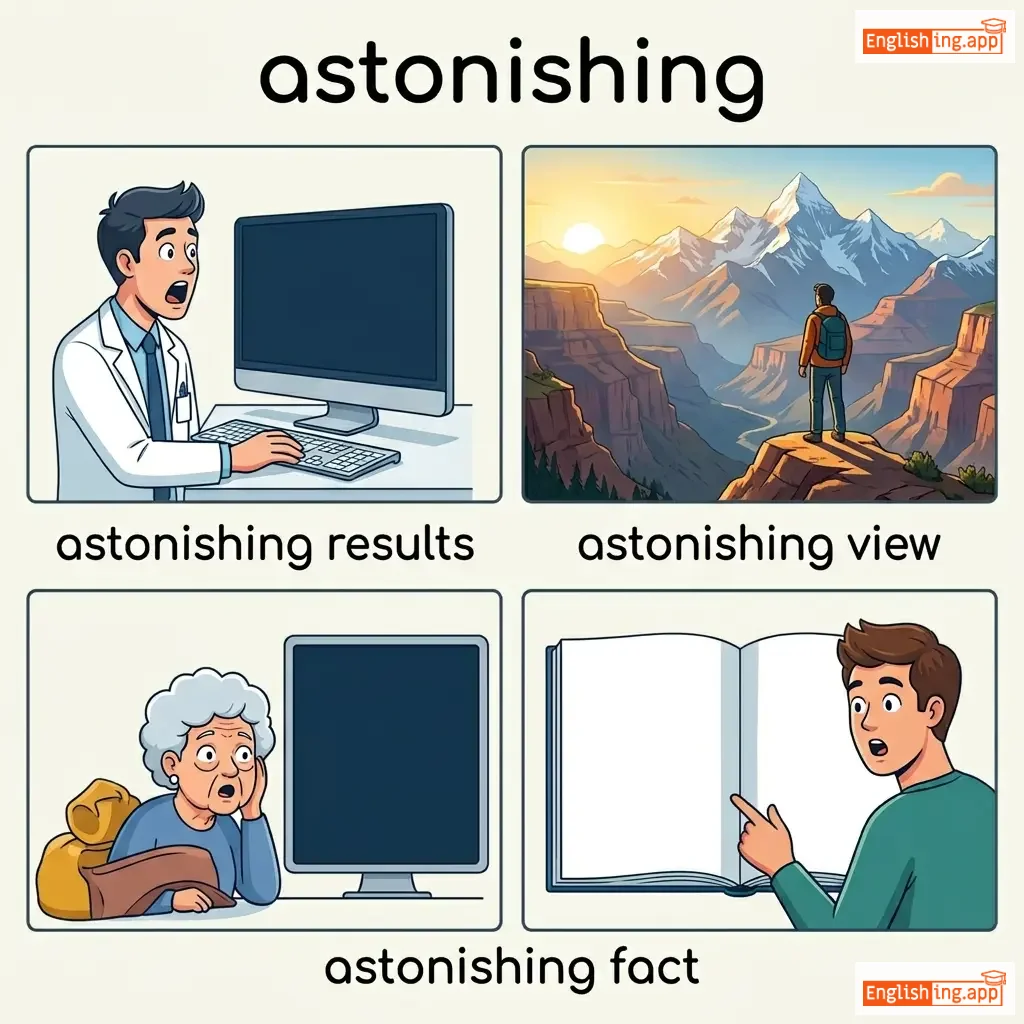
astonishing results, astonishing view, astonishing fact
••••••
|
Astonishing - когда что-то удивительное случается!
••••••
|
|
📘
••••••
|
/kənˈkluːʒən/
noun
(kənˈkluːʒən)
••••••
|
- •••••• |
заключение
zaklyucheniye
••••••
|
The end or finish of an event, process, or text; a judgment reached after consideration.
••••••
|
The research paper ends with a strong conclusion. |
Исследовательская работа заканчивается сильным заключением.
Issledovatelskaya rabota zakanchivayetsya sil'nym zaklyucheniem.
••••••
|
jump to conclusions |
to make a decision without having all the facts
••••••
|
спешить с выводами
speshit' s vyvodami
••••••
|
end, result, outcome, judgment, decision
••••••
|
beginning, start, opening
••••••
|
draw a conclusion, reach a conclusion, in conclusion, strong conclusion
••••••
|
Заключение – это результат размышлений.
••••••
|
|
➡️
••••••
|
/ˈkɒnsɪkwəntli/
adverb
(kɒnsɪkwəntli)
••••••
|
- •••••• |
следовательно
slyedovatel'no
••••••
|
as a result; therefore
••••••
|
He didn’t study, and consequently he failed the exam.
Он не учился, и, следовательно, не сдал экзамен.
••••••
|
Он не учился, и, следовательно, не сдал экзамен.
On ne uchilsya, i, slyedovatel'no, ne sdal ekzamen.
••••••
|
- •••••• | - •••••• | - •••••• |
therefore, thus, hence, accordingly, as a result
••••••
|
nevertheless, however, despite
••••••
|
and consequently, consequently failed, consequently led to, consequently resulted in
••••••
|
Consequently означает следовательно — это результат чего-то.
••••••
|
|
🔬
••••••
|
/haɪˈpɒθəsɪs/
noun
(гипотезис)
••••••
|
- •••••• |
гипотеза
gipotizis
••••••
|
a proposed explanation made on the basis of limited evidence as a starting point for further investigation.
••••••
|
The scientist tested her hypothesis through multiple experiments.
Учёная проверила свою гипотезу через серию экспериментов.
••••••
|
Учёная проверила свою гипотезу через серию экспериментов.
Uchyonaya proveryla svoyu gipotezu cherez seriyu eksperimentov
••••••
|
working hypothesis
рабочая гипотеза
••••••
|
a provisional idea assumed for the sake of argument or investigation
••••••
|
рабочая гипотеза
rabochaya gipoteza
••••••
|
assumption, theory, proposition, supposition, premise
••••••
|
fact, proof, certainty
••••••
|
form a hypothesis, test a hypothesis, reject a hypothesis, confirm a hypothesis
••••••
|
ГипоТЕза: imagine a hippo holding a THESIS in its mouth to remember гипотеза и hypothe-sis
••••••
|
|
⚠️
••••••
|
/ˌɪndɪˈkeɪʃən/
noun
(indikéishon)
••••••
|
- •••••• |
индикация
indikatsiya
••••••
|
A sign, piece of information, or signal that suggests something.
••••••
|
Dark clouds are an indication of an approaching storm. |
Тёмные облака — это индикация приближающейся бури.
Tyomnye oblaká — eto indikátsiya priblizhayushcheysya buri
••••••
|
give an indication |
To show or suggest something indirectly.
••••••
|
давать индикацию
davat' indikatsiyu
••••••
|
sign, signal, evidence, clue, pointer
••••••
|
concealment, suppression
••••••
|
clear indication, early indication, medical indication
••••••
|
Индикация значит признак — Тёмные облака дают индикацию шторму.
••••••
|
|
🕵️
••••••
|
/ɪnˌvɛs.tɪˈɡeɪ.ʃən/
noun
(инвестигейшн)
••••••
|
- •••••• |
расследование
rassledovanie
••••••
|
the process of inquiring into or examining something carefully to find the truth
••••••
|
The investigation revealed new evidence about the fraud. |
Расследование выявило новые доказательства мошенничества.
Rassledovanie viyavilo novye dokazatel'stva moshenichestva.
••••••
|
under investigation |
being examined or inquired into
••••••
|
на расследовании
na rassledovanii
••••••
|
inquiry, probe, inspection, examination, scrutiny
••••••
|
neglect, disregard
••••••
|
launch an investigation, conduct an investigation, criminal investigation
••••••
|
Расследование — это поиск правды путем расследования.
••••••
|
|
🎲
••••••
|
/ˈlaɪ.kli.hʊd/
noun
(лайклихуд)
••••••
|
- •••••• |
вероятность
veroyatnost
••••••
|
the chance or probability of something happening
••••••
|
There is a strong likelihood of rain tomorrow. |
Завтра высокая вероятность дождя.
Zavtra vysokaya veroyatnost dozhdya.
••••••
|
in all likelihood |
almost certainly; very probably
••••••
|
с большой вероятностью
s bol'shoy veroyatnost'yu
••••••
|
probability, chance, prospect, possibility
••••••
|
impossibility, certainty
••••••
|
likelihood of success, strong likelihood, in all likelihood
••••••
|
Likelihood = Like + Hood – Если нравится, то, вероятно, это произойдет
••••••
|
|
📏
••••••
|
/ˈmeʒərmənt/
noun
(мɛжərмɛнт)
••••••
|
- •••••• |
измерение
izmerenie
••••••
|
the size, length, or amount of something, as determined by measuring
••••••
|
The tailor took my waist measurement before stitching the suit. |
Портной снял мою мерку для пояса перед тем, как сшить костюм.
Portnoy snyal moyu merku dlya poyasa pered tem, kak sshit' kostyum.
••••••
|
take measurements |
to measure the size, length, or amount of something
••••••
|
снимать измерения
snymat' izmerenija
••••••
|
dimension, size, extent, magnitude, evaluation
••••••
|
guess, estimate
••••••
|
accurate measurement, take measurement, standard measurement, body measurement
••••••
|
Measurement - это как 📏 снимать измерения, как говорил учитель: 'Не угадывайте, измеряйте!'
••••••
|
|
✨
••••••
|
/fəˈnɒmɪnən/
noun
(феномен)
••••••
|
- •••••• |
феномен
fenomen
••••••
|
an observable event, fact, or occurrence, often unusual or remarkable
••••••
|
The Northern Lights are a natural phenomenon. |
Северное сияние — это природный феномен.
Severnoe siyanie — eto prirodnyy fenomen.
••••••
|
social phenomenon |
a significant event or trend in society
••••••
|
социальный феномен
sotsial'nyy fenomen
••••••
|
occurrence, event, happening, spectacle, marvel
••••••
|
normality, regularity
••••••
|
natural phenomenon, rare phenomenon, global phenomenon, scientific phenomenon
••••••
|
Phenomenon = Феномен, как чудо природы!
••••••
|
|
🔮
••••••
|
/prɪˈdɪkʃən/
noun
(predikshion)
••••••
|
- •••••• |
предсказание
predskazanie
••••••
|
A statement about what will happen in the future based on knowledge or evidence.
••••••
|
Her prediction about the weather turned out to be accurate.
Ее предсказание о погоде оказалось точным.
••••••
|
Ее предсказание о погоде оказалось точным.
Eyo predskazanie o pogode okazalos' tochnym.
••••••
|
make a prediction
сделать предсказание
••••••
|
to state what you think will happen in the future
••••••
|
сделать предсказание
sdelat' predskazanie
••••••
|
forecast, prophecy, prognosis, projection, guess
••••••
|
retrospection, hindsight
••••••
|
accurate prediction, weather prediction, make a prediction, prediction model
••••••
|
Prediction означает предсказание будущего – знать, что случится.
••••••
|
|
🤔
••••••
|
/prɪˈzjuːməbli/
adverb
(презюмэбли)
••••••
|
- •••••• |
предположительно
predpolozhitel'no
••••••
|
used to convey that something is assumed to be true though not known for certain
••••••
|
Presumably, he forgot to send the email. |
Предположительно, он забыл отправить письмо.
Predpolozhitel'no, on zabyl otpravit' pismo.
••••••
|
- •••••• | - •••••• | - •••••• |
probably, likely, supposedly, apparently, seemingly
••••••
|
certainly, definitely, surely
••••••
|
presumably because, presumably due to, presumably related to, presumably intended
••••••
|
Presume означает предположить, предположительно означает вероятно — 'Я предполагаю, что это предположительно верно.'
••••••
|
|
📊
••••••
|
/prəˈpɔːʃən/
noun
(пропоршн)
••••••
|
- •••••• |
пропорция
proporshen
••••••
|
a part, share, or number considered in comparative relation to a whole
••••••
|
The proportion of students passing the exam was high.
Доля студентов, сдавших экзамен, была высокой.
••••••
|
Доля студентов, сдавших экзамен, была высокой.
Dola studentov, sdavshikh ekzamen, byla vysokoy.
••••••
|
- •••••• | - •••••• | - •••••• |
ratio, percentage, fraction, share
••••••
|
whole, total
••••••
|
right proportion, larger proportion, proportionate amount
••••••
|
Балансируй блюдо: Proportion = пропорция, доля части к целому
••••••
|
|
👏
••••••
|
/rɪˈmɑːrkəbli/
adverb
(ri-már-ka-bli)
••••••
|
- •••••• |
необычным образом
neobychnym obrazom
••••••
|
in a way that is worthy of attention or notice; surprisingly
••••••
|
She did remarkably well in the competition. |
Она удивительно хорошо справилась на конкурсе.
Ona udivitel'no khorosho spravilas' na konkurse.
••••••
|
- •••••• | - •••••• | - •••••• |
notably, extraordinarily, exceptionally, amazingly
••••••
|
unremarkably, ordinarily
••••••
|
remarkably good, remarkably well, remarkably strong
••••••
|
Remarkably is like 'remark' (re-marks) made in awe.
••••••
|
|
🧑🔬
••••••
|
/rɪˈsɜːtʃə(r)/
noun
(riˈsɜːtʃɚ)
••••••
|
- •••••• |
исследователь
issledovatel
••••••
|
a person who conducts research
••••••
|
The researcher published her findings in a scientific journal. |
Исследователь опубликовал свои результаты в научном журнале.
Issledovatel opublikoval svoi rezul'taty v nauchnom zhurnale.
••••••
|
- •••••• | - •••••• | - •••••• |
scientist, investigator, analyst, scholar
••••••
|
non-expert, layman
••••••
|
lead researcher, senior researcher, research assistant
••••••
|
Исследователь (researcher) – тот, кто 'исследует' для новых знаний.
••••••
|
|
💡
••••••
|
/ˌrɛvəˈleɪʃən/
noun
(reveléishon)
••••••
|
- •••••• |
откровение
otkroveniye
••••••
|
A surprising and previously unknown fact, especially one made known in a dramatic way.
••••••
|
The book was full of shocking revelations about the politician.
Kniga byla polna udivitel'nykh otkroveniy o politike.
••••••
|
Книга была полна шокирующих откровений о политике.
Kniga byla polna shokiruyushchikh otkroveniy o politike.
••••••
|
divine revelation
bozhestvennoye otkroveniye
••••••
|
A message or truth revealed by God.
••••••
|
божественное откровение
bozhestvennoye otkroveniye
••••••
|
disclosure, discovery, unveiling, exposure, insight
••••••
|
concealment, secrecy
••••••
|
shocking revelation, divine revelation, sudden revelation, revelation of truth
••••••
|
Откровение = нечто новое и важное, раскрытое драматически.
••••••
|
|
🔍
••••••
|
/ˌsaɪənˈtɪfɪk/
adjective
(saɪənˈtɪfɪk)
••••••
|

|
научный
nauchnyy
••••••
|
relating to or based on science
••••••
|
The scientific community is working to find a cure for cancer.
ðə saɪənˈtɪfɪk kəˈmjunɪti ɪz wɜrkɪŋ tu faɪnd ə kjʊr fɔr kænsər.
••••••
|
Научное сообщество работает над поиском лекарства от рака.
Nauchnoye soobshchestvo rabotayet nad poiscom lekartsva ot raka.
••••••
|
- •••••• | - •••••• | - •••••• |
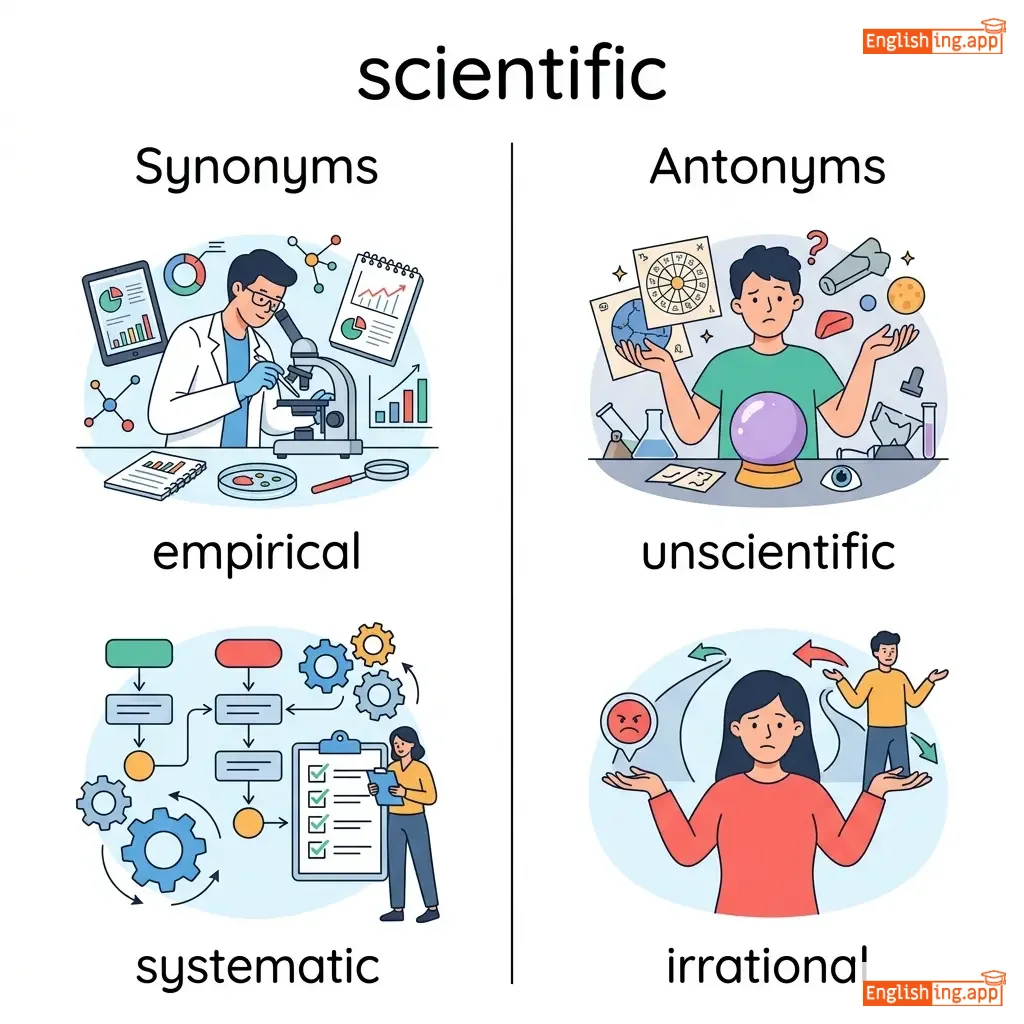
empirical, systematic, methodical, analytical
••••••
|
unscientific, irrational
••••••
|
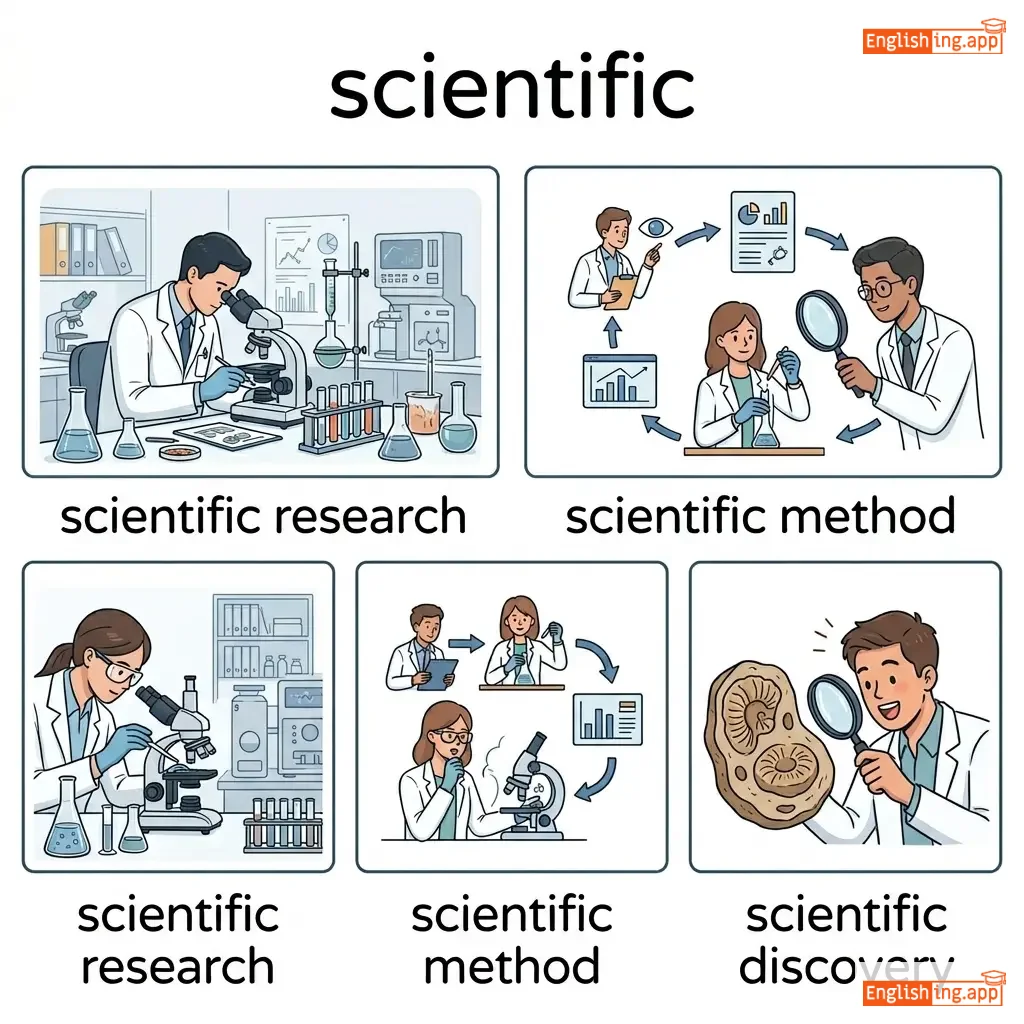
scientific research, scientific method, scientific discovery
••••••
|
Scientific methods are systematic and based on facts.
••••••
|
|
📊
••••••
|
/stəˈtɪstɪkəl/
adjective
(статистический)
••••••
|
- •••••• |
статистический
statisticheskiy
••••••
|
relating to the use or analysis of numerical data
••••••
|
The report provides statistical data about population growth. |
Отчет предоставляет статистические данные о росте населения.
Otchet predostavlyaet statisticheskie dannye o roste naseleniya.
••••••
|
- •••••• | - •••••• | - •••••• |
numerical, analytical, quantitative, data-based
••••••
|
qualitative, subjective
••••••
|
statistical analysis, statistical data, statistical method, statistical model
••••••
|
Статистика - это числа, так что statistical касается их анализа 📊
••••••
|
|
🤔
••••••
|
/səˈpəʊzɪdli/
adverb
(səˈpəʊzɪdli)
••••••
|
- •••••• |
якобы
yakoby
••••••
|
used to show that something is believed or claimed to be true, though it may not be
••••••
|
He is supposedly the best player on the team. |
Якобы он лучший игрок в команде.
Yakoby on luchshiy igrok v komande.
••••••
|
supposedly true |
believed to be true but not certain
••••••
|
якобы верно
yakoby verno
••••••
|
allegedly, reportedly, apparently, ostensibly
••••••
|
certainly, surely, definitely
••••••
|
supposedly true, supposedly innocent, supposedly safe, supposedly related
••••••
|
Якобы, но не точно — якобы!
••••••
|
|
✅
••••••
|
/ˈθʌrəli/
adverb
(thôrli)
••••••
|
- •••••• |
тщательно; полностью;
tshchatel'no; polnost'yu;
••••••
|
completely; entirely; in a thorough manner
••••••
|
She thoroughly cleaned the entire house before the guests arrived.
Она тщательно убрала весь дом до прихода гостей.
••••••
|
Она тщательно убрала весь дом до прихода гостей.
Ona tshchatel'no ubrala ves' dom do prikhoda gostey.
••••••
|
- •••••• | - •••••• | - •••••• |
completely, entirely, fully, totally, utterly
••••••
|
partially, incompletely, superficially, hastily
••••••
|
thoroughly cleaned, thoroughly examined, thoroughly enjoyed
••••••
|
Все сделать тщательно.
••••••
|

