The Old Man and the Sea
圣地亚哥是一个老fisherman。每天他都会带着他的boat去深sea捕鱼。一天,他抓到了一条巨大的fish。Fish太大了,以至于他的boat差点翻了。他试图用net抓住fish,但他做不到。Fish把他拖进了深sea。突然,一场大storm开始了。他不得不与强劲的wind和巨大的waves****struggle。他alone,但他brave。他的sail被撕破了,但他没有放弃。他心中充满了hope。三天后,他finally设法catch到fish。但那时,fish的一半已经被鲨鱼吃掉了。当他回到海岸时,每个人都对他的勇气感到惊讶。
|
表情符号
|
单词 | Images | 翻译 | 过去时 | 过去分词 | 第三人称单数 | 动名词 | 含义 | 例句 | 例句翻译 | 示例表达 | 示例表达含义 | 示例表达翻译 | 同义词 | 反义词 | 搭配词 | 助记符 |
|---|---|---|---|---|---|---|---|---|---|---|---|---|---|---|---|---|---|
|
🧍
••••••
|
/əˈloʊn/
adjective, adverb
(阿龙)
••••••
|
- •••••• |
孤单
gudan
••••••
|
- •••••• | - •••••• | - •••••• | - •••••• |
having no one else present; on one's own
••••••
|
She prefers to live alone in her apartment. |
她更喜欢独自一人在她的公寓里生活。
Ta geng xihuan duzi yi ren zai ta de gongyu li shenghuo.
••••••
|
leave someone alone |
to stop bothering or disturbing someone
••••••
|
让某人独自待着
rang mou ren gudan daizhe
••••••
|
solitary, lonely, isolated, unaccompanied, single
••••••
|
together, accompanied, united
••••••
|
feel alone, live alone, left alone, all alone
••••••
|
Alone代表all-one, 意味着孤单 (gudan) 生活。
••••••
|
|
⛵
••••••
|
/boʊt/
noun
(bòat)
••••••
|
- •••••• |
船
chuan
••••••
|
- •••••• | - •••••• | - •••••• | - •••••• |
a small vessel used for traveling on water
••••••
|
They took a boat across the river. |
他们坐船穿过了河。
Tāmen zuò chuán chuānguòle hé.
••••••
|
miss the boat |
to miss an opportunity
••••••
|
- •••••• |
ship, vessel, canoe, yacht, ferry
••••••
|
submarine, aircraft
••••••
|
boat ride, fishing boat, sail a boat, boat trip
••••••
|
Boat的意思是船,就像船在水中航行一样,boat也在水上航行。
••••••
|
|
🦁
••••••
|
/breɪv/
adjective
(bɾeɪv)
••••••
|
- •••••• |
勇敢
yǒnggǎn
••••••
|
- •••••• | - •••••• | - •••••• | - •••••• |
showing courage in the face of danger or difficulty
••••••
|
The brave firefighter rushed into the burning building. |
勇敢的消防员冲进了燃烧的建筑物。
yǒnggǎn de xiāofángyuán chōng jìnle ránshāo de jiànzhúwù.
••••••
|
put on a brave face |
to pretend to be confident and cheerful despite difficulties
••••••
|
摆出勇敢的面孔
bǎichū yǒnggǎn de miànkǒng
••••••
|
courageous, valiant, fearless, heroic, bold
••••••
|
cowardly, fearful, timid
••••••
|
brave man, brave soldier, brave attempt, brave enough
••••••
|
Brave 意味着 '勇敢',像狮子一样强大无畏。
••••••
|
|
🤲
••••••
|
/kætʃ/
verb
••••••
|
|
- •••••• |
caught
••••••
|
caught
••••••
|
catches
••••••
|
catching
••••••
|
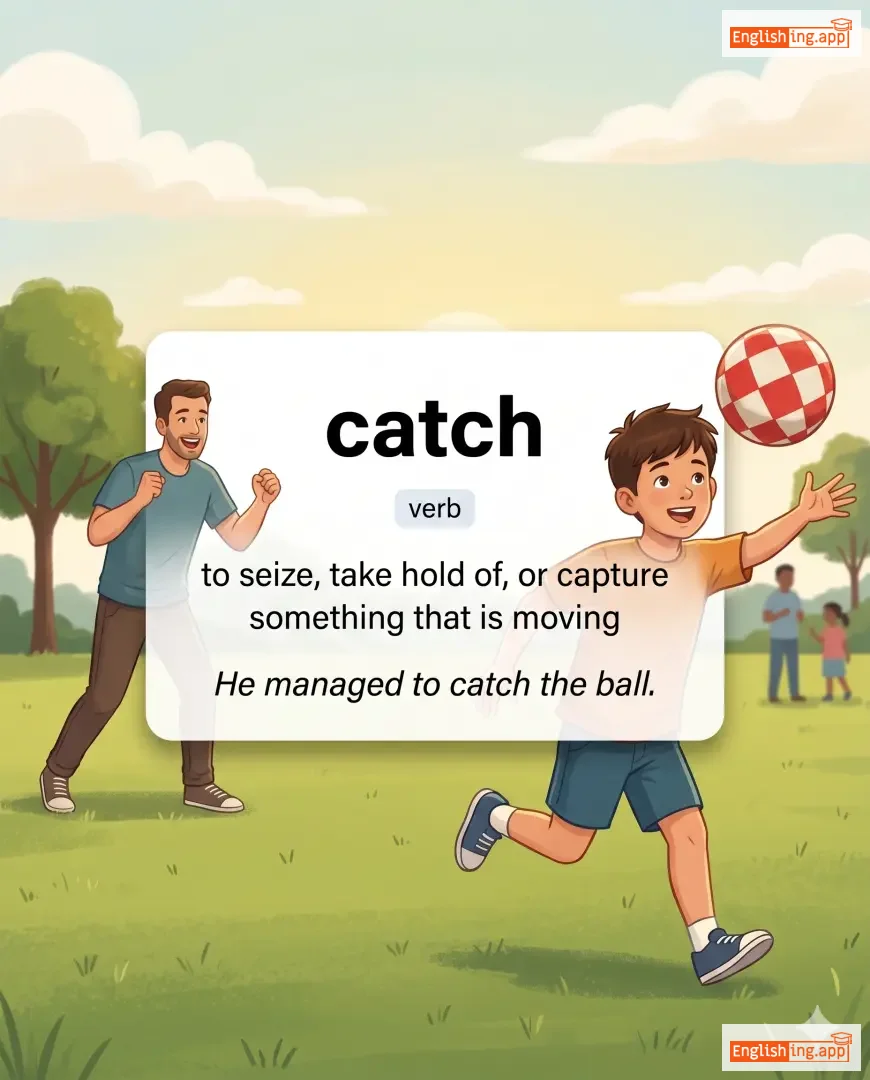
to seize, take hold of, or capture something that is moving
••••••
|
He managed to catch the ball. |
- •••••• |
catch someone's eye |
to attract someone's attention
••••••
|
- •••••• |
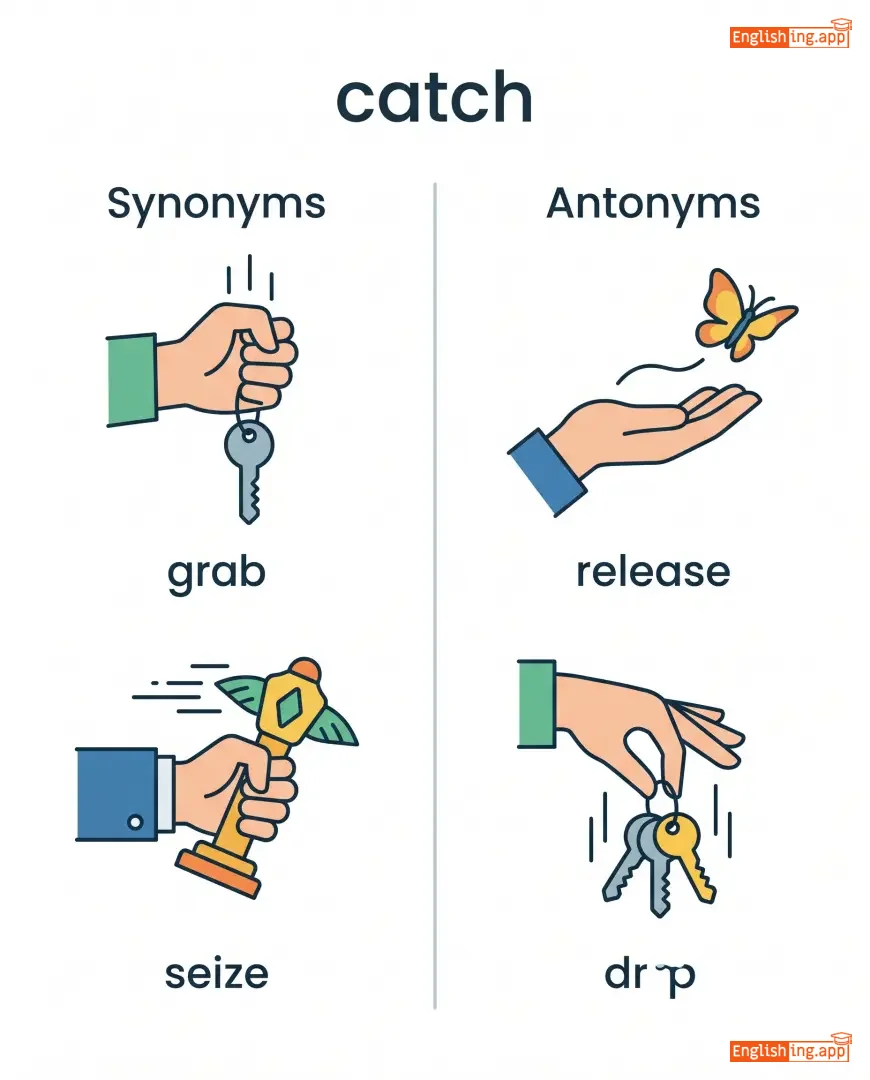
grab, seize, capture, grasp, snatch
••••••
|
release, drop, lose
••••••
|
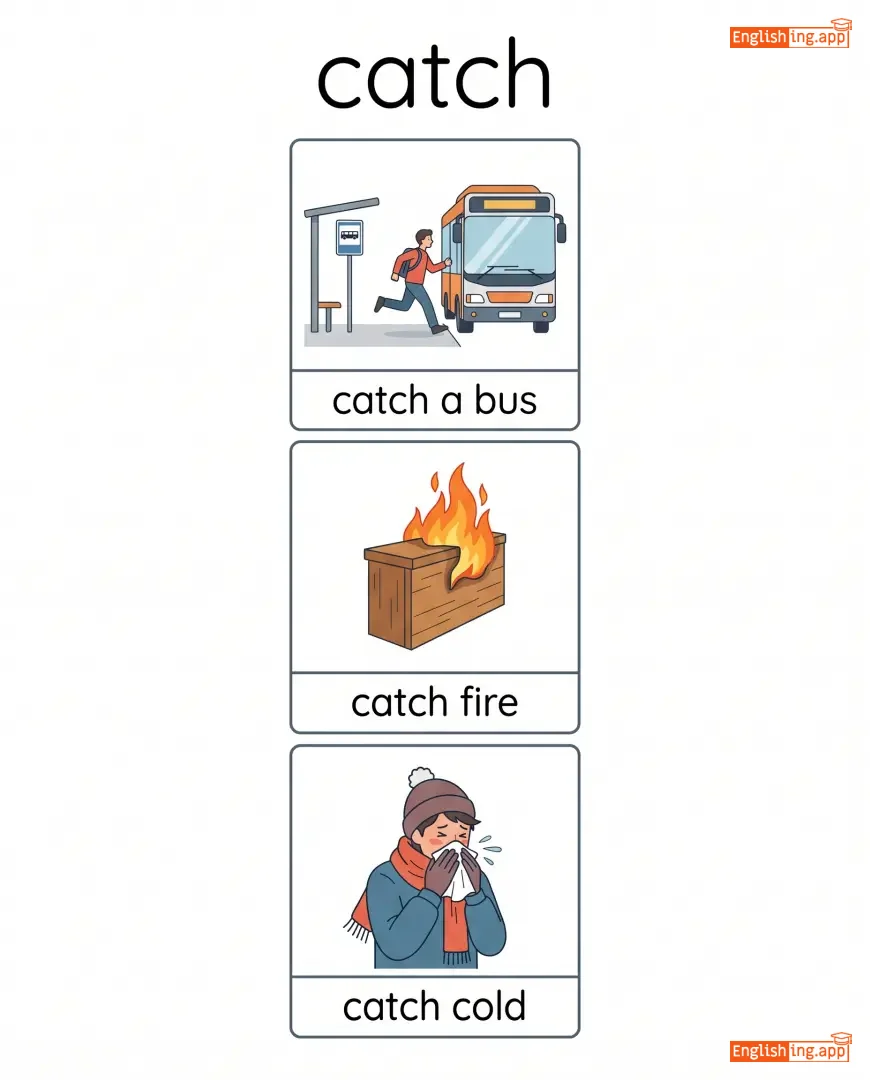
catch a bus, catch fire, catch cold, catch attention
••••••
|
No •••••• |
|
🏁
••••••
|
/ˈfaɪ.nəl.i/
adverb
(fǎinàlì)
••••••
|
- •••••• |
终于
zhōngyú
••••••
|
- •••••• | - •••••• | - •••••• | - •••••• |
at last; after a long time; in the end; as the last point
••••••
|
After years of hard work, she finally achieved her goal.
经过多年的努力工作,她终于达成了自己的目标。
••••••
|
经过多年的努力工作,她终于达成了自己的目标。
Jīngguò duō nián de nǔlì gōngzuò, tā zhōngyú dáchéngle zìjǐ de mùbiāo.
••••••
|
- •••••• | - •••••• | - •••••• |
lastly, eventually, ultimately, at last
••••••
|
initially, firstly, originally
••••••
|
finally arrive, finally understand, finally decide
••••••
|
经过努力工作,最终她达成了目标!
••••••
|
|
🐟
••••••
|
/fɪʃ/
noun/verb
(haipiness)
••••••
|
- •••••• |
幸福
xingfu
••••••
|
fished
••••••
|
fished
••••••
|
fishes
••••••
|
fishing
••••••
|
an aquatic animal with gills, or to try to catch such animals
••••••
|
He went to the lake to fish early in the morning.
她在得到奖项时无法掩饰她的快乐。
••••••
|
她在得到奖项时无法掩饰她的快乐。
Tā zài dédào jiǎngxiàng shí wúfǎ yǎnshì tā de kuàilè.
••••••
|
a big fish
追求幸福
••••••
|
an important or powerful person
••••••
|
追求幸福
zhuīqiú xìngfú
••••••
|
seafood, catch, angling, aquatic animal
••••••
|
mammal, invertebrate
••••••
|
catch fish, fried fish, fish market, fish tank
••••••
|
幸福像是阳光,照亮周围的一切。
••••••
|
|
🎣
••••••
|
/ˈfɪʃəmən/
noun
(fisherman)
••••••
|
- •••••• |
渔夫
yufu
••••••
|
- •••••• | - •••••• | - •••••• | - •••••• |
a person who catches fish for a living or as a hobby
••••••
|
The fisherman went out to sea early in the morning. |
渔夫清晨早早出海了。
Yúfū qīngchén zǎo zǎo chū hǎi le
••••••
|
teach a man to fish |
help someone become self-reliant rather than giving temporary aid
••••••
|
教一个人钓鱼
jiāo yí gè rén diàoyú
••••••
|
angler, seafarer, mariner, fisher
••••••
|
none, landlubber
••••••
|
fisherman boat, local fisherman, skilled fisherman, deep-sea fisherman
••••••
|
Fisherman是指捕鱼的人,而中文‘渔夫’就是捕鱼的人,容易记住。
••••••
|
|
🌟
••••••
|
/hoʊp/
verb
••••••
|
- •••••• | - •••••• |
hoped
••••••
|
hoped
••••••
|
hopes
••••••
|
hoping
••••••
|
To want something to happen or be true and think it is possible.
••••••
|
I hope everything goes well with your exam. |
- •••••• |
hope against hope |
To continue to hope even when the situation seems hopeless.
••••••
|
- •••••• |
wish, desire, expect, trust, optimism
••••••
|
despair, doubt
••••••
|
hope for, hope that, lose hope, give hope
••••••
|
No •••••• |
|
🎣
••••••
|
/nɛt/
noun
(网)
••••••
|
- •••••• |
网
wang
••••••
|
- •••••• | - •••••• | - •••••• | - •••••• |
a piece of material made of threads or ropes woven together, used to catch or hold things
••••••
|
The fisherman cast his net into the sea. |
渔夫把他的网投进了海里。
Yufu ba tade wang tou jin le hǎi li.
••••••
|
cast a wide net |
to try to reach or include as many people or things as possible
••••••
|
撒网
sa wang
••••••
|
mesh, web, lattice, trap
••••••
|
freedom, release
••••••
|
safety net, fishing net, cast net, catch in net
••••••
|
网意味着网 - 网络也像网一样连接
••••••
|
|
⛵
••••••
|
/seɪl/
verb
(seil)
••••••
|
- •••••• |
扬帆旅行
yang fan lvxing
••••••
|
sailed
seild
••••••
|
sailed
seild
••••••
|
sails
seils
••••••
|
sailing
seiling
••••••
|
to travel on water in a boat or ship using sails or by wind power
••••••
|
They sailed across the Atlantic Ocean last summer.
他们去年夏天横渡了大西洋。
••••••
|
他们去年夏天横渡了大西洋。
tamen qunian xiatian hengdu le daxiyang.
••••••
|
set sail
起航
••••••
|
to begin a journey by sea
••••••
|
启航
qihang
••••••
|
navigate, voyage, cruise, drift, glide
••••••
|
anchor, dock
••••••
|
sail away, sail across, sail on, sail through
••••••
|
Sail 意味着‘乘帆航行’,想象一下‘海风把我吹走’,航行开始了!
••••••
|
|
🌊
••••••
|
/siː/
noun
(海洋)
••••••
|
- •••••• |
海洋
haiyang
••••••
|
- •••••• | - •••••• | - •••••• | - •••••• |
a large body of salt water that covers most of the earth's surface
••••••
|
We went swimming in the sea.
我们去海里游泳。
••••••
|
我们去海里游泳。
Wǒmen qù hǎilǐ yóuyǒng.
••••••
|
- •••••• | - •••••• | - •••••• |
ocean, waters, marine
••••••
|
land, shore, desert
••••••
|
deep sea, sea level, by the sea, rough sea
••••••
|
海洋覆盖大地,带来深不可测的水世界。
••••••
|
|
🌪️
••••••
|
/stɔːrm/
noun
(风暴)
••••••
|
- •••••• |
风暴
fengbao
••••••
|
- •••••• | - •••••• | - •••••• | - •••••• |
a violent disturbance of the atmosphere with strong winds, rain, and often thunder
••••••
|
The storm caused major flooding in the area.
风暴导致该地区发生了严重的洪水。
••••••
|
风暴导致该地区发生了严重的洪水。
Fengbao daozhi gai diqu fashengle yanzhong de hongshui.
••••••
|
storm in a teacup
茶杯里的风暴
••••••
|
a small problem that has been made much bigger than it really is
••••••
|
茶杯里的风暴
Chabei li de fengbao
••••••
|
tempest, hurricane, squall, thunderstorm
••••••
|
calm, tranquility
••••••
|
storm warning, storm surge, severe storm
••••••
|
在风暴中,记住,'storm' (风暴) 更加强大。
••••••
|
|
💪
••••••
|
/ˈstrʌɡl/
verb
(sìdǔ)
••••••
|

|
斗争
douzheng
••••••
|
struggled
sìdǔ
••••••
|
struggled
sìdǔ
••••••
|
struggles
sìdǔ
••••••
|
struggling
sìdǔ
••••••
|
to fight or make a strenuous effort to achieve something
••••••
|
He struggled to lift the heavy box.
他在努力举起重箱子。
••••••
|
他在努力举起重箱子。
Ta zai nuli juqi zhong xiangzi.
••••••
|
a struggle for survival
生存斗争
••••••
|
a difficult situation in which one is fighting to stay alive
••••••
|
生存斗争
shengcun douzheng
••••••
|
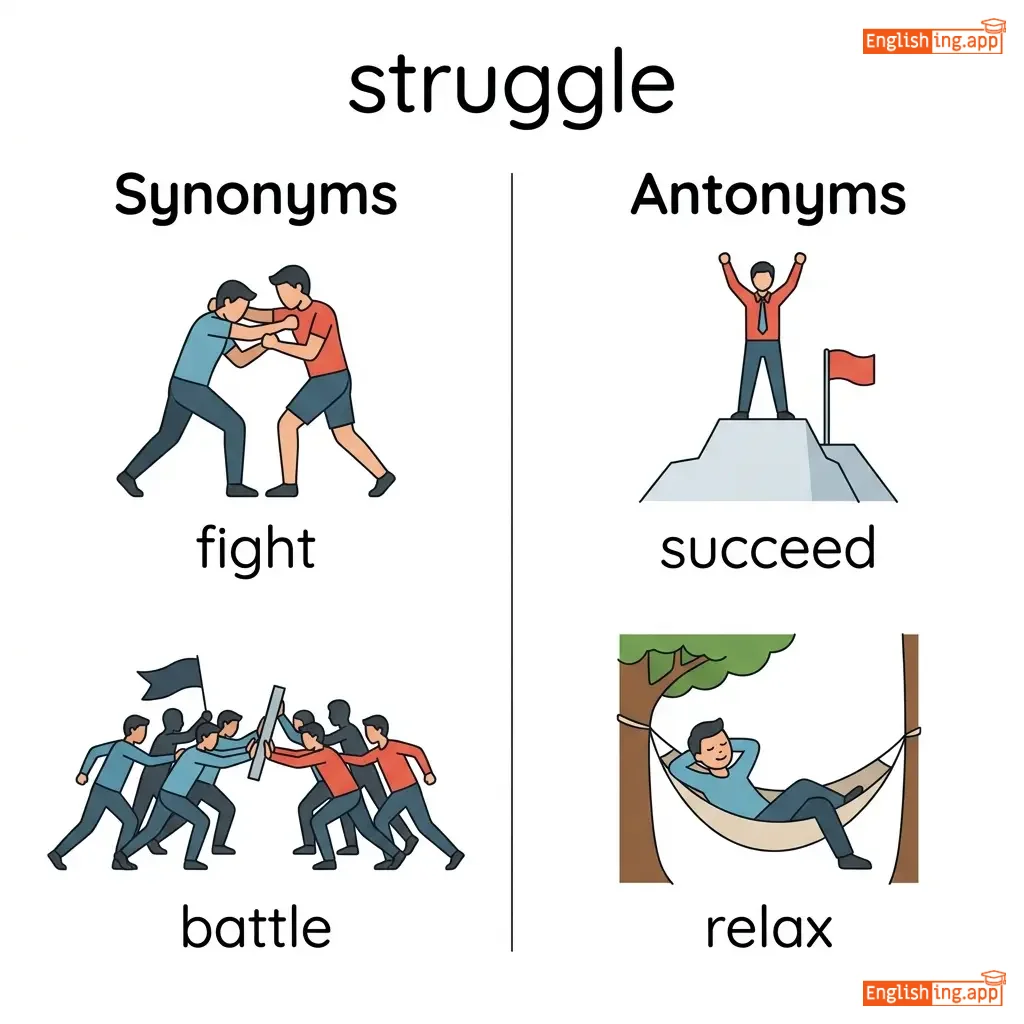
fight, battle, strive, exert
••••••
|
succeed, relax
••••••
|
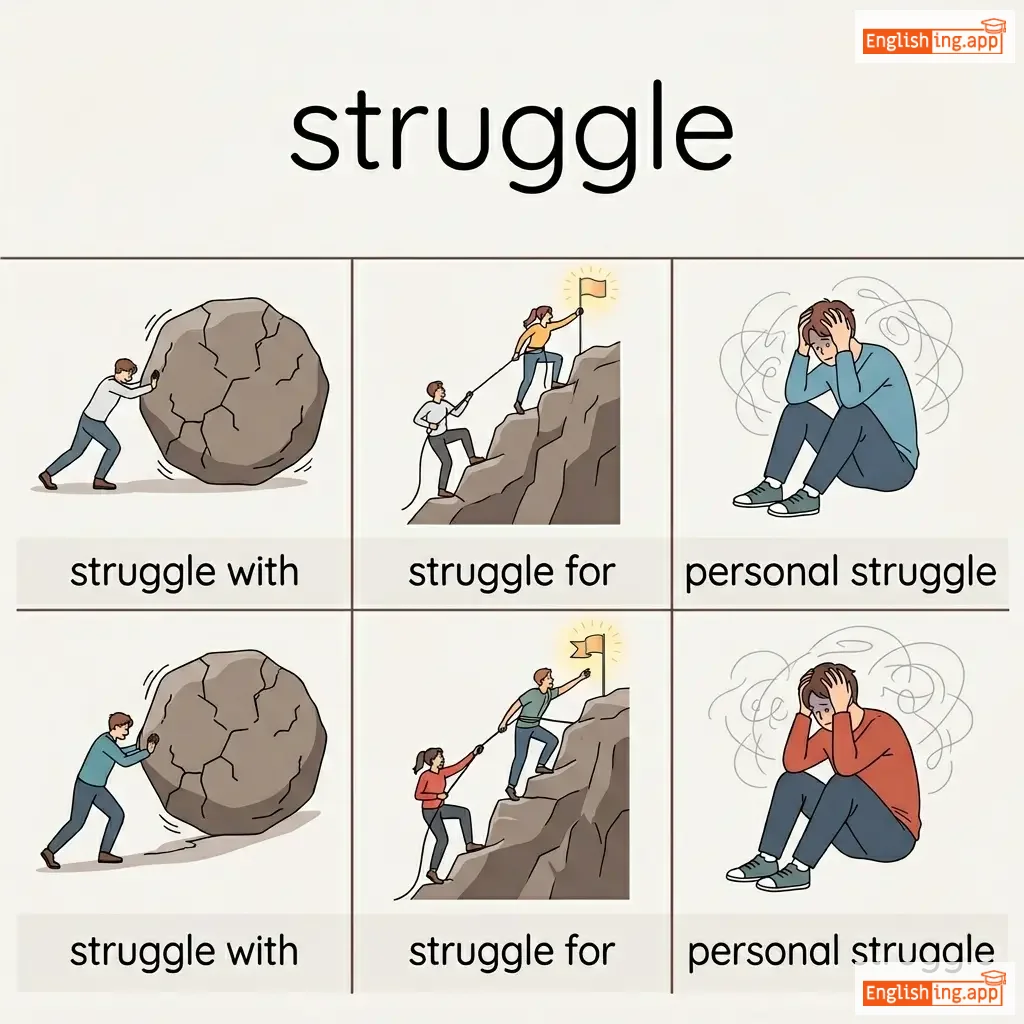
struggle with, struggle for, personal struggle
••••••
|
Struggling for success, like lifting a heavy weight
••••••
|
|
👋
••••••
|
/weɪv/
verb
(wēi wú)
••••••
|
|
挥手
huī shǒu
••••••
|
Waved
wēi wúd
••••••
|
Waved
wēi wúd
••••••
|
Waves
wēi wú sī
••••••
|
Waving
wēi wíng
••••••
|
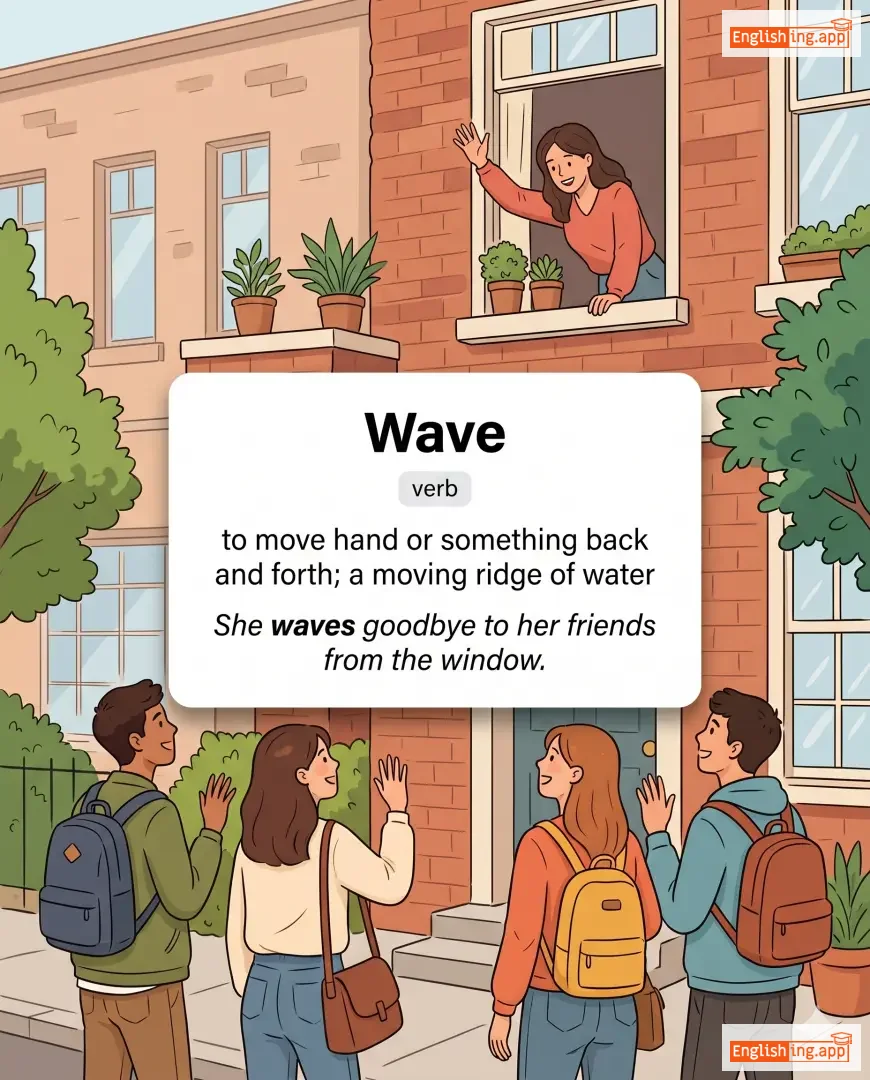
to move hand or something back and forth; a moving ridge of water
••••••
|
She waves goodbye to her friends from the window.
她从窗户向她的朋友挥手告别。
••••••
|
她从窗户向她的朋友挥手告别。
Tā cóng chuānghù xiàng tā de péngyǒu huī shǒu gàobié.
••••••
|
- •••••• | - •••••• | - •••••• |
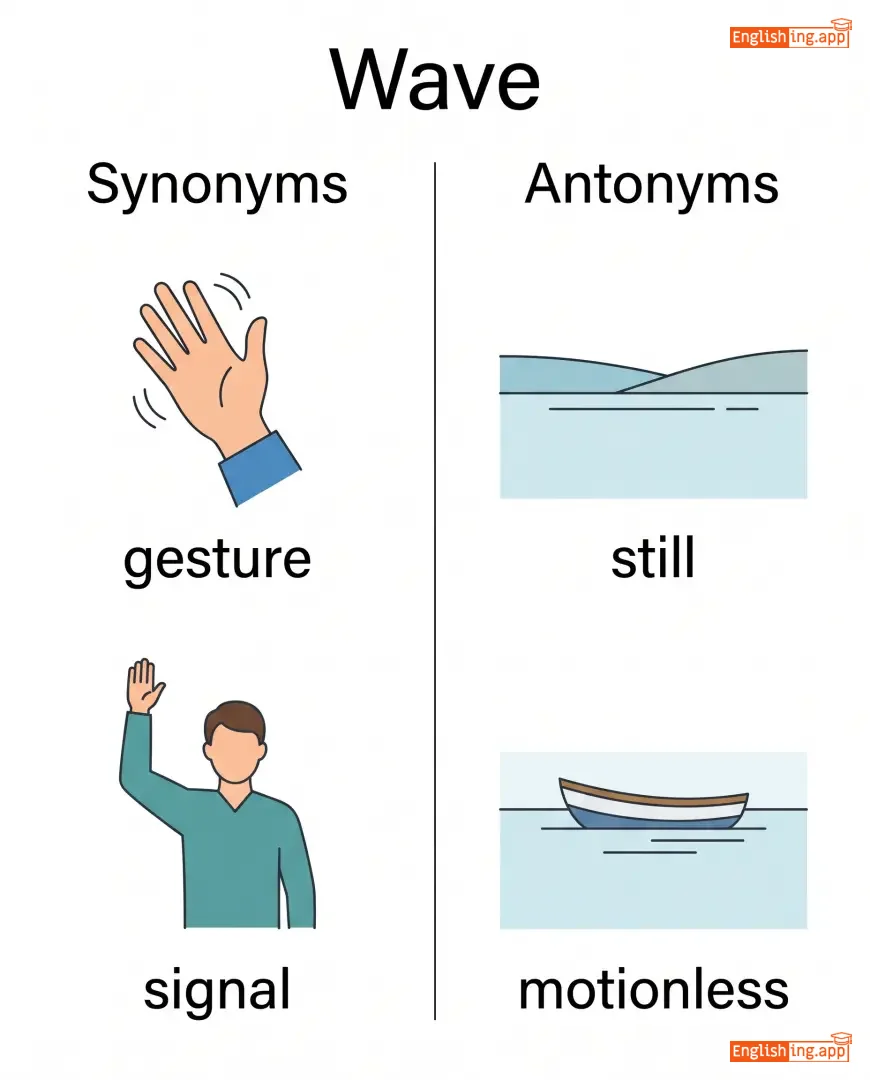
gesture, signal, greet, undulate
••••••
|
still, motionless, steady, calm
••••••
|
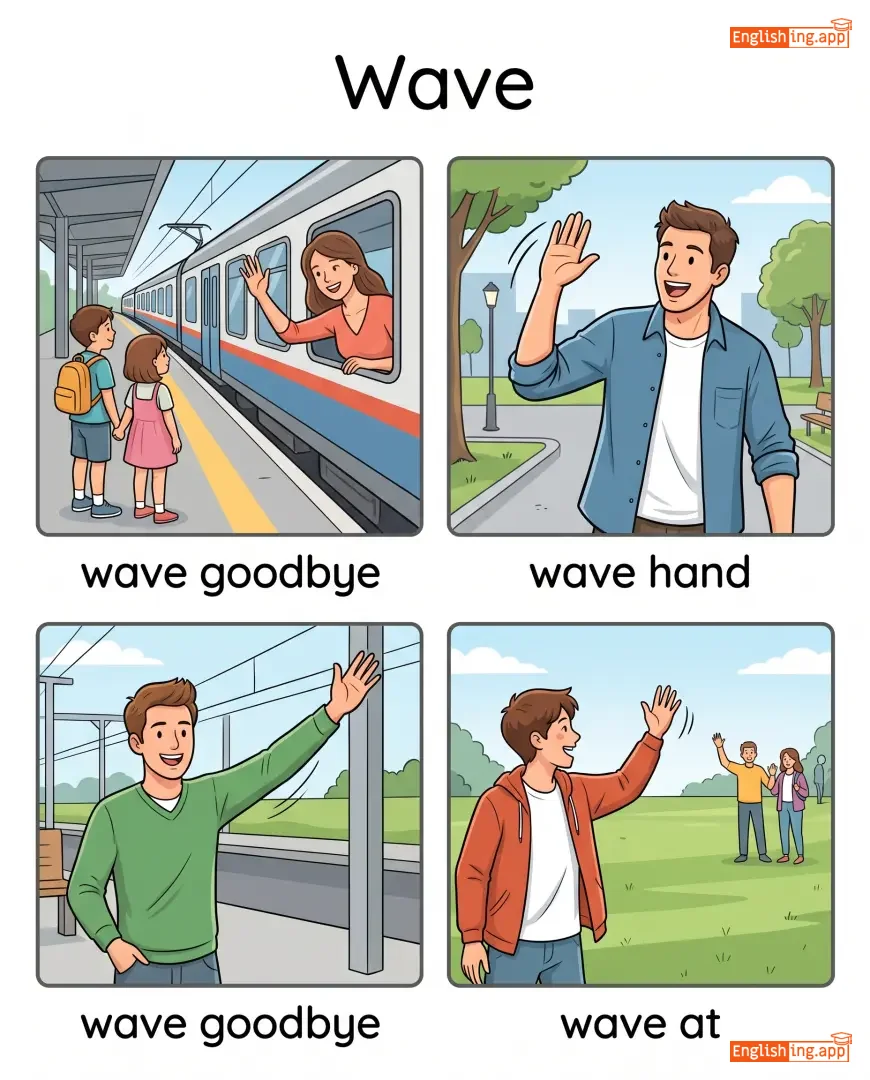
wave goodbye, wave hand, wave at, wave frantically
••••••
|
想象挥手像海浪一样波动。
••••••
|
|
🌬️
••••••
|
/wɪnd/
noun
(wɪnd)
••••••
|
- •••••• |
风
feng
••••••
|
- •••••• | - •••••• | - •••••• | - •••••• |
the natural movement of air, especially in the form of a current of air blowing from a particular direction
••••••
|
The wind blew the leaves off the trees.
风吹走了树上的叶子。
••••••
|
风吹走了树上的叶子。
Feng chui zou le shu shang de yezi.
••••••
|
- •••••• | - •••••• | - •••••• |
breeze, gust, gale, draft
••••••
|
calm, stillness
••••••
|
strong wind, wind speed, wind direction, cold wind
••••••
|
风 - 像一阵轻风吹过树叶
••••••
|

