The Detective's Dilemma
侦探阿尔曼正在与他的client交谈。这个case相当复杂。一位富有的adult去世了,警方将其视为自然的death。但阿尔曼的agency认为这是一起crime。阿尔曼去了现场,并发现了一些警方未能detect的evidence。他打电话给他的agent说:“我敢肯定这是谋杀。”他的agent与他agreed。在深入调查后,阿尔曼了解到,死者家族中的每个人都在互相accuse。有一位家庭成员admitted他在事件发生时在场。阿尔曼决定arrest他。但他的直觉告诉他,真正的凶手仍然在事发现场apart。他明白,如果他blame错了人,真正的罪犯将逃脱。阿尔曼必须找到这场deadly游戏的结局。
|
表情符号
|
单词 | Images | 翻译 | 过去时 | 过去分词 | 第三人称单数 | 动名词 | 含义 | 例句 | 例句翻译 | 示例表达 | 示例表达含义 | 示例表达翻译 | 同义词 | 反义词 | 搭配词 | 助记符 |
|---|---|---|---|---|---|---|---|---|---|---|---|---|---|---|---|---|---|
|
👉
••••••
|
/əˈkjuːz/
verb
••••••
|
|
- •••••• |
accused
••••••
|
accused
••••••
|
accuses
••••••
|
accusing
••••••
|
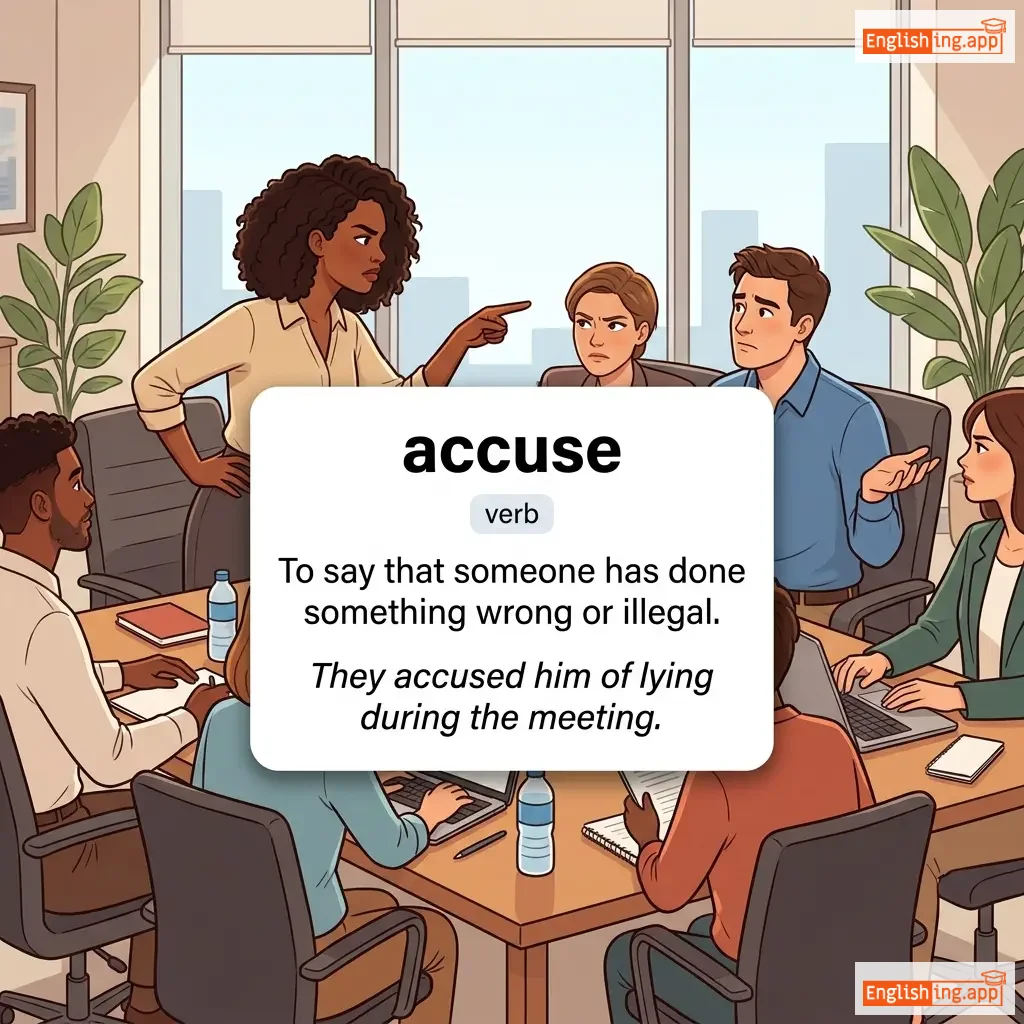
To say that someone has done something wrong or illegal.
••••••
|
They accused him of lying during the meeting. |
- •••••• |
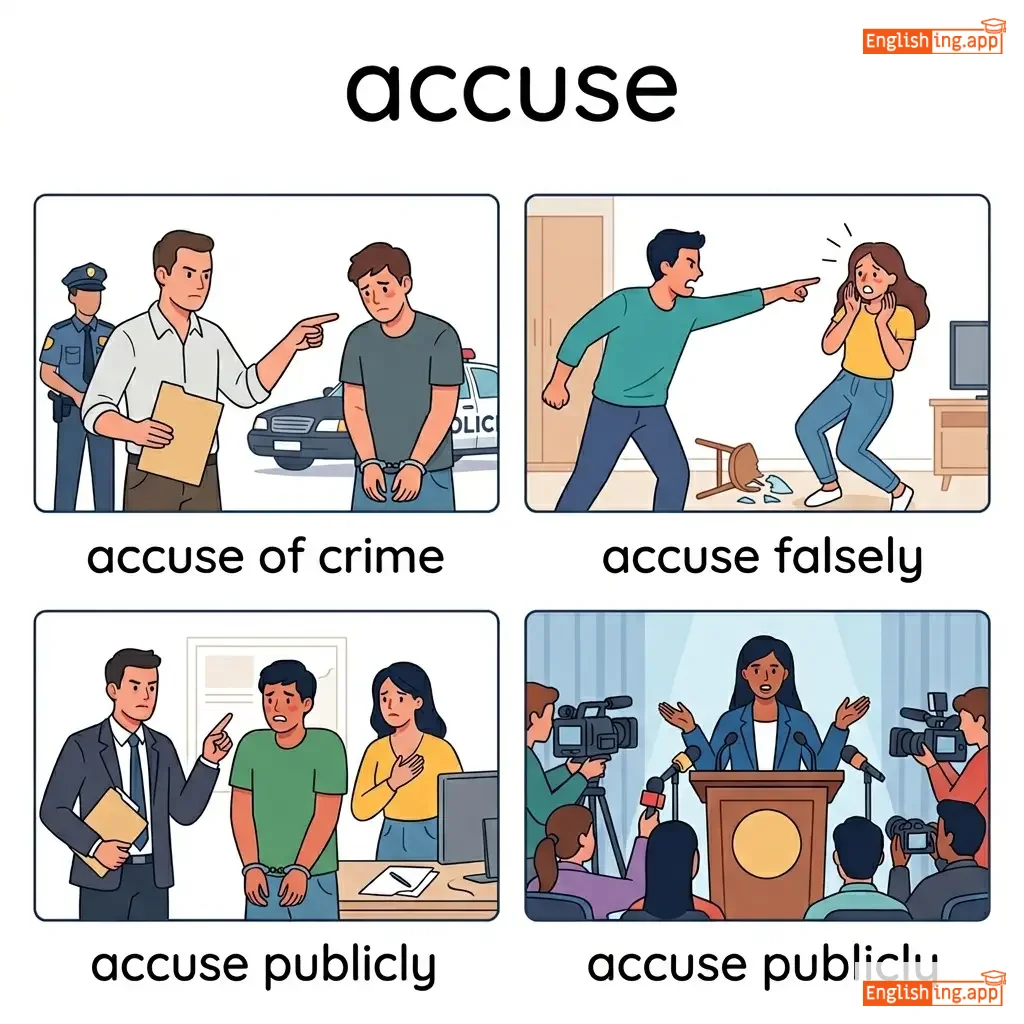
accuse someone falsely |
Blame someone without evidence.
••••••
|
- •••••• |
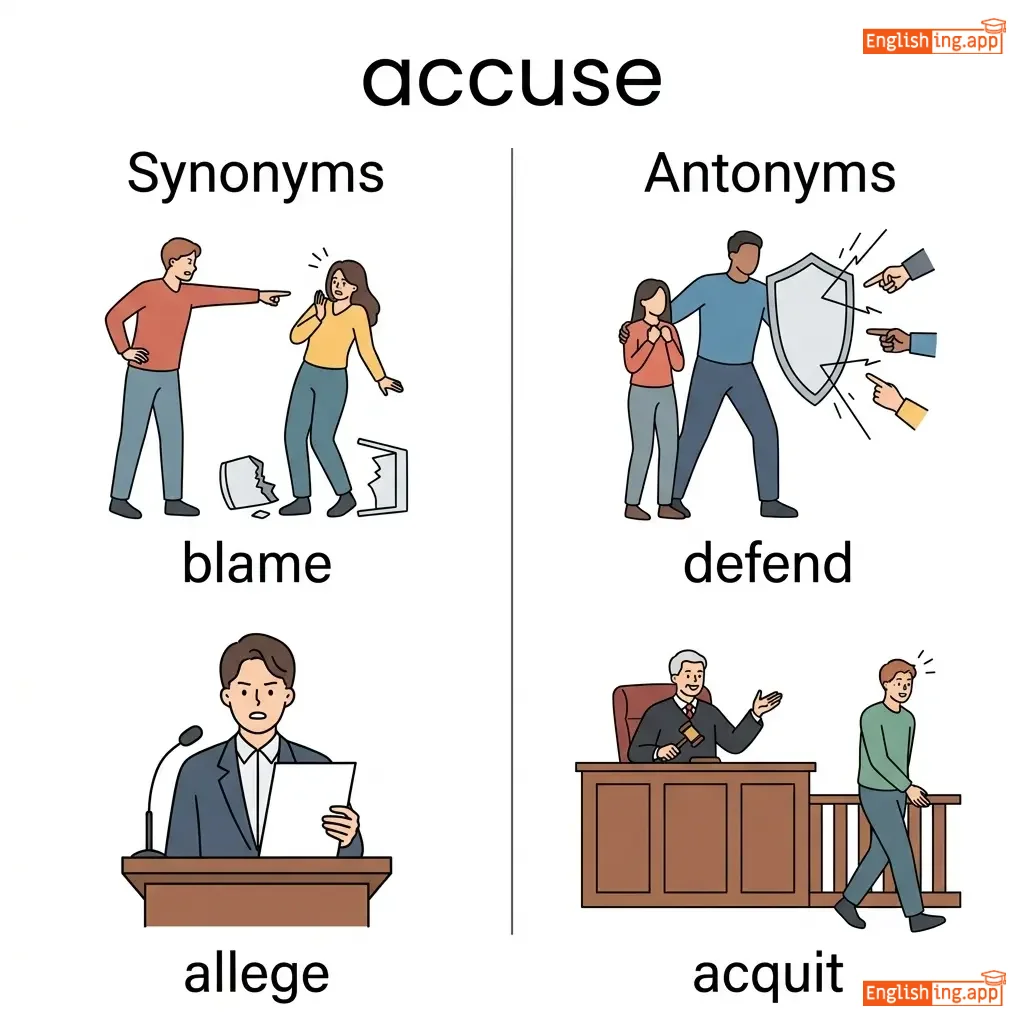
blame, allege, charge, indict
••••••
|
defend, acquit
••••••
|
accuse of crime, accuse falsely, accuse publicly
••••••
|
No •••••• |
|
🙋
••••••
|
/ədˈmɪt/
verb
(承认)
••••••
|
|
承认
chengren
••••••
|
admitted
承认过
••••••
|
admitted
承认过
••••••
|
admits
承认
••••••
|
admitting
承认中
••••••
|
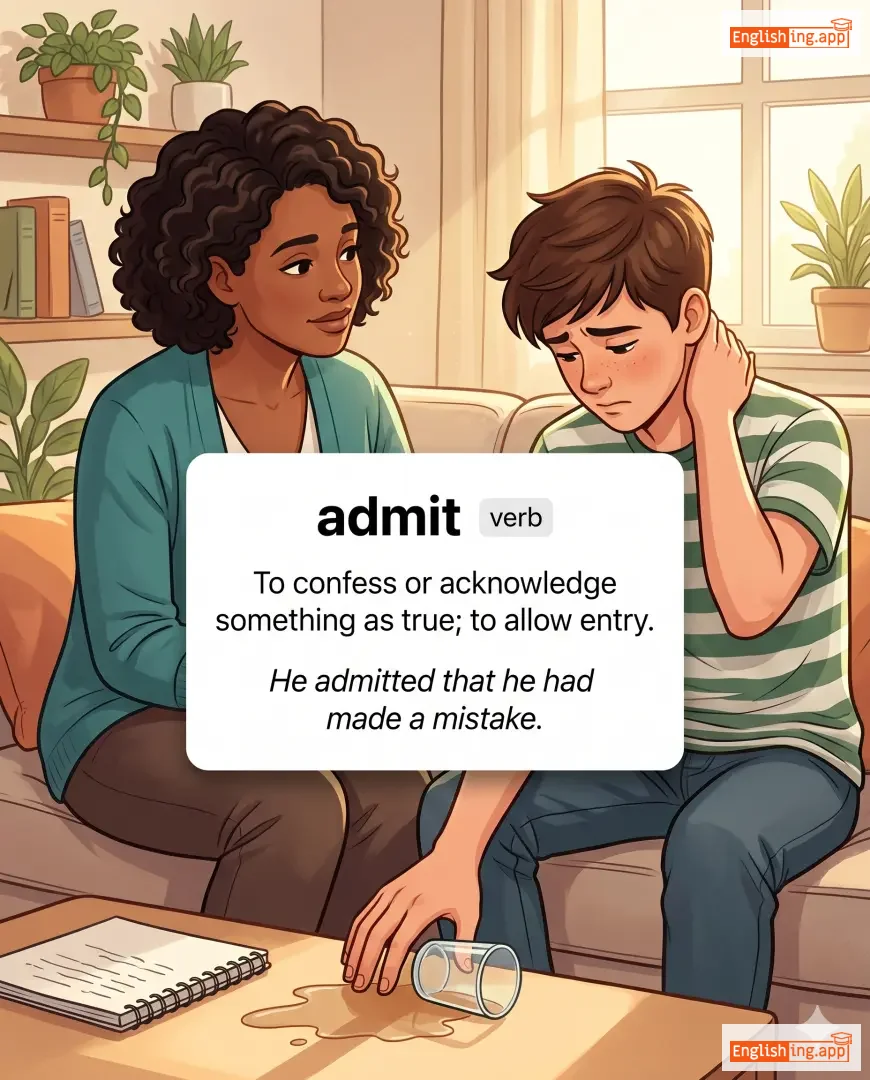
To confess or acknowledge something as true; to allow entry.
••••••
|
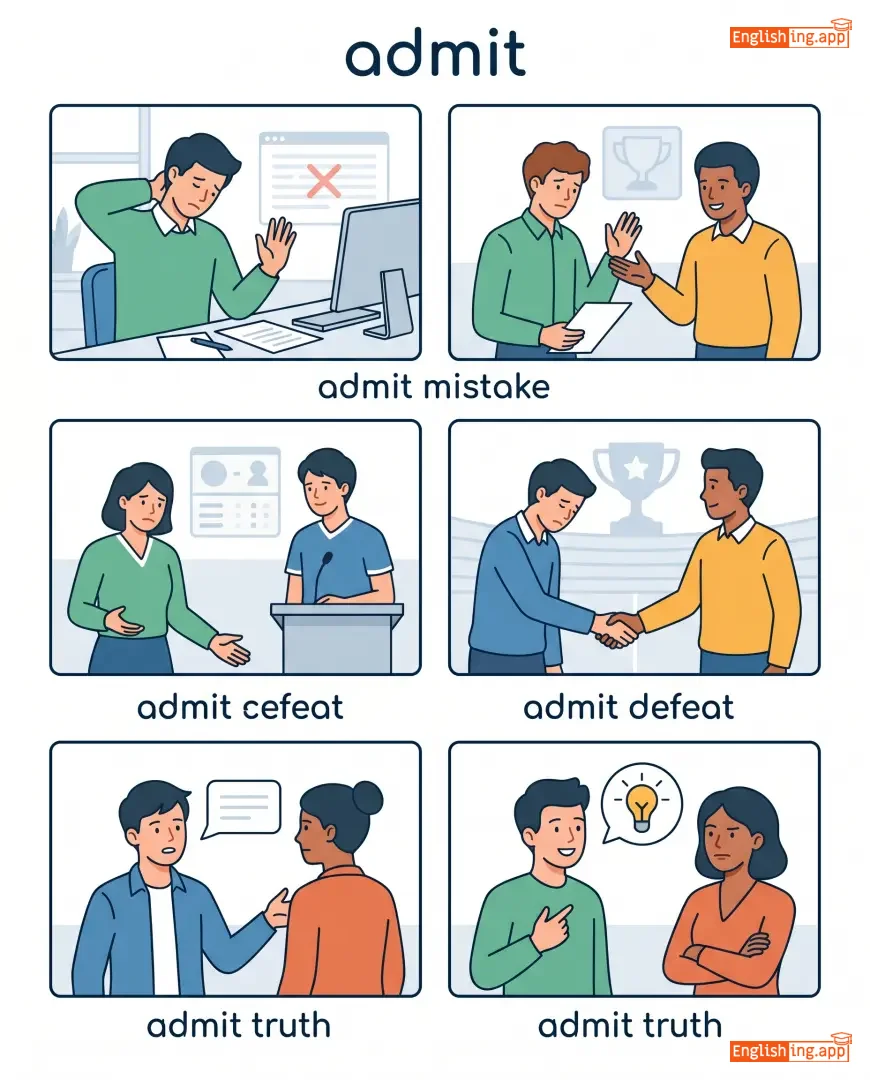
He admitted that he had made a mistake.
他承认他犯了一个错误。
••••••
|
他承认他犯了一个错误。
Tā chéngrèn tā fànle yīgè cuòwù.
••••••
|
admit defeat
承认失败
••••••
|
To accept that you have failed.
••••••
|
承认失败
Chéngrèn shībài
••••••
|
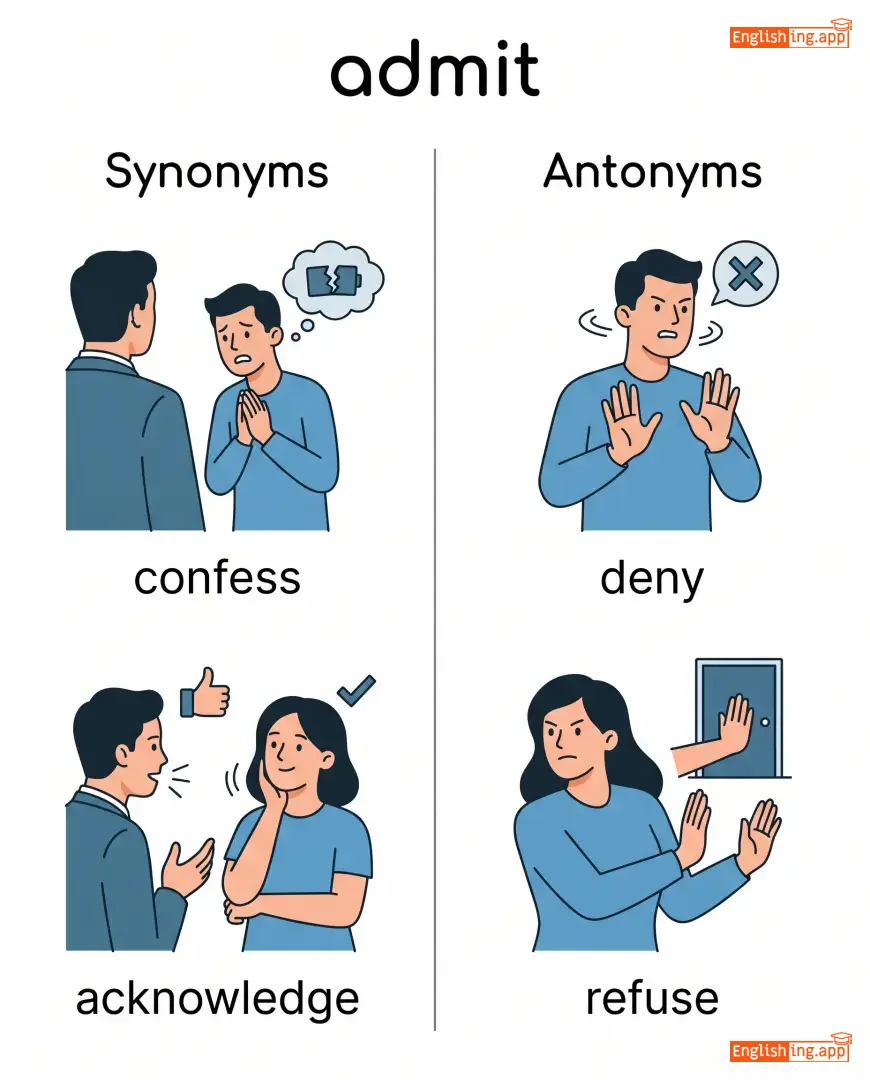
confess, acknowledge, accept, allow, grant
••••••
|
deny, refuse, reject
••••••
|
admit mistake, admit defeat, admit truth, admit into
••••••
|
承认就是接受或者允许,像是承认错误一样。
••••••
|
|
🧑
••••••
|
/ˈædʌlt/ or /əˈdʌlt/
noun
(成人)
••••••
|
- •••••• |
成人
chéngrén
••••••
|
- •••••• | - •••••• | - •••••• | - •••••• |
A fully grown or developed person; mature.
••••••
|
Children must be accompanied by an adult. |
儿童必须由成年人陪同。
Értóng bìxū yóu chéngrén péitóng.
••••••
|
young adult |
A person in their late teens or early twenties.
••••••
|
年轻成年人
niánqīng chéngrén
••••••
|
grown-up, mature person, elder, senior
••••••
|
child, minor, infant
••••••
|
adult education, adult content, adult life, adult supervision
••••••
|
成人意味着完全成熟,就像电影中的成人票。
••••••
|
|
🏢
••••••
|
/ˈeɪ.dʒən.si/
noun
(艾金西)
••••••
|
- •••••• |
机构
jīgòu
••••••
|
- •••••• | - •••••• | - •••••• | - •••••• |
An organization or business that provides a particular service.
••••••
|
She works at a travel agency. |
她在一个旅行社工作。
Tā zài yīgè lǚxíng shè gōngzuò.
••••••
|
advertising agency |
A company that creates and manages advertisements for clients.
••••••
|
广告公司
guǎnggào gōngsī
••••••
|
organization, firm, bureau, office, service
••••••
|
individual, client, customer
••••••
|
government agency, real estate agency, news agency, travel agency
••••••
|
Agency意味着'机构' — 记住'机构提供服务'
••••••
|
|
🕵️
••••••
|
/ˈeɪ.dʒənt/
noun
(āi jìng tè)
••••••
|
- •••••• |
代理人
dàilǐrén
••••••
|
- •••••• | - •••••• | - •••••• | - •••••• |
A person who acts on behalf of another person or organization.
••••••
|
The real estate agent showed us several houses.
房地产经纪人向我们展示了几套房子。
••••••
|
房地产经纪人向我们展示了几套房子。
Fángdìchǎn jīngjì rén xiàng wǒmen zhǎnshìle jǐ tào fángzi.
••••••
|
secret agent
秘密特工
••••••
|
A spy working for a government or organization.
••••••
|
秘密特工
mìmì tègōng
••••••
|
representative, delegate, envoy, broker, spy
••••••
|
principal, client, customer
••••••
|
travel agent, real estate agent, sports agent, insurance agent
••••••
|
代理人,像我们常说的秘密特工一样,代理别人的任务。
••••••
|
|
👍
••••••
|
/əˈɡriː/
verb
(əˈɡri)
••••••
|

|
同意
tóng yì
••••••
|
agreed
əˈɡriːd
••••••
|
agreed
əˈɡriːd
••••••
|
agrees
əˈɡriːz
••••••
|
agreeing
əˈɡriːɪŋ
••••••
|
To have the same opinion or to consent to something.
••••••
|
We all agreed on the plan.
我们都同意这个计划。
••••••
|
我们都同意这个计划。
Wǒmen dōu tóngyì zhège jìhuà.
••••••
|
agree to disagree
同意不同意
••••••
|
To accept different opinions without conflict.
••••••
|
同意不同意
tóngyì bù tóngyì
••••••
|
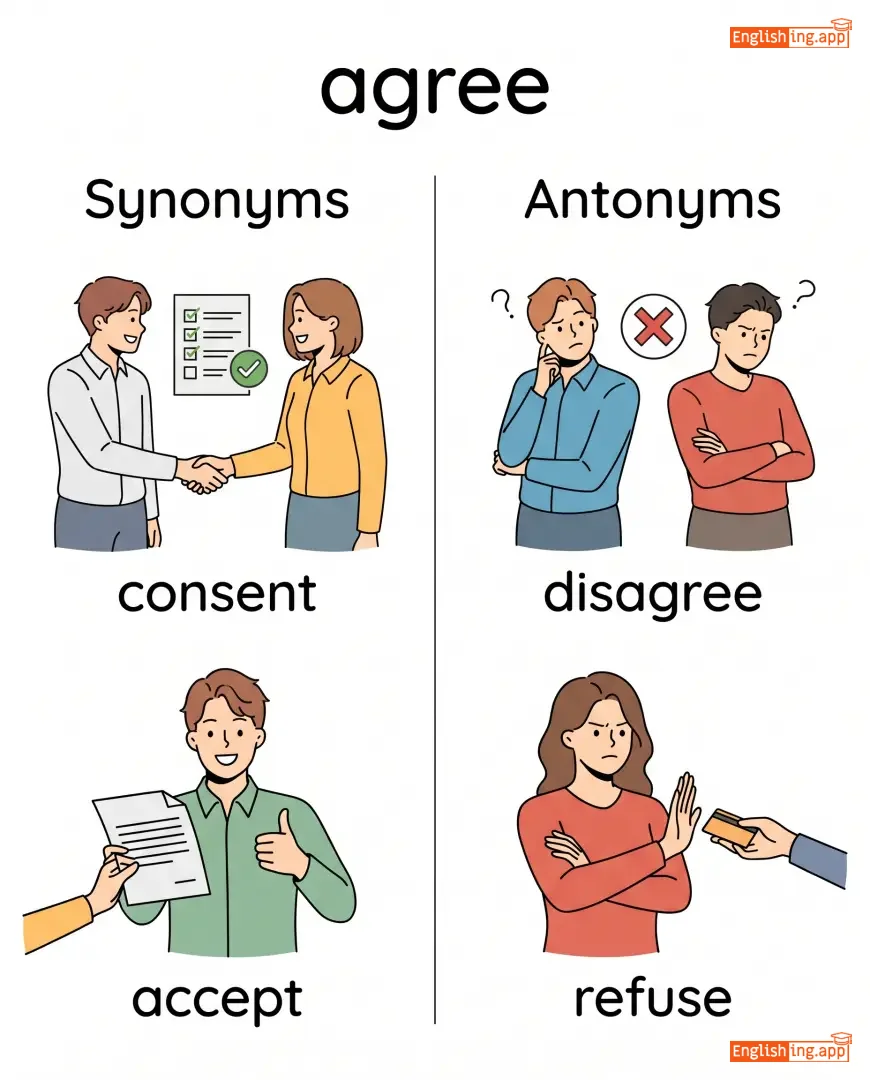
consent, accept, approve, concur, assent
••••••
|
disagree, refuse, oppose
••••••
|
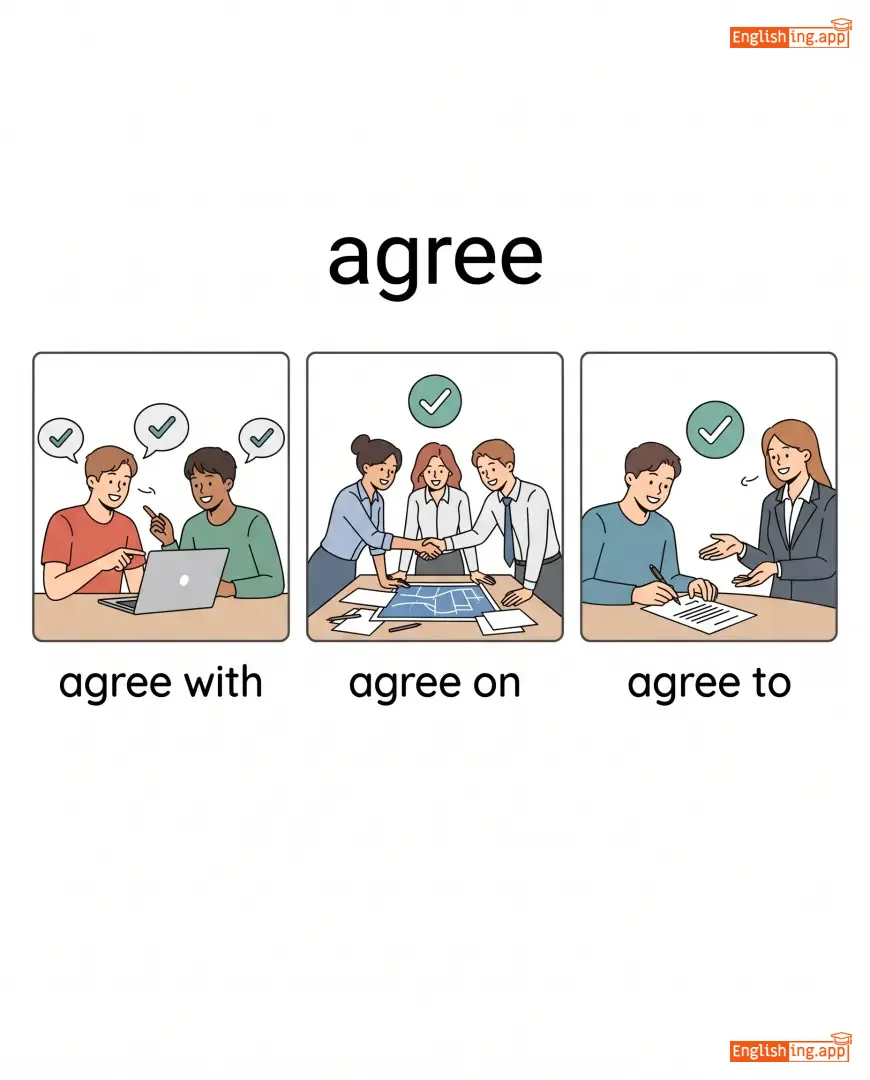
agree with, agree on, agree to, strongly agree
••••••
|
'Agree' 意思是同意 — 就像大家都点头同意时一样。
••••••
|
|
↔️
••••••
|
/əˈpɑːrt/
adverb
••••••
|
- •••••• | - •••••• | - •••••• | - •••••• | - •••••• | - •••••• |
separated by distance or time; into pieces
••••••
|
They live miles apart from each other. |
- •••••• |
fall apart |
to break into pieces or fail completely
••••••
|
- •••••• |
separately, away, aside, alone, divided
••••••
|
together, close
••••••
|
miles apart, set apart, apart from, fall apart
••••••
|
No •••••• |
|
🚓
••••••
|
/əˈrɛst/
verb
(àirèst)
••••••
|
|
逮捕
dàibǔ
••••••
|
arrested
àirèstèd
••••••
|
arrested
àirèstèd
••••••
|
arrests
àirèsts
••••••
|
arresting
àirèstíng
••••••
|
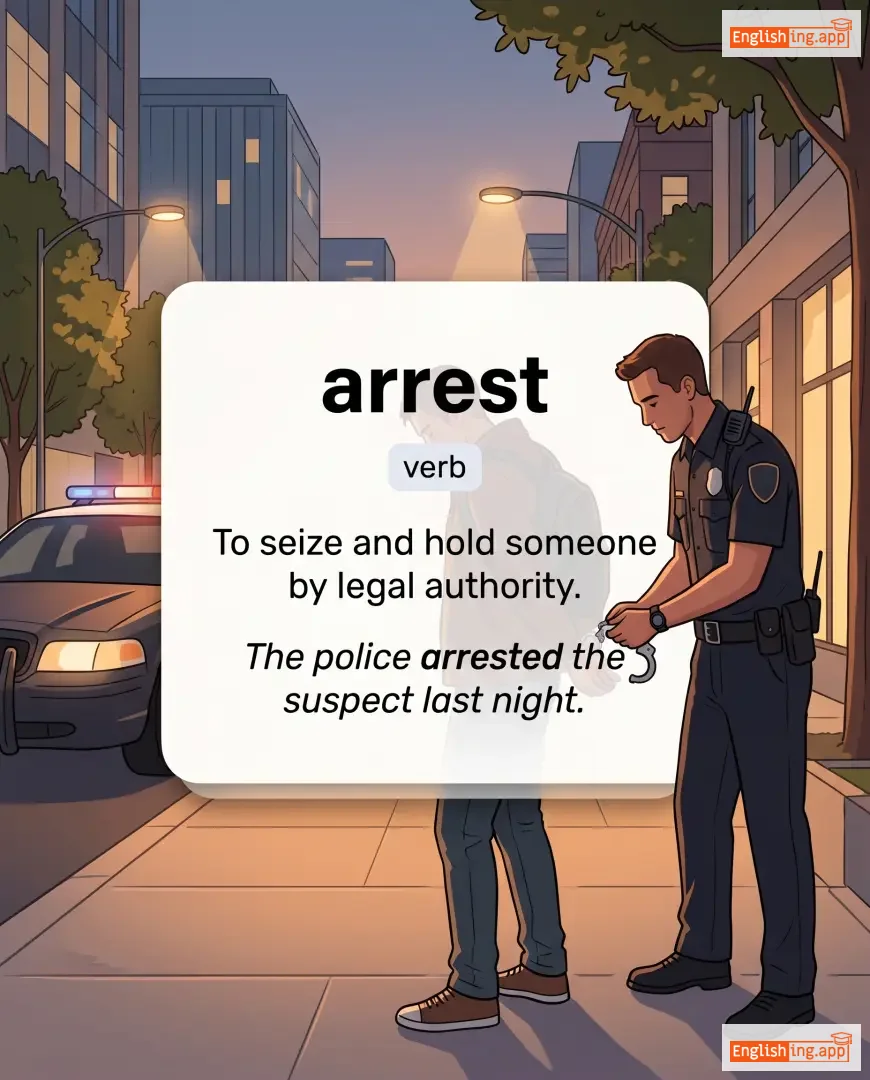
To seize and hold someone by legal authority.
••••••
|
The police arrested the suspect last night.
警察昨晚逮捕了嫌疑人。
••••••
|
警察昨晚逮捕了嫌疑人。
Jǐngchá zuówǎn dàibǔ le xiányí rén.
••••••
|
under arrest
被逮捕
••••••
|
In the custody of the police.
••••••
|
被逮捕
bèi dàibǔ
••••••
|
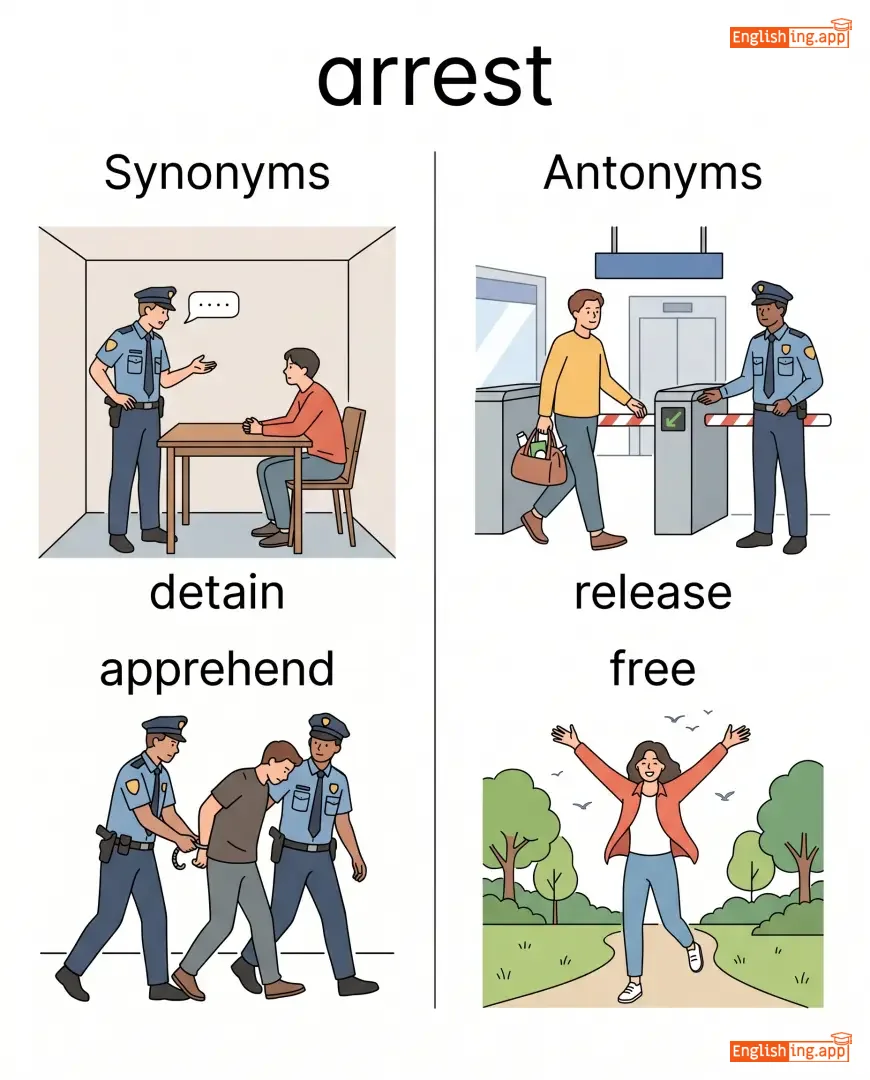
detain, apprehend, capture, seize, stop
••••••
|
release, free, liberate
••••••
|
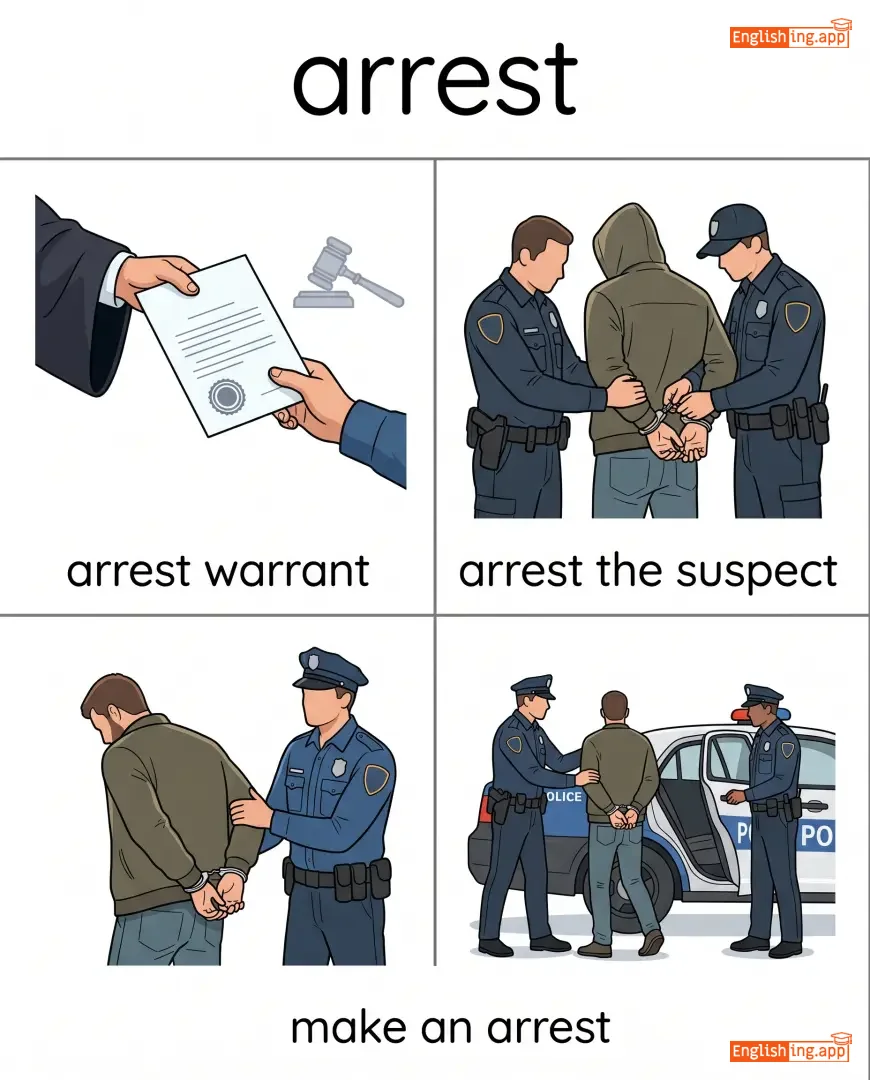
arrest warrant, arrest the suspect, make an arrest
••••••
|
Arrest 就是当你 Rest 不能再走,警察把你抓住了。
••••••
|
|
☝️
••••••
|
/bleɪm/
verb
(bleim)
••••••
|
|
责怪
zeguai
••••••
|
blamed
bleimd
••••••
|
blamed
bleimd
••••••
|
blames
bleims
••••••
|
blaming
bleiming
••••••
|
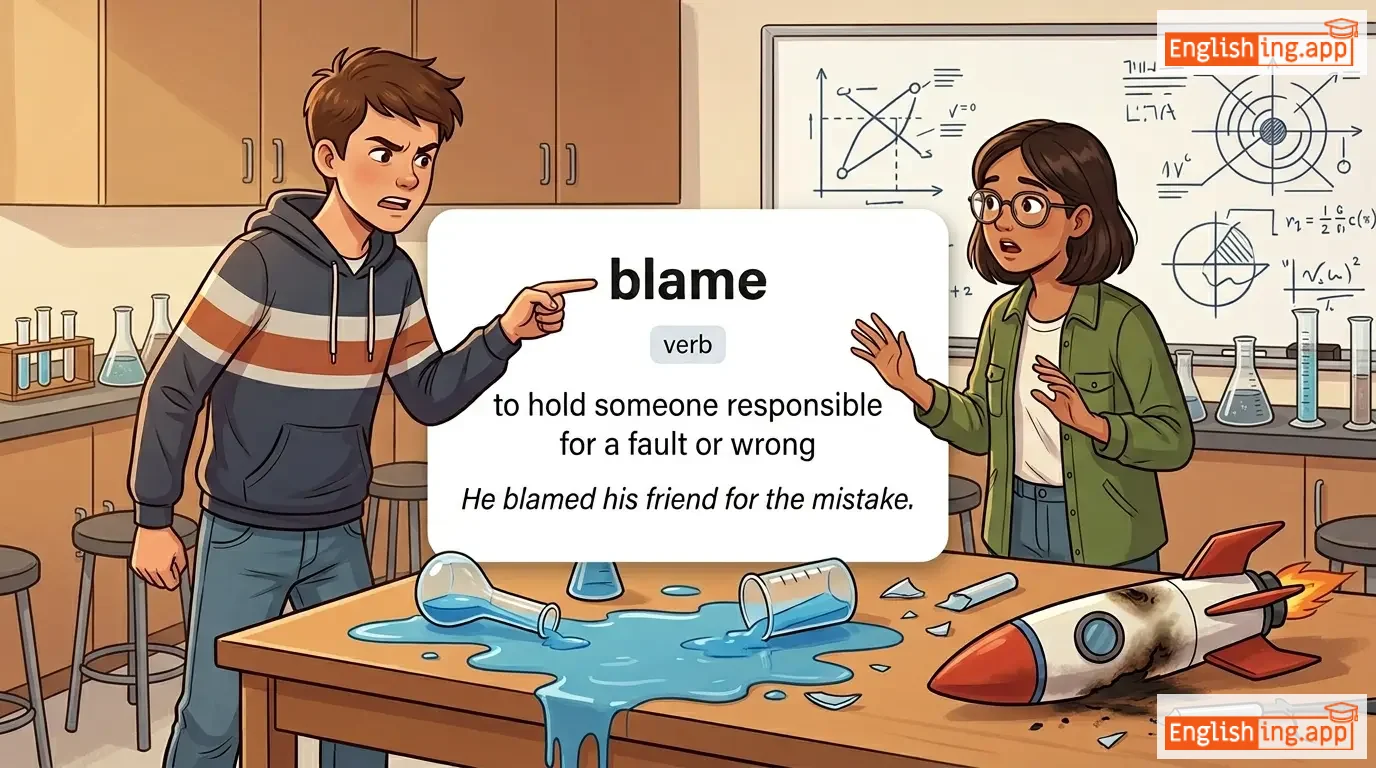
to hold someone responsible for a fault or wrong
••••••
|
He blamed his friend for the mistake.
他把错误归咎于他的朋友。
••••••
|
他把错误归咎于他的朋友。
Ta ba cuowu guijiu yu tade pengyou.
••••••
|
put the blame on
把责任推到
••••••
|
to make someone responsible for something bad
••••••
|
把责任推到
Ba zeren tuidao
••••••
|
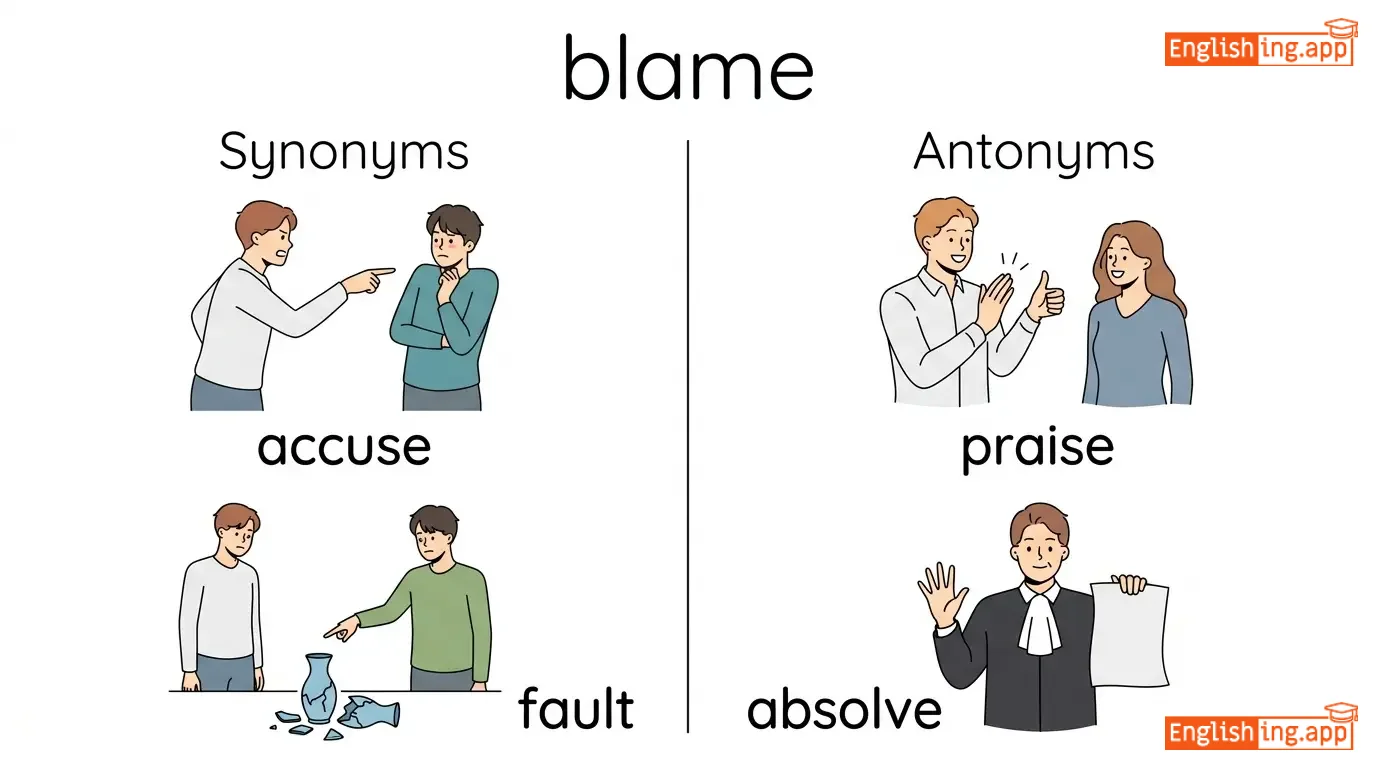
accuse, fault, charge, condemn
••••••
|
praise, absolve, forgive
••••••
|
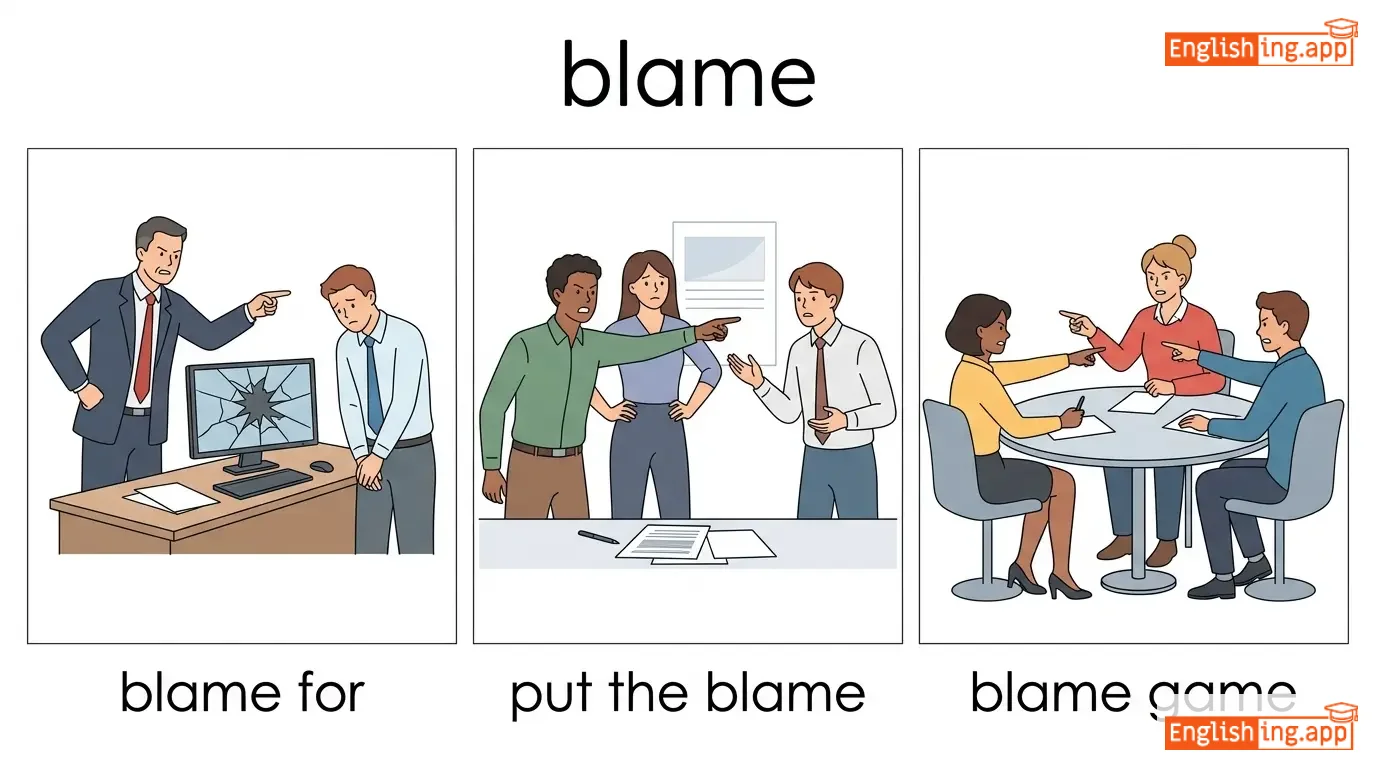
blame for, put the blame, blame game, blame others
••••••
|
Blame 意思是责怪—'Blame game' 意思是推卸责任的游戏。
••••••
|
|
📦
••••••
|
/keɪs/
noun
(kèisī)
••••••
|
- •••••• |
案例 / 情况
ànlì / qíngkuàng
••••••
|
- •••••• | - •••••• | - •••••• | - •••••• |
A particular situation, occurrence, or an instance of something; also a container or covering for something.
••••••
|
In this case, we should wait for further instructions.
在这种情况下,我们应该等待进一步的指示。
••••••
|
在这种情况下,我们应该等待进一步的指示。
Zài zhè zhǒng qíngkuàng xià, wǒmen yīnggāi děngdài jìnyībù de zhǐshì.
••••••
|
in any case
无论如何
••••••
|
whatever happens; regardless of the situation
••••••
|
无论如何
wúlùn rúhé
••••••
|
instance, example, situation, container, box
••••••
|
whole, entirety
••••••
|
in case of, legal case, strong case, special case
••••••
|
Case代表情况,像是案件或手机壳
••••••
|
|
👤
••••••
|
/ˈklaɪənt/
noun
(klai'ente)
••••••
|
- •••••• |
客户
kehu
••••••
|
- •••••• | - •••••• | - •••••• | - •••••• |
A person or organization using the services of a professional or company.
••••••
|
The lawyer met with her client to discuss the case. |
律师会见了她的客户,讨论案件
lǜshī huìjiànle tā de kèhù, tǎolùn ànjiàn
••••••
|
client base |
The group of clients a company serves.
••••••
|
客户基础
kèhù jīchǔ
••••••
|
customer, patron, consumer, buyer
••••••
|
seller, provider
••••••
|
client meeting, client relationship, client support, client base
••••••
|
客户=总是得到服务的人
••••••
|
|
🚔
••••••
|
/kraɪm/
noun
(克莱姆)
••••••
|
- •••••• |
犯罪
fànzuì
••••••
|
- •••••• | - •••••• | - •••••• | - •••••• |
An illegal act punishable by law.
••••••
|
The police are investigating the crime.
警方正在调查犯罪。
••••••
|
警方正在调查犯罪。
jǐngfāng zhèngzài diàochá fànzuì.
••••••
|
crime does not pay
犯罪没有好处。
••••••
|
crime ultimately brings punishment, not profit
••••••
|
犯罪没有好处。
fànzuì méiyǒu hǎochù.
••••••
|
offense, felony, wrongdoing, violation
••••••
|
lawfulness, obedience
••••••
|
commit a crime, crime rate, crime scene, organized crime
••••••
|
犯罪有后果,做错了就付出代价。
••••••
|
|
☠️
••••••
|
/ˈdedli/
adjective
(dɛdli)
••••••
|
- •••••• |
致命的
zhìmìng de
••••••
|
- •••••• | - •••••• | - •••••• | - •••••• |
causing or able to cause death; extremely dangerous
••••••
|
The snake's bite is deadly to humans. |
蛇的咬伤对人类致命。
Shé de yǎoshāng duì rénlèi zhìmìng.
••••••
|
deadly serious |
completely serious; not joking
••••••
|
非常严肃
fēicháng yánsù
••••••
|
fatal, lethal, dangerous, mortal, poisonous
••••••
|
harmless, safe, mild
••••••
|
deadly weapon, deadly virus, deadly poison, deadly attack
••••••
|
Deadly 意味着致命的,就像致命的蛇咬一样!
••••••
|
|
💀
••••••
|
/dɛθ/
noun
(dɛθ)
••••••
|
- •••••• |
死亡
sǐwáng
••••••
|
- •••••• | - •••••• | - •••••• | - •••••• |
The end of life; the permanent cessation of all vital functions.
••••••
|
The news of his death shocked everyone in the village. |
他的死亡消息震惊了村里所有人。
tā de sǐwáng xiāoxī zhènjīng le cūn lǐ suǒyǒu rén.
••••••
|
a matter of life and death |
something extremely important or urgent
••••••
|
生死攸关的问题
shēngsǐ yōuguān de wèntí
••••••
|
demise, passing, end, expiration, departure
••••••
|
birth, life, existence
••••••
|
sudden death, tragic death, death penalty, cause of death, near death
••••••
|
Death在中文是死亡,记住,死亡来临时一切终结。
••••••
|
|
🕵️
••••••
|
/dɪˈtɛkt/
verb
(dɪˈtɛkt)
••••••
|
|
检测
jiǎncè
••••••
|
detected
dɪˈtɛktəd
••••••
|
detected
dɪˈtɛktəd
••••••
|
detects
dɪˈtɛkts
••••••
|
detecting
dɪˈtɛktɪŋ
••••••
|
To discover or identify the presence of something.
••••••
|
The device can detect smoke in the room.
设备可以检测到房间里的烟雾。
••••••
|
设备可以检测到房间里的烟雾。
Shèbèi kěyǐ jiǎncè dào fángjiān lǐ de yānwù.
••••••
|
detect a problem
检测问题
••••••
|
To notice or discover an issue.
••••••
|
检测问题
jiǎncè wèntí
••••••
|
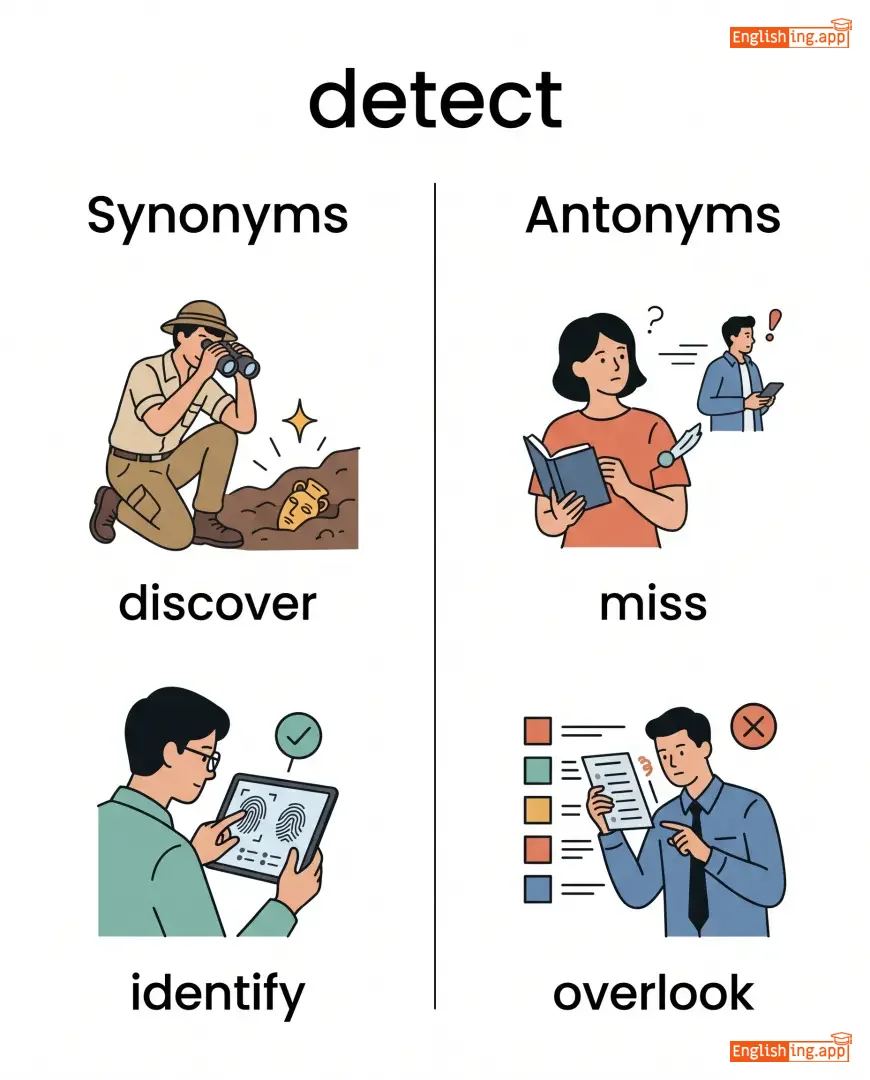
discover, identify, notice, sense, recognize
••••••
|
miss, overlook, ignore
••••••
|
detect a signal, detect movement, detect fraud, detect error
••••••
|
检测就是当你看到烟雾时,设备就能检测出来。
••••••
|
|
🔍
••••••
|
/ˈɛv.ɪ.dəns/
noun
(艾-维-丹斯)
••••••
|
- •••••• |
证据
zhèngjù
••••••
|
- •••••• | - •••••• | - •••••• | - •••••• |
facts or information that show whether something is true or not
••••••
|
The lawyer presented new evidence in court. |
律师在法庭上提交了新的证据。
lǜshī zài fǎtíng shàng tíjiāo le xīn de zhèngjù.
••••••
|
hard evidence |
strong, undeniable proof
••••••
|
确凿证据
quèzáo zhèngjù
••••••
|
proof, testimony, confirmation, validation, indication
••••••
|
denial, contradiction, disproof
••••••
|
present evidence, gather evidence, strong evidence, lack of evidence
••••••
|
证据 = 证明某事是否真实。
••••••
|

