The Spy Who Chose Peace
阿里是个 spy。他的工作是在 war 期间窃取敌人的机密。他的 role 很危险。
有一天,他的 king 说:“阿里,你必须去。我们需要知道敌方 king's 的计划。我们想赢得这场 war。”
阿里拿起他的 gun。他知道——在这次任务中他可能会 die。也许他会被 shot。也许他会 dead。
他进入敌方领地。到处都是 war。Guns、炸弹、死亡。他心中既有 rage 又有恐惧。
在一栋建筑里,他找到了敌方 king's 的办公室。文件散落各处。都是关于 war 的计划。要 kill 多少人,要 capture 哪些地方。
突然阿里 saw 了什么。一张照片。敌方 king's 的家庭。他的孩子,他的妻子。他们也很害怕。他们也不想要 war。
阿里明白了。这场 war 对谁都不好。双方的人都在 dying。双方的家庭都在受苦。War 只带来 rage 和死亡。
他做了一个 bold 的决定。他没有拿走文件。相反,他写了一条信息:“War must end。Let's talk。Let's find peace。”
但这时一个守卫出现了。“Spy!” 他喊道。他举起了 gun。 “I will kill you!”
阿里举起双手。“No **gun”,他说。“I don't want to kill。I want war to end。”
“Flee!” 守卫说。“Flee 在我把你 shoot dead 之前!”
阿里没有 flee。 “Show 这个给你的 king,”他说,递上那条 message。 “告诉他我的 king 也想要和平。我们都厌倦了这场 war。”
守卫困惑了。一个会 kill 的 spy 在谈论和平?
几天 passed。阿里被 held 为囚犯。但随后,事情发生了变化。King 叫见了他。
“你的 **message”,” 敌方 king 说。“它传到了我这里。我的人民也很疲惫。他们也想让这场 war end。”
他们吹响了 horn。宣布来了——war 将 end。两位 kings 将会面。和平会谈将开始。
当阿里回到家时,他的 king 很生气。 “你是个 spy!你的 role 是帮助我们赢得 war!不是把它 end!”
“恭敬地说,”阿里说,“赢得一场 war 意味着更多的死亡。更多的人被 shot dead。更多的 rage。我选择了一条 bold 的道路。我选择了和平。”
“但 war 给了我们权力!War 让我们 rule!” king 喊道。
“但和平给了我们生命,”阿里回答。“看——我们的人民在庆祝。他们 hold 着 flag,不是带着 rage,而是带着希望。他们 show 出快乐,而不是愤怒。War 可能 end,但生活会 rise。”
King 向外看。确实,人们很快乐。没有更多的 guns,没有再害怕被 shot dead。不再需要 flee。他们很 safe。
“也许,”king 慢慢地说,“一个 king 能做的最 bold 的事,不是发动 war,而是 end 它。”
岁月 passed。War ended。两个王国都繁荣起来。孩子们长大,不再听到 guns,而是听到音乐。不是学习 kill,而是学习生活。
有一天,有人问阿里:“你不害怕吗?你是个 spy。你可能被 shot dead。你可能被 killed。”
阿里笑了。“我确实 was 害怕。但我意识到——成为 spy 并不意味着你必须帮 war。有时最重要的 role 是去 help 和平。War 很容易——你 hold 一把 gun,你 shoot,你 kill。和平很难——你必须 bold,你必须 show 勇气,不是用 gun,而是用言语。你必须 make rage end,让希望 rise。”
“如果他们 had killed 你呢?”有人问。
“那么至少,”阿里说,“我会 died,试图拯救生命,而不是夺走它们。War 无论如何会 ended。已经有太多人 dead 了。太多母亲见过她们的儿子被 shot。太多人不得不 flee 家园。必须有某个人足够 bold 去说——够了。Let this war end。Let the guns fall。Let the flags of peace rise。”
于是,一个拿着 gun 的 spy 不是通过 killing 成为英雄,而是通过选择不杀人成为英雄。通过 show 出即便在 war 中,即便 rage 无处不在,即便 kings rule 用武力——一个 bold 的人也可以说 “no”。而那可以改变一切。
因为有时最难 hold 的不是一把 gun,而是相信 war must end 的信念。有时真正的 bold 是不去学 how to kill,而是学会让和平 rise。
|
表情符号
|
单词 | Images | 翻译 | 过去时 | 过去分词 | 第三人称单数 | 动名词 | 含义 | 例句 | 例句翻译 | 示例表达 | 示例表达含义 | 示例表达翻译 | 同义词 | 反义词 | 搭配词 | 助记符 |
|---|---|---|---|---|---|---|---|---|---|---|---|---|---|---|---|---|---|
|
🦁
••••••
|
/boʊld/
adjective
(bóld)
••••••
|
- •••••• |
大胆
dadan
••••••
|
- •••••• | - •••••• | - •••••• | - •••••• |
showing courage, confidence, or willingness to take risks
••••••
|
She made a bold decision to start her own business. |
她做出了大胆的决定,开始了自己的生意。
Ta zuo chule dadan de jueding, kaishi le ziji de shengyi.
••••••
|
fortune favors the bold |
people who take risks often achieve success
••••••
|
命运偏爱大胆的人
Mingyun pian'ai dadan de ren
••••••
|
brave, courageous, daring, confident, fearless
••••••
|
timid, shy, fearful
••••••
|
bold decision, bold move, bold colors, bold step
••••••
|
大胆在中文中意味着bold,像勇敢的人做出大胆的决定。
••••••
|
|
💀
••••••
|
/dɛd/
adjective, noun
(dɛd)
••••••
|
- •••••• |
死的
si de
••••••
|
- •••••• | - •••••• | - •••••• | - •••••• |
No longer alive; the end of life.
••••••
|
The old tree is completely dead. |
那棵老树已经完全死了。
Na ke lao shu yijing wanquan si le.
••••••
|
dead end |
A situation with no progress or exit.
••••••
|
死胡同
si hutong
••••••
|
lifeless, deceased, expired, gone
••••••
|
alive, living, active
••••••
|
dead body, dead silence, dead end, dead serious
••••••
|
Dead 就是死的,结束了。
••••••
|
|
🔚
••••••
|
/ɛnd/
verb
(ēnd)
••••••
|
- •••••• |
结束
jieshu
••••••
|
ended
ēnded
••••••
|
ended
ēnded
••••••
|
ends
ēnds
••••••
|
ending
ēnding
••••••
|
to bring something to a conclusion or stop
••••••
|
The meeting ended at 5 PM.
会议在5点结束。
••••••
|
会议在5点结束。
Huiyi zai 5 dian jieshu.
••••••
|
at the end of the day
一天的结束时
••••••
|
when everything is considered
••••••
|
一天的结束时
yitian de jieshu shi
••••••
|
finish, conclude, terminate, cease
••••••
|
begin, start, commence
••••••
|
end game, happy end, tragic end, end result
••••••
|
End意思是'结束', 就像电影结束时显示The End!
••••••
|
|
🚩
••••••
|
/flæɡ/
noun, verb
••••••
|
|
- •••••• |
flagged
••••••
|
flagged
••••••
|
flags
••••••
|
flagging
••••••
|
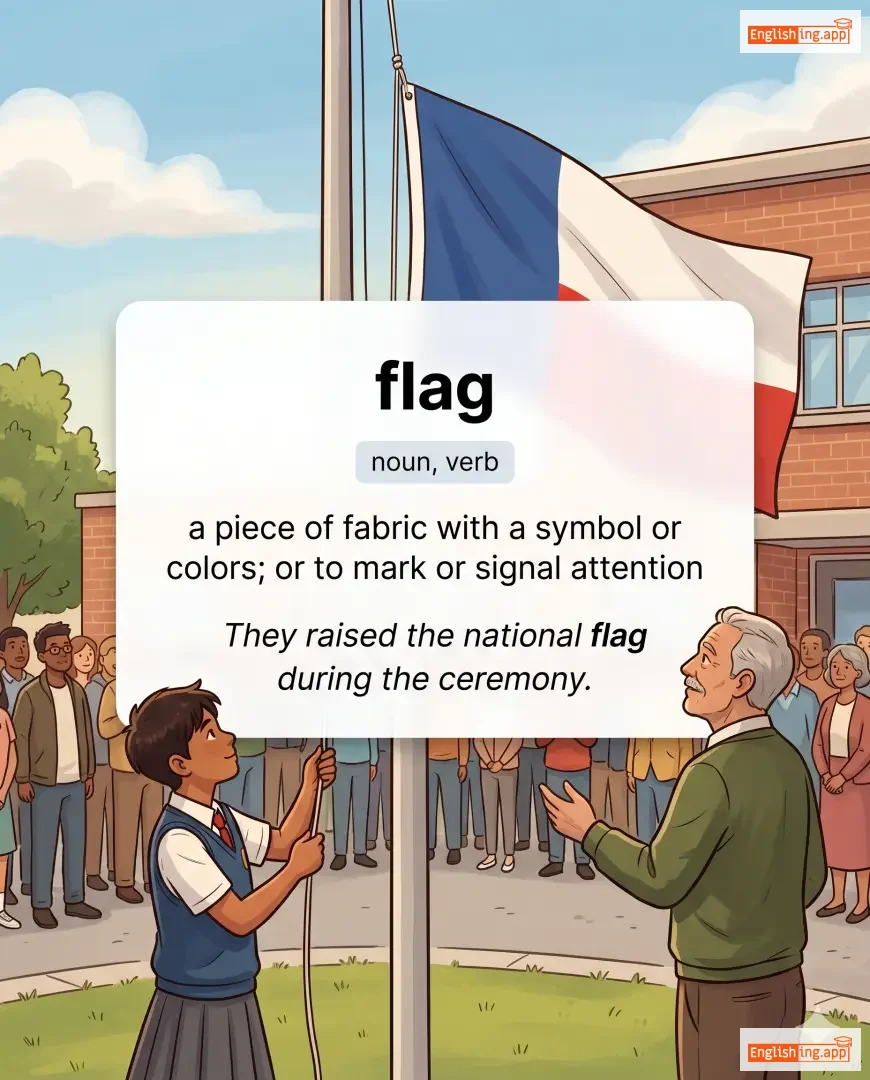
a piece of fabric with a symbol or colors; or to mark or signal attention
••••••
|
They raised the national flag during the ceremony. |
- •••••• |
red flag |
a warning sign or indication of danger
••••••
|
- •••••• |
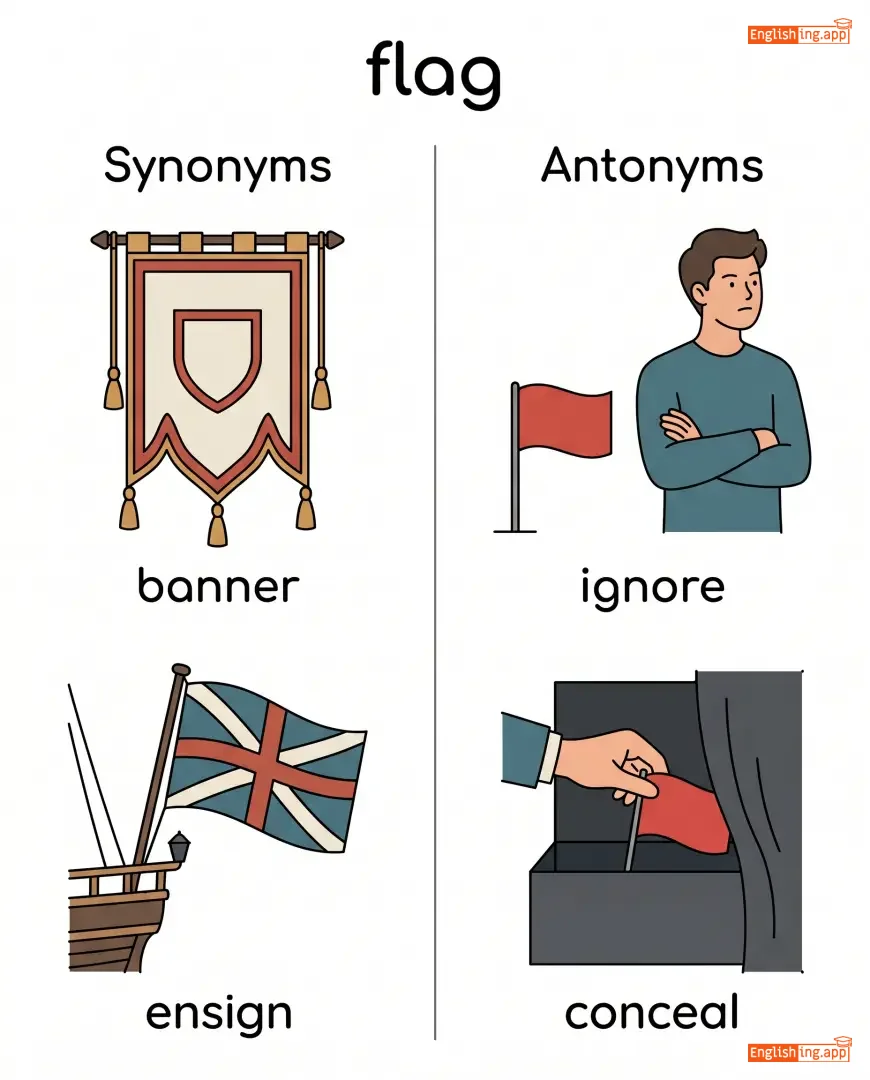
banner, ensign, signal, mark
••••••
|
ignore, conceal
••••••
|
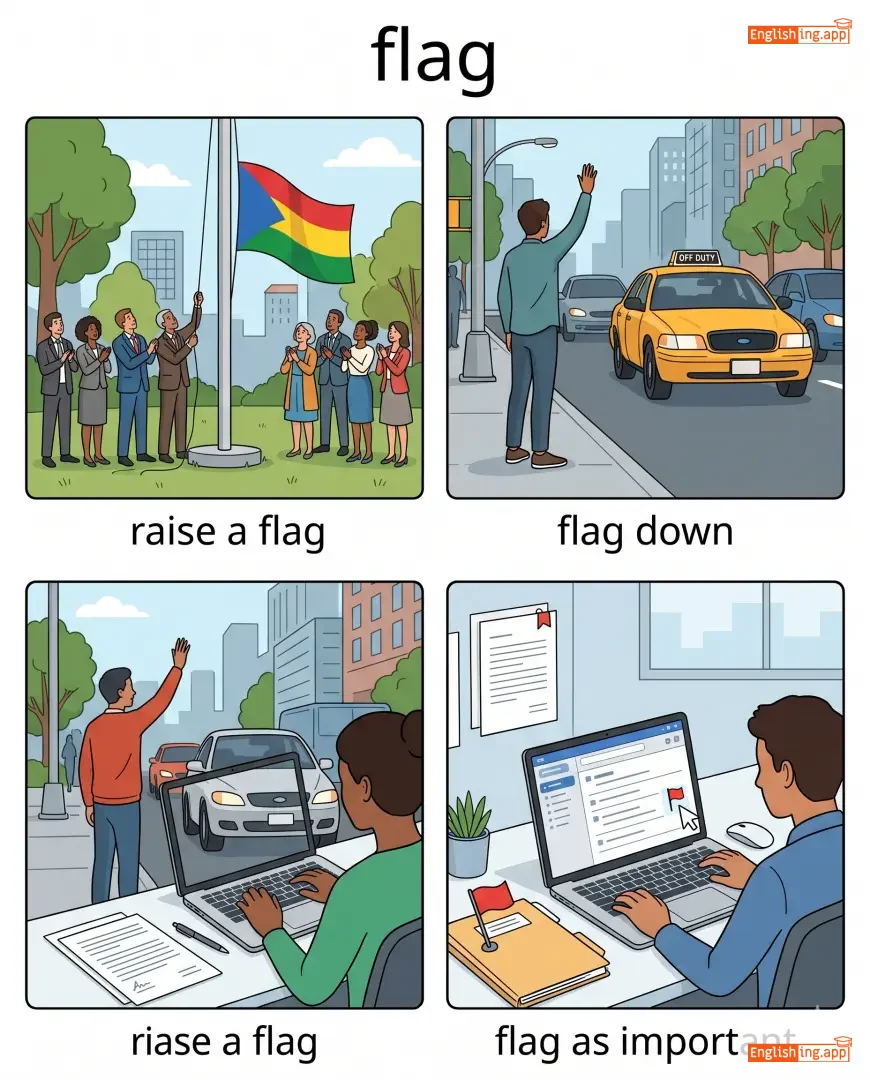
raise a flag, flag down, flag as important, flag a message
••••••
|
No •••••• |
|
🏃♂️
••••••
|
/fliː/
verb
(弗利)
••••••
|
- •••••• |
逃跑
tao pao
••••••
|
fled
弗雷德
••••••
|
fled
弗雷德
••••••
|
flees
弗利斯
••••••
|
fleeing
弗林
••••••
|
To run away from danger or a threatening situation.
••••••
|
The villagers had to flee during the flood.
村民们在洪水期间不得不逃离。
••••••
|
村民们在洪水期间不得不逃离。
Cunmin men zai hongshui qi jian bude bu taoli.
••••••
|
flee the scene
逃离现场
••••••
|
To quickly leave the place where an incident or crime has happened.
••••••
|
逃离事发地点
tao li shifa didian
••••••
|
escape, run, abscond, bolt, evacuate
••••••
|
stay, remain
••••••
|
flee from danger, flee the country, flee war, flee the scene
••••••
|
Flee 的意思是逃跑 🏃♂️ - 洪水时大家都会逃跑。
••••••
|
|
🔫
••••••
|
/ɡʌn/
noun
(gān)
••••••
|
- •••••• |
枪
qiāng
••••••
|
- •••••• | - •••••• | - •••••• | - •••••• |
a weapon that shoots bullets or other projectiles
••••••
|
The police officer carried a gun for protection. |
警察为保护自己携带了枪。
Jǐngchá wèi bǎohù zìjǐ xiédài le qiāng.
••••••
|
jump the gun |
to do something too soon or before the right time
••••••
|
抢先一步
qiǎngxiān yī bù
••••••
|
firearm, pistol, rifle, revolver, weapon
••••••
|
peace, disarmament, safety
••••••
|
carry a gun, toy gun, gun control, load a gun
••••••
|
Gun, 就是枪,随时准备发射。
••••••
|
|
✋
••••••
|
/hoʊld/
verb
(hōld)
••••••
|
|
握住
wò zhù
••••••
|
held
held
••••••
|
held
held
••••••
|
holds
hōldz
••••••
|
holding
hōlding
••••••
|
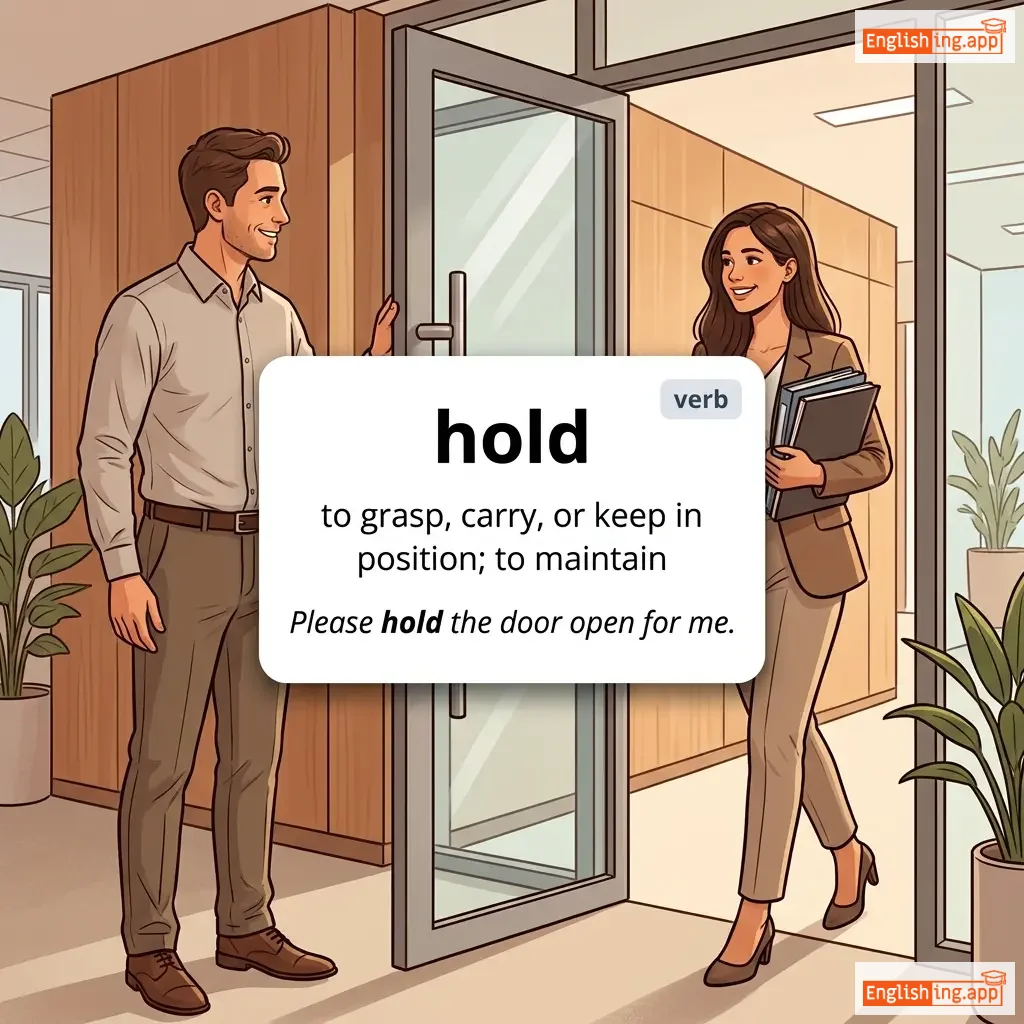
to grasp, carry, or keep in position; to maintain
••••••
|
Please hold the door open for me.
pliz hould də dɔʁ ópen fɔʁ mi.
••••••
|
请为我把门保持打开。
Qǐng wèi wǒ bǎ mén bǎochí dǎkāi.
••••••
|
hold on
hould ɔn
••••••
|
to wait or pause briefly
••••••
|
等一下
děng yīxià
••••••
|
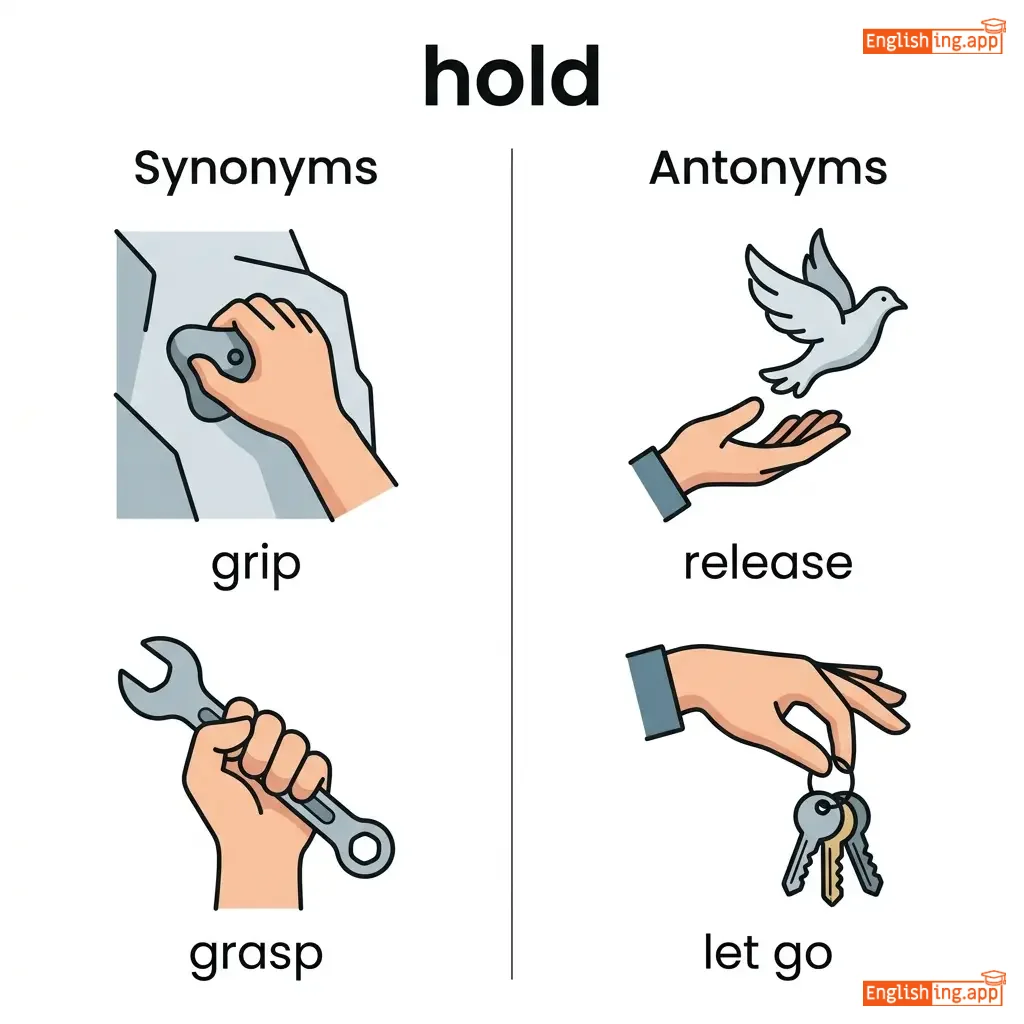
grip, grasp, keep, maintain, support
••••••
|
release, let go
••••••
|
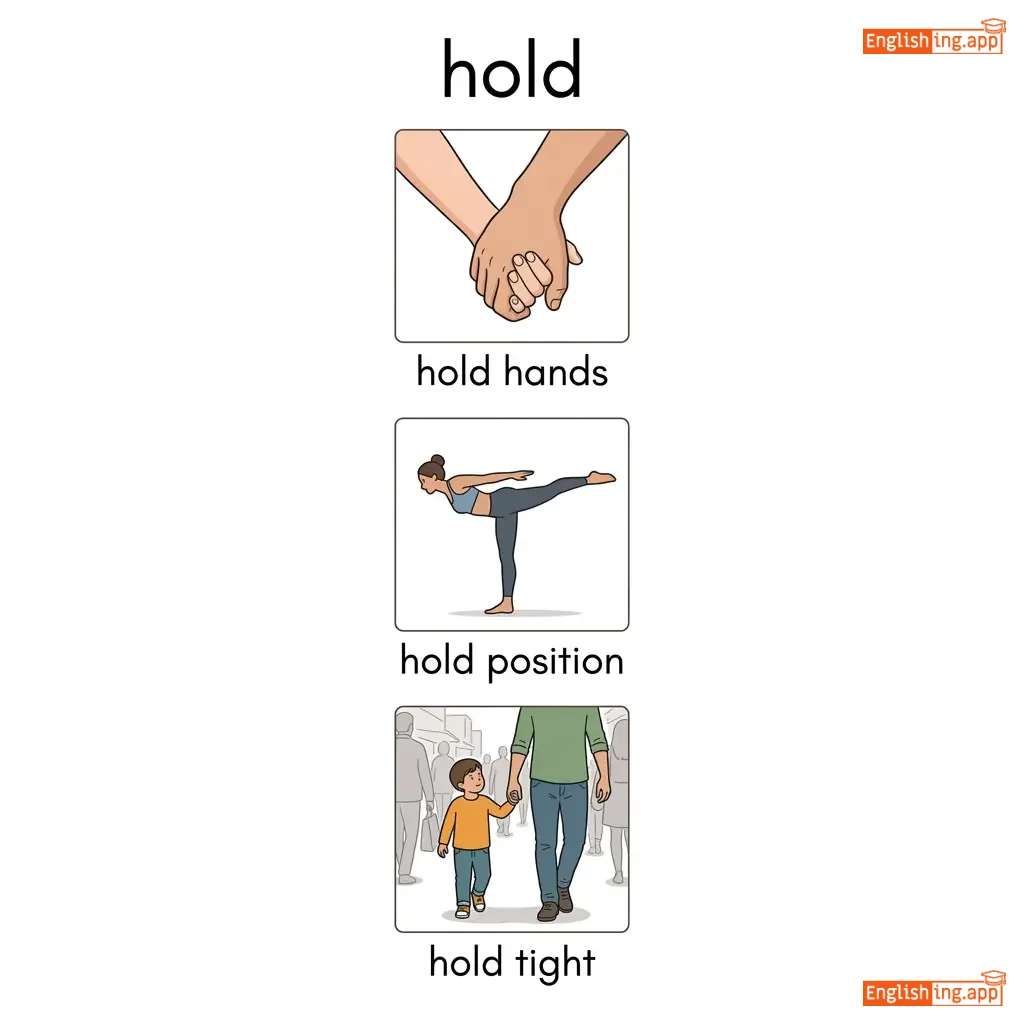
hold hands, hold position, hold tight, hold meeting
••••••
|
Hold 意味着握住,就像你握住手机。
••••••
|
|
📯
••••••
|
/hɔːrn/
noun
(霍恩)
••••••
|
- •••••• |
角, 喇叭
jiǎo, lǎbā
••••••
|
- •••••• | - •••••• | - •••••• | - •••••• |
a hard, pointed part growing from the head of some animals; a device that makes a loud sound as a warning
••••••
|
The driver pressed the horn to warn the pedestrians. |
司机按下喇叭来警告行人。
Sījī ànxià lǎbā lái jǐnggào xíngrén.
••••••
|
toot your own horn |
to boast or brag about oneself
••••••
|
吹嘘自己
chuīxū zìjǐ
••••••
|
trumpet, alarm, antler, signal
••••••
|
silence, mute
••••••
|
car horn, blow horn, honk horn, horn sound
••••••
|
按喇叭 📯 来吸引注意,就像动物的角一样!
••••••
|
|
☠️
••••••
|
/kɪl/
verb
(kil)
••••••
|
|
杀
sha
••••••
|
killed
kild
••••••
|
killed
kild
••••••
|
kills
kils
••••••
|
killing
kiling
••••••
|
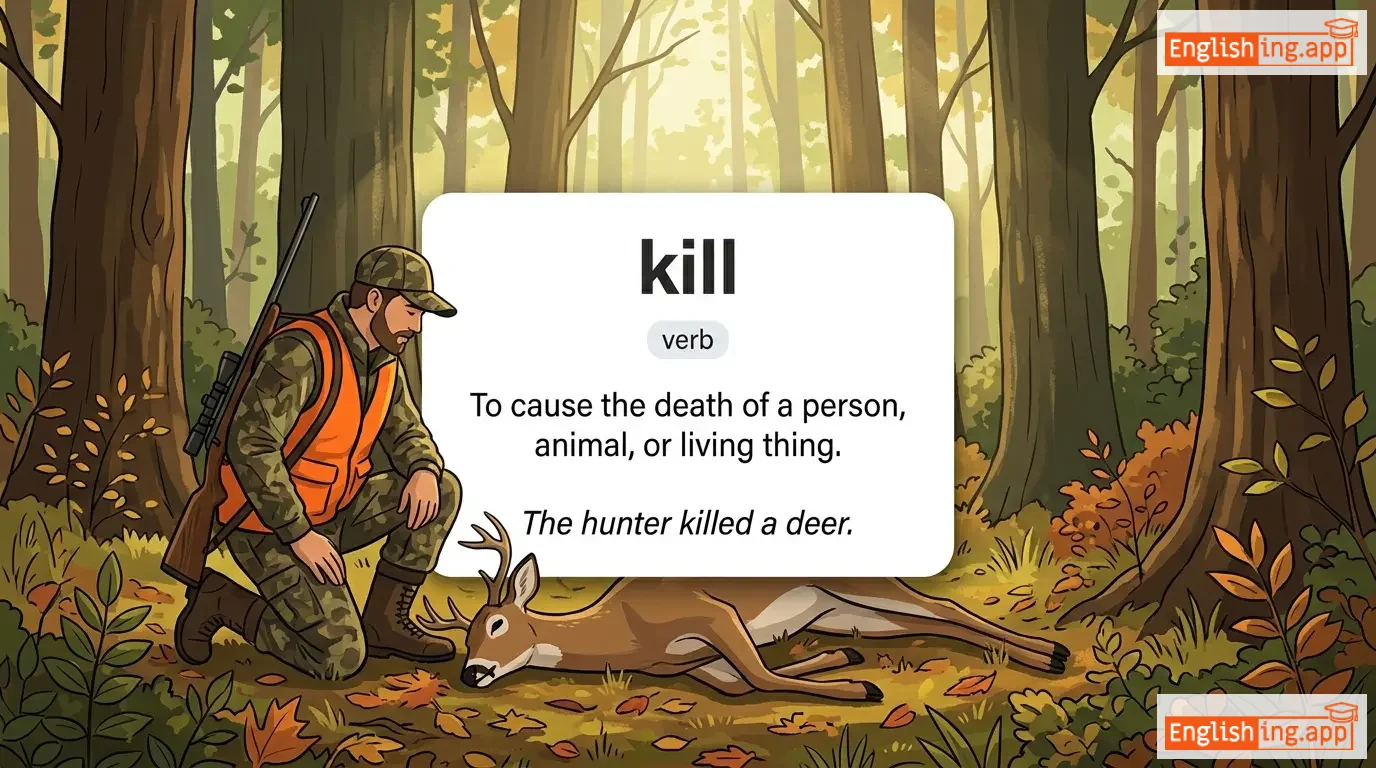
To cause the death of a person, animal, or living thing.
••••••
|
The hunter killed a deer.
猎人杀了一只鹿。
••••••
|
猎人杀了一只鹿。
Lie ren sha le yi zhi lu.
••••••
|
kill time
打发时间
••••••
|
to spend time doing something unimportant while waiting
••••••
|
打发时间
da fa shi jian
••••••
|
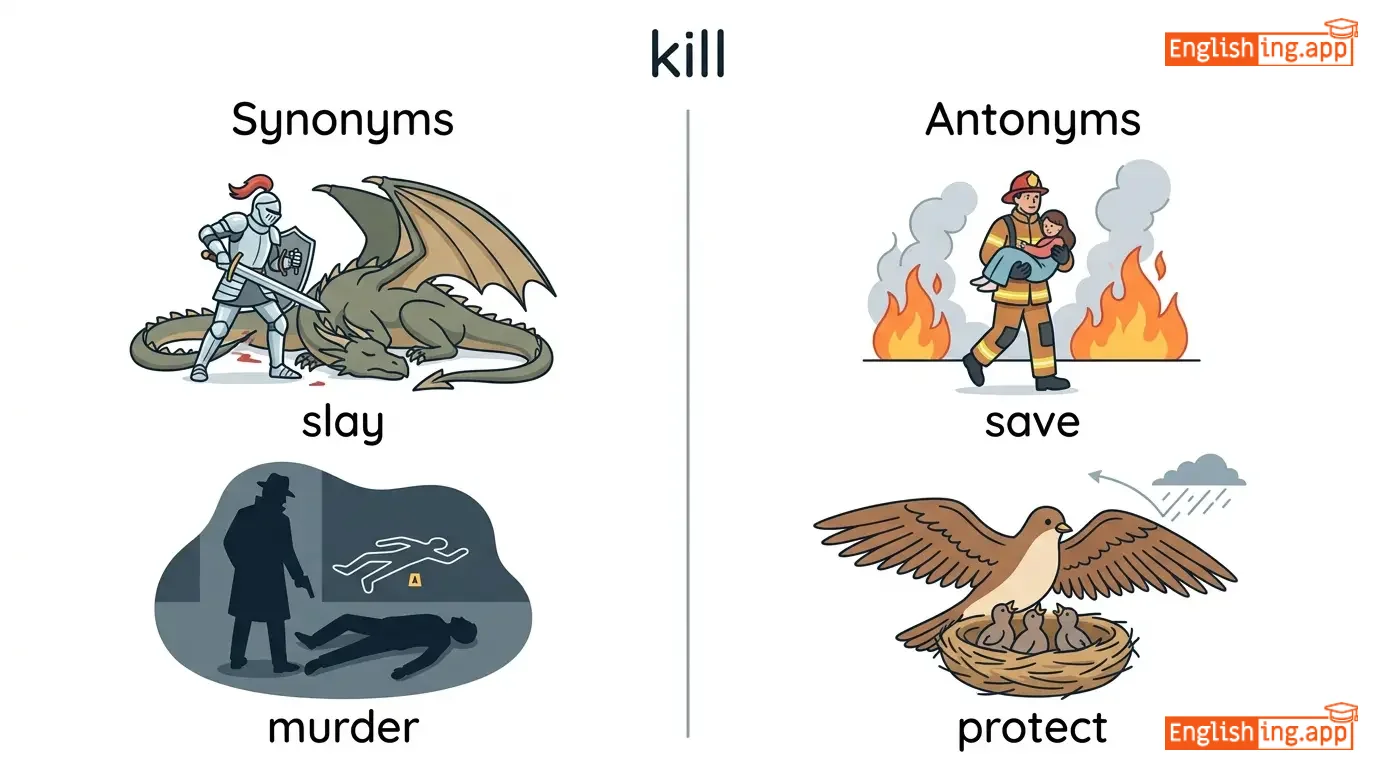
slay, murder, destroy, end, eliminate
••••••
|
save, protect, preserve
••••••
|
kill time, kill instantly, kill someone, kill the mood
••••••
|
杀是杀,打发时间是等待不重要的事情。
••••••
|
|
👑
••••••
|
/kɪŋ/
noun
(king)
••••••
|
- •••••• |
国王
guowang
••••••
|
- •••••• | - •••••• | - •••••• | - •••••• |
the male ruler of an independent state, especially one who inherits the position by right of birth
••••••
|
The king ruled the country with wisdom and fairness. |
国王以智慧和公正治理国家。
Guowang yi zhihui he gongzheng zhili guojia.
••••••
|
King of the hill |
a person who is the best or most powerful in a particular area
••••••
|
山丘之王
Shanqiu zhi wang
••••••
|
monarch, ruler, emperor, sovereign, potentate
••••••
|
subject, commoner
••••••
|
king and queen, crowned king, king of England, king of the hill
••••••
|
👑 国王就是统治者,带着王冠的权力者。
••••••
|
|
🏃♂️
••••••
|
/pæs/
verb
••••••
|
- •••••• | - •••••• |
passed
••••••
|
passed
••••••
|
passes
••••••
|
passing
••••••
|
to move past or beyond something
••••••
|
He passed the test with flying colors. |
- •••••• |
pass the buck |
to shift responsibility to someone else
••••••
|
- •••••• |
move, go by, advance, transfer
••••••
|
stop, block, hinder
••••••
|
pass a test, pass by, pass on, pass away
••••••
|
No •••••• |
|
😡
••••••
|
/reɪdʒ/
noun
(reɪdʒ)
••••••
|
- •••••• |
愤怒
fennu
••••••
|
- •••••• | - •••••• | - •••••• | - •••••• |
intense anger or fury
••••••
|
She shouted in a fit of rage after hearing the news. |
她听到消息后在愤怒中大喊。
Ta tingdao xiaoxi hou zai fennu zhong dahuan.
••••••
|
fly into a rage |
to suddenly become very angry
••••••
|
勃然大怒
boran danu
••••••
|
fury, anger, wrath, temper, outrage
••••••
|
calm, peace, patience
••••••
|
fit of rage, blind rage, control rage, rage against
••••••
|
Rage = 愤怒 = 当愤怒无法控制时爆发。
••••••
|
|
🌅
••••••
|
/raɪz/
verb
••••••
|
|
- •••••• |
rose
••••••
|
risen
••••••
|
rises
••••••
|
rising
••••••
|
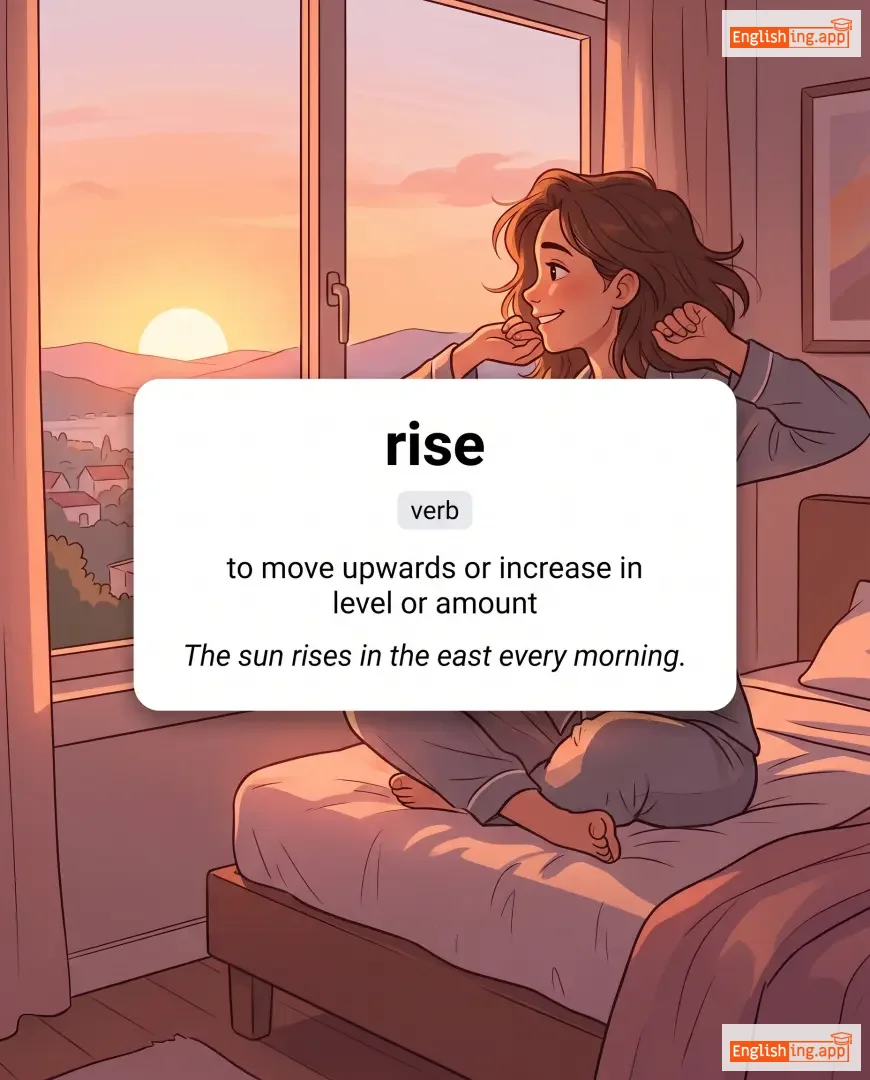
to move upwards or increase in level or amount
••••••
|
The sun rises in the east every morning. |
- •••••• |
rise and shine |
to wake up and become active, usually in the morning
••••••
|
- •••••• |
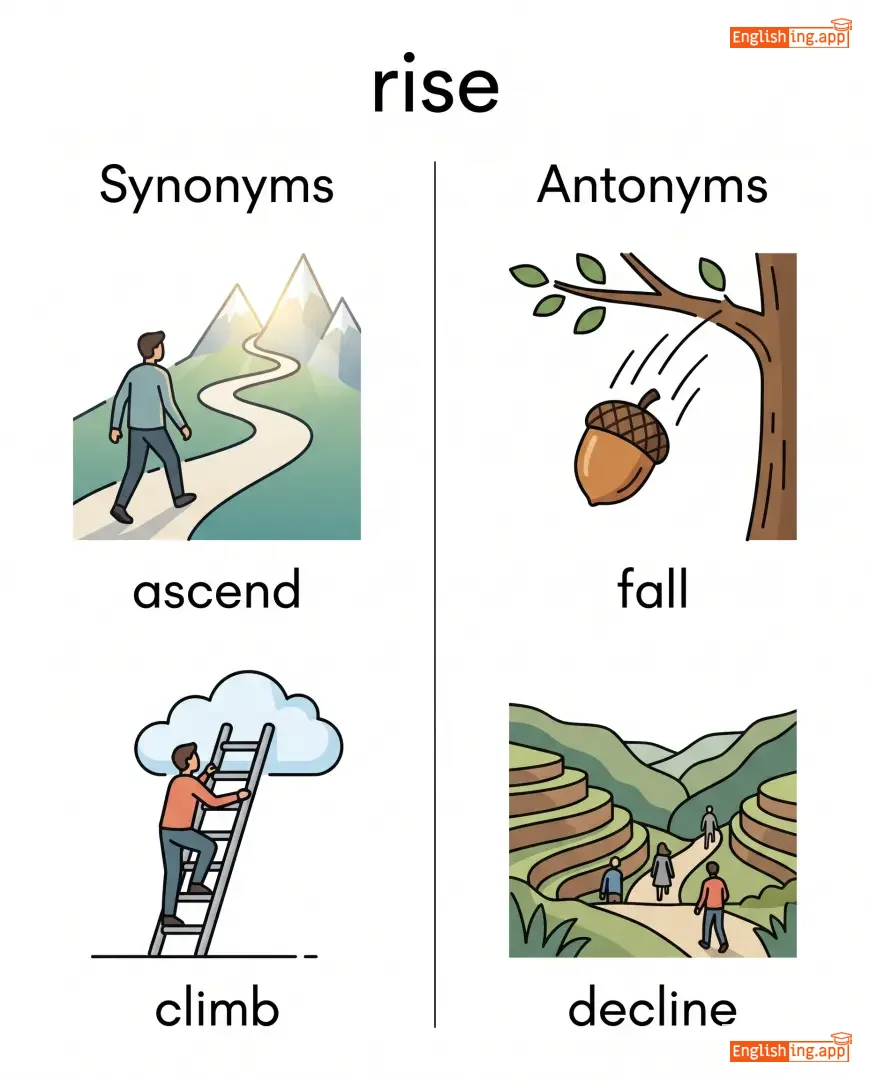
ascend, climb, grow, soar
••••••
|
fall, decline, drop
••••••
|
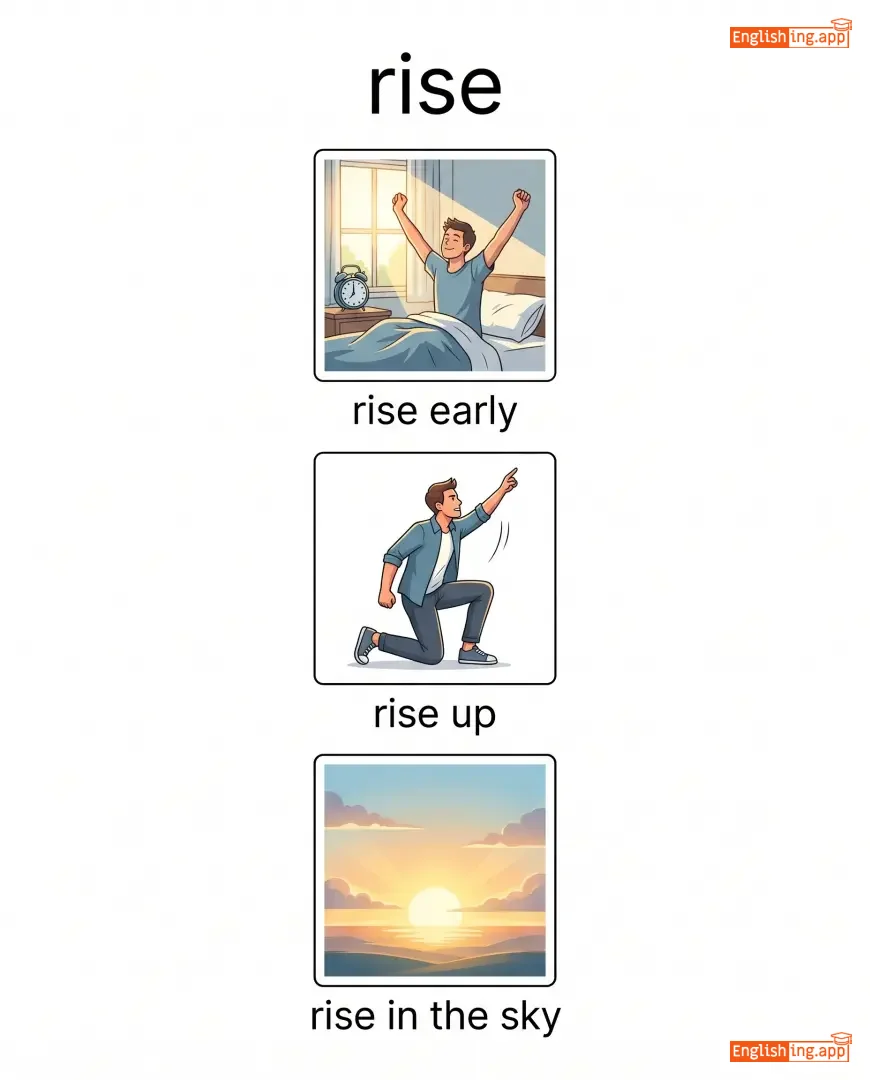
rise early, rise up, rise in the sky, rise to the occasion
••••••
|
No •••••• |
|
🎭
••••••
|
/roʊl/
noun
(ròu)
••••••
|
- •••••• |
角色
juese
••••••
|
- •••••• | - •••••• | - •••••• | - •••••• |
a part or function of something
••••••
|
Her role in the project was crucial. |
她在项目中的角色至关重要。
Ta zai xiangmu zhong de juese zhiguān zhòngyào.
••••••
|
- •••••• | - •••••• | - •••••• |
part, function, position, job
••••••
|
non-entity, spectator
••••••
|
play a role, important role, leadership role, major role
••••••
|
角色就是你在故事中的扮演角色。
••••••
|
|
📏
••••••
|
/ruːl/
noun
(rù'ěr)
••••••
|
- •••••• |
规则
guīzé
••••••
|
- •••••• | - •••••• | - •••••• | - •••••• |
an accepted principle or instruction that states what is allowed or what must be done.
••••••
|
There are strict rules about safety in the lab. |
实验室里有严格的安全规则。
shíyànshì lǐ yǒu yángé de ānquán guīzé.
••••••
|
break the rules |
to disobey or violate the rules
••••••
|
打破规则
dǎpò guīzé
••••••
|
law, regulation, guideline, command, principle
••••••
|
chaos, freedom, disorder
••••••
|
follow the rule, make a rule, strict rule, basic rule
••••••
|
打破规则,你就被学校踢出去!
••••••
|
|
🔒
••••••
|
/seɪf/
noun
(sāi fū)
••••••
|
- •••••• |
保险箱; 保护
bǎoxiǎn xiāng; bǎohù
••••••
|
- •••••• | - •••••• | - •••••• | - •••••• |
secure container for storing valuables; protection from danger
••••••
|
He kept his important documents in the office safe. |
他把重要文件放在办公室的保险箱里。
Tā bǎ zhòngyào wénjiàn fàng zài bàngōngshì de bǎoxiǎn xiāng lǐ.
••••••
|
- •••••• | - •••••• | - •••••• |
vault, strongbox, security, protection
••••••
|
danger, risk, threat, unsafe
••••••
|
bank safe, fire safe, combination safe, safe deposit
••••••
|
像保险箱一样,它提供保护,像防止危险一样。
••••••
|
|
🏹
••••••
|
/ʃɒt/
noun, verb
(射击)
••••••
|
- •••••• |
射击
sheji
••••••
|
shot
射击
••••••
|
shot
射击
••••••
|
shots
射击
••••••
|
shooting
射击
••••••
|
a single attempt to hit something, usually with a weapon or a ball
••••••
|
He took a shot at the goal.
他朝着球门射击。
••••••
|
他朝着球门射击。
Tā cháo zhe qiúmén shèjí.
••••••
|
Take a shot in the dark
黑暗中射击
••••••
|
to make a guess without any prior knowledge
••••••
|
黑暗中射击
Hēi'àn zhōng shèjí
••••••
|
attempt, try, hit, strike
••••••
|
miss, fail
••••••
|
take a shot, shot at the target, long shot
••••••
|
Shot sounds like 'shot' of tea, aim well and shoot!
••••••
|
|
👀
••••••
|
/ʃoʊ/
verb
(秀)
••••••
|
|
展示
zhǎnshì
••••••
|
showed
秀德
••••••
|
shown
秀恩
••••••
|
shows
秀斯
••••••
|
showing
秀印
••••••
|
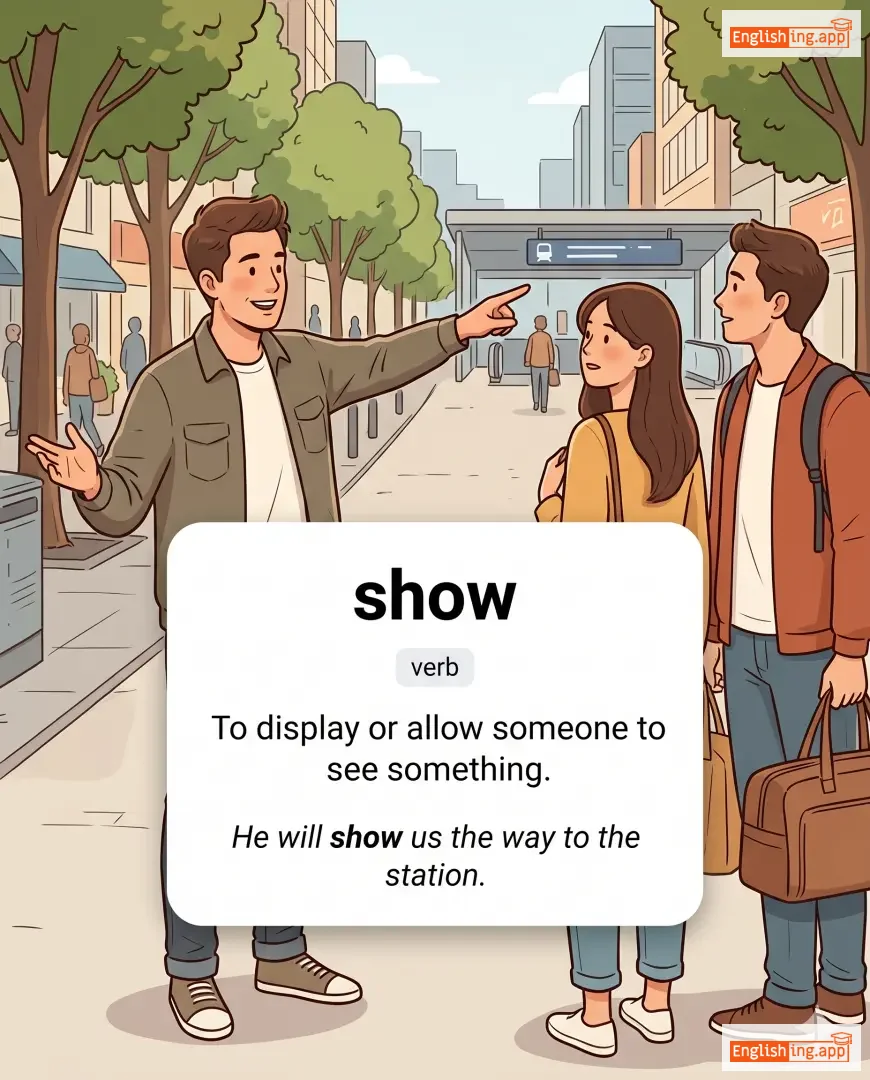
To display or allow someone to see something.
••••••
|
He will show us the way to the station.
他会给我们指引去车站的路。
••••••
|
他会带我们去车站。
Tā huì dài wǒmen qù chēzhàn.
••••••
|
show off
炫耀
••••••
|
to try to impress others by displaying abilities or possessions
••••••
|
炫耀
xuànyào
••••••
|
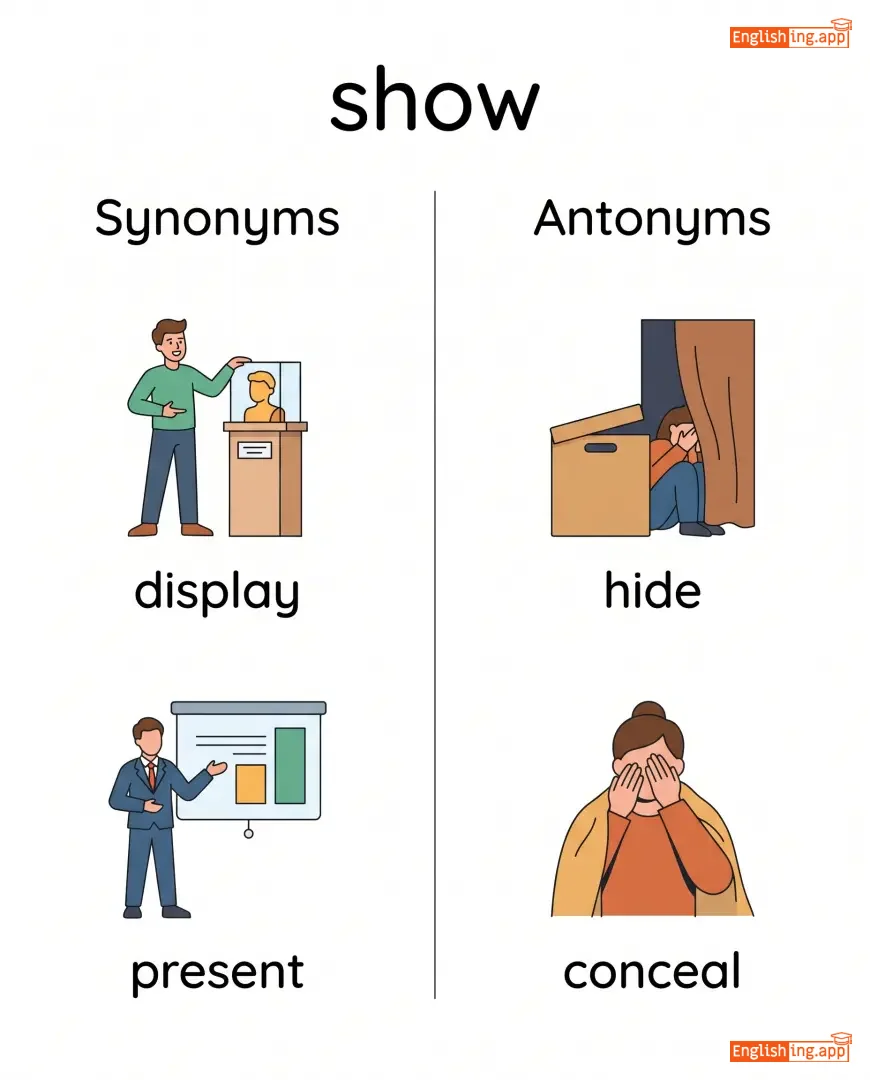
display, present, demonstrate, reveal, exhibit
••••••
|
hide, conceal, cover
••••••
|
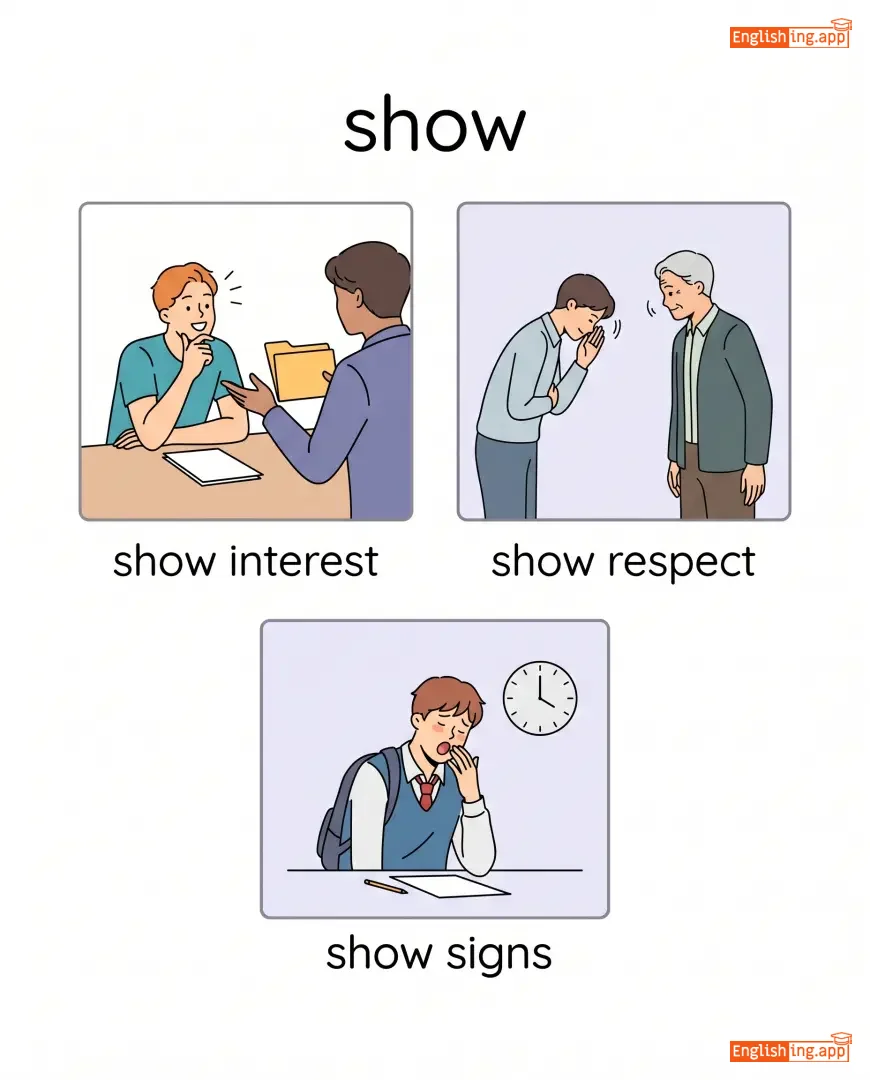
show interest, show respect, show signs, show off
••••••
|
Show 的意思是展示 – 在电视节目中,一切都会展示。
••••••
|
|
🕵️♂️
••••••
|
/spaɪ/
verb
(sī pāi)
••••••
|
- •••••• |
间谍
jiandie
••••••
|
spied
sī pāi dé
••••••
|
spied
sī pāi dé
••••••
|
spies
sī pāi sī
••••••
|
spying
sī pāi yīng
••••••
|
to secretly collect information about a person, group, or country
••••••
|
He was caught spying on his neighbor through the window.
他在窗户旁边偷偷地监视邻居时被抓住了。
••••••
|
他在窗户旁边偷偷地监视邻居时被抓住了。
Tā zài chuānghù pángbiān tōutōu de jiānshì línjū shí bèi zhuā zhù le.
••••••
|
spy on someone
监视某人
••••••
|
to watch someone secretly
••••••
|
监视某人
jiānshì mǒu rén
••••••
|
observe, watch, monitor, investigate, snoop
••••••
|
ignore, overlook
••••••
|
spy agency, spy mission, spy network, spy movie
••••••
|
Spy是间谍 — ‘在间谍电影中,间谍悄悄地观察别人’。
••••••
|
|
⚔️
••••••
|
/wɔːr/
noun
(wā)
••••••
|
- •••••• |
战争
zhànzhēng
••••••
|
- •••••• | - •••••• | - •••••• | - •••••• |
a state of armed conflict between different countries or different groups within a country
••••••
|
The war lasted for five years and caused great destruction.
战争持续了五年,并造成了巨大的破坏。
••••••
|
战争持续了五年,并造成了巨大的破坏。
Zhànzhēng chíxùle wǔ nián, bìng zàochéngle jùdà de pòhuài.
••••••
|
- •••••• | - •••••• | - •••••• |
conflict, battle, combat, warfare
••••••
|
peace, harmony, ceasefire
••••••
|
civil war, world war, war zone, declare war
••••••
|
In Chinese, '战争' directly translates to 'war,' symbolizing destruction and conflict.
••••••
|

