Vocabularies

English Vocabulary Dictionary | Word Meanings, Definitions & Examples

noun
/ˈænsɛstər/

a person in your family who lived a long time ago

"Our ancestors built these temples hundreds of years ago."

Ancestors definition card — visual illustration of the meaning
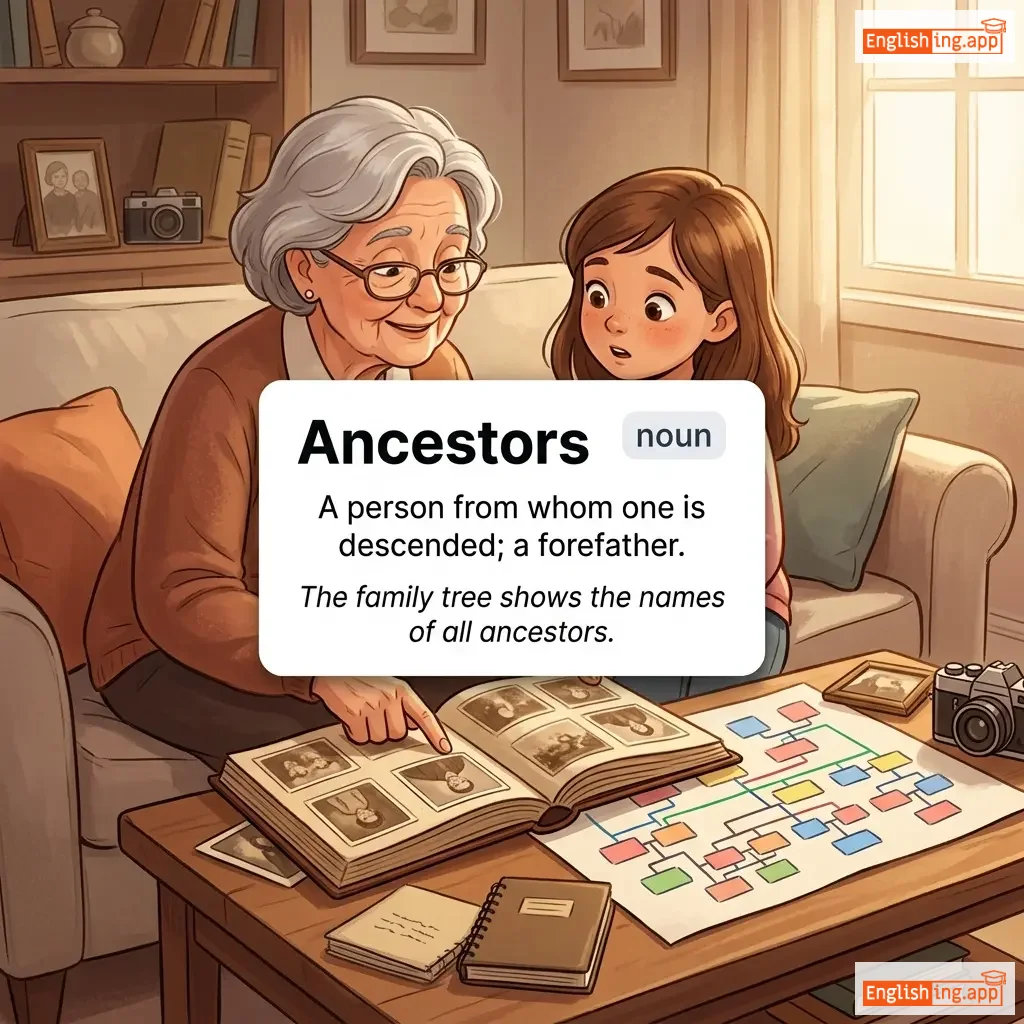
noun
ˈænsɛstərz

A person from whom one is descended; a forefather.

"The family tree shows the names of all ancestors."

noun
/ˈænsɛstrɪs/

a female ancestor; a woman from whom one is descended

"She discovered that her ancestress came from a small village in Bengal."

noun
/ˈænsestri/

one’s family origins or lineage

"He is proud of his royal ancestry."

noun, verb
/ˈæŋkər/

a heavy object used to hold a ship in place; also to secure firmly

"The ship dropped its anchor near the shore."

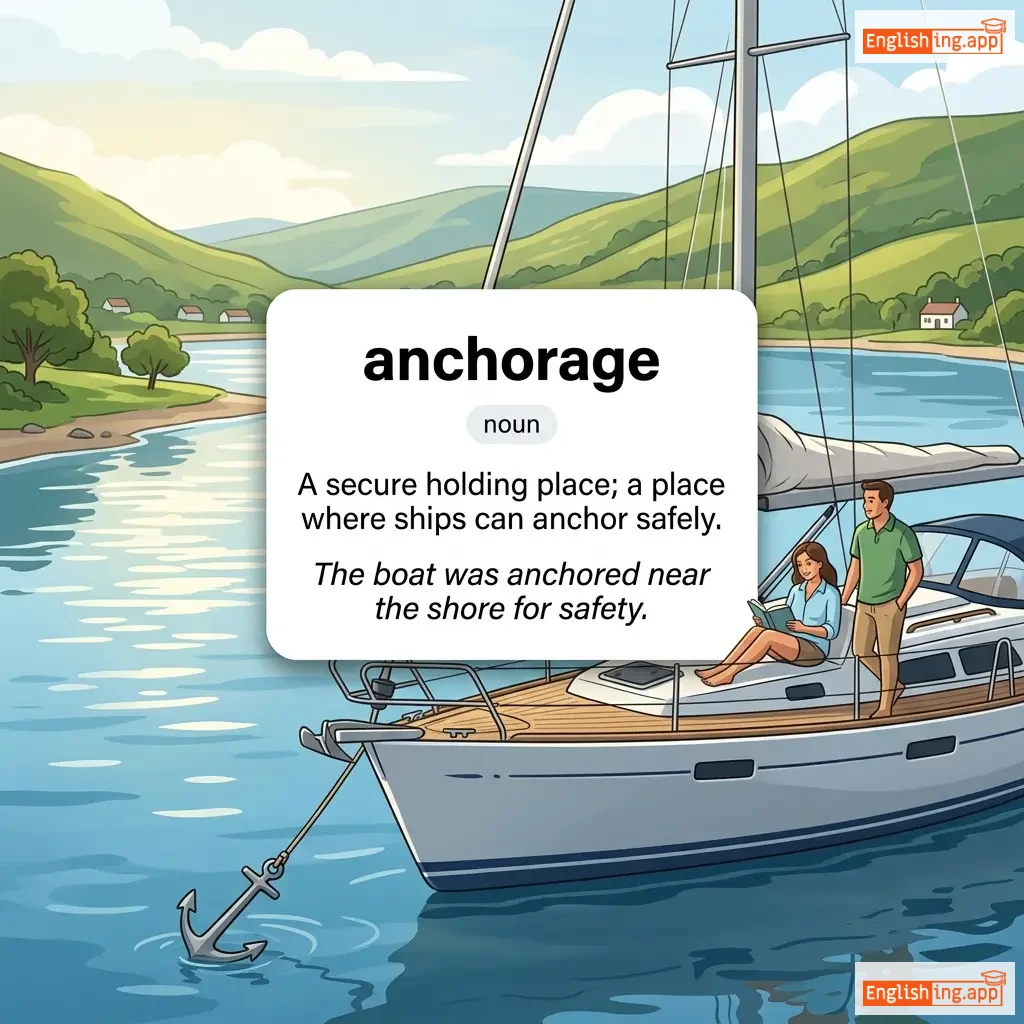
anchorage definition card — visual illustration of the meaning
noun
ˈæŋkərɪdʒ

A secure holding place; a place where ships can anchor safely.

"The boat was anchored near the shore for safety."

🏛️

Ancient

adjective
/ˈeɪnʃənt/

Belonging to the very distant past; very old.

"They visited the ruins of an ancient city."

🛠️

ancillary

adjective
/ˈænsɪləri/

providing necessary support to the main system or organization

"The company provides ancillary services to the healthcare industry."

and

conjunction
/ænd/

Used to connect words or sentences that are to be taken jointly.

"She bought apples and oranges."

noun
/ˈændaɪərn/

a metal support used in a fireplace to hold logs

"The logs rested on the andirons in the old fireplace."

adjective
/ænˈdrɒdʒɪnəs/

Having both male and female characteristics; not clearly masculine or feminine.

"The fashion show featured models with an androgynous look."

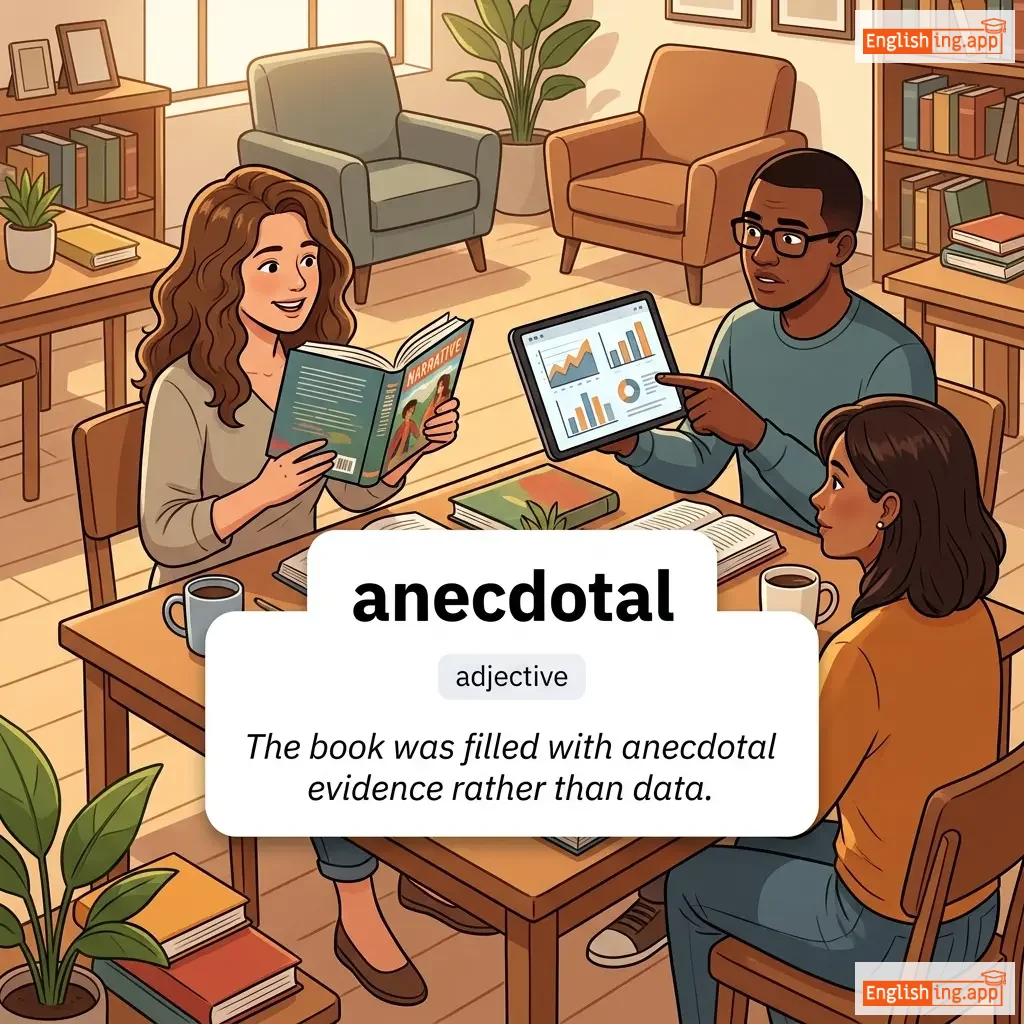
anecdotal definition card — visual illustration of the meaning
adjective
/ˌæn.ɪkˈdoʊ.t̬əl/

Based on personal accounts rather than facts or research; characterized by anecdotes.

"The book was filled with anecdotal evidence rather than data."

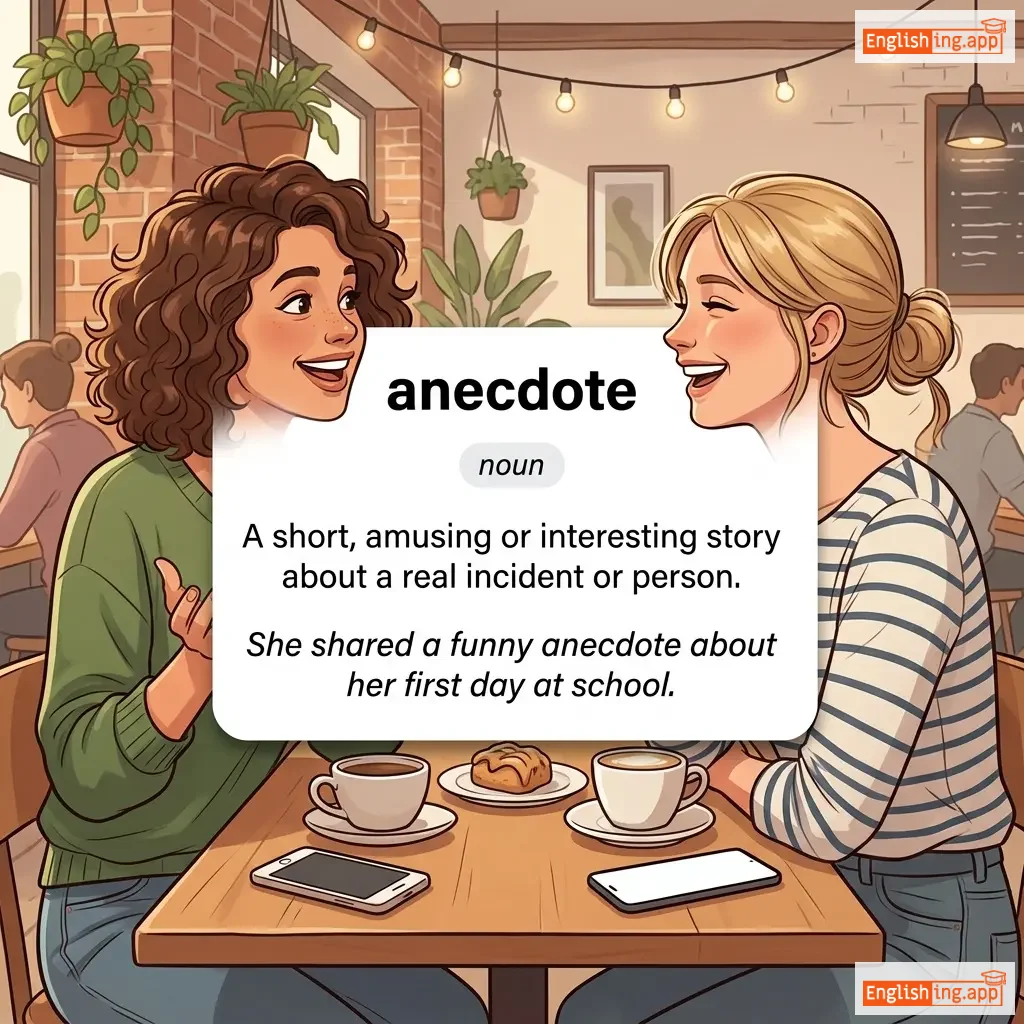
anecdote definition card — visual illustration of the meaning
noun
/ˈænɪkˌdoʊt/

A short, amusing or interesting story about a real incident or person.

"She shared a funny anecdote about her first day at school."

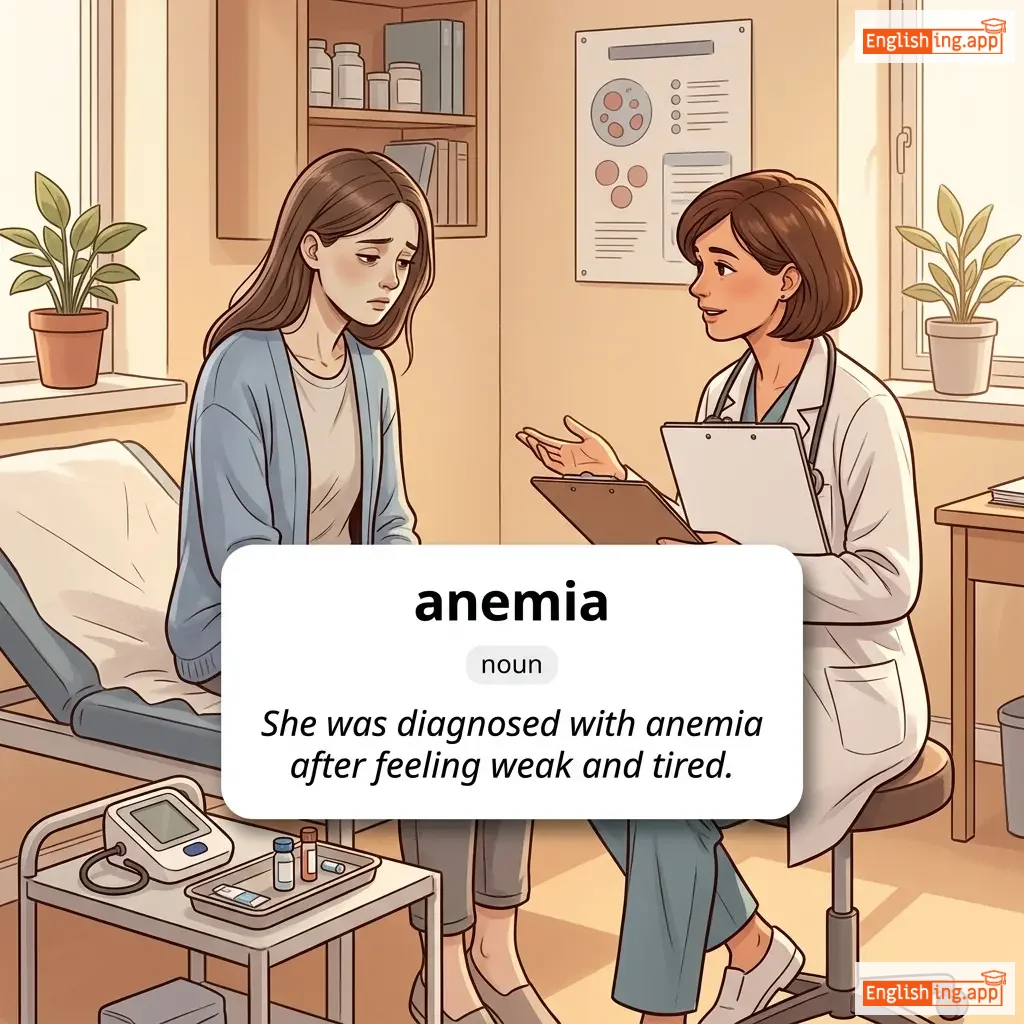
anemia definition card — visual illustration of the meaning
noun
/əˈniːmiə/

A condition in which there is a deficiency of red cells or hemoglobin in the blood.

"She was diagnosed with anemia after feeling weak and tired."

adjective
/əˈniːmɪk/

Suffering from anemia; lacking in vitality, strength, or color.

"The doctor prescribed iron supplements for her anemic condition."

🌬️

anemometer

noun
/ˌænɪˈmɒmɪtər/

An instrument used to measure the speed and direction of wind.

"The scientist used an anemometer to record the wind speed during the storm."

noun
/ˌænəsˈθetɪk/

A substance that causes loss of sensation or consciousness, especially used during surgery.

"The doctor administered a local anesthetic before stitching the wound."

🔄

anew

adverb
/əˈnjuː/

In a new or different way; once more.

"After the failure, she decided to start her life anew."

😇

Angel

noun
/ˈeɪndʒəl/

a spiritual being believed to act as a messenger or servant of God

"She believed her mother was watching over her like an angel."

adjective
/ænˈdʒelɪk/

Like or characteristic of an angel; pure, kind, or innocent.

"The child had an angelic smile."

😡

Anger

noun
/ˈæŋɡər/

A strong feeling of displeasure or hostility.

"He couldn't control his anger after the argument."

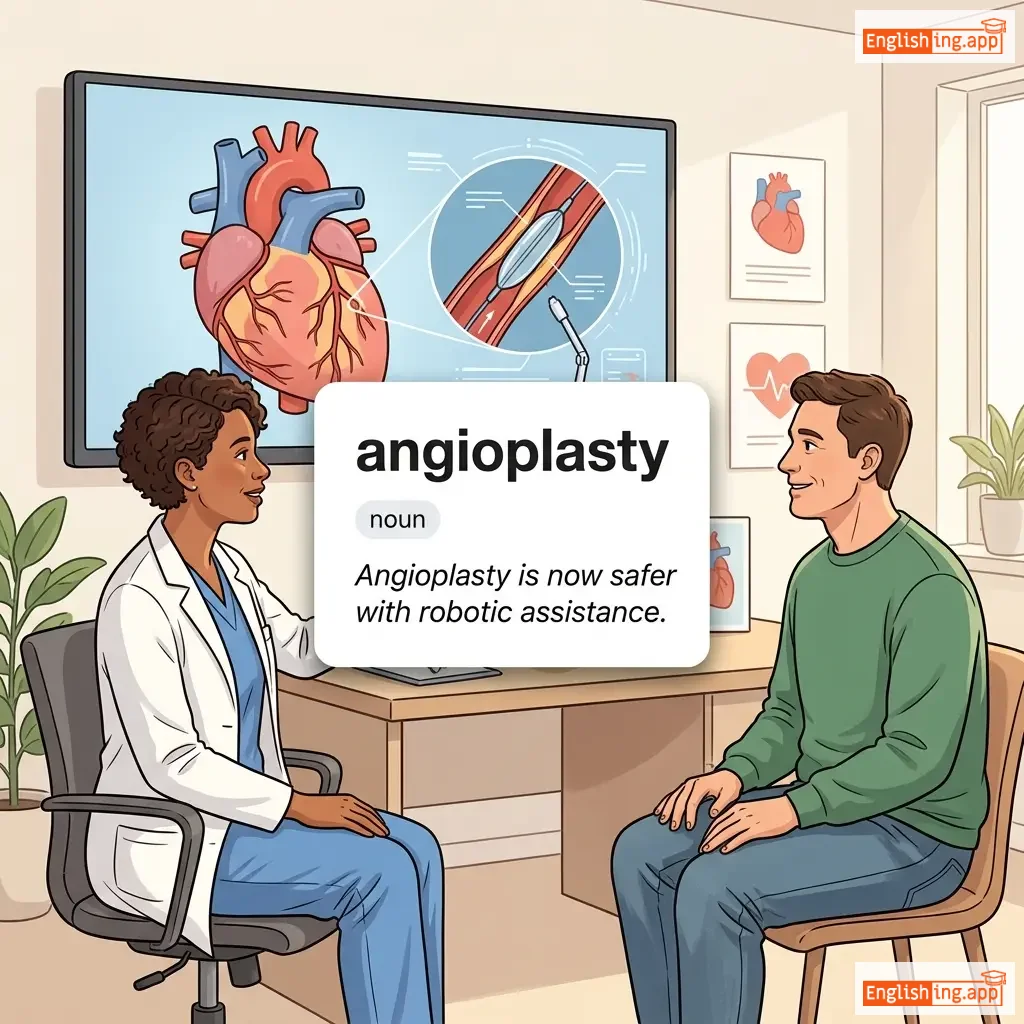
angioplasty definition card — visual illustration of the meaning
noun
/ˈæn.dʒi.əʊ.plæs.ti/

A medical procedure to open blocked or narrowed blood vessels that supply blood to the heart.

"Angioplasty is now safer with robotic assistance."

📐

angle

noun
/ˈæŋɡl/

The space between two intersecting lines or surfaces at the point where they meet.

"The teacher explained how to measure an angle in geometry."

noun
/ˌæŋɡloʊ ˈsæksən/

A member of the Germanic peoples who settled in England in the early Middle Ages; also relating to their language or culture.

"The Anglo-Saxon period greatly influenced English culture and language."

🚫🇬🇧

anglophobia

noun
/ˌæŋɡləˈfoʊbiə/

Dislike or fear of England, English people, or English culture.

"The politician was accused of promoting Anglophobia in his speeches."

adverb
/ˈæŋɡrɪli/

in a manner showing anger or strong displeasure

"She spoke angrily when she heard the news."

😡

Angry

adjective
/ˈæŋɡri/

feeling or showing strong displeasure or hostility

"She was angry when she found out the truth."

noun
/ˈæŋɡwɪʃ/

Severe mental or physical pain or suffering.

"She was in deep anguish after hearing the tragic news."

adjective
/ˈæŋɡjələr/

Having angles or sharp corners; lean or bony in appearance.

"The building has a very angular design."

adjective
/ænˈhaɪdrəs/

Containing no water.

"The chemist used anhydrous ammonia for the experiment."

noun
/ˈænɪ siːd/

Small aromatic seeds used as a spice and for medicinal purposes, with a sweet licorice-like flavor

"Anise seeds are often used in traditional desserts and teas."

noun
/ˌænɪmædˈvɜːʒən/

Strong criticism or censure.

"The policy attracted severe animadversion from the public."

verb
/ˌænɪmədˈvɜːt/

To comment critically or unfavorably.

"The teacher animadverted on the student's careless mistakes."

noun
/ˈænɪməl/

a living organism that feeds on organic matter and usually has senses and mobility

"The tiger is a wild animal."

noun
/ˈænɪməlˌkjuːl/

A microscopic animal, especially a protozoan or other minute organism.

"The scientist observed an animalcule moving under the microscope."

verb
/ˈænɪmeɪt/

To bring to life or give movement to something; to inspire or enliven.

"The teacher tried to animate the lesson with exciting activities."

adjective
/ˈænɪmeɪtɪd/

Full of life or excitement; made using animation techniques.

"The animated film was loved by children and adults alike."

noun
/ˌænɪˈmeɪʃən/

the technique of creating moving images from still pictures or models

"The animation in the movie was incredible."

noun
/ˌænɪˈmɒsɪti/

A strong feeling of hostility or active dislike.

"There was a long history of animosity between the two families."

noun
/ˈænɪməs/

A strong feeling of hostility; motivation or purpose behind an action.

"His speech was driven by animus against the policy."

🦶

ankle

noun
/ˈæŋkəl/

the joint connecting the foot with the leg

"He twisted his ankle while playing football."

noun
/ˈæŋk.lət/

a piece of jewelry worn around the ankle

"She wore a beautiful silver anklet on her left foot."

noun
/ˈæn.ə.lɪst/

A person who writes annals or records events year by year.

"The annalist carefully documented the events of the king's reign."

noun
/ˈæn.əlz/

Historical records of events, usually arranged chronologically.

"Her name will be remembered in the annals of science."

verb
/əˈniːl/

To heat and cool metal or glass to make it stronger or less brittle.

"The blacksmith annealed the steel to improve its durability."

🏴

annex

verb
/ˈæn.ɛks/

To take control of a territory and add it to one's own.

"The empire annexed the neighboring kingdom after the war."

🗺️

annexation

noun
/ˌænɛkˈseɪʃən/

the act of adding or taking control of territory or property, especially by a state

"The annexation of the region led to international condemnation."

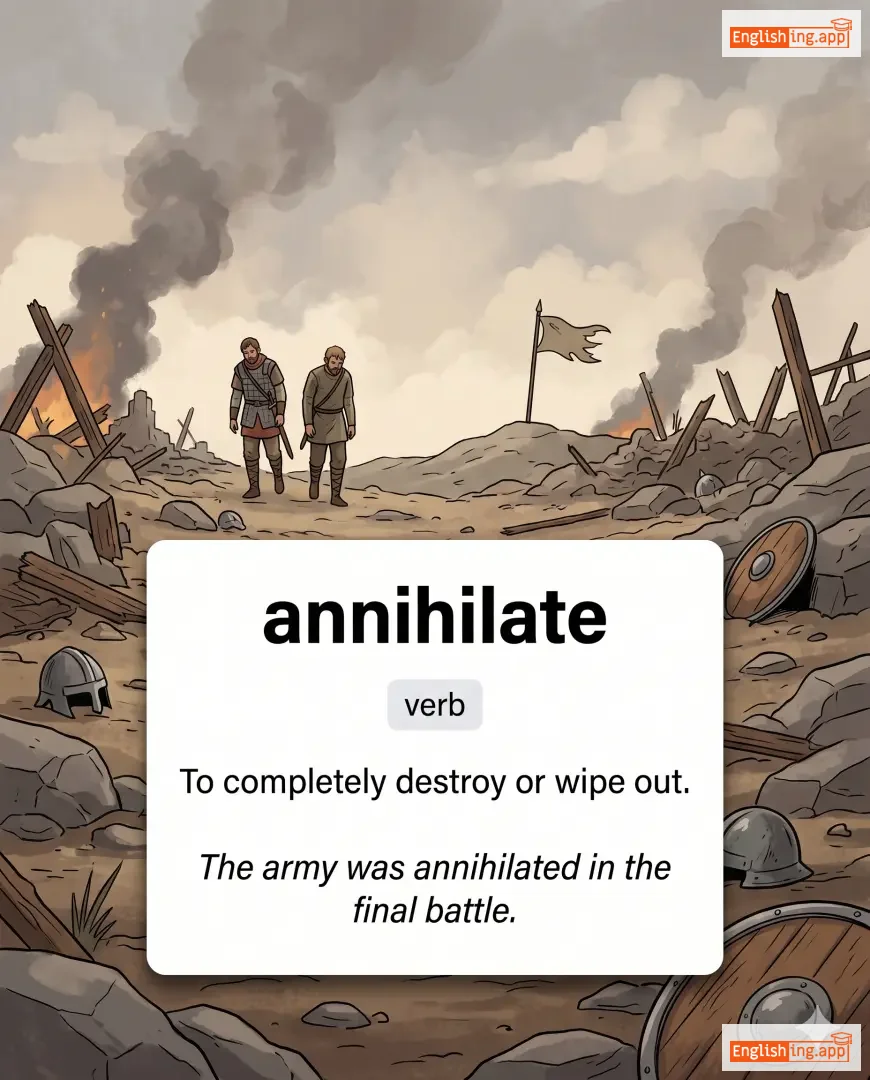
annihilate definition card — visual illustration of the meaning
verb
/əˈnaɪ.ə.leɪt/

To completely destroy or wipe out.

"The army was annihilated in the final battle."

noun
/ˌænɪˈvɜːrsəri/

the yearly recurrence of a date marking a past event

"They celebrated their wedding anniversary with a dinner."

verb
/ˈæn.ə.teɪt/

to add notes or comments to a text, diagram, or document for explanation or clarification

"The teacher asked the students to annotate the poem with their interpretations."