Vocabularies

English Vocabulary Dictionary | Word Meanings, Definitions & Examples

noun
/ˈprɑsɪˌkjuːtər/

a lawyer who represents the government in criminal cases

"The prosecutor argued that the defendant was guilty of the crime."

noun
/ˌprɒsɪˈkjuːʃən/

The act of bringing a criminal charge against someone and pursuing legal action in court.

"The prosecution presented strong evidence against the defendant."

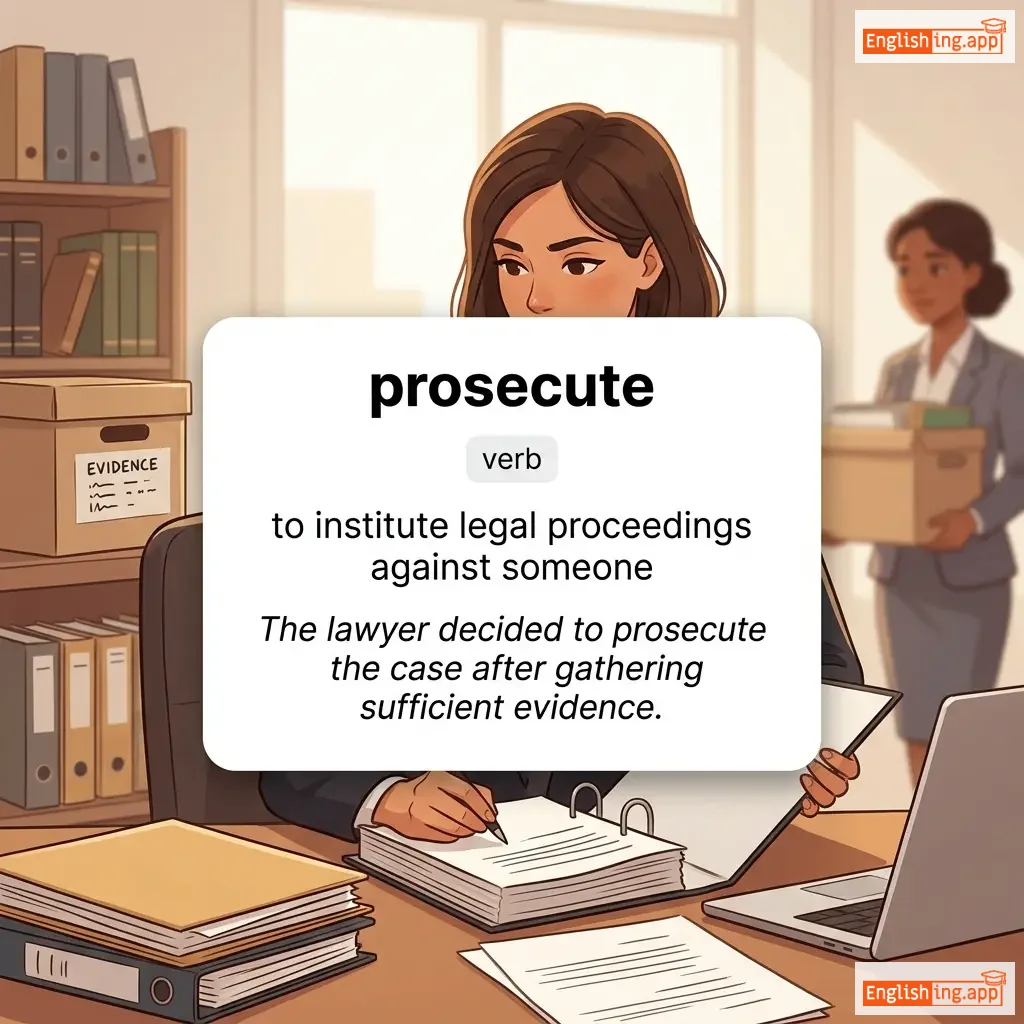
prosecute definition card — visual illustration of the meaning
verb
/ˈprɒsɪkjuːt/

to institute legal proceedings against someone

"The lawyer decided to prosecute the case after gathering sufficient evidence."

noun
/proʊˈskrɪp.ʃən/

the act of forbidding something, especially by law

"The proscription of child labor is an important human rights achievement."

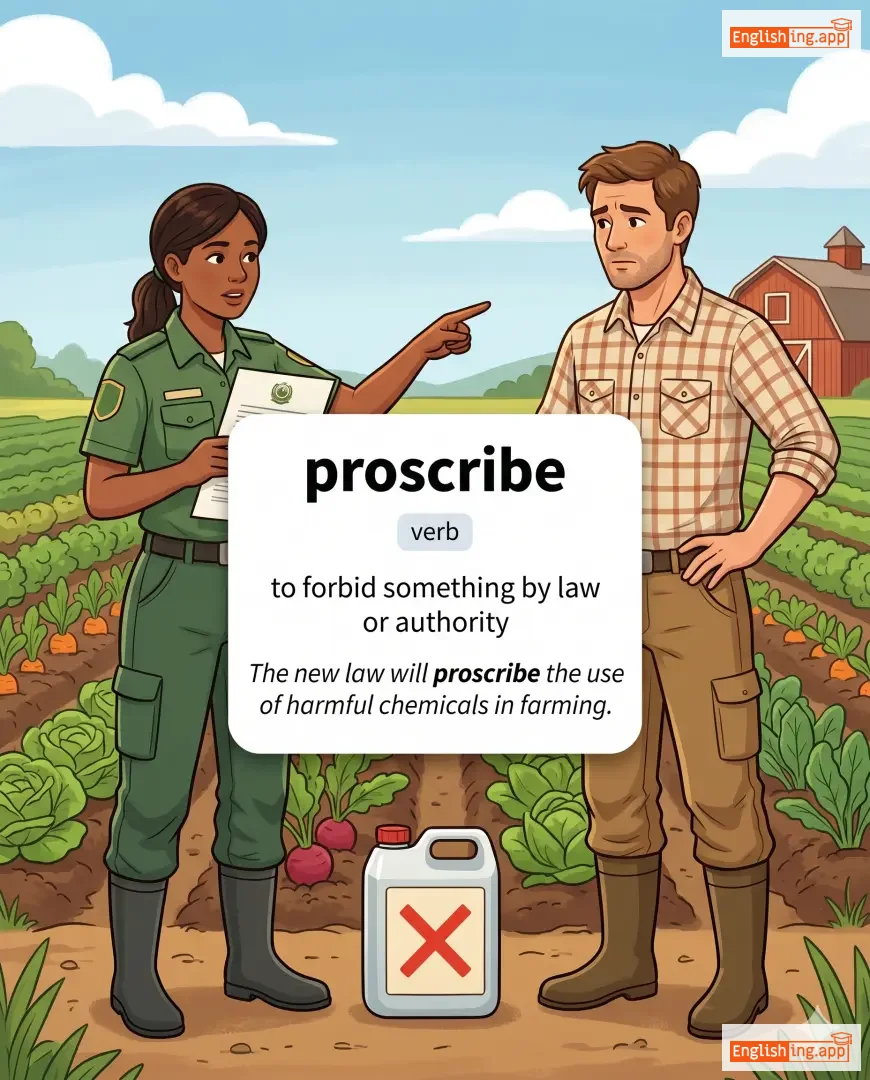
proscribe definition card — visual illustration of the meaning
verb
/proʊˈskraɪb/

to forbid something by law or authority

"The new law will proscribe the use of harmful chemicals in farming."

noun
/proʊˈsiː.ni.əm/

the part of a theater stage in front of the curtain; the arch framing the stage

"The actors bowed at the proscenium before leaving the stage."

adjective
/proʊˈzeɪ.ɪk/

ordinary, dull, or lacking imagination

"The teacher’s explanation was accurate but rather prosaic."

⏸️

prorogue

verb
/prəˈroʊɡ/

to discontinue a session of a parliament or assembly without dissolving it

"The president decided to prorogue parliament until the crisis was resolved."

adjective
/prəˈpʌlsɪv/

Having the power to drive or push something forward.

"The propulsive force of the rocket lifted it off the ground."

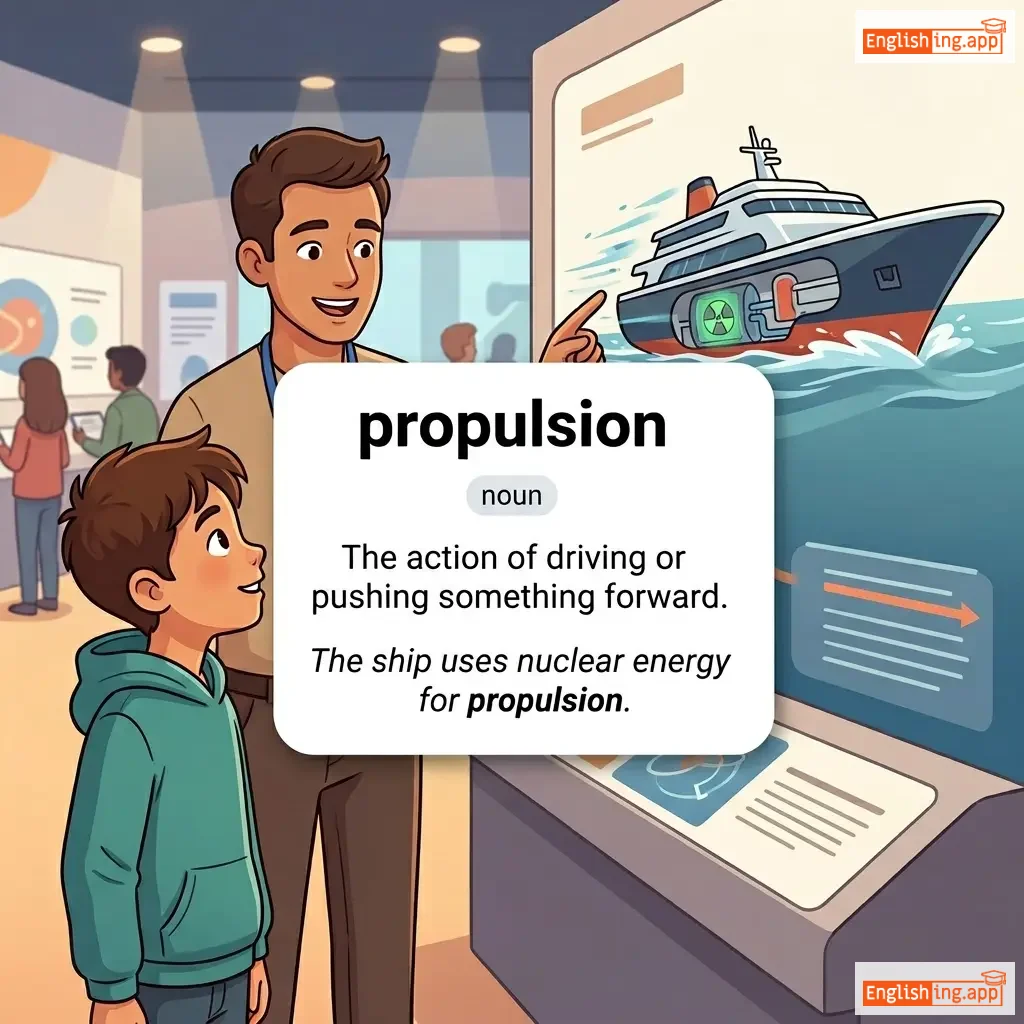
propulsion definition card — visual illustration of the meaning
noun
/prəˈpʌlʃən/

The action of driving or pushing something forward.

"The ship uses nuclear energy for propulsion."

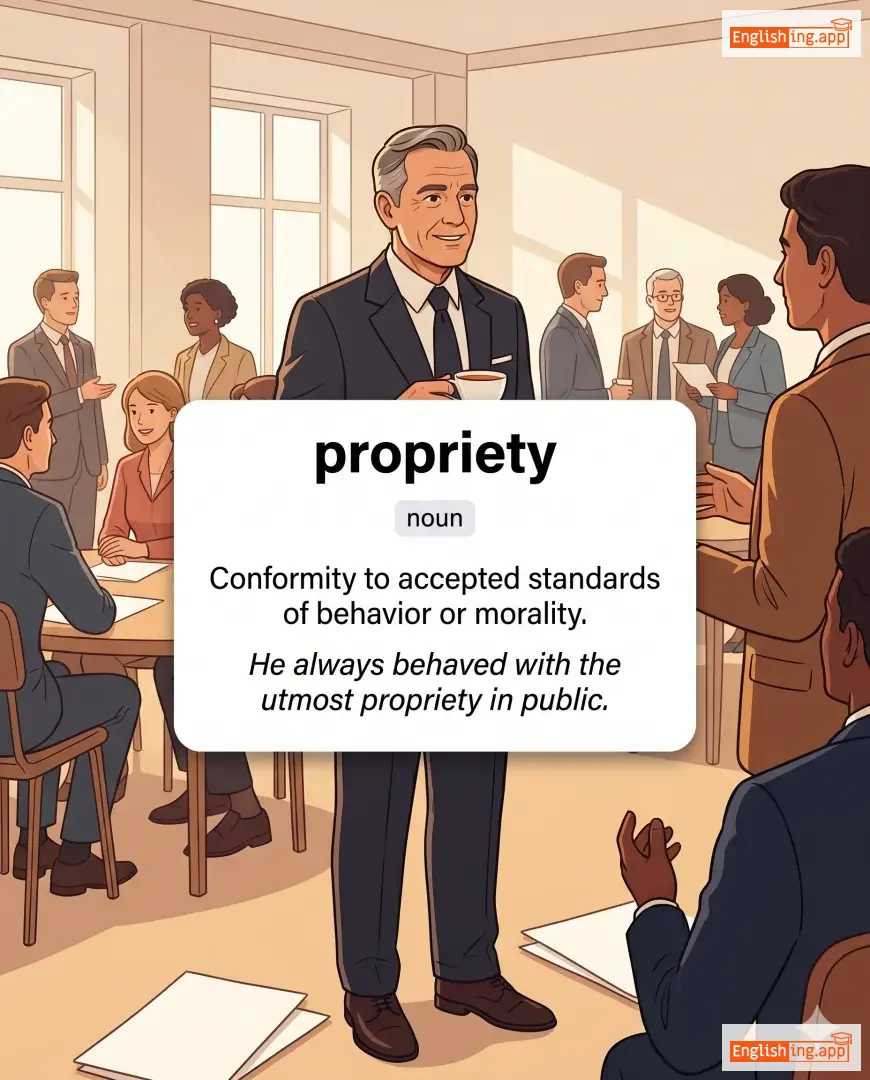
propriety definition card — visual illustration of the meaning
noun
/prəˈpraɪəti/

Conformity to accepted standards of behavior or morality.

"He always behaved with the utmost propriety in public."

verb
/prəˈpaʊnd/

To put forward an idea, theory, or point for consideration.

"The professor propounded a new theory on climate change."

noun
/ˌprɒpəˈzɪʃən/

A statement, idea, or plan put forward for consideration or discussion.

"The company made a business proposition to the investors."

adjective
/prəˈpoʊzd/

suggested or put forward for consideration or discussion

"The proposed changes will improve the system."

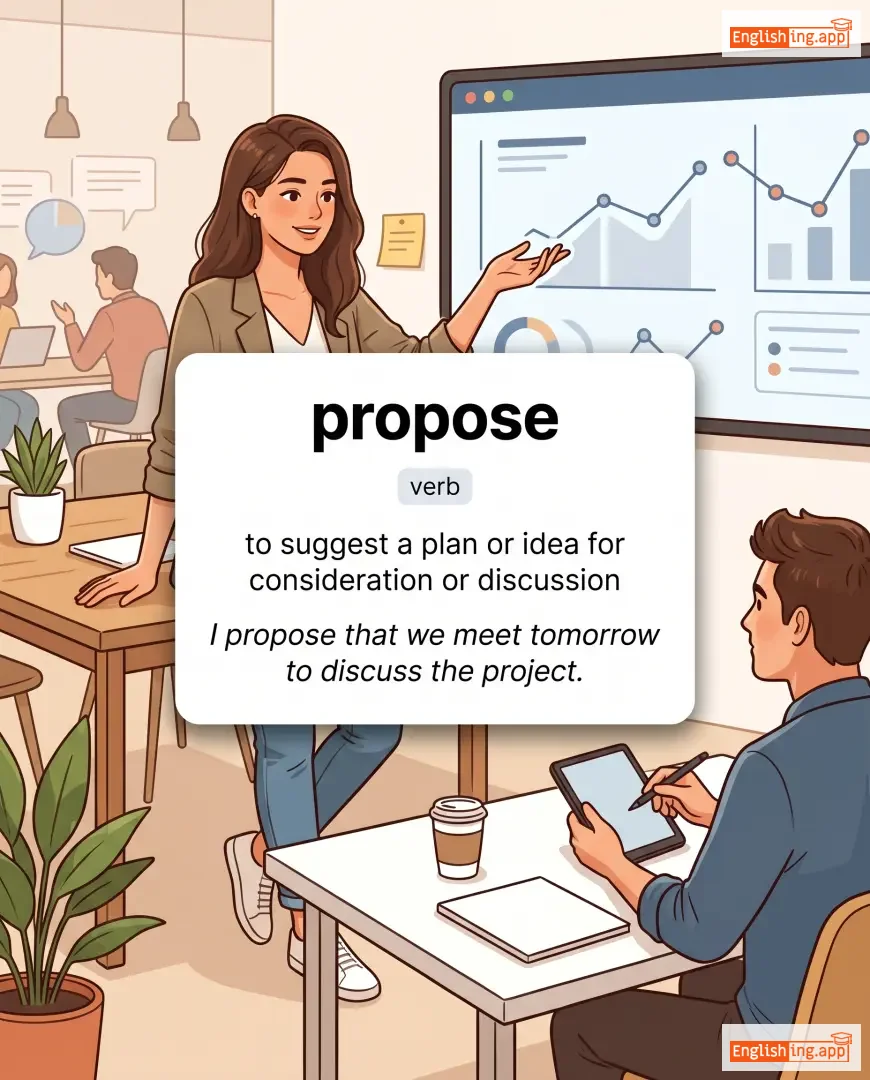
propose definition card — visual illustration of the meaning
verb
/prəˈpoʊz/

to suggest a plan or idea for consideration or discussion

"I propose that we meet tomorrow to discuss the project."

adjective
/prəˈpɔːrʃənət/

Corresponding in size, degree, or intensity; balanced in relation.

"The punishment should be proportionate to the crime."

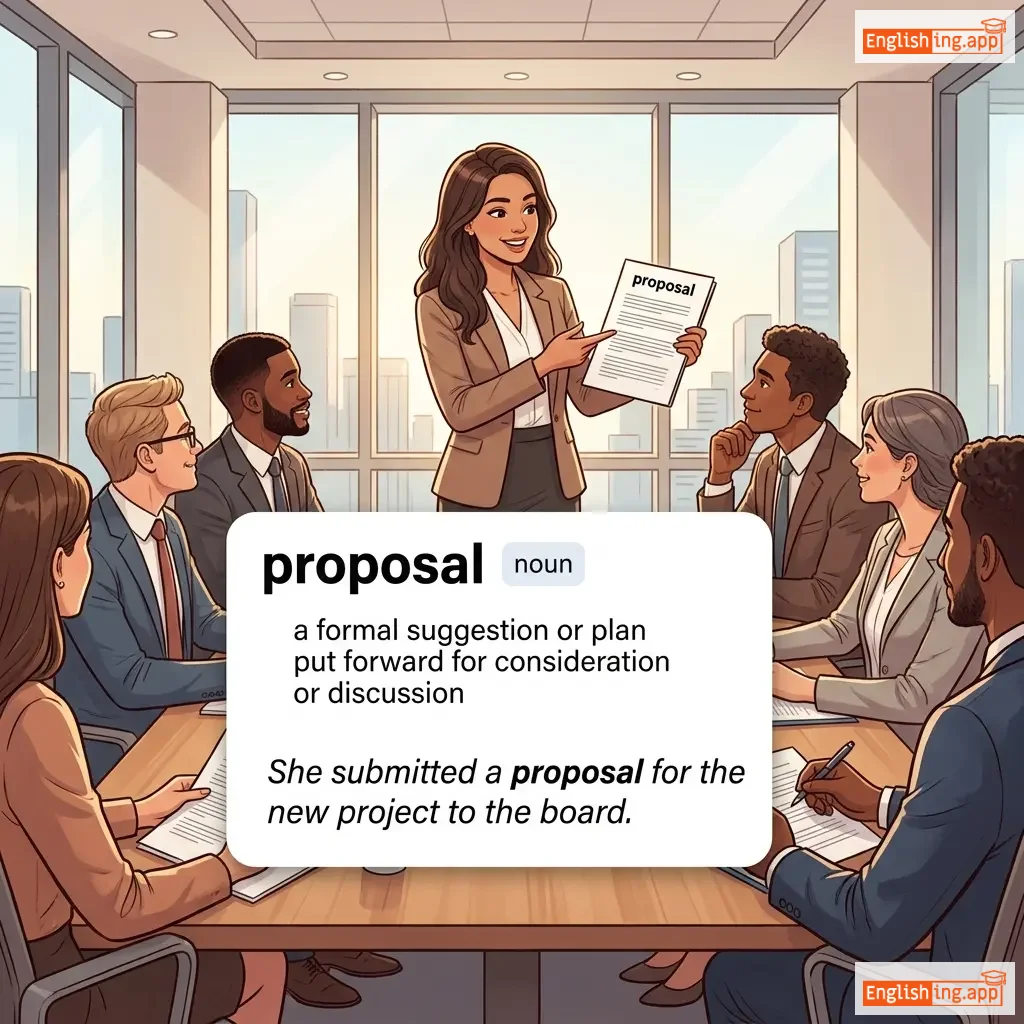
proposal definition card — visual illustration of the meaning
noun
/prəˈpəʊzəl/

a formal suggestion or plan put forward for consideration or discussion

"She submitted a proposal for the new project to the board."

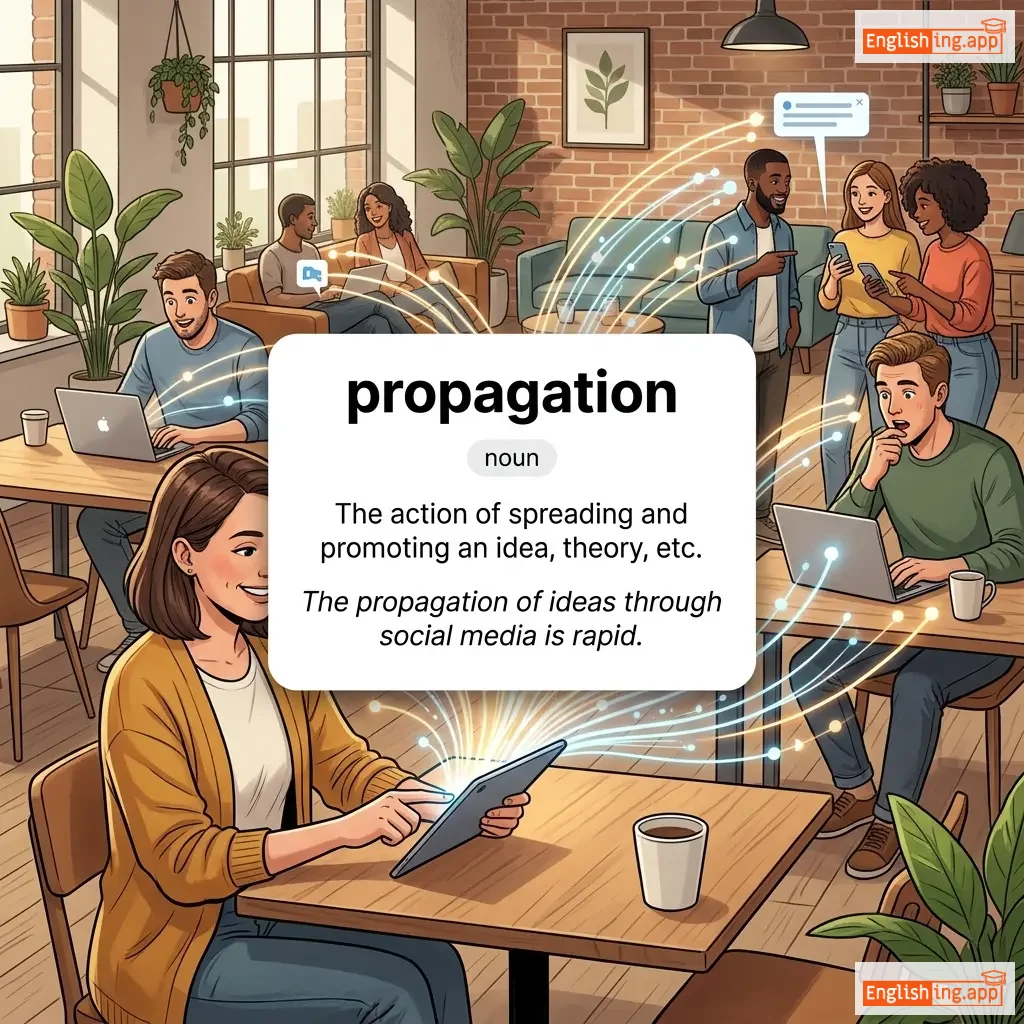
propagation definition card — visual illustration of the meaning
noun
/ˌprɒpəˈɡeɪʃən/

The action of spreading and promoting an idea, theory, etc.

"The propagation of ideas through social media is rapid."

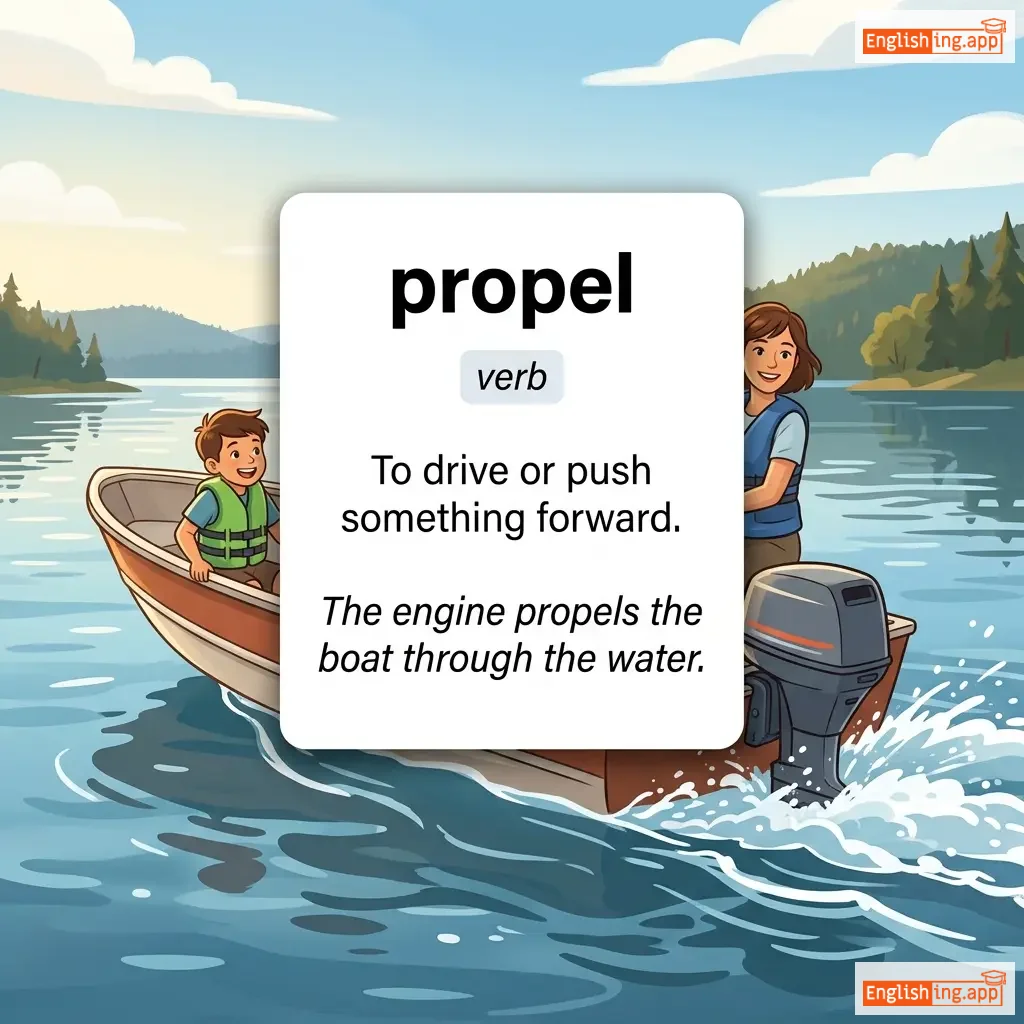
propel definition card — visual illustration of the meaning
verb
/prəˈpɛl/

To drive or push something forward.

"The engine propels the boat through the water."

noun
/prəˈpɛlənt/

A substance that drives or pushes something forward, especially fuel in rockets or engines.

"The rocket uses a liquid propellant to launch into space."

🛩️

propeller

noun
/prəˈpɛlər/

A mechanical device with blades that rotates to drive a ship, aircraft, or other vehicle forward.

"The airplane’s propeller cut through the air with great speed."

propensity definition card — visual illustration of the meaning
noun
/prəˈpɛnsəti/

a natural tendency or inclination to behave in a particular way

"She has a propensity to trust people too easily."

adjective
/ˈprɒpər/

conforming to accepted standards of behavior or morality

"He made sure to wear proper attire for the interview."

✔️

properly

adverb
/ˈprɒpərli/

in the correct or suitable manner

"He performed the task properly to avoid mistakes."

noun
/ˈprɒpərti/

a thing or things that belong to someone; possessions or real estate

"The old mansion is his family’s property."

verb
/ˈprɒfəsaɪ/

to state or predict that something will happen in the future, especially as if divinely inspired

"The monk prophesied that peace would return to the land."

adjective
/prəˈfɛtɪk/

accurately predicting or describing what will happen in the future

"His prophetic words came true after many years."

adjective
/ˌprɒfɪˈlæktɪk/

intended to prevent disease or an unwanted outcome; protective

"The doctor prescribed a prophylactic treatment to prevent infection."

noun
/prəˈpɪŋkwɪti/

the state of being close to someone or something; proximity

"The propinquity of their houses made them close friends."

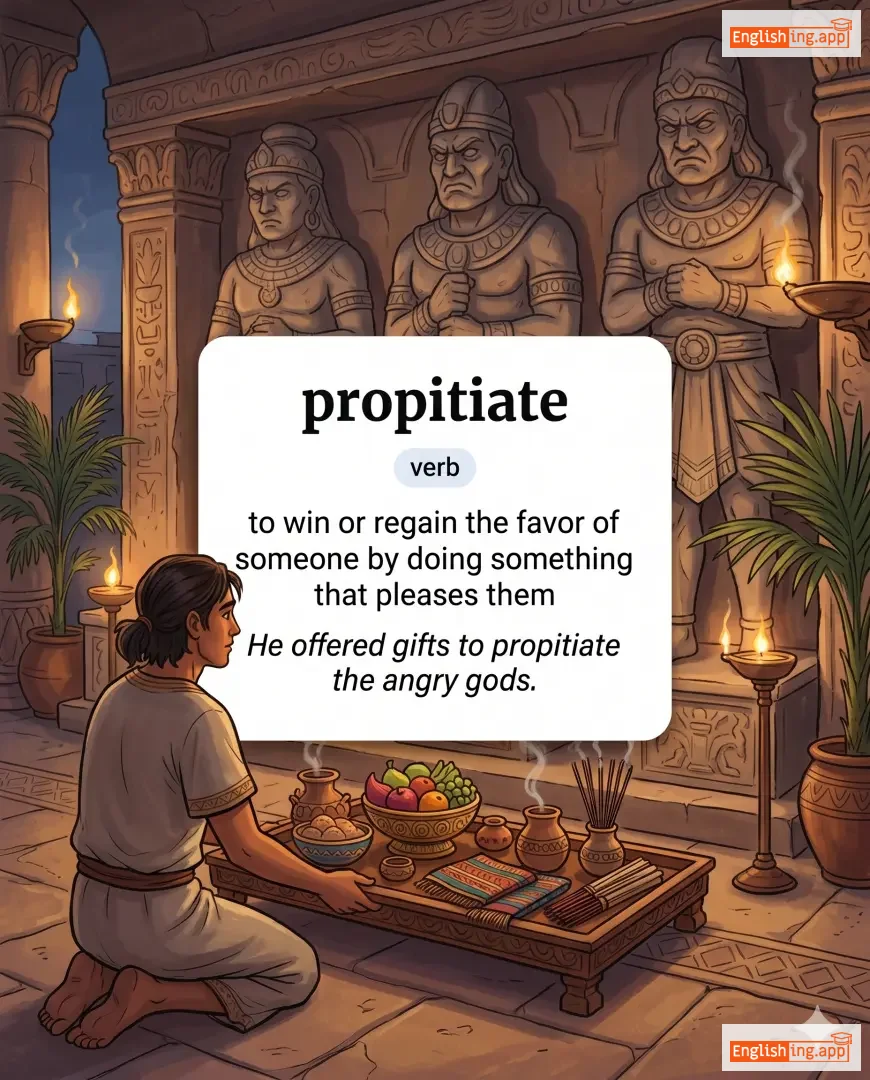
propitiate definition card — visual illustration of the meaning
verb
/prəˈpɪʃieɪt/

to win or regain the favor of someone by doing something that pleases them

"He offered gifts to propitiate the angry gods."

🌤️

propitious

adjective
/prəˈpɪʃəs/

giving or indicating a good chance of success; favorable

"The sunny weather was a propitious start to the picnic."

noun
/prəˈpoʊnənt/

a person who advocates for or supports a particular idea, cause, or plan

"She is a strong proponent of renewable energy."

noun
/prəˈpɔːʃən/

a part, share, or number considered in comparative relation to a whole

"The proportion of students passing the exam was high."

noun
/ˈprɒfəsi/

a prediction or message about the future, often believed to be divinely inspired

"The prophecy foretold the rise of a great leader."

noun
/ˈpɒpjʊləs/

the general public; the ordinary people living in a country or area

"The new law was welcomed by the local populace."

adjective
/ˈpɒpjʊlər/

liked or admired by many people

"She is a popular singer with a huge fan base."

noun
/ˌpɒpjəˈlærəti/

the state of being liked, admired, or supported by many people

"The singer gained huge popularity after her new album release."

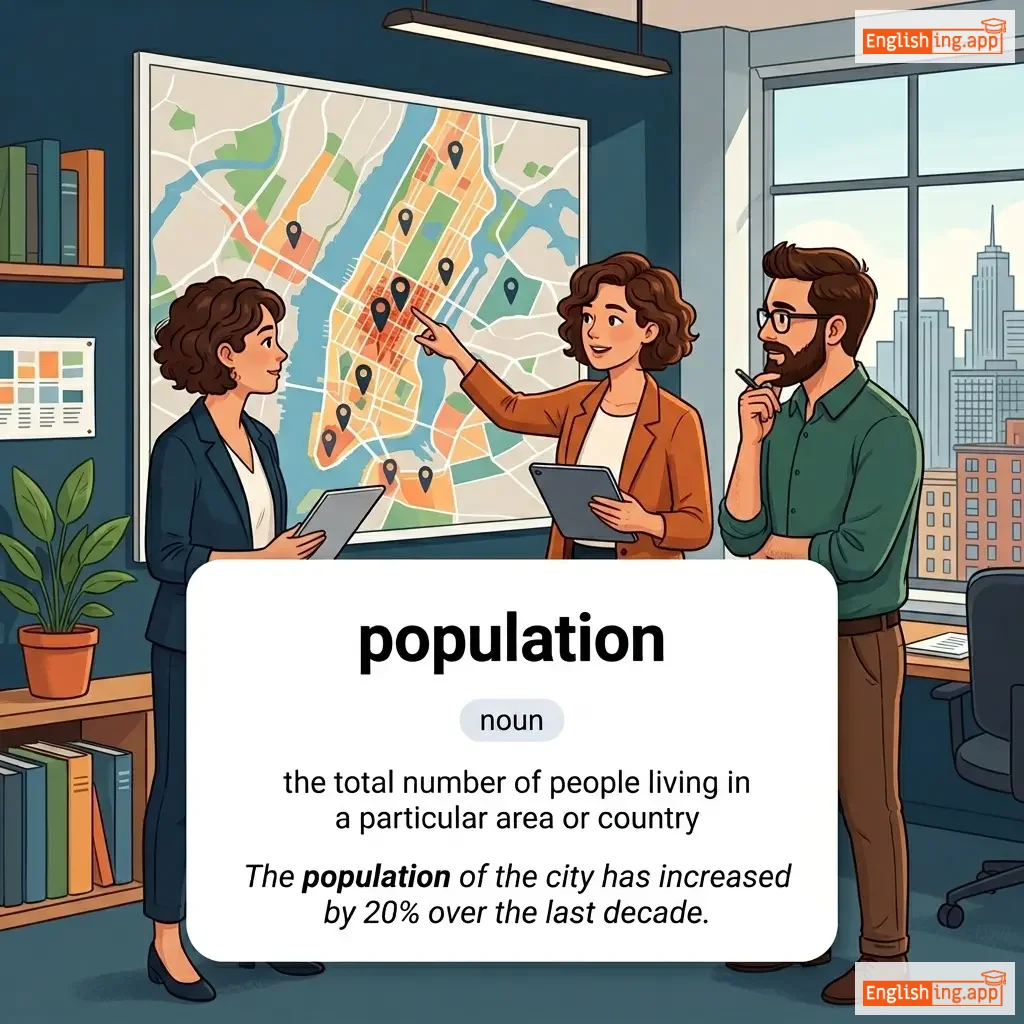
population definition card — visual illustration of the meaning
noun
/ˌpɒpjʊˈleɪʃən/

the total number of people living in a particular area or country

"The population of the city has increased by 20% over the last decade."

🗣️

populist

noun
/ˈpɒpjʊlɪst/

A politician or person who seeks to appeal to ordinary people who feel their concerns are ignored by elites.

"The populist leader promised to put the needs of common citizens first."

🏙️

Populous

adjective
/ˈpɒpjələs/

Having a large population; densely inhabited.

"Dhaka is one of the most populous cities in the world."

noun
/ˈpɔːrsəlɪn/

A white, hard ceramic material often used for dishes and ornaments.

"The museum displayed ancient porcelain vases from China."

🏡

porch

noun
/pɔːrtʃ/

a covered area at the entrance of a building, often with a roof and open sides

"We sat on the porch and enjoyed the evening breeze."

noun
/ˈpɔːr.kjə.paɪn/

a large rodent with defensive spines or quills on its body

"The porcupine raised its quills when threatened."

noun
/ˈpɔːrɪdʒ/

A soft food made by boiling oats or other grains in milk or water.

"She had a bowl of porridge for breakfast."

adjective
/pɔːrˈtɛntəs/

Giving a sign or warning that something, often bad or serious, is going to happen; or overly solemn and pompous.

"His portentous tone made everyone nervous about the news."

⚠️

portent

noun
/ˈpɔːrtɛnt/

A sign or warning that something, especially something momentous or calamitous, is likely to happen.

"The sudden drop in stock prices was seen as a portent of economic trouble."

🌩️

portend

verb
/pɔːrˈtɛnd/

To be a sign or warning that something, especially something bad, is going to happen.

"Dark clouds portend a storm."

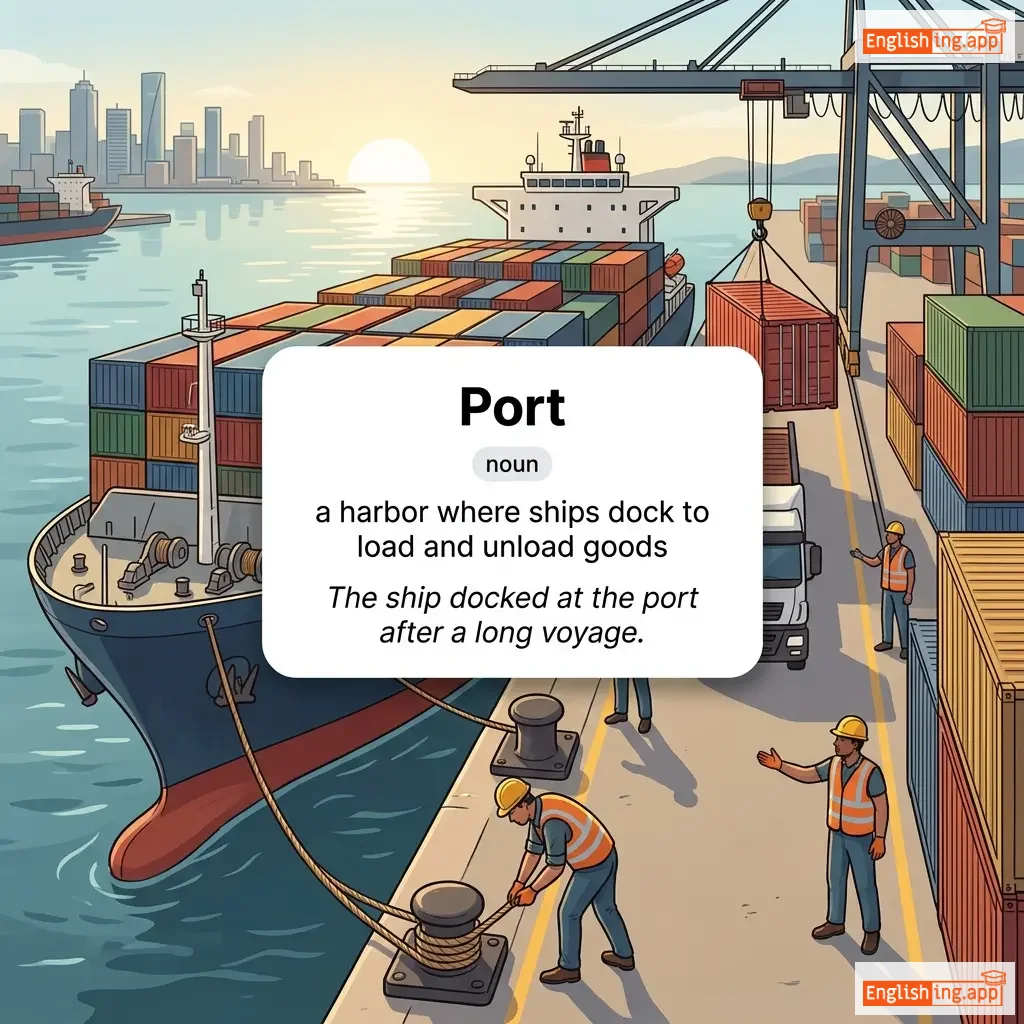
Port definition card — visual illustration of the meaning

Port

noun
/pɔːrt/

a harbor where ships dock to load and unload goods

"The ship docked at the port after a long voyage."

noun
/ˈpɔːrfəri/

A hard igneous rock containing crystals, often used for decorative or building purposes.

"The ancient Romans used porphyry to make columns and statues."

🥩

pork

noun
/pɔːrk/

the flesh of a pig used as food

"He doesn't eat pork for religious reasons."