Получите неограниченный доступ ко всем словам с подпиской Pro
Обновить до ProПолучите неограниченный доступ ко всем предложениям с подпиской Pro
Обновить до Pro|
Эмодзи
|
Слово | Images | Перевод | Прошедшее | Причастие прошедшего времени | Третье лицо единственного числа | Герундий | Значение | Пример предложения | Перевод примера предложения | Пример выражения | Значение примера выражения | Перевод примера выражения | Синонимы | Антонимы | Коллокации | Мнемоника |
|---|---|---|---|---|---|---|---|---|---|---|---|---|---|---|---|---|---|
|
🔄
••••••
|
/dɪˈrɪvətɪv/
noun, adjective
(дериватив)
••••••
|
|
дериватив
derivativ
••••••
|
- •••••• | - •••••• | - •••••• | - •••••• |
Something that is based on another source; in math, a measure of how a function changes.
••••••
|
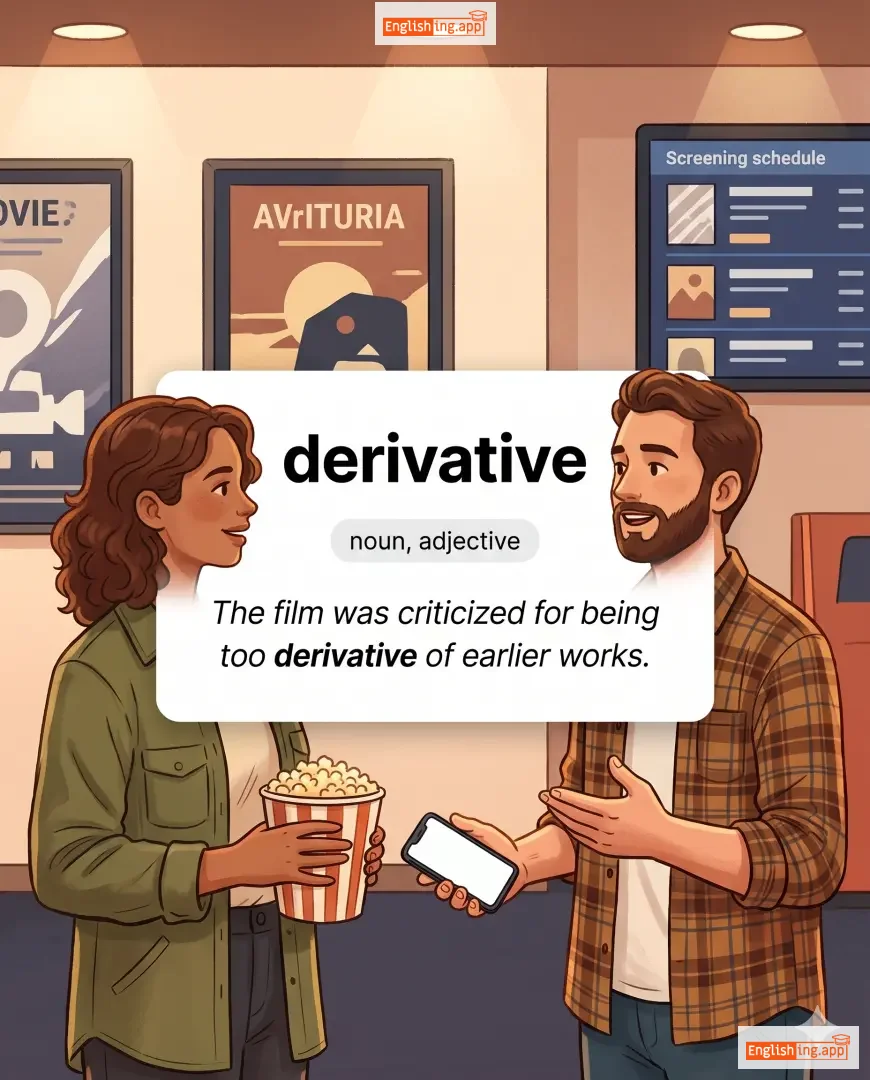
The film was criticized for being too derivative of earlier works.
Фильм был раскритикован за слишком большое сходство с предыдущими работами.
••••••
|
Фильм был раскритикован за слишком большое сходство с предыдущими работами.
Film byl raskritikovann za slishkom bol'shoe skhodstvo s predydushchimi rabotami.
••••••
|
- •••••• | - •••••• | - •••••• |
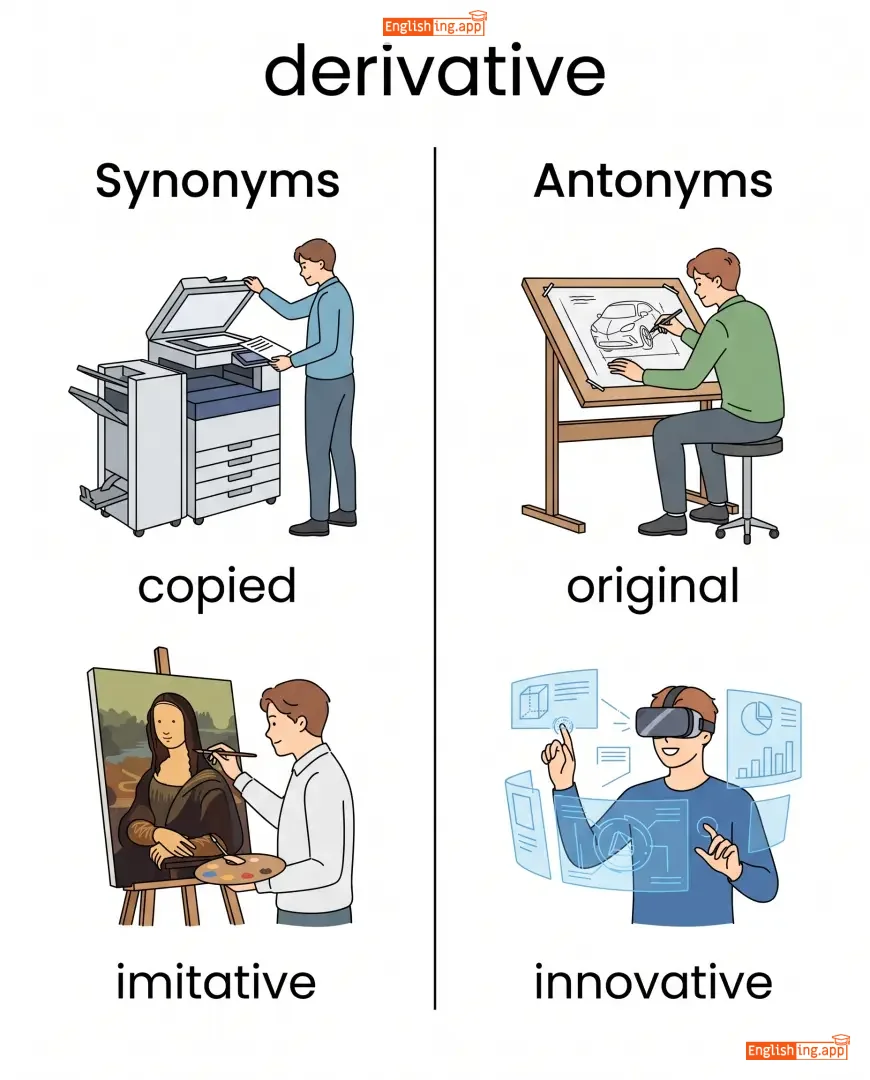
copied, imitative, secondary, unoriginal
••••••
|
original, innovative, creative
••••••
|
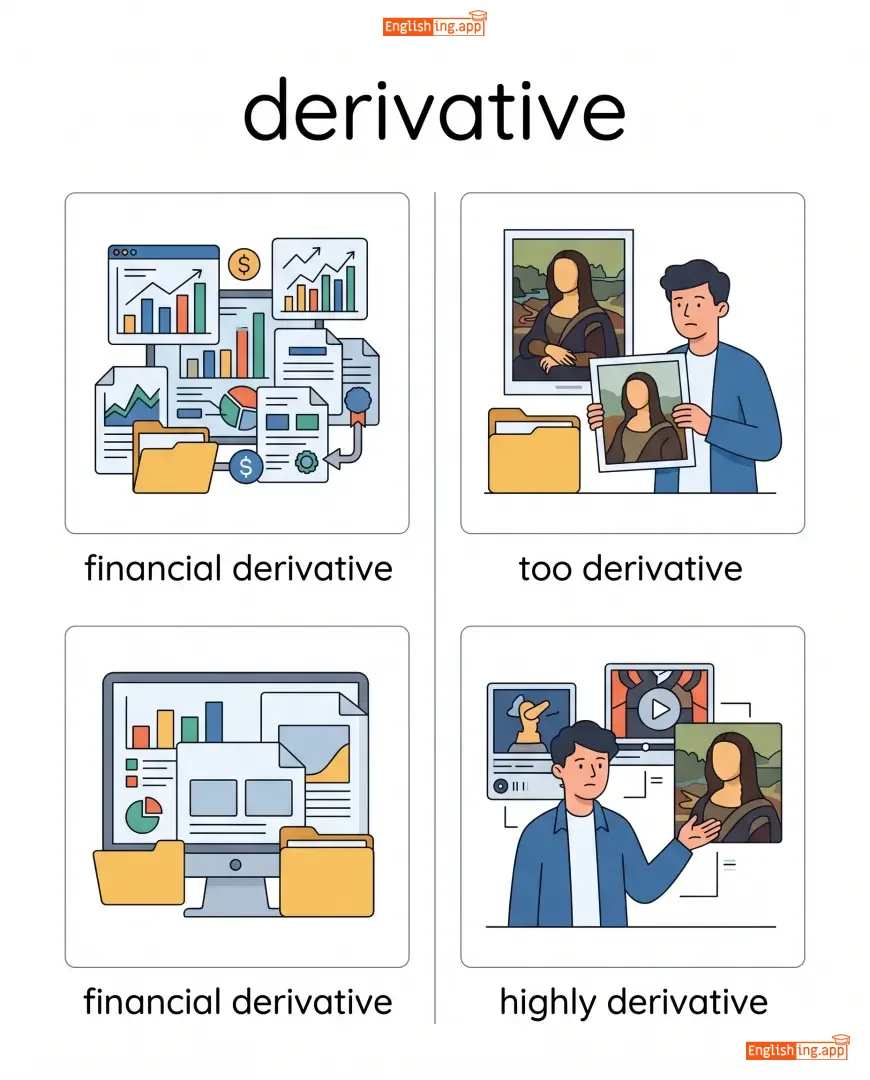
financial derivative, too derivative, highly derivative
••••••
|
Дериватив – это что-то взятое из другого источника – 'дери' от другого, 'ватив' от копии.
••••••
|
|
🌵
••••••
|
/ˈdɛsɪkeɪt/
verb
(desiket)
••••••
|
|
высушивать
vysushivat
••••••
|
desiccated
desiketirovannyj
••••••
|
desiccated
desiketirovannyj
••••••
|
desiccates
desiketuet
••••••
|
desiccating
desiketing
••••••
|
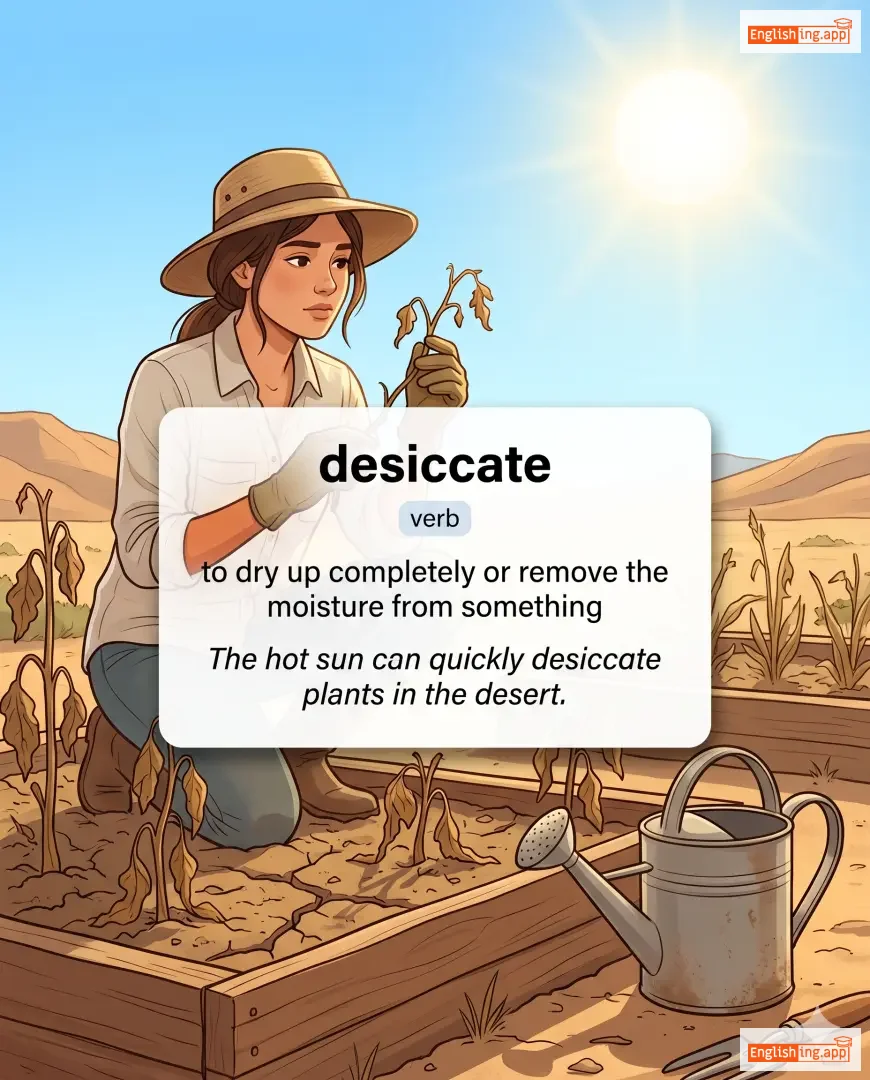
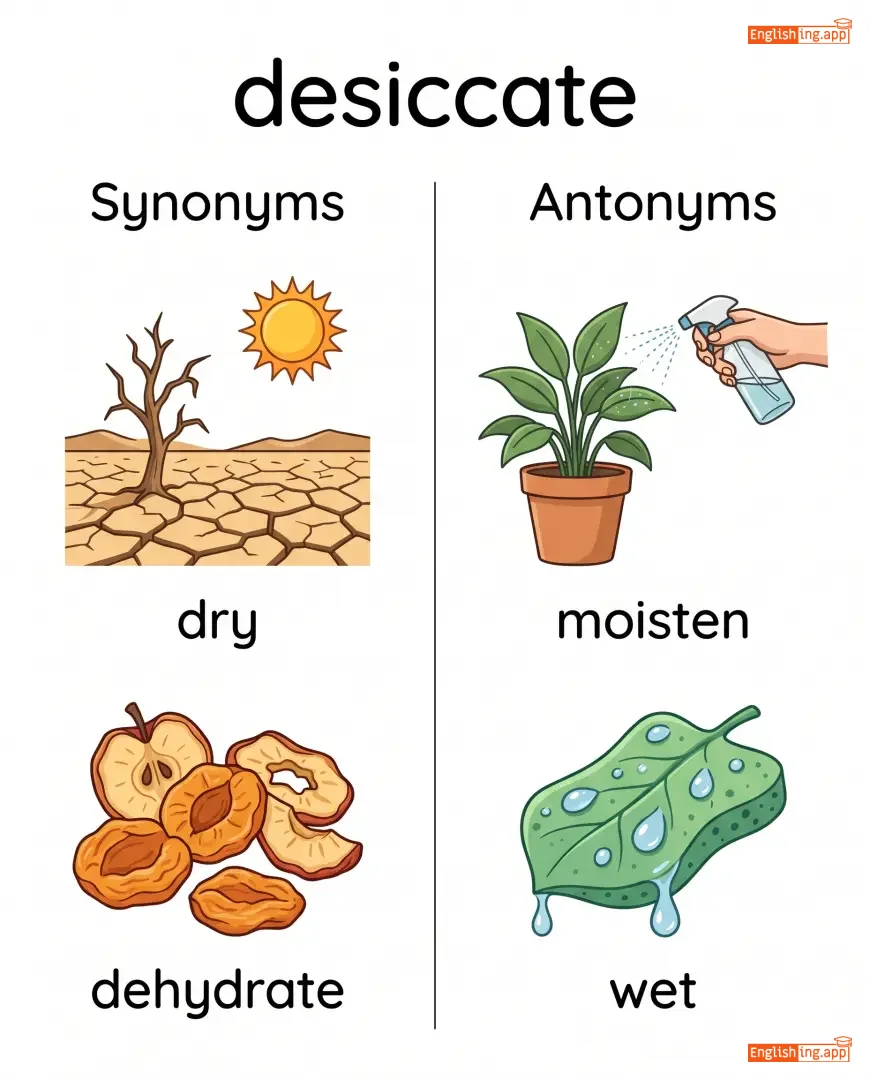
to dry up completely or remove the moisture from something
••••••
|
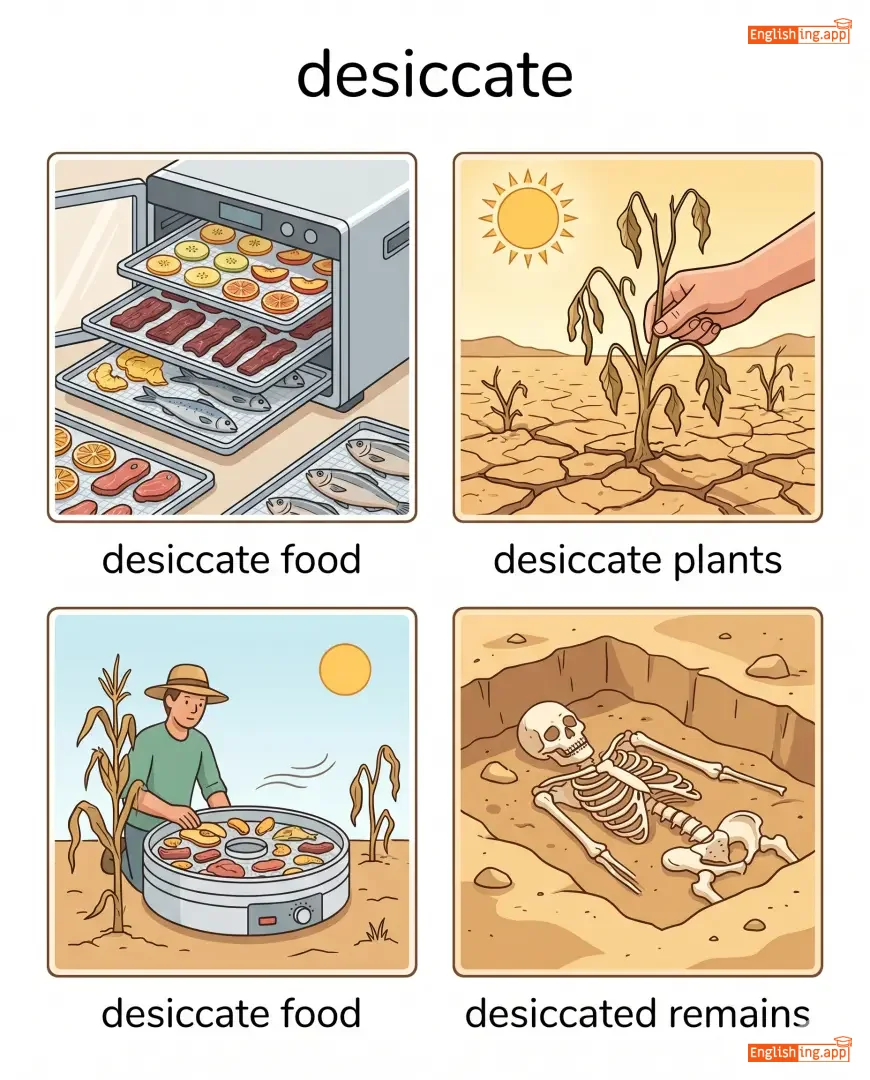
The hot sun can quickly desiccate plants in the desert.
Горячее солнце может быстро высушить растения в пустыне.
••••••
|
Горячее солнце может быстро высушить растения в пустыне.
Goryachie solntse mozhet bystro vysushit' rastenija v pustyne.
••••••
|
- •••••• | - •••••• | - •••••• |
dry, dehydrate, parch, drain, evaporate
••••••
|
moisten, wet, hydrate
••••••
|
desiccate food, desiccate plants, desiccated remains
••••••
|
Растения в пустыне быстро высыхают.
••••••
|
|
📜
••••••
|
/ˈdɛswɪˌtuːd/
noun
(дэзвитюд)
••••••
|
|
дезуэтуда
dezuetuda
••••••
|
- •••••• | - •••••• | - •••••• | - •••••• |
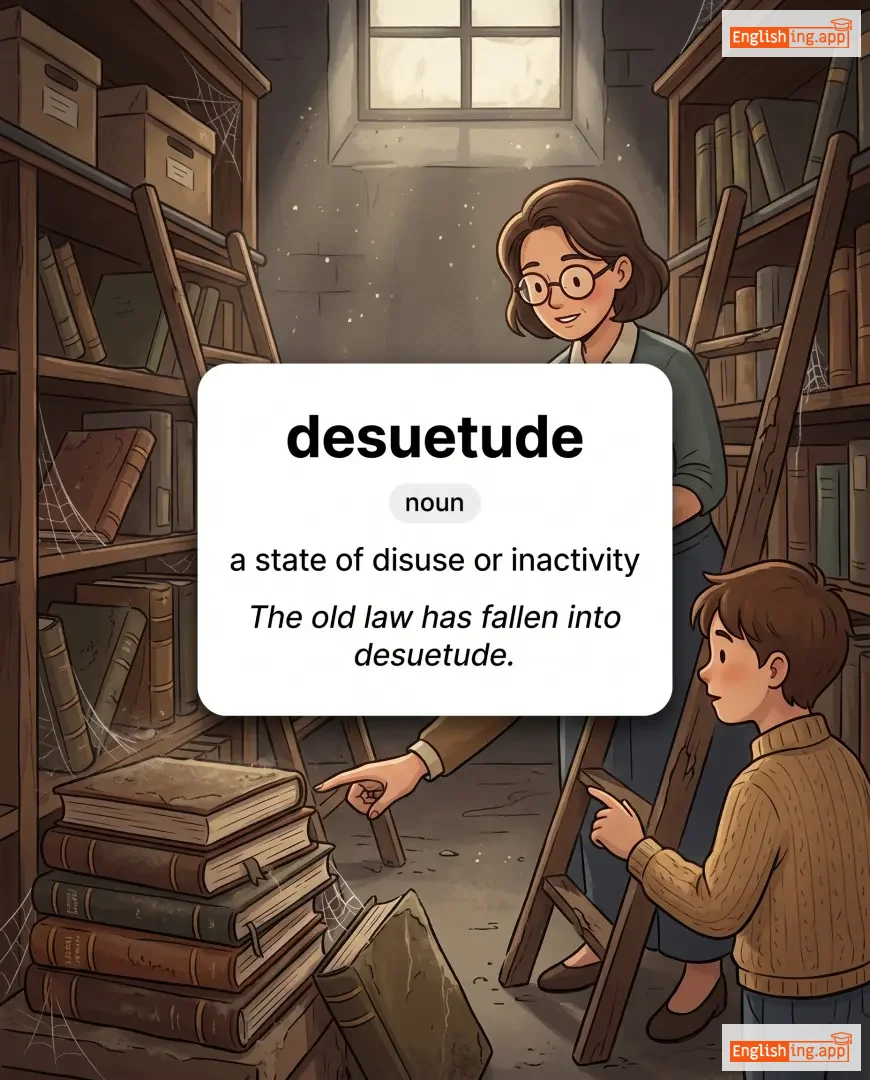
a state of disuse or inactivity
••••••
|
The old law has fallen into desuetude. |
Старый закон утратил силу и оказался в дезуэтуде.
Staryy zakon ustratil silu i okazalsya v dezuetude.
••••••
|
- •••••• | - •••••• | - •••••• |
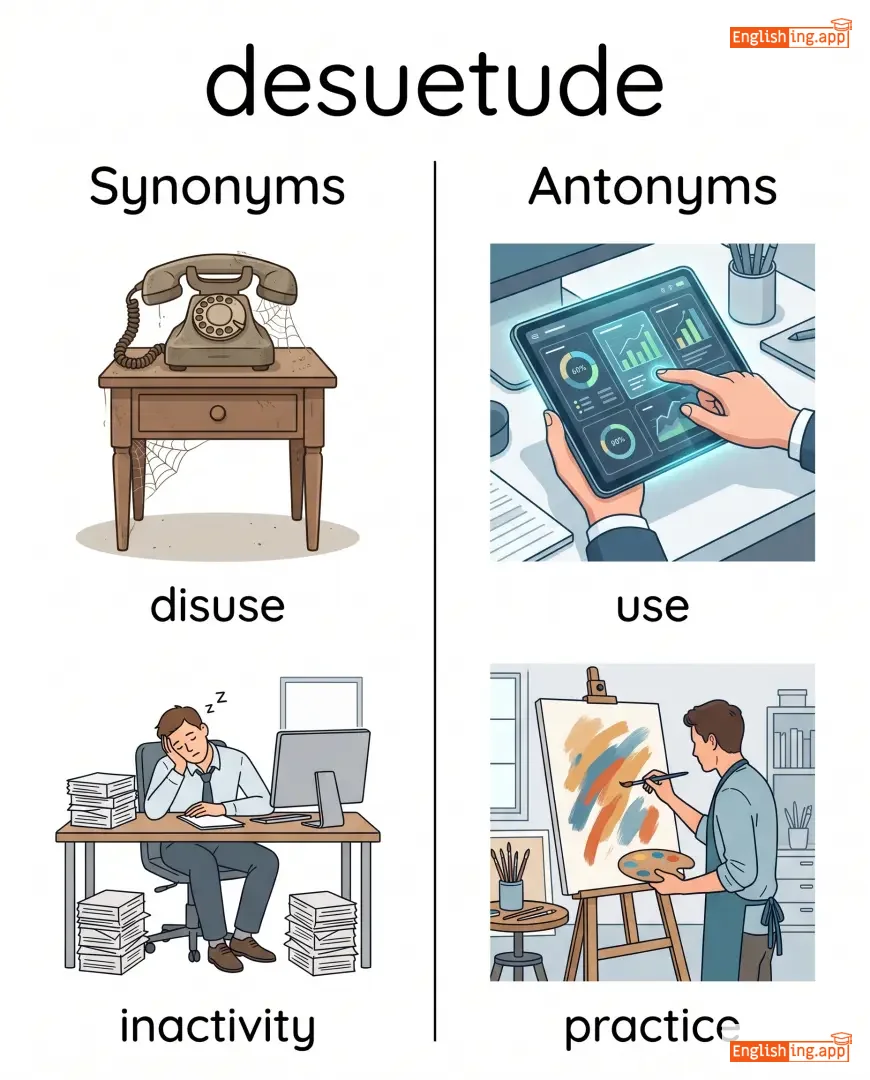
disuse, inactivity, neglect, abandonment, obscurity
••••••
|
use, practice, activity
••••••
|
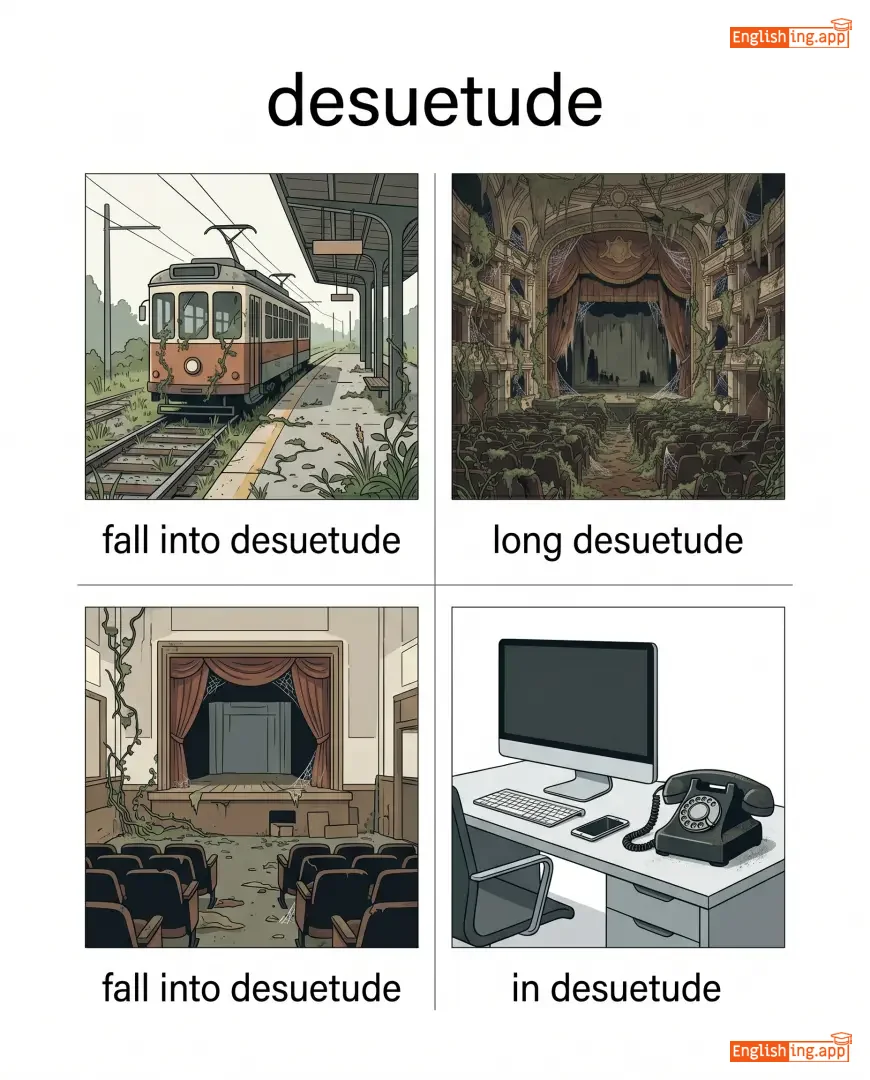
fall into desuetude, long desuetude, in desuetude
••••••
|
Desuetude означает 'due' - что-то, что потеряло актуальность
••••••
|
|
😐
••••••
|
/ˈdɛsəlˌtɔːri/
adjective
(дезультори)
••••••
|
|
беспорядочный
besporyadochny
••••••
|
- •••••• | - •••••• | - •••••• | - •••••• |
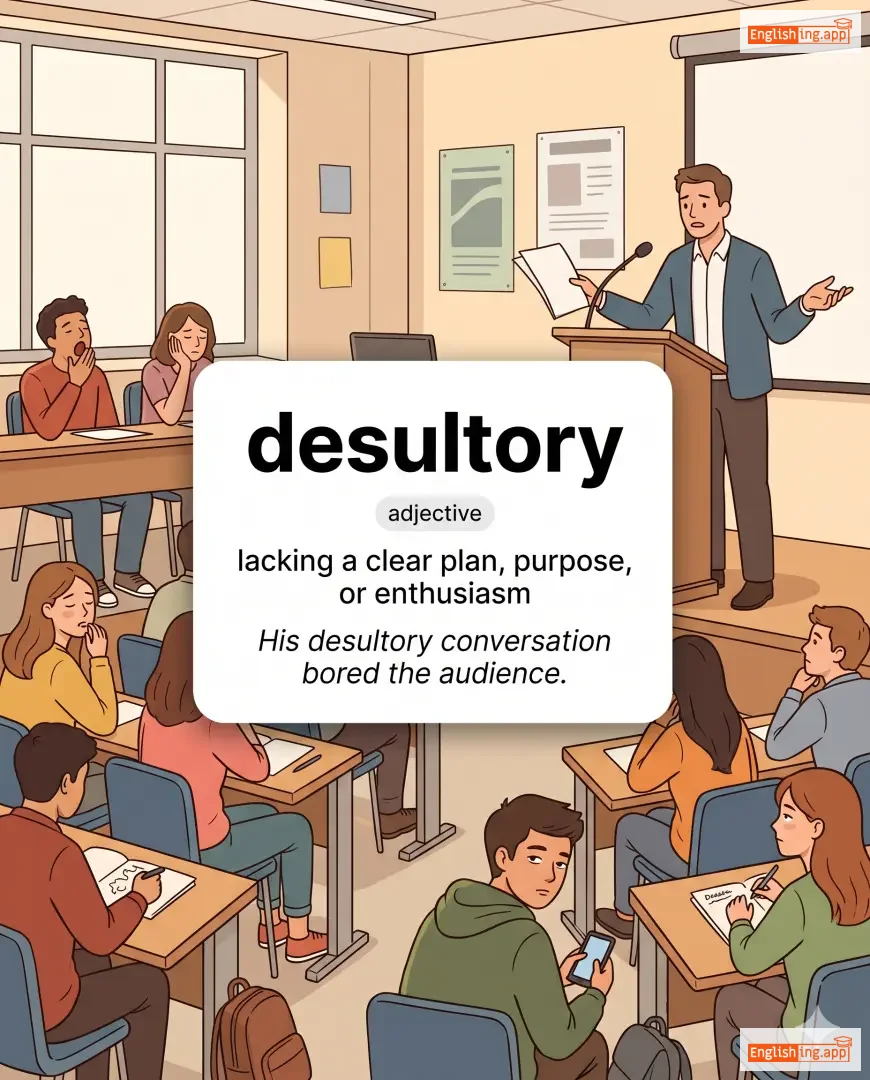
lacking a clear plan, purpose, or enthusiasm
••••••
|
His desultory conversation bored the audience. |
Его беспорядочный разговор утомил зрителей.
Yego besporyadochnyy razgovor utomil zriteley.
••••••
|
- •••••• | - •••••• | - •••••• |
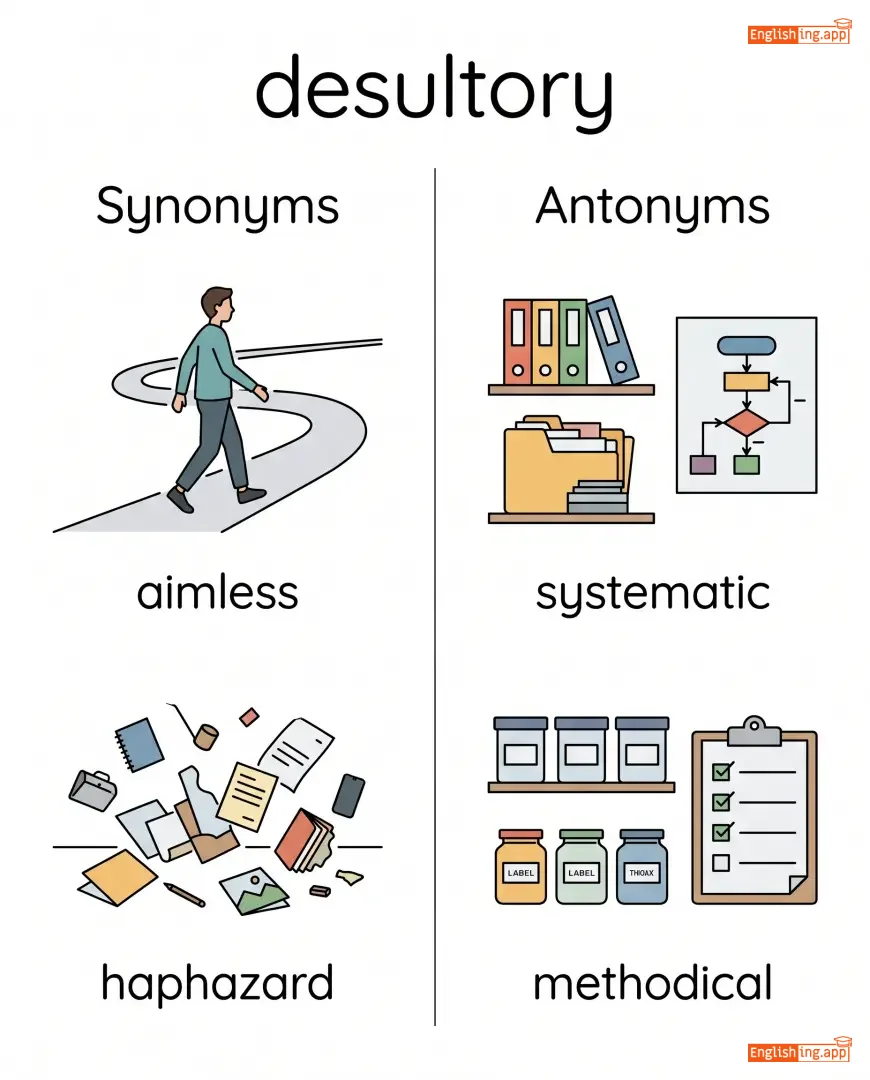
aimless, haphazard, random, unplanned, erratic
••••••
|
systematic, methodical, organized
••••••
|
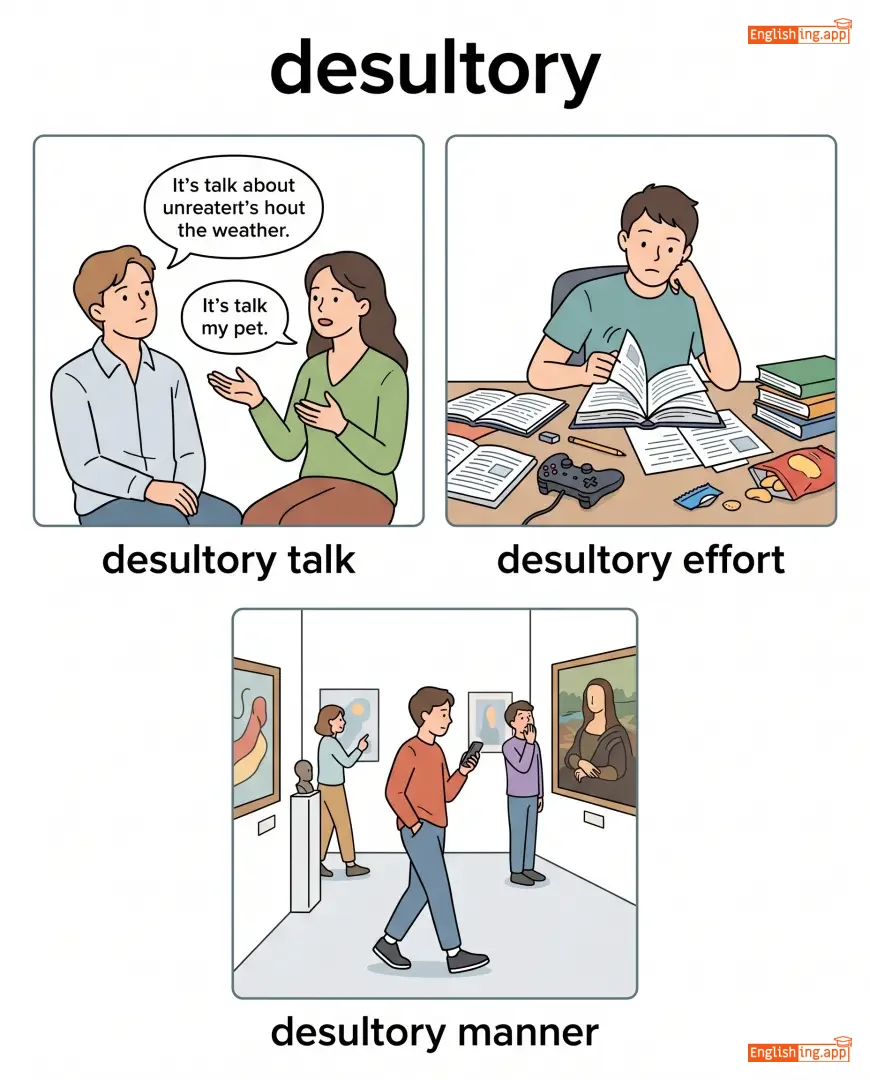
desultory talk, desultory effort, desultory manner, desultory approach
••••••
|
Desultory – разговор без цели, беспорядок
••••••
|
|
🚫
••••••
|
/dɪˈtɜːrənt/
noun
(дɪˈтэрэнт)
••••••
|
|
сдерживающий фактор
sderzhivayushchiy faktor
••••••
|
- •••••• | - •••••• | - •••••• | - •••••• |
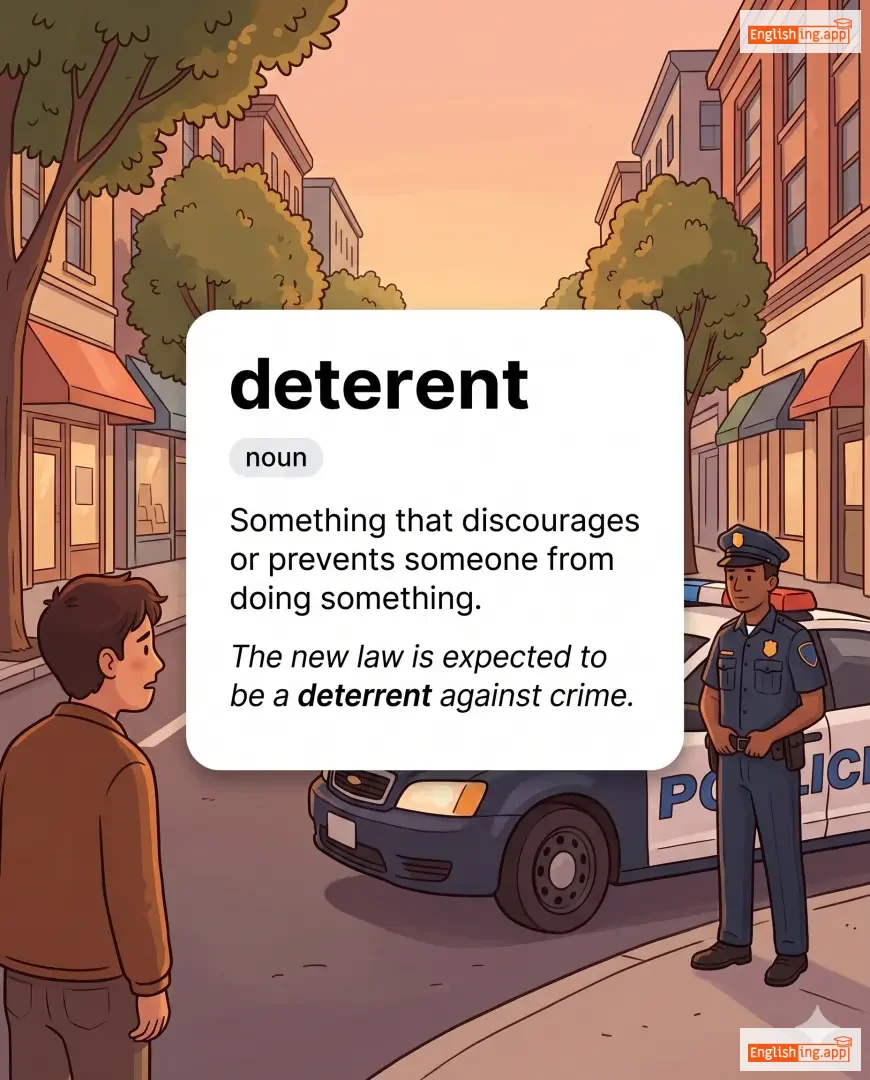
Something that discourages or prevents someone from doing something.
••••••
|
The new law is expected to be a deterrent against crime. |
Ожидается, что новый закон станет сдерживающим фактором против преступности.
Ozhidayetsya, chto novyy zakon stanet sderzhivayushchim faktorom protiv prestupnosti.
••••••
|
- •••••• | - •••••• | - •••••• |
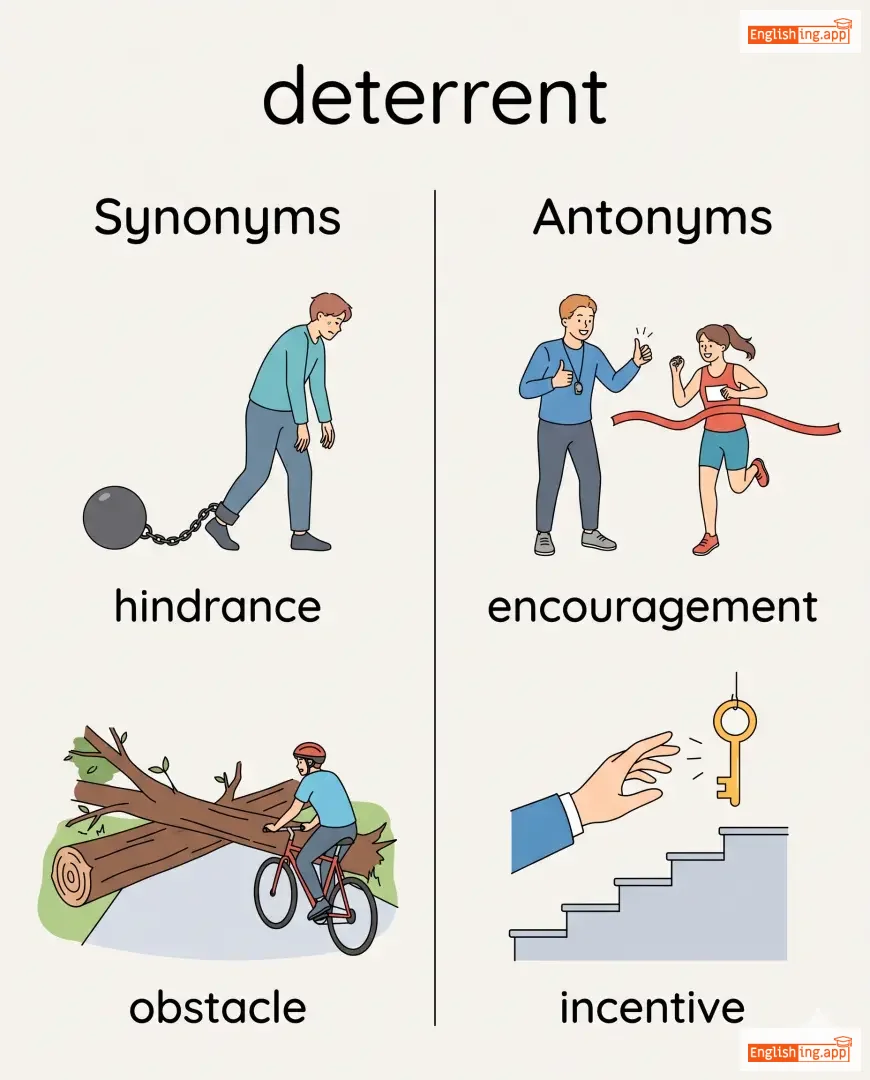
hindrance, obstacle, discouragement, preventive
••••••
|
encouragement, incentive
••••••
|
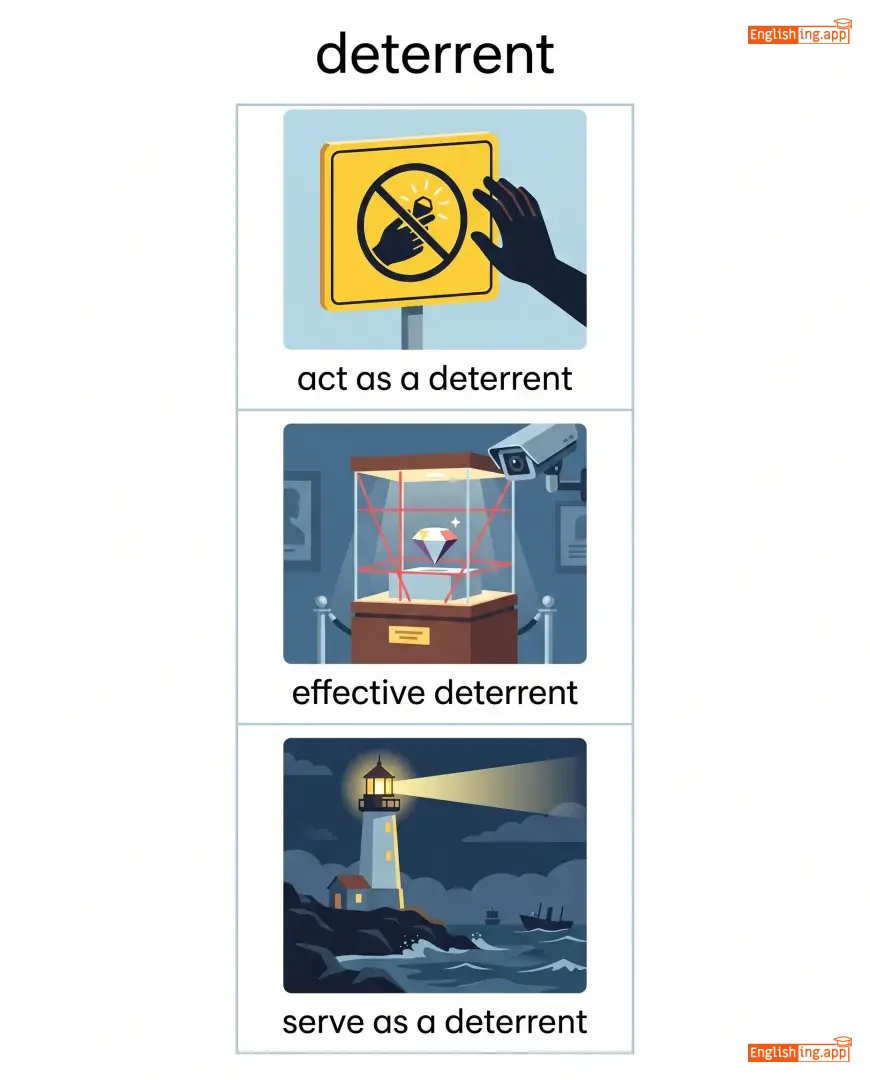
act as a deterrent, effective deterrent, serve as a deterrent
••••••
|
Сдерживающий фактор означает 🚫 преступление – закон как сила сдерживания.
••••••
|
|
🗣️
••••••
|
/dɪˈtrækʃən/
noun
(дɪˈтрэкшн)
••••••
|
|
принижение
prinizhenie
••••••
|
- •••••• | - •••••• | - •••••• | - •••••• |
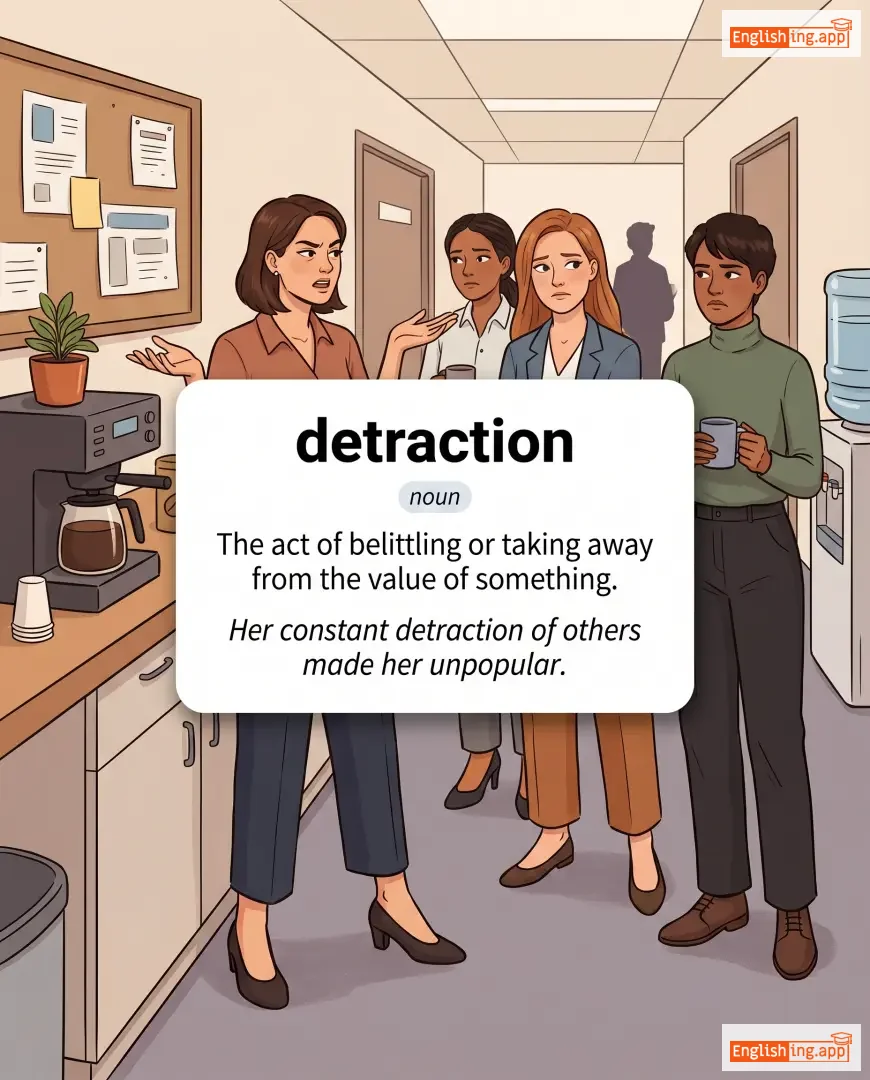
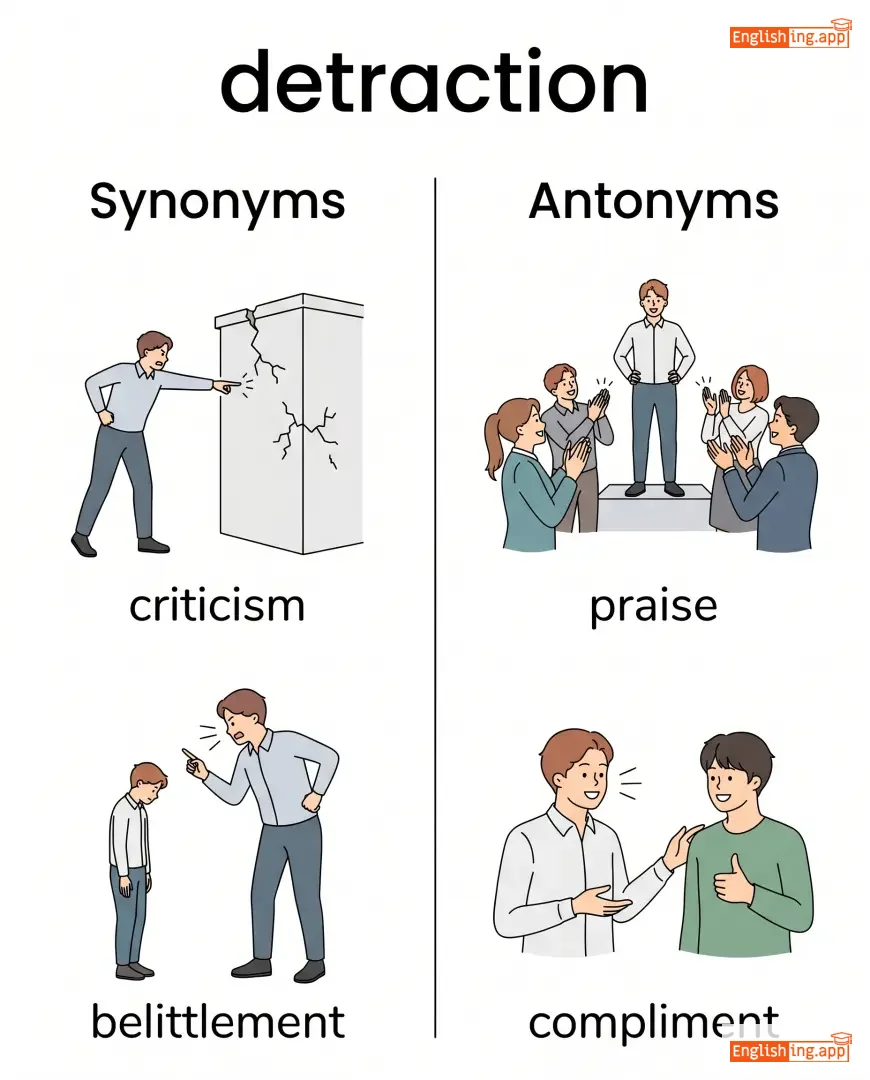
The act of belittling or taking away from the value of something.
••••••
|
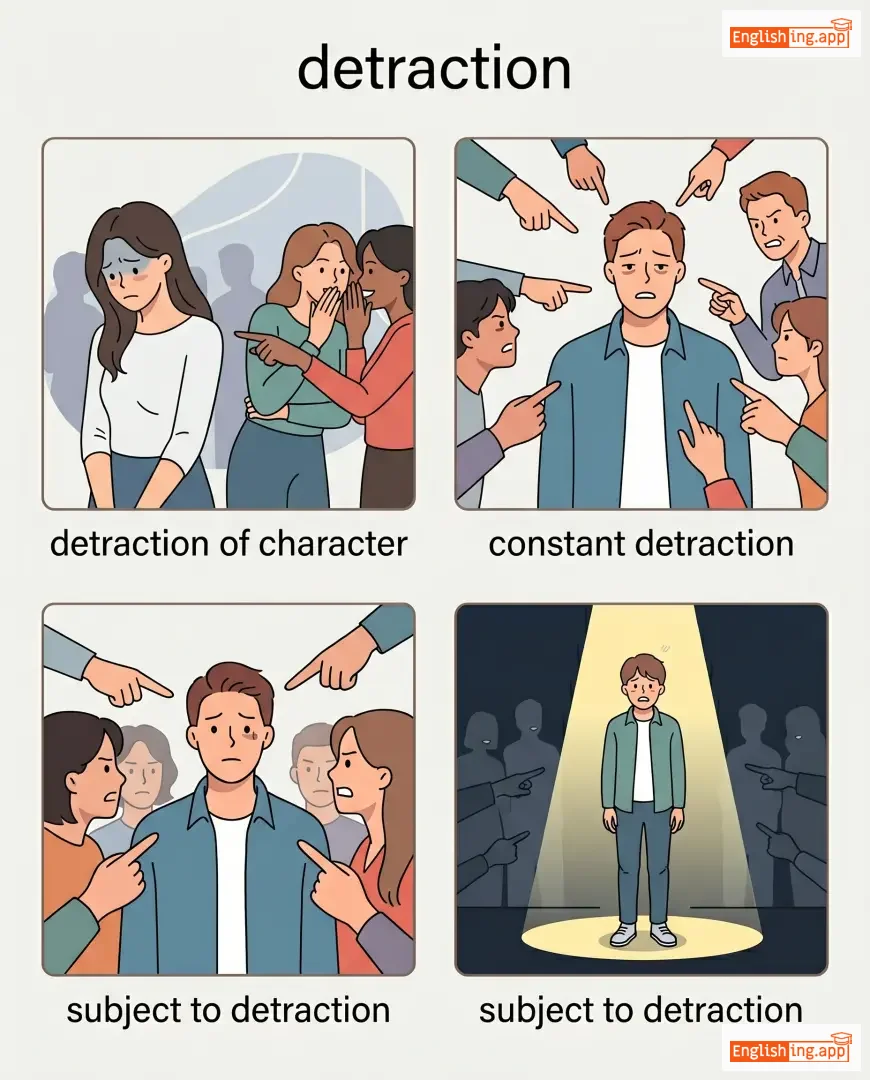
Her constant detraction of others made her unpopular. |
Её постоянное принижение других сделало её непопулярной.
Yeyo postoyannoye prinizheniye drugikh sdelalo yeyu nepopulyarnoy.
••••••
|
- •••••• | - •••••• | - •••••• |
criticism, belittlement, disparagement, slander
••••••
|
praise, compliment
••••••
|
detraction of character, constant detraction, subject to detraction
••••••
|
DETRACT означает уменьшать, а DETRACTION означает уменьшать ценность чего-то.
••••••
|
|
👗
••••••
|
/daɪˈæfənəs/
adjective
(дайафенас)
••••••
|
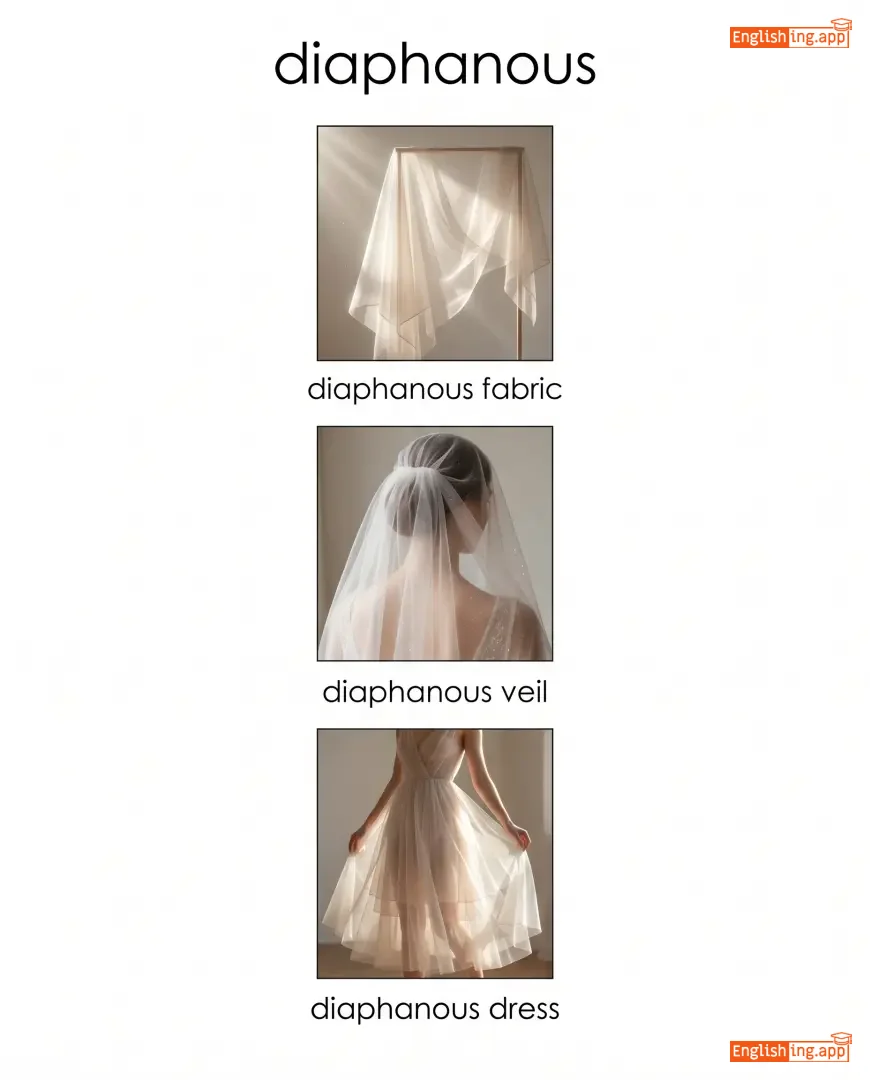
|
прозрачный
prozrachny
••••••
|
- •••••• | - •••••• | - •••••• | - •••••• |
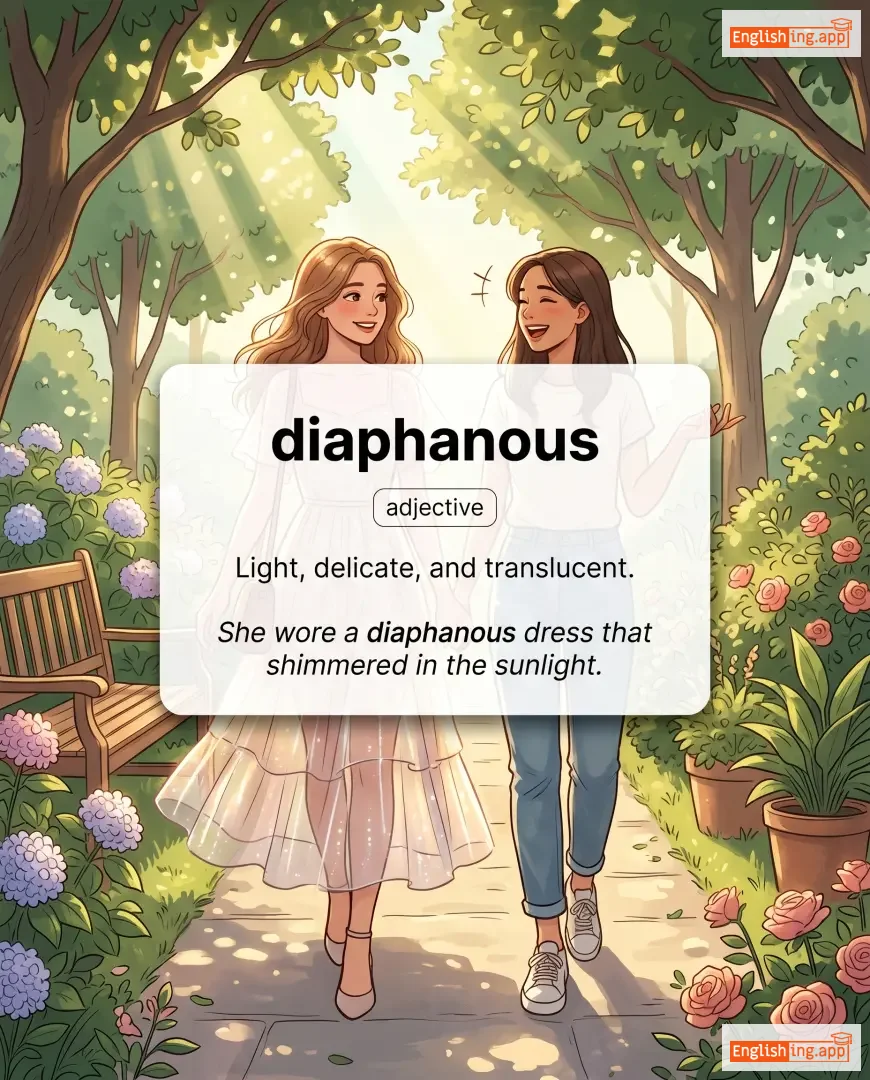
Light, delicate, and translucent.
••••••
|
She wore a diaphanous dress that shimmered in the sunlight. |
Она носила прозрачное платье, которое мерцало на солнечном свете.
Ona nosila prozrachnoe plat'ye, kotoroe mertsalo na solnechnom svete.
••••••
|
- •••••• | - •••••• | - •••••• |
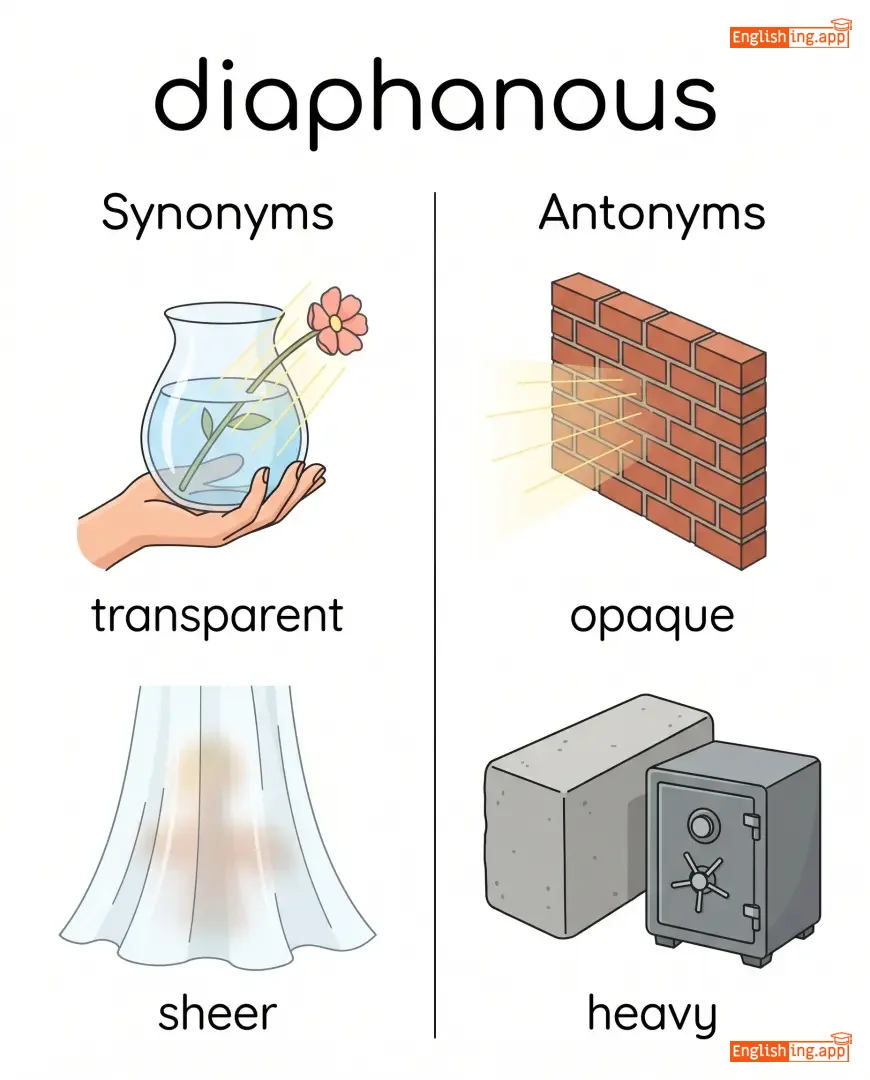
transparent, sheer, delicate, translucent, gossamer
••••••
|
opaque, heavy, thick
••••••
|
diaphanous fabric, diaphanous veil, diaphanous dress
••••••
|
Diaphanous = Dia+fan+ous → Легкое платье, которое сверкает на солнце.
••••••
|
|
🗣️
••••••
|
/ˈdaɪətraɪb/
noun
(даятрайб)
••••••
|
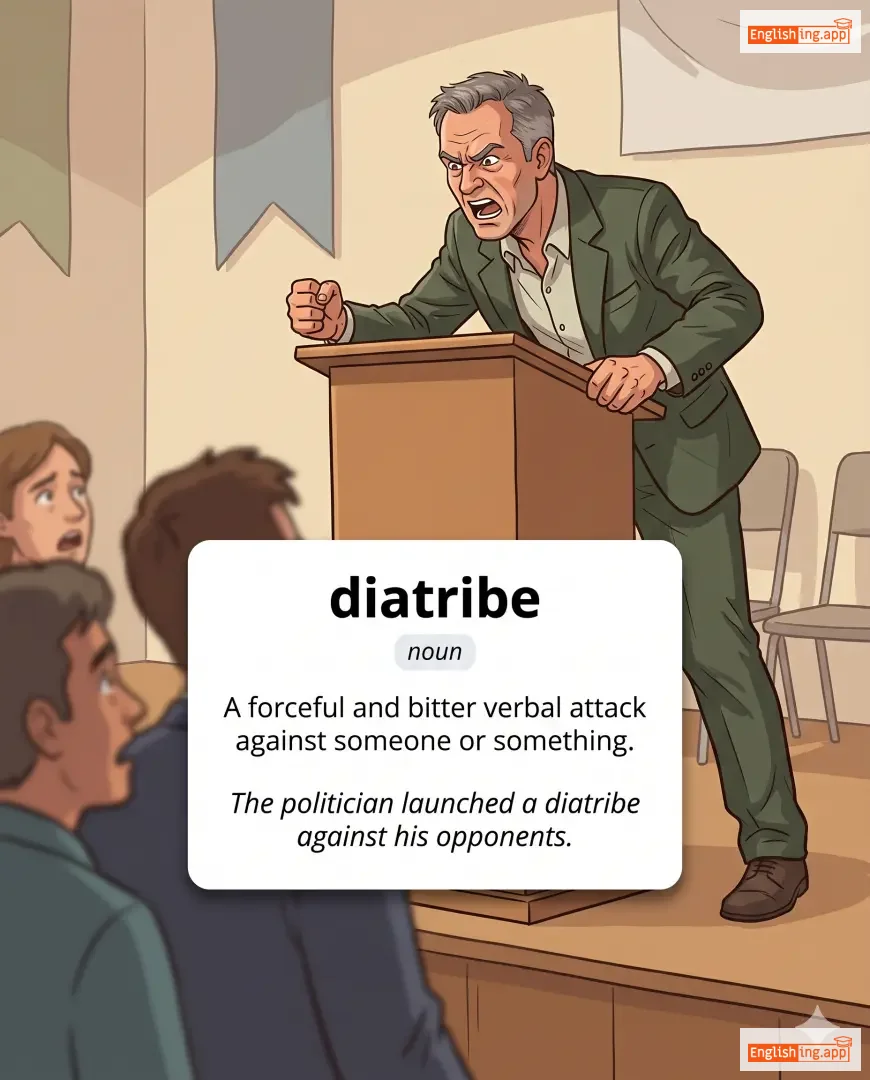
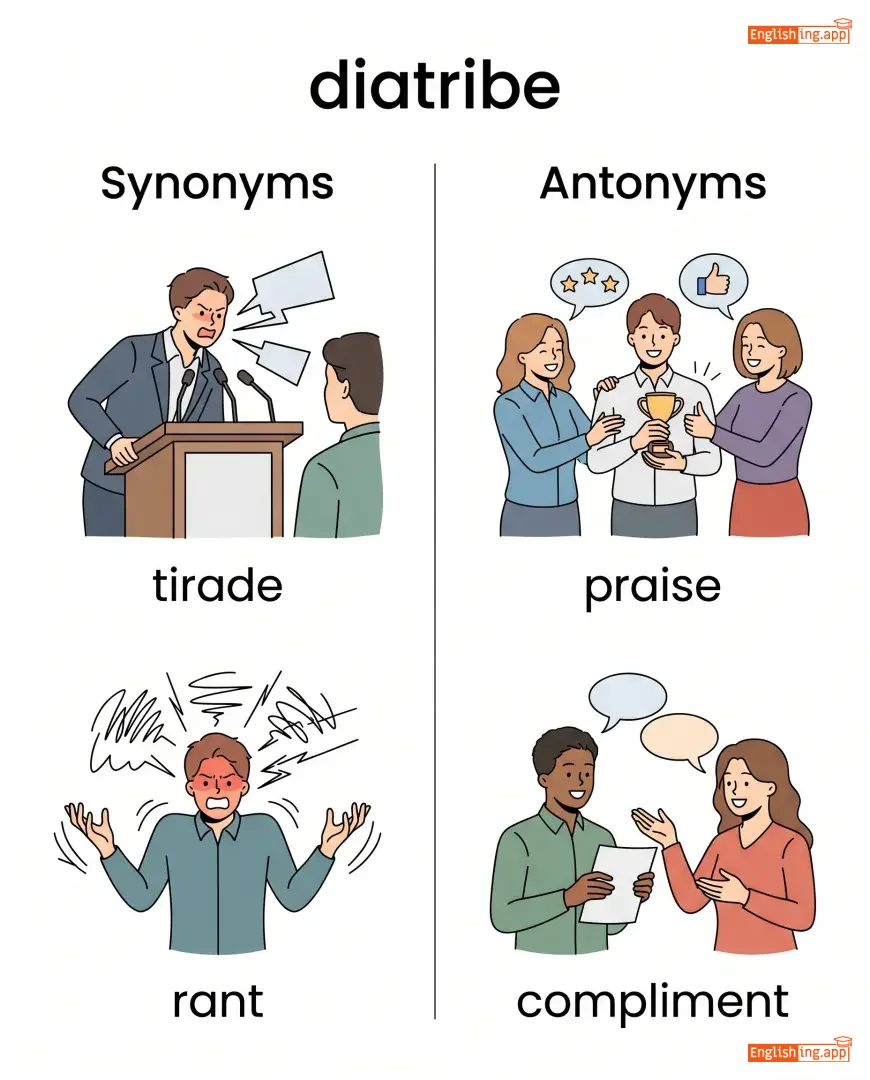
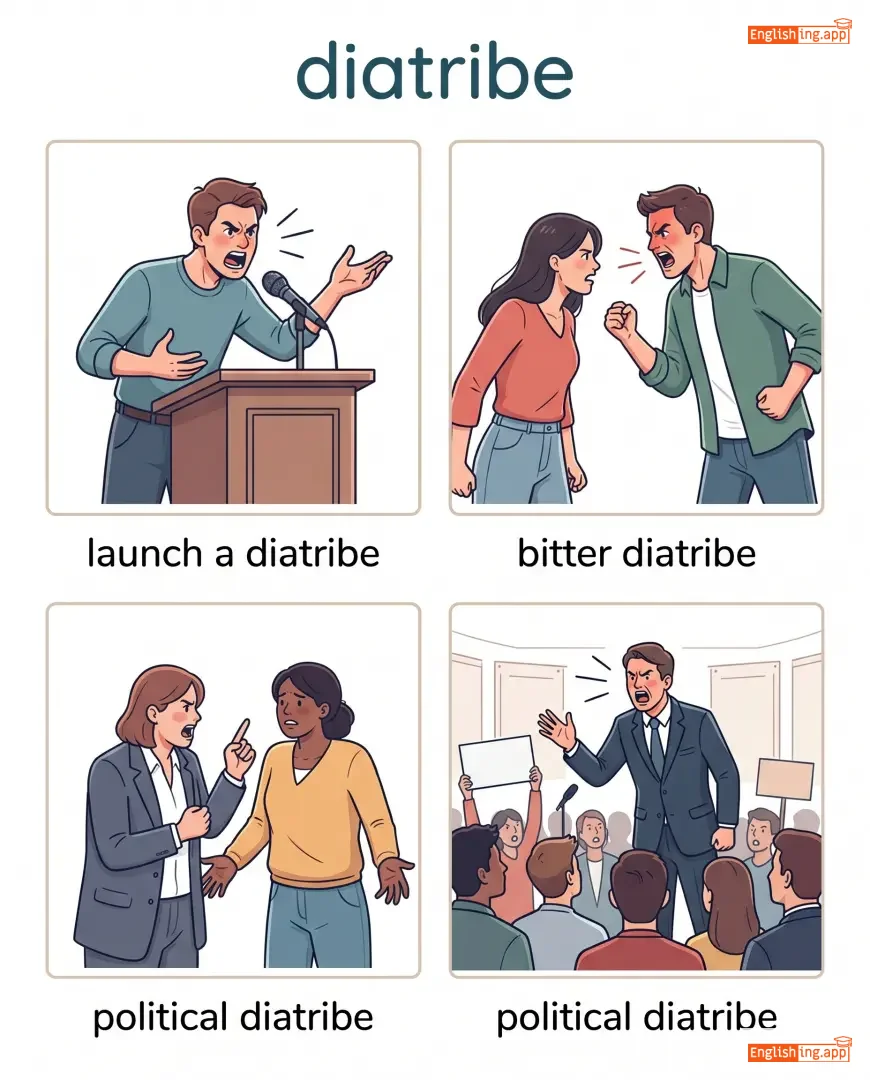
|
диатриба
diatriba
••••••
|
- •••••• | - •••••• | - •••••• | - •••••• |
A forceful and bitter verbal attack against someone or something.
••••••
|
The politician launched a diatribe against his opponents. |
Политик начал диатрибу против своих оппонентов.
Politik nachal diatribu protiv svoikh opponentov.
••••••
|
- •••••• | - •••••• | - •••••• |
tirade, rant, criticism, denunciation, invective
••••••
|
praise, compliment
••••••
|
launch a diatribe, bitter diatribe, political diatribe
••••••
|
DIAlog v TRIBune - diatriba, zlostnaya kritika.
••••••
|
|
⚖️
••••••
|
/daɪˈkɒtəmi/
noun
(дайˈкɒтэми)
••••••
|
|
дихотомия
dikhotomiya
••••••
|
- •••••• | - •••••• | - •••••• | - •••••• |
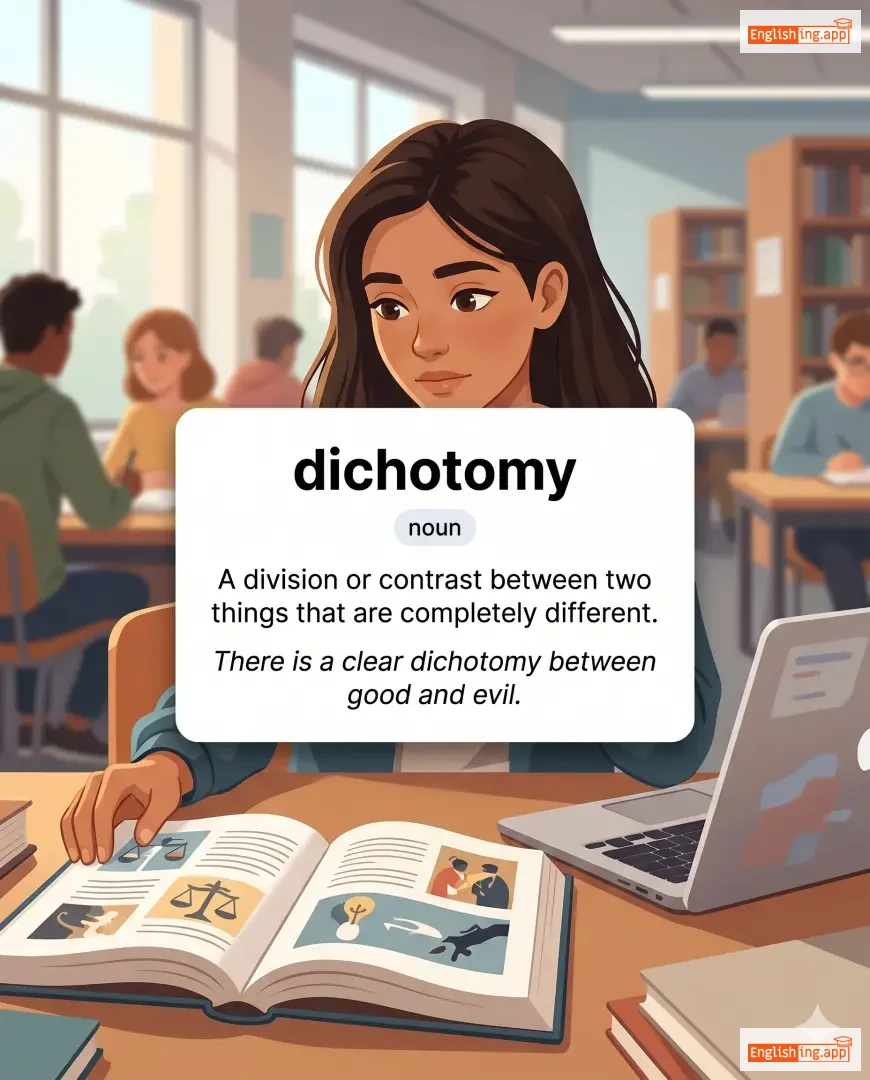
A division or contrast between two things that are completely different.
••••••
|
There is a clear dichotomy between good and evil. |
Существует явная дихотомия между добром и злом.
Sushchestvuyet yavnyaya dikhotomiya mezhdu dobrom i zlom.
••••••
|
- •••••• | - •••••• | - •••••• |
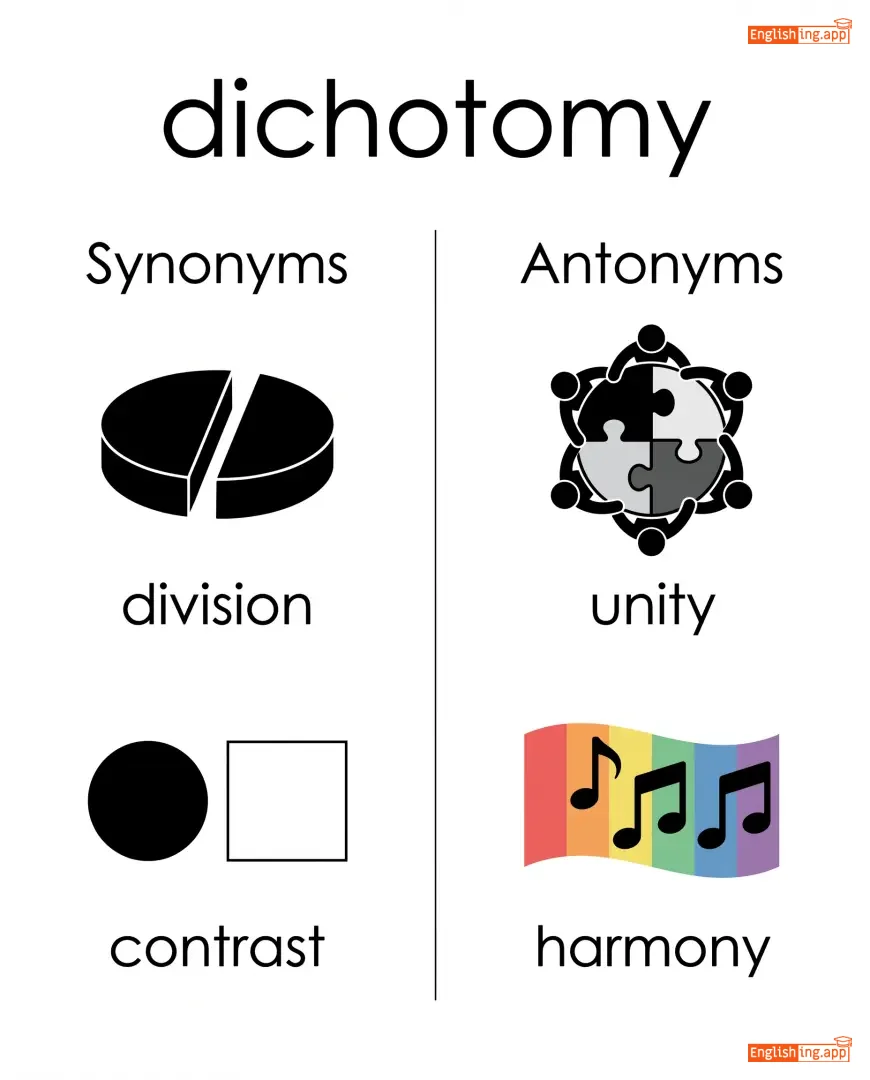
division, contrast, split, dualism
••••••
|
unity, harmony
••••••
|
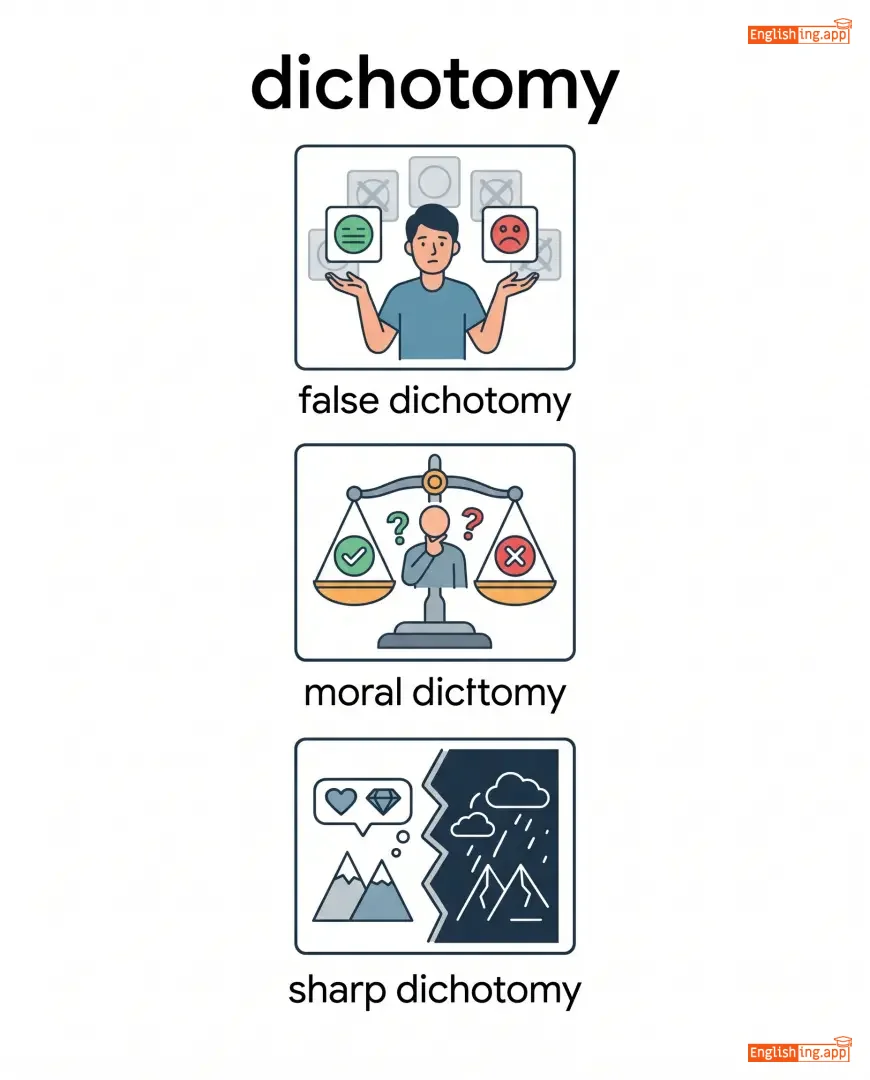
false dichotomy, moral dichotomy, sharp dichotomy
••••••
|
DIE означает два + CUT означает разрезать → Дихотомия означает разделение на два
••••••
|
|
😶
••••••
|
/ˈdɪfɪdəns/
noun
(дифи́денс)
••••••
|
|
неуверенность в себе
neuverennost' v sebe
••••••
|
- •••••• | - •••••• | - •••••• | - •••••• |
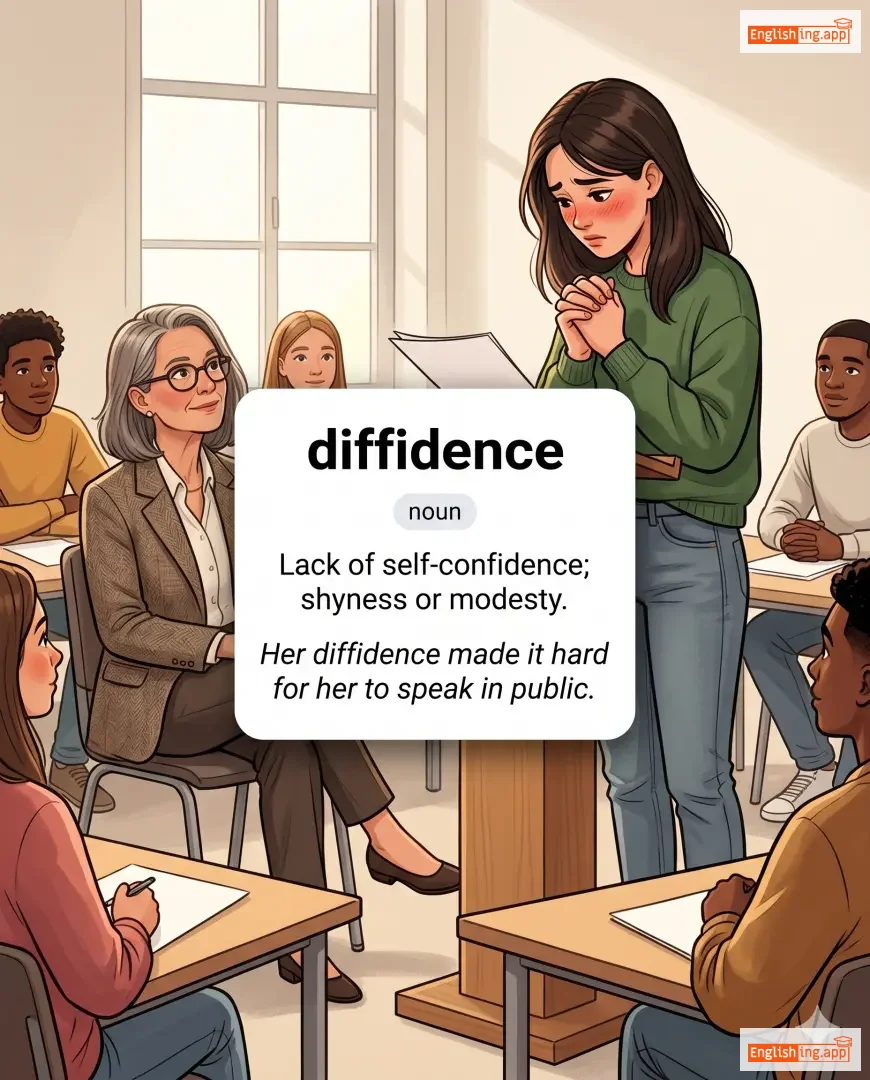
Lack of self-confidence; shyness or modesty.
••••••
|
Her diffidence made it hard for her to speak in public. |
Её неуверенность в себе затрудняла ей выступать на публике.
Yeyo neuverennost' v sebe zatrudnyala yey vystupat' na publike.
••••••
|
- •••••• | - •••••• | - •••••• |
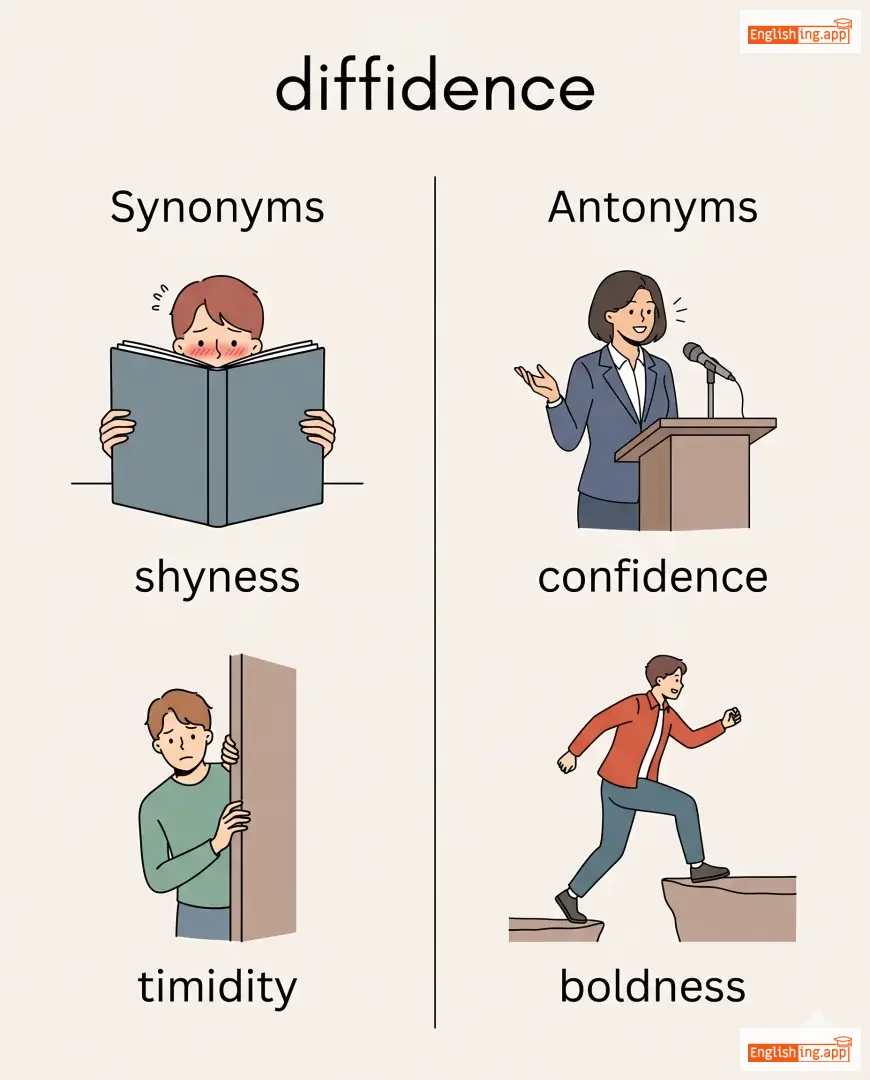
shyness, timidity, insecurity, reserve, modesty
••••••
|
confidence, boldness, assertiveness
••••••
|
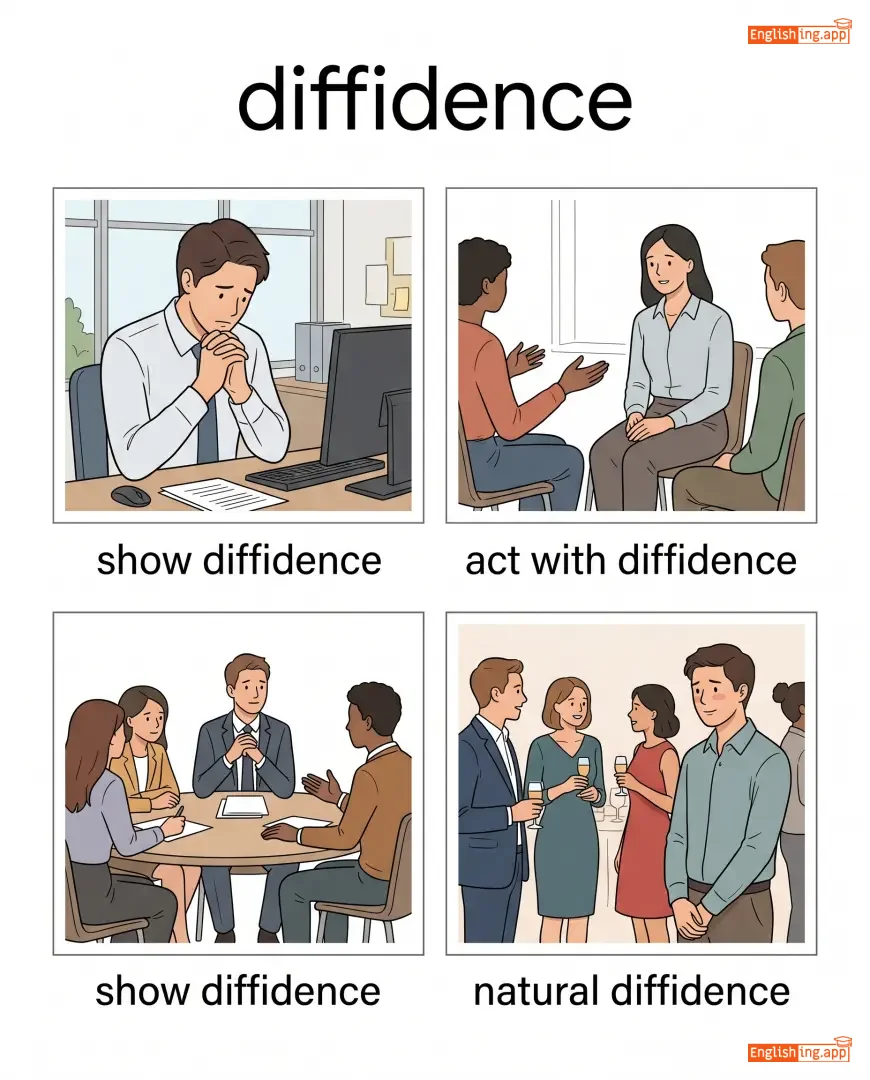
show diffidence, act with diffidence, natural diffidence
••••••
|
Diffidence значит неуверенность - помни, что D = Down уверенность.
••••••
|
|
🌫️
••••••
|
/dɪˈfjuːz/
verb
(дифьюз)
••••••
|
|
распространять
rasprostranyat
••••••
|
diffused
дифьюзд
••••••
|
diffused
дифьюзд
••••••
|
diffuses
дифьюзес
••••••
|
diffusing
дифьюзинг
••••••
|
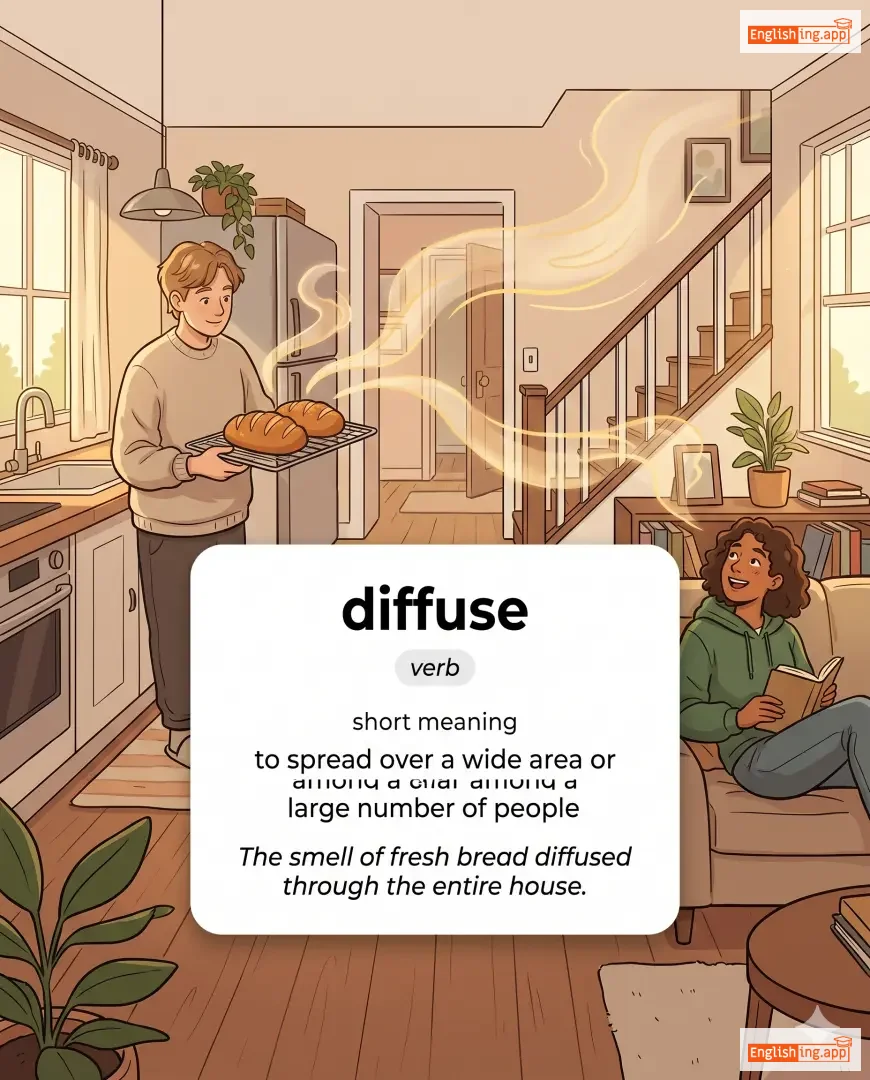
to spread over a wide area or among a large number of people
••••••
|
The smell of fresh bread diffused through the entire house.
Запах свежего хлеба распространился по всему дому.
••••••
|
Запах свежего хлеба распространился по всему дому.
Zapakh svezhago khleba rasprostranilsya po vsemu domu.
••••••
|
diffuse tension
распространить напряжение
••••••
|
to reduce or calm down stress or conflict
••••••
|
уменьшить напряжение
umenshit' napryazhenie
••••••
|
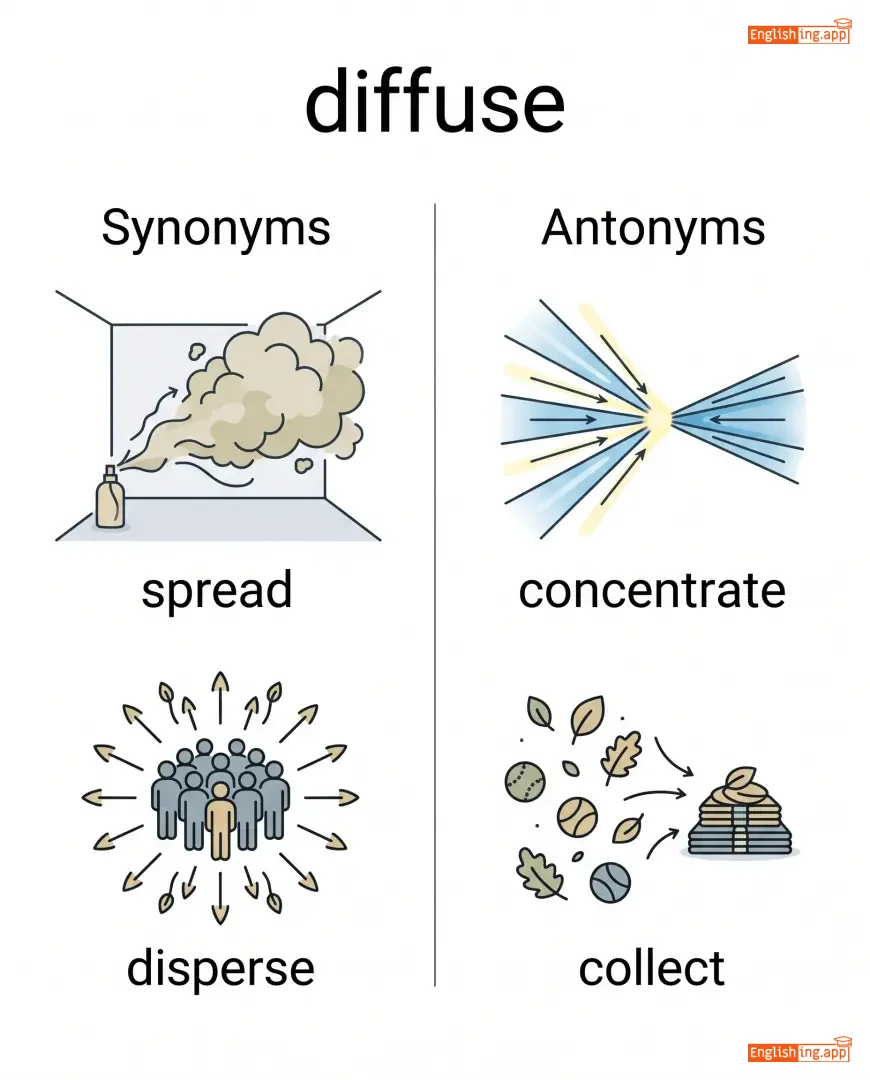
spread, disperse, scatter, distribute, dissipate
••••••
|
concentrate, collect, gather
••••••
|
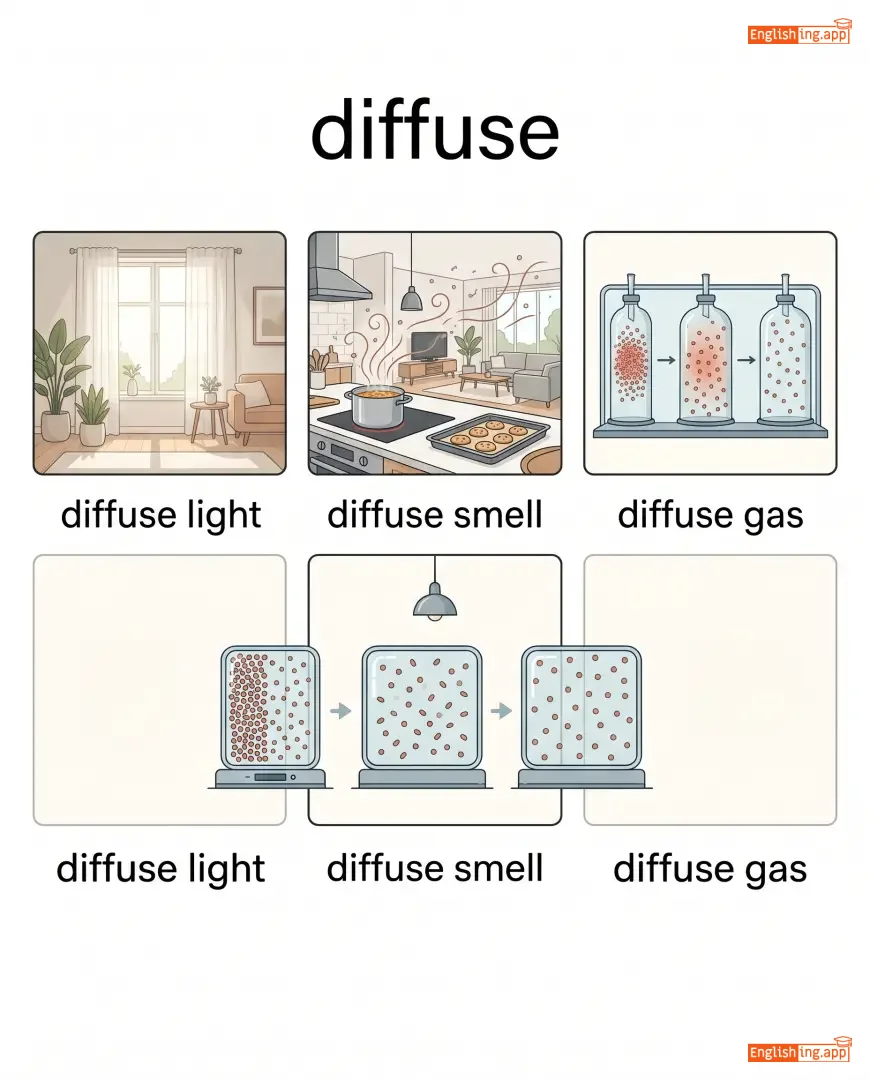
diffuse light, diffuse smell, diffuse gas, diffuse conflict
••••••
|
Распределение напряжения - распространить и уменьшить.
••••••
|
|
🛤️
••••••
|
/daɪˈɡrɛʃən/
noun
(дайˈгрэшн)
••••••
|
|
отступление
otstupleenie
••••••
|
- •••••• | - •••••• | - •••••• | - •••••• |
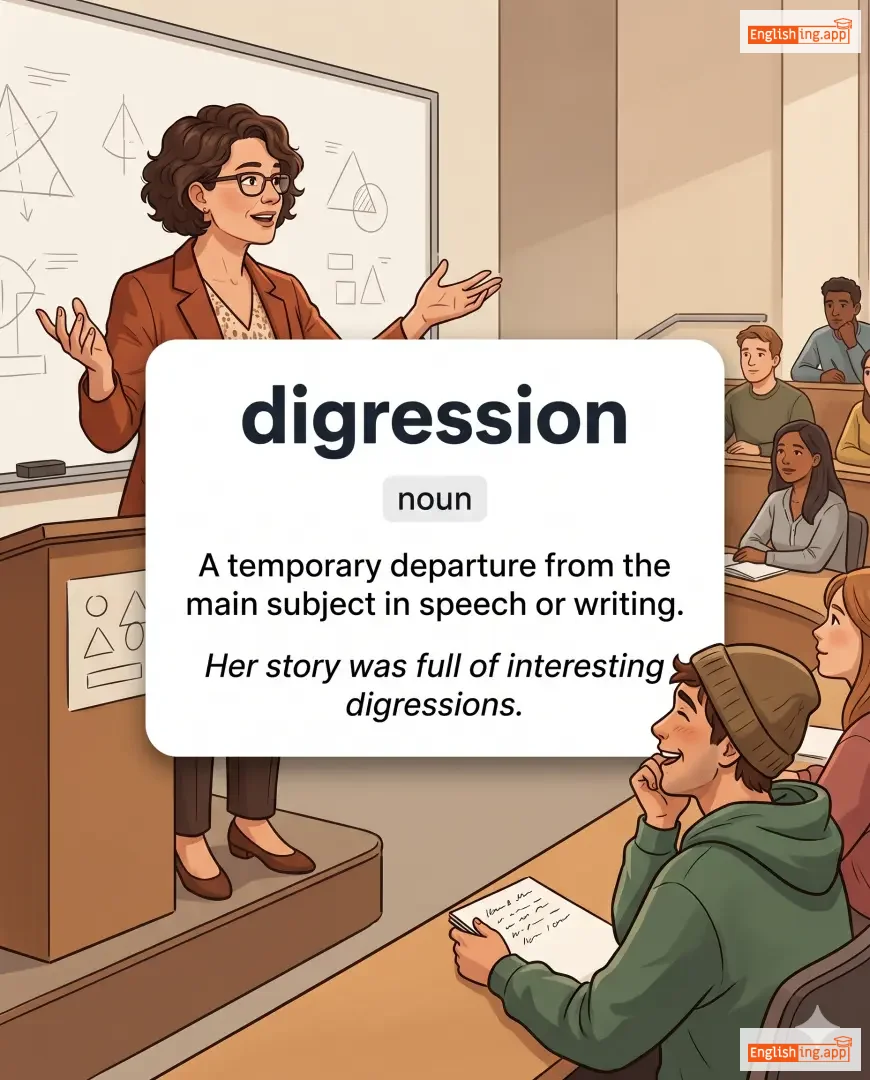
A temporary departure from the main subject in speech or writing.
••••••
|
Her story was full of interesting digressions. |
Её история была полна интересных отступлений.
Yeyo istoriya byla polna interesnykh otstupleniy.
••••••
|
- •••••• | - •••••• | - •••••• |
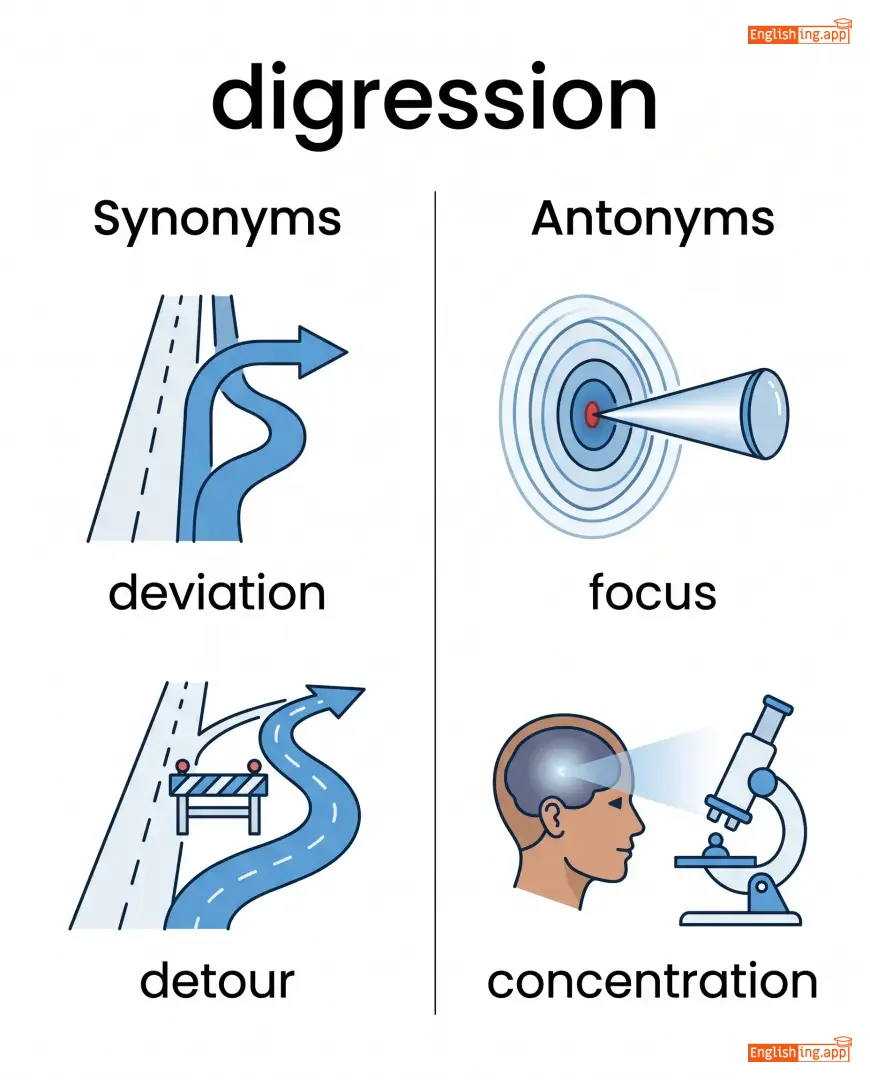
deviation, detour, aside, tangent
••••••
|
focus, concentration
••••••
|
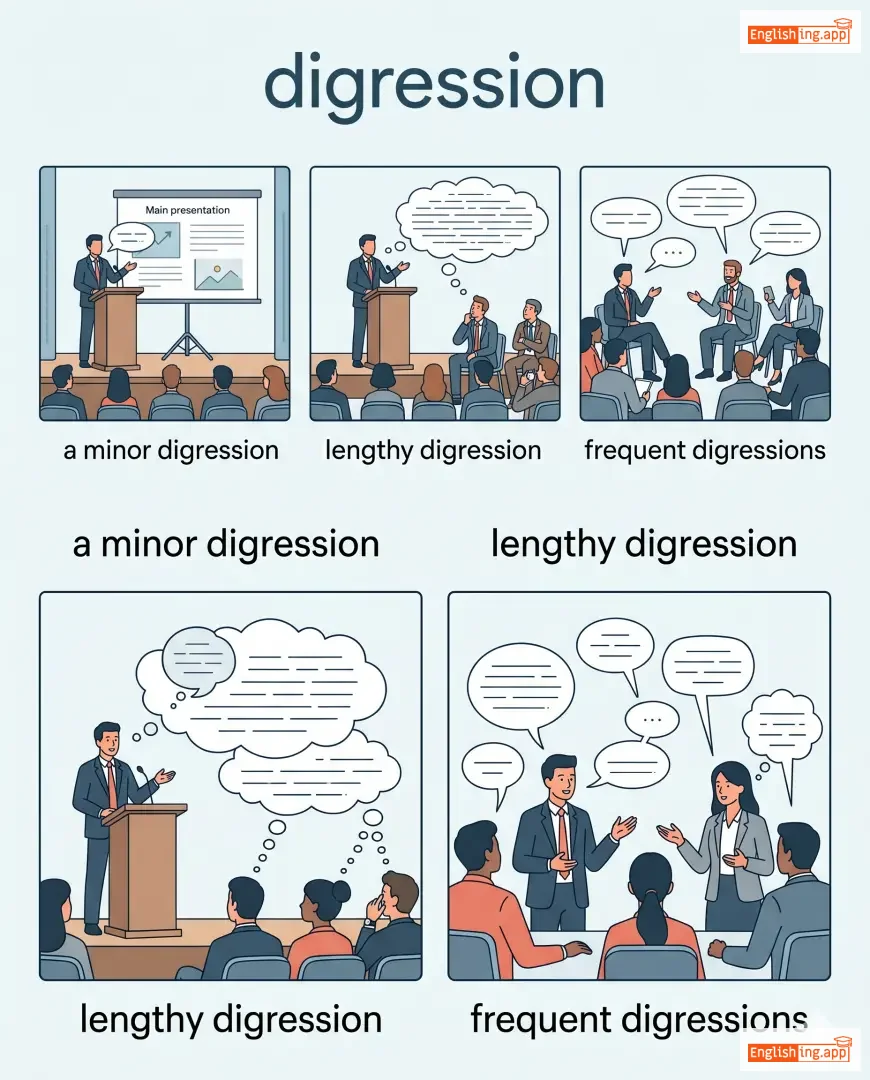
a minor digression, lengthy digression, frequent digressions
••••••
|
Отступление — это отклонение от основного обсуждения.
••••••
|
|
🎵
••••••
|
/dɜːrdʒ/
noun
(дёрдж)
••••••
|
|
плач
plach
••••••
|
- •••••• | - •••••• | - •••••• | - •••••• |
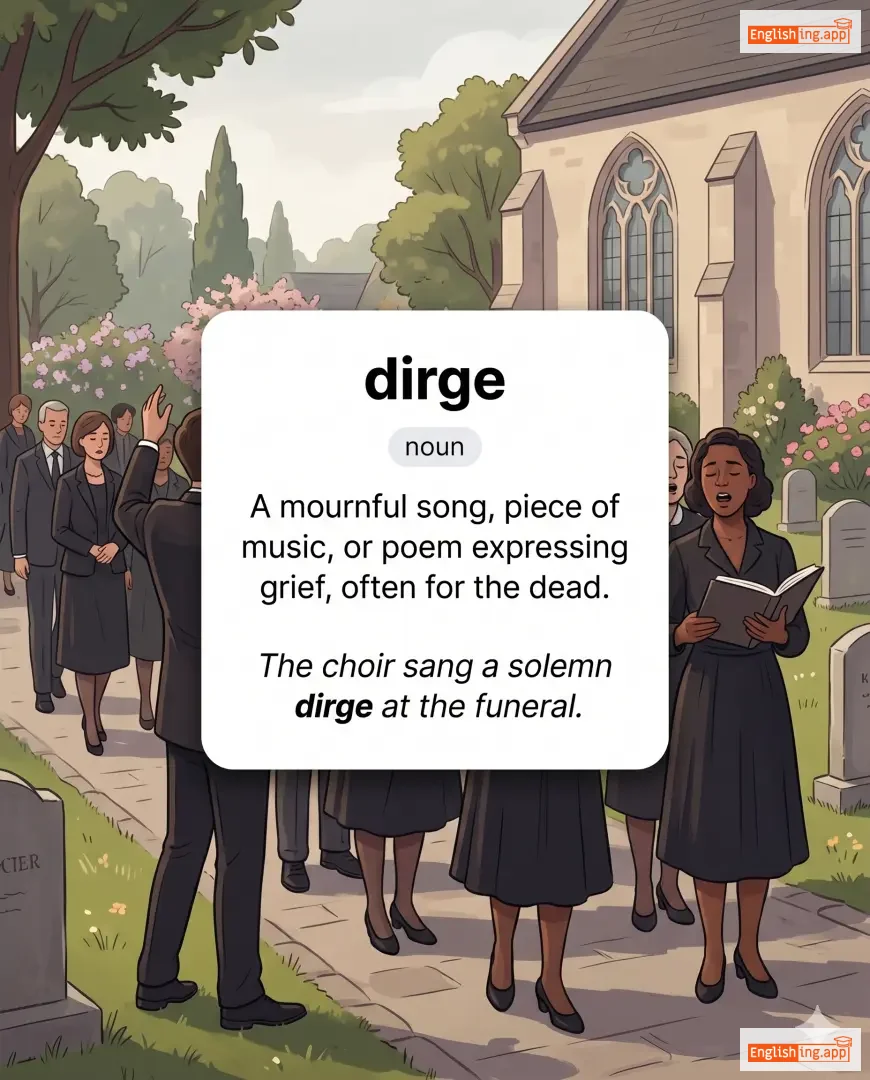
A mournful song, piece of music, or poem expressing grief, often for the dead.
••••••
|
The choir sang a solemn dirge at the funeral.
Хор спел торжественную жалобную песню на похоронах.
••••••
|
Хор спел торжественную жалобную песню на похоронах.
Khor spel torzhestvennuyu zhalobnuyu pesnyu na pokhoronakh.
••••••
|
- •••••• | - •••••• | - •••••• |
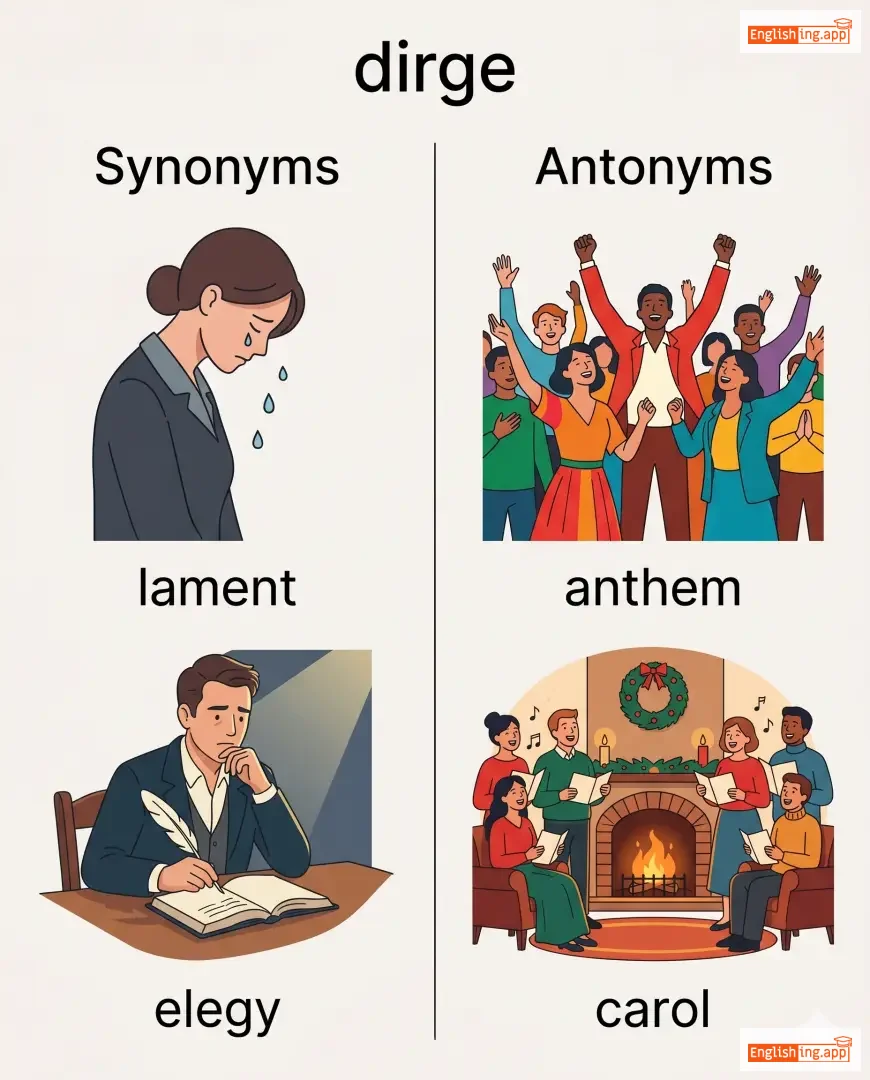
lament, elegy, requiem, threnody, funeral song
••••••
|
anthem, carol, celebration
••••••
|
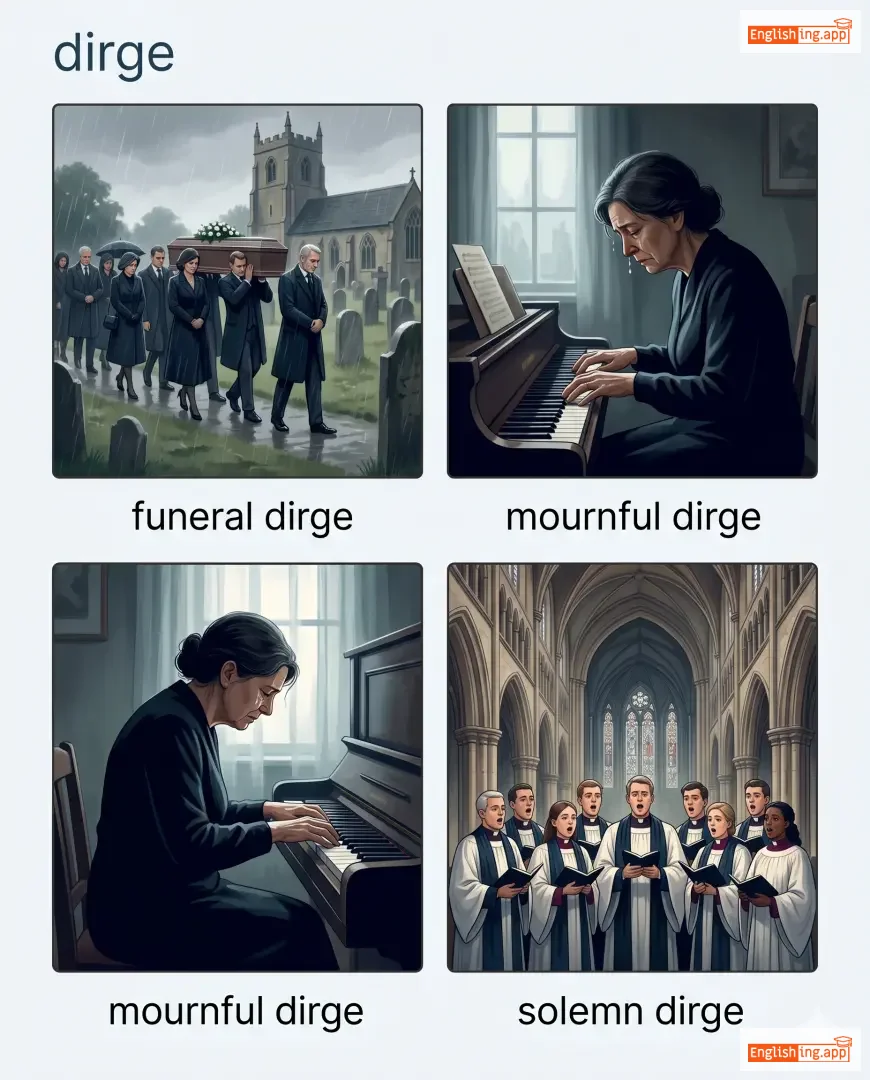
funeral dirge, mournful dirge, solemn dirge
••••••
|
Dirge можно запомнить как 'плач' — песня, выражающая горе.
••••••
|
|
💡
••••••
|
/ˌdɪsəˈbjuːz/
verb
(дисабьюз)
••••••
|
|
разубедить
razubedit
••••••
|
disabused
дисабьюзд
••••••
|
disabused
дисабьюзд
••••••
|
disabuses
дисабьюзес
••••••
|
disabusing
дисабьюзинг
••••••
|
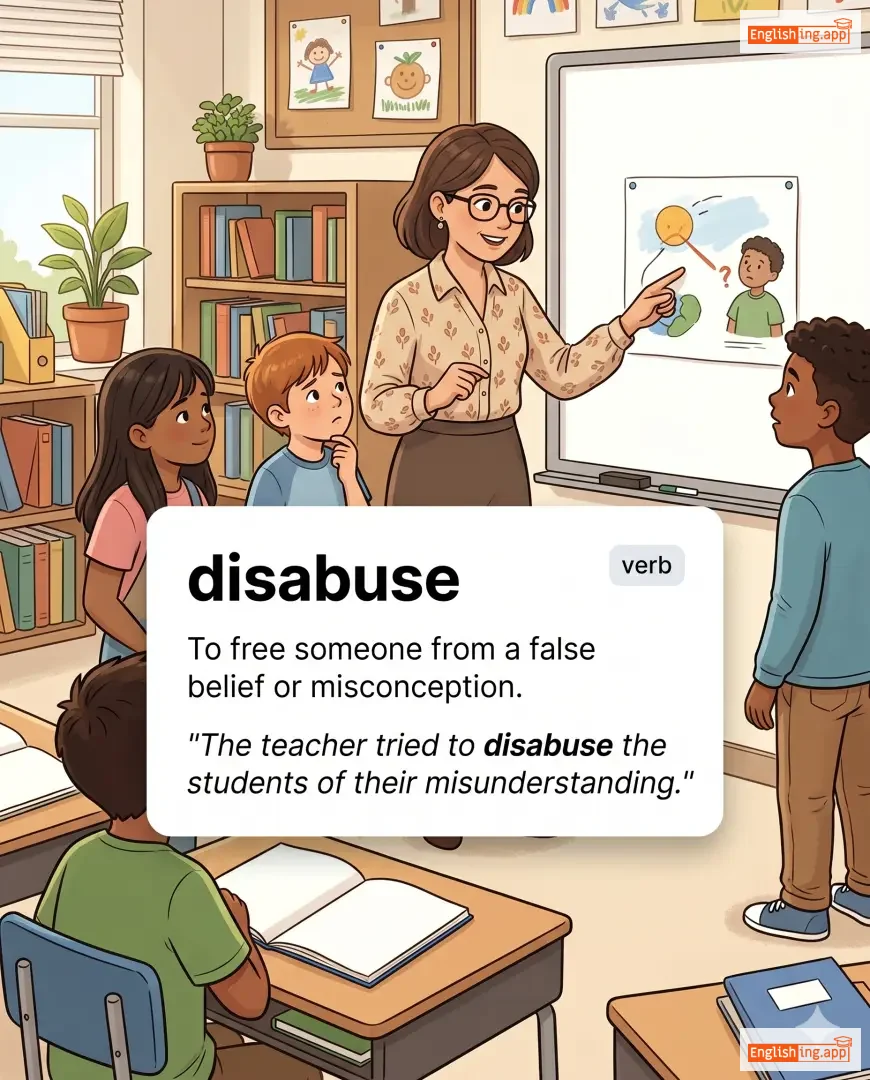
To free someone from a false belief or misconception.
••••••
|
The teacher tried to disabuse the students of their misunderstanding.
Учитель пытался избавить студентов от их недоразумения.
••••••
|
Учитель пытался избавить студентов от их недоразумения.
Uchitel' pytalsya izbavit' studentov ot ikh nedorazumeniya.
••••••
|
- •••••• | - •••••• | - •••••• |
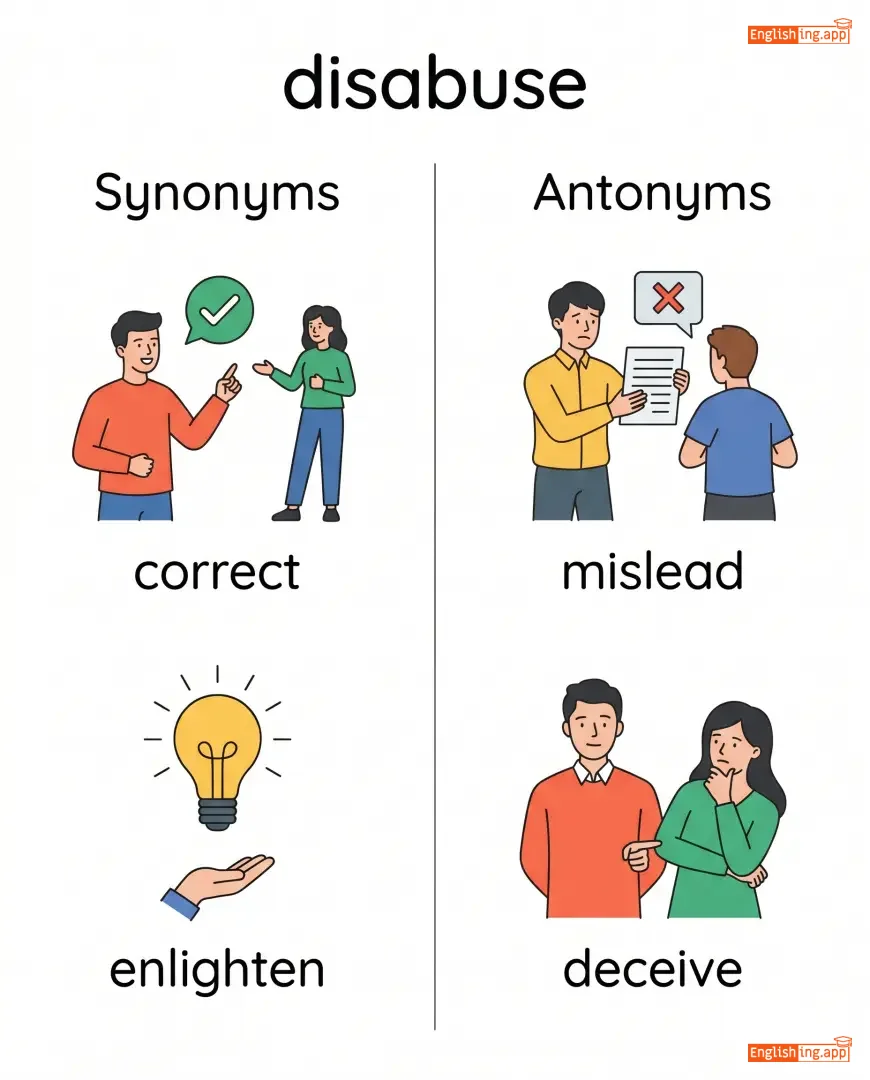
correct, enlighten, rectify, debunk, refute
••••••
|
mislead, deceive, delude
••••••
|
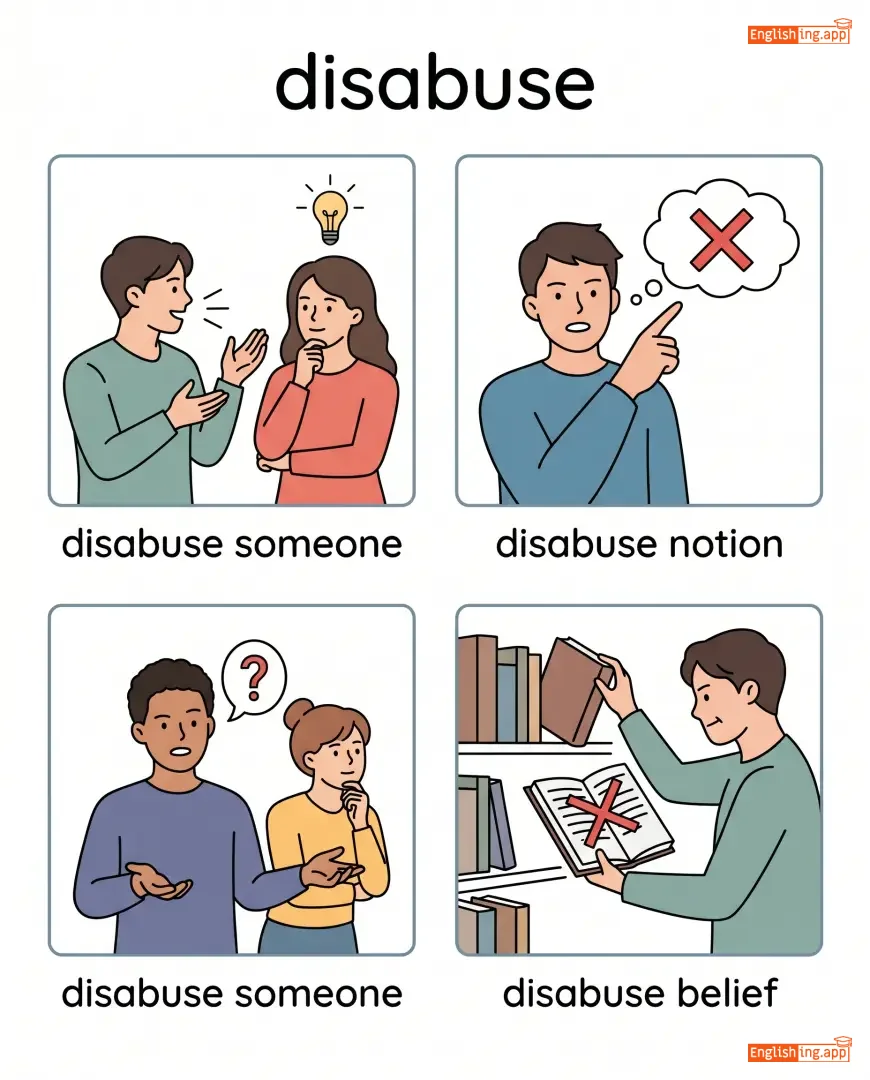
disabuse someone, disabuse notion, disabuse belief
••••••
|
Disabuse = разубедить → разъяснение заблуждений.
••••••
|
|
🧐
••••••
|
/dɪˈsɜːrnɪŋ/
adjective
(дисёрнинг)
••••••
|

|
проницательный
pronitsatel'nyy
••••••
|
- •••••• | - •••••• | - •••••• | - •••••• |
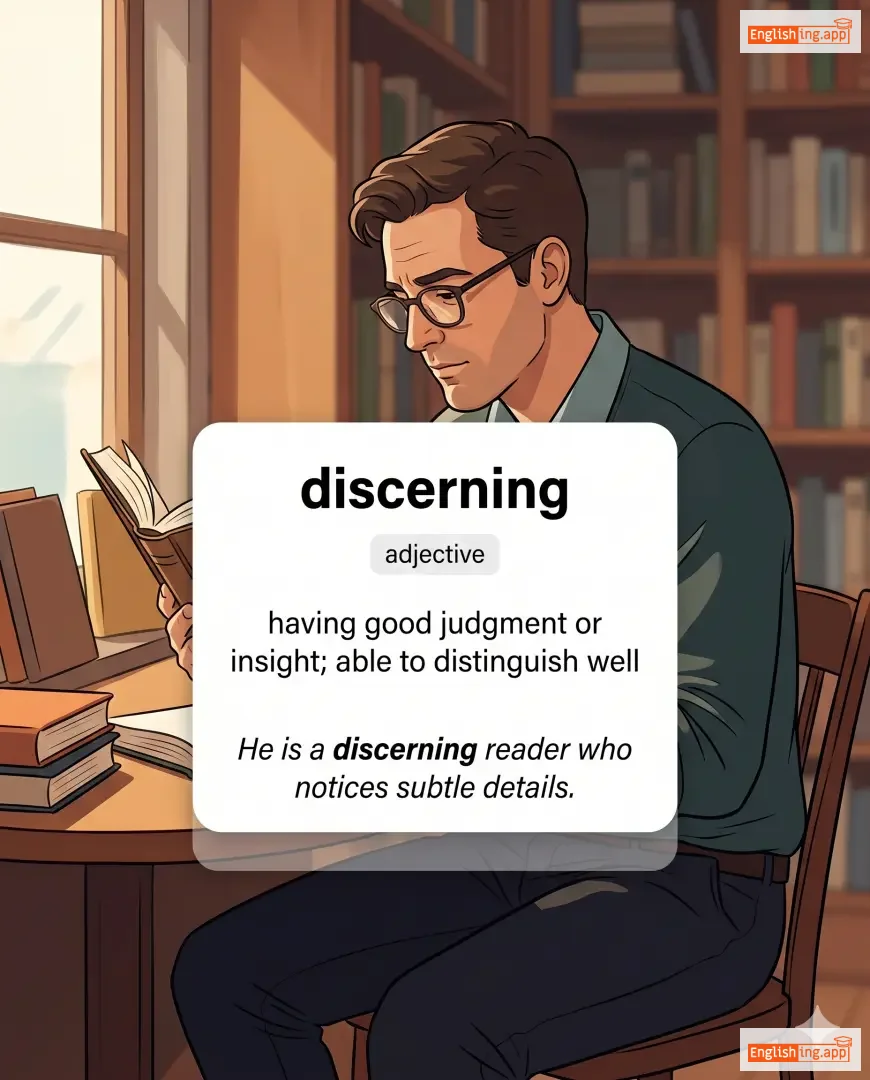
having good judgment or insight; able to distinguish well
••••••
|
He is a discerning reader who notices subtle details. |
Он проницательный читатель, который замечает тонкие детали.
On pronitsatel'nyy chitatel', kotoryy zamechayet tonkie detali.
••••••
|
discerning taste |
ability to appreciate and judge good quality
••••••
|
проницательный вкус
pronitsatel'nyy vkus
••••••
|
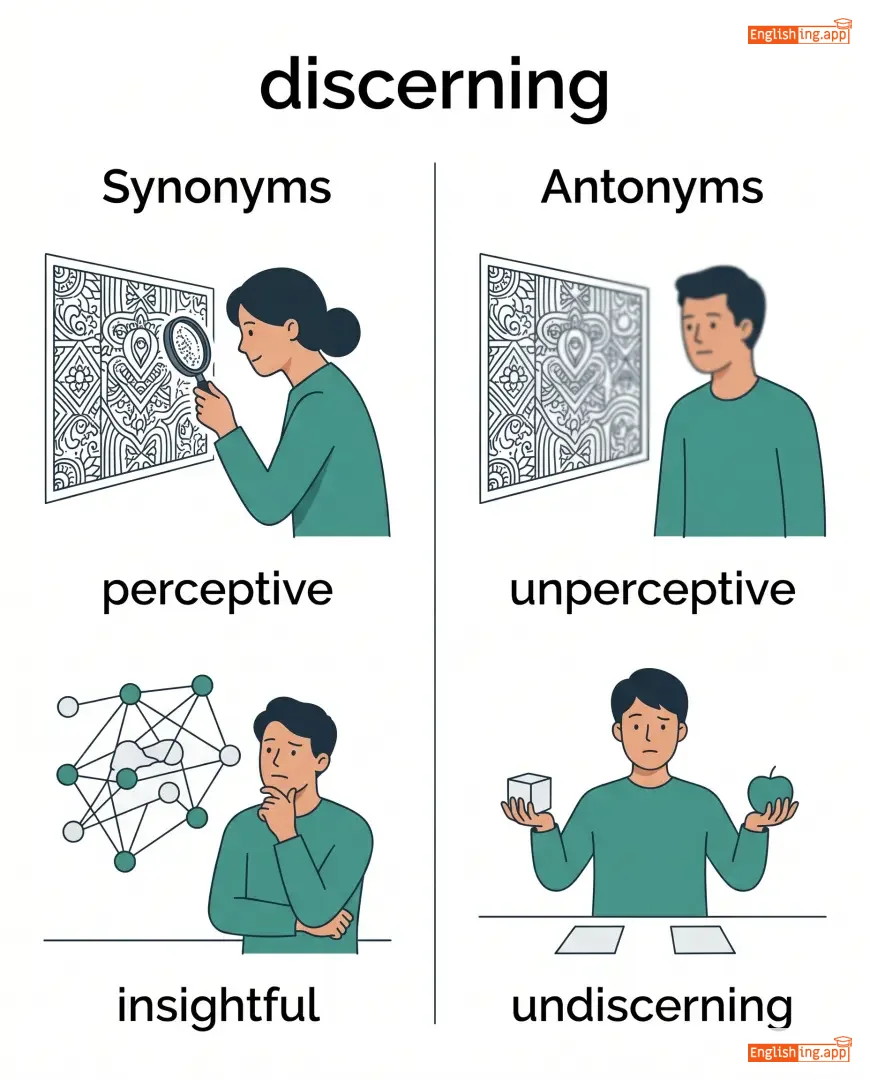
perceptive, insightful, judicious, astute
••••••
|
unperceptive, undiscerning
••••••
|
discerning reader, discerning customer, discerning eye, discerning taste
••••••
|
Проницательность — это умение замечать детали, как хороший читатель.
••••••
|
|
😓
••••••
|
/dɪsˈkʌmfɪt/
verb
(дискомфит)
••••••
|

|
смущать
smushchat
••••••
|
discomfited
дискомфитед
••••••
|
discomfited
дискомфитед
••••••
|
discomfits
дискомфитс
••••••
|
discomfiting
дискомфитинг
••••••
|
to make someone feel uneasy, embarrassed, or confused
••••••
|
The interviewer’s tough questions discomfited the candidate.
Жесткие вопросы интервьюера смутили кандидата.
••••••
|
Жесткие вопросы интервьюера смутили кандидата.
Zhestkie voprosy interviewera smutili kandidata.
••••••
|
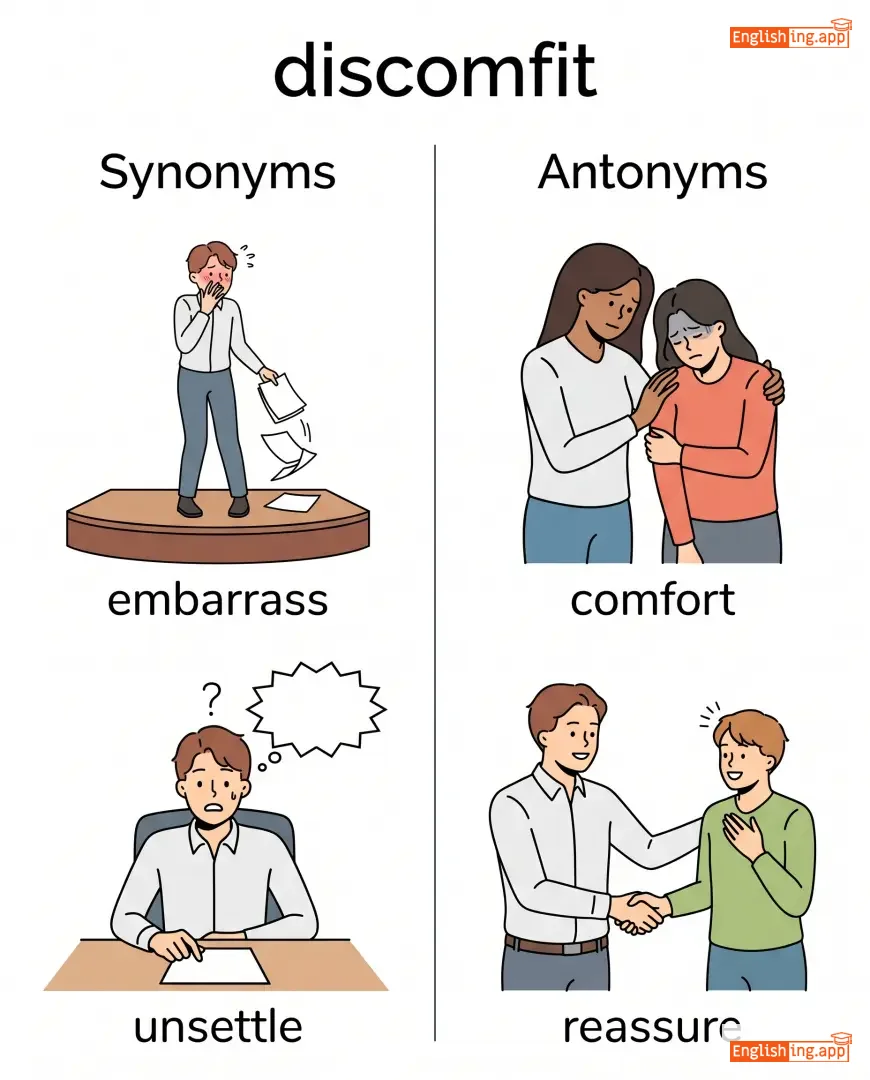
- •••••• | - •••••• | - •••••• |
embarrass, unsettle, discomfort, confuse, fluster
••••••
|
comfort, reassure, soothe
••••••
|
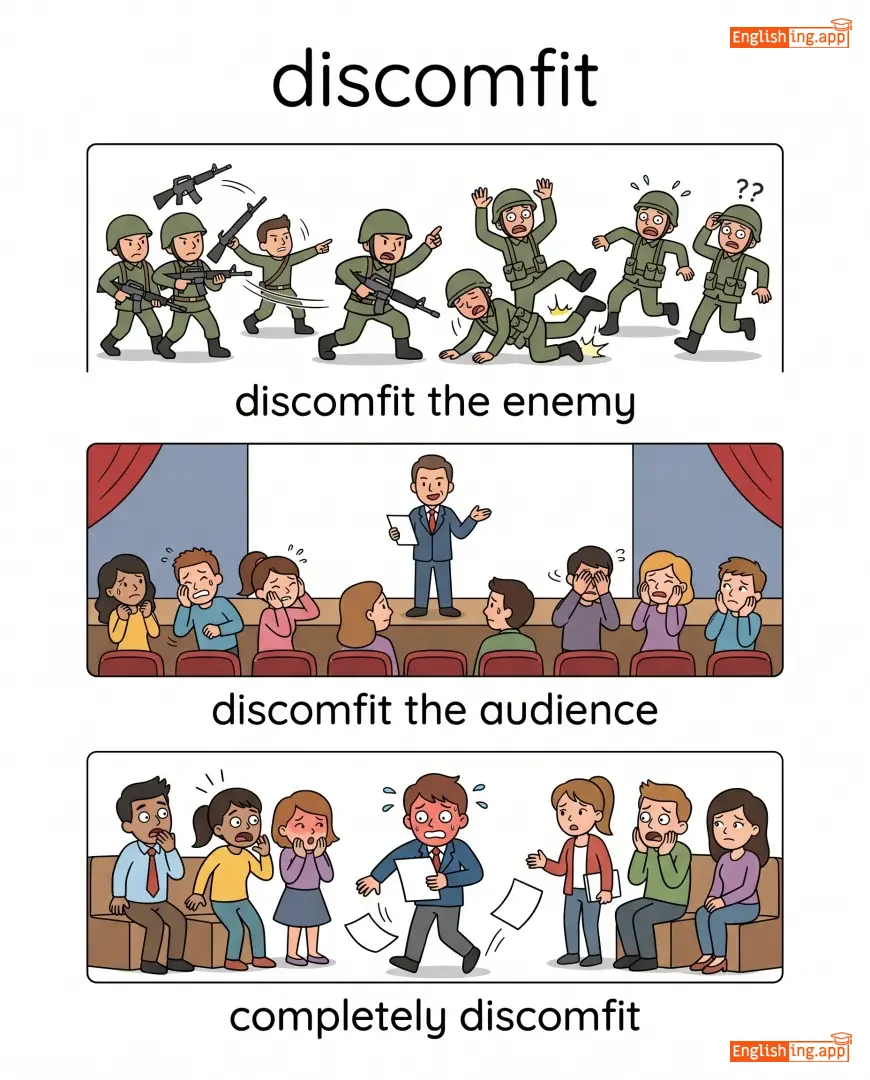
discomfit the enemy, discomfit the audience, completely discomfit
••••••
|
Discomfort = discomfit = не комфортно, смущает (smushchat)
••••••
|
|
🎶
••••••
|
/dɪsˈkɔːrdənt/
adjective
(дискордант)
••••••
|
|
дискордант
diskordant
••••••
|
- •••••• | - •••••• | - •••••• | - •••••• |
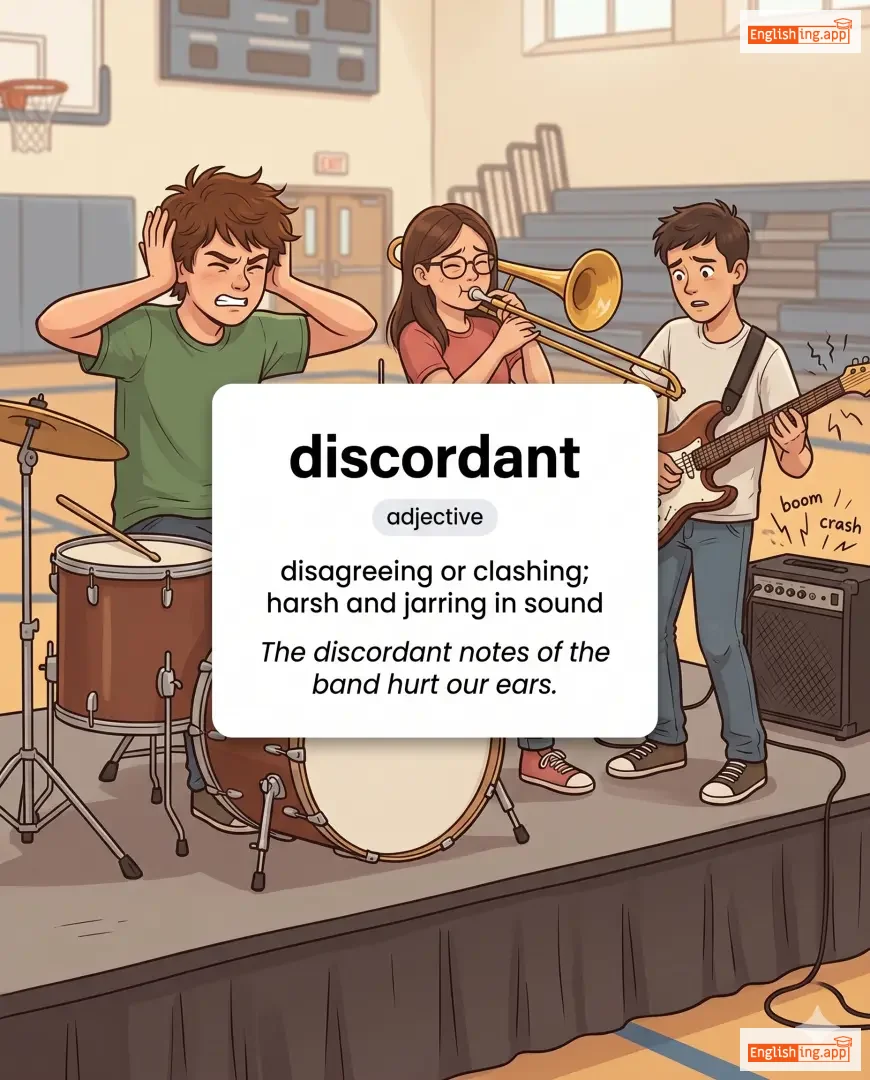
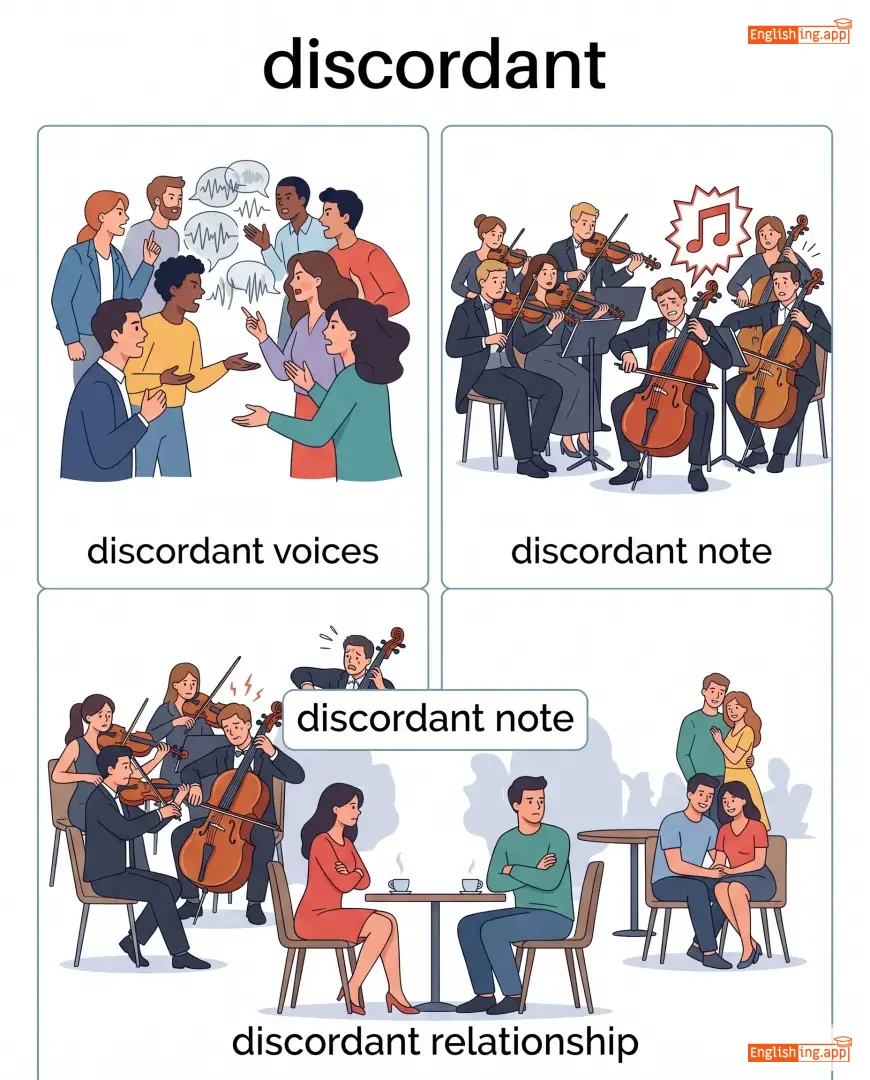
disagreeing or clashing; harsh and jarring in sound
••••••
|
The discordant notes of the band hurt our ears. |
Дискордантные ноты группы повредили наши уши.
Diskordantnye noty gruppy povredili nashi ushi.
••••••
|
- •••••• | - •••••• | - •••••• |
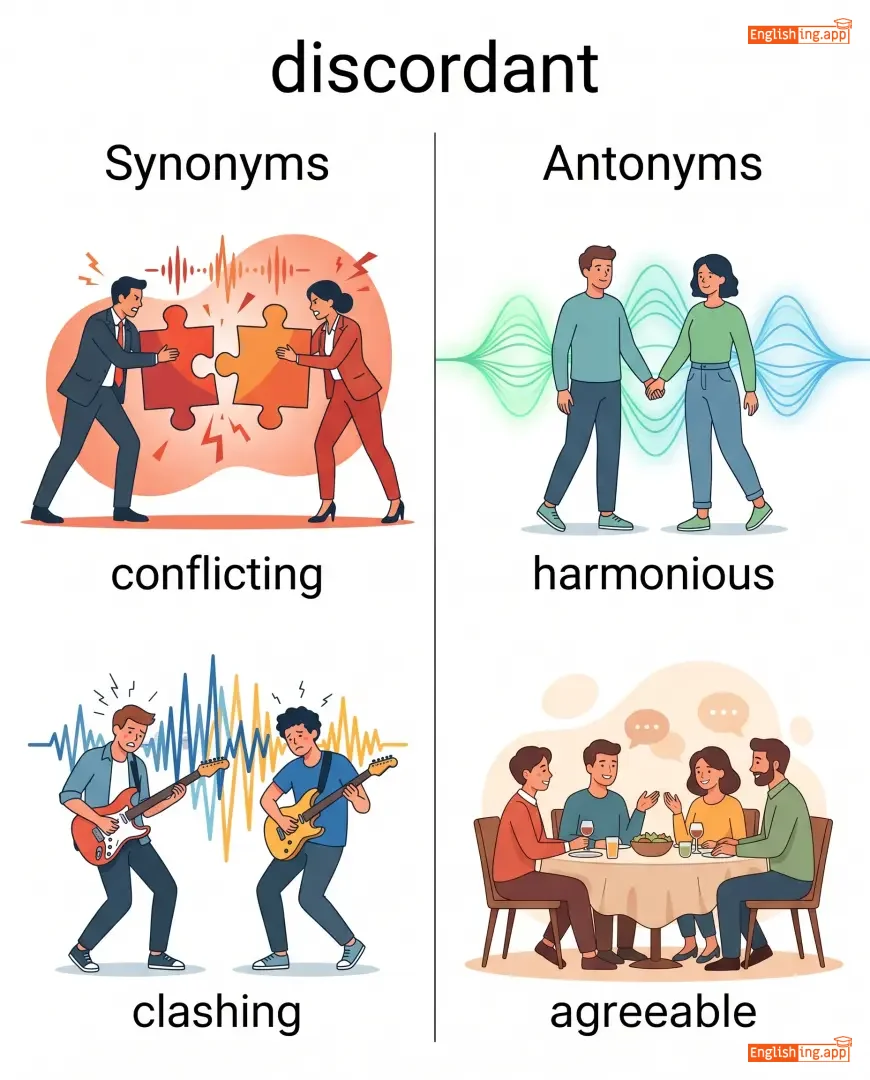
conflicting, clashing, jarring, dissonant
••••••
|
harmonious, agreeable
••••••
|
discordant voices, discordant note, discordant relationship
••••••
|
Дискордант означает несогласие, как резкие и неприятные звуки.
••••••
|
|
⚠️
••••••
|
/dɪsˈkrɛdɪt/
verb, noun
(дискредитировать)
••••••
|
|
дискредитировать
diskreditirovat
••••••
|
discredited
дискредитировал
••••••
|
discredited
дискредитирован
••••••
|
discredits
дискредитирует
••••••
|
discrediting
дискредитируя
••••••
|
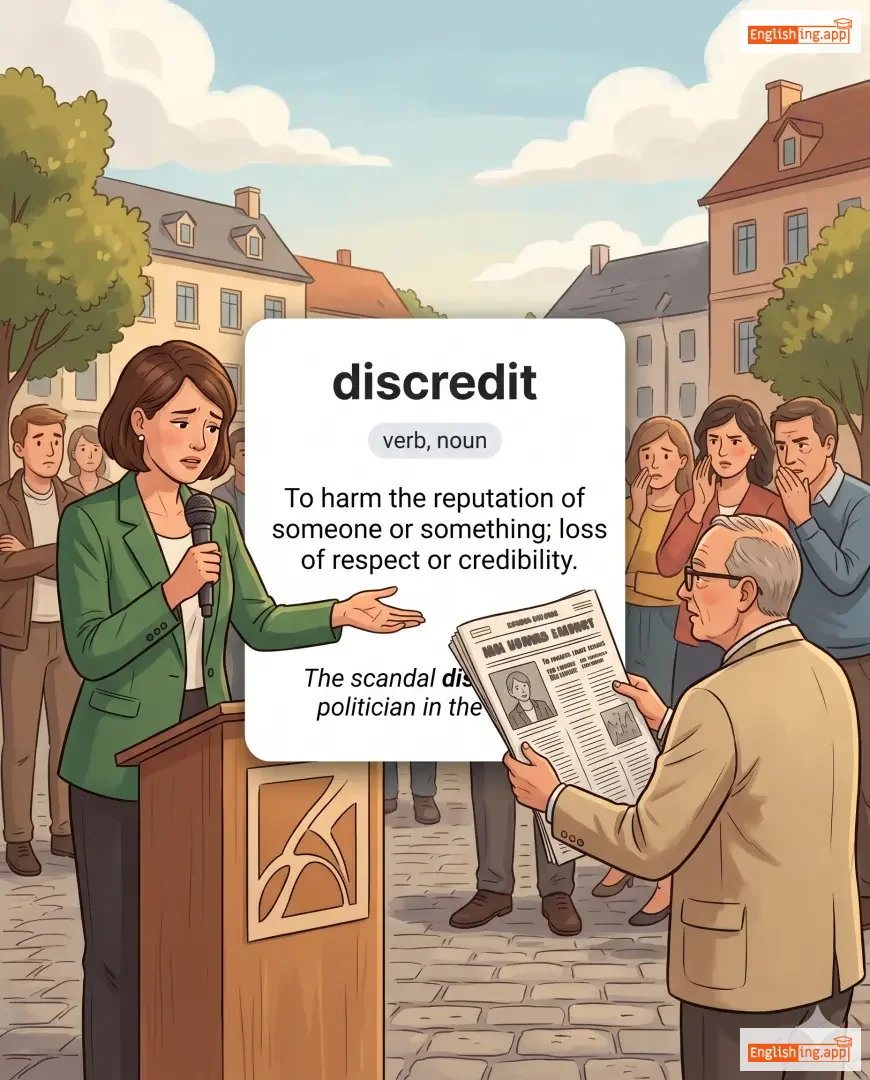
To harm the reputation of someone or something; loss of respect or credibility.
••••••
|
The scandal discredited the politician in the eyes of the public.
Скандал дискредитировал политика в глазах общественности.
••••••
|
Скандал дискредитировал политика в глазах общественности.
Skandal diskreditiroval politika v glazakh obshchestvennosti.
••••••
|
bring into discredit
ввести в дискредитацию
••••••
|
Cause someone or something to lose reputation or credibility.
••••••
|
ввести в дискредитацию
vvesti v diskreditatsiyu
••••••
|
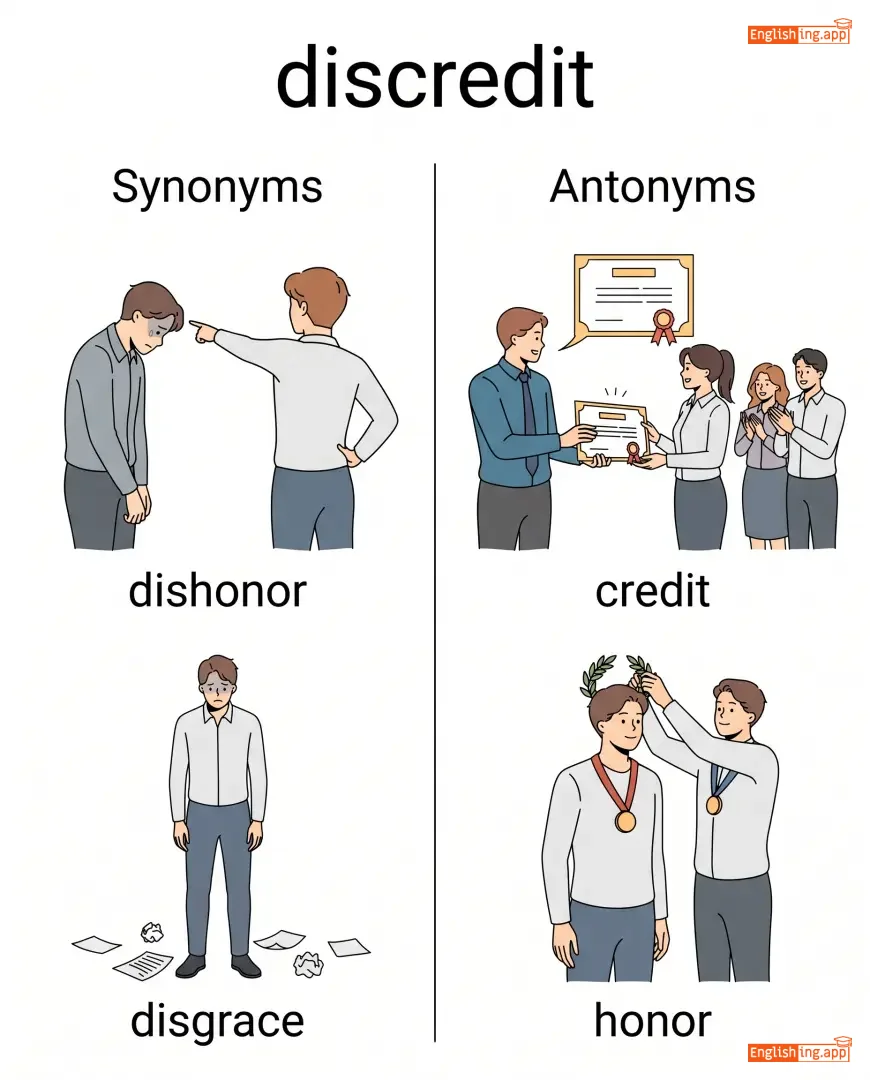
dishonor, disgrace, defame, undermine, disrepute
••••••
|
credit, honor, respect
••••••
|
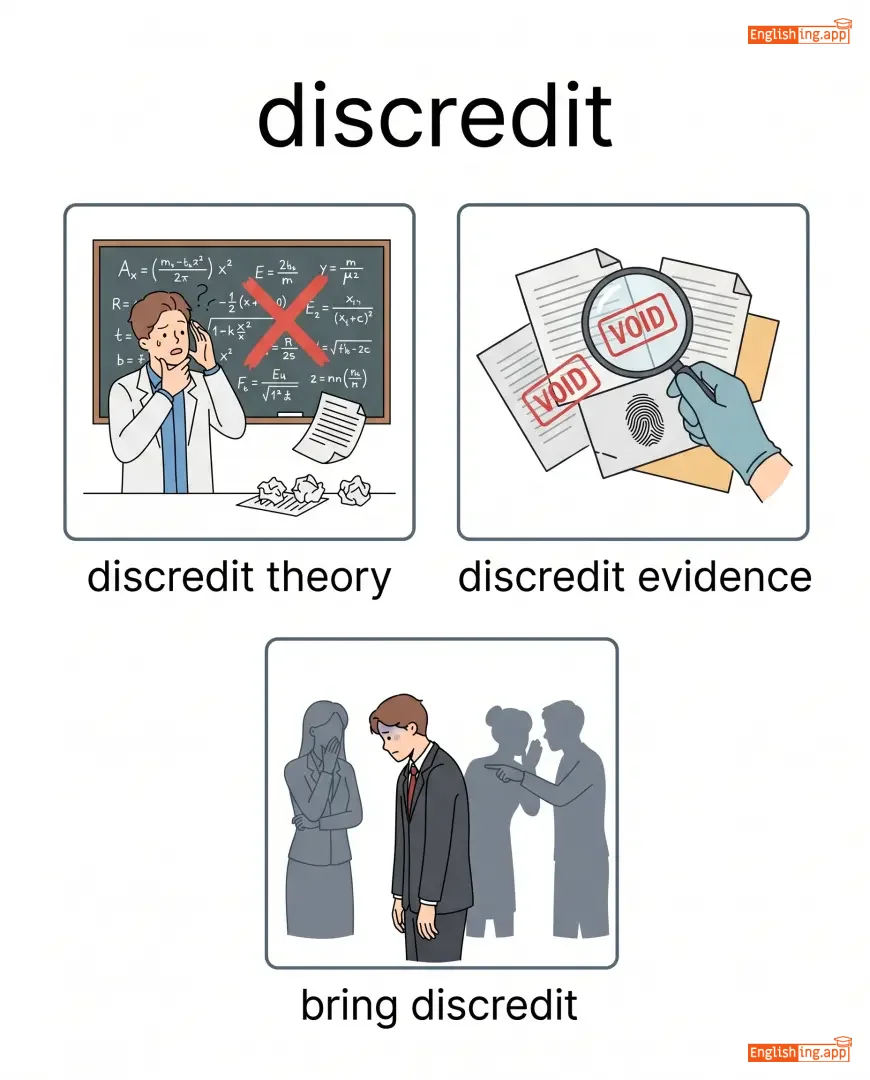
discredit theory, discredit evidence, bring discredit, discredit witness
••••••
|
Diskredit = 'Dis' (плохо) + 'кредит' (репутация).
••••••
|
|
⚖️
••••••
|
/dɪˈskrɛpənsi/
noun
(diskrepantsiya)
••••••
|
|
несоответствие
nesootvetstvie
••••••
|
- •••••• | - •••••• | - •••••• | - •••••• |
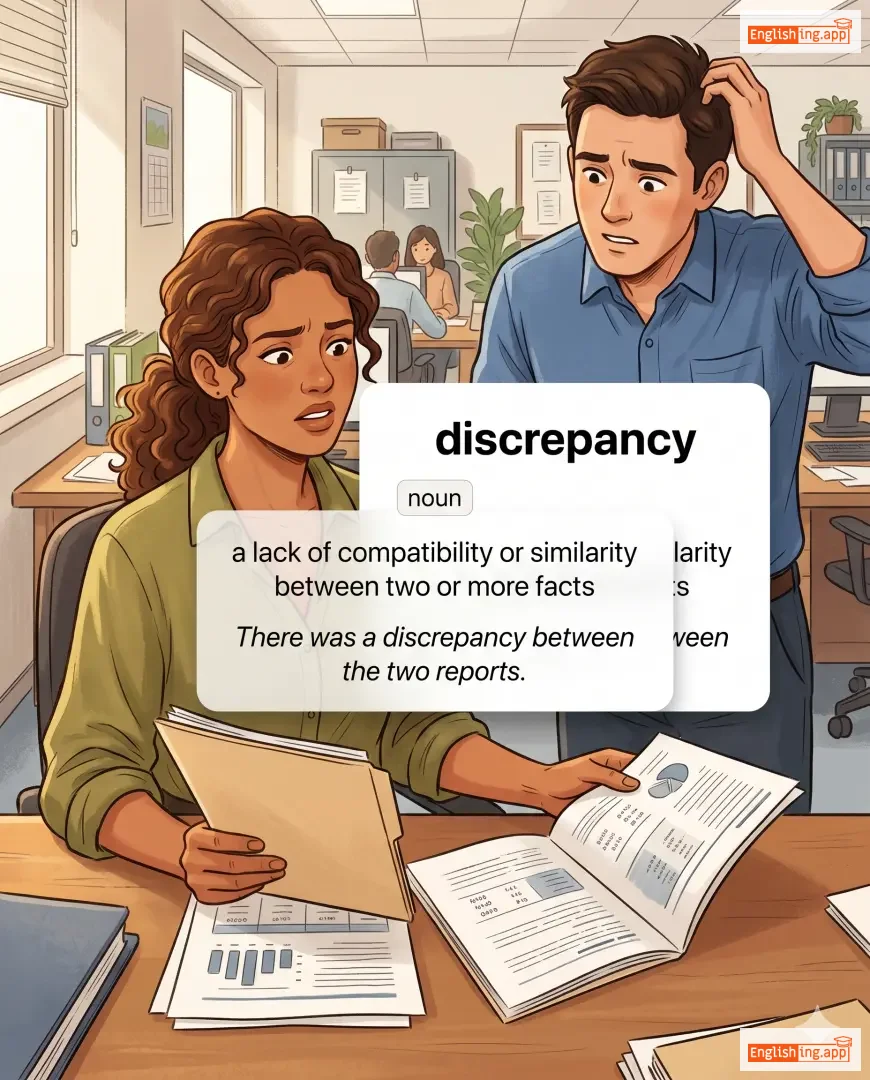
a lack of compatibility or similarity between two or more facts
••••••
|
There was a discrepancy between the two reports.
Была дискретность между двумя отчетами.
••••••
|
Была дискретность между двумя отчетами.
Byla diskrepantsiya mezhdu dvumya otchetami.
••••••
|
discrepancy in accounts
дискретность в отчетах
••••••
|
a mismatch or inconsistency in financial records
••••••
|
несоответствие в отчетах
nesootvetstvie v otchetakh
••••••
|
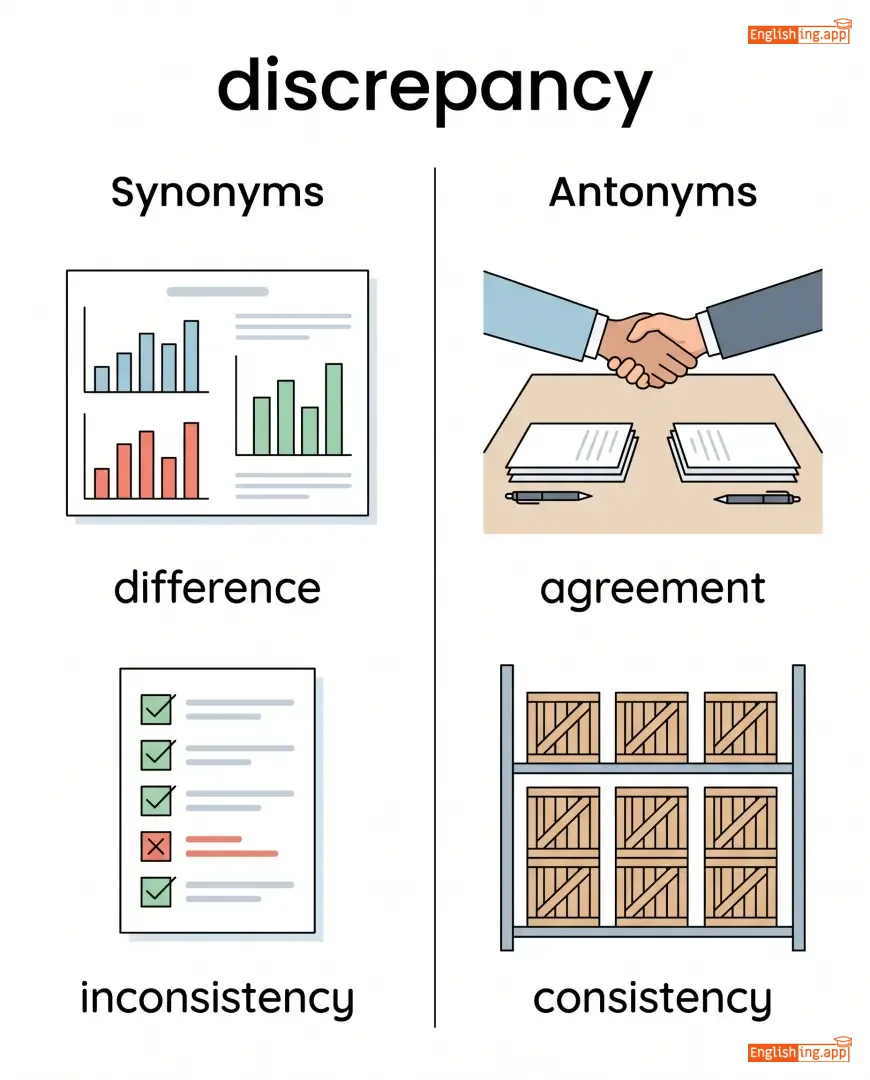
difference, inconsistency, variation, divergence, conflict
••••••
|
agreement, consistency, harmony
••••••
|
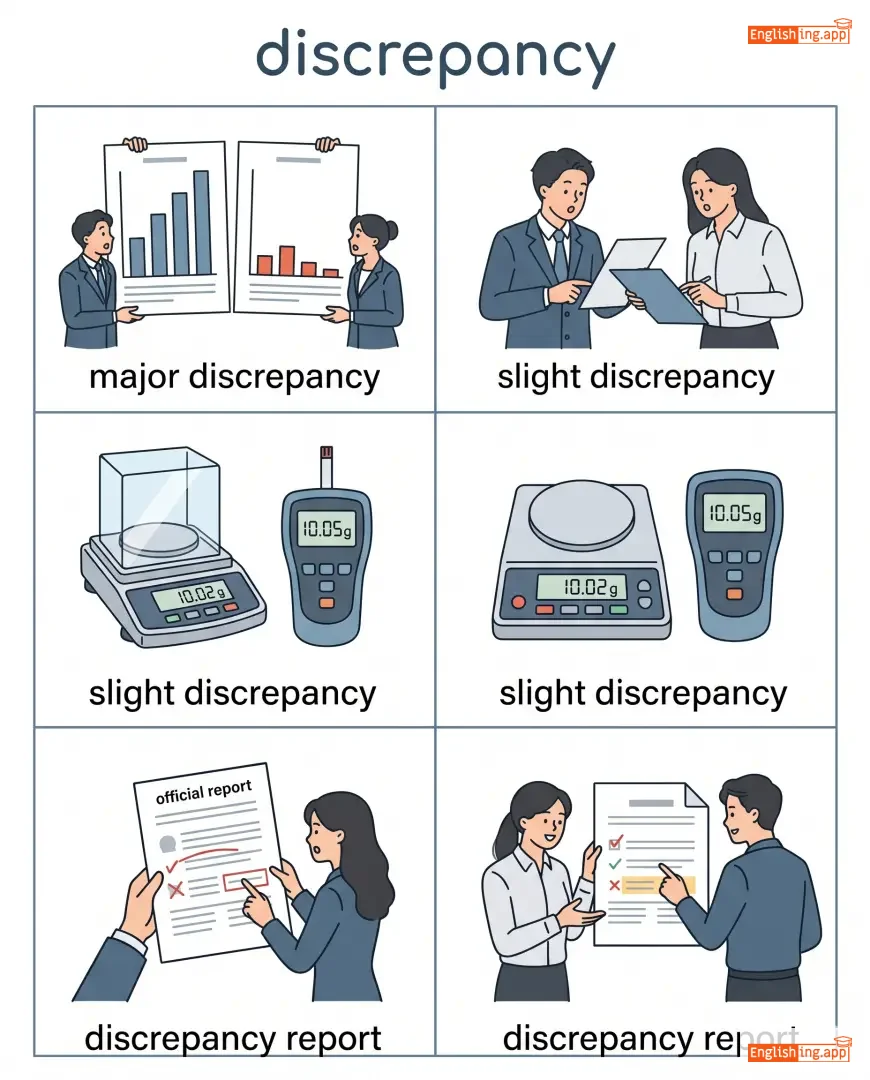
major discrepancy, slight discrepancy, discrepancy report, discrepancy in data
••••••
|
Diskrepantsiya означает несоответствие, как в отчетах.
••••••
|
|
🔹
••••••
|
/dɪˈskriːt/
adjective
(diskrit)
••••••
|
|
дискретный
diskretnyj
••••••
|
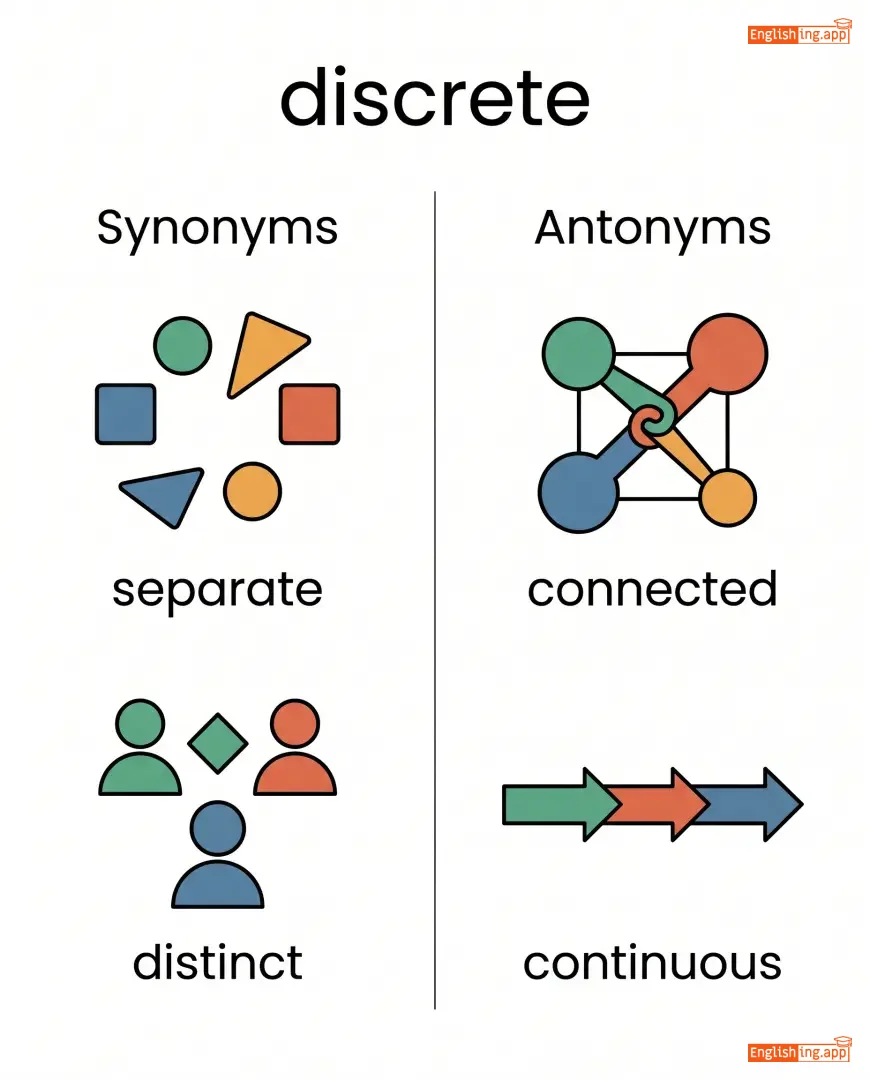
- •••••• | - •••••• | - •••••• | - •••••• |
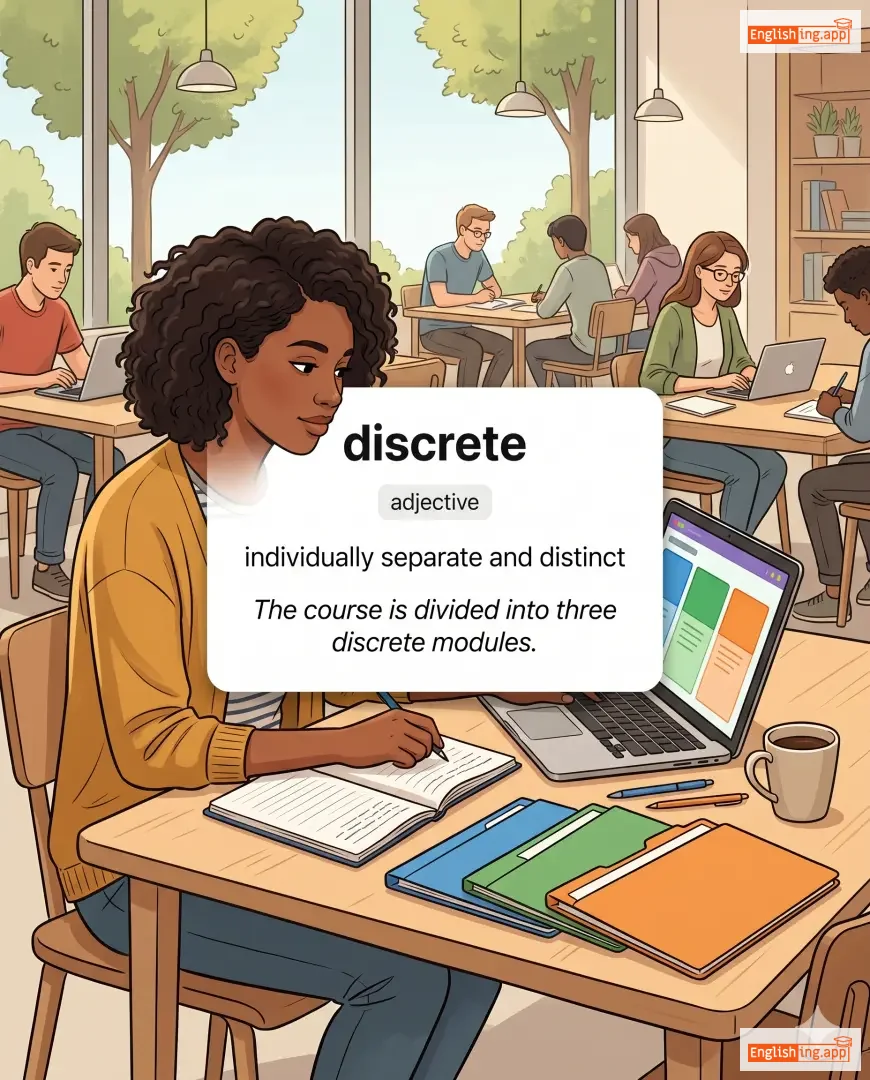
individually separate and distinct
••••••
|
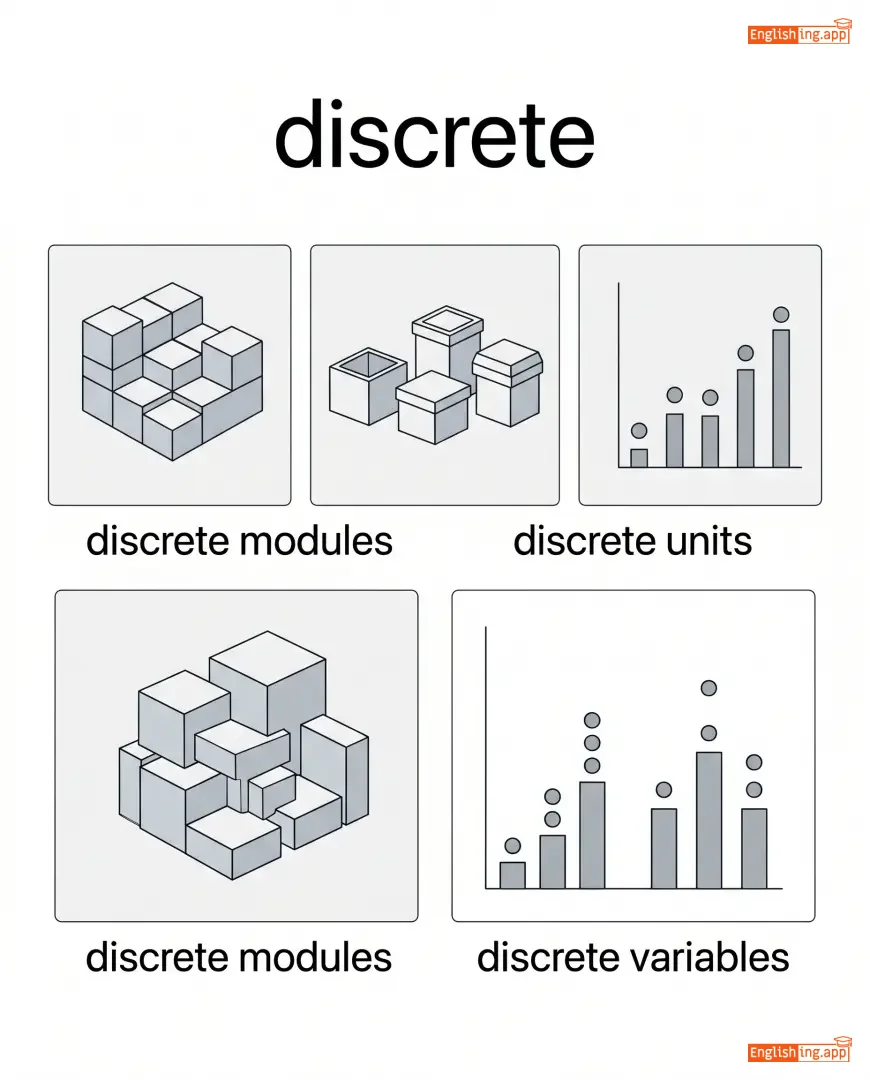
The course is divided into three discrete modules. |
Курс разделён на три дискретных модуля.
Kurs razdeljon na tri diskretnykh modulja.
••••••
|
discrete units |
separate and distinct parts or items
••••••
|
дискретные единицы
diskretnye yedinitsy
••••••
|
separate, distinct, individual, independent
••••••
|
connected, continuous, combined
••••••
|
discrete modules, discrete units, discrete variables
••••••
|
Discrete и Discreet на русском - дискрет, что означает отделённые части.
••••••
|
|
⚖️
••••••
|
/dɪˈskrɛʃən/
noun
(дискреций)
••••••
|
|
дискретность
diskretnost
••••••
|
- •••••• | - •••••• | - •••••• | - •••••• |
the quality of behaving or speaking in a way to avoid causing offense or revealing private information; the freedom to decide what should be done in a particular situation
••••••
|
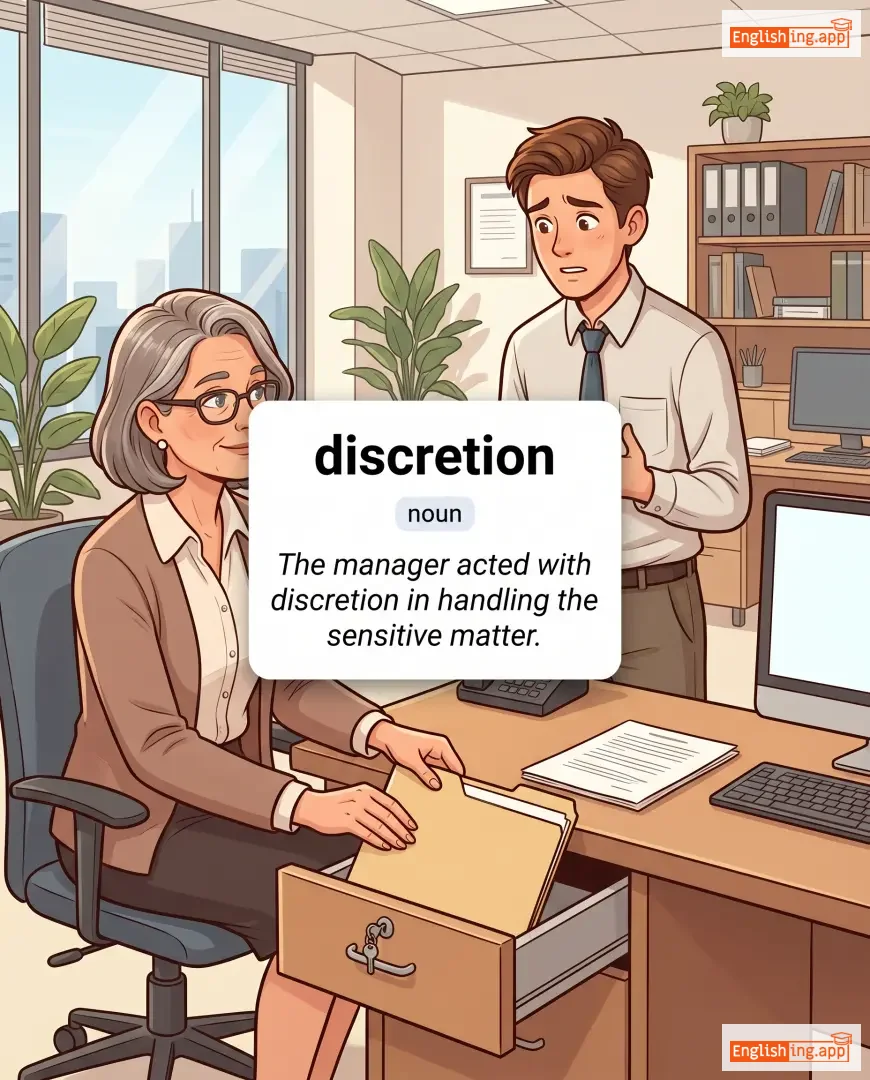
The manager acted with discretion in handling the sensitive matter. |
Менеджер действовал с дискретностью при решении чувствительного вопроса.
Menedzher deystvoval s diskretnost'yu pri reshenii chuvstvitel'nogo voprosa.
••••••
|
at one's discretion |
according to one's own judgment or decision
••••••
|
по своему усмотрению
po svoemu usmotreniyu
••••••
|
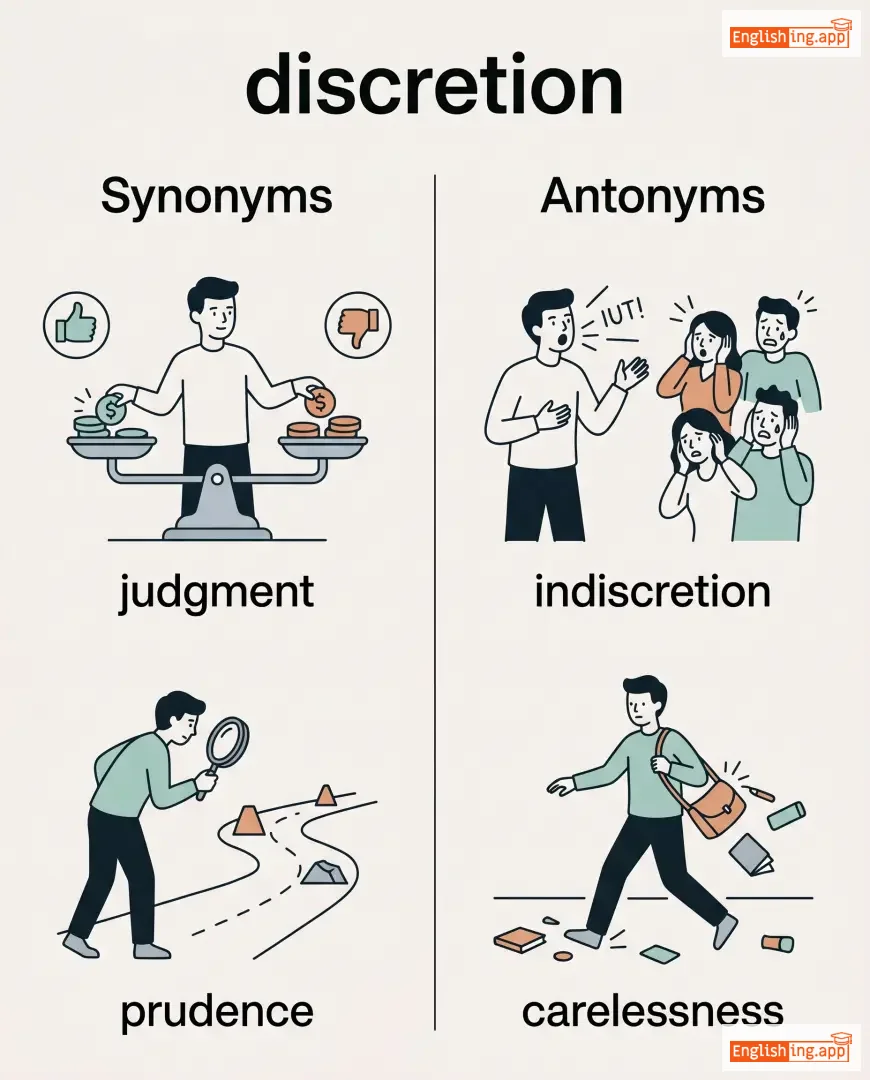
judgment, prudence, caution, choice, option
••••••
|
indiscretion, carelessness, compulsion
••••••
|
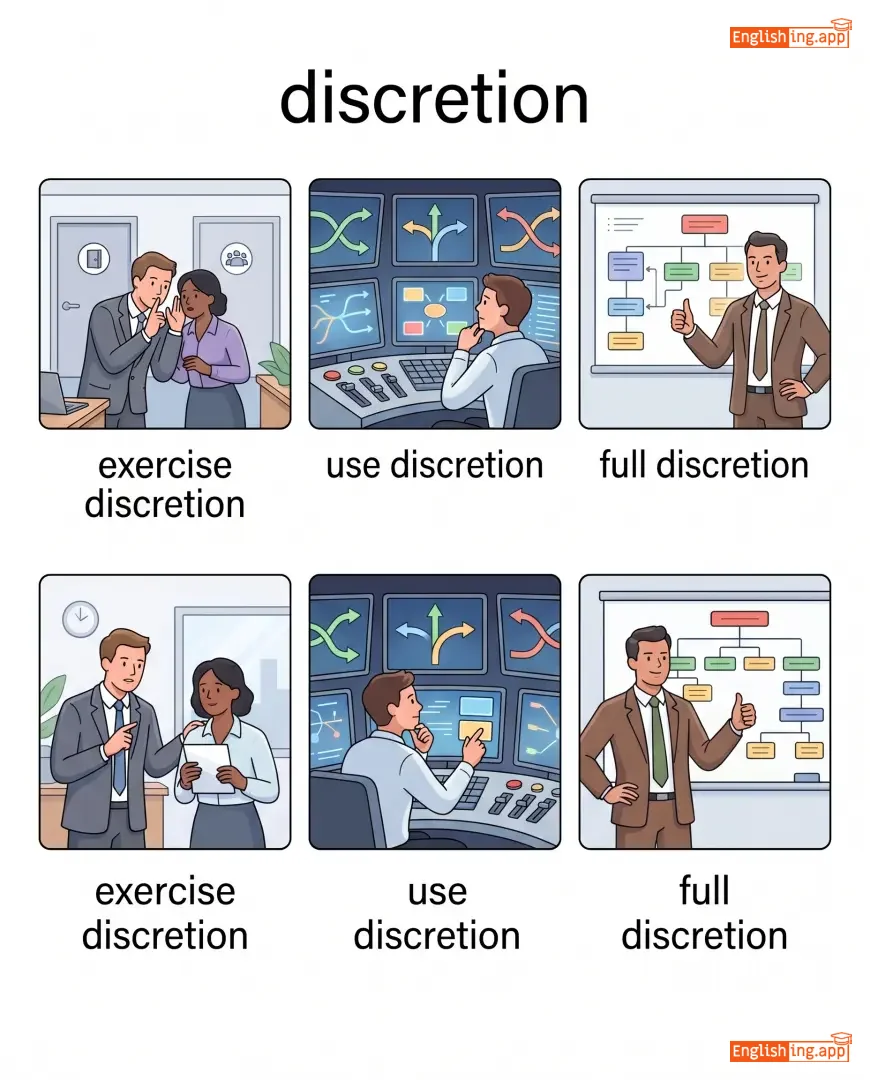
exercise discretion, use discretion, full discretion, sole discretion
••••••
|
Discretion = Decision с дискретностью.
••••••
|
|
😏
••••••
|
/ˌdɪsɪnˈdʒɛnjʊəs/
adjective
(дисиндженюэс)
••••••
|
|
лицемерный
litsemernij
••••••
|
- •••••• | - •••••• | - •••••• | - •••••• |
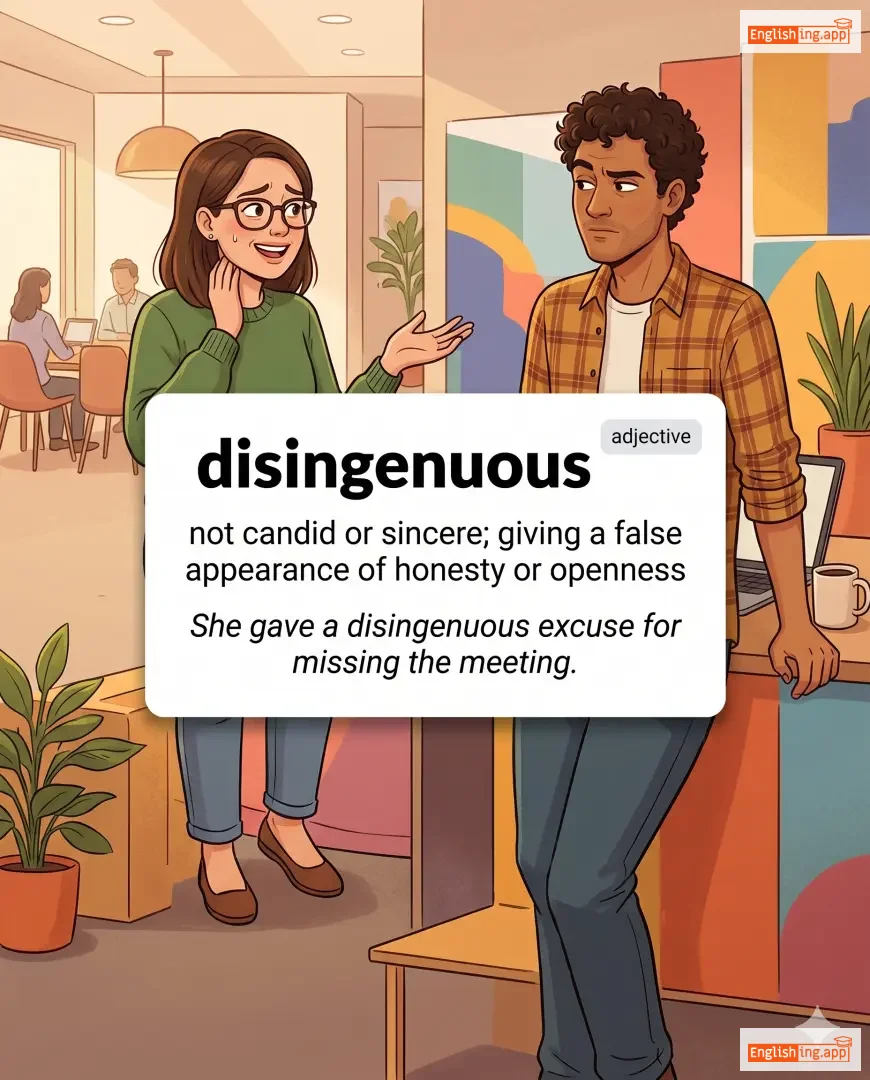
not candid or sincere; giving a false appearance of honesty or openness
••••••
|
She gave a disingenuous excuse for missing the meeting. |
Она дала лицемерное оправдание, чтобы не прийти на встречу.
Ona dala litsemernoe opravdanie, chtoby ne prijt' na vstrechu.
••••••
|
- •••••• | - •••••• | - •••••• |
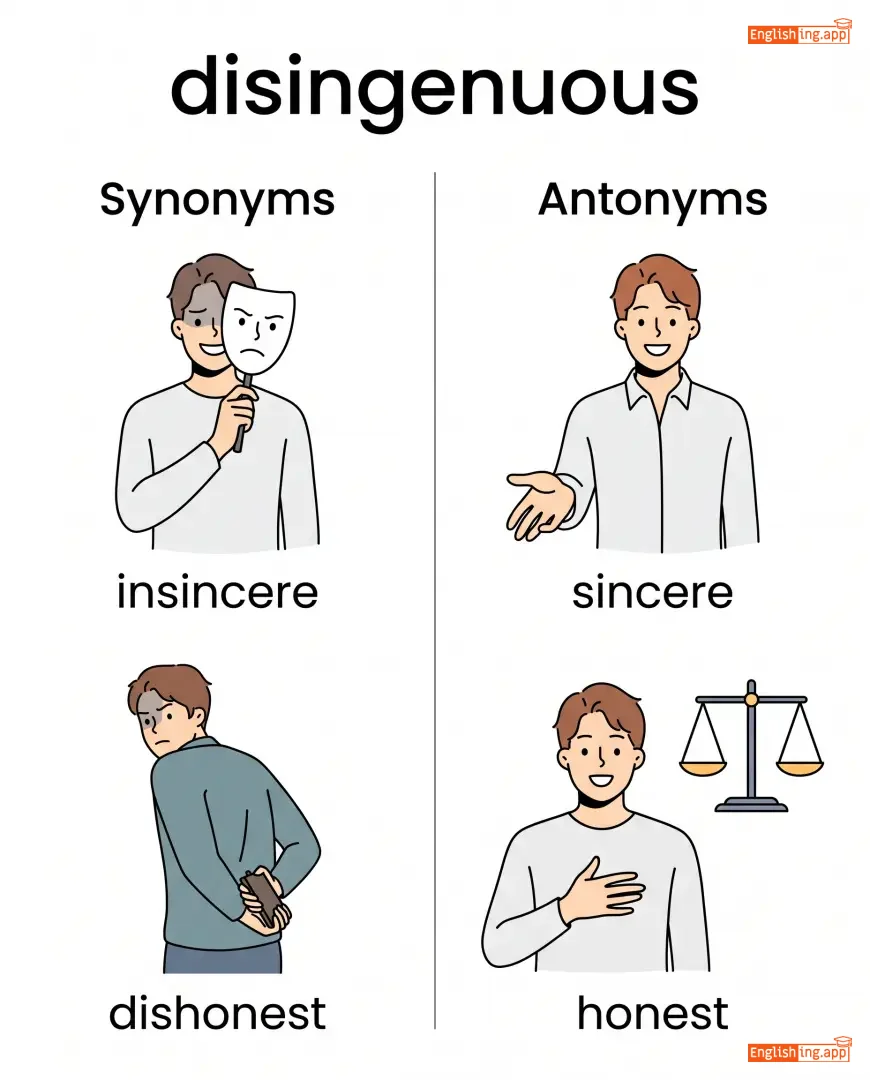
insincere, dishonest, deceitful, hypocritical, duplicitous
••••••
|
sincere, honest, genuine
••••••
|
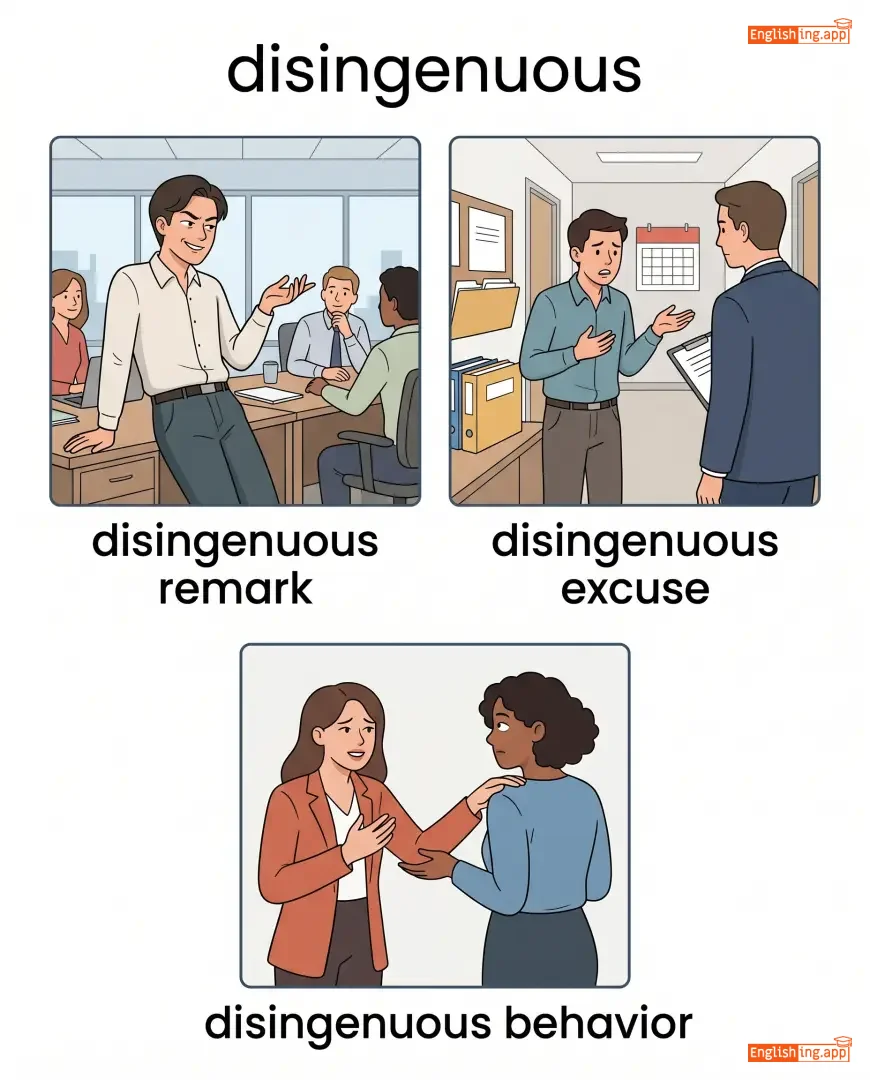
disingenuous remark, disingenuous excuse, disingenuous behavior
••••••
|
Dis + genuine не честно значит disingenuous = лицемерный
••••••
|
|
⚖️
••••••
|
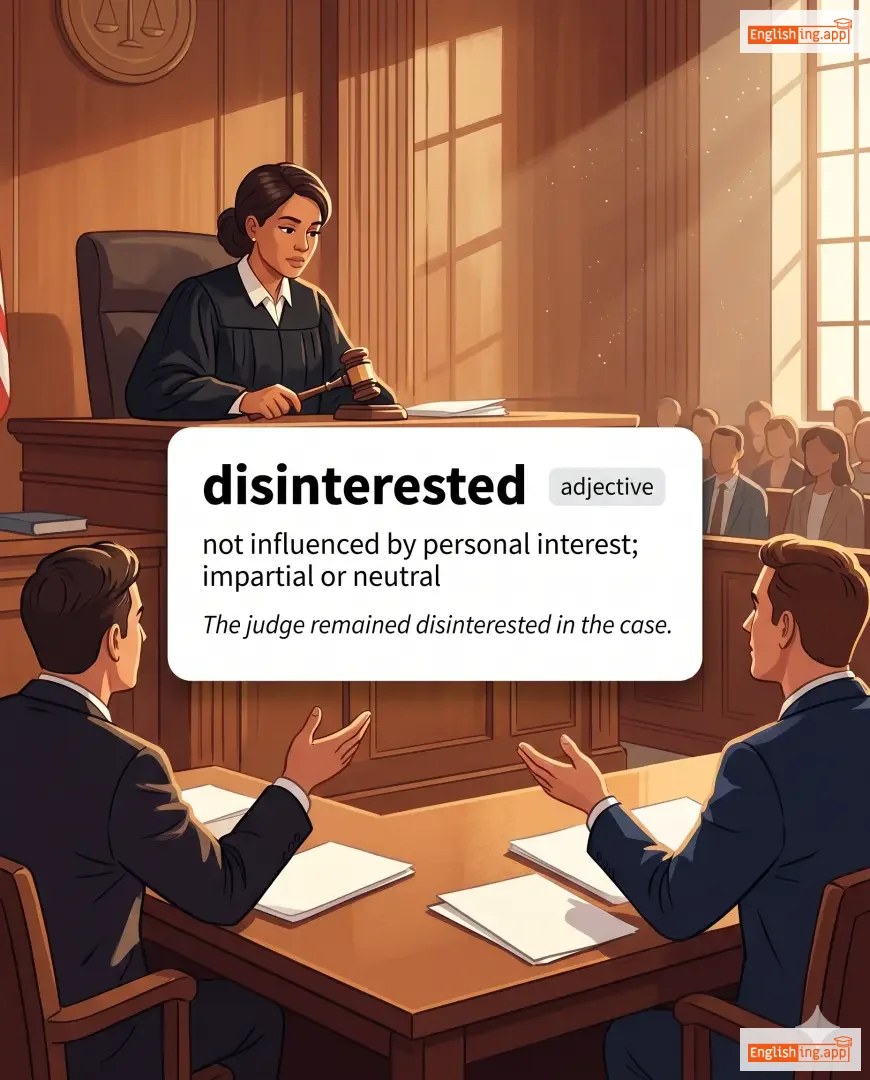
/dɪsˈɪntrəstɪd/
adjective
(дисинтерестед)
••••••
|
|
безинтересный
bezinteresny
••••••
|
- •••••• | - •••••• | - •••••• | - •••••• |
not influenced by personal interest; impartial or neutral
••••••
|
The judge remained disinterested in the case. |
Судья остался безинтересным в деле.
Sudiya ostalsya bezinteresnym v dele.
••••••
|
- •••••• | - •••••• | - •••••• |
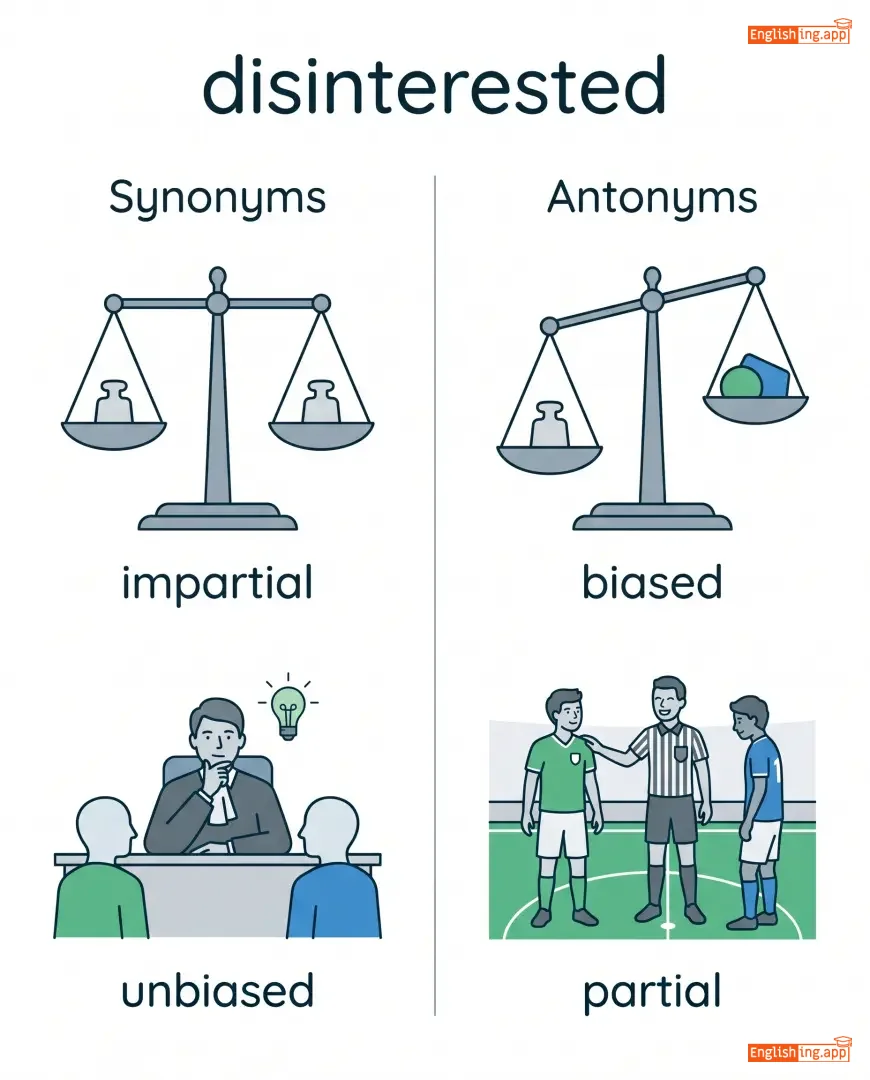
impartial, unbiased, objective, neutral
••••••
|
biased, partial, interested
••••••
|
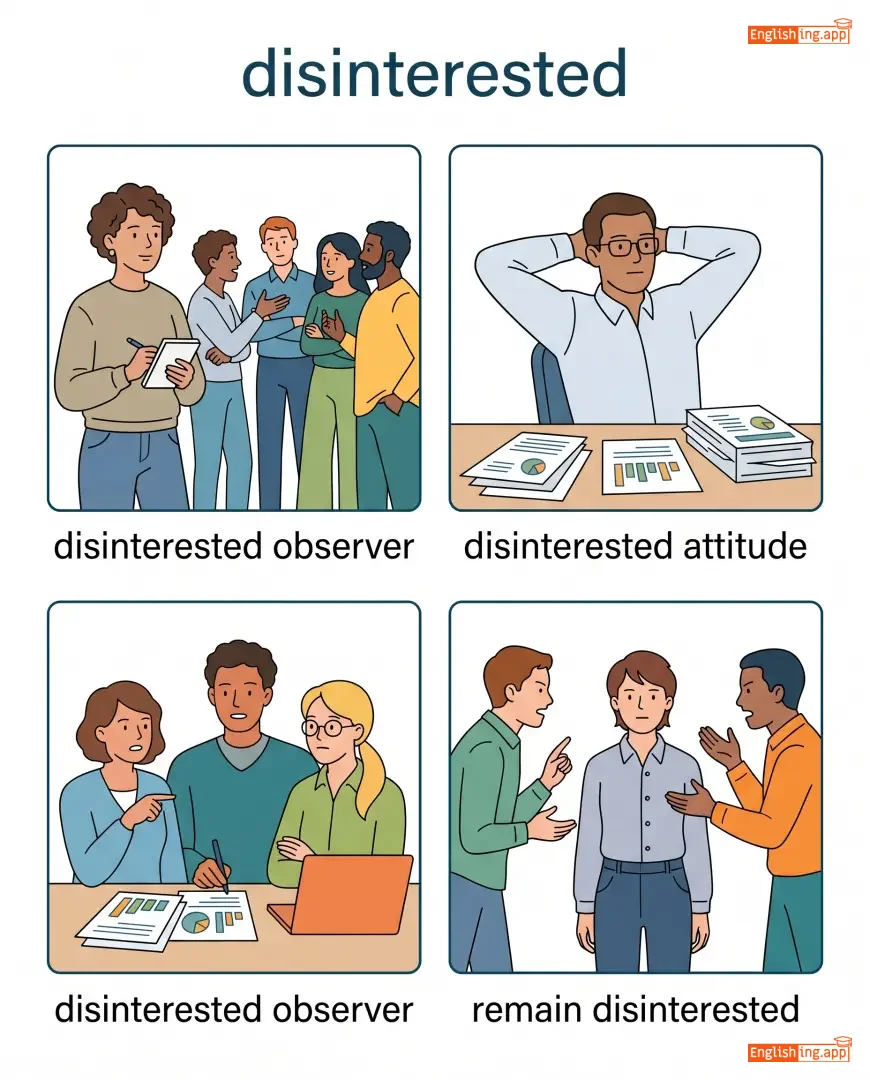
disinterested observer, disinterested attitude, remain disinterested
••••••
|
Без интереса = беспристрастный, нейтральный
••••••
|
|
🌀
••••••
|
/dɪsˈdʒɔɪntɪd/
adjective
(дисджойнтед)
••••••
|
|
беспорядочный
besporyadochny
••••••
|
- •••••• | - •••••• | - •••••• | - •••••• |
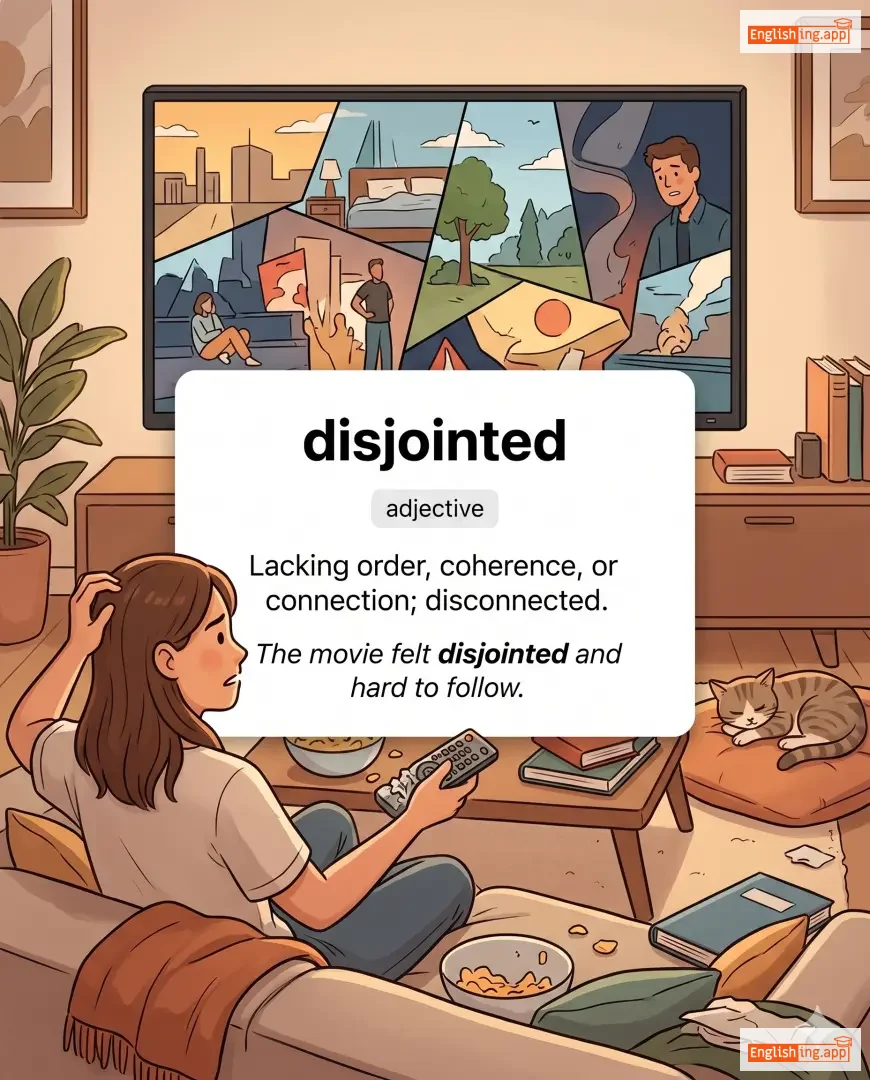
Lacking order, coherence, or connection; disconnected.
••••••
|
The movie felt disjointed and hard to follow. |
Фильм показался беспорядочным и трудным для восприятия.
Film pokazalsya besporyadochnym i trudnym dlya vospriyatiya.
••••••
|
- •••••• | - •••••• | - •••••• |
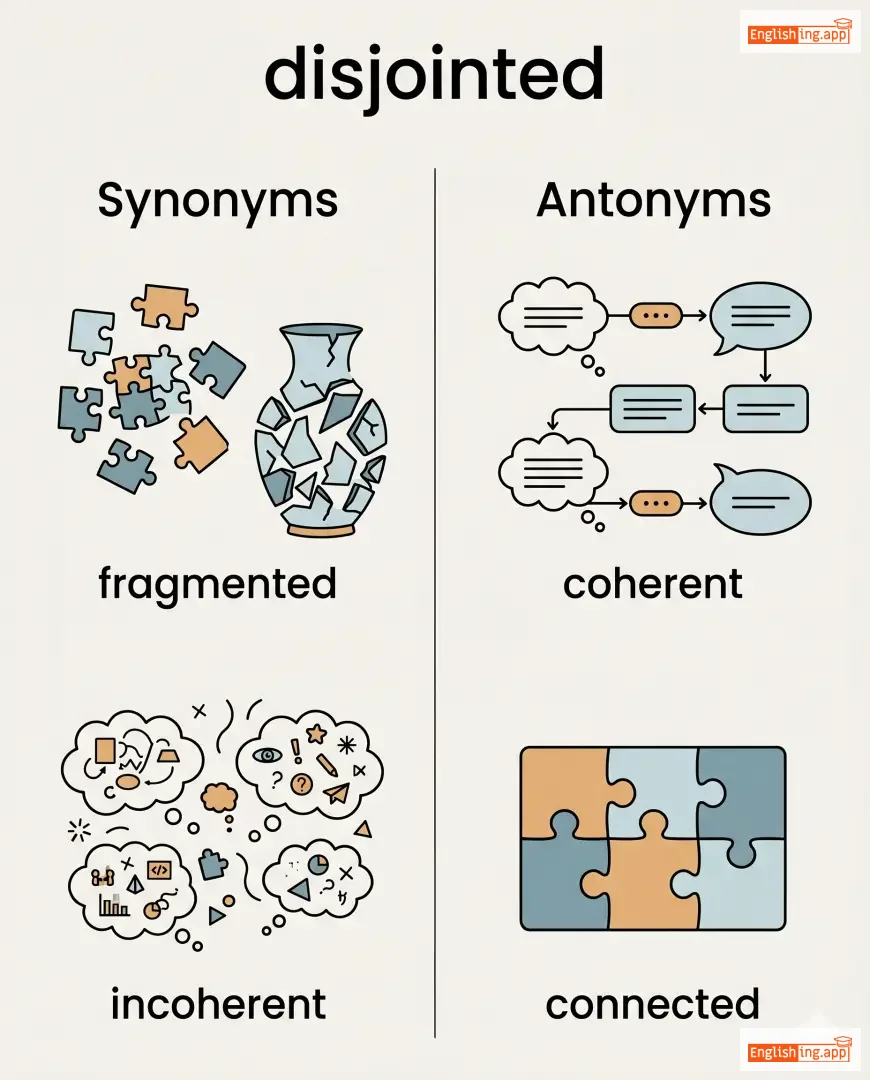
fragmented, incoherent, disconnected, jumbled, chaotic
••••••
|
coherent, connected, organized
••••••
|
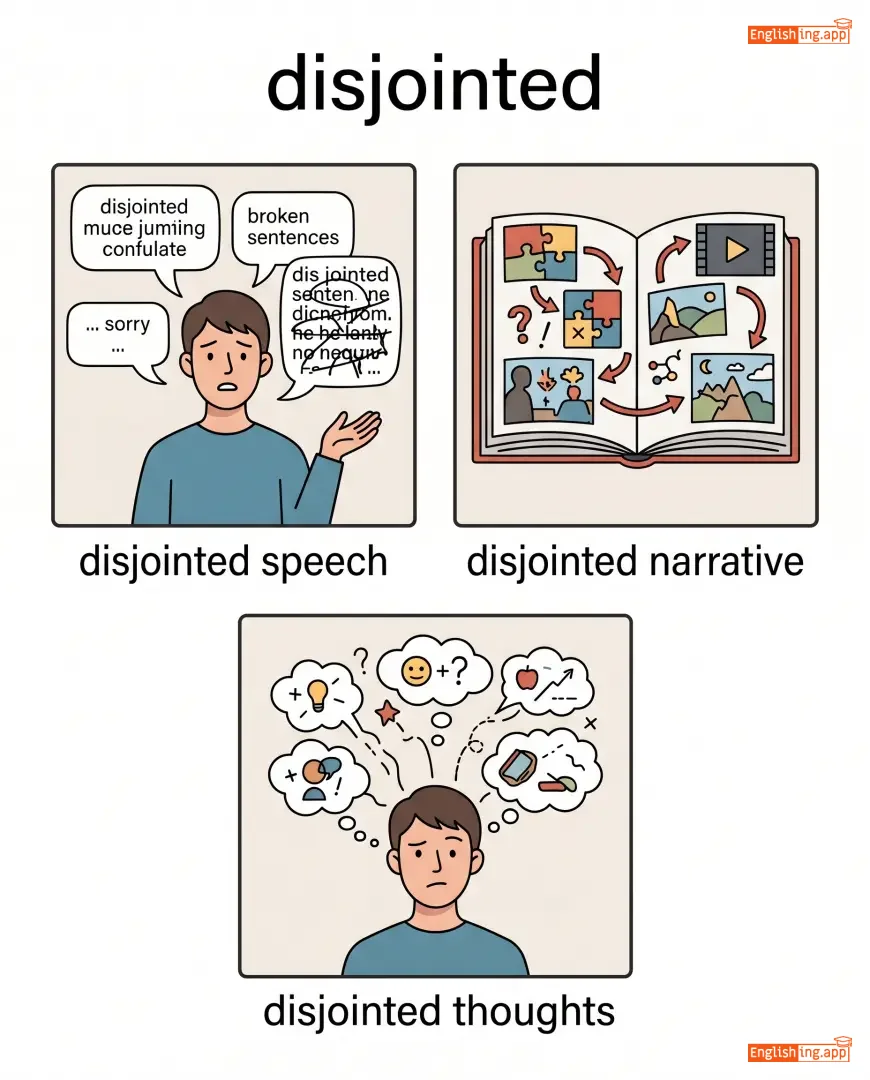
disjointed speech, disjointed narrative, disjointed thoughts
••••••
|
Disjointed — все разорвано, как нелепая картина.
••••••
|
|
🚪
••••••
|
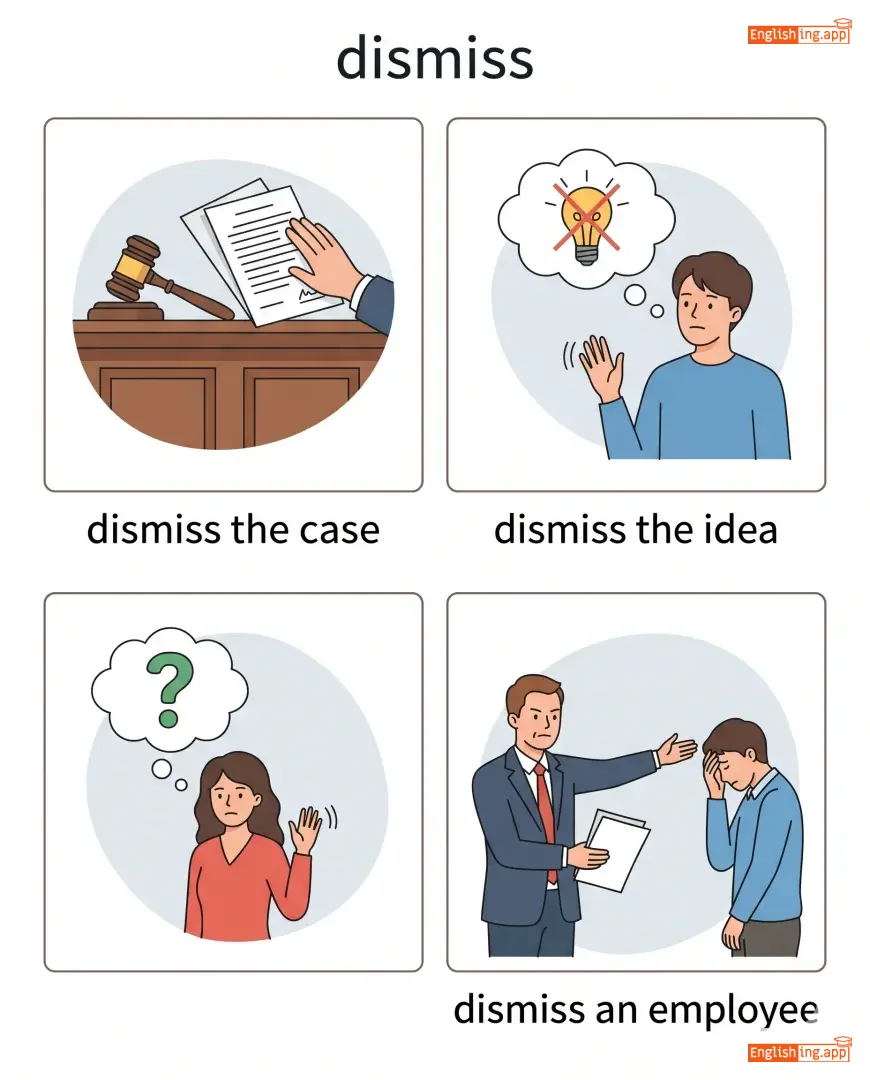
/dɪsˈmɪs/
verb
(дисмис)
••••••
|
|
уволить, отклонить
uvolit', otklonit'
••••••
|
dismissed
дисмисед
••••••
|
dismissed
дисмисед
••••••
|
dismisses
дисмисез
••••••
|
dismissing
дисмисинг
••••••
|
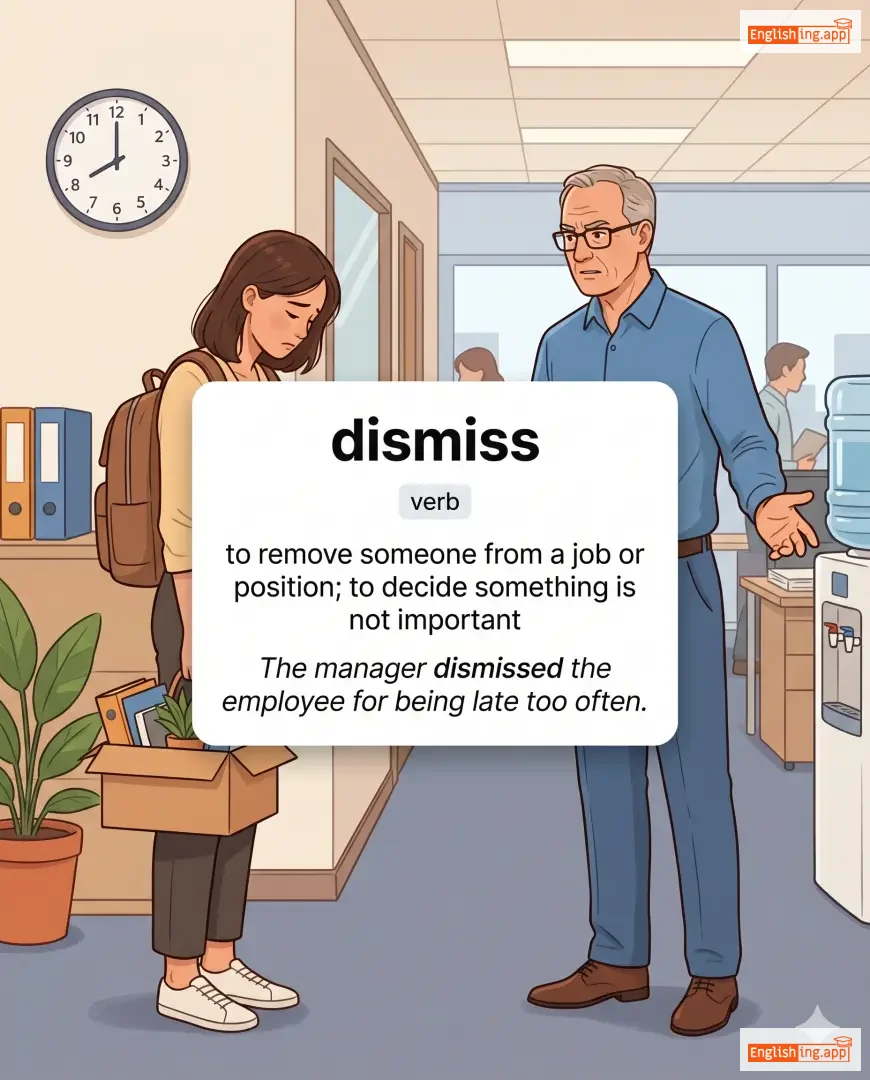
to remove someone from a job or position; to decide something is not important
••••••
|
The manager dismissed the employee for being late too often.
Менеджер уволил сотрудника за то, что тот слишком часто опаздывал.
••••••
|
Менеджер уволил сотрудника за то, что тот слишком часто опаздывал.
Menedzher uvolil sotrudnika za to, chto tot slishkom chasto opazdyval.
••••••
|
dismiss out of hand
отклонить без рассмотрения
••••••
|
to reject something immediately without considering it
••••••
|
отклонить без рассмотрения
otklonit' bez rassmotreniya
••••••
|
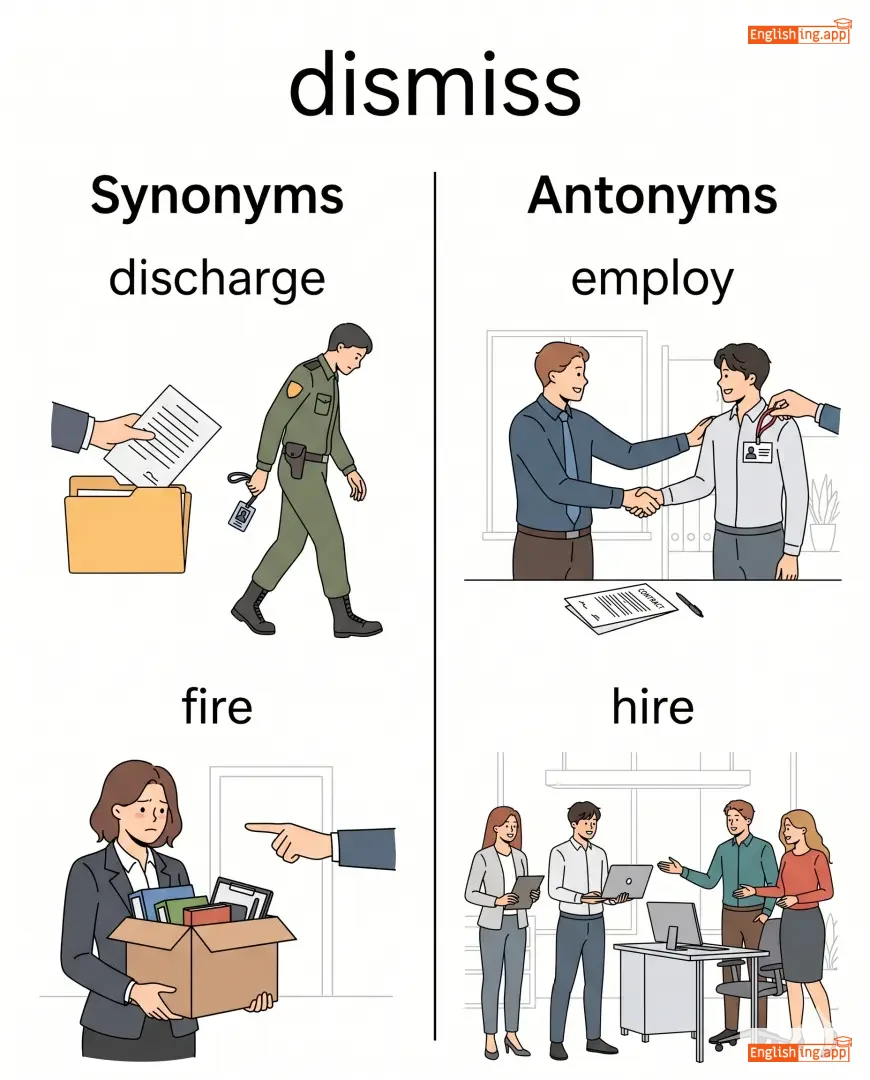
discharge, fire, release, reject, expel
••••••
|
employ, hire, accept
••••••
|
dismiss the case, dismiss the idea, dismiss an employee, dismiss charges
••••••
|
Dis + Miss = уволить человека
••••••
|

