|
表情符号
|
单词 | Images | 翻译 | 过去时 | 过去分词 | 第三人称单数 | 动名词 | 含义 | 例句 | 例句翻译 | 示例表达 | 示例表达含义 | 示例表达翻译 | 同义词 | 反义词 | 搭配词 | 助记符 |
|---|---|---|---|---|---|---|---|---|---|---|---|---|---|---|---|---|---|
|
🔄
••••••
|
/dɪˈrɪvətɪv/
noun, adjective
(德里瓦蒂夫)
••••••
|
|
衍生物
yǎn shēng wù
••••••
|
- •••••• | - •••••• | - •••••• | - •••••• |
Something that is based on another source; in math, a measure of how a function changes.
••••••
|
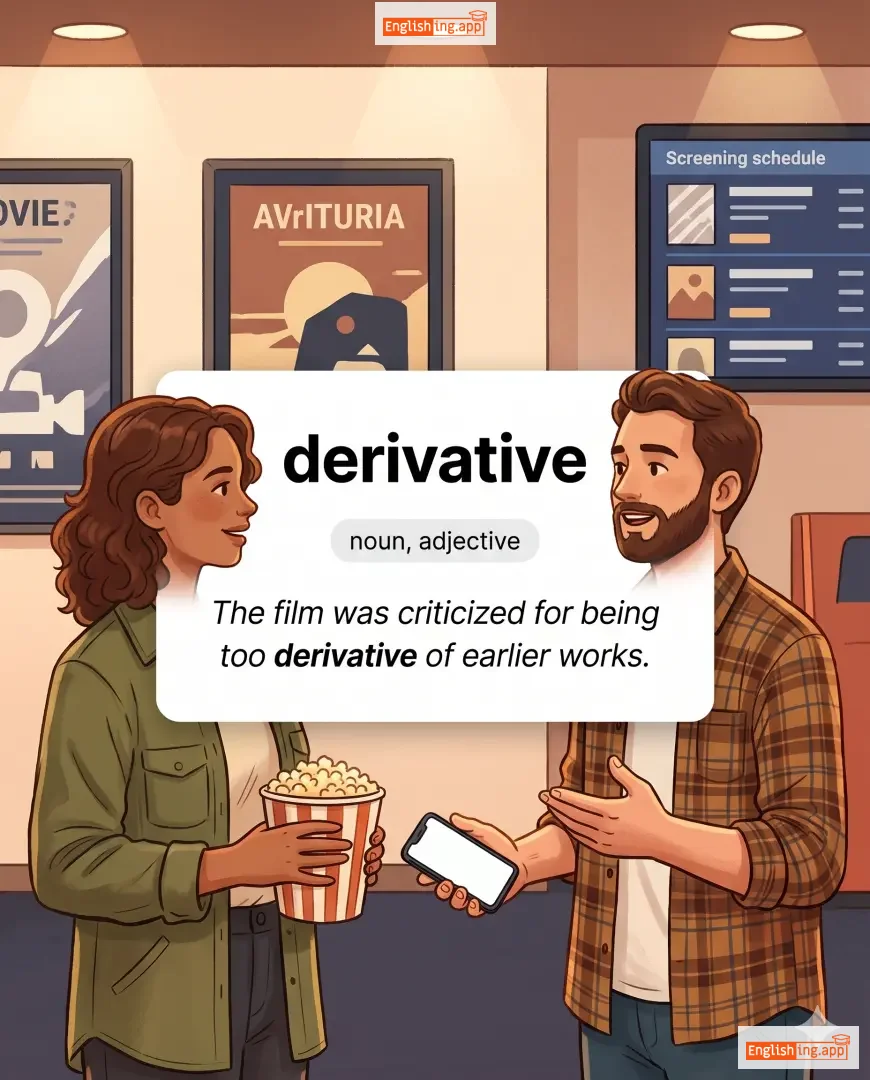
The film was criticized for being too derivative of earlier works.
这部电影因过于模仿早期作品而受到批评。
••••••
|
这部电影因过于模仿早期作品而受到批评。
Zhè bù diànyǐng yīn guòyú mófǎng zǎoqī zuòpǐn ér shòudào pīpíng.
••••••
|
- •••••• | - •••••• | - •••••• |
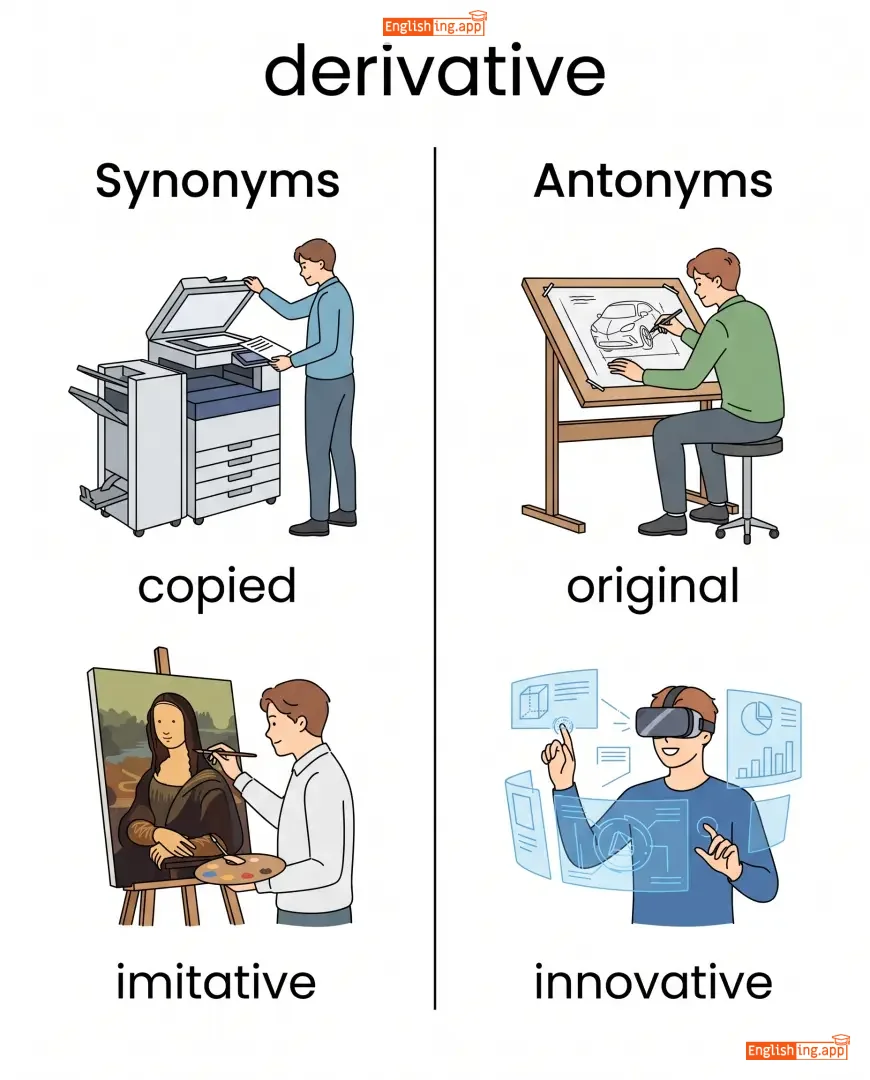
copied, imitative, secondary, unoriginal
••••••
|
original, innovative, creative
••••••
|
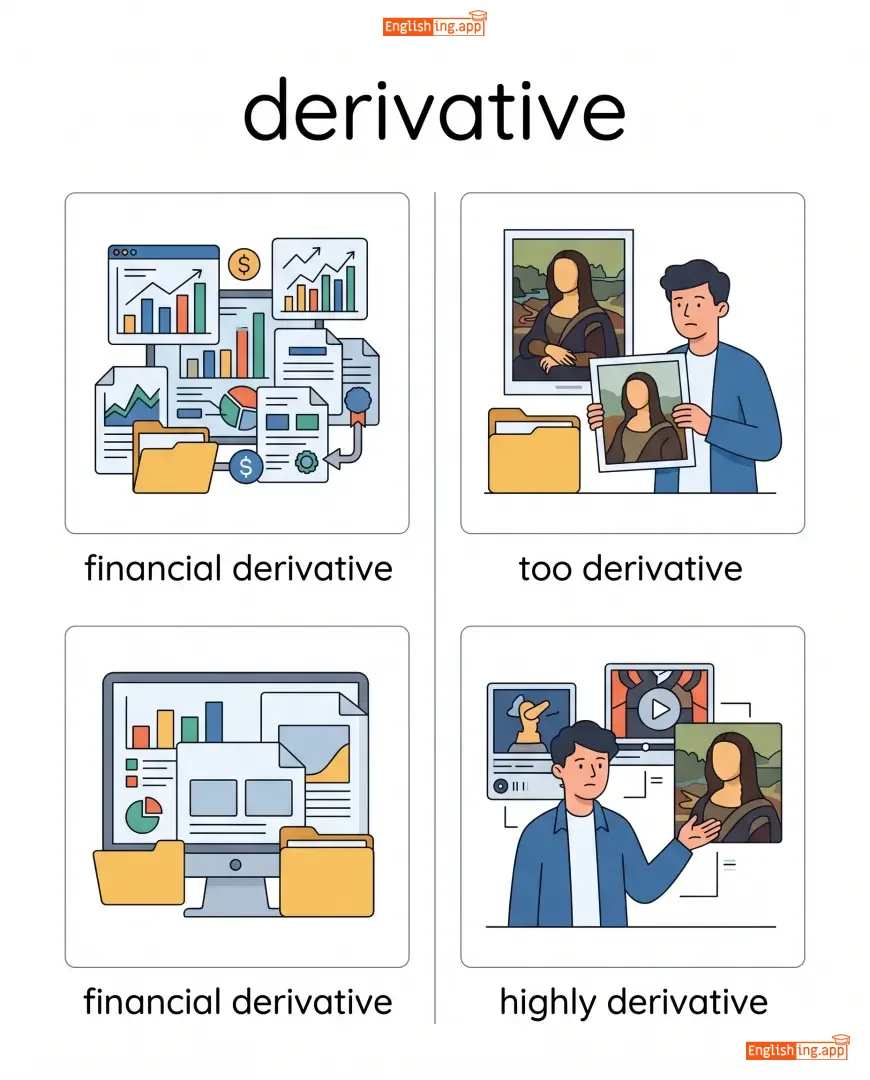
financial derivative, too derivative, highly derivative
••••••
|
衍生物意味着来自别的东西 – '德里瓦蒂夫'意味着模仿。
••••••
|
|
🌵
••••••
|
/ˈdɛsɪkeɪt/
verb
(desiket)
••••••
|

|
干燥
ganzao
••••••
|
desiccated
desiketd
••••••
|
desiccated
desiketd
••••••
|
desiccates
desikets
••••••
|
desiccating
desiketing
••••••
|
to dry up completely or remove the moisture from something
••••••
|
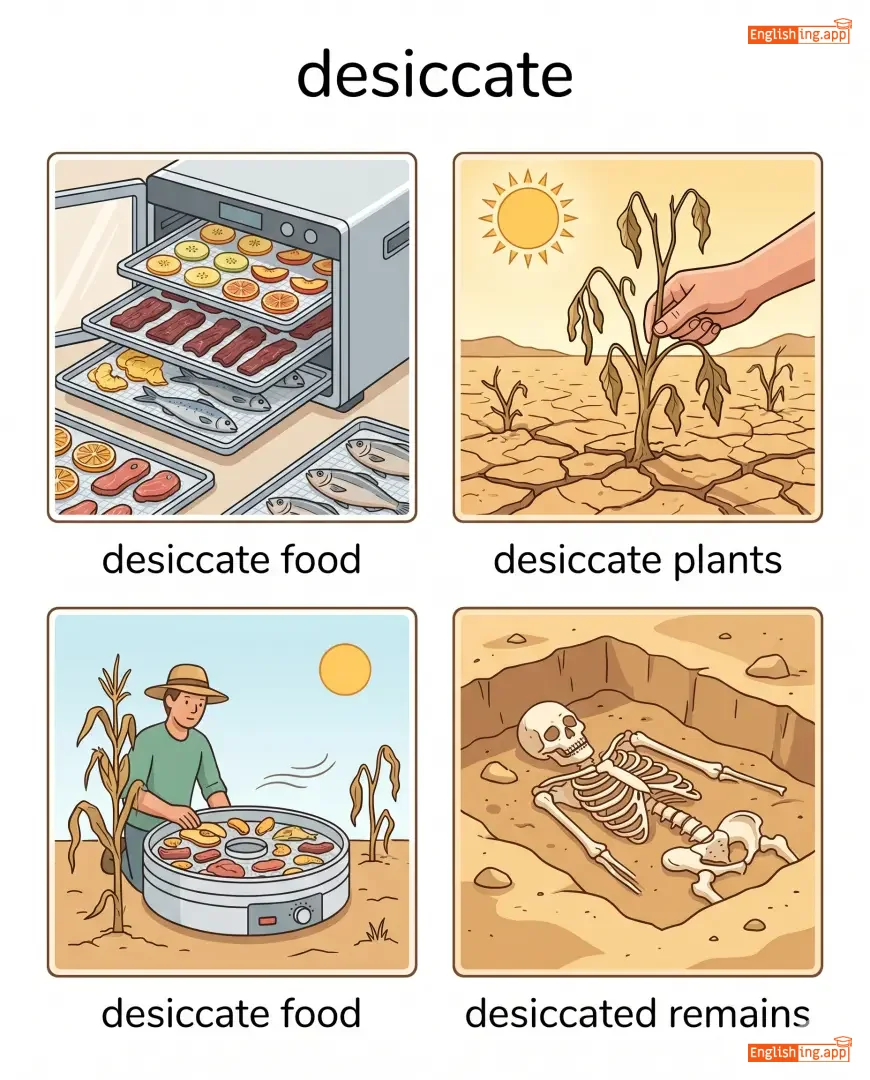
The hot sun can quickly desiccate plants in the desert.
炙热的太阳可以迅速把沙漠中的植物弄干。
••••••
|
炙热的太阳可以迅速把沙漠中的植物弄干。
Zhire de taiyang keyi xunsu ba shamo zhong de zhiwu nong gan.
••••••
|
- •••••• | - •••••• | - •••••• |
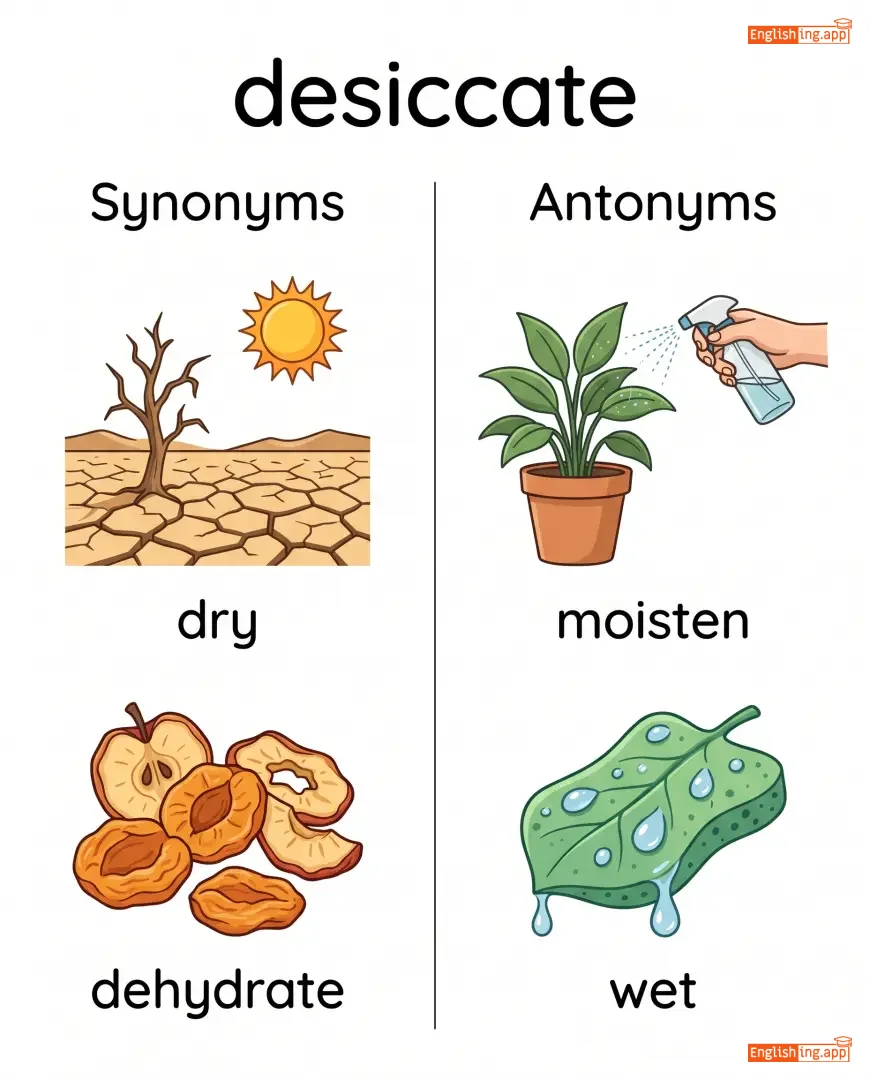
dry, dehydrate, parch, drain, evaporate
••••••
|
moisten, wet, hydrate
••••••
|
desiccate food, desiccate plants, desiccated remains
••••••
|
沙漠中的植物很容易干燥。
••••••
|
|
📜
••••••
|
/ˈdɛswɪˌtuːd/
noun
(德斯维图德)
••••••
|
|
废弃
feiqi
••••••
|
- •••••• | - •••••• | - •••••• | - •••••• |
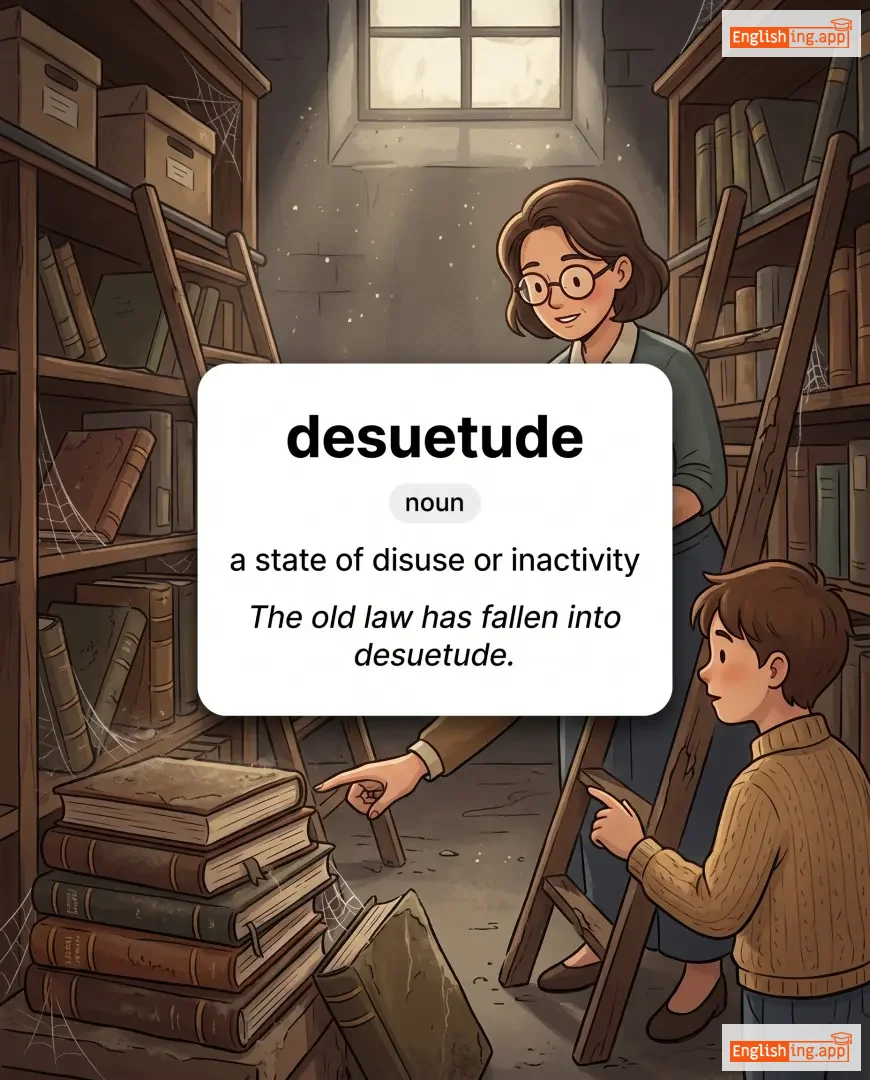
a state of disuse or inactivity
••••••
|
The old law has fallen into desuetude. |
旧法律已经废弃。
Jiù fǎlǜ yǐjīng fèiqì.
••••••
|
- •••••• | - •••••• | - •••••• |
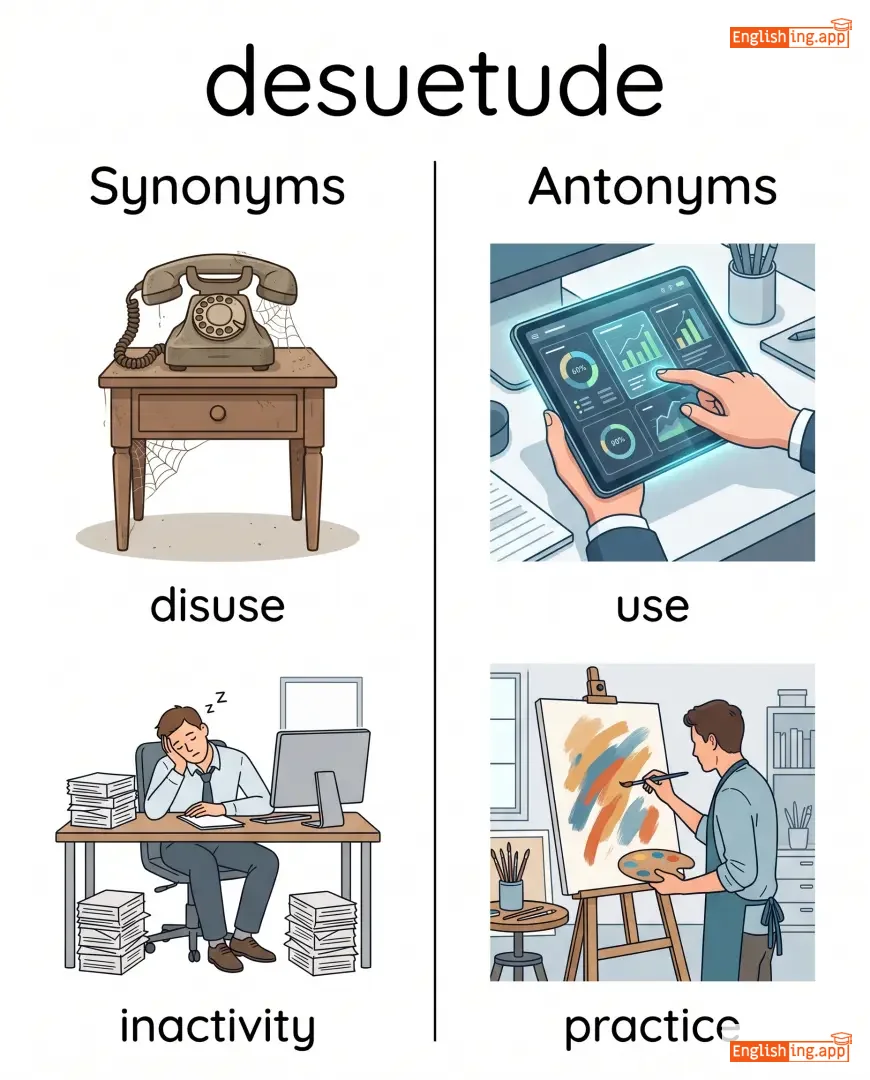
disuse, inactivity, neglect, abandonment, obscurity
••••••
|
use, practice, activity
••••••
|
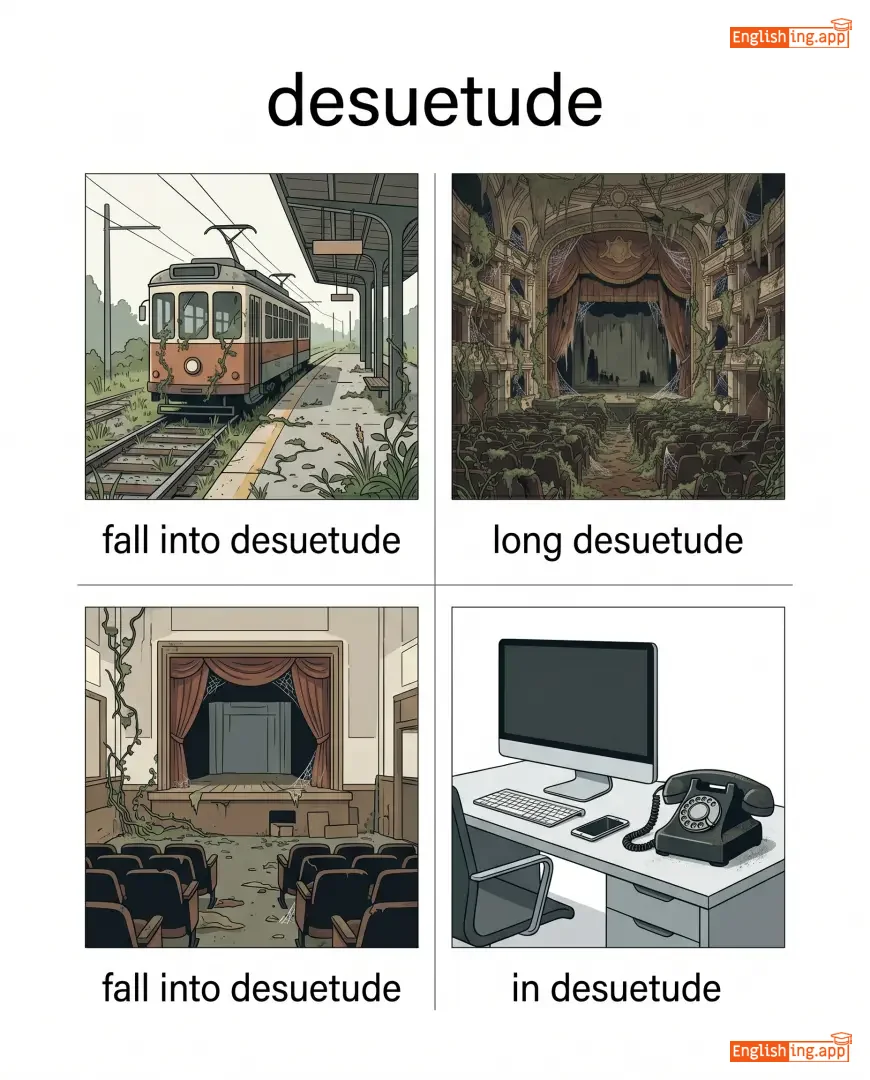
fall into desuetude, long desuetude, in desuetude
••••••
|
Desuetude意味着'due'的工作已经废弃
••••••
|
|
😐
••••••
|
/ˈdɛsəlˌtɔːri/
adjective
(得萨托里)
••••••
|
|
杂乱无章
záluàn wúzhāng
••••••
|
- •••••• | - •••••• | - •••••• | - •••••• |
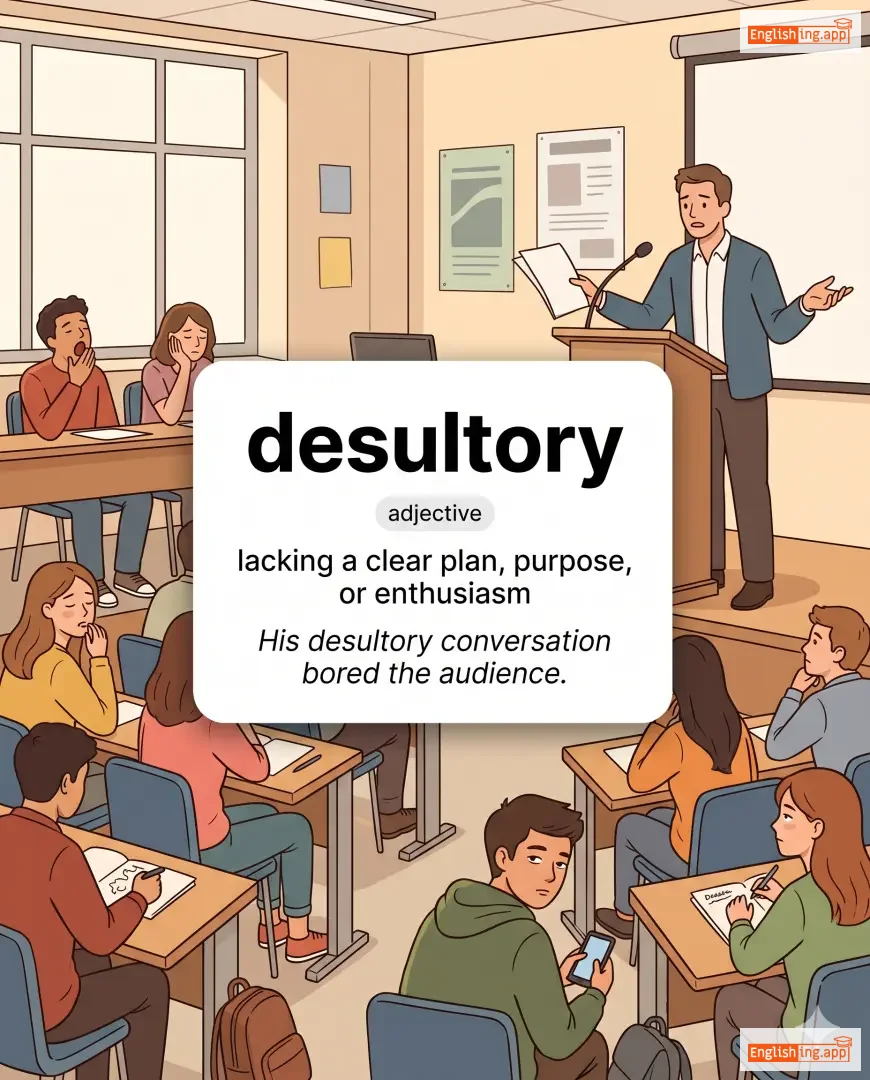
lacking a clear plan, purpose, or enthusiasm
••••••
|
His desultory conversation bored the audience. |
他那杂乱无章的谈话让观众感到无聊。
Tā nà záluàn wúzhāng de tánhuà ràng guānzhòng gǎndào wúliáo.
••••••
|
- •••••• | - •••••• | - •••••• |
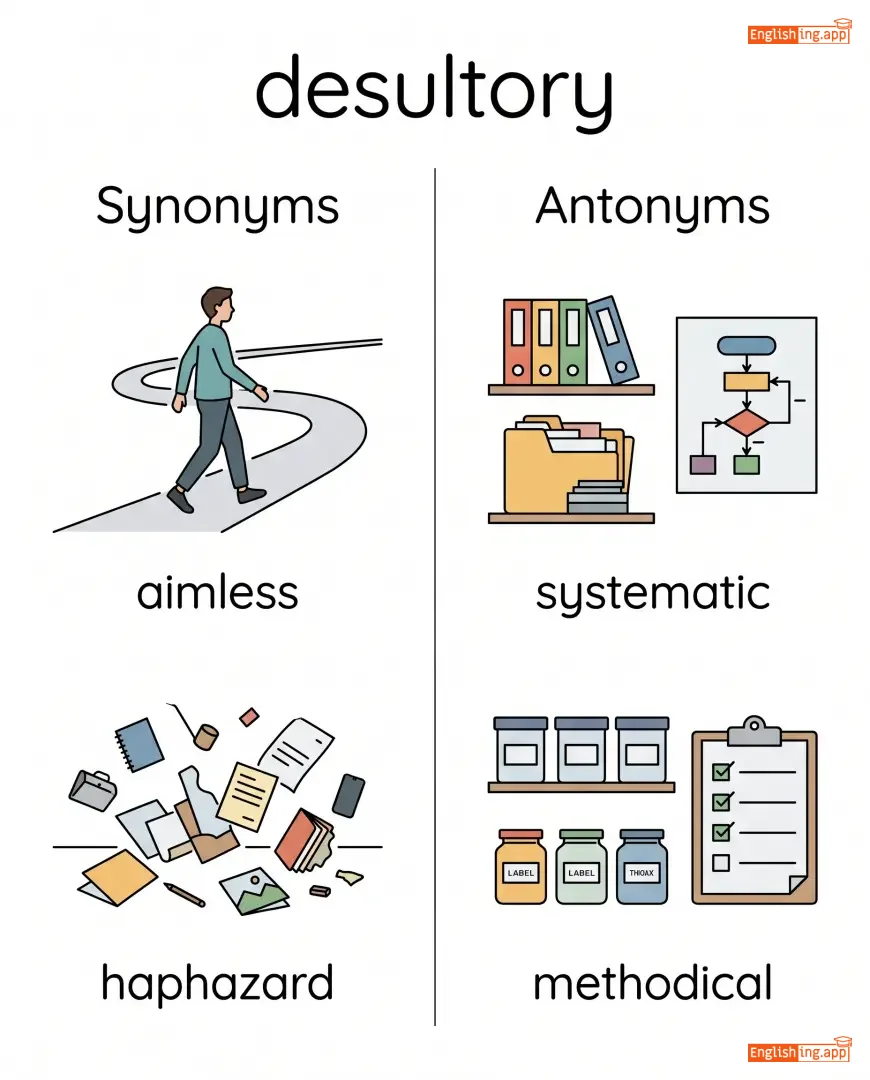
aimless, haphazard, random, unplanned, erratic
••••••
|
systematic, methodical, organized
••••••
|
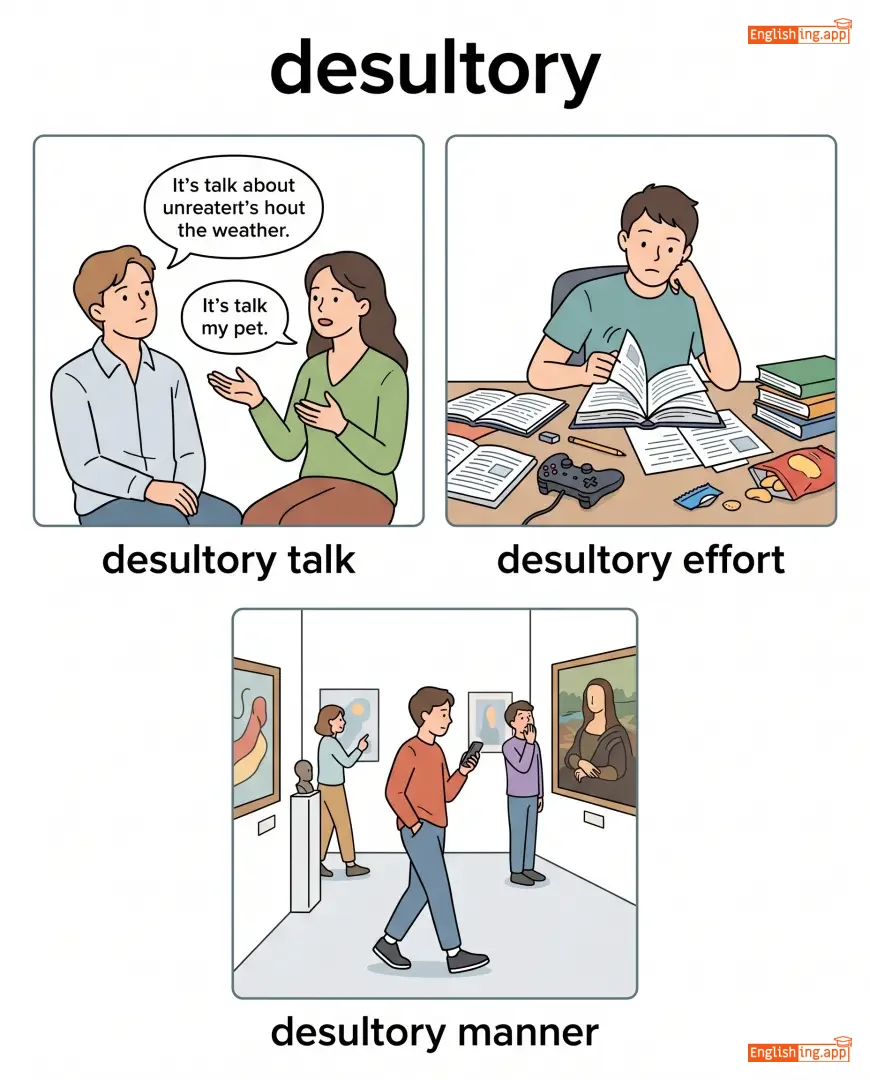
desultory talk, desultory effort, desultory manner, desultory approach
••••••
|
Desultory 就是杂乱无章,没有明确计划
••••••
|
|
🚫
••••••
|
/dɪˈtɜːrənt/
noun
(dɪˈtɛr(ə)nt)
••••••
|
|
威慑
weishe
••••••
|
- •••••• | - •••••• | - •••••• | - •••••• |
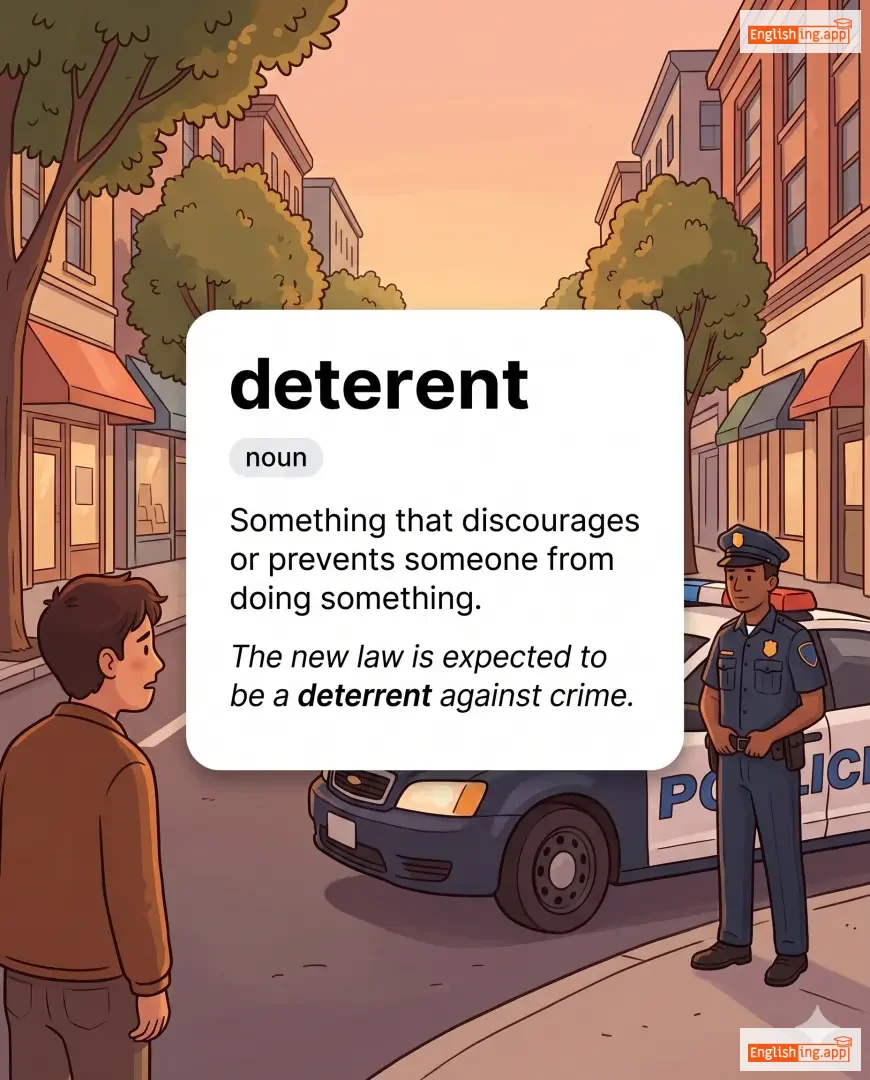
Something that discourages or prevents someone from doing something.
••••••
|
The new law is expected to be a deterrent against crime. |
预计新法律将成为打击犯罪的威慑力量。
Yùjì xīn fǎlǜ jiāng chéngwéi dǎjí fànzuì de wēishè lìliàng.
••••••
|
- •••••• | - •••••• | - •••••• |
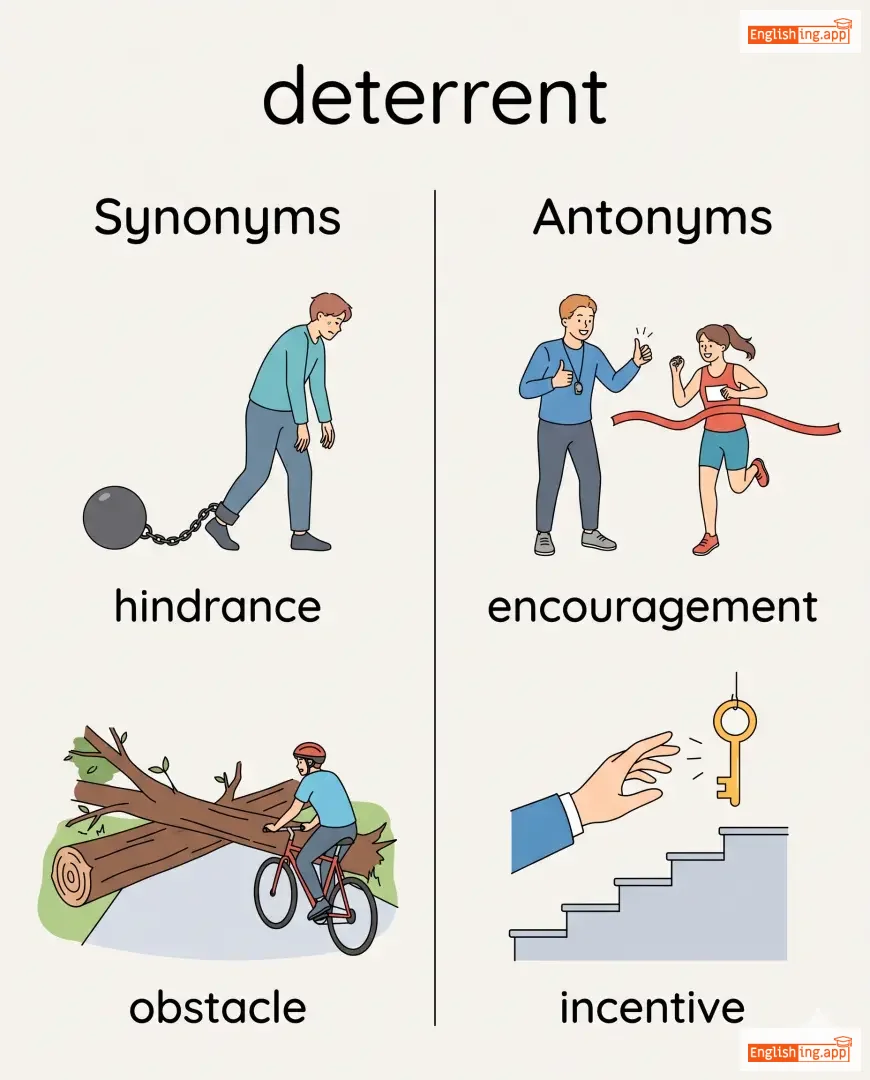
hindrance, obstacle, discouragement, preventive
••••••
|
encouragement, incentive
••••••
|
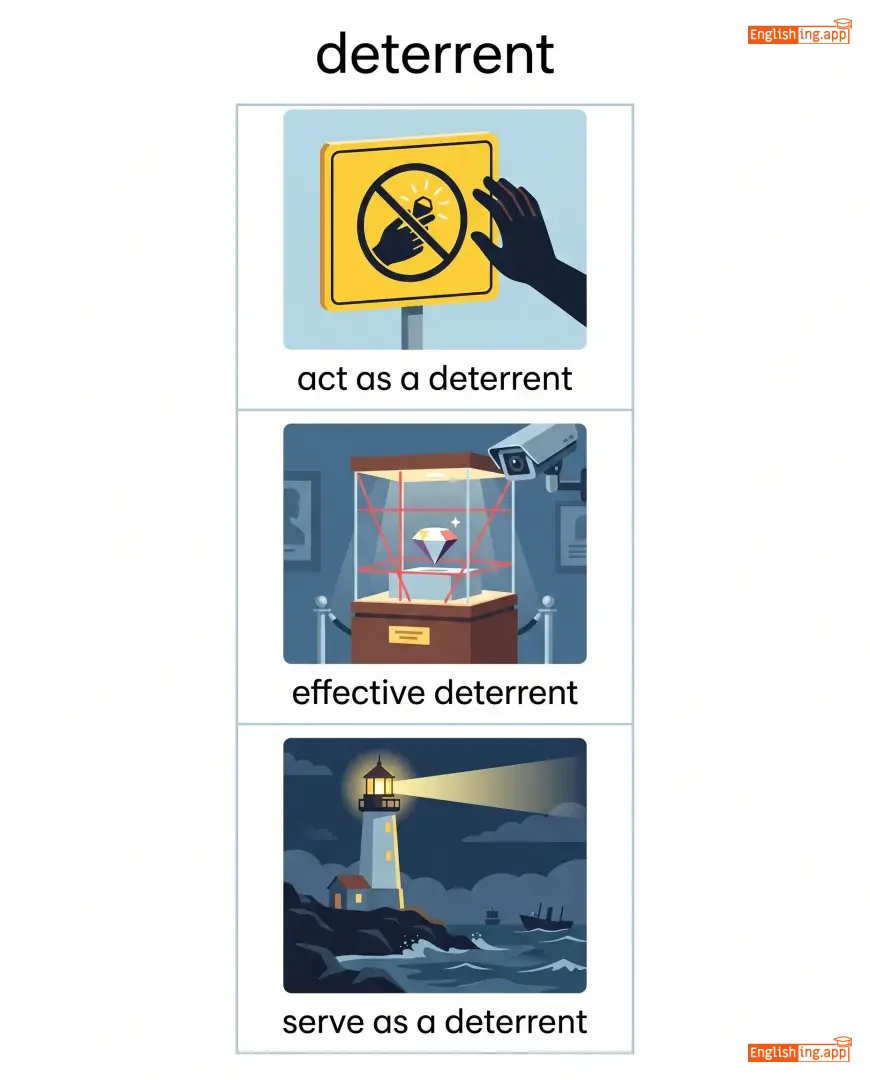
act as a deterrent, effective deterrent, serve as a deterrent
••••••
|
威慑意味着 🚫 犯罪 – 法律是威慑的力量。
••••••
|
|
🗣️
••••••
|
/dɪˈtrækʃən/
noun
(dɪˈtrækʃən)
••••••
|

|
贬低
biǎn dī
••••••
|
- •••••• | - •••••• | - •••••• | - •••••• |
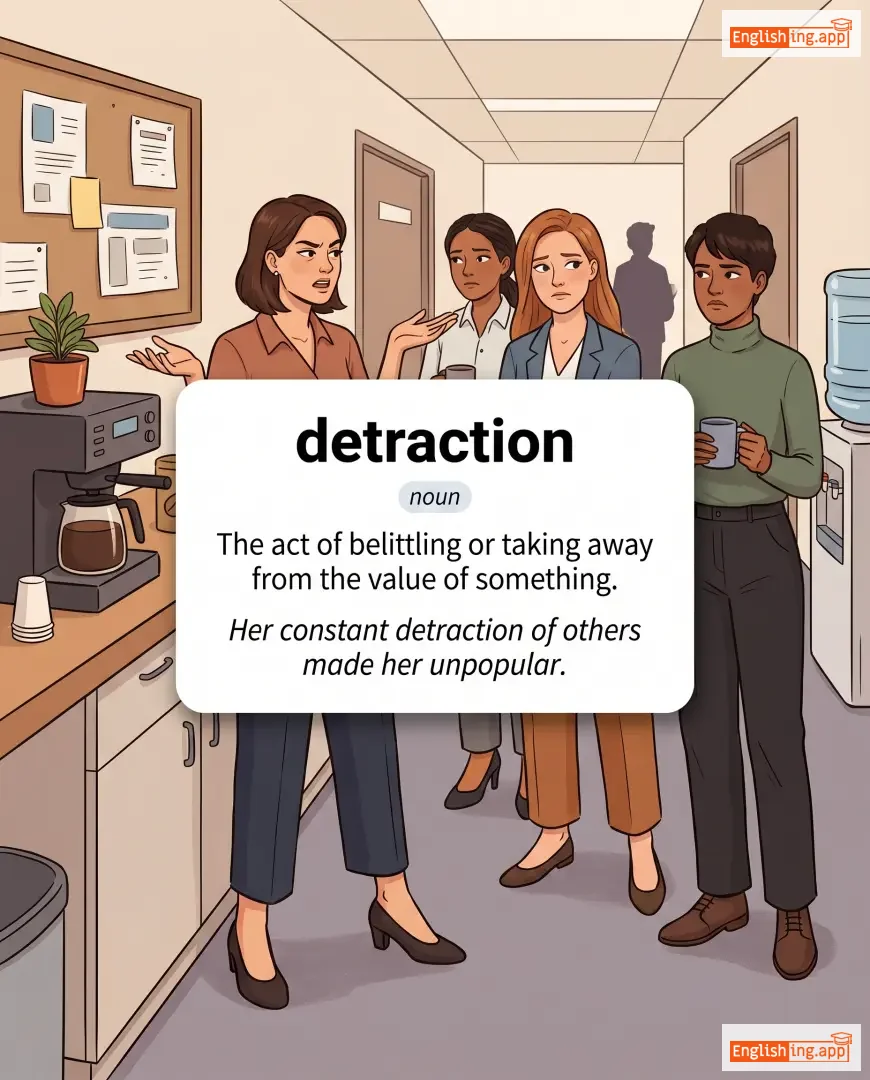
The act of belittling or taking away from the value of something.
••••••
|
Her constant detraction of others made her unpopular. |
她对他人的不断贬低使她变得不受欢迎。
Tā duì tārén de bùduàn biǎndī shǐ tā biàn dé bù shòu huānyíng.
••••••
|
- •••••• | - •••••• | - •••••• |
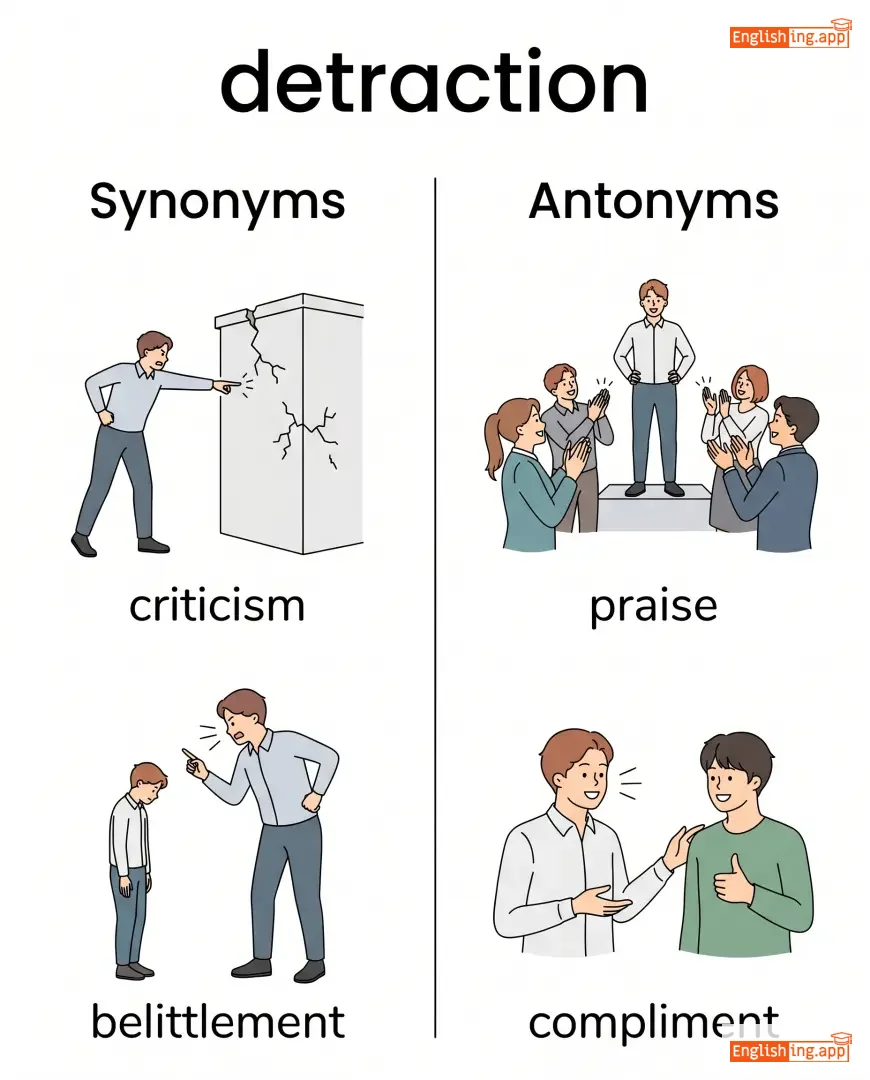
criticism, belittlement, disparagement, slander
••••••
|
praise, compliment
••••••
|
detraction of character, constant detraction, subject to detraction
••••••
|
DETRACT意味着减少,而DETRACTION意味着减少某物的价值。
••••••
|
|
👗
••••••
|
/daɪˈæfənəs/
adjective
(dai'afenasi)
••••••
|
|
透明的
touming de
••••••
|
- •••••• | - •••••• | - •••••• | - •••••• |
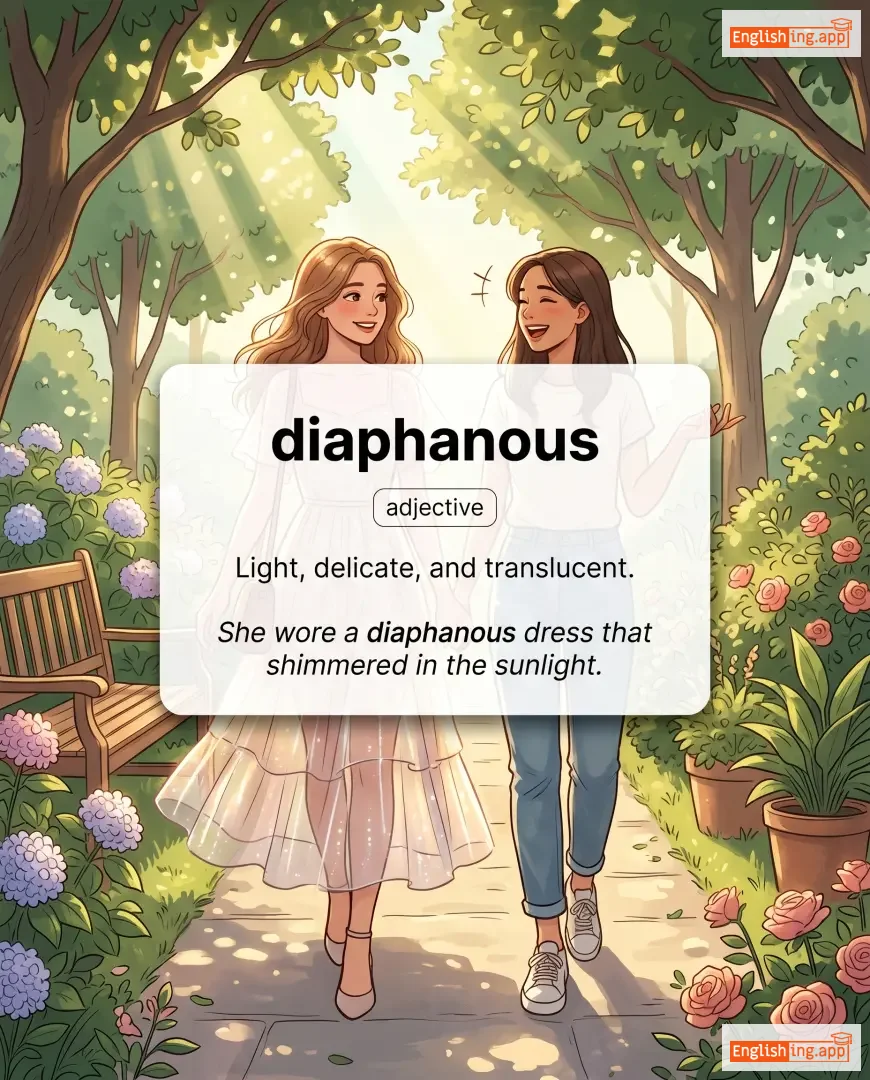
Light, delicate, and translucent.
••••••
|
She wore a diaphanous dress that shimmered in the sunlight. |
她穿着一件透明的裙子,在阳光下闪闪发光。
Ta chuanzhuo yi jian touming de qunzi, zai yangguang xia shanshan faguang.
••••••
|
- •••••• | - •••••• | - •••••• |
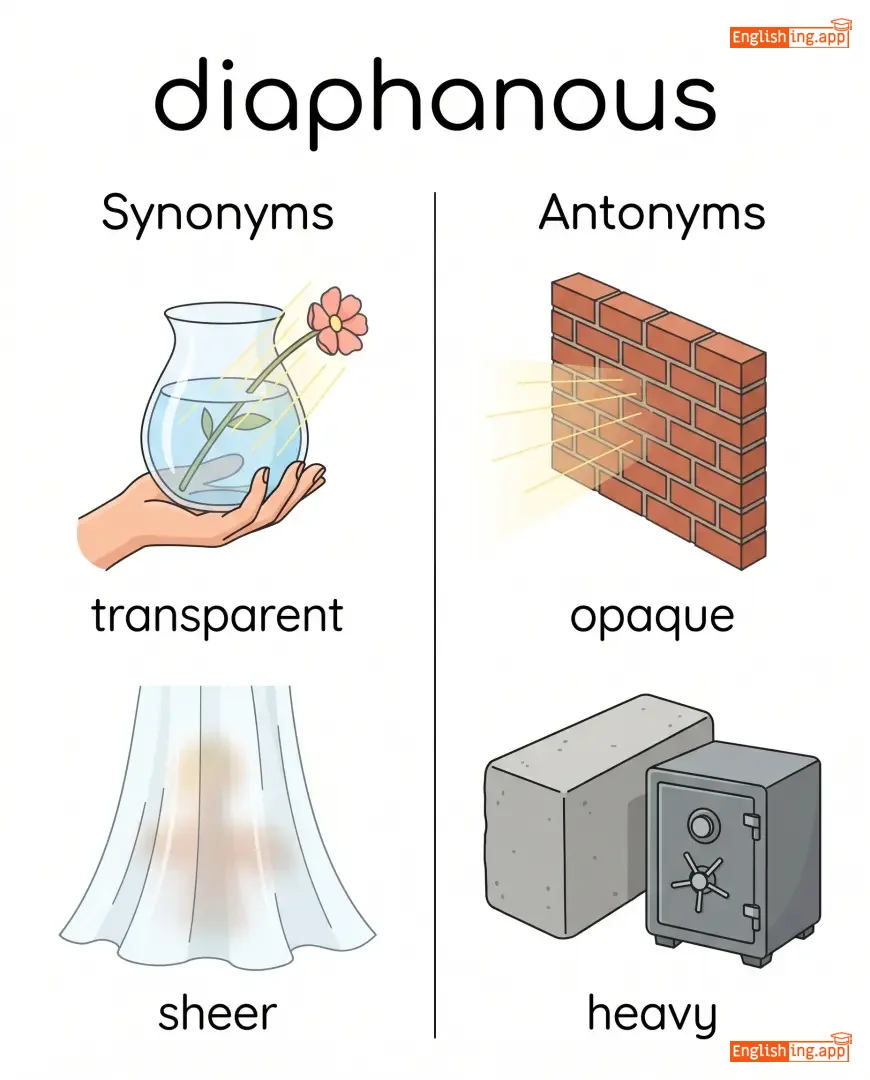
transparent, sheer, delicate, translucent, gossamer
••••••
|
opaque, heavy, thick
••••••
|
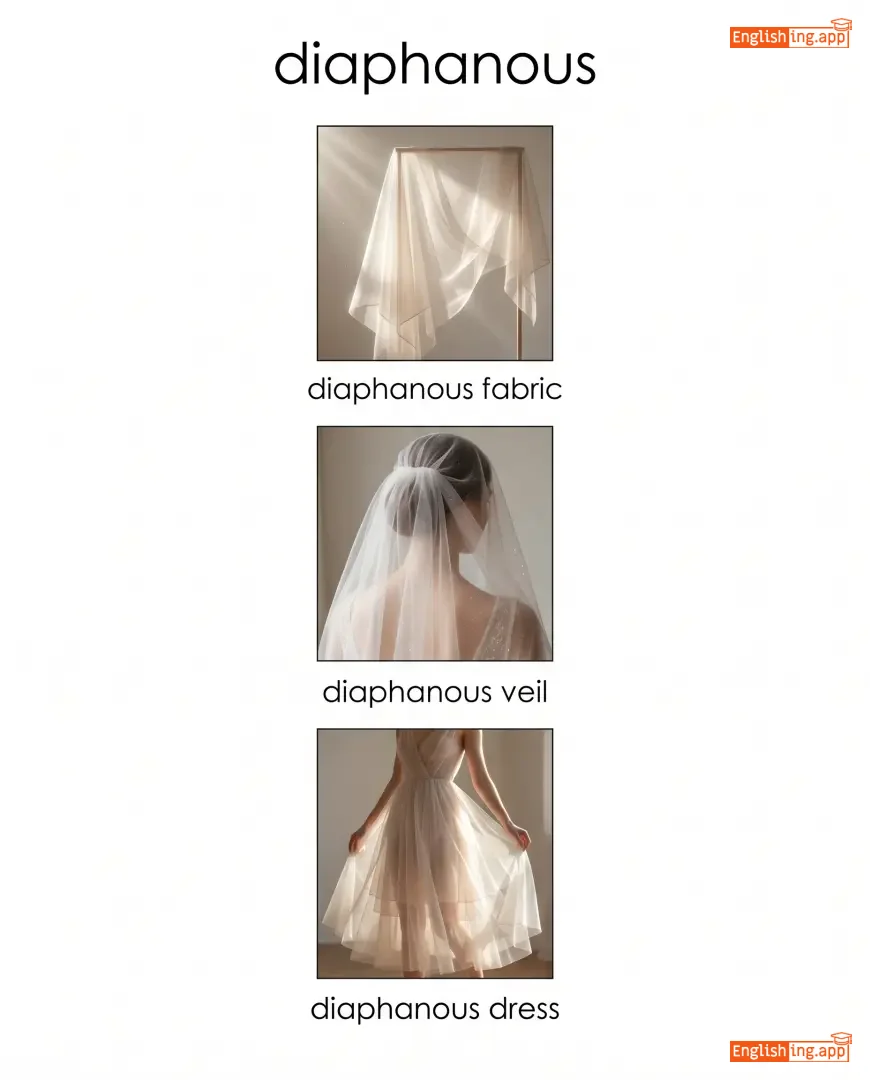
diaphanous fabric, diaphanous veil, diaphanous dress
••••••
|
Diaphanous = Dia+fan+ous → 一件在阳光下闪亮的透明裙子
••••••
|
|
🗣️
••••••
|
/ˈdaɪətraɪb/
noun
(代阿特赖布)
••••••
|
|
激烈的抨击
jīliè de pēngjí
••••••
|
- •••••• | - •••••• | - •••••• | - •••••• |
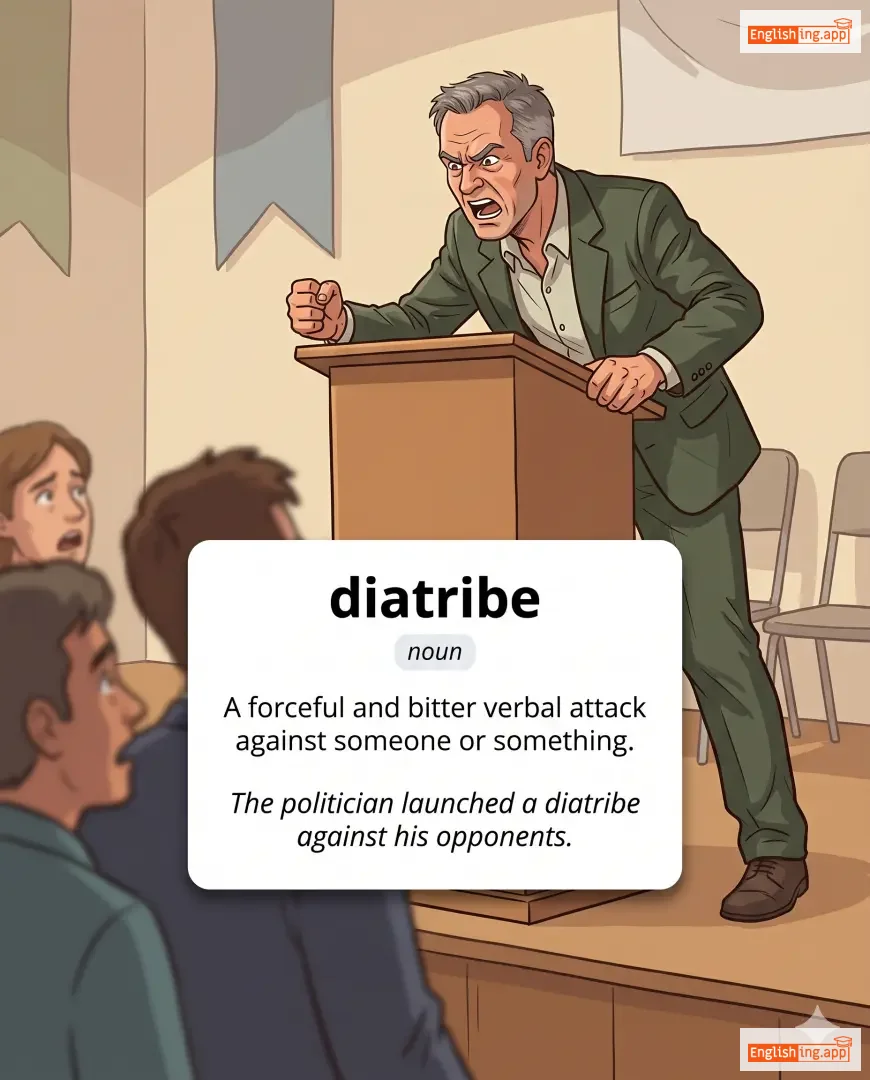
A forceful and bitter verbal attack against someone or something.
••••••
|
The politician launched a diatribe against his opponents. |
这位政治家对他的对手发起了激烈的抨击。
Zhè wèi zhèngzhìjiā duì tā de duìshǒu fāqǐle jīliè de pēngjí.
••••••
|
- •••••• | - •••••• | - •••••• |
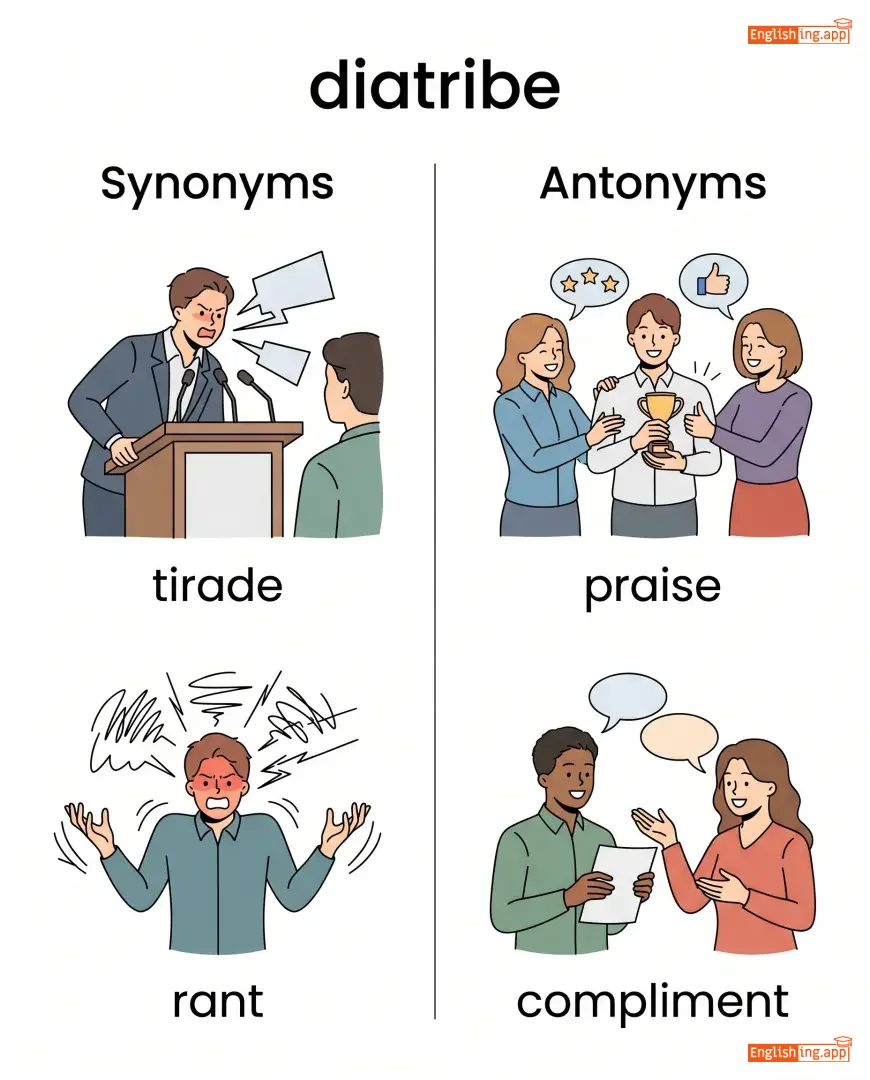
tirade, rant, criticism, denunciation, invective
••••••
|
praise, compliment
••••••
|
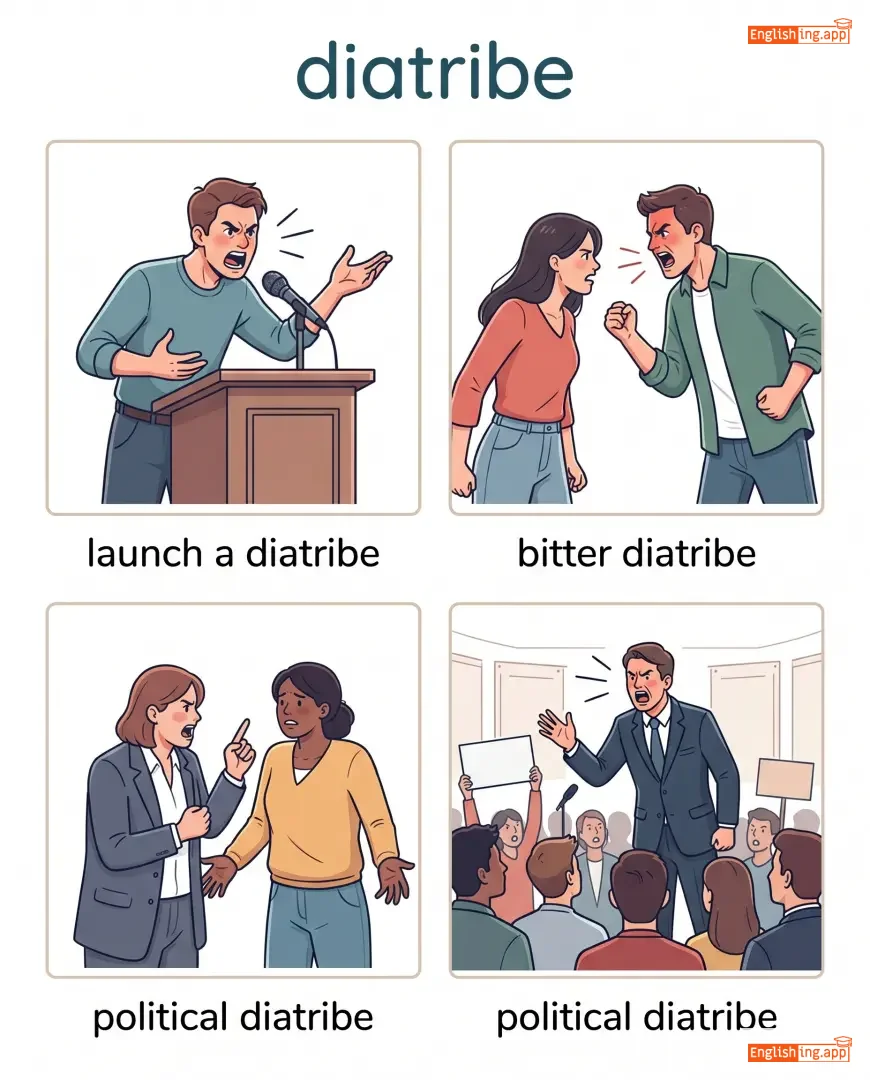
launch a diatribe, bitter diatribe, political diatribe
••••••
|
DIAlogue中TRIBE的激烈争论就像一场激烈的抨击
••••••
|
|
⚖️
••••••
|
/daɪˈkɒtəmi/
noun
(daɪˈkɒtəmi)
••••••
|

|
二分法
er fen fa
••••••
|
- •••••• | - •••••• | - •••••• | - •••••• |
A division or contrast between two things that are completely different.
••••••
|
There is a clear dichotomy between good and evil. |
善与恶之间存在明显的二分法。
Shan yu e zhijian cunzai mingxian de er fen fa.
••••••
|
- •••••• | - •••••• | - •••••• |
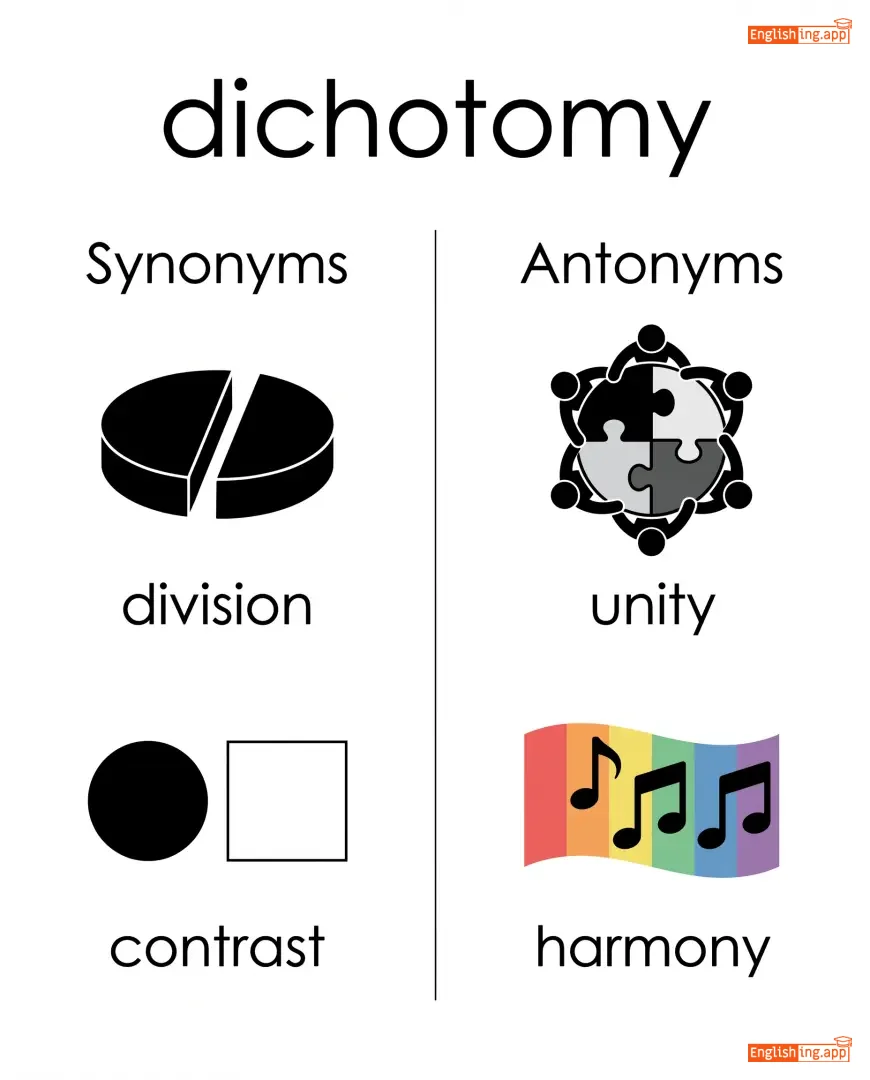
division, contrast, split, dualism
••••••
|
unity, harmony
••••••
|
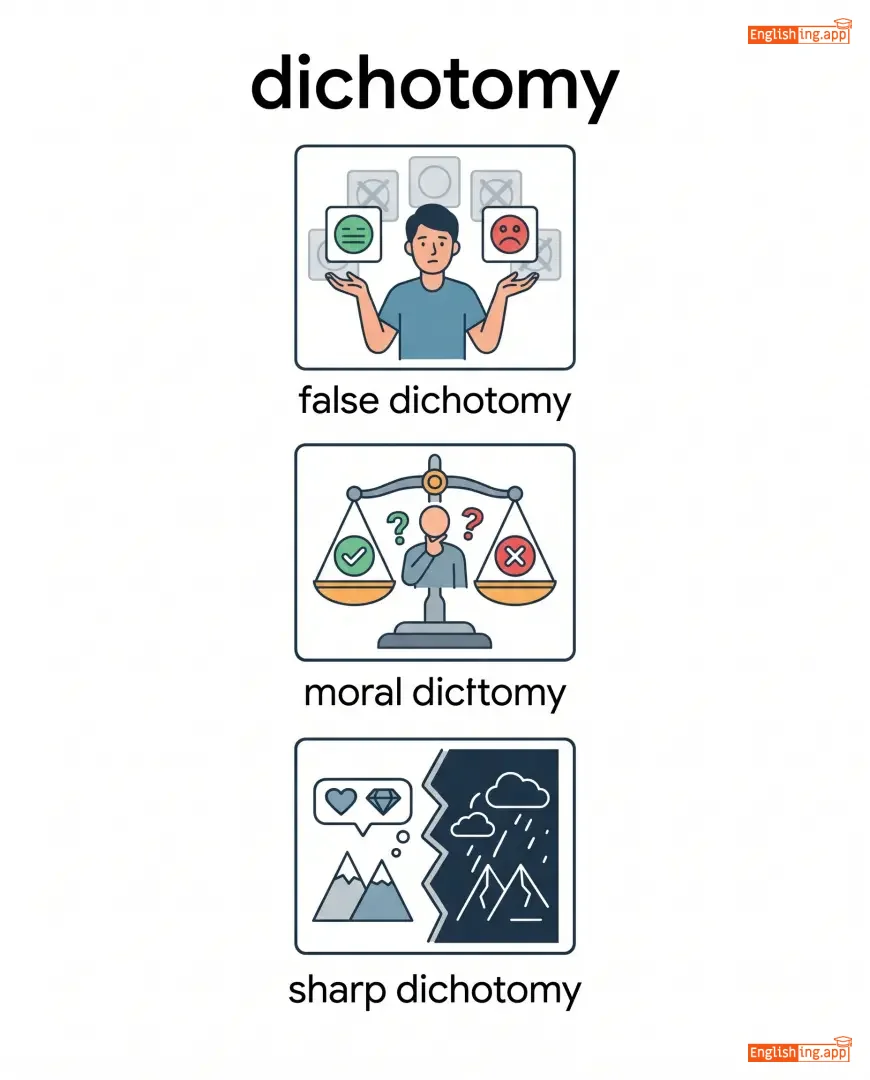
false dichotomy, moral dichotomy, sharp dichotomy
••••••
|
DIE 意味着两个 + CUT 意味着切割 → Dichotomy 意味着分成两部分
••••••
|
|
😶
••••••
|
/ˈdɪfɪdəns/
noun
(迪菲登斯)
••••••
|
|
缺乏自信
quefa zixin
••••••
|
- •••••• | - •••••• | - •••••• | - •••••• |
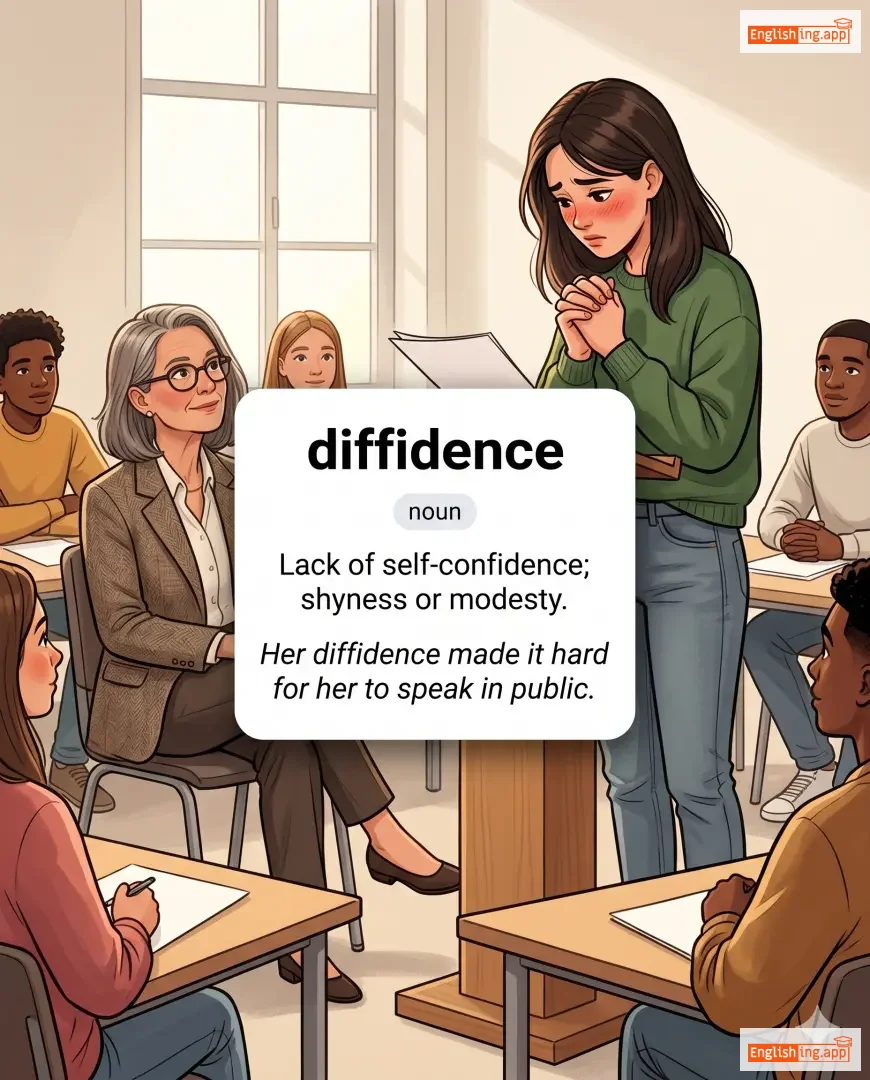
Lack of self-confidence; shyness or modesty.
••••••
|
Her diffidence made it hard for her to speak in public. |
她的缺乏自信让她很难在公众面前发言。
Ta de quefa zixin rang ta hen nan zai gongzhong mianqian fayan.
••••••
|
- •••••• | - •••••• | - •••••• |
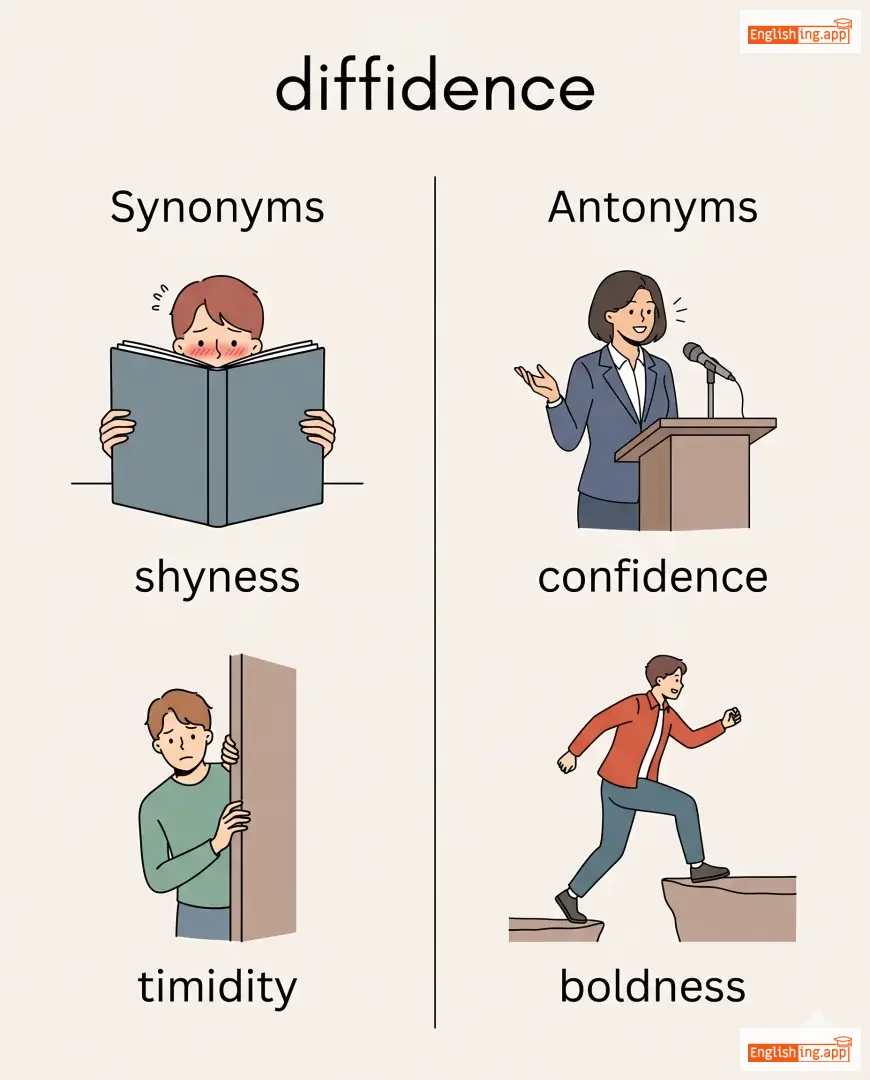
shyness, timidity, insecurity, reserve, modesty
••••••
|
confidence, boldness, assertiveness
••••••
|
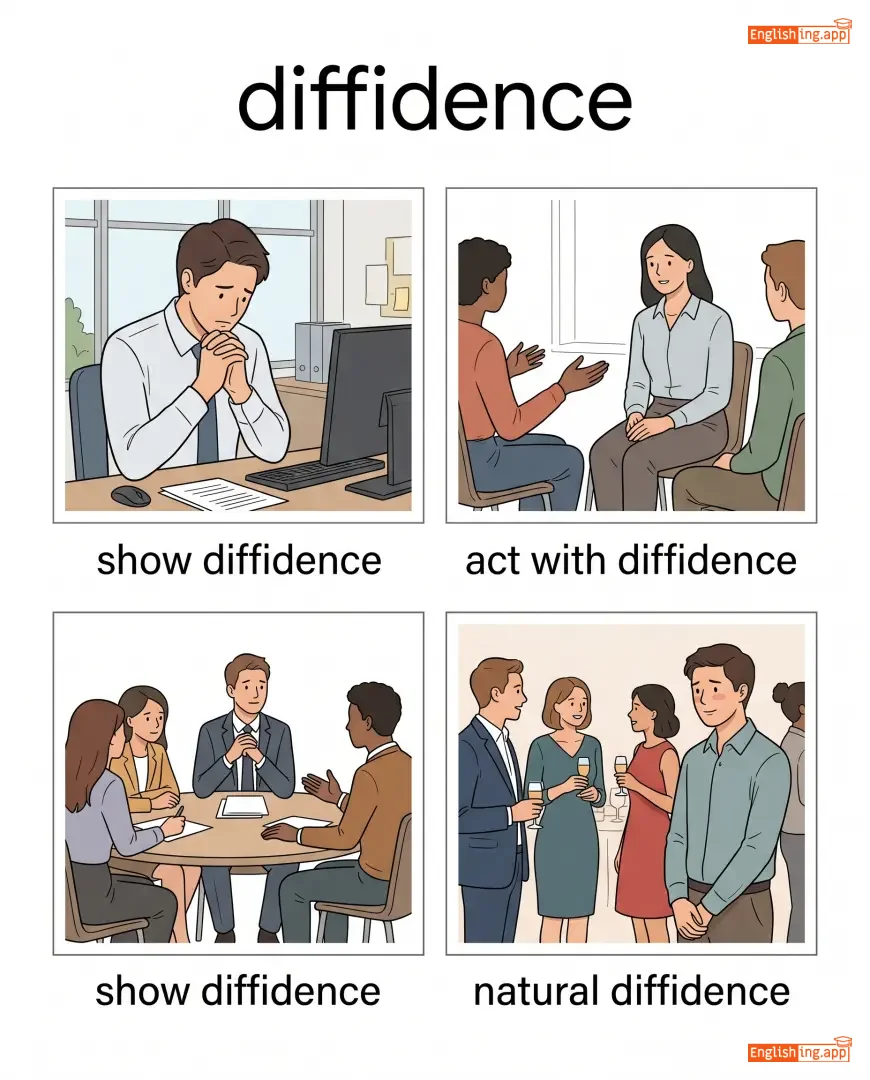
show diffidence, act with diffidence, natural diffidence
••••••
|
Diffidence 意味着缺乏自信 - 记住 D = Down 自信。
••••••
|
|
🌫️
••••••
|
/dɪˈfjuːz/
verb
••••••
|
|
- •••••• |
diffused
••••••
|
diffused
••••••
|
diffuses
••••••
|
diffusing
••••••
|
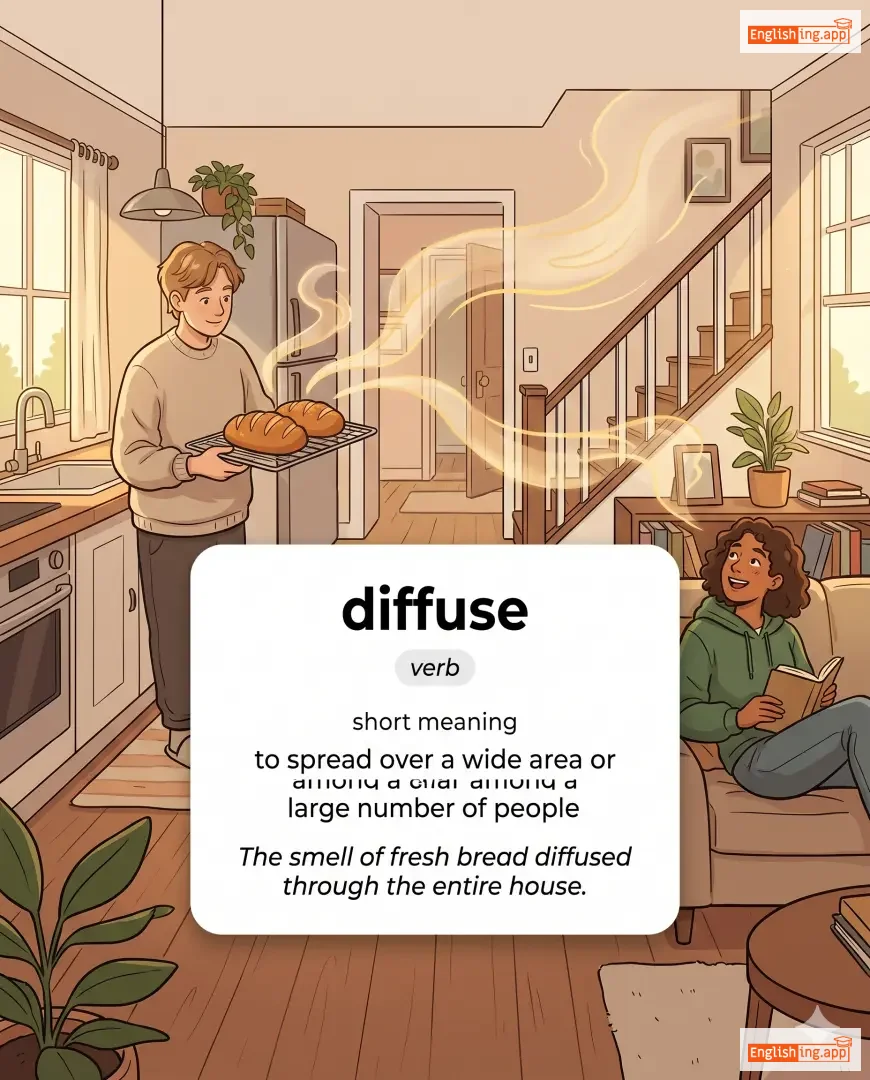
to spread over a wide area or among a large number of people
••••••
|
The smell of fresh bread diffused through the entire house. |
- •••••• |
diffuse tension |
to reduce or calm down stress or conflict
••••••
|
- •••••• |
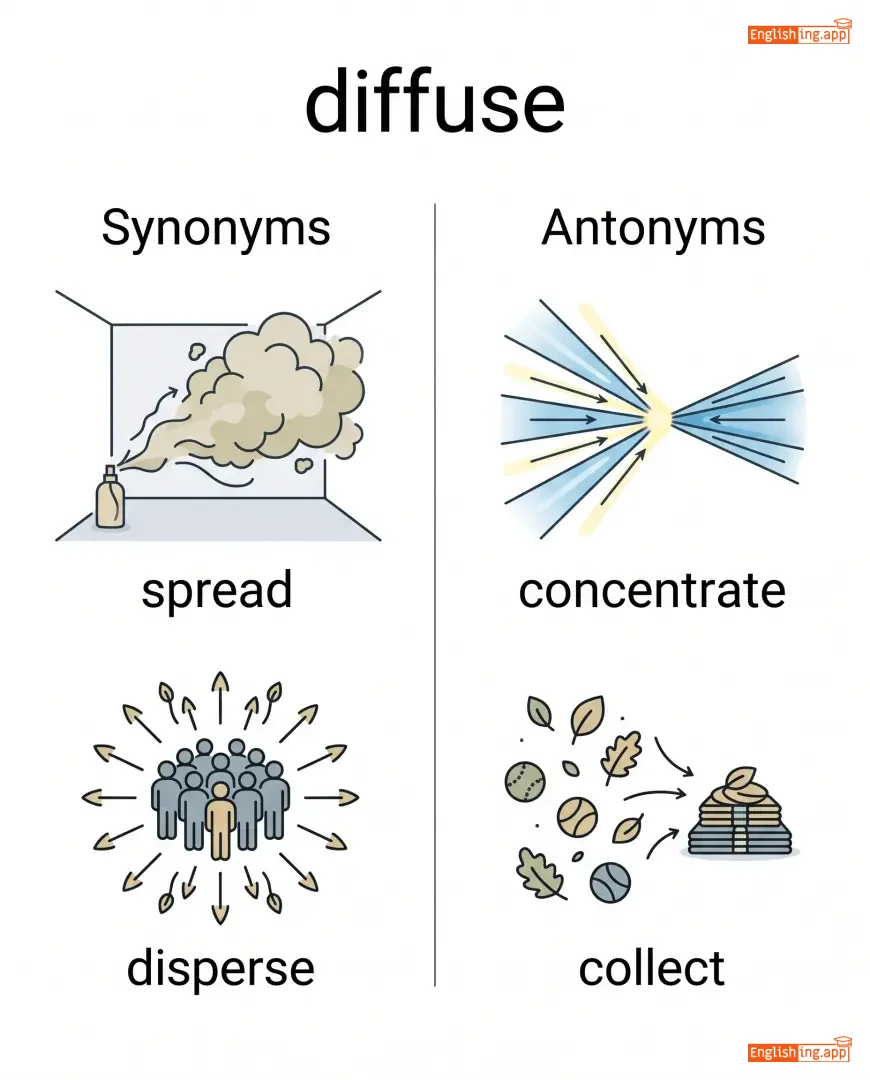
spread, disperse, scatter, distribute, dissipate
••••••
|
concentrate, collect, gather
••••••
|
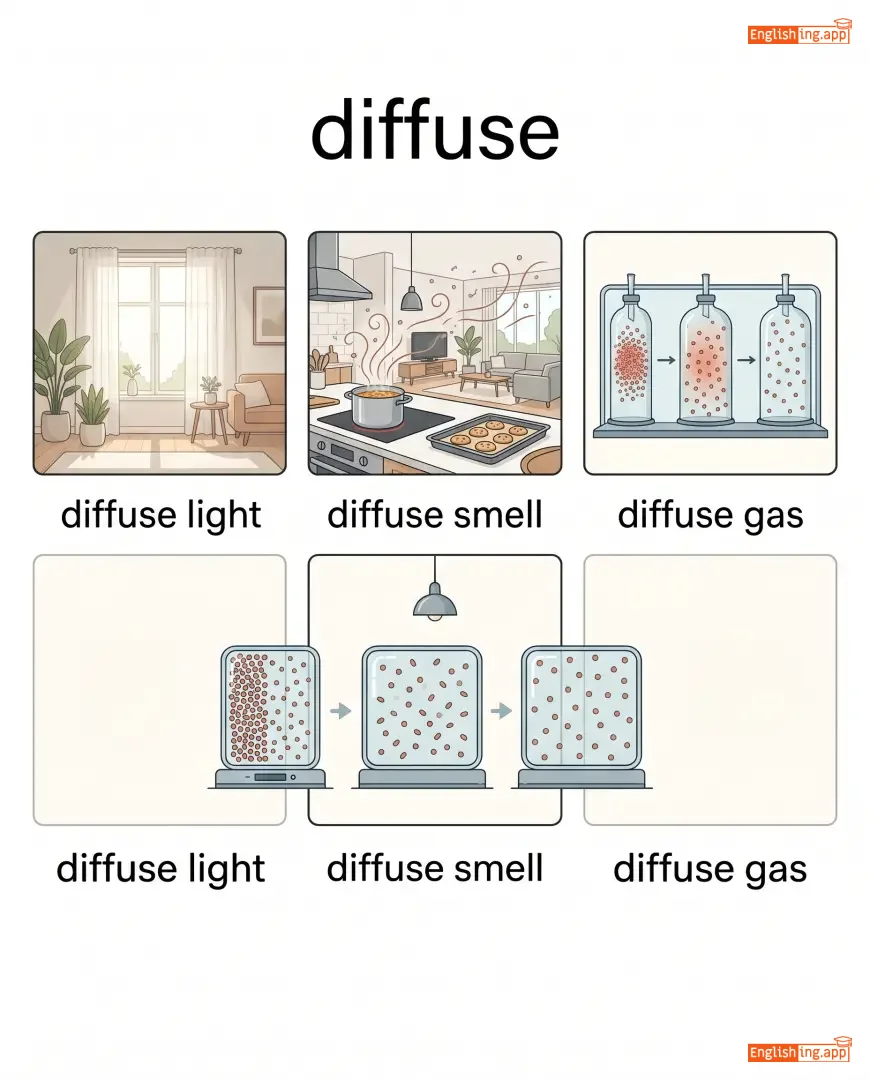
diffuse light, diffuse smell, diffuse gas, diffuse conflict
••••••
|
No •••••• |
|
🛤️
••••••
|
/daɪˈɡrɛʃən/
noun
(dáigǔlèshén)
••••••
|
|
离题
lítí
••••••
|
- •••••• | - •••••• | - •••••• | - •••••• |
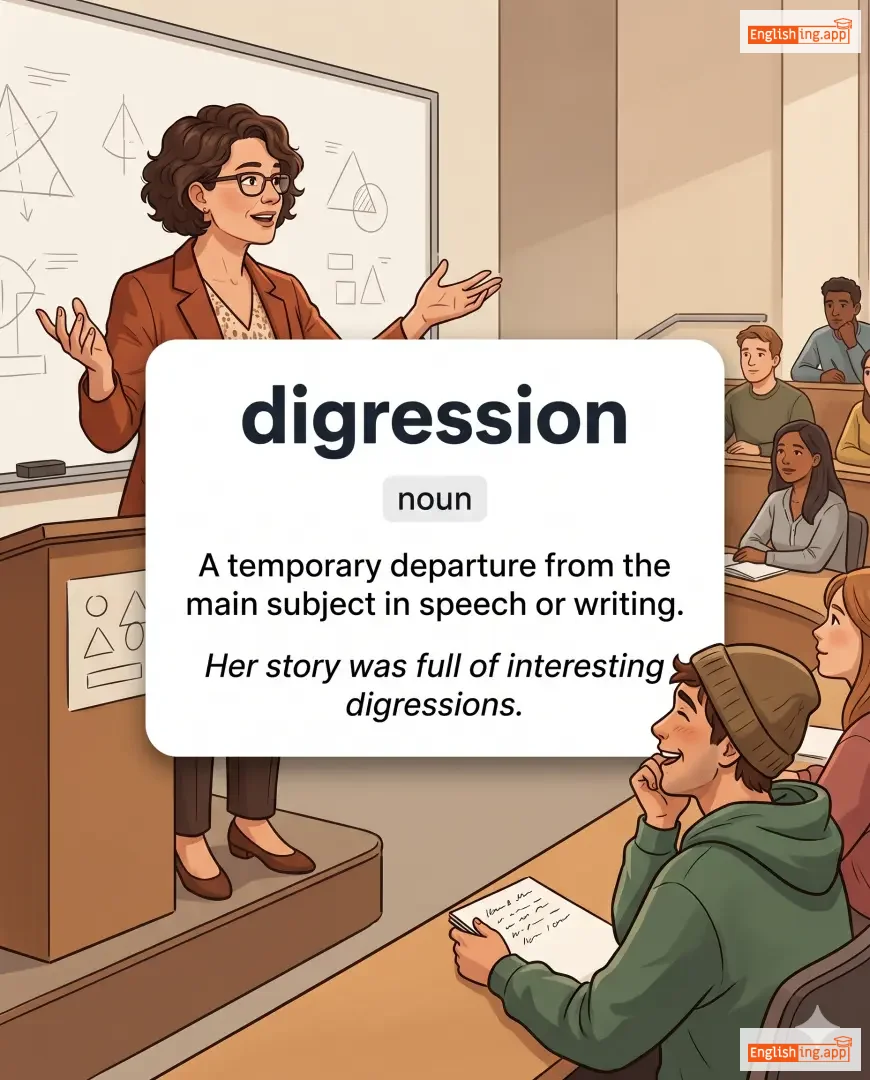
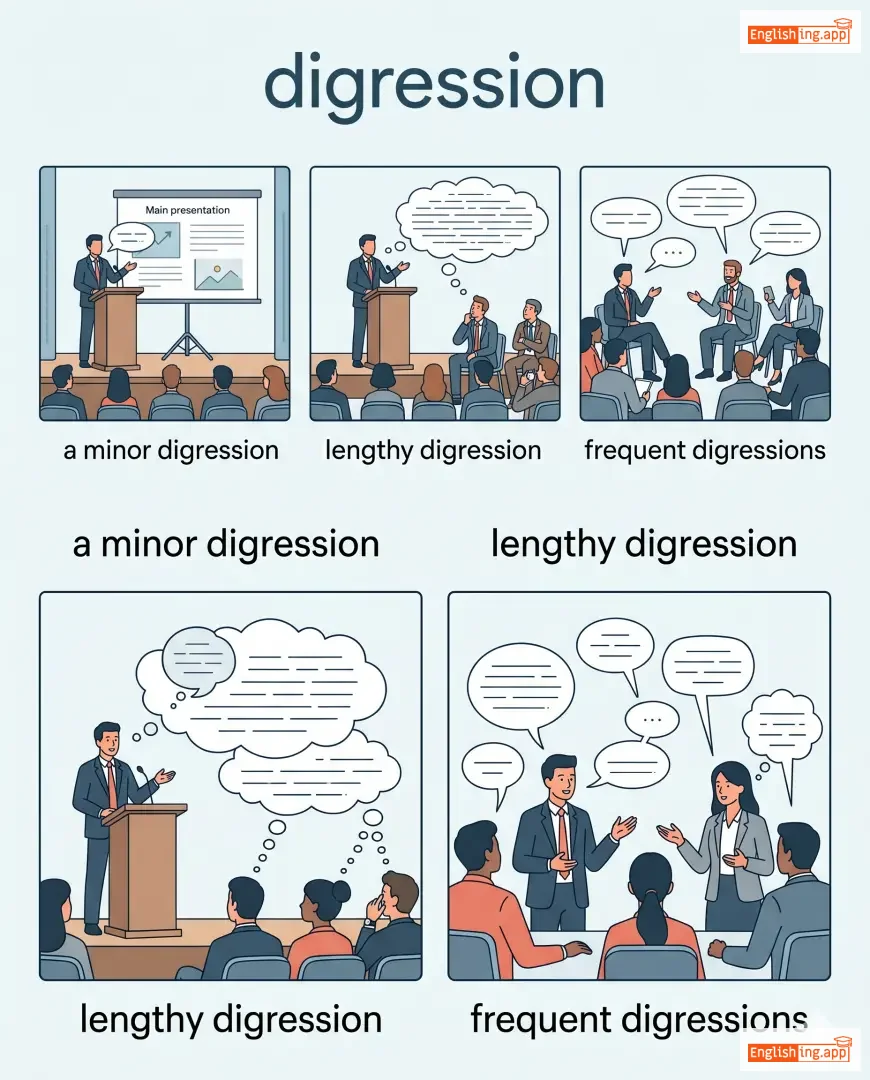
A temporary departure from the main subject in speech or writing.
••••••
|
Her story was full of interesting digressions. |
她的故事充满了有趣的离题部分。
Tā de gùshì chōngmǎnle yǒuqù de lítí bùfen.
••••••
|
- •••••• | - •••••• | - •••••• |
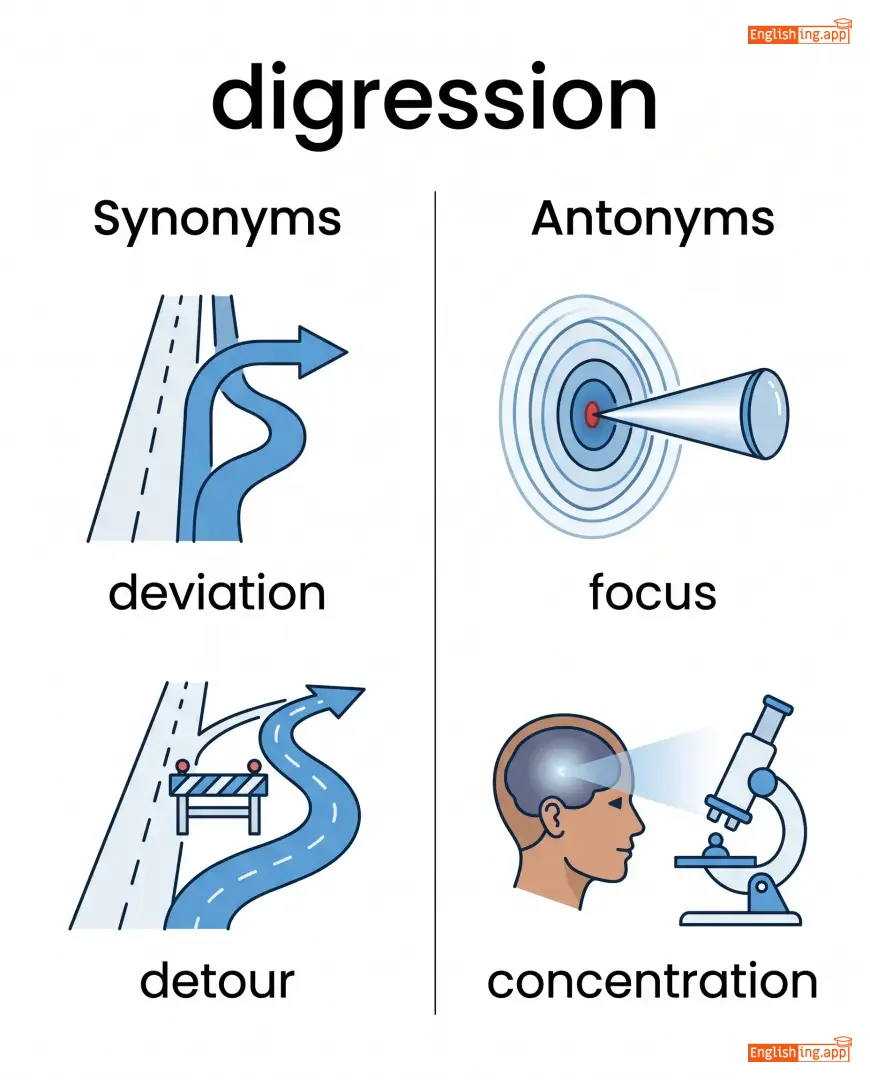
deviation, detour, aside, tangent
••••••
|
focus, concentration
••••••
|
a minor digression, lengthy digression, frequent digressions
••••••
|
Digression 就是从主要话题偏离。
••••••
|
|
🎵
••••••
|
/dɜːrdʒ/
noun
(德尔奇)
••••••
|
|
挽歌
wǎngē
••••••
|
- •••••• | - •••••• | - •••••• | - •••••• |
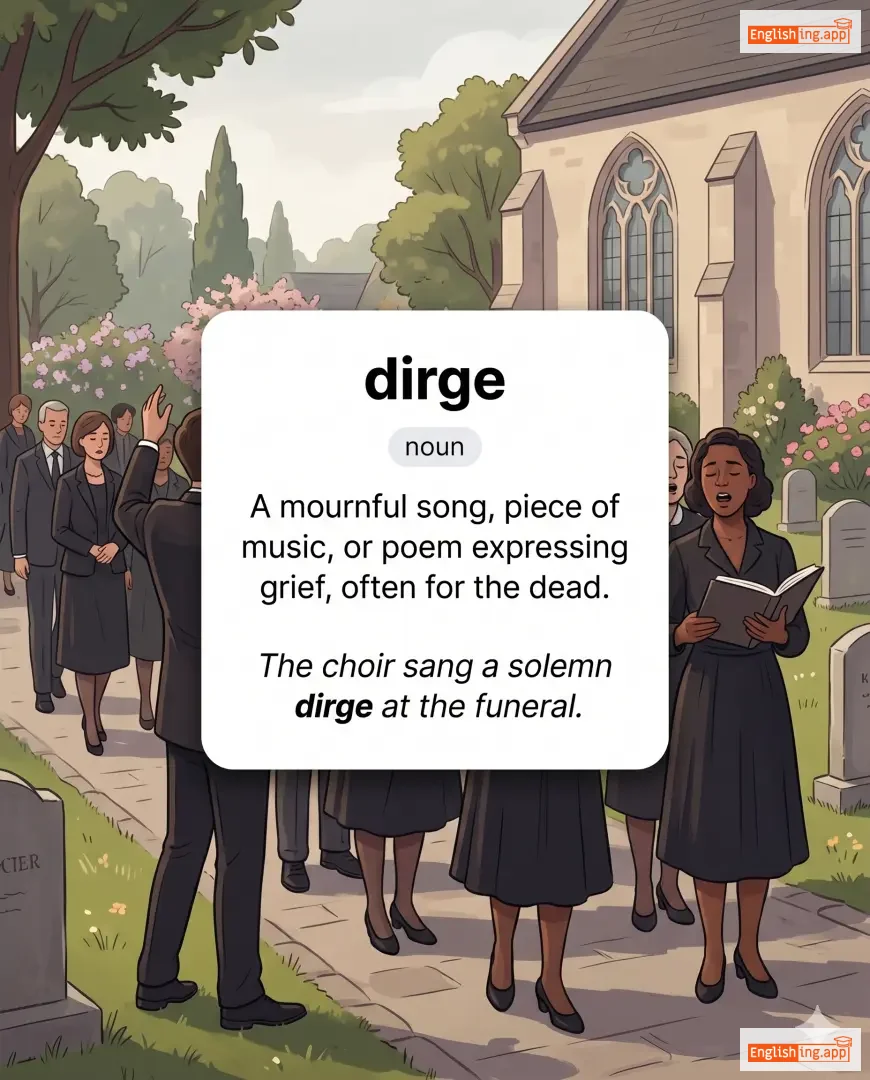
A mournful song, piece of music, or poem expressing grief, often for the dead.
••••••
|
The choir sang a solemn dirge at the funeral.
合唱团在葬礼上唱了一首庄严的挽歌。
••••••
|
合唱团在葬礼上唱了一首庄严的挽歌。
Hé chàng tuán zài zànglǐ shàng chàngle yī shǒu zhuāngyán de wǎngē.
••••••
|
- •••••• | - •••••• | - •••••• |
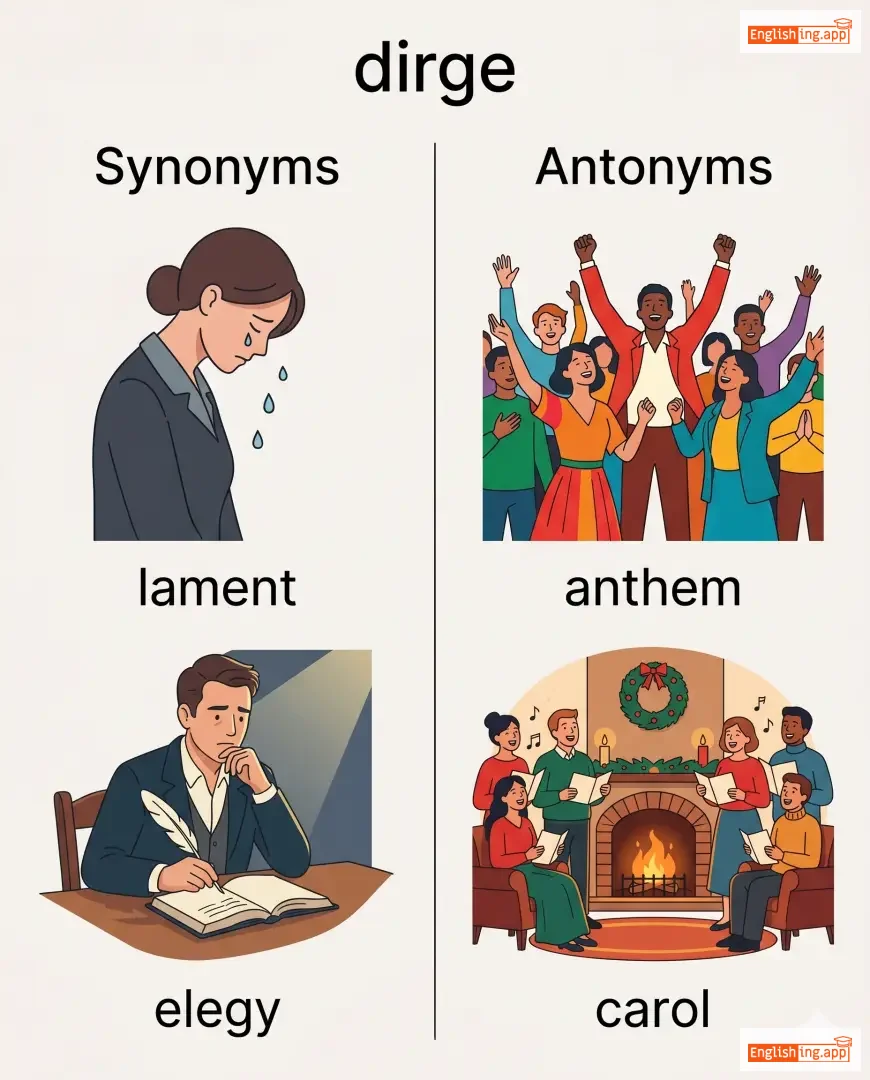
lament, elegy, requiem, threnody, funeral song
••••••
|
anthem, carol, celebration
••••••
|
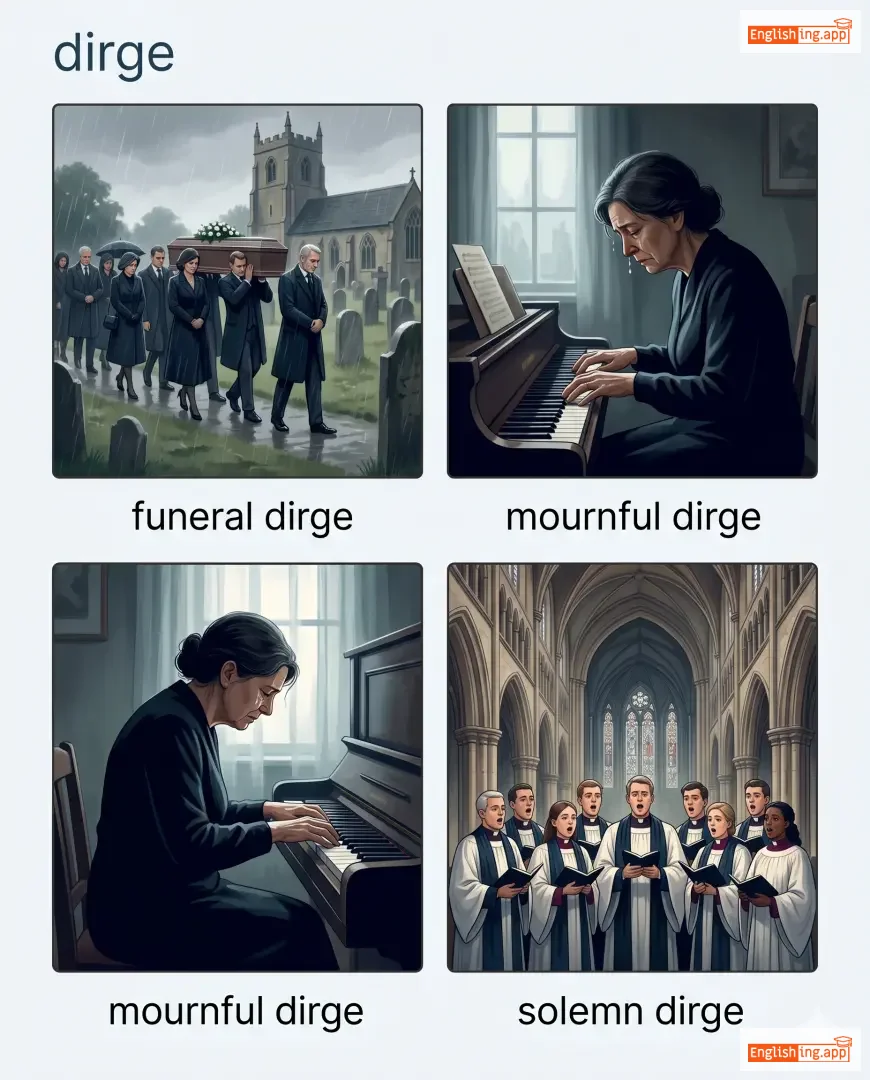
funeral dirge, mournful dirge, solemn dirge
••••••
|
Dirge是‘挽歌’ — 一首表示悲痛的歌。
••••••
|
|
💡
••••••
|
/ˌdɪsəˈbjuːz/
verb
(迪萨比尤兹)
••••••
|
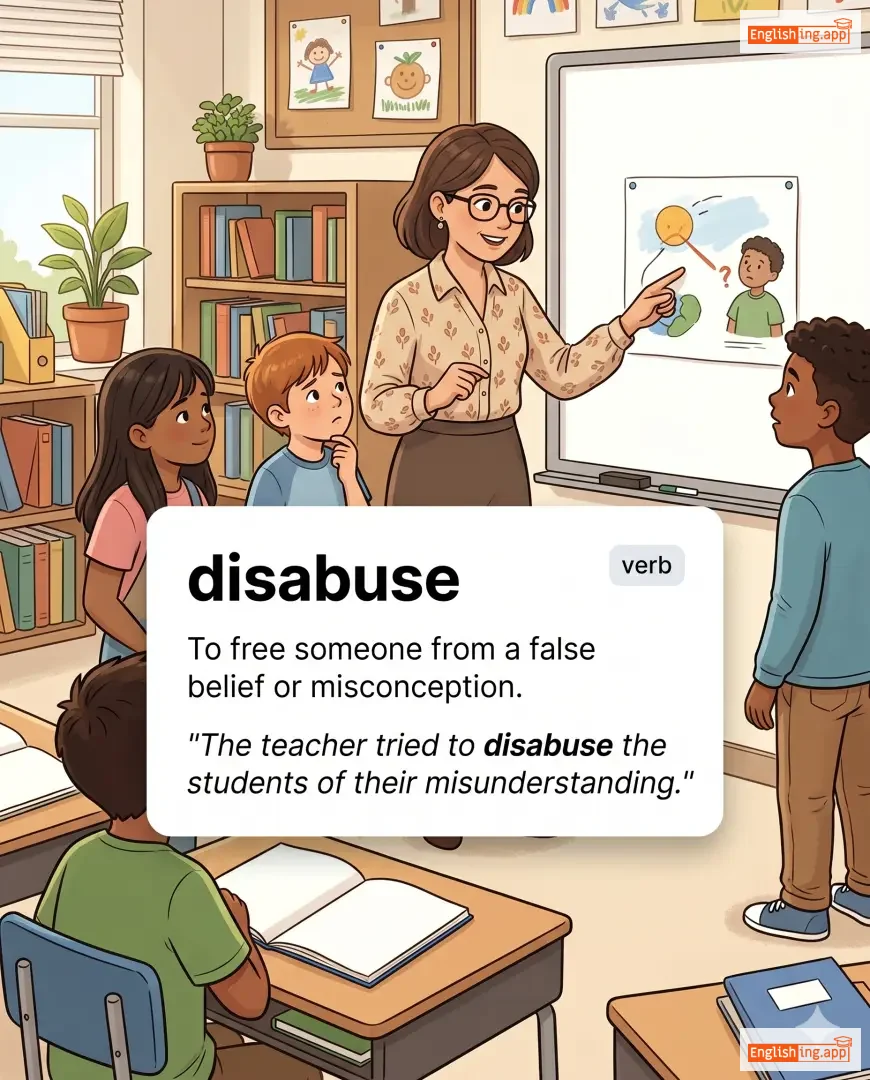
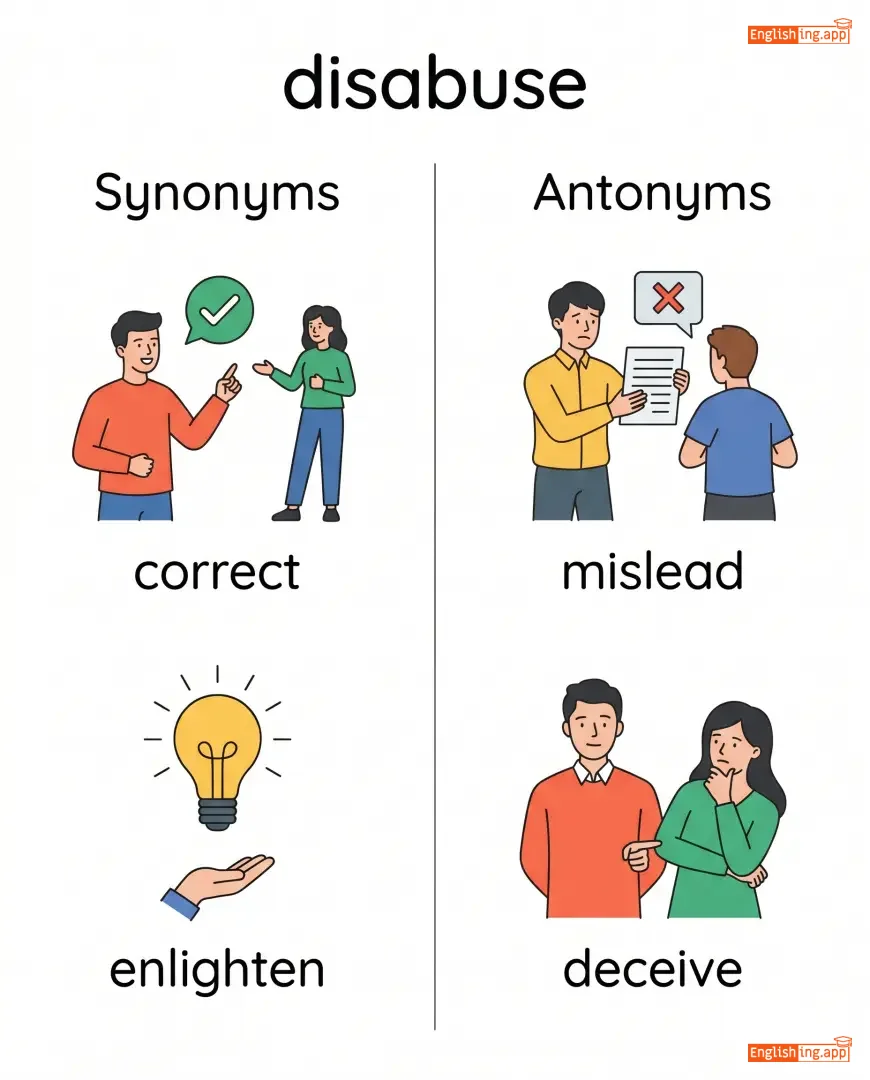
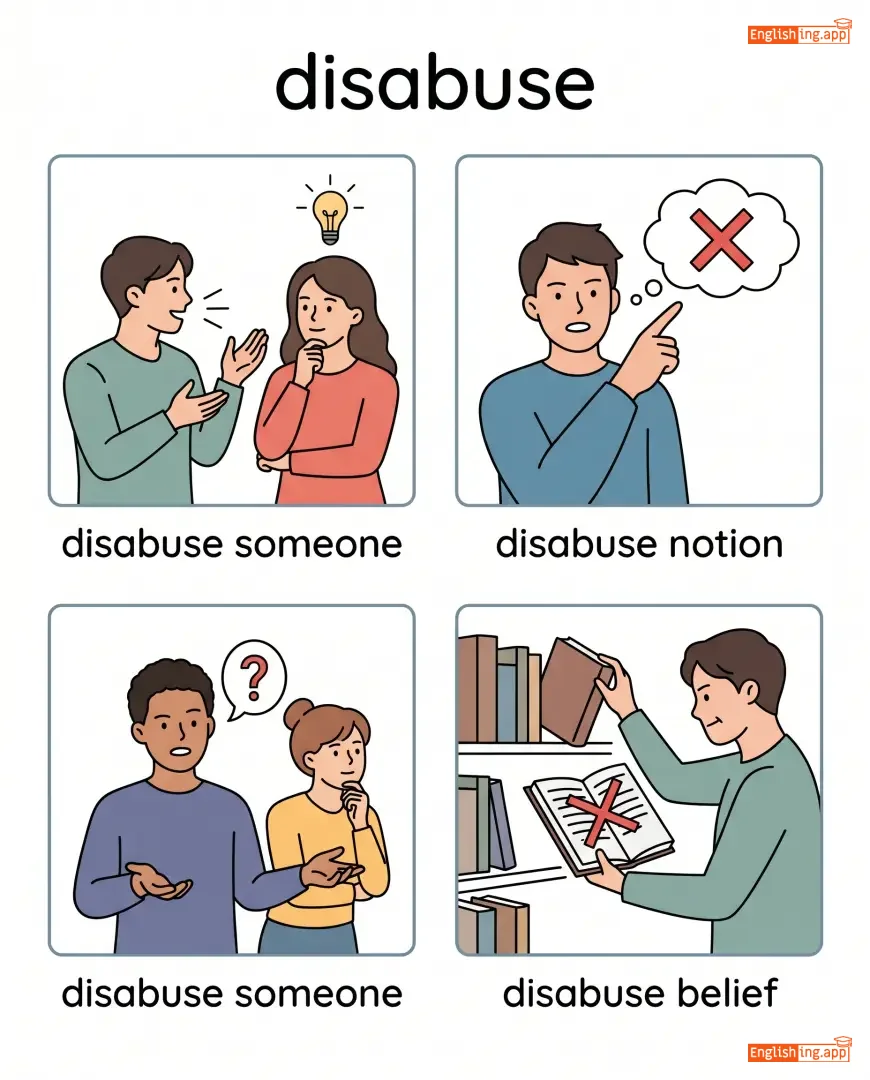
|
使觉醒
shi juexing
••••••
|
disabused
迪萨比尤兹德
••••••
|
disabused
迪萨比尤兹德
••••••
|
disabuses
迪萨比尤兹斯
••••••
|
disabusing
迪萨比尤兹英
••••••
|
To free someone from a false belief or misconception.
••••••
|
The teacher tried to disabuse the students of their misunderstanding.
老师试图让学生摆脱他们的误解。
••••••
|
老师试图让学生摆脱他们的误解。
Laoshi shitu rang xuesheng baituo tamen de wu jie.
••••••
|
- •••••• | - •••••• | - •••••• |
correct, enlighten, rectify, debunk, refute
••••••
|
mislead, deceive, delude
••••••
|
disabuse someone, disabuse notion, disabuse belief
••••••
|
Disabuse = 使觉醒 → 摆脱误解。
••••••
|
|
🧐
••••••
|
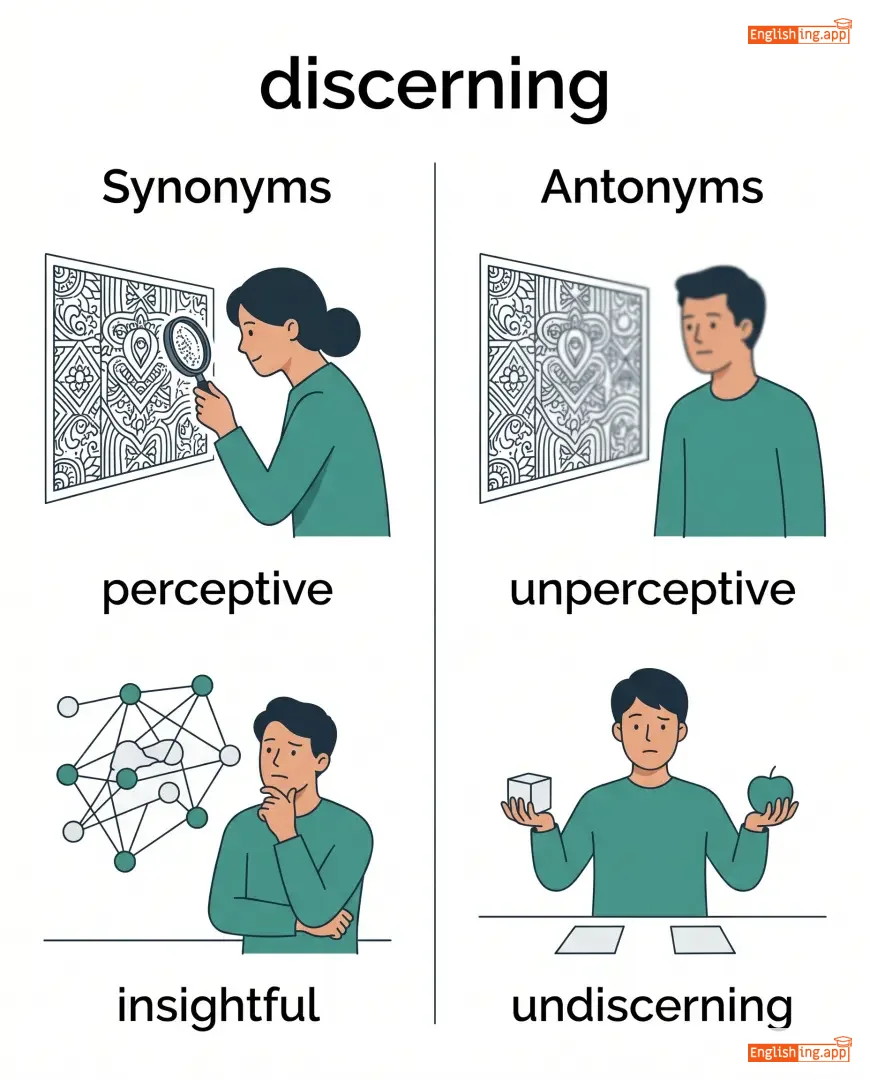
/dɪˈsɜːrnɪŋ/
adjective
(迪瑟宁)
••••••
|
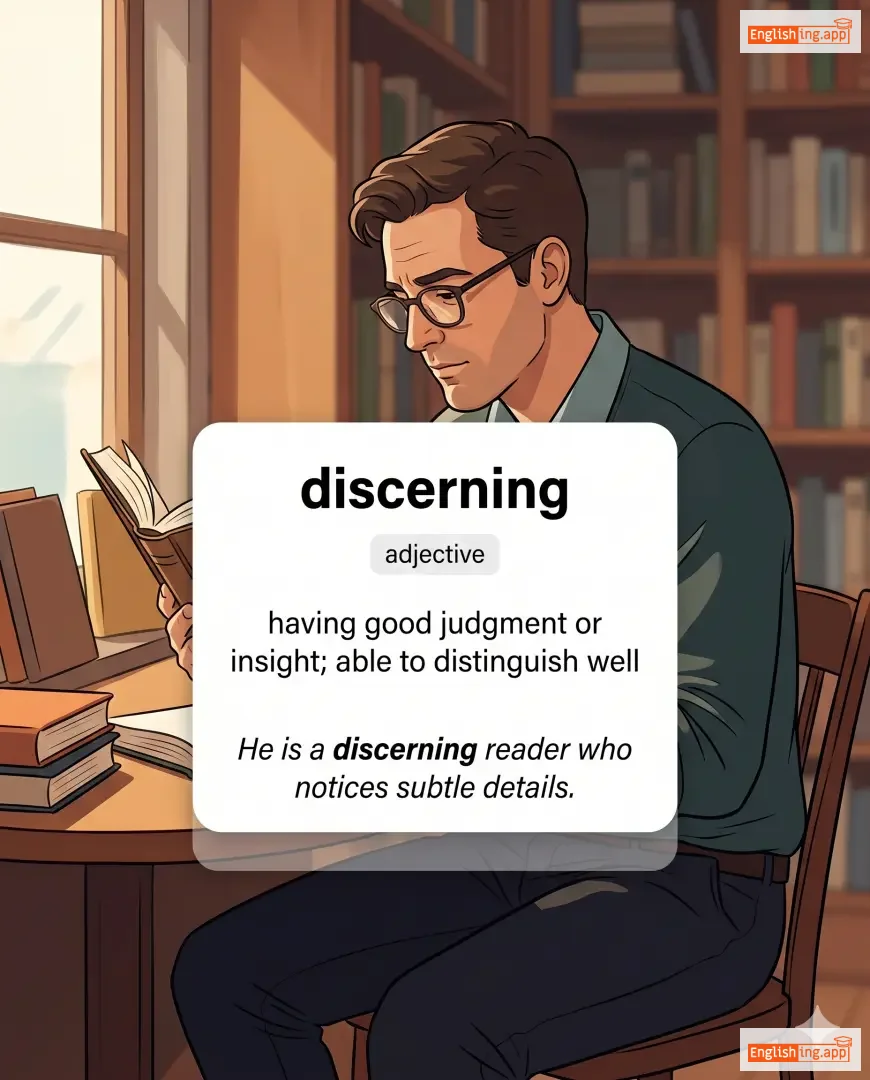

|
有洞察力的
you dongcha li de
••••••
|
- •••••• | - •••••• | - •••••• | - •••••• |
having good judgment or insight; able to distinguish well
••••••
|
He is a discerning reader who notices subtle details. |
他是一个有洞察力的读者,能注意到细微的细节。
ta shi yige you dongcha li de duzhe, neng zhuyi dao xiwei de xijie.
••••••
|
discerning taste |
ability to appreciate and judge good quality
••••••
|
有洞察力的品味
you dongcha li de pinwei
••••••
|
perceptive, insightful, judicious, astute
••••••
|
unperceptive, undiscerning
••••••
|
discerning reader, discerning customer, discerning eye, discerning taste
••••••
|
Discerning是指能迅速发现细节,就像一个敏锐的读者一样。
••••••
|
|
😓
••••••
|
/dɪsˈkʌmfɪt/
verb
(迪斯科姆菲特)
••••••
|

|
使不安
shǐ bù ān
••••••
|
discomfited
迪斯科姆菲特德
••••••
|
discomfited
迪斯科姆菲特德
••••••
|
discomfits
迪斯科姆菲特斯
••••••
|
discomfiting
迪斯科姆菲廷
••••••
|
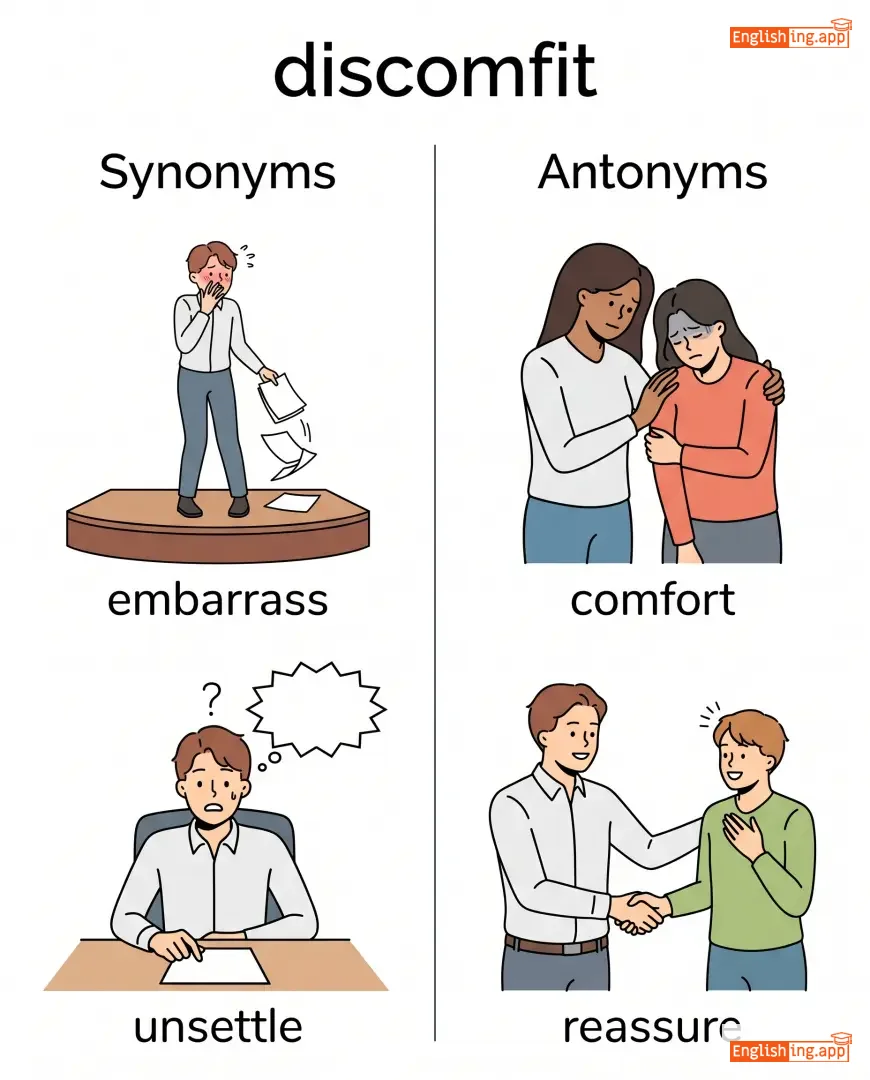
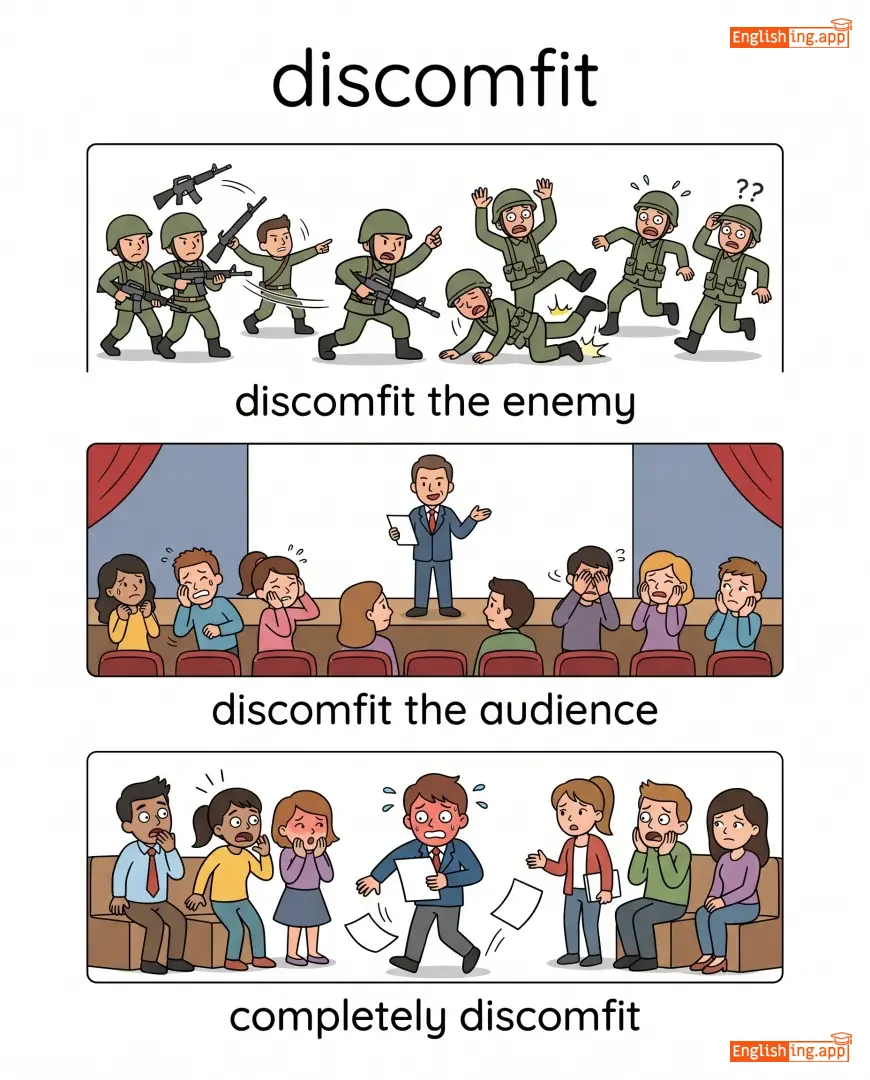
to make someone feel uneasy, embarrassed, or confused
••••••
|
The interviewer’s tough questions discomfited the candidate.
面试官的难题让候选人感到不安。
••••••
|
面试官的难题让候选人感到不安。
Miànshì guān de nán tí ràng hòuxuǎn rén gǎndào bù ān.
••••••
|
- •••••• | - •••••• | - •••••• |
embarrass, unsettle, discomfort, confuse, fluster
••••••
|
comfort, reassure, soothe
••••••
|
discomfit the enemy, discomfit the audience, completely discomfit
••••••
|
Comfort的反义词是discomfit = 不安的感觉 (bù ān)
••••••
|
|
🎶
••••••
|
/dɪsˈkɔːrdənt/
adjective
(dɪsˈkɔːrdənt)
••••••
|
|
不和谐
bù héxié
••••••
|
- •••••• | - •••••• | - •••••• | - •••••• |
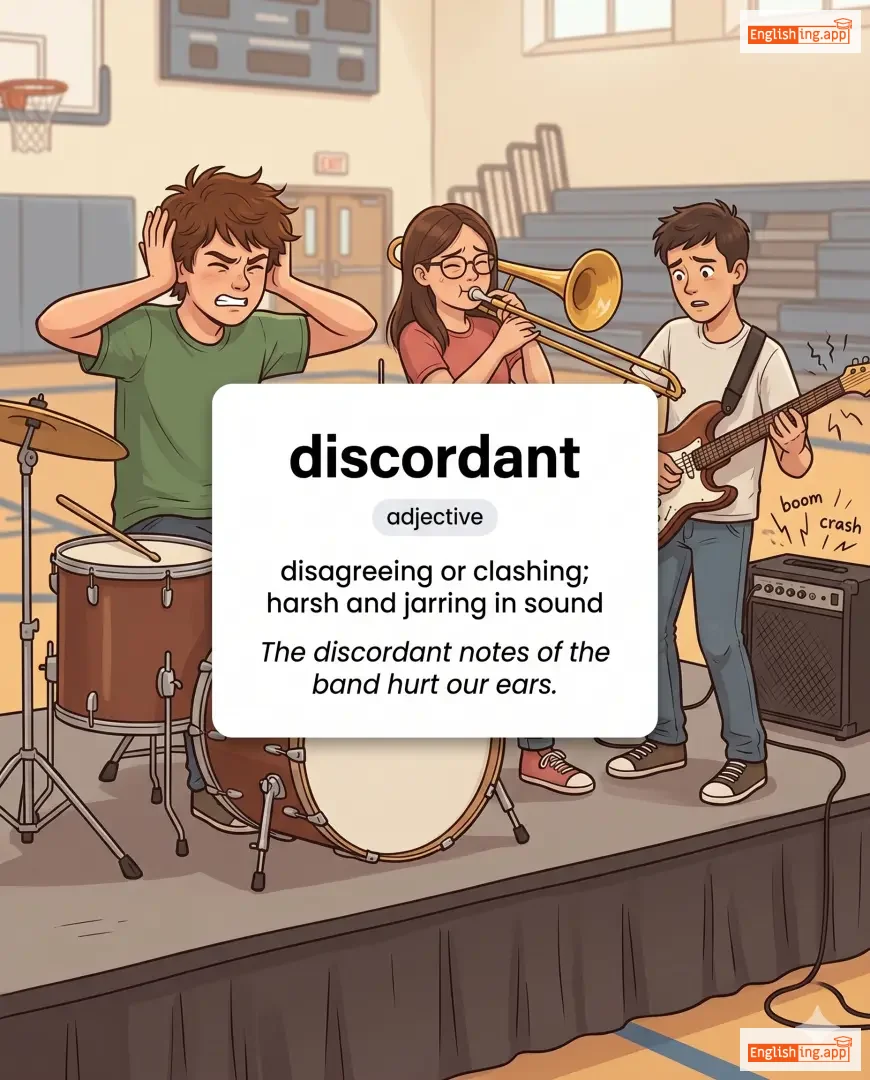
disagreeing or clashing; harsh and jarring in sound
••••••
|
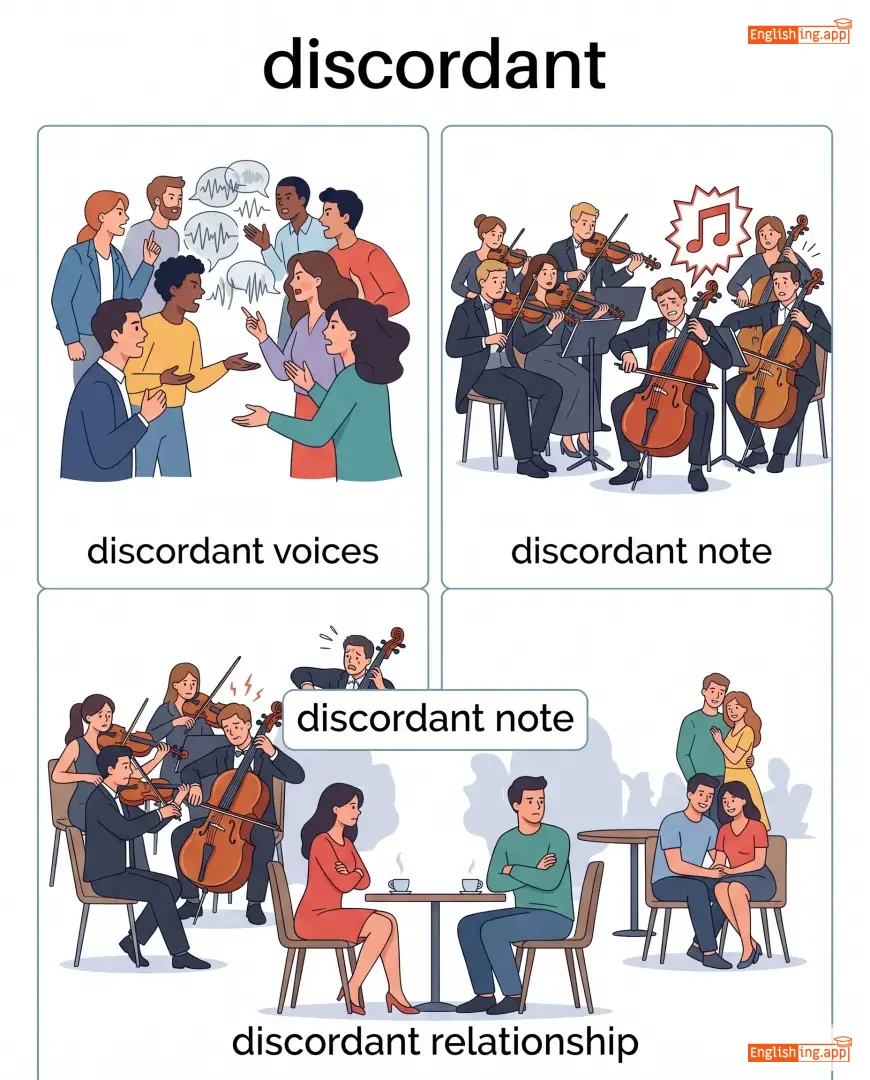
The discordant notes of the band hurt our ears. |
乐队的不和谐音符让我们的耳朵很痛。
Yuèduì de bù héxié yīnfú ràng wǒmen de ěrduo hěn tòng.
••••••
|
- •••••• | - •••••• | - •••••• |
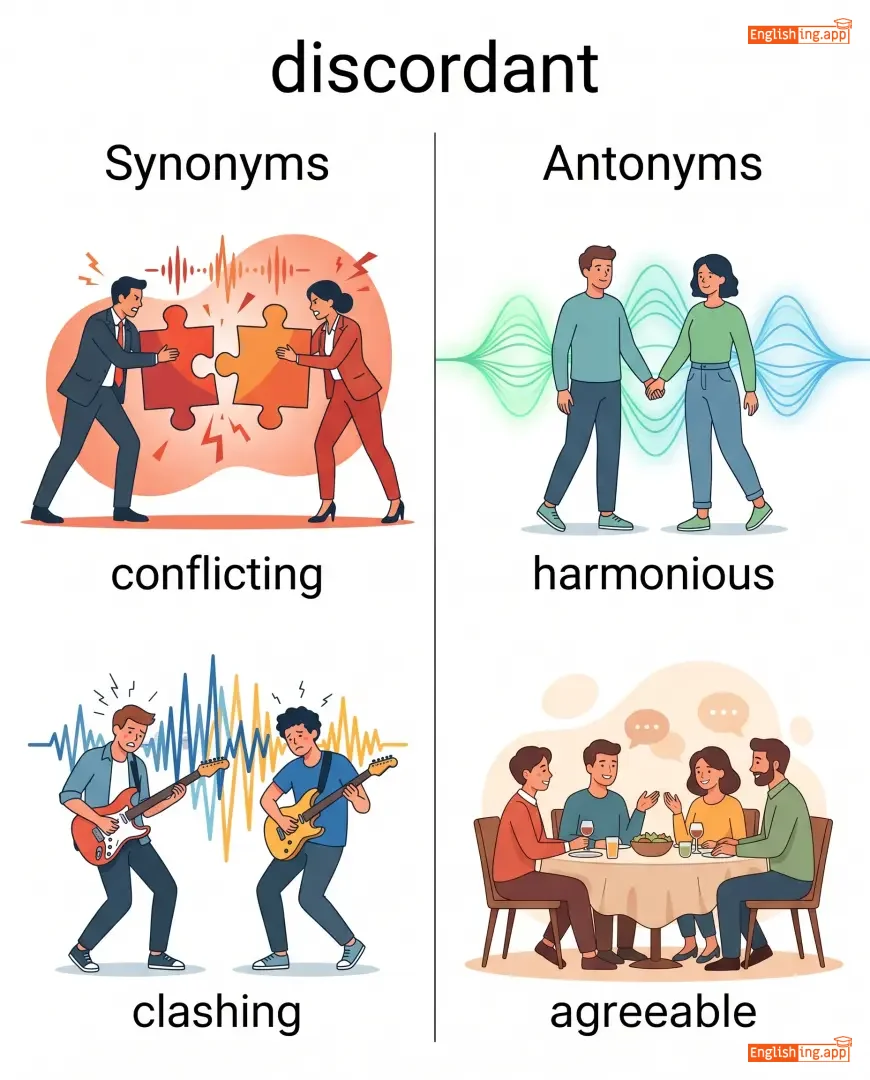
conflicting, clashing, jarring, dissonant
••••••
|
harmonious, agreeable
••••••
|
discordant voices, discordant note, discordant relationship
••••••
|
不和谐表示冲突,像刺耳的声音。
••••••
|
|
⚠️
••••••
|
/dɪsˈkrɛdɪt/
verb, noun
(迪斯克雷迪特)
••••••
|
|
诋毁
dǐ huǐ
••••••
|
discredited
迪斯克雷迪特过
••••••
|
discredited
迪斯克雷迪特过
••••••
|
discredits
迪斯克雷迪特
••••••
|
discrediting
迪斯克雷迪特中
••••••
|
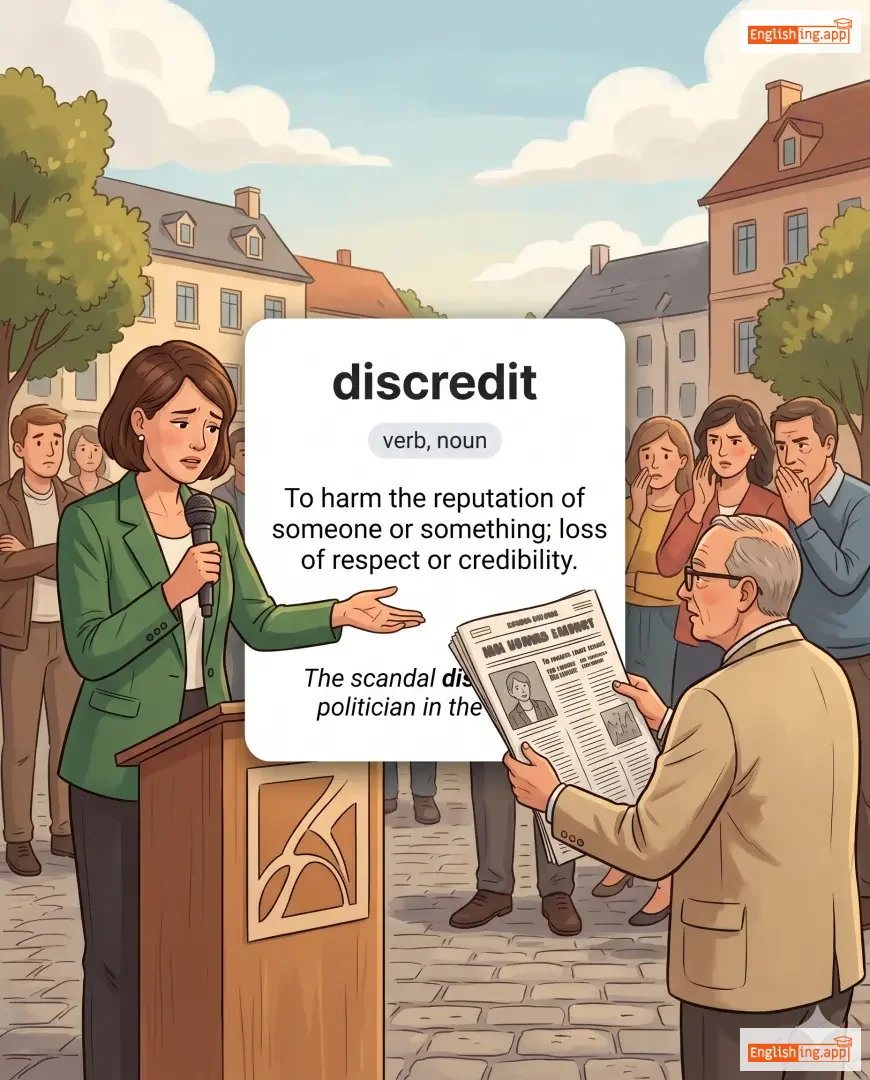
To harm the reputation of someone or something; loss of respect or credibility.
••••••
|
The scandal discredited the politician in the eyes of the public.
丑闻使这位政治家在公众眼中失去了信誉。
••••••
|
丑闻使这位政治家在公众眼中失去了信誉。
Chǒuwén shǐ zhè wèi zhèngzhìjiā zài gōngzhòng yǎnzhōng shīqùle xìnyù.
••••••
|
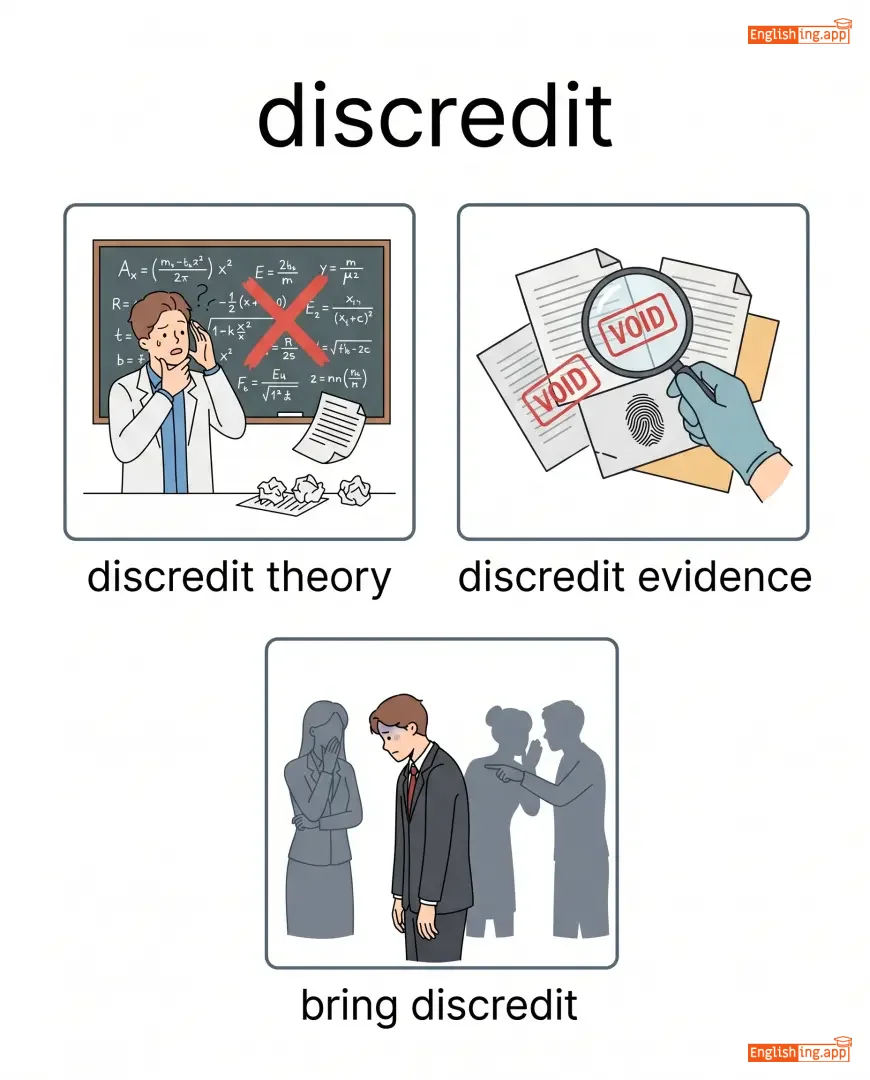
bring into discredit
使名誉受损
••••••
|
Cause someone or something to lose reputation or credibility.
••••••
|
使名誉受损
shǐ míngyù shòu sǔn
••••••
|
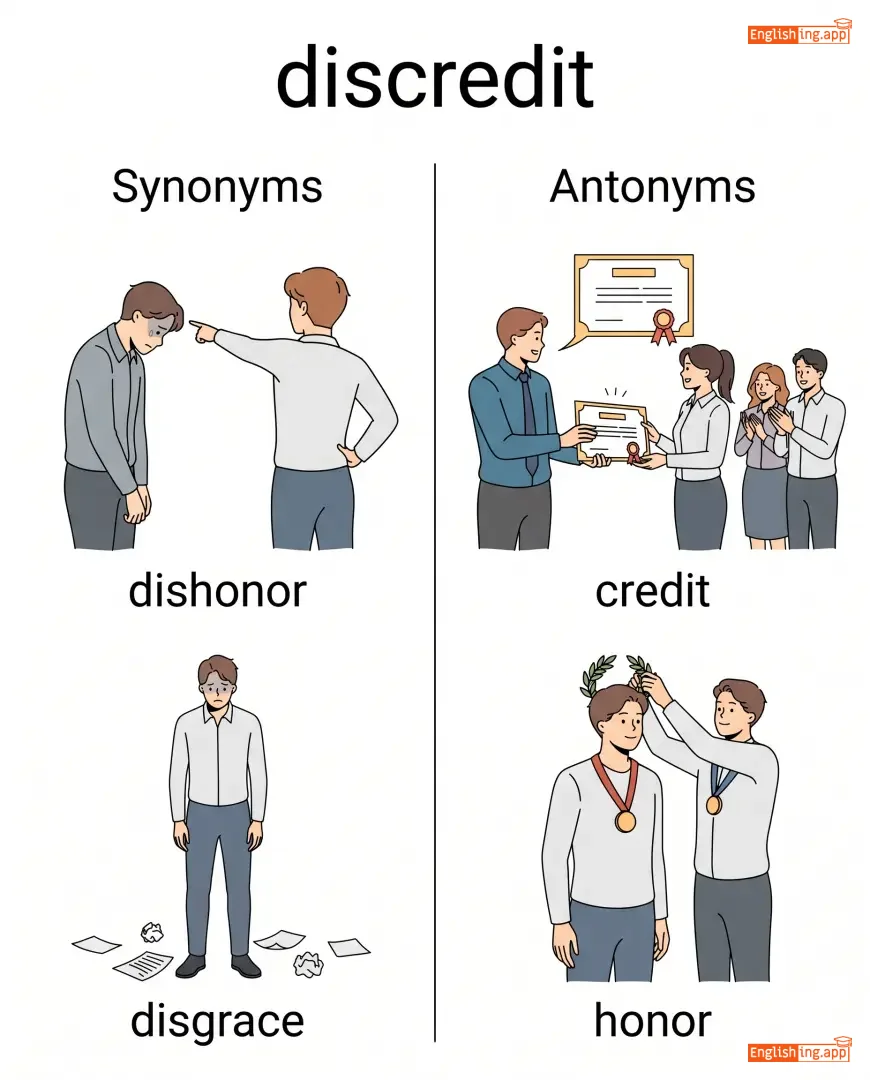
dishonor, disgrace, defame, undermine, disrepute
••••••
|
credit, honor, respect
••••••
|
discredit theory, discredit evidence, bring discredit, discredit witness
••••••
|
Discredit = 'dis' (不好的) + '信用' (声誉)
••••••
|
|
⚖️
••••••
|
/dɪˈskrɛpənsi/
noun
••••••
|
|
- •••••• | - •••••• | - •••••• | - •••••• | - •••••• |
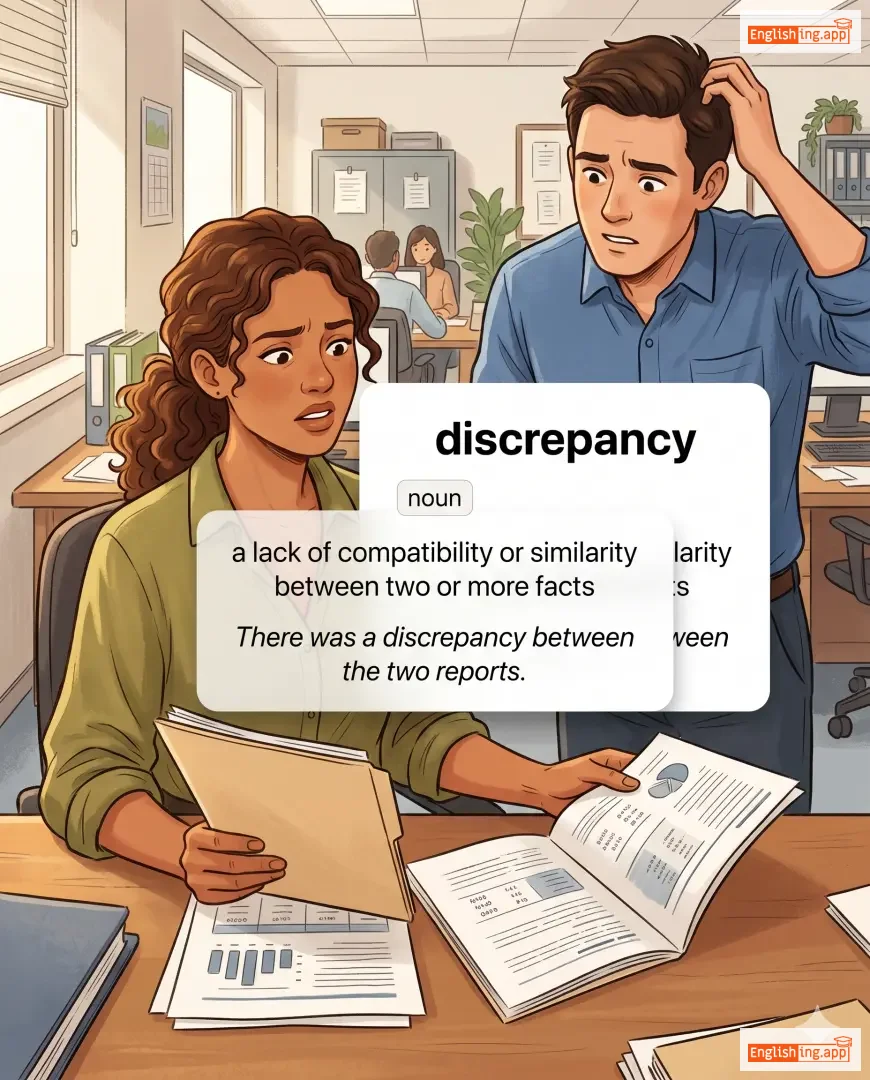
a lack of compatibility or similarity between two or more facts
••••••
|
There was a discrepancy between the two reports. |
- •••••• |
discrepancy in accounts |
a mismatch or inconsistency in financial records
••••••
|
- •••••• |
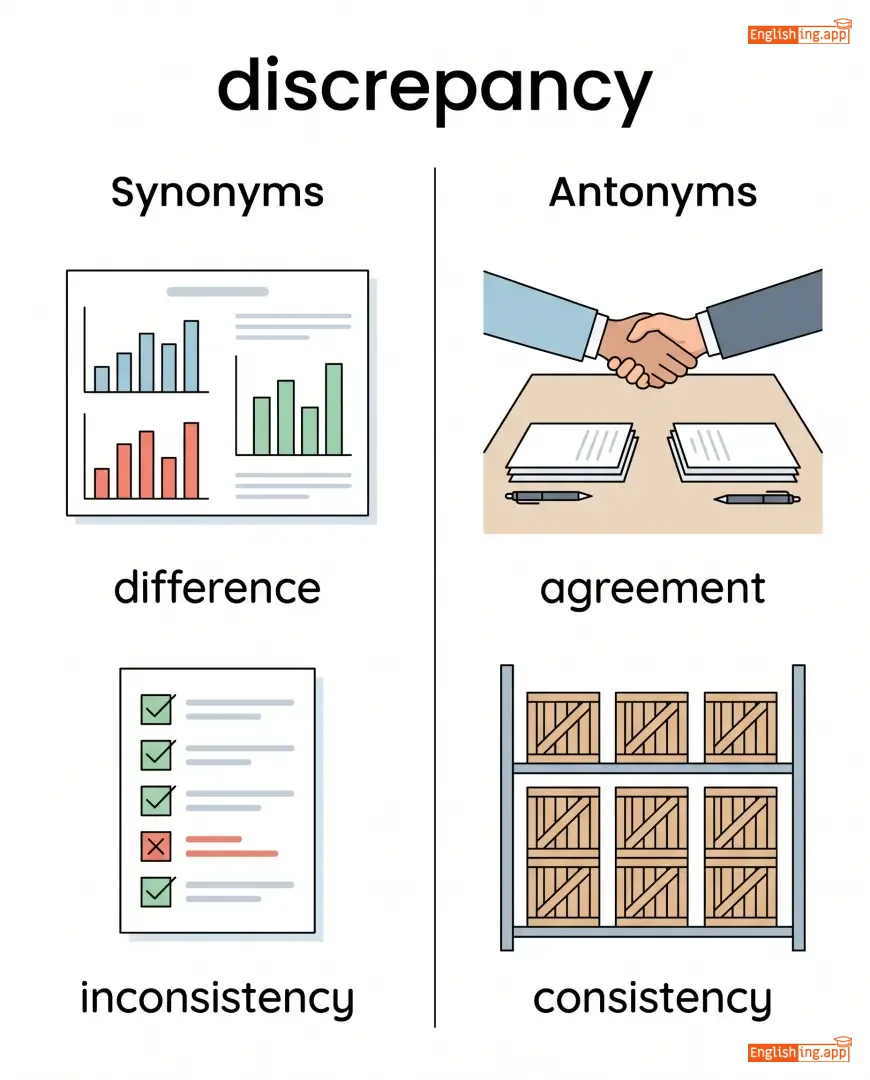
difference, inconsistency, variation, divergence, conflict
••••••
|
agreement, consistency, harmony
••••••
|
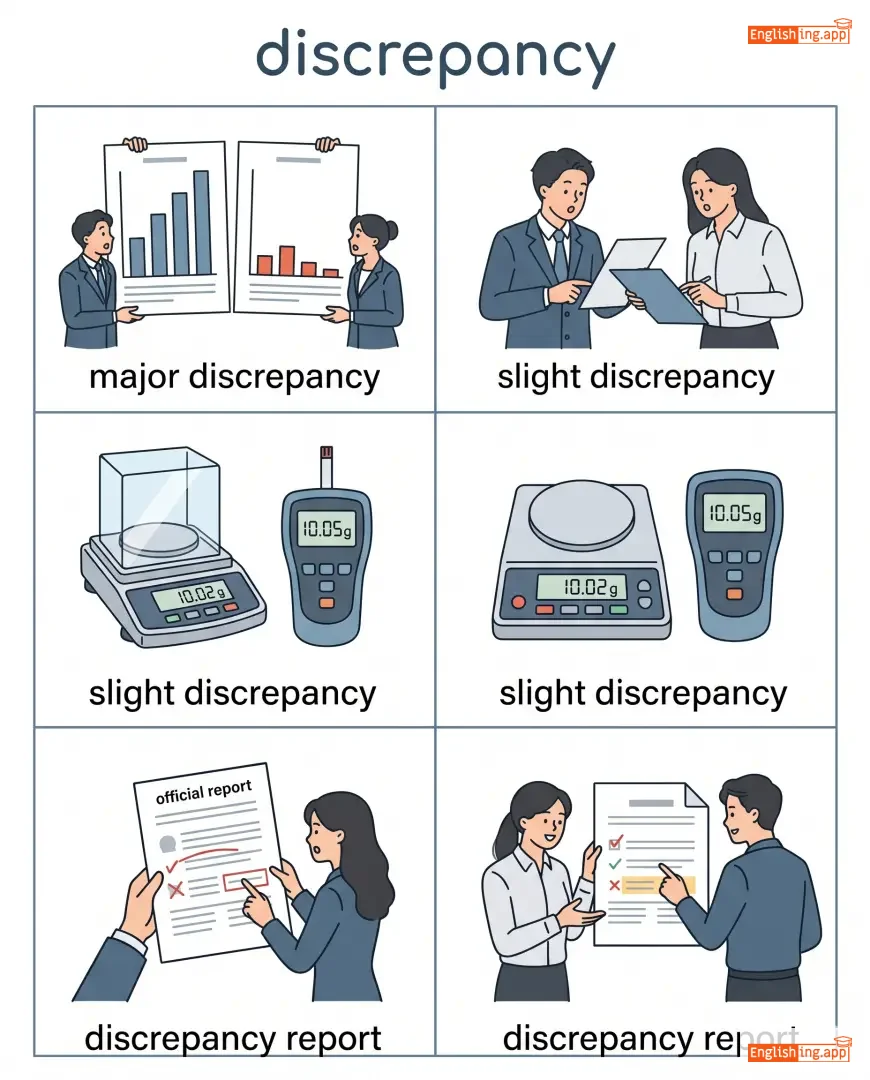
major discrepancy, slight discrepancy, discrepancy report, discrepancy in data
••••••
|
No •••••• |
|
🔹
••••••
|
/dɪˈskriːt/
adjective
(dīsīkè)
••••••
|

|
离散的
lísàn de
••••••
|
- •••••• | - •••••• | - •••••• | - •••••• |
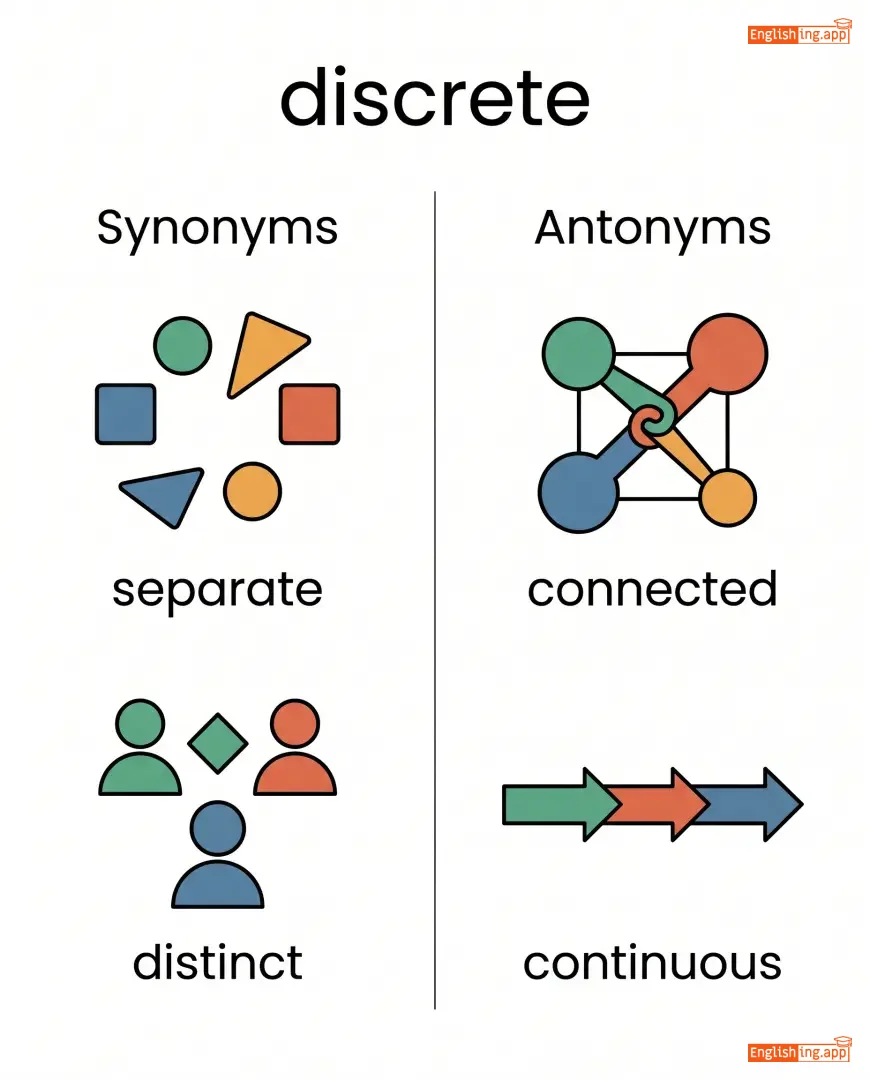
individually separate and distinct
••••••
|
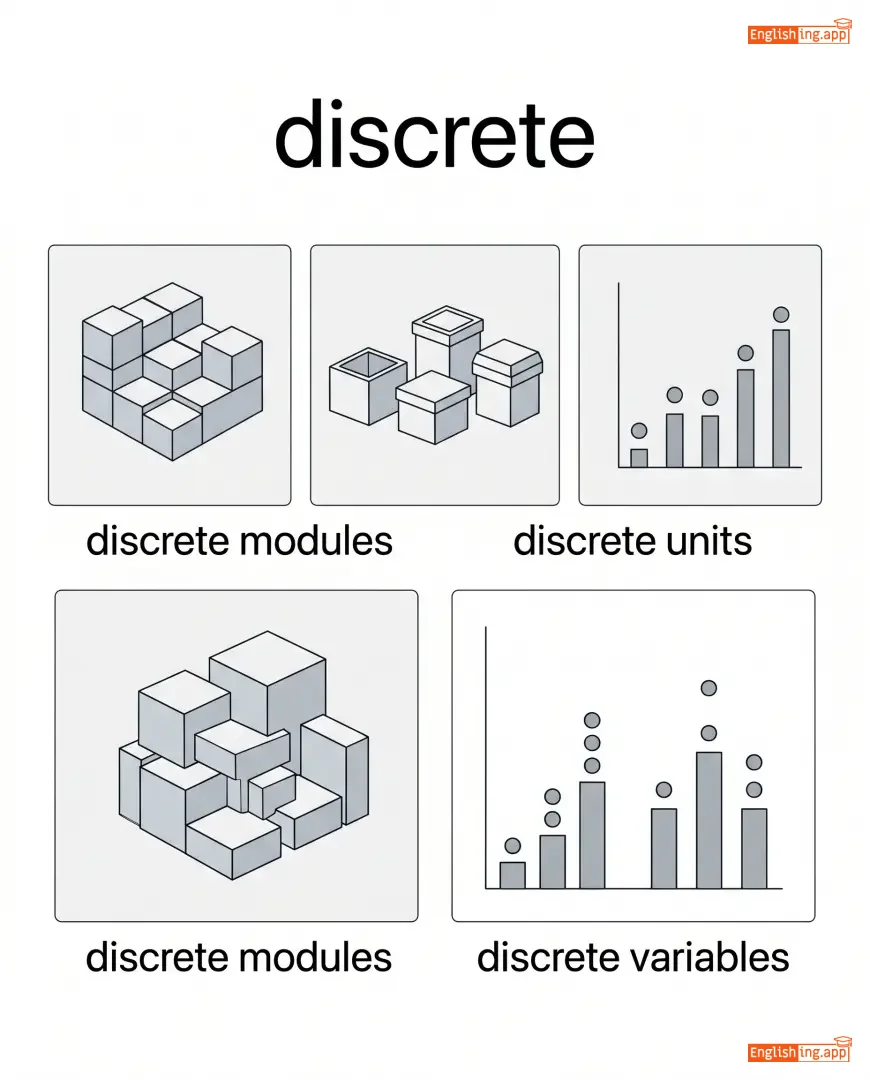
The course is divided into three discrete modules. |
该课程被划分为三个离散模块。
Gāi kèchéng bèi huàfēn wéi sān gè lísàn mókuài.
••••••
|
discrete units |
separate and distinct parts or items
••••••
|
离散单元
lísàn dānyuán
••••••
|
separate, distinct, individual, independent
••••••
|
connected, continuous, combined
••••••
|
discrete modules, discrete units, discrete variables
••••••
|
Discrete 就像离散一样,表示分离的部分。
••••••
|
|
⚖️
••••••
|
/dɪˈskrɛʃən/
noun
(迪斯克雷申)
••••••
|

|
谨慎
jinshen
••••••
|
- •••••• | - •••••• | - •••••• | - •••••• |
the quality of behaving or speaking in a way to avoid causing offense or revealing private information; the freedom to decide what should be done in a particular situation
••••••
|
The manager acted with discretion in handling the sensitive matter. |
经理在处理敏感问题时采取了谨慎的行动。
Jīnglǐ zài chǔlǐ mǐngǎn wèntí shí cǎiqǔle jǐnshèn de xíngdòng.
••••••
|
at one's discretion |
according to one's own judgment or decision
••••••
|
按照自己的判断
ànzhào zìjǐ de pànduàn
••••••
|
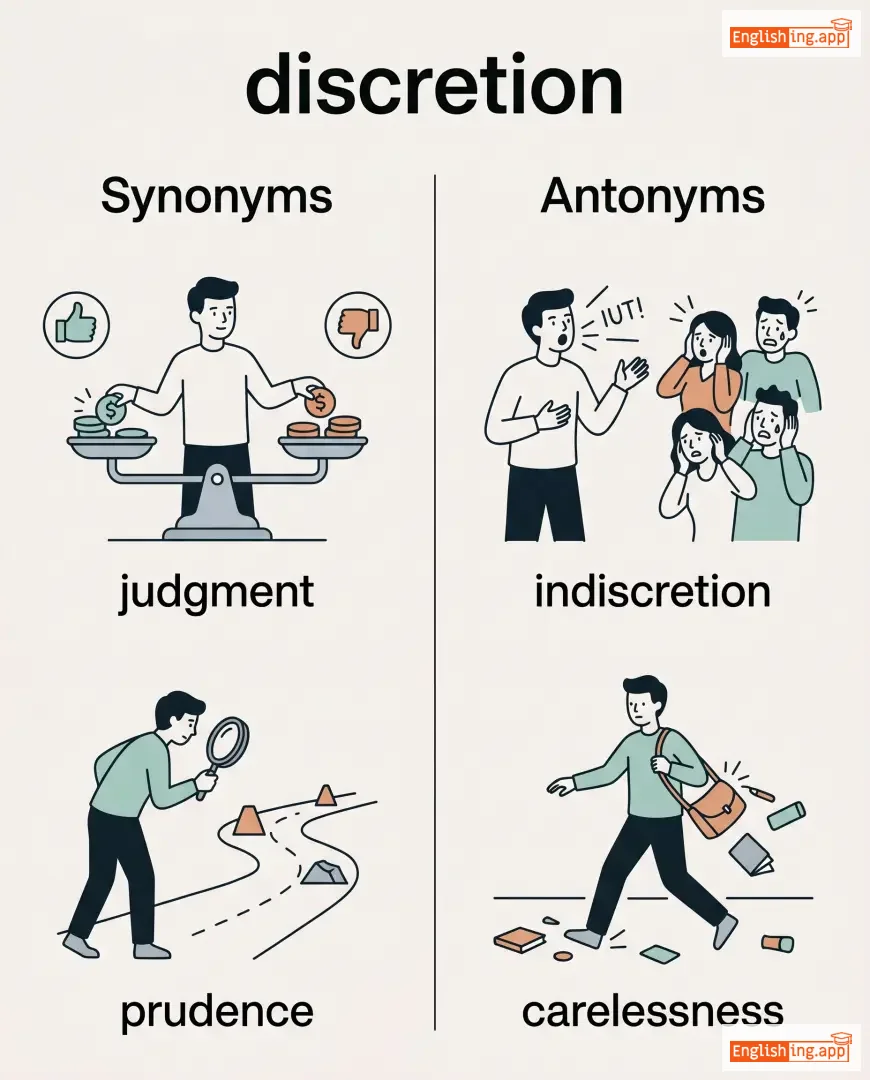
judgment, prudence, caution, choice, option
••••••
|
indiscretion, carelessness, compulsion
••••••
|
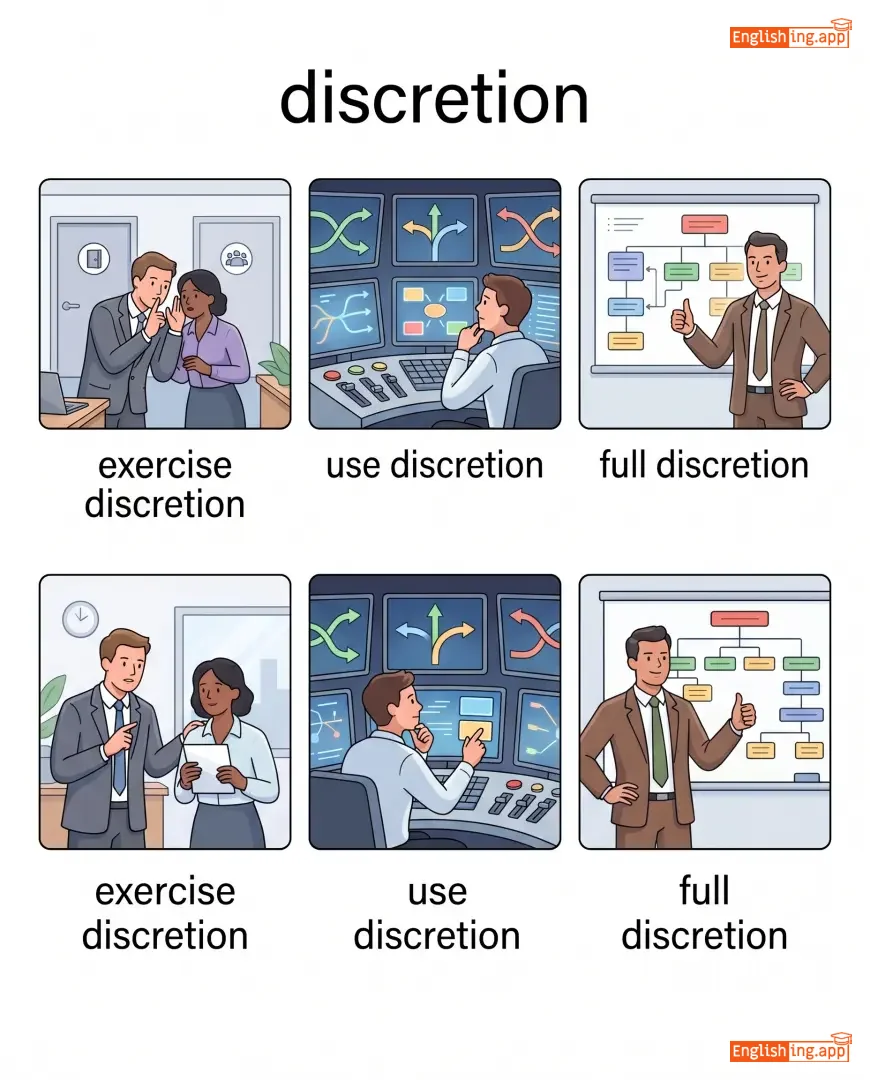
exercise discretion, use discretion, full discretion, sole discretion
••••••
|
Discretion是Decision的选择与谨慎。
••••••
|
|
😏
••••••
|
/ˌdɪsɪnˈdʒɛnjʊəs/
adjective
(dɪsɪnˈdʒɛnjʊəs)
••••••
|
|
虚伪的
xū wèi de
••••••
|
- •••••• | - •••••• | - •••••• | - •••••• |
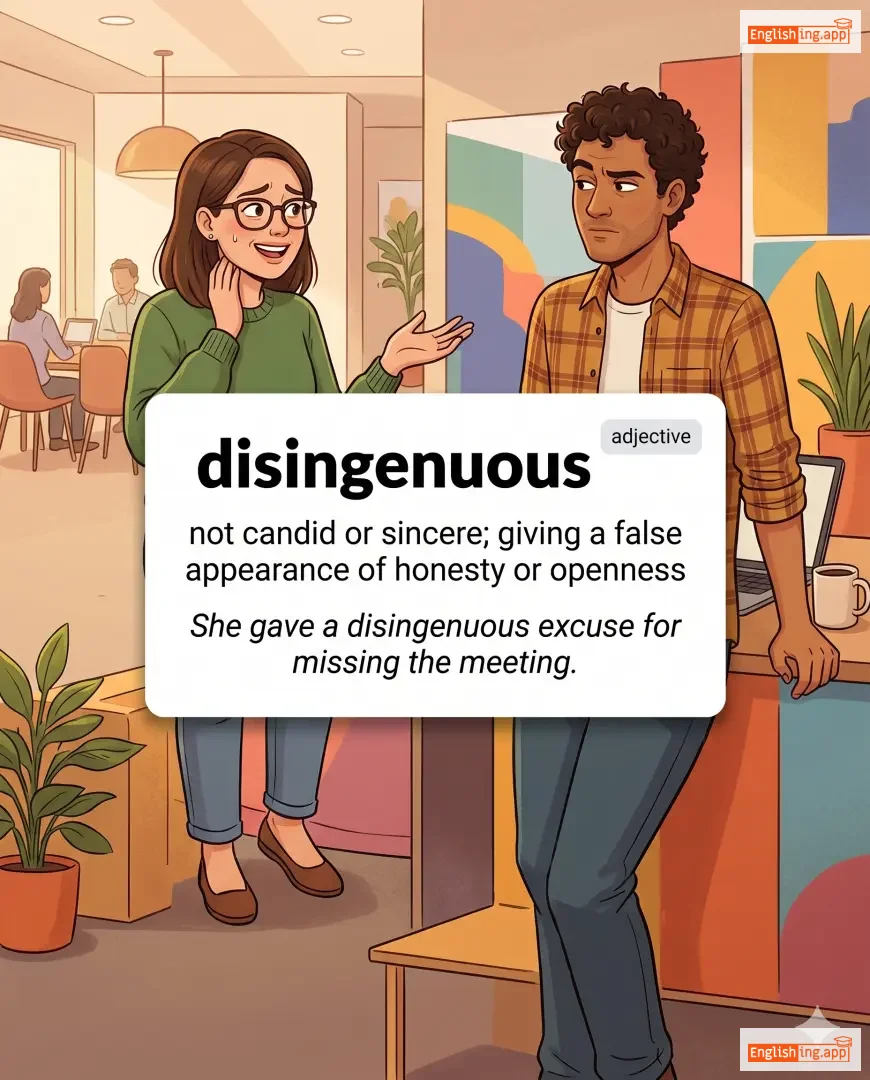
not candid or sincere; giving a false appearance of honesty or openness
••••••
|
She gave a disingenuous excuse for missing the meeting. |
她给出了一个虚伪的借口来错过会议。
Tā gěi chūle yīgè xūwèi de jièkǒu lái cuòguò huìyì.
••••••
|
- •••••• | - •••••• | - •••••• |
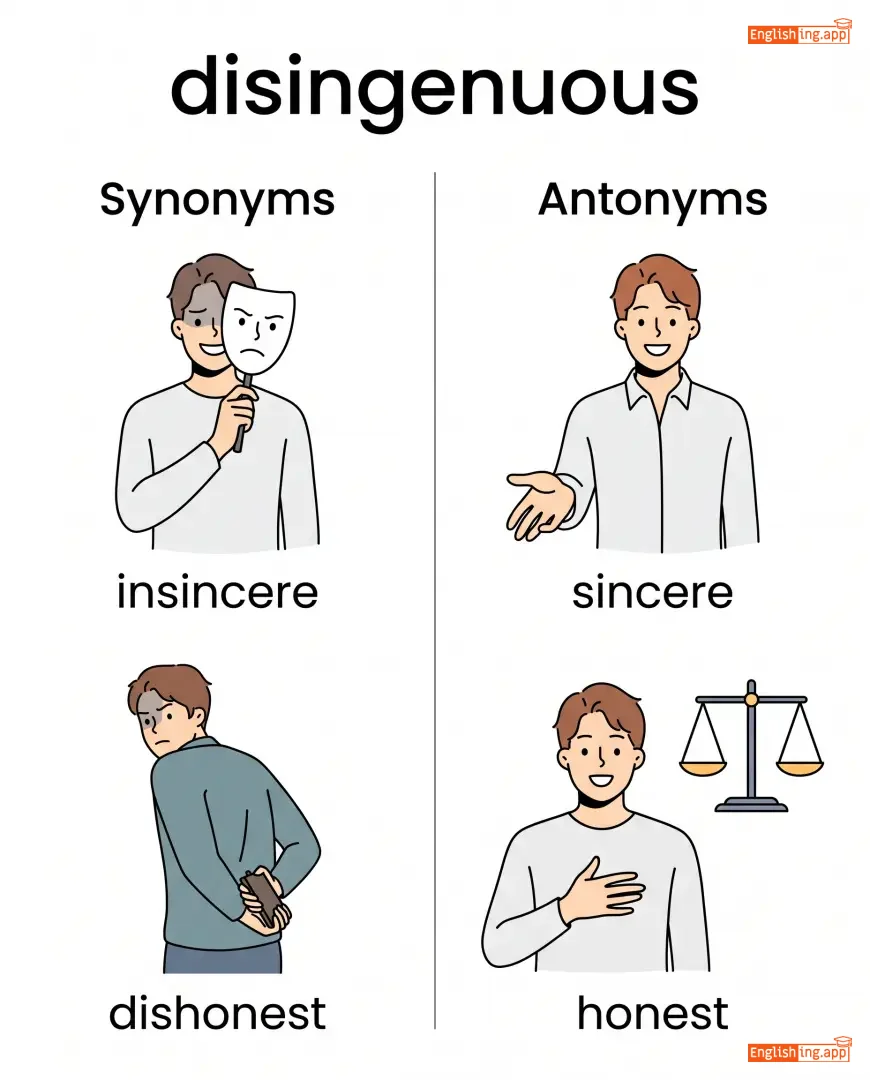
insincere, dishonest, deceitful, hypocritical, duplicitous
••••••
|
sincere, honest, genuine
••••••
|
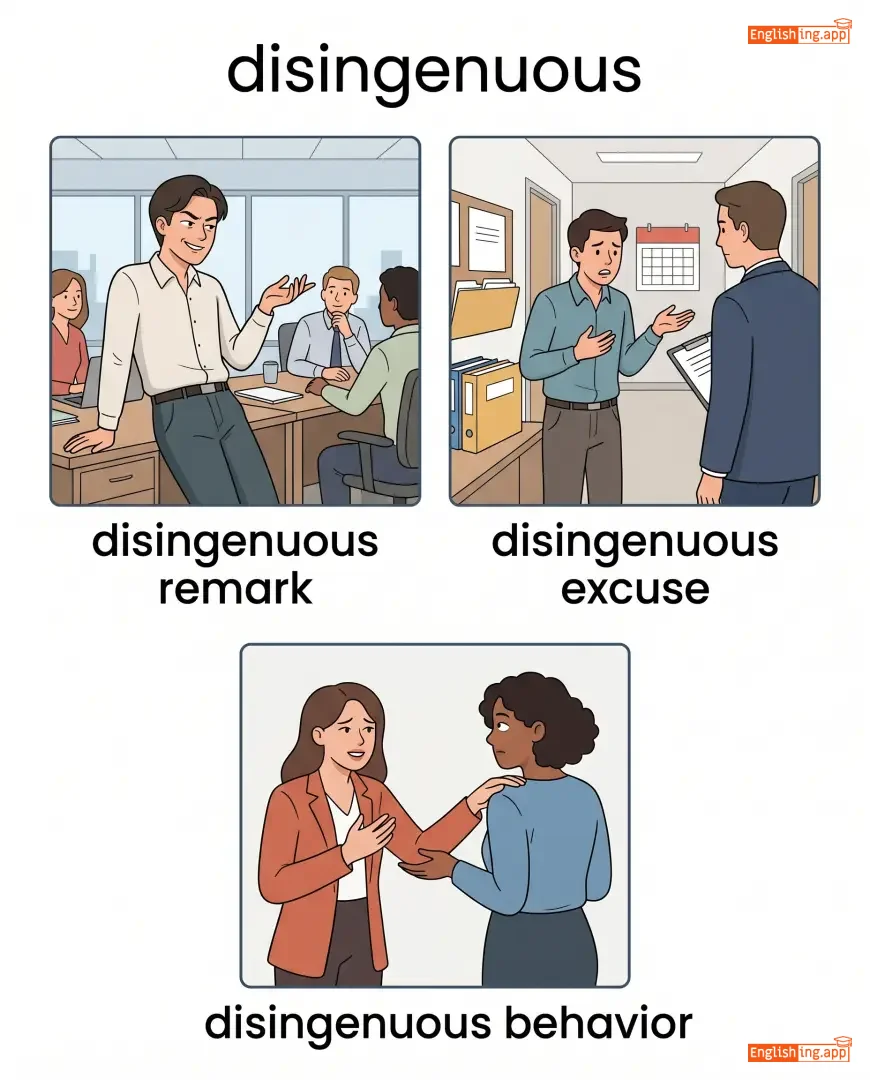
disingenuous remark, disingenuous excuse, disingenuous behavior
••••••
|
Dis + genuine 不是诚实的意思 disingenuous = 虚伪的
••••••
|
|
⚖️
••••••
|
/dɪsˈɪntrəstɪd/
adjective
(迪辛特雷斯特德)
••••••
|
|
无私
wusi
••••••
|
- •••••• | - •••••• | - •••••• | - •••••• |
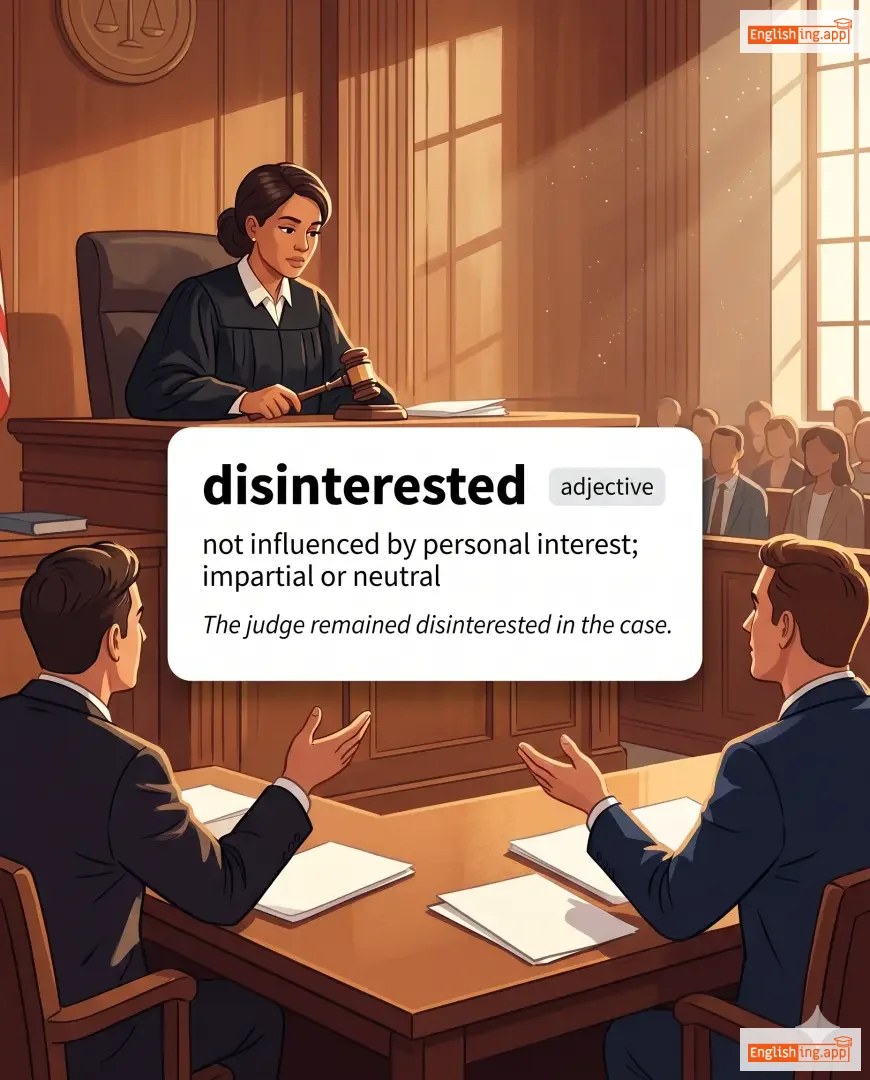
not influenced by personal interest; impartial or neutral
••••••
|
The judge remained disinterested in the case. |
法官在案件中保持无私。
Faguang zai anjian zhong baochi wusi.
••••••
|
- •••••• | - •••••• | - •••••• |
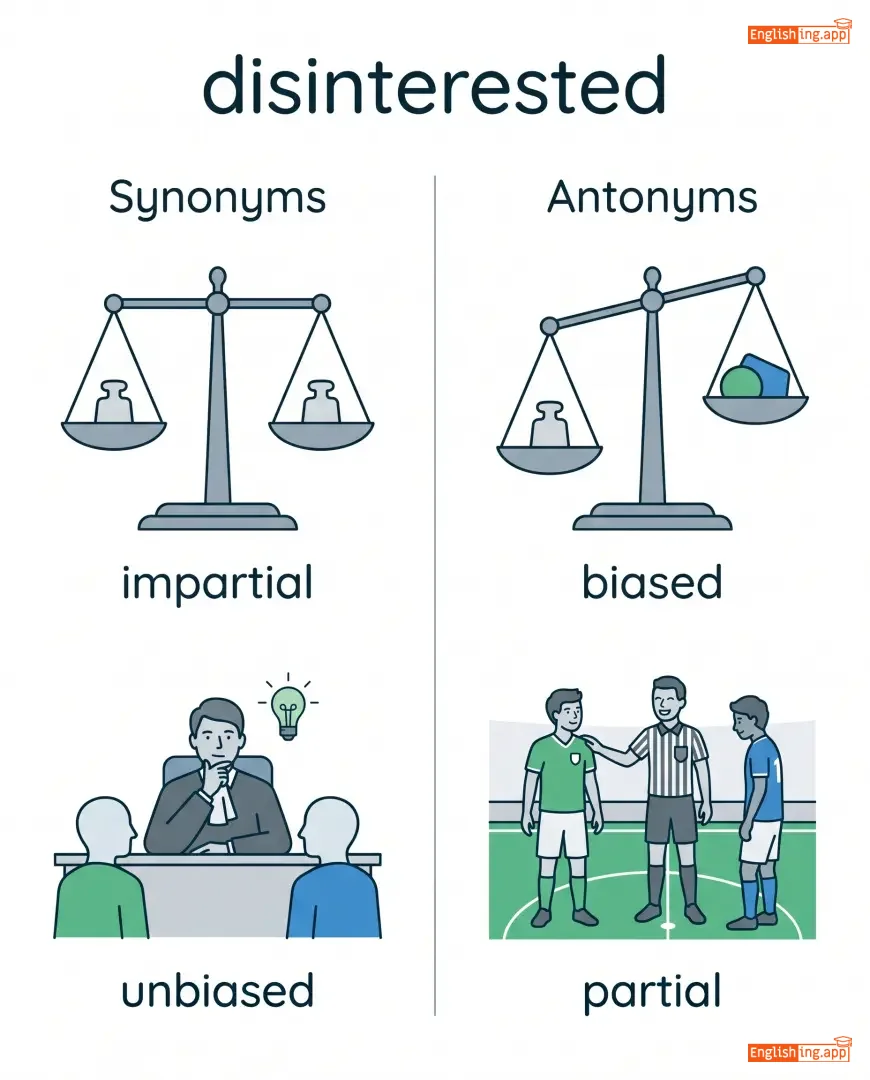
impartial, unbiased, objective, neutral
••••••
|
biased, partial, interested
••••••
|
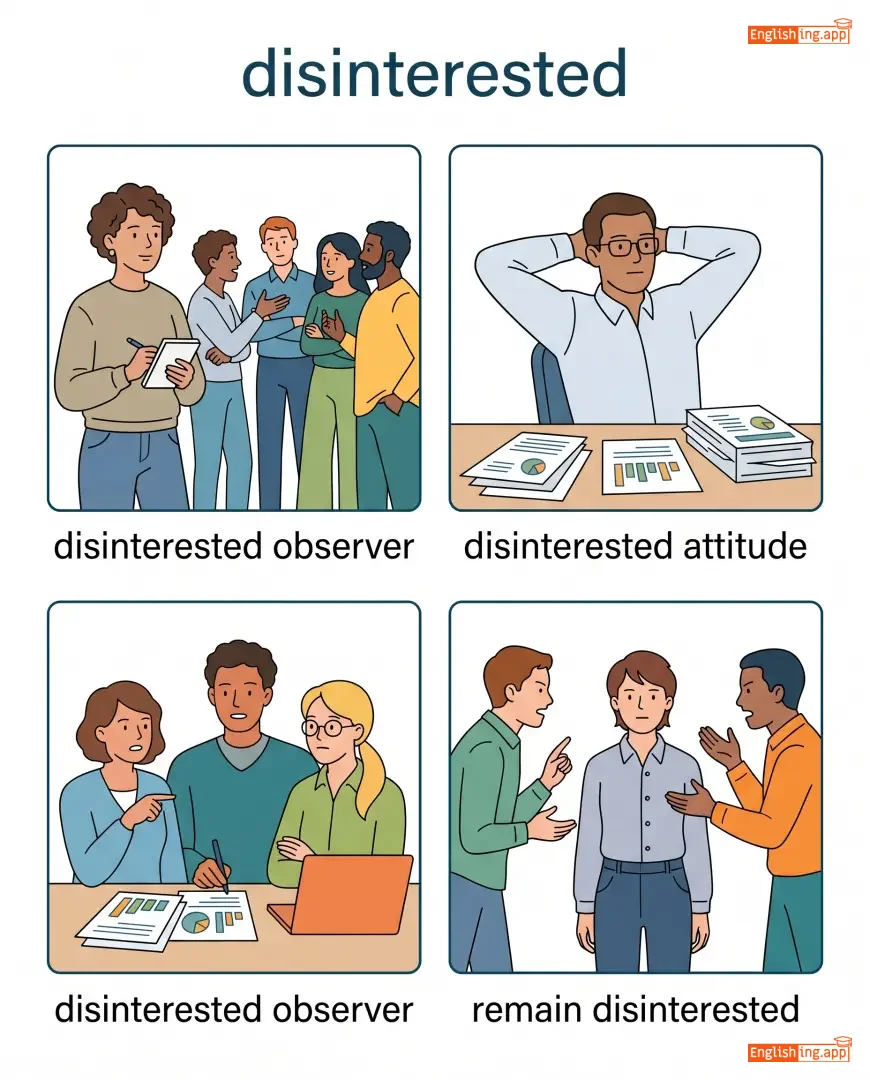
disinterested observer, disinterested attitude, remain disinterested
••••••
|
无私 = 不偏不倚,disinterested = 无私
••••••
|
|
🌀
••••••
|
/dɪsˈdʒɔɪntɪd/
adjective
(dɪsˈdʒɔɪntɪd)
••••••
|
|
支离破碎
zhī lí pò suì
••••••
|
- •••••• | - •••••• | - •••••• | - •••••• |
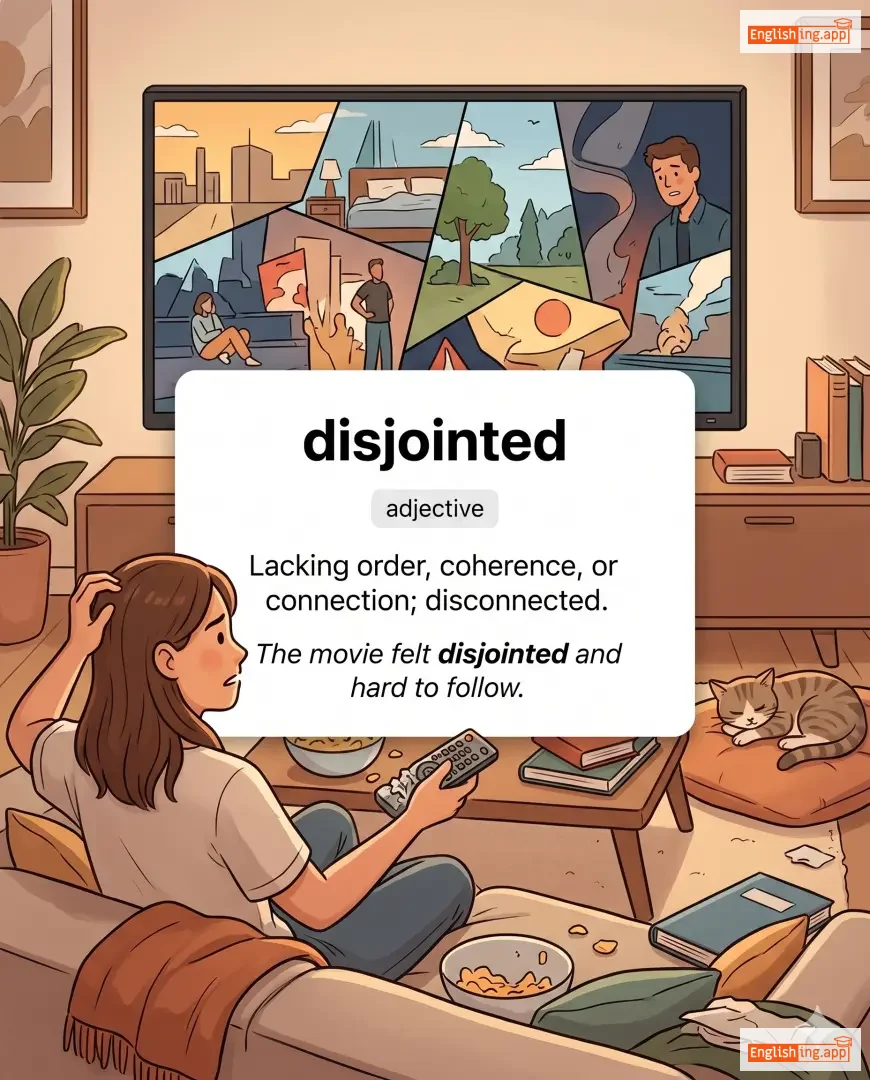
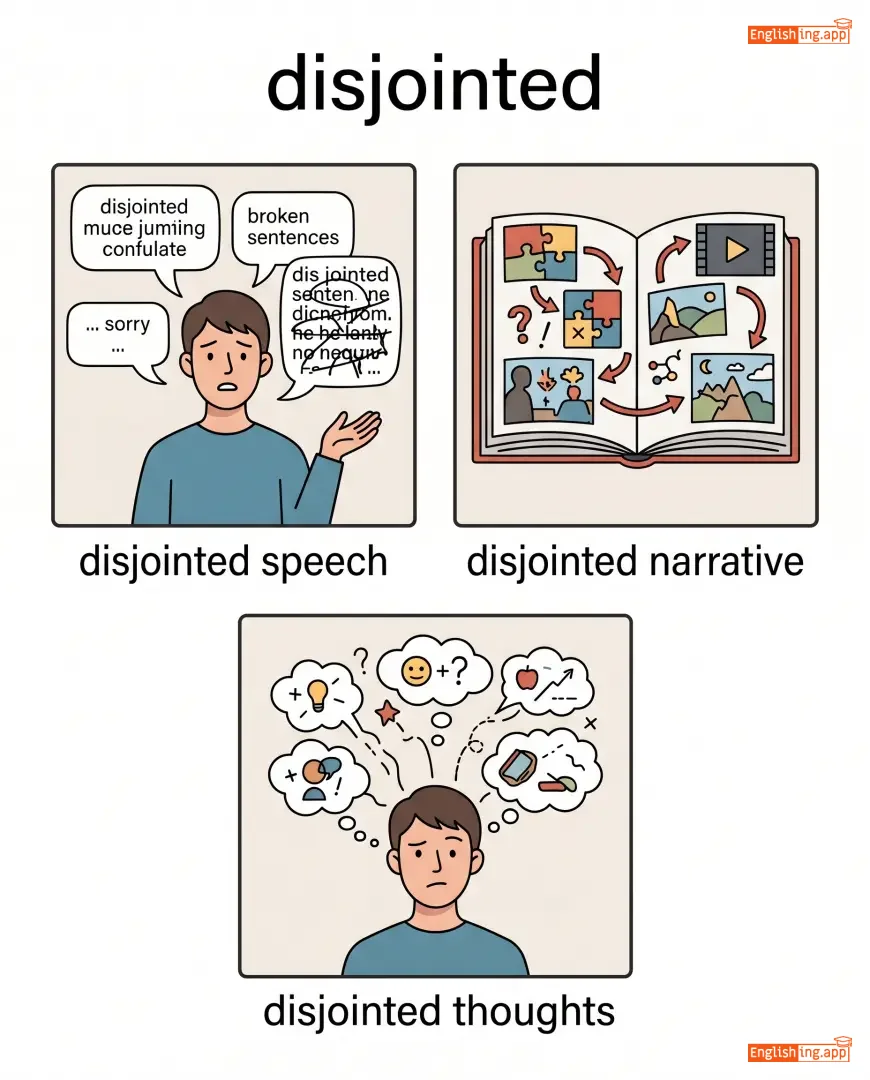
Lacking order, coherence, or connection; disconnected.
••••••
|
The movie felt disjointed and hard to follow. |
这部电影感觉支离破碎,很难跟上。
Zhè bù diànyǐng gǎnjué zhī lí pò suì, hěn nán gēn shàng.
••••••
|
- •••••• | - •••••• | - •••••• |
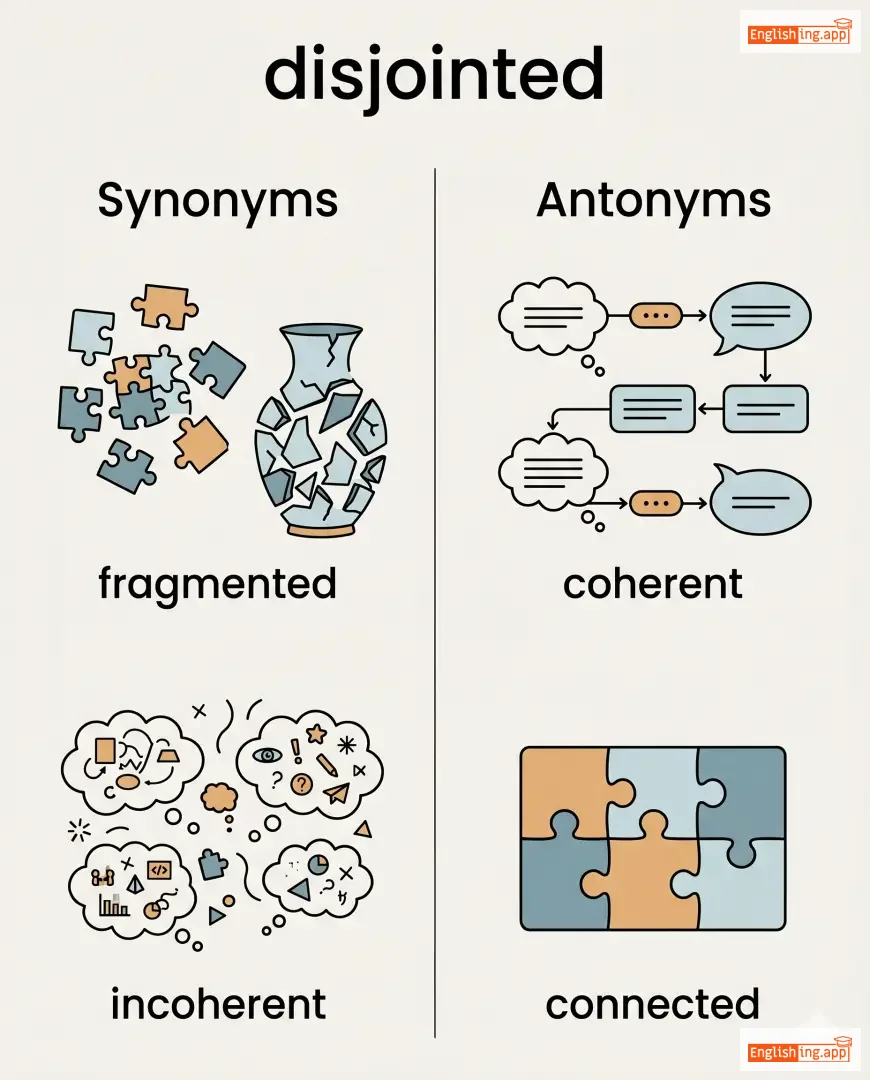
fragmented, incoherent, disconnected, jumbled, chaotic
••••••
|
coherent, connected, organized
••••••
|
disjointed speech, disjointed narrative, disjointed thoughts
••••••
|
Disjointed 就像一片破碎的拼图,无法拼合。
••••••
|
|
🚪
••••••
|
/dɪsˈmɪs/
verb
(迪斯米斯)
••••••
|
|
解雇, 否定
jiěgù, fǒudìng
••••••
|
dismissed
迪斯米斯德
••••••
|
dismissed
迪斯米斯德
••••••
|
dismisses
迪斯米塞斯
••••••
|
dismissing
迪斯米辛
••••••
|
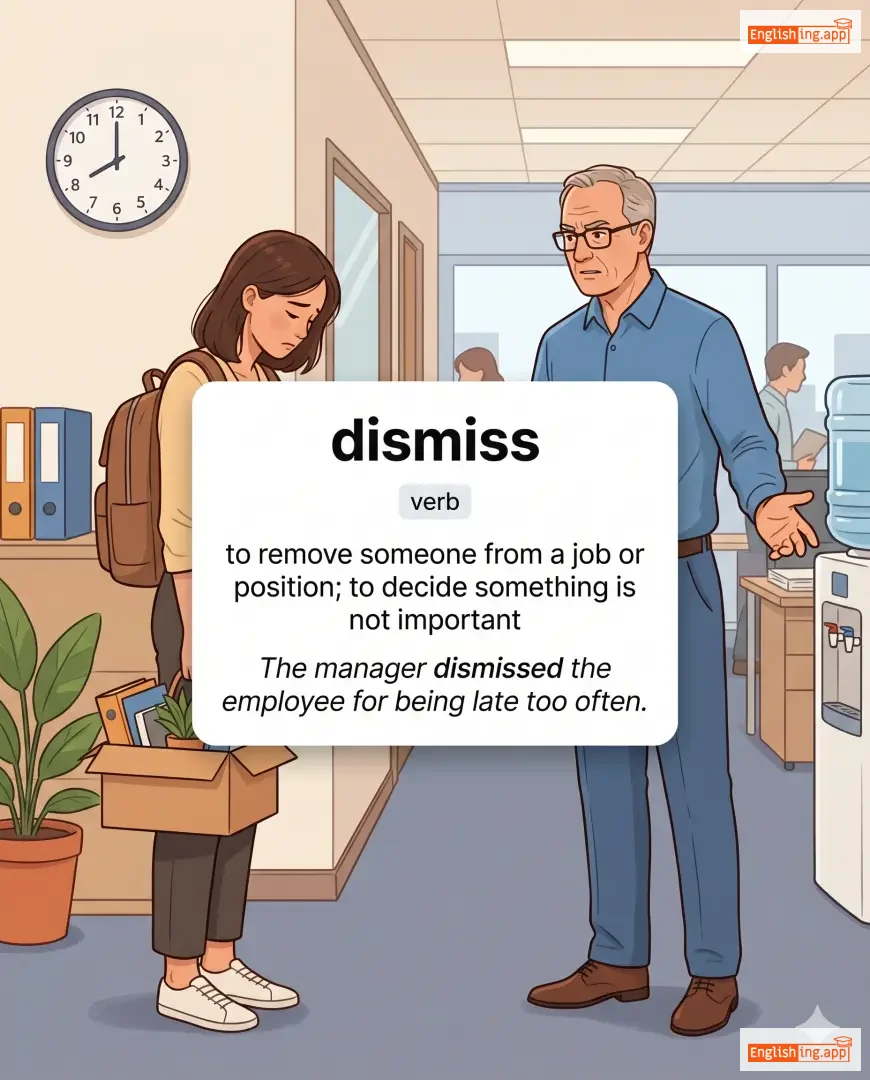
to remove someone from a job or position; to decide something is not important
••••••
|
The manager dismissed the employee for being late too often.
经理因为员工经常迟到而解雇了他。
••••••
|
经理因为员工经常迟到而解雇了他。
Jīnglǐ yīnwèi yuángōng jīngcháng chídào ér jiěgùle tā.
••••••
|
dismiss out of hand
立刻否定
••••••
|
to reject something immediately without considering it
••••••
|
立刻否定
lìkè fǒudìng
••••••
|
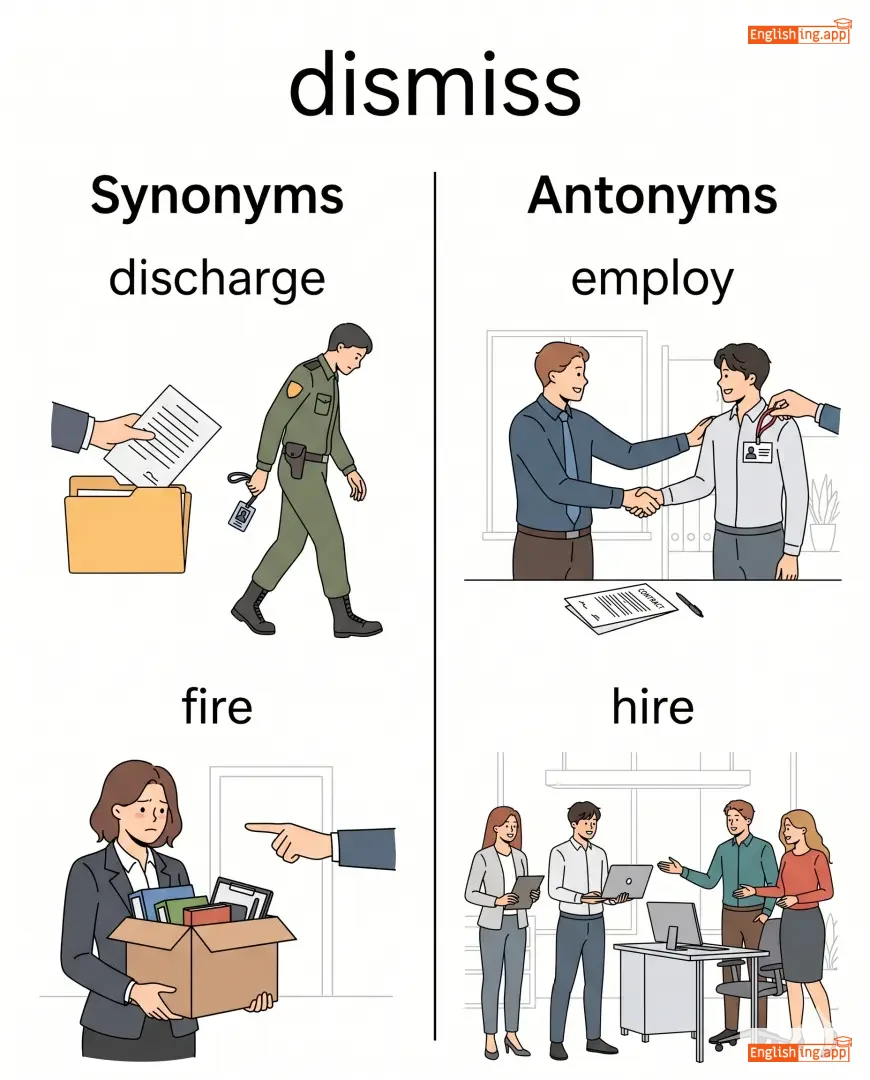
discharge, fire, release, reject, expel
••••••
|
employ, hire, accept
••••••
|
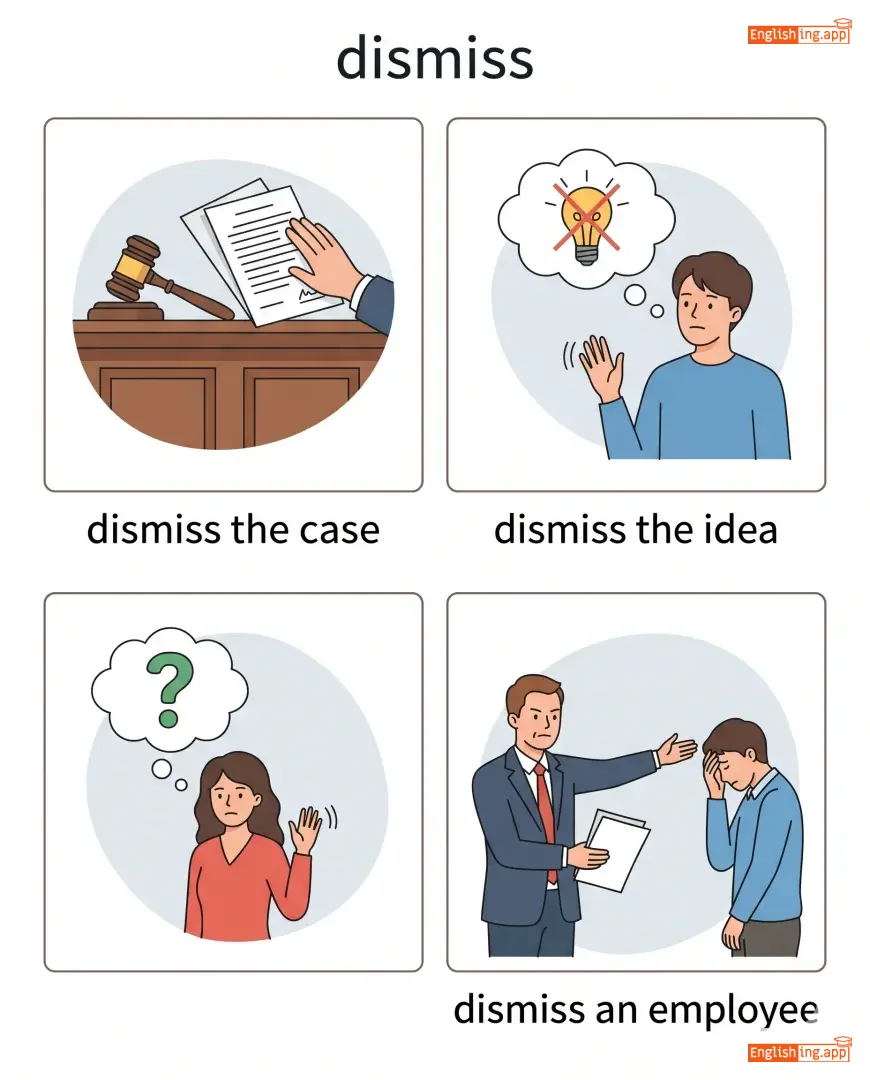
dismiss the case, dismiss the idea, dismiss an employee, dismiss charges
••••••
|
Dis + Miss = 被解雇
••••••
|

