The Role of Inflation in Economies
Inflation - это важный экономический показатель, который связан с ценами на рынке и денежным предложением. Когда инфляция становится чрезмерной, exorbitant рост цен снижает покупательную способность людей, влияя на discretionary расходы.
Иногда это вызывает contraction, а иногда приводит к proliferation. Inflation обычно вызвана speculation и увеличением рыночной volatility. Ее негативные последствия проявляются в sovereign долговых обязательствах и fiscal политике страны.
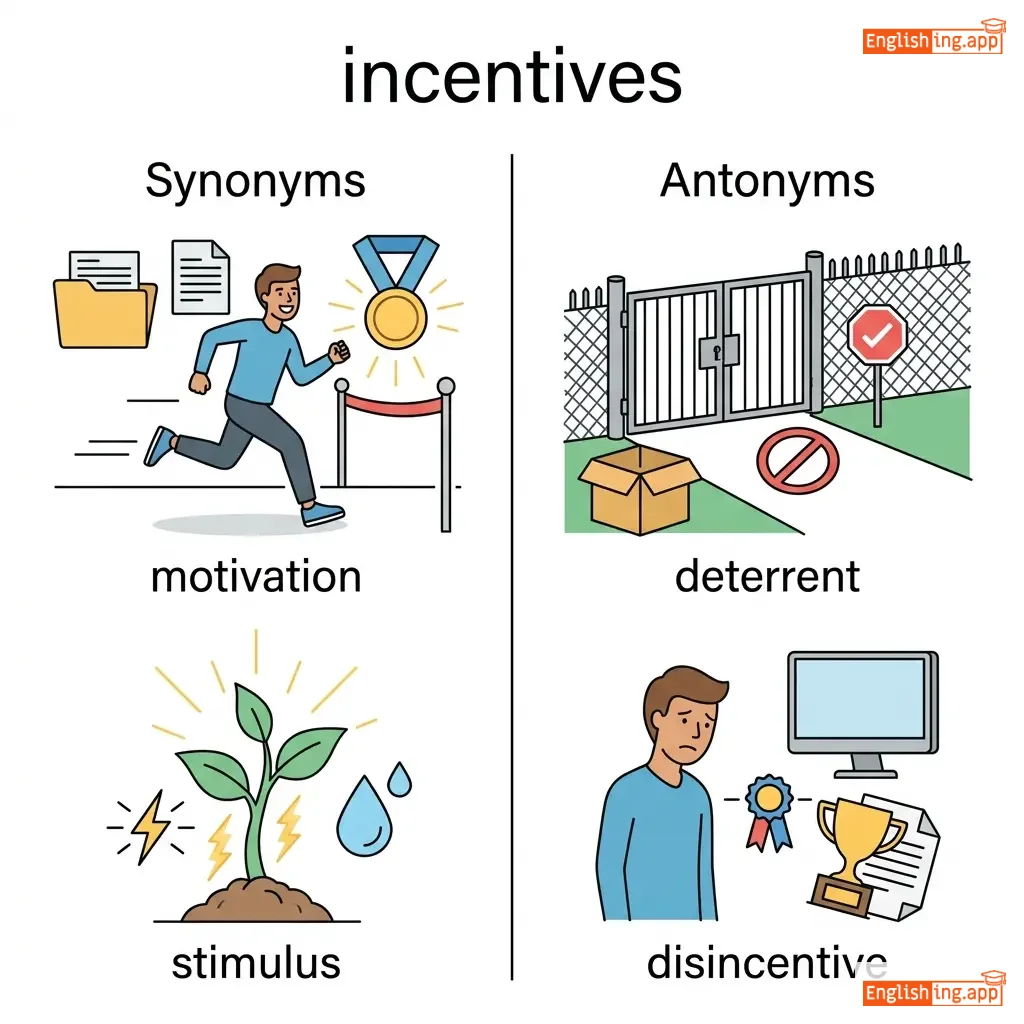
Когда на рынке возникает deflation, экономика может войти в stagnation или recession, что становится crisis для правительства. Однако в некоторых случаях inflation может создать здоровое equilibrium, если ее правильно контролировать и предоставить incentives.
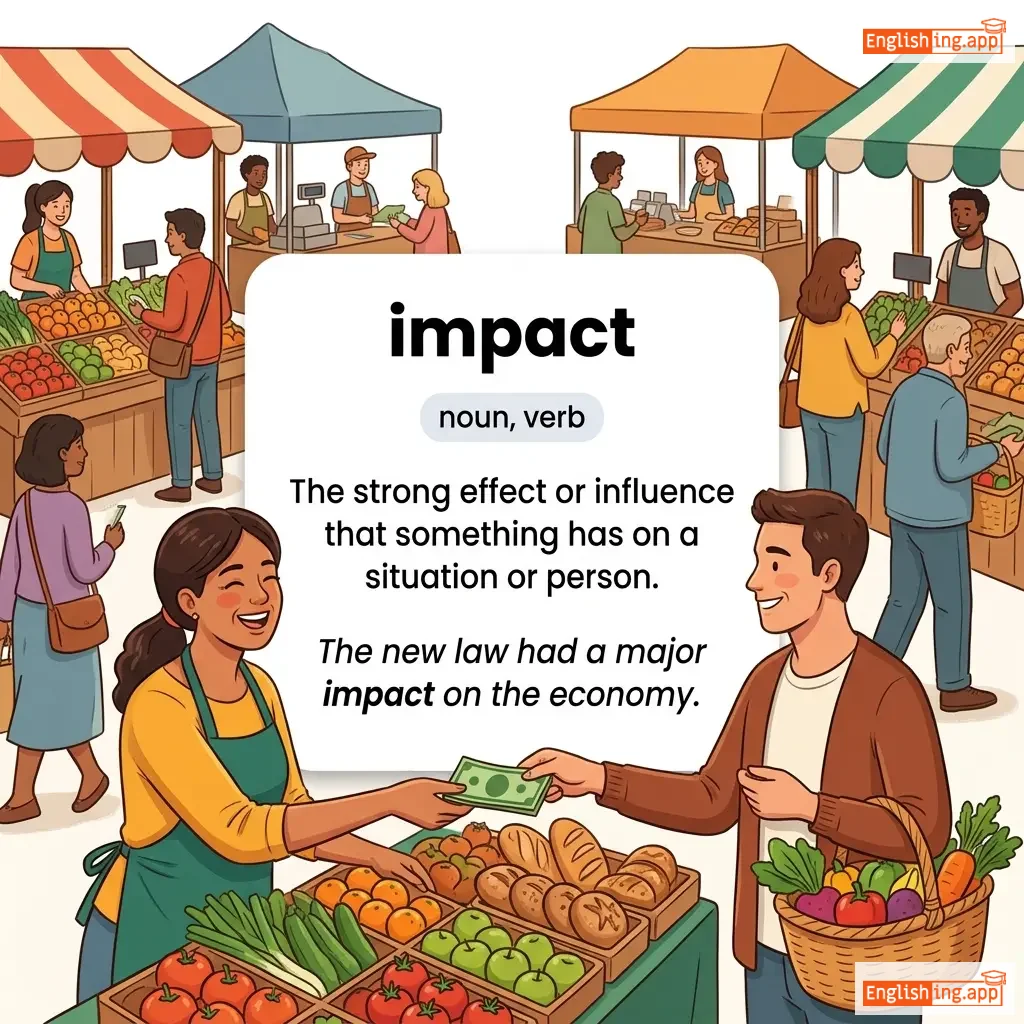
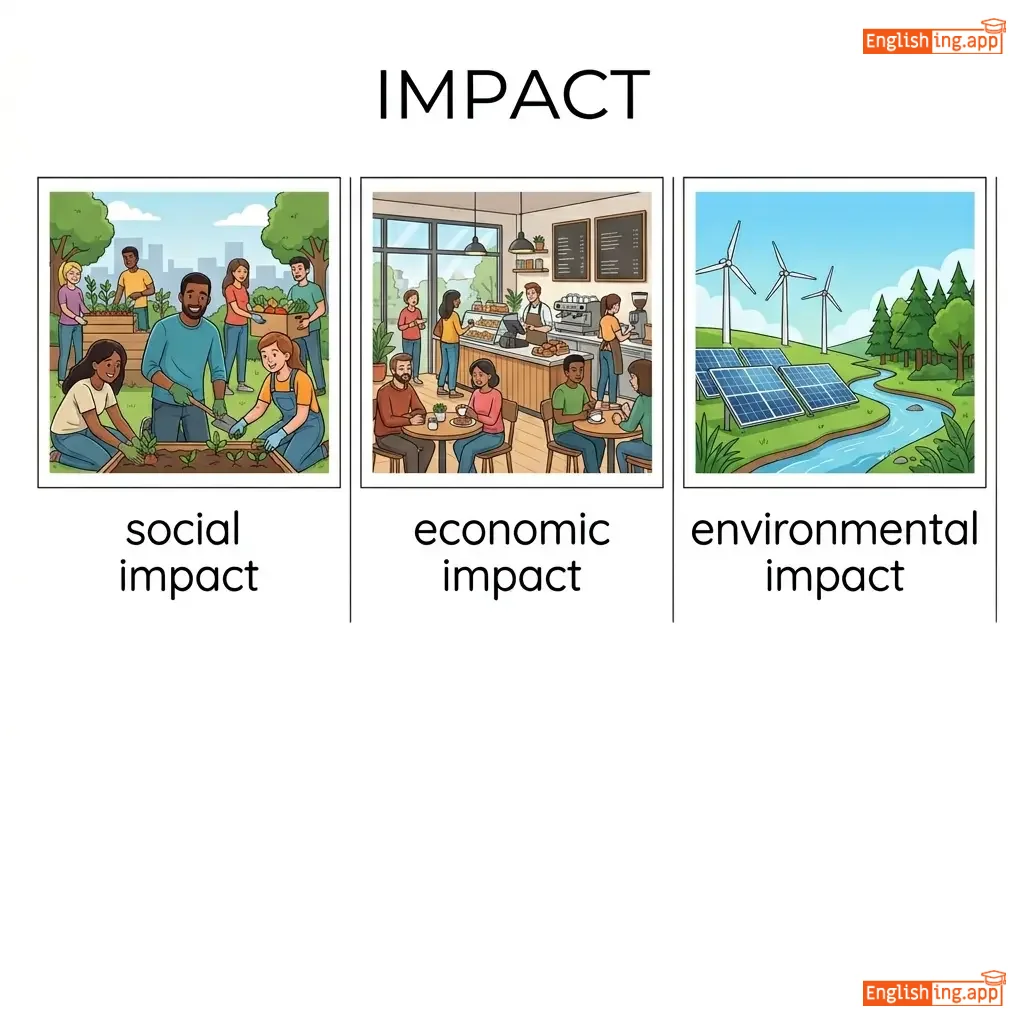
Это важный вопрос для каждой экономики по всему миру, и его impact четко виден в goods, services и revenue.
Получите неограниченный доступ ко всем словам с подпиской Pro
Обновить до ProПолучите неограниченный доступ ко всем предложениям с подпиской Pro
Обновить до Pro|
Эмодзи
|
Слово | Images | Значение | Пример предложения | Синонимы | Антонимы |
|---|---|---|---|---|---|---|
|
#3547
📈
|
ɪnˈfleɪʃən
noun
••••••
|
|
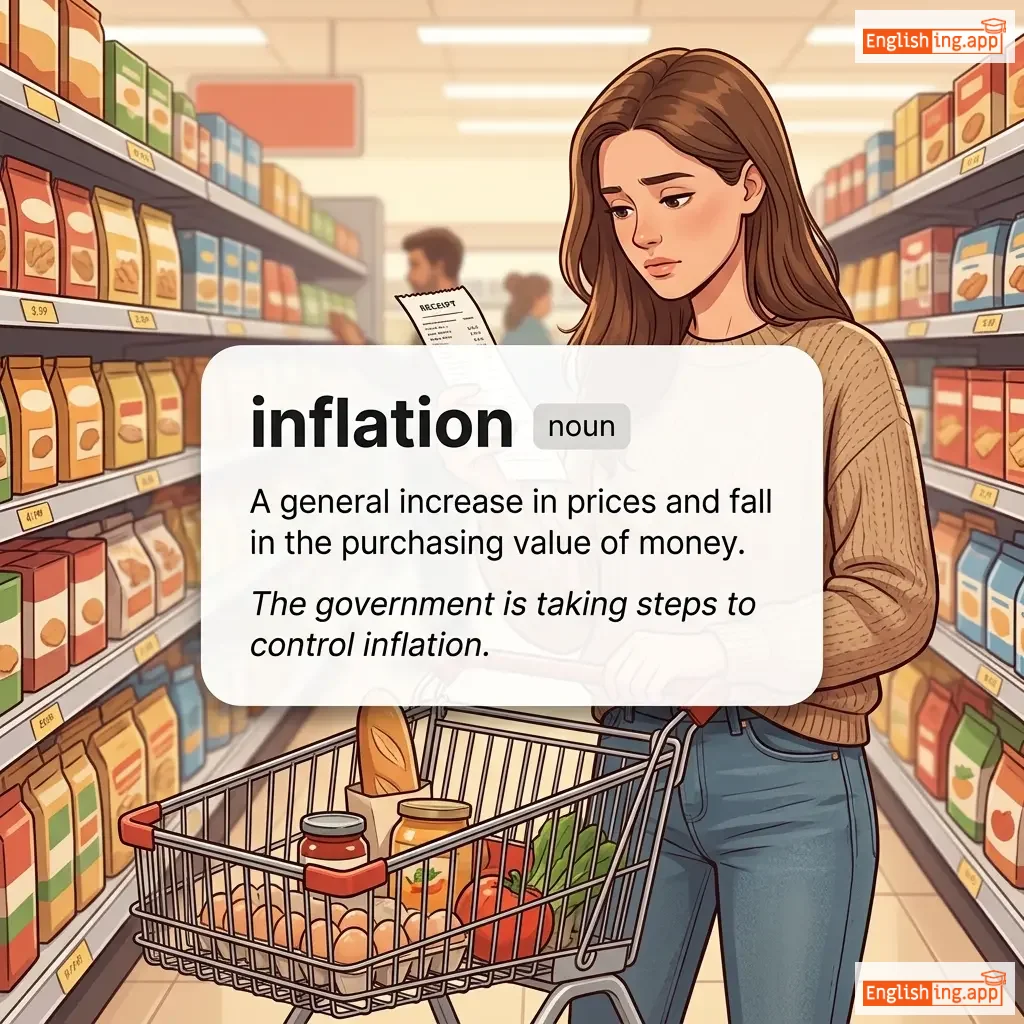
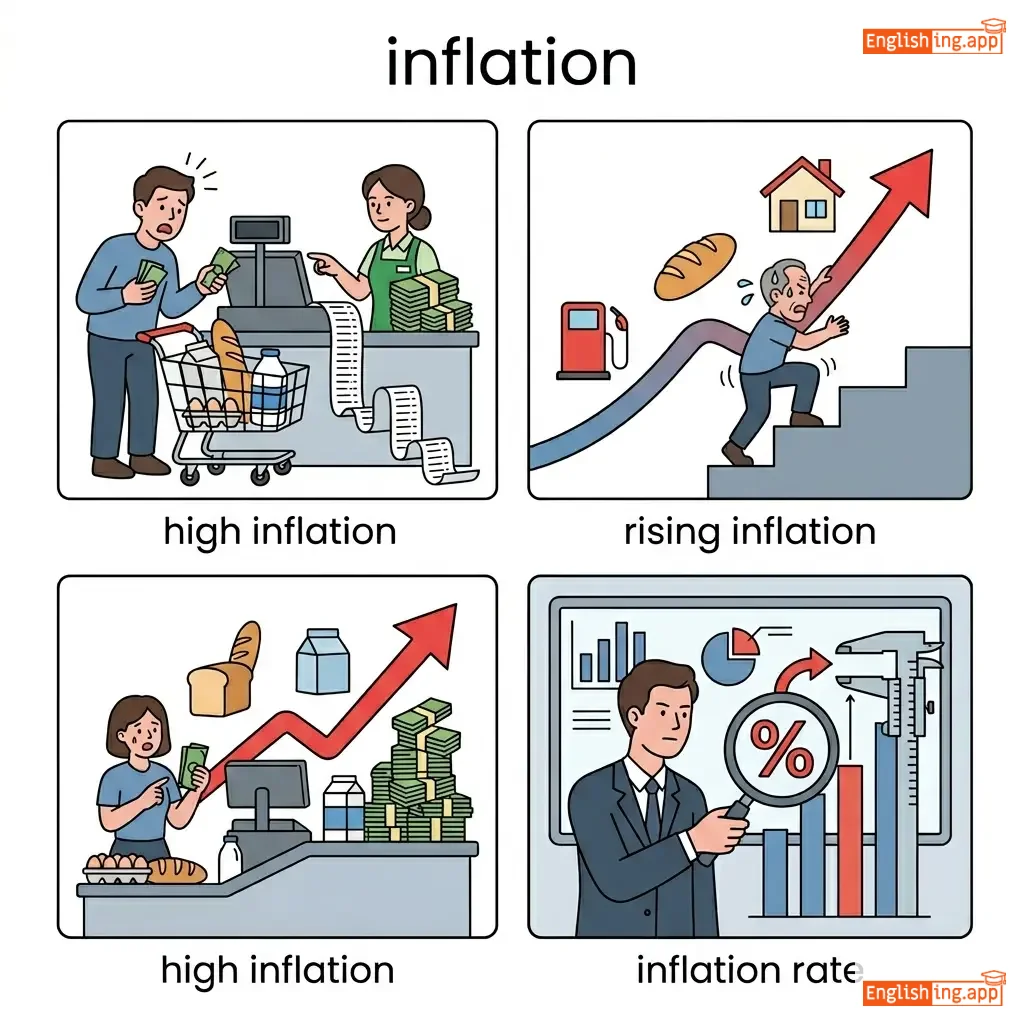
A general increase in prices and fall in the purchasing value of money.
••••••
|
Inflation reduces the purchasing power of money. |
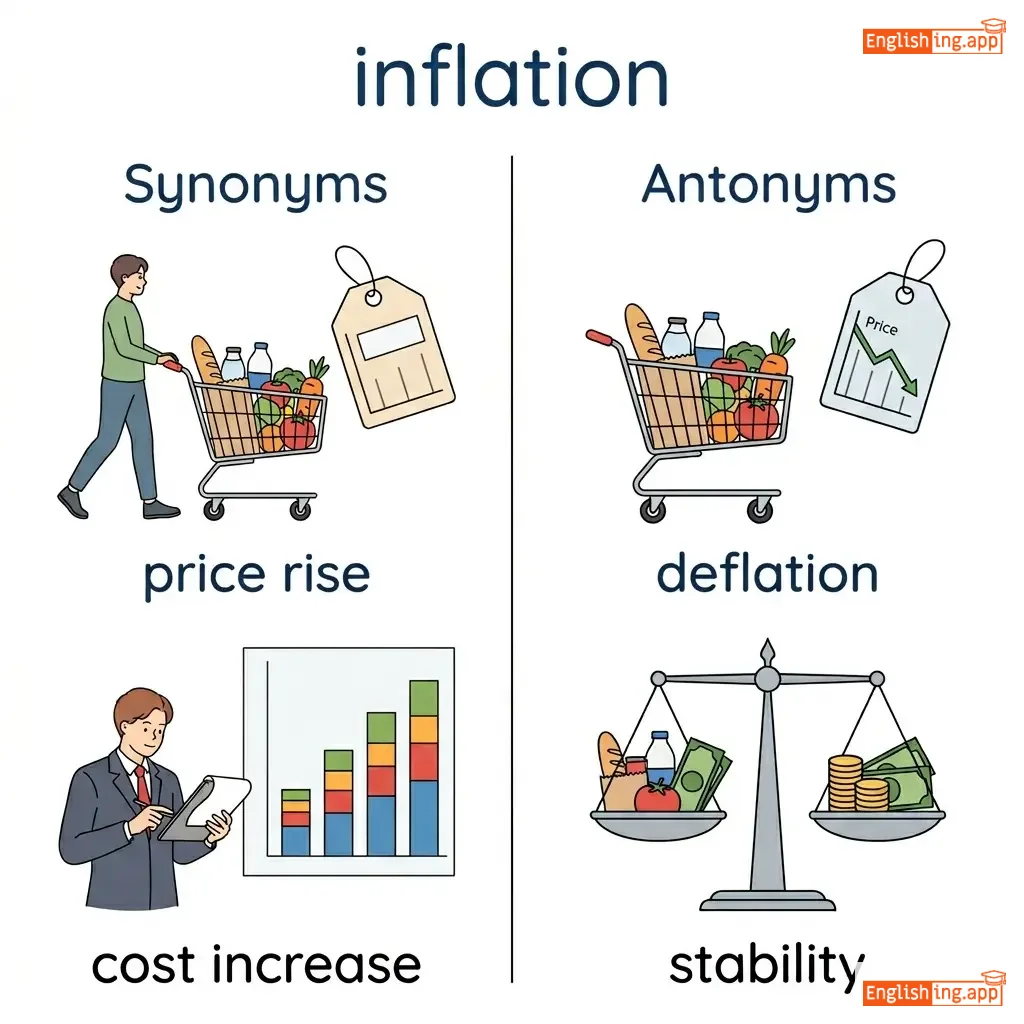
price rise, cost increase
••••••
|
deflation, decrease
••••••
|
|
#3548
💼
|
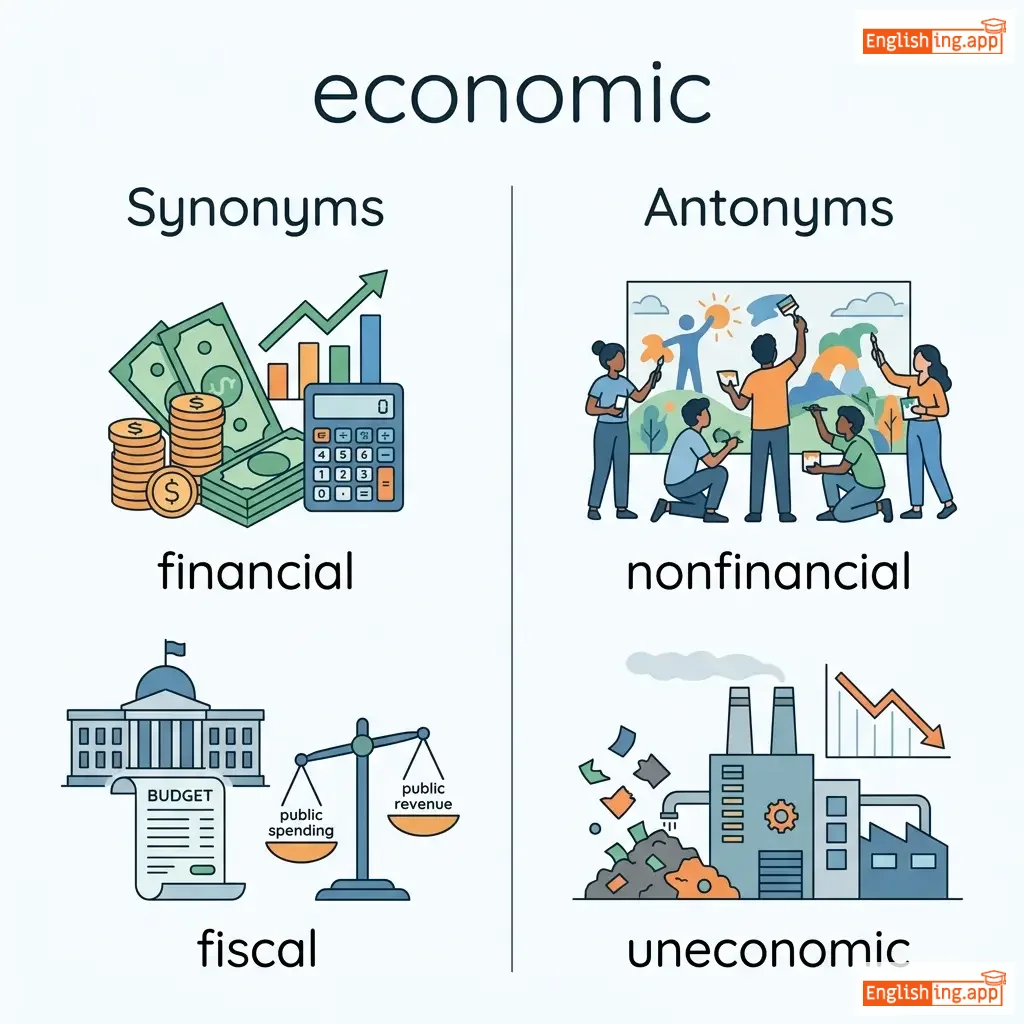
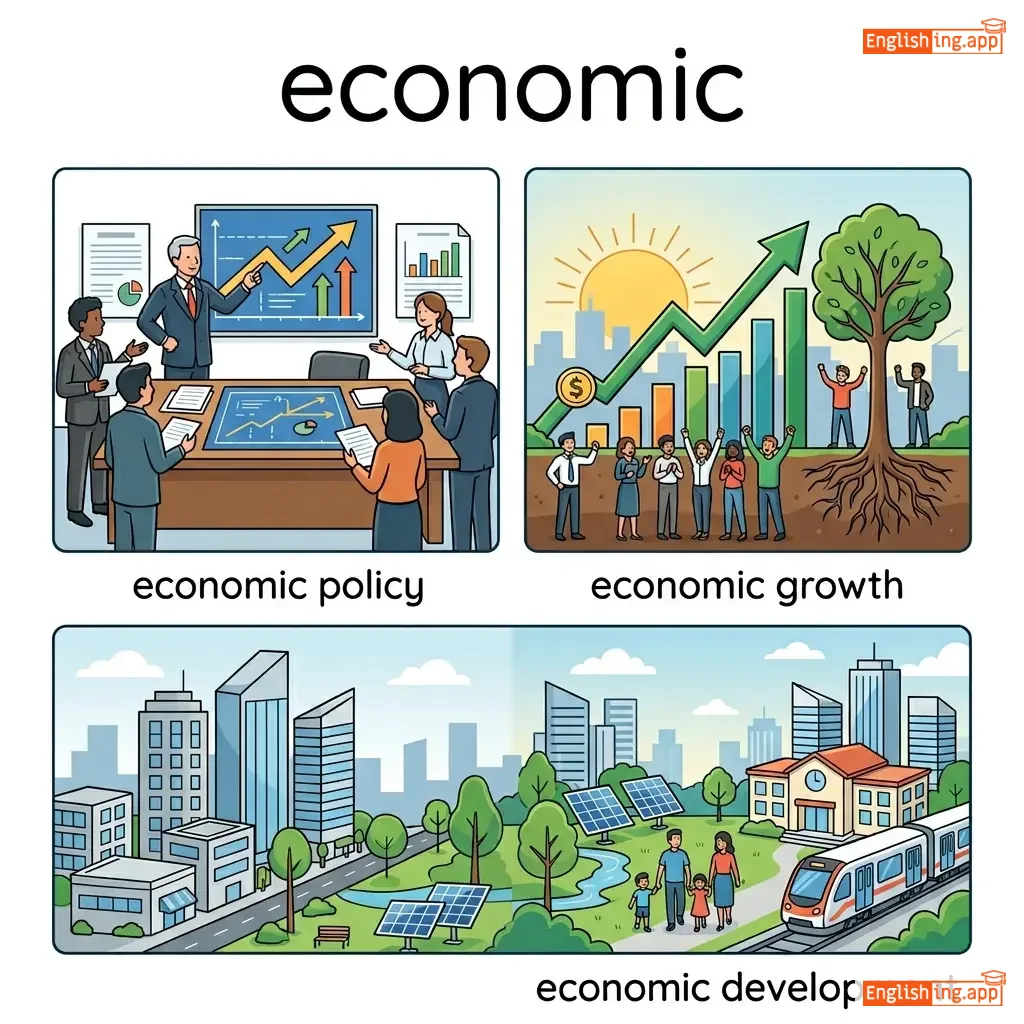
ˌiːkəˈnɒmɪk
adjective
••••••
|
|
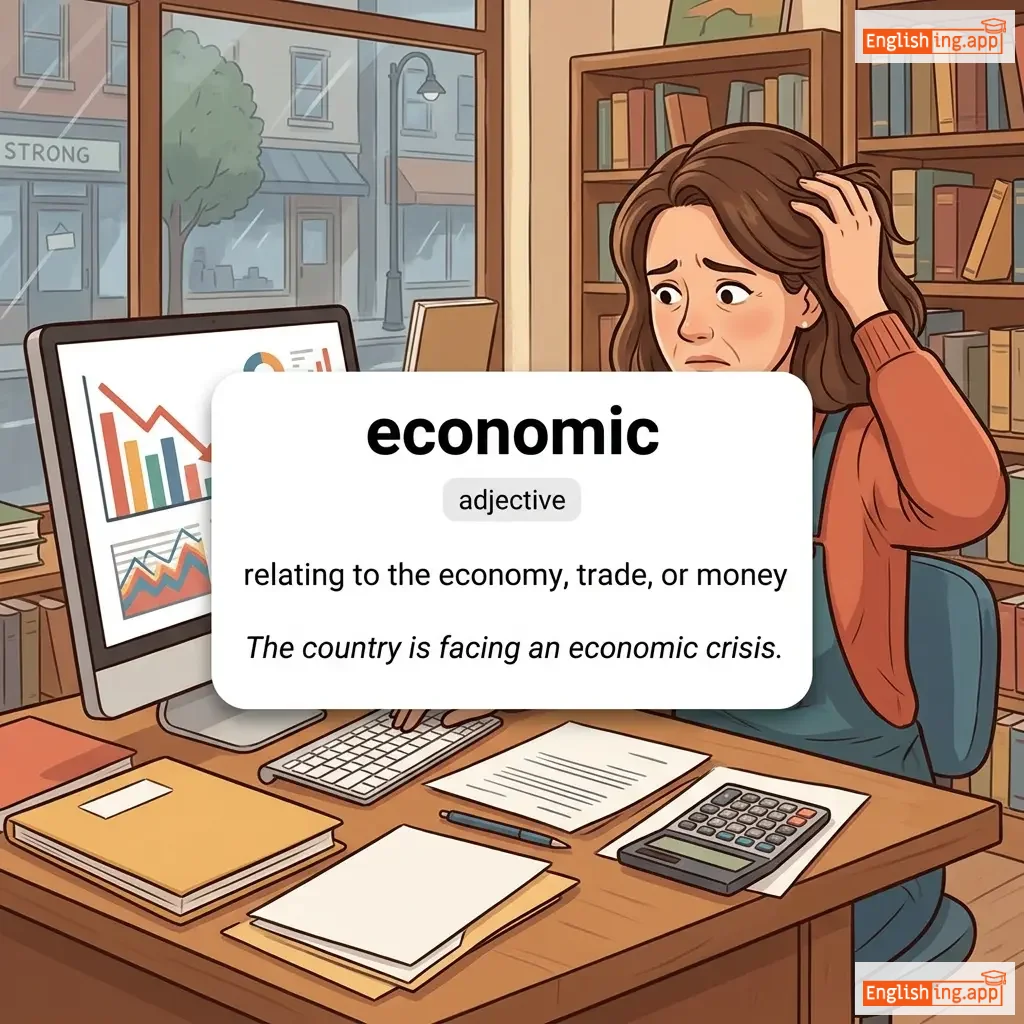
Relating to economics or the economy.
••••••
|
Economic growth is crucial for national prosperity. |
financial, fiscal
••••••
|
non-economic, unrelated
••••••
|
|
#3549
📊
|
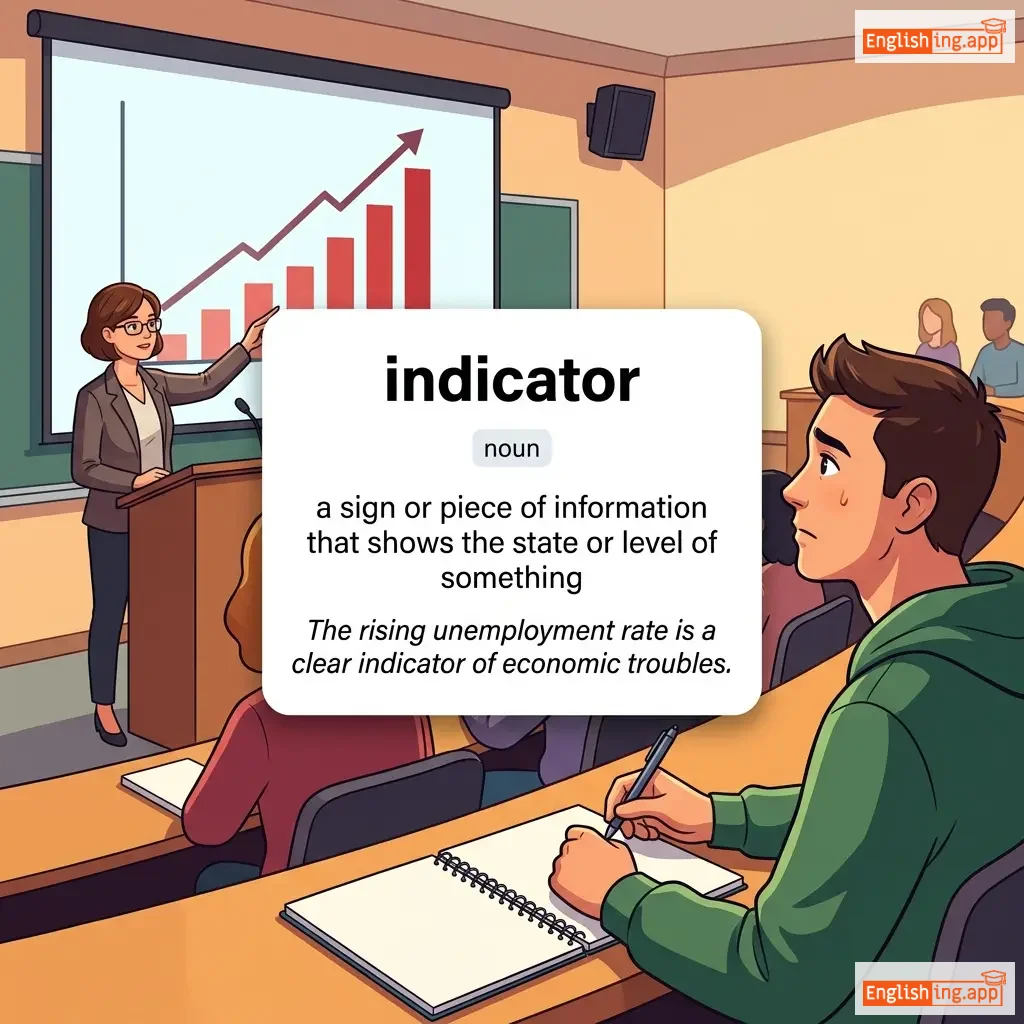
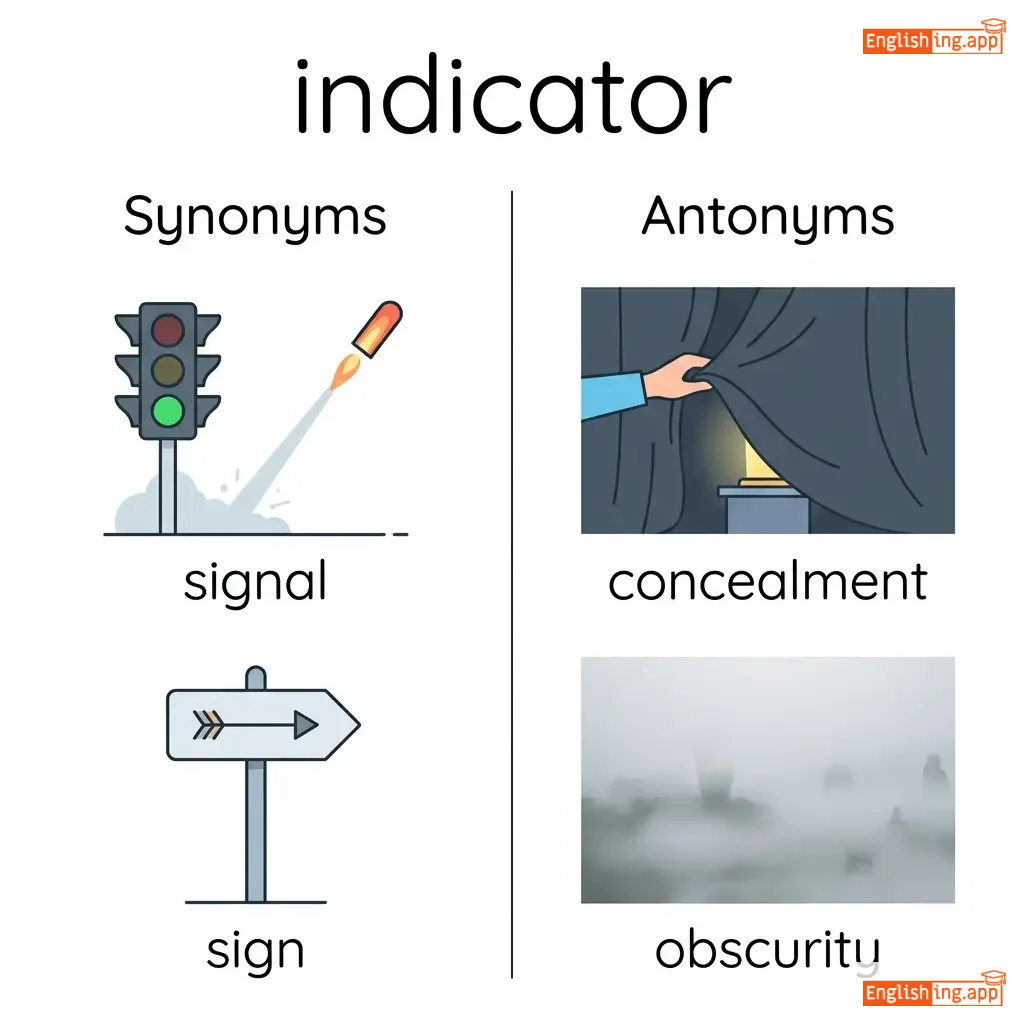
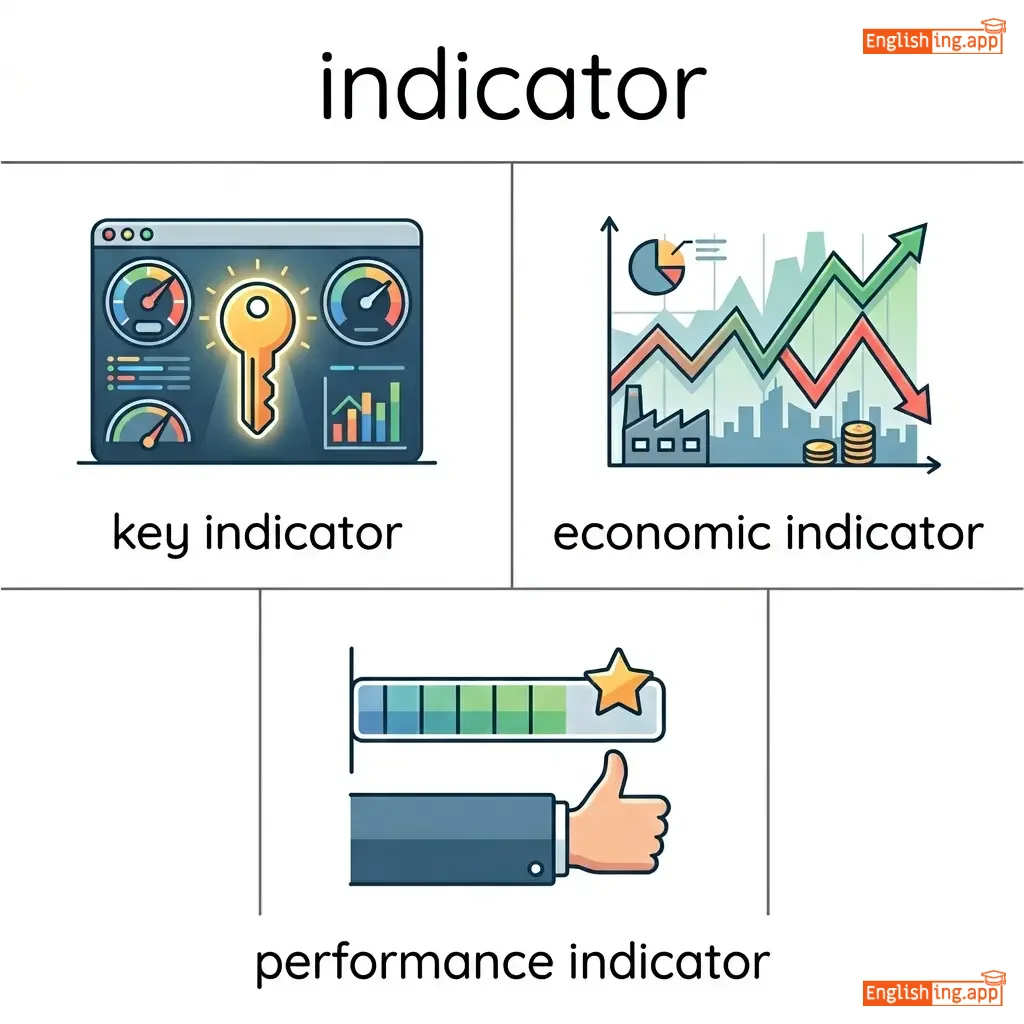
ˈɪndɪkeɪtə
noun
••••••
|
|
A thing that indicates the state or level of something.
••••••
|
The unemployment rate is a key indicator of economic health. |
signal, pointer
••••••
|
obscurity, uncertainty
••••••
|
|
#3550
💰
|
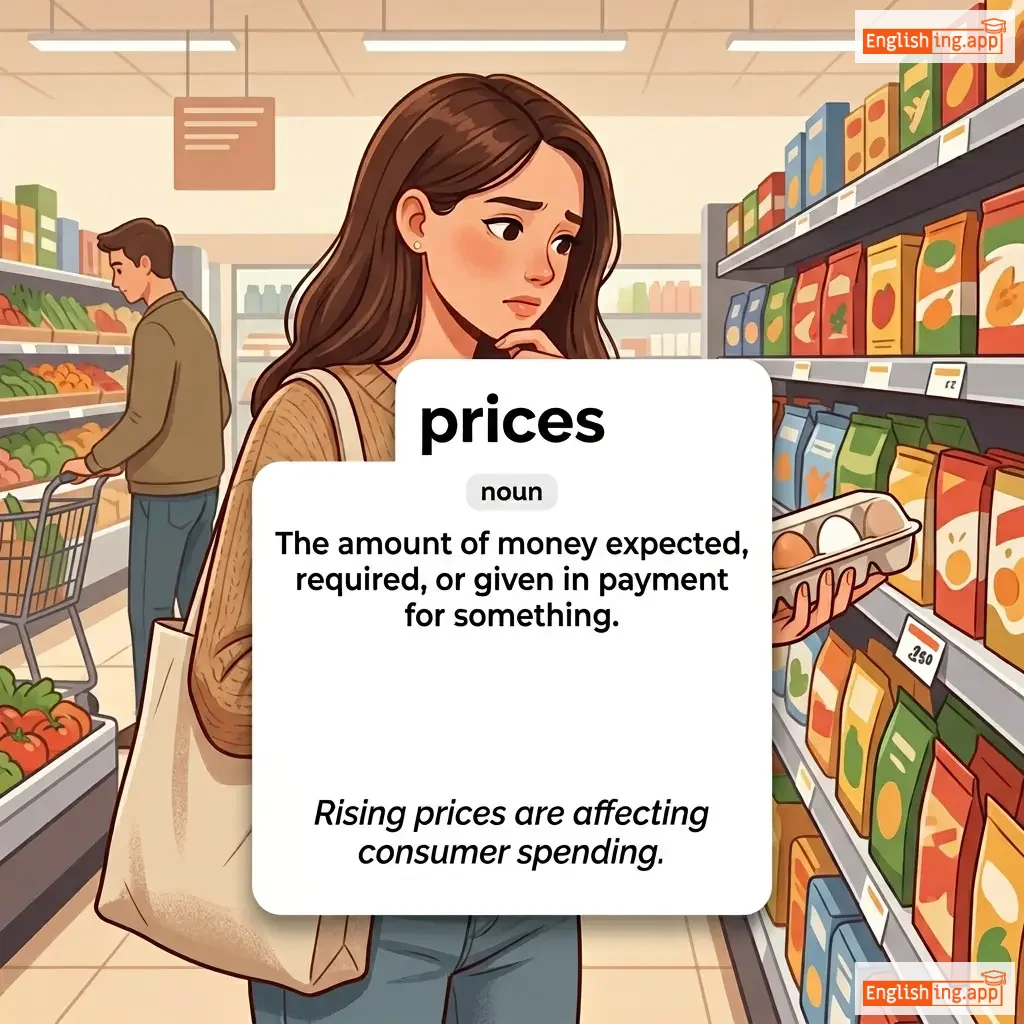
ˈpraɪsɪz
noun
••••••
|
|
The amount of money expected, required, or given in payment for something.
••••••
|
Rising prices are affecting consumer spending. |
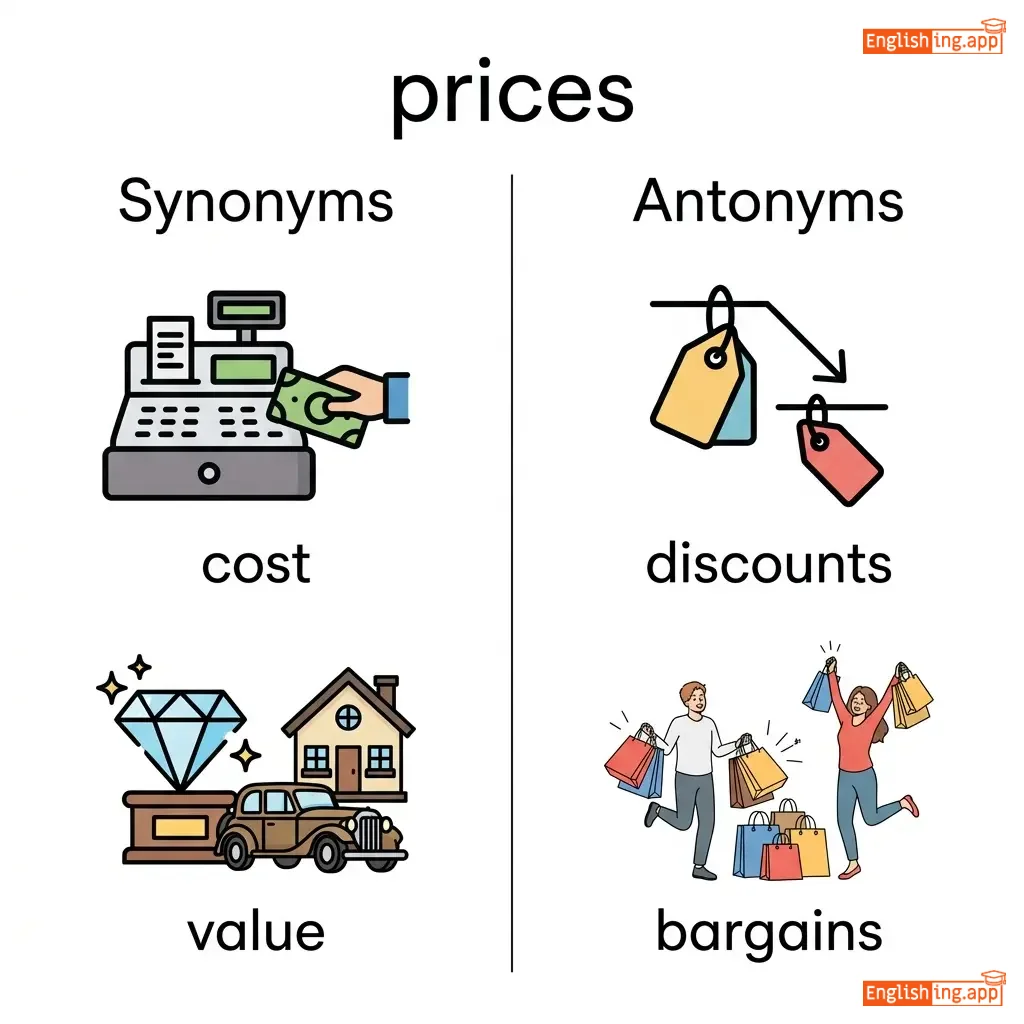
cost, value
••••••
|
discounts, bargains
••••••
|
|
#3551
💵
|
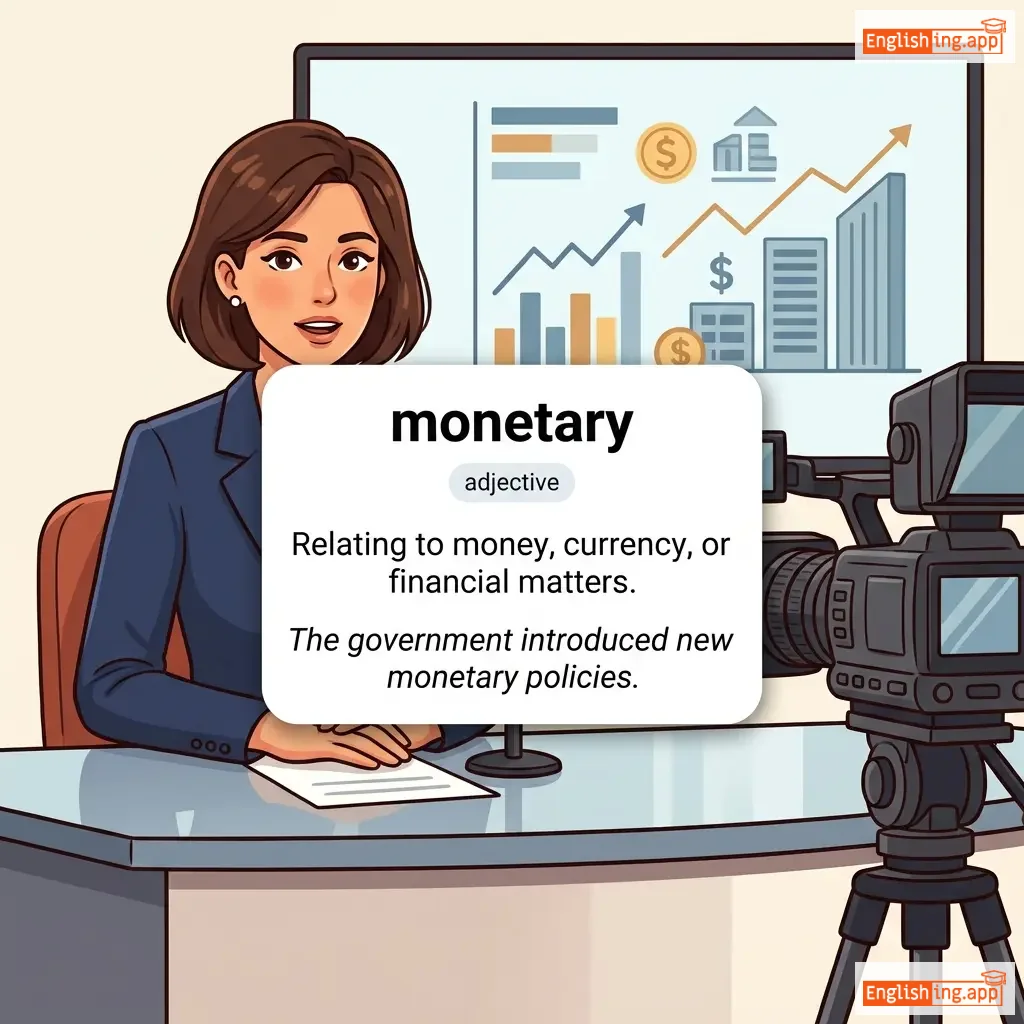
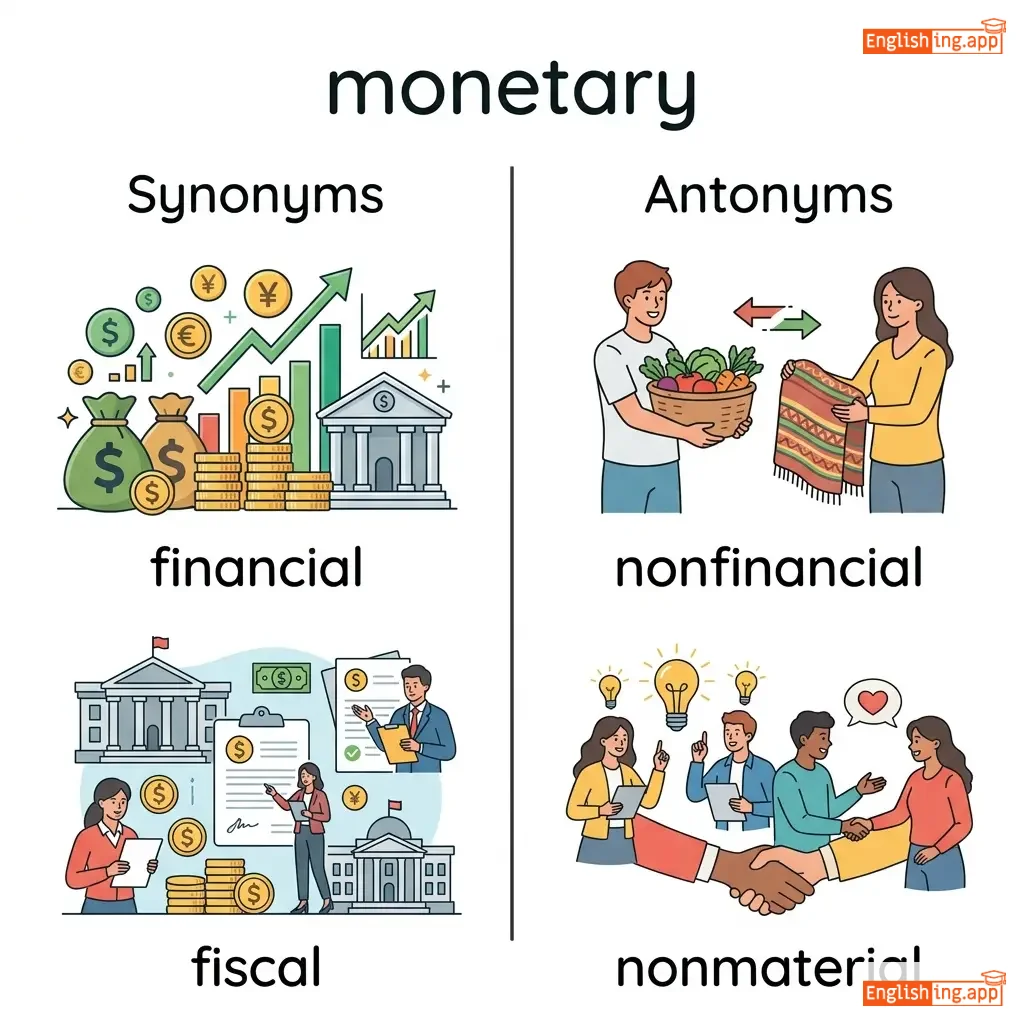
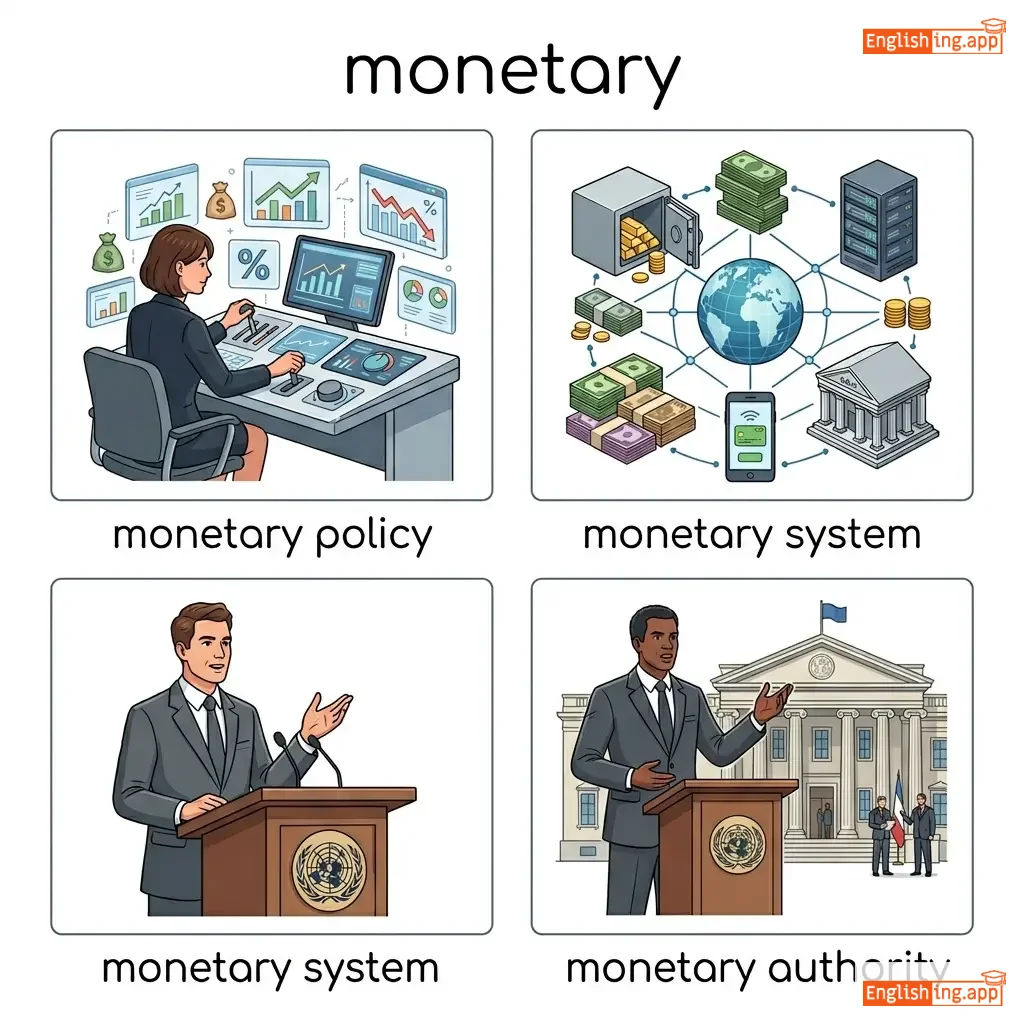
ˈmʌnɪtəri
adjective
••••••
|
|
Relating to money or currency.
••••••
|
The central bank controls monetary policy to stabilize the economy. |
financial, fiscal
••••••
|
non-monetary, in-kind
••••••
|
|
#3552
💸
|
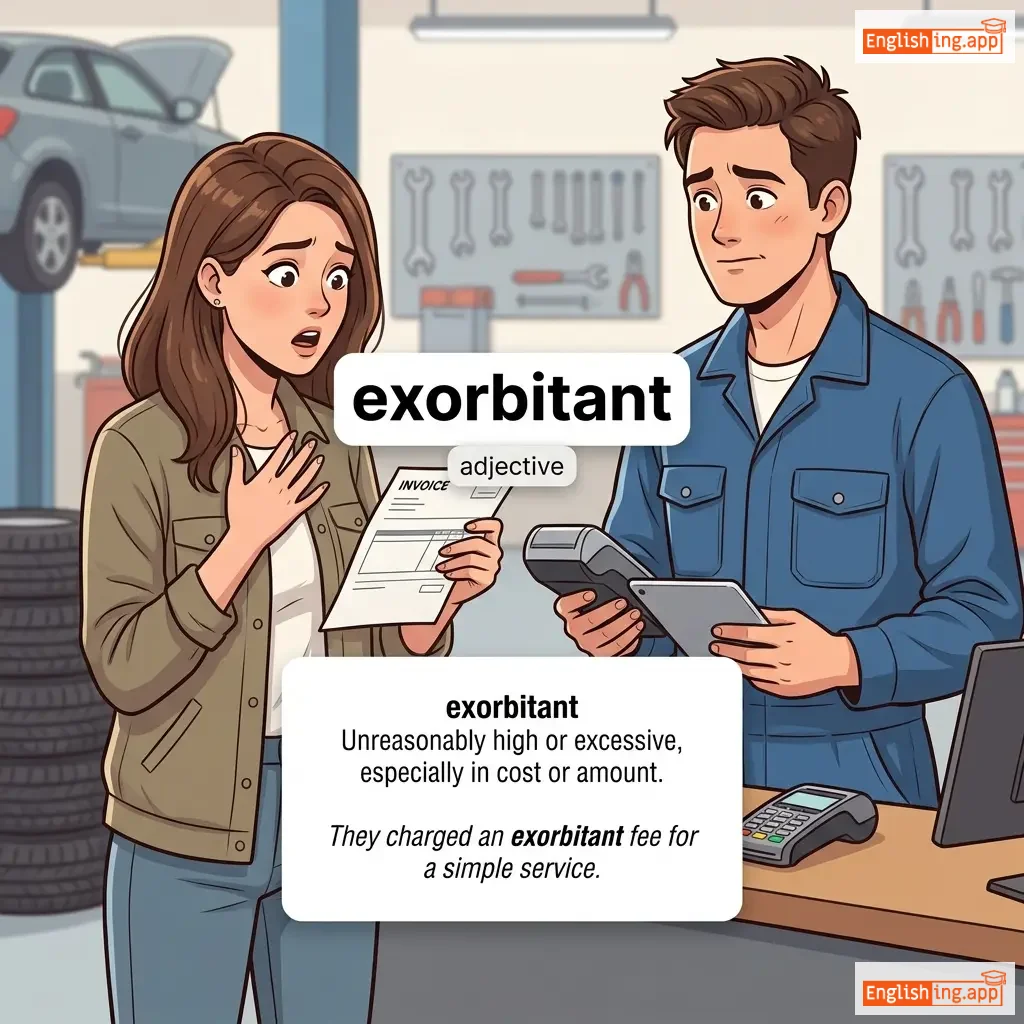
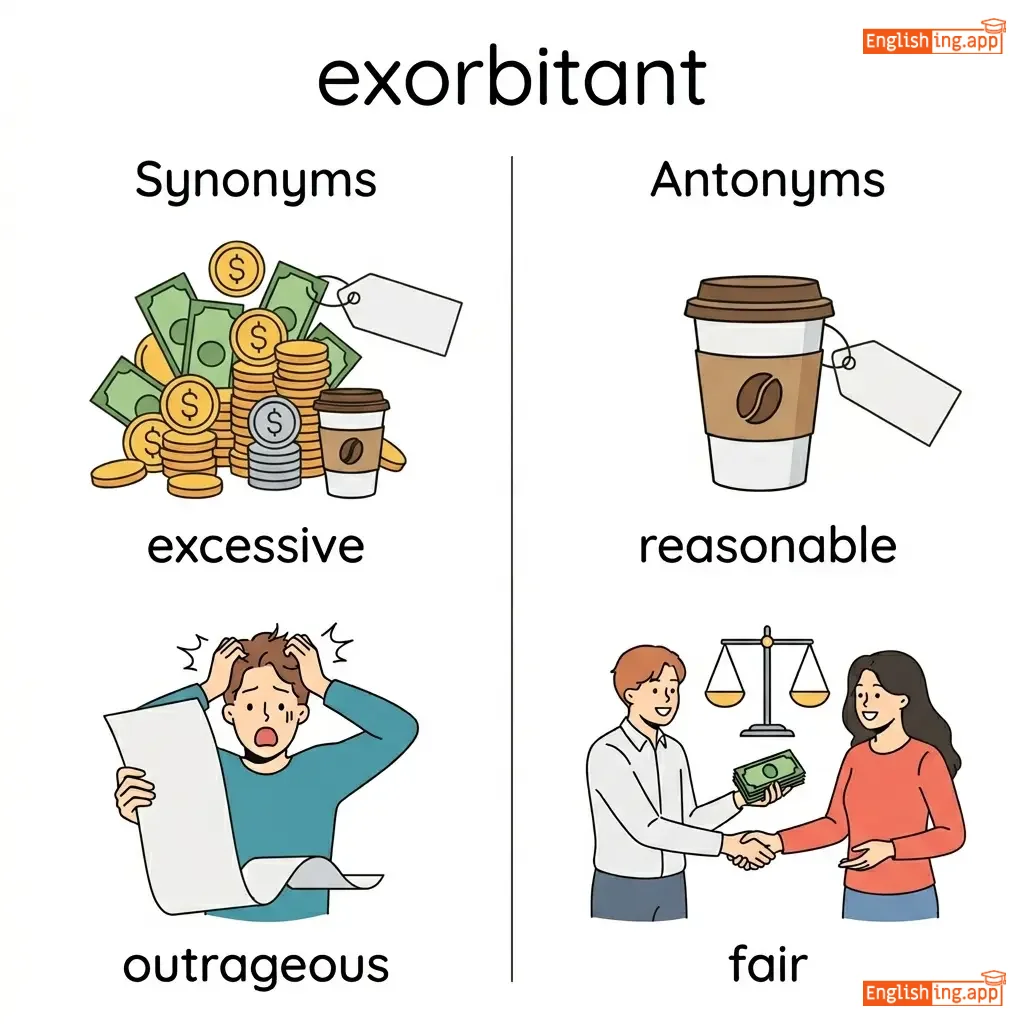
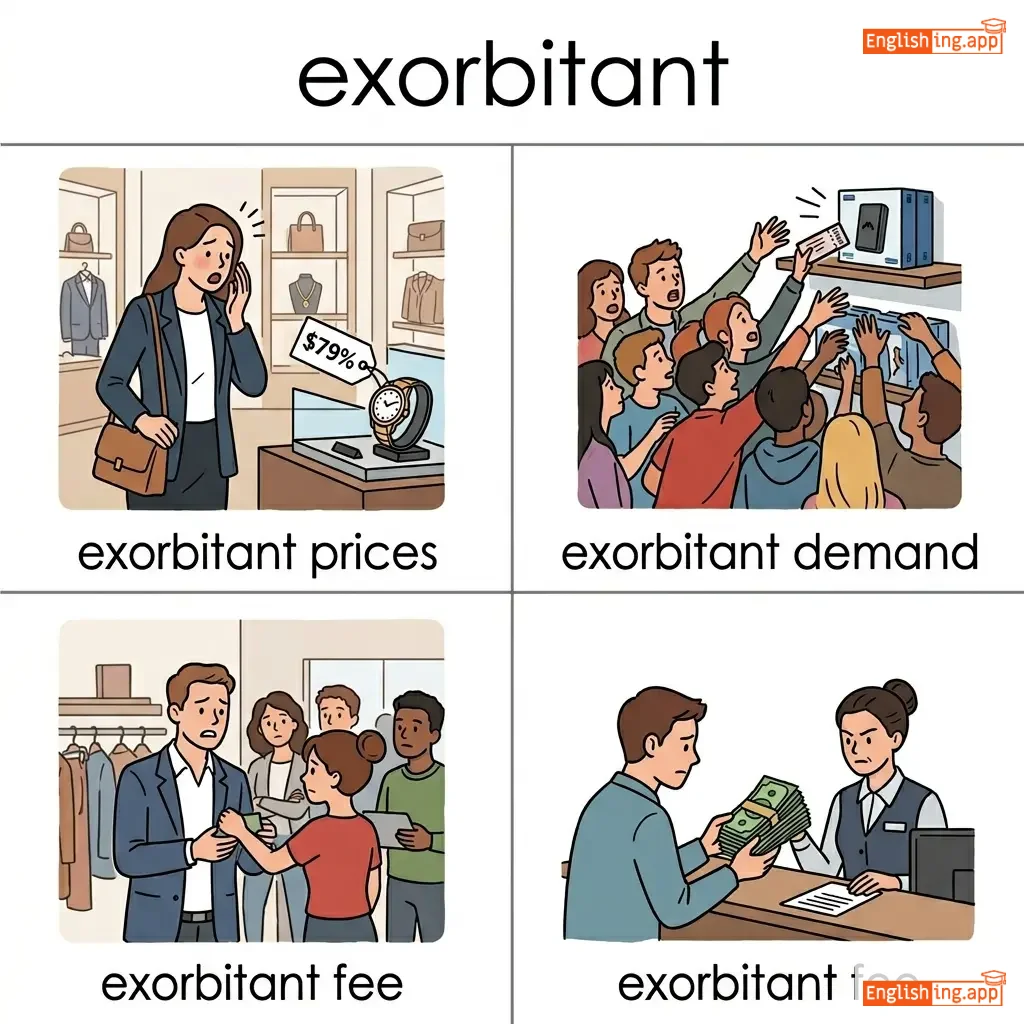
ɪɡˈzɔːbɪtənt
adjective
••••••
|
|
Unreasonably high (of a price or amount charged).
••••••
|
The prices of the new smartphones are exorbitant. |
excessive, overpriced
••••••
|
reasonable, moderate
••••••
|
|
#3553
💪
|
ˈpɜːtʃəsɪŋ ˈpaʊər
noun
••••••
|
|
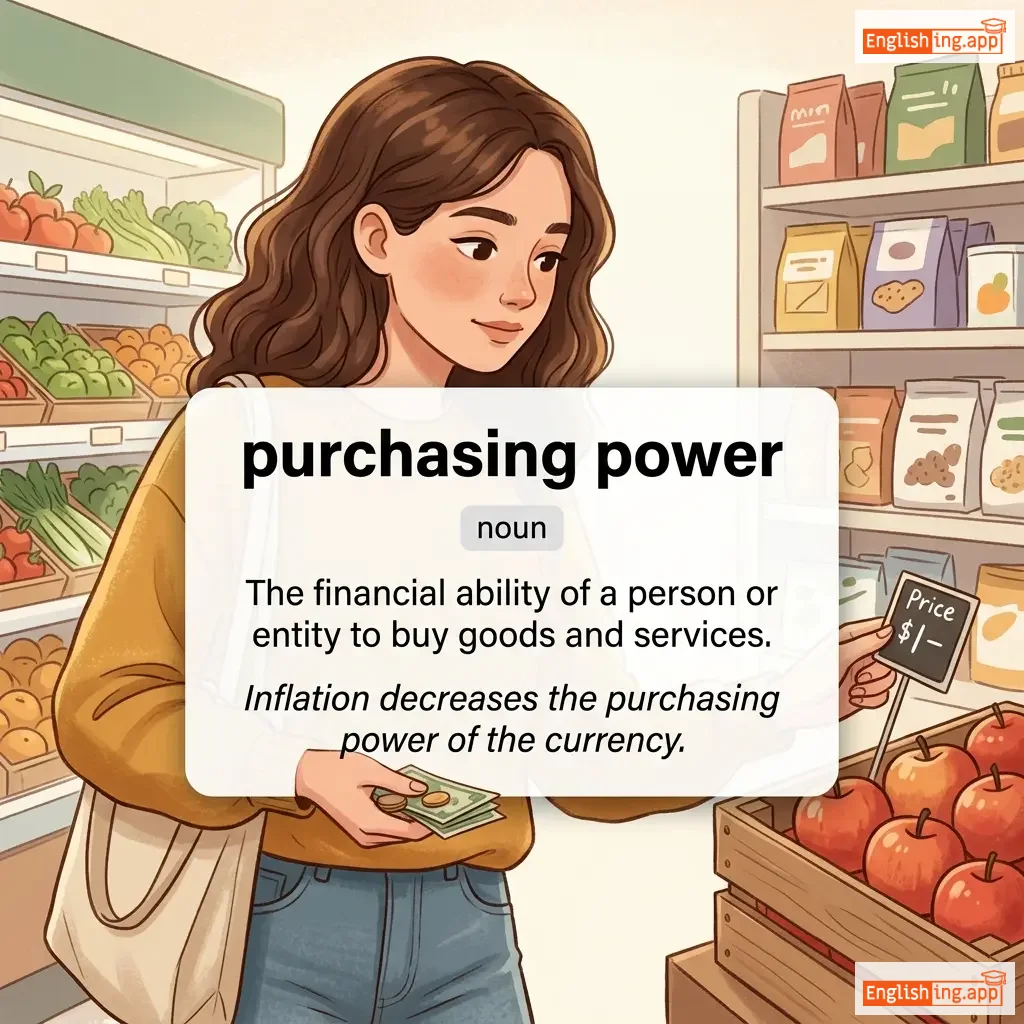
The financial ability of a person or entity to buy goods and services.
••••••
|
Inflation decreases the purchasing power of the currency. |
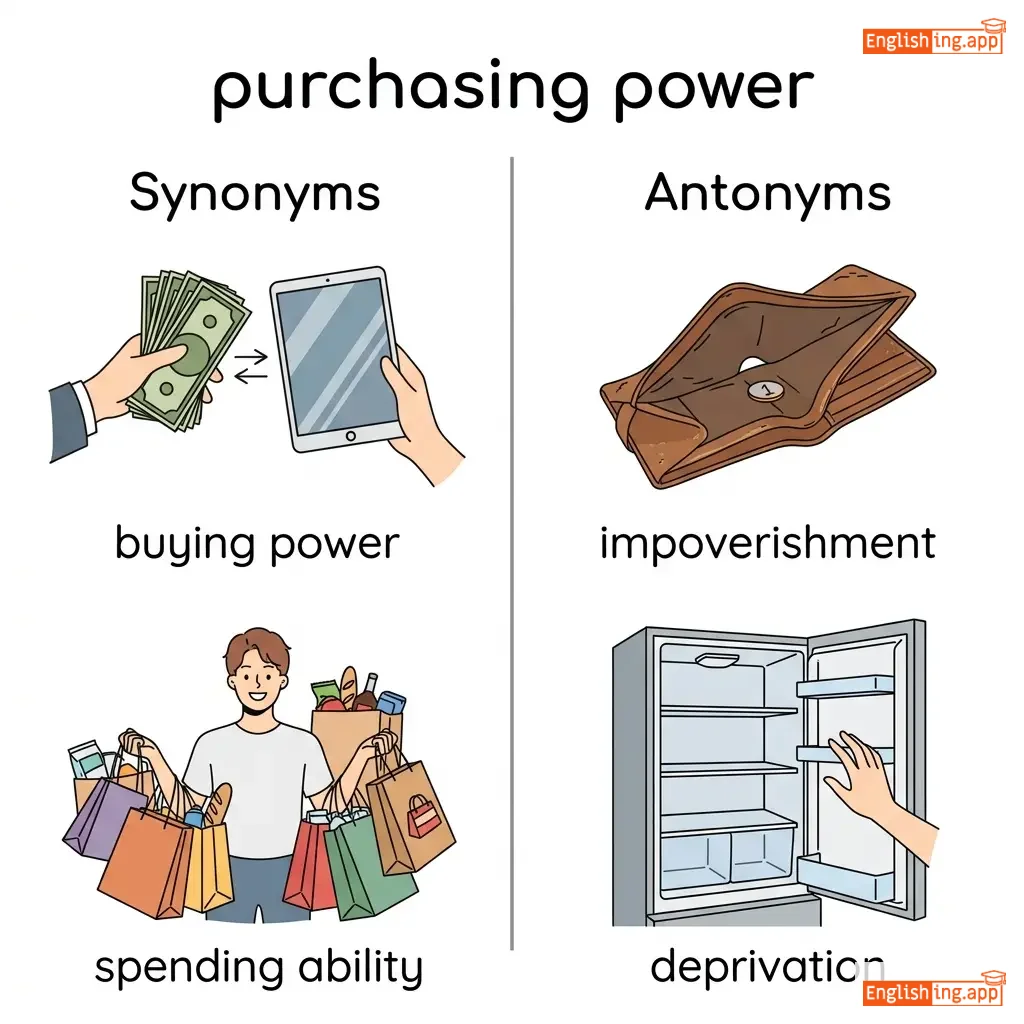
buying power, spending ability
••••••
|
impoverishment, deprivation
••••••
|
|
#3554
🎯
|
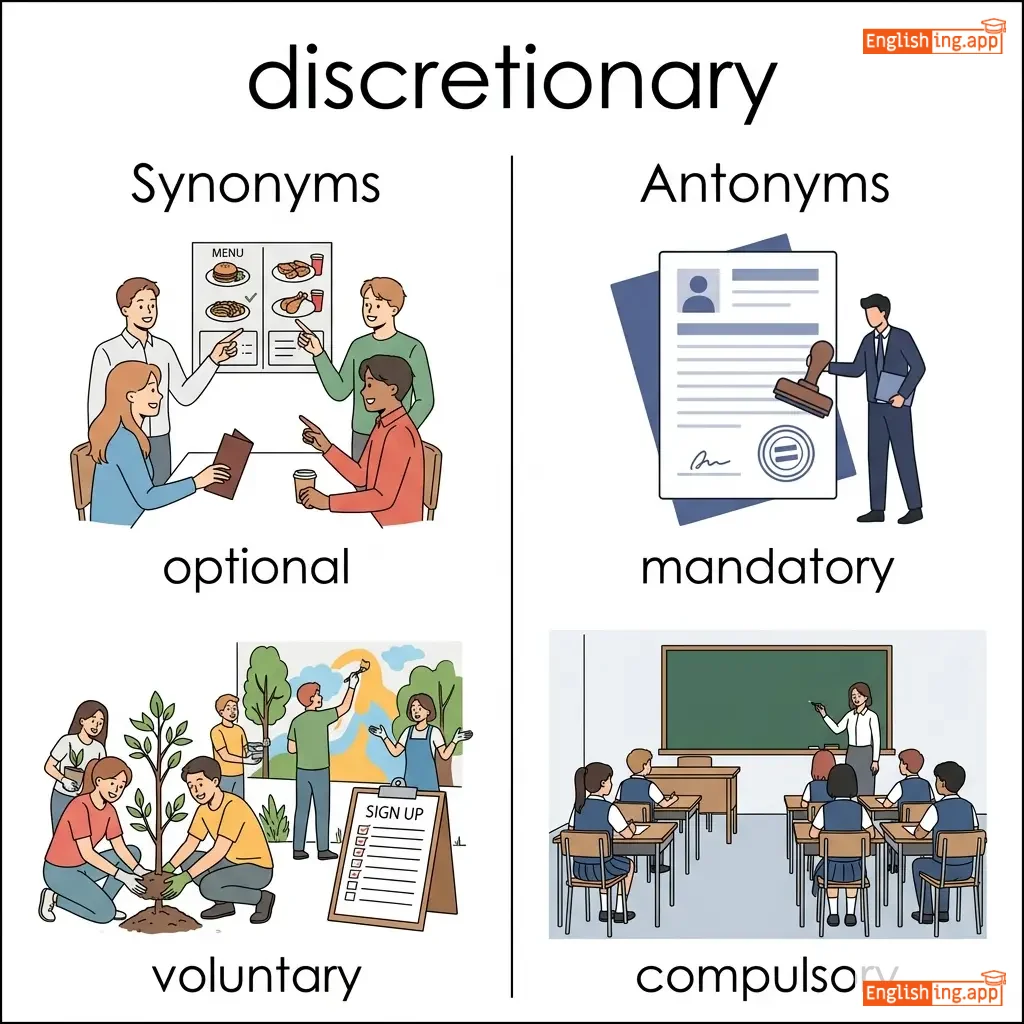
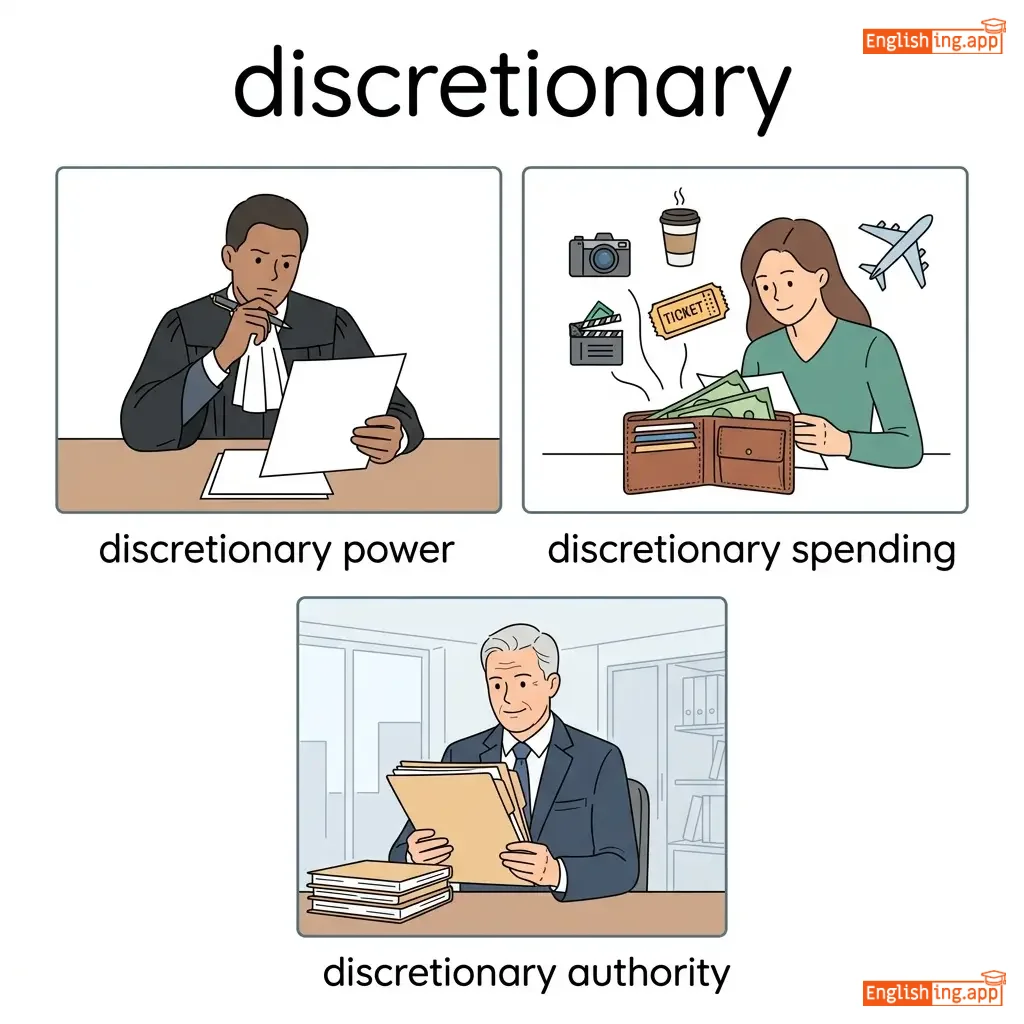
dɪˈskrɛʃəneri
adjective
••••••
|
|
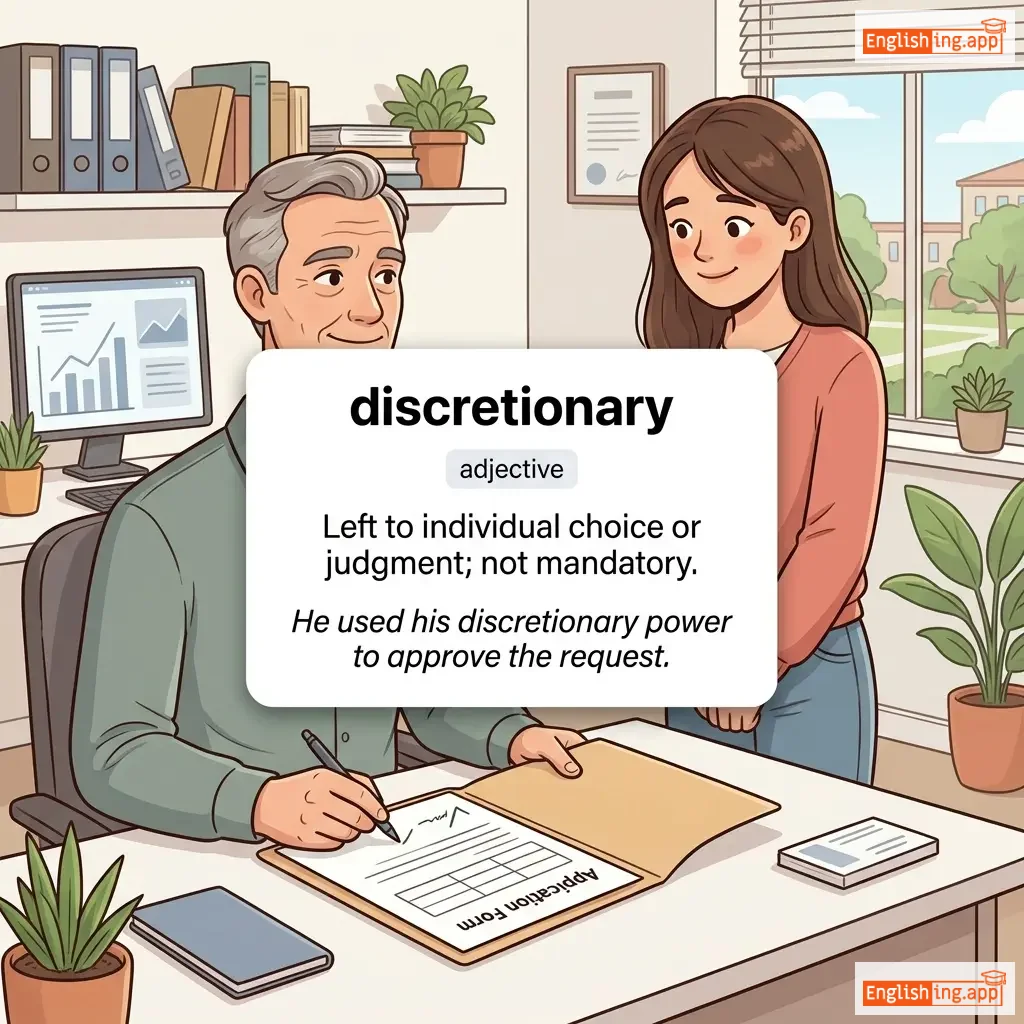
Available for use at the discretion of the user; optional.
••••••
|
Discretionary spending is the money left over after essential expenses. |
optional, voluntary
••••••
|
mandatory, obligatory
••••••
|
|
#3555
📉
|
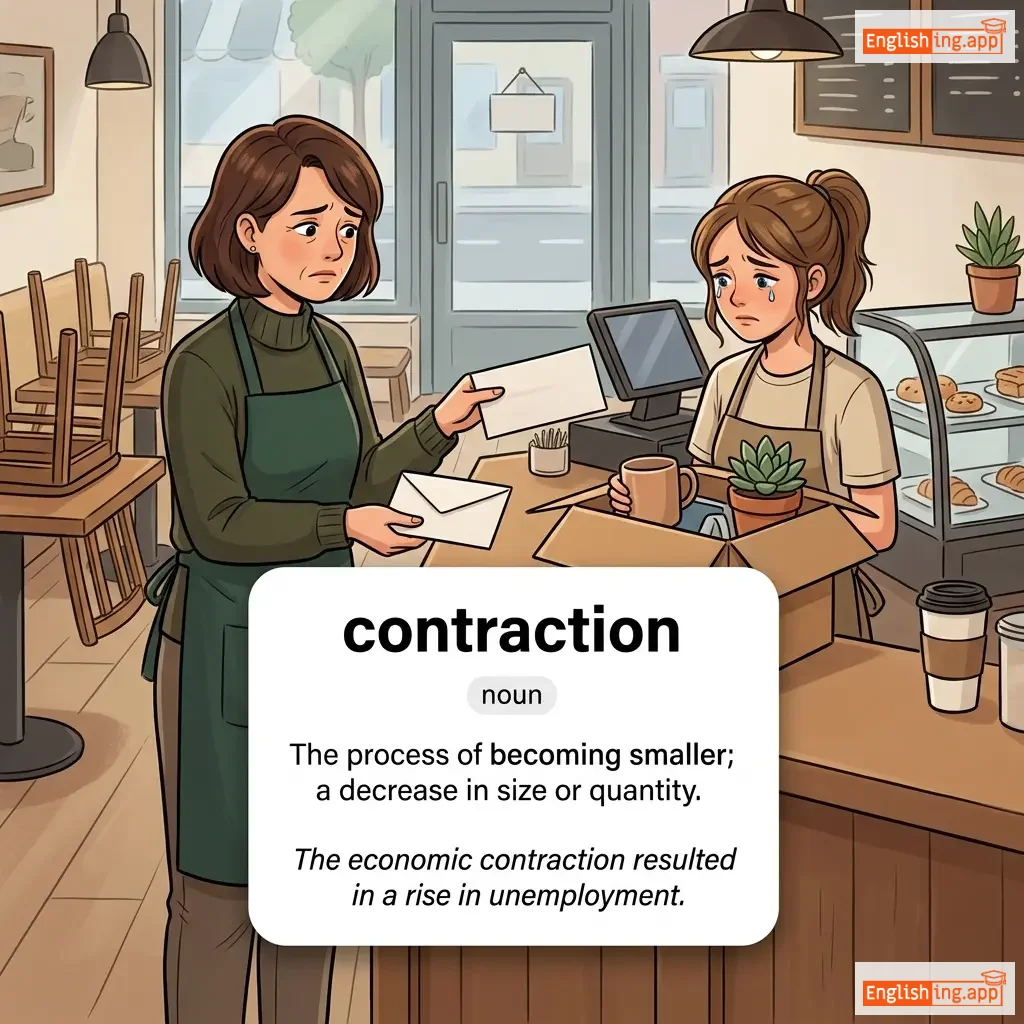
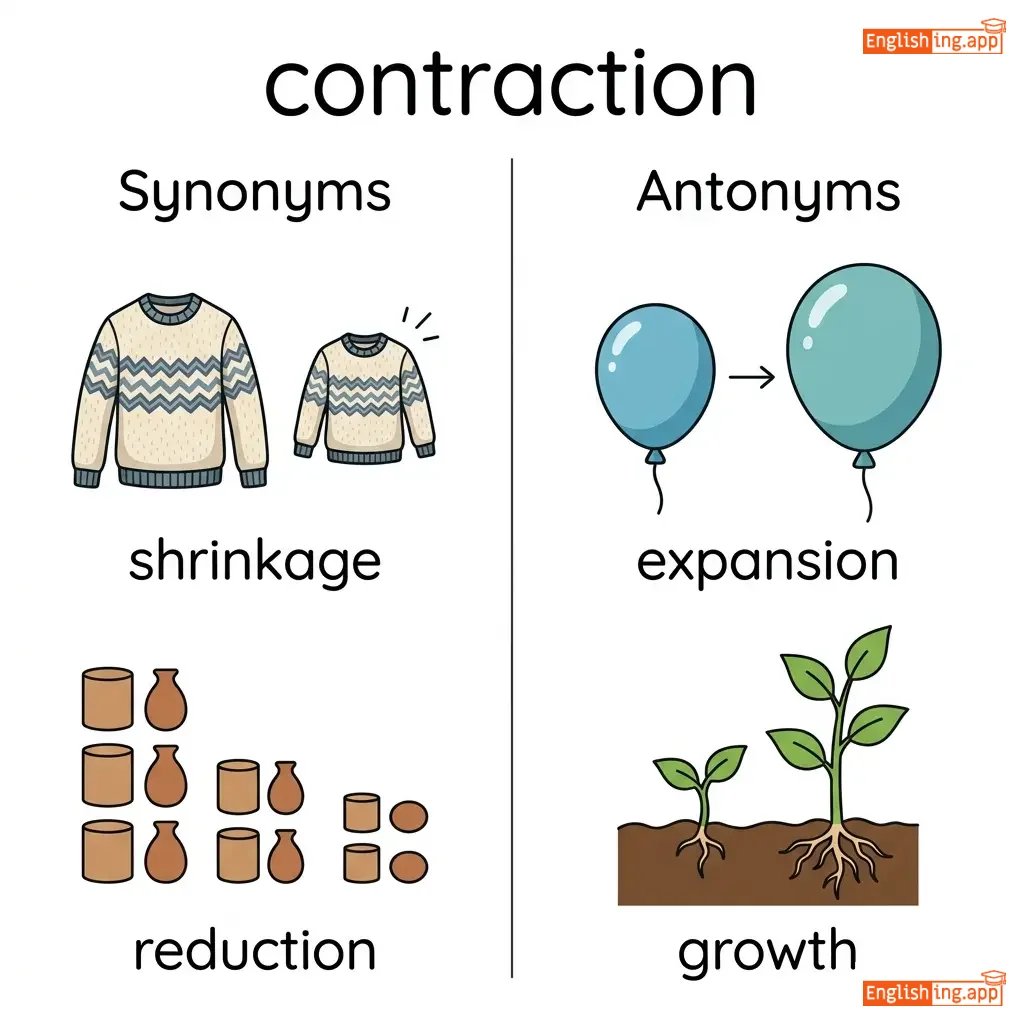
kənˈtrækʃən
noun
••••••
|
|
The process of becoming smaller; a decrease in size or quantity.
••••••
|
The economic contraction resulted in a rise in unemployment. |
shrinkage, reduction
••••••
|
expansion, growth
••••••
|
|
#3556
📈
|
prəˌlɪfəˈreɪʃən
noun
••••••
|
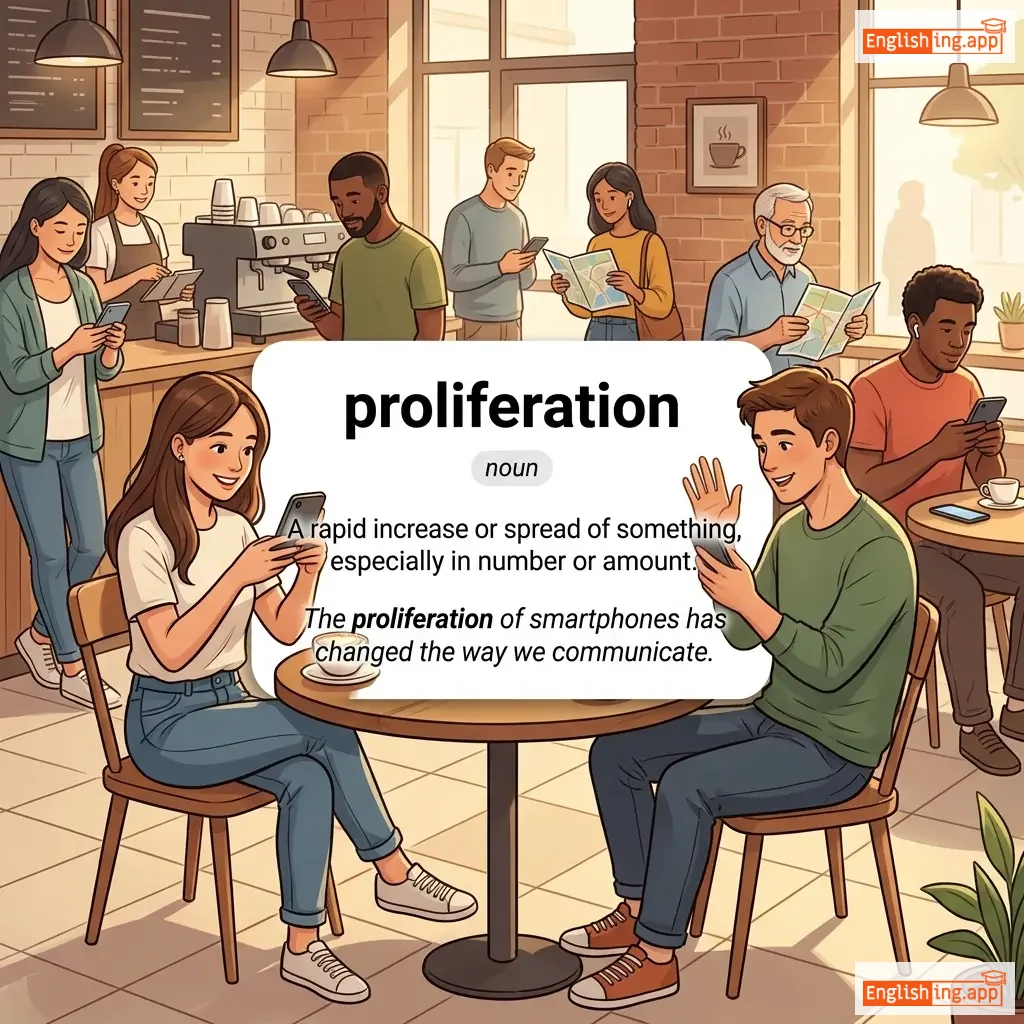
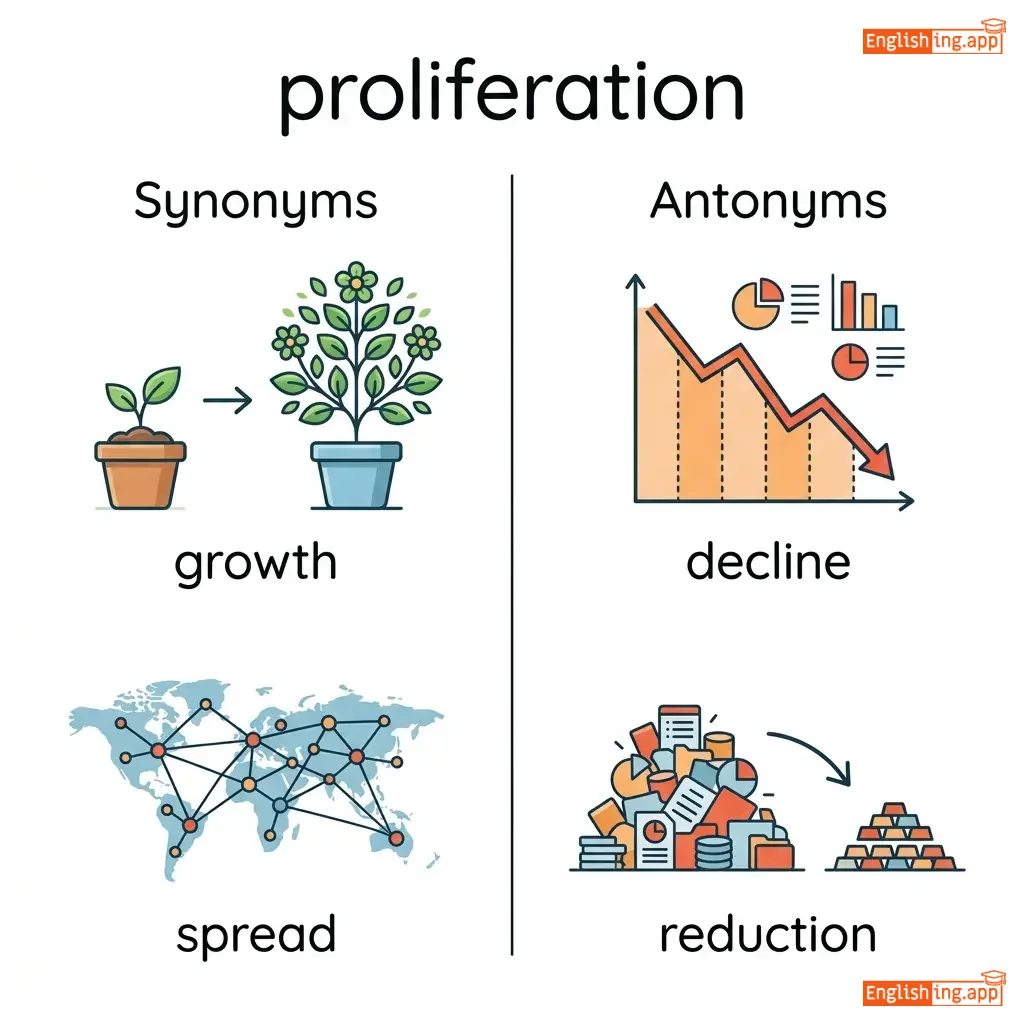
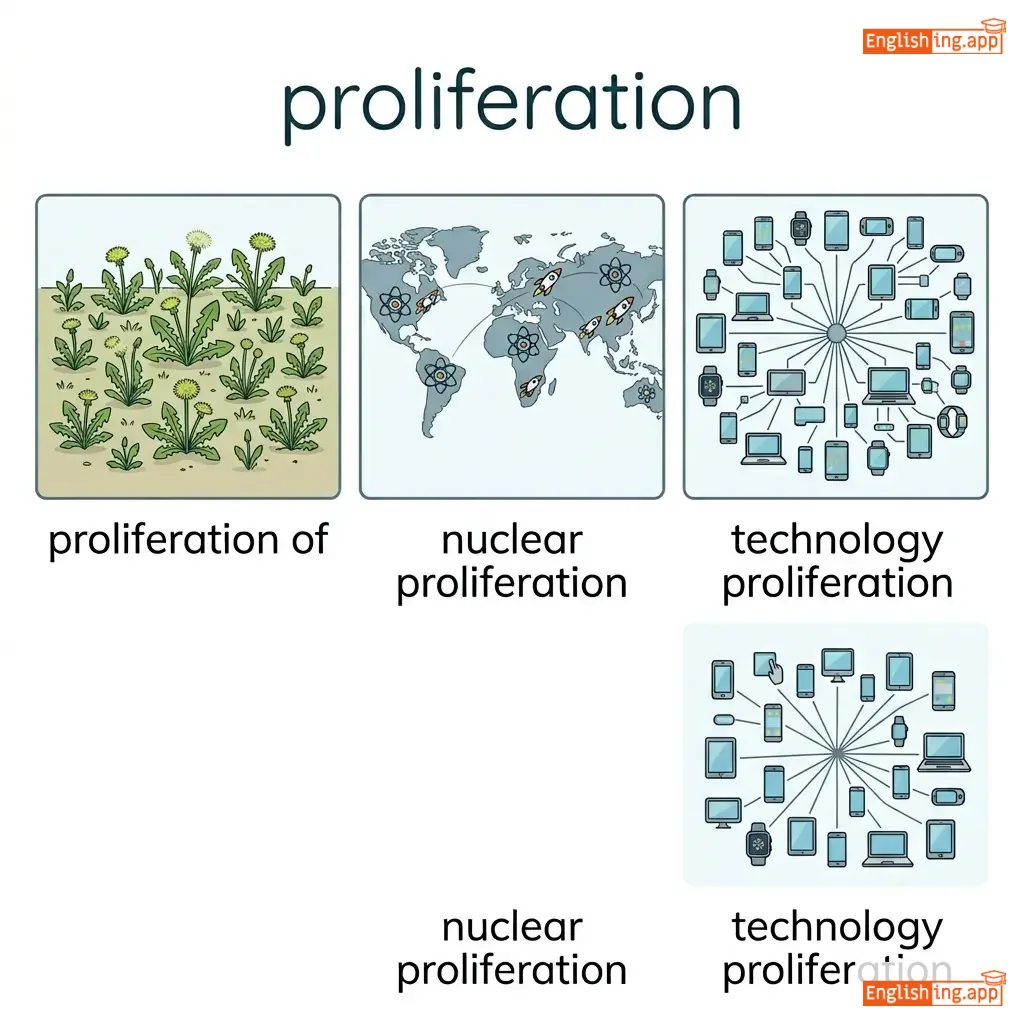
|
Rapid increase in numbers; rapid reproduction or spread.
••••••
|
The proliferation of technology has greatly impacted all industries. |
spread, increase
••••••
|
reduction, decline
••••••
|
|
#3557
🤔
|
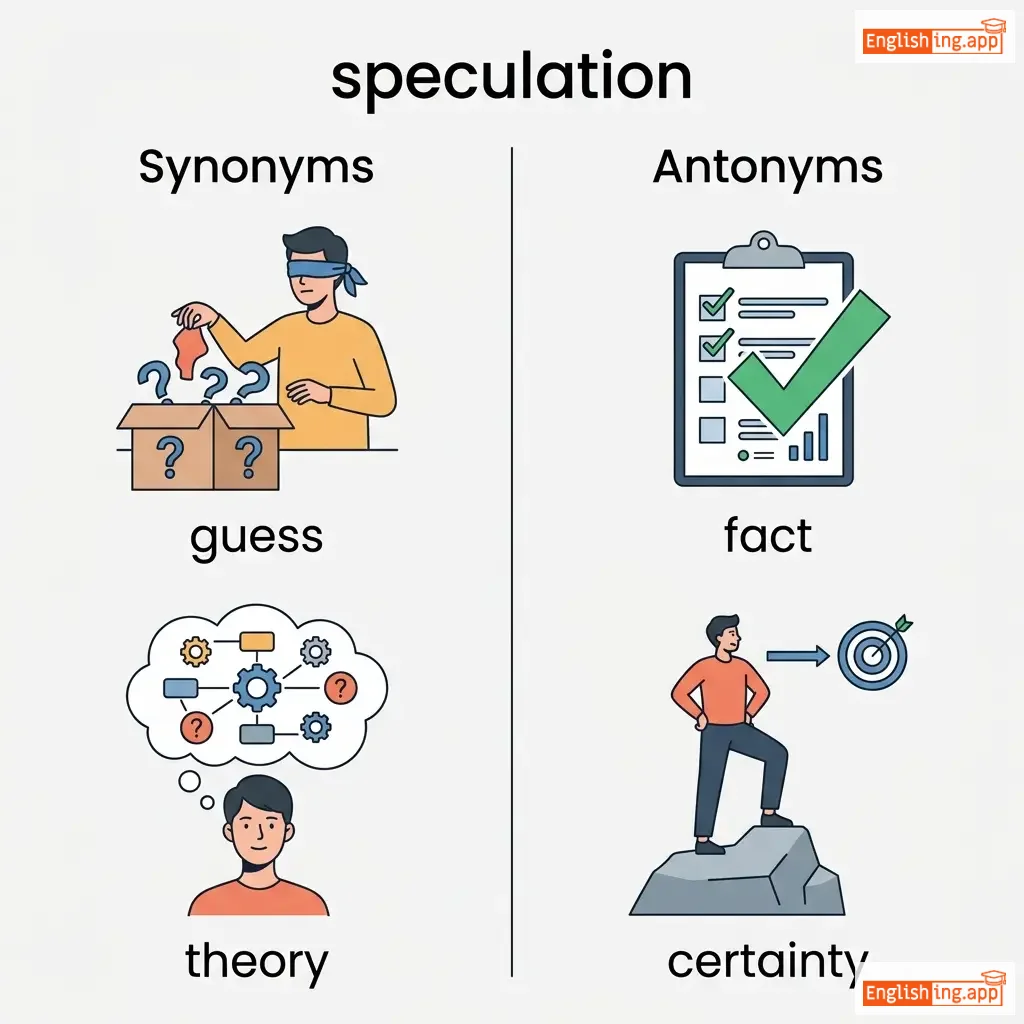
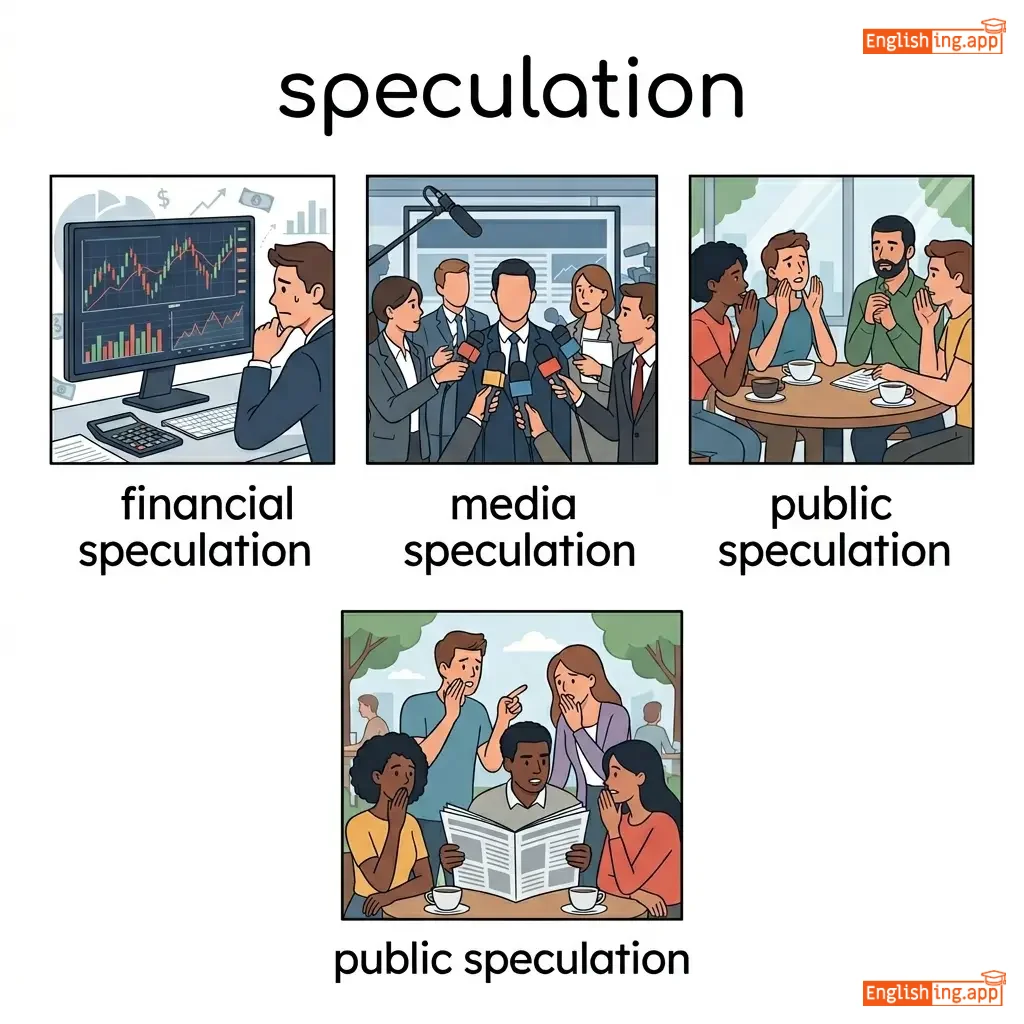
ˌspɛkjʊˈleɪʃən
noun
••••••
|
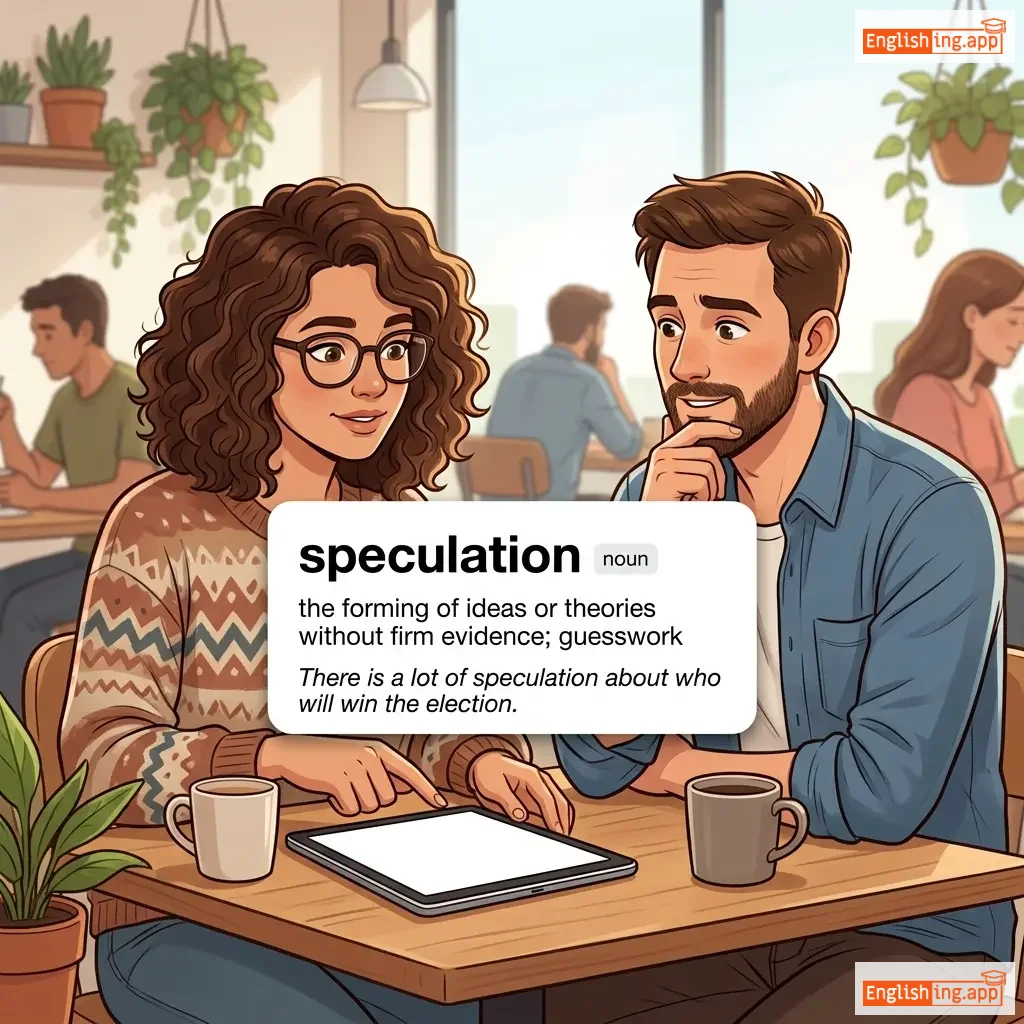
|
The forming of a theory or conjecture without firm evidence.
••••••
|
Speculation about the economy's future is rife among experts. |
conjecture, guess
••••••
|
certainty, fact
••••••
|
|
#3558
🎢
|
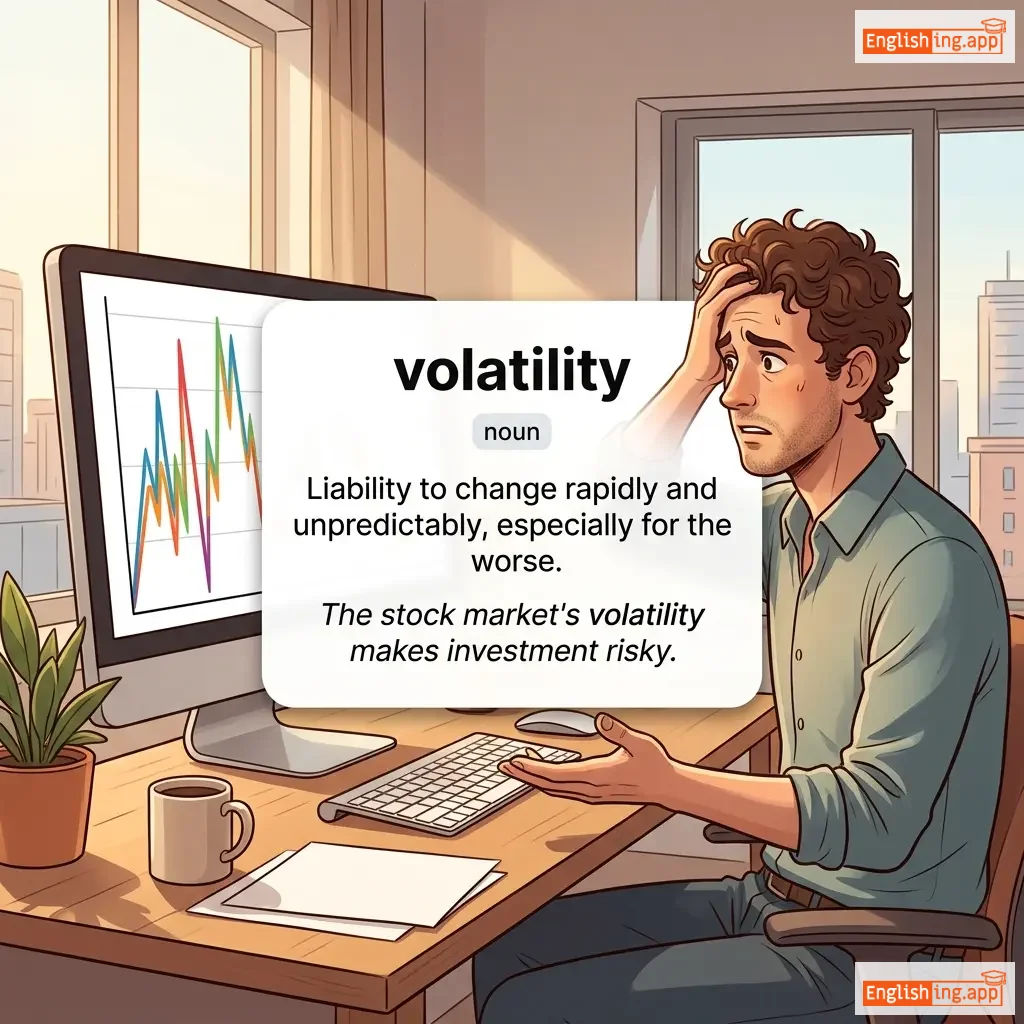
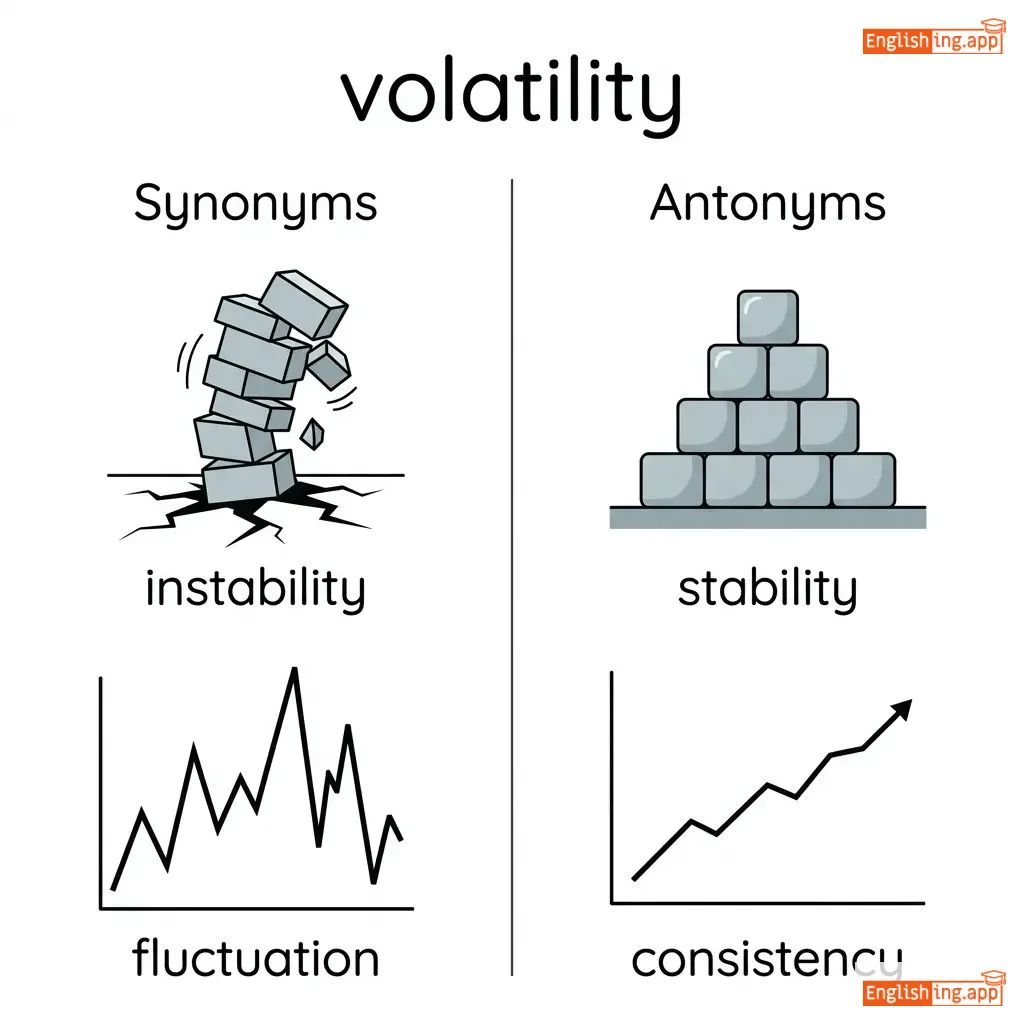
ˌvɒləˈtɪləti
noun
••••••
|
|
Liability to change rapidly and unpredictably, especially for the worse.
••••••
|
The stock market is known for its volatility, with prices changing rapidly. |
instability, fluctuation
••••••
|
stability, consistency
••••••
|
|
#3559
👑
|
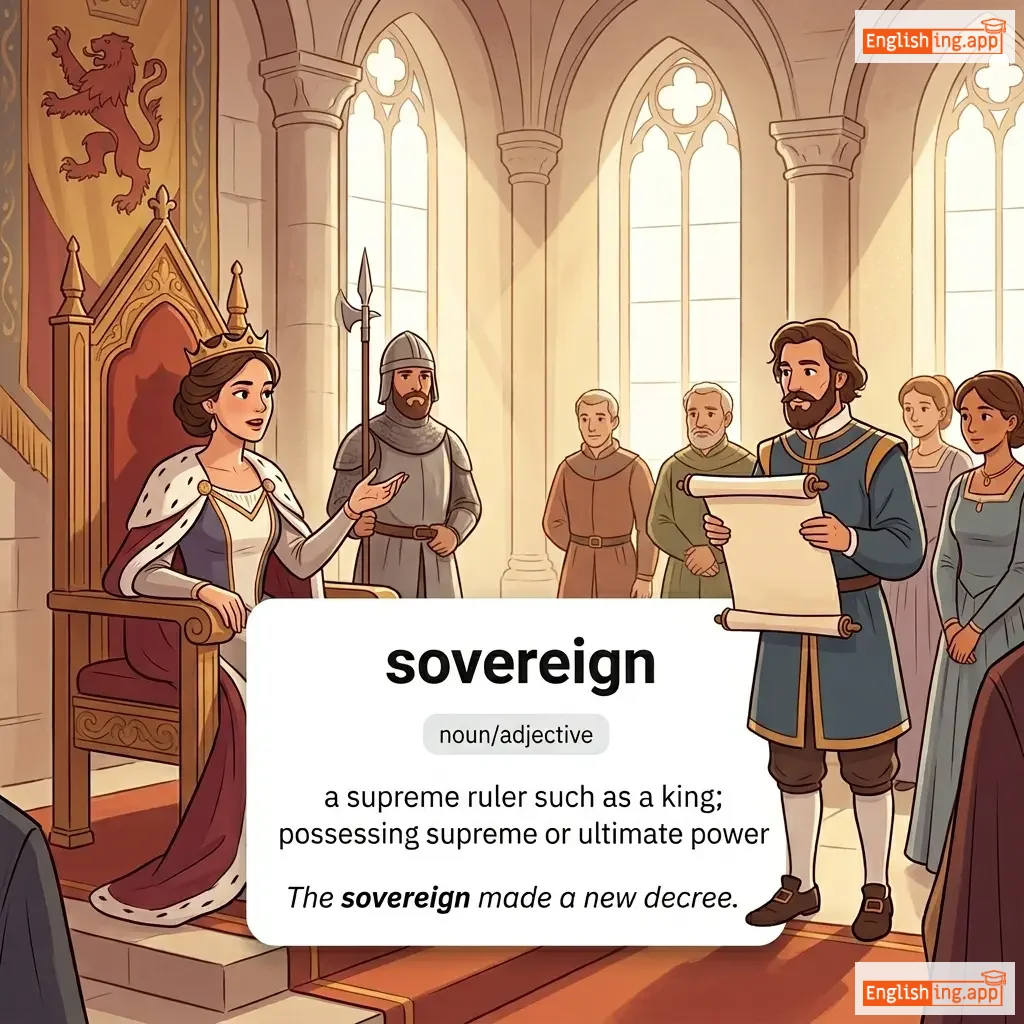
ˈsɒvrɪn
adjective
••••••
|
|
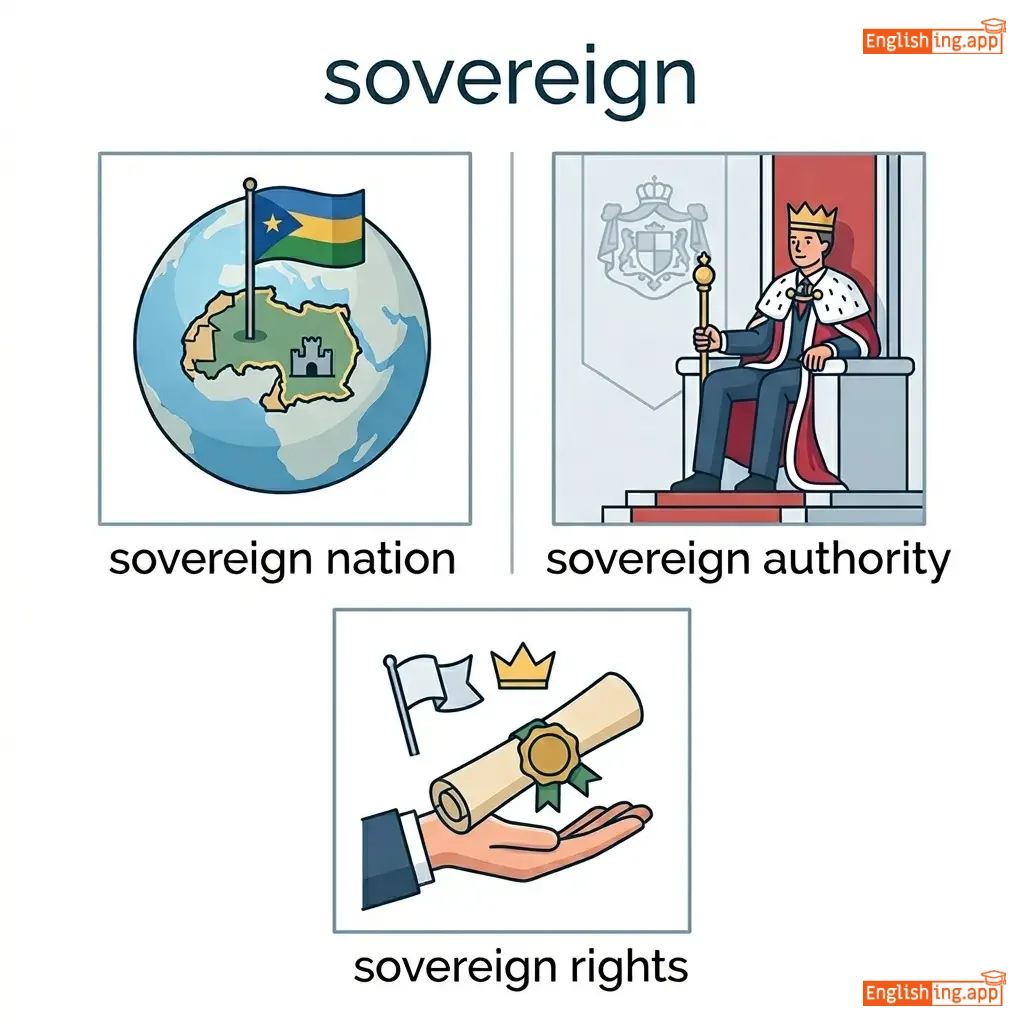
Possessing supreme or ultimate power; independent.
••••••
|
The sovereign government has control over its currency. |
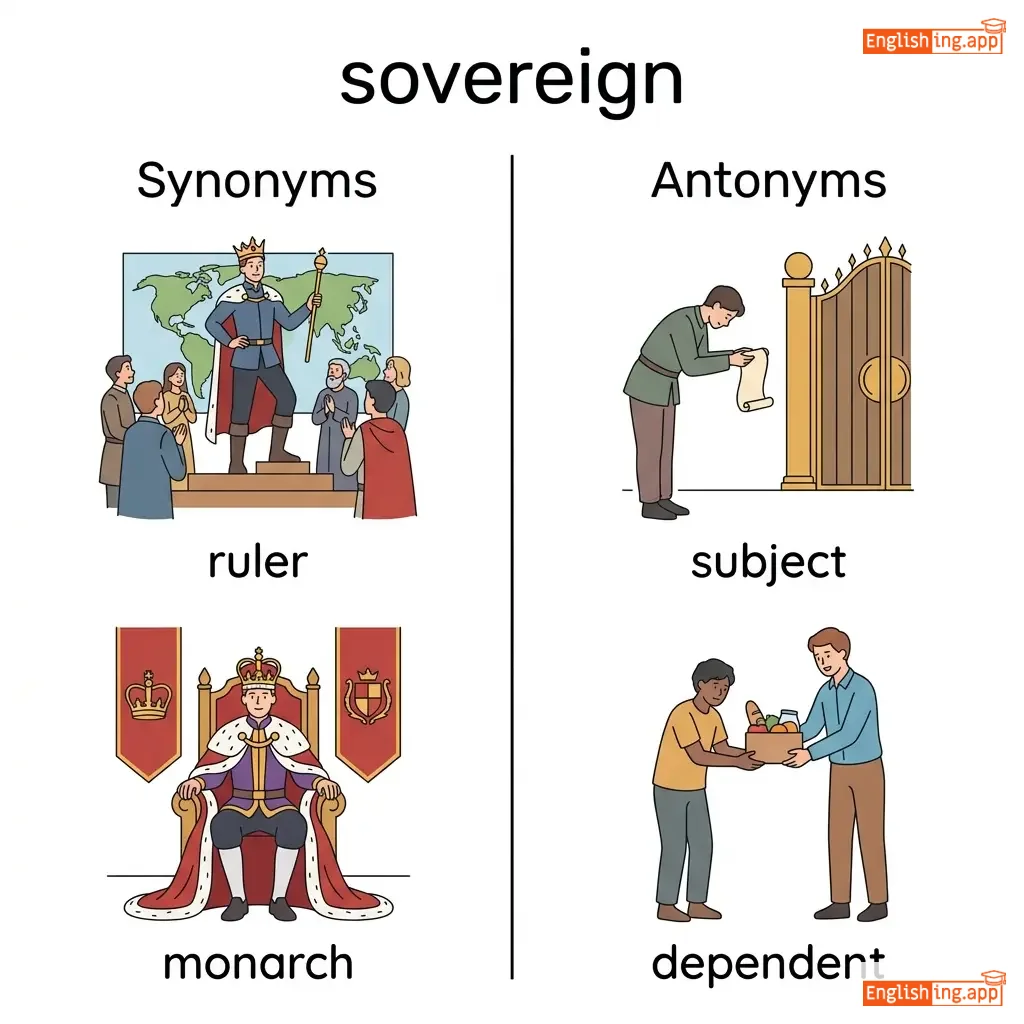
supreme, autonomous
••••••
|
subordinate, dependent
••••••
|
|
#3560
💳
|
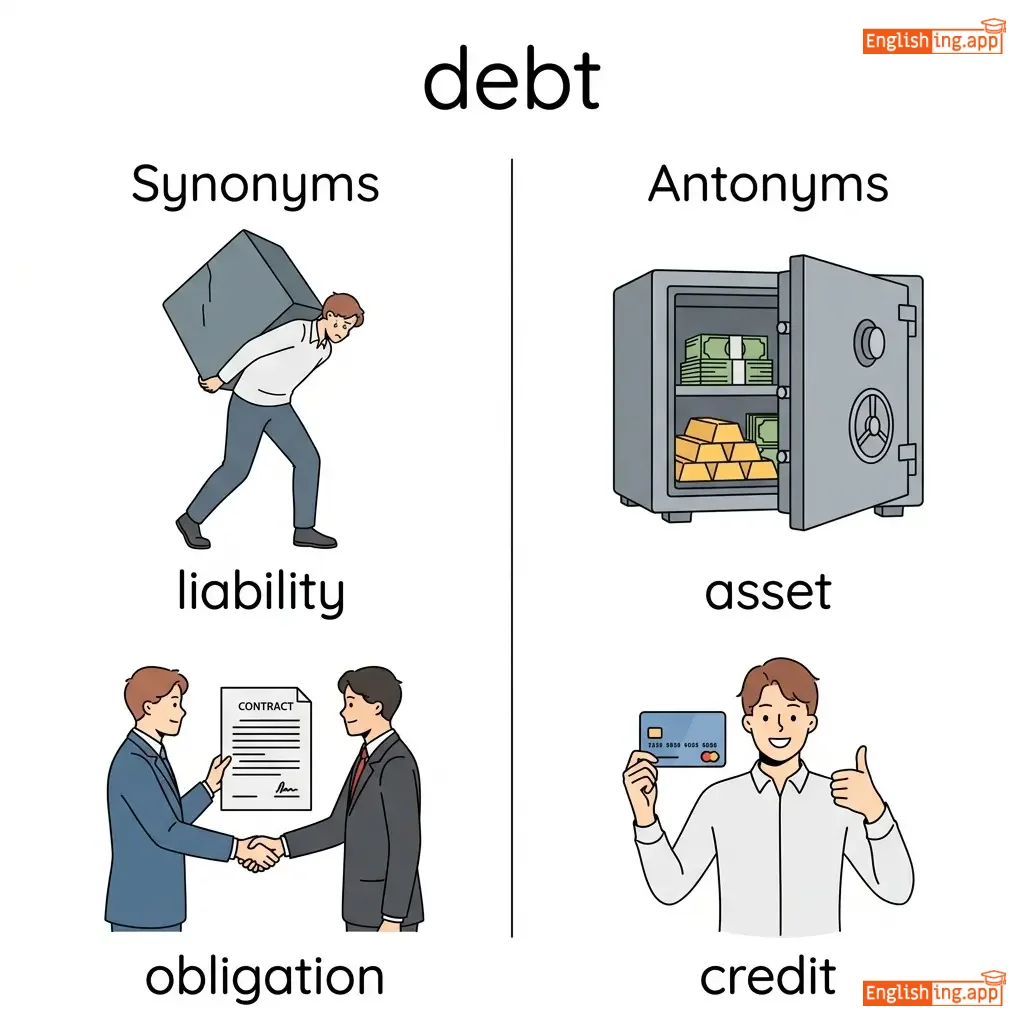
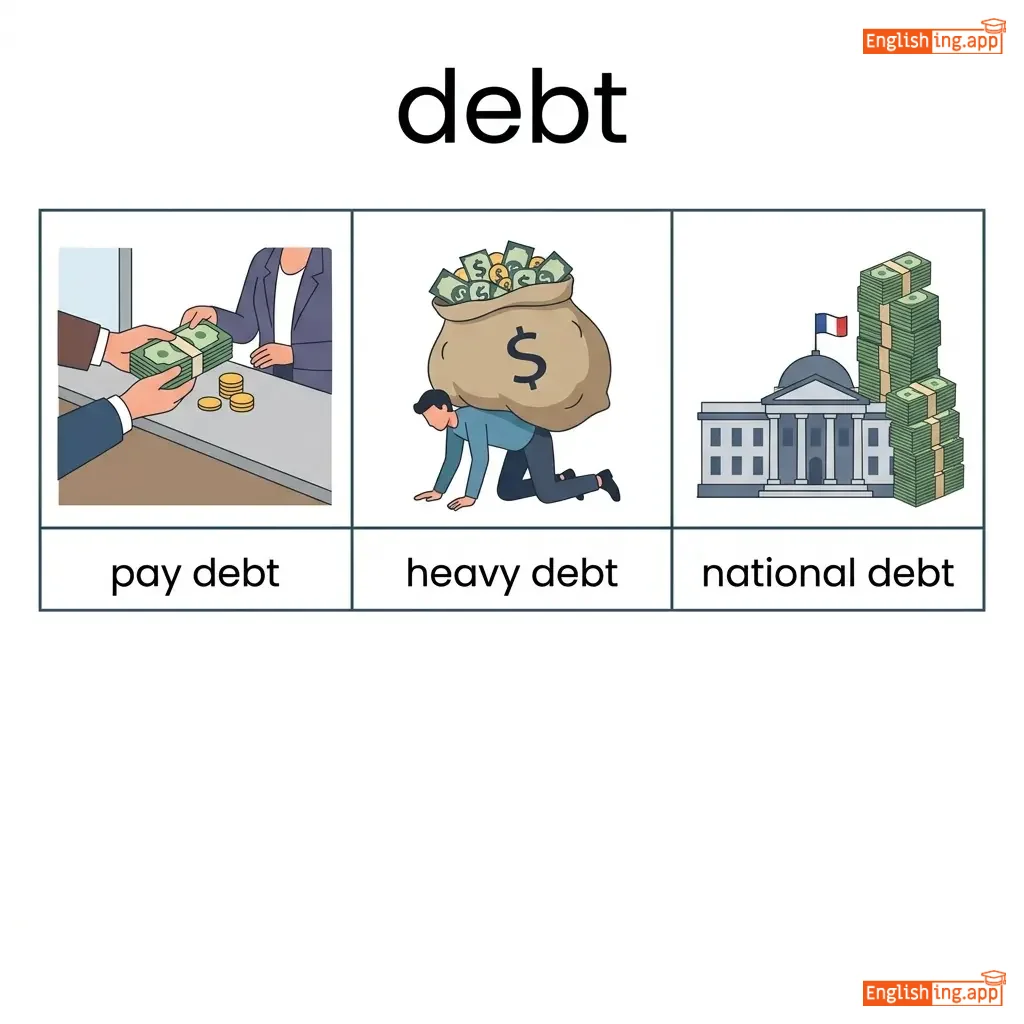
dɛt
noun
••••••
|
|
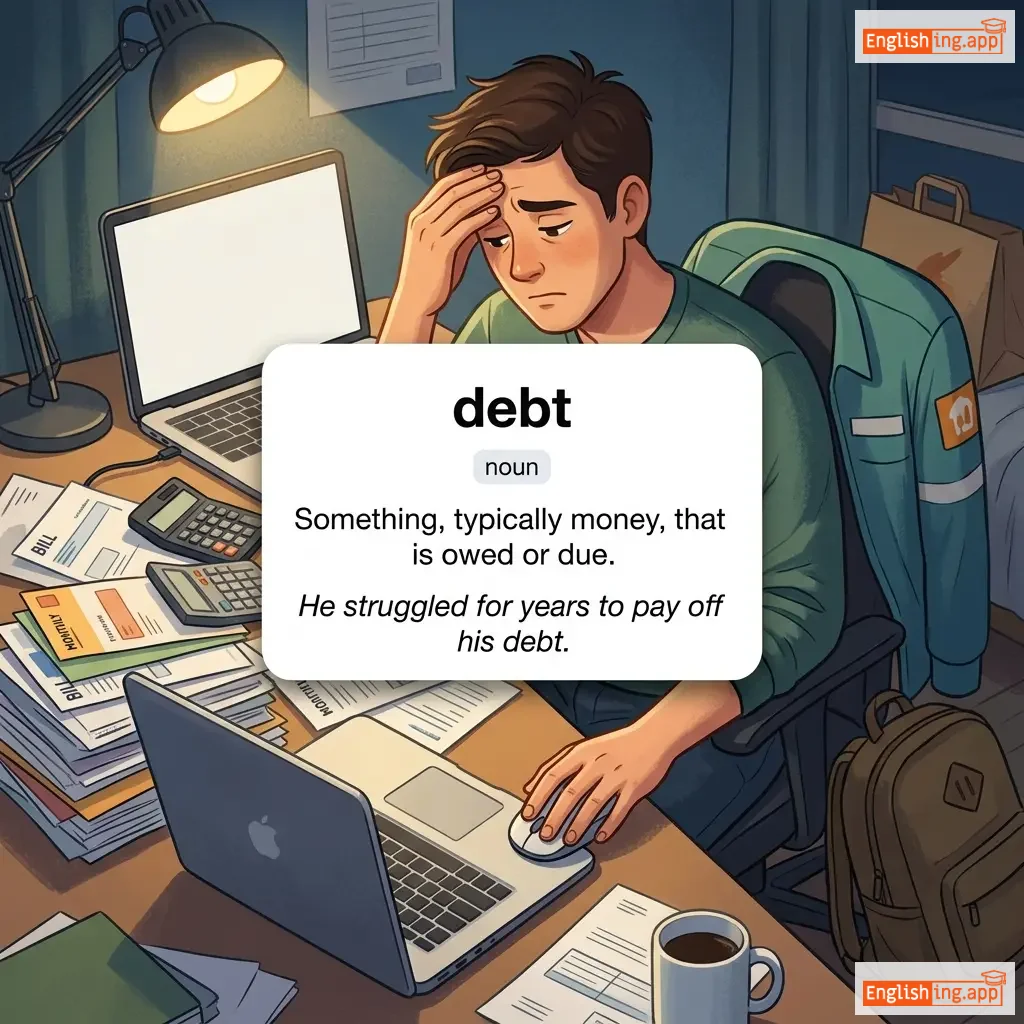
A sum of money that is owed or due.
••••••
|
High levels of debt can lead to a financial crisis. |
liability, obligation
••••••
|
credit, surplus
••••••
|
|
#3561
📊
|
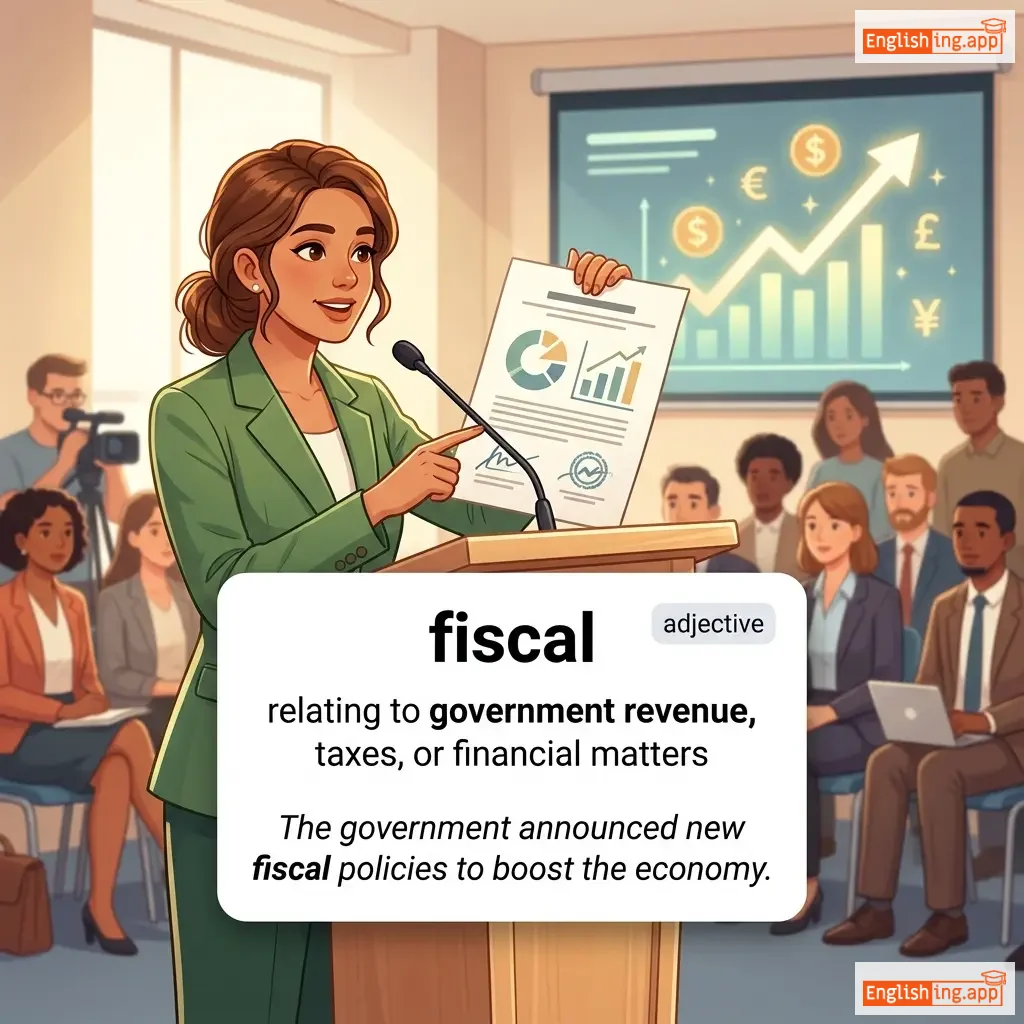
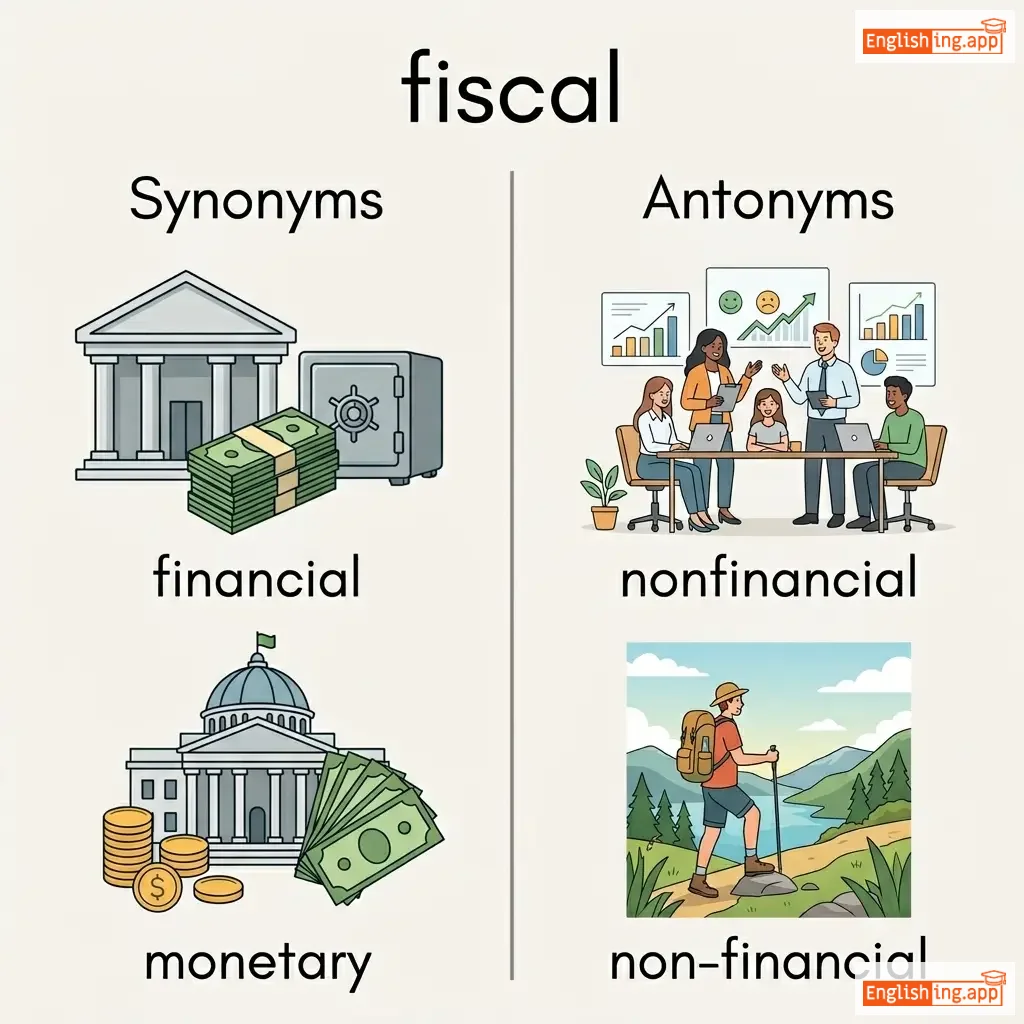
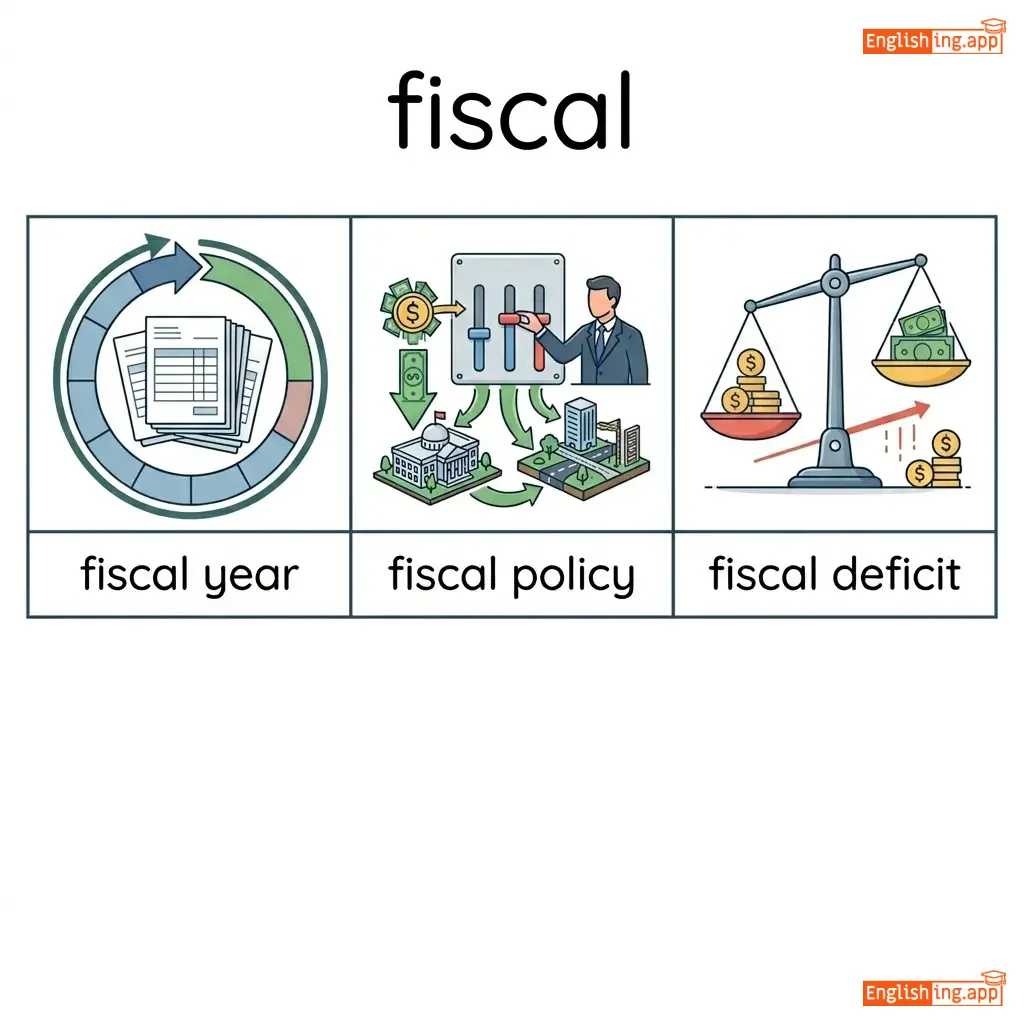
ˈfɪskəl
adjective
••••••
|
|
Relating to government revenue, especially taxes.
••••••
|
The fiscal policy of the government influences inflation. |
budgetary, monetary
••••••
|
non-financial, irrelevant
••••••
|
|
#3562
📉
|
dɪˈfleɪʃən
noun
••••••
|
|
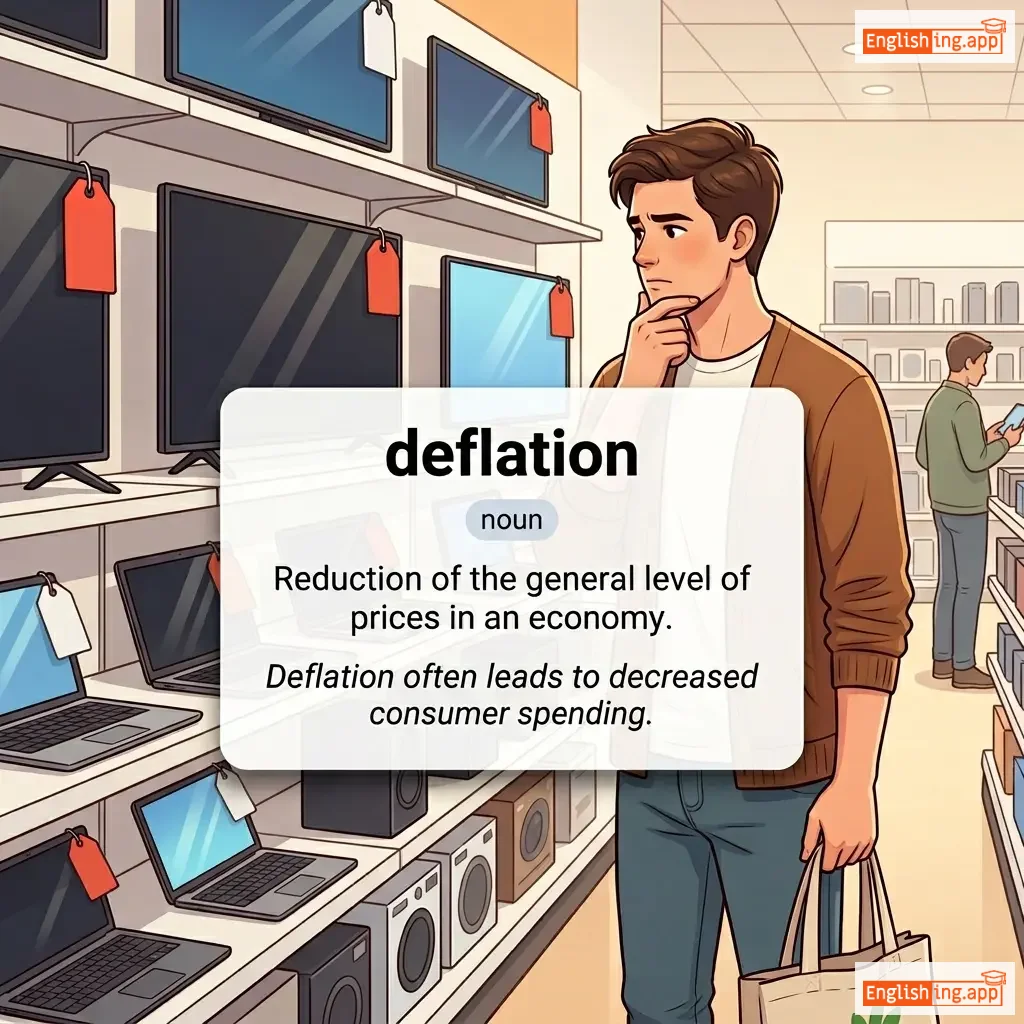
Reduction of the general level of prices in an economy.
••••••
|
Deflation often leads to decreased consumer spending. |
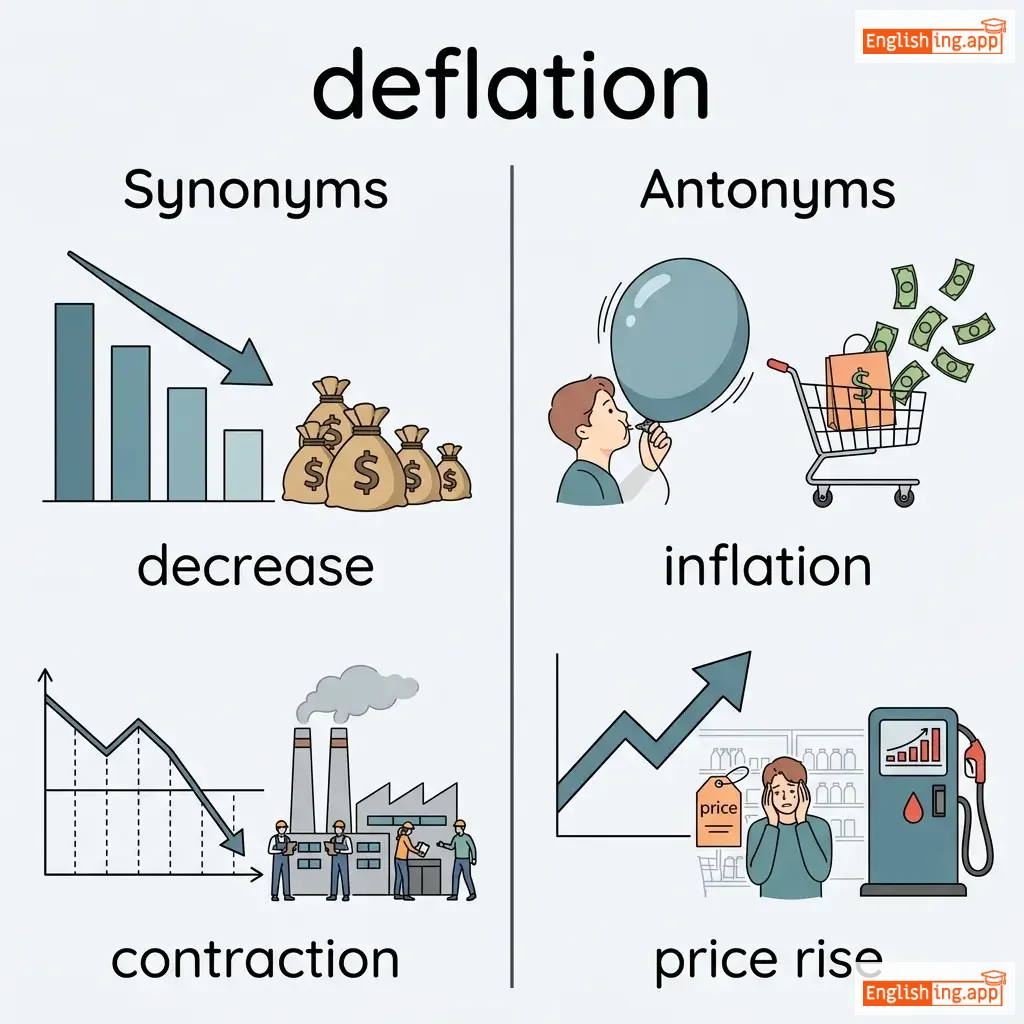
decrease, contraction
••••••
|
inflation, price rise
••••••
|
|
#3563
⏸️
|
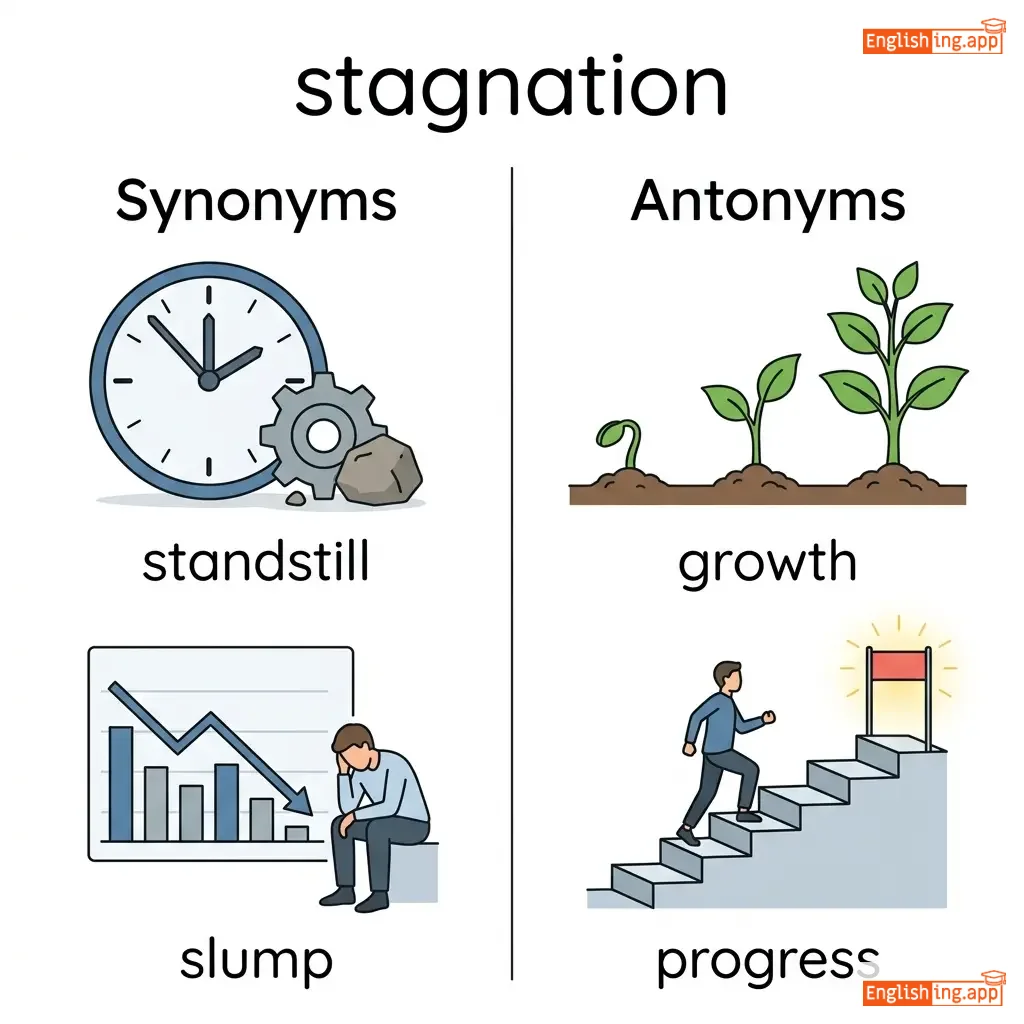
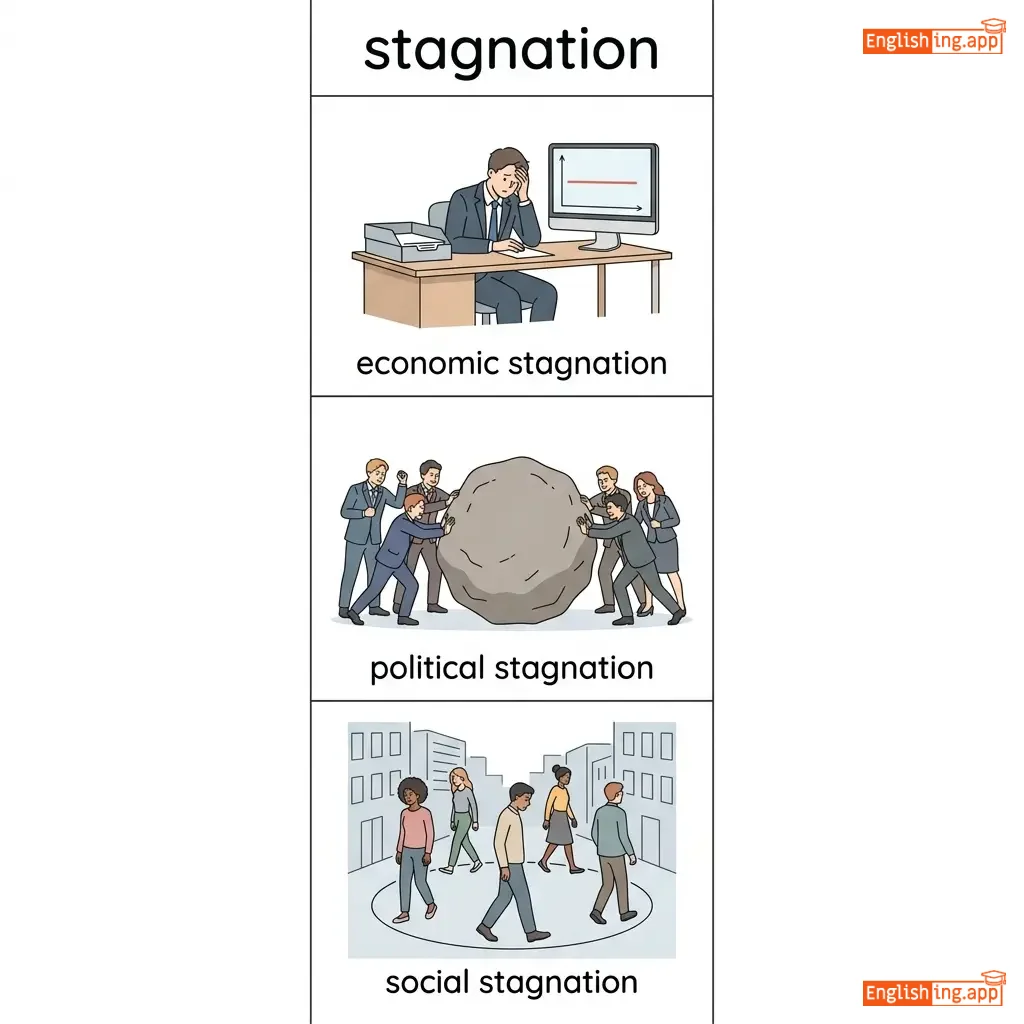
stæɡˈneɪʃən
noun
••••••
|
|
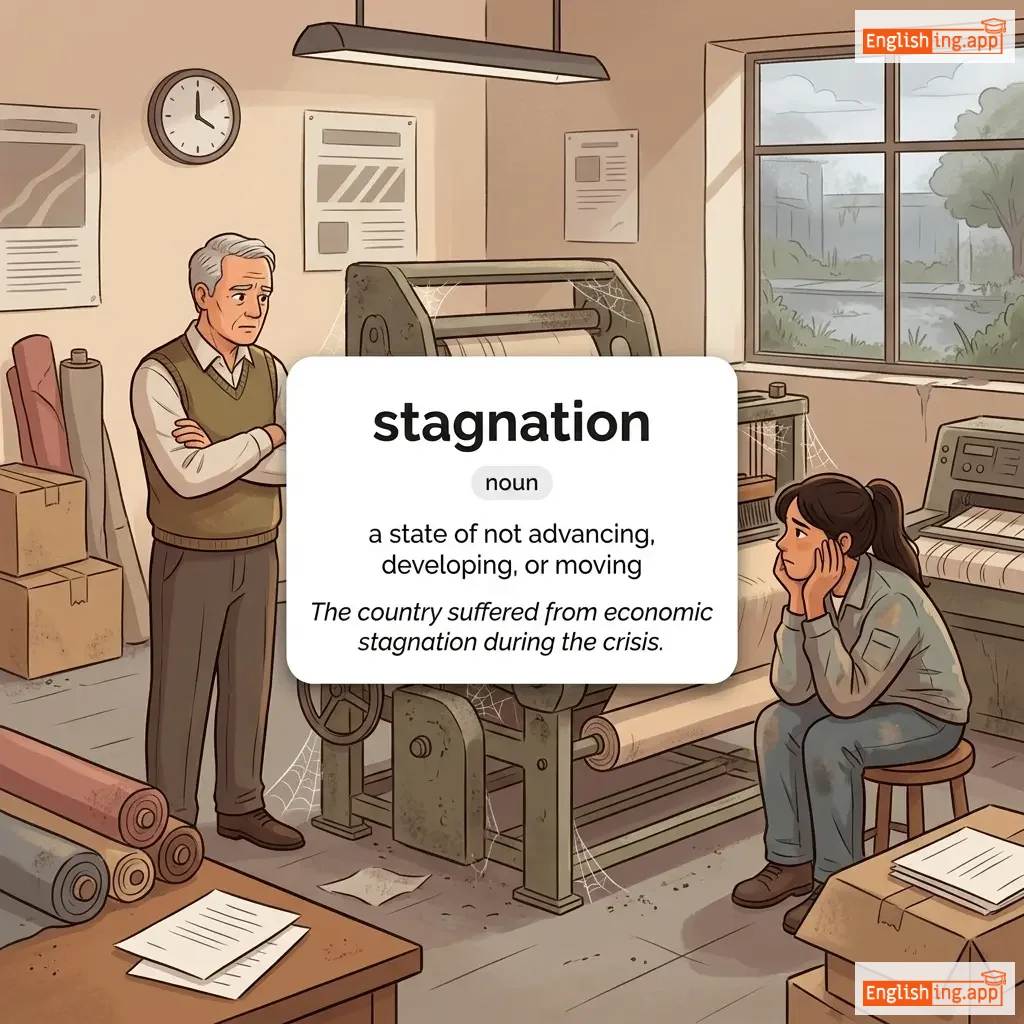
A period of little or no growth in an economy.
••••••
|
Economic stagnation leads to a lack of growth in the job market. |
inactivity, stasis
••••••
|
progress, advancement
••••••
|
|
#3564
📉
|
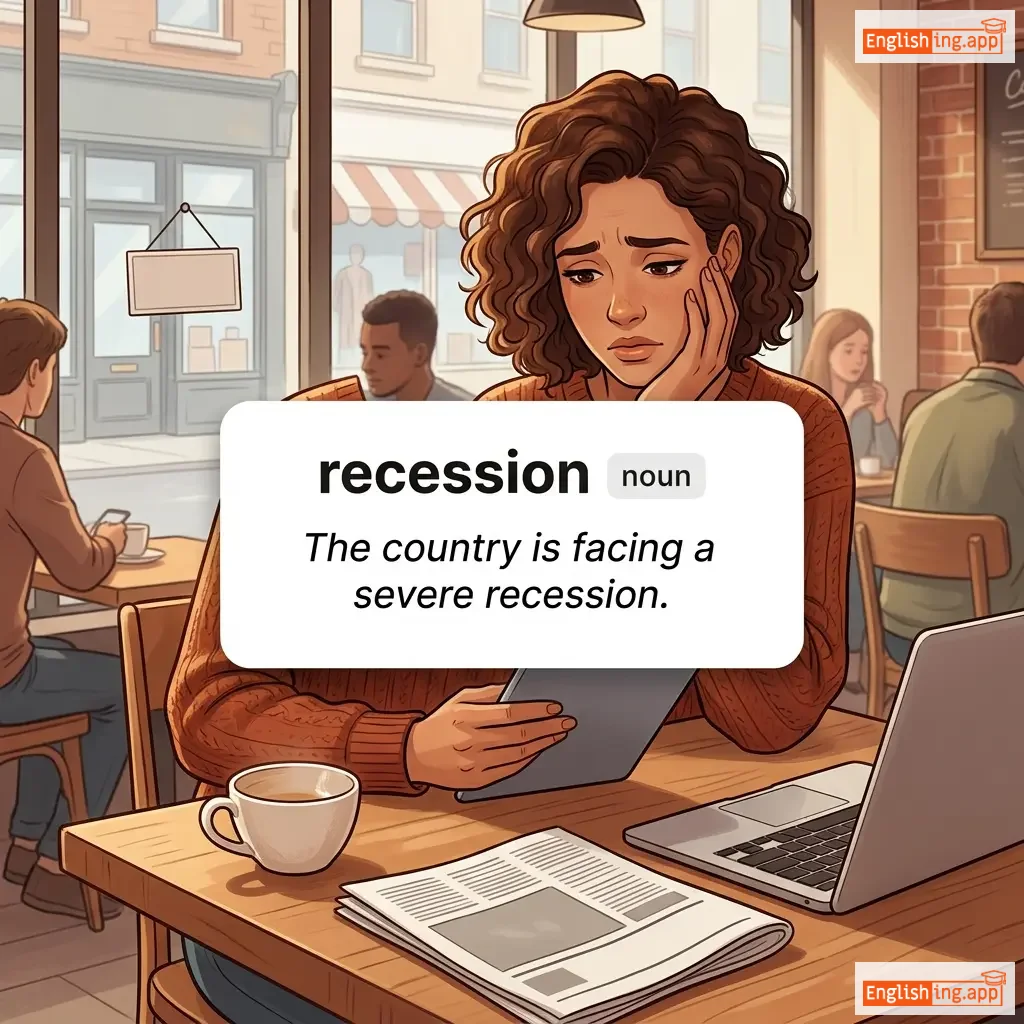
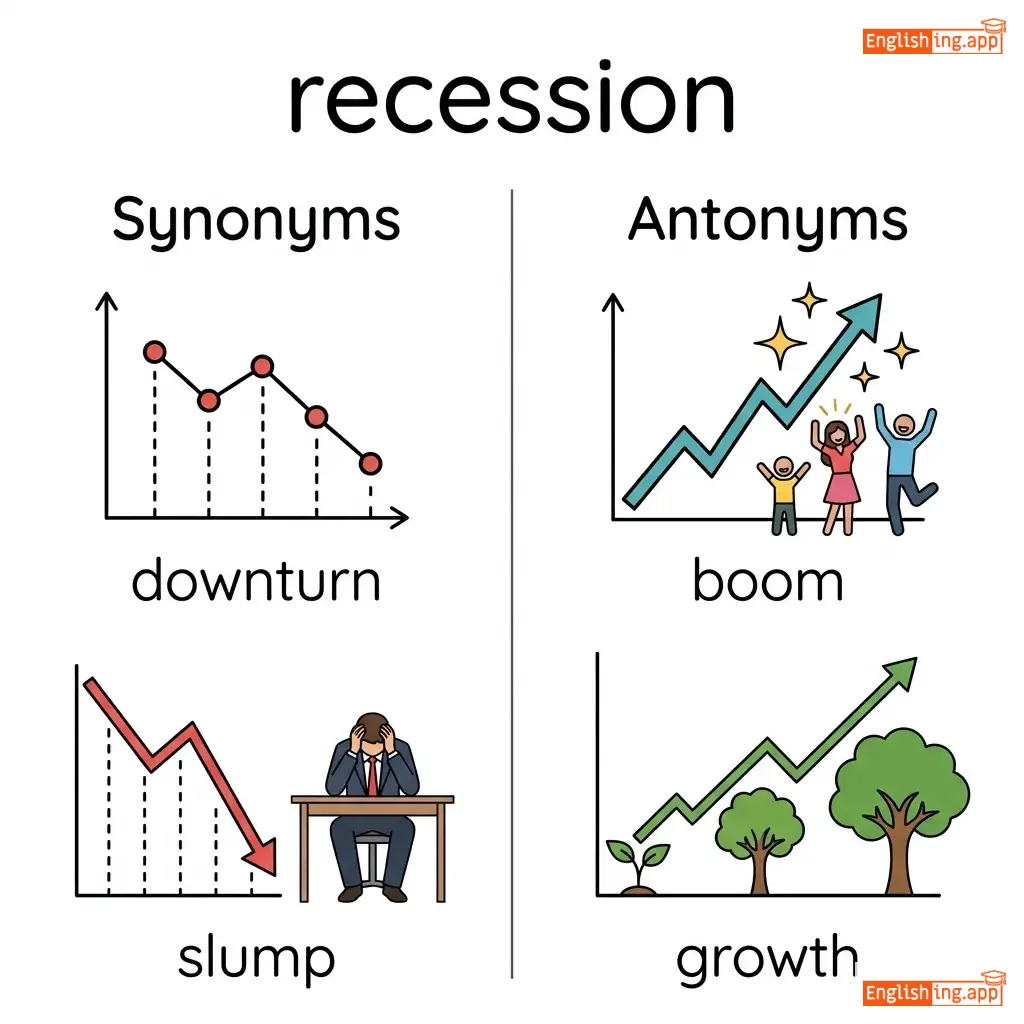
rɪˈsɛʃən
noun
••••••
|
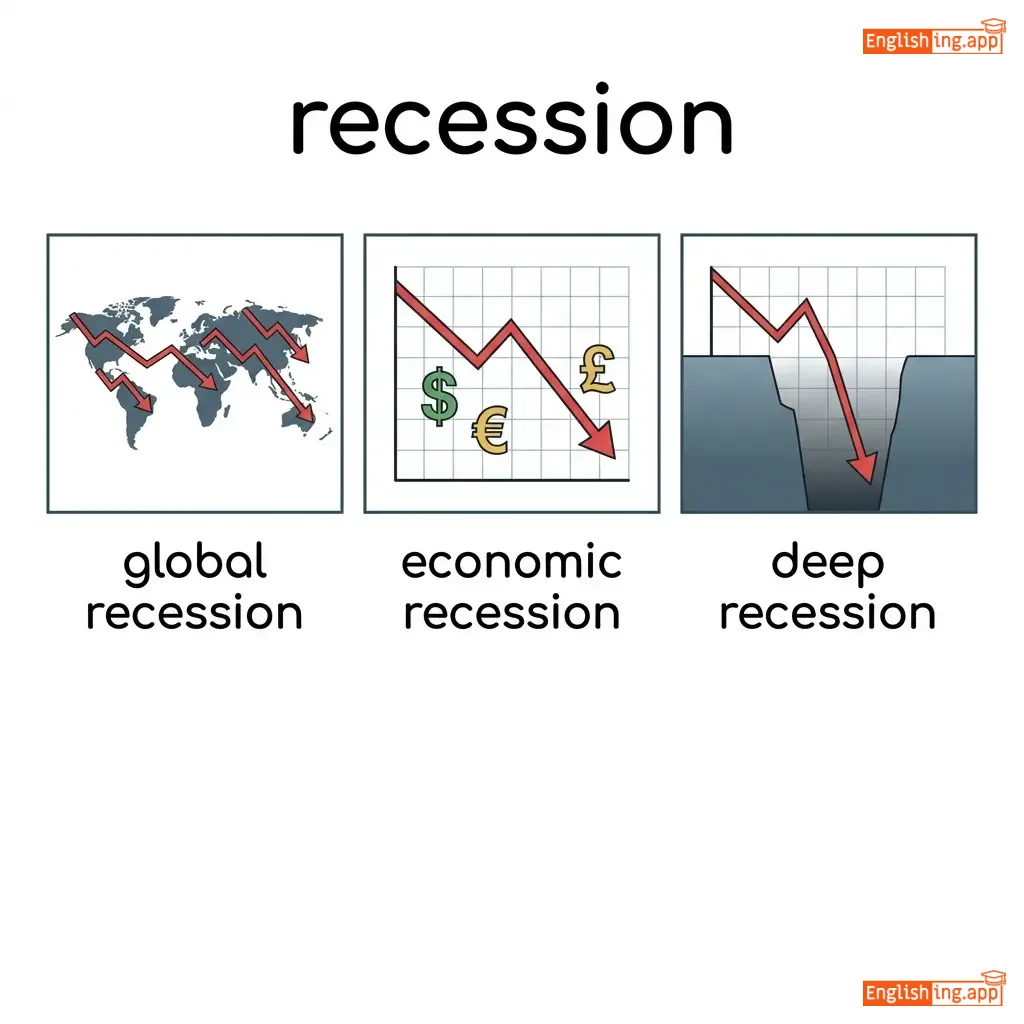
|
A period of temporary economic decline during which trade and industrial activity are reduced.
••••••
|
The economy is experiencing a recession due to external factors. |
downturn, decline
••••••
|
growth, recovery
••••••
|
|
#3565
⚠️
|
ˈkraɪsɪs
noun
••••••
|
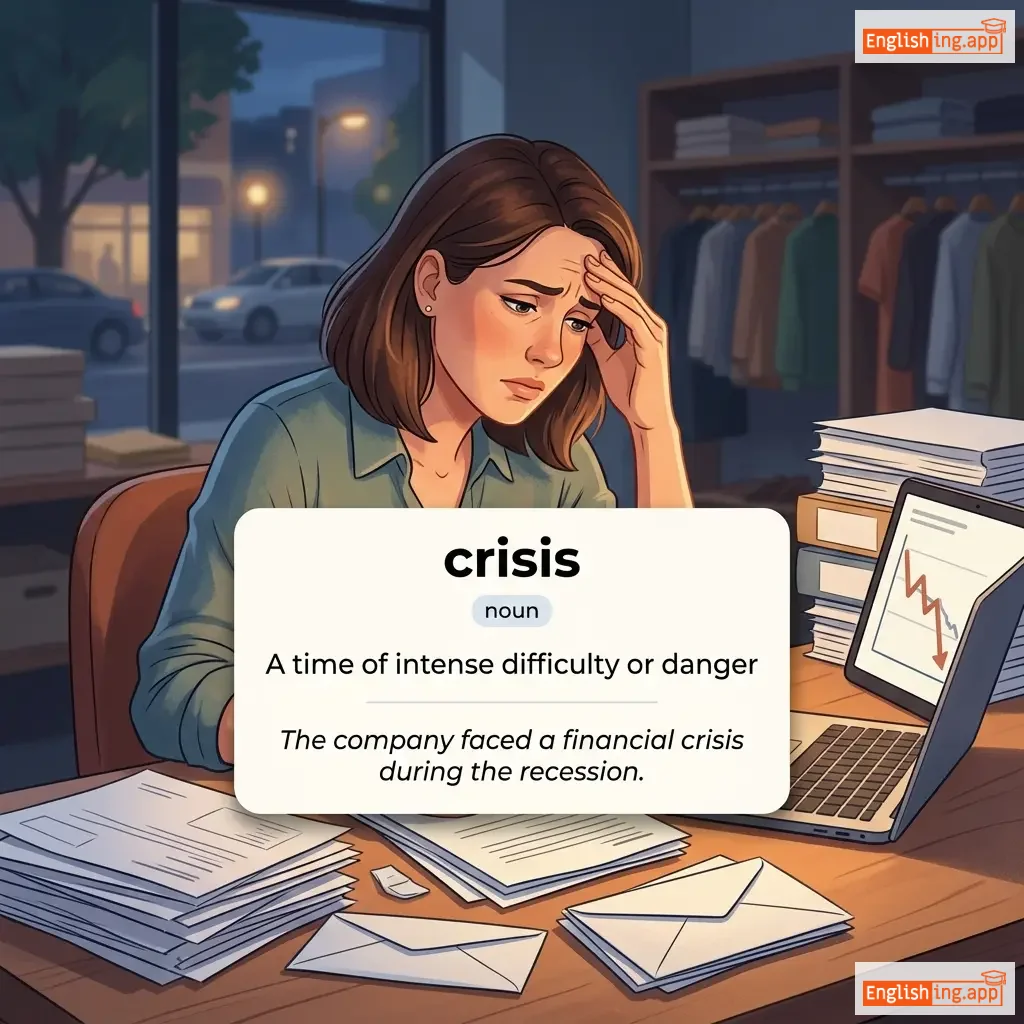
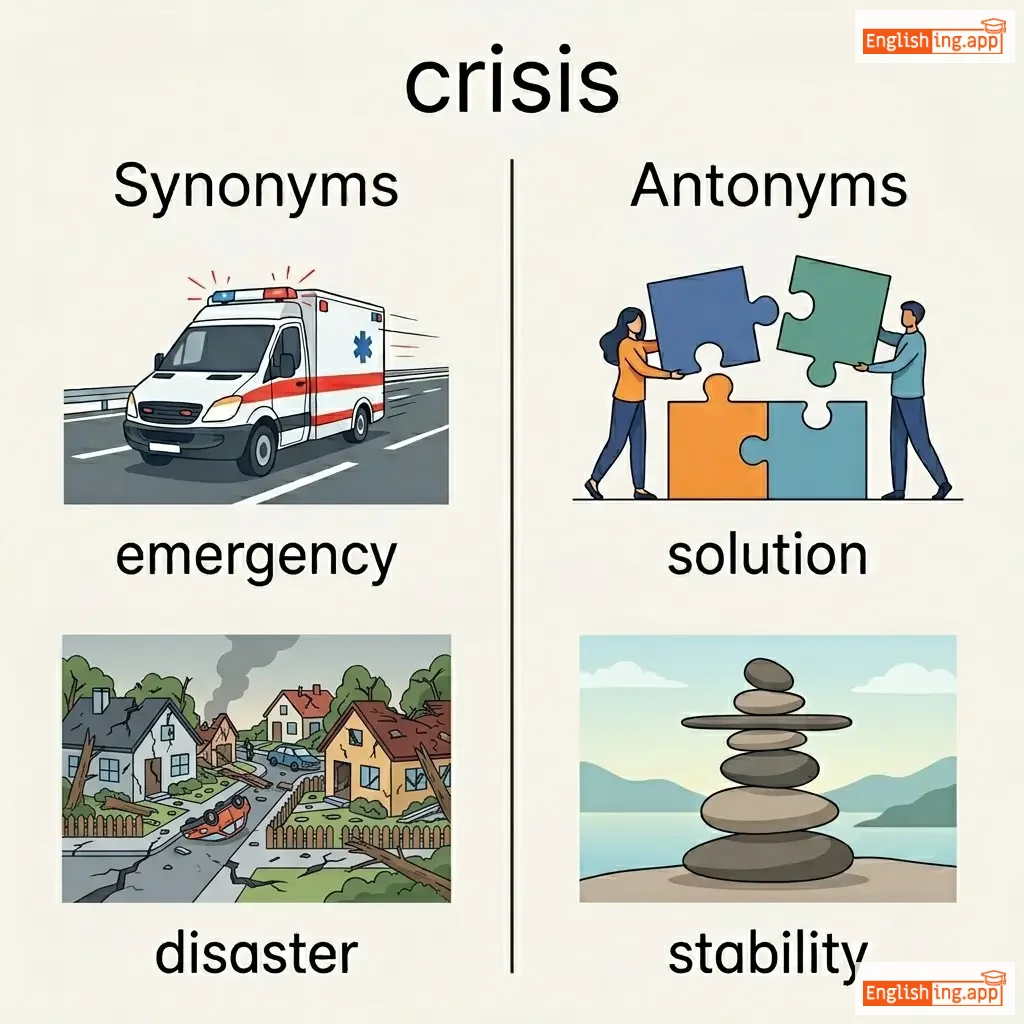
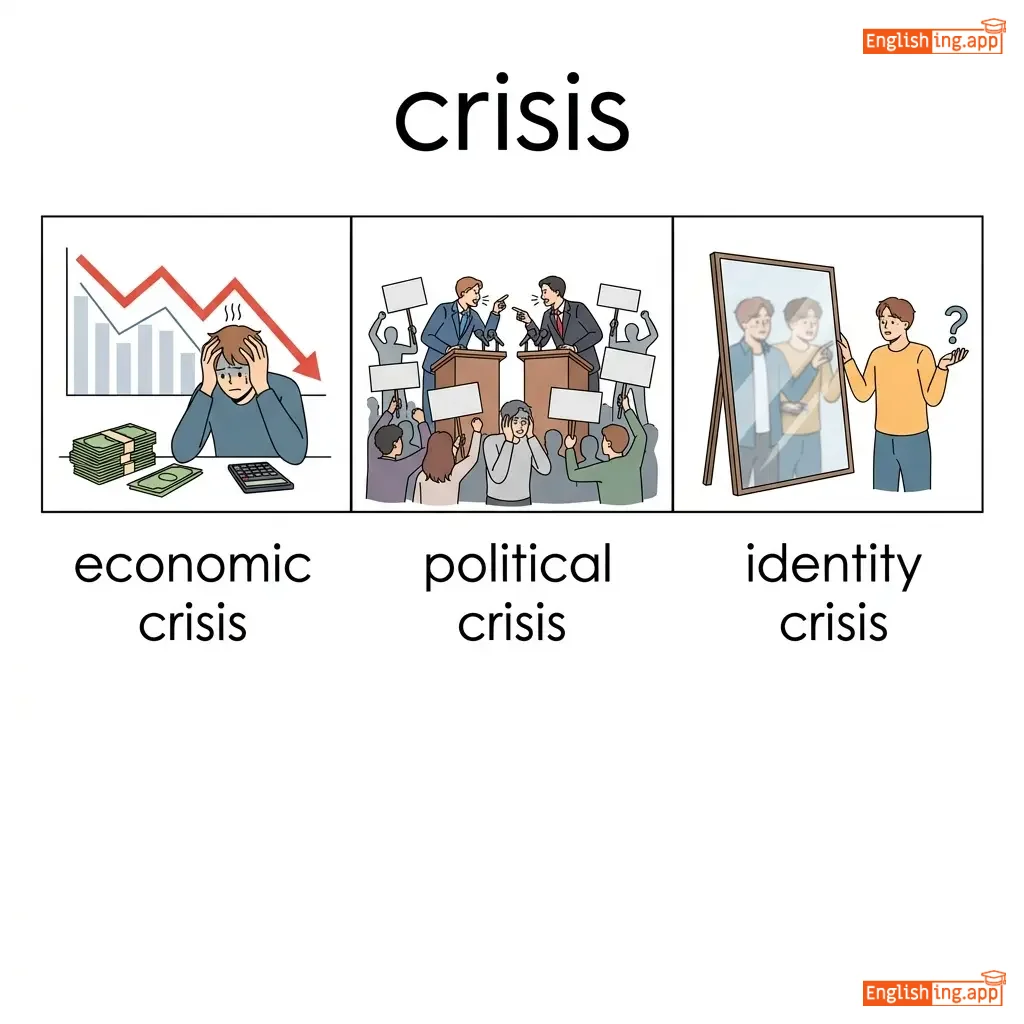
|
A time of intense difficulty, trouble, or danger.
••••••
|
The financial crisis affected global markets. |
disaster, emergency
••••••
|
stability, solution
••••••
|
|
#3566
⚖️
|
ˌikwɪˈlɪbrɪəm
noun
••••••
|
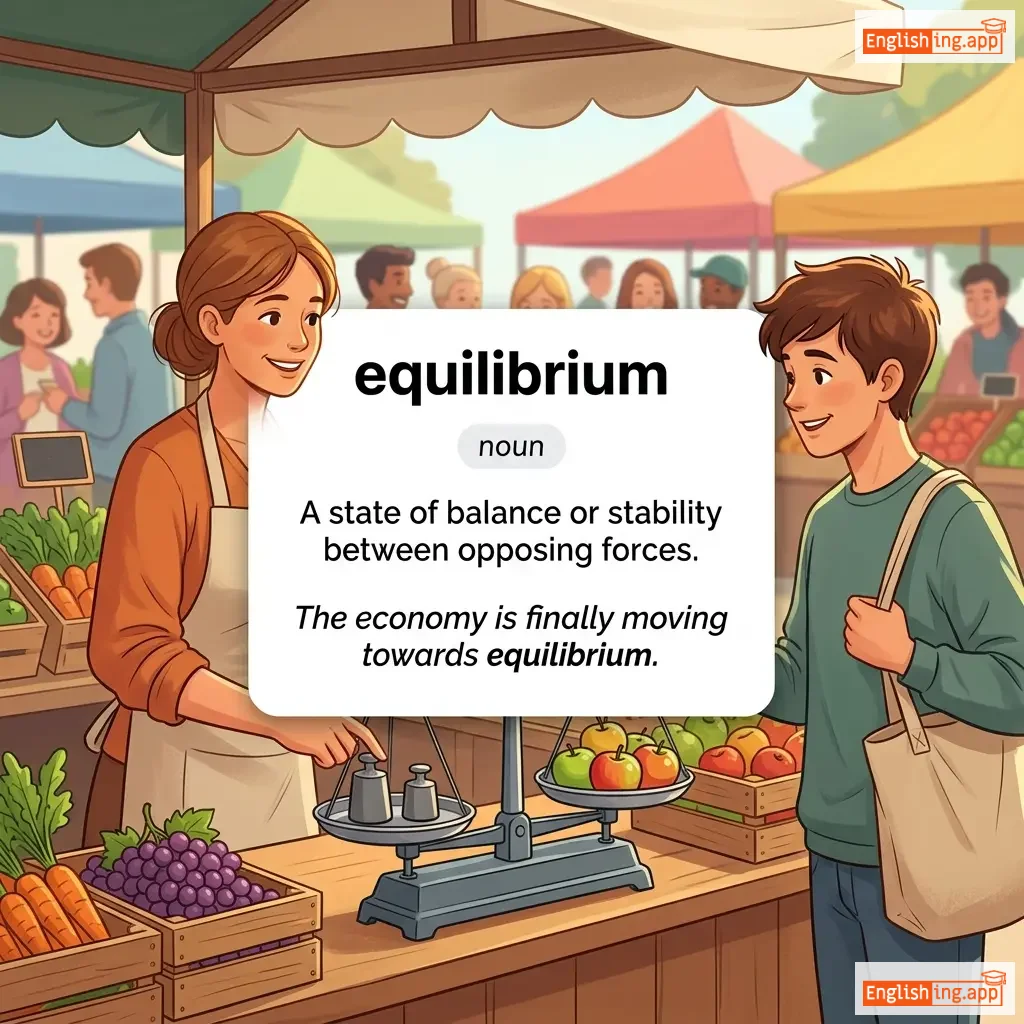
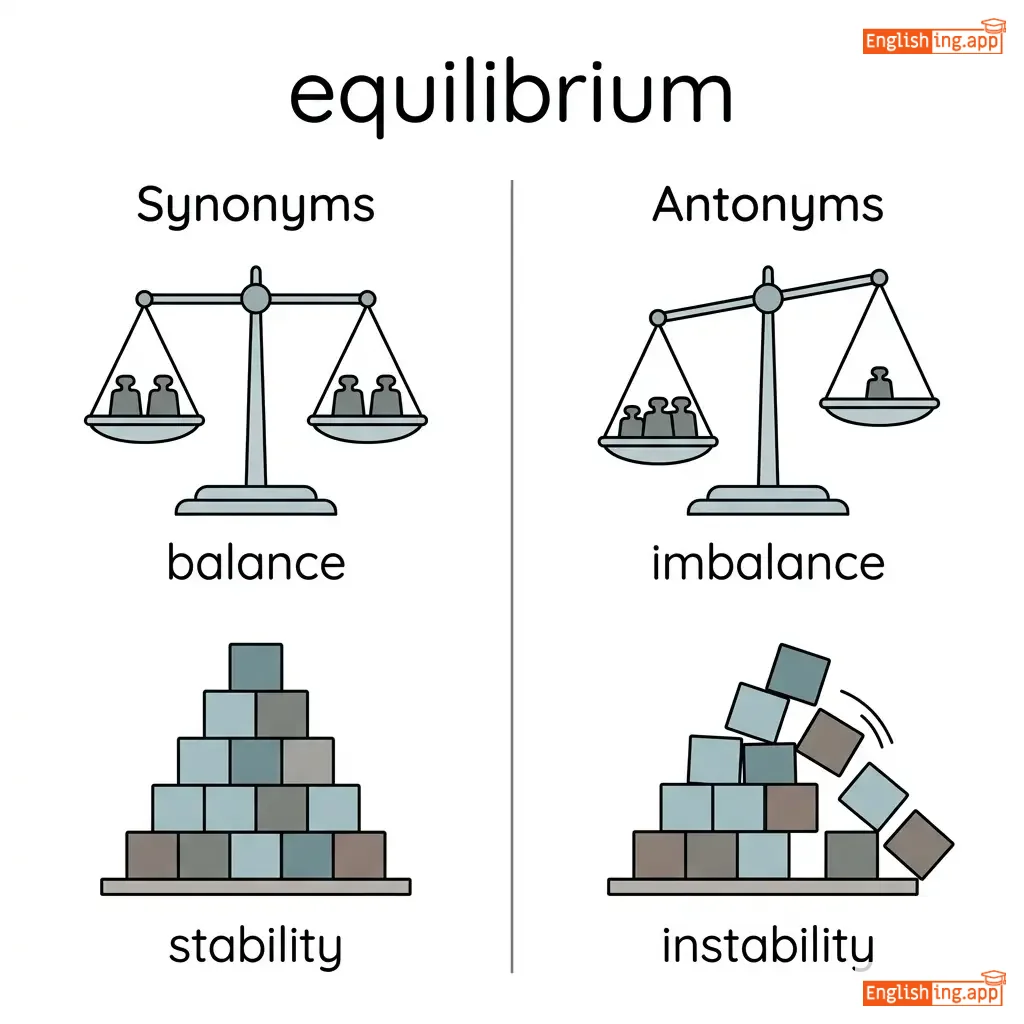
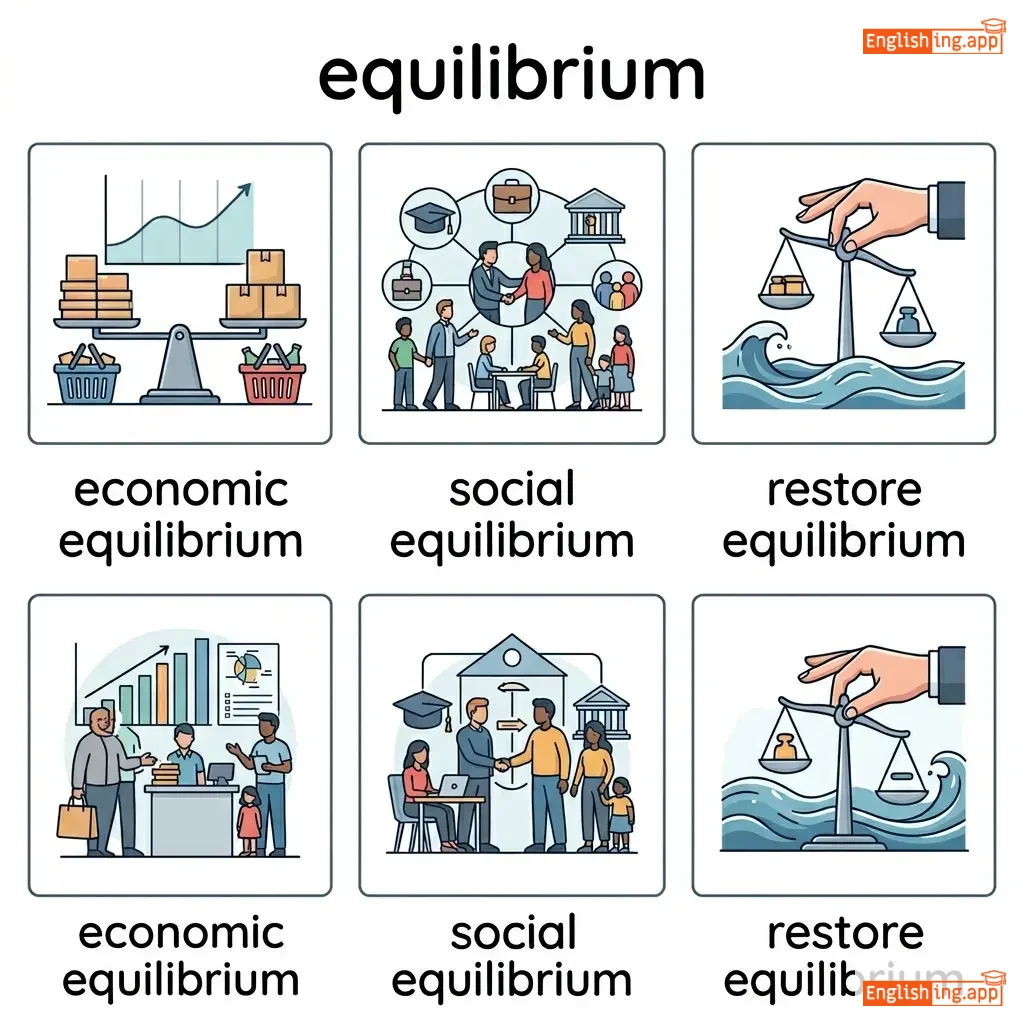
|
A state in which opposing forces or influences are balanced.
••••••
|
Achieving economic equilibrium is essential for long-term stability. |
balance, harmony
••••••
|
imbalance, disruption
••••••
|
|
#3567
🎁
|
ɪnˈsɛntɪvz
noun
••••••
|
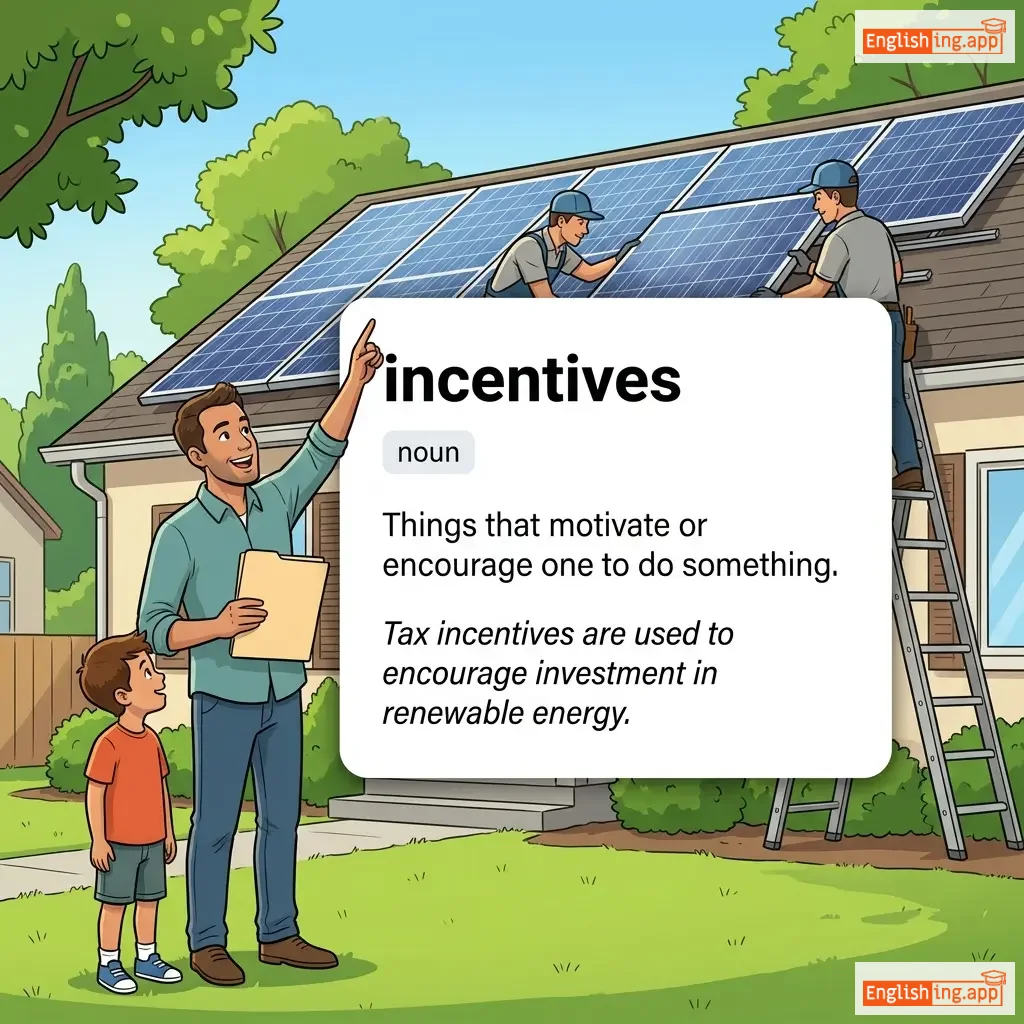
|
Things that motivate or encourage one to do something.
••••••
|
Tax incentives are used to encourage investment in renewable energy. |
motivation, stimulus
••••••
|
deterrent, disincentive
••••••
|
|
#3568
🌍
|
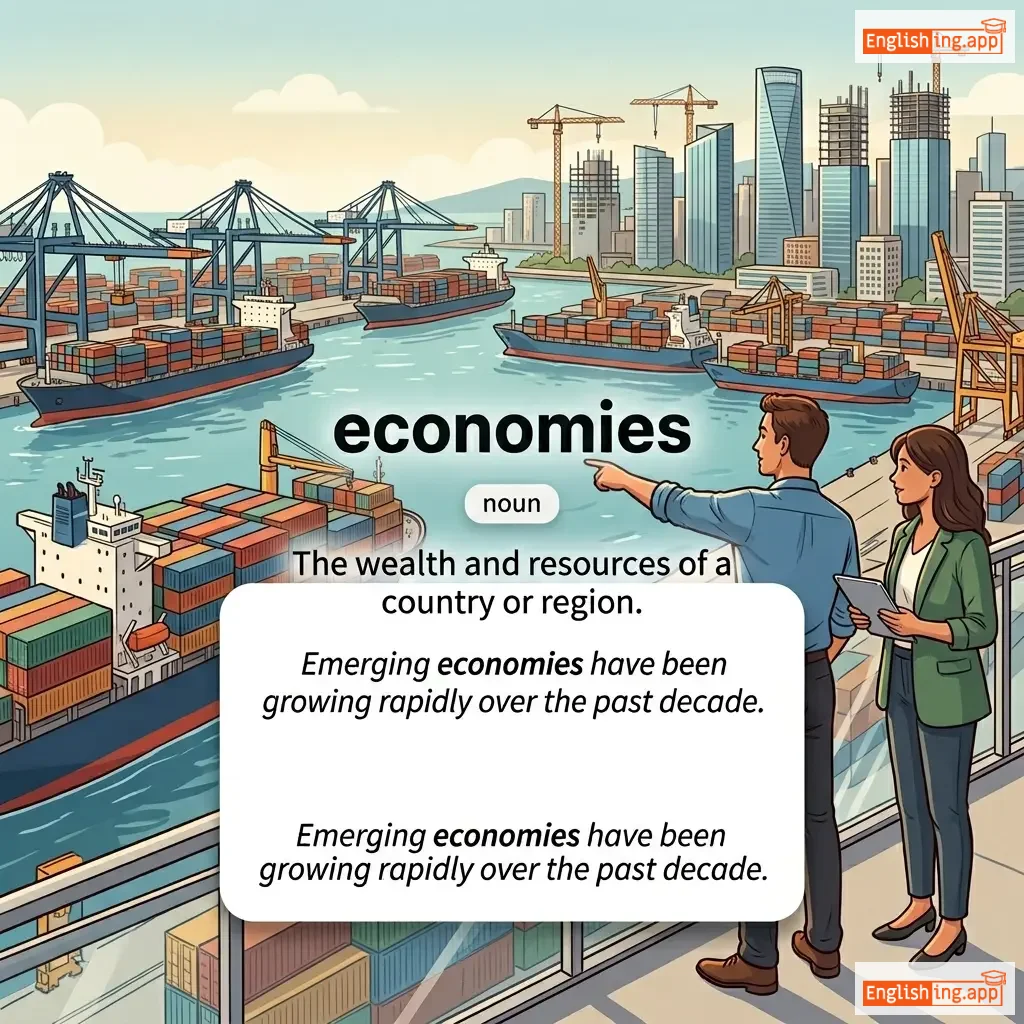
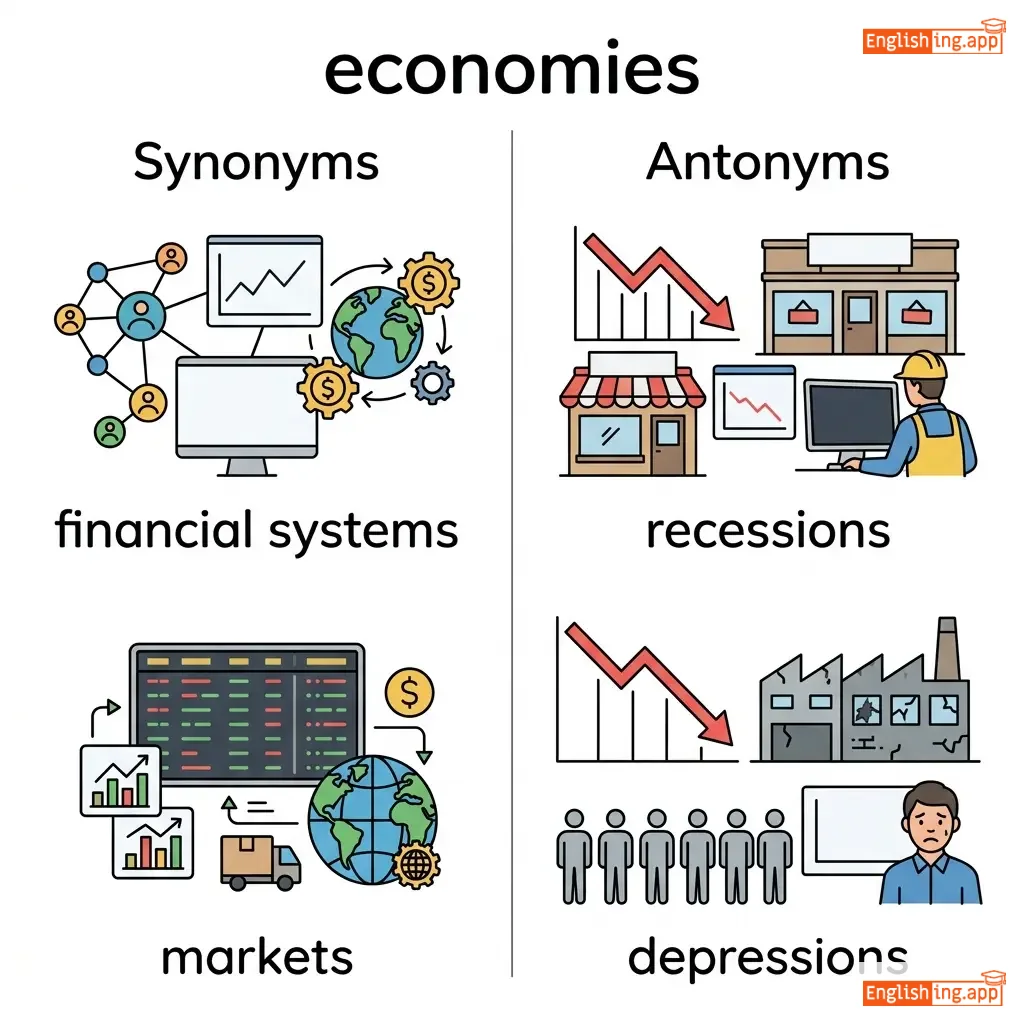
ɪˈkɒnəmiːz
noun
••••••
|
|
The wealth and resources of a country or region.
••••••
|
Emerging economies have been growing rapidly over the past decade. |
financial systems, markets
••••••
|
recessions, depressions
••••••
|
|
#3569
💥
|
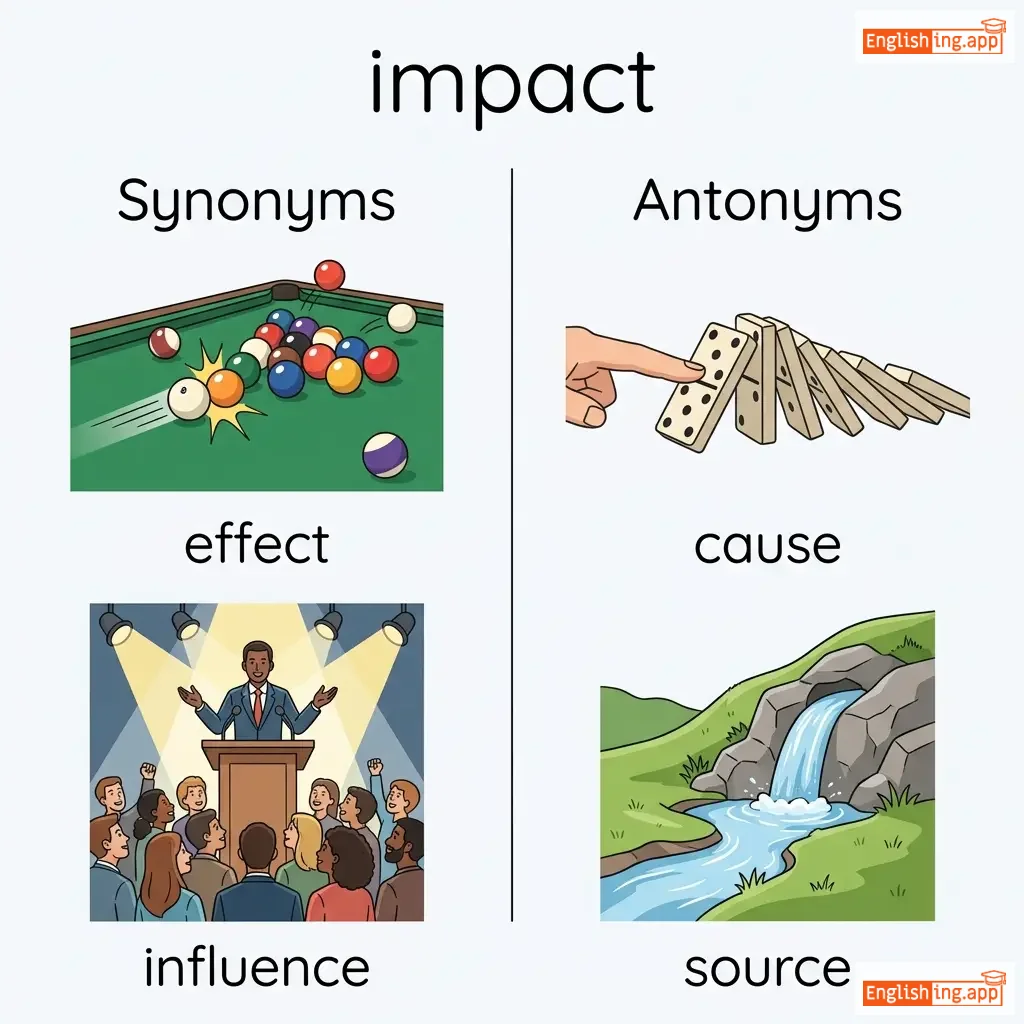
ˈɪmpækt
noun
••••••
|
|
The action of one object coming forcibly into contact with another; a marked effect or influence.
••••••
|
The impact of climate change can be seen in rising sea levels. |
effect, consequence
••••••
|
inaction, indifference
••••••
|
|
#3570
📦
|
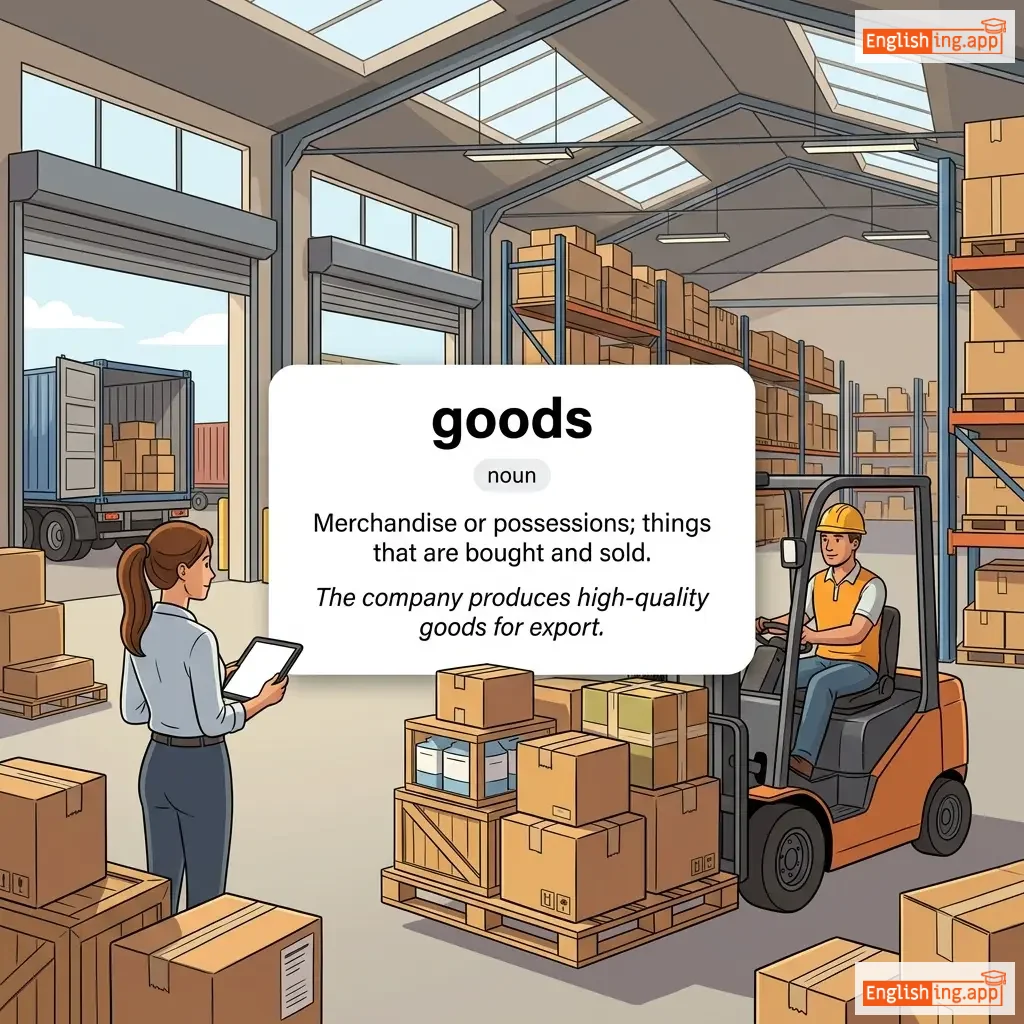
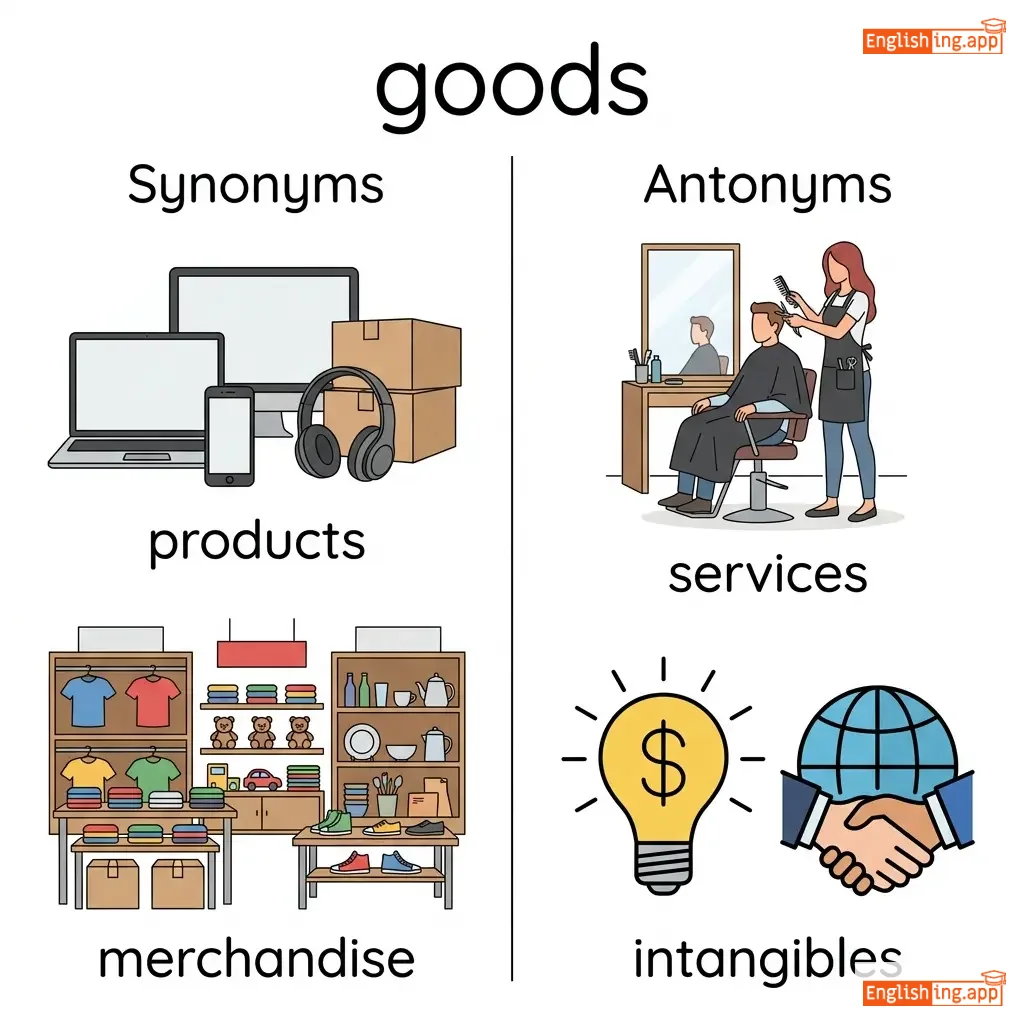
ɡʊdz
noun
••••••
|
|
Merchandise or possessions; things that are bought and sold.
••••••
|
The company produces high-quality goods for export. |
products, merchandise
••••••
|
services, intangibles
••••••
|
|
#3571
🤝
|
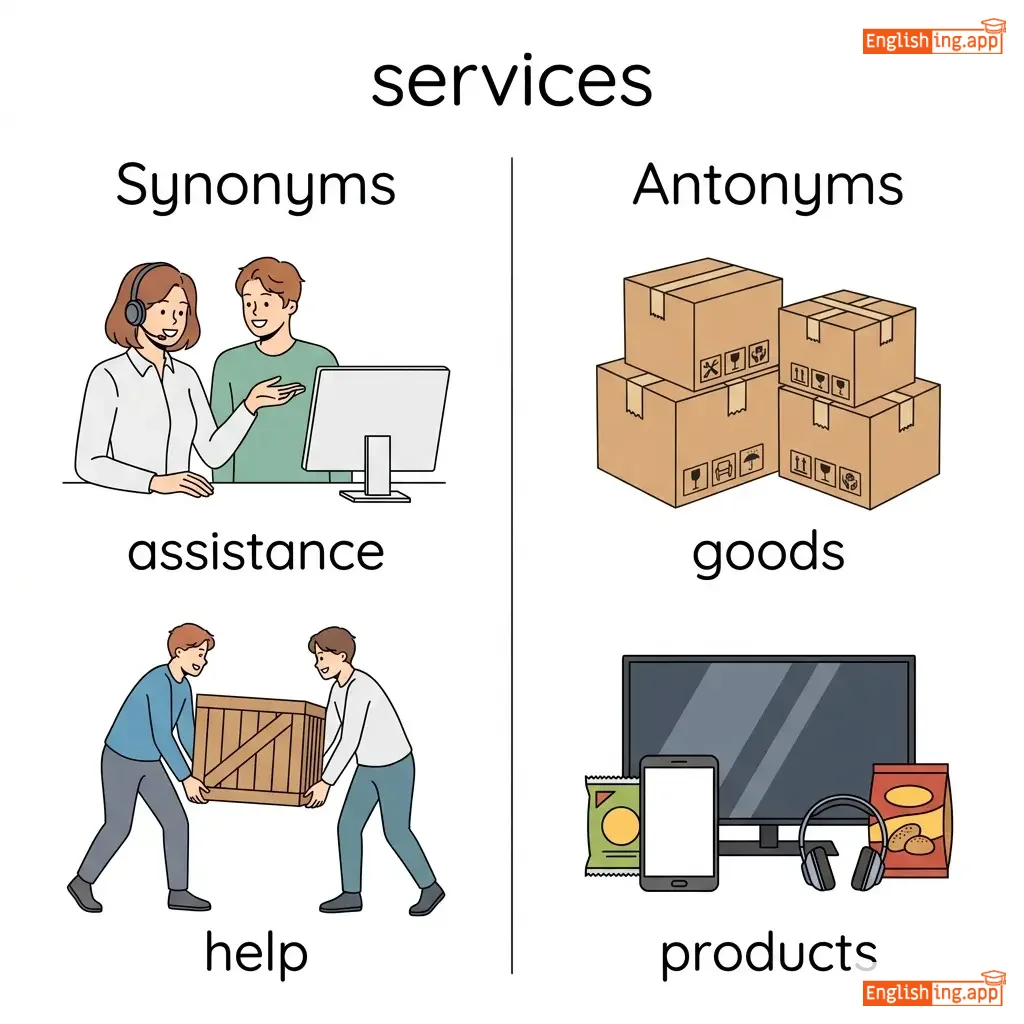
ˈsɜːvɪsɪz
noun
••••••
|

|
The action of helping or doing work for someone.
••••••
|
Services in the healthcare industry are essential for well-being. |
assistance, help
••••••
|
goods, products
••••••
|
|
#3572
💰
|
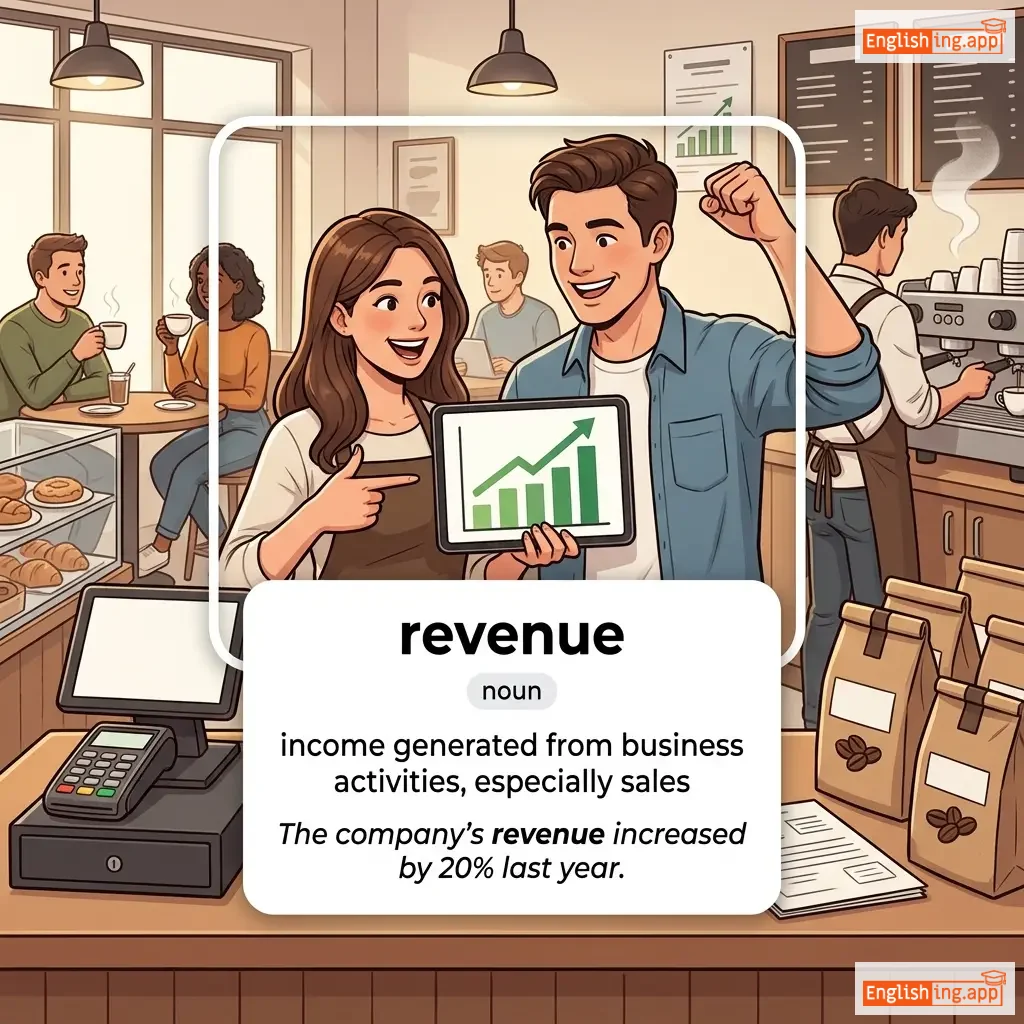
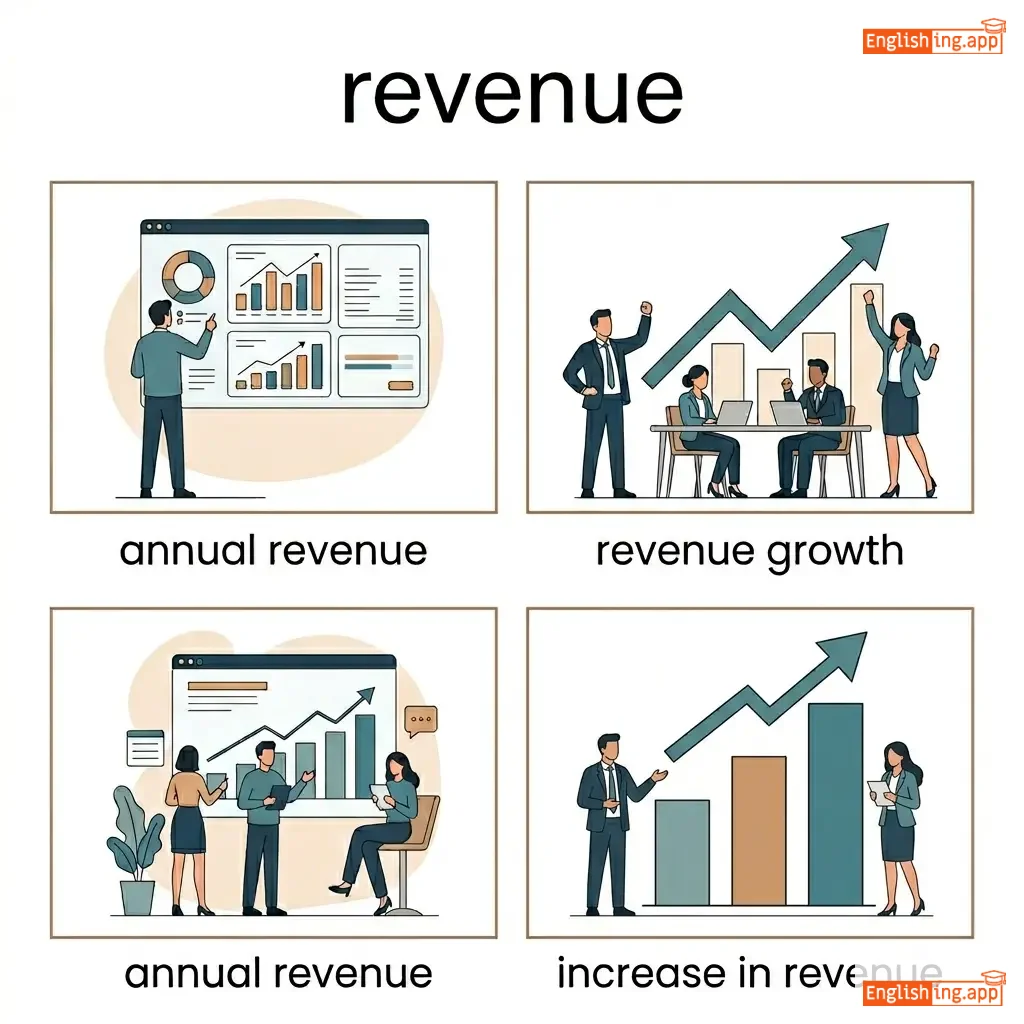
ˈrɛvənuː
noun
••••••
|
|
Income, especially when of a company or organization.
••••••
|
The company's revenue grew by 10% this year. |
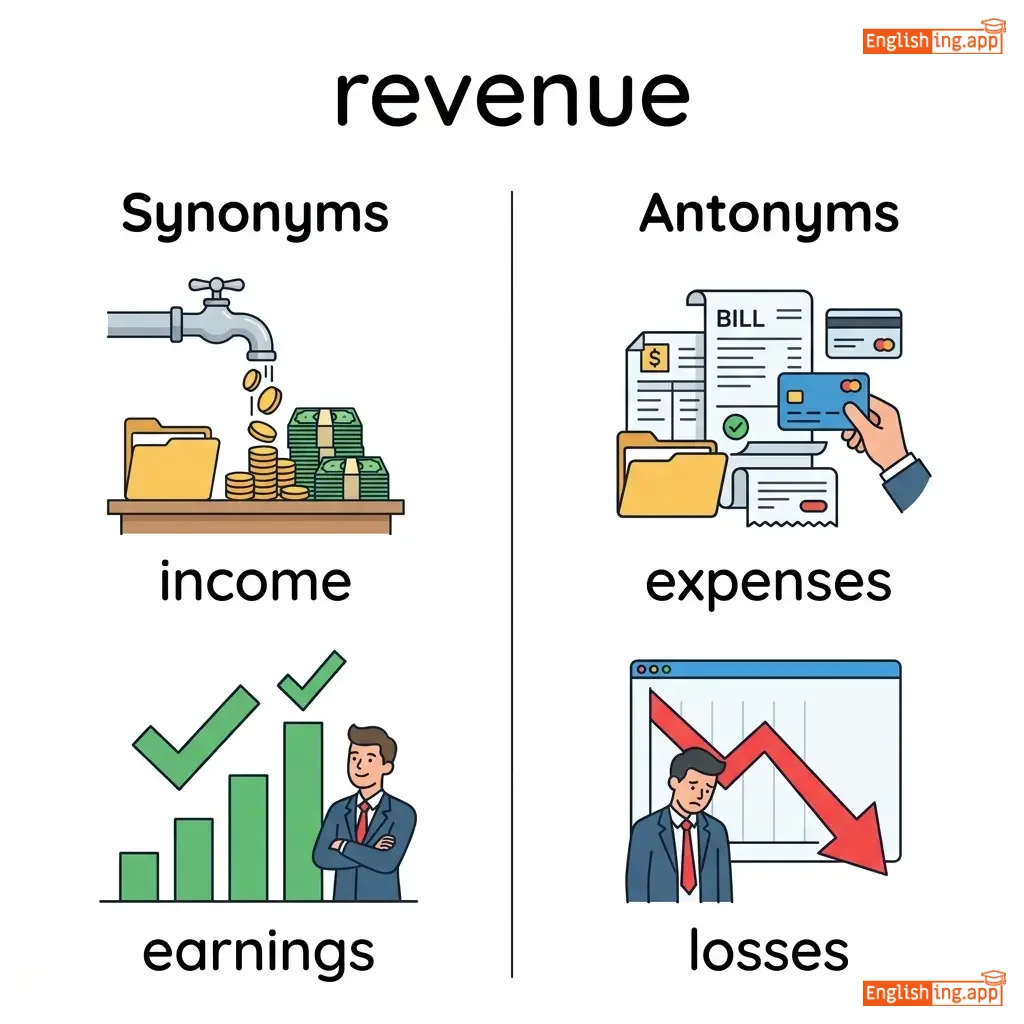
income, earnings
••••••
|
loss, deficit
••••••
|

