Получите неограниченный доступ ко всем словам с подпиской Pro
Обновить до ProПолучите неограниченный доступ ко всем предложениям с подпиской Pro
Обновить до Pro|
Эмодзи
|
Слово | Images | Перевод | Прошедшее | Причастие прошедшего времени | Третье лицо единственного числа | Герундий | Значение | Пример предложения | Перевод примера предложения | Пример выражения | Значение примера выражения | Перевод примера выражения | Синонимы | Антонимы | Коллокации | Мнемоника |
|---|---|---|---|---|---|---|---|---|---|---|---|---|---|---|---|---|---|
|
📄
••••••
|
/səbˈmɪt/
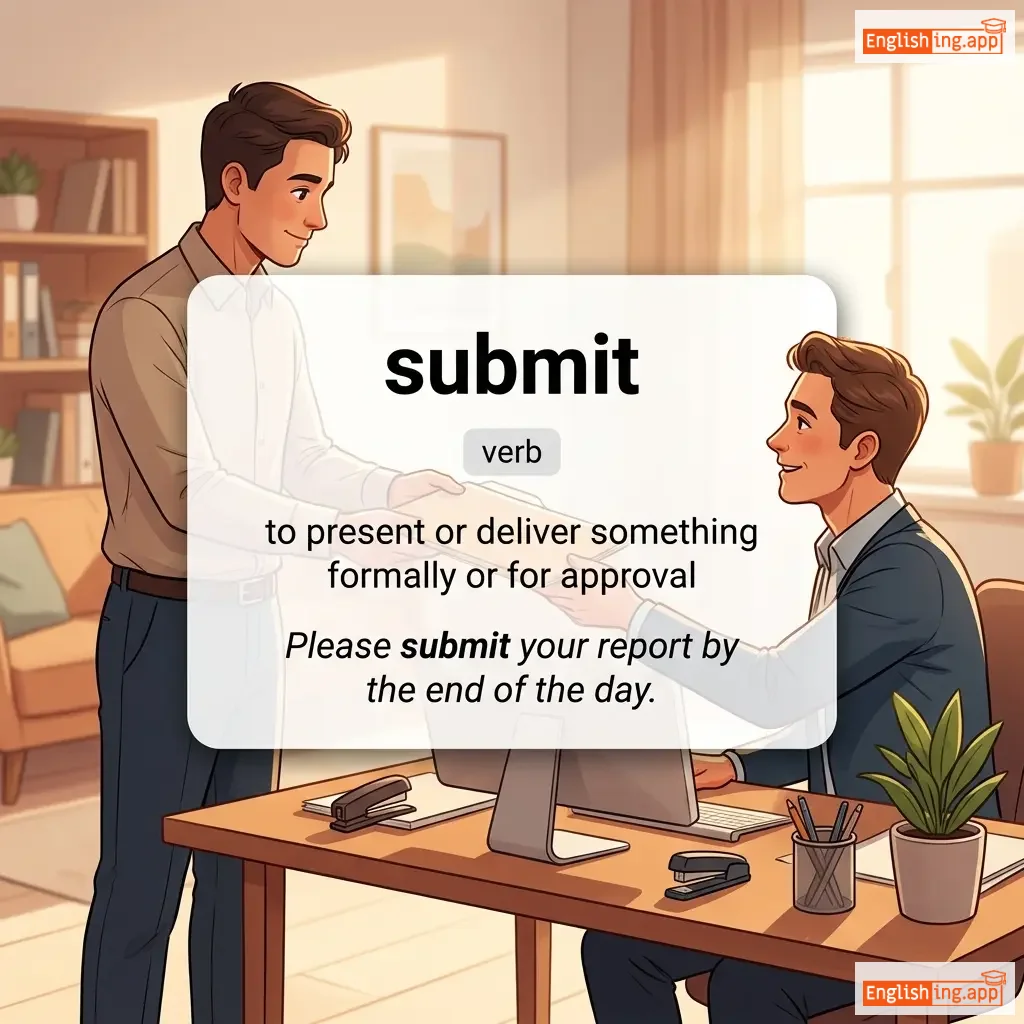
verb
(сəbˈмɪт)
••••••
|
|
отправить
otpravit'
••••••
|
submitted
сəbˈмɪтэд
••••••
|
submitted
сəbˈмɪтэд
••••••
|
submits
сəbˈмɪтс
••••••
|
submitting
сəbˈмɪтинг
••••••
|
to present for consideration; to surrender; to yield
••••••
|
Please submit your assignment by Friday.
Пожалуйста, отправьте ваше задание до пятницы.
••••••
|
Пожалуйста, отправьте ваше задание до пятницы.
Pozhaluysta, otprav'te vashe zadanie do pyatnitsy.
••••••
|
- •••••• | - •••••• | - •••••• |
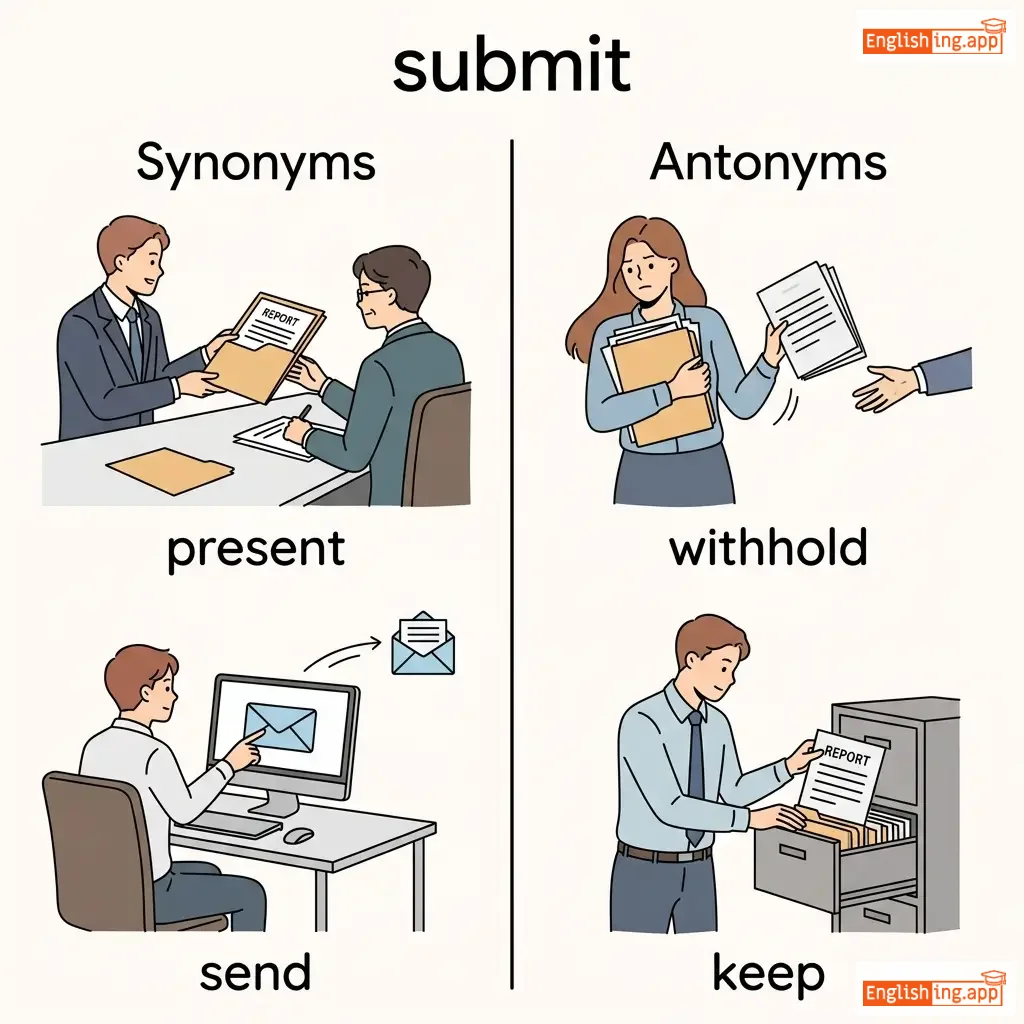
present, hand in, surrender, yield
••••••
|
withdraw, resist, refuse, reject
••••••
|
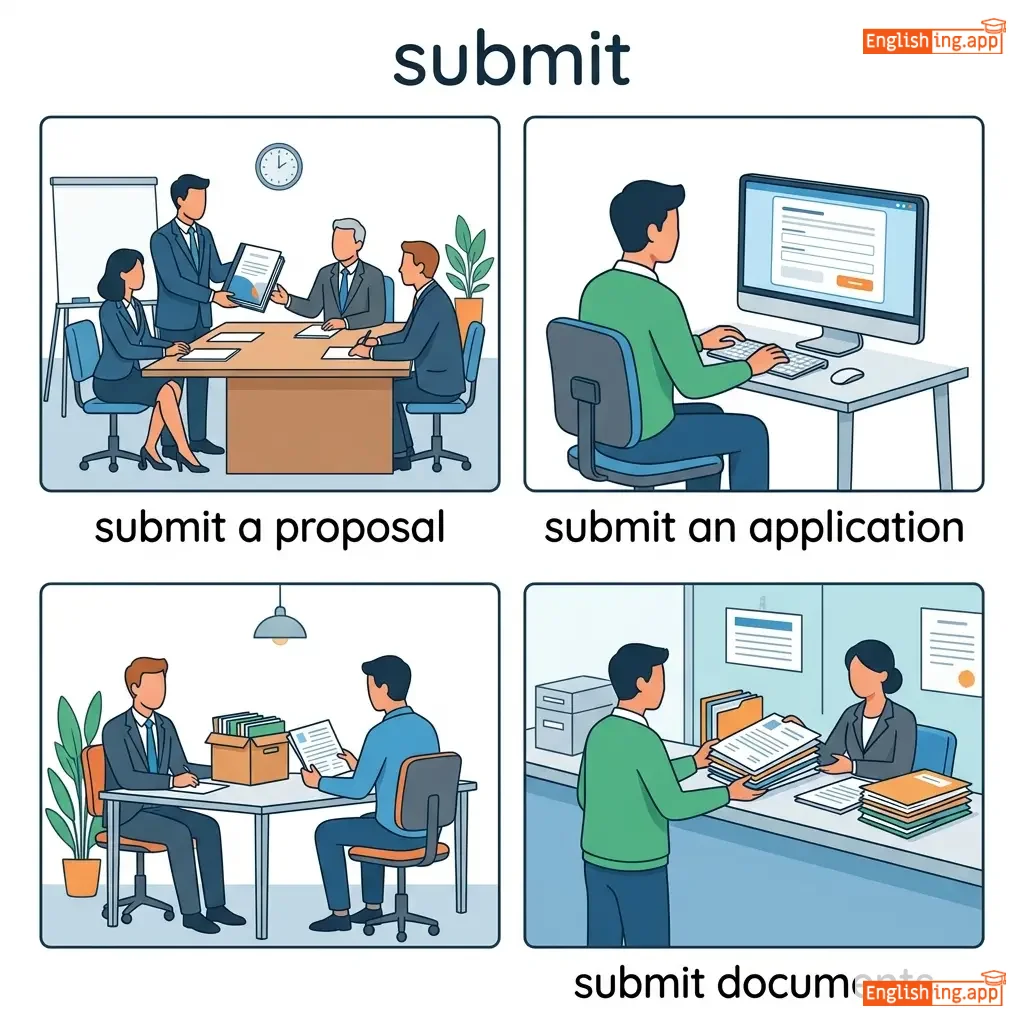
submit application, submit report, submit assignment, submit proposal, submit documents
••••••
|
Отправить задание — это уступить перед сроком!
••••••
|
|
📩
••••••
|
/səbˈskraɪbər/
noun
(сабскрайбер)
••••••
|
- •••••• |
подписчик
podpischik
••••••
|
- •••••• | - •••••• | - •••••• | - •••••• |
a person who receives or subscribes to a service, magazine, or service
••••••
|
She is a subscriber to the monthly magazine. |
Она подписчица ежемесячного журнала.
Ona podpischitsa ezhemesyachnogo zhurnala.
••••••
|
- •••••• | - •••••• | - •••••• |
member, follower, customer, supporter
••••••
|
non-subscriber, reader
••••••
|
new subscriber, regular subscriber, email subscriber
••••••
|
подписчик, тот, кто подписывается на журнал
••••••
|
|
📱
••••••
|
/səbˈskrɪp.ʃən/
noun
(sabskripshon)
••••••
|
- •••••• |
подписка
podpiska
••••••
|
- •••••• | - •••••• | - •••••• | - •••••• |
a payment for regular delivery of a service or product; an arrangement to receive something regularly
••••••
|
I canceled my Netflix subscription because I wasn't watching it enough.
Я отменил свою подписку на Netflix, потому что я не смотрел его достаточно.
••••••
|
Я отменил свою подписку на Netflix, потому что я не смотрел его достаточно.
Ya otmenil svoyu podpisku na Netflix, potomu chto ya ne smotrel yeho dostatochno.
••••••
|
- •••••• | - •••••• | - •••••• |
membership, enrollment, registration
••••••
|
cancellation, termination
••••••
|
monthly subscription, magazine subscription, streaming subscription, subscription fee
••••••
|
Подписка — это регулярное предоставление услуги, как подписка на журналы или сервисы.
••••••
|
|
➡️
••••••
|
/ˈsʌbsɪkwənt/
adjective
(səbˈskwɛnt)
••••••
|

|
последующий
posleduyushchiy
••••••
|
- •••••• | - •••••• | - •••••• | - •••••• |
coming after something in time; following
••••••
|
His subsequent success surprised everyone. |
Его последующий успех удивил всех.
Yego posleduyushchiy uspekh udivil vsekh.
••••••
|
subsequent to |
happening or coming after something
••••••
|
последующий после
posleduyushchiy posle
••••••
|
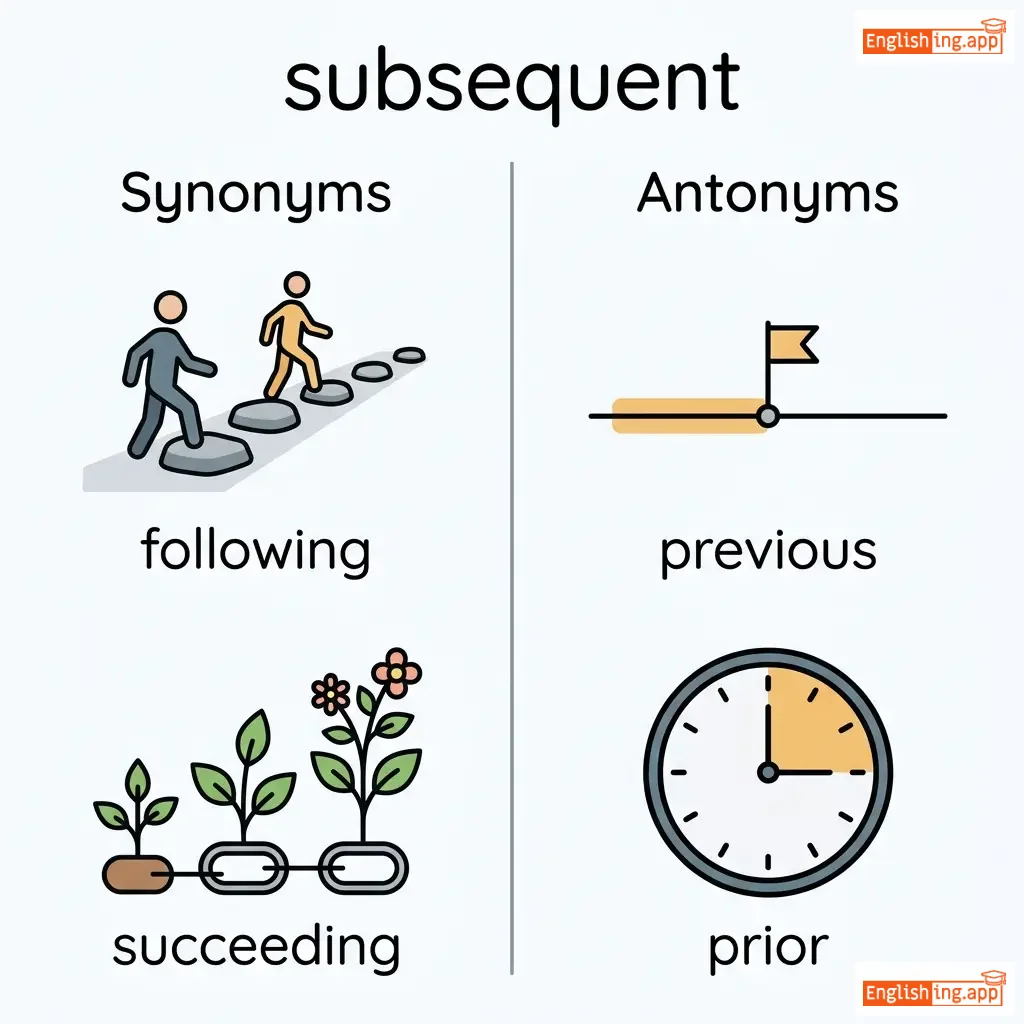
following, succeeding, later, ensuing, successive
••••••
|
previous, prior, former
••••••
|
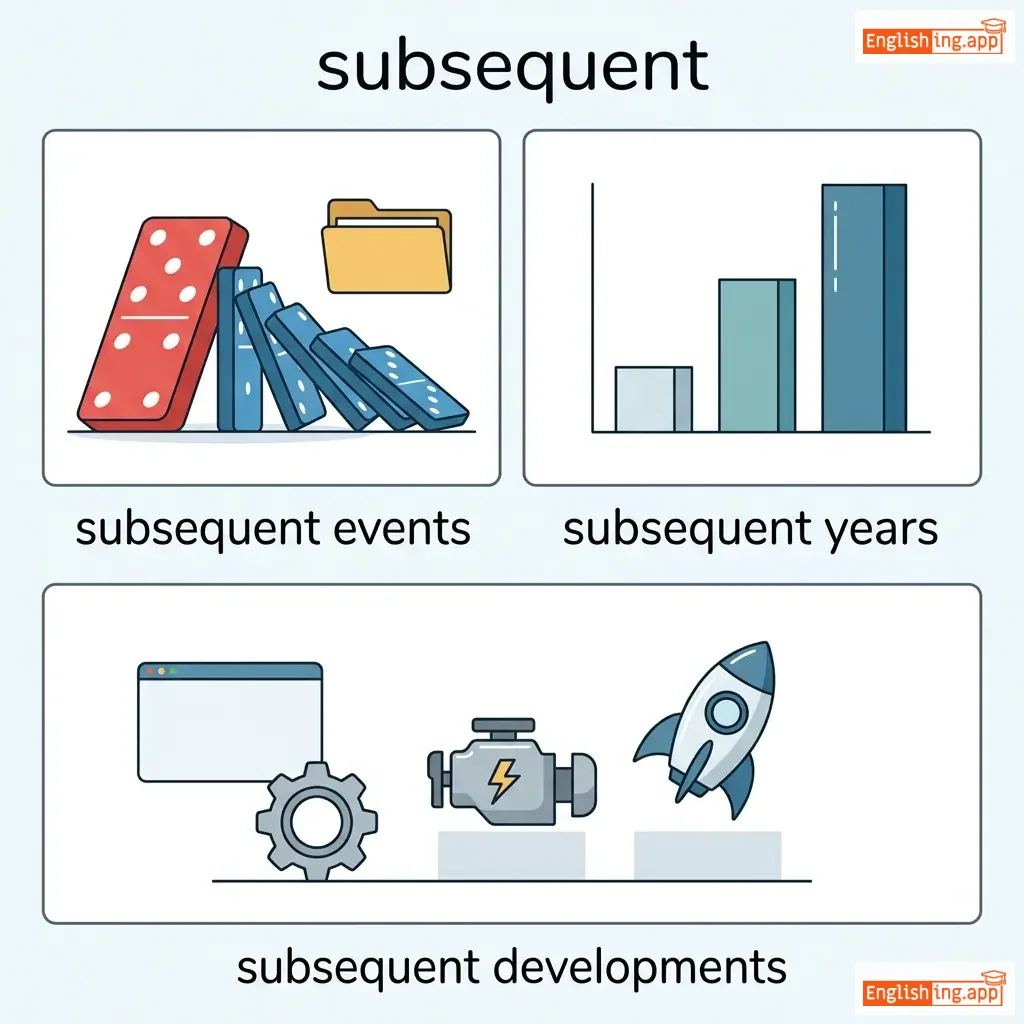
subsequent events, subsequent years, subsequent developments, subsequent changes
••••••
|
Subsequent означает, что что-то приходит после другого события, поэтому 'последующий'.
••••••
|
|
⏳
••••••
|
/ˈsʌbsɪkwəntli/
adverb
(sʌbsɪkwəntli)
••••••
|
- •••••• |
затем
zatem
••••••
|
- •••••• | - •••••• | - •••••• | - •••••• |
at a later time; afterward
••••••
|
He failed his exam and subsequently had to retake it. |
Он не сдал экзамен и затем ему пришлось его пересдавать.
On ne sdal ekzamen i zatem emu prishlos' ego peresdavat'.
••••••
|
- •••••• | - •••••• | - •••••• |
afterward, later, consequently, as a result
••••••
|
before, earlier
••••••
|
subsequently announced, subsequently decided, subsequently completed
••••••
|
Subsequent actions happen after the first.
••••••
|
|
💰
••••••
|
/ˈsʌbsɪdi/
noun
(сабсиди)
••••••
|

|
субсидия
subsidia
••••••
|
- •••••• | - •••••• | - •••••• | - •••••• |
A sum of money granted by the government or a public body to help support an industry or reduce the cost of goods or services.
••••••
|
The government provided a subsidy to farmers to support crop production. |
Правительство предоставило субсидию фермерам для поддержки производства сельскохозяйственных культур.
Pravitel'stvo predostavilo subsidiyu fermeram dlya podderzhki proizvodstva selskokhozyaistvennykh kultur.
••••••
|
- •••••• | - •••••• | - •••••• |
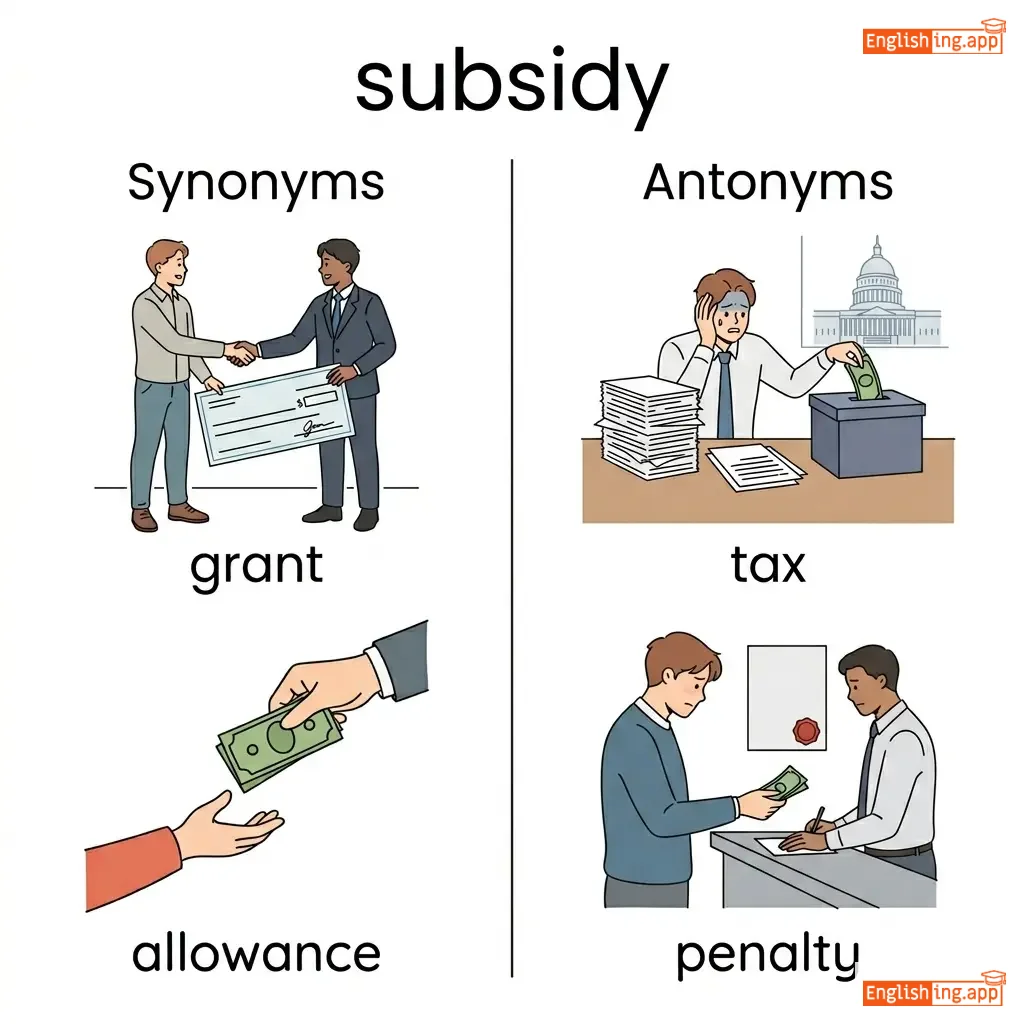
grant, allowance, financial aid, support, assistance
••••••
|
tax, penalty, surcharge
••••••
|
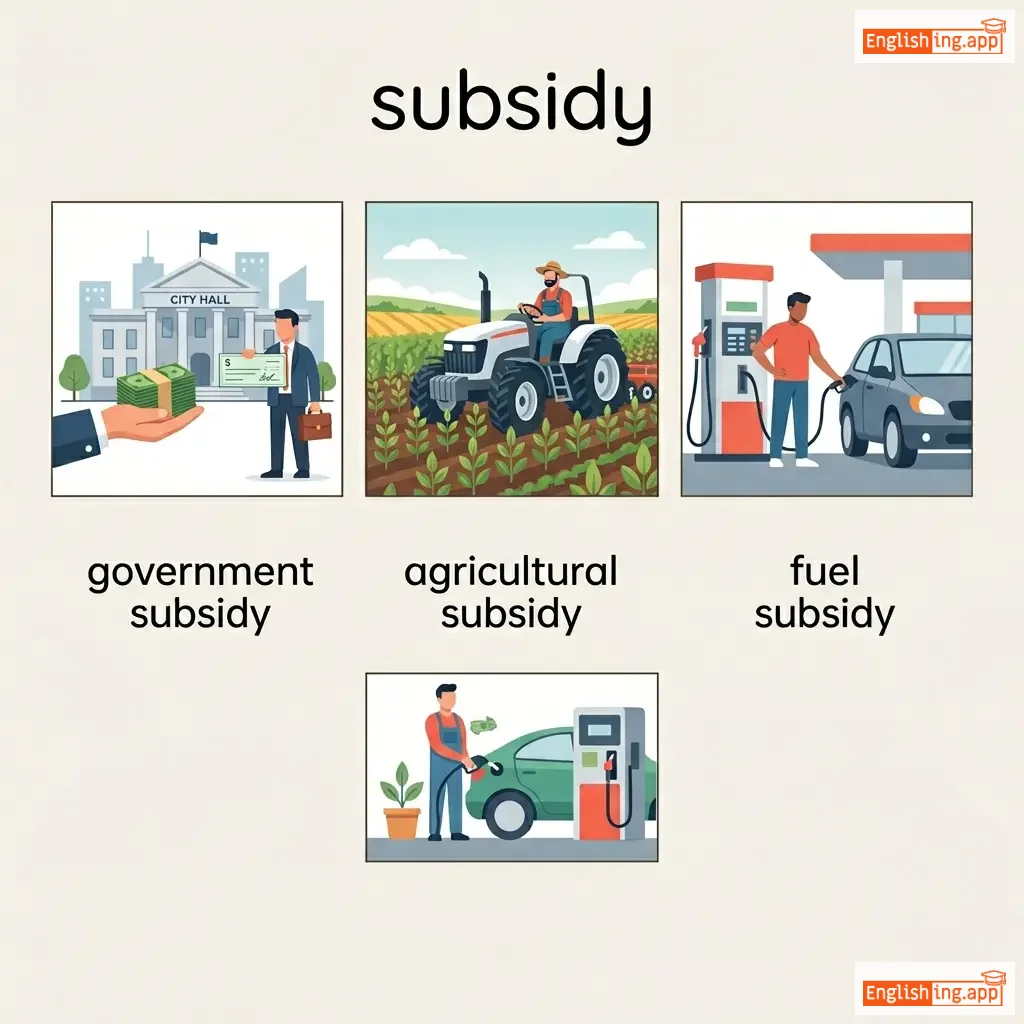
government subsidy, agricultural subsidy, fuel subsidy, receive subsidy
••••••
|
Субсидия - это помощь от правительства, чтобы помочь с уменьшением цен на товары.
••••••
|
|
🧪
••••••
|
/ˈsʌb.stəns/
noun
(sʌbstæns)
••••••
|
- •••••• |
вещество
veshchestvo
••••••
|
- •••••• | - •••••• | - •••••• | - •••••• |
a particular kind of matter with uniform properties; the essential nature of something; material or content
••••••
|
The scientist analyzed the unknown substance in the laboratory.
Учёный анализировал неизвестное вещество в лаборатории.
••••••
|
Учёный анализировал неизвестное вещество в лаборатории.
Uchony analiziroval neizvestnoe veshchestvo v laboratorii.
••••••
|
- •••••• | - •••••• | - •••••• |
material, matter, essence, content
••••••
|
emptiness, void, superficiality
••••••
|
chemical substance, controlled substance, substance abuse, essential substance
••••••
|
Учёный смог разделить вещество на его части в лаборатории.
••••••
|
|
📏
••••••
|
/səbˈstæn.ʃəl/
adjective
(сəbˈстэншл)
••••••
|
- •••••• |
существенный; значительный; существенный
sushchestvennyy; znachitel'nyy; sushchestvennyy
••••••
|
- •••••• | - •••••• | - •••••• | - •••••• |
large in size, amount, or importance; considerable; significant
••••••
|
There was a substantial increase in sales this quarter. |
В этом квартале было значительное увеличение продаж.
V etom kvartale bylo znachitel'noye uvelicheniye prodazh.
••••••
|
- •••••• | - •••••• | - •••••• |
considerable, significant, large, major, sizeable
••••••
|
insignificant, minor, small, negligible, trivial
••••••
|
substantial amount, substantial increase, substantial evidence, substantial progress
••••••
|
В русском языке 'существенный' означает что-то важное, так что запомните его как важное или заметное.
••••••
|
|
📈
••••••
|
/səbˈstænʃəli/
adverb
(səbˈstænʃəli)
••••••
|
- •••••• |
значительно
znachitel'no
••••••
|
- •••••• | - •••••• | - •••••• | - •••••• |
to a great extent or degree
••••••
|
The new policy has substantially improved working conditions.
Новая политика значительно улучшила условия труда.
••••••
|
Новая политика значительно улучшила условия труда.
Novaya politika znachitel'no uluchshila usloviya truda.
••••••
|
- •••••• | - •••••• | - •••••• |
considerably, significantly, greatly, largely
••••••
|
slightly, marginally
••••••
|
substantially increase, substantially reduce, substantially change, substantially improve
••••••
|
Substantially значит значительно – помни, что значительная перемена это большая перемена
••••••
|
|
🔄
••••••
|
/ˈsʌb.stɪ.tjuːt/
verb
(сабститьют)
••••••
|
|
заменять
zaminyat
••••••
|
substituted
сабститьютед
••••••
|
substituted
сабститьютед
••••••
|
substitutes
сабститьютс
••••••
|
substituting
сабститьютинг
••••••
|
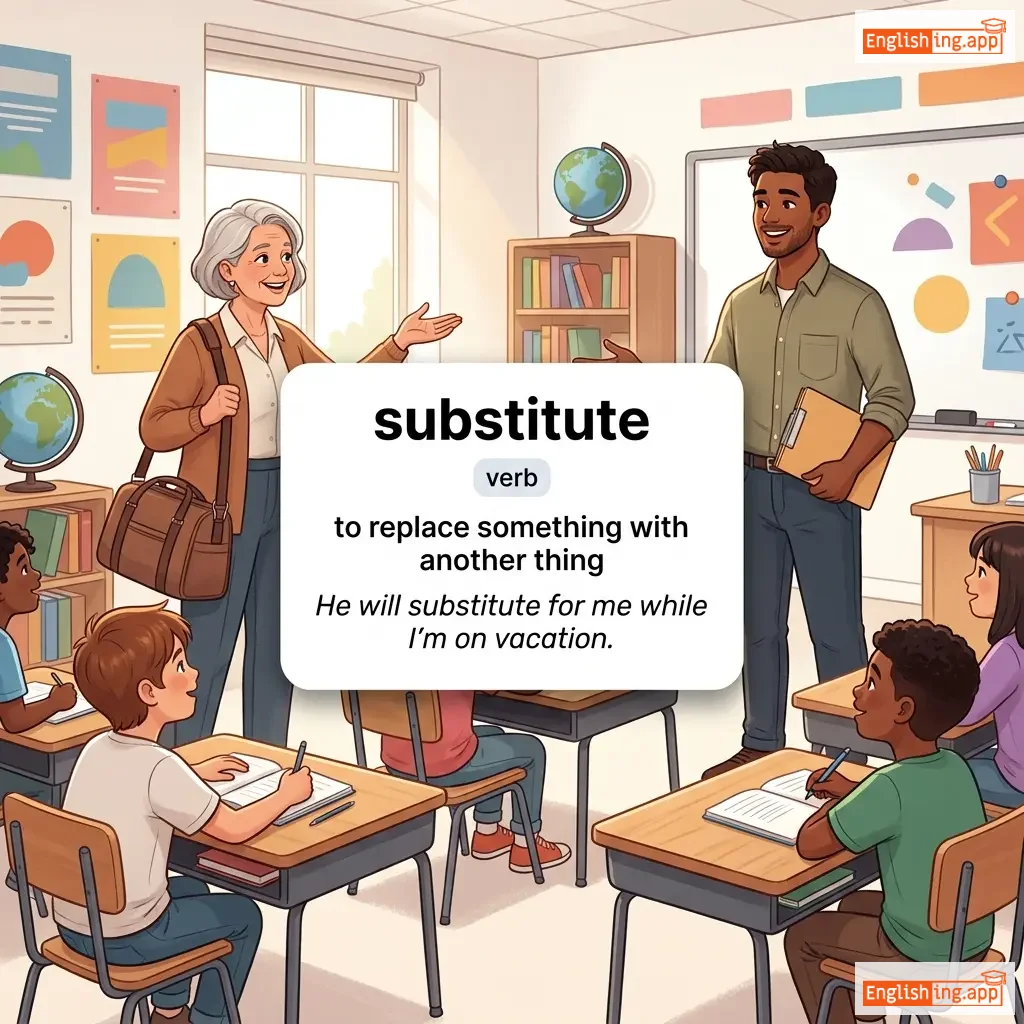
to replace something with another thing
••••••
|
He will substitute for me while I'm on vacation.
Он заменит меня, пока я в отпуске.
••••••
|
Он заменит меня, пока я в отпуске.
On zamenit menya, poka ya v otpuske.
••••••
|
- •••••• | - •••••• | - •••••• |
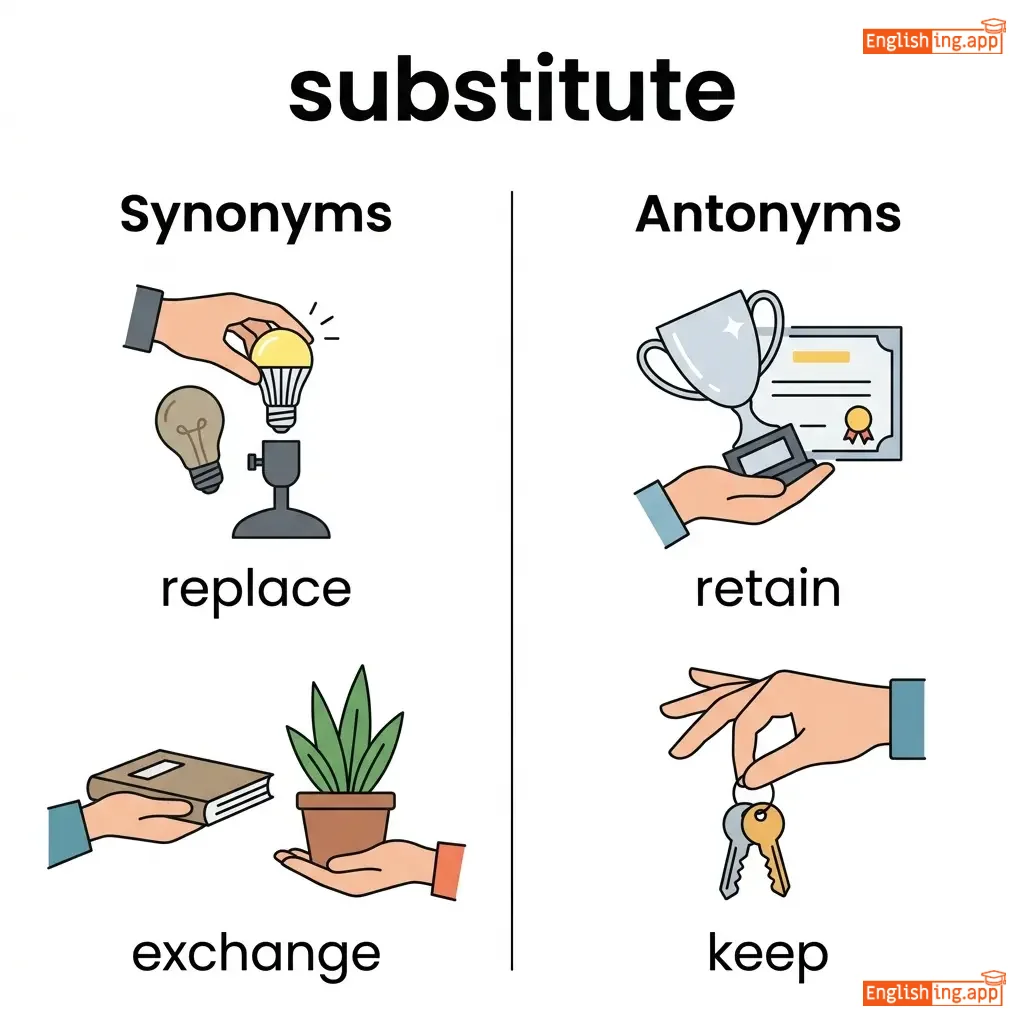
replace, exchange, swap, supersede
••••••
|
retain, keep
••••••
|
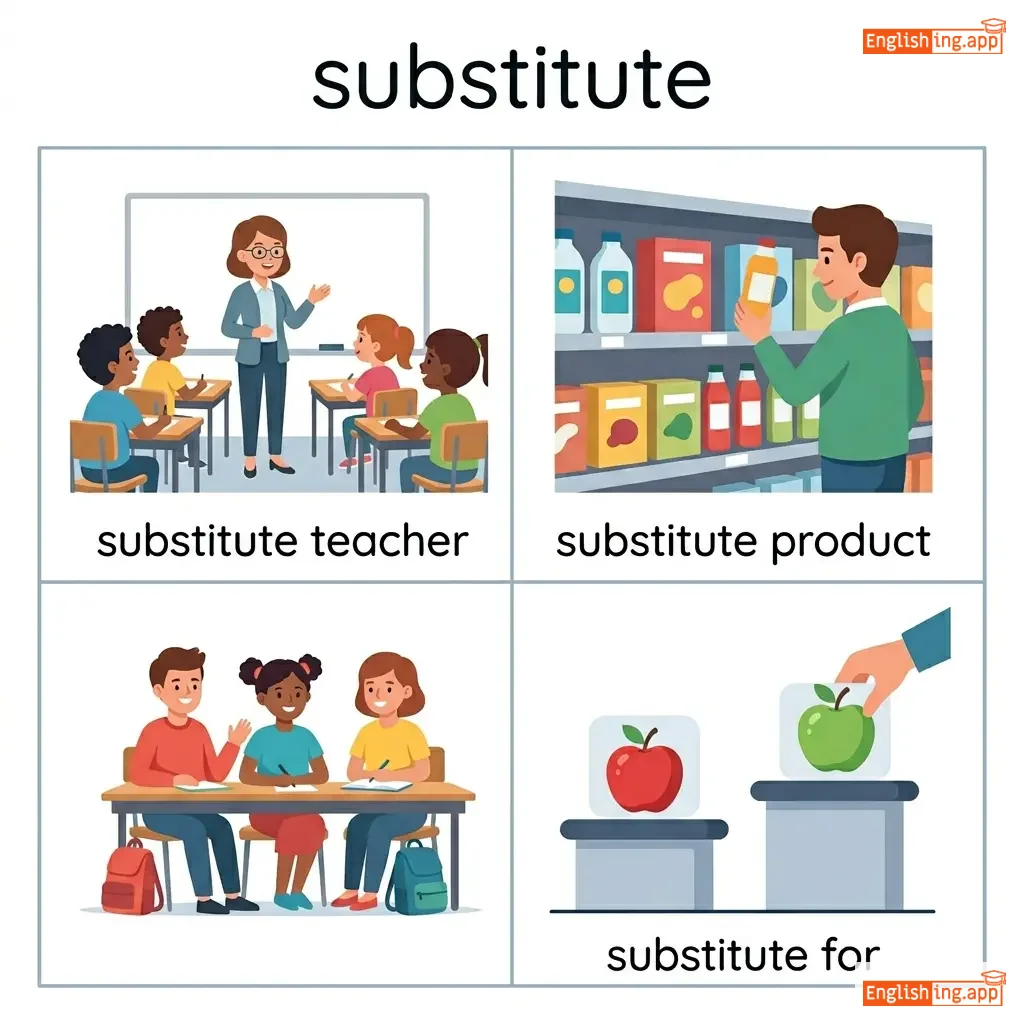
substitute teacher, substitute product, substitute for, substitute teacher
••••••
|
Substitute = 'Sub' means 'other' + 'stitute' means 'standing' - so replace by standing in for something else.
••••••
|
|
🔄
••••••
|
/ˌsʌb.stɪˈtjuː.ʃən/
noun
(сабстиˈтʲut͡sɪjə)
••••••
|
- •••••• |
замена
zamena
••••••
|
- •••••• | - •••••• | - •••••• | - •••••• |
the action of replacing someone or something with another
••••••
|
The substitution of the old system with the new one was difficult. |
Замена старой системы на новую была трудной.
Zamena staroy sistemy na novuyu byla trudnoy.
••••••
|
- •••••• | - •••••• | - •••••• |
replacement, exchange, switch, change
••••••
|
continuation, permanence
••••••
|
substitution of goods, substitution of players, substitution for, substitution of ideas
••••••
|
Substitution is like swapping the old with the new.
••••••
|
|
🌫️
••••••
|
/ˈsʌtl/
adjective
(сʌтл)
••••••
|

|
тонкий
tonkiy
••••••
|
- •••••• | - •••••• | - •••••• | - •••••• |
so delicate or precise as to be difficult to analyze or describe; not obvious
••••••
|
She gave him a subtle smile that hinted at her approval. |
Она подарила ему тонкую улыбку, которая намекала на ее одобрение.
Ona podarila yemu tonkuyu ulybku, kotoraya namekala na yeyu odobrenie.
••••••
|
subtle hint |
a very slight or indirect suggestion
••••••
|
тонкий намек
tonkiy namek
••••••
|
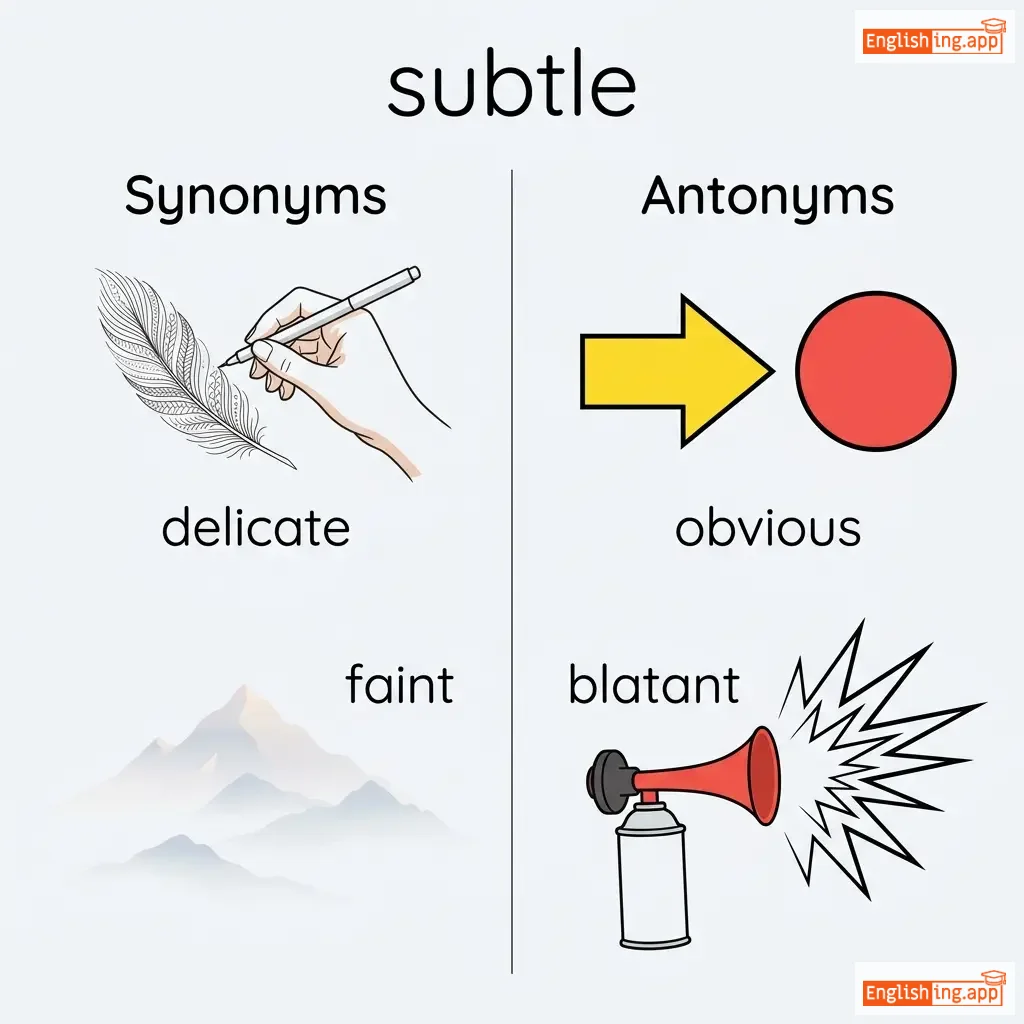
delicate, faint, nuanced, indirect, understated
••••••
|
obvious, blatant, clear
••••••
|
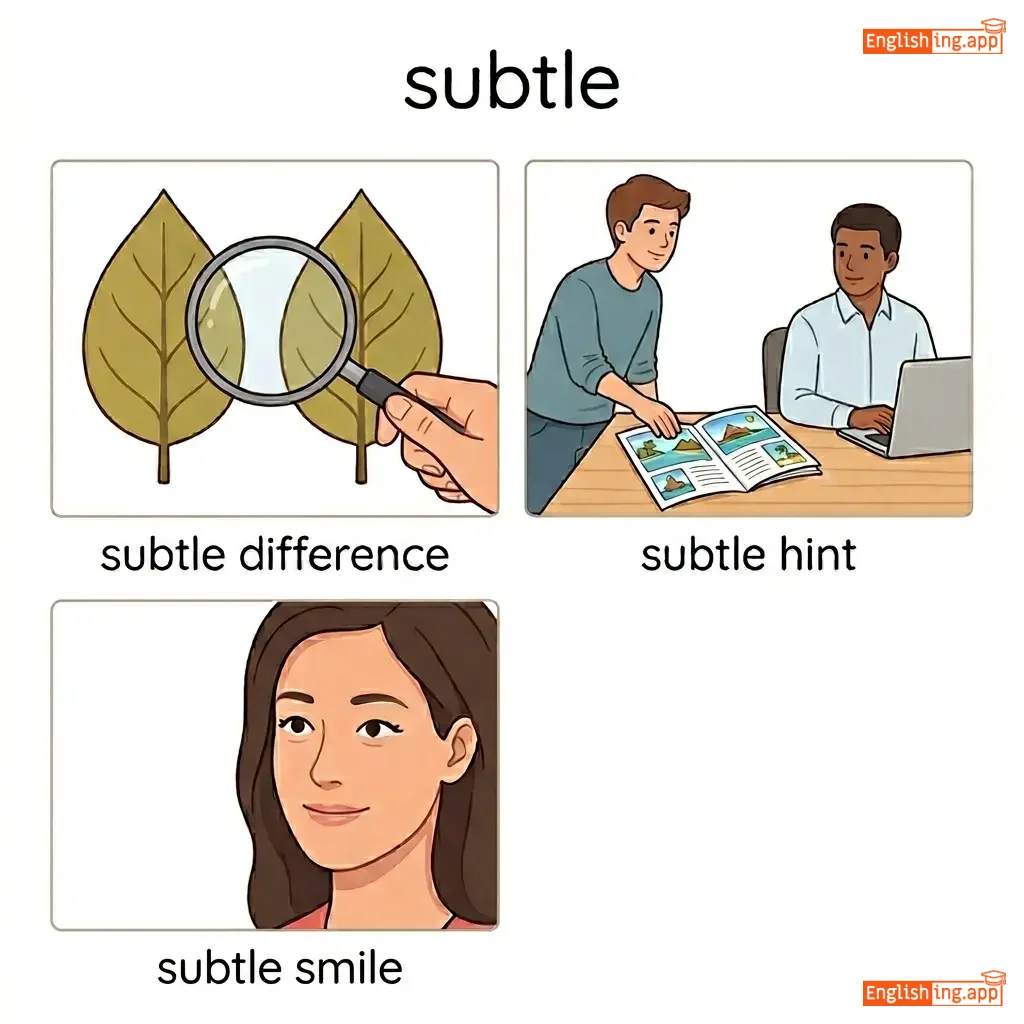
subtle difference, subtle hint, subtle smile, subtle change
••••••
|
Тонкий, как линия на воде – едва заметный, но все равно присутствует.
••••••
|
|
🏘️
••••••
|
/ˈsʌbɜːb/
noun
(субёрб)
••••••
|
- •••••• |
пригород
prigorod
••••••
|
- •••••• | - •••••• | - •••••• | - •••••• |
an area outside the center of a city, often residential
••••••
|
They bought a new house in a quiet suburb. |
Они купили новый дом в тихом пригороде.
Oni kupili novyi dom v tikhom prigorode.
••••••
|
in the suburbs |
living in a residential area outside the city center
••••••
|
в пригородах
v prigorodakh
••••••
|
residential area, outskirts, neighborhood, district
••••••
|
downtown, city center
••••••
|
quiet suburb, suburban area, live in the suburbs, suburb of Dhaka
••••••
|
Sub+городы — пригород!
••••••
|
|
🏘️
••••••
|
/səˈbɜːrbən/
adjective
(субёрбан)
••••••
|
- •••••• |
пригородный
prigorodny
••••••
|
- •••••• | - •••••• | - •••••• | - •••••• |
relating to or characteristic of a suburb or the people living there
••••••
|
They bought a house in a quiet suburban area. |
Они купили дом в тихом пригородном районе.
Oni kupili dom v tikhom prigorodnom rayone.
••••••
|
- •••••• | - •••••• | - •••••• |
residential, outlying, provincial, commuter
••••••
|
urban, rural
••••••
|
suburban area, suburban house, suburban life, suburban community
••••••
|
Пригородный — это тот, кто рядом с городом — пригородная зона.
••••••
|
|
🏆
••••••
|
/səkˈsiːd/
verb
(suksid)
••••••
|
- •••••• |
добиться успеха
dobitsya uspekha
••••••
|
succeeded
suksidid
••••••
|
succeeded
suksidid
••••••
|
succeeds
suksids
••••••
|
succeeding
suksiding
••••••
|
to achieve the desired aim or result; to do well
••••••
|
She worked hard to succeed in her career.
она упорно работала, чтобы преуспеть в своей карьере.
••••••
|
Она упорно работала, чтобы преуспеть в своей карьере.
Ona uporno rabotala, chtoby preuspet' v svoey kar'ere.
••••••
|
succeed in life
преуспеть в жизни
••••••
|
to achieve overall success and fulfillment in one’s life
••••••
|
преуспеть в жизни
preuspet' v zhizni
••••••
|
achieve, prosper, triumph, prevail, accomplish
••••••
|
fail, lose, collapse
••••••
|
succeed in, succeed at, succeed against, succeed through
••••••
|
Success приходит от succeed, значит, добиваться успеха
••••••
|
|
🎉
••••••
|
/səkˈsɛs/
noun
(səkˈsɛs)
••••••
|

|
успех
uspekh
••••••
|
- •••••• | - •••••• | - •••••• | - •••••• |
the achievement of an aim, purpose, or result
••••••
|
His hard work led to great success. |
Его тяжелая работа привела к большому успеху.
Ego tyazhelaya rabota privedla k bol'shomu uspekhu.
••••••
|
make a success of |
to achieve success in something
••••••
|
добиться успеха в чем-то
dobit'sya uspekha v chem-to
••••••
|
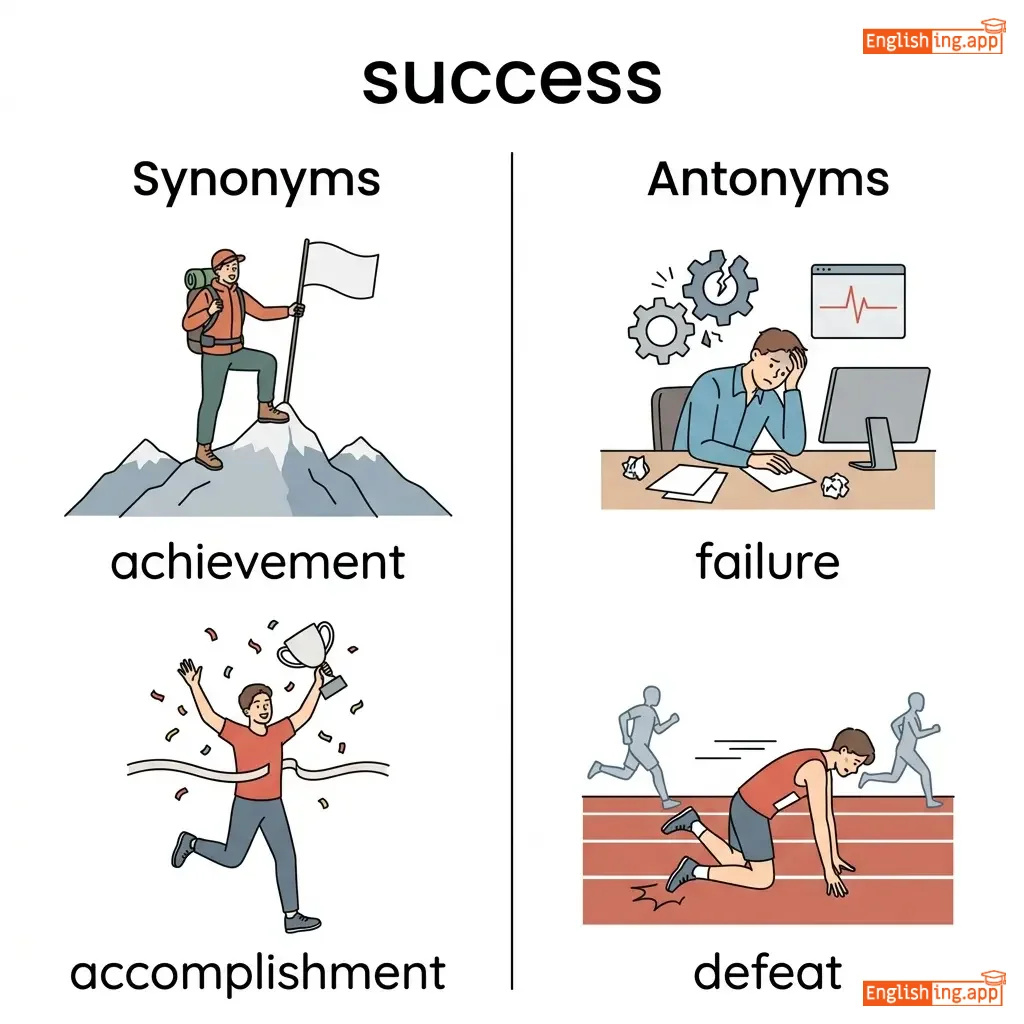
achievement, accomplishment, victory, triumph, prosperity
••••••
|
failure, defeat, loss
••••••
|
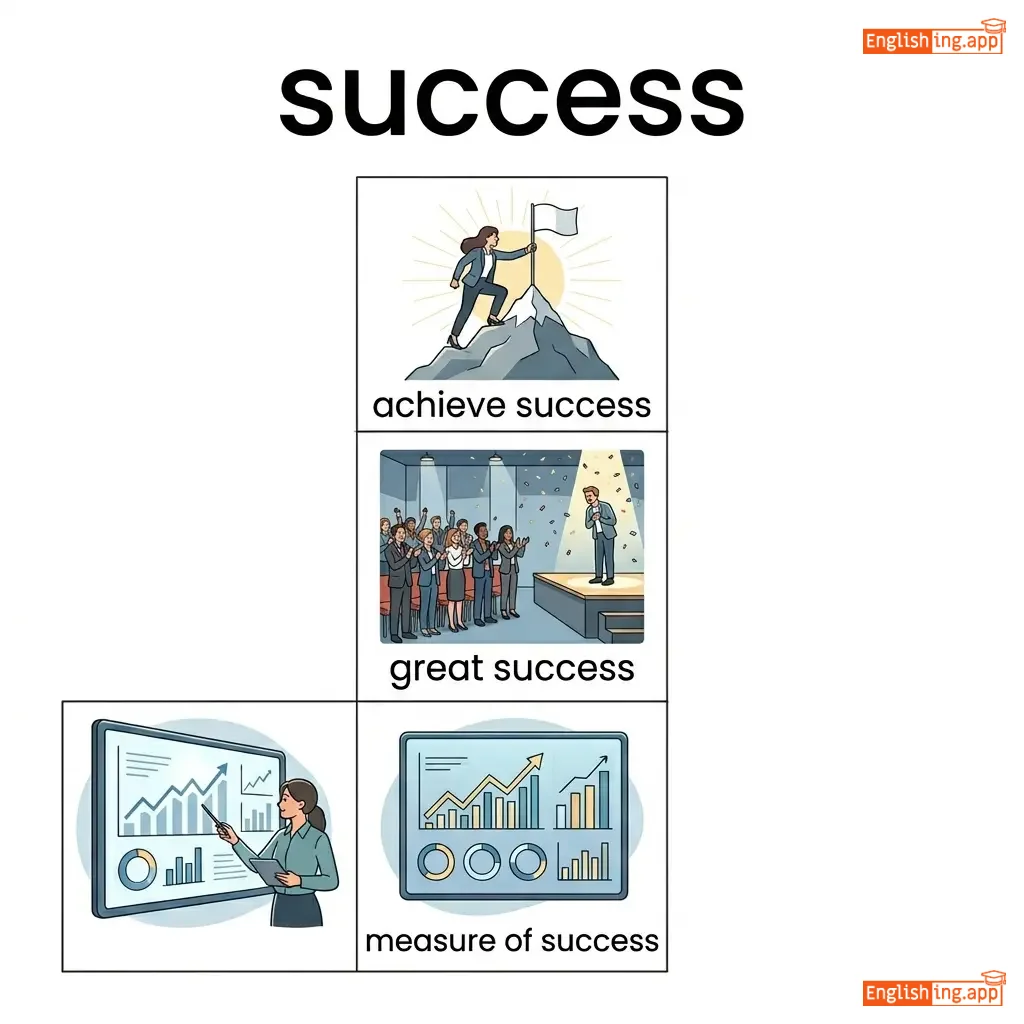
achieve success, great success, measure of success, success story
••••••
|
Success — это успех. В экзаменах success означает успех.
••••••
|
|
💼
••••••
|
/səkˈsɛsfəl/
adjective
(səkˈsɛsfəl)
••••••
|
- •••••• |
успешный
uspehshnyy
••••••
|
- •••••• | - •••••• | - •••••• | - •••••• |
having achieved success; having attained wealth, position, or honor
••••••
|
He is a successful businessman. |
Он успешный бизнесмен.
On uspehshnyy biznesmen.
••••••
|
successful career |
a career in which one achieves prosperity and recognition
••••••
|
успешная карьера
uspehnaya kar'era
••••••
|
prosperous, accomplished, thriving, victorious, effective
••••••
|
unsuccessful, failing, defeated
••••••
|
successful career, successful attempt, successful person, successful strategy
••••••
|
Успешный значит успешный — когда ты сдаешь экзамен, ты успешный
••••••
|
|
✅
••••••
|
/səkˈsɛsfəli/
adverb
(сəkˈсɛsfəli)
••••••
|
- •••••• |
успешно
uspechno
••••••
|
- •••••• | - •••••• | - •••••• | - •••••• |
in a way that achieves a desired result
••••••
|
She passed the exam successfully after weeks of studying.
Она успешно сдала экзамен после недель учёбы.
••••••
|
Она успешно сдала экзамен после недель учёбы.
Ona uspeshno sdala ekzamen posle nedel ucheby.
••••••
|
- •••••• | - •••••• | - •••••• |
effectively, proficiently, smoothly, favorably
••••••
|
unsuccessfully, poorly, ineffectively
••••••
|
successfully complete, successfully achieve, successfully execute
••••••
|
Successfully means achieving something 'uspechno' (successfully)!
••••••
|
|
👑
••••••
|
/səkˈseʃ.ən/
noun
(sʊkˈsɛsʲɪɪn)
••••••
|
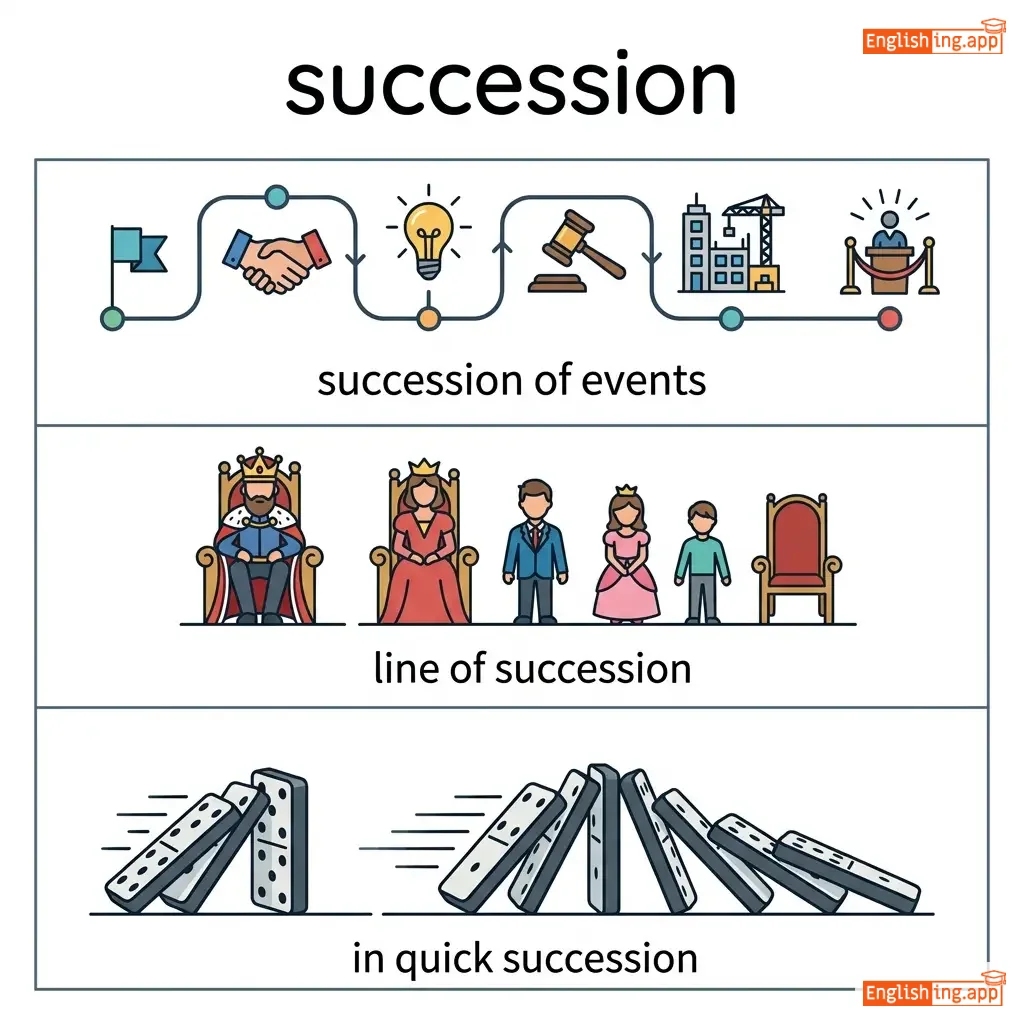
|
наследование
nasledovanie
••••••
|
- •••••• | - •••••• | - •••••• | - •••••• |
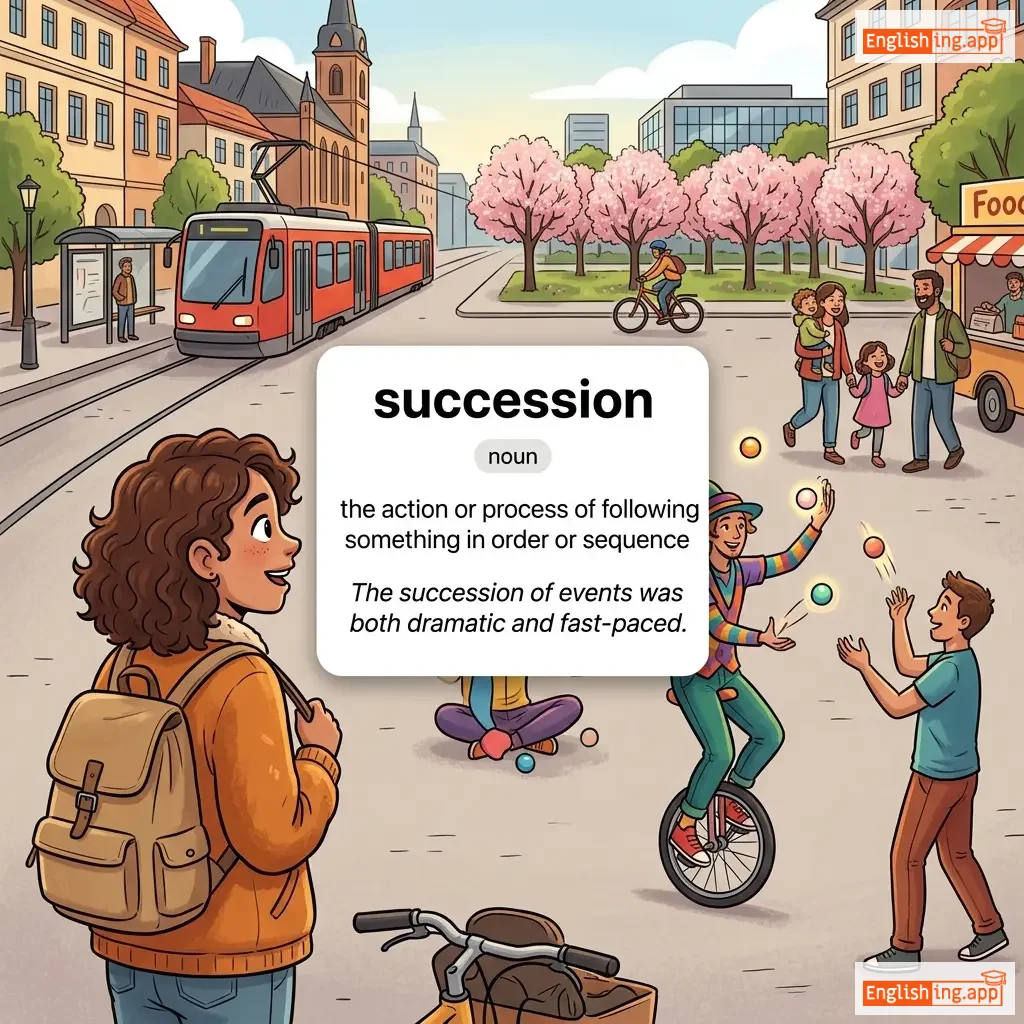
a series of people or things following one after another; the process of inheriting a title or position
••••••
|
The succession of kings in that dynasty lasted for over 300 years. |
Наследование королей в этой династии продолжалось более 300 лет.
nasledovanie korolei v etoy dinastii prodolzhalos' bolee 300 let
••••••
|
- •••••• | - •••••• | - •••••• |
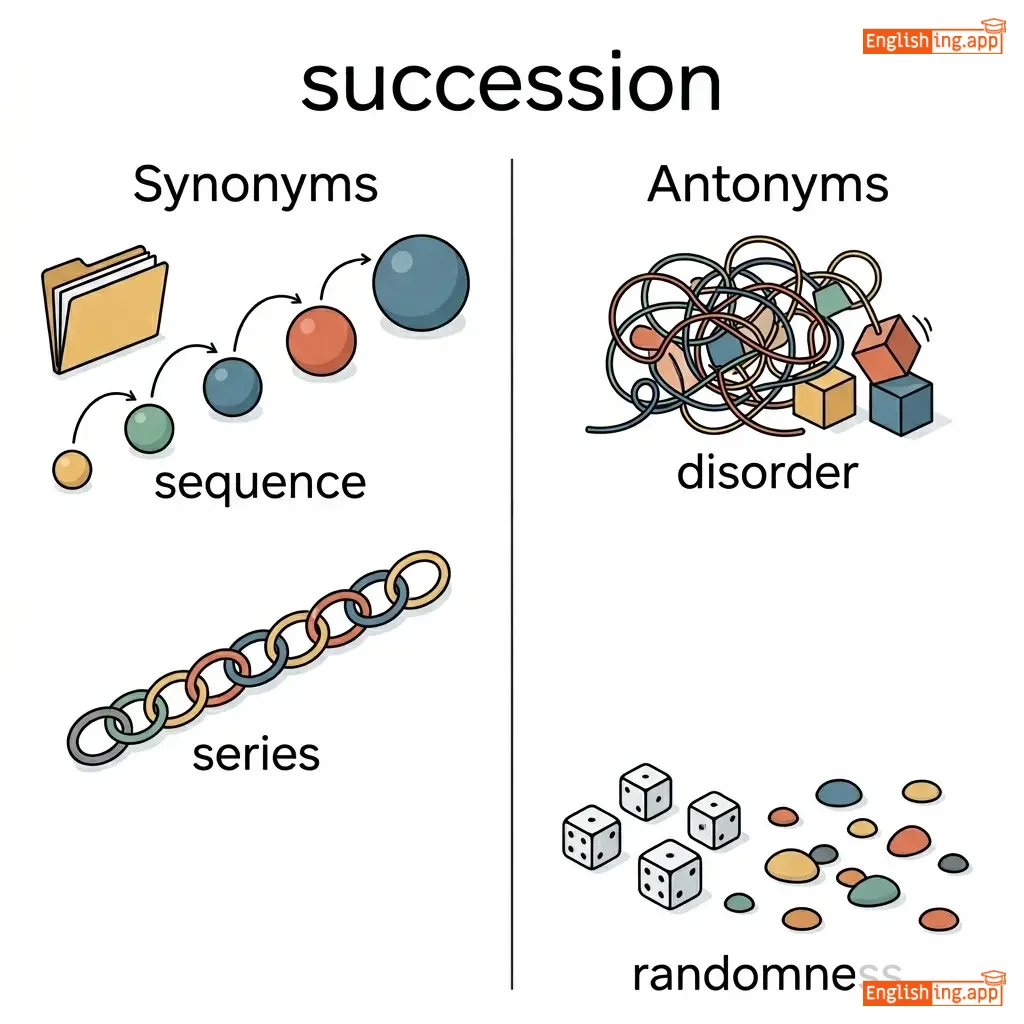
sequence, series, inheritance, lineage
••••••
|
interruption, discontinuation
••••••
|
royal succession, succession planning, line of succession, succession crisis
••••••
|
Представьте себе бесконечную очередь правителей, передающих свои титулы.
••••••
|
|
🔢
••••••
|
/səkˈsɛsɪv/
adjective
(suksesiv)
••••••
|
- •••••• |
последовательный; непрерывный
posledovatel'nyy; nepreryvnyy
••••••
|
- •••••• | - •••••• | - •••••• | - •••••• |
following one after the other in order; consecutive
••••••
|
The team won three successive matches. |
Команда выиграла три последовательные игры.
Komanda vyigrala tree posledovatel'nye igry.
••••••
|
- •••••• | - •••••• | - •••••• |
consecutive, sequential, continuous, following
••••••
|
intermittent, interrupted, discontinuous
••••••
|
successive days, successive generations, successive victories
••••••
|
Successive is like a series of continuous events, such as successive victories.
••••••
|
|
👑
••••••
|
/səkˈsɛsər/
noun
(suksesɔr)
••••••
|
- •••••• |
преемник
preemnik
••••••
|
- •••••• | - •••••• | - •••••• | - •••••• |
A person or thing that follows another in a position, office, or role.
••••••
|
The company appointed a successor after the CEO retired. |
Компания назначила преемника после того, как генеральный директор ушел на пенсию.
Kompaniya naznachila preemnika posle togo, kak general'nyy direktor ushel na pensiyu.
••••••
|
successor in title |
a person who legally takes over rights or property from another
••••••
|
преемник по праву
preemnik po pravu
••••••
|
heir, inheritor, descendant, replacement, follower
••••••
|
predecessor, ancestor
••••••
|
successor to the throne, immediate successor, political successor, rightful successor
••••••
|
Success приводит к преемнику — преемник.
••••••
|
|
🤔
••••••
|
/sʌtʃ/
determiner
(сʌтʃ)
••••••
|
- •••••• |
такой
takoy
••••••
|
- •••••• | - •••••• | - •••••• | - •••••• |
of the type previously mentioned or specified
••••••
|
I have never seen such a beautiful painting. |
Я никогда не видел такую красивую картину.
Ya nikogda ne videl takuyu krasivuyu kartinu.
••••••
|
- •••••• | - •••••• | - •••••• |
like, similar, comparable
••••••
|
different, unlike
••••••
|
such a, such as, such beautiful
••••••
|
Such means ‘takoy’ (like that), and it’s easy to remember when you say, ‘Such a picture!’
••••••
|
|
🍼
••••••
|
/sʌk/
verb
(sak)
••••••
|
- •••••• |
сосать
sosat
••••••
|
sucked
sakd
••••••
|
sucked
sakd
••••••
|
sucks
saks
••••••
|
sucking
saking
••••••
|
to draw something into the mouth by using the lips and tongue
••••••
|
The baby began to suck her thumb.
Ребенок начал сосать свой палец.
••••••
|
Ребенок начал сосать свой палец.
Rebyonok nachal sosat' svoy palets.
••••••
|
suck it up
высосать это
••••••
|
to accept something unpleasant without complaining
••••••
|
принять это
prinyat' eto
••••••
|
sip, draw, ingest, slurp
••••••
|
spit, expel
••••••
|
suck up, suck out, suck in, suck on
••••••
|
Ребенок сосет палец, легко запомнить как ‘сосать’.
••••••
|
|
🍼
••••••
|
/ˈsʌkɪŋ/
verb
(саккинг)
••••••
|
- •••••• |
сосать
sosat
••••••
|
sucked
сакед
••••••
|
sucked
сакед
••••••
|
sucks
сакс
••••••
|
sucking
саккинг
••••••
|
Drawing in a liquid, air, or other substance through the mouth or a tube by creating a vacuum; also used figuratively for something unpleasant or ineffective
••••••
|
The baby is sucking on a pacifier.
Младенец сосет пустышку.
••••••
|
Младенец сосет пустышку.
Mladenets soset pustyshku.
••••••
|
suck it up
перетерпеть
••••••
|
to endure a difficult situation without complaining
••••••
|
перетерпеть
pereterpet
••••••
|
slurping, drawing, imbibing, absorbing
••••••
|
blowing, spitting
••••••
|
sucking sound, sucking motion, sucking reflex, sucking power
••••••
|
Представьте младенца, сосущего пустышку.
••••••
|
|
⚡
••••••
|
/ˈsʌdən/
adjective
(саден)
••••••
|
- •••••• |
внезапный; резкий; неожиданный;
vnezapny; rezky; neozhidannyy
••••••
|
- •••••• | - •••••• | - •••••• | - •••••• |
happening or done quickly and unexpectedly; abrupt
••••••
|
There was a sudden change in the weather. |
В погоде произошли внезапные изменения.
V pogode proizoshli vnezapnye izmeneniya.
••••••
|
- •••••• | - •••••• | - •••••• |
abrupt, unexpected, rapid, swift
••••••
|
gradual, slow, expected, planned
••••••
|
sudden change, sudden death, sudden movement
••••••
|
No •••••• |
|
⚡
••••••
|
/ˈsʌd.ən.li/
adverb
(судэнли)
••••••
|
- •••••• |
внезапно
vnezapno
••••••
|
- •••••• | - •••••• | - •••••• | - •••••• |
quickly and without warning; unexpectedly
••••••
|
The car suddenly stopped in the middle of the road. |
Машина внезапно остановилась посреди дороги.
Mashina vnezapno ostanovilas' posredi dorogi.
••••••
|
- •••••• | - •••••• | - •••••• |
abruptly, unexpectedly, instantly
••••••
|
gradually, slowly, predictably
••••••
|
suddenly appear, suddenly stop, suddenly realize
••••••
|
Vnezapno sounds like 'Vnezapno' (in English), indicating something abrupt.
••••••
|
|
⚖️
••••••
|
/suː/
verb
(су)
••••••
|
- •••••• |
подать в суд
podat' v sud
••••••
|
sued
сюд
••••••
|
sued
сюд
••••••
|
sues
сюэз
••••••
|
suing
суинг
••••••
|
to bring a lawsuit against someone in a court of law
••••••
|
She decided to sue the company for damages.
Она решила подать в суд на компанию за ущерб.
••••••
|
Она решила подать в суд на компанию за ущерб.
Ona reshil podat' v sud na kompaniyu za uscherb.
••••••
|
- •••••• | - •••••• | - •••••• |
litigate, prosecute, charge, complain
••••••
|
defend, forgive
••••••
|
sue for damages, sue someone, sue in court
••••••
|
Sue means 'podat' v sud' – like a lawsuit ⚖️
••••••
|
|
😞
••••••
|
/ˈsʌfər/
verb
(сафер)
••••••
|
- •••••• |
страдать
stradat'
••••••
|
suffered
саферт
••••••
|
suffered
саферт
••••••
|
suffers
саферс
••••••
|
suffering
сафферинг
••••••
|
to experience pain, distress, or hardship
••••••
|
She suffered from a severe headache all day.
Она страдала от сильной головной боли весь день.
••••••
|
Она страдала от сильной головной боли весь день.
Ona stradala ot sil'noy golovnoy boli ves' den'.
••••••
|
- •••••• | - •••••• | - •••••• |
endure, undergo, experience, bear
••••••
|
enjoy, delight, thrive
••••••
|
suffer from, suffer greatly, suffer in silence
••••••
|
Suffer - На диване ты страдаешь от боли.
••••••
|
|
😢
••••••
|
/ˈsʌfərɪŋ/
noun
(сапфэринг)
••••••
|
- •••••• |
страдание
stradanie
••••••
|
- •••••• | - •••••• | - •••••• | - •••••• |
the state of undergoing pain, distress, or hardship
••••••
|
They tried to relieve his suffering with medicine. |
Они пытались облегчить его страдание с помощью лекарства.
Oni pytalis' oblegchit' ego stradanie s pomoshch'yu lekarstva.
••••••
|
long-suffering |
patiently enduring pain or hardship for a long time
••••••
|
долгое страдание
dolgoe stradanie
••••••
|
pain, agony, misery, distress, hardship
••••••
|
comfort, relief, ease
••••••
|
human suffering, great suffering, physical suffering, mental suffering
••••••
|
Stradanie в русском — это страдание, а suffering в английском тоже означает страдание.
••••••
|
|
✔️
••••••
|
/səˈfɪʃənt/
adjective
(суффисент)
••••••
|
- •••••• |
достаточно
dostatochno
••••••
|
- •••••• | - •••••• | - •••••• | - •••••• |
enough; adequate for a purpose
••••••
|
She had sufficient money to buy the dress. |
У нее было достаточно денег, чтобы купить платье.
U nee bylo dostatochno deneg, chtoby kupit' plat'ye.
••••••
|
sufficient unto the day |
today's troubles are enough without worrying about the future
••••••
|
достаточно на день
dostatochno na den'
••••••
|
enough, adequate, ample, satisfactory
••••••
|
insufficient, inadequate, lacking
••••••
|
sufficient money, sufficient evidence, sufficient reason
••••••
|
Dostatochno znači dostatočno ✔️ – predstavljajte sebi super zabavu
••••••
|
|
✅
••••••
|
/səˈfɪʃəntli/
adverb
(суффициентли)
••••••
|
- •••••• |
достаточно
dostatochno
••••••
|
- •••••• | - •••••• | - •••••• | - •••••• |
to an adequate degree or extent
••••••
|
She studied sufficiently to pass the exam. |
Она училась достаточно, чтобы сдать экзамен.
Ona uchilas' dostatochno, chtoby sdat' ekzamen.
••••••
|
- •••••• | - •••••• | - •••••• |
adequately, enough, satisfactorily
••••••
|
insufficiently, inadequately
••••••
|
sufficiently prepared, sufficiently large, sufficiently skilled
••••••
|
Sufficiently = Just enough to reach the goal, like 'sufficient' = enough!
••••••
|
|
🍬
••••••
|
/ˈʃʊɡər/
noun
(сахар)
••••••
|
- •••••• |
сахар
sakhar
••••••
|
- •••••• | - •••••• | - •••••• | - •••••• |
sweet crystalline substance used as a sweetener
••••••
|
Please add two teaspoons of sugar to my coffee. |
Пожалуйста, добавьте две чайные ложки сахара в мой кофе.
Pozhaluysta, dobav'te dve chaynye lozhki sakhara v moy kofe
••••••
|
- •••••• | - •••••• | - •••••• |
sweetener, sucrose
••••••
|
salt, bitter
••••••
|
brown sugar, sugar cube, sugar level, blood sugar
••••••
|
Сахар делает напитки слаще, как в кофе.
••••••
|
|
💡
••••••
|
/səˈdʒɛst/
verb
(сугест)
••••••
|
- •••••• |
предлагать
predlagat'
••••••
|
suggested
саггестед
••••••
|
suggested
саггестед
••••••
|
suggests
саггестс
••••••
|
suggesting
саггестинг
••••••
|
to put forward an idea, plan, or recommendation for consideration
••••••
|
He suggested going to the new restaurant for dinner.
он предложил пойти в новый ресторан на ужин.
••••••
|
Он предложил пойти в новый ресторан на ужин.
On predlozhil poyti v novyy restoran na uzhin.
••••••
|
suggest itself
предложить само собой
••••••
|
to present itself naturally without being asked
••••••
|
появиться само собой
poyavitsya samo soboy
••••••
|
recommend, propose, advise, urge
••••••
|
oppose, discourage
••••••
|
suggest a plan, suggest an idea, strongly suggest, politely suggest
••••••
|
Предложить значит предложить идею – запомни через предложение!
••••••
|
|
💡
••••••
|
/səˈdʒes.tʃən/
noun
(sʌdʒɛsˈʧən)
••••••
|
- •••••• |
предложение; совет
predlozhenie; sovet
••••••
|
- •••••• | - •••••• | - •••••• | - •••••• |
an idea or plan put forward for consideration; advice or recommendation
••••••
|
Do you have any suggestions for improving our team's productivity? |
У вас есть предложения по улучшению производительности нашей команды?
U vas yest' predlozheniya po uluchsheniyu proizvoditel'nosti nashei komandy?
••••••
|
- •••••• | - •••••• | - •••••• |
recommendation, proposal, advice, idea
••••••
|
command, order, demand
••••••
|
helpful suggestion, practical suggestion, suggestion box, make a suggestion
••••••
|
Предложение помогает улучшить (Predlozhenie pomogaet uluchshit')
••••••
|
|
⚠️
••••••
|
/ˈsuː.ɪ.saɪd/
noun
(суицид)
••••••
|
- •••••• |
суицид
suicid
••••••
|
- •••••• | - •••••• | - •••••• | - •••••• |
the act of intentionally killing oneself
••••••
|
Mental health professionals work to prevent suicide. |
Профессионалы в области психического здоровья работают над предотвращением суицида.
Professionaly v oblasti psikhicheskogo zdorov'ya rabotayut nad predotvrashcheniyem suicida.
••••••
|
- •••••• | - •••••• | - •••••• |
self-destruction, self-harm
••••••
|
survival, life preservation
••••••
|
commit suicide, suicide prevention, suicide rate
••••••
|
Психологи работают, чтобы предотвратить суицид.
••••••
|
|
🤵
••••••
|
/suːt/
noun
(сuit)
••••••
|
- •••••• |
костюм
kostyum
••••••
|
- •••••• | - •••••• | - •••••• | - •••••• |
a set of clothes made of the same fabric, usually consisting of trousers and a jacket
••••••
|
He wore a black suit to the wedding.
Он надел черный костюм на свадьбу.
••••••
|
Он надел черный костюм на свадьбу.
On nadel chernyy kostyum na svad'bu.
••••••
|
- •••••• | - •••••• | - •••••• |
outfit, attire, ensemble
••••••
|
casual wear, informal dress
••••••
|
wear a suit, business suit, suit jacket
••••••
|
Kostyum - На свадьбе костюм делает тебя элегантным и уместным.
••••••
|
|
👌
••••••
|
/ˈsuːtəbl/
adjective
(суитабл)
••••••
|
- •••••• |
подходящий
podkhodyashchiy
••••••
|
- •••••• | - •••••• | - •••••• | - •••••• |
appropriate or right for a particular person, purpose, or situation
••••••
|
This dress is suitable for the wedding. |
Это платье подходит для свадьбы.
Eto plat'ye podkhodit dlya svad'by.
••••••
|
- •••••• | - •••••• | - •••••• |
appropriate, proper, fitting, apt, acceptable
••••••
|
unsuitable, inappropriate, unfit
••••••
|
suitable for, suitable candidate, suitable time, suitable environment
••••••
|
Suitable означает подходящий, как подходящее платье для свадьбы.
••••••
|
|
🧳
••••••
|
/ˈsuːt.keɪs/
noun
(суиткейс)
••••••
|
- •••••• |
чемодан
chemodan
••••••
|
- •••••• | - •••••• | - •••••• | - •••••• |
A portable rectangular container for carrying clothes and personal items when traveling
••••••
|
She packed her clothes into a suitcase for the trip.
Она упаковала свою одежду в чемодан для поездки.
••••••
|
Она упаковала свою одежду в чемодан для поездки.
Ona upakovala svoiu odezhdu v chemodan dlya poezdki.
••••••
|
kick the suitcase down the road
пнуть чемодан по дороге
••••••
|
To postpone dealing with a problem or responsibility
••••••
|
пнуть чемодан по дороге
pnut chemodan po doroge
••••••
|
luggage, bag, valise, trunk, carry-on
••••••
|
handbag, purse
••••••
|
open a suitcase, pack a suitcase, carry a suitcase, check a suitcase
••••••
|
чемодан rhymes with 'chemo-dan'; imagine Dan packing his chemo kit in a suitcase
••••••
|
|
🏨
••••••
|
/swiːt/
noun
(свит)
••••••
|
- •••••• |
люкс
lyuks
••••••
|
- •••••• | - •••••• | - •••••• | - •••••• |
a set of rooms designated for one person's or family's use or for a particular purpose
••••••
|
They stayed in the presidential suite at the hotel. |
Они остановились в президентском люксе отеля.
Oni ostanovilis' v prezidentskom lyuksie otelya.
••••••
|
- •••••• | - •••••• | - •••••• |
set, series, apartment, chambers, rooms
••••••
|
single room, dormitory
••••••
|
hotel suite, luxury suite, software suite, office suite
••••••
|
Люкс — это набор роскошных комнат, как президентский люкс в отеле.
••••••
|
|
➕
••••••
|
/sʌm/
noun
(sam)
••••••
|
- •••••• |
сумма
summa
••••••
|
- •••••• | - •••••• | - •••••• | - •••••• |
the total amount resulting from the addition of two or more numbers or items
••••••
|
The sum of 8 and 12 is 20. |
Сумма 8 и 12 равна 20.
Summa 8 i 12 ravna 20.
••••••
|
sum up |
to summarize or give a brief statement of something
••••••
|
подытожить
podytozhit'
••••••
|
total, amount, aggregate, tally, whole
••••••
|
part, portion
••••••
|
large sum, total sum, sum of money, sum up, small sum
••••••
|
Sum - это сложение — 'sum' означает итог сложения.
••••••
|
|
📝
••••••
|
/ˈsʌməraɪz/
verb
(саммарaйз)
••••••
|
- •••••• |
подводить итог
podvodit itog
••••••
|
summarized
саммарaйзд
••••••
|
summarized
саммарaйзд
••••••
|
summarizes
саммарaйзес
••••••
|
summarizing
саммарaйзинг
••••••
|
To give a brief statement of the main points of something
••••••
|
She summarized the report in just a few minutes.
Она суммировала отчет всего за несколько минут.
••••••
|
Она суммировала отчет всего за несколько минут.
Ona summirovala otchet vsego za neskolko minut
••••••
|
- •••••• | - •••••• | - •••••• |
condense, outline, recap, abridge, encapsulate
••••••
|
expand, elaborate, detail
••••••
|
summarize a report, summarize findings, summarize points, summarize information
••••••
|
Summarize = суммировать = сделать кратко.
••••••
|
|
📝
••••••
|
/ˈsʌməri/
noun
(zamari)
••••••
|
- •••••• |
резюме
rezume
••••••
|
- •••••• | - •••••• | - •••••• | - •••••• |
A brief statement of the main points of something.
••••••
|
She wrote a summary of the book for her class. |
Она написала резюме книги для своего класса.
Ona napisała rezyume knigi dlya svoego klassa.
••••••
|
in summary |
used to introduce a concise statement that captures the main points
••••••
|
в резюме
v rezyume
••••••
|
outline, synopsis, abstract, digest, recap
••••••
|
detail, expansion
••••••
|
write a summary, brief summary, executive summary, short summary
••••••
|
Summary - это короткое содержание, резюме.
••••••
|
|
🌞
••••••
|
/ˈsʌmər/
noun
(лето)
••••••
|
- •••••• |
лето
leto
••••••
|
- •••••• | - •••••• | - •••••• | - •••••• |
the warmest season of the year, between spring and autumn
••••••
|
We love going to the beach during summer. |
Нам нравится ходить на пляж летом.
Nam nravitsya khodit' na plyazh letom.
••••••
|
- •••••• | - •••••• | - •••••• |
season, warmth, hot period, vacation time
••••••
|
winter, cold
••••••
|
summer vacation, summer holiday, summer heat, summer camp
••••••
|
Think of the SUMMER sun burning bright and warm!
••••••
|
|
⛰️
••••••
|
/ˈsʌmɪt/
noun
(soh-mit)
••••••
|

|
пик, вершина
pik, vershina
••••••
|
- •••••• | - •••••• | - •••••• | - •••••• |
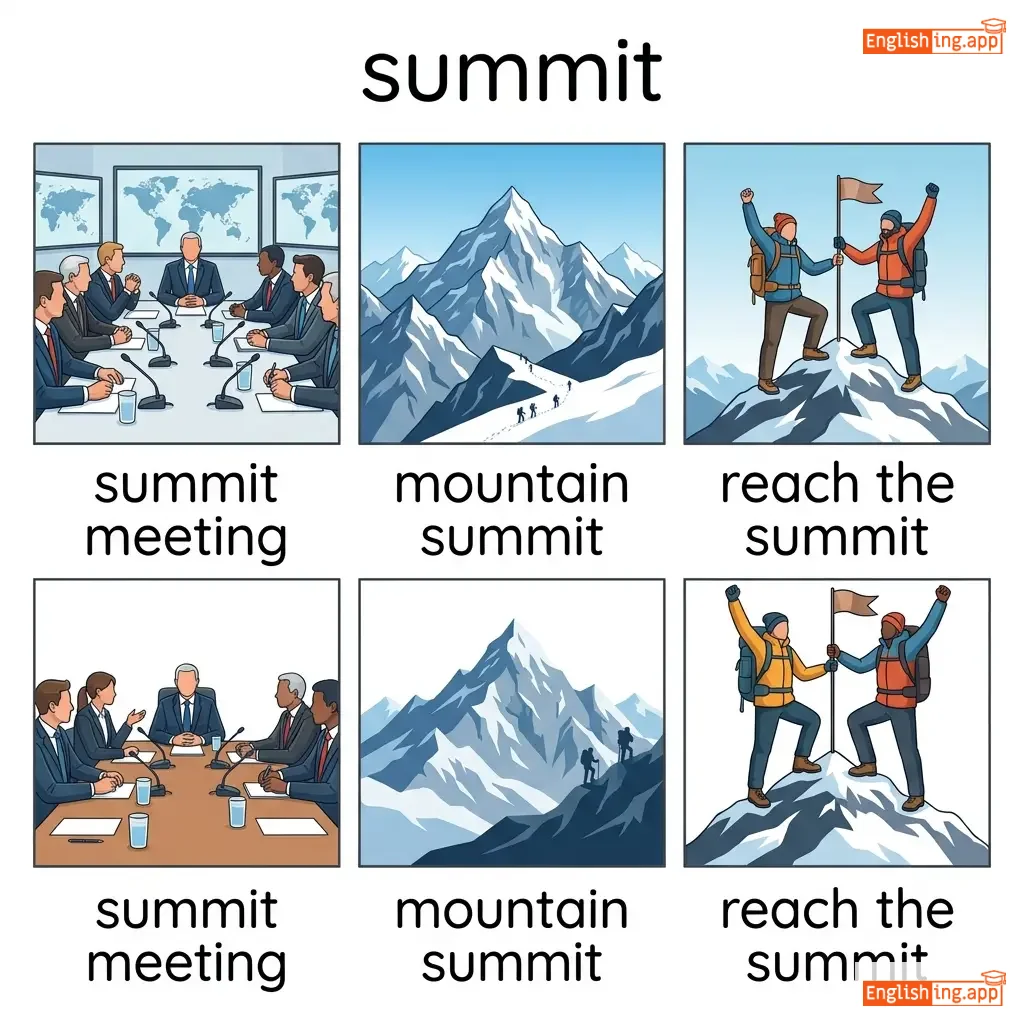
The highest point of a hill or mountain; a meeting between heads of state or leaders.
••••••
|
The leaders met at the summit to discuss global issues. |
Лидеры встретились на вершине, чтобы обсудить мировые проблемы.
Lidery vstretilis' na vershine, chtoby obsudit' mirovye problemy.
••••••
|
reach the summit |
to arrive at the highest point, literally or figuratively
••••••
|
достигнуть вершины
dostignut' vershiny
••••••
|
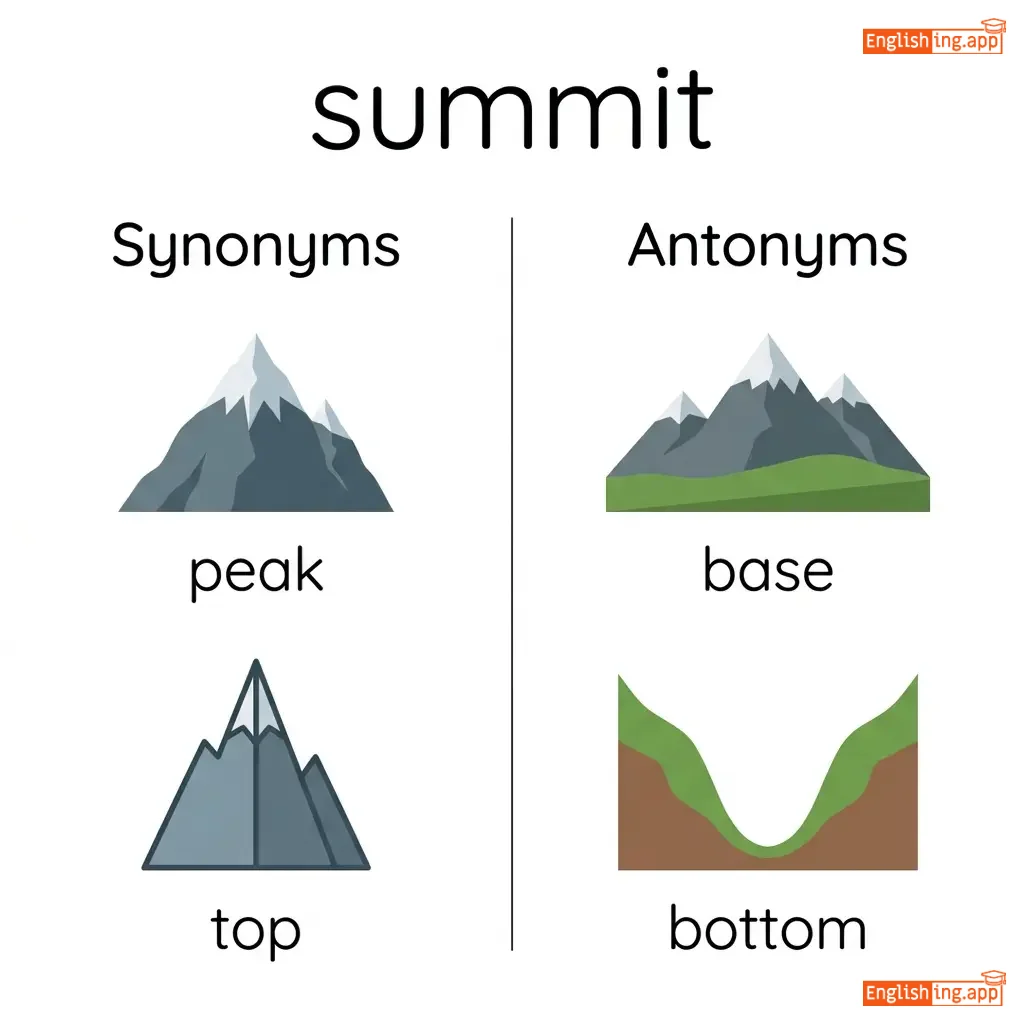
peak, top, apex, conference, meeting
••••••
|
base, bottom
••••••
|
summit meeting, mountain summit, reach the summit, summit conference
••••••
|
Summit = пик = самая высокая точка горы
••••••
|
|
☀️
••••••
|
/sʌn/
noun
(sʌn)
••••••
|
- •••••• |
солнце
solntse
••••••
|
- •••••• | - •••••• | - •••••• | - •••••• |
the star around which the earth orbits; the source of light and heat for planets
••••••
|
The sun rises in the east and sets in the west.
ðə sʌn raɪzɪz ɪn ðə ist ənd sɛts ɪn ðə wɛst
••••••
|
Солнце восходит на востоке и заходит на западе.
Solntse voskhodit na vostoke i zakhodit na zapade.
••••••
|
- •••••• | - •••••• | - •••••• |
solar disc, daystar
••••••
|
moon
••••••
|
morning sun, sunset, sunshine, solar energy
••••••
|
Солнце — это источник жизни на Земле.
••••••
|
|
🌞
••••••
|
/ˈsʌn.deɪ/
noun
(сандей)
••••••
|
- •••••• |
воскресенье
voskresen'ye
••••••
|
- •••••• | - •••••• | - •••••• | - •••••• |
The day of the week between Saturday and Monday; often considered a day of rest or worship.
••••••
|
We usually relax at home on Sunday.
Мы обычно отдыхаем дома в воскресенье.
••••••
|
Мы обычно отдыхаем дома в воскресенье.
My obychno otdykhaem doma v voskresen'e.
••••••
|
Sunday best
воскресное лучшее
••••••
|
The finest clothes worn on Sundays or for special occasions.
••••••
|
воскресное лучшее
voskresnoe luchshee
••••••
|
weekend day, day of rest, Sabbath
••••••
|
weekday, workday
••••••
|
Sunday morning, Sunday brunch, Sunday service, lazy Sunday
••••••
|
Вос = Sun + воскресенье = Sunday
••••••
|
|
💪
••••••
|
/ˈsuːpər/
adjective
(супер)
••••••
|
- •••••• |
супер
super
••••••
|
- •••••• | - •••••• | - •••••• | - •••••• |
excellent; very good
••••••
|
She did a super job on the project. |
Она сделала супер работу над проектом.
Ona sdelala super rabotu nad proyektom.
••••••
|
- •••••• | - •••••• | - •••••• |
excellent, great, outstanding, remarkable
••••••
|
poor, mediocre
••••••
|
super fast, super cool, super hero, super strong
••••••
|
Super is super cool and super helpful!
••••••
|
|
🌟
••••••
|
/suːˈpɜːrb/
adjective
(супёрб)
••••••
|
- •••••• |
превосходный
prevoskhodnyy
••••••
|
- •••••• | - •••••• | - •••••• | - •••••• |
extremely good; excellent
••••••
|
The hotel provided superb service during our stay. |
Отель предоставил превосходное обслуживание во время нашего пребывания.
Otel' predostavil prevoskhodnoe obsluzhivanie vo vremya nashego prebyvaniya.
••••••
|
superb condition |
in excellent state or quality
••••••
|
превосходное состояние
prevoskhodnoe sostoyanie
••••••
|
excellent, outstanding, splendid, magnificent, wonderful
••••••
|
poor, bad, inferior
••••••
|
superb service, superb quality, superb performance
••••••
|
Super + b = превосходный
••••••
|
|
👨💼
••••••
|
/ˌsuːpərɪnˈtɛndənt/
noun
(суперинтендант)
••••••
|
- •••••• |
директор
direktor
••••••
|
- •••••• | - •••••• | - •••••• | - •••••• |
a person who oversees, manages, or directs an organization, building, or project
••••••
|
The superintendent visited the classrooms to check on progress. |
Директор посетил классы, чтобы проверить прогресс.
Direktor posetil klassy, chtoby proverit' progress.
••••••
|
- •••••• | - •••••• | - •••••• |
manager, supervisor, overseer, director
••••••
|
subordinate, worker
••••••
|
school superintendent, building superintendent, superintendent of police
••••••
|
Директор — это тот, кто управляет всем.
••••••
|
|
🏆
••••••
|
/suːˈpɪə.ri.ər/
adjective
(супериор)
••••••
|
- •••••• |
превосходящий
prevoskhodyashchiy
••••••
|
- •••••• | - •••••• | - •••••• | - •••••• |
better in quality, rank, or importance than others
••••••
|
This product is superior to its competitors in quality.
Этот продукт превосходит своих конкурентов по качеству.
••••••
|
Этот продукт превосходит своих конкурентов по качеству.
Etot produkt prevoshodit svoikh konkurentov po kachestvu.
••••••
|
superior attitude
сверхмощное отношение
••••••
|
an arrogant or condescending manner
••••••
|
сверхмощное отношение
sverkhmoshchnoe otnoshenie
••••••
|
better, higher, excellent, dominant, outstanding
••••••
|
inferior, lower, worse
••••••
|
superior quality, superior product, superior performance, morally superior, technically superior
••••••
|
Superior означает super + ior → super означает лучший, поэтому ‘превосходящий’.
••••••
|

