|
表情符号
|
单词 | Images | 翻译 | 过去时 | 过去分词 | 第三人称单数 | 动名词 | 含义 | 例句 | 例句翻译 | 示例表达 | 示例表达含义 | 示例表达翻译 | 同义词 | 反义词 | 搭配词 | 助记符 |
|---|---|---|---|---|---|---|---|---|---|---|---|---|---|---|---|---|---|
|
📄
••••••
|
/səbˈmɪt/
verb
(səbˈmɪt)
••••••
|

|
提交
tíjiāo
••••••
|
submitted
səbˈmɪtəd
••••••
|
submitted
səbˈmɪtəd
••••••
|
submits
səbˈmɪts
••••••
|
submitting
səbˈmɪtɪŋ
••••••
|
to present for consideration; to surrender; to yield
••••••
|
Please submit your assignment by Friday.
请在周五之前提交您的作业。
••••••
|
请在周五之前提交您的作业。
Qǐng zài zhōuwǔ zhīqián tíjiāo nín de zuòyè.
••••••
|
- •••••• | - •••••• | - •••••• |
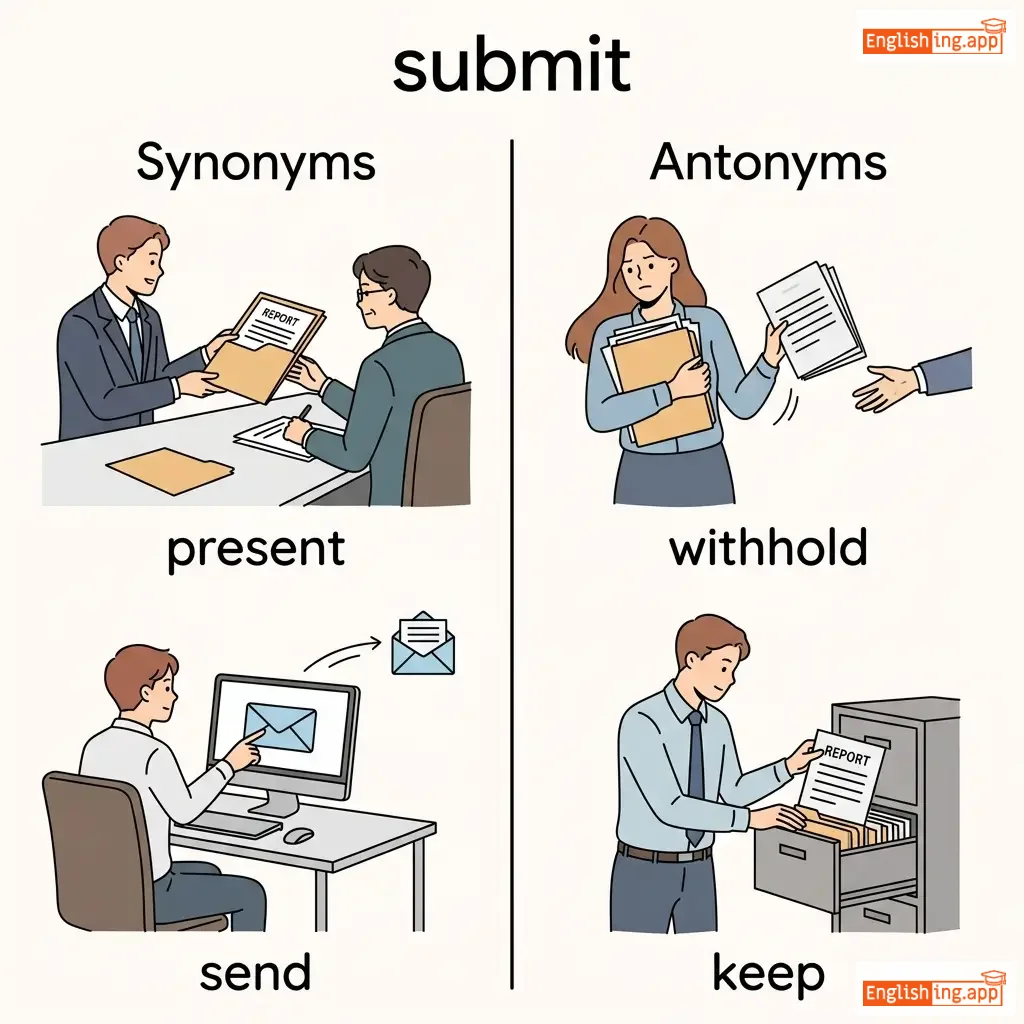
present, hand in, surrender, yield
••••••
|
withdraw, resist, refuse, reject
••••••
|
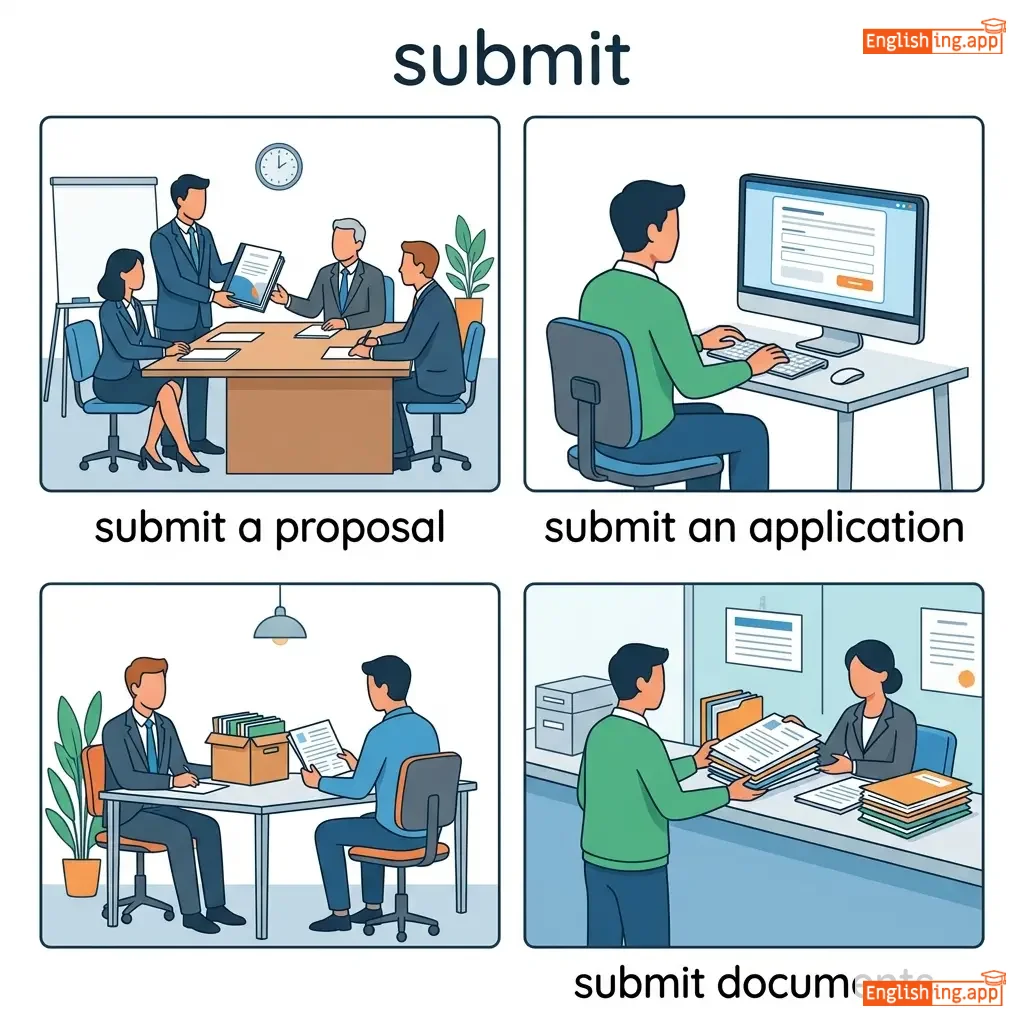
submit application, submit report, submit assignment, submit proposal, submit documents
••••••
|
提交作业就像投降,认命吧!
••••••
|
|
📩
••••••
|
/səbˈskraɪbər/
noun
(订阅者)
••••••
|
- •••••• |
订阅者
dīngyuè zhě
••••••
|
- •••••• | - •••••• | - •••••• | - •••••• |
a person who receives or subscribes to a service, magazine, or service
••••••
|
She is a subscriber to the monthly magazine. |
她是每月杂志的订阅者。
Tā shì měi yuè zázhì de dìngyuè zhě.
••••••
|
- •••••• | - •••••• | - •••••• |
member, follower, customer, supporter
••••••
|
non-subscriber, reader
••••••
|
new subscriber, regular subscriber, email subscriber
••••••
|
订阅者,订阅杂志的人
••••••
|
|
📱
••••••
|
/səbˈskrɪp.ʃən/
noun
(sabskripshon)
••••••
|
- •••••• |
订阅
dingyue
••••••
|
- •••••• | - •••••• | - •••••• | - •••••• |
a payment for regular delivery of a service or product; an arrangement to receive something regularly
••••••
|
I canceled my Netflix subscription because I wasn't watching it enough.
我取消了我的Netflix订阅,因为我没有足够看它。
••••••
|
我取消了我的Netflix订阅,因为我没有足够看它。
Wo quxiao le wode Netflix dingyue, yinwei wo mei you zuguo kan ta.
••••••
|
- •••••• | - •••••• | - •••••• |
membership, enrollment, registration
••••••
|
cancellation, termination
••••••
|
monthly subscription, magazine subscription, streaming subscription, subscription fee
••••••
|
订阅是获取服务的长期安排,类似于服务包或者定期更新的订阅。
••••••
|
|
➡️
••••••
|
/ˈsʌbsɪkwənt/
adjective
(səbˈskwɛnt)
••••••
|
|
随后的
suíhòu de
••••••
|
- •••••• | - •••••• | - •••••• | - •••••• |
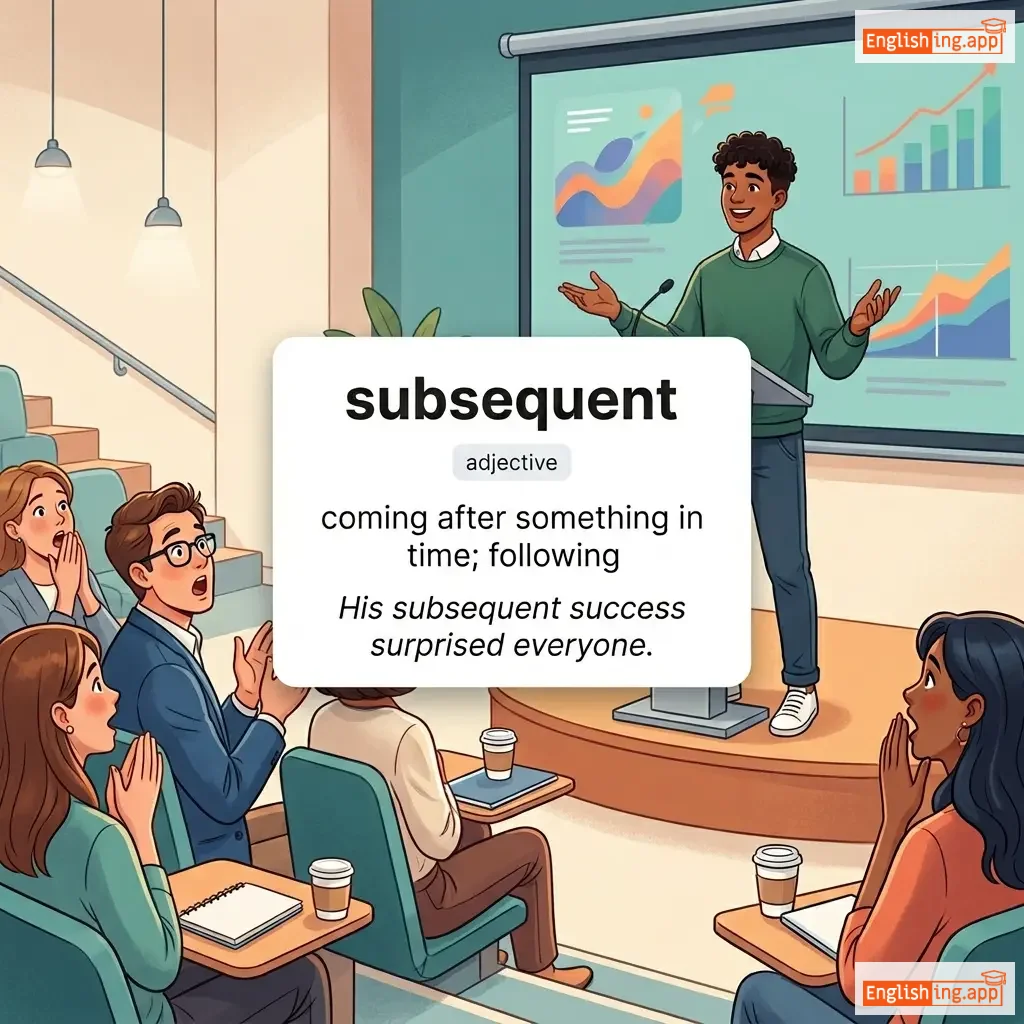
coming after something in time; following
••••••
|
His subsequent success surprised everyone. |
他的随后的成功让所有人都感到惊讶。
tā de suíhòu de chénggōng ràng suǒyǒu rén dōu gǎndào jīngyà.
••••••
|
subsequent to |
happening or coming after something
••••••
|
随后的
suíhòu de
••••••
|
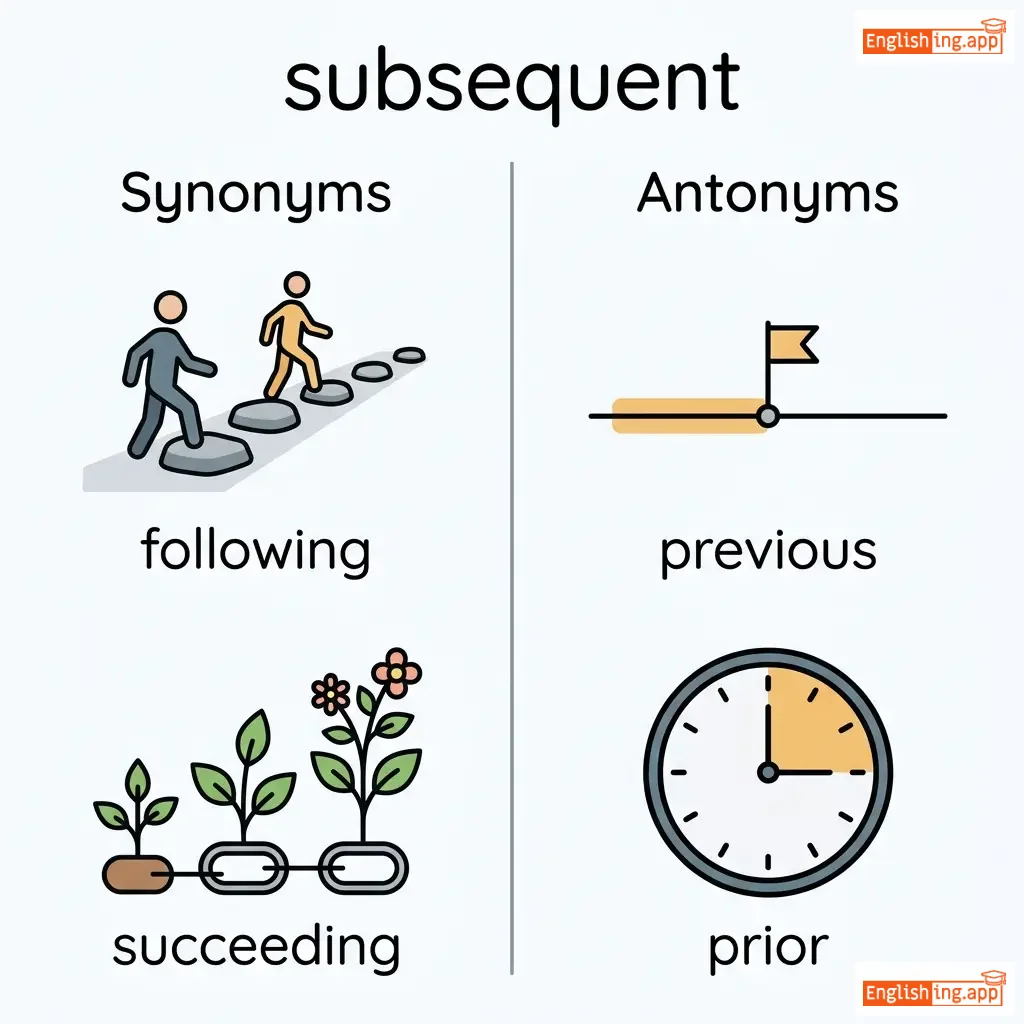
following, succeeding, later, ensuing, successive
••••••
|
previous, prior, former
••••••
|
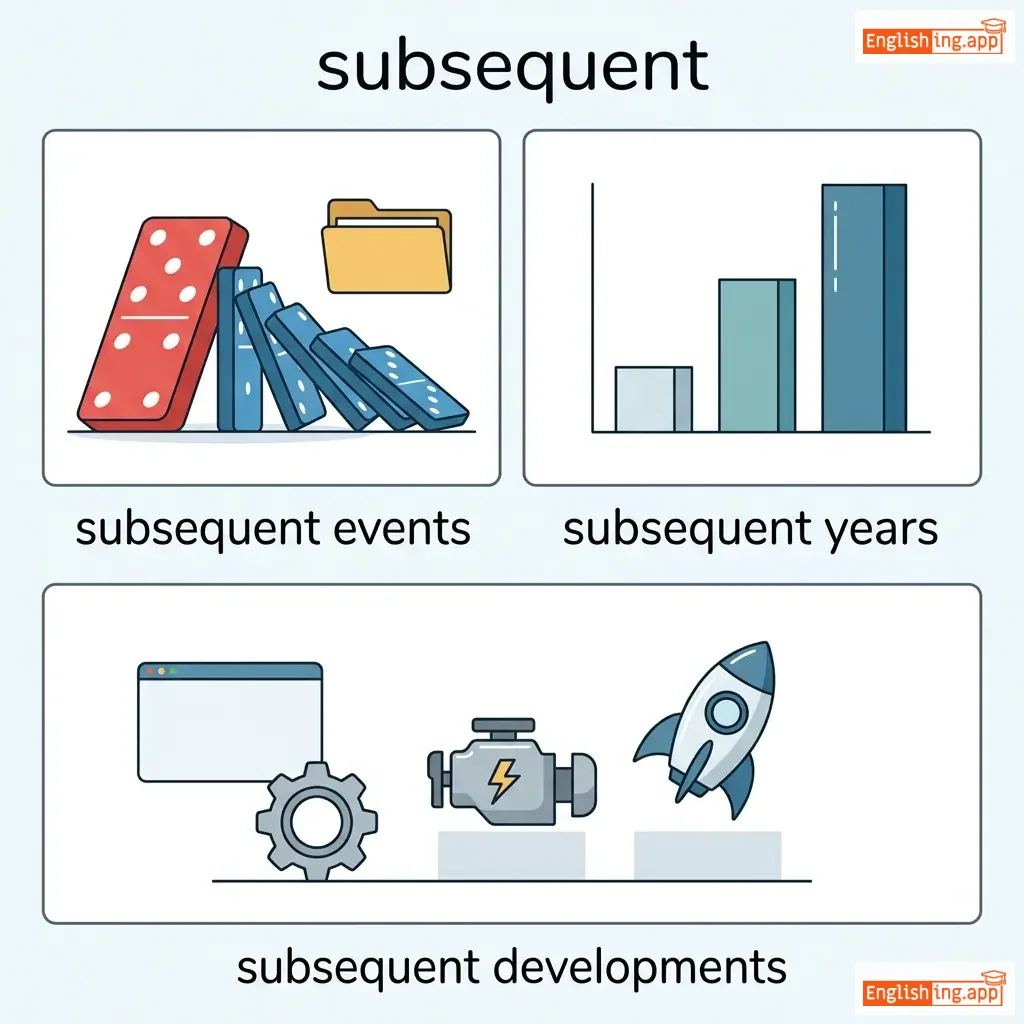
subsequent events, subsequent years, subsequent developments, subsequent changes
••••••
|
Subsequent 意味着紧接着发生的事情,所以用'随后的'。
••••••
|
|
⏳
••••••
|
/ˈsʌbsɪkwəntli/
adverb
(sʌbsɪkwəntli)
••••••
|
- •••••• |
随后
suíhòu
••••••
|
- •••••• | - •••••• | - •••••• | - •••••• |
at a later time; afterward
••••••
|
He failed his exam and subsequently had to retake it. |
他没有通过考试,随后不得不重考。
Tā méiyǒu tōngguò kǎoshì, suíhòu bùdébù zhòngkǎo.
••••••
|
- •••••• | - •••••• | - •••••• |
afterward, later, consequently, as a result
••••••
|
before, earlier
••••••
|
subsequently announced, subsequently decided, subsequently completed
••••••
|
Subsequent means events that happen next.
••••••
|
|
💰
••••••
|
/ˈsʌbsɪdi/
noun
(sʌbsɪdi)
••••••
|

|
补贴
butie
••••••
|
- •••••• | - •••••• | - •••••• | - •••••• |
A sum of money granted by the government or a public body to help support an industry or reduce the cost of goods or services.
••••••
|
The government provided a subsidy to farmers to support crop production. |
政府为农民提供了补贴,以支持作物生产。
Zhengfu wei nongmin tigongle butie, yi zhichi zuowu shengchan.
••••••
|
- •••••• | - •••••• | - •••••• |
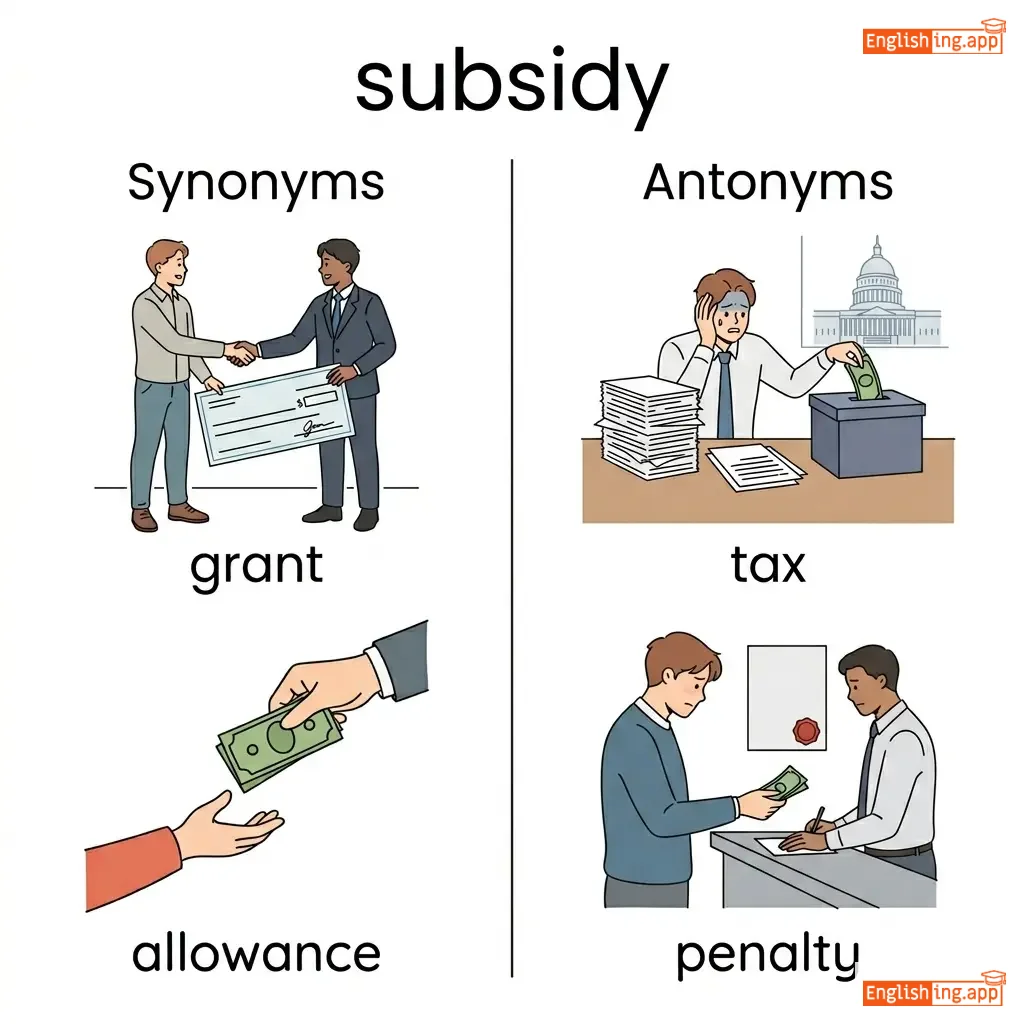
grant, allowance, financial aid, support, assistance
••••••
|
tax, penalty, surcharge
••••••
|
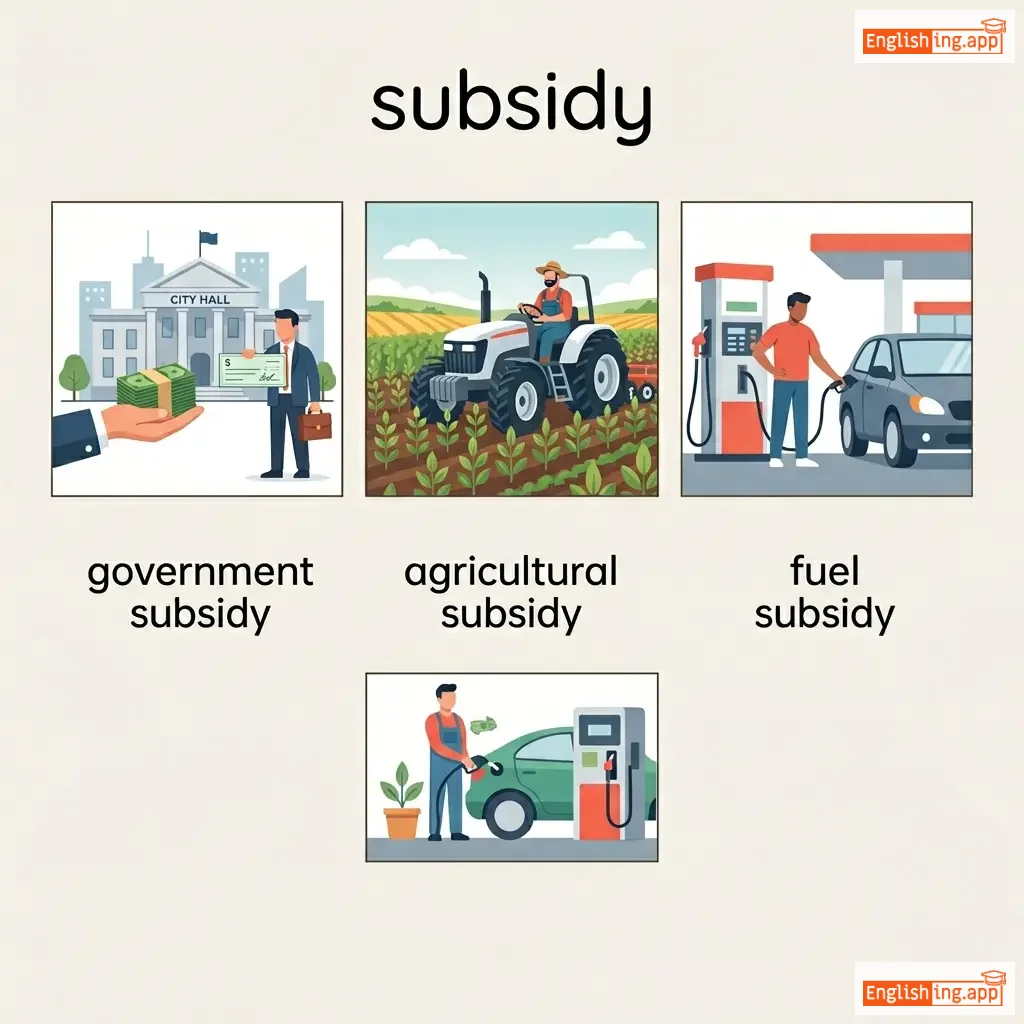
government subsidy, agricultural subsidy, fuel subsidy, receive subsidy
••••••
|
补贴就像是政府的经济援助,用来减少农产品的生产成本。
••••••
|
|
🧪
••••••
|
/ˈsʌb.stəns/
noun
(sʌbstæns)
••••••
|
- •••••• |
物质
wuzhi
••••••
|
- •••••• | - •••••• | - •••••• | - •••••• |
a particular kind of matter with uniform properties; the essential nature of something; material or content
••••••
|
The scientist analyzed the unknown substance in the laboratory.
科学家在实验室分析了未知物质。
••••••
|
科学家在实验室分析了未知物质。
Kēxuéjiā zài shíyànshì fēnxīle wèizhī wùzhì.
••••••
|
- •••••• | - •••••• | - •••••• |
material, matter, essence, content
••••••
|
emptiness, void, superficiality
••••••
|
chemical substance, controlled substance, substance abuse, essential substance
••••••
|
实验室中的物质被细心分析,以确保结果的准确性。
••••••
|
|
📏
••••••
|
/səbˈstæn.ʃəl/
adjective
(səbˈstænʃəl)
••••••
|
- •••••• |
实质的; 相当的; 重要的
shízhì de; xiāngdāng de; zhòngyào de
••••••
|
- •••••• | - •••••• | - •••••• | - •••••• |
large in size, amount, or importance; considerable; significant
••••••
|
There was a substantial increase in sales this quarter. |
本季度销售量有了显著增加。
Běn jìdù xiāoshòu liàng yǒule xiǎnzhù zēngjiā.
••••••
|
- •••••• | - •••••• | - •••••• |
considerable, significant, large, major, sizeable
••••••
|
insignificant, minor, small, negligible, trivial
••••••
|
substantial amount, substantial increase, substantial evidence, substantial progress
••••••
|
在中文中,'实质的'是指大的东西,象征着重大的成就或者重要的内容。
••••••
|
|
📈
••••••
|
/səbˈstænʃəli/
adverb
(səbˈstænʃəli)
••••••
|
- •••••• |
显著
xian zhu
••••••
|
- •••••• | - •••••• | - •••••• | - •••••• |
to a great extent or degree
••••••
|
The new policy has substantially improved working conditions.
新政策显著改善了工作条件。
••••••
|
新政策显著改善了工作条件。
Xin zhengce xian zhu gaishan le gongzuo tiaojian.
••••••
|
- •••••• | - •••••• | - •••••• |
considerably, significantly, greatly, largely
••••••
|
slightly, marginally
••••••
|
substantially increase, substantially reduce, substantially change, substantially improve
••••••
|
Substantially 在中文里就是显著 – 记住显著的变化意味着大的变化
••••••
|
|
🔄
••••••
|
/ˈsʌb.stɪ.tjuːt/
verb
(萨布斯替特)
••••••
|
|
替代
tìdài
••••••
|
substituted
萨布斯替特德
••••••
|
substituted
萨布斯替特德
••••••
|
substitutes
萨布斯替特斯
••••••
|
substituting
萨布斯替特英
••••••
|
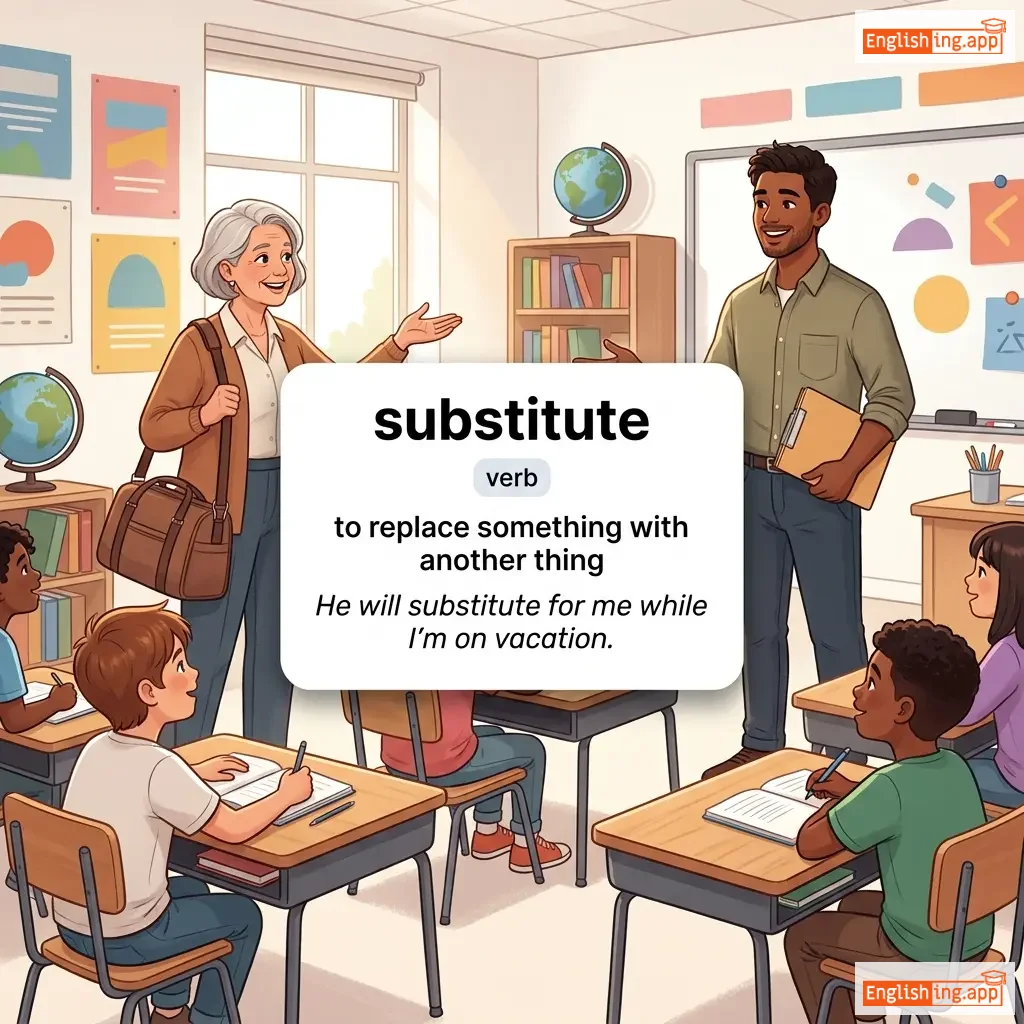
to replace something with another thing
••••••
|
He will substitute for me while I'm on vacation.
他将替我工作,直到我度假回来。
••••••
|
他将替我工作,直到我度假回来。
Tā jiāng tì wǒ gōngzuò, zhídào wǒ dùjià huílái.
••••••
|
- •••••• | - •••••• | - •••••• |
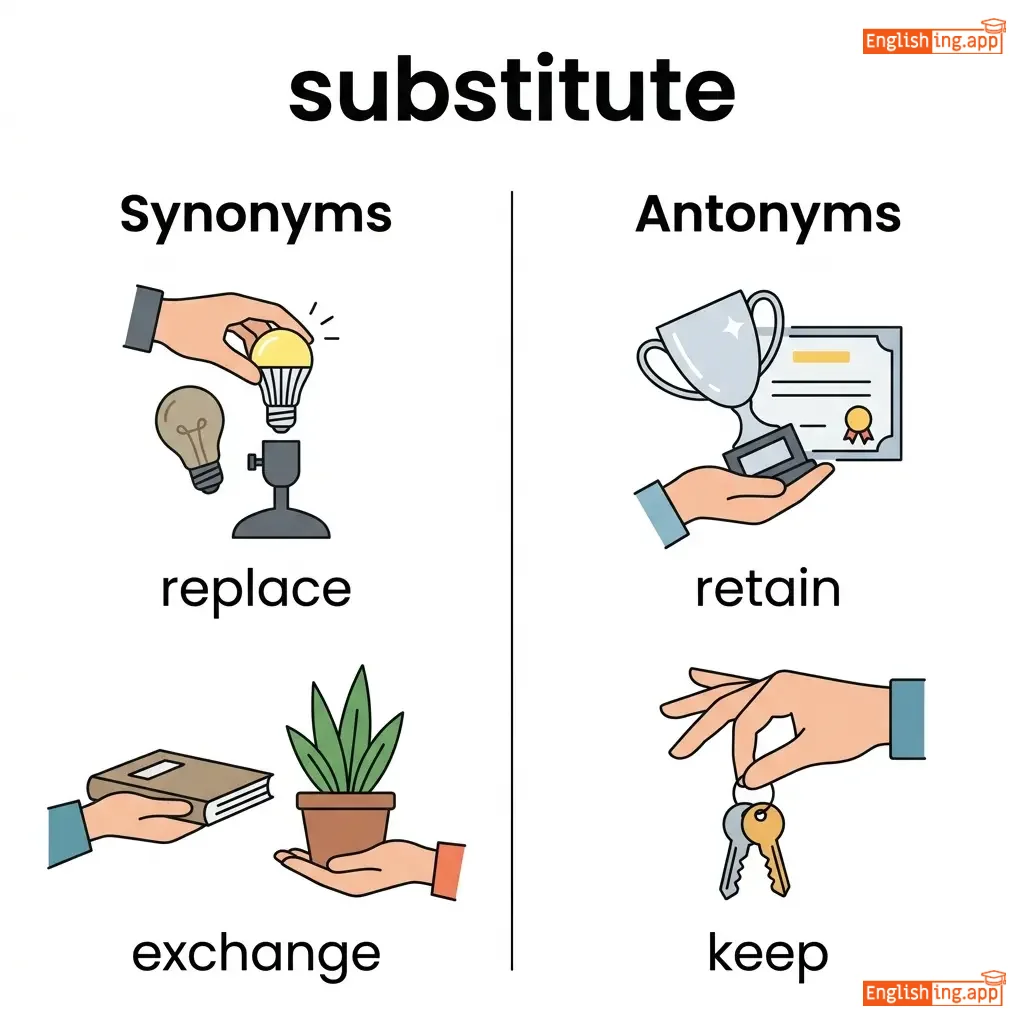
replace, exchange, swap, supersede
••••••
|
retain, keep
••••••
|
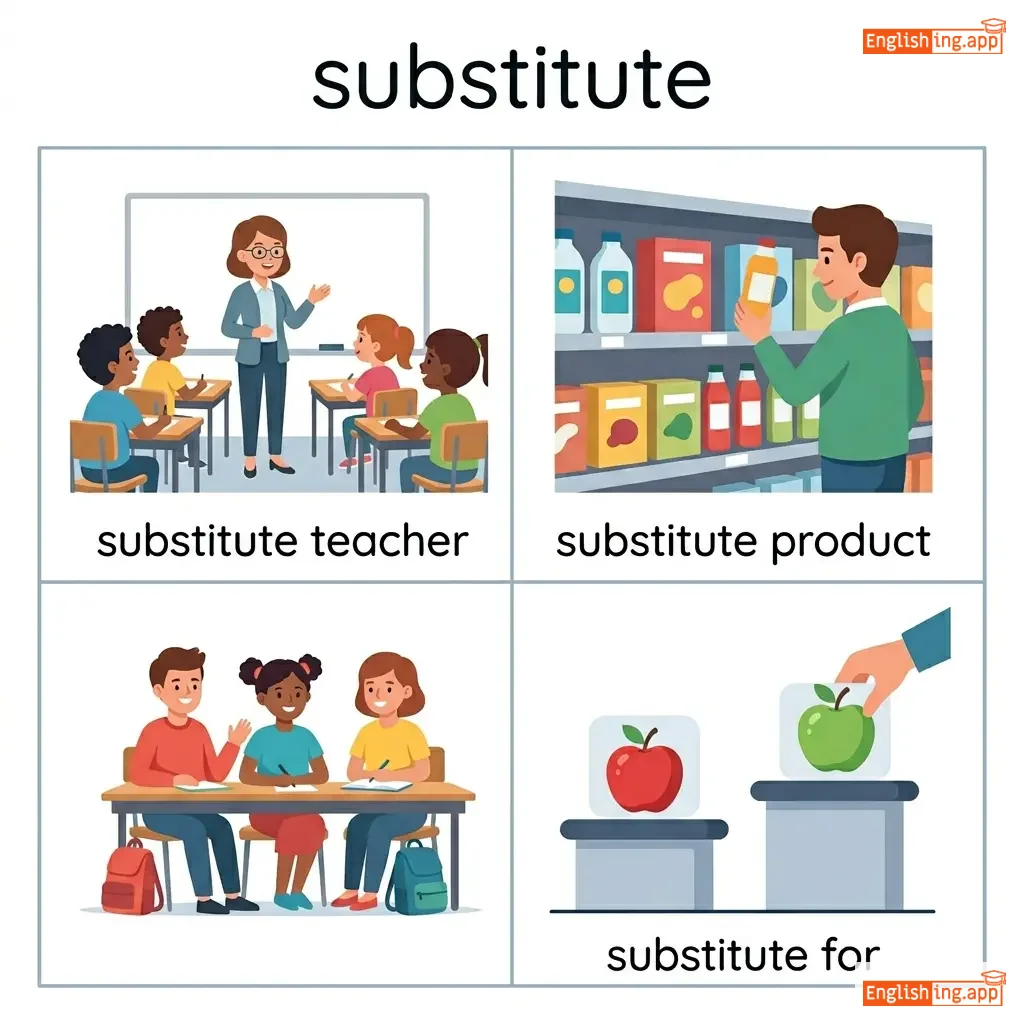
substitute teacher, substitute product, substitute for, substitute teacher
••••••
|
Substitute = 'Sub' means 'other' + 'stitute' means 'standing' - so replace by standing in for something else.
••••••
|
|
🔄
••••••
|
/ˌsʌb.stɪˈtjuː.ʃən/
noun
(sʌbˈstɪtjuːʃən)
••••••
|
- •••••• |
替换
tìhuàn
••••••
|
- •••••• | - •••••• | - •••••• | - •••••• |
the action of replacing someone or something with another
••••••
|
The substitution of the old system with the new one was difficult. |
将旧系统替换为新系统是困难的。
Jiāng jiù xìtǒng tìhuàn wèi xīn xìtǒng shì kùnnán de.
••••••
|
- •••••• | - •••••• | - •••••• |
replacement, exchange, switch, change
••••••
|
continuation, permanence
••••••
|
substitution of goods, substitution of players, substitution for, substitution of ideas
••••••
|
Substitution is like swapping an old piece with a new one.
••••••
|
|
🌫️
••••••
|
/ˈsʌtl/
adjective
(sʌtl)
••••••
|
|
微妙
weimiao
••••••
|
- •••••• | - •••••• | - •••••• | - •••••• |
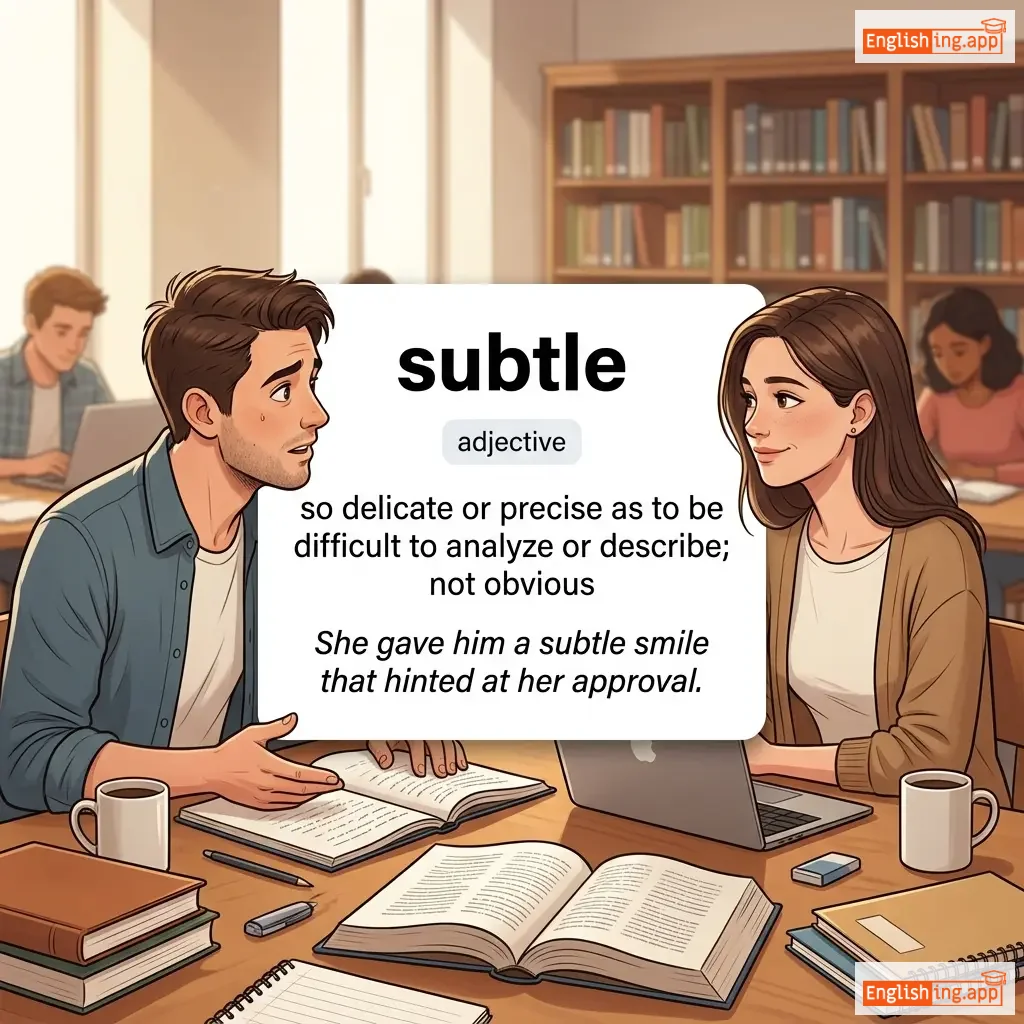
so delicate or precise as to be difficult to analyze or describe; not obvious
••••••
|
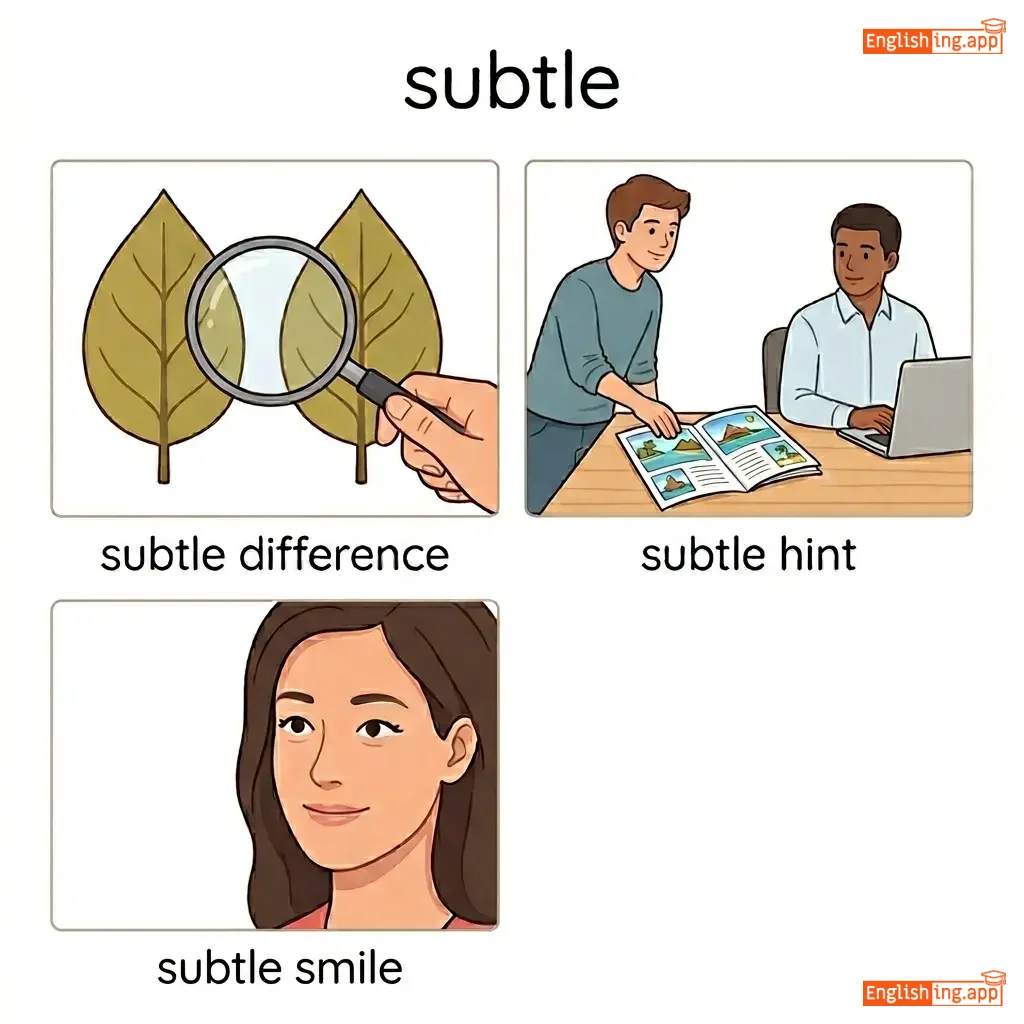
She gave him a subtle smile that hinted at her approval. |
她给了他一个微妙的微笑,暗示着她的批准。
Ta geile ta yi ge weimiao de weixiao, anshi zhe ta de pizhun.
••••••
|
subtle hint |
a very slight or indirect suggestion
••••••
|
微妙的暗示
weimiao de anshi
••••••
|
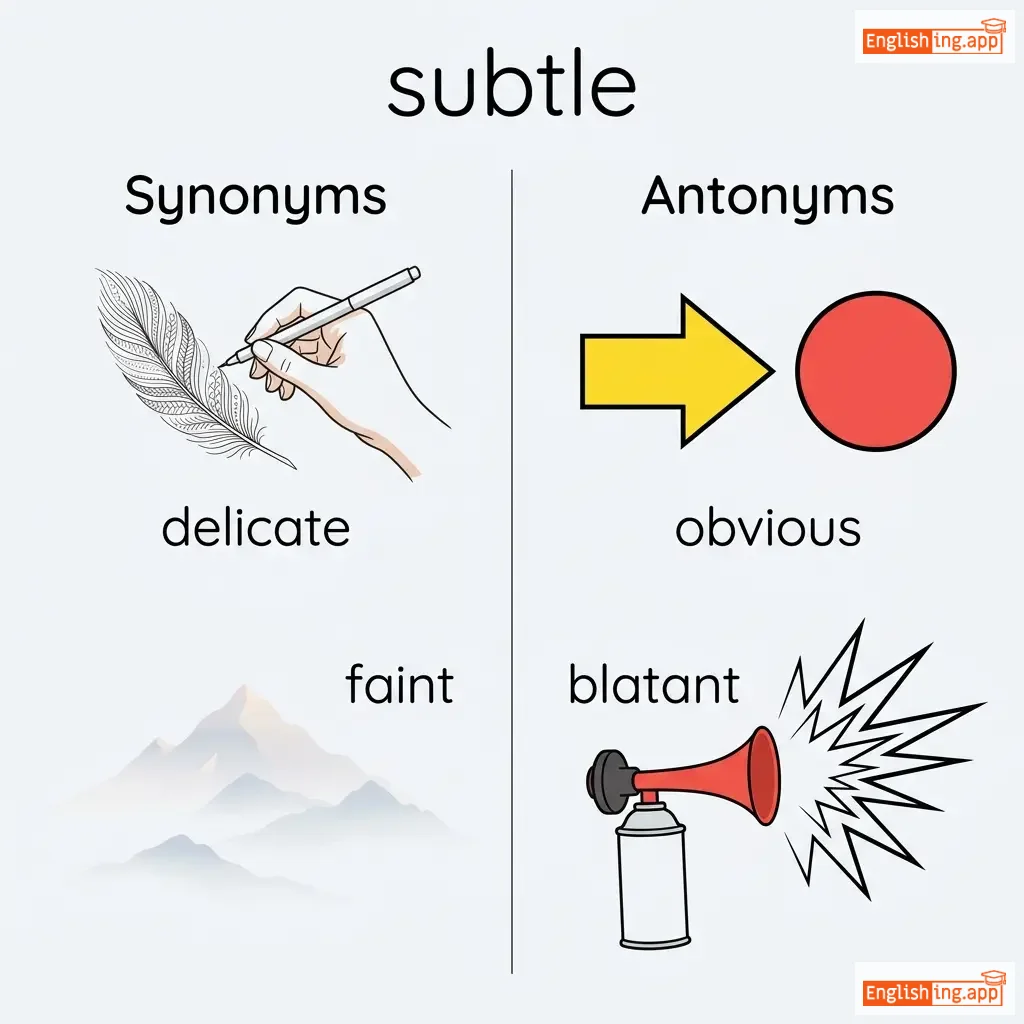
delicate, faint, nuanced, indirect, understated
••••••
|
obvious, blatant, clear
••••••
|
subtle difference, subtle hint, subtle smile, subtle change
••••••
|
微妙是如同空气中几乎无法察觉的香气,轻盈又不易捉摸。
••••••
|
|
🏘️
••••••
|
/ˈsʌbɜːb/
noun
(suburb)
••••••
|
- •••••• |
郊区
jiaoqū
••••••
|
- •••••• | - •••••• | - •••••• | - •••••• |
an area outside the center of a city, often residential
••••••
|
They bought a new house in a quiet suburb. |
他们在一个安静的郊区买了新房子。
Tāmen zài yīgè ānjìng de jiāoqū mǎile xīn fángzi.
••••••
|
in the suburbs |
living in a residential area outside the city center
••••••
|
在郊区
zài jiāoqū
••••••
|
residential area, outskirts, neighborhood, district
••••••
|
downtown, city center
••••••
|
quiet suburb, suburban area, live in the suburbs, suburb of Dhaka
••••••
|
Sub+urb 就是城市外的郊区—郊外居住!
••••••
|
|
🏘️
••••••
|
/səˈbɜːrbən/
adjective
(郊区)
••••••
|
- •••••• |
郊区的
jiaoqū de
••••••
|
- •••••• | - •••••• | - •••••• | - •••••• |
relating to or characteristic of a suburb or the people living there
••••••
|
They bought a house in a quiet suburban area. |
他们在一个安静的郊区买了一栋房子。
Tāmen zài yīgè ānjìng de jiāoqū mǎile yī dòng fángzi.
••••••
|
- •••••• | - •••••• | - •••••• |
residential, outlying, provincial, commuter
••••••
|
urban, rural
••••••
|
suburban area, suburban house, suburban life, suburban community
••••••
|
郊区的意思是城市的边缘 — 郊区区域。
••••••
|
|
🏆
••••••
|
/səkˈsiːd/
verb
(suksid)
••••••
|
- •••••• |
成功
chenggong
••••••
|
succeeded
suksided
••••••
|
succeeded
suksided
••••••
|
succeeds
suksids
••••••
|
succeeding
suksiding
••••••
|
to achieve the desired aim or result; to do well
••••••
|
She worked hard to succeed in her career.
她努力工作,力图在事业中取得成功。
••••••
|
她努力工作,力图在事业中取得成功。
Tā nǔlì gōngzuò, lìtú zài shìyè zhōng qǔdé chénggōng.
••••••
|
succeed in life
在人生中取得成功
••••••
|
to achieve overall success and fulfillment in one’s life
••••••
|
在人生中取得成功
Zài rénshēng zhōng qǔdé chénggōng
••••••
|
achieve, prosper, triumph, prevail, accomplish
••••••
|
fail, lose, collapse
••••••
|
succeed in, succeed at, succeed against, succeed through
••••••
|
Success在succeed中取得 – 成功就是succeed
••••••
|
|
🎉
••••••
|
/səkˈsɛs/
noun
(səkˈsɛs)
••••••
|

|
成功
chenggong
••••••
|
- •••••• | - •••••• | - •••••• | - •••••• |
the achievement of an aim, purpose, or result
••••••
|
His hard work led to great success. |
他的努力工作取得了巨大的成功。
Tā de nǔlì gōngzuò qǔdéle jùdà de chénggōng.
••••••
|
make a success of |
to achieve success in something
••••••
|
取得某事的成功
qǔdé mǒu shì de chénggōng
••••••
|
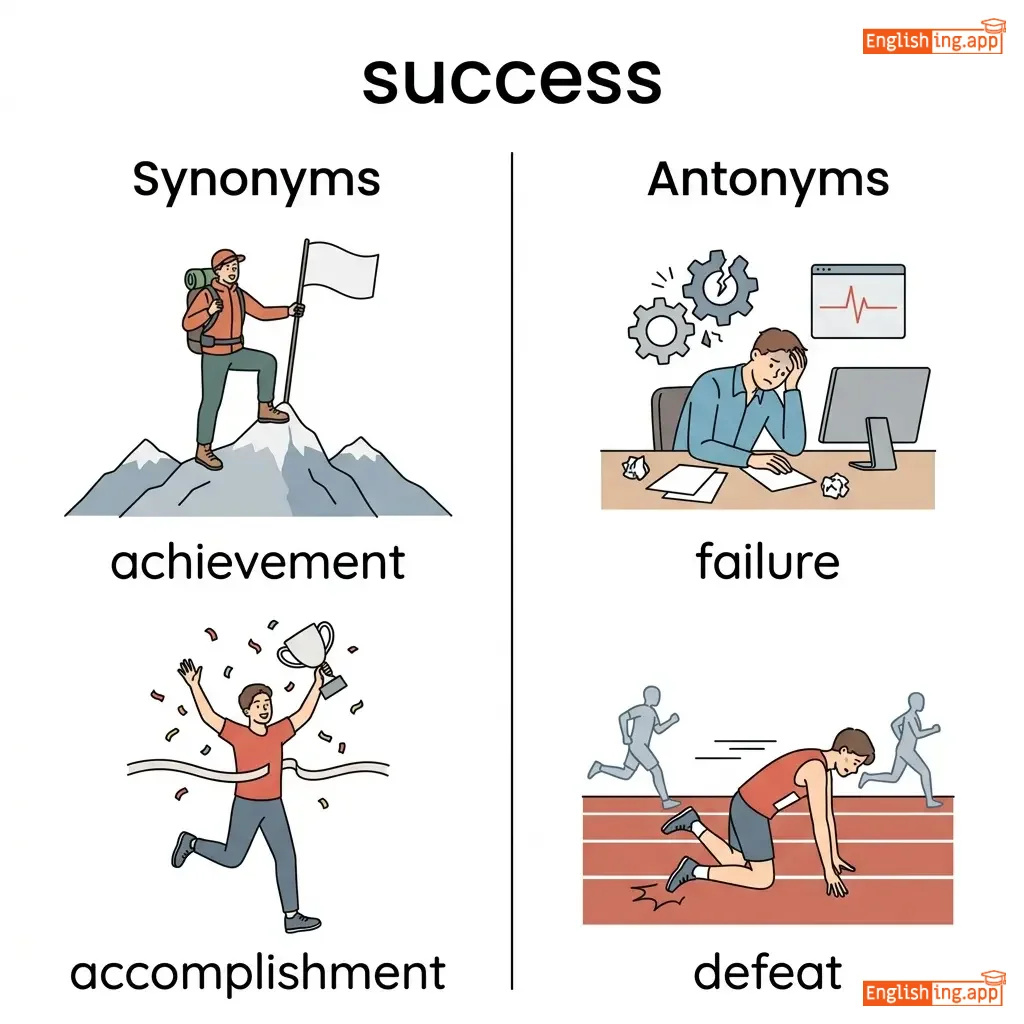
achievement, accomplishment, victory, triumph, prosperity
••••••
|
failure, defeat, loss
••••••
|
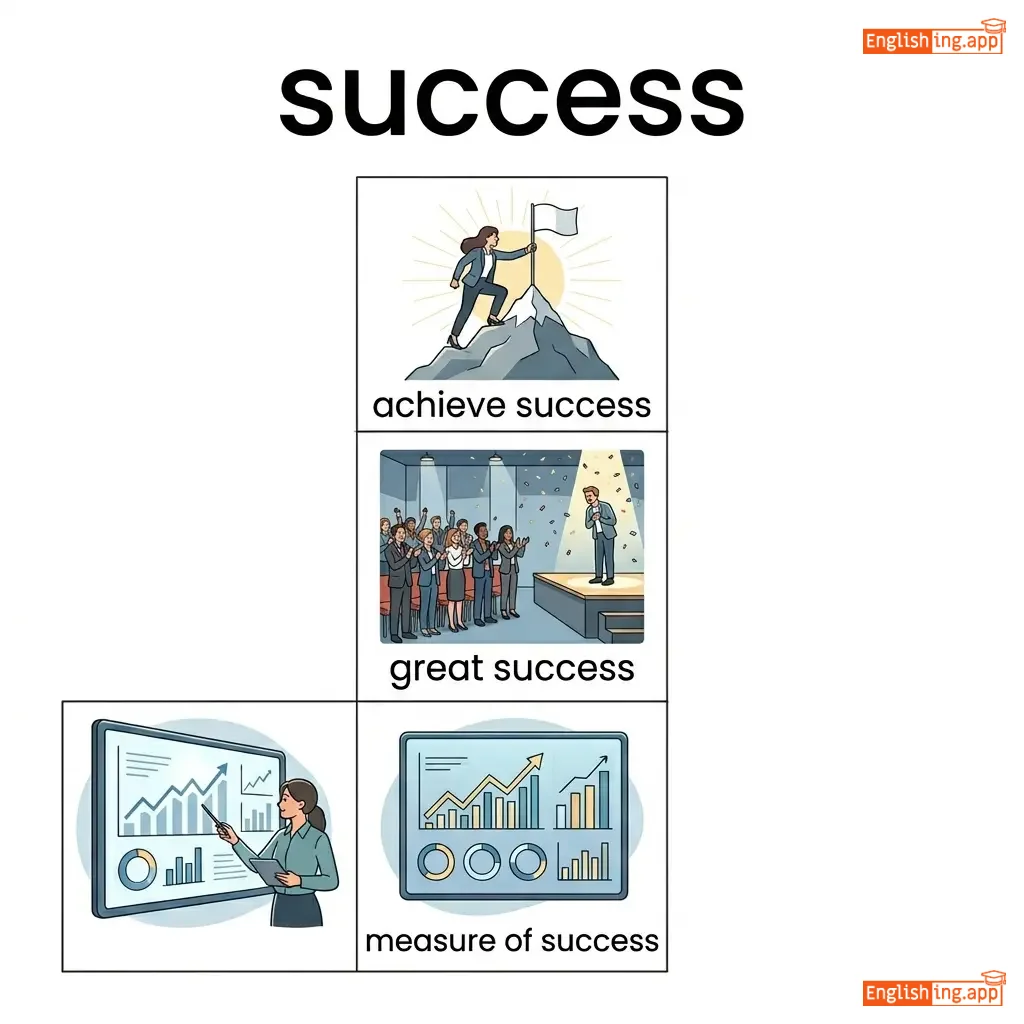
achieve success, great success, measure of success, success story
••••••
|
Success 就是成功 — 成功的考试意味着成功
••••••
|
|
💼
••••••
|
/səkˈsɛsfəl/
adjective
(səkˈsɛsfəl)
••••••
|
- •••••• |
成功的
chenggong de
••••••
|
- •••••• | - •••••• | - •••••• | - •••••• |
having achieved success; having attained wealth, position, or honor
••••••
|
He is a successful businessman. |
他是一个成功的商人。
Ta shi yi ge chenggong de shangren.
••••••
|
successful career |
a career in which one achieves prosperity and recognition
••••••
|
成功的职业生涯
chenggong de zhiye shengya
••••••
|
prosperous, accomplished, thriving, victorious, effective
••••••
|
unsuccessful, failing, defeated
••••••
|
successful career, successful attempt, successful person, successful strategy
••••••
|
成功的意思是成功 — 就像你通过考试,你就会成功
••••••
|
|
✅
••••••
|
/səkˈsɛsfəli/
adverb
(səkˈsɛsfəli)
••••••
|
- •••••• |
成功地
chenggong de
••••••
|
- •••••• | - •••••• | - •••••• | - •••••• |
in a way that achieves a desired result
••••••
|
She passed the exam successfully after weeks of studying.
她经过数周的学习后成功通过了考试。
••••••
|
她经过数周的学习后成功通过了考试。
Ta jingguo shuzhou de xuexi hou chenggong tongguo le kaoshi.
••••••
|
- •••••• | - •••••• | - •••••• |
effectively, proficiently, smoothly, favorably
••••••
|
unsuccessfully, poorly, ineffectively
••••••
|
successfully complete, successfully achieve, successfully execute
••••••
|
Successfully means to do something 'chenggong de' (successfully)!
••••••
|
|
👑
••••••
|
/səkˈseʃ.ən/
noun
(sùkèxiǎn)
••••••
|
|
继承
jicheng
••••••
|
- •••••• | - •••••• | - •••••• | - •••••• |
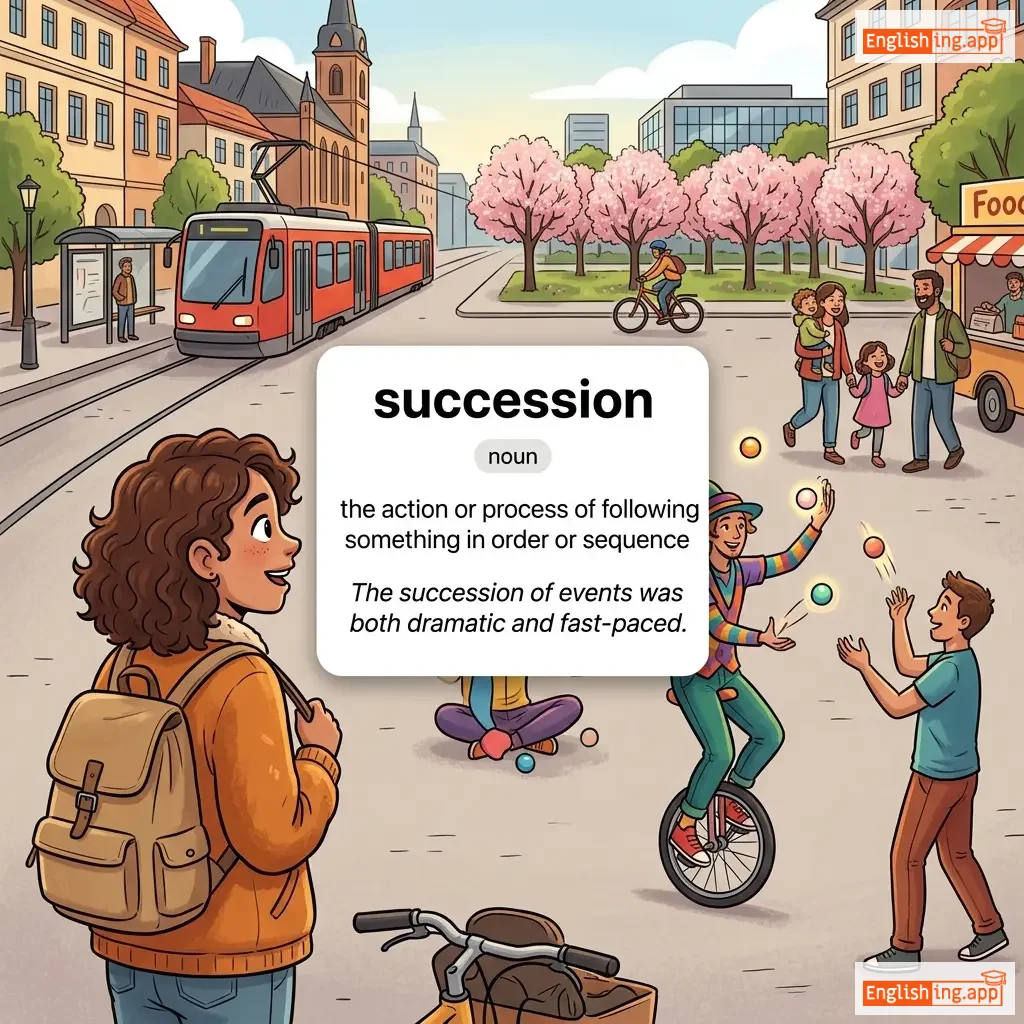
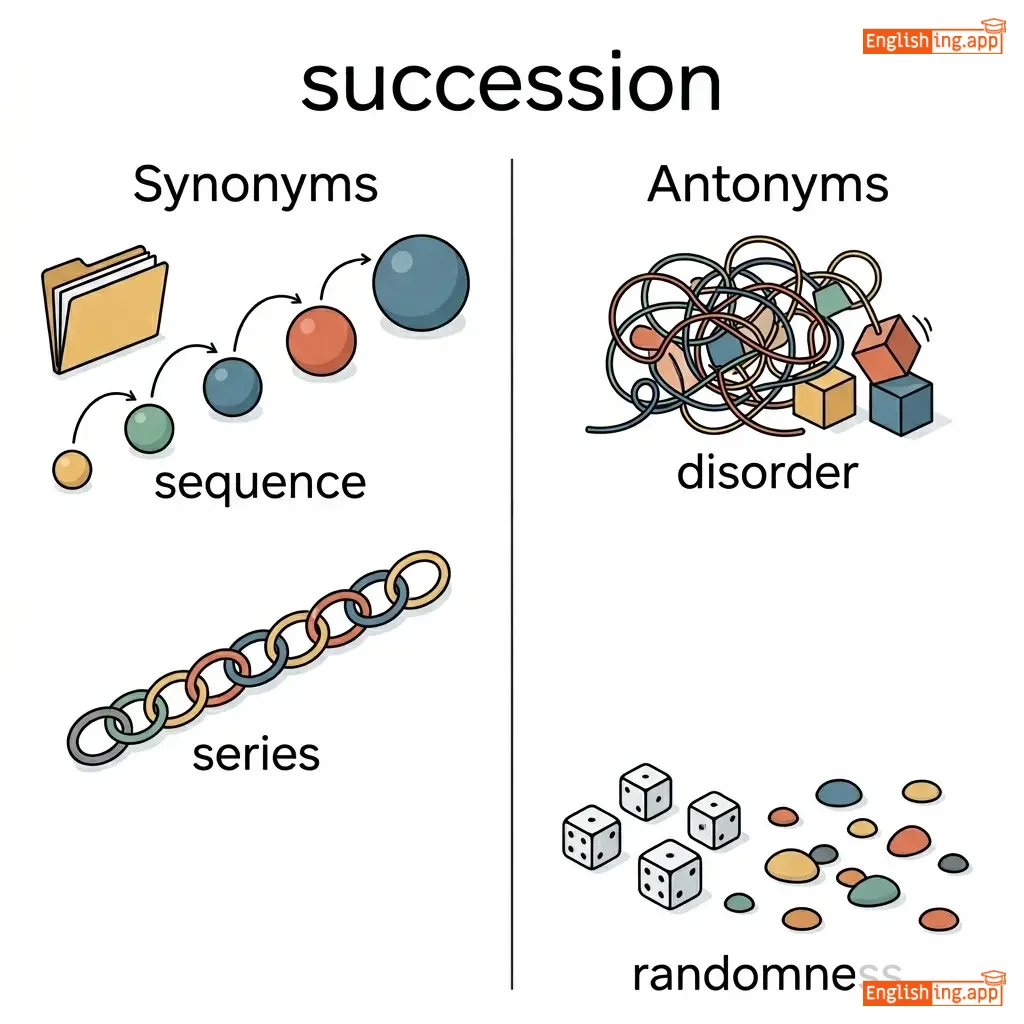
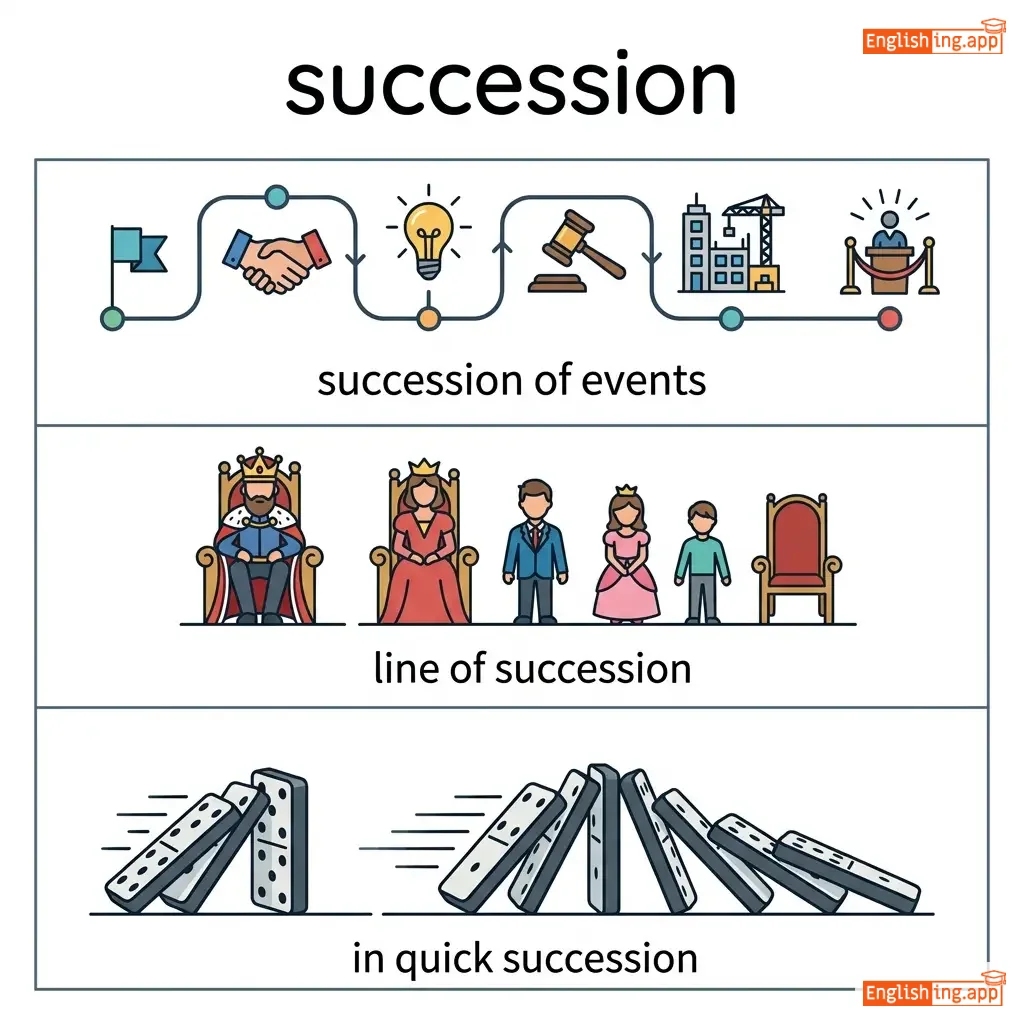
a series of people or things following one after another; the process of inheriting a title or position
••••••
|
The succession of kings in that dynasty lasted for over 300 years. |
那个王朝的国王继承历时超过300年。
nage wangchao de guowang jicheng lishi chao guo 300 nian
••••••
|
- •••••• | - •••••• | - •••••• |
sequence, series, inheritance, lineage
••••••
|
interruption, discontinuation
••••••
|
royal succession, succession planning, line of succession, succession crisis
••••••
|
想象一个接连不断的王朝继承过程,每一代都延续下去。
••••••
|
|
🔢
••••••
|
/səkˈsɛsɪv/
adjective
(suksesiv)
••••••
|
- •••••• |
连续的; 连续的
lianxu de; lianxu de
••••••
|
- •••••• | - •••••• | - •••••• | - •••••• |
following one after the other in order; consecutive
••••••
|
The team won three successive matches. |
球队赢得了三场连续的比赛。
Qiúduì yíngdé le sān chǎng liánxù de bǐsài.
••••••
|
- •••••• | - •••••• | - •••••• |
consecutive, sequential, continuous, following
••••••
|
intermittent, interrupted, discontinuous
••••••
|
successive days, successive generations, successive victories
••••••
|
Successive refers to things happening one after another, like a series of victories!
••••••
|
|
👑
••••••
|
/səkˈsɛsər/
noun
(sàkèssuò)
••••••
|
- •••••• |
继任者
jìrènzhě
••••••
|
- •••••• | - •••••• | - •••••• | - •••••• |
A person or thing that follows another in a position, office, or role.
••••••
|
The company appointed a successor after the CEO retired. |
公司在CEO退休后任命了继任者。
Gōngsī zài CEO tuìxiū hòu rènmìngle jìrènzhě.
••••••
|
successor in title |
a person who legally takes over rights or property from another
••••••
|
职务继任者
zhíwù jìrènzhě
••••••
|
heir, inheritor, descendant, replacement, follower
••••••
|
predecessor, ancestor
••••••
|
successor to the throne, immediate successor, political successor, rightful successor
••••••
|
Success 后来的是继任者 — 继任者.
••••••
|
|
🤔
••••••
|
/sʌtʃ/
determiner
(sʌtʃ)
••••••
|
- •••••• |
这样的
zhè yàng de
••••••
|
- •••••• | - •••••• | - •••••• | - •••••• |
of the type previously mentioned or specified
••••••
|
I have never seen such a beautiful painting. |
我从未见过这样的美丽画作。
Wǒ cóng wèi jiànguò zhèyàng de měilì huàzuò.
••••••
|
- •••••• | - •••••• | - •••••• |
like, similar, comparable
••••••
|
different, unlike
••••••
|
such a, such as, such beautiful
••••••
|
Such means ‘zhèyàng de’ (like that), and it’s easy to remember when you say, ‘Such a picture!’
••••••
|
|
🍼
••••••
|
/sʌk/
verb
(sā)
••••••
|
- •••••• |
吸
xī
••••••
|
sucked
sākèd
••••••
|
sucked
sākèd
••••••
|
sucks
sākè sī
••••••
|
sucking
sākīng
••••••
|
to draw something into the mouth by using the lips and tongue
••••••
|
The baby began to suck her thumb.
婴儿开始吸吮她的拇指。
••••••
|
婴儿开始吸吮她的拇指。
Yīng'ér kāishǐ xīshuǐ tā de mǔzhǐ.
••••••
|
suck it up
吸掉它
••••••
|
to accept something unpleasant without complaining
••••••
|
忍受它
rěnshòu tā
••••••
|
sip, draw, ingest, slurp
••••••
|
spit, expel
••••••
|
suck up, suck out, suck in, suck on
••••••
|
婴儿吸拇指,‘吸’容易记住。
••••••
|
|
🍼
••••••
|
/ˈsʌkɪŋ/
verb
(萨金)
••••••
|
- •••••• |
吮吸
shunxi
••••••
|
sucked
萨克德
••••••
|
sucked
萨克德
••••••
|
sucks
萨克斯
••••••
|
sucking
萨金
••••••
|
Drawing in a liquid, air, or other substance through the mouth or a tube by creating a vacuum; also used figuratively for something unpleasant or ineffective
••••••
|
The baby is sucking on a pacifier.
婴儿正在吮吸安抚奶嘴。
••••••
|
婴儿正在吮吸安抚奶嘴。
Yinger zhengzai shunxi anfu naizui.
••••••
|
suck it up
忍耐
••••••
|
to endure a difficult situation without complaining
••••••
|
忍耐
rennai
••••••
|
slurping, drawing, imbibing, absorbing
••••••
|
blowing, spitting
••••••
|
sucking sound, sucking motion, sucking reflex, sucking power
••••••
|
想象婴儿在 shunxi 安抚奶嘴。
••••••
|
|
⚡
••••••
|
/ˈsʌdən/
adjective
(萨登)
••••••
|
- •••••• |
突如其来的; 突然的; 出乎意料的;
tū rú qí lái de; tū rán de; chū hū yì liào de
••••••
|
- •••••• | - •••••• | - •••••• | - •••••• |
happening or done quickly and unexpectedly; abrupt
••••••
|
There was a sudden change in the weather. |
天气发生了突如其来的变化。
tiān qì fā shēng le tū rú qí lái de biàn huà.
••••••
|
- •••••• | - •••••• | - •••••• |
abrupt, unexpected, rapid, swift
••••••
|
gradual, slow, expected, planned
••••••
|
sudden change, sudden death, sudden movement
••••••
|
No •••••• |
|
⚡
••••••
|
/ˈsʌd.ən.li/
adverb
(sūdèn lì)
••••••
|
- •••••• |
突然
tūrán
••••••
|
- •••••• | - •••••• | - •••••• | - •••••• |
quickly and without warning; unexpectedly
••••••
|
The car suddenly stopped in the middle of the road. |
车子突然停在了路中间。
Chēzi tūrán tíng zài le lù zhōngjiān.
••••••
|
- •••••• | - •••••• | - •••••• |
abruptly, unexpectedly, instantly
••••••
|
gradually, slowly, predictably
••••••
|
suddenly appear, suddenly stop, suddenly realize
••••••
|
Tūrán sounds like 'too ran' (in English), indicating an event that happens unexpectedly.
••••••
|
|
⚖️
••••••
|
/suː/
verb
(苏)
••••••
|
- •••••• |
起诉
qǐsù
••••••
|
sued
苏德
••••••
|
sued
苏德
••••••
|
sues
苏伊斯
••••••
|
suing
苏因
••••••
|
to bring a lawsuit against someone in a court of law
••••••
|
She decided to sue the company for damages.
她决定起诉公司要求赔偿。
••••••
|
她决定起诉公司要求赔偿。
Tā juédìng qǐsù gōngsī yāoqiú péicháng.
••••••
|
- •••••• | - •••••• | - •••••• |
litigate, prosecute, charge, complain
••••••
|
defend, forgive
••••••
|
sue for damages, sue someone, sue in court
••••••
|
Sue means 'qǐsù' – like a lawsuit ⚖️
••••••
|
|
😞
••••••
|
/ˈsʌfər/
verb
(萨弗)
••••••
|
- •••••• |
遭受
zaoshou
••••••
|
suffered
萨福德
••••••
|
suffered
萨福德
••••••
|
suffers
萨弗斯
••••••
|
suffering
萨芬
••••••
|
to experience pain, distress, or hardship
••••••
|
She suffered from a severe headache all day.
她整天忍受剧烈的头痛。
••••••
|
她整天忍受剧烈的头痛。
Ta zheng tian renshou juelie de toutong.
••••••
|
- •••••• | - •••••• | - •••••• |
endure, undergo, experience, bear
••••••
|
enjoy, delight, thrive
••••••
|
suffer from, suffer greatly, suffer in silence
••••••
|
Suffer - 在沙发上遭受痛苦
••••••
|
|
😢
••••••
|
/ˈsʌfərɪŋ/
noun
(suffering)
••••••
|
- •••••• |
痛苦
tòngkǔ
••••••
|
- •••••• | - •••••• | - •••••• | - •••••• |
the state of undergoing pain, distress, or hardship
••••••
|
They tried to relieve his suffering with medicine. |
他们试图用药物减轻他的痛苦。
Tāmen shìtú yòng yàowù jiǎnqīng tā de tòngkǔ.
••••••
|
long-suffering |
patiently enduring pain or hardship for a long time
••••••
|
长期痛苦
chángqī tòngkǔ
••••••
|
pain, agony, misery, distress, hardship
••••••
|
comfort, relief, ease
••••••
|
human suffering, great suffering, physical suffering, mental suffering
••••••
|
Suffering在英文中意味着痛苦,中文的痛苦也是这个意思。
••••••
|
|
✔️
••••••
|
/səˈfɪʃənt/
adjective
(苏菲西恩特)
••••••
|
- •••••• |
足够的
zúgòu de
••••••
|
- •••••• | - •••••• | - •••••• | - •••••• |
enough; adequate for a purpose
••••••
|
She had sufficient money to buy the dress. |
她有足够的钱买这件裙子。
Tā yǒu zúgòu de qián mǎi zhè jiàn qúnzi.
••••••
|
sufficient unto the day |
today's troubles are enough without worrying about the future
••••••
|
今天足够了
jīntiān zúgòu le
••••••
|
enough, adequate, ample, satisfactory
••••••
|
insufficient, inadequate, lacking
••••••
|
sufficient money, sufficient evidence, sufficient reason
••••••
|
Zúgòu de 意味着足够 ✔️ – 想象一个‘完美派对’
••••••
|
|
✅
••••••
|
/səˈfɪʃəntli/
adverb
(充分地)
••••••
|
- •••••• |
充分
chōngfèn
••••••
|
- •••••• | - •••••• | - •••••• | - •••••• |
to an adequate degree or extent
••••••
|
She studied sufficiently to pass the exam. |
她足够努力地学习,才能通过考试。
Tā zúgòu nǔlì de xuéxí, cáinéng tōngguò kǎoshì.
••••••
|
- •••••• | - •••••• | - •••••• |
adequately, enough, satisfactorily
••••••
|
insufficiently, inadequately
••••••
|
sufficiently prepared, sufficiently large, sufficiently skilled
••••••
|
Sufficiently = Just enough to reach the goal, like 'sufficient' = enough!
••••••
|
|
🍬
••••••
|
/ˈʃʊɡər/
noun
(糖)
••••••
|
- •••••• |
糖
tang
••••••
|
- •••••• | - •••••• | - •••••• | - •••••• |
sweet crystalline substance used as a sweetener
••••••
|
Please add two teaspoons of sugar to my coffee. |
请在我的咖啡里加两茶匙糖。
qǐng zài wǒ de kāfēi lǐ jiā liǎng chá chí táng
••••••
|
- •••••• | - •••••• | - •••••• |
sweetener, sucrose
••••••
|
salt, bitter
••••••
|
brown sugar, sugar cube, sugar level, blood sugar
••••••
|
糖让一切变得更甜,就像加到咖啡里一样。
••••••
|
|
💡
••••••
|
/səˈdʒɛst/
verb
(suɡɛst)
••••••
|
- •••••• |
建议
jianyi
••••••
|
suggested
sugested
••••••
|
suggested
sugested
••••••
|
suggests
sugests
••••••
|
suggesting
suggesting
••••••
|
to put forward an idea, plan, or recommendation for consideration
••••••
|
He suggested going to the new restaurant for dinner.
他建议去新餐馆吃晚餐。
••••••
|
他建议去新餐馆吃晚餐。
Tā jiànyì qù xīn cānguǎn chī wǎncān.
••••••
|
suggest itself
自我提议
••••••
|
to present itself naturally without being asked
••••••
|
自我提议
zì wǒ tí yì
••••••
|
recommend, propose, advise, urge
••••••
|
oppose, discourage
••••••
|
suggest a plan, suggest an idea, strongly suggest, politely suggest
••••••
|
建议意味着给出建议–记住给出一个好建议!
••••••
|
|
💡
••••••
|
/səˈdʒes.tʃən/
noun
(sʌdʒɛsˈtʃən)
••••••
|
- •••••• |
建议; 建议
jianyi; jianyi
••••••
|
- •••••• | - •••••• | - •••••• | - •••••• |
an idea or plan put forward for consideration; advice or recommendation
••••••
|
Do you have any suggestions for improving our team's productivity? |
你有什么建议可以提高我们团队的生产力吗?
Nǐ yǒu shénme jiànyì kěyǐ tígāo wǒmen tuánduì de shēngchǎnlì ma?
••••••
|
- •••••• | - •••••• | - •••••• |
recommendation, proposal, advice, idea
••••••
|
command, order, demand
••••••
|
helpful suggestion, practical suggestion, suggestion box, make a suggestion
••••••
|
建议总是推动进步 (Jiànyì zǒng shì tuīdòng jìnbù)
••••••
|
|
⚠️
••••••
|
/ˈsuː.ɪ.saɪd/
noun
(自杀)
••••••
|
- •••••• |
自杀
zìshā
••••••
|
- •••••• | - •••••• | - •••••• | - •••••• |
the act of intentionally killing oneself
••••••
|
Mental health professionals work to prevent suicide. |
心理健康专家致力于预防自杀。
xīnlǐ jiànkāng zhuānjiā zhìlì yú yùfáng zìshā.
••••••
|
- •••••• | - •••••• | - •••••• |
self-destruction, self-harm
••••••
|
survival, life preservation
••••••
|
commit suicide, suicide prevention, suicide rate
••••••
|
心理健康专家帮助防止自杀
••••••
|
|
🤵
••••••
|
/suːt/
noun
(西装)
••••••
|
- •••••• |
西装
xī zhuāng
••••••
|
- •••••• | - •••••• | - •••••• | - •••••• |
a set of clothes made of the same fabric, usually consisting of trousers and a jacket
••••••
|
He wore a black suit to the wedding.
他穿着黑色西装参加婚礼。
••••••
|
他穿着黑色西装参加婚礼。
Tā chuānzhuó hēisè xīzhuāng cānjiā hūnlǐ.
••••••
|
- •••••• | - •••••• | - •••••• |
outfit, attire, ensemble
••••••
|
casual wear, informal dress
••••••
|
wear a suit, business suit, suit jacket
••••••
|
Xi zhuang - 西装让你看起来正式又有魅力
••••••
|
|
👌
••••••
|
/ˈsuːtəbl/
adjective
(suːtəbl)
••••••
|
- •••••• |
合适
heshi
••••••
|
- •••••• | - •••••• | - •••••• | - •••••• |
appropriate or right for a particular person, purpose, or situation
••••••
|
This dress is suitable for the wedding. |
这件裙子适合婚礼。
Zhè jiàn qúnzi shìhé hūnlǐ.
••••••
|
- •••••• | - •••••• | - •••••• |
appropriate, proper, fitting, apt, acceptable
••••••
|
unsuitable, inappropriate, unfit
••••••
|
suitable for, suitable candidate, suitable time, suitable environment
••••••
|
Suitable 是合适的意思,比如婚礼上适合穿的裙子。
••••••
|
|
🧳
••••••
|
/ˈsuːt.keɪs/
noun
(随身箱)
••••••
|
- •••••• |
行李箱
xinglixiang
••••••
|
- •••••• | - •••••• | - •••••• | - •••••• |
A portable rectangular container for carrying clothes and personal items when traveling
••••••
|
She packed her clothes into a suitcase for the trip.
她把衣服打包到旅行用的行李箱里。
••••••
|
她把衣服打包到旅行用的行李箱里。
Ta ba yifu dabo dao lvxing yong de xinglixiang li.
••••••
|
kick the suitcase down the road
把行李箱踢到路上
••••••
|
To postpone dealing with a problem or responsibility
••••••
|
把行李箱踢到路上
ba xinglixiang ti dao lu shang
••••••
|
luggage, bag, valise, trunk, carry-on
••••••
|
handbag, purse
••••••
|
open a suitcase, pack a suitcase, carry a suitcase, check a suitcase
••••••
|
行李箱 xinglixiang sounds like 'sing-lee-shang'; think of singing while rolling your suitcase
••••••
|
|
🏨
••••••
|
/swiːt/
noun
(套房)
••••••
|
- •••••• |
套房
tao fang
••••••
|
- •••••• | - •••••• | - •••••• | - •••••• |
a set of rooms designated for one person's or family's use or for a particular purpose
••••••
|
They stayed in the presidential suite at the hotel. |
他们住在酒店的总统套房里。
Tāmen zhù zài jiǔdiàn de zǒngtǒng tàofáng lǐ.
••••••
|
- •••••• | - •••••• | - •••••• |
set, series, apartment, chambers, rooms
••••••
|
single room, dormitory
••••••
|
hotel suite, luxury suite, software suite, office suite
••••••
|
套房就像酒店中的豪华房间组合。
••••••
|
|
➕
••••••
|
/sʌm/
noun
(sām)
••••••
|
- •••••• |
和
he
••••••
|
- •••••• | - •••••• | - •••••• | - •••••• |
the total amount resulting from the addition of two or more numbers or items
••••••
|
The sum of 8 and 12 is 20. |
8和12的和是20。
8 he 12 de he shi 20.
••••••
|
sum up |
to summarize or give a brief statement of something
••••••
|
总结
zongjie
••••••
|
total, amount, aggregate, tally, whole
••••••
|
part, portion
••••••
|
large sum, total sum, sum of money, sum up, small sum
••••••
|
Sum就是加法的结果 — 'sum'就是和。
••••••
|
|
📝
••••••
|
/ˈsʌməraɪz/
verb
(萨玛瑞兹)
••••••
|
- •••••• |
总结
zongjie
••••••
|
summarized
萨玛瑞兹德
••••••
|
summarized
萨玛瑞兹德
••••••
|
summarizes
萨玛瑞兹斯
••••••
|
summarizing
萨玛瑞兹英
••••••
|
To give a brief statement of the main points of something
••••••
|
She summarized the report in just a few minutes.
她在几分钟内总结了报告。
••••••
|
她在几分钟内总结了报告。
Ta zai ji fenzhong nei zongjie le baogao
••••••
|
- •••••• | - •••••• | - •••••• |
condense, outline, recap, abridge, encapsulate
••••••
|
expand, elaborate, detail
••••••
|
summarize a report, summarize findings, summarize points, summarize information
••••••
|
Summarize = 总结,short and clear.
••••••
|
|
📝
••••••
|
/ˈsʌməri/
noun
(suōmǎlì)
••••••
|
- •••••• |
总结
zongjie
••••••
|
- •••••• | - •••••• | - •••••• | - •••••• |
A brief statement of the main points of something.
••••••
|
She wrote a summary of the book for her class. |
她为她的课堂写了一份书籍总结。
Ta wei ta de ketiang xie le yi fen shujii zongjie.
••••••
|
in summary |
used to introduce a concise statement that captures the main points
••••••
|
总结来说
zongjie laishuo
••••••
|
outline, synopsis, abstract, digest, recap
••••••
|
detail, expansion
••••••
|
write a summary, brief summary, executive summary, short summary
••••••
|
Summary 是简短的总结,像总结一样。
••••••
|
|
🌞
••••••
|
/ˈsʌmər/
noun
(夏天)
••••••
|
- •••••• |
夏天
xia tian
••••••
|
- •••••• | - •••••• | - •••••• | - •••••• |
the warmest season of the year, between spring and autumn
••••••
|
We love going to the beach during summer. |
我们喜欢在夏天去海滩。
Wo men xi huan zai xia tian qu hai tan.
••••••
|
- •••••• | - •••••• | - •••••• |
season, warmth, hot period, vacation time
••••••
|
winter, cold
••••••
|
summer vacation, summer holiday, summer heat, summer camp
••••••
|
Think of the SUMMER sun burning bright and warm!
••••••
|
|
⛰️
••••••
|
/ˈsʌmɪt/
noun
(sumi)
••••••
|

|
顶峰, 峰会
dingfeng, fenghui
••••••
|
- •••••• | - •••••• | - •••••• | - •••••• |
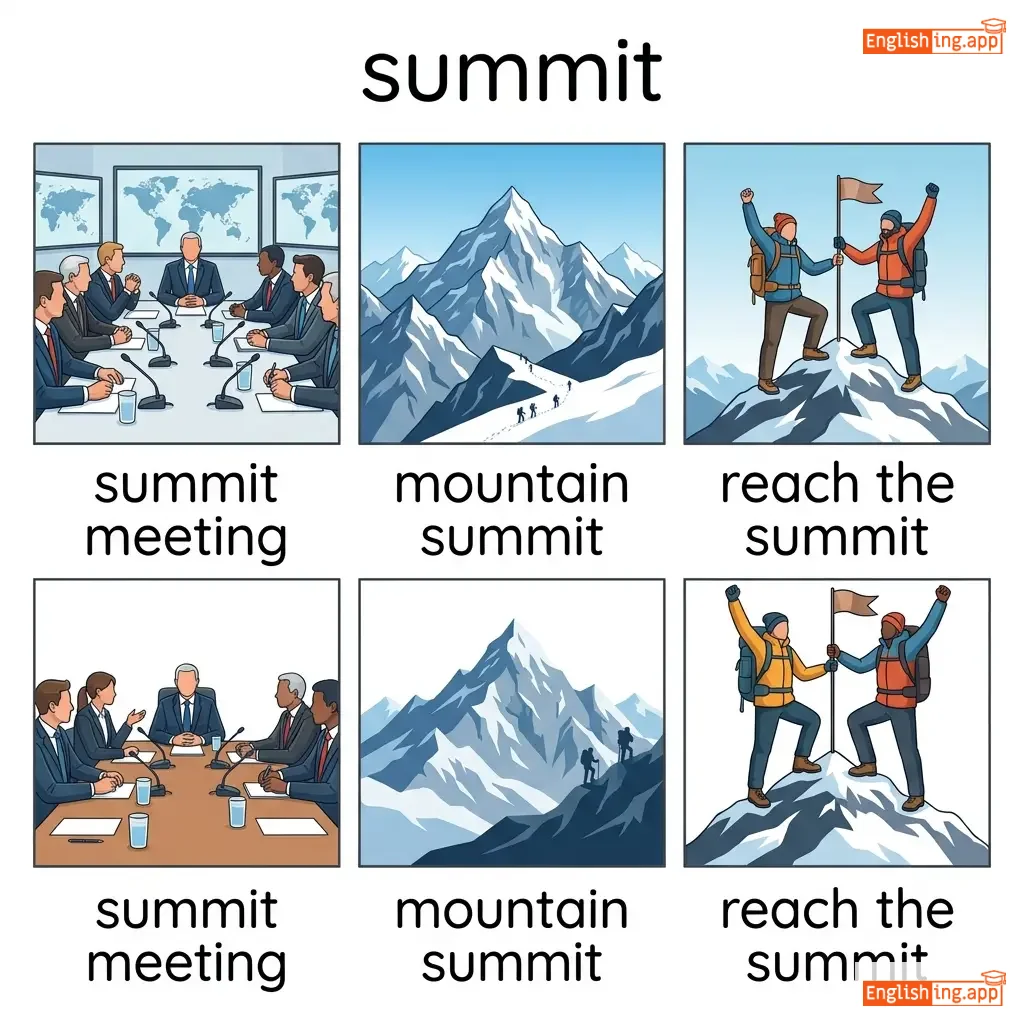
The highest point of a hill or mountain; a meeting between heads of state or leaders.
••••••
|
The leaders met at the summit to discuss global issues. |
领导人在峰会上会面,讨论全球问题。
Lǐngdǎo rén zài fēnghuì shàng huìmiàn, tǎolùn quánqiú wèntí.
••••••
|
reach the summit |
to arrive at the highest point, literally or figuratively
••••••
|
登顶
dēng dǐng
••••••
|
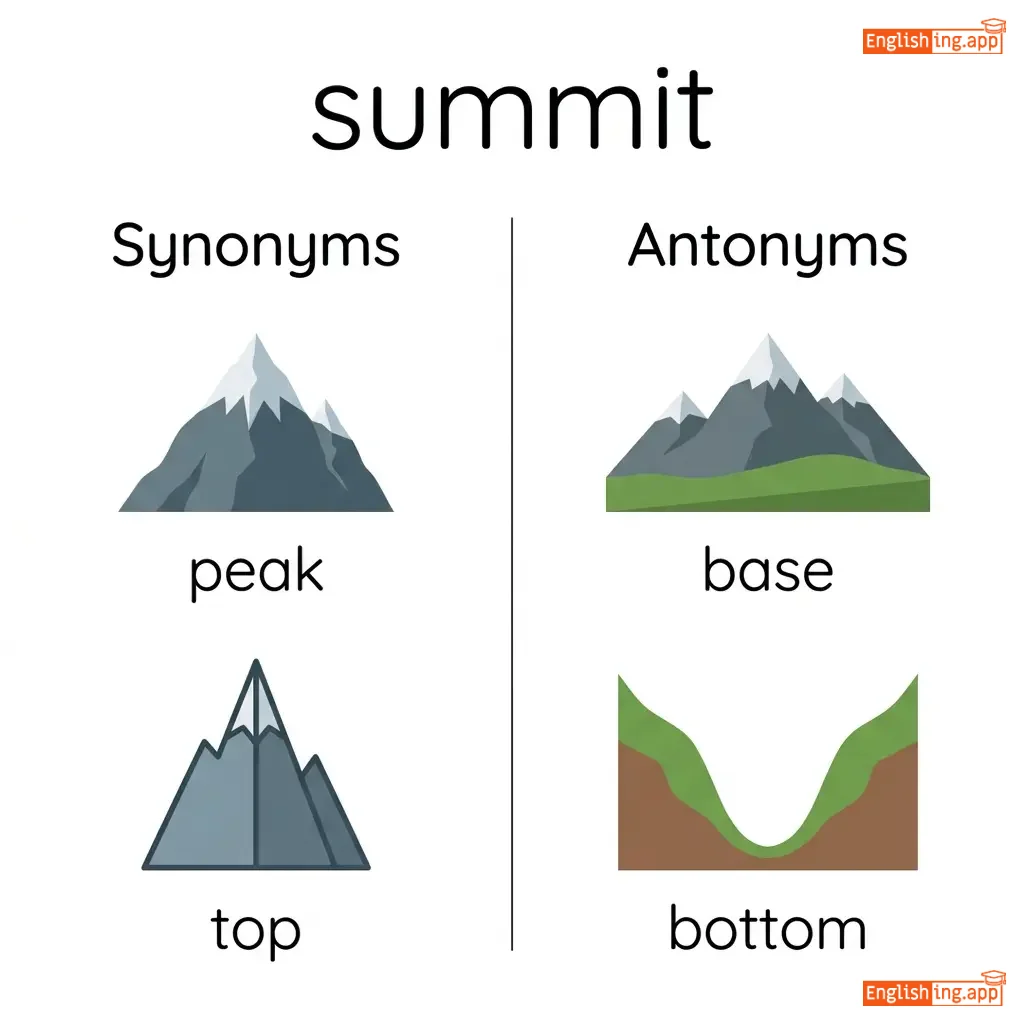
peak, top, apex, conference, meeting
••••••
|
base, bottom
••••••
|
summit meeting, mountain summit, reach the summit, summit conference
••••••
|
Summit = 顶峰 = 登上山顶
••••••
|
|
☀️
••••••
|
/sʌn/
noun
(sʌn)
••••••
|
- •••••• |
太阳
taiyang
••••••
|
- •••••• | - •••••• | - •••••• | - •••••• |
the star around which the earth orbits; the source of light and heat for planets
••••••
|
The sun rises in the east and sets in the west.
ðə sʌn raɪzɪz ɪn ðə ist ənd sɛts ɪn ðə wɛst
••••••
|
太阳从东方升起,西方落下。
Taiyang cong dongfang shengqi, xifang luoxia.
••••••
|
- •••••• | - •••••• | - •••••• |
solar disc, daystar
••••••
|
moon
••••••
|
morning sun, sunset, sunshine, solar energy
••••••
|
太阳是给我们带来光和热的天体。
••••••
|
|
🌞
••••••
|
/ˈsʌn.deɪ/
noun
(桑代)
••••••
|
- •••••• |
星期天
xingqi tian
••••••
|
- •••••• | - •••••• | - •••••• | - •••••• |
The day of the week between Saturday and Monday; often considered a day of rest or worship.
••••••
|
We usually relax at home on Sunday.
我们通常在星期天在家休息。
••••••
|
我们通常在星期天在家休息。
Wo men tong chang zai xingqi tian zai jia xiuxi.
••••••
|
Sunday best
周日最佳
••••••
|
The finest clothes worn on Sundays or for special occasions.
••••••
|
周日最佳
zhou ri zui jia
••••••
|
weekend day, day of rest, Sabbath
••••••
|
weekday, workday
••••••
|
Sunday morning, Sunday brunch, Sunday service, lazy Sunday
••••••
|
星期天 = Sun + day
••••••
|
|
💪
••••••
|
/ˈsuːpər/
adjective
(超级)
••••••
|
- •••••• |
超级
chaoji
••••••
|
- •••••• | - •••••• | - •••••• | - •••••• |
excellent; very good
••••••
|
She did a super job on the project. |
她在项目中做得非常好。
Ta zai xiangmu zhong zuo de feichang hao.
••••••
|
- •••••• | - •••••• | - •••••• |
excellent, great, outstanding, remarkable
••••••
|
poor, mediocre
••••••
|
super fast, super cool, super hero, super strong
••••••
|
Chaoji is super cool and super helpful!
••••••
|
|
🌟
••••••
|
/suːˈpɜːrb/
adjective
(sùpābù)
••••••
|
- •••••• |
极好的
jí hǎo de
••••••
|
- •••••• | - •••••• | - •••••• | - •••••• |
extremely good; excellent
••••••
|
The hotel provided superb service during our stay. |
酒店在我们停留期间提供了极好的服务。
Jiǔdiàn zài wǒmen tíngliú qījiān tígōngle jí hǎo de fúwù.
••••••
|
superb condition |
in excellent state or quality
••••••
|
卓越的状态
zhuóyuè de zhuàngtài
••••••
|
excellent, outstanding, splendid, magnificent, wonderful
••••••
|
poor, bad, inferior
••••••
|
superb service, superb quality, superb performance
••••••
|
Super + b = 极好的
••••••
|
|
👨💼
••••••
|
/ˌsuːpərɪnˈtɛndənt/
noun
(超级管理员)
••••••
|
- •••••• |
管理员
guǎnlǐyuán
••••••
|
- •••••• | - •••••• | - •••••• | - •••••• |
a person who oversees, manages, or directs an organization, building, or project
••••••
|
The superintendent visited the classrooms to check on progress. |
管理员访问了教室以检查进展。
guǎnlǐyuán fǎngwènle jiàoshì yǐ jiǎnchá jìnzhǎn.
••••••
|
- •••••• | - •••••• | - •••••• |
manager, supervisor, overseer, director
••••••
|
subordinate, worker
••••••
|
school superintendent, building superintendent, superintendent of police
••••••
|
管理员是负责所有事务的人。
••••••
|
|
🏆
••••••
|
/suːˈpɪə.ri.ər/
adjective
(超级)
••••••
|
- •••••• |
优越的
youyue de
••••••
|
- •••••• | - •••••• | - •••••• | - •••••• |
better in quality, rank, or importance than others
••••••
|
This product is superior to its competitors in quality.
这个产品在质量上优于其竞争对手。
••••••
|
这个产品在质量上优于其竞争对手。
zhege chanpin zai zhiliang shang youyu qi jingzheng duishou.
••••••
|
superior attitude
优越态度
••••••
|
an arrogant or condescending manner
••••••
|
优越态度
youyue tàidu
••••••
|
better, higher, excellent, dominant, outstanding
••••••
|
inferior, lower, worse
••••••
|
superior quality, superior product, superior performance, morally superior, technically superior
••••••
|
Superior 是 super + ior → super 是更好的意思,因此‘优越的’。
••••••
|

