Получите неограниченный доступ ко всем словам с подпиской Pro
Обновить до ProПолучите неограниченный доступ ко всем предложениям с подпиской Pro
Обновить до Pro|
Эмодзи
|
Слово | Images | Перевод | Прошедшее | Причастие прошедшего времени | Третье лицо единственного числа | Герундий | Значение | Пример предложения | Перевод примера предложения | Пример выражения | Значение примера выражения | Перевод примера выражения | Синонимы | Антонимы | Коллокации | Мнемоника |
|---|---|---|---|---|---|---|---|---|---|---|---|---|---|---|---|---|---|
|
👥
••••••
|
/ˈʌðərz/
pronoun
(aðerz)
••••••
|
- •••••• |
другие
drugie
••••••
|
- •••••• | - •••••• | - •••••• | - •••••• |
people or things distinct from the ones already mentioned or known
••••••
|
I like to spend time with others. |
Мне нравится проводить время с другими.
Mne nravitsya provodit' vremya s drugimi.
••••••
|
- •••••• | - •••••• | - •••••• |
people, individuals, others, another
••••••
|
self, oneself
••••••
|
help others, other people, among others
••••••
|
Работа с другими помогает развиваться - Working with others helps to grow
••••••
|
|
↔️❓
••••••
|
/ˈʌðərwaɪz/
adverb
(азэрувайз)
••••••
|
- •••••• |
иначе; по-другому
inache; po-drugomu
••••••
|
- •••••• | - •••••• | - •••••• | - •••••• |
in a different way; if not; or else; apart from that
••••••
|
Study hard, otherwise you will fail the exam. |
Учись усердно, иначе ты провалишь экзамен.
Uchis' usyerdno, inache ty provalish' ekzamen
••••••
|
- •••••• | - •••••• | - •••••• |
or else, alternatively, differently, if not
••••••
|
likewise, similarly, correspondingly
••••••
|
or otherwise, otherwise known as, unless otherwise stated
••••••
|
Russian 'иначе' means 'otherwise'.
••••••
|
|
✔️
••••••
|
/ɔːt/
modal verb
(аут)
••••••
|
- •••••• |
следует
sleduet
••••••
|
- •••••• | - •••••• | - •••••• | - •••••• |
Used to indicate duty, correctness, or moral obligation.
••••••
|
You ought to respect your elders. |
Тебе следует уважать старших.
Tebe sleduyet uzhashchat' starshikh.
••••••
|
- •••••• | - •••••• | - •••••• |
should, must, have to, need to
••••••
|
must not, should not
••••••
|
ought to do, ought not to, one ought to
••••••
|
Ought означает следует, помни 'ought to respect' означает 'следует уважать'.
••••••
|
|
🏡
••••••
|
/aʊər/
pronoun
(ауэр)
••••••
|
- •••••• |
наш
nash
••••••
|
- •••••• | - •••••• | - •••••• | - •••••• |
belonging to or associated with the speaker and one or more other people
••••••
|
This is our house. |
Это наш дом.
Eto nash dom.
••••••
|
- •••••• | - •••••• | - •••••• |
ours, belonging to us, our own
••••••
|
their, your
••••••
|
our family, our team, our responsibility
••••••
|
Мы (наш) говорим, что это наш дом.
••••••
|
|
🤝
••••••
|
/aʊərz/
pronoun
(aʊərz)
••••••
|
- •••••• |
наш
nash
••••••
|
- •••••• | - •••••• | - •••••• | - •••••• |
belonging to or associated with us
••••••
|
This victory is ours. |
Эта победа наша.
Eta pobeda nasha.
••••••
|
- •••••• | - •••••• | - •••••• |
belonging to us, our own, possessed by us
••••••
|
theirs, yours, his
••••••
|
friend of ours, house of ours, idea of ours
••••••
|
'Our' во множественном числе — то, что 'наш' (nash), это 'ours'
••••••
|
|
🤗
••••••
|
/aʊərˈsɛlvz/
pronoun
(аурселвз)
••••••
|
- •••••• |
мы сами
my samyi
••••••
|
- •••••• | - •••••• | - •••••• | - •••••• |
used by the speaker to refer to themselves and one or more others as the object of the verb
••••••
|
We should help ourselves before helping others. |
Мы должны помочь себе, прежде чем помочь другим.
My dolzhny pomoch' sebe, prezhde chem pomoch' drugim.
••••••
|
- •••••• | - •••••• | - •••••• |
we, we ourselves, our own
••••••
|
themselves, others
••••••
|
help ourselves, find ourselves, express ourselves
••••••
|
Мы (my) используем 'мы сами', чтобы обозначить себя
••••••
|
|
➡️
••••••
|
/aʊt/
adverb
(аут)
••••••
|
- •••••• |
наружу
naruzhu
••••••
|
- •••••• | - •••••• | - •••••• | - •••••• |
moving or appearing away from the inside or center; not at home or present
••••••
|
He stepped out of the room quietly. |
Он тихо вышел из комнаты.
On tikho vyshel iz komnaty.
••••••
|
out of the blue |
happening unexpectedly
••••••
|
внезапно
vnezapno
••••••
|
outside, away, absent, beyond
••••••
|
in, inside
••••••
|
out of control, out of reach, out of stock, out of time
••••••
|
Out означает наружу - В футболе, когда игрок выходит, он идет наружу.
••••••
|
|
⚠️
••••••
|
/ˈaʊtˌbreɪk/
noun
(аутбрейк)
••••••
|
- •••••• |
вспышка
vspishka
••••••
|
- •••••• | - •••••• | - •••••• | - •••••• |
a sudden start or occurrence of something unpleasant, like disease or violence
••••••
|
There was an outbreak of flu in the city. |
В городе произошла вспышка гриппа.
V gorode proizoshla vspyshka grippa.
••••••
|
- •••••• | - •••••• | - •••••• |
eruption, flare-up, epidemic, surge
••••••
|
end, cessation, calm
••••••
|
outbreak of disease, sudden outbreak, outbreak of violence
••••••
|
Outbreak означает вспышка—что-то, что происходит внезапно, как болезнь или насилие.
••••••
|
|
🏆
••••••
|
/ˈaʊt.kʌm/
noun
(autokam)
••••••
|
- •••••• |
результат; последствие;
rezultat; posledstvie
••••••
|
- •••••• | - •••••• | - •••••• | - •••••• |
the result or consequence of an action or situation; the final product
••••••
|
The outcome of the election surprised everyone.
Результат выборов удивил всех.
••••••
|
Результат выборов удивил всех.
Rezultat viborov udivil vsekh.
••••••
|
- •••••• | - •••••• | - •••••• |
result, consequence, conclusion, end result
••••••
|
beginning, cause, input, start
••••••
|
positive outcome, final outcome, predict outcome
••••••
|
Результат = Конечный результат
••••••
|
|
🌳
••••••
|
/ˈaʊtdɔːr/
adjective
(aʊtˈdɔːr)
••••••
|
- •••••• |
на свежем воздухе
na svezhem vozdukhe
••••••
|
- •••••• | - •••••• | - •••••• | - •••••• |
situated, existing, or done outside a building
••••••
|
We planned an outdoor picnic for the weekend.
Мы запланировали пикник на свежем воздухе на выходные.
••••••
|
Мы запланировали пикник на свежем воздухе на выходные.
My zaplanirovali piknik na svezhem vozdukhe na vykhodnye.
••••••
|
outdoor activities
активности на свежем воздухе
••••••
|
recreational things people do outside, like sports or camping
••••••
|
активности на свежем воздухе
aktivnosti na svezhem vozdukhe
••••••
|
open-air, outside, external, exterior
••••••
|
indoor, inside
••••••
|
outdoor sports, outdoor event, outdoor seating, outdoor adventure
••••••
|
'Outdoor' означает 'на свежем воздухе' — занятия на улице
••••••
|
|
🌳
••••••
|
/ˌaʊtˈdɔːrz/
adverb; noun
(аутдорз)
••••••
|
- •••••• |
на открытом воздухе
na otkrytom vozdukhe
••••••
|
- •••••• | - •••••• | - •••••• | - •••••• |
outside a building; the natural environment outside
••••••
|
We spent the whole afternoon outdoors enjoying the fresh air.
Уи спент зе хоул афтернун аутдорз энжойинг зе фреш эйр.
••••••
|
Мы провели весь день на открытом воздухе, наслаждаясь свежим воздухом.
my proveli ves den na otkrytom vozdukhe, naslazhdaias svezhim vozdukhom
••••••
|
outdoorsy type
аутдорси тайп
••••••
|
a person who enjoys outdoor activities
••••••
|
любитель активного отдыха
liubitel aktivnogo otdykha
••••••
|
outside, open air, exterior, wilderness
••••••
|
indoors, inside
••••••
|
outdoors activities, sleep outdoors, live outdoors, enjoy the outdoors
••••••
|
OUT = вне → outdoors = на открытом воздухе
••••••
|
|
👗
••••••
|
/ˈaʊtˌfɪt/
noun
(аутфит)
••••••
|
- •••••• |
наряд
naryad
••••••
|
- •••••• | - •••••• | - •••••• | - •••••• |
A set of clothes worn together, often for a particular occasion.
••••••
|
She wore a beautiful outfit to the party. |
Она носила красивый наряд на вечеринку.
Ona nosila krasivyj naryad na vecherinku.
••••••
|
- •••••• | - •••••• | - •••••• |
attire, costume, clothing, apparel, dress
••••••
|
rags, undress
••••••
|
wear outfit, stylish outfit, wedding outfit, matching outfit
••••••
|
Outfit - это наряд для особого случая.
••••••
|
|
🏖️
••••••
|
/ˈaʊtɪŋ/
noun
(ау́тинг)
••••••
|
- •••••• |
поездка
poezdka
••••••
|
- •••••• | - •••••• | - •••••• | - •••••• |
a short trip or excursion, often for leisure or enjoyment
••••••
|
They had a lovely outing at the beach last weekend. |
Они провели замечательную поездку на пляже в прошлые выходные.
Oni proveli zamechatelnuyu poezdku na plyazhe v proshlye vykhodnye.
••••••
|
- •••••• | - •••••• | - •••••• |
excursion, trip, adventure, journey
••••••
|
stay, rest, retreat
••••••
|
family outing, weekend outing, picnic outing
••••••
|
Outing означает поездку на отдых, например, на пляж или в парк.
••••••
|
|
🔌
••••••
|
/ˈaʊtlet/
noun
(аутлет)
••••••
|
- •••••• |
выход
vykhod
••••••
|
- •••••• | - •••••• | - •••••• | - •••••• |
a means by which something is released, expressed, or distributed
••••••
|
Art is a great outlet for emotions. |
Искусство — отличный выход для эмоций.
Iskusstvo — otlichnyy vykhod dlya emotsiy.
••••••
|
power outlet |
a socket that provides electrical power
••••••
|
электрическая розетка
elektricheskaya rozetka
••••••
|
vent, escape, channel, release, store
••••••
|
inlet, blockage
••••••
|
shopping outlet, outlet store, emotional outlet, power outlet
••••••
|
'Out' означает наружу, а 'let' означает позволить — outlet — это путь наружу.
••••••
|
|
🔭
••••••
|
/ˈaʊtlʊk/
noun
(autluk)
••••••
|
- •••••• |
перспектива, прогноз
perspektiva, prognoz
••••••
|
- •••••• | - •••••• | - •••••• | - •••••• |
a person's general attitude or view; a forecast or prospect
••••••
|
The economic outlook for the year is positive. |
Экономический прогноз на год положительный.
Ekonomicheskiy prognoz na god polozhitel'nyy.
••••••
|
bright outlook |
a positive or hopeful perspective about the future
••••••
|
яркая перспектива
yarkaya perspektiva
••••••
|
perspective, view, forecast, attitude, expectation
••••••
|
pessimism, despair
••••••
|
positive outlook, global outlook, financial outlook, outlook on life
••••••
|
Outlook означает взгляд в будущее с оптимизмом.
••••••
|
|
🏭
••••••
|
/ˈaʊtpʊt/
noun
(аутпут)
••••••
|
|
продукция
produkciya
••••••
|
- •••••• | - •••••• | - •••••• | - •••••• |
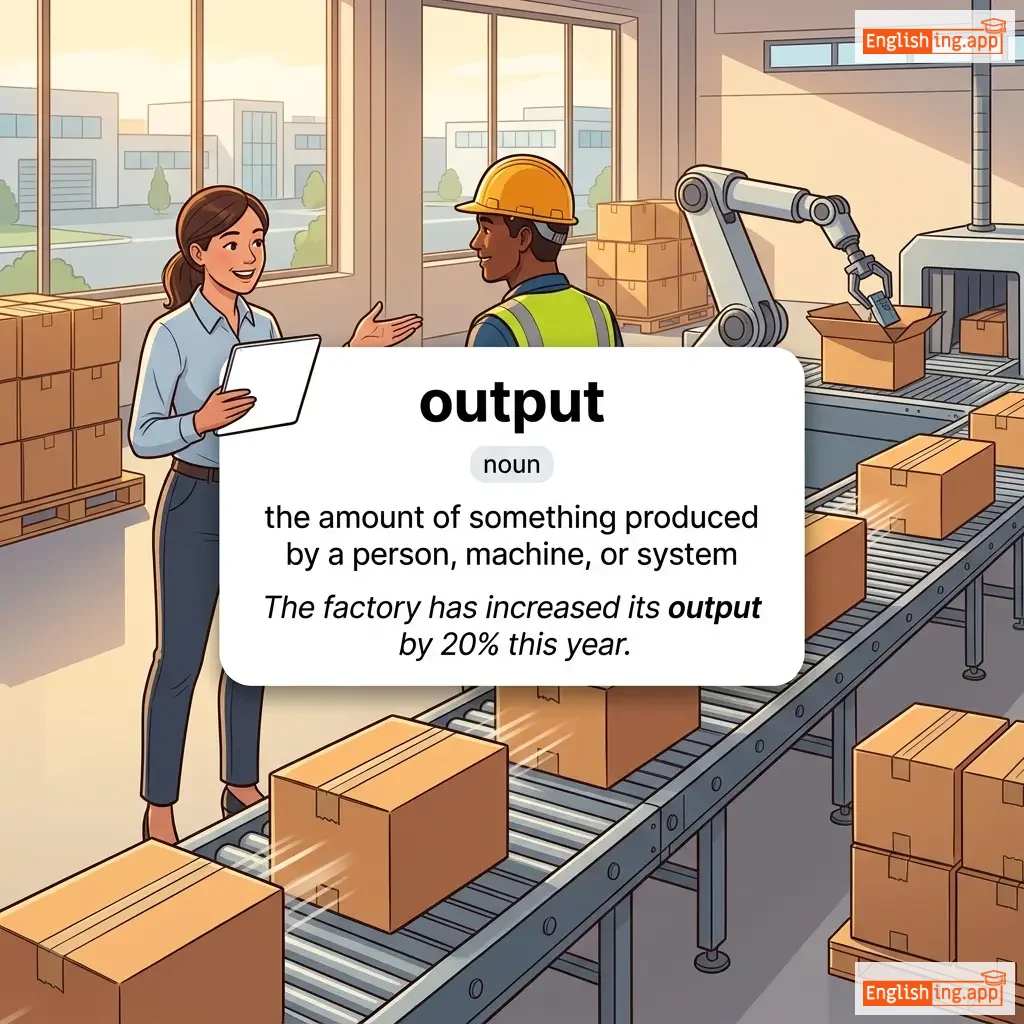
the amount of something produced by a person, machine, or system
••••••
|
The factory has increased its output by 20% this year. |
Фабрика увеличила свою продукцию на 20% в этом году.
Fabrika uvelichila svoyu produkciyu na 20% v etom godu.
••••••
|
high output |
producing a large amount or quantity
••••••
|
высокая продукция
vysokaya produkciya
••••••
|
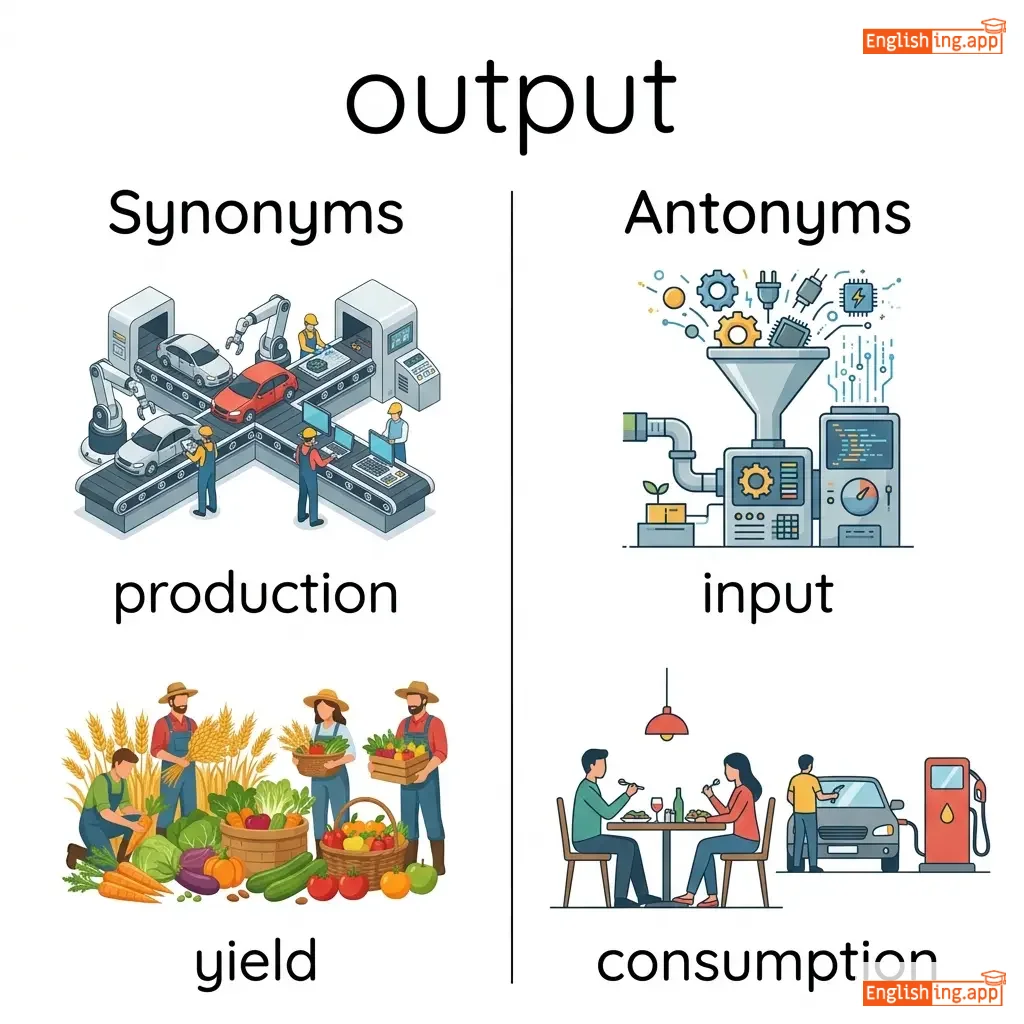
production, yield, product, result, performance
••••••
|
input, consumption
••••••
|
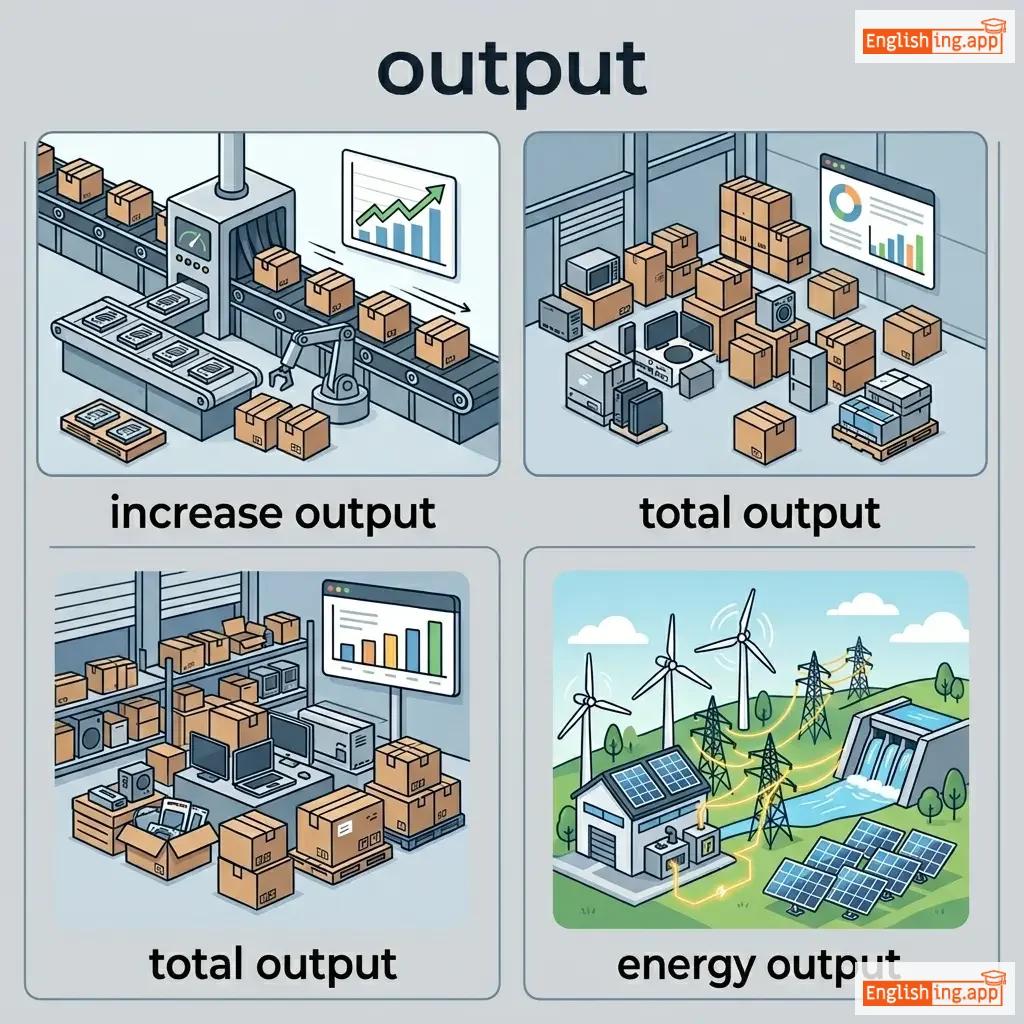
increase output, total output, energy output, data output
••••••
|
Out + Put, то, что выходит — это продукция!
••••••
|
|
😡
••••••
|
/ˈaʊtreɪdʒ/
noun/verb
(аутрейдж)
••••••
|
- •••••• |
возмущение
vozmuschenie
••••••
|
outraged
аутрейджд
••••••
|
outraged
аутрейджд
••••••
|
outrages
аутрейджес
••••••
|
outraging
аутрейджинг
••••••
|
A strong feeling of anger and shock; to arouse anger or shock.
••••••
|
The unfair decision caused public outrage.
Несправедливое решение вызвало общественное возмущение.
••••••
|
Несправедливое решение вызвало общественное возмущение.
Nespravedlivoe reshenie vyzvalo obshchestvennoe vozmuschenie.
••••••
|
cry of outrage
крик возмущения
••••••
|
A loud protest or complaint expressing anger or shock.
••••••
|
крик возмущения
krik vozmuscheniya
••••••
|
indignation, fury, resentment, anger, shock
••••••
|
calm, contentment, satisfaction
••••••
|
public outrage, express outrage, cause outrage, cry of outrage
••••••
|
Возмущение – все что вызывает гнев — Outrage.
••••••
|
|
🌳
••••••
|
/ˌaʊtˈsaɪd/
noun/adjective/adverb
(аутсайд)
••••••
|
- •••••• |
снаружи
snaruzhi
••••••
|
- •••••• | - •••••• | - •••••• | - •••••• |
the external part or surface of something; beyond the boundary
••••••
|
Children were playing outside in the yard.
Дети играли на улице в саду.
••••••
|
Дети играли на улице в саду.
Deti igrali na ulitse v sadu.
••••••
|
on the outside
снаружи
••••••
|
viewed externally; not part of a group
••••••
|
снаружи
snaruzhi
••••••
|
exterior, surface, outdoors, external
••••••
|
inside, interior
••••••
|
outside world, outside chance, outside influence, outside the box
••••••
|
Outside значит снаружи, снаружи это за пределами, значит снаружи = Outside
••••••
|
|
🚶♂️
••••••
|
/ˌaʊtˈsaɪdə(r)/
noun
(aʊtˈsaɪdər)
••••••
|
- •••••• |
аутсайдер
autsaider
••••••
|
- •••••• | - •••••• | - •••••• | - •••••• |
a person who is not accepted as a member of a particular group or community
••••••
|
As a new student, she often felt like an outsider at school. |
Будучи новым студентом, она часто чувствовала себя аутсайдером в школе.
Buduchi novym studentom, ona chasto chuvstvovala sebya autsayderom v shkole.
••••••
|
feel like an outsider |
to feel excluded or not part of a group
••••••
|
чувствовать себя аутсайдером
chuvstvovat' sebya autsayderom
••••••
|
stranger, newcomer, foreigner, alien, nonmember
••••••
|
insider, member
••••••
|
social outsider, political outsider, complete outsider, feel like an outsider
••••••
|
Out + Sider = человек снаружи — аутсайдер 🚶♂️
••••••
|
|
🏆
••••••
|
/aʊtˈstændɪŋ/
adjective
(аутстендинг)
••••••
|
- •••••• |
выдающийся
vydajushchijsya
••••••
|
- •••••• | - •••••• | - •••••• | - •••••• |
extremely good or impressive; not yet resolved or paid
••••••
|
She received an award for her outstanding performance. |
Она получила награду за свою выдающуюся работу.
Ona polučila nagradu za svoju vydajushchijsya rabotu.
••••••
|
outstanding debt |
unpaid amount of money that is still owed
••••••
|
неоплаченный долг
neoplachennyj dolg
••••••
|
excellent, remarkable, exceptional, notable
••••••
|
ordinary, mediocre
••••••
|
outstanding achievement, outstanding performance, outstanding debt, outstanding issue
••••••
|
Outstanding - это когда стоишь отдельно, все тебя замечают, потому что ты так хорош
••••••
|
|
🔥
••••••
|
/ˈʌv.ən/
noun
(овен)
••••••
|
- •••••• |
духовка
duhovka
••••••
|
- •••••• | - •••••• | - •••••• | - •••••• |
an enclosed compartment used for heating, baking, or drying food
••••••
|
She baked cookies in the oven for thirty minutes.
Она пекла печенье в духовке в течение тридцати минут.
••••••
|
Она пекла печенье в духовке в течение тридцати минут.
Ona pekla pechen'e v dukhovke v techenie tridtsati minut.
••••••
|
- •••••• | - •••••• | - •••••• |
stove, range, kiln
••••••
|
refrigerator, freezer
••••••
|
gas oven, electric oven, microwave oven, convection oven
••••••
|
Духовка — это место, где выпекаются вкусные печенья.
••••••
|
|
⬆️
••••••
|
/ˈoʊvər/
preposition, adverb
(о́вэр)
••••••
|
- •••••• |
наверху
naverkhu
••••••
|
- •••••• | - •••••• | - •••••• | - •••••• |
across, on top of, or beyond
••••••
|
The book is lying over the table. |
Книга лежит на столе.
Kniga lezhit na stole.
••••••
|
- •••••• | - •••••• | - •••••• |
above, across, beyond
••••••
|
under, beneath
••••••
|
over the table, over the years, over there
••••••
|
Книга лежит на столе – Book goes over the table
••••••
|
|
🌍
••••••
|
/ˈoʊvərɔːl/
adjective, adverb
(оувэрол)
••••••
|
- •••••• |
в целом
v tse lom
••••••
|
- •••••• | - •••••• | - •••••• | - •••••• |
in general or as a whole
••••••
|
Overall, the project has been successful. |
В целом, проект был успешным.
V tse lom, proyekt byl uspeshnym.
••••••
|
- •••••• | - •••••• | - •••••• |
generally, broadly, in total
••••••
|
specifically, individually
••••••
|
overall view, overall performance, overall result
••••••
|
Overall означает в целом - полный успех
••••••
|
|
💪
••••••
|
/ˌoʊvərˈkʌm/
verb
(оверкам)
••••••
|
|
преодолеть
preodolety
••••••
|
overcame
оверкейм
••••••
|
overcome
оверкам
••••••
|
overcomes
оверкамс
••••••
|
overcoming
оверка́минг
••••••
|
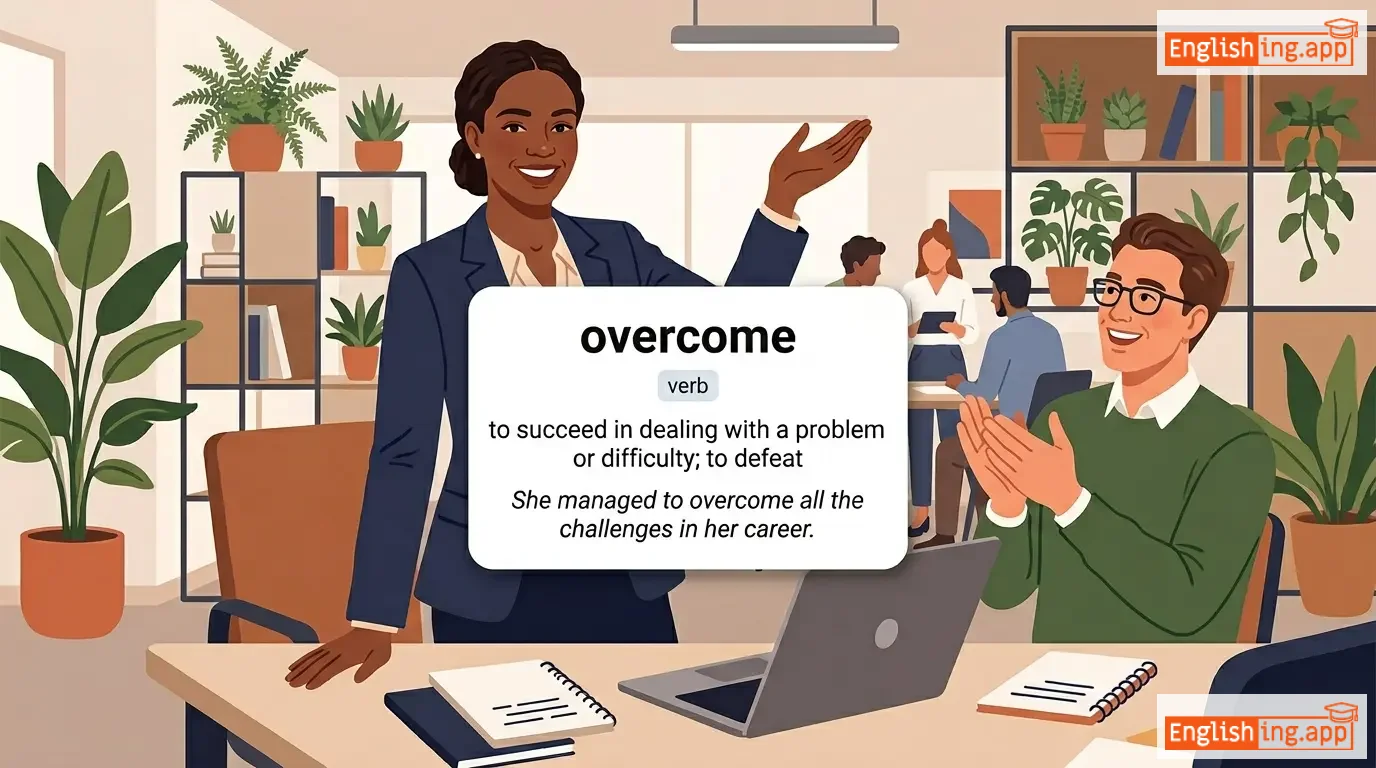
to succeed in dealing with a problem or difficulty; to defeat
••••••
|
She managed to overcome all the challenges in her career.
Она смогла преодолеть все трудности в своей карьере.
••••••
|
Она смогла преодолеть все трудности в своей карьере.
Ona smogla preodolety vse trudnosti v svoej kar'ere.
••••••
|
overcome with emotion
подавленное чувство эмоций
••••••
|
deeply affected by strong feelings
••••••
|
подавленное чувство эмоций
podavlennoe chuvstvo emotsij
••••••
|
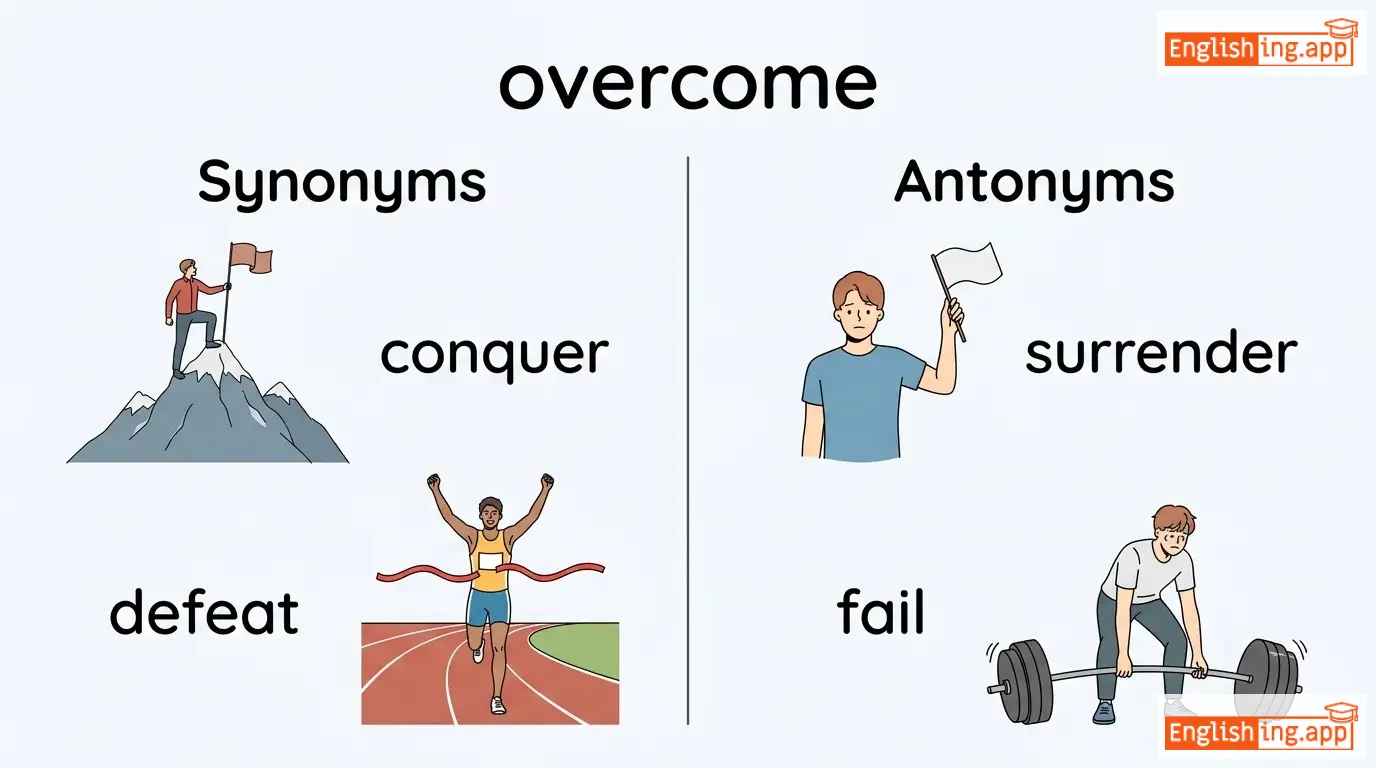
conquer, defeat, prevail, master
••••••
|
surrender, fail
••••••
|
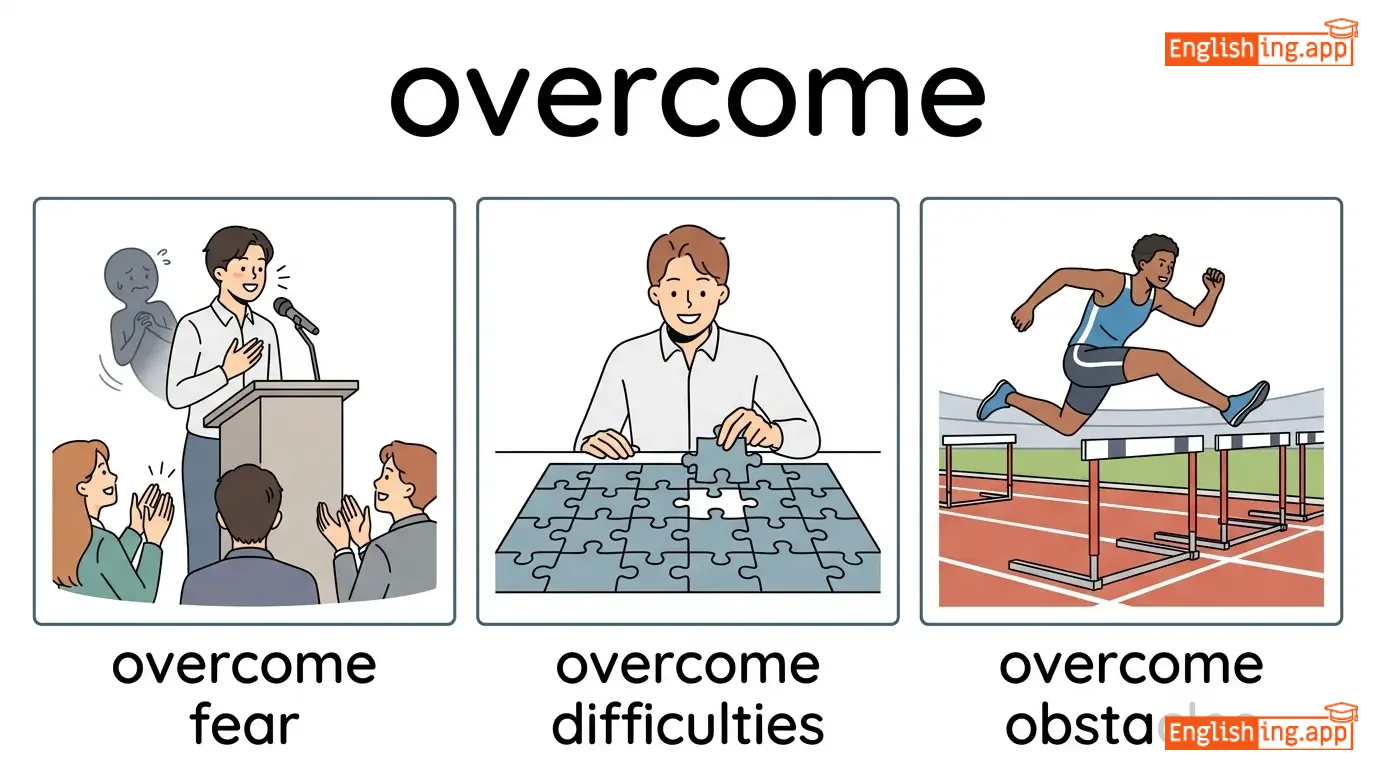
overcome fear, overcome difficulties, overcome obstacles, overcome challenges
••••••
|
Преодолеть - преодолеть трудности и победить.
••••••
|
|
👀
••••••
|
/ˌoʊvərˈlʊk/
verb
(овёрлук)
••••••
|
|
игнорировать
ignorirovat
••••••
|
overlooked
овёрлукт
••••••
|
overlooked
овёрлукт
••••••
|
overlooks
овёрлукс
••••••
|
overlooking
овёрлукинг
••••••
|
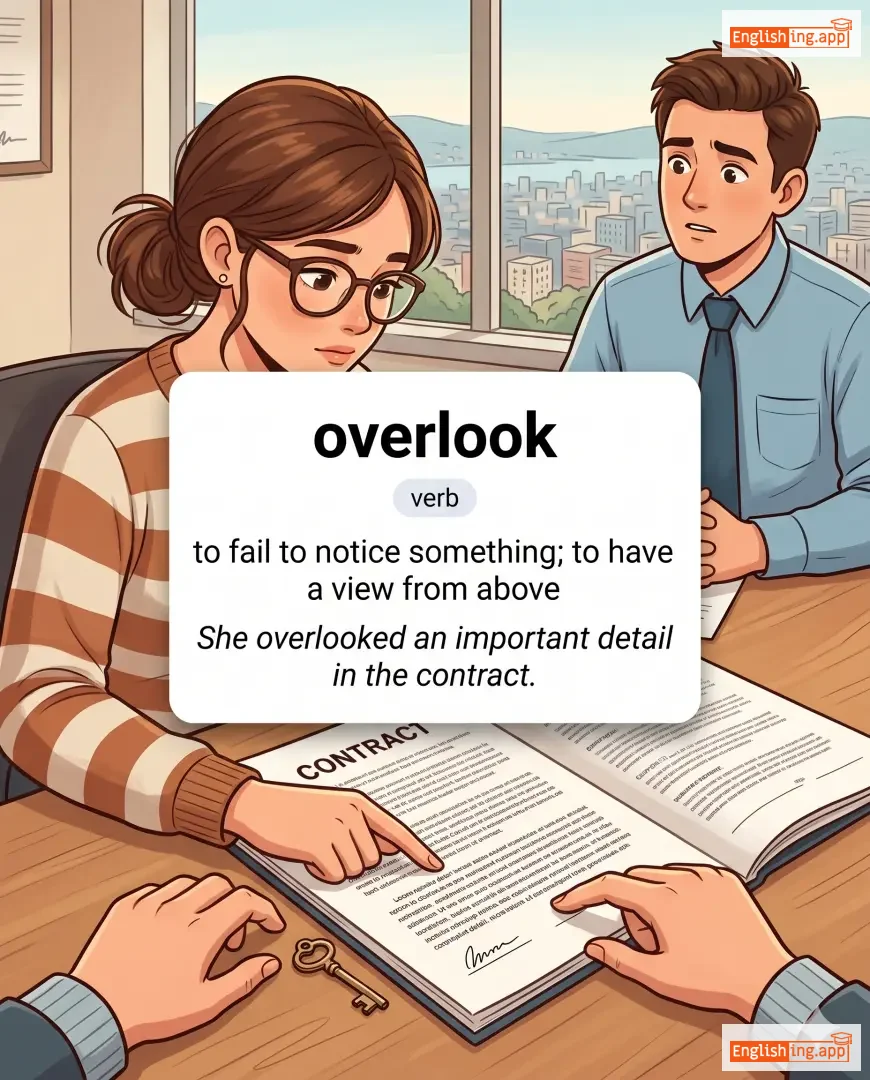
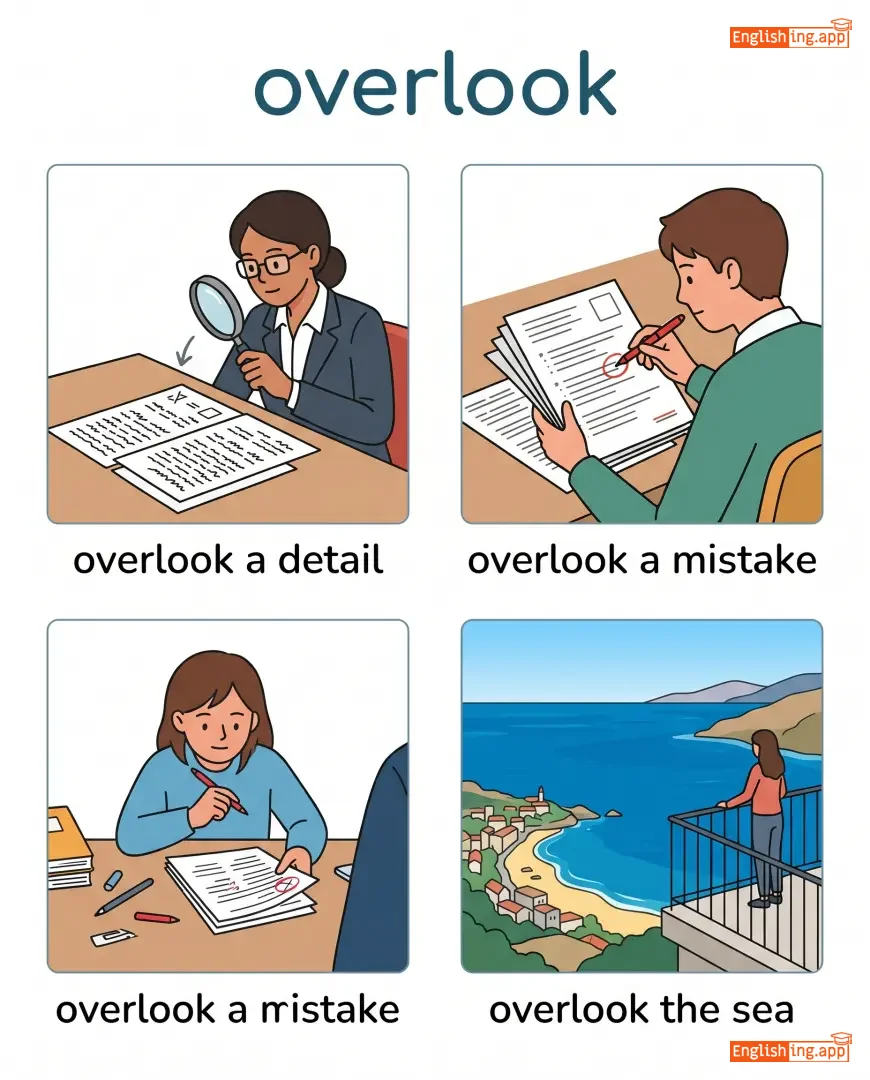
to fail to notice something; to have a view from above
••••••
|
She overlooked an important detail in the contract.
Она не заметила важную деталь в контракте.
••••••
|
Она не заметила важную деталь в контракте.
Ona ne zamechila vazhnuyu detal' v kontrakte.
••••••
|
to overlook mistakes
игнорировать ошибки
••••••
|
to forgive or ignore minor errors
••••••
|
игнорировать ошибки
ignorirovat' oshibki
••••••
|
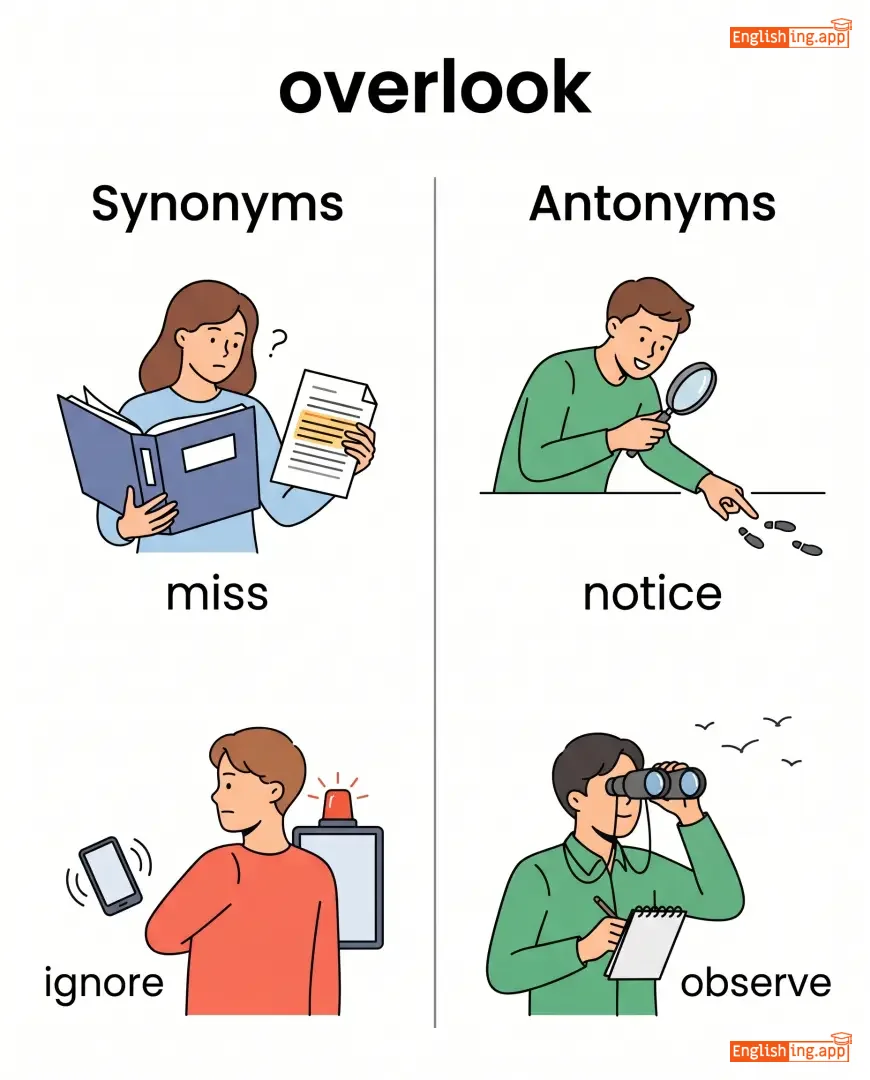
miss, ignore, disregard, supervise, neglect
••••••
|
notice, observe
••••••
|
overlook a detail, overlook a mistake, overlook the sea, overlooking the city
••••••
|
Over+Look = смотреть сверху и не заметить — игнорировать значит не замечать что-то
••••••
|
|
😬
••••••
|
/ˈəʊvəli/
adverb
(ˈəʊvəli)
••••••
|
- •••••• |
чрезмерно
chrezmerno
••••••
|
- •••••• | - •••••• | - •••••• | - •••••• |
to an excessive degree or extent
••••••
|
She was overly concerned about the results. |
Она была чрезмерно обеспокоена результатами.
Ona byla chrezmerno obespokoyena rezul'tatami.
••••••
|
- •••••• | - •••••• | - •••••• |
excessively, excessively, unduly, too much
••••••
|
moderately, reasonably
••••••
|
overly cautious, overly enthusiastic, overly critical
••••••
|
Overly = Чрезмерно; Слишком обеспокоена чем-то.
••••••
|
|
🌙
••••••
|
/ˌəʊvəˈnaɪt/
adverb, adjective
(овэрнайт)
••••••
|
- •••••• |
сразу же
srazu zhe
••••••
|
- •••••• | - •••••• | - •••••• | - •••••• |
for or during the night; suddenly or in a very short time
••••••
|
Her small business became famous overnight after a viral video. |
Ее малый бизнес стал известен сразу же после вирусного видео.
Eeyo malyy biznes stal izvesten srazu zhe posle virusnogo video.
••••••
|
overnight success |
a sudden or unexpected achievement
••••••
|
сразу же успех
srazu zhe uspekh
••••••
|
suddenly, instantly, immediately, unexpectedly
••••••
|
gradually, slowly
••••••
|
overnight stay, overnight delivery, overnight success, overnight change
••••••
|
Over + Night значит сразу же — поэтому Overnight это сразу же 🌙
••••••
|
|
🌍
••••••
|
/ˌoʊvərˈsiːz/
adjective
(овэрсиз)
••••••
|
- •••••• |
за границей
za granitsey
••••••
|
- •••••• | - •••••• | - •••••• | - •••••• |
in or to a foreign country across the sea
••••••
|
He went overseas for higher education. |
Он поехал за границу для получения высшего образования.
On poekhal za granitsu dlya polucheniya vysshego obrazovaniya.
••••••
|
- •••••• | - •••••• | - •••••• |
abroad, foreign, international, external
••••••
|
domestic, local
••••••
|
overseas market, overseas education, overseas trip, overseas investment
••••••
|
Over+Seas = через море — overseas значит за границей.
••••••
|
|
👁️
••••••
|
/ˌoʊvərˈsiː/
verb
(оверси)
••••••
|
|
наблюдать
nablyudat'
••••••
|
oversaw
овёрсо
••••••
|
overseen
овёрсин
••••••
|
oversees
овёрсиз
••••••
|
overseeing
овёрсинг
••••••
|
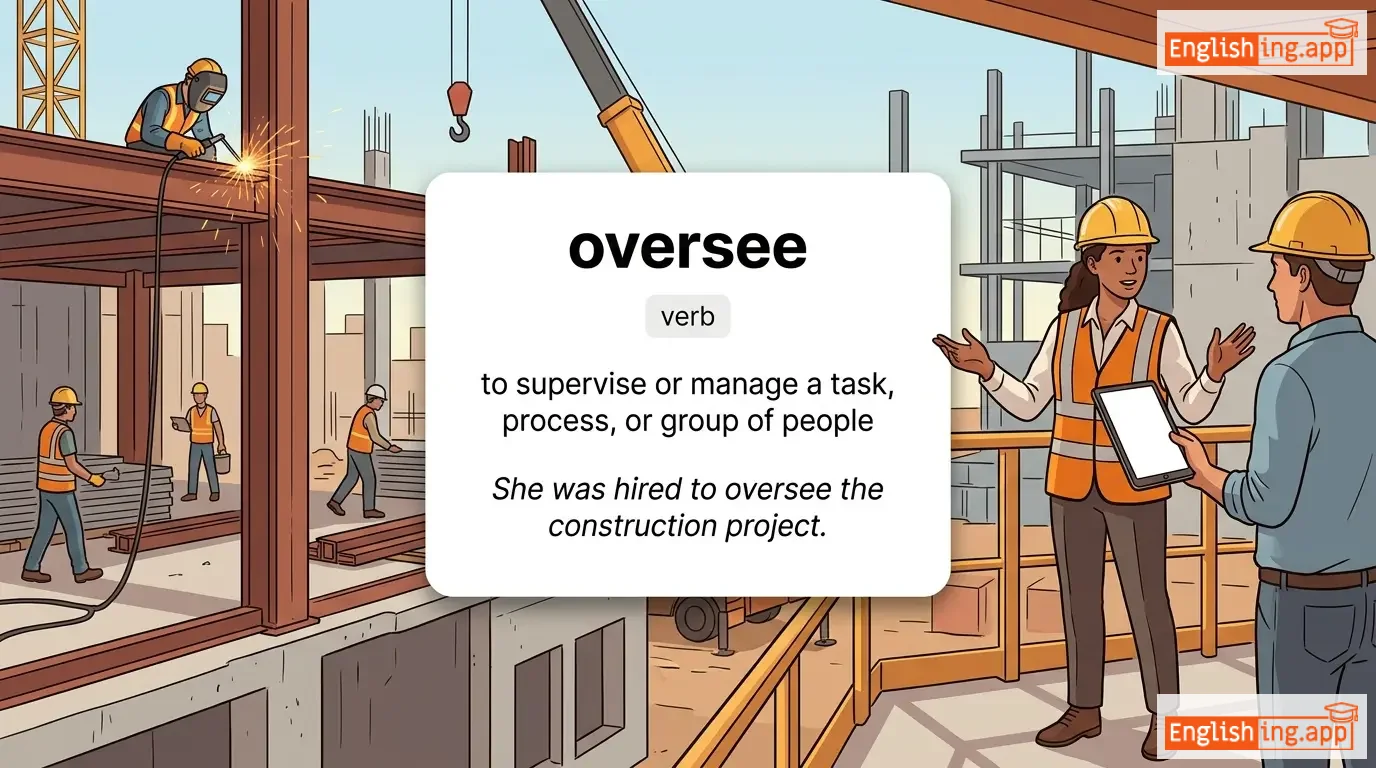
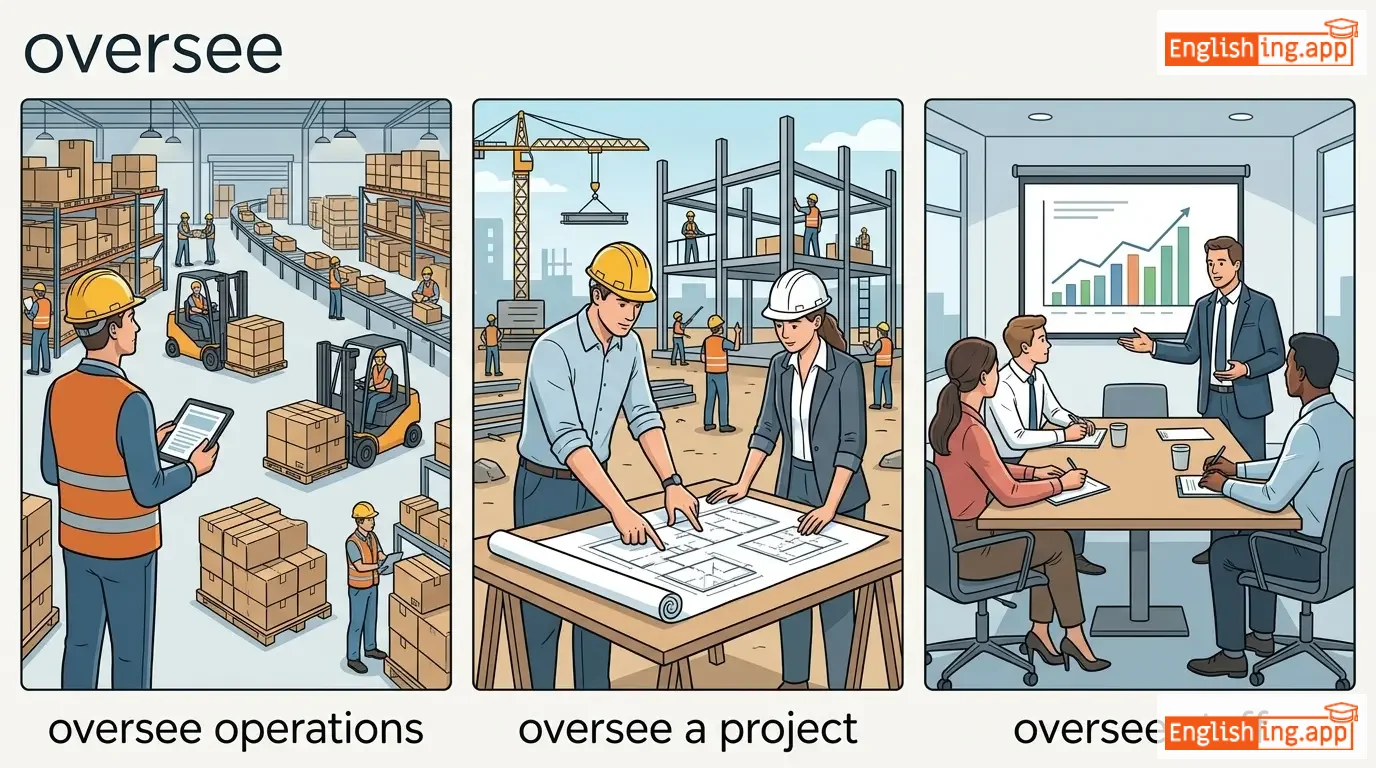
to supervise or watch over something; to manage and direct
••••••
|
The manager will oversee the entire construction project.
Менеджер будет следить за всем строительным проектом.
••••••
|
Менеджер будет следить за всем строительным проектом.
Menedzher budet sledit' za vsem stroitel'nym proyektom.
••••••
|
- •••••• | - •••••• | - •••••• |
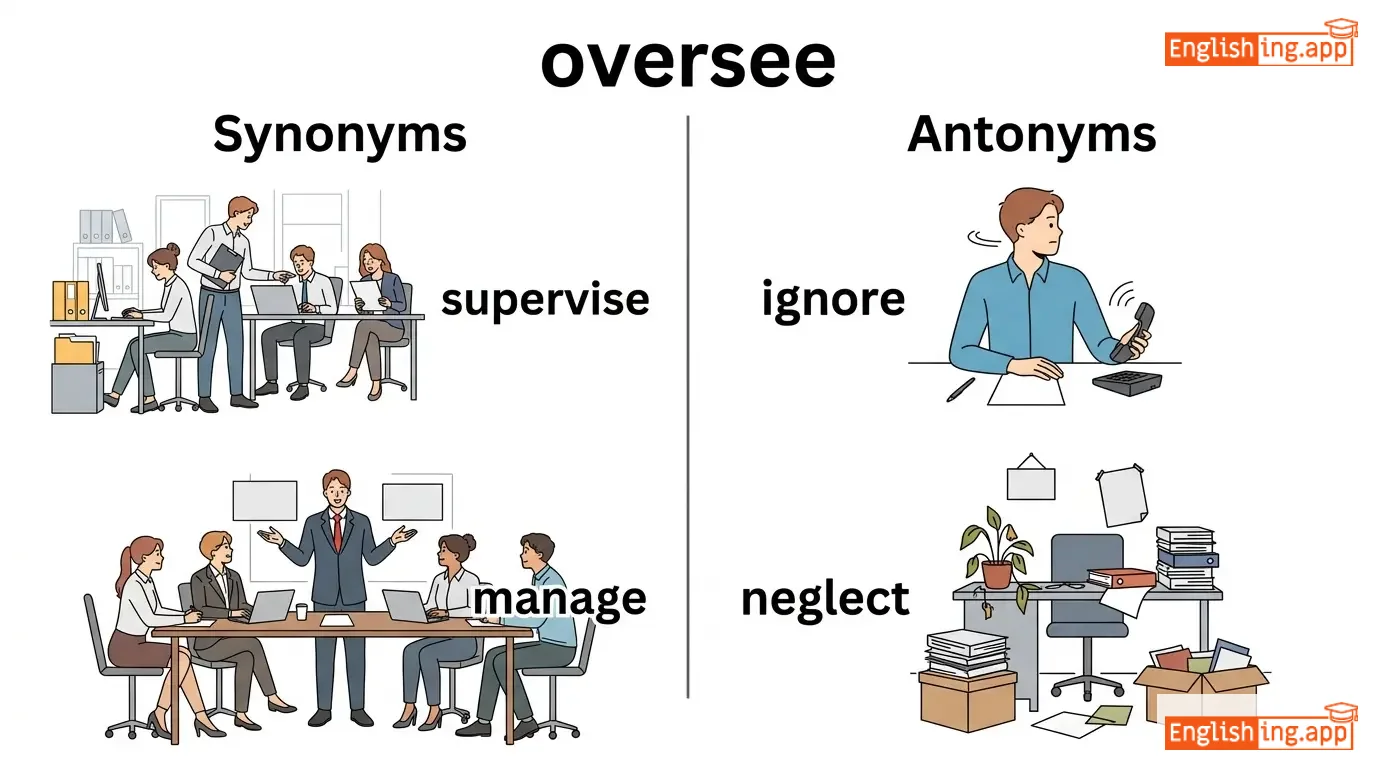
supervise, monitor, manage, direct
••••••
|
neglect, ignore, abandon, overlook
••••••
|
oversee operations, oversee projects, oversee carefully, directly oversee, oversee the work
••••••
|
Russian 'наблюдать' sounds like 'nablyudat', meaning overseeing or managing.
••••••
|
|
🔄
••••••
|
/ˌoʊvərˈtɜrn/
verb
(овертёрн)
••••••
|
- •••••• |
перевернуть / отменить решение
perevernut / otmenit reshenie
••••••
|
overturned
овертёрнд
••••••
|
overturned
овертёрнд
••••••
|
overturns
овертёрнс
••••••
|
overturning
овертёрнинг
••••••
|
to turn something upside down or to reverse a decision or judgment
••••••
|
The court decided to overturn the previous ruling.
Суд решил отменить предыдущее решение.
••••••
|
Суд решил отменить предыдущее решение.
Sud reshil otmenit predydushchee reshenie.
••••••
|
overturn the tables
перевернуть ситуацию
••••••
|
to reverse a situation completely
••••••
|
перевернуть ситуацию
perevernut situatsiyu
••••••
|
reverse, cancel, annul, revoke, upend
••••••
|
uphold, confirm, support
••••••
|
overturn a decision, overturn a car, overturn a law, overturn a ruling
••••••
|
Over TURN это перевернуть или отменить решение.
••••••
|
|
🌊
••••••
|
/ˌoʊvərˈwɛlm/
verb
••••••
|
- •••••• | - •••••• |
overwhelmed
••••••
|
overwhelmed
••••••
|
overwhelms
••••••
|
overwhelming
••••••
|
to overpower someone emotionally or physically; to be too much to handle
••••••
|
She was overwhelmed with gratitude after receiving the help. |
- •••••• |
overwhelmed with joy |
to feel extreme happiness
••••••
|
- •••••• |
overpower, crush, engulf, overcome, astonish
••••••
|
calm, comfort, underwhelm
••••••
|
overwhelm with work, overwhelm the enemy, overwhelmed by emotions
••••••
|
No •••••• |
|
🌊
••••••
|
/ˌəʊvəˈwelmɪŋ/
adjective
(овервелминг)
••••••
|
|
непреодолимый, ошеломляющий
nepreodolimy, oshelomlyayushchiy
••••••
|
- •••••• | - •••••• | - •••••• | - •••••• |
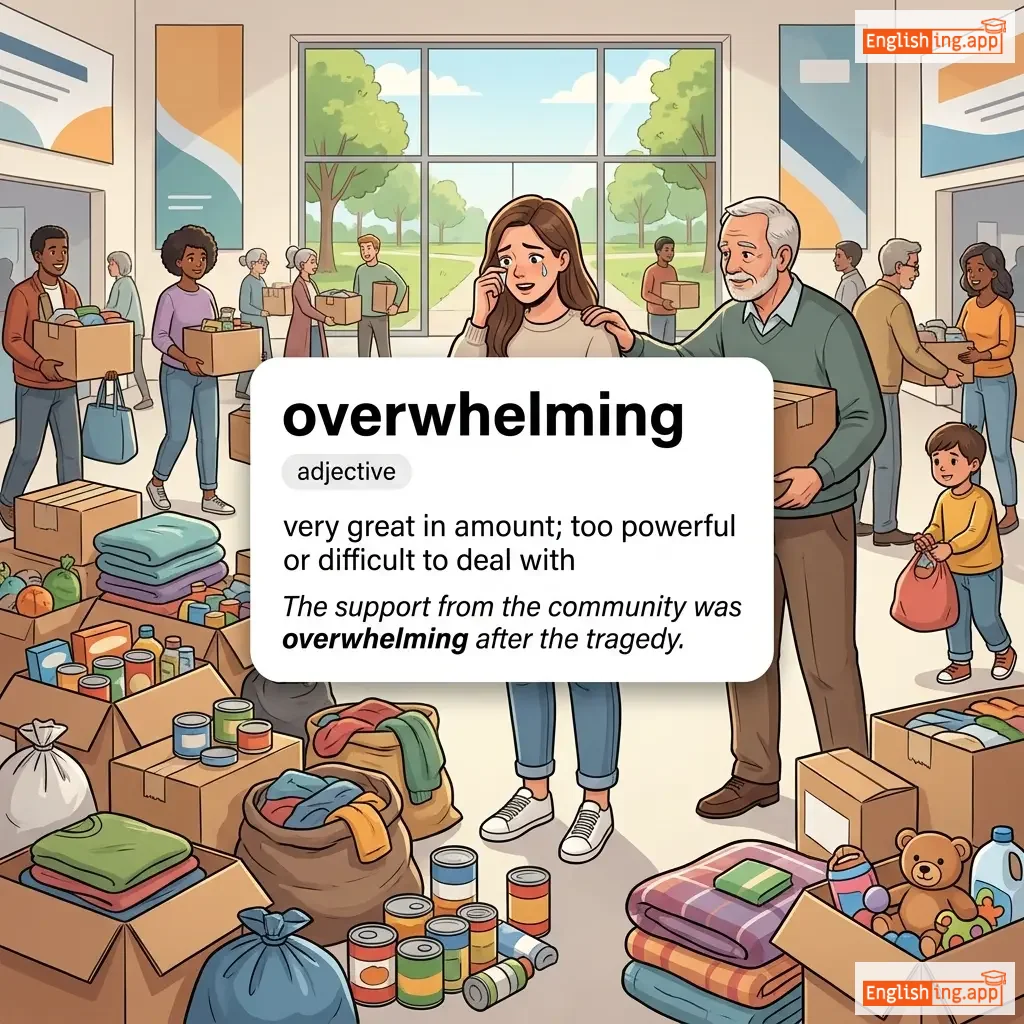
very great in amount; too powerful or difficult to deal with
••••••
|
The support from the community was overwhelming after the tragedy. |
Поддержка сообщества была ошеломляющей после трагедии.
Podderzhka soobshchestva byla oshelomlyayushchey posle tragedii.
••••••
|
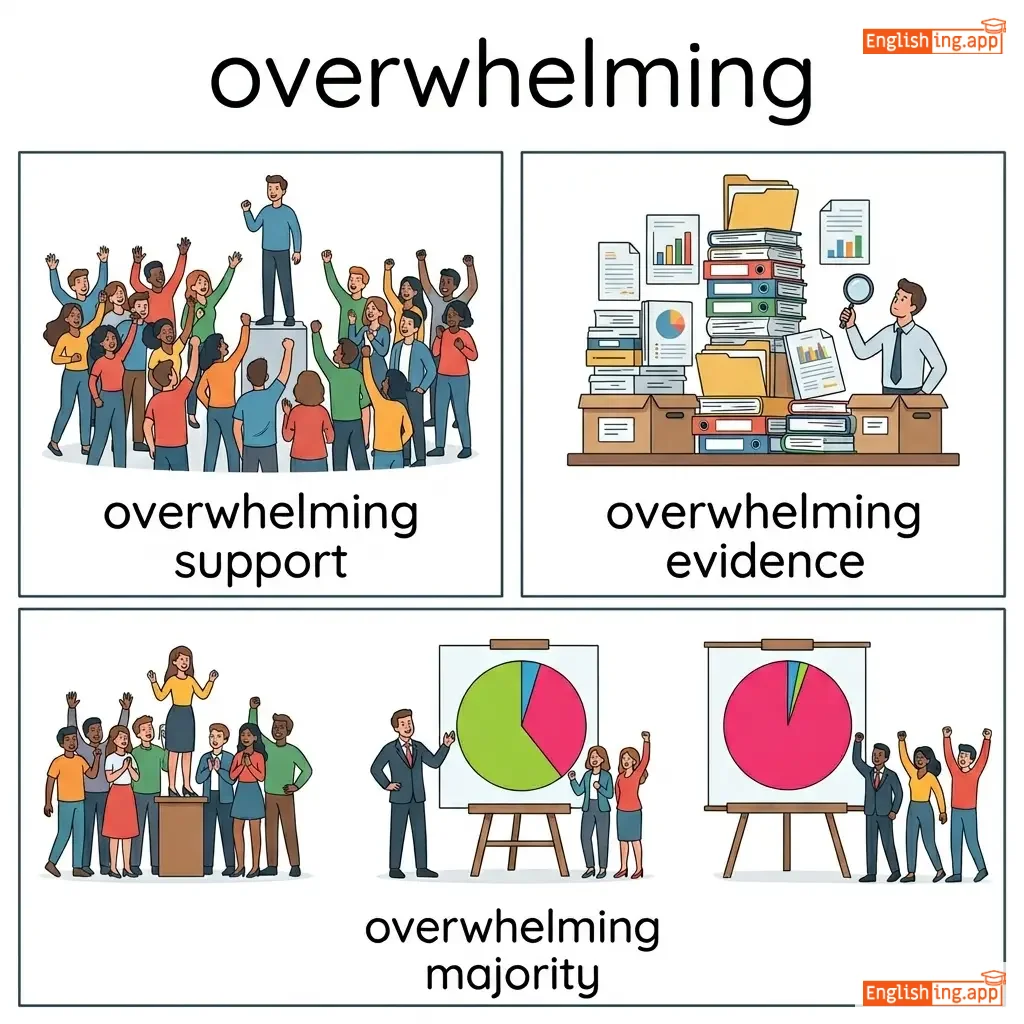
overwhelming majority |
a very large majority
••••••
|
огромное большинство
ogromnoe bol'shinstvo
••••••
|
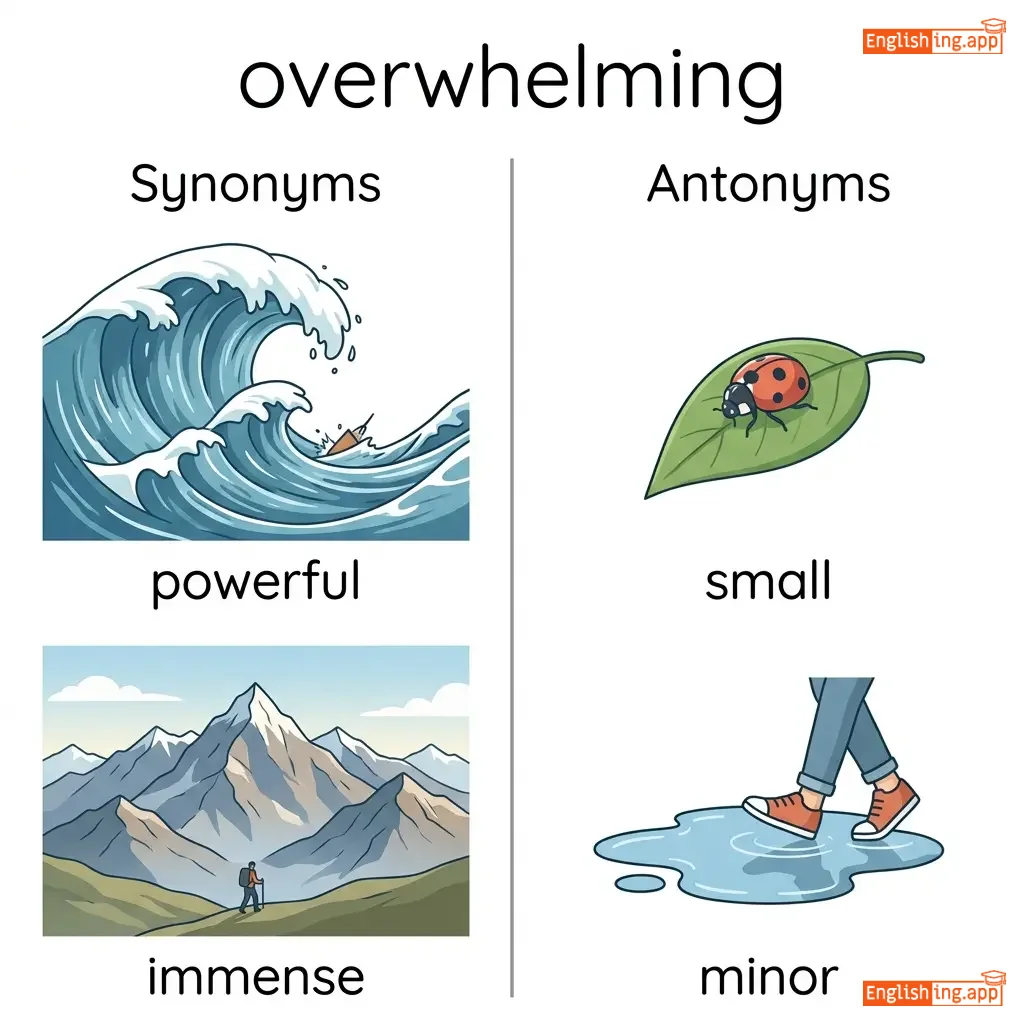
powerful, immense, enormous, intense, vast
••••••
|
small, minor, weak
••••••
|
overwhelming support, overwhelming evidence, overwhelming majority, overwhelming feeling
••••••
|
Over + Whelm = быть поглощенным волной 🌊 — означает огромный эффект
••••••
|
|
💳
••••••
|
/oʊ/
verb
(owe)
••••••
|
|
быть должен
byt' dolzhen
••••••
|
owed
owed
••••••
|
owed
owed
••••••
|
owes
owes
••••••
|
owing
owing
••••••
|
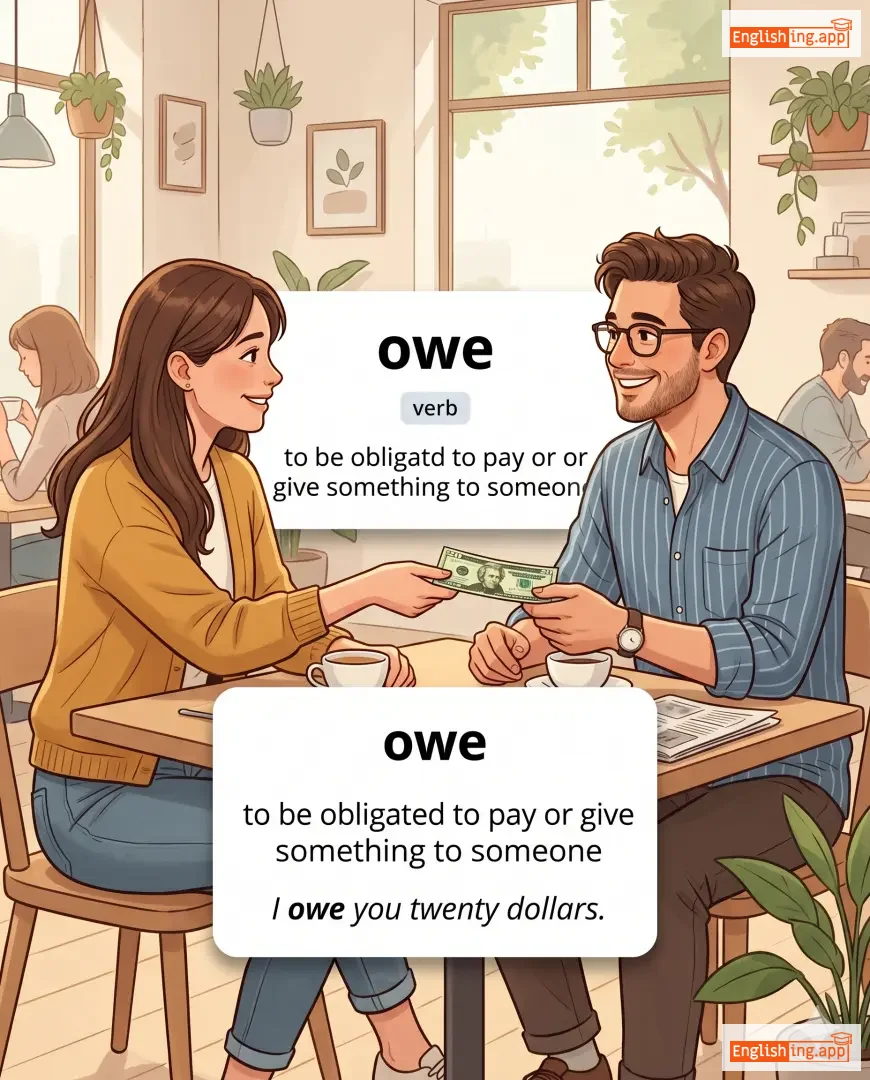
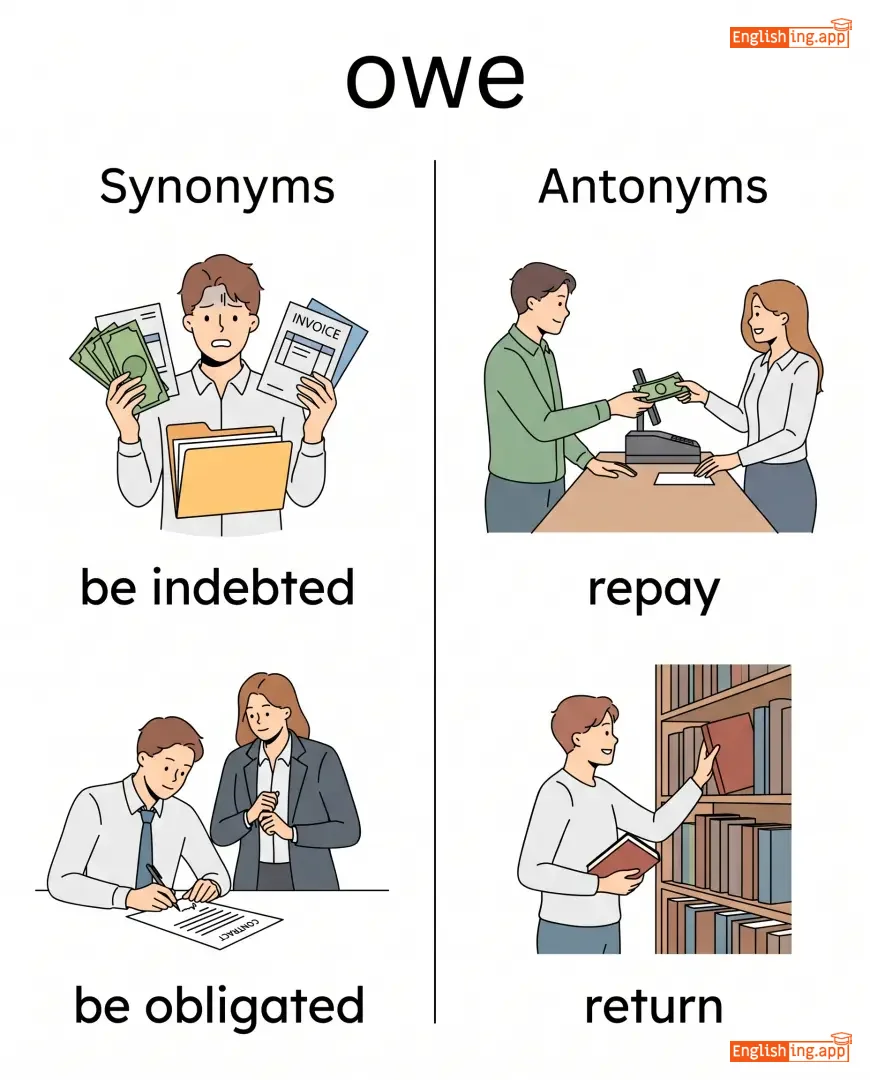
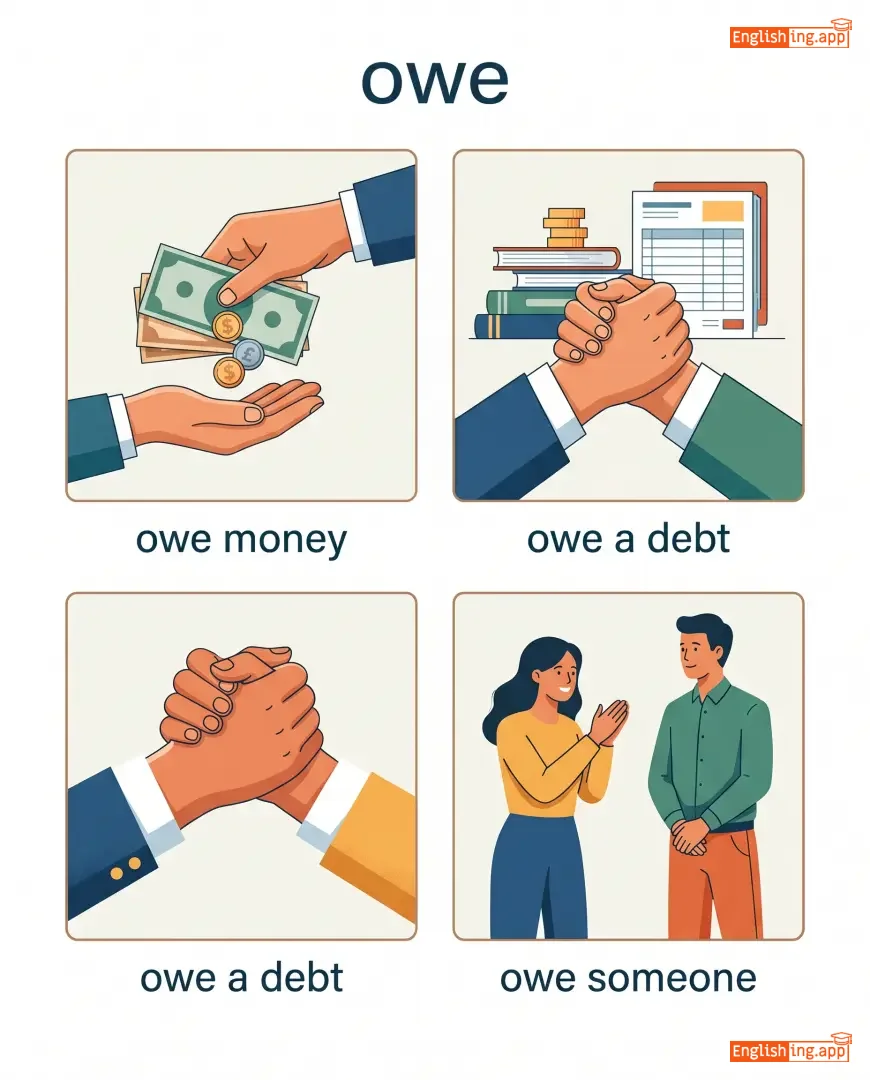
to be under obligation to pay or repay; to be indebted
••••••
|
I owe my success to my parents' support.
Я обязан своим успехом поддержке моих родителей.
••••••
|
Я обязан своим успехом поддержке моих родителей.
Ya obazannym svoim uspekham podderzhke moikh roditeley.
••••••
|
- •••••• | - •••••• | - •••••• |
be indebted, be obligated, be liable, be in debt
••••••
|
own, possess, have, collect
••••••
|
owe money, owe debt, owe favor, owe gratitude
••••••
|
Быть должным означает, что необходимо что-то вернуть.
••••••
|
|
🏠
••••••
|
/oʊn/
verb, adjective
(own)
••••••
|
- •••••• |
владеть
vladet'
••••••
|
owned
owned
••••••
|
owned
owned
••••••
|
owns
owns
••••••
|
owning
owning
••••••
|
to possess something; belonging to oneself
••••••
|
She owns a beautiful house in the city.
Она владеет красивым домом в городе.
••••••
|
Она владеет красивым домом в городе.
Ona vladeyet krasivym domom v gorode.
••••••
|
- •••••• | - •••••• | - •••••• |
possess, have, hold
••••••
|
lack, not have
••••••
|
own a house, own property, own up
••••••
|
Own means you possess something - 'Владеть' означает, что вы что-то имеете.
••••••
|
|
💼
••••••
|
/ˈoʊ.nər/
noun
(óvner)
••••••
|
- •••••• |
владелец
vladelets
••••••
|
- •••••• | - •••••• | - •••••• | - •••••• |
a person who owns something; someone who has legal possession of property
••••••
|
The owner of the restaurant greeted us warmly. |
Владелец ресторана тепло нас поприветствовал.
Vladelyets restorana teplo nas poprivetsvoval.
••••••
|
- •••••• | - •••••• | - •••••• |
proprietor, possessor, holder, landlord
••••••
|
tenant, renter, borrower, user
••••••
|
business owner, property owner, car owner
••••••
|
In Russian, 'владелец' is the one who owns, just like an 'owner'.
••••••
|
|
🏠
••••••
|
/ˈoʊnərʃɪp/
noun
(овнершип)
••••••
|

|
собственность
sobstvennost
••••••
|
- •••••• | - •••••• | - •••••• | - •••••• |
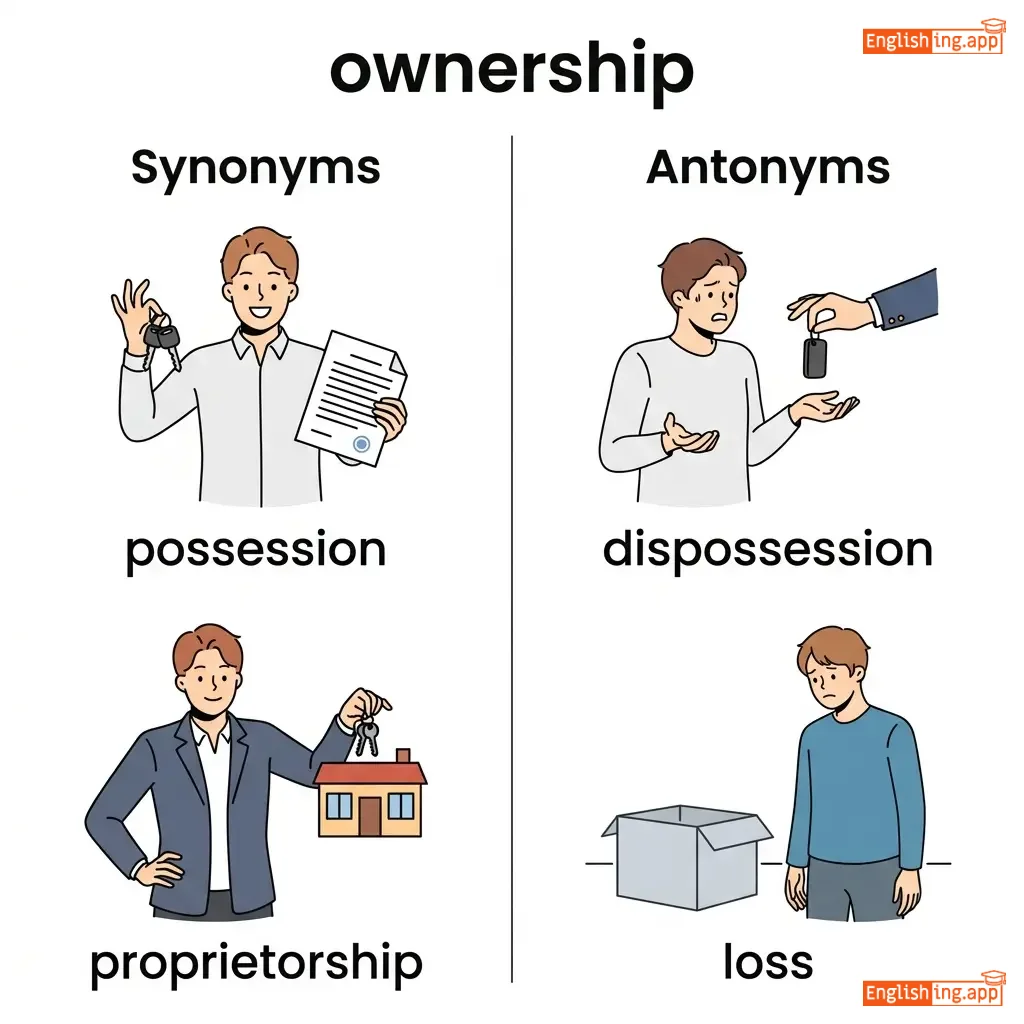
the state or fact of owning something; legal right of possession
••••••
|
He took full ownership of the company after his father retired. |
Он взял на себя полную собственность компании после того, как его отец ушел на пенсию.
On vzyal na sebya polnuyu sobstvennost' kompanii posle togo, kak ego otets ushel na pensiyu.
••••••
|
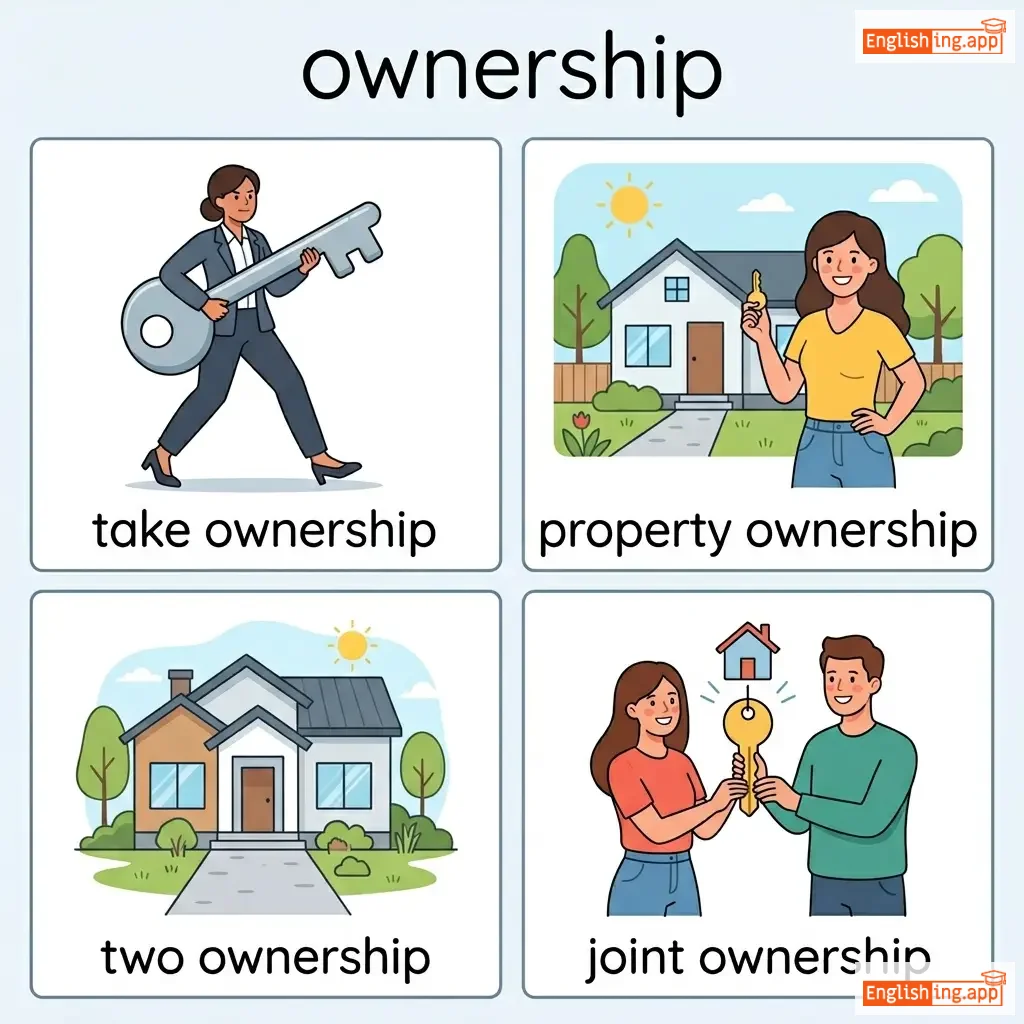
take ownership |
to accept responsibility for something
••••••
|
взять на себя собственность
vzyat' na sebya sobstvennost'
••••••
|
possession, proprietorship, control, custody, tenure
••••••
|
dispossession, loss, denial
••••••
|
take ownership, property ownership, joint ownership, full ownership
••••••
|
Собственность — это то, что ты можешь иметь, а ownership — это быть владельцем!
••••••
|
|
🌬️
••••••
|
/ˈɒksɪdʒən/
noun
(оксиджен)
••••••
|
|
кислород
kislorod
••••••
|
- •••••• | - •••••• | - •••••• | - •••••• |
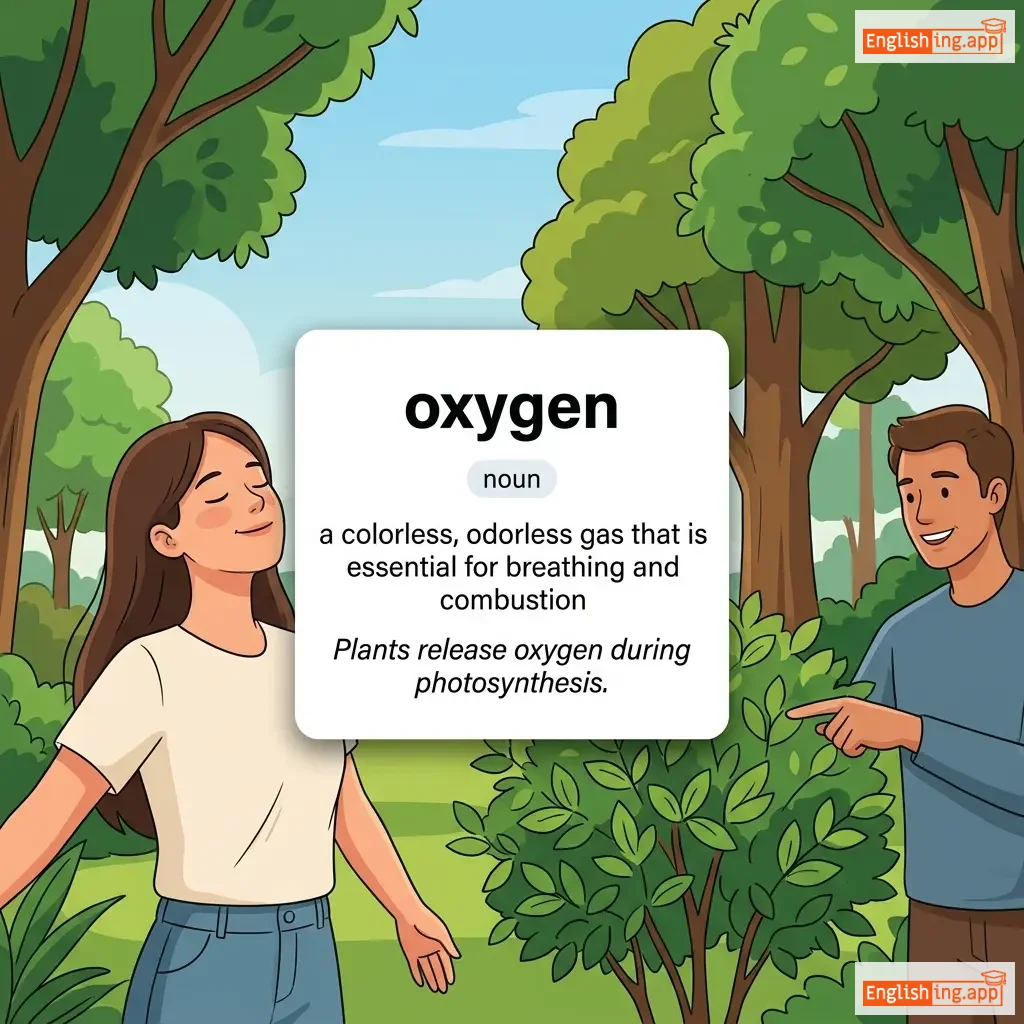
a colorless, odorless gas that is essential for breathing and combustion
••••••
|
Plants release oxygen during photosynthesis.
Растения выделяют кислород во время фотосинтеза.
••••••
|
Растения выделяют кислород во время фотосинтеза.
Rastenia vydelyayut kislorod vo vremya fotosinteza.
••••••
|
like oxygen
как кислород
••••••
|
something essential for survival
••••••
|
необходим для жизни
neobkhodim dlya zhizni
••••••
|
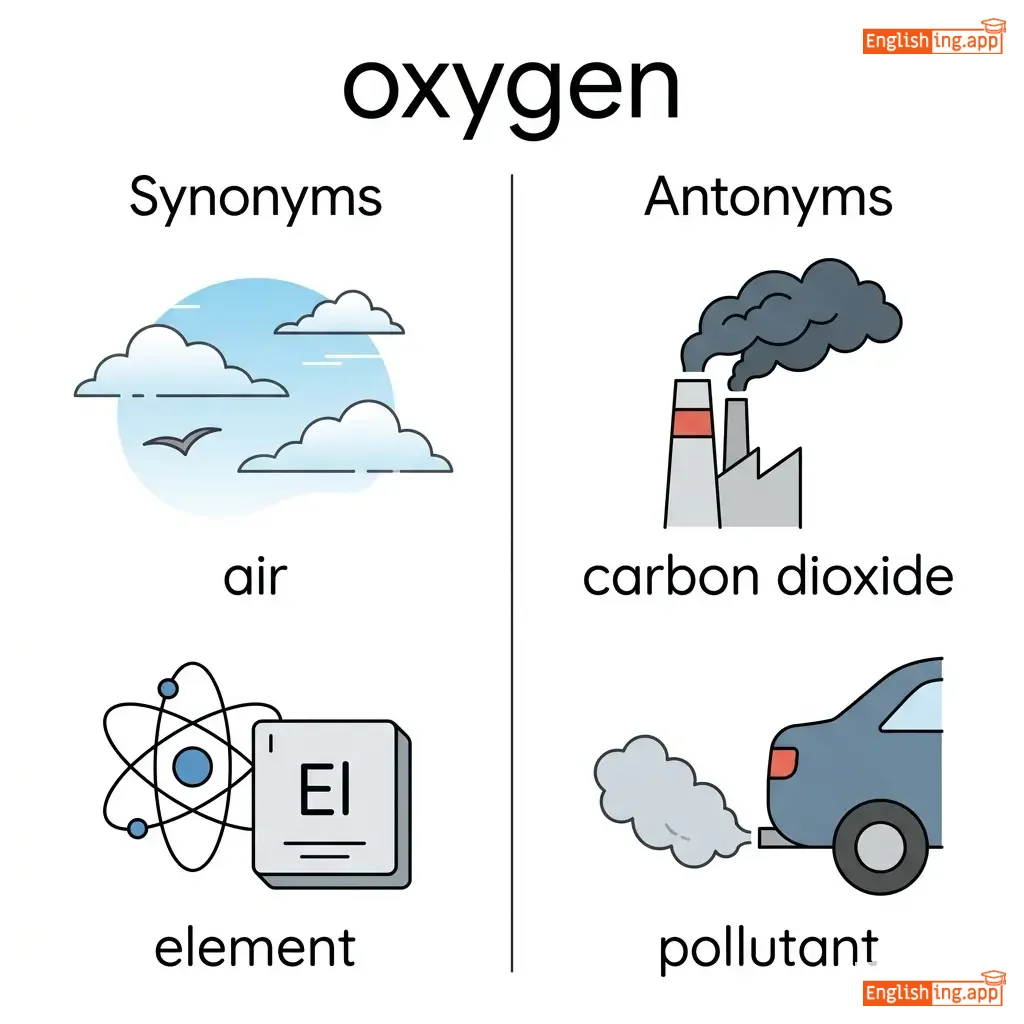
air, element, gas, life-support, breath
••••••
|
carbon dioxide, pollutant
••••••
|
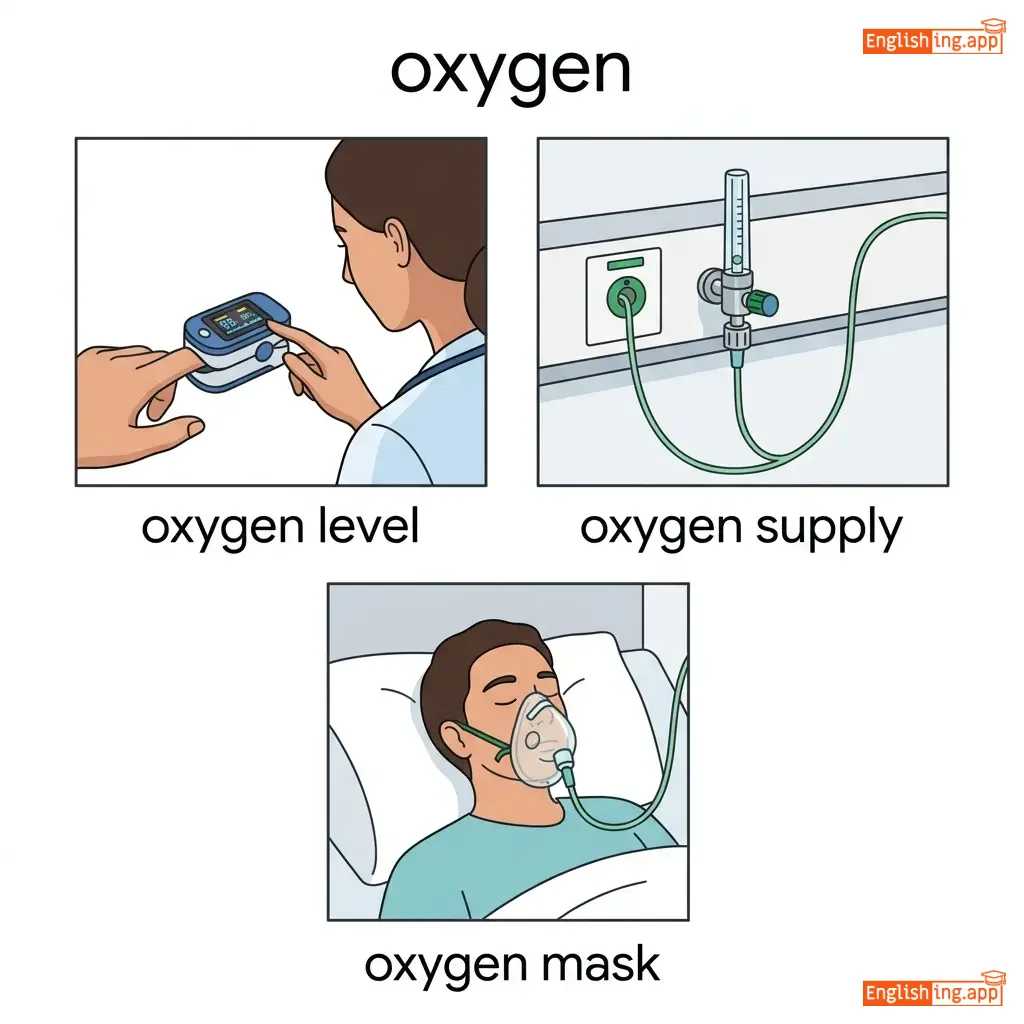
oxygen level, oxygen supply, oxygen mask, pure oxygen
••••••
|
Без кислорода человек не выживет — запомни ‘Кислород = жизнь’
••••••
|
|
🏃♀️
••••••
|
/peɪs/
noun
(peis)
••••••
|
- •••••• |
темп
temp
••••••
|
- •••••• | - •••••• | - •••••• | - •••••• |
the speed at which something happens or is done
••••••
|
She walked at a slow pace.
Она шла медленным темпом.
••••••
|
Она шла медленным темпом.
Ona shla medlennym tempom.
••••••
|
- •••••• | - •••••• | - •••••• |
speed, rate, tempo, velocity
••••••
|
slowness, delay, retardation
••••••
|
fast pace, slow pace, quick pace, steady pace
••••••
|
Pace - это идти медленно, с темпом.
••••••
|
|
🎒
••••••
|
/pæk/
verb,noun
(pak)
••••••
|
- •••••• |
упаковывать
upakovivat'
••••••
|
packed
paktiv
••••••
|
packed
paktiv
••••••
|
packs
pak
••••••
|
packing
packing
••••••
|
to put things into a container for storage or transport; a collection of items kept together
••••••
|
She packed her clothes into a suitcase for the trip.
Она упаковала свою одежду в чемодан для поездки.
••••••
|
Она упаковала свою одежду в чемодан для поездки.
Ona upakovala svoyu odezhdu v chemodan dlya poezdki.
••••••
|
pack it in
упаковать это
••••••
|
to stop doing something
••••••
|
перестать
perestat'
••••••
|
bundle, load, fill, group, assemble
••••••
|
unpack, scatter, disperse
••••••
|
pack a bag, pack luggage, pack animals, pack tightly
••••••
|
Упаковывать вещи — значит собирать все необходимое в одном месте.
••••••
|
|
📦
••••••
|
/ˈpækɪdʒ/
noun
(пакет)
••••••
|
- •••••• |
пакет
paket
••••••
|
- •••••• | - •••••• | - •••••• | - •••••• |
a container or wrapping in which something is packed
••••••
|
He received a package in the mail. |
Он получил пакет по почте.
On poluchil paket po pochte.
••••••
|
- •••••• | - •••••• | - •••••• |
parcel, bundle, box, shipment
••••••
|
unpacking, unpacked item
••••••
|
shipping package, gift package, delivery package, large package
••••••
|
Пакет — это как упаковка, в которой что-то спрятано, например, подарок!
••••••
|
|
📦
••••••
|
/ˈpæk.ɪt/
noun
(pa-kyet)
••••••
|
- •••••• |
пакет
paket
••••••
|
- •••••• | - •••••• | - •••••• | - •••••• |
a small package or container holding items or information
••••••
|
He bought a packet of biscuits from the shop. |
Он купил пакет печенья в магазине.
On kupil paket pechen'ya v magazine.
••••••
|
- •••••• | - •••••• | - •••••• |
package, parcel, bundle, sachet, pouch
••••••
|
bulk, load
••••••
|
packet of chips, packet of biscuits, packet of seeds, small packet
••••••
|
Пакет как 'packet' — пакет с печеньем все узнают.
••••••
|
|
📒
••••••
|
/pæd/
noun
(пад)
••••••
|
- •••••• |
блокнот
bloknot
••••••
|
- •••••• | - •••••• | - •••••• | - •••••• |
a small cushion or block of soft material; also a set of sheets of paper fastened together
••••••
|
He wrote her phone number on a yellow pad.
Он написал её номер телефона на жёлтом блокноте.
••••••
|
Он написал её номер телефона на жёлтом блокноте.
On napisal yeyo nomer telefona na zhyoltom bloknote.
••••••
|
notepad
блокнот
••••••
|
a small notebook for writing notes
••••••
|
блокнот
bloknot
••••••
|
cushion, mat, block, notebook, sheet
••••••
|
hardboard, rough surface
••••••
|
writing pad, note pad, knee pad, shoulder pad
••••••
|
Pad — это и подушка, и блокнот
••••••
|
|
📄
••••••
|
/peɪdʒ/
noun
(peydzh)
••••••
|
- •••••• |
страница
stranitsa
••••••
|
- •••••• | - •••••• | - •••••• | - •••••• |
one side of a sheet of paper, or a single sheet of paper in a book or document
••••••
|
Turn to the next page for more information.
Перейдите на следующую страницу для получения дополнительной информации.
••••••
|
Перейдите на следующую страницу для получения дополнительной информации.
Pereydite na sleduyushchuyu stranitsu dlya polucheniya dopolnitel'noy informatsii.
••••••
|
- •••••• | - •••••• | - •••••• |
leaf, sheet, folio, document
••••••
|
blank, empty space
••••••
|
turn the page, page number, front page, last page
••••••
|
Страница, как страница книги
••••••
|
|
😢
••••••
|
/peɪn/
noun
(pein)
••••••
|
- •••••• |
боль; физическое страдание или эмоциональное напряжение
bol; fizicheskoe stradanie ili emotsionalnoe napryazhenie
••••••
|
- •••••• | - •••••• | - •••••• | - •••••• |
physical suffering or discomfort; mental or emotional distress
••••••
|
The patient felt severe pain in his back.
Пациент почувствовал сильную боль в спине.
••••••
|
Пациент почувствовал сильную боль в спине.
Patsient pochuvstvoval sil'nuyu bol' v spine.
••••••
|
- •••••• | - •••••• | - •••••• |
ache, suffering, agony, discomfort
••••••
|
pleasure, comfort, relief, ease
••••••
|
severe pain, chronic pain, feel pain
••••••
|
Вспомните слово 'pain' и как оно означает 'боль' на русском.
••••••
|
|
😖
••••••
|
/ˈpeɪn.fəl/
adjective
(пэйнфул)
••••••
|
- •••••• |
болезненный
boleznennyj
••••••
|
- •••••• | - •••••• | - •••••• | - •••••• |
causing physical or emotional pain
••••••
|
The injury was very painful, and he needed immediate care. |
Травма была очень болезненной, и ему нужна была немедленная медицинская помощь.
Travma byla ochen' boleznennoy, i emu nuzhna byla nemedlennaya meditsinskaya pomoshch'.
••••••
|
- •••••• | - •••••• | - •••••• |
aching, sore, excruciating, distressing
••••••
|
comfortable, painless, soothing
••••••
|
painful experience, painful injury, painful memories
••••••
|
Painful - пэйнфул, помните, что боль всегда вызывает сильные ощущения, как если бы она 'полняла' ваше тело.
••••••
|
|
🎨
••••••
|
/peɪnt/
verb
(peɪnt)
••••••
|
- •••••• |
рисовать
risovat
••••••
|
painted
peɪntɪd
••••••
|
painted
peɪntɪd
••••••
|
paints
peɪnts
••••••
|
painting
peɪntɪŋ
••••••
|
to apply a colored substance to a surface
••••••
|
She loves to paint landscapes in her free time.
Она любит рисовать пейзажи в своем свободном времени.
••••••
|
Она любит рисовать пейзажи в своем свободном времени.
Ona lyubit risovat' peyzazhi v svoem svobodom vremeni.
••••••
|
- •••••• | - •••••• | - •••••• |
decorate, color, coat, stain
••••••
|
erase, remove, strip
••••••
|
paint a picture, paint the walls, paint the house
••••••
|
Paint - Рисовать, как рисовать картины на холсте.
••••••
|
|
🎨
••••••
|
/ˈpeɪn.tər/
noun
(пейнтер)
••••••
|
- •••••• |
художник
khudozhnik
••••••
|
- •••••• | - •••••• | - •••••• | - •••••• |
a person who paints pictures or decorates buildings
••••••
|
The painter created a beautiful landscape on canvas. |
Художник создал красивый пейзаж на холсте.
Khudozhnik sozdál krasivyj peyzazh na kholste.
••••••
|
- •••••• | - •••••• | - •••••• |
artist, decorator, illustrator
••••••
|
destroyer, eraser
••••••
|
house painter, portrait painter, landscape painter, abstract painter
••••••
|
Художник творит мир через свою картину
••••••
|
|
🎨
••••••
|
/ˈpeɪntɪŋ/
noun
(peɪntɪŋ)
••••••
|
- •••••• |
картина
kartina
••••••
|
- •••••• | - •••••• | - •••••• | - •••••• |
a picture or design made using paint
••••••
|
The painting on the wall was created by a famous artist. |
Картина на стене была создана известным художником.
Kartina na stene byla sozdana izvestnym khudozhnikom.
••••••
|
a picture is worth a thousand words |
visual images are more effective than verbal descriptions
••••••
|
Картина стоит тысячи слов
Kartina stoit tysyachi slov
••••••
|
artwork, portrait, illustration, depiction
••••••
|
reality, blank
••••••
|
oil painting, landscape painting, wall painting, abstract painting
••••••
|
Painting = Картина = Искусство с красками
••••••
|
|
👟👟
••••••
|
/per/
noun
(per)
••••••
|
- •••••• |
пара
para
••••••
|
- •••••• | - •••••• | - •••••• | - •••••• |
two things of the same kind that are used together
••••••
|
She wore a matching pair of shoes.
Она носила пару подходящих туфель.
••••••
|
Она носила пару подходящих туфель.
Ona nosila paru podkhodyashchikh tufel'.
••••••
|
- •••••• | - •••••• | - •••••• |
duo, couple, set, twosome
••••••
|
single, individual
••••••
|
pair of shoes, perfect pair, matching pair
••••••
|
Pair - пара, помните, пара всегда идет вместе, как пара туфель.
••••••
|
|
🏰
••••••
|
/ˈpælɪs/
noun
(палас)
••••••
|
- •••••• |
дворец
dvorets
••••••
|
- •••••• | - •••••• | - •••••• | - •••••• |
a large and impressive building that is the official home of a king, queen, or other ruler
••••••
|
The royal family lives in a magnificent palace.
Королевская семья живет в великолепном дворце.
••••••
|
Королевская семья живет в великолепном дворце.
Korolevskaya sem'ya zhivet v velellykom dvortse.
••••••
|
a palace fit for a king
дворец, достойный короля
••••••
|
a place that is luxurious and grand
••••••
|
дворец, достойный короля
dvorets, dostoynyy korolya
••••••
|
castle, mansion, fortress, residence, estate
••••••
|
hut, cabin, shack
••••••
|
royal palace, presidential palace, ancient palace, marble palace
••••••
|
Palace means place for king — дворец для королей!
••••••
|

