Получите неограниченный доступ ко всем словам с подпиской Pro
Обновить до ProПолучите неограниченный доступ ко всем предложениям с подпиской Pro
Обновить до Pro|
Эмодзи
|
Слово | Images | Перевод | Прошедшее | Причастие прошедшего времени | Третье лицо единственного числа | Герундий | Значение | Пример предложения | Перевод примера предложения | Пример выражения | Значение примера выражения | Перевод примера выражения | Синонимы | Антонимы | Коллокации | Мнемоника |
|---|---|---|---|---|---|---|---|---|---|---|---|---|---|---|---|---|---|
|
💵
••••••
|
/ˈdɒlər/
noun
(доллар)
••••••
|
- •••••• |
доллар
dollar
••••••
|
- •••••• | - •••••• | - •••••• | - •••••• |
The basic monetary unit of the United States and some other countries
••••••
|
I need five dollars to buy this book.
Мне нужно пять долларов, чтобы купить эту книгу.
••••••
|
Мне нужно пять долларов, чтобы купить эту книгу.
Mne nuzhno pyat' dollarov, chtoby kupit' etu knigu.
••••••
|
not worth a dollar
не стоит ни доллара
••••••
|
having little or no value
••••••
|
не стоит ни доллара
ne stoit ni dollara
••••••
|
buck, greenback, currency, coin, bill
••••••
|
debt, worthless
••••••
|
US dollar, dollar bill, exchange dollar, dollar coin
••••••
|
Dollar = американская валюта
••••••
|
|
🌐
••••••
|
/dəˈmeɪn/
noun
(домен)
••••••
|
- •••••• |
область
oblast
••••••
|
- •••••• | - •••••• | - •••••• | - •••••• |
An area of knowledge, activity, or territory over which control is exercised.
••••••
|
Mathematics is her main domain of expertise. |
Математика — ее основная область знаний.
Matematika — yeye osnovnaya oblast' znaniy.
••••••
|
public domain |
Something not protected by copyright and available for public use.
••••••
|
публичная область
publichnaya oblast'
••••••
|
territory, realm, field, sphere, area
••••••
|
outsider, exterior
••••••
|
domain name, knowledge domain, public domain, private domain
••••••
|
Область означает зону контроля — как доменное имя в интернете.
••••••
|
|
🏠
••••••
|
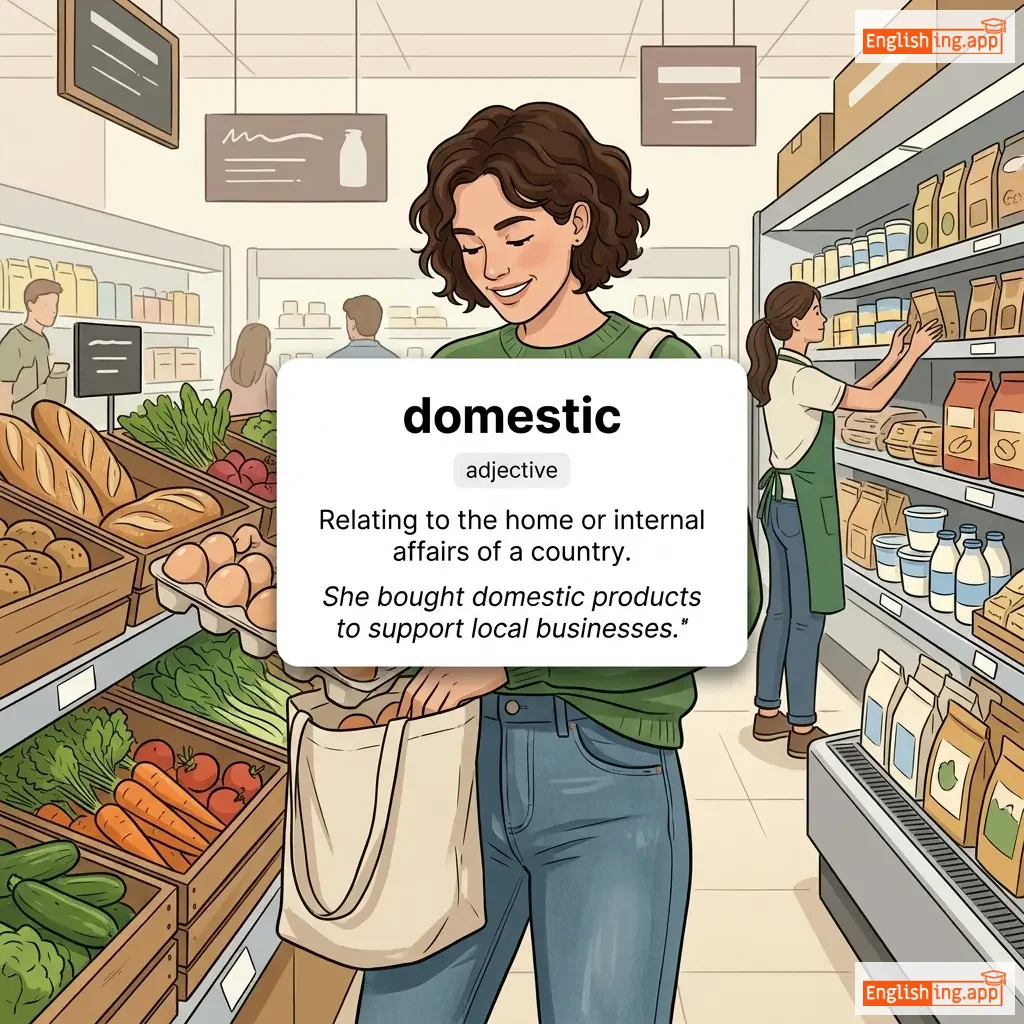
/dəˈmɛstɪk/
adjective
(хэппинесс)
••••••
|
|
счастье
schast'ye
••••••
|
- •••••• | - •••••• | - •••••• | - •••••• |
Relating to the home or internal affairs of a country.
••••••
|
She bought domestic products to support local businesses. |
Она не смогла скрыть своего счастья, когда получила награду.
Ona ne smogla skryt' svoego schast'ya, kogda poluchila nagradu.
••••••
|
domestic affairs |
Matters within a household or a country
••••••
|
поиск счастья
poisk schast'ya
••••••
|
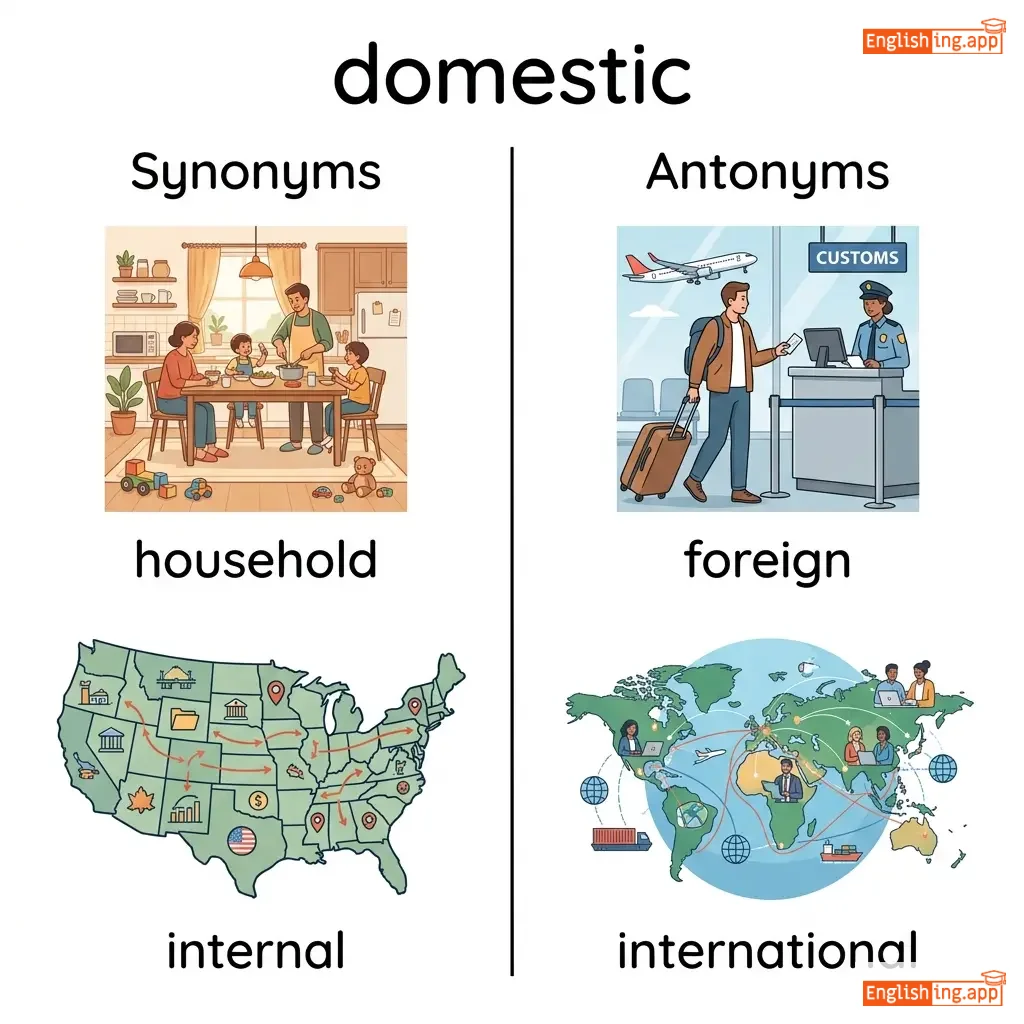
household, internal, local, home
••••••
|
foreign, international
••••••
|
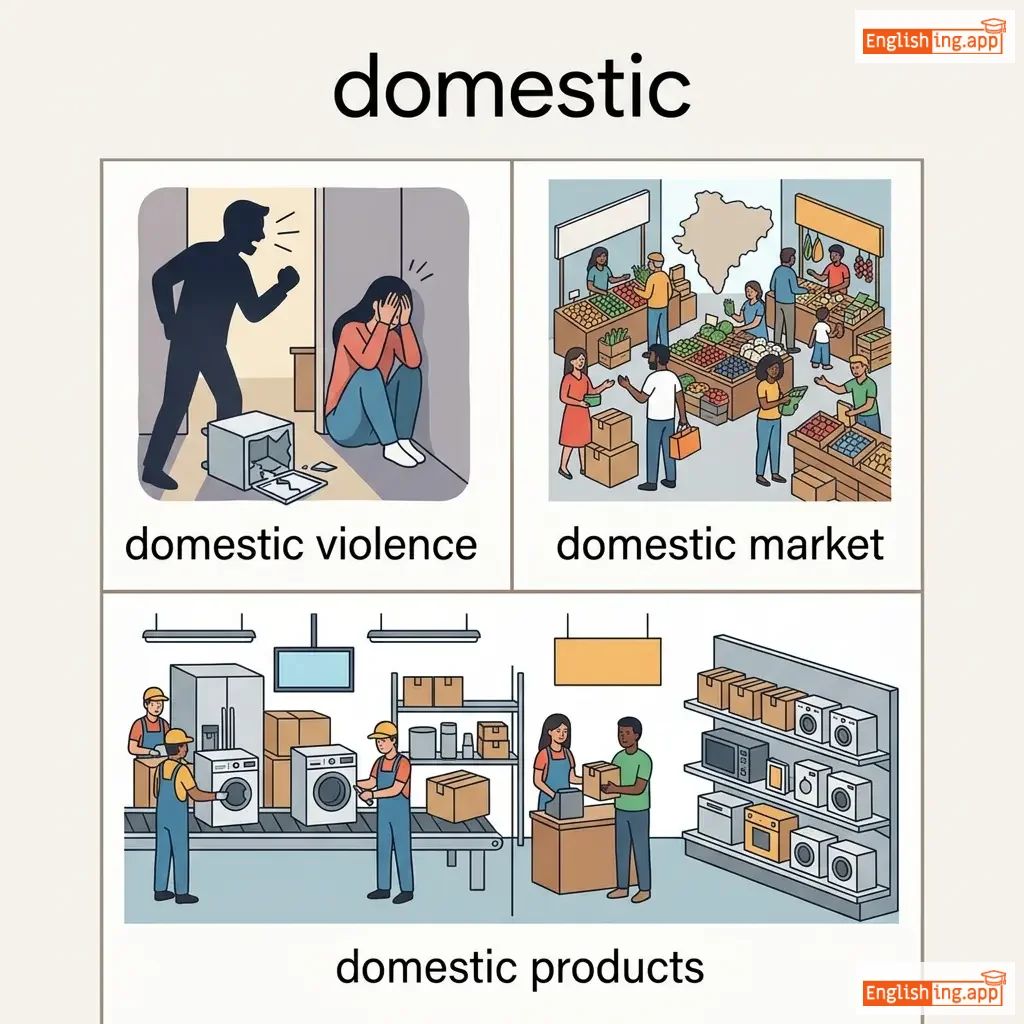
domestic violence, domestic market, domestic products, domestic flights
••••••
|
Счастье легче найти, когда мы ищем его каждый день.
••••••
|
|
👑
••••••
|
/ˈdɑː.mə.nəns/
noun
(домининс)
••••••
|

|
доминирование
dominivanie
••••••
|
- •••••• | - •••••• | - •••••• | - •••••• |
The state of having power and influence over others.
••••••
|
The company has maintained dominance in the smartphone market. |
Компания сохраняет доминирование на рынке смартфонов.
Kompaniya sokhranyaet dominivanie na rynke smartphonev.
••••••
|
alpha dominance |
The behavior of asserting leadership or control, often seen in social or animal groups.
••••••
|
альфа-доминирование
alfa-dominivanie
••••••
|
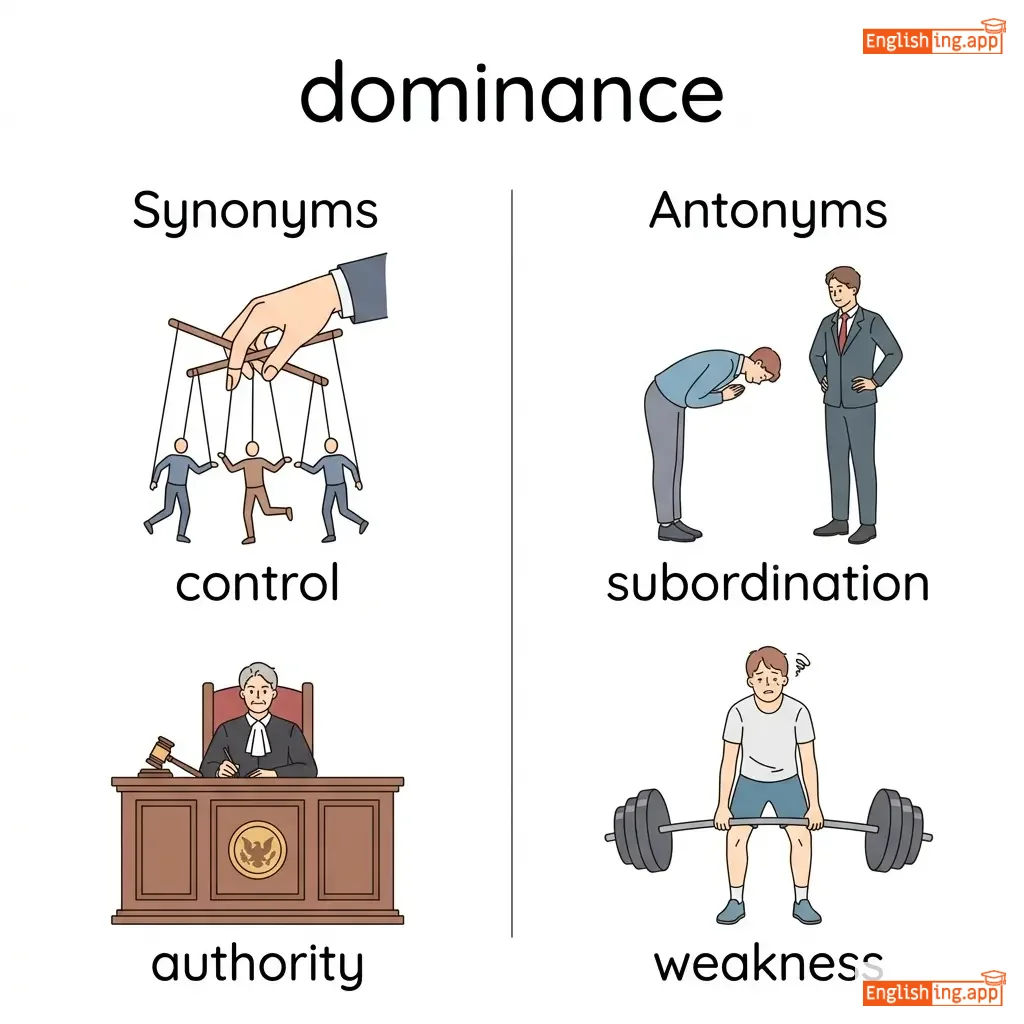
control, authority, supremacy, power, command
••••••
|
subordination, weakness
••••••
|
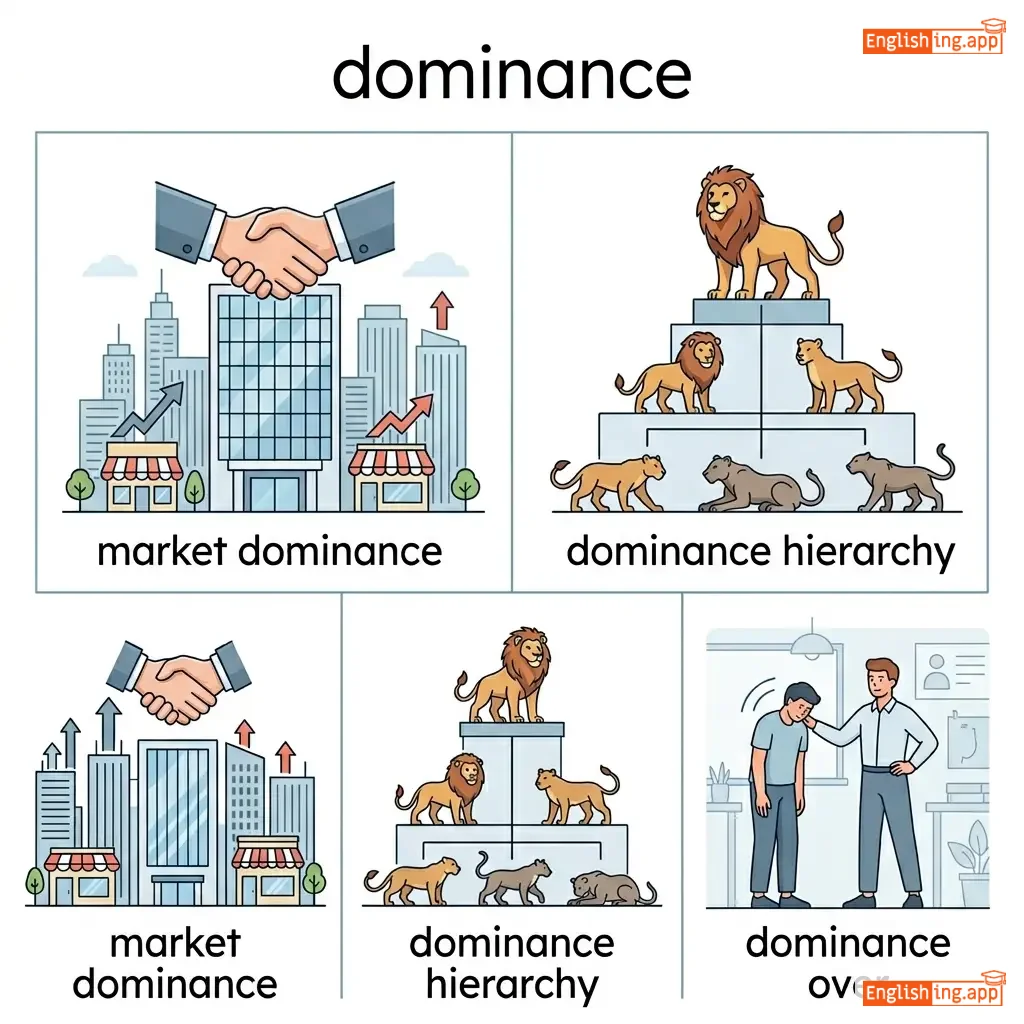
market dominance, dominance hierarchy, dominance over
••••••
|
Dominance - это 'dominiruyushchiy' — расширение власти и влияния.
••••••
|
|
🦁
••••••
|
/ˈdɑː.mə.nənt/
adjective
(домининт)
••••••
|
- •••••• |
доминирующий
dominiruyushchiy
••••••
|
- •••••• | - •••••• | - •••••• | - •••••• |
Having power, authority, or influence over others; most important.
••••••
|
English has become the dominant language in international business.
Английский язык стал доминирующим в международном бизнесе.
••••••
|
Английский язык стал доминирующим в международном бизнесе.
Angliyskiy yazyk stal dominiruyushchim v mezhdunarodnom biznese.
••••••
|
dominant hand
доминирующая рука
••••••
|
The hand that a person uses most skillfully and frequently.
••••••
|
доминирующая рука
dominiruyushchaya ruka
••••••
|
powerful, controlling, leading, influential
••••••
|
submissive, minor, weak
••••••
|
dominant role, dominant culture, dominant force
••••••
|
Доминирующий — как лев 🦁: самый сильный и властный.
••••••
|
|
👑
••••••
|
/ˈdɒmɪneɪt/
verb
(доминэйт)
••••••
|
- •••••• |
доминировать
dominirovat
••••••
|
dominated
доминэйтед
••••••
|
dominated
доминэйтед
••••••
|
dominates
доминэйтс
••••••
|
dominating
доминэйтинг
••••••
|
to have power or control over something or someone
••••••
|
The company dominates the smartphone market.
компания доминирует на рынке смартфонов.
••••••
|
Компания доминирует на рынке смартфонов.
Kompaniya dominiruet na rynke smartfonov.
••••••
|
dominate the field
доминировать в области
••••••
|
to be the most successful or influential in a particular area
••••••
|
доминировать в области
dominírovat' v oblasti
••••••
|
control, rule, command, govern, lead
••••••
|
submit, follow, yield
••••••
|
dominate the market, dominate the conversation, dominate politics, dominate completely
••••••
|
Dominate : Будь на пьедестале, как победитель!
••••••
|
|
🏰
••••••
|
/ˌdɒmɪˈneɪʃən/
noun
(доминишн)
••••••
|
- •••••• |
доминирование
dominirovanie
••••••
|
- •••••• | - •••••• | - •••••• | - •••••• |
the exercise of control or influence over someone or something
••••••
|
The empire sought domination over its neighbors. |
Империя стремилась к доминированию над своими соседями.
Imperiya stremilas' k dominirovaniyu nad svoimi sosedyami.
••••••
|
total domination |
complete control over something or someone
••••••
|
тотальное доминирование
total'noe dominirovanie
••••••
|
control, power, supremacy, authority
••••••
|
submission, weakness, dependence
••••••
|
political domination, economic domination, domination of nature
••••••
|
Domination - как доминировать в шахматах, забирая все.
••••••
|
|
🎁
••••••
|
/dəʊˈneɪt/
verb
(донейт)
••••••
|
|
жертвовать
zhertvovat'
••••••
|
donated
донейтед
••••••
|
donated
донейтед
••••••
|
donates
донейтс
••••••
|
donating
донейтинг
••••••
|
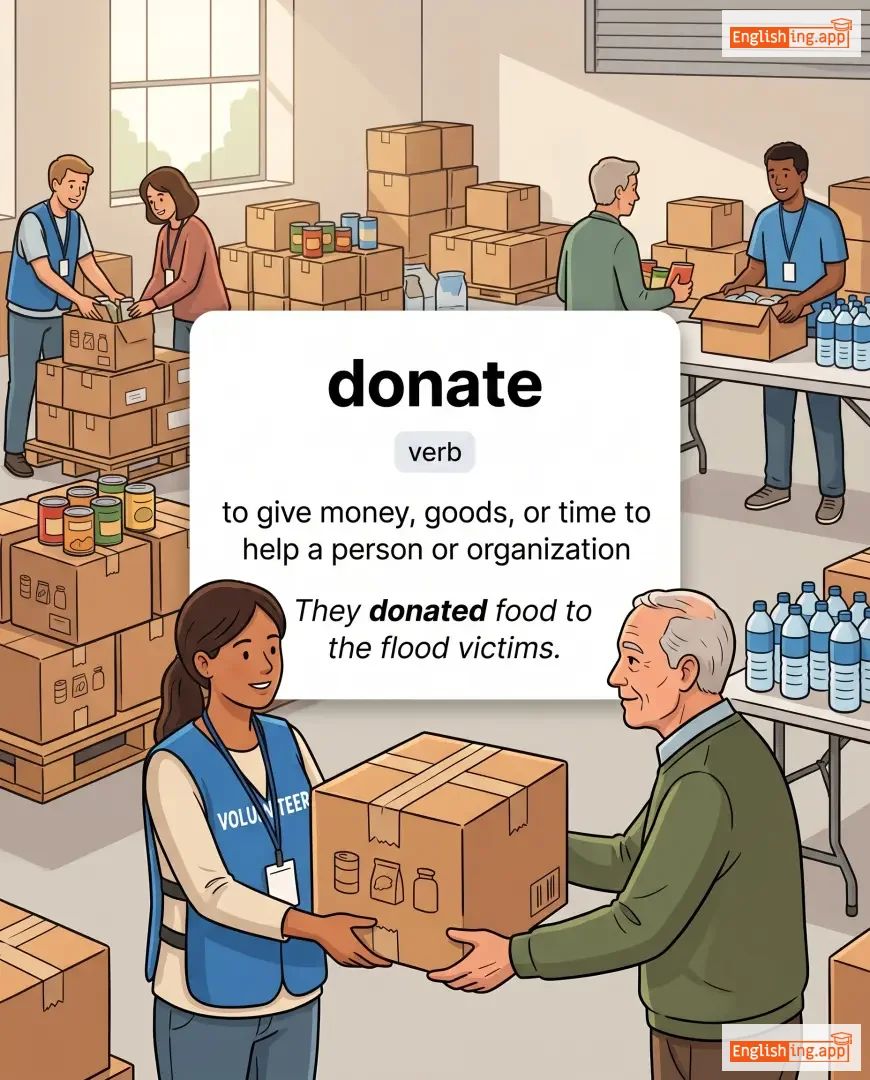
to give money, goods, or time to help a person or organization
••••••
|
They donated food to the flood victims.
Они пожертвовали еду пострадавшим от наводнения.
••••••
|
Они пожертвовали еду пострадавшим от наводнения.
Oni pozhertvovali yedu postradavshim ot navodneniya.
••••••
|
donate blood
сдавать кровь
••••••
|
to give one's blood voluntarily for medical use
••••••
|
сдавать кровь
sdavat' krov'
••••••
|
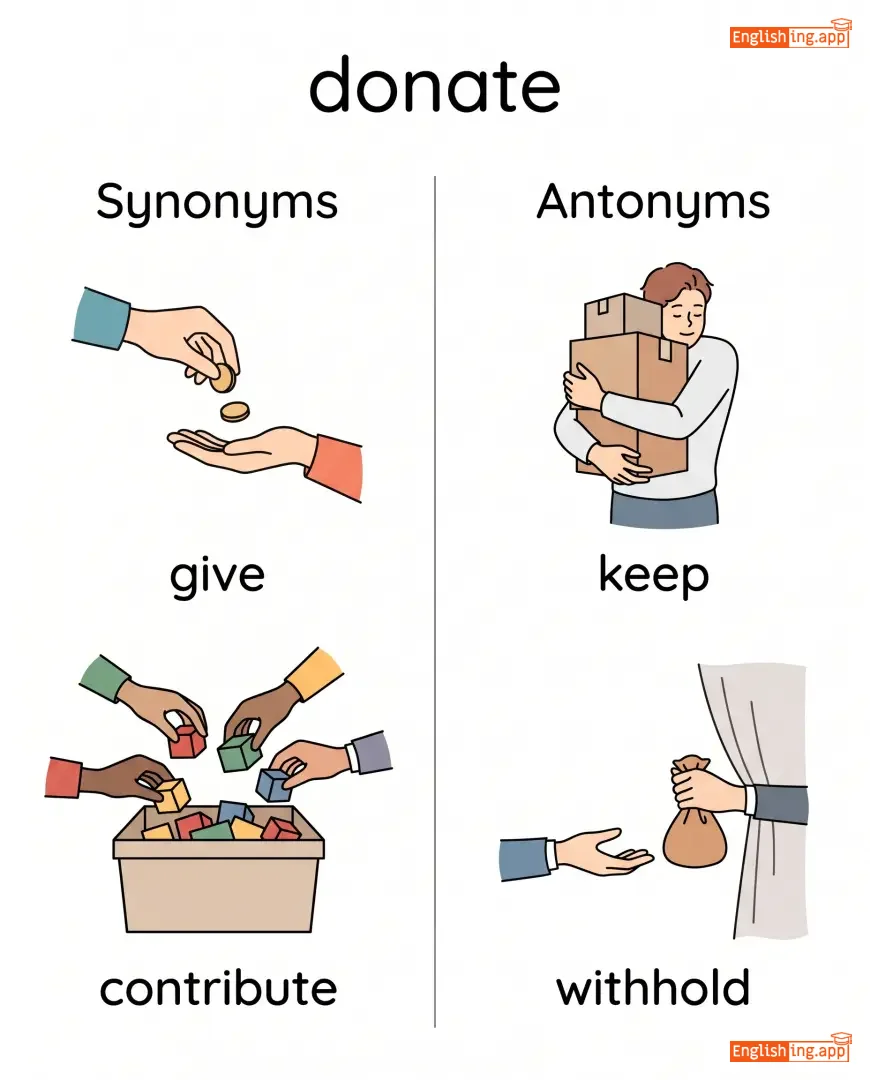
give, contribute, offer, bestow
••••••
|
keep, withhold, retain
••••••
|
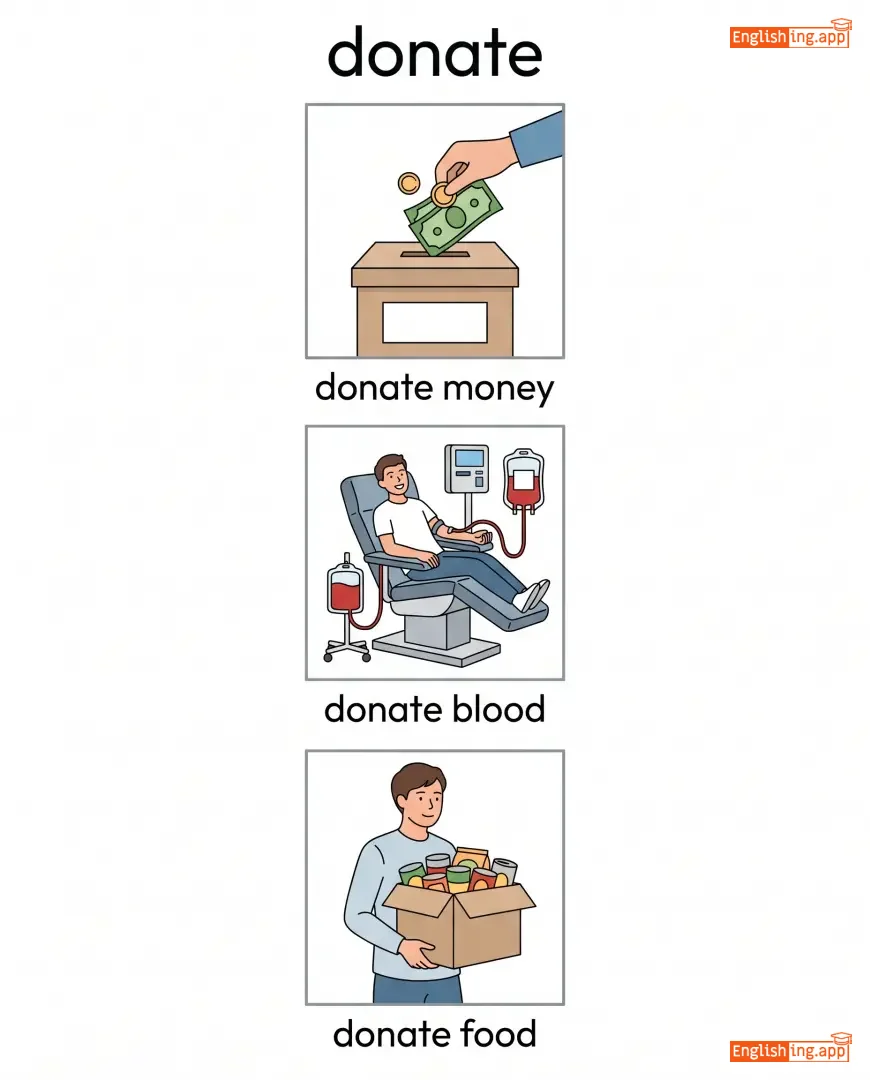
donate money, donate blood, donate food, donate clothes
••••••
|
Жертвовать = Жертва + Молоко 🎁 - Жертвует и помогает.
••••••
|
|
🎁
••••••
|
/dəʊˈneɪ.ʃən/
noun
(donéishon)
••••••
|
- •••••• |
пожертвование
pozhertvovanie
••••••
|
- •••••• | - •••••• | - •••••• | - •••••• |
something that is given to help a person or organization, often money
••••••
|
He made a generous donation to the local orphanage. |
Он сделал щедрое пожертвование в местный приют для сирот.
On sdelal shchedroye pozhertvovaniye v mestnyy priyut dlya sirot.
••••••
|
make a donation |
to give money or goods to help a cause
••••••
|
сделать пожертвование
sdelat' pozhertvovaniye
••••••
|
contribution, gift, offering, grant, endowment
••••••
|
withdrawal, taking
••••••
|
charity donation, blood donation, make donation, receive donation
••••••
|
Пожертвование означает давать — 'po' означает 'дать', поэтому donation означает пожертвование!
••••••
|
|
🩸
••••••
|
/ˈdoʊnər/
noun
(до́нёр)
••••••
|
- •••••• |
донор
donor
••••••
|
- •••••• | - •••••• | - •••••• | - •••••• |
A person who gives something, especially to a charity or cause.
••••••
|
The donor contributed generously to the hospital’s new wing. |
Донор щедро пожертвовал деньги на новое крыло больницы.
Donor shchedro pozhertvoval dengi na novoe krylo bol'nitsy.
••••••
|
blood donor |
A person who gives blood voluntarily for medical use.
••••••
|
донор крови
donor krovi
••••••
|
benefactor, contributor, patron, philanthropist, giver
••••••
|
recipient, donee
••••••
|
blood donor, organ donor, anonymous donor, generous donor
••••••
|
Донор - это тот, кто даёт, как в 'донор крови'.
••••••
|
|
🚪
••••••
|
/dɔːr/
noun
(дверь)
••••••
|
- •••••• |
дверь
dver
••••••
|
- •••••• | - •••••• | - •••••• | - •••••• |
A movable barrier that allows entry or exit to a building, room, or vehicle.
••••••
|
He knocked on the door before entering the house. |
Он постучал в дверь, прежде чем войти в дом.
On postuchal v dver, prezhde chem voyti v dom.
••••••
|
when one door closes, another opens |
New opportunities arise when one ends
••••••
|
Когда одна дверь закрывается, другая открывается
Kogda odna dver zakryvayetsya, drugaya otkryvayetsya
••••••
|
gate, entrance, portal, threshold
••••••
|
wall, barrier
••••••
|
open the door, close the door, lock the door, knock on the door
••••••
|
Дверь 🚪 — открой дверь, и новые возможности войдут!
••••••
|
|
🚪
••••••
|
/ˈdɔːrˌkiːpər/
noun
(доркипер)
••••••
|
- •••••• |
привратник
privratnik
••••••
|
- •••••• | - •••••• | - •••••• | - •••••• |
A person whose job is to guard or manage the entrance of a building or room.
••••••
|
The doorkeeper checked everyone’s passes before they entered the hall.
Доркипер проверил пропуска всех перед тем, как они вошли в зал.
••••••
|
Доркипер проверил пропуска всех перед тем, как они вошли в зал.
Dorkiper proveril propuska vsekh pered tem, kak oni voshli v zal
••••••
|
- •••••• | - •••••• | - •••••• |
porter, gatekeeper, usher, sentinel
••••••
|
intruder, trespasser
••••••
|
doorkeeper duties, doorkeeper role, doorkeeper station
••••••
|
Think 'привратник' = 'privratnik', literally 'gate guard'.
••••••
|
|
💊
••••••
|
/doʊs/
noun
(доз)
••••••
|
- •••••• |
доза
doza
••••••
|
- •••••• | - •••••• | - •••••• | - •••••• |
a measured amount of a medicine or drug taken at one time
••••••
|
The doctor prescribed one dose of the medicine every six hours.
Врач прописал одну дозу лекарства каждые шесть часов.
••••••
|
Врач прописал одну дозу лекарства каждые шесть часов.
Vrach propisal odnu dozu lekarstva kazhdye shest' chasov.
••••••
|
a dose of one's own medicine
доза собственной медицины
••••••
|
experiencing the same unpleasant treatment that one has given to others
••••••
|
доза собственной медицины
doza sobstvennoy meditsiny
••••••
|
portion, amount, quantity, measure, shot
••••••
|
overdose, underdose
••••••
|
high dose, low dose, single dose, daily dose, lethal dose
••••••
|
Помни, 'доза' - это точное количество, которое необходимо принять.
••••••
|
|
🔴
••••••
|
/dɒt/
noun
(дот)
••••••
|
- •••••• |
точка
tochka
••••••
|
- •••••• | - •••••• | - •••••• | - •••••• |
a small round mark or spot
••••••
|
She drew a red dot on the paper. |
Она нарисовала красную точку на бумаге.
Ona narisovala krasnuyu tochku na bumage.
••••••
|
connect the dots |
to understand the relationship between different facts
••••••
|
связывать точки
svyazyvat' tochki
••••••
|
spot, speck, point, mark, stain
••••••
|
blank, void
••••••
|
dot pattern, dot matrix, red dot, connect dots
••••••
|
Dot означает точка — как точка, которую вы видите в каждом домене Google.com!
••••••
|
|
2️⃣
••••••
|
/ˈdʌbəl/
verb
(dʌbl)
••••••
|
- •••••• |
удваивать
udvaivat
••••••
|
doubled
dʌbld
••••••
|
doubled
dʌbld
••••••
|
doubles
dʌblz
••••••
|
doubling
dʌblɪŋ
••••••
|
to make twice as much in size, number, or amount
••••••
|
The company hopes to double its profits this year.
Компания надеется удвоить свою прибыль в этом году.
••••••
|
Компания надеется удвоить свою прибыль в этом году.
Kompaniya nadeyetsya udvoit' svoyu pribyl' v etom godu.
••••••
|
double-edged sword
обоюдоострый меч
••••••
|
something that has both positive and negative effects
••••••
|
обоюдоострый меч
oboyudoostryy mech
••••••
|
increase, multiply, expand, amplify, boost
••••••
|
halve, reduce, decrease
••••••
|
double the amount, double the size, double digits, double check
••••••
|
Double означает удваивать, как когда ты удваиваешь порцию еды для еще большего удовольствия.
••••••
|
|
❓
••••••
|
/daʊt/
noun/verb
(daut)
••••••
|

|
сомнение
somnenie
••••••
|
doubted
dauted
••••••
|
doubted
dauted
••••••
|
doubts
dauts
••••••
|
doubting
douting
••••••
|
a feeling of uncertainty or lack of conviction; to be uncertain about something
••••••
|
She had doubts about the success of the plan.
Она сомневалась в успехе плана.
••••••
|
Она сомневалась в успехе плана.
Ona somnevalas' v uspekhe plana.
••••••
|
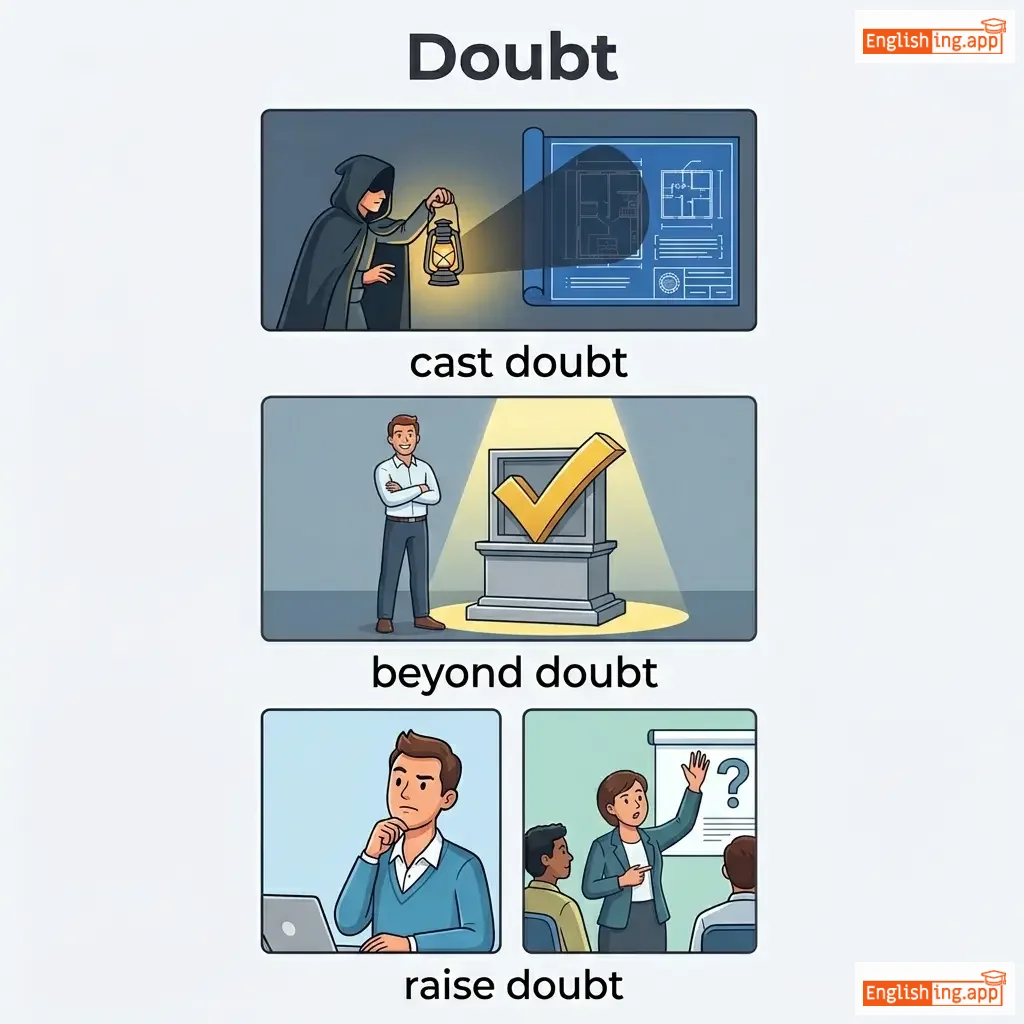
beyond doubt
вне всякого сомнения
••••••
|
certain; without question
••••••
|
вне всякого сомнения
vne vsyakogo somneniya
••••••
|
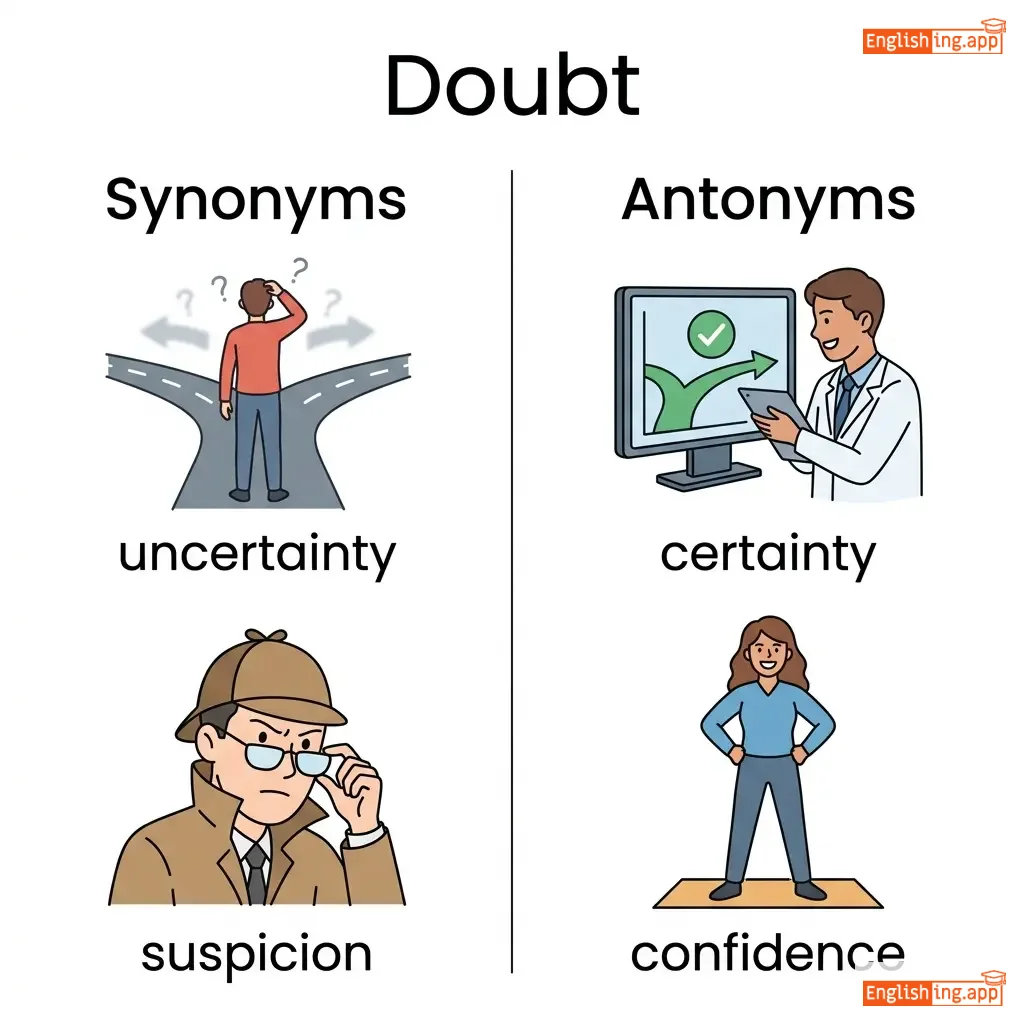
uncertainty, suspicion, disbelief, hesitation
••••••
|
certainty, confidence, assurance
••••••
|
cast doubt, beyond doubt, raise doubt, doubt remains
••••••
|
Doubt по-русски – сомнение, и всё сомнительно!
••••••
|
|
⬇️
••••••
|
/daʊn/
adverb
(даун)
••••••
|
- •••••• |
вниз
vnyz
••••••
|
- •••••• | - •••••• | - •••••• | - •••••• |
from a higher to a lower position
••••••
|
He walked down the stairs slowly. |
Он медленно спустился по лестнице.
On medlenno spustilsya po lestnitse.
••••••
|
down to earth |
practical and realistic
••••••
|
практичный и реалистичный
praktichnyy i realistichnyy
••••••
|
below, downward, under, beneath
••••••
|
up, above, over
••••••
|
down the road, down the line, down the street
••••••
|
Down значит вниз, все идет вниз!
••••••
|
|
⬇️
••••••
|
/ˌdaʊnˈsteəz/
adverb
(даунстейрз)
••••••
|
- •••••• |
вниз
vnyz
••••••
|
- •••••• | - •••••• | - •••••• | - •••••• |
on or to a lower floor of a building
••••••
|
Please go downstairs and wait in the lobby. |
Пожалуйста, спуститесь вниз и подождите в лобби.
Pozhaluysta, spustites' vnyz i podozhdite v lobby.
••••••
|
- •••••• | - •••••• | - •••••• |
below, underneath, on the lower floor
••••••
|
upstairs, above, on the upper floor
••••••
|
go downstairs, come downstairs, live downstairs
••••••
|
Downstairs – это значит идти вниз, как в подвал.
••••••
|
|
🏙️
••••••
|
/ˈdaʊnˌtaʊn/
noun
(даунтаун)
••••••
|
- •••••• |
центр города
tsentr goroda
••••••
|
- •••••• | - •••••• | - •••••• | - •••••• |
the central part of a city
••••••
|
They spent the afternoon shopping downtown. |
Они провели послеобеденное время, покупая в центре города.
Oni proveli posleobedennoye vremya, pokupaya v tsentre goroda.
••••••
|
- •••••• | - •••••• | - •••••• |
city center, metropolis, central district, urban area
••••••
|
suburb, countryside
••••••
|
downtown area, downtown district, downtown core, downtown business
••••••
|
Downtown — это центр города, где происходит вся жизнь!
••••••
|
|
🥚
••••••
|
/ˈdʌzən/
noun
(дазен)
••••••
|
- •••••• |
дюжина
düzhina
••••••
|
- •••••• | - •••••• | - •••••• | - •••••• |
a group of twelve
••••••
|
She bought a dozen eggs from the market. |
Она купила дюжину яиц на рынке.
Ona kupila dyuzhinu yayts na rynke.
••••••
|
cheaper by the dozen |
items bought in bulk are often cheaper
••••••
|
дешевле по дюжине
deshevle po dyuzhine
••••••
|
twelve, set, group, batch
••••••
|
single, one
••••••
|
a dozen eggs, dozens of people, a dozen times
••••••
|
Дюжина = 12, когда покупаешь 12 сразу, дешевле!
••••••
|
|
📝
••••••
|
/dræft/
noun/verb
(драфт)
••••••
|
- •••••• |
черновик
chernovik
••••••
|
drafted
драфтед
••••••
|
drafted
драфтед
••••••
|
drafts
драфтс
••••••
|
drafting
драфтинг
••••••
|
A preliminary version of a piece of writing; to prepare a preliminary version of a document.
••••••
|
She finished the first draft of her novel.
Она закончила первый черновик своего романа.
••••••
|
Она закончила первый черновик своего романа.
Ona zakonchila pervyy chernovik svoego romana.
••••••
|
rough draft
черновик
••••••
|
An early, unfinished version of a piece of writing.
••••••
|
черновик
chernovik
••••••
|
outline, sketch, plan, blueprint, design
••••••
|
final, complete
••••••
|
draft proposal, draft agreement, first draft, draft law
••••••
|
Черновик в русском это draft, тот, что пишется первым.
••••••
|
|
🛷
••••••
|
/dræɡ/
verb
(драг)
••••••
|
|
тащить
tashchit
••••••
|
dragged
драгед
••••••
|
dragged
драгед
••••••
|
drags
драгс
••••••
|
dragging
драггинг
••••••
|
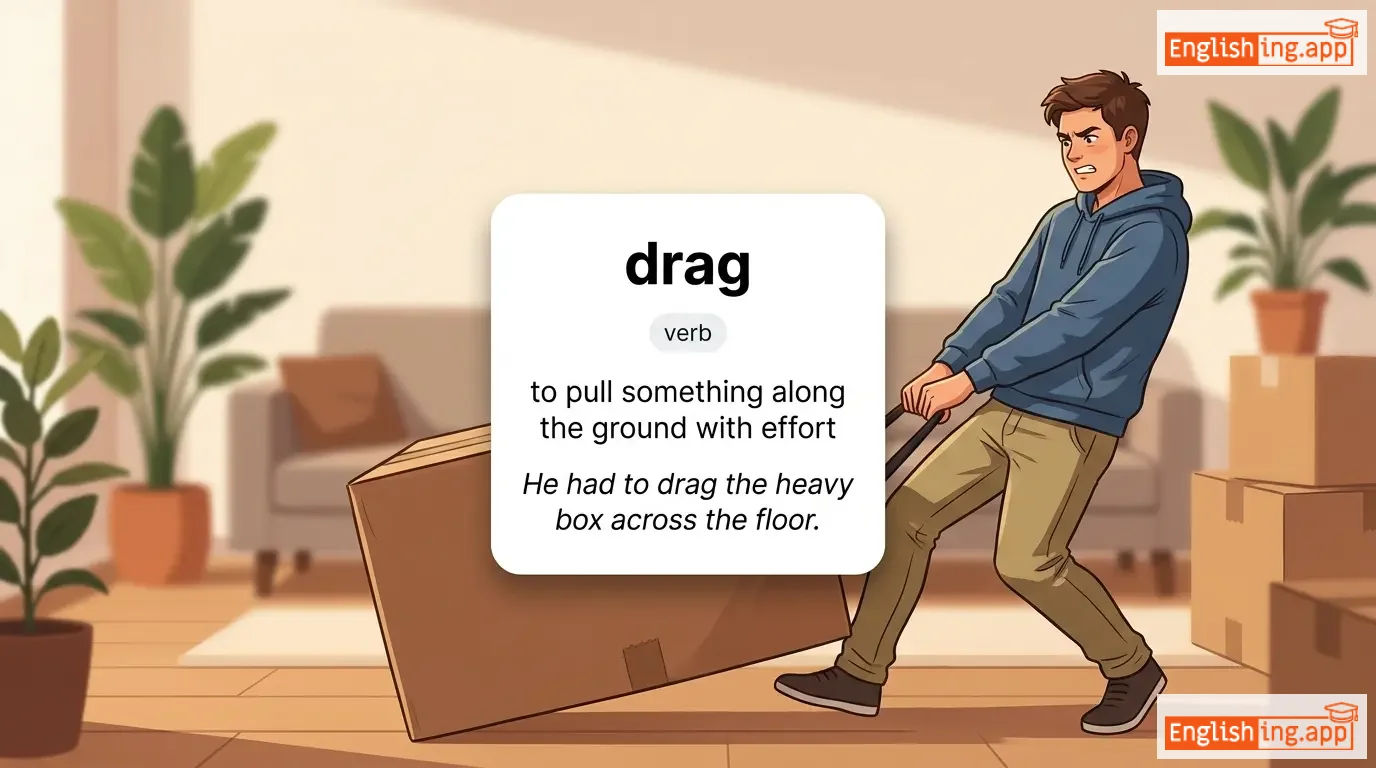
to pull something along the ground with effort
••••••
|
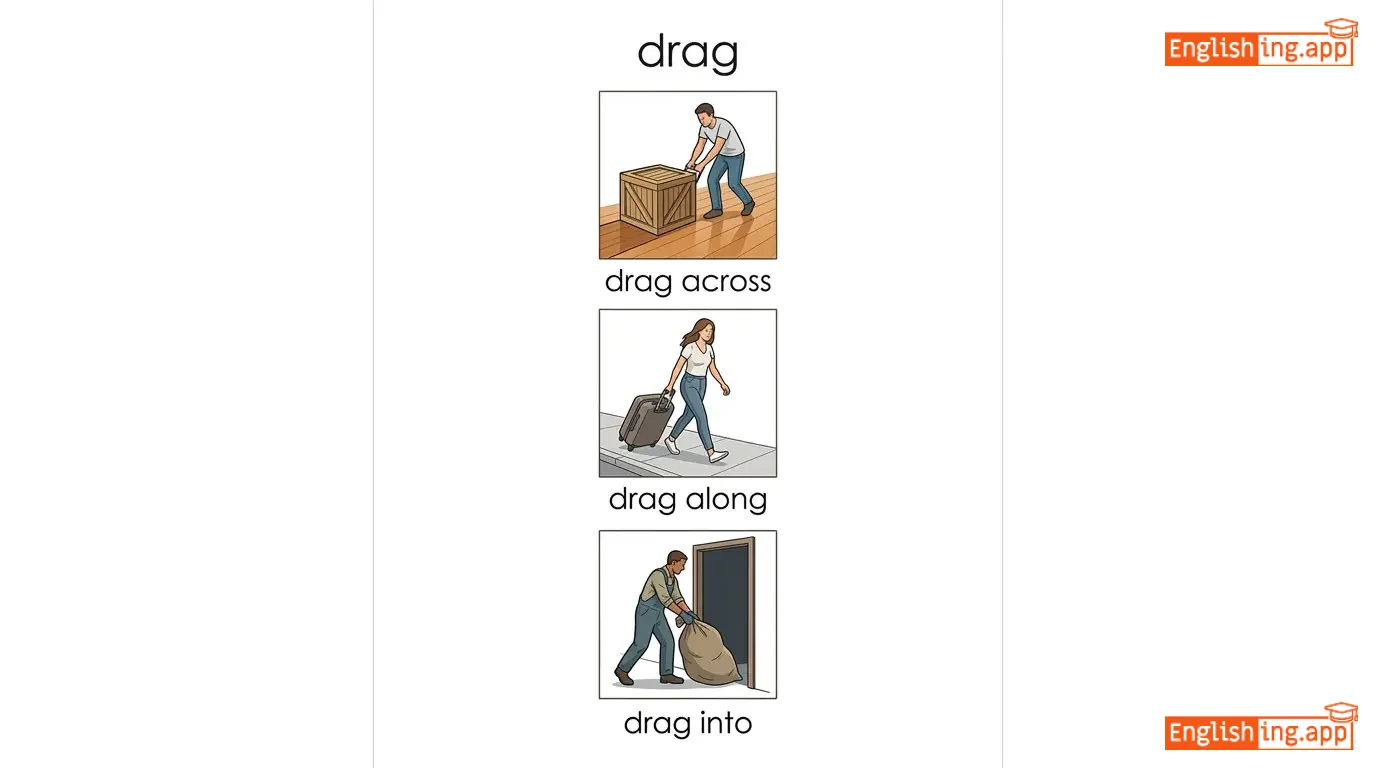
He had to drag the heavy box across the floor.
Ему пришлось тащить тяжёлую коробку по полу.
••••••
|
Ему пришлось тащить тяжёлую коробку по полу.
Yemu prishlos' tashchit' tyazholuyu korobku po polu.
••••••
|
drag one's feet
тащить ноги
••••••
|
to delay doing something deliberately
••••••
|
тянуть время
tashchit' vremya
••••••
|
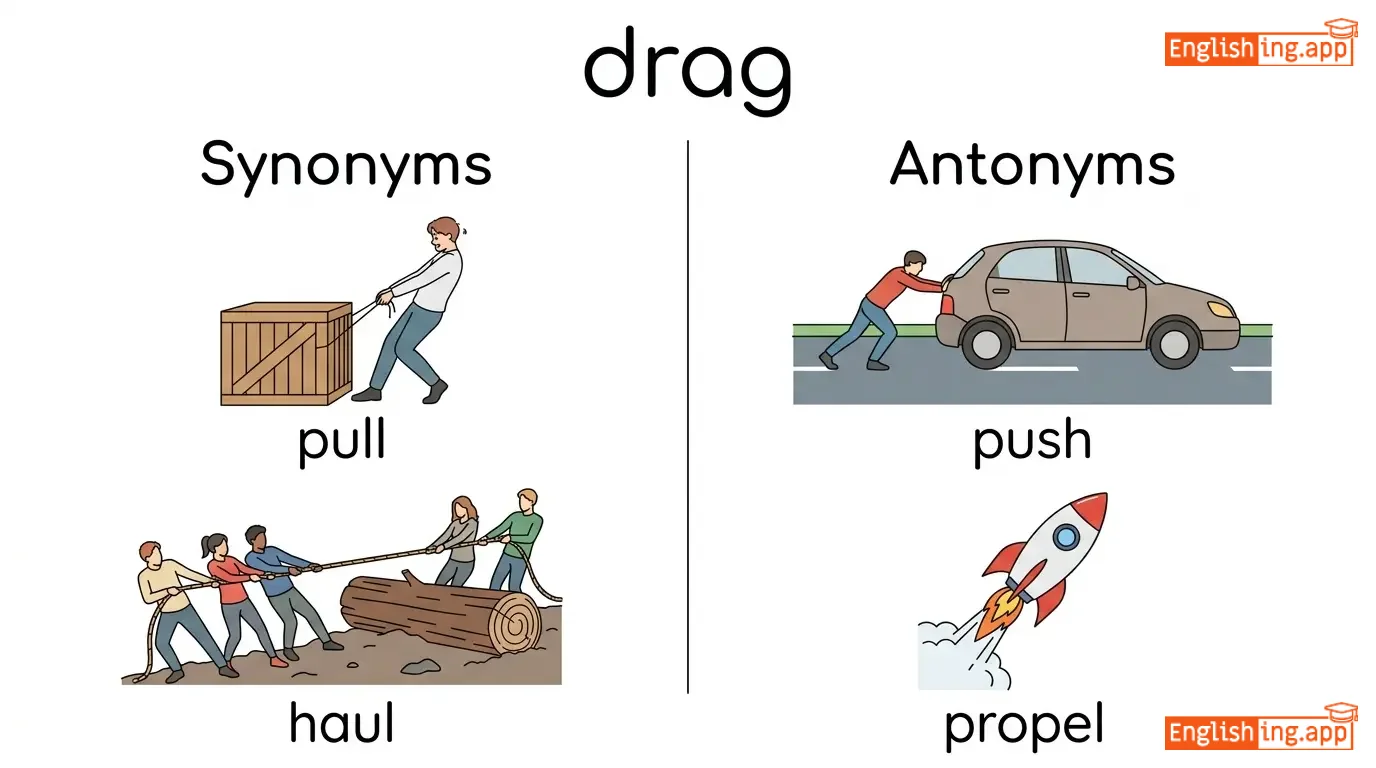
pull, haul, tow, tug
••••••
|
push, propel
••••••
|
drag across, drag along, drag into, drag down
••••••
|
Drag означает тащить, и если тащишь, это займет время!
••••••
|
|
🚰
••••••
|
/dreɪn/
verb
••••••
|
- •••••• | - •••••• |
drained
••••••
|
drained
••••••
|
drains
••••••
|
draining
••••••
|
to cause liquid to flow away from something; to remove liquid
••••••
|
He drained the pasta before adding the sauce. |
- •••••• |
drain the life out of |
to make someone or something lose energy or enthusiasm
••••••
|
- •••••• |
empty, remove, exhaust, deplete, discharge
••••••
|
fill, flood, retain
••••••
|
drain water, drain pipe, drain energy, drain battery
••••••
|
No •••••• |
|
🎭
••••••
|
/ˈdrɑː.mə/
noun
(драма)
••••••
|
- •••••• |
драма
drama
••••••
|
- •••••• | - •••••• | - •••••• | - •••••• |
a play for theater, radio, or television, or an exciting or emotional situation
••••••
|
She loves watching historical drama series. |
Она любит смотреть исторические драмеди-сериалы.
Ona lyubit smotret' istoricheskiye dramedy-serialy.
••••••
|
make a drama out of nothing |
to exaggerate a situation unnecessarily
••••••
|
делать драму из ничего
delat' dramu iz nichego
••••••
|
play, performance, act, show
••••••
|
comedy, farce
••••••
|
drama series, school drama, intense drama, family drama
••••••
|
Драма на русском значит тоже самое, что и в английском – это эмоциональное событие.
••••••
|
|
🎭
••••••
|
/drəˈmætɪk/
adjective
(драматик)
••••••
|
- •••••• |
драматичный
dramatichny
••••••
|
- •••••• | - •••••• | - •••••• | - •••••• |
sudden and striking; relating to drama or theater
••••••
|
The play ended with a dramatic twist. |
Пьеса закончилась драматическим поворотом.
P'yesa zakonchilas' dramaticheskim povorotom.
••••••
|
dramatic change |
a sudden and significant alteration
••••••
|
драматическое изменение
dramaticheskoye izmeneniye
••••••
|
theatrical, emotional, intense, striking, sensational
••••••
|
ordinary, calm, unremarkable
••••••
|
dramatic effect, dramatic improvement, dramatic increase, dramatic change
••••••
|
Драма — это театр, поэтому драматичное связано с театром.
••••••
|
|
📈
••••••
|
/drəˈmætɪkli/
adverb
(драматикли)
••••••
|
- •••••• |
драматически
dramaticheski
••••••
|
- •••••• | - •••••• | - •••••• | - •••••• |
in a sudden, striking, or exaggerated way
••••••
|
Sales increased dramatically after the campaign. |
Продажи значительно увеличились после кампании.
Prodazhi znachitel'no uvelichilis' posle kampanii.
••••••
|
change dramatically |
to alter in a sudden and significant way
••••••
|
измениться драматически
izmenit'sya dramaticheski
••••••
|
suddenly, sharply, significantly, strikingly
••••••
|
slightly, gradually
••••••
|
increase dramatically, change dramatically, drop dramatically, improve dramatically
••••••
|
Драматически – это как большие перемены, как в драме.
••••••
|
|
✏️
••••••
|
/drɔː/
verb
(дрɔ)
••••••
|
- •••••• |
рисовать / тянуть
risovat' / tyanut'
••••••
|
drew
дру
••••••
|
drawn
дрон
••••••
|
draws
дроз
••••••
|
drawing
дроуинг
••••••
|
to produce a picture by making lines and marks on paper; to pull or move something in a particular direction
••••••
|
The child loves to draw pictures of animals.
The child loves to draw pictures of animals.
••••••
|
Ребенок любит рисовать картинки животных.
Rebyonok lyubit risovat' kartinki zhivotnykh.
••••••
|
draw attention
draw attention
••••••
|
To attract someone's notice.
••••••
|
привлечь внимание
privlech' vnimanie
••••••
|
sketch, illustrate, depict, pull, attract
••••••
|
erase, repel, push
••••••
|
draw attention, draw a picture, draw a line, draw a conclusion
••••••
|
Рисовать — значит привлекать внимание, но карандашом.
••••••
|
|
✏️
••••••
|
/ˈdrɔːɪŋ/
noun
(хэппинесс)
••••••
|
- •••••• |
счастье
schast'ye
••••••
|
- •••••• | - •••••• | - •••••• | - •••••• |
a picture or diagram made with a pencil, pen, or crayons rather than paint
••••••
|
She showed me a drawing of her house. |
Она не могла скрыть своего счастья, когда получила награду.
Ona ne mogla skryt' svoego schast'ya, kogda poluchila nagradu.
••••••
|
drawing attention |
attracting notice or interest
••••••
|
поиск счастья
poisk schast'ya
••••••
|
sketch, illustration, diagram, doodle
••••••
|
erasing, deletion
••••••
|
make a drawing, pencil drawing, line drawing, drawing skills
••••••
|
счастье = счастливый + состояние
••••••
|
|
💭
••••••
|
/driːm/
noun/verb
(дрим)
••••••
|


|
мечта
mechta
••••••
|
dreamed
дримд
••••••
|
dreamed
дримд
••••••
|
dreams
дримс
••••••
|
dreaming
дриминг
••••••
|
a series of thoughts, images, or emotions occurring during sleep; a cherished aspiration or goal
••••••
|
She dreamed of becoming a doctor.
Она мечтала стать врачом.
••••••
|
Она мечтала стать врачом.
Ona mechtala stat' vrachom.
••••••
|
living the dream
Жить как в сказке
••••••
|
enjoying life as if in an ideal situation
••••••
|
Жить как в сказке
Zhit' kak v skazke
••••••
|
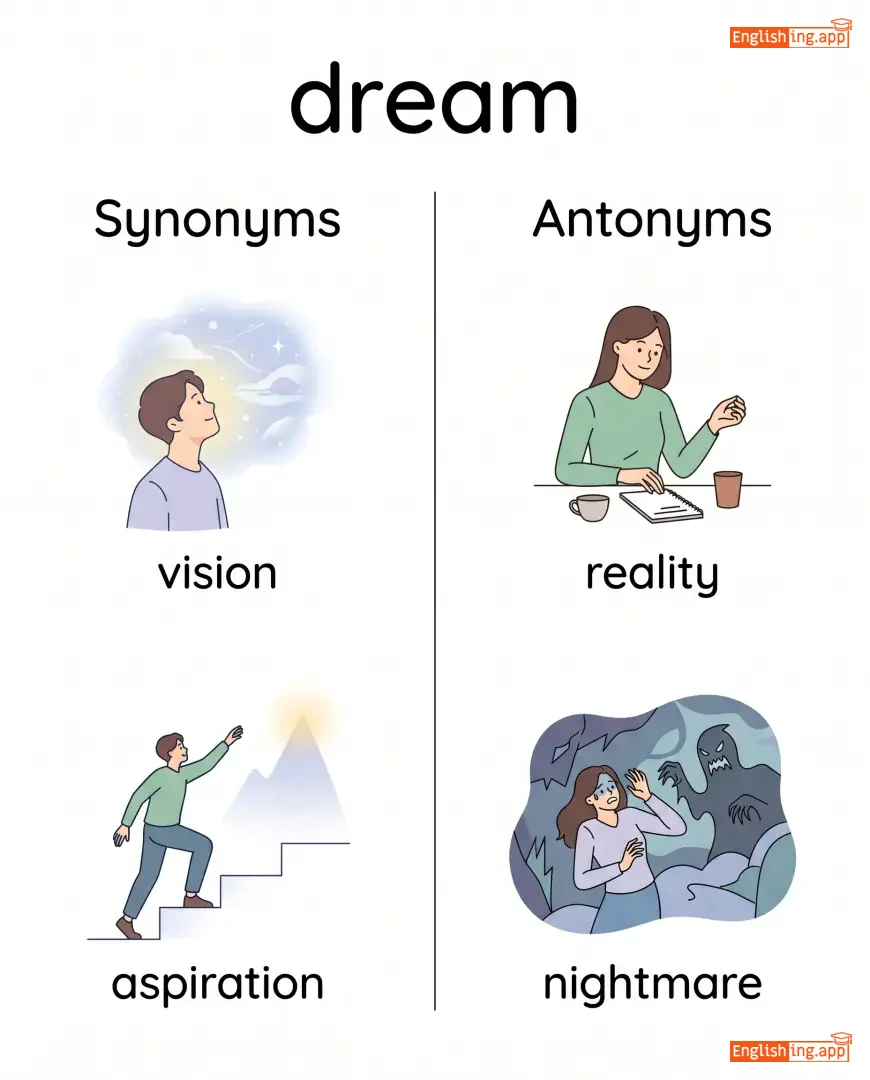
vision, aspiration, goal, fantasy
••••••
|
reality, nightmare
••••••
|
have a dream, dream big, chase a dream, dream come true
••••••
|
Мечта - как самый идеальный сон.
••••••
|
|
👗
••••••
|
/drɛs/
noun/verb
(khappiness)
••••••
|
- •••••• |
счастье
schastye
••••••
|
dressed
••••••
|
dressed
••••••
|
dresses
••••••
|
dressing
••••••
|
a one-piece garment for women or girls; to put on clothes
••••••
|
She wore a beautiful red dress to the party. |
Она не смогла скрыть свое счастье, когда получила награду.
Ona ne smogla skryt' svoe schast'ye, kogda poluchila nagradu.
••••••
|
dressed to kill |
wearing clothes that are intended to impress others
••••••
|
поиск счастья
poisk schast'ya
••••••
|
outfit, attire, garment, clothing
••••••
|
undress, nakedness
••••••
|
wear a dress, long dress, summer dress, dress code
••••••
|
Счастье - это когда ты счастлив, и когда ты улыбаешься.
••••••
|
|
👗
••••••
|
/ˈdrɛsˌmeɪkər/
noun
(дрессмейкер)
••••••
|
- •••••• |
портниха
portnikha
••••••
|
- •••••• | - •••••• | - •••••• | - •••••• |
A person who makes or alters women's clothing professionally.
••••••
|
The dressmaker crafted a beautiful gown for the bride.
Дрессмейкер создал красивое платье для невесты.
••••••
|
Портниха создала красивое платье для невесты.
Portnikha sozdala krasivoe plat'e dlya nevesty
••••••
|
- •••••• | - •••••• | - •••••• |
seamstress, tailor, couturier, garment maker
••••••
|
customer, client
••••••
|
skilled dressmaker, professional dressmaker, custom dressmaker, bridal dressmaker
••••••
|
Dress + портниха = pro швея
••••••
|
|
⛵
••••••
|
/drɪft/
verb
(дрифт)
••••••
|
- •••••• |
дрейф
dreif
••••••
|
drifted
дрифтовал
••••••
|
drifted
дрифтовал
••••••
|
drifts
дрифтует
••••••
|
drifting
дрифтовать
••••••
|
to move slowly, especially by air or water currents
••••••
|
The boat began to drift away from the shore.
Лодка начала отрываться от берега.
••••••
|
Лодка начала отрываться от берега.
Lodka nachala otryvat'sya ot berega.
••••••
|
drift apart
отдаляться
••••••
|
to gradually become distant or less friendly
••••••
|
отдаляться
otdalat'sya
••••••
|
float, glide, wander, meander, coast
••••••
|
anchor, stay, remain
••••••
|
drift away, drift apart, drift off, drift slowly
••••••
|
Дрифт — как лодка, которая медленно уходит в море.
••••••
|
|
🥤
••••••
|
/drɪŋk/
verb, noun
(дрэ́нк)
••••••
|
|
пить / напиток
pit' / napitok
••••••
|
drank
дрэ́нк
••••••
|
drunk
дранк
••••••
|
drinks
дрэ́нкз
••••••
|
drinking
дрэ́нкинг
••••••
|
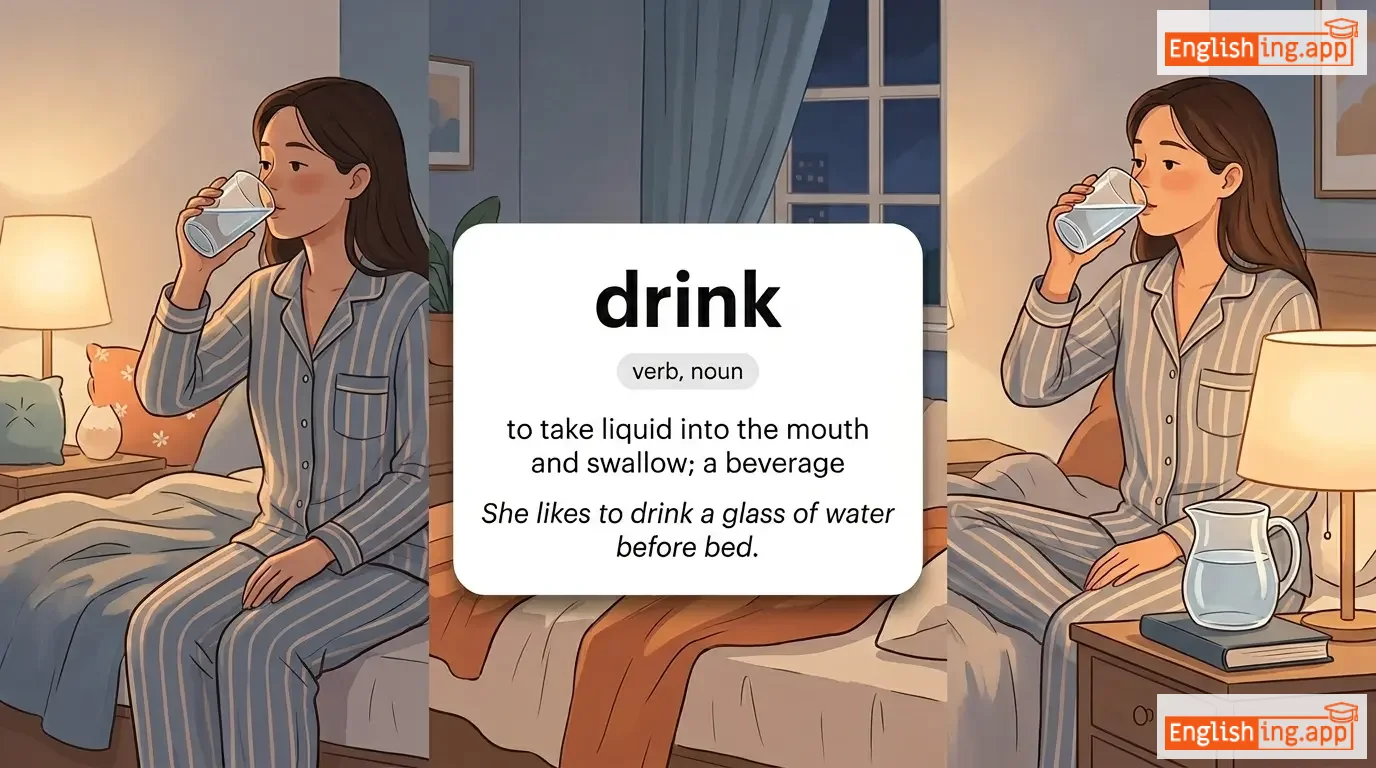
to take liquid into the mouth and swallow; a beverage
••••••
|
She likes to drink a glass of water before bed.
Ей нравится пить стакан воды перед сном.
••••••
|
Ей нравится пить стакан воды перед сном.
Ey nravitsya pit' stakan vody pered snom.
••••••
|
drink like a fish
пить как рыба
••••••
|
to drink a lot of alcohol
••••••
|
пить как рыба
pit' kak ryba
••••••
|
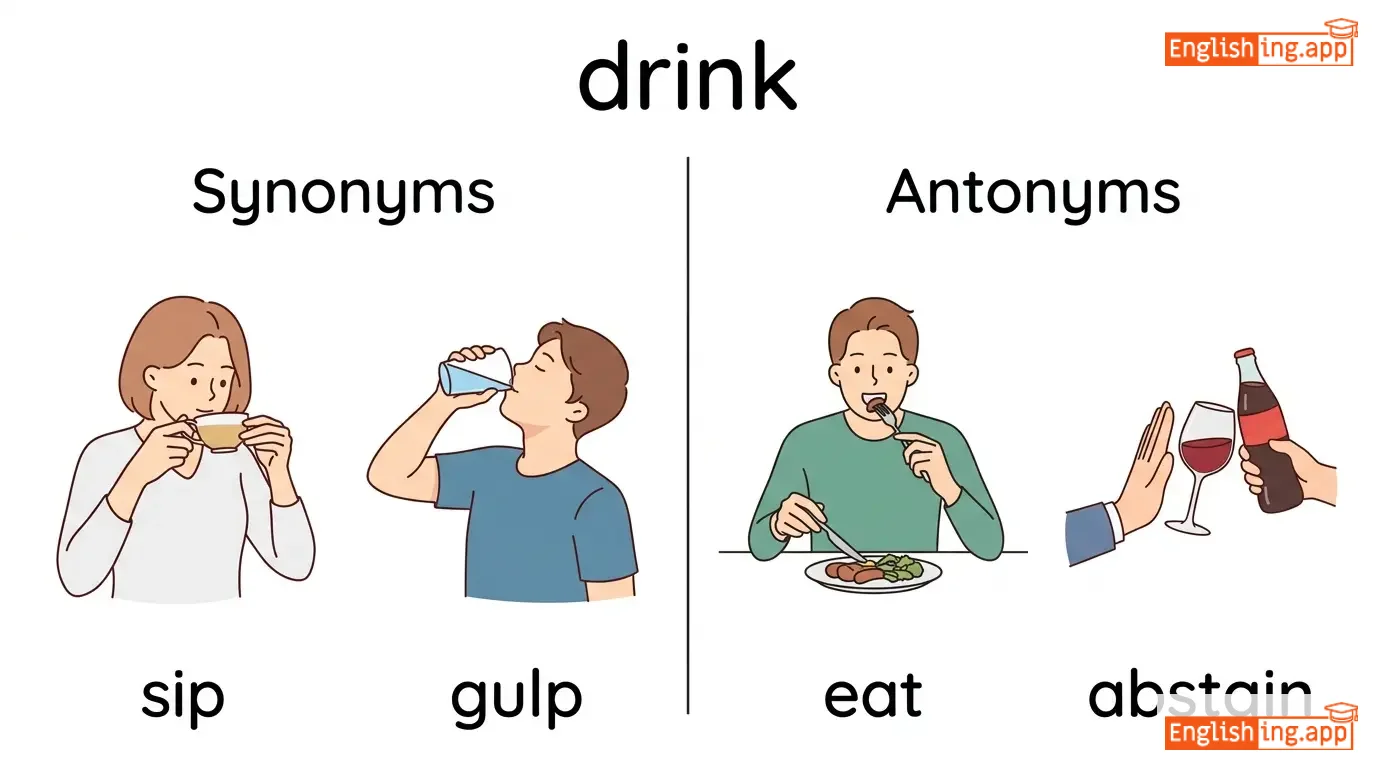
sip, gulp, swallow, beverage, refreshment
••••••
|
eat, abstain
••••••
|
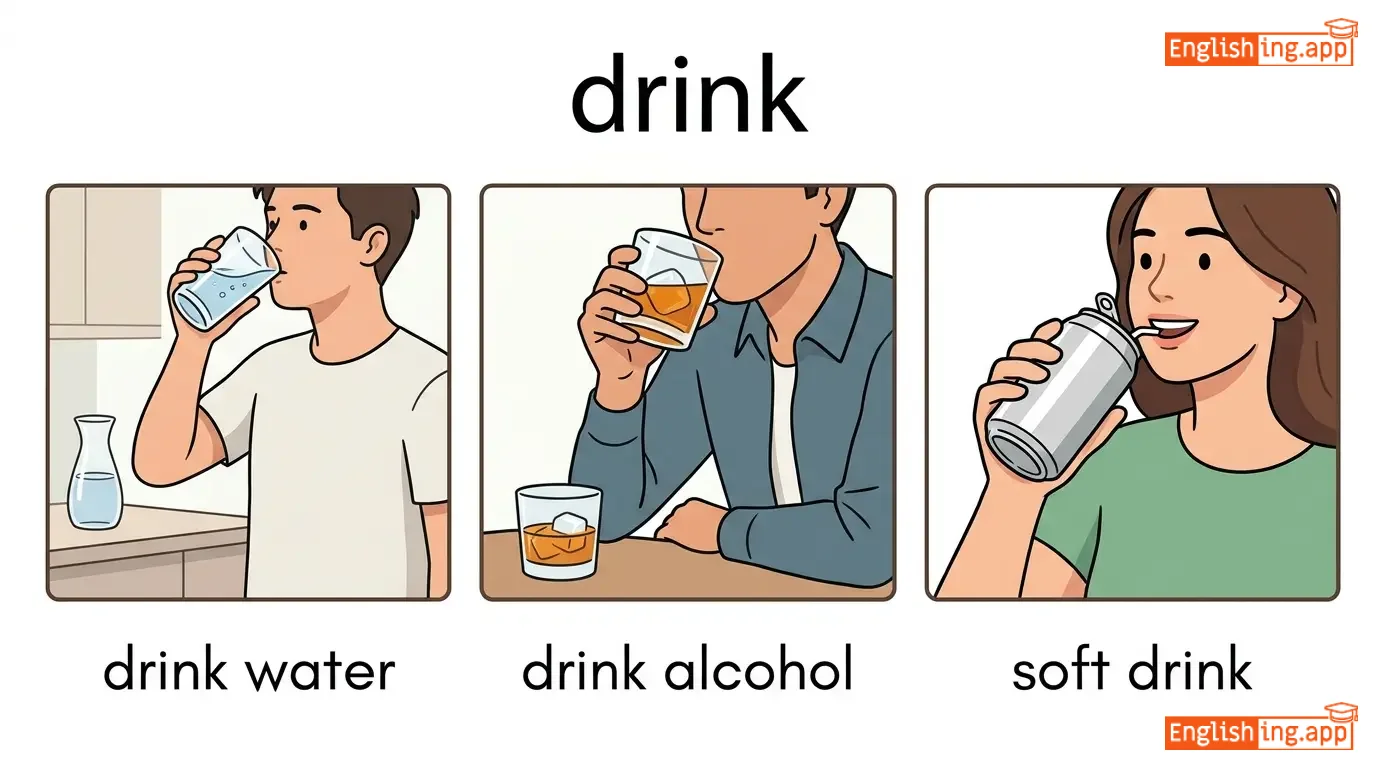
drink water, drink alcohol, soft drink, energy drink
••••••
|
Пить значит брать жидкость в рот, как когда мы пьем напитки.
••••••
|
|
🚗
••••••
|
/draɪv/
verb, noun
(драйв)
••••••
|
|
водить
vodit
••••••
|
drove
дров
••••••
|
driven
дривен
••••••
|
drives
драйвс
••••••
|
driving
драйвинг
••••••
|
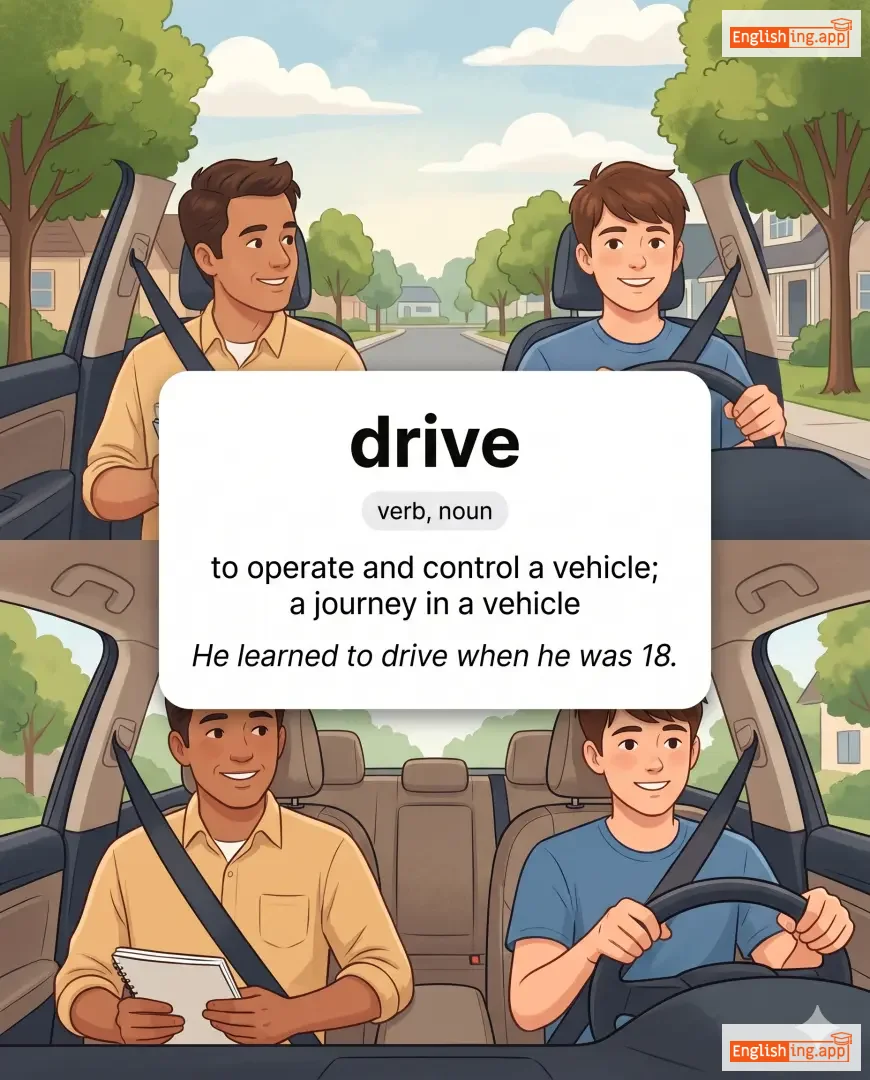
to operate and control a vehicle; a journey in a vehicle
••••••
|
He learned to drive when he was 18.
Он научился водить машину, когда ему было 18 лет.
••••••
|
Он научился водить машину, когда ему было 18 лет.
On nauchilsya vodit mashinu, kogda emu bylo 18 let.
••••••
|
drive someone crazy
свести кого-то с ума
••••••
|
to annoy or irritate someone a lot
••••••
|
свести кого-то с ума
svezti kogo-to s uma
••••••
|
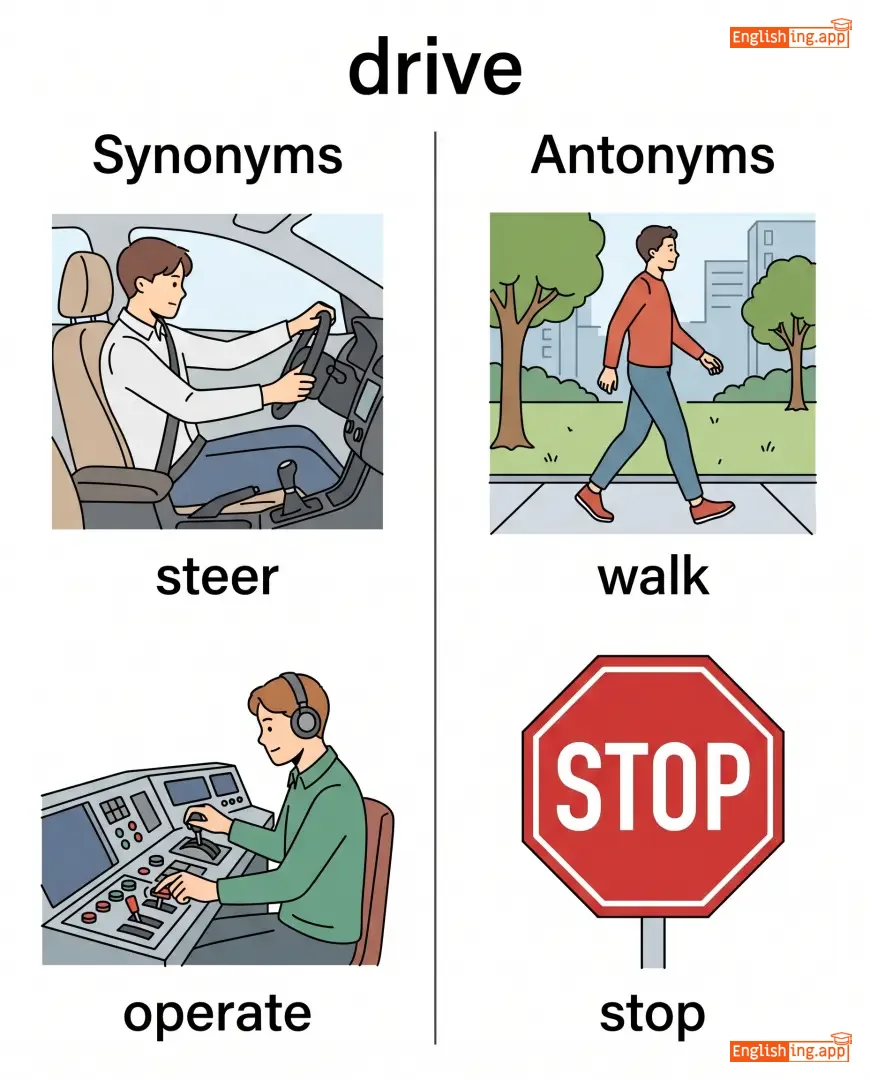
steer, operate, ride, control, propel
••••••
|
walk, stop
••••••
|
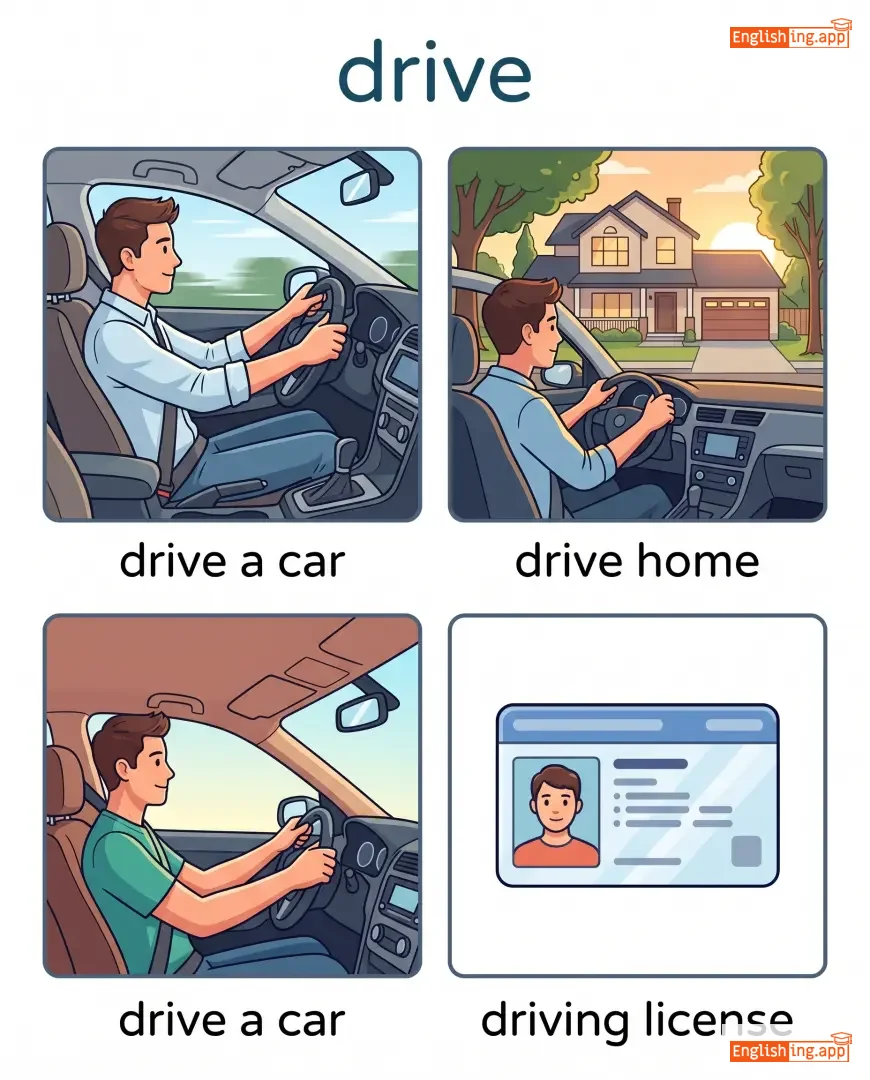
drive a car, drive home, driving license, drive safely
••••••
|
Drive означает водить, как в машине, которая ведет вас к цели.
••••••
|
|
🚗
••••••
|
/ˈdraɪ.vər/
noun
(ˈdrɪvər)
••••••
|
- •••••• |
водитель
voditel
••••••
|
- •••••• | - •••••• | - •••••• | - •••••• |
a person who operates a motor vehicle
••••••
|
The taxi driver knew all the shortcuts through the busy city. |
Таксист знал все короткие пути через шумный город.
Taksist znal vse korotkie puti cherez shumyy gorod.
••••••
|
- •••••• | - •••••• | - •••••• |
chauffeur, operator, motorist, pilot
••••••
|
passenger, pedestrian, walker
••••••
|
taxi driver, bus driver, truck driver, professional driver, experienced driver
••••••
|
Водитель такси знает все короткие пути по городу.
••••••
|
|
💧
••••••
|
/drɒp/
verb, noun
(дроп)
••••••
|
- •••••• |
уронить / капля
uronit / kaplya
••••••
|
dropped
дропнутый
••••••
|
dropped
дропнутый
••••••
|
drops
дропс
••••••
|
dropping
дроппинг
••••••
|
to let something fall; a small quantity of liquid
••••••
|
Be careful not to drop your phone.
Будь осторожен, чтобы не уронить свой телефон.
••••••
|
Будь осторожен, чтобы не уронить свой телефон.
Bud' ostorozhen, chtoby ne uronit svoi telefon.
••••••
|
drop the ball
ронять мяч
••••••
|
to make a mistake or fail to do something
••••••
|
сделать ошибку
sdelat' oshibku
••••••
|
fall, release, decline, drip, descend
••••••
|
lift, raise, pick up
••••••
|
drop out, drop by, drop off, raindrop
••••••
|
Drop означает уронить, как капля воды = уронить воду.
••••••
|
|
🌵
••••••
|
/draʊt/
noun
(draut)
••••••
|
|
засуха
zasukha
••••••
|
- •••••• | - •••••• | - •••••• | - •••••• |
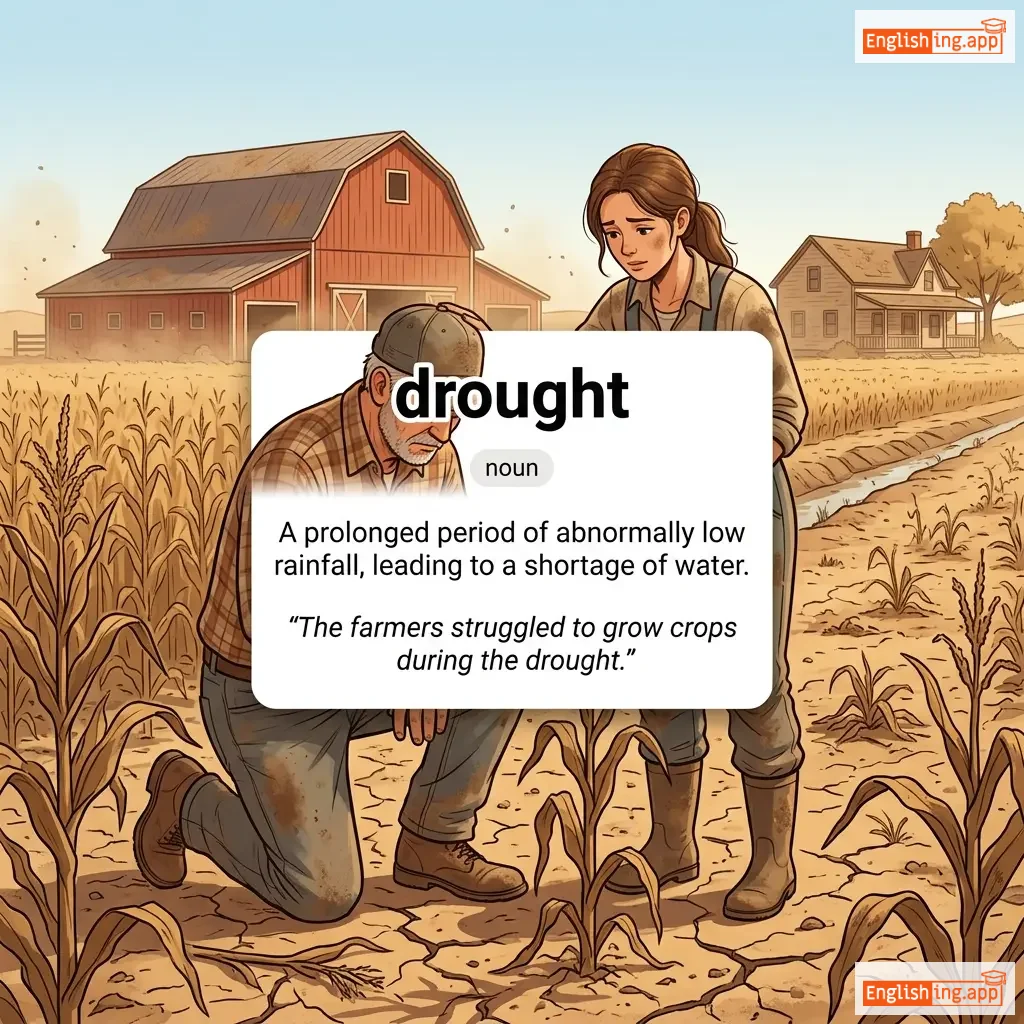
A prolonged period of abnormally low rainfall, leading to a shortage of water.
••••••
|
The farmers struggled to grow crops during the drought. |
Фермеры испытывали трудности с выращиванием урожая в условиях засухи.
Fermery ispytyvali trudnosti s vyrashchivaniem urozhaia v usloviiakh zasukhi.
••••••
|
in a drought |
Experiencing a lack of something, often used metaphorically.
••••••
|
во время засухи
vo vremya zasukhi
••••••
|
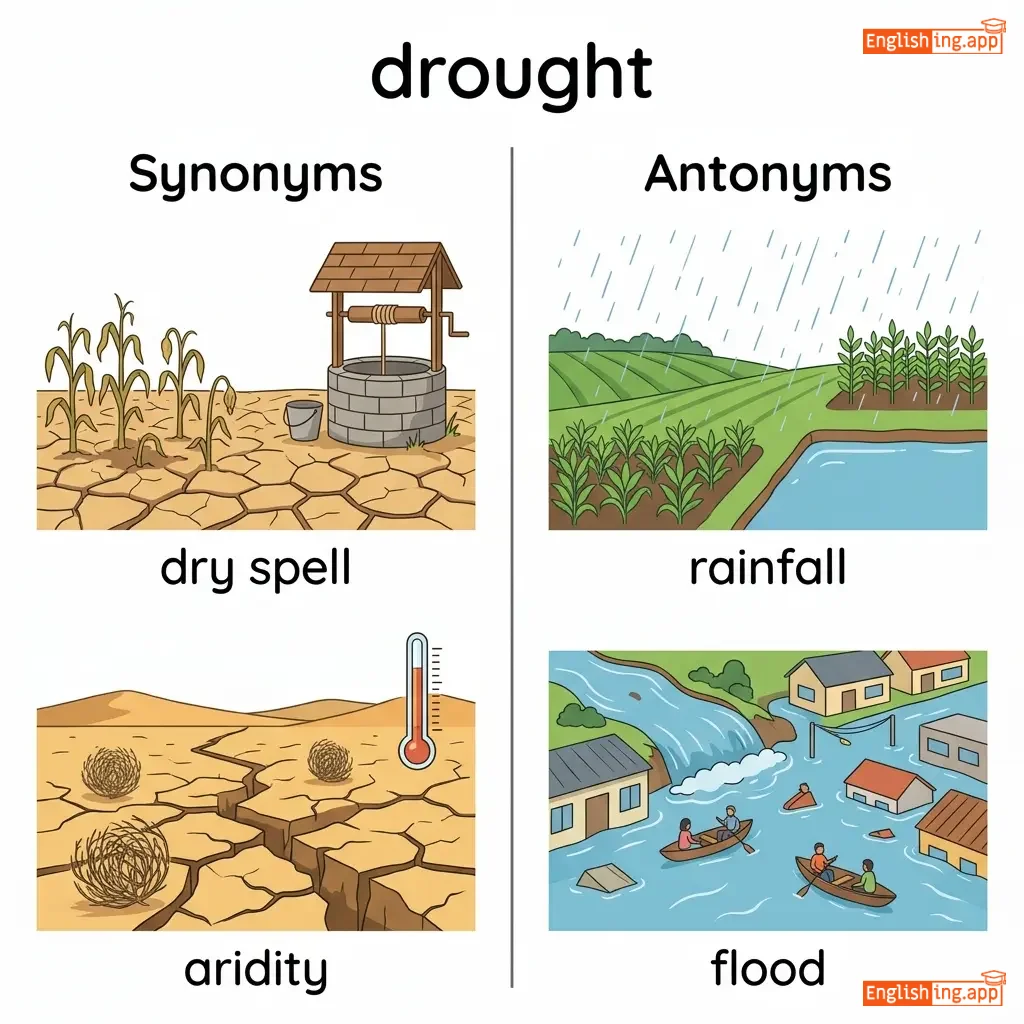
dry spell, aridity, lack of rain, scarcity, shortage
••••••
|
rainfall, flood, abundance
••••••
|
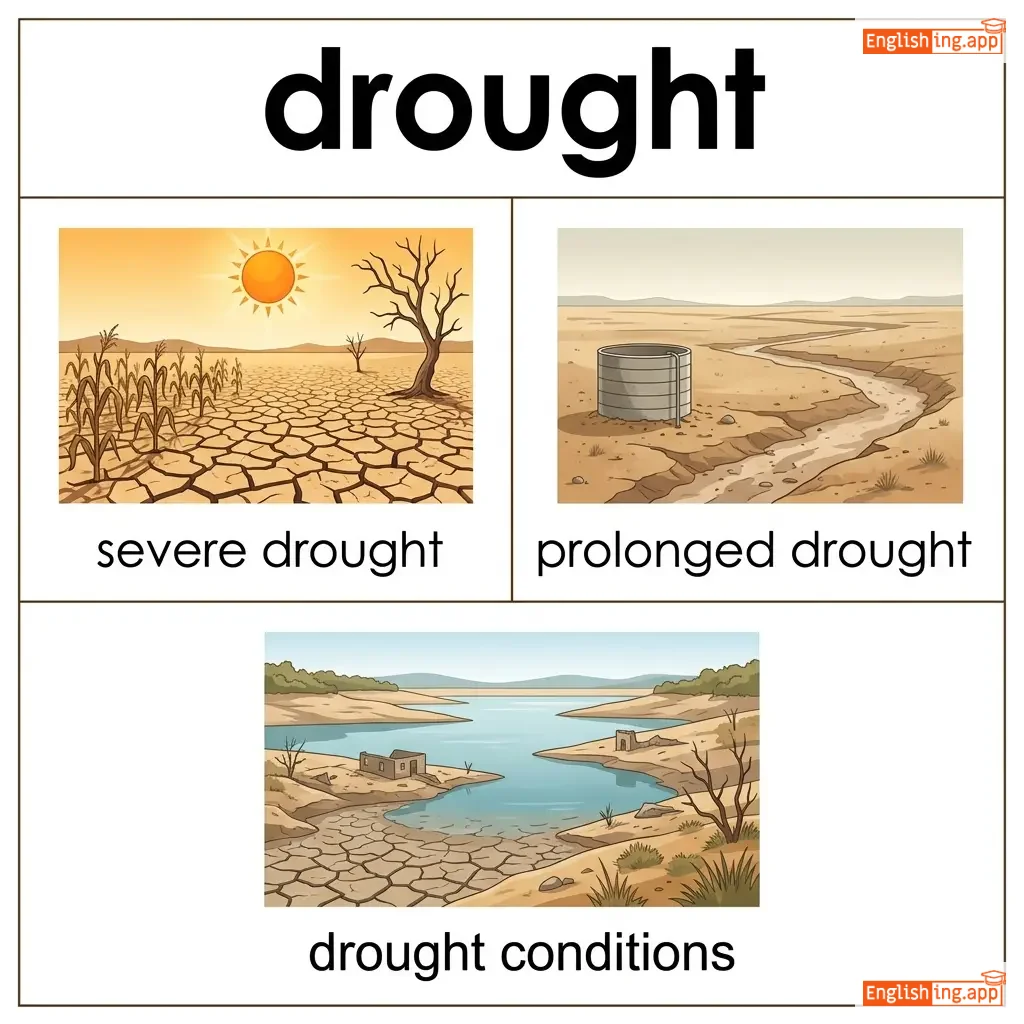
severe drought, prolonged drought, drought conditions, drought relief
••••••
|
Drought означает засуха – помни, ‘если нет дождя, значит засуха’.
••••••
|
|
🌊
••••••
|
/draʊn/
verb
(драун)
••••••
|
- •••••• |
утонуть
utonut
••••••
|
drowned
драунд
••••••
|
drowned
драунд
••••••
|
drowns
драунс
••••••
|
drowning
драуинг
••••••
|
to die or cause to die by being submerged in and inhaling water
••••••
|
He nearly drowned while swimming in the river.
Он почти утонул, когда плавал в реке.
••••••
|
Он почти утонул, когда плавал в реке.
On pochti utonul, kogda plaval v reke.
••••••
|
drown out
заглушить
••••••
|
to make a sound so loud that it prevents other sounds from being heard
••••••
|
заглушить
zaglushit'
••••••
|
sink, submerge, suffocate, engulf
••••••
|
float, survive, resurface
••••••
|
drown in debt, drown in sorrow, nearly drown, drown out
••••••
|
Drown означает утонуть, будьте осторожны с водой!
••••••
|
|
💊
••••••
|
/drʌɡ/
noun
(дро́г)
••••••
|
- •••••• |
наркотик
narkotik
••••••
|
- •••••• | - •••••• | - •••••• | - •••••• |
a substance used as a medicine or an illegal addictive substance
••••••
|
The doctor prescribed a new drug for the illness. |
Врач прописал новое лекарство для болезни.
Vrach propisal novoye lekarstvo dlya bolezni.
••••••
|
war on drugs |
efforts to stop illegal drug use and trade
••••••
|
война с наркотиками
voyna s narkotikami
••••••
|
medicine, medication, narcotic, substance
••••••
|
cure, remedy
••••••
|
drug abuse, drug dealer, prescription drug, drug addiction
••••••
|
Drug означает наркотик или лекарство, как в drugstore (аптека).
••••••
|
|
💊
••••••
|
/ˈdrʌɡˌstɔːr/
noun
(драгстор)
••••••
|
- •••••• |
аптека
aptekа
••••••
|
- •••••• | - •••••• | - •••••• | - •••••• |
A retail store that sells medicines, health-related products, and sometimes cosmetics or snacks.
••••••
|
I stopped by the drugstore to buy some cold medicine.
Я зашел в драгстор, чтобы купить лекарство от простуды.
••••••
|
Я зашел в аптеку, чтобы купить лекарство от простуды.
Ya zashel v apteku, chtoby kupit' lekarstvo ot prostudy.
••••••
|
- •••••• | - •••••• | - •••••• |
pharmacy, chemist, apothecary, drug shop
••••••
|
none, unrelated store
••••••
|
local drugstore, visit the drugstore, drugstore chain, drugstore aisle
••••••
|
Думай 'аптека' для лекарств.
••••••
|
|
🥁
••••••
|
/drʌm/
noun
(драм)
••••••
|
- •••••• |
барабан или бочка
baraban ili bochka
••••••
|
- •••••• | - •••••• | - •••••• | - •••••• |
a musical instrument beaten with sticks or hands; also a cylindrical container
••••••
|
The drummer hit the drum loudly during the concert.
Барабанщик сильно ударил по барабану во время концерта.
••••••
|
Барабанщик сильно ударил по барабану во время концерта.
Barabanshchik sil'no udaril po barabanu vo vremya kontserta.
••••••
|
beat the drum for
бить барабан для
••••••
|
to publicly support or promote something
••••••
|
публично поддерживать
publichno podderzhivat'
••••••
|
percussion, barrel, container, cylinder
••••••
|
silence, stillness
••••••
|
drum kit, drum beats, steel drum, oil drum, bass drum
••••••
|
Как барабан громко звучит, так и ваши идеи должны звучать.
••••••
|
|
🍺
••••••
|
/drʌŋk/
adjective
(дранк)
••••••
|
- •••••• |
пьяный
p'yanyy
••••••
|
- •••••• | - •••••• | - •••••• | - •••••• |
affected by alcohol to the point of losing control of one's faculties or behavior
••••••
|
He was too drunk to walk straight. |
Он был слишком пьян, чтобы идти прямо.
On byl slishkom p'yan, chtoby idti pryamo.
••••••
|
dead drunk |
extremely intoxicated
••••••
|
мертво пьяный
mertvo p'yanyy
••••••
|
intoxicated, tipsy, inebriated, wasted, buzzed
••••••
|
sober, abstinent
••••••
|
get drunk, dead drunk, completely drunk, drunk driving
••••••
|
Пьяный — drunk. Если пьешь много, ты становишься пьяным!
••••••
|
|
☀️
••••••
|
/draɪ/
verb
(drai)
••••••
|
|
сушить
sushit
••••••
|
dried
draid
••••••
|
dried
draid
••••••
|
dries
drais
••••••
|
drying
drein
••••••
|
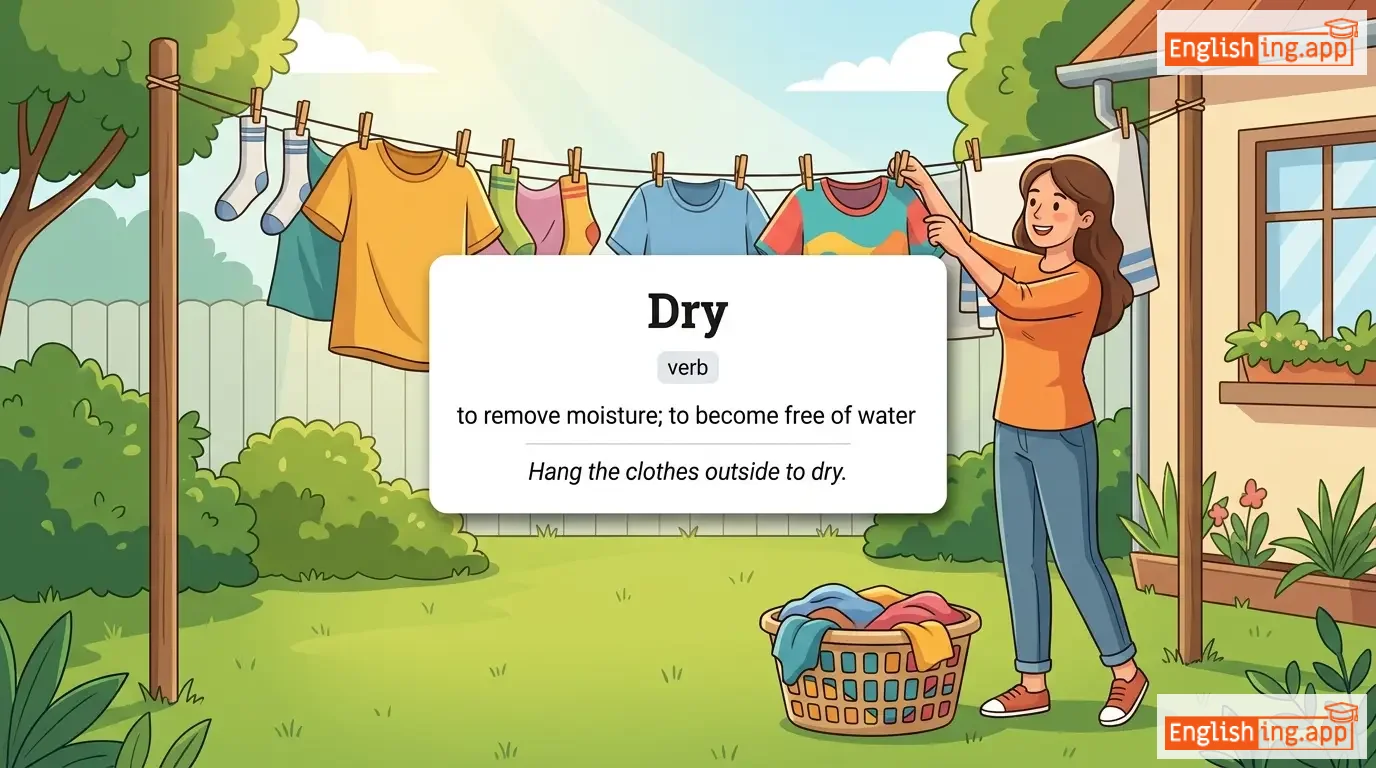
to remove moisture; to become free of water
••••••
|
Hang the clothes outside to dry.
Повесьте одежду на улице, чтобы она высохла.
••••••
|
Повесьте одежду на улице, чтобы она высохла.
Poveste odezhdu na ulitse, chtoby ona vysokhla.
••••••
|
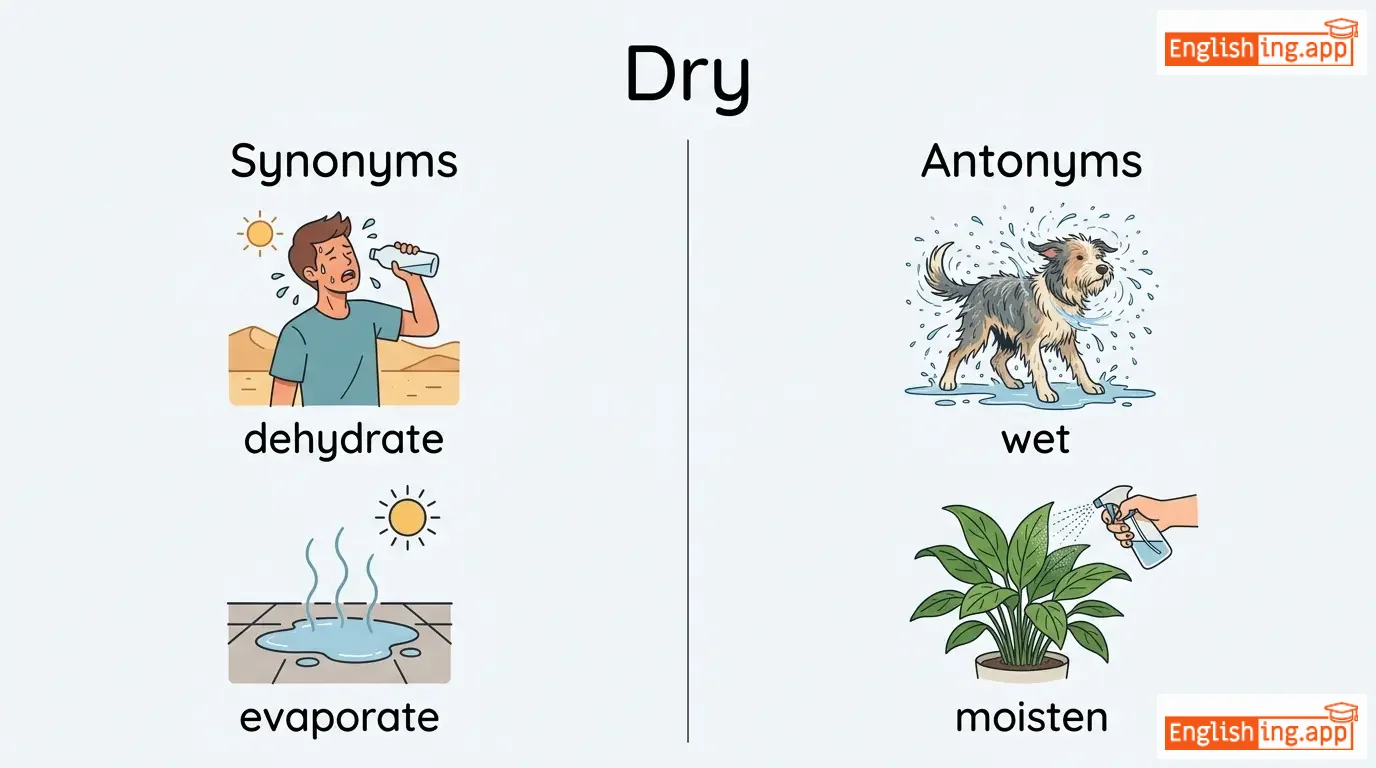
- •••••• | - •••••• | - •••••• |
dehydrate, evaporate, drain, wither
••••••
|
wet, moisten, dampen, soak
••••••
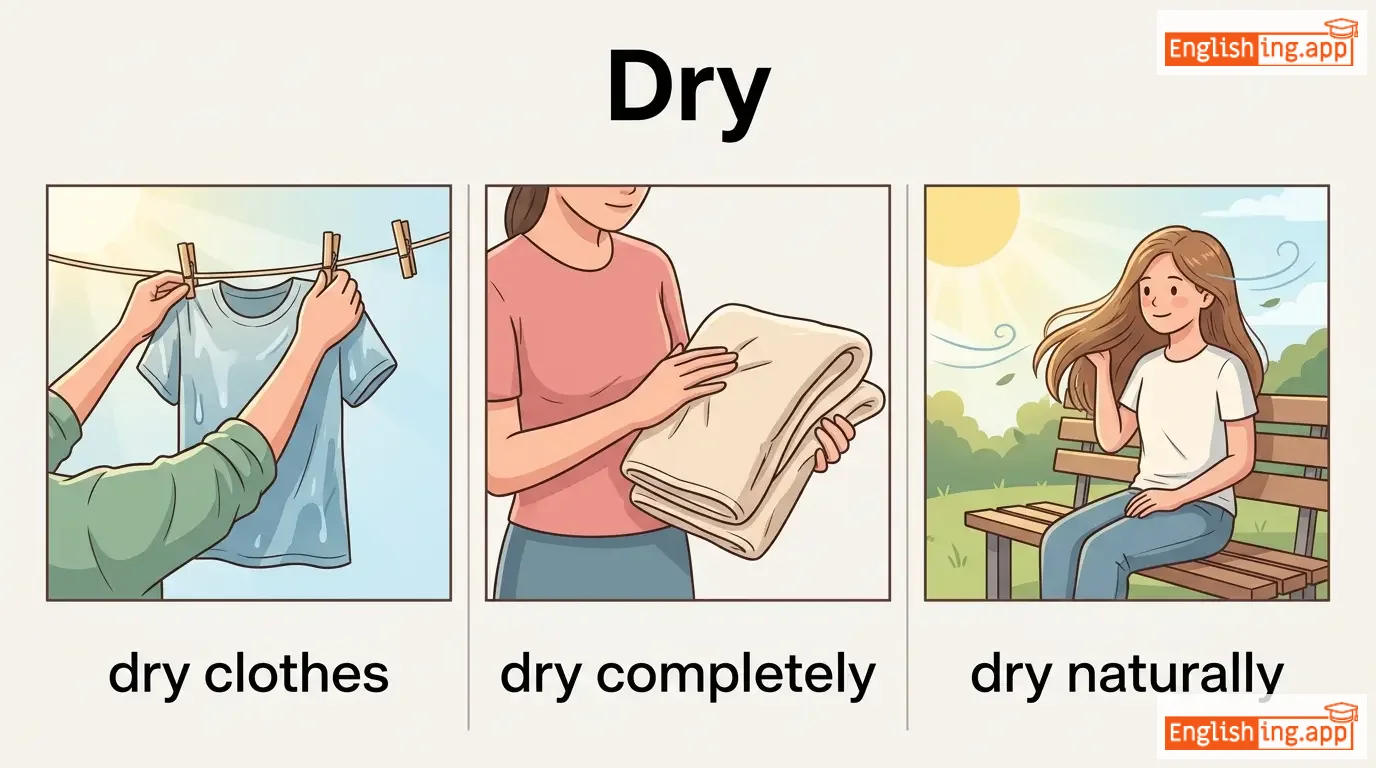
|
dry clothes, dry completely, dry naturally, dry thoroughly, dry in the sun
••••••
|
Russian 'сушить' (sushit) means drying, just like drying removes moisture.
••••••
|
|
👥
••••••
|
/ˈduː.əl/
adjective
(дуал)
••••••
|
- •••••• |
двойной
dvoynoy
••••••
|
- •••••• | - •••••• | - •••••• | - •••••• |
having two parts or consisting of two elements; double
••••••
|
She has dual citizenship of both countries. |
У нее есть двойное гражданство обеих стран.
U nee yest' dvoinoe grazhdanstvo obeh stran.
••••••
|
- •••••• | - •••••• | - •••••• |
double, twin, paired, binary
••••••
|
single, sole, individual, unique
••••••
|
dual purpose, dual citizenship, dual nature
••••••
|
Двойной - это два, как dual
••••••
|
|
🎬
••••••
|
/dʌb/
verb
(дʌб)
••••••
|
- •••••• |
дублировать
dublírovat'
••••••
|
dubbed
дабд
••••••
|
dubbed
дабд
••••••
|
dubs
дабс
••••••
|
dubbing
даббинг
••••••
|
to give a name or label to something; to add a soundtrack to a film or recording
••••••
|
The movie was dubbed into several languages for international release.
Фильм был дубляжирован на несколько языков для международного релиза.
••••••
|
Фильм был дубляжирован на несколько языков для международного релиза.
Film byl dublyazhirovan na neskol'ko yazyikov dlya mezhdunarodnogo releaza.
••••••
|
- •••••• | - •••••• | - •••••• |
name, label, dub over, voice over
••••••
|
misname, unlabel
••••••
|
dub a movie, dub in a voice, dub over a film
••••••
|
Представьте, что вы дубляжируете голос в фильме!
••••••
|
|
📅
••••••
|
/djuː/
adjective
(dyu)
••••••
|
- •••••• |
должен / ожидаемый
dolzhen / ozhidayemyy
••••••
|
- •••••• | - •••••• | - •••••• | - •••••• |
expected at a certain time or required by a certain date
••••••
|
The rent is due on the first of every month. |
Аренда должна быть оплачена первого числа каждого месяца.
Arenda dolzhna byt' oplachena pervogo chisla kazhdogo mesyatsa.
••••••
|
due date |
the final day something must be completed or paid
••••••
|
дата оплаты
data oplaty
••••••
|
expected, scheduled, payable, owed, anticipated
••••••
|
unexpected, optional, unnecessary
••••••
|
due date, due payment, due process, due respect
••••••
|
‘Due’ означает ‘должен’, запомни платить до даты оплаты!
••••••
|
|
😴
••••••
|
/dʌl/
adjective
(dal)
••••••
|
- •••••• |
скучный
skuchnyy
••••••
|
- •••••• | - •••••• | - •••••• | - •••••• |
lacking brightness, vividness, or interest; boring or not sharp
••••••
|
The lecture was so dull that many students fell asleep. |
Лекция была такой скучной, что многие студенты заснули.
Lektsiya byla takoy skuchnoy, chto mnogiye studenty zasnuli.
••••••
|
dull as dishwater |
extremely boring
••••••
|
скучный как посудная вода
skuchnyy kak posudnaya voda
••••••
|
boring, tedious, lifeless, monotonous, uninteresting
••••••
|
exciting, lively, interesting
••••••
|
dull knife, dull sound, dull moment, dull pain, dull color
••••••
|
Dull — это как скучная вода для посуды.
••••••
|
|
🤐
••••••
|
/dʌm/
adjective
(damb)
••••••
|
- •••••• |
тупой / немой
tupoy / nemoy
••••••
|
- •••••• | - •••••• | - •••••• | - •••••• |
lacking intelligence or unable to speak
••••••
|
He made a dumb mistake during the exam.
Он сделал глупую ошибку на экзамене.
••••••
|
Он сделал глупую ошибку на экзамене.
On sdelal glupuyu oshibku na ekzamenie.
••••••
|
strike dumb
ударить глупо
••••••
|
to make someone speechless with shock or amazement
••••••
|
оставить без слов
ostavit' bez slov
••••••
|
stupid, foolish, silly, mute
••••••
|
smart, intelligent
••••••
|
dumb mistake, dumb idea, dumb luck, dumb silence
••••••
|
Dumb = тупой; ошибка в экзамене - это большая ошибка.
••••••
|
|
🗑️
••••••
|
/dʌmp/
verb
(дамп)
••••••
|
- •••••• |
выбросить или избавиться от чего-то небрежно
vybrosit' ili izbavitsya ot chego-to nebrezhno
••••••
|
dumped
дампд
••••••
|
dumped
дампд
••••••
|
dumps
дампс
••••••
|
dumping
дампинг
••••••
|
to drop or dispose of something carelessly; to end a relationship suddenly
••••••
|
He dumped all the trash into the bin.
Он выбросил весь мусор в ведро.
••••••
|
Он выбросил весь мусор в ведро.
On vybrosil ves' musor v vedro.
••••••
|
dump someone
бросить кого-то
••••••
|
to end a romantic relationship with someone
••••••
|
порвать с кем-то
porvat' s kem-to
••••••
|
discard, throw, drop, abandon, release
••••••
|
keep, hold, retain
••••••
|
dump site, garbage dump, dump truck, dump waste, dump someone
••••••
|
Dump означает выбросить — если кто-то бросает тебя, ты говоришь: 'Он меня dumpнул!'
••••••
|
|
🎶
••••••
|
/ˈdjuːəʊ/
noun
(дуо)
••••••
|
- •••••• |
дуэт
duet
••••••
|
- •••••• | - •••••• | - •••••• | - •••••• |
a pair of people or things, especially in music or entertainment
••••••
|
The musical duo performed their latest hit at the concert. |
Музыкальный дуэт исполнил свой последний хит на концерте.
Muzykal'nyy duet ispolnil svoy posledniy khit na koncerte.
••••••
|
- •••••• | - •••••• | - •••••• |
pair, couple, team, twosome
••••••
|
solo, individual
••••••
|
musical duo, comedy duo, famous duo
••••••
|
A duo is like two instruments creating magic together!
••••••
|

