Получите неограниченный доступ ко всем словам с подпиской Pro
Обновить до ProПолучите неограниченный доступ ко всем предложениям с подпиской Pro
Обновить до Pro|
Эмодзи
|
Слово | Images | Перевод | Прошедшее | Причастие прошедшего времени | Третье лицо единственного числа | Герундий | Значение | Пример предложения | Перевод примера предложения | Пример выражения | Значение примера выражения | Перевод примера выражения | Синонимы | Антонимы | Коллокации | Мнемоника |
|---|---|---|---|---|---|---|---|---|---|---|---|---|---|---|---|---|---|
|
🚶♂️🚶♀️
••••••
|
/ˈkraʊdɪd/
adjective
(happiness)
••••••
|
- •••••• |
счастье
schastye
••••••
|
- •••••• | - •••••• | - •••••• | - •••••• |
filled with too many people or things
••••••
|
The bus was so crowded that I could hardly move. |
Она не могла скрыть своего счастья, когда получила награду.
Ona ne mogla skryt' svoego schast'ya, kogda poluchila nagradu.
••••••
|
packed like sardines |
to be in a very crowded space
••••••
|
поиск счастья
poisk schast'ya
••••••
|
packed, congested, jammed, full, busy
••••••
|
empty, vacant, spacious
••••••
|
crowded place, crowded street, crowded market, become crowded
••••••
|
Счастье - это как подарок, который ты получаешь, когда весел!
••••••
|
|
👑
••••••
|
/kraʊn/
noun
(kroun)
••••••
|
- •••••• |
корона
korona
••••••
|
- •••••• | - •••••• | - •••••• | - •••••• |
a circular ornamental headdress worn by a monarch as a symbol of authority
••••••
|
The king wore his golden crown at the ceremony. |
Царь носил свою золотую корону на церемонии.
Tsar' nosil svoyu zolotuyu koronu na tseremonii.
••••••
|
wear the crown |
to accept the responsibility or power of leadership
••••••
|
носить корону
nosit' koronu
••••••
|
tiara, diadem, coronet
••••••
|
helmet, cap
••••••
|
royal crown, golden crown, wear the crown
••••••
|
Когда царь носит корону, он принимает ответственность и власть.
••••••
|
|
⭐
••••••
|
/ˈkruːʃəl/
adjective
(kru-shial)
••••••
|

|
критически важный
kriticheski vazhny
••••••
|
- •••••• | - •••••• | - •••••• | - •••••• |
extremely important or necessary
••••••
|
Trust is crucial for a strong relationship. |
Доверие критически важно для крепких отношений.
Doverye kriticheski vazhno dlya krepkikh otnosheniy.
••••••
|
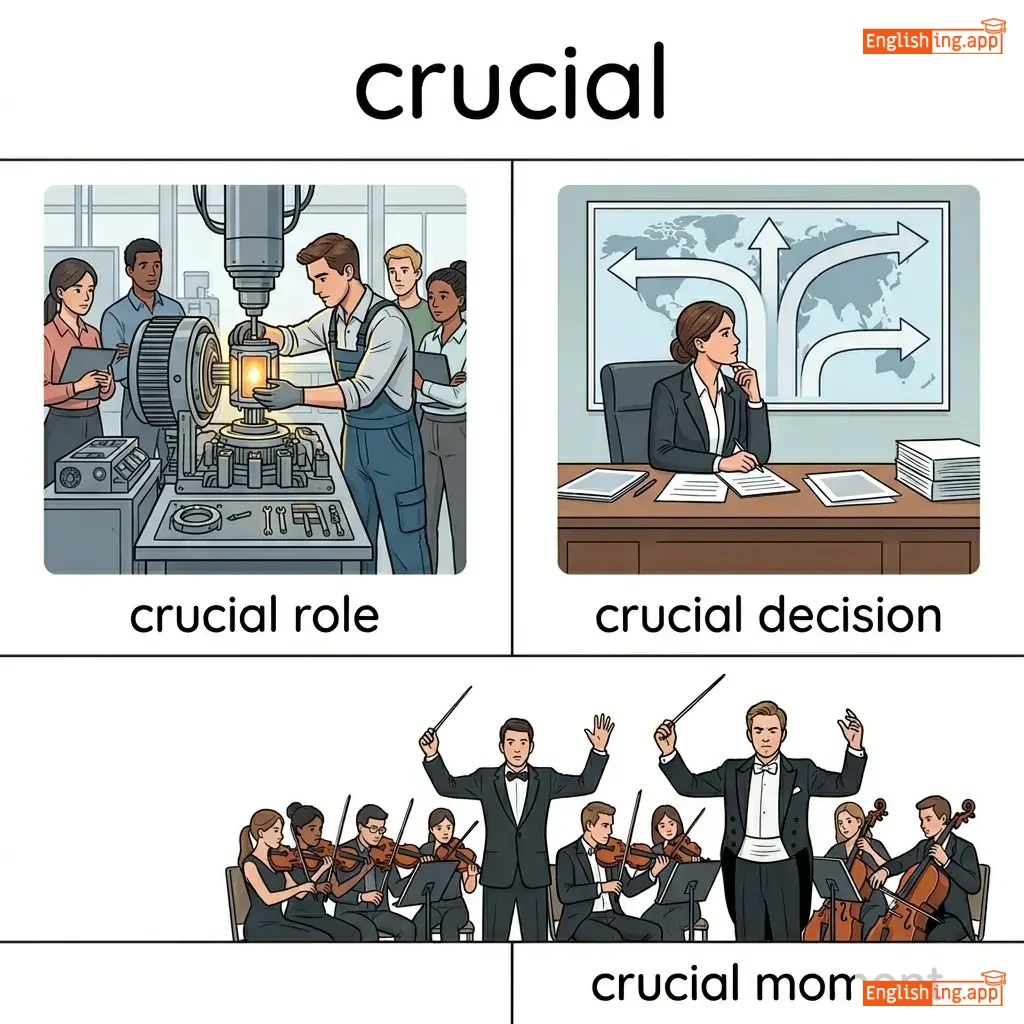
crucial role |
an extremely important part or function
••••••
|
критическая роль
kriticheskaya rol
••••••
|
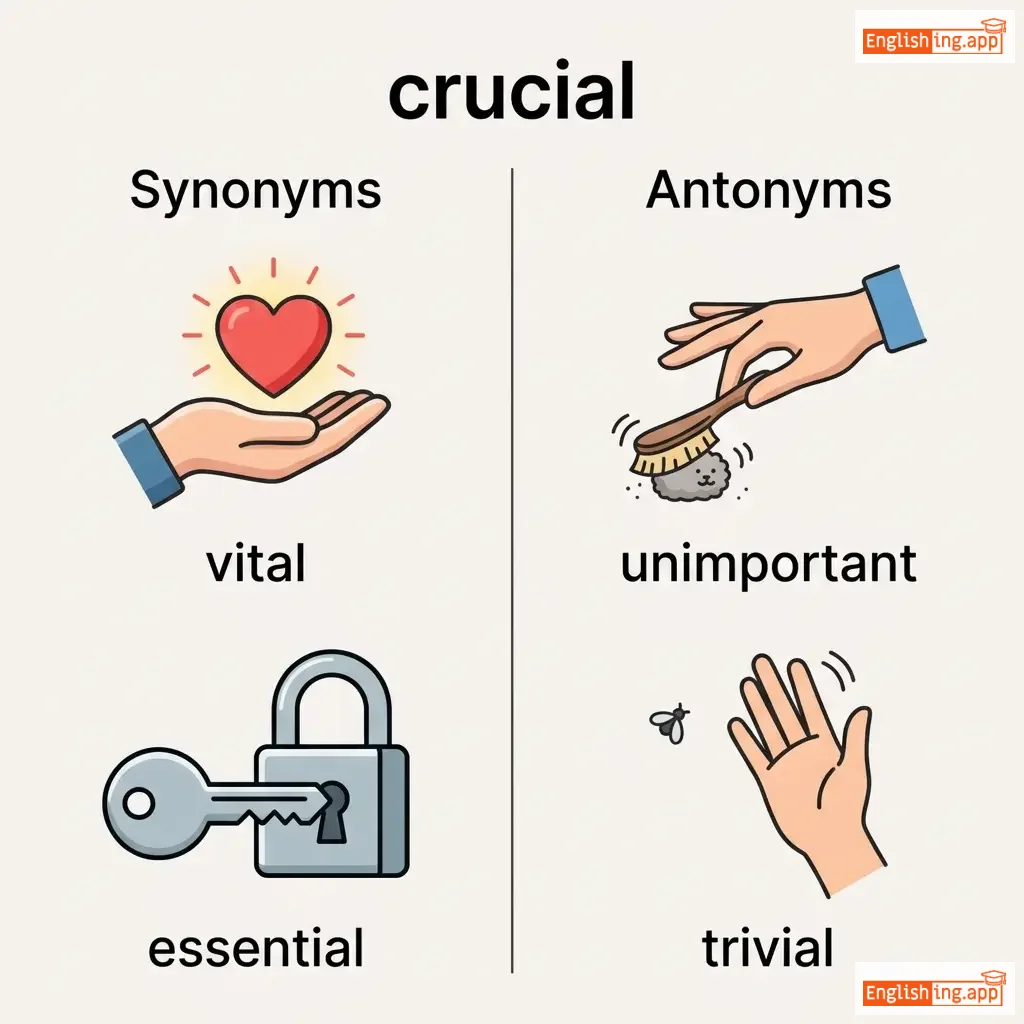
vital, essential, critical, key, significant
••••••
|
unimportant, trivial, minor
••••••
|
crucial role, crucial decision, crucial moment, crucial factor
••••••
|
CRUCIAL значит критически важный, как ключевая роль в фильме.
••••••
|
|
🛢️
••••••
|
/kruːd/
adjective
(krud)
••••••
|
- •••••• |
сырой
syroy
••••••
|
- •••••• | - •••••• | - •••••• | - •••••• |
in a natural or raw state; not yet processed or refined
••••••
|
The crude oil is processed into fuel and chemicals. |
Сырая нефть перерабатывается в топливо и химикаты.
Syraja neft pererabotivayetsya v toplivo i khimikaty.
••••••
|
- •••••• | - •••••• | - •••••• |
raw, unrefined, rough, unprocessed
••••••
|
refined, processed, pure
••••••
|
crude oil, crude nature, crude estimate
••••••
|
Crude нефть сырая - Crude oil is raw
••••••
|
|
💔
••••••
|
/ˈkruːəl/
adjective
(круэл)
••••••
|
- •••••• |
жестокий
zhestokiy
••••••
|
- •••••• | - •••••• | - •••••• | - •••••• |
Willfully causing pain or suffering to others, or feeling no concern about it.
••••••
|
It was cruel to make fun of the injured boy. |
Было жестоко смеяться над раненым мальчиком.
Bylo zhestoko smeyat'sya nad ranyenym mal'chikom.
••••••
|
cruel and unusual punishment |
Punishment considered inhumane, degrading, or excessively harsh.
••••••
|
жестокое и необычное наказание
zhestokoye i neobychnoye nakazaniye
••••••
|
harsh, brutal, unkind, ruthless, merciless
••••••
|
kind, gentle, compassionate
••••••
|
cruel joke, cruel act, cruel treatment, cruel world
••••••
|
Жестокий означает жестокое наказание – жестокое наказание.
••••••
|
|
🛳️
••••••
|
/kruːz/
verb
••••••
|
- •••••• |
счастье
schast'ye
••••••
|
cruised
••••••
|
cruised
••••••
|
cruises
••••••
|
cruising
••••••
|
to travel smoothly at a moderate speed, especially for pleasure
••••••
|
They decided to cruise along the coast during their vacation. |
Она не могла скрыть своего счастья, когда получила награду.
Ona ne mogla skryt' svoego schast'ya, kogda poluchila nagradu.
••••••
|
cruise control |
a system that automatically controls the speed of a vehicle
••••••
|
поиск счастья
poisk schast'ya
••••••
|
sail, glide, drift, coast, navigate
••••••
|
anchor, halt, stop
••••••
|
go on a cruise, cruise ship, cruise along, luxury cruise
••••••
|
Счастье — это состояние души, которое нужно искать.
••••••
|
|
💔
••••••
|
/krʌʃ/
verb
(krʌʃ)
••••••
|
- •••••• |
сжать или раздавить что-то так сильно, что оно повреждается или разрушается
szhat' ili razdavít' chto-to tak sil'no, chto ono povrezhdaetsya ili razrushayetsya
••••••
|
crushed
krʌʃt
••••••
|
crushed
krʌʃt
••••••
|
crushes
krʌʃəz
••••••
|
crushing
krʌʃɪŋ
••••••
|
to press or squeeze something so hard that it is damaged or destroyed
••••••
|
He accidentally crushed the paper cup in his hand.
Он случайно раздавил бумажный стаканчик в своей руке.
••••••
|
Он случайно раздавил бумажный стаканчик в своей руке.
On sluchayno razdavíl bumazhnyy stakanchik v svoey ruke.
••••••
|
have a crush on someone
влюбиться в кого-то
••••••
|
to have a romantic attraction toward someone
••••••
|
быть романтически влюбленным в кого-то
byt' romanticheski vlyublennym v kogo-to
••••••
|
squash, squeeze, compress, smash, flatten
••••••
|
build, repair, release
••••••
|
crush into pieces, crush under pressure, have a crush, crush completely
••••••
|
Crush означает раздавить, а когда у тебя crush, ты влюблен!
••••••
|
|
😢
••••••
|
/kraɪ/
verb, noun
(kraï)
••••••
|
- •••••• |
плакать
plakat
••••••
|
cried
kraïd
••••••
|
cried
kraïd
••••••
|
cries
kraiz
••••••
|
crying
kraïng
••••••
|
To shed tears as an expression of emotion such as sadness or pain; also a loud call or shout.
••••••
|
The baby began to cry when she was hungry.
Малыш начал плакать, когда она была голодна.
••••••
|
Малыш начал плакать, когда она была голодна.
Malysh nachal plakat', kogda ona byla golodna.
••••••
|
cry over spilled milk
плакать о пролитом молоке
••••••
|
To waste time worrying about something that has already happened and cannot be changed.
••••••
|
Плакать о пролитом молоке
Plakat' o prolitom moloke
••••••
|
weep, sob, wail, scream, yell
••••••
|
laugh, smile, rejoice
••••••
|
cry out, cry for help, cry with joy, loud cry
••••••
|
Cry означает плакать – как младенец, который плачет, когда он голоден.
••••••
|
|
💎
••••••
|
/ˈkrɪstəl/
noun
(kristal)
••••••
|
- •••••• |
кристалл
kristall
••••••
|
- •••••• | - •••••• | - •••••• | - •••••• |
a clear, transparent mineral or glass that forms a solid structure with regular patterns
••••••
|
She wore a necklace made of sparkling crystal. |
Она носила ожерелье из сверкающего кристалла.
Ona nosila ozherelye iz sverkayushchego kristalla.
••••••
|
clear as crystal |
extremely clear and easy to understand
••••••
|
ясно как кристалл
yasno kak kristall
••••••
|
glass, gem, quartz, diamond, prism
••••••
|
opaque, dull
••••••
|
crystal clear, crystal glass, crystal necklace, crystal water
••••••
|
Crystal clear означает очень ясно, как кристалл!
••••••
|
|
🥒
••••••
|
/ˈkjuː.kʌm.bər/
noun
(kyu-kam-ber)
••••••
|
- •••••• |
огурец
ogurets
••••••
|
- •••••• | - •••••• | - •••••• | - •••••• |
a long green vegetable with watery flesh, eaten raw in salads or cooked
••••••
|
I added fresh cucumber slices to my salad.
Я добавил свежие ломтики огурца в мой салат.
••••••
|
Я добавил свежие ломтики огурца в мой салат.
Ya dobavil svezhie lomtiki ogurtsa v moy salat.
••••••
|
- •••••• | - •••••• | - •••••• |
gherkin
••••••
|
- •••••• |
cucumber sandwich, sliced cucumber, fresh cucumber, cucumber salad
••••••
|
Think of 'огурец' as cucumber in Russian!
••••••
|
|
🎭
••••••
|
/kjuː/
noun/verb
(kiu)
••••••
|
- •••••• |
сигнал
signal
••••••
|
cued
kiud
••••••
|
cued
kiud
••••••
|
cues
kius
••••••
|
cueing
kiuing
••••••
|
A signal or prompt for action; to give a signal.
••••••
|
The actor waited for his cue before entering the stage.
Актер ждал своего сигнала перед тем, как выйти на сцену.
••••••
|
Актер ждал своего сигнала перед тем, как выйти на сцену.
Aktor zhdal svoego signala pered tem, kak vyyti na stsenu.
••••••
|
on cue
в нужный момент
••••••
|
At exactly the right moment, as expected.
••••••
|
в нужный момент
v nuzhnyy moment
••••••
|
signal, prompt, hint, indication, trigger
••••••
|
silence, ignore, neglect
••••••
|
take a cue, give a cue, wait for a cue, cue card
••••••
|
Cue означает, что очередь (queue) начинается — сигнал для начала.
••••••
|
|
🕯️
••••••
|
/kʌlt/
noun
(кʌлт)
••••••
|
- •••••• |
культ
kult
••••••
|
- •••••• | - •••••• | - •••••• | - •••••• |
a system of religious veneration and devotion directed toward a particular figure or object
••••••
|
The cult followed their leader with great devotion. |
Культ следовал за своим лидером с большой преданностью.
Kult sleduval za svoim liderom s bol'shoy predannost'yu.
••••••
|
- •••••• | - •••••• | - •••••• |
sect, movement, group, following
••••••
|
mainstream, tradition
••••••
|
cult following, cult leader, religious cult
••••••
|
Культ = преданность и поклонение
••••••
|
|
🌱
••••••
|
/ˈkʌltɪveɪt/
verb
(хэппинесс)
••••••
|
|
счастье
schastye
••••••
|
cultivated
••••••
|
cultivated
••••••
|
cultivates
••••••
|
cultivating
••••••
|
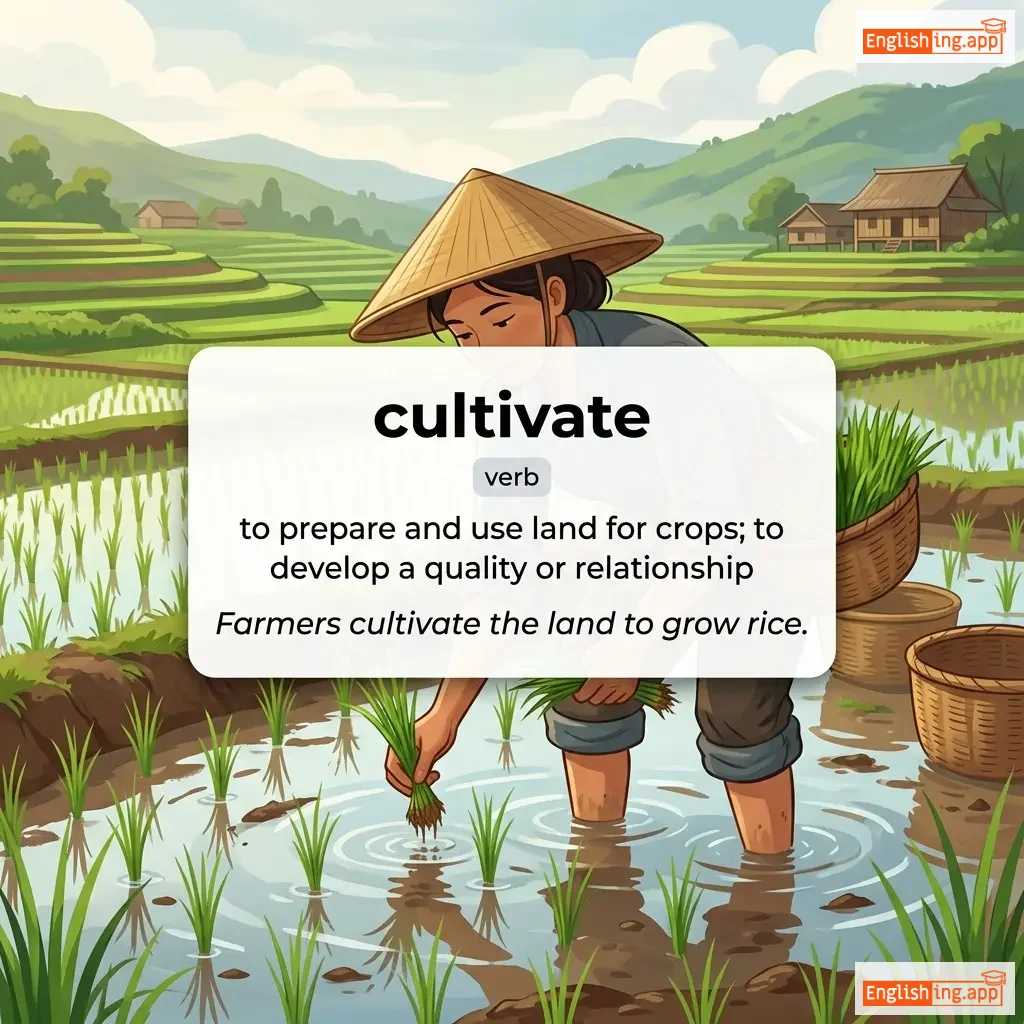
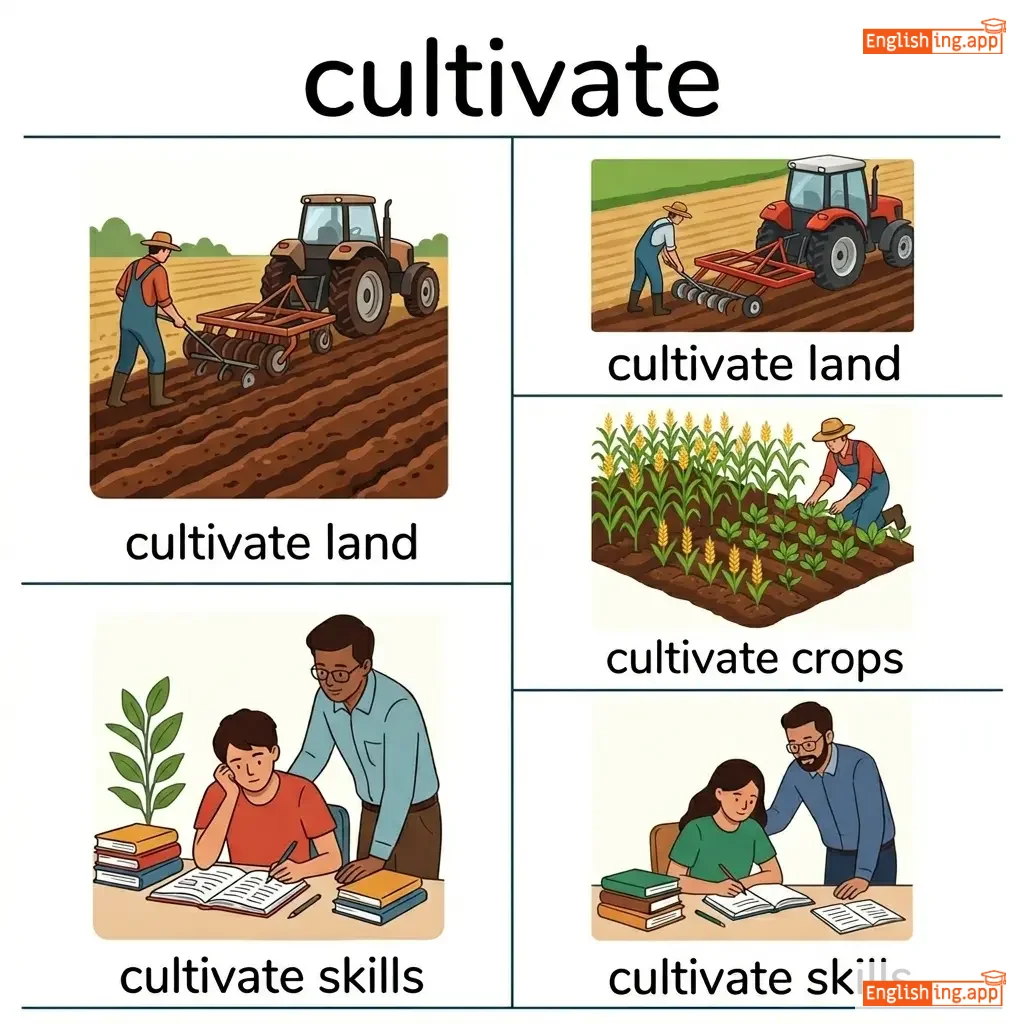
to prepare and use land for crops; to develop a quality or relationship
••••••
|
Farmers cultivate the land to grow rice.
Она не могла скрыть своего счастья, когда получила награду.
••••••
|
Она не могла скрыть своего счастья, когда получила награду.
Ona ne mogla skryt' svoego schast'ya, kogda poluchila nagradu.
••••••
|
cultivate friendship
поиск счастья
••••••
|
to develop a good relationship with someone
••••••
|
поиск счастья
poisk schast'ya
••••••
|
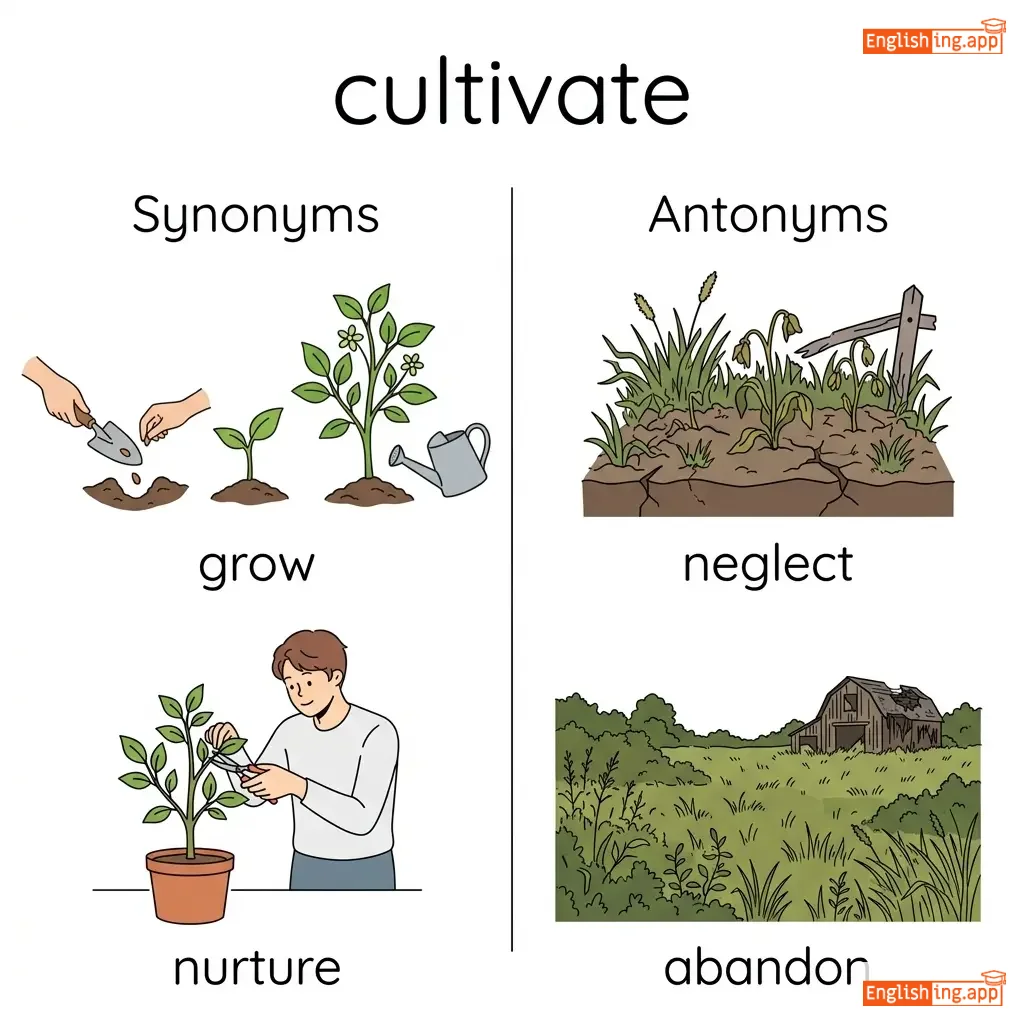
grow, nurture, develop, foster, promote
••••••
|
neglect, abandon
••••••
|
cultivate land, cultivate crops, cultivate skills, cultivate habits
••••••
|
Счастье – это поиск его, как поиск счастья.
••••••
|
|
🎭
••••••
|
/ˈkʌltʃərəl/
adjective
(кʌлтшерал)
••••••
|
|
культурный
kul'turnyy
••••••
|
- •••••• | - •••••• | - •••••• | - •••••• |
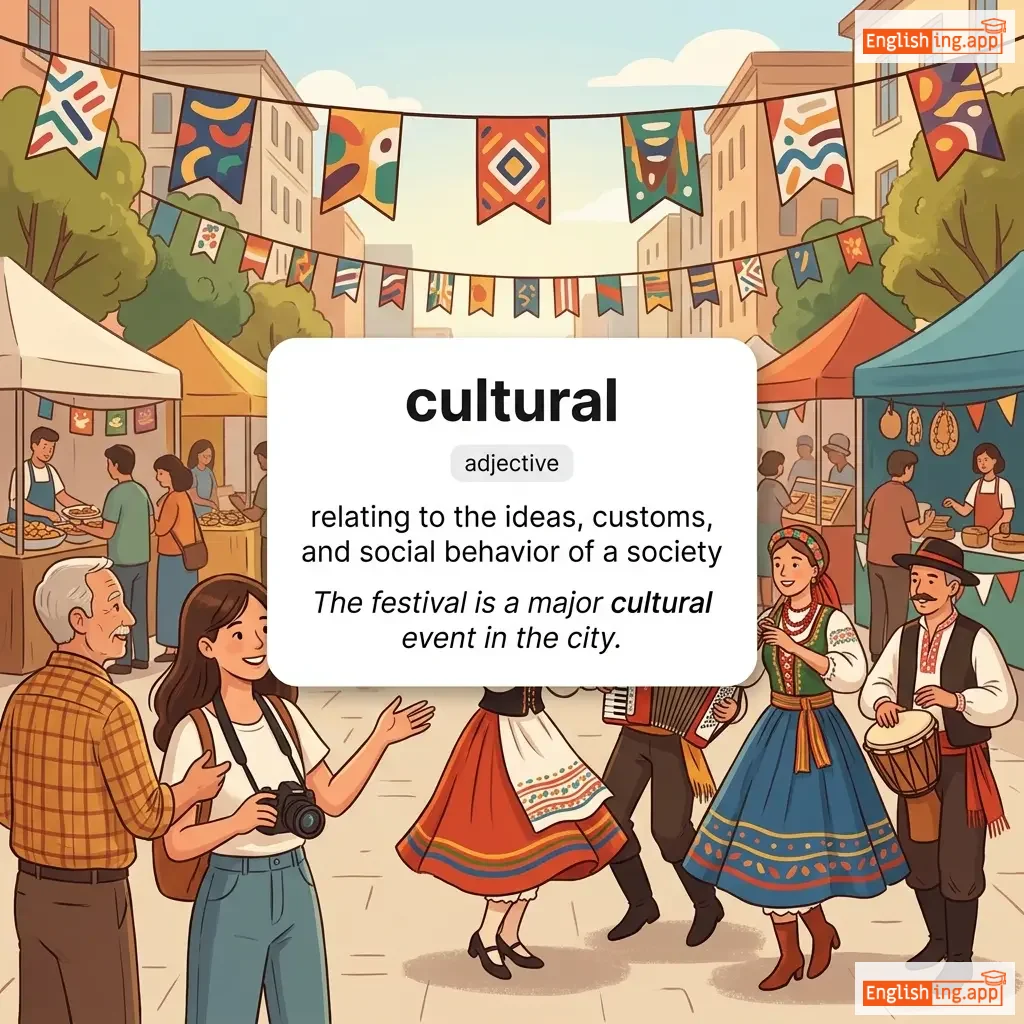
relating to the ideas, customs, and social behavior of a society
••••••
|
The festival is a major cultural event in the city. |
Фестиваль — это важное культурное событие в городе.
Festival' — eto vazhnoe kul'turnoe sobytiye v gorode.
••••••
|
- •••••• | - •••••• | - •••••• |
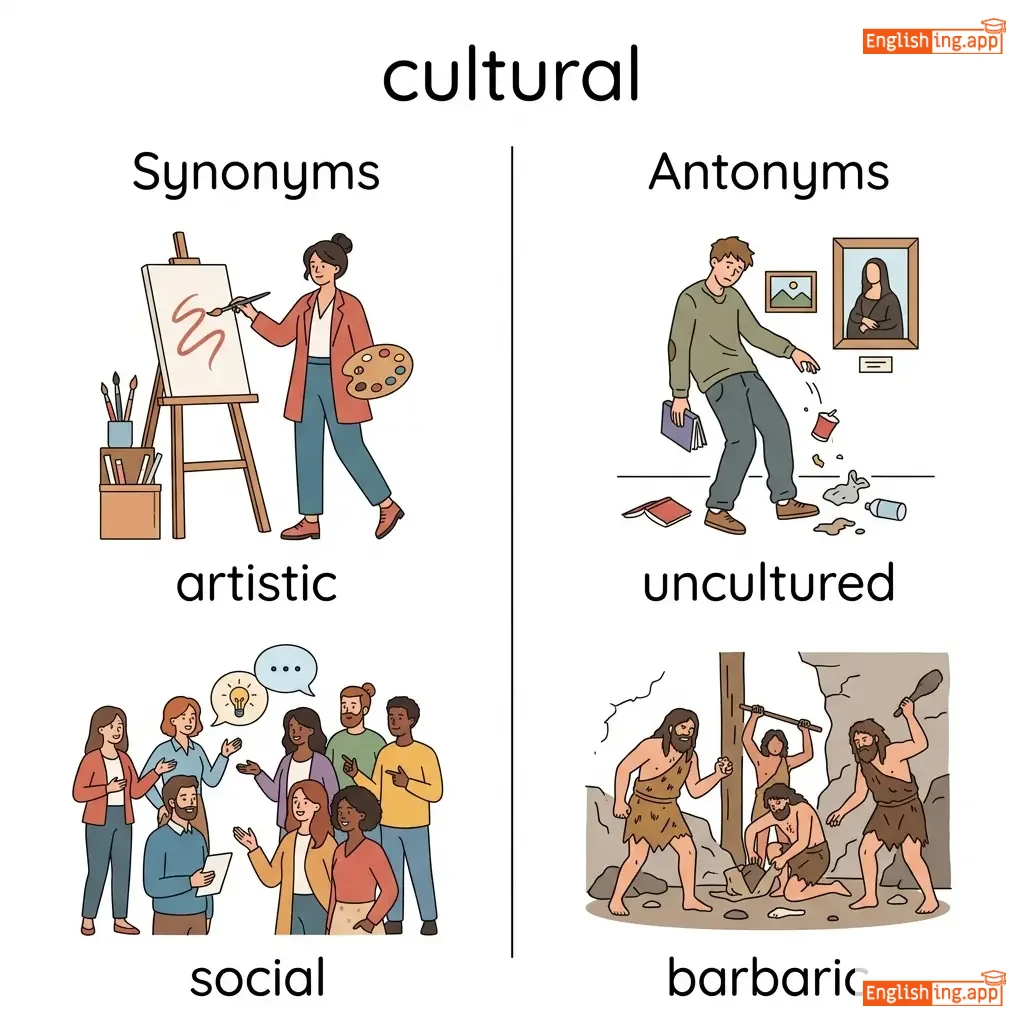
artistic, social, traditional, heritage, ethnic
••••••
|
uncultured, barbaric
••••••
|
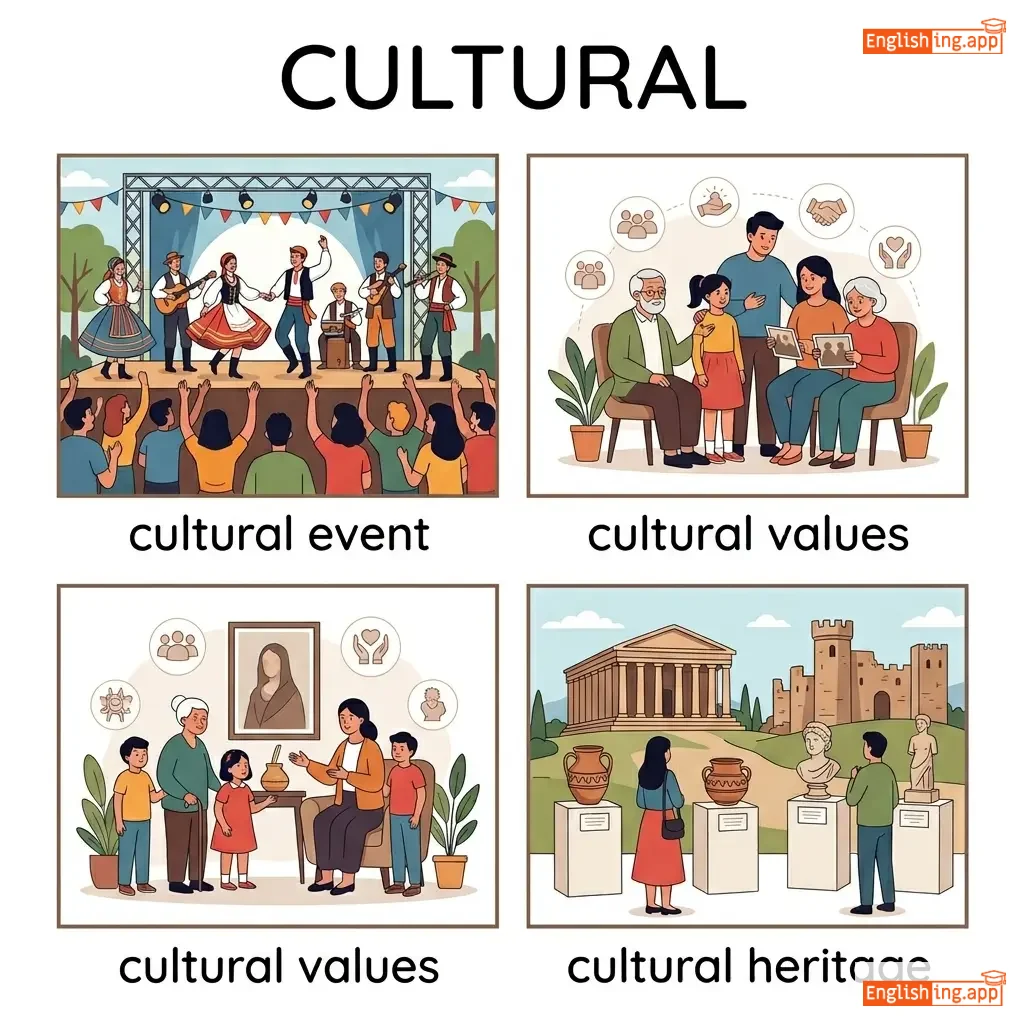
cultural event, cultural values, cultural heritage, cultural identity
••••••
|
Культурный — это что-то, что связано с традициями и поведением в обществе.
••••••
|
|
🌍
••••••
|
/ˈkʌltʃər/
noun
(kʊlʲtʊrɨ)
••••••
|
- •••••• |
культура
kultura
••••••
|
- •••••• | - •••••• | - •••••• | - •••••• |
the customs, arts, social institutions, and achievements of a particular people or society
••••••
|
Japanese culture is admired all over the world. |
Японская культура восхищает весь мир.
Yaponskaya kul'tura voskhishchayet ves' mir.
••••••
|
popular culture |
modern cultural activities and products that are well-liked by many people
••••••
|
популярная культура
populyarnaya kul'tura
••••••
|
civilization, tradition, lifestyle, heritage, society
••••••
|
barbarism, uncivilized
••••••
|
rich culture, preserve culture, local culture, diverse culture
••••••
|
Культура и культура — это то, что формирует общество.
••••••
|
|
☕
••••••
|
/kʌp/
noun
(кап)
••••••
|
- •••••• |
чашка
chashka
••••••
|
- •••••• | - •••••• | - •••••• | - •••••• |
a small bowl-shaped container for drinking from, typically with a handle
••••••
|
She drank a cup of tea in the morning. |
Она выпила чашку чая утром.
Ona vypila chashku chaya utrom.
••••••
|
cup of tea |
something one enjoys or prefers
••••••
|
чашка чая
chashka chaya
••••••
|
mug, glass, goblet, chalice
••••••
|
bottle, jug
••••••
|
cup of tea, coffee cup, paper cup, measuring cup
••••••
|
чашка = питье из любимой посуды
••••••
|
|
🚪
••••••
|
/ˈkʌp.bɔːrd/
noun
(kʌp-bɔːrd)
••••••
|
- •••••• |
шкаф
shkaf
••••••
|
- •••••• | - •••••• | - •••••• | - •••••• |
a piece of furniture with doors and shelves for storing dishes, food, or clothes
••••••
|
She stored all the plates and bowls in the kitchen cupboard.
Она поставила все тарелки и миски в кухонный шкаф.
••••••
|
Она поставила все тарелки и миски в кухонный шкаф.
Ona postavila vse tarelki i miski v kukhonnyy shkaf.
••••••
|
- •••••• | - •••••• | - •••••• |
cabinet, closet, wardrobe
••••••
|
- •••••• |
kitchen cupboard, storage cupboard, wooden cupboard, built-in cupboard
••••••
|
Шкаф — это место, где мы храним посуду и еду.
••••••
|
|
💊
••••••
|
/kjʊər/
verb
(kiúr)
••••••
|
- •••••• |
лечить
leechit
••••••
|
cured
kiúrd
••••••
|
cured
kiúrd
••••••
|
cures
kiúrs
••••••
|
curing
kiúring
••••••
|
to make someone healthy again after an illness
••••••
|
The new medicine cured her of the infection.
Новое лекарство вылечило её от инфекции.
••••••
|
Новое лекарство вылечило её от инфекции.
Novoe lekarstvo vylechilo yey ot infeksii.
••••••
|
prevention is better than cure
Профилактика лучше лечения
••••••
|
it is better to stop something bad from happening than to deal with it later
••••••
|
Профилактика лучше лечения
Profilaktika luchshe lecheniya
••••••
|
heal, treat, remedy, recover, fix
••••••
|
infect, harm, worsen
••••••
|
cure disease, cure illness, cure patient, cure completely
••••••
|
Cure означает лечить — помни, лечить — это гарантия здоровья!
••••••
|
|
🧐
••••••
|
/ˌkjʊəriˈɒsɪti/
noun
(kiuriositi)
••••••
|
- •••••• |
любопытство
lyubopytstvo
••••••
|
- •••••• | - •••••• | - •••••• | - •••••• |
a strong desire to know or learn something
••••••
|
Children have a natural curiosity about the world around them. |
Дети имеют естественное любопытство относительно мира вокруг них.
Deti imeyut estestvennoe lyubopytstvo otnositel'no mira vokrug nikh.
••••••
|
curiosity killed the cat |
being too inquisitive can lead to trouble
••••••
|
любопытство убило кошку
lyubopytstvo ubilo koshku
••••••
|
inquisitiveness, interest, eagerness, wonder, fascination
••••••
|
indifference, apathy
••••••
|
natural curiosity, spark curiosity, satisfy curiosity, human curiosity
••••••
|
Любопытство — это желание узнать больше. Любопытные люди всегда хотят все знать!
••••••
|
|
🤔
••••••
|
/ˈkjʊəriəs/
adjective
(кьюриас)
••••••
|

|
любопытный
lyubopytnyy
••••••
|
- •••••• | - •••••• | - •••••• | - •••••• |
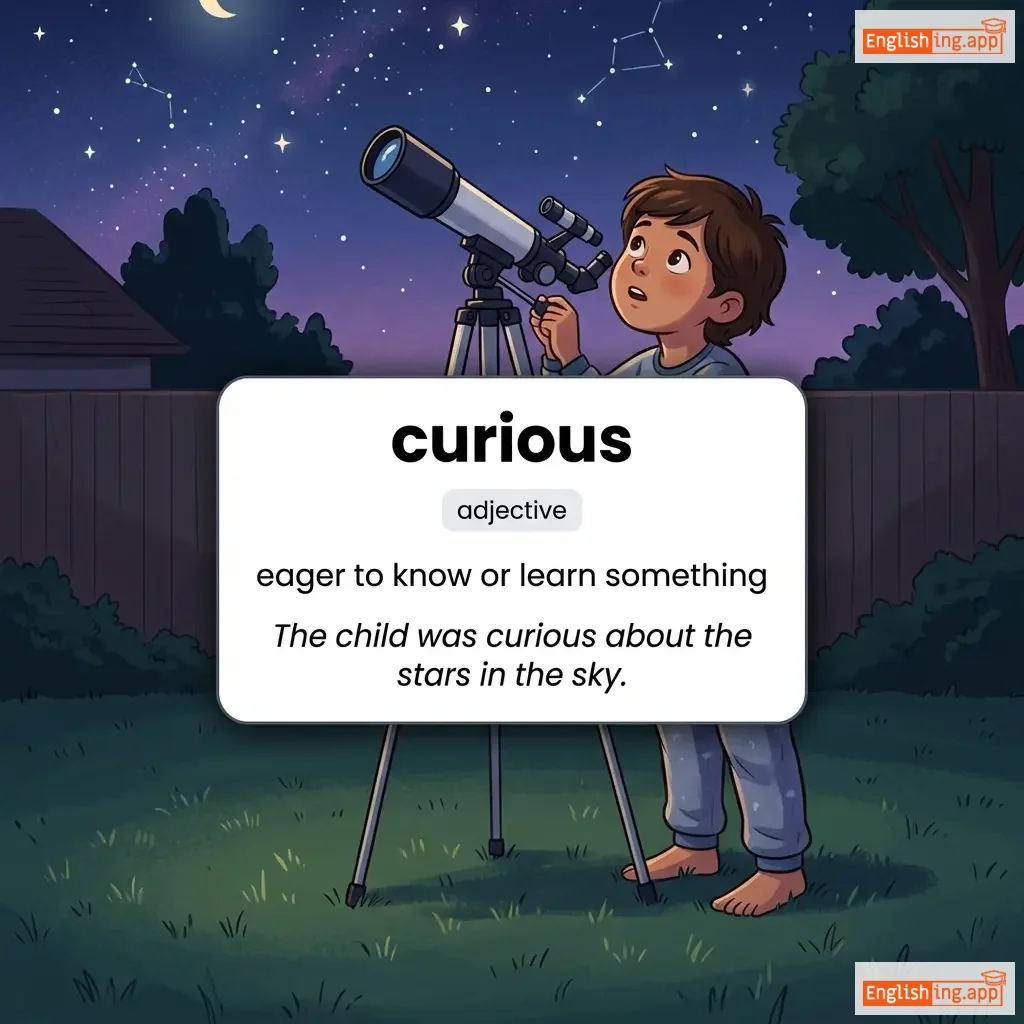
eager to know or learn something
••••••
|
The child was curious about the stars in the sky. |
Ребёнок был любопытен насчёт звёзд на небе.
Rebyonok byl lyubopyten naschёt zvyozd na nebe.
••••••
|
curiosity killed the cat |
being too inquisitive can lead to trouble
••••••
|
любопытство убило кошку
lyubopytstvo ubilo koshku
••••••
|
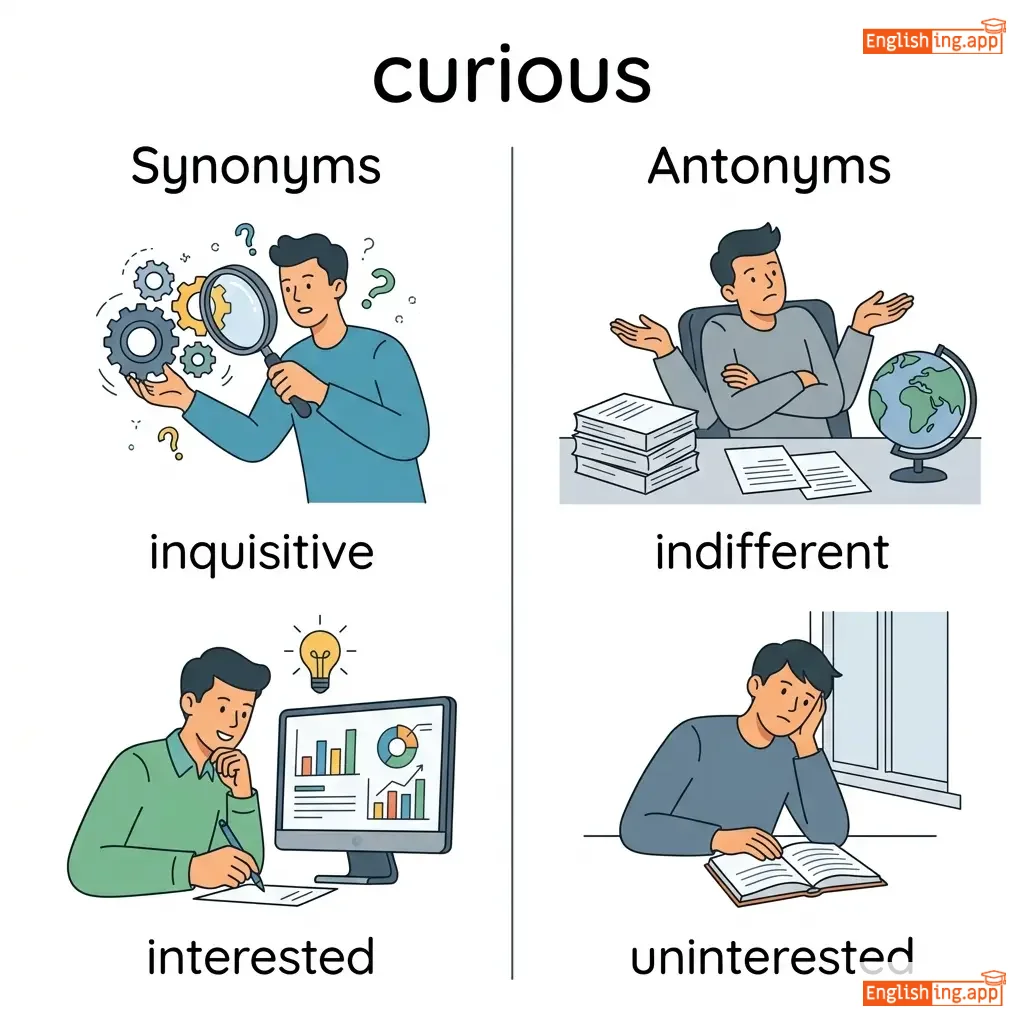
inquisitive, interested, eager, questioning
••••••
|
indifferent, uninterested
••••••
|
curious mind, curious about, curious look, curious case
••••••
|
Любопытный — как спрашивать 'Что?' постоянно.
••••••
|
|
🐁
••••••
|
/kɜːrl/
noun
(kurl)
••••••
|
- •••••• |
локон; спираль
lokon; spiral
••••••
|
- •••••• | - •••••• | - •••••• | - •••••• |
a piece of hair that curves or coils; something with a spiral or curved shape
••••••
|
She had beautiful natural curls that framed her face perfectly.
У неё были красивые натуральные локоны, которые идеально обрамляли её лицо.
••••••
|
У неё были красивые натуральные локоны, которые идеально обрамляли её лицо.
U nee byli krasivye natural'nye lokony, kotorye ideal'no obramlyali ee litso.
••••••
|
- •••••• | - •••••• | - •••••• |
coil, ringlet, wave, spiral
••••••
|
straight line, straightness
••••••
|
hair curl, natural curl, tight curl
••••••
|
Curl = Локон = Как локон волос.
••••••
|
|
🌀
••••••
|
/ˈkɜːrli/
adjective
(кёрли)
••••••
|
- •••••• |
кудрявый
kudryavyi
••••••
|
- •••••• | - •••••• | - •••••• | - •••••• |
having curls or waves; shaped with bends or coils
••••••
|
She has naturally curly hair.
ши хэз нэчрэли кёрли хэа
••••••
|
У неё от природы кудрявые волосы.
U nee ot prirody kudryavye volosy
••••••
|
- •••••• | - •••••• | - •••••• |
wavy, coiled, frizzy, ringleted, spiraled
••••••
|
straight, smooth
••••••
|
curly hair, curly locks, curly beard, curly pattern
••••••
|
Кудри = curls, значит curly
••••••
|
|
🌊
••••••
|
/ˈkʌrənt/
adjective, noun
(кёрэнт)
••••••
|
- •••••• |
текущий, поток
tekushchiy, potok
••••••
|
- •••••• | - •••••• | - •••••• | - •••••• |
belonging to the present time; a flow of water or electricity
••••••
|
She is reading the current issue of the magazine. |
Она читает текущий выпуск журнала.
Ona chitayet tekushchiy vypusk zhurnala.
••••••
|
go with the flow |
to follow the current trend or situation without resistance
••••••
|
плыть по течению
plyt' po techeniyu
••••••
|
present, ongoing, modern, flow
••••••
|
past, outdated
••••••
|
current events, current issue, electric current, ocean current
••••••
|
'Current' означает 'поток', как течение воды или электричества.
••••••
|
|
⏳
••••••
|
/ˈkʌrəntli/
adverb
(kʌrəntli)
••••••
|
- •••••• |
в данный момент
v dannyy moment
••••••
|
- •••••• | - •••••• | - •••••• | - •••••• |
at the present time; now
••••••
|
He is currently working on a new project. |
Он сейчас работает над новым проектом.
On seychas rabotaet nad novym proyektom.
••••••
|
- •••••• | - •••••• | - •••••• |
presently, now, at the moment, as of now
••••••
|
formerly, previously
••••••
|
currently working, currently available, currently involved, currently under
••••••
|
Сейчас—что происходит в данный момент.
••••••
|
|
📘
••••••
|
/kəˈrɪkjələm/
noun
(kʊrɪkʊlʌm)
••••••
|
- •••••• |
учебный план
uchebnyy plan
••••••
|
- •••••• | - •••••• | - •••••• | - •••••• |
The subjects comprising a course of study in a school, college, or university.
••••••
|
The school updated its curriculum to include more digital literacy courses. |
Школа обновила свой учебный план, чтобы включить больше курсов по цифровой грамотности.
Shkola obnovila svoy uchebnyy plan, chtoby vklyuchit' bol'she kursov po tsifrovoy gramotnosti.
••••••
|
- •••••• | - •••••• | - •••••• |
syllabus, program, course, studies, outline
••••••
|
improvisation, spontaneity
••••••
|
school curriculum, national curriculum, broad curriculum, curriculum design
••••••
|
Curriculum - это учебный план, всем нужно его следовать.
••••••
|
|
🍛
••••••
|
/ˈkʌri/
noun/verb
(кари)
••••••
|
- •••••• |
карри
karri
••••••
|
curried
кариед
••••••
|
curried
кариед
••••••
|
curries
кэрриз
••••••
|
currying
кэринг
••••••
|
A dish of meat, vegetables, etc., cooked in a sauce with spices; or to prepare food in such a style.
••••••
|
She cooked a delicious chicken curry for dinner.
Она приготовила вкусное куриное карри на ужин.
••••••
|
Она приготовила вкусное куриное карри на ужин.
Ona prigotovila vkusnoye kurinoe karri na uzhin.
••••••
|
curry favor
завоевывать расположение
••••••
|
To seek to gain advantage by flattery or servile behavior.
••••••
|
искать выгоду с помощью лести
iskat' vygodu s pomoshch'yu lesti
••••••
|
stew, dish, entree, spice dish
••••••
|
bland food, plain dish
••••••
|
chicken curry, vegetable curry, curry powder, curry sauce
••••••
|
Карри – это острое блюдо, и оно всегда есть в русских ресторанах.
••••••
|
|
😡
••••••
|
/kɜːrs/
noun, verb
(кёрс)
••••••
|
- •••••• |
проклятие
proklyatie
••••••
|
cursed
кёрст
••••••
|
cursed
кёрст
••••••
|
curses
кёрсиз
••••••
|
cursing
кёрсинг
••••••
|
a solemn wish that harm or misfortune should befall someone; a rude or offensive word or phrase; to utter offensive words or wish harm upon someone
••••••
|
He cursed loudly when he realized he had lost his wallet.
хи кёрст лаудли уэн хи риэлайзд хи хэд лост хиз уолет
••••••
|
Он громко выругался, когда понял, что потерял кошелёк.
On gromko vyrugalsya kogda ponyal chto poteryal koshelek
••••••
|
a curse in disguise
э кёрс ин дисгайз
••••••
|
something that seems bad at first but results in something good
••••••
|
скрытое благословение
skrytoe blagoslovenie
••••••
|
hex, swear, damn, malediction, blight
••••••
|
blessing, praise, benediction
••••••
|
utter a curse, break a curse, curse words, ancient curse
••••••
|
Curse = проклятие
••••••
|
|
🪟
••••••
|
/ˈkɜː.tən/
noun
(кёртин)
••••••
|
- •••••• |
занавес
zanaves
••••••
|
- •••••• | - •••••• | - •••••• | - •••••• |
a piece of cloth that hangs down to cover a window or divide a room
••••••
|
She pulled back the curtain to let the sunlight in. |
Она отодвинула занавес, чтобы впустить солнечный свет.
Ona otodvinula zanaves, chtoby vpuskat' solnechnyy svet.
••••••
|
draw the curtain |
to end something or bring it to a close
••••••
|
опустить занавес
opustit' zanaves
••••••
|
drape, blind, shade, screen, hanging
••••••
|
exposure, openness
••••••
|
open the curtain, close the curtain, heavy curtain, window curtain
••••••
|
Занавес закрывает сцену, как последний акт.
••••••
|
|
👮♂️
••••••
|
/ˈkʌs.tə.di/
noun
(кас-то-ди)
••••••
|
- •••••• |
опека
opeka
••••••
|
- •••••• | - •••••• | - •••••• | - •••••• |
the legal right or responsibility of taking care of someone or something
••••••
|
The mother was granted custody of her children after the divorce. |
После развода матери была предоставлена опека над детьми.
Posle razvoda materi byla predostavlena opeka nad det'mi.
••••••
|
in custody |
under police control or arrest
••••••
|
под опекой
pod opekoy
••••••
|
guardianship, care, charge, protection, detention
••••••
|
freedom, neglect
••••••
|
child custody, legal custody, police custody, custody battle
••••••
|
Опека звучит как 'забота', где заботятся о детях.
••••••
|
|
🎎
••••••
|
/ˈkʌstəm/
noun
(кастом)
••••••
|
- •••••• |
обычай
obychay
••••••
|
- •••••• | - •••••• | - •••••• | - •••••• |
a traditional practice or usual way of behaving in a particular society or place
••••••
|
Shaking hands is a common custom in many countries. |
Пожимание рук — это обычай во многих странах.
Pozhimanie ruk — eto obyuchay vo mnogikh stranak.
••••••
|
old habits die hard |
customs or habits are difficult to change
••••••
|
старые привычки трудно изменяются
starye privychki trudno izmenyayutsya
••••••
|
tradition, practice, ritual, convention
••••••
|
innovation, novelty
••••••
|
local custom, cultural custom, follow custom, business custom
••••••
|
Custom означает обычай: в магазине 'custom duty' и в обществе 'обычай'.
••••••
|
|
🛍️
••••••
|
/ˈkʌstəmər/
noun
(kʌstəmər)
••••••
|
- •••••• |
клиент
klient
••••••
|
- •••••• | - •••••• | - •••••• | - •••••• |
a person or organization that buys goods or services from a store or business
••••••
|
The shopkeeper greeted the customer with a smile. |
Продавец поприветствовал клиента с улыбкой.
Prodavets poprivetsvoval klienta s ulybkoy.
••••••
|
the customer is always right |
a principle suggesting that businesses should prioritize customer satisfaction
••••••
|
клиент всегда прав
klient vsegda prav
••••••
|
client, buyer, consumer, purchaser, shopper
••••••
|
seller, vendor
••••••
|
customer service, loyal customer, potential customer, regular customer
••••••
|
Customer означает клиент, он покупает что-то в магазине.
••••••
|
|
✂️
••••••
|
/kʌt/
verb
(kat)
••••••
|
|
резать
rezat'
••••••
|
cut
kat
••••••
|
cut
kat
••••••
|
cuts
kats
••••••
|
cutting
kat-ing
••••••
|
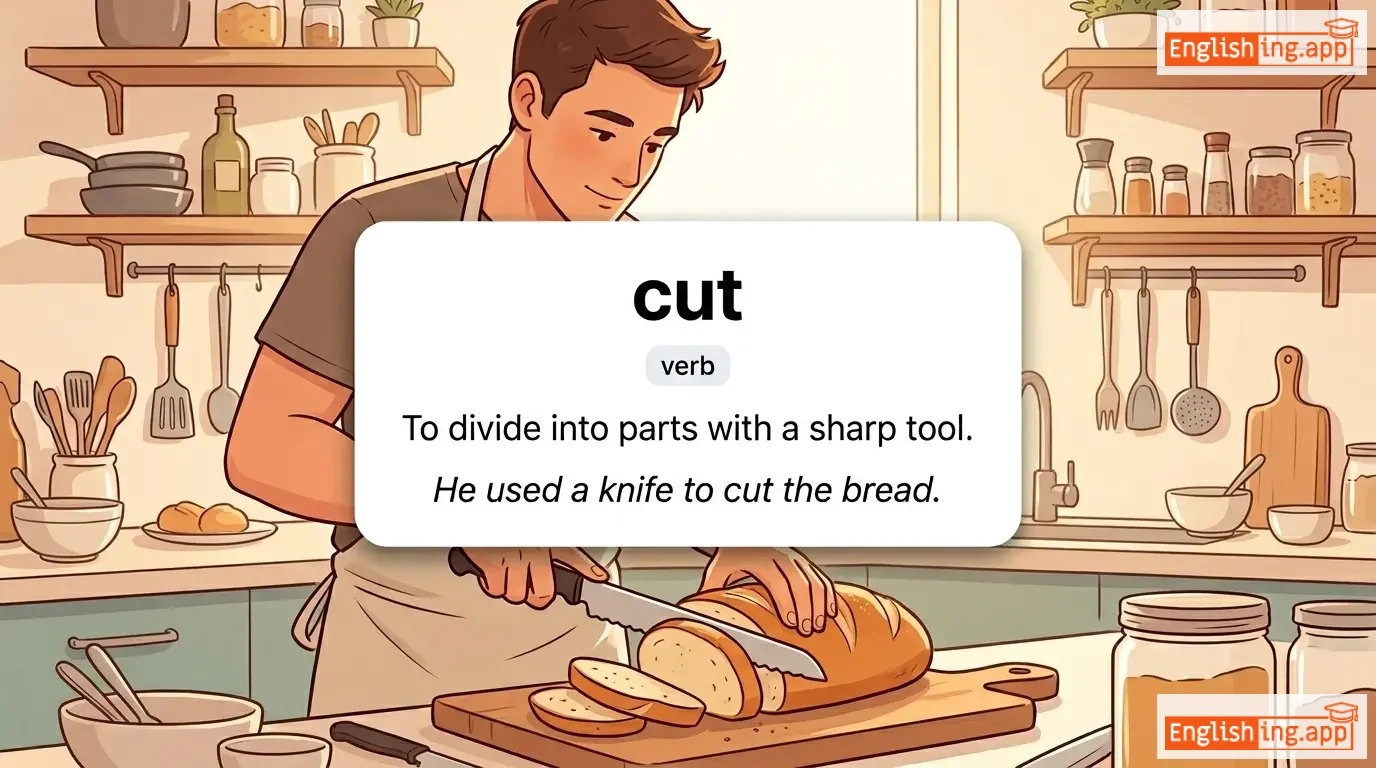
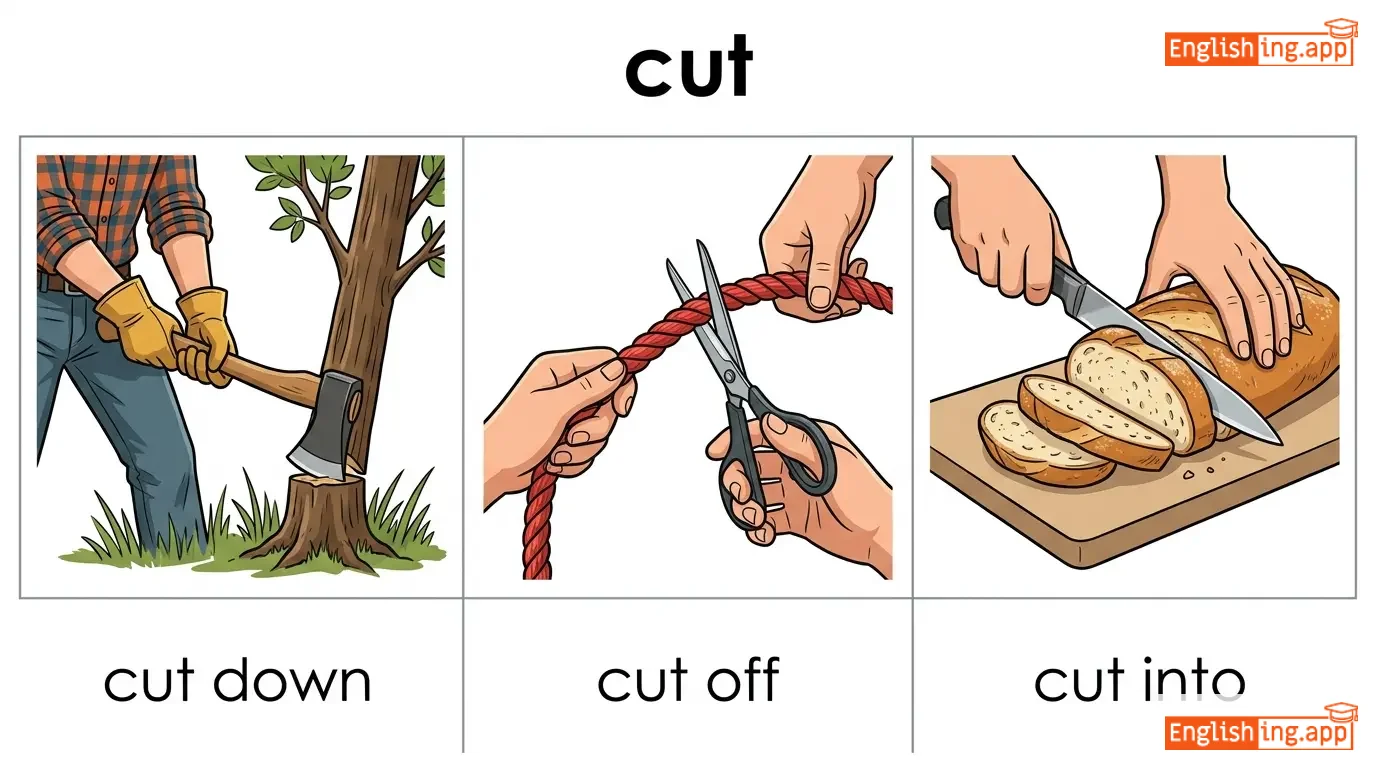
To divide into parts with a sharp tool.
••••••
|
He used a knife to cut the bread.
Он использовал нож, чтобы нарезать хлеб.
••••••
|
Он использовал нож, чтобы нарезать хлеб.
On ispol'zoval nozh, chtoby narezaty khleb.
••••••
|
cut corners
срезать углы
••••••
|
To do something in the easiest, cheapest, or fastest way, often sacrificing quality.
••••••
|
срезать углы
srezat' uglы
••••••
|
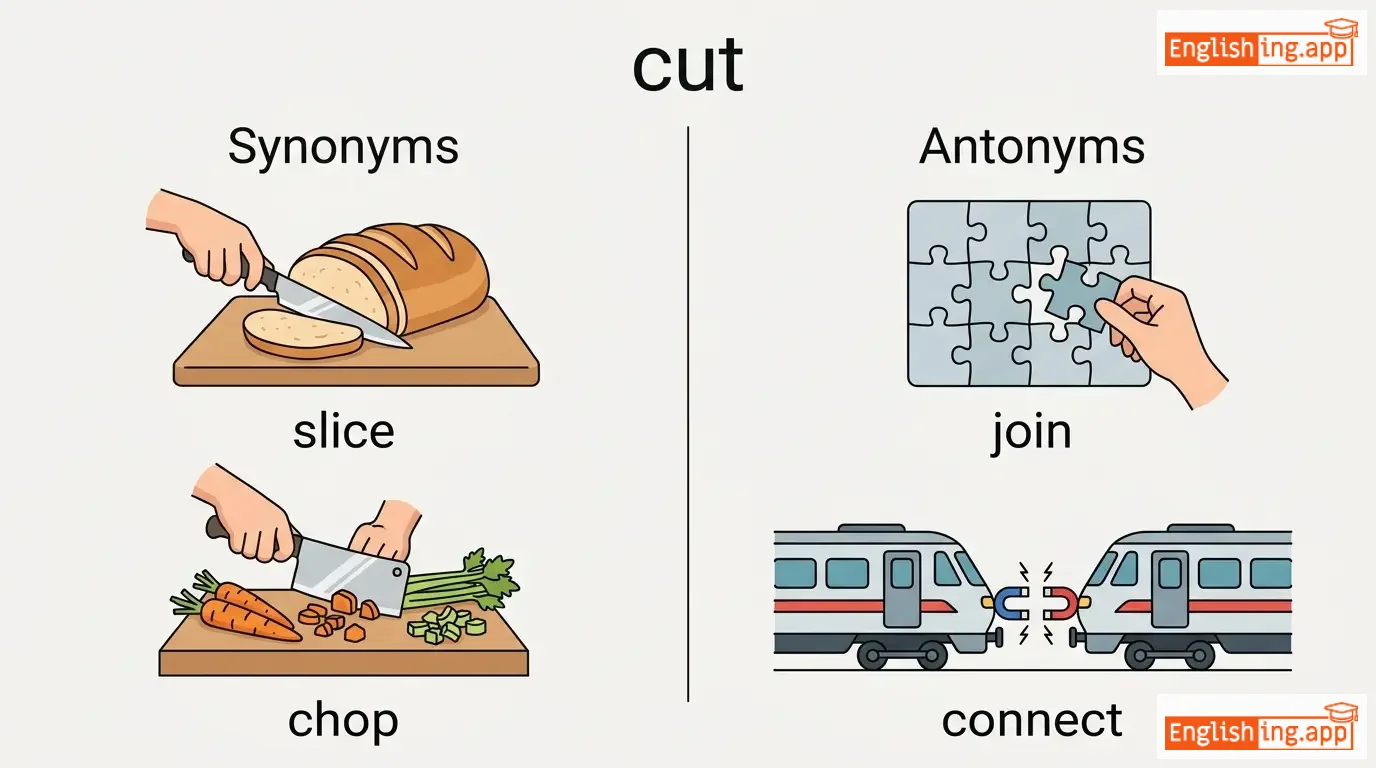
slice, chop, sever, trim, carve
••••••
|
join, connect, attach
••••••
|
cut down, cut off, cut into, cut back, cut out
••••••
|
Cut означает резать - с ножом ✂️
••••••
|
|
🐶
••••••
|
/kjuːt/
adjective
(кьют)
••••••
|
- •••••• |
милый
milyi
••••••
|
- •••••• | - •••••• | - •••••• | - •••••• |
attractive in a pretty or endearing way
••••••
|
That puppy is so cute! |
Этот щенок такой милый!
Etot shchenok takoy milyi!
••••••
|
cute as a button |
extremely adorable or charming
••••••
|
милый как пуговка
milyi kak pugovka
••••••
|
adorable, charming, lovely, sweet, pretty
••••••
|
ugly, unattractive, unpleasant
••••••
|
cute puppy, cute smile, cute dress, really cute
••••••
|
Милый означает cute — как милый щенок!
••••••
|
|
✂️
••••••
|
/ˈkʌtɪŋ/
adjective
(katin)
••••••
|
- •••••• |
резкий
rezkiy
••••••
|
- •••••• | - •••••• | - •••••• | - •••••• |
sharp or severe, often used to describe remarks or actions
••••••
|
Her cutting remarks made everyone feel uncomfortable.
Её резкие замечания заставили всех чувствовать себя неудобно.
••••••
|
Её резкие замечания заставили всех чувствовать себя неудобно.
Eyo rezkiye zamechaniya zastavili vsekh chuvstvovat' sebya neudobno.
••••••
|
- •••••• | - •••••• | - •••••• |
sharp, severe, harsh, biting
••••••
|
gentle, kind, soft
••••••
|
cutting remark, cutting tone, cutting edge
••••••
|
Помни Cutting - резкое, как лезвие ножа.
••••••
|
|
🚴
••••••
|
/ˈsaɪkl/
noun/verb
(сайкл)
••••••
|
- •••••• |
велосипед / цикл
velosiped / tsikl
••••••
|
cycled
сайкэлд
••••••
|
cycled
сайкэлд
••••••
|
cycles
сайклс
••••••
|
cycling
сайклинг
••••••
|
a series of events that repeat in the same order; or to ride a bicycle
••••••
|
She cycles to school every day.
она ездит в школу на велосипеде каждый день.
••••••
|
Она ездит в школу на велосипеде каждый день.
Ona yezdit v shkolu na velosipede kazhdyi den.
••••••
|
vicious cycle
порочный круг
••••••
|
a negative repeating pattern of events that worsens over time
••••••
|
порочный круг
porochny krug
••••••
|
sequence, rotation, series, bike, bicycle
••••••
|
stop, stagnation
••••••
|
life cycle, business cycle, cycle of events, riding a cycle
••••••
|
Cycle означает цикл, а велосипед — это движущийся цикл.
••••••
|
|
🌀
••••••
|
/ˈsaɪkloʊn/
noun
(сайклон)
••••••
|
- •••••• |
циклон
tsiklon
••••••
|
- •••••• | - •••••• | - •••••• | - •••••• |
a large-scale air mass that rotates around a strong center of low atmospheric pressure; a violent tropical storm
••••••
|
The cyclone caused severe flooding along the coast.
Зе сайклон козд сивиэ флaдинг элонг зе коуст.
••••••
|
Циклон вызвал сильные наводнения на побережье.
tsiklon vyzval silnye navodneniya na poberezhye
••••••
|
tropical cyclone
тропический циклон
••••••
|
a rotating storm system that forms over warm tropical oceans
••••••
|
тропический циклон
tropicheskiy tsiklon
••••••
|
storm, hurricane, typhoon, whirlwind, tempest
••••••
|
calm, stillness
••••••
|
powerful cyclone, tropical cyclone, severe cyclone, cyclone warning, cyclone season
••••••
|
Циклон похож на слово цикл—буря, которая вращается.
••••••
|
|
😒
••••••
|
/ˈsɪn.ɪ.kəl/
adjective
(sinikal)
••••••
|
- •••••• |
циничный
tsinichnyy
••••••
|
- •••••• | - •••••• | - •••••• | - •••••• |
Believing that people are motivated by self-interest; distrustful of human sincerity or integrity.
••••••
|
She was cynical about the politician's promises. |
Она была циничной по поводу обещаний политика.
Ona byla tsinichnoy po povodu obeshchaniy politika.
••••••
|
cynical smile |
A smile showing distrust or disbelief in sincerity.
••••••
|
циничная улыбка
tsinichnaya ulybka
••••••
|
skeptical, distrustful, suspicious, pessimistic, sarcastic
••••••
|
trusting, optimistic, gullible
••••••
|
cynical view, cynical attitude, deeply cynical, cynical smile
••••••
|
ЦИНИЧНЫЙ — всегда сомневающийся, как циничная улыбка.
••••••
|
|
👨
••••••
|
/dæd/
noun
(дэд)
••••••
|
- •••••• |
папа
papa
••••••
|
- •••••• | - •••••• | - •••••• | - •••••• |
an informal term for father
••••••
|
My dad taught me how to ride a bike. |
Мой папа научил меня кататься на велосипеде.
Moy papa nauchil menya katat'sya na velosipede.
••••••
|
like father, like son |
a child often resembles or behaves like their father
••••••
|
как отец, так и сын
kak otets, tak i syn
••••••
|
father, papa, daddy, pa
••••••
|
mother, mom
••••••
|
dad joke, dad's advice, proud dad, dad and son
••••••
|
Dad - это папа, 'дэд' и папа всегда рядом.
••••••
|
|
📅
••••••
|
/ˈdeɪli/
adjective/adverb
(деɪли)
••••••
|
- •••••• |
ежедневный
ezhednevny
••••••
|
- •••••• | - •••••• | - •••••• | - •••••• |
happening every day
••••••
|
She reads the newspaper daily. |
Она читает газету ежедневно.
Ona chitayet gazetу ezhednevno.
••••••
|
daily grind |
the monotonous routine of everyday work and life
••••••
|
ежедневная рутина
ezhednevnaya rutina
••••••
|
everyday, regular, routine, habitual
••••••
|
occasional, rare
••••••
|
daily basis, daily routine, daily life, daily tasks
••••••
|
Ежедневный значит каждый день, ежедневные действия приведут к успеху.
••••••
|
|
🐄
••••••
|
/ˈdeə.ri/
noun
(дейри)
••••••
|
- •••••• |
здание или ферма, где производится молоко; продукты из молока; магазин, продающий молоко и молочные продукты
zdanie ili ferma, gde proizvoditsya moloko; produkty iz moloka; magazin, prodayushchiy moloko i molochnye produkty
••••••
|
- •••••• | - •••••• | - •••••• | - •••••• |
a building or farm where milk is produced; products made from milk; a shop selling milk and milk products
••••••
|
The local dairy provides fresh milk and cheese to the entire neighborhood.
Местная молочная ферма предоставляет свежее молоко и сыр всему району.
••••••
|
Местная молочная ферма предоставляет свежее молоко и сыр всему району.
Mestnaya molochnaya ferma predostavlyayet svezhoye moloko i syr vsemu rayonu.
••••••
|
- •••••• | - •••••• | - •••••• |
creamery, milk farm, dairy farm
••••••
|
non-dairy, vegan alternatives
••••••
|
dairy farm, dairy products, local dairy
••••••
|
Молоко и сыр из местной молочной фермы
••••••
|
|
🏞️
••••••
|
/dæm/
noun
(дам)
••••••
|
- •••••• |
плотина
plotina
••••••
|
- •••••• | - •••••• | - •••••• | - •••••• |
a barrier built to hold back water and raise its level
••••••
|
The dam provides electricity to nearby towns. |
Плотина обеспечивает электричеством ближайшие города.
Plotina obespechivayet elektrichestvom blizhayshiye goroda.
••••••
|
burst the dam |
to release strong emotions suddenly
••••••
|
сломать плотину
slomat' plotinu
••••••
|
barrier, embankment, levee, wall, reservoir
••••••
|
flow, breach, release
••••••
|
hydroelectric dam, large dam, build a dam, dam water
••••••
|
Плотина — это барьер. Когда плотина ломается, вода выходит.
••••••
|
|
💥
••••••
|
/ˈdæmɪdʒ/
verb
(дэмидж)
••••••
|
- •••••• |
повреждение
povrezhdenie
••••••
|
damaged
дэмижд
••••••
|
damaged
дэмижд
••••••
|
damages
дэмиджес
••••••
|
damaging
дэмиджинг
••••••
|
To cause physical harm to something.
••••••
|
The storm damaged several houses in the village.
Шторм повредил несколько домов в деревне.
••••••
|
Шторм повредил несколько домов в деревне.
Shtorm povredil neskol'ko domov v derevne.
••••••
|
beyond repair
вне ремонта
••••••
|
So badly damaged that it cannot be fixed.
••••••
|
вне ремонта
vne remonta
••••••
|
harm, spoil, break, ruin, destroy
••••••
|
repair, fix, improve
••••••
|
damage control, serious damage, cause damage, property damage
••••••
|
Повреждение означает ущерб - шторм повредил дома в деревне.
••••••
|
|
⚡
••••••
|
/ˈdæmɪdʒɪŋ/
adjective
••••••
|
- •••••• | - •••••• | - •••••• | - •••••• | - •••••• | - •••••• |
causing harm or injury
••••••
|
The storm caused damaging effects to the crops. |
- •••••• | - •••••• | - •••••• | - •••••• |
harmful, injurious, destructive, deleterious
••••••
|
beneficial, harmless, protective
••••••
|
damaging effects, damaging impact, damaging consequences
••••••
|
No •••••• |
|
💧
••••••
|
/dæmp/
adjective
(дамп)
••••••
|
- •••••• |
влажный
vlazhny
••••••
|
- •••••• | - •••••• | - •••••• | - •••••• |
slightly wet, often in an unpleasant way
••••••
|
The room felt cold and damp after the rain. |
Комната казалась холодной и влажной после дождя.
Komnata kazalas' kholodnoy i vlazhnoy posle dozhdya.
••••••
|
damp squib |
something that fails to meet expectations
••••••
|
неудача
neudacha
••••••
|
moist, humid, wet, clammy, soggy
••••••
|
dry, arid, parched
••••••
|
damp air, damp room, damp clothes, cold and damp
••••••
|
Damp означает влажный - как комната после дождя.
••••••
|
|
💃
••••••
|
/dæns/
verb/noun
(счастье)
••••••
|
- •••••• |
счастье
schast'ye
••••••
|
danced
••••••
|
danced
••••••
|
dances
••••••
|
dancing
••••••
|
to move rhythmically to music, typically following a set sequence of steps
••••••
|
They danced all night at the wedding. |
Она не могла скрыть своего счастья, когда получила награду.
Ona ne mogla skryt' svoego schast'ya, kogda poluchila nagradu.
••••••
|
dance to someone's tune |
to do what someone else wants or controls
••••••
|
поиск счастья
poisk schast'ya
••••••
|
move, sway, groove, waltz, perform
••••••
|
stand, stillness
••••••
|
dance floor, dance party, traditional dance, dance steps
••••••
|
Счастье звучит как 'счастье', оно всегда внутри вас.
••••••
|
|
💃
••••••
|
/ˈdænsər/
noun
(дэнсэр)
••••••
|
- •••••• |
танцор
tantcor
••••••
|
- •••••• | - •••••• | - •••••• | - •••••• |
a person who dances or performs dancing professionally or as a hobby
••••••
|
The dancer moved gracefully across the stage. |
Танцор двигался грациозно по сцене.
Tantsor dvizhalsya gratsiozno po stsene.
••••••
|
dance to someone’s tune |
to do what someone else wants or tells you to do
••••••
|
танцевать под чью-то дудку
tantsevat' pod ch'yu-to dudku
••••••
|
performer, ballerina, entertainer, artist, choreographer
••••••
|
nonperformer, spectator
••••••
|
professional dancer, ballet dancer, street dancer, lead dancer
••••••
|
Танцор = тот, кто танцует — вспомни и танцуй, как танцор! 💃
••••••
|
|
⚠️
••••••
|
/ˈdeɪn.dʒər/
noun
(дэйнджер)
••••••
|
- •••••• |
опасность
opasnost
••••••
|
- •••••• | - •••••• | - •••••• | - •••••• |
The possibility of harm, injury, or loss.
••••••
|
The hikers were in great danger during the storm. |
Путешественники были в большой опасности во время бури.
Puteshestvenniki byli v bol'shoy opasnosti vo vremya buri.
••••••
|
in danger |
at risk of harm or injury
••••••
|
в опасности
v opasnosti
••••••
|
risk, threat, peril, hazard, jeopardy
••••••
|
safety, security, protection
••••••
|
serious danger, put in danger, danger zone, face danger
••••••
|
Danger по-английски означает 'опасность' - ⚠️ будь осторожен, если ты в опасности!
••••••
|
|
⚠️
••••••
|
/ˈdeɪndʒərəs/
adjective
(дэ́нджэрэс)
••••••
|
- •••••• |
опасный
opasnyy
••••••
|
- •••••• | - •••••• | - •••••• | - •••••• |
likely to cause harm or injury; unsafe
••••••
|
Driving fast on icy roads is dangerous. |
Ехать быстро по ледяным дорогам опасно.
Yekhat' bystro po ledyanym dorogam opasno.
••••••
|
play with fire |
to do something risky that may cause harm
••••••
|
играть с огнём
igrat' s ognyom
••••••
|
risky, hazardous, unsafe, harmful, perilous
••••••
|
safe, secure, harmless
••••••
|
dangerous situation, dangerous game, dangerous path, dangerous substance
••••••
|
Опасно похоже на 'опасность', то есть это опасно.
••••••
|
|
😎
••••••
|
/der/
verb
(dɛr)
••••••
|

|
осмелиться
osmelitsya
••••••
|
dared
dɛrd
••••••
|
dared
dɛrd
••••••
|
dares
derz
••••••
|
daring
dɛrɪŋ
••••••
|
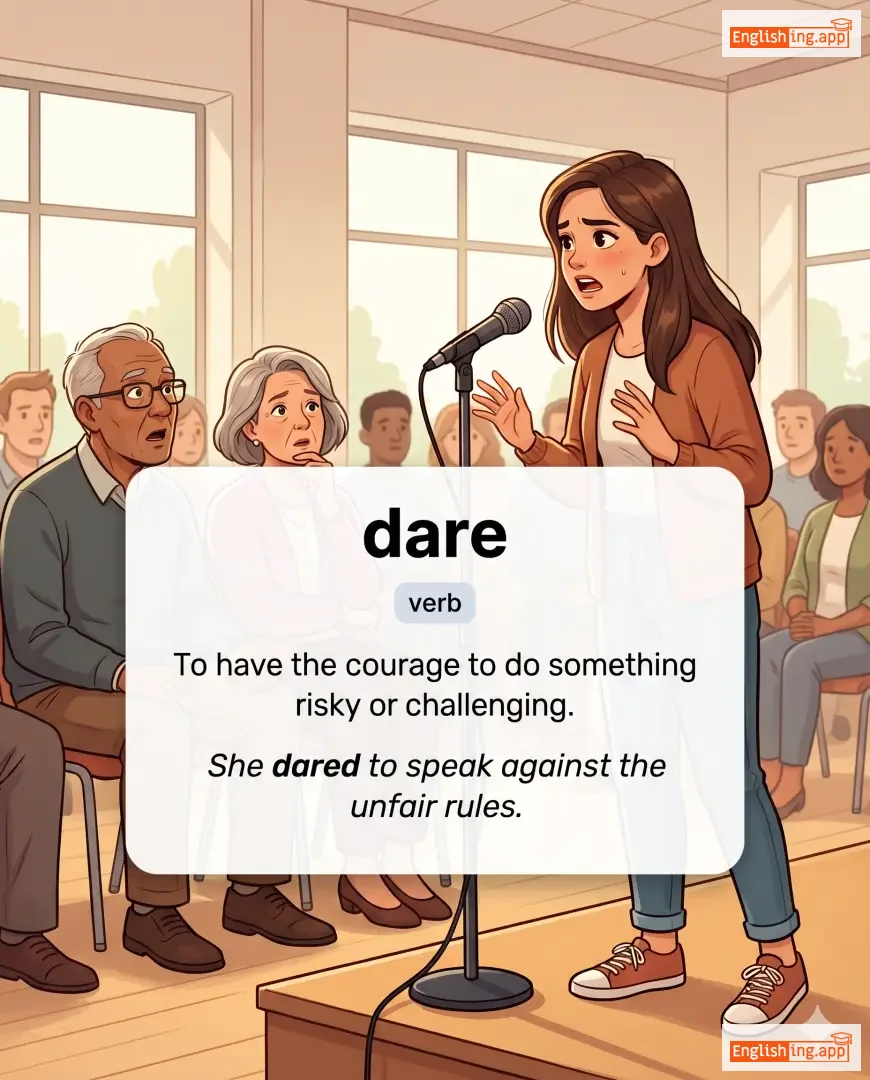
To have the courage to do something risky or challenging.
••••••
|
She dared to speak against the unfair rules.
Она осмелилась выступить против несправедливых правил.
••••••
|
Она осмелилась выступить против несправедливых правил.
Ona osmelilas' vystupit' protiv nespravedlivykh pravil.
••••••
|
How dare you
Как ты смеешь?
••••••
|
Used to express anger or shock at someone's bold action
••••••
|
Как ты смеешь?
Kak ty smeyesh'?
••••••
|
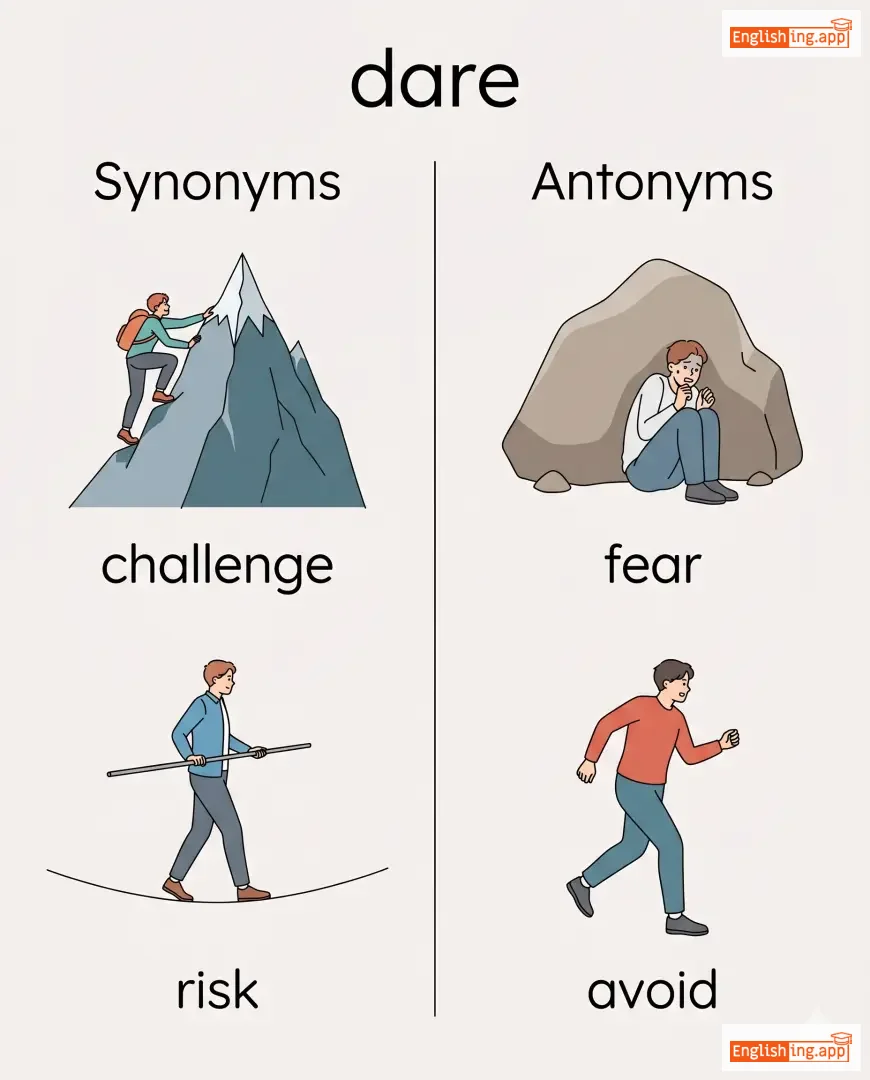
challenge, risk, venture, defy
••••••
|
fear, avoid, hesitate
••••••
|
dare to dream, dare to ask, I dare say, dare someone
••••••
|
Dare - это осмелиться, сделать что-то смелое!
••••••
|
|
🌑
••••••
|
/dɑːrk/
adjective
(дарк)
••••••
|
- •••••• |
тёмный
tyomniy
••••••
|
- •••••• | - •••••• | - •••••• | - •••••• |
with little or no light; gloomy or mysterious
••••••
|
The room was dark after the lights went out.
Зе рум ваз дарк афтер зе лайтс вэнт аут.
••••••
|
Комната стала тёмной, когда погасли огни.
Komnata stala tyomnoy kogda pogasli ogni.
••••••
|
in the dark
ин зе дарк
••••••
|
not informed; unaware
••••••
|
в неведении
v nevedenii
••••••
|
dim, gloomy, shadowy, black, obscure
••••••
|
bright, light, clear
••••••
|
dark night, dark room, dark secret, dark times
••••••
|
Dark по-русски — тёмный. Когда нет света, всё становится тёмным.
••••••
|

