|
表情符号
|
单词 | Images | 翻译 | 过去时 | 过去分词 | 第三人称单数 | 动名词 | 含义 | 例句 | 例句翻译 | 示例表达 | 示例表达含义 | 示例表达翻译 | 同义词 | 反义词 | 搭配词 | 助记符 |
|---|---|---|---|---|---|---|---|---|---|---|---|---|---|---|---|---|---|
|
🚶♂️🚶♀️
••••••
|
/ˈkraʊdɪd/
adjective
(happiness)
••••••
|
- •••••• |
幸福
xìngfú
••••••
|
- •••••• | - •••••• | - •••••• | - •••••• |
filled with too many people or things
••••••
|
The bus was so crowded that I could hardly move. |
当她收到奖项时,她无法掩饰自己的幸福。
Dāng tā shōu dào jiǎngxiàng shí, tā wúfǎ yǎnshì zìjǐ de xìngfú.
••••••
|
packed like sardines |
to be in a very crowded space
••••••
|
追求幸福
Zhuīqiú xìngfú
••••••
|
packed, congested, jammed, full, busy
••••••
|
empty, vacant, spacious
••••••
|
crowded place, crowded street, crowded market, become crowded
••••••
|
幸福是找到自己快乐的时刻。
••••••
|
|
👑
••••••
|
/kraʊn/
noun
(kraun)
••••••
|
- •••••• |
王冠
wangguan
••••••
|
- •••••• | - •••••• | - •••••• | - •••••• |
a circular ornamental headdress worn by a monarch as a symbol of authority
••••••
|
The king wore his golden crown at the ceremony. |
国王在仪式上戴上了他的金色王冠。
Guówáng zài yíshì shàng dàishàng le tā de jīnsè wángguān.
••••••
|
wear the crown |
to accept the responsibility or power of leadership
••••••
|
戴上王冠
dài shàng wángguān
••••••
|
tiara, diadem, coronet
••••••
|
helmet, cap
••••••
|
royal crown, golden crown, wear the crown
••••••
|
当国王戴上王冠时,他承担起了领导责任和权力。
••••••
|
|
⭐
••••••
|
/ˈkruːʃəl/
adjective
(kru-xi-ao)
••••••
|

|
关键的
guan-jian de
••••••
|
- •••••• | - •••••• | - •••••• | - •••••• |
extremely important or necessary
••••••
|
Trust is crucial for a strong relationship. |
信任对强大的关系至关重要。
Xinren dui qiangda de guanxi zhiguang zhongyao.
••••••
|
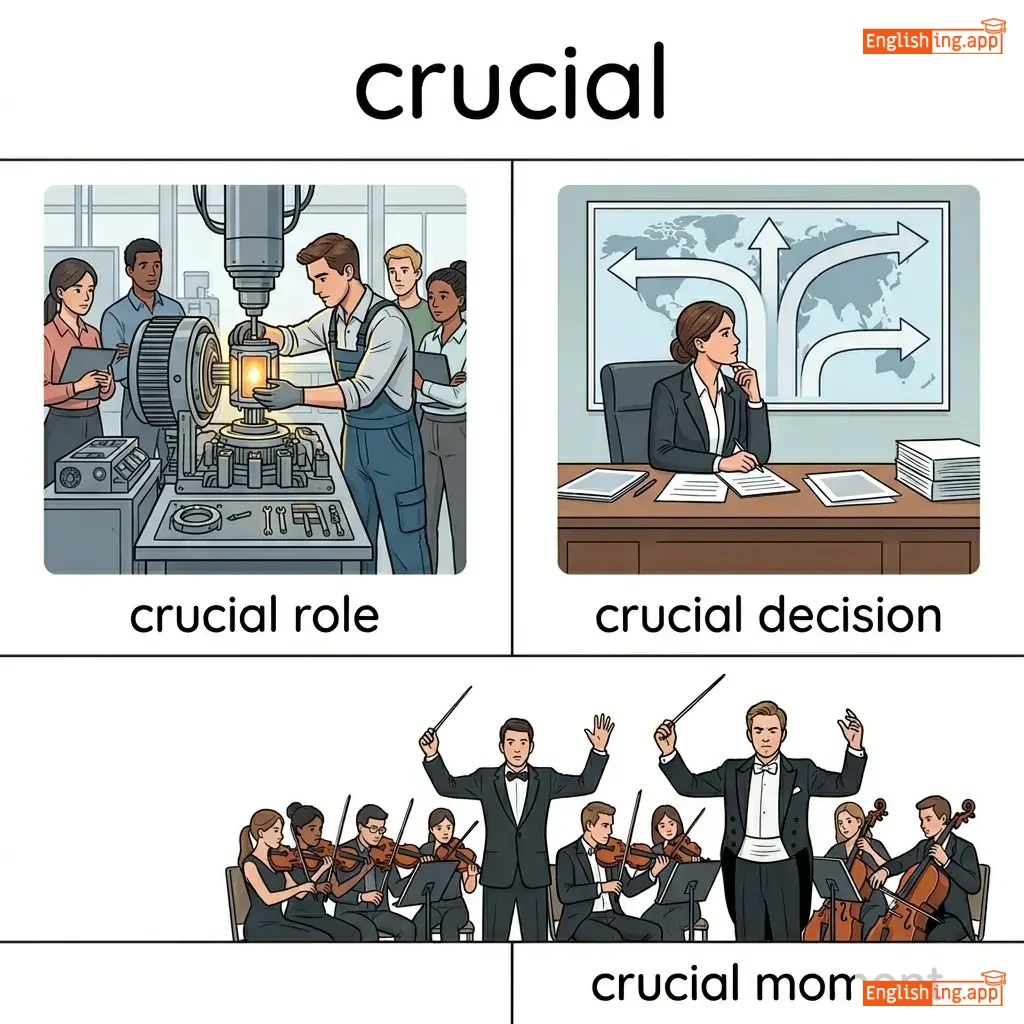
crucial role |
an extremely important part or function
••••••
|
关键角色
guan-jian jue-se
••••••
|
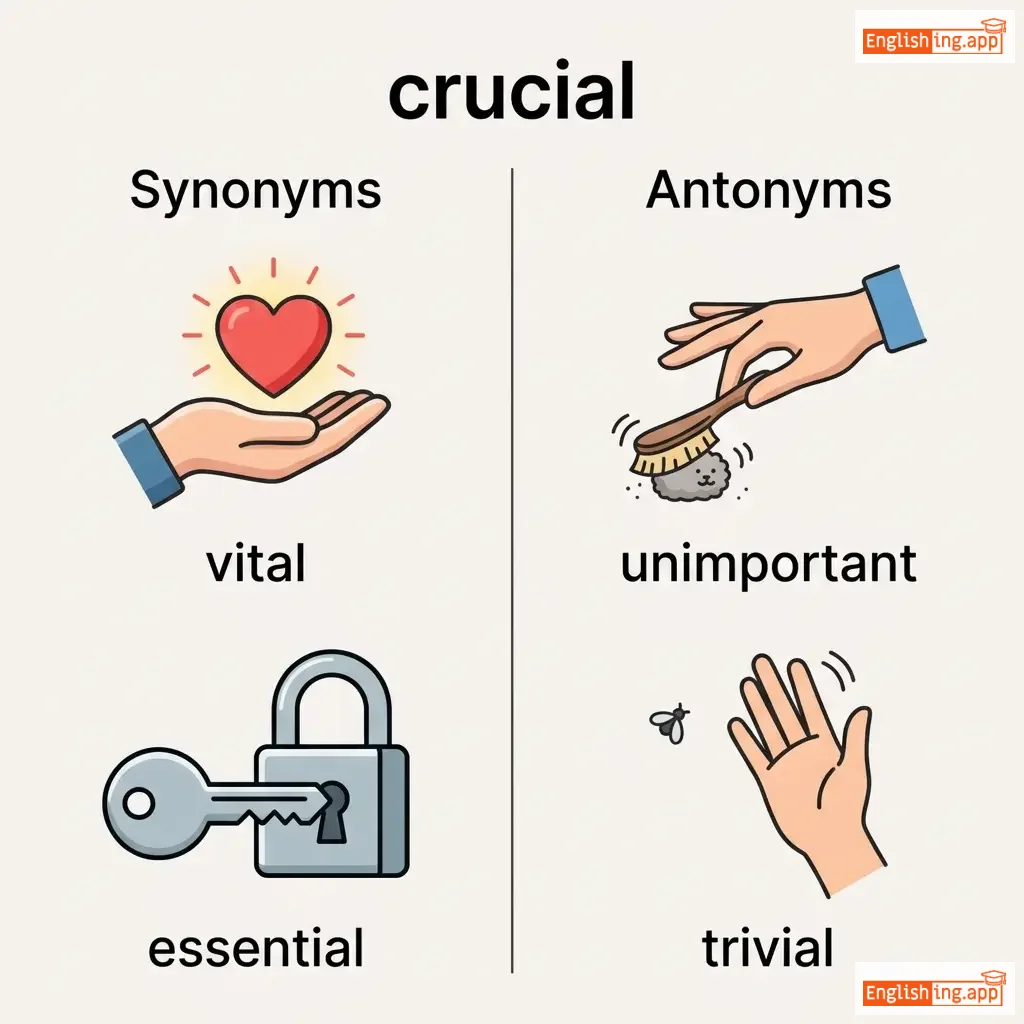
vital, essential, critical, key, significant
••••••
|
unimportant, trivial, minor
••••••
|
crucial role, crucial decision, crucial moment, crucial factor
••••••
|
CRUCIAL意味着关键,像电影中的关键角色。
••••••
|
|
🛢️
••••••
|
/kruːd/
adjective
(kruːd)
••••••
|
- •••••• |
原油
yuányóu
••••••
|
- •••••• | - •••••• | - •••••• | - •••••• |
in a natural or raw state; not yet processed or refined
••••••
|
The crude oil is processed into fuel and chemicals. |
原油被加工成燃料和化学品。
Yuányóu bèi jiāgōng chéng ránliào hé huàxué pǐn.
••••••
|
- •••••• | - •••••• | - •••••• |
raw, unrefined, rough, unprocessed
••••••
|
refined, processed, pure
••••••
|
crude oil, crude nature, crude estimate
••••••
|
Crude 石油是原始的 - Crude oil is raw
••••••
|
|
💔
••••••
|
/ˈkruːəl/
adjective
(克鲁尔)
••••••
|
- •••••• |
残忍
cánrěn
••••••
|
- •••••• | - •••••• | - •••••• | - •••••• |
Willfully causing pain or suffering to others, or feeling no concern about it.
••••••
|
It was cruel to make fun of the injured boy. |
嘲笑受伤的男孩是残忍的。
cháoxiào shòushāng de nán hái shì cánrěn de.
••••••
|
cruel and unusual punishment |
Punishment considered inhumane, degrading, or excessively harsh.
••••••
|
残忍和不寻常的惩罚
cánrěn hé bù xúncháng de chéngfá
••••••
|
harsh, brutal, unkind, ruthless, merciless
••••••
|
kind, gentle, compassionate
••••••
|
cruel joke, cruel act, cruel treatment, cruel world
••••••
|
Cruel 意味着残忍惩罚 – 残忍惩罚。
••••••
|
|
🛳️
••••••
|
/kruːz/
verb
••••••
|
- •••••• |
幸福
xìngfú
••••••
|
cruised
••••••
|
cruised
••••••
|
cruises
••••••
|
cruising
••••••
|
to travel smoothly at a moderate speed, especially for pleasure
••••••
|
They decided to cruise along the coast during their vacation. |
她无法掩饰当她收到奖项时的幸福。
Tā wúfǎ yǎnshì dāng tā shōudào jiǎngxiàng shí de xìngfú.
••••••
|
cruise control |
a system that automatically controls the speed of a vehicle
••••••
|
追求幸福
zhuīqiú xìngfú
••••••
|
sail, glide, drift, coast, navigate
••••••
|
anchor, halt, stop
••••••
|
go on a cruise, cruise ship, cruise along, luxury cruise
••••••
|
幸福就是不断追求的一种状态。
••••••
|
|
💔
••••••
|
/krʌʃ/
verb
••••••
|
- •••••• | - •••••• |
crushed
••••••
|
crushed
••••••
|
crushes
••••••
|
crushing
••••••
|
to press or squeeze something so hard that it is damaged or destroyed
••••••
|
He accidentally crushed the paper cup in his hand. |
- •••••• |
have a crush on someone |
to have a romantic attraction toward someone
••••••
|
- •••••• |
squash, squeeze, compress, smash, flatten
••••••
|
build, repair, release
••••••
|
crush into pieces, crush under pressure, have a crush, crush completely
••••••
|
No •••••• |
|
😢
••••••
|
/kraɪ/
verb, noun
••••••
|
- •••••• | - •••••• |
cried
••••••
|
cried
••••••
|
cries
••••••
|
crying
••••••
|
To shed tears as an expression of emotion such as sadness or pain; also a loud call or shout.
••••••
|
The baby began to cry when she was hungry. |
- •••••• |
cry over spilled milk |
To waste time worrying about something that has already happened and cannot be changed.
••••••
|
- •••••• |
weep, sob, wail, scream, yell
••••••
|
laugh, smile, rejoice
••••••
|
cry out, cry for help, cry with joy, loud cry
••••••
|
No •••••• |
|
💎
••••••
|
/ˈkrɪstəl/
noun
(kè lóng)
••••••
|
- •••••• |
水晶
shuǐjīng
••••••
|
- •••••• | - •••••• | - •••••• | - •••••• |
a clear, transparent mineral or glass that forms a solid structure with regular patterns
••••••
|
She wore a necklace made of sparkling crystal. |
她戴着一条闪闪发光的水晶项链。
Tā dàizhe yītiáo shǎnshǎn fāguāng de shuǐjīng xiàngliàn.
••••••
|
clear as crystal |
extremely clear and easy to understand
••••••
|
清澈如水晶
qīngchè rú shuǐjīng
••••••
|
glass, gem, quartz, diamond, prism
••••••
|
opaque, dull
••••••
|
crystal clear, crystal glass, crystal necklace, crystal water
••••••
|
Crystal clear意味着完全清晰——像水晶一样清晰!
••••••
|
|
🥒
••••••
|
/ˈkjuː.kʌm.bər/
noun
(kui-ke-mu-ba)
••••••
|
- •••••• |
黄瓜
huanggua
••••••
|
- •••••• | - •••••• | - •••••• | - •••••• |
a long green vegetable with watery flesh, eaten raw in salads or cooked
••••••
|
I added fresh cucumber slices to my salad.
我在沙拉里加入了新鲜的黄瓜片。
••••••
|
我在沙拉里加入了新鲜的黄瓜片。
Wo zai shala li jiaru le xinxian de huanggua pian.
••••••
|
- •••••• | - •••••• | - •••••• |
gherkin
••••••
|
- •••••• |
cucumber sandwich, sliced cucumber, fresh cucumber, cucumber salad
••••••
|
Think of '黄瓜' as cucumber in Chinese!
••••••
|
|
🎭
••••••
|
/kjuː/
noun/verb
(kiu)
••••••
|
- •••••• |
信号
xinhao
••••••
|
cued
kiud
••••••
|
cued
kiud
••••••
|
cues
kius
••••••
|
cueing
kiuing
••••••
|
A signal or prompt for action; to give a signal.
••••••
|
The actor waited for his cue before entering the stage.
演员在上台前等待他的信号。
••••••
|
演员在上台前等待他的信号。
Yǎnyuán zài shàngtái qián děngdài tā de xìnhào.
••••••
|
on cue
准时
••••••
|
At exactly the right moment, as expected.
••••••
|
准时
zhǔnshí
••••••
|
signal, prompt, hint, indication, trigger
••••••
|
silence, ignore, neglect
••••••
|
take a cue, give a cue, wait for a cue, cue card
••••••
|
Cue表示,队列(queue)开始——开始的信号。
••••••
|
|
🕯️
••••••
|
/kʌlt/
noun
(kʌlt)
••••••
|
- •••••• |
邪教
xie jiao
••••••
|
- •••••• | - •••••• | - •••••• | - •••••• |
a system of religious veneration and devotion directed toward a particular figure or object
••••••
|
The cult followed their leader with great devotion. |
邪教以极大的献身精神追随他们的领袖。
Xie jiao yi jidai de xianshen jingshen zhui sui tamen de lingxiu.
••••••
|
- •••••• | - •••••• | - •••••• |
sect, movement, group, following
••••••
|
mainstream, tradition
••••••
|
cult following, cult leader, religious cult
••••••
|
邪教 = 崇拜和献身
••••••
|
|
🌱
••••••
|
/ˈkʌltɪveɪt/
verb
(海皮尼斯)
••••••
|
|
幸福
xìng fú
••••••
|
cultivated
••••••
|
cultivated
••••••
|
cultivates
••••••
|
cultivating
••••••
|
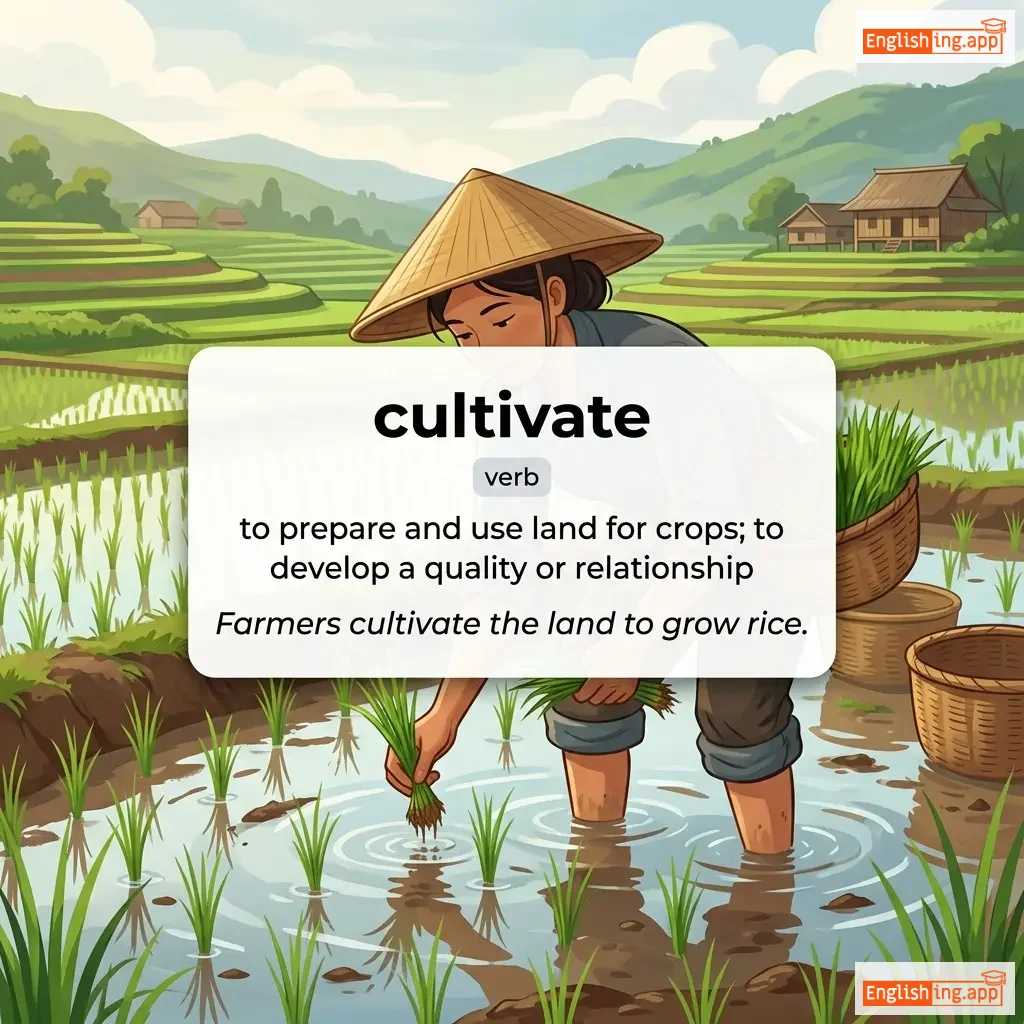
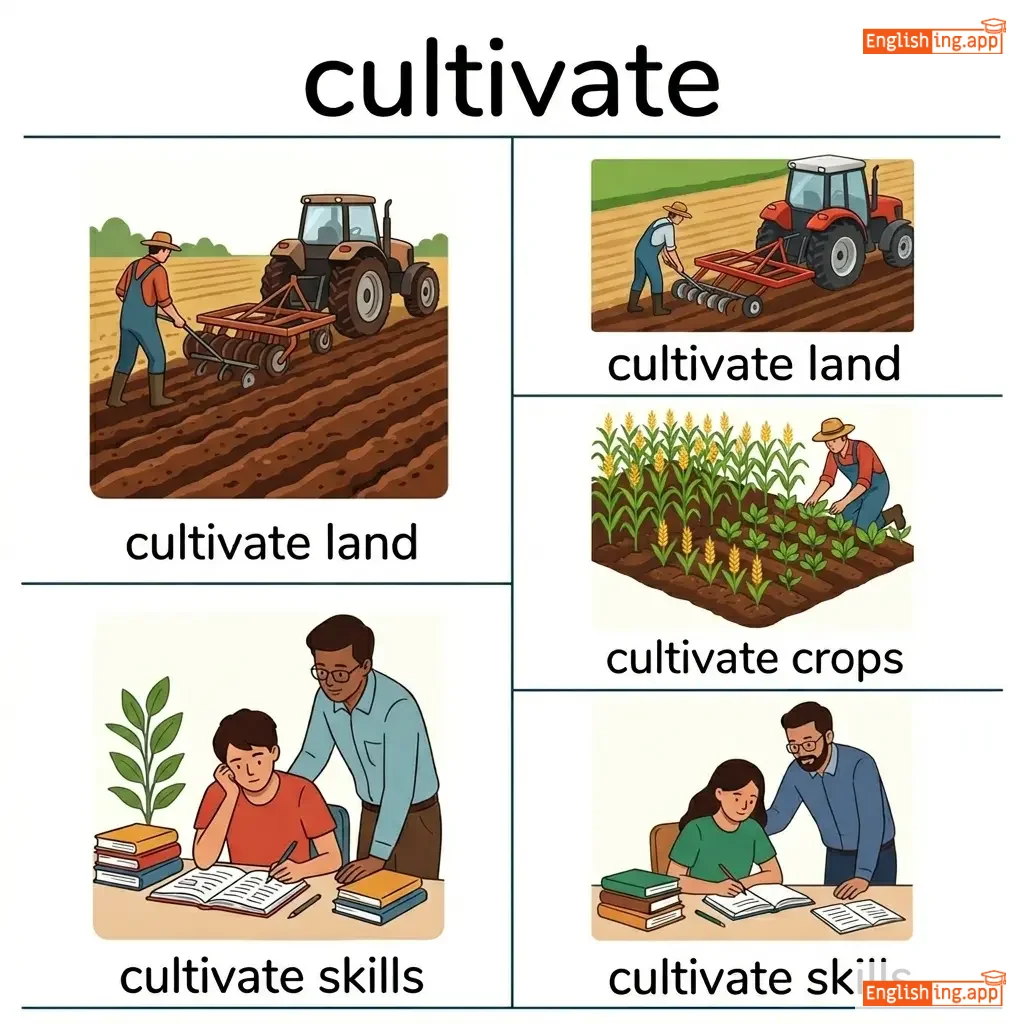
to prepare and use land for crops; to develop a quality or relationship
••••••
|
Farmers cultivate the land to grow rice.
她无法掩饰她收到奖项时的幸福。
••••••
|
她无法掩饰她收到奖项时的幸福。
Tā wúfǎ yǎnshì tā shōu dào jiǎngxiàng shí de xìngfú.
••••••
|
cultivate friendship
追求幸福
••••••
|
to develop a good relationship with someone
••••••
|
追求幸福
zhuīqiú xìngfú
••••••
|
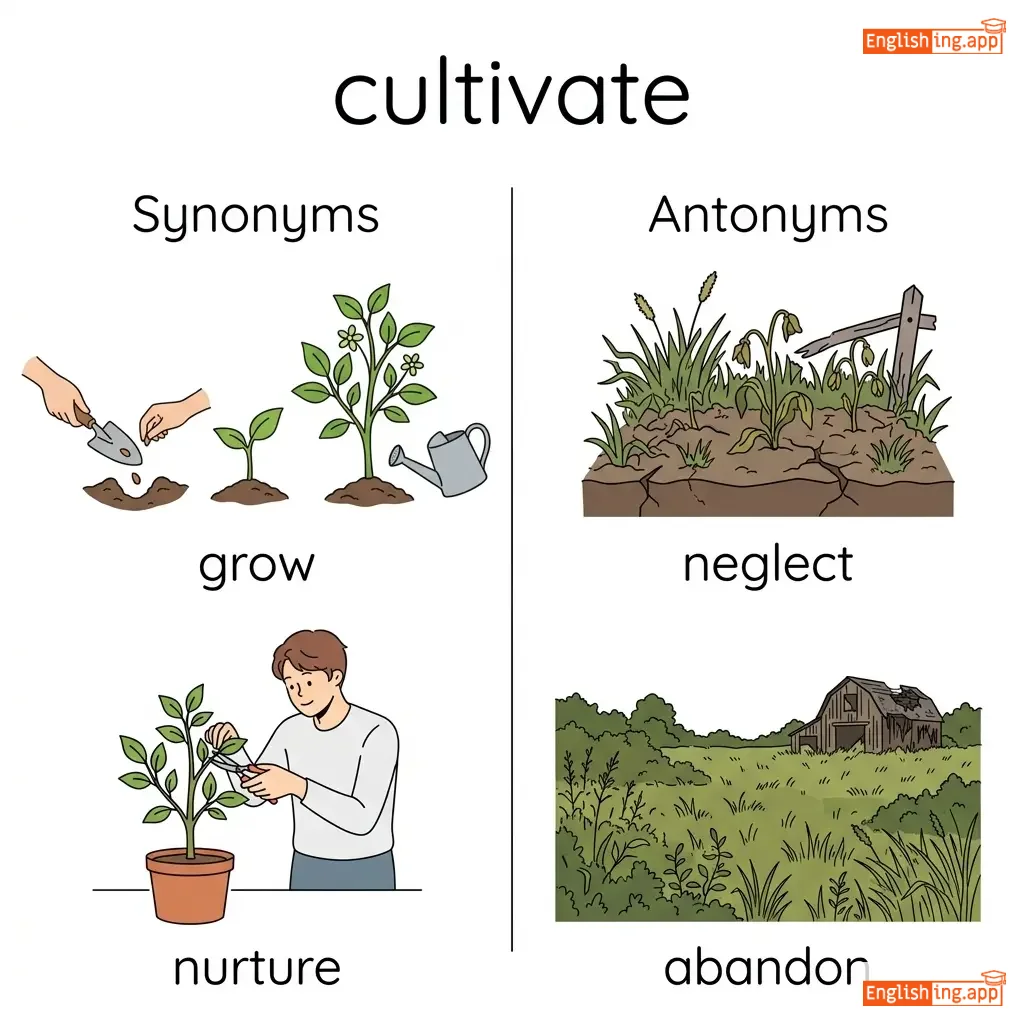
grow, nurture, develop, foster, promote
••••••
|
neglect, abandon
••••••
|
cultivate land, cultivate crops, cultivate skills, cultivate habits
••••••
|
幸福是在寻找它的过程中,就像追求幸福一样。
••••••
|
|
🎭
••••••
|
/ˈkʌltʃərəl/
adjective
(kʌltʃərəl)
••••••
|
|
文化的
wenhua de
••••••
|
- •••••• | - •••••• | - •••••• | - •••••• |
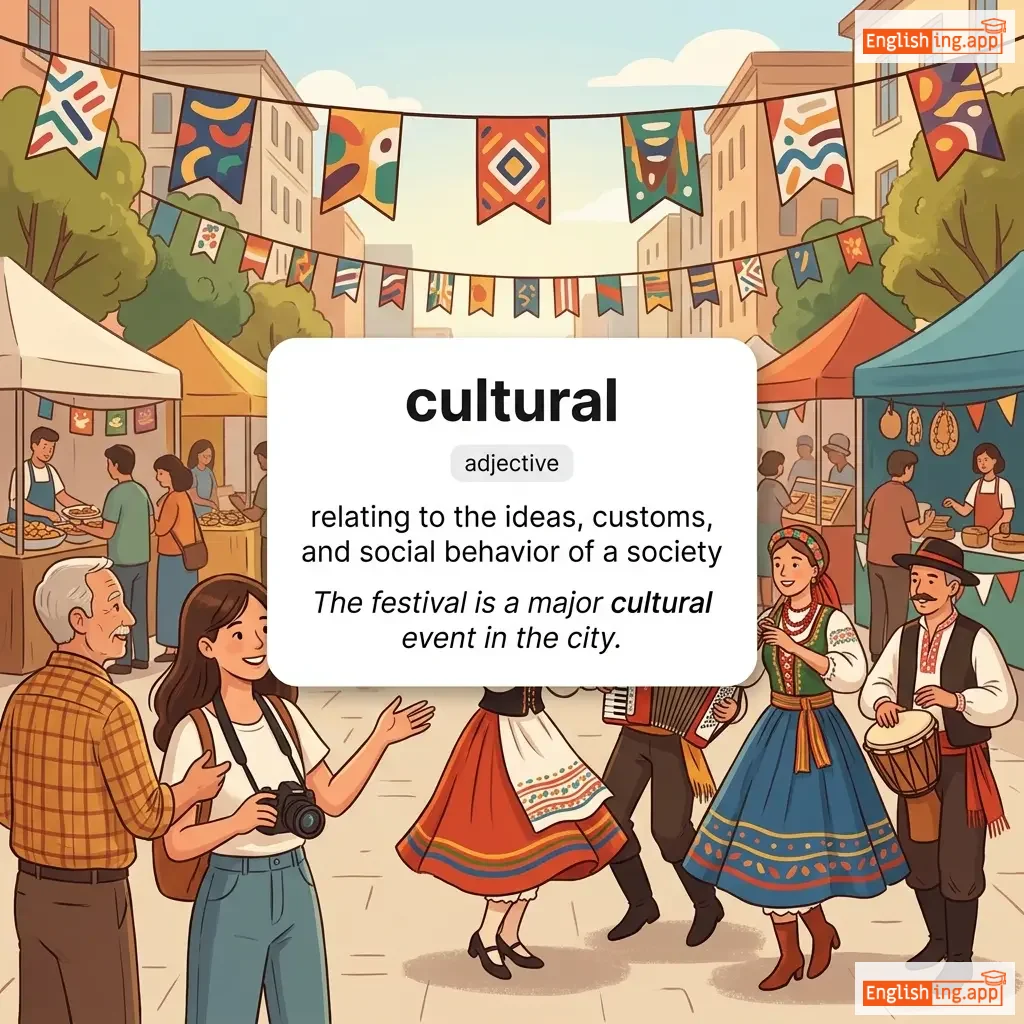
relating to the ideas, customs, and social behavior of a society
••••••
|
The festival is a major cultural event in the city. |
这个节日是城市里一个重要的文化活动。
Zhege jieri shi chengshi li yige zhongyao de wenhua huodong.
••••••
|
- •••••• | - •••••• | - •••••• |
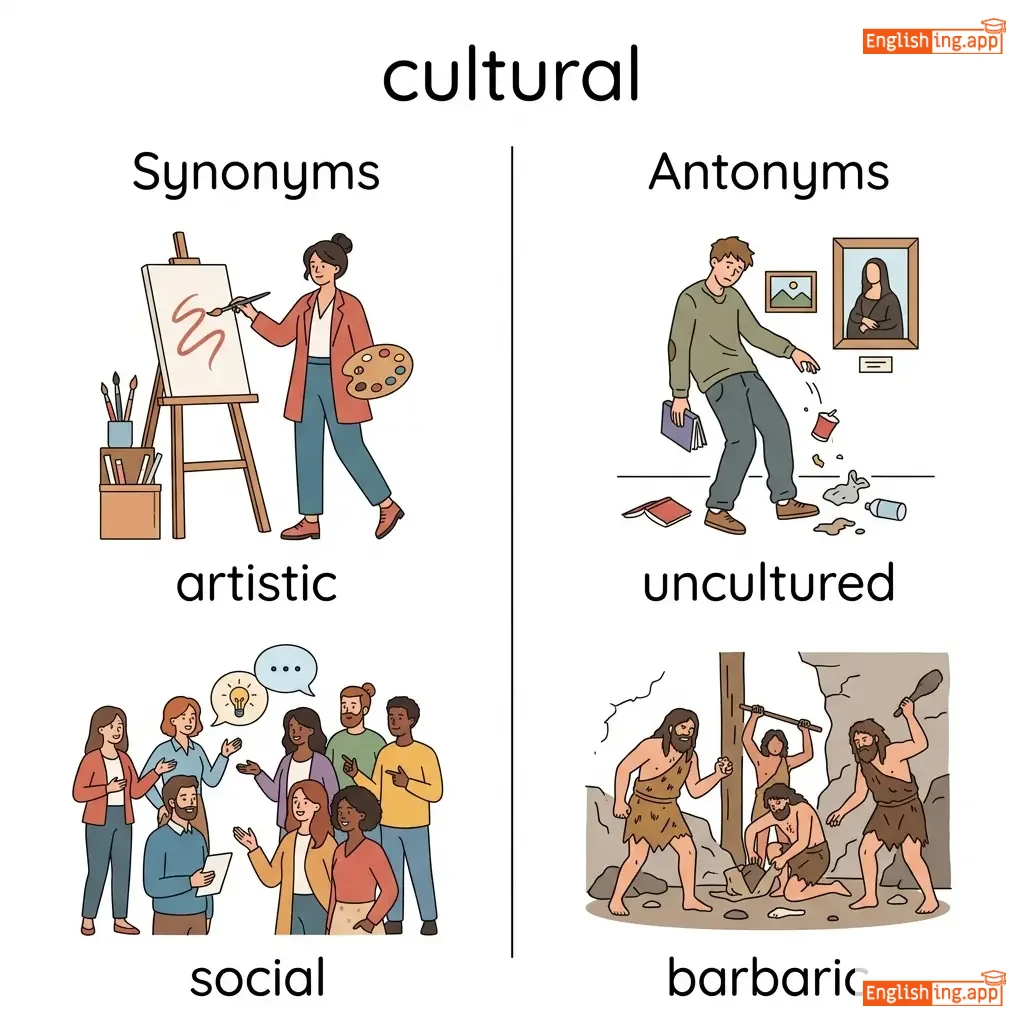
artistic, social, traditional, heritage, ethnic
••••••
|
uncultured, barbaric
••••••
|
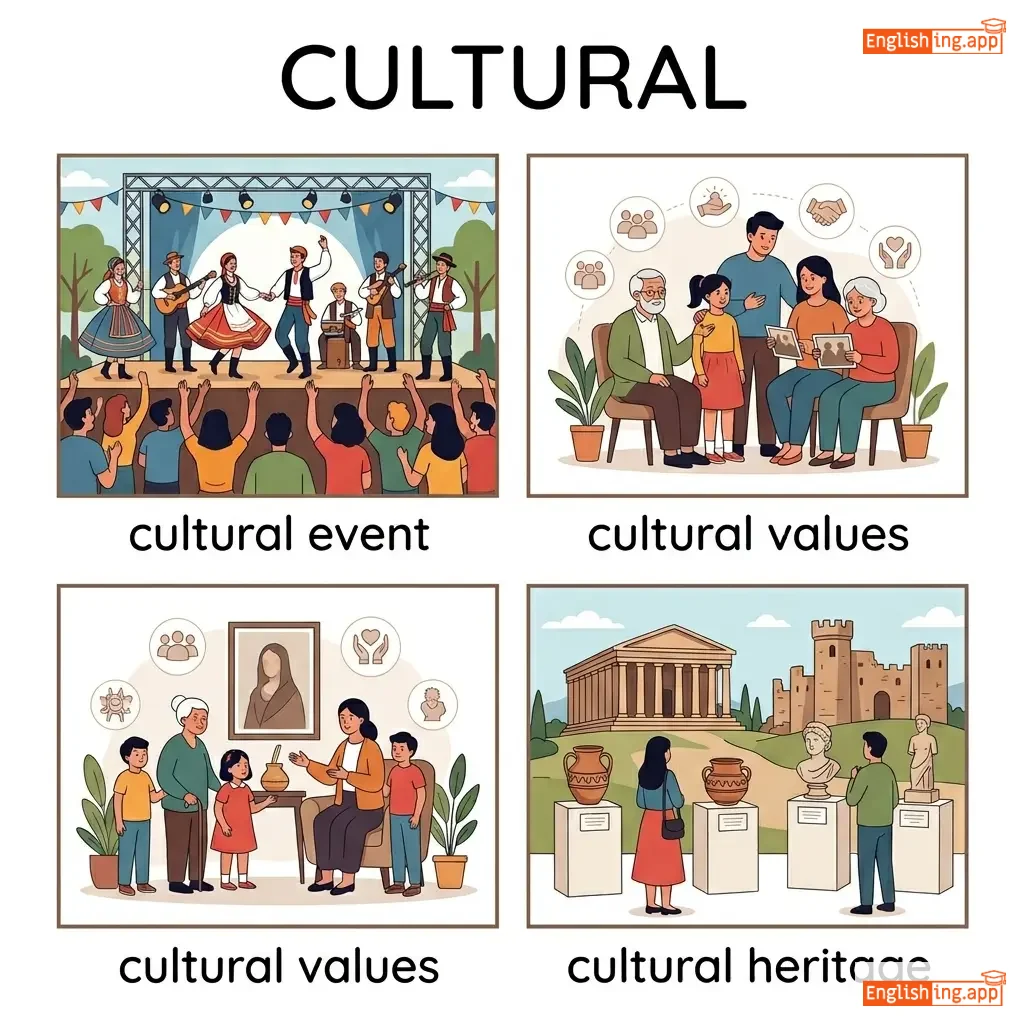
cultural event, cultural values, cultural heritage, cultural identity
••••••
|
文化的与社会的习惯和行为密切相关。
••••••
|
|
🌍
••••••
|
/ˈkʌltʃər/
noun
(kǎo tè)
••••••
|
- •••••• |
文化
wenhua
••••••
|
- •••••• | - •••••• | - •••••• | - •••••• |
the customs, arts, social institutions, and achievements of a particular people or society
••••••
|
Japanese culture is admired all over the world. |
日本文化在全世界都受到钦佩。
Riben wenhua zai quanshijie dou shoudao qinpei.
••••••
|
popular culture |
modern cultural activities and products that are well-liked by many people
••••••
|
流行文化
liuxing wenhua
••••••
|
civilization, tradition, lifestyle, heritage, society
••••••
|
barbarism, uncivilized
••••••
|
rich culture, preserve culture, local culture, diverse culture
••••••
|
文化(wenhua)是社会发展和个人行为的体现
••••••
|
|
☕
••••••
|
/kʌp/
noun
(杯)
••••••
|
- •••••• |
杯子
beizi
••••••
|
- •••••• | - •••••• | - •••••• | - •••••• |
a small bowl-shaped container for drinking from, typically with a handle
••••••
|
She drank a cup of tea in the morning. |
她早上喝了一杯茶。
Ta zao shang he le yi bei cha.
••••••
|
cup of tea |
something one enjoys or prefers
••••••
|
茶杯
cha bei
••••••
|
mug, glass, goblet, chalice
••••••
|
bottle, jug
••••••
|
cup of tea, coffee cup, paper cup, measuring cup
••••••
|
杯子 = 喝饮料用的容器
••••••
|
|
🚪
••••••
|
/ˈkʌp.bɔːrd/
noun
(kàp-bórd)
••••••
|
- •••••• |
橱柜
chúguì
••••••
|
- •••••• | - •••••• | - •••••• | - •••••• |
a piece of furniture with doors and shelves for storing dishes, food, or clothes
••••••
|
She stored all the plates and bowls in the kitchen cupboard.
她把所有的盘子和碗放进了厨房的橱柜里。
••••••
|
她把所有的盘子和碗放进了厨房的橱柜里。
Tā bǎ suǒyǒu de pánzi hé wǎn fàng jìnle chúfáng de chúguì lǐ.
••••••
|
- •••••• | - •••••• | - •••••• |
cabinet, closet, wardrobe
••••••
|
- •••••• |
kitchen cupboard, storage cupboard, wooden cupboard, built-in cupboard
••••••
|
橱柜是存储物品的地方,就像厨房里的大宝箱。
••••••
|
|
💊
••••••
|
/kjʊər/
verb
(kiur)
••••••
|
- •••••• |
治疗
zhiliao
••••••
|
cured
kiurd
••••••
|
cured
kiurd
••••••
|
cures
kiurs
••••••
|
curing
kiuring
••••••
|
to make someone healthy again after an illness
••••••
|
The new medicine cured her of the infection.
新的药物治愈了她的感染。
••••••
|
新的药物治愈了她的感染。
Xīn de yào wù zhì yù le tā de gǎn rǎn.
••••••
|
prevention is better than cure
预防胜于治疗
••••••
|
it is better to stop something bad from happening than to deal with it later
••••••
|
预防胜于治疗
Yùfáng shèng yú zhìliáo
••••••
|
heal, treat, remedy, recover, fix
••••••
|
infect, harm, worsen
••••••
|
cure disease, cure illness, cure patient, cure completely
••••••
|
Cure 就是治愈 — 记住,治疗是确保健康的办法!
••••••
|
|
🧐
••••••
|
/ˌkjʊəriˈɒsɪti/
noun
(kiuriositi)
••••••
|
- •••••• |
好奇心
haoqixin
••••••
|
- •••••• | - •••••• | - •••••• | - •••••• |
a strong desire to know or learn something
••••••
|
Children have a natural curiosity about the world around them. |
孩子们对周围的世界充满自然的好奇心。
Háizimen duì zhōuwéi de shìjiè chōngmǎn zìrán de hàoqí xīn.
••••••
|
curiosity killed the cat |
being too inquisitive can lead to trouble
••••••
|
好奇害死猫
Hàoqí hài sǐ māo
••••••
|
inquisitiveness, interest, eagerness, wonder, fascination
••••••
|
indifference, apathy
••••••
|
natural curiosity, spark curiosity, satisfy curiosity, human curiosity
••••••
|
好奇心是想知道的愿望——好奇的人想知道一切!
••••••
|
|
🤔
••••••
|
/ˈkjʊəriəs/
adjective
(kjuˈɹɪəs)
••••••
|


|
好奇
haoqí
••••••
|
- •••••• | - •••••• | - •••••• | - •••••• |
eager to know or learn something
••••••
|
The child was curious about the stars in the sky. |
孩子对天空中的星星感到好奇。
Háizi duì tiānkōng zhōng de xīngxīng gǎndào hàoqí.
••••••
|
curiosity killed the cat |
being too inquisitive can lead to trouble
••••••
|
好奇害死猫
hàoqí hài sǐ māo
••••••
|
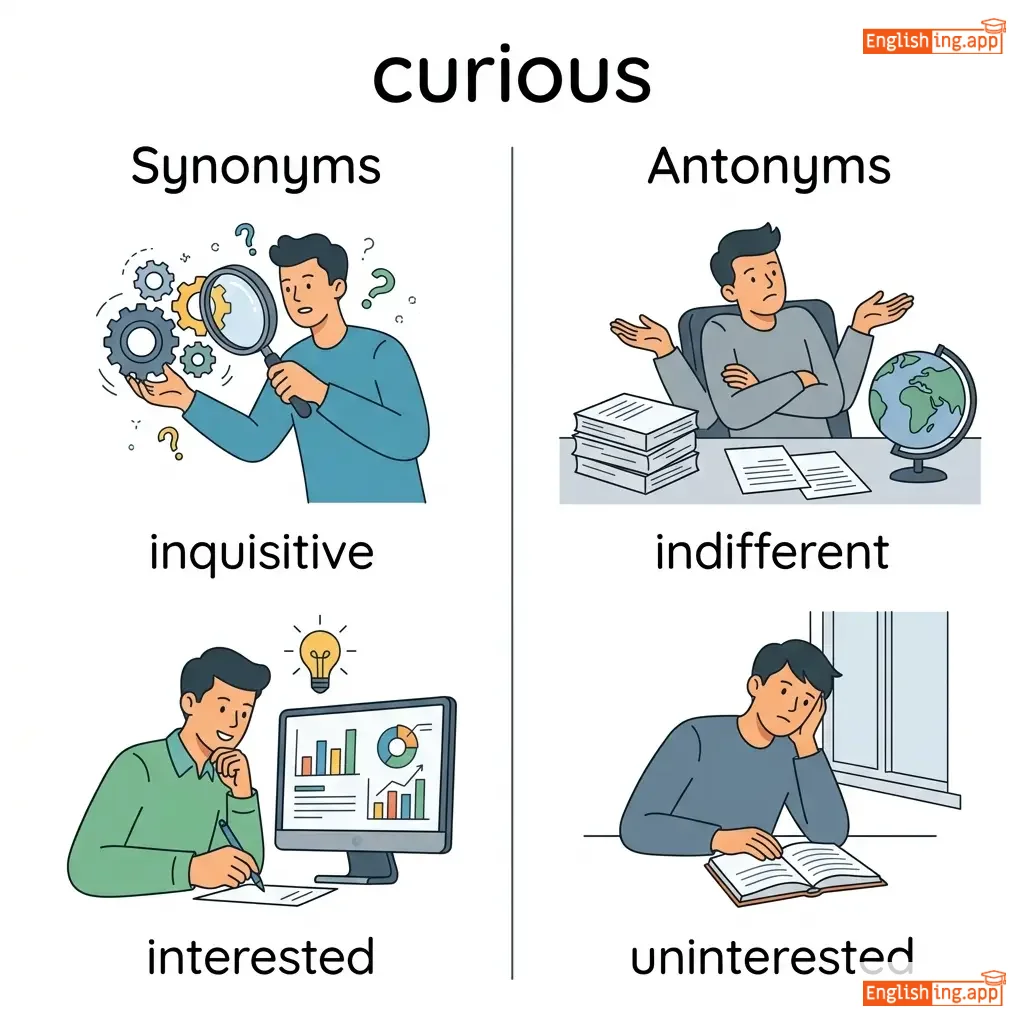
inquisitive, interested, eager, questioning
••••••
|
indifferent, uninterested
••••••
|
curious mind, curious about, curious look, curious case
••••••
|
好奇意味着好奇——就像不停地问‘什么?’
••••••
|
|
🐁
••••••
|
/kɜːrl/
noun
(kè ěr)
••••••
|
- •••••• |
卷发; 螺旋形状
juan fa; luoxuan xingzhuang
••••••
|
- •••••• | - •••••• | - •••••• | - •••••• |
a piece of hair that curves or coils; something with a spiral or curved shape
••••••
|
She had beautiful natural curls that framed her face perfectly.
她有美丽的自然卷发,完美地框住了她的脸。
••••••
|
她有美丽的自然卷发,完美地框住了她的脸。
Tā yǒu měilì de zìrán juǎn fa, wánměi de kuàng zhùle tā de liǎn.
••••••
|
- •••••• | - •••••• | - •••••• |
coil, ringlet, wave, spiral
••••••
|
straight line, straightness
••••••
|
hair curl, natural curl, tight curl
••••••
|
Curl = 卷发 = 如同卷曲的头发。
••••••
|
|
🌀
••••••
|
/ˈkɜːrli/
adjective
(卡利)
••••••
|
- •••••• |
卷曲的
juan qu de
••••••
|
- •••••• | - •••••• | - •••••• | - •••••• |
having curls or waves; shaped with bends or coils
••••••
|
She has naturally curly hair.
她 有 自然 的 卡利 头发
••••••
|
她有自然的卷曲头发。
Ta you ziran de juanqu toufa
••••••
|
- •••••• | - •••••• | - •••••• |
wavy, coiled, frizzy, ringleted, spiraled
••••••
|
straight, smooth
••••••
|
curly hair, curly locks, curly beard, curly pattern
••••••
|
卷曲 = curls, 记住 curly
••••••
|
|
🌊
••••••
|
/ˈkʌrənt/
adjective, noun
(kàirènt)
••••••
|
- •••••• |
当前, 电流
dāngqián, diànliú
••••••
|
- •••••• | - •••••• | - •••••• | - •••••• |
belonging to the present time; a flow of water or electricity
••••••
|
She is reading the current issue of the magazine. |
她正在阅读杂志的当前期。
Tā zhèngzài yuèdú zázhì de dāngqián qī.
••••••
|
go with the flow |
to follow the current trend or situation without resistance
••••••
|
随波逐流
suí bō zhú liú
••••••
|
present, ongoing, modern, flow
••••••
|
past, outdated
••••••
|
current events, current issue, electric current, ocean current
••••••
|
'Current' 就是 '电流',像水或电流一样流动。
••••••
|
|
⏳
••••••
|
/ˈkʌrəntli/
adverb
(kɑːrɛntli)
••••••
|
- •••••• |
目前
muqian
••••••
|
- •••••• | - •••••• | - •••••• | - •••••• |
at the present time; now
••••••
|
He is currently working on a new project. |
他目前正在做一个新项目。
Tā mùqián zhèngzài zuò yīgè xīn xiàngmù.
••••••
|
- •••••• | - •••••• | - •••••• |
presently, now, at the moment, as of now
••••••
|
formerly, previously
••••••
|
currently working, currently available, currently involved, currently under
••••••
|
目前就是‘现在’—我们正在做的事情。
••••••
|
|
📘
••••••
|
/kəˈrɪkjələm/
noun
(kèchéng)
••••••
|
- •••••• |
课程
kecheng
••••••
|
- •••••• | - •••••• | - •••••• | - •••••• |
The subjects comprising a course of study in a school, college, or university.
••••••
|
The school updated its curriculum to include more digital literacy courses. |
学校更新了其课程,增加了更多的数字素养课程。
Xuexiao gengxin le qí kèchéng, zēngjiāle gèng duō de shùzì sùyǎng kèchéng.
••••••
|
- •••••• | - •••••• | - •••••• |
syllabus, program, course, studies, outline
••••••
|
improvisation, spontaneity
••••••
|
school curriculum, national curriculum, broad curriculum, curriculum design
••••••
|
Curriculum 就是课程,大家在学校跟着课程走。
••••••
|
|
🍛
••••••
|
/ˈkʌri/
noun/verb
••••••
|
- •••••• | - •••••• |
curried
••••••
|
curried
••••••
|
curries
••••••
|
currying
••••••
|
A dish of meat, vegetables, etc., cooked in a sauce with spices; or to prepare food in such a style.
••••••
|
She cooked a delicious chicken curry for dinner. |
- •••••• |
curry favor |
To seek to gain advantage by flattery or servile behavior.
••••••
|
- •••••• |
stew, dish, entree, spice dish
••••••
|
bland food, plain dish
••••••
|
chicken curry, vegetable curry, curry powder, curry sauce
••••••
|
No •••••• |
|
😡
••••••
|
/kɜːrs/
noun, verb
(科斯)
••••••
|
- •••••• |
诅咒
zuzhou
••••••
|
cursed
科斯德
••••••
|
cursed
科斯德
••••••
|
curses
科斯兹
••••••
|
cursing
科斯英
••••••
|
a solemn wish that harm or misfortune should befall someone; a rude or offensive word or phrase; to utter offensive words or wish harm upon someone
••••••
|
He cursed loudly when he realized he had lost his wallet.
他 科斯德 大声地 当 他 意识到 他 丢了 钱包
••••••
|
当他意识到自己丢了钱包时,他大声咒骂。
Dang ta yishi dao ziji diu le qianbao shi ta dasheng zhouma
••••••
|
a curse in disguise
a curse in disguise
••••••
|
something that seems bad at first but results in something good
••••••
|
因祸得福
yinhuodefu
••••••
|
hex, swear, damn, malediction, blight
••••••
|
blessing, praise, benediction
••••••
|
utter a curse, break a curse, curse words, ancient curse
••••••
|
Curse 就是 诅咒
••••••
|
|
🪟
••••••
|
/ˈkɜː.tən/
noun
(ˈkɜː.tən)
••••••
|
- •••••• |
窗帘
chuānglián
••••••
|
- •••••• | - •••••• | - •••••• | - •••••• |
a piece of cloth that hangs down to cover a window or divide a room
••••••
|
She pulled back the curtain to let the sunlight in. |
她拉开窗帘,让阳光进来。
Tā lā kāi chuānglián, ràng yángguāng jìnlái.
••••••
|
draw the curtain |
to end something or bring it to a close
••••••
|
拉上窗帘
lā shàng chuānglián
••••••
|
drape, blind, shade, screen, hanging
••••••
|
exposure, openness
••••••
|
open the curtain, close the curtain, heavy curtain, window curtain
••••••
|
窗帘就像舞台的结束,拉上它代表着结束。
••••••
|
|
👮♂️
••••••
|
/ˈkʌs.tə.di/
noun
(kǎs.tù.dī)
••••••
|
- •••••• |
监护
jiānhù
••••••
|
- •••••• | - •••••• | - •••••• | - •••••• |
the legal right or responsibility of taking care of someone or something
••••••
|
The mother was granted custody of her children after the divorce. |
离婚后,母亲获得了对孩子的监护权。
líhūn hòu, mǔqīn huòdéle duì háizi de jiānhùquán.
••••••
|
in custody |
under police control or arrest
••••••
|
在监护中
zài jiānhù zhōng
••••••
|
guardianship, care, charge, protection, detention
••••••
|
freedom, neglect
••••••
|
child custody, legal custody, police custody, custody battle
••••••
|
监护像监视,意思是照顾和保护。
••••••
|
|
🎎
••••••
|
/ˈkʌstəm/
noun
(kā sī tè mǔ)
••••••
|
- •••••• |
习惯
xíguàn
••••••
|
- •••••• | - •••••• | - •••••• | - •••••• |
a traditional practice or usual way of behaving in a particular society or place
••••••
|
Shaking hands is a common custom in many countries. |
握手是许多国家的常见习惯。
Wòshǒu shì xǔduō guójiā de chángjiàn xíguàn.
••••••
|
old habits die hard |
customs or habits are difficult to change
••••••
|
旧习惯难以改变
Jiù xíguàn nányǐ gǎibiàn
••••••
|
tradition, practice, ritual, convention
••••••
|
innovation, novelty
••••••
|
local custom, cultural custom, follow custom, business custom
••••••
|
Custom 就是习惯—在商店里我们说 'custom duty' 在社会上是 '习惯'
••••••
|
|
🛍️
••••••
|
/ˈkʌstəmər/
noun
(kʌstəmər)
••••••
|
- •••••• |
客户
kèhù
••••••
|
- •••••• | - •••••• | - •••••• | - •••••• |
a person or organization that buys goods or services from a store or business
••••••
|
The shopkeeper greeted the customer with a smile. |
店主用微笑迎接了客户。
Diànzhǔ yòng wēixiào yíngjiē le kèhù.
••••••
|
the customer is always right |
a principle suggesting that businesses should prioritize customer satisfaction
••••••
|
顾客永远是对的
gùkè yǒngyuǎn shì duì de
••••••
|
client, buyer, consumer, purchaser, shopper
••••••
|
seller, vendor
••••••
|
customer service, loyal customer, potential customer, regular customer
••••••
|
Customer意思是客户,他在商店买东西。
••••••
|
|
✂️
••••••
|
/kʌt/
verb
(kat)
••••••
|
|
切
qie
••••••
|
cut
kat
••••••
|
cut
kat
••••••
|
cuts
kats
••••••
|
cutting
kat-ing
••••••
|
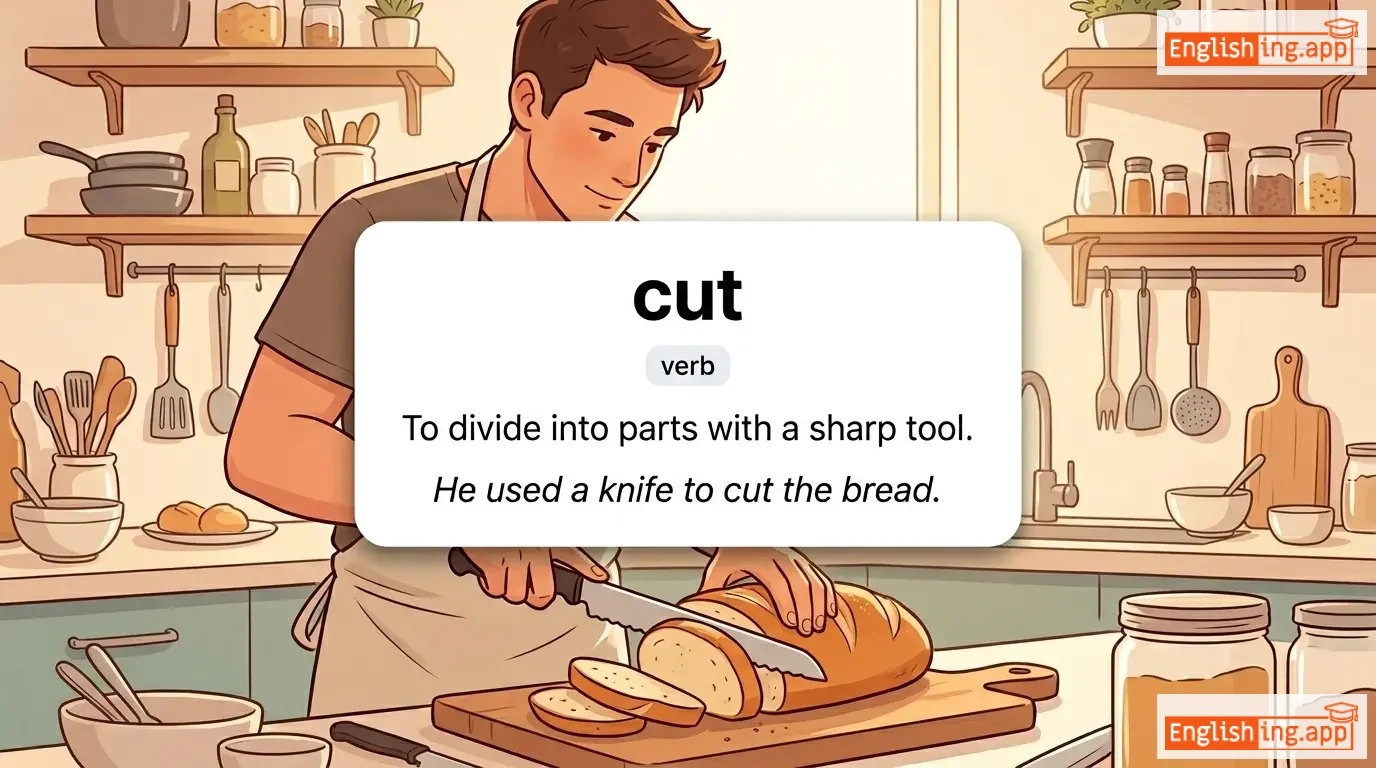
To divide into parts with a sharp tool.
••••••
|
He used a knife to cut the bread.
他用刀切面包。
••••••
|
他用刀切面包。
Tā yòng dāo qiē miànbāo.
••••••
|
cut corners
削减角落
••••••
|
To do something in the easiest, cheapest, or fastest way, often sacrificing quality.
••••••
|
削减角落
xuējiǎn jiǎoluò
••••••
|
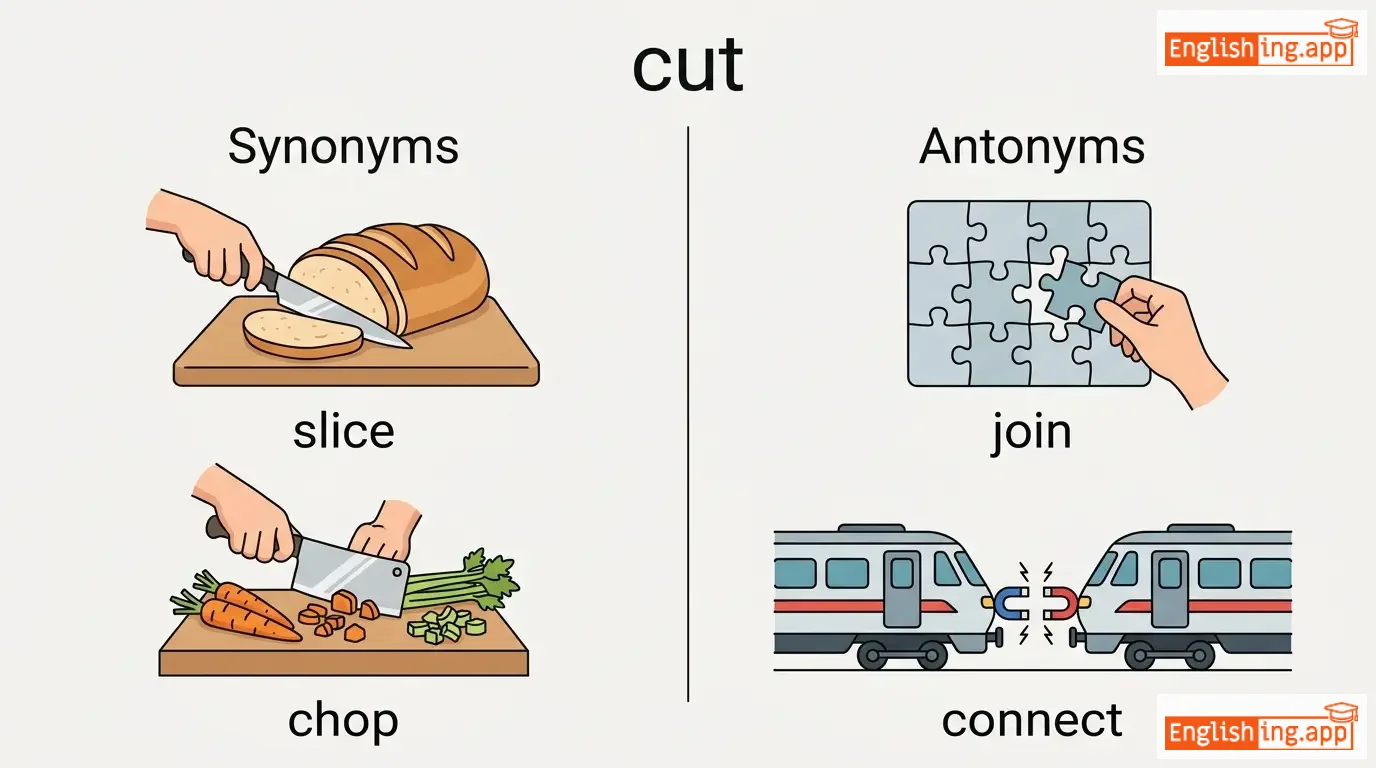
slice, chop, sever, trim, carve
••••••
|
join, connect, attach
••••••
|
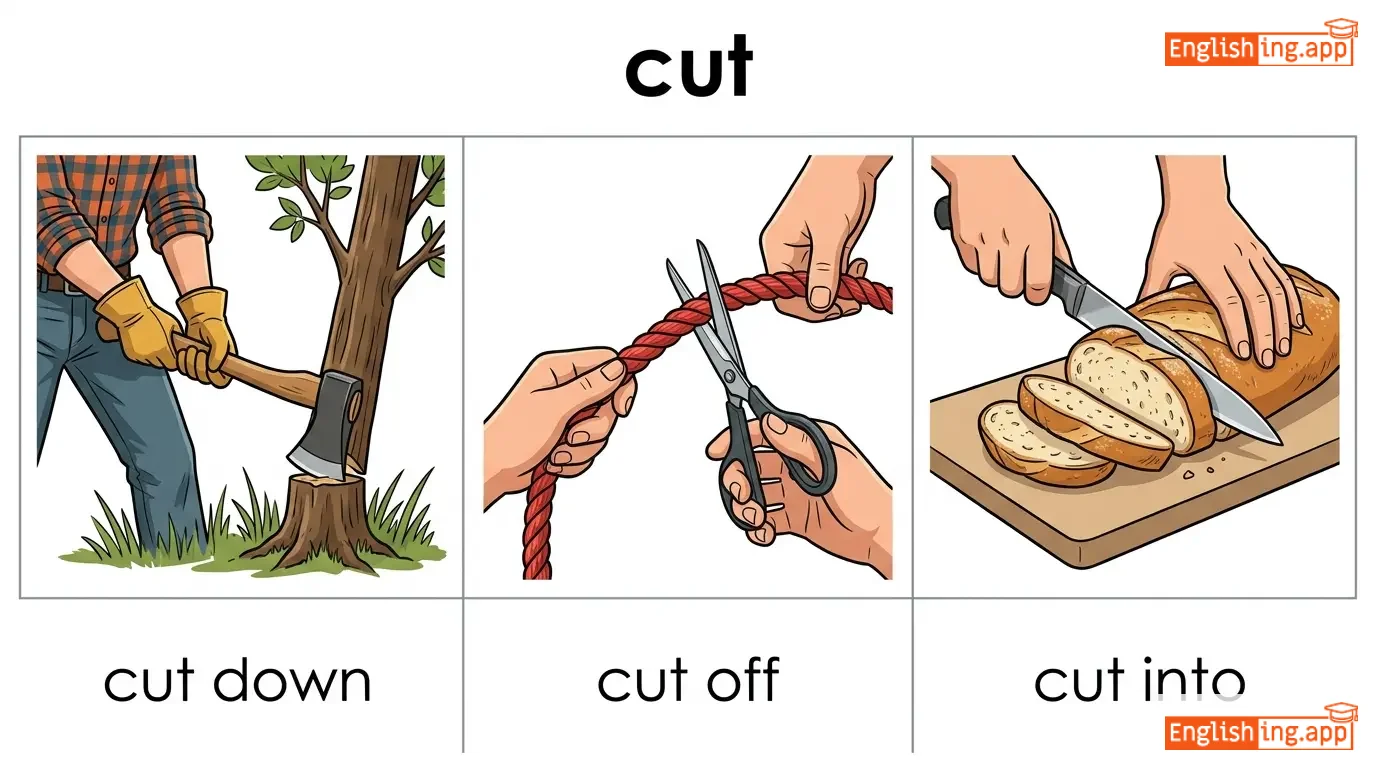
cut down, cut off, cut into, cut back, cut out
••••••
|
Cut 意味着切 - 用刀 ✂️
••••••
|
|
🐶
••••••
|
/kjuːt/
adjective
(kùtè)
••••••
|
- •••••• |
可爱
ke ai
••••••
|
- •••••• | - •••••• | - •••••• | - •••••• |
attractive in a pretty or endearing way
••••••
|
That puppy is so cute! |
那只小狗真可爱!
Na zhi xiao gou zhen ke ai!
••••••
|
cute as a button |
extremely adorable or charming
••••••
|
可爱如按钮
ke ai ru an niu
••••••
|
adorable, charming, lovely, sweet, pretty
••••••
|
ugly, unattractive, unpleasant
••••••
|
cute puppy, cute smile, cute dress, really cute
••••••
|
可爱意味着cute — 就像一个可爱的小猫!
••••••
|
|
✂️
••••••
|
/ˈkʌtɪŋ/
adjective
(kating)
••••••
|
- •••••• |
尖锐
jianrui
••••••
|
- •••••• | - •••••• | - •••••• | - •••••• |
sharp or severe, often used to describe remarks or actions
••••••
|
Her cutting remarks made everyone feel uncomfortable.
她的尖锐评论让每个人都感到不舒服。
••••••
|
她的尖锐评论让每个人都感到不舒服。
Ta de jianrui pinglun rang meige ren dou gandao bu shufu.
••••••
|
- •••••• | - •••••• | - •••••• |
sharp, severe, harsh, biting
••••••
|
gentle, kind, soft
••••••
|
cutting remark, cutting tone, cutting edge
••••••
|
记住 Cutting - 尖锐如刀锋!
••••••
|
|
🚴
••••••
|
/ˈsaɪkl/
noun/verb
(赛克尔)
••••••
|
- •••••• |
自行车 / 循环
zìxíngchē / xúnhuán
••••••
|
cycled
赛克尔德
••••••
|
cycled
赛克尔德
••••••
|
cycles
赛克尔斯
••••••
|
cycling
赛克林
••••••
|
a series of events that repeat in the same order; or to ride a bicycle
••••••
|
She cycles to school every day.
她每天骑自行车去学校。
••••••
|
她每天骑自行车去学校。
Tā měitiān qí zìxíngchē qù xuéxiào.
••••••
|
vicious cycle
恶性循环
••••••
|
a negative repeating pattern of events that worsens over time
••••••
|
恶性循环
èxìng xúnhuán
••••••
|
sequence, rotation, series, bike, bicycle
••••••
|
stop, stagnation
••••••
|
life cycle, business cycle, cycle of events, riding a cycle
••••••
|
Cycle意味着循环,而自行车就是一个不断运动的循环。
••••••
|
|
🌀
••••••
|
/ˈsaɪkloʊn/
noun
(赛克隆)
••••••
|
- •••••• |
气旋
qixuan
••••••
|
- •••••• | - •••••• | - •••••• | - •••••• |
a large-scale air mass that rotates around a strong center of low atmospheric pressure; a violent tropical storm
••••••
|
The cyclone caused severe flooding along the coast.
赛克隆考兹德西维尔弗拉丁阿隆德科斯特。
••••••
|
气旋在沿海地区造成了严重的洪水。
qixuan zai yanhai diqu zaocheng le yanzhong de hongshui
••••••
|
tropical cyclone
热带气旋
••••••
|
a rotating storm system that forms over warm tropical oceans
••••••
|
热带气旋
redai qixuan
••••••
|
storm, hurricane, typhoon, whirlwind, tempest
••••••
|
calm, stillness
••••••
|
powerful cyclone, tropical cyclone, severe cyclone, cyclone warning, cyclone season
••••••
|
气旋一直在旋转,像英语里的 cycle + storm。
••••••
|
|
😒
••••••
|
/ˈsɪn.ɪ.kəl/
adjective
(xīnī kǎo)
••••••
|
- •••••• |
愤世嫉俗
fènshì jìsú
••••••
|
- •••••• | - •••••• | - •••••• | - •••••• |
Believing that people are motivated by self-interest; distrustful of human sincerity or integrity.
••••••
|
She was cynical about the politician's promises. |
她对政治家的承诺持愤世嫉俗的态度。
Tā duì zhèngzhìjiā de chéngnuò chí fènshì jìsú de tàidù.
••••••
|
cynical smile |
A smile showing distrust or disbelief in sincerity.
••••••
|
愤世嫉俗的笑容
fènshì jìsú de xiàoróng
••••••
|
skeptical, distrustful, suspicious, pessimistic, sarcastic
••••••
|
trusting, optimistic, gullible
••••••
|
cynical view, cynical attitude, deeply cynical, cynical smile
••••••
|
愤世嫉俗意味着总是怀疑,就像愤世嫉俗的笑容。
••••••
|
|
👨
••••••
|
/dæd/
noun
(dad)
••••••
|
- •••••• |
爸爸
bàba
••••••
|
- •••••• | - •••••• | - •••••• | - •••••• |
an informal term for father
••••••
|
My dad taught me how to ride a bike. |
我爸爸教我骑自行车。
Wǒ bàba jiāo wǒ qí zìxíngchē.
••••••
|
like father, like son |
a child often resembles or behaves like their father
••••••
|
有其父,必有其子
Yǒu qí fù, bì yǒu qí zǐ
••••••
|
father, papa, daddy, pa
••••••
|
mother, mom
••••••
|
dad joke, dad's advice, proud dad, dad and son
••••••
|
Dad等于爸爸,'Dad'一叫,爸爸就来。
••••••
|
|
📅
••••••
|
/ˈdeɪli/
adjective/adverb
(deɪli)
••••••
|
- •••••• |
每日的
meiri de
••••••
|
- •••••• | - •••••• | - •••••• | - •••••• |
happening every day
••••••
|
She reads the newspaper daily. |
她每天读报纸。
Ta meitian du baozhi.
••••••
|
daily grind |
the monotonous routine of everyday work and life
••••••
|
每日的单调工作
meiri de dandiao gongzuo
••••••
|
everyday, regular, routine, habitual
••••••
|
occasional, rare
••••••
|
daily basis, daily routine, daily life, daily tasks
••••••
|
每日的就是每天,做事情每天重复最终能成功。
••••••
|
|
🐄
••••••
|
/ˈdeə.ri/
noun
(dairy)
••••••
|
- •••••• |
一个生产牛奶的建筑或农场;奶制品;一家销售牛奶和奶制品的商店
yī gè shēngchǎn niúnǎi de jiànzhú huò nóngchǎng; nǎi zhìpǐn; yī jiā xiāoshòu niúnǎi hé nǎi zhìpǐn de shāngdiàn
••••••
|
- •••••• | - •••••• | - •••••• | - •••••• |
a building or farm where milk is produced; products made from milk; a shop selling milk and milk products
••••••
|
The local dairy provides fresh milk and cheese to the entire neighborhood.
当地的乳品店向整个社区提供新鲜的牛奶和奶酪。
••••••
|
当地的乳品店向整个社区提供新鲜的牛奶和奶酪。
Dāngdì de rǔpǐn diàn xiàng zhěnggè shèqū tígōng xīnxiān de niúnǎi hé nǎilào.
••••••
|
- •••••• | - •••••• | - •••••• |
creamery, milk farm, dairy farm
••••••
|
non-dairy, vegan alternatives
••••••
|
dairy farm, dairy products, local dairy
••••••
|
乳品店提供新鲜的牛奶和奶酪
••••••
|
|
🏞️
••••••
|
/dæm/
noun
(dæm)
••••••
|
- •••••• |
水坝
shuǐbà
••••••
|
- •••••• | - •••••• | - •••••• | - •••••• |
a barrier built to hold back water and raise its level
••••••
|
The dam provides electricity to nearby towns. |
水坝为附近的城市提供电力。
Shuǐbà wèi fùjìn de chéngshì tígōng diànlì.
••••••
|
burst the dam |
to release strong emotions suddenly
••••••
|
打破水坝
dǎ pò shuǐbà
••••••
|
barrier, embankment, levee, wall, reservoir
••••••
|
flow, breach, release
••••••
|
hydroelectric dam, large dam, build a dam, dam water
••••••
|
水坝意味着阻止水流 — 当水坝破裂时,水流将释放。
••••••
|
|
💥
••••••
|
/ˈdæmɪdʒ/
verb
(dæmɪdʒ)
••••••
|
- •••••• |
损坏
sǔnhuài
••••••
|
damaged
dæmɪdʒd
••••••
|
damaged
dæmɪdʒd
••••••
|
damages
dæmɪdʒes
••••••
|
damaging
dæmɪdʒɪŋ
••••••
|
To cause physical harm to something.
••••••
|
The storm damaged several houses in the village.
风暴破坏了村里的几所房子。
••••••
|
风暴破坏了村里的几所房子。
Fēngbào pòhuài le cūn lǐ de jǐ suǒ fángzi.
••••••
|
beyond repair
无法修复
••••••
|
So badly damaged that it cannot be fixed.
••••••
|
无法修复
wúfǎ xiūfù
••••••
|
harm, spoil, break, ruin, destroy
••••••
|
repair, fix, improve
••••••
|
damage control, serious damage, cause damage, property damage
••••••
|
损坏的意思是破坏,像风暴破坏了房子。
••••••
|
|
⚡
••••••
|
/ˈdæmɪdʒɪŋ/
adjective
••••••
|
- •••••• | - •••••• | - •••••• | - •••••• | - •••••• | - •••••• |
causing harm or injury
••••••
|
The storm caused damaging effects to the crops. |
- •••••• | - •••••• | - •••••• | - •••••• |
harmful, injurious, destructive, deleterious
••••••
|
beneficial, harmless, protective
••••••
|
damaging effects, damaging impact, damaging consequences
••••••
|
No •••••• |
|
💧
••••••
|
/dæmp/
adjective
(damp)
••••••
|
- •••••• |
潮湿的
chaoshi de
••••••
|
- •••••• | - •••••• | - •••••• | - •••••• |
slightly wet, often in an unpleasant way
••••••
|
The room felt cold and damp after the rain. |
下雨后,房间感觉又冷又潮湿。
Xiàyǔ hòu, fángjiān gǎnjué yòu lěng yòu cháoshī.
••••••
|
damp squib |
something that fails to meet expectations
••••••
|
失败的事物
shībài de shìwù
••••••
|
moist, humid, wet, clammy, soggy
••••••
|
dry, arid, parched
••••••
|
damp air, damp room, damp clothes, cold and damp
••••••
|
Damp 就是潮湿的感觉,像是雨后房间里的湿气。
••••••
|
|
💃
••••••
|
/dæns/
verb/noun
(幸福)
••••••
|
- •••••• |
幸福
xìngfú
••••••
|
danced
••••••
|
danced
••••••
|
dances
••••••
|
dancing
••••••
|
to move rhythmically to music, typically following a set sequence of steps
••••••
|
They danced all night at the wedding. |
她收到奖项时无法隐藏自己的幸福。
Tā shōu dào jiǎng xiàng shí wúfǎ yǐn cáng zìjǐ de xìngfú.
••••••
|
dance to someone's tune |
to do what someone else wants or controls
••••••
|
追求幸福
zhuīqiú xìngfú
••••••
|
move, sway, groove, waltz, perform
••••••
|
stand, stillness
••••••
|
dance floor, dance party, traditional dance, dance steps
••••••
|
幸福像'心富',每个充满快乐的瞬间都是幸福的表现。
••••••
|
|
💃
••••••
|
/ˈdænsər/
noun
(dæn-sər)
••••••
|
- •••••• |
舞者
wǔ zhě
••••••
|
- •••••• | - •••••• | - •••••• | - •••••• |
a person who dances or performs dancing professionally or as a hobby
••••••
|
The dancer moved gracefully across the stage. |
舞者优雅地在舞台上移动。
Wǔ zhě yōuyǎ de zài wǔtái shàng yídòng.
••••••
|
dance to someone’s tune |
to do what someone else wants or tells you to do
••••••
|
随某人的节奏跳舞
suí mǒu rén de jiézòu tiàowǔ
••••••
|
performer, ballerina, entertainer, artist, choreographer
••••••
|
nonperformer, spectator
••••••
|
professional dancer, ballet dancer, street dancer, lead dancer
••••••
|
舞者 = 跳舞的人,记得跳舞像个舞者!💃
••••••
|
|
⚠️
••••••
|
/ˈdeɪn.dʒər/
noun
(dèngjī)
••••••
|
- •••••• |
危险
wei xian
••••••
|
- •••••• | - •••••• | - •••••• | - •••••• |
The possibility of harm, injury, or loss.
••••••
|
The hikers were in great danger during the storm. |
徒步旅行者在暴风雨中处于极大危险中。
Túbù lǚxíng zhě zài bàofēngyǔ zhōng chǔyú jí dà wēixiǎn zhōng.
••••••
|
in danger |
at risk of harm or injury
••••••
|
处于危险中
Chǔ yú wēixiǎn zhōng
••••••
|
risk, threat, peril, hazard, jeopardy
••••••
|
safety, security, protection
••••••
|
serious danger, put in danger, danger zone, face danger
••••••
|
Danger 意思是 '危险' - ⚠️ 当你处于危险中时,记得小心!
••••••
|
|
⚠️
••••••
|
/ˈdeɪndʒərəs/
adjective
(dèngʌrəs)
••••••
|
- •••••• |
危险
wéixiǎn
••••••
|
- •••••• | - •••••• | - •••••• | - •••••• |
likely to cause harm or injury; unsafe
••••••
|
Driving fast on icy roads is dangerous. |
在冰雪路面上开车很危险。
Zài bīngxuě lùmiàn shàng kāichē hěn wéixiǎn.
••••••
|
play with fire |
to do something risky that may cause harm
••••••
|
玩火
wán huǒ
••••••
|
risky, hazardous, unsafe, harmful, perilous
••••••
|
safe, secure, harmless
••••••
|
dangerous situation, dangerous game, dangerous path, dangerous substance
••••••
|
危险意味着‘危险’,所以危险就是危险。
••••••
|
|
😎
••••••
|
/der/
verb
(dɛr)
••••••
|


|
敢于
gǎn yú
••••••
|
dared
dɛrd
••••••
|
dared
dɛrd
••••••
|
dares
dɛrs
••••••
|
daring
dɛrɪŋ
••••••
|
To have the courage to do something risky or challenging.
••••••
|
She dared to speak against the unfair rules.
她敢于反对不公平的规则。
••••••
|
她敢于反对不公平的规则。
Tā gǎn yú fǎnduì bù gōngpíng de guīzé.
••••••
|
How dare you
你怎么敢?
••••••
|
Used to express anger or shock at someone's bold action
••••••
|
你怎么敢?
Nǐ zěnme gǎn?
••••••
|
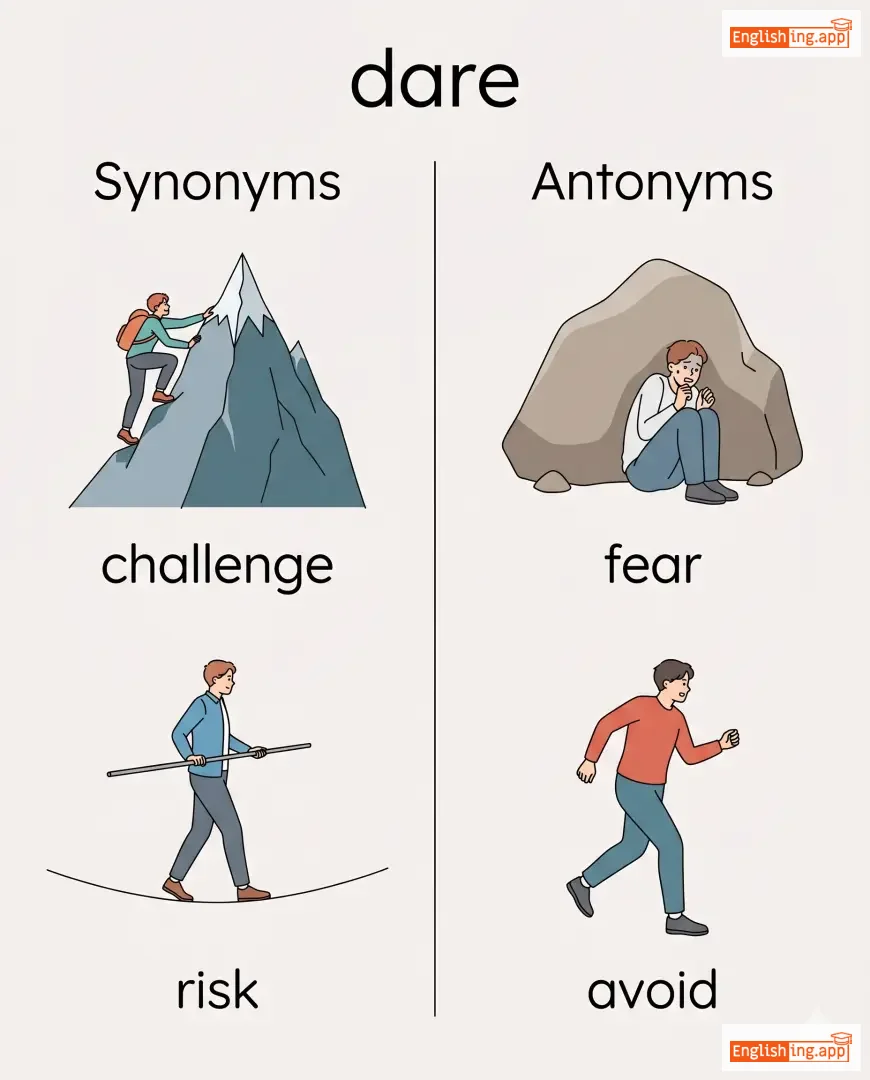
challenge, risk, venture, defy
••••••
|
fear, avoid, hesitate
••••••
|
dare to dream, dare to ask, I dare say, dare someone
••••••
|
Dare 就是敢于做有挑战性的事情。
••••••
|
|
🌑
••••••
|
/dɑːrk/
adjective
(达克)
••••••
|
- •••••• |
黑暗的
hei an de
••••••
|
- •••••• | - •••••• | - •••••• | - •••••• |
with little or no light; gloomy or mysterious
••••••
|
The room was dark after the lights went out.
泽 鲁姆 瓦兹 达克 艾夫特 泽 莱茨 温特 奥特。
••••••
|
灯灭后房间变得黑暗。
deng mie hou fang jian bian de hei an.
••••••
|
in the dark
因 泽 达克
••••••
|
not informed; unaware
••••••
|
不知情
bu zhi qing
••••••
|
dim, gloomy, shadowy, black, obscure
••••••
|
bright, light, clear
••••••
|
dark night, dark room, dark secret, dark times
••••••
|
Dark 在中文里是 黑暗的,房间没有灯时就变得黑暗。
••••••
|

