語彙集

英単語辞書 | 単語の意味、定義、例文

verb C2
/ˈsɪbəleɪt/
シューという音で発音する (shū to iu oto de hatsuon suru)

To pronounce with a hissing sound.

"The actor sibilated his lines for dramatic effect."

"俳優はドラマチックな効果のためにセリフをシューという音で発音しました。" (Haiyū wa doramachikku na kōka no tame ni serifu o shū to iu oto de hatsuon shimashita.)
adjective C2
/ˈsɪbɪlaɪn/
神託的 (shintokuteki)

Prophetic, mysterious, or cryptic in meaning.

"The old woman gave a sibylline warning about the future."

"その老婦人は未来について神託的な警告をした。" (Sono rō fujin wa mirai ni tsuite shintokuteki na keikoku o shita.)
adjective, adverb C2
/ˈsaɪdlɔːŋ/
斜め目線 (naname mesen)

Directed to the side; indirect, furtive, or not straightforward.

"She gave him a sidelong glance across the room."
"彼女は部屋を横切って彼に斜め目線を送った。" (Kanojo wa heya o yokogitte kare ni naname mesen o okutta.)
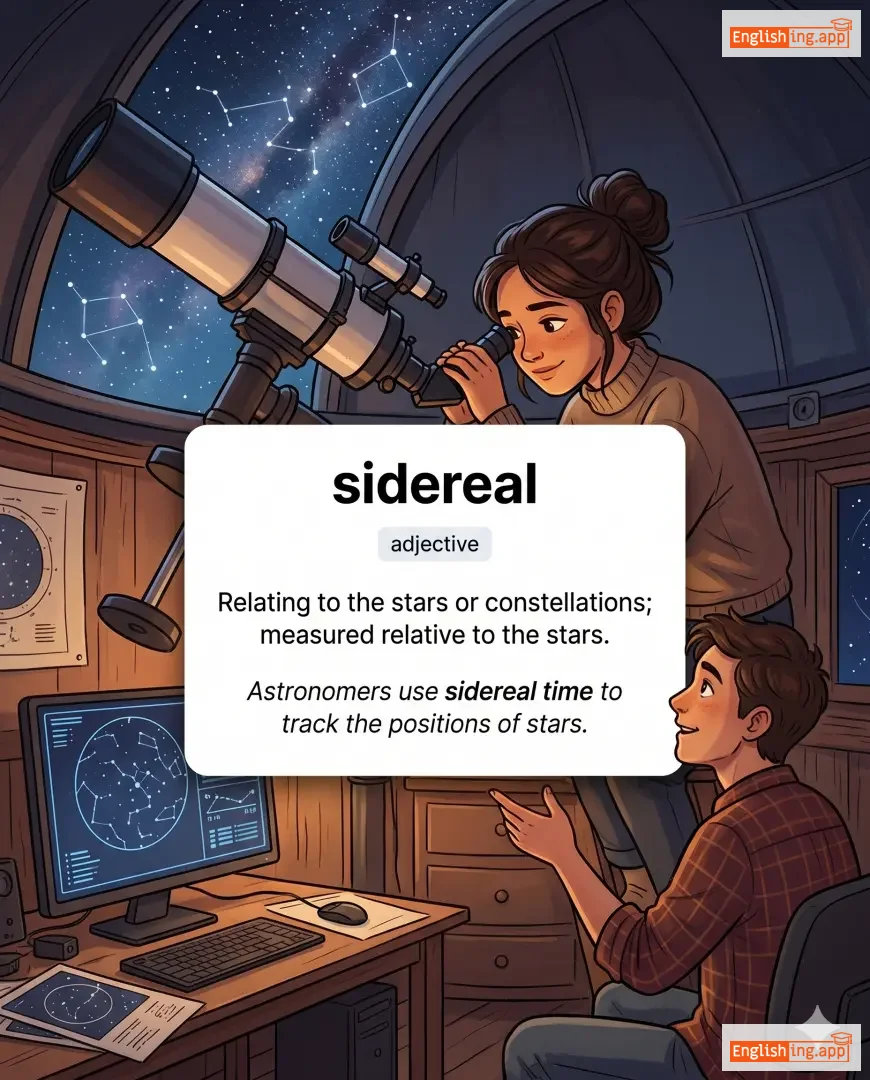
sidereal definition card — visual illustration of the meaning
adjective C2
/saɪˈdɪəriəl/
恒星の (kōsei no)

Relating to the stars or constellations; measured relative to the stars.

"Astronomers use sidereal time to track the positions of stars."

"天文学者は恒星時を使用して星の位置を追跡します。" (tenmongakusha wa kōsei-ji o shiyō shite hoshi no ichi o tsuiseki shimasu.)
noun C2
/ˌsɪɡnɪfɪˈkeɪʃən/
意味 (imi)

the meaning or sense conveyed by a word, action, or symbol

"The signification of the gesture was misunderstood."
"そのジェスチャーの意味は誤解されていました。" (Sono jesuchā no imi wa gokai sarete imashita.)
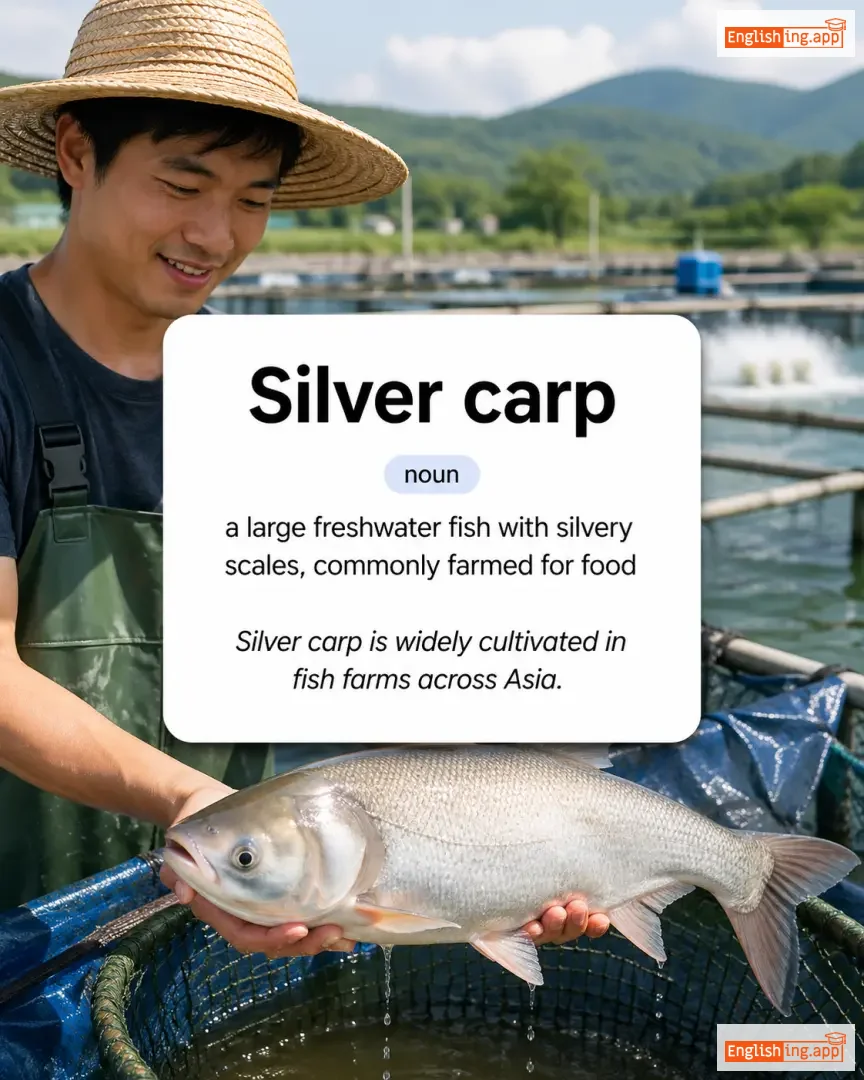
Silver carp definition card — visual illustration of the meaning
noun C2
/ˈsɪlvər kɑrp/
銀鯉 (gin goi)

a large freshwater fish with silvery scales, commonly farmed for food

"Silver carp is widely cultivated in fish farms across Asia."
"銀鯉はアジアの養魚場で広く養殖されています。" (gin goi wa ajia no yougyojo de hiroku youshoku sareteimasu.)
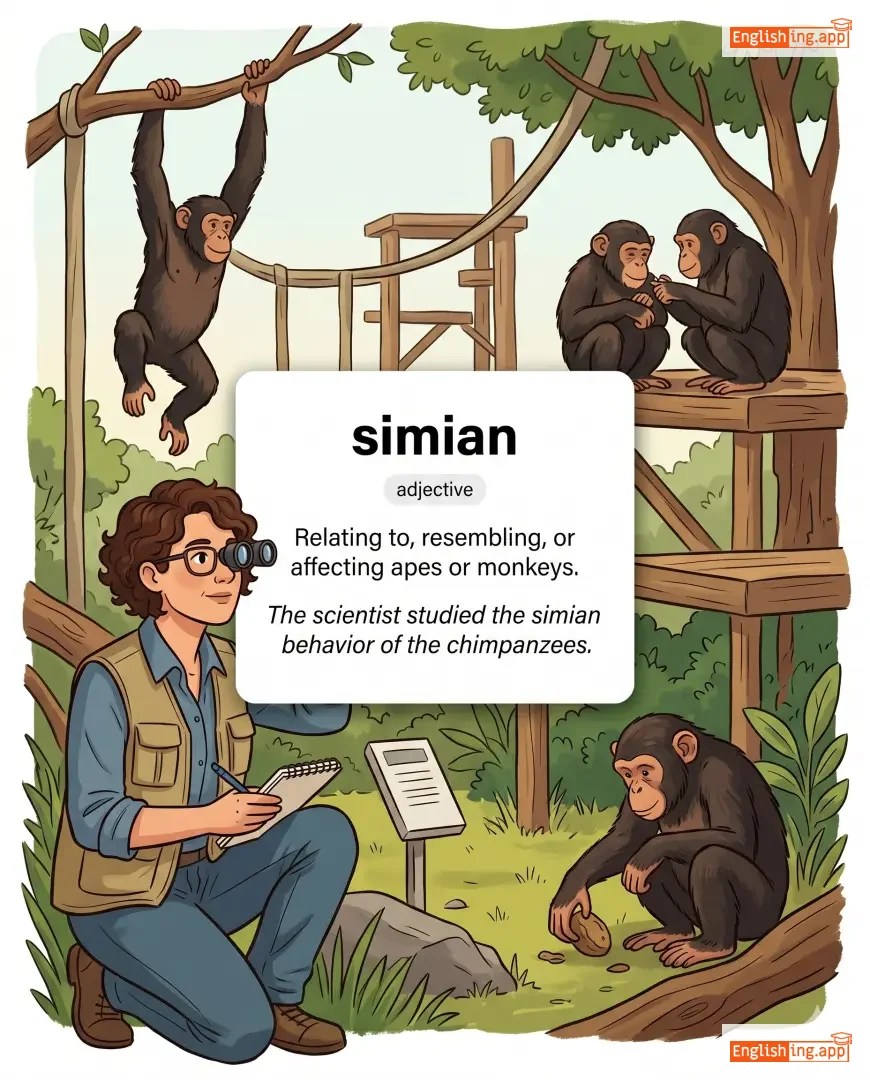
simian definition card — visual illustration of the meaning
adjective C2
/ˈsɪmiən/
類人猿の (ruijin'en no)

Relating to, resembling, or affecting apes or monkeys.

"The scientist studied the simian behavior of the chimpanzees."
"科学者はチンパンジーの類人猿の行動を研究した。" (Kagakusha wa chinpanjī no ruijin'en no kōdō o kenkyū shita.)
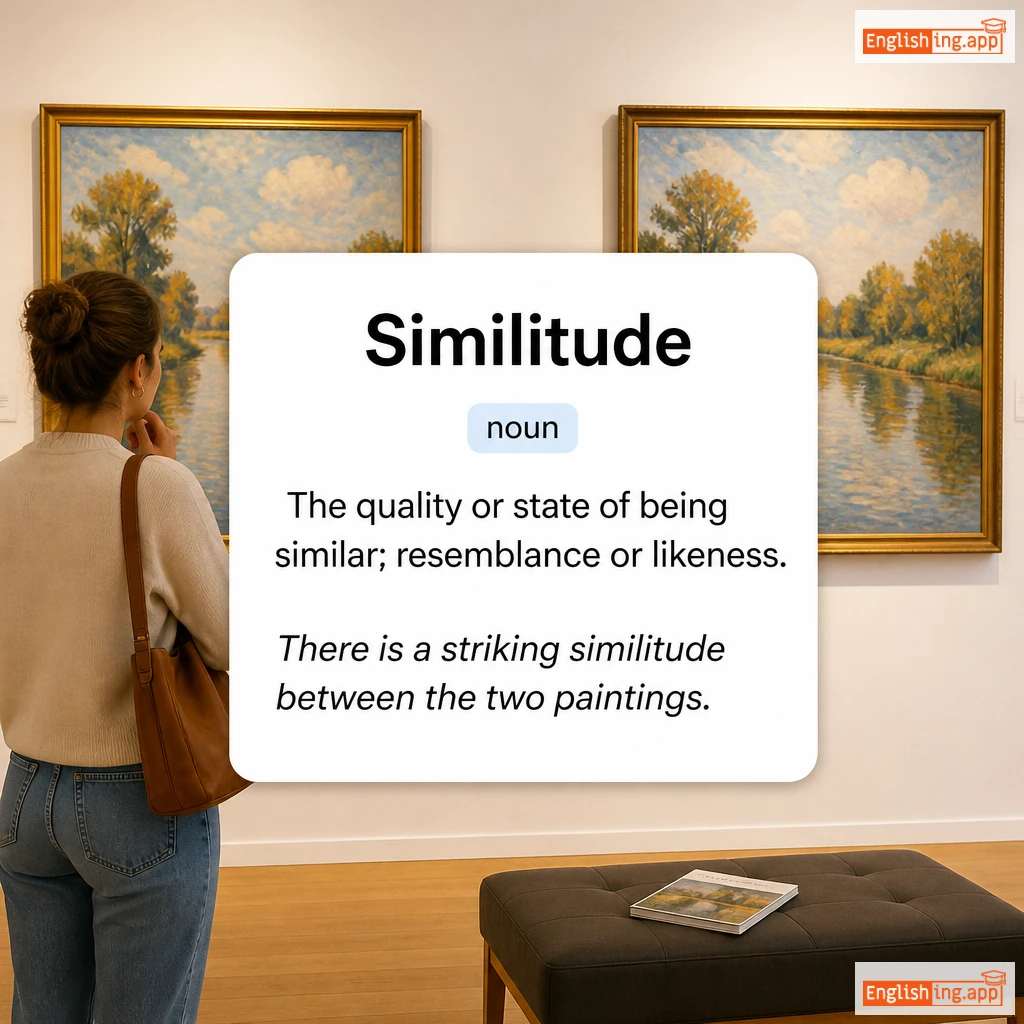
Similitude definition card — visual illustration of the meaning
noun C2
/sɪˈmɪlɪˌtjuːd/
類似性 (ruizisei)

The quality or state of being similar; resemblance or likeness.

"There is a striking similitude between the two paintings."

"この二つの絵の間には顕著な類似性があります。" (Kono futatsu no e no aida ni wa kencho na ruizisei ga arimasu.)
verb C2
/ˈsɪmpər/
不自然に笑う (fushizen ni warau)

to smile in a silly, self-conscious, or affected way

"She simpered at his compliment, clearly embarrassed."

"彼女は彼の褒め言葉に不自然に笑い、明らかに恥ずかしそうだった。" (Kanojo wa kare no homekotoba ni fushizen ni warai, akiraka ni hazukashisou datta.)
noun C2
/ˈsɪmpəltən/
おバカさん (obakasan)

a foolish or gullible person

"They treated him like a simpleton who could not understand anything complex."

"彼らは彼を、何も複雑なことが理解できないおバカさんのように扱いました。" (Karera wa kare o, nanimo fukuzatsu na koto ga rikai dekinai obakasan no yō ni atsukaimashita.)
noun C2
/ˌsɪmjʊˈleɪkrəm/
シミュラクル (shimyurakuru)

an image or representation of someone or something; a superficial likeness

"The statue was only a simulacrum of the ancient god."
"その像は古代の神のシミュラクルに過ぎなかった。" (Sono zou wa kodai no kami no shimyurakuru ni suginakatta.)
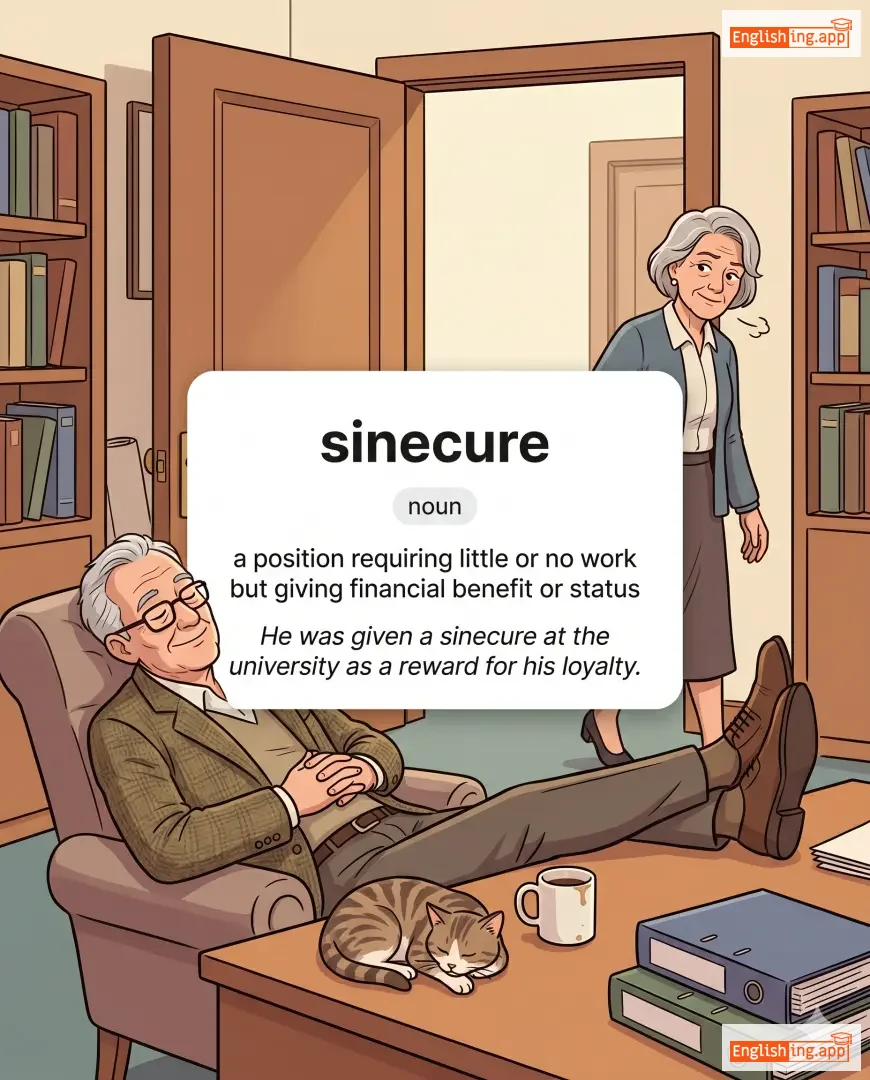
sinecure definition card — visual illustration of the meaning
noun C2
/ˈsaɪnɪkjʊər/
楽な仕事 (rakuna shigoto)

a position requiring little or no work but giving financial benefit or status

"He was given a sinecure at the university as a reward for his loyalty."

"彼は大学で忠誠心の報酬として楽な仕事を与えられました。" (Kare wa daigaku de chūseishin no hōshū to shite rakuna shigoto o ataeraremashita.)
noun C2
/ˈsɪnjuː/
(ken)

A tendon; figuratively, the source of strength, power, or resilience.

"The sinews in his arms stood out as he lifted the heavy box."

"重い箱を持ち上げると、彼の腕の腱が目立ちました。" (Omoi hako o mochiageru to, kare no ude no ken ga medachimashita.)
adjective C2
/ˈsɪnjuːi/
筋肉質で強い (kinnrokushitsu de tsuyoi)

Lean and muscular; strong and tough.

"The athlete had a sinewy build that showed his strength."

"そのアスリートは筋肉質な体型をしており、力強さを示していた。" (Sono asurīto wa kinnrokushitsu na taikei o shite ori, chikara zuyosa o shimeshite ita.)
noun C2
/ˌsɪnjuˈɒsɪti/
曲がり具合 (magari guai)

The quality or state of being winding, curving, or having many turns.

"The sinuosity of the river made navigation challenging."

"川の曲がり具合はナビゲーションを難しくした。" (Kawa no magari guai wa nabigēshon o muzukashiku shita.)
noun C2
/sɪˈrɒkoʊ/
熱く乾燥した風 (atsuku kansou shita kaze)

A hot, dry wind blowing from North Africa across the Mediterranean to southern Europe.

"The sirocco made the city unbearably hot and dusty."

"シロッコは街を耐えられないほど暑く、ほこりっぽくした。" (Shirokko wa machi o taerarenai hodo atsuku, hokorippoku shita.)
noun C2
/skɪf/
小舟 (shoubune)

a small, light boat usually for one person

"The fisherman paddled his skiff across the lake."

"漁師は彼の小舟で湖を渡った。" (Gyoshi wa kare no shoubune de mizuumi o watatta.)
noun C2
/ˈskɪnˌflɪnt/
けちん坊 (kechinbō)

a person who spends as little money as possible; a miser

"The landlord was such a skinflint that he never repaired anything."

"家主はそんなけちん坊で、何も修理しなかった。" (Yamushi wa sonna kechinbō de, nanimo shūri shinakatta.)
noun C2
/skʌlˈdʌɡəri/
不正行為 (fusei kōi)

underhanded or dishonest behavior

"The politician was accused of financial skulduggery."

"その政治家は金融詐欺で告発された。" (Sono seiji-ka wa kin'yū sagi de kokuhatsu sareta.)
🕵️

skulk

verb C2
/skʌlk/

to move or hide secretly, often because you are planning something bad or are feeling guilty

"He tried to skulk in the shadows to avoid being seen."

noun C2
/ˌskʌlˈdʌɡəri/
不正行為 (Fusei Kōi)

dishonest behavior or activities, often done secretly

"The election was full of political skullduggery."

"選挙は政治的不正行為に満ちていた。" (Senkyō wa seijiteki na fusei kōi ni michite ita.)
verb C2
/sleɪk/
渇きを癒す (kawaki wo iyasu)

To satisfy thirst or desire.

"She drank cold water to slake her thirst."

"彼女は渇きを癒すために冷たい水を飲んだ。" (Kanojo wa kawaki wo iyasu tame ni tsumetai mizu wo nonda.)
adjective C2
/ˈslæp.dæʃ/
ぞんざい (zonzai)

done too quickly and carelessly; hasty and careless

"The report was written in a slapdash manner, full of errors."

"レポートはぞんざいに書かれており、間違いだらけだった。" (Repoto wa zonzai ni kakarete ori, machigai darake datta.)
noun C2
/ˈslæt.ən/
だらしない女性 (darashinai josei)

a woman who is untidy or slovenly in appearance or habits

"The house looked as if a slattern lived there."

"その家は、だらしない女性が住んでいるように見えた。" (Sono ie wa, darashinai josei ga sunde iru yō ni mietā.)
noun C2
/slaɪt/
手品 (tepin)

Skill or dexterity, especially in performing tricks.

"The magician amazed the crowd with his sleight of hand."

"マジシャンはその手品で観客を驚かせた。" (Majishan wa sono tepin de kankyaku o odorokaseta.)
adjective C2
/ˈslɪpʃɒd/
おおざっぱな, いい加減な (oozappana, iikagen na)

done in a careless, sloppy, or untidy way

"The project failed due to slipshod planning."

"計画が雑だったため、プロジェクトは失敗した。" (Keikaku ga zatsu datta tame, purojekuto wa shippai shita.)
adjective C2
/ˈsloʊθfəl/
怠惰 (taida)

Lazy, idle, and unwilling to work.

"She was too slothful to get out of bed early."

"彼女はベッドから早く起きるにはあまりにも怠惰でした。" (Kanojo wa beddo kara hayaku okiru ni wa amari ni mo taida deshita.)
verb C2
/slʌf/ or /sluː/
皮を捨てる / 湿地 (kawa wo suteru / shicchi)

To shed or cast off (like dead skin); also a swampy or muddy area.

"The snake sloughed off its old skin."

"ヘビは古い皮を捨てた。" (Hebi wa furui kawa wo suteta.)
adjective C2
/ˈslʌvənli/
だらしない (darashinai)

Untidy or careless in appearance, habits, or work.

"His slovenly appearance made a bad impression at the interview."

"彼のだらしない外見は面接で悪い印象を与えました。" (Kare no darashinai gaiken wa mensetsu de warui inshō o ataemashita.)
noun C2
/ˈslʌɡərd/
怠け者 (namakemono)

A lazy, sluggish person.

"The sluggard refused to get out of bed even at noon."

"怠け者は正午でもベッドから起きることを拒否しました。" (Namakemono wa shōgo demo beddo kara okiru koto o kyohi shimashita.)
noun/verb C2
/sluːs/
水門 / 洗う (suimon / arau)

A sliding gate for controlling the flow of water; to wash or rinse with water in large quantities.

"The workers sluiced the mud off the street after the heavy rain."

"作業員は大雨の後に通りから泥を洗い流しました。" (Sagyouin wa ooi ame no ato ni toori kara doro o arainagashimashita.)
adjective C2
/ˈsmɑːrmi/
お世辞 / 偽の礼儀 (Oseji / Nise no reigi)

Excessively flattering or ingratiating, often insincerely.

"The salesman gave a smarmy pitch that felt fake."
"販売員は偽りのように感じるお世辞のような売り込みをしました。" (Hanbaiin wa itsuwari no yō ni kanjiru oseji no yō na urikomi o shimashita.)
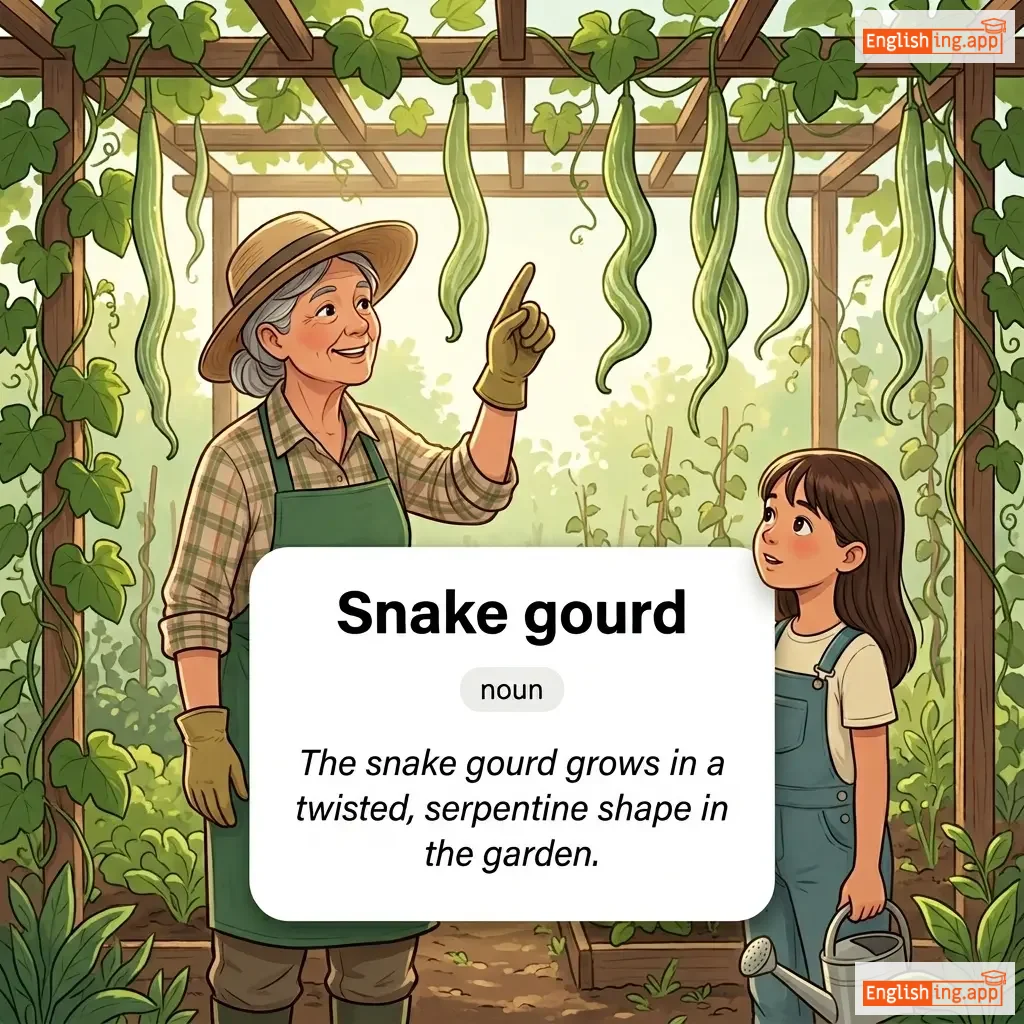
Snake gourd definition card — visual illustration of the meaning
noun C2
/sneɪk ɡɔːrd/
ヘビウリ (hebiuri)

a long, curved vegetable that resembles a snake, commonly used in South Asian cuisine

"The snake gourd grows in a twisted, serpentine shape in the garden."

"ヘビウリは庭で蛇のような形に曲がりながら育ちます。" (hebiuri wa niwa de hebi no yō na katachi ni magarinagara sodachimasu.)
verb C2
/ˈsnɪvəl/
弱い、またはイライラさせる方法で泣くまたは不平を言う (yowai, matawa iraira saseru hōhō de naku matawa fuhei o iu)

to cry or complain in a weak or annoying way

"He began to snivel when he didn’t get his way."

"自分の思い通りにならなかったとき、彼は泣き始めた。" (Jibun no omoidoori ni naranakatta toki, kare wa nakihajimeta.)
verb C2
/ˈsnʌfəl/
鼻で音を立てて息をする (hana de oto wo tatete iki wo suru)

to breathe noisily through the nose, often because of crying or a cold

"The child began to snuffle after crying for a long time."

"子供は長時間泣いた後に鼻で音を立てて息をし始めました。" (Kodomo wa nagajikan naita ato ni hana de oto wo tatete iki wo shihajimemashita.)
noun C2
/ˈsoʊbrɪˌkeɪ/
あだ名 (adana)

a person's nickname or descriptive name

"The famous leader was known by the sobriquet 'The Iron Lady'."
"その有名なリーダーは「アイアンレディ」というあだ名で知られていた。" (Sono yūmei na rīdā wa 'Aian Redi' to iu adana de shirareteita.)
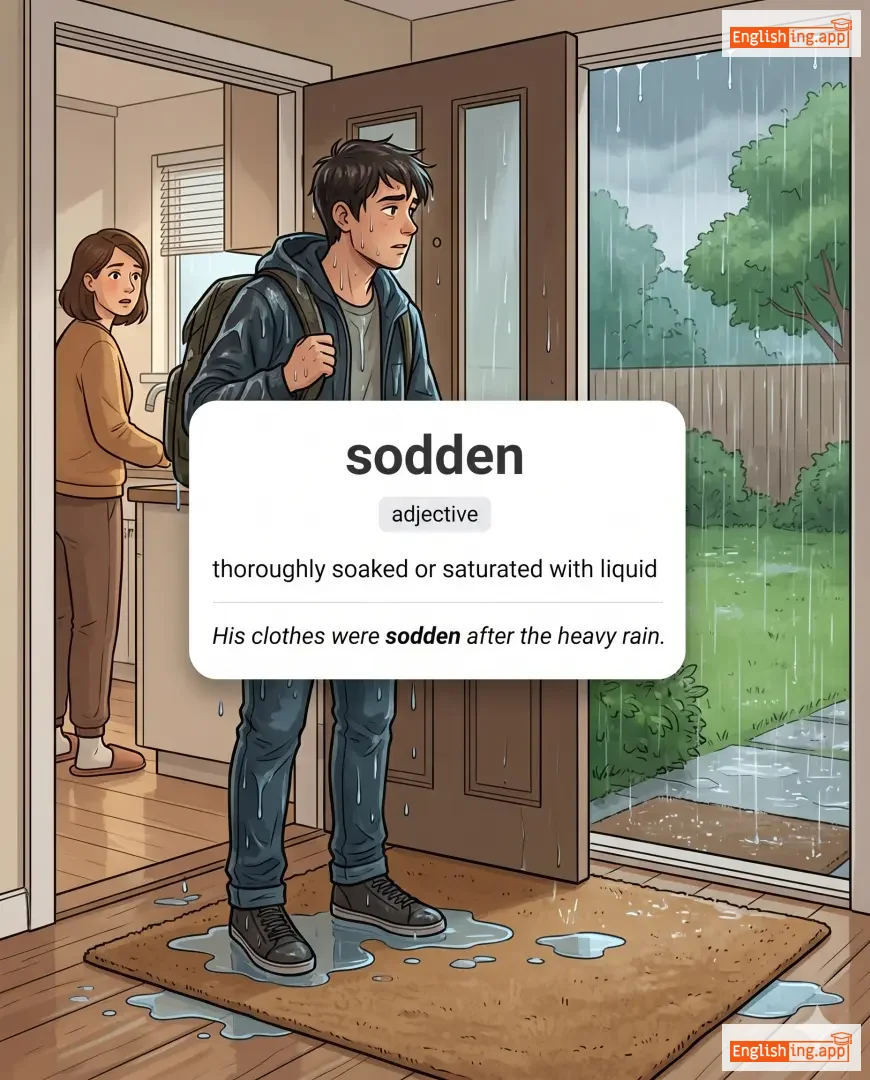
sodden definition card — visual illustration of the meaning
adjective C2
/ˈsɑːdn/
ずぶぬれ (zubonure)

thoroughly soaked or saturated with liquid

"His clothes were sodden after the heavy rain."

"彼の服は激しい雨の後でずぶぬれになった。" (Kare no fuku wa hageshī ame no ato de zubonure ni natta.)
noun/verb C2
/ˈsoʊdʒɜrn/
一時的な滞在 (ichijiteki na taizai)

A temporary stay at a place; to stay temporarily

"She enjoyed a brief sojourn in Paris during the summer."

"彼女は夏の間、パリで短期間の滞在を楽しんだ。" (Kanojo wa natsu no aida, Pari de tankikan no taizai o tanoshinda.)
noun C2
/sɒl/
ソル(音楽のスケールの5番目の音) (soru (ongaku no sukeeru no gobanme no oto))

The fifth note of the sol-fa musical scale (do, re, mi, fa, sol, la, ti); also the Latin word for sun

"The choir practiced singing the note sol during rehearsal."

"合唱団はリハーサル中にソル音を歌う練習をしました。" (Gasshōdan wa rihāsaru-chū ni soru-oto o utau renshū o shimashita.)
noun C2
/ˈsɒlɪˌsɪzəm/
文法ミス (bunpō misu)

a grammatical mistake in speech or writing; a breach of good manners or etiquette

"His speech was full of solecisms and awkward phrases."
"彼のスピーチは文法ミスと不器用なフレーズでいっぱいだった。" (Kare no supīchi wa bunpō misu to bukiyō na furēzu de ippai datta.)
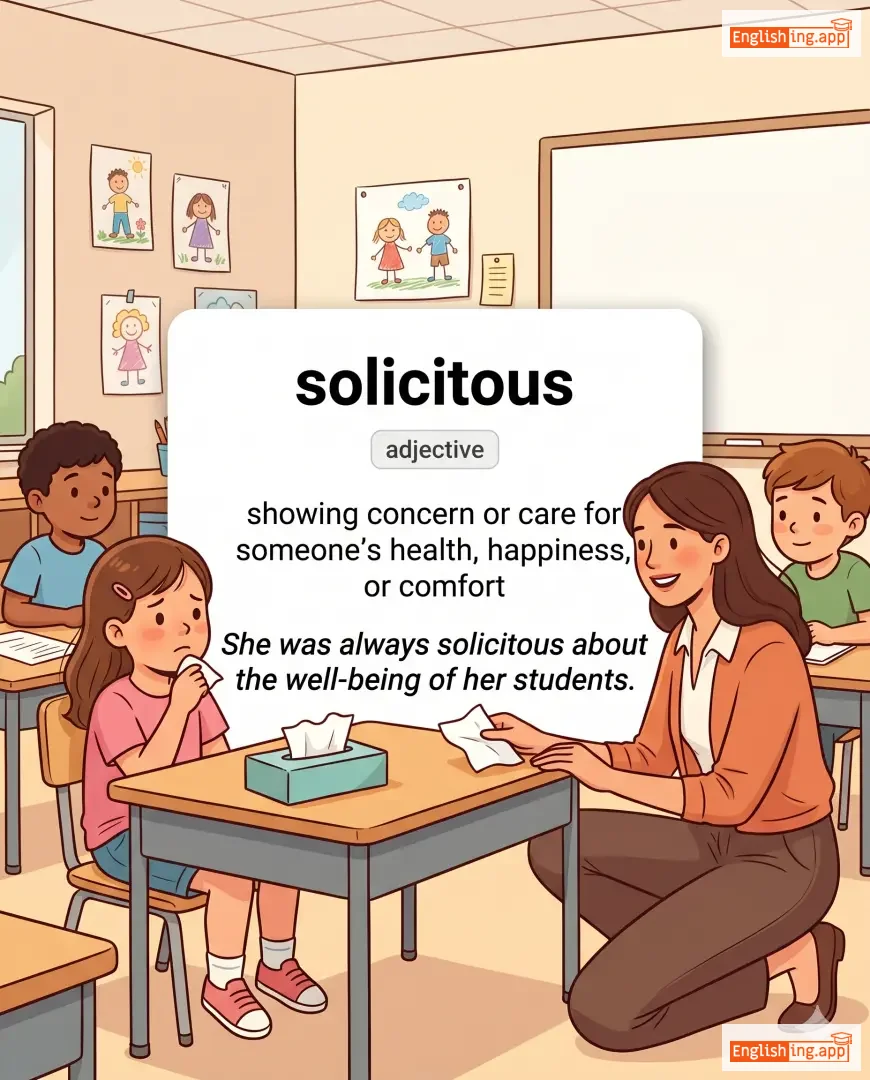
solicitous definition card — visual illustration of the meaning
adjective C2
/səˈlɪsɪtəs/
思いやり (omoiyari)

showing concern or care for someone's health, happiness, or comfort

"She was always solicitous about the well-being of her students."

"彼女はいつも学生たちの幸福に気を配っていました。" (Kanojo wa itsumo gakusei-tachi no kōfuku ni ki o kubatte imashita.)
noun C2
/səˈlɪsɪˌtuːd/
思いやり, 配慮 (omoiyari, hairyo)

Care or concern for someone or something.

"His mother showed great solicitude for his safety."
"彼の母親は彼の安全に大きな思いやりを示しました。" (Kare no hahaoya wa kare no anzen ni ōkina omoiyari o shimashita.)
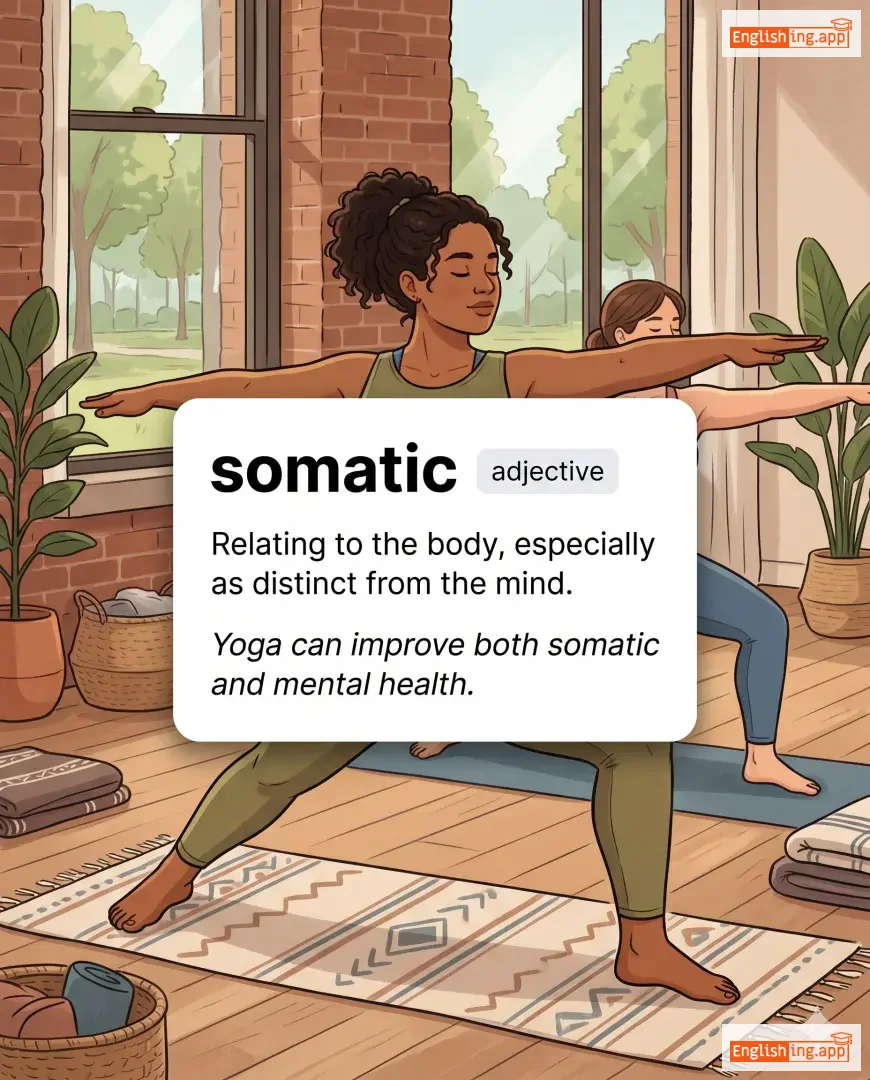
somatic definition card — visual illustration of the meaning
adjective C2
/səˈmætɪk/
身体的 (shintai teki)

Relating to the body, especially as distinct from the mind.

"Yoga can improve both somatic and mental health."

"ヨガは身体的および精神的健康を改善することができます。" (Yoga wa shintaiteki oyobi seishinteki kenko wo kaizen suru koto ga dekimasu.)
noun C2
/sɒmˈnæmbjʊlɪst/
夢遊病者 (memyūbyōsha)

A person who sleepwalks.

"The somnambulist wandered out of the house at night."

"夢遊病者は夜に家を出た。" (Memyūbyōsha wa yoru ni ie o deta.)
adjective C2
/sɒmˈnɪfərəs/
眠気を引き起こす (nemuke o hikiokosu)

Tending to induce sleep; soporific.

"The professor's somniferous lecture put half the class to sleep."
"教授のソムニフェラスな講義はクラスの半分を眠らせた。" (Kyouju no somniferasu na kougi wa kurasu no hanbun o nemuraseta.)
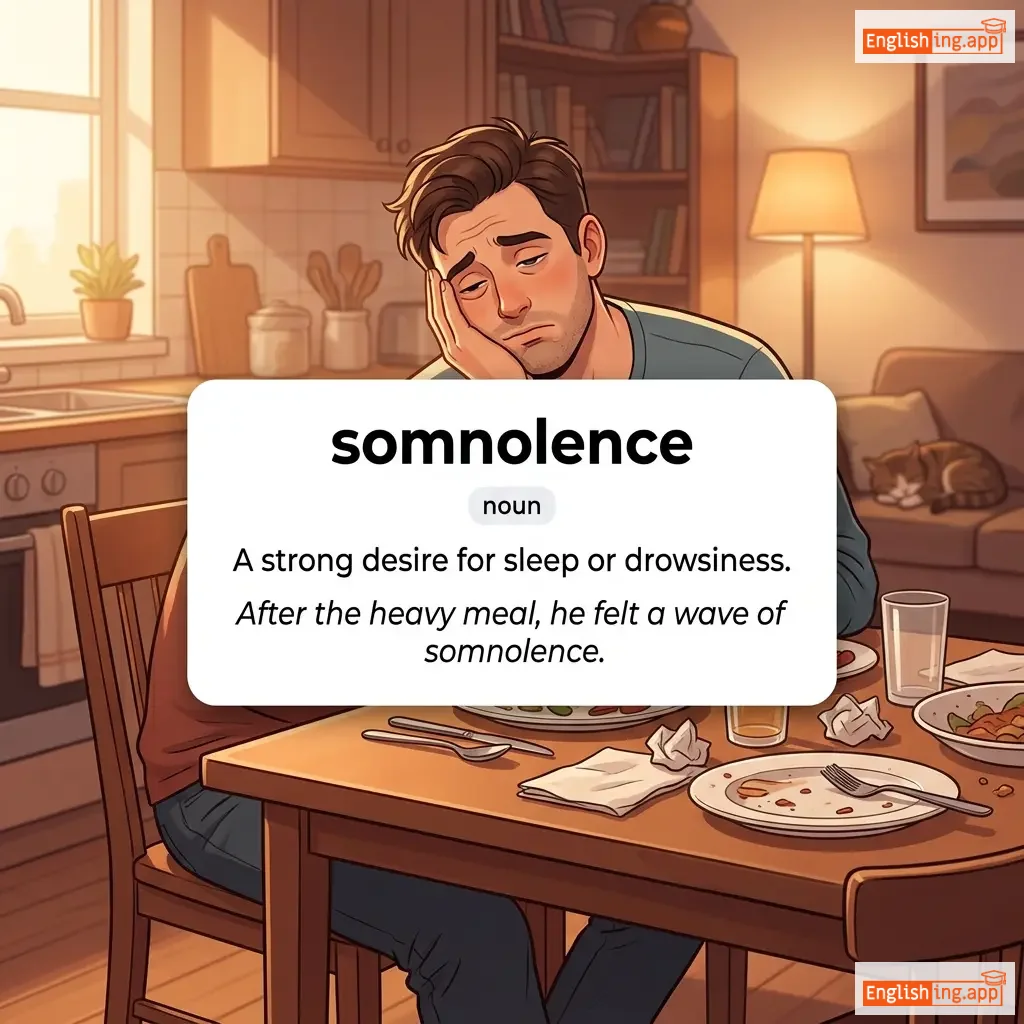
somnolence definition card — visual illustration of the meaning
noun C2
/ˈsɒmnələns/
眠気 (nemuke)

A strong desire for sleep or drowsiness.

"After the heavy meal, he felt a wave of somnolence."

"重い食事の後、彼は眠気を感じました。" (Omoi shokuji no ato, kare wa nemuke o kanjimashita.)
adjective C2
/ˈsɒmnələnt/
眠気を催す (nemuke o moyasu)

Sleepy or drowsy; causing a desire to sleep.

"The somnolent lecture made half the class fall asleep."

"その眠気を催す講義は、クラスの半分を寝かせてしまった。" (Sono nemuke o moyasu kougi wa, kurasu no hanbun o nekasete shimatta.)
noun C2
/ˈsuːθˌseɪər/
占い師 (uranaishi)

a person who claims to predict the future

"The king consulted a soothsayer before going to war."

"王は戦争に行く前に占い師に相談した。" (Ō wa sensō ni iku mae ni uranaishi ni sōdan shita.)
🥖

sop

noun C2
/sɒp/

a concession or appeasement to pacify someone; also a piece of bread dipped in liquid

"The manager offered a bonus as a sop to the unhappy employees."

noun C2
/ˈsɒfɪzəm/
詭弁 (kiben)

a clever but misleading argument; fallacious reasoning

"The politician's speech was full of sophism designed to mislead voters."

"その政治家の演説は、有権者を誤導することを目的とした詭弁で満ちていた。" (Sono seijika no enzetsu wa, yūken-sha o godō suru koto o mokuteki to shita kiben de michite ita.)