語彙集

英単語辞書 | 単語の意味、定義、例文

adjective C2
/məˈnaɪəkəl/
maniaco (maniako)

behaving like a maniac; showing excessive enthusiasm or madness

"He gave a maniacal laugh during the movie."

"Él dio una risa maniaca durante la película." (El dio una risa maniaka durante la pelicula.)
adjective C2
/ˈmæn.laɪk/
masculino (masculino)

Having qualities or characteristics traditionally associated with a man; manly.

"His manlike courage impressed everyone in the village."

"Su valentía masculina impresionó a todos en el pueblo." (Su valentía masculina impresionó a todos en el pueblo.)
noun C2
/ˈmæn.li.nəs/
virilidad (virilidad)

The quality of being manly; courage, strength, and honor associated with men.

"His manliness was admired by his peers."

"Su virilidad fue admirada por sus compañeros." (Su virilidad fue admirada por sus compañeros.)
noun C2
/ˈmæntl̩/
repisa sobre la chimenea (repisa sobre la chimenea)

A shelf above a fireplace, often used for decoration.

"She placed family photos on the mantel above the fireplace."

"Ella colocó fotos familiares sobre la repisa encima de la chimenea." (Ella colocó fotos familiares sobre la repisa encima de la chimenea.)
noun C2
/ˌmænjəˈmɪʃən/
emancipación de los esclavos (emansipasion de los esklavos)

The act of a slave owner freeing their slaves.

"The manumission of the slaves marked a turning point in history."

"La emancipación de los esclavos marcó un punto de inflexión en la historia." (La emancipación de los esclavos marcó un punto de inflexión en la historia.)
verb C2
/ˌmæn.juˈmɪt/
liberar de la esclavitud (liberar de la esclavitud)

to release from slavery or servitude; to set free

"The landowner decided to manumit his slaves."

"El terrateniente decidió liberar a sus esclavos." (El terrateniente decidió liberar a sus esclavos.)
verb C2
/məˈrɔːd/
saquear (saquear)

to roam in search of things to steal or attack

"The bandits marauded through the village at night."

"Los bandidos saquearon el pueblo por la noche." (Los bandidos saquearon el pueblo por la noche.)
noun C2
/məˈrɔː.dər/
merodeador (merodeador)

a person who roams around in search of things to steal or people to attack

"Villagers feared the marauders who raided their homes."
"Los aldeanos temían a los merodeadores que asaltaban sus casas." (Los aldeanos temían a los merodeadores que asaltaban sus casas.)
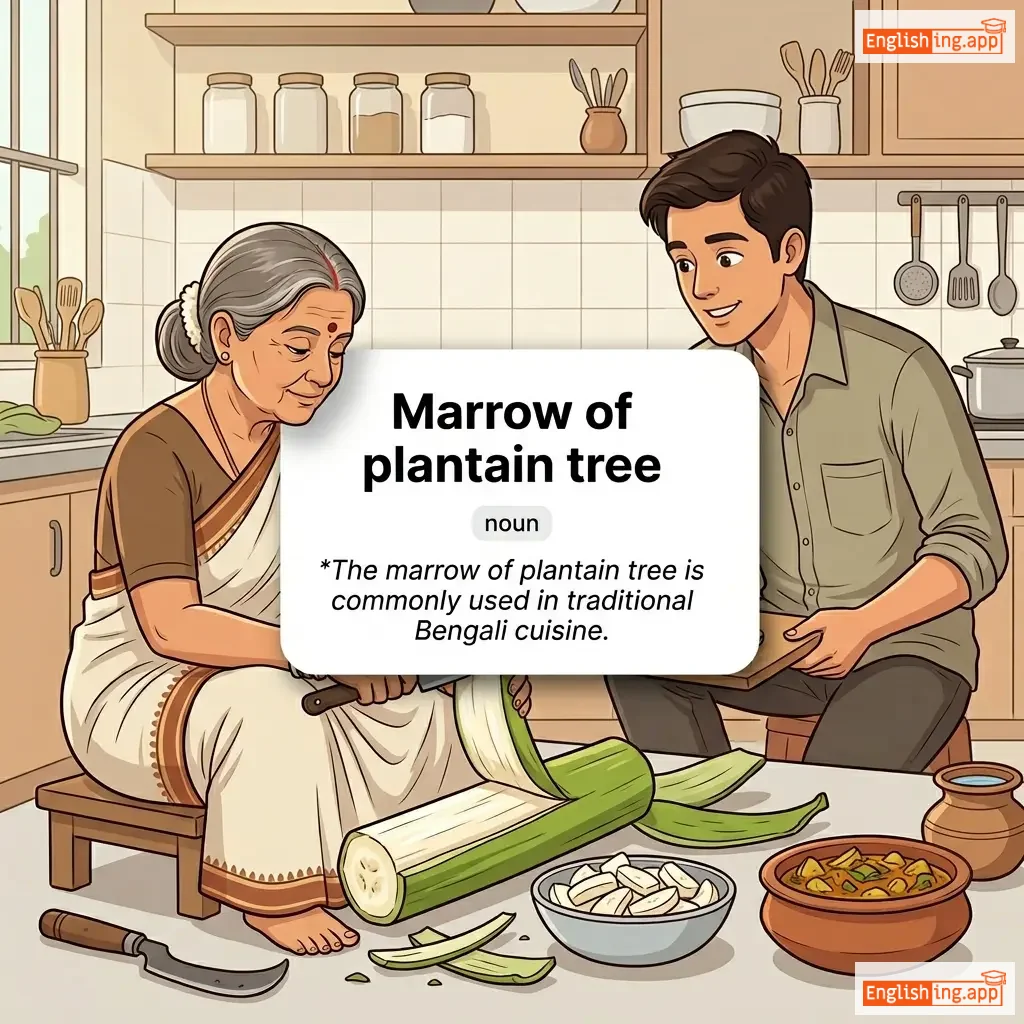
Marrow of plantain tree definition card — visual illustration of the meaning
noun C2
/ˈmær.oʊ ʌv ˈplæn.tɪn triː/
médula del árbol de plátano (medula del arbol de platano)

the soft inner part of the banana plant stem that is used as a vegetable in cooking

"The marrow of plantain tree is commonly used in traditional Bengali cuisine."

"La médula del árbol de plátano se usa comúnmente en la cocina tradicional bengalí." (La medula del arbol de platano se usa comunmente en la cocina tradicional bengali.)
noun C2
/ˌmɑːrtəˈnɛt/
un disciplinario estricto (un disciplinario estricto)

A strict disciplinarian who demands rigid adherence to rules.

"The new manager was such a martinet that even minor infractions were punished."
"El nuevo gerente era tan martinete que incluso las infracciones menores eran castigadas." (El nuevo gerente era tan martinete que incluso las infracciones menores eran castigadas.)
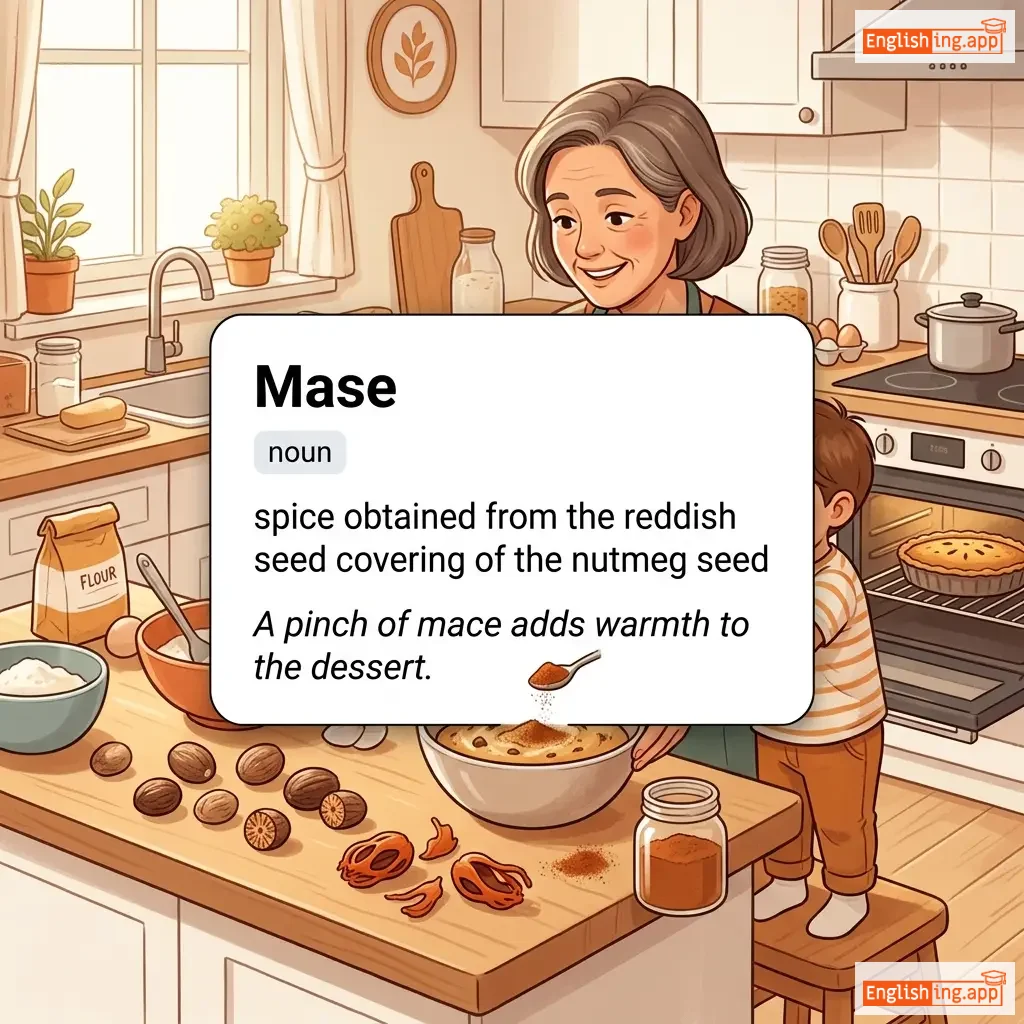
Mase definition card — visual illustration of the meaning
noun C2
/meɪs/
mace (mase)

spice obtained from the reddish seed covering of the nutmeg seed

"A pinch of mace adds warmth to the dessert."

"Un poco de mace añade calidez al postre." (Un poco de mace añade calidez al postre.)
noun C2
/ˈmæsəkɪst/
masoquista (masoquista)

a person who derives pleasure from their own pain or humiliation

"He was called a masochist for enjoying tough challenges."

"Lo llamaron masoquista por disfrutar de desafíos difíciles." (Lo llamaron masoquista por disfrutar de desafíos difíciles.)
noun C2
/ˌmæskəˈreɪd/
fiesta donde la gente usa máscaras y disfraces (fiesta donde la gente usa mascaras y disfraces)

a party or gathering where people wear masks and costumes; a false outward show

"The charity event was held as a grand masquerade."

"El evento benéfico se celebró como un gran masquerade." (El evento benefico se celebro como un gran masquerade.)
verb C2
/ˈmæstɪkeɪt/
masticar (masticar)

to chew food thoroughly before swallowing

"He slowly masticated the bread before swallowing."

"Él masticó lentamente el pan antes de tragarlo." (El masticó lentamente el pan antes de tragarlo.)
noun C2
/ˈmætrɪˌsaɪd/
matricidio (matricidio)

The act of killing one's own mother.

"The crime of matricide shocked the entire town."

"El crimen de matricidio sorprendió a toda la ciudad." (El krimen de matricidio sorprendió a toda la ciudad.)
verb C2
/məˈtrɪkjʊˌleɪt/
matricularse (matricularse)

To enroll as a student in a college or university.

"She matriculated at Oxford University last year."

"Ella se matriculó en la Universidad de Oxford el año pasado." (Ella se matriculó en la Universidad de Oxford el año pasado.)
adjective C2
/ˈmɔːdlɪn/
excesivamente sentimental (excesivamente sentimental)

Overly sentimental, often tearfully or weakly emotional.

"He became maudlin after a few drinks."

"Se volvió demasiado sentimental después de unas copas." (Se volvió demasiado sentimental después de unas copas.)
verb C2
/ˈmɔːndər/
hablar sin sentido (hablar sin sentido)

To speak or move aimlessly and incoherently.

"He maundered on about his old memories."

"Él habló sin sentido sobre sus viejos recuerdos." (Él habló sin sentido sobre sus viejos recuerdos.)
noun C2
/ˌmɔːzəˈliːəm/
mausoleo (mausoleo)

A large stately building that houses a tomb or several tombs.

"The king was buried in a grand mausoleum."

"El rey fue enterrado en un gran mausoleo." (El rey fue enterrado en un gran mausoleo.)
🧑‍🏫

maven (méiven)

noun C2
/ˈmeɪvən/
experto (experto)

an expert or connoisseur in a particular field

"He is a tech maven who always knows the latest trends."

"Él es un experto en tecnología que siempre sabe las últimas tendencias." (Él es un experto en tecnología que siempre sabe las últimas tendencias.)
adjective C2
/ˈmɔːkɪʃ/
excesivamente sentimental (excesivamente sentimental)

excessively sentimental, often to the point of being sickly

"The movie was criticized for its mawkish sentimentality."

"La película fue criticada por su sentimentalismo empalagoso." (La película fue criticada por su sentimentalismo empalagoso.)
noun C2
/miːd/
hidromiel (hidromiel)

An alcoholic drink made from fermented honey and water.

"The Vikings were known to drink large amounts of mead during feasts."

"Los vikingos eran conocidos por beber grandes cantidades de hidromiel durante los banquetes." (Los vikingos eran conocidos por beber grandes cantidades de hidromiel durante los banquetes.)
adjective C2
/ˈmiːli ˌmaʊðd/
hipócrita (hipocrita)

Unwilling to speak directly and honestly; insincere or evasive in speech.

"The manager gave a mealy-mouthed excuse instead of admitting the mistake."

"El gerente dio una excusa hipócrita en lugar de admitir el error." (El gerente dio una excusa hipocrita en lugar de admitir el error.)
adjective C2
/ˈmiːliˌmaʊðd/
hablar de manera evasiva (hablar de manera evasiva)

not willing to speak directly and honestly; evasive in speech

"The politician gave a mealymouthed response to the tough question."

"El político dio una respuesta evasiva a la pregunta difícil." (El politico dio una respuesta evasiva a la pregunta dificil.)
adjective C2
/ˈmiːzli/
insignificante (insignificante)

contemptibly small or insignificant

"He was paid a measly sum for the hard work."

"Le pagaron una suma insignificante por el arduo trabajo." (Le pagaron una suma insignificante por el arduo trabajo.)
noun C2
/məˈdæliən/
medallón (medallon)

a large medal or decorative piece, often worn as jewelry or used in architecture

"She wore a gold medallion around her neck."

"Ella llevaba un medallón de oro alrededor de su cuello." (Ella llevaba un medallón de oro alrededor de su cuello.)
adjective C2
/ˈmɛdəlsəm/
entrometido (entrometido)

fond of interfering in other people’s affairs

"She found her neighbor to be meddlesome and annoying."

"Encontró a su vecino entrometido y molesto." (Encontro a su vecino entrometido y molesto.)
adjective C2
/ˈmiː.di.əl/
medial (medial)

Situated in or pertaining to the middle; located toward the midline of the body or structure.

"The medial side of the knee is more prone to injury."

"La parte medial de la rodilla es más propensa a lesiones." (La parte medial de la rodilla es más propensa a lesiones.)
mediative definition card — visual illustration of the meaning
adjective C2
/ˈmiː.di.eɪ.tɪv/
relacionado con la mediación (relacionado con la mediación)

Related to mediation, helping to resolve conflicts through diplomatic means.

"His mediative skills helped resolve the conflict."
"Sus habilidades mediadoras ayudaron a resolver el conflicto." (Sus habilidades mediadoras ayudaron a resolver el conflicto.)
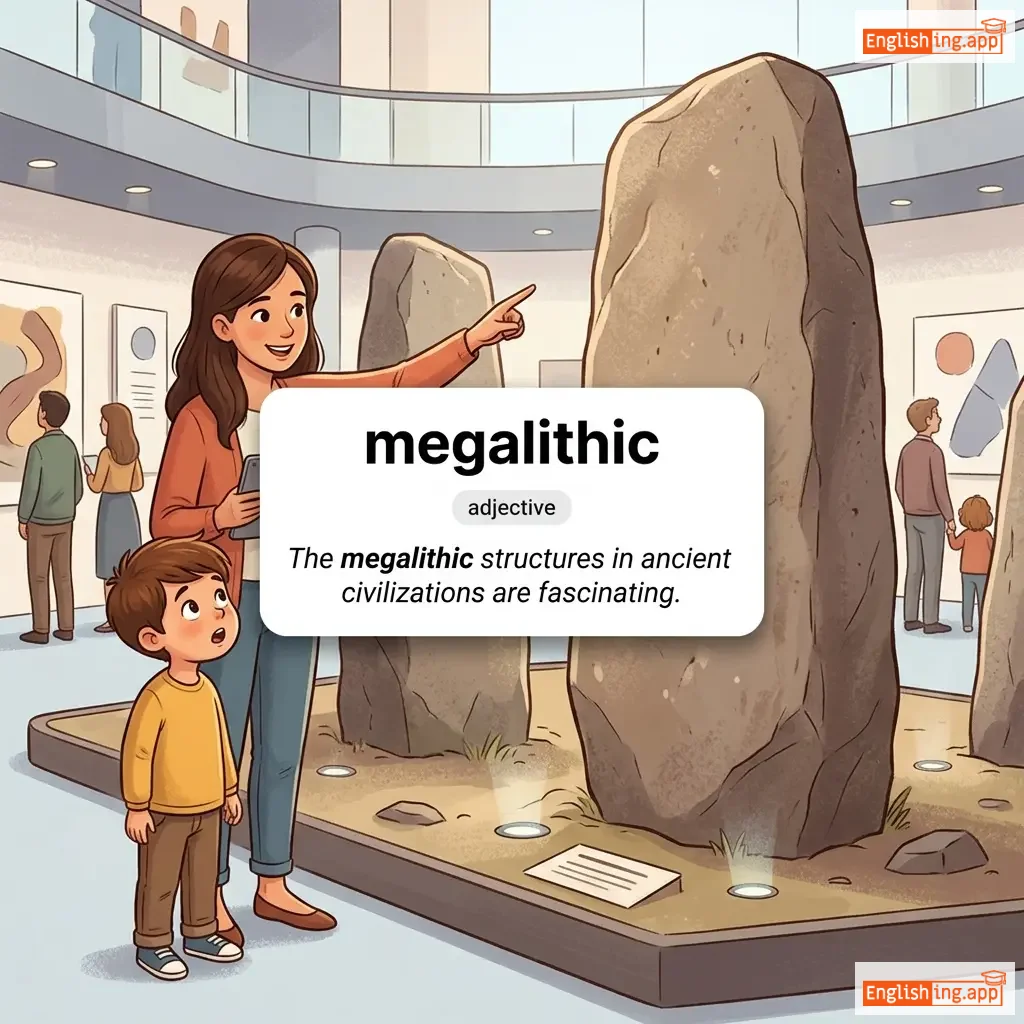
megalithic definition card — visual illustration of the meaning
adjective C2
ˌmɛɡəˈlɪθɪk
megalítico (megalitico)

Relating to or denoting prehistoric monuments made of or containing large stones.

"The megalithic structures in ancient civilizations are fascinating."
"Las estructuras megalíticas en civilizaciones antiguas son fascinantes." (Las estructuras megalíticas en civilizaciones antiguas son fascinantes.)
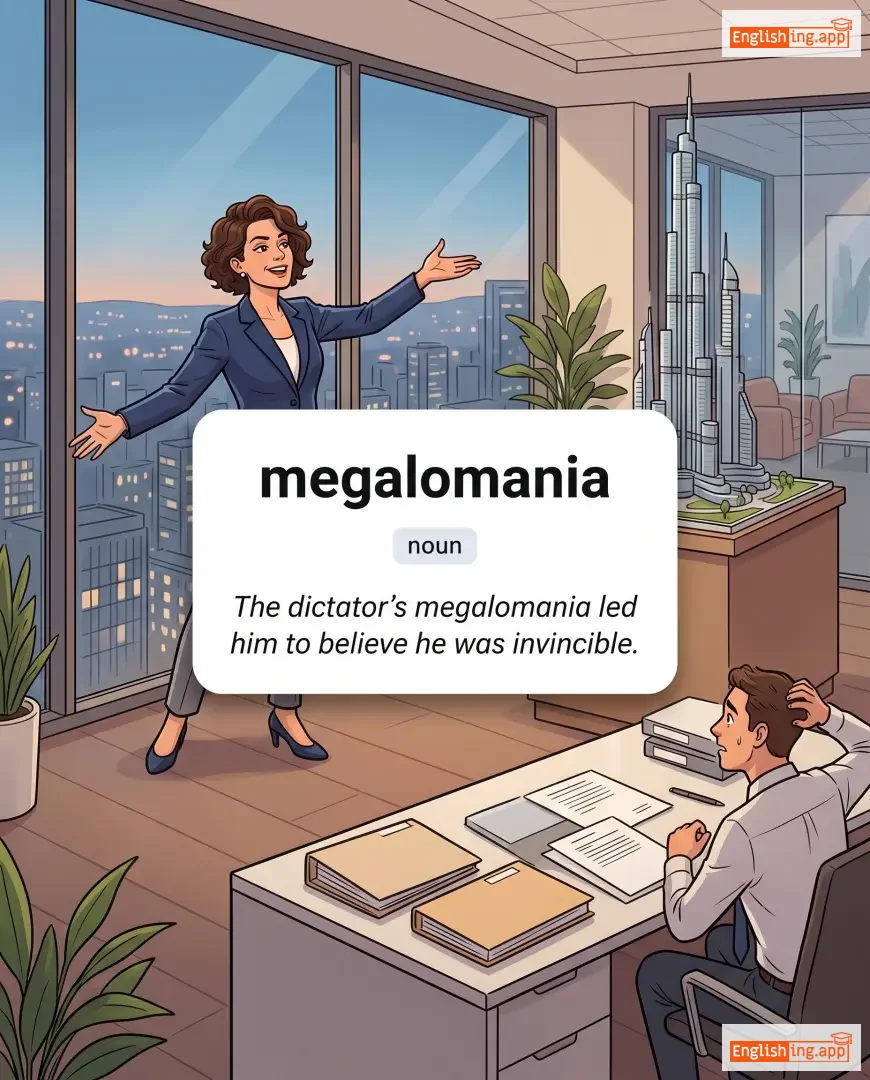
megalomania definition card — visual illustration of the meaning
noun C2
/ˌmɛɡələˈmeɪniə/
fantasías delirantes de poder, riqueza o omnipotencia (fantasias delirantes de poder, riqueza o omnipotencia)

A condition characterized by delusional fantasies of power, wealth, or omnipotence.

"The dictator’s megalomania led him to believe he was invincible."

"La megalomanía del dictador lo llevó a creer que era invencible." (La megalomanía del dictador lo llevó a creer que era invencible.)
noun C2
/meɪˈlɑːnʒ/
mezcla (mezcla)

A mixture of different things or styles.

"The festival offered a melange of music, food, and art."

"El festival ofreció una mezcla de música, comida y arte." (El festival ofreció una mezcla de música, comida y arte.)
noun C2
/ˈmeɪleɪ/
lucha desordenada (lucha desordenada)

A noisy, confused fight or crowd situation.

"A melee broke out during the football match."

"Estalló una lucha desordenada durante el partido de fútbol." (Estallo una lucha desordenada durante el partido de futbol.)
verb C2
/ˈmiːliəˌreɪt/
mejorar (mejorar)

To make something better or improve a condition.

"The new policies aim to meliorate the living conditions of the poor."

"Las nuevas políticas tienen como objetivo mejorar las condiciones de vida de los pobres." (Las nuevas politicas tienen como objetivo mejorar las condiciones de vida de los pobres.)
noun C2
/ˈmiːliərɪzəm/
meliorismo (meliorismo)

The belief that the world tends to improve and that humans can aid its betterment.

"Her philosophy of meliorism kept her hopeful during difficult times."

"Su filosofía de meliorismo la mantuvo esperanzada durante tiempos difíciles." (Su filosofía de meliorismo la mantuvo esperanzada durante tiempos difíciles.)
adjective C2
/məˈlɪfluəs/
melodioso (melodioso)

Sweet or musical; pleasant to hear.

"The singer’s mellifluous voice enchanted the audience."

"La voz melodiosa del cantante encantó a la audiencia." (la voz melodiosa del cantante encanto a la audiencia.)
verb C2
/məˈmɔːriəlaɪz/
conmemorar (conmemorar)

to preserve the memory of a person or event, often through a ceremony, monument, or record

"The city decided to memorialize the hero with a statue in the central square."

"La ciudad decidió conmemorar al héroe con una estatua en la plaza central." (La ciudad decidió conmemorar al héroe con una estatua en la plaza central.)
noun C2
/məˈnæʒəri/
colección de animales salvajes (coleccion de animales salvajes)

a collection of wild animals kept for exhibition; a diverse or strange group of people or things

"The circus had a menagerie of exotic animals."
"El circo tenía una colección de animales exóticos." (El circo tenia una coleccion de animales exoticos.)
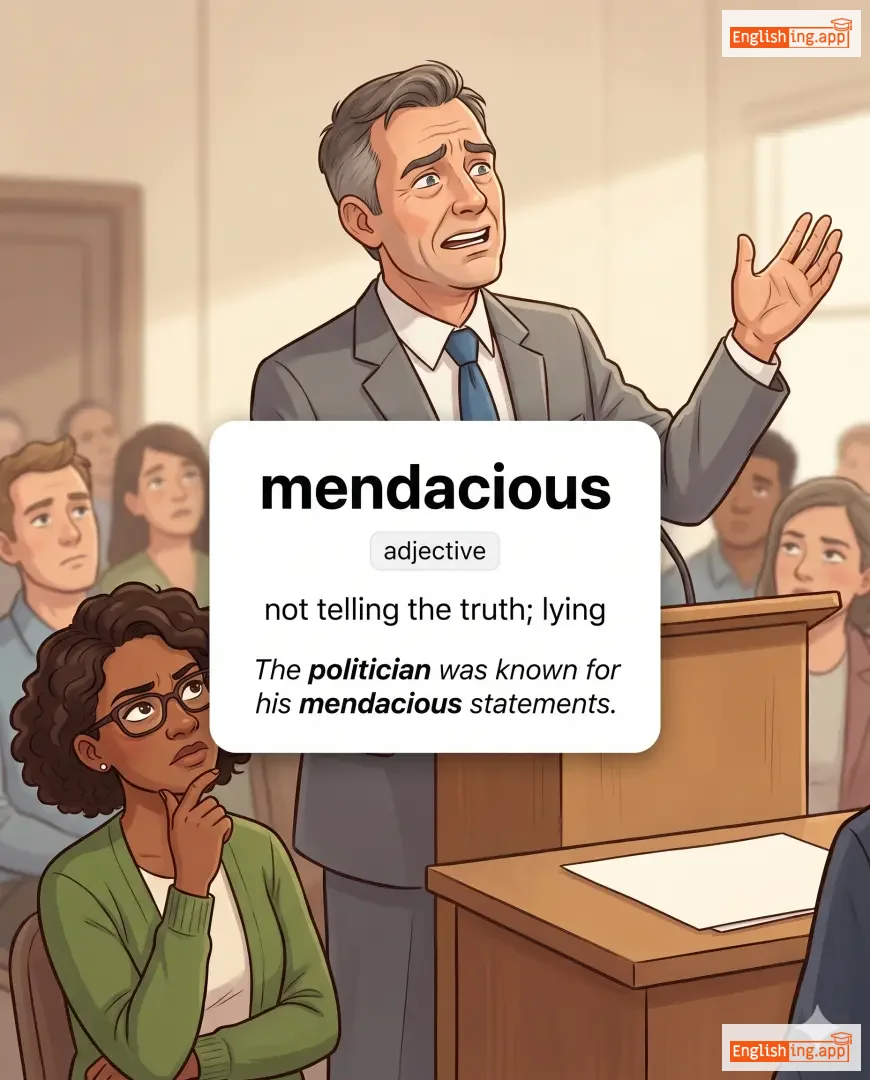
mendacious definition card — visual illustration of the meaning
adjective C2
/mɛnˈdeɪʃəs/
mentiroso (mentiroso)

not telling the truth; lying

"The politician was known for his mendacious statements."

"El político era conocido por sus declaraciones mentirosas." (El político era conocido por sus declaraciones mentirosas.)
noun C2
/mɛnˈdæsəti/
falsedad (falsedad)

the tendency to be untruthful; dishonesty

"The journalist exposed the mendacity of the officials."

"El periodista expuso la falsedad de los funcionarios." (El periodista expuso la falsedad de los funcionarios.)
noun C2
/ˈmɛndɪkənt/
mendigo (mendigo)

a beggar; a person who lives by asking for alms

"The mendicant asked for food at the monastery gate."
"El mendigo pidió comida en la puerta del monasterio." (El mendigo pidió comida en la puerta del monasterio.)
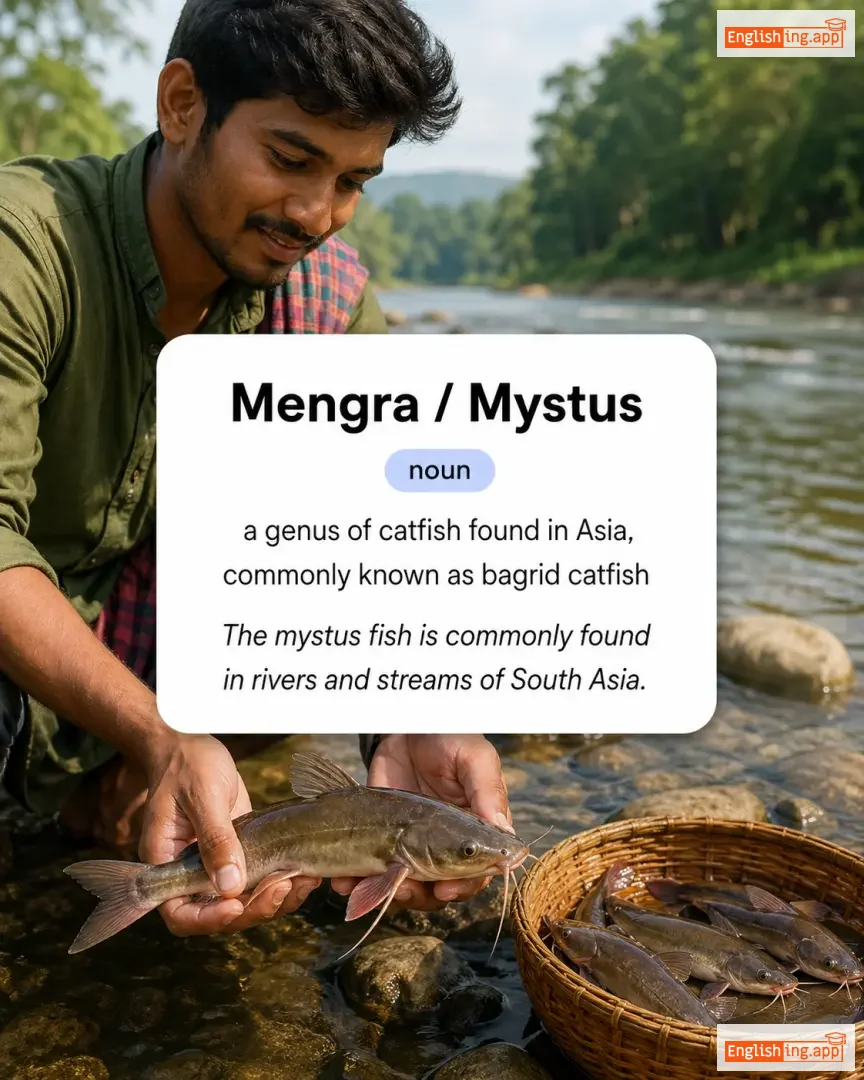
Mengra / Mystus definition card — visual illustration of the meaning
noun C2
/ˈmɪstəs/
bagre (bagre)

a genus of catfish found in Asia, commonly known as bagrid catfish

"The mystus fish is commonly found in rivers and streams of South Asia."
"El pez mystus se encuentra comúnmente en los ríos y arroyos del sur de Asia." (El pez mistus se encuentra comunmente en los rios y arroyos del sur de Asia)
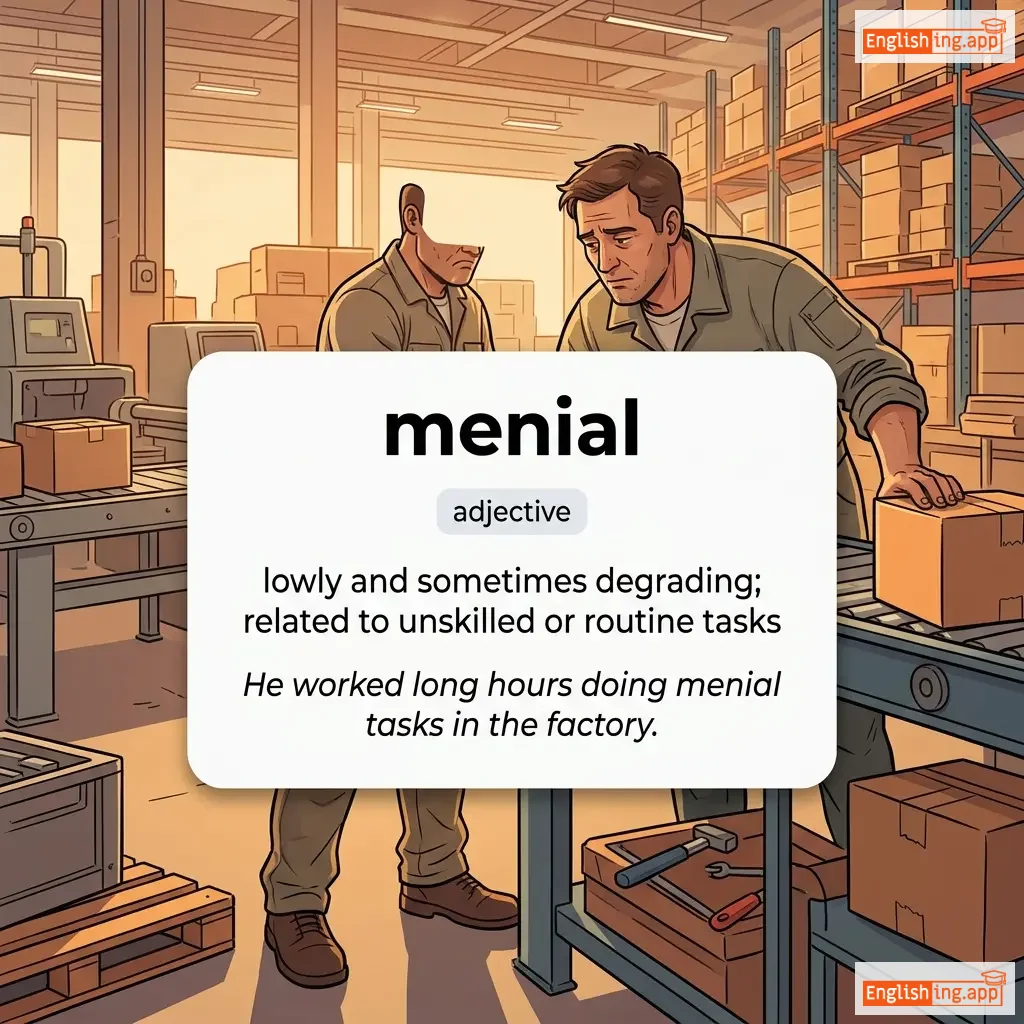
menial definition card — visual illustration of the meaning
adjective C2
/ˈmiːniəl/
tareas insignificantes (tareas insignificantes)

lowly and sometimes degrading; related to unskilled or routine tasks

"He worked long hours doing menial tasks in the factory."

"Él trabajó largas horas haciendo tareas insignificantes en la fábrica." (El trabajó largas horas haciendo tareas insignificantes en la fábrica.)
adjective C2
/ˈmɜːrkəntaɪl/
mercantil (mercantil)

related to trade or commerce

"The city grew rapidly due to its mercantile activities."

"La ciudad creció rápidamente debido a sus actividades mercantiles." (La ciudad creció rápidamente debido a sus actividades mercantiles.)
adjective C2
/mɜːrˈkjʊriəl/
inconstante (inconstante)

subject to sudden or unpredictable changes of mood or mind.

"She is known for her mercurial temperament."
"Ella es conocida por su temperamento inconstante." (Ella es conocida por su temperamento inconstante.)
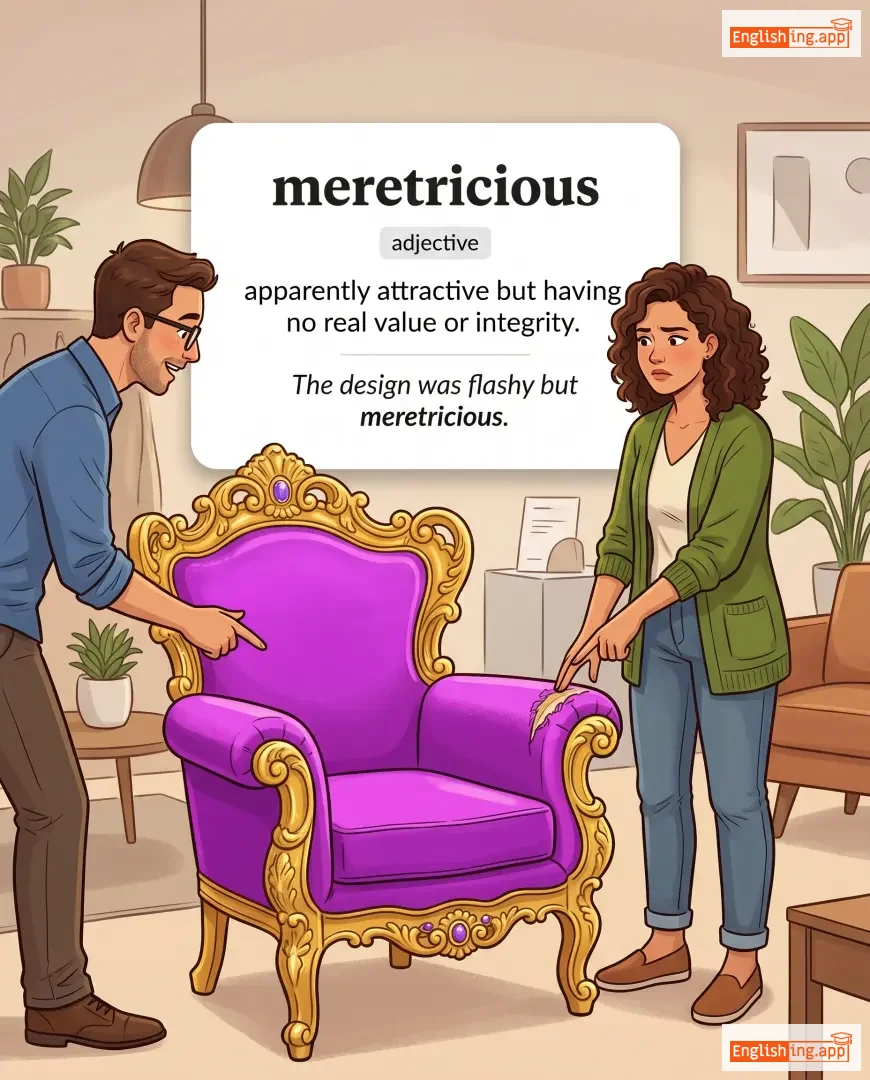
meretricious definition card — visual illustration of the meaning
adjective C2
/ˌmɛrəˈtrɪʃəs/
ficticio (ficticio)

apparently attractive but having no real value or integrity.

"The design was flashy but meretricious."

"El diseño era llamativo pero ficticio." (El diseño era llamativo pero ficticio.)
noun C2
/ˈmeɪsə/
meseta (meseta)

An isolated flat-topped hill with steep sides, found in arid regions.

"The hikers stopped to admire the mesa rising above the desert floor."

"Los excursionistas se detuvieron para admirar la meseta que se alzaba sobre el suelo del desierto." (Los excursionistas se detuvieron para admirar la meseta que se alzaba sobre el suelo del desierto.)
noun C2
/ˈmɛzməˌrɪzəm/
hipnotismo (hipnotismo)

A state of fascination or hypnotism.

"The magician held the audience in a state of mesmerism."
"El mago mantuvo a la audiencia en un estado de mesmerismo." (El mago mantuvo a la audiencia en un estado de mesmerismo.)
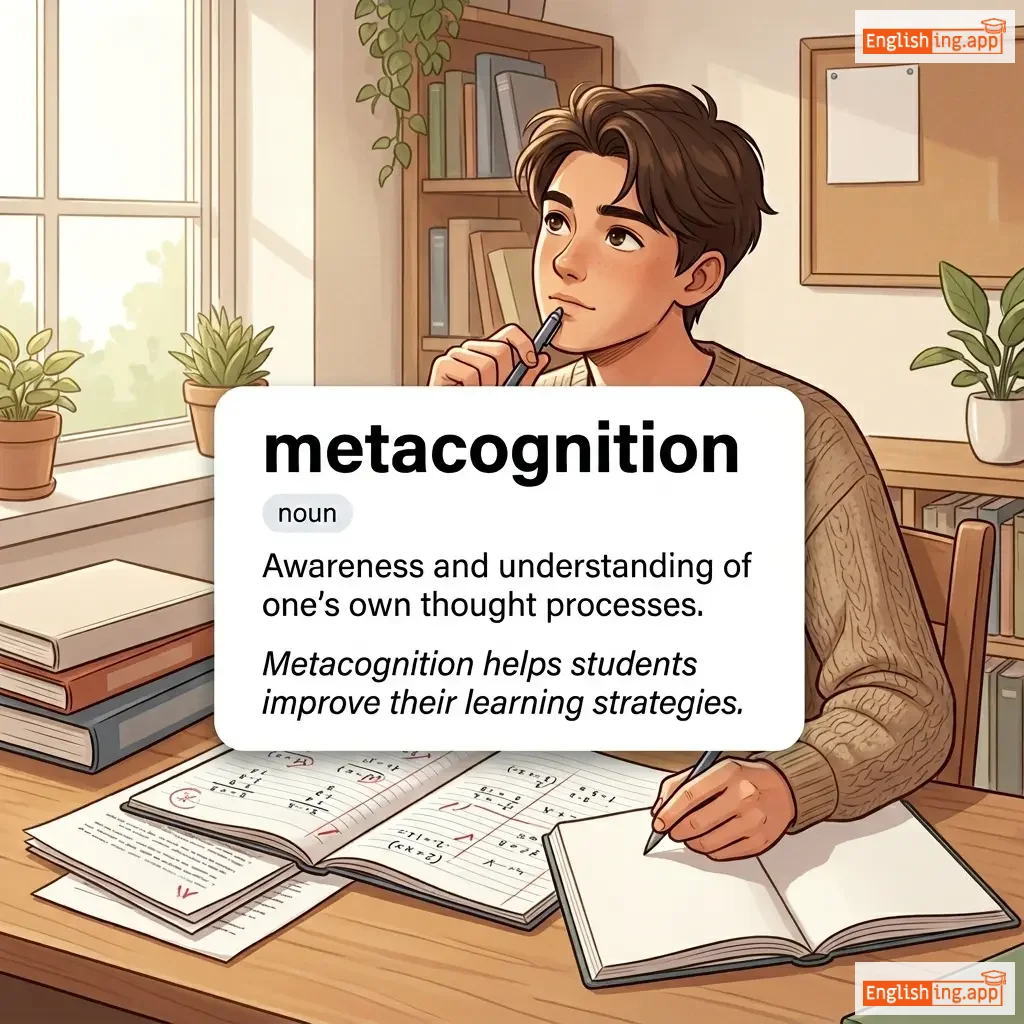
metacognition definition card — visual illustration of the meaning
noun C2
ˌmɛt.ə.kɒɡˈnɪʃ.ən
metacognición (metacognicion)

Awareness and understanding of one's own thought processes.

"Metacognition helps students improve their learning strategies."

"La metacognición ayuda a los estudiantes a mejorar sus estrategias de aprendizaje." (La metacognicion ayuda a los estudiantes a mejorar sus estrategias de aprendizaje.)
adjective C2
/ˌmɛtəˈlɜrdʒɪkəl/
metalúrgico (metalurgico)

Relating to metallurgy or the branch of science concerned with the properties of metals and their production.

"He studied metallurgical engineering at the university."

"Él estudió ingeniería metalúrgica en la universidad." (el estudio ingenieria metalurgica en la universidad.)