語彙集

英単語辞書 | 単語の意味、定義、例文

adjective C1
/ˈnɛɡ.lɪ.dʒənt/
不注意 (fuchūi)

Failing to take proper care in doing something; careless.

"The company was found negligent in providing workplace safety."

"その会社は職場での安全対策を提供する際に不注意だと判定されました。" (Sono kaisha wa shokuba de no anzen taisaku o teikyō suru sai ni fuchūi da to hantei saremashita.)
adjective C1
/ˈnɛɡ.lɪ.dʒə.bəl/
取るに足らない (toru ni taranai)

So small or unimportant as to be not worth considering; insignificant.

"The cost of the error was negligible."

"その誤りのコストは取るに足らないものでした。" (Sono ayamari no kosuto wa toru ni taranai mono deshita.)
adjective C1
/nɪˈɡoʊ.ʃi.ə.bəl/
交渉可能 (koushou kanou)

Open to discussion or modification; capable of being bargained for.

"The salary offered is negotiable."

"提供された給与は交渉可能です。" (Teikyou sareta kyūyo wa koushou kanou desu.)
noun C1
/ˈnɛm.ə.sɪs/
敵 / ライバル (teki / raibaru)

A long-standing rival or an inescapable agent of downfall.

"For years, he considered his colleague to be his nemesis."

"何年もの間、彼は同僚を自分の敵だと思っていた。" (Nanen mono aida, kare wa douryou wo jibun no teki da to omotte ita.)
adjective C1
/ˌniːoʊˈlɪθɪk/
新石器時代の (shin sekkī jidai no)

Relating to the later part of the Stone Age, when ground or polished stone weapons and tools prevailed.

"Neolithic communities began practicing agriculture and domesticating animals."
"新石器時代のコミュニティは農業を行い、動物を飼いならし始めた。" (Shin sekkī jidai no komyuniti wa nōgyō o okonai, dōbutsu o kainarashi hajimeta.)
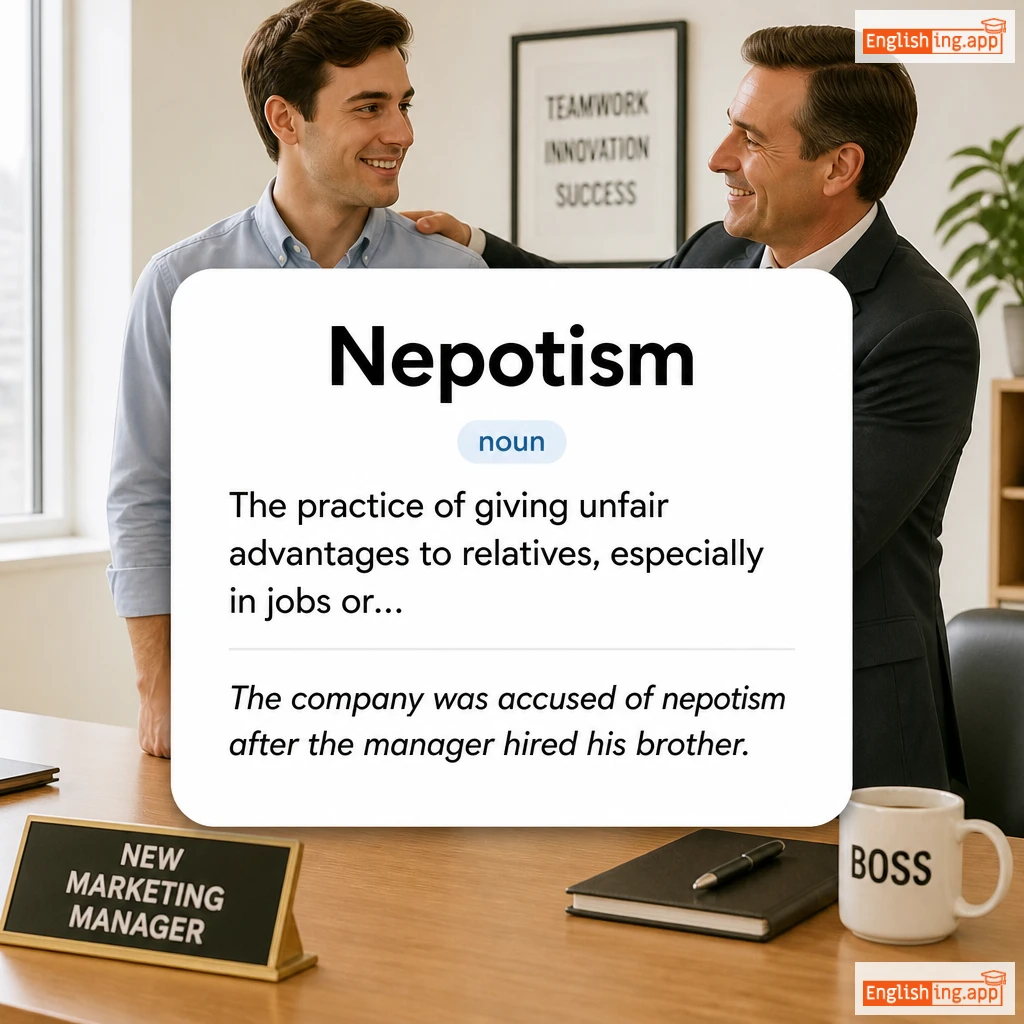
Nepotism definition card — visual illustration of the meaning
noun C1
/ˈnɛpətɪzəm/
縁故主義 (enkoshugi)

The practice of giving unfair advantages to relatives, especially in jobs or positions of power.

"The company was accused of nepotism after the manager hired his brother."

"マネージャーが兄弟を雇った後、会社は縁故主義で告発されました。" (Manējā ga kyōdai o yatotta ato, kaisha wa enkoshugi de kokuhatsu saremashita.)
verb C1
/ˈnɛsəl/
寄り添う (yorisou)

to settle or lie comfortably within or against something

"The child nestled into her mother's arms."
"その子供は母親の腕に寄り添いました。" (Sono kodomo wa hahaoya no ude ni yorisoumashita.)
adjective C1
/ˈnjʊrəl/

Relating to nerves or the nervous system.

"Scientists study neural connections in the brain."

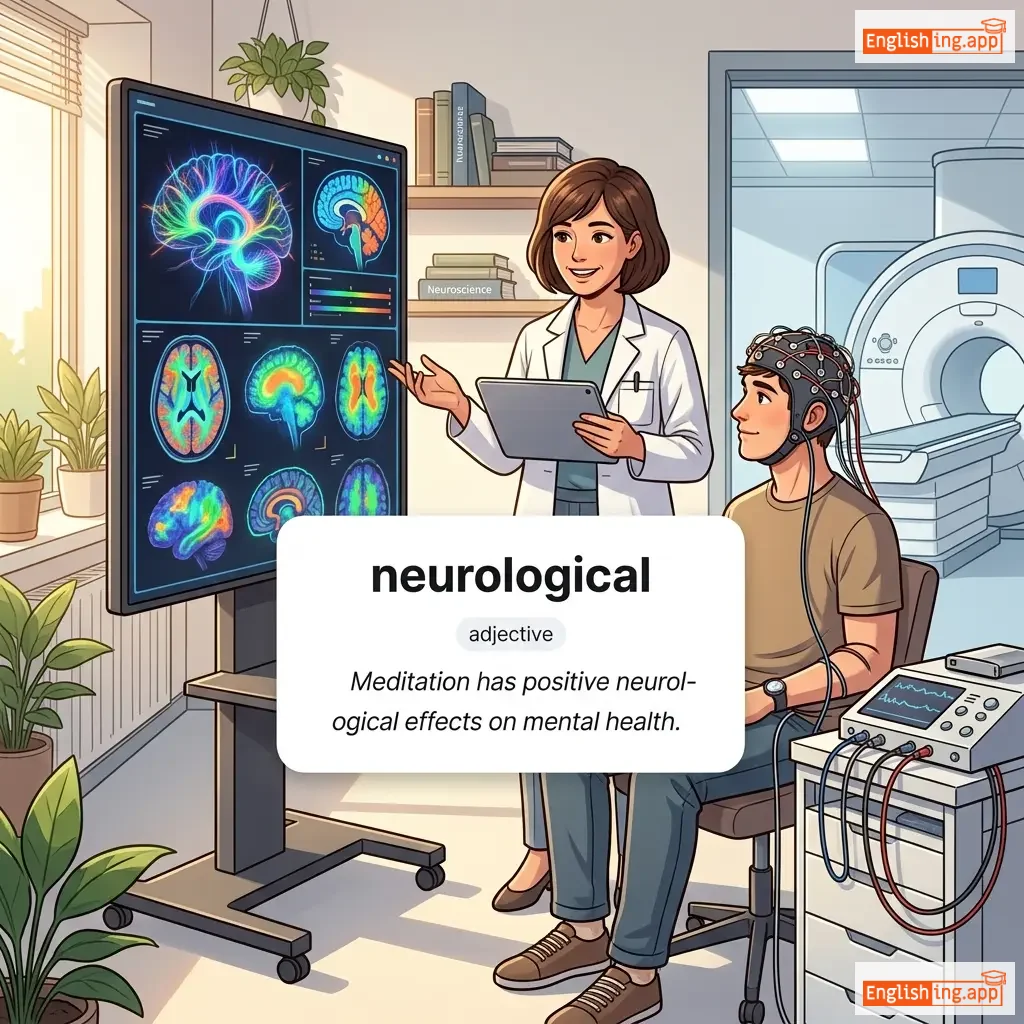
neurological definition card — visual illustration of the meaning
adjective C1
/ˌnjʊə.rəˈlɒdʒ.ɪ.kəl/
神経学的 (shinkei-gakuteki)

Relating to the anatomy, functions, and organic disorders of nerves and the nervous system.

"Meditation has positive neurological effects on mental health."

"瞑想は精神的健康に対して積極的な神経学的影響を与えます。" (Meisou wa seishinteki kenko ni taishite sekkyokuteki na shinkeigakuteki eikyō o ataemasu.)
noun C1
/njʊˈrɑːlədʒi/

The branch of medicine that deals with disorders of the nervous system.

"She specializes in neurology and treats patients with brain diseases."

neuroplasticity definition card — visual illustration of the meaning
noun C1
ˌnjʊə.rəʊ.plæsˈtɪ.sɪ.ti
神経可塑性 (shinkei kasosei)

The ability of the brain to reorganize itself by forming new neural connections throughout life.

"Meditation enhances neuroplasticity, improving memory and focus."
"瞑想はニューロプラスチック性を高め、記憶力と集中力を改善します。" (Meisou wa nyuuro purasuchikkusei o takame, kiokuryoku to shuuchuuryoku o kaizen shimasu.)
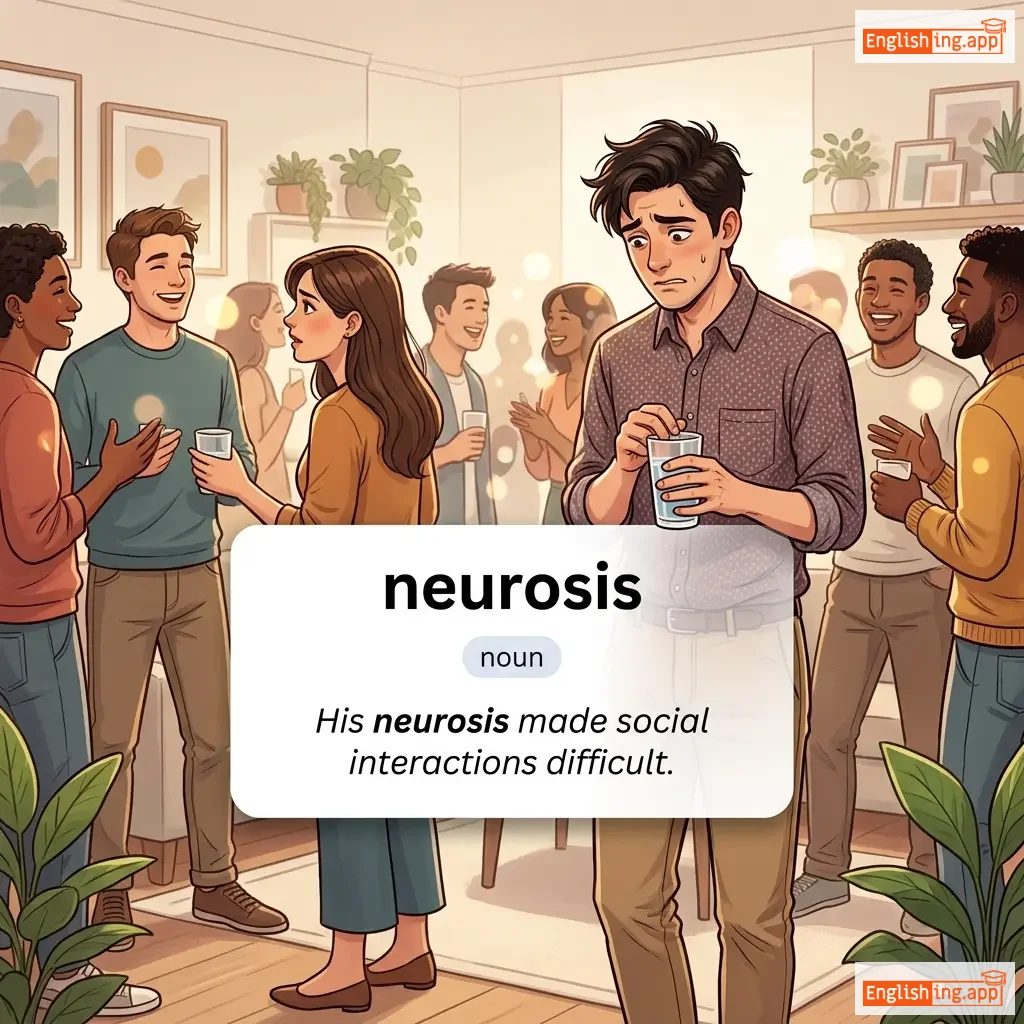
neurosis definition card — visual illustration of the meaning
noun C1
/njʊəˈrəʊ.sɪs/
神経症 (shinkeishou)

A relatively mild mental illness that is not caused by organic disease, involving symptoms of stress.

"His neurosis made social interactions difficult."
"彼の神経症は社会的な相互作用を困難にした。" (Kare no shinkeishou wa shakaiteki na sōgo sayō o kon'nan ni shita.)
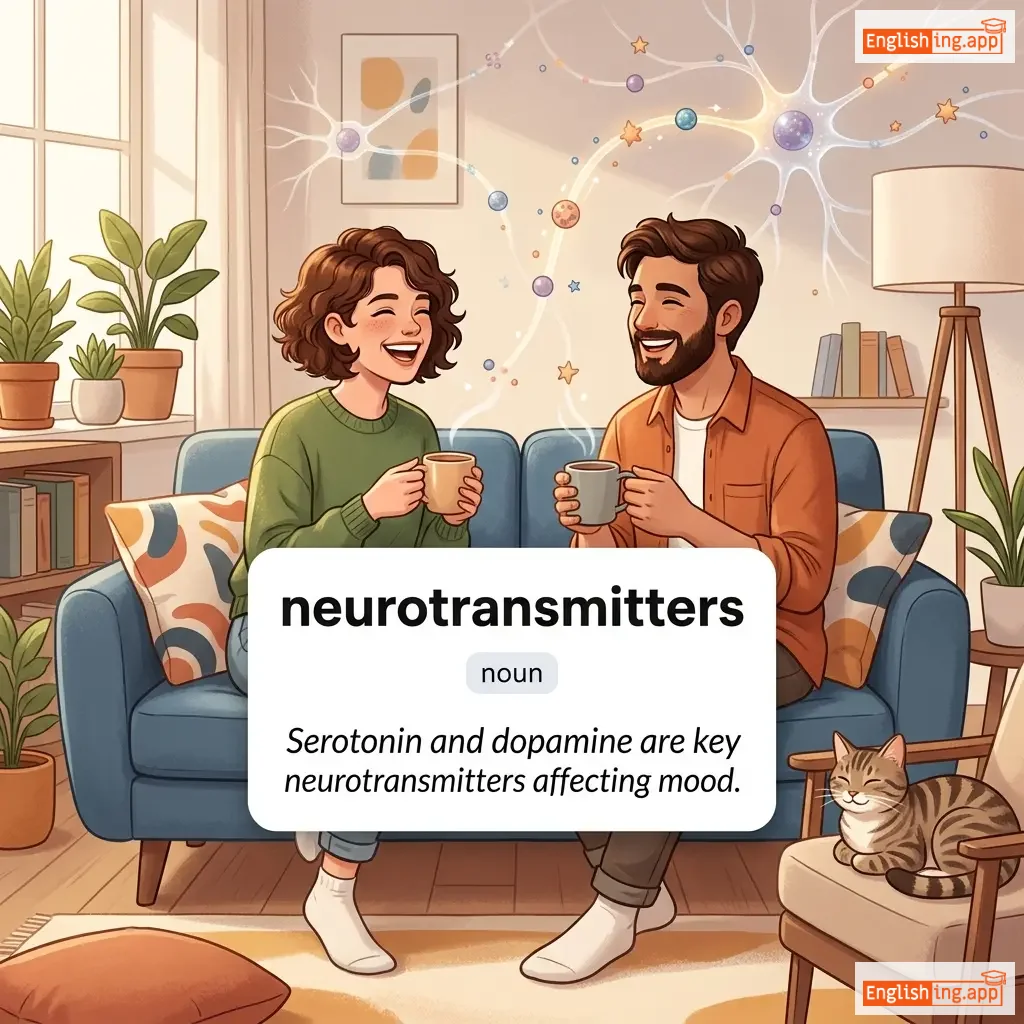
neurotransmitters definition card — visual illustration of the meaning
noun C1
/ˈnjʊə.rəʊ.trænsˌmɪt.ərs/
神経伝達物質 (shinkei dentatsu busshitsu)

Chemical messengers that transmit signals across nerve synapses, affecting mood, behavior, and cognitive functions.

"Serotonin and dopamine are key neurotransmitters affecting mood."

"セロトニンとドーパミンは気分に影響を与える主要な神経伝達物質です。" (Serotonin to Dopamine wa kibun ni eikyou wo ataeru shuyou na shinkei dentatsu busshitsu desu.)
verb C1
/ˈnuːtər/
去勢する (kyosei suru)

To remove the reproductive organs of an animal; or having no gender.

"They decided to neuter their cat to prevent more kittens."
"彼らは、もっと子猫が生まれないように、猫を去勢することに決めました。" (Karera wa, motto koneko ga umarenai you ni, neko wo kyosei suru koto ni kimemashita.)
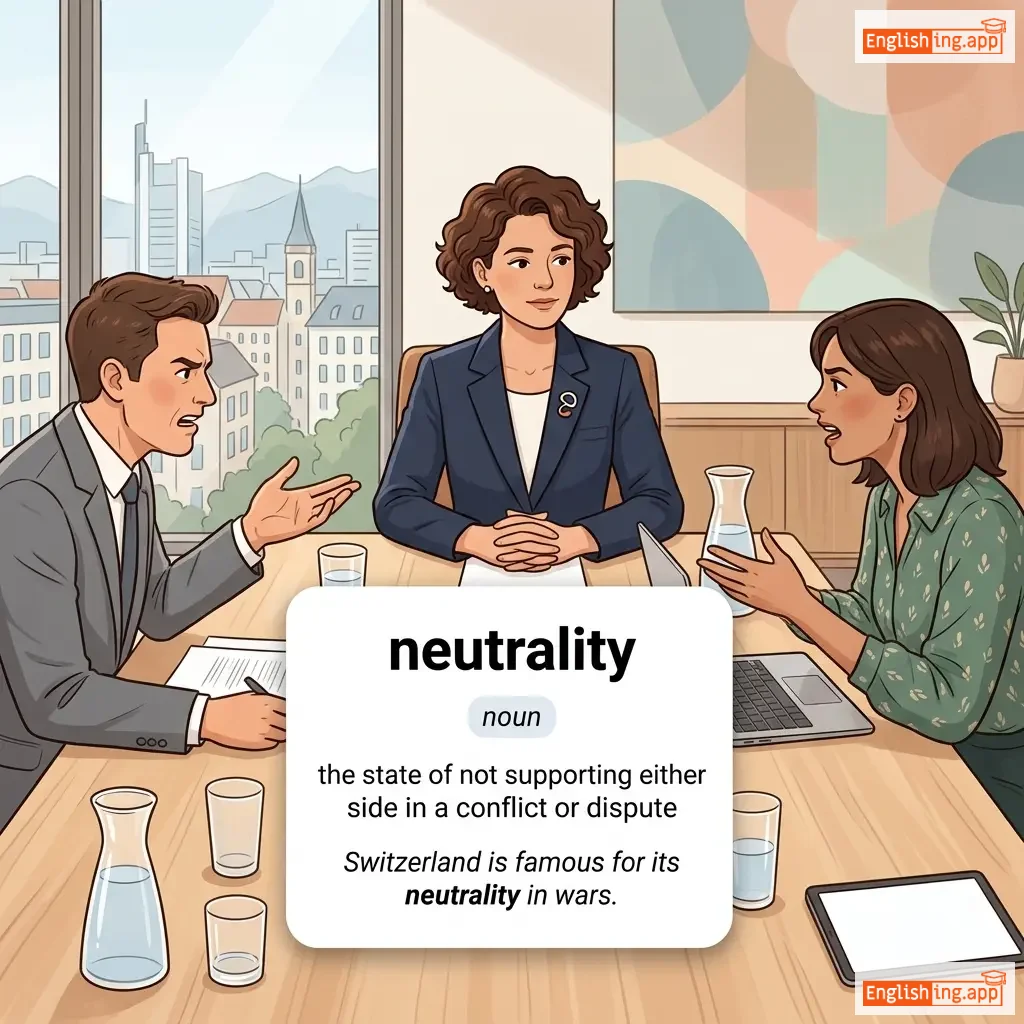
neutrality definition card — visual illustration of the meaning
noun C1
/nuːˈtræl.ə.ti/
中立 (chūritsu)

the state of not supporting either side in a conflict or dispute

"Switzerland is famous for its neutrality in wars."

"スイスは戦争での中立で有名です。" (Suisu wa sensō de no chūritsu de yūmei desu.)
verb C1
/ˈnjuːtrəlaɪz/
無力化する (muryokuka suru)

to make something ineffective or harmless

"The medicine helped neutralize the poison in his system."
"その薬は彼の体内の毒を無効にするのを助けました。" (Sono kusuri wa kare no tainai no doku o mukō ni suru no o tasukemashita.)
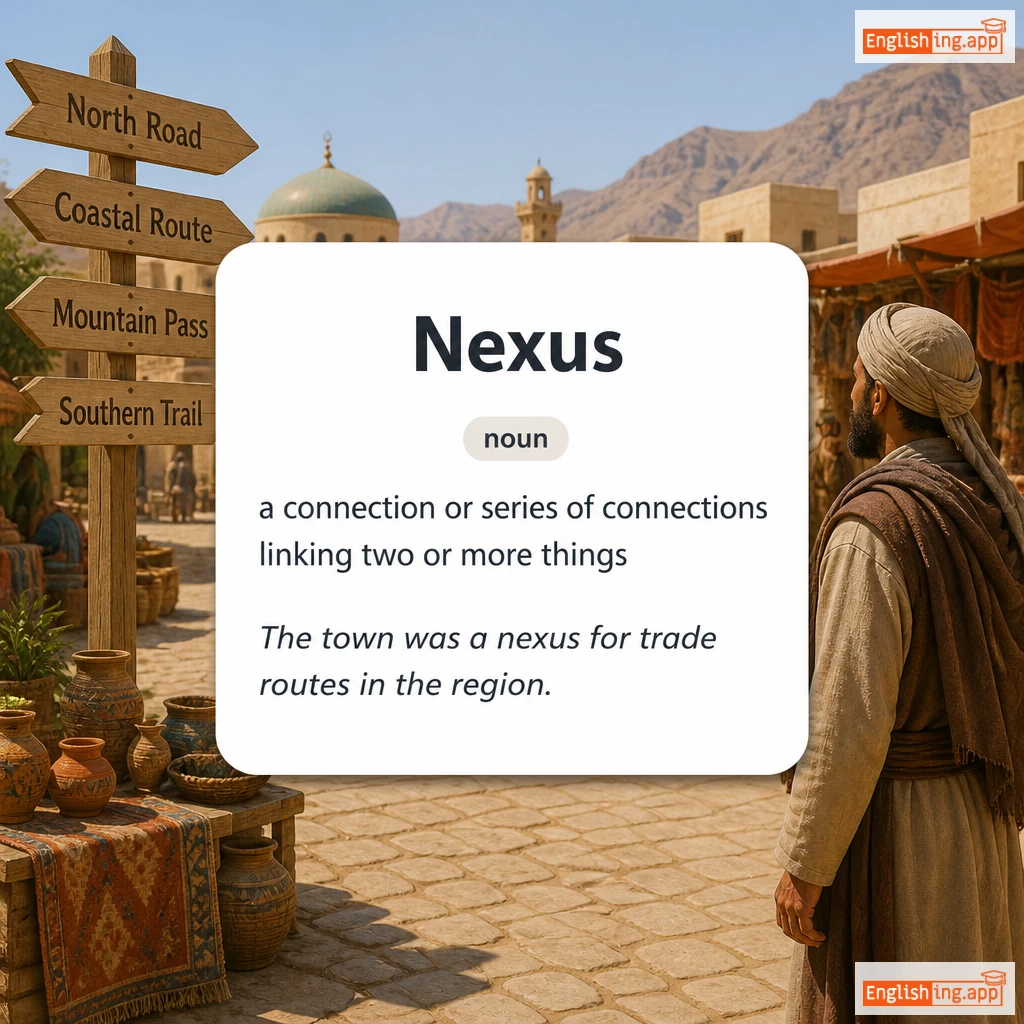
Nexus definition card — visual illustration of the meaning
noun C1
/ˈnɛksəs/
接続 (setsuzoku)

a connection or series of connections linking two or more things

"The town was a nexus for trade routes in the region."

"その街は地域の貿易ルートの接続点でした。" (Sono machi wa chiiki no boueki ruuto no setsuzoku ten deshita.)
verb C1
/ˈnɪbəl/
かじる (kajiru)

to take small bites of food

"The rabbit nibbled on a carrot."

"うさぎはにんじんをかじった。" (Usagi wa ninjin o kajitta.)
Niche definition card — visual illustration of the meaning
noun C1
/niːʃ/
ニッチ (nicchi)

a comfortable or suitable position in life or employment

"He has found his niche in the marketing industry."
"彼はマーケティング業界で自分のニッチを見つけました。" (Kare wa maketingu gyoukai de jibun no nicchi wo mitsukemashita.)
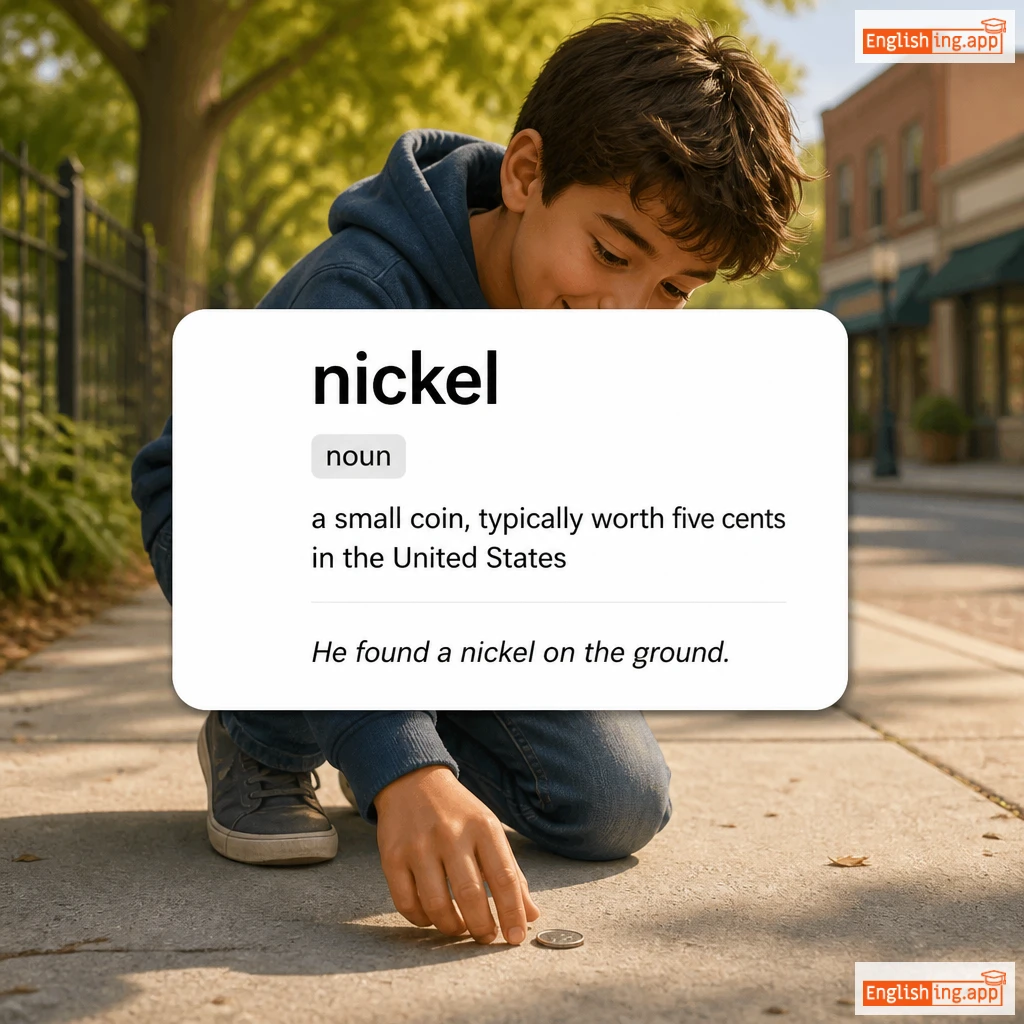
nickel definition card — visual illustration of the meaning
noun C1
/ˈnɪkəl/
ニッケル (nikkeru)

a small coin, typically worth five cents in the United States

"He found a nickel on the ground."

"彼は地面でニッケルを見つけた。" (Kare wa jimen de nikkeru o mitsuketa.)
noun C1
/ˈnaɪt.fɔːl/
夜の始まり (yoru no hajimari)

the time when night begins; dusk

"They decided to return home before nightfall."
"彼らは夜の始まり前に家に帰ることに決めました。" (Karera wa yoru no hajimari mae ni ie ni kaeru koto ni kimemashita.)
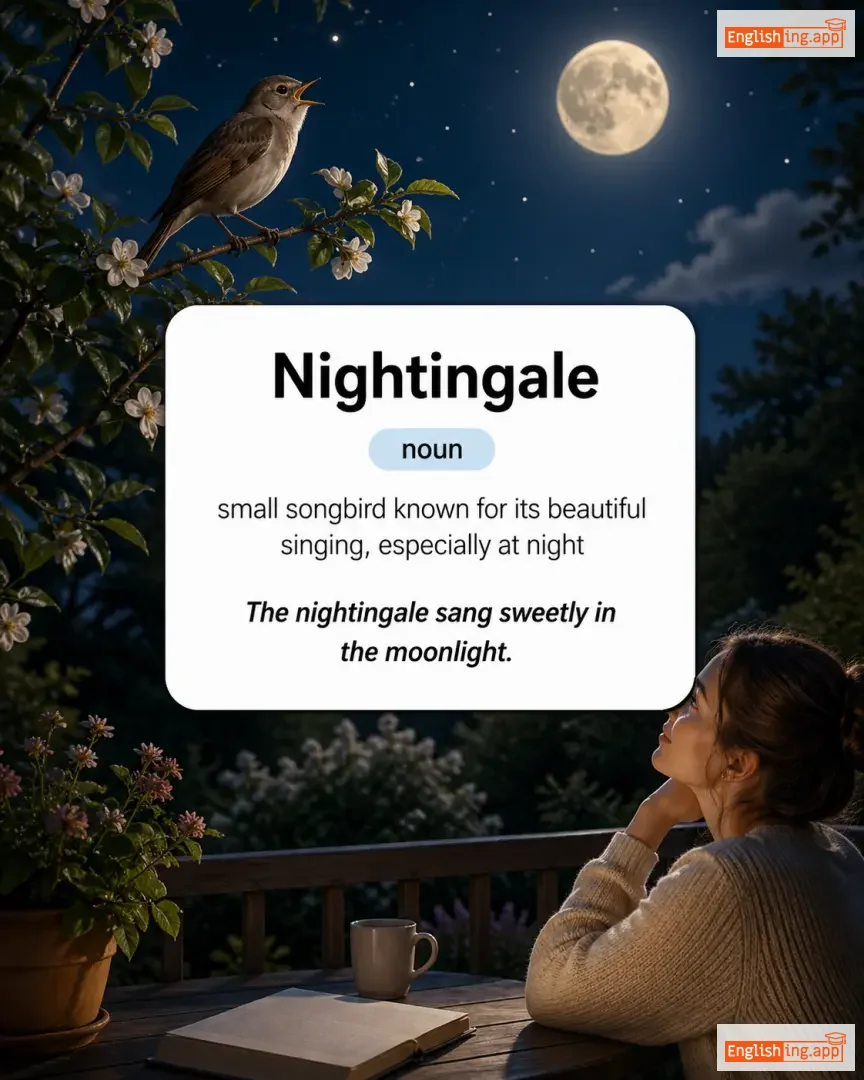
Nightingale definition card — visual illustration of the meaning
noun C1
/ˈnaɪ.tɪŋ.ɡeɪl/
ナイチンゲール (naichingeeru)

small songbird known for its beautiful singing, especially at night

"The nightingale sang sweetly in the moonlight."

"ナイチンゲールは月明かりの中で甘美に歌った。" (naichingeeru wa tsukiakari no naka de kanbi ni utatta)
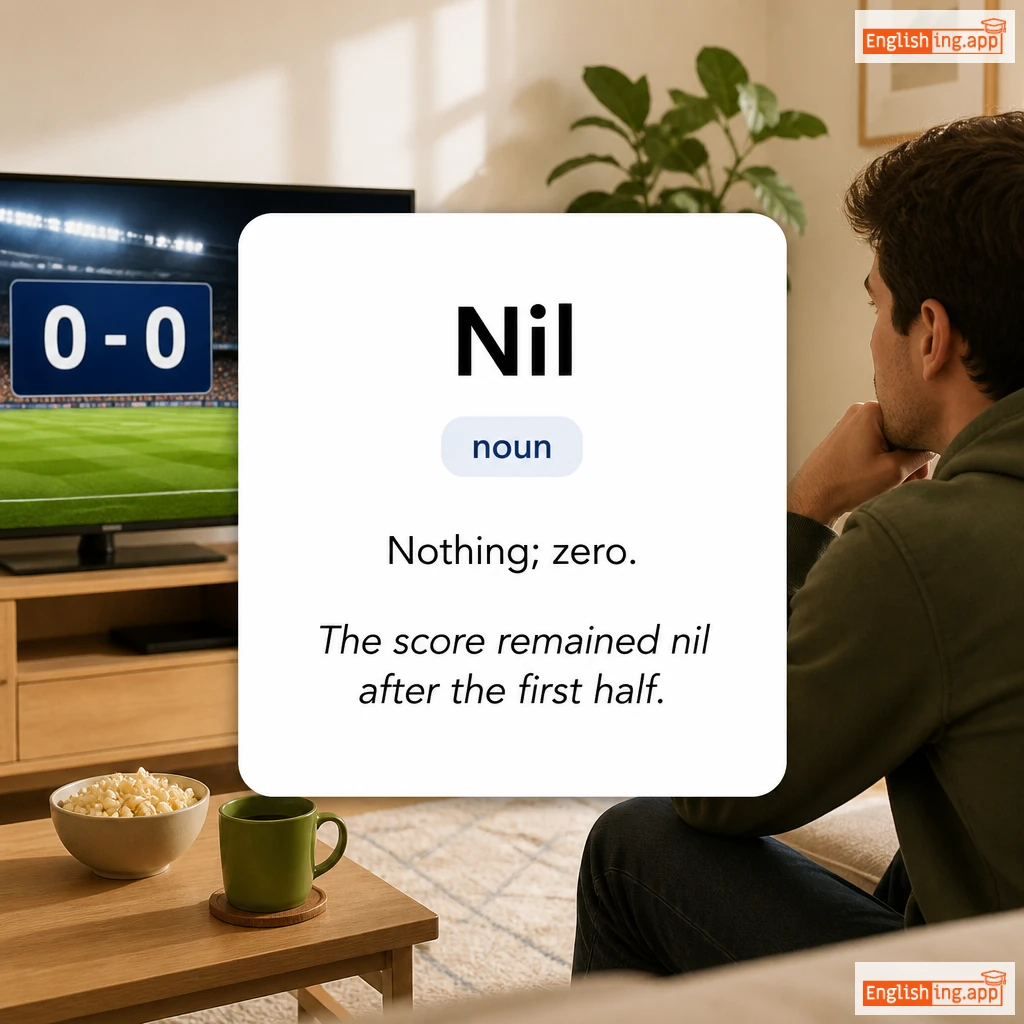
Nil definition card — visual illustration of the meaning
noun C1
/nɪl/
ゼロ (zero)

Nothing; zero.

"The score remained nil after the first half."

"前半戦が終わった後、スコアはゼロのままだった。" (Zenhan-sen ga owatta ato, sukō wa zero no mamadatta.)
adjective C1
/ˈnɪmbəl/
素早い (subayai)

Quick and light in movement or thought.

"The dancer’s nimble steps impressed the audience."

"ダンサーの素早いステップが観客を感動させた。" (Dansā no subayai suteppu ga kankyaku o kandō saseta.)
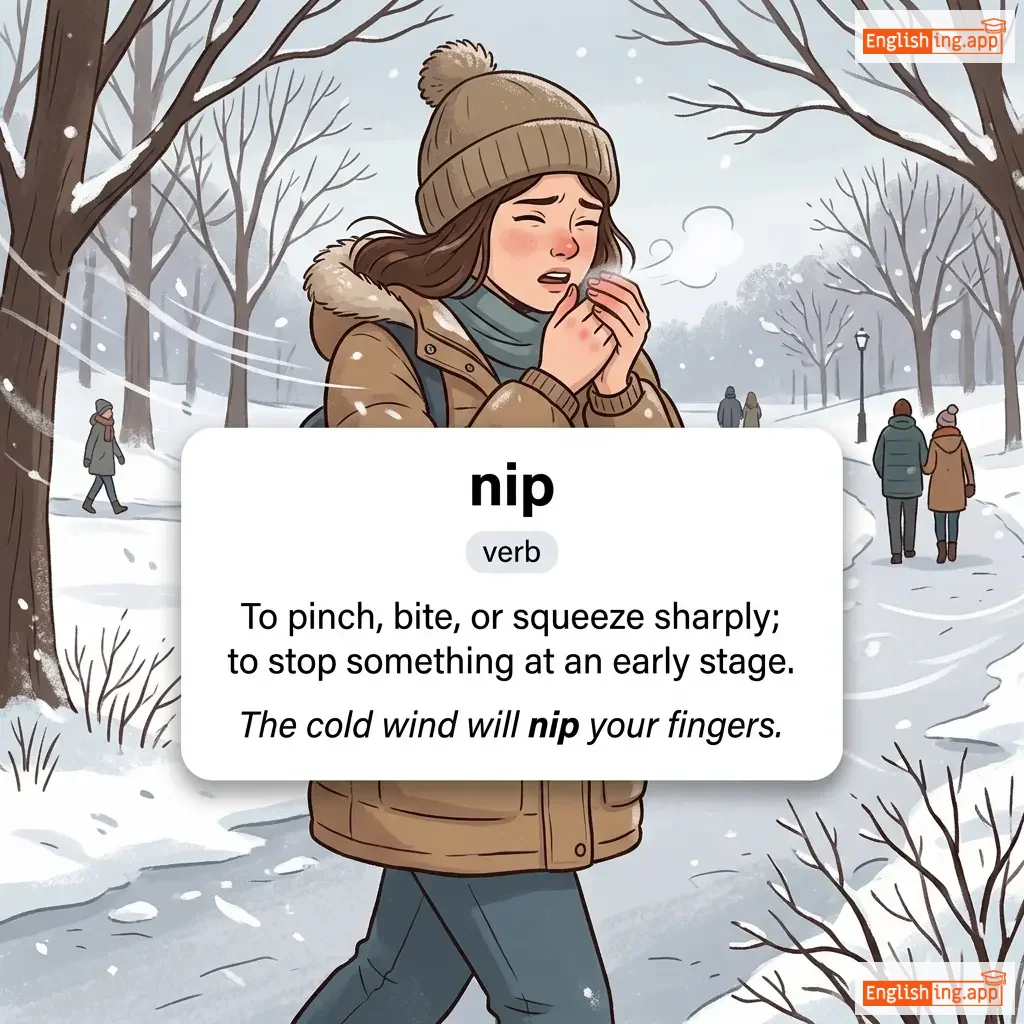
nip definition card — visual illustration of the meaning
verb C1
/nɪp/
つねる (tsuneru)

To pinch, bite, or squeeze sharply; to stop something at an early stage.

"The cold wind will nip your fingers."

"冷たい風があなたの指をつまむでしょう。" (Tsumetai kaze ga anata no yubi o tsumamu deshō.)
adjective C1
/ˈnɪp.i/
寒い; ひんやり; 動きが速くて敏捷 (samui; hinyari; ugoki ga hayakute binshou)

cold; chilly; quick and agile in movement

"It's quite nippy outside today, you should wear a jacket."
"今日は外がかなり寒いので、ジャケットを着るべきです。" (Kyou wa soto ga kanari samui node, jaketto wo kiru beki desu.)
🕉️

nirvana

noun C1
/nɪərˈvɑːnə/

A state of perfect happiness, peace, and freedom from suffering; in Buddhism, the ultimate goal of liberation.

"Meditation helps some people seek nirvana in their lives."

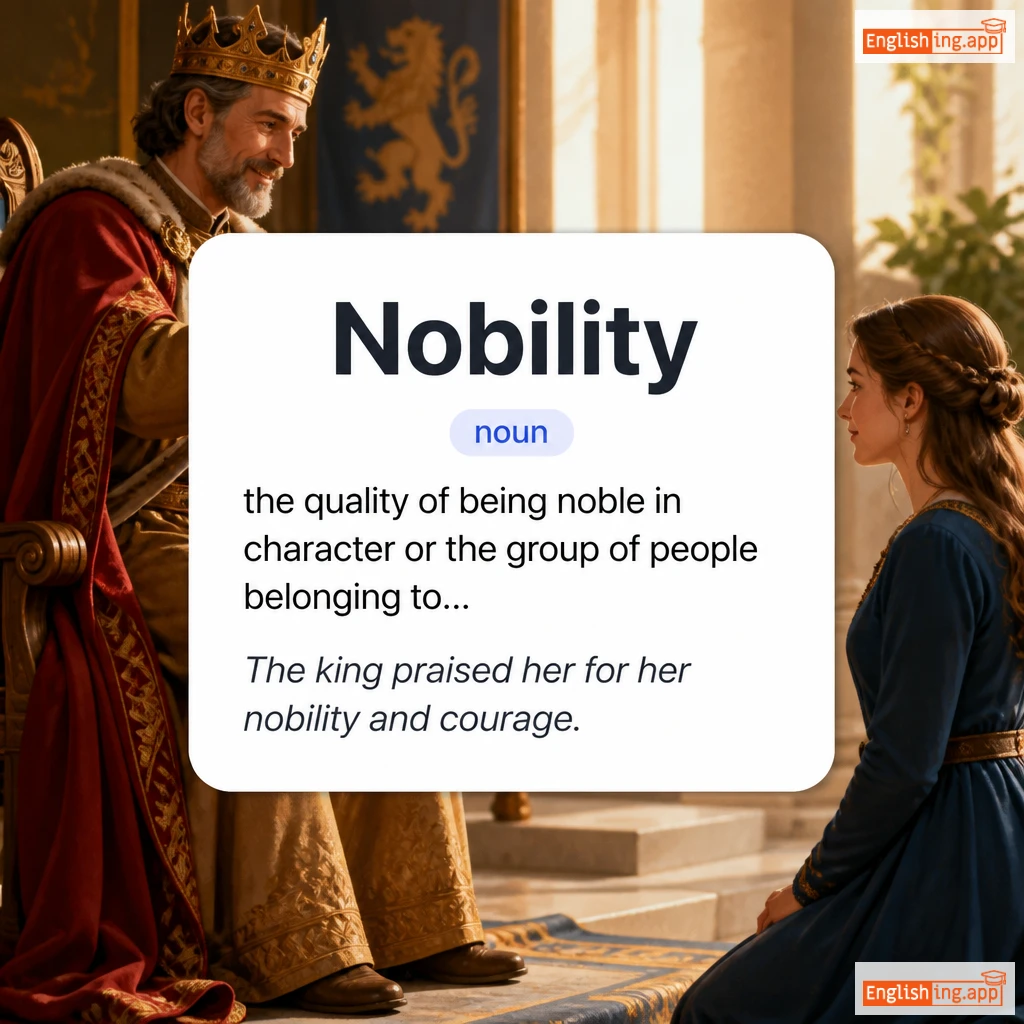
Nobility definition card — visual illustration of the meaning
noun C1
/nəʊˈbɪləti/
高貴 (kouki)

the quality of being noble in character or the group of people belonging to the aristocracy

"The king praised her for her nobility and courage."

"王は彼女の高貴さと勇気を称賛しました。" (Ō wa kanojo no kōkisa to yūki o shōsan shimashita.)
adjective C1
/nɒkˈtɜːrnəl/
夜行性 (yakousei)

Active at night and sleeping during the day.

"Owls are nocturnal animals that hunt at night."

"フクロウは夜行性の動物で、夜に狩りをします。" (Fukurou wa yakousei no doubutsu de, yoru ni kari wo shimasu.)
adjective C1
/ˈnɔɪzləs/
無音 (muon)

Completely silent; without any noise.

"The cat made a noiseless leap onto the table."

"猫は音を立てずにテーブルに飛び乗った。" (Neko wa oto o tatezu ni tēburu ni tobinotta.)
noun C1
/ˈnoʊmæd/
ノマド (nomado)

A person who has no permanent home and moves from place to place.

"The desert was once home to nomads who lived by herding animals."

"砂漠はかつて動物を飼うことで生きていたノマドの家だった。" (Sabaku wa katsute doubutsu wo kau koto de ikiteta nomado no ie datta.)
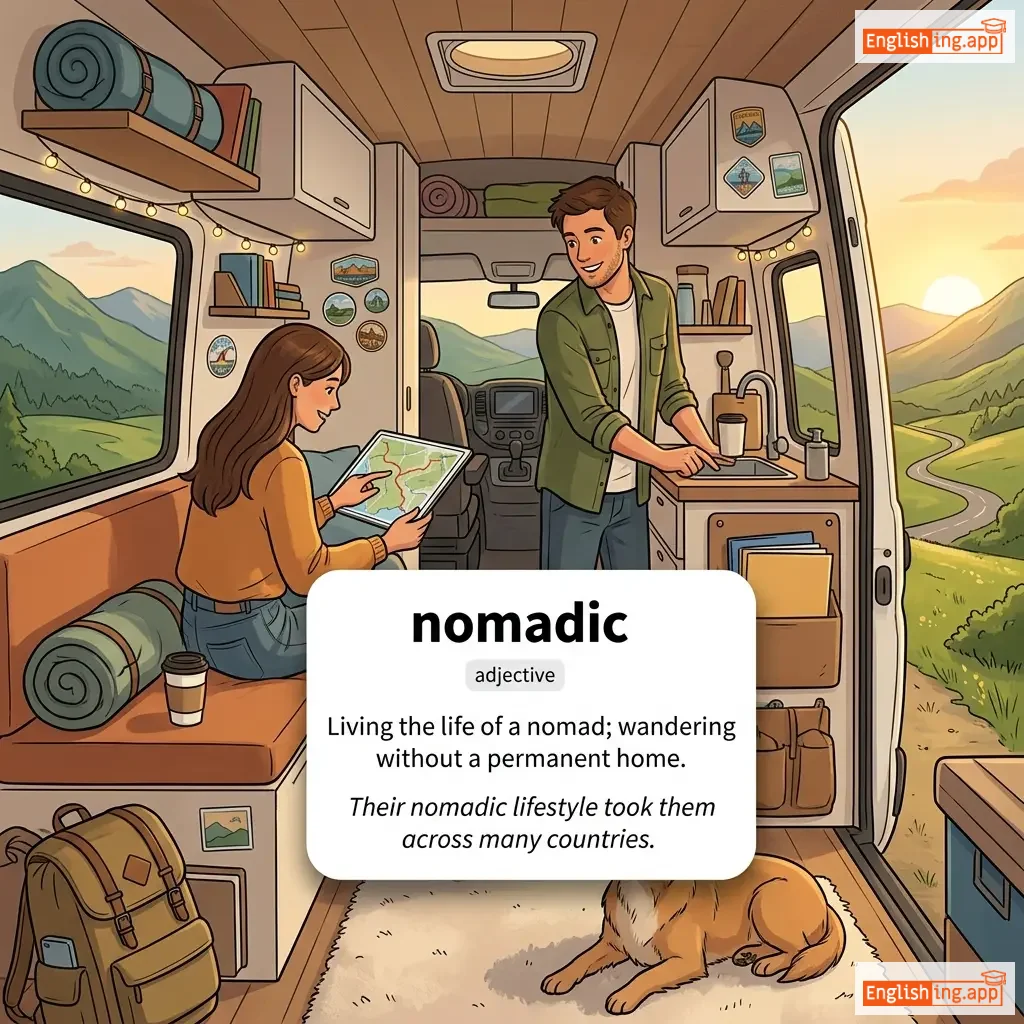
nomadic definition card — visual illustration of the meaning
adjective C1
/noʊˈmædɪk/

Living the life of a nomad; wandering without a permanent home.

"Their nomadic lifestyle took them across many countries."

adjective C1
/ˈnɒmɪnəl/
名目上の (meimoku-jō no)

Existing in name only; very small in amount.

"He was the nominal leader of the group but had no real power."

"彼はグループの名目上のリーダーだったが、実際の権限はなかった。" (Kare wa gurūpu no meimoku-jō no rīdā datta ga, jissai no ken'nendo wa nakatta.)
Nominee definition card — visual illustration of the meaning
noun C1
/ˌnɒmɪˈniː/
ノミネートされた人 (nomineto sareta hito)

a person who is formally suggested or chosen for a position, award, or role

"She was the nominee for the Best Actress award."
"彼女は最優秀女優賞のノミネート者でした。" (Kanojo wa saiyuushuu joyuushou no nomineeto-sha deshita.)
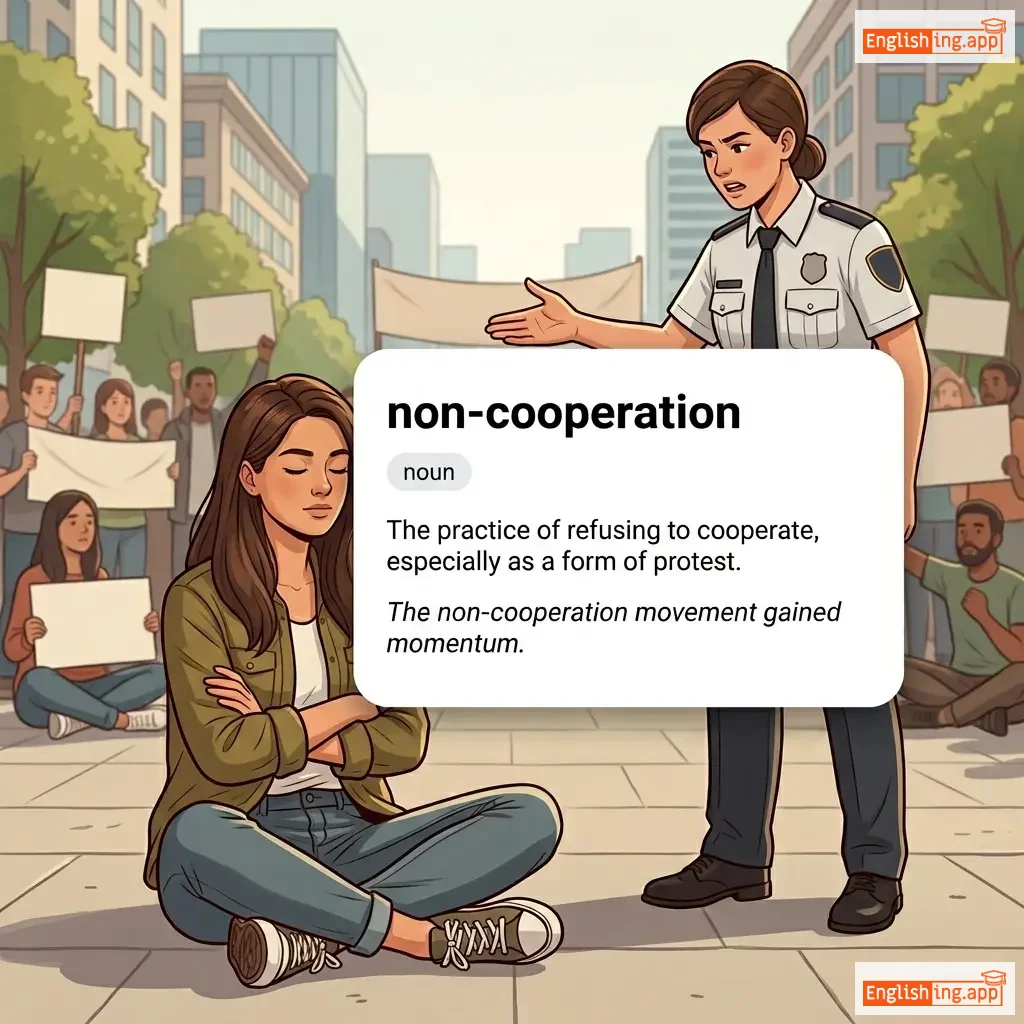
non-cooperation definition card — visual illustration of the meaning
noun C1
ˌnɒn.kəʊˌɒp.ərˈeɪ.ʃən
非協力 (hikyouryoku)

The practice of refusing to cooperate, especially as a form of protest.

"The non-cooperation movement gained momentum."

"非協力運動は勢いを得た。" (Hikyouryoku undou wa ikioi o eta.)
adjective C1
/ˌnɒn ɪɡˈzɪstənt/
存在しない (sonzai shinai)

not real or not present; lacking existence

"The supposed evidence turned out to be non-existent."

"仮定された証拠は存在しないことが判明しました。" (Katei sareta shōko wa sonzai shinai koto ga hanmei shimashita.)
noun, adjective C1
/ˌnɒn ˈrɛzɪdənt/
非居住者 (hi kyojusha)

a person who does not live in a particular country or place permanently

"Non-resident students often pay higher tuition fees."
"非居住者の学生は、しばしば高い学費を支払います。" (Hi kyojusha no gakusei wa, shibashiba takai gakuki wo shiharai masu.)
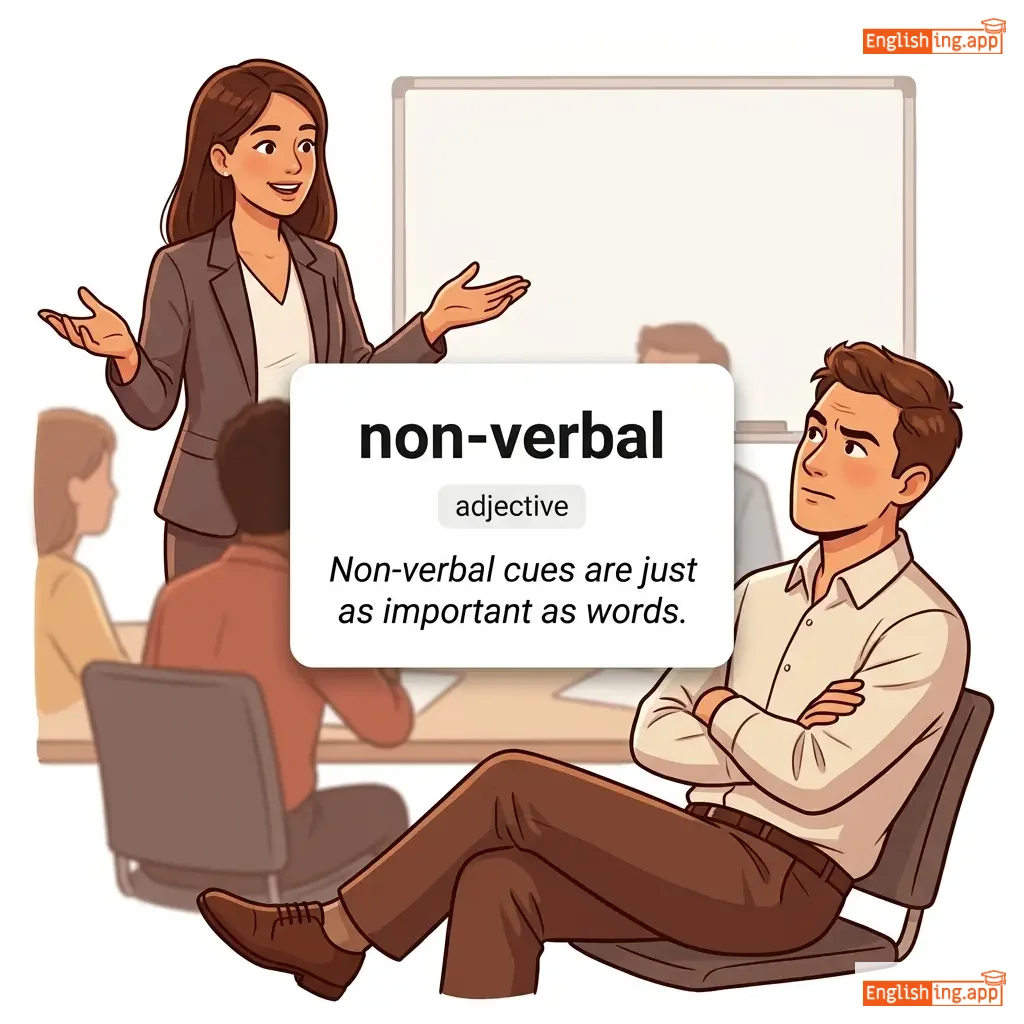
non-verbal definition card — visual illustration of the meaning
adjective C1
/ˌnɒnˈvɜː.bəl/
言葉やスピーチを使用せずに、ジェスチャー、ボディランゲージ、または顔の表情を通じて伝達される。 (Kotoba ya supīchi o shiyō sezu ni, jesuchā, bodi rangenji, matawa kao no hyōjō o tsūjite dentatsu sa reru.)

Not involving or using words or speech; communicated through gestures, body language, or facial expressions.

"Non-verbal cues are just as important as words."

"ノンバーバルキューは言葉と同じくらい重要です。" (Non-bābaru kyū wa kotoba to onaji kurai jūyō desu.)
noun C1
/ˈnɒnʃələns/
無頓着 (mutonchaku)

A relaxed and calm state, showing lack of concern or interest.

"She answered the tough questions with surprising nonchalance."

"彼女は驚くべき無頓着で難しい質問に答えました。" (Kanojo wa odorokubeki mutonchaku de muzukashii shitsumon ni kotaemashita.)
adjective C1
/ˈnɒnʃələnt/

Appearing calm, casual, and unconcerned.

"He gave a nonchalant shrug and walked away."
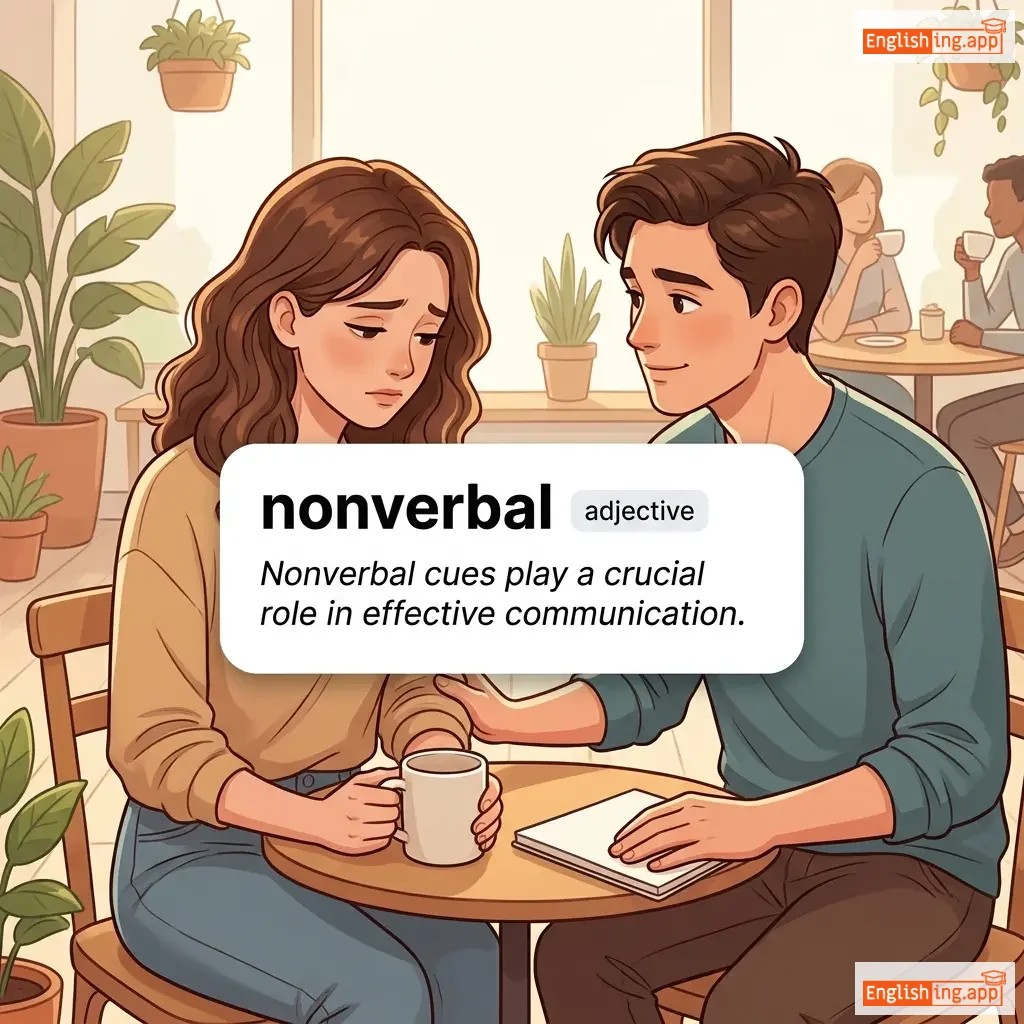
nonverbal definition card — visual illustration of the meaning
adjective C1
ˌnɒnˈvɜːr.bəl
非言語 (higengo)

Communication using body language, facial expressions, or gestures instead of words

"Nonverbal cues play a crucial role in effective communication."
"非言語の合図は効果的なコミュニケーションにおいて重要な役割を果たします。" (Higengo no aizu wa kouka-tekina komyunikeeshon ni oite juuyou na yakuwari o hatashimasu.)
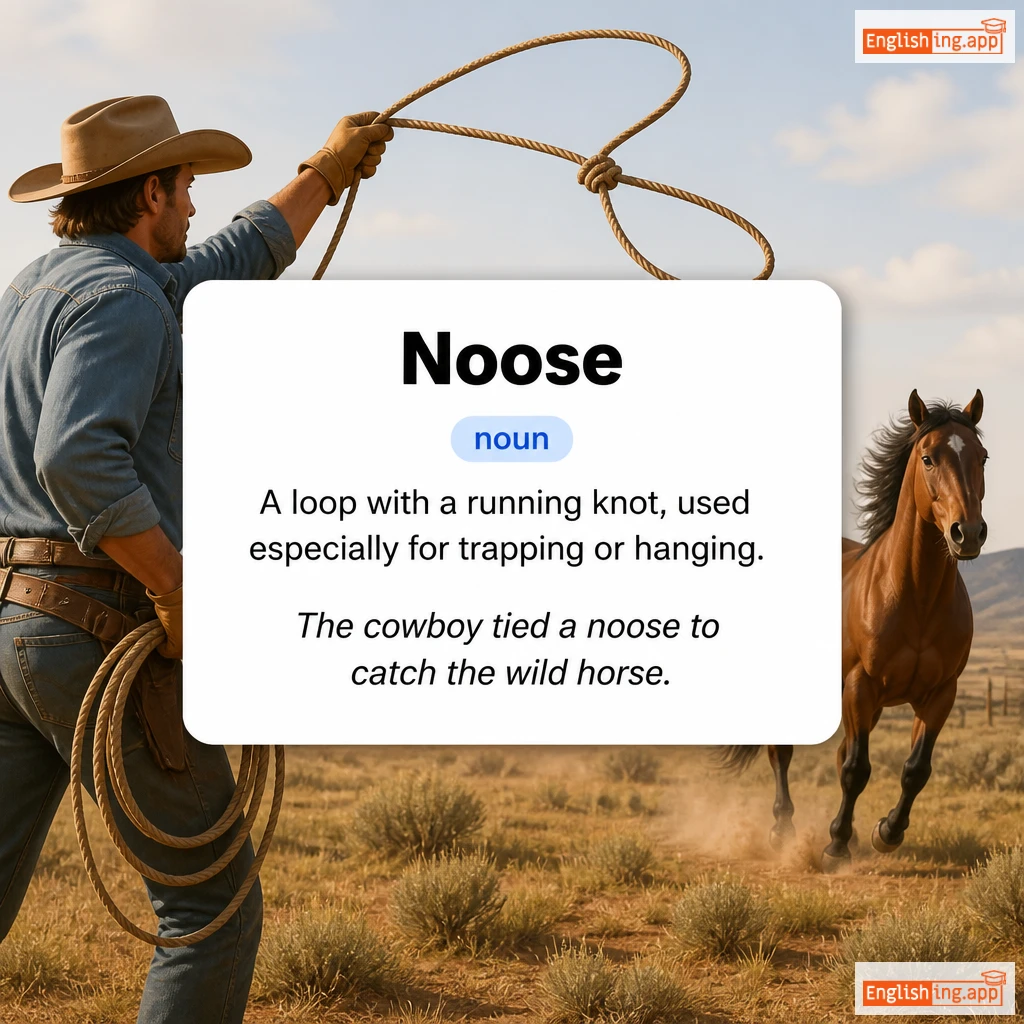
Noose definition card — visual illustration of the meaning
noun C1
/nuːs/
ひも (himo)

A loop with a running knot, used especially for trapping or hanging.

"The cowboy tied a noose to catch the wild horse."
"カウボーイは野生の馬を捕まえるためにヌースを結んだ。" (Kaubōi wa yasei no uma wo tsukamaeru tame ni noosu wo musunda.)
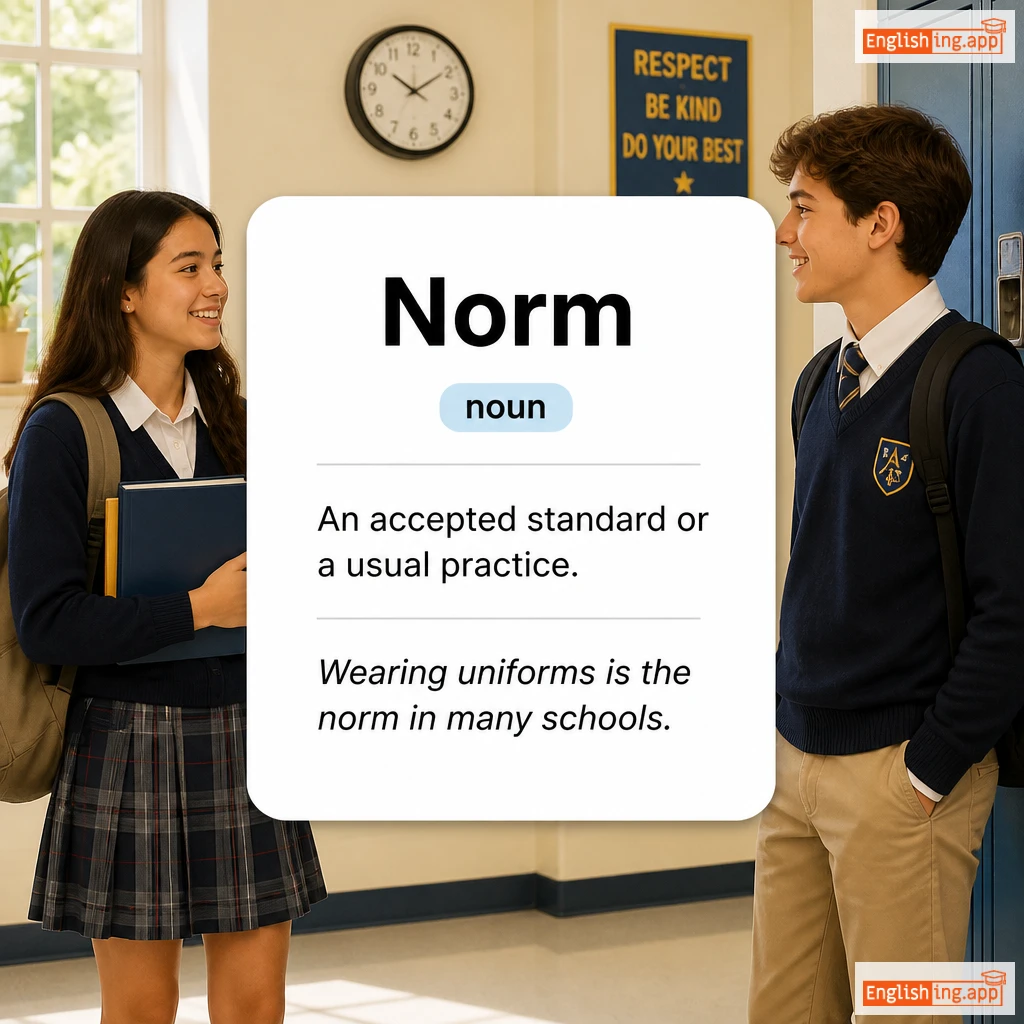
Norm definition card — visual illustration of the meaning
noun C1
/nɔːrm/
規範 (kihan)

An accepted standard or a usual practice.

"Wearing uniforms is the norm in many schools."

"多くの学校で制服を着ることが規範です。" (Ooku no gakkou de seifuku o kiru koto ga kihan desu.)
noun C1
/ˈnɔːrməlsi/
正常 (seijou)

The condition of being normal; a return to usual or expected conditions.

"After the flood, the town struggled to regain a sense of normalcy."
"洪水の後、町は正常な状態を取り戻すために奮闘しました。" (Kousui no ato, machi wa seijou na joutai o torimodosu tame ni funtou shimashita.)
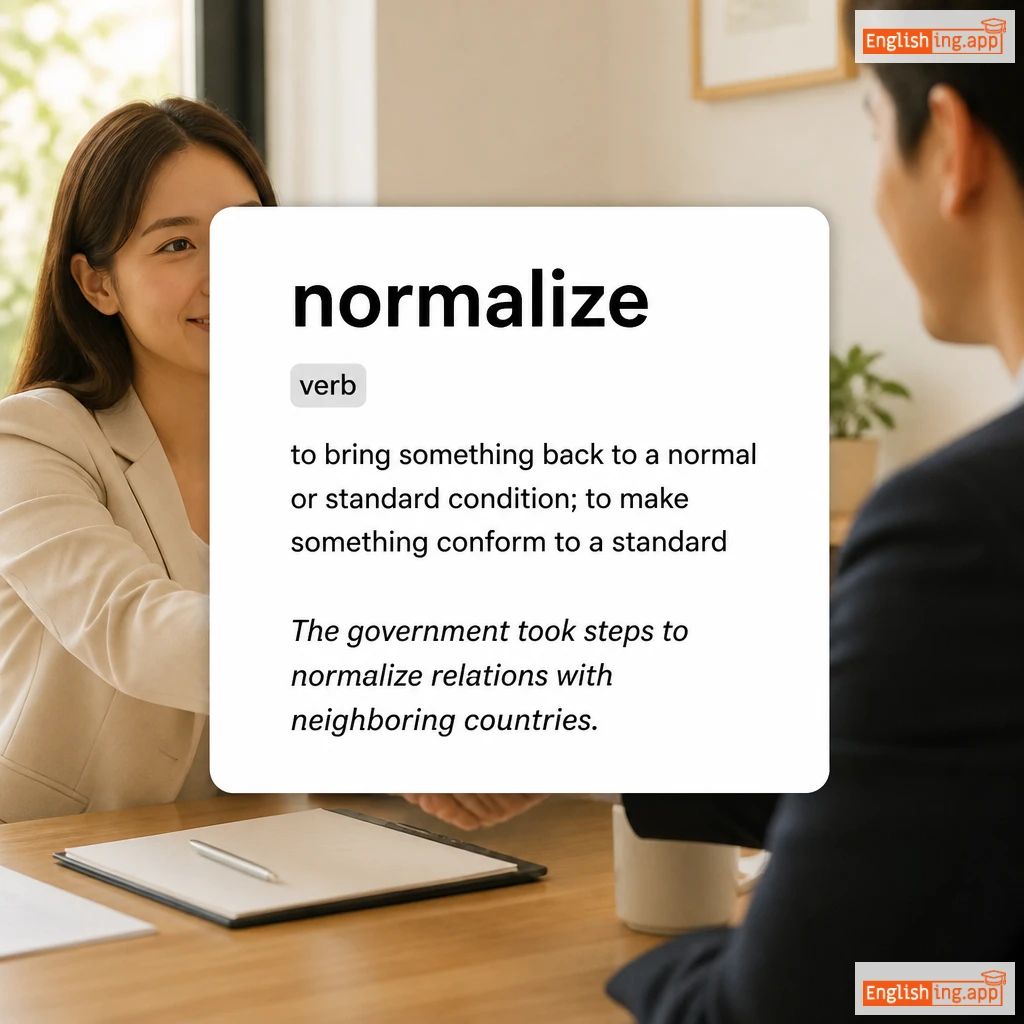
normalize definition card — visual illustration of the meaning
verb C1
/ˈnɔːrməlaɪz/
正常化する (seijouka suru)

to bring something back to a normal or standard condition; to make something conform to a standard

"The government took steps to normalize relations with neighboring countries."

"政府は関係を正常化するための措置を取った。" (seifu wa kankei o seijouka suru tame no sochi o totta)
⚔️

Norman

noun C1
/ˈnɔːrmən/

A member of a people of mixed Scandinavian and Frankish origin who settled in Normandy, or relating to their culture.

"The Normans conquered England in 1066."

adjective C1
/ˈnɔːrmətɪv/
規範的 (kihanteki)

relating to rules, standards, or norms that govern behavior or beliefs

"The study focused on the normative aspects of cultural behavior."

"その研究は文化的な行動の規範的側面に焦点を当てました。" (Sono kenkyū wa bunka-teki na kōdō no kihanteki sokumen ni shōten o atemashita.)
adverb C1
/ˈnɔːθwədz/
北へ (kita e)

towards the north; in a northerly direction

"The birds migrate northwards in spring."
"鳥たちは春に北へ移動します。" (Tori-tachi wa haru ni kita e idō shimasu.)
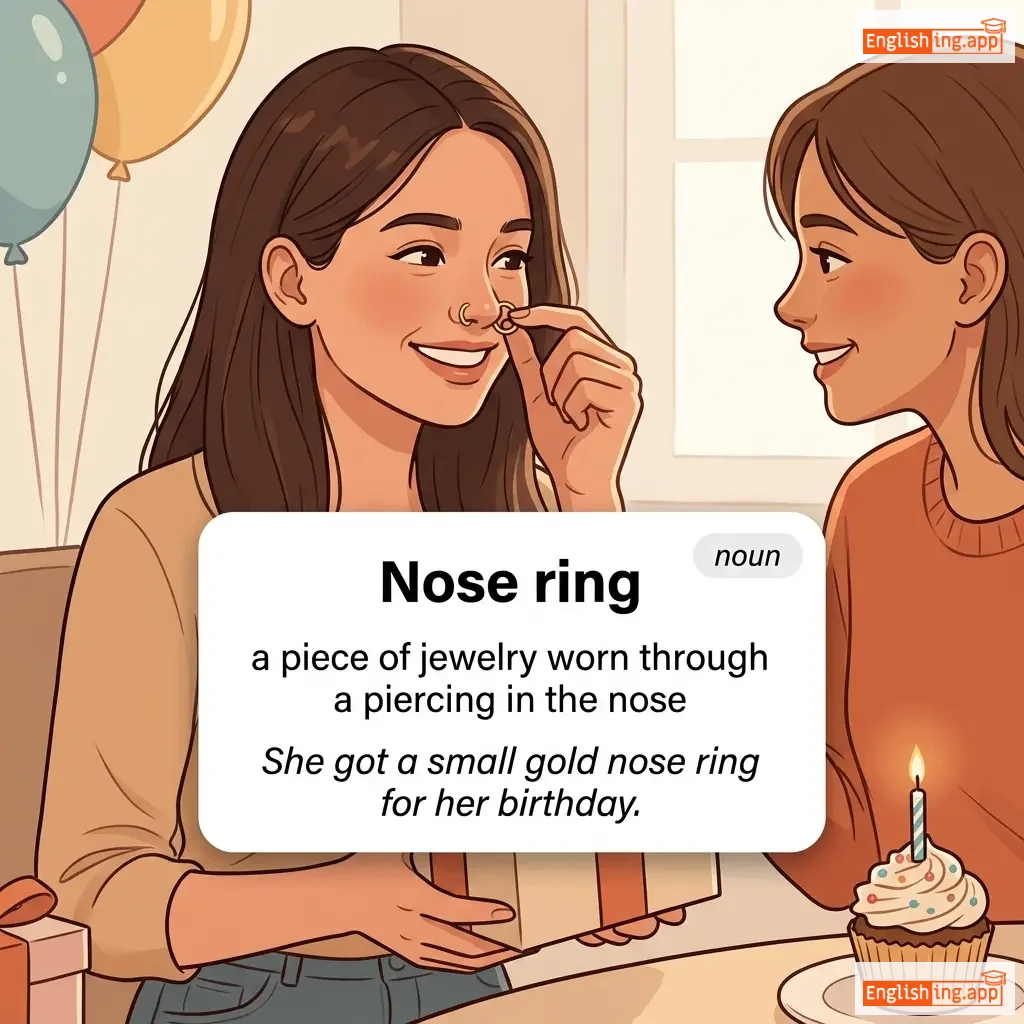
Nose ring definition card — visual illustration of the meaning
noun C1
/noʊz rɪŋ/
鼻リング (hana ringu)

a piece of jewelry worn through a piercing in the nose

"She got a small gold nose ring for her birthday."

"彼女は誕生日に小さな金の鼻リングをもらった。" (Kanojo wa tanjōbi ni chīsana kin no hana ringu o moratta.)
noun C1
/ˈnɒs.trɪl/
鼻孔 (bikou)

either of the two openings in the nose through which air passes

"The doctor checked each nostril for any blockage."

"医師は鼻孔のそれぞれをブロックがないか調べました。" (Ishi wa bikou no sorezore wo burokkuga naika shirabemashita.)