語彙集

英単語辞書 | 単語の意味、定義、例文

noun (plural) C1
/ˈhɪntərlændz/
辺境地 (henkyouchi)

Plural of hinterland; remote or less developed regions.

"Explorers traveled deep into the hinterlands of the country."

"探検家たちはその国の辺境地に深く旅しました。" (Tankenkatata wa sono kuni no henkyouchi ni fukaku tabishimashita.)
verb C1
/hɔːrd/
蓄える (takuwaeru)

to accumulate and hide away a large supply of something, often secretly

"During the crisis, many people began to hoard food and water."

"危機の間、多くの人々が食べ物と水を蓄え始めました。" (Kiki no aida, ooku no hitobito ga tabemono to mizu o takuwae hajimemashita.)
adjective C1
/hɔːrs/
しゃがれた (shagareta)

having a rough, harsh, or weak voice, often due to illness or shouting

"After shouting all day at the rally, his voice was hoarse."

"集会で一日中叫んだ後、彼の声はかすれていた。" (Shūkai de ichinichijū sakenda ato, kare no koe wa kasureteita.)
noun C1
/hoʊks/
騙し、虚偽 (damashi, kyogi)

a trick or false story meant to deceive people

"The news about aliens landing turned out to be a hoax."

"エイリアンが着陸するというニュースは、実際には詐欺でした。" (Eirian ga chakuriku suru to iu nyuusu wa, jissai ni wa sagi deshita.)
noun C1
/ˈhɒl.ə.kɔːst/
ホロコースト (horokōsuto)

A large-scale destruction, especially by fire; historically, the genocide of Jews during World War II.

"Millions of people perished during the Holocaust."
"ホロコースト中に何百万もの人々が命を落としました。" (Horokōsuto-chū ni nanbyakuman mo no hitobito ga inochi o otoshimashita.)
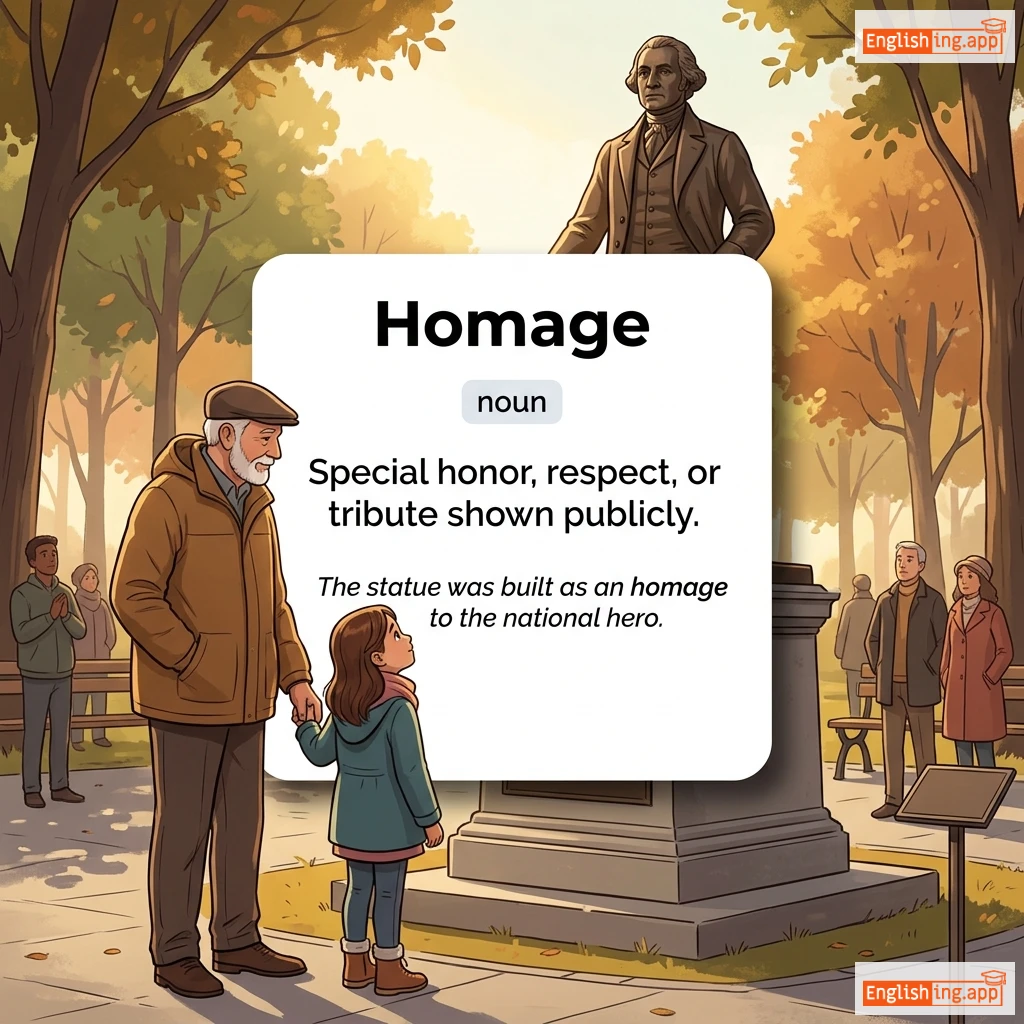
Homage definition card — visual illustration of the meaning
noun C1
/ˈhɒm.ɪdʒ/ or /ˈɑː.mɑːʒ/
オマージュ (omāju)

Special honor, respect, or tribute shown publicly.

"The statue was built as an homage to the national hero."

"その像は国民的英雄へのオマージュとして建てられました。" (Sono zō wa kokumin-teki eiyū e no omāju toshite tateraremashita.)
noun C1
/ˌhoʊmiˈɑːpəθi/
ホメオパシー (homeopathy)

a system of alternative medicine based on treating diseases with highly diluted substances

"He believes in homeopathy for treating common colds."
"彼は風邪を治すためにホメオパシーを信じています。" (Kare wa kaze o naosu tame ni homeopathy o shinjiteimasu.)
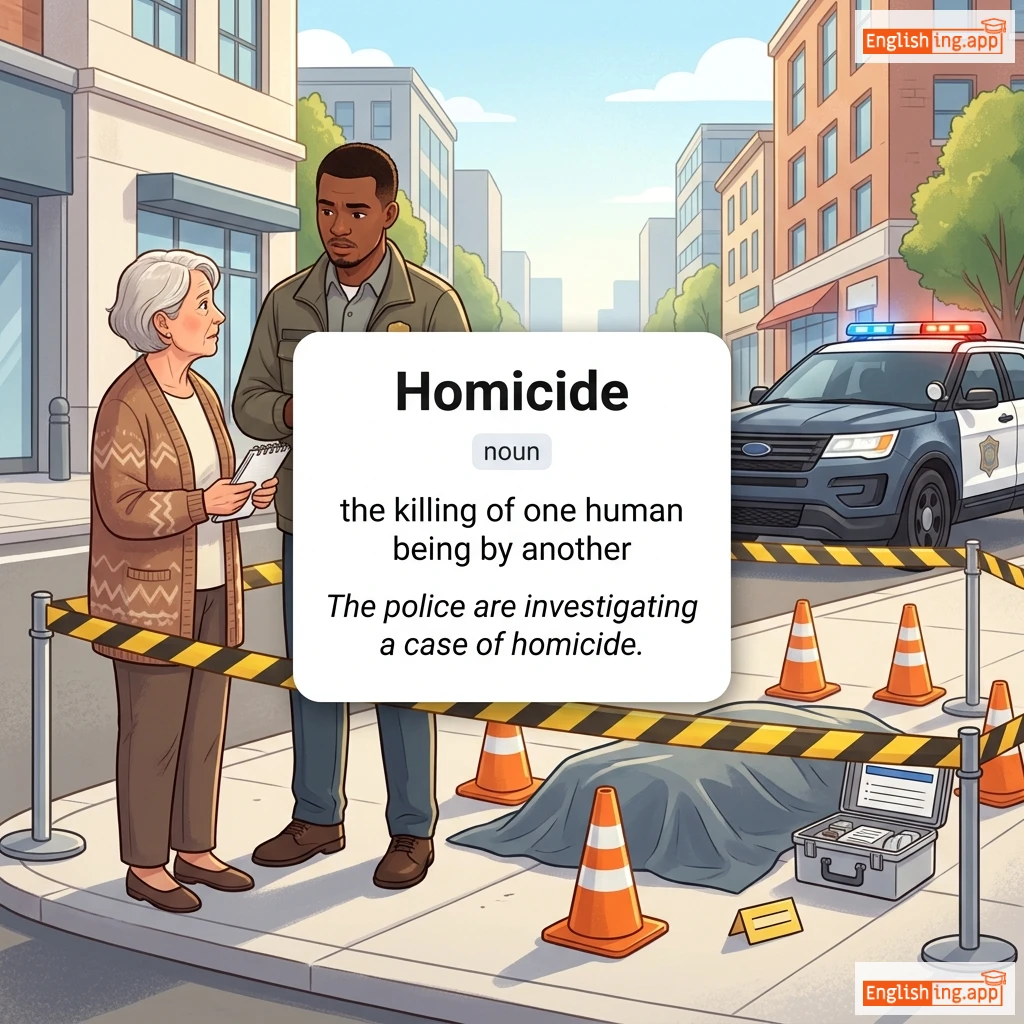
Homicide definition card — visual illustration of the meaning
noun C1
/ˈhɑːmɪsaɪd/
殺人 (satsujin)

the killing of one human being by another

"The police are investigating a case of homicide."
"警察は殺人事件を調査している。" (Keisatsu wa satsujin jiken o chōsa shite iru.)
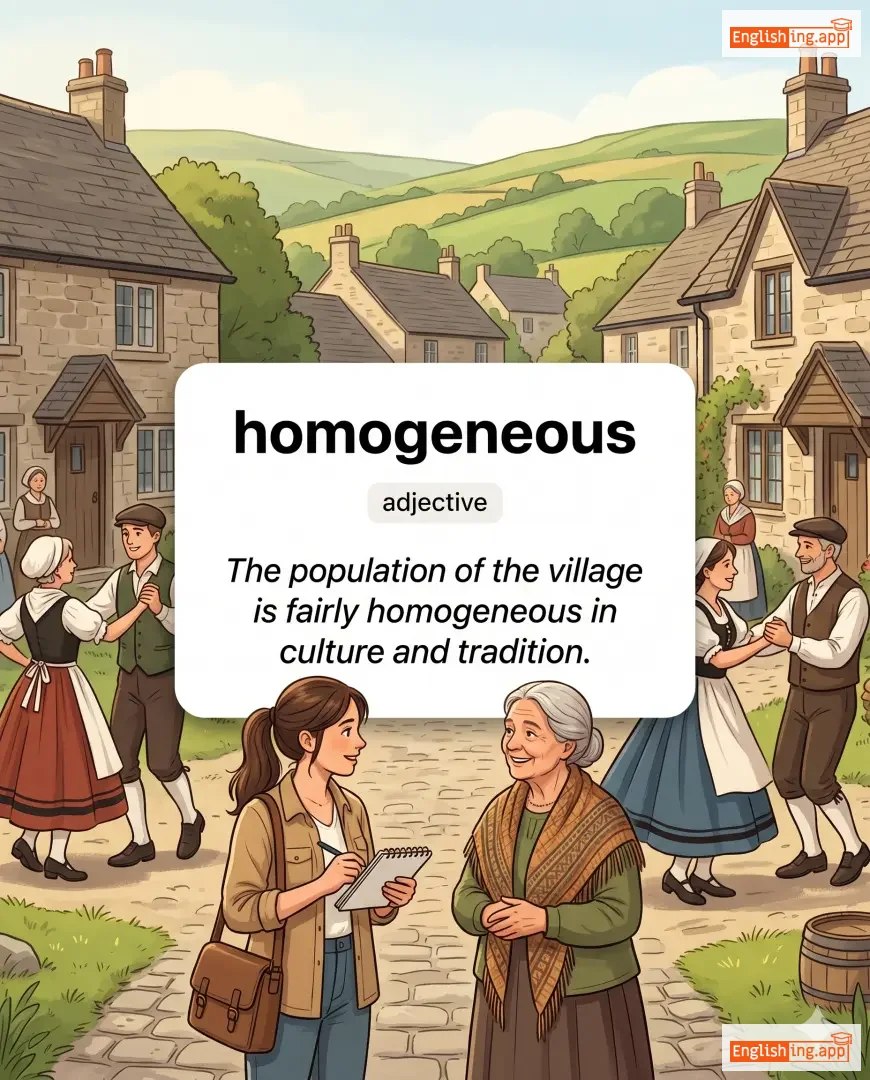
homogeneous definition card — visual illustration of the meaning
adjective C1
/ˌhoʊ.məˈdʒiː.ni.əs/
均質な (kinshitsuna)

Consisting of parts or elements that are all the same kind; uniform in composition.

"The population of the village is fairly homogeneous in culture and tradition."

"その村の人口は文化や伝統においてかなり均質です。" (Sono mura no jinkō wa bunka ya dentō ni oite kanari kinshitsudesu.)
adjective C1
/həˈmɑː.dʒə.nəs/
同質の (doushitsu no)

Similar or uniform in nature; often used interchangeably with 'homogeneous'.

"The class was made up of a homogenous group of students."

"クラスは同質の学生グループで構成されていました。" (Kurasu wa doushitsu no gakusei gurūpu de kōsei sareteimashita.)
noun C1
/ˈhɑː.mə.nɪm/
同義語 (dōgigo)

A word that is spelled and pronounced like another word but has a different meaning.

"The word 'bat' is a homonym because it can mean an animal or a sports tool."

"'コウモリ'という言葉は、動物またはスポーツ用品を意味することができるため、同義語です。" ('Kōmori' to iu kotoba wa, dōbutsu matawa supōtsu yōhin o imi suru koto ga dekiru tame, dōgigo desu.)
noun C1
/ˈhɒməˌfoʊn/
同音異義語 (dōon igigo)

A word that is pronounced the same as another word but differs in meaning, and often spelling.

"The words 'pair' and 'pear' are homophones."

"「pair」と「pear」の単語は同音異義語です。" ('pair' to 'pear' no tango wa dōon igigo desu.)
verb C1
/hoʊn/
研ぐ、スキルを磨く (togu, sukiru wo migaku)

To sharpen a blade or to improve a skill through practice.

"She honed her presentation skills before the big meeting."

"彼女は大きな会議の前にプレゼンテーションスキルを磨きました。" (kanojo wa ōkina kaigi no mae ni purezentēshon sukiru wo migakimashita.)
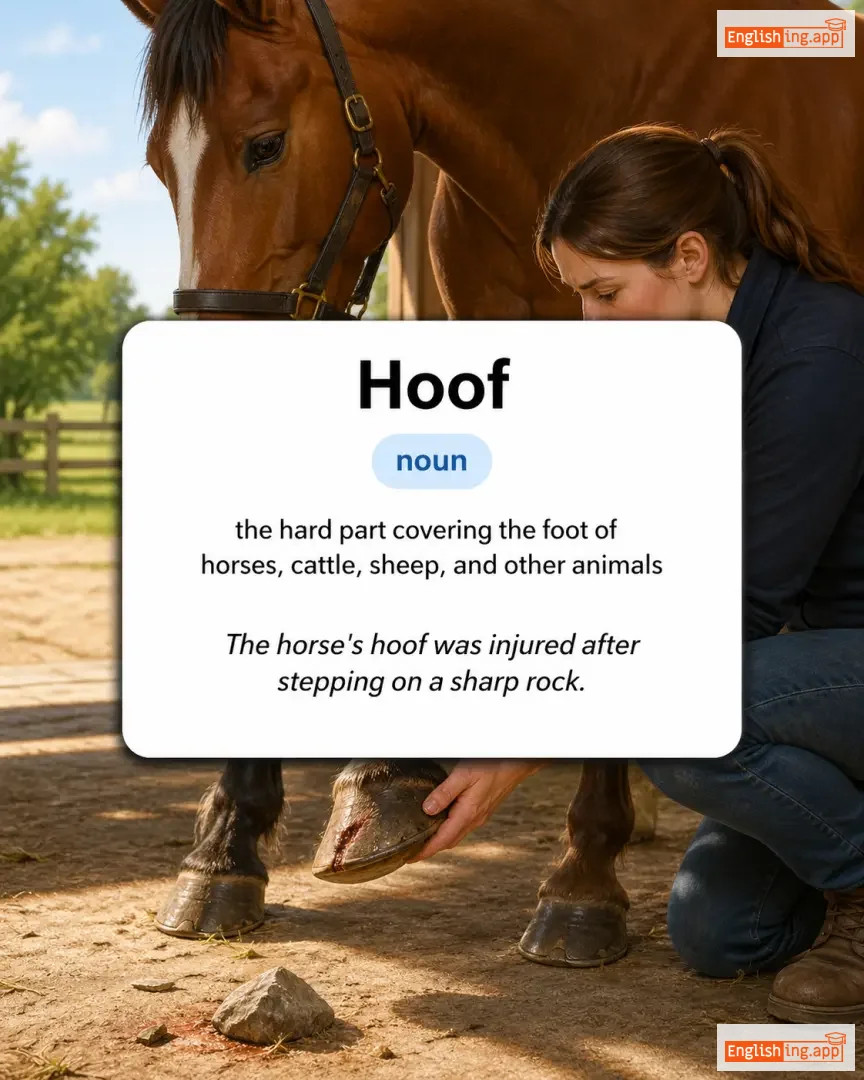
Hoof definition card — visual illustration of the meaning
noun C1
/huːf/
ひづめ (hizume)

the hard part covering the foot of horses, cattle, sheep, and other animals

"The horse's hoof was injured after stepping on a sharp rock."

"馬のひづめは鋭い岩に踏んだ後、けがをしました。" (Uma no hizume wa surudoi iwa ni funda ato, kega o shimashita.)
noun C1
/hɔːrd/
群衆 (gunshuu)

A large group or crowd, especially one that is disorderly or difficult to control.

"A horde of fans gathered outside the stadium."
"スタジアムの外でファンの群衆が集まりました。" (sutajiamu no soto de fan no gunshuu ga atsumarimashita.)
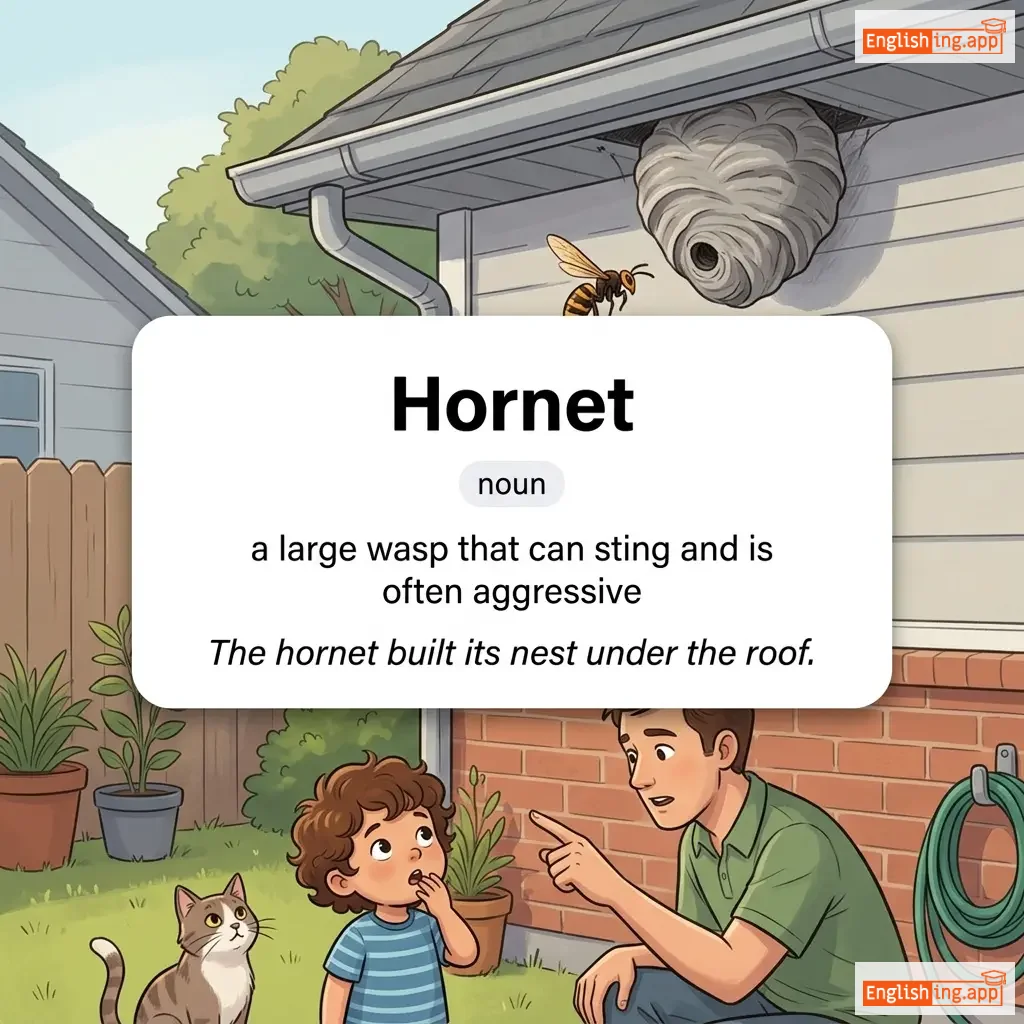
Hornet definition card — visual illustration of the meaning
noun C1
/ˈhɔːr.nət/
スズメバチ (suzumebachi)

a large wasp that can sting and is often aggressive

"The hornet built its nest under the roof."

"スズメバチは屋根の下に巣を作った。" (Suzumebachi wa yane no shita ni su o tsukutta.)
noun C1
/ˈhɒrəˌskoʊp/
ホロスコープ (horosukoopu)

A forecast of a person's future based on the positions of the stars and planets at their birth.

"She read her horoscope every morning to see what the stars predicted."

"彼女は毎朝、自分のホロスコープを読んで、星が何を予測したかを確認していました。" (Kanojo wa mai asa, jibun no horosukoopu o yonde, hoshi ga nani o yosoku shita ka o kakunin shite imashita.)
horrify definition card — visual illustration of the meaning
verb C1
/ˈhɔːrɪfaɪ/
恐れさせる (osoresaseru)

to fill with horror; to shock or disgust greatly

"The violent scene horrified the audience."

"暴力的な場面が観客を恐れさせた。" (bouryokuteki na bamen ga kankyaku o osore saseta)
adjective C1
/ˌhɔːrtɪˈkʌltʃərəl/
園芸に関連する (engei ni kanren suru)

Relating to the art or practice of garden cultivation and management.

"She studied horticultural science at the university."

"彼女は大学で園芸学を学びました。" (Kanojo wa daigaku de engeigaku o manabimashita.)
noun C1
/ˈhɔːrtɪˌkʌltʃər/

The art or practice of garden cultivation and management.

"Horticulture plays a vital role in producing fruits, vegetables, and ornamental plants."
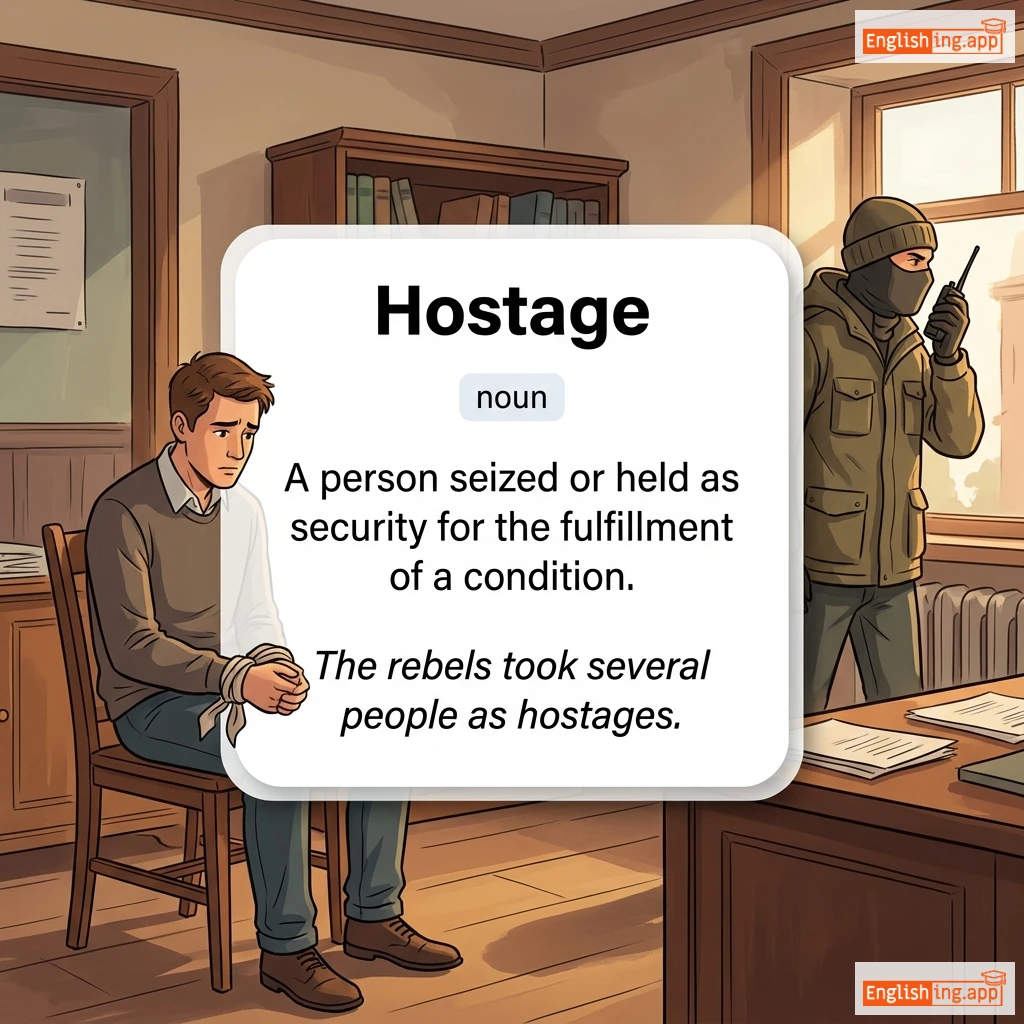
Hostage definition card — visual illustration of the meaning
noun C1
/ˈhɑːstɪdʒ/
人質 (hitojichi)

A person seized or held as security for the fulfillment of a condition.

"The rebels took several people as hostages."
"反乱者たちは何人かを人質として取った。" (Hanranshatachi wa nan-nin ka wo hitojichi to shite totta.)
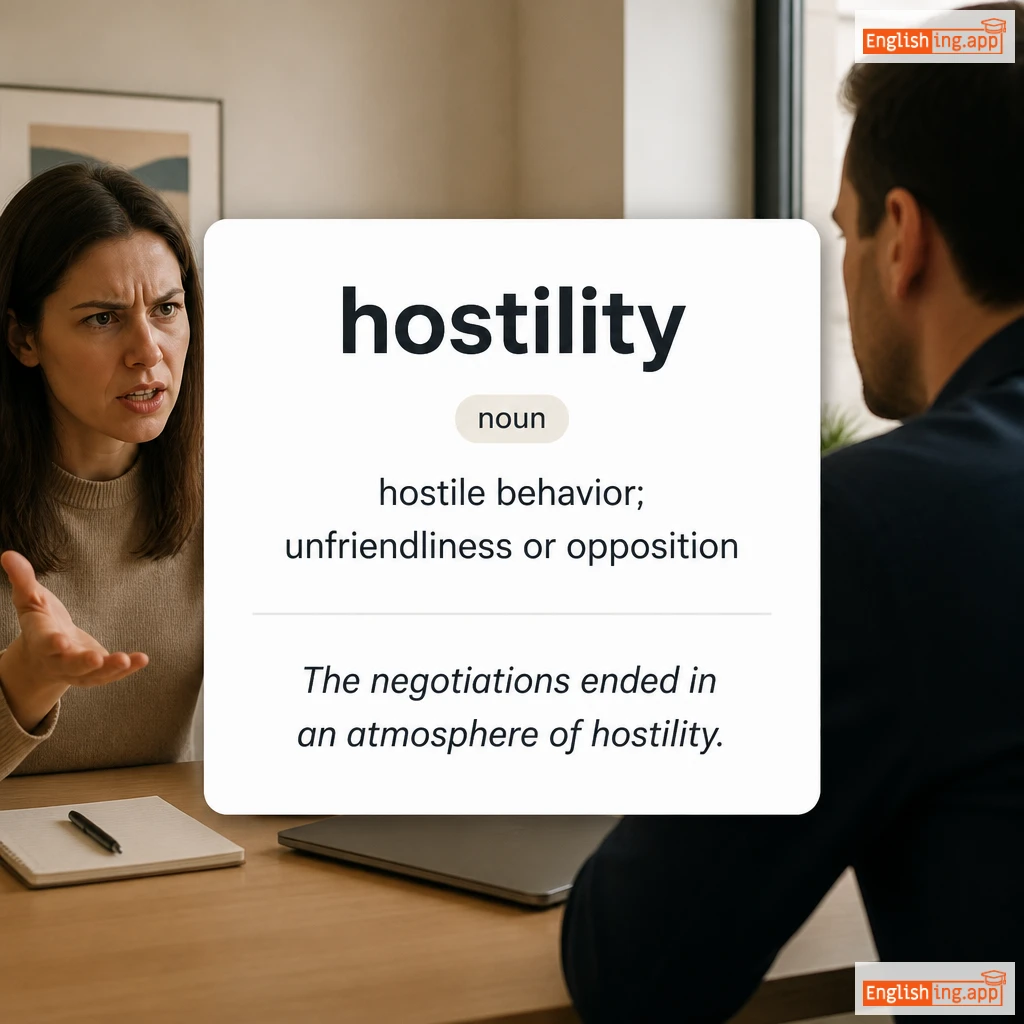
hostility definition card — visual illustration of the meaning
noun C1
/hɒˈstɪləti/
敵意 (teki i)

hostile behavior; unfriendliness or opposition

"The negotiations ended in an atmosphere of hostility."

"交渉は敵意の雰囲気で終わった。" (Koushou wa teki no fun'iki de owatta.)
adverb C1
/ˈhɒtli/
激しく (hageshiku)

in an intense, angry, or passionate way

"She hotly denied the accusations."

"彼女はその告発を激しく否定した。" (Kanojo wa sono kokuhatsu o hageshiku hitei shita.)
Hound definition card — visual illustration of the meaning
verb C1
/haʊnd/
追い詰める (oitsumeru)

to pursue or harass someone persistently

"Reporters hounded the actor for comments."

"報道陣はコメントを求めて俳優を追い詰めました。" (Hōdōjin wa komento o motomete haiyū o oitsumemashita.)
noun C1
/ˈhʌbʌb/
騒音 (souon)

a loud noise caused by a crowd of people talking or shouting

"There was a hubbub in the market as the sale began."

"販売が始まると、市場で騒音が起こりました。" (Hanbai ga hajimaru to, shijō de souon ga okorimashita.)
noun C1
/ˈhjuːbrɪs/
傲慢 (ouman)

excessive pride or self-confidence

"His hubris led to his downfall."

"彼の傲慢が彼の没落を引き起こした。" (Kare no ouman ga kare no botsuraku o hikiokoshita.)
noun C1
/hjuː/
色合い (iroai)

A color or shade.

"The artist chose a soft blue hue for the background."

"アーティストは背景のために柔らかい青い色合いを選びました。" (Ātisuto wa haikei no tame ni yawarakai aoi iroai o erabimashita.)
noun C1
/hʌl/
船体 / 種の殻 (sentai / tane no kara)

The outer covering of a seed or fruit; also the main body of a ship.

"The sailors inspected the ship’s hull for any damage."

"船員たちは船体に損傷がないかを調べました。" (Sen'in-tachi wa sentai ni sonshō ga nai ka o shirabemashita.)
adjective C1
/hjuːˈmeɪn/
人道的な (jindoteki na)

Showing compassion or benevolence.

"The doctor provided humane treatment to the injured animals."
"医者は怪我をした動物に人道的な治療を提供しました。" (Isha wa kega o shita doubutsu ni jindoteki na chiryou o teikyoushimashita.)
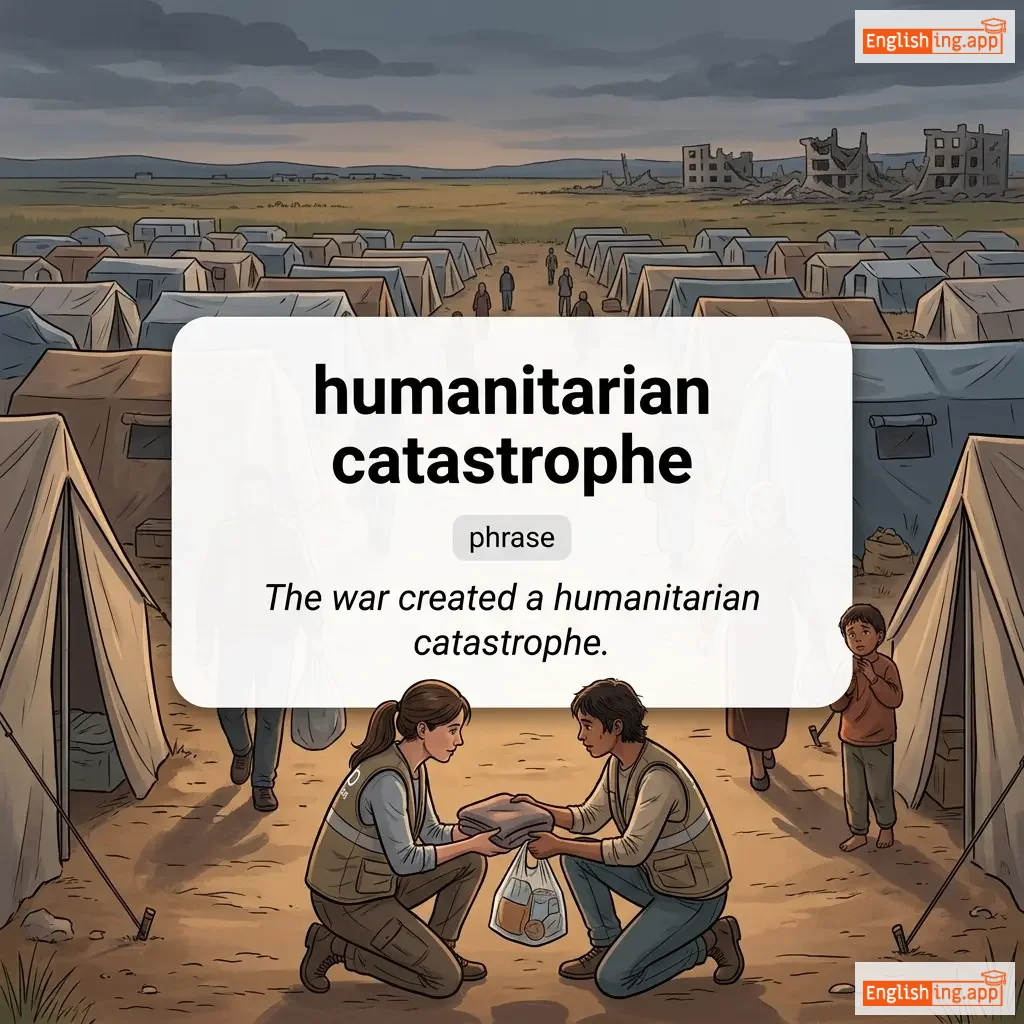
humanitarian catastrophe definition card — visual illustration of the meaning
phrase C1
ˌhjuː.məˈnɪt.ər.i.kəˈtæs.trə.fi
人道的災害 (jindōteki saigai)

A widespread disaster affecting human life, health, and well-being on a large scale.

"The war created a humanitarian catastrophe."

"戦争は人道的災害を引き起こした。" (Sensō wa jindōteki saigai o hikiokoshita.)
verb C1
/ˈhjuːmənaɪz/
人間化する (ningenka suru)

To make something more humane, kind, or relatable.

"The teacher tried to humanize the lesson with personal stories."

"教師は個人的な物語を使ってレッスンを人間化しようとしました。" (Kyōshi wa kojinteki na monogatari o tsukatte ressun o ningenka shiyō to shimashita.)
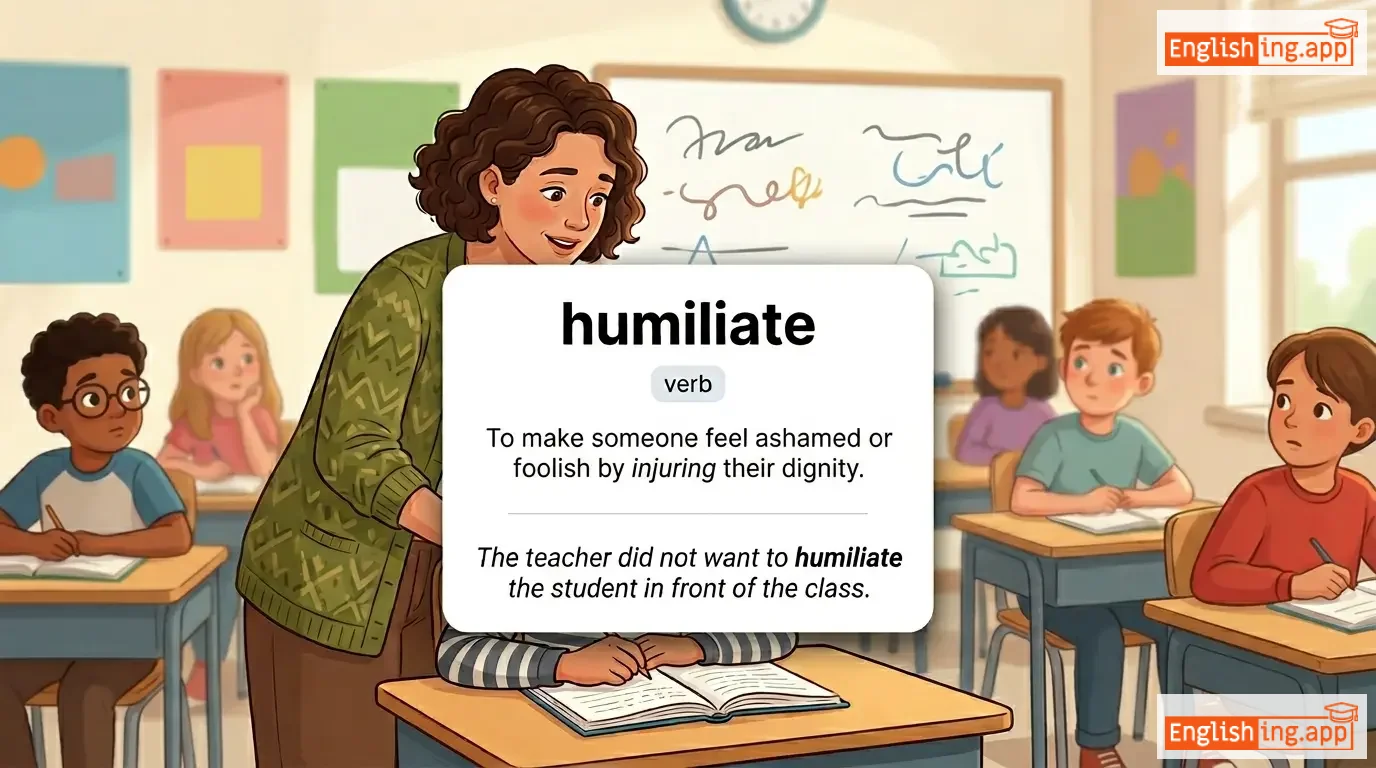
humiliate definition card — visual illustration of the meaning
verb C1
/hjuːˈmɪl.i.eɪt/

To make someone feel ashamed or foolish by injuring their dignity.

"The teacher did not want to humiliate the student in front of the class."

noun C1
/hjuːˈmɪl.ɪ.ti/

The quality of having a modest or low view of one's importance.

"She accepted the award with grace and humility."

adverb C1
/ˈhʌŋ.ɡrə.li/
空腹で; 欲張って; 熱心に (kōfuku de; yokubatte; nesshin ni)

in a way that shows hunger; greedily; eagerly

"The dog ate hungrily after not eating for hours."

"犬は数時間食べていなかった後、空腹で食べました。" (Inu wa suū jikan tabete inakatta ato, kōfuku de tabemashita.)
🪨

hurl

verb C1
/hɜːrl/

To throw something with great force.

"The boy hurled a stone into the river."

husbandry definition card — visual illustration of the meaning
noun C1
/ˈhʌzbəndri/
農業と畜産業 (nōgyō to chikusan gyō)

the care, cultivation, and breeding of crops and animals; management and conservation of resources

"Modern husbandry practices focus on sustainability and animal welfare."

"現代の農業と畜産業の実践は、持続可能性と動物福祉に焦点を当てています。" (gendai no nōgyō to chikusan gyō no jissen wa, jizoku kanōsei to dōbutsu fukushi ni shōten o atemasu.)
verb C1
/ˈhʌsəl/
一生懸命働く / 速く動く (isshōkenmei hataraku / hayaku ugoku)

to move quickly and energetically; to push or work hard to achieve something

"She had to hustle to finish the project on time."

"彼女はプロジェクトを時間通りに終わらせるために一生懸命働かなければならなかった。" (Kanojo wa purojekuto o jikan-dōri ni owaraseru tame ni isshōkenmei hatarakanakereba naranakatta.)
noun C1
/ˈhaɪbrɪd/
ハイブリッド (haiburiddo)

a mixture of two different things, often combining the best qualities of both

"The car is a hybrid that runs on both electricity and fuel."

"その車は電気と燃料の両方で走るハイブリッド車です。" (Sono kuruma wa denki to nenryō no ryōhō de hashiru haiburiddosha desu.)
adjective C1
/haɪˈdrɔːlɪk/
油圧の (yatsuatsu no)

operated by the pressure of liquid, especially water or oil

"The mechanic repaired the hydraulic system of the machine."

"機械工は機械の油圧システムを修理しました。" (Kikai kō wa kikai no yatsuatsu shisutemu o shūri shimashita.)
adjective C1
/ˌhaɪdroʊɪˈlɛktrɪk/
水力発電 (suiryoku hatsuden)

Relating to or denoting the generation of electricity using flowing water.

"The country invested heavily in hydroelectric power plants."
"その国は水力発電所に多額の投資をしました。" (Sono kuni wa suiryoku hatsudensho ni tagaku no tōshi o shimashita.)
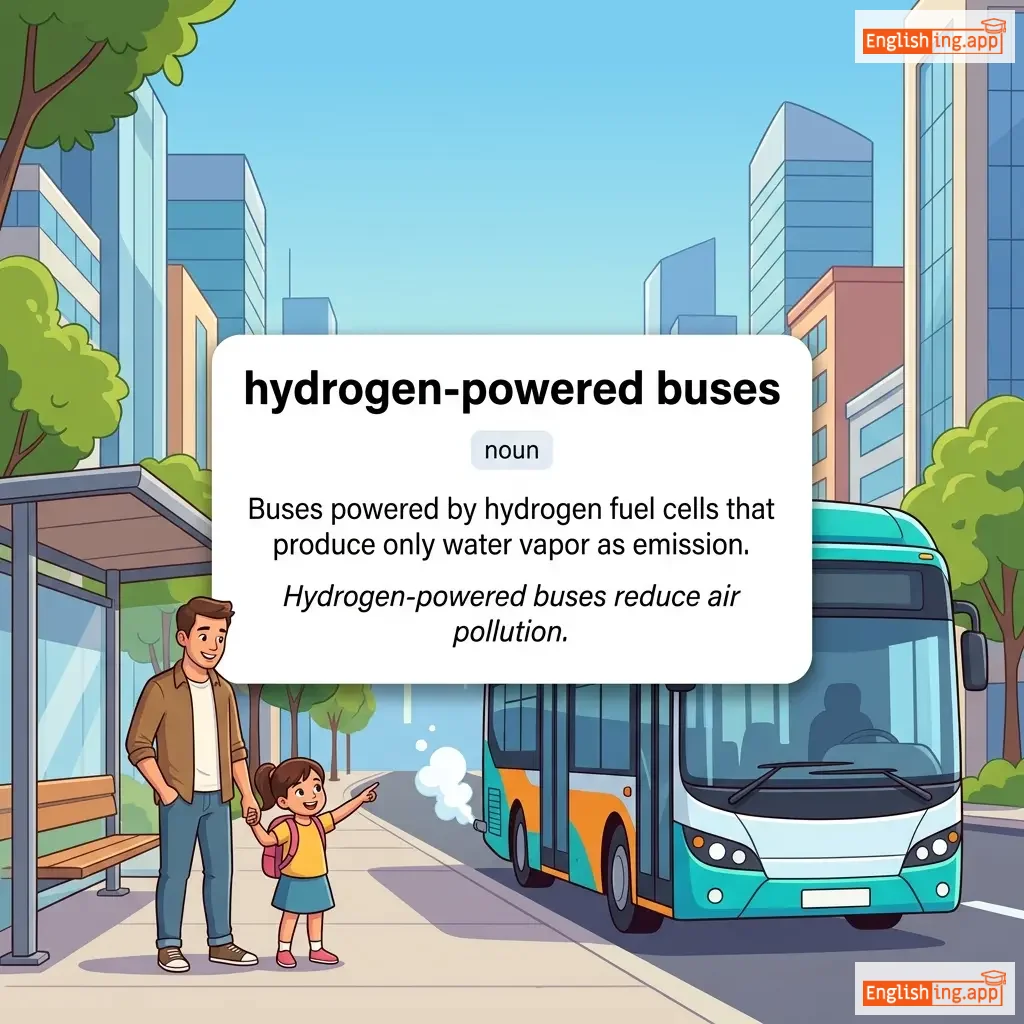
hydrogen-powered buses definition card — visual illustration of the meaning
noun C1
ˈhaɪ.drə.dʒən ˈpaʊ.əd bʌsɪz
水素バス (suiso basu)

Buses powered by hydrogen fuel cells that produce only water vapor as emission.

"Hydrogen-powered buses reduce air pollution."
"水素バスは大気汚染を減らします。" (Suiso basu wa taiki osen o herashimasu.)
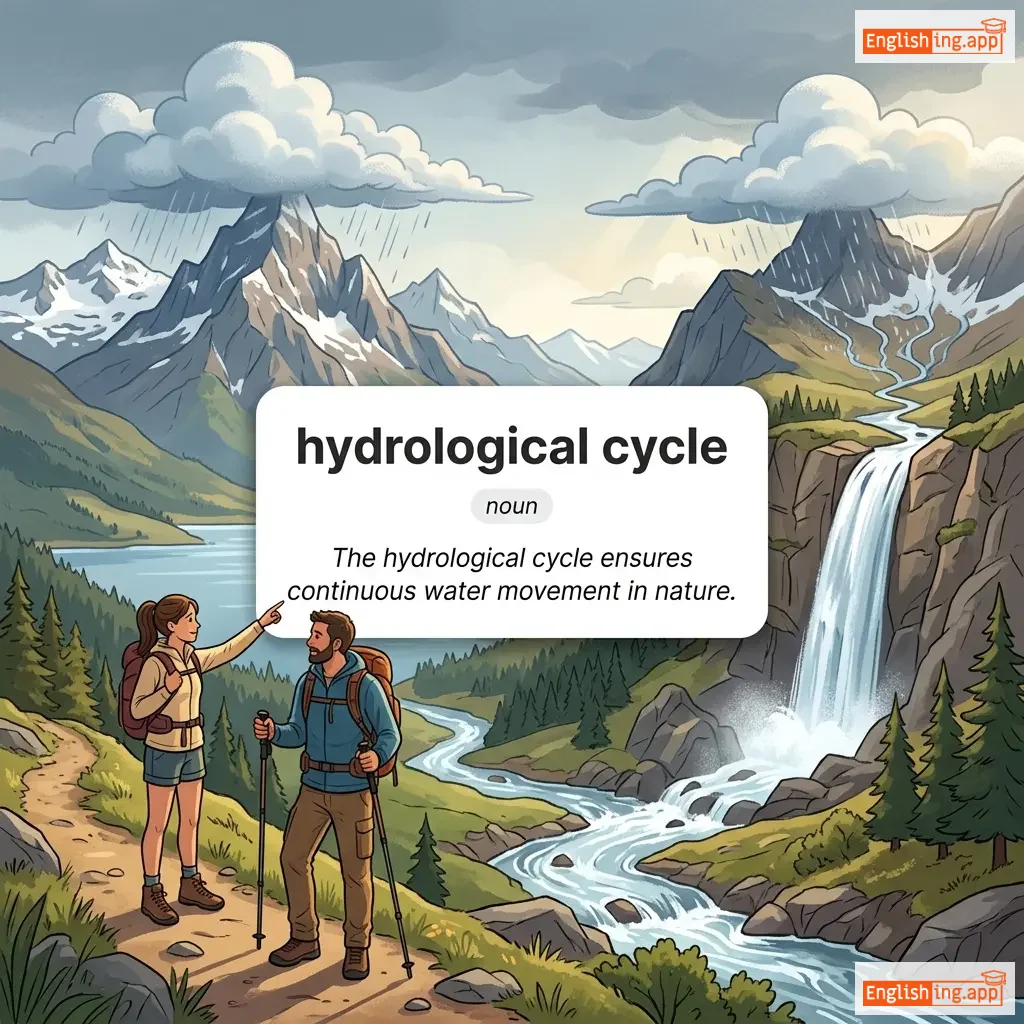
hydrological cycle definition card — visual illustration of the meaning
noun C1
ˌhaɪ.drəˈlɒdʒ.ɪ.kəl ˈsaɪ.kəl
水文循環 (suibun junkan)

The cycle of processes by which water circulates between the earth's oceans, atmosphere, and land.

"The hydrological cycle ensures continuous water movement in nature."
"水文循環は自然界での水の連続的な動きを保証します。" (Suibun junkan wa shizen-kai de no mizu no renzokuteki na ugoki o hoshō shimasu.)
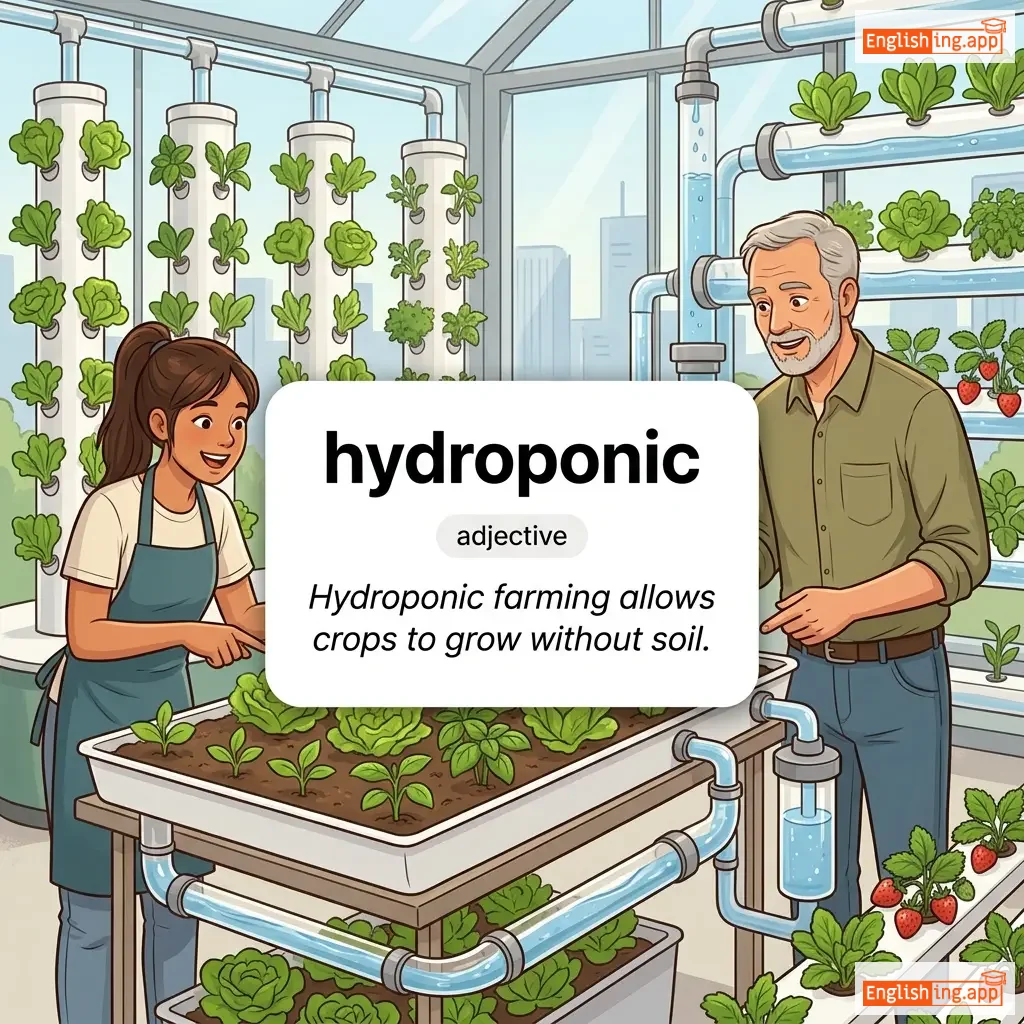
hydroponic definition card — visual illustration of the meaning
adjective C1
/ˌhaɪ.drəˈpɒn.ɪk/
ハイドロポニック (haidoroponikku)

Relating to the process of growing plants in sand, gravel, or liquid, with added nutrients but without soil.

"Hydroponic farming allows crops to grow without soil."
"水耕栽培は、土なしで作物を育てることを可能にします。" (Suikō saibai wa, do nashi de sakumotsu o sodateru koto o kanō ni shimasu.)
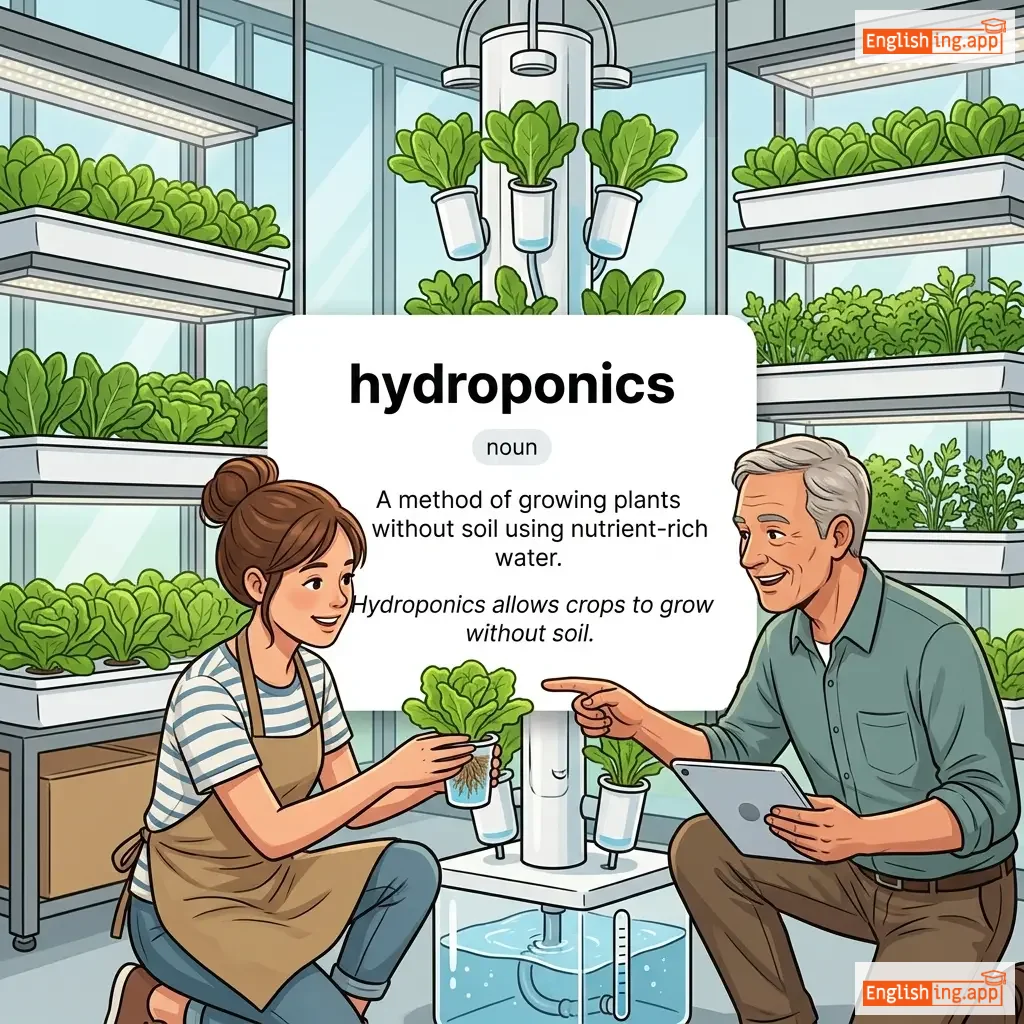
hydroponics definition card — visual illustration of the meaning
noun C1
/ˌhaɪ.droʊˈpɒn.ɪks/
水耕栽培 (suikousaibai)

A method of growing plants without soil using nutrient-rich water.

"Hydroponics allows crops to grow without soil."
"水耕栽培は土を使わずに作物を育てることを可能にします。" (suikousaibai wa tsuchi o tsukawazu ni sakubutsu o sodateru koto o kanou ni shimasu)
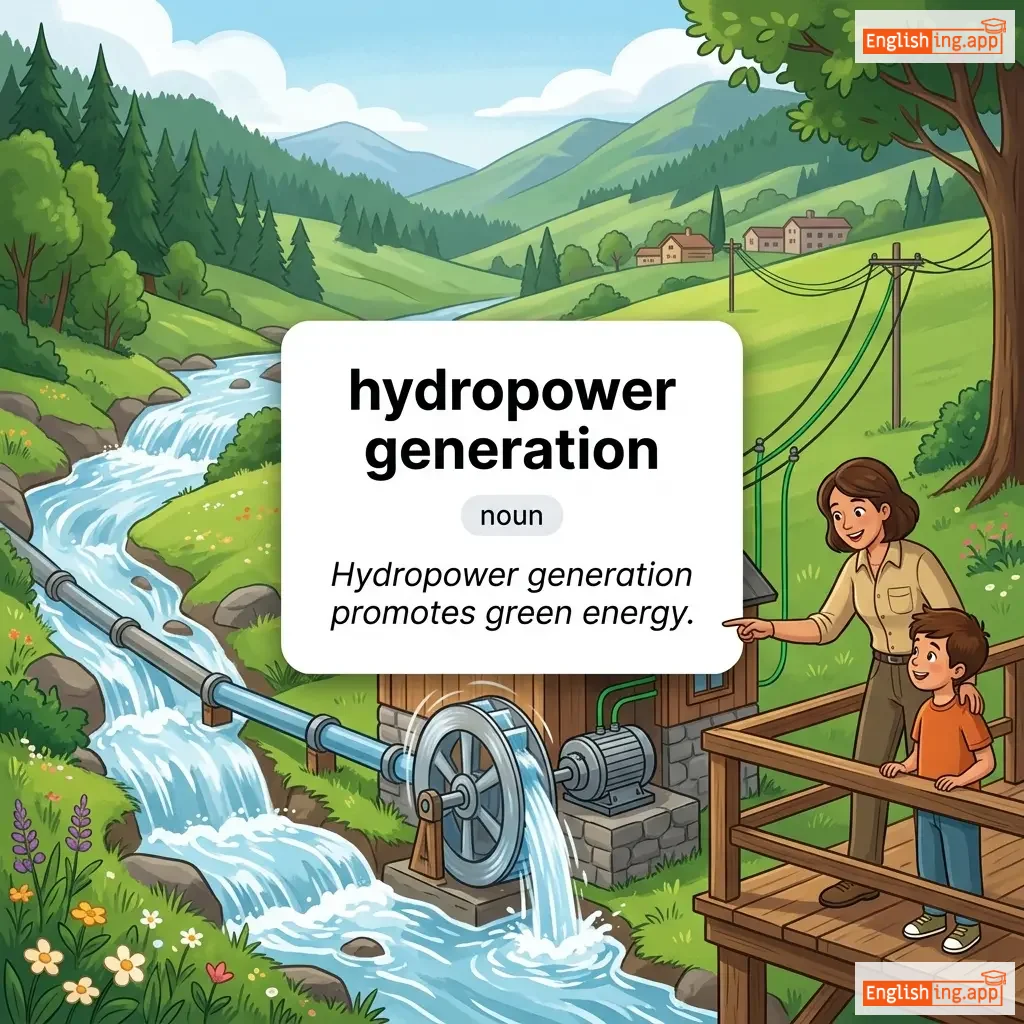
hydropower generation definition card — visual illustration of the meaning
noun C1
/ˈhaɪ.drəʊˌpaʊər ˌdʒen.əˈreɪ.ʃən/
水力発電 (suiryoku hatsuden)

The production of electrical power through the use of the gravitational force of falling or flowing water.

"Hydropower generation promotes green energy."
"水力発電はグリーンエネルギーを促進します。" (Suiryoku hatsuden wa guriin enerugii o sokushin shimasu.)
🎶

hymn

noun C1
/hɪm/

A religious song or poem of praise to God or a deity.

"The congregation sang a hymn during the morning service."

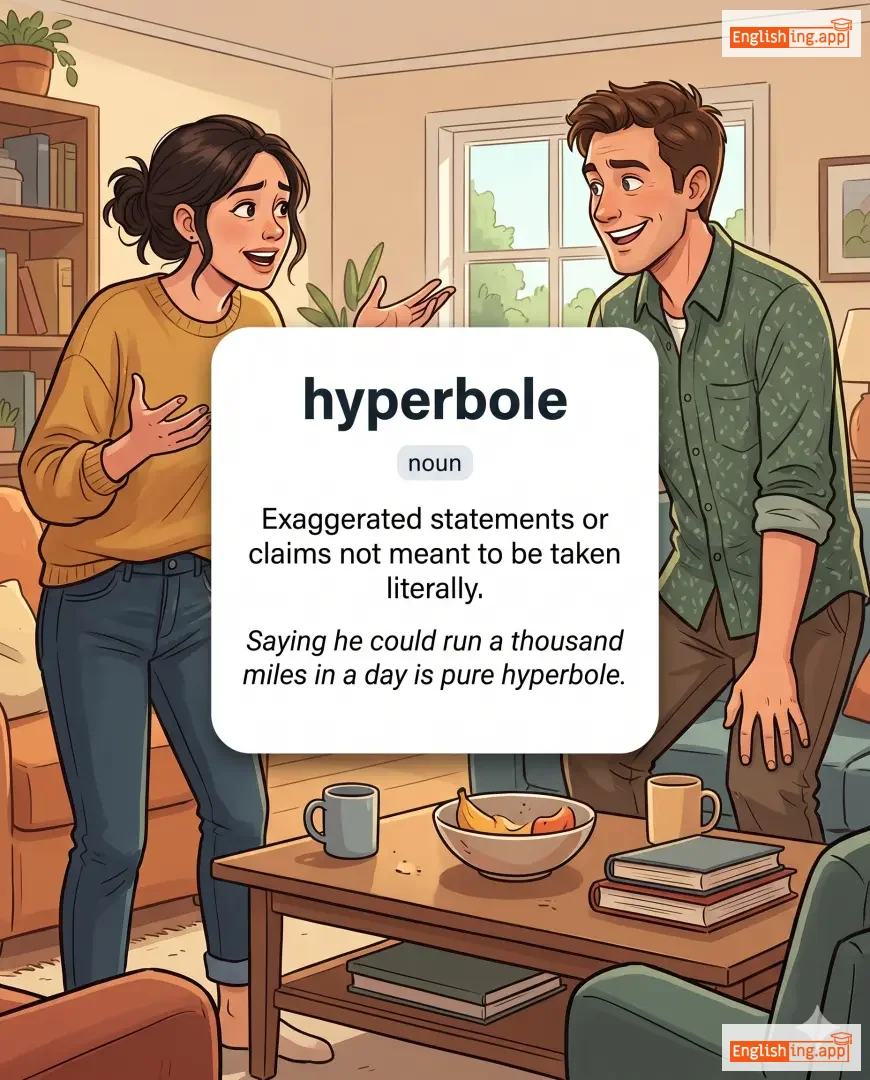
hyperbole definition card — visual illustration of the meaning
noun C1
/haɪˈpɜːrbəli/
誇張法 (kochouhou)

Exaggerated statements or claims not meant to be taken literally.

"Saying 'I’m so hungry I could eat a horse' is a classic example of hyperbole."
"'私は馬を食べることができるほどお腹がすいている' は誇張法の典型的な例です。" ('Watashi wa uma o taberu koto ga dekiru hodo onaka ga suiteiru' wa kochouhou no tenkeiteki na rei desu.)
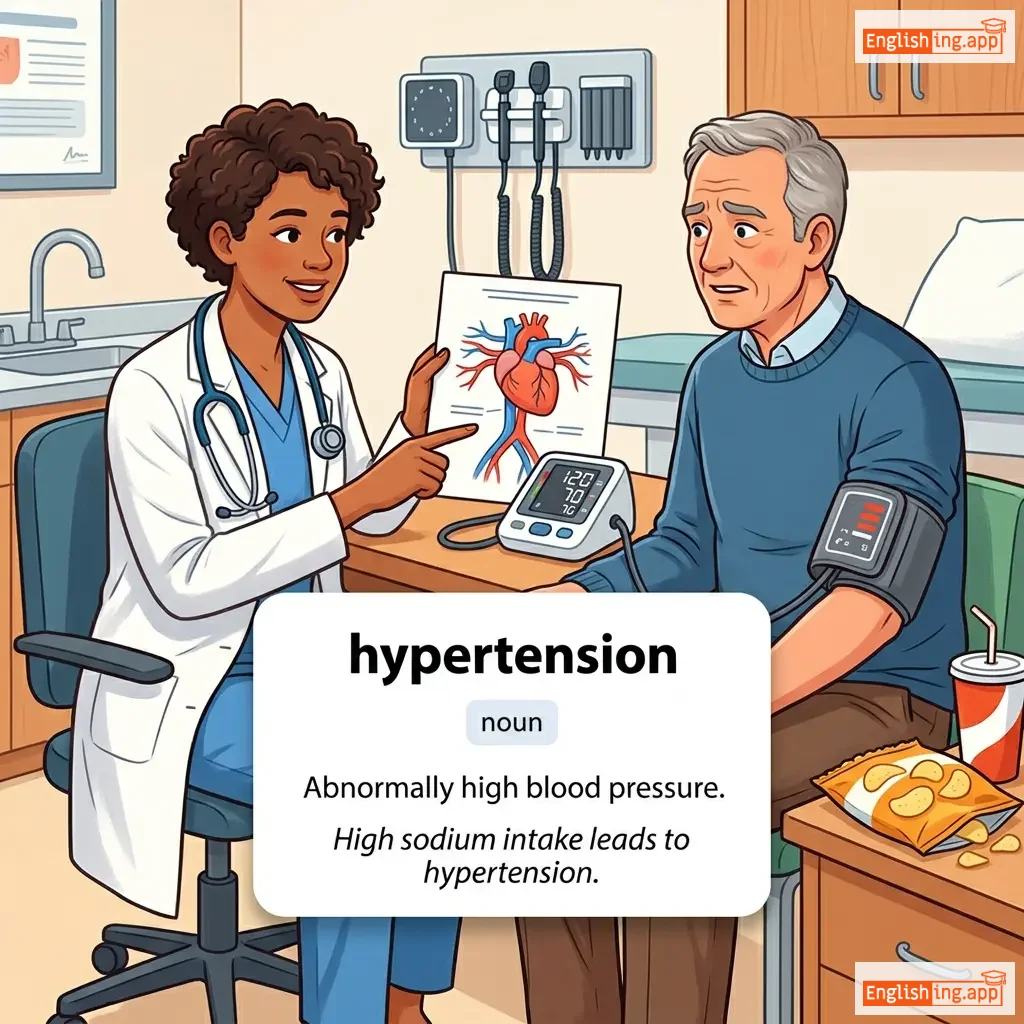
hypertension definition card — visual illustration of the meaning
noun C1
ˌhaɪ.pɚˈten.ʃən
高血圧 (kōketsuatsu)

Abnormally high blood pressure.

"High sodium intake leads to hypertension."

"高ナトリウム摂取は高血圧を引き起こします。" (Kō natoriumu sesshu wa kōketsuatsu o hikiokoshimasu.)
noun C1
/hɪpˈnoʊsɪs/
ヒプノシス (hipunoshisu)

A trance-like state of consciousness usually induced by suggestion.

"She underwent hypnosis to overcome her fear of flying."

"彼女は飛行機恐怖症を克服するためにヒプノシスを受けました。" (Kanojo wa hikouki kyōfushō o kokufuku suru tame ni hipunoshisu o ukemashita.)
adjective C1
/hɪpˈnɒtɪk/
催眠的な (saimin-teki na)

Producing sleep or a trance-like state; mesmerizing.

"The music had a hypnotic effect on the audience."

"その音楽は聴衆に催眠的な効果を与えました。" (Sono ongaku wa chōshū ni saimin-teki na kōka o ataemashita.)