語彙集

英単語辞書 | 単語の意味、定義、例文

adjective C1
/skænt/
乏しい (mushii)

Barely sufficient or inadequate in amount, degree, or quantity.

"There was scant evidence to support the claim."

"その主張を支持する証拠はほとんどなかった。" (Sono shuchou o shiji suru shōko wa hotondo nakatta.)
adjective C1
/ˈskænti/
乏しい (toboshii)

Small in quantity; insufficient or meager.

"The refugees survived on scanty food supplies."
"難民は乏しい食料で生き延びました。" (Nanmin wa toboshii shokuryou de ikinobimashita.)
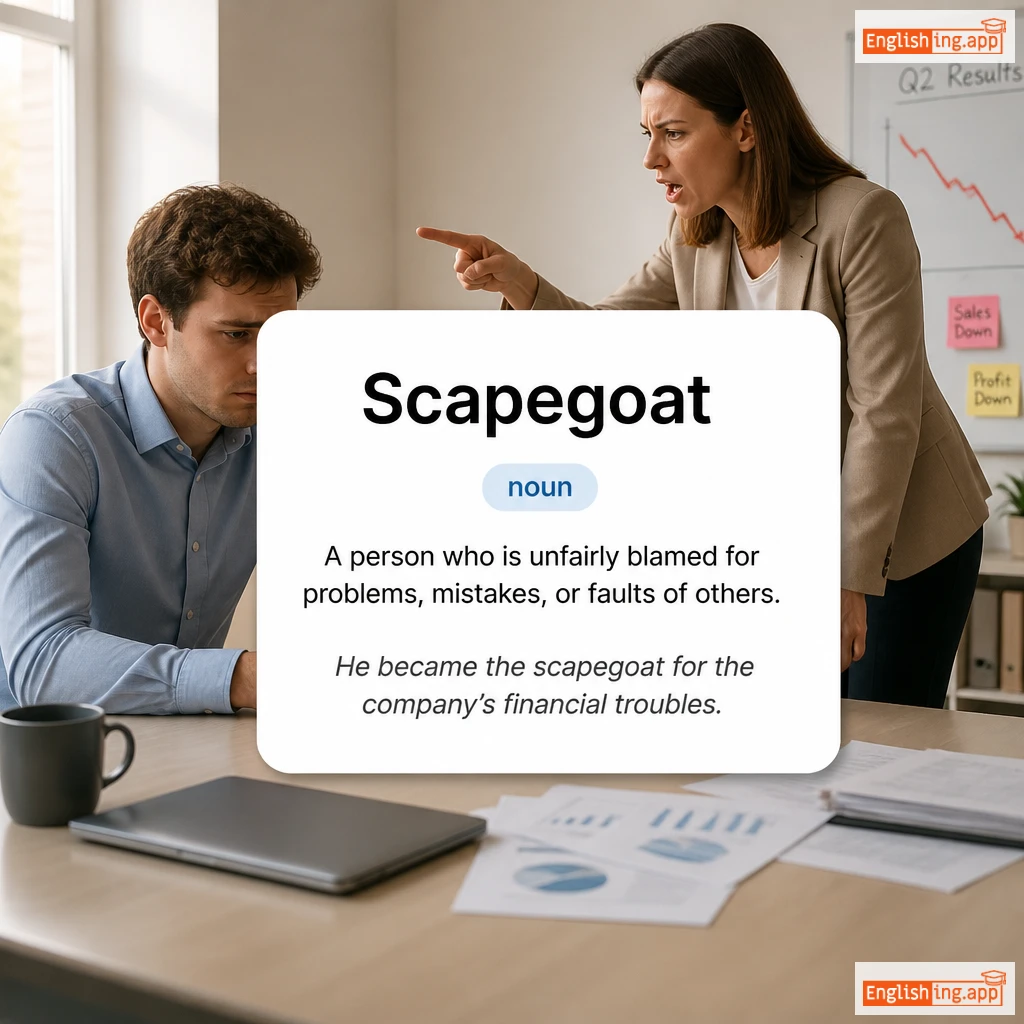
Scapegoat definition card — visual illustration of the meaning
noun C1
/ˈskeɪpˌɡoʊt/
スケープゴート (sukēpugōto)

A person who is unfairly blamed for problems, mistakes, or faults of others.

"He became the scapegoat for the company’s financial troubles."

"彼は会社の財政問題のスケープゴートになった。" (Kare wa kaisha no zaisei mondai no sukēpugōto ni natta.)
adjective C1
/ˈskeɪðɪŋ/
辛辣な批評 (sinratsu na hihyō)

severely critical; harshly scornful

"The critic wrote a scathing review of the movie."

"批評家は映画について辛辣な批評を書いた。" (Hihyōka wa eiga ni tsuite sinratsu na hihyō o kaita.)
verb C1
/ˈskævɪndʒ/
ゴミの中から探す (gomi no naka kara sagasu)

to search through waste or discarded material to find useful items

"The children scavenged for food in the garbage dump."

"子供たちはゴミ捨て場で食べ物を探していました。" (Kodomotachi wa gomisuteba de tabemono o sagashite imashita.)
noun C1
/ˈskævɪndʒər/
死肉食者 / ゴミ収集者 (shiniku shokusha / gomi shūshūsha)

an animal or person that feeds on dead or discarded material

"Vultures are natural scavengers that clean up the environment."
"ハゲワシは自然のスカベンジャーで、環境をきれいにします。" (hagewashi wa shizen no scavenger de, kankyō o kirei ni shimasu.)
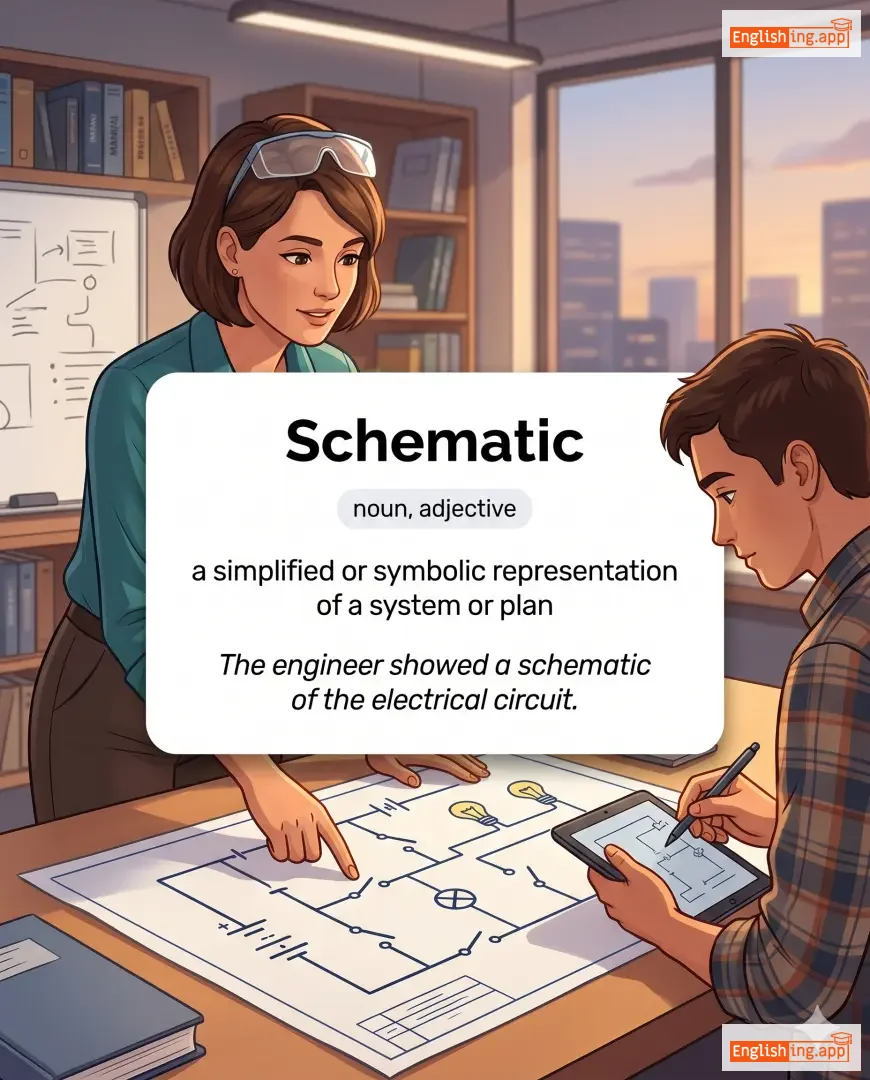
Schematic definition card — visual illustration of the meaning
noun, adjective C1
/skiːˈmætɪk/
回路図 (kairozu)

a simplified or symbolic representation of a system or plan

"The engineer showed a schematic of the electrical circuit."

"エンジニアは電気回路の回路図を示しました。" (Enjinia wa denki kairo no kairozu o shimeshimashita.)
adjective C1
/skəˈlæstɪk/
学問的な (gakumontekina)

Relating to schools, education, or academic learning.

"The school organizes scholastic competitions every year."

"学校は毎年学問的な競技を開催します。" (Gakkō wa mainen gakumonteki na kyōgi o kaisai shimasu.)
adjective C1
/ˈsɪn.tɪ.leɪ.tɪŋ/
きらめく (kirameku)

brilliantly clever, exciting, or sparkling

"Her scintillating conversation kept everyone entertained."

"彼女のきらめく会話は皆を楽しませた。" (Kanojo no kirameku kaiwa wa minna o tanoshimaseta.)
noun C1
/ˈsaɪ.ən/
子孫 (shison)

a descendant of a wealthy, aristocratic, or influential family

"He is the scion of a wealthy industrialist family."

"彼は裕福な実業家の家族の子孫です。" (Kare wa yūfuku na jitsugyōka no kazoku no shison desu.)
verb C1
/skɒf/
嘲笑する (chosho suru)

to speak about something in a mocking or dismissive way

"He scoffed at the idea of moving abroad."

"彼は海外に引っ越すというアイデアを嘲笑しました。" (Kare wa kaigai ni hikkosu to iu aidea o chosho shimashita.)
verb C1
/skɔːrtʃ/
焦がす (kogasu)

to burn the surface of something slightly

"The fire scorched the walls of the building."

"火事が建物の壁を焦がした。" (Kaji ga tatemono no kabe o kogashita.)
adjective C1
/ˈskɔːrnfəl/
軽蔑的な (keibetsuteki na)

showing contempt or disdain; expressing scorn

"She gave him a scornful look when he made the rude comment."

"彼が無礼なコメントをしたとき、彼女は軽蔑の目で彼を見た。" (Kare ga burei na komento o shita toki, kanojo wa keibetsu no me de kare o mita.)
verb/noun C1
/skɒtʃ/
終わらせる / スコッチウイスキー (owaraseru / scotch whiskey)

to put an end to something; also a type of whisky

"The report scotched the rumors of a merger."

"報告書は合併の噂を終わらせました。" (Houkokusho wa gappei no uwasa o owarasemashita.)
noun C1
/ˈskaʊndrəl/
悪党 (akutou)

a dishonest or unscrupulous person; a villain

"That scoundrel cheated the old man out of his savings."

"その悪党は老人から貯金を騙し取った。" (Sono akutou wa rōjin kara chokin o damashitotta.)
verb C1
/ˈskaʊər/
磨く / 徹底的に探す (migaku / tetteiteki ni sagasu)

to clean or brighten the surface of something by scrubbing; to search thoroughly

"She scoured the kitchen until it shone."

"彼女はキッチンを磨いて、ピカピカにしました。" (Kanojo wa kicchin o migaite, pikapika ni shimashita.)
noun/verb C1
/skɜːrdʒ/

A source of great pain or punishment; to whip or inflict suffering on someone.

"Disease and poverty remain a scourge in many regions."

verb/noun C1
/skaʊl/
しかめっ面をする (shikametsura suru)

To frown in an angry or bad-tempered way.

"She scowled when she heard the unfair remark."

"彼女は不公平なコメントを聞いてしかめっ面をした。" (Kanojo wa fukōhei na komento o kiite shikametsura o shita.)
adjective C1
/ˈskræpi/
戦闘的 / 散らかった (sentōteki / chirakatta)

Determined and willing to fight or argue; also messy or disorganized.

"Despite being small, he was a scrappy fighter."

"小さくても、彼は戦闘的な戦士でした。" (Chīsakute mo, kare wa sentōteki na senshi deshita.)
verb C1
/skrɔːl/
急いで乱雑に書く (isoide ranzatsu ni kaku)

to write or draw something quickly and carelessly, making it hard to read

"He scrawled his signature at the bottom of the page."

"彼はページの下部に署名をスクロールした。" (Kare wa pēji no kafu ni shomei o sukūrōru shita.)
adjective C1
/ˈskrɔːni/
痩せ細った (yasesotta)

very thin and bony, often looking unhealthy

"The scrawny boy could barely lift the heavy bag."

"その痩せ細った少年は重いバッグをほとんど持ち上げることができなかった。" (Sono yasesotta shōnen wa omoi baggu o hotondo mochiageru koto ga dekinakatta.)
noun C1
/skraɪb/
書記 (shoki)

a person who writes documents, especially in ancient times; a professional copyist

"In ancient Egypt, scribes recorded important events."

"古代エジプトでは、スクライブは重要な出来事を記録しました。" (Kodai Ejiputo dewa, sukuraibu wa jūyōna dekigoto o kiroku shimashita.)
noun C1
/ˈskrɪmɪdʒ/
練習試合 (renshū shiai)

A practice game or informal match, often in sports, especially football.

"The team had a scrimmage before the official season started."

"チームは公式シーズンが始まる前に練習試合を行いました。" (Chīmu wa kōshiki shīzun ga hajimaru mae ni renshū shiai o okonaimashita.)
adjective C1
/ˈskrɪptʃərəl/
聖書に関連する (seisho ni kanren suru)

Relating to or contained in the scriptures or holy writings.

"The priest gave a scriptural reference during the sermon."

"牧師は説教中に聖書の参照をしました。" (Bokusha wa sekkyou-chuu ni seisho no sanshou o shimashita.)
scrolling addiction definition card — visual illustration of the meaning
noun C1
স্ক্রোলিং অ্যাডিকশন
スクロール依存症 (sukurōru izonshō)

A compulsive need to continuously scroll through content on digital devices, particularly smartphones and social media platforms.

"Scrolling addiction is a growing concern among smartphone users."

"スクロール依存症はスマートフォンユーザーの間で増加している懸念事項です。" (Sukurōru izonshō wa sumātofon yūzā no aida de zōka shite iru kenentekina shikō desu.)
adjective C1
/ˈskrʌfi/
乱雑または不潔な外見; 汚れたしぼんだ (ranzatsu matawa fuketsu na gaiken; yogoreta shibonda)

untidy or unkempt in appearance; shabby and worn

"The scruffy old dog wandered through the streets looking for food."

"そのみすぼらしい老犬は、食べ物を探して通りをさまよっていました。" (Sono misuborashii rōken wa, tabemono o sagashite tōri o samayotte imashita.)
adjective C1
/ˈskrʌmpʃəs/
美味しい (oishii)

extremely tasty or delicious

"She baked a scrumptious chocolate cake for the party."

"彼女はパーティーのために美味しいチョコレートケーキを焼きました。" (Kanojo wa pātī no tame ni oishii chokorēto kēki o yakimashita.)
noun C1
/ˈskruːpəl/
良心の呵責 (ryōshin no kashaku)

A moral or ethical consideration that restrains actions.

"He had no scruples about lying to get ahead."
"彼は前進するために嘘をつくことに対して良心の呵責を感じていなかった。" (Kare wa zenshin suru tame ni uso o tsuku koto ni taishite ryōshin no kashaku o kanjite inakatta.)
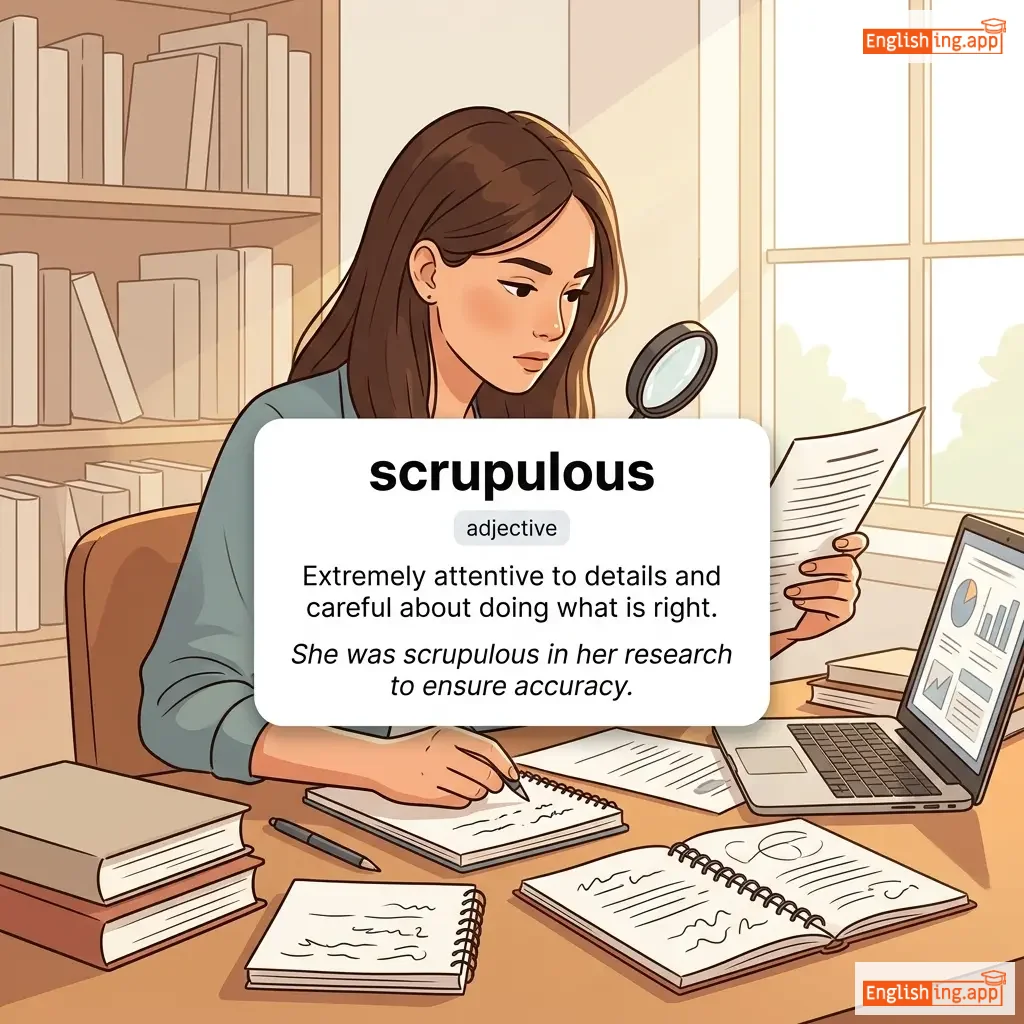
scrupulous definition card — visual illustration of the meaning
adjective C1
/ˈskruːpjələs/
几帳面 (kichoumen)

Extremely attentive to details and careful about doing what is right.

"She was scrupulous in her research to ensure accuracy."
"彼女は研究の中で正確さを確保するために几帳面だった。" (Kanojo wa kenkyuu no naka de seikaku-sa wo kakuho suru tame ni kichoumen datta.)
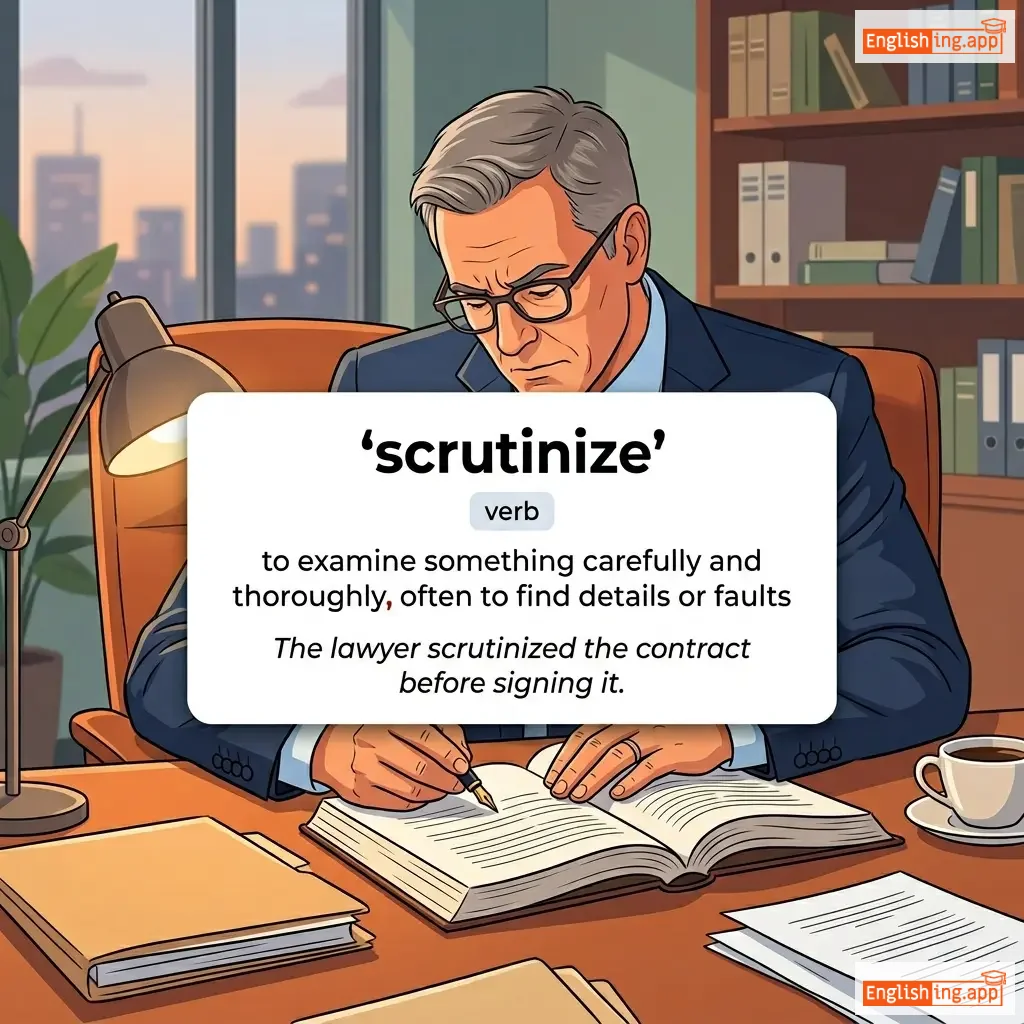
scrutinize definition card — visual illustration of the meaning
verb C1
/ˈskruː.tɪ.naɪz/

to examine something carefully and thoroughly, often to find details or faults

"The lawyer scrutinized the contract before signing it."

verb C1
/skʌf/
擦り傷 (surikizu)

to mark or scratch the surface of something by rubbing

"He scuffed his shoes on the pavement."

"彼は歩道で靴を擦り傷をつけた。" (Kare wa hodou de kutsu o surikizu o tsuketa.)
noun, verb C1
/ˈskʌf.əl/
乱闘 (rantou)

a short, confused fight or struggle; to engage in such a fight

"Two players scuffled on the field after the foul."

"ファウルの後、二人の選手がフィールドで殴り合った。" (Fauru no ato, futari no senshu ga fiirudo de naguriatta.)
verb C1
/skʌlpt/
幸せ (shiawase)

to create or shape something by carving or molding

"The artist sculpted a beautiful statue from marble."

"彼女は賞を受け取ったとき、自分の幸せを隠せなかった。" (Kanojo wa shou wo uketotta toki, jibun no shiawase wo kakusenakatta.)
verb C1
/ˈskʌr.i/
速く走る (hayaku hashiru)

To move quickly with short, hurried steps.

"The mice scurried across the kitchen floor when the lights turned on."

"ライトがついたとき、ネズミたちはキッチンの床を速く走った。" (Raito ga tsuita toki, nezumi-tachi wa kicchin no yuka o hayaku hashitta.)
verb C1
/ˈskʌt.əl/
幸せ (shiawase)

To run hurriedly with short, quick steps; or to deliberately sink a ship.

"The children scuttled back to their seats when the teacher entered."

"彼女は賞を受け取ったとき、幸せを隠せませんでした。" (Kanojo wa shō o uketotta toki, shiawase o kakusemasen deshita.)
noun C1
/saɪð/
(kama)

A tool with a long curved blade used for cutting grass or grain.

"The farmer sharpened his scythe before harvesting the wheat."

"農民は小麦を収穫する前に彼の鎌を研いだ。" (Nōmin wa komugi o shūkaku suru mae ni kare no kama o toida.)
noun C1
/ˈseɪɑːns/
霊的なセッション (reiteki na sesshon)

A meeting where people attempt to communicate with the spirits of the dead.

"They held a seance to contact their late grandmother."

"彼らは亡くなった祖母と連絡を取るために霊的なセッションを開いた。" (Karera wa nakunatta sobo to renraku o toru tame ni reiteki na sesshon o hiraita.)
verb C1
/sɪr/
焼く (yaku)

To burn or scorch the surface of something with intense heat.

"The chef seared the steak to lock in the flavor."

"シェフは味を閉じ込めるためにステーキを焼きました。" (Shefu wa aji o tojikomeru tame ni suteeki o yakimashita.)
adverb C1
/ˈsɜːrtʃɪŋli/
探求的に (tankyū-teki ni)

In a way that seems to look for hidden meanings or truth.

"She looked at him searchingly, hoping for an honest answer."

"彼女は正直な答えを望んで、探し求めるように彼を見つめた。" (Kanojo wa shōjiki na kotae o nozonde, sagashimotomoru yō ni kare o mitsumeta.)
noun C1
/ˈsiːskeɪp/
海の景色 (umi no keshiki)

A view or painting of the sea.

"The artist painted a beautiful seascape at sunset."

"アーティストは夕日で美しい海の景色を描きました。" (Atisuto wa yūhi de utsukushī umi no keshiki o egakimashita.)
adjective C1
/ˈsiːzənəbl/
季節に適した (kisetsu ni tekishita)

Appropriate to the time of year or season.

"We had seasonable weather for autumn."

"私たちは秋のために季節に合った天気を楽しみました。" (Watashitachi wa aki no tame ni kisetsu ni atta tenki o tanoshimimashita.)
adjective/verb C1
/ˈsiːzənd/
経験豊富な / 味付けされた (keiken hōfu na / aji-tsuke sareta)

Experienced in a particular activity; also, flavored with spices.

"She is a seasoned teacher with over 20 years of experience."

"彼女は20年以上の経験を持つベテランの教師です。" (Kanojo wa 20-nen ijō no keiken o motsu beteran no kyōshi desu.)
verb C1
/sɪˈsiːd/
脱退する (dattai suru)

To formally withdraw from a political or organizational union.

"Several states threatened to secede from the union."

"いくつかの州は連邦から脱退すると脅迫した。" (Ikutsuka no shū wa renpō kara dattai suru to kyōhaku shita.)
noun C1
/sɪˈsɛʃən/
分離 (bunri)

The action of formally withdrawing from membership of a federation or body.

"The secession of the southern states led to the Civil War."

"南部諸州の分離は南北戦争を引き起こした。" (Nanbu shoshuu no bunri wa nanboku sensou wo hikiokoshita.)
verb C1
/sɪˈkluːd/
隔離する (kakuri suru)

To keep someone away from other people; to isolate.

"The monk chose to seclude himself in the mountains."

"修道士は山で自分を孤立させることを選びました。" (Shūdōshi wa yama de jibun o koritsu saseru koto o erabimashita.)
adjective C1
/sɪˈkluːdɪd/
人里離れた (hitori banareta)

Placed apart from other people or things; private and quiet.

"They spent their vacation in a secluded beach house."

"彼らは人里離れたビーチハウスで休暇を過ごしました。" (Karera wa hitori banareta bīchi hausu de kyūka o sugoshimashita.)
noun C1
/sɪˈkluːʒən/
隠遁 (inton)

The state of being private, away from other people.

"She spent the weekend in complete seclusion in her cabin."

"彼女はキャビンで完全に隠遁した週末を過ごしました。" (Kanojo wa kyabin de kanzen ni inton shita shūmatsu o sugoshimashita.)
adjective C1
/ˌsekənd ˈreɪt/
二流 (niryu)

Of mediocre or inferior quality.

"The movie was entertaining but clearly second-rate compared to the original."
"その映画は面白かったが、オリジナルに比べて明らかに二流だった。" (Sono eiga wa omoshirokatta ga, orijinaru ni kurabete akirakani niryu datta.)
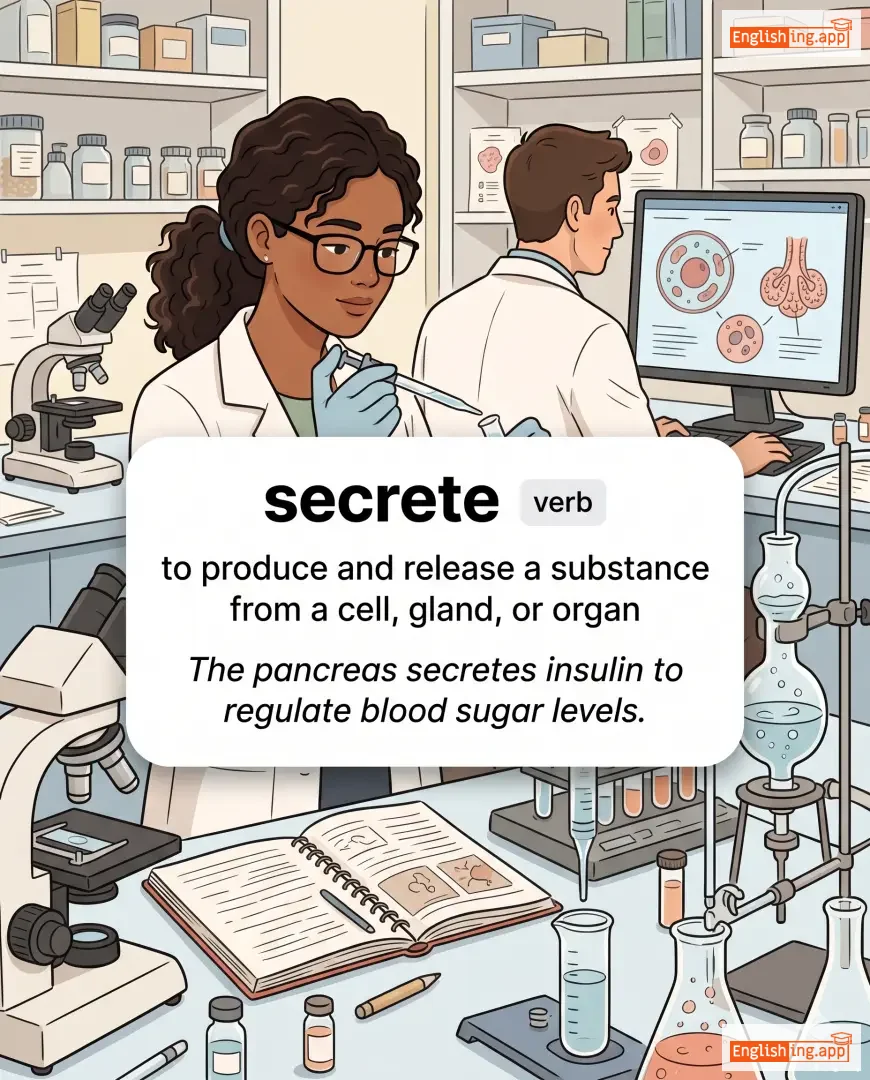
secrete definition card — visual illustration of the meaning
verb C1
/sɪˈkriːt/
分泌する (bimpisu suru)

to produce and release a substance from a cell, gland, or organ

"The pancreas secretes insulin to regulate blood sugar levels."
"膵臓は血糖値を調整するためにインスリンを分泌します。" (Suizō wa kettōchi o chōsei suru tame ni insurīn o bimpisu shimasu.)
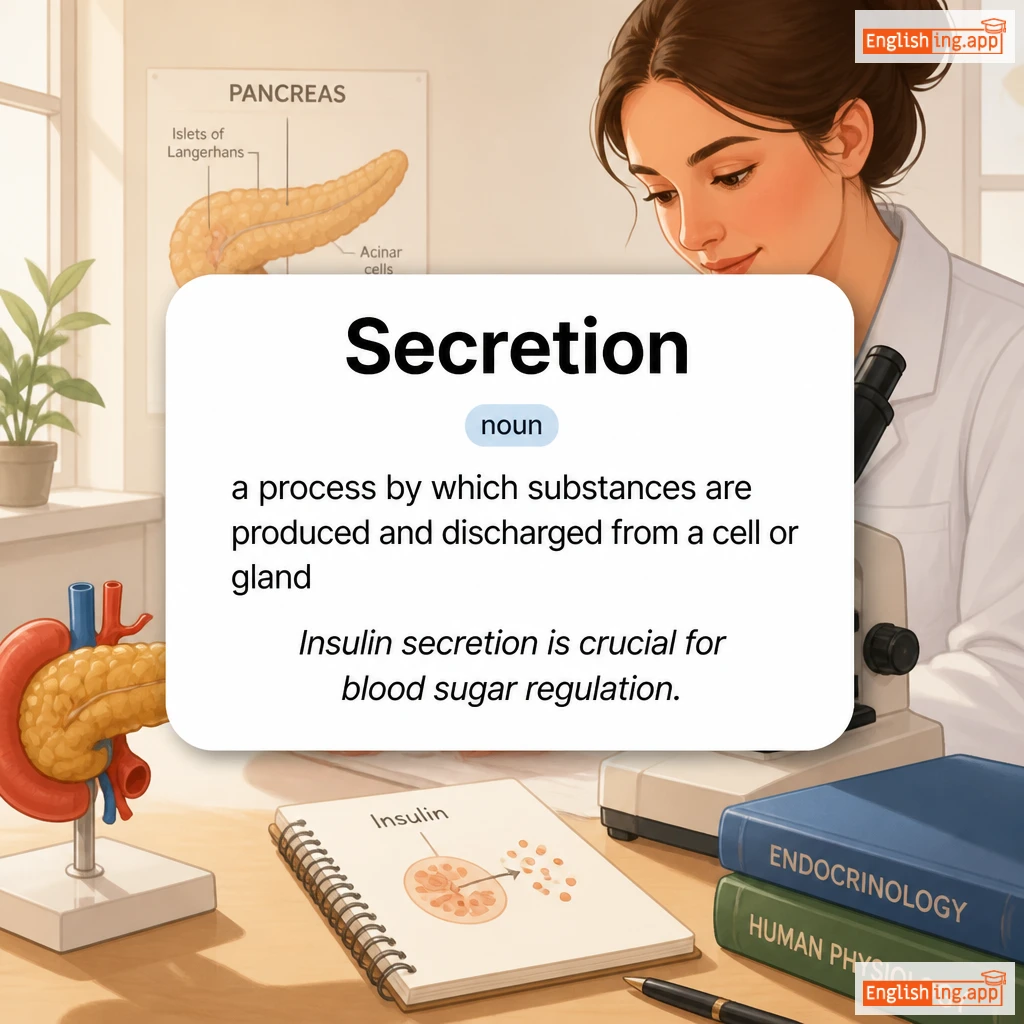
Secretion definition card — visual illustration of the meaning
noun C1
/sɪˈkriː.ʃən/
分泌 (bumpitsu)

a process by which substances are produced and discharged from a cell or gland

"Insulin secretion is crucial for blood sugar regulation."

"インスリン分泌は血糖値の調整に不可欠です。" (insurin bumpitsu wa kettouchi no chousei ni fukaketsu desu)