The Power of Education
ルマナは遠い村の出身で、education の機会がほとんどありませんでした。彼女の村には小学校が一つしかなく、高 school はありませんでした。しかし、彼女の learn への情熱は無限でした。
毎日、彼女は最も近い school まで5キロ歩きました。新しい textbooks を買うお金がなかったので、友達から古い本を借りていました。しかし、彼女の academic 成績は素晴らしいものでした。
ルマナの teachers は彼女の可能性を見抜きました。ある teacher は言いました:「あなたは college に行けます。あなたの knowledge への情熱はとても貴重です。」
しかし、家族には college tuition を払うお金がありませんでした。ルマナはあきらめませんでした。彼女は scholarship に応募しました。彼女の grades は優秀で、literacy レベルも高かったのです。
その結果、彼女の申請は成功しました!ルマナは有名な university の全額 scholarship を獲得しました。これは彼女の人生で最大の成果でした。
university で彼女は academic 優秀さを続けました。すべての exam でトップを取り、すべての class に積極的に参加しました。彼女の curriculum は難しかったが、彼女は決意を持って取り組みました。
4年後、ルマナは優秀な成績で graduated しました。彼女の diploma は単なる証明書ではなく、彼女の努力と決意の証でした。
graduation の後、ルマナは決断しました。彼女は村に戻り、他の students が自分のように苦労しないように、正式な高 school を設立したいと考えました。
今、ルマナは自ら teacher となりました。彼女は education の力で students を励まします。彼女は言います:「Knowledge は最強の武器です。より多く learn すればするほど、より多くのチャンスが現れます。」
彼女の school は今、多くの students を受け入れています。いくつかの students はすでに scholarships を得て colleges に進学しました。ルマナの物語は、education が人生を変え、社会を高めることを証明しています。彼女の academic の旅は、新しい世代に study、graduate、そして夢を追い求める勇気を与えています。
|
絵文字
|
単語 | Images | 翻訳 | 過去 | 過去分詞 | 三人称単数 | 動名詞 | 意味 | 例文 | 例文の翻訳 | 表現例 | 表現例の意味 | 表現例の翻訳 | 同義語 | 対義語 | コロケーション | ニーモニック |
|---|---|---|---|---|---|---|---|---|---|---|---|---|---|---|---|---|---|
|
🎓
••••••
|
/ˌækəˈdɛmɪk/
adjective
(アカデミック)
••••••
|
- •••••• |
学問的
gakumon-teki
••••••
|
- •••••• | - •••••• | - •••••• | - •••••• |
related to education, learning, or scholarly activities
••••••
|
She has an outstanding academic record. |
彼女は優れた学問的記録を持っています。
Kanojo wa sugureta gakumon-teki kiroku o motteimasu.
••••••
|
purely academic |
something theoretical without practical relevance
••••••
|
純粋な学問的
junsuina gakumon-teki
••••••
|
educational, scholarly, intellectual, theoretical
••••••
|
practical, vocational
••••••
|
academic achievement, academic career, academic institution, academic record
••••••
|
Academicは学問に関連している🎓。覚えておいて: 'Academy'では学問的な仕事をする。
••••••
|
|
🏫
••••••
|
/klɑːs/
noun
(kurasu)
••••••
|
- •••••• |
クラス
kurasu
••••••
|
- •••••• | - •••••• | - •••••• | - •••••• |
a group of students taught together or a category of people or things with shared characteristics
••••••
|
Our class meets every morning at nine. |
私たちのクラスは毎朝9時に会います。
Watashitachi no kurasu wa mai asa kuji ni aimasu.
••••••
|
class act |
a person who is admired for their good qualities or behavior
••••••
|
模範的な人物
mohantekina jinbutsu
••••••
|
category, group, grade, division
••••••
|
individual, disorganization
••••••
|
class room, class teacher, social class, upper class, class test
••••••
|
クラスは学校で学ぶグループ、社会における共通性もあります。
••••••
|
|
🎓
••••••
|
/ˈkɒlɪdʒ/
noun
(カレッジ)
••••••
|
- •••••• |
大学
daigaku
••••••
|
- •••••• | - •••••• | - •••••• | - •••••• |
An educational institution where students study for degrees or professional qualifications.
••••••
|
She hopes to attend college in the city next year. |
彼女は来年、市内の大学に通うことを望んでいます。
Kanojo wa rainen, shinai no daigaku ni kayou koto o nozondeimasu.
••••••
|
go to college |
to enroll in and attend a college for studies
••••••
|
大学に行く
daigaku ni iku
••••••
|
university, institute, academy, campus
••••••
|
school, dropout
••••••
|
college degree, college student, college campus, go to college
••••••
|
大学で知識を学び未来を切り開こう。
••••••
|
|
📘
••••••
|
/kəˈrɪkjələm/
noun
(カリキュラム)
••••••
|
- •••••• |
カリキュラム
karikyuramu
••••••
|
- •••••• | - •••••• | - •••••• | - •••••• |
The subjects comprising a course of study in a school, college, or university.
••••••
|
The school updated its curriculum to include more digital literacy courses. |
学校は、デジタルリテラシーのコースをもっと含めるためにカリキュラムを更新しました。
Gakkou wa, dejitaru riterashii no koosu wo motto fukumeru tame ni karikyuramu wo koushin shimashita.
••••••
|
- •••••• | - •••••• | - •••••• |
syllabus, program, course, studies, outline
••••••
|
improvisation, spontaneity
••••••
|
school curriculum, national curriculum, broad curriculum, curriculum design
••••••
|
Curriculumはカリキュラム – 学校でみんなが従う計画です。
••••••
|
|
🎓
••••••
|
/dɪˈpləʊ.mə/
noun
(ディプロマ)
••••••
|
- •••••• |
卒業証書
sotsugyō shōsho
••••••
|
- •••••• | - •••••• | - •••••• | - •••••• |
an official document showing that a person has completed a course of study or training
••••••
|
She received her diploma after finishing the nursing program. |
彼女は看護プログラムを修了した後、卒業証書を受け取りました。
Kanojo wa kango puroguramu o shūryō shita ato, sotsugyō shōsho o uketorimashita.
••••••
|
- •••••• | - •••••• | - •••••• |
certificate, degree, qualification, credential
••••••
|
failure, disqualification
••••••
|
high school diploma, diploma course, diploma holder, earn a diploma
••••••
|
卒業証書は、学業を終えた証として手に入るもの 🎓
••••••
|
|
🏫
••••••
|
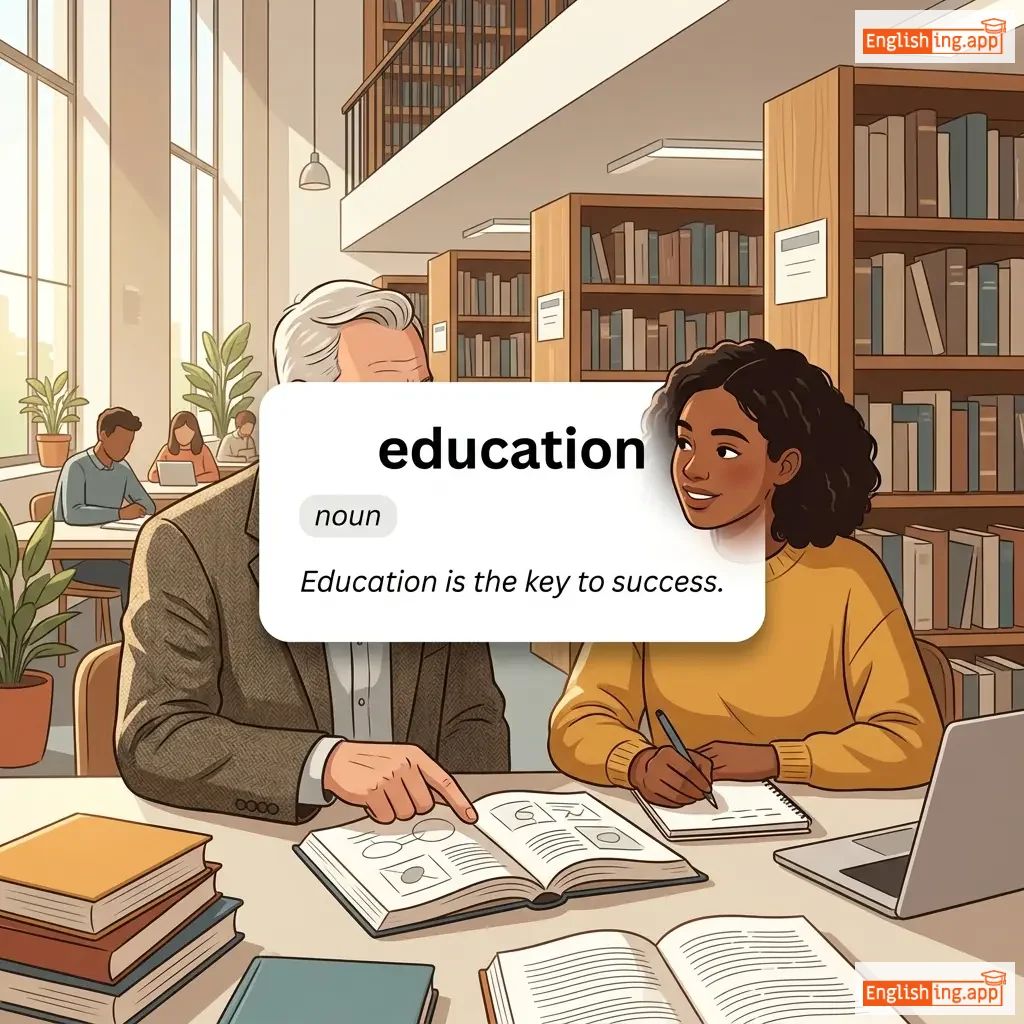
/ˌɛdʒʊˈkeɪʃən/
noun
(エデュケーション)
••••••
|
|
教育
kyouiku
••••••
|
- •••••• | - •••••• | - •••••• | - •••••• |
the process of receiving or giving systematic instruction, especially at a school or university
••••••
|
Education is the key to success. |
教育は成功の鍵です。
Kyouiku wa seikou no kagi desu.
••••••
|
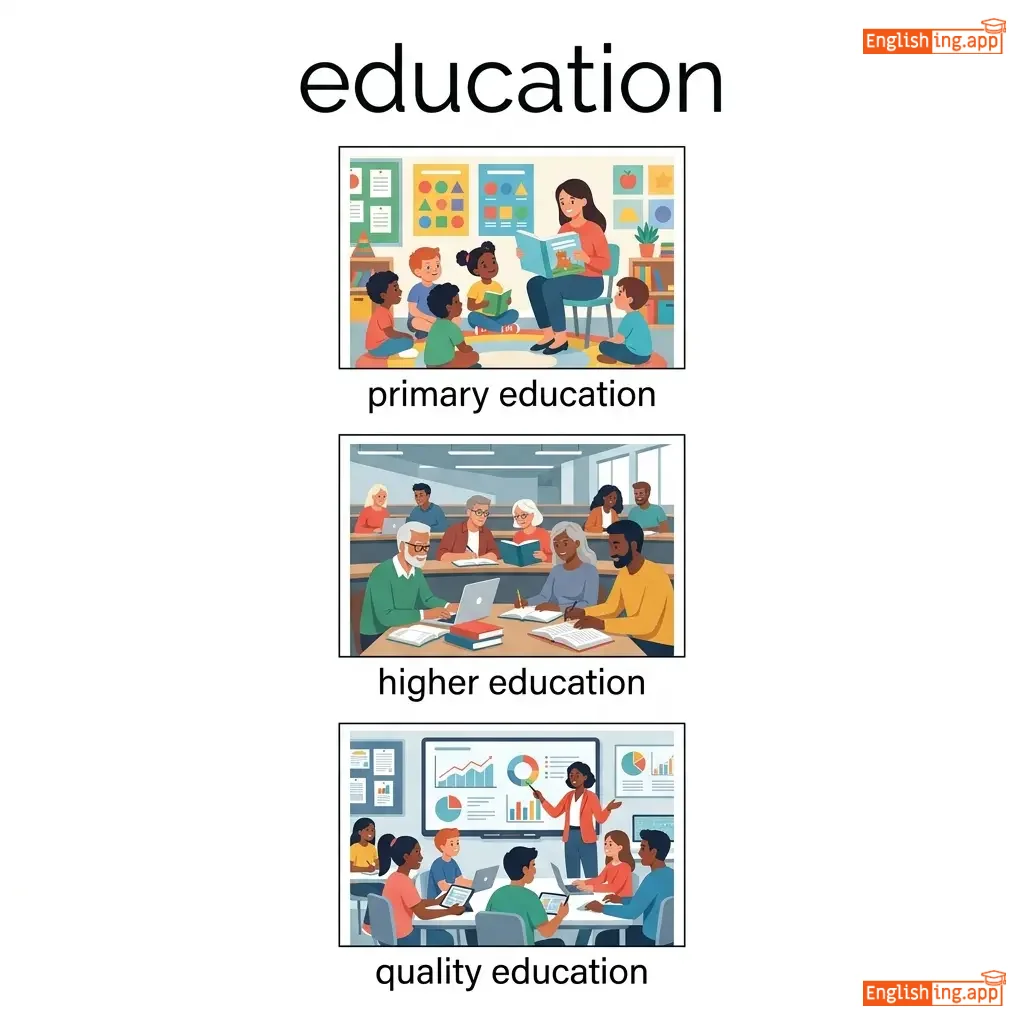
higher education |
education beyond the secondary level, usually at college or university
••••••
|
高等教育
koutou kyouiku
••••••
|
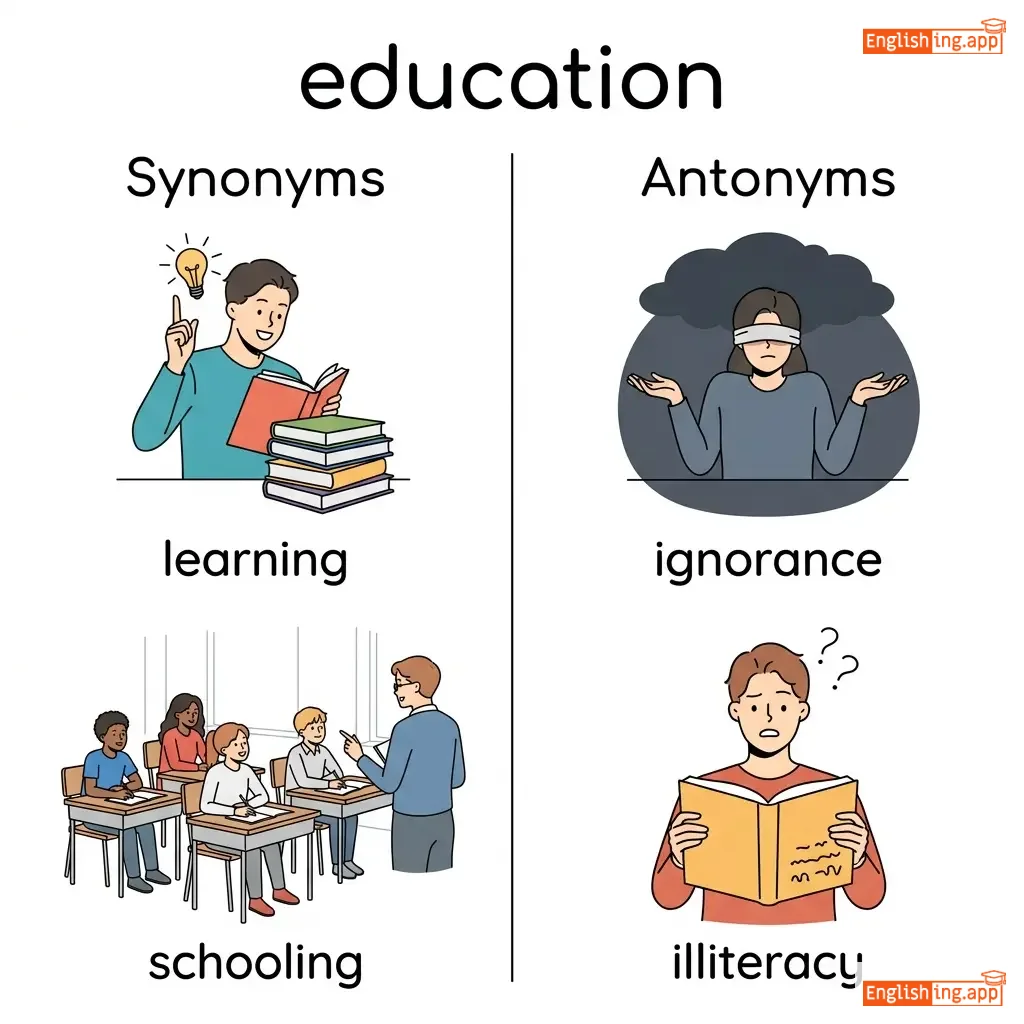
learning, schooling, instruction, teaching, training
••••••
|
ignorance, illiteracy
••••••
|
primary education, higher education, quality education, access to education
••••••
|
Educationは教育 - Edu + Nation = 国家は教育で成長する。
••••••
|
|
📝
••••••
|
/ɪɡˈzæm/
noun
(エグザム)
••••••
|
- •••••• |
試験
shiken
••••••
|
- •••••• | - •••••• | - •••••• | - •••••• |
a formal test of a person's knowledge or skill in a subject
••••••
|
She studied hard for her final exam. |
彼女は最終試験のために一生懸命勉強した。
Kanojo wa saishū shiken no tame ni isshōkenmei benkyō shita.
••••••
|
cram for an exam |
to study intensively before an exam
••••••
|
試験前に詰め込む
shiken mae ni tsumekomu
••••••
|
test, examination, assessment, quiz
••••••
|
break, vacation
••••••
|
take an exam, pass an exam, fail an exam, final exam, entrance exam
••••••
|
試験 = 自分の能力を試す大事な時!
••••••
|
|
📊
••••••
|
/ɡreɪd/
noun, verb
(グレード)
••••••
|
- •••••• |
成績
seiseki
••••••
|
graded
グレードされた
••••••
|
graded
グレードされた
••••••
|
grades
グレードス
••••••
|
grading
グレーディング
••••••
|
A level of quality, rank, or performance; to assign a score or mark to work or performance.
••••••
|
The teacher graded all the papers by the weekend.
教師は週末までにすべての課題を採点しました。
••••••
|
教師は週末までにすべての課題を採点しました。
Kyōshi wa shūmatsu made ni subete no kadai o saiten shimashita.
••••••
|
make the grade
基準を満たす
••••••
|
To succeed or meet the required standard.
••••••
|
基準を満たす
kijun o mitasu
••••••
|
rank, level, mark, score, stage
••••••
|
failure, decline
••••••
|
high grade, grade level, grade point, grade paper
••••••
|
Grade という言葉は、評価のレベルを示すものです。
••••••
|
|
🎓
••••••
|
/ˈɡrædʒuət/ (noun), /ˈɡrædʒueɪt/ (verb)
noun, verb
(グラジュエイト)
••••••
|
- •••••• |
卒業生
sotsugyousei
••••••
|
graduated
グラジュエイテッド
••••••
|
graduated
グラジュエイテッド
••••••
|
graduates
グラジュエイツ
••••••
|
graduating
グラジュエイティング
••••••
|
As a noun: a person who has completed a course of study; As a verb: to complete a course of study successfully.
••••••
|
She will graduate from university next year.
彼女は来年大学を卒業する。
••••••
|
彼女は来年大学を卒業する。
Kanojo wa rainen daigaku wo sotsugyou suru.
••••••
|
graduate with honors
優等で卒業する
••••••
|
To complete studies with high distinction.
••••••
|
優等で卒業する
yuutou de sotsugyou suru
••••••
|
alumnus, degree holder, finish, complete, qualify
••••••
|
dropout, fail
••••••
|
graduate student, graduate school, graduate from, graduate with honors
••••••
|
卒業生 — 大きな卒業帽をかぶって、新しい人生をスタート!
••••••
|
|
📚
••••••
|
/ˈnɒlɪdʒ/
noun
(ノレッジ)
••••••
|
|
知識
chishiki
••••••
|
- •••••• | - •••••• | - •••••• | - •••••• |
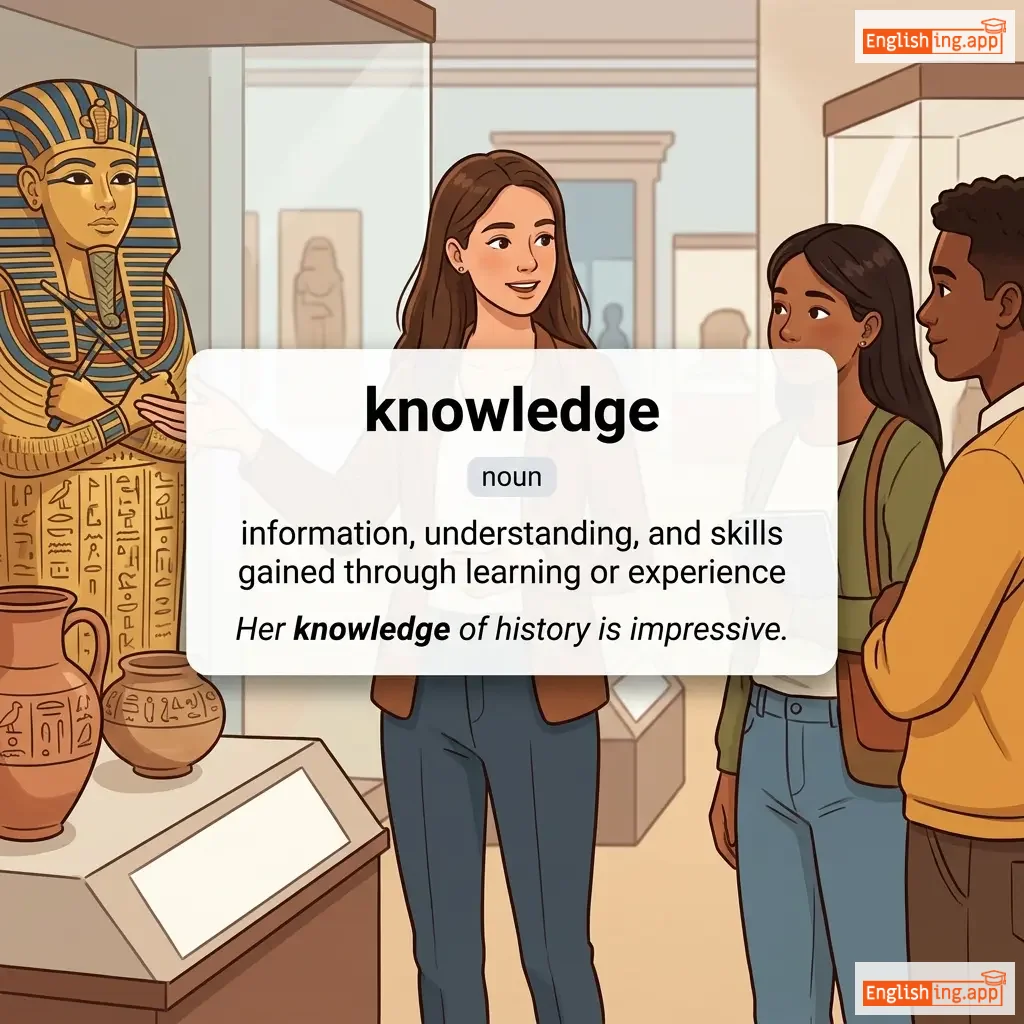
information, understanding, and skills gained through learning or experience
••••••
|
Her knowledge of history is impressive. |
彼女の歴史に対する知識は印象的です。
Kanojo no rekishi ni taisuru chishiki wa inshō-teki desu.
••••••
|
a wealth of knowledge |
a large amount of useful information or understanding
••••••
|
知識の宝庫
chishiki no hōko
••••••
|
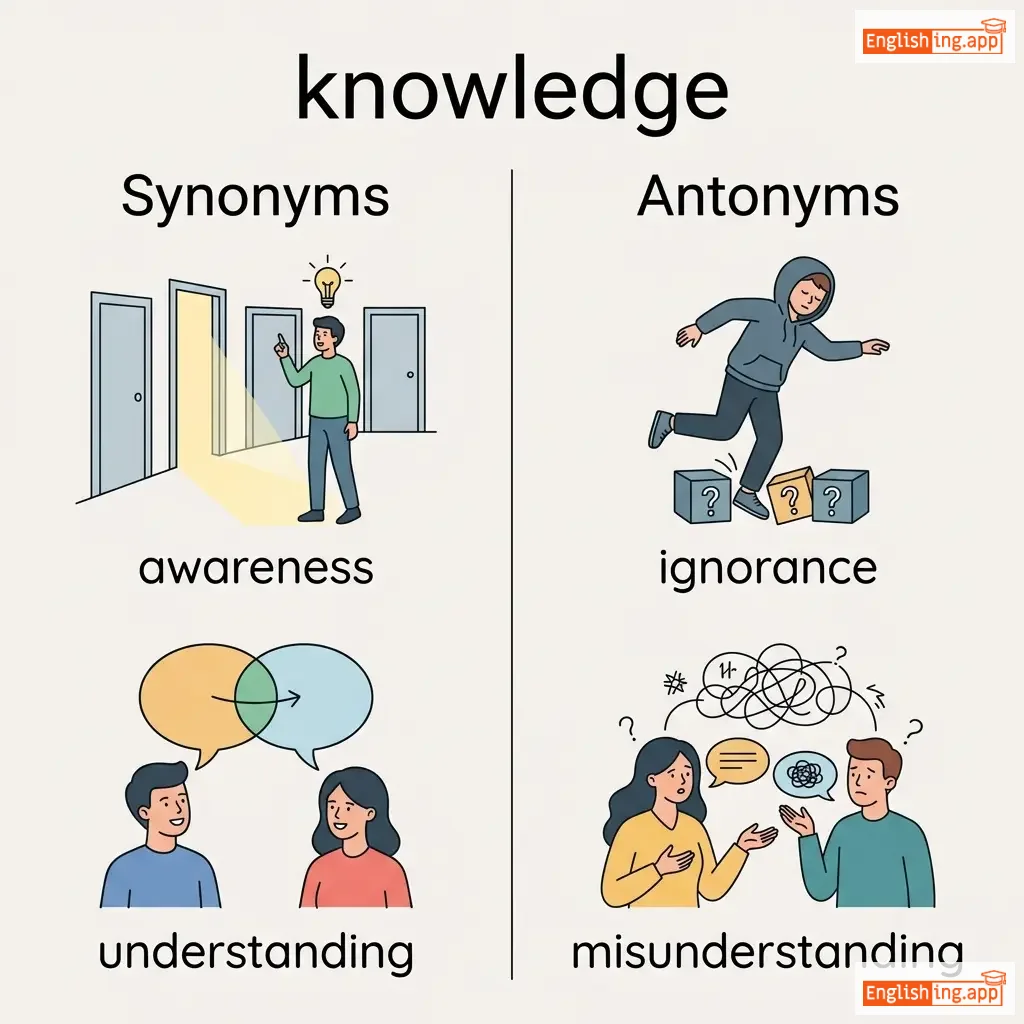
awareness, understanding, wisdom, expertise, intelligence
••••••
|
ignorance, misunderstanding
••••••
|
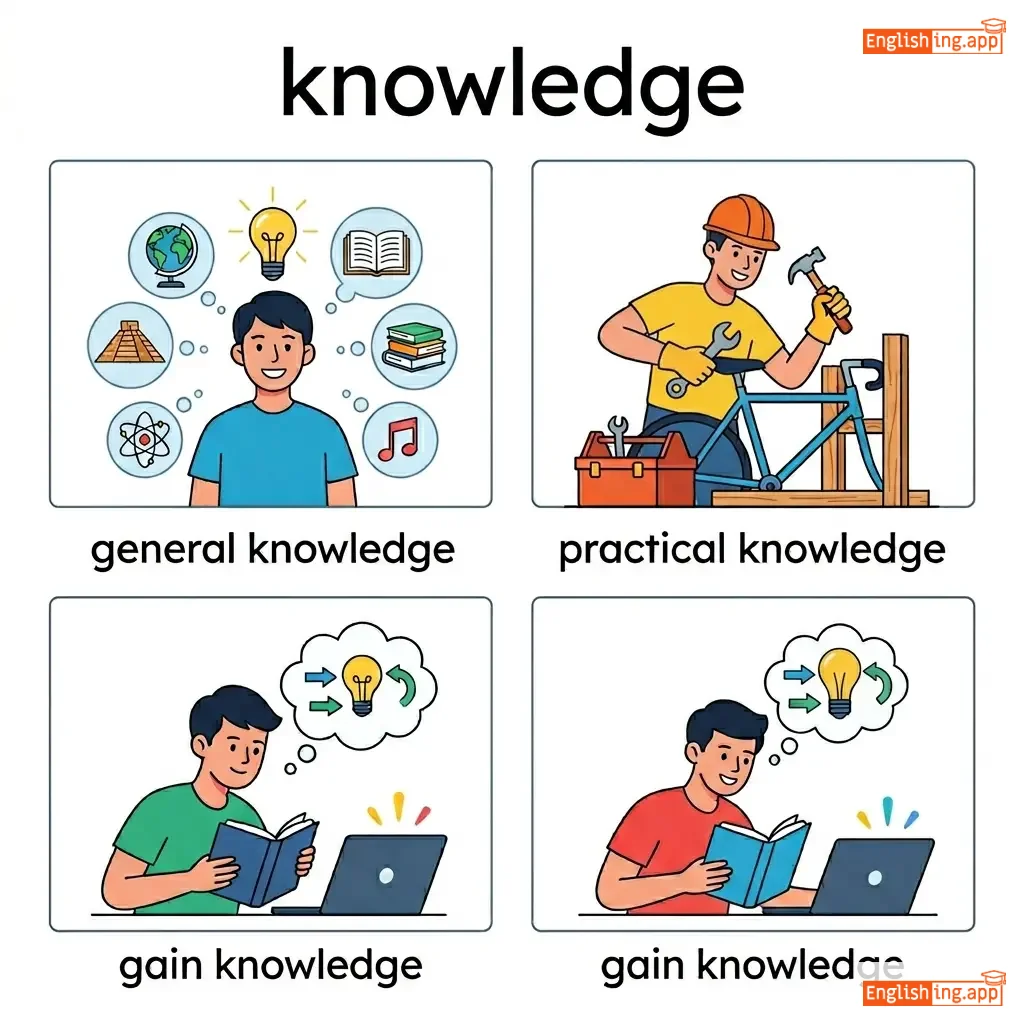
general knowledge, practical knowledge, gain knowledge, share knowledge
••••••
|
知識は宝のように大切にしよう。
••••••
|
|
📘
••••••
|
/lɜːrn/
verb
(ラーン)
••••••
|
|
学ぶ
manabu
••••••
|
learned
ラーンド
••••••
|
learned
ラーンド
••••••
|
learns
ラーンズ
••••••
|
learning
ラーンニング
••••••
|
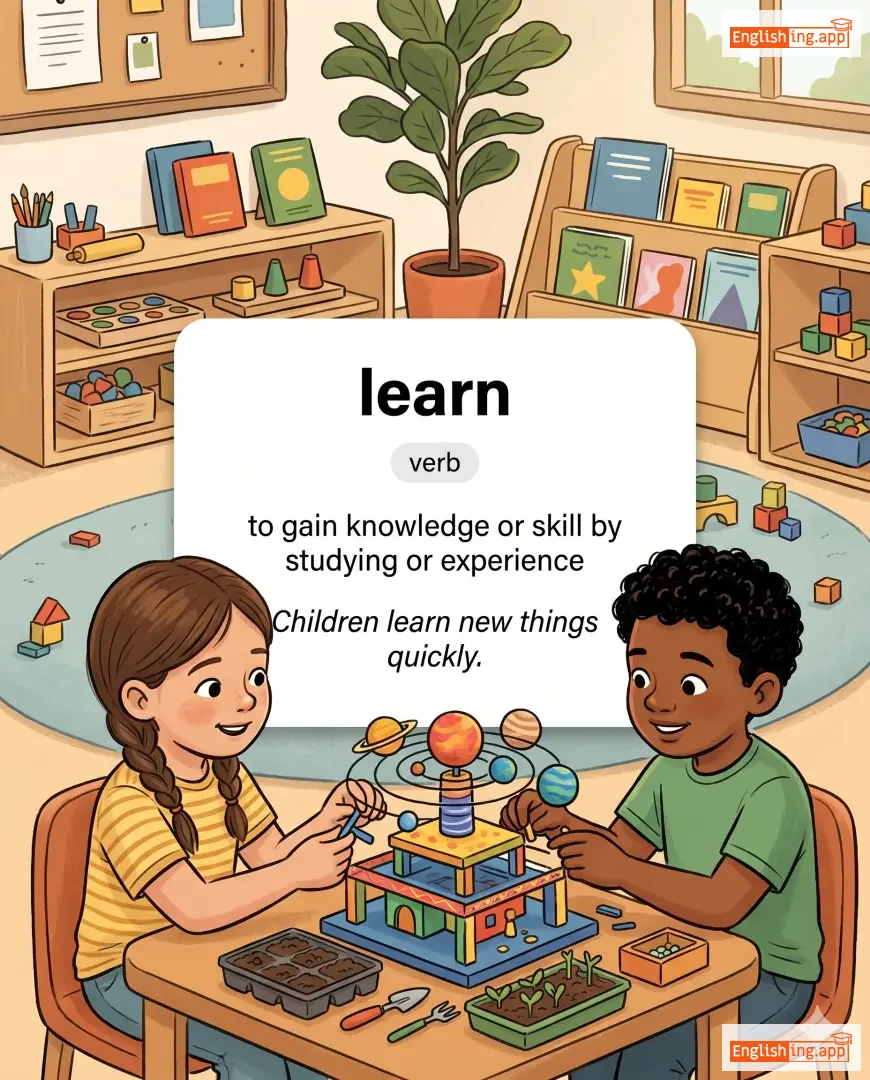
to gain knowledge or skill by studying or experience
••••••
|
Children learn new things quickly.
子供たちは新しいことを素早く学びます。
••••••
|
子供たちは新しいことを素早く学びます。
Kodomo-tachi wa atarashī koto o subayaku manabimasu.
••••••
|
live and learn
生きて学ぶ
••••••
|
to learn from life experiences, often mistakes
••••••
|
生きて学ぶ
Ikite manabu
••••••
|
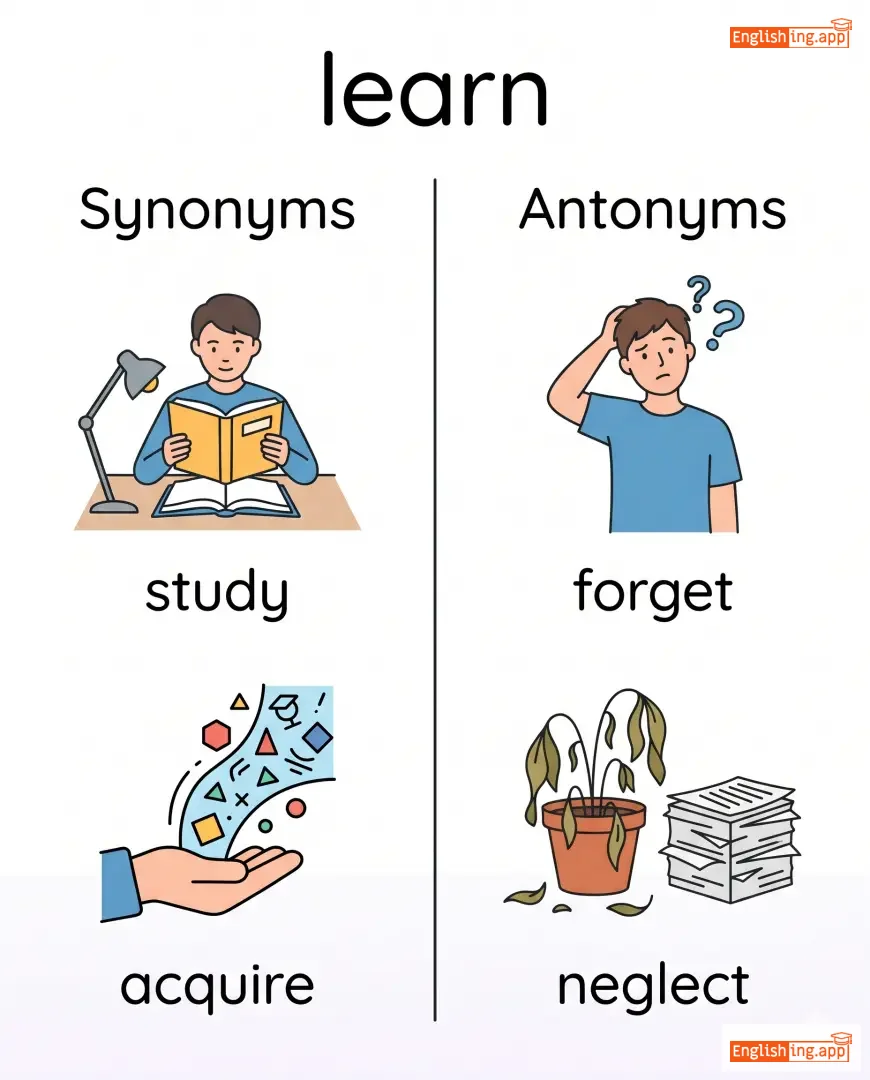
study, acquire, master, understand, grasp
••••••
|
forget, neglect, ignore
••••••
|
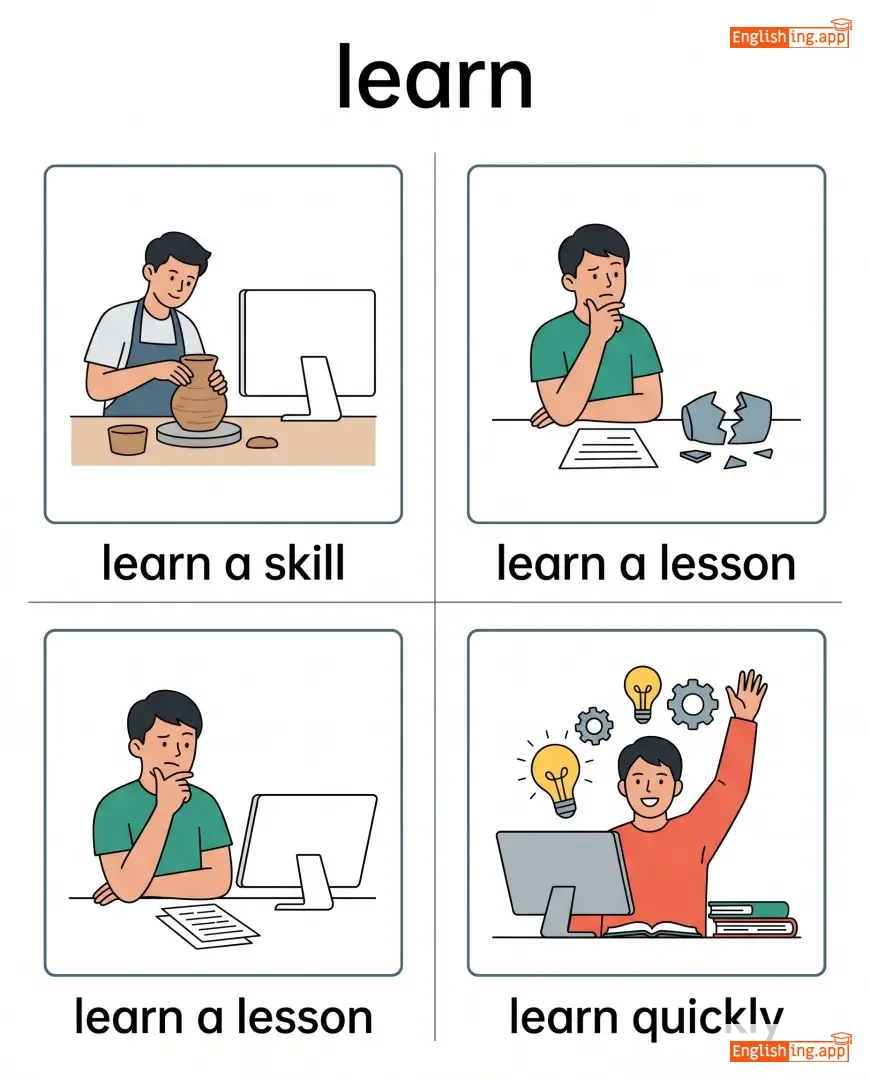
learn a skill, learn a lesson, learn quickly, learn about
••••••
|
Learnは学ぶ、ランタンを使って学ぶように。
••••••
|
|
📖
••••••
|
/ˈlɪtərəsi/
noun
(リテラシー)
••••••
|
- •••••• |
識字能力
shikiji nōryoku
••••••
|
- •••••• | - •••••• | - •••••• | - •••••• |
the ability to read and write
••••••
|
Literacy programs help reduce poverty in rural areas. |
識字プログラムは、農村地域の貧困を減らすのに役立ちます。
Shikiji puroguramu wa, nōson chiiki no hinkon o herasu no ni yakudachimasu.
••••••
|
digital literacy |
the ability to use digital technology effectively
••••••
|
デジタルリテラシー
dejitaru riterashī
••••••
|
education, knowledge, learning, scholarship
••••••
|
illiteracy, ignorance
••••••
|
literacy rate, promote literacy, literacy program, literacy skills
••••••
|
リテラシー - 文字を読む能力
••••••
|
|
💸
••••••
|
/ˈskɒlərʃɪp/
noun
(スカラーシップ)
••••••
|
- •••••• |
奨学金
shougakukin
••••••
|
- •••••• | - •••••• | - •••••• | - •••••• |
an award or grant to support a student's education
••••••
|
She received a scholarship to study abroad. |
彼女は留学するための奨学金を受け取りました。
Kanojo wa ryuugaku suru tame no shougakukin o uketorimashita.
••••••
|
- •••••• | - •••••• | - •••••• |
grant, fellowship, award, financial aid
••••••
|
loan, debt
••••••
|
merit-based scholarship, full scholarship, scholarship program
••••••
|
Scholarships are like keys that unlock educational opportunities.
••••••
|
|
🏫
••••••
|
/skuːl/
noun
(スクール)
••••••
|
- •••••• |
学校
gakkou
••••••
|
- •••••• | - •••••• | - •••••• | - •••••• |
An institution for educating children; also a group of people sharing the same ideas or discipline.
••••••
|
The children walked to school together. |
子供たちは一緒に学校に歩いて行きました。
Kodomotachi wa issho ni gakkou ni aruite ikimashita.
••••••
|
school of thought |
A particular philosophy or way of thinking shared by a group.
••••••
|
思想の流派
shisou no ryūha
••••••
|
academy, institute, college, university, class
••••••
|
home, workplace
••••••
|
primary school, high school, school building, school bus, school of thought
••••••
|
学校は学びの場所です。「学校は学ぶ場所」と覚えましょう。
••••••
|
|
👩🎓
••••••
|
/ˈstjuːdənt/
noun
(スチューデント)
••••••
|
|
学生
gakusei
••••••
|
- •••••• | - •••••• | - •••••• | - •••••• |
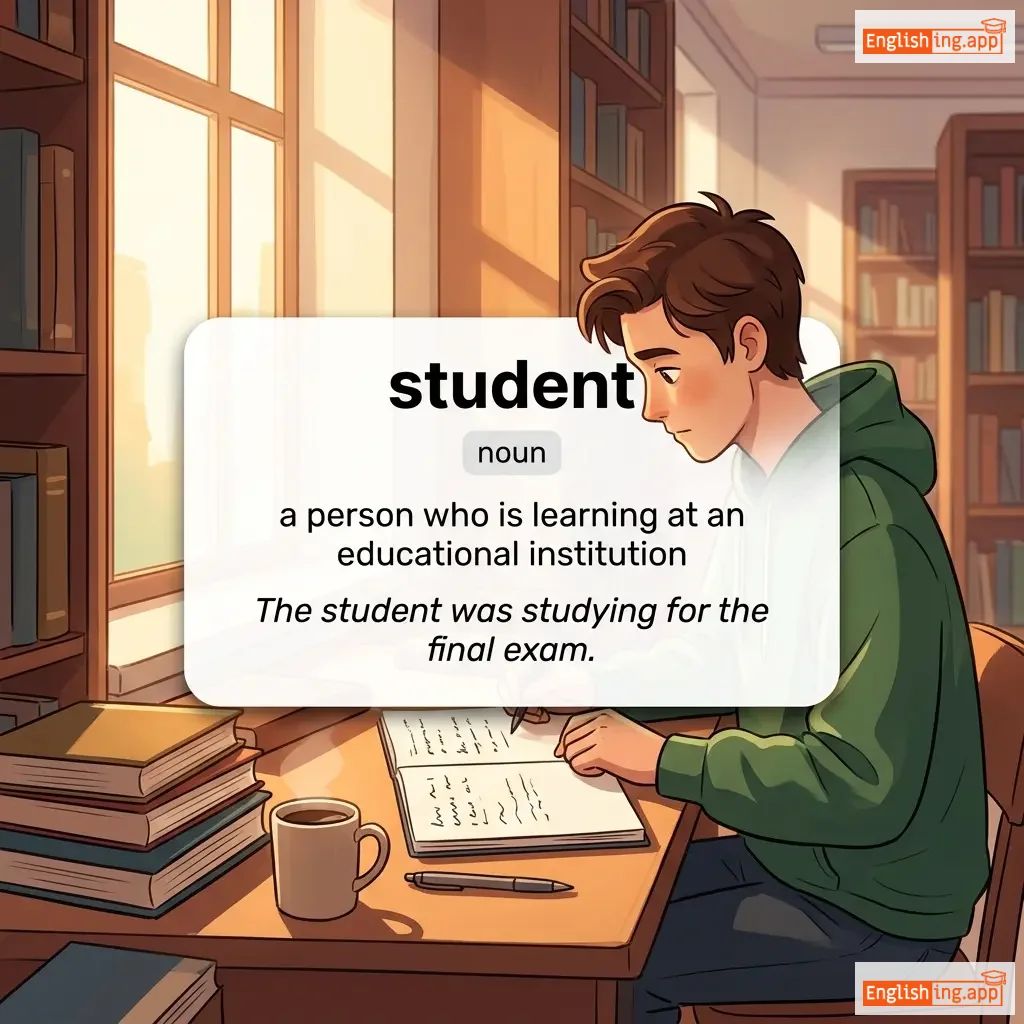
a person who is learning at an educational institution
••••••
|
The student was studying for the final exam. |
学生は期末試験のために勉強していました。
Gakusei wa kimatsu shiken no tame ni benkyou shiteimashita.
••••••
|
- •••••• | - •••••• | - •••••• |
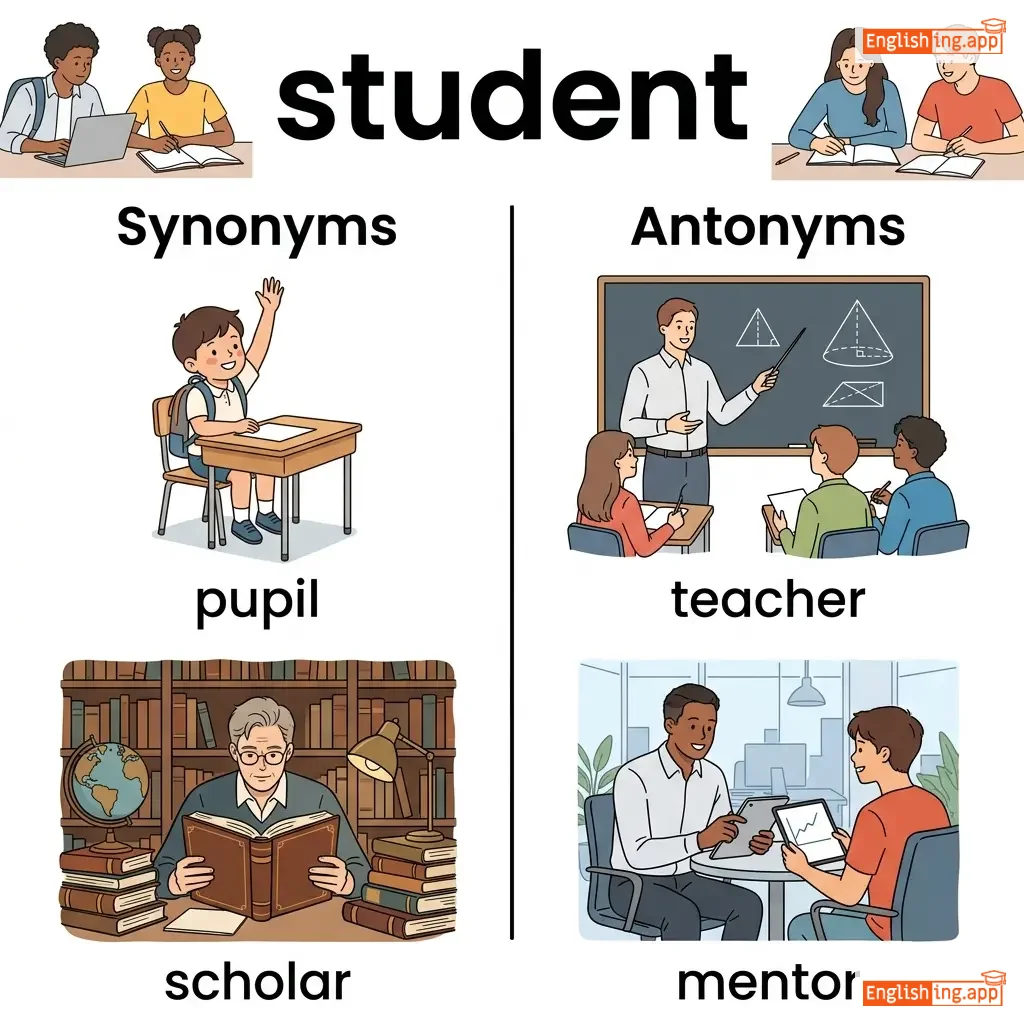
pupil, scholar, learner, trainee
••••••
|
teacher, mentor
••••••
|
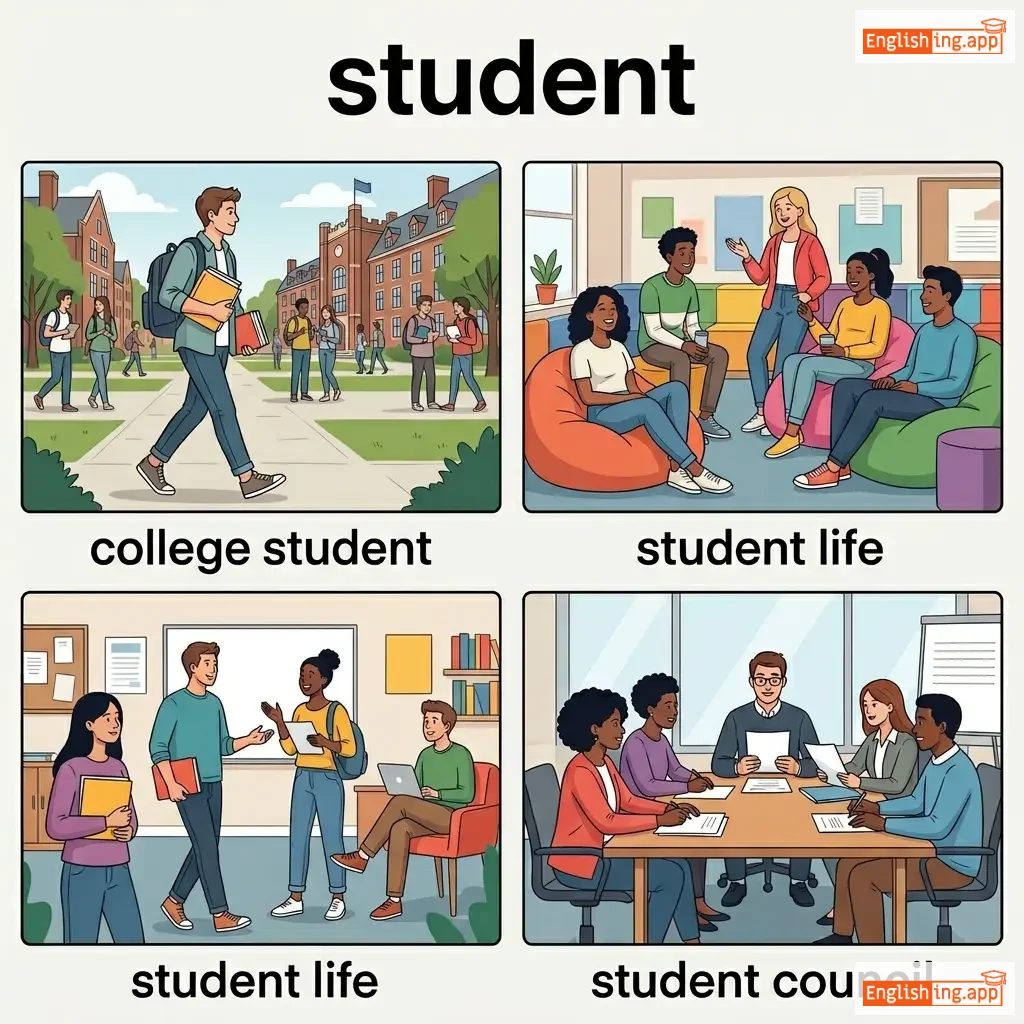
college student, student life, student council
••••••
|
Student with books, focused and preparing for exams
••••••
|
|
📚
••••••
|
/ˈstʌdi/
verb
(スタディ)
••••••
|
|
勉強する
benkyou suru
••••••
|
studied
スタディド
••••••
|
studied
スタディド
••••••
|
studies
スタディズ
••••••
|
studying
スタディイング
••••••
|
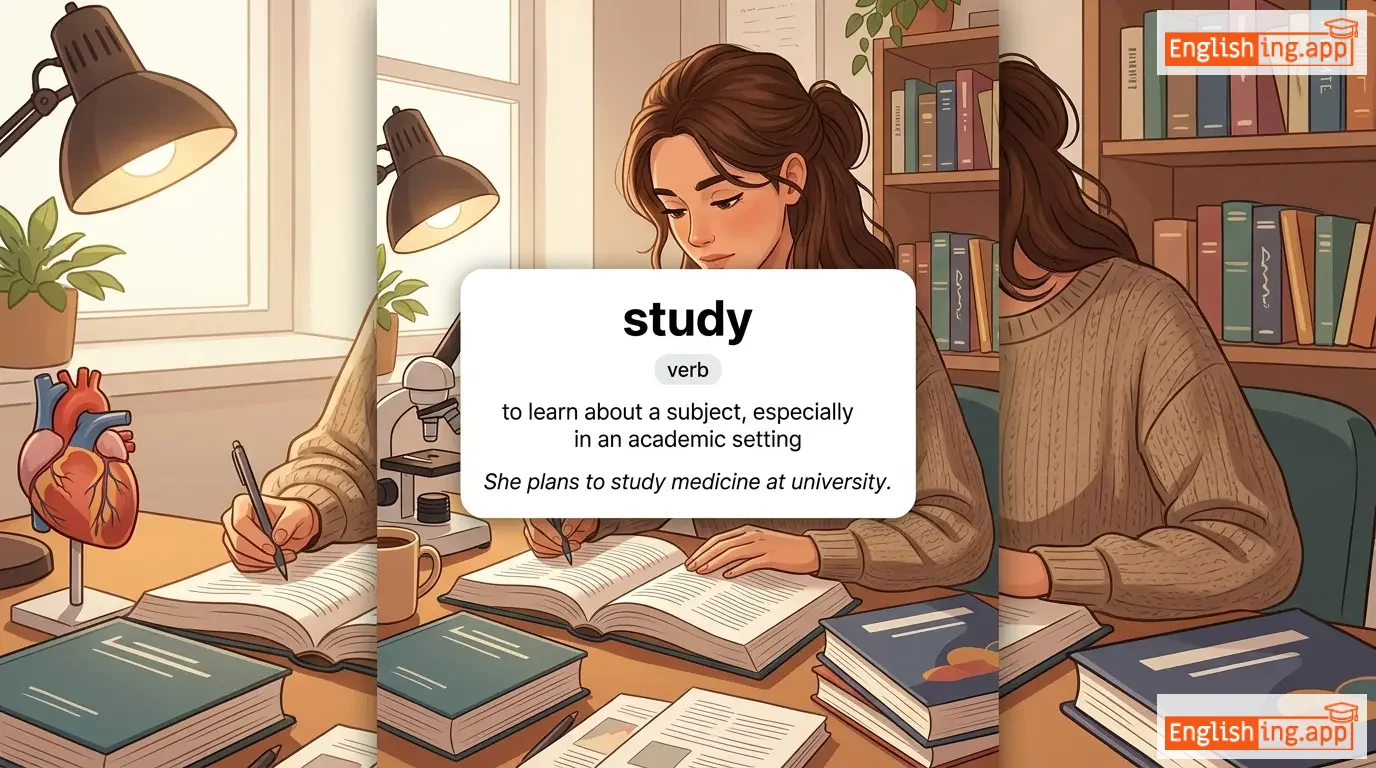
to learn about something; to examine carefully; to research
••••••
|
I study mathematics every evening.
私は毎晩数学を勉強します。
••••••
|
私は毎晩数学を勉強します。
Watashi wa maiban suugaku o benkyou shimasu.
••••••
|
- •••••• | - •••••• | - •••••• |
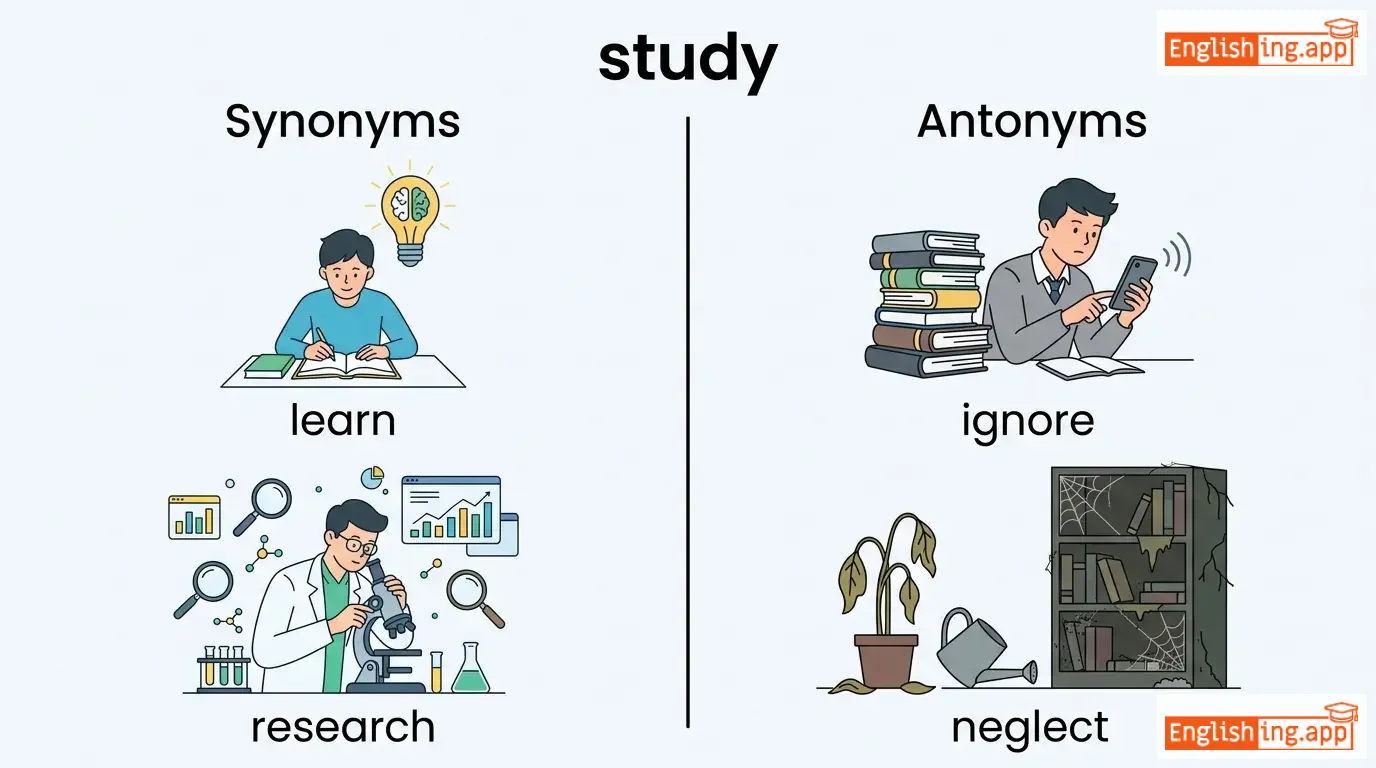
learn, research, examine, investigate
••••••
|
ignore, neglect, overlook
••••••
|
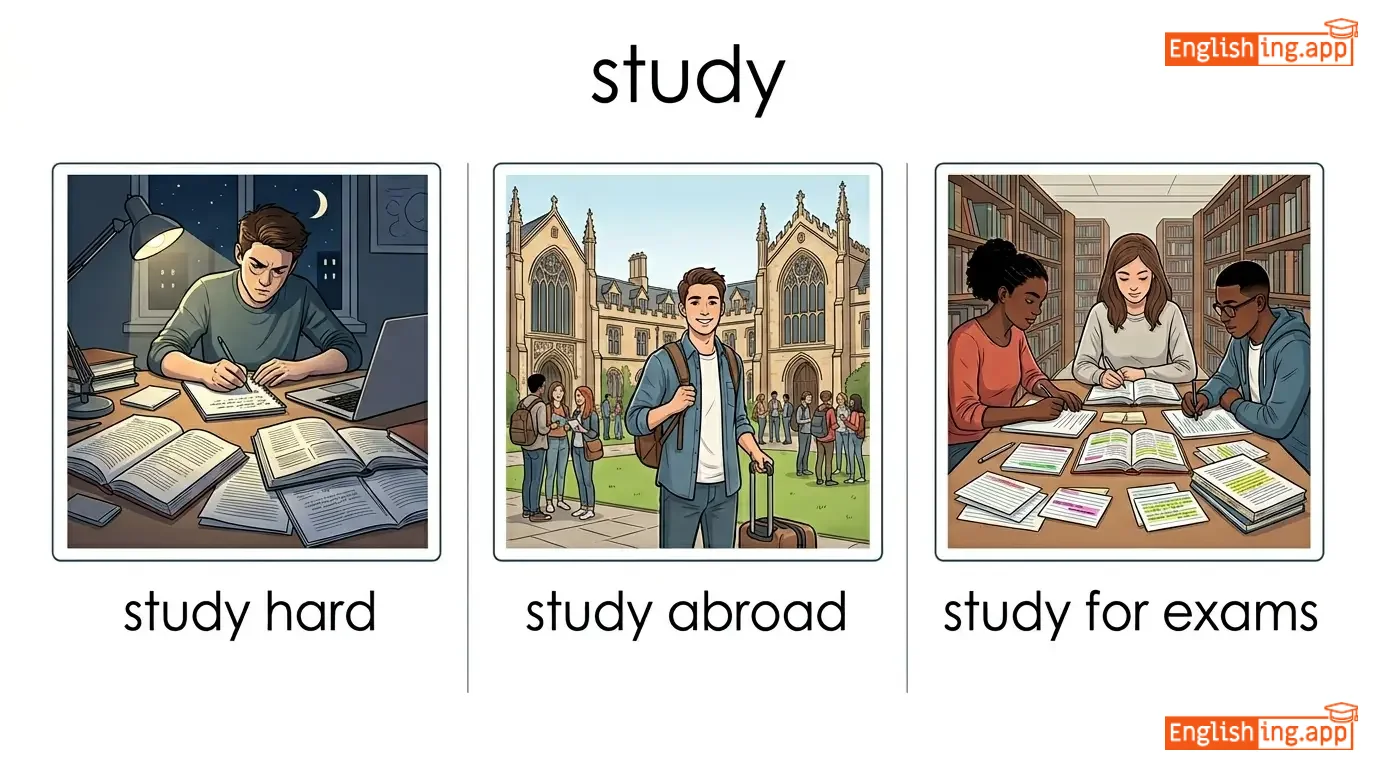
study hard, study abroad, case study, study materials, study group
••••••
|
Study = 勉強する (知識を深める)
••••••
|
|
👩🏫
••••••
|
/ˈtiː.tʃər/
noun
(ティーチャー)
••••••
|
- •••••• |
教師
kyoushi
••••••
|
- •••••• | - •••••• | - •••••• | - •••••• |
a person who teaches students in a school or other educational institution
••••••
|
The teacher explained the math problem clearly to the students.
先生は学生に数学の問題を明確に説明しました。
••••••
|
教師は学生に数学の問題を明確に説明しました。
Kyoushi wa gakusei ni suugaku no mondai wo meikaku ni setsumei shimashita.
••••••
|
- •••••• | - •••••• | - •••••• |
educator, instructor, tutor, professor
••••••
|
student, pupil, learner
••••••
|
school teacher, math teacher, good teacher, experienced teacher
••••••
|
教師は生徒の成長を助ける導き手です。
••••••
|
|
📘
••••••
|
/ˈtɛkstbʊk/
noun
(テキストブック)
••••••
|
- •••••• |
教科書
kyōkasho
••••••
|
- •••••• | - •••••• | - •••••• | - •••••• |
a book used for studying a subject in school or college
••••••
|
She bought a new biology textbook for her class. |
彼女はクラスのために新しい生物学の教科書を買いました。
Kanojo wa kurasu no tame ni atarashī seibutsugaku no kyōkasho o kaimashita.
••••••
|
a textbook example |
a perfect or typical example of something
••••••
|
模範例
mohanrei
••••••
|
manual, guidebook, reference book, coursebook
••••••
|
fiction, magazine
••••••
|
textbook example, textbook case, school textbook, college textbook
••••••
|
Text + Book = 学びの本!だから '教科書' は教科書を意味します。
••••••
|
|
💸
••••••
|
/tʃuˈɪʃ.ən/
noun
(チューション)
••••••
|
- •••••• |
授業料
jugyouryou
••••••
|
- •••••• | - •••••• | - •••••• | - •••••• |
the fee for instruction or teaching, typically at a school or university
••••••
|
The tuition for the college has increased this year.
大学の授業料は今年増加しました。
••••••
|
大学の授業料は今年増加しました。
Daigaku no jugyouryou wa kotoshi zouka shimashita.
••••••
|
- •••••• | - •••••• | - •••••• |
fees, charges, payment, cost
••••••
|
scholarship, grant
••••••
|
tuition fee, pay tuition, tuition increase
••••••
|
授業料を、授業を受けるために支払う料金として考えてください。
••••••
|
|
🎓
••••••
|
/ˌjuːnɪˈvɜːrsɪti/
noun
(ユニバーシティ)
••••••
|
- •••••• |
大学
daigaku
••••••
|
- •••••• | - •••••• | - •••••• | - •••••• |
an institution of higher education and research, which grants academic degrees
••••••
|
She is studying law at the university. |
彼女は大学で法学を学んでいます。
Kanojo wa daigaku de hogaku wo manande imasu.
••••••
|
- •••••• | - •••••• | - •••••• |
college, academy, school, institution
••••••
|
none
••••••
|
university degree, university campus, university student
••••••
|
University = 大きな教育の場 (Ōkina kyōiku no ba)
••••••
|

