The Detective's Case
探偵Zeeshanはcaseを引き受けました。accusedは有名なauthorでした。Zeeshanは自分のbadgeを見せて、作者の家に入りました。作者のbodyの言語を見て、Zeeshanは彼が何かを隠していると感じました。Zeeshanは、作者が一人でactingしていないことを知っていました;彼にはallyがいました。全市はalert状態でした、なぜならbomb爆発の脅威があったからです。Zeeshanは自分のbackupチームに準備しておくように言いました。作者の部屋の捜索で日記が見つかり、armed attackの計画が記されていました。日記の中のarrowが特定の場所を指し示していました。Zeeshanはこれが次のターゲットであると気付きました。彼はすぐにチームと共にそこに行き、作者をarrestedしました。作者は最初、すべてのblameを否定しましたが、証拠の前で崩れました。彼のシャツについていたbloodの汚れが最大の証拠でした。Zeeshanは自分のbureauに戻り、briefな報告を準備しました。街は大きな危険から救われました。
|
絵文字
|
単語 | Images | 翻訳 | 過去 | 過去分詞 | 三人称単数 | 動名詞 | 意味 | 例文 | 例文の翻訳 | 表現例 | 表現例の意味 | 表現例の翻訳 | 同義語 | 対義語 | コロケーション | ニーモニック |
|---|---|---|---|---|---|---|---|---|---|---|---|---|---|---|---|---|---|
|
⚖️
••••••
|
/əˈkjuːzd/
noun
(アキューズド)
••••••
|
- •••••• |
被告
hikoku
••••••
|
- •••••• | - •••••• | - •••••• | - •••••• |
a person who has been charged with a crime
••••••
|
The accused pleaded not guilty in court.
被告人は法廷で無罪を主張しました。
••••••
|
被告人は法廷で無罪を主張しました。
Hikokunin wa houtei de muzai o shuchou shimashita.
••••••
|
- •••••• | - •••••• | - •••••• |
defendant, suspect, offender
••••••
|
victim, plaintiff
••••••
|
accused of theft, accused person, wrongly accused
••••••
|
被告 - 告発 (hikoku - kokuhatsu) 彼は無罪を主張した
••••••
|
|
🎭
••••••
|
/ækt/
verb/noun
••••••
|
|
- •••••• |
acted
••••••
|
acted
••••••
|
acts
••••••
|
acting
••••••
|
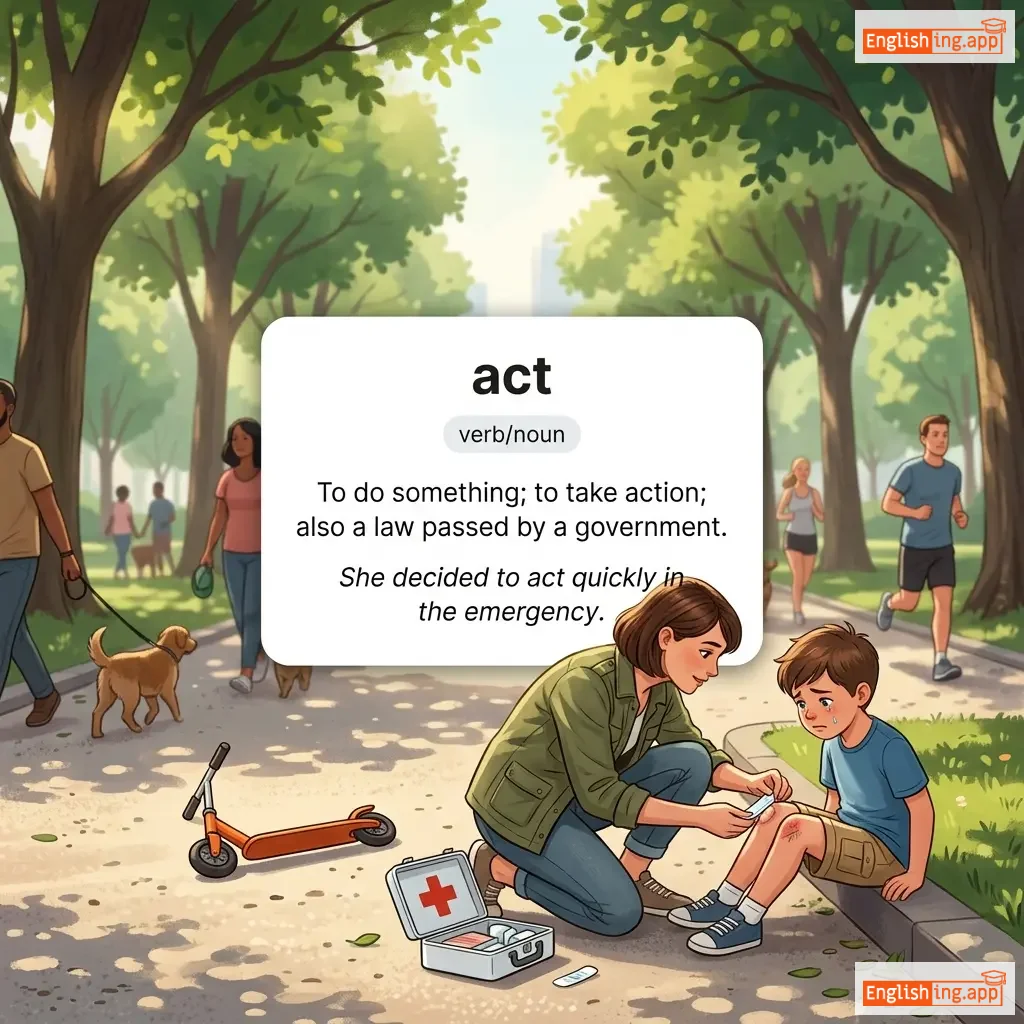
To do something; to take action; also a law passed by a government.
••••••
|
She decided to act quickly in the emergency. |
- •••••• |
act of kindness |
a good or helpful action
••••••
|
- •••••• |
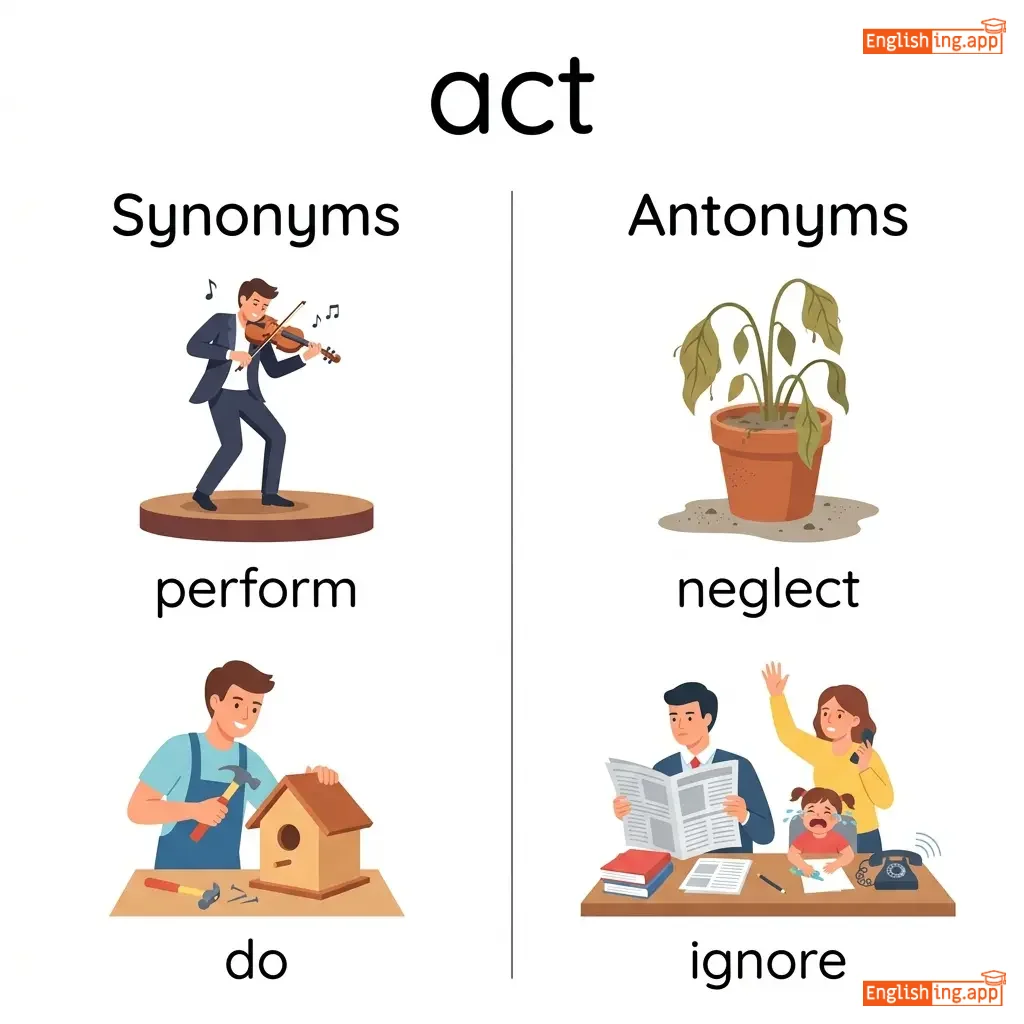
perform, do, operate, behave, enact
••••••
|
neglect, ignore
••••••
|
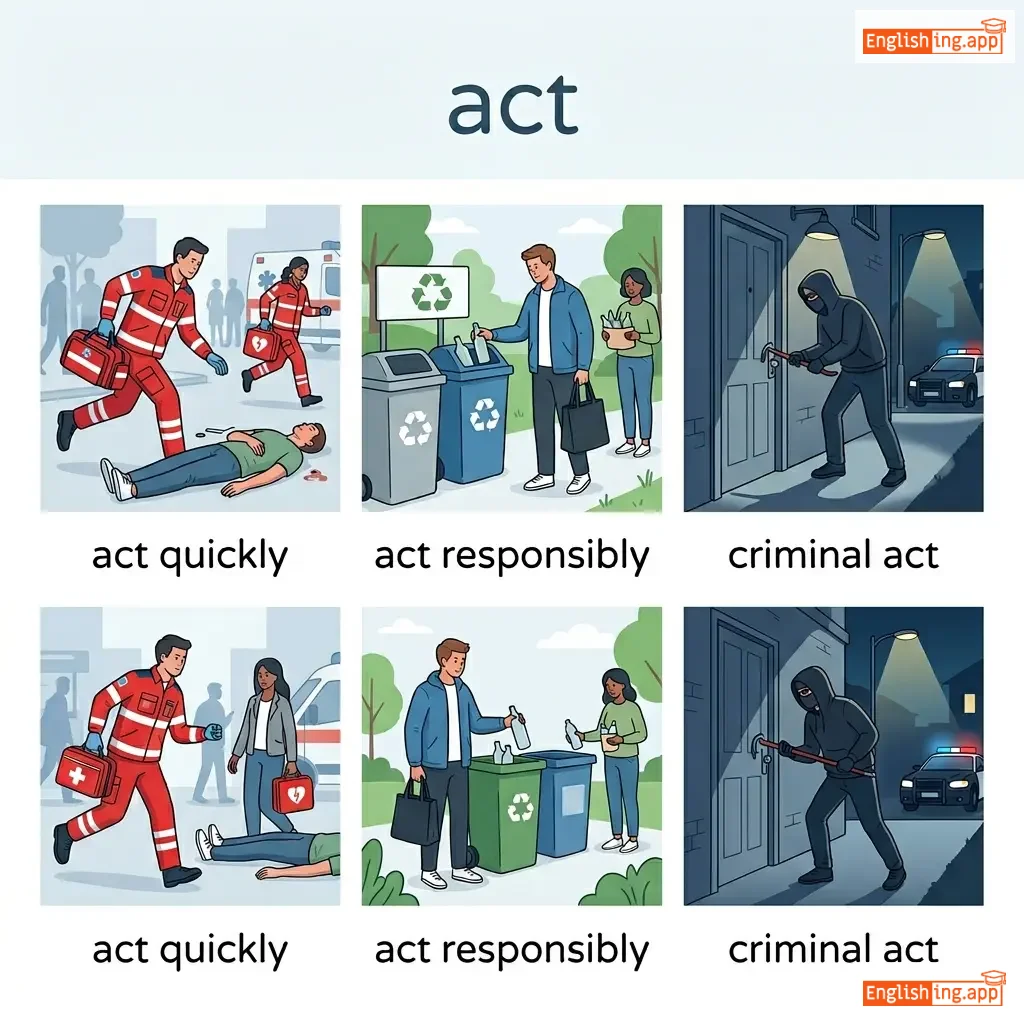
act quickly, act responsibly, criminal act, act of kindness
••••••
|
No •••••• |
|
🕵️
••••••
|
/ˈeɪ.dʒənt/
noun
(エージェント)
••••••
|
- •••••• |
エージェント
ējento
••••••
|
- •••••• | - •••••• | - •••••• | - •••••• |
A person who acts on behalf of another person or organization.
••••••
|
The real estate agent showed us several houses.
不動産エージェントは私たちにいくつかの家を見せてくれました。
••••••
|
不動産エージェントは私たちにいくつかの家を見せてくれました。
Fudōsan ējento wa watashitachi ni ikutsuka no ie o misete kuremashita.
••••••
|
secret agent
秘密のエージェント
••••••
|
A spy working for a government or organization.
••••••
|
秘密のエージェント
Himitsu no ējento
••••••
|
representative, delegate, envoy, broker, spy
••••••
|
principal, client, customer
••••••
|
travel agent, real estate agent, sports agent, insurance agent
••••••
|
エージェントは他のために働く、秘密のエージェントもその一つです。
••••••
|
|
⚠️
••••••
|
/əˈlɜːrt/
adjective
(アラート)
••••••
|
- •••••• |
警戒
keikai
••••••
|
- •••••• | - •••••• | - •••••• | - •••••• |
quick to notice and respond to potential danger or issues; aware and attentive
••••••
|
The alert dog barked at the stranger approaching the house. |
警戒している犬は家に近づいてくる見知らぬ人に吠えました。
Keikai shite iru inu wa ie ni chikadzuite kuru mishiranu hito ni hoemashita.
••••••
|
- •••••• | - •••••• | - •••••• |
vigilant, watchful, aware, observant
••••••
|
unaware, inattentive
••••••
|
stay alert, remain alert, alert system
••••••
|
警戒している犬のように、周りの危険を察知しよう!
••••••
|
|
🤝
••••••
|
/ˈælaɪ/
verb
(アライ)
••••••
|
- •••••• |
味方
mikata
••••••
|
allied
アライド
••••••
|
allied
アライド
••••••
|
allies
アライズ
••••••
|
allying
アライング
••••••
|
To unite or form a connection or partnership with another person, group, or nation.
••••••
|
The two countries decided to ally against their common enemy.
二国は共通の敵に対して連携することを決定した。
••••••
|
二国は共通の敵に対して連携することを決定した。
Nikoku wa kyōtsū no teki ni taishite renkei suru koto o kettei shita.
••••••
|
ally with
と一緒に連携する
••••••
|
To form a partnership or alliance with someone.
••••••
|
と一緒に連携する
to issho ni renkei suru
••••••
|
associate, unite, partner, combine, join
••••••
|
oppose, resist, separate
••••••
|
ally with, strong ally, loyal ally, ally against
••••••
|
AllyはAll + I、誰かと一緒に味方になることを意味します。
••••••
|
|
🔫
••••••
|
/ɑːrmd/
adjective
(アームド)
••••••
|
- •••••• |
武装した
busou shita
••••••
|
- •••••• | - •••••• | - •••••• | - •••••• |
equipped with or carrying weapons
••••••
|
The bank was robbed by armed men. |
銀行は武装した男たちに襲われた。
Ginkou wa busou shita otoko-tachi ni osowareta.
••••••
|
armed to the teeth |
heavily armed or fully equipped with weapons
••••••
|
歯まで武装した
Ha made busou shita
••••••
|
equipped, weaponized, fortified, prepared
••••••
|
unarmed, defenseless, vulnerable
••••••
|
armed forces, armed men, armed conflict, heavily armed
••••••
|
Armed は Arm + ed → 武器を持つ、武装した状態。
••••••
|
|
🚓
••••••
|
/əˈrɛst/
verb
(アレスト)
••••••
|
|
逮捕する
taiho suru
••••••
|
arrested
アレストド
••••••
|
arrested
アレストド
••••••
|
arrests
アレストス
••••••
|
arresting
アレスティング
••••••
|
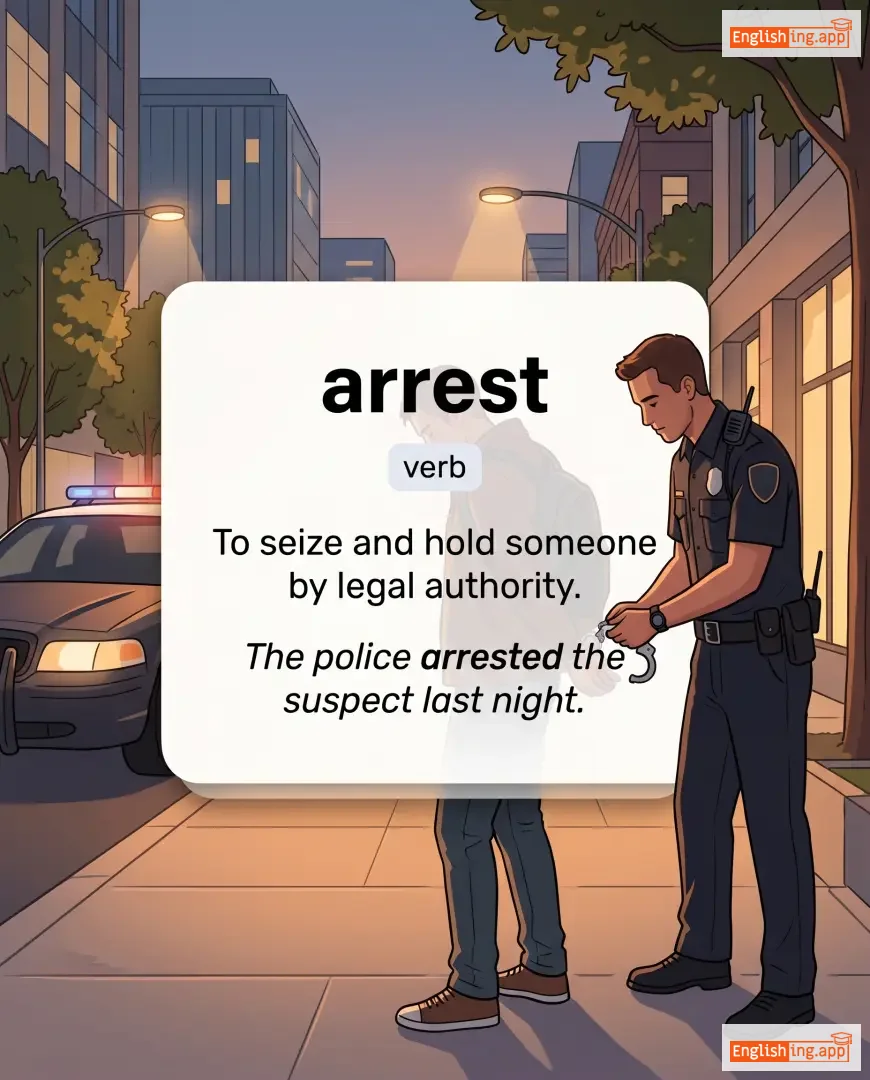
To seize and hold someone by legal authority.
••••••
|
The police arrested the suspect last night.
警察は昨晩、容疑者を逮捕した。
••••••
|
警察は昨晩、容疑者を逮捕した。
Keisatsu wa sakuban, yōgisha o taiho shita.
••••••
|
under arrest
逮捕中
••••••
|
In the custody of the police.
••••••
|
逮捕中
taiho-chū
••••••
|
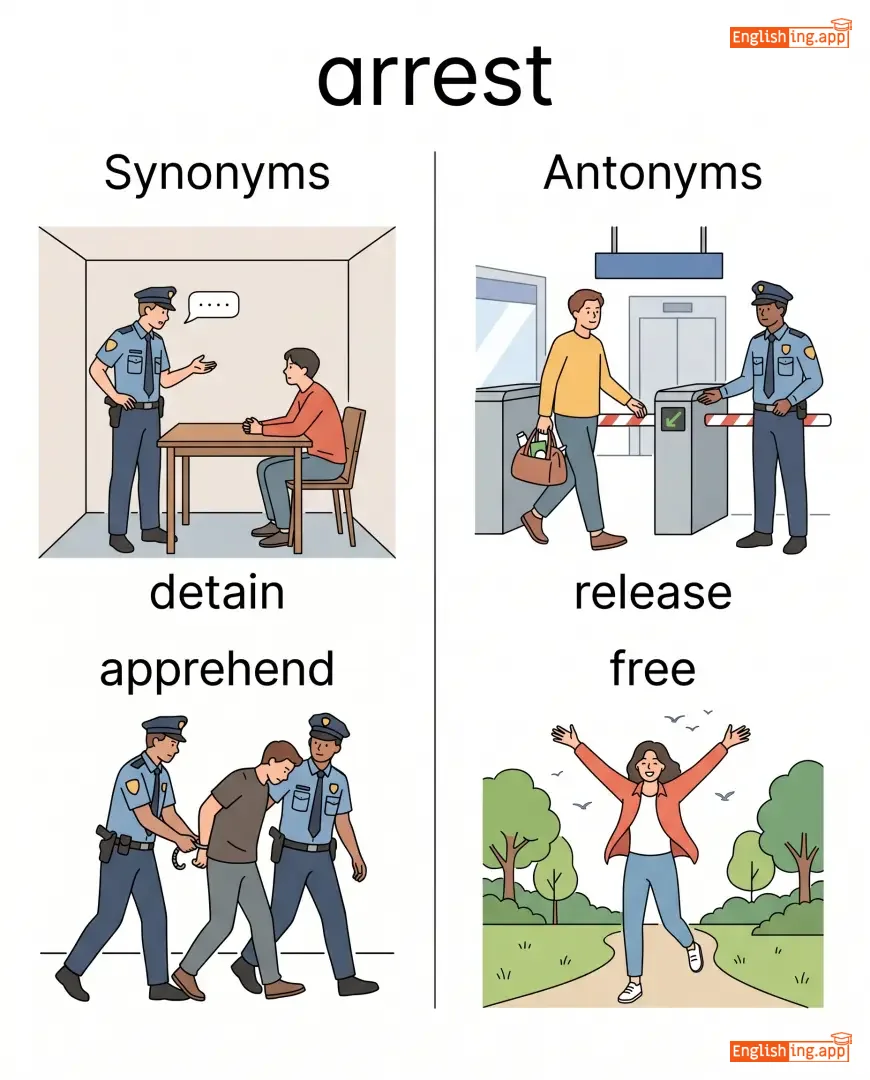
detain, apprehend, capture, seize, stop
••••••
|
release, free, liberate
••••••
|
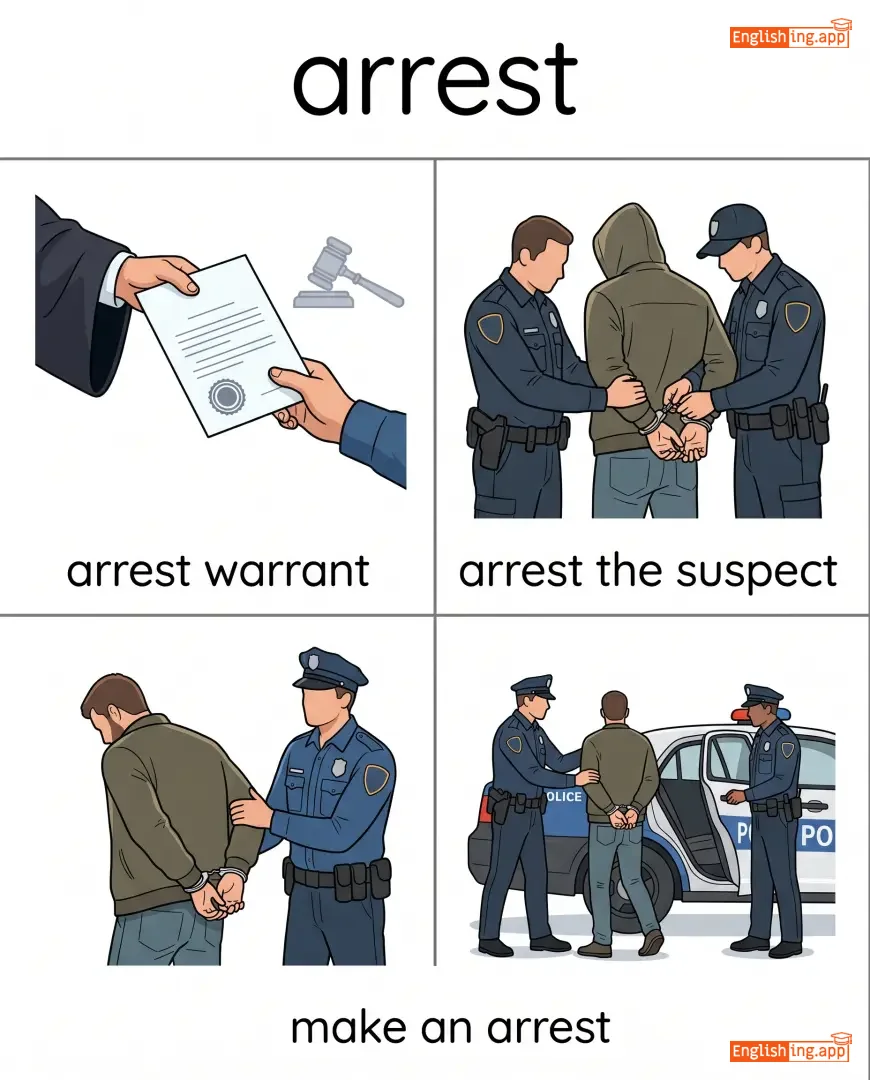
arrest warrant, arrest the suspect, make an arrest
••••••
|
Arrest は Rest できない—警察があなたを逮捕するから。
••••••
|
|
🏹
••••••
|
/ˈæroʊ/
noun
(アロー)
••••••
|
- •••••• |
矢
ya
••••••
|
- •••••• | - •••••• | - •••••• | - •••••• |
a thin, straight weapon with a pointed tip, shot from a bow
••••••
|
The hunter shot an arrow at the target. |
猟師はターゲットに矢を射った。
Ryoushi wa tāgetto ni ya o itta.
••••••
|
arrow of time |
the concept that time moves in only one direction, from past to future
••••••
|
時間の矢
jikan no ya
••••••
|
dart, shaft, bolt, missile, projectile
••••••
|
none, null
••••••
|
shoot an arrow, bow and arrow, arrow flight, arrow tip
••••••
|
矢はarrowを意味します — ヒーローが弓で矢を放つことを覚えておいてください 🏹
••••••
|
|
⚔️
••••••
|
/əˈtæk/
verb
(アタック)
••••••
|
|
攻撃する
kōgeki suru
••••••
|
attacked
アタックド
••••••
|
attacked
アタックド
••••••
|
attacks
アタックス
••••••
|
attacking
アタッキング
••••••
|
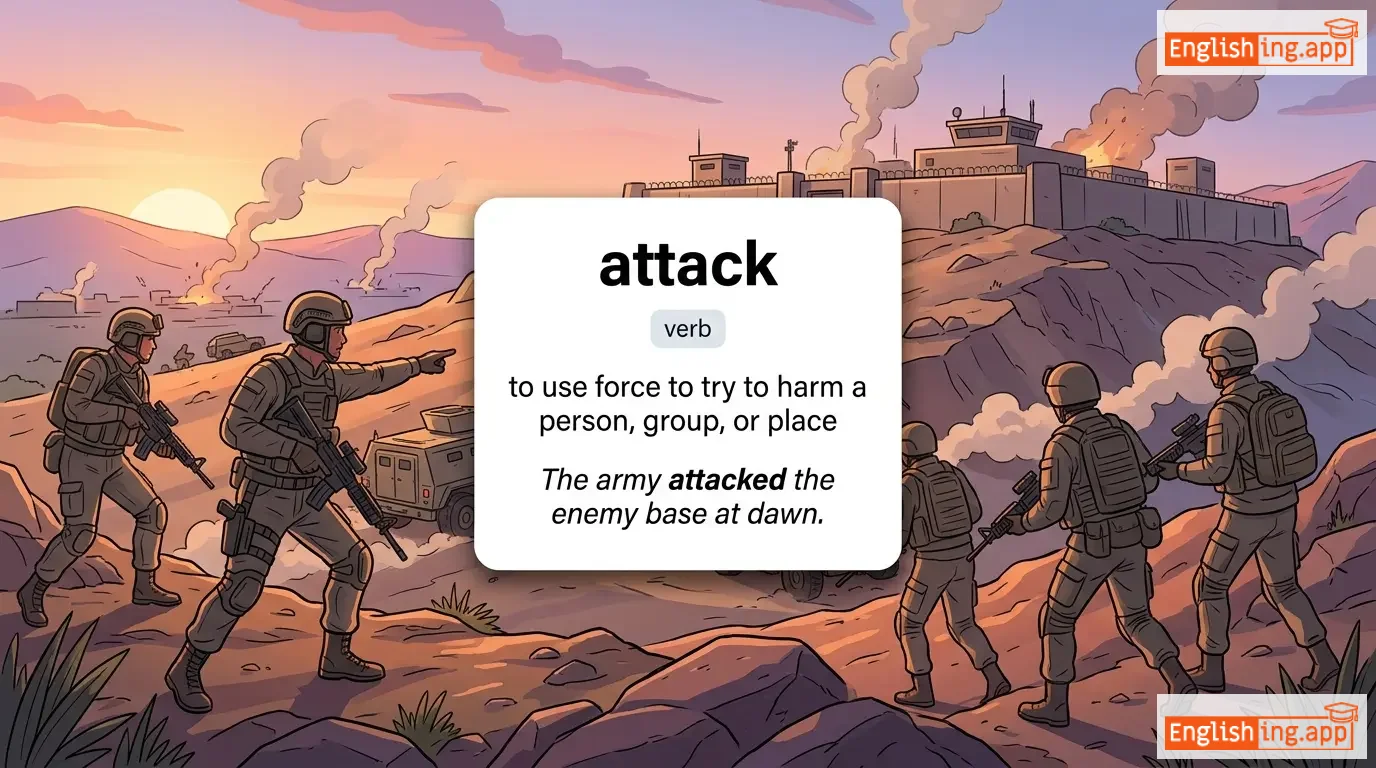
to use force to try to harm a person, group, or place
••••••
|
The army attacked the enemy base at dawn.
軍隊は夜明けに敵基地を攻撃した。
••••••
|
軍隊は夜明けに敵基地を攻撃した。
Guntai wa yoake ni teki kichi o kōgeki shita.
••••••
|
heart attack
心臓発作
••••••
|
a sudden serious medical condition when the heart stops working properly
••••••
|
心臓発作
shinzō hossa
••••••
|
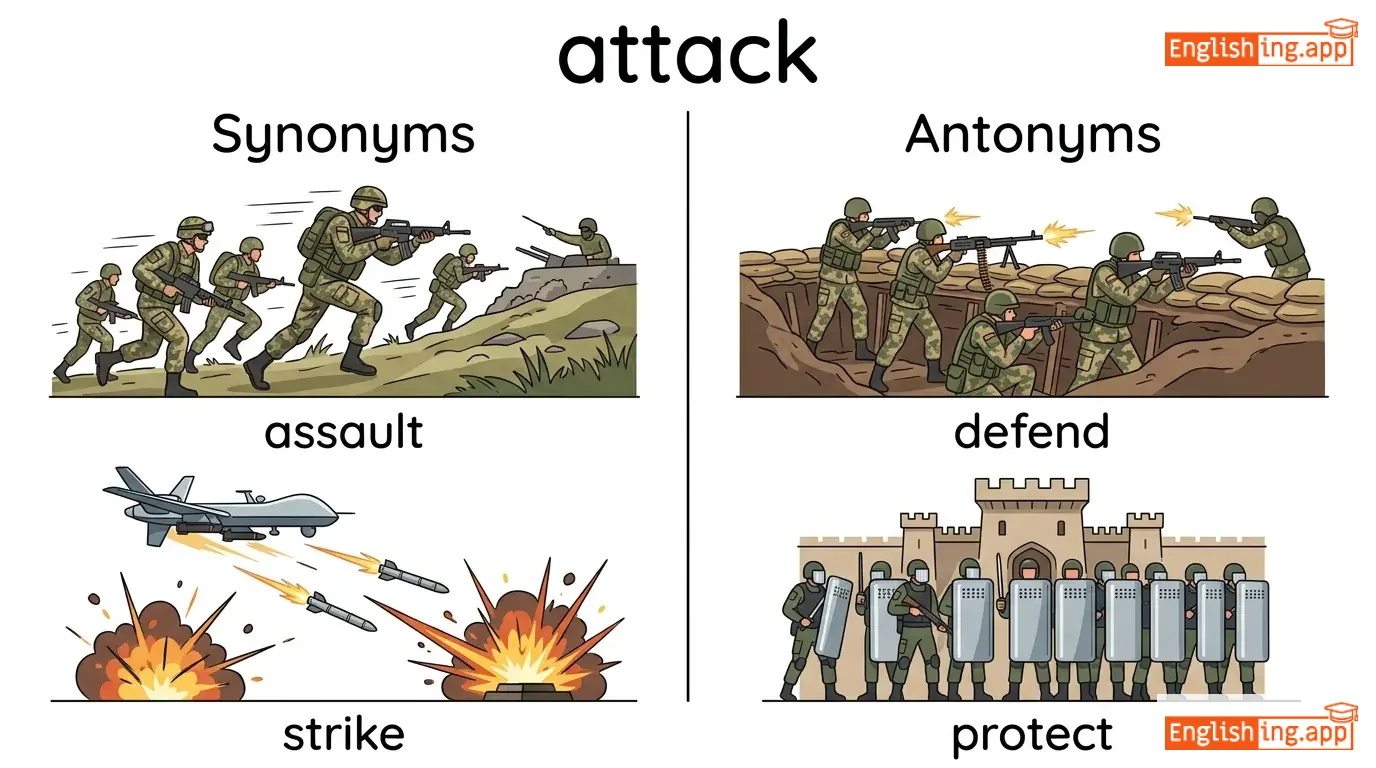
assault, strike, charge, raid, ambush
••••••
|
defend, protect, guard
••••••
|
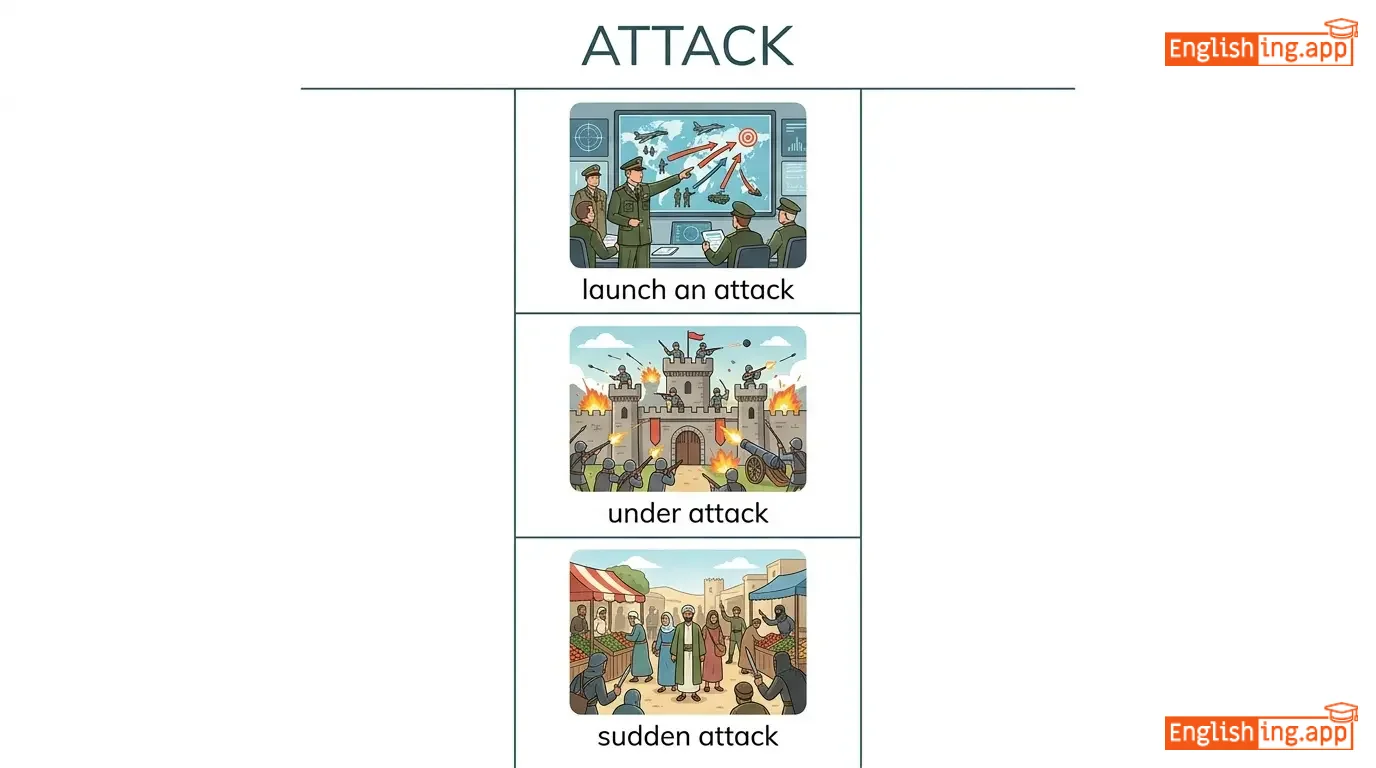
launch an attack, under attack, sudden attack, heart attack
••••••
|
攻撃する = 最初の一歩を踏み出すこと!⚔️
••••••
|
|
✍️
••••••
|
/ˈɔːθər/
noun
(オーサー)
••••••
|
- •••••• |
著者
chosha
••••••
|
- •••••• | - •••••• | - •••••• | - •••••• |
A person who writes books, articles, or other literary works.
••••••
|
She is the author of several bestselling novels. |
彼女は何冊かのベストセラー小説の著者です。
Kanojo wa nansatsu ka no besutoserā shōsetsu no chosha desu.
••••••
|
author of one's own fate |
To be responsible for shaping one's own future.
••••••
|
自分の運命の著者
Jibun no unmei no chosha
••••••
|
writer, novelist, creator, originator, composer
••••••
|
reader, follower
••••••
|
famous author, best-selling author, author of a book, aspiring author
••••••
|
Author は著者を意味する — Author は書き、他の人が読む。
••••••
|
|
💾
••••••
|
/ˈbækʌp/
noun
(バクアップ)
••••••
|
- •••••• |
バックアップ
bakkappu
••••••
|
- •••••• | - •••••• | - •••••• | - •••••• |
a copy of data stored separately to protect against loss
••••••
|
Make sure to have a backup of your important files. |
重要なファイルのバックアップを取ることを確認してください。
Jūyōna fairu no bakkappu o toru koto o kakunin shite kudasai.
••••••
|
- •••••• | - •••••• | - •••••• |
reserve, duplicate, copy
••••••
|
original, loss
••••••
|
data backup, backup system, create backup
••••••
|
Backup - 'Back' は後ろ、'Up' は上、あなたの重要なファイルをバックアップしてください!
••••••
|
|
🎖️
••••••
|
/bædʒ/
noun
(バッジ)
••••••
|
- •••••• |
バッジ
bajji
••••••
|
- •••••• | - •••••• | - •••••• | - •••••• |
A small emblem or sign worn to show membership, authority, or achievement.
••••••
|
The police officer showed his badge to identify himself.
警察官は自分を識別するためにバッジを見せた。
••••••
|
警察官は自分を識別するためにバッジを見せた。
Keisatsukan wa jibun o shikibetsu suru tame ni bajji o misemashita.
••••••
|
badge of honor
名誉のバッジ
••••••
|
Something that shows pride or achievement, even if it comes from difficulty.
••••••
|
名誉のバッジ
Meiyo no bajji
••••••
|
emblem, insignia, symbol, token, mark
••••••
|
disguise, concealment
••••••
|
wear a badge, police badge, company badge, badge of honor
••••••
|
バッジは名誉と身分を示すものです。
••••••
|
|
☝️
••••••
|
/bleɪm/
verb
(bureimu)
••••••
|
|
非難する
hinan suru
••••••
|
blamed
bureimudo
••••••
|
blamed
bureimudo
••••••
|
blames
bureimus
••••••
|
blaming
bureimingu
••••••
|
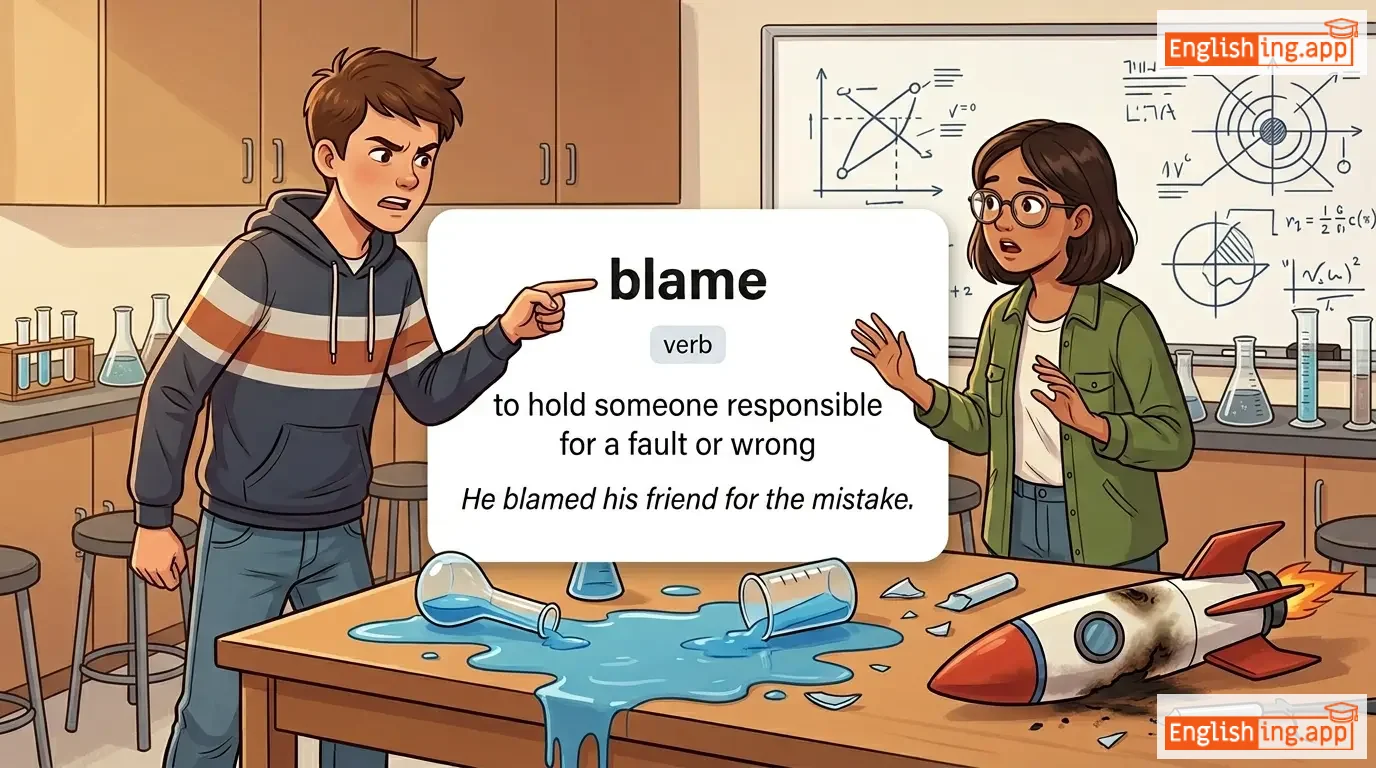
to hold someone responsible for a fault or wrong
••••••
|
He blamed his friend for the mistake.
彼はその間違いについて友人を非難しました。
••••••
|
彼はその間違いについて友人を非難しました。
Kare wa sono machigai ni tsuite yūjin wo hinan shimashita.
••••••
|
put the blame on
責任を負わせる
••••••
|
to make someone responsible for something bad
••••••
|
責任を負わせる
Sekinin wo owaseru
••••••
|
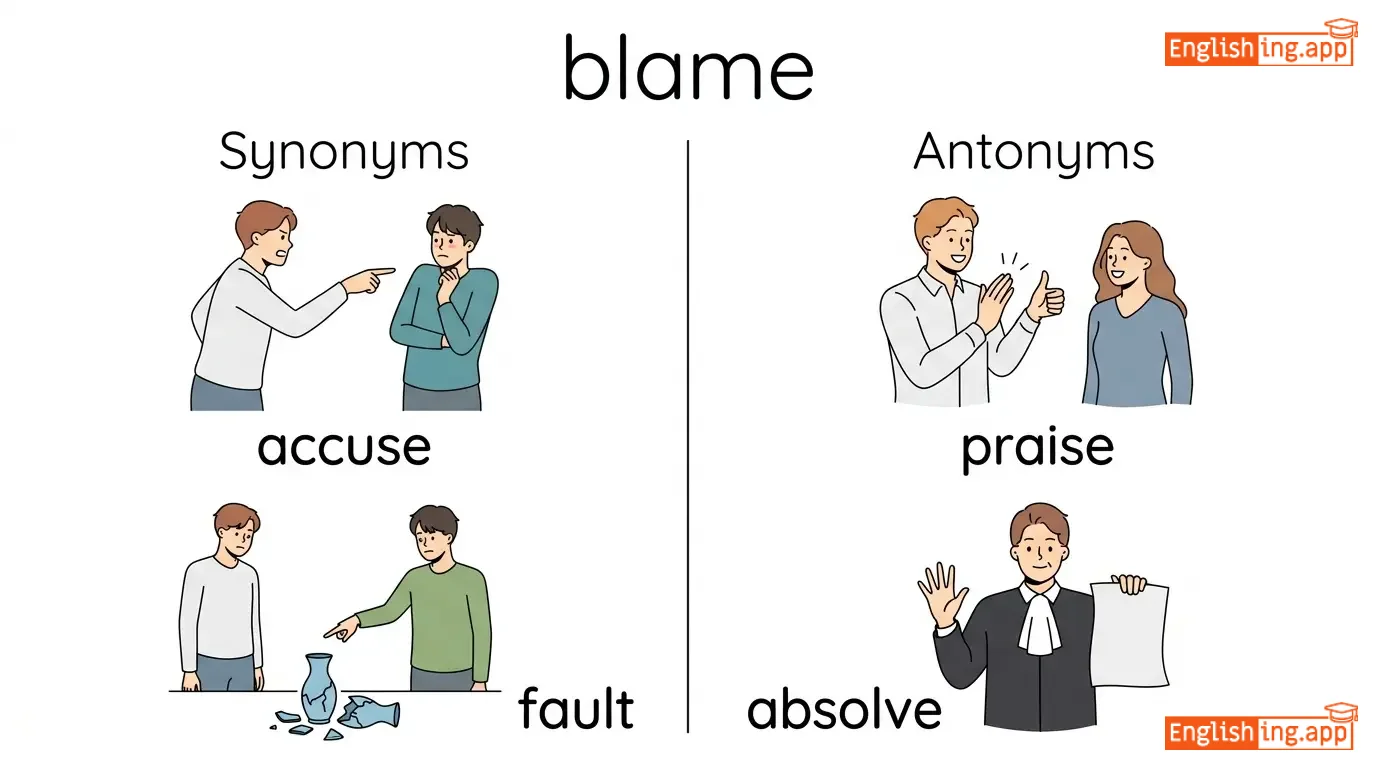
accuse, fault, charge, condemn
••••••
|
praise, absolve, forgive
••••••
|
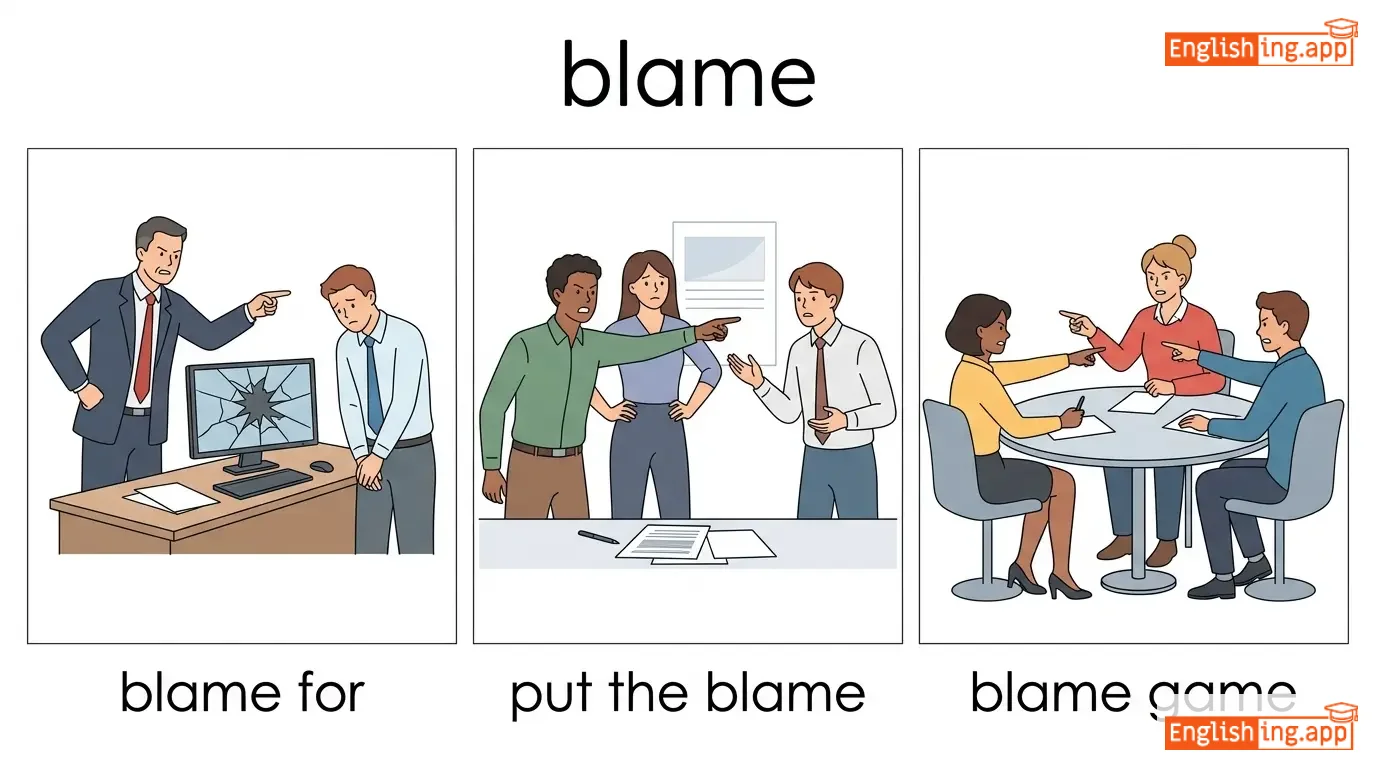
blame for, put the blame, blame game, blame others
••••••
|
Blame は非難するという意味—'Blame game' は非難し合うゲーム。
••••••
|
|
🩸
••••••
|
/blʌd/
noun
(ブラッド)
••••••
|
- •••••• |
血液
ketsueki
••••••
|
- •••••• | - •••••• | - •••••• | - •••••• |
The red liquid that circulates in the arteries and veins of humans and animals.
••••••
|
The doctor took a sample of blood for testing. |
医師はテストのために血液サンプルを取った。
Ishi wa tesuto no tame ni ketsueki sanpuru o totta.
••••••
|
blood is thicker than water |
Family relationships are stronger than other relationships.
••••••
|
血は水より濃い
Chi wa mizu yori koi
••••••
|
plasma, lifeblood, gore, vital fluid
••••••
|
water, pus
••••••
|
blood pressure, blood test, blood group, blood donation
••••••
|
Blood は '血液' を意味します – '血は水より濃い' という言葉を覚えておきましょう。
••••••
|
|
🧍
••••••
|
/ˈbɒdi/
noun
(bodi)
••••••
|
- •••••• |
体
karada
••••••
|
- •••••• | - •••••• | - •••••• | - •••••• |
the physical structure of a person or animal
••••••
|
Exercise helps keep the body healthy. |
運動は体を健康に保つのに役立ちます。
undō wa karada o kenkō ni tamotsu no ni yakudachimasu.
••••••
|
over my dead body |
absolutely not allowed
••••••
|
私の死体を越えて
watashi no shitai o koete
••••••
|
form, figure, corpse, frame, physique
••••••
|
soul, spirit
••••••
|
human body, body parts, body weight, body language
••••••
|
Body = 体, 運動をすると体が強くなる。
••••••
|
|
💣
••••••
|
/bɑːm/
noun/verb
(ボム)
••••••
|
- •••••• |
爆弾
bakudan
••••••
|
bombed
ボンバード
••••••
|
bombed
ボンバード
••••••
|
bombs
ボムズ
••••••
|
bombing
ボンビング
••••••
|
A weapon that explodes; also to attack with bombs or to fail badly.
••••••
|
The city was bombed heavily during the war.
その都市は戦争中に激しく爆撃された。
••••••
|
その都市は戦争中に激しく爆撃された。
Sono toshi wa sensō chū ni hageshiku bakugeki sareta.
••••••
|
go bomb
爆弾を投下する
••••••
|
To fail completely.
••••••
|
完全に失敗する
kanzen ni shippai suru
••••••
|
explosive, missile, shell, fail, demolish
••••••
|
succeed, protect
••••••
|
drop a bomb, bomb attack, bomb squad, bomb shelter
••••••
|
爆弾は爆発を意味する - 爆弾を投下するは完全に失敗することを意味する。
••••••
|
|
📝
••••••
|
/briːf/
adjective, noun, verb
(buri-fu)
••••••
|
- •••••• |
簡潔な
kanketsu na
••••••
|
briefed
buri-fudo
••••••
|
briefed
buri-fudo
••••••
|
briefs
buri-fusu
••••••
|
briefing
buri-fingu
••••••
|
Short in duration; a summary of information.
••••••
|
The manager briefed the team before the meeting.
マネージャーは会議の前にチームにブリーフィングを行いました。
••••••
|
マネージャーは会議の前にチームに簡潔な説明を行いました。
Mane-ja wa kaigi no mae ni chi-mu ni kanketsu na setsumei o okonai mashita.
••••••
|
in brief
簡潔に
••••••
|
in short; concisely
••••••
|
簡潔に
kanketsu ni
••••••
|
short, concise, summary, outline
••••••
|
long, detailed
••••••
|
brief meeting, legal brief, security briefing, brief moment
••••••
|
Brief = 簡潔な会話、簡潔な説明。
••••••
|
|
🔫
••••••
|
/ˈbʊlɪt/
noun
(バレット)
••••••
|
- •••••• |
弾丸
dangan
••••••
|
- •••••• | - •••••• | - •••••• | - •••••• |
A small, metal projectile fired from a gun.
••••••
|
The soldier loaded a bullet into his rifle.
兵士はライフルに弾を装填した。
••••••
|
兵士はライフルに弾を装填した。
Heishi wa raifuru ni dangan o sōten shita.
••••••
|
bite the bullet
弾をかむ
••••••
|
To endure a painful or unpleasant situation with courage.
••••••
|
困難に立ち向かう
Konnan ni tachimukau
••••••
|
projectile, shot, cartridge, ammo
••••••
|
peace, safety
••••••
|
bullet train, bullet wound, silver bullet, stray bullet
••••••
|
Bullet は弾丸、'bite the bullet' は困難に立ち向かう。
••••••
|
|
🏢
••••••
|
/ˈbjʊəroʊ/
noun
(ビューロー)
••••••
|
- •••••• |
事務所/機関
jimushyo/kikan
••••••
|
- •••••• | - •••••• | - •••••• | - •••••• |
An office or agency that provides services or manages specific duties.
••••••
|
The travel bureau helped them plan their vacation.
旅行局は彼らが休暇の計画を立てるのを手伝った。
••••••
|
旅行局は彼らが休暇の計画を立てるのを手伝った。
Ryokou kyoku wa karera ga kyūka no keikaku o tateru no o tetsudatta.
••••••
|
bureau of statistics
統計局
••••••
|
An agency that collects and publishes statistical information.
••••••
|
統計局
Tōkei kyoku
••••••
|
office, agency, department, authority, service
••••••
|
individual, freelancer
••••••
|
federal bureau, bureau chief, travel bureau, bureau of investigation
••••••
|
Bureauは事務所または機関を意味し、管理とサービスを提供する場所です。
••••••
|
|
📦
••••••
|
/keɪs/
noun
(ケイス)
••••••
|
- •••••• |
ケース / 状況
keesu / joukyou
••••••
|
- •••••• | - •••••• | - •••••• | - •••••• |
A particular situation, occurrence, or an instance of something; also a container or covering for something.
••••••
|
In this case, we should wait for further instructions.
この場合は、さらに指示を待つべきです。
••••••
|
この場合は、さらに指示を待つべきです。
Kono baai wa, sara ni shiji o matsu beki desu.
••••••
|
in any case
いずれにしても
••••••
|
whatever happens; regardless of the situation
••••••
|
いずれにしても
Izureni shitemo
••••••
|
instance, example, situation, container, box
••••••
|
whole, entirety
••••••
|
in case of, legal case, strong case, special case
••••••
|
Caseはケース、裁判のケースや携帯電話のケースのように使われます
••••••
|

