|
絵文字
|
単語 | Images | 翻訳 | 過去 | 過去分詞 | 三人称単数 | 動名詞 | 意味 | 例文 | 例文の翻訳 | 表現例 | 表現例の意味 | 表現例の翻訳 | 同義語 | 対義語 | コロケーション | ニーモニック |
|---|---|---|---|---|---|---|---|---|---|---|---|---|---|---|---|---|---|
|
🔮
••••••
|
/trænsˈluːsənt/
adjective
(トランスルーセント)
••••••
|
|
半透明
hantoumei
••••••
|
- •••••• | - •••••• | - •••••• | - •••••• |
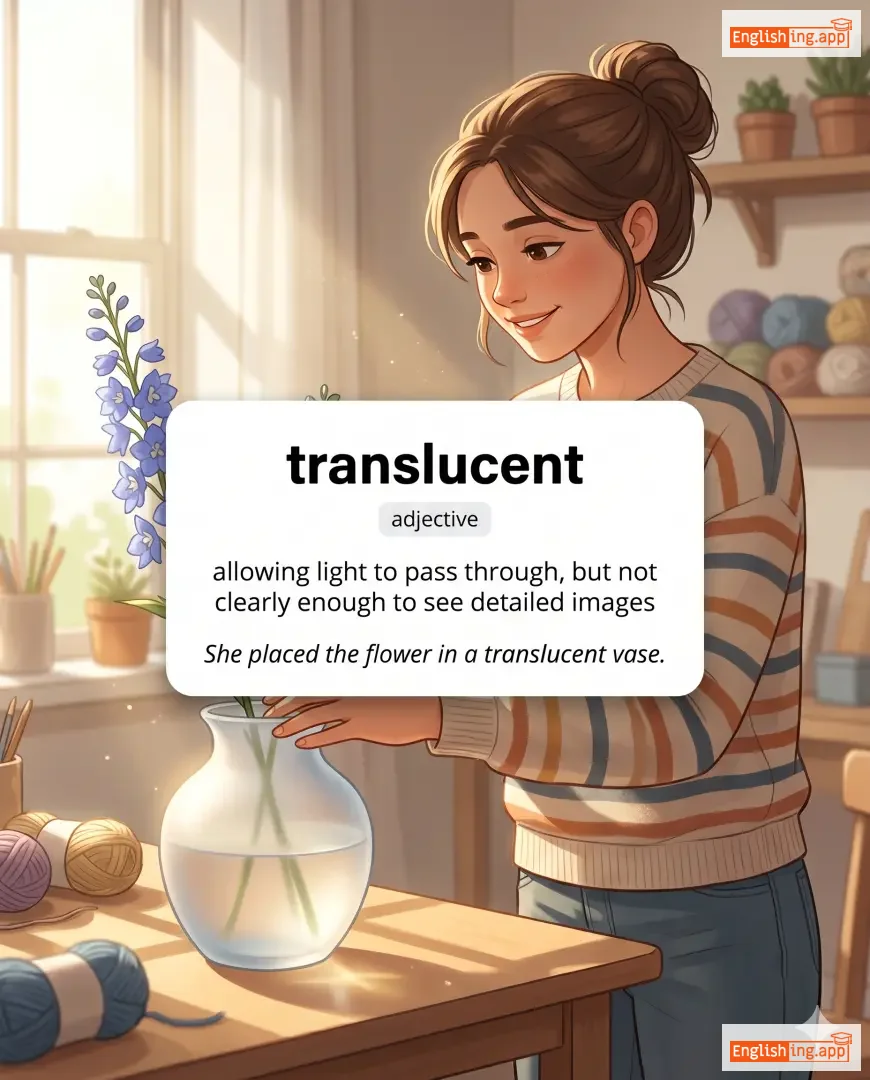
allowing light to pass through, but not clearly enough to see detailed images
••••••
|
She placed the flower in a translucent vase. |
彼女は花を半透明の花瓶に入れた。
Kanojo wa hana o hantōmei no kabin ni iretā.
••••••
|
- •••••• | - •••••• | - •••••• |
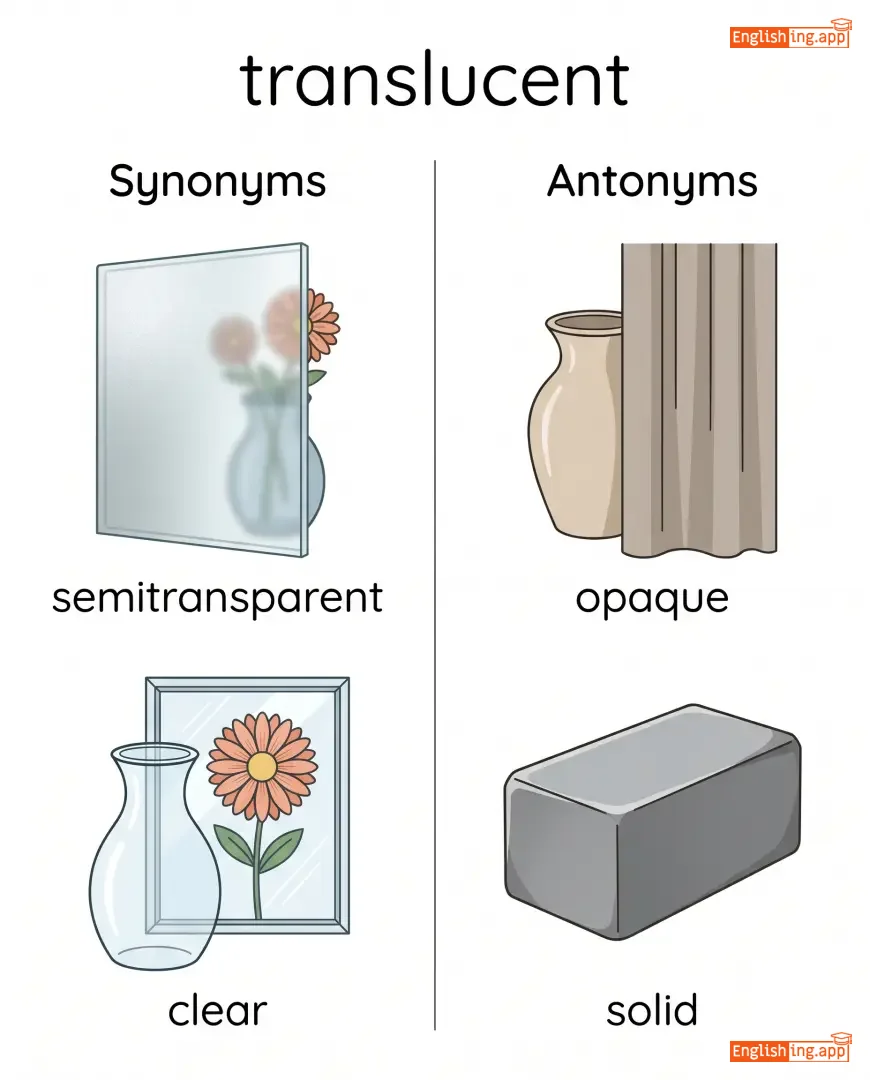
semitransparent, clear, glassy, see-through
••••••
|
opaque, solid
••••••
|
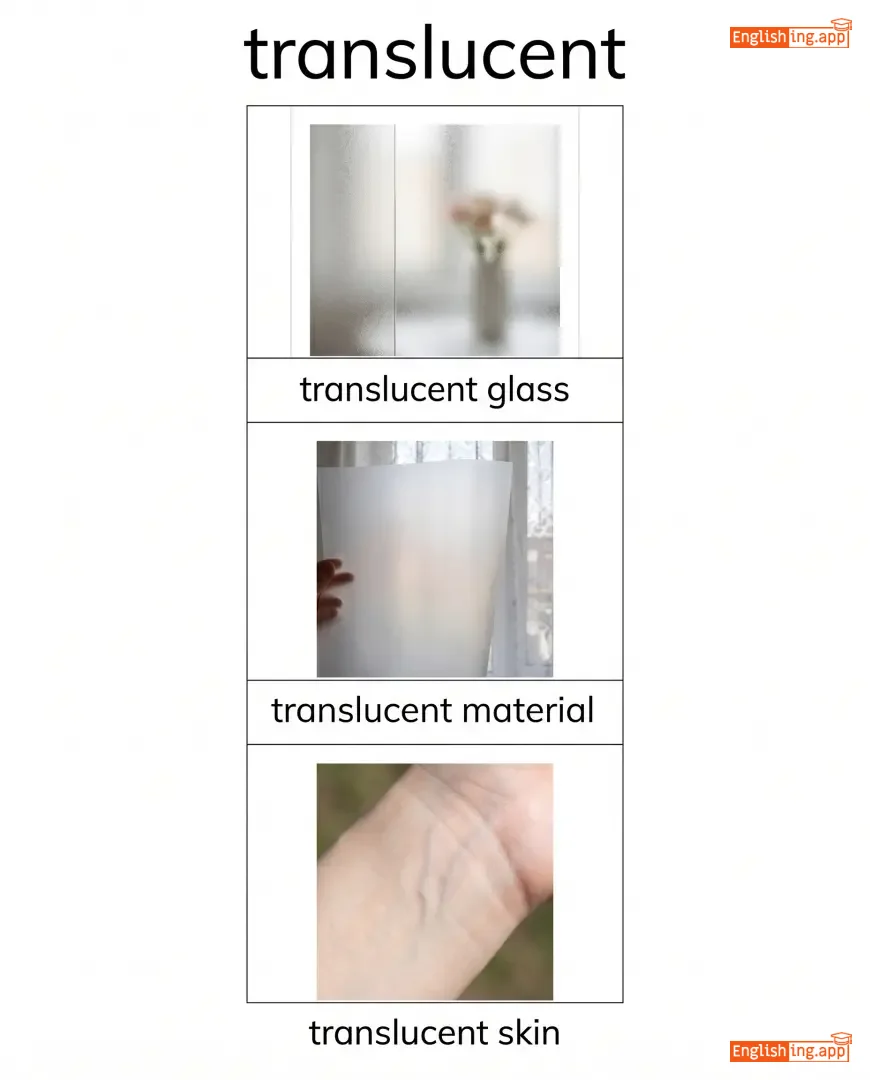
translucent glass, translucent material, translucent skin
••••••
|
Translucent はガラスのようなもの – 光が通るけど、完全にはクリアではない。
••••••
|
|
💪
••••••
|
/trəˈveɪl/
noun
(トラヴェイル)
••••••
|


|
過酷な努力
kakoku na doryoku
••••••
|
- •••••• | - •••••• | - •••••• | - •••••• |
Painful or laborious effort; suffering or hardship.
••••••
|
After years of travail, she finally completed her degree. |
長年の過酷な努力の末、彼女はついに学位を取得した。
Naganen no kakoku na doryoku no sue, kanojo wa tsuini gakui wo shutoku shita.
••••••
|
- •••••• | - •••••• | - •••••• |
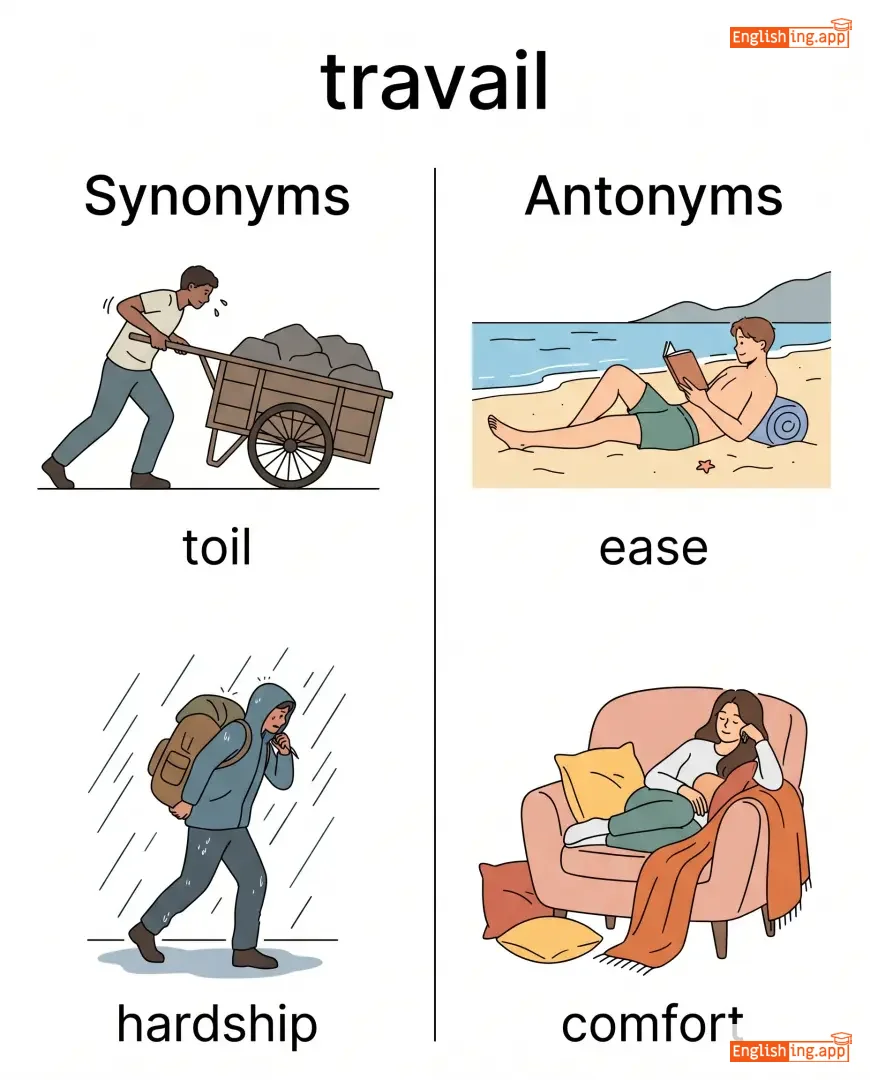
toil, hardship, struggle, effort, drudgery
••••••
|
ease, comfort, relaxation
••••••
|
years of travail, mental travail, physical travail
••••••
|
長い旅には過酷な努力 (travail) が必要だ。
••••••
|
|
🎭
••••••
|
/ˈtrævɪsti/
noun
••••••
|
|
- •••••• | - •••••• | - •••••• | - •••••• | - •••••• |
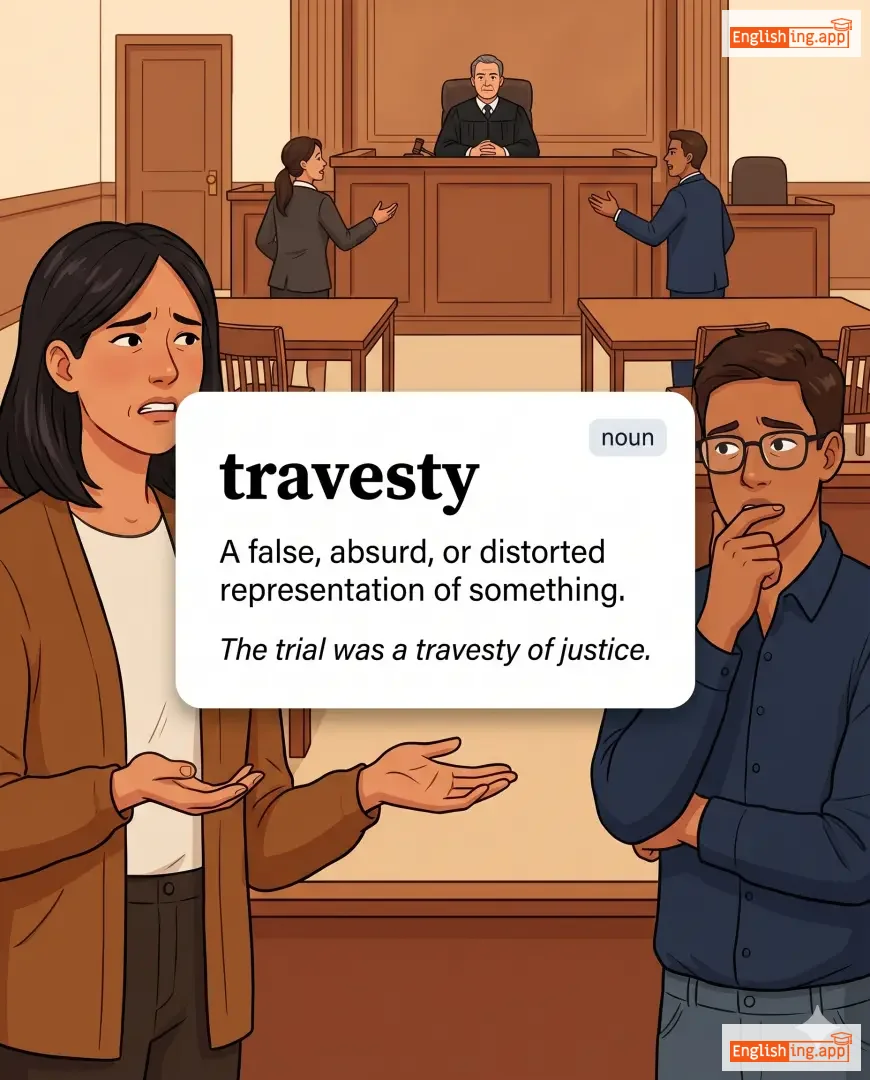
A false, absurd, or distorted representation of something.
••••••
|
The trial was a travesty of justice. |
- •••••• | - •••••• | - •••••• | - •••••• |
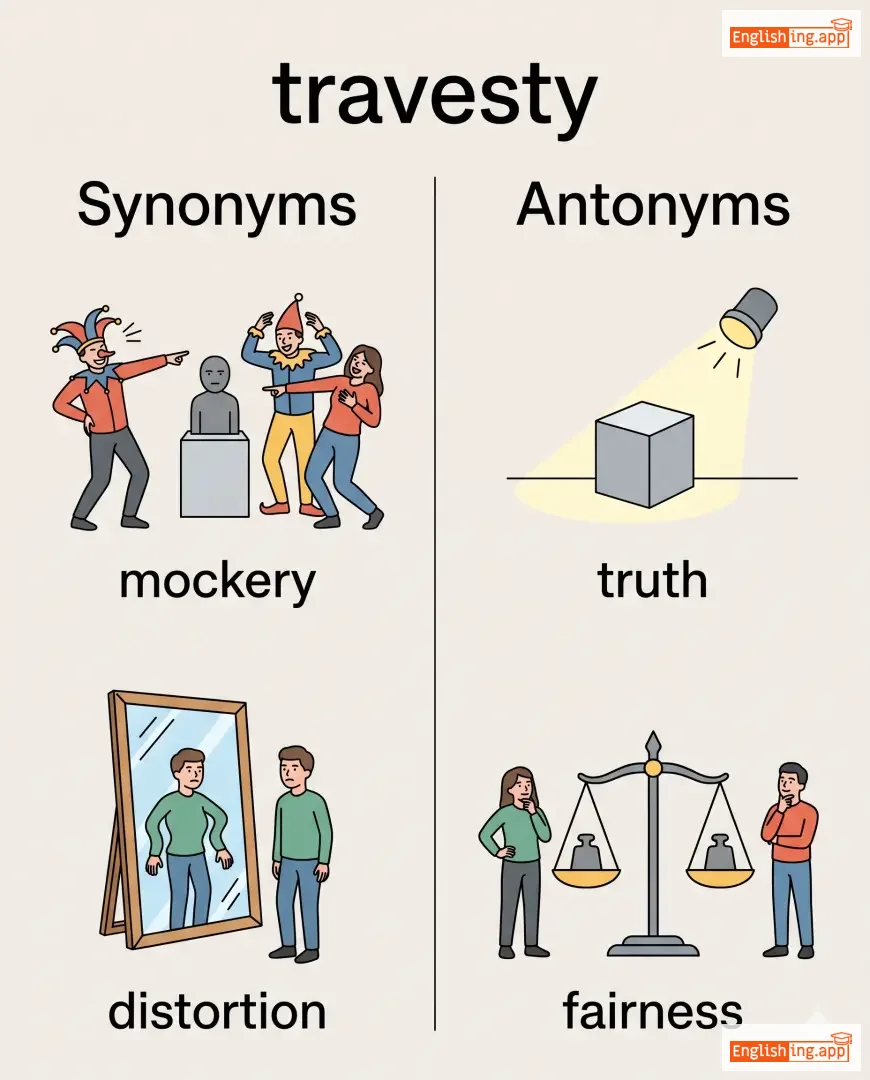
mockery, distortion, parody, farce, sham
••••••
|
truth, fairness, authenticity
••••••
|
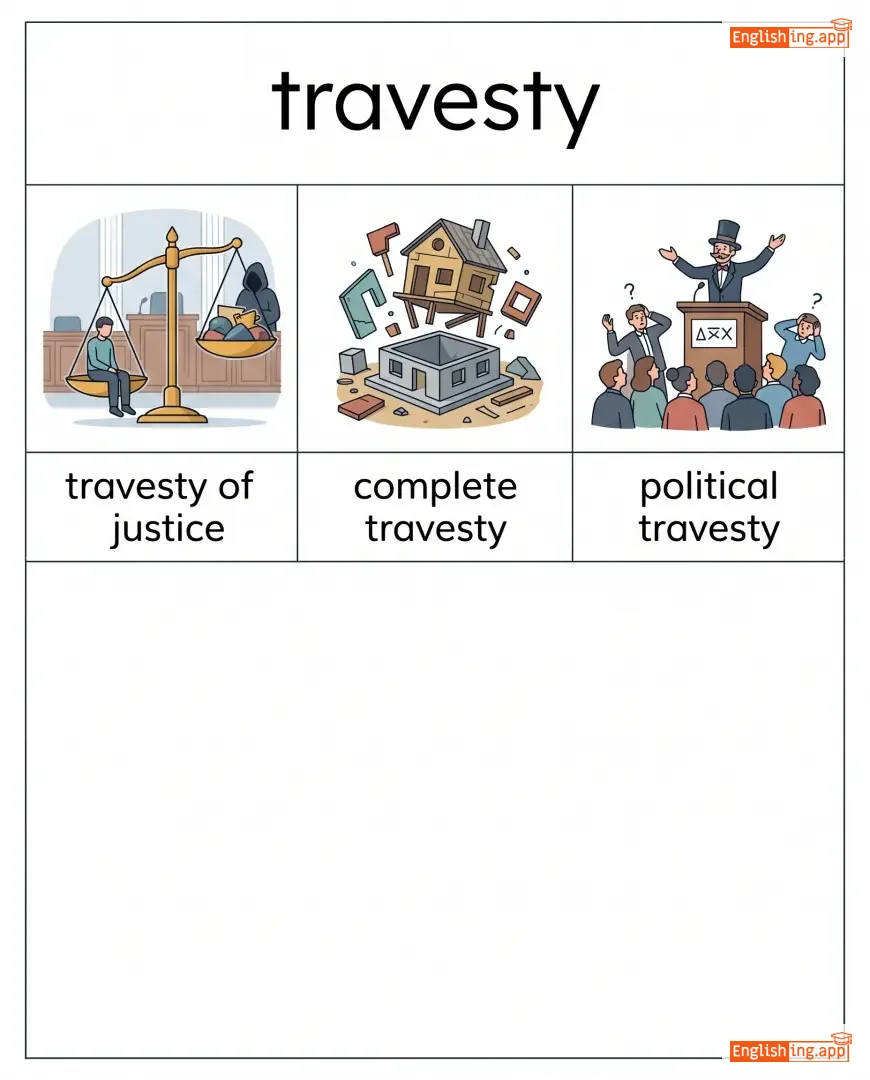
travesty of justice, complete travesty, political travesty
••••••
|
No •••••• |
|
📚
••••••
|
/ˈtriːtɪs/
noun
(トリーティス)
••••••
|
|
論文
ronbun
••••••
|
- •••••• | - •••••• | - •••••• | - •••••• |
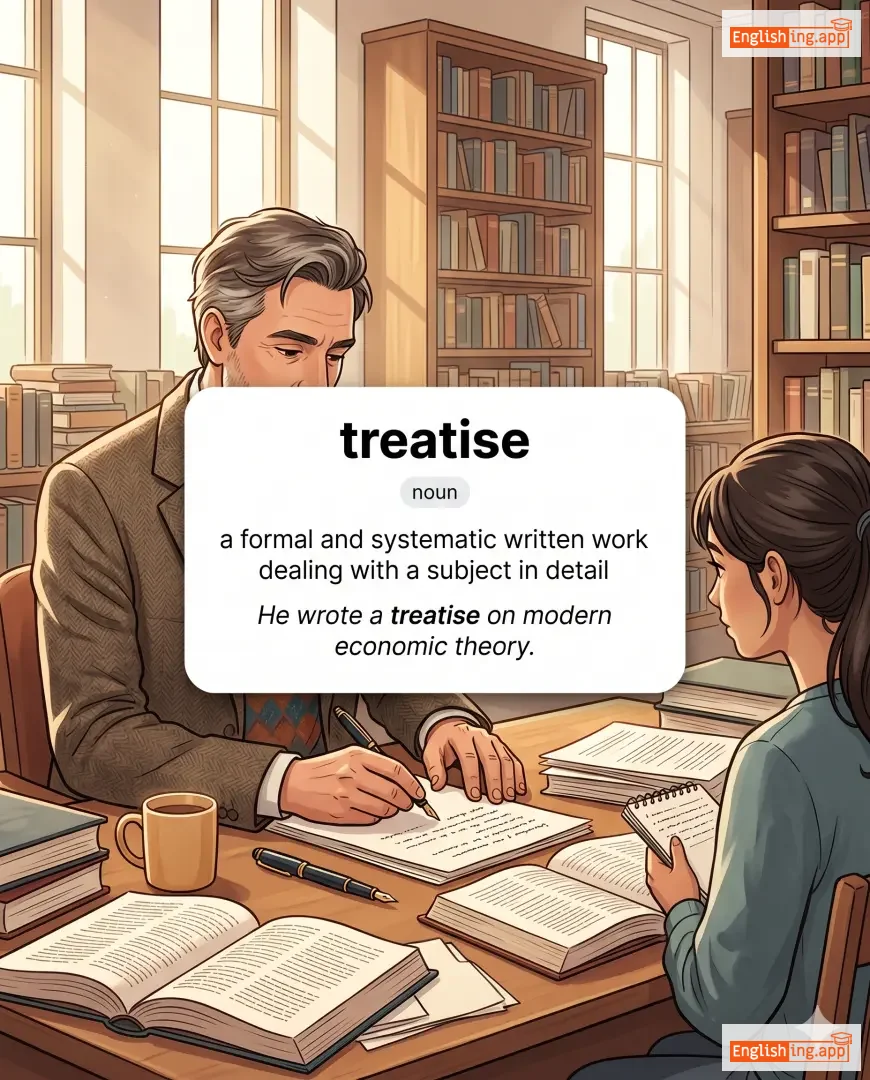
a formal and systematic written work dealing with a subject in detail
••••••
|
He wrote a treatise on modern economic theory.
彼は現代経済理論に関する論文を書いた。
••••••
|
彼は現代経済理論に関する論文を書いた。
Kare wa gendai keizai riron ni kansuru ronbun wo kaita.
••••••
|
- •••••• | - •••••• | - •••••• |
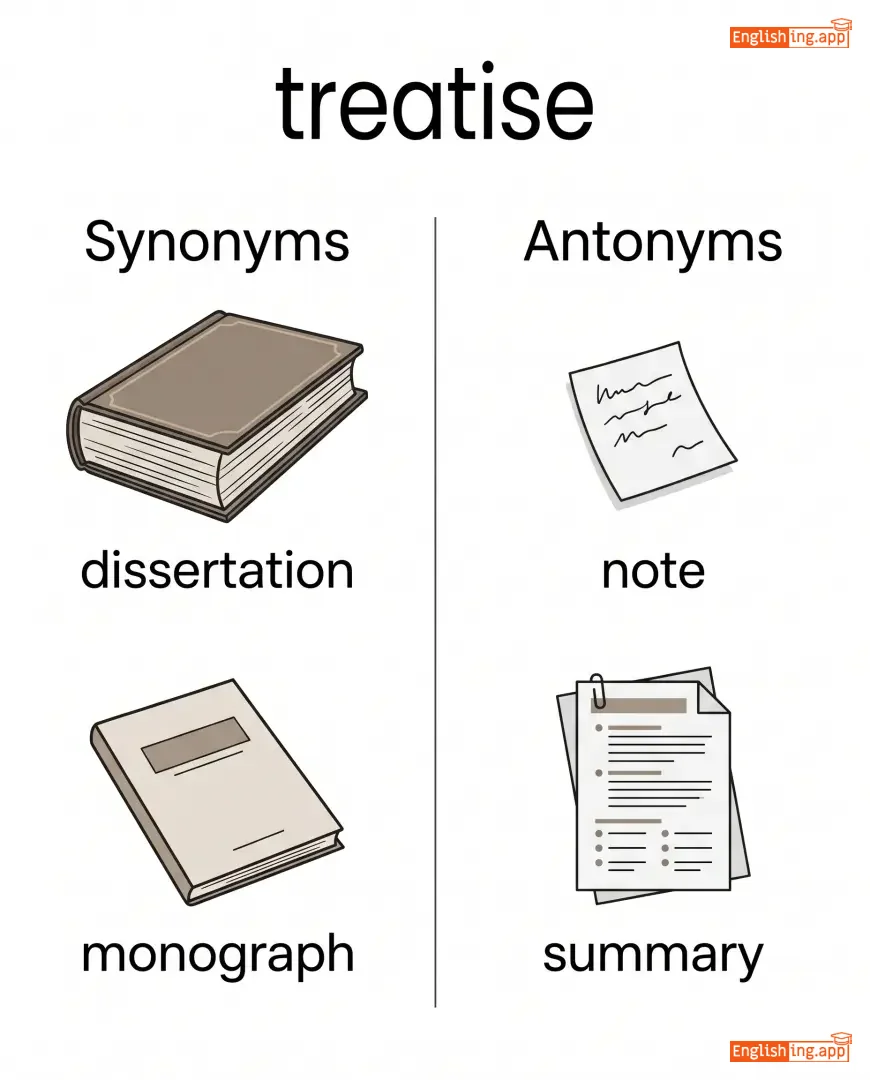
dissertation, monograph, thesis, paper, study
••••••
|
note, summary
••••••
|
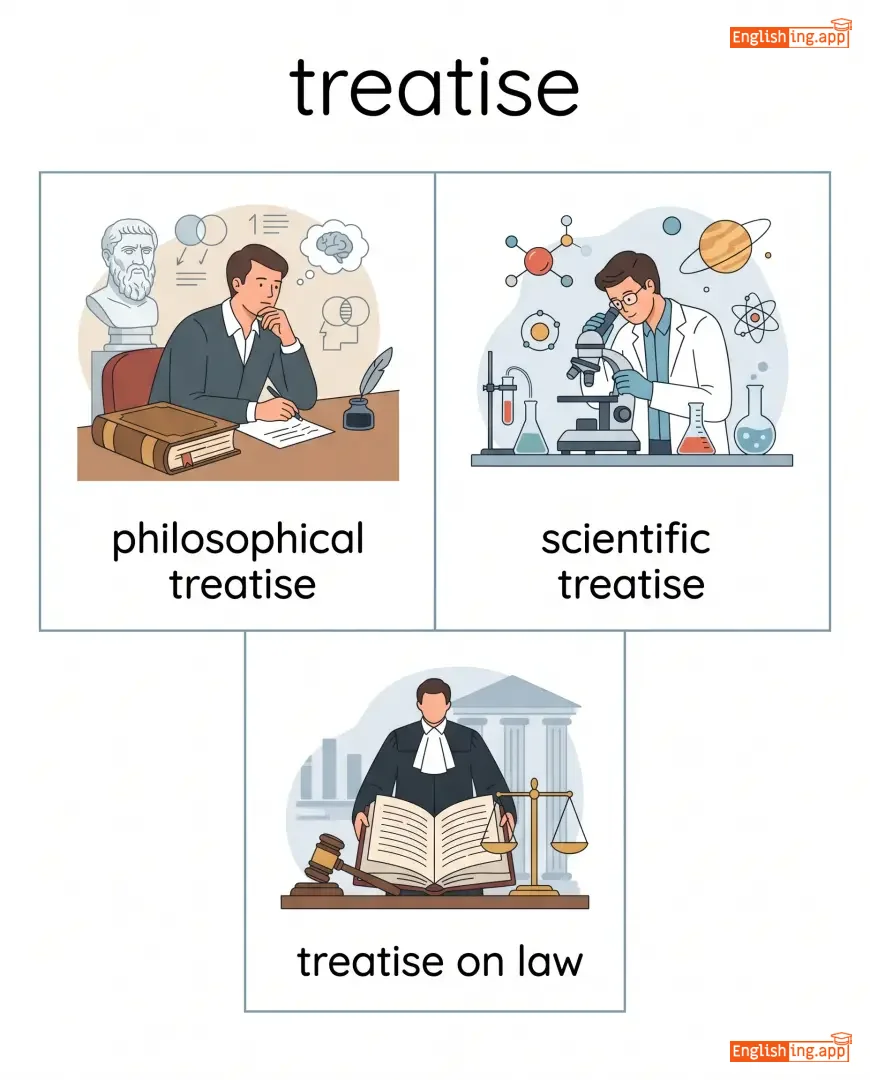
philosophical treatise, scientific treatise, treatise on law
••••••
|
Treatise = 論文 + thesis = 詳細な論文
••••••
|
|
😨
••••••
|
/ˈtrɛmjələs/
adjective
(トレムラス)
••••••
|

|
震える
furu eru
••••••
|
- •••••• | - •••••• | - •••••• | - •••••• |
shaking or quivering slightly, often from nervousness or weakness
••••••
|
Her voice was tremulous as she gave her speech.
彼女の声は震えていました、彼女がスピーチをした時。
••••••
|
彼女の声は震えていました、彼女がスピーチをした時。
Kanojo no koe wa furueteimashita, kanojo ga supīchi o shita toki.
••••••
|
- •••••• | - •••••• | - •••••• |
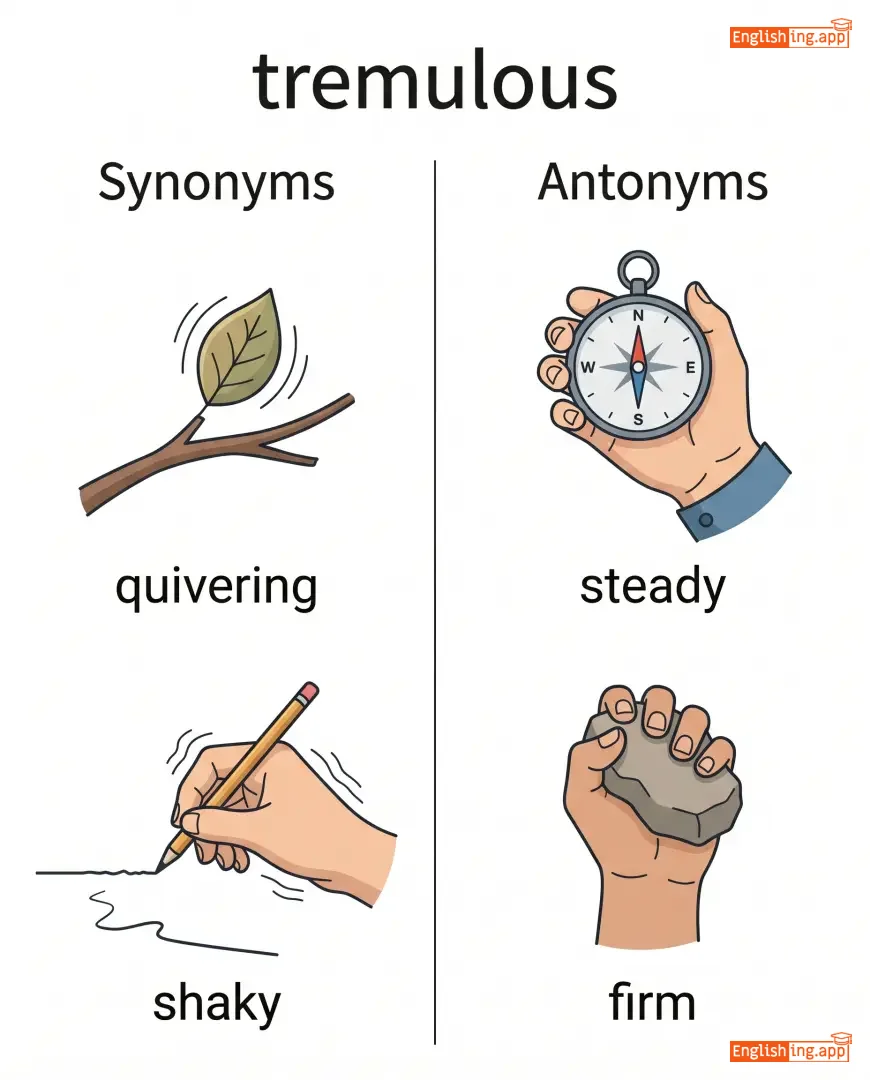
quivering, shaky, trembling, unsteady
••••••
|
steady, firm
••••••
|
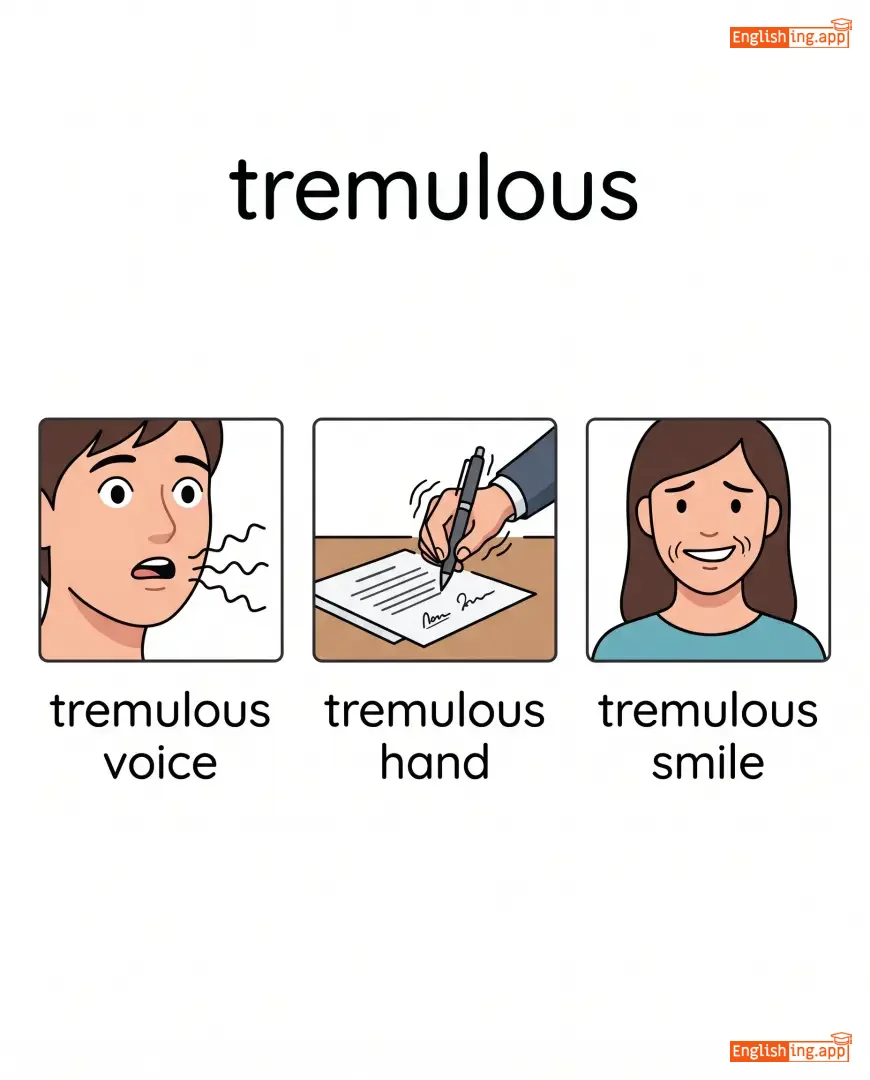
tremulous voice, tremulous hand, tremulous smile
••••••
|
Tremulous は震えるという意味で、緊張や恐怖で震える声のようなものです。
••••••
|
|
😨
••••••
|
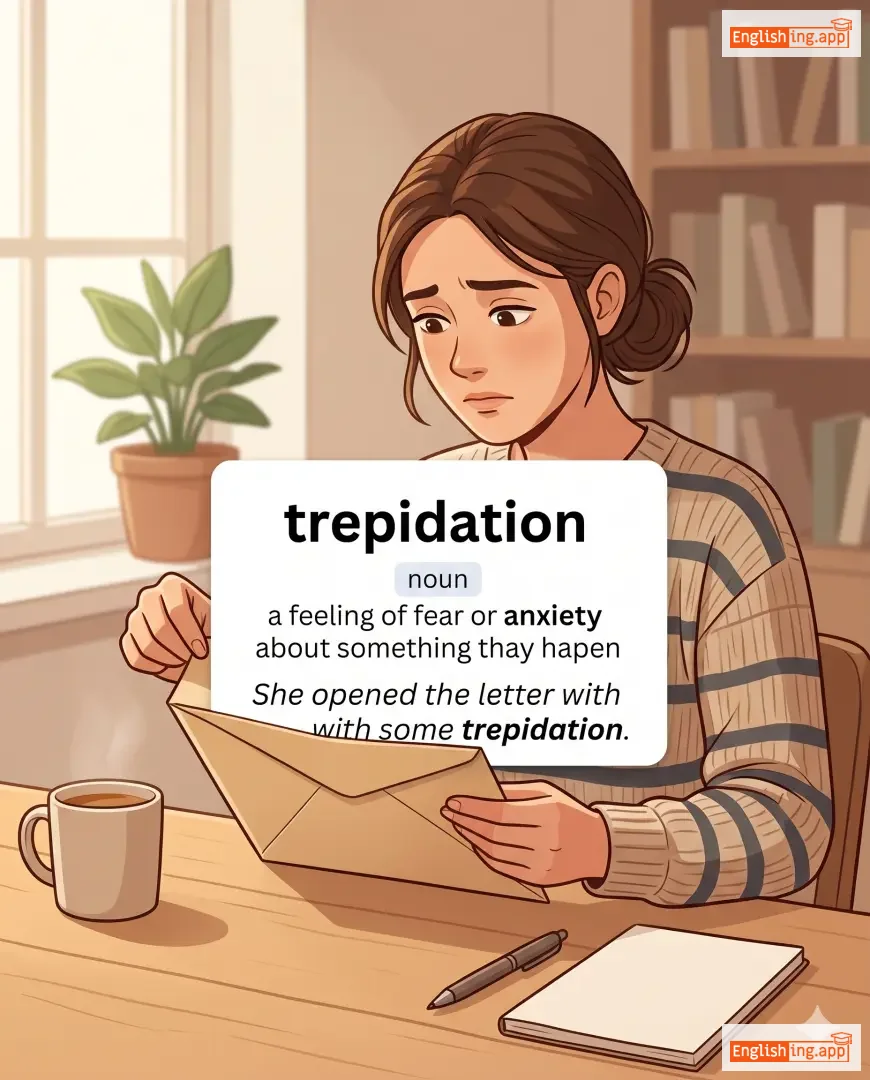
/ˌtrɛpɪˈdeɪʃən/
noun
(トレピデーション)
••••••
|
|
恐れ
osore
••••••
|
- •••••• | - •••••• | - •••••• | - •••••• |
a feeling of fear or anxiety about something that may happen
••••••
|
She opened the letter with some trepidation. |
彼女は少し恐れを抱えて手紙を開けた。
Kanojo wa sukoshi osore o kakaete tegami o aketa.
••••••
|
- •••••• | - •••••• | - •••••• |
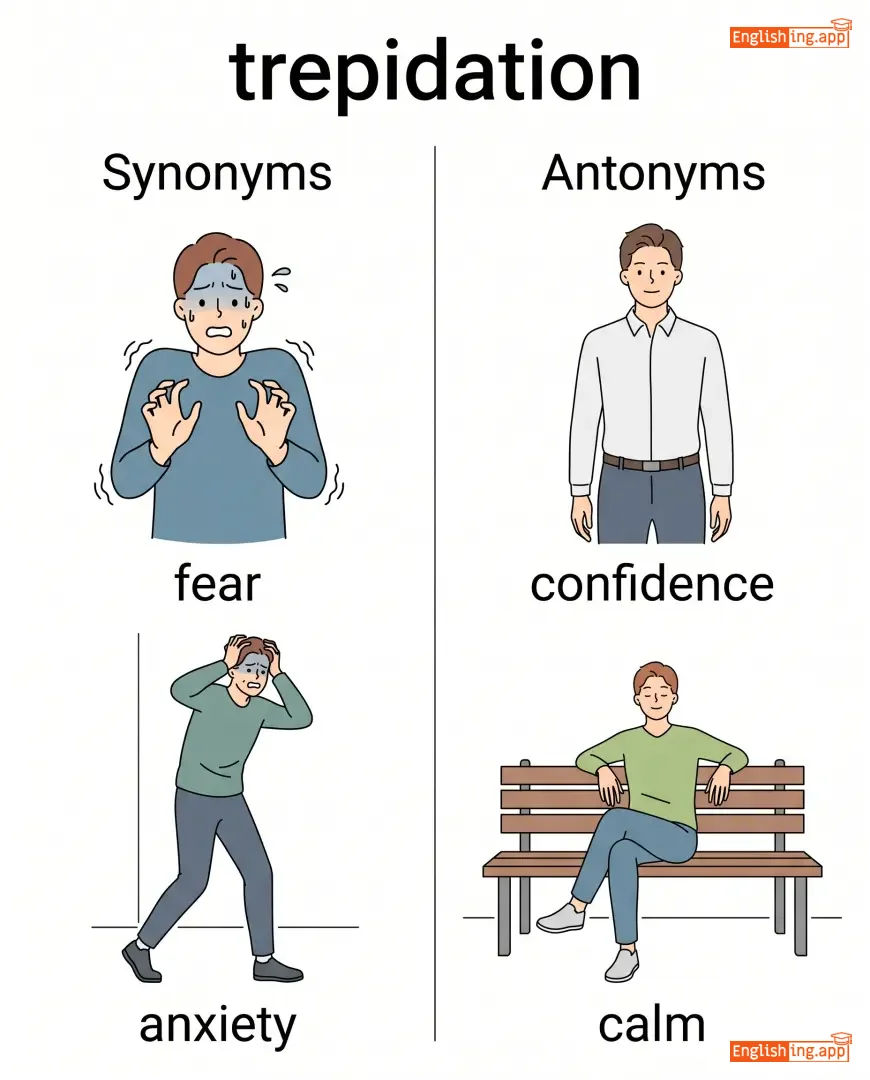
fear, anxiety, dread, unease, apprehension
••••••
|
confidence, calm, assurance
••••••
|
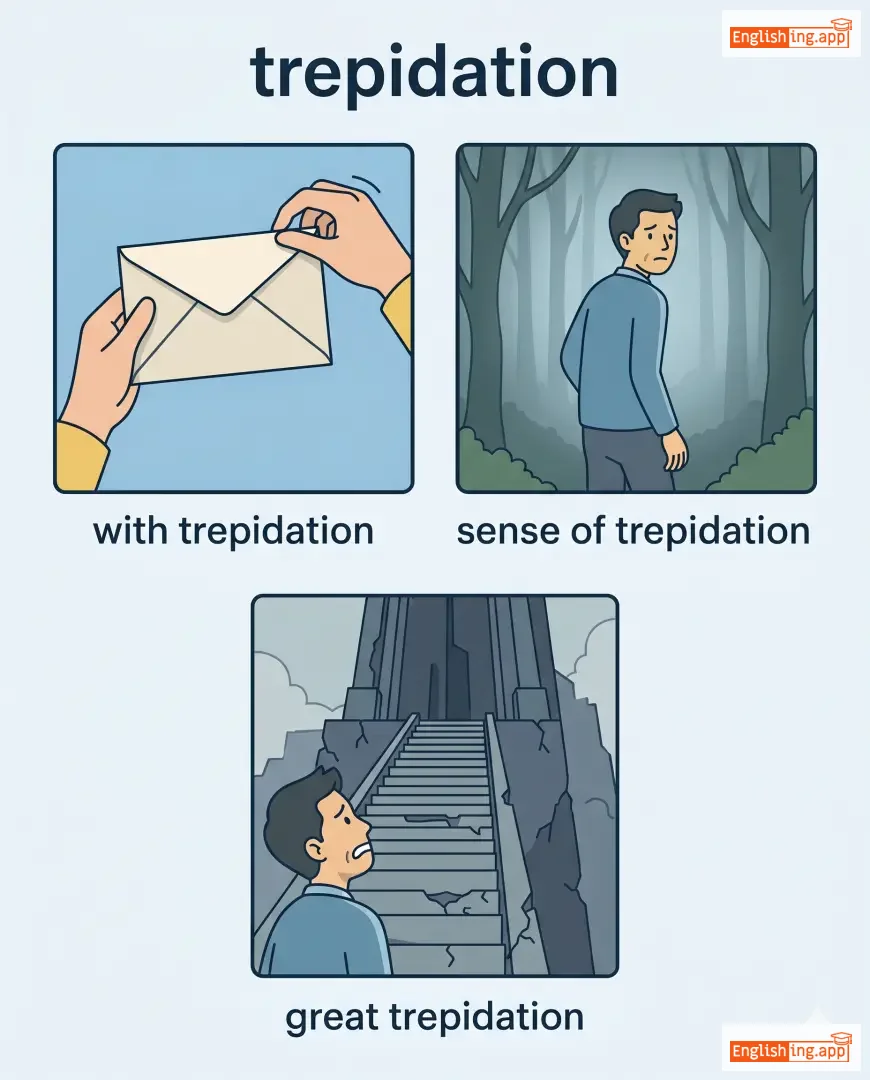
with trepidation, sense of trepidation, great trepidation
••••••
|
Trepidationは恐れを意味する; 夜中に窓を開けるときに感じる恐れ
••••••
|
|
😡
••••••
|
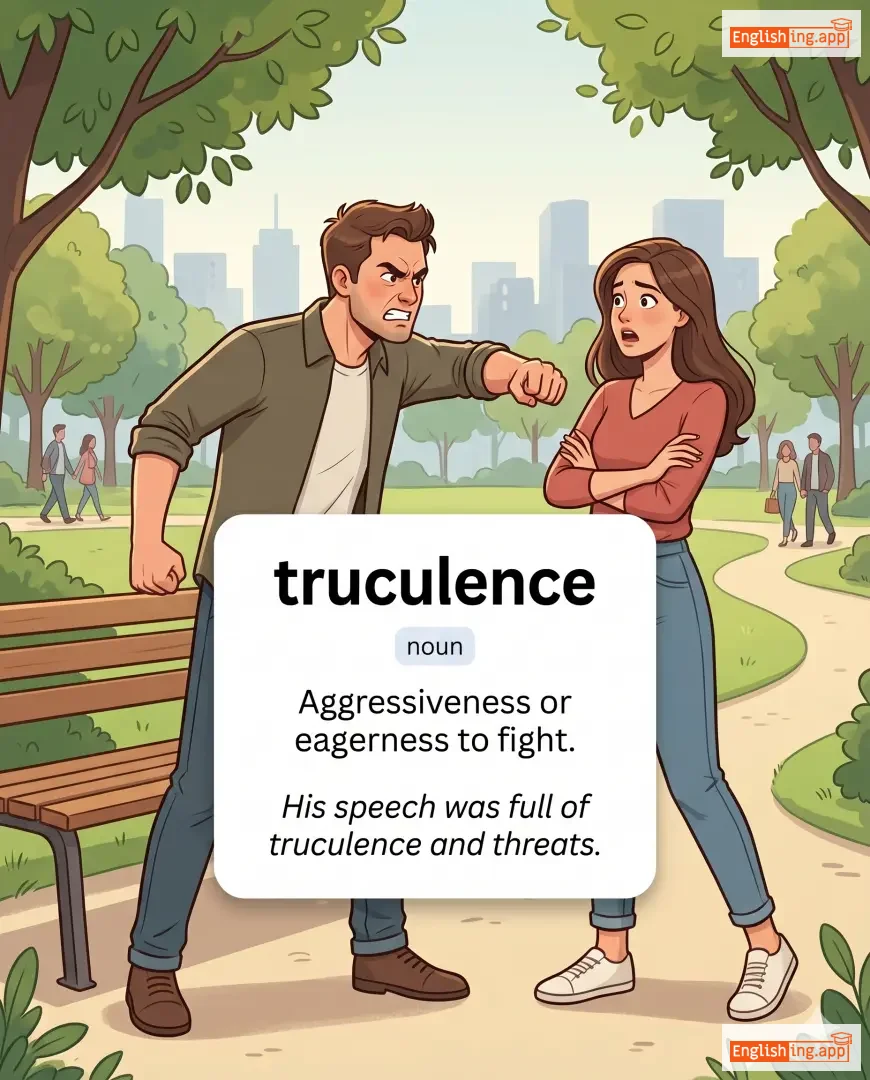
/ˈtrʌk.jʊ.ləns/
noun
(トラキュレンス)
••••••
|
|
好戦的
kousenteki
••••••
|
- •••••• | - •••••• | - •••••• | - •••••• |
Aggressiveness or eagerness to fight.
••••••
|
His speech was full of truculence and threats. |
彼の演説は好戦的で脅しに満ちていた。
Kare no enzetsu wa kousenteki de odoshi ni michite ita.
••••••
|
- •••••• | - •••••• | - •••••• |
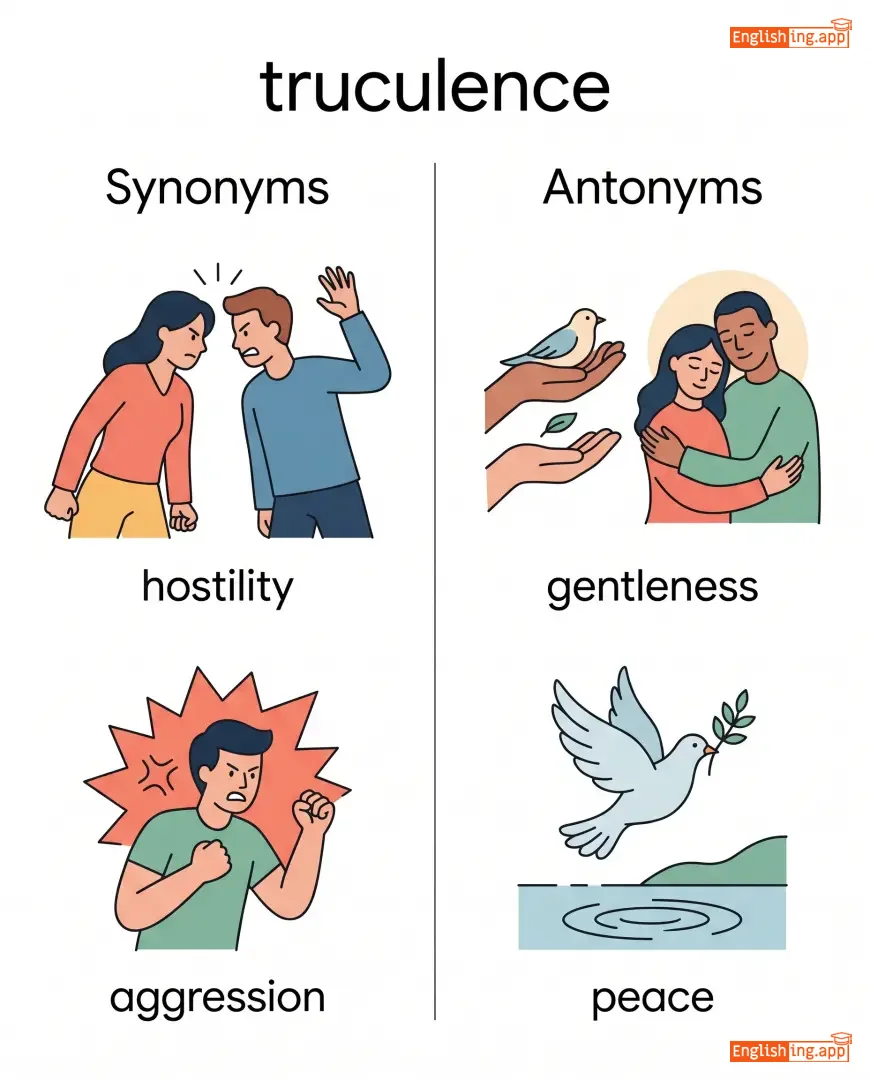
hostility, aggression, belligerence, combativeness
••••••
|
gentleness, peace, friendliness
••••••
|
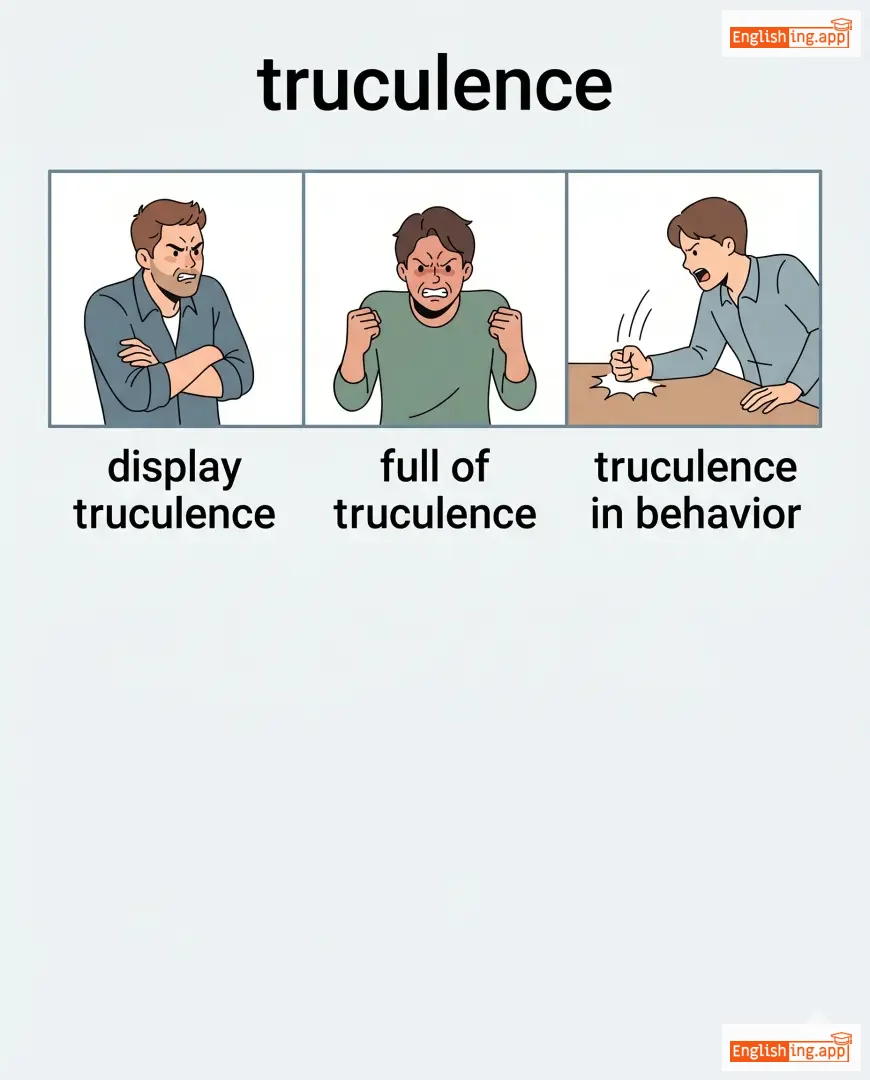
display truculence, full of truculence, truculence in behavior
••••••
|
Truculenceは好戦的という意味—トラックのクラクションが鳴ると、みんな怒ることを覚えておいて。
••••••
|
|
🌙
••••••
|
/traɪst/
noun
(トリスト)
••••••
|
|
秘密の逢引
himitsu no aibi
••••••
|
- •••••• | - •••••• | - •••••• | - •••••• |
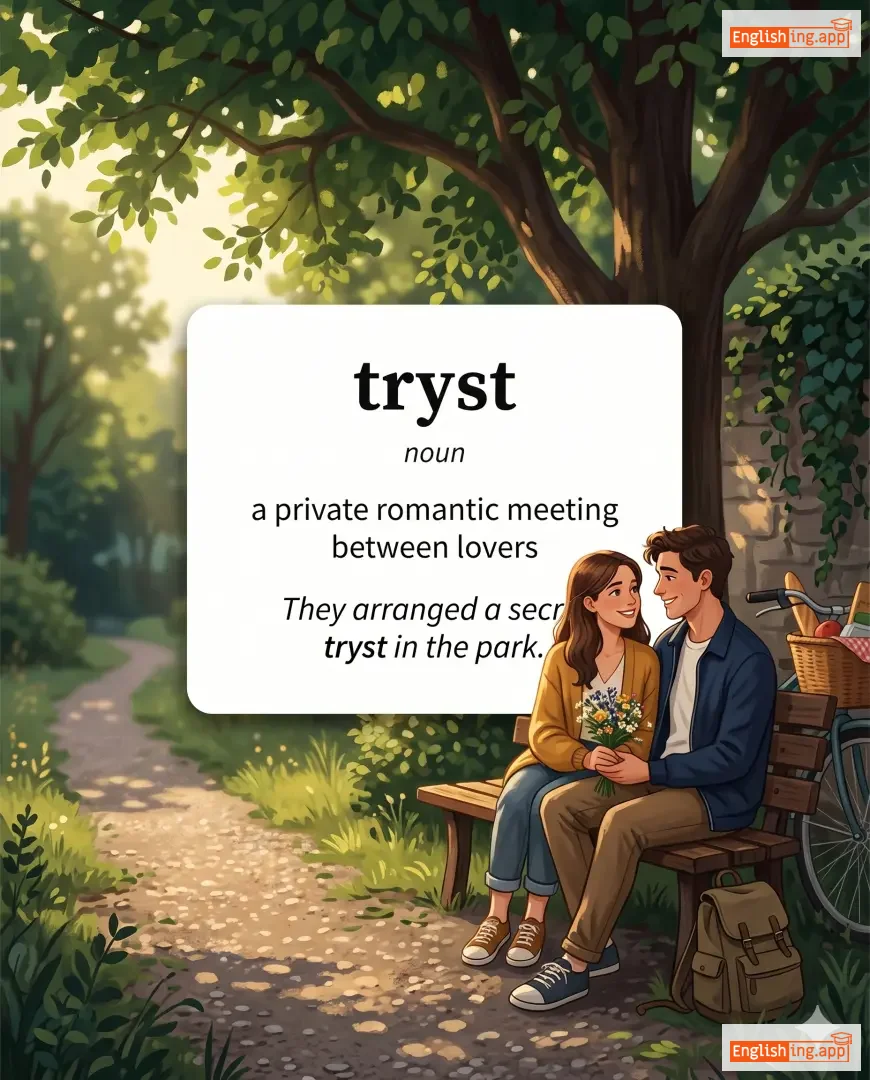
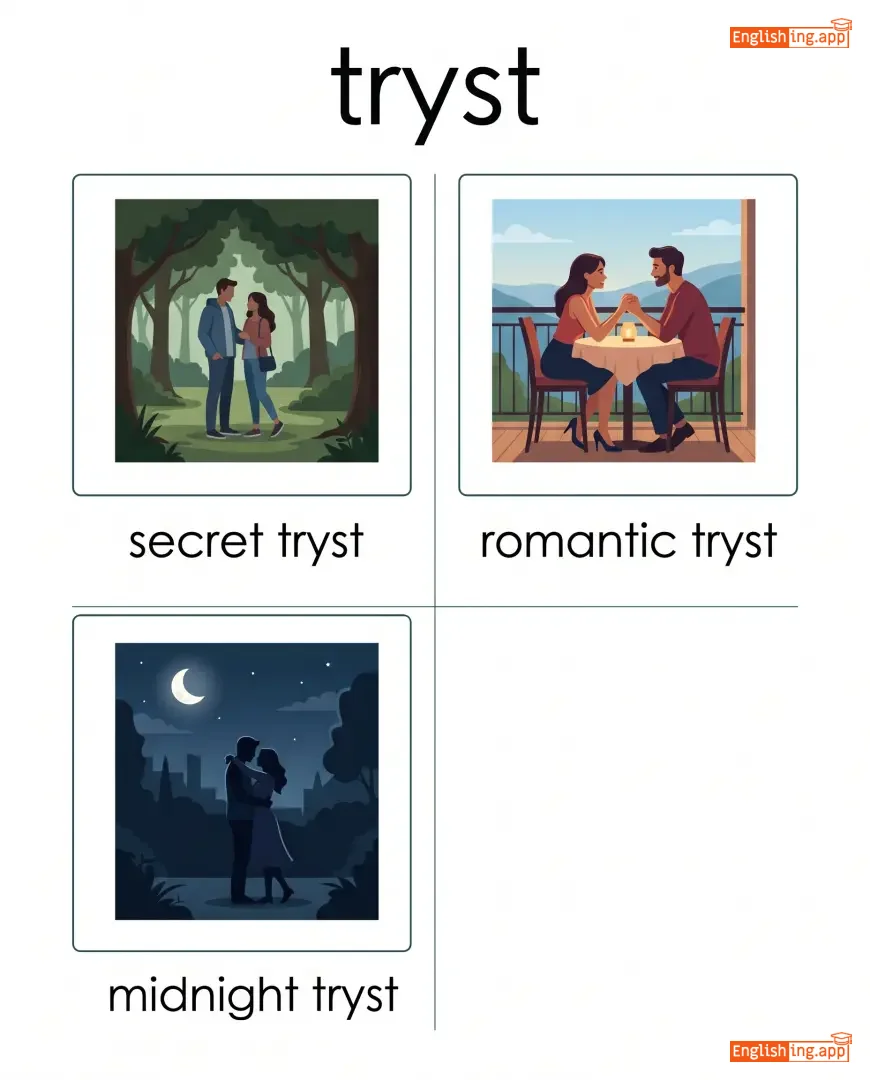
a private romantic meeting between lovers
••••••
|
They arranged a secret tryst in the park. |
彼らは公園で秘密の逢引を手配した。
Karera wa kouen de himitsu no aibi o tehai shita.
••••••
|
- •••••• | - •••••• | - •••••• |
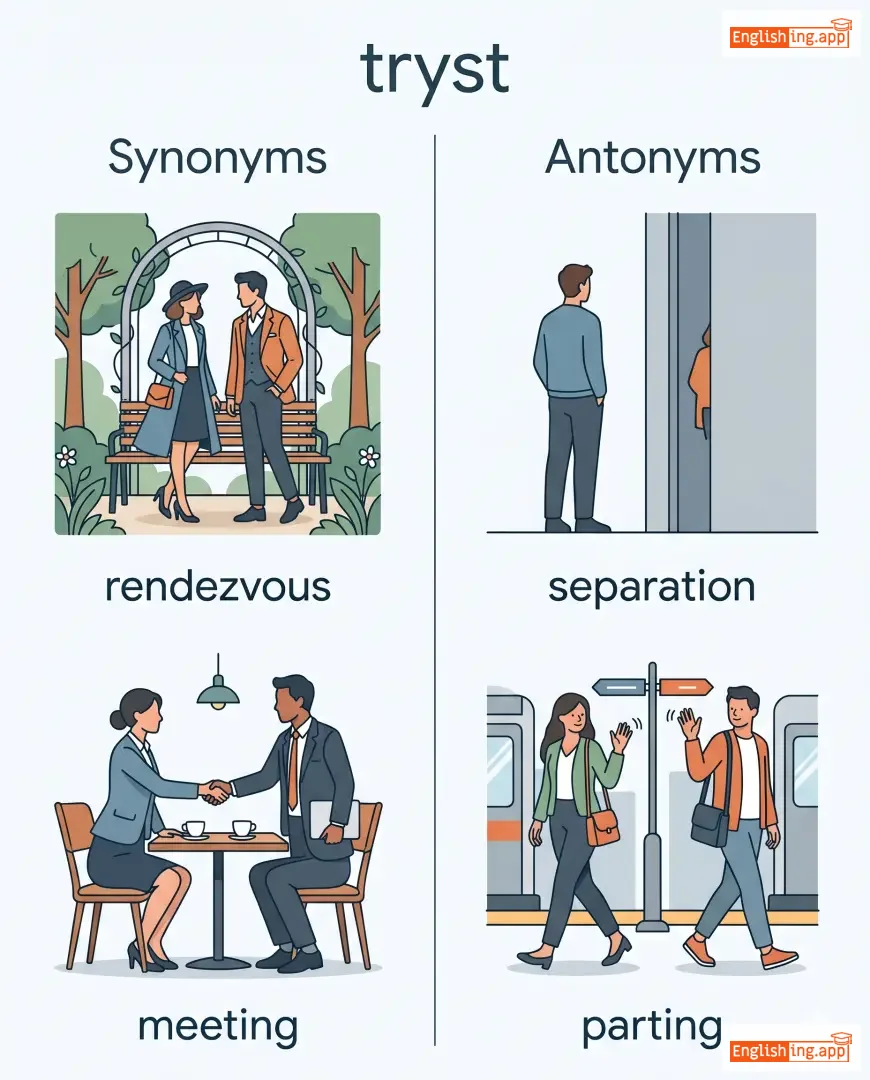
rendezvous, meeting, date, assignation
••••••
|
separation, parting
••••••
|
secret tryst, romantic tryst, midnight tryst, arrange a tryst
••••••
|
木の下でtryst – 恋人たちの秘密の逢引。
••••••
|
|
💭
••••••
|
/ˈtjuːmɪd/
adjective
(チューミッド)
••••••
|
|
膨らんだ、膨張した、または pompous なスタイル
fukuranda, fūchō shita, matawa pompous na sutairu
••••••
|
- •••••• | - •••••• | - •••••• | - •••••• |
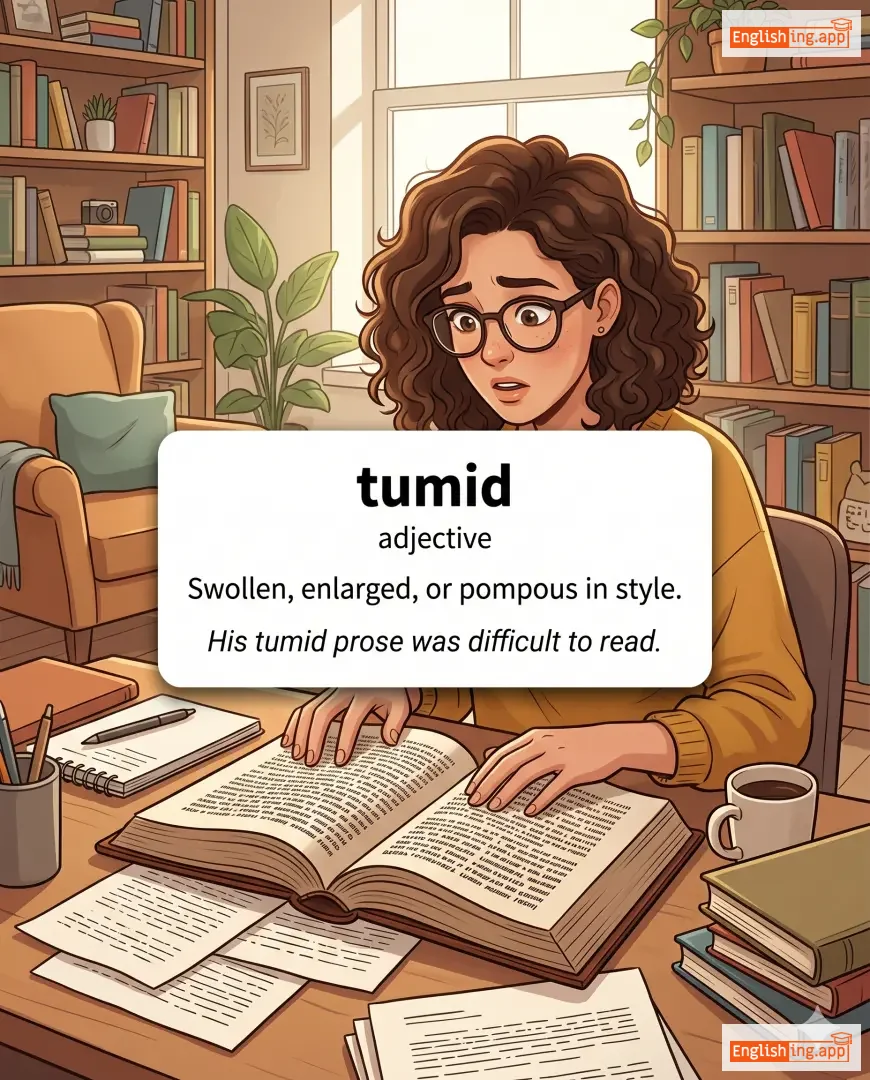
Swollen, enlarged, or pompous in style.
••••••
|
His tumid prose was difficult to read. |
彼の膨らんだ散文は読むのが難しかった。
Kare no fukuranda sanbun wa yomu no ga muzukashikatta.
••••••
|
- •••••• | - •••••• | - •••••• |
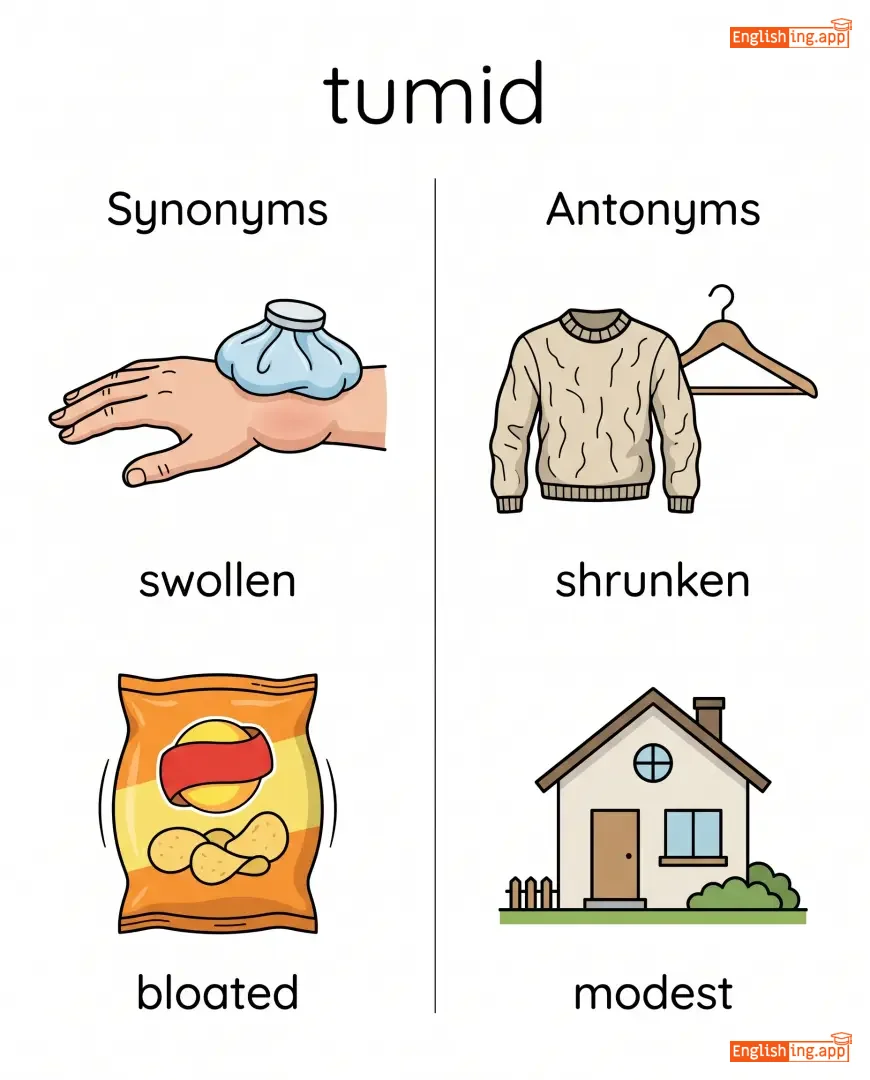
swollen, bloated, inflated, pompous
••••••
|
shrunken, modest, plain
••••••
|
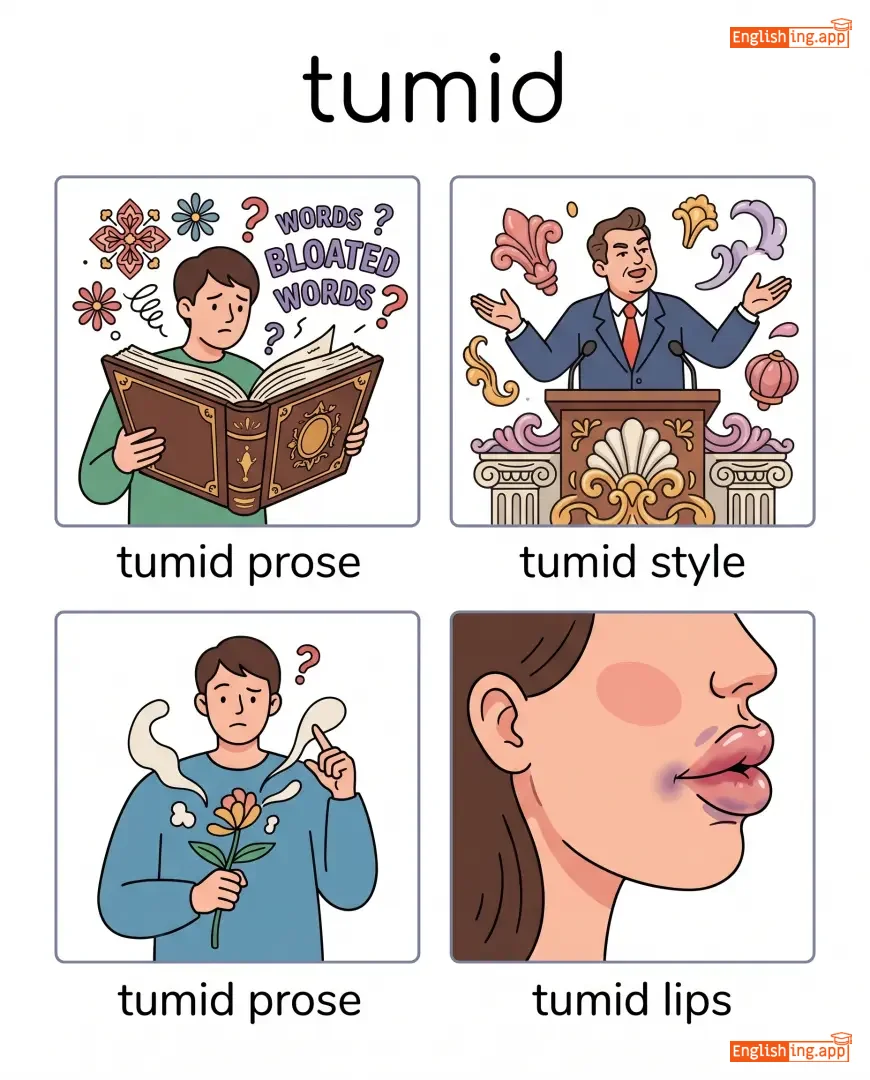
tumid prose, tumid style, tumid lips
••••••
|
TumidはTumorのように—Tumorは膨らむ。
••••••
|
|
🌊
••••••
|
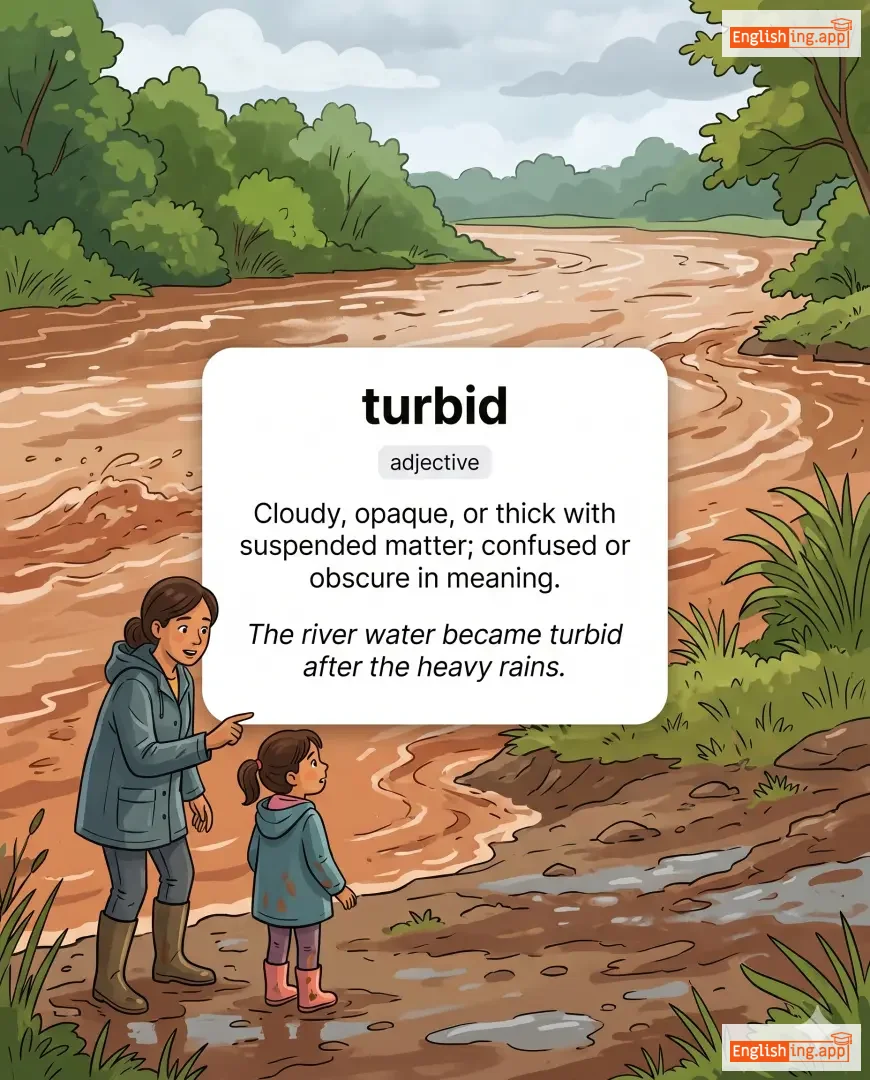
/ˈtɜːrbɪd/
adjective
(タービッド)
••••••
|
|
濁った
nigotta
••••••
|
- •••••• | - •••••• | - •••••• | - •••••• |
Cloudy, opaque, or thick with suspended matter; confused or obscure in meaning.
••••••
|
The river water became turbid after the heavy rains. |
激しい雨の後、川の水は濁った。
Hageshī ame no ato, kawa no mizu wa nigotta.
••••••
|
- •••••• | - •••••• | - •••••• |
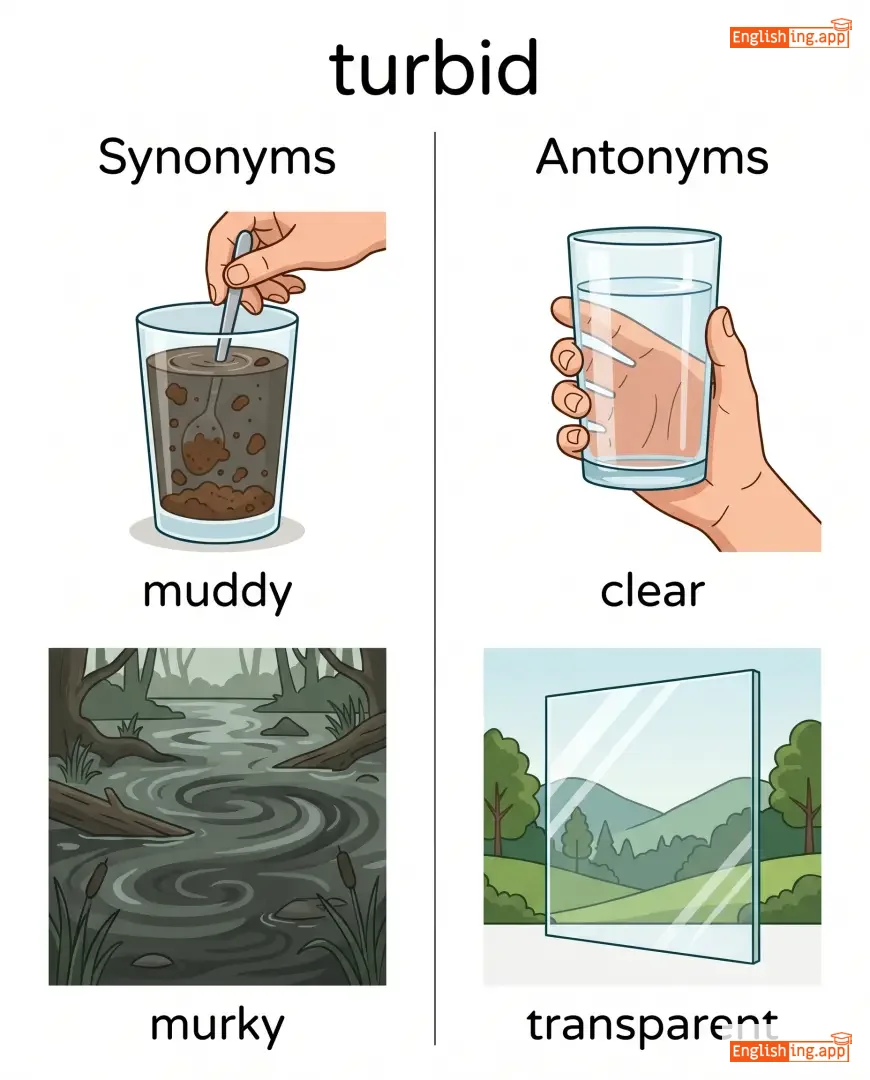
muddy, murky, cloudy, opaque, unclear
••••••
|
clear, transparent, pure
••••••
|
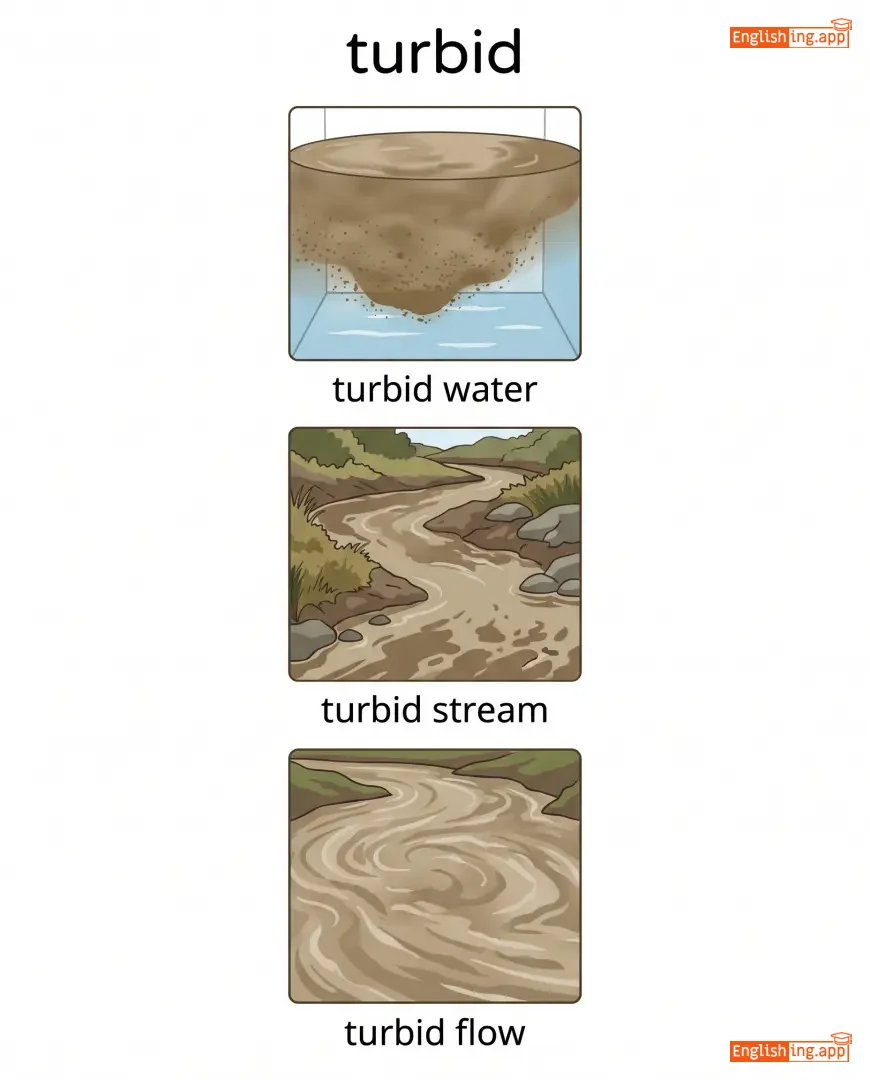
turbid water, turbid stream, turbid flow, turbid liquid
••••••
|
濁った水は大雨の後の川のようだ。
••••••
|
|
🎈
••••••
|
/ˈtɜːrdʒɪd/
adjective
(タージッド)
••••••
|
|
膨らんだ, 大げさな
fukuranda, oogesana
••••••
|
- •••••• | - •••••• | - •••••• | - •••••• |
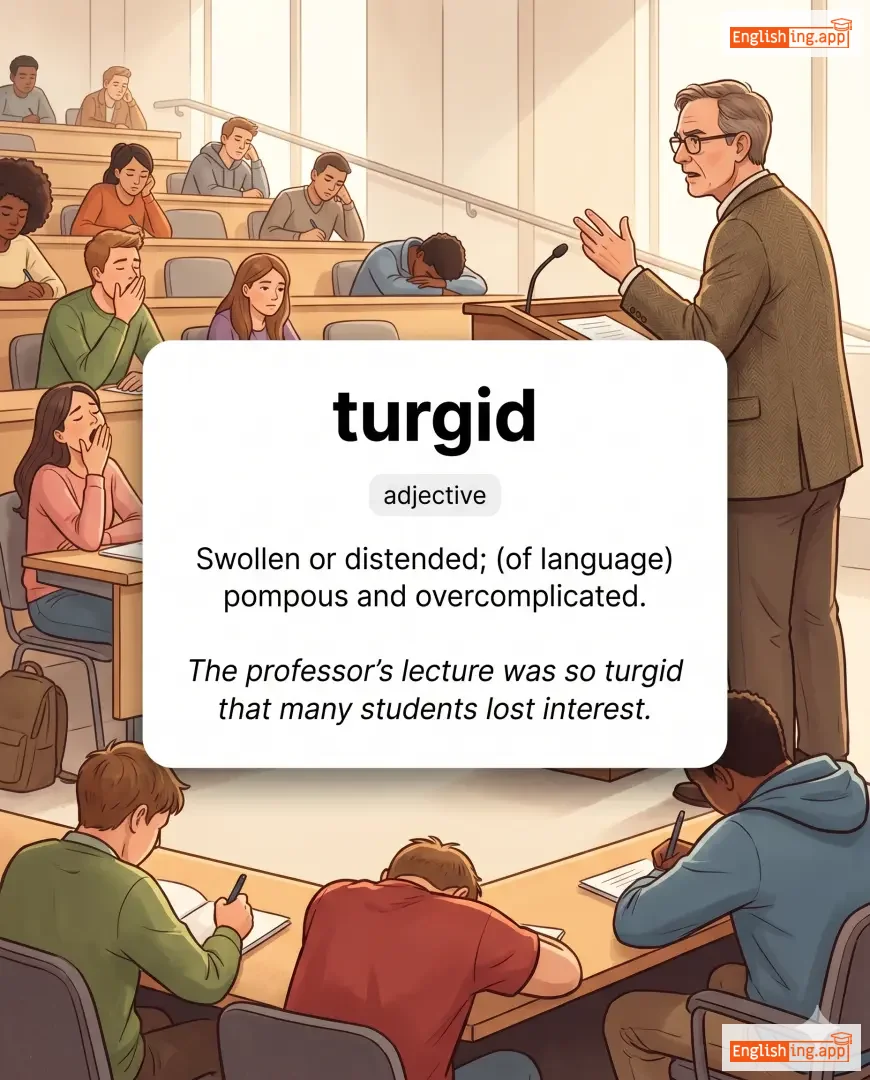
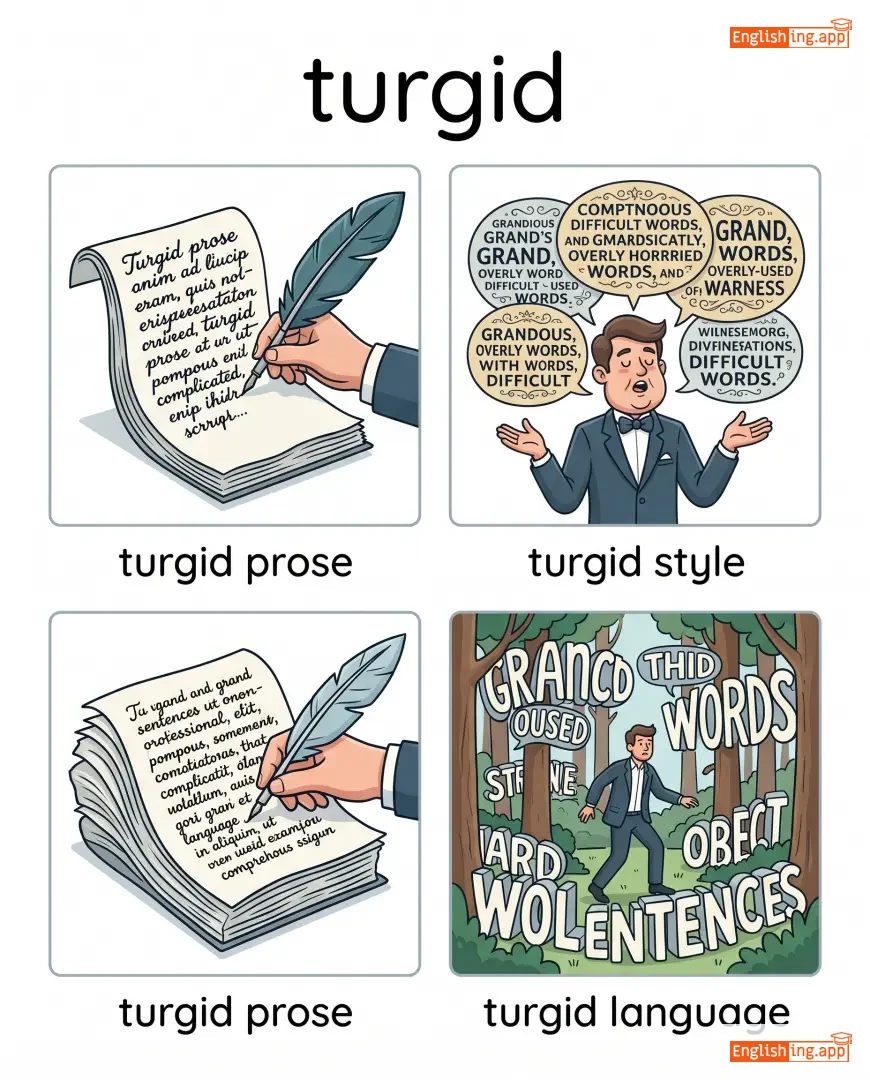
Swollen or distended; (of language) pompous and overcomplicated.
••••••
|
The professor’s lecture was so turgid that many students lost interest. |
教授の講義はあまりにも大げさすぎて、多くの学生が興味を失いました。
Kyoushu no kougi wa amari ni mo oogesa sugite, ooku no gakusei ga kyomi o ushinai mashita.
••••••
|
- •••••• | - •••••• | - •••••• |
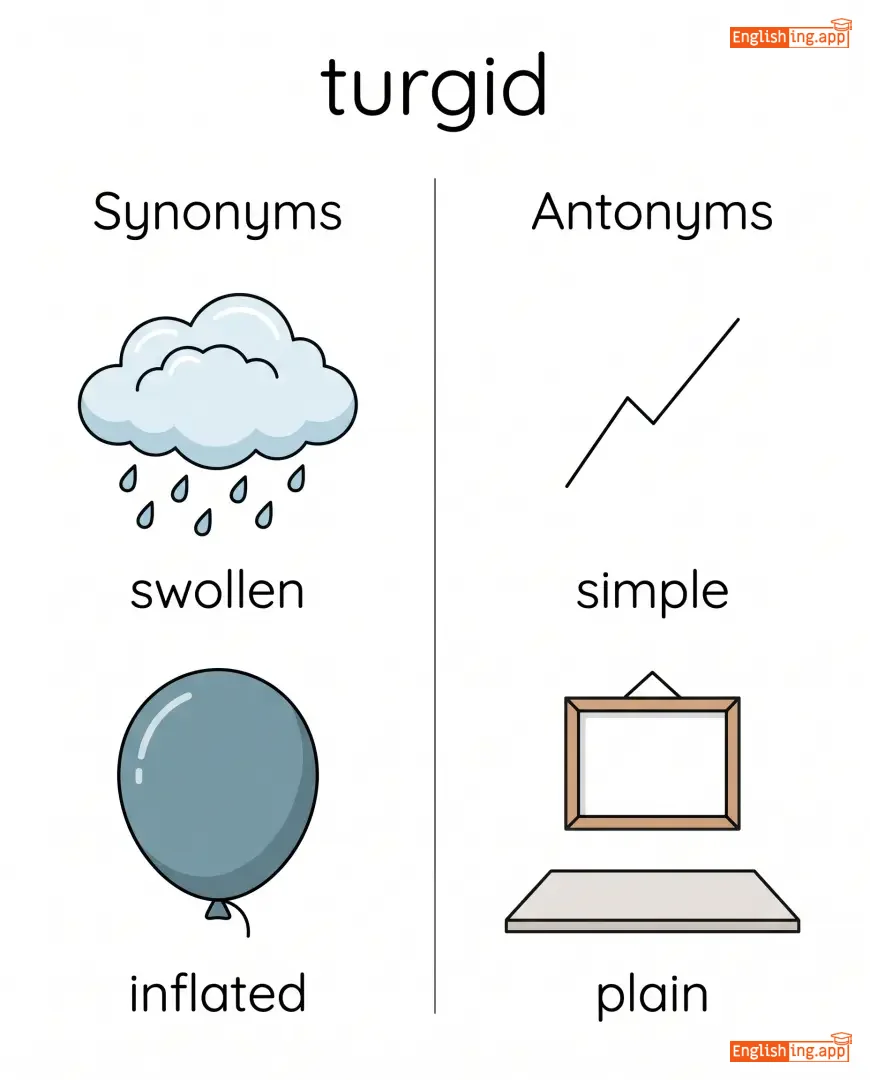
swollen, inflated, pompous, bloated, grandiose
••••••
|
simple, plain, clear
••••••
|
turgid prose, turgid style, turgid language
••••••
|
Turgid とは膨らんだ、大げさなことです。
••••••
|
|
👼
••••••
|
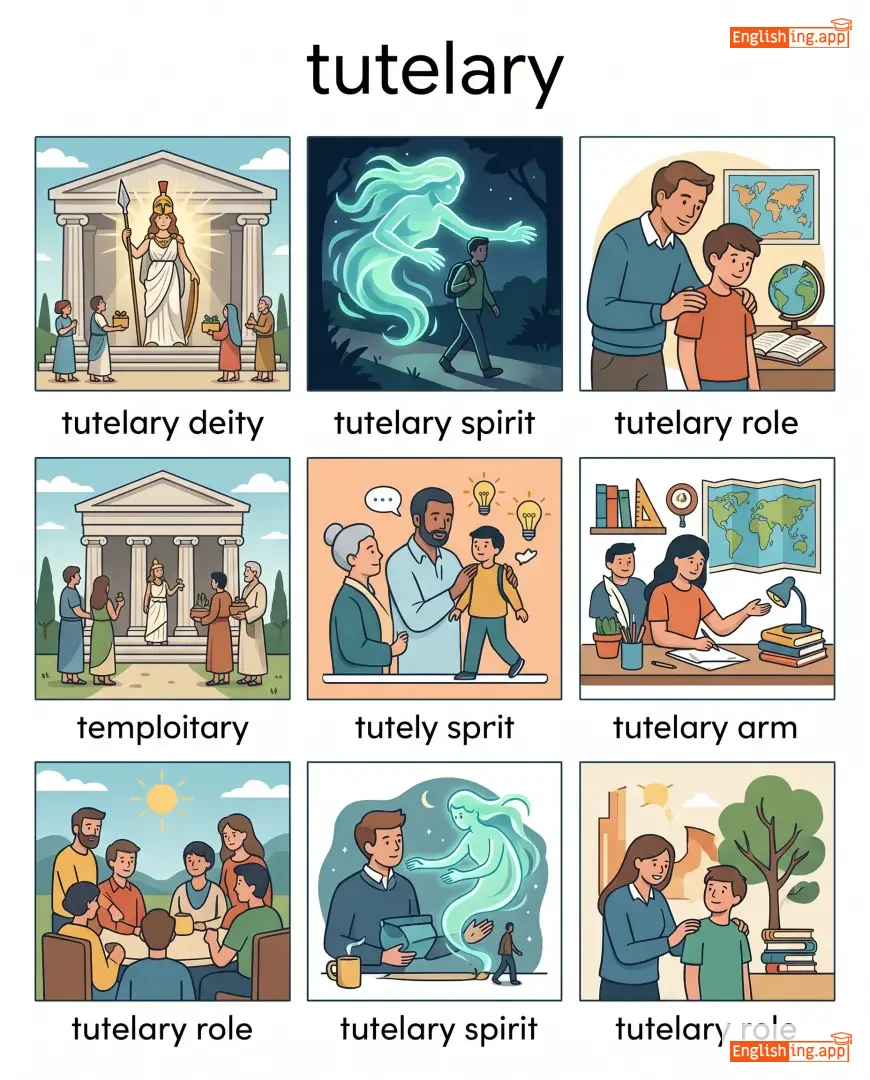
/ˈtjuːtɪləri/
adjective
(チュータラリー)
••••••
|
|
守護神
shugoshin
••••••
|
- •••••• | - •••••• | - •••••• | - •••••• |
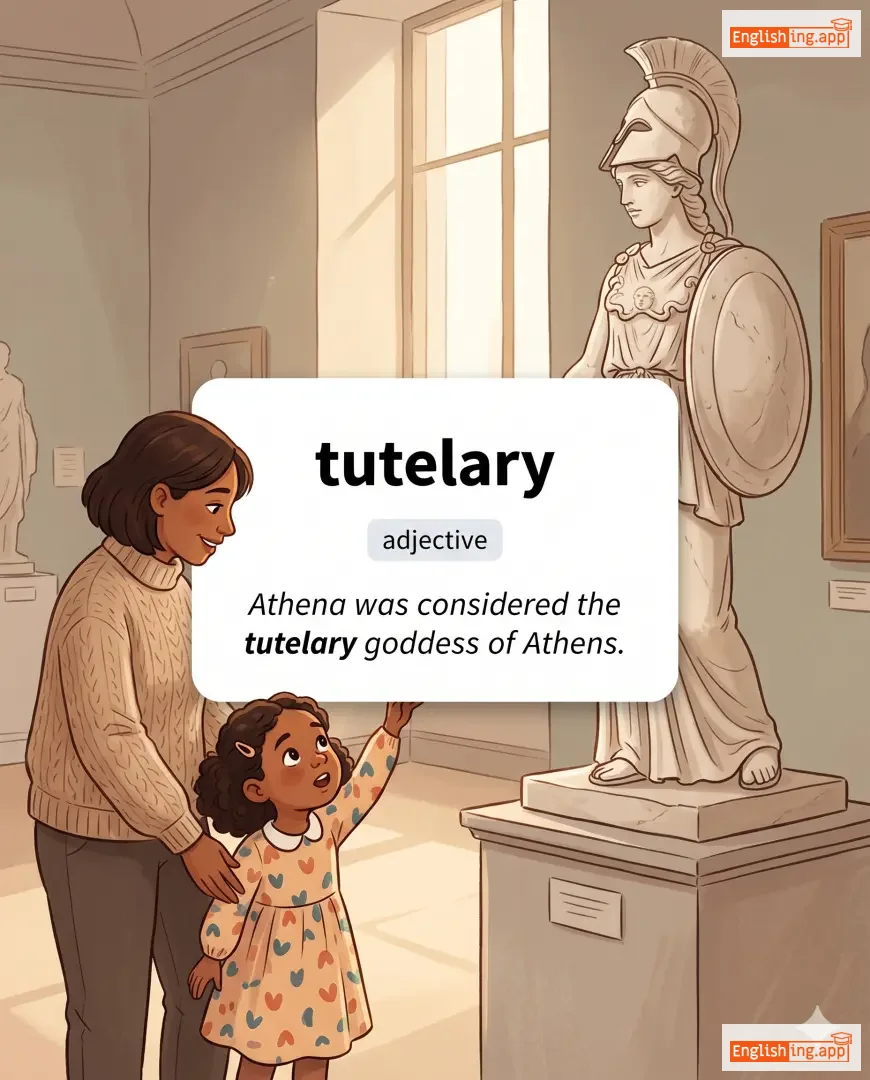
Relating to or serving as a guardian or protector, often used for deities or spirits.
••••••
|
Athena was considered the tutelary goddess of Athens. |
アテナはアテネの守護神と見なされていました。
Atena wa Atene no shugoshin to minasarete imashita.
••••••
|
- •••••• | - •••••• | - •••••• |
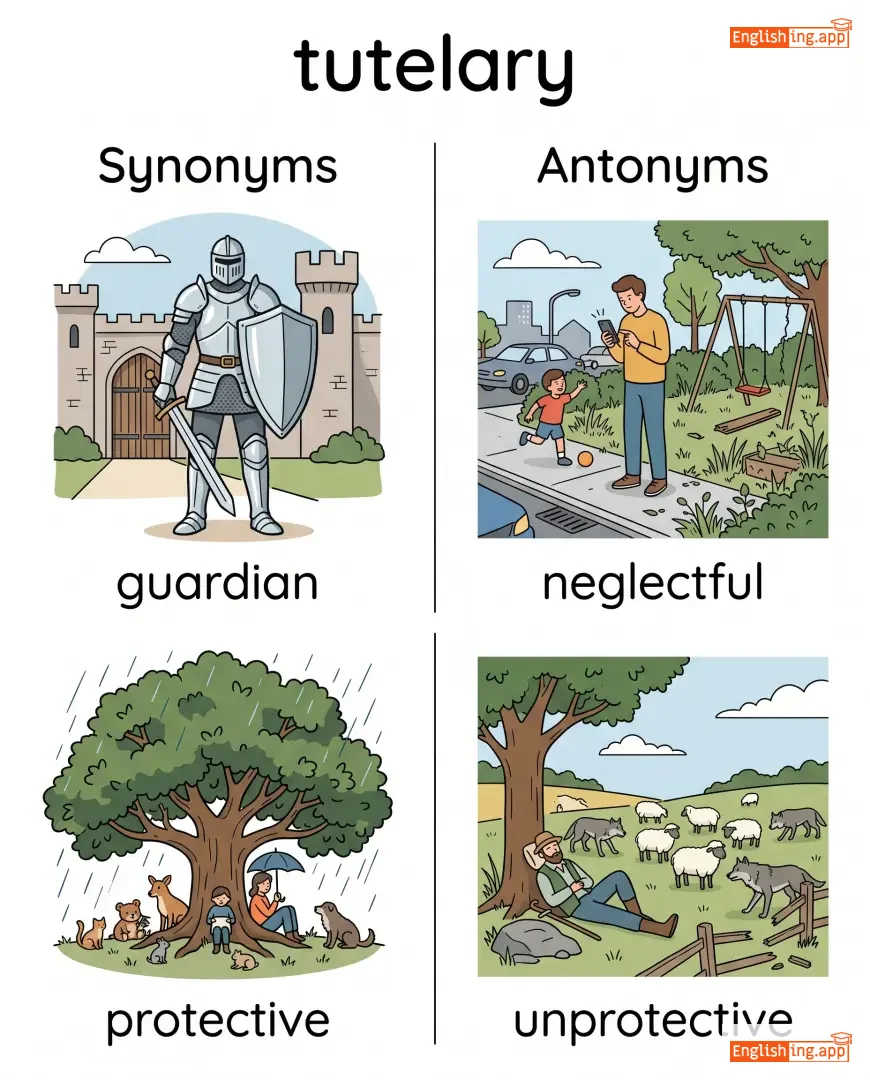
guardian, protective, patron, supervisory
••••••
|
neglectful, unprotective
••••••
|
tutelary deity, tutelary spirit, tutelary role
••••••
|
Tutelary = チューター + 図書館 守護者 → 神様の守護神 👼
••••••
|
|
👁️
••••••
|
/ʌnˈkæni/
adjective
(アンキャニー)
••••••
|
|
不気味
bukimi
••••••
|
- •••••• | - •••••• | - •••••• | - •••••• |
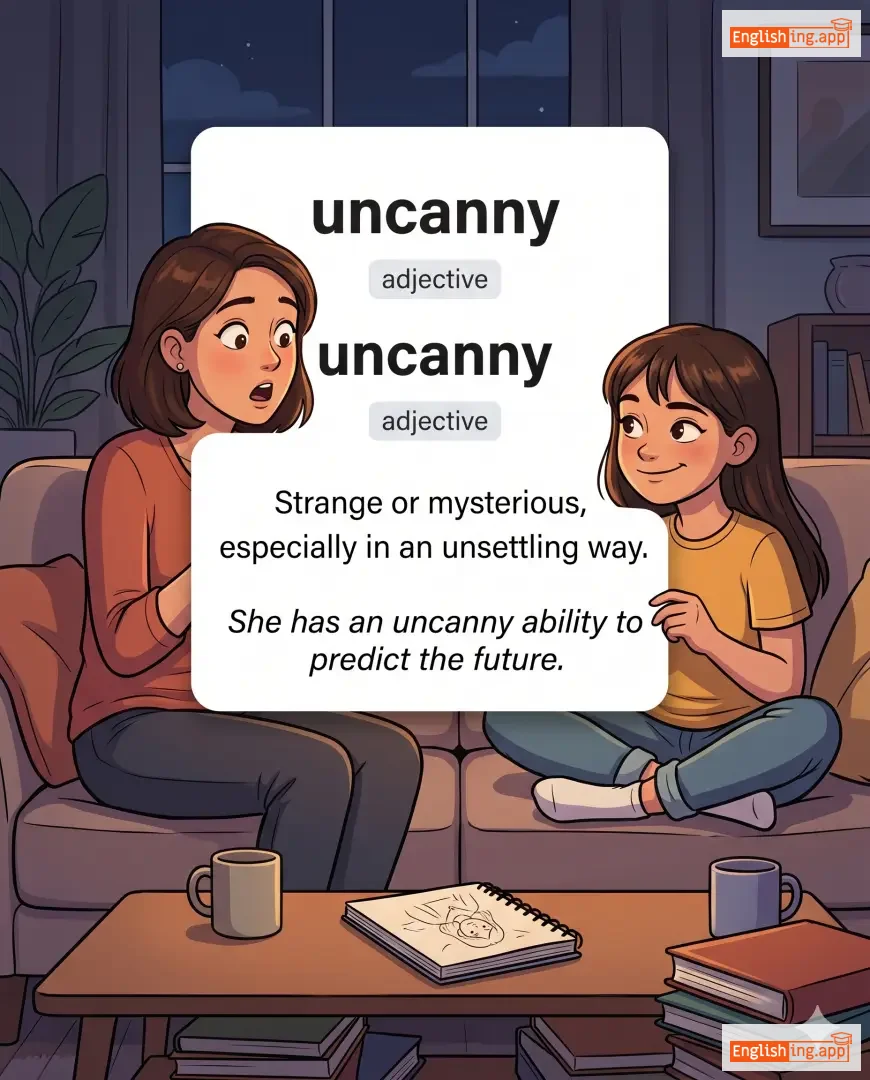
Strange or mysterious, especially in an unsettling way.
••••••
|
She has an uncanny ability to predict the future. |
彼女は未来を予測する不気味な能力を持っている。
kanojo wa mirai o yosoku suru bukimi na nōryoku o motte iru.
••••••
|
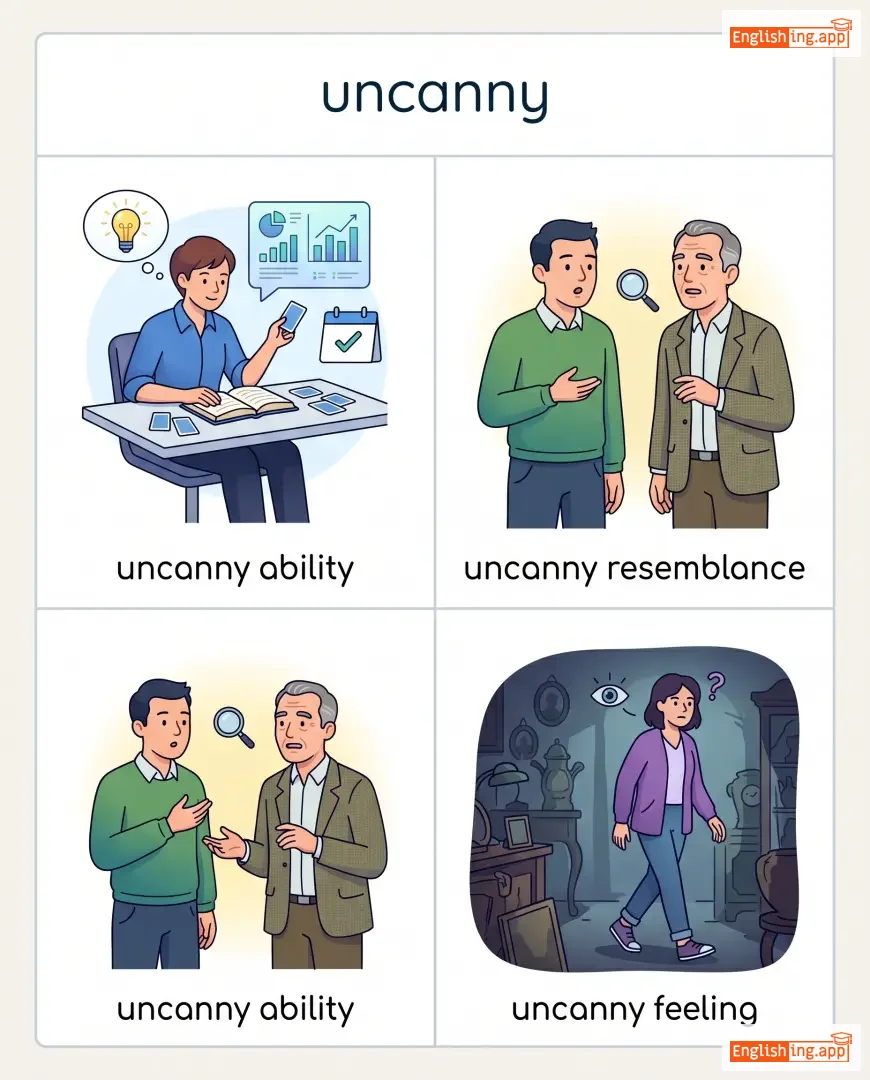
uncanny resemblance |
a striking and unusual similarity
••••••
|
不気味な類似
bukimi na ruiji
••••••
|
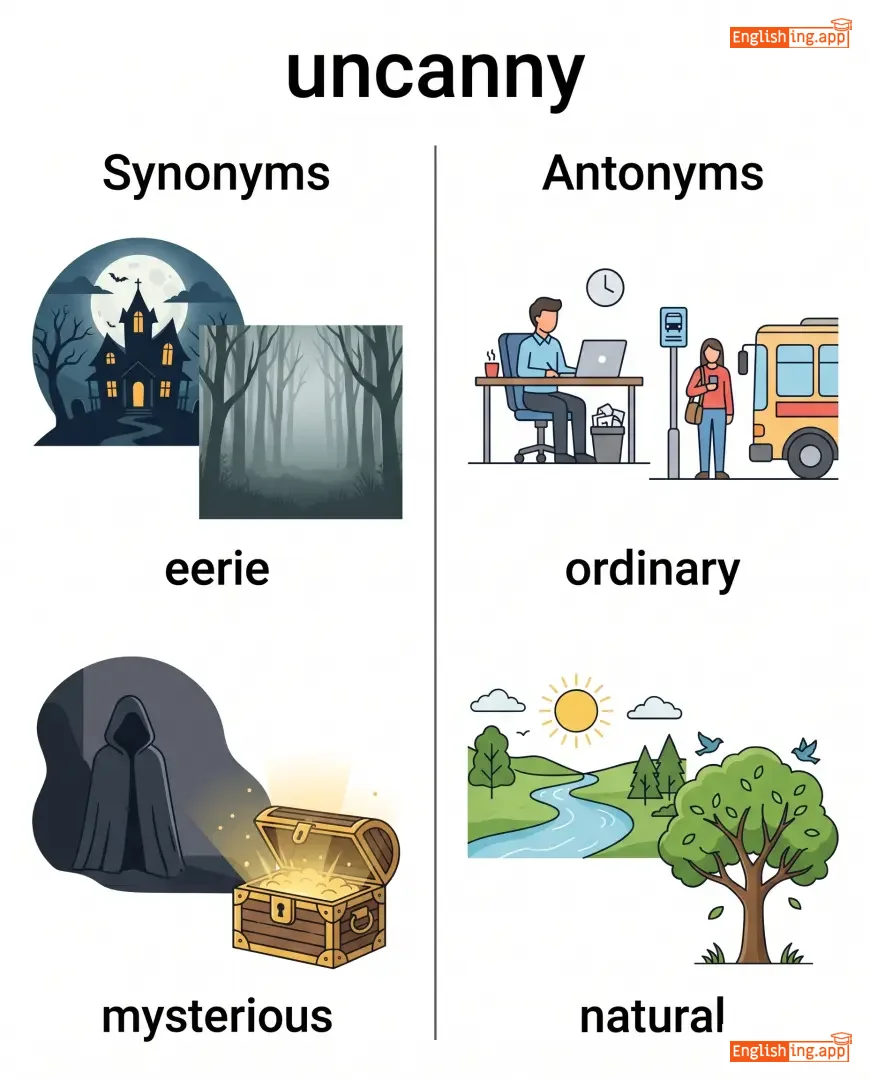
eerie, mysterious, strange, weird, supernatural
••••••
|
ordinary, natural, normal
••••••
|
uncanny ability, uncanny resemblance, uncanny feeling
••••••
|
Uncannyは不気味、例えば不気味な類似のような意味です。
••••••
|
|
🏞️
••••••
|
/ˈʌndjʊleɪtɪŋ/
adjective
(アンドゥレイティング)
••••••
|
|
波打つ
namiutsu
••••••
|
- •••••• | - •••••• | - •••••• | - •••••• |
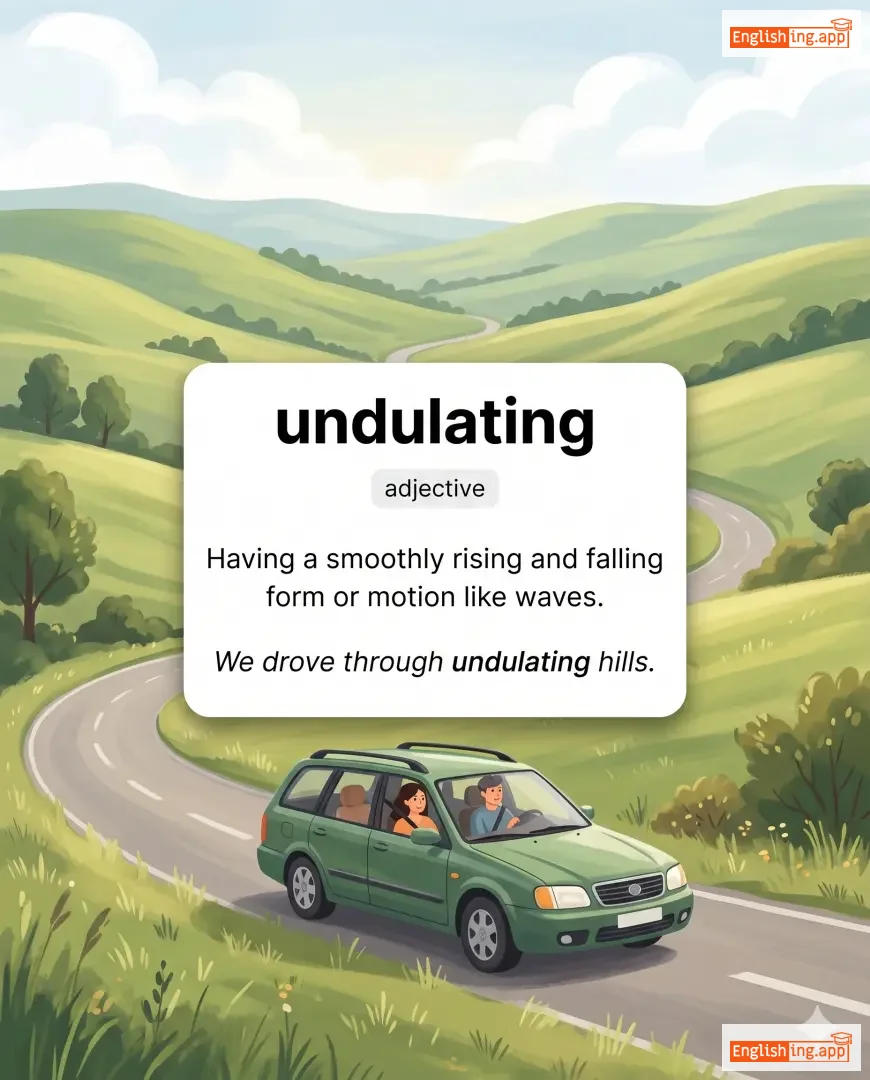
Having a smoothly rising and falling form or motion like waves.
••••••
|
We drove through undulating hills.
私たちは起伏のある丘をドライブしました。
••••••
|
私たちは起伏のある丘をドライブしました。
Watashitachi wa kifuku no aru oka o doraibu shimashita.
••••••
|
- •••••• | - •••••• | - •••••• |
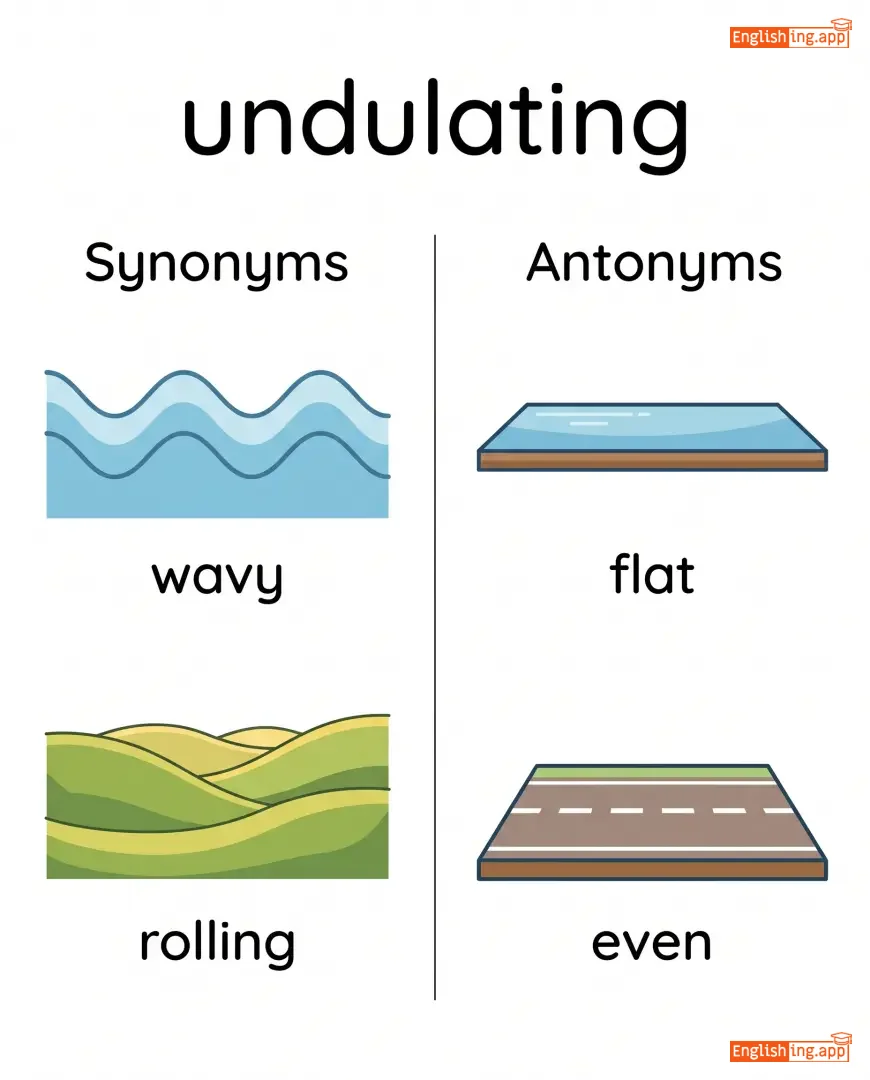
wavy, rolling, rippling, flowing
••••••
|
flat, even
••••••
|
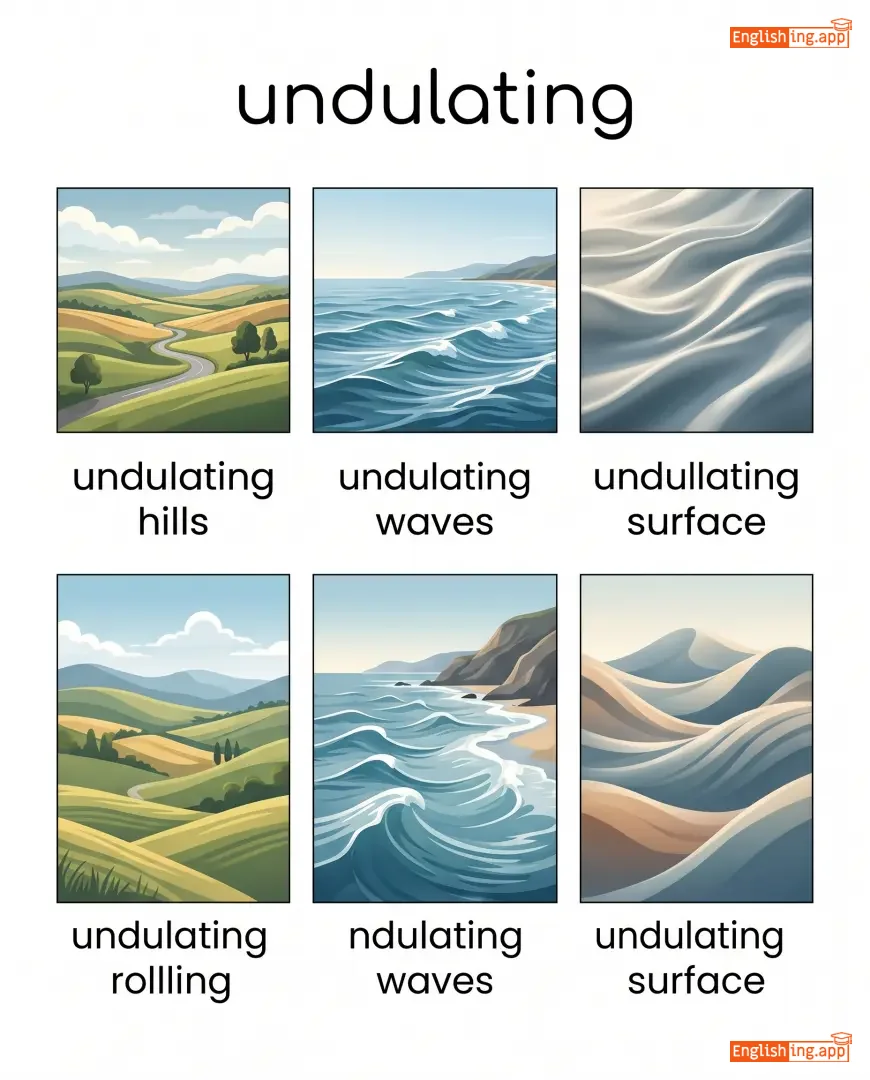
undulating hills, undulating waves, undulating surface
••••••
|
波のように起伏する丘が待っている!
••••••
|
|
😊
••••••
|
/ʌnˈfeɪnd/
adjective
(アンフェインド)
••••••
|
|
本物
honmono
••••••
|
- •••••• | - •••••• | - •••••• | - •••••• |
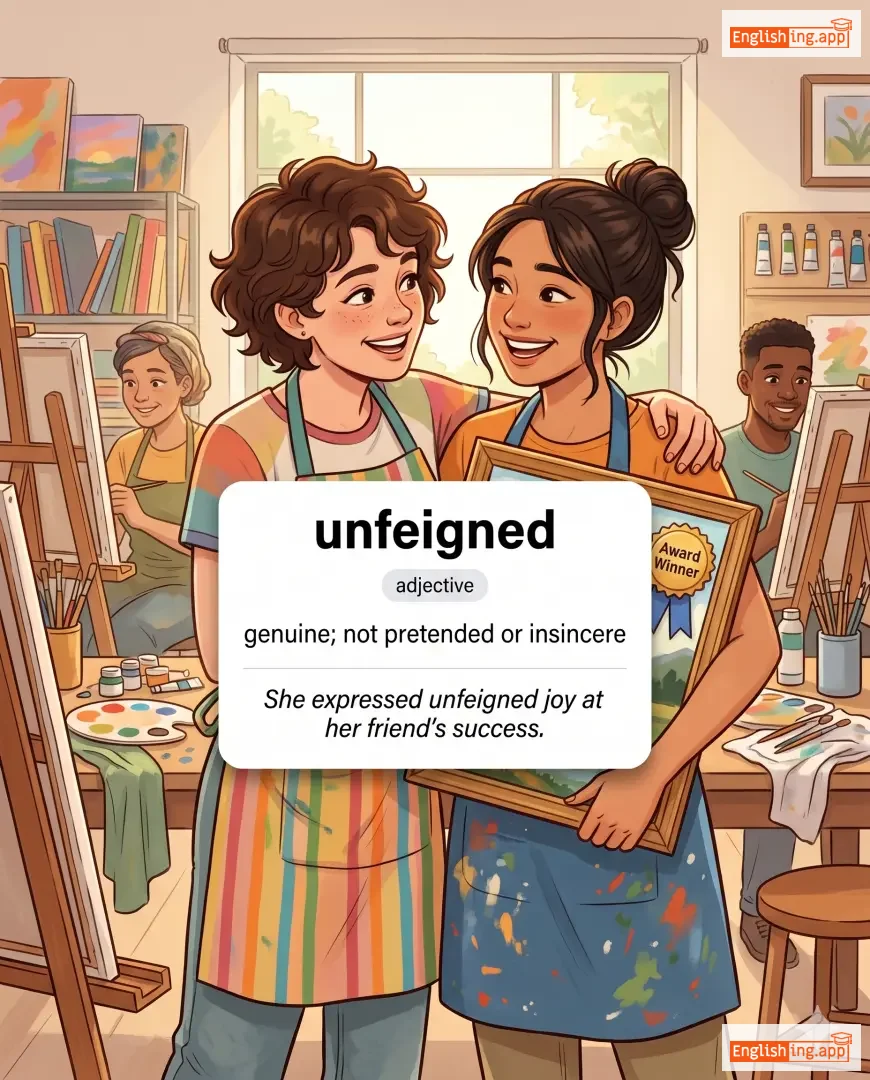
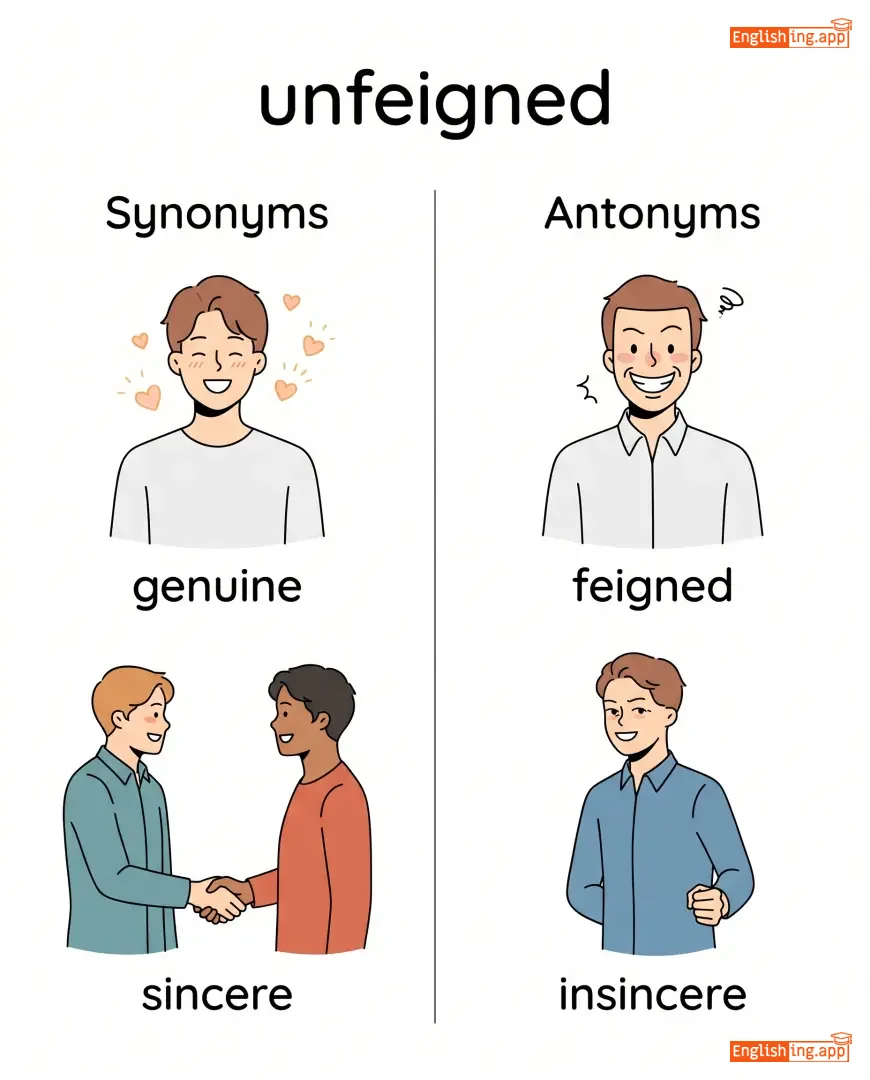
genuine; not pretended or insincere
••••••
|
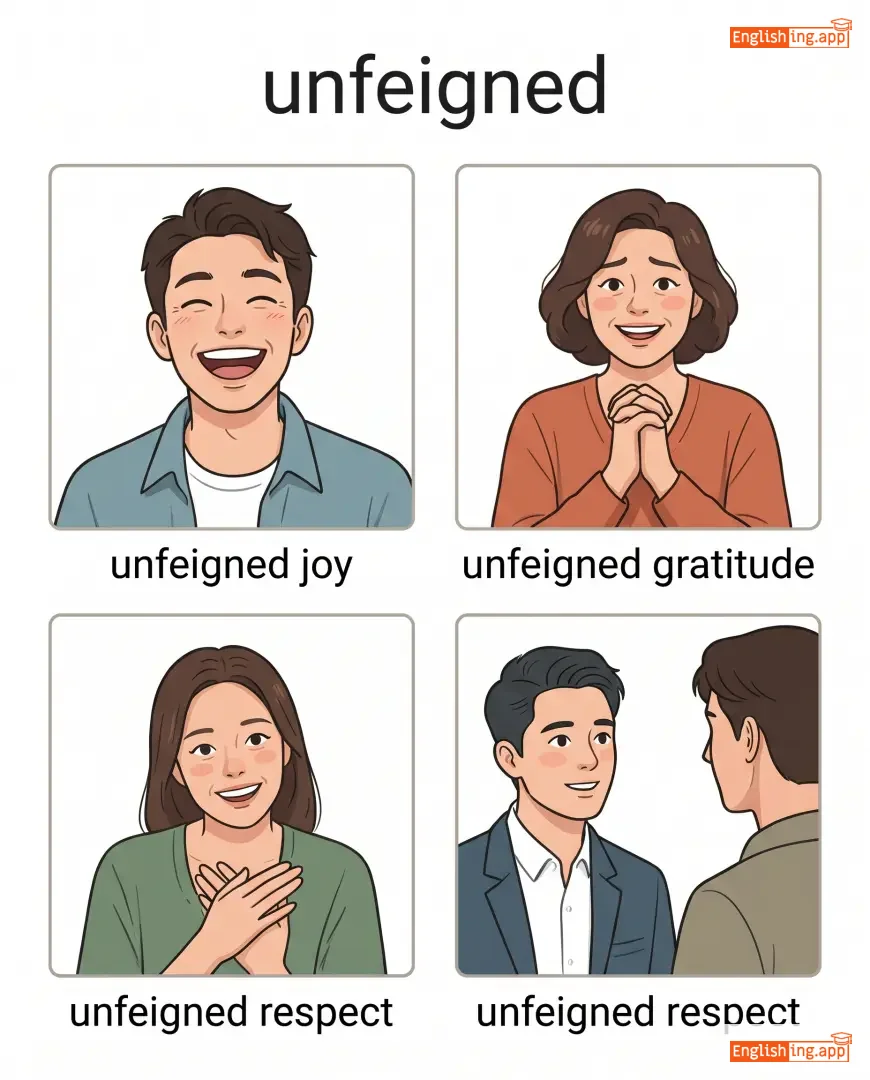
She expressed unfeigned joy at her friend's success. |
彼女は友達の成功に対して本物の喜びを表現しました。
Kanojo wa tomodachi no seikou ni taishite honmono no yorokobi o hyougen shimashita.
••••••
|
- •••••• | - •••••• | - •••••• |
genuine, sincere, real, honest, authentic
••••••
|
feigned, insincere, fake
••••••
|
unfeigned joy, unfeigned gratitude, unfeigned respect
••••••
|
UnFEIGNedは本物(honmono)であり、偽りはない。
••••••
|
|
⚠️
••••••
|
/ʌnˈtɛnəbl/
adjective
(アンテナブル)
••••••
|
|
維持できない
ijidekinai
••••••
|
- •••••• | - •••••• | - •••••• | - •••••• |
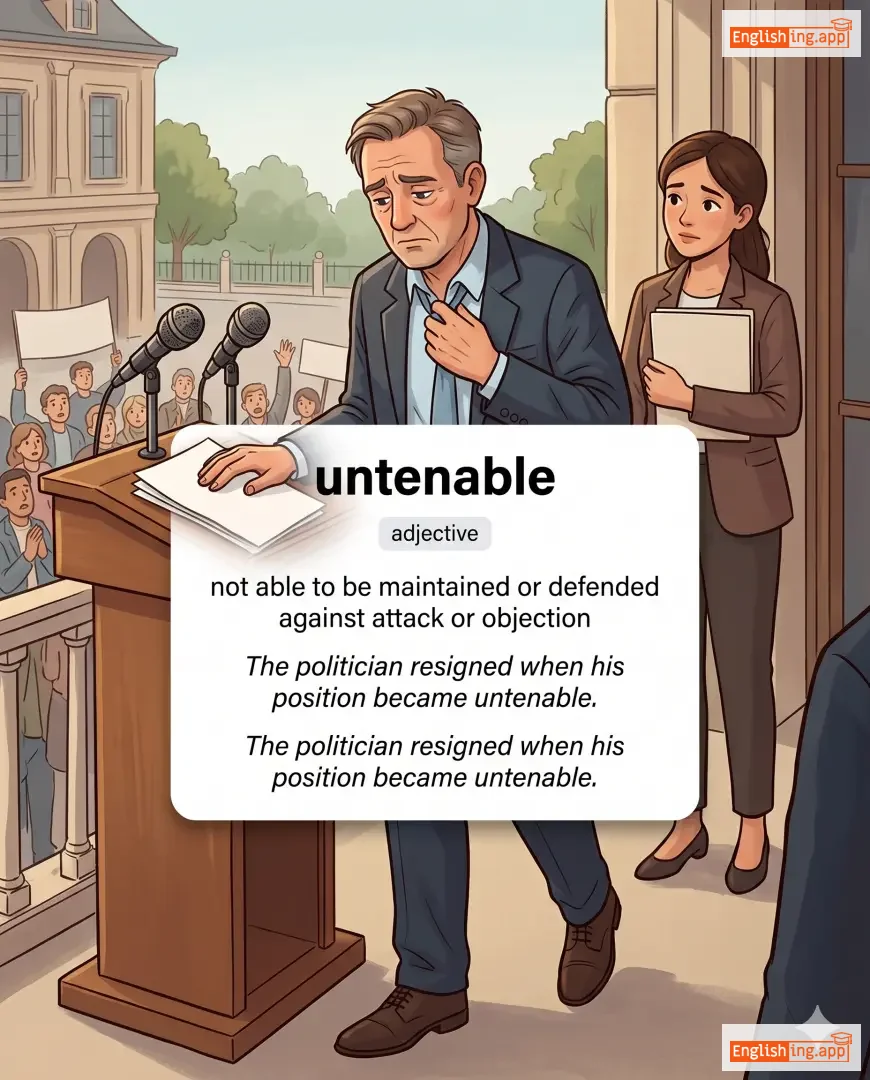
not able to be maintained or defended against attack or objection
••••••
|
The politician resigned when his position became untenable.
政治家は彼の立場が維持できなくなったときに辞職しました。
••••••
|
政治家は彼の立場が維持できなくなったときに辞職しました。
Seijika wa kare no tachiba ga iji dekinakunatta toki ni jishoku shimashita.
••••••
|
- •••••• | - •••••• | - •••••• |
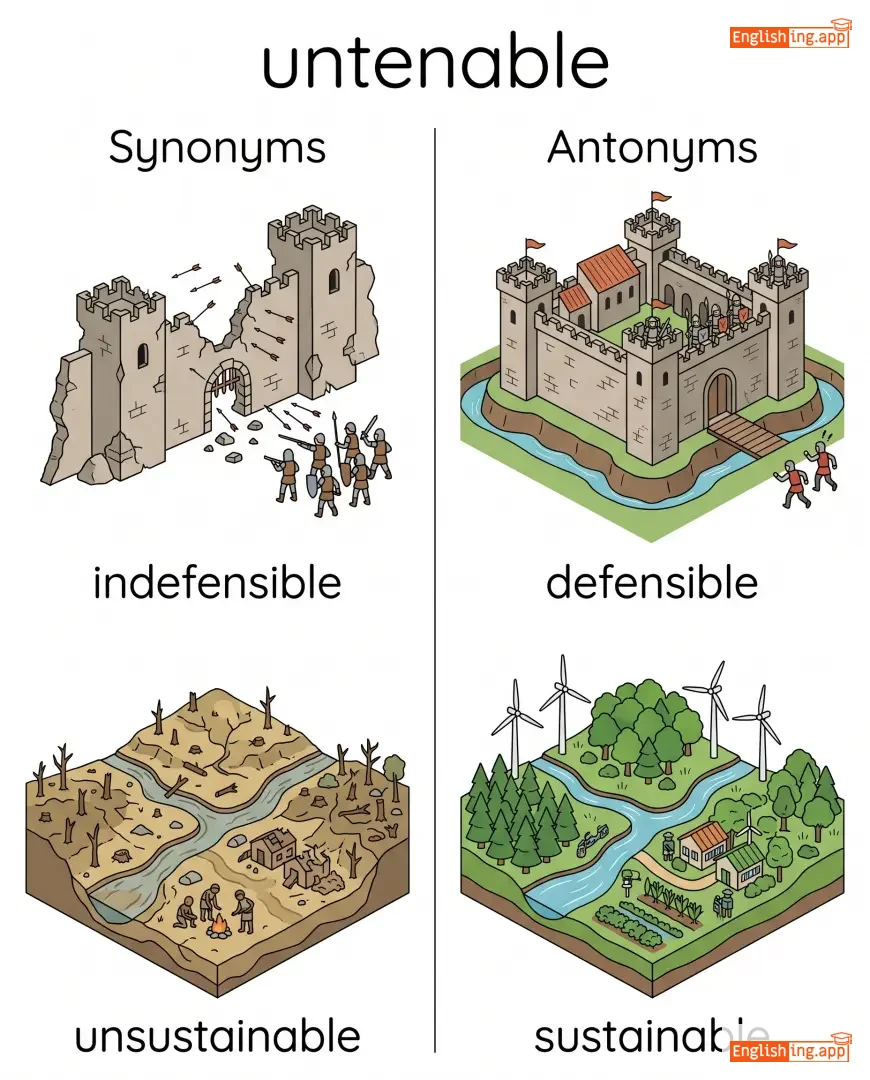
indefensible, unsustainable, weak, baseless, flawed
••••••
|
defensible, sustainable, strong
••••••
|
untenable position, untenable situation, untenable argument
••••••
|
TEN-able は守れる意味、UNtenable は守れない意味です。⚠️
••••••
|
|
⚠️
••••••
|
/ˌʌn.təˈwɔːrd/
adjective
(アンタワード)
••••••
|
- •••••• |
予期しない
yokishinai
••••••
|
- •••••• | - •••••• | - •••••• | - •••••• |
Unexpected and inappropriate or inconvenient.
••••••
|
The meeting ended without any untoward incidents. |
会議は予期しない事件なしで終了しました。
Kaigi wa yokishinai jiken nashi de shūryō shimashita.
••••••
|
- •••••• | - •••••• | - •••••• |
unfortunate, unfavorable, inappropriate, inconvenient, unlucky
••••••
|
fortunate, favorable, appropriate
••••••
|
untoward incident, untoward behavior, untoward situation
••••••
|
Untoward は予期しない出来事と不適切を意味します。
••••••
|
|
📈
••••••
|
/ˈjuːʒəri/
noun
(ユウザリー)
••••••
|

|
高利貸し
kōrikashi
••••••
|
- •••••• | - •••••• | - •••••• | - •••••• |
The practice of lending money at unreasonably high interest rates.
••••••
|
The law strictly prohibits usury.
法律は高利貸しを厳しく禁止しています。
••••••
|
法律は高利貸しを厳しく禁止しています。
Hōritsu wa kōrikashi o kibishiku kinshi shiteimasu.
••••••
|
- •••••• | - •••••• | - •••••• |
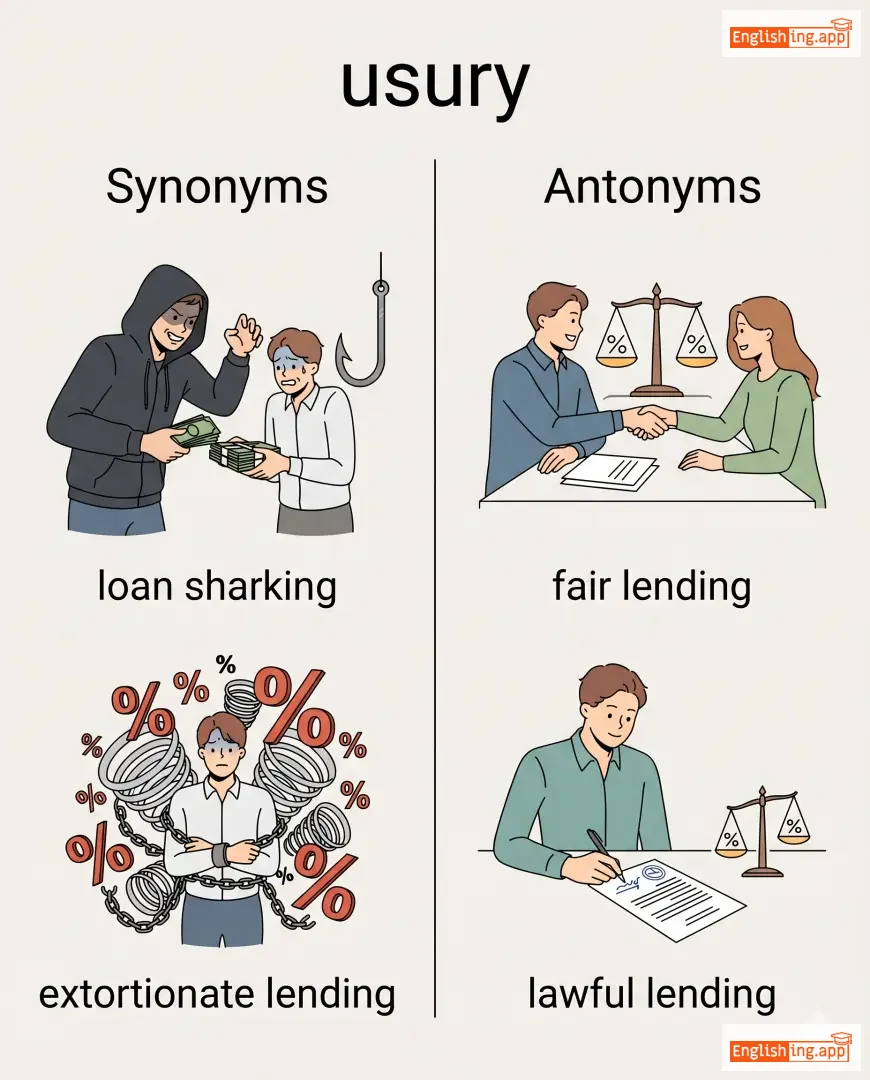
loan sharking, extortionate lending, high-interest lending
••••••
|
fair lending, lawful lending
••••••
|
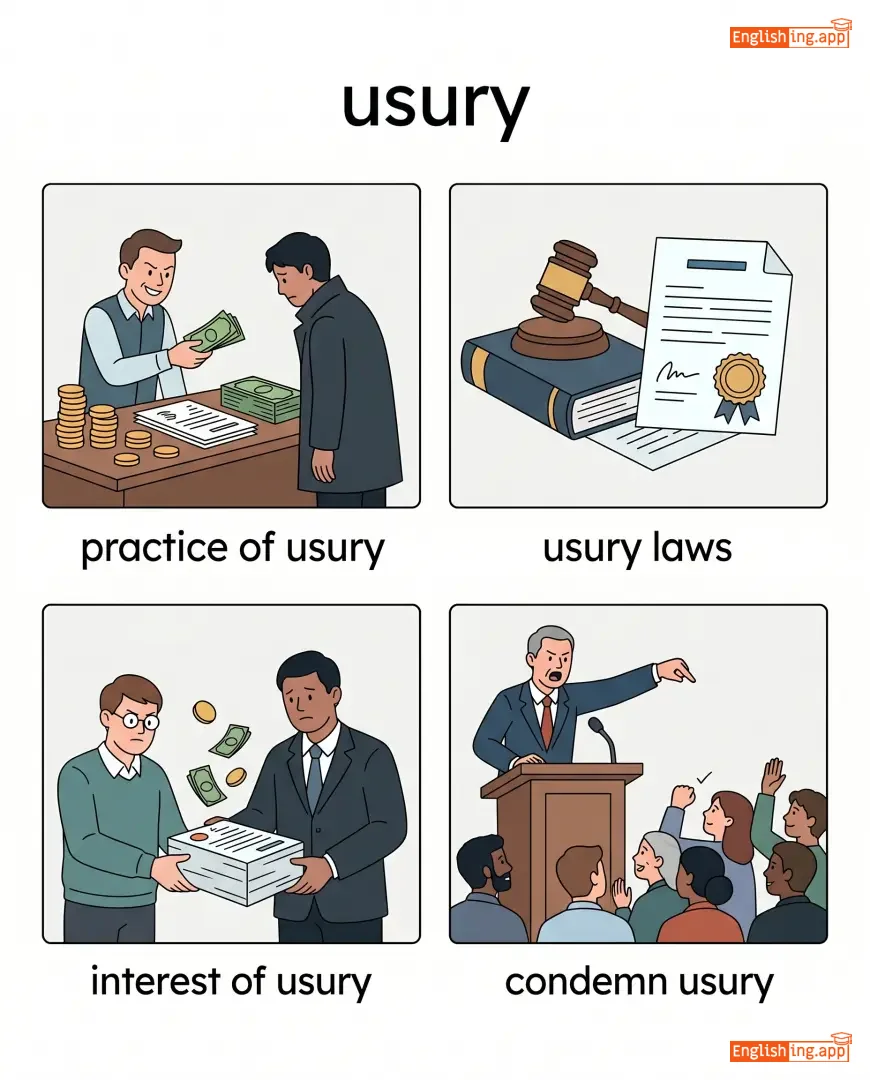
practice of usury, usury laws, condemn usury
••••••
|
高利貸しは非常に高い利息を取る行為、違法です。
••••••
|
|
⚖️
••••••
|
/ˈvæsɪleɪt/
verb
(ハピネス)
••••••
|
|
幸せ
shiawase
••••••
|
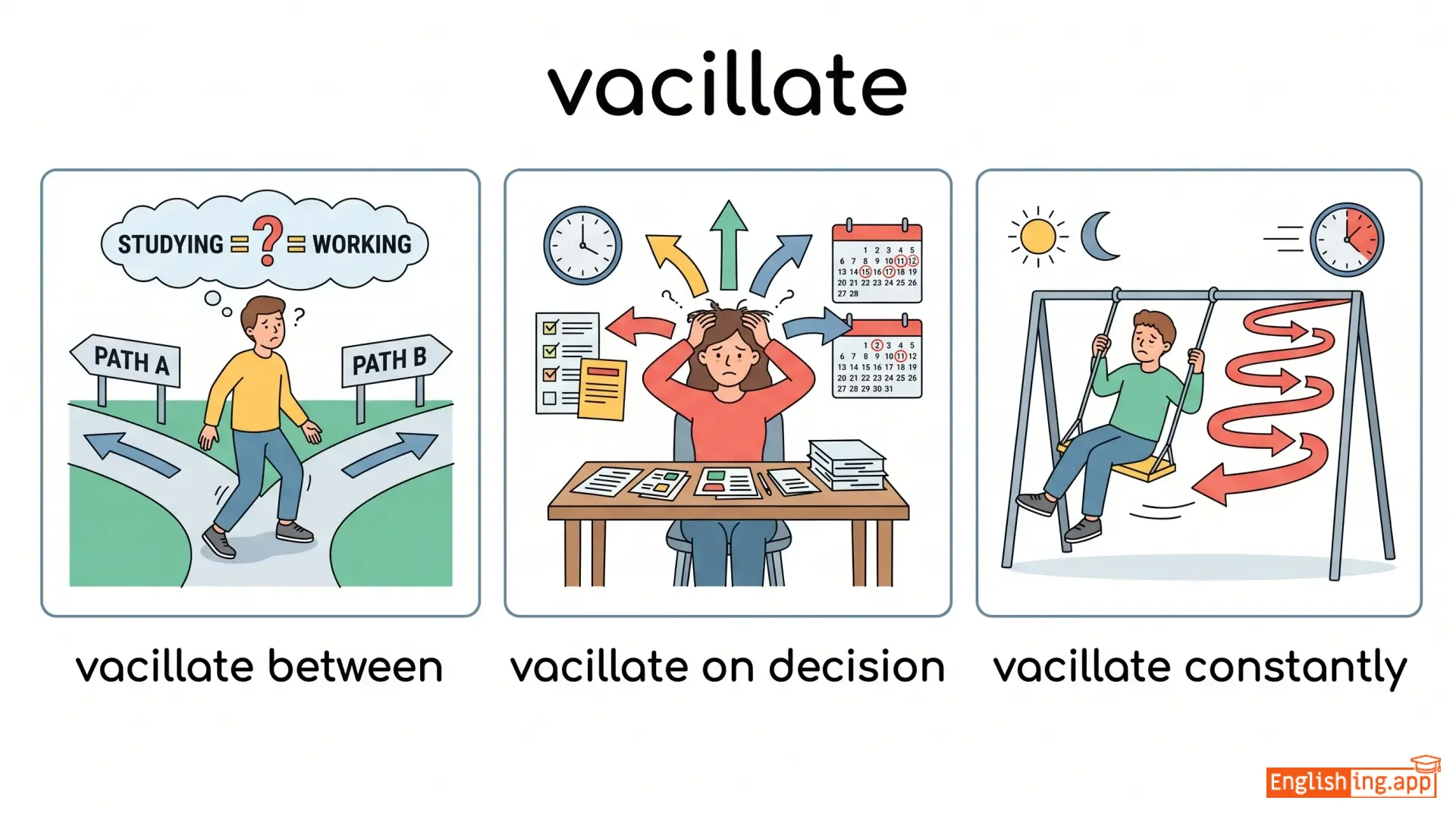
vacillated
••••••
|
vacillated
••••••
|
vacillates
••••••
|
vacillating
••••••
|
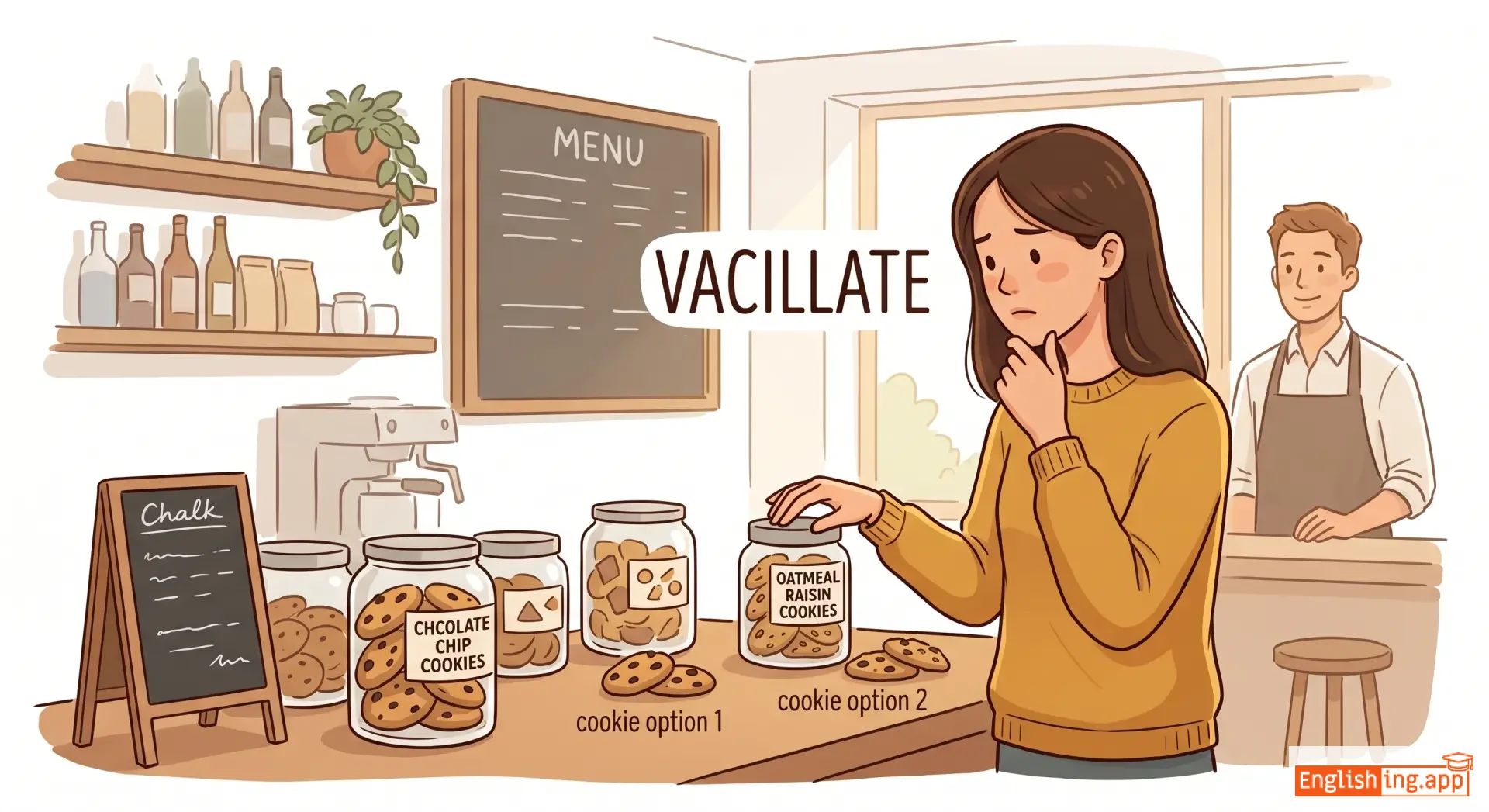
to waver between different opinions or actions; be indecisive
••••••
|
He vacillated between studying law and becoming a writer.
彼女は賞を受け取ったとき、自分の幸せを隠すことができませんでした。
••••••
|
彼女は賞を受け取ったとき、自分の幸せを隠すことができませんでした。
Kanojo wa shō o uketotta toki, jibun no shiawase o kakusu koto ga dekimasen deshita.
••••••
|
vacillate between
幸せを追求する
••••••
|
to keep changing your mind between two choices
••••••
|
幸せを追求する
shiawase o tsuikyū suru
••••••
|
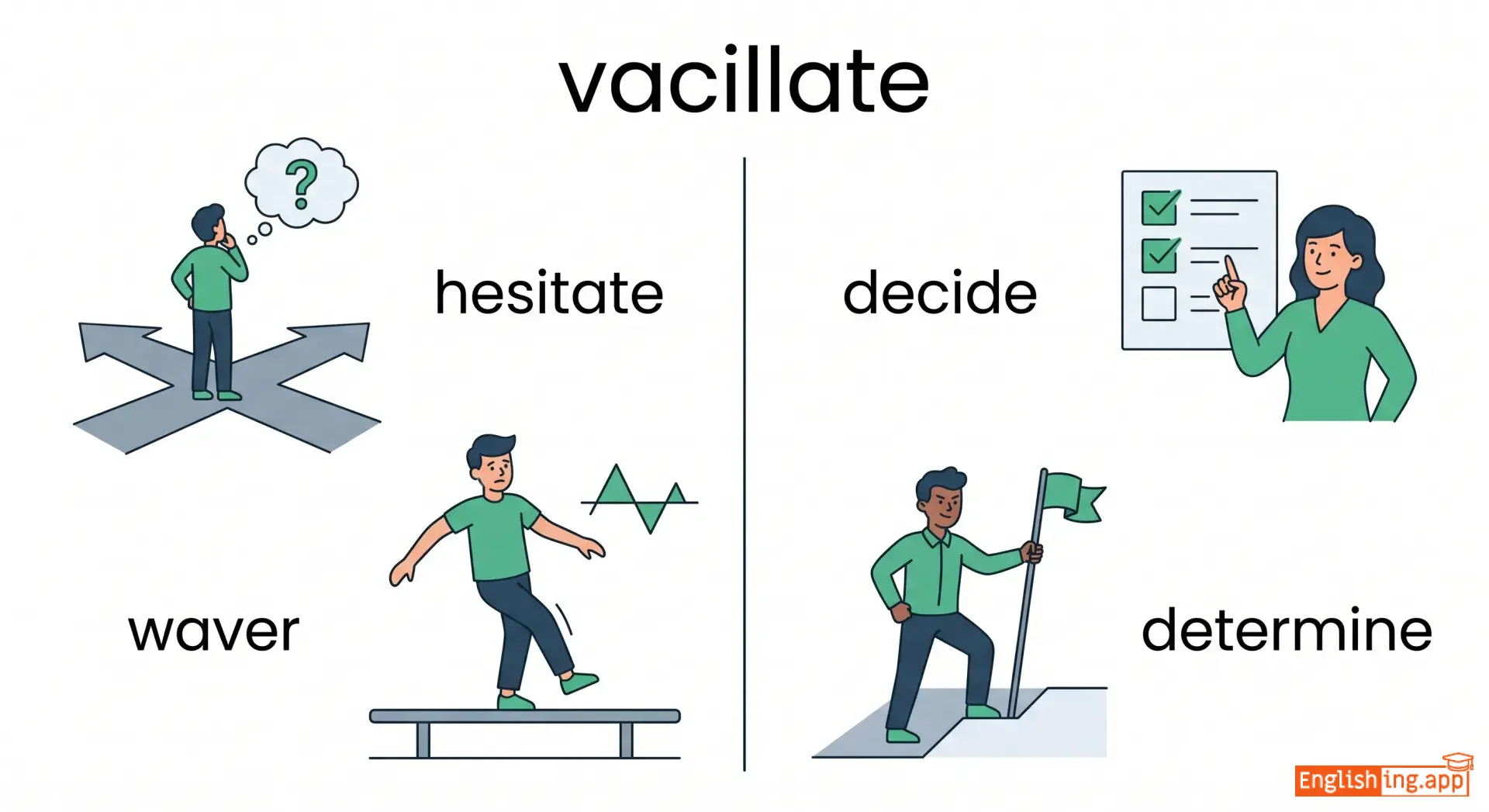
hesitate, waver, dither, fluctuate
••••••
|
decide, determine, resolve
••••••
|
vacillate between, vacillate on decision, vacillate constantly
••••••
|
幸せは追い求めるもの、忘れずに追いかけましょう!
••••••
|
|
😶
••••••
|
/ˈvækjuəs/
adjective
(ヴァキュアス)
••••••
|
|
空虚
kūkyō
••••••
|
- •••••• | - •••••• | - •••••• | - •••••• |
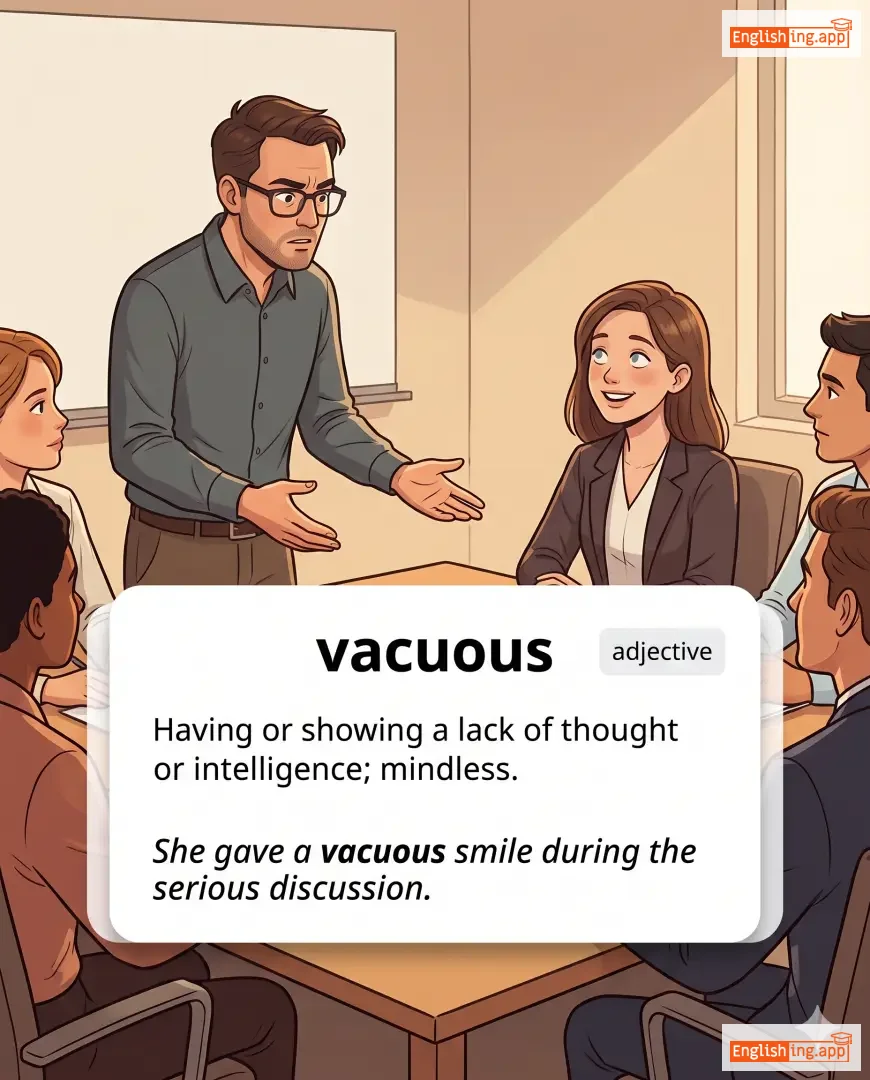
Having or showing a lack of thought or intelligence; mindless.
••••••
|
She gave a vacuous smile during the serious discussion.
彼女は真剣な議論の中で空虚な笑顔を見せた。
••••••
|
彼女は真剣な議論の中で空虚な笑顔を見せた。
Kanojo wa shinken na giron no naka de kūkyō na egao o miseta.
••••••
|
vacuous expression
空虚な表情
••••••
|
An empty or unintelligent look on someone's face.
••••••
|
空虚な表情
Kūkyō na hyōjō
••••••
|
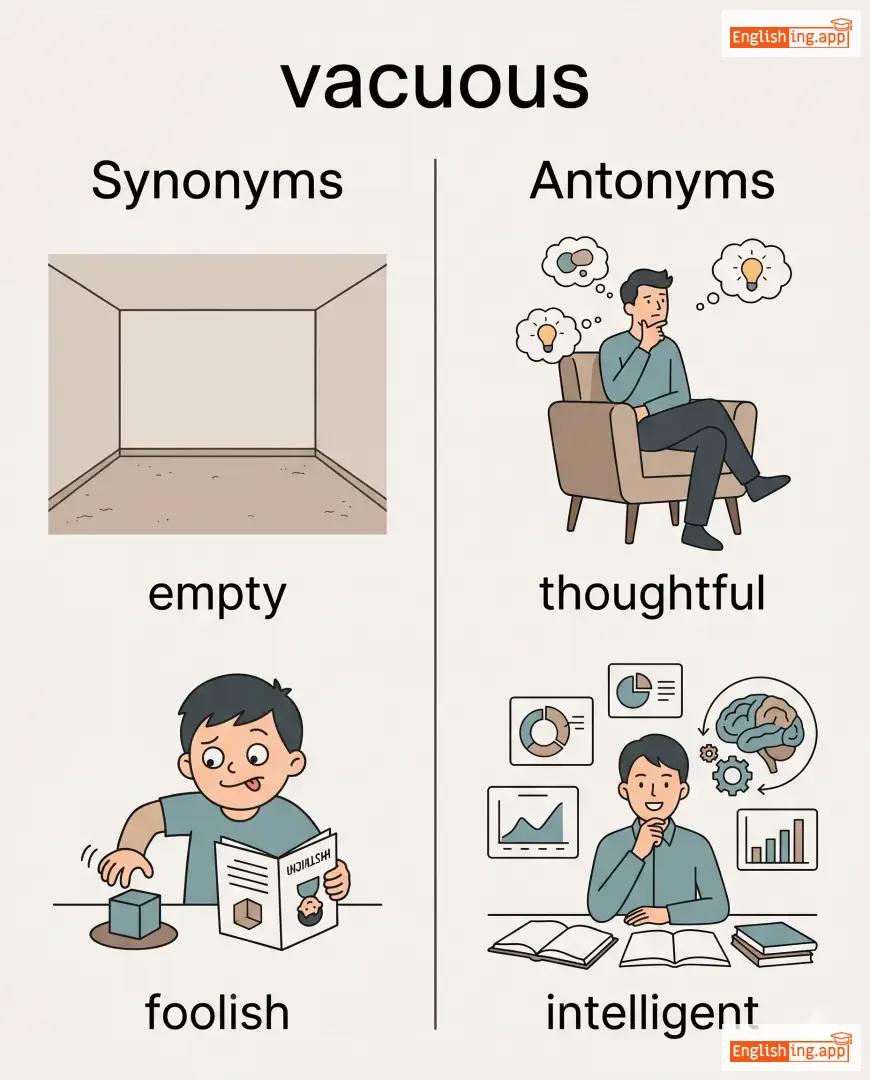
empty, foolish, silly, mindless, hollow
••••••
|
thoughtful, intelligent, meaningful
••••••
|
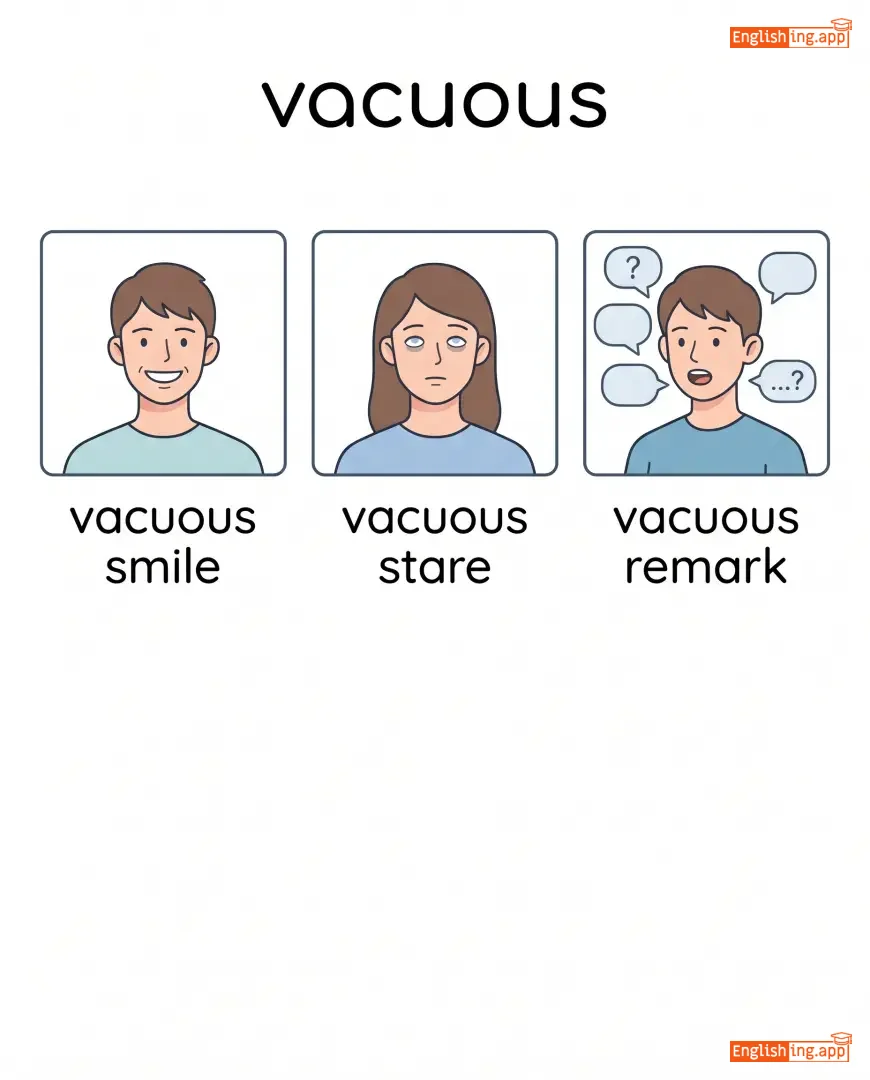
vacuous smile, vacuous stare, vacuous remark, vacuous expression
••••••
|
Vacuousは空虚を意味します – 頭の中が空っぽ、笑顔も空っぽ。
••••••
|
|
🗣️
••••••
|
/ˌvælɪˈdɪktəri/
adjective
(ヴァリディクトリー)
••••••
|
|
送別の
soubetsu no
••••••
|
- •••••• | - •••••• | - •••••• | - •••••• |
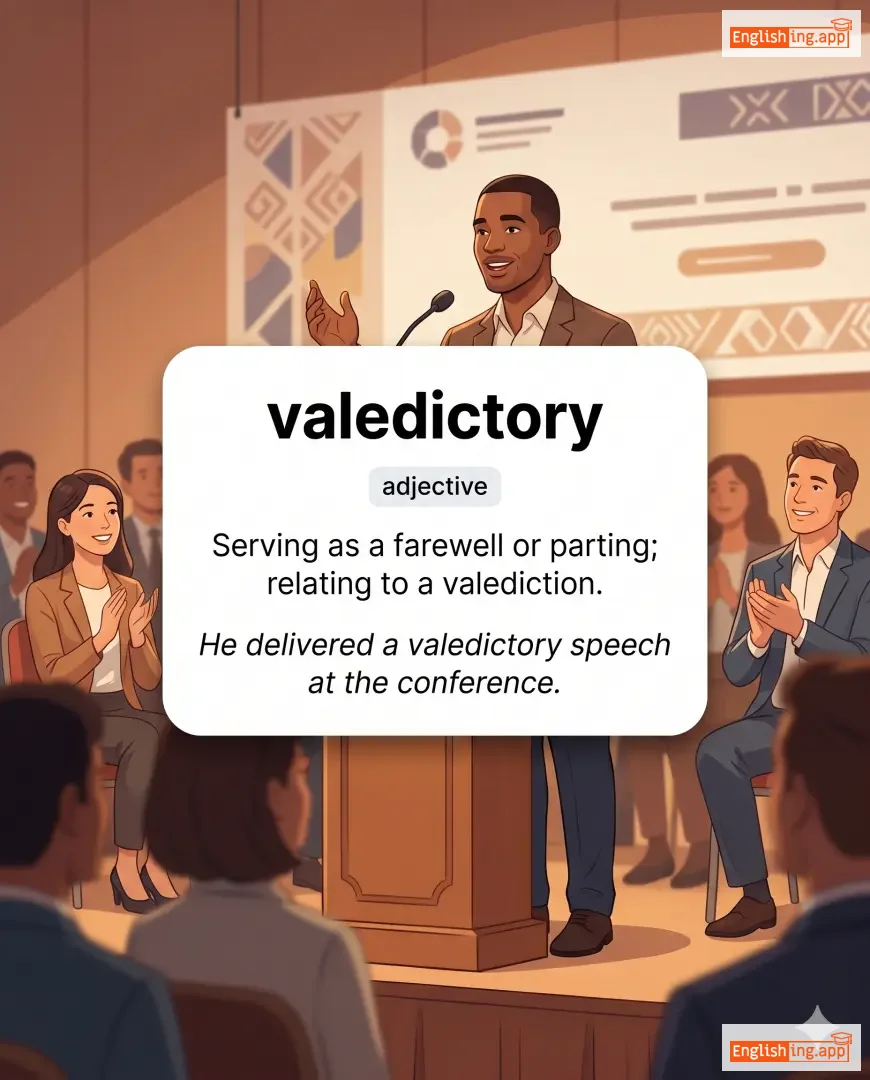
Serving as a farewell or parting; relating to a valediction.
••••••
|
He delivered a valedictory speech at the conference. |
彼は会議で送別のスピーチを行った。
Kare wa kaigi de soubetsu no supīchi o okonatta.
••••••
|
- •••••• | - •••••• | - •••••• |
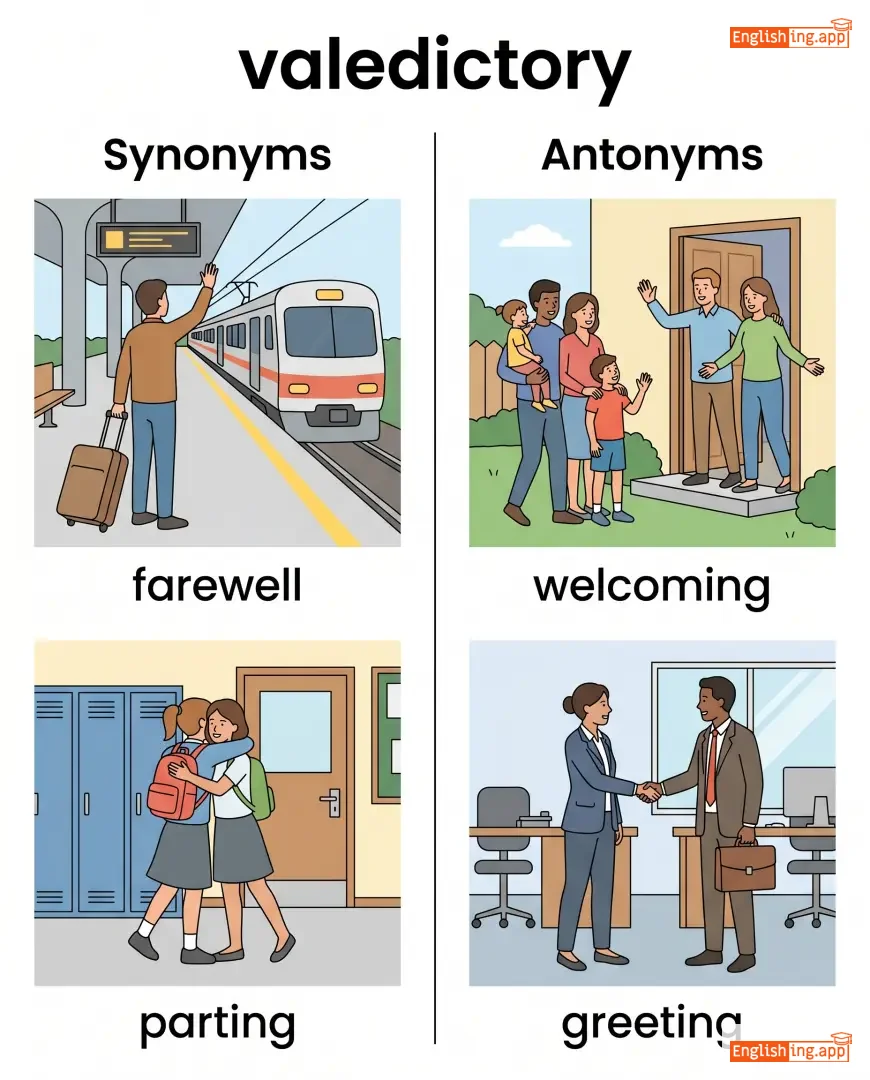
farewell, parting, goodbye, final
••••••
|
welcoming, greeting
••••••
|
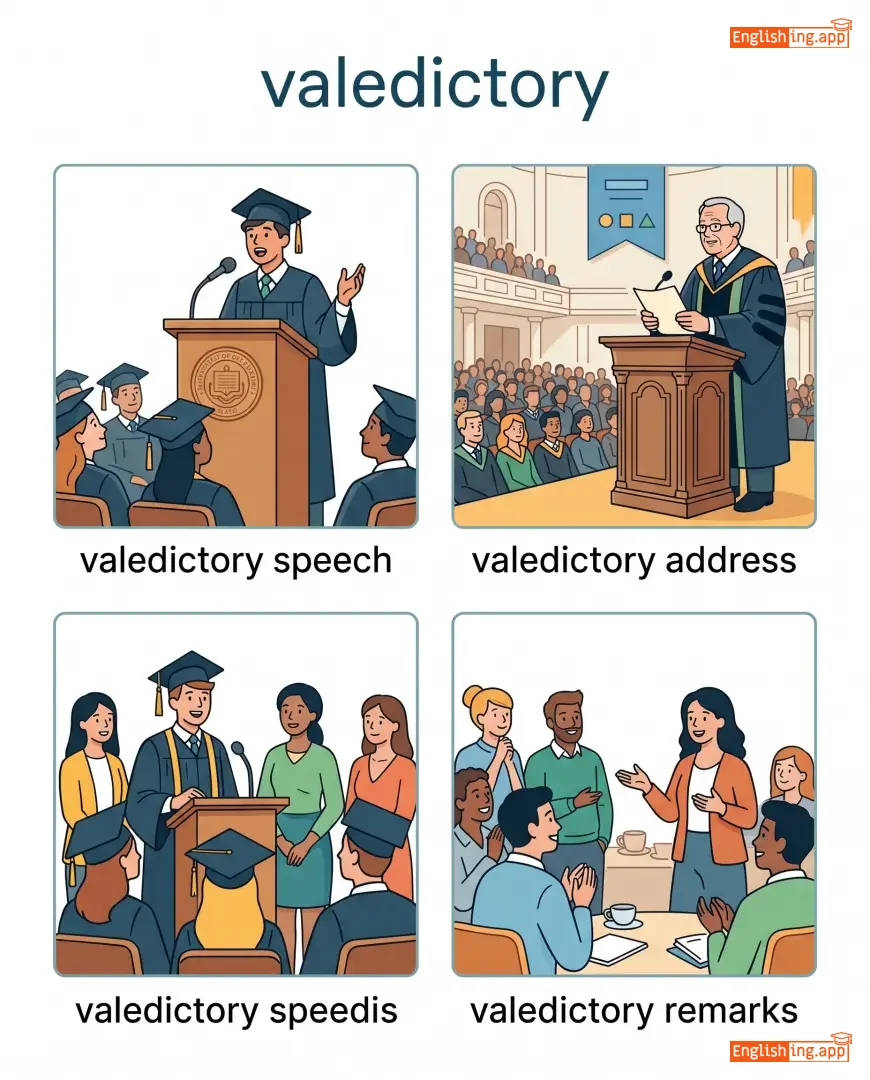
valedictory speech, valedictory address, valedictory remarks, valedictory message
••••••
|
Valedictory は送別のスピーチ - 送別の演説
••••••
|
|
😐
••••••
|
/ˈvæpɪd/
adjective
(ヴェイピッド)
••••••
|
- •••••• |
退屈な
taikutsuna
••••••
|
- •••••• | - •••••• | - •••••• | - •••••• |
lacking liveliness, flavor, or interest; dull and uninspired
••••••
|
The lecture was so vapid that half the audience fell asleep. |
講義は退屈すぎて、観客の半分が寝てしまった。
Kōgi wa taikutsu sugite, kankyaku no hanbun ga nete shimatta.
••••••
|
- •••••• | - •••••• | - •••••• |
dull, boring, lifeless, insipid, tedious
••••••
|
exciting, lively, interesting
••••••
|
vapid conversation, vapid smile, vapid remarks, vapid movie
••••••
|
VAPID = 退屈な講義、みんな寝てしまう。
••••••
|
|
🌿
••••••
|
/ˈvɛəriəˌɡeɪtɪd/
adjective
(バリエゲイテッド)
••••••
|
- •••••• |
まだらの
madara no
••••••
|
- •••••• | - •••••• | - •••••• | - •••••• |
Having different colors, especially in irregular patches or streaks.
••••••
|
The garden was full of variegated plants.
ザ ガーデン ワズ フル オブ バリエゲイテッド プランツ。
••••••
|
庭はまだらの植物でいっぱいでした。
niwa wa madara no shokubutsu de ippai deshita
••••••
|
- •••••• | - •••••• | - •••••• |
multicolored, dappled, mottled, streaked, patterned
••••••
|
monochrome, plain
••••••
|
variegated leaves, variegated plants, variegated patterns
••••••
|
Madara no sounds like 'modern art'—full of mixed colors and patterns.
••••••
|
|
📢
••••••
|
/vɔːnt/
verb
••••••
|
- •••••• | - •••••• |
vaunted
••••••
|
vaunted
••••••
|
vaunts
••••••
|
vaunting
••••••
|
to boast or brag about something, especially in an excessive way
••••••
|
He would often vaunt his achievements in front of his colleagues. |
- •••••• |
vaunt one's success |
to brag excessively about one’s achievements
••••••
|
- •••••• |
boast, brag, flaunt, parade, trumpet
••••••
|
downplay, conceal, suppress
••••••
|
vaunt one's skills, vaunt loudly, vaunt constantly, vaunt achievement
••••••
|
No •••••• |
|
💰
••••••
|
/ˈviːnəl/
adjective
(ヴィーナル)
••••••
|
|
売国的
baikokuteki
••••••
|
- •••••• | - •••••• | - •••••• | - •••••• |
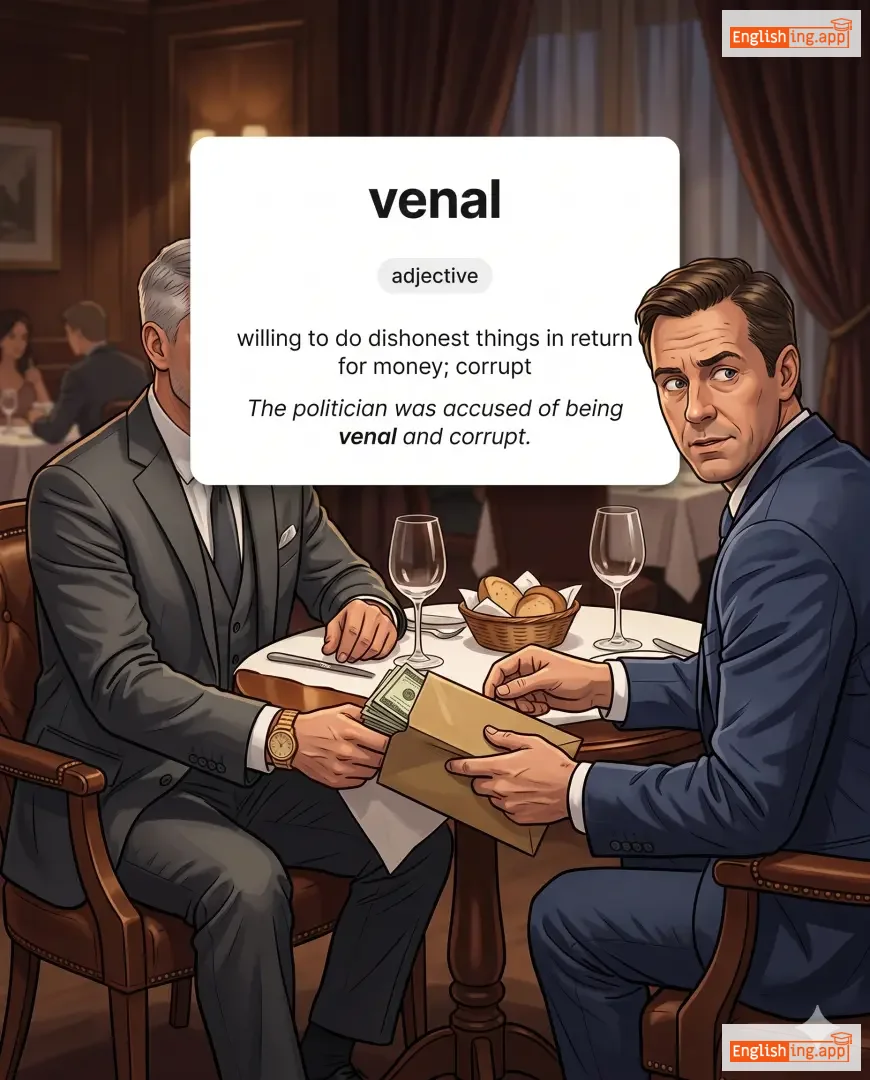
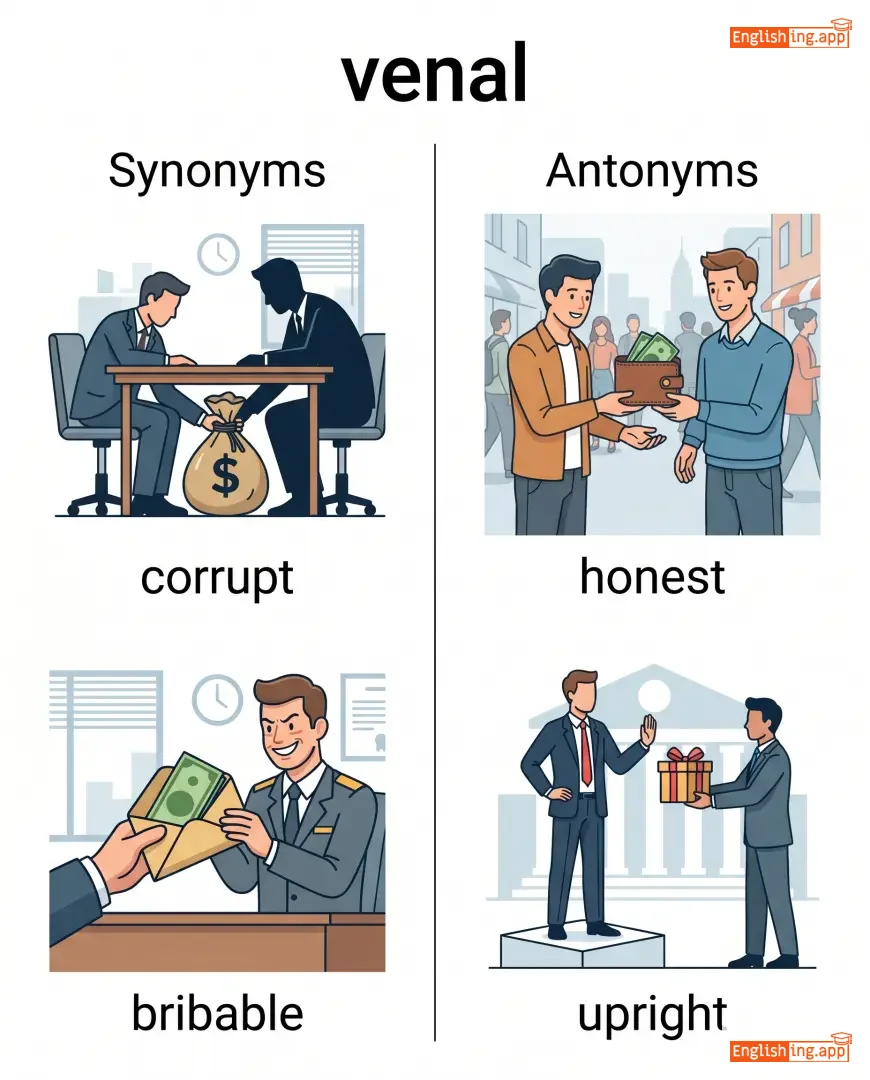
willing to do dishonest things in return for money; corrupt
••••••
|
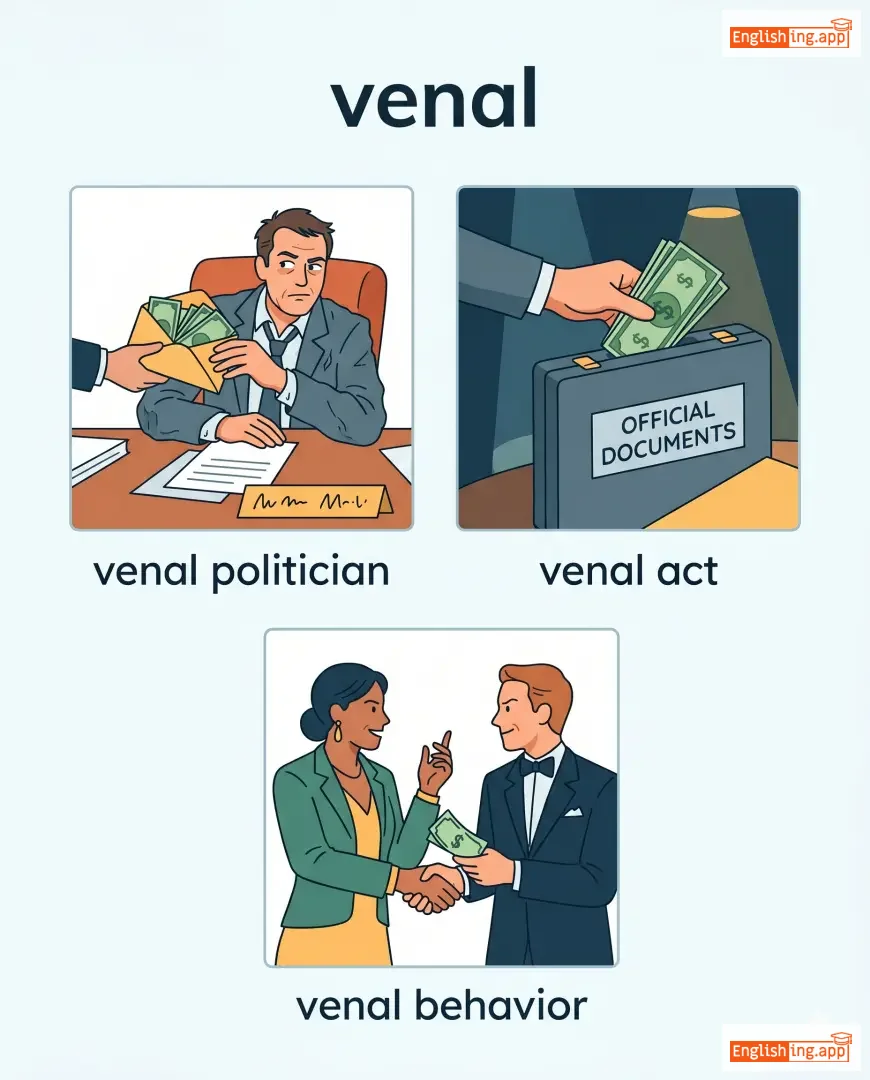
The politician was accused of being venal and corrupt.
その政治家は、ヴィーナルで腐敗していると非難されました。
••••••
|
その政治家は、売国的で腐敗していると非難されました。
Sono seijika wa, baikokuteki de fuhai shite iru to hinan saremashita.
••••••
|
- •••••• | - •••••• | - •••••• |
corrupt, bribable, dishonest, unscrupulous
••••••
|
honest, upright, incorruptible
••••••
|
venal politician, venal act, venal behavior, venal corruption
••••••
|
Venal は '売る' を連想させ、金銭のために自分を売ることに抵抗しない
••••••
|
|
⚔️
••••••
|
/vɛnˈdɛtə/
noun
(ヴェンデッタ)
••••••
|
|
復讐
fukushū
••••••
|
- •••••• | - •••••• | - •••••• | - •••••• |
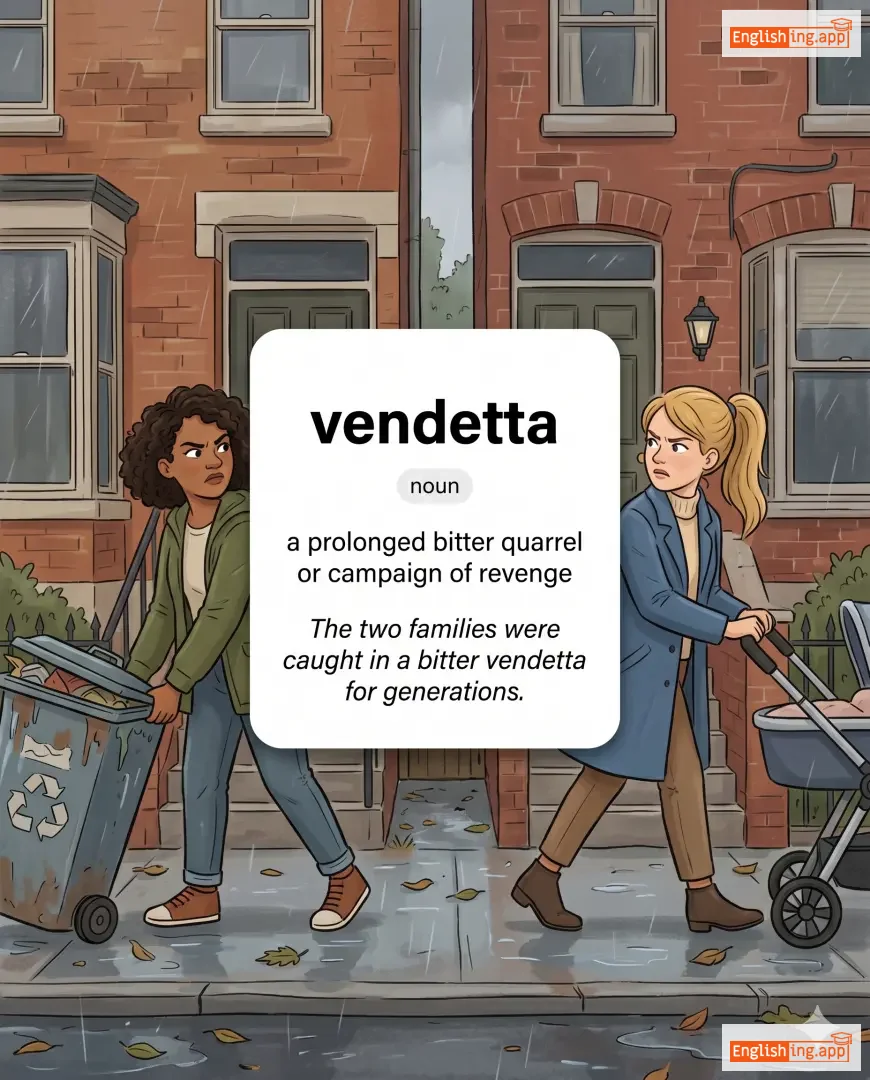
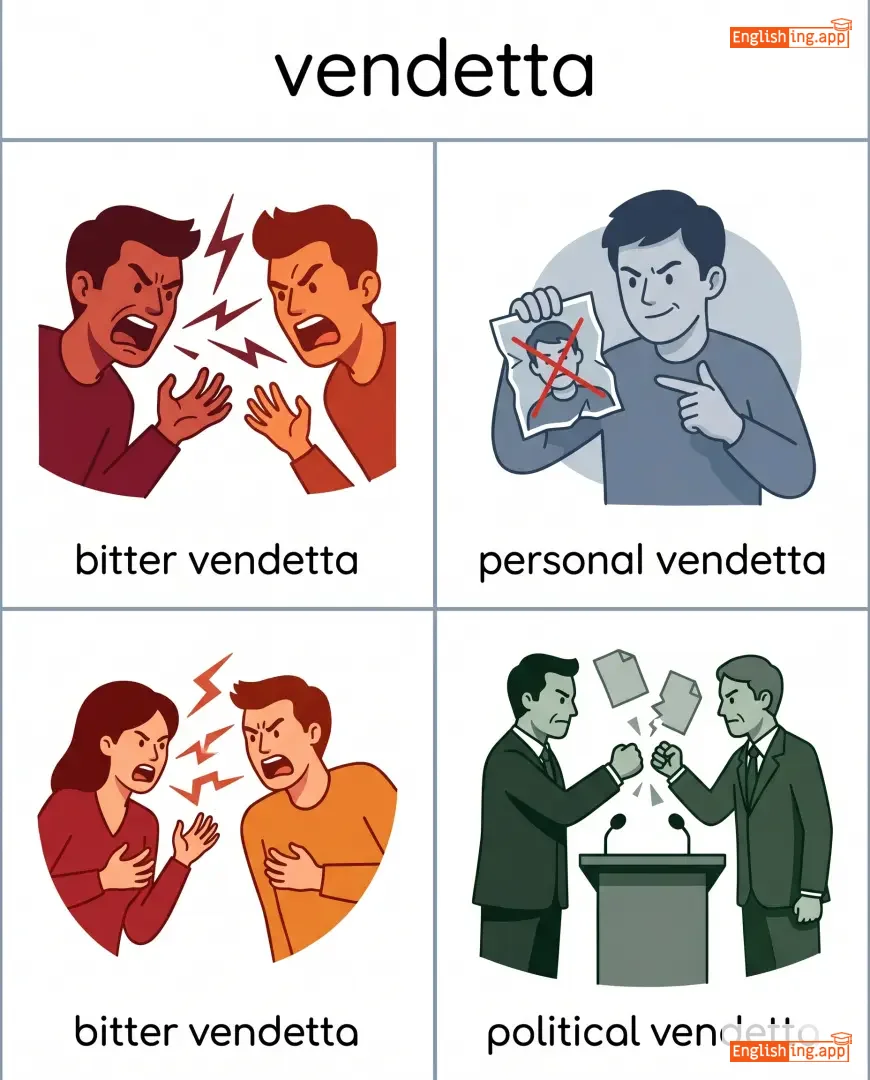
a prolonged bitter quarrel or campaign of revenge
••••••
|
The two families were caught in a bitter vendetta for generations. |
二つの家族は何世代にもわたり、苦い復讐に巻き込まれていた。
Futatsu no kazoku wa nan se daime ni watari, nigai fukushū ni makikomarete ita.
••••••
|
personal vendetta |
a prolonged conflict or feud driven by personal reasons
••••••
|
個人的な復讐
kojinteki na fukushū
••••••
|
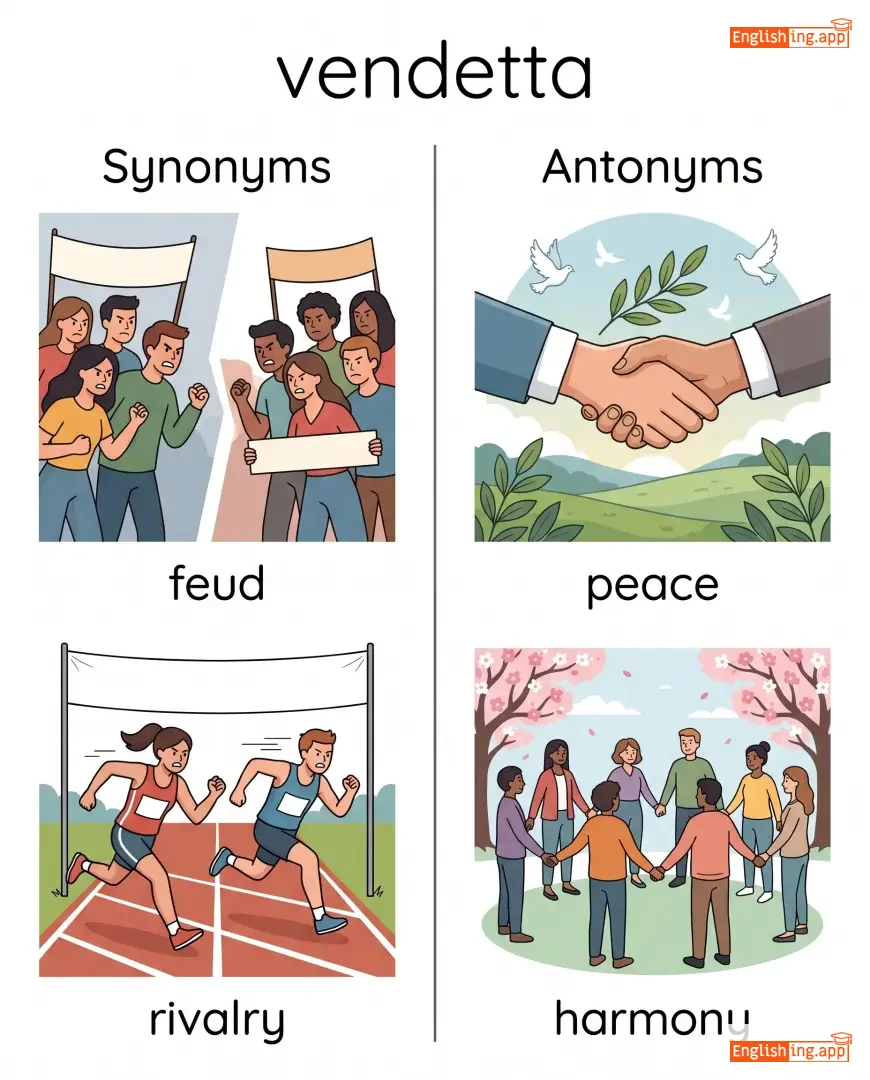
feud, rivalry, conflict, revenge, grudge
••••••
|
peace, harmony, reconciliation
••••••
|
bitter vendetta, personal vendetta, political vendetta, family vendetta
••••••
|
ヴェンデッタは復讐、家族間の長引く争いです。
••••••
|
|
🙏
••••••
|
/ˈvɛnəˌreɪt/
verb
(ベネレート)
••••••
|
|
敬う
uyamau
••••••
|
venerated
ベネレイテッド
••••••
|
venerated
ベネレイテッド
••••••
|
venerates
ベネレイツ
••••••
|
venerating
ベネレイティング
••••••
|
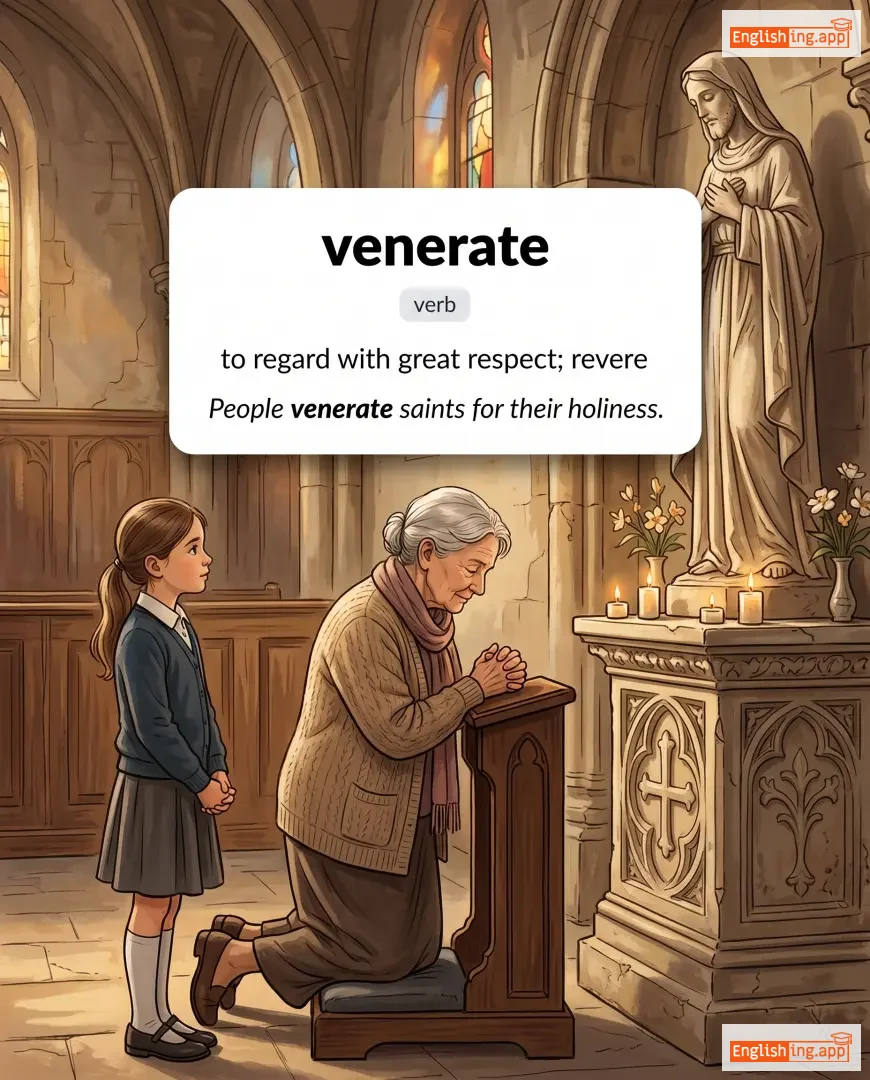
to regard with great respect; revere
••••••
|
People venerate saints for their holiness.
人々はその聖性のために聖人を敬う。
••••••
|
人々はその聖性のために聖人を敬う。
Hitobito wa sono seisei no tame ni seijin o uyamau.
••••••
|
to venerate the ground someone walks on
誰かが歩く地面を敬う
••••••
|
to admire or respect someone deeply
••••••
|
誰かが歩く地面を敬う
Dareka ga aruku jimen o uyamau
••••••
|
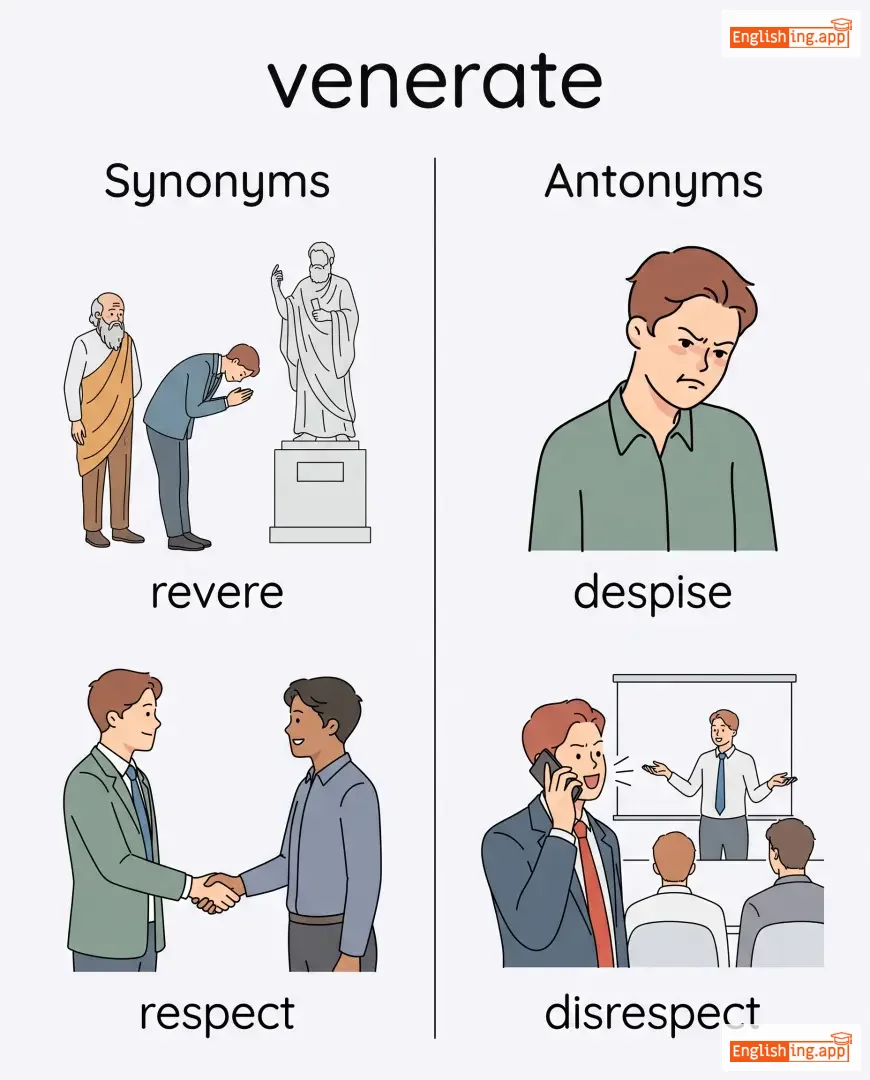
revere, respect, honor, admire, esteem
••••••
|
despise, disrespect, dishonor
••••••
|
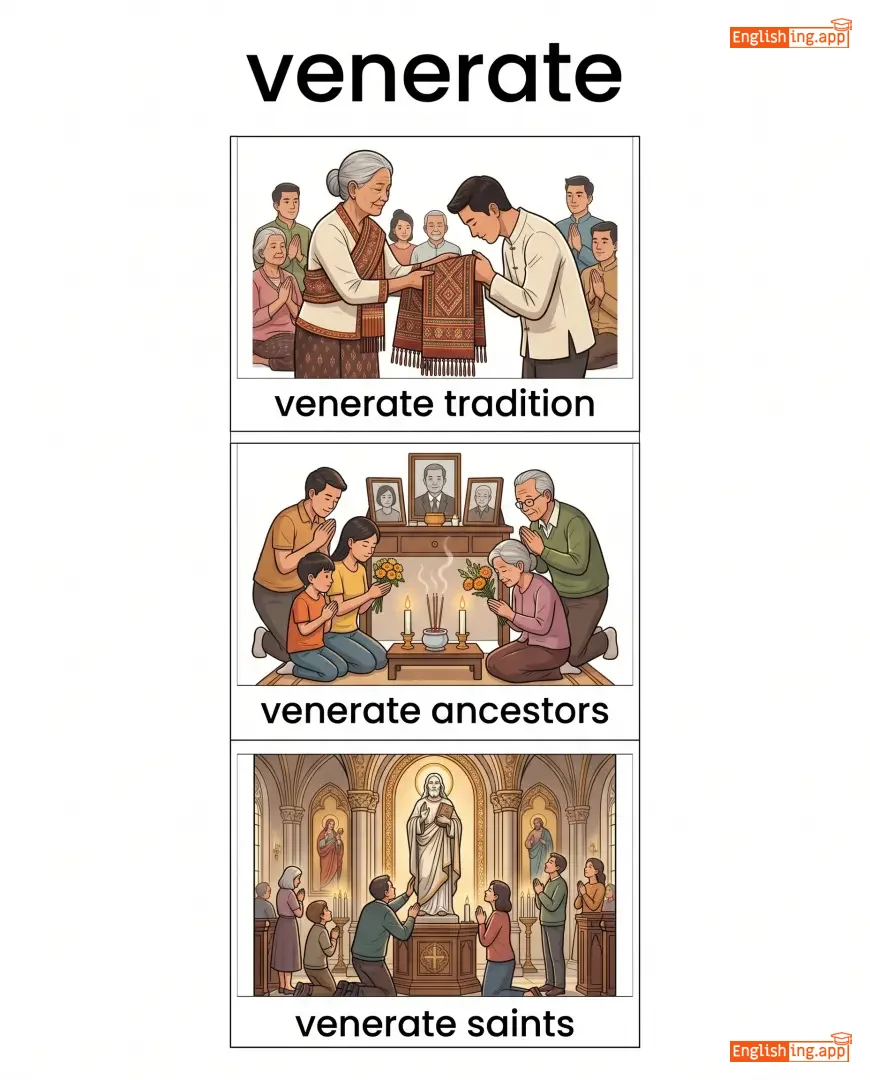
venerate tradition, venerate ancestors, venerate saints, venerate the memory
••••••
|
ベネレート:歩く地面に敬意を払うように。
••••••
|
|
🗣️
••••••
|
/vəˈreɪʃəs/
adjective
(ヴェレイシャス)
••••••
|
|
誠実な
seijitsuna
••••••
|
- •••••• | - •••••• | - •••••• | - •••••• |
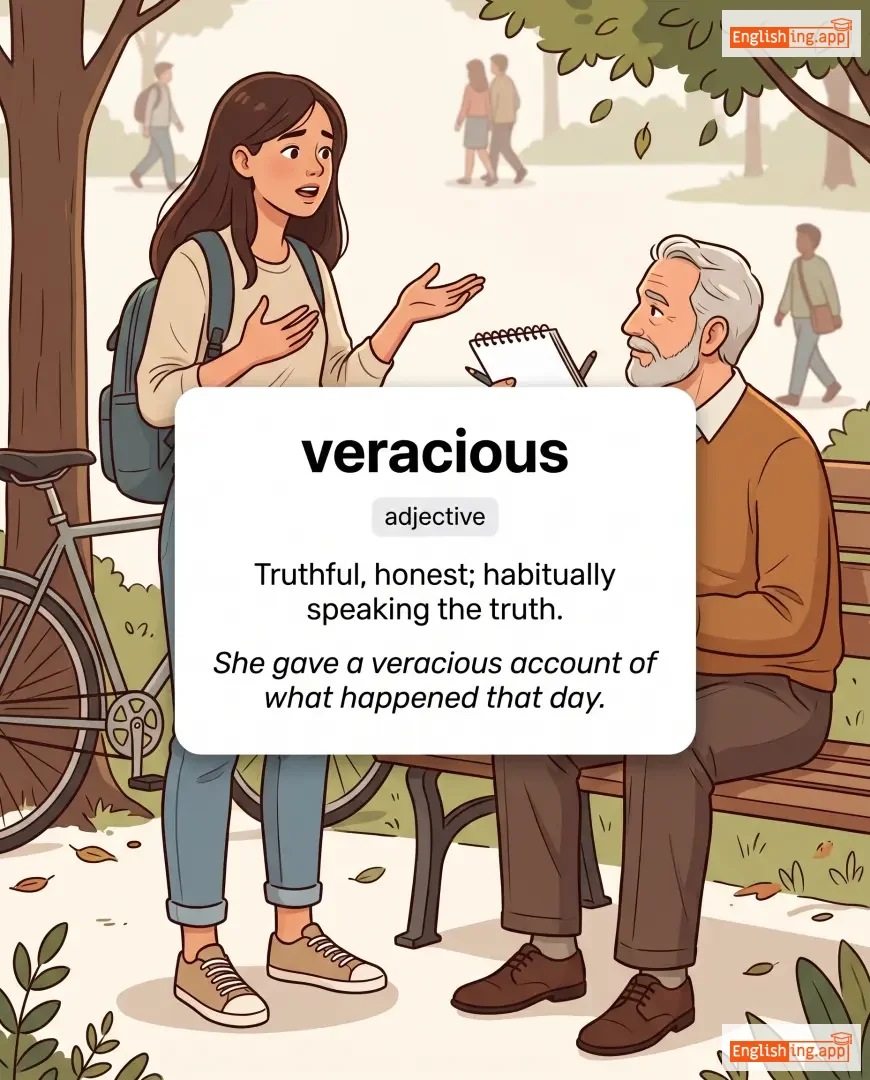
Truthful, honest; habitually speaking the truth.
••••••
|
She gave a veracious account of what happened that day. |
彼女はその日の出来事について誠実な説明をしました。
Kanojo wa sono hi no dekigoto ni tsuite seijitsuna setsumei o shimashita.
••••••
|
- •••••• | - •••••• | - •••••• |
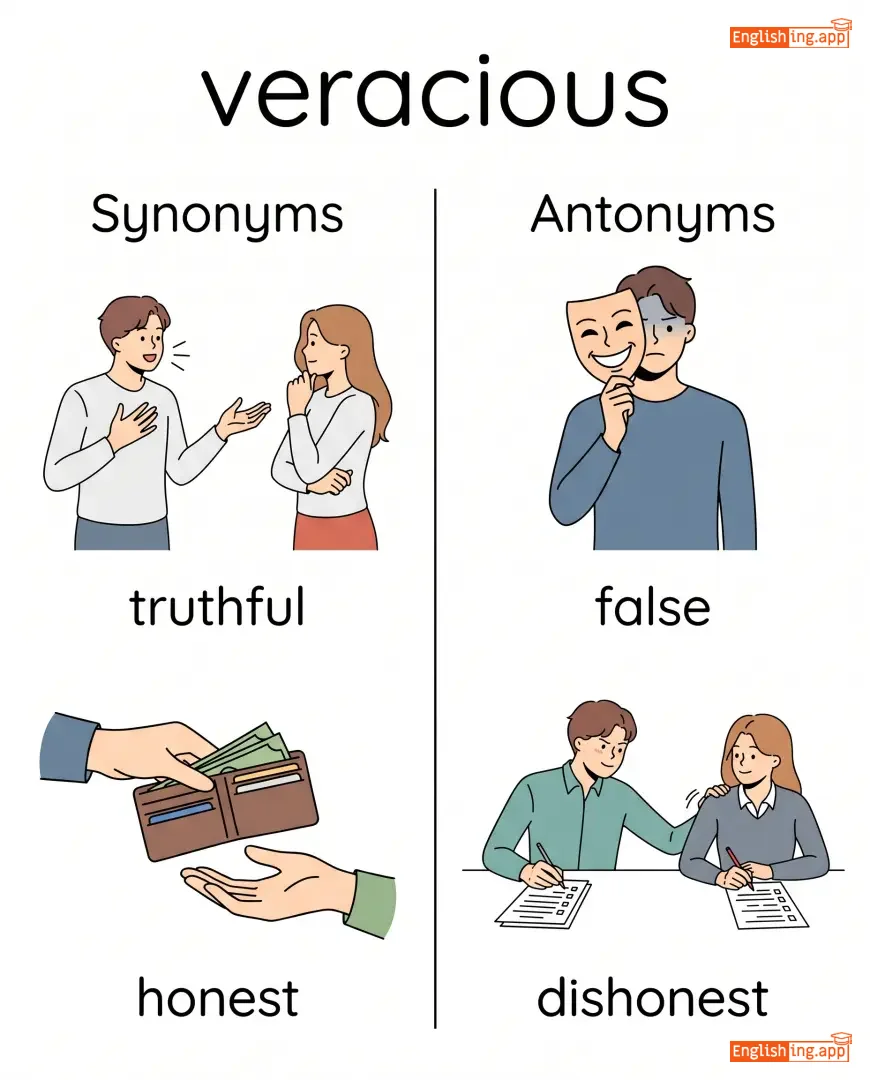
truthful, honest, accurate, genuine, sincere
••••••
|
false, dishonest, lying
••••••
|
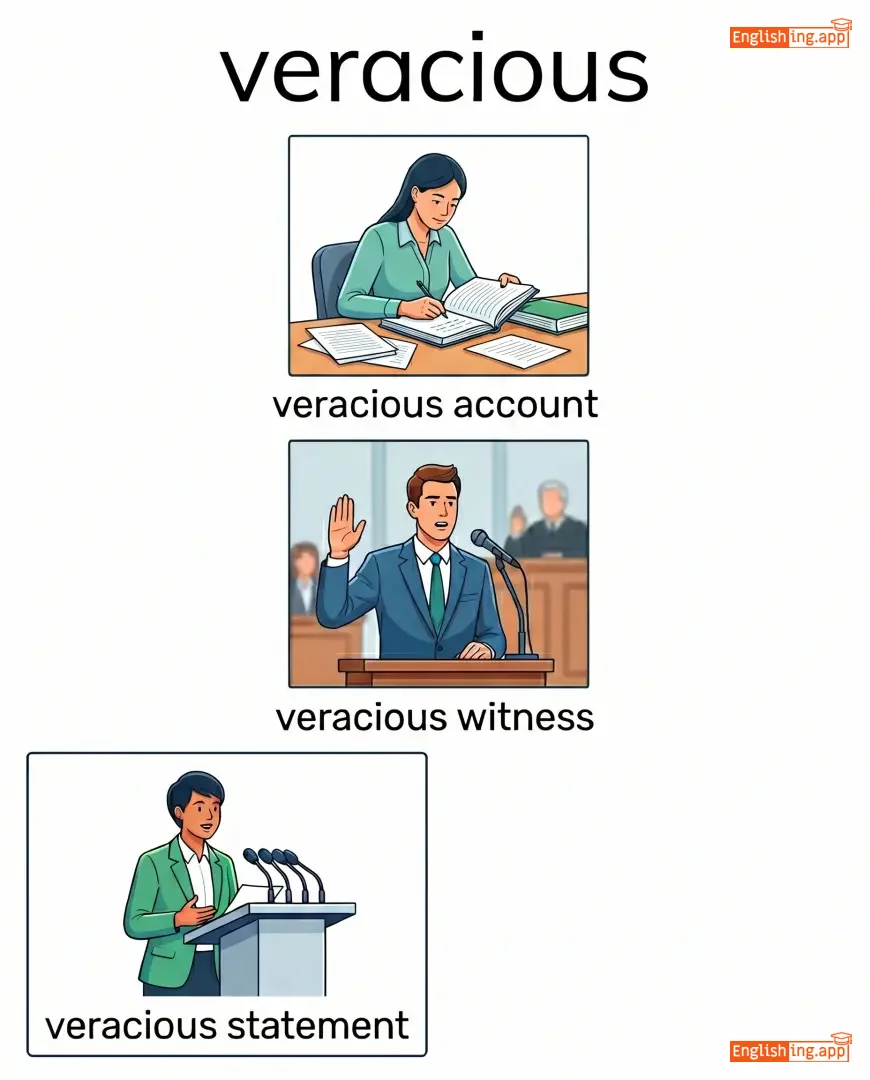
veracious account, veracious witness, veracious statement
••••••
|
誠実なは '正直' と関連し、常に真実を語ることを意味します。
••••••
|
|
🗣️
••••••
|
/vɜːrˈboʊs/
adjective
(バーボス)
••••••
|
|
冗長
jōchō
••••••
|
- •••••• | - •••••• | - •••••• | - •••••• |
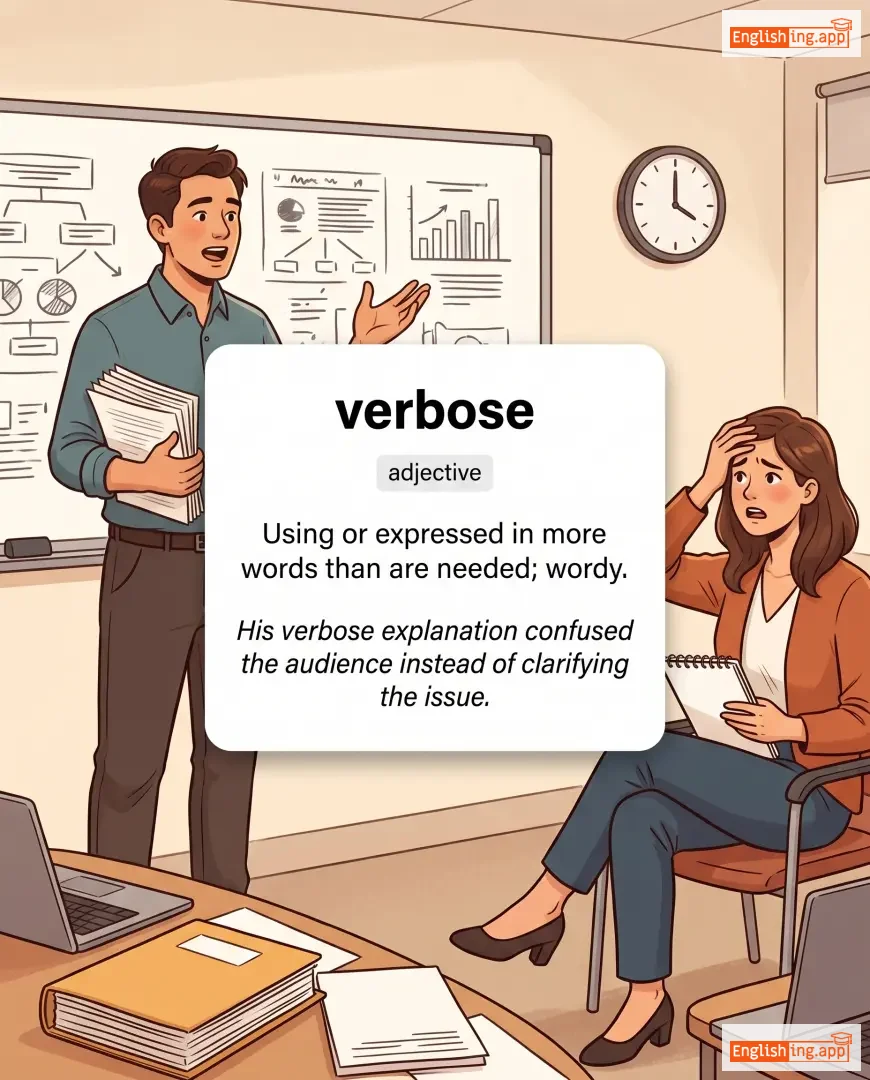
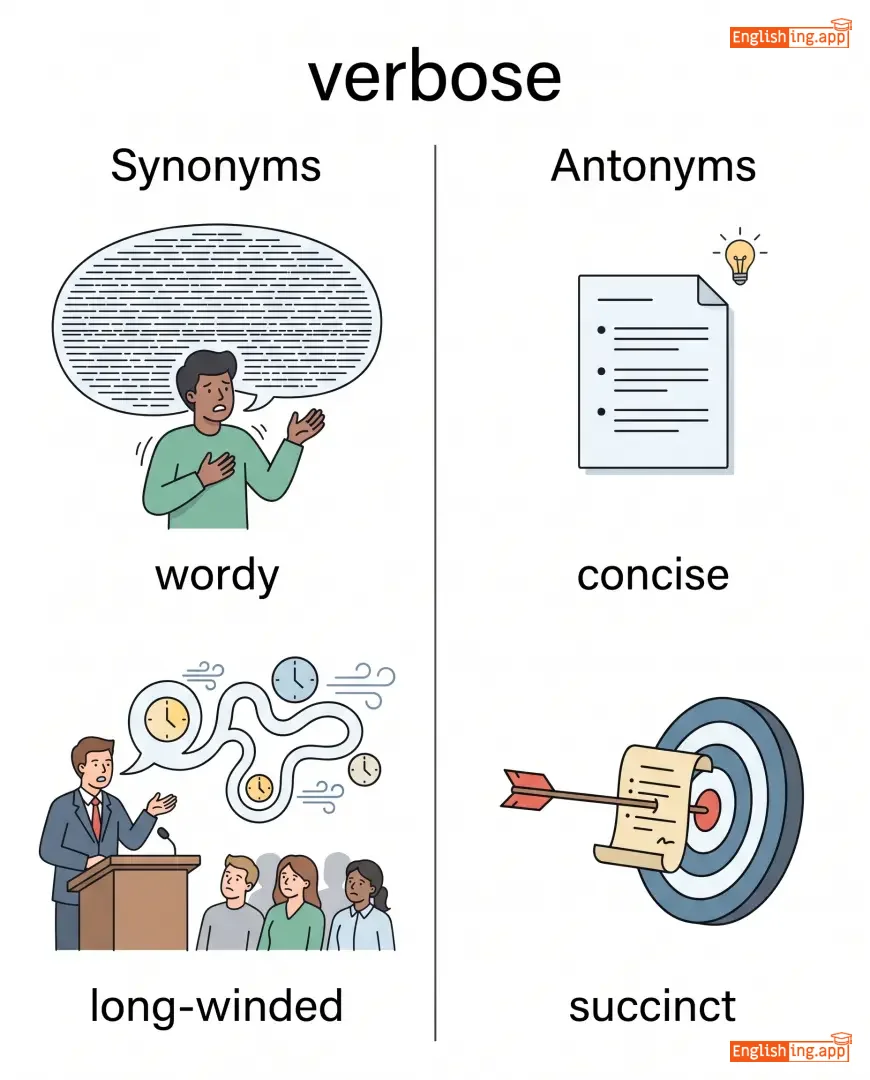
Using or expressed in more words than are needed; wordy.
••••••
|
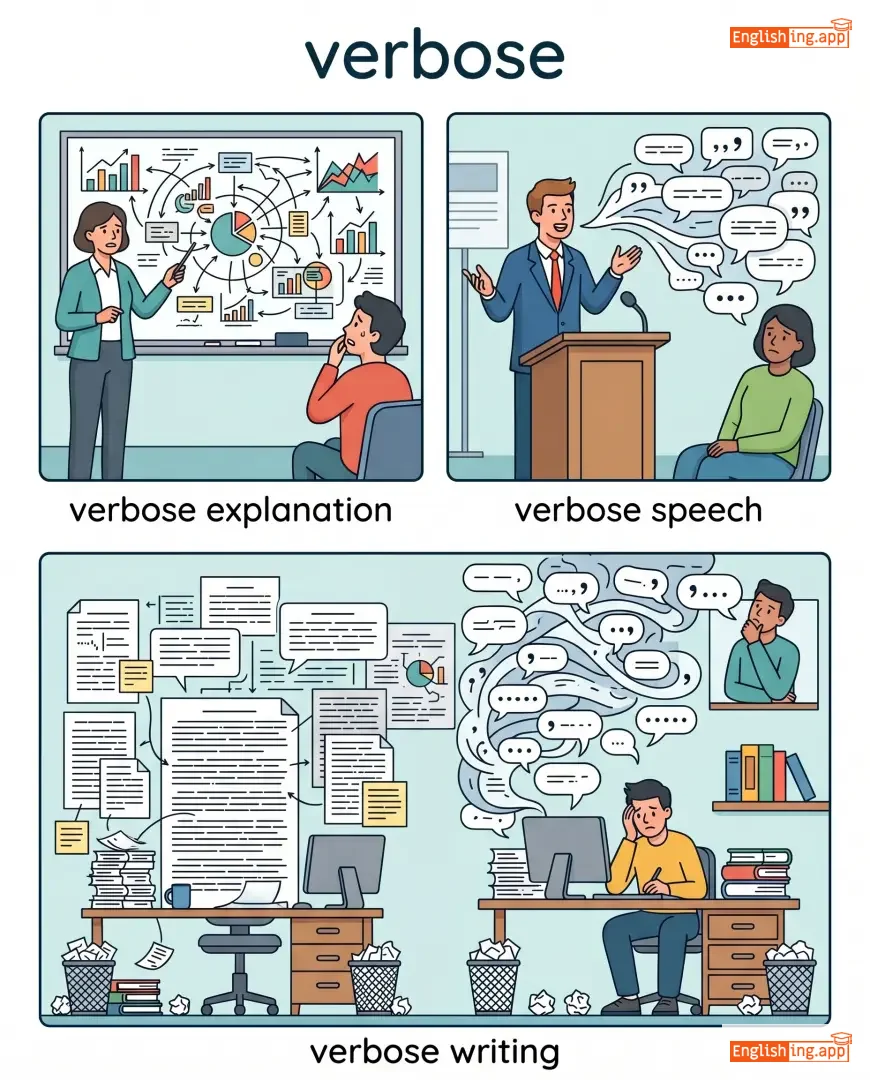
His verbose explanation confused the audience instead of clarifying the issue. |
彼の冗長な説明は、問題を明確にするどころか、聴衆を混乱させました。
Kare no jōchō na setsumei wa, mondai o meikaku ni suru dokoro ka, chōshū o konran sasemashita.
••••••
|
- •••••• | - •••••• | - •••••• |
wordy, long-winded, prolix, talkative, rambling
••••••
|
concise, succinct, brief
••••••
|
verbose explanation, verbose speech, verbose writing, verbose description
••••••
|
冗長 (jōchō) + 言葉 (kotoba) = 言葉が多い
••••••
|
|
🌀
••••••
|
/ˈvɜːrtɪˌɡoʊ/
noun
(happiness)
••••••
|
|
幸せ
shiawase
••••••
|
- •••••• | - •••••• | - •••••• | - •••••• |
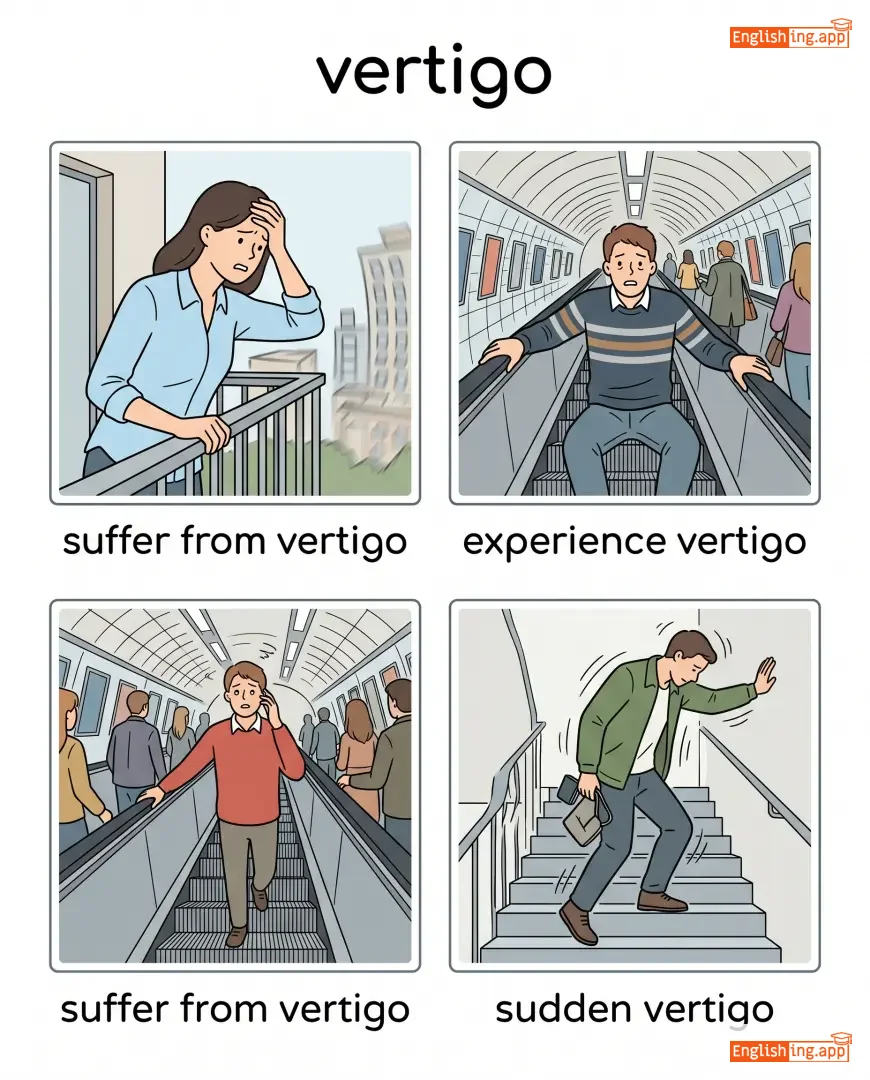
A sensation of spinning or dizziness, often caused by problems in the inner ear or brain.
••••••
|
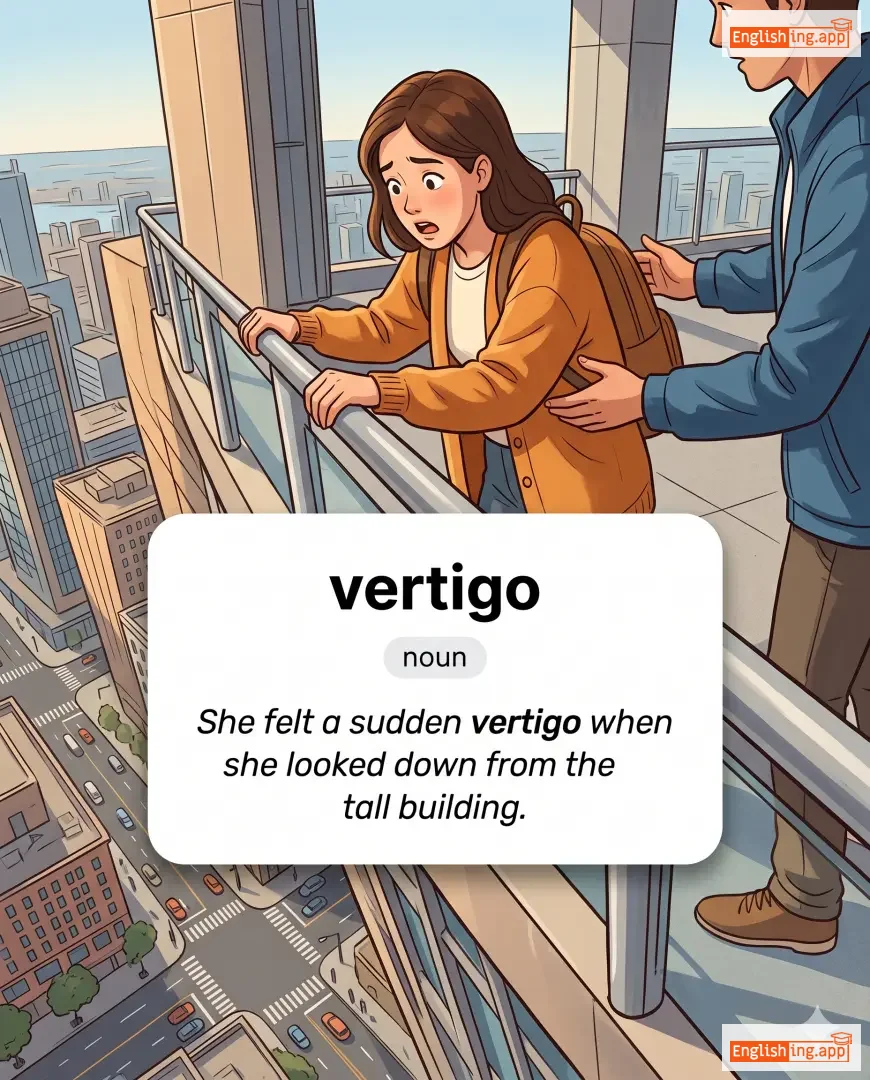
She felt a sudden vertigo when she looked down from the tall building. |
彼女は賞を受け取ったとき、自分の幸せを隠すことができませんでした。
Kanojo wa shō o uketotta toki, jibun no shiawase o kakusu koto ga dekimasen deshita.
••••••
|
dizzy with vertigo |
Overcome by a sensation of spinning and dizziness.
••••••
|
幸せの追求
shiawase no tsuikyū
••••••
|
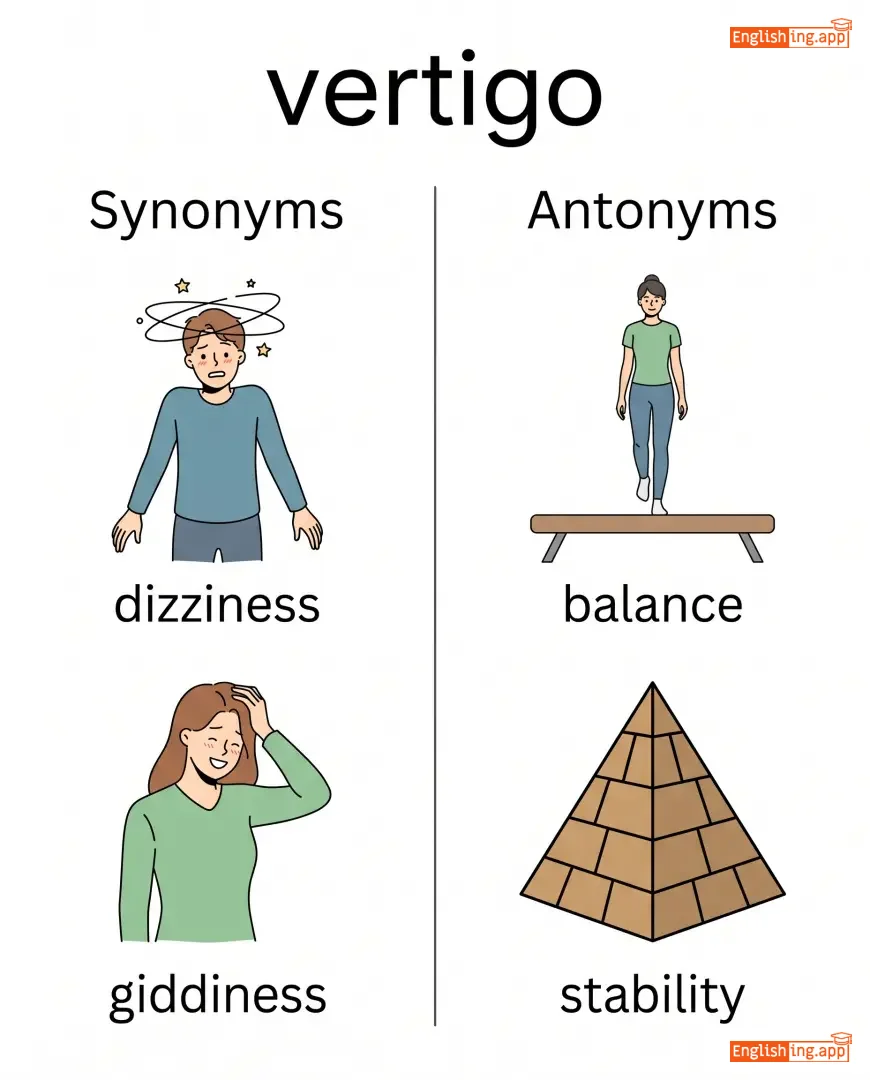
dizziness, giddiness, lightheadedness, faintness
••••••
|
balance, stability
••••••
|
suffer from vertigo, experience vertigo, sudden vertigo
••••••
|
幸せ (shiawase) は私たちの人生の中で追い求めるものです。
••••••
|
|
😤
••••••
|
/vɛkˈseɪʃən/
noun
(ヴェクセイション)
••••••
|
|
苛立ち
iradachi
••••••
|
- •••••• | - •••••• | - •••••• | - •••••• |
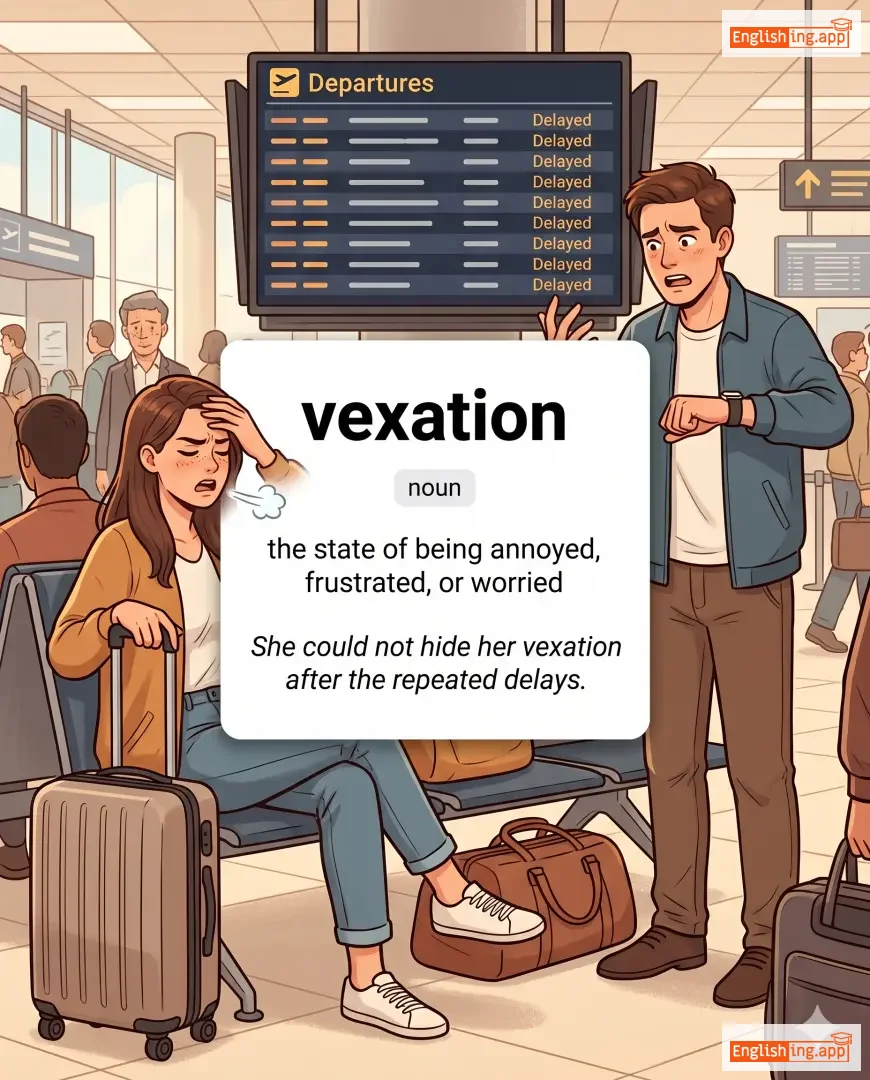
the state of being annoyed, frustrated, or worried
••••••
|
She could not hide her vexation after the repeated delays.
彼女は繰り返しの遅れの後、彼女の苛立ちを隠すことができませんでした。
••••••
|
彼女は繰り返しの遅れの後、彼女の苛立ちを隠すことができませんでした。
Kanojo wa kurikaeshi no okure no ato, kanojo no iradachi o kakusu koto ga dekimasen deshita.
••••••
|
- •••••• | - •••••• | - •••••• |
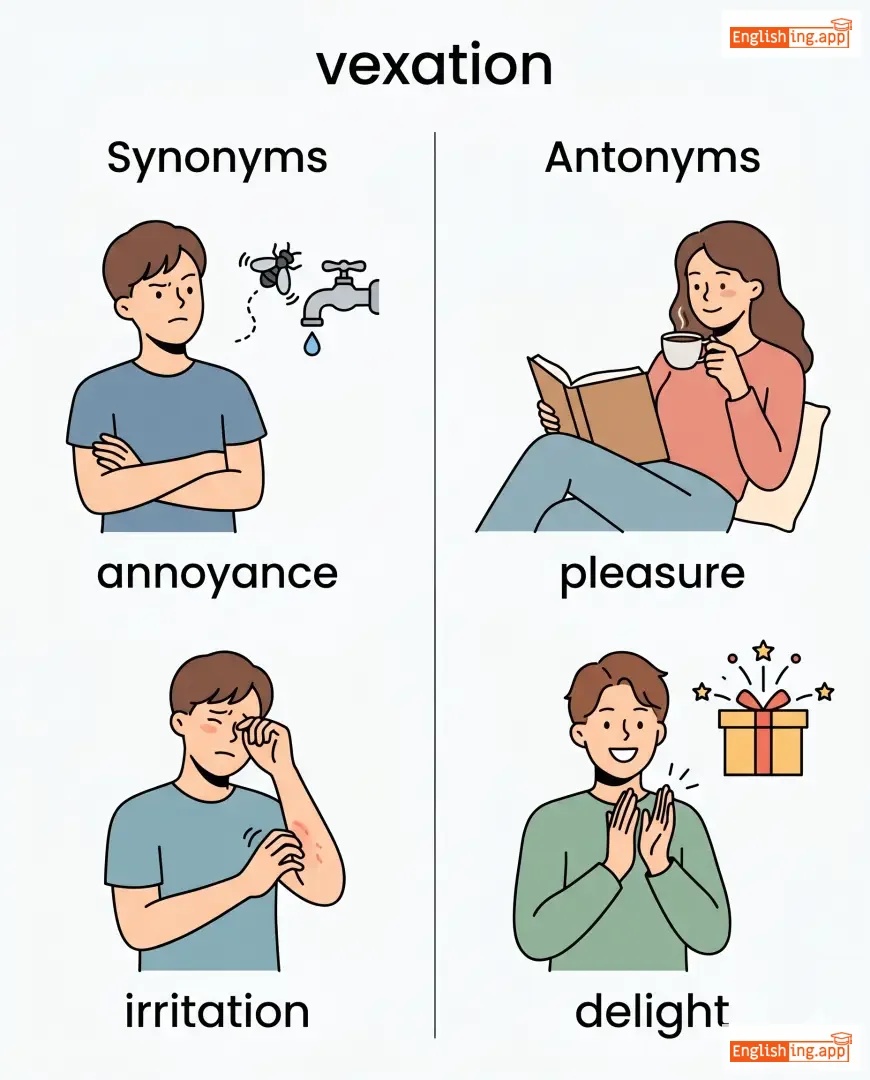
annoyance, irritation, frustration, distress, exasperation
••••••
|
pleasure, delight, satisfaction
••••••
|
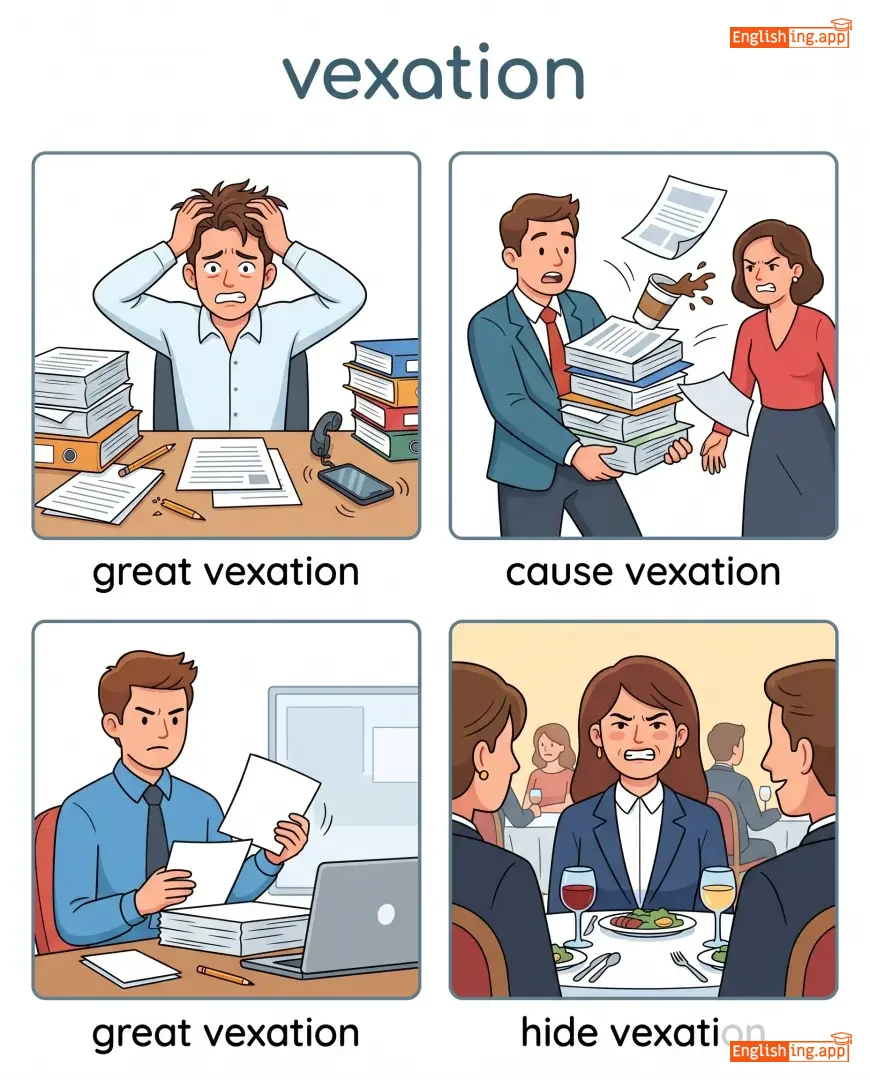
great vexation, cause vexation, hide vexation, in vexation
••••••
|
Vexation = vex + action → 苛立ちのアクション
••••••
|
|
🌱
••••••
|
/ˈvaɪəbl̩/
adjective
(vaiburu)
••••••
|

|
実行可能な
jikkō kanō na
••••••
|
- •••••• | - •••••• | - •••••• | - •••••• |
capable of working successfully or able to survive
••••••
|
They need a viable business plan to attract investors.
投資家を引き付けるために実行可能なビジネスプランが必要です。
••••••
|
投資家を引き付けるために実行可能なビジネスプランが必要です。
Tōshika o hikitsukeru tame ni jikkō kanō na bijinesu puran ga hitsuyō desu.
••••••
|
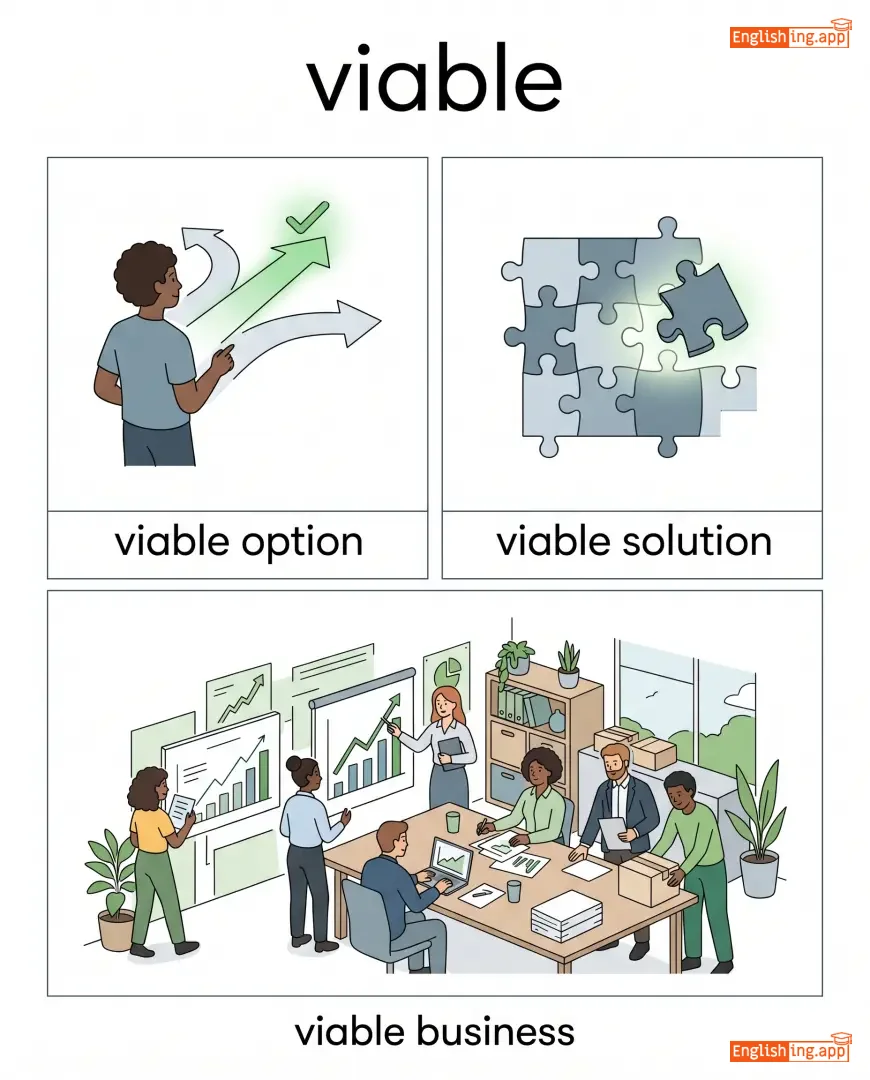
viable option
実行可能な選択肢
••••••
|
a choice that is practical and can work successfully
••••••
|
実行可能な選択肢
jikkō kanō na sentakushi
••••••
|
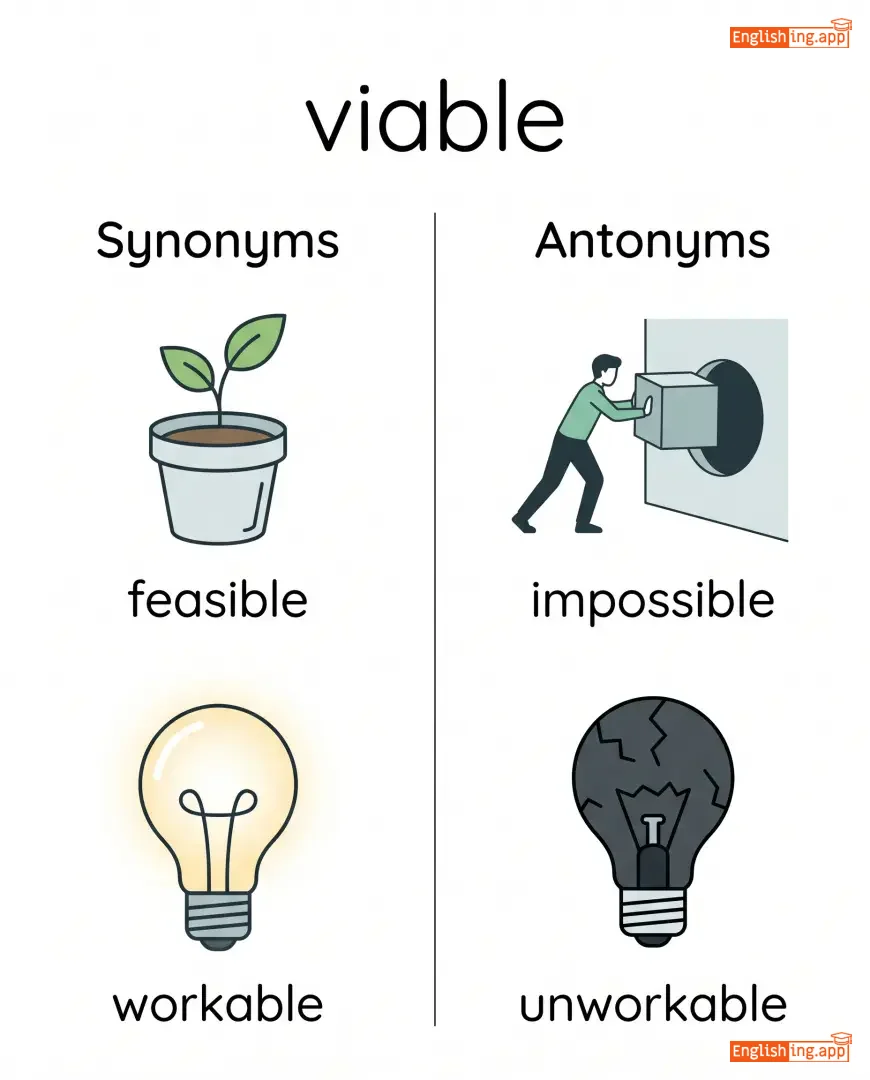
feasible, workable, practical, possible, sustainable
••••••
|
impossible, unworkable, impractical
••••••
|
viable option, viable solution, viable business, economically viable
••••••
|
実行可能なものは、条件が整えば成功する 🌱
••••••
|
|
😠
••••••
|
/vɪnˈdɪktɪv/
adjective
(ヴィンディクティブ)
••••••
|
|
復讐心の強い
fukushūshin no tsuyoi
••••••
|
- •••••• | - •••••• | - •••••• | - •••••• |
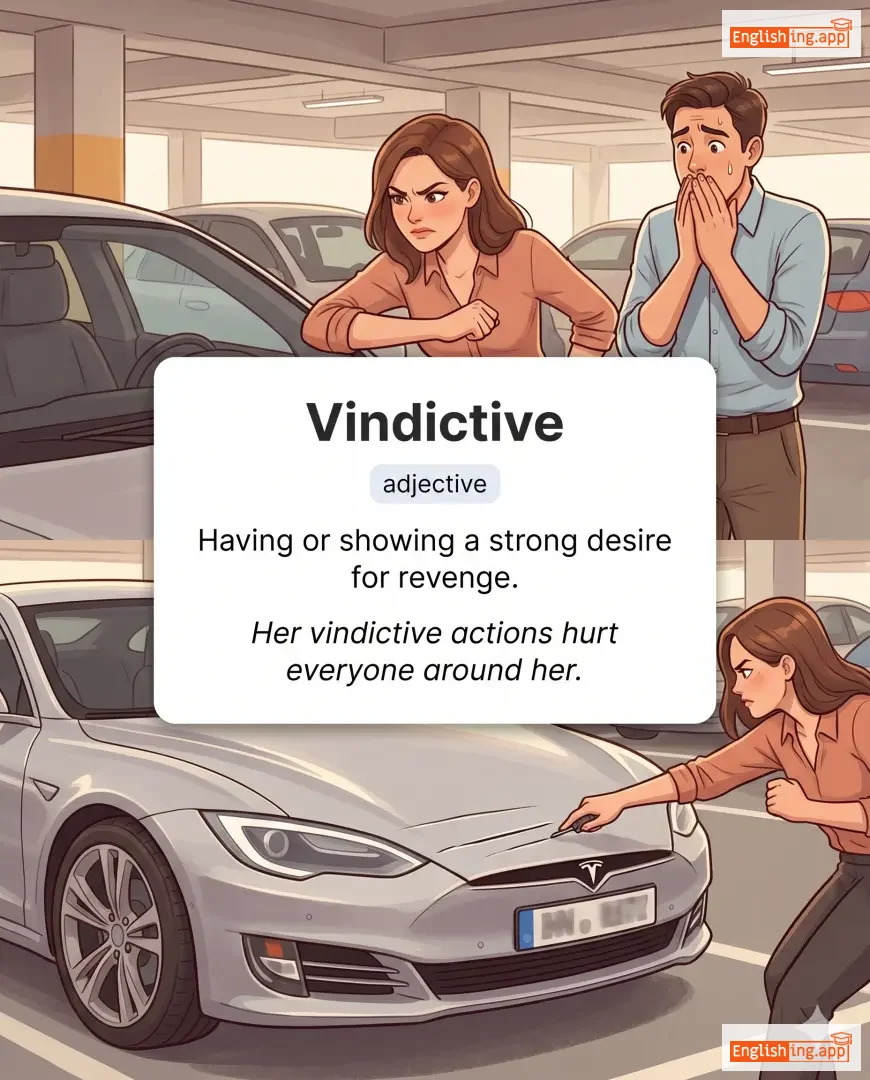
Having or showing a strong desire for revenge.
••••••
|
Her vindictive actions hurt everyone around her. |
彼女の復讐心の強い行動は、周りのすべての人々を傷つけた。
Kanojo no fukushūshin no tsuyoi kōdō wa, mawari no subete no hitobito o kizutsuketa.
••••••
|
vindictive streak |
A tendency to seek revenge or act spitefully.
••••••
|
復讐心が強い性格
Fukushūshin ga tsuyoi seikaku
••••••
|
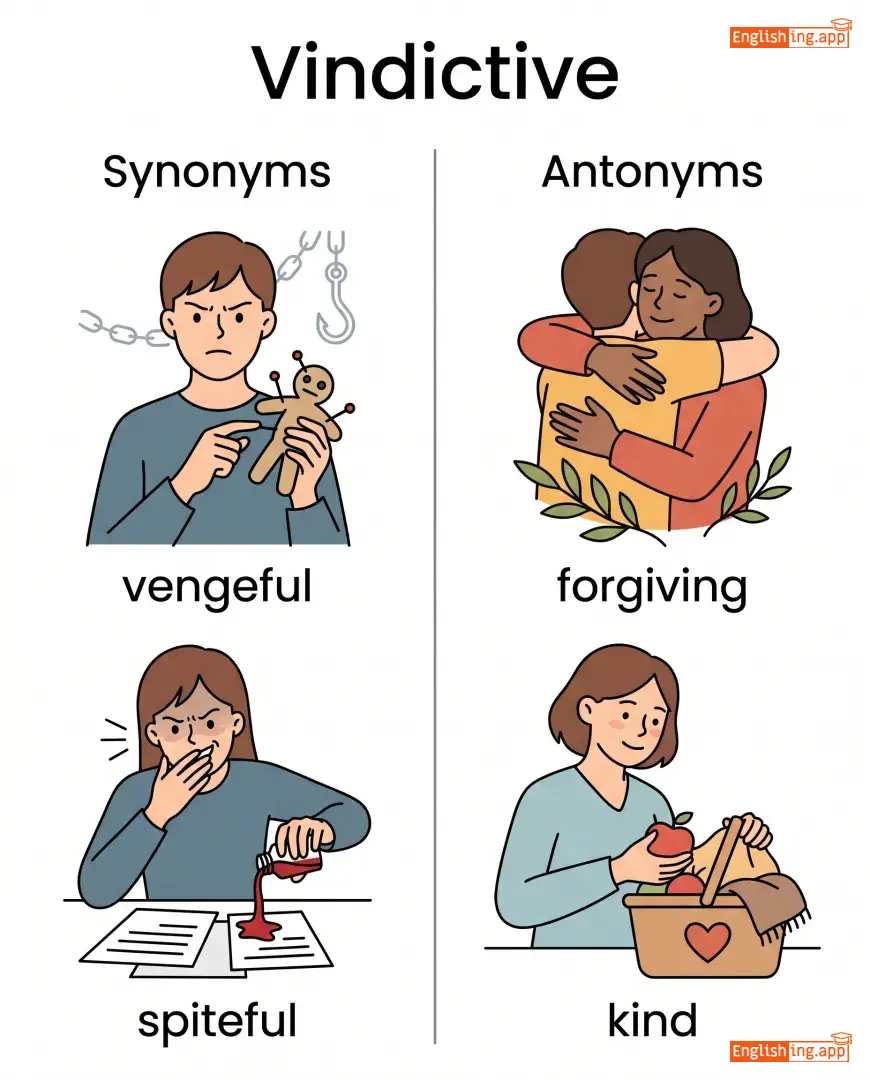
vengeful, spiteful, revengeful, malicious
••••••
|
forgiving, kind, merciful
••••••
|
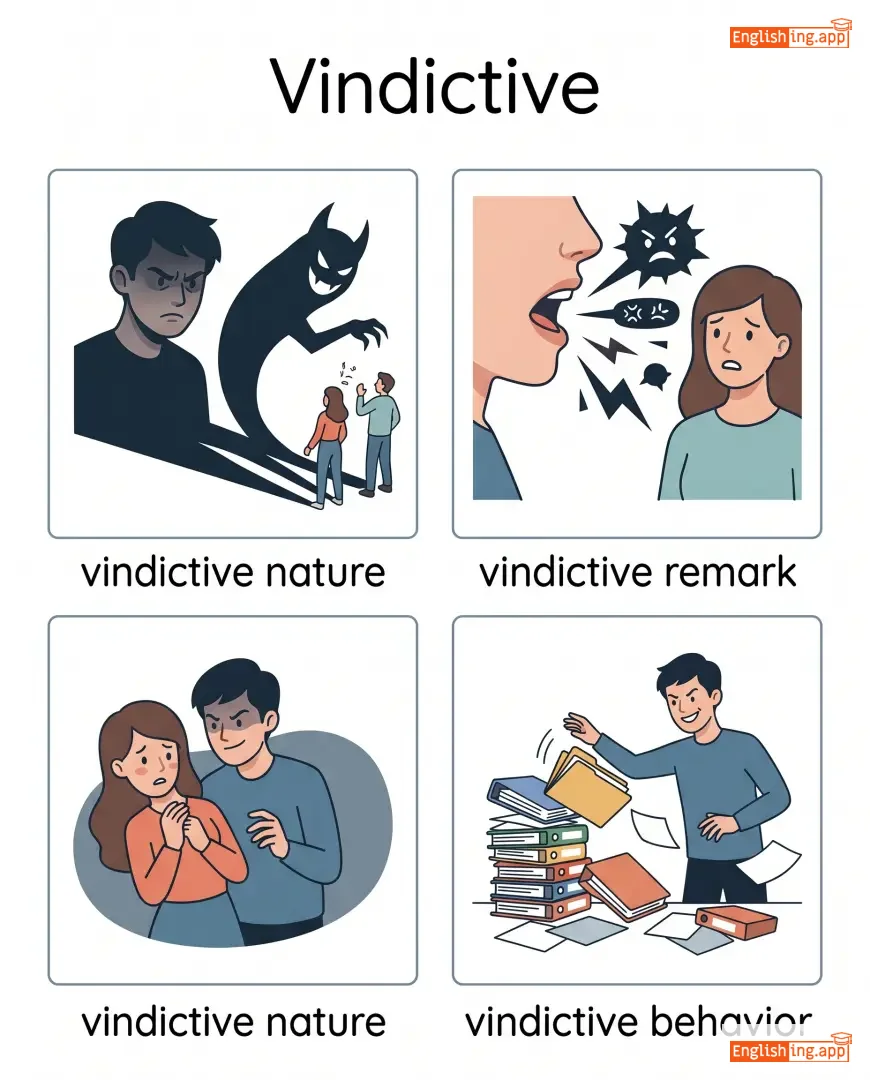
vindictive nature, vindictive remark, vindictive behavior
••••••
|
復讐心 = fukushū + shin → 復讐する意識 😠
••••••
|
|
🎶
••••••
|
/ˌvɜːrtʃuˈoʊsoʊ/
noun
(ヴァーチュオーソ)
••••••
|
|
名人
meijin
••••••
|
- •••••• | - •••••• | - •••••• | - •••••• |
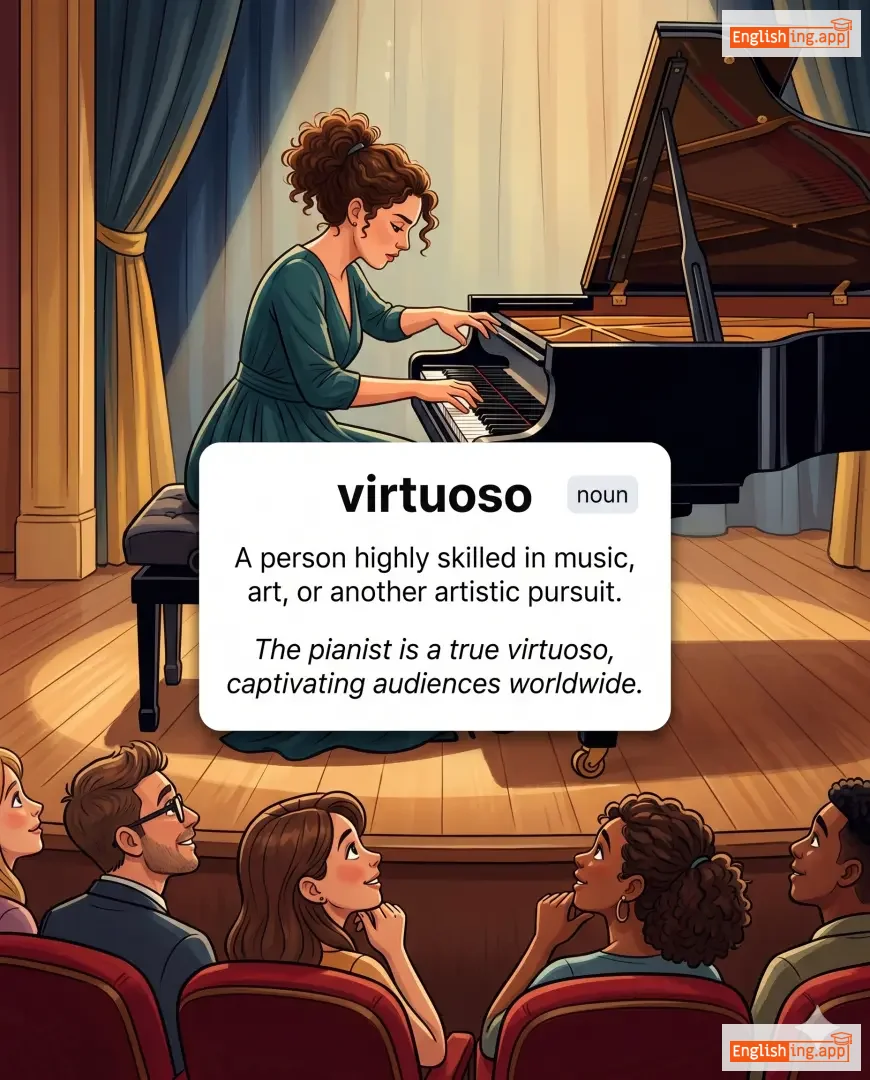
A person highly skilled in music, art, or another artistic pursuit.
••••••
|
The pianist is a true virtuoso, captivating audiences worldwide. |
そのピアニストは真の名人であり、世界中の観客を魅了しています。
Sono pianisuto wa shin no meijin de ari, sekaijū no kankyaku o miryō shiteimasu.
••••••
|
- •••••• | - •••••• | - •••••• |
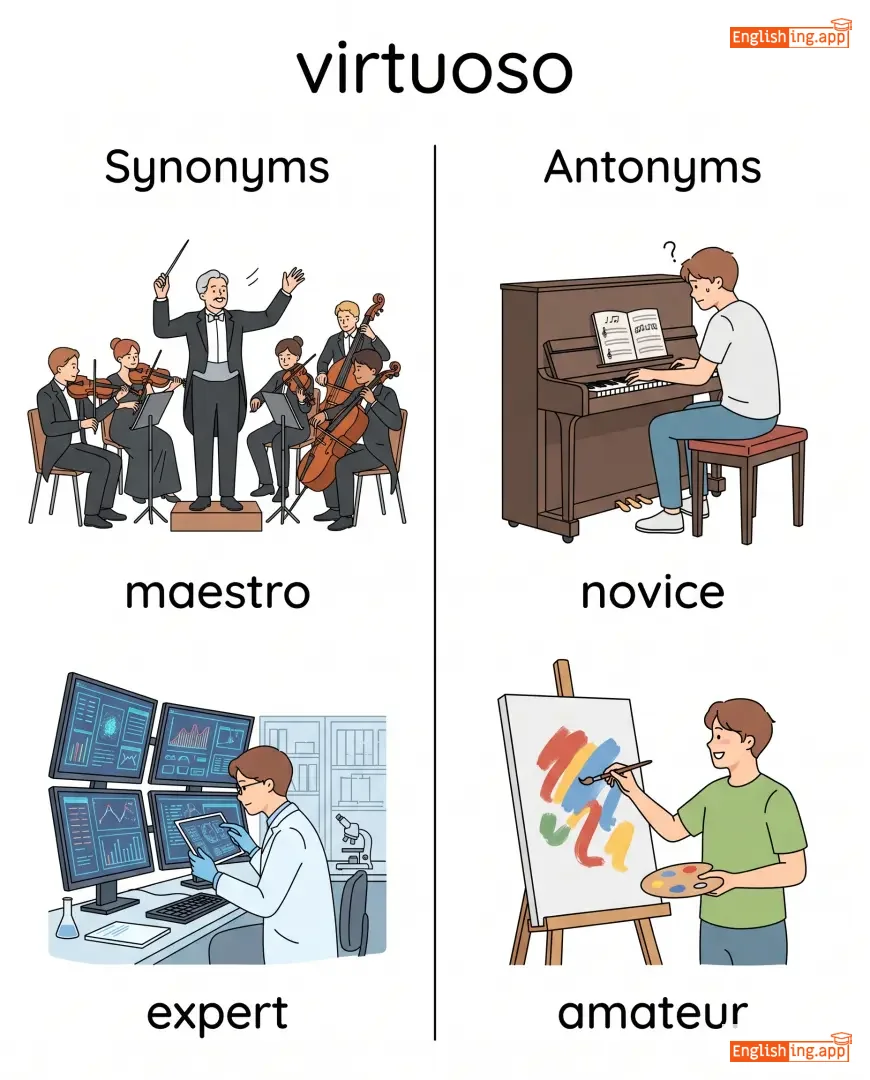
maestro, expert, genius, prodigy, master
••••••
|
novice, amateur, beginner
••••••
|
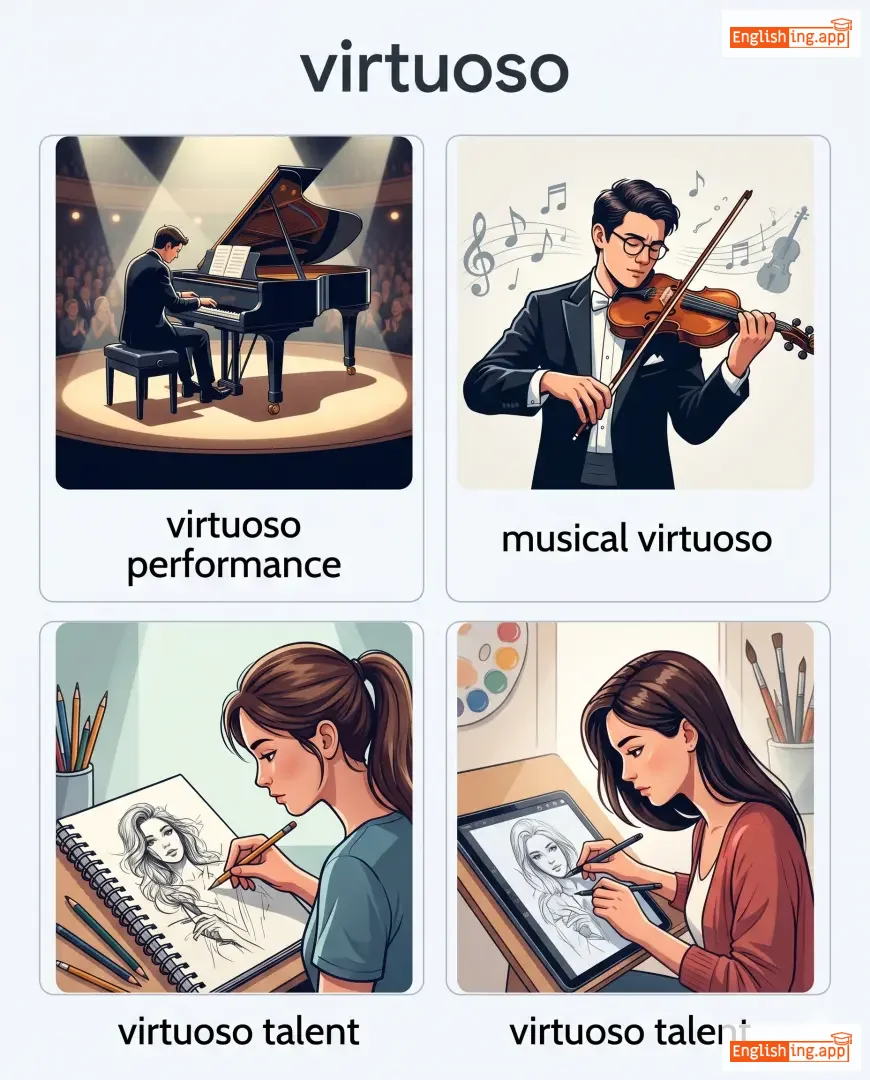
virtuoso performance, musical virtuoso, virtuoso talent
••••••
|
Virtuoso は非常に才能のあるアーティストを指します (ヴァーチュオーソ → 優れたアーティスト)
••••••
|
|
🙂
••••••
|
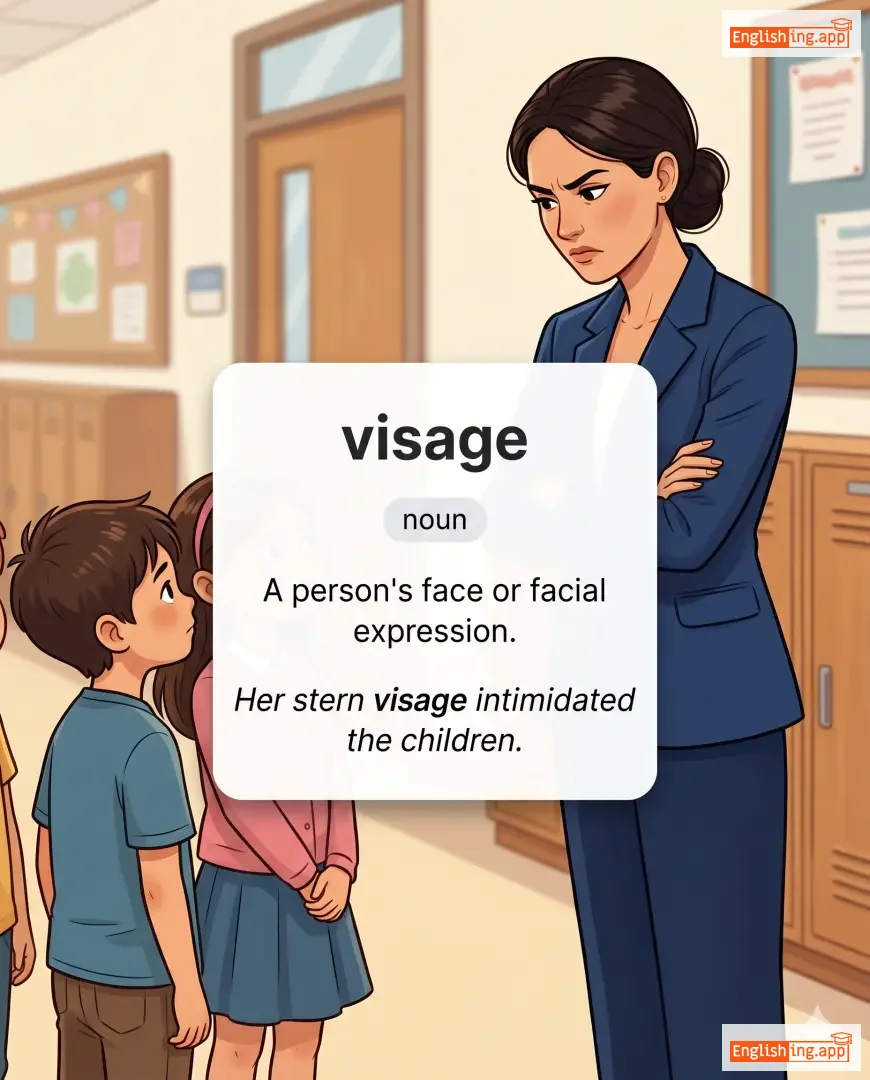
/ˈvɪzɪdʒ/
noun
(ハピネス)
••••••
|
|
幸福
kōfuku
••••••
|
- •••••• | - •••••• | - •••••• | - •••••• |
A person's face or facial expression.
••••••
|
Her stern visage intimidated the children.
彼女は賞を受け取ったとき、自分の幸福を隠すことができませんでした。
••••••
|
彼女は賞を受け取ったとき、自分の幸福を隠すことができませんでした。
Kanojo wa shō o uketotta toki, jibun no kōfuku o kakusu koto ga dekimasen deshita.
••••••
|
put on a brave visage
幸福を追求する
••••••
|
to appear confident or calm even when worried or afraid
••••••
|
幸福を追求する
kōfuku o tsuikyū suru
••••••
|
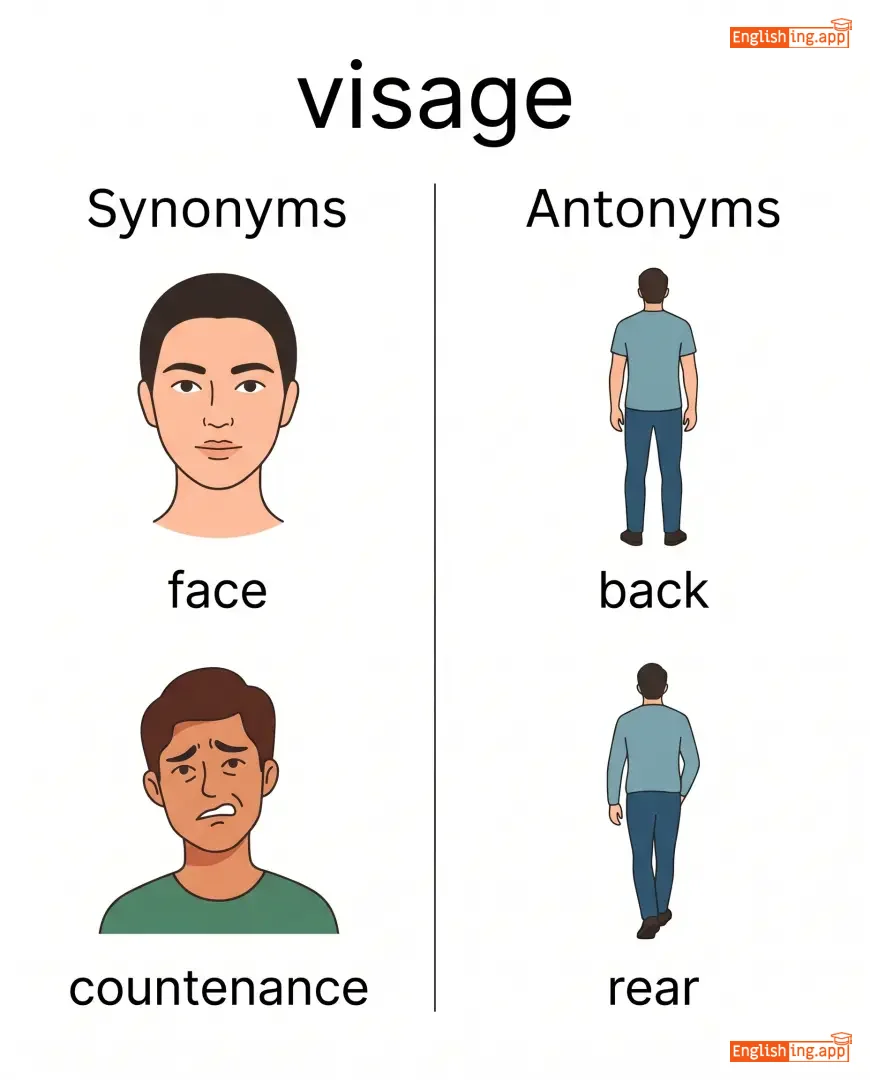
face, countenance, features, appearance, expression
••••••
|
back, rear, anonymity
••••••
|
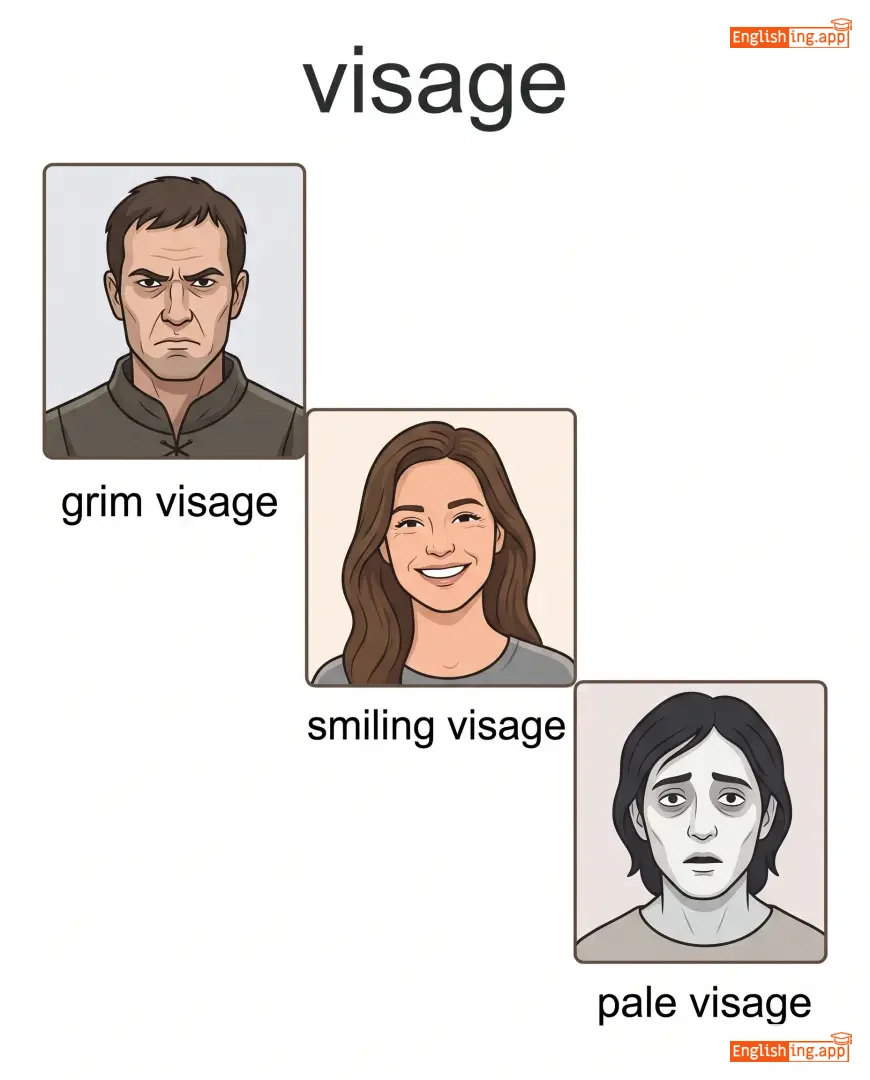
grim visage, smiling visage, pale visage, noble visage
••••••
|
幸福は、英語のhappyから来ている言葉。
••••••
|
|
🍯
••••••
|
/ˈvɪskəs/
adjective
(ビスカス)
••••••
|
|
粘性の
nensei no
••••••
|
- •••••• | - •••••• | - •••••• | - •••••• |
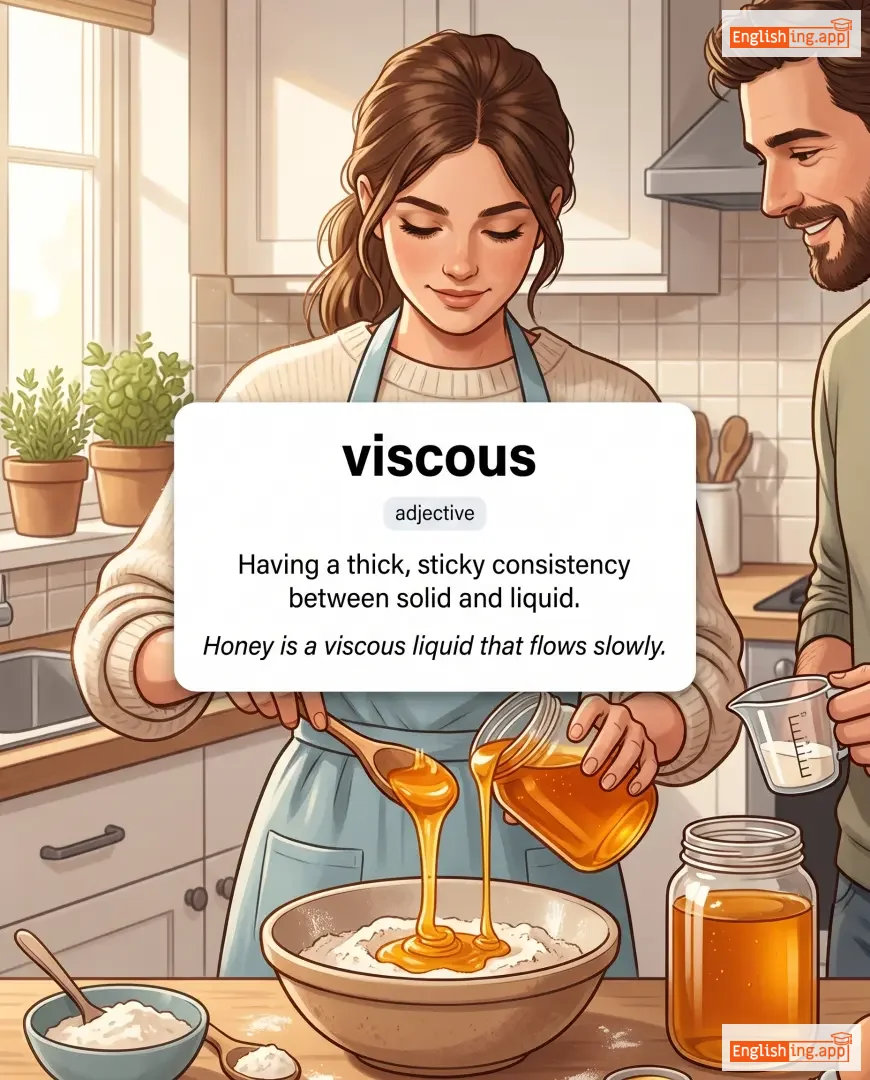
Having a thick, sticky consistency between solid and liquid.
••••••
|
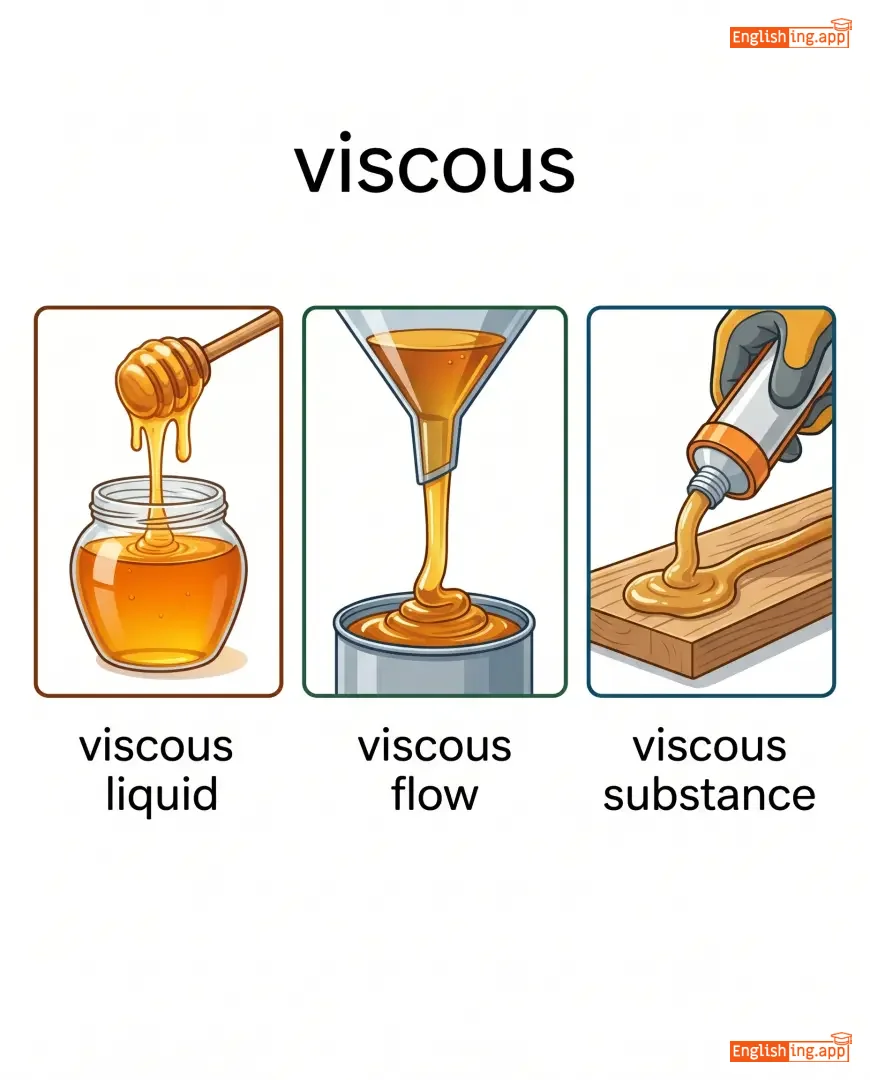
Honey is a viscous liquid that flows slowly. |
蜂蜜は遅く流れる粘性の液体です。
Hachimitsu wa osoku nagareru nensei no ekitai desu.
••••••
|
- •••••• | - •••••• | - •••••• |
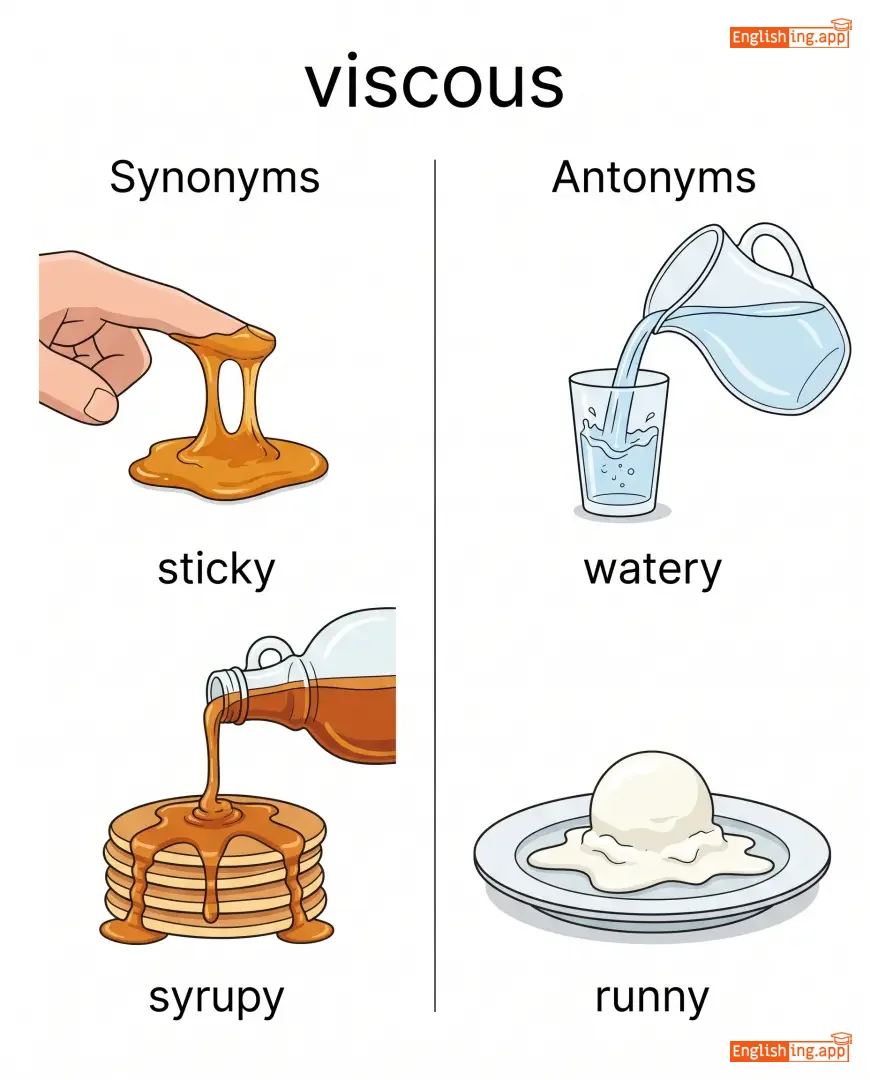
sticky, syrupy, thick, gooey
••••••
|
watery, runny, thin
••••••
|
viscous liquid, viscous flow, viscous substance
••••••
|
粘性は蜂蜜のように粘着質、'粘性の蜂蜜'を覚えて。
••••••
|
|
💔
••••••
|
/ˈvɪʃieɪt/
verb
(ビシエイト)
••••••
|
|
損なう
sonanau
••••••
|
vitiated
ビシエイテッド
••••••
|
vitiated
ビシエイテッド
••••••
|
vitiates
ビシエイツ
••••••
|
vitiating
ビシエイティング
••••••
|
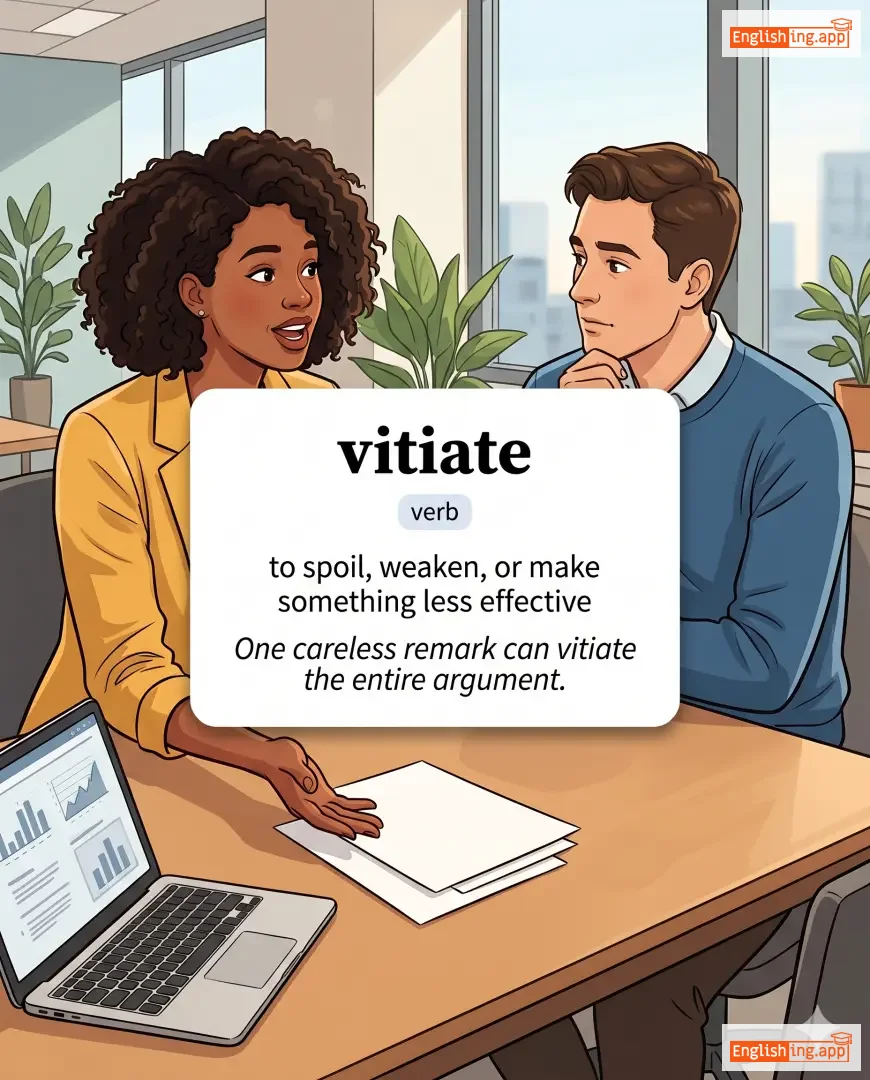
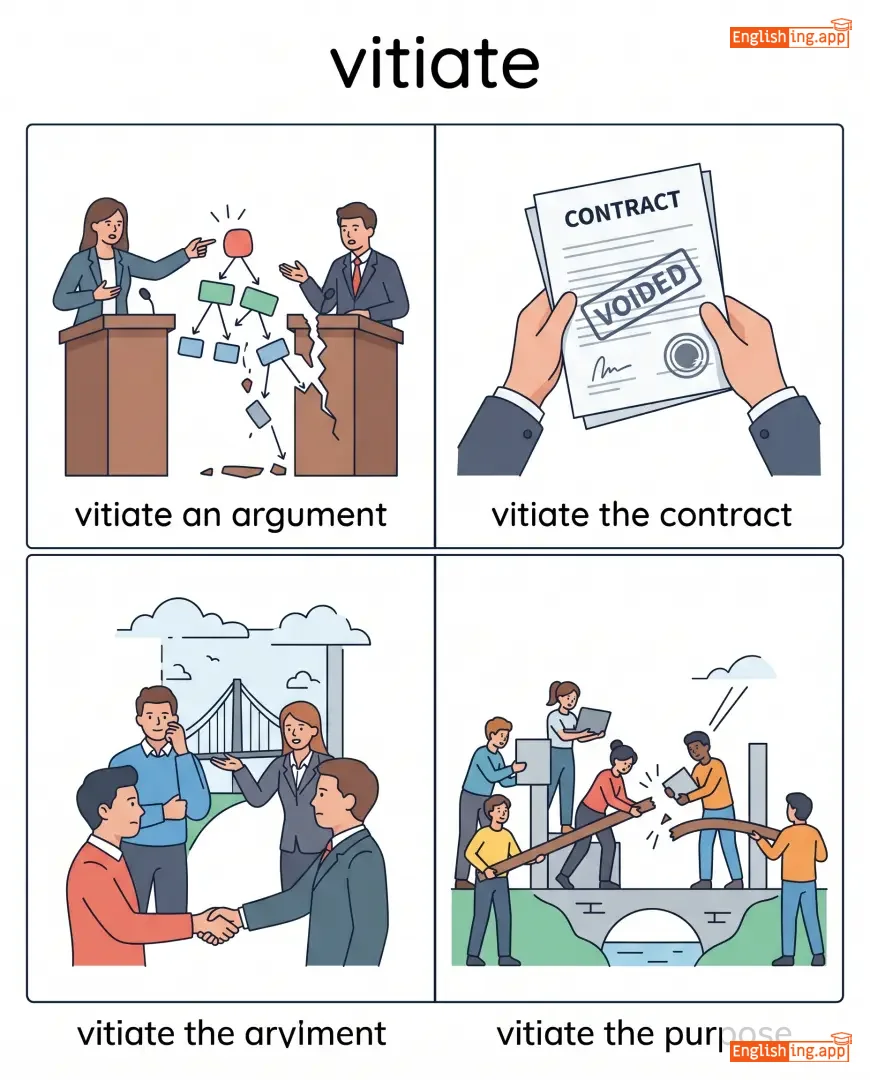
to spoil, weaken, or make something less effective
••••••
|
One careless remark can vitiate the entire argument.
一つの不注意なコメントが議論全体を損なう可能性がある。
••••••
|
一つの不注意なコメントが議論全体を損なう可能性がある。
Hitotsu no fuchūi na komento ga giron zentai wo sokonau kanōsei ga aru.
••••••
|
- •••••• | - •••••• | - •••••• |
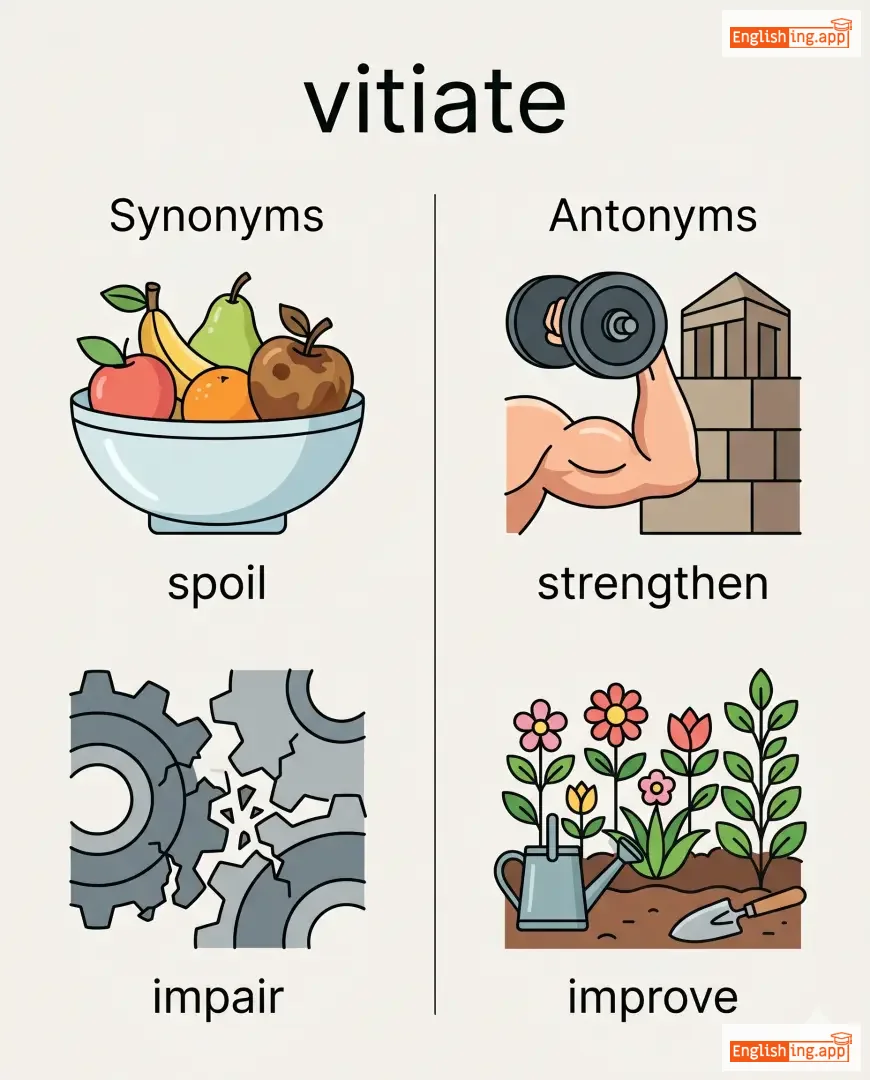
spoil, impair, ruin, corrupt, debase
••••••
|
strengthen, improve, enhance
••••••
|
vitiate an argument, vitiate the contract, vitiate the purpose
••••••
|
Vitiate は損なうを意味する — ビデオが悪いコメントで損なわれると想像してみてください。
••••••
|
|
😡
••••••
|
/vɪˈtjuːpərətɪv/
adjective
(ヴィチュペラティヴ)
••••••
|
|
悪口な
warukuchi na
••••••
|
- •••••• | - •••••• | - •••••• | - •••••• |
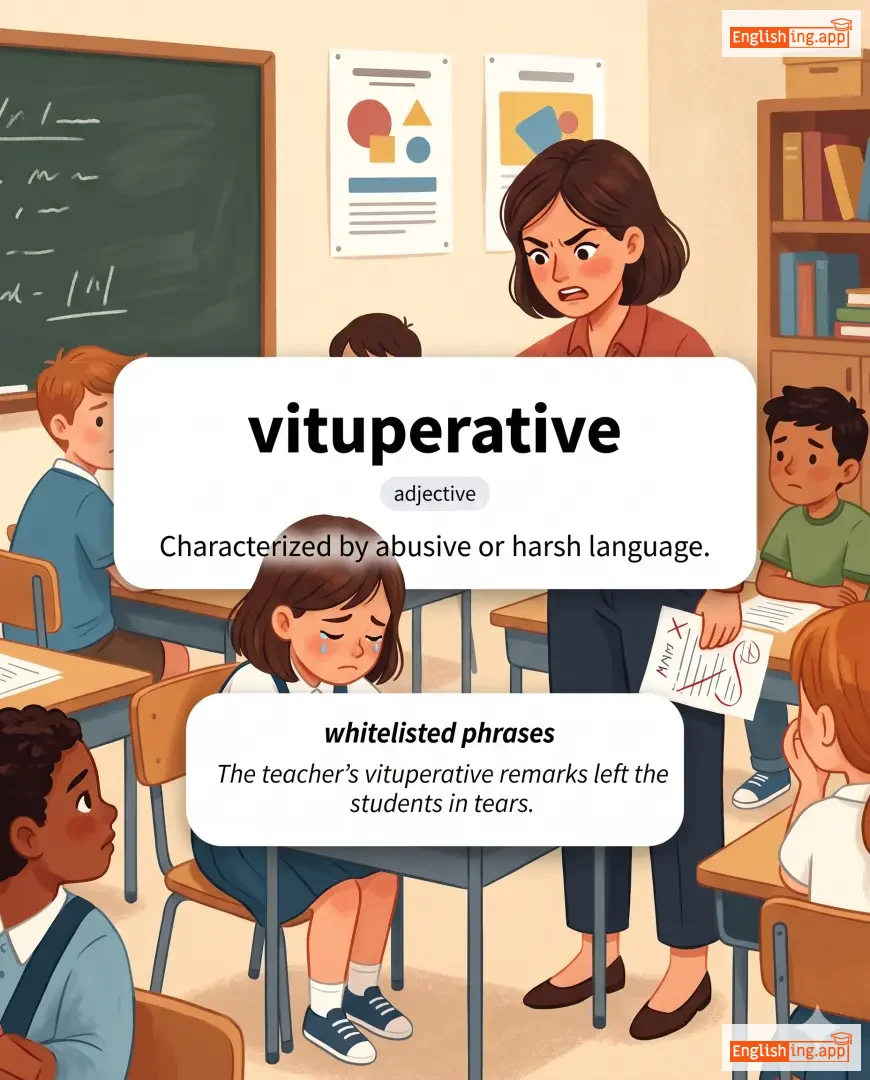
Characterized by abusive or harsh language.
••••••
|
The teacher’s vituperative remarks left the students in tears. |
教師の悪口な言葉が学生たちを涙で満たしました。
Kyōshi no warukuchi na kotoba ga gakusei-tachi o namida de mitashimashita.
••••••
|
- •••••• | - •••••• | - •••••• |
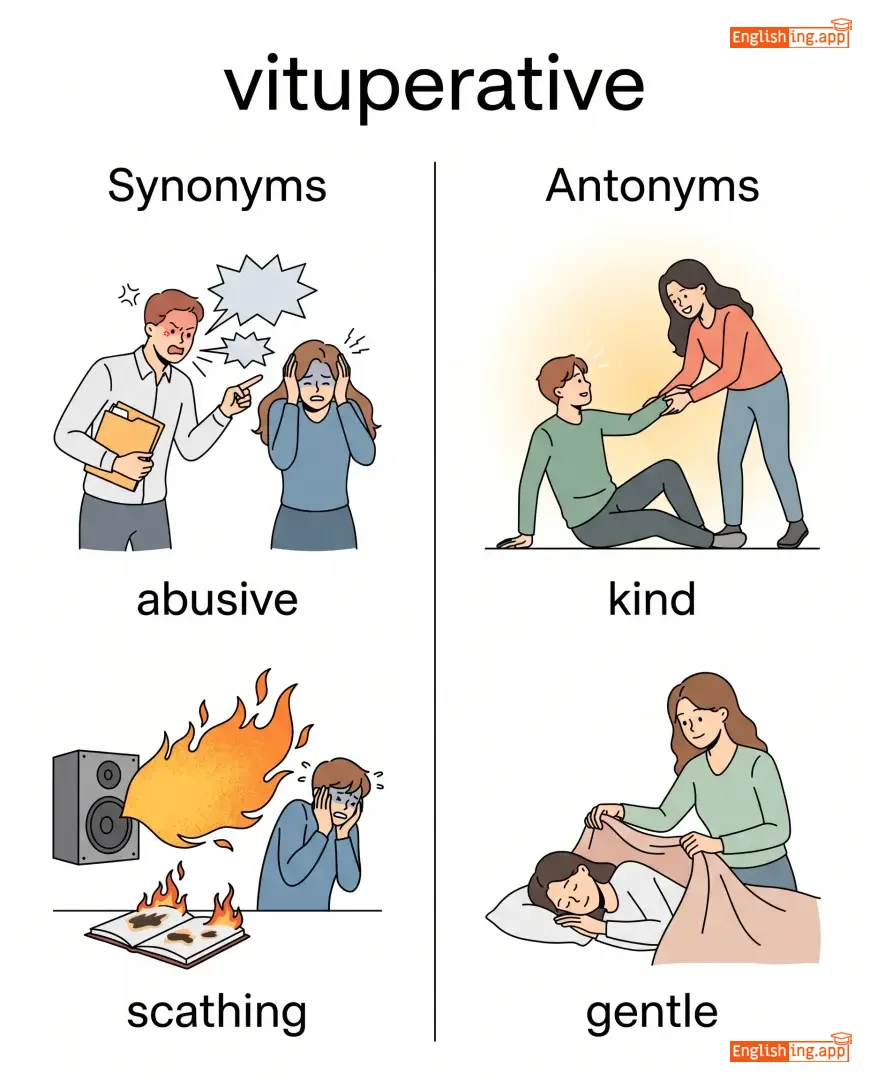
abusive, scathing, insulting, harsh
••••••
|
kind, gentle, respectful
••••••
|
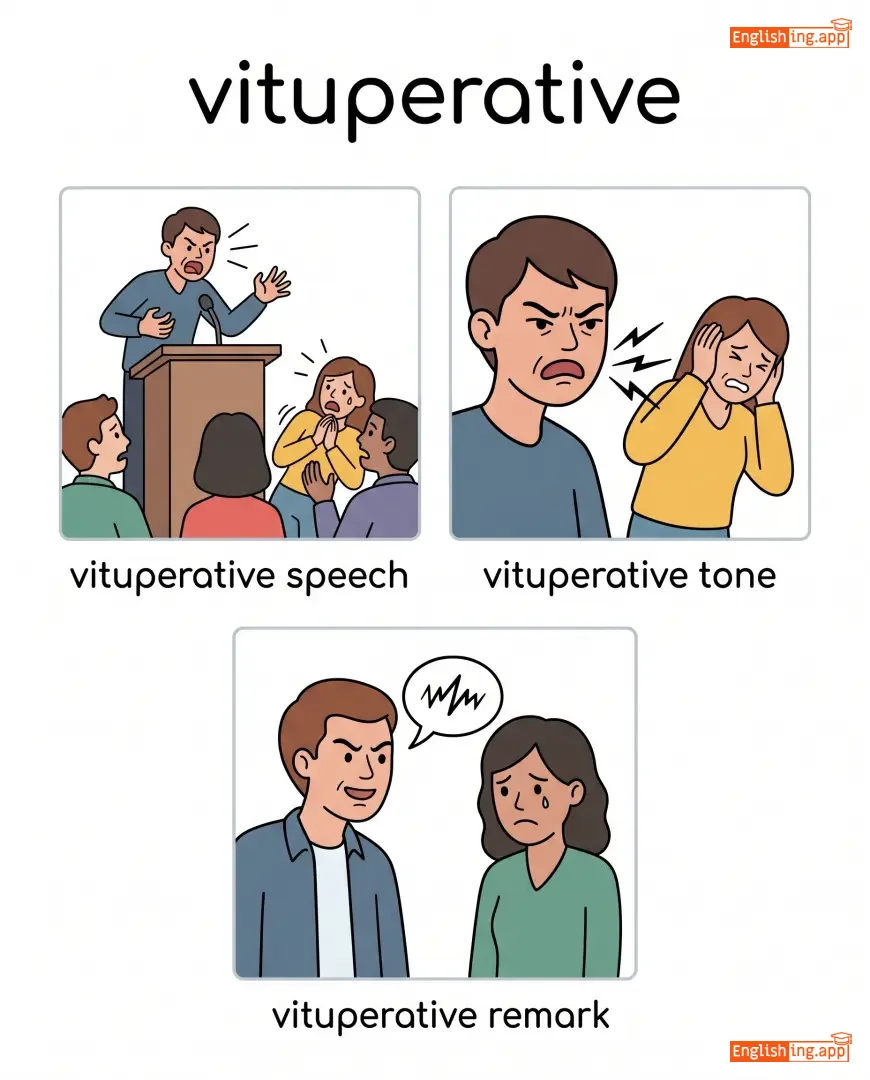
vituperative speech, vituperative tone, vituperative remark
••••••
|
Vituperative とは、まるで VIP が怒っているような侮辱的な言葉です。
••••••
|
|
🐀
••••••
|
/ˌvɪvɪˈsɛkʃən/
noun
(ビビセクション)
••••••
|

|
科学研究のために生きた動物に手術を行うこと
kagaku kenkyū no tame ni ikita dōbutsu ni shūtsuryoku o okonau koto
••••••
|
- •••••• | - •••••• | - •••••• | - •••••• |
the practice of performing operations on live animals for scientific research
••••••
|
Vivisection has long been a controversial topic among scientists and animal rights activists. |
ビビセクションは長年にわたり、科学者と動物の権利活動家の間で物議を醸してきました。
Bibisekushon wa naganen ni watari, kagakusha to dōbutsu no kenri katsudōka no aida de butsugi o kashite kimashita.
••••••
|
- •••••• | - •••••• | - •••••• |
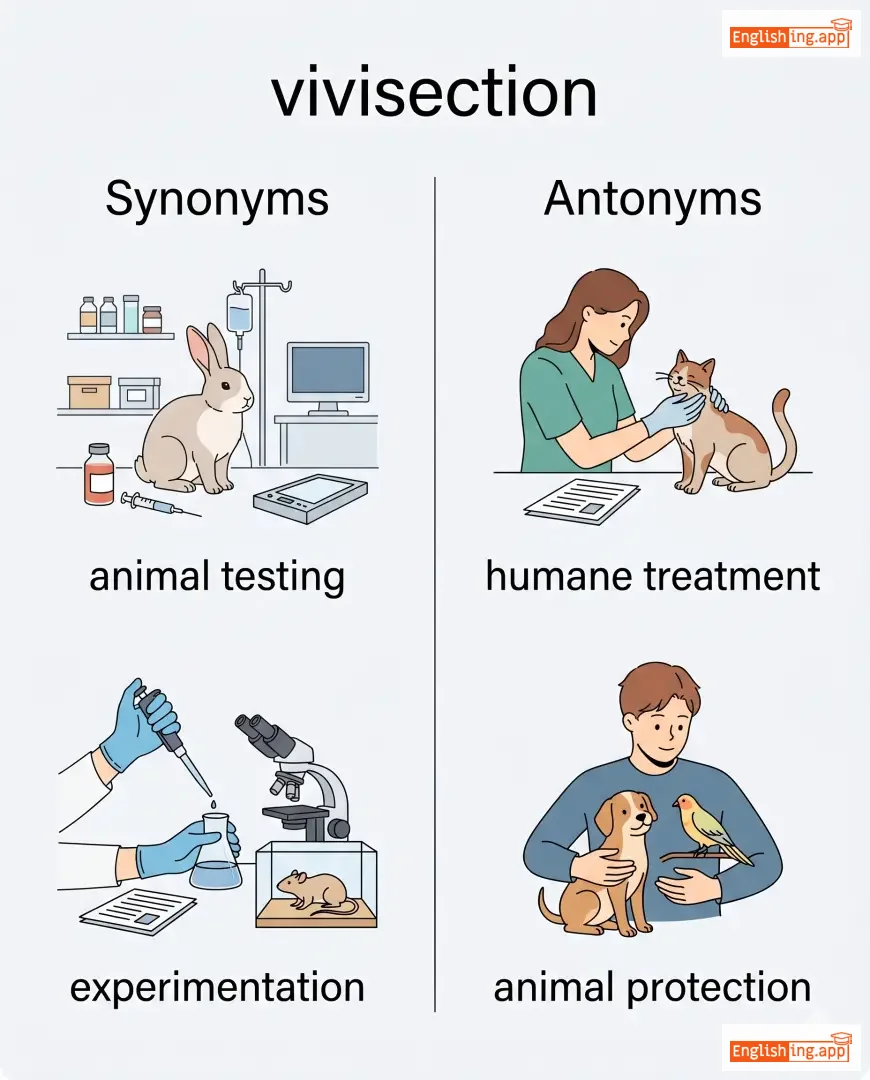
animal testing, experimentation, dissection
••••••
|
humane treatment, animal protection
••••••
|
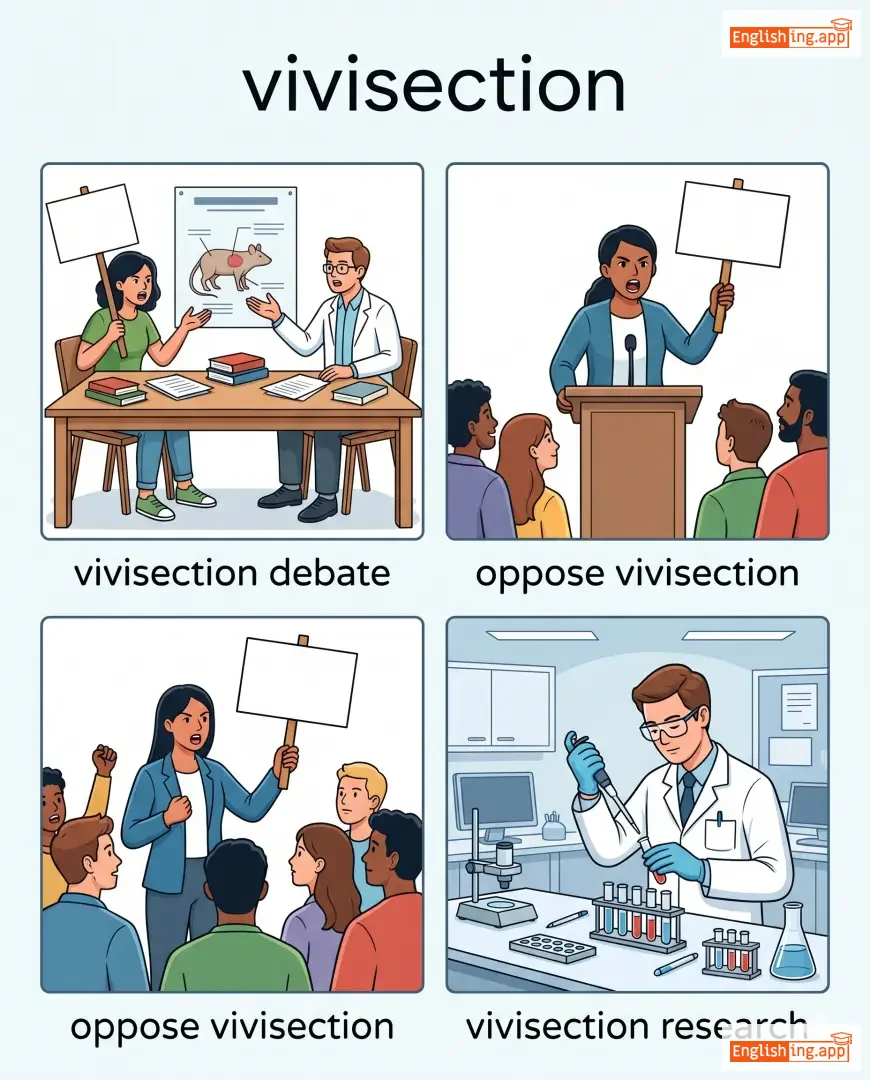
vivisection debate, oppose vivisection, vivisection research
••••••
|
Viviは生きていることを意味し、セクションは切ることを意味する = 生きた動物に手術を行うこと
••••••
|
|
👗
••••••
|
/voʊɡ/
noun
(ヴォーグ)
••••••
|

|
ファッション
fasshon
••••••
|
- •••••• | - •••••• | - •••••• | - •••••• |
the prevailing fashion, style, or trend at a particular time
••••••
|
Minimalist design is currently in vogue. |
ミニマリストデザインは現在ファッションです。
Minimarizuto dezain wa genzai fasshon desu.
••••••
|
in vogue |
fashionable or popular at a given time
••••••
|
ファッション
fasshon
••••••
|
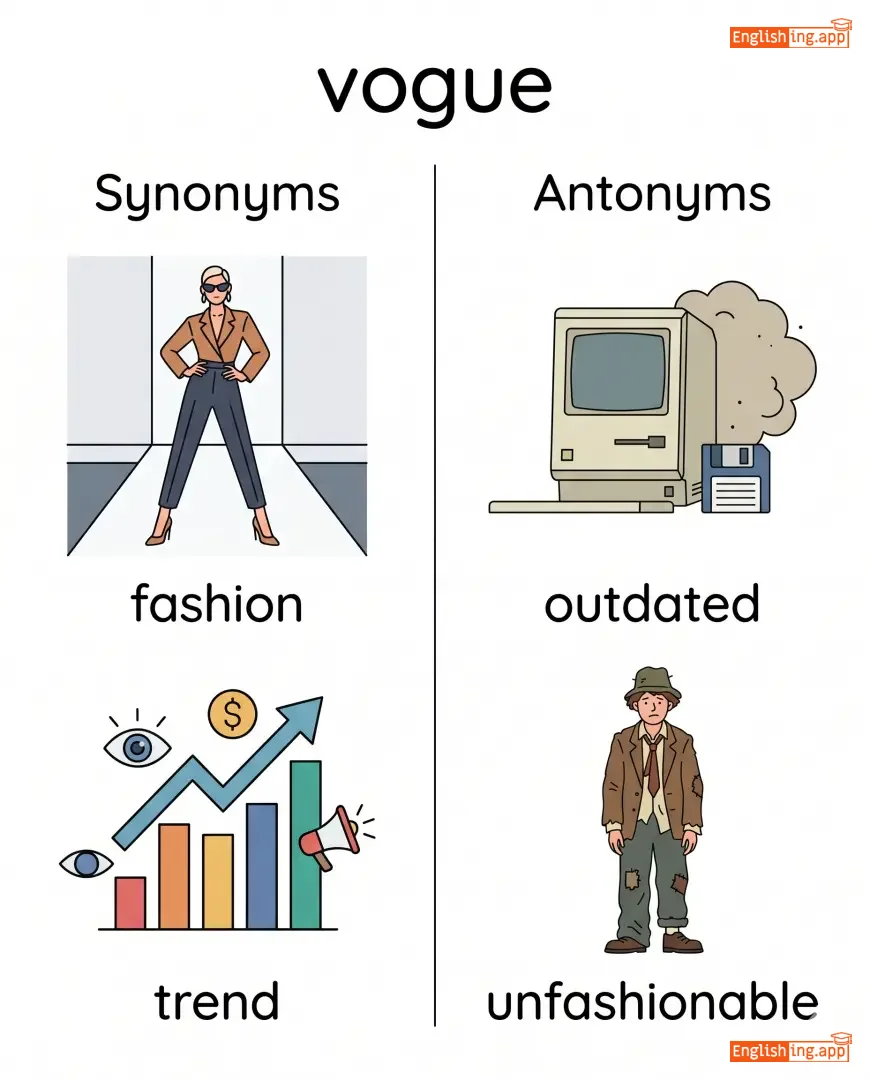
fashion, trend, style, craze, fad
••••••
|
outdated, unfashionable, obsolete
••••••
|
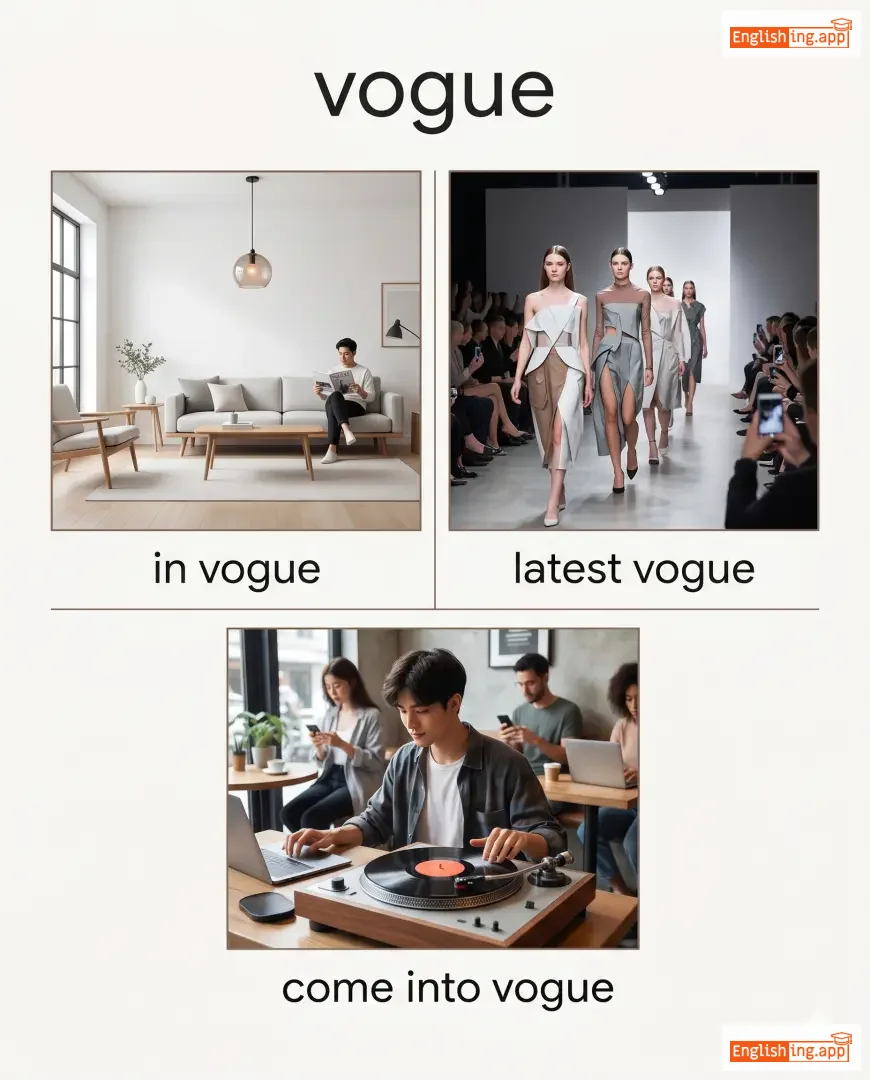
in vogue, latest vogue, come into vogue
••••••
|
ヴォーグはファッション界の象徴です。
••••••
|
|
⚡
••••••
|
/ˈvɑːlətl/
adjective
(ヴォラタイル)
••••••
|
|
変動しやすい
hendou shiyasui
••••••
|
- •••••• | - •••••• | - •••••• | - •••••• |
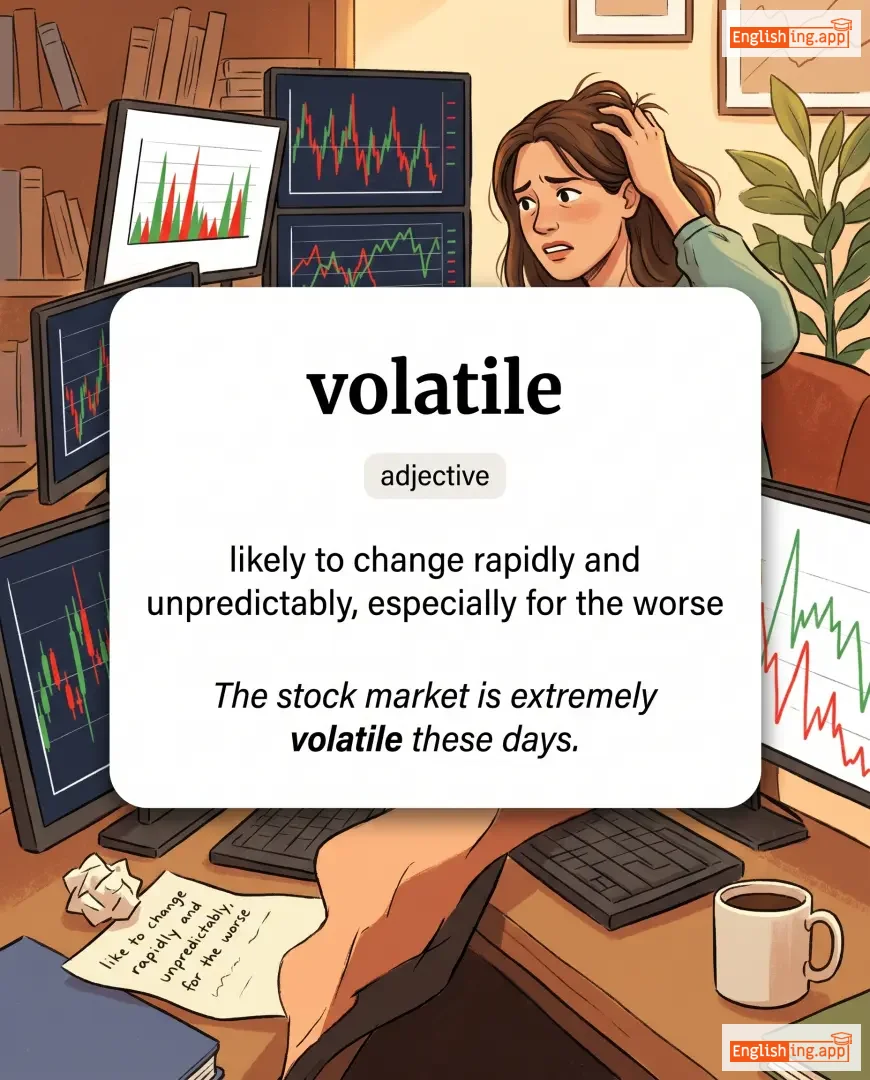
likely to change rapidly and unpredictably, especially for the worse
••••••
|
The stock market is extremely volatile these days. |
株式市場は最近非常に変動しやすいです。
Kabushiki shijō wa saikin hijō ni hendō shiyasui desu.
••••••
|
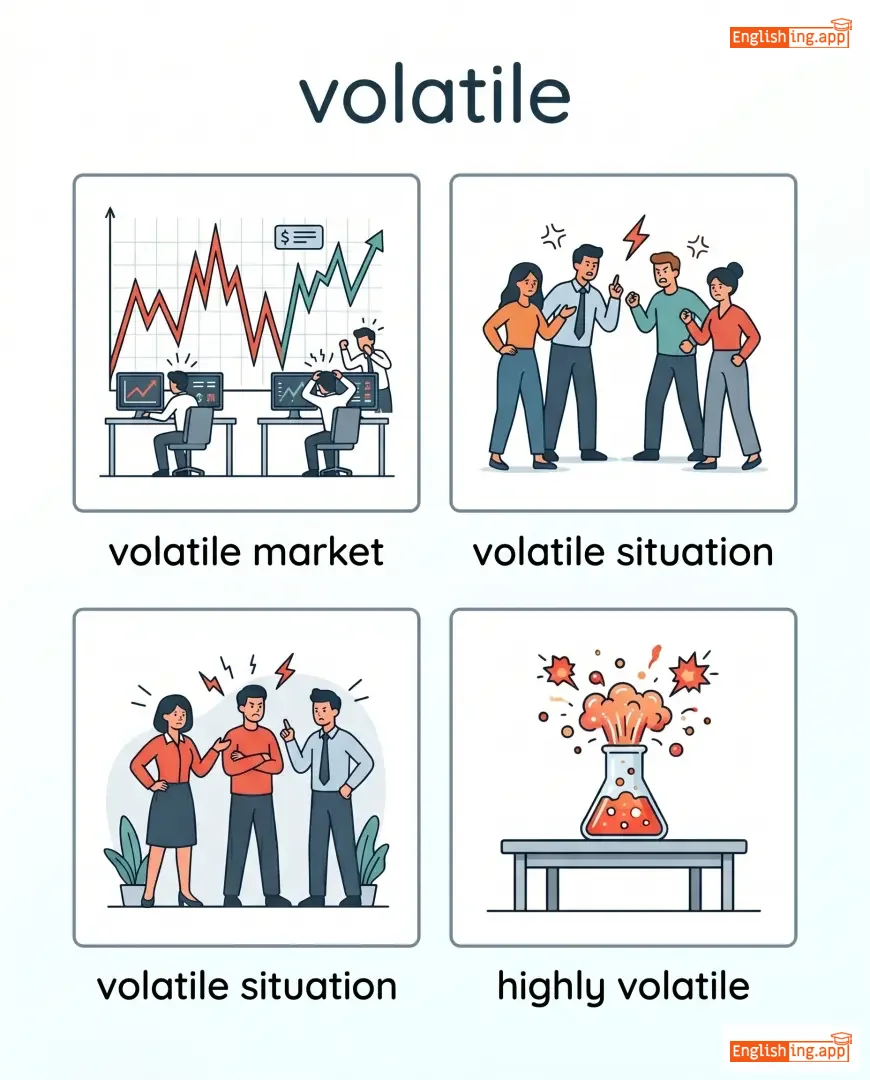
volatile situation |
a situation that is unstable and likely to change suddenly
••••••
|
変動する状況
hendou suru jōkyō
••••••
|
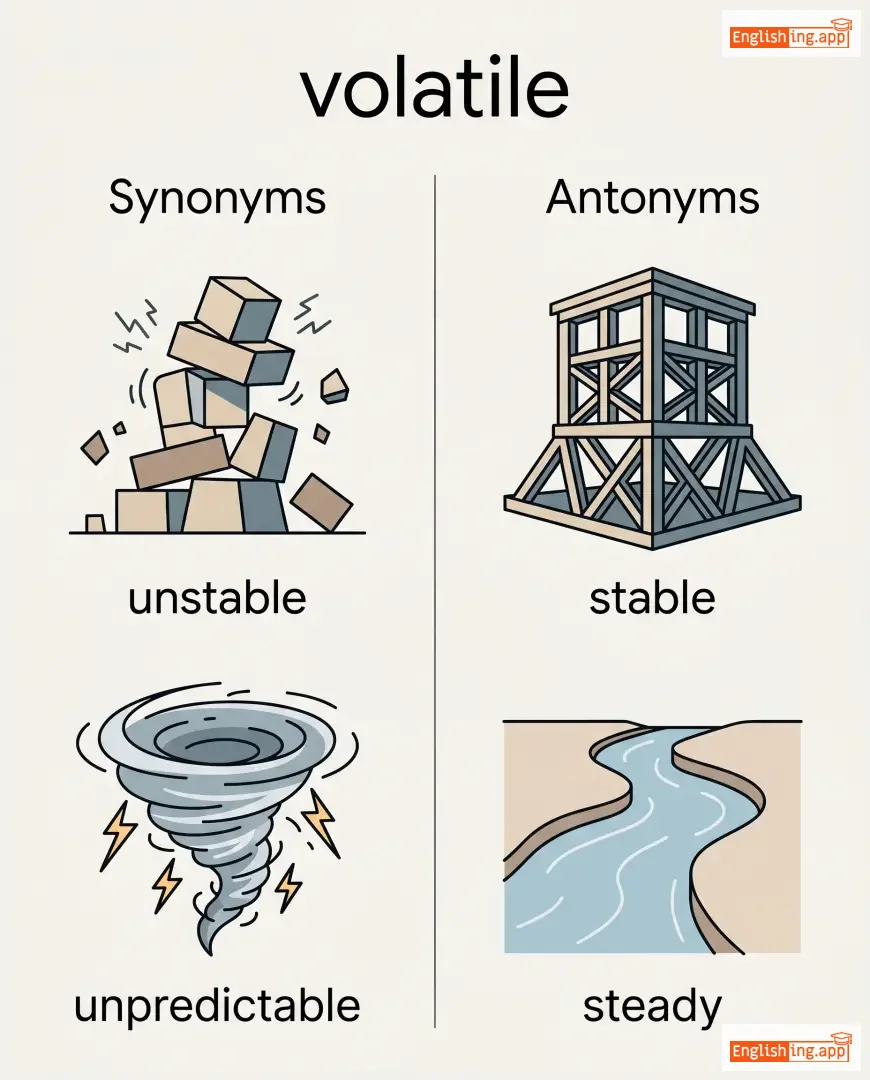
unstable, unpredictable, explosive, fickle
••••••
|
stable, steady, consistent
••••••
|
volatile market, volatile situation, highly volatile
••••••
|
変動するマーケットのように、ヴォラタイルは変化が早い。
••••••
|
|
🌪️
••••••
|
/ˈvɔːrtɛks/
noun
(ボルテックス)
••••••
|
|
渦巻き
uzumaki
••••••
|
- •••••• | - •••••• | - •••••• | - •••••• |
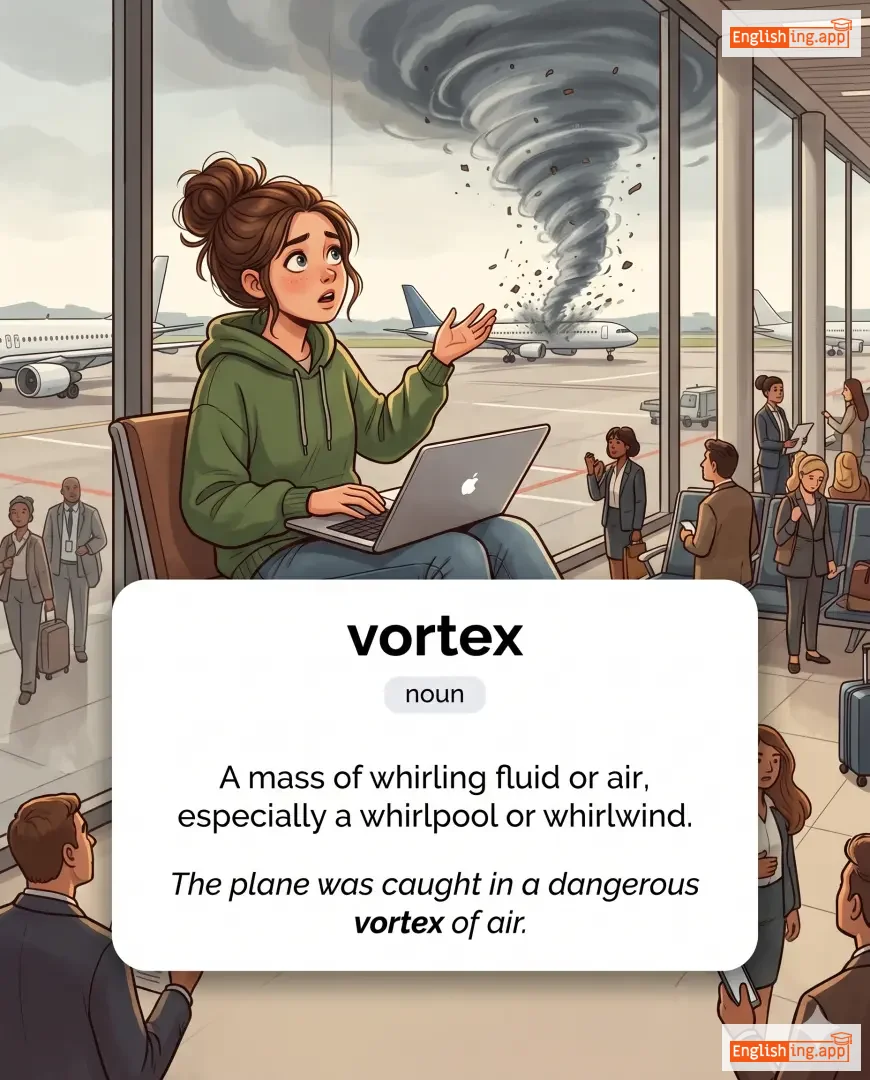
A mass of whirling fluid or air, especially a whirlpool or whirlwind.
••••••
|
The plane was caught in a dangerous vortex of air. |
飛行機は危険な空気の渦巻きに巻き込まれました。
hikōki wa kiken na kūki no uzumaki ni makikomaremashita.
••••••
|
into the vortex |
to be drawn into a difficult or inescapable situation
••••••
|
渦巻きの中で
uzumaki no naka de
••••••
|
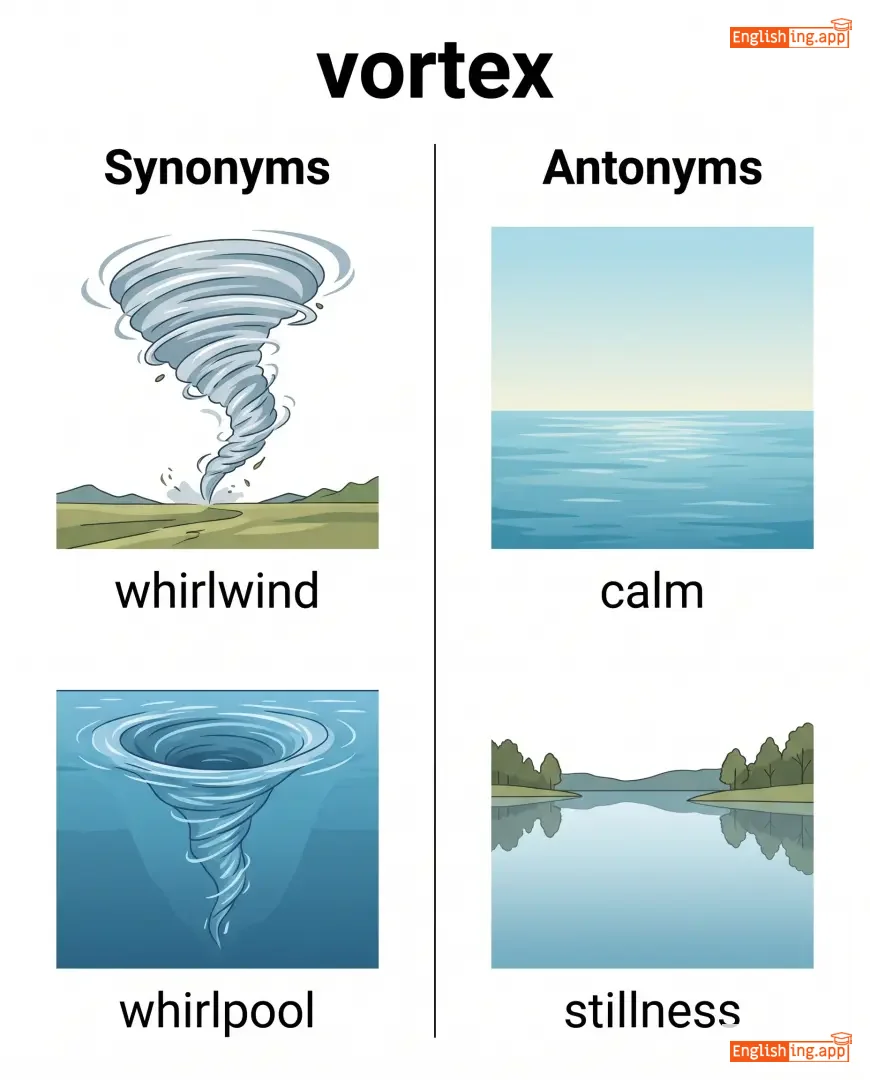
whirlwind, whirlpool, eddy, cyclone, spiral
••••••
|
calm, stillness
••••••
|
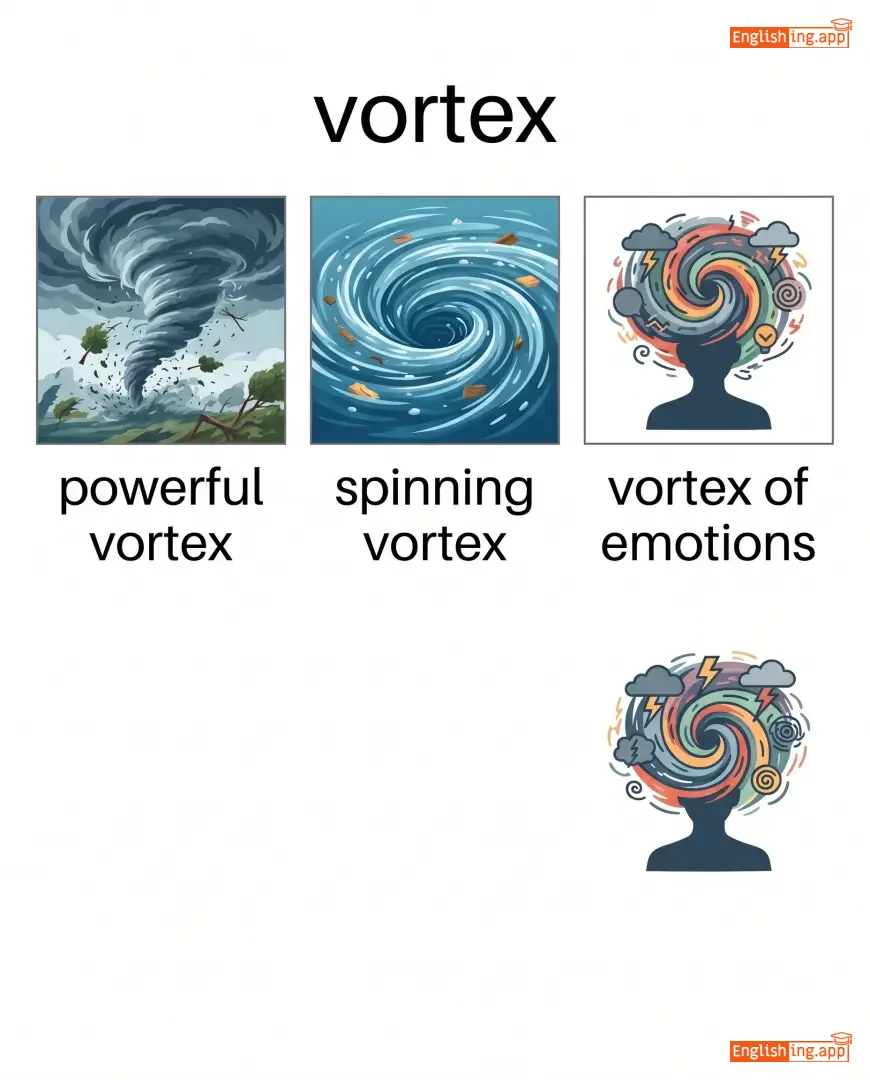
powerful vortex, spinning vortex, vortex of emotions
••••••
|
Vortex、'vote rex'のように、風が渦巻きの中で竜巻のように回転していることを想像して
••••••
|
|
✅
••••••
|
/ˈwɒrəntɪd/
adjective/verb
(warranted)
••••••
|

|
正当化された
seitouka sareta
••••••
|
warranted
warranted
••••••
|
warranted
warranted
••••••
|
- •••••• | - •••••• |
Justified or authorized under the circumstances.
••••••
|
Her anger was warranted after the unfair treatment.
不公平な扱いの後、彼女の怒りは正当化されていました。
••••••
|
不公平な扱いの後、彼女の怒りは正当化されていました。
Fukouhei na atsukai no ato, kanojo no ikari wa seitouka sarete imashita.
••••••
|
- •••••• | - •••••• | - •••••• |
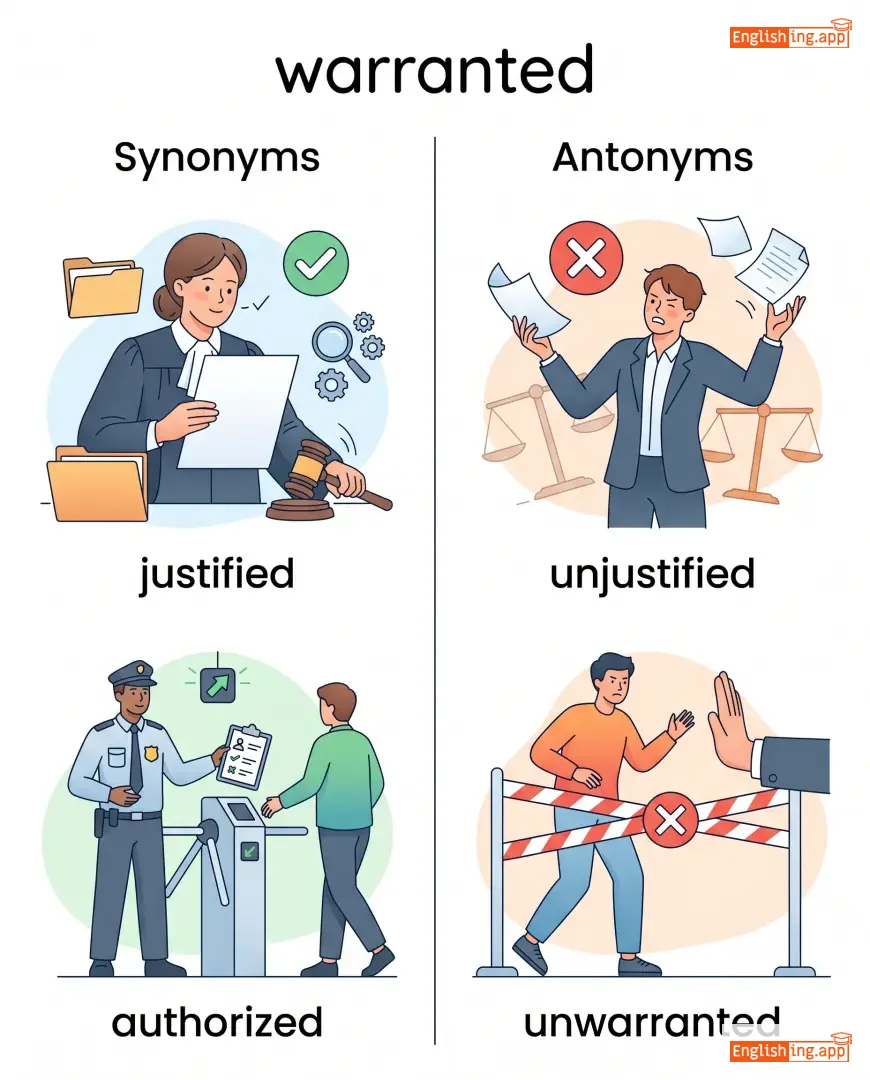
justified, authorized, reasonable, valid
••••••
|
unjustified, unwarranted, invalid
••••••
|
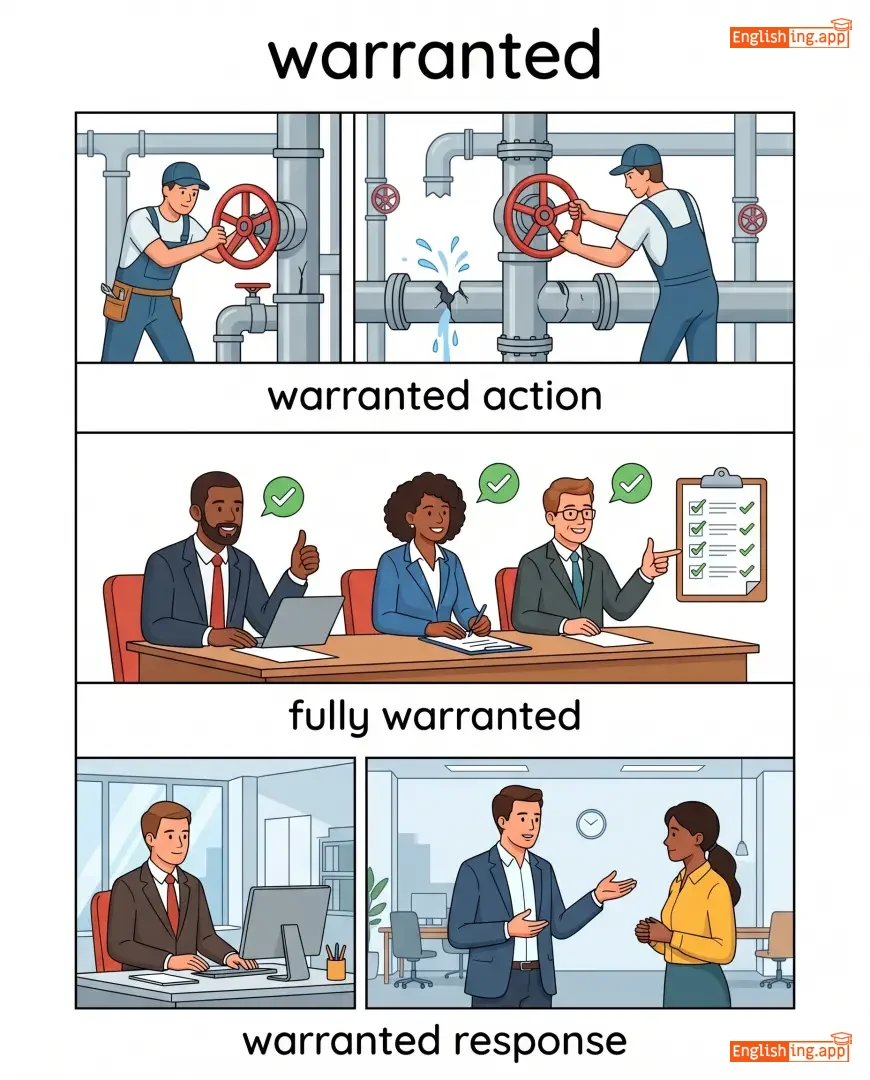
warranted action, fully warranted, warranted response, legally warranted
••••••
|
正当であれば、それは WARRANTED ✅
••••••
|
|
👀
••••••
|
/ˈweəri/
adjective
(ウェアリ)
••••••
|
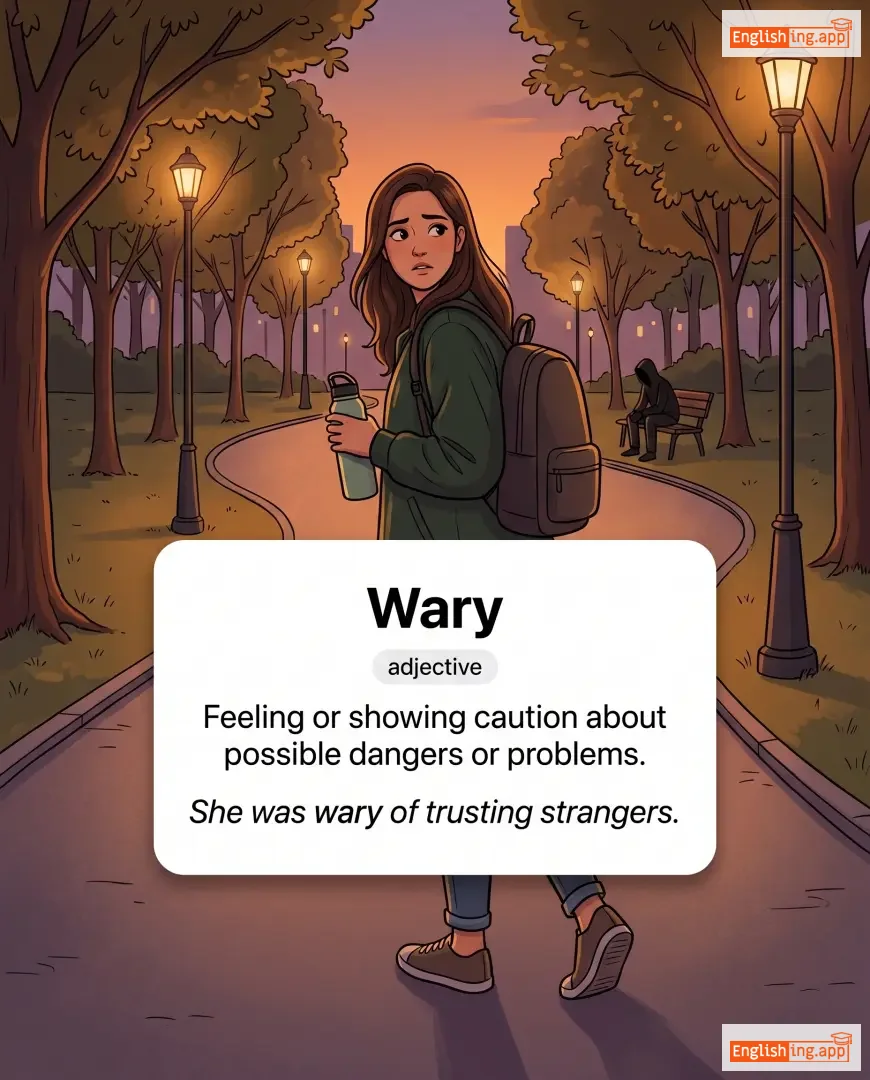
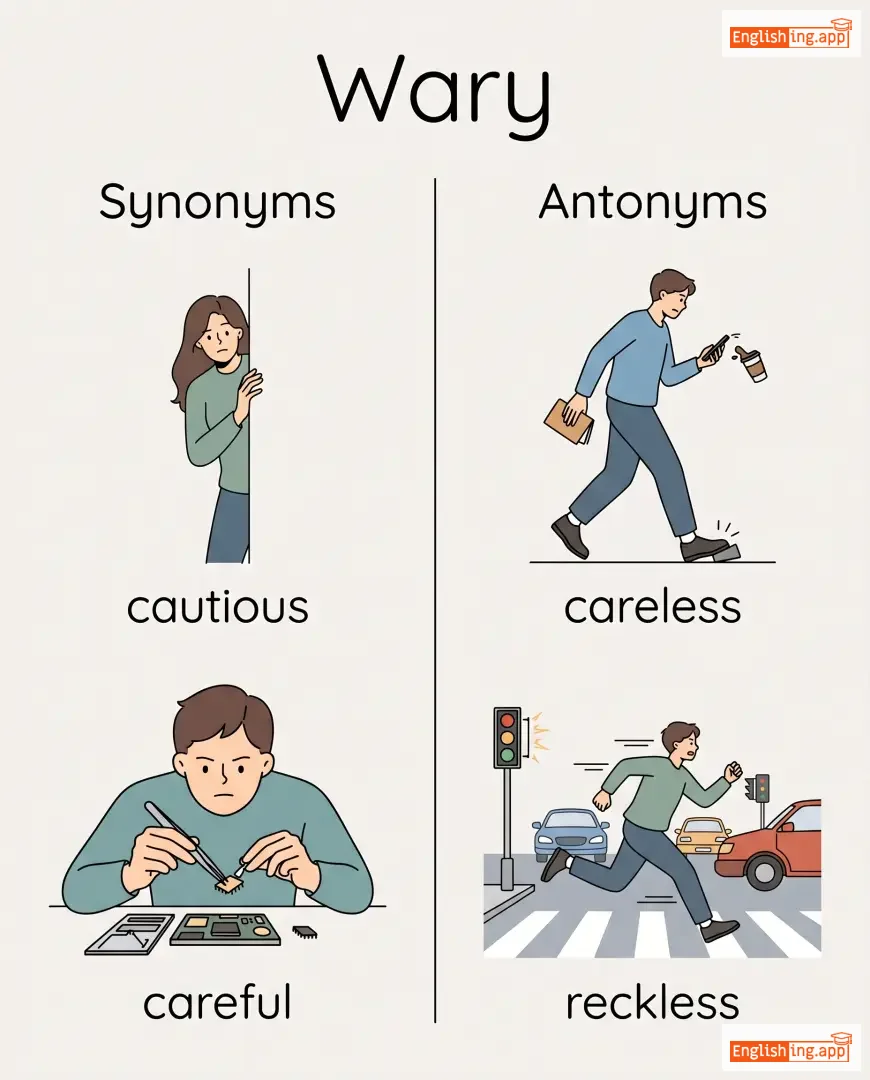
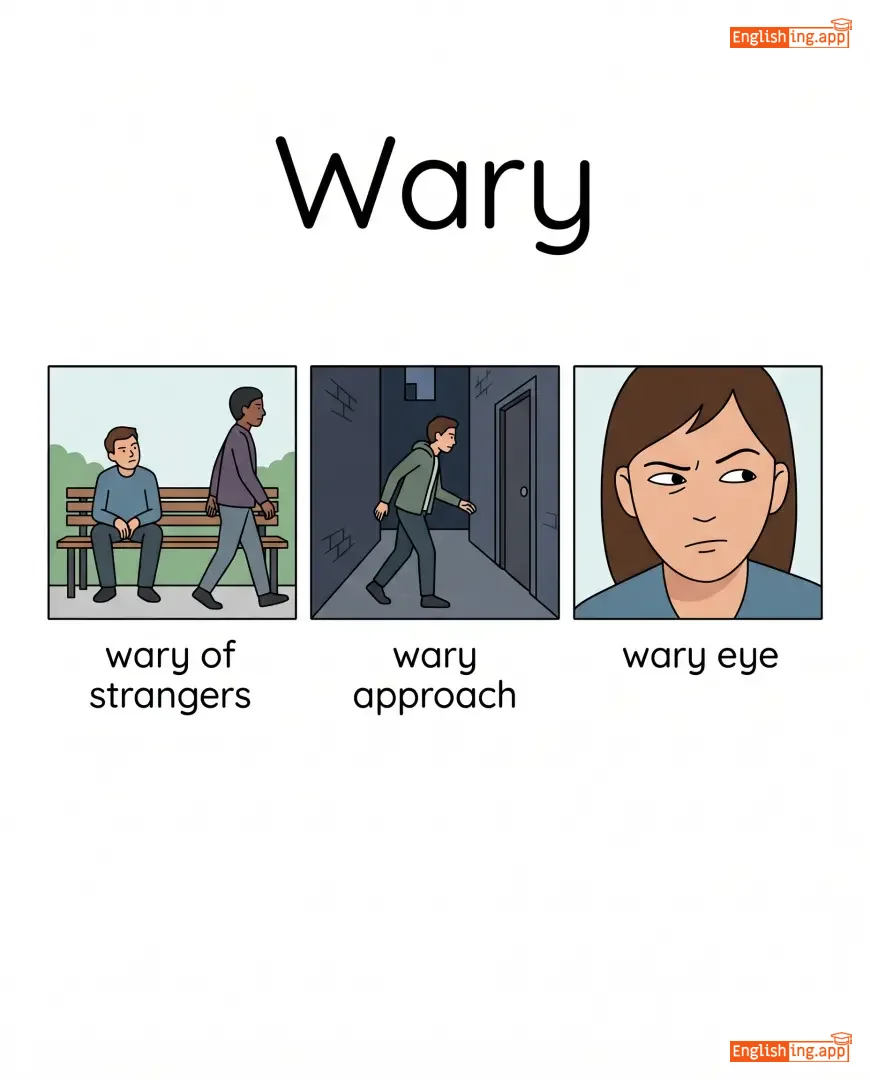
|
用心深い
wary
••••••
|
- •••••• | - •••••• | - •••••• | - •••••• |
Feeling or showing caution about possible dangers or problems.
••••••
|
She was wary of trusting strangers. |
彼女は見知らぬ人を信じることに用心深かった。
Kanojo wa mishiranu hito o shinjiru koto ni yōjinbukatta.
••••••
|
wary eye |
A cautious and watchful look
••••••
|
用心深い目
Yōjinbukai me
••••••
|
cautious, careful, alert, suspicious, vigilant
••••••
|
careless, reckless, unwary
••••••
|
wary of strangers, wary approach, wary eye, be wary
••••••
|
Wary = Very 用心深い – 'wary' はいつも慎重であることを意味します!
••••••
|
|
🌊
••••••
|
/ˈwɛltər/
verb
(ウェルター)
••••••
|
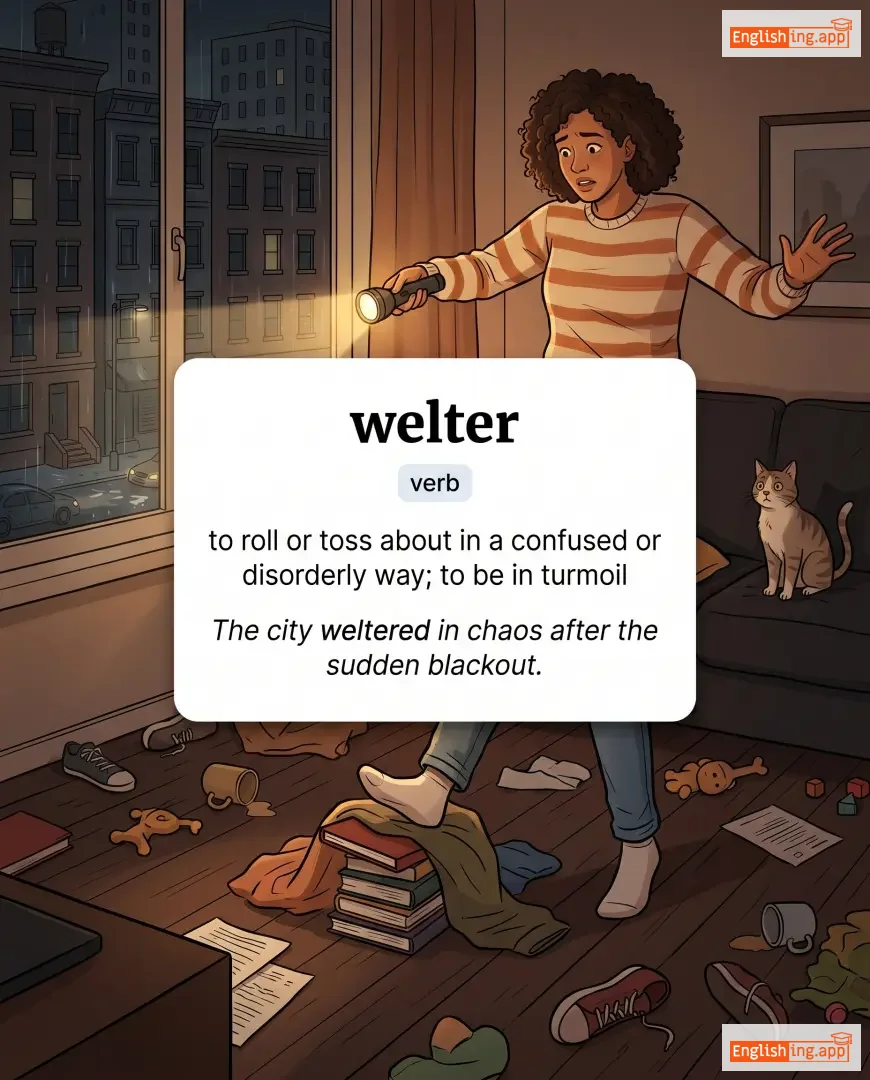
|
混乱の中で転がる
konran no naka de korogaru
••••••
|
weltered
ウェルタード
••••••
|
weltered
ウェルタード
••••••
|
welters
ウェルターズ
••••••
|
weltering
ウェルタリング
••••••
|
to roll or toss about in a confused or disorderly way; to be in turmoil
••••••
|
The city weltered in chaos after the sudden blackout.
突然の停電後、都市は混乱の中に沈んだ。
••••••
|
突然の停電後、都市は混乱の中に沈んだ。
Totsuzen no teiden go, toshi wa konran no naka ni shizunda.
••••••
|
- •••••• | - •••••• | - •••••• |
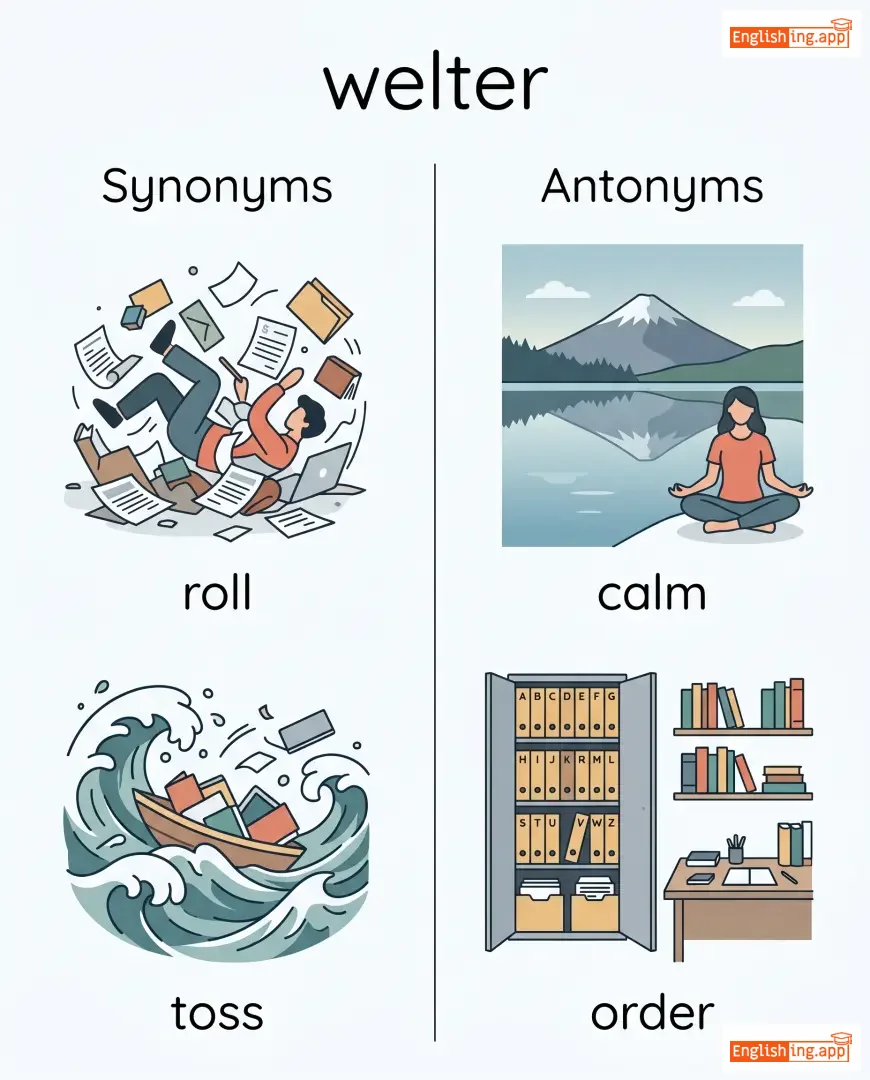
roll, toss, wallow, flounder, writhe
••••••
|
calm, order, stability
••••••
|
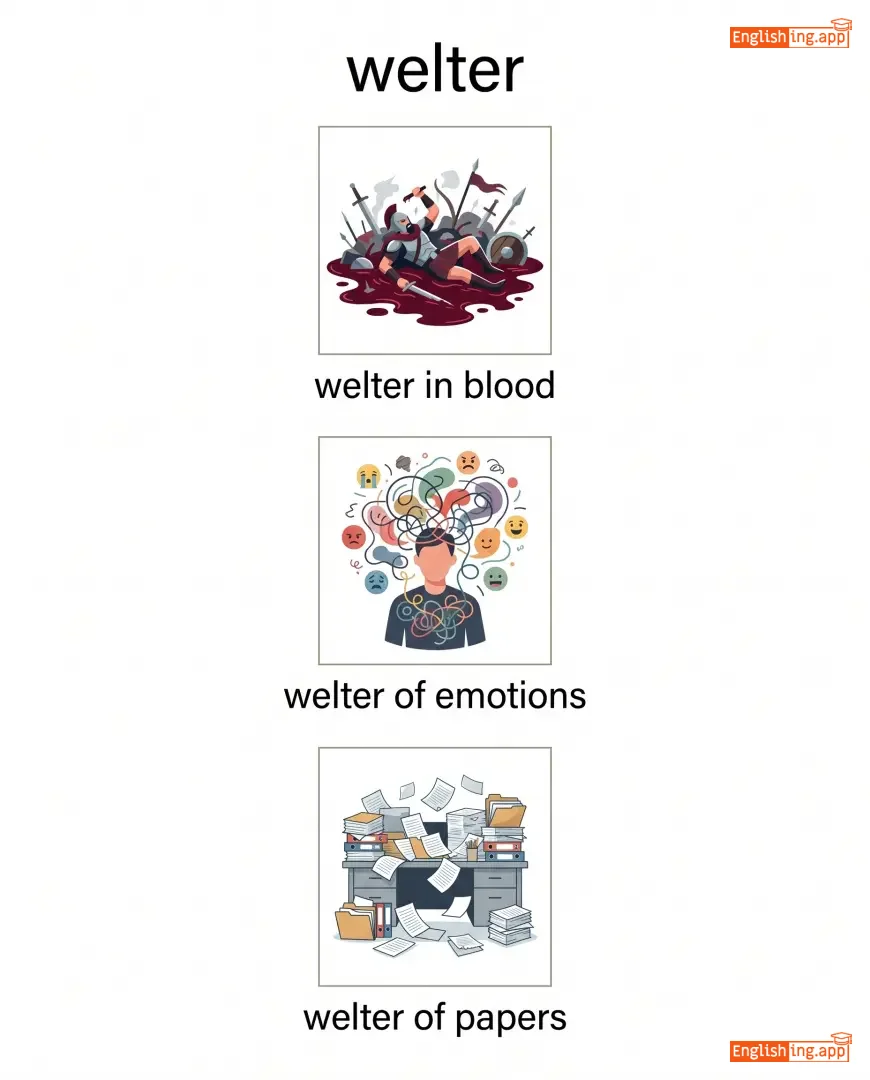
welter in blood, welter of emotions, welter of papers
••••••
|
Well ter (welter) はすべてを混乱させる。
••••••
|
|
🎭
••••••
|
/ˈwɪm.zɪ.kəl/
adjective
(wīmusikaru)
••••••
|
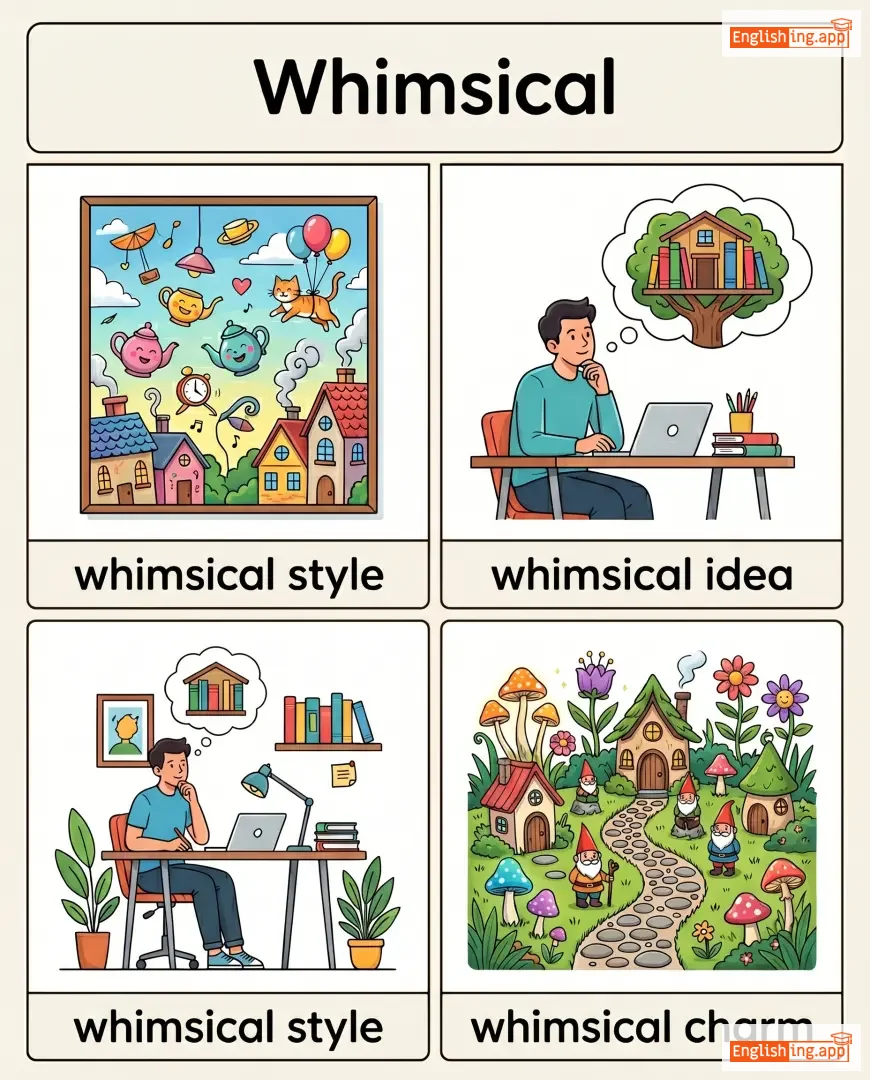
|
風変わりな; 奇妙な
fūkawari na; kimyō na
••••••
|
- •••••• | - •••••• | - •••••• | - •••••• |
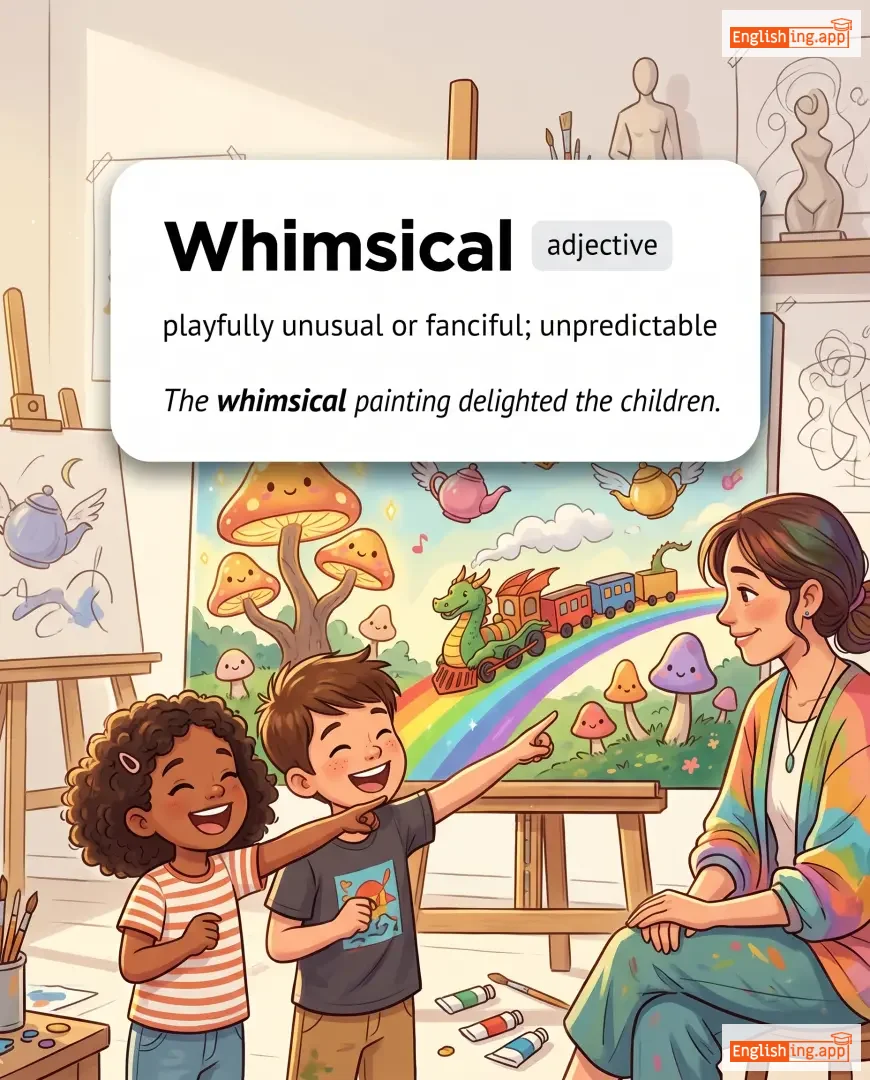
playfully quaint or fanciful, especially in an appealing and amusing way
••••••
|
The artist created whimsical sculptures that delighted children.
アーティストは子供たちを喜ばせる奇抜な彫刻を作りました。
••••••
|
アーティストは子供たちを喜ばせる奇抜な彫刻を作りました。
Ātisuto wa kodomotachi o yorokobaseru kibatsu na chōkoku o tsukurimashita.
••••••
|
- •••••• | - •••••• | - •••••• |
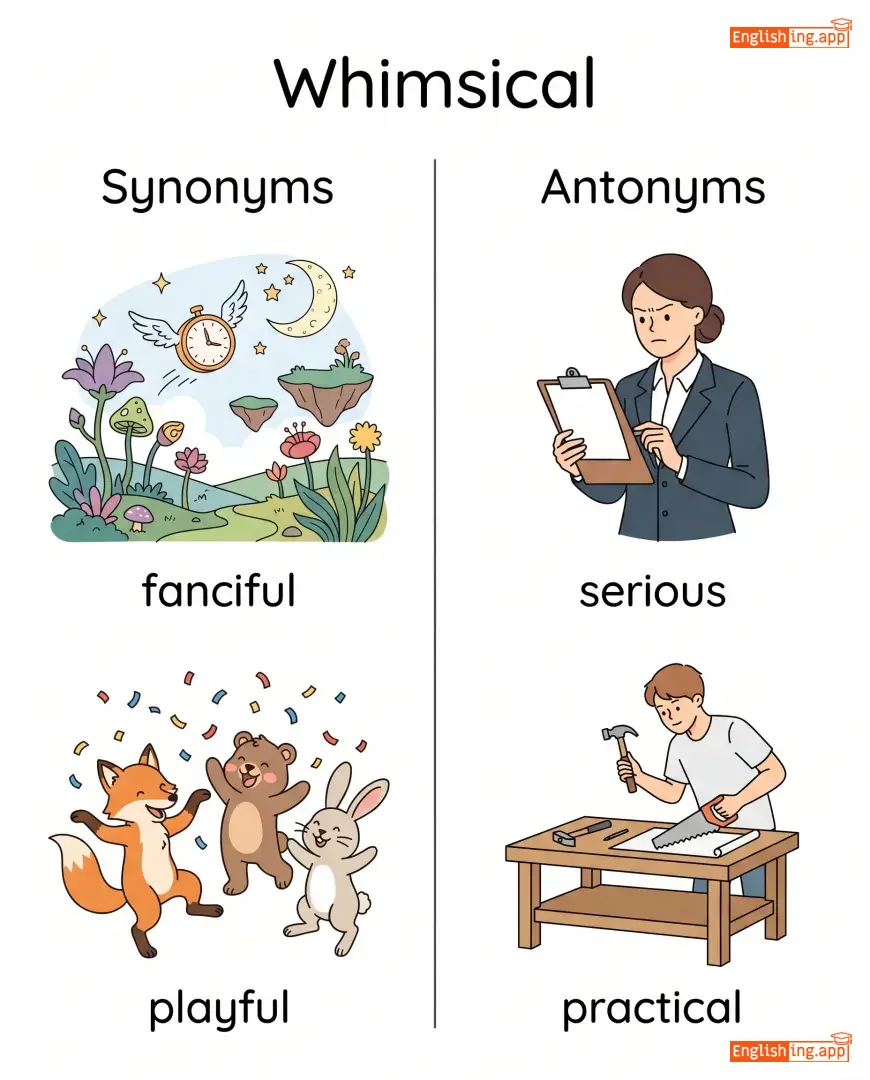
fanciful, playful, quirky, imaginative
••••••
|
serious, solemn, practical, realistic
••••••
|
whimsical character, whimsical design, whimsical story
••••••
|
Imagine a whimsical artist making playful and quirky sculptures for kids!
••••••
|
|
😔
••••••
|
/ˈwɪst.fəl/
adjective
(ウィストフル)
••••••
|
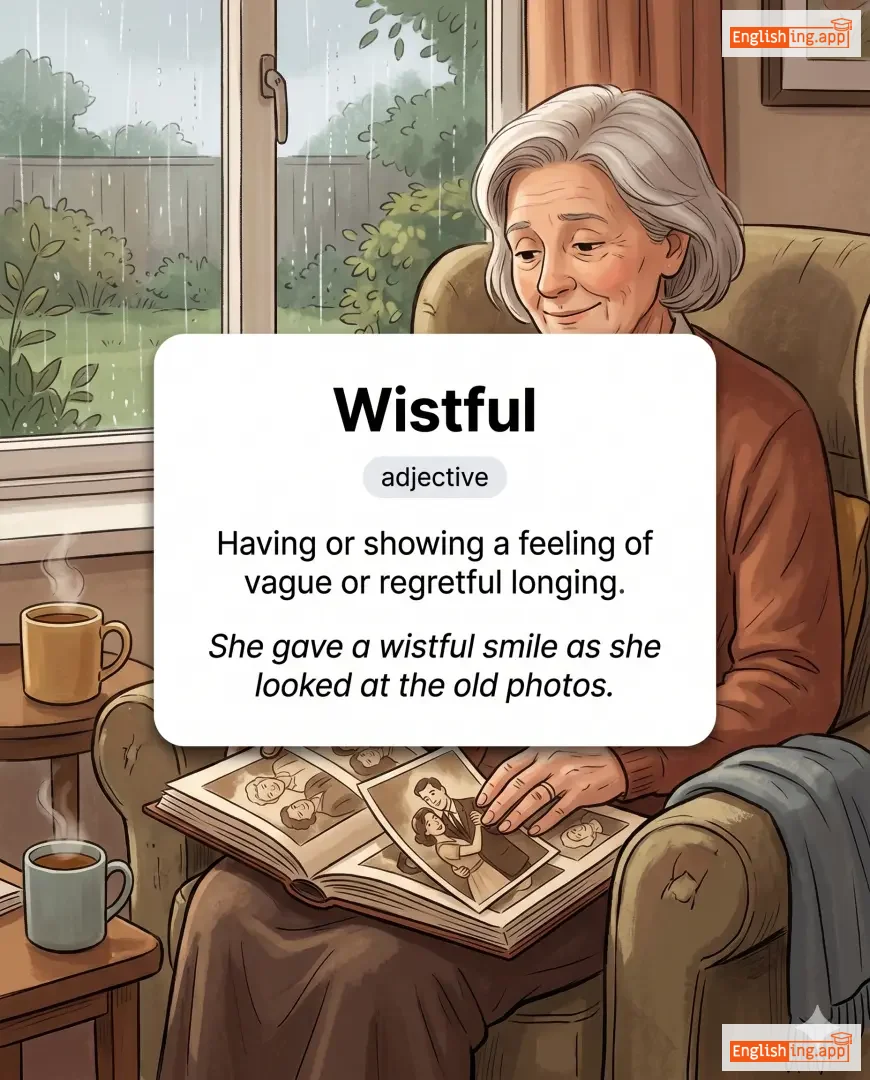
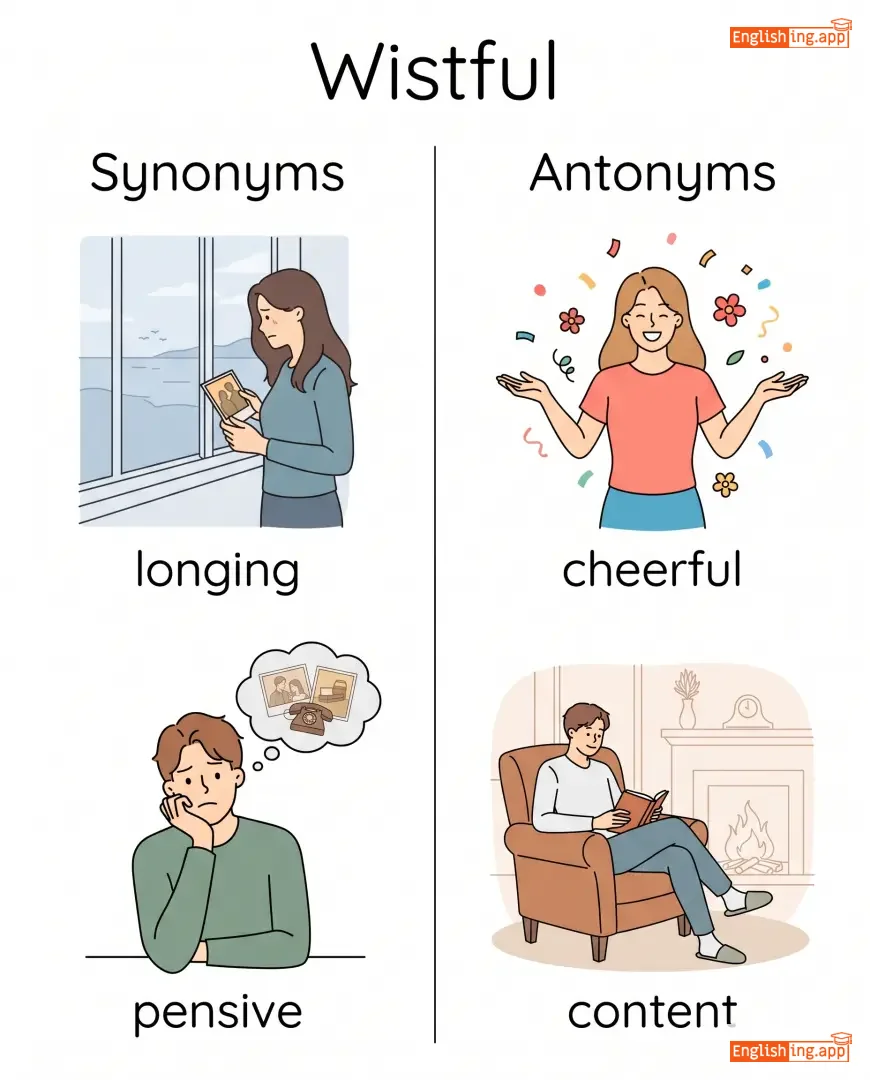
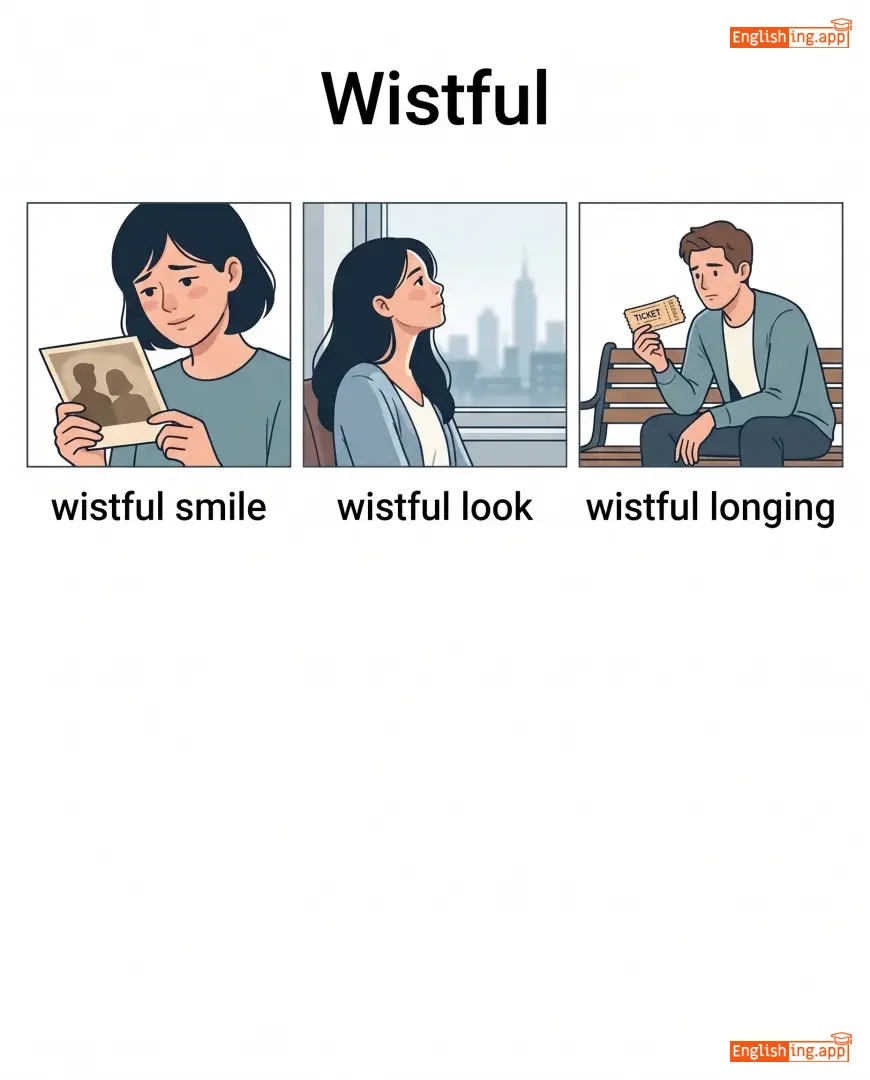
|
物憂い; ノスタルジック
monourei; nosutarujikku
••••••
|
- •••••• | - •••••• | - •••••• | - •••••• |
having a feeling of longing or yearning; melancholy
••••••
|
She gave a wistful smile when remembering her childhood days.
彼女は子供時代を思い出して、物憂げな笑みを浮かべました。
••••••
|
彼女は子供時代を思い出して、物憂げな笑みを浮かべました。
Kanojo wa kodomojidai wo omoidashite, mono urega na emi wo ukabemashita.
••••••
|
- •••••• | - •••••• | - •••••• |
yearning, melancholy, nostalgic, pensive, longing
••••••
|
cheerful, content, satisfied, happy, joyful
••••••
|
wistful smile, wistful look, wistful expression, wistful mood
••••••
|
Wistful = 過去を懐かしむような微笑み。
••••••
|
|
⚔️
••••••
|
/ˈzel.ət/
noun
(ゼロット)
••••••
|

|
狂信者
kyoushinsha
••••••
|
- •••••• | - •••••• | - •••••• | - •••••• |
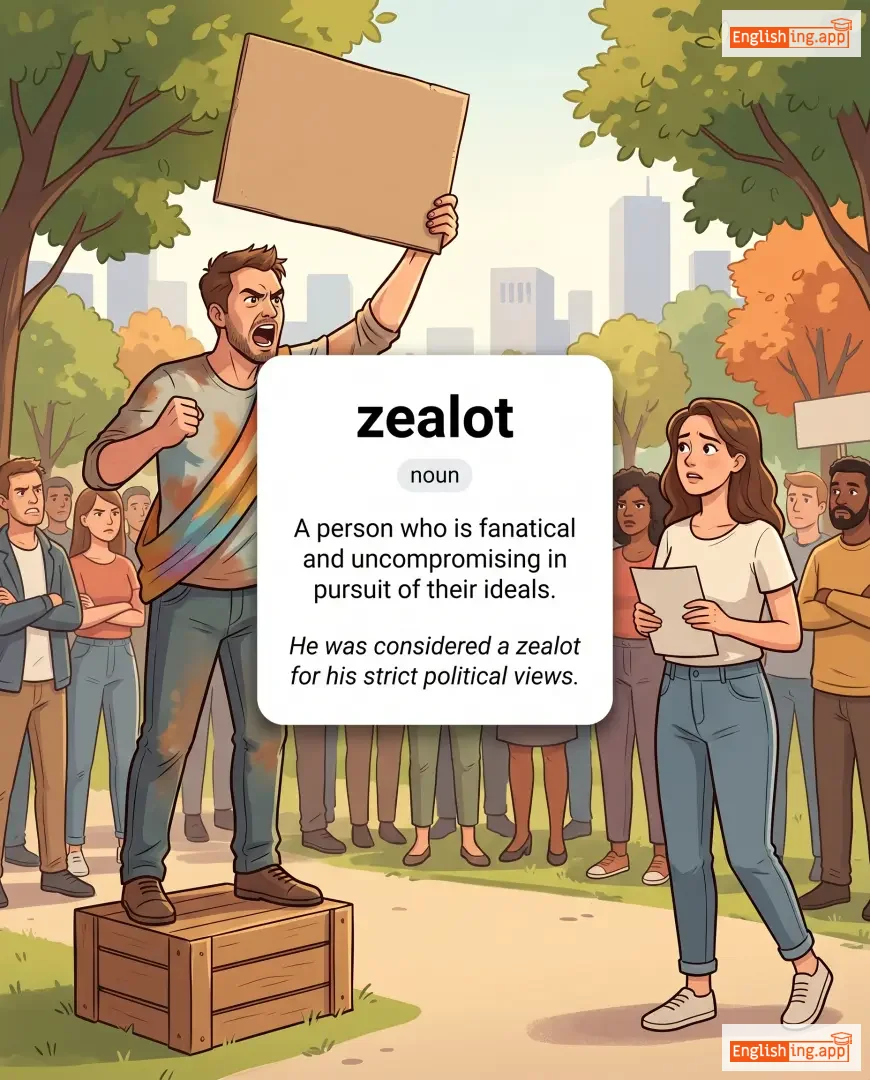
A person who is fanatical and uncompromising in pursuit of their ideals.
••••••
|
He was considered a zealot for his strict political views. |
彼は厳格な政治的見解のため、狂信者と見なされていました。
Kare wa genkaku na seijiteki kenkai no tame, kyoushinsha to minasa rete imashita.
••••••
|
- •••••• | - •••••• | - •••••• |
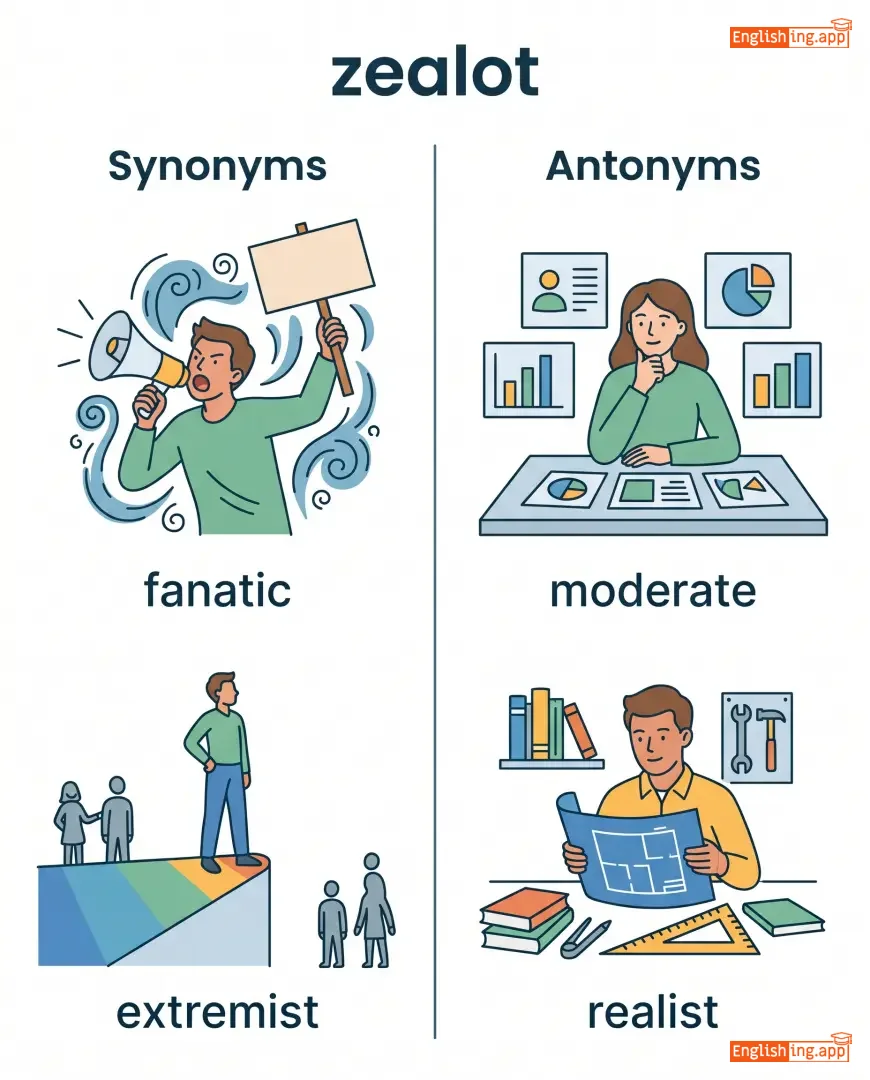
fanatic, extremist, radical, enthusiast
••••••
|
moderate, realist
••••••
|
religious zealot, political zealot, zealot group
••••••
|
ZeaLOTは多くの熱意を意味し、zealotは狂信者を意味します。
••••••
|

