|
絵文字
|
単語 | Images | 翻訳 | 過去 | 過去分詞 | 三人称単数 | 動名詞 | 意味 | 例文 | 例文の翻訳 | 表現例 | 表現例の意味 | 表現例の翻訳 | 同義語 | 対義語 | コロケーション | ニーモニック |
|---|---|---|---|---|---|---|---|---|---|---|---|---|---|---|---|---|---|
|
🛐
••••••
|
/ˈsʌplɪkənt/
noun
(サプリカント)
••••••
|
|
請願者
seigan-sha
••••••
|
- •••••• | - •••••• | - •••••• | - •••••• |
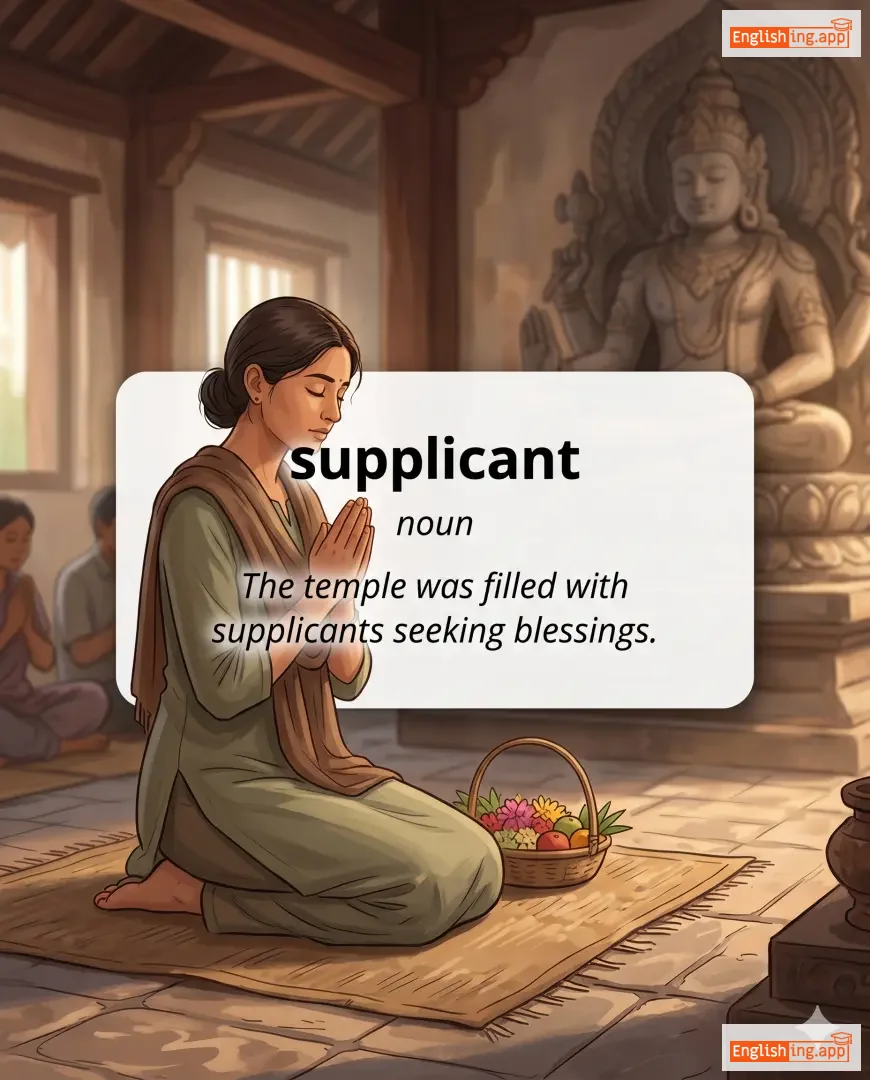
A person who humbly or earnestly asks for something, usually from a person of authority.
••••••
|
The temple was filled with supplicants seeking blessings. |
寺院には祝福を求める請願者で溢れていました。
Jiin ni wa shukufuku o motomeru seigan-sha de afurete imashita.
••••••
|
- •••••• | - •••••• | - •••••• |
petitioner, beggar, applicant, seeker, worshipper
••••••
|
giver, benefactor, donor
••••••
|
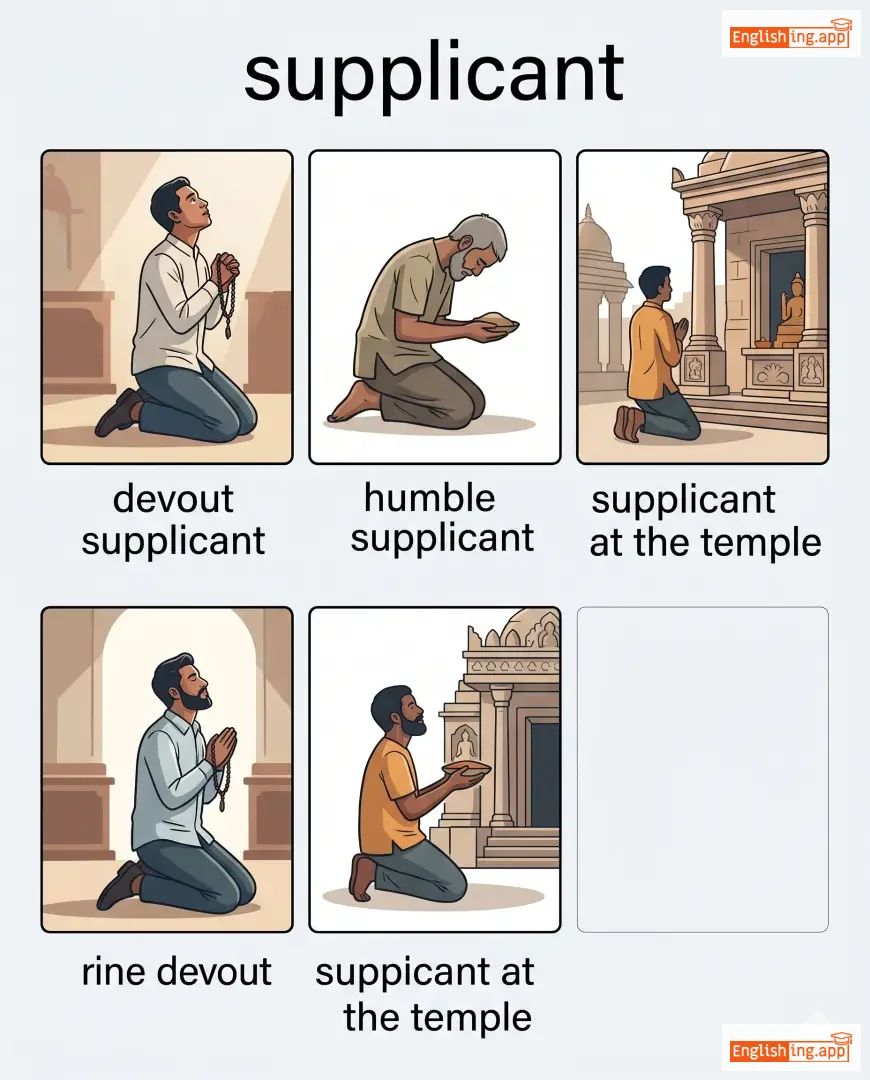
devout supplicant, humble supplicant, supplicant at the temple, supplicant before the throne
••••••
|
Supplicant = 請願者, 思い出す '請願して祝福を求める'
••••••
|
|
🤔
••••••
|
/ˌsʌpəˈzɪʃən/
noun
(サポジション)
••••••
|
|
仮定
katei
••••••
|
- •••••• | - •••••• | - •••••• | - •••••• |
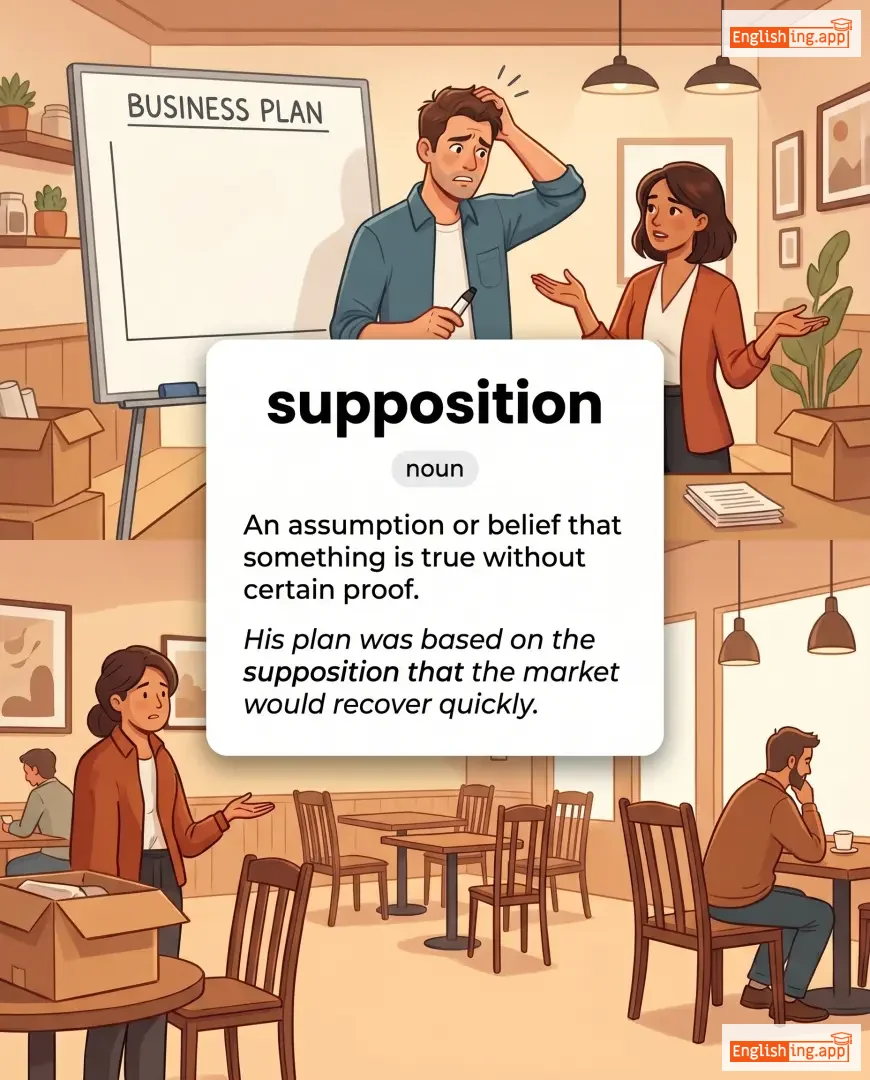
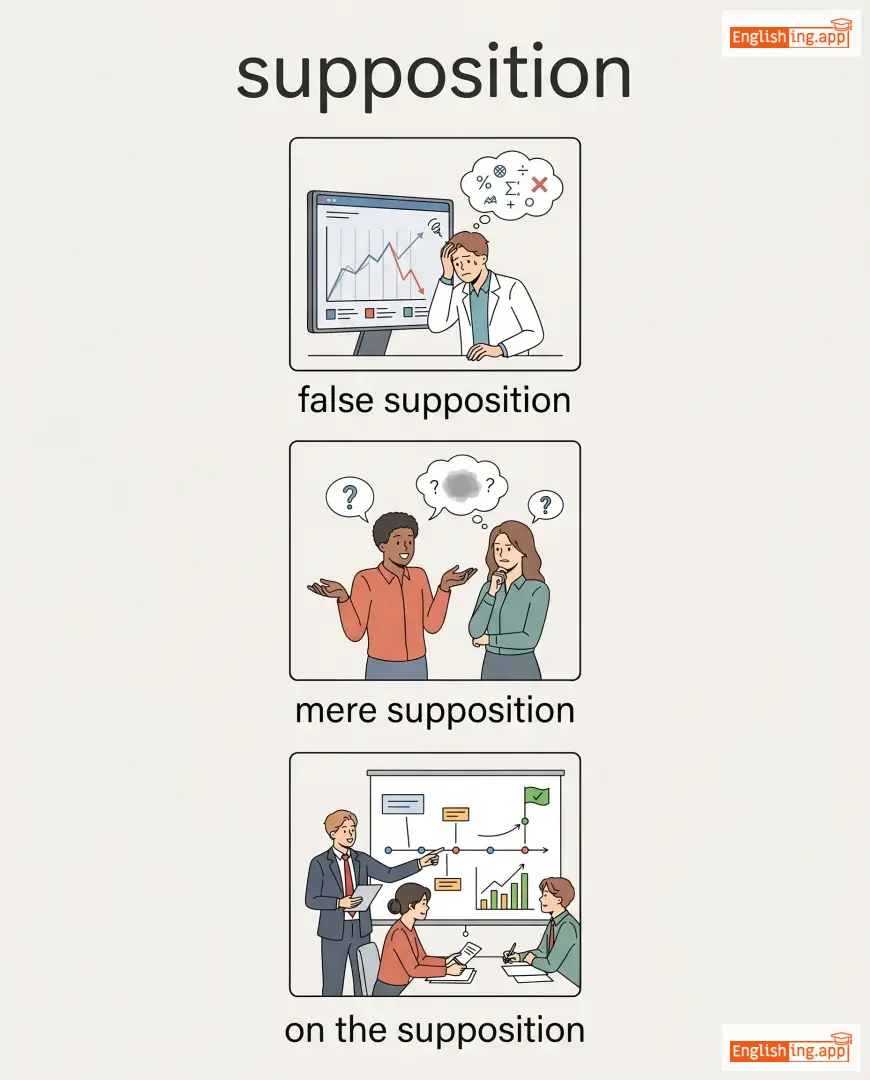
An assumption or belief that something is true without certain proof.
••••••
|
His plan was based on the supposition that the market would recover quickly. |
彼の計画は、市場がすぐに回復するという仮定に基づいていました。
Kare no keikaku wa, shijō ga sugu ni kaifuku suru to iu katei ni motozuite imashita.
••••••
|
on the supposition that |
Based on the assumption that something is true
••••••
|
仮定に基づいて
katei ni motozuite
••••••
|
assumption, presumption, hypothesis, belief, conjecture
••••••
|
fact, certainty, truth
••••••
|
false supposition, mere supposition, on the supposition, mistaken supposition
••••••
|
Supposition = Suppose + tion = 仮定, 'suppose' を使って仮定するイメージ
••••••
|
|
🧠
••••••
|
/ˈsɪlədʒɪzəm/
noun
(シロジズム)
••••••
|
|
三段論法
sandanonpou
••••••
|
- •••••• | - •••••• | - •••••• | - •••••• |
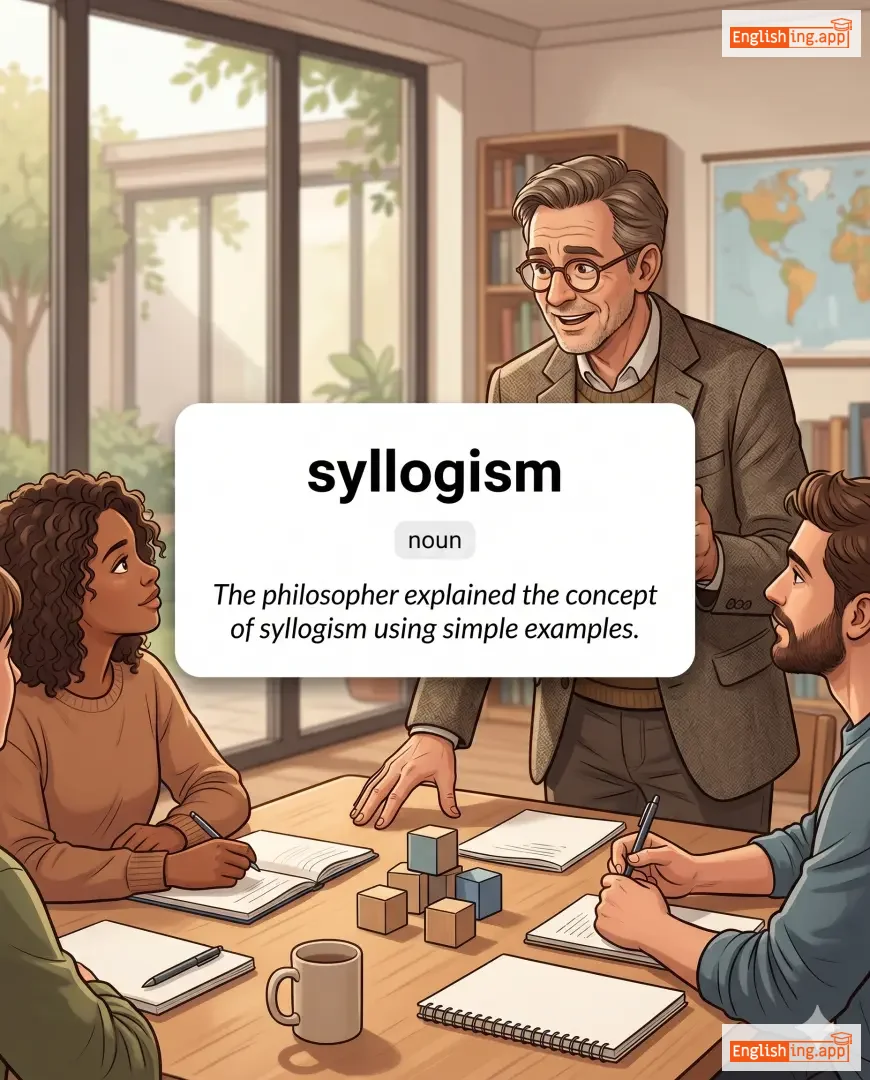
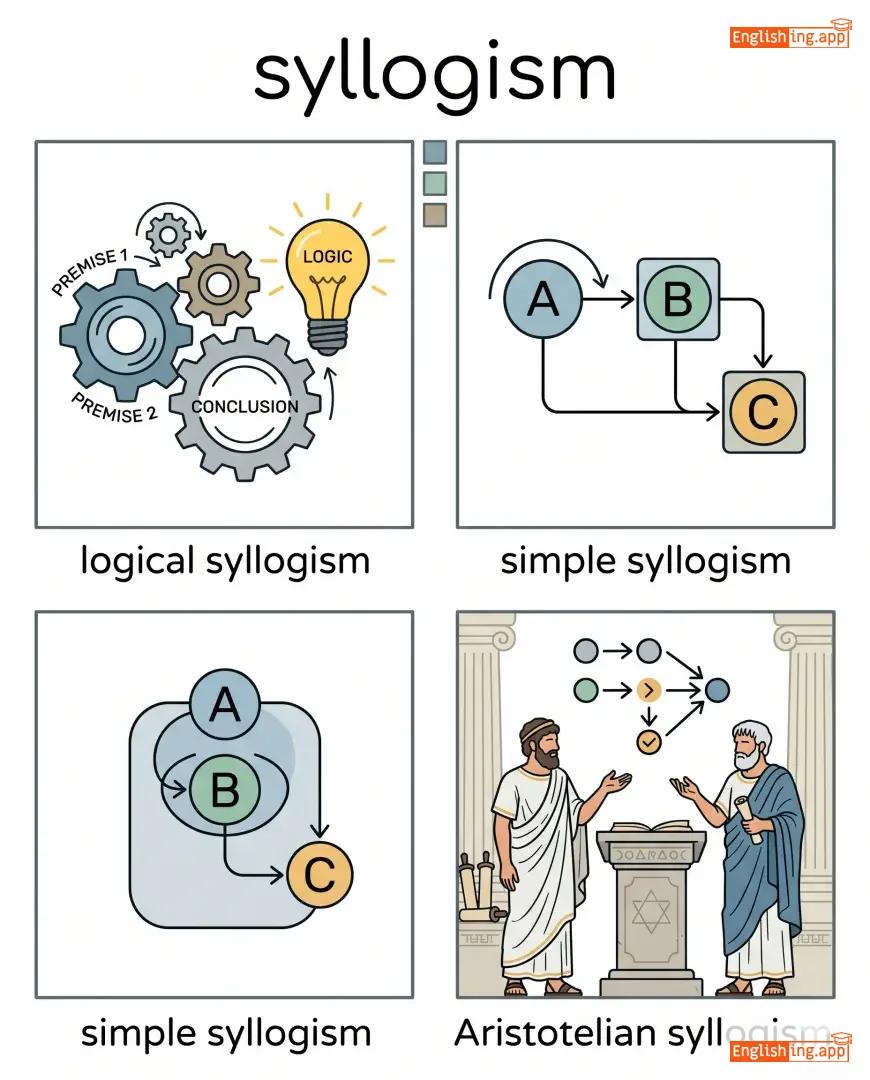
A form of reasoning in which a conclusion is drawn from two given or assumed premises.
••••••
|
The philosopher explained the concept of syllogism using simple examples.
哲学者は簡単な例を使って三段論法の概念を説明しました。
••••••
|
哲学者は簡単な例を使って三段論法の概念を説明しました。
Tetsugakusha wa kantan na rei o tsukatte sandanonpou no gainen o setsumei shimashita.
••••••
|
- •••••• | - •••••• | - •••••• |
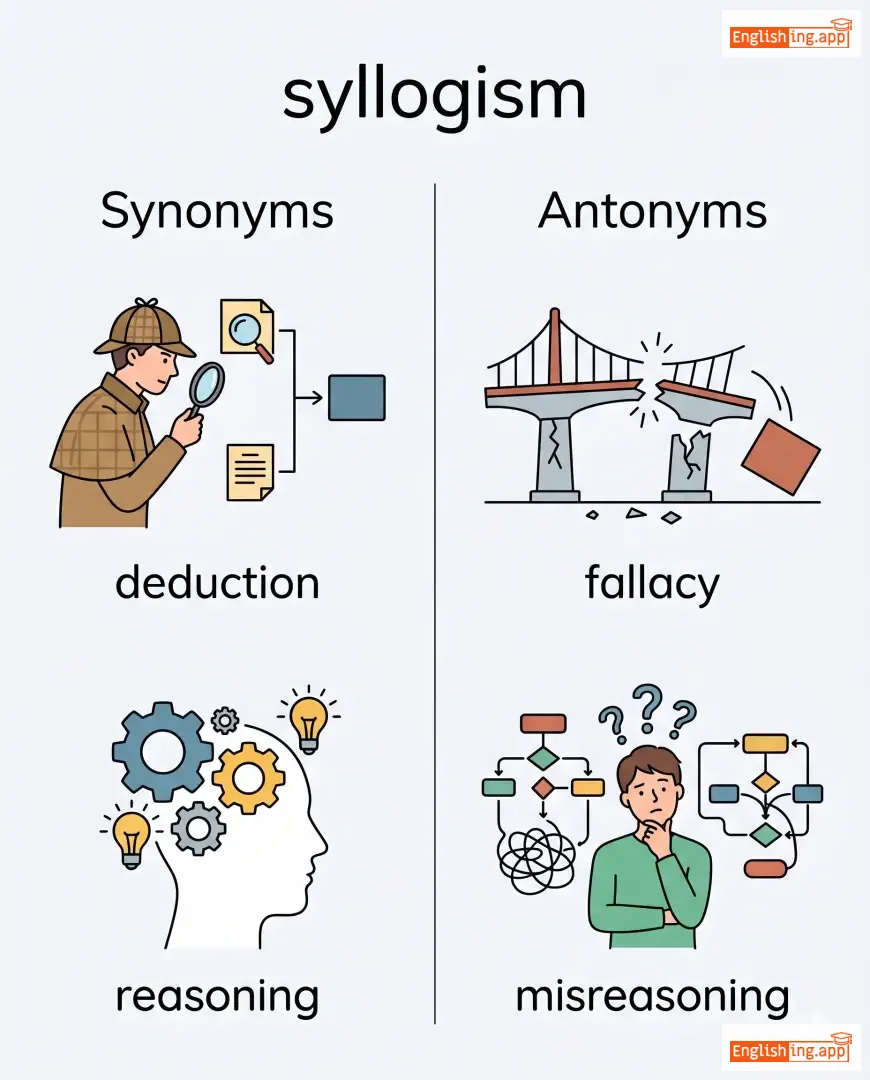
deduction, reasoning, logic, inference
••••••
|
fallacy, misreasoning
••••••
|
logical syllogism, simple syllogism, Aristotelian syllogism, valid syllogism
••••••
|
三段論法は論理的なシステムであり、全ての論理がサイロに保存されているようなものです。
••••••
|
|
🌲
••••••
|
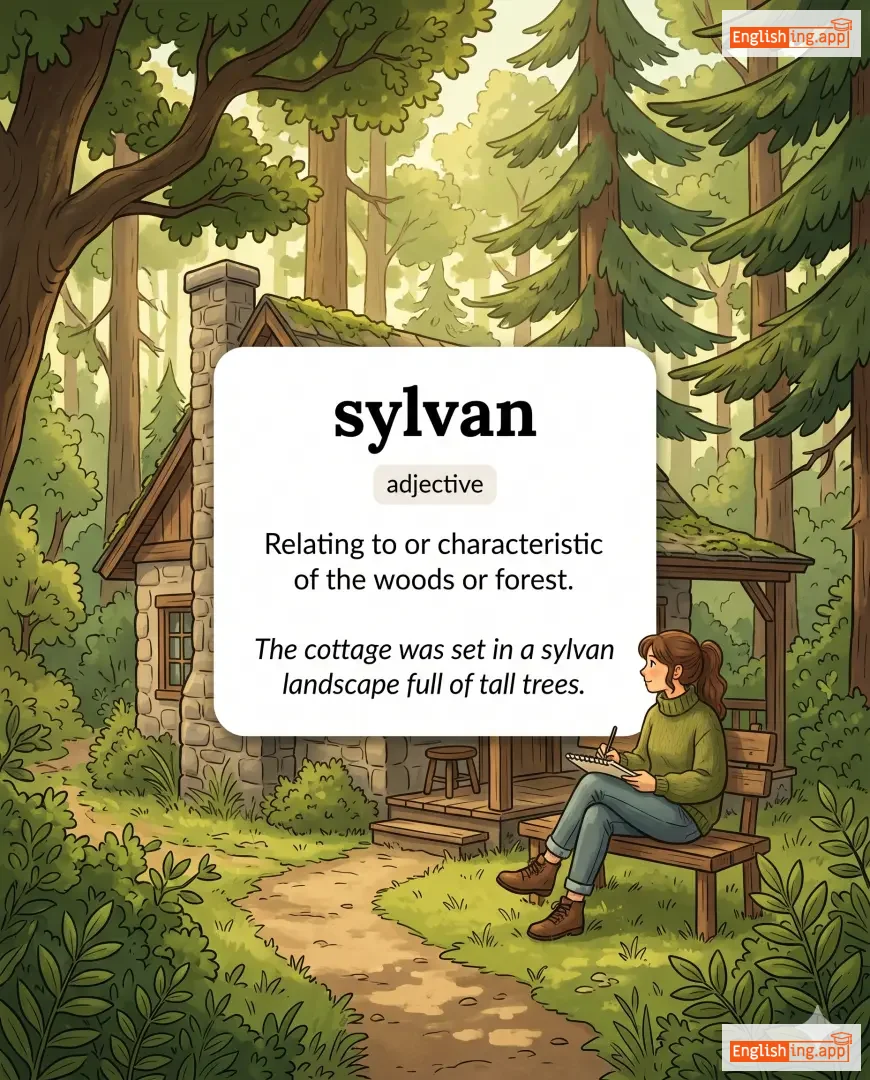
/ˈsɪlvən/
adjective
(シルヴァン)
••••••
|
|
森林の
shinrin no
••••••
|
- •••••• | - •••••• | - •••••• | - •••••• |
Relating to or characteristic of the woods or forest.
••••••
|
The cottage was set in a sylvan landscape full of tall trees. |
その小屋は、高い木々に囲まれた森林の風景の中にありました。
Sono koya wa, takai kigi ni kakomareta shinrin no fuukei no naka ni arimashita.
••••••
|
- •••••• | - •••••• | - •••••• |
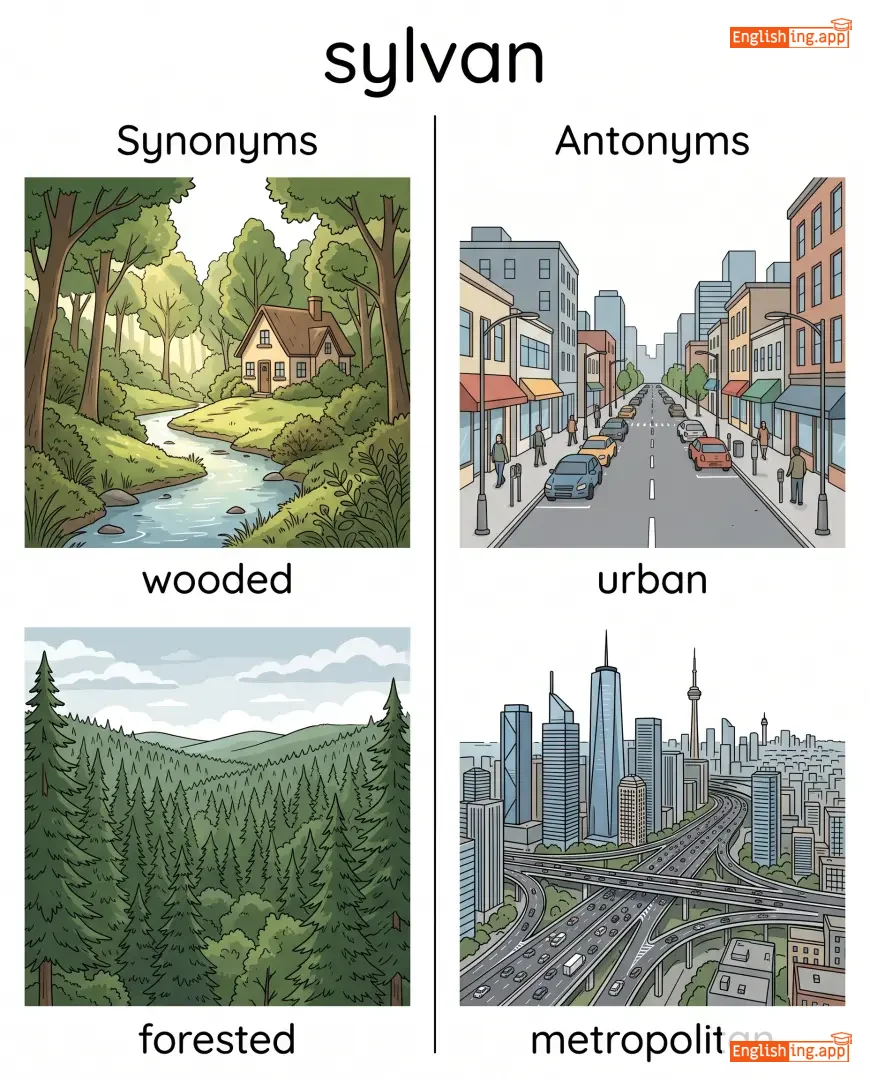
wooded, forested, rustic, pastoral
••••••
|
urban, metropolitan
••••••
|
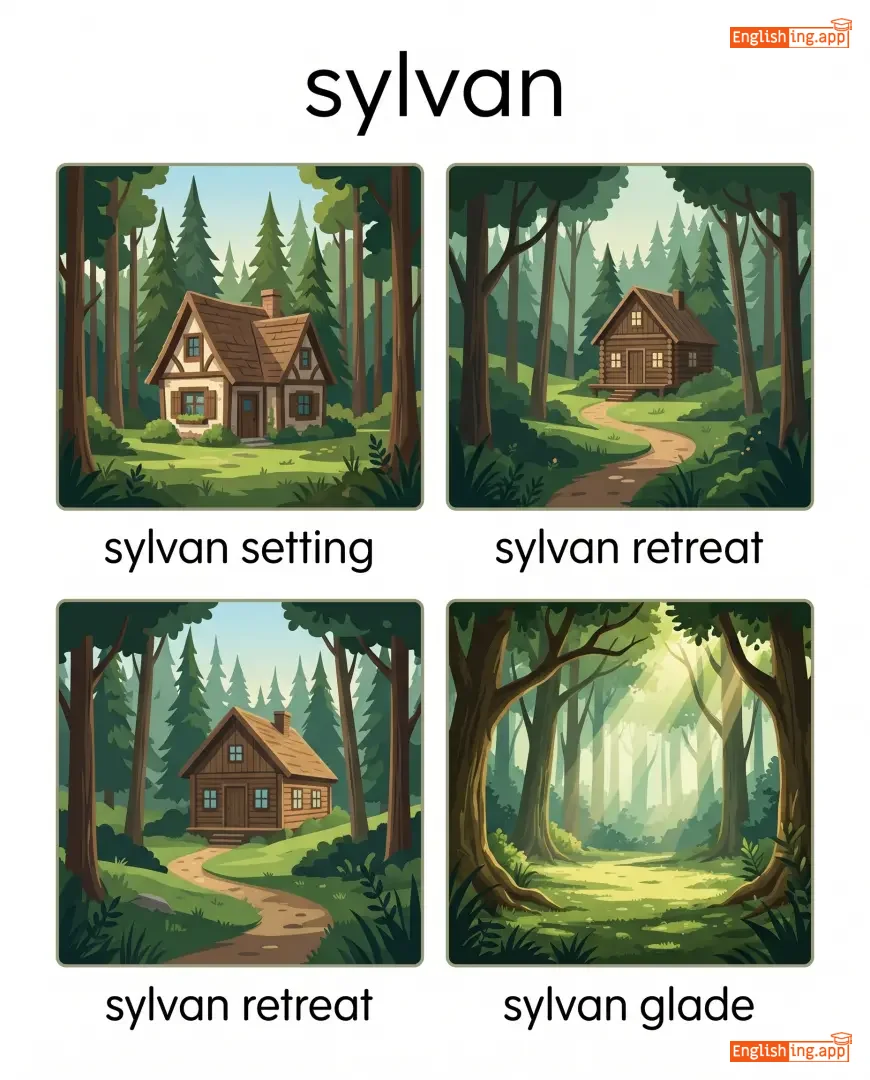
sylvan setting, sylvan retreat, sylvan glade, sylvan beauty
••••••
|
Sylvanは森林の意味、森の中の家を想像してください。
••••••
|
|
🤫
••••••
|
/ˈtæsɪt/
adjective
(タシット)
••••••
|

|
暗黙の了解
anmoku no ryōkai
••••••
|
- •••••• | - •••••• | - •••••• | - •••••• |
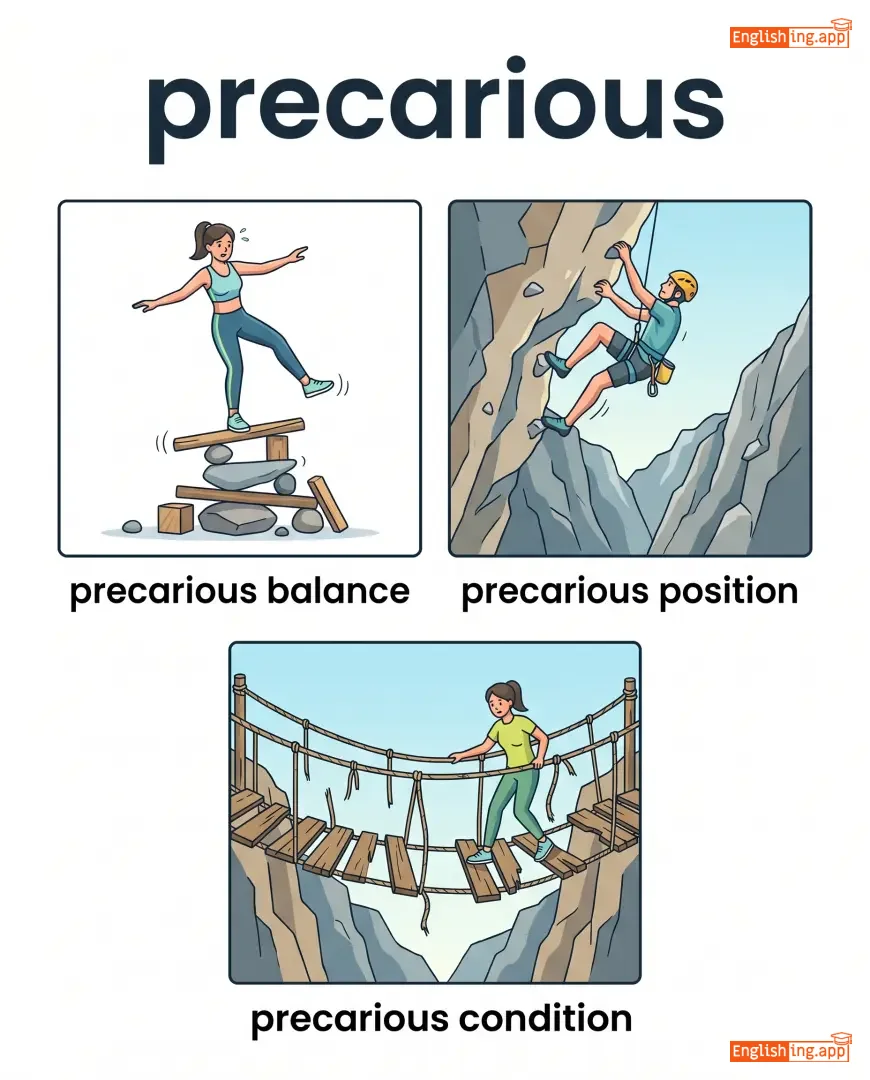
understood or implied without being stated
••••••
|
There was a tacit agreement to avoid the subject. |
そのテーマを避けるために暗黙の了解があった。
Sono tēma o yokeru tame ni anmoku no ryōkai ga atta.
••••••
|
tacit agreement |
an unspoken understanding between people
••••••
|
暗黙の了解
anmoku no ryōkai
••••••
|
implicit, unspoken, understood, silent
••••••
|
explicit, stated, expressed
••••••
|
tacit consent, tacit approval, tacit understanding
••••••
|
Tacit は、言葉にしなくても理解できる暗黙の了解のようなものです。
••••••
|
|
🔮
••••••
|
/ˈtælɪzmən/
noun
(タリスマン)
••••••
|

|
お守り
omamori
••••••
|
- •••••• | - •••••• | - •••••• | - •••••• |
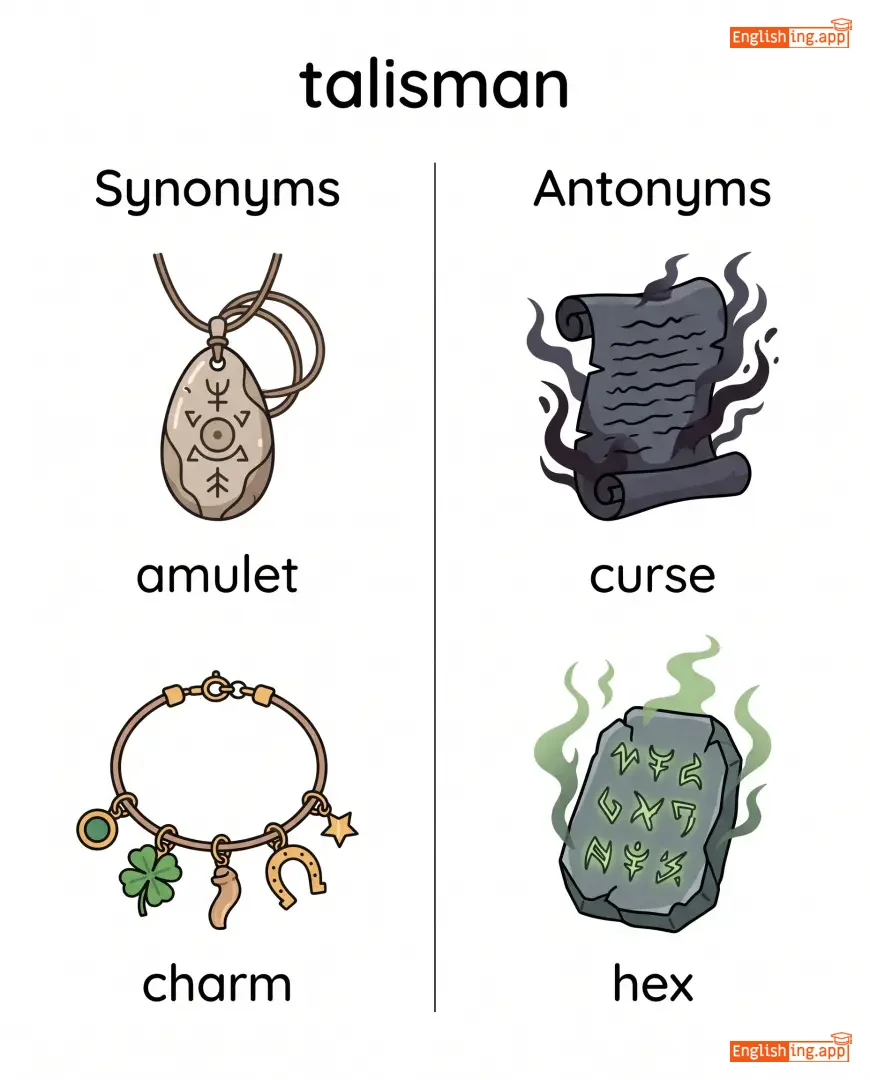
An object believed to have magical powers or bring good luck.
••••••
|
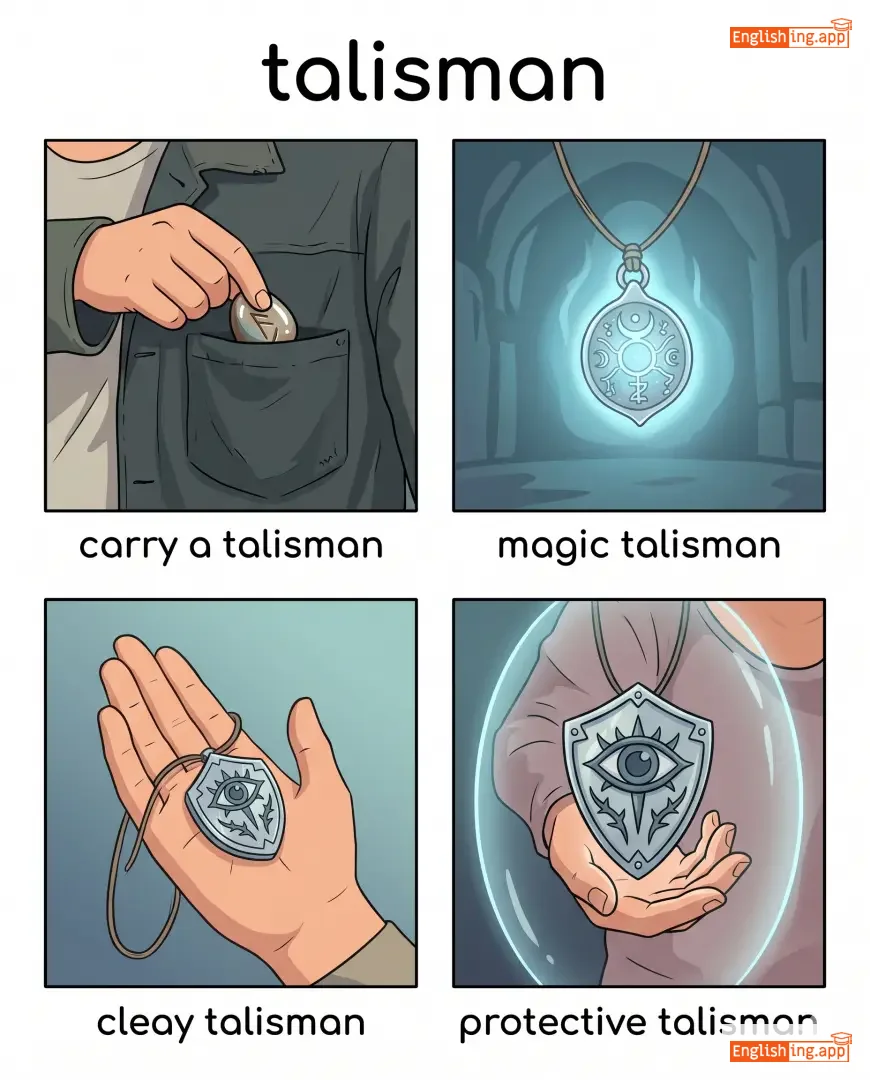
He always carried a small talisman in his pocket for luck. |
彼は幸運のためにポケットに小さなお守りをいつも持っていました。
Kare wa kōun no tame ni poketto ni chiisana omamori o itsumo motteimashita.
••••••
|
- •••••• | - •••••• | - •••••• |
amulet, charm, lucky charm, totem, trinket
••••••
|
curse, hex
••••••
|
carry a talisman, magic talisman, protective talisman, lucky talisman
••••••
|
Talisman はお守り — 'Tali' と 'お守り' を覚えて!
••••••
|
|
↔️
••••••
|
/tænˈdʒɛnʃəl/
adjective
(タンジェンシャル)
••••••
|
|
接線の
sessenn no
••••••
|
- •••••• | - •••••• | - •••••• | - •••••• |
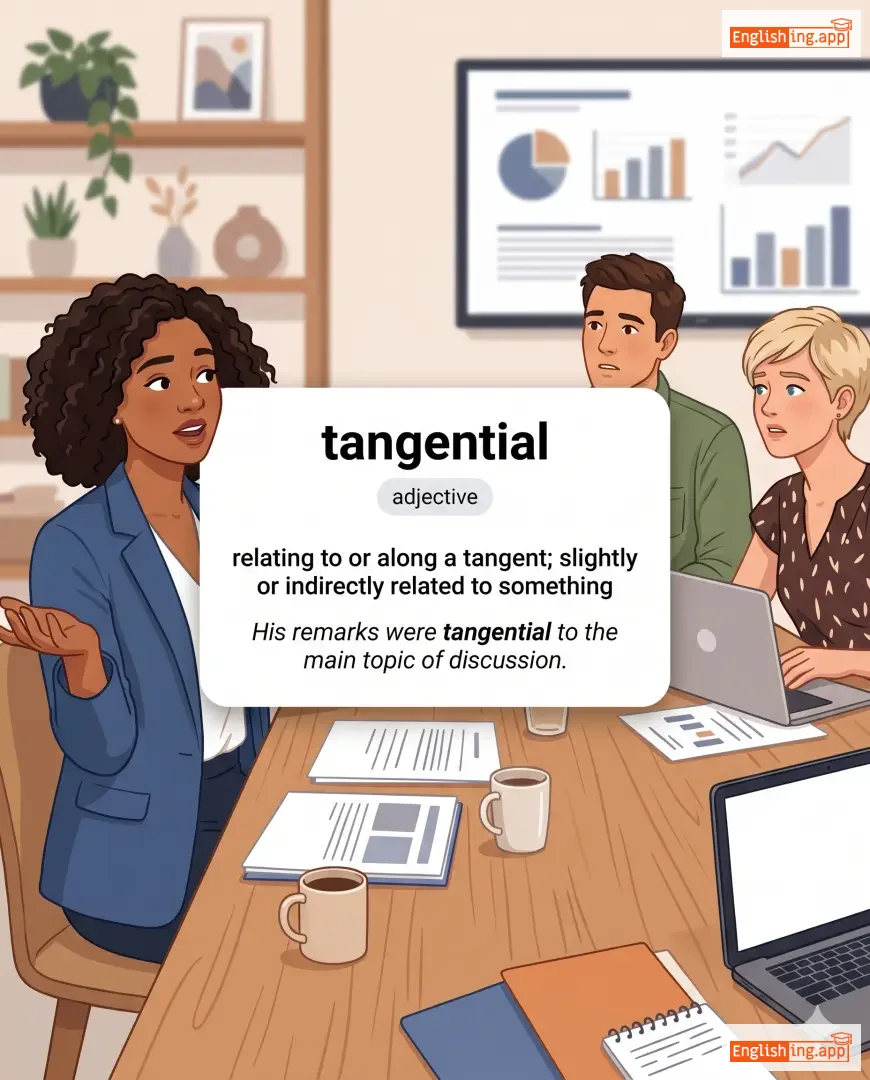
relating to or along a tangent; slightly or indirectly related to something
••••••
|
His remarks were tangential to the main topic of discussion.
彼のコメントは議論の主要なトピックには関連していなかった。
••••••
|
彼のコメントは議論の主要なトピックには関連していなかった。
Kare no komento wa giron no shuyōna topikku ni wa kanren shite inakatta.
••••••
|
- •••••• | - •••••• | - •••••• |
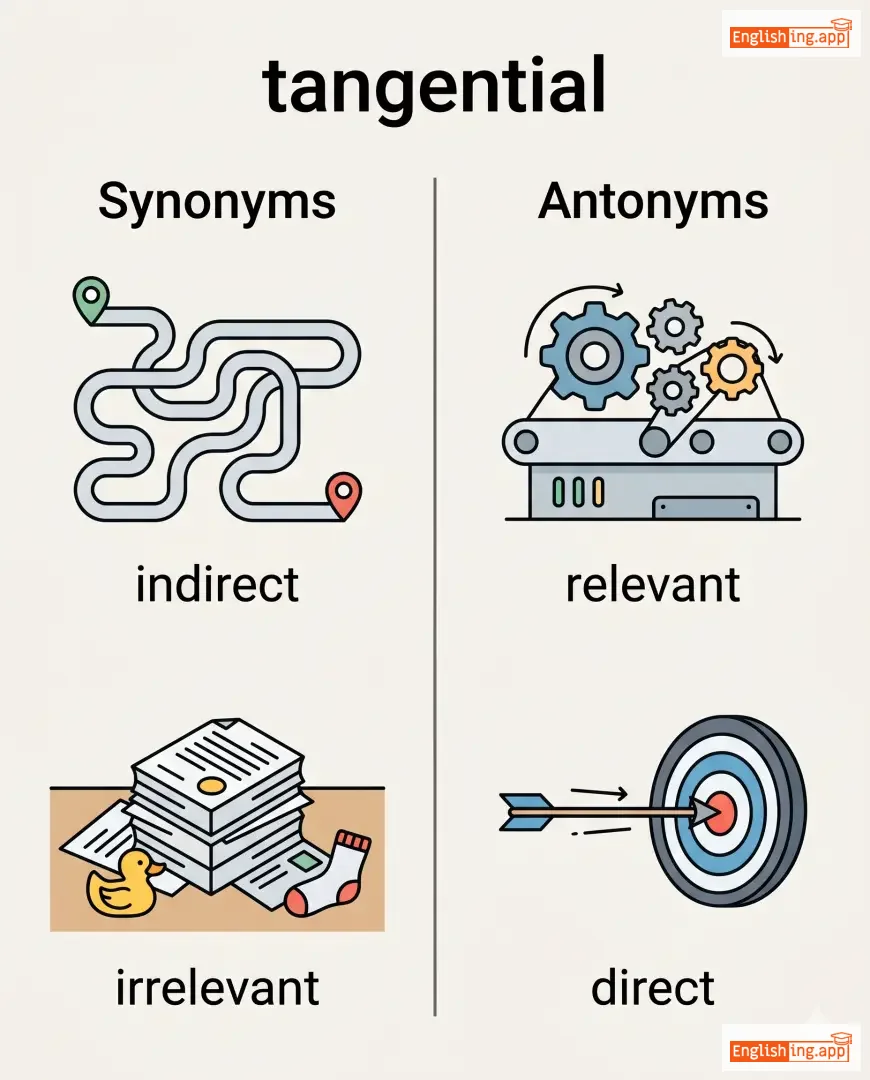
indirect, irrelevant, peripheral, secondary
••••••
|
relevant, direct
••••••
|
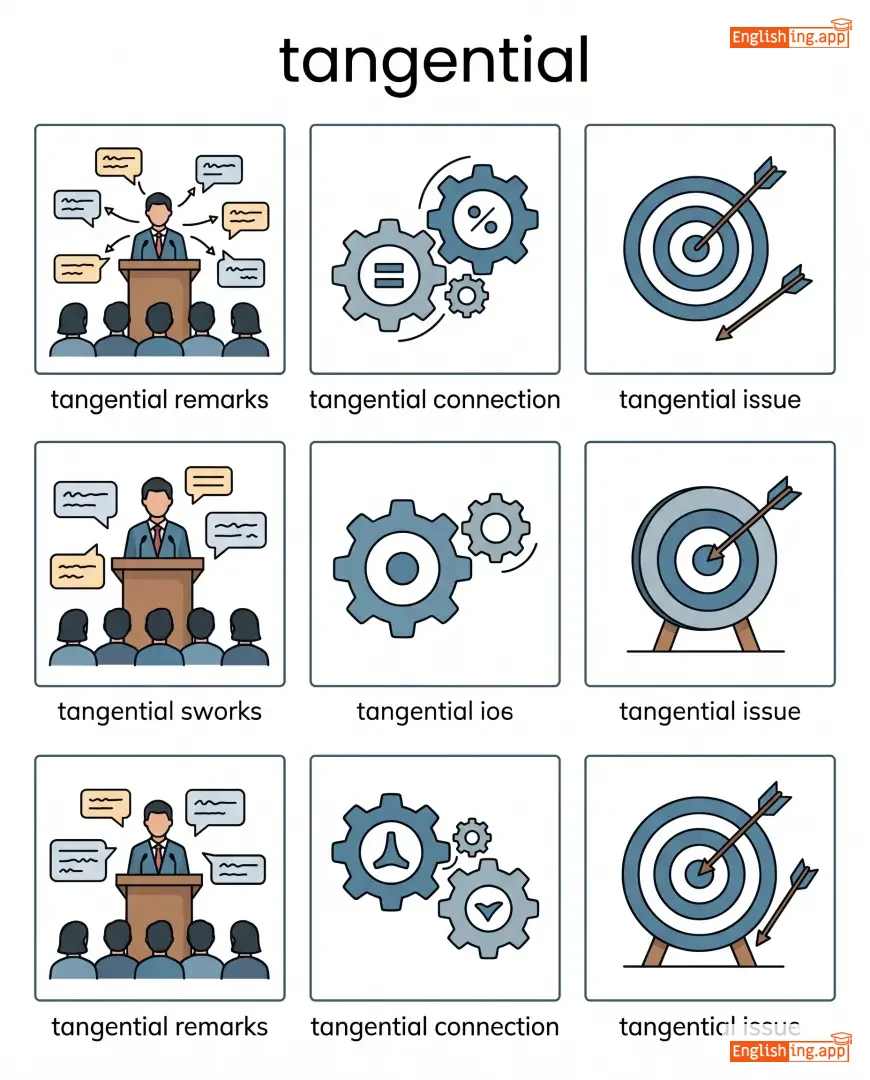
tangential remarks, tangential connection, tangential issue
••••••
|
接線の = トピックに少し関係しているが、主なものではない。
••••••
|
|
♾️
••••••
|
/tɔːˈtɒlədʒi/
noun
(トートロジー)
••••••
|

|
不必要な繰り返し
fuhitsuyou na kurikaeshi
••••••
|
- •••••• | - •••••• | - •••••• | - •••••• |
the unnecessary repetition of the same idea in different words
••••••
|
The phrase 'it will happen or it won’t' is a tautology. |
'それは起こるかもしれないし、起こらないかもしれない'というフレーズはトートロジーです。
'sore wa okoru kamoshirenai shi, okoranai kamoshirenai' to iu furezu wa tootoroji desu.
••••••
|
- •••••• | - •••••• | - •••••• |
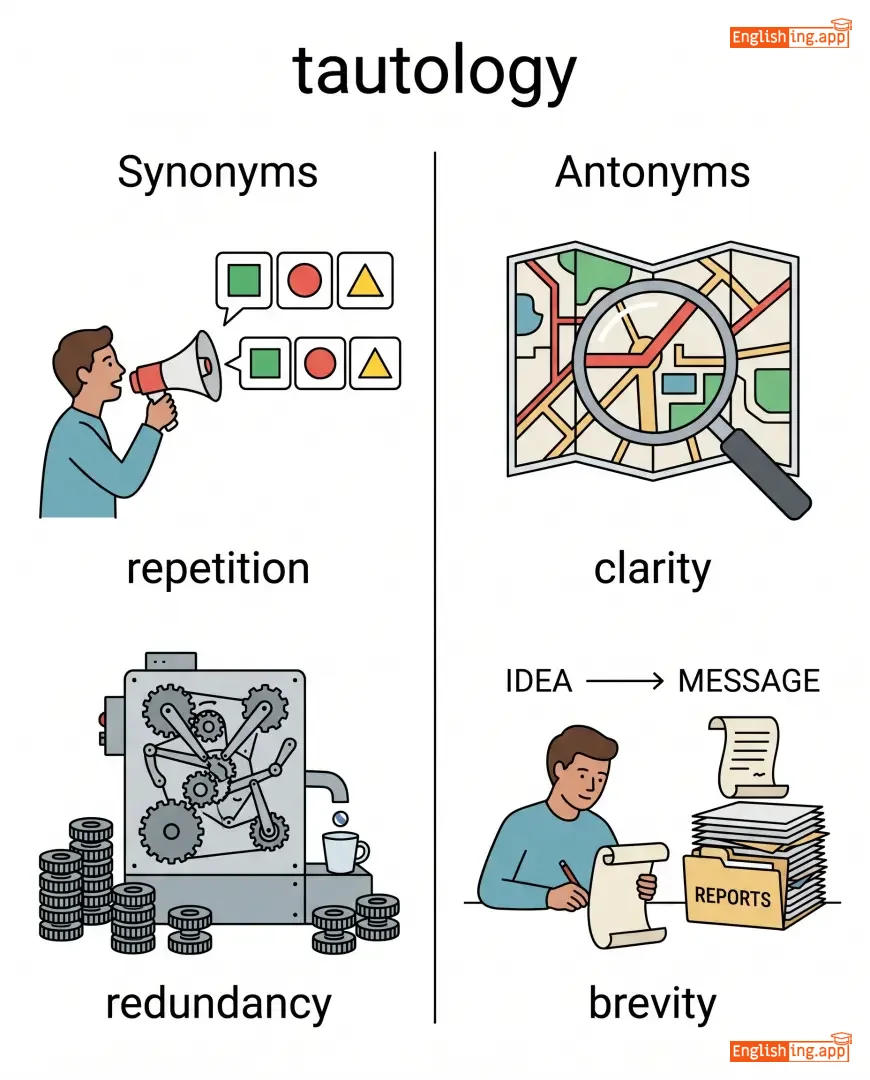
repetition, redundancy, reiteration, circularity
••••••
|
clarity, brevity, precision
••••••
|
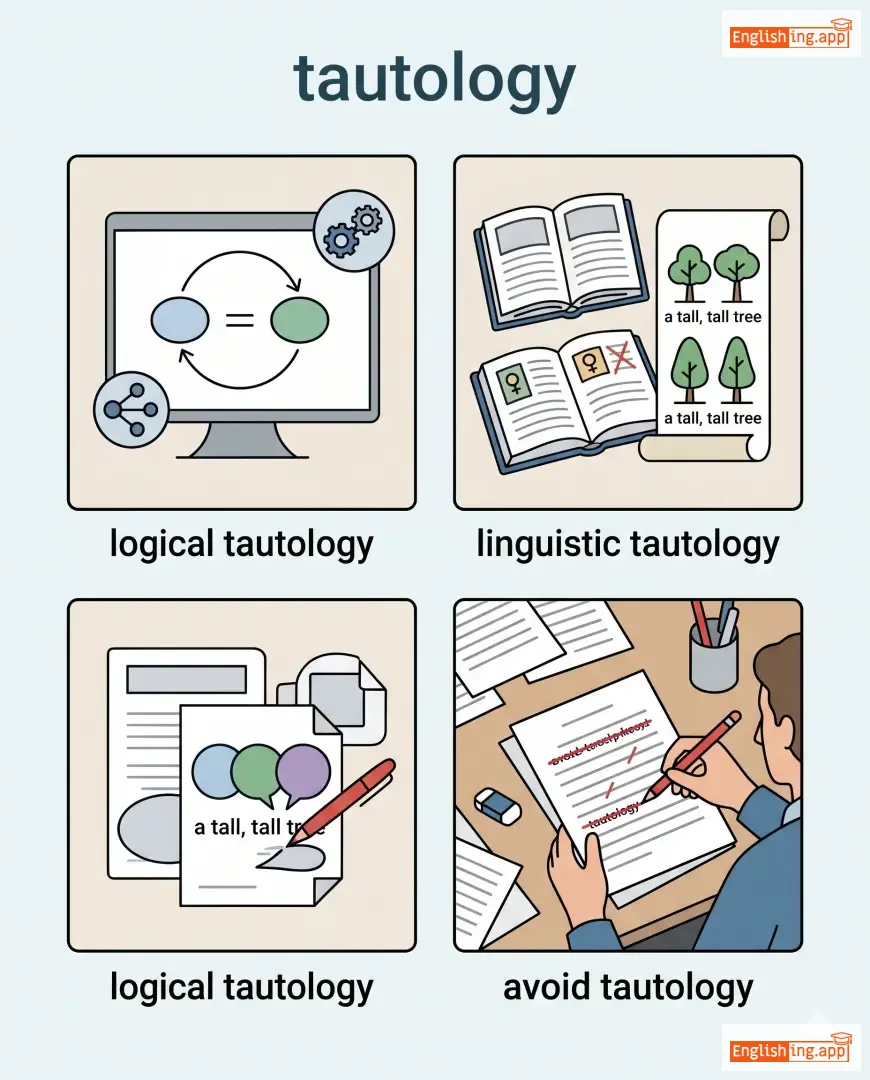
logical tautology, linguistic tautology, avoid tautology
••••••
|
トートロジーは、同じことを異なる言葉で繰り返すことです。
••••••
|
|
📚
••••••
|
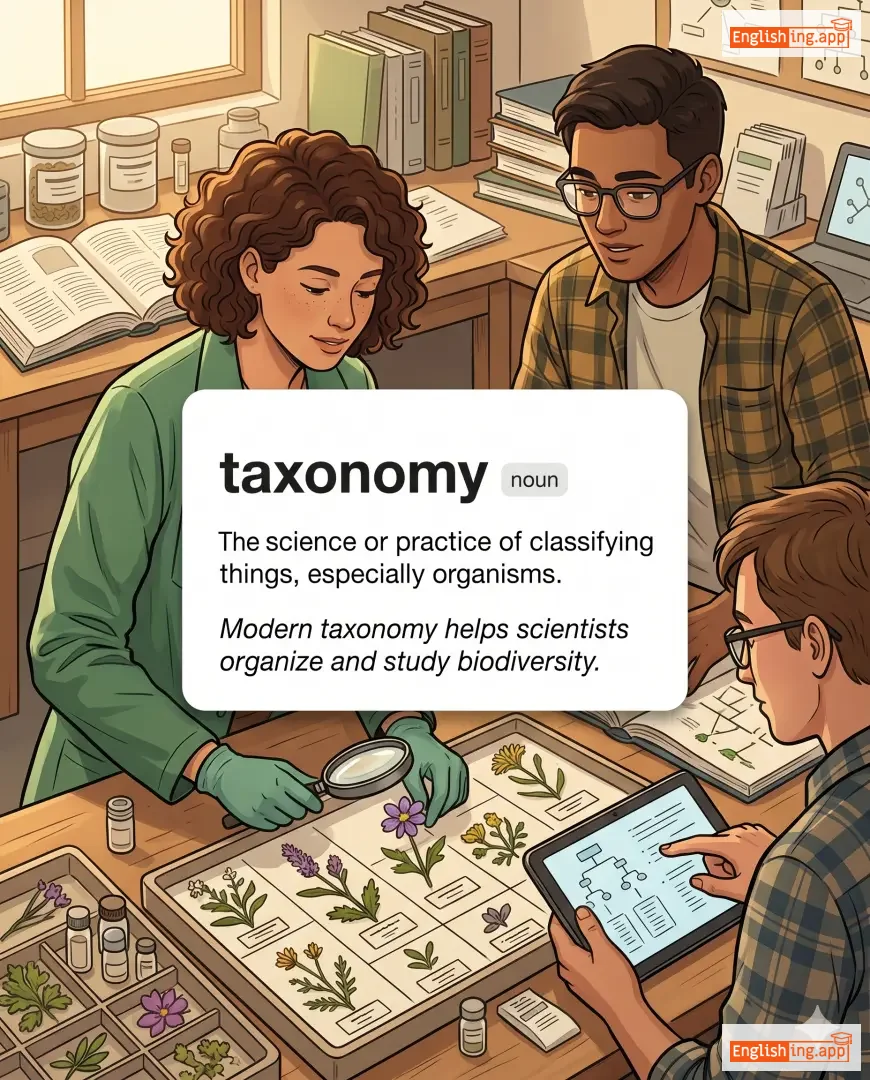
/tækˈsɒnəmi/
noun
(タクソノミー)
••••••
|
|
分類学
bunruigaku
••••••
|
- •••••• | - •••••• | - •••••• | - •••••• |
The science or practice of classifying things, especially organisms.
••••••
|
Modern taxonomy helps scientists organize and study biodiversity. |
現代の分類学は、科学者たちが生物多様性を整理し、研究するのを助けます。
gendai no bunruigaku wa, kagakusha-tachi ga seibutsu tayousei wo seiri shi, kenkyuu suru no wo tasukemasu.
••••••
|
- •••••• | - •••••• | - •••••• |
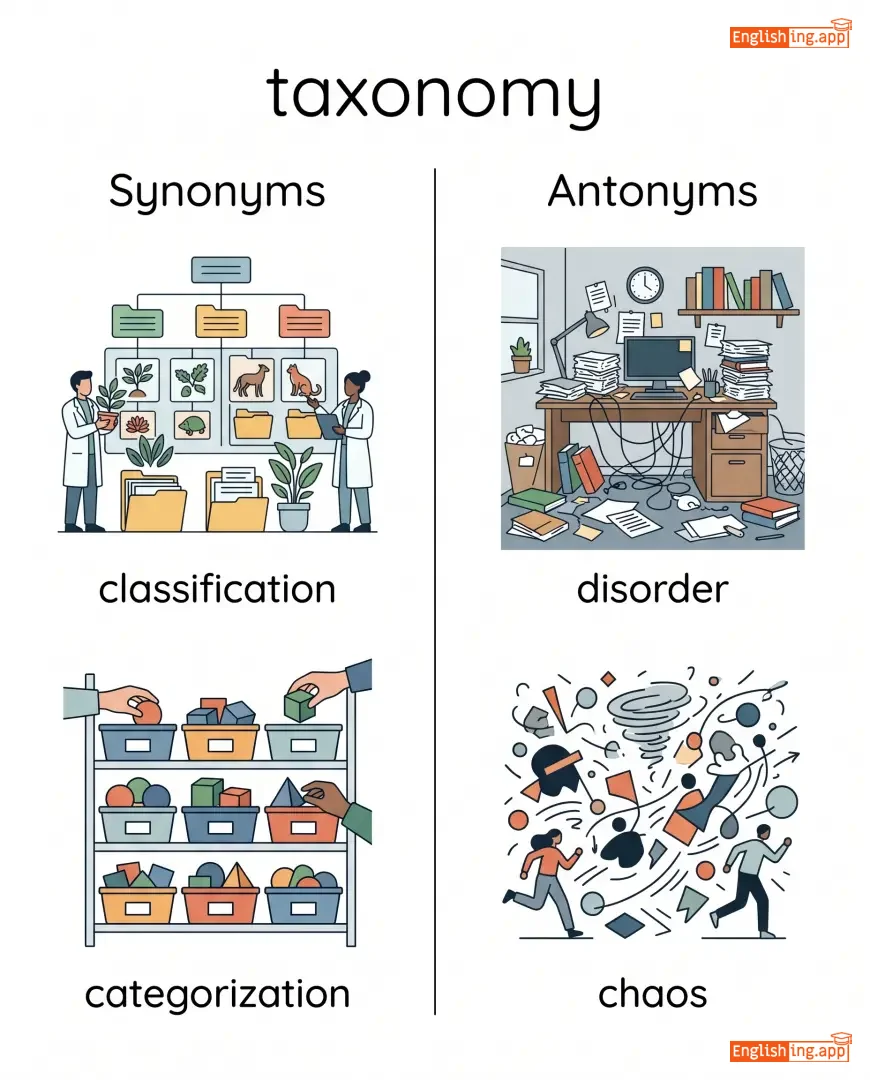
classification, categorization, systematics, grouping, nomenclature
••••••
|
disorder, chaos
••••••
|
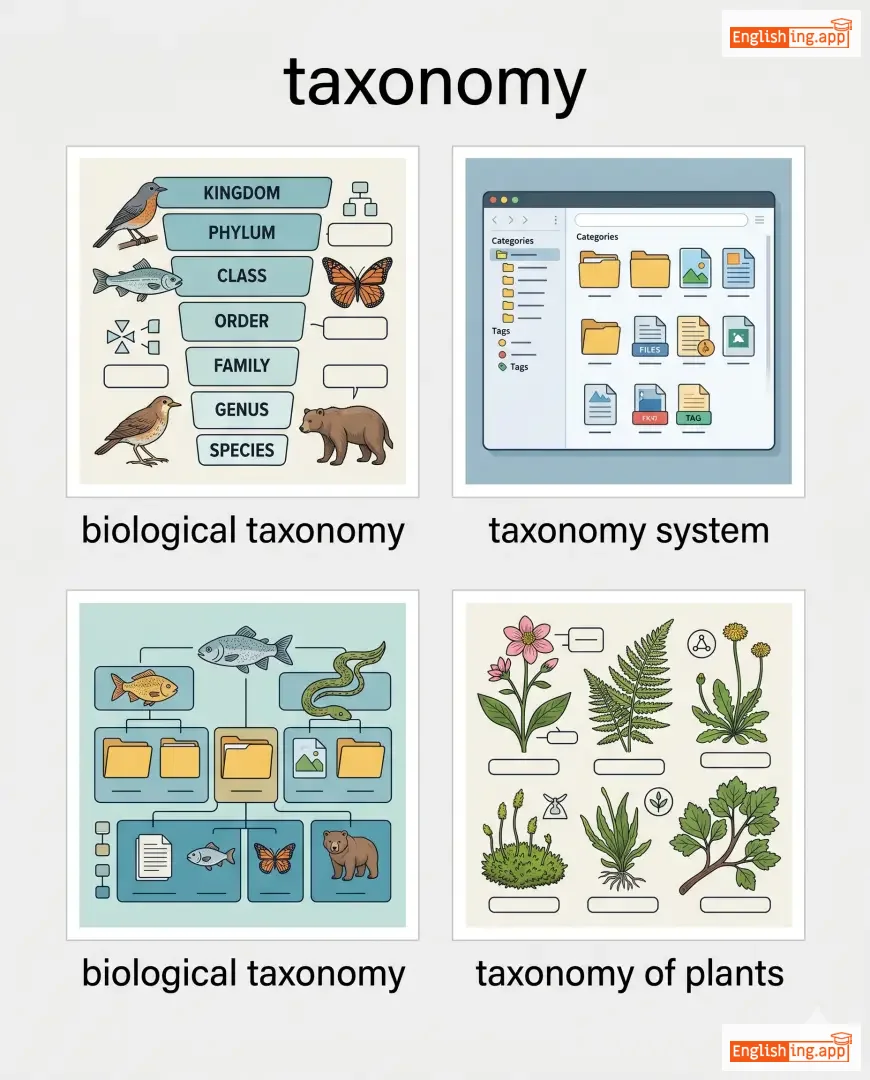
biological taxonomy, taxonomy system, taxonomy of plants, taxonomy classification
••••••
|
タクソ + ノミー = 科学的分類
••••••
|
|
📜
••••••
|
/ˈtɛnɪt/
noun
(テネット)
••••••
|
|
原則
gensoku
••••••
|
- •••••• | - •••••• | - •••••• | - •••••• |
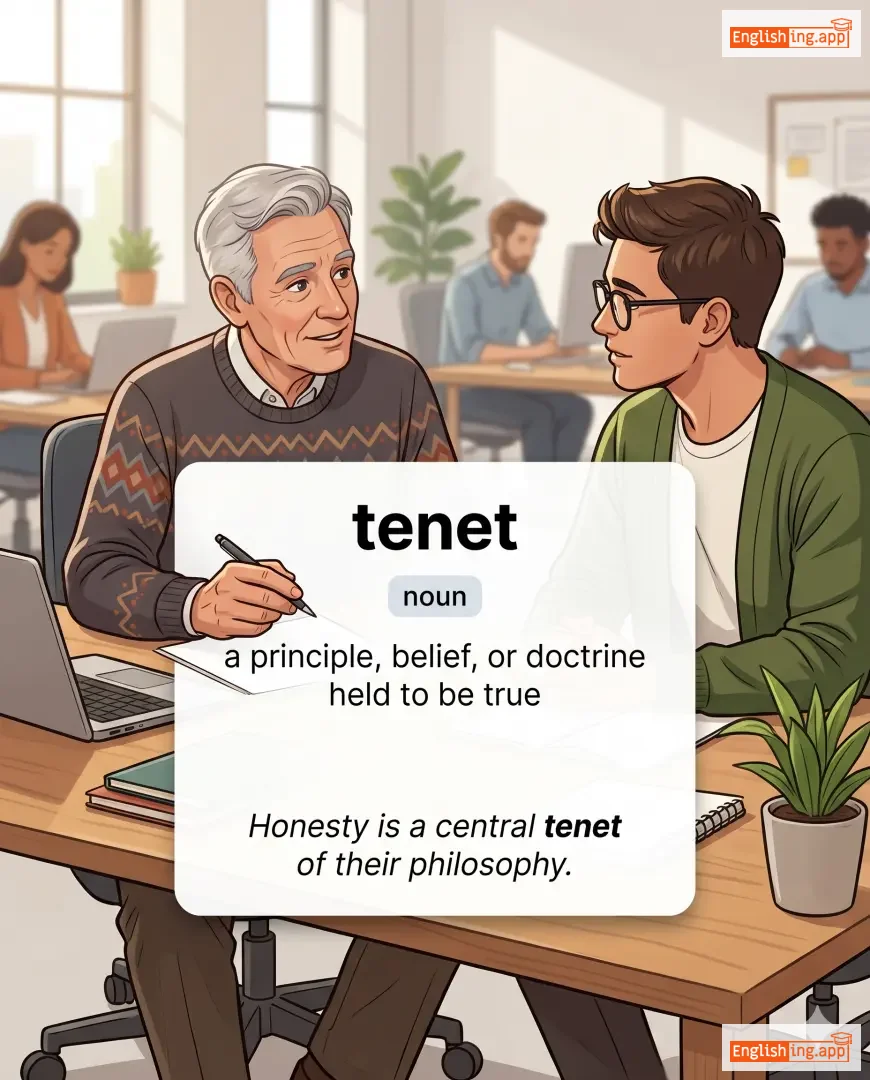
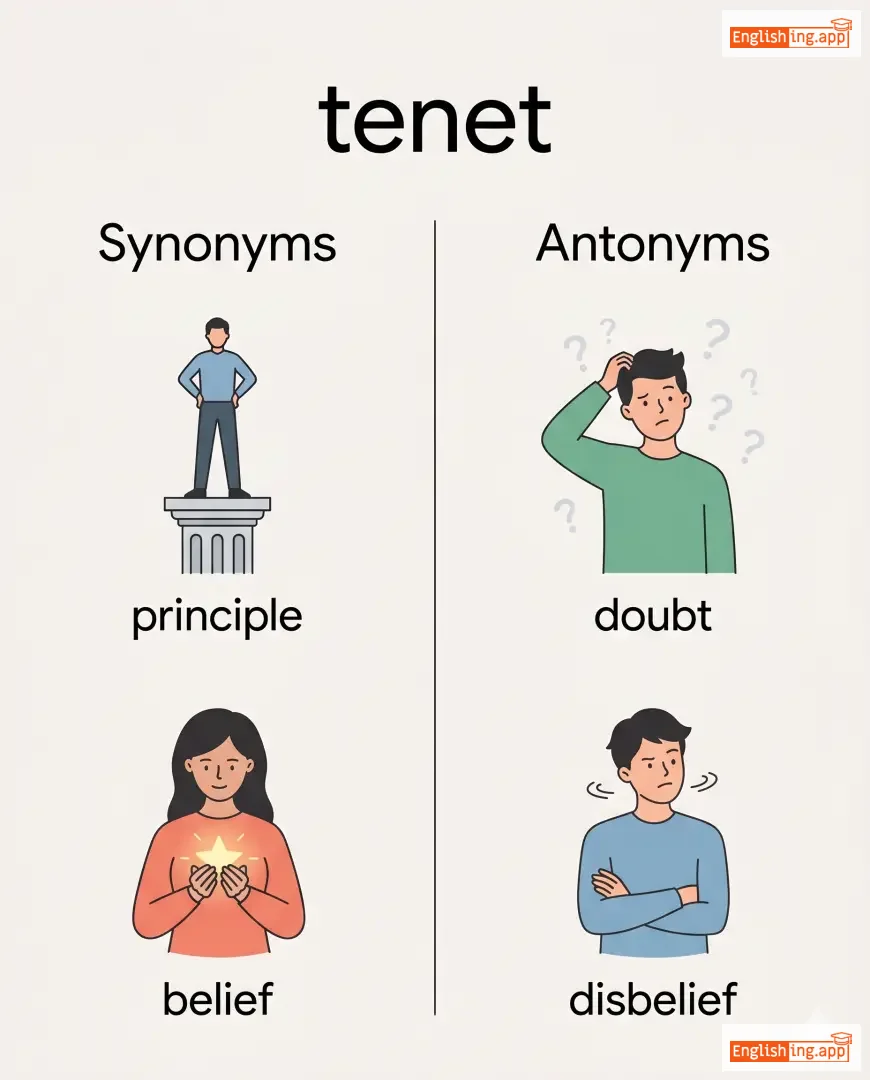
a principle, belief, or doctrine held to be true
••••••
|
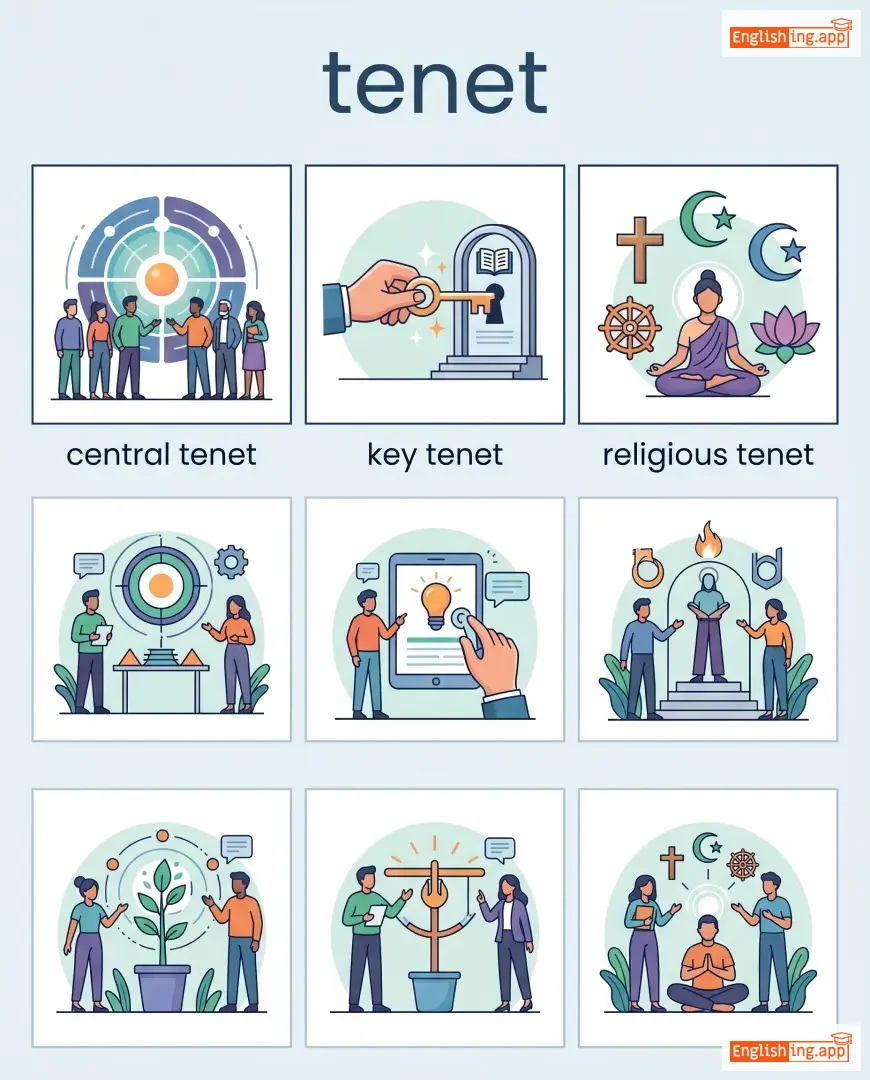
Honesty is a central tenet of their philosophy. |
誠実は彼らの哲学の中心的な原則です。
Seijitsu wa karera no tetsugaku no chūshin-tekina gensoku desu.
••••••
|
- •••••• | - •••••• | - •••••• |
principle, belief, doctrine, dogma, conviction
••••••
|
doubt, disbelief, rejection
••••••
|
central tenet, key tenet, religious tenet, philosophical tenet
••••••
|
Tenetは 'テ' (te) から始まる — 人生の原則を守る。
••••••
|
|
🕸️
••••••
|
/ˈtɛn.ju.əs/
adjective
(テニュアス)
••••••
|
|
弱い / 薄い
yowai / usui
••••••
|
- •••••• | - •••••• | - •••••• | - •••••• |
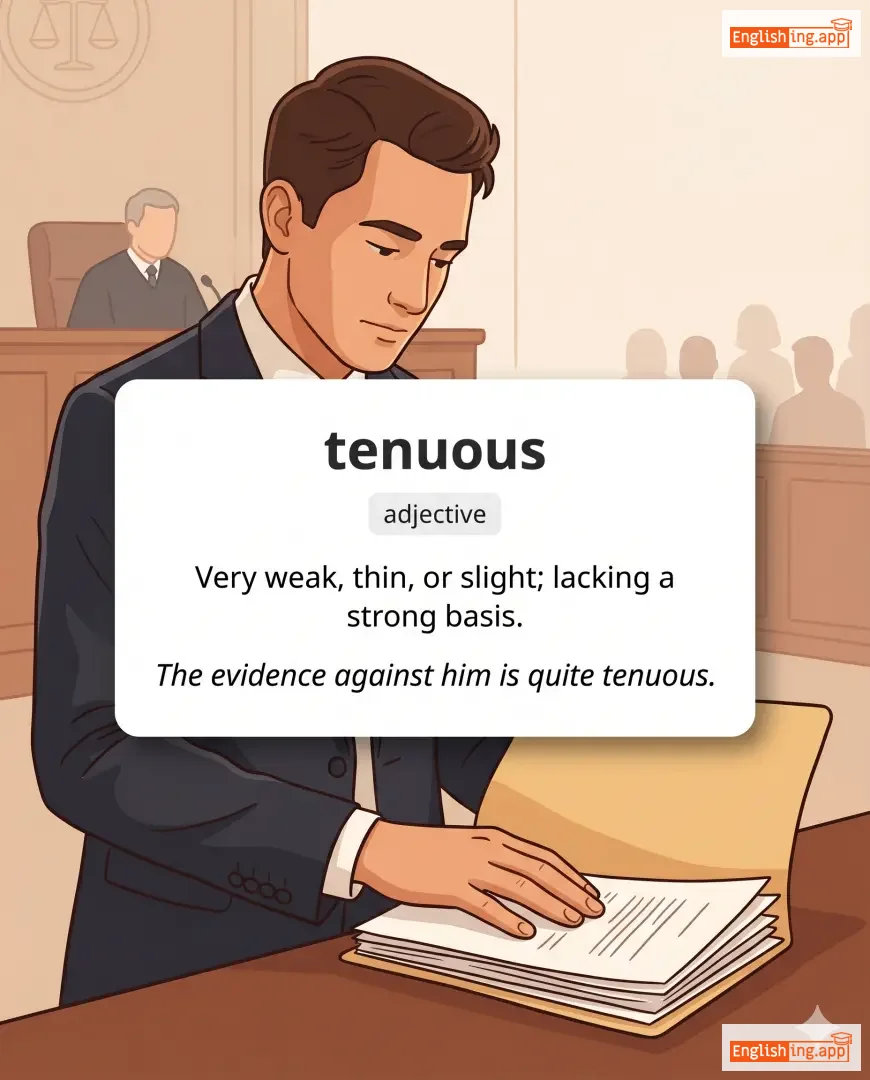
Very weak, thin, or slight; lacking a strong basis.
••••••
|
The evidence against him is quite tenuous.
彼に対する証拠はかなり弱いです。
••••••
|
彼に対する証拠はかなり弱いです。
Kare ni taisuru shōko wa kanari yowai desu.
••••••
|
- •••••• | - •••••• | - •••••• |
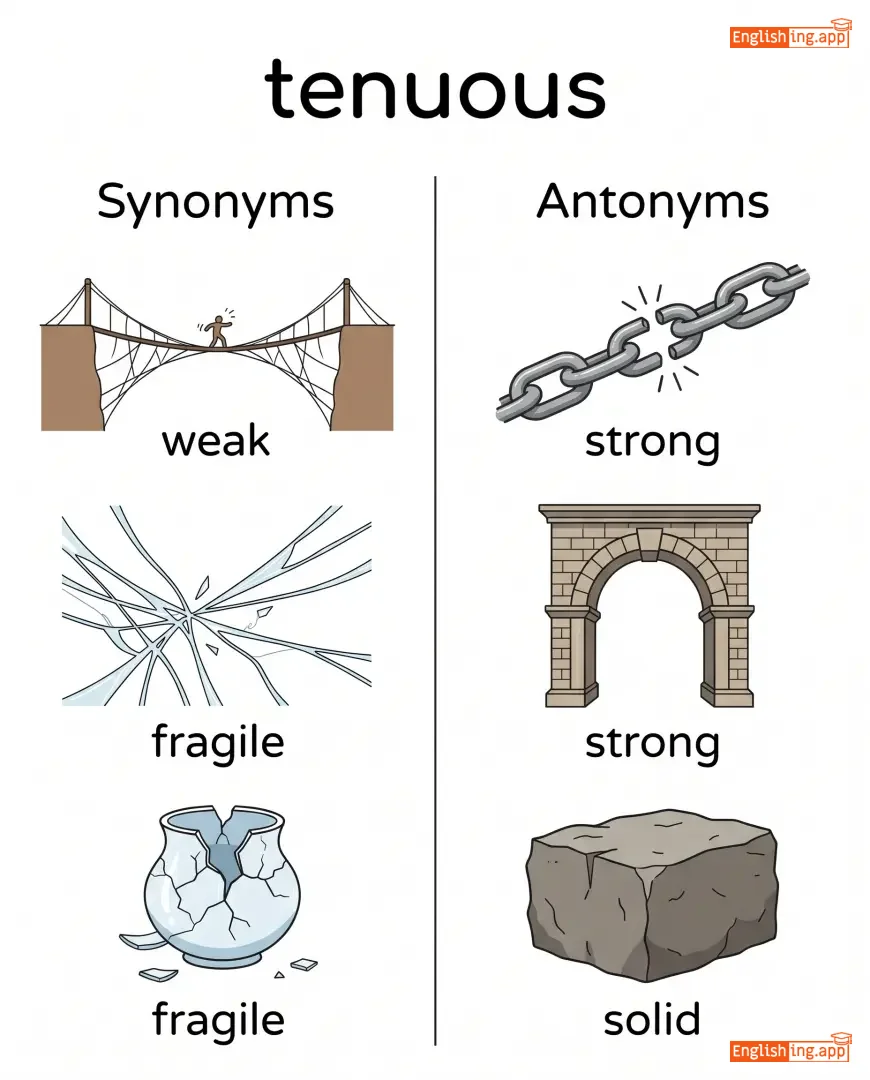
weak, fragile, thin, slight, insubstantial
••••••
|
strong, solid, firm
••••••
|
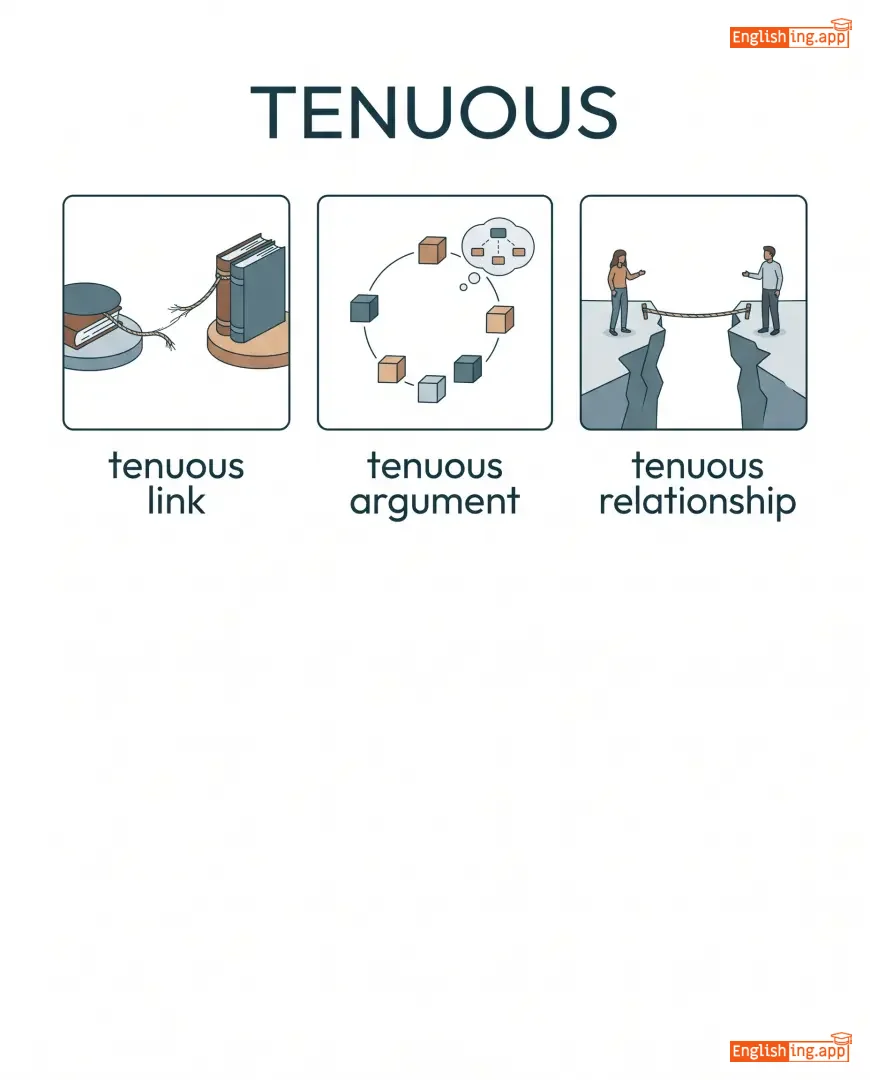
tenuous link, tenuous argument, tenuous relationship, tenuous connection
••••••
|
Tenuousは非常に弱い基盤を意味します。
••••••
|
|
🌍
••••••
|
/təˈrɛstriəl/
adjective
(テレストリアル)
••••••
|
|
陸生
rikusei
••••••
|
- •••••• | - •••••• | - •••••• | - •••••• |
Relating to the Earth or land as opposed to the sea or air; living or growing on land.
••••••
|
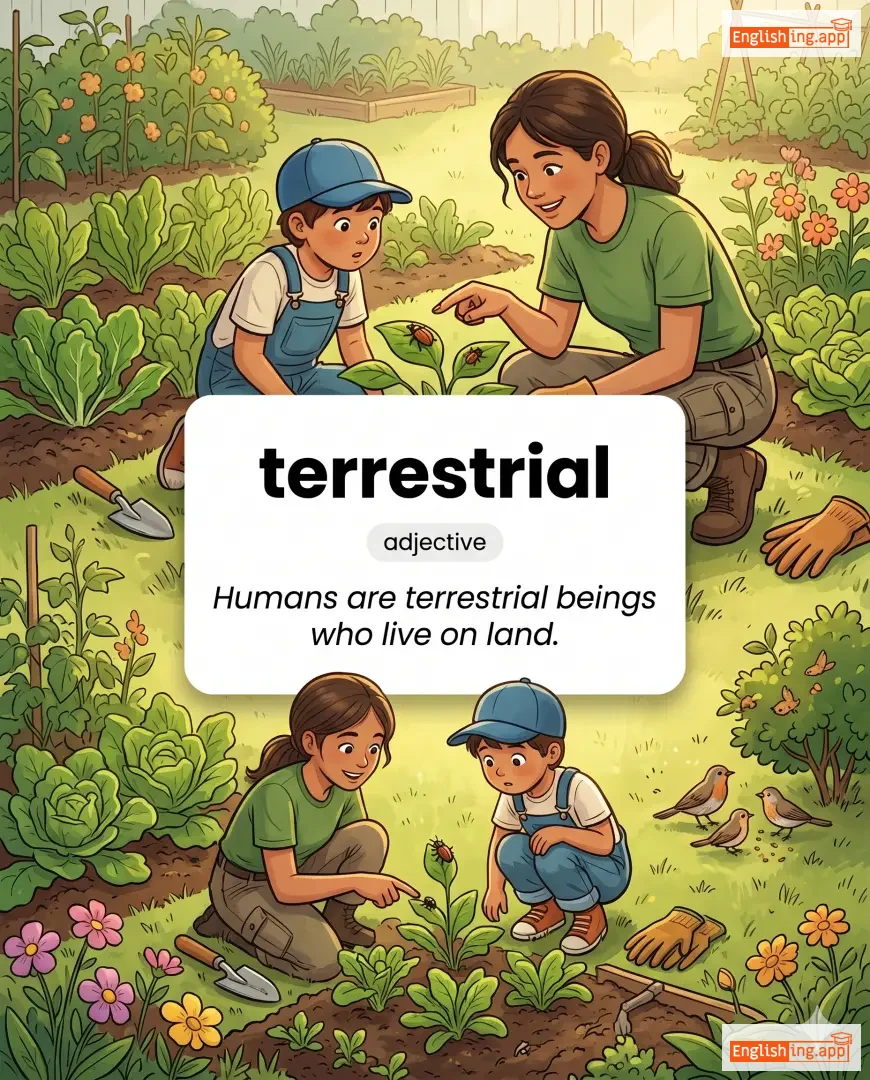
Humans are terrestrial beings who live on land. |
人間は陸上で生きる陸生の生物です。
Ningen wa rikujō de ikiru rikusei no seibutsu desu.
••••••
|
- •••••• | - •••••• | - •••••• |
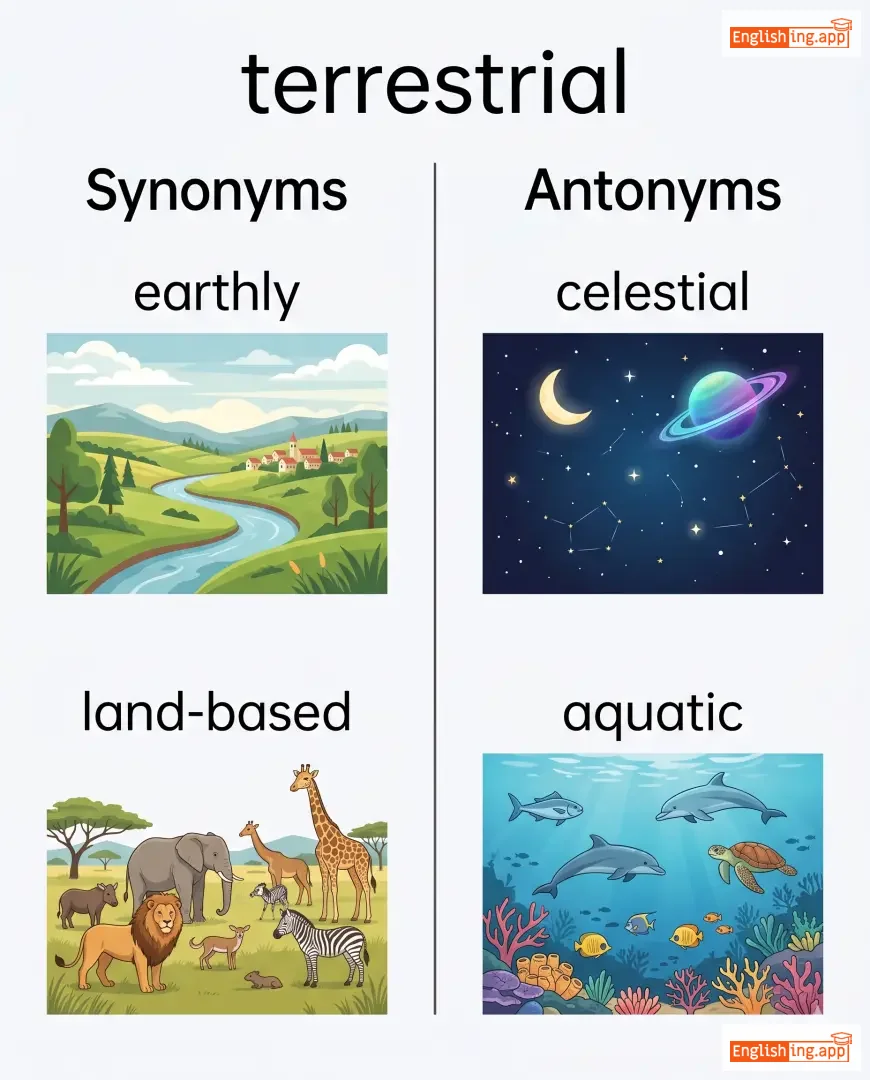
earthly, land-based, worldly, tellurian, mundane
••••••
|
celestial, aquatic, extraterrestrial
••••••
|
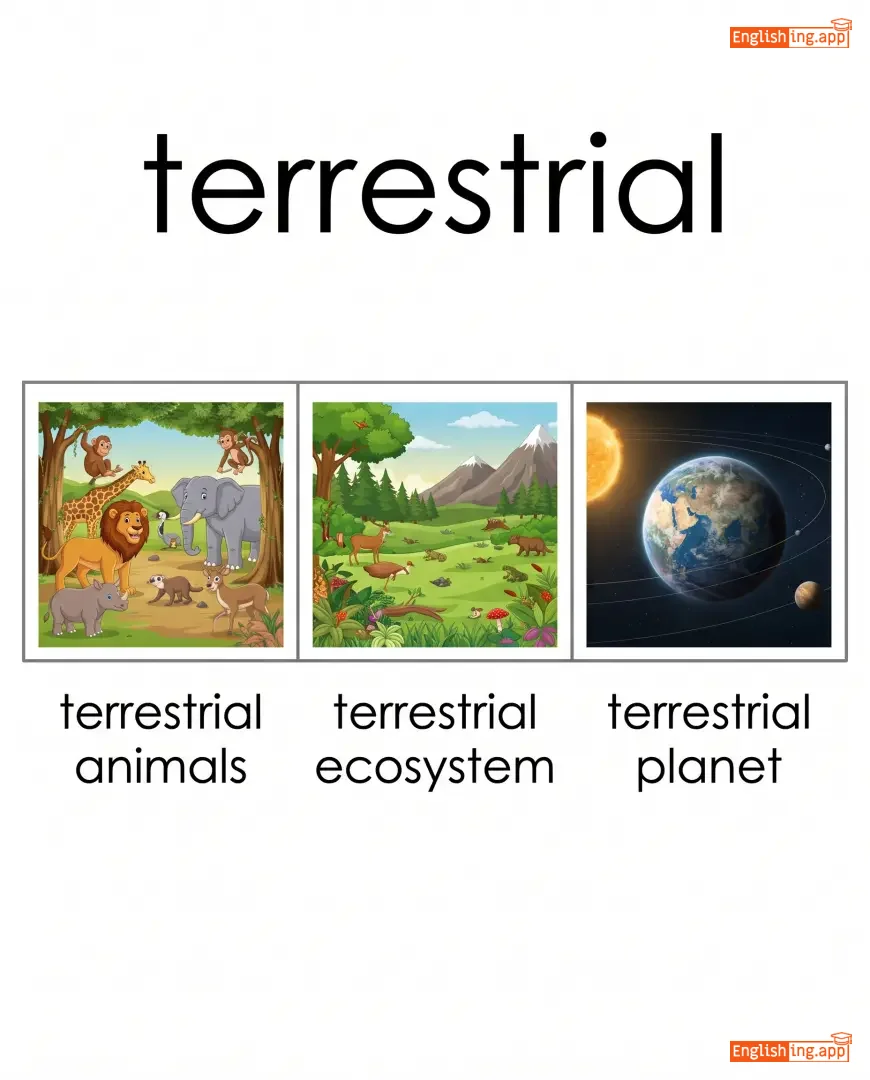
terrestrial animals, terrestrial ecosystem, terrestrial planet, terrestrial life
••••••
|
陸生は、陸地で生きるものを示す言葉です。
••••••
|
|
🕌
••••••
|
/θiˈɒkrəsi/
noun
(テオクラシー)
••••••
|


|
神権政治
shinken seiji
••••••
|
- •••••• | - •••••• | - •••••• | - •••••• |
A system of government in which priests or religious leaders rule in the name of God or a deity.
••••••
|
The country was governed as a theocracy where religious leaders had supreme authority. |
その国は神権政治として統治され、宗教指導者が最高の権限を持っていました。
Sono kuni wa shinken seiji toshite tochi sare, shukyo shido sha ga saiko no kenken o motte imashita.
••••••
|
- •••••• | - •••••• | - •••••• |
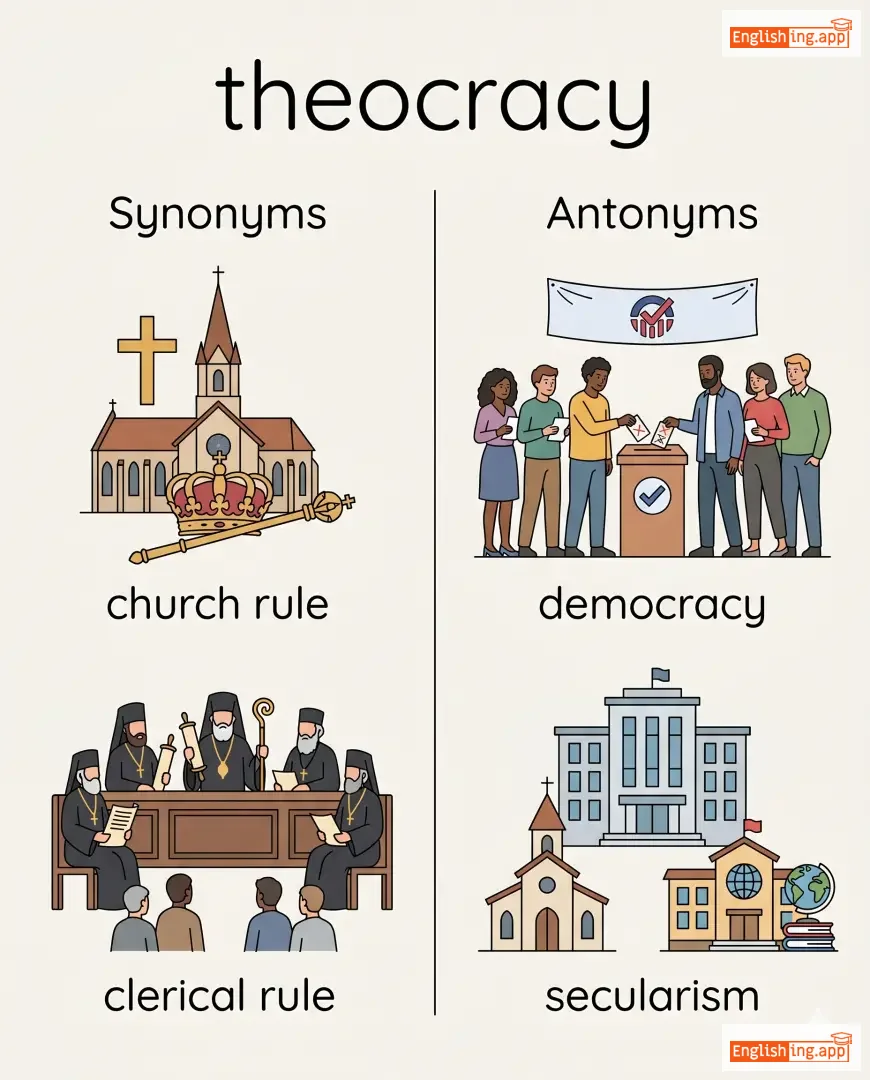
church rule, clerical rule, papal rule, spiritual governance
••••••
|
democracy, secularism, monarchy
••••••
|
religious theocracy, Islamic theocracy, ruled by theocracy
••••••
|
Theo (神) + cracy (支配) → 神権政治、神による支配
••••••
|
|
🎭
••••••
|
/ˈθɛspiən/
noun
(thespian)
••••••
|
|
俳優
haiyū
••••••
|
- •••••• | - •••••• | - •••••• | - •••••• |
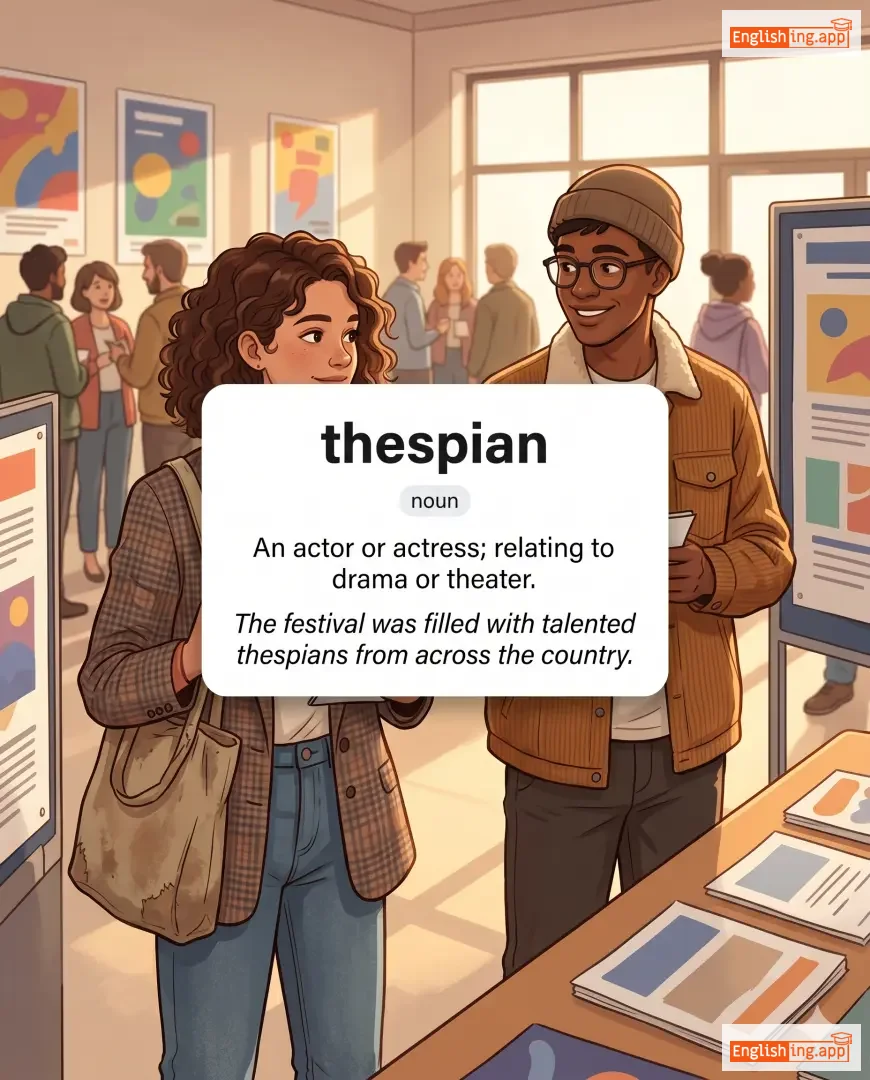
An actor or actress; relating to drama or theater.
••••••
|
The festival was filled with talented thespians from across the country. |
フェスティバルは、国内各地から集まった才能豊かな俳優たちで満たされていました。
Fesutibaru wa, kokunai kakuchi kara atsumatta sainō yutakana haiyū-tachi de mitasarete imashita.
••••••
|
- •••••• | - •••••• | - •••••• |
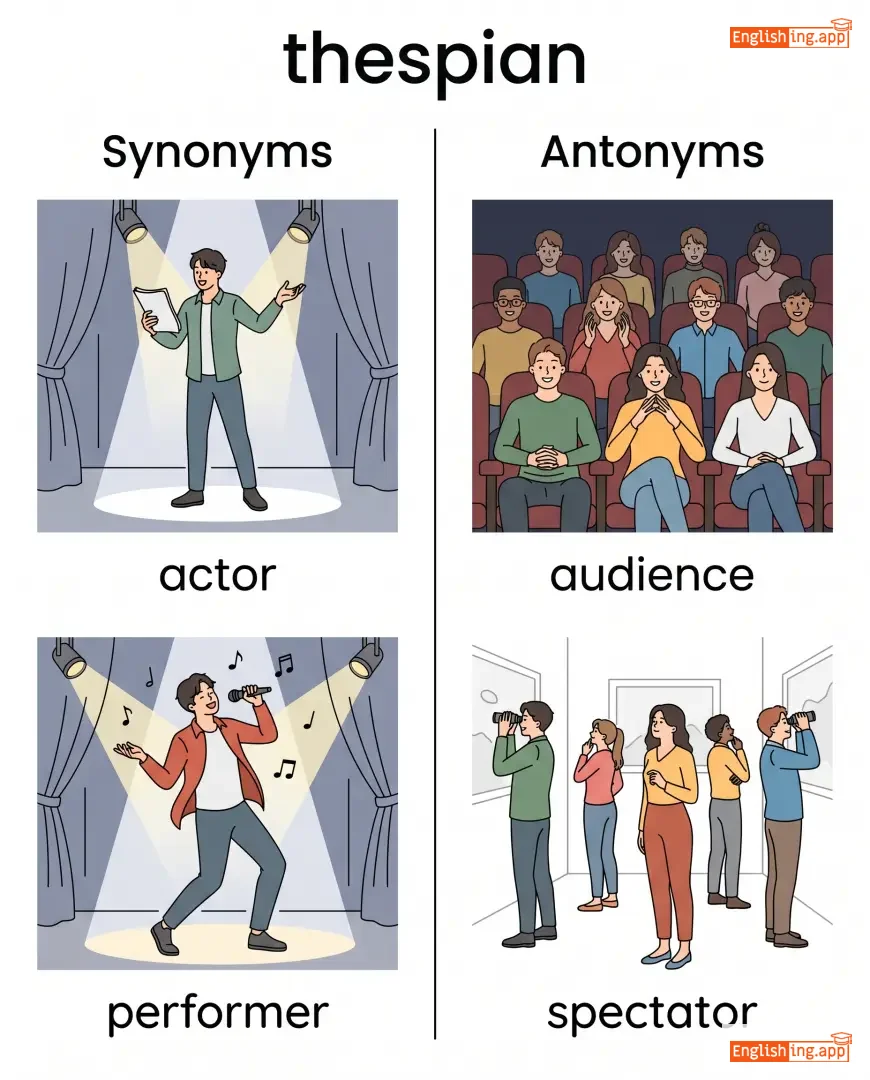
actor, performer, dramatist, stage player, entertainer
••••••
|
audience, spectator
••••••
|
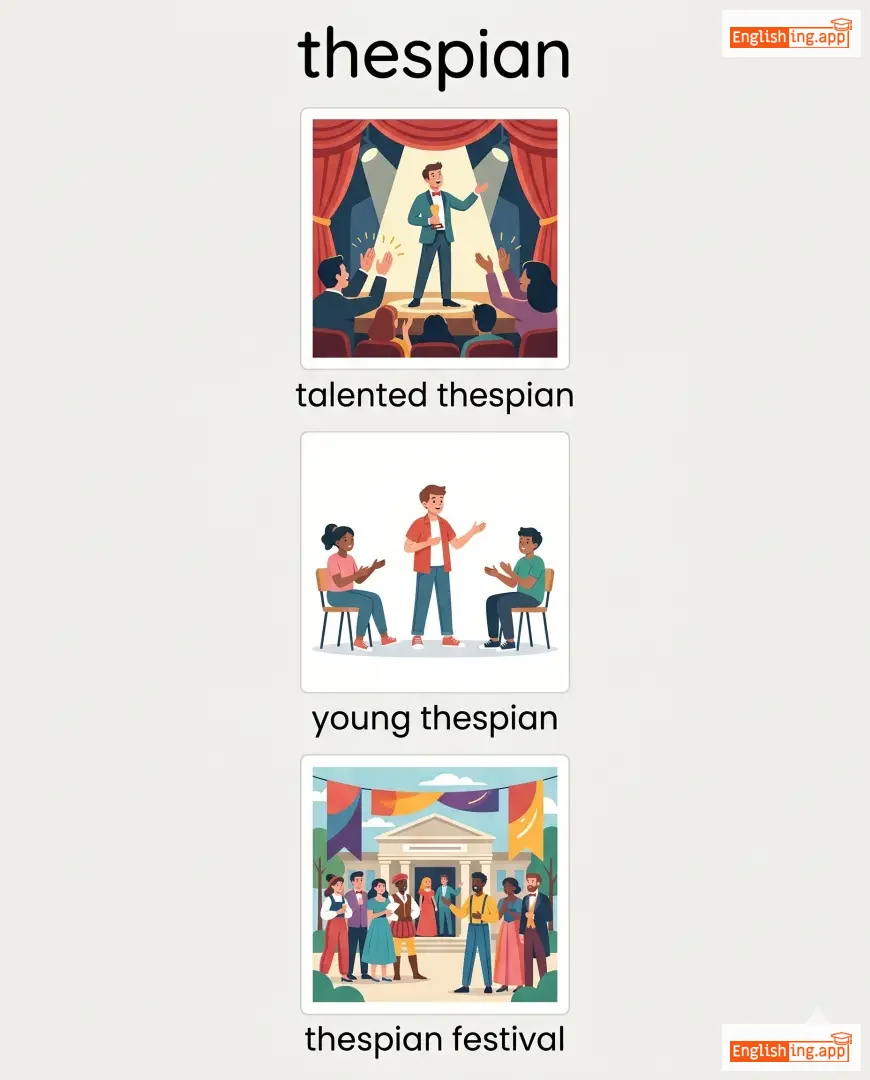
talented thespian, young thespian, thespian festival, thespian society
••••••
|
Thespian 🎭 は劇場に関連する俳優です。
••••••
|
|
🎶
••••••
|
/ˈtæmbər/ or /ˈtɪmbər/
noun
(タンブル)
••••••
|
- •••••• |
音色
onsoku
••••••
|
- •••••• | - •••••• | - •••••• | - •••••• |
The character or quality of a musical sound or voice as distinct from its pitch and intensity.
••••••
|
Her voice had a warm timbre that soothed the audience. |
彼女の声には温かみのある音色があり、聴衆を落ち着かせた。
Kanojo no koe ni wa atatakai no aru onsoku ga ari, choushuu o ochitsukase ta.
••••••
|
- •••••• | - •••••• | - •••••• |
tone, sound quality, resonance, pitch, voice color
••••••
|
monotone, flatness
••••••
|
rich timbre, warm timbre, vocal timbre, instrument timbre
••••••
|
Timbre は timber のように聞こえますが、ここでは音の色を意味します。
••••••
|
|
🗯️
••••••
|
/taɪˈreɪd/
noun
(タイレード)
••••••
|
|
激しい非難
hageshii hinan
••••••
|
- •••••• | - •••••• | - •••••• | - •••••• |
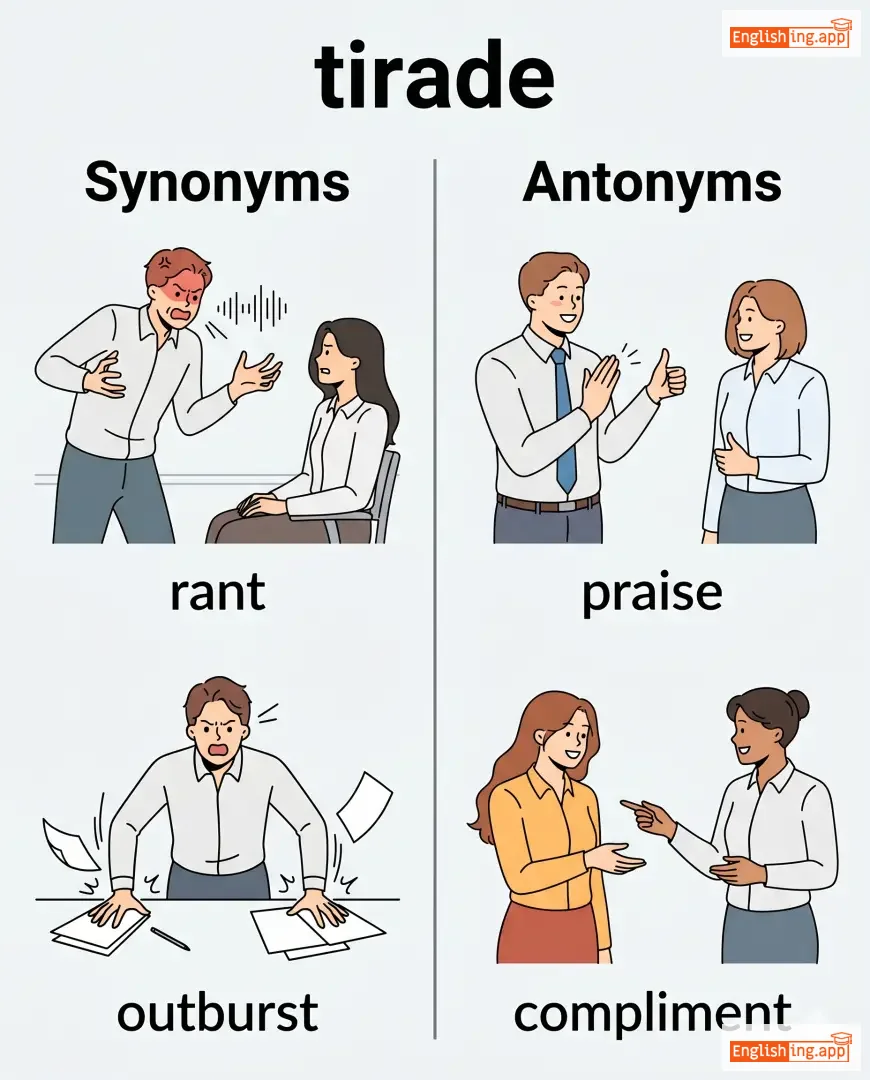
a long, angry, or critical speech
••••••
|
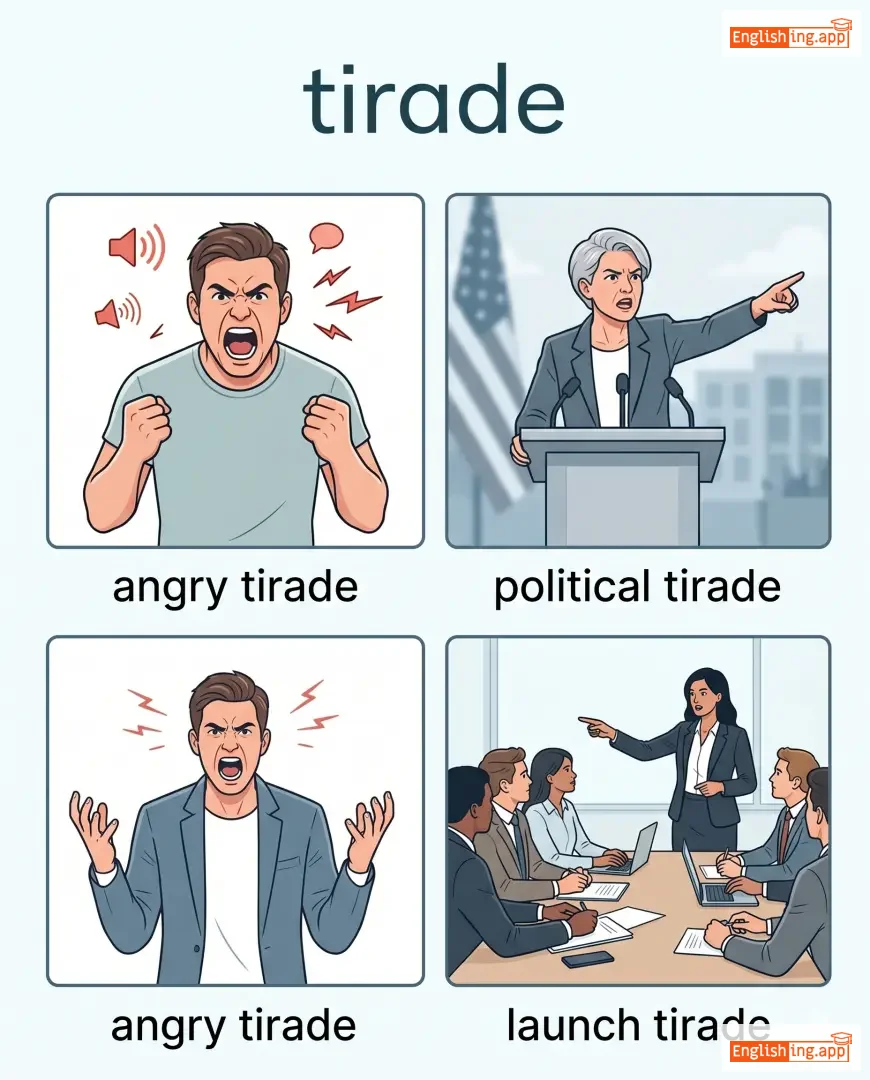
The manager launched into a tirade about poor performance.
マネージャーは低いパフォーマンスについて長い激しい演説を行った。
••••••
|
マネージャーは低いパフォーマンスについて長い激しい演説を行った。
Manējā wa hikui pafōmansu ni tsuite nagai hageshī enzetsu o okonatta.
••••••
|
- •••••• | - •••••• | - •••••• |
rant, outburst, diatribe, harangue, lecture
••••••
|
praise, compliment
••••••
|
angry tirade, political tirade, launch tirade, endless tirade
••••••
|
Tirade は鋭い矢のような激しい非難の演説です。
••••••
|
|
🙇♂️
••••••
|
/ˈtoʊdi/
verb
••••••
|

|
- •••••• |
toadied
••••••
|
toadied
••••••
|
toadies
••••••
|
toadying
••••••
|
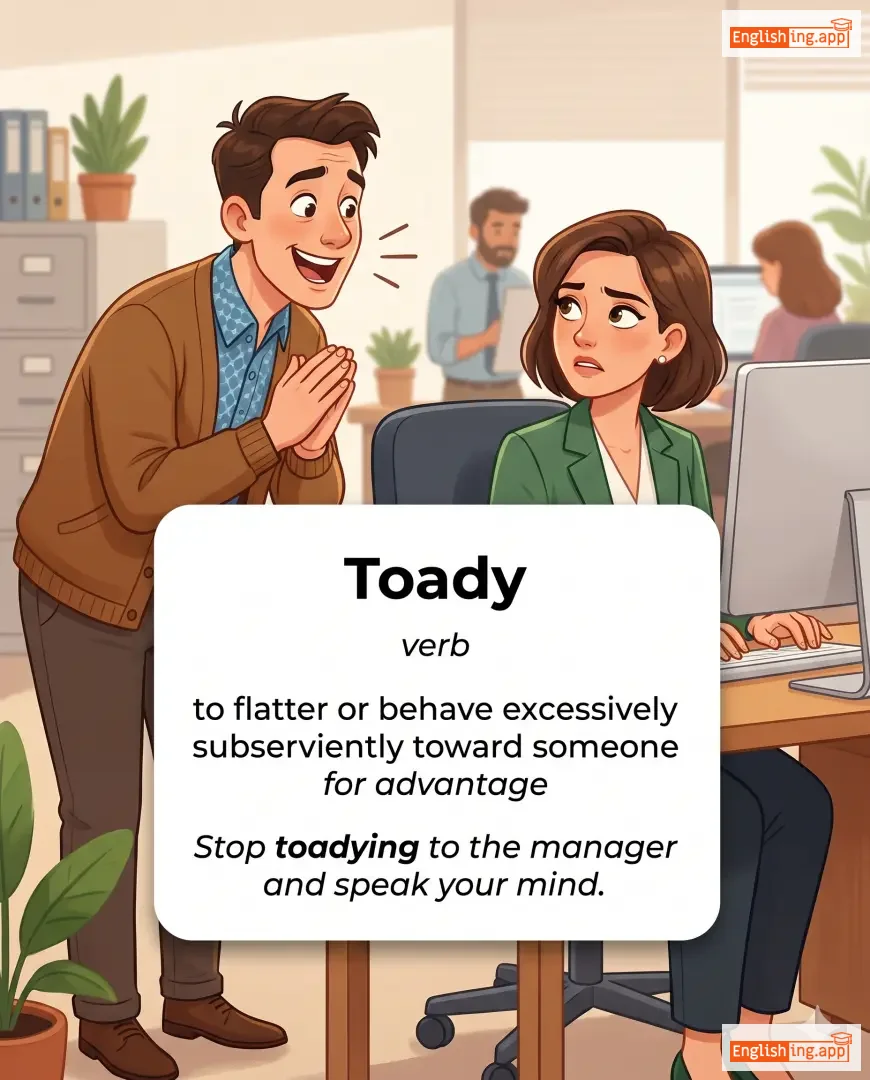
to flatter or behave excessively subserviently toward someone for advantage
••••••
|
Stop toadying to the manager and speak your mind. |
- •••••• |
toady up to |
to flatter someone obsequiously to gain favor
••••••
|
- •••••• |
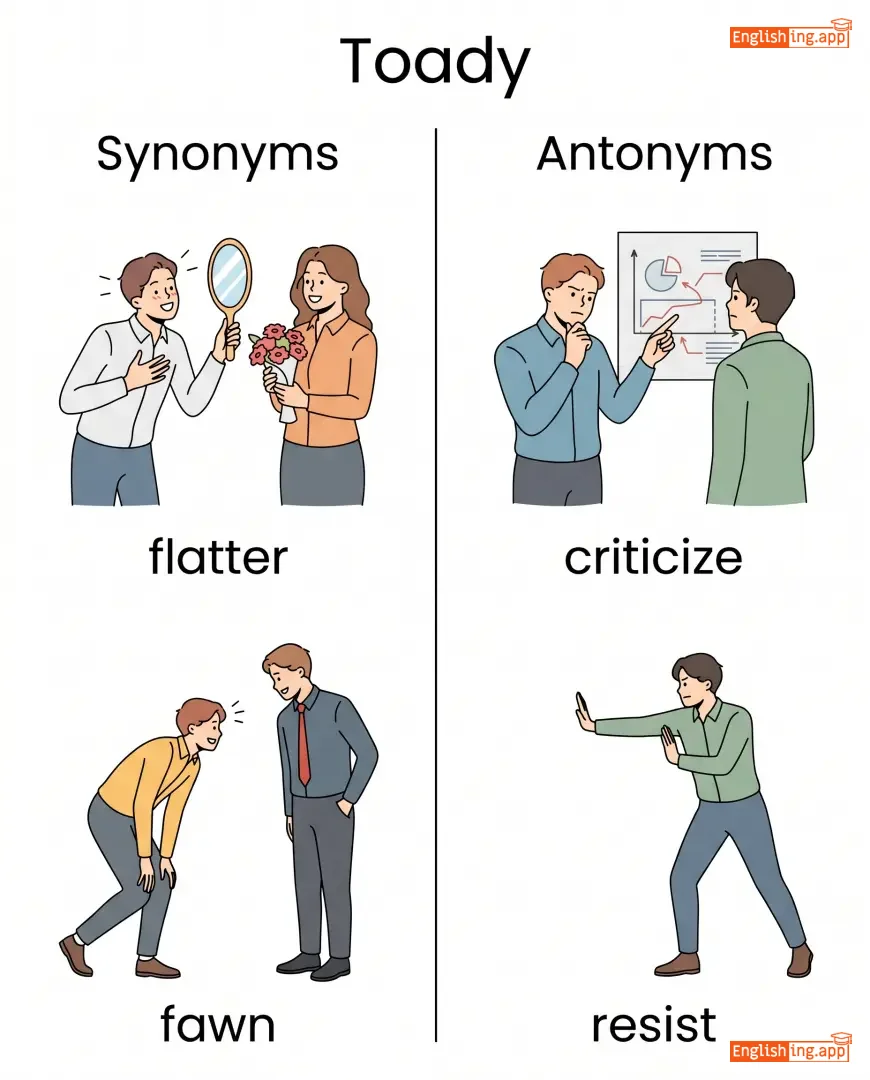
flatter, fawn, grovel, brown-nose, bootlick
••••••
|
criticize, resist, speak plainly
••••••
|
toady to the boss, shameless toady, toady up to, act like a toady
••••••
|
No •••••• |
|
📚
••••••
|
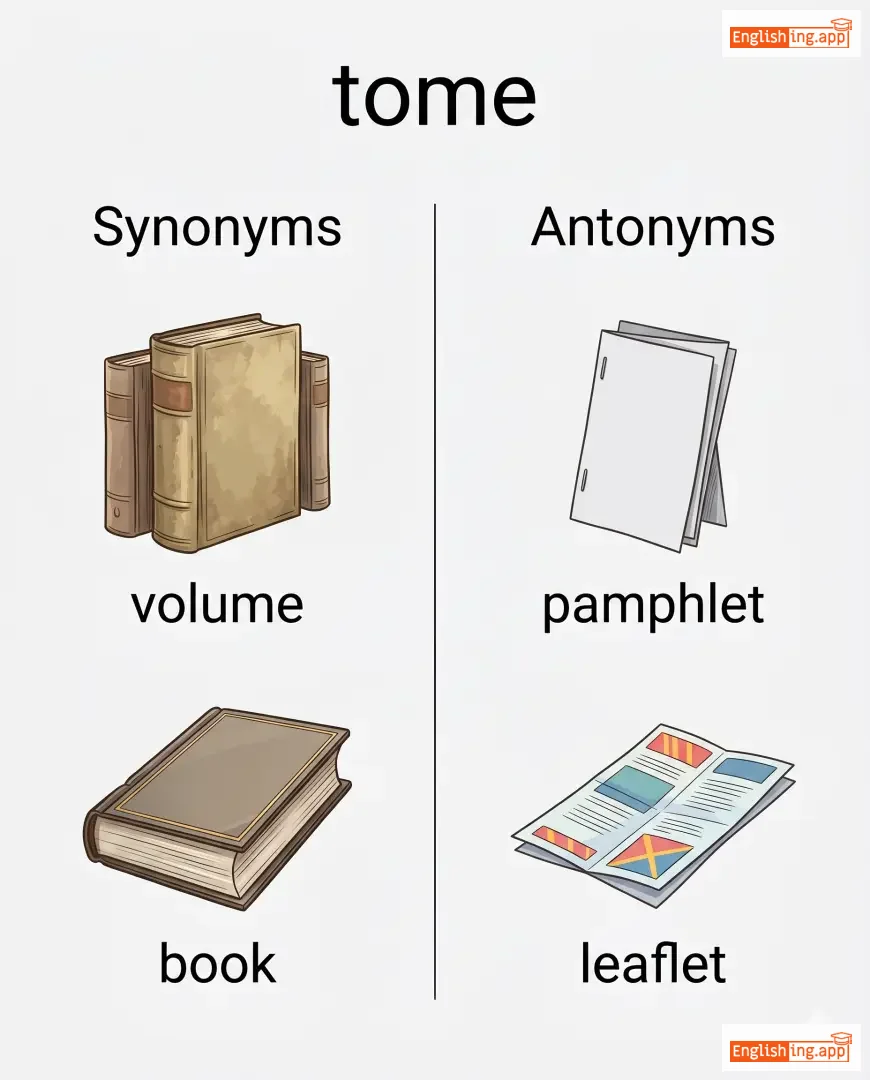
/toʊm/
noun
(トム)
••••••
|


|
重い本
omoi hon
••••••
|
- •••••• | - •••••• | - •••••• | - •••••• |
a large, heavy book, often scholarly or serious in nature
••••••
|
She spent the afternoon reading an old tome on medieval history. |
彼女は午後の時間を中世の歴史に関する古い重い本を読んで過ごしました。
Kanojo wa gogo no jikan o chūsei no rekishi ni kansuru furui omoi hon o yonde sugoshimashita.
••••••
|
- •••••• | - •••••• | - •••••• |
volume, book, opus, publication, manuscript
••••••
|
pamphlet, leaflet, brochure
••••••
|
ancient tome, scholarly tome, dusty tome, old tome
••••••
|
Tome は重い本 - 重い本を覚えておこう
••••••
|
|
🛌
••••••
|
/ˈtɔːrpər/
noun
(トルポー)
••••••
|
|
昏睡
torpor
••••••
|
- •••••• | - •••••• | - •••••• | - •••••• |
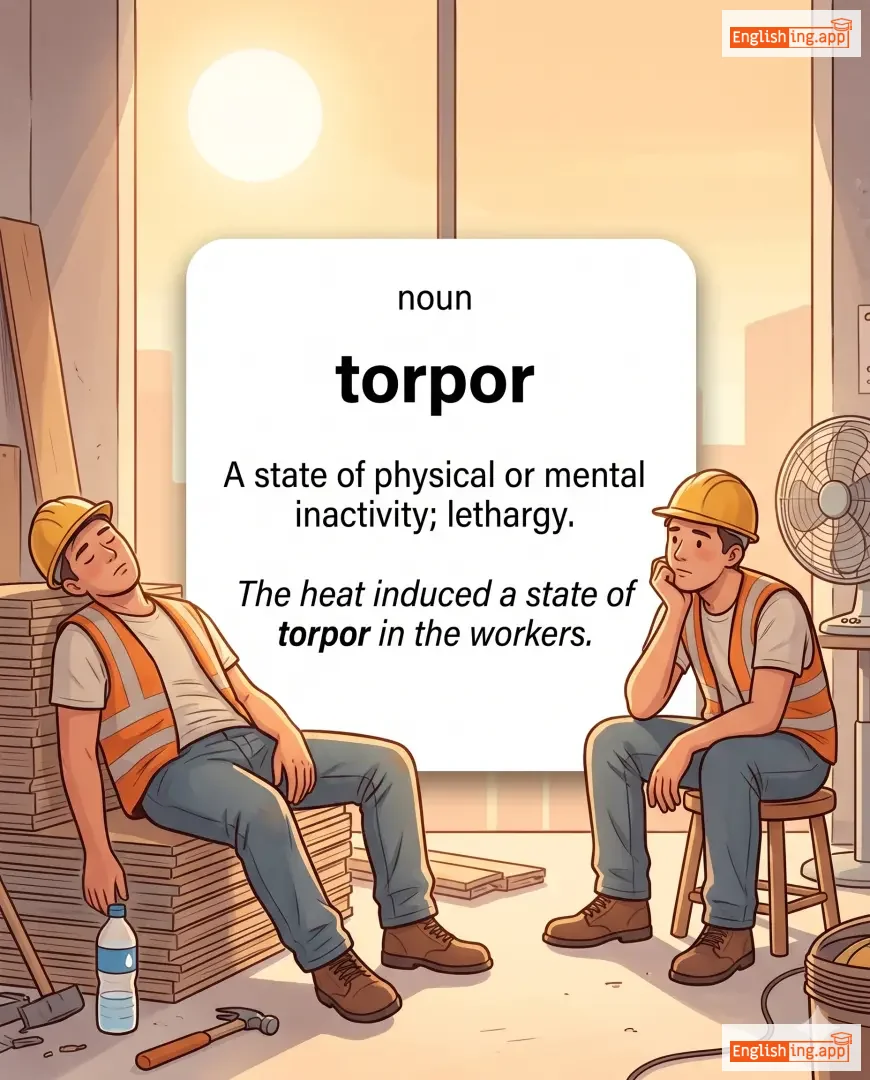
A state of physical or mental inactivity; lethargy.
••••••
|
The heat induced a state of torpor in the workers. |
暑さは労働者に昏睡状態を引き起こした。
Atsusa wa roudousha ni konsui joutai wo hikiokoshita.
••••••
|
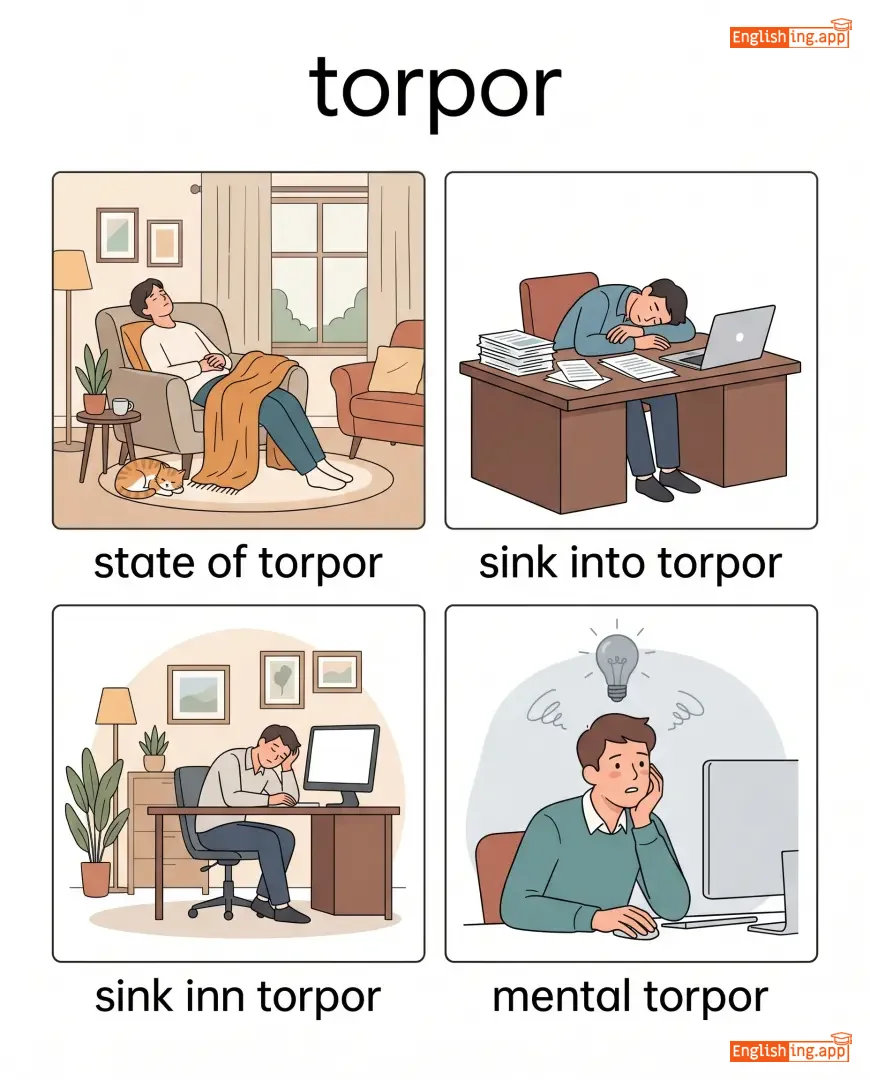
sink into torpor |
to gradually become inactive or sluggish
••••••
|
昏睡に陥る
konsui ni ochiru
••••••
|
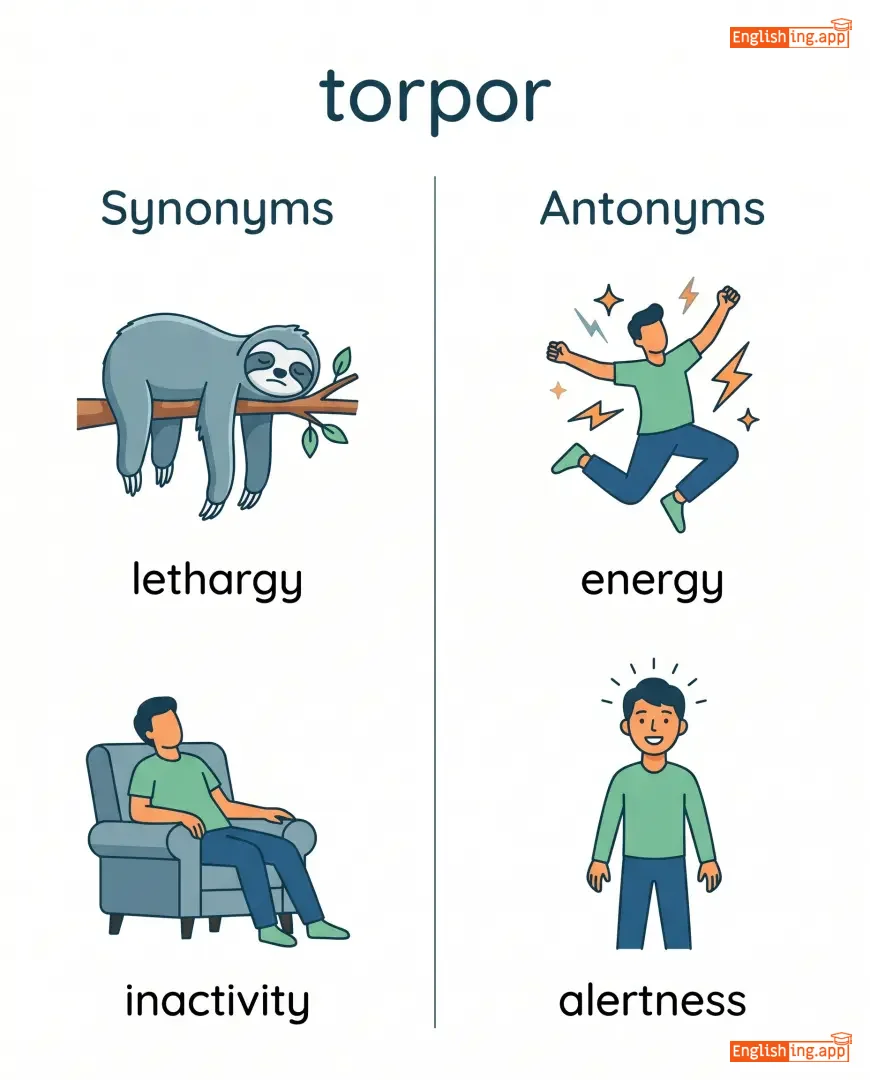
lethargy, inactivity, apathy, sluggishness
••••••
|
energy, alertness, activity
••••••
|
state of torpor, sink into torpor, mental torpor, torpor induced
••••••
|
Torpor - トルポー - エネルギーがない状態で、けだるさ。
••••••
|
|
🔧
••••••
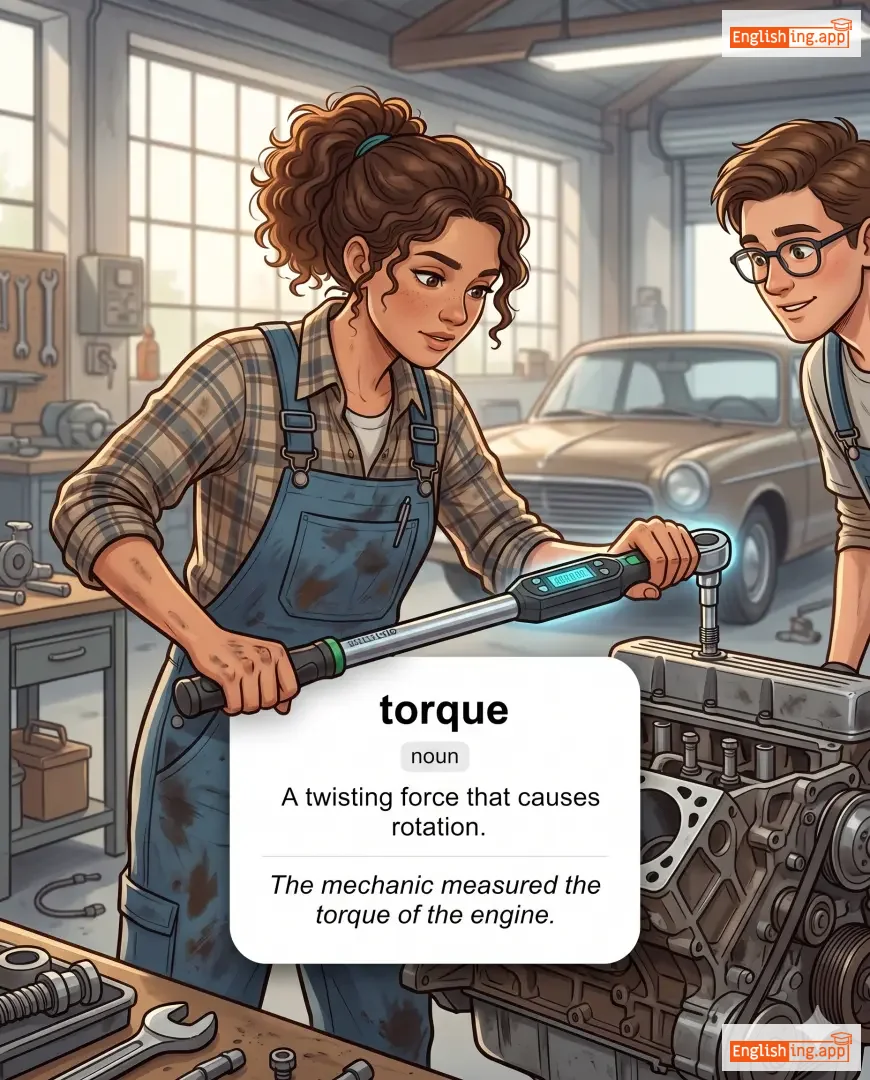
|
/tɔːrk/
noun
••••••
|
|
- •••••• | - •••••• | - •••••• | - •••••• | - •••••• |
A twisting force that causes rotation.
••••••
|
The mechanic measured the torque of the engine. |
- •••••• |
apply torque |
to use twisting force on something
••••••
|
- •••••• |
twist, rotation, force, turning power
••••••
|
balance, rest, stillness
••••••
|
engine torque, high torque, torque wrench, apply torque
••••••
|
No •••••• |
|
🌀
••••••
|
/ˈtɔːrtʃuəs/
adjective
(トーチュアス)
••••••
|
- •••••• |
曲がりくねった, 複雑
magarikunetta, fukuzatsu
••••••
|
- •••••• | - •••••• | - •••••• | - •••••• |
Full of twists and turns; excessively complex or complicated.
••••••
|
The tortuous mountain road made driving very difficult. |
曲がりくねった山道が運転を非常に難しくした。
Magarikunetta yamamichi ga unten o hijō ni muzukashiku shita.
••••••
|
- •••••• | - •••••• | - •••••• |
winding, twisting, convoluted, complex, meandering
••••••
|
straight, direct, simple
••••••
|
tortuous path, tortuous route, tortuous reasoning, tortuous journey
••••••
|
Tortuous は曲がりくねった道 – 複雑な道
••••••
|
|
📢
••••••
|
/taʊt/
verb
(タウト)
••••••
|
- •••••• |
宣伝する
senden suru
••••••
|
touted
タウテッド
••••••
|
touted
タウテッド
••••••
|
touts
タウツ
••••••
|
touting
タウティング
••••••
|
to promote, praise, or advertise aggressively
••••••
|
The company touted its new product as a game-changer.
その会社は新しい製品をゲームチェンジャーとして宣伝した。
••••••
|
その会社は新しい製品をゲームチェンジャーとして宣伝した。
Sono kaisha wa atarashī seihin o gēmu chenjā to shite senden shita.
••••••
|
tout for business
ビジネスのために宣伝する
••••••
|
to solicit or promote actively to get customers
••••••
|
顧客を得るために宣伝する
kokyaku o eru tame ni senden suru
••••••
|
promote, advertise, endorse, praise, hype
••••••
|
criticize, denounce, condemn
••••••
|
tout a product, tout the benefits, touted as, tout for business
••••••
|
タウトで宣伝するのは、'買って!' と叫ぶことです。
••••••
|
|
🙂
••••••
|
/ˈtræktəbəl/
adjective
(トラクトブル)
••••••
|
|
制御可能または影響を与えることができる
seigyo kanou mata wa eikyou wo ataeru koto ga dekiru
••••••
|
- •••••• | - •••••• | - •••••• | - •••••• |
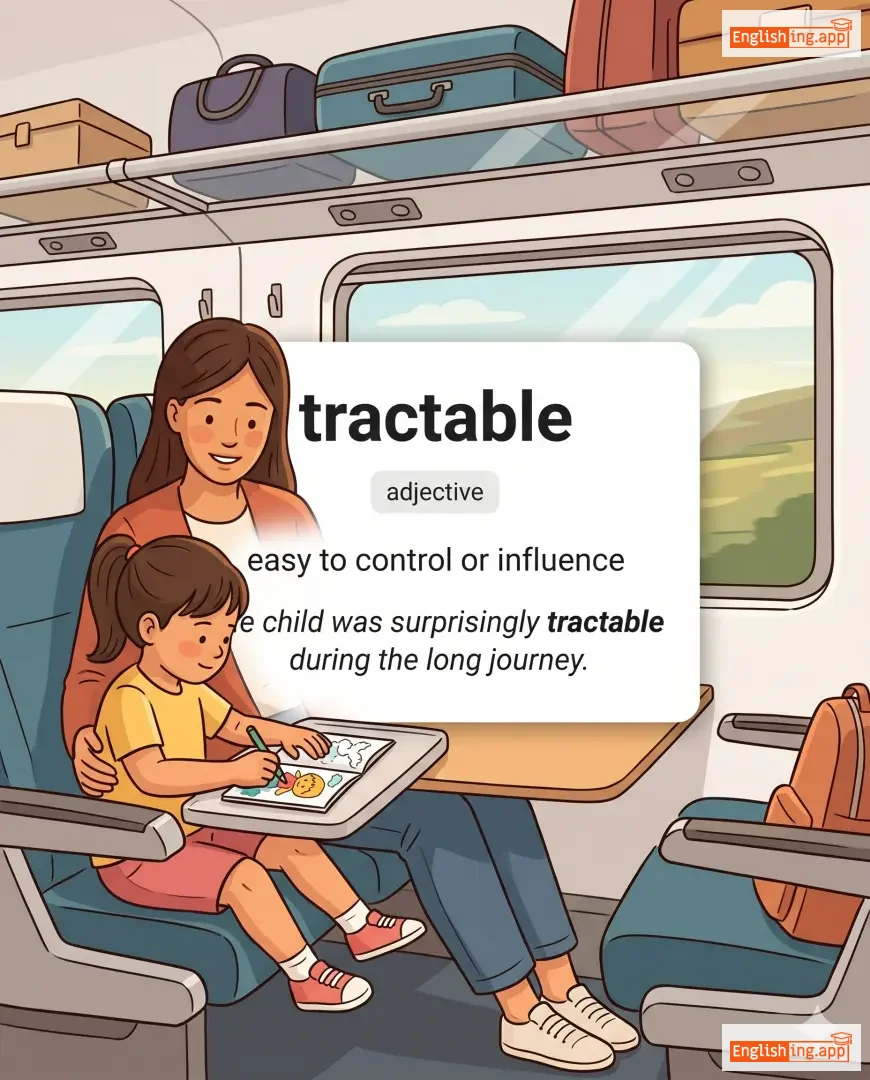
easy to control or influence
••••••
|
The child was surprisingly tractable during the long journey.
その子供は長い旅の間、驚くほどトラクトブルだった。
••••••
|
その子供は長い旅の間、驚くほど制御可能だった。
Sono kodomo wa nagai tabi no aida, odoroku hodo seigyo kanou datta.
••••••
|
- •••••• | - •••••• | - •••••• |
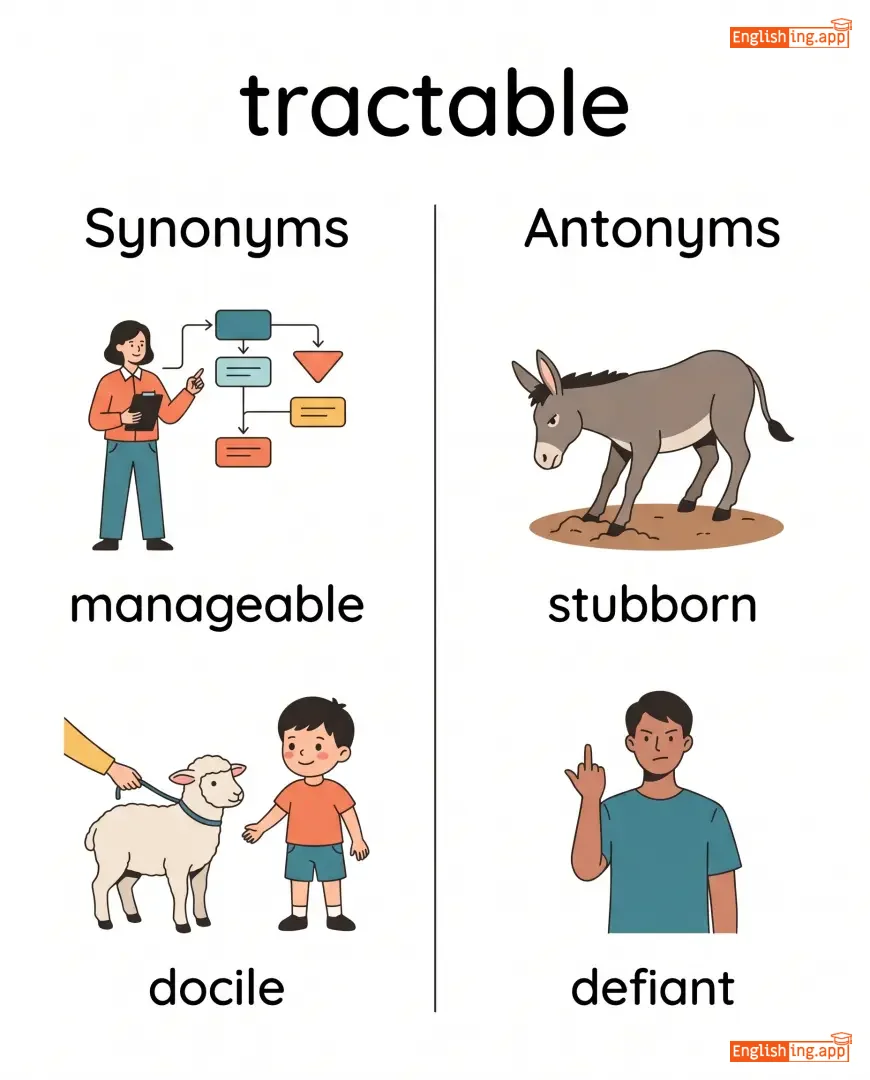
manageable, docile, obedient, compliant
••••••
|
stubborn, defiant, unmanageable
••••••
|
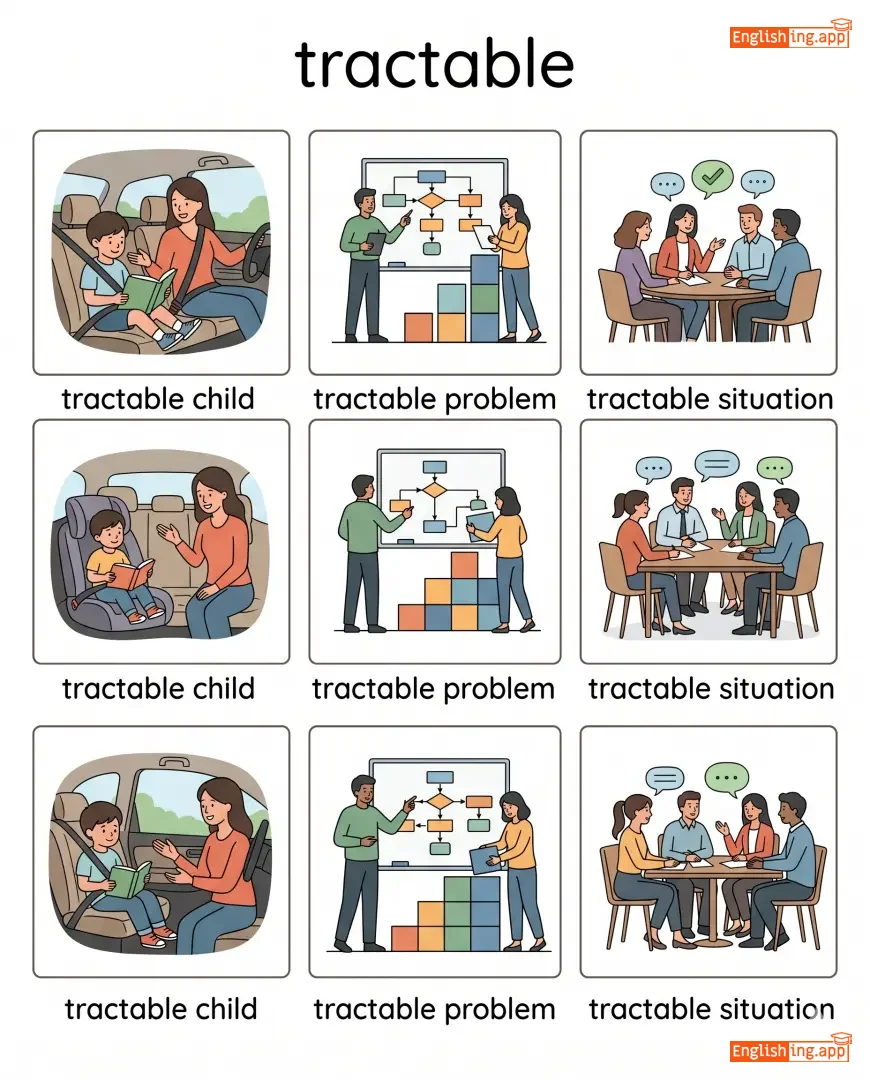
tractable child, tractable problem, tractable situation
••••••
|
Tractable は、長い旅行の間に簡単に制御できる子供のようです。
••••••
|
|
⚖️
••••••
|
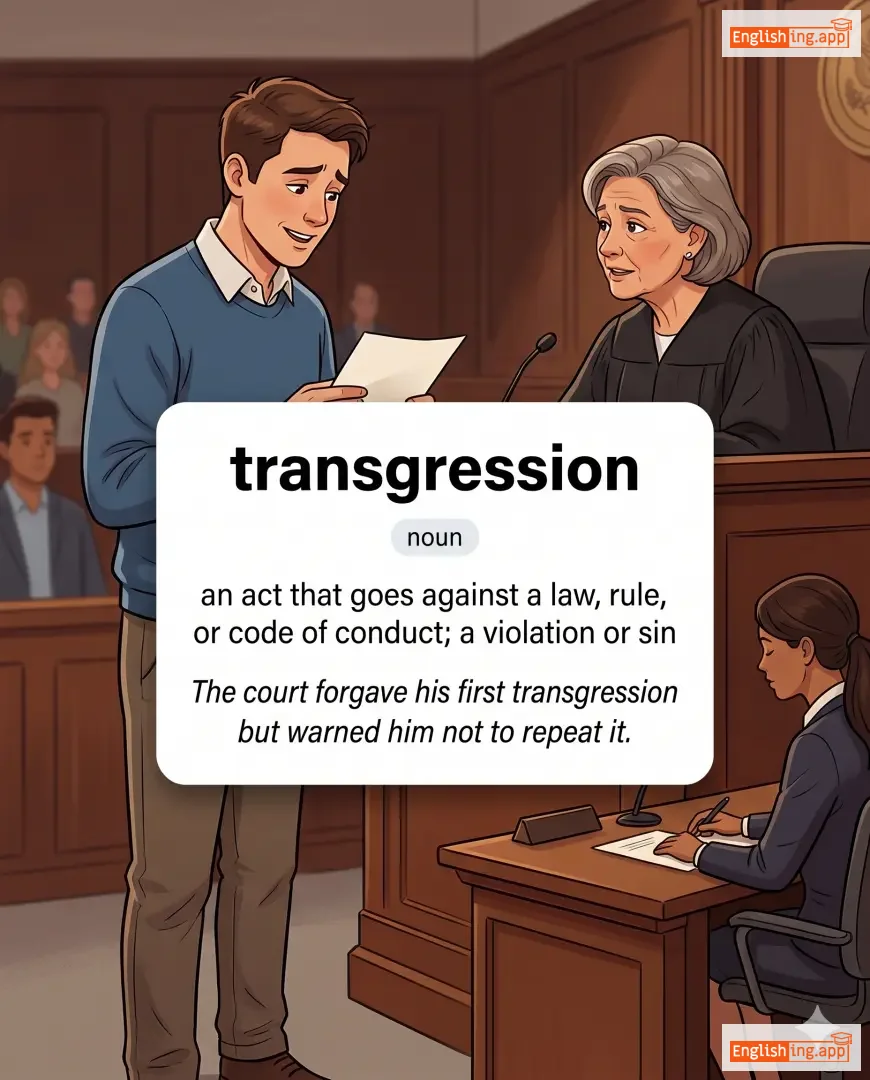
/trænsˈɡrɛʃən/
noun
(トランスグレッション)
••••••
|
|
違反, 罪
ihan, tsumi
••••••
|
- •••••• | - •••••• | - •••••• | - •••••• |
an act that goes against a law, rule, or code of conduct; a violation or sin
••••••
|
The court forgave his first transgression but warned him not to repeat it. |
裁判所は彼の最初の違反を許しましたが、再発を警告しました。
Saibansho wa kare no saisho no ihan o yurushimashita ga, sai hātsu o keikoku shimashita.
••••••
|
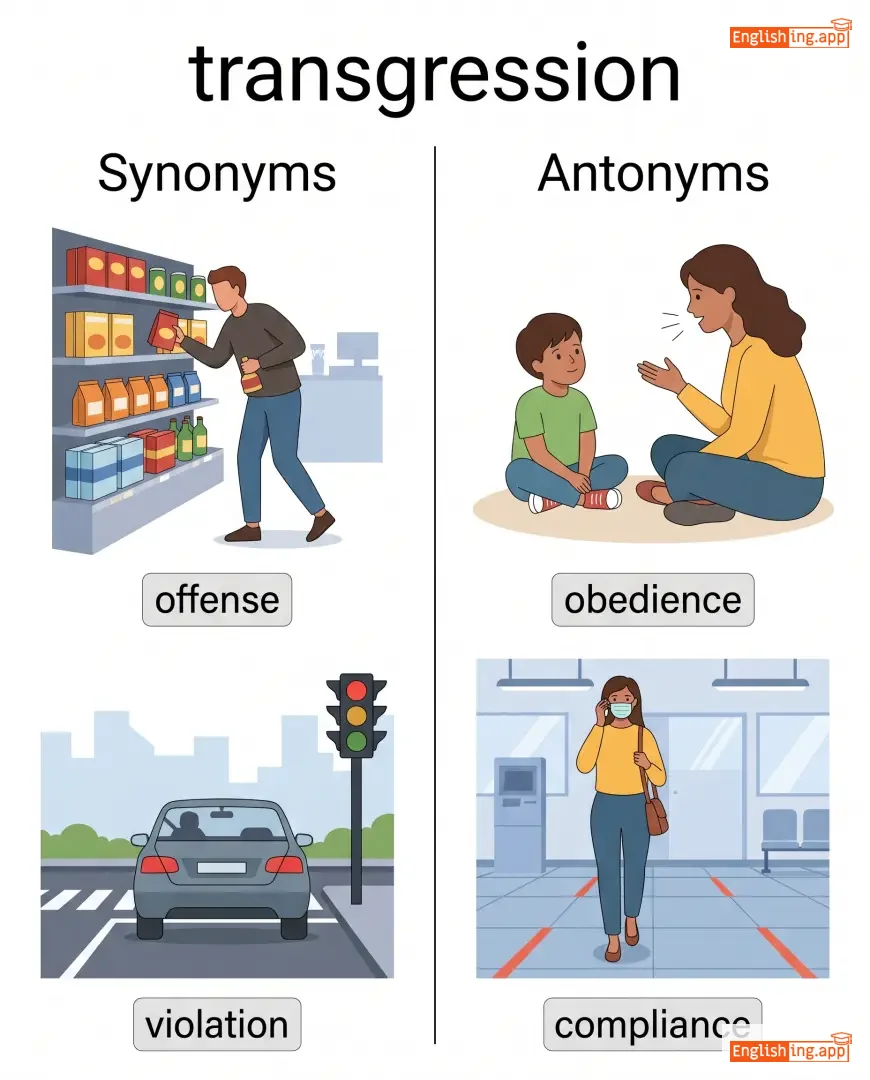
- •••••• | - •••••• | - •••••• |
offense, violation, sin, crime, wrongdoing
••••••
|
obedience, compliance
••••••
|
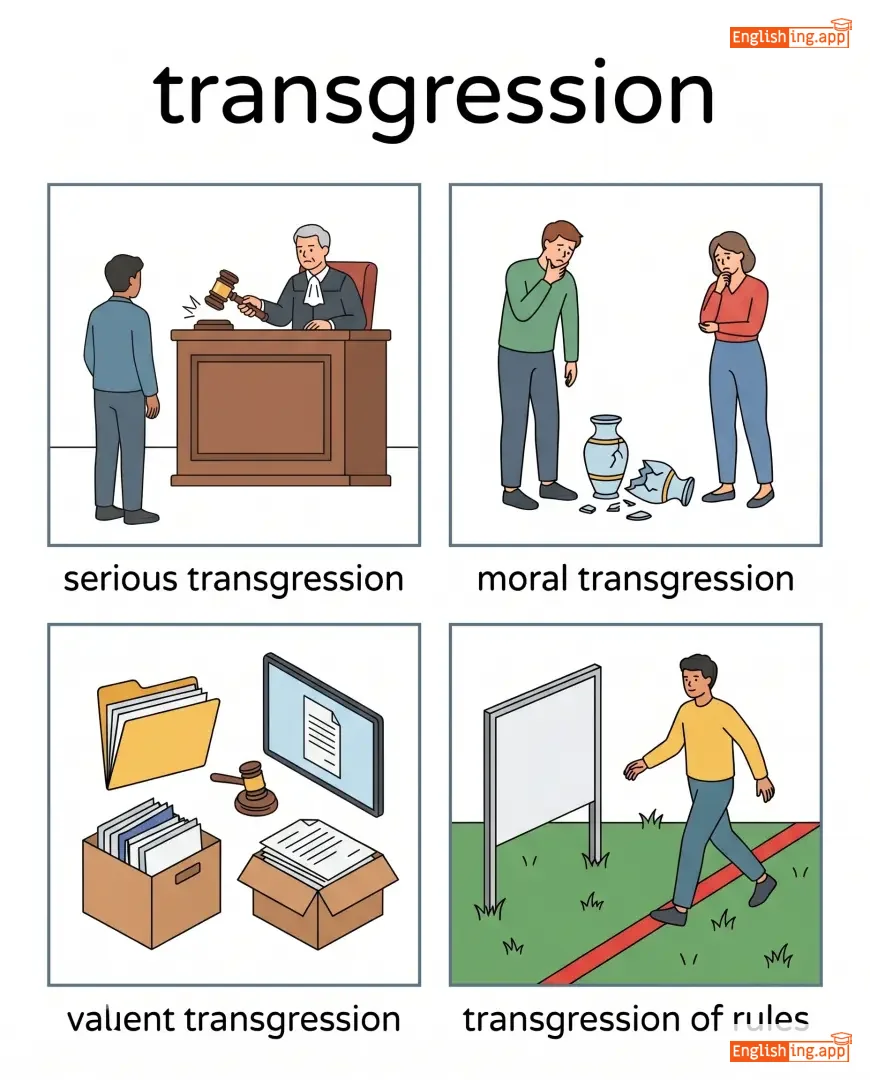
serious transgression, moral transgression, transgression of rules, forgive transgression
••••••
|
Transgressionとは、規則を破ることで、グレース(grace)を失うようなものです。
••••••
|
|
🌪️
••••••
|
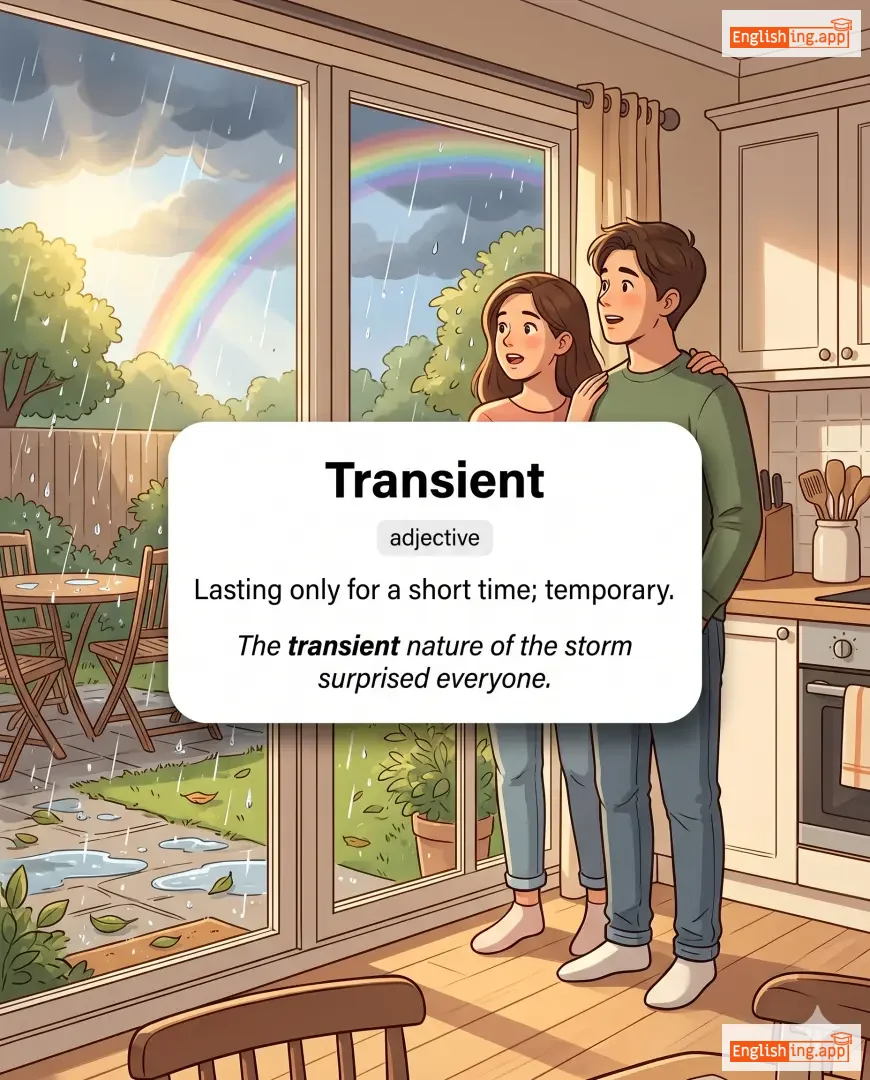
/ˈtrænziənt/
adjective
(トランジエント)
••••••
|
|
一時的
ichijiteki
••••••
|
- •••••• | - •••••• | - •••••• | - •••••• |
Lasting only for a short time; temporary.
••••••
|
The transient nature of the storm surprised everyone.
嵐の一時的な性質は皆を驚かせました。
••••••
|
嵐の一時的な性質は皆を驚かせました。
Arashi no ichijiteki na seishitsu wa mina o odorokasemashita.
••••••
|
transient guest
一時的なゲスト
••••••
|
A guest who stays for only a short period
••••••
|
一時的なゲスト
ichijiteki na gesuto
••••••
|
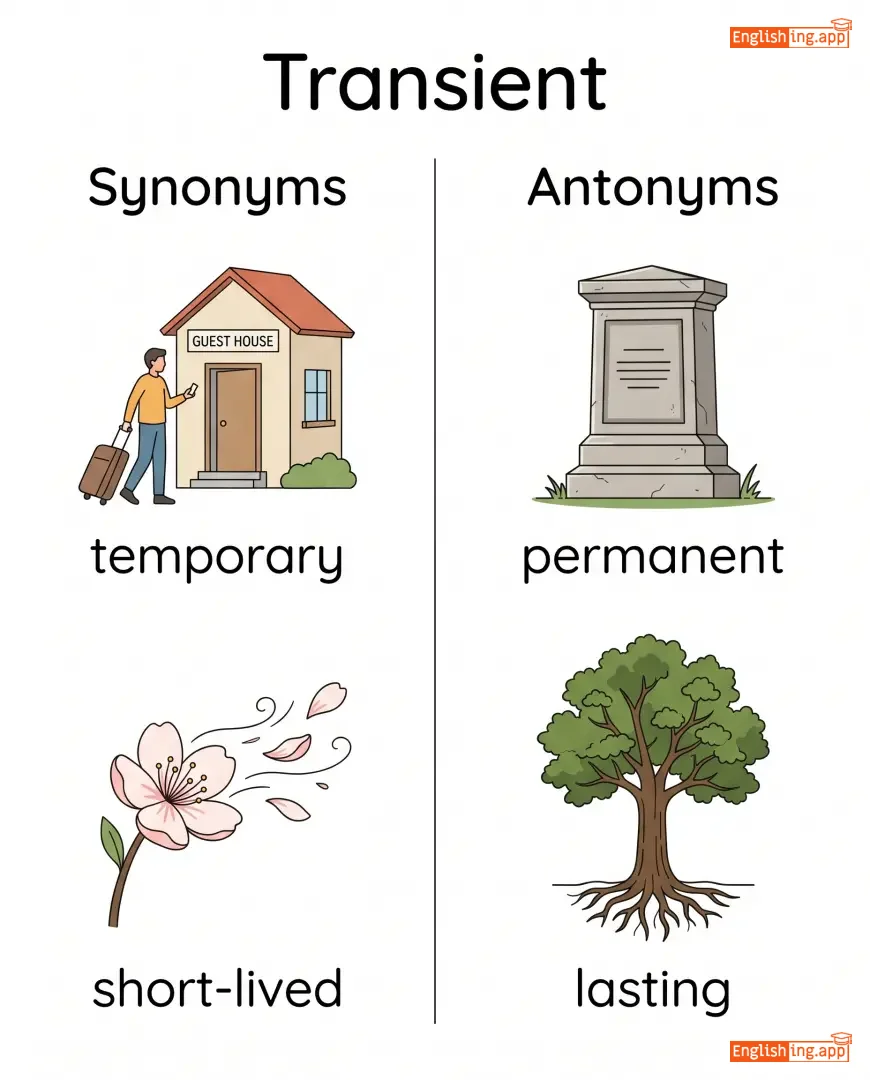
temporary, short-lived, momentary, fleeting
••••••
|
permanent, lasting
••••••
|
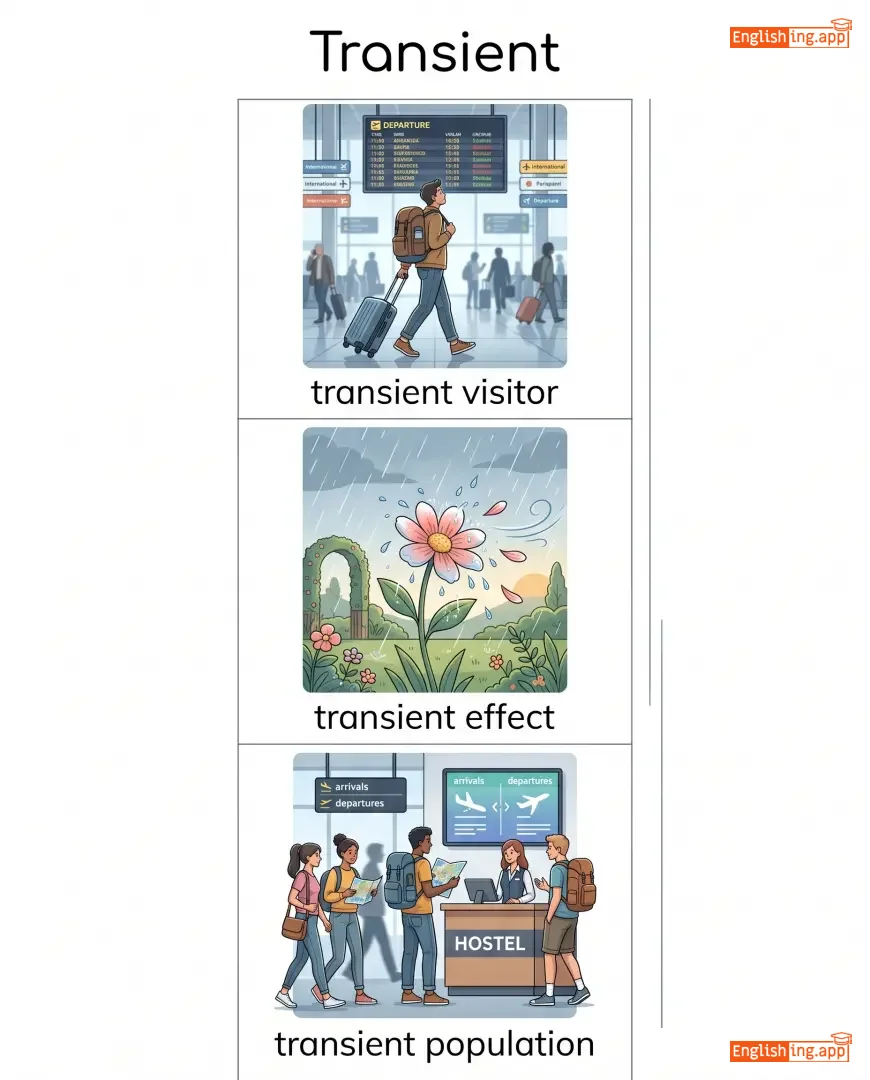
transient visitor, transient effect, transient population
••••••
|
一時的は嵐のようにすぐに過ぎ去ります。
••••••
|

