|
絵文字
|
単語 | Images | 翻訳 | 過去 | 過去分詞 | 三人称単数 | 動名詞 | 意味 | 例文 | 例文の翻訳 | 表現例 | 表現例の意味 | 表現例の翻訳 | 同義語 | 対義語 | コロケーション | ニーモニック |
|---|---|---|---|---|---|---|---|---|---|---|---|---|---|---|---|---|---|
|
⚠️
••••••
|
/ˈstɪɡmə/
noun
(スティグマ)
••••••
|
|
汚名
omei
••••••
|
- •••••• | - •••••• | - •••••• | - •••••• |
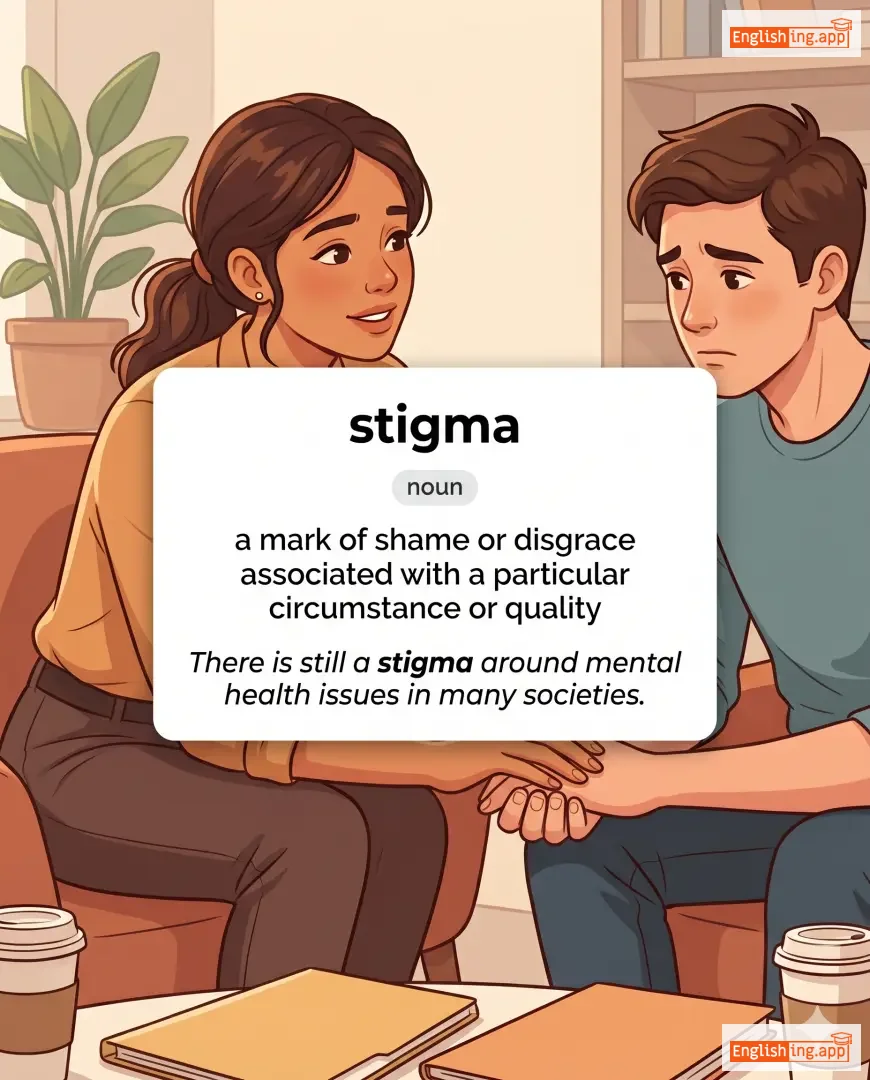
a mark of shame or disgrace associated with a particular circumstance or quality
••••••
|
There is still a stigma around mental health issues in many societies. |
多くの社会では、精神的な健康問題に関して未だに汚名がついています。
Ōku no shakai de wa, seishinteki na kenkō mondai ni kanshite imada ni omei ga tsuiteimasu.
••••••
|
- •••••• | - •••••• | - •••••• |
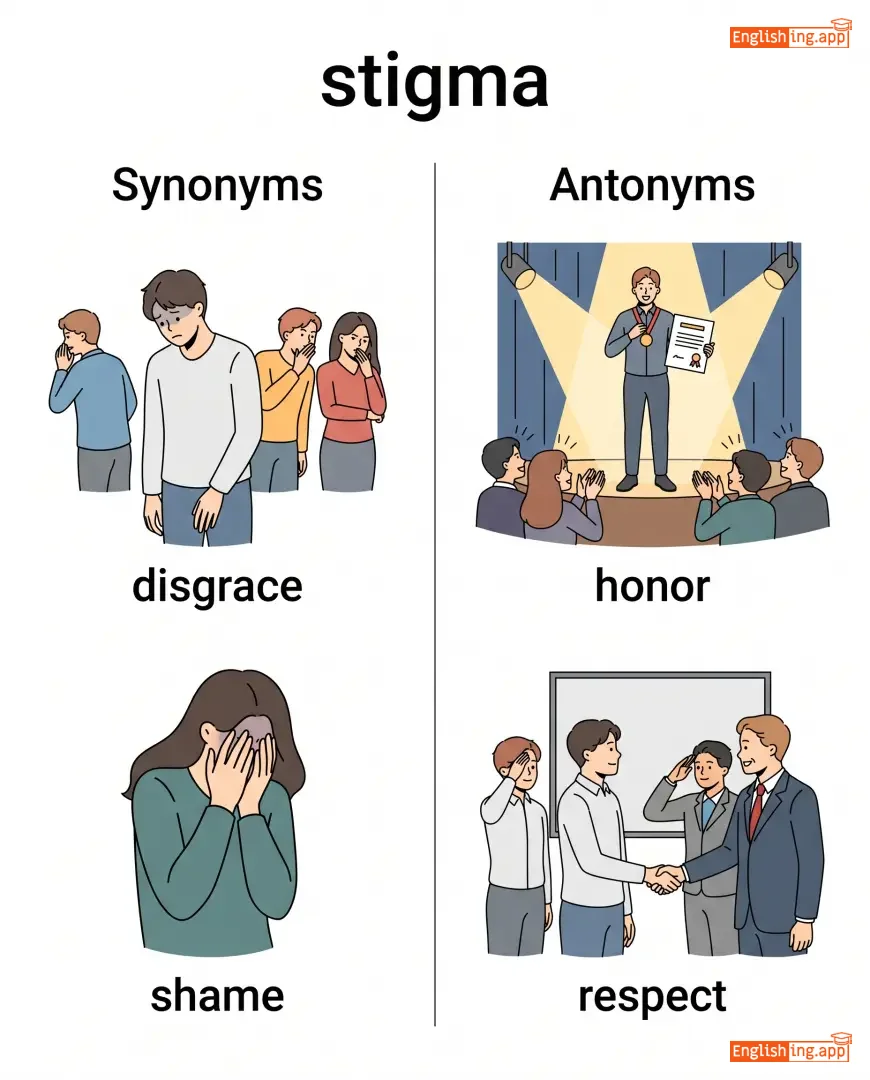
disgrace, shame, taint, blot, dishonor
••••••
|
honor, respect, esteem
••••••
|
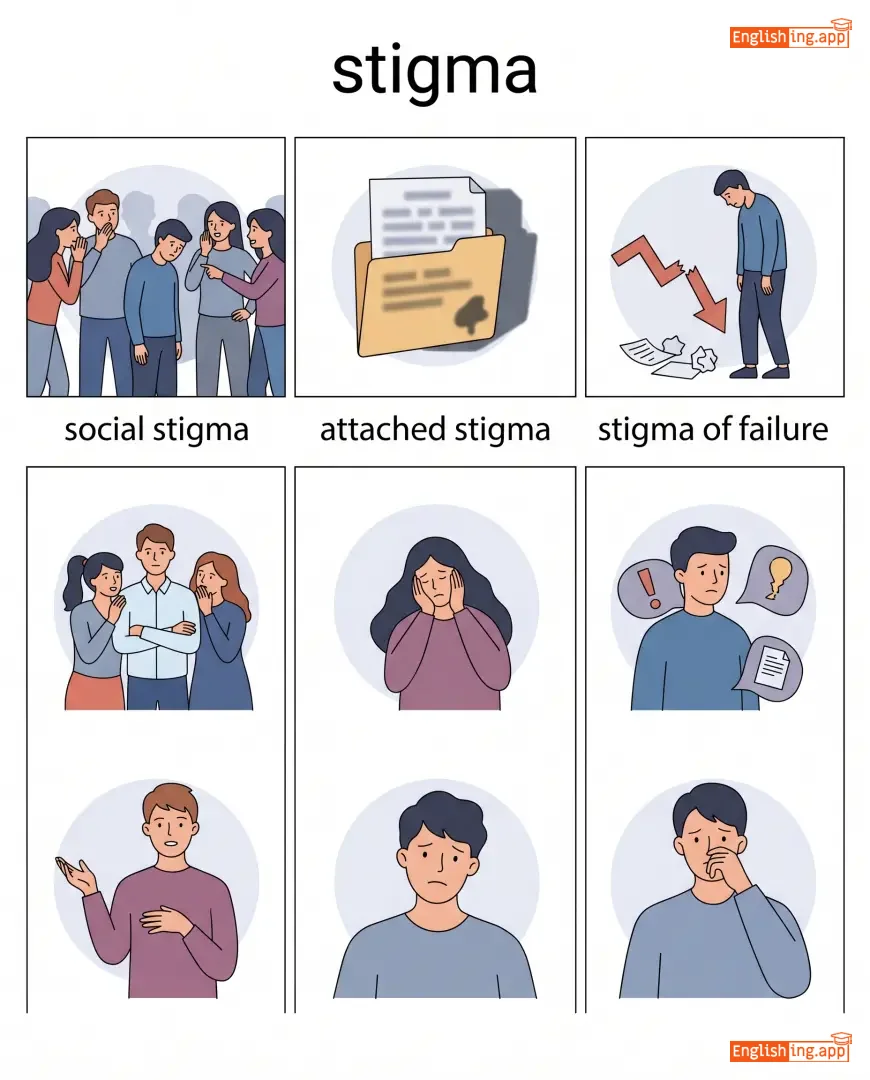
social stigma, attached stigma, stigma of failure, stigma surrounding
••••••
|
Stigma = 恥の印 = 汚名
••••••
|
|
⏳
••••••
|
/stɪnt/
noun
(日本語)
••••••
|
|
短期の仕事
tanki no shigoto
••••••
|
- •••••• | - •••••• | - •••••• | - •••••• |
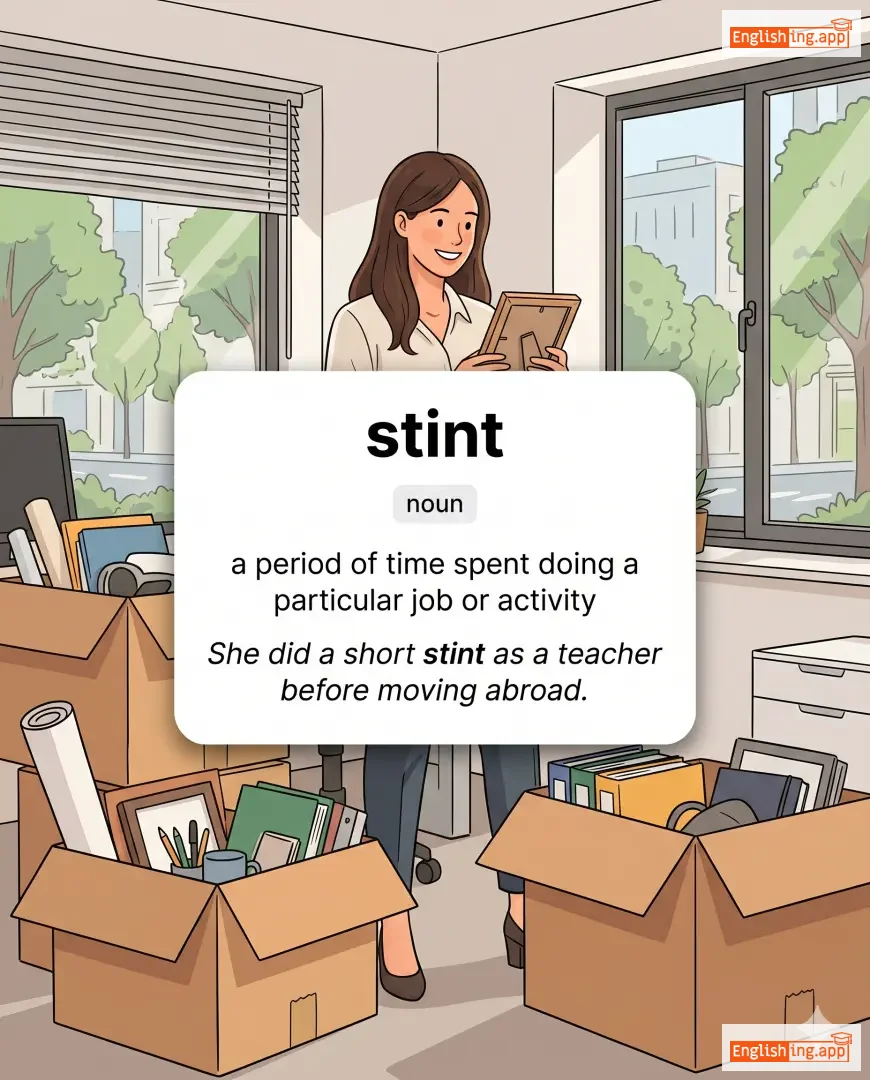
a period of time spent doing a particular job or activity
••••••
|
She did a short stint as a teacher before moving abroad.
彼女は海外に移住する前に短期間の教師として働きました。
••••••
|
彼女は海外に移住する前に短期間の教師として働きました。
Kanojo wa kaigai ni ijū suru mae ni tanki no kyōshi toshite hatarakimashita.
••••••
|
- •••••• | - •••••• | - •••••• |
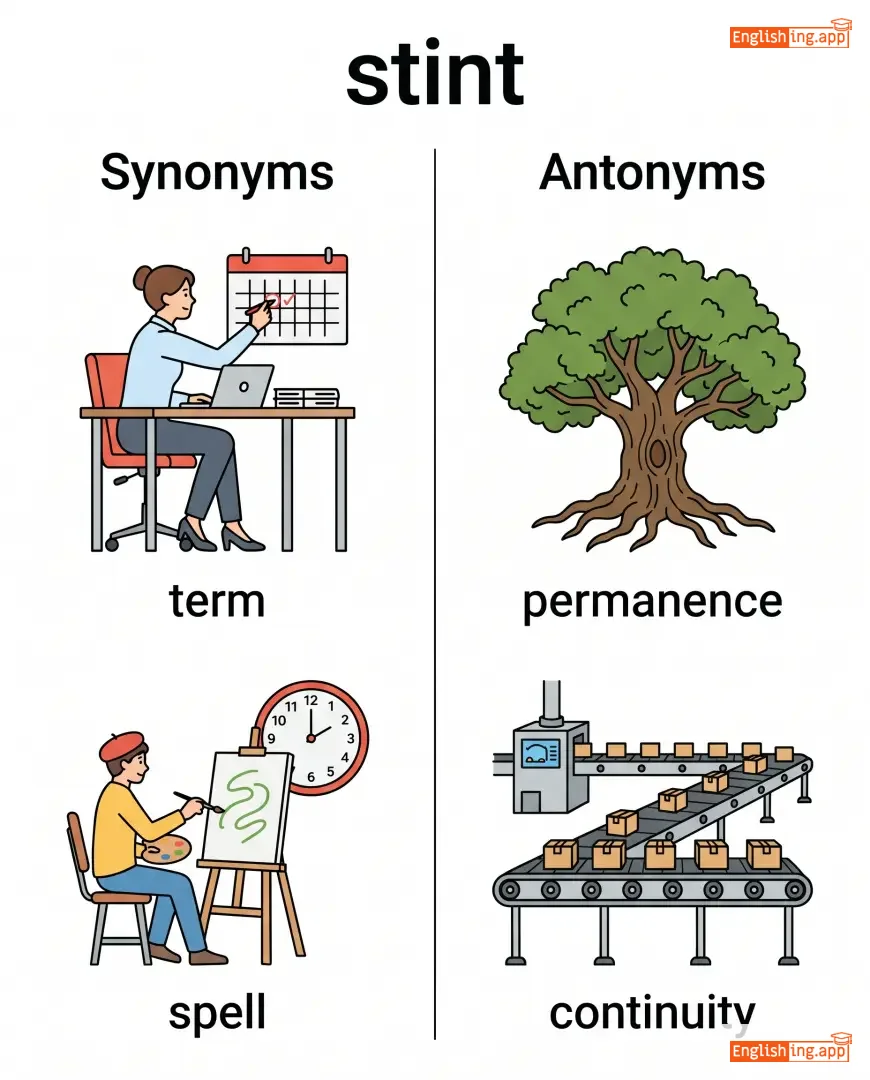
term, spell, period, stretch, service
••••••
|
permanence, continuity
••••••
|
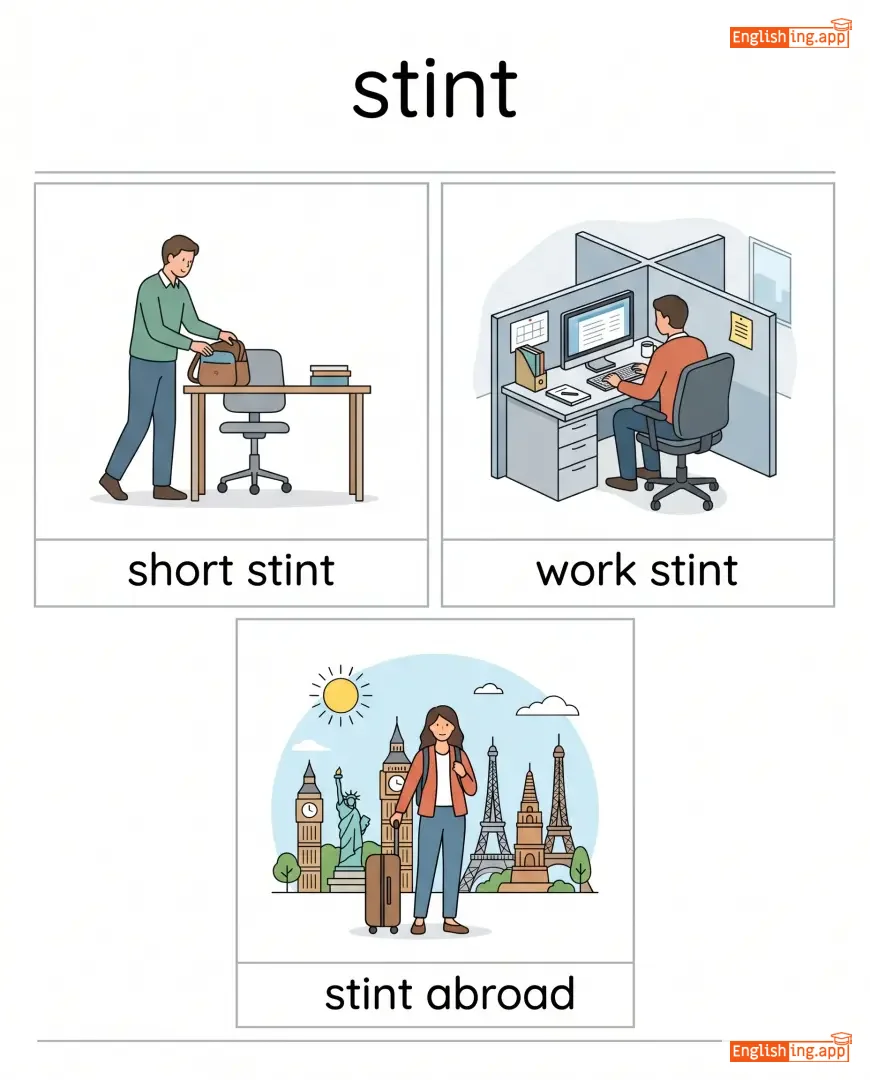
short stint, work stint, stint abroad, stint in service
••••••
|
Stint - 短期間の仕事、短い時間に働く
••••••
|
|
📜
••••••
|
/ˈstɪp.jʊ.leɪt/
verb
(スティピュレイト)
••••••
|
|
規定する
kitei suru
••••••
|
stipulated
スティピュレイテッド
••••••
|
stipulated
スティピュレイテッド
••••••
|
stipulates
スティピュレイツ
••••••
|
stipulating
スティピュレイティング
••••••
|
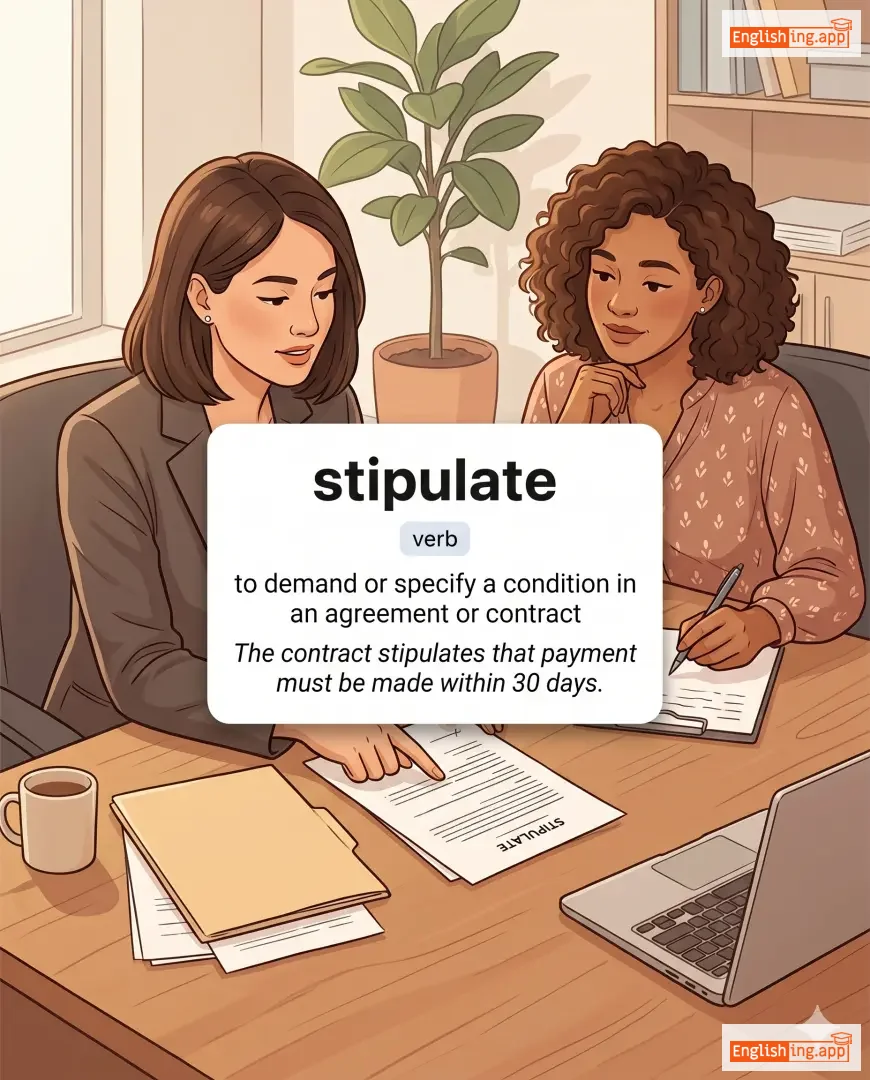
to demand or specify a condition in an agreement or contract
••••••
|
The contract stipulates that payment must be made within 30 days.
契約書には、支払いは30日以内に行われるべきであると明記されています。
••••••
|
契約書には、支払いは30日以内に行われるべきであると明記されています。
Keiyakusho ni wa, shiharai wa 30 nichi inai ni okonawareru beki de aru to meiki sareteimasu.
••••••
|
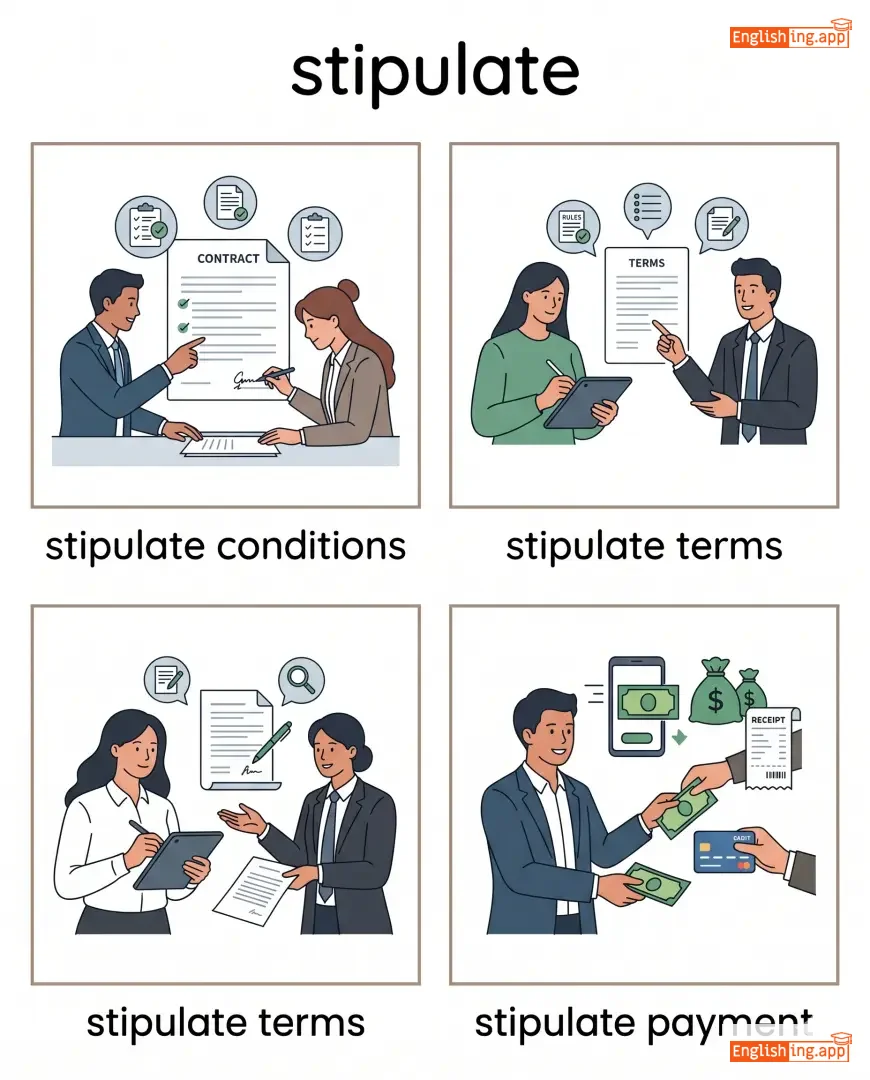
stipulate terms
条件を明記する
••••••
|
to formally specify conditions in an agreement
••••••
|
条件を明記する
jouken wo meiki suru
••••••
|
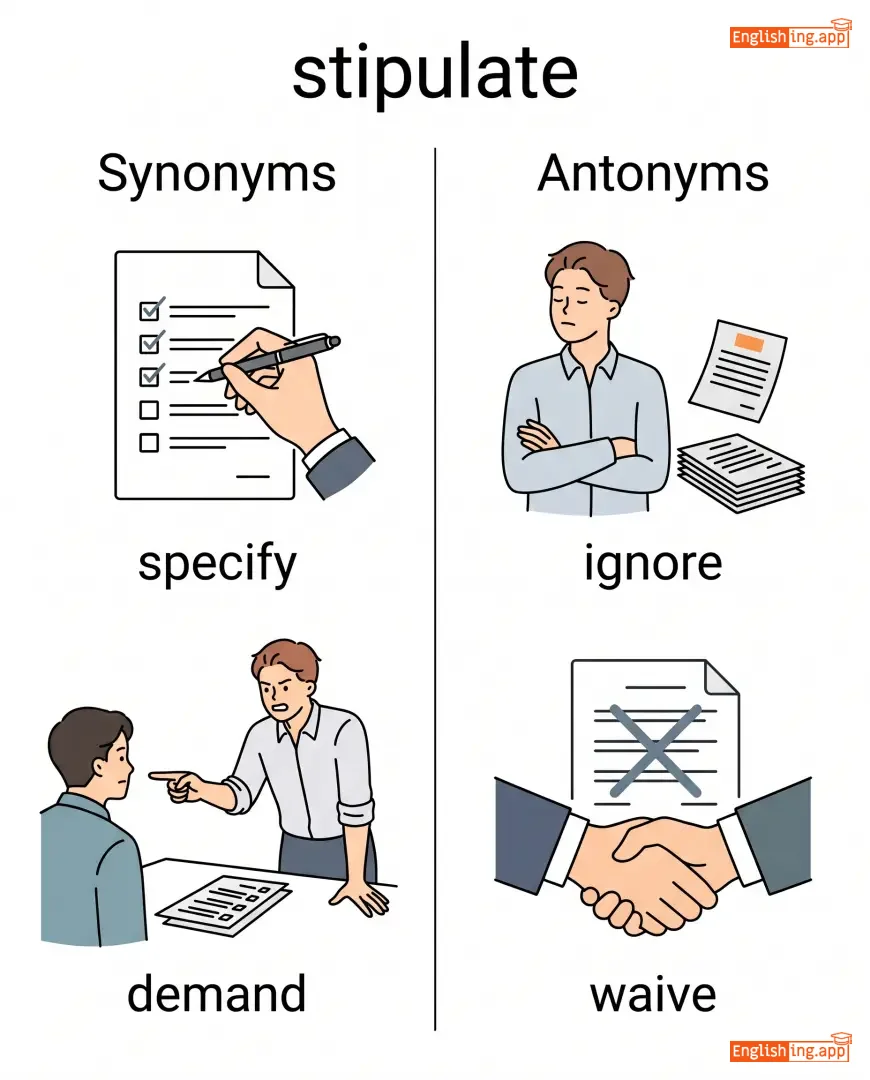
specify, demand, require, prescribe, condition
••••••
|
ignore, waive, overlook
••••••
|
stipulate conditions, stipulate terms, stipulate payment, stipulate requirement
••••••
|
stipulate = 契約に条件を規定する
••••••
|
|
🪵
••••••
|
/ˈstɒlɪd/
adjective
(ストリッド)
••••••
|
|
冷静な、無表情な
reisei na, muhyoujou na
••••••
|
- •••••• | - •••••• | - •••••• | - •••••• |
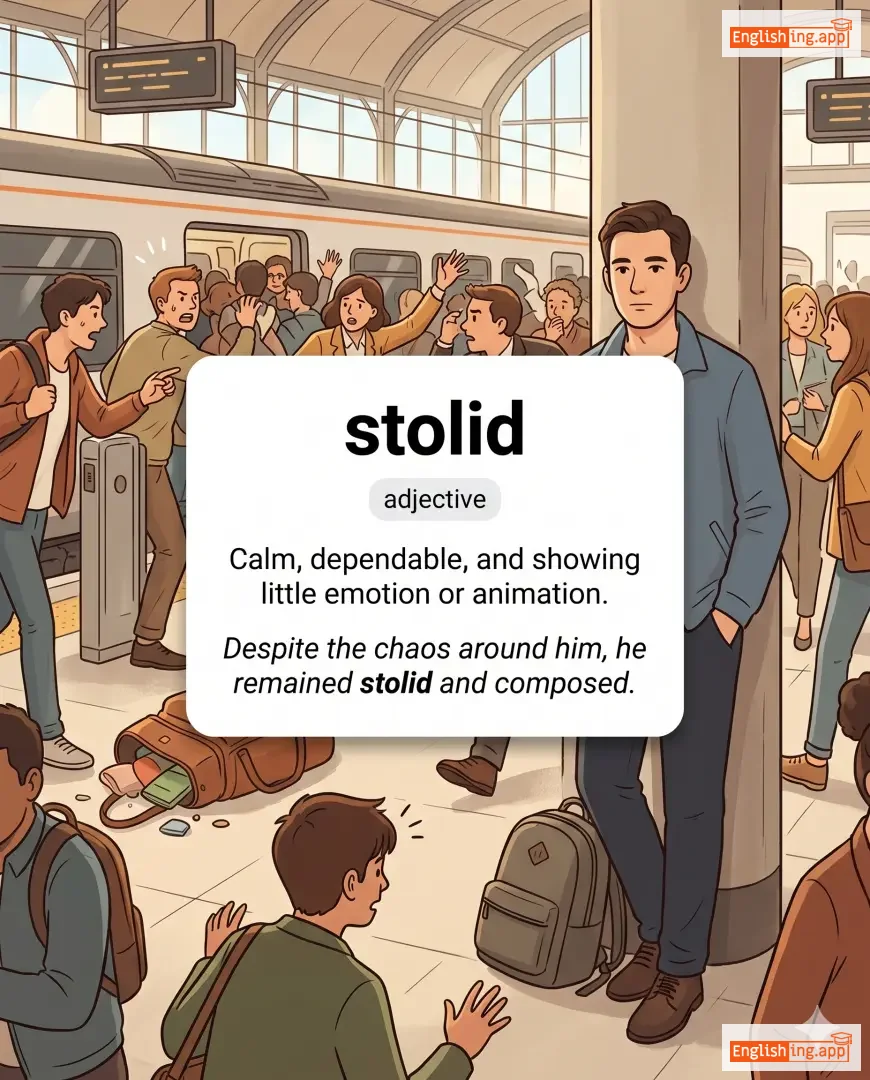
Calm, dependable, and showing little emotion or animation.
••••••
|
Despite the chaos around him, he remained stolid and composed.
ディスパイト ザ カオス アラウンド ヒム, ヒ リメインド ストリッド アンド コンポーズド。
••••••
|
周りの混乱にもかかわらず、彼は冷静で落ち着いていました。
Mawari no konran ni mo kakawarazu, kare wa reisei de ochitsuite imashita.
••••••
|
- •••••• | - •••••• | - •••••• |
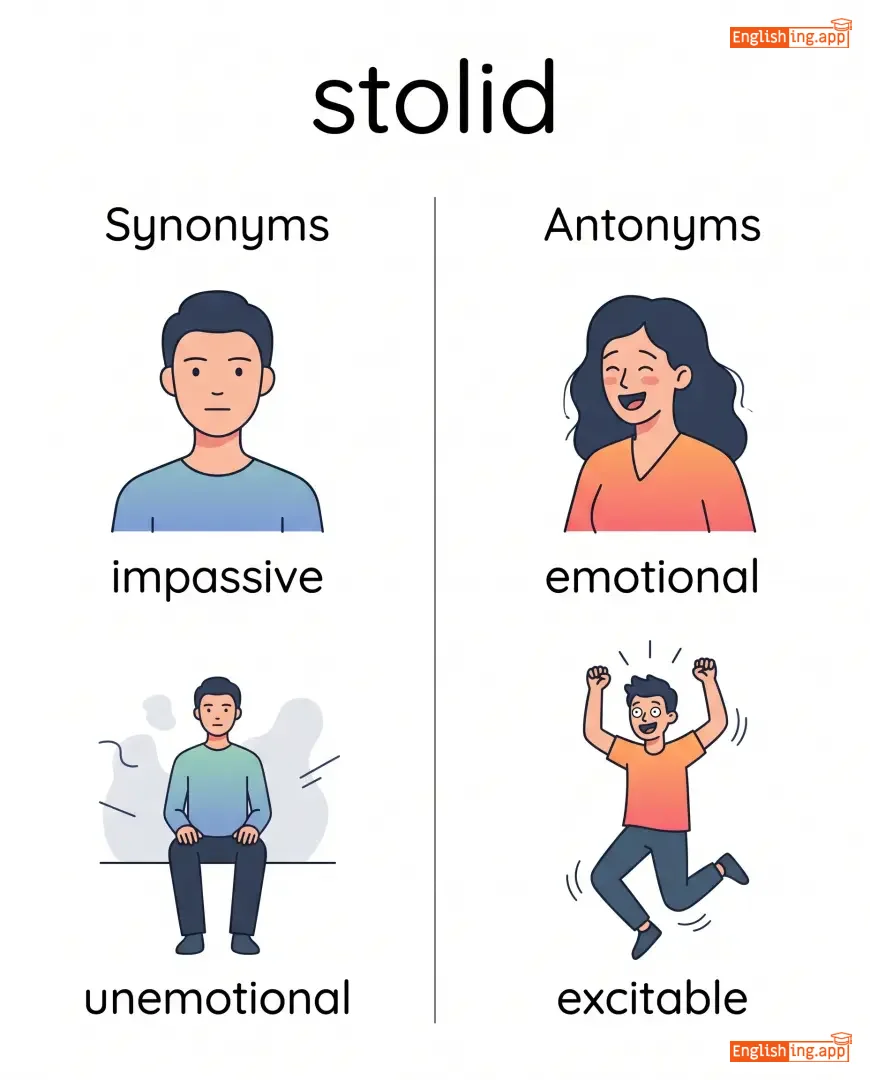
impassive, unemotional, phlegmatic, placid, steady
••••••
|
emotional, excitable, expressive
••••••
|
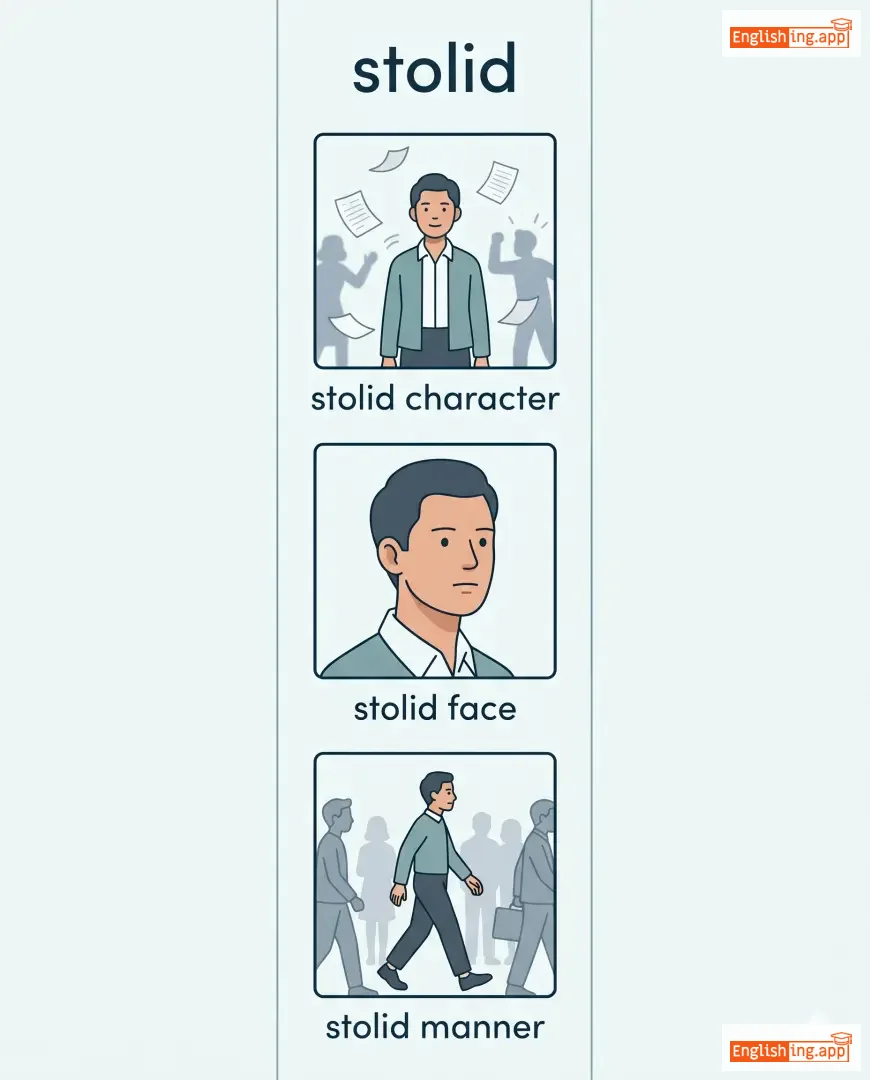
stolid character, stolid face, stolid manner, stolid calm
••••••
|
Stolid – 冷静な人は感情を見せない。
••••••
|
|
📚
••••••
|
/ˈstrætɪfaɪd/
adjective
••••••
|
|
- •••••• | - •••••• | - •••••• | - •••••• | - •••••• |
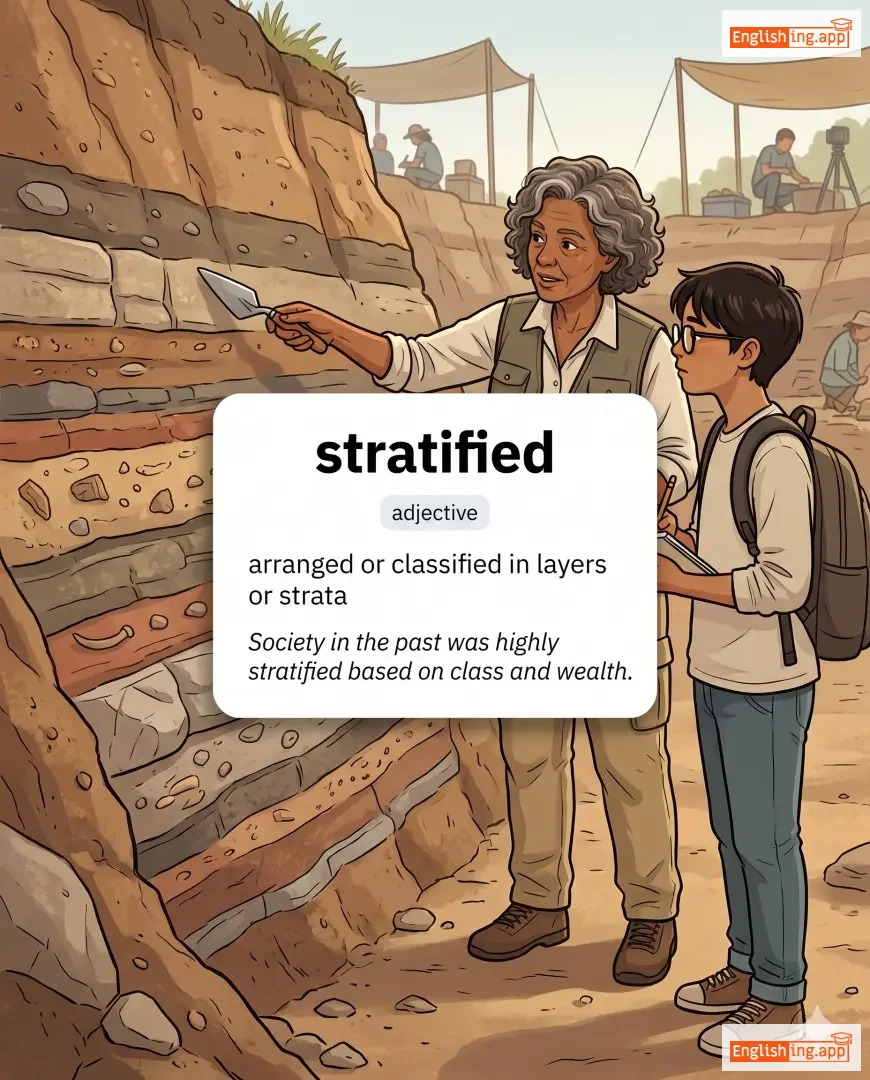
arranged or classified in layers or strata
••••••
|
Society in the past was highly stratified based on class and wealth. |
- •••••• | - •••••• | - •••••• | - •••••• |
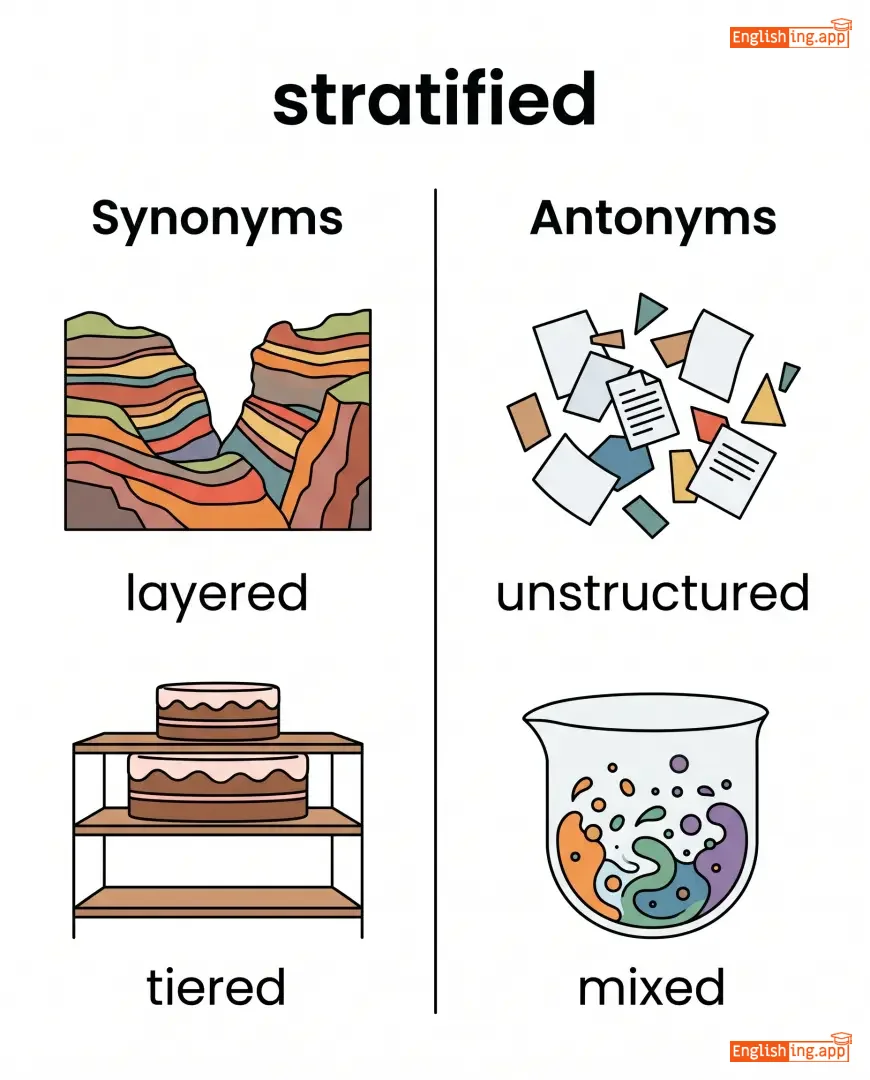
layered, tiered, hierarchical, arranged
••••••
|
unstructured, mixed
••••••
|
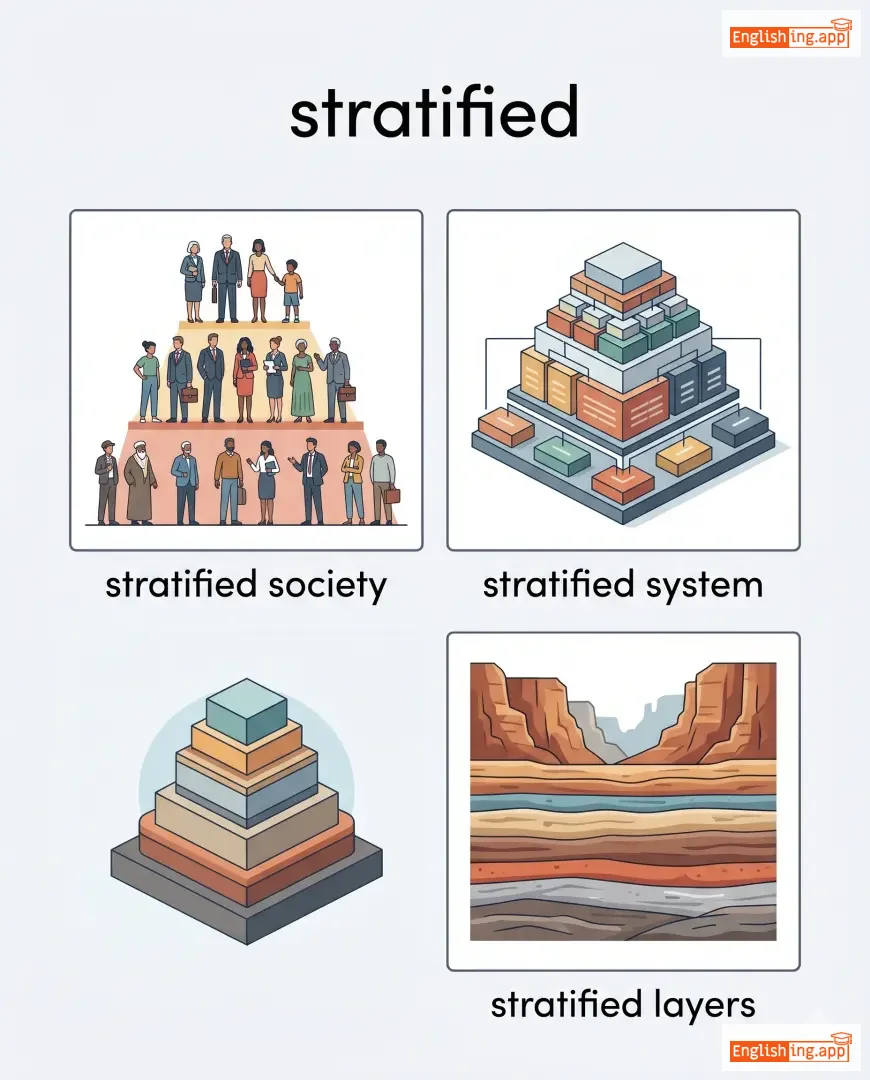
stratified society, stratified system, stratified layers
••••••
|
No •••••• |
|
📏
••••••
|
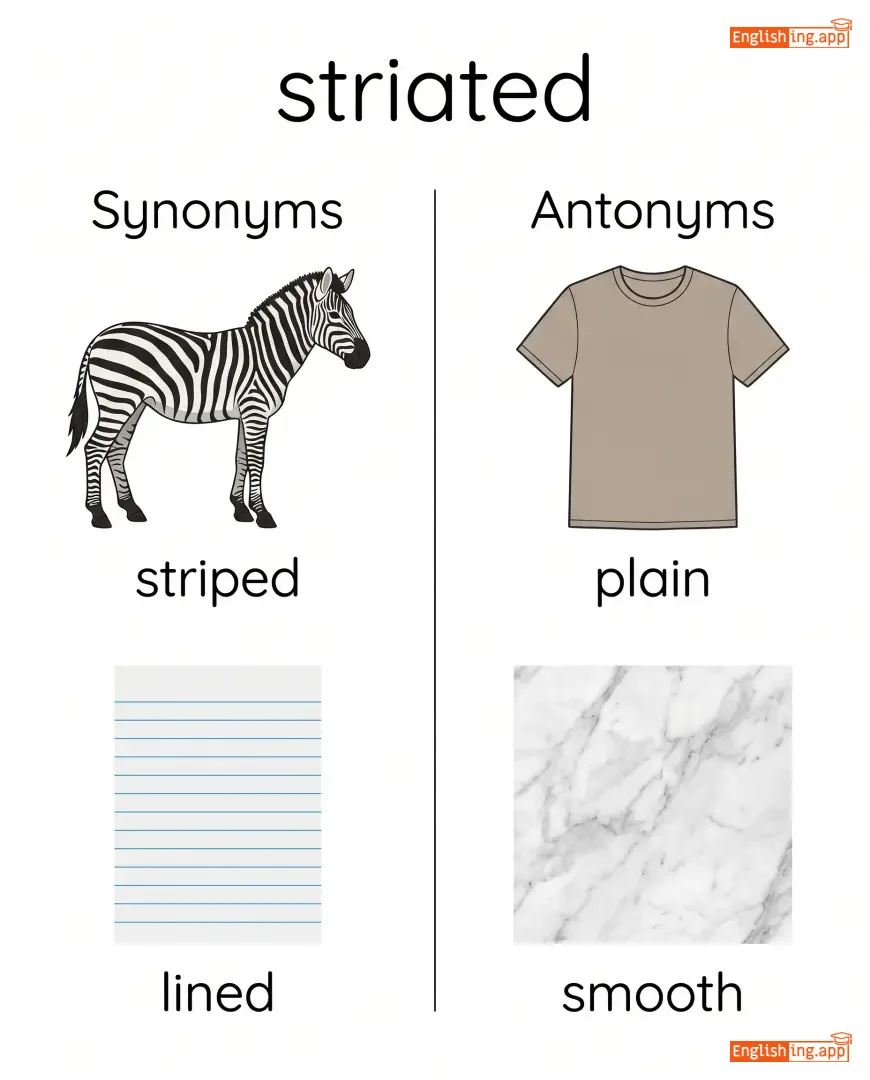
/ˈstraɪ.eɪ.tɪd/
adjective
(esutaiaeteddo)
••••••
|
|
縞目模様の
kamome moyou no
••••••
|
- •••••• | - •••••• | - •••••• | - •••••• |
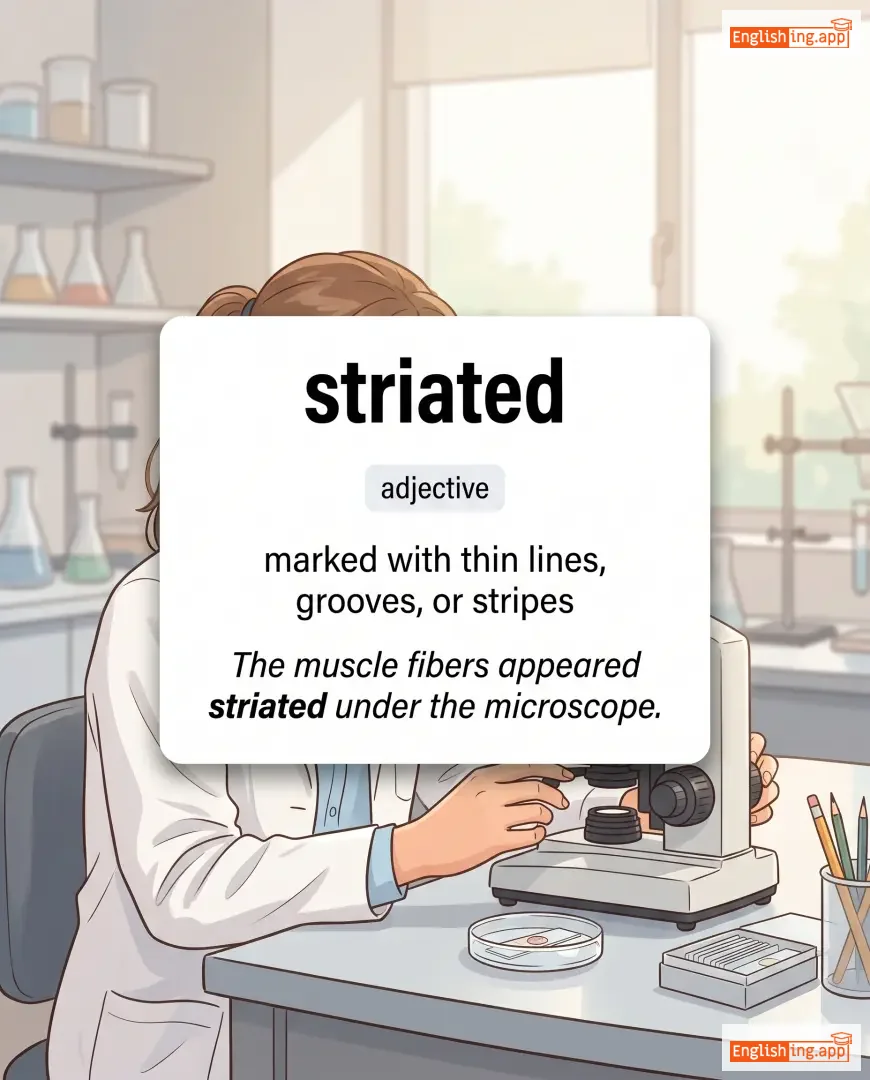
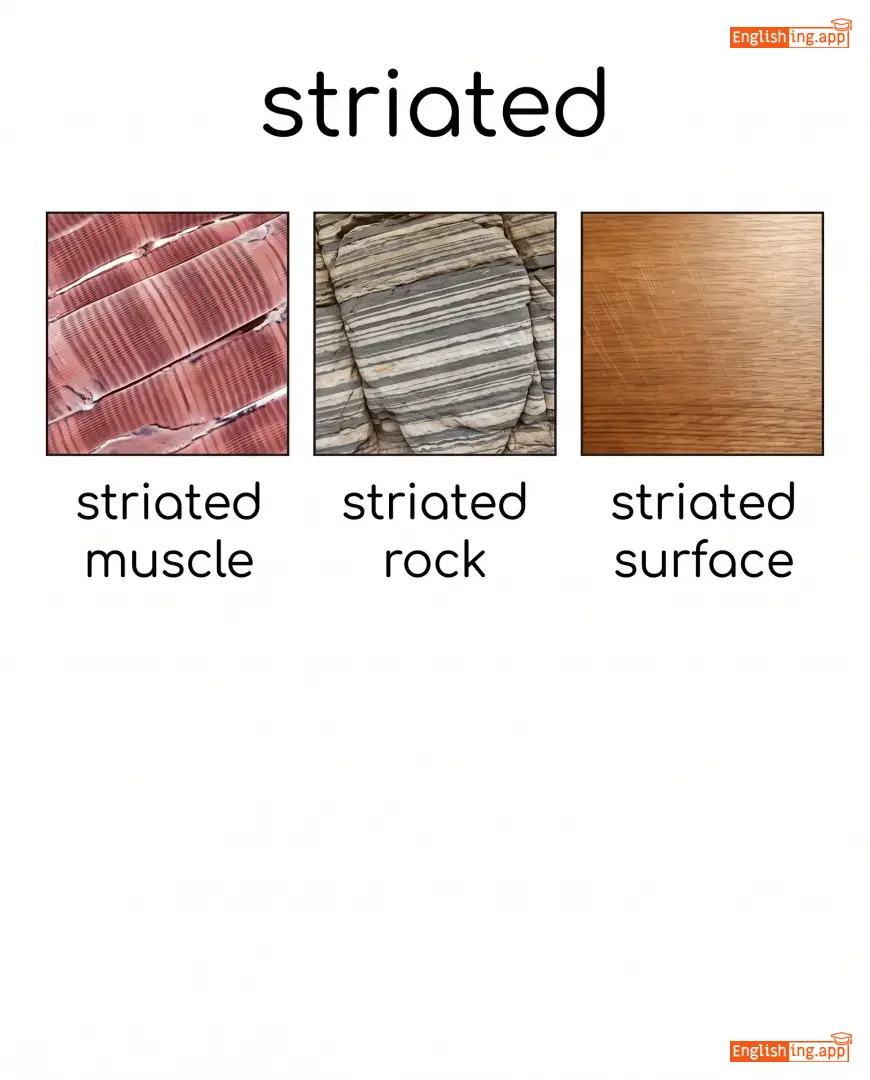
marked with thin lines, grooves, or stripes
••••••
|
The muscle fibers appeared striated under the microscope. |
顕微鏡で筋肉の繊維が縞目模様のように見えました。
Kenbikyo de kinniku no sen'i ga kamome moyou no you ni miemashita.
••••••
|
- •••••• | - •••••• | - •••••• |
striped, lined, grooved, banded
••••••
|
plain, smooth
••••••
|
striated muscle, striated rock, striated surface, striated pattern
••••••
|
Striatedは、縞模様のようなもの、例えばゼブラのようなものです。
••••••
|
|
🚫
••••••
|
/ˈstrɪk.tʃər/
noun
(sutorikuchā)
••••••
|
|
制限、批判
seigen, hihan
••••••
|
- •••••• | - •••••• | - •••••• | - •••••• |
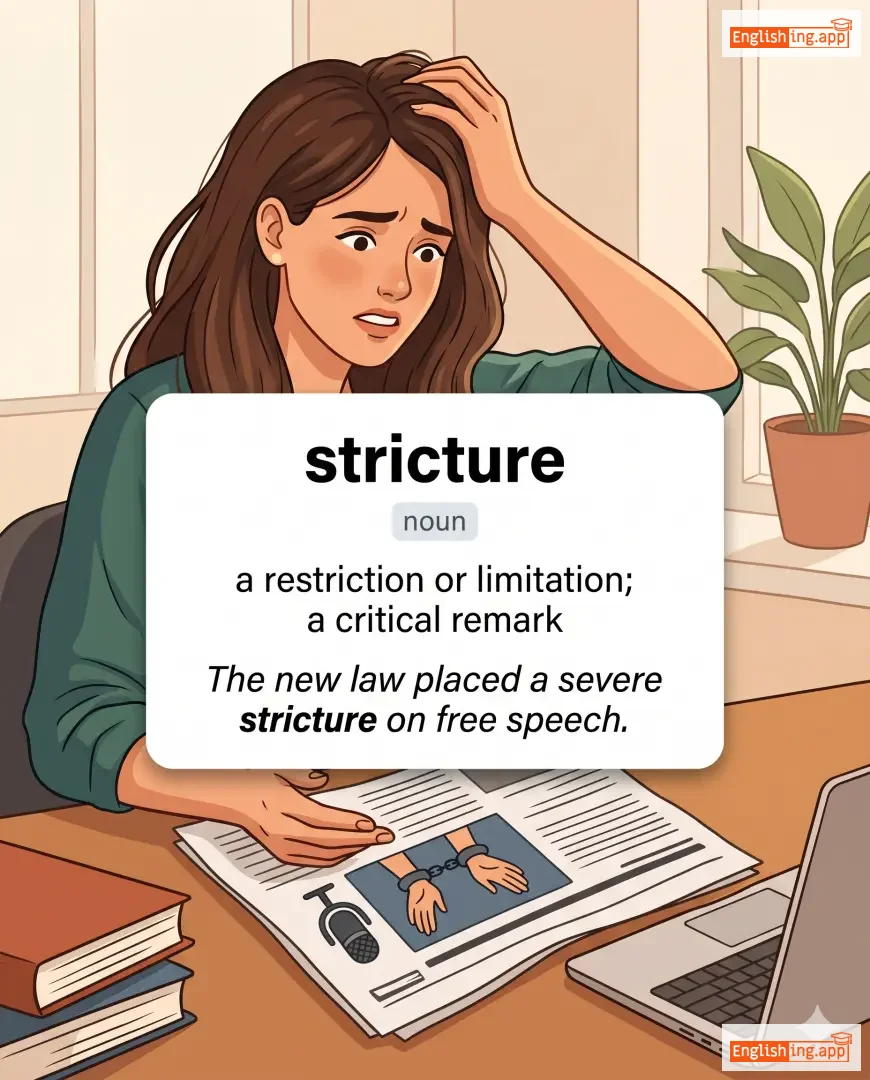
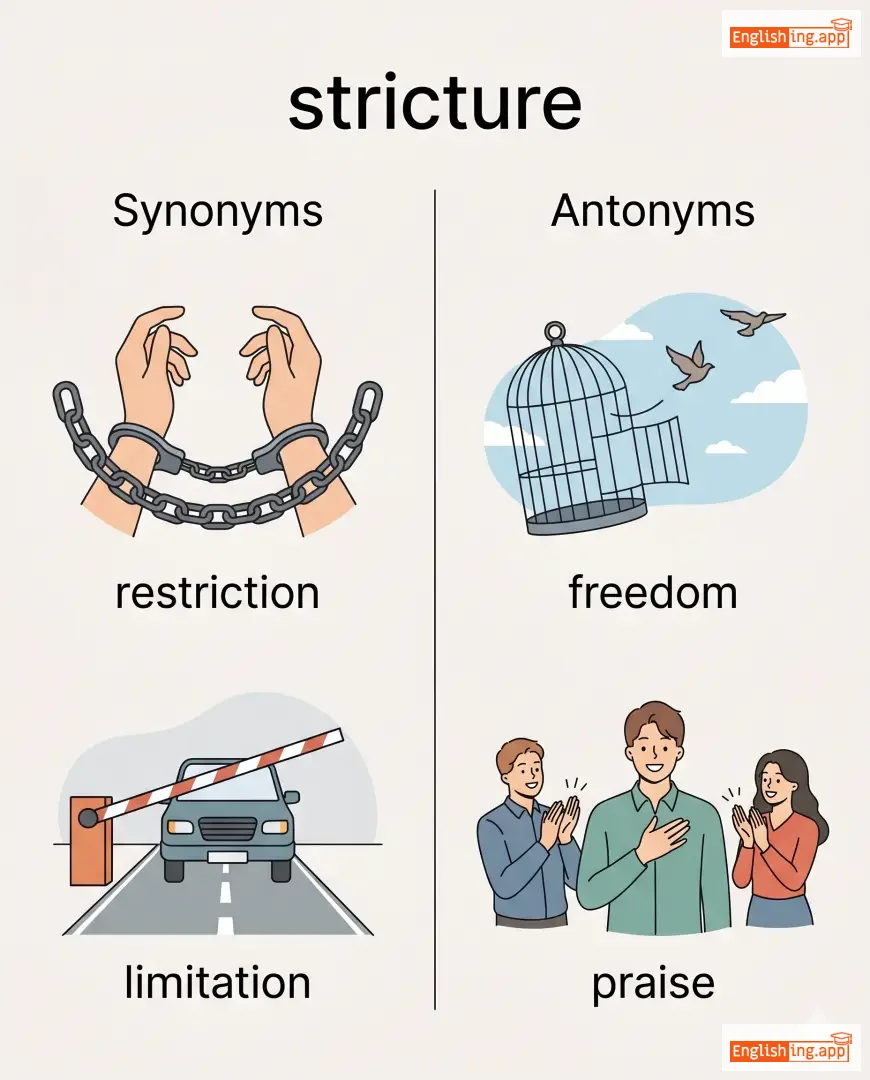
a restriction or limitation; a critical remark
••••••
|
The new law placed a severe stricture on free speech. |
新しい法律は言論の自由に厳しい制限を課した。
Atarashii hōritsu wa genron no jiyū ni kibishī seigen o kashita.
••••••
|
- •••••• | - •••••• | - •••••• |
restriction, limitation, constraint, criticism, rebuke
••••••
|
freedom, praise
••••••
|
legal stricture, moral stricture, severe stricture, social stricture
••••••
|
Strictureは制限や批判を意味します。
••••••
|
|
📢
••••••
|
/ˈstraɪ.dənt/
adjective
(ストライデント)
••••••
|
- •••••• |
耳障りな, うるさい
mimi-zawari na, urusai
••••••
|
- •••••• | - •••••• | - •••••• | - •••••• |
loud and harsh; presenting a point of view in a forceful way
••••••
|
His strident voice made the debate uncomfortable. |
彼の耳障りな声は議論を不快にした。
Kare no mimi-zawari na koe wa giron o fukai ni shita.
••••••
|
- •••••• | - •••••• | - •••••• |
harsh, loud, grating, shrill, forceful
••••••
|
soft, gentle, mild
••••••
|
strident voice, strident tone, strident criticism, strident demands
••••••
|
Stridentは日本語で '耳障りな' という意味で、強い声を表す。
••••••
|
|
🚶♂️
••••••
|
/strʌt/
verb
(ストラット)
••••••
|
|
堂々と歩く
dōdō to aruku
••••••
|
strutted
ストラッテッド
••••••
|
strutted
ストラッテッド
••••••
|
struts
ストラッツ
••••••
|
strutting
ストラッティング
••••••
|
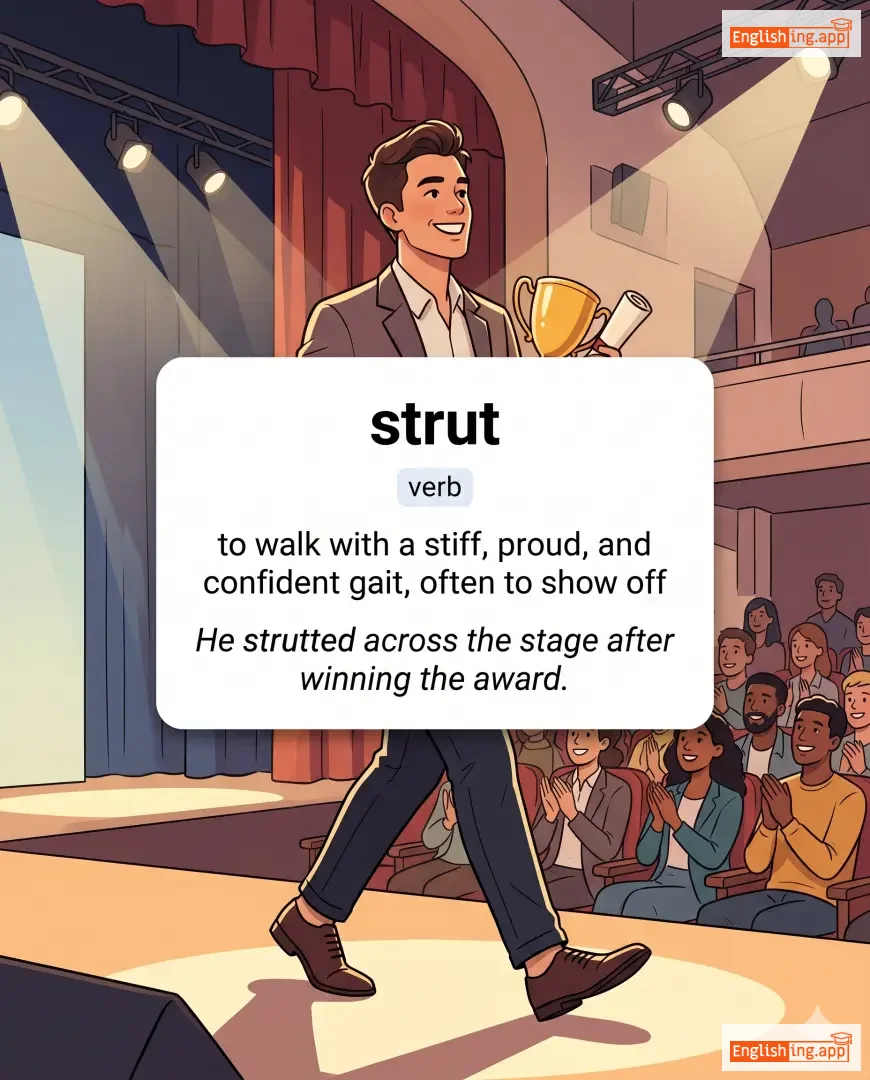
to walk with a stiff, proud, and confident gait, often to show off
••••••
|
He strutted across the stage after winning the award.
彼は賞を受賞後、誇らしげにステージを歩いた。
••••••
|
彼は賞を受賞後、誇らしげにステージを歩いた。
Kare wa shō o jushōgo, hokorashige ni sutēji o aruita.
••••••
|
strut one's stuff
自分の能力を披露する
••••••
|
to show one's abilities, skills, or confidence proudly
••••••
|
自分のスキルを誇示する
Jibun no sukiru o koji suru
••••••
|
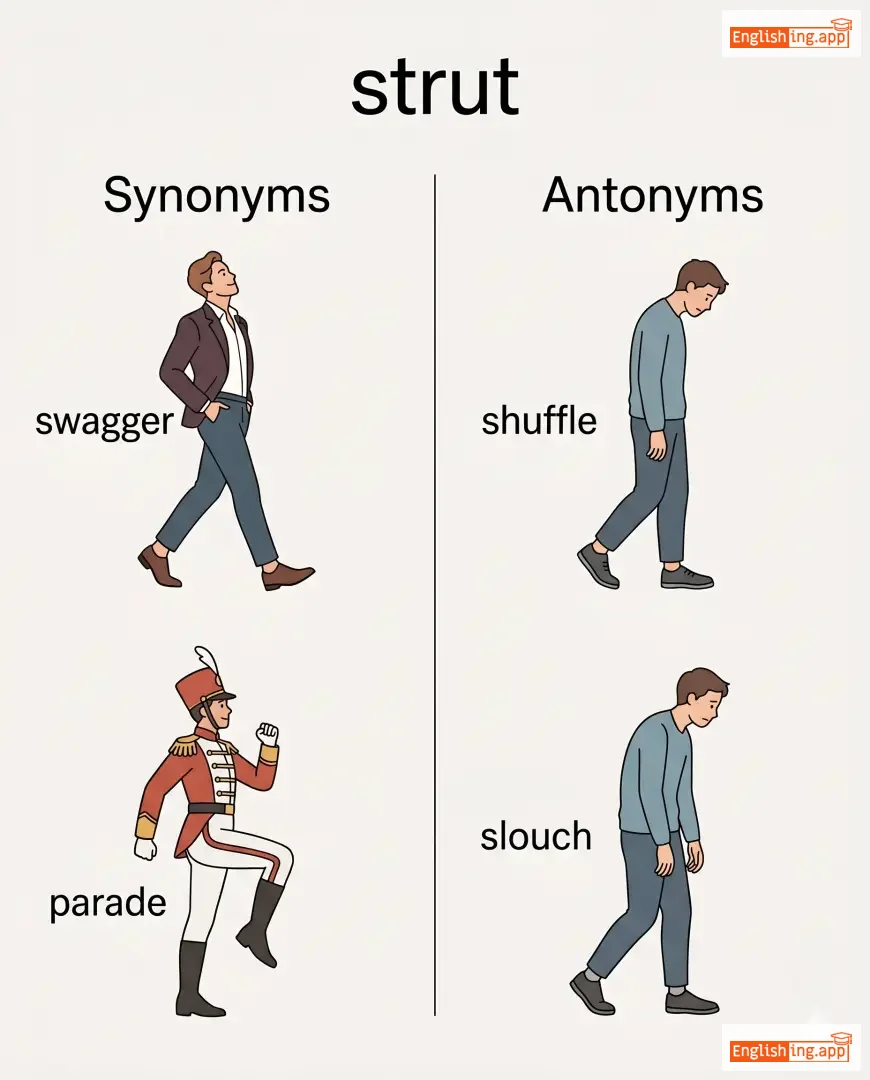
swagger, parade, flaunt, prance, show off
••••••
|
shuffle, slouch
••••••
|
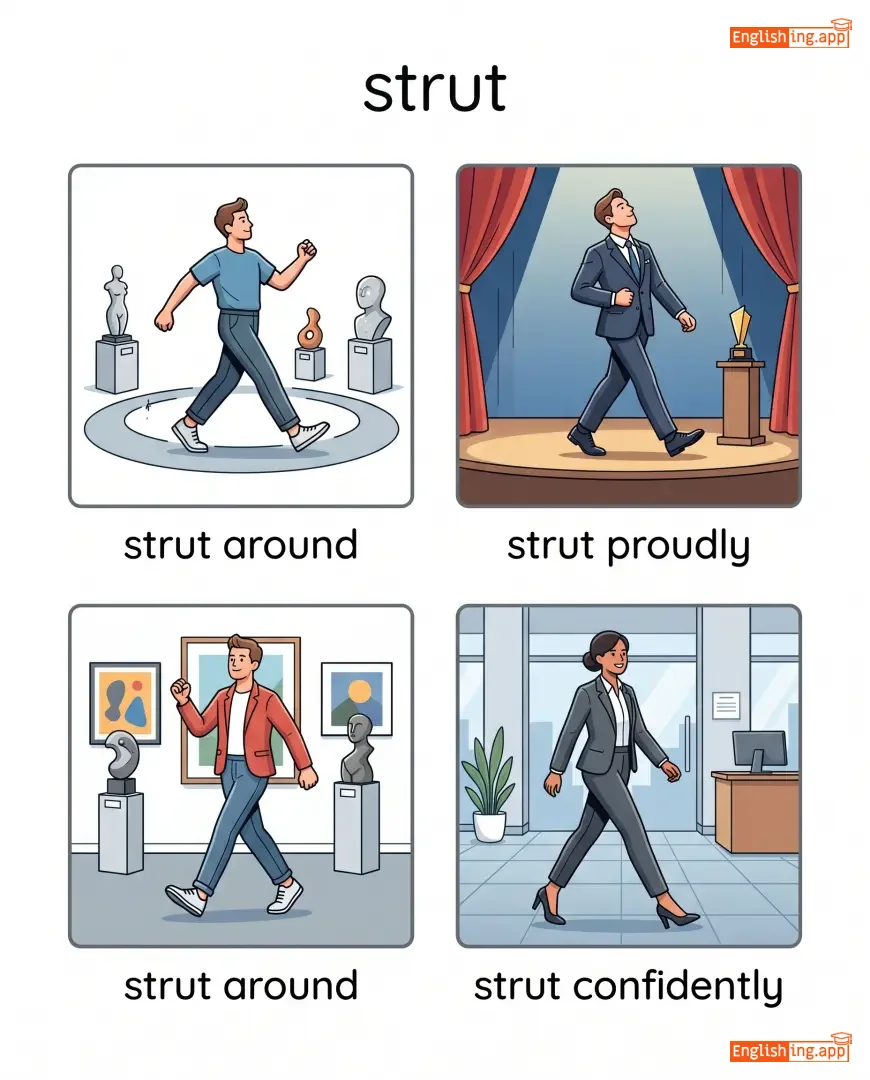
strut around, strut proudly, strut confidently, strut across
••••••
|
Strutは堂々と歩くことです
••••••
|
|
😵
••••••
|
/ˈstʌltɪfaɪ/
verb
(スタルティファイ)
••••••
|
- •••••• |
愚かに見せる、または効果や熱意を妨げる
oroka ni miseru, matawa kōka ya netsui o samatageru
••••••
|
stultified
スタルティファイド
••••••
|
stultified
スタルティファイド
••••••
|
stultifies
スタルティファイズ
••••••
|
stultifying
スタルティファイング
••••••
|
to make someone or something appear foolish, or to hinder effectiveness and enthusiasm
••••••
|
The repetitive tasks seemed to stultify the workers' creativity.
繰り返しの仕事が労働者の創造性を鈍らせているようだった。
••••••
|
繰り返しの仕事が労働者の創造性を鈍らせているようだった。
Kurikaeshi no shigoto ga rōdōsha no sōzō-sei o noborasete iru yō datta.
••••••
|
- •••••• | - •••••• | - •••••• |
hamper, hinder, suppress, weaken, frustrate
••••••
|
encourage, inspire, stimulate
••••••
|
stultify efforts, stultify creativity, stultify growth, stultify development
••••••
|
Stultify = Stop + Qualify → 止めて愚かにする
••••••
|
|
😲
••••••
|
/ˈstjuːpɪˌfaɪ/
verb
(ステューピファイ)
••••••
|
- •••••• |
驚かす
odorokasu
••••••
|
stupefied
ステューピファイド
••••••
|
stupefied
ステューピファイド
••••••
|
stupefies
ステューピファイズ
••••••
|
stupefying
ステューピファイング
••••••
|
to make someone unable to think clearly, usually because of surprise or shock
••••••
|
The magician's tricks stupefied the audience.
マジシャンのトリックは観客を驚かせた。
••••••
|
マジシャンのトリックは観客を驚かせた。
Majishan no torikku wa kankyaku o odorokaseta.
••••••
|
- •••••• | - •••••• | - •••••• |
astonish, daze, bewilder, dumbfound, shock
••••••
|
clarify, enlighten, inform
••••••
|
stupefied look, stupefying effect, stupefy with, stupefy completely
••••••
|
Stupefyはstu(学生)が試験中に驚いている意味
••••••
|
|
🌑
••••••
|
/ˈstɪdʒiən/
adjective
(sutijian)
••••••
|
|
暗黒
ankoku
••••••
|
- •••••• | - •••••• | - •••••• | - •••••• |
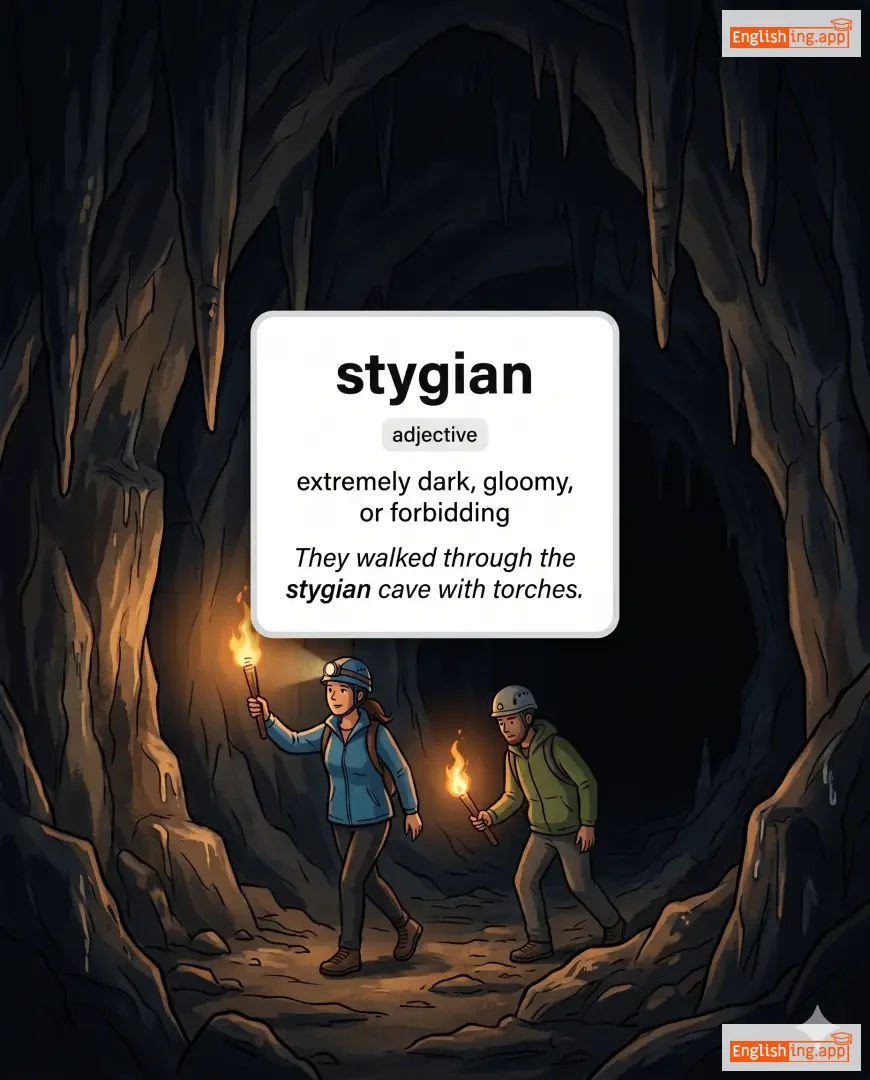
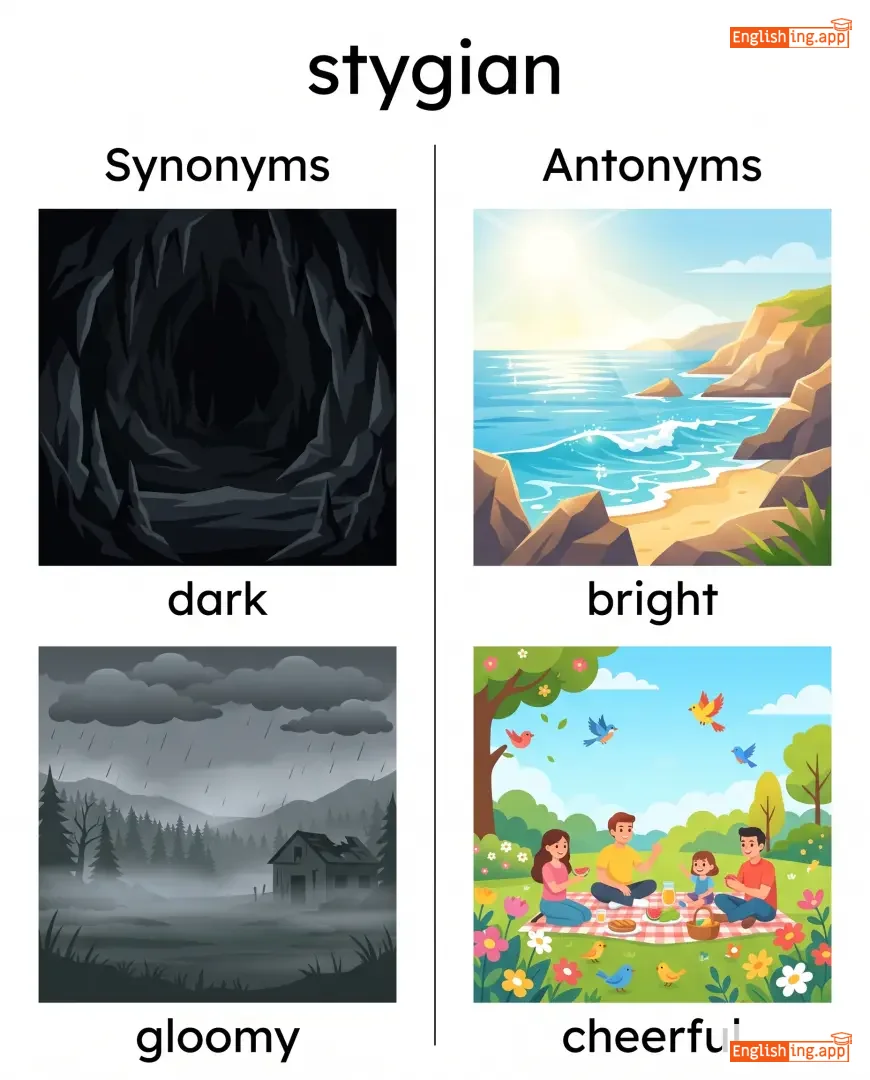
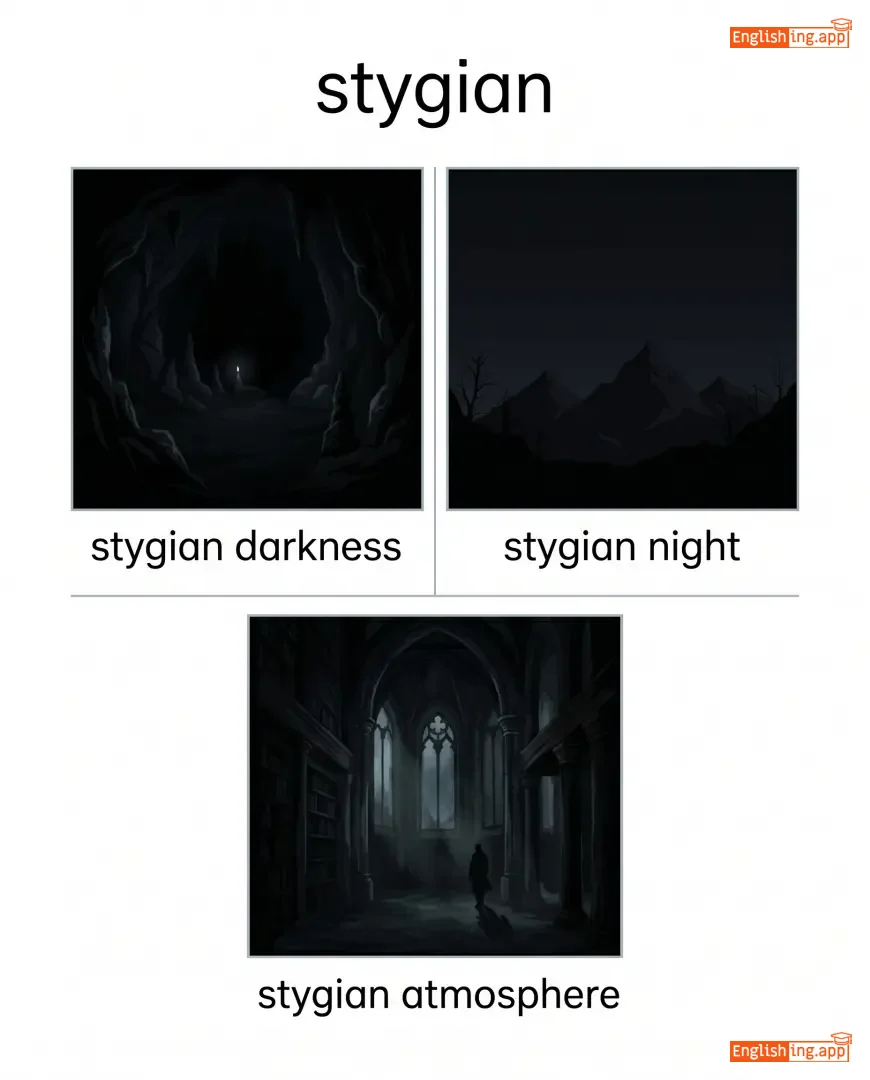
extremely dark, gloomy, or forbidding
••••••
|
They walked through the stygian cave with torches.
彼らは松明を持ってスティジアンの洞窟を歩いていました。
••••••
|
彼らは松明を持って暗黒の洞窟を歩いていました。
Karera wa taima o motte ankoku no dōkutsu o aruiteimashita.
••••••
|
- •••••• | - •••••• | - •••••• |
dark, gloomy, shadowy, murky
••••••
|
bright, cheerful, clear
••••••
|
stygian darkness, stygian night, stygian atmosphere, stygian cave
••••••
|
Stygianは、ステュクス川のような暗さを意味します。神話を覚えてください。
••••••
|
|
📜
••••••
|
/səˈpiːnə/
noun, verb
(サブピーナ)
••••••
|
|
召喚状
shokanjo
••••••
|
subpoenaed
サブピーナド
••••••
|
subpoenaed
サブピーナド
••••••
|
subpoenas
サブピーネス
••••••
|
subpoenaing
サブピーニング
••••••
|
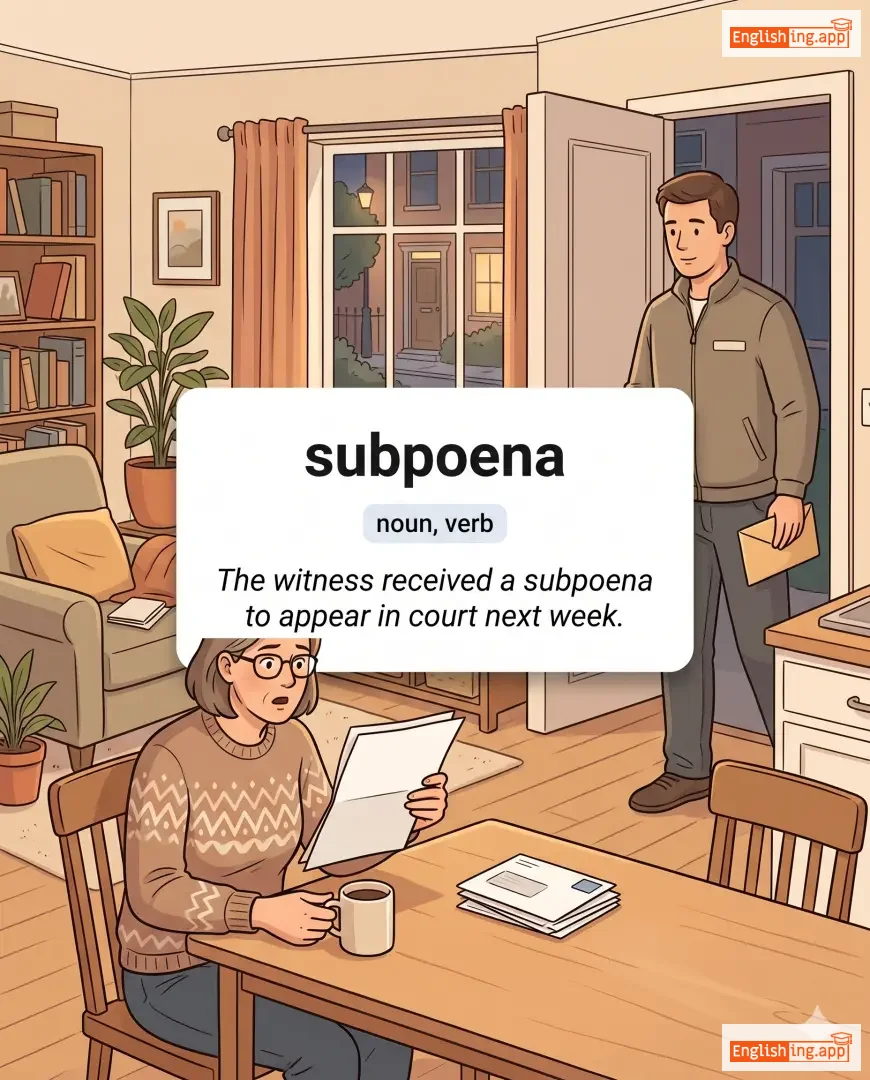
a legal document ordering someone to attend court; to summon someone with such a document
••••••
|
The witness received a subpoena to appear in court next week.
証人は来週法廷に出廷するためのサブピーナを受け取った。
••••••
|
証人は来週法廷に出廷するための召喚状を受け取った。
Shōnin wa raishū hōtei ni shuttei suru tame no shōkanjō o uketotta.
••••••
|
issue a subpoena
サブピーナを発行する
••••••
|
to formally send a legal order for someone to appear in court
••••••
|
召喚状を発行する
shōkanjō o hakkō suru
••••••
|
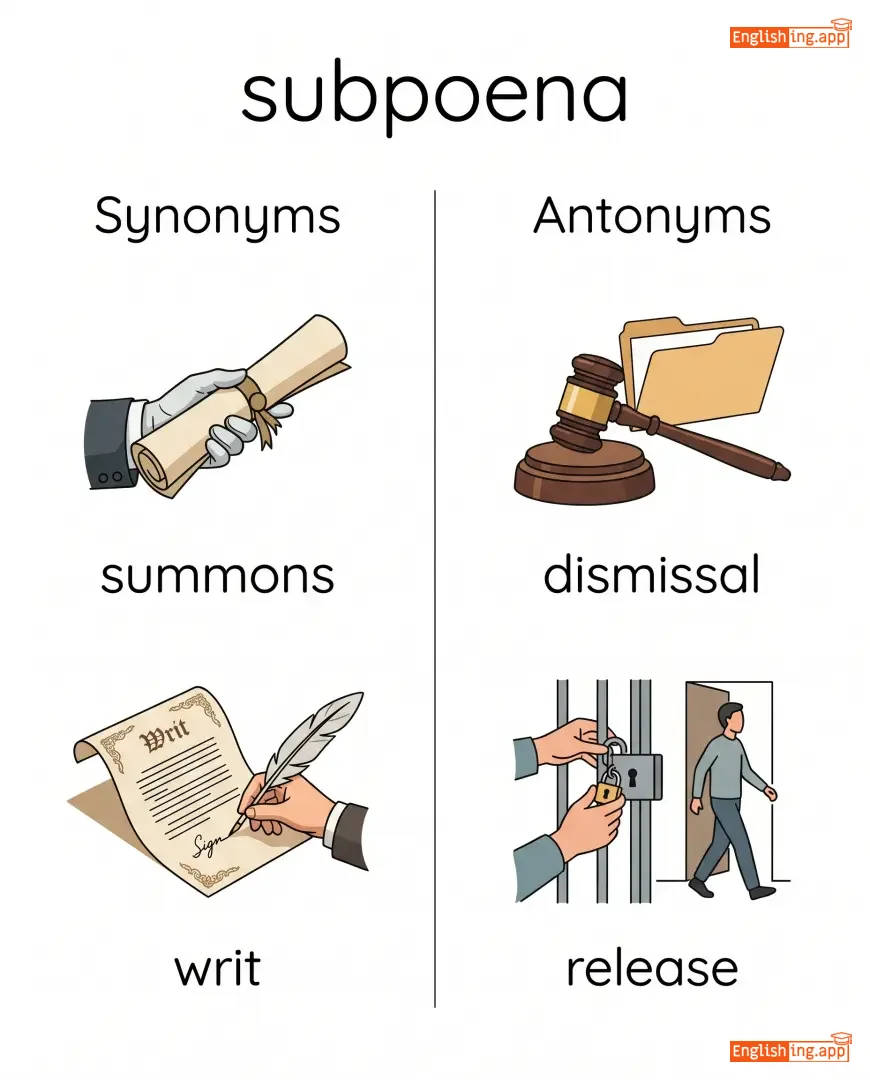
summons, writ, court order, mandate
••••••
|
dismissal, release
••••••
|
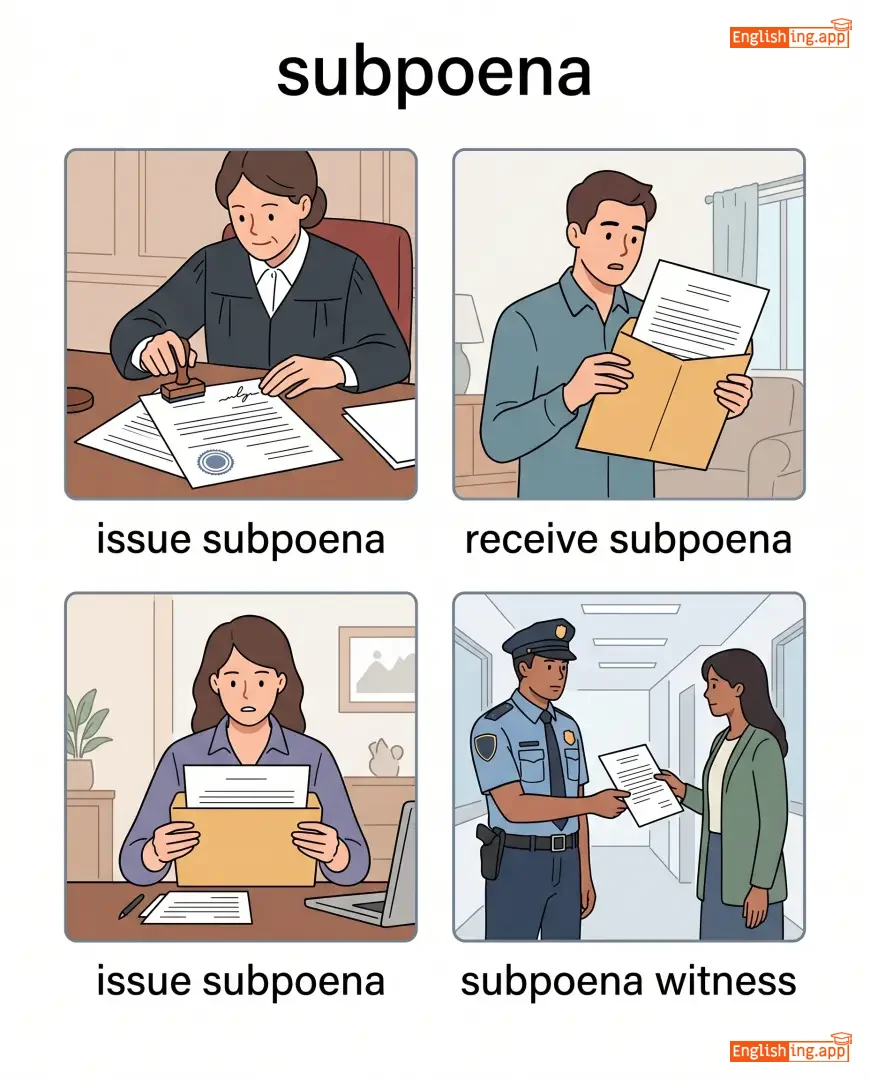
issue subpoena, receive subpoena, subpoena witness, subpoena records
••••••
|
Subpoenaは'サブ'下で'ピーナ'罰です - 裁判所に行かないと罰があるので、召喚状です。
••••••
|
|
🌊
••••••
|
/səbˈsaɪd/
verb
(サブサイド)
••••••
|
|
収束する
shūsoku suru
••••••
|
subsided
サブサイデッド
••••••
|
subsided
サブサイデッド
••••••
|
subsides
サブサイダス
••••••
|
subsiding
サブサイディング
••••••
|
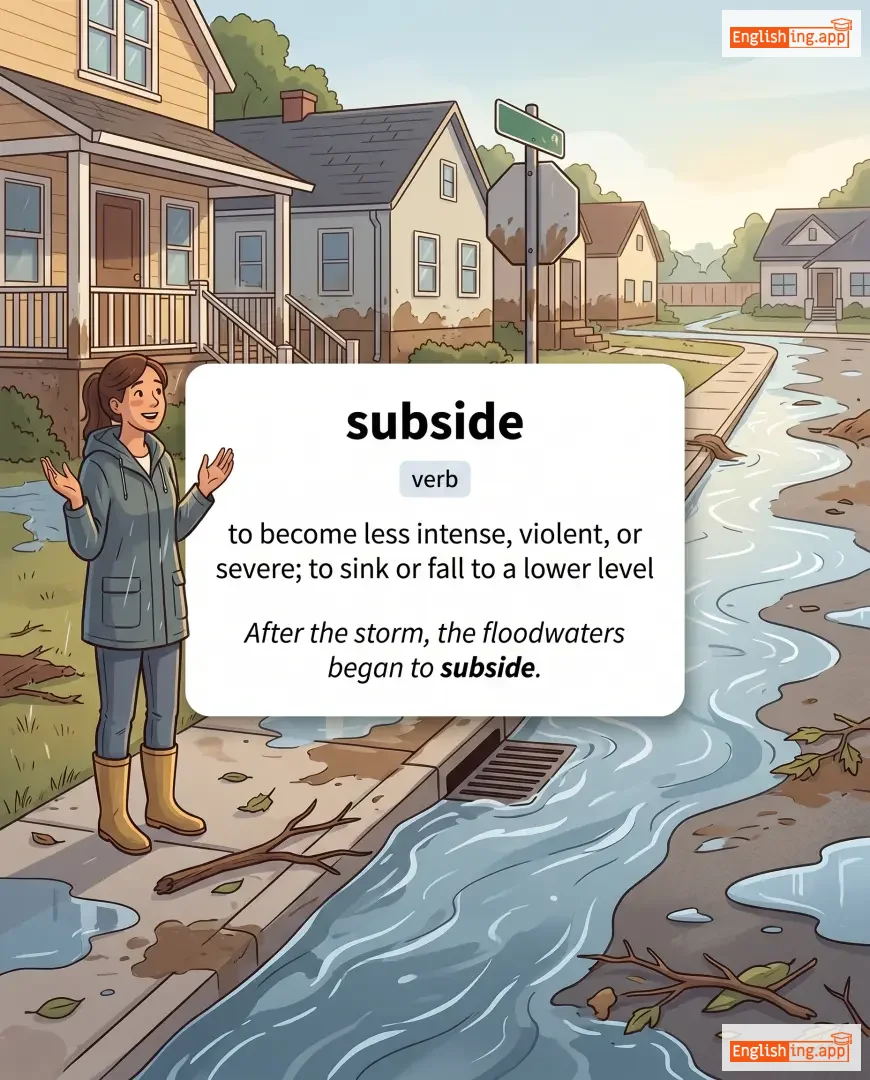
to become less intense, violent, or severe; to sink or fall to a lower level
••••••
|
After the storm, the floodwaters began to subside.
嵐の後、洪水は収束し始めました。
••••••
|
嵐の後、洪水は収束し始めました。
arashi no ato, kōzui wa shūsoku shi hajimemashita.
••••••
|
- •••••• | - •••••• | - •••••• |
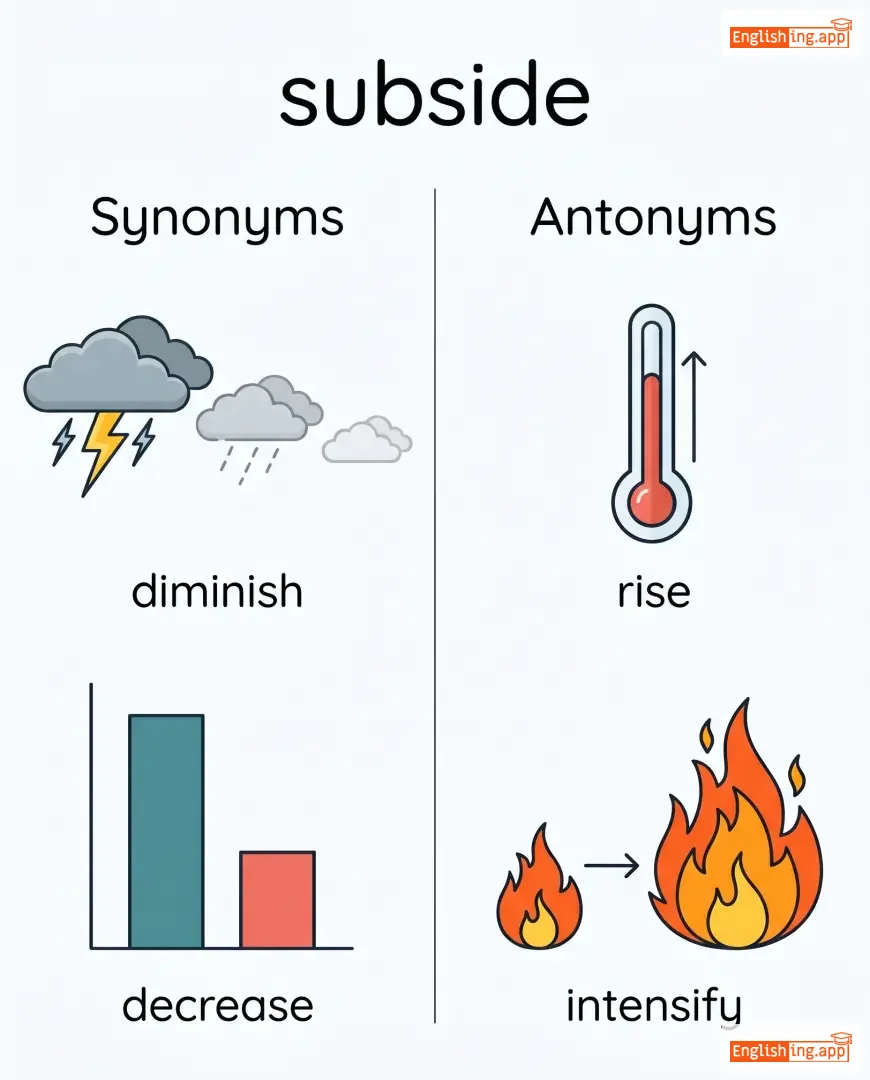
diminish, decrease, abate, recede, lessen
••••••
|
rise, intensify, increase
••••••
|
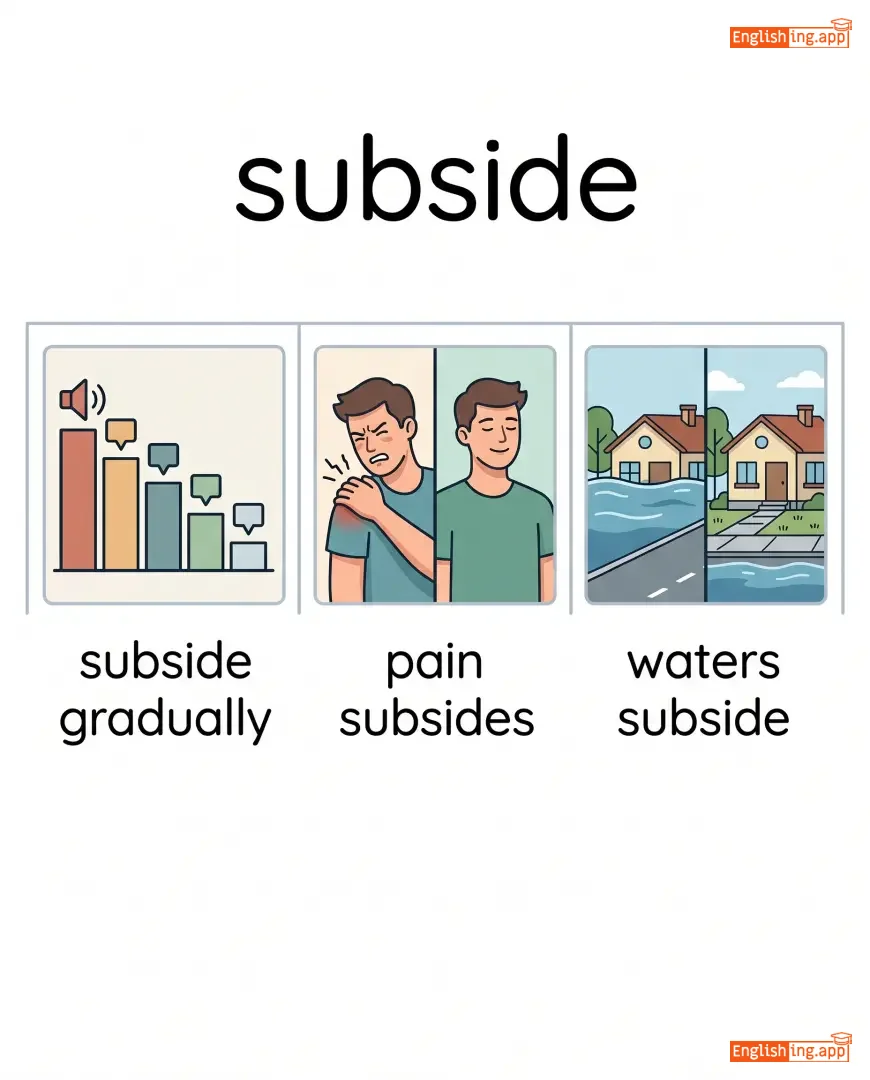
subside gradually, pain subsides, waters subside, anger subsides
••••••
|
Subsideは水位が下がること、嵐が収まるようなものです。
••••••
|
|
⚖️
••••••
|
/səbˈstænʃieɪt/
verb
(サブスタンシエイト)
••••••
|
|
立証する
ricchou suru
••••••
|
substantiated
サブスタンシエイテッド
••••••
|
substantiated
サブスタンシエイテッド
••••••
|
substantiates
サブスタンシエイツ
••••••
|
substantiating
サブスタンシエイティング
••••••
|
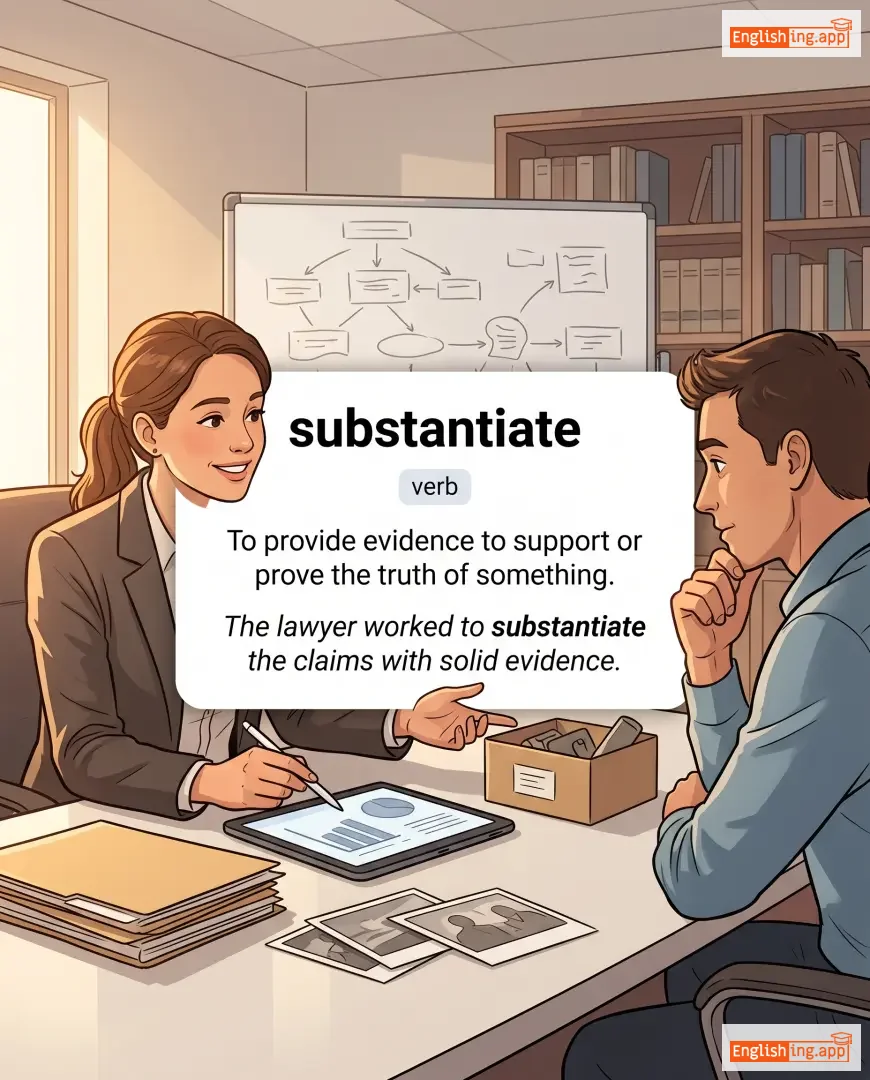
To provide evidence to support or prove the truth of something.
••••••
|
The lawyer worked to substantiate the claims with solid evidence.
弁護士は確かな証拠でその主張を立証しようとしました。
••••••
|
弁護士は確かな証拠でその主張を立証しようとしました。
Bengoshi wa tashikana shōko de sono shuchō o risshō shiyou to shimashita.
••••••
|
- •••••• | - •••••• | - •••••• |
prove, validate, confirm, support, demonstrate
••••••
|
disprove, refute, contradict
••••••
|
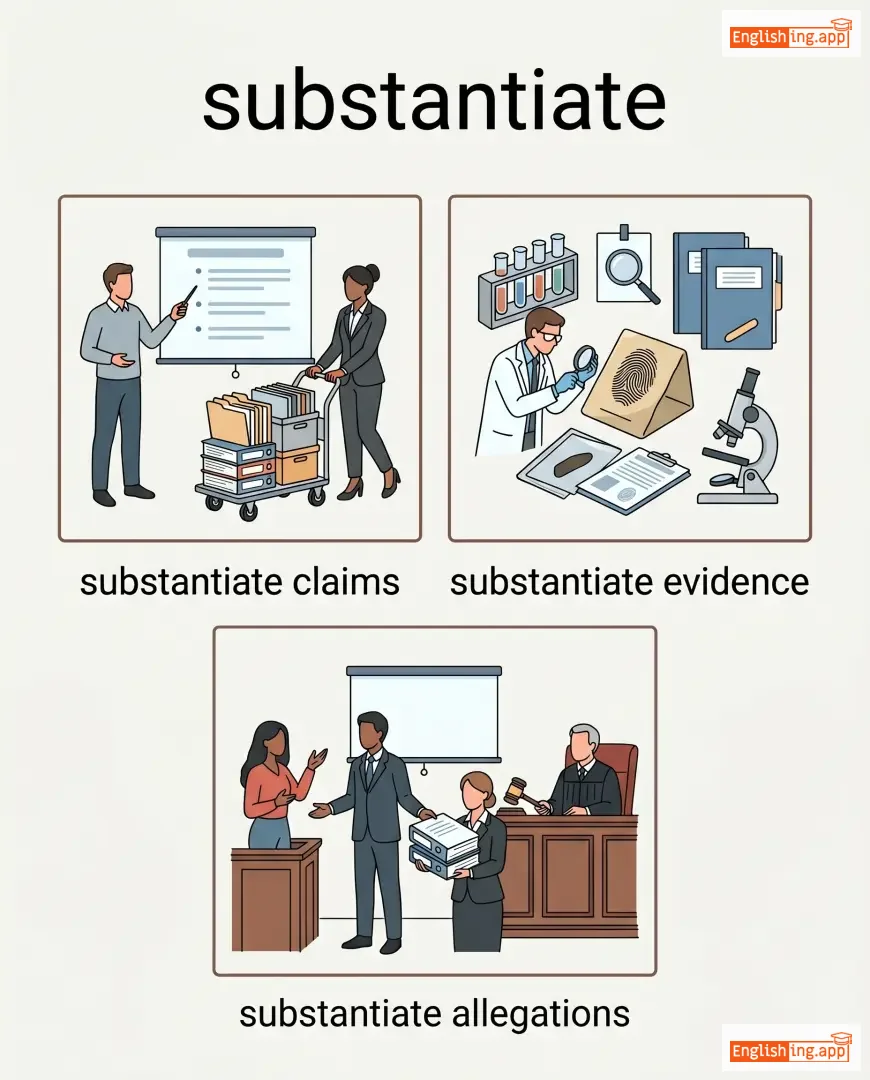
substantiate claims, substantiate evidence, substantiate allegations, substantiate argument
••••••
|
Substance (substance) は何かを立証するために役立つ。
••••••
|
|
📑
••••••
|
/ˈsʌbstəntɪv/
adjective
(サブスタンティブ)
••••••
|
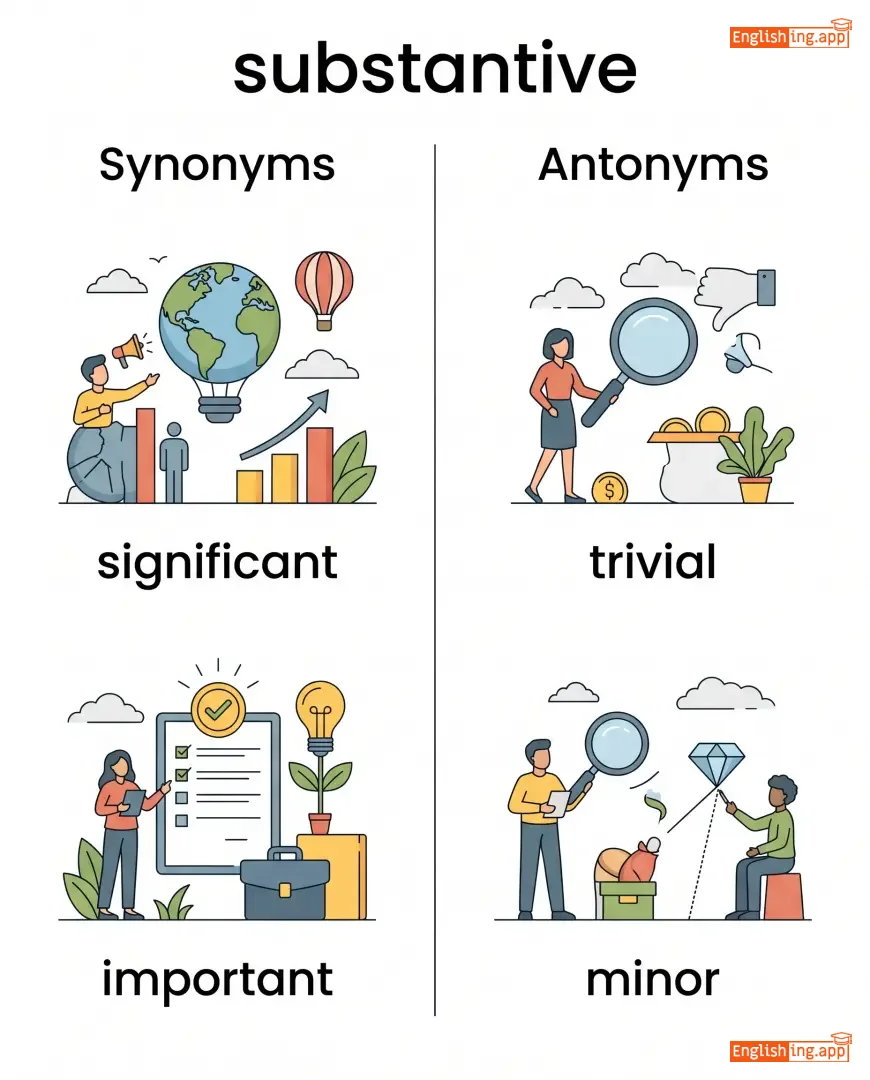
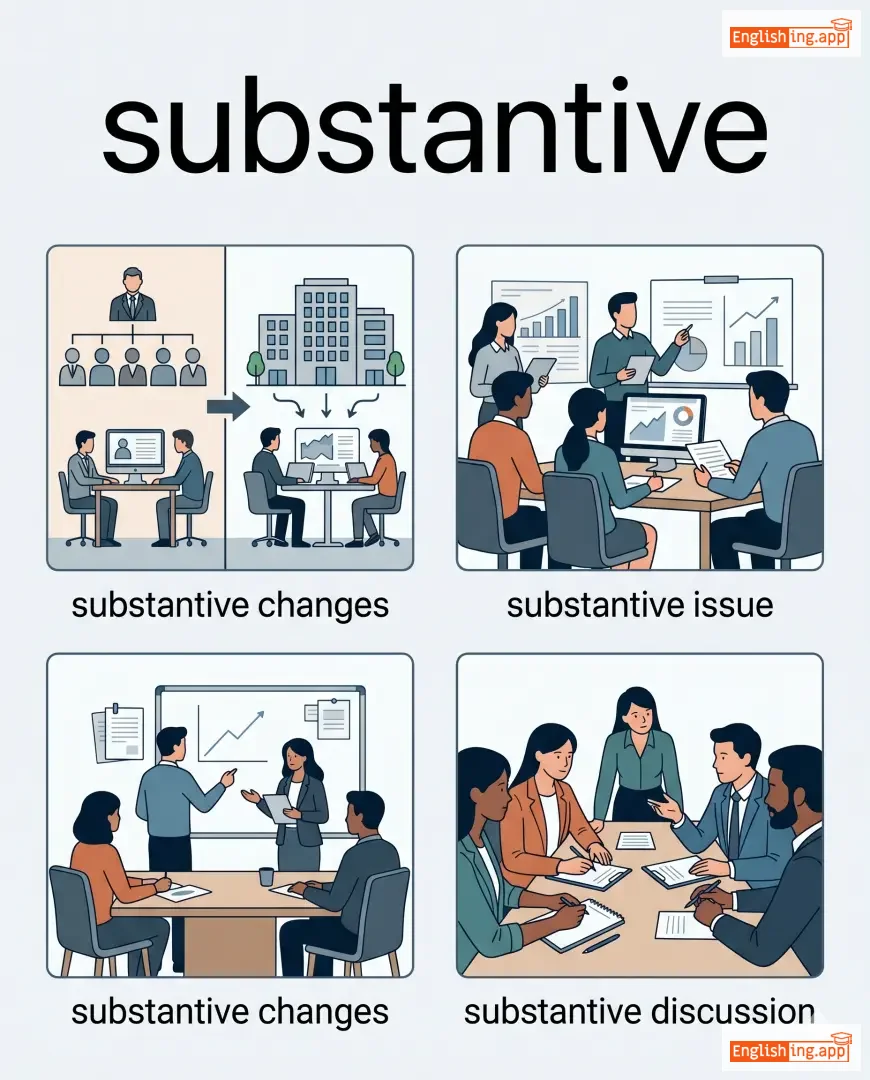
|
重要
jūyō
••••••
|
- •••••• | - •••••• | - •••••• | - •••••• |
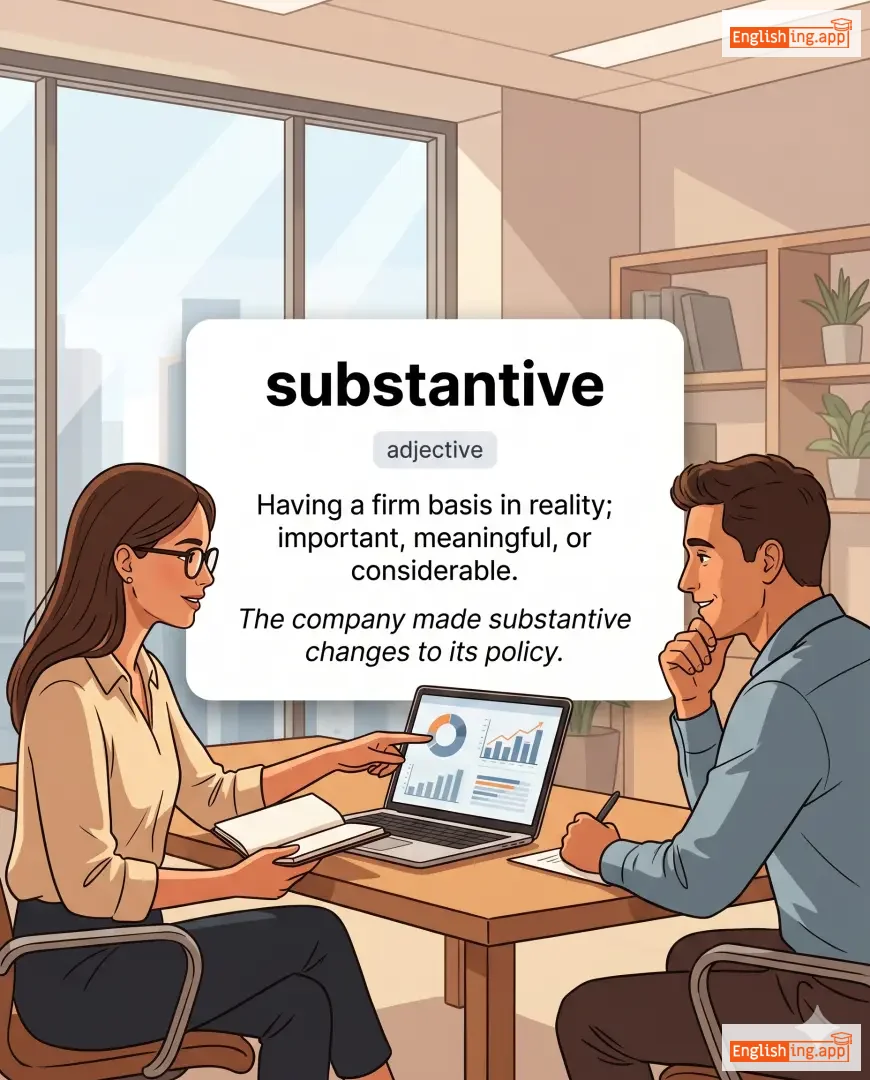
Having a firm basis in reality; important, meaningful, or considerable.
••••••
|
The company made substantive changes to its policy.
会社はその方針に実質的な変更を加えました。
••••••
|
会社はその方針に重要な変更を加えました。
Kaisha wa sono hōshin ni jūyō na henkō o kuwaemashita.
••••••
|
substantive evidence
実質的証拠
••••••
|
Important or meaningful proof that supports a claim
••••••
|
重要証拠
jūyō shōko
••••••
|
significant, important, considerable, meaningful, essential
••••••
|
trivial, minor, insignificant
••••••
|
substantive changes, substantive issue, substantive discussion, substantive evidence
••••••
|
Substantive は重要を意味します—‘重要な’。覚えておいてください、実質的証拠は強い証拠です。
••••••
|
|
🌀
••••••
|
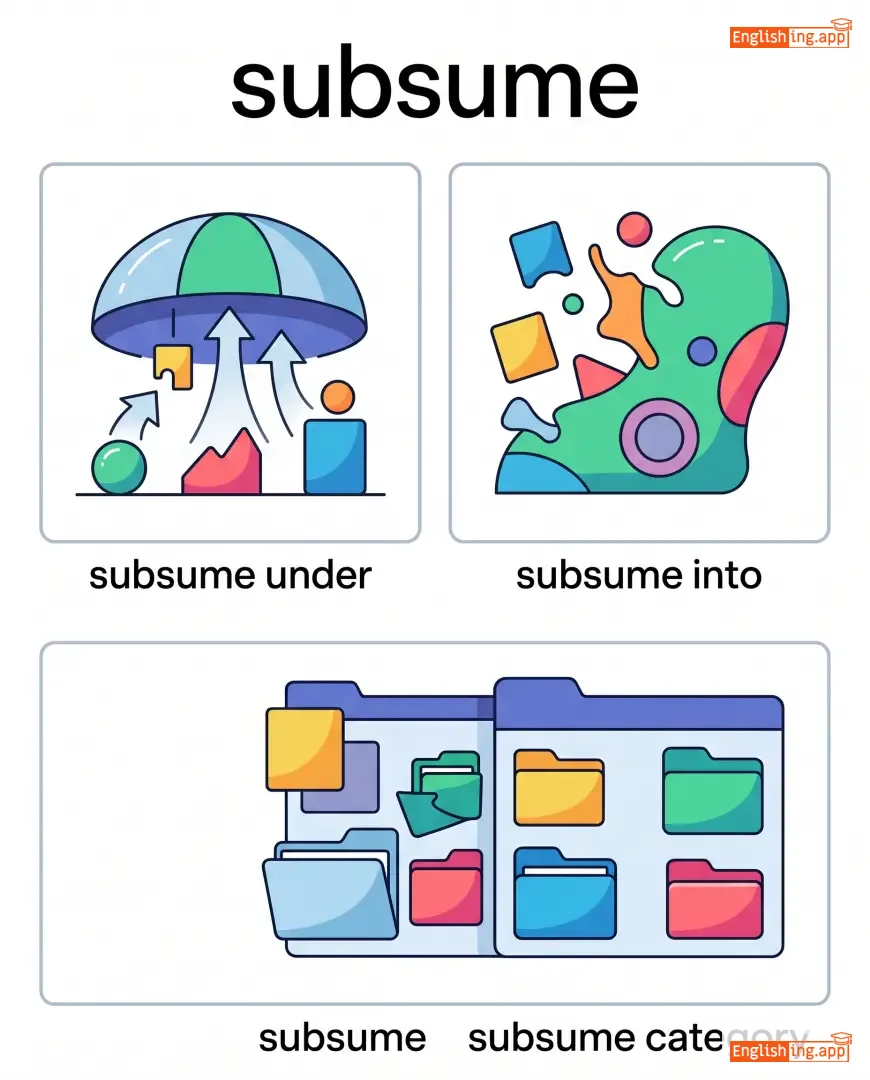
/səbˈsjuːm/
verb
(サブスイウム)
••••••
|
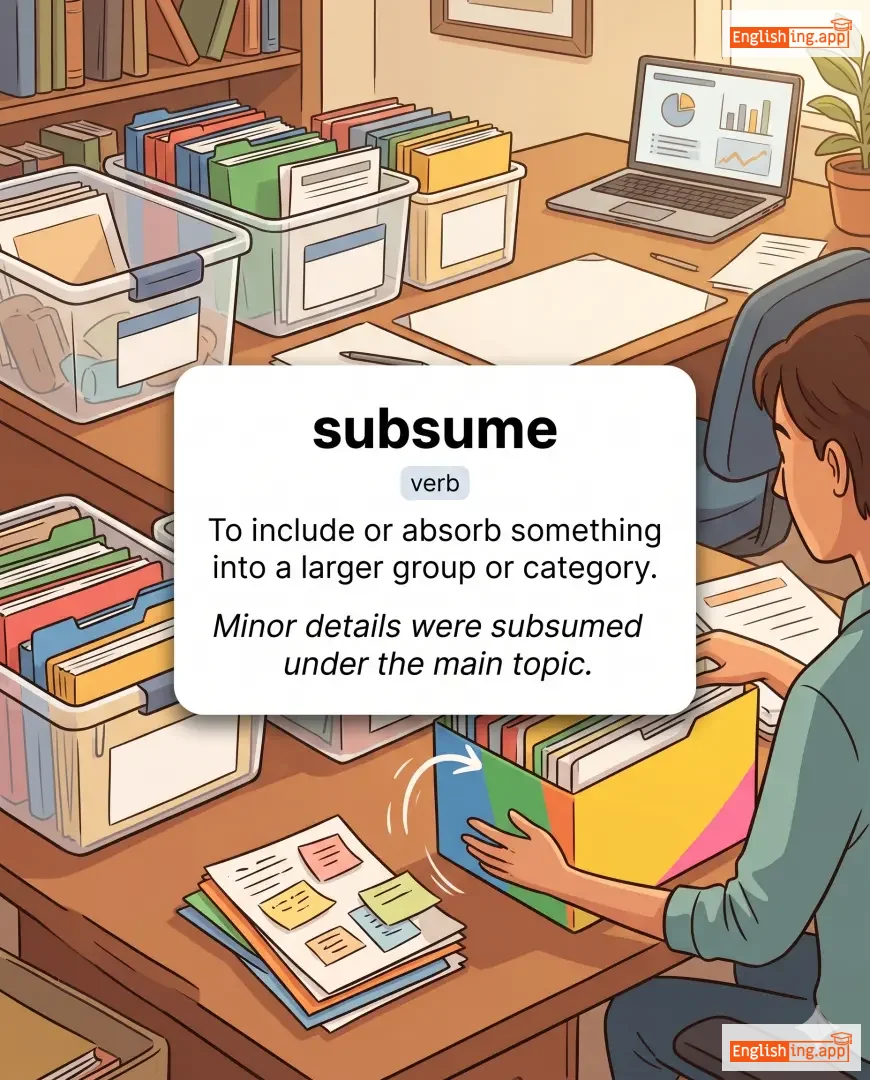
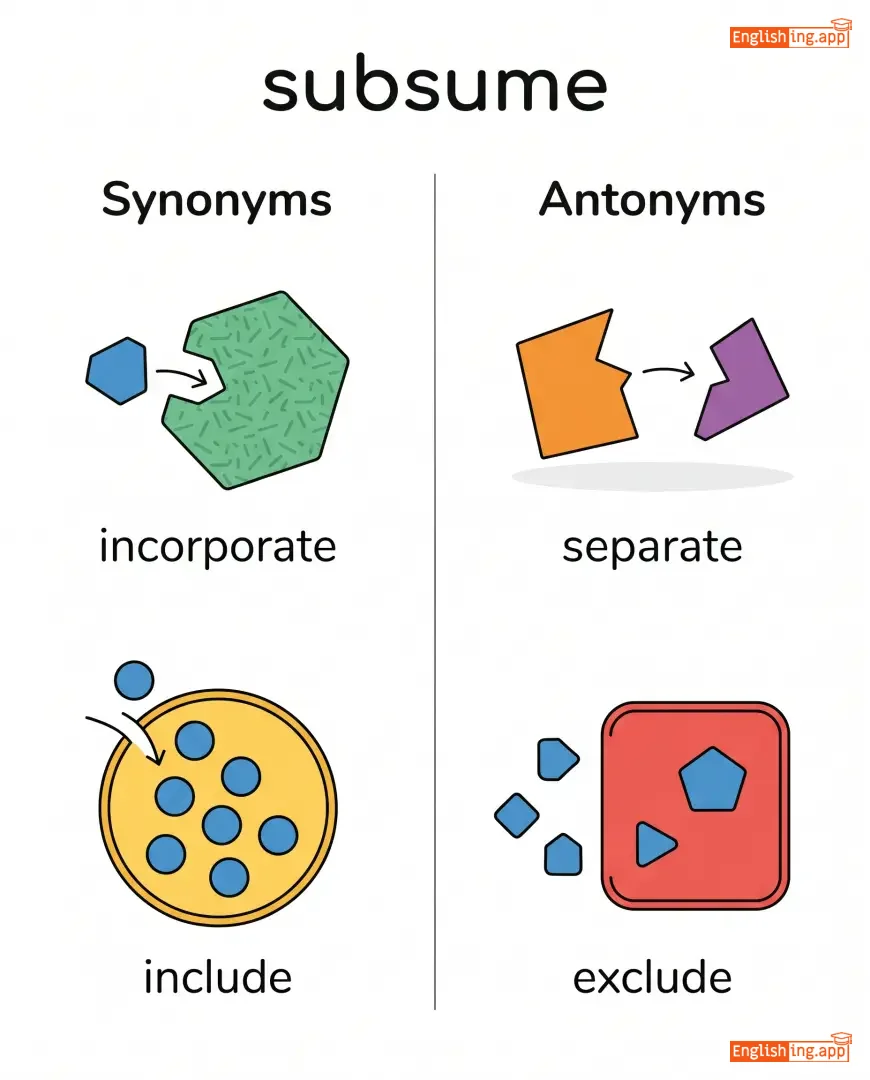
|
含む
fukumu
••••••
|
subsumed
サブスイウムド
••••••
|
subsumed
サブスイウムド
••••••
|
subsumes
サブスイウムズ
••••••
|
subsuming
サブスイウミング
••••••
|
To include or absorb something into a larger group or category.
••••••
|
Minor details were subsumed under the main topic.
マイナーな詳細は主要なトピックに含まれました。
••••••
|
マイナーな詳細は主要なトピックに含まれました。
Mainā na shōsai wa shuyō na topikku ni fukamaremashita.
••••••
|
- •••••• | - •••••• | - •••••• |
incorporate, include, absorb, encompass
••••••
|
separate, exclude
••••••
|
subsume under, subsume into, subsume category, subsume theory
••••••
|
Sub + 含む → 小さなものを大きなものに含める = subsume は含むという意味。
••••••
|
|
🔥
••••••
|
/səbˈvɜːrsɪv/
adjective
(サブバースィブ)
••••••
|
|
破壊的
hakai teki
••••••
|
- •••••• | - •••••• | - •••••• | - •••••• |
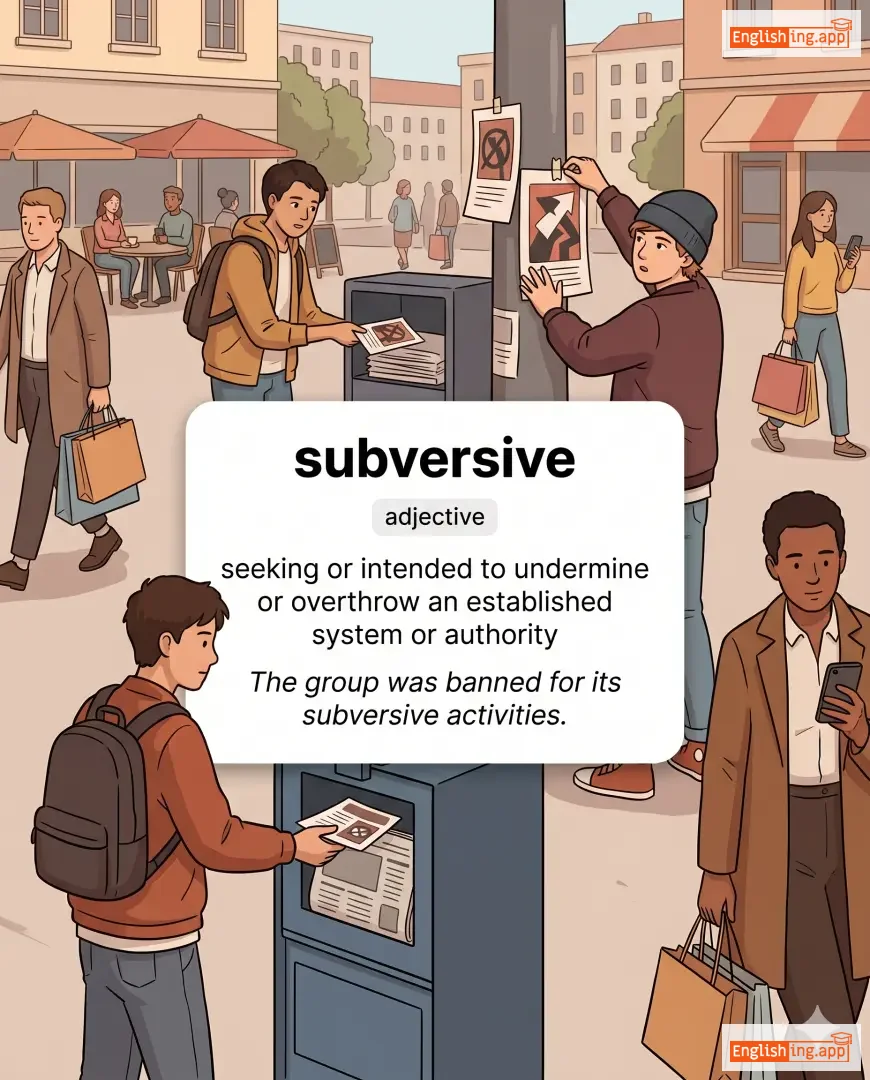
seeking or intended to undermine or overthrow an established system or authority
••••••
|
The group was banned for its subversive activities. |
そのグループは破壊的な活動のために禁止された。
Sono gurūpu wa hakai teki na katsudō no tame ni kinshi sareta.
••••••
|
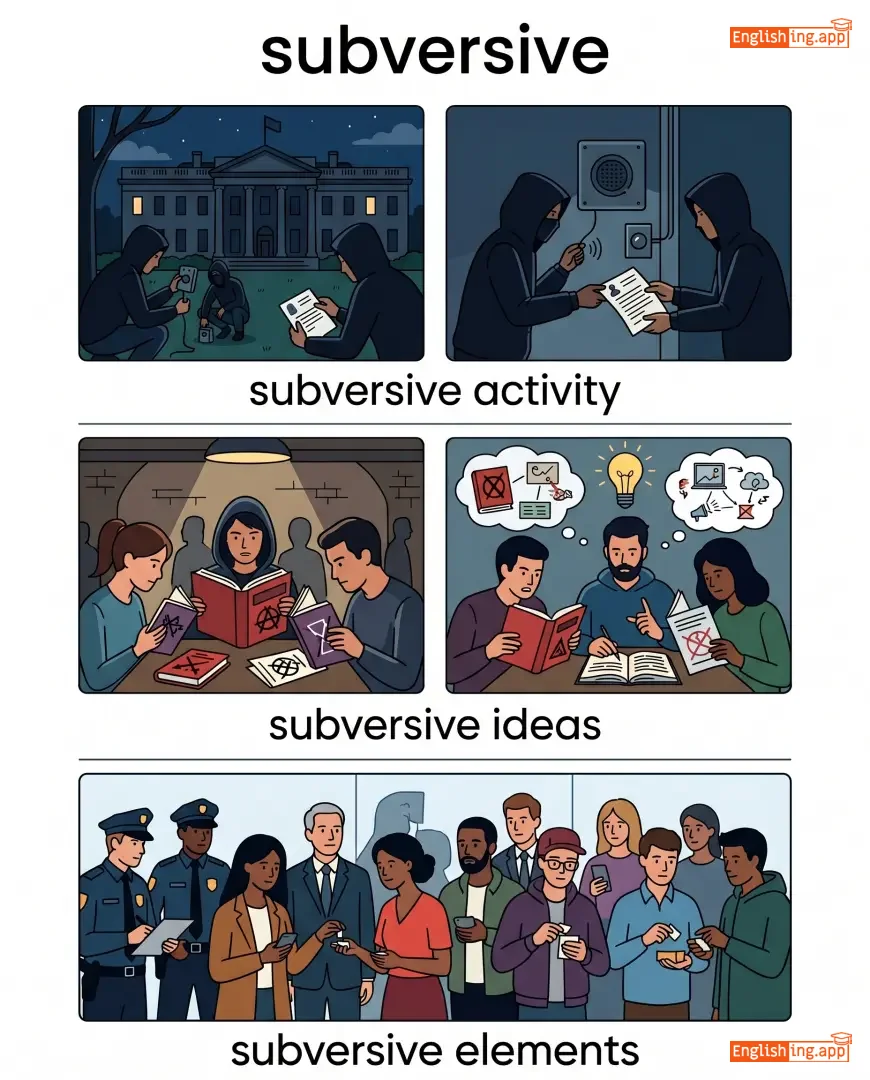
subversive elements |
people or groups trying to weaken authority
••••••
|
破壊的な要素
hakai teki na yōso
••••••
|
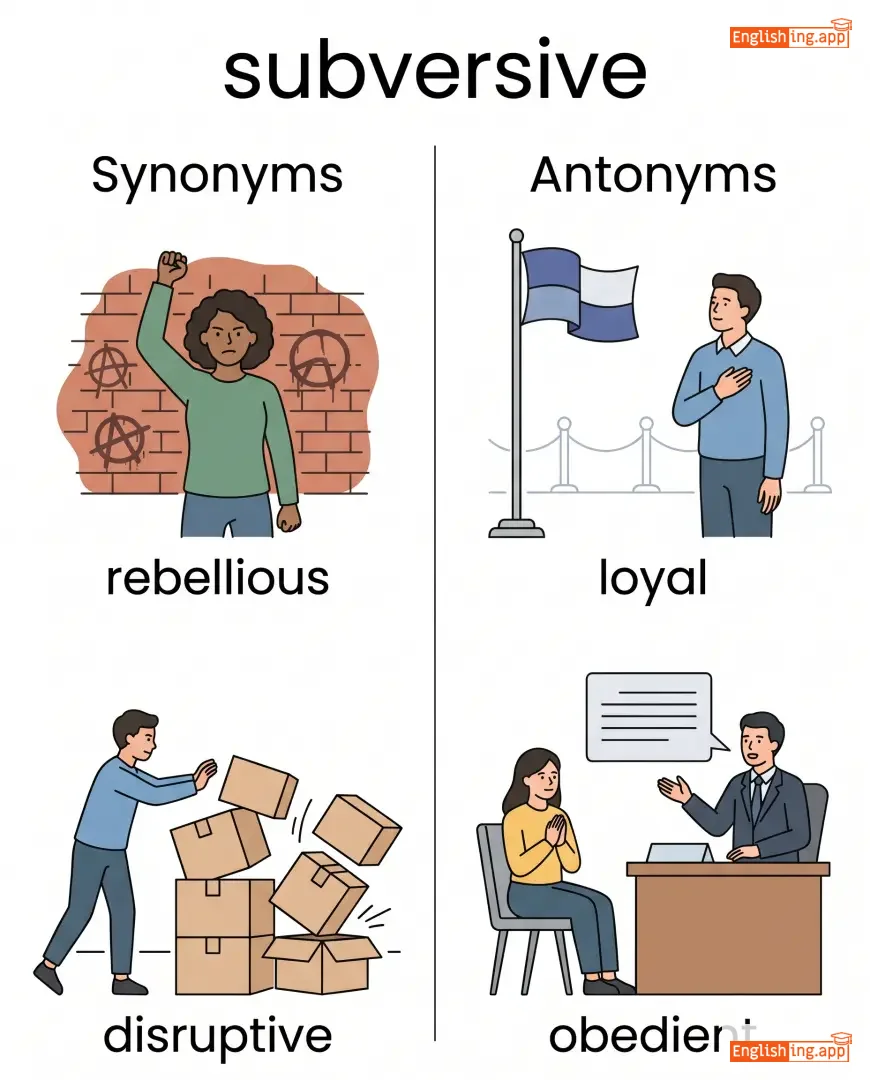
rebellious, disruptive, revolutionary, insurgent
••••••
|
loyal, obedient
••••••
|
subversive activity, subversive ideas, subversive elements
••••••
|
破壊的 = 秩序を変えること – 破壊 = 破る, 的 = 目的
••••••
|
|
🤲
••••••
|
/ˈsʌkər/
noun/verb
(サカー)
••••••
|
|
援助
enjo
••••••
|
succored
サカード
••••••
|
succored
サカード
••••••
|
succors
サカーズ
••••••
|
succoring
サコリング
••••••
|
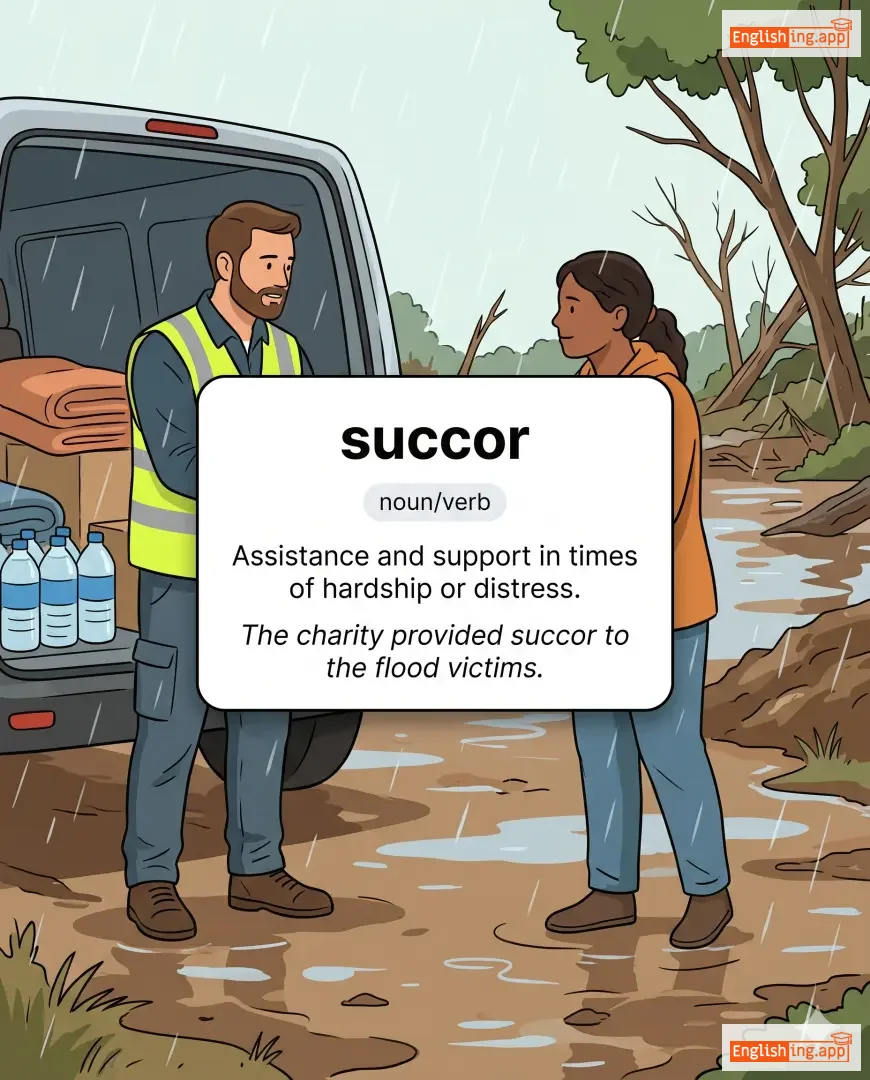
Assistance and support in times of hardship or distress.
••••••
|
The charity provided succor to the flood victims.
慈善団体は洪水の被害者にサポートを提供しました。
••••••
|
慈善団体は洪水の被害者に援助を提供しました。
Jizen dantai wa kōzui no higaisha ni enjo o teikyō shimashita.
••••••
|
- •••••• | - •••••• | - •••••• |
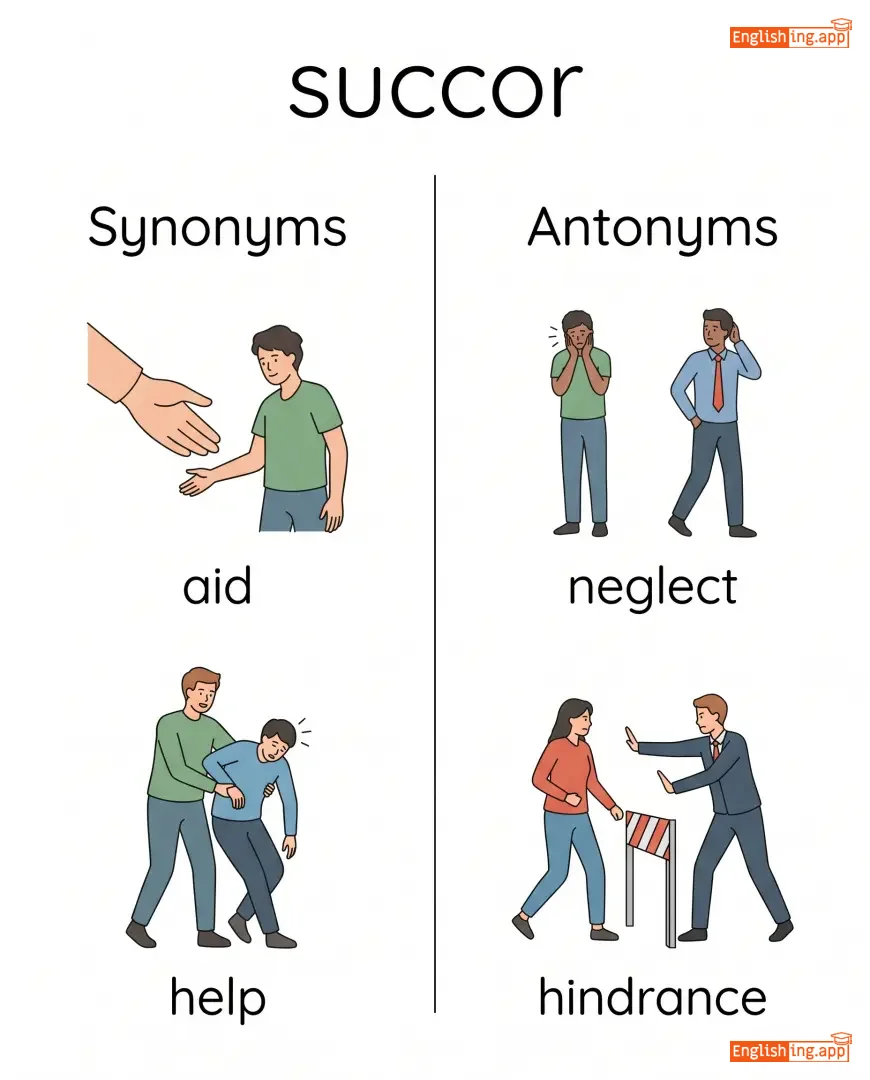
aid, help, relief, support, assistance
••••••
|
neglect, hindrance
••••••
|
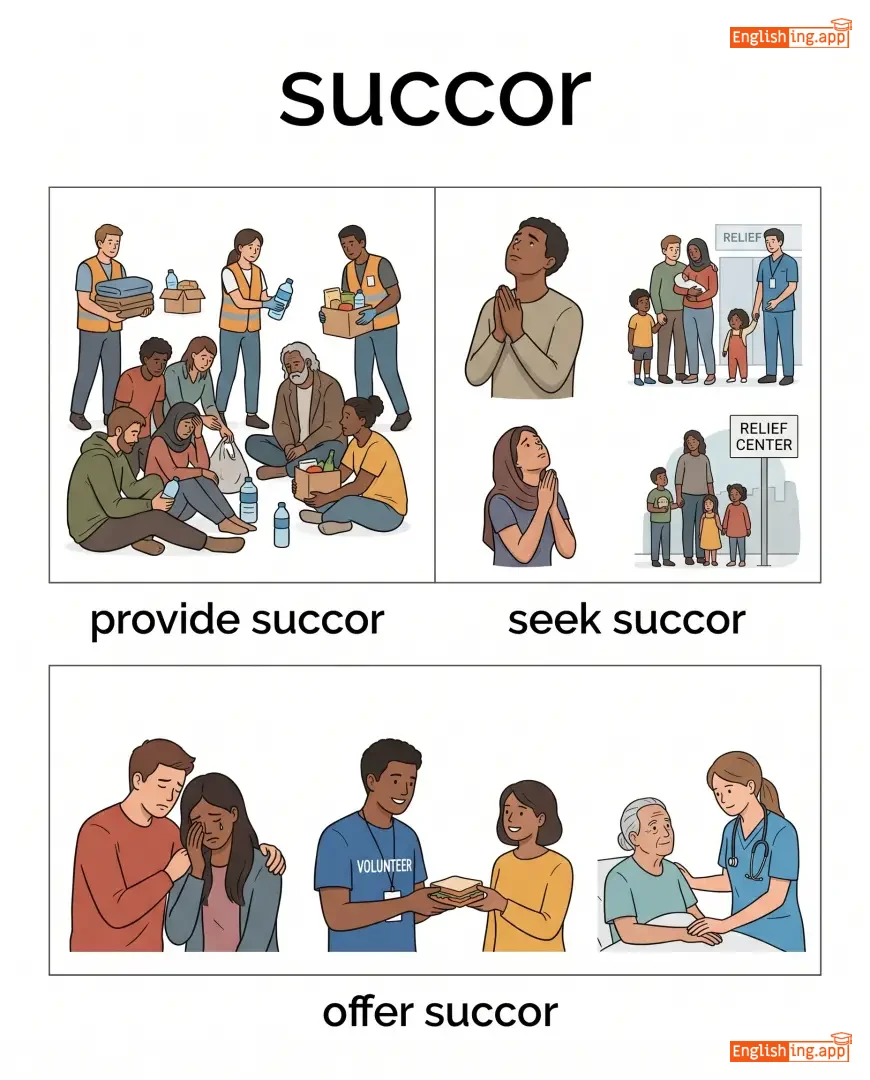
provide succor, seek succor, offer succor, succor the needy
••••••
|
Succorは援助に似ています — 難しい時期には援助が必要です。
••••••
|
|
🗳️
••••••
|
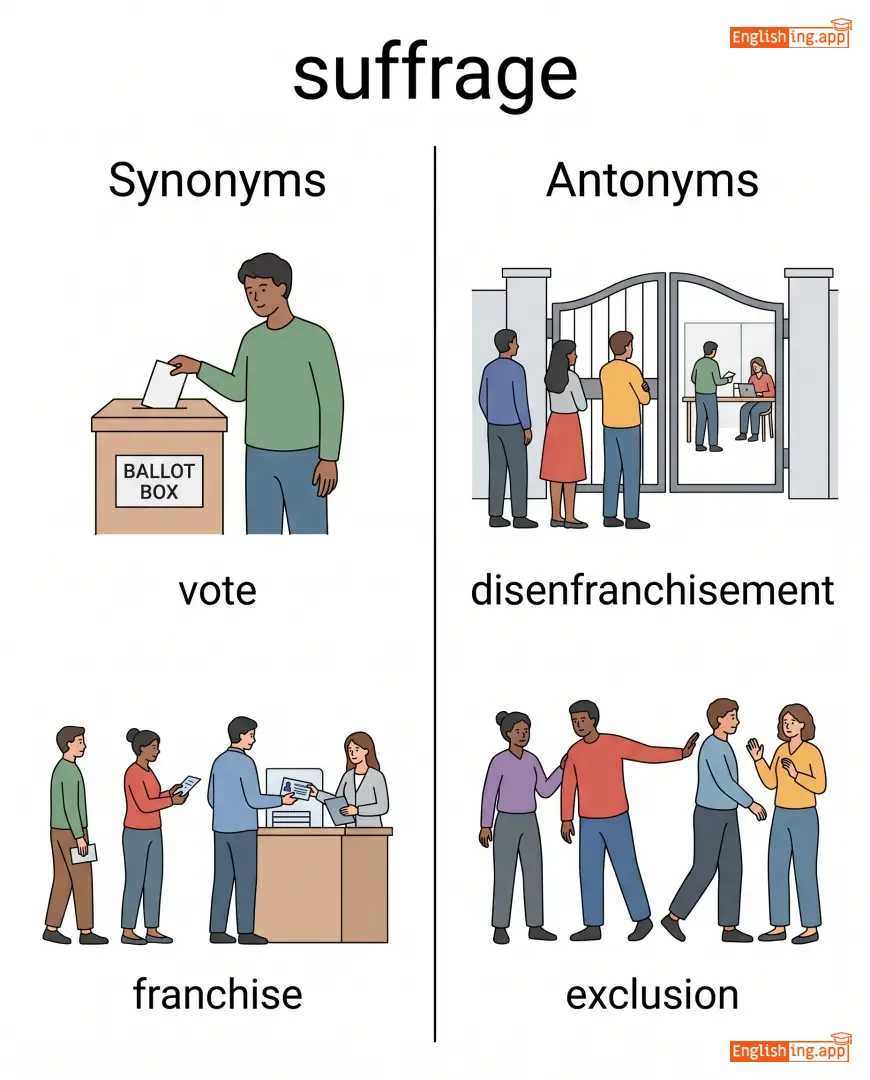
/ˈsʌfrɪdʒ/
noun
(サフリッジ)
••••••
|
|
参政権
sanseiken
••••••
|
- •••••• | - •••••• | - •••••• | - •••••• |
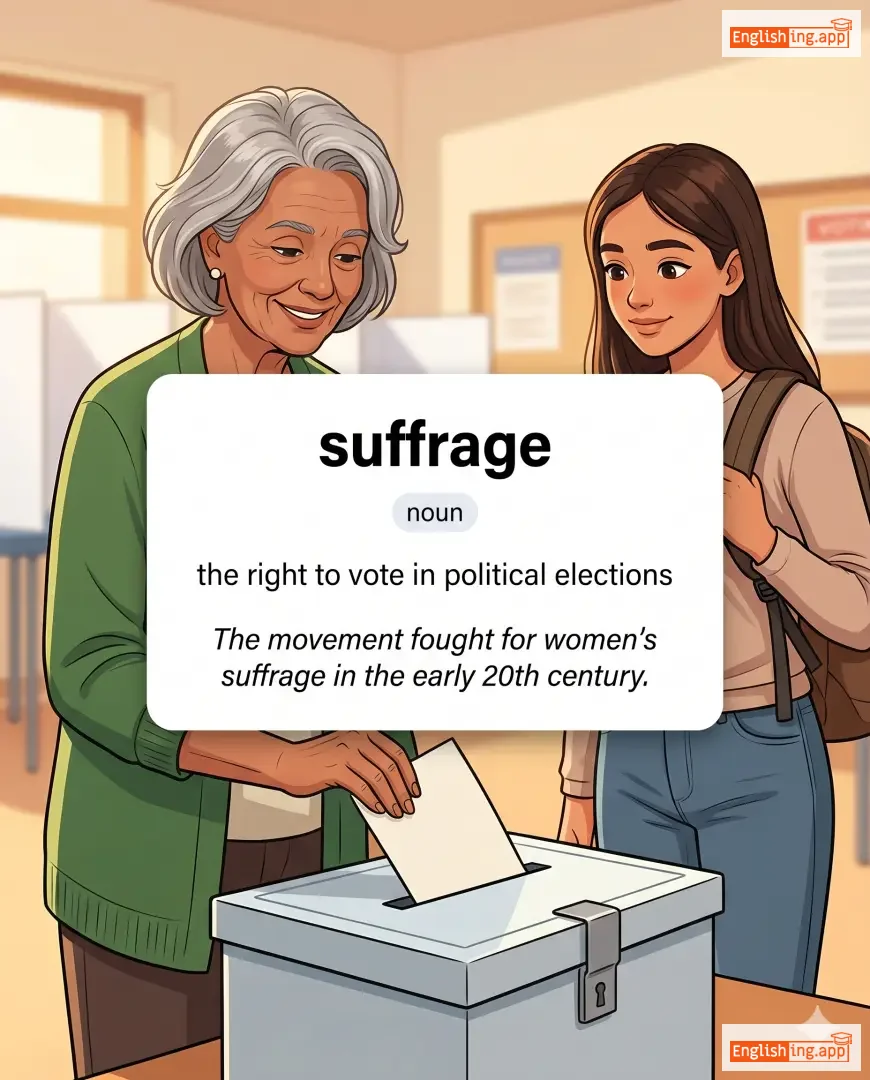
the right to vote in political elections
••••••
|
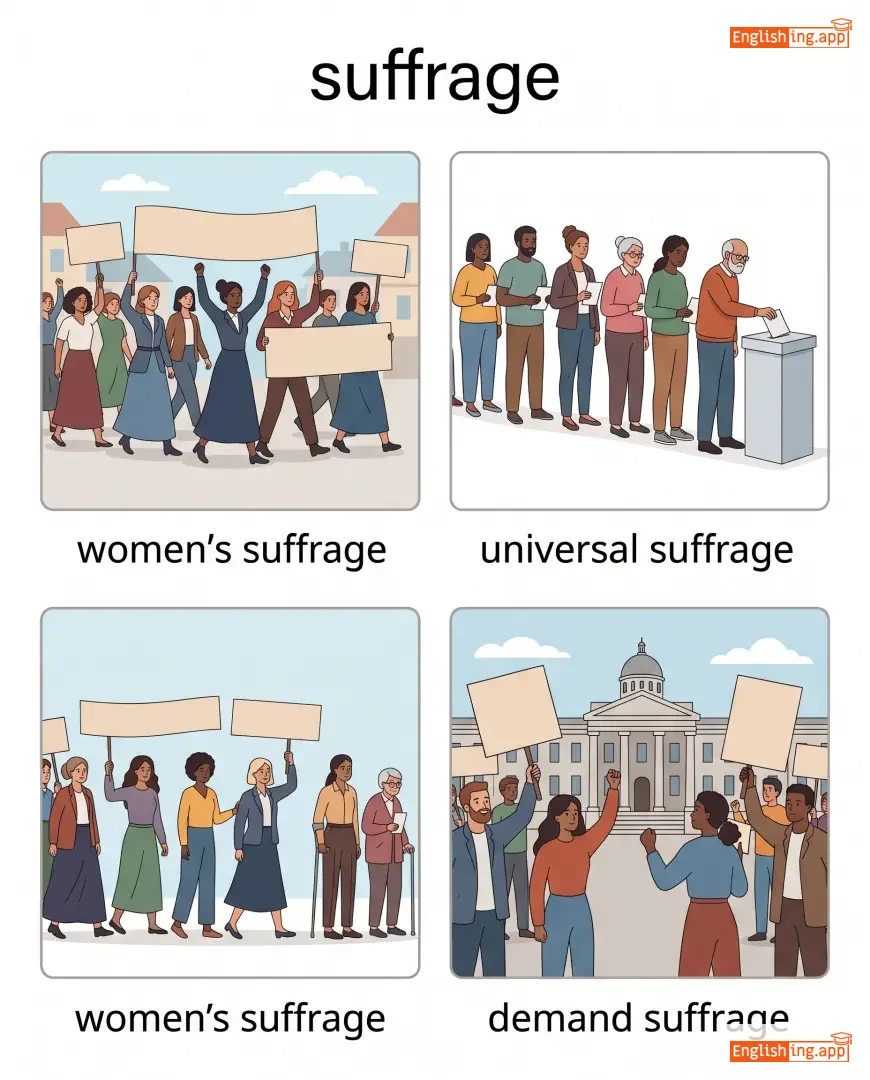
The movement fought for women’s suffrage in the early 20th century.
ザ ムーブメント フォート フォー ウィメンズ サフリッジ イン ジ アーリ トゥウェンティエス センチュリー。
••••••
|
その運動は20世紀初頭に女性の参政権のために戦った。
sono undou wa nijusseiki shotou ni josei no sanseiken no tame ni tatakatta.
••••••
|
universal suffrage
ユニバーサル サフリッジ
••••••
|
the right of all adults to vote regardless of status
••••••
|
普通選挙
futsu senkyo
••••••
|
vote, franchise, ballot, voice
••••••
|
disenfranchisement, exclusion
••••••
|
women’s suffrage, universal suffrage, demand suffrage, grant suffrage
••••••
|
Suffrage sounds like サフリッジ → 参政権, rights to join 政治(せいじ).
••••••
|
|
🛍️
••••••
|
/ˈsʌn.dri/
adjective
(サンドリー)
••••••
|
|
雑多な
zattana
••••••
|
- •••••• | - •••••• | - •••••• | - •••••• |
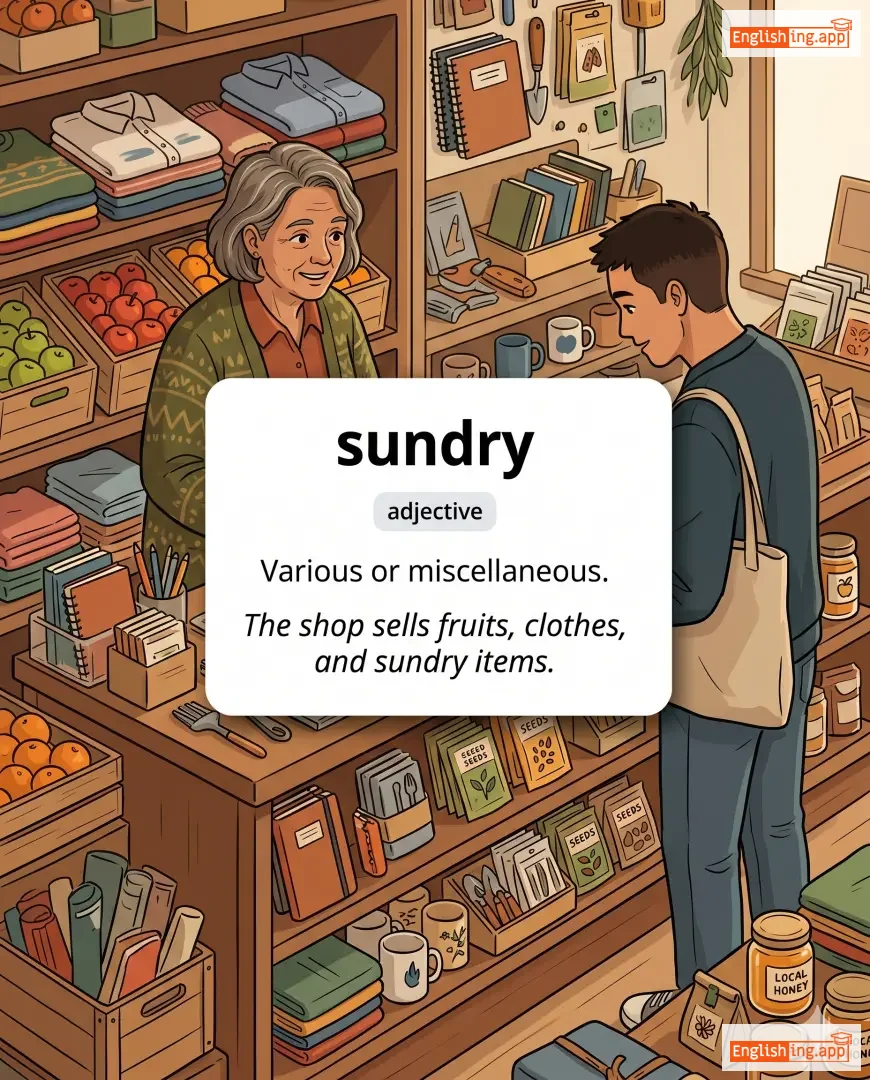
Various or miscellaneous.
••••••
|
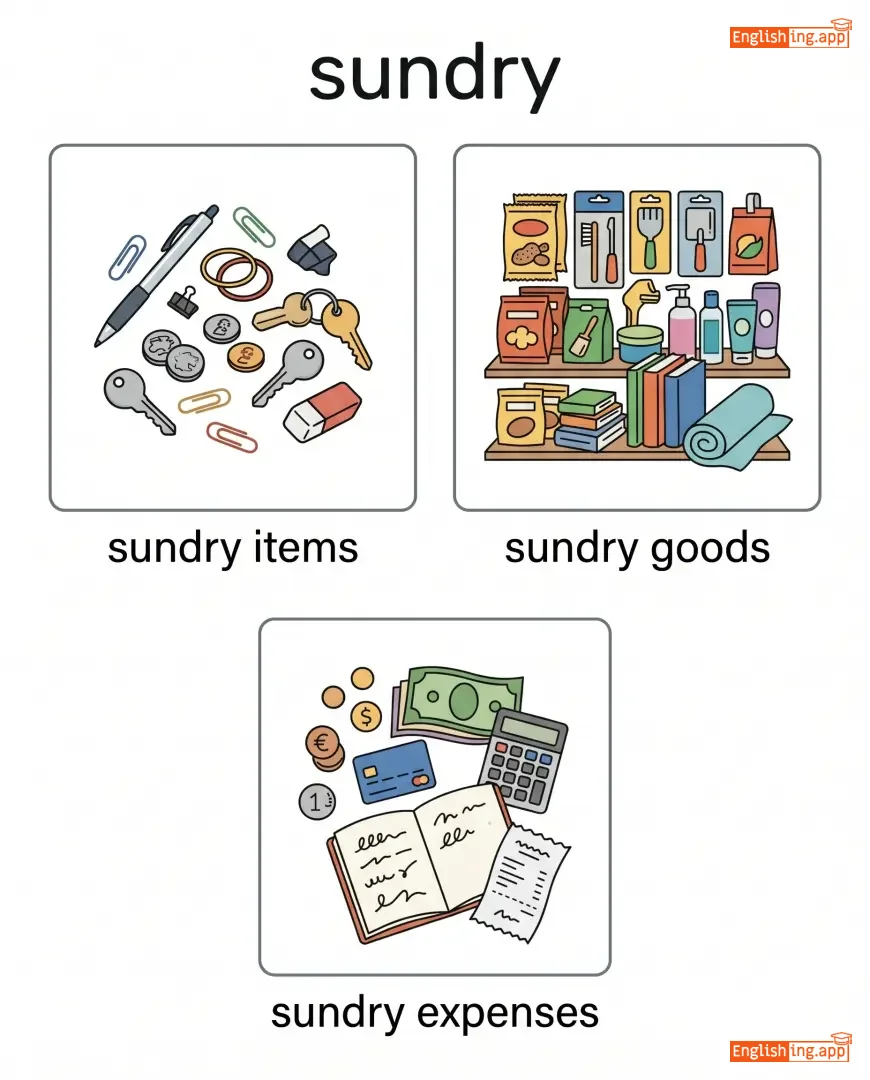
The shop sells fruits, clothes, and sundry items. |
その店は果物、衣類、そして雑多な商品を販売しています。
Sono mise wa kudamono, irui, soshite zattana shōhin o hanbai shiteimasu.
••••••
|
- •••••• | - •••••• | - •••••• |
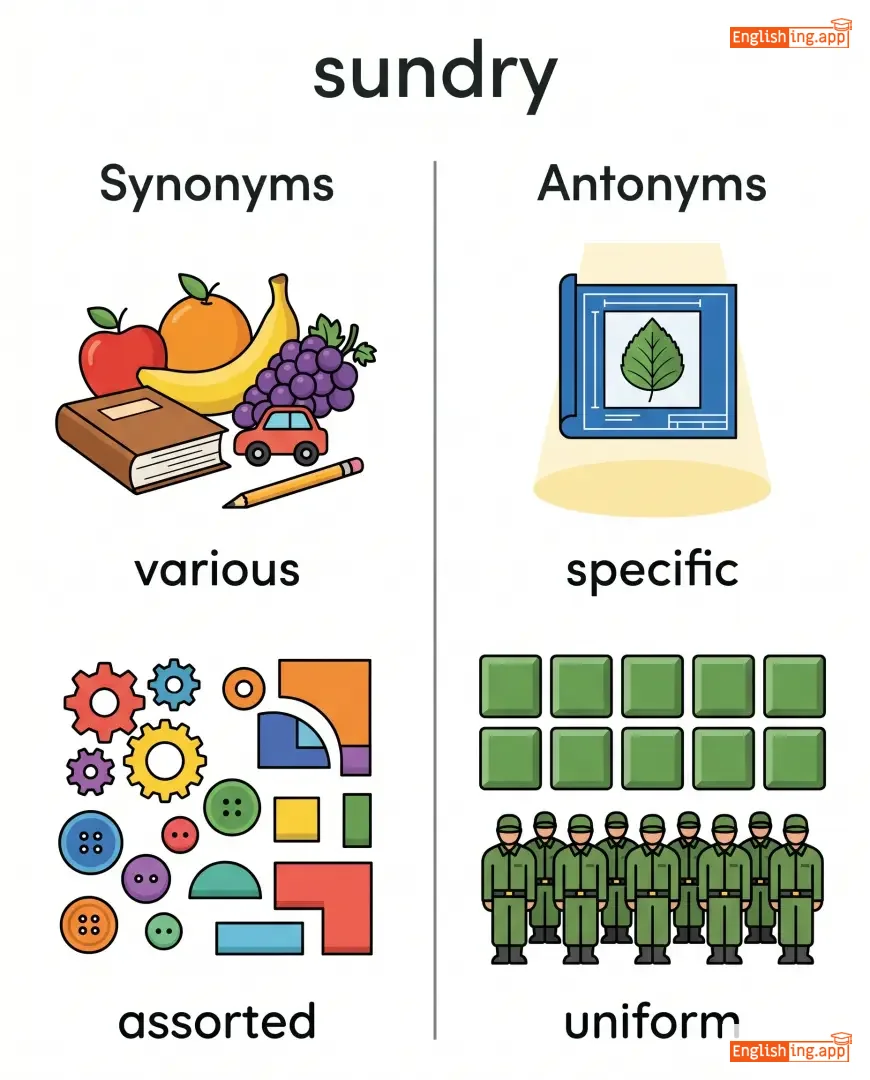
various, assorted, diverse, miscellaneous
••••••
|
specific, uniform
••••••
|
sundry items, sundry goods, sundry expenses
••••••
|
Sundryとは、日曜日に様々なものが見つかるような感じです
••••••
|
|
🔄
••••••
|
/ˌsuːpərˈsiːd/
verb
(スーパシード)
••••••
|
|
置き換える
okikaeru
••••••
|
superseded
スーパシーデッド
••••••
|
superseded
スーパシーデッド
••••••
|
supersedes
スーパシーズ
••••••
|
superseding
スーパシーディング
••••••
|
To replace or take the place of something because it is more modern or effective.
••••••
|
This new law will supersede the old regulations.
この新しい法律は古い規則を置き換えます。
••••••
|
この新しい法律は古い規則を置き換えます。
Kono atarashī hōritsu wa furui kisoku o okikaemasu.
••••••
|
- •••••• | - •••••• | - •••••• |
replace, override, overrule, succeed, displace
••••••
|
retain, continue, maintain
••••••
|
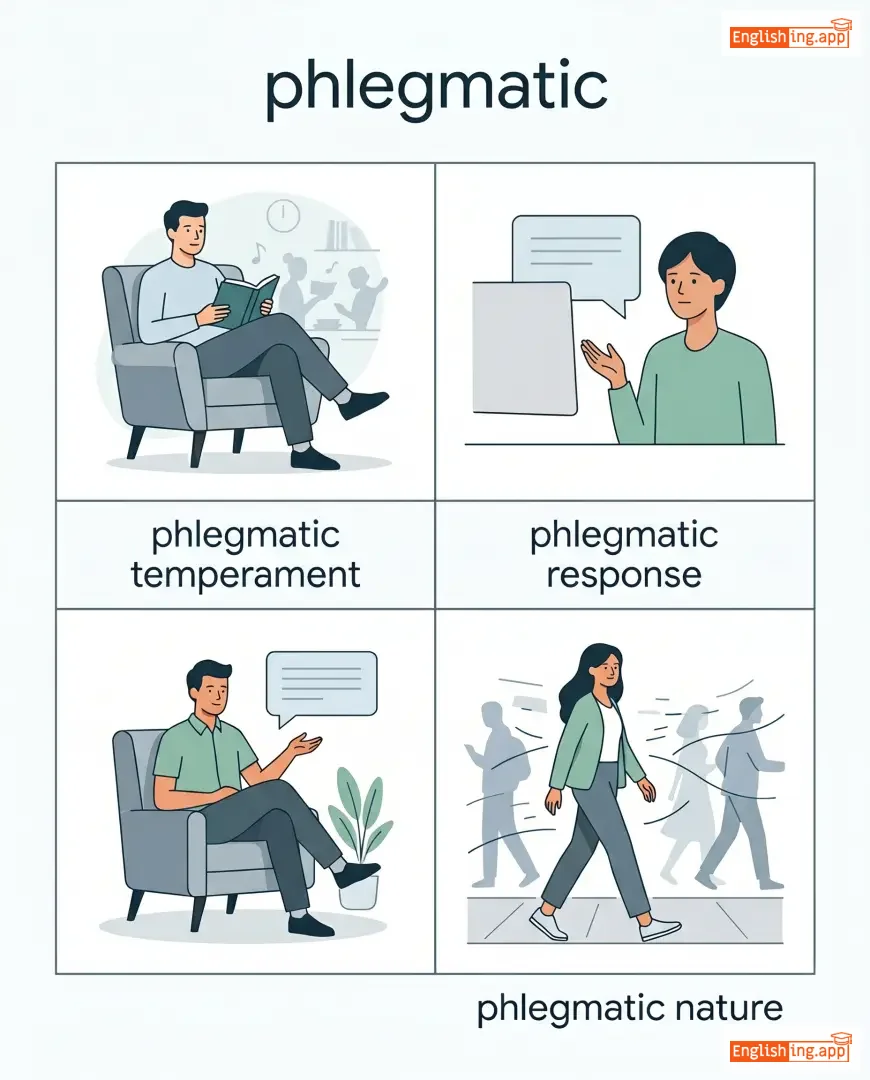
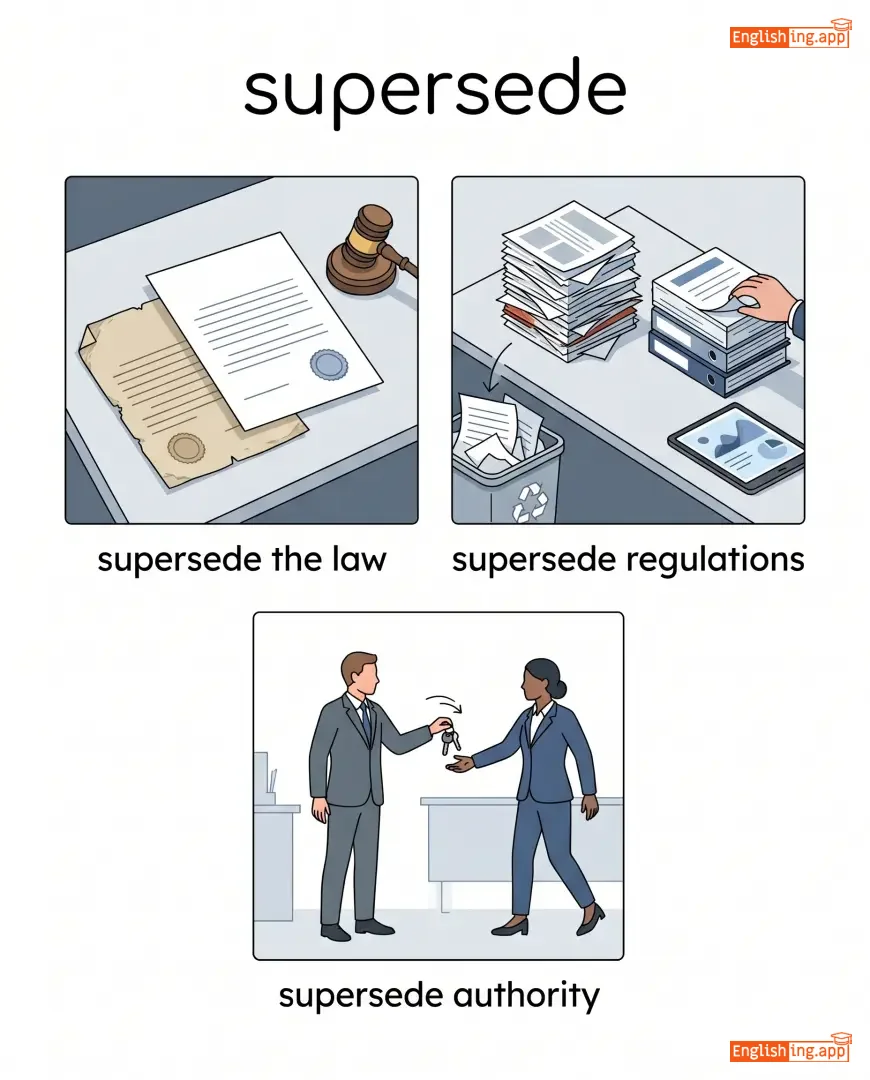
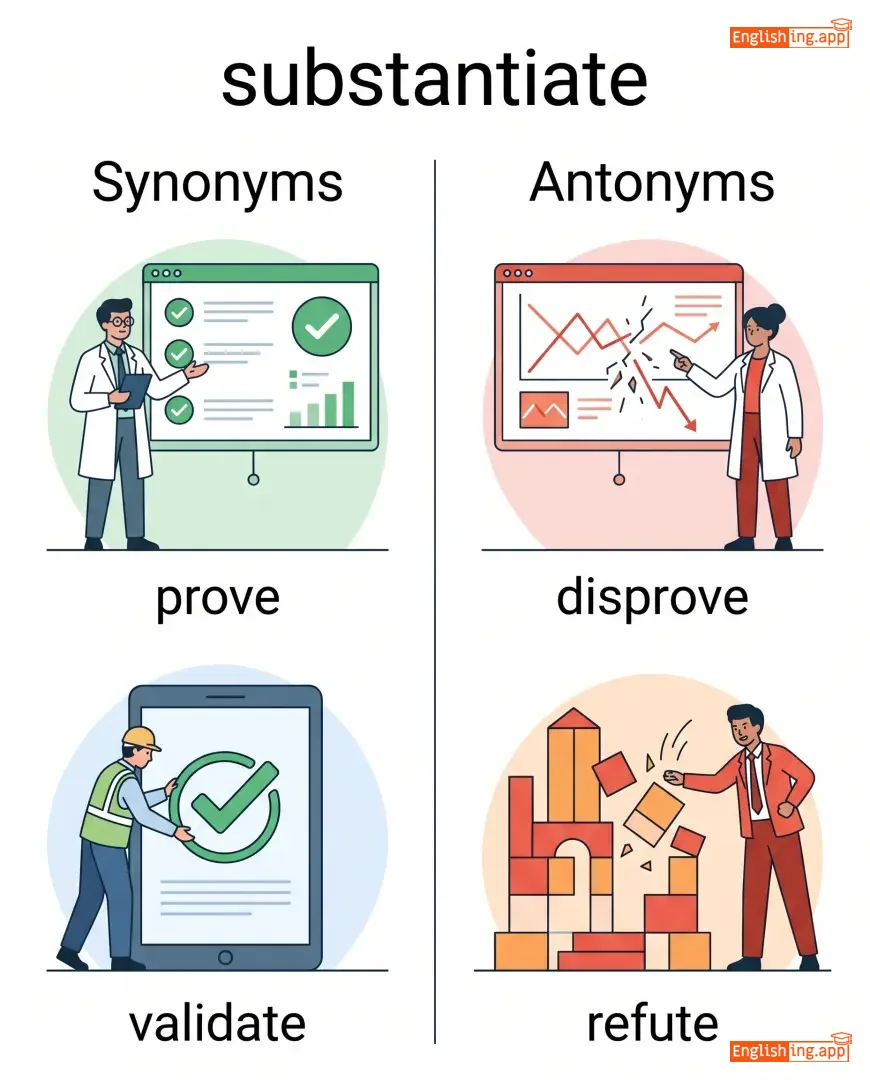
supersede the law, supersede regulations, supersede authority, supersede role
••••••
|
Super + seat で古いものを置き換える、それがsupersedeです。
••••••
|
|
🛌
••••••
|
/ˈsuːpaɪn/
adjective
(スパイン)
••••••
|
|
仰向けで横たわる
aomuke de yokotawaru
••••••
|
- •••••• | - •••••• | - •••••• | - •••••• |
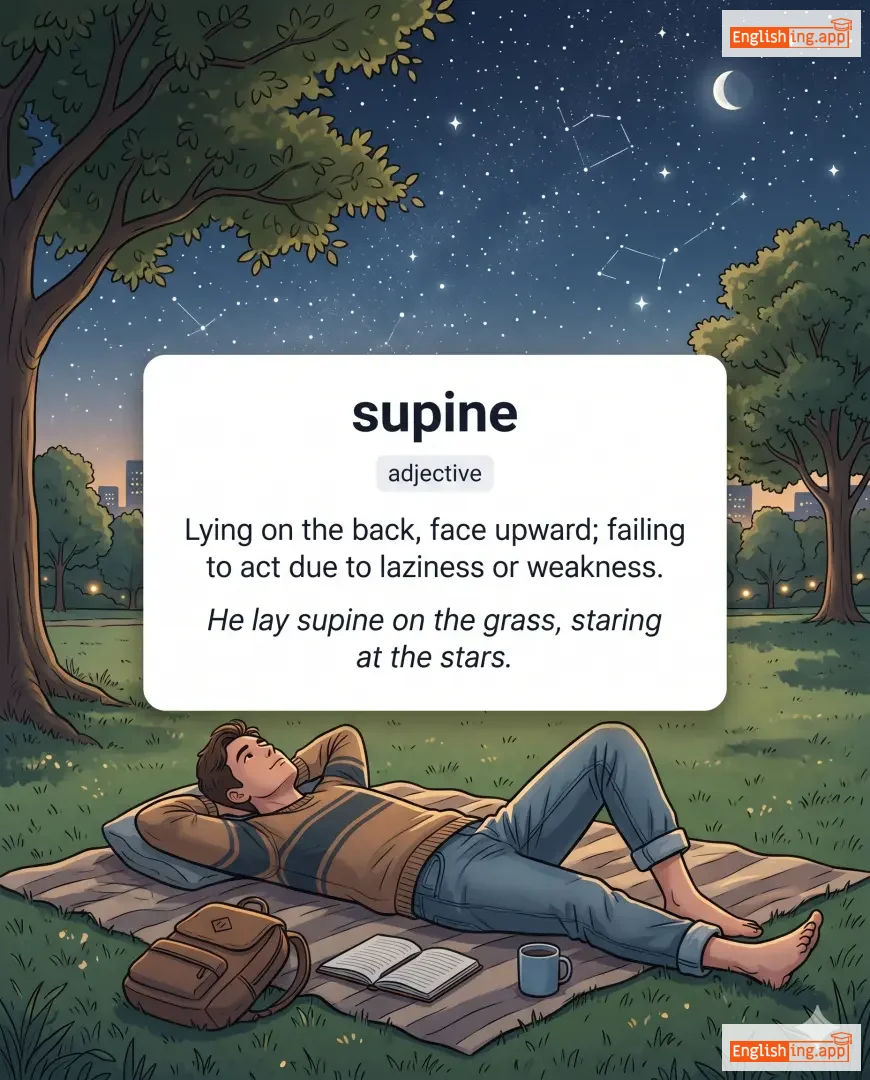
Lying on the back, face upward; failing to act due to laziness or weakness.
••••••
|
He lay supine on the grass, staring at the stars. |
彼は草の上に仰向けで横たわり、星を見ていた。
Kare wa kusa no ue ni aomuke de yokotawari, hoshi o mite ita.
••••••
|
- •••••• | - •••••• | - •••••• |
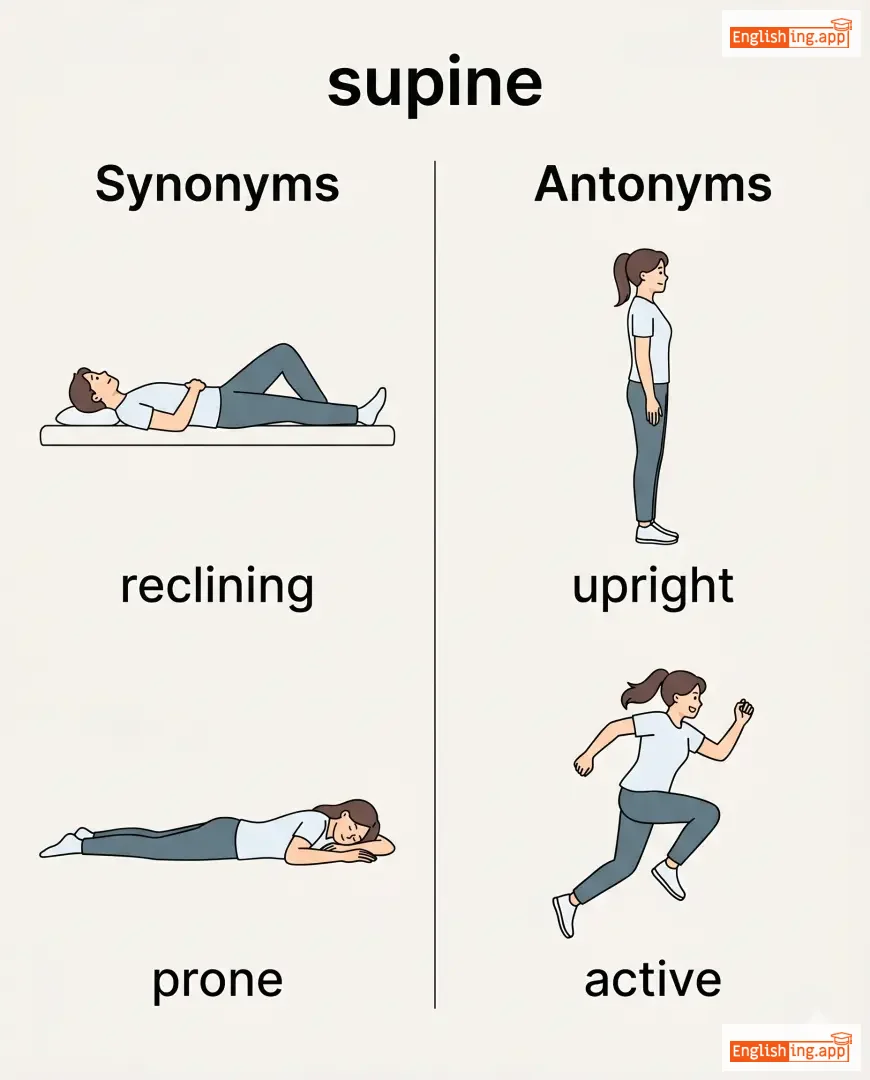
reclining, prone, passive, inactive, inert
••••••
|
upright, active, alert
••••••
|
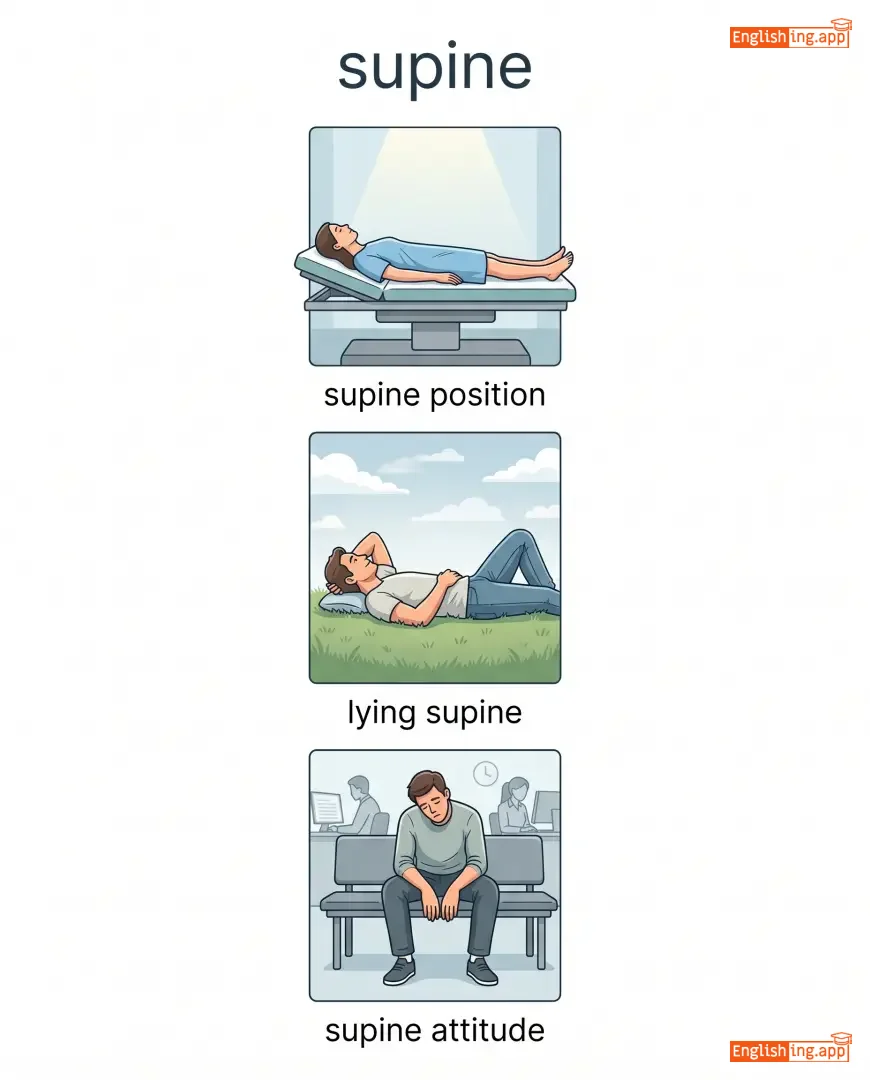
supine position, lying supine, supine attitude, supine posture
••••••
|
supine = su (su) + pine (pine) → あなたは草の上に仰向けで寝ていて、松の木のようだ。
••••••
|
|
🔄
••••••
|
/səˈplænt/
verb
(スプラント)
••••••
|
|
取って代わる
totte kawaru
••••••
|
supplanted
スプランテッド
••••••
|
supplanted
スプランテッド
••••••
|
supplants
スプランツ
••••••
|
supplanting
スプランティング
••••••
|
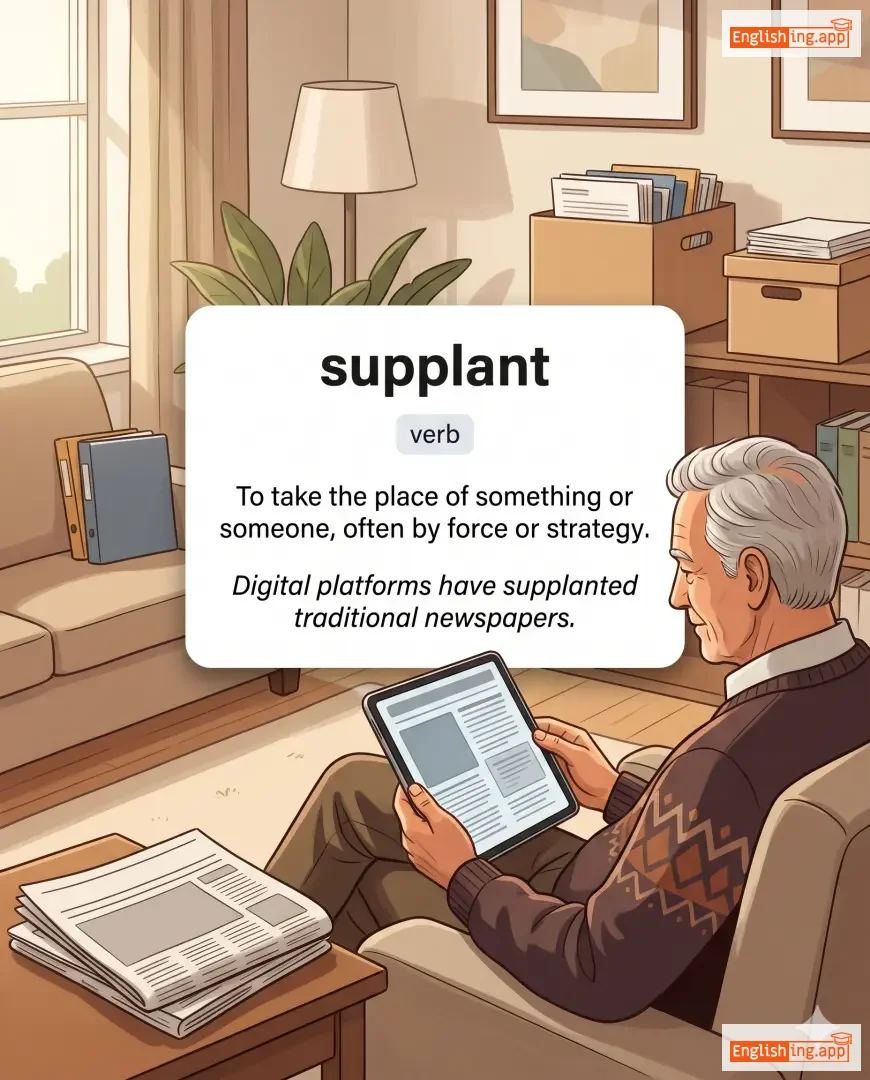
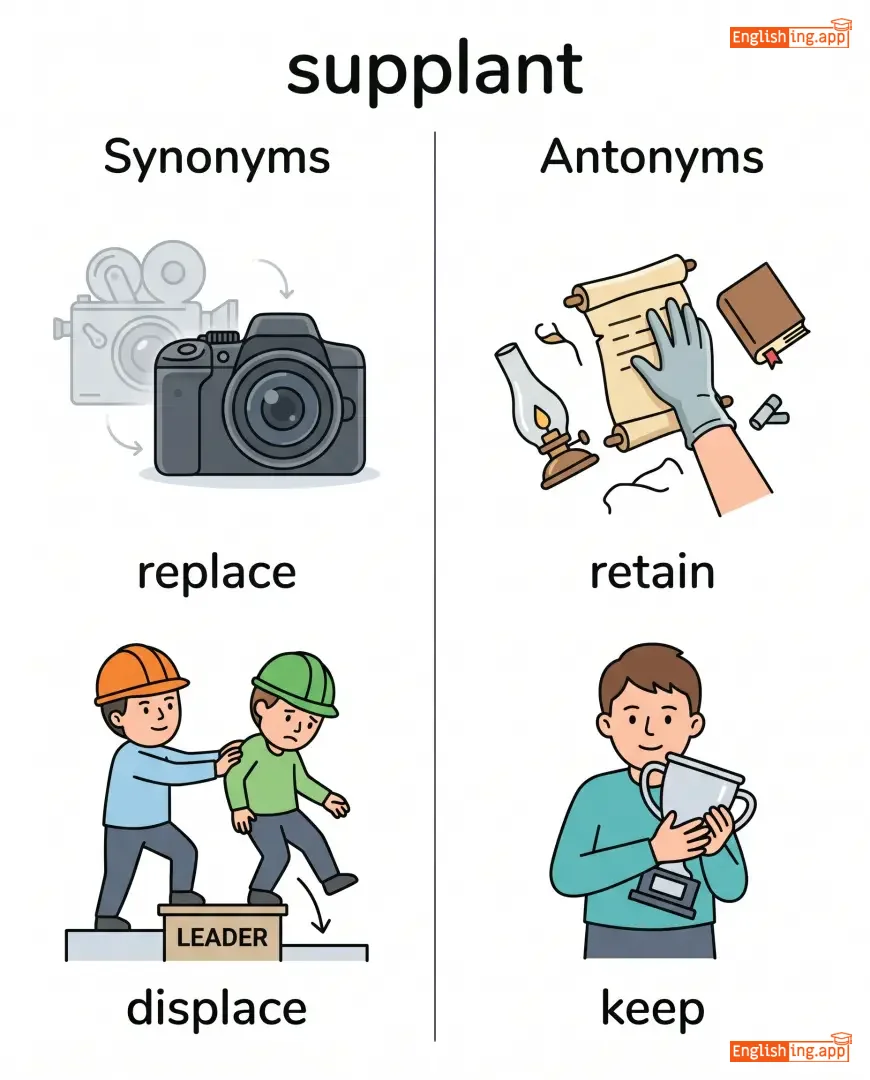
To take the place of something or someone, often by force or strategy.
••••••
|
Digital platforms have supplanted traditional newspapers.
デジタルプラットフォームは伝統的な新聞を取って代わった。
••••••
|
デジタルプラットフォームは伝統的な新聞を取って代わった。
Dejitaru purattofōmu wa dentō-teki na shinbun o totte kawatta.
••••••
|
- •••••• | - •••••• | - •••••• |
replace, displace, overthrow, substitute, succeed
••••••
|
retain, keep, preserve
••••••
|
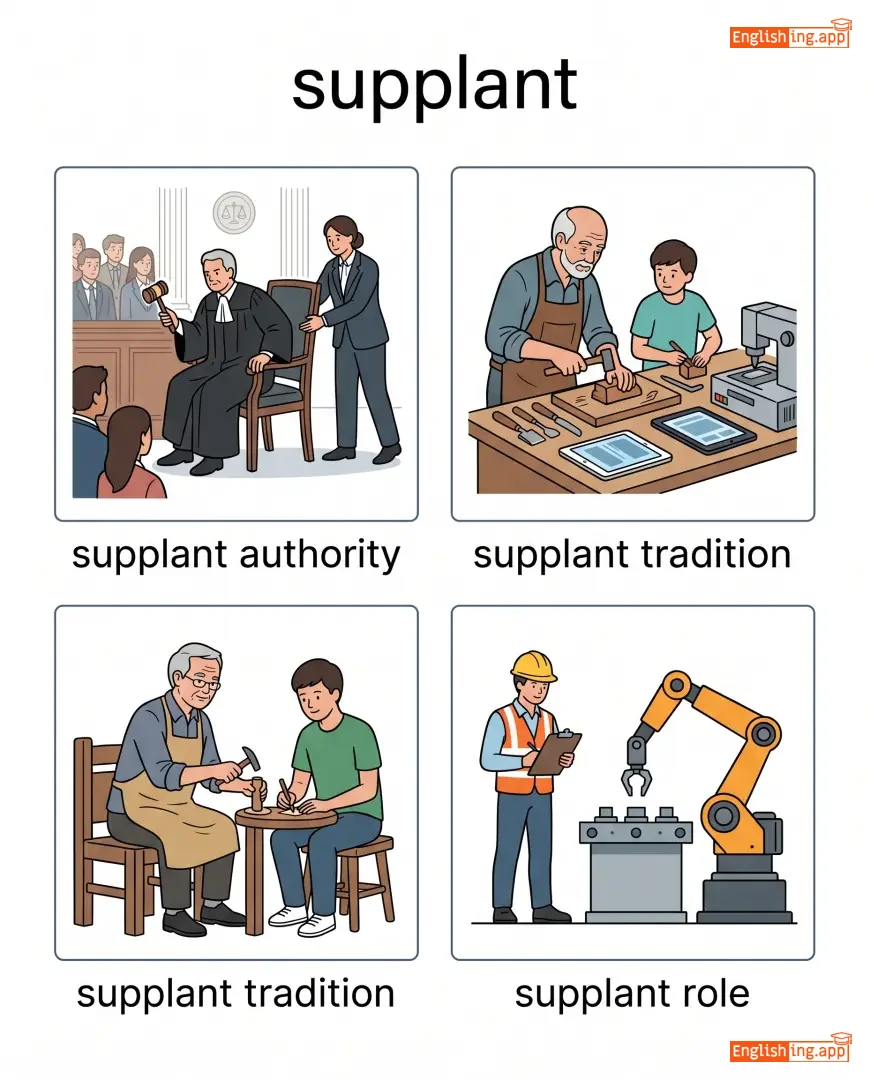
supplant authority, supplant tradition, supplant role, supplant leader
••••••
|
取って代わる=古い植物を新しいものに交換するように、新しいものに置き換えることです!
••••••
|
|
🙏
••••••
|
/ˈsʌpliənt/
adjective
(サプリアント)
••••••
|
|
請願者
seigan-sha
••••••
|
- •••••• | - •••••• | - •••••• | - •••••• |
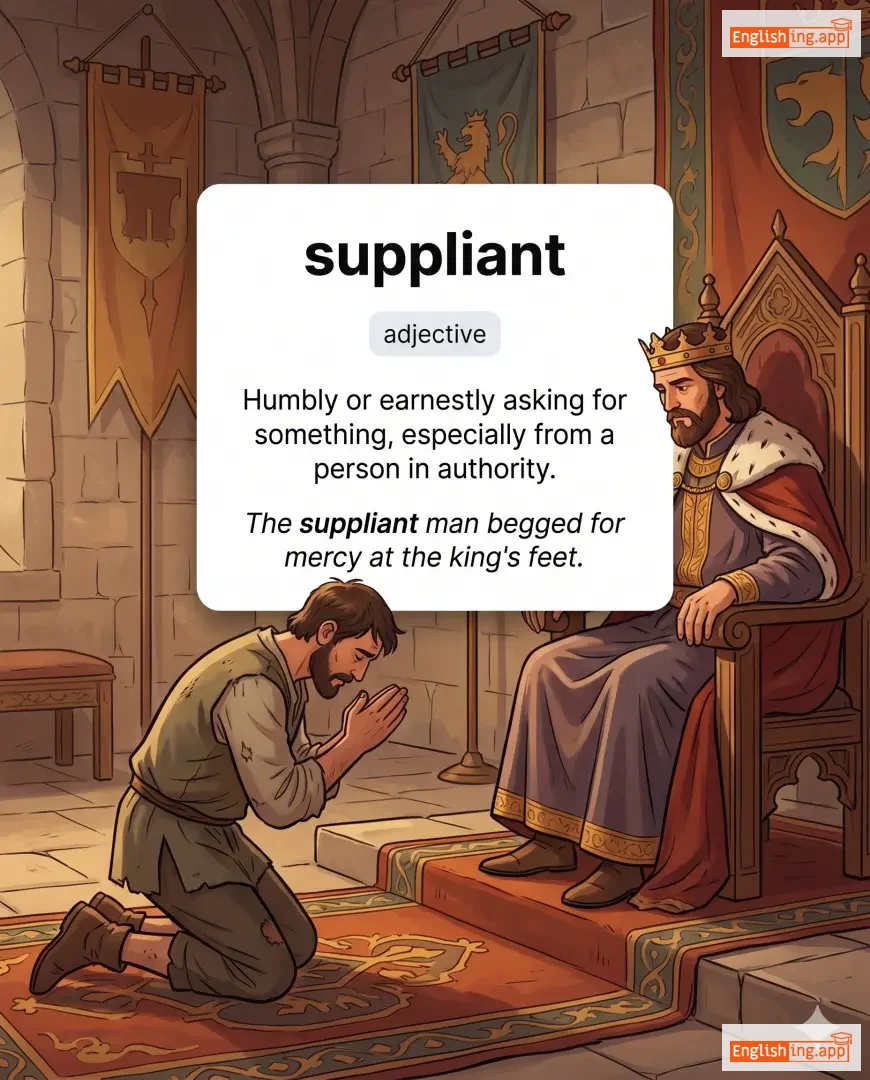
Humbly or earnestly asking for something, especially from a person in authority.
••••••
|
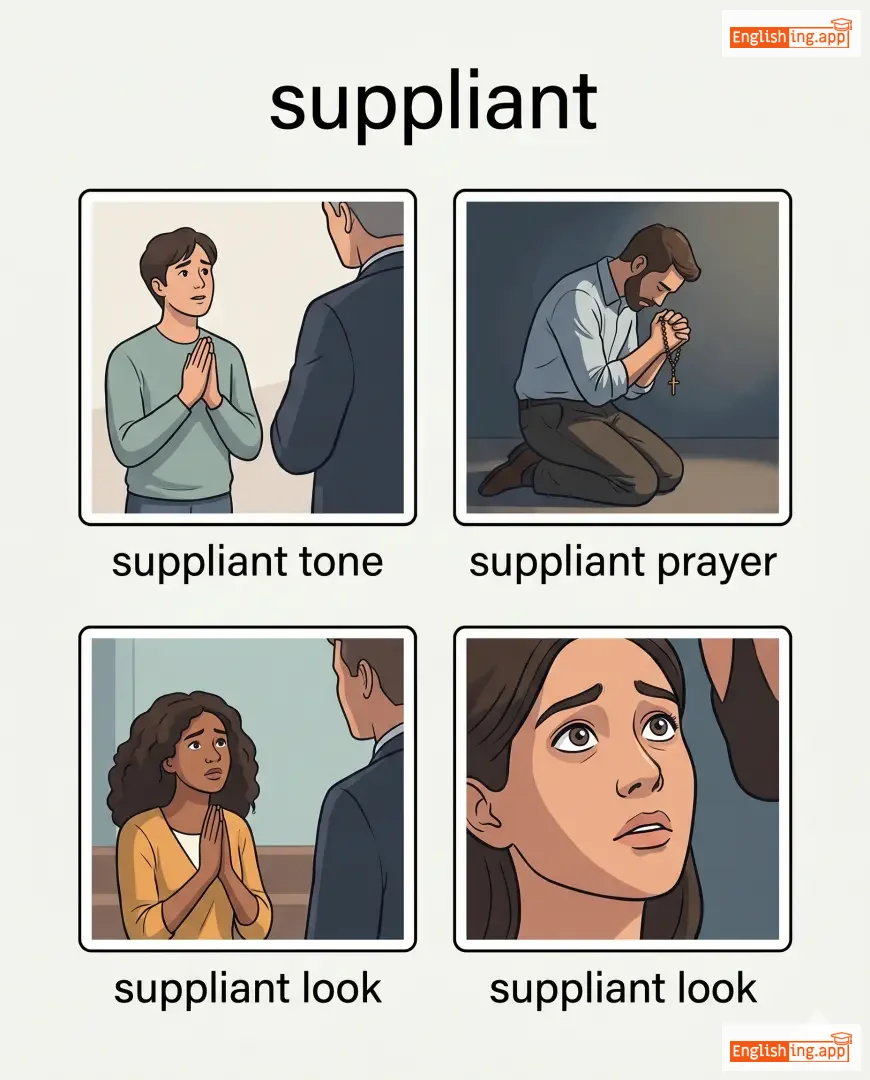
The suppliant man begged for mercy at the king's feet. |
請願者は王の足元で慈悲を乞いました。
Seigansha wa ō no ashimoto de jihī o koimashita.
••••••
|
- •••••• | - •••••• | - •••••• |
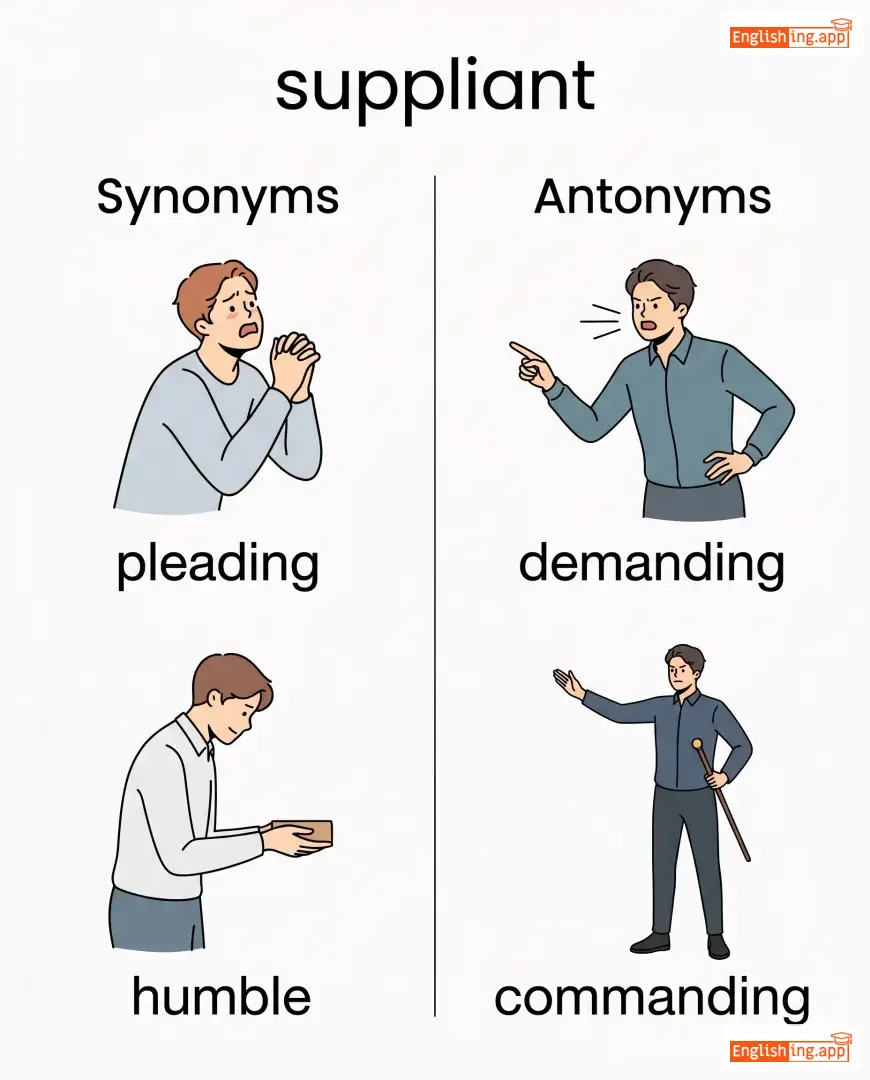
pleading, humble, imploring, petitioning, entreating
••••••
|
demanding, commanding, assertive
••••••
|
suppliant tone, suppliant prayer, suppliant look, suppliant request
••••••
|
Suppliant — 謙虚にお願いする人。
••••••
|

