|
表情符号
|
单词 | Images | 翻译 | 过去时 | 过去分词 | 第三人称单数 | 动名词 | 含义 | 例句 | 例句翻译 | 示例表达 | 示例表达含义 | 示例表达翻译 | 同义词 | 反义词 | 搭配词 | 助记符 |
|---|---|---|---|---|---|---|---|---|---|---|---|---|---|---|---|---|---|
|
⚠️
••••••
|
/ˈstɪɡmə/
noun
(斯蒂格玛)
••••••
|
|
污名
wūmíng
••••••
|
- •••••• | - •••••• | - •••••• | - •••••• |
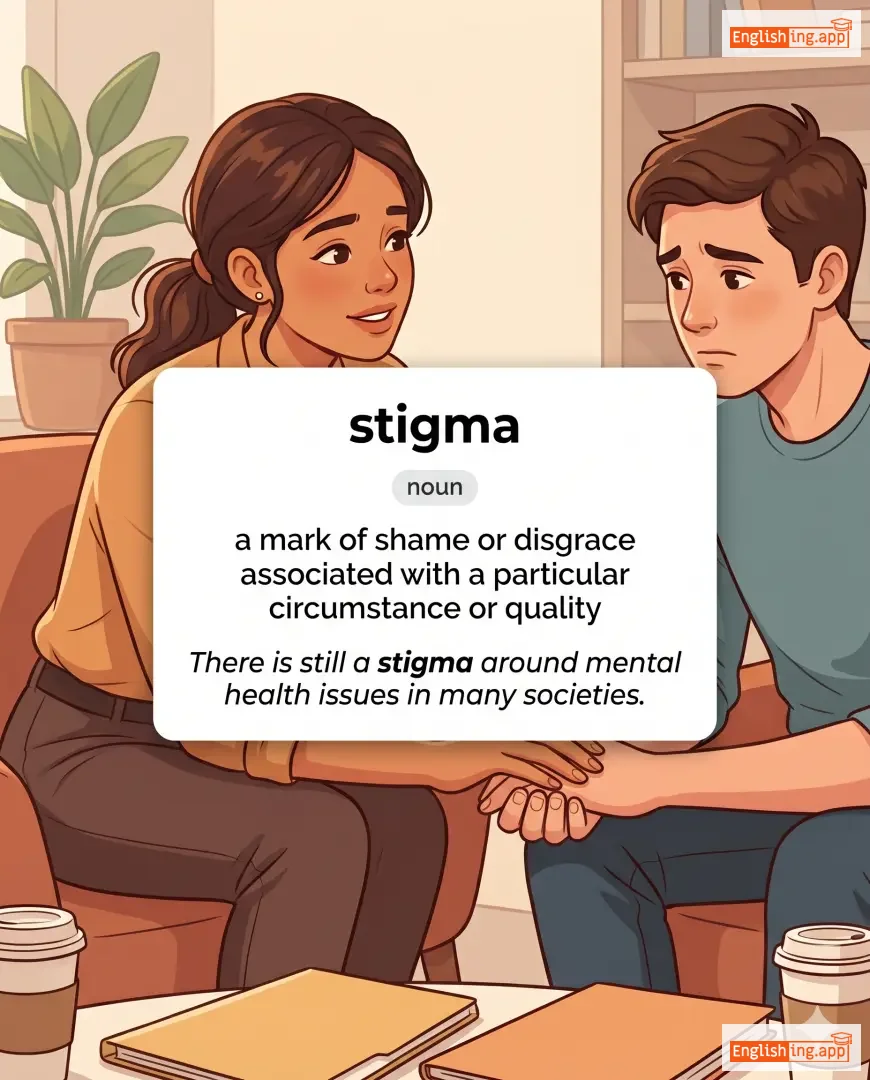
a mark of shame or disgrace associated with a particular circumstance or quality
••••••
|
There is still a stigma around mental health issues in many societies. |
许多社会中,心理健康问题仍然存在污名化现象。
Xǔduō shèhuì zhōng, xīnlǐ jiànkāng wèntí réngrán cúnzài wūmínghuà xiànxiàng.
••••••
|
- •••••• | - •••••• | - •••••• |
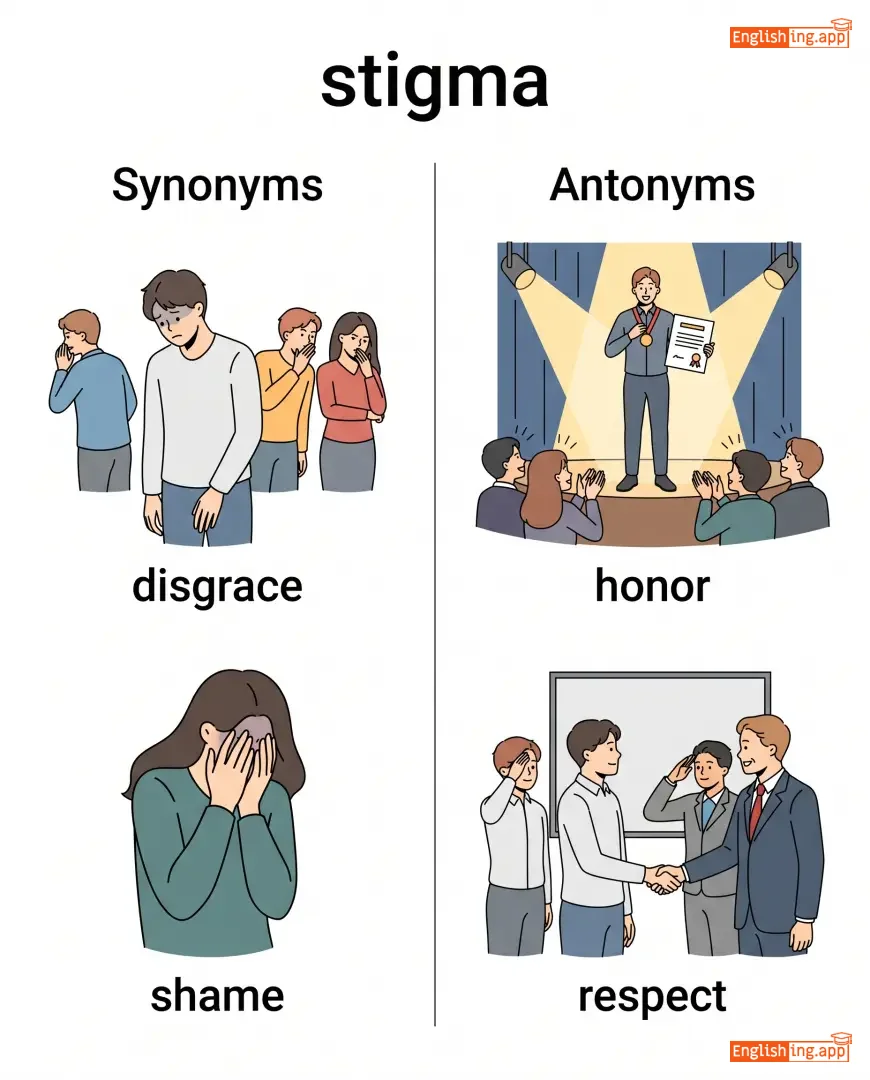
disgrace, shame, taint, blot, dishonor
••••••
|
honor, respect, esteem
••••••
|
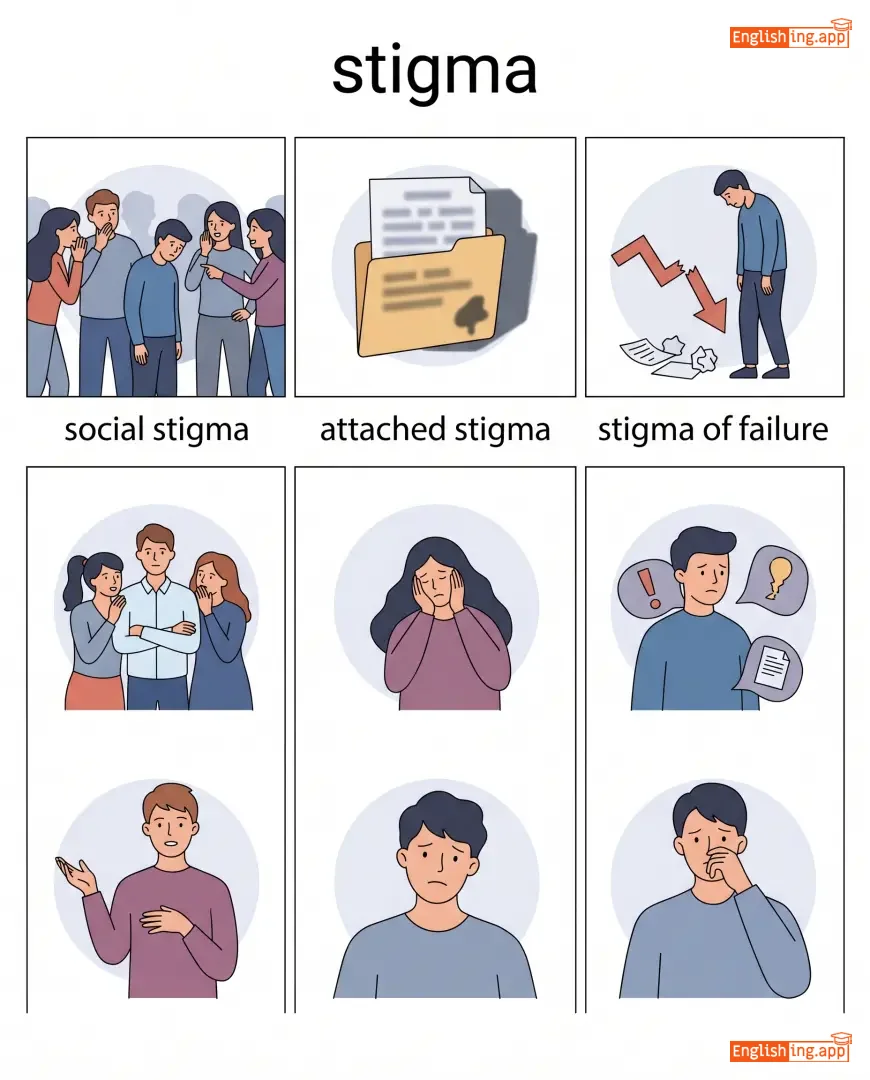
social stigma, attached stigma, stigma of failure, stigma surrounding
••••••
|
Stigma = 耻辱标记 = 污名
••••••
|
|
⏳
••••••
|
/stɪnt/
noun
(中文)
••••••
|
|
短期工作
duǎnqī gōngzuò
••••••
|
- •••••• | - •••••• | - •••••• | - •••••• |
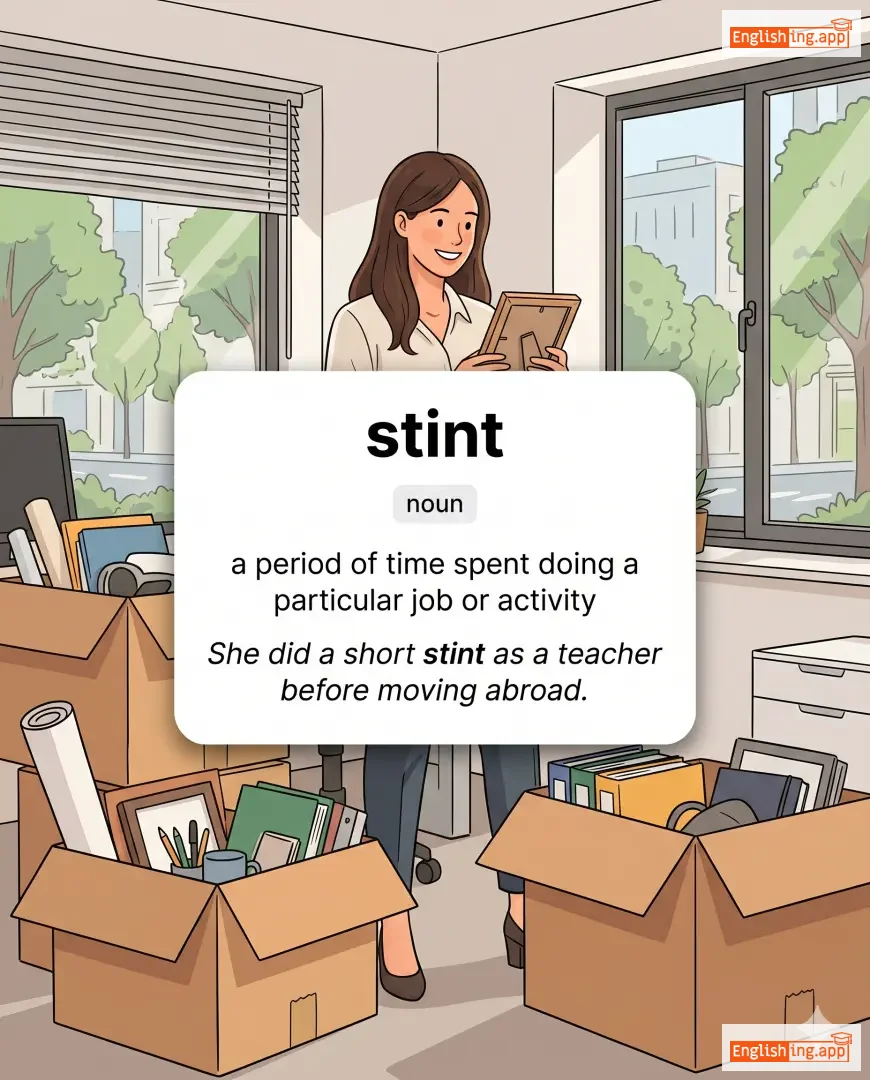
a period of time spent doing a particular job or activity
••••••
|
She did a short stint as a teacher before moving abroad.
她在搬到国外之前做了一段短时间的教师工作。
••••••
|
她在搬到国外之前做了一段短时间的教师工作。
Tā zài bān dào guówài zhīqián zuòle yī duàn duǎn shíjiān de jiàoshī gōngzuò.
••••••
|
- •••••• | - •••••• | - •••••• |
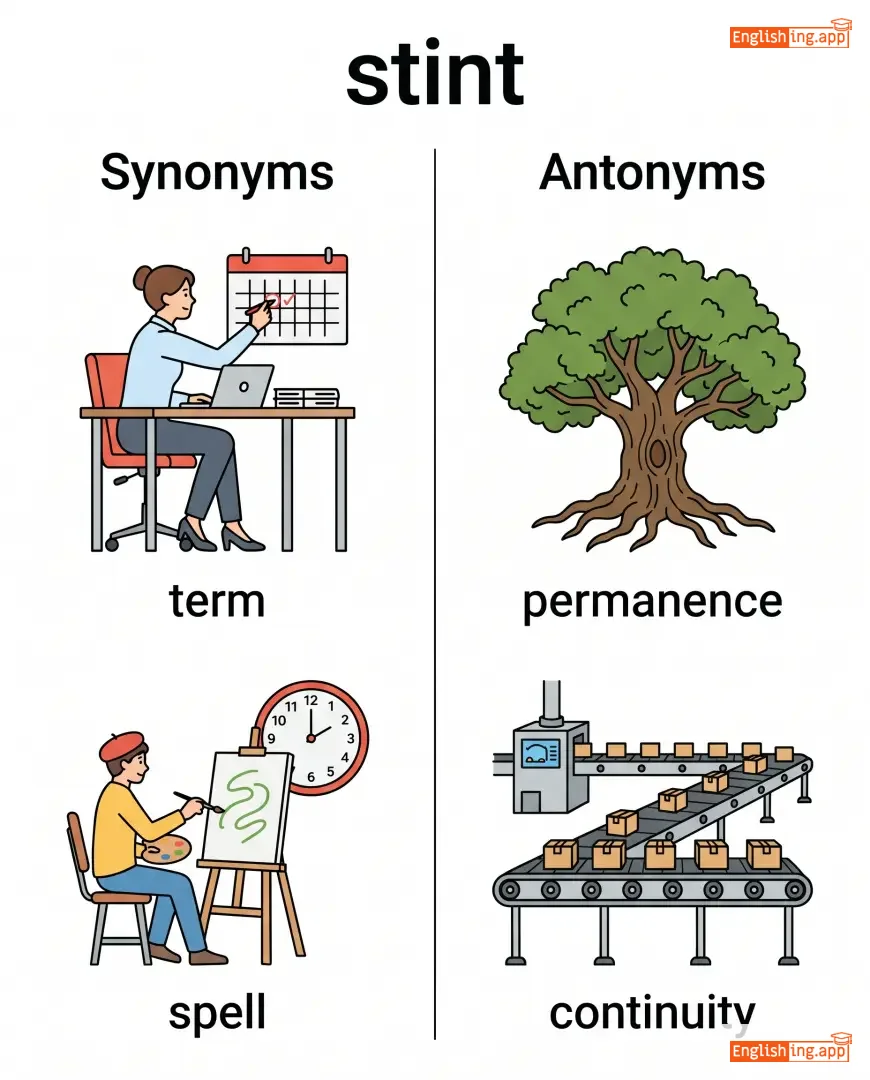
term, spell, period, stretch, service
••••••
|
permanence, continuity
••••••
|
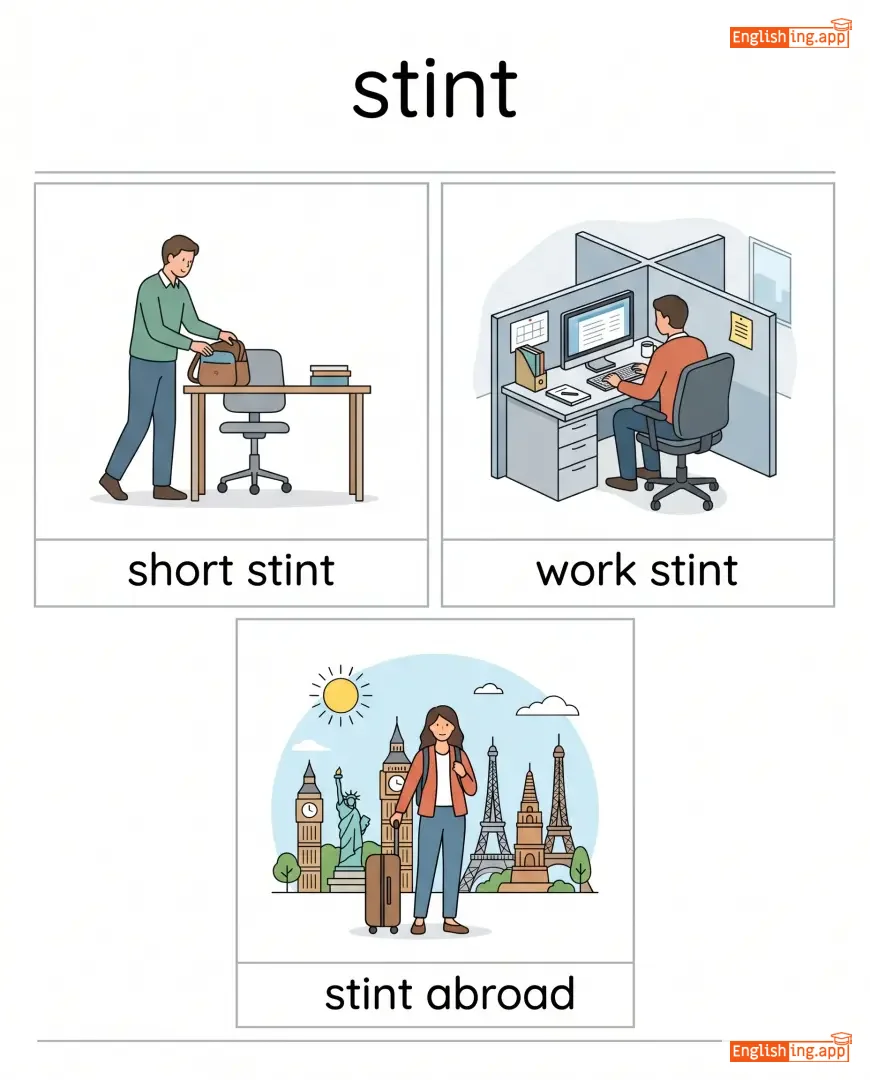
short stint, work stint, stint abroad, stint in service
••••••
|
Stint - 短期工作,类似兼职工作
••••••
|
|
📜
••••••
|
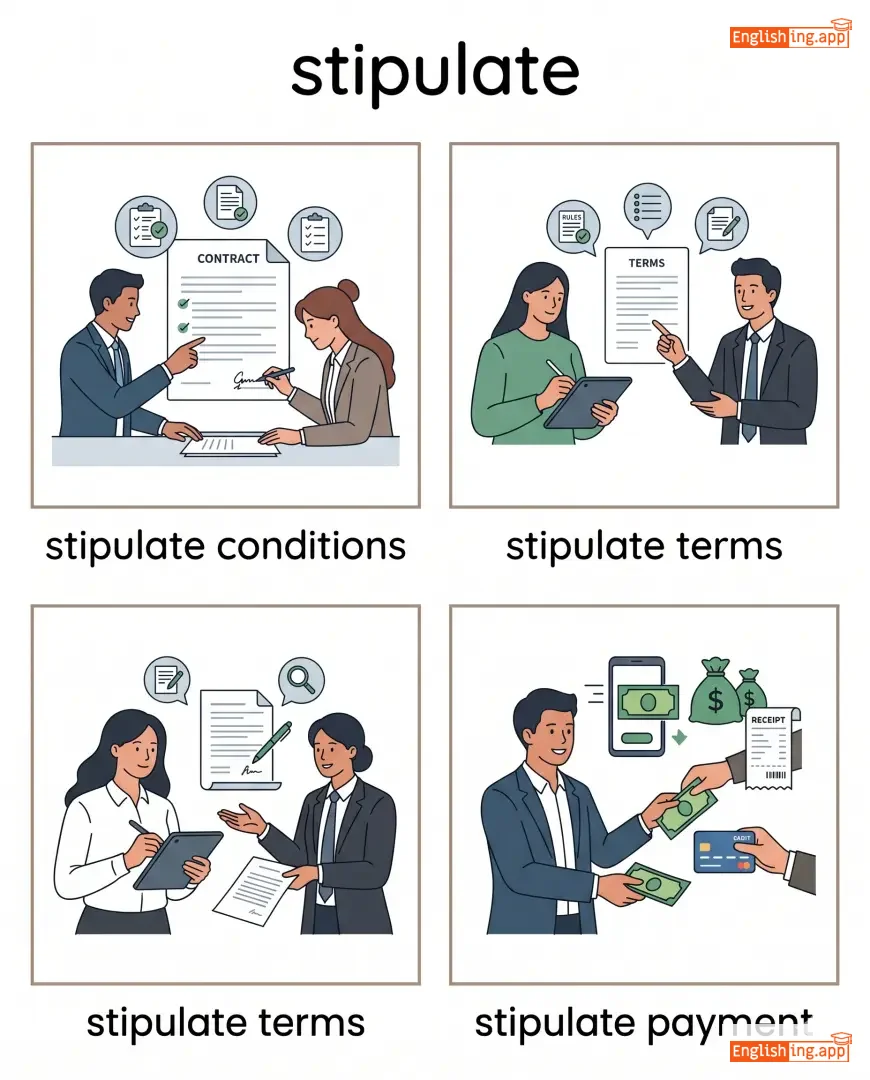
/ˈstɪp.jʊ.leɪt/
verb
(斯蒂普莱特)
••••••
|
|
规定
guīdìng
••••••
|
stipulated
斯蒂普莱特德
••••••
|
stipulated
斯蒂普莱特德
••••••
|
stipulates
斯蒂普莱特斯
••••••
|
stipulating
斯蒂普莱廷
••••••
|
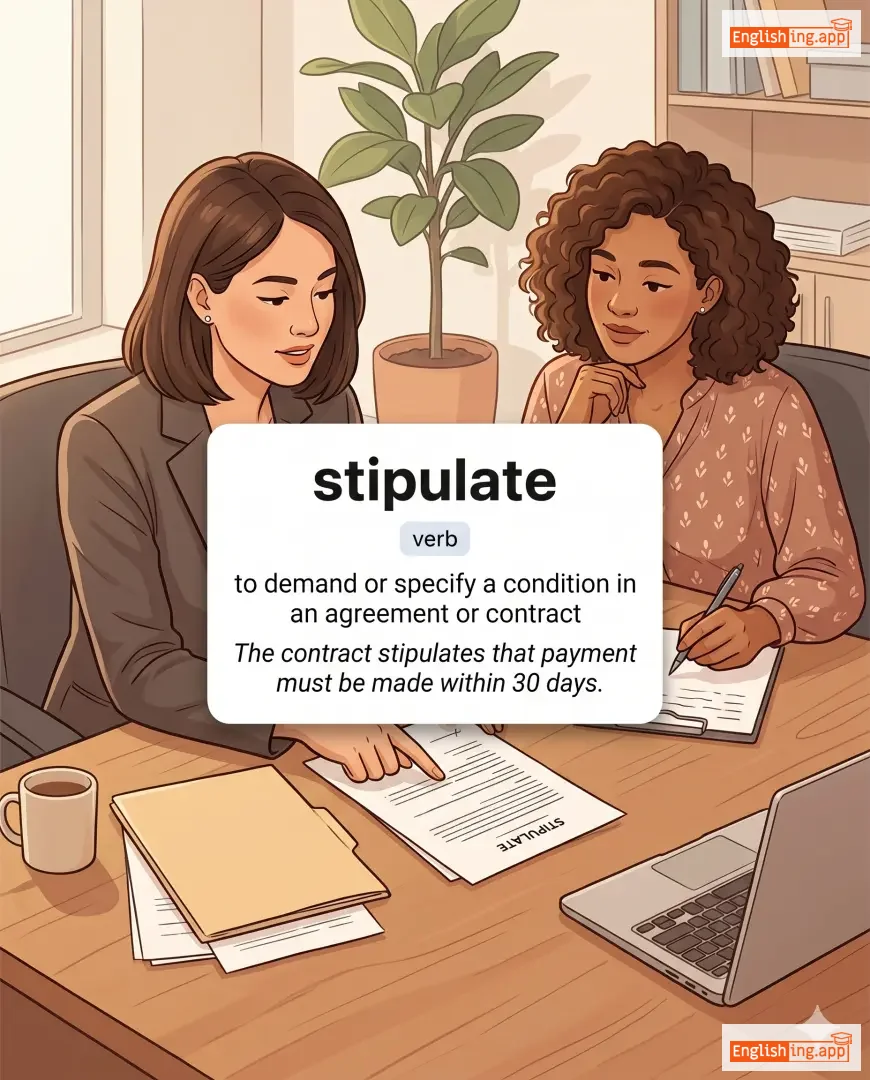
to demand or specify a condition in an agreement or contract
••••••
|
The contract stipulates that payment must be made within 30 days.
合同规定付款必须在30天内完成。
••••••
|
合同规定付款必须在30天内完成。
Hetong guīdìng fùkuǎn bìxū zài 30 tiān nèi wánchéng.
••••••
|
stipulate terms
规定条款
••••••
|
to formally specify conditions in an agreement
••••••
|
规定条款
guīdìng tiáokuǎn
••••••
|
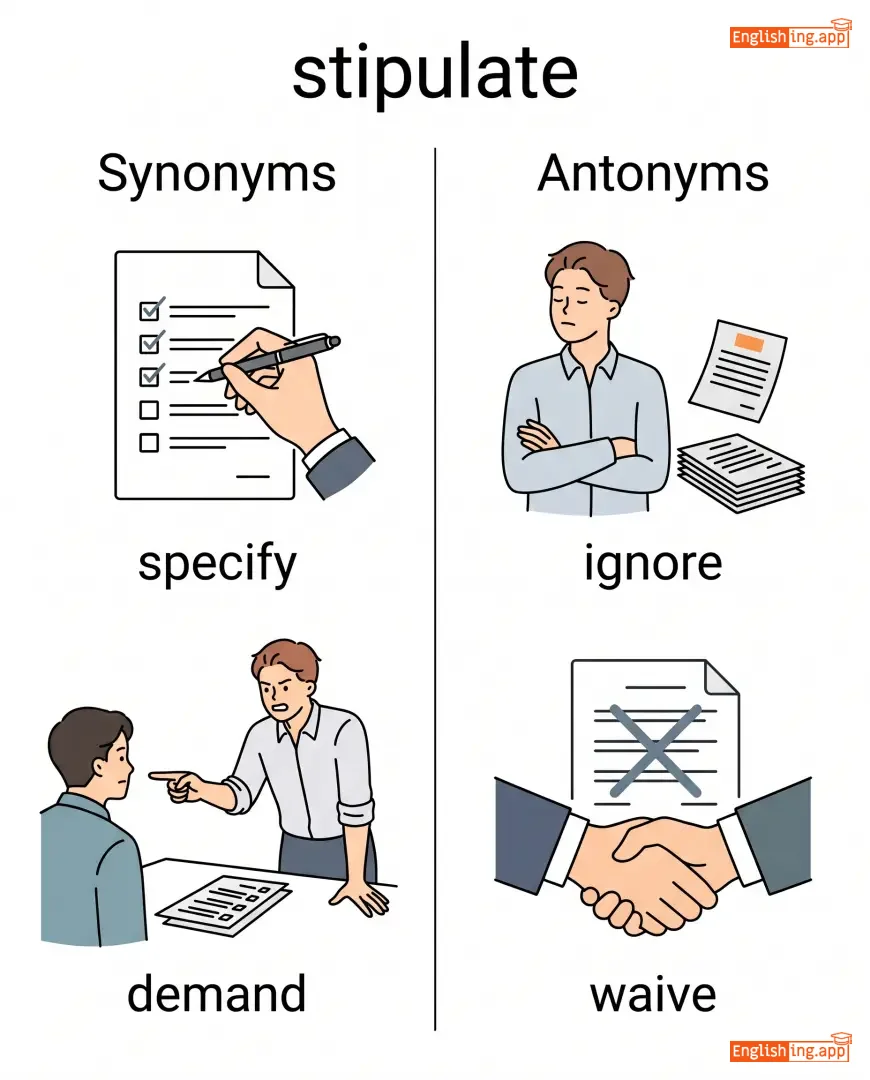
specify, demand, require, prescribe, condition
••••••
|
ignore, waive, overlook
••••••
|
stipulate conditions, stipulate terms, stipulate payment, stipulate requirement
••••••
|
stipulate = 规定条款
••••••
|
|
🪵
••••••
|
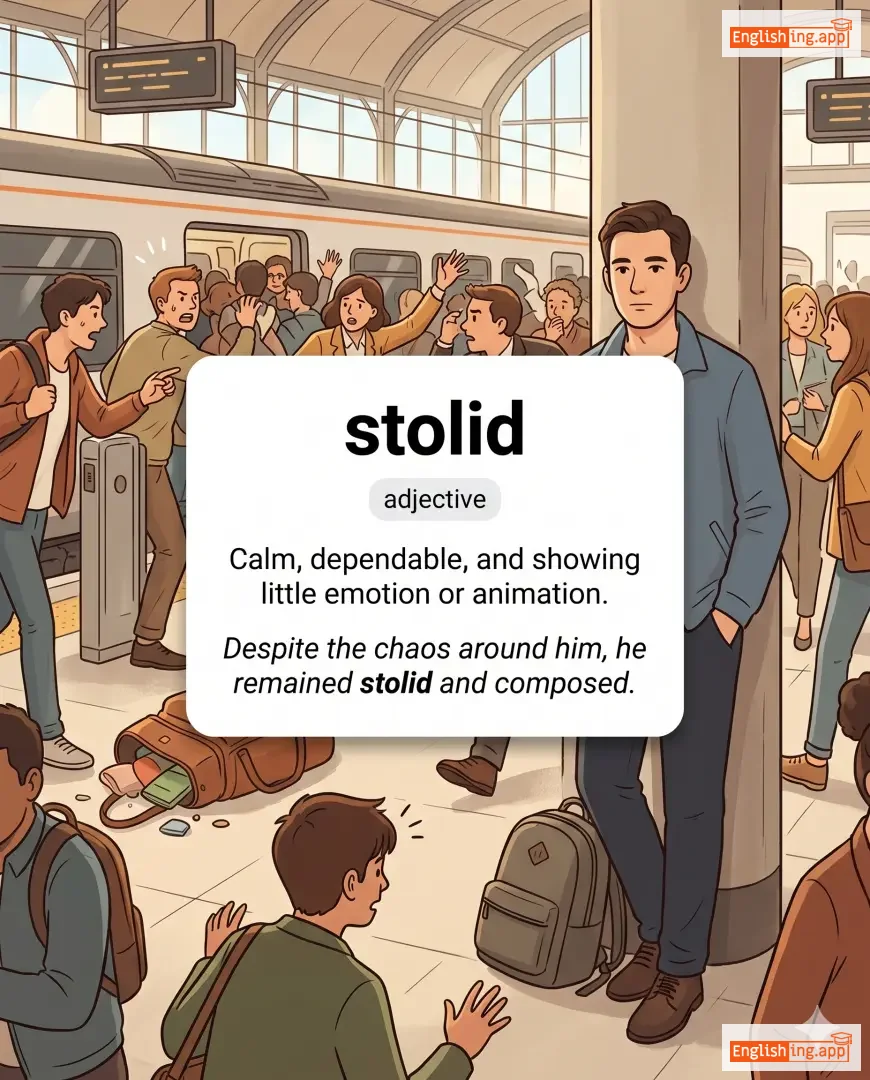
/ˈstɒlɪd/
adjective
(斯托利德)
••••••
|
|
冷静的,沉默的
lěngjìng de, chénmò de
••••••
|
- •••••• | - •••••• | - •••••• | - •••••• |
Calm, dependable, and showing little emotion or animation.
••••••
|
Despite the chaos around him, he remained stolid and composed.
迪斯派特 德 凯欧斯 阿劳恩德 希姆, 希 里门德 斯托利德 安德 坎坡兹德。
••••••
|
尽管周围混乱,他依然冷静沉着。
Jǐnguǎn zhōuwéi hùnluàn, tā yīrán lěngjìng chénzhuó.
••••••
|
- •••••• | - •••••• | - •••••• |
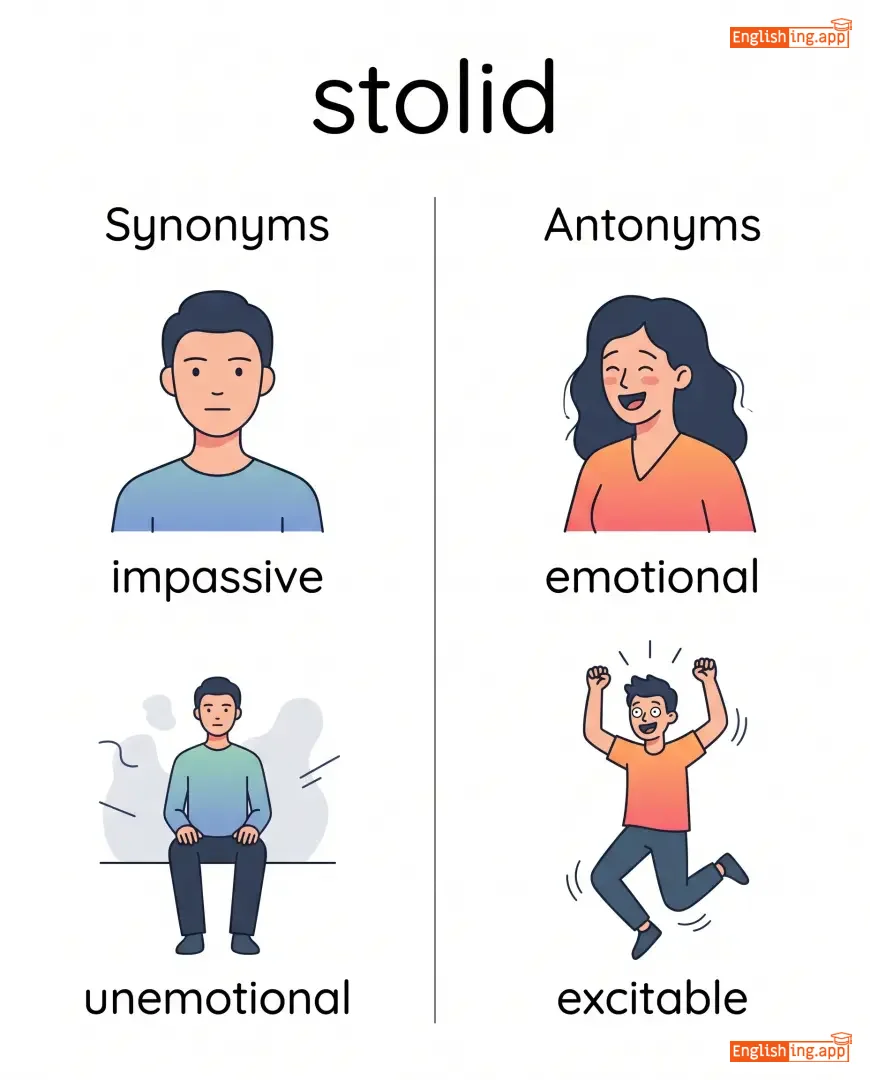
impassive, unemotional, phlegmatic, placid, steady
••••••
|
emotional, excitable, expressive
••••••
|
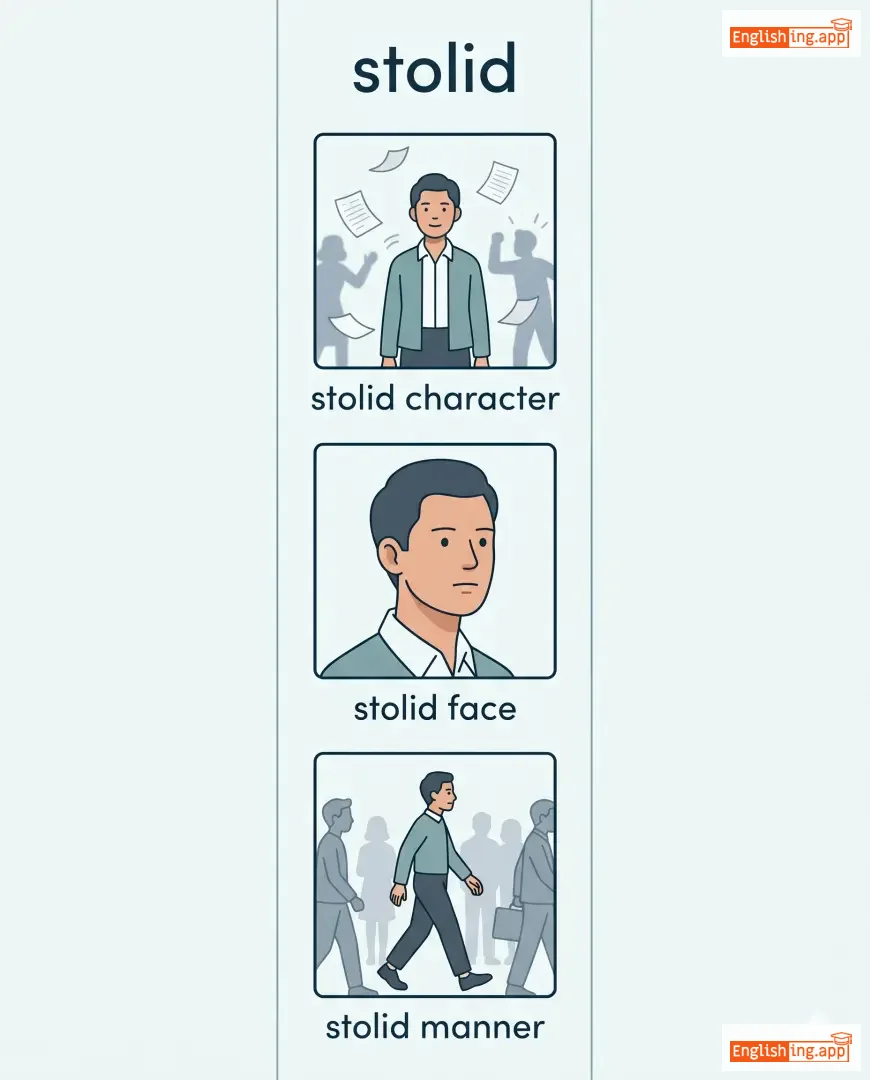
stolid character, stolid face, stolid manner, stolid calm
••••••
|
Stolid – 像石头一样冷静。
••••••
|
|
📚
••••••
|
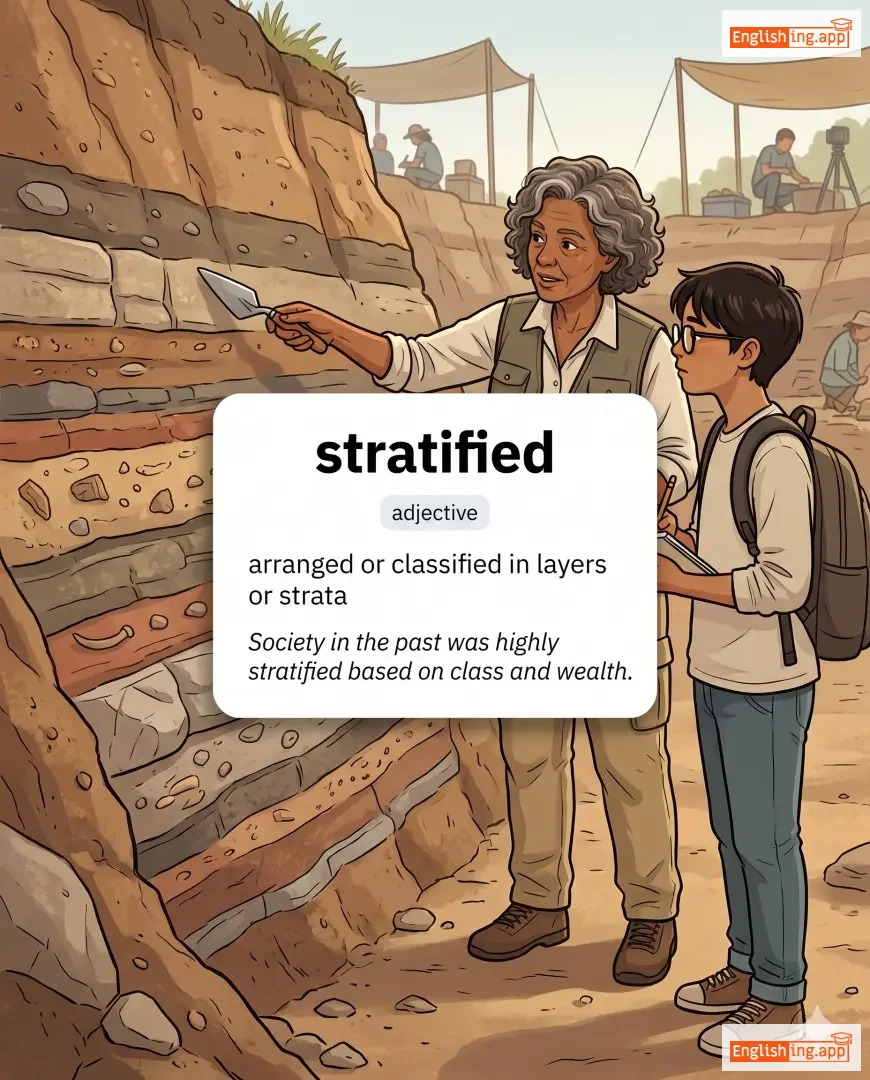
/ˈstrætɪfaɪd/
adjective
••••••
|
|
- •••••• | - •••••• | - •••••• | - •••••• | - •••••• |
arranged or classified in layers or strata
••••••
|
Society in the past was highly stratified based on class and wealth. |
- •••••• | - •••••• | - •••••• | - •••••• |
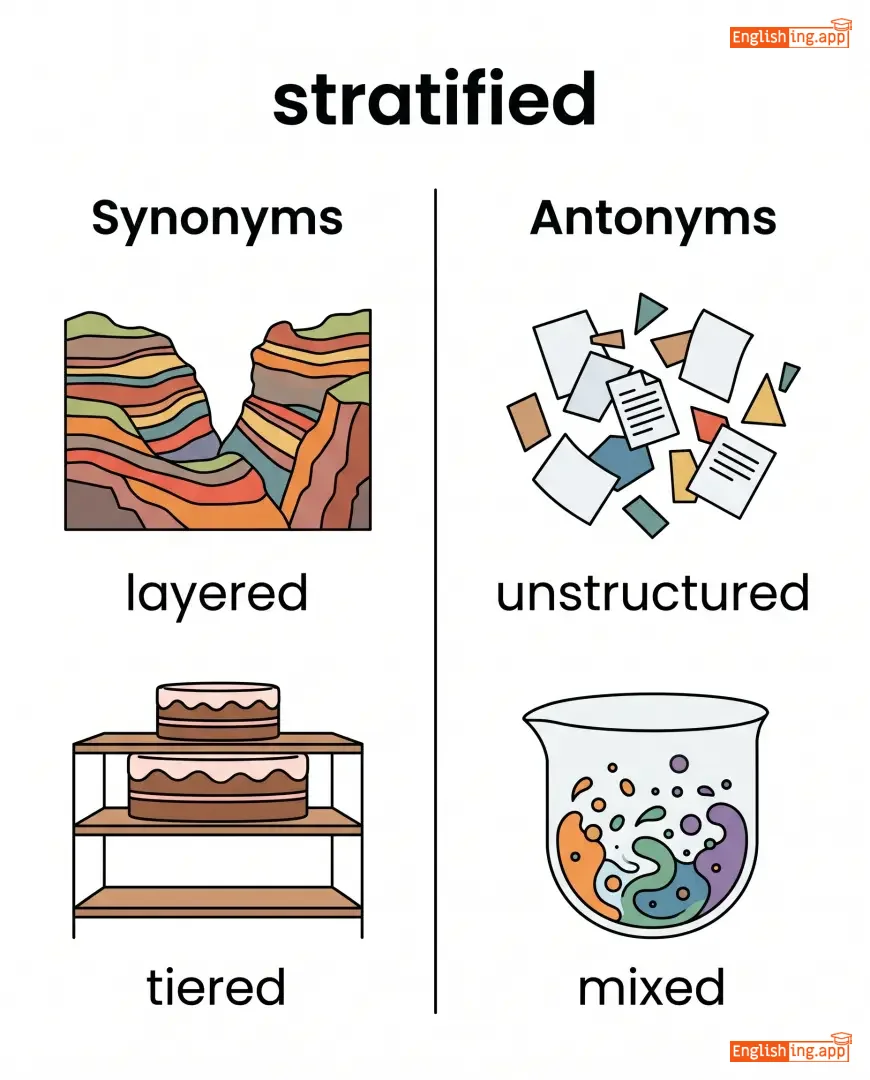
layered, tiered, hierarchical, arranged
••••••
|
unstructured, mixed
••••••
|
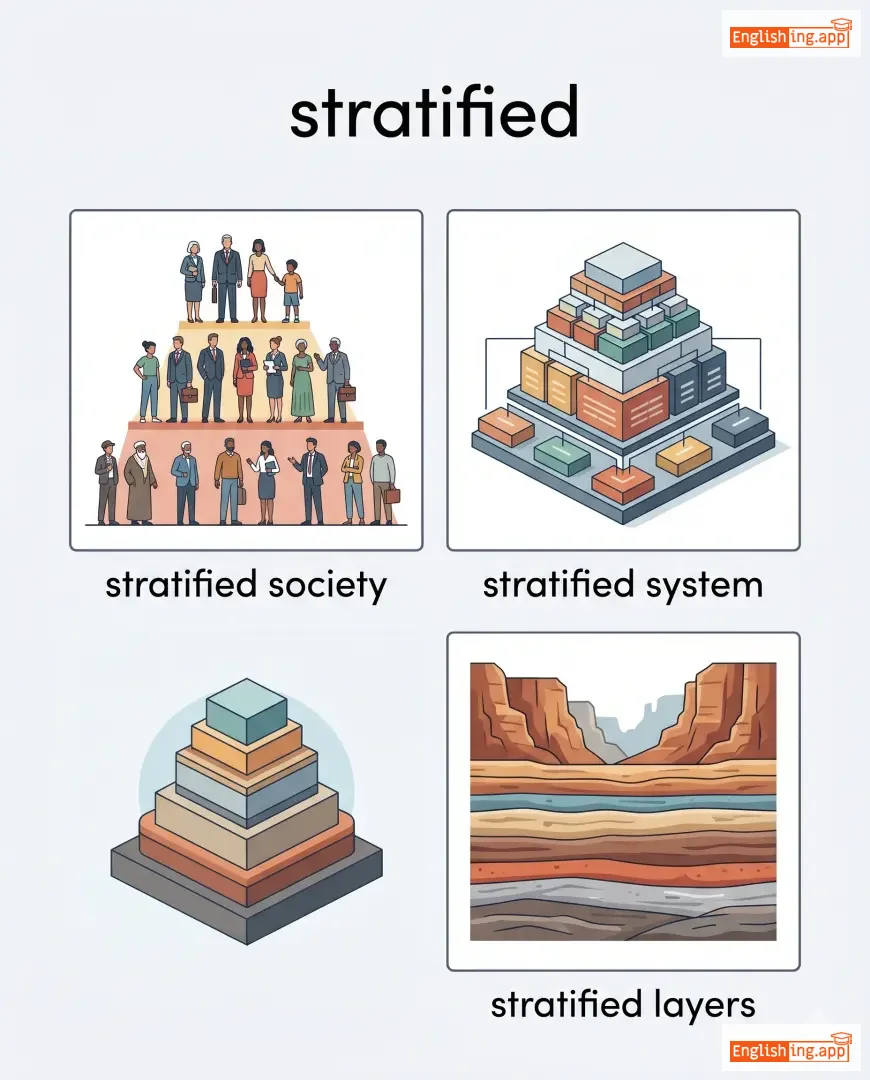
stratified society, stratified system, stratified layers
••••••
|
No •••••• |
|
📏
••••••
|
/ˈstraɪ.eɪ.tɪd/
adjective
(esutaietede)
••••••
|
|
条纹的
tiaowende
••••••
|
- •••••• | - •••••• | - •••••• | - •••••• |
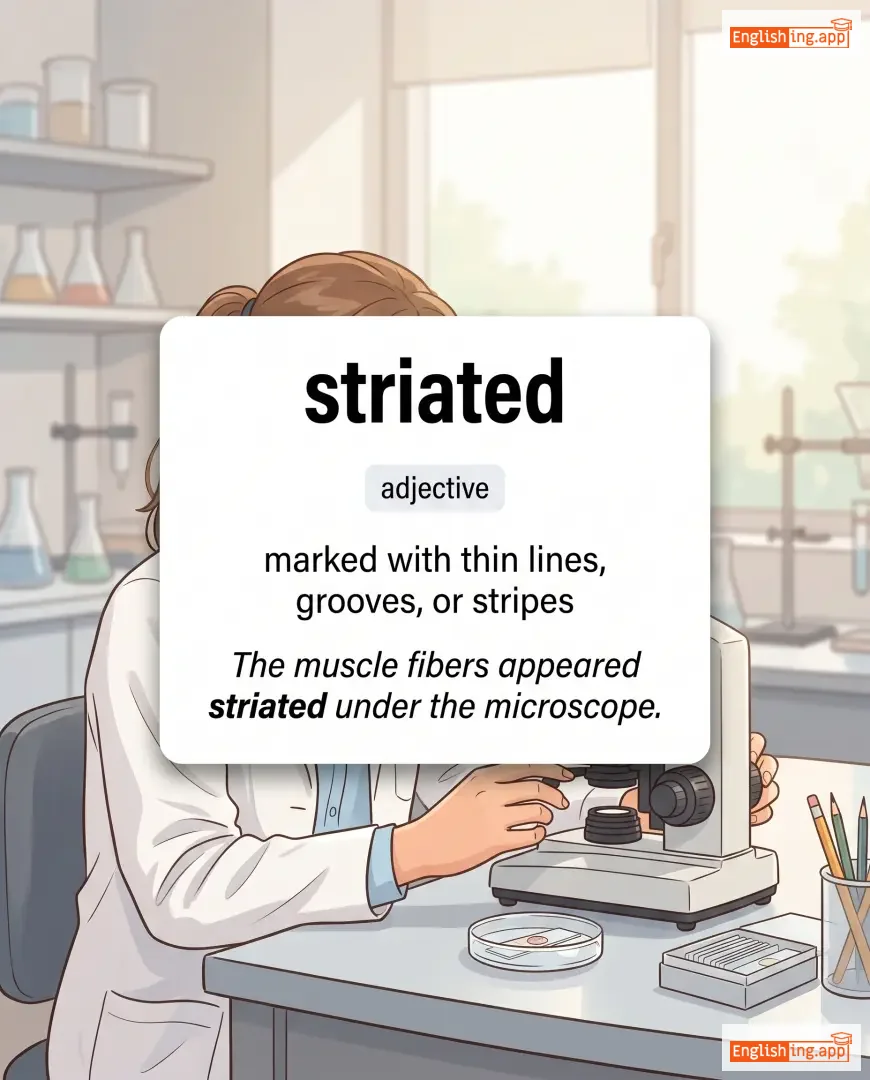
marked with thin lines, grooves, or stripes
••••••
|
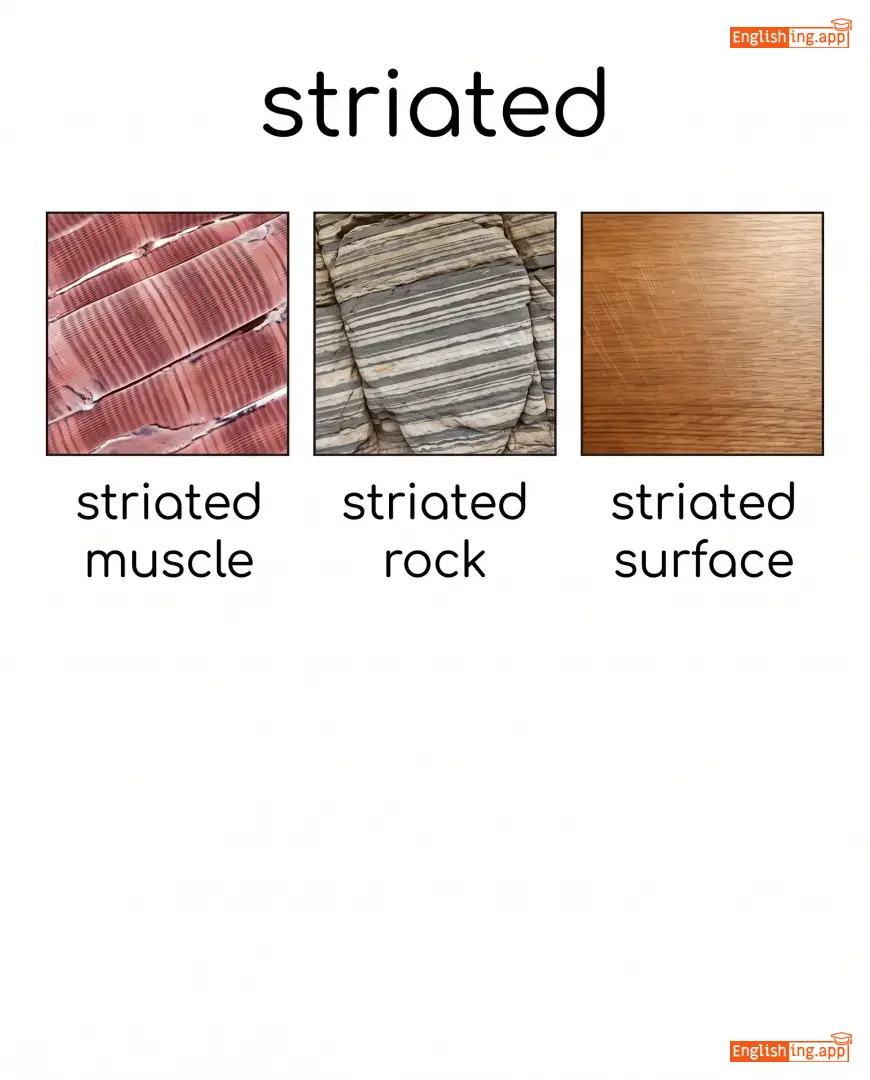
The muscle fibers appeared striated under the microscope. |
在显微镜下,肌肉纤维看起来是条纹的。
Zai xianweijing xia, jirou xianwei kan qilai shi tiaowende.
••••••
|
- •••••• | - •••••• | - •••••• |
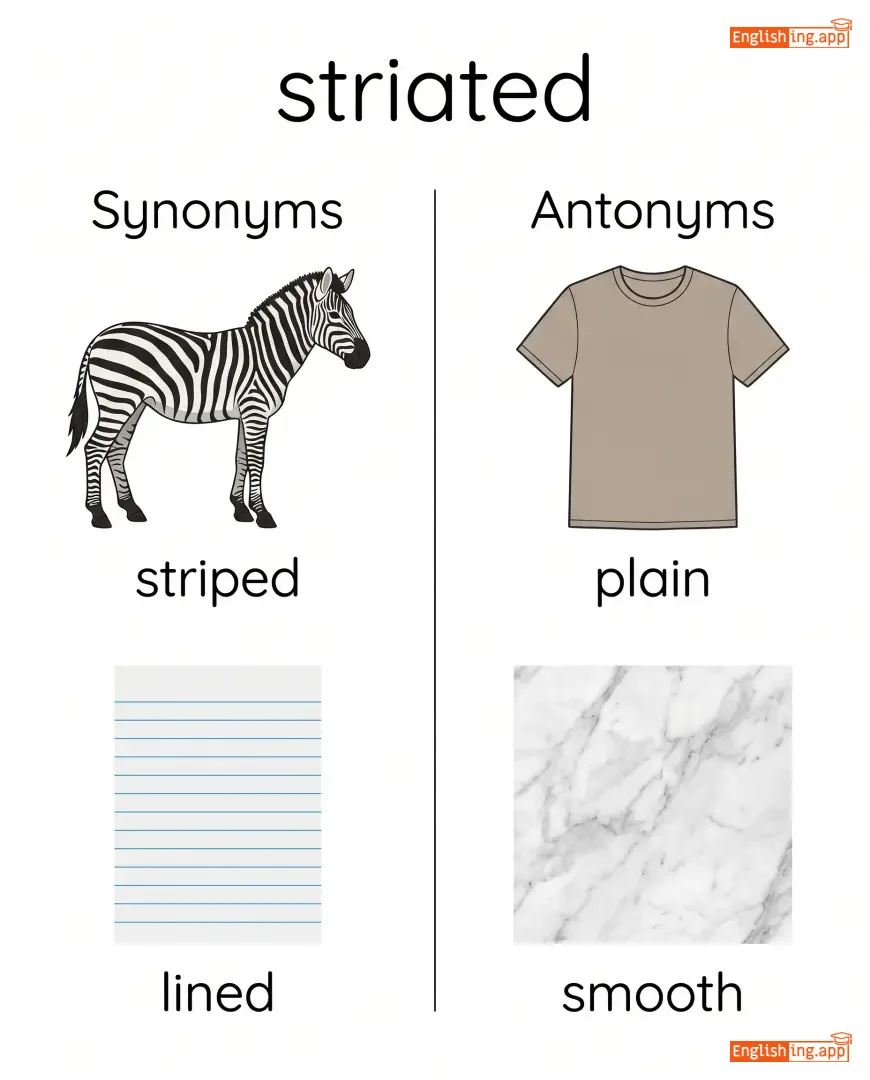
striped, lined, grooved, banded
••••••
|
plain, smooth
••••••
|
striated muscle, striated rock, striated surface, striated pattern
••••••
|
Striated意味着有条纹,就像马路上的斑马线。
••••••
|
|
🚫
••••••
|
/ˈstrɪk.tʃər/
noun
(sīlìkèchū)
••••••
|
|
限制,批评
xianzhi, piping
••••••
|
- •••••• | - •••••• | - •••••• | - •••••• |
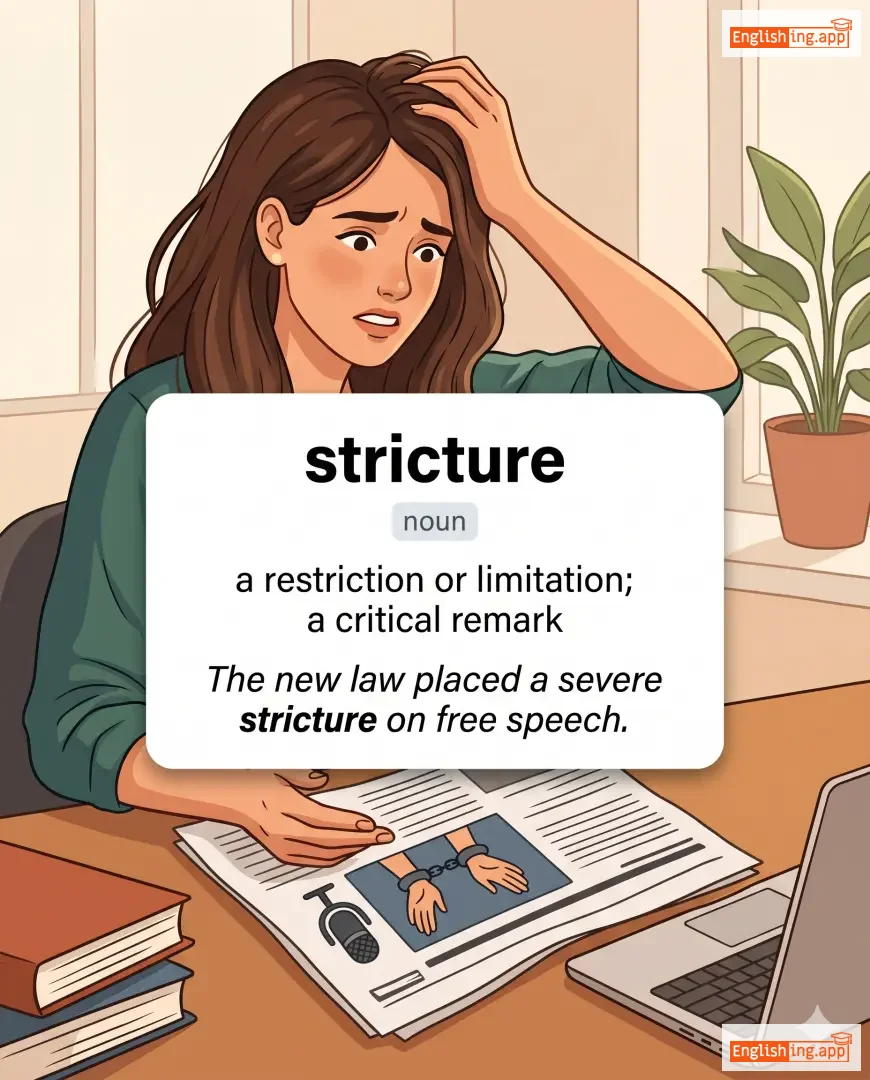
a restriction or limitation; a critical remark
••••••
|
The new law placed a severe stricture on free speech. |
新法律对言论自由施加了严格的限制。
Xin falu dui yanlun ziyou shijia le yange de xianzhi.
••••••
|
- •••••• | - •••••• | - •••••• |
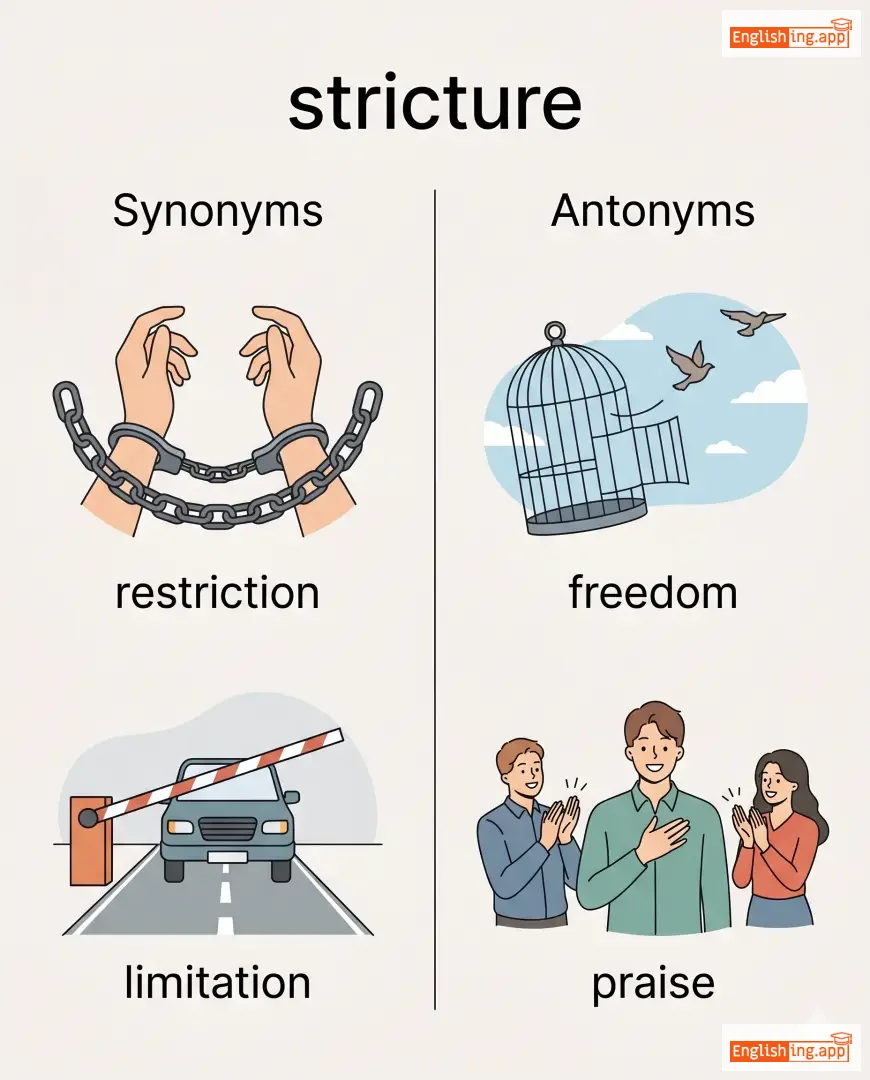
restriction, limitation, constraint, criticism, rebuke
••••••
|
freedom, praise
••••••
|
legal stricture, moral stricture, severe stricture, social stricture
••••••
|
Stricture意味着限制或批评。
••••••
|
|
📢
••••••
|
/ˈstraɪ.dənt/
adjective
(斯特莱登特)
••••••
|
- •••••• |
刺耳的, 嘈杂的
cì ěr de, cáo zá de
••••••
|
- •••••• | - •••••• | - •••••• | - •••••• |
loud and harsh; presenting a point of view in a forceful way
••••••
|
His strident voice made the debate uncomfortable. |
他刺耳的声音让辩论变得不舒服。
Tā cì ěr de shēng yīn ràng biàn lùn biàn dé bù shū fu.
••••••
|
- •••••• | - •••••• | - •••••• |
harsh, loud, grating, shrill, forceful
••••••
|
soft, gentle, mild
••••••
|
strident voice, strident tone, strident criticism, strident demands
••••••
|
Strident在中文中意味着尖锐的声音,像 '刺耳的'。
••••••
|
|
🚶♂️
••••••
|
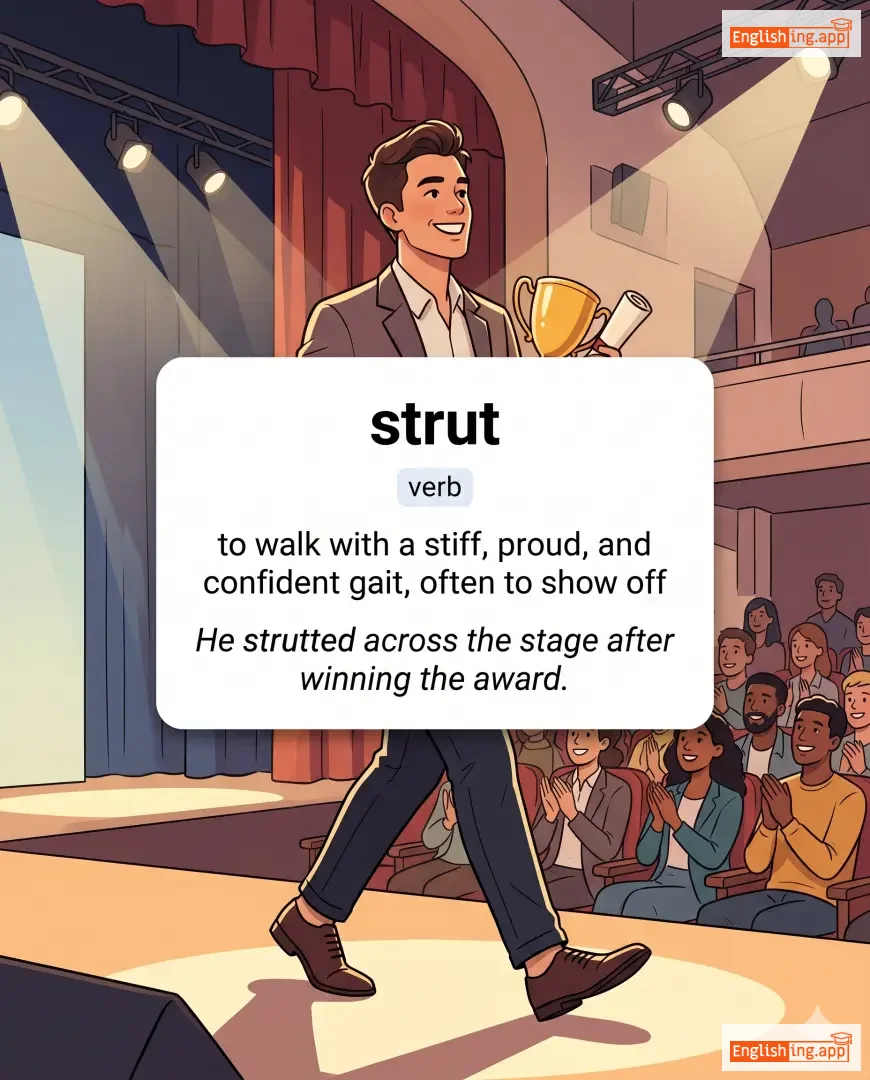
/strʌt/
verb
(斯特拉特)
••••••
|
|
昂首阔步
áng shǒu kuò bù
••••••
|
strutted
斯特拉特德
••••••
|
strutted
斯特拉特德
••••••
|
struts
斯特拉特斯
••••••
|
strutting
斯特拉特英
••••••
|
to walk with a stiff, proud, and confident gait, often to show off
••••••
|
He strutted across the stage after winning the award.
他赢得奖项后自信地走上了舞台。
••••••
|
他赢得奖项后自信地走上了舞台。
Tā yíng dé jiǎng xiàng hòu zì xìn de zǒu shàng le wǔ tái.
••••••
|
strut one's stuff
展示自己的能力
••••••
|
to show one's abilities, skills, or confidence proudly
••••••
|
展示你的技能
zhǎn shì nǐ de jì néng
••••••
|
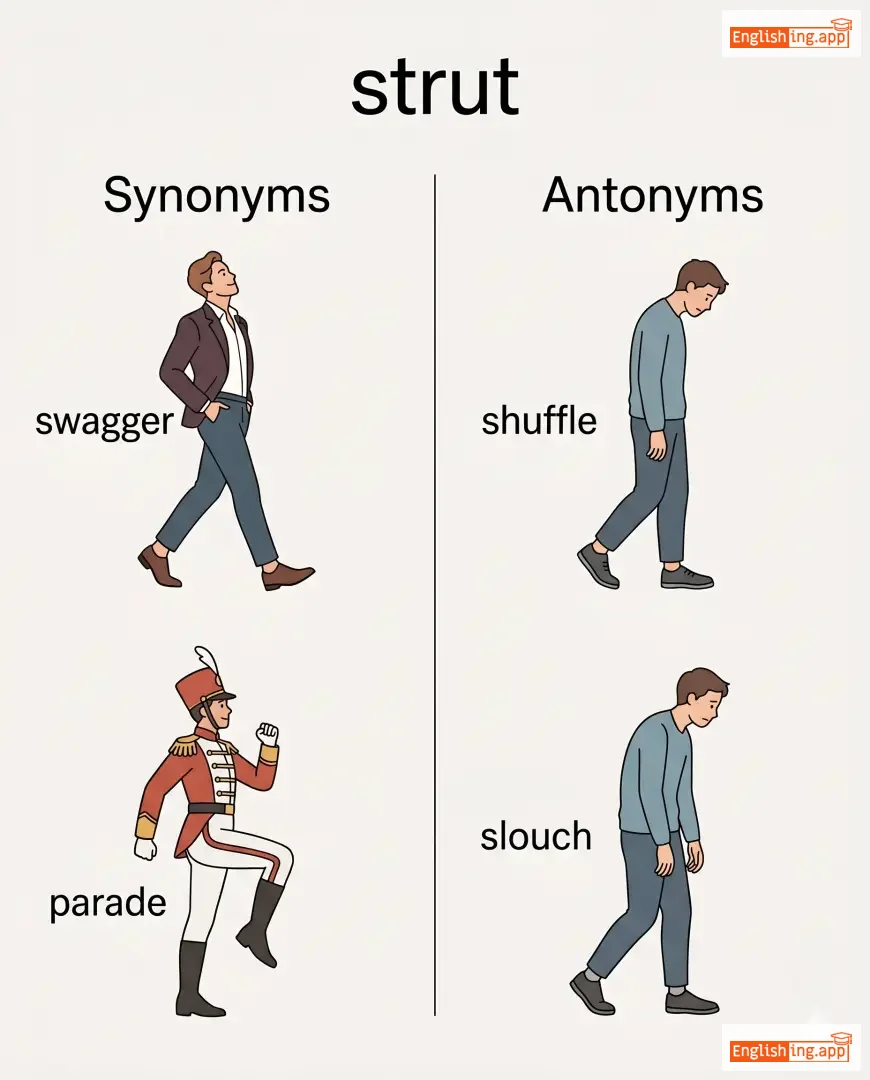
swagger, parade, flaunt, prance, show off
••••••
|
shuffle, slouch
••••••
|
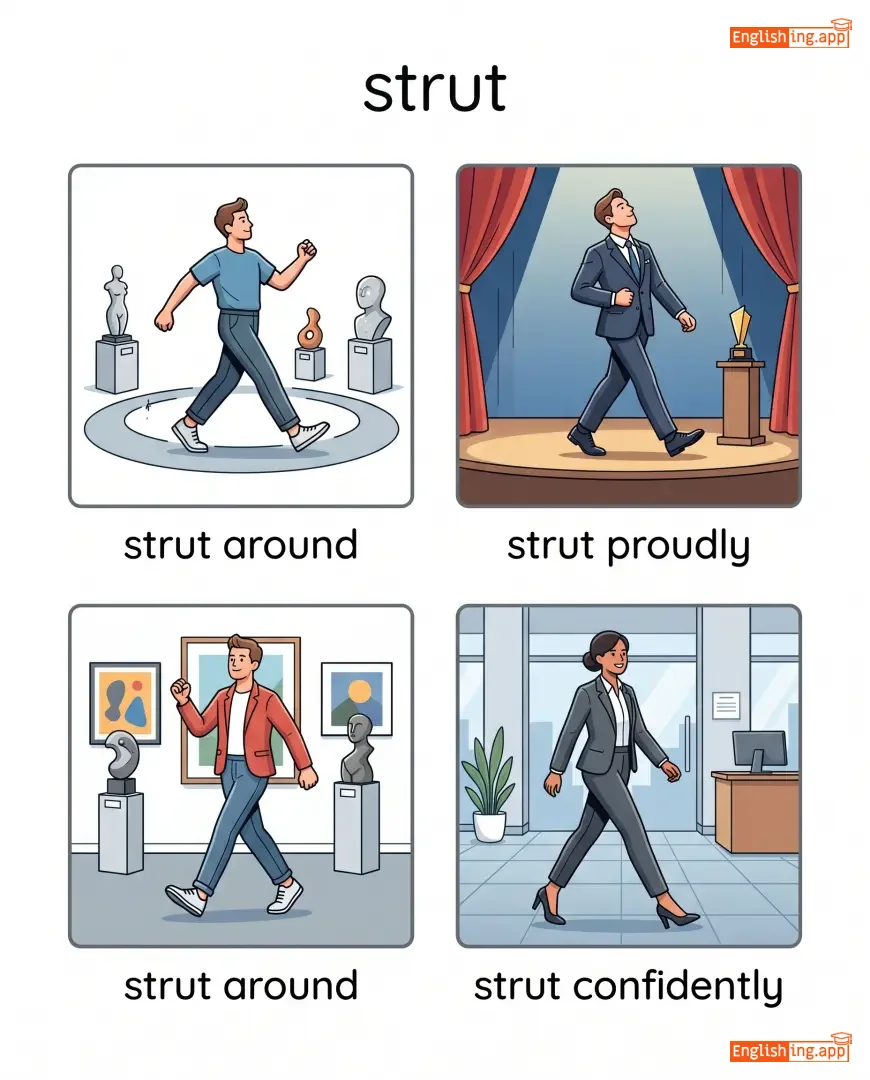
strut around, strut proudly, strut confidently, strut across
••••••
|
Strut 是走得像雄鹰一样,自信地昂首阔步
••••••
|
|
😵
••••••
|
/ˈstʌltɪfaɪ/
verb
(斯塔尔蒂法伊)
••••••
|
- •••••• |
使某人或某物显得愚蠢,或阻碍效率和热情
shǐ mǒu rén huò mǒu wù xiǎn dé yú chǔn, huò zǔ ài xiào lǜ hé rè qíng
••••••
|
stultified
斯塔尔蒂法伊德
••••••
|
stultified
斯塔尔蒂法伊德
••••••
|
stultifies
斯塔尔蒂法伊斯
••••••
|
stultifying
斯塔尔蒂法英
••••••
|
to make someone or something appear foolish, or to hinder effectiveness and enthusiasm
••••••
|
The repetitive tasks seemed to stultify the workers' creativity.
重复的任务似乎使工人的创造力变得迟钝。
••••••
|
重复的任务似乎使工人的创造力变得迟钝。
Chóng fù de rèn wu shì hū shǐ gōng rén de chuàng zào lì biàn dé chí dùn.
••••••
|
- •••••• | - •••••• | - •••••• |
hamper, hinder, suppress, weaken, frustrate
••••••
|
encourage, inspire, stimulate
••••••
|
stultify efforts, stultify creativity, stultify growth, stultify development
••••••
|
Stultify = STOP + Qualify → 停止并让它显得愚蠢
••••••
|
|
😲
••••••
|
/ˈstjuːpɪˌfaɪ/
verb
(斯图皮法伊)
••••••
|
- •••••• |
使惊讶
shi jingya
••••••
|
stupefied
斯图皮法伊德
••••••
|
stupefied
斯图皮法伊德
••••••
|
stupefies
斯图皮法伊兹
••••••
|
stupefying
斯图皮法伊恩
••••••
|
to make someone unable to think clearly, usually because of surprise or shock
••••••
|
The magician's tricks stupefied the audience.
魔术师的把戏让观众惊呆了。
••••••
|
魔术师的把戏让观众惊呆了。
Moshushi de baxi rang guanzhong jingdai le.
••••••
|
- •••••• | - •••••• | - •••••• |
astonish, daze, bewilder, dumbfound, shock
••••••
|
clarify, enlighten, inform
••••••
|
stupefied look, stupefying effect, stupefy with, stupefy completely
••••••
|
Stupefy意味着stu(学生)在考试时感到惊讶
••••••
|
|
🌑
••••••
|
/ˈstɪdʒiən/
adjective
(sītíjiān)
••••••
|
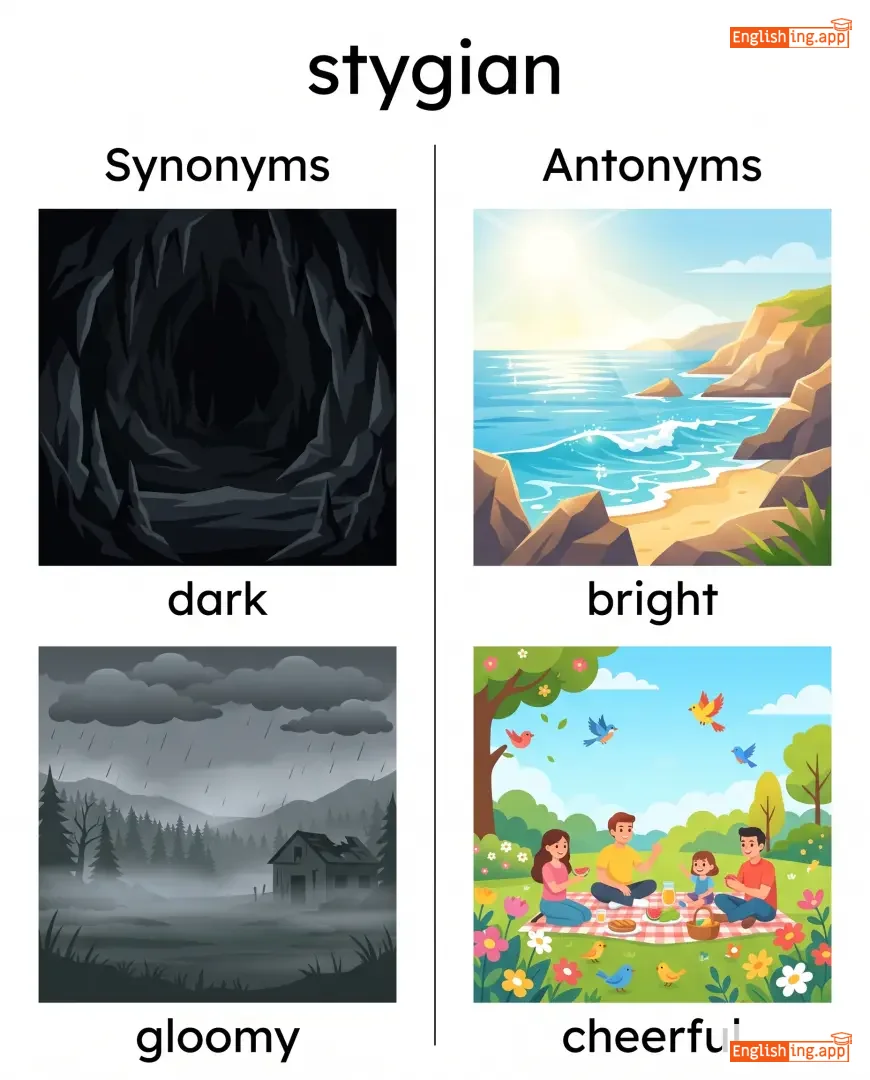
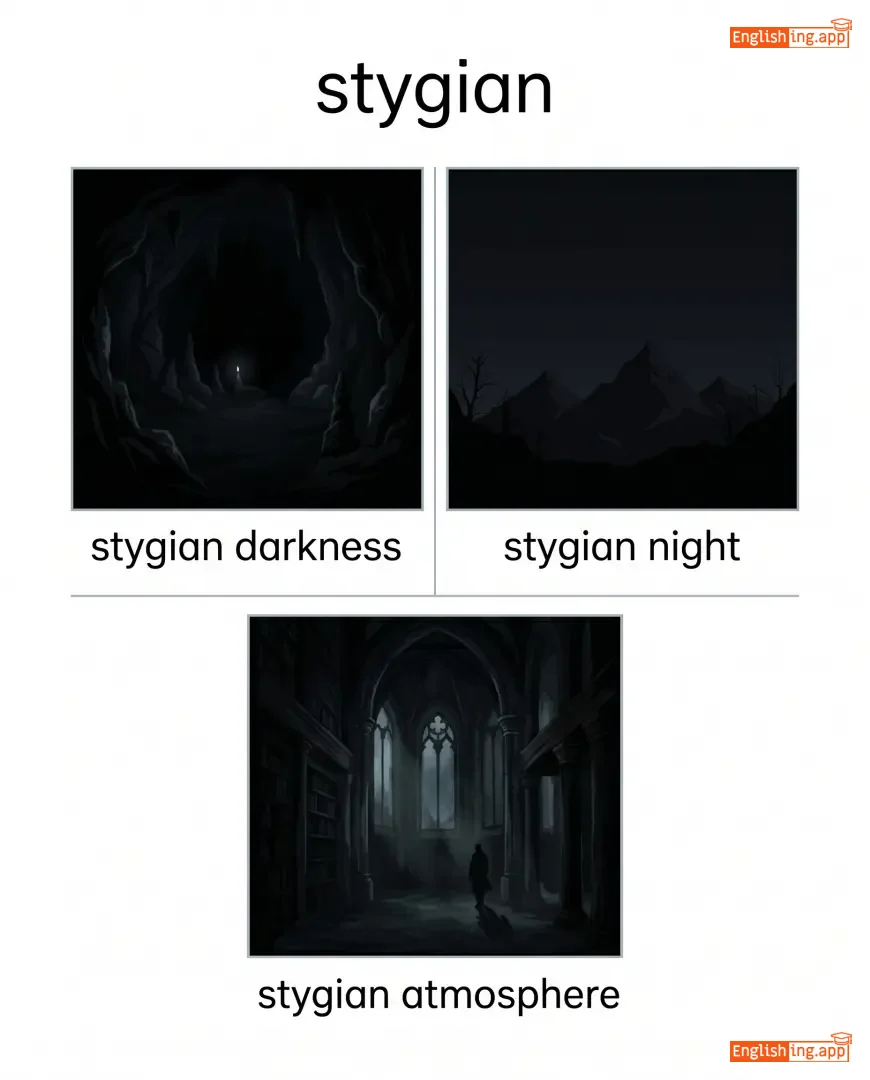
|
阴暗
yīn'àn
••••••
|
- •••••• | - •••••• | - •••••• | - •••••• |
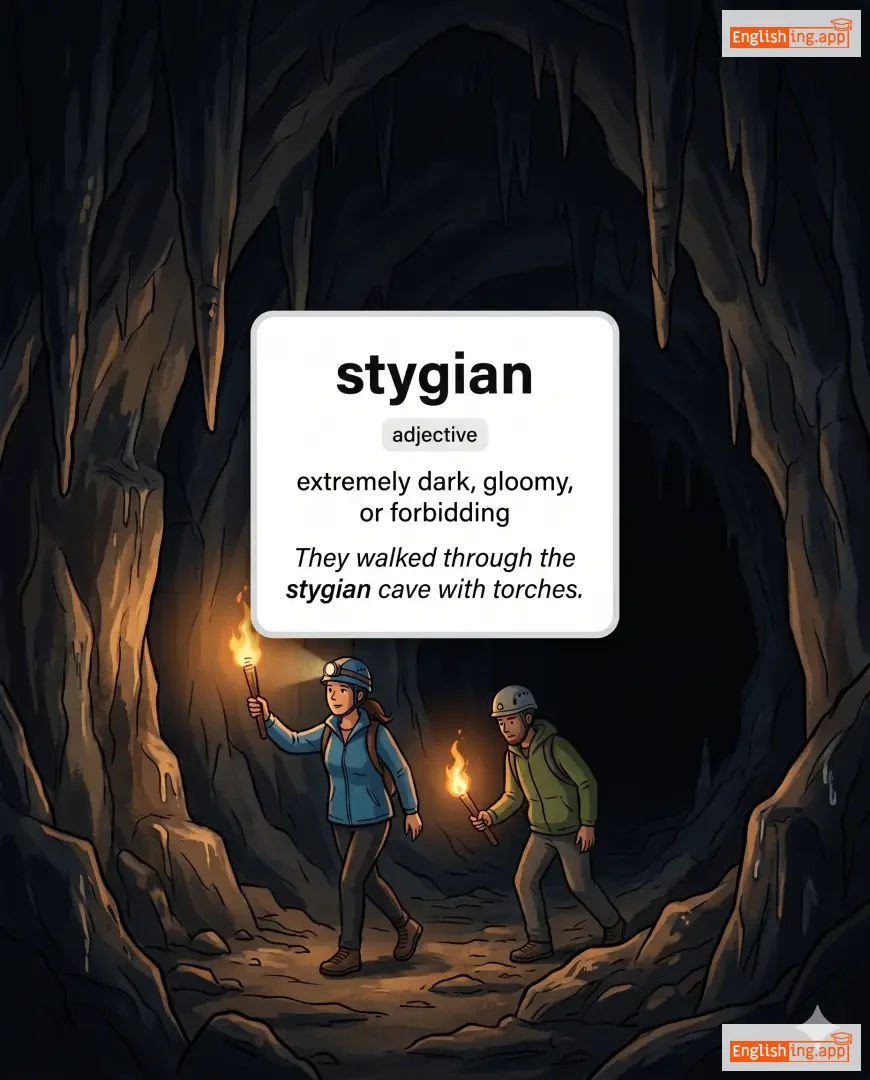
extremely dark, gloomy, or forbidding
••••••
|
They walked through the stygian cave with torches.
他们拿着火把走过了冥河洞。
••••••
|
他们拿着火把走过了阴暗的洞。
Tāmen názhe huǒbǎ zǒuguòle yīn'àn de dòng.
••••••
|
- •••••• | - •••••• | - •••••• |
dark, gloomy, shadowy, murky
••••••
|
bright, cheerful, clear
••••••
|
stygian darkness, stygian night, stygian atmosphere, stygian cave
••••••
|
Stygian意味着像冥河一样的黑暗,记住这个神话。
••••••
|
|
📜
••••••
|
/səˈpiːnə/
noun, verb
(萨布皮纳)
••••••
|
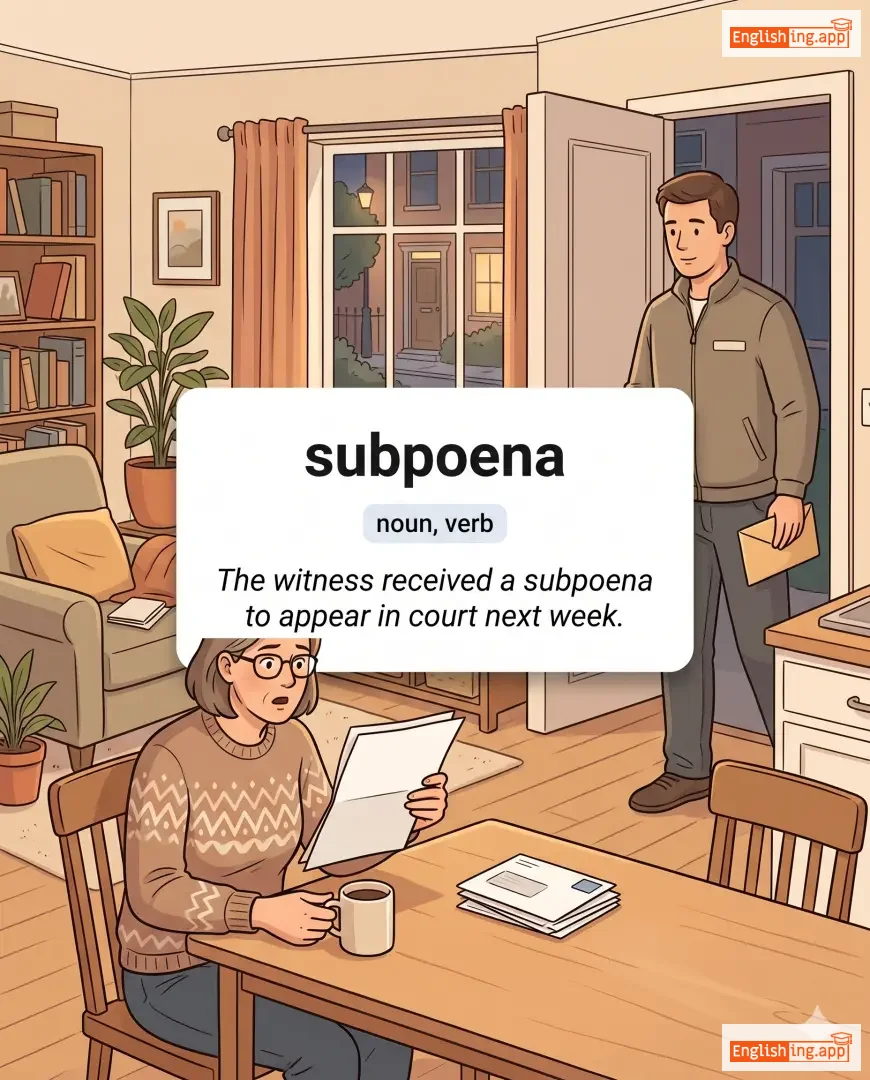
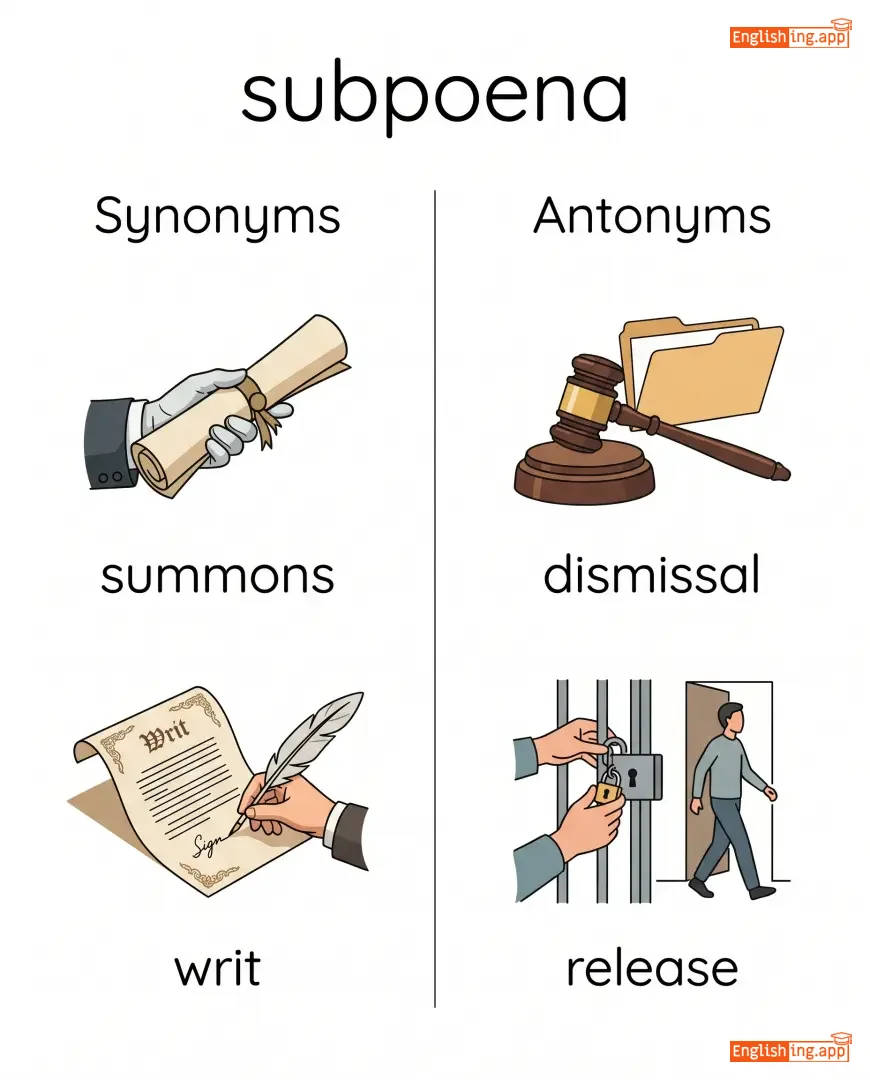
|
传票
chuanpiao
••••••
|
subpoenaed
萨布皮纳德
••••••
|
subpoenaed
萨布皮纳德
••••••
|
subpoenas
萨布皮纳斯
••••••
|
subpoenaing
萨布皮内英
••••••
|
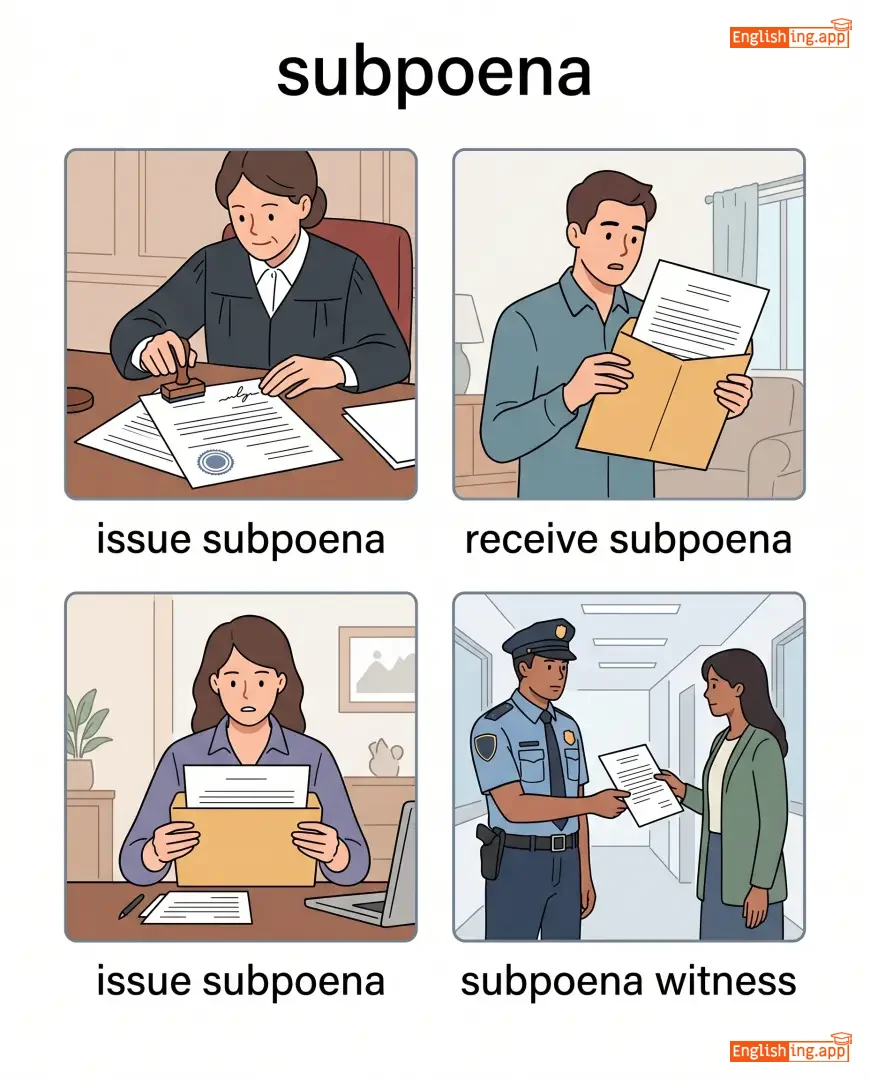
a legal document ordering someone to attend court; to summon someone with such a document
••••••
|
The witness received a subpoena to appear in court next week.
证人收到了传票,要求下周出庭。
••••••
|
证人收到了传票,要求下周出庭。
Zhengren shoudao le chuanpiao, yaoqiu xia zhou chuting.
••••••
|
issue a subpoena
发出传票
••••••
|
to formally send a legal order for someone to appear in court
••••••
|
发出传票
fachu chuanpiao
••••••
|
summons, writ, court order, mandate
••••••
|
dismissal, release
••••••
|
issue subpoena, receive subpoena, subpoena witness, subpoena records
••••••
|
Subpoena的意思是'sub'下面和'poena'惩罚 - 如果你不去法庭,就会有惩罚,所以是传票。
••••••
|
|
🌊
••••••
|
/səbˈsaɪd/
verb
(萨布赛德)
••••••
|
|
减少
jiǎnshǎo
••••••
|
subsided
萨布赛德德
••••••
|
subsided
萨布赛德德
••••••
|
subsides
萨布赛德斯
••••••
|
subsiding
萨布赛丁
••••••
|
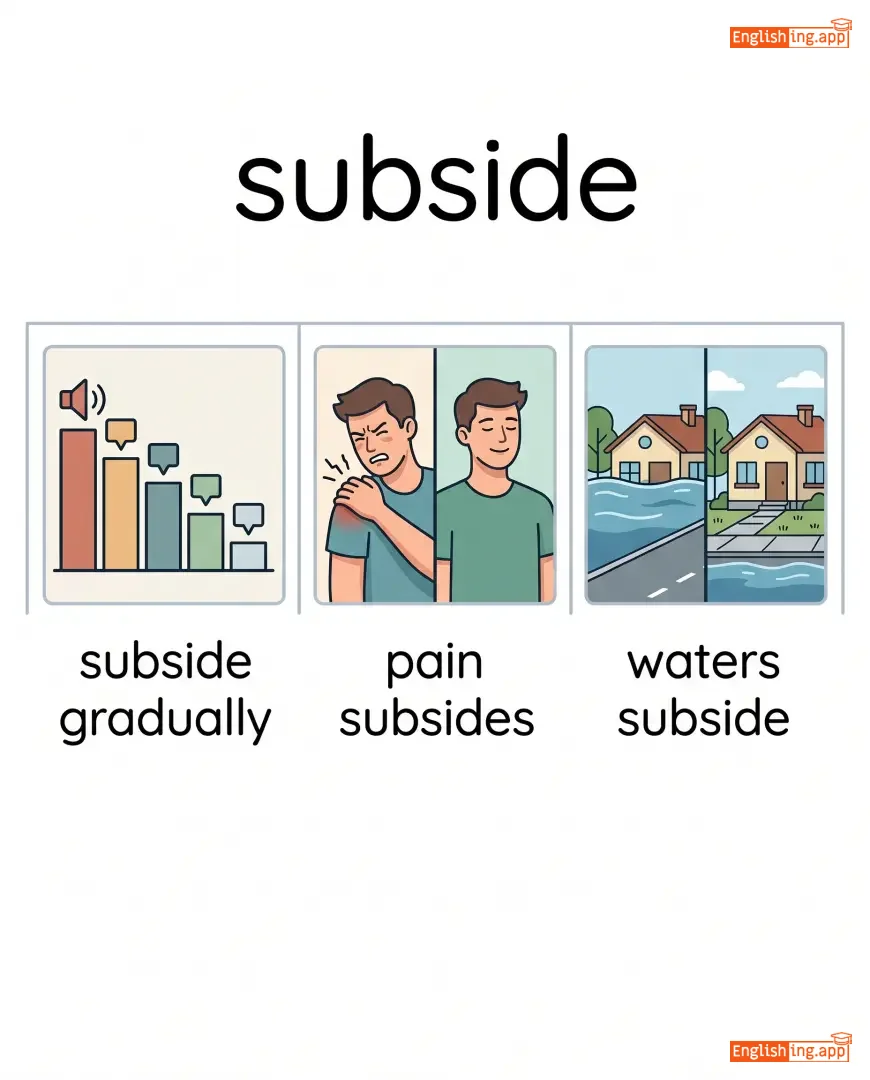
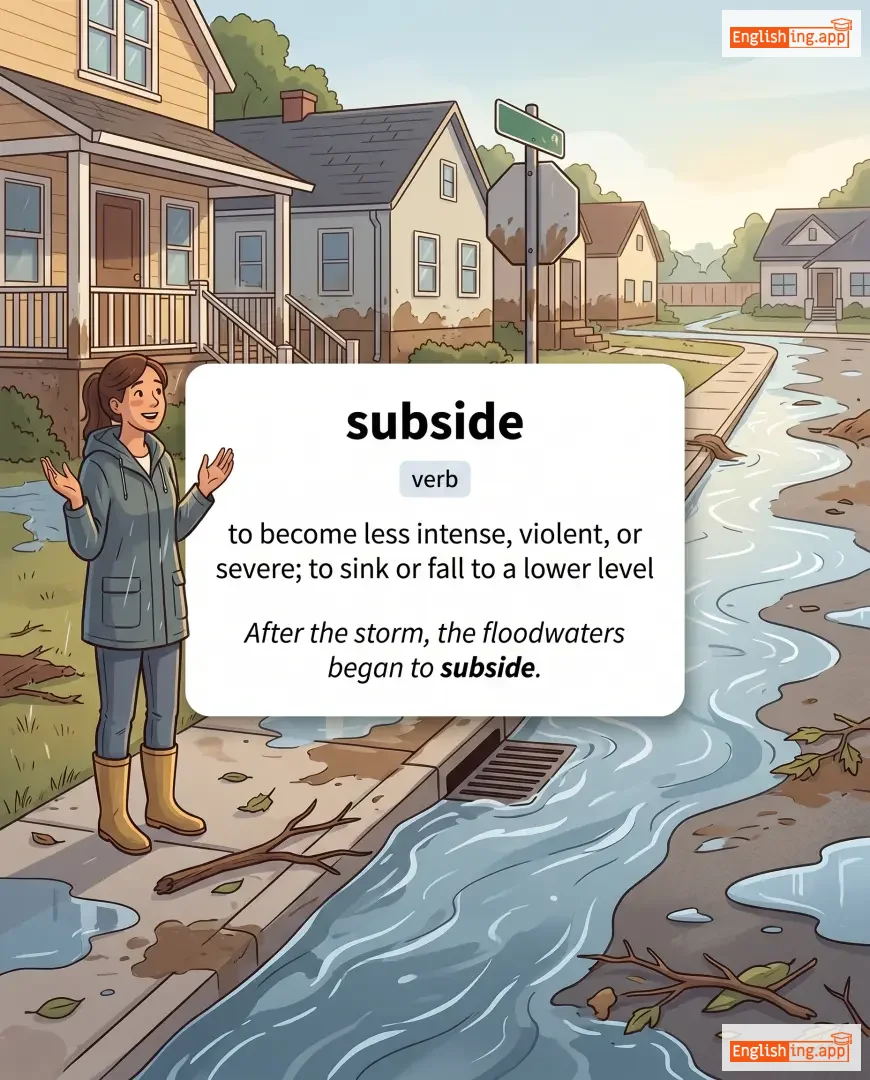
to become less intense, violent, or severe; to sink or fall to a lower level
••••••
|
After the storm, the floodwaters began to subside.
风暴过后,洪水开始退去。
••••••
|
风暴过后,洪水开始退去。
fēngbào guòhòu, hóngshuǐ kāishǐ tuìqù.
••••••
|
- •••••• | - •••••• | - •••••• |
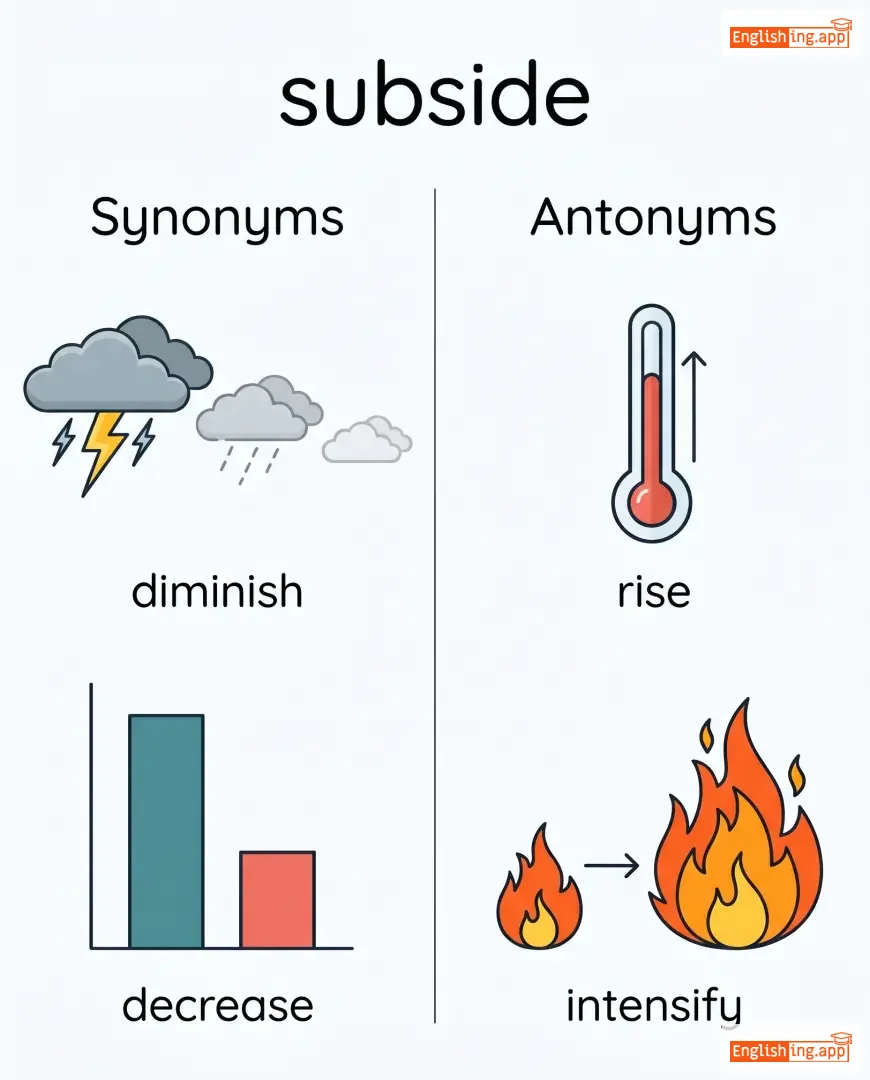
diminish, decrease, abate, recede, lessen
••••••
|
rise, intensify, increase
••••••
|
subside gradually, pain subsides, waters subside, anger subsides
••••••
|
Subside意指水位下降,就像暴风雨过后水位退去。
••••••
|
|
⚖️
••••••
|
/səbˈstænʃieɪt/
verb
(səbˈstænʃieɪt)
••••••
|
|
证实
zhèngshí
••••••
|
substantiated
substantiated
••••••
|
substantiated
substantiated
••••••
|
substantiates
substantiates
••••••
|
substantiating
substantiating
••••••
|
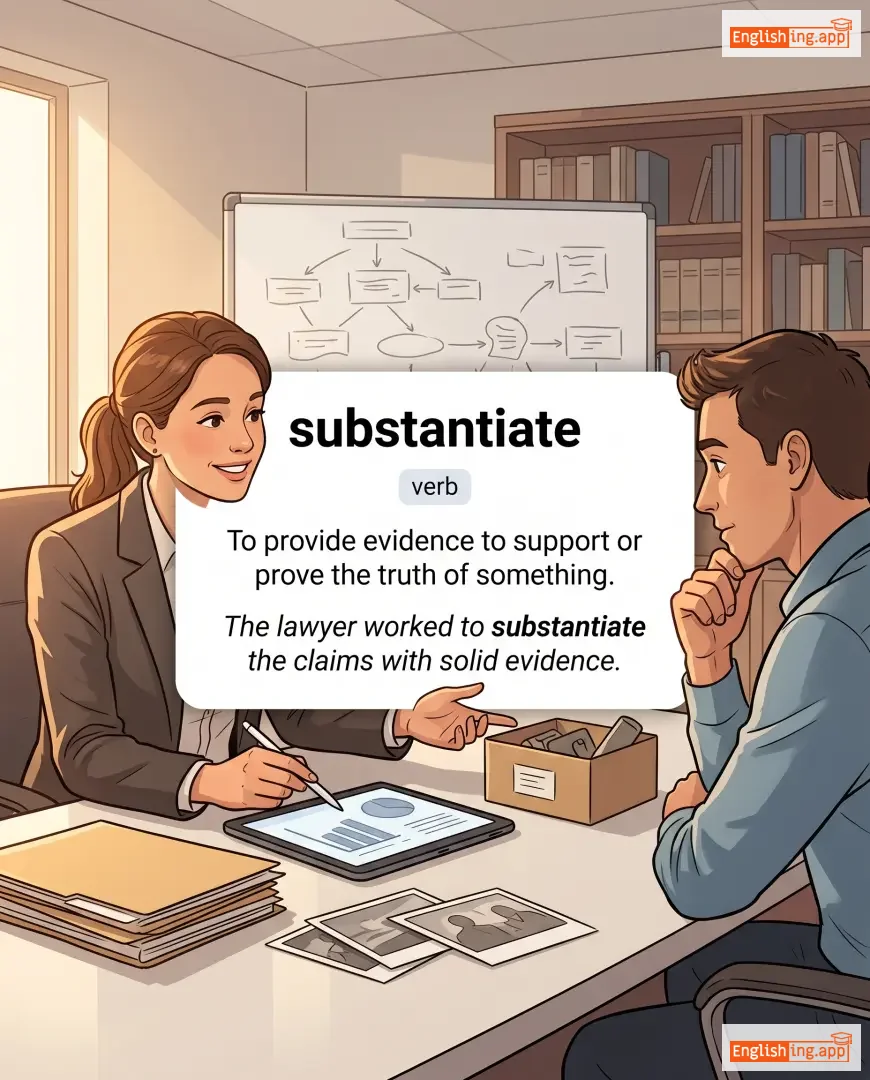
To provide evidence to support or prove the truth of something.
••••••
|
The lawyer worked to substantiate the claims with solid evidence.
律师努力通过确凿证据来证实这些主张。
••••••
|
律师努力通过确凿证据来证实这些主张。
Lǚshī nǔlì tōngguò quèzuò zhèngjù lái zhèngshí zhèxiē zhǔzhāng.
••••••
|
- •••••• | - •••••• | - •••••• |
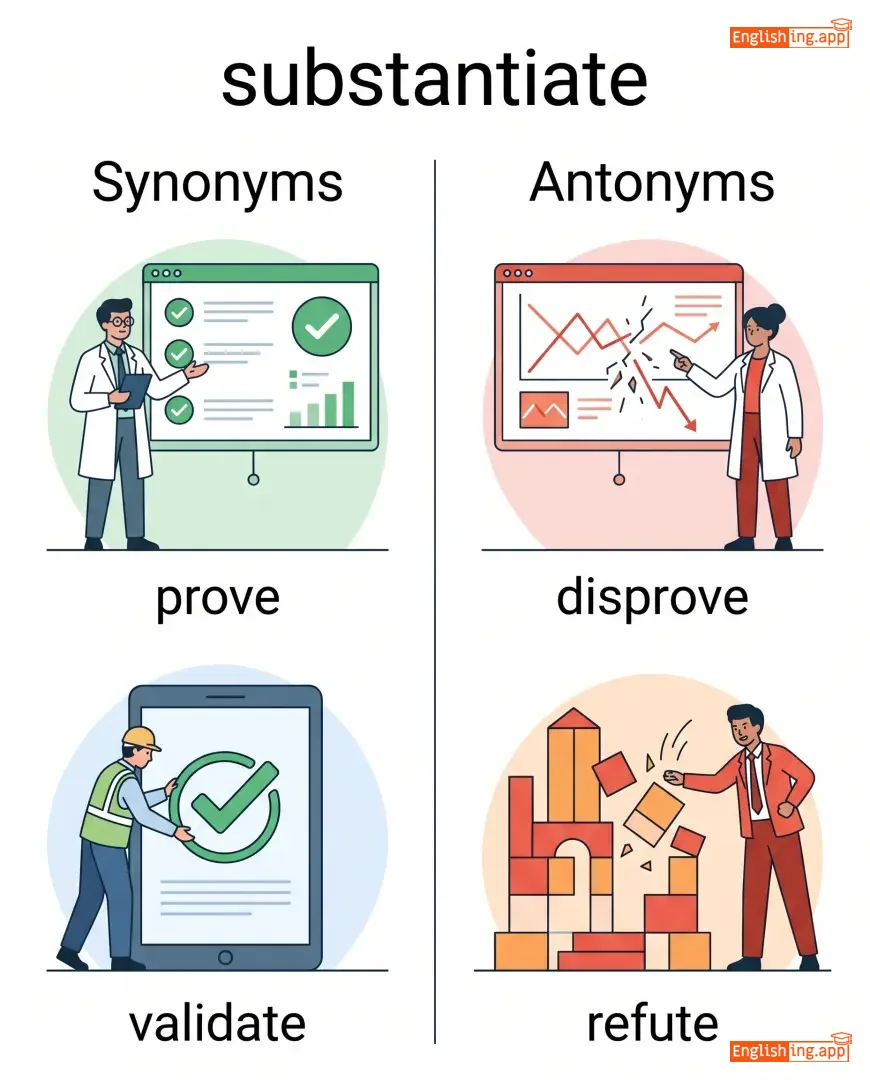
prove, validate, confirm, support, demonstrate
••••••
|
disprove, refute, contradict
••••••
|
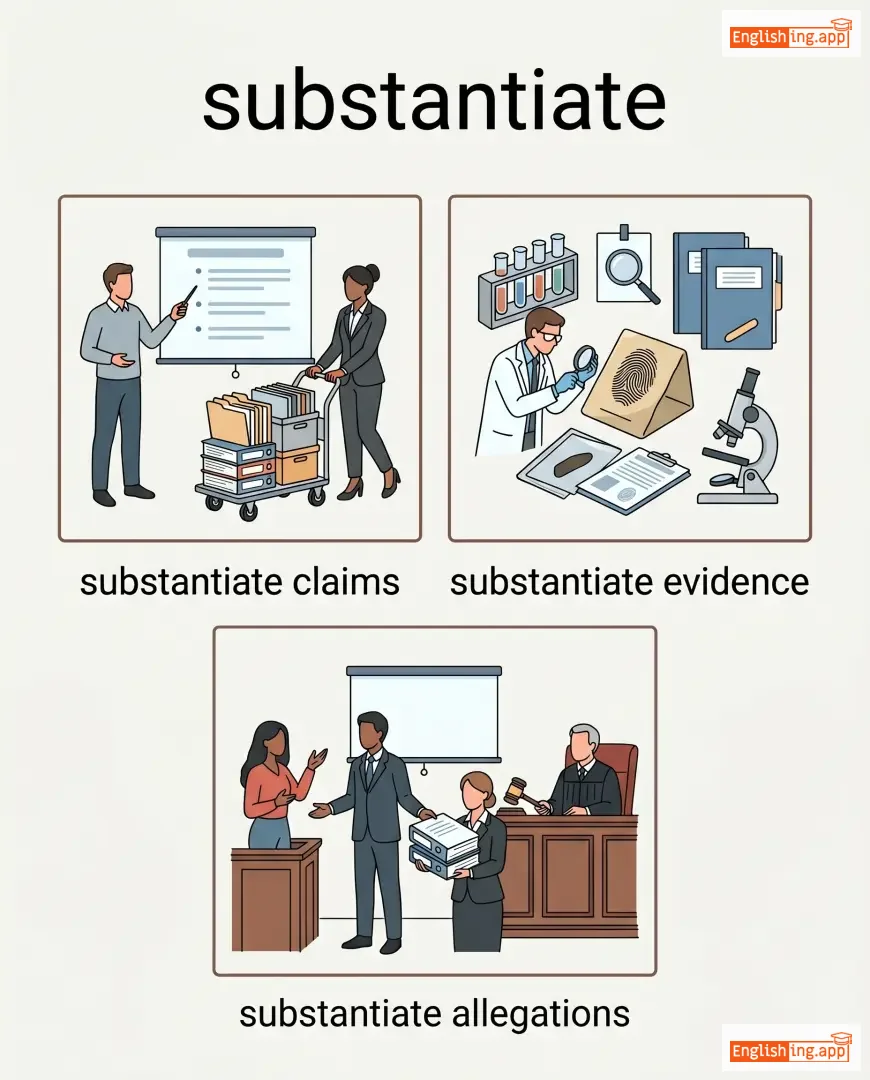
substantiate claims, substantiate evidence, substantiate allegations, substantiate argument
••••••
|
Substance (substance) 帮助证实某事。
••••••
|
|
📑
••••••
|
/ˈsʌbstəntɪv/
adjective
(səbˈstæn.tɪv)
••••••
|
|
重要
zhòng yào
••••••
|
- •••••• | - •••••• | - •••••• | - •••••• |
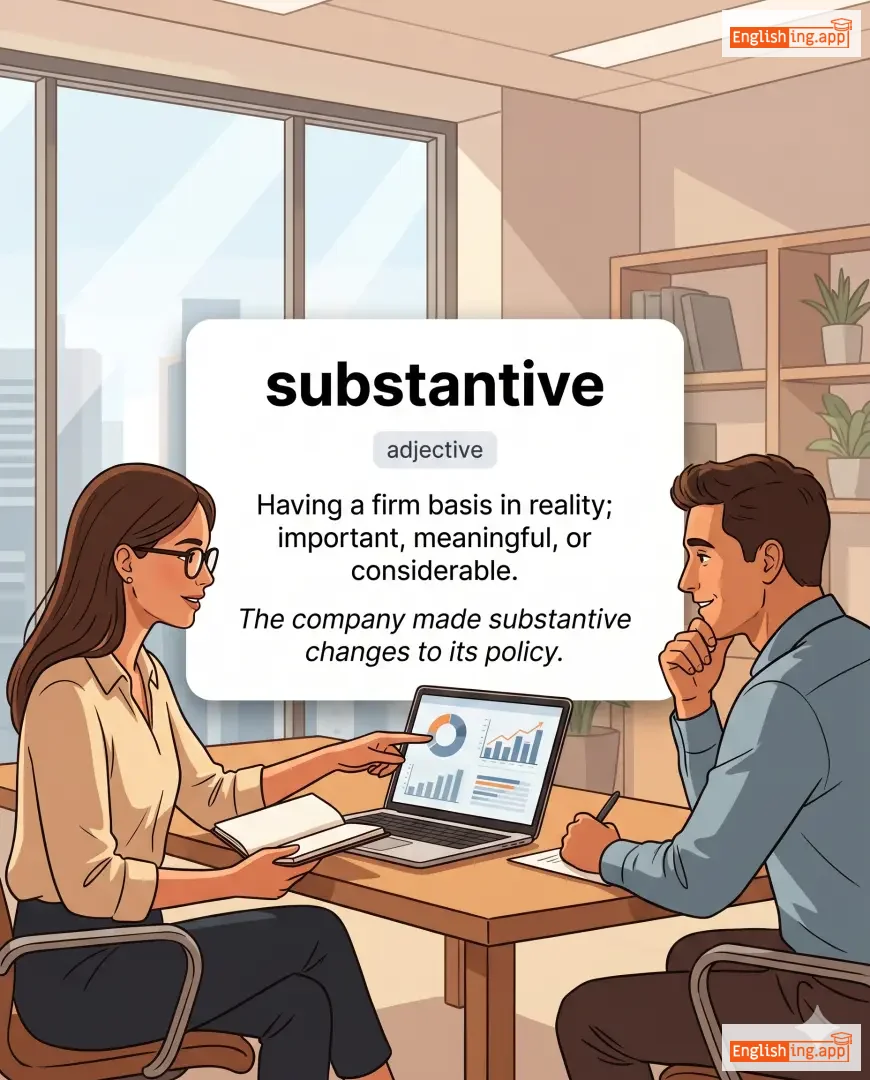
Having a firm basis in reality; important, meaningful, or considerable.
••••••
|
The company made substantive changes to its policy.
公司对其政策进行了实质性更改。
••••••
|
公司对其政策进行了重要更改。
Gōngsī duì qí zhèngcè jìnxíngle zhòngyào gēnggǎi.
••••••
|
substantive evidence
实质性证据
••••••
|
Important or meaningful proof that supports a claim
••••••
|
重要证据
zhòng yào zhèngjù
••••••
|
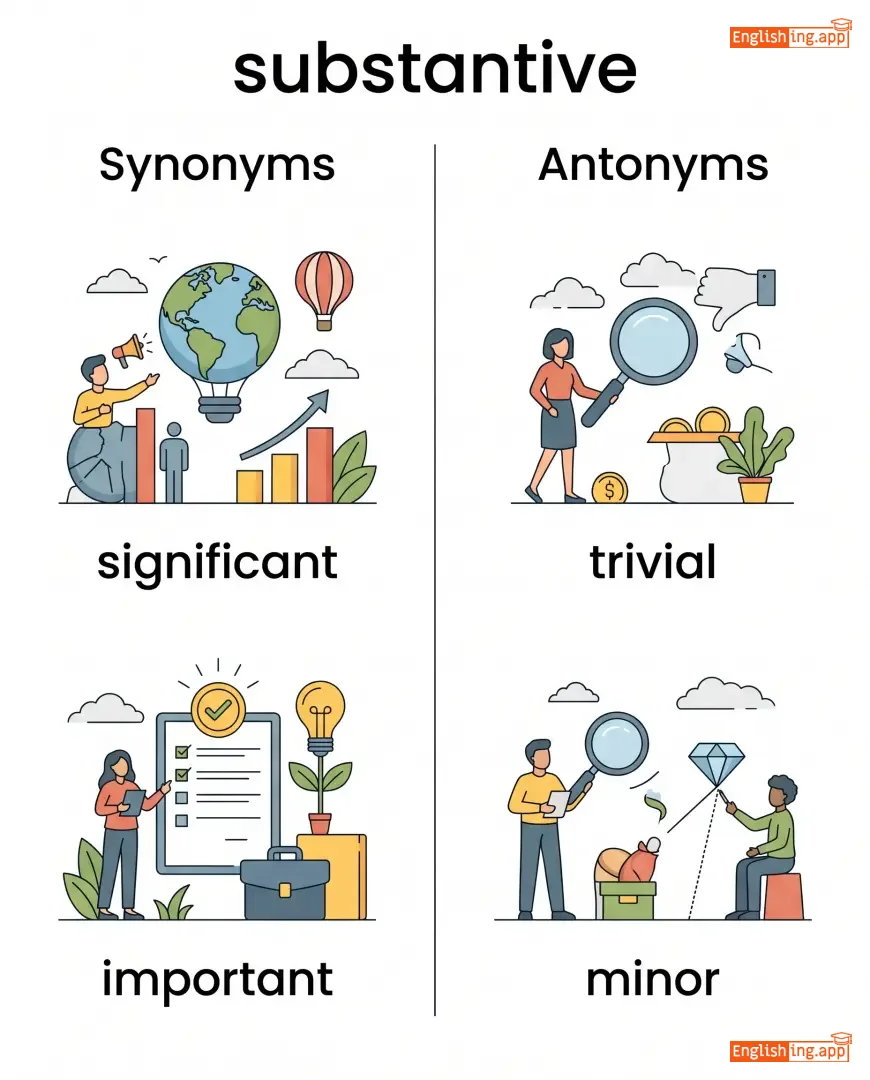
significant, important, considerable, meaningful, essential
••••••
|
trivial, minor, insignificant
••••••
|
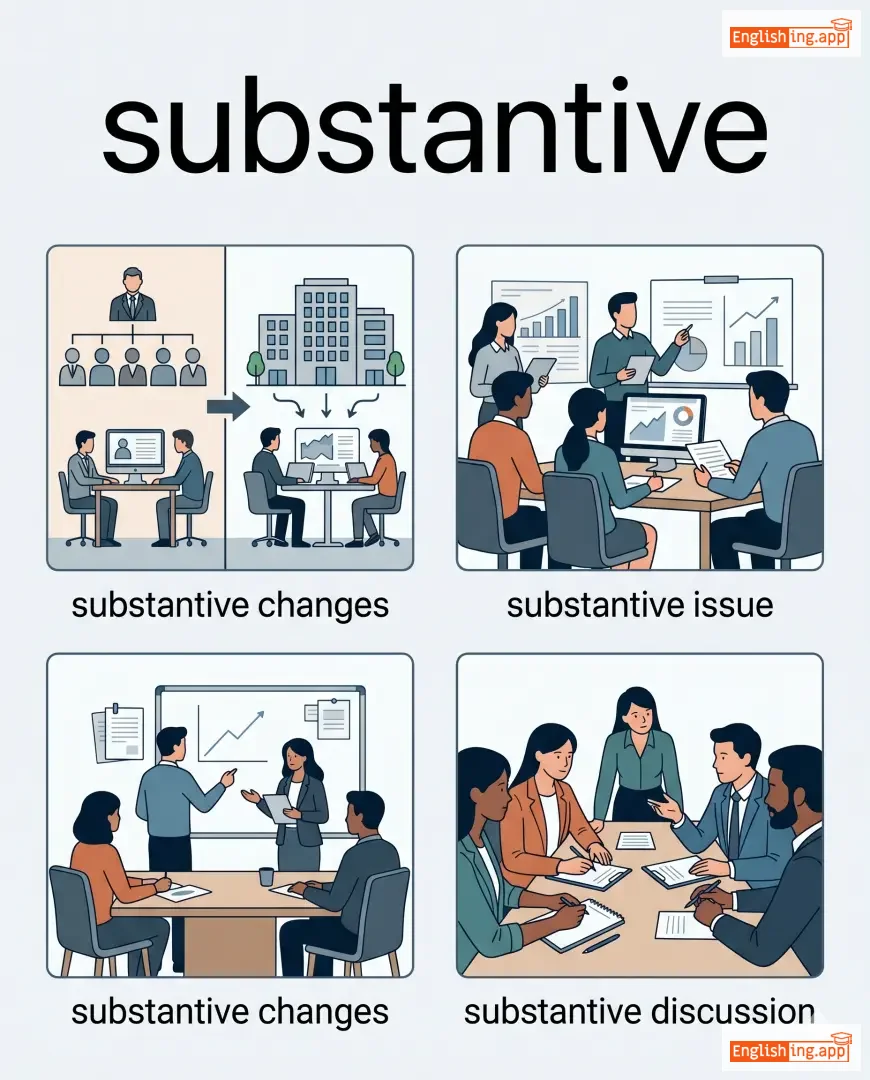
substantive changes, substantive issue, substantive discussion, substantive evidence
••••••
|
Substantive 意味着重要—‘重要的’。记住,实质性证据意味着强有力的证明。
••••••
|
|
🌀
••••••
|
/səbˈsjuːm/
verb
(sā bù xī yù mǔ)
••••••
|
|
包括
bāokuò
••••••
|
subsumed
sā bù xī yù mǔ de
••••••
|
subsumed
sā bù xī yù mǔ de
••••••
|
subsumes
sā bù xī yù mǔ sī
••••••
|
subsuming
sā bù xī yù mǔ xīng
••••••
|
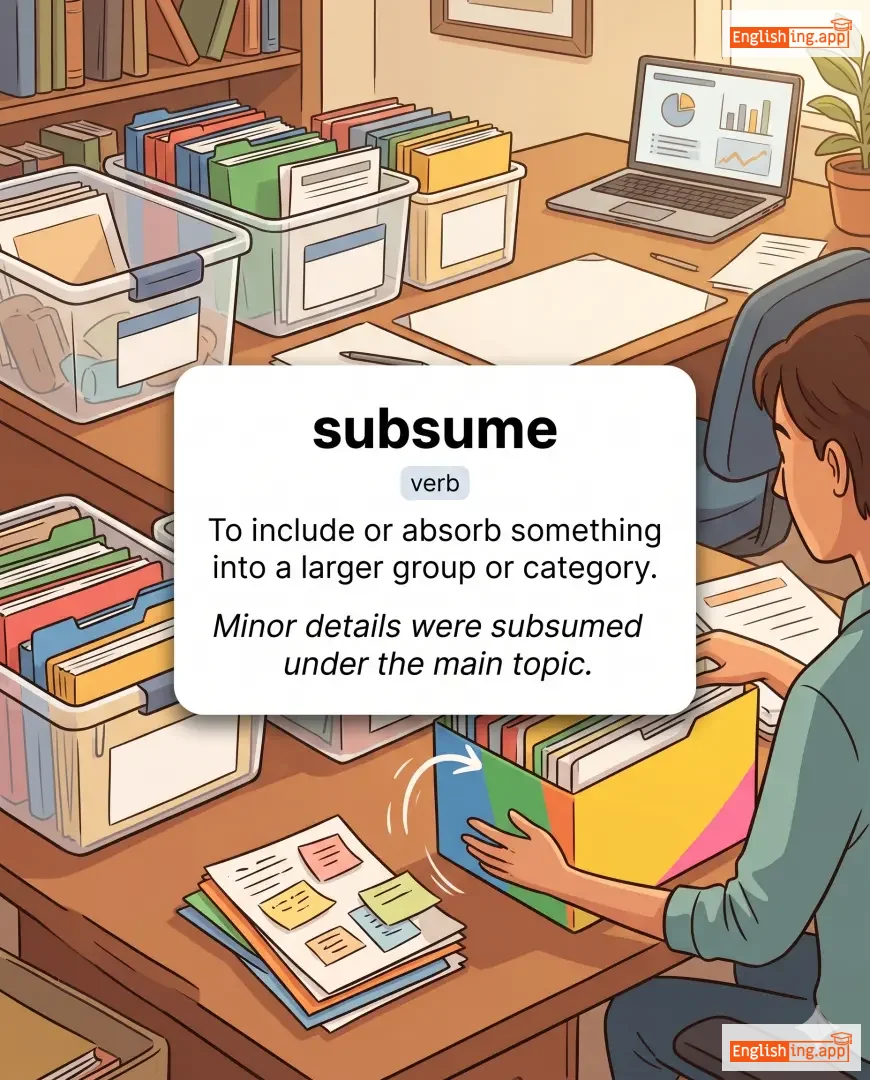
To include or absorb something into a larger group or category.
••••••
|
Minor details were subsumed under the main topic.
次要细节被纳入了主要话题。
••••••
|
次要细节被纳入了主要话题。
Cìyào xìjié bèi nàrù le zhǔyào huàtí.
••••••
|
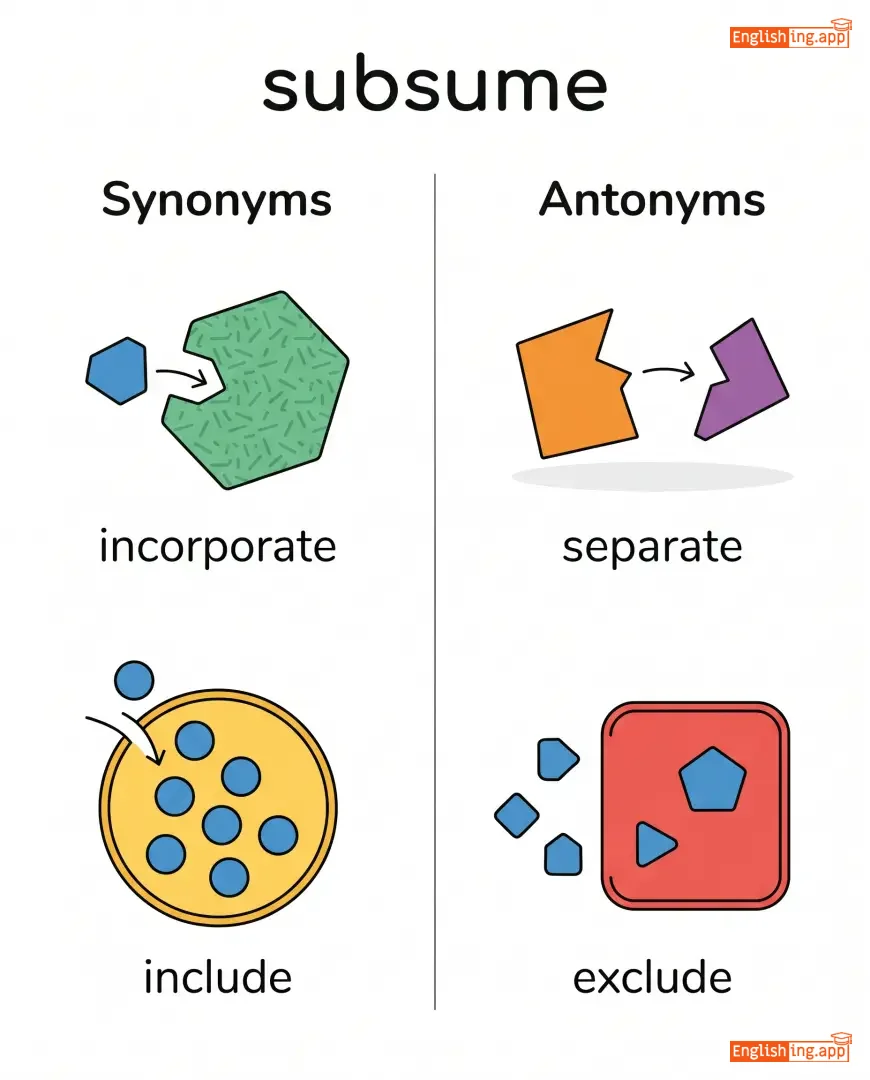
- •••••• | - •••••• | - •••••• |
incorporate, include, absorb, encompass
••••••
|
separate, exclude
••••••
|
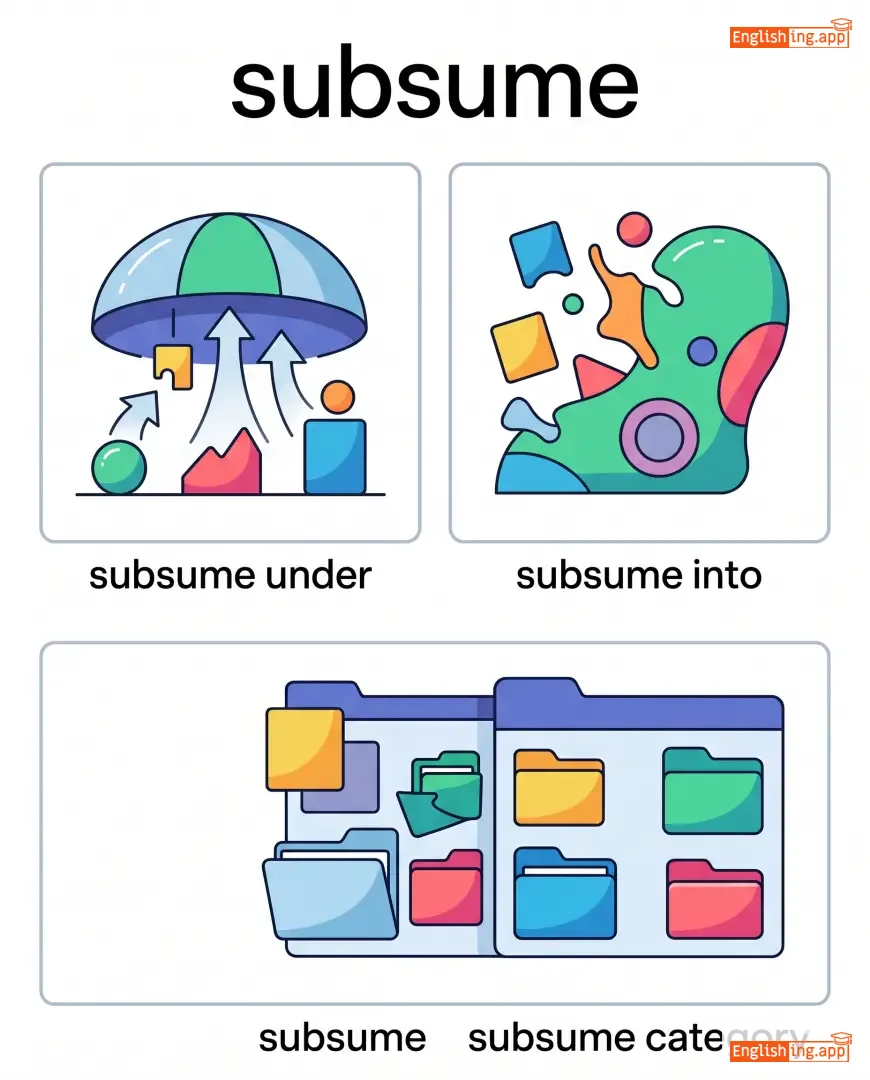
subsume under, subsume into, subsume category, subsume theory
••••••
|
Sub + 包括 → 把小东西纳入大的东西 = subsume 意味着包括。
••••••
|
|
🔥
••••••
|
/səbˈvɜːrsɪv/
adjective
(subversive)
••••••
|
|
颠覆性的
diānfùxìng de
••••••
|
- •••••• | - •••••• | - •••••• | - •••••• |
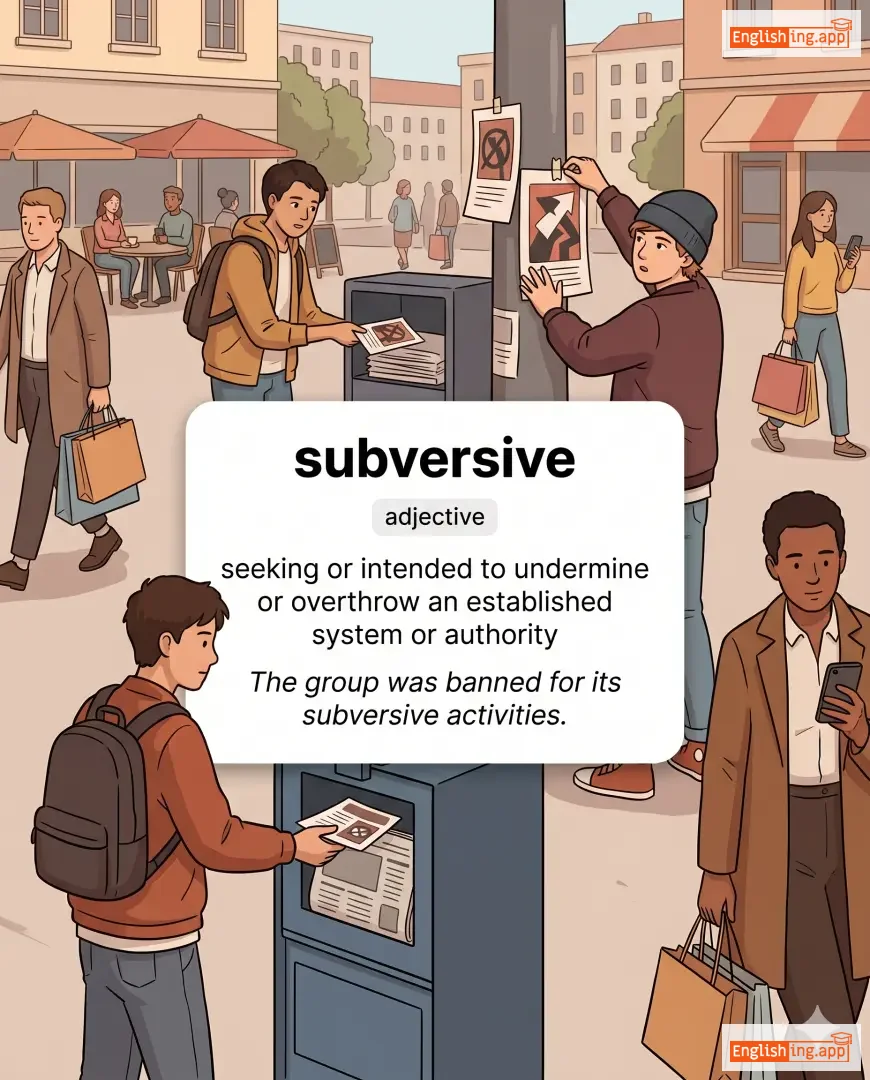
seeking or intended to undermine or overthrow an established system or authority
••••••
|
The group was banned for its subversive activities. |
该团体因其颠覆性活动而被禁止。
Gāi tuántǐ yīn qí diānfùxìng huódòng ér bèi jìnzhǐ.
••••••
|
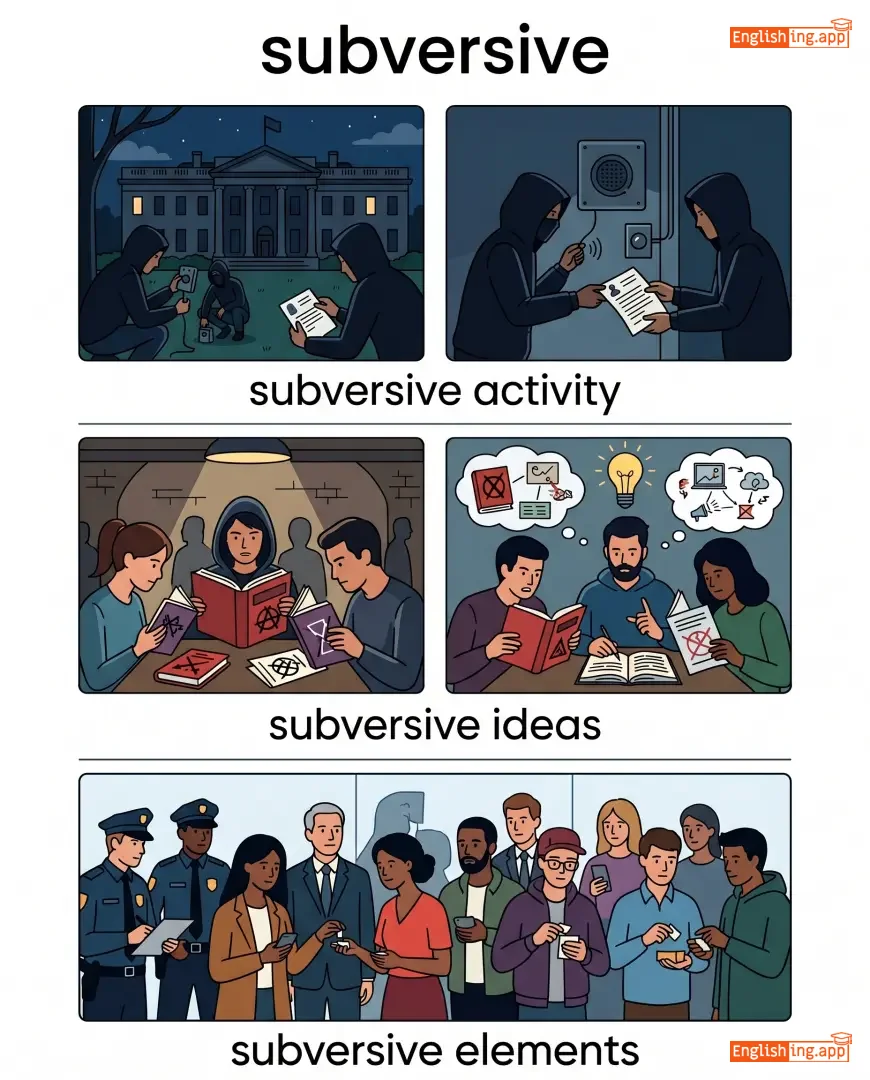
subversive elements |
people or groups trying to weaken authority
••••••
|
颠覆性元素
diānfùxìng yuánsù
••••••
|
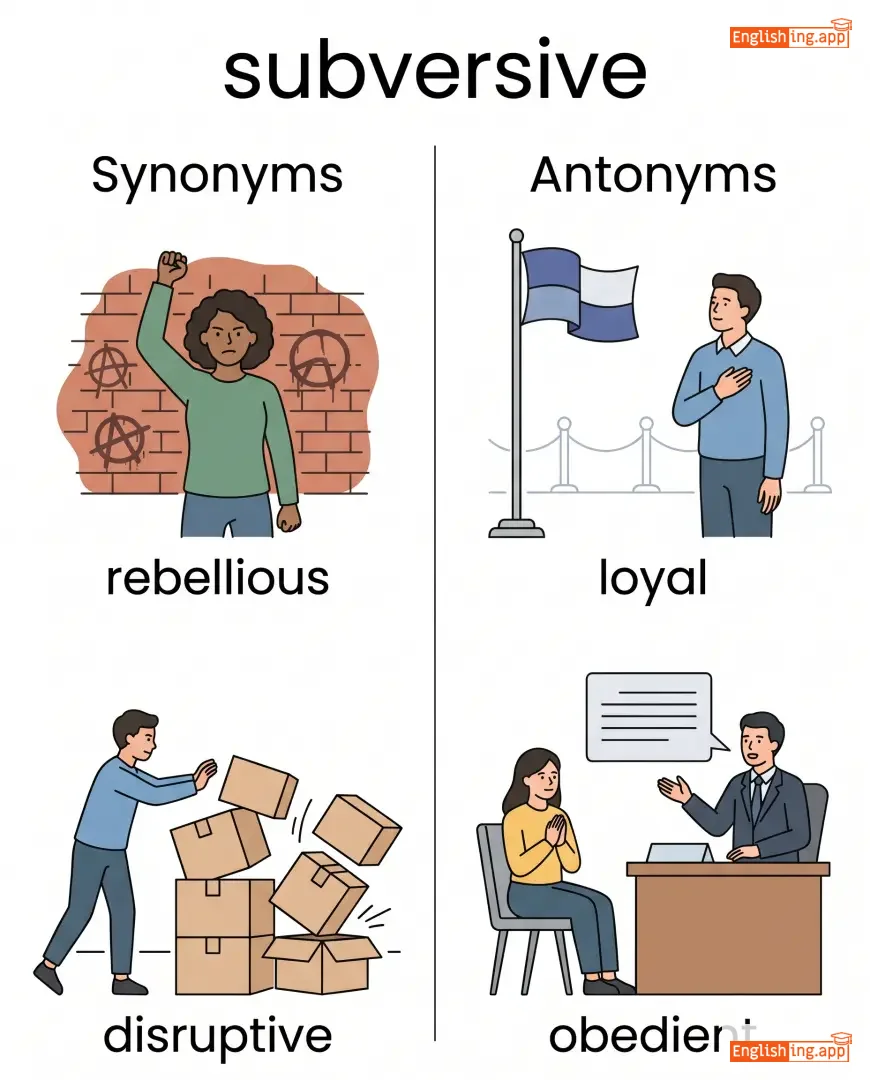
rebellious, disruptive, revolutionary, insurgent
••••••
|
loyal, obedient
••••••
|
subversive activity, subversive ideas, subversive elements
••••••
|
颠覆性意味着改变秩序 – 颠覆 = 改变, 性 = 目的
••••••
|
|
🤲
••••••
|
/ˈsʌkər/
noun/verb
(sūkè)
••••••
|
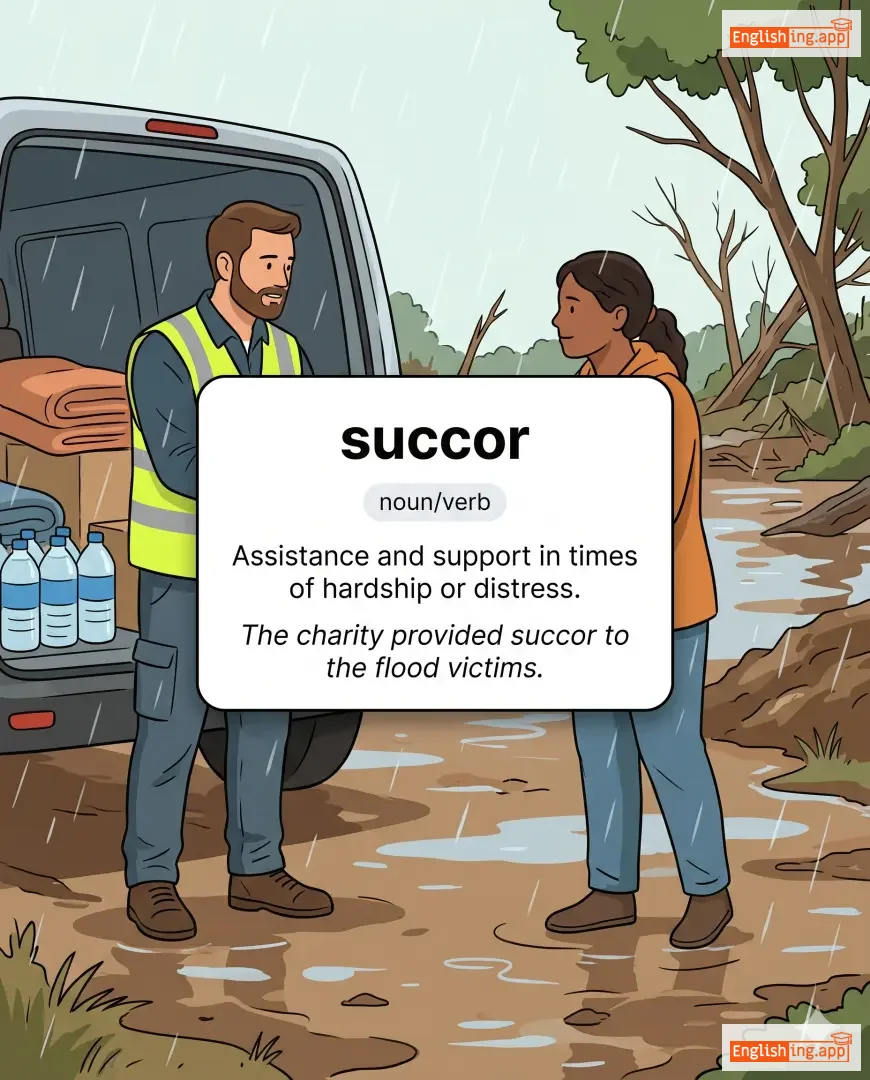
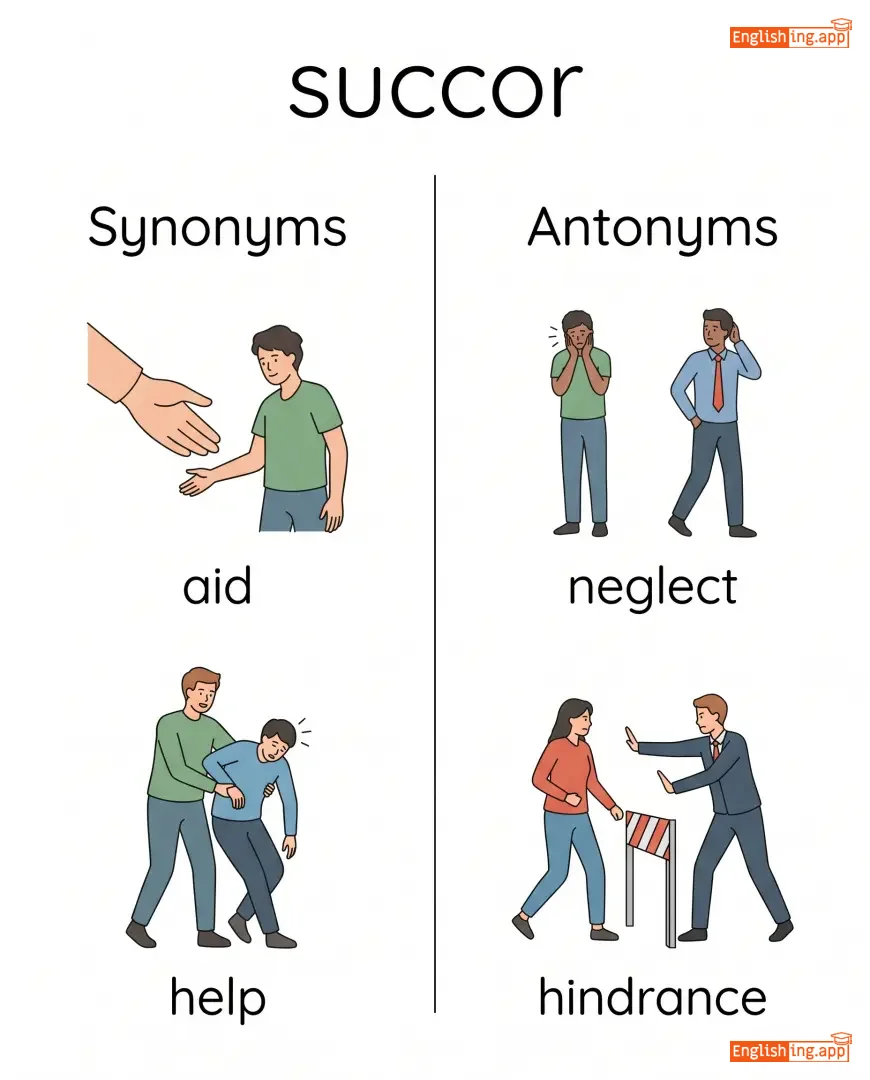
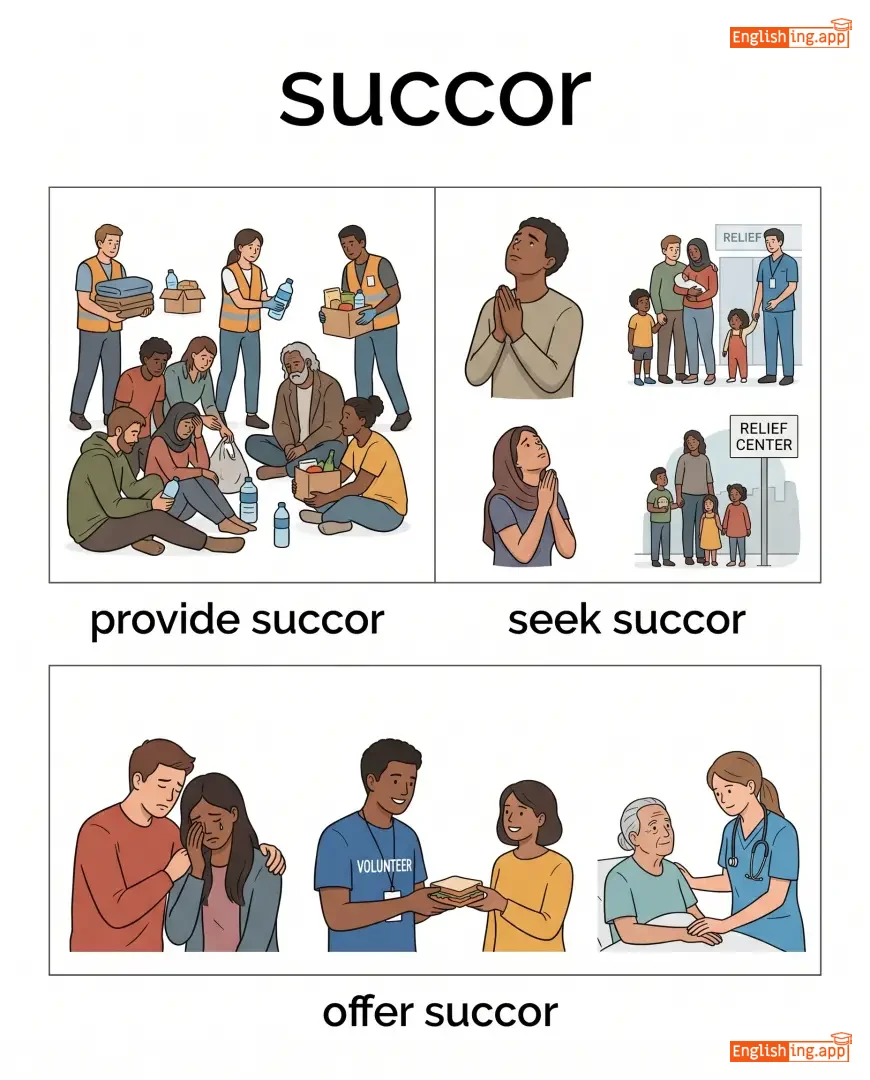
|
帮助
bāngzhù
••••••
|
succored
sūkèd
••••••
|
succored
sūkèd
••••••
|
succors
sūkèrs
••••••
|
succoring
sūkèring
••••••
|
Assistance and support in times of hardship or distress.
••••••
|
The charity provided succor to the flood victims.
慈善机构为洪水受害者提供了帮助。
••••••
|
慈善机构为洪水受害者提供了帮助。
Císhàn jīgòu wèi hóngshuǐ shòuhàizhě tígōngle bāngzhù.
••••••
|
- •••••• | - •••••• | - •••••• |
aid, help, relief, support, assistance
••••••
|
neglect, hindrance
••••••
|
provide succor, seek succor, offer succor, succor the needy
••••••
|
Succor和帮助类似 — 在困难时期,succor就是帮助!
••••••
|
|
🗳️
••••••
|
/ˈsʌfrɪdʒ/
noun
(萨夫里吉)
••••••
|
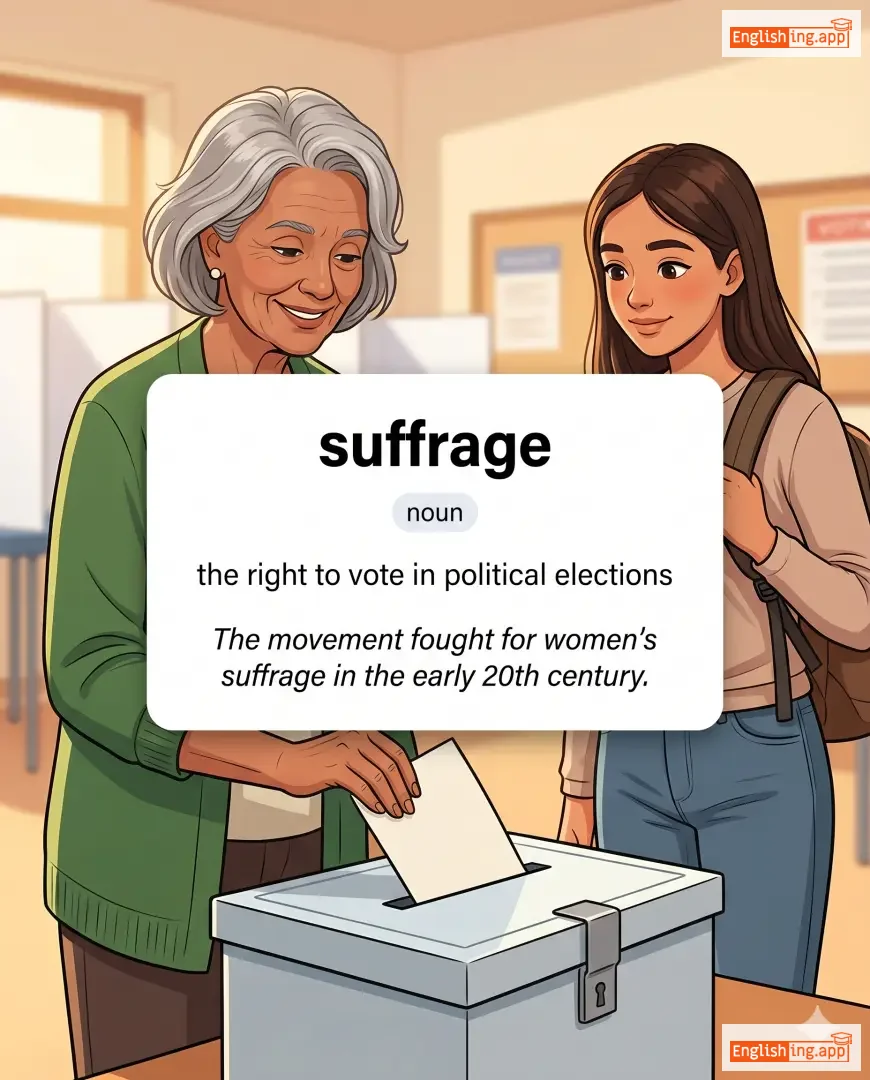
|
选举权
xuanju quan
••••••
|
- •••••• | - •••••• | - •••••• | - •••••• |
the right to vote in political elections
••••••
|
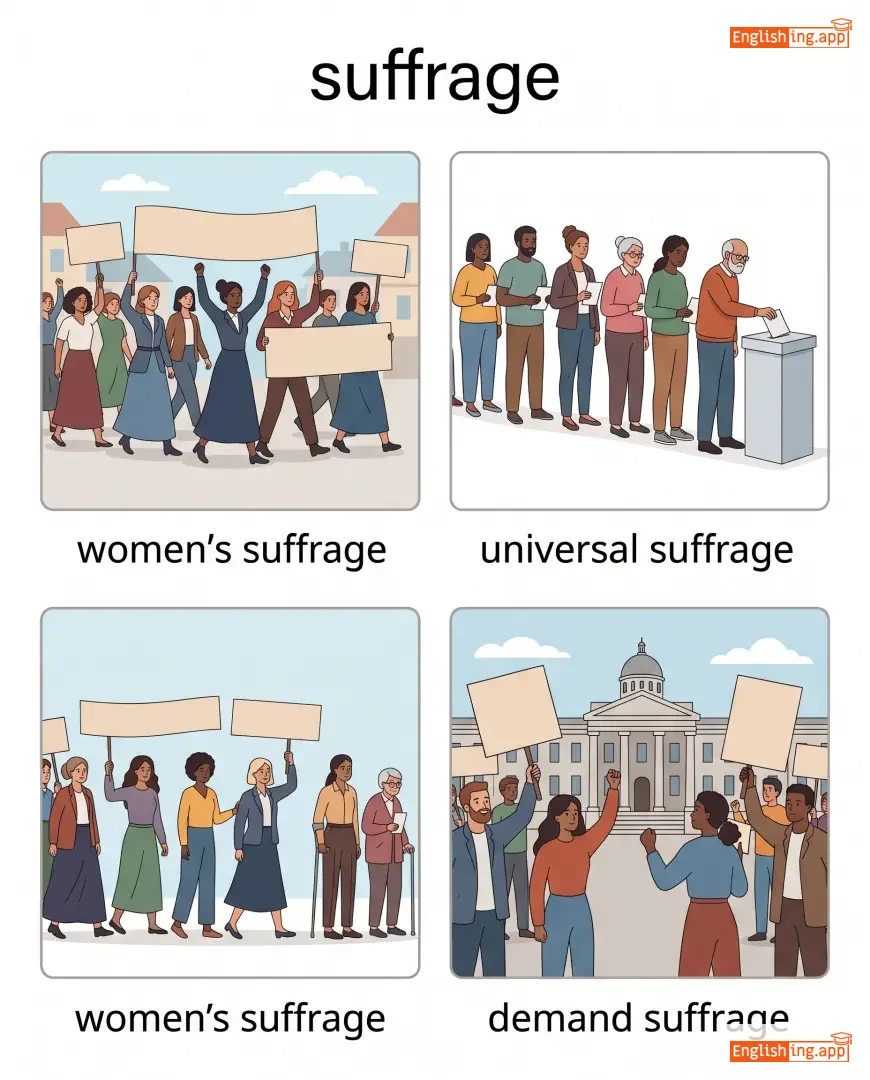
The movement fought for women’s suffrage in the early 20th century.
泽 穆夫门 特 夫特 佛 伍明斯 萨夫里吉 因 迪 阿里 图恩提斯 森曲瑞。
••••••
|
该运动在20世纪初为女性争取选举权。
gai yundong zai ershi shiji chu wei nvxing zhengqu xuanju quan.
••••••
|
universal suffrage
尤尼佛萨尔 萨夫里吉
••••••
|
the right of all adults to vote regardless of status
••••••
|
普选权
puxuan quan
••••••
|
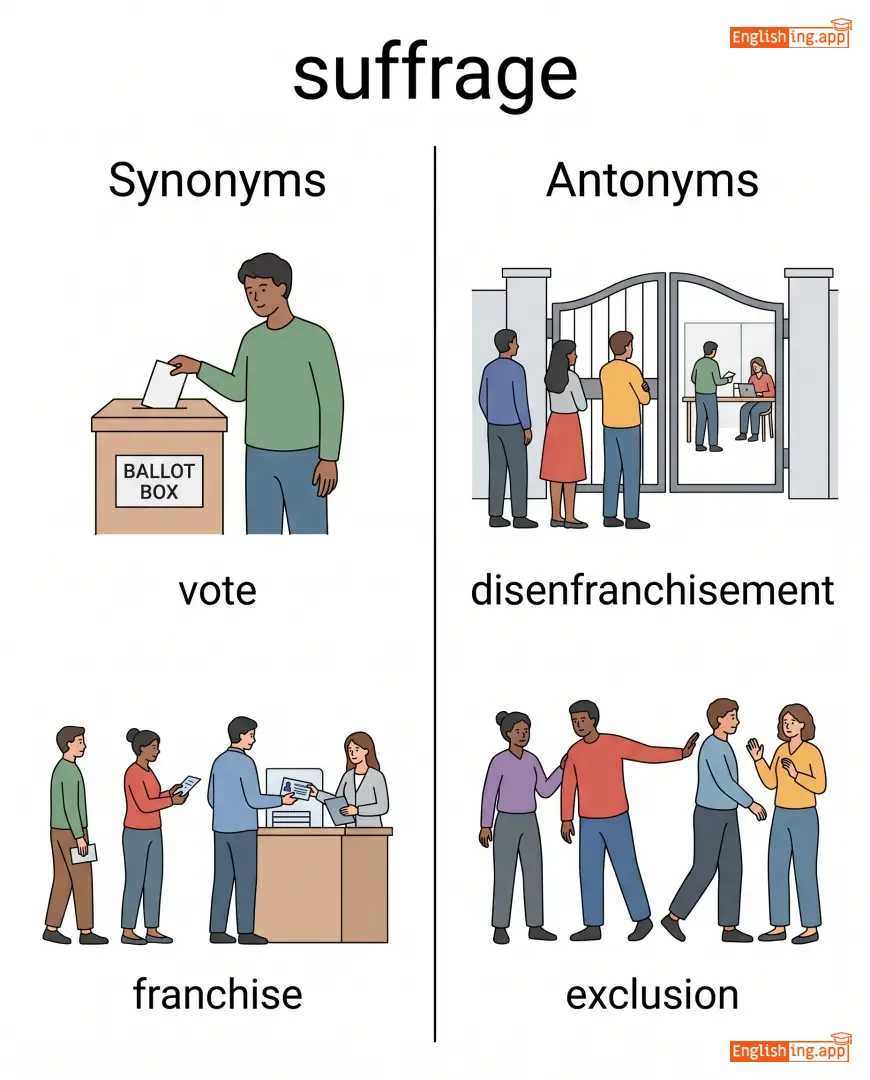
vote, franchise, ballot, voice
••••••
|
disenfranchisement, exclusion
••••••
|
women’s suffrage, universal suffrage, demand suffrage, grant suffrage
••••••
|
Suffrage sounds like 'suffer age'—people suffered before getting 选举权.
••••••
|
|
🛍️
••••••
|
/ˈsʌn.dri/
adjective
(桑德里)
••••••
|
|
杂项
záxiàng
••••••
|
- •••••• | - •••••• | - •••••• | - •••••• |
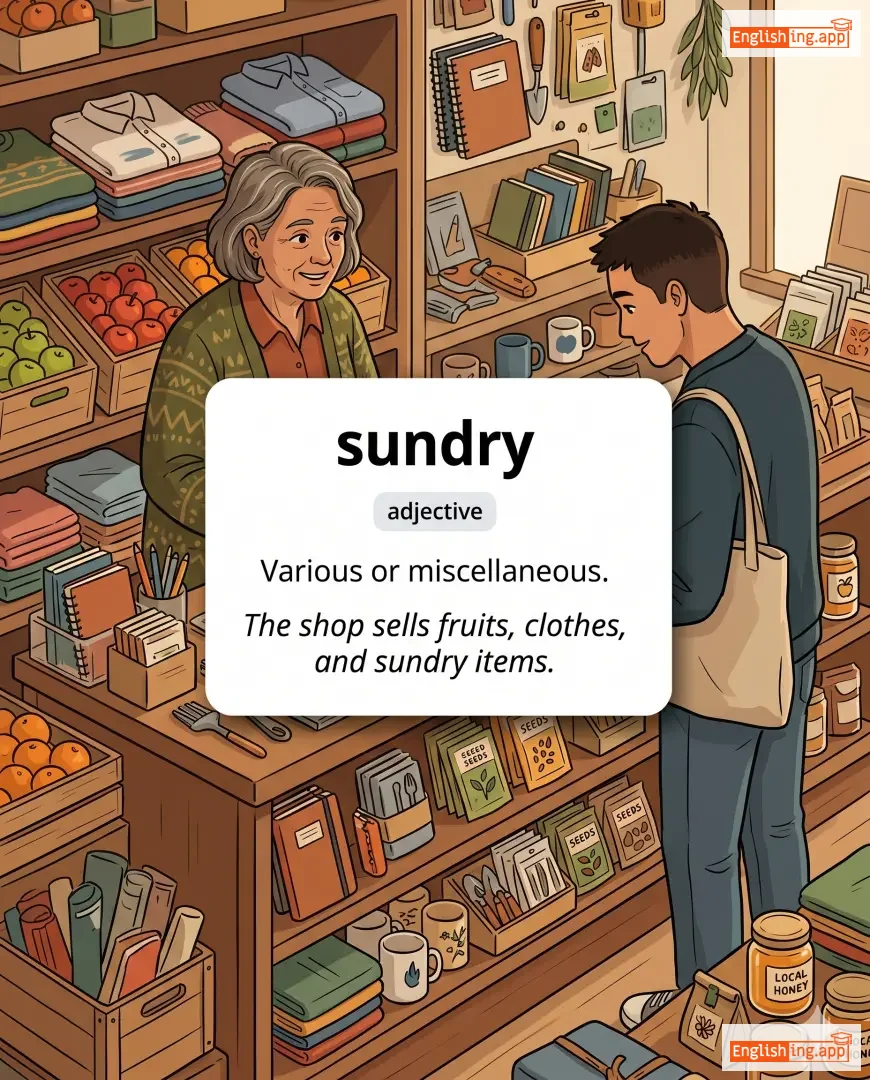
Various or miscellaneous.
••••••
|
The shop sells fruits, clothes, and sundry items. |
这家店卖水果、衣服和各种商品。
Zhè jiā diàn mài shuǐguǒ, yīfú hé gè zhǒng shāngpǐn.
••••••
|
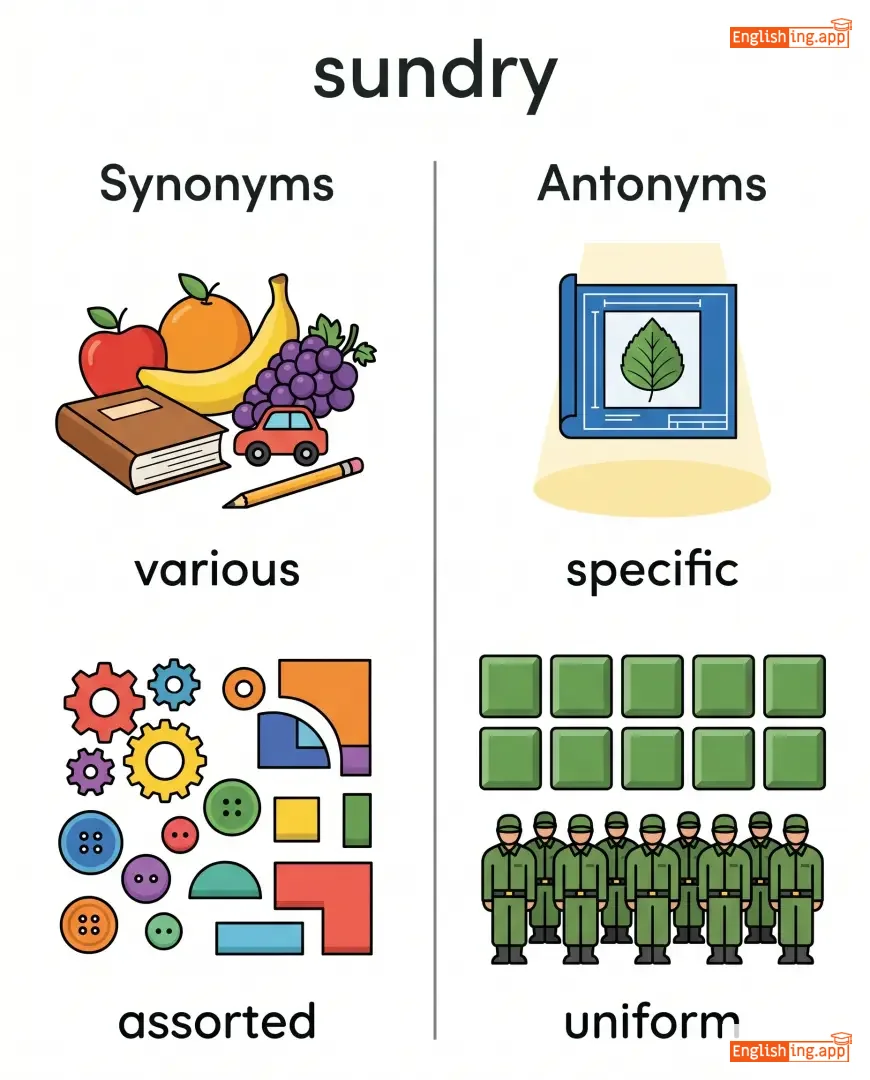
- •••••• | - •••••• | - •••••• |
various, assorted, diverse, miscellaneous
••••••
|
specific, uniform
••••••
|
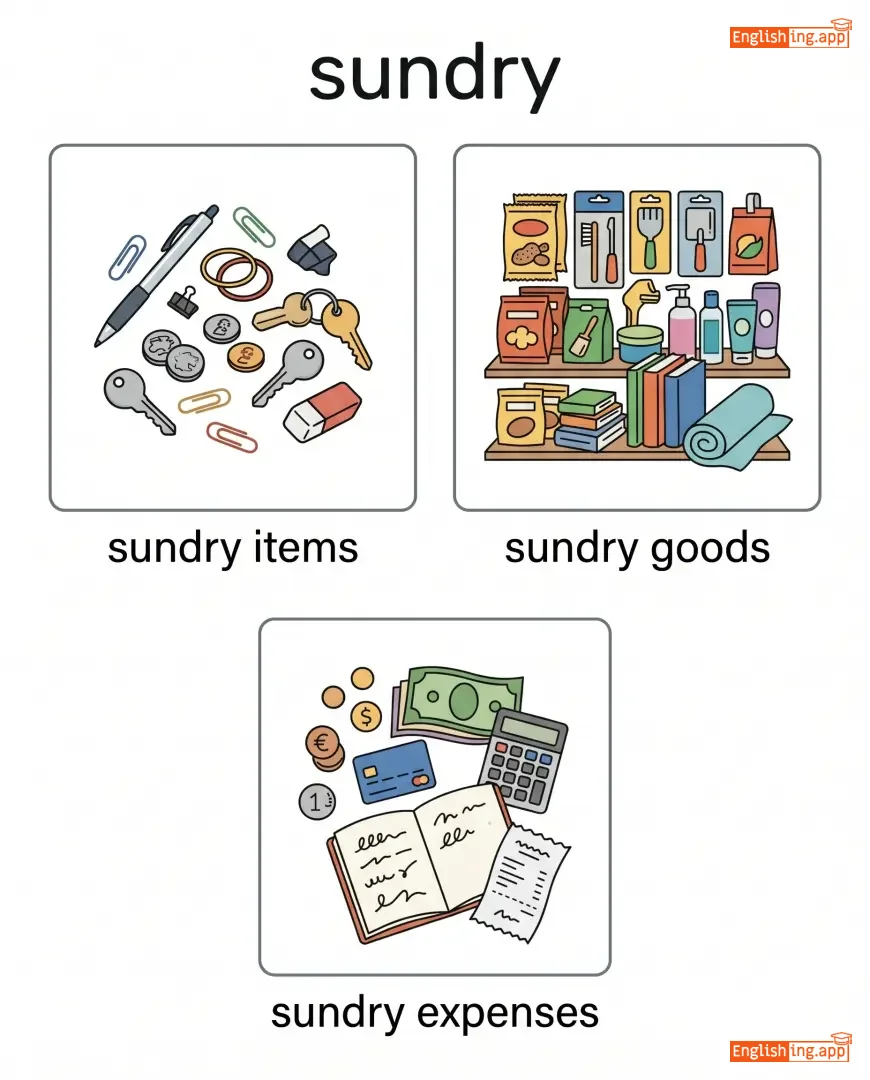
sundry items, sundry goods, sundry expenses
••••••
|
Sundry就像周日,你可以找到各种各样的东西
••••••
|
|
🔄
••••••
|
/ˌsuːpərˈsiːd/
verb
(sūpèrsìd)
••••••
|
|
取代
qǔdài
••••••
|
superseded
sūpèrsìdèd
••••••
|
superseded
sūpèrsìdèd
••••••
|
supersedes
sūpèrsìds
••••••
|
superseding
sūpèrsìdīng
••••••
|
To replace or take the place of something because it is more modern or effective.
••••••
|
This new law will supersede the old regulations.
这部新法律将取代旧的规定。
••••••
|
这部新法律将取代旧的规定。
Zhè bù xīn fǎlǜ jiāng qǔdài jiù de guīdìng.
••••••
|
- •••••• | - •••••• | - •••••• |
replace, override, overrule, succeed, displace
••••••
|
retain, continue, maintain
••••••
|
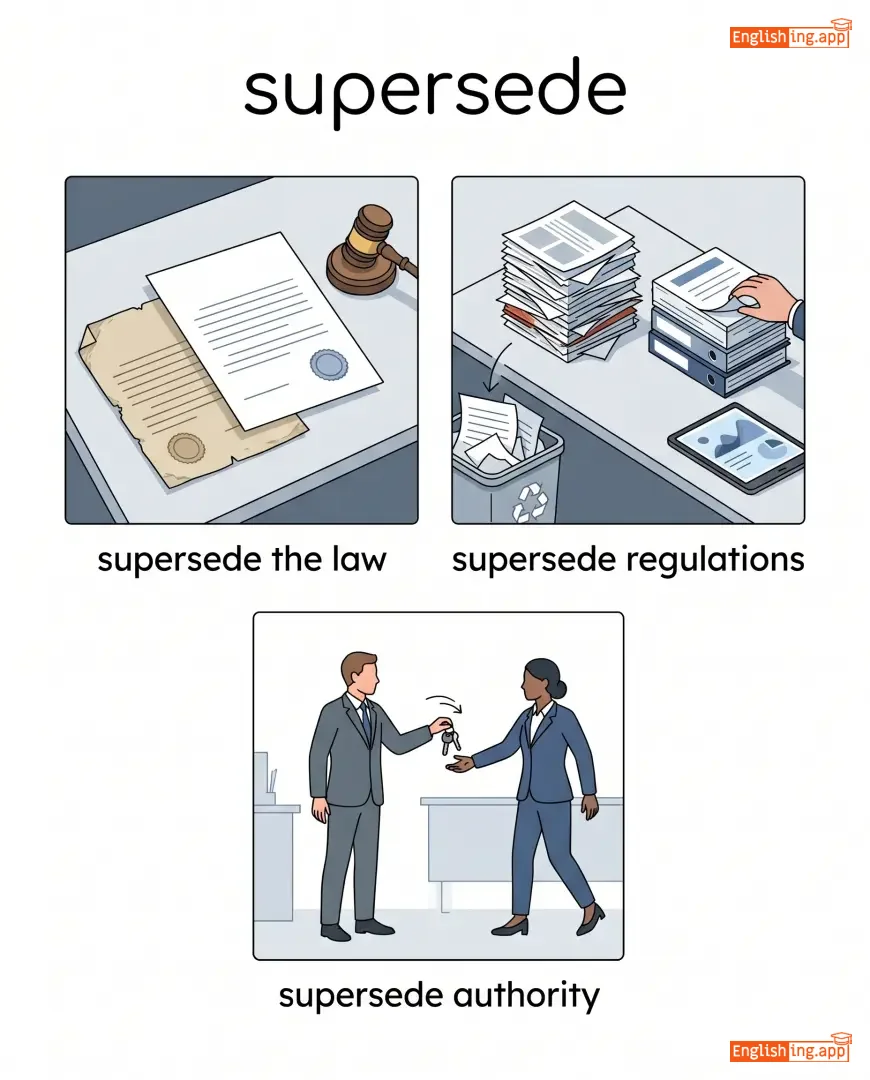
supersede the law, supersede regulations, supersede authority, supersede role
••••••
|
Super + seat 替代旧规则就是 supersede。
••••••
|
|
🛌
••••••
|
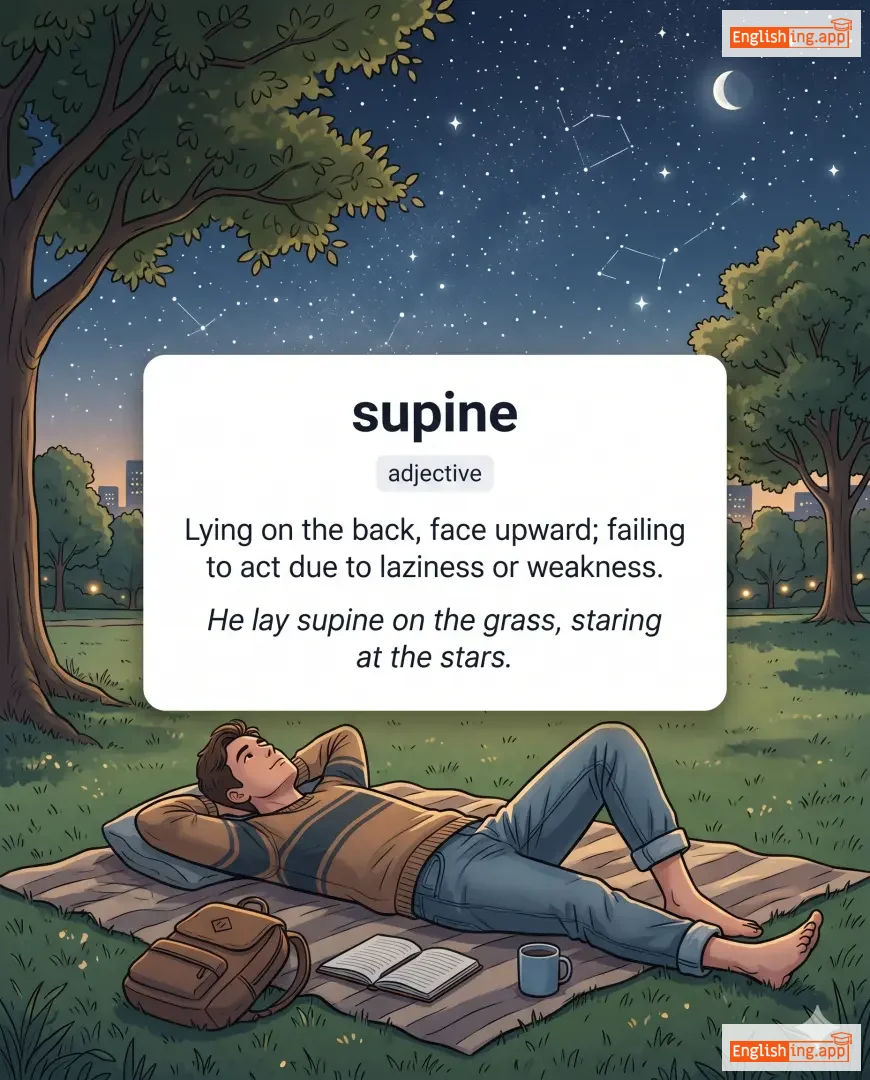
/ˈsuːpaɪn/
adjective
(suˈpaɪn)
••••••
|
|
仰卧
yangwo
••••••
|
- •••••• | - •••••• | - •••••• | - •••••• |
Lying on the back, face upward; failing to act due to laziness or weakness.
••••••
|
He lay supine on the grass, staring at the stars. |
他躺在草地上,仰望星星。
Ta tang zai caodi shang, yangwang xingxing.
••••••
|
- •••••• | - •••••• | - •••••• |
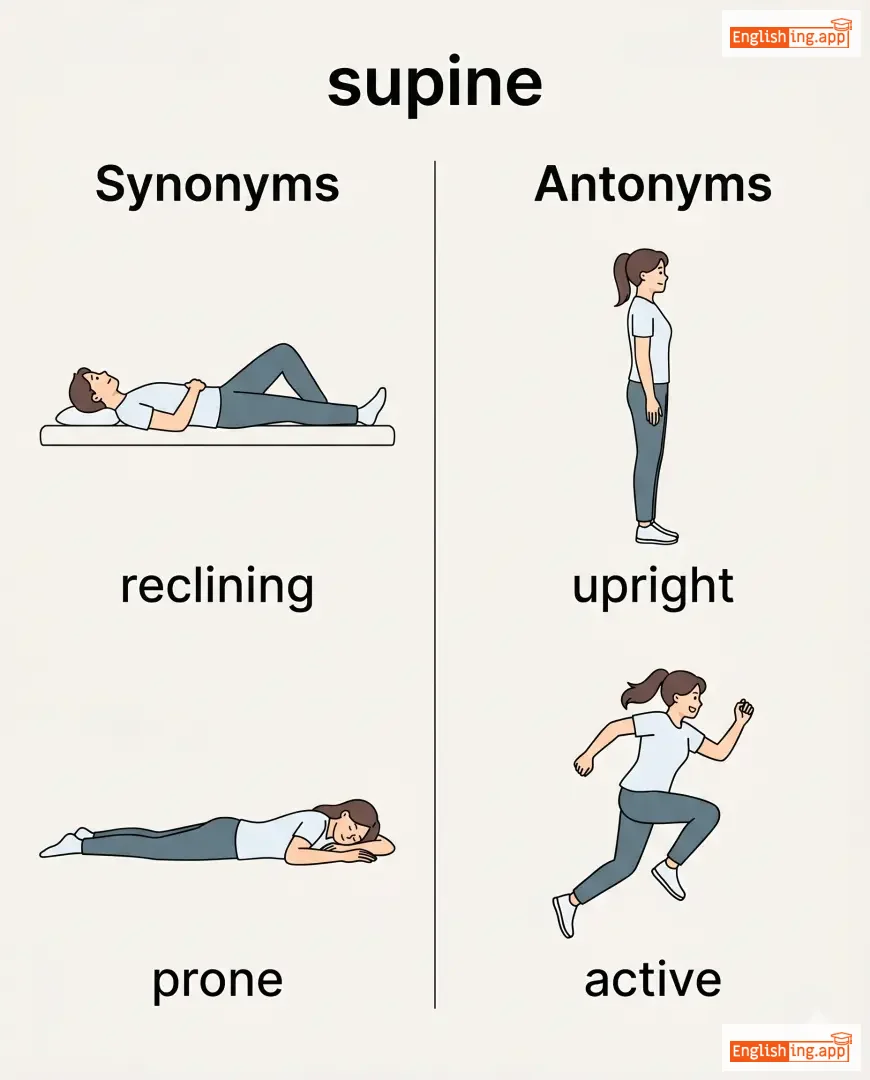
reclining, prone, passive, inactive, inert
••••••
|
upright, active, alert
••••••
|
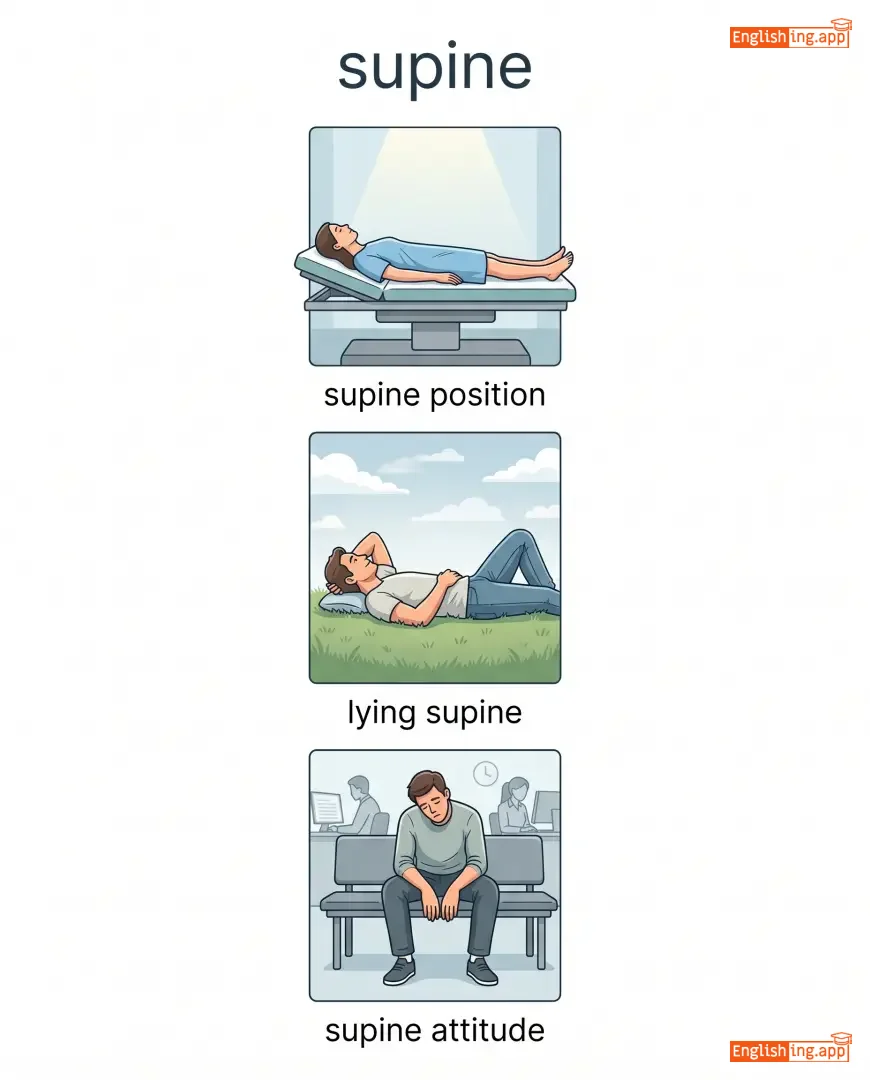
supine position, lying supine, supine attitude, supine posture
••••••
|
supine = su (su) + pine (pine) → 你躺在草地上像松树一样。
••••••
|
|
🔄
••••••
|
/səˈplænt/
verb
(苏普兰特)
••••••
|
|
取代
qudai
••••••
|
supplanted
苏普兰特德
••••••
|
supplanted
苏普兰特德
••••••
|
supplants
苏普兰特斯
••••••
|
supplanting
苏普兰廷
••••••
|
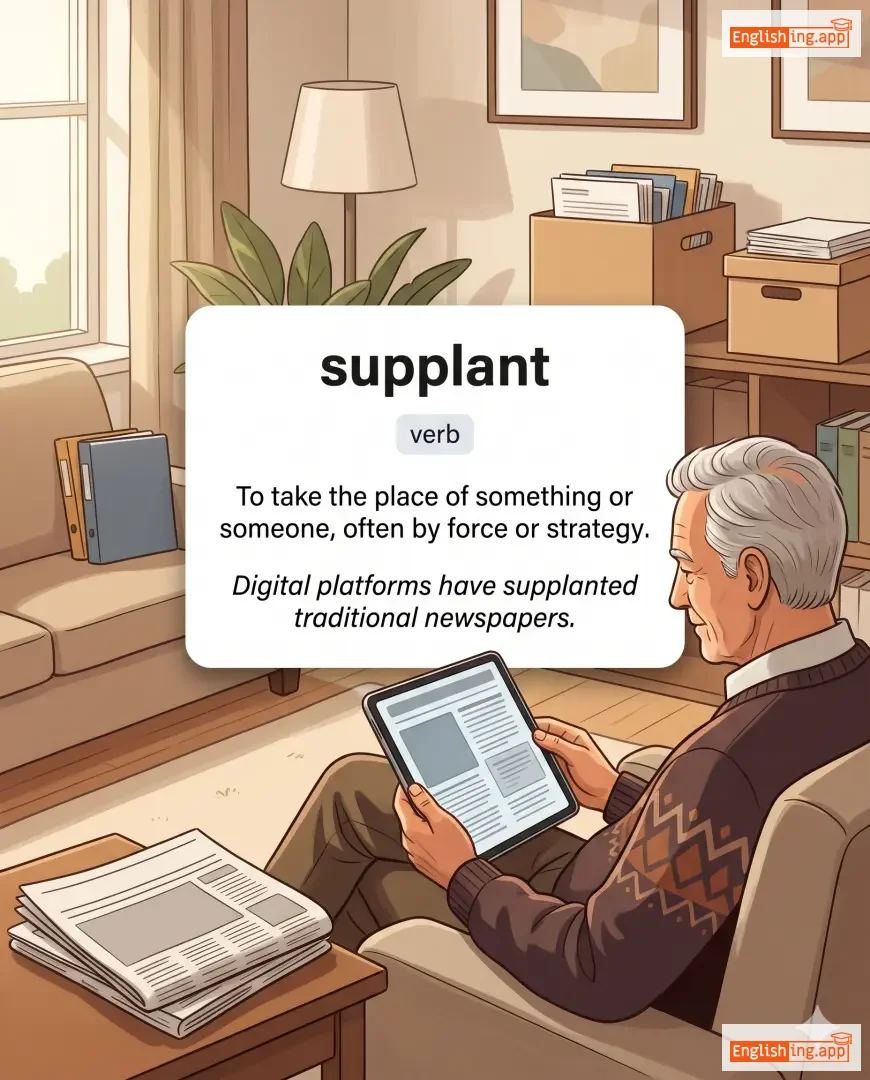
To take the place of something or someone, often by force or strategy.
••••••
|
Digital platforms have supplanted traditional newspapers.
数字平台已经取代了传统报纸。
••••••
|
数字平台已经取代了传统报纸。
Shuzi pingtai yijing qudai le chuantong baozhi.
••••••
|
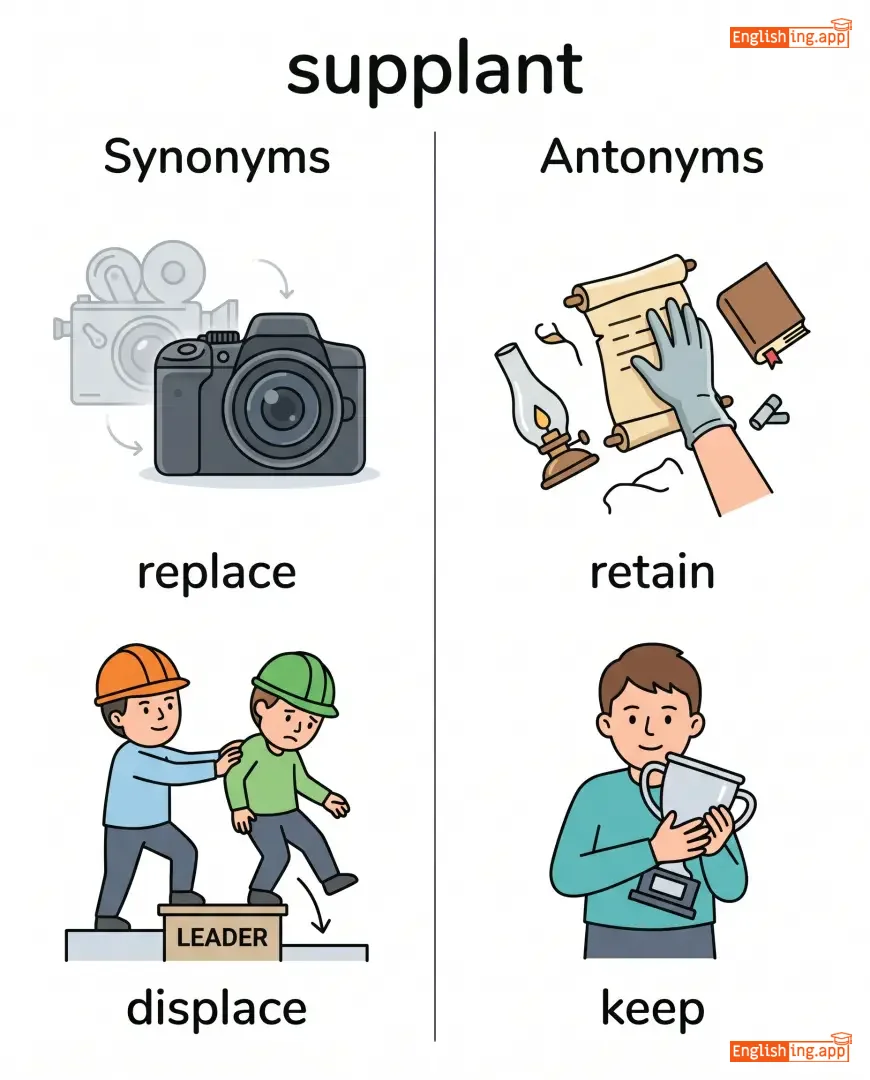
- •••••• | - •••••• | - •••••• |
replace, displace, overthrow, substitute, succeed
••••••
|
retain, keep, preserve
••••••
|
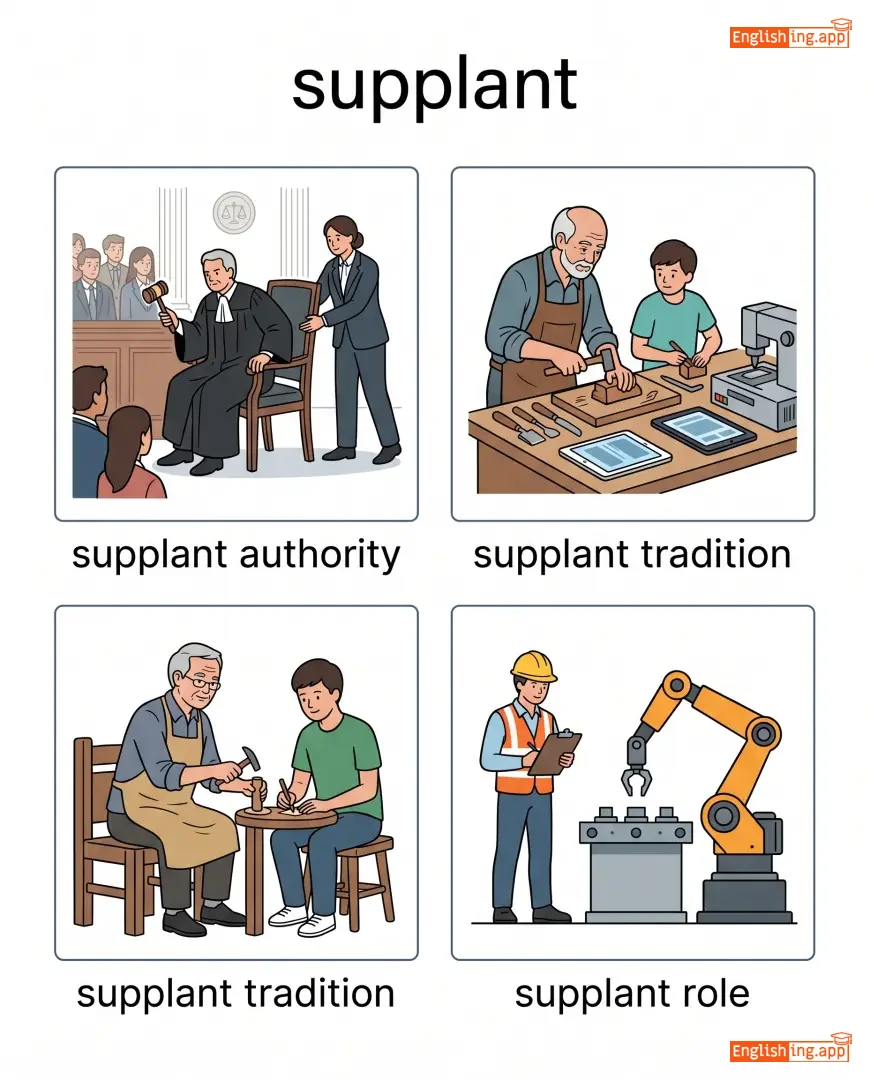
supplant authority, supplant tradition, supplant role, supplant leader
••••••
|
想象用新植物替代旧植物,'取代'就像更换植物一样!
••••••
|
|
🙏
••••••
|
/ˈsʌpliənt/
adjective
(sʌplɪənt)
••••••
|

|
恳求者
kěnqiú zhě
••••••
|
- •••••• | - •••••• | - •••••• | - •••••• |
Humbly or earnestly asking for something, especially from a person in authority.
••••••
|
The suppliant man begged for mercy at the king's feet. |
恳求者在国王的脚下乞求怜悯。
Kěnqiú zhě zài guówáng de jiǎoxià qǐqiú liánmǐn.
••••••
|
- •••••• | - •••••• | - •••••• |
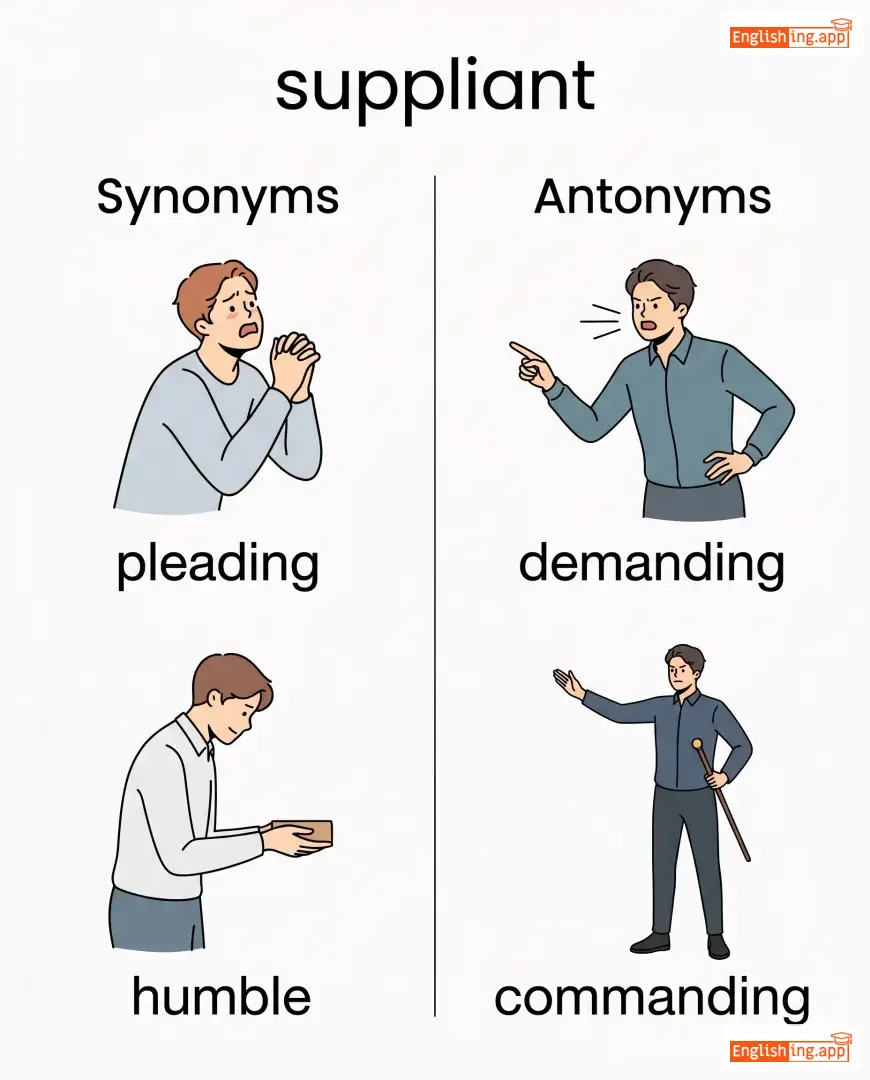
pleading, humble, imploring, petitioning, entreating
••••••
|
demanding, commanding, assertive
••••••
|
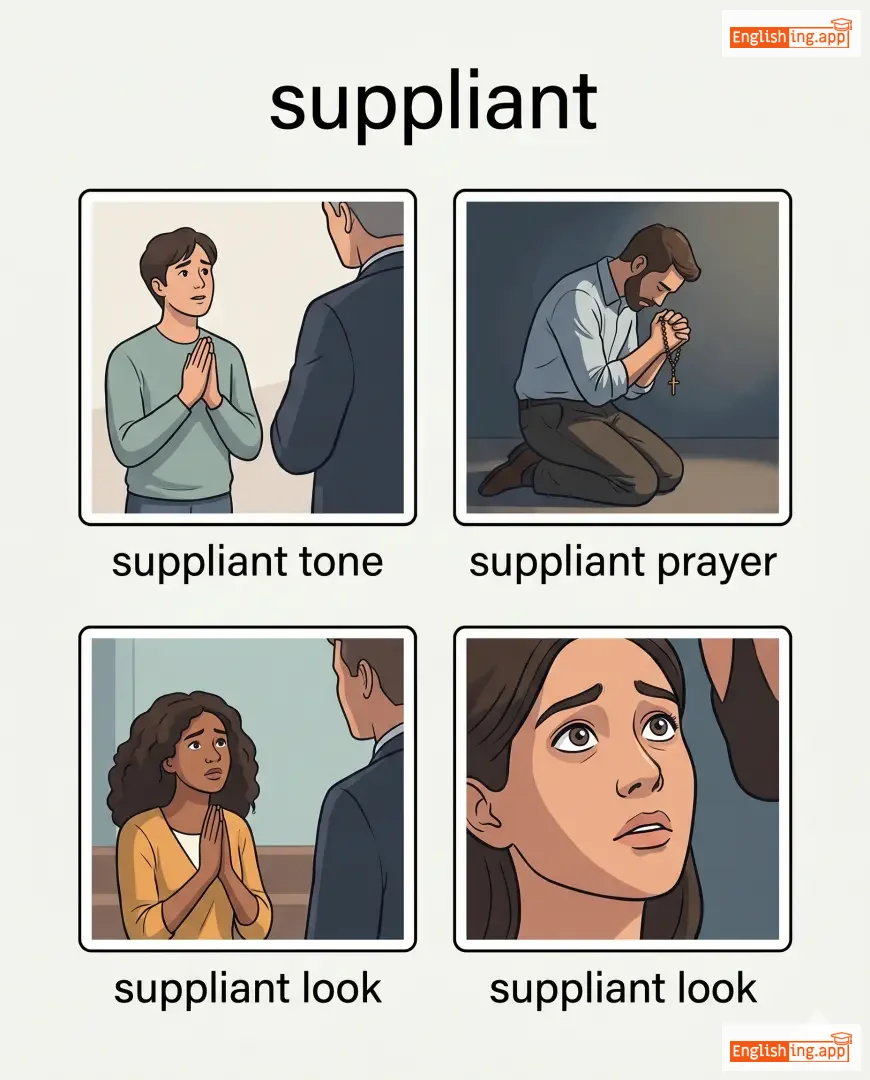
suppliant tone, suppliant prayer, suppliant look, suppliant request
••••••
|
Suppliant — 请求者,谦虚而真诚的人。
••••••
|

