|
絵文字
|
単語 | Images | 翻訳 | 過去 | 過去分詞 | 三人称単数 | 動名詞 | 意味 | 例文 | 例文の翻訳 | 表現例 | 表現例の意味 | 表現例の翻訳 | 同義語 | 対義語 | コロケーション | ニーモニック |
|---|---|---|---|---|---|---|---|---|---|---|---|---|---|---|---|---|---|
|
🧳
••••••
|
/ˌpɛrəɡrɪˈneɪʃən/
noun
(ペレグリネーション)
••••••
|
- •••••• |
旅
tabi
••••••
|
- •••••• | - •••••• | - •••••• | - •••••• |
A long journey or wandering, especially on foot.
••••••
|
Their peregrination across Asia lasted two years.
彼らのアジア横断の旅は2年間続いた。
••••••
|
彼らのアジア横断の旅は2年間続いた。
Karera no Ajia ōdan no tabi wa 2-nenkan tsuzita.
••••••
|
- •••••• | - •••••• | - •••••• |
journey, travel, wandering, expedition, roaming
••••••
|
stay, residence
••••••
|
long peregrination, peregrination across, peregrination of
••••••
|
Peregrinationは旅行の意味 – 'Pere'(ペア)と一緒に長い旅行に出かける。
••••••
|
|
📢
••••••
|
/pəˈrɛmptəri/
adjective
(ペレンプトリー)
••••••
|
- •••••• |
強制的な
kyōseitekina
••••••
|
- •••••• | - •••••• | - •••••• | - •••••• |
Insisting on immediate attention or obedience, especially in a commanding way.
••••••
|
The officer gave a peremptory order to evacuate the building. |
その警官は建物を避難させるために強制的な命令を出した。
Sono keikan wa tatemono o hinansaseru tame ni kyōseitekina meirei o dashita.
••••••
|
- •••••• | - •••••• | - •••••• |
authoritative, commanding, dictatorial, decisive, imperious
••••••
|
submissive, hesitant, weak
••••••
|
peremptory order, peremptory tone, peremptory command
••••••
|
Peremptory は強制的な意味です – 先生は厳しく命令を出しました。
••••••
|
|
🌱
••••••
|
/pəˈrɛniəl/
adjective
(ペレニアル)
••••••
|
|
永続的
eizokuteki
••••••
|
- •••••• | - •••••• | - •••••• | - •••••• |
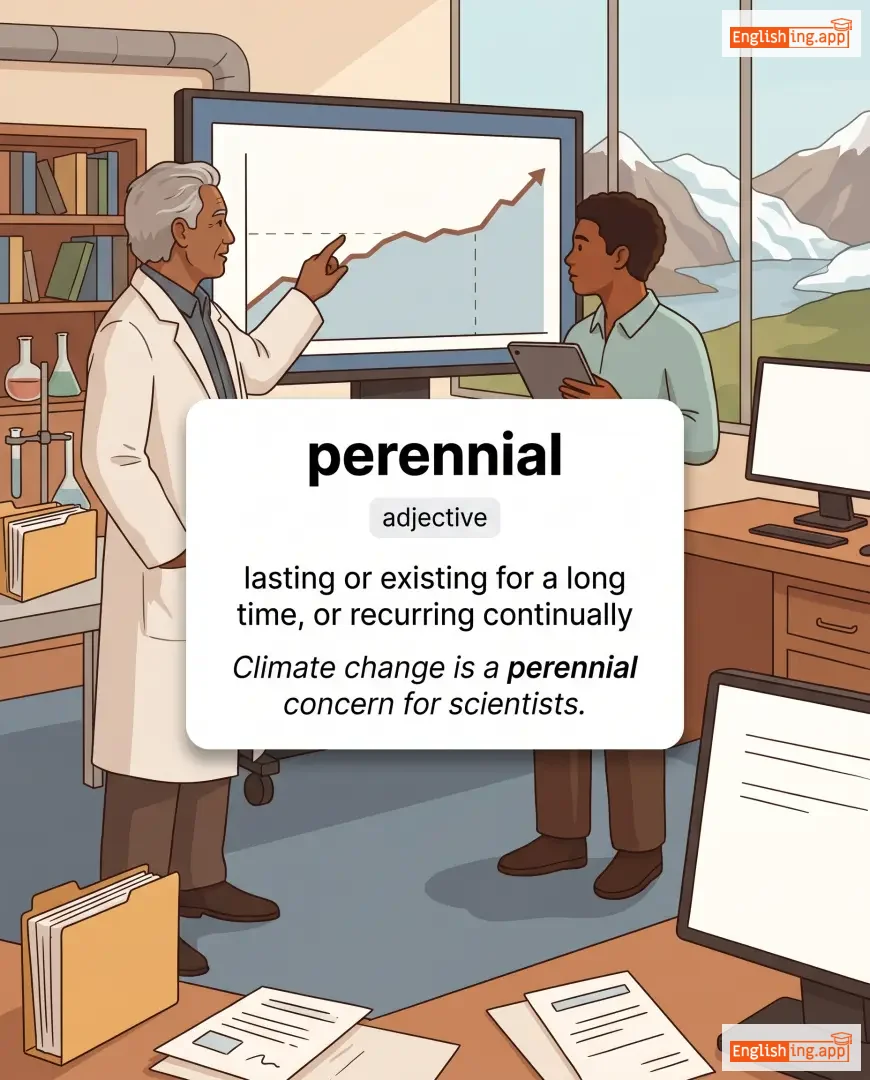
lasting or existing for a long time, or recurring continually
••••••
|
Climate change is a perennial concern for scientists. |
気候変動は科学者にとって永続的な関心事です。
Kikou hendou wa kagakusha ni totte eizokuteki na kanshinji desu.
••••••
|
perennial favorite |
something that is always liked or chosen over time
••••••
|
永続的なお気に入り
eizokuteki na okiniiri
••••••
|
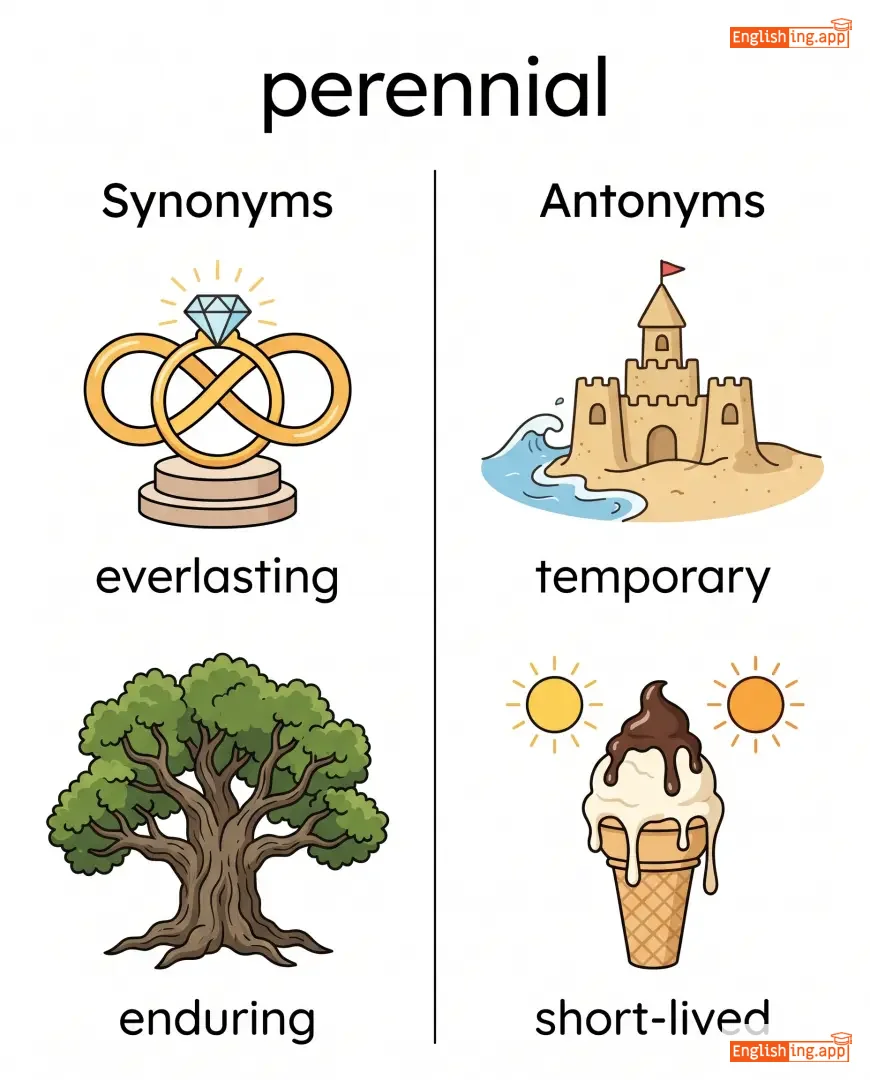
everlasting, enduring, persistent, continual, constant
••••••
|
temporary, short-lived, fleeting
••••••
|
perennial problem, perennial plant, perennial issue, perennial concern
••••••
|
Perennialは「永続的」を意味し、永続的な植物は毎年戻ってきます。
••••••
|
|
🕵️
••••••
|
/pərˈfɪdiəs/
adjective
(パーフィディアス)
••••••
|

|
裏切りの
uragiri no
••••••
|
- •••••• | - •••••• | - •••••• | - •••••• |
deceitful and untrustworthy
••••••
|
The spy was executed for his perfidious actions. |
スパイは裏切りの行動で処刑されました。
Supai wa uragiri no kōdō de shokei sare mashita.
••••••
|
- •••••• | - •••••• | - •••••• |
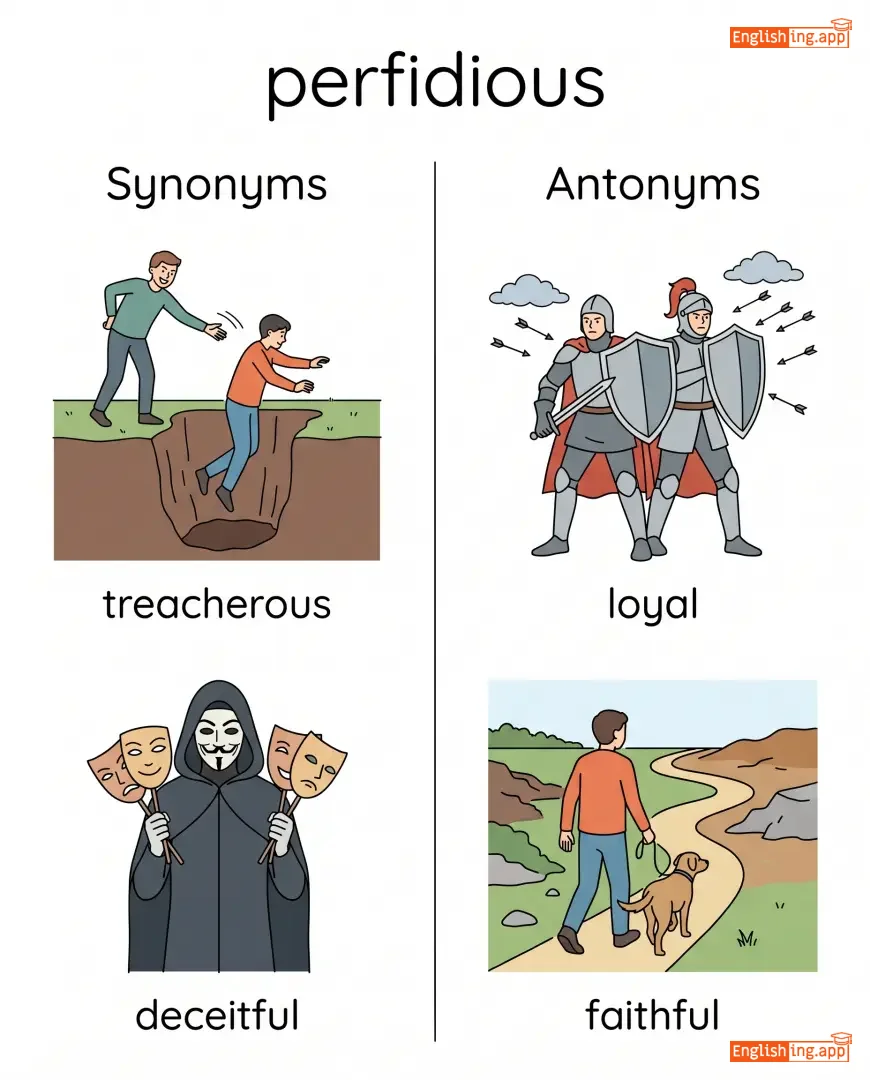
treacherous, deceitful, disloyal, unfaithful, duplicitous
••••••
|
loyal, faithful, trustworthy
••••••
|
perfidious act, perfidious betrayal, perfidious nature
••••••
|
Perfidiousは完璧なように見えるが、裏切りの意味がある。
••••••
|
|
😒
••••••
|
/pəˈfʌŋk.tər.i/
adjective
(パーファンクトリー)
••••••
|
|
表面的な
hyoumen-teki na
••••••
|
- •••••• | - •••••• | - •••••• | - •••••• |
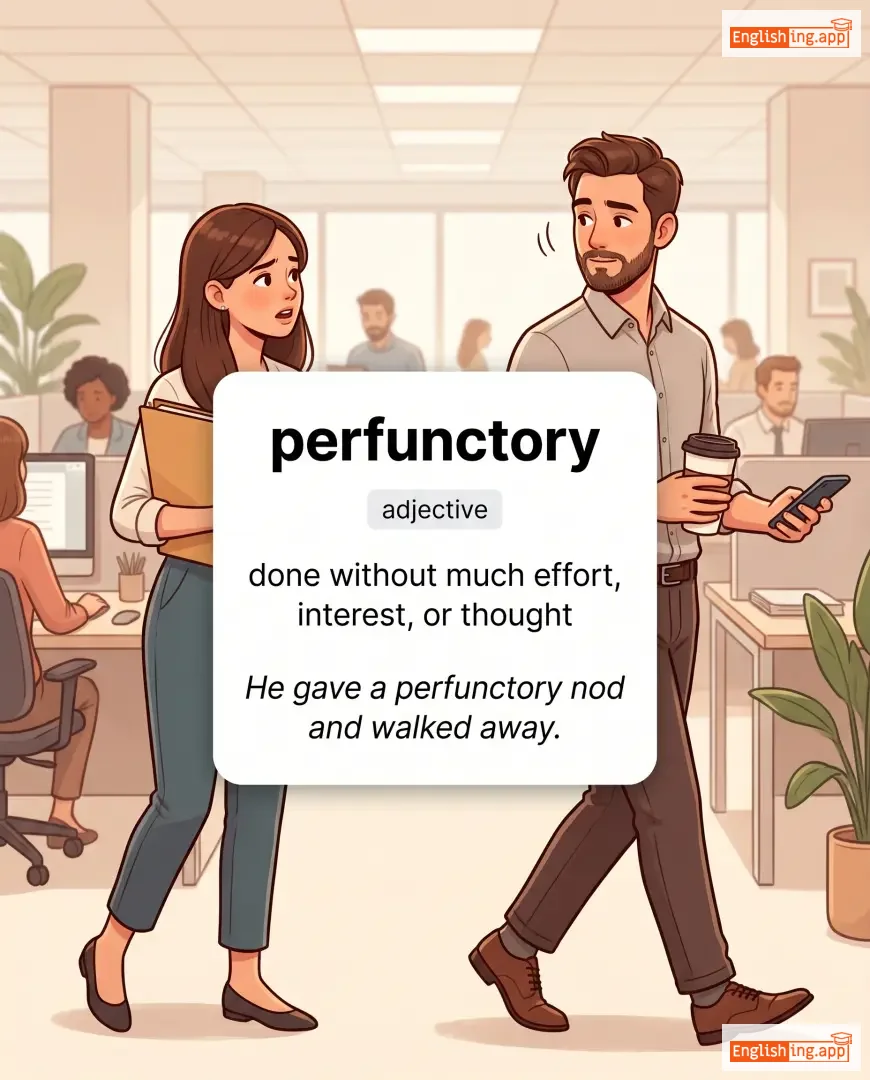
done without much effort, interest, or thought
••••••
|
He gave a perfunctory nod and walked away. |
彼は表面的にうなずいて、歩き去った。
Kare wa hyōmen-teki ni unazuite, arukisatta.
••••••
|
- •••••• | - •••••• | - •••••• |
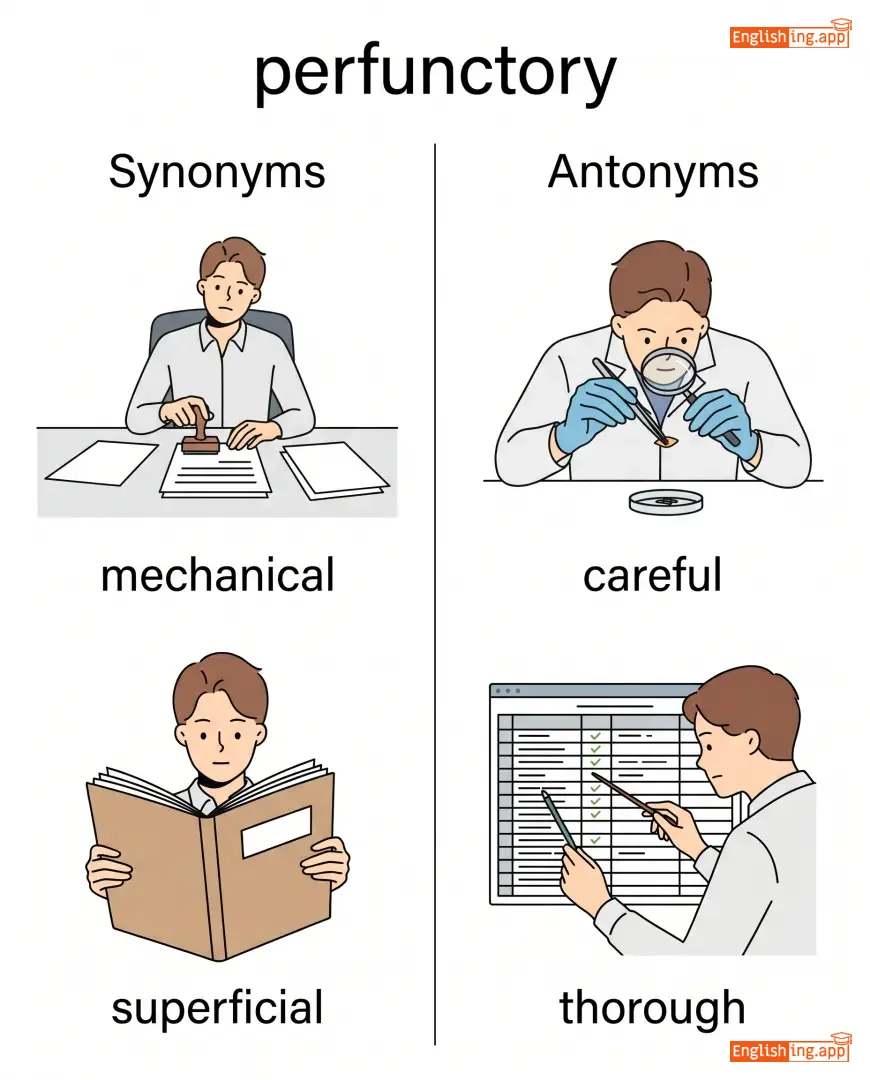
mechanical, superficial, careless, cursory, automatic
••••••
|
careful, thorough, attentive
••••••
|
perfunctory effort, perfunctory response, perfunctory nod, perfunctory greeting
••••••
|
表面的に何かをするのは、perfunctoryです。
••••••
|
|
🌕
••••••
|
/ˈper.ɪ.dʒiː/
noun
(ペリジー)
••••••
|
- •••••• |
月または衛星の軌道で地球に最も近い点
tsuki matawa eisei no kidō de chikyū ni mottomo chikai ten
••••••
|
- •••••• | - •••••• | - •••••• | - •••••• |
the point in the orbit of the moon or a satellite at which it is nearest to the Earth
••••••
|
The moon appeared much larger during its perigee. |
月はそのペリジーの際にかなり大きく見えました。
Tsuki wa sono perijī no sai ni kanari ōkiku miemashita.
••••••
|
- •••••• | - •••••• | - •••••• |
closest point, nearest approach, low point
••••••
|
apogee, farthest point
••••••
|
lunar perigee, perigee distance, at perigee, reach perigee
••••••
|
Peri + gee → 'ペリ' は近いという意味、'ジ' は地球を意味します – 月は地球に近いです。
••••••
|
|
💧
••••••
|
/ˈpɜːrmiəbl̩/
adjective
(パーミアブル)
••••••
|
|
透過性のある
tōkasei no aru
••••••
|
- •••••• | - •••••• | - •••••• | - •••••• |
allowing liquids or gases to pass through
••••••
|
The soil in this area is very permeable to water. |
この地域の土壌は水に非常に透過性があります。
Kono chiiki no dojou wa mizu ni hijou ni tōkasei ga arimasu.
••••••
|
- •••••• | - •••••• | - •••••• |
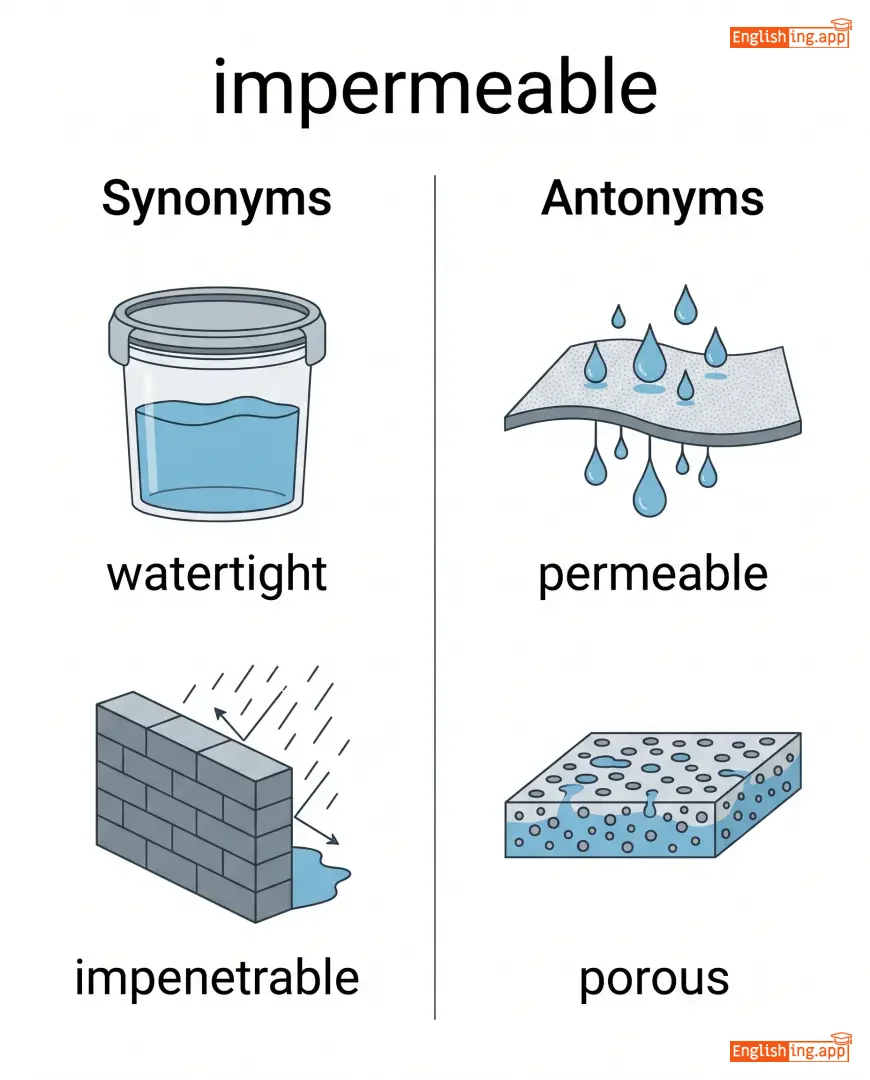
porous, absorbent, penetrable, leaky
••••••
|
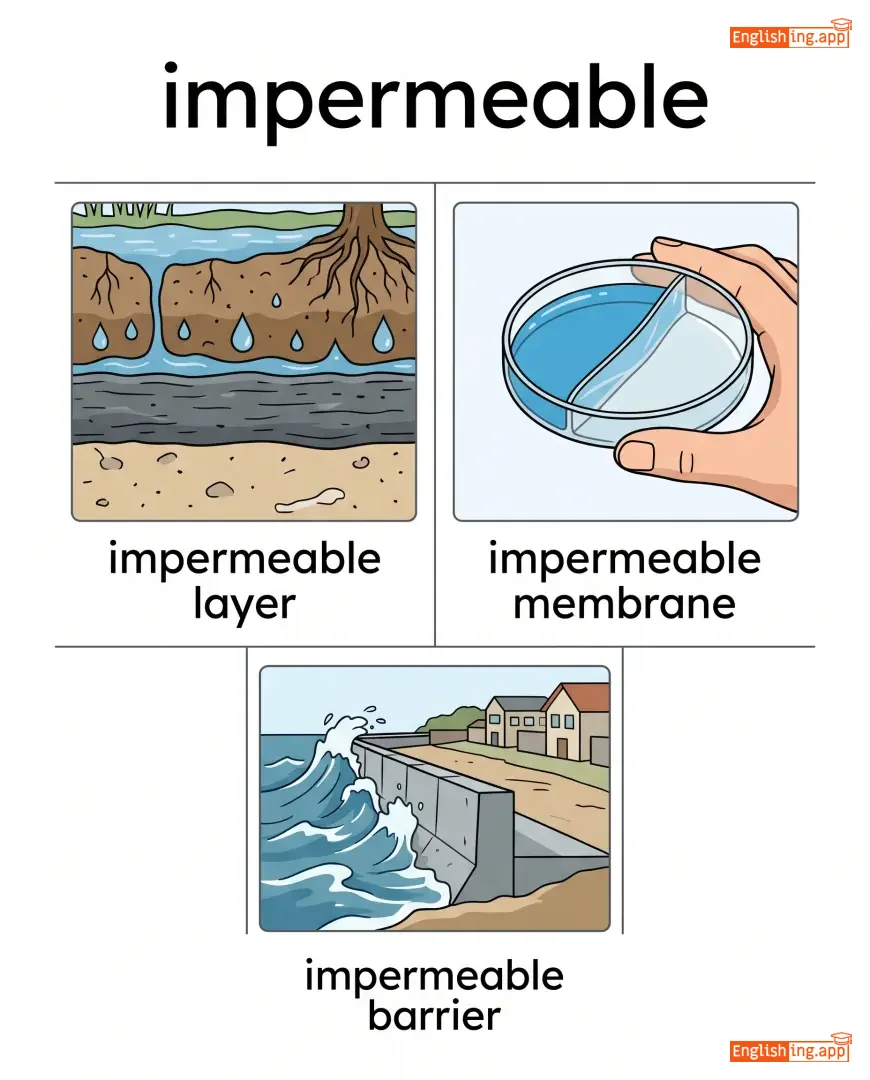
impermeable, watertight, sealed
••••••
|
permeable soil, permeable membrane, highly permeable, permeable surface
••••••
|
透過性のある = 透 (通す) + 性 (特性) = 液体/ガスを通す (透過性のある)。
••••••
|
|
😟
••••••
|
/pərˈtɜːrb/
verb
(ハピネス)
••••••
|
- •••••• |
動揺させる
dōyō saseru
••••••
|
perturbed
ハピネスド
••••••
|
perturbed
ハピネスド
••••••
|
perturbs
ハピネスズ
••••••
|
perturbing
ハピネスイング
••••••
|
To disturb or unsettle greatly in mind.
••••••
|
The sudden noise perturbed the students during the exam.
突然の音が試験中に学生を動揺させました。
••••••
|
突然の音が試験中に学生を動揺させました。
Totsuzen no oto ga shiken-chū ni gakusei o dōyō saseru mashita.
••••••
|
perturb the balance
バランスを乱す
••••••
|
to upset stability or harmony
••••••
|
バランスを乱す
baransu o midasu
••••••
|
disturb, unsettle, agitate, upset, worry
••••••
|
calm, soothe, reassure
••••••
|
greatly perturbed, visibly perturbed, perturb the mind, perturb the balance
••••••
|
Perturb—心の動揺を想像してみて、バランスを崩すような感じ。
••••••
|
|
🌍
••••••
|
/pərˈveɪsɪv/
adjective
(パーベイシブ)
••••••
|
|
広範
kōhan
••••••
|
- •••••• | - •••••• | - •••••• | - •••••• |
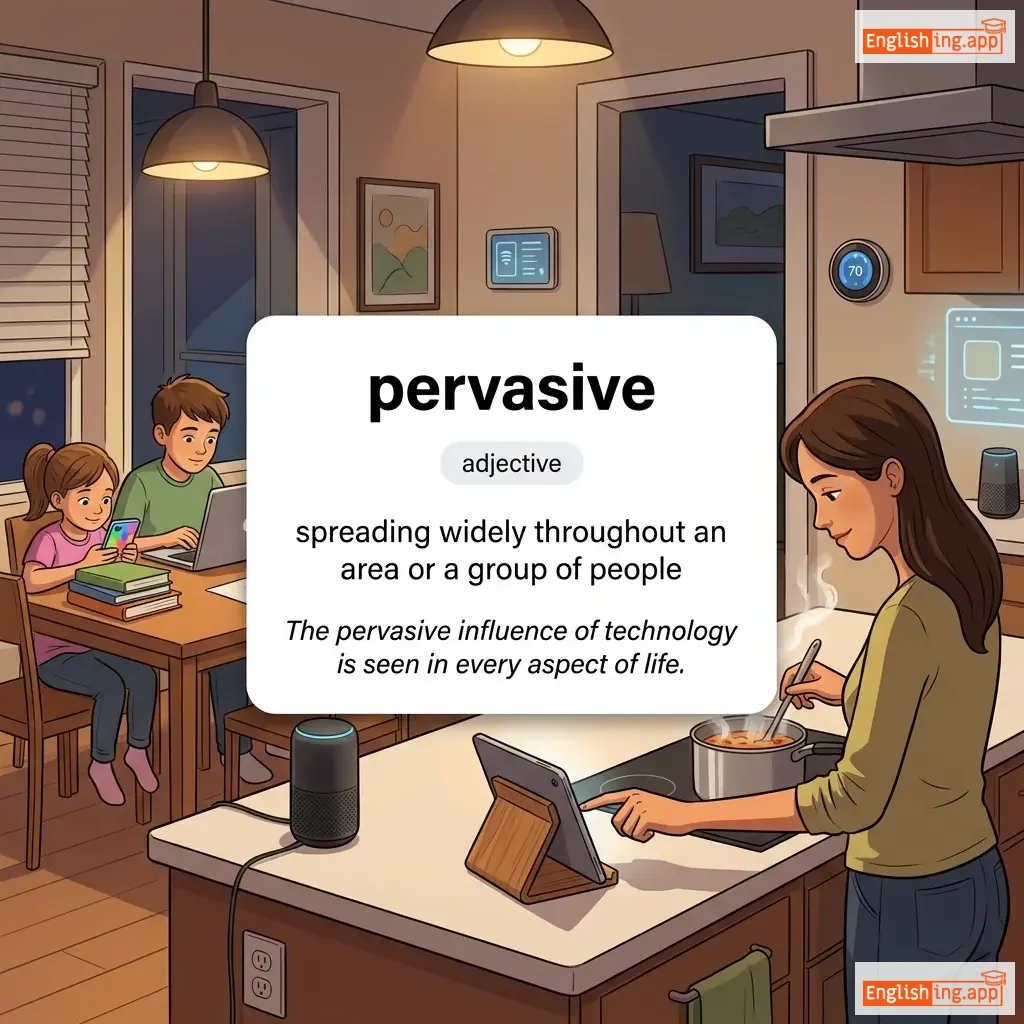
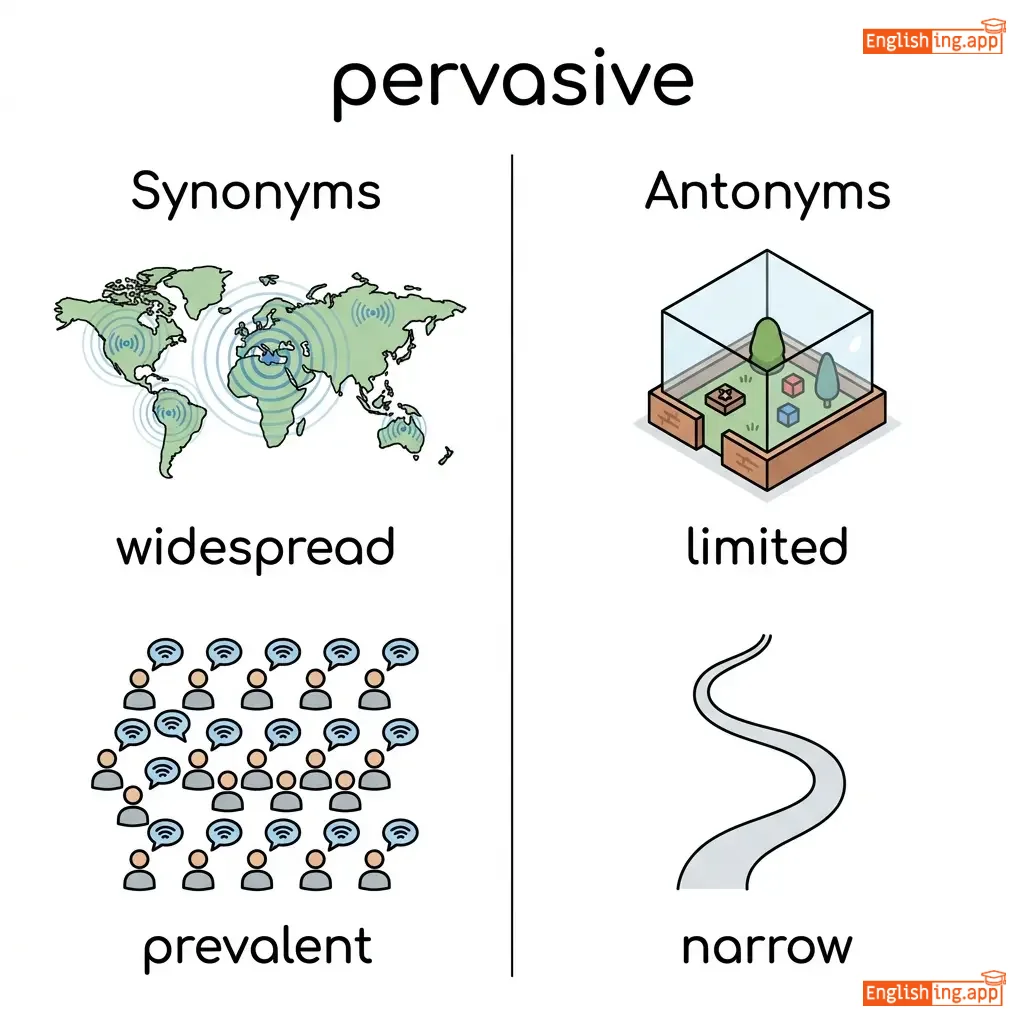
spreading widely throughout an area or a group of people
••••••
|
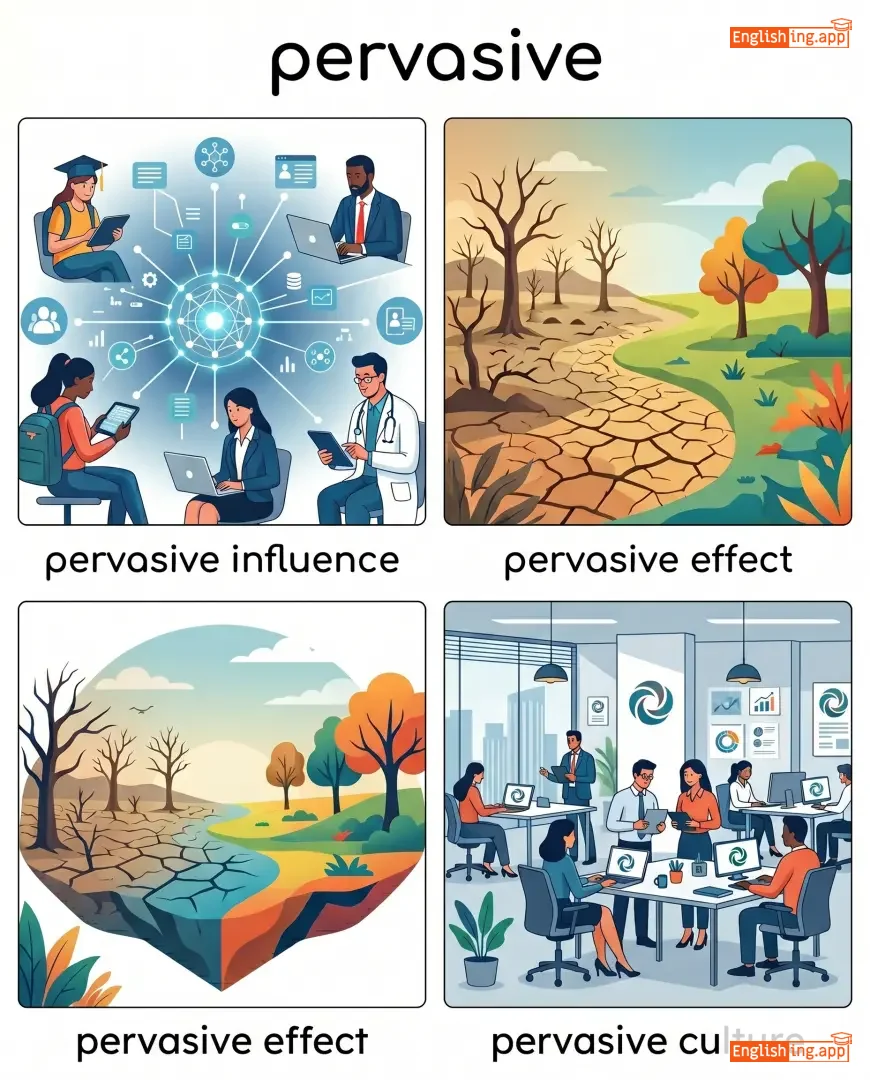
The pervasive influence of technology is seen in every aspect of life. |
技術の広範な影響は、生活のすべての側面で見られます。
Gijutsu no kōhan na eikyō wa, seikatsu no subete no sokumen de miraremasu.
••••••
|
- •••••• | - •••••• | - •••••• |
widespread, prevalent, extensive, universal, omnipresent
••••••
|
limited, narrow, rare
••••••
|
pervasive influence, pervasive effect, pervasive culture, pervasive problem
••••••
|
広範という意味は至る所に広がること—pervasive
••••••
|
|
😤
••••••
|
/ˈpɛtjʊlənt/
adjective
(ペチュラント)
••••••
|
- •••••• |
癇癪持ち
kanshaku mochi
••••••
|
- •••••• | - •••••• | - •••••• | - •••••• |
Childishly sulky or bad-tempered.
••••••
|
The child became petulant when denied more candy. |
子供はキャンディーをもっともらえないと癇癪を起こした。
Kodomo wa kyandī o motto moraenai to kanshaku o okoshita.
••••••
|
- •••••• | - •••••• | - •••••• |
irritable, cranky, sulky, moody
••••••
|
cheerful, patient, calm
••••••
|
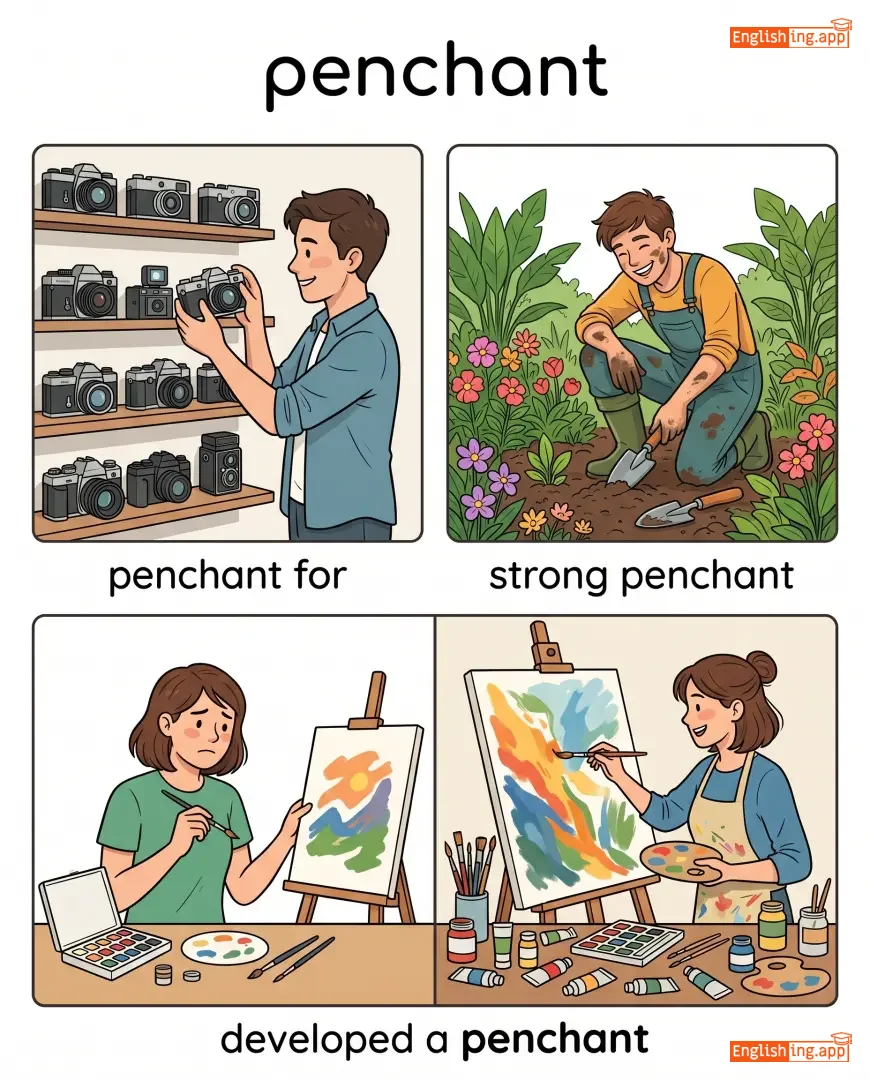
petulant child, petulant response, petulant tone
••••••
|
Petulantは、甘えん坊な子供のような気分ですぐに怒る人を意味します。
••••••
|
|
😐
••••••
|
/flɛgˈmæt.ɪk/
adjective
(フレグマティック)
••••••
|

|
冷静
reisei
••••••
|
- •••••• | - •••••• | - •••••• | - •••••• |
having an unemotional and stolidly calm disposition
••••••
|
Despite the chaos, he remained phlegmatic and composed. |
混乱の中で、彼は冷静で落ち着いていました。
Konran no naka de, kare wa reisei de ochitsuite imashita.
••••••
|
- •••••• | - •••••• | - •••••• |
calm, unflappable, composed, stoic
••••••
|
excitable, emotional, agitated
••••••
|
phlegmatic temperament, phlegmatic response, phlegmatic nature
••••••
|
冷静なフレグマティックな人のように、どんな状況でも動じない。
••••••
|
|
🦅
••••••
|
/ˈfiː.nɪks/
noun
(フェニックス)
••••••
|
- •••••• |
フェニックスの鳥
phenikkusu no tori
••••••
|
- •••••• | - •••••• | - •••••• | - •••••• |
a mythical bird that is reborn from its ashes; symbol of immortality or renewal
••••••
|
The legend says the phoenix rises from its ashes every 500 years. |
伝説によると、フェニックスは500年ごとに灰から蘇ると言われています。
Densetsu ni yoru to, phenikkusu wa 500-nen goto ni hai kara yomigaeru to iwareteimasu.
••••••
|
- •••••• | - •••••• | - •••••• |
mythical bird, immortal bird, firebird, rebirth symbol
••••••
|
mortal creature, ordinary bird
••••••
|
rise like a phoenix, phoenix myth, phoenix legend
••••••
|
フェニックスは火から蘇る - Phoenix rises from fire
••••••
|
|
👤
••••••
|
/ˌfɪziˈɒnəmi/
noun
(フィジオノミー)
••••••
|
- •••••• |
顔の特徴の分析
kao no tokuchō no bunseki
••••••
|
- •••••• | - •••••• | - •••••• | - •••••• |
the study of facial features to judge character or personality
••••••
|
He believed in physiognomy and tried to read people's personalities from their faces. |
彼はフィジオノミーを信じて、顔から人々の性格を読み取ろうとしました。
Kare wa fizionomī o shinjite, kao kara hitobito no seikaku o yomitorou to shimashita.
••••••
|
- •••••• | - •••••• | - •••••• |
face reading, character analysis, appearance study, facial interpretation
••••••
|
ignorance, randomness
••••••
|
study of physiognomy, physiognomy analysis, physiognomic features
••••••
|
Physio (顔) + gnomy (知識) = 顔で性格を読んでみよう - Know personality from face.
••••••
|
|
🙏
••••••
|
/ˈpaɪ.ə.ti/
noun
(パイエティ)
••••••
|

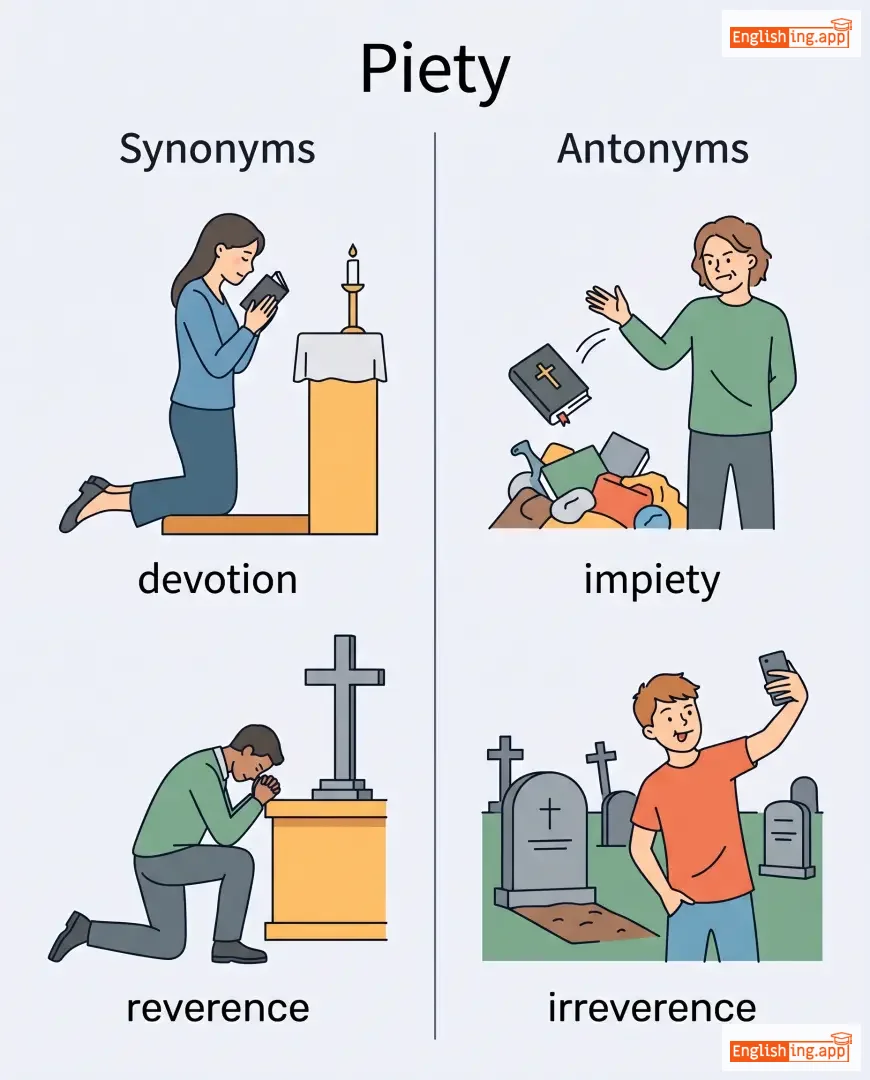

|
信仰心
shinkōshin
••••••
|
- •••••• | - •••••• | - •••••• | - •••••• |
the quality of being religious or reverent; devout religious belief and practice
••••••
|
His piety was evident in his daily prayers.
His piety was evident in his daily prayers.
••••••
|
彼の信仰心は毎日の祈りに明らかでした。
kare no shinkōshin wa mainichi no inori ni akirakadeshita.
••••••
|
- •••••• | - •••••• | - •••••• |
devotion, religiousness, godliness, spirituality
••••••
|
impiety, irreligion, godlessness, blasphemy
••••••
|
religious piety, filial piety, show piety
••••••
|
信仰心 = 信じる心を大切に
••••••
|
|
🌶️
••••••
|
/ˈpiːkənt/
adjective
(ピカント)
••••••
|
- •••••• |
辛い
karai
••••••
|
- •••••• | - •••••• | - •••••• | - •••••• |
having a pleasantly sharp or spicy taste; interestingly provocative
••••••
|
The chef added a piquant sauce to the dish to enhance its flavor. |
シェフは料理に辛いソースを加えて、味を引き立てました。
Shefu wa ryōri ni karai sōsu o kuwaete, aji o hikidatemashita.
••••••
|
- •••••• | - •••••• | - •••••• |
spicy, tangy, zesty, stimulating
••••••
|
bland, dull
••••••
|
piquant flavor, piquant sauce, piquant remark
••••••
|
ピカント = 辛い (karai) 味
••••••
|
|
😠
••••••
|
/piːk/
verb
(ピーク)
••••••
|
- •••••• |
引き起こす
hikiokosu
••••••
|
piqued
ピクド
••••••
|
piqued
ピクド
••••••
|
piques
ピークス
••••••
|
piquing
ピーキング
••••••
|
to stimulate interest or curiosity; to arouse resentment or anger
••••••
|
Her remarks piqued his curiosity about the secret project.
彼女のコメントは秘密のプロジェクトに対する彼の好奇心を引き起こしました。
••••••
|
彼女のコメントは秘密のプロジェクトに対する彼の好奇心を引き起こしました。
Kanojo no komento wa himitsu no purojekuto ni taisuru kare no koukishin wo hikiokoshimashita.
••••••
|
- •••••• | - •••••• | - •••••• |
arouse, provoke, irritate, stimulate
••••••
|
calm, soothe, pacify
••••••
|
pique interest, pique curiosity, pique someone's anger
••••••
|
Piqueで興味 (koumi) が引き起こされる - Pique raises interest
••••••
|
|
🕊️
••••••
|
/pləˈkeɪt/
verb
(purekeito)
••••••
|

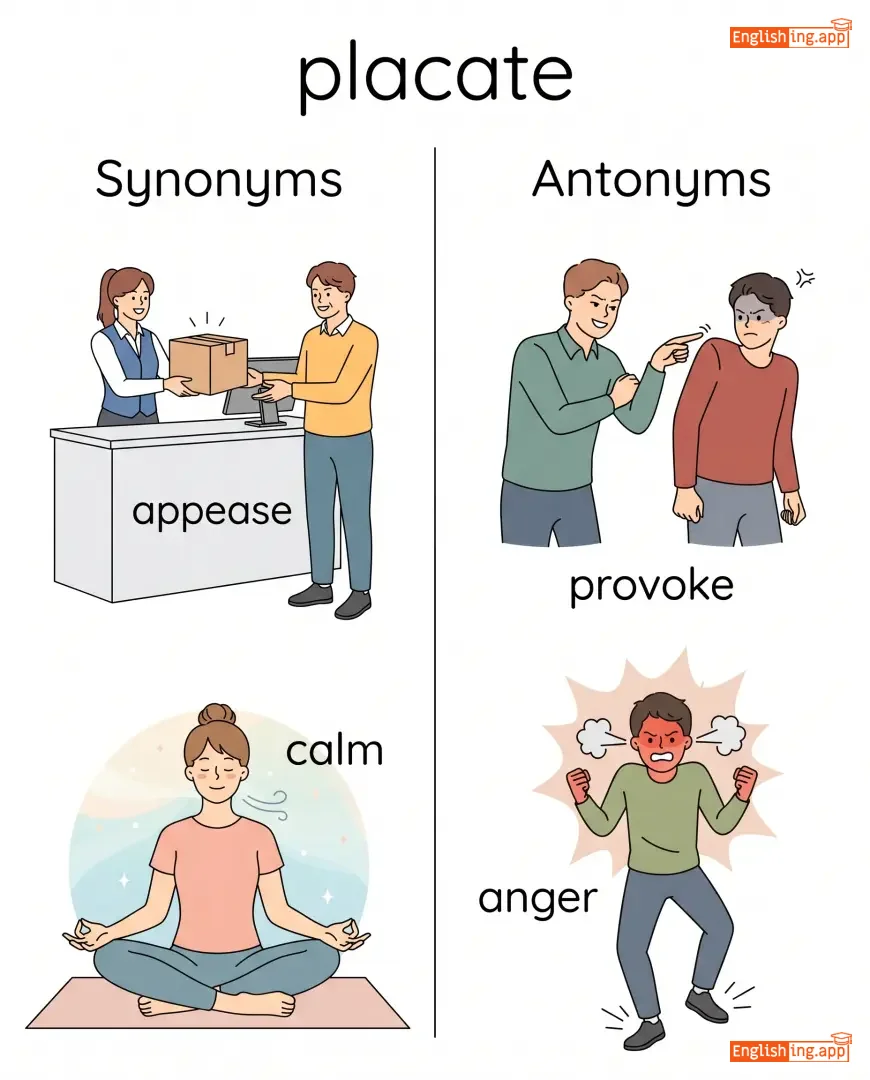
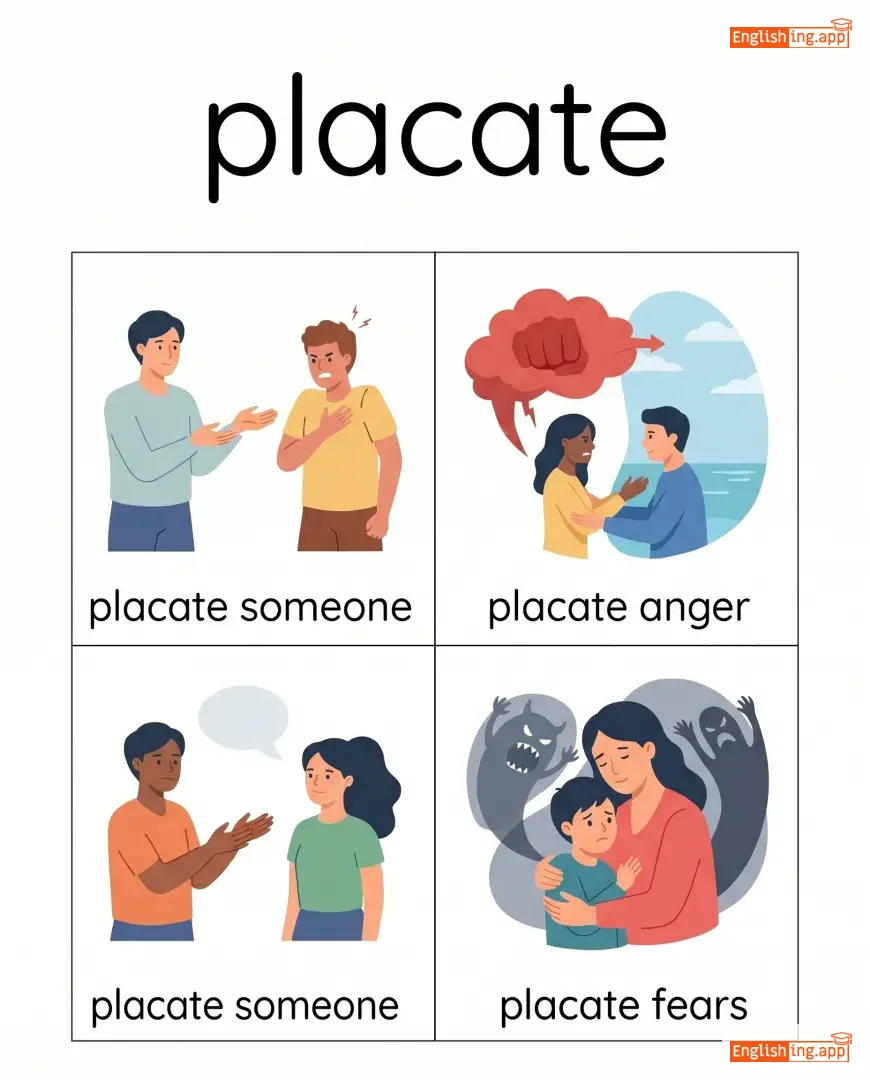
|
なだめる
nadameru
••••••
|
placated
purekeitedo
••••••
|
placated
purekeitedo
••••••
|
placates
purekeitsu
••••••
|
placating
purekeitingu
••••••
|
to make someone less angry or hostile; to calm or soothe
••••••
|
He tried to placate the angry customer with a refund.
彼は返金で怒っている顧客をなだめようとした。
••••••
|
彼は返金で怒っている顧客をなだめようとした。
Kare wa henkin de okotte iru kokyaku o nadameyō to shita.
••••••
|
- •••••• | - •••••• | - •••••• |
appease, calm, soothe, pacify
••••••
|
provoke, anger, irritate
••••••
|
placate someone, placate anger, placate fears
••••••
|
Placateで平和を作り、calm down someone remember!
••••••
|
|
🌊
••••••
|
/ˈplæsɪd/
adjective
(プラスイド)
••••••
|
- •••••• |
穏やかな、静かな
odayakana, shizukana
••••••
|
- •••••• | - •••••• | - •••••• | - •••••• |
calm and peaceful, not easily disturbed
••••••
|
She had a placid expression despite the chaos around her.
彼女は周囲の混乱にもかかわらず、穏やかな表情をしていた。
••••••
|
彼女は周囲の混乱にもかかわらず、穏やかな表情をしていた。
Kanojo wa shūi no konran ni mo kakawarazu, odayakana hyōjō o shite ita.
••••••
|
- •••••• | - •••••• | - •••••• |
calm, serene, tranquil, peaceful
••••••
|
agitated, turbulent, restless
••••••
|
placid lake, placid demeanor, remain placid
••••••
|
Placid は穏やかな湖のように
••••••
|
|
😢
••••••
|
/ˈpleɪntɪv/
adjective
(プレインティヴ)
••••••
|
- •••••• |
悲しげな, 哀れな
kanashigena, aware na
••••••
|
- •••••• | - •••••• | - •••••• | - •••••• |
expressing sadness or sorrow
••••••
|
He raised a plaintive cry for help.
彼は助けを求めて哀願するような叫びを上げた。
••••••
|
彼は助けを求めて哀願するような叫びを上げた。
Kare wa tasuke o motomete aigan suru yō na sakebi o ageta.
••••••
|
- •••••• | - •••••• | - •••••• |
mournful, sorrowful, melancholy, wistful
••••••
|
cheerful, joyful, happy
••••••
|
plaintive voice, plaintive look, plaintive cry
••••••
|
Plain + tive = 悲しげな表情, plaintiveは悲しみを表す
••••••
|
|
🧠
••••••
|
/plæsˈtɪsəti/
noun
(プラスチシティ)
••••••
|

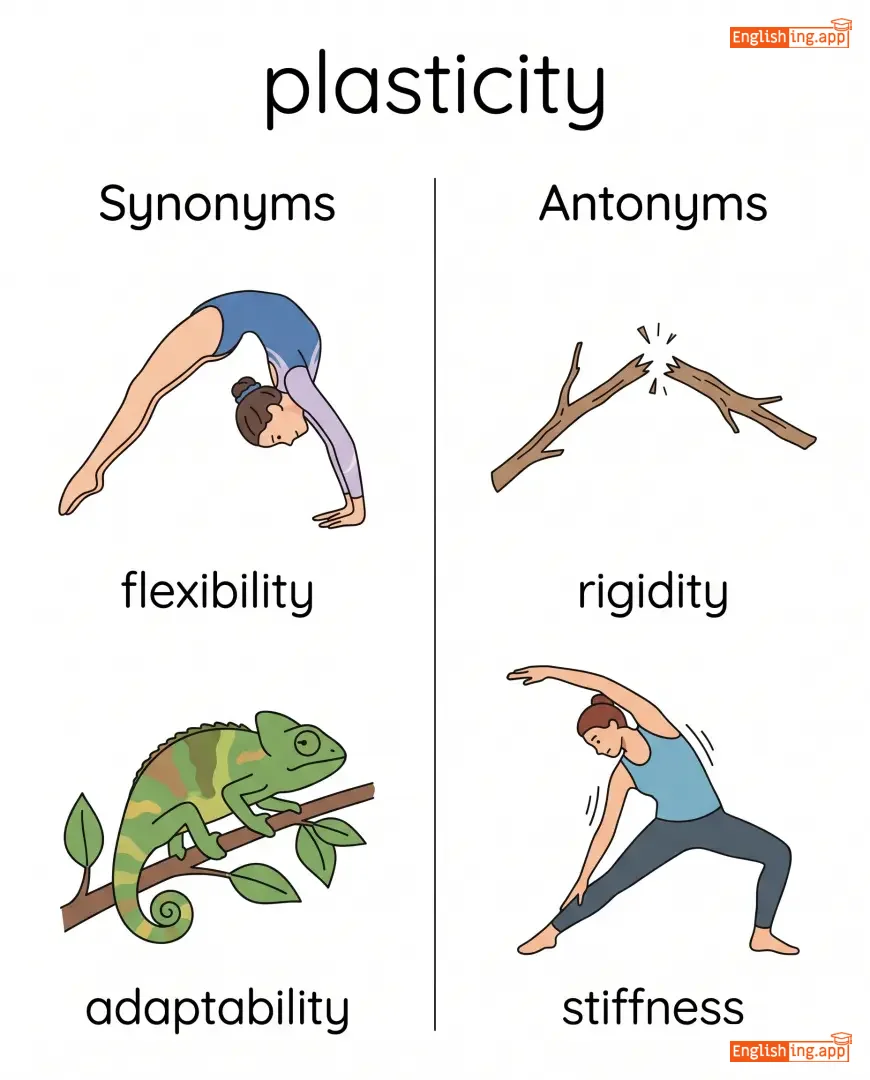
|
可塑性、適応能力
kasosei, tekiou nouryoku
••••••
|
- •••••• | - •••••• | - •••••• | - •••••• |
the quality of being easily shaped or molded; adaptability
••••••
|
The brain's plasticity allows it to adapt after injury.
脳の可塑性により、怪我の後に適応することができます。
••••••
|
脳の可塑性により、怪我の後に適応することができます。
Nou no kasosei ni yori, kega no ato ni tekiou suru koto ga dekimasu.
••••••
|
- •••••• | - •••••• | - •••••• |
flexibility, adaptability, malleability, pliability
••••••
|
rigidity, stiffness
••••••
|
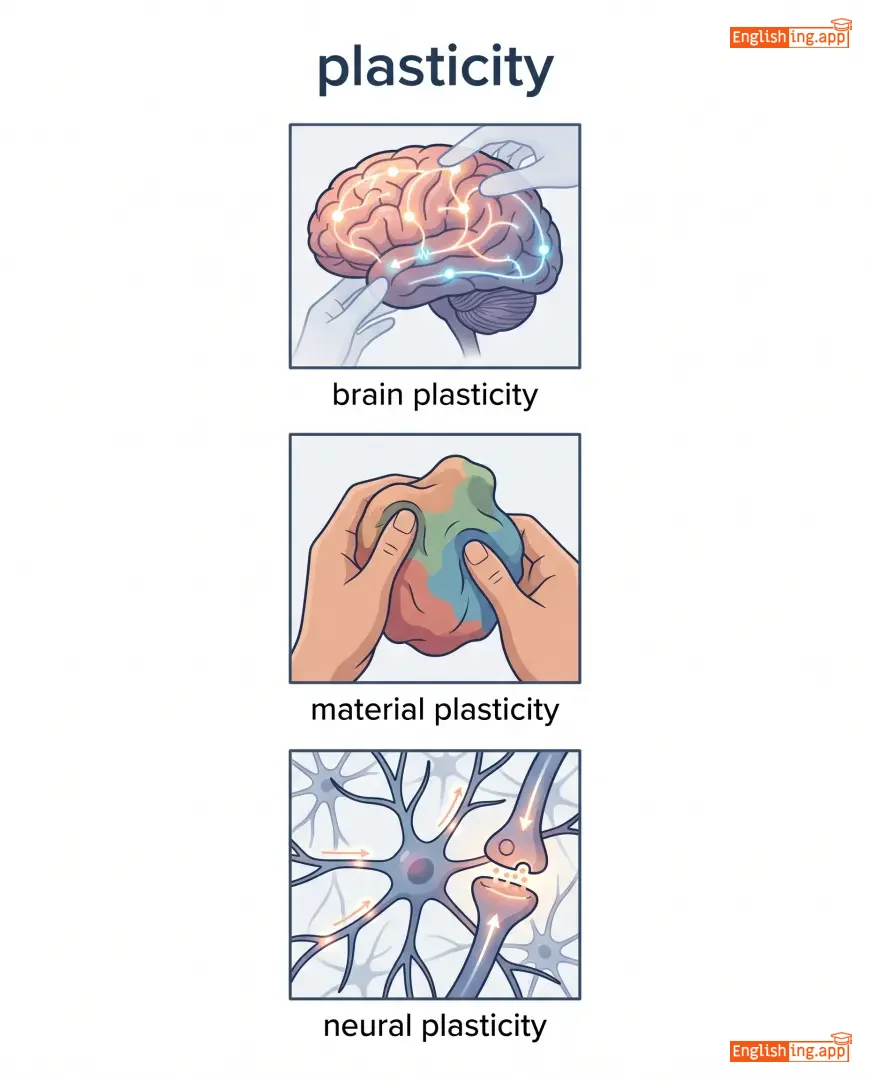
brain plasticity, material plasticity, neural plasticity
••••••
|
脳の可塑性は、脳が柔軟に適応できることを意味します
••••••
|
|
🗣️
••••••
|
/ˈplætɪtjuːd/
noun
(プラティチュード)
••••••
|

|
陳腐な言葉
chinfu na kotoba
••••••
|
- •••••• | - •••••• | - •••••• | - •••••• |
a remark or statement that is overused and unoriginal
••••••
|
He kept repeating the same platitudes during the speech.
彼はスピーチの中で同じプレティチュードを繰り返し続けた。
••••••
|
彼はスピーチの中で同じプレティチュードを繰り返し続けた。
Kare wa supīchi no naka de onaji puretichūdo o kurikaeshi tsuzuketa.
••••••
|
- •••••• | - •••••• | - •••••• |
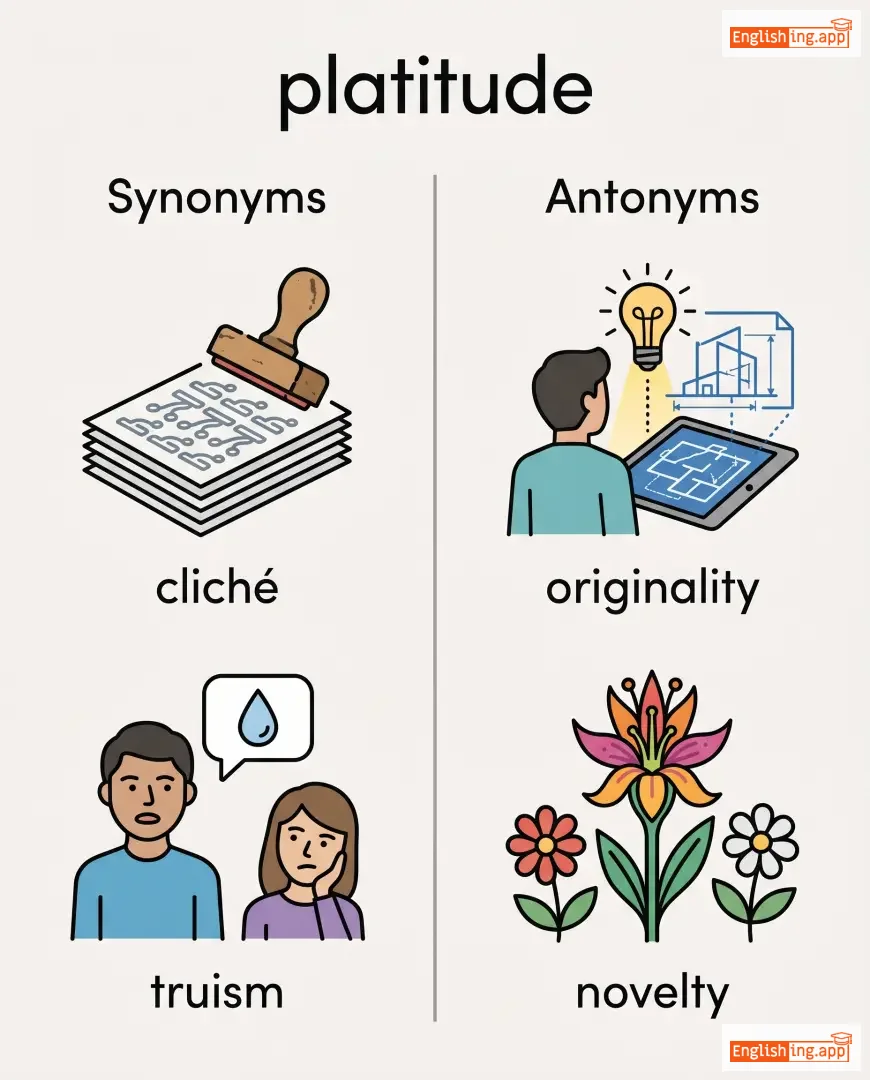
cliché, truism, banality, commonplace
••••••
|
originality, novelty
••••••
|
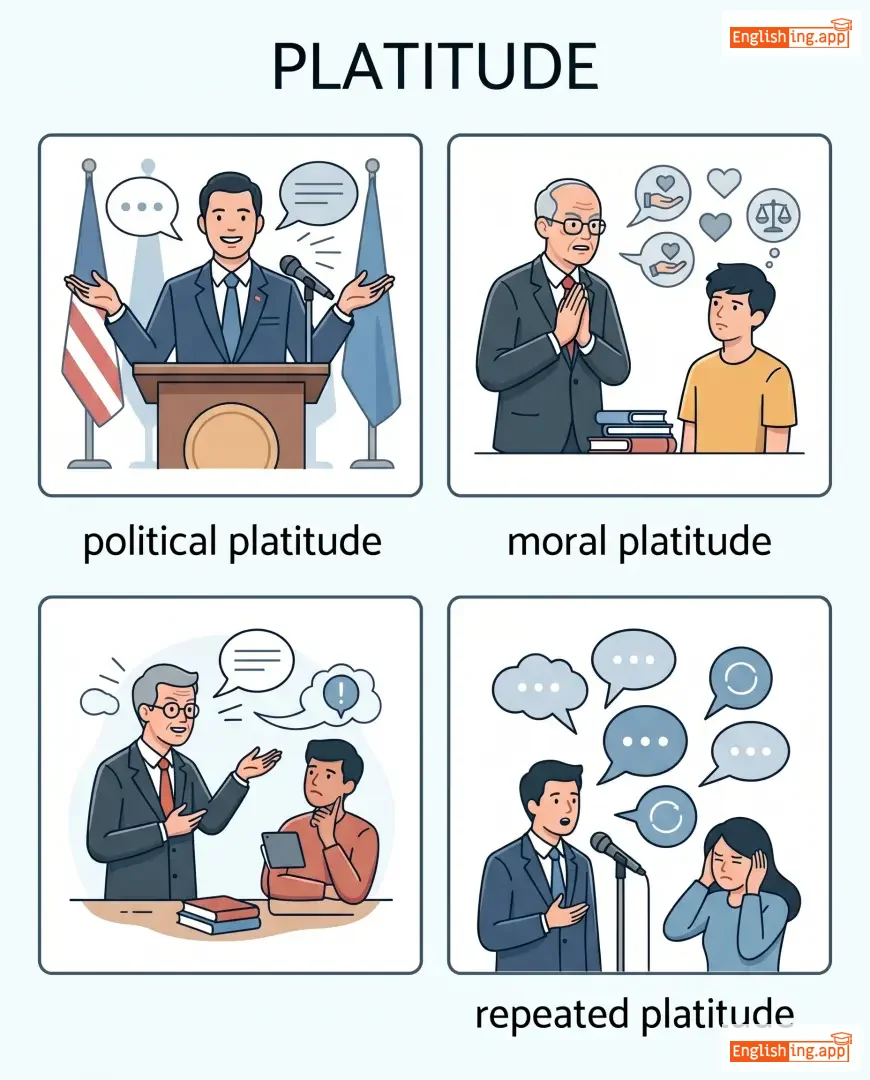
political platitude, moral platitude, repeated platitude
••••••
|
PLATI + TUDE = 何度も繰り返される言葉 - platitude
••••••
|
|
🤝
••••••
|
/pləˈtɒnɪk/
adjective
(プラトニック)
••••••
|
- •••••• |
プラトニック
puratonikku
••••••
|
- •••••• | - •••••• | - •••••• | - •••••• |
relating to a close relationship that is not romantic or sexual
••••••
|
They have a platonic friendship that has lasted for years. |
彼らは長年続いているプラトニックな友情を持っています。
Karera wa naganen tsuduite iru puratonikku na yūjō o motteimasu.
••••••
|
- •••••• | - •••••• | - •••••• |
nonsexual, spiritual, ideal, chaste
••••••
|
romantic, sexual
••••••
|
platonic relationship, platonic love, platonic friendship
••••••
|
プラトニックな友情はロマンチックでない - Platonic friendship is non-romantic
••••••
|
|
📚
••••••
|
/ˈplɛθərə/
noun
(プレソラ)
••••••
|

|
過剰な量
kajo na ryo
••••••
|
- •••••• | - •••••• | - •••••• | - •••••• |
an excessive amount of something
••••••
|
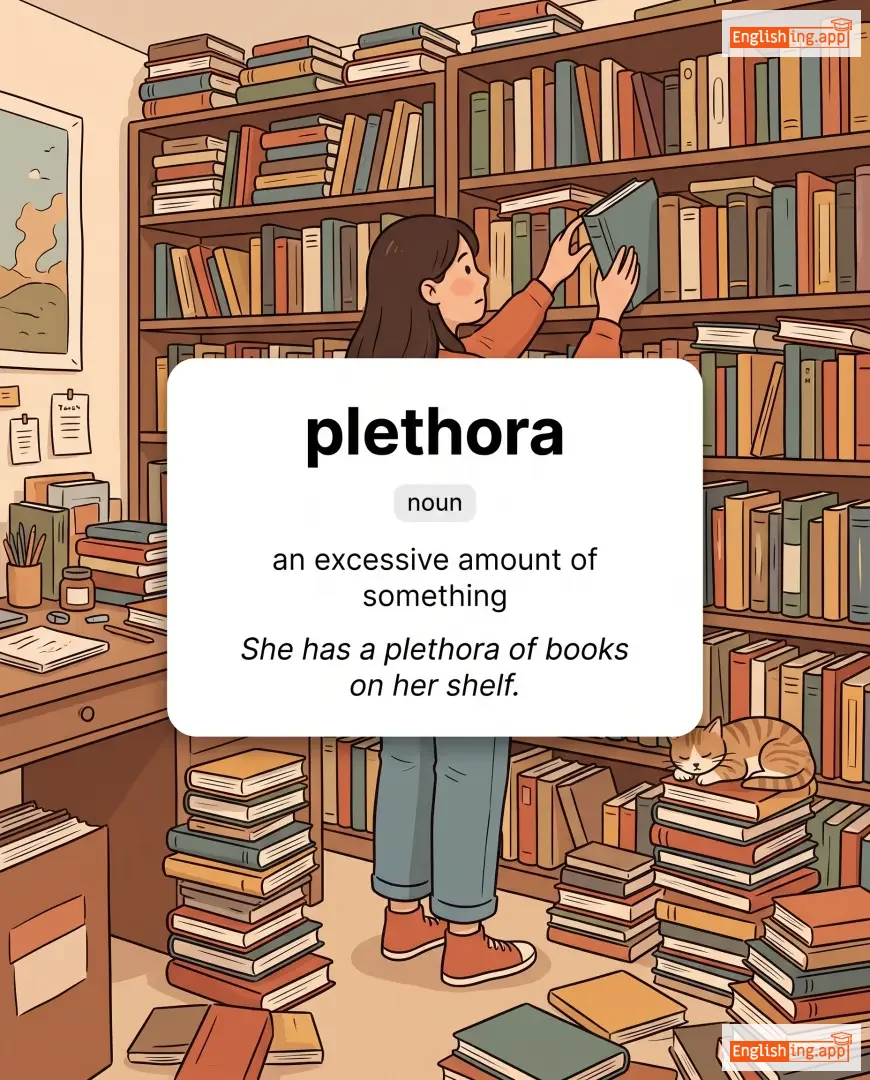
She has a plethora of books on her shelf. |
彼女の棚には過剰な量の本があります。
Kanojo no tana ni wa kajo na ryo no hon ga arimasu.
••••••
|
- •••••• | - •••••• | - •••••• |
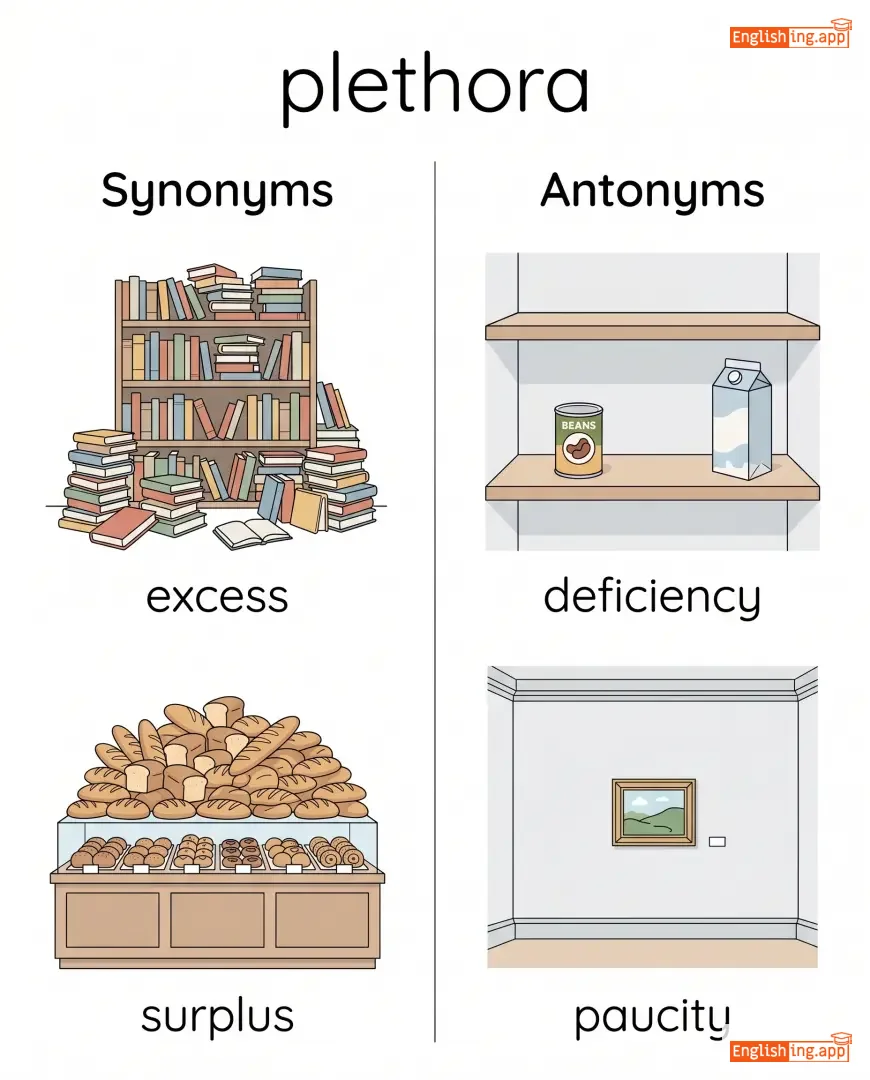
excess, surplus, overabundance, profusion
••••••
|
deficiency, paucity, shortage
••••••
|
plethora of options, plethora of ideas, plethora of evidence
••••••
|
棚に本があふれんばかりに積まれている様子
••••••
|
|
📏
••••••
|
/plʌm/
verb
(プランブ)
••••••
|
- •••••• |
深さを測るまたは詳細に調べる
fukasa o hakaru matawa shousai ni shiraberu
••••••
|
plumbed
プランブド
••••••
|
plumbed
プランブド
••••••
|
plumbs
プランブス
••••••
|
plumbing
プランビング
••••••
|
to measure the depth of water or examine closely
••••••
|
They used a line to plumb the depth of the lake.
彼らは湖の深さを測るためにラインを使いました。
••••••
|
彼らは湖の深さを測るためにラインを使いました。
Karera wa mizuumi no fukasa o hakaru tame ni rain o tsukaimashita.
••••••
|
- •••••• | - •••••• | - •••••• |
measure, explore, probe, gauge
••••••
|
neglect, ignore
••••••
|
plumb the depths, plumb the lake, plumb the truth
••••••
|
PLUMBで深さを測る、配管の深さを測るように
••••••
|
|
📉
••••••
|
/ˈplʌm.ɪt/
verb
(purametto)
••••••
|

|
速い速度で真っ直ぐに落ちる
hayai sokudo de massugu ni ochiru
••••••
|
plummeted
purameteto
••••••
|
plummeted
purameteto
••••••
|
plummets
puramettosu
••••••
|
plummeting
puramettoing
••••••
|
to fall straight down at high speed
••••••
|
Stock prices plummeted after the sudden market crash.
株価は市場の突然の暴落後に急落しました。
••••••
|
株価は市場の突然の暴落後に急落しました。
Kabuka wa shijō no totsuzen no bōraku go ni kyūraku shimashita.
••••••
|
- •••••• | - •••••• | - •••••• |
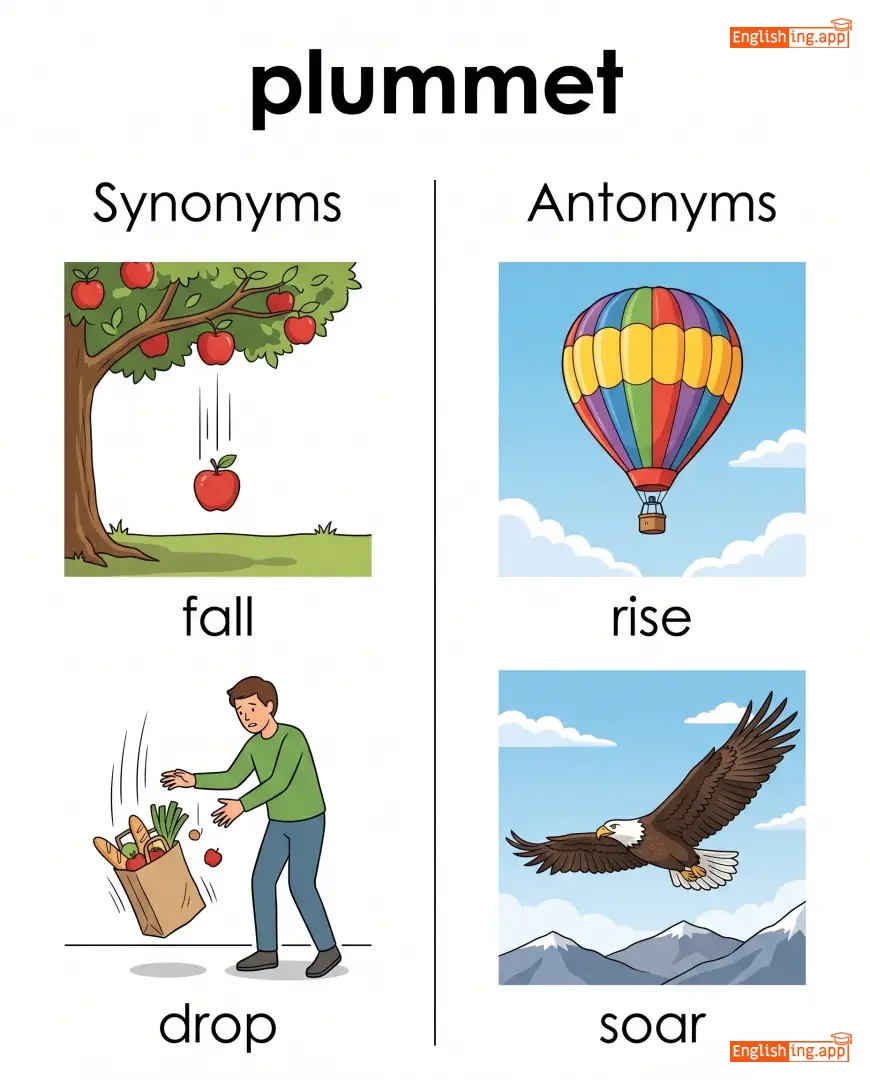
fall, drop, tumble, dive
••••••
|
rise, soar
••••••
|
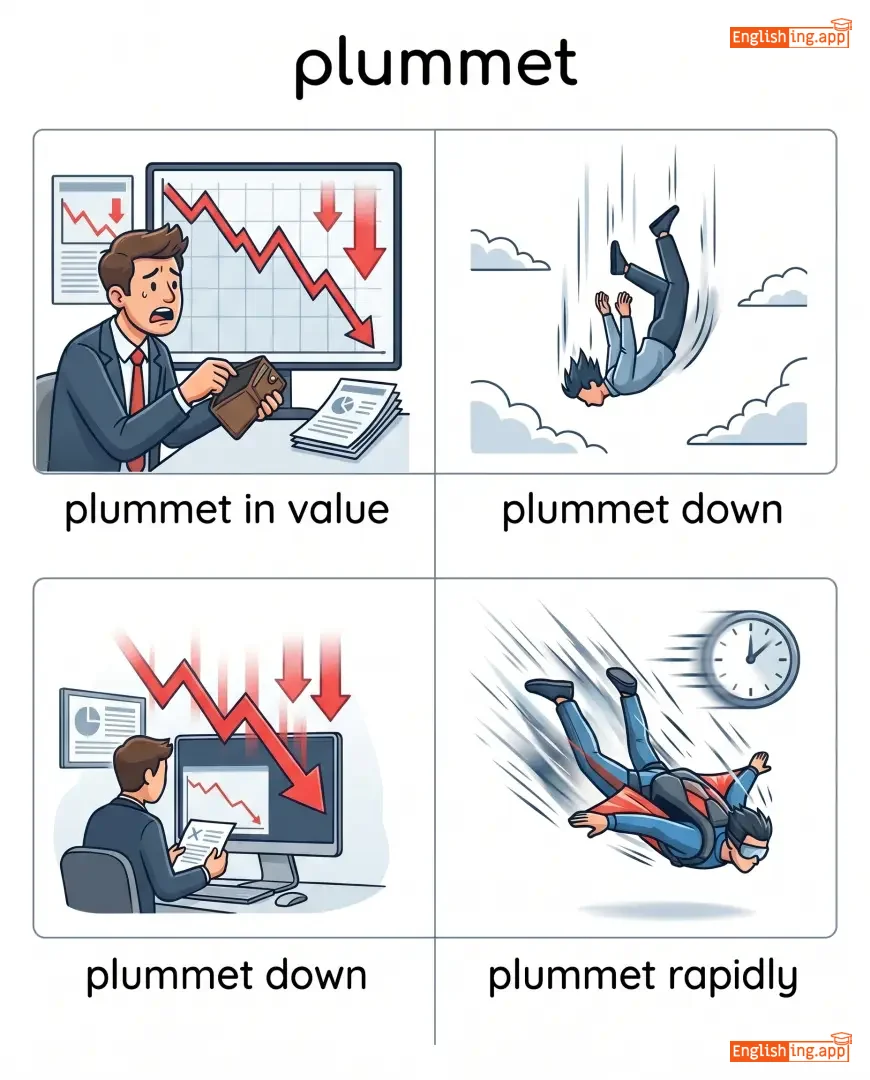
plummet in value, plummet down, plummet rapidly
••••••
|
PLUMのように急降下、PLUMMET - 株価が急落する。
••••••
|

